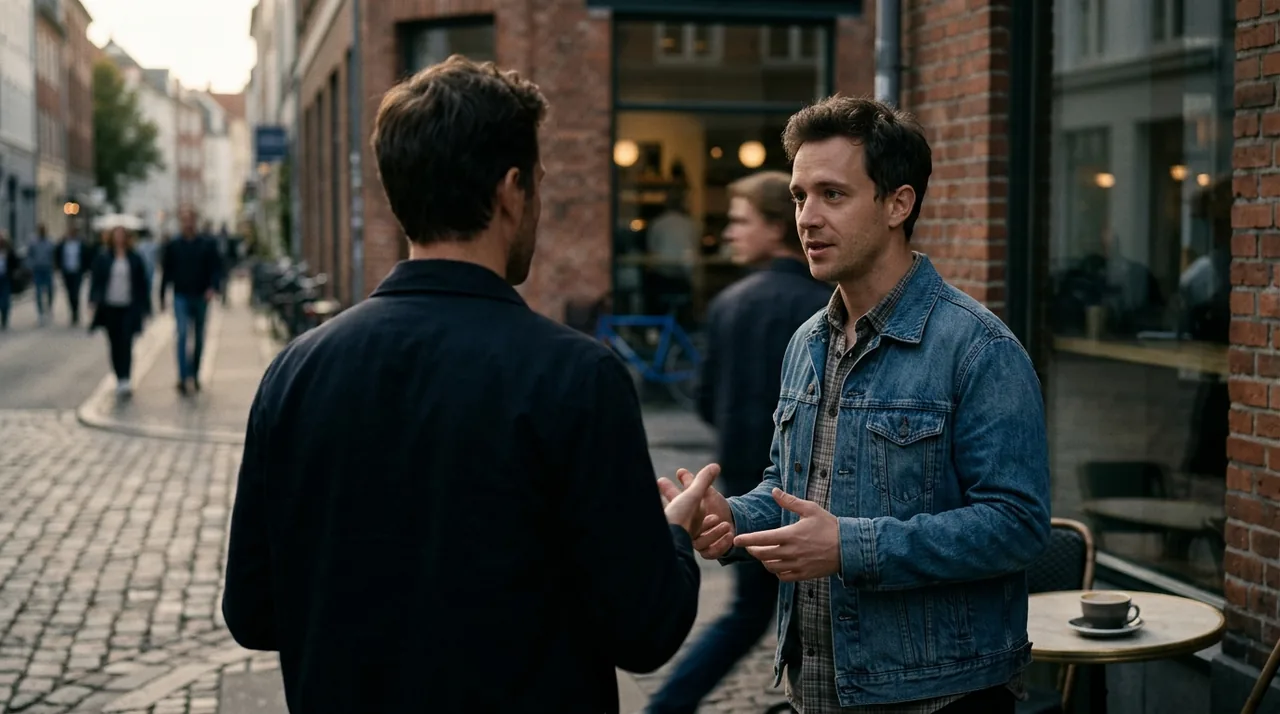
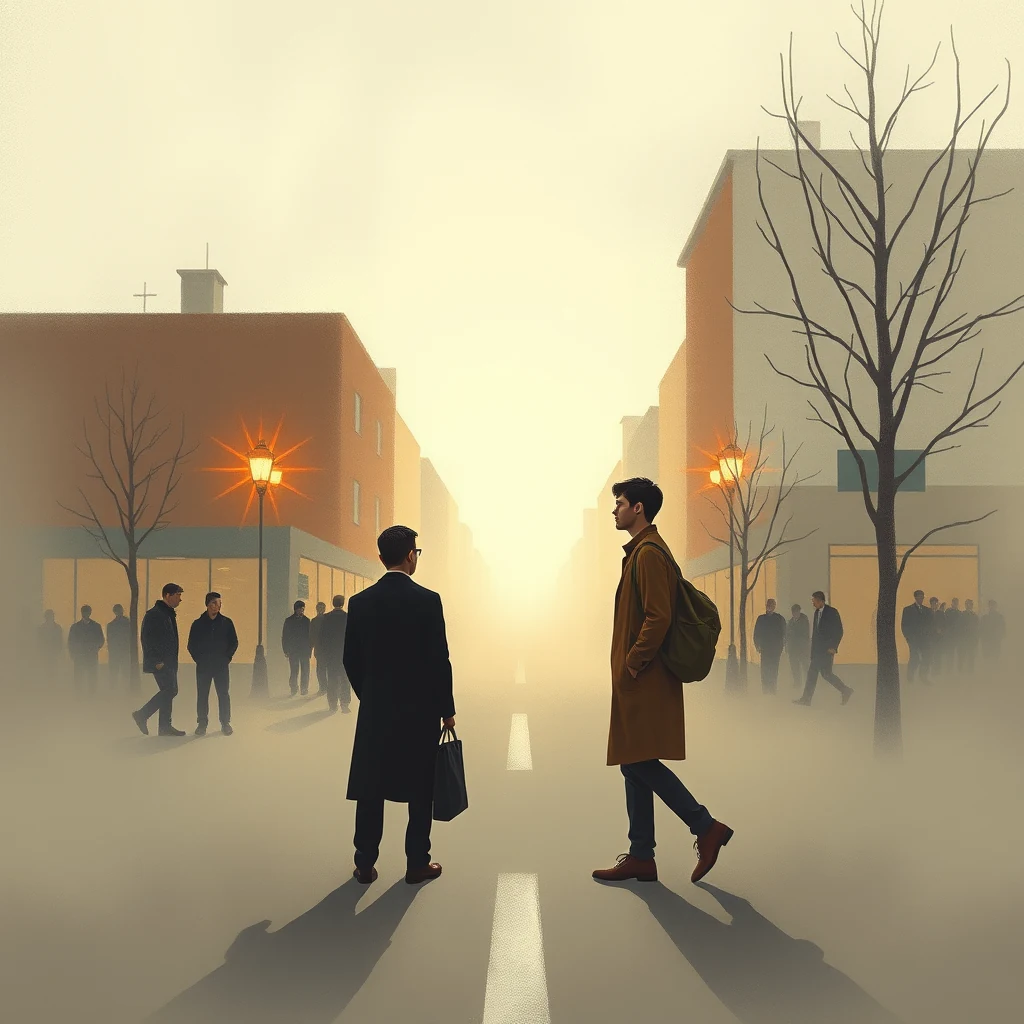
In a 1997 experiment on a Cornell footpath, a stranger asking for directions was swapped for a different person mid-sentence. Most pedestrians kept talking. The phenomenon has a name, and its implications are larger than the prank suggests.
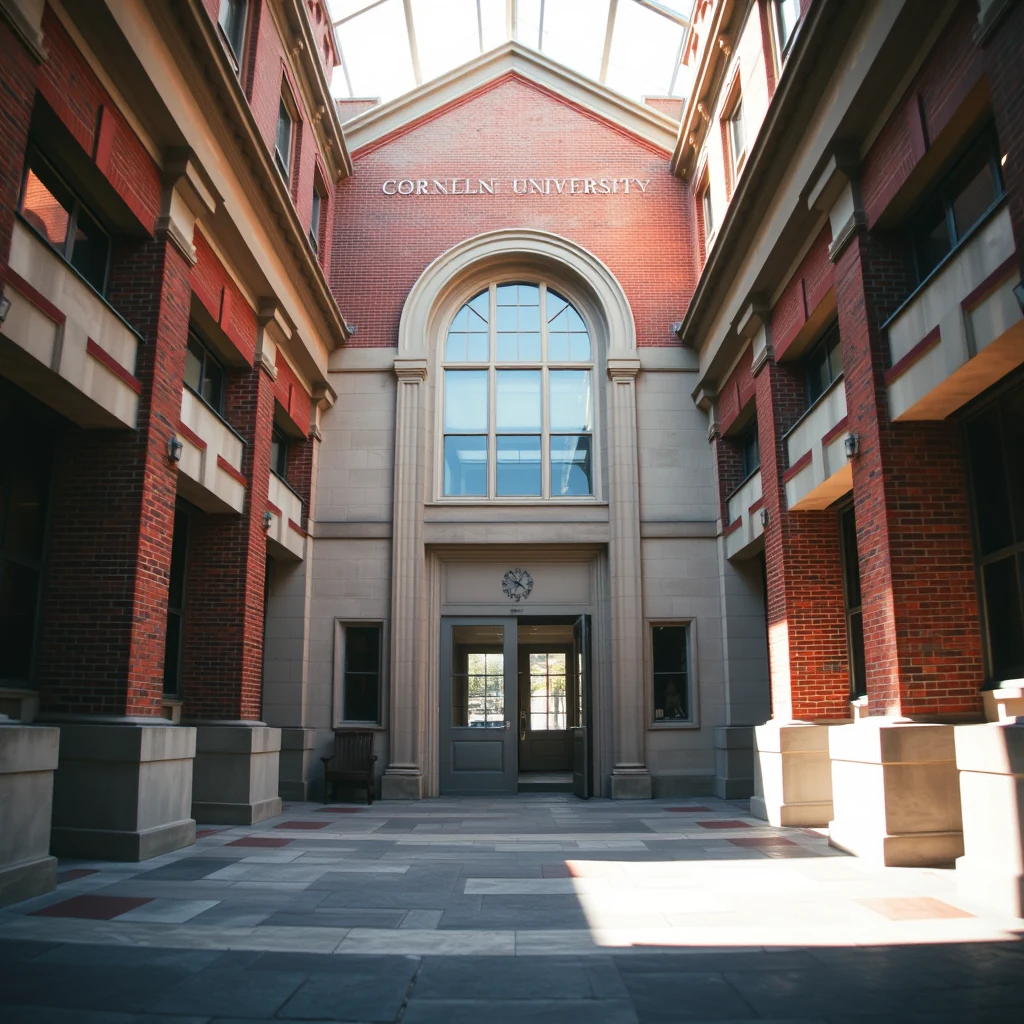
On a brick walkway at Cornell UniversityInstitutionCornell UniversityIvy League research university in Ithaca, New York, founded in 1865. Its psychology department hosted Daniel Simons in the late 1990s when he and Daniel Levin ran the door study on a campus walkway. The fieldwork was Cornell-side, on real undergraduates who were genuinely just trying to give directions to a stranger holding a map.位于纽约州伊萨卡的常春藤盟校研究型大学,创建于1865年。20世纪90年代末,其心理学系曾接纳丹尼尔·西蒙斯(Daniel Simons),他与丹尼尔·莱文(Daniel Levin)在校园人行道上开展了"换人实验"(door study)。这项田野研究在康奈尔大学一侧进行,受试者是真正的本科生,他们当时只是真心实意地想为一位手持地图的陌生人指路。Universidad de la Ivy League ubicada en Ithaca, Nueva York, fundada en 1865. Su departamento de psicología acogió a Daniel Simons a finales de la década de 1990, cuando él y Daniel Levin llevaron a cabo el estudio de la puerta en un sendero del campus. El trabajo de campo se realizó en Cornell, con estudiantes de pregrado reales que sencillamente intentaban dar indicaciones a un desconocido que sostenía un mapa.الجامعة بحثية من رابطة اللبلاب تقع في إيثاكا بولاية نيويورك، تأسست عام 1865. استضاف قسم علم النفس فيها دانييل سيمونز في أواخر تسعينيات القرن العشرين حين أجرى مع دانييل ليفين دراسة الباب على ممرٍ في الحرم الجامعي. جرى العمل الميداني في كورنيل، على طلاب جامعيين حقيقيين كانوا فعلاً يحاولون فقط إرشاد غريبٍ يحمل خريطة.Universidade da Ivy League em Ithaca, Nova Iorque, fundada em 1865. O seu departamento de psicologia acolheu Daniel Simons no final da década de 1990, quando ele e Daniel Levin conduziram o estudo da porta numa passagem do campus. O trabalho de campo foi realizado do lado de Cornell, com estudantes universitários reais que estavam genuinamente apenas a tentar dar indicações a um estranho que segurava um mapa.न्यूयॉर्क के इथाका में स्थित एक आइवी लीग अनुसंधान विश्वविद्यालय, जिसकी स्थापना 1865 में हुई थी। इसके मनोविज्ञान विभाग ने 1990 के दशक के उत्तरार्ध में डैनियल साइमन्स की मेजबानी की थी, जब उन्होंने और डैनियल लेविन ने परिसर के एक पैदल मार्ग पर 'डोर स्टडी' (दरवाजा प्रयोग) का संचालन किया था। यह फील्डवर्क कॉर्नेल परिसर में उन वास्तविक स्नातक छात्रों पर किया गया था, जो वास्तव में केवल हाथ में नक्शा लिए एक अजनबी को रास्ता बताने का प्रयास कर रहे थे।Universitas riset Ivy League di Ithaca, New York, yang didirikan pada tahun 1865. Departemen psikologinya menaungi Daniel Simons pada akhir tahun 1990-an ketika ia dan Daniel Levin melakukan eksperimen pintu di jalur pejalan kaki kampus. Penelitian lapangan tersebut dilakukan di area kampus Cornell, dengan subjek mahasiswa sarjana sungguhan yang benar-benar hanya mencoba memberikan petunjuk arah kepada orang asing yang memegang peta.Université de recherche de l'Ivy League située à Ithaca, dans l'État de New York, fondée en 1865. Son département de psychologie a accueilli Daniel Simons à la fin des années 1990, période durant laquelle il a mené, avec Daniel Levin, l'« expérience de la porte » sur une allée du campus. Ce travail de terrain s'est déroulé sur le campus de Cornell, auprès de véritables étudiants de premier cycle qui tentaient simplement d'indiquer son chemin à un inconnu tenant une carte.1865年に創立された、ニューヨーク州イサカに位置するアイビーリーグ加盟の研究大学。1990年代後半、同大学の心理学部に所属していたダニエル・シモンズが、ダニエル・レヴィンとともにキャンパス内の歩道で「ドア実験」を行った。このフィールドワークはコーネル大学内で行われ、地図を持った見知らぬ人に純粋に道を教えようとしていた、実際の学部生を対象としていた。Исследовательский университет Лиги плюща в Итаке, штат Нью-Йорк, основанный в 1865 году. В конце 1990-х годов на его кафедре психологии работал Дэниел Саймонс; именно тогда он совместно с Дэниелом Левином провел «эксперимент с дверью» на пешеходной дорожке кампуса. Полевые исследования проходили на территории Корнелла, а испытуемыми стали обычные студенты бакалавриата, которые просто искренне пытались подсказать дорогу незнакомцу с картой.1865 gegründete Forschungsuniversität der Ivy League in Ithaca, New York. An ihrem psychologischen Institut forschte Ende der 1990er-Jahre Daniel Simons, als er und Daniel Levin die „Tür-Studie“ auf einem Campusweg durchführten. Die Feldforschung fand auf dem Cornell-Campus an echten Bachelorstudierenden statt, die tatsächlich nur versuchten, einem Fremden mit einer Karte den Weg zu weisen.1865년에 설립된 뉴욕주 이사카 소재의 아이비리그 연구 중심 대학이다. 1990년대 후반 이 대학 심리학과에 대니얼 사이먼스가 재직할 당시, 그와 대니얼 레빈은 캠퍼스 보도에서 '문 실험'을 진행했다. 현장 연구는 코넬대 캠퍼스에서 이루어졌으며, 지도를 든 낯선 사람에게 정말로 단순히 길을 안내하려던 실제 학부생들을 대상으로 했다. in the autumn of 1997, a researcher with a campus map approached pedestrians and asked for directions to a nearby building. Fifteen seconds into the exchange, two men carrying a wooden door barged rudely between them. Hidden by the door, the original researcher stepped away and a second, visibly different researcher took his place — different height, different build, different clothing, different voice. The conversation resumed. In roughly half the trials, the pedestrian carried on giving directions to a man they had never met before, with no sign that anything had changed.
The experiment was run by Daniel SimonsPersonDaniel SimonsAmerican cognitive psychologist, now at the University of Illinois at Urbana-Champaign, best known for the 1999 selective-attention experiment with Christopher Chabris that produced the gorilla video. His broader research programme concerns the limits of human attention, memory, and the gap between what people believe their minds do and what they actually do. He has spent two decades replicating, refining, and arguing against simple readings of his own headline result.美国认知心理学家,现任职于伊利诺伊大学厄巴纳-香槟分校,以1999年与克里斯托弗·查布里斯共同开展的选择性注意实验(即"大猩猩视频"实验)而广为人知。其研究纲领涵盖人类注意力与记忆的局限,以及人们对自身心理运作的主观认知与客观实际之间的差距。二十余年来,他持续从事这一标志性研究成果的重复验证与深化阐释,并致力于反驳对该结果的简单化解读。Psicólogo cognitivo estadounidense, actualmente en la Universidad de Illinois en Urbana-Champaign, conocido sobre todo por el experimento de atención selectiva de 1999 realizado junto a Christopher Chabris que dio origen al vídeo del gorila. Su programa de investigación más amplio versa sobre los límites de la atención y la memoria humanas, y la brecha entre lo que las personas creen que hace su mente y lo que esta hace en realidad. Lleva dos décadas replicando, refinando y cuestionando las lecturas simplistas de su propio resultado más celebrado.عالم نفس إدراكي أمريكي، يعمل حالياً في جامعة إلينوي في أوربانا-شامبين، اشتُهر بتجربة الانتباه الانتقائي التي أجراها عام 1999 مع كريستوفر شابري، والتي أسفرت عن مقطع الغوريلا الشهير. يتمحور برنامجه البحثي الأشمل حول حدود الانتباه والذاكرة البشريَّين، والهوَّة بين ما يعتقد الناس أن عقولهم تفعله وما تفعله فعلياً. وقد أمضى عقدين من الزمن في إعادة اختبار نتيجته البحثية الأبرز وتنقيحها، والجدال ضد القراءات المبسَّطة لها.Psicólogo cognitivo norte-americano, atualmente na Universidade de Illinois em Urbana-Champaign, mais conhecido pelo experimento de atenção seletiva de 1999 realizado com Christopher Chabris que deu origem ao vídeo do gorila. O seu programa de investigação mais abrangente versa sobre os limites da atenção humana, da memória e a discrepância entre aquilo que as pessoas acreditam que as suas mentes fazem e aquilo que elas realmente fazem. Dedicou duas décadas a replicar, refinar e contestar leituras simplistas do seu próprio resultado de maior projeção.अमेरिकी संज्ञानात्मक मनोवैज्ञानिक, वर्तमान में इलिनॉय विश्वविद्यालय, अर्बाना-शैंपेन में कार्यरत; 1999 में क्रिस्टोफ़र शैब्रिस के साथ किए गए चयनात्मक-अवधान प्रयोग के लिए सर्वाधिक प्रसिद्ध, जिसके परिणामस्वरूप गोरिल्ला वीडियो अस्तित्व में आया। उनका व्यापक शोध कार्यक्रम मानव अवधान एवं स्मृति की सीमाओं तथा उस अंतराल पर केंद्रित है जो लोगों की इस धारणा और वास्तविकता के बीच विद्यमान है कि उनका मन क्या करता है और वह वास्तव में क्या करता है। वे दो दशकों से अपने इसी चर्चित परिणाम की पुनरावृत्ति, परिष्करण और उसकी सरलीकृत व्याख्याओं के खंडन में संलग्न हैं।Psikolog kognitif Amerika, kini bertugas di University of Illinois at Urbana-Champaign, paling dikenal berkat eksperimen atensi selektif tahun 1999 bersama Christopher Chabris yang menghasilkan video gorila. Program penelitiannya yang lebih luas berkaitan dengan batas-batas atensi dan memori manusia, serta kesenjangan antara apa yang diyakini orang mengenai kemampuan pikiran mereka dan apa yang sesungguhnya terjadi. Selama dua dekade ia telah mereplikasi, menyempurnakan, dan menentang penafsiran sederhana atas temuan utamanya sendiri.Psychologue cognitiviste américain, aujourd'hui rattaché à l'université de l'Illinois à Urbana-Champaign, principalement connu pour l'expérience d'attention sélective de 1999 conduite avec Christopher Chabris, dont est issue la vidéo du gorille. Son programme de recherche porte plus largement sur les limites de l'attention et de la mémoire humaines, ainsi que sur l'écart entre les représentations que les individus se font du fonctionnement de leur esprit et ce que celui-ci accomplit réellement. Depuis deux décennies, il s'emploie à répliquer, affiner et contester les lectures simplistes de son propre résultat phare.アメリカの認知心理学者。現在はイリノイ大学アーバナ・シャンペーン校に所属。クリストファー・チャブリスとともに1999年に実施した選択的注意実験(通称「ゴリラ動画」)により広く知られる。研究の主軸は、人間の注意および記憶の限界と、人々が自らの心の働きについて抱く信念と実際の働きとの乖離の解明にある。自身の看板的研究成果に対する安易な解釈に異議を唱えながら、その再現と精緻化に20年以上を費やしてきた。Американский когнитивный психолог, ныне работающий в Иллинойсском университете в Урбана-Шампейне; наиболее известен экспериментом 1999 года по избирательному вниманию, проведённым совместно с Кристофером Шабри и породившим видеозапись с гориллой. Более широкая исследовательская программа учёного посвящена ограничениям человеческого внимания и памяти, а также разрыву между представлениями людей о работе собственного разума и тем, как он функционирует в действительности. На протяжении двух десятилетий он занимается воспроизведением, уточнением и оспариванием упрощённых интерпретаций собственного резонансного результата.Amerikanischer Kognitionspsychologe, gegenwärtig an der University of Illinois at Urbana-Champaign tätig, vor allem bekannt durch das 1999 gemeinsam mit Christopher Chabris durchgeführte Experiment zur selektiven Aufmerksamkeit, aus dem das Gorilla-Video hervorging. Sein weiterreichendes Forschungsprogramm gilt den Grenzen menschlicher Aufmerksamkeit und des Gedächtnisses sowie der Kluft zwischen dem, was Menschen ihrem Geist zuschreiben, und dem, was dieser tatsächlich leistet. Zwei Jahrzehnte lang widmete er sich der Replikation, Verfeinerung und Zurückweisung vereinfachender Deutungen seines eigenen aufsehenerregenden Befunds.미국의 인지심리학자로, 현재 일리노이 대학교 어배너-섐페인 캠퍼스에 재직 중이다. 크리스토퍼 체이브리스와 공동으로 수행한 1999년의 선택적 주의 실험, 이른바 '고릴라 영상'으로 가장 널리 알려져 있다. 보다 광범위한 연구 프로그램은 인간 주의력과 기억의 한계, 그리고 사람들이 자신의 마음이 실제로 어떻게 작동하는지에 대해 믿는 것과 실제 작동 방식 사이의 간극을 탐구한다. 20여 년에 걸쳐 자신의 대표적 연구 결과를 반복 검증하고 정교화하는 한편, 이에 대한 단순한 해석에 반론을 제기하는 작업을 지속해왔다. and Daniel LevinPersonDaniel LevinAmerican cognitive psychologist, now at Vanderbilt, who collaborated with Daniel Simons on the foundational change-blindness studies of the late 1990s. Levin's later work extends the question to event perception and to the surprisingly wide gulf between what observers think they have seen and what their visual systems actually registered.译者注:这是一条百科全书式人物简介,需译为简体中文,保持事实、紧凑、中性的百科风格。
美国认知心理学家,现任职于范德比尔特大学,曾于20世纪90年代末与丹尼尔·西蒙斯合作开展奠基性的变化盲视研究。莱文后期的研究将这一问题拓展至事件知觉,以及观察者自认为看到的内容与其视觉系统实际记录到的内容之间出人意料的巨大鸿沟。Daniel Levin es un psicólogo cognitivo estadounidense, actualmente en la Universidad Vanderbilt, que colaboró con Daniel Simons en los estudios fundacionales sobre la ceguera al cambio de finales de la década de 1990. El trabajo posterior de Levin extiende la pregunta a la percepción de eventos y al sorprendentemente amplio abismo que media entre lo que los observadores creen haber visto y lo que sus sistemas visuales registraron en realidad.المترجمة الأمريكية دانييل ليفين... دعني أترجم النص.
The name "Levin" — male cognitive psychologist, Daniel Levin, at Vanderbilt. Let me translate.
عالم نفس معرفي أمريكي، يعمل حاليًا في جامعة فاندربيلت، تعاون مع دانيال سيمونز في الدراسات التأسيسية حول العمى التغييري في أواخر تسعينيات القرن العشرين. ويوسّع عمل ليفين اللاحق هذا السؤال ليشمل إدراك الأحداث والهوة الواسعة على نحو مفاجئ بين ما يظن المراقبون أنهم رأوه وما سجّلته أنظمتهم البصرية فعليًا.Daniel Levin é um psicólogo cognitivo norte-americano, atualmente na Universidade Vanderbilt, que colaborou com Daniel Simons nos estudos fundadores sobre cegueira à mudança no final da década de 1990. O trabalho posterior de Levin estende a questão à percepção de eventos e ao abismo surpreendentemente amplo entre aquilo que os observadores julgam ter visto e aquilo que seus sistemas visuais de fato registraram.अमेरिकी संज्ञानात्मक मनोवैज्ञानिक, जो अब वैंडरबिल्ट में कार्यरत हैं, और जिन्होंने 1990 के दशक के उत्तरार्ध में परिवर्तन-अंधता (change blindness) पर हुए आधारभूत अध्ययनों में डैनियल साइमन्स के साथ सहयोग किया। लेविन का बाद का कार्य इस प्रश्न को घटना-प्रत्यक्षण (event perception) तक और प्रेक्षक जो देख चुके होने का विश्वास करते हैं तथा उनके दृश्य तंत्र ने वास्तव में जो ग्रहण किया, उसके बीच की आश्चर्यजनक रूप से बड़ी खाई तक विस्तारित करता है।Dele Levin, psikolog kognitif Amerika yang kini berkarya di Vanderbilt, yang berkolaborasi dengan Daniel Simons dalam studi-studi fondasional tentang kebutaan terhadap perubahan (change blindness) pada akhir 1990-an. Karya Levin selanjutnya memperluas pertanyaan ini ke persepsi peristiwa dan ke jurang yang ternyata sangat lebar antara apa yang dikira para pengamat telah mereka lihat dan apa yang sebenarnya terekam oleh sistem visual mereka.Psychologue cognitiviste américain, actuellement à l'université Vanderbilt, qui a collaboré avec Daniel Simons aux études fondatrices sur la cécité au changement à la fin des années 1990. Les travaux ultérieurs de Levin étendent cette problématique à la perception des événements et au fossé d'une ampleur surprenante entre ce que les observateurs pensent avoir vu et ce que leur système visuel a réellement enregistré.介田にあるヴァンダービルト大学に在籍するアメリカの認知心理学者で、1990年代後半にダニエル・シモンズと協力し、変化盲(チェンジ・ブラインドネス)に関する基礎的な研究を行った。レヴィンの後年の研究は、この問いを事象(イベント)の知覚へと広げ、観察者が自分は見たと思っている内容と、その視覚システムが実際に登録した内容との間に驚くほど大きな隔たりがあることへと及んでいる。Дэниел Левин — американский когнитивный психолог, в настоящее время работающий в Университете Вандербильта, который в сотрудничестве с Дэниелом Саймонсом провёл основополагающие исследования слепоты к изменениям в конце 1990-х годов. Более поздние работы Левина распространяют этот вопрос на восприятие событий и на удивительно широкую пропасть между тем, что наблюдатели полагают увиденным, и тем, что в действительности зарегистрировала их зрительная система.Demarest verfür später ich brauche kein Tool. Direkt übersetzen.
Amerikanischer Kognitionspsychologe, heute an der Vanderbilt University, der in den späten 1990er-Jahren mit Daniel Simons die grundlegenden Studien zur Veränderungsblindheit (change blindness) durchführte. Levins spätere Arbeiten weiten die Fragestellung auf die Ereigniswahrnehmung aus sowie auf die überraschend große Kluft zwischen dem, was Beobachter zu sehen glauben, und dem, was ihr visuelles System tatsächlich erfasst hat.밴더빌트 대학교에 재직 중인 미국 인지심리학자로, 1990년대 후반 변화맹(change blindness)에 관한 토대가 된 연구에서 대니얼 사이먼스와 협력했다. 레빈의 이후 연구는 그 문제를 사건 지각으로, 그리고 관찰자가 자신이 보았다고 생각하는 것과 그들의 시각 체계가 실제로 등록한 것 사이의 의외로 넓은 간극으로 확장한다., and published the following year in *Psychonomic Bulletin & Review* under the title "Failure to detect changes to people during a real-world interaction." It became the canonical demonstration of a phenomenon that perception researchers had been circling for a decade: change blindnessConceptChange blindnessThe failure to notice large changes between two views of a scene separated by a brief interruption — a blink, a saccade, a flicker, a cut in a film. In classic demonstrations, an experimenter stops a passer-by to ask directions, is briefly hidden by people carrying a door, and is swapped for a different person; many passers-by carry on the conversation without registering the switch. A cousin of inattentional blindness.在两次场景观察之间,因短暂的中断——一次眨眼、一次扫视、一次闪烁、一次电影剪辑——而未能察觉到画面中发生的重大变化。在经典演示中,实验者拦住路人问路,中途被抬门而过的人短暂遮挡,随即被另一个人替换;许多路人会继续对话,而完全未察觉对方已被掉包。它是无意视盲的近亲。El fracaso en detectar cambios de gran magnitud entre dos vistas de una escena separadas por una breve interrupción —un parpadeo, una sacada, un destello, un corte cinematográfico—. En las demostraciones clásicas, un experimentador detiene a un transeúnte para pedirle indicaciones, queda momentáneamente oculto por personas que transportan una puerta y es sustituido por otra persona diferente; muchos transeúntes continúan la conversación sin registrar el cambio. Variante próxima de la ceguera por falta de atención.الإخفاق في ملاحظة التغييرات الكبيرة بين مشهدَين متتاليَين يفصل بينهما انقطاعٌ وجيز — كالرمشة، أو السكادة، أو الوميض، أو القطع في الفيلم. وفي التجارب الكلاسيكية، يُوقف الباحثُ أحدَ المارة ليستفسر منه عن الاتجاهات، ثم يُحجب لوهلة خلف أشخاص يحملون باباً، فيحلَّ محله شخصٌ مختلف؛ ويواصل كثيرٌ من المارة الحديثَ دون أن يُدركوا الاستبدال. وهو ظاهرةٌ قريبة الصلة بالعمى الانتباهي.Falha em perceber grandes mudanças entre duas visões de uma cena separadas por uma breve interrupção — um piscar de olhos, uma sacada, uma cintilação, um corte cinematográfico. Em demonstrações clássicas, um experimentador aborda um transeunte para pedir informações, é brevemente ocultado por pessoas carregando uma porta e substituído por outra pessoa; muitos transeuntes prosseguem a conversa sem registrar a troca. Fenômeno afim à cegueira por desatenção.दृश्य में संक्षिप्त व्यवधान — पलक झपकना, सैकेड, प्रकाश का टिमटिमाना, या फ़िल्म में कट — के दो क्षणों के बीच हुए बड़े परिवर्तनों को न पहचान पाने की विफलता। परिवर्तन अंधता (change blindness) के क्लासिक प्रदर्शनों में एक प्रयोगकर्ता किसी राहगीर को रुककर रास्ता पूछता है; बीच में दरवाज़ा उठाए जा रहे लोगों की आड़ में वह प्रयोगकर्ता किसी दूसरे व्यक्ति से बदल दिया जाता है, और बहुत-से राहगीर इस बदलाव को भाँपे बिना बातचीत जारी रखते हैं। यह अनवधानजन्य अंधता (inattentional blindness) का एक सहोदर परिघटना है।Kegagalan untuk memperhatikan perubahan besar antara dua tampilan suatu adegan yang dipisahkan oleh selingan singkat — kedipan mata, sakade, kilatan, atau potongan dalam film. Dalam demonstrasi klasik, seorang peneliti menghentikan pejalan kaki untuk menanyakan arah, sesaat tersembunyi oleh orang-orang yang membawa pintu, lalu digantikan oleh orang yang berbeda; banyak pejalan kaki tetap melanjutkan percakapan tanpa menyadari pergantian tersebut. Merupakan kerabat dari kebutaan inatensi.L'incapacité à percevoir des modifications importantes entre deux visions d'une scène séparées par une brève interruption — un clignement des yeux, une saccade, un scintillement, une coupe au montage. Dans les démonstrations classiques, un expérimentateur arrête un passant pour lui demander son chemin, est momentanément dissimulé par des individus portant une porte, puis est remplacé par une autre personne ; de nombreux passants poursuivent la conversation sans remarquer la substitution. Phénomène apparenté à la cécité par inattention.瞬目・サッカード・画面の明滅・映画のカットといった短い中断を挟んだ二つの場面の間で生じた大きな変化を見落とす現象。古典的な実証例では、実験者が通行人に道を尋ねている最中にドアを運ぶ人物らによって一時的に遮られ、その間に別人とすり替わるが、多くの通行人はすり替わりに気づかないまま会話を続ける。不注意盲と近縁の概念である。Неспособность замечать существенные изменения между двумя наблюдениями сцены, разделёнными кратким прерыванием — морганием, саккадой, помеховой вспышкой или монтажной склейкой. В классических демонстрациях экспериментатор останавливает прохожего, чтобы спросить дорогу; пока его на несколько секунд заслоняют люди, несущие дверь, его подменяют другим человеком — многие прохожие продолжают разговор, не замечая подмены. Явление, родственное слепоте невнимания.Das Unvermögen, große Veränderungen zwischen zwei Ansichten einer Szene wahrzunehmen, die durch eine kurze Unterbrechung getrennt sind — einen Lidschlag, eine Sakkade, ein Flackern, einen Filmschnitt. In klassischen Versuchsanordnungen hält ein Versuchsleiter einen Passanten an, um nach dem Weg zu fragen, wird kurz durch Personen verdeckt, die eine Tür tragen, und durch eine andere Person ersetzt; viele Passanten führen das Gespräch fort, ohne den Wechsel zu bemerken. Ein Verwandter der Unaufmerksamkeitsblindheit.짧은 중단—눈 깜빡임, 단속성 안구운동, 깜박임, 영화의 컷—을 사이에 두고 관찰한 동일 장면의 두 시점 사이에서 일어나는 큰 변화를 알아채지 못하는 현상. 고전적인 시연에서, 실험자가 행인을 불러 세워 길을 묻는 도중 문을 들고 지나가는 사람들에 의해 잠시 가려졌다가 다른 사람으로 교체되는데, 많은 행인들이 이 교체를 인지하지 못한 채 대화를 이어간다. 무주의 맹시의 유사 현상이다.. Under the right conditions, large, obvious alterations to a visual scene — including the identity of the person you are actively speaking to — can pass unnoticed.
Change blindness illusionGlobe_and_high_court.jpg: created by jjron Globe_and_high_co · BY-SA 4.0
The "right conditions" turn out to be unsettlingly ordinary. All that is required is a brief interruption: a blink, a saccadeConceptSaccadeA rapid ballistic movement of the eyes between fixation points, typically lasting twenty to two hundred milliseconds. The human visual system makes three to four saccades per second, and vision is largely suppressed during each one. The brief blindness of a saccade is one of the natural interruptions that allows change blindness to occur in everyday life without any external trick.扫视,一种在注视点之间发生的快速弹道式眼球运动,通常持续二十到二百毫秒。人类视觉系统每秒进行三到四次扫视,且在每次扫视期间视觉在很大程度上被抑制。扫视造成的短暂失明是日常生活中无需任何外部手段便能让变化盲视得以发生的自然中断之一。Sacádico es —pero el término más preciso aquí es "sacada". Permítame entregar la traducción.
Un movimiento balístico rápido de los ojos entre puntos de fijación, que dura por lo general de veinte a doscientos milisegundos. El sistema visual humano realiza de tres a cuatro sacadas por segundo, y la visión queda en gran medida suprimida durante cada una de ellas. La breve ceguera de una sacada es una de las interrupciones naturales que permiten que la ceguera al cambio se produzca en la vida cotidiana sin necesidad de ningún truco externo.طَفْرَة بصرية سريعة للعينين بين نقاط التثبيت، تدوم عادةً ما بين عشرين ومئتي مِلّي ثانية. ويُجري الجهاز البصري البشري ثلاث إلى أربع طفرات في الثانية، ويُكبَح الإبصار إلى حدٍّ كبير خلال كلٍّ منها. ويُعدّ العمى الوجيز الناتج عن الطفرة البصرية أحدَ الانقطاعات الطبيعية التي تتيح حدوث عمى التغيّر في الحياة اليومية دون أيّ حيلة خارجية.Movimento balístico rápido dos olhos entre pontos de fixação, durando tipicamente de vinte a duzentos milissegundos. O sistema visual humano realiza de três a quatro sacadas por segundo, e a visão é amplamente suprimida durante cada uma delas. A breve cegueira de uma sacada é uma das interrupções naturais que permite que a cegueira à mudança ocorra na vida cotidiana sem nenhum truque externo.साद (नेत्र-कूद): दृष्टि-बिंदुओं के बीच आँखों की एक तीव्र बैलिस्टिक गति, जो प्रायः बीस से दो सौ मिलीसेकंड तक रहती है। मानव दृष्टि-तंत्र प्रति सेकंड तीन से चार साद करता है, और प्रत्येक के दौरान दृष्टि अधिकांशतः दमित रहती है। साद का यह क्षणिक अंधापन उन प्राकृतिक व्यवधानों में से एक है जो किसी बाहरी चाल के बिना ही रोज़मर्रा के जीवन में परिवर्तन-अंधता को घटित होने देते हैं।Sebuah gerakan balistik mata yang cepat di antara titik-titik fiksasi, biasanya berlangsung selama dua puluh hingga dua ratus milidetik. Sistem visual manusia melakukan tiga sampai empat sakade per detik, dan penglihatan sebagian besar tertekan selama masing-masing gerakan tersebut. Kebutaan singkat saat sakade merupakan salah satu interupsi alami yang memungkinkan terjadinya buta perubahan dalam kehidupan sehari-hari tanpa tipuan eksternal apa pun.Saccade : mouvement balistique rapide des yeux entre des points de fixation, durant généralement de vingt à deux cents millisecondes. Le système visuel humain effectue trois à quatre saccades par seconde, et la vision est largement supprimée pendant chacune d'elles. La brève cécité d'une saccade est l'une des interruptions naturelles qui permettent à la cécité au changement de se produire dans la vie quotidienne sans aucun artifice externe.サッケード(衝動性眼球運動)は、注視点間で生じる眼球の急速な弾道運動であり、通常は20ミリ秒から200ミリ秒持続する。人間の視覚系は毎秒3回から4回のサッケードを行っており、その各々の最中には視覚が大幅に抑制される。サッケードによるこの一瞬の盲目状態は、外的な仕掛けを一切伴わずに日常生活のなかで変化盲(チェンジ・ブラインドネス)を生じさせる自然な中断のひとつである。Саккада — быстрое баллистическое движение глаз между точками фиксации, обычно длящееся от двадцати до двухсот миллисекунд. Зрительная система человека совершает три-четыре саккады в секунду, и во время каждой из них зрение в значительной мере подавляется. Кратковременная слепота при саккаде — одно из естественных прерываний, благодаря которым слепота к изменениям возникает в повседневной жизни без какого-либо внешнего трюка.Sakkade
Eine schnelle ballistische Augenbewegung zwischen Fixationspunkten, die typischerweise zwanzig bis zweihundert Millisekunden dauert. Das menschliche visuelle System führt drei bis vier Sakkaden pro Sekunde aus, wobei das Sehen während jeder einzelnen weitgehend unterdrückt wird. Die kurze Blindheit einer Sakkade ist eine der natürlichen Unterbrechungen, die es ermöglichen, dass Veränderungsblindheit im Alltag ohne jeden äußeren Trick auftritt.눈이 고정점들 사이를 빠르게 도약하는 탄도성 안구 운동으로, 보통 20밀리초에서 200밀리초간 지속된다. 인간의 시각계는 초당 서너 번의 단속운동을 하며, 그 각각의 동안 시각은 대부분 억제된다. 단속운동의 이 짧은 실명은 외부의 어떠한 속임수 없이도 일상생활에서 변화맹이 일어나게 하는 자연적 중단 가운데 하나이다., a flicker, a passing door. Without that interruption the visual system detects motion and flags the change instantly. With it, the change has to be reconstructed by comparing memory against the new scene, and the comparison rarely happens.
The gorilla and the door
A year after the door study, Simons teamed up with Christopher ChabrisPersonChristopher ChabrisAmerican cognitive psychologist and co-author, with Daniel Simons, of the 1999 invisible-gorilla study and the 2010 trade book that followed it. Trained at Harvard, he now researches collective intelligence and individual differences in cognition at Geisinger. His work tends to dismantle popular intuitions about the mind — that memory is reliable, that confidence tracks competence, that we notice what is in front of us.美国认知心理学家,与丹尼尔·西蒙斯合著1999年"隐形大猩猩"研究及随后出版的2010年同名大众读物。曾受训于哈佛大学,现于盖辛格从事集体智能与认知个体差异研究。其研究长于颠覆大众对心智的惯常直觉——记忆是可靠的、自信与能力相称、以及我们能察觉眼前所见。Psicólogo cognitivo estadounidense y coautor, junto a Daniel Simons, del estudio del gorila invisible de 1999 y del libro de divulgación de 2010 que lo siguió. Formado en Harvard, investiga actualmente la inteligencia colectiva y las diferencias individuales en cognición en Geisinger. Su obra tiende a desmantelar intuiciones populares sobre la mente: que la memoria es fiable, que la confianza refleja la competencia y que percibimos lo que tenemos delante.عالم نفس إدراكي أمريكي، اشترك مع دانيال سيمونز في تأليف دراسة الغوريلا الخفية عام 1999 والكتاب الموجَّه للجمهور العام الذي صدر عنها عام 2010. تلقّى تدريبه في هارفارد، ويُجري حالياً أبحاثه في الذكاء الجمعي والفروق الفردية في الإدراك بمؤسسة غيزينغر. تتّجه أعماله نحو تفنيد الحدوس الشائعة حول العقل البشري — من أن الذاكرة موثوقة، وأن الثقة بالنفس تعكس الكفاءة، وأننا نُدرك ما يقع أمامنا.Psicólogo cognitivo norte-americano e coautor, com Daniel Simons, do estudo do gorila invisível de 1999 e do livro de divulgação que se seguiu, em 2010. Formado em Harvard, pesquisa atualmente inteligência coletiva e diferenças individuais na cognição no Geisinger. Sua obra tende a desmontar intuições populares sobre a mente — de que a memória é confiável, de que a confiança acompanha a competência, de que percebemos o que está diante de nós.अमेरिकी संज्ञानात्मक मनोवैज्ञानिक तथा डेनियल साइमन्स के साथ 1999 के अदृश्य-गोरिल्ला अध्ययन एवं उससे अनुसृत 2010 की व्यावसायिक पुस्तक के सह-लेखक। हार्वर्ड में प्रशिक्षित, वे अब गाइज़िंगर में सामूहिक बुद्धिमत्ता तथा अनुभूति में व्यैक्तिक भिन्नताओं पर शोध करते हैं। उनका कार्य मन के विषय में प्रचलित सहज धारणाओं को खंडित करता है — कि स्मृति विश्वसनीय होती है, कि आत्मविश्वास दक्षता का अनुगमन करता है, और कि हम अपने समक्ष जो उपस्थित है उस पर ध्यान देते हैं।Psikolog kognitif Amerika dan rekan penulis, bersama Daniel Simons, dari studi gorila tak terlihat tahun 1999 serta buku populer yang menyusulnya pada 2010. Lulusan Harvard, ia kini meneliti kecerdasan kolektif dan perbedaan individual dalam kognisi di Geisinger. Karyanya cenderung meruntuhkan intuisi populer tentang pikiran — bahwa ingatan bersifat andal, bahwa rasa percaya diri mencerminkan kompetensi, dan bahwa kita memperhatikan apa yang ada di hadapan kita.Psychologue cognitif américain et co-auteur, avec Daniel Simons, de l'étude sur le gorille invisible (1999) et de l'essai grand public qui s'ensuivit (2010). Formé à Harvard, il mène désormais des recherches sur l'intelligence collective et les différences interindividuelles en cognition à Geisinger. Ses travaux tendent à battre en brèche des intuitions populaires sur l'esprit — que la mémoire est fiable, que la confiance est à la mesure de la compétence, que nous percevons ce qui se trouve devant nous.アメリカの認知心理学者。ダニエル・サイモンズとともに1999年の「見えないゴリラ」実験を共同実施し、その成果をまとめた2010年刊の一般向け書籍の共著者でもある。ハーバード大学で研鑽を積み、現在はガイジンガーにおいて集合知および認知の個人差を研究している。記憶は信頼に足る、自信は能力の高さを示す、目の前にあるものは必ず知覚されるといった、心に関する通俗的な直感を体系的に覆す業績で知られる。Американский когнитивный психолог, соавтор — совместно с Дэниелом Саймонсом — исследования 1999 года с «невидимой гориллой» и вышедшей в 2010 году научно-популярной книги по его мотивам. Окончил Гарвард; в настоящее время изучает коллективный интеллект и индивидуальные различия в когнитивных способностях в организации Гайзингер. Его работы последовательно опровергают расхожие интуитивные представления о разуме: что память надёжна, что уверенность соответствует компетентности, что мы замечаем то, что находится прямо перед нами.Amerikanischer Kognitionspsychologe und Ko-Autor – gemeinsam mit Daniel Simons – der Unsichtbarer-Gorilla-Studie von 1999 sowie des 2010 erschienenen populärwissenschaftlichen Buches darüber. An der Harvard University ausgebildet, forscht er heute bei Geisinger zu kollektiver Intelligenz und individuellen Unterschieden in der Kognition. Sein Werk widerlegt wiederholt gängige Intuitionen über den Geist – dass das Gedächtnis verlässlich sei, dass Selbstsicherheit mit Kompetenz korreliere und dass wir wahrnehmen, was sich unmittelbar vor uns befindet.미국의 인지심리학자. 다니엘 사이먼스와 공동으로 1999년의 '보이지 않는 고릴라' 연구를 수행하고, 이를 바탕으로 한 2010년 대중 서적을 공저했다. 하버드에서 수학하였으며, 현재 가이싱어에서 집단 지성 및 인지의 개인차를 연구하고 있다. 그의 연구는 기억이 신뢰할 만하다거나, 자신감이 능력과 비례한다거나, 눈앞에 놓인 것을 알아챈다는 등 마음에 관한 대중적 직관을 해체하는 방향으로 수렴한다. on what became the most-watched perceptual demonstration in the field's history. Subjects were asked to count the passes made by players in white shirts in a short basketball video. Midway through, a woman in a gorilla suit walked into the centre of the court, faced the camera, thumped her chest, and walked off. She is on screen for nine seconds. Roughly half of viewers, counting passes, do not see her at all.
Two workers carry a large wooden door directly between two people talking on a busy sidewaIllustration · AI-generated (FLUX.1-dev)
This is technically a different effect — inattentional blindnessConceptInattentional blindnessThe failure to notice a fully visible but unexpected object or event when attention is occupied elsewhere. Distinct from change blindness in that nothing changes — the missed stimulus is continuously present — but driven by the same underlying limit on conscious visual processing. The invisible gorilla study is its most cited demonstration; the effect has been replicated in radiologists missing a gorilla pasted into a CT scan.注意力被占用于别处时,未能察觉到完全可见但出乎意料的物体或事件。它与变化盲视不同,因为此处并无任何变化——被遗漏的刺激持续存在——但两者皆源于意识视觉加工的同一种内在局限。"看不见的大猩猩"实验是其最常被引用的实证演示;该效应也曾在放射科医生的研究中得到复现:他们漏看了被嵌入CT扫描图像中的一只大猩猩。La incapacidad de percibir un objeto o evento plenamente visible pero inesperado cuando la atención está ocupada en otra parte. Se distingue de la ceguera al cambio en que nada cambia —el estímulo no advertido está presente de forma continua—, pero obedece al mismo límite subyacente del procesamiento visual consciente. El estudio del gorila invisible es su demostración más citada; el efecto se ha replicado con radiólogos que no advierten un gorila insertado en una tomografía computarizada.آلعمى الانتباهي.
Wait—let me produce the translation properly.
عدم ملاحظة جسم أو حدث ظاهر تمامًا لكنه غير متوقع عندما يكون الانتباه منشغلًا في مكان آخر. يختلف عن عمى التغيير في أن لا شيء يتغير — فالمثير الذي يفوت ملاحظته حاضر باستمرار — لكنه ناتج عن الحد الكامن نفسه المفروض على المعالجة البصرية الواعية. وتُعَدّ دراسة الغوريلا الخفية أشهر برهان عليه؛ وقد جرى تكرار هذا التأثير لدى أطباء الأشعة الذين أغفلوا صورة غوريلا أُدرجت في صورة مقطعية محوسبة.Distração por desatenção (em inglês, *inattentional blindness*): a falha em perceber um objeto ou evento plenamente visível, porém inesperado, quando a atenção está ocupada em outro ponto. Distingue-se da cegueira à mudança pelo fato de nada se alterar — o estímulo não percebido está continuamente presente —, mas decorre do mesmo limite subjacente do processamento visual consciente. O estudo do gorila invisível é sua demonstração mais citada; o efeito foi replicado em radiologistas que não notaram um gorila inserido numa tomografia computadorizada.जब ध्यान कहीं और लगा हो, तब पूरी तरह दृश्यमान किंतु अप्रत्याशित वस्तु या घटना को देख न पाना। यह परिवर्तन-अंधता (चेंज ब्लाइंडनेस) से इस अर्थ में भिन्न है कि इसमें कुछ भी बदलता नहीं — छूट जाने वाला उद्दीपक निरंतर उपस्थित रहता है — किंतु यह सचेतन दृश्य प्रसंस्करण की उसी अंतर्निहित सीमा से संचालित होता है। अदृश्य गोरिल्ला अध्ययन इसका सर्वाधिक उद्धृत प्रमाण है; इस प्रभाव की पुनरावृत्ति उन रेडियोलॉजिस्टों में भी देखी गई जो सीटी स्कैन में चिपकाए गए गोरिल्ला को देख नहीं पाए।Inatensi (kebutaan tak-sadar) adalah kegagalan untuk menyadari suatu objek atau peristiwa yang sepenuhnya terlihat namun tak terduga ketika perhatian sedang tersita di tempat lain. Berbeda dari kebutaan terhadap perubahan (change blindness) karena tidak ada yang berubah — stimulus yang terlewat hadir secara terus-menerus — tetapi didorong oleh batas mendasar yang sama pada pemrosesan visual sadar. Studi gorila tak terlihat adalah demonstrasinya yang paling banyak dikutip; efek ini telah direplikasi pada para radiolog yang melewatkan gambar gorila yang ditempelkan ke dalam pemindaian CT.Incapacité à remarquer un objet ou un événement parfaitement visible mais inattendu lorsque l'attention est mobilisée ailleurs. Ce phénomène se distingue de la cécité au changement par le fait que rien ne change — le stimulus non perçu est présent en continu — mais il découle de la même limite sous-jacente du traitement visuel conscient. L'expérience du gorille invisible en est la démonstration la plus citée ; cet effet a été reproduit chez des radiologues n'ayant pas détecté un gorille incrusté sur une image de scanner.注意が他に占有されているときに、完全に視界に入っているにもかかわらず予期しない物体や出来事を見落とす現象。何も変化していない点——見落とされた刺激は継続して存在している——で変化盲とは区別されるが、意識的な視覚処理に対する同じ根本的な限界に起因する。最も多く引用される実証例は「見えないゴリラ」実験であり、この効果はCT画像に貼り付けられたゴリラを放射線科医が見落とすという形でも再現されている。Слепота по невниманию — неспособность заметить полностью видимый, но неожиданный объект или событие, когда внимание занято чем-то другим. Отличается от слепоты к изменениям тем, что ничего не меняется: пропущенный стимул присутствует непрерывно, — однако обусловлена тем же фундаментальным ограничением сознательной обработки зрительной информации. Самая цитируемая её демонстрация — исследование с «невидимой гориллой»; этот эффект был воспроизведён на рентгенологах, не заметивших изображение гориллы, вставленное в компьютерную томограмму.Synektische Blindheit (inattentional blindness) — das Übersehen eines vollständig sichtbaren, aber unerwarteten Objekts oder Ereignisses, während die Aufmerksamkeit anderweitig gebunden ist. Sie unterscheidet sich von der Veränderungsblindheit (change blindness) dadurch, dass sich nichts verändert — der übersehene Reiz ist durchgehend präsent —, beruht jedoch auf derselben grundlegenden Begrenzung der bewussten visuellen Verarbeitung. Die Studie mit dem unsichtbaren Gorilla ist ihre meistzitierte Demonstration; der Effekt wurde repliziert, als Radiologen einen in eine CT-Aufnahme eingefügten Gorilla übersahen.부주의맹시(inattentional blindness)는 주의가 다른 곳에 쏠려 있을 때 충분히 보이지만 예상하지 못한 물체나 사건을 알아차리지 못하는 현상이다. 아무것도 변하지 않는다는 점에서—놓친 자극은 계속해서 존재한다—변화맹시와 구별되지만, 의식적 시각 처리의 동일한 근본적 한계에서 비롯된다. '보이지 않는 고릴라' 실험이 가장 많이 인용되는 사례이며, 이 효과는 CT 영상에 삽입한 고릴라를 방사선과 전문의들이 놓치는 실험에서도 재현되었다., the failure to notice an unexpected object when attention is loaded elsewhere — but it shares the same underlying lesson. The visual world we believe we are seeing in rich, panoramic detail is largely a confabulation. Outside the narrow cone of foveal attention, the brain stores almost nothing frame-to-frame. It assumes the scene is stable, samples it cheaply, and patches in expected content where evidence is missing.
Change blindness effectGlobe_and_high_court.jpg: created by jjron Globe_and_high_co · BY-SA 4.0
The earlier laboratory work by Ronald RensinkPersonRonald RensinkCanadian cognitive scientist at the University of British Columbia whose flicker-paradigm experiments in the mid-1990s established change blindness as a laboratory phenomenon. By inserting a blank frame between two slightly different photographs, Rensink showed that observers could stare at alternating images for tens of seconds without detecting changes that were, once pointed out, impossible to miss.伦辛克(Rensink)是加拿大认知科学家,任教于不列颠哥伦比亚大学,他在20世纪90年代中期开展的闪烁范式实验确立了变化盲视作为一种实验室现象的地位。通过在两张略有差异的照片之间插入一帧空白画面,伦辛克证明,观察者可以盯着交替出现的图像长达数十秒,却察觉不到那些一经指出便再也无法忽视的变化。Rensink, científico cognitivo canadiense de la Universidad de Columbia Británica cuyos experimentos con el paradigma de parpadeo a mediados de la década de 1990 establecieron la ceguera al cambio como fenómeno de laboratorio. Al insertar un fotograma en blanco entre dos fotografías ligeramente distintas, Rensink demostró que los observadores podían contemplar imágenes alternas durante decenas de segundos sin detectar cambios que, una vez señalados, resultaban imposibles de pasar por alto.رِنسينك، عالِم إدراكي كندي في جامعة كولومبيا البريطانية، أرست تجاربه القائمة على نموذج الوميض (flicker paradigm) في منتصف تسعينيات القرن العشرين مفهوم العمى عن التغيُّر بوصفه ظاهرة مخبرية. فمن خلال إدراج إطار فارغ بين صورتين فوتوغرافيتين تختلفان اختلافًا طفيفًا، أثبت رِنسينك أن بإمكان المراقبين التحديق في صور متناوبة لعشرات الثواني دون أن يكتشفوا تغيُّرات يستحيل ألا تُلاحَظ بمجرد الإشارة إليها.Rensink, cientista cognitivo canadense da Universidade da Colúmbia Britânica cujos experimentos com o paradigma da cintilação, em meados da década de 1990, estabeleceram a cegueira à mudança como fenômeno laboratorial. Ao inserir um quadro em branco entre duas fotografias ligeiramente diferentes, Rensink demonstrou que os observadores podiam fitar imagens alternadas por dezenas de segundos sem detectar alterações que, uma vez apontadas, eram impossíveis de não notar.रेंसिंक रोचक प्रश्न नहीं — यह तो सीधा अनुवाद कार्य है।
ब्रिटिश कोलंबिया विश्वविद्यालय में कार्यरत कनाडाई संज्ञानात्मक वैज्ञानिक, जिनके 1990 के दशक के मध्य में किए गए फ्लिकर-पैराडाइम प्रयोगों ने परिवर्तन-अंधता (चेंज ब्लाइंडनेस) को एक प्रयोगशालागत परिघटना के रूप में स्थापित किया। दो थोड़ी भिन्न तस्वीरों के बीच एक रिक्त फ़्रेम डालकर रेंसिंक ने दिखाया कि प्रेक्षक बारी-बारी से बदलती छवियों को दसियों सेकंड तक घूरते रह सकते हैं और फिर भी उन परिवर्तनों को नहीं पकड़ पाते जो, एक बार इंगित कर दिए जाने पर, नज़र में आए बिना नहीं रह सकते।Rensink, ilmuwan kognitif Kanada di University of British Columbia yang eksperimen paradigma kelip (flicker) pada pertengahan 1990-an menetapkan kebutaan terhadap perubahan (change blindness) sebagai fenomena laboratorium. Dengan menyisipkan bingkai kosong di antara dua foto yang sedikit berbeda, Rensink menunjukkan bahwa pengamat dapat menatap gambar yang berganti-ganti selama puluhan detik tanpa mendeteksi perubahan yang, begitu ditunjukkan, mustahil untuk tidak terlihat.Rensink, scientifique cognitif canadien de l'Université de la Colombie-Britannique dont les expériences fondées sur le paradigme du papillotement, au milieu des années 1990, établirent la cécité au changement comme un phénomène de laboratoire. En insérant une image vierge entre deux photographies légèrement différentes, Rensink montra que les observateurs pouvaient fixer des yeux des images alternées pendant des dizaines de secondes sans détecter des changements qui, une fois signalés, étaient impossibles à manquer.レンシンクは、ブリティッシュコロンビア大学に所属するカナダの認知科学者であり、1990年代半ばに行ったフリッカー・パラダイム実験によって、変化盲を実験室的現象として確立した。わずかに異なる2枚の写真の間に空白のフレームを挿入することで、レンシンクは、観察者が交互に提示される画像を数十秒間も凝視しながら、ひとたび指摘されれば見逃しようのない変化を検出できないことを示した。Рензинк — канадский когнитивист из Университета Британской Колумбии, чьи эксперименты с мерцательной парадигмой середины 1990-х годов утвердили слепоту к изменениям как лабораторный феномен. Вставляя пустой кадр между двумя слегка различающимися фотографиями, Рензинк показал, что наблюдатели могут десятки секунд смотреть на чередующиеся изображения, не замечая изменений, которые, будучи однажды указанными, невозможно было не увидеть.Ron Rensink, kanadischer Kognitionswissenschaftler an der University of British Columbia, dessen Flacker-Paradigma-Experimente Mitte der 1990er Jahre die Veränderungsblindheit als laborexperimentelles Phänomen etablierten. Indem er ein leeres Einzelbild zwischen zwei leicht voneinander abweichende Fotografien einfügte, zeigte Rensink, dass Beobachter über mehrere zehn Sekunden hinweg auf abwechselnde Bilder blicken konnten, ohne Veränderungen zu bemerken, die – sobald man auf sie hinwies – unmöglich zu übersehen waren.렌싱크는 브리티시컬럼비아 대학교에 재직한 캐나다의 인지과학자로, 1990년대 중반에 수행한 점멸 패러다임 실험을 통해 변화맹을 실험실에서 재현 가능한 현상으로 정립하였다. 그는 약간씩 다른 두 사진 사이에 빈 화면을 끼워 넣음으로써, 관찰자가 번갈아 제시되는 이미지를 수십 초 동안 응시하면서도 일단 지적받고 나면 도저히 놓칠 수 없는 변화를 알아차리지 못함을 보여 주었다. at the University of British Columbia had already shown how stark this was. In his "flicker paradigm" experiments of the mid-1990s, two photographs alternated on a screen with a blank frame in between. Between flickers, something large changed — an engine vanished from an aircraft, a railing shifted by a metre, a building lost a storey. Subjects could stare for thirty seconds without spotting the difference. Once told, they could not unsee it.
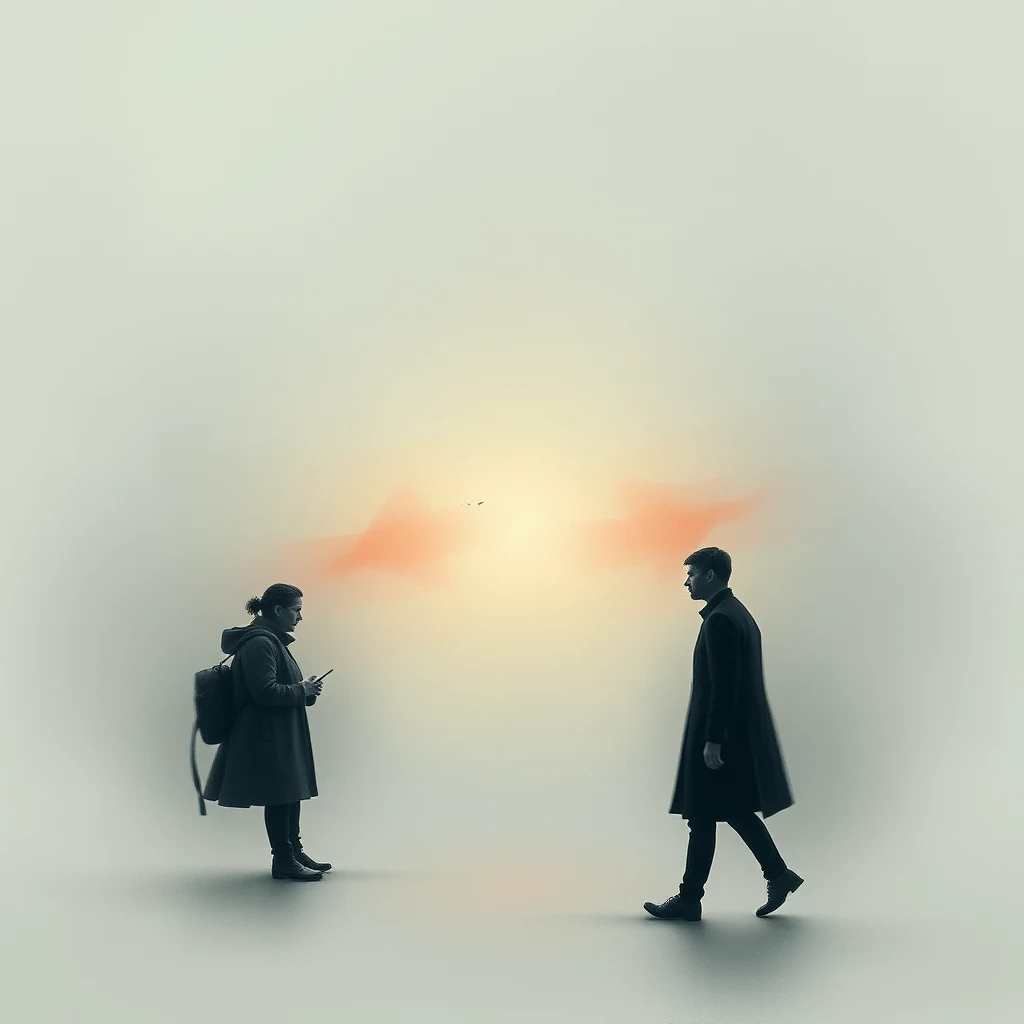
After the door passesIllustration · AI-generated (FLUX.1-dev)
Why the brain cheats
The usual figure cited is that the human sensory system takes in something like eleven million bits per second while conscious awareness handles fewer than fifty. The numbers come from a 1986 estimate by the German physiologist Manfred Zimmermann and should be treated as orders of magnitude rather than precise quantities, but the ratio is the point. Attention is metabolically expensive. The brain runs on roughly twenty watts. It cannot afford to encode and retain everything the retina captures, so it doesn't.
Change blindnessJohn J. Madrid · BY-SA 4.0
Instead it constructs what perception researchers call a *gist* — a low-resolution summary of the scene, plus high-resolution detail wherever the eyes happen to be pointed at that instant. The illusion of a continuous, detailed world arises because the eyes move three or four times a second and the brain stitches the samples together with strong priors about what ought to be there. When the priors are right, the system is fast and accurate. When something quietly violates them during an interruption, the violation can sit in plain sight indefinitely.
This has practical consequences that have driven much of the follow-up funding. Eyewitness testimony is less reliable than juries believe. Radiologists miss tumours that are visible in retrospect; in one striking 2013 replication, twenty out of twenty-four expert radiologists failed to spot a gorilla forty-eight times the size of an average nodule pasted into a lung CT scan they were searching. Drivers fail to see motorcycles at junctions they have looked directly at. The door study is funny; the literature it spawned is not.
A perception laboratory recreates flicker-style change blindness using two nearly identicaIllustration · AI-generated (FLUX.1-dev)
What we still don't know
We do not know, with any confidence, what the brain *does* retain between glances. Some researchers argue for a sparse but genuine visual memory that the comparison process simply fails to query. Others argue the representation is essentially empty and that we have only the gist plus the current fixation. The two camps have been arguing since the late 1990s and the evidence remains compatible with both.
Change blindnessGlobe_and_high_court.jpg: created by jjron Globe_and_high_co · CC BY-SA 3.0
We do not know why some people detect changes that others miss. Individual variation in change-detection tasks is large, stable, and only weakly correlated with general intelligence or working memory. It tracks expertise — chess players notice changes on a chessboard, radiologists on a scan — but the underlying mechanism is unclear.
A radiology reading room is shown without readable scans: a doctor leans toward a softly gIllustration · AI-generated (FLUX.1-dev)
We do not know how much of ordinary social life is shaped by these failures. The door-study pedestrians did not just miss a haircut; they missed a whole person. How often, in lower-stakes moments, do we converse with a version of someone that has quietly been edited?
Magicians have known the answer for a very long time. The science has only recently caught up, and mostly by walking a door across a footpath in the middle of someone's sentence.
1997年秋天,在康奈尔大学 Cornell UniversityInstitutionCornell UniversityIvy League research university in Ithaca, New York, founded in 1865. Its psychology department hosted Daniel Simons in the late 1990s when he and Daniel Levin ran the door study on a campus walkway. The fieldwork was Cornell-side, on real undergraduates who were genuinely just trying to give directions to a stranger holding a map.位于纽约州伊萨卡的常春藤盟校研究型大学,创建于1865年。20世纪90年代末,其心理学系曾接纳丹尼尔·西蒙斯(Daniel Simons),他与丹尼尔·莱文(Daniel Levin)在校园人行道上开展了"换人实验"(door study)。这项田野研究在康奈尔大学一侧进行,受试者是真正的本科生,他们当时只是真心实意地想为一位手持地图的陌生人指路。Universidad de la Ivy League ubicada en Ithaca, Nueva York, fundada en 1865. Su departamento de psicología acogió a Daniel Simons a finales de la década de 1990, cuando él y Daniel Levin llevaron a cabo el estudio de la puerta en un sendero del campus. El trabajo de campo se realizó en Cornell, con estudiantes de pregrado reales que sencillamente intentaban dar indicaciones a un desconocido que sostenía un mapa.الجامعة بحثية من رابطة اللبلاب تقع في إيثاكا بولاية نيويورك، تأسست عام 1865. استضاف قسم علم النفس فيها دانييل سيمونز في أواخر تسعينيات القرن العشرين حين أجرى مع دانييل ليفين دراسة الباب على ممرٍ في الحرم الجامعي. جرى العمل الميداني في كورنيل، على طلاب جامعيين حقيقيين كانوا فعلاً يحاولون فقط إرشاد غريبٍ يحمل خريطة.Universidade da Ivy League em Ithaca, Nova Iorque, fundada em 1865. O seu departamento de psicologia acolheu Daniel Simons no final da década de 1990, quando ele e Daniel Levin conduziram o estudo da porta numa passagem do campus. O trabalho de campo foi realizado do lado de Cornell, com estudantes universitários reais que estavam genuinamente apenas a tentar dar indicações a um estranho que segurava um mapa.न्यूयॉर्क के इथाका में स्थित एक आइवी लीग अनुसंधान विश्वविद्यालय, जिसकी स्थापना 1865 में हुई थी। इसके मनोविज्ञान विभाग ने 1990 के दशक के उत्तरार्ध में डैनियल साइमन्स की मेजबानी की थी, जब उन्होंने और डैनियल लेविन ने परिसर के एक पैदल मार्ग पर 'डोर स्टडी' (दरवाजा प्रयोग) का संचालन किया था। यह फील्डवर्क कॉर्नेल परिसर में उन वास्तविक स्नातक छात्रों पर किया गया था, जो वास्तव में केवल हाथ में नक्शा लिए एक अजनबी को रास्ता बताने का प्रयास कर रहे थे।Universitas riset Ivy League di Ithaca, New York, yang didirikan pada tahun 1865. Departemen psikologinya menaungi Daniel Simons pada akhir tahun 1990-an ketika ia dan Daniel Levin melakukan eksperimen pintu di jalur pejalan kaki kampus. Penelitian lapangan tersebut dilakukan di area kampus Cornell, dengan subjek mahasiswa sarjana sungguhan yang benar-benar hanya mencoba memberikan petunjuk arah kepada orang asing yang memegang peta.Université de recherche de l'Ivy League située à Ithaca, dans l'État de New York, fondée en 1865. Son département de psychologie a accueilli Daniel Simons à la fin des années 1990, période durant laquelle il a mené, avec Daniel Levin, l'« expérience de la porte » sur une allée du campus. Ce travail de terrain s'est déroulé sur le campus de Cornell, auprès de véritables étudiants de premier cycle qui tentaient simplement d'indiquer son chemin à un inconnu tenant une carte.1865年に創立された、ニューヨーク州イサカに位置するアイビーリーグ加盟の研究大学。1990年代後半、同大学の心理学部に所属していたダニエル・シモンズが、ダニエル・レヴィンとともにキャンパス内の歩道で「ドア実験」を行った。このフィールドワークはコーネル大学内で行われ、地図を持った見知らぬ人に純粋に道を教えようとしていた、実際の学部生を対象としていた。Исследовательский университет Лиги плюща в Итаке, штат Нью-Йорк, основанный в 1865 году. В конце 1990-х годов на его кафедре психологии работал Дэниел Саймонс; именно тогда он совместно с Дэниелом Левином провел «эксперимент с дверью» на пешеходной дорожке кампуса. Полевые исследования проходили на территории Корнелла, а испытуемыми стали обычные студенты бакалавриата, которые просто искренне пытались подсказать дорогу незнакомцу с картой.1865 gegründete Forschungsuniversität der Ivy League in Ithaca, New York. An ihrem psychologischen Institut forschte Ende der 1990er-Jahre Daniel Simons, als er und Daniel Levin die „Tür-Studie“ auf einem Campusweg durchführten. Die Feldforschung fand auf dem Cornell-Campus an echten Bachelorstudierenden statt, die tatsächlich nur versuchten, einem Fremden mit einer Karte den Weg zu weisen.1865년에 설립된 뉴욕주 이사카 소재의 아이비리그 연구 중심 대학이다. 1990년대 후반 이 대학 심리학과에 대니얼 사이먼스가 재직할 당시, 그와 대니얼 레빈은 캠퍼스 보도에서 '문 실험'을 진행했다. 현장 연구는 코넬대 캠퍼스에서 이루어졌으며, 지도를 든 낯선 사람에게 정말로 단순히 길을 안내하려던 실제 학부생들을 대상으로 했다. 的一条砖砌人行道上,一名手拿校园地图的研究人员走近路人并询问前往附近一栋建筑的方向。在交流进行了15秒时,两名抬着一扇木门的男子粗鲁地插到了他们中间。在木门的遮挡下,原先的研究人员退了出去,第二位外表明显不同的研究人员接替了他的位置——身高不同、体型不同、衣服不同、声音不同。谈话继续进行。在约一半的试验中,路人继续向这个他们从未见过的人指路,完全没有察觉到任何变化。
该实验由 Daniel SimonsPersonDaniel SimonsAmerican cognitive psychologist, now at the University of Illinois at Urbana-Champaign, best known for the 1999 selective-attention experiment with Christopher Chabris that produced the gorilla video. His broader research programme concerns the limits of human attention, memory, and the gap between what people believe their minds do and what they actually do. He has spent two decades replicating, refining, and arguing against simple readings of his own headline result.美国认知心理学家,现任职于伊利诺伊大学厄巴纳-香槟分校,以1999年与克里斯托弗·查布里斯共同开展的选择性注意实验(即"大猩猩视频"实验)而广为人知。其研究纲领涵盖人类注意力与记忆的局限,以及人们对自身心理运作的主观认知与客观实际之间的差距。二十余年来,他持续从事这一标志性研究成果的重复验证与深化阐释,并致力于反驳对该结果的简单化解读。Psicólogo cognitivo estadounidense, actualmente en la Universidad de Illinois en Urbana-Champaign, conocido sobre todo por el experimento de atención selectiva de 1999 realizado junto a Christopher Chabris que dio origen al vídeo del gorila. Su programa de investigación más amplio versa sobre los límites de la atención y la memoria humanas, y la brecha entre lo que las personas creen que hace su mente y lo que esta hace en realidad. Lleva dos décadas replicando, refinando y cuestionando las lecturas simplistas de su propio resultado más celebrado.عالم نفس إدراكي أمريكي، يعمل حالياً في جامعة إلينوي في أوربانا-شامبين، اشتُهر بتجربة الانتباه الانتقائي التي أجراها عام 1999 مع كريستوفر شابري، والتي أسفرت عن مقطع الغوريلا الشهير. يتمحور برنامجه البحثي الأشمل حول حدود الانتباه والذاكرة البشريَّين، والهوَّة بين ما يعتقد الناس أن عقولهم تفعله وما تفعله فعلياً. وقد أمضى عقدين من الزمن في إعادة اختبار نتيجته البحثية الأبرز وتنقيحها، والجدال ضد القراءات المبسَّطة لها.Psicólogo cognitivo norte-americano, atualmente na Universidade de Illinois em Urbana-Champaign, mais conhecido pelo experimento de atenção seletiva de 1999 realizado com Christopher Chabris que deu origem ao vídeo do gorila. O seu programa de investigação mais abrangente versa sobre os limites da atenção humana, da memória e a discrepância entre aquilo que as pessoas acreditam que as suas mentes fazem e aquilo que elas realmente fazem. Dedicou duas décadas a replicar, refinar e contestar leituras simplistas do seu próprio resultado de maior projeção.अमेरिकी संज्ञानात्मक मनोवैज्ञानिक, वर्तमान में इलिनॉय विश्वविद्यालय, अर्बाना-शैंपेन में कार्यरत; 1999 में क्रिस्टोफ़र शैब्रिस के साथ किए गए चयनात्मक-अवधान प्रयोग के लिए सर्वाधिक प्रसिद्ध, जिसके परिणामस्वरूप गोरिल्ला वीडियो अस्तित्व में आया। उनका व्यापक शोध कार्यक्रम मानव अवधान एवं स्मृति की सीमाओं तथा उस अंतराल पर केंद्रित है जो लोगों की इस धारणा और वास्तविकता के बीच विद्यमान है कि उनका मन क्या करता है और वह वास्तव में क्या करता है। वे दो दशकों से अपने इसी चर्चित परिणाम की पुनरावृत्ति, परिष्करण और उसकी सरलीकृत व्याख्याओं के खंडन में संलग्न हैं।Psikolog kognitif Amerika, kini bertugas di University of Illinois at Urbana-Champaign, paling dikenal berkat eksperimen atensi selektif tahun 1999 bersama Christopher Chabris yang menghasilkan video gorila. Program penelitiannya yang lebih luas berkaitan dengan batas-batas atensi dan memori manusia, serta kesenjangan antara apa yang diyakini orang mengenai kemampuan pikiran mereka dan apa yang sesungguhnya terjadi. Selama dua dekade ia telah mereplikasi, menyempurnakan, dan menentang penafsiran sederhana atas temuan utamanya sendiri.Psychologue cognitiviste américain, aujourd'hui rattaché à l'université de l'Illinois à Urbana-Champaign, principalement connu pour l'expérience d'attention sélective de 1999 conduite avec Christopher Chabris, dont est issue la vidéo du gorille. Son programme de recherche porte plus largement sur les limites de l'attention et de la mémoire humaines, ainsi que sur l'écart entre les représentations que les individus se font du fonctionnement de leur esprit et ce que celui-ci accomplit réellement. Depuis deux décennies, il s'emploie à répliquer, affiner et contester les lectures simplistes de son propre résultat phare.アメリカの認知心理学者。現在はイリノイ大学アーバナ・シャンペーン校に所属。クリストファー・チャブリスとともに1999年に実施した選択的注意実験(通称「ゴリラ動画」)により広く知られる。研究の主軸は、人間の注意および記憶の限界と、人々が自らの心の働きについて抱く信念と実際の働きとの乖離の解明にある。自身の看板的研究成果に対する安易な解釈に異議を唱えながら、その再現と精緻化に20年以上を費やしてきた。Американский когнитивный психолог, ныне работающий в Иллинойсском университете в Урбана-Шампейне; наиболее известен экспериментом 1999 года по избирательному вниманию, проведённым совместно с Кристофером Шабри и породившим видеозапись с гориллой. Более широкая исследовательская программа учёного посвящена ограничениям человеческого внимания и памяти, а также разрыву между представлениями людей о работе собственного разума и тем, как он функционирует в действительности. На протяжении двух десятилетий он занимается воспроизведением, уточнением и оспариванием упрощённых интерпретаций собственного резонансного результата.Amerikanischer Kognitionspsychologe, gegenwärtig an der University of Illinois at Urbana-Champaign tätig, vor allem bekannt durch das 1999 gemeinsam mit Christopher Chabris durchgeführte Experiment zur selektiven Aufmerksamkeit, aus dem das Gorilla-Video hervorging. Sein weiterreichendes Forschungsprogramm gilt den Grenzen menschlicher Aufmerksamkeit und des Gedächtnisses sowie der Kluft zwischen dem, was Menschen ihrem Geist zuschreiben, und dem, was dieser tatsächlich leistet. Zwei Jahrzehnte lang widmete er sich der Replikation, Verfeinerung und Zurückweisung vereinfachender Deutungen seines eigenen aufsehenerregenden Befunds.미국의 인지심리학자로, 현재 일리노이 대학교 어배너-섐페인 캠퍼스에 재직 중이다. 크리스토퍼 체이브리스와 공동으로 수행한 1999년의 선택적 주의 실험, 이른바 '고릴라 영상'으로 가장 널리 알려져 있다. 보다 광범위한 연구 프로그램은 인간 주의력과 기억의 한계, 그리고 사람들이 자신의 마음이 실제로 어떻게 작동하는지에 대해 믿는 것과 실제 작동 방식 사이의 간극을 탐구한다. 20여 년에 걸쳐 자신의 대표적 연구 결과를 반복 검증하고 정교화하는 한편, 이에 대한 단순한 해석에 반론을 제기하는 작업을 지속해왔다. 和 Daniel LevinPersonDaniel LevinAmerican cognitive psychologist, now at Vanderbilt, who collaborated with Daniel Simons on the foundational change-blindness studies of the late 1990s. Levin's later work extends the question to event perception and to the surprisingly wide gulf between what observers think they have seen and what their visual systems actually registered.译者注:这是一条百科全书式人物简介,需译为简体中文,保持事实、紧凑、中性的百科风格。
美国认知心理学家,现任职于范德比尔特大学,曾于20世纪90年代末与丹尼尔·西蒙斯合作开展奠基性的变化盲视研究。莱文后期的研究将这一问题拓展至事件知觉,以及观察者自认为看到的内容与其视觉系统实际记录到的内容之间出人意料的巨大鸿沟。Daniel Levin es un psicólogo cognitivo estadounidense, actualmente en la Universidad Vanderbilt, que colaboró con Daniel Simons en los estudios fundacionales sobre la ceguera al cambio de finales de la década de 1990. El trabajo posterior de Levin extiende la pregunta a la percepción de eventos y al sorprendentemente amplio abismo que media entre lo que los observadores creen haber visto y lo que sus sistemas visuales registraron en realidad.المترجمة الأمريكية دانييل ليفين... دعني أترجم النص.
The name "Levin" — male cognitive psychologist, Daniel Levin, at Vanderbilt. Let me translate.
عالم نفس معرفي أمريكي، يعمل حاليًا في جامعة فاندربيلت، تعاون مع دانيال سيمونز في الدراسات التأسيسية حول العمى التغييري في أواخر تسعينيات القرن العشرين. ويوسّع عمل ليفين اللاحق هذا السؤال ليشمل إدراك الأحداث والهوة الواسعة على نحو مفاجئ بين ما يظن المراقبون أنهم رأوه وما سجّلته أنظمتهم البصرية فعليًا.Daniel Levin é um psicólogo cognitivo norte-americano, atualmente na Universidade Vanderbilt, que colaborou com Daniel Simons nos estudos fundadores sobre cegueira à mudança no final da década de 1990. O trabalho posterior de Levin estende a questão à percepção de eventos e ao abismo surpreendentemente amplo entre aquilo que os observadores julgam ter visto e aquilo que seus sistemas visuais de fato registraram.अमेरिकी संज्ञानात्मक मनोवैज्ञानिक, जो अब वैंडरबिल्ट में कार्यरत हैं, और जिन्होंने 1990 के दशक के उत्तरार्ध में परिवर्तन-अंधता (change blindness) पर हुए आधारभूत अध्ययनों में डैनियल साइमन्स के साथ सहयोग किया। लेविन का बाद का कार्य इस प्रश्न को घटना-प्रत्यक्षण (event perception) तक और प्रेक्षक जो देख चुके होने का विश्वास करते हैं तथा उनके दृश्य तंत्र ने वास्तव में जो ग्रहण किया, उसके बीच की आश्चर्यजनक रूप से बड़ी खाई तक विस्तारित करता है।Dele Levin, psikolog kognitif Amerika yang kini berkarya di Vanderbilt, yang berkolaborasi dengan Daniel Simons dalam studi-studi fondasional tentang kebutaan terhadap perubahan (change blindness) pada akhir 1990-an. Karya Levin selanjutnya memperluas pertanyaan ini ke persepsi peristiwa dan ke jurang yang ternyata sangat lebar antara apa yang dikira para pengamat telah mereka lihat dan apa yang sebenarnya terekam oleh sistem visual mereka.Psychologue cognitiviste américain, actuellement à l'université Vanderbilt, qui a collaboré avec Daniel Simons aux études fondatrices sur la cécité au changement à la fin des années 1990. Les travaux ultérieurs de Levin étendent cette problématique à la perception des événements et au fossé d'une ampleur surprenante entre ce que les observateurs pensent avoir vu et ce que leur système visuel a réellement enregistré.介田にあるヴァンダービルト大学に在籍するアメリカの認知心理学者で、1990年代後半にダニエル・シモンズと協力し、変化盲(チェンジ・ブラインドネス)に関する基礎的な研究を行った。レヴィンの後年の研究は、この問いを事象(イベント)の知覚へと広げ、観察者が自分は見たと思っている内容と、その視覚システムが実際に登録した内容との間に驚くほど大きな隔たりがあることへと及んでいる。Дэниел Левин — американский когнитивный психолог, в настоящее время работающий в Университете Вандербильта, который в сотрудничестве с Дэниелом Саймонсом провёл основополагающие исследования слепоты к изменениям в конце 1990-х годов. Более поздние работы Левина распространяют этот вопрос на восприятие событий и на удивительно широкую пропасть между тем, что наблюдатели полагают увиденным, и тем, что в действительности зарегистрировала их зрительная система.Demarest verfür später ich brauche kein Tool. Direkt übersetzen.
Amerikanischer Kognitionspsychologe, heute an der Vanderbilt University, der in den späten 1990er-Jahren mit Daniel Simons die grundlegenden Studien zur Veränderungsblindheit (change blindness) durchführte. Levins spätere Arbeiten weiten die Fragestellung auf die Ereigniswahrnehmung aus sowie auf die überraschend große Kluft zwischen dem, was Beobachter zu sehen glauben, und dem, was ihr visuelles System tatsächlich erfasst hat.밴더빌트 대학교에 재직 중인 미국 인지심리학자로, 1990년대 후반 변화맹(change blindness)에 관한 토대가 된 연구에서 대니얼 사이먼스와 협력했다. 레빈의 이후 연구는 그 문제를 사건 지각으로, 그리고 관찰자가 자신이 보았다고 생각하는 것과 그들의 시각 체계가 실제로 등록한 것 사이의 의외로 넓은 간극으로 확장한다. 联合进行,并于次年发表在《心理科学协报与评论》上,题为《现实世界互动中未能检测到人员的变化》。它成为认知研究人员十年来一直在围绕研究的一个现象的经典证明:变化盲视 change blindnessConceptChange blindnessThe failure to notice large changes between two views of a scene separated by a brief interruption — a blink, a saccade, a flicker, a cut in a film. In classic demonstrations, an experimenter stops a passer-by to ask directions, is briefly hidden by people carrying a door, and is swapped for a different person; many passers-by carry on the conversation without registering the switch. A cousin of inattentional blindness.在两次场景观察之间,因短暂的中断——一次眨眼、一次扫视、一次闪烁、一次电影剪辑——而未能察觉到画面中发生的重大变化。在经典演示中,实验者拦住路人问路,中途被抬门而过的人短暂遮挡,随即被另一个人替换;许多路人会继续对话,而完全未察觉对方已被掉包。它是无意视盲的近亲。El fracaso en detectar cambios de gran magnitud entre dos vistas de una escena separadas por una breve interrupción —un parpadeo, una sacada, un destello, un corte cinematográfico—. En las demostraciones clásicas, un experimentador detiene a un transeúnte para pedirle indicaciones, queda momentáneamente oculto por personas que transportan una puerta y es sustituido por otra persona diferente; muchos transeúntes continúan la conversación sin registrar el cambio. Variante próxima de la ceguera por falta de atención.الإخفاق في ملاحظة التغييرات الكبيرة بين مشهدَين متتاليَين يفصل بينهما انقطاعٌ وجيز — كالرمشة، أو السكادة، أو الوميض، أو القطع في الفيلم. وفي التجارب الكلاسيكية، يُوقف الباحثُ أحدَ المارة ليستفسر منه عن الاتجاهات، ثم يُحجب لوهلة خلف أشخاص يحملون باباً، فيحلَّ محله شخصٌ مختلف؛ ويواصل كثيرٌ من المارة الحديثَ دون أن يُدركوا الاستبدال. وهو ظاهرةٌ قريبة الصلة بالعمى الانتباهي.Falha em perceber grandes mudanças entre duas visões de uma cena separadas por uma breve interrupção — um piscar de olhos, uma sacada, uma cintilação, um corte cinematográfico. Em demonstrações clássicas, um experimentador aborda um transeunte para pedir informações, é brevemente ocultado por pessoas carregando uma porta e substituído por outra pessoa; muitos transeuntes prosseguem a conversa sem registrar a troca. Fenômeno afim à cegueira por desatenção.दृश्य में संक्षिप्त व्यवधान — पलक झपकना, सैकेड, प्रकाश का टिमटिमाना, या फ़िल्म में कट — के दो क्षणों के बीच हुए बड़े परिवर्तनों को न पहचान पाने की विफलता। परिवर्तन अंधता (change blindness) के क्लासिक प्रदर्शनों में एक प्रयोगकर्ता किसी राहगीर को रुककर रास्ता पूछता है; बीच में दरवाज़ा उठाए जा रहे लोगों की आड़ में वह प्रयोगकर्ता किसी दूसरे व्यक्ति से बदल दिया जाता है, और बहुत-से राहगीर इस बदलाव को भाँपे बिना बातचीत जारी रखते हैं। यह अनवधानजन्य अंधता (inattentional blindness) का एक सहोदर परिघटना है।Kegagalan untuk memperhatikan perubahan besar antara dua tampilan suatu adegan yang dipisahkan oleh selingan singkat — kedipan mata, sakade, kilatan, atau potongan dalam film. Dalam demonstrasi klasik, seorang peneliti menghentikan pejalan kaki untuk menanyakan arah, sesaat tersembunyi oleh orang-orang yang membawa pintu, lalu digantikan oleh orang yang berbeda; banyak pejalan kaki tetap melanjutkan percakapan tanpa menyadari pergantian tersebut. Merupakan kerabat dari kebutaan inatensi.L'incapacité à percevoir des modifications importantes entre deux visions d'une scène séparées par une brève interruption — un clignement des yeux, une saccade, un scintillement, une coupe au montage. Dans les démonstrations classiques, un expérimentateur arrête un passant pour lui demander son chemin, est momentanément dissimulé par des individus portant une porte, puis est remplacé par une autre personne ; de nombreux passants poursuivent la conversation sans remarquer la substitution. Phénomène apparenté à la cécité par inattention.瞬目・サッカード・画面の明滅・映画のカットといった短い中断を挟んだ二つの場面の間で生じた大きな変化を見落とす現象。古典的な実証例では、実験者が通行人に道を尋ねている最中にドアを運ぶ人物らによって一時的に遮られ、その間に別人とすり替わるが、多くの通行人はすり替わりに気づかないまま会話を続ける。不注意盲と近縁の概念である。Неспособность замечать существенные изменения между двумя наблюдениями сцены, разделёнными кратким прерыванием — морганием, саккадой, помеховой вспышкой или монтажной склейкой. В классических демонстрациях экспериментатор останавливает прохожего, чтобы спросить дорогу; пока его на несколько секунд заслоняют люди, несущие дверь, его подменяют другим человеком — многие прохожие продолжают разговор, не замечая подмены. Явление, родственное слепоте невнимания.Das Unvermögen, große Veränderungen zwischen zwei Ansichten einer Szene wahrzunehmen, die durch eine kurze Unterbrechung getrennt sind — einen Lidschlag, eine Sakkade, ein Flackern, einen Filmschnitt. In klassischen Versuchsanordnungen hält ein Versuchsleiter einen Passanten an, um nach dem Weg zu fragen, wird kurz durch Personen verdeckt, die eine Tür tragen, und durch eine andere Person ersetzt; viele Passanten führen das Gespräch fort, ohne den Wechsel zu bemerken. Ein Verwandter der Unaufmerksamkeitsblindheit.짧은 중단—눈 깜빡임, 단속성 안구운동, 깜박임, 영화의 컷—을 사이에 두고 관찰한 동일 장면의 두 시점 사이에서 일어나는 큰 변화를 알아채지 못하는 현상. 고전적인 시연에서, 실험자가 행인을 불러 세워 길을 묻는 도중 문을 들고 지나가는 사람들에 의해 잠시 가려졌다가 다른 사람으로 교체되는데, 많은 행인들이 이 교체를 인지하지 못한 채 대화를 이어간다. 무주의 맹시의 유사 현상이다.。在合适的条件下,视觉场景中巨大的、明显的改变——包括你正在与之交谈的人的身份——都可以不被察觉。
Change blindness illusionGlobe_and_high_court.jpg: created by jjron Globe_and_high_co · BY-SA 4.0
事实证明,这种“合适的条件”令人不安地普通。所需要的仅仅是一个短暂的中断:眨眼、扫视 saccadeConceptSaccadeA rapid ballistic movement of the eyes between fixation points, typically lasting twenty to two hundred milliseconds. The human visual system makes three to four saccades per second, and vision is largely suppressed during each one. The brief blindness of a saccade is one of the natural interruptions that allows change blindness to occur in everyday life without any external trick.扫视,一种在注视点之间发生的快速弹道式眼球运动,通常持续二十到二百毫秒。人类视觉系统每秒进行三到四次扫视,且在每次扫视期间视觉在很大程度上被抑制。扫视造成的短暂失明是日常生活中无需任何外部手段便能让变化盲视得以发生的自然中断之一。Sacádico es —pero el término más preciso aquí es "sacada". Permítame entregar la traducción.
Un movimiento balístico rápido de los ojos entre puntos de fijación, que dura por lo general de veinte a doscientos milisegundos. El sistema visual humano realiza de tres a cuatro sacadas por segundo, y la visión queda en gran medida suprimida durante cada una de ellas. La breve ceguera de una sacada es una de las interrupciones naturales que permiten que la ceguera al cambio se produzca en la vida cotidiana sin necesidad de ningún truco externo.طَفْرَة بصرية سريعة للعينين بين نقاط التثبيت، تدوم عادةً ما بين عشرين ومئتي مِلّي ثانية. ويُجري الجهاز البصري البشري ثلاث إلى أربع طفرات في الثانية، ويُكبَح الإبصار إلى حدٍّ كبير خلال كلٍّ منها. ويُعدّ العمى الوجيز الناتج عن الطفرة البصرية أحدَ الانقطاعات الطبيعية التي تتيح حدوث عمى التغيّر في الحياة اليومية دون أيّ حيلة خارجية.Movimento balístico rápido dos olhos entre pontos de fixação, durando tipicamente de vinte a duzentos milissegundos. O sistema visual humano realiza de três a quatro sacadas por segundo, e a visão é amplamente suprimida durante cada uma delas. A breve cegueira de uma sacada é uma das interrupções naturais que permite que a cegueira à mudança ocorra na vida cotidiana sem nenhum truque externo.साद (नेत्र-कूद): दृष्टि-बिंदुओं के बीच आँखों की एक तीव्र बैलिस्टिक गति, जो प्रायः बीस से दो सौ मिलीसेकंड तक रहती है। मानव दृष्टि-तंत्र प्रति सेकंड तीन से चार साद करता है, और प्रत्येक के दौरान दृष्टि अधिकांशतः दमित रहती है। साद का यह क्षणिक अंधापन उन प्राकृतिक व्यवधानों में से एक है जो किसी बाहरी चाल के बिना ही रोज़मर्रा के जीवन में परिवर्तन-अंधता को घटित होने देते हैं।Sebuah gerakan balistik mata yang cepat di antara titik-titik fiksasi, biasanya berlangsung selama dua puluh hingga dua ratus milidetik. Sistem visual manusia melakukan tiga sampai empat sakade per detik, dan penglihatan sebagian besar tertekan selama masing-masing gerakan tersebut. Kebutaan singkat saat sakade merupakan salah satu interupsi alami yang memungkinkan terjadinya buta perubahan dalam kehidupan sehari-hari tanpa tipuan eksternal apa pun.Saccade : mouvement balistique rapide des yeux entre des points de fixation, durant généralement de vingt à deux cents millisecondes. Le système visuel humain effectue trois à quatre saccades par seconde, et la vision est largement supprimée pendant chacune d'elles. La brève cécité d'une saccade est l'une des interruptions naturelles qui permettent à la cécité au changement de se produire dans la vie quotidienne sans aucun artifice externe.サッケード(衝動性眼球運動)は、注視点間で生じる眼球の急速な弾道運動であり、通常は20ミリ秒から200ミリ秒持続する。人間の視覚系は毎秒3回から4回のサッケードを行っており、その各々の最中には視覚が大幅に抑制される。サッケードによるこの一瞬の盲目状態は、外的な仕掛けを一切伴わずに日常生活のなかで変化盲(チェンジ・ブラインドネス)を生じさせる自然な中断のひとつである。Саккада — быстрое баллистическое движение глаз между точками фиксации, обычно длящееся от двадцати до двухсот миллисекунд. Зрительная система человека совершает три-четыре саккады в секунду, и во время каждой из них зрение в значительной мере подавляется. Кратковременная слепота при саккаде — одно из естественных прерываний, благодаря которым слепота к изменениям возникает в повседневной жизни без какого-либо внешнего трюка.Sakkade
Eine schnelle ballistische Augenbewegung zwischen Fixationspunkten, die typischerweise zwanzig bis zweihundert Millisekunden dauert. Das menschliche visuelle System führt drei bis vier Sakkaden pro Sekunde aus, wobei das Sehen während jeder einzelnen weitgehend unterdrückt wird. Die kurze Blindheit einer Sakkade ist eine der natürlichen Unterbrechungen, die es ermöglichen, dass Veränderungsblindheit im Alltag ohne jeden äußeren Trick auftritt.눈이 고정점들 사이를 빠르게 도약하는 탄도성 안구 운동으로, 보통 20밀리초에서 200밀리초간 지속된다. 인간의 시각계는 초당 서너 번의 단속운동을 하며, 그 각각의 동안 시각은 대부분 억제된다. 단속운동의 이 짧은 실명은 외부의 어떠한 속임수 없이도 일상생활에서 변화맹이 일어나게 하는 자연적 중단 가운데 하나이다.、闪烁或经过的门。如果没有这种中断,视觉系统就能检测到运动并立即标记出变化。而一旦有了中断,就必须通过对比记忆与新场景来重建变化,但这种对比很少会发生。
猩猩与木门
在木门研究一年后,西蒙斯与 Christopher ChabrisPersonChristopher ChabrisAmerican cognitive psychologist and co-author, with Daniel Simons, of the 1999 invisible-gorilla study and the 2010 trade book that followed it. Trained at Harvard, he now researches collective intelligence and individual differences in cognition at Geisinger. His work tends to dismantle popular intuitions about the mind — that memory is reliable, that confidence tracks competence, that we notice what is in front of us.美国认知心理学家,与丹尼尔·西蒙斯合著1999年"隐形大猩猩"研究及随后出版的2010年同名大众读物。曾受训于哈佛大学,现于盖辛格从事集体智能与认知个体差异研究。其研究长于颠覆大众对心智的惯常直觉——记忆是可靠的、自信与能力相称、以及我们能察觉眼前所见。Psicólogo cognitivo estadounidense y coautor, junto a Daniel Simons, del estudio del gorila invisible de 1999 y del libro de divulgación de 2010 que lo siguió. Formado en Harvard, investiga actualmente la inteligencia colectiva y las diferencias individuales en cognición en Geisinger. Su obra tiende a desmantelar intuiciones populares sobre la mente: que la memoria es fiable, que la confianza refleja la competencia y que percibimos lo que tenemos delante.عالم نفس إدراكي أمريكي، اشترك مع دانيال سيمونز في تأليف دراسة الغوريلا الخفية عام 1999 والكتاب الموجَّه للجمهور العام الذي صدر عنها عام 2010. تلقّى تدريبه في هارفارد، ويُجري حالياً أبحاثه في الذكاء الجمعي والفروق الفردية في الإدراك بمؤسسة غيزينغر. تتّجه أعماله نحو تفنيد الحدوس الشائعة حول العقل البشري — من أن الذاكرة موثوقة، وأن الثقة بالنفس تعكس الكفاءة، وأننا نُدرك ما يقع أمامنا.Psicólogo cognitivo norte-americano e coautor, com Daniel Simons, do estudo do gorila invisível de 1999 e do livro de divulgação que se seguiu, em 2010. Formado em Harvard, pesquisa atualmente inteligência coletiva e diferenças individuais na cognição no Geisinger. Sua obra tende a desmontar intuições populares sobre a mente — de que a memória é confiável, de que a confiança acompanha a competência, de que percebemos o que está diante de nós.अमेरिकी संज्ञानात्मक मनोवैज्ञानिक तथा डेनियल साइमन्स के साथ 1999 के अदृश्य-गोरिल्ला अध्ययन एवं उससे अनुसृत 2010 की व्यावसायिक पुस्तक के सह-लेखक। हार्वर्ड में प्रशिक्षित, वे अब गाइज़िंगर में सामूहिक बुद्धिमत्ता तथा अनुभूति में व्यैक्तिक भिन्नताओं पर शोध करते हैं। उनका कार्य मन के विषय में प्रचलित सहज धारणाओं को खंडित करता है — कि स्मृति विश्वसनीय होती है, कि आत्मविश्वास दक्षता का अनुगमन करता है, और कि हम अपने समक्ष जो उपस्थित है उस पर ध्यान देते हैं।Psikolog kognitif Amerika dan rekan penulis, bersama Daniel Simons, dari studi gorila tak terlihat tahun 1999 serta buku populer yang menyusulnya pada 2010. Lulusan Harvard, ia kini meneliti kecerdasan kolektif dan perbedaan individual dalam kognisi di Geisinger. Karyanya cenderung meruntuhkan intuisi populer tentang pikiran — bahwa ingatan bersifat andal, bahwa rasa percaya diri mencerminkan kompetensi, dan bahwa kita memperhatikan apa yang ada di hadapan kita.Psychologue cognitif américain et co-auteur, avec Daniel Simons, de l'étude sur le gorille invisible (1999) et de l'essai grand public qui s'ensuivit (2010). Formé à Harvard, il mène désormais des recherches sur l'intelligence collective et les différences interindividuelles en cognition à Geisinger. Ses travaux tendent à battre en brèche des intuitions populaires sur l'esprit — que la mémoire est fiable, que la confiance est à la mesure de la compétence, que nous percevons ce qui se trouve devant nous.アメリカの認知心理学者。ダニエル・サイモンズとともに1999年の「見えないゴリラ」実験を共同実施し、その成果をまとめた2010年刊の一般向け書籍の共著者でもある。ハーバード大学で研鑽を積み、現在はガイジンガーにおいて集合知および認知の個人差を研究している。記憶は信頼に足る、自信は能力の高さを示す、目の前にあるものは必ず知覚されるといった、心に関する通俗的な直感を体系的に覆す業績で知られる。Американский когнитивный психолог, соавтор — совместно с Дэниелом Саймонсом — исследования 1999 года с «невидимой гориллой» и вышедшей в 2010 году научно-популярной книги по его мотивам. Окончил Гарвард; в настоящее время изучает коллективный интеллект и индивидуальные различия в когнитивных способностях в организации Гайзингер. Его работы последовательно опровергают расхожие интуитивные представления о разуме: что память надёжна, что уверенность соответствует компетентности, что мы замечаем то, что находится прямо перед нами.Amerikanischer Kognitionspsychologe und Ko-Autor – gemeinsam mit Daniel Simons – der Unsichtbarer-Gorilla-Studie von 1999 sowie des 2010 erschienenen populärwissenschaftlichen Buches darüber. An der Harvard University ausgebildet, forscht er heute bei Geisinger zu kollektiver Intelligenz und individuellen Unterschieden in der Kognition. Sein Werk widerlegt wiederholt gängige Intuitionen über den Geist – dass das Gedächtnis verlässlich sei, dass Selbstsicherheit mit Kompetenz korreliere und dass wir wahrnehmen, was sich unmittelbar vor uns befindet.미국의 인지심리학자. 다니엘 사이먼스와 공동으로 1999년의 '보이지 않는 고릴라' 연구를 수행하고, 이를 바탕으로 한 2010년 대중 서적을 공저했다. 하버드에서 수학하였으며, 현재 가이싱어에서 집단 지성 및 인지의 개인차를 연구하고 있다. 그의 연구는 기억이 신뢰할 만하다거나, 자신감이 능력과 비례한다거나, 눈앞에 놓인 것을 알아챈다는 등 마음에 관한 대중적 직관을 해체하는 방향으로 수렴한다. 合作,完成了该领域历史上观看次数最多的知觉演示。受试者被要求在一段简短的篮球视频中计算身穿白衣的球员之间的传球次数。在视频进行到一半时,一个穿着猩猩玩偶服的女人走到球场中央,面向镜头,捶了捶胸口,然后走了出去。她在屏幕上出现了九秒钟。大约一半专注于计算传球次数的观众根本没有看到她。
Two workers carry a large wooden door directly between two people talking on a busy sidewaIllustration · AI-generated (FLUX.1-dev)
这在技术上属于一种不同的效应——无意盲视 inattentional blindnessConceptInattentional blindnessThe failure to notice a fully visible but unexpected object or event when attention is occupied elsewhere. Distinct from change blindness in that nothing changes — the missed stimulus is continuously present — but driven by the same underlying limit on conscious visual processing. The invisible gorilla study is its most cited demonstration; the effect has been replicated in radiologists missing a gorilla pasted into a CT scan.注意力被占用于别处时,未能察觉到完全可见但出乎意料的物体或事件。它与变化盲视不同,因为此处并无任何变化——被遗漏的刺激持续存在——但两者皆源于意识视觉加工的同一种内在局限。"看不见的大猩猩"实验是其最常被引用的实证演示;该效应也曾在放射科医生的研究中得到复现:他们漏看了被嵌入CT扫描图像中的一只大猩猩。La incapacidad de percibir un objeto o evento plenamente visible pero inesperado cuando la atención está ocupada en otra parte. Se distingue de la ceguera al cambio en que nada cambia —el estímulo no advertido está presente de forma continua—, pero obedece al mismo límite subyacente del procesamiento visual consciente. El estudio del gorila invisible es su demostración más citada; el efecto se ha replicado con radiólogos que no advierten un gorila insertado en una tomografía computarizada.آلعمى الانتباهي.
Wait—let me produce the translation properly.
عدم ملاحظة جسم أو حدث ظاهر تمامًا لكنه غير متوقع عندما يكون الانتباه منشغلًا في مكان آخر. يختلف عن عمى التغيير في أن لا شيء يتغير — فالمثير الذي يفوت ملاحظته حاضر باستمرار — لكنه ناتج عن الحد الكامن نفسه المفروض على المعالجة البصرية الواعية. وتُعَدّ دراسة الغوريلا الخفية أشهر برهان عليه؛ وقد جرى تكرار هذا التأثير لدى أطباء الأشعة الذين أغفلوا صورة غوريلا أُدرجت في صورة مقطعية محوسبة.Distração por desatenção (em inglês, *inattentional blindness*): a falha em perceber um objeto ou evento plenamente visível, porém inesperado, quando a atenção está ocupada em outro ponto. Distingue-se da cegueira à mudança pelo fato de nada se alterar — o estímulo não percebido está continuamente presente —, mas decorre do mesmo limite subjacente do processamento visual consciente. O estudo do gorila invisível é sua demonstração mais citada; o efeito foi replicado em radiologistas que não notaram um gorila inserido numa tomografia computadorizada.जब ध्यान कहीं और लगा हो, तब पूरी तरह दृश्यमान किंतु अप्रत्याशित वस्तु या घटना को देख न पाना। यह परिवर्तन-अंधता (चेंज ब्लाइंडनेस) से इस अर्थ में भिन्न है कि इसमें कुछ भी बदलता नहीं — छूट जाने वाला उद्दीपक निरंतर उपस्थित रहता है — किंतु यह सचेतन दृश्य प्रसंस्करण की उसी अंतर्निहित सीमा से संचालित होता है। अदृश्य गोरिल्ला अध्ययन इसका सर्वाधिक उद्धृत प्रमाण है; इस प्रभाव की पुनरावृत्ति उन रेडियोलॉजिस्टों में भी देखी गई जो सीटी स्कैन में चिपकाए गए गोरिल्ला को देख नहीं पाए।Inatensi (kebutaan tak-sadar) adalah kegagalan untuk menyadari suatu objek atau peristiwa yang sepenuhnya terlihat namun tak terduga ketika perhatian sedang tersita di tempat lain. Berbeda dari kebutaan terhadap perubahan (change blindness) karena tidak ada yang berubah — stimulus yang terlewat hadir secara terus-menerus — tetapi didorong oleh batas mendasar yang sama pada pemrosesan visual sadar. Studi gorila tak terlihat adalah demonstrasinya yang paling banyak dikutip; efek ini telah direplikasi pada para radiolog yang melewatkan gambar gorila yang ditempelkan ke dalam pemindaian CT.Incapacité à remarquer un objet ou un événement parfaitement visible mais inattendu lorsque l'attention est mobilisée ailleurs. Ce phénomène se distingue de la cécité au changement par le fait que rien ne change — le stimulus non perçu est présent en continu — mais il découle de la même limite sous-jacente du traitement visuel conscient. L'expérience du gorille invisible en est la démonstration la plus citée ; cet effet a été reproduit chez des radiologues n'ayant pas détecté un gorille incrusté sur une image de scanner.注意が他に占有されているときに、完全に視界に入っているにもかかわらず予期しない物体や出来事を見落とす現象。何も変化していない点——見落とされた刺激は継続して存在している——で変化盲とは区別されるが、意識的な視覚処理に対する同じ根本的な限界に起因する。最も多く引用される実証例は「見えないゴリラ」実験であり、この効果はCT画像に貼り付けられたゴリラを放射線科医が見落とすという形でも再現されている。Слепота по невниманию — неспособность заметить полностью видимый, но неожиданный объект или событие, когда внимание занято чем-то другим. Отличается от слепоты к изменениям тем, что ничего не меняется: пропущенный стимул присутствует непрерывно, — однако обусловлена тем же фундаментальным ограничением сознательной обработки зрительной информации. Самая цитируемая её демонстрация — исследование с «невидимой гориллой»; этот эффект был воспроизведён на рентгенологах, не заметивших изображение гориллы, вставленное в компьютерную томограмму.Synektische Blindheit (inattentional blindness) — das Übersehen eines vollständig sichtbaren, aber unerwarteten Objekts oder Ereignisses, während die Aufmerksamkeit anderweitig gebunden ist. Sie unterscheidet sich von der Veränderungsblindheit (change blindness) dadurch, dass sich nichts verändert — der übersehene Reiz ist durchgehend präsent —, beruht jedoch auf derselben grundlegenden Begrenzung der bewussten visuellen Verarbeitung. Die Studie mit dem unsichtbaren Gorilla ist ihre meistzitierte Demonstration; der Effekt wurde repliziert, als Radiologen einen in eine CT-Aufnahme eingefügten Gorilla übersahen.부주의맹시(inattentional blindness)는 주의가 다른 곳에 쏠려 있을 때 충분히 보이지만 예상하지 못한 물체나 사건을 알아차리지 못하는 현상이다. 아무것도 변하지 않는다는 점에서—놓친 자극은 계속해서 존재한다—변화맹시와 구별되지만, 의식적 시각 처리의 동일한 근본적 한계에서 비롯된다. '보이지 않는 고릴라' 실험이 가장 많이 인용되는 사례이며, 이 효과는 CT 영상에 삽입한 고릴라를 방사선과 전문의들이 놓치는 실험에서도 재현되었다.,即当注意力集中在别处时未能注意到意料之外的物体——但它分享了相同的底层启示。我们认为自己看到的富含全景细节的视觉世界,在很大程度上只是一种虚构。在窄锥状的中央凹注意力之外,大脑在帧与帧之间几乎不存储任何信息。它假设场景是稳定的,廉价地对其进行采样,并在缺少证据的地方补齐预期的内容。
Change blindness effectGlobe_and_high_court.jpg: created by jjron Globe_and_high_co · BY-SA 4.0
不列颠哥伦比亚大学的 Ronald RensinkPersonRonald RensinkCanadian cognitive scientist at the University of British Columbia whose flicker-paradigm experiments in the mid-1990s established change blindness as a laboratory phenomenon. By inserting a blank frame between two slightly different photographs, Rensink showed that observers could stare at alternating images for tens of seconds without detecting changes that were, once pointed out, impossible to miss.伦辛克(Rensink)是加拿大认知科学家,任教于不列颠哥伦比亚大学,他在20世纪90年代中期开展的闪烁范式实验确立了变化盲视作为一种实验室现象的地位。通过在两张略有差异的照片之间插入一帧空白画面,伦辛克证明,观察者可以盯着交替出现的图像长达数十秒,却察觉不到那些一经指出便再也无法忽视的变化。Rensink, científico cognitivo canadiense de la Universidad de Columbia Británica cuyos experimentos con el paradigma de parpadeo a mediados de la década de 1990 establecieron la ceguera al cambio como fenómeno de laboratorio. Al insertar un fotograma en blanco entre dos fotografías ligeramente distintas, Rensink demostró que los observadores podían contemplar imágenes alternas durante decenas de segundos sin detectar cambios que, una vez señalados, resultaban imposibles de pasar por alto.رِنسينك، عالِم إدراكي كندي في جامعة كولومبيا البريطانية، أرست تجاربه القائمة على نموذج الوميض (flicker paradigm) في منتصف تسعينيات القرن العشرين مفهوم العمى عن التغيُّر بوصفه ظاهرة مخبرية. فمن خلال إدراج إطار فارغ بين صورتين فوتوغرافيتين تختلفان اختلافًا طفيفًا، أثبت رِنسينك أن بإمكان المراقبين التحديق في صور متناوبة لعشرات الثواني دون أن يكتشفوا تغيُّرات يستحيل ألا تُلاحَظ بمجرد الإشارة إليها.Rensink, cientista cognitivo canadense da Universidade da Colúmbia Britânica cujos experimentos com o paradigma da cintilação, em meados da década de 1990, estabeleceram a cegueira à mudança como fenômeno laboratorial. Ao inserir um quadro em branco entre duas fotografias ligeiramente diferentes, Rensink demonstrou que os observadores podiam fitar imagens alternadas por dezenas de segundos sem detectar alterações que, uma vez apontadas, eram impossíveis de não notar.रेंसिंक रोचक प्रश्न नहीं — यह तो सीधा अनुवाद कार्य है।
ब्रिटिश कोलंबिया विश्वविद्यालय में कार्यरत कनाडाई संज्ञानात्मक वैज्ञानिक, जिनके 1990 के दशक के मध्य में किए गए फ्लिकर-पैराडाइम प्रयोगों ने परिवर्तन-अंधता (चेंज ब्लाइंडनेस) को एक प्रयोगशालागत परिघटना के रूप में स्थापित किया। दो थोड़ी भिन्न तस्वीरों के बीच एक रिक्त फ़्रेम डालकर रेंसिंक ने दिखाया कि प्रेक्षक बारी-बारी से बदलती छवियों को दसियों सेकंड तक घूरते रह सकते हैं और फिर भी उन परिवर्तनों को नहीं पकड़ पाते जो, एक बार इंगित कर दिए जाने पर, नज़र में आए बिना नहीं रह सकते।Rensink, ilmuwan kognitif Kanada di University of British Columbia yang eksperimen paradigma kelip (flicker) pada pertengahan 1990-an menetapkan kebutaan terhadap perubahan (change blindness) sebagai fenomena laboratorium. Dengan menyisipkan bingkai kosong di antara dua foto yang sedikit berbeda, Rensink menunjukkan bahwa pengamat dapat menatap gambar yang berganti-ganti selama puluhan detik tanpa mendeteksi perubahan yang, begitu ditunjukkan, mustahil untuk tidak terlihat.Rensink, scientifique cognitif canadien de l'Université de la Colombie-Britannique dont les expériences fondées sur le paradigme du papillotement, au milieu des années 1990, établirent la cécité au changement comme un phénomène de laboratoire. En insérant une image vierge entre deux photographies légèrement différentes, Rensink montra que les observateurs pouvaient fixer des yeux des images alternées pendant des dizaines de secondes sans détecter des changements qui, une fois signalés, étaient impossibles à manquer.レンシンクは、ブリティッシュコロンビア大学に所属するカナダの認知科学者であり、1990年代半ばに行ったフリッカー・パラダイム実験によって、変化盲を実験室的現象として確立した。わずかに異なる2枚の写真の間に空白のフレームを挿入することで、レンシンクは、観察者が交互に提示される画像を数十秒間も凝視しながら、ひとたび指摘されれば見逃しようのない変化を検出できないことを示した。Рензинк — канадский когнитивист из Университета Британской Колумбии, чьи эксперименты с мерцательной парадигмой середины 1990-х годов утвердили слепоту к изменениям как лабораторный феномен. Вставляя пустой кадр между двумя слегка различающимися фотографиями, Рензинк показал, что наблюдатели могут десятки секунд смотреть на чередующиеся изображения, не замечая изменений, которые, будучи однажды указанными, невозможно было не увидеть.Ron Rensink, kanadischer Kognitionswissenschaftler an der University of British Columbia, dessen Flacker-Paradigma-Experimente Mitte der 1990er Jahre die Veränderungsblindheit als laborexperimentelles Phänomen etablierten. Indem er ein leeres Einzelbild zwischen zwei leicht voneinander abweichende Fotografien einfügte, zeigte Rensink, dass Beobachter über mehrere zehn Sekunden hinweg auf abwechselnde Bilder blicken konnten, ohne Veränderungen zu bemerken, die – sobald man auf sie hinwies – unmöglich zu übersehen waren.렌싱크는 브리티시컬럼비아 대학교에 재직한 캐나다의 인지과학자로, 1990년대 중반에 수행한 점멸 패러다임 실험을 통해 변화맹을 실험실에서 재현 가능한 현상으로 정립하였다. 그는 약간씩 다른 두 사진 사이에 빈 화면을 끼워 넣음으로써, 관찰자가 번갈아 제시되는 이미지를 수십 초 동안 응시하면서도 일단 지적받고 나면 도저히 놓칠 수 없는 변화를 알아차리지 못함을 보여 주었다. 在20世纪90年代中期进行的早期实验室工作已经表明了这一现象有多么惊人。在他的“闪烁范式”实验中,两张照片在屏幕上交替出现,中间夹着一个空白帧。在闪烁之间,一些巨大的东西改变了——飞机上的发动机消失了,栏杆移动了一米,建筑物少了一层。受试者可以凝视三十秒而找不出差异。而一旦被告知,他们就无法再忽视它了。
After the door passesIllustration · AI-generated (FLUX.1-dev)
في تجربة أُجريت عام 1997 على ممر مشاة في جامعة كورنيل، تم استبدال غريب يسأل عن الاتجاهات بشخص آخر في منتصف الجملة. وواصل معظم المشاة الحديث. هذه الظاهرة لها اسم، وتداعياتها أكبر مما توحي به هذه الخدعة.
على ممر من الطوب في جامعة كورنيل Cornell UniversityInstitutionCornell UniversityIvy League research university in Ithaca, New York, founded in 1865. Its psychology department hosted Daniel Simons in the late 1990s when he and Daniel Levin ran the door study on a campus walkway. The fieldwork was Cornell-side, on real undergraduates who were genuinely just trying to give directions to a stranger holding a map.位于纽约州伊萨卡的常春藤盟校研究型大学,创建于1865年。20世纪90年代末,其心理学系曾接纳丹尼尔·西蒙斯(Daniel Simons),他与丹尼尔·莱文(Daniel Levin)在校园人行道上开展了"换人实验"(door study)。这项田野研究在康奈尔大学一侧进行,受试者是真正的本科生,他们当时只是真心实意地想为一位手持地图的陌生人指路。Universidad de la Ivy League ubicada en Ithaca, Nueva York, fundada en 1865. Su departamento de psicología acogió a Daniel Simons a finales de la década de 1990, cuando él y Daniel Levin llevaron a cabo el estudio de la puerta en un sendero del campus. El trabajo de campo se realizó en Cornell, con estudiantes de pregrado reales que sencillamente intentaban dar indicaciones a un desconocido que sostenía un mapa.الجامعة بحثية من رابطة اللبلاب تقع في إيثاكا بولاية نيويورك، تأسست عام 1865. استضاف قسم علم النفس فيها دانييل سيمونز في أواخر تسعينيات القرن العشرين حين أجرى مع دانييل ليفين دراسة الباب على ممرٍ في الحرم الجامعي. جرى العمل الميداني في كورنيل، على طلاب جامعيين حقيقيين كانوا فعلاً يحاولون فقط إرشاد غريبٍ يحمل خريطة.Universidade da Ivy League em Ithaca, Nova Iorque, fundada em 1865. O seu departamento de psicologia acolheu Daniel Simons no final da década de 1990, quando ele e Daniel Levin conduziram o estudo da porta numa passagem do campus. O trabalho de campo foi realizado do lado de Cornell, com estudantes universitários reais que estavam genuinamente apenas a tentar dar indicações a um estranho que segurava um mapa.न्यूयॉर्क के इथाका में स्थित एक आइवी लीग अनुसंधान विश्वविद्यालय, जिसकी स्थापना 1865 में हुई थी। इसके मनोविज्ञान विभाग ने 1990 के दशक के उत्तरार्ध में डैनियल साइमन्स की मेजबानी की थी, जब उन्होंने और डैनियल लेविन ने परिसर के एक पैदल मार्ग पर 'डोर स्टडी' (दरवाजा प्रयोग) का संचालन किया था। यह फील्डवर्क कॉर्नेल परिसर में उन वास्तविक स्नातक छात्रों पर किया गया था, जो वास्तव में केवल हाथ में नक्शा लिए एक अजनबी को रास्ता बताने का प्रयास कर रहे थे।Universitas riset Ivy League di Ithaca, New York, yang didirikan pada tahun 1865. Departemen psikologinya menaungi Daniel Simons pada akhir tahun 1990-an ketika ia dan Daniel Levin melakukan eksperimen pintu di jalur pejalan kaki kampus. Penelitian lapangan tersebut dilakukan di area kampus Cornell, dengan subjek mahasiswa sarjana sungguhan yang benar-benar hanya mencoba memberikan petunjuk arah kepada orang asing yang memegang peta.Université de recherche de l'Ivy League située à Ithaca, dans l'État de New York, fondée en 1865. Son département de psychologie a accueilli Daniel Simons à la fin des années 1990, période durant laquelle il a mené, avec Daniel Levin, l'« expérience de la porte » sur une allée du campus. Ce travail de terrain s'est déroulé sur le campus de Cornell, auprès de véritables étudiants de premier cycle qui tentaient simplement d'indiquer son chemin à un inconnu tenant une carte.1865年に創立された、ニューヨーク州イサカに位置するアイビーリーグ加盟の研究大学。1990年代後半、同大学の心理学部に所属していたダニエル・シモンズが、ダニエル・レヴィンとともにキャンパス内の歩道で「ドア実験」を行った。このフィールドワークはコーネル大学内で行われ、地図を持った見知らぬ人に純粋に道を教えようとしていた、実際の学部生を対象としていた。Исследовательский университет Лиги плюща в Итаке, штат Нью-Йорк, основанный в 1865 году. В конце 1990-х годов на его кафедре психологии работал Дэниел Саймонс; именно тогда он совместно с Дэниелом Левином провел «эксперимент с дверью» на пешеходной дорожке кампуса. Полевые исследования проходили на территории Корнелла, а испытуемыми стали обычные студенты бакалавриата, которые просто искренне пытались подсказать дорогу незнакомцу с картой.1865 gegründete Forschungsuniversität der Ivy League in Ithaca, New York. An ihrem psychologischen Institut forschte Ende der 1990er-Jahre Daniel Simons, als er und Daniel Levin die „Tür-Studie“ auf einem Campusweg durchführten. Die Feldforschung fand auf dem Cornell-Campus an echten Bachelorstudierenden statt, die tatsächlich nur versuchten, einem Fremden mit einer Karte den Weg zu weisen.1865년에 설립된 뉴욕주 이사카 소재의 아이비리그 연구 중심 대학이다. 1990년대 후반 이 대학 심리학과에 대니얼 사이먼스가 재직할 당시, 그와 대니얼 레빈은 캠퍼스 보도에서 '문 실험'을 진행했다. 현장 연구는 코넬대 캠퍼스에서 이루어졌으며, 지도를 든 낯선 사람에게 정말로 단순히 길을 안내하려던 실제 학부생들을 대상으로 했다. في خريف عام 1997، اقترب باحث يحمل خريطة الحرم الجامعي من المشاة وسألهم عن الاتجاهات المؤدية إلى مبنى قريب. وبعد خمس عشرة ثانية من بدء الحوار، اقتحم رجلان يحملان بابًا خشبيًا الممر بفظاظة بينهما. وبسبب حجبه بالباب، ابتعد الباحث الأصلي وحل محله باحث ثانٍ مختلف تمامًا في المظهر — طول مختلف، وبنية مختلفة، وملابس مختلفة، وصوت مختلف. واستؤنف الحديث. وفي نصف التجارب تقريبًا، استمر المشاة في إعطاء الاتجاهات لرجل لم يقابلوه من قبل قط، دون أي إشارة إلى أن أي شيء قد تغير.
أدار التجربة Daniel SimonsPersonDaniel SimonsAmerican cognitive psychologist, now at the University of Illinois at Urbana-Champaign, best known for the 1999 selective-attention experiment with Christopher Chabris that produced the gorilla video. His broader research programme concerns the limits of human attention, memory, and the gap between what people believe their minds do and what they actually do. He has spent two decades replicating, refining, and arguing against simple readings of his own headline result.美国认知心理学家,现任职于伊利诺伊大学厄巴纳-香槟分校,以1999年与克里斯托弗·查布里斯共同开展的选择性注意实验(即"大猩猩视频"实验)而广为人知。其研究纲领涵盖人类注意力与记忆的局限,以及人们对自身心理运作的主观认知与客观实际之间的差距。二十余年来,他持续从事这一标志性研究成果的重复验证与深化阐释,并致力于反驳对该结果的简单化解读。Psicólogo cognitivo estadounidense, actualmente en la Universidad de Illinois en Urbana-Champaign, conocido sobre todo por el experimento de atención selectiva de 1999 realizado junto a Christopher Chabris que dio origen al vídeo del gorila. Su programa de investigación más amplio versa sobre los límites de la atención y la memoria humanas, y la brecha entre lo que las personas creen que hace su mente y lo que esta hace en realidad. Lleva dos décadas replicando, refinando y cuestionando las lecturas simplistas de su propio resultado más celebrado.عالم نفس إدراكي أمريكي، يعمل حالياً في جامعة إلينوي في أوربانا-شامبين، اشتُهر بتجربة الانتباه الانتقائي التي أجراها عام 1999 مع كريستوفر شابري، والتي أسفرت عن مقطع الغوريلا الشهير. يتمحور برنامجه البحثي الأشمل حول حدود الانتباه والذاكرة البشريَّين، والهوَّة بين ما يعتقد الناس أن عقولهم تفعله وما تفعله فعلياً. وقد أمضى عقدين من الزمن في إعادة اختبار نتيجته البحثية الأبرز وتنقيحها، والجدال ضد القراءات المبسَّطة لها.Psicólogo cognitivo norte-americano, atualmente na Universidade de Illinois em Urbana-Champaign, mais conhecido pelo experimento de atenção seletiva de 1999 realizado com Christopher Chabris que deu origem ao vídeo do gorila. O seu programa de investigação mais abrangente versa sobre os limites da atenção humana, da memória e a discrepância entre aquilo que as pessoas acreditam que as suas mentes fazem e aquilo que elas realmente fazem. Dedicou duas décadas a replicar, refinar e contestar leituras simplistas do seu próprio resultado de maior projeção.अमेरिकी संज्ञानात्मक मनोवैज्ञानिक, वर्तमान में इलिनॉय विश्वविद्यालय, अर्बाना-शैंपेन में कार्यरत; 1999 में क्रिस्टोफ़र शैब्रिस के साथ किए गए चयनात्मक-अवधान प्रयोग के लिए सर्वाधिक प्रसिद्ध, जिसके परिणामस्वरूप गोरिल्ला वीडियो अस्तित्व में आया। उनका व्यापक शोध कार्यक्रम मानव अवधान एवं स्मृति की सीमाओं तथा उस अंतराल पर केंद्रित है जो लोगों की इस धारणा और वास्तविकता के बीच विद्यमान है कि उनका मन क्या करता है और वह वास्तव में क्या करता है। वे दो दशकों से अपने इसी चर्चित परिणाम की पुनरावृत्ति, परिष्करण और उसकी सरलीकृत व्याख्याओं के खंडन में संलग्न हैं।Psikolog kognitif Amerika, kini bertugas di University of Illinois at Urbana-Champaign, paling dikenal berkat eksperimen atensi selektif tahun 1999 bersama Christopher Chabris yang menghasilkan video gorila. Program penelitiannya yang lebih luas berkaitan dengan batas-batas atensi dan memori manusia, serta kesenjangan antara apa yang diyakini orang mengenai kemampuan pikiran mereka dan apa yang sesungguhnya terjadi. Selama dua dekade ia telah mereplikasi, menyempurnakan, dan menentang penafsiran sederhana atas temuan utamanya sendiri.Psychologue cognitiviste américain, aujourd'hui rattaché à l'université de l'Illinois à Urbana-Champaign, principalement connu pour l'expérience d'attention sélective de 1999 conduite avec Christopher Chabris, dont est issue la vidéo du gorille. Son programme de recherche porte plus largement sur les limites de l'attention et de la mémoire humaines, ainsi que sur l'écart entre les représentations que les individus se font du fonctionnement de leur esprit et ce que celui-ci accomplit réellement. Depuis deux décennies, il s'emploie à répliquer, affiner et contester les lectures simplistes de son propre résultat phare.アメリカの認知心理学者。現在はイリノイ大学アーバナ・シャンペーン校に所属。クリストファー・チャブリスとともに1999年に実施した選択的注意実験(通称「ゴリラ動画」)により広く知られる。研究の主軸は、人間の注意および記憶の限界と、人々が自らの心の働きについて抱く信念と実際の働きとの乖離の解明にある。自身の看板的研究成果に対する安易な解釈に異議を唱えながら、その再現と精緻化に20年以上を費やしてきた。Американский когнитивный психолог, ныне работающий в Иллинойсском университете в Урбана-Шампейне; наиболее известен экспериментом 1999 года по избирательному вниманию, проведённым совместно с Кристофером Шабри и породившим видеозапись с гориллой. Более широкая исследовательская программа учёного посвящена ограничениям человеческого внимания и памяти, а также разрыву между представлениями людей о работе собственного разума и тем, как он функционирует в действительности. На протяжении двух десятилетий он занимается воспроизведением, уточнением и оспариванием упрощённых интерпретаций собственного резонансного результата.Amerikanischer Kognitionspsychologe, gegenwärtig an der University of Illinois at Urbana-Champaign tätig, vor allem bekannt durch das 1999 gemeinsam mit Christopher Chabris durchgeführte Experiment zur selektiven Aufmerksamkeit, aus dem das Gorilla-Video hervorging. Sein weiterreichendes Forschungsprogramm gilt den Grenzen menschlicher Aufmerksamkeit und des Gedächtnisses sowie der Kluft zwischen dem, was Menschen ihrem Geist zuschreiben, und dem, was dieser tatsächlich leistet. Zwei Jahrzehnte lang widmete er sich der Replikation, Verfeinerung und Zurückweisung vereinfachender Deutungen seines eigenen aufsehenerregenden Befunds.미국의 인지심리학자로, 현재 일리노이 대학교 어배너-섐페인 캠퍼스에 재직 중이다. 크리스토퍼 체이브리스와 공동으로 수행한 1999년의 선택적 주의 실험, 이른바 '고릴라 영상'으로 가장 널리 알려져 있다. 보다 광범위한 연구 프로그램은 인간 주의력과 기억의 한계, 그리고 사람들이 자신의 마음이 실제로 어떻게 작동하는지에 대해 믿는 것과 실제 작동 방식 사이의 간극을 탐구한다. 20여 년에 걸쳐 자신의 대표적 연구 결과를 반복 검증하고 정교화하는 한편, 이에 대한 단순한 해석에 반론을 제기하는 작업을 지속해왔다. و Daniel LevinPersonDaniel LevinAmerican cognitive psychologist, now at Vanderbilt, who collaborated with Daniel Simons on the foundational change-blindness studies of the late 1990s. Levin's later work extends the question to event perception and to the surprisingly wide gulf between what observers think they have seen and what their visual systems actually registered.译者注:这是一条百科全书式人物简介,需译为简体中文,保持事实、紧凑、中性的百科风格。
美国认知心理学家,现任职于范德比尔特大学,曾于20世纪90年代末与丹尼尔·西蒙斯合作开展奠基性的变化盲视研究。莱文后期的研究将这一问题拓展至事件知觉,以及观察者自认为看到的内容与其视觉系统实际记录到的内容之间出人意料的巨大鸿沟。Daniel Levin es un psicólogo cognitivo estadounidense, actualmente en la Universidad Vanderbilt, que colaboró con Daniel Simons en los estudios fundacionales sobre la ceguera al cambio de finales de la década de 1990. El trabajo posterior de Levin extiende la pregunta a la percepción de eventos y al sorprendentemente amplio abismo que media entre lo que los observadores creen haber visto y lo que sus sistemas visuales registraron en realidad.المترجمة الأمريكية دانييل ليفين... دعني أترجم النص.
The name "Levin" — male cognitive psychologist, Daniel Levin, at Vanderbilt. Let me translate.
عالم نفس معرفي أمريكي، يعمل حاليًا في جامعة فاندربيلت، تعاون مع دانيال سيمونز في الدراسات التأسيسية حول العمى التغييري في أواخر تسعينيات القرن العشرين. ويوسّع عمل ليفين اللاحق هذا السؤال ليشمل إدراك الأحداث والهوة الواسعة على نحو مفاجئ بين ما يظن المراقبون أنهم رأوه وما سجّلته أنظمتهم البصرية فعليًا.Daniel Levin é um psicólogo cognitivo norte-americano, atualmente na Universidade Vanderbilt, que colaborou com Daniel Simons nos estudos fundadores sobre cegueira à mudança no final da década de 1990. O trabalho posterior de Levin estende a questão à percepção de eventos e ao abismo surpreendentemente amplo entre aquilo que os observadores julgam ter visto e aquilo que seus sistemas visuais de fato registraram.अमेरिकी संज्ञानात्मक मनोवैज्ञानिक, जो अब वैंडरबिल्ट में कार्यरत हैं, और जिन्होंने 1990 के दशक के उत्तरार्ध में परिवर्तन-अंधता (change blindness) पर हुए आधारभूत अध्ययनों में डैनियल साइमन्स के साथ सहयोग किया। लेविन का बाद का कार्य इस प्रश्न को घटना-प्रत्यक्षण (event perception) तक और प्रेक्षक जो देख चुके होने का विश्वास करते हैं तथा उनके दृश्य तंत्र ने वास्तव में जो ग्रहण किया, उसके बीच की आश्चर्यजनक रूप से बड़ी खाई तक विस्तारित करता है।Dele Levin, psikolog kognitif Amerika yang kini berkarya di Vanderbilt, yang berkolaborasi dengan Daniel Simons dalam studi-studi fondasional tentang kebutaan terhadap perubahan (change blindness) pada akhir 1990-an. Karya Levin selanjutnya memperluas pertanyaan ini ke persepsi peristiwa dan ke jurang yang ternyata sangat lebar antara apa yang dikira para pengamat telah mereka lihat dan apa yang sebenarnya terekam oleh sistem visual mereka.Psychologue cognitiviste américain, actuellement à l'université Vanderbilt, qui a collaboré avec Daniel Simons aux études fondatrices sur la cécité au changement à la fin des années 1990. Les travaux ultérieurs de Levin étendent cette problématique à la perception des événements et au fossé d'une ampleur surprenante entre ce que les observateurs pensent avoir vu et ce que leur système visuel a réellement enregistré.介田にあるヴァンダービルト大学に在籍するアメリカの認知心理学者で、1990年代後半にダニエル・シモンズと協力し、変化盲(チェンジ・ブラインドネス)に関する基礎的な研究を行った。レヴィンの後年の研究は、この問いを事象(イベント)の知覚へと広げ、観察者が自分は見たと思っている内容と、その視覚システムが実際に登録した内容との間に驚くほど大きな隔たりがあることへと及んでいる。Дэниел Левин — американский когнитивный психолог, в настоящее время работающий в Университете Вандербильта, который в сотрудничестве с Дэниелом Саймонсом провёл основополагающие исследования слепоты к изменениям в конце 1990-х годов. Более поздние работы Левина распространяют этот вопрос на восприятие событий и на удивительно широкую пропасть между тем, что наблюдатели полагают увиденным, и тем, что в действительности зарегистрировала их зрительная система.Demarest verfür später ich brauche kein Tool. Direkt übersetzen.
Amerikanischer Kognitionspsychologe, heute an der Vanderbilt University, der in den späten 1990er-Jahren mit Daniel Simons die grundlegenden Studien zur Veränderungsblindheit (change blindness) durchführte. Levins spätere Arbeiten weiten die Fragestellung auf die Ereigniswahrnehmung aus sowie auf die überraschend große Kluft zwischen dem, was Beobachter zu sehen glauben, und dem, was ihr visuelles System tatsächlich erfasst hat.밴더빌트 대학교에 재직 중인 미국 인지심리학자로, 1990년대 후반 변화맹(change blindness)에 관한 토대가 된 연구에서 대니얼 사이먼스와 협력했다. 레빈의 이후 연구는 그 문제를 사건 지각으로, 그리고 관찰자가 자신이 보았다고 생각하는 것과 그들의 시각 체계가 실제로 등록한 것 사이의 의외로 넓은 간극으로 확장한다.، ونُشرت في العام التالي في مجلة *Psychonomic Bulletin & Review* تحت عنوان "الفشل في اكتشاف التغييرات التي تطرأ على الأشخاص أثناء التفاعل في العالم الحقيقي". وأصبحت هذه التجربة هي العرض المعتمد لظاهرة كان باحثو الإدراك يدورون حولها لعقد من الزمن: عمى التغيير change blindnessConceptChange blindnessThe failure to notice large changes between two views of a scene separated by a brief interruption — a blink, a saccade, a flicker, a cut in a film. In classic demonstrations, an experimenter stops a passer-by to ask directions, is briefly hidden by people carrying a door, and is swapped for a different person; many passers-by carry on the conversation without registering the switch. A cousin of inattentional blindness.在两次场景观察之间,因短暂的中断——一次眨眼、一次扫视、一次闪烁、一次电影剪辑——而未能察觉到画面中发生的重大变化。在经典演示中,实验者拦住路人问路,中途被抬门而过的人短暂遮挡,随即被另一个人替换;许多路人会继续对话,而完全未察觉对方已被掉包。它是无意视盲的近亲。El fracaso en detectar cambios de gran magnitud entre dos vistas de una escena separadas por una breve interrupción —un parpadeo, una sacada, un destello, un corte cinematográfico—. En las demostraciones clásicas, un experimentador detiene a un transeúnte para pedirle indicaciones, queda momentáneamente oculto por personas que transportan una puerta y es sustituido por otra persona diferente; muchos transeúntes continúan la conversación sin registrar el cambio. Variante próxima de la ceguera por falta de atención.الإخفاق في ملاحظة التغييرات الكبيرة بين مشهدَين متتاليَين يفصل بينهما انقطاعٌ وجيز — كالرمشة، أو السكادة، أو الوميض، أو القطع في الفيلم. وفي التجارب الكلاسيكية، يُوقف الباحثُ أحدَ المارة ليستفسر منه عن الاتجاهات، ثم يُحجب لوهلة خلف أشخاص يحملون باباً، فيحلَّ محله شخصٌ مختلف؛ ويواصل كثيرٌ من المارة الحديثَ دون أن يُدركوا الاستبدال. وهو ظاهرةٌ قريبة الصلة بالعمى الانتباهي.Falha em perceber grandes mudanças entre duas visões de uma cena separadas por uma breve interrupção — um piscar de olhos, uma sacada, uma cintilação, um corte cinematográfico. Em demonstrações clássicas, um experimentador aborda um transeunte para pedir informações, é brevemente ocultado por pessoas carregando uma porta e substituído por outra pessoa; muitos transeuntes prosseguem a conversa sem registrar a troca. Fenômeno afim à cegueira por desatenção.दृश्य में संक्षिप्त व्यवधान — पलक झपकना, सैकेड, प्रकाश का टिमटिमाना, या फ़िल्म में कट — के दो क्षणों के बीच हुए बड़े परिवर्तनों को न पहचान पाने की विफलता। परिवर्तन अंधता (change blindness) के क्लासिक प्रदर्शनों में एक प्रयोगकर्ता किसी राहगीर को रुककर रास्ता पूछता है; बीच में दरवाज़ा उठाए जा रहे लोगों की आड़ में वह प्रयोगकर्ता किसी दूसरे व्यक्ति से बदल दिया जाता है, और बहुत-से राहगीर इस बदलाव को भाँपे बिना बातचीत जारी रखते हैं। यह अनवधानजन्य अंधता (inattentional blindness) का एक सहोदर परिघटना है।Kegagalan untuk memperhatikan perubahan besar antara dua tampilan suatu adegan yang dipisahkan oleh selingan singkat — kedipan mata, sakade, kilatan, atau potongan dalam film. Dalam demonstrasi klasik, seorang peneliti menghentikan pejalan kaki untuk menanyakan arah, sesaat tersembunyi oleh orang-orang yang membawa pintu, lalu digantikan oleh orang yang berbeda; banyak pejalan kaki tetap melanjutkan percakapan tanpa menyadari pergantian tersebut. Merupakan kerabat dari kebutaan inatensi.L'incapacité à percevoir des modifications importantes entre deux visions d'une scène séparées par une brève interruption — un clignement des yeux, une saccade, un scintillement, une coupe au montage. Dans les démonstrations classiques, un expérimentateur arrête un passant pour lui demander son chemin, est momentanément dissimulé par des individus portant une porte, puis est remplacé par une autre personne ; de nombreux passants poursuivent la conversation sans remarquer la substitution. Phénomène apparenté à la cécité par inattention.瞬目・サッカード・画面の明滅・映画のカットといった短い中断を挟んだ二つの場面の間で生じた大きな変化を見落とす現象。古典的な実証例では、実験者が通行人に道を尋ねている最中にドアを運ぶ人物らによって一時的に遮られ、その間に別人とすり替わるが、多くの通行人はすり替わりに気づかないまま会話を続ける。不注意盲と近縁の概念である。Неспособность замечать существенные изменения между двумя наблюдениями сцены, разделёнными кратким прерыванием — морганием, саккадой, помеховой вспышкой или монтажной склейкой. В классических демонстрациях экспериментатор останавливает прохожего, чтобы спросить дорогу; пока его на несколько секунд заслоняют люди, несущие дверь, его подменяют другим человеком — многие прохожие продолжают разговор, не замечая подмены. Явление, родственное слепоте невнимания.Das Unvermögen, große Veränderungen zwischen zwei Ansichten einer Szene wahrzunehmen, die durch eine kurze Unterbrechung getrennt sind — einen Lidschlag, eine Sakkade, ein Flackern, einen Filmschnitt. In klassischen Versuchsanordnungen hält ein Versuchsleiter einen Passanten an, um nach dem Weg zu fragen, wird kurz durch Personen verdeckt, die eine Tür tragen, und durch eine andere Person ersetzt; viele Passanten führen das Gespräch fort, ohne den Wechsel zu bemerken. Ein Verwandter der Unaufmerksamkeitsblindheit.짧은 중단—눈 깜빡임, 단속성 안구운동, 깜박임, 영화의 컷—을 사이에 두고 관찰한 동일 장면의 두 시점 사이에서 일어나는 큰 변화를 알아채지 못하는 현상. 고전적인 시연에서, 실험자가 행인을 불러 세워 길을 묻는 도중 문을 들고 지나가는 사람들에 의해 잠시 가려졌다가 다른 사람으로 교체되는데, 많은 행인들이 이 교체를 인지하지 못한 채 대화를 이어간다. 무주의 맹시의 유사 현상이다.. وتحت الظروف المناسبة، يمكن أن تمر التغييرات الكبيرة والواضحة في مشهد بصري — بما في ذلك هوية الشخص الذي تتحدث معه بنشاط — دون أن يلاحظها أحد.
Change blindness illusionGlobe_and_high_court.jpg: created by jjron Globe_and_high_co · BY-SA 4.0
وتبين أن "الظروف المناسبة" عادية بشكل يثير القلق. فكل ما يتطلبه الأمر هو مقاطعة وجيزة: رمشة عين، أو حركة عينية سريعة saccadeConceptSaccadeA rapid ballistic movement of the eyes between fixation points, typically lasting twenty to two hundred milliseconds. The human visual system makes three to four saccades per second, and vision is largely suppressed during each one. The brief blindness of a saccade is one of the natural interruptions that allows change blindness to occur in everyday life without any external trick.扫视,一种在注视点之间发生的快速弹道式眼球运动,通常持续二十到二百毫秒。人类视觉系统每秒进行三到四次扫视,且在每次扫视期间视觉在很大程度上被抑制。扫视造成的短暂失明是日常生活中无需任何外部手段便能让变化盲视得以发生的自然中断之一。Sacádico es —pero el término más preciso aquí es "sacada". Permítame entregar la traducción.
Un movimiento balístico rápido de los ojos entre puntos de fijación, que dura por lo general de veinte a doscientos milisegundos. El sistema visual humano realiza de tres a cuatro sacadas por segundo, y la visión queda en gran medida suprimida durante cada una de ellas. La breve ceguera de una sacada es una de las interrupciones naturales que permiten que la ceguera al cambio se produzca en la vida cotidiana sin necesidad de ningún truco externo.طَفْرَة بصرية سريعة للعينين بين نقاط التثبيت، تدوم عادةً ما بين عشرين ومئتي مِلّي ثانية. ويُجري الجهاز البصري البشري ثلاث إلى أربع طفرات في الثانية، ويُكبَح الإبصار إلى حدٍّ كبير خلال كلٍّ منها. ويُعدّ العمى الوجيز الناتج عن الطفرة البصرية أحدَ الانقطاعات الطبيعية التي تتيح حدوث عمى التغيّر في الحياة اليومية دون أيّ حيلة خارجية.Movimento balístico rápido dos olhos entre pontos de fixação, durando tipicamente de vinte a duzentos milissegundos. O sistema visual humano realiza de três a quatro sacadas por segundo, e a visão é amplamente suprimida durante cada uma delas. A breve cegueira de uma sacada é uma das interrupções naturais que permite que a cegueira à mudança ocorra na vida cotidiana sem nenhum truque externo.साद (नेत्र-कूद): दृष्टि-बिंदुओं के बीच आँखों की एक तीव्र बैलिस्टिक गति, जो प्रायः बीस से दो सौ मिलीसेकंड तक रहती है। मानव दृष्टि-तंत्र प्रति सेकंड तीन से चार साद करता है, और प्रत्येक के दौरान दृष्टि अधिकांशतः दमित रहती है। साद का यह क्षणिक अंधापन उन प्राकृतिक व्यवधानों में से एक है जो किसी बाहरी चाल के बिना ही रोज़मर्रा के जीवन में परिवर्तन-अंधता को घटित होने देते हैं।Sebuah gerakan balistik mata yang cepat di antara titik-titik fiksasi, biasanya berlangsung selama dua puluh hingga dua ratus milidetik. Sistem visual manusia melakukan tiga sampai empat sakade per detik, dan penglihatan sebagian besar tertekan selama masing-masing gerakan tersebut. Kebutaan singkat saat sakade merupakan salah satu interupsi alami yang memungkinkan terjadinya buta perubahan dalam kehidupan sehari-hari tanpa tipuan eksternal apa pun.Saccade : mouvement balistique rapide des yeux entre des points de fixation, durant généralement de vingt à deux cents millisecondes. Le système visuel humain effectue trois à quatre saccades par seconde, et la vision est largement supprimée pendant chacune d'elles. La brève cécité d'une saccade est l'une des interruptions naturelles qui permettent à la cécité au changement de se produire dans la vie quotidienne sans aucun artifice externe.サッケード(衝動性眼球運動)は、注視点間で生じる眼球の急速な弾道運動であり、通常は20ミリ秒から200ミリ秒持続する。人間の視覚系は毎秒3回から4回のサッケードを行っており、その各々の最中には視覚が大幅に抑制される。サッケードによるこの一瞬の盲目状態は、外的な仕掛けを一切伴わずに日常生活のなかで変化盲(チェンジ・ブラインドネス)を生じさせる自然な中断のひとつである。Саккада — быстрое баллистическое движение глаз между точками фиксации, обычно длящееся от двадцати до двухсот миллисекунд. Зрительная система человека совершает три-четыре саккады в секунду, и во время каждой из них зрение в значительной мере подавляется. Кратковременная слепота при саккаде — одно из естественных прерываний, благодаря которым слепота к изменениям возникает в повседневной жизни без какого-либо внешнего трюка.Sakkade
Eine schnelle ballistische Augenbewegung zwischen Fixationspunkten, die typischerweise zwanzig bis zweihundert Millisekunden dauert. Das menschliche visuelle System führt drei bis vier Sakkaden pro Sekunde aus, wobei das Sehen während jeder einzelnen weitgehend unterdrückt wird. Die kurze Blindheit einer Sakkade ist eine der natürlichen Unterbrechungen, die es ermöglichen, dass Veränderungsblindheit im Alltag ohne jeden äußeren Trick auftritt.눈이 고정점들 사이를 빠르게 도약하는 탄도성 안구 운동으로, 보통 20밀리초에서 200밀리초간 지속된다. 인간의 시각계는 초당 서너 번의 단속운동을 하며, 그 각각의 동안 시각은 대부분 억제된다. 단속운동의 이 짧은 실명은 외부의 어떠한 속임수 없이도 일상생활에서 변화맹이 일어나게 하는 자연적 중단 가운데 하나이다.، أو وميض، أو باب يمر. وبدون تلك المقاطعة، يكتشف النظام البصري الحركة وينتبه إلى التغيير على الفور. ومع وجودها، يجب إعادة بناء التغيير من خلال مقارنة الذاكرة بالمشهد الجديد، ونادرًا ما تحدث هذه المقارنة.
الغوريلا والباب
بعد عام من دراسة الباب، تعاون سايمونز مع Christopher ChabrisPersonChristopher ChabrisAmerican cognitive psychologist and co-author, with Daniel Simons, of the 1999 invisible-gorilla study and the 2010 trade book that followed it. Trained at Harvard, he now researches collective intelligence and individual differences in cognition at Geisinger. His work tends to dismantle popular intuitions about the mind — that memory is reliable, that confidence tracks competence, that we notice what is in front of us.美国认知心理学家,与丹尼尔·西蒙斯合著1999年"隐形大猩猩"研究及随后出版的2010年同名大众读物。曾受训于哈佛大学,现于盖辛格从事集体智能与认知个体差异研究。其研究长于颠覆大众对心智的惯常直觉——记忆是可靠的、自信与能力相称、以及我们能察觉眼前所见。Psicólogo cognitivo estadounidense y coautor, junto a Daniel Simons, del estudio del gorila invisible de 1999 y del libro de divulgación de 2010 que lo siguió. Formado en Harvard, investiga actualmente la inteligencia colectiva y las diferencias individuales en cognición en Geisinger. Su obra tiende a desmantelar intuiciones populares sobre la mente: que la memoria es fiable, que la confianza refleja la competencia y que percibimos lo que tenemos delante.عالم نفس إدراكي أمريكي، اشترك مع دانيال سيمونز في تأليف دراسة الغوريلا الخفية عام 1999 والكتاب الموجَّه للجمهور العام الذي صدر عنها عام 2010. تلقّى تدريبه في هارفارد، ويُجري حالياً أبحاثه في الذكاء الجمعي والفروق الفردية في الإدراك بمؤسسة غيزينغر. تتّجه أعماله نحو تفنيد الحدوس الشائعة حول العقل البشري — من أن الذاكرة موثوقة، وأن الثقة بالنفس تعكس الكفاءة، وأننا نُدرك ما يقع أمامنا.Psicólogo cognitivo norte-americano e coautor, com Daniel Simons, do estudo do gorila invisível de 1999 e do livro de divulgação que se seguiu, em 2010. Formado em Harvard, pesquisa atualmente inteligência coletiva e diferenças individuais na cognição no Geisinger. Sua obra tende a desmontar intuições populares sobre a mente — de que a memória é confiável, de que a confiança acompanha a competência, de que percebemos o que está diante de nós.अमेरिकी संज्ञानात्मक मनोवैज्ञानिक तथा डेनियल साइमन्स के साथ 1999 के अदृश्य-गोरिल्ला अध्ययन एवं उससे अनुसृत 2010 की व्यावसायिक पुस्तक के सह-लेखक। हार्वर्ड में प्रशिक्षित, वे अब गाइज़िंगर में सामूहिक बुद्धिमत्ता तथा अनुभूति में व्यैक्तिक भिन्नताओं पर शोध करते हैं। उनका कार्य मन के विषय में प्रचलित सहज धारणाओं को खंडित करता है — कि स्मृति विश्वसनीय होती है, कि आत्मविश्वास दक्षता का अनुगमन करता है, और कि हम अपने समक्ष जो उपस्थित है उस पर ध्यान देते हैं।Psikolog kognitif Amerika dan rekan penulis, bersama Daniel Simons, dari studi gorila tak terlihat tahun 1999 serta buku populer yang menyusulnya pada 2010. Lulusan Harvard, ia kini meneliti kecerdasan kolektif dan perbedaan individual dalam kognisi di Geisinger. Karyanya cenderung meruntuhkan intuisi populer tentang pikiran — bahwa ingatan bersifat andal, bahwa rasa percaya diri mencerminkan kompetensi, dan bahwa kita memperhatikan apa yang ada di hadapan kita.Psychologue cognitif américain et co-auteur, avec Daniel Simons, de l'étude sur le gorille invisible (1999) et de l'essai grand public qui s'ensuivit (2010). Formé à Harvard, il mène désormais des recherches sur l'intelligence collective et les différences interindividuelles en cognition à Geisinger. Ses travaux tendent à battre en brèche des intuitions populaires sur l'esprit — que la mémoire est fiable, que la confiance est à la mesure de la compétence, que nous percevons ce qui se trouve devant nous.アメリカの認知心理学者。ダニエル・サイモンズとともに1999年の「見えないゴリラ」実験を共同実施し、その成果をまとめた2010年刊の一般向け書籍の共著者でもある。ハーバード大学で研鑽を積み、現在はガイジンガーにおいて集合知および認知の個人差を研究している。記憶は信頼に足る、自信は能力の高さを示す、目の前にあるものは必ず知覚されるといった、心に関する通俗的な直感を体系的に覆す業績で知られる。Американский когнитивный психолог, соавтор — совместно с Дэниелом Саймонсом — исследования 1999 года с «невидимой гориллой» и вышедшей в 2010 году научно-популярной книги по его мотивам. Окончил Гарвард; в настоящее время изучает коллективный интеллект и индивидуальные различия в когнитивных способностях в организации Гайзингер. Его работы последовательно опровергают расхожие интуитивные представления о разуме: что память надёжна, что уверенность соответствует компетентности, что мы замечаем то, что находится прямо перед нами.Amerikanischer Kognitionspsychologe und Ko-Autor – gemeinsam mit Daniel Simons – der Unsichtbarer-Gorilla-Studie von 1999 sowie des 2010 erschienenen populärwissenschaftlichen Buches darüber. An der Harvard University ausgebildet, forscht er heute bei Geisinger zu kollektiver Intelligenz und individuellen Unterschieden in der Kognition. Sein Werk widerlegt wiederholt gängige Intuitionen über den Geist – dass das Gedächtnis verlässlich sei, dass Selbstsicherheit mit Kompetenz korreliere und dass wir wahrnehmen, was sich unmittelbar vor uns befindet.미국의 인지심리학자. 다니엘 사이먼스와 공동으로 1999년의 '보이지 않는 고릴라' 연구를 수행하고, 이를 바탕으로 한 2010년 대중 서적을 공저했다. 하버드에서 수학하였으며, 현재 가이싱어에서 집단 지성 및 인지의 개인차를 연구하고 있다. 그의 연구는 기억이 신뢰할 만하다거나, 자신감이 능력과 비례한다거나, 눈앞에 놓인 것을 알아챈다는 등 마음에 관한 대중적 직관을 해체하는 방향으로 수렴한다. في ما أصبح العرض الإدراكي الأكثر مشاهدة في تاريخ هذا المجال. طُلب من المشاركين عد التمريرات التي قام بها لاعبون يرتدون قمصانًا بيضاء في فيديو قصير لكرة السلة. وفي منتصف الفيديو، دخلت امرأة ترتدي بدلة غوريلا إلى وسط الملعب، وواجهت الكاميرا، وضربت صدرها، ثم غادرت. بقيت على الشاشة لمدة تسع ثوانٍ. ما يقرب من نصف المشاهدين، الذين يعدون التمريرات، لم يروها على الإطلاق.
Two workers carry a large wooden door directly between two people talking on a busy sidewaIllustration · AI-generated (FLUX.1-dev)
هذا التأثير يختلف تقنيًا — فهو العمى غير الانتباهي inattentional blindnessConceptInattentional blindnessThe failure to notice a fully visible but unexpected object or event when attention is occupied elsewhere. Distinct from change blindness in that nothing changes — the missed stimulus is continuously present — but driven by the same underlying limit on conscious visual processing. The invisible gorilla study is its most cited demonstration; the effect has been replicated in radiologists missing a gorilla pasted into a CT scan.注意力被占用于别处时,未能察觉到完全可见但出乎意料的物体或事件。它与变化盲视不同,因为此处并无任何变化——被遗漏的刺激持续存在——但两者皆源于意识视觉加工的同一种内在局限。"看不见的大猩猩"实验是其最常被引用的实证演示;该效应也曾在放射科医生的研究中得到复现:他们漏看了被嵌入CT扫描图像中的一只大猩猩。La incapacidad de percibir un objeto o evento plenamente visible pero inesperado cuando la atención está ocupada en otra parte. Se distingue de la ceguera al cambio en que nada cambia —el estímulo no advertido está presente de forma continua—, pero obedece al mismo límite subyacente del procesamiento visual consciente. El estudio del gorila invisible es su demostración más citada; el efecto se ha replicado con radiólogos que no advierten un gorila insertado en una tomografía computarizada.آلعمى الانتباهي.
Wait—let me produce the translation properly.
عدم ملاحظة جسم أو حدث ظاهر تمامًا لكنه غير متوقع عندما يكون الانتباه منشغلًا في مكان آخر. يختلف عن عمى التغيير في أن لا شيء يتغير — فالمثير الذي يفوت ملاحظته حاضر باستمرار — لكنه ناتج عن الحد الكامن نفسه المفروض على المعالجة البصرية الواعية. وتُعَدّ دراسة الغوريلا الخفية أشهر برهان عليه؛ وقد جرى تكرار هذا التأثير لدى أطباء الأشعة الذين أغفلوا صورة غوريلا أُدرجت في صورة مقطعية محوسبة.Distração por desatenção (em inglês, *inattentional blindness*): a falha em perceber um objeto ou evento plenamente visível, porém inesperado, quando a atenção está ocupada em outro ponto. Distingue-se da cegueira à mudança pelo fato de nada se alterar — o estímulo não percebido está continuamente presente —, mas decorre do mesmo limite subjacente do processamento visual consciente. O estudo do gorila invisível é sua demonstração mais citada; o efeito foi replicado em radiologistas que não notaram um gorila inserido numa tomografia computadorizada.जब ध्यान कहीं और लगा हो, तब पूरी तरह दृश्यमान किंतु अप्रत्याशित वस्तु या घटना को देख न पाना। यह परिवर्तन-अंधता (चेंज ब्लाइंडनेस) से इस अर्थ में भिन्न है कि इसमें कुछ भी बदलता नहीं — छूट जाने वाला उद्दीपक निरंतर उपस्थित रहता है — किंतु यह सचेतन दृश्य प्रसंस्करण की उसी अंतर्निहित सीमा से संचालित होता है। अदृश्य गोरिल्ला अध्ययन इसका सर्वाधिक उद्धृत प्रमाण है; इस प्रभाव की पुनरावृत्ति उन रेडियोलॉजिस्टों में भी देखी गई जो सीटी स्कैन में चिपकाए गए गोरिल्ला को देख नहीं पाए।Inatensi (kebutaan tak-sadar) adalah kegagalan untuk menyadari suatu objek atau peristiwa yang sepenuhnya terlihat namun tak terduga ketika perhatian sedang tersita di tempat lain. Berbeda dari kebutaan terhadap perubahan (change blindness) karena tidak ada yang berubah — stimulus yang terlewat hadir secara terus-menerus — tetapi didorong oleh batas mendasar yang sama pada pemrosesan visual sadar. Studi gorila tak terlihat adalah demonstrasinya yang paling banyak dikutip; efek ini telah direplikasi pada para radiolog yang melewatkan gambar gorila yang ditempelkan ke dalam pemindaian CT.Incapacité à remarquer un objet ou un événement parfaitement visible mais inattendu lorsque l'attention est mobilisée ailleurs. Ce phénomène se distingue de la cécité au changement par le fait que rien ne change — le stimulus non perçu est présent en continu — mais il découle de la même limite sous-jacente du traitement visuel conscient. L'expérience du gorille invisible en est la démonstration la plus citée ; cet effet a été reproduit chez des radiologues n'ayant pas détecté un gorille incrusté sur une image de scanner.注意が他に占有されているときに、完全に視界に入っているにもかかわらず予期しない物体や出来事を見落とす現象。何も変化していない点——見落とされた刺激は継続して存在している——で変化盲とは区別されるが、意識的な視覚処理に対する同じ根本的な限界に起因する。最も多く引用される実証例は「見えないゴリラ」実験であり、この効果はCT画像に貼り付けられたゴリラを放射線科医が見落とすという形でも再現されている。Слепота по невниманию — неспособность заметить полностью видимый, но неожиданный объект или событие, когда внимание занято чем-то другим. Отличается от слепоты к изменениям тем, что ничего не меняется: пропущенный стимул присутствует непрерывно, — однако обусловлена тем же фундаментальным ограничением сознательной обработки зрительной информации. Самая цитируемая её демонстрация — исследование с «невидимой гориллой»; этот эффект был воспроизведён на рентгенологах, не заметивших изображение гориллы, вставленное в компьютерную томограмму.Synektische Blindheit (inattentional blindness) — das Übersehen eines vollständig sichtbaren, aber unerwarteten Objekts oder Ereignisses, während die Aufmerksamkeit anderweitig gebunden ist. Sie unterscheidet sich von der Veränderungsblindheit (change blindness) dadurch, dass sich nichts verändert — der übersehene Reiz ist durchgehend präsent —, beruht jedoch auf derselben grundlegenden Begrenzung der bewussten visuellen Verarbeitung. Die Studie mit dem unsichtbaren Gorilla ist ihre meistzitierte Demonstration; der Effekt wurde repliziert, als Radiologen einen in eine CT-Aufnahme eingefügten Gorilla übersahen.부주의맹시(inattentional blindness)는 주의가 다른 곳에 쏠려 있을 때 충분히 보이지만 예상하지 못한 물체나 사건을 알아차리지 못하는 현상이다. 아무것도 변하지 않는다는 점에서—놓친 자극은 계속해서 존재한다—변화맹시와 구별되지만, 의식적 시각 처리의 동일한 근본적 한계에서 비롯된다. '보이지 않는 고릴라' 실험이 가장 많이 인용되는 사례이며, 이 효과는 CT 영상에 삽입한 고릴라를 방사선과 전문의들이 놓치는 실험에서도 재현되었다.، أي الفشل في ملاحظة جسم غير متوقع عندما يكون الانتباه مشغولاً في مكان آخر — ولكنه يشارك نفس الدرس الأساسي. إن العالم البصري الذي نعتقد أننا نراه بتفاصيل بانورامية غنية هو في الغالب وهم من صنع الخيال. فخارج المخروط الضيق للانتباه البؤري، لا يخزن الدماغ أي شيء تقريبًا بين إطار وآخر. ويفترض أن المشهد مستقر، ويأخذ عينات منه بتكلفة منخفضة، ويرقع المحتوى المتوقع عندما يغيب الدليل.
Change blindness effectGlobe_and_high_court.jpg: created by jjron Globe_and_high_co · BY-SA 4.0
وكان العمل المخبري السابق الذي قام به Ronald RensinkPersonRonald RensinkCanadian cognitive scientist at the University of British Columbia whose flicker-paradigm experiments in the mid-1990s established change blindness as a laboratory phenomenon. By inserting a blank frame between two slightly different photographs, Rensink showed that observers could stare at alternating images for tens of seconds without detecting changes that were, once pointed out, impossible to miss.伦辛克(Rensink)是加拿大认知科学家,任教于不列颠哥伦比亚大学,他在20世纪90年代中期开展的闪烁范式实验确立了变化盲视作为一种实验室现象的地位。通过在两张略有差异的照片之间插入一帧空白画面,伦辛克证明,观察者可以盯着交替出现的图像长达数十秒,却察觉不到那些一经指出便再也无法忽视的变化。Rensink, científico cognitivo canadiense de la Universidad de Columbia Británica cuyos experimentos con el paradigma de parpadeo a mediados de la década de 1990 establecieron la ceguera al cambio como fenómeno de laboratorio. Al insertar un fotograma en blanco entre dos fotografías ligeramente distintas, Rensink demostró que los observadores podían contemplar imágenes alternas durante decenas de segundos sin detectar cambios que, una vez señalados, resultaban imposibles de pasar por alto.رِنسينك، عالِم إدراكي كندي في جامعة كولومبيا البريطانية، أرست تجاربه القائمة على نموذج الوميض (flicker paradigm) في منتصف تسعينيات القرن العشرين مفهوم العمى عن التغيُّر بوصفه ظاهرة مخبرية. فمن خلال إدراج إطار فارغ بين صورتين فوتوغرافيتين تختلفان اختلافًا طفيفًا، أثبت رِنسينك أن بإمكان المراقبين التحديق في صور متناوبة لعشرات الثواني دون أن يكتشفوا تغيُّرات يستحيل ألا تُلاحَظ بمجرد الإشارة إليها.Rensink, cientista cognitivo canadense da Universidade da Colúmbia Britânica cujos experimentos com o paradigma da cintilação, em meados da década de 1990, estabeleceram a cegueira à mudança como fenômeno laboratorial. Ao inserir um quadro em branco entre duas fotografias ligeiramente diferentes, Rensink demonstrou que os observadores podiam fitar imagens alternadas por dezenas de segundos sem detectar alterações que, uma vez apontadas, eram impossíveis de não notar.रेंसिंक रोचक प्रश्न नहीं — यह तो सीधा अनुवाद कार्य है।
ब्रिटिश कोलंबिया विश्वविद्यालय में कार्यरत कनाडाई संज्ञानात्मक वैज्ञानिक, जिनके 1990 के दशक के मध्य में किए गए फ्लिकर-पैराडाइम प्रयोगों ने परिवर्तन-अंधता (चेंज ब्लाइंडनेस) को एक प्रयोगशालागत परिघटना के रूप में स्थापित किया। दो थोड़ी भिन्न तस्वीरों के बीच एक रिक्त फ़्रेम डालकर रेंसिंक ने दिखाया कि प्रेक्षक बारी-बारी से बदलती छवियों को दसियों सेकंड तक घूरते रह सकते हैं और फिर भी उन परिवर्तनों को नहीं पकड़ पाते जो, एक बार इंगित कर दिए जाने पर, नज़र में आए बिना नहीं रह सकते।Rensink, ilmuwan kognitif Kanada di University of British Columbia yang eksperimen paradigma kelip (flicker) pada pertengahan 1990-an menetapkan kebutaan terhadap perubahan (change blindness) sebagai fenomena laboratorium. Dengan menyisipkan bingkai kosong di antara dua foto yang sedikit berbeda, Rensink menunjukkan bahwa pengamat dapat menatap gambar yang berganti-ganti selama puluhan detik tanpa mendeteksi perubahan yang, begitu ditunjukkan, mustahil untuk tidak terlihat.Rensink, scientifique cognitif canadien de l'Université de la Colombie-Britannique dont les expériences fondées sur le paradigme du papillotement, au milieu des années 1990, établirent la cécité au changement comme un phénomène de laboratoire. En insérant une image vierge entre deux photographies légèrement différentes, Rensink montra que les observateurs pouvaient fixer des yeux des images alternées pendant des dizaines de secondes sans détecter des changements qui, une fois signalés, étaient impossibles à manquer.レンシンクは、ブリティッシュコロンビア大学に所属するカナダの認知科学者であり、1990年代半ばに行ったフリッカー・パラダイム実験によって、変化盲を実験室的現象として確立した。わずかに異なる2枚の写真の間に空白のフレームを挿入することで、レンシンクは、観察者が交互に提示される画像を数十秒間も凝視しながら、ひとたび指摘されれば見逃しようのない変化を検出できないことを示した。Рензинк — канадский когнитивист из Университета Британской Колумбии, чьи эксперименты с мерцательной парадигмой середины 1990-х годов утвердили слепоту к изменениям как лабораторный феномен. Вставляя пустой кадр между двумя слегка различающимися фотографиями, Рензинк показал, что наблюдатели могут десятки секунд смотреть на чередующиеся изображения, не замечая изменений, которые, будучи однажды указанными, невозможно было не увидеть.Ron Rensink, kanadischer Kognitionswissenschaftler an der University of British Columbia, dessen Flacker-Paradigma-Experimente Mitte der 1990er Jahre die Veränderungsblindheit als laborexperimentelles Phänomen etablierten. Indem er ein leeres Einzelbild zwischen zwei leicht voneinander abweichende Fotografien einfügte, zeigte Rensink, dass Beobachter über mehrere zehn Sekunden hinweg auf abwechselnde Bilder blicken konnten, ohne Veränderungen zu bemerken, die – sobald man auf sie hinwies – unmöglich zu übersehen waren.렌싱크는 브리티시컬럼비아 대학교에 재직한 캐나다의 인지과학자로, 1990년대 중반에 수행한 점멸 패러다임 실험을 통해 변화맹을 실험실에서 재현 가능한 현상으로 정립하였다. 그는 약간씩 다른 두 사진 사이에 빈 화면을 끼워 넣음으로써, 관찰자가 번갈아 제시되는 이미지를 수십 초 동안 응시하면서도 일단 지적받고 나면 도저히 놓칠 수 없는 변화를 알아차리지 못함을 보여 주었다. في جامعة كولومبيا البريطانية قد أظهر بالفعل مدى وضوح هذا الأمر. ففي تجاربه القائمة على "نموذج الوميض" في منتصف التسعينيات، كانت صورتان تتبادلان على شاشة مع وجود إطار فارغ بينهما. وبين الوميضين، يتغير شيء كبير — يختفي محرك من طائرة، أو يتحرك حاجز بمقدار متر، أو تفقد بناية طابقًا. وكان بإمكان المشاركين التحديق لمدة ثلاثين ثانية دون اكتشاف الفرق. وبمجرد إخبارهم، لم يكن بمقدورهم التغاضي عنه.
After the door passesIllustration · AI-generated (FLUX.1-dev)
لماذا يغش الدماغ
الرقم المعتاد الذي يُستشهد به هو أن الجهاز الحسي البشري يستقبل حوالي أحد عشر مليون بت في الثانية بينما يعالج الوعي الواعي أقل من خمسين بتًا. وتأتي هذه الأرقام من تقدير وضعه عالم الفسيولوجيا الألماني مانفريد زيمرمان عام 1986، ويجب التعامل معها كأوامر من حيث الحجم بدلاً من كميات دقيقة، ولكن النسبة هي النقطة الجوهرية. فالانتباه مكلف من الناحية الأيضية، إذ يعمل الدماغ بحوالي عشرين واطًا. ولا يمكنه تحمل تكلفة ترميز والاحتفاظ بكل ما تلتقطه الشبكية، لذا فهو لا يفعل ذلك.
Change blindnessJohn J. Madrid · BY-SA 4.0
وبدلاً من ذلك، يبني ما يسميه باحثو الإدراك *الجوهر* (gist) — وهو ملخص منخفض الدقة للمشهد، بالإضافة إلى تفاصيل عالية الدقة أينما تصادف توجيه العينين في تلك اللحظة. وينشأ وهم وجود عالم مستمر ومفصل لأن العينين تتحركان ثلاث أو أربع مرات في الثانية، ويقوم الدماغ بربط العينات معًا بافتراضات مسبقة قوية حول ما يجب أن يكون هناك. وعندما تكون الافتراضات المسبقة صحيحة، يكون النظام سريعًا ودقيقًا. وعندما ينتهك شيء ما تلك الافتراضات بهدوء أثناء مقاطعة ما، يمكن أن يظل الانتهاك مرئيًا بوضوح إلى أجل غير مسمى دون ملاحظة.
لهذا عواقب عملية دفعت الكثير من التمويل للمتابعة. فشهادة شهود العيان أقل موثوقية مما تعتقده هيئات المحلفين. ويفوت أطباء الأشعة أورامًا تكون مرئية في وقت لاحق؛ ففي تجربة تكرار مذهلة عام 2013، فشل عشرون من أصل أربعة وعشرين طبيب أشعة خبير في رصد غوريلا أكبر بثمان وأربعين مرة من حجم العقدة المتوسطة ملصقة على فحص بالكمبيوتر للرئة كانوا يبحثون فيه. ويفشل السائقون في رؤية الدراجات النارية عند التقاطعات التي نظروا إليها مباشرة. دراسة الباب مضحكة، لكن الأدبيات العلمية التي نتجت عنها ليست كذلك.
A perception laboratory recreates flicker-style change blindness using two nearly identicaIllustration · AI-generated (FLUX.1-dev)
ما لا نزال لا نعرفه
نحن لا نعرف على وجه اليقين ما الذي يحتفظ به الدماغ *بالفعل* بين اللمحات. يجادل بعض الباحثين بوجود ذاكرة بصرية متفرقة ولكنها حقيقية تفشل عملية المقارنة ببساطة في الاستعلام عنها. ويجادل آخرون بأن التمثيل فارغ أساسًا وأننا نمتلك فقط الجوهر بالإضافة إلى التثبيت الحالي. ويتجادل المعسكران منذ أواخر التسعينيات وما زالت الأدلة متوافقة مع كليهما.
Change blindnessGlobe_and_high_court.jpg: created by jjron Globe_and_high_co · CC BY-SA 3.0
نحن لا نعرف لماذا يكتشف بعض الناس التغييرات التي يفوتها الآخرون. فالاختلاف الفردي في مهام اكتشاف التغيير كبير ومستقر، ويرتبط بضعف فقط بالذكاء العام أو الذاكرة العاملة. وهو يتتبع الخبرة — فاللاعبون في الشطرنج يلاحظون التغييرات على رقعة الشطرنج، وأطباء الأشعة على الفحص البصري — لكن الآلية الأساسية لا تزال غير واضحة.
A radiology reading room is shown without readable scans: a doctor leans toward a softly gIllustration · AI-generated (FLUX.1-dev)
نحن لا نعرف كم من الحياة الاجتماعية العادية يتشكل من هذه الإخفاقات. فالمشاة في دراسة الباب لم يفتهم مجرد قصة شعر، بل فاتهم شخص بأكمله. فكم مرة، في لحظات أقل أهمية، نتحدث مع نسخة من شخص تم تحريرها بهدوء؟
لقد عرف السحرة الإجابة منذ وقت طويل جدًا. ولم يواكب العلم ذلك إلا مؤخرًا، وغالبًا من خلال تمرير باب عبر رصيف في منتصف جملة شخص ما.
Num experimento de 1997 em uma calçada de Cornell, um estranho que pedia direções foi trocado por outra pessoa no meio da frase. A maioria dos pedestres continuou conversando. O fenômeno tem nome e suas implicações são maiores do que a pegadinha sugere.
Em uma calçada de tijolos na Cornell UniversityInstitutionCornell UniversityIvy League research university in Ithaca, New York, founded in 1865. Its psychology department hosted Daniel Simons in the late 1990s when he and Daniel Levin ran the door study on a campus walkway. The fieldwork was Cornell-side, on real undergraduates who were genuinely just trying to give directions to a stranger holding a map.位于纽约州伊萨卡的常春藤盟校研究型大学,创建于1865年。20世纪90年代末,其心理学系曾接纳丹尼尔·西蒙斯(Daniel Simons),他与丹尼尔·莱文(Daniel Levin)在校园人行道上开展了"换人实验"(door study)。这项田野研究在康奈尔大学一侧进行,受试者是真正的本科生,他们当时只是真心实意地想为一位手持地图的陌生人指路。Universidad de la Ivy League ubicada en Ithaca, Nueva York, fundada en 1865. Su departamento de psicología acogió a Daniel Simons a finales de la década de 1990, cuando él y Daniel Levin llevaron a cabo el estudio de la puerta en un sendero del campus. El trabajo de campo se realizó en Cornell, con estudiantes de pregrado reales que sencillamente intentaban dar indicaciones a un desconocido que sostenía un mapa.الجامعة بحثية من رابطة اللبلاب تقع في إيثاكا بولاية نيويورك، تأسست عام 1865. استضاف قسم علم النفس فيها دانييل سيمونز في أواخر تسعينيات القرن العشرين حين أجرى مع دانييل ليفين دراسة الباب على ممرٍ في الحرم الجامعي. جرى العمل الميداني في كورنيل، على طلاب جامعيين حقيقيين كانوا فعلاً يحاولون فقط إرشاد غريبٍ يحمل خريطة.Universidade da Ivy League em Ithaca, Nova Iorque, fundada em 1865. O seu departamento de psicologia acolheu Daniel Simons no final da década de 1990, quando ele e Daniel Levin conduziram o estudo da porta numa passagem do campus. O trabalho de campo foi realizado do lado de Cornell, com estudantes universitários reais que estavam genuinamente apenas a tentar dar indicações a um estranho que segurava um mapa.न्यूयॉर्क के इथाका में स्थित एक आइवी लीग अनुसंधान विश्वविद्यालय, जिसकी स्थापना 1865 में हुई थी। इसके मनोविज्ञान विभाग ने 1990 के दशक के उत्तरार्ध में डैनियल साइमन्स की मेजबानी की थी, जब उन्होंने और डैनियल लेविन ने परिसर के एक पैदल मार्ग पर 'डोर स्टडी' (दरवाजा प्रयोग) का संचालन किया था। यह फील्डवर्क कॉर्नेल परिसर में उन वास्तविक स्नातक छात्रों पर किया गया था, जो वास्तव में केवल हाथ में नक्शा लिए एक अजनबी को रास्ता बताने का प्रयास कर रहे थे।Universitas riset Ivy League di Ithaca, New York, yang didirikan pada tahun 1865. Departemen psikologinya menaungi Daniel Simons pada akhir tahun 1990-an ketika ia dan Daniel Levin melakukan eksperimen pintu di jalur pejalan kaki kampus. Penelitian lapangan tersebut dilakukan di area kampus Cornell, dengan subjek mahasiswa sarjana sungguhan yang benar-benar hanya mencoba memberikan petunjuk arah kepada orang asing yang memegang peta.Université de recherche de l'Ivy League située à Ithaca, dans l'État de New York, fondée en 1865. Son département de psychologie a accueilli Daniel Simons à la fin des années 1990, période durant laquelle il a mené, avec Daniel Levin, l'« expérience de la porte » sur une allée du campus. Ce travail de terrain s'est déroulé sur le campus de Cornell, auprès de véritables étudiants de premier cycle qui tentaient simplement d'indiquer son chemin à un inconnu tenant une carte.1865年に創立された、ニューヨーク州イサカに位置するアイビーリーグ加盟の研究大学。1990年代後半、同大学の心理学部に所属していたダニエル・シモンズが、ダニエル・レヴィンとともにキャンパス内の歩道で「ドア実験」を行った。このフィールドワークはコーネル大学内で行われ、地図を持った見知らぬ人に純粋に道を教えようとしていた、実際の学部生を対象としていた。Исследовательский университет Лиги плюща в Итаке, штат Нью-Йорк, основанный в 1865 году. В конце 1990-х годов на его кафедре психологии работал Дэниел Саймонс; именно тогда он совместно с Дэниелом Левином провел «эксперимент с дверью» на пешеходной дорожке кампуса. Полевые исследования проходили на территории Корнелла, а испытуемыми стали обычные студенты бакалавриата, которые просто искренне пытались подсказать дорогу незнакомцу с картой.1865 gegründete Forschungsuniversität der Ivy League in Ithaca, New York. An ihrem psychologischen Institut forschte Ende der 1990er-Jahre Daniel Simons, als er und Daniel Levin die „Tür-Studie“ auf einem Campusweg durchführten. Die Feldforschung fand auf dem Cornell-Campus an echten Bachelorstudierenden statt, die tatsächlich nur versuchten, einem Fremden mit einer Karte den Weg zu weisen.1865년에 설립된 뉴욕주 이사카 소재의 아이비리그 연구 중심 대학이다. 1990년대 후반 이 대학 심리학과에 대니얼 사이먼스가 재직할 당시, 그와 대니얼 레빈은 캠퍼스 보도에서 '문 실험'을 진행했다. 현장 연구는 코넬대 캠퍼스에서 이루어졌으며, 지도를 든 낯선 사람에게 정말로 단순히 길을 안내하려던 실제 학부생들을 대상으로 했다. no outono de 1997, um pesquisador com um mapa do campus aproximou-se de pedestres e pediu direções para um edifício próximo. Aos quinze segundos de conversa, dois homens carregando uma porta de madeira se intrometeram rudemente entre eles. Oculto pela porta, o pesquisador original se afastou e um segundo pesquisador, visivelmente diferente, ocupou seu lugar — altura diferente, físico diferente, roupas diferentes, voz diferente. A conversa foi retomada. Em cerca de metade das tentativas, o pedestre continuou a dar instruções a um homem que nunca tinha visto antes, sem qualquer sinal de que algo tivesse mudado.
O experimento foi realizado por Daniel SimonsPersonDaniel SimonsAmerican cognitive psychologist, now at the University of Illinois at Urbana-Champaign, best known for the 1999 selective-attention experiment with Christopher Chabris that produced the gorilla video. His broader research programme concerns the limits of human attention, memory, and the gap between what people believe their minds do and what they actually do. He has spent two decades replicating, refining, and arguing against simple readings of his own headline result.美国认知心理学家,现任职于伊利诺伊大学厄巴纳-香槟分校,以1999年与克里斯托弗·查布里斯共同开展的选择性注意实验(即"大猩猩视频"实验)而广为人知。其研究纲领涵盖人类注意力与记忆的局限,以及人们对自身心理运作的主观认知与客观实际之间的差距。二十余年来,他持续从事这一标志性研究成果的重复验证与深化阐释,并致力于反驳对该结果的简单化解读。Psicólogo cognitivo estadounidense, actualmente en la Universidad de Illinois en Urbana-Champaign, conocido sobre todo por el experimento de atención selectiva de 1999 realizado junto a Christopher Chabris que dio origen al vídeo del gorila. Su programa de investigación más amplio versa sobre los límites de la atención y la memoria humanas, y la brecha entre lo que las personas creen que hace su mente y lo que esta hace en realidad. Lleva dos décadas replicando, refinando y cuestionando las lecturas simplistas de su propio resultado más celebrado.عالم نفس إدراكي أمريكي، يعمل حالياً في جامعة إلينوي في أوربانا-شامبين، اشتُهر بتجربة الانتباه الانتقائي التي أجراها عام 1999 مع كريستوفر شابري، والتي أسفرت عن مقطع الغوريلا الشهير. يتمحور برنامجه البحثي الأشمل حول حدود الانتباه والذاكرة البشريَّين، والهوَّة بين ما يعتقد الناس أن عقولهم تفعله وما تفعله فعلياً. وقد أمضى عقدين من الزمن في إعادة اختبار نتيجته البحثية الأبرز وتنقيحها، والجدال ضد القراءات المبسَّطة لها.Psicólogo cognitivo norte-americano, atualmente na Universidade de Illinois em Urbana-Champaign, mais conhecido pelo experimento de atenção seletiva de 1999 realizado com Christopher Chabris que deu origem ao vídeo do gorila. O seu programa de investigação mais abrangente versa sobre os limites da atenção humana, da memória e a discrepância entre aquilo que as pessoas acreditam que as suas mentes fazem e aquilo que elas realmente fazem. Dedicou duas décadas a replicar, refinar e contestar leituras simplistas do seu próprio resultado de maior projeção.अमेरिकी संज्ञानात्मक मनोवैज्ञानिक, वर्तमान में इलिनॉय विश्वविद्यालय, अर्बाना-शैंपेन में कार्यरत; 1999 में क्रिस्टोफ़र शैब्रिस के साथ किए गए चयनात्मक-अवधान प्रयोग के लिए सर्वाधिक प्रसिद्ध, जिसके परिणामस्वरूप गोरिल्ला वीडियो अस्तित्व में आया। उनका व्यापक शोध कार्यक्रम मानव अवधान एवं स्मृति की सीमाओं तथा उस अंतराल पर केंद्रित है जो लोगों की इस धारणा और वास्तविकता के बीच विद्यमान है कि उनका मन क्या करता है और वह वास्तव में क्या करता है। वे दो दशकों से अपने इसी चर्चित परिणाम की पुनरावृत्ति, परिष्करण और उसकी सरलीकृत व्याख्याओं के खंडन में संलग्न हैं।Psikolog kognitif Amerika, kini bertugas di University of Illinois at Urbana-Champaign, paling dikenal berkat eksperimen atensi selektif tahun 1999 bersama Christopher Chabris yang menghasilkan video gorila. Program penelitiannya yang lebih luas berkaitan dengan batas-batas atensi dan memori manusia, serta kesenjangan antara apa yang diyakini orang mengenai kemampuan pikiran mereka dan apa yang sesungguhnya terjadi. Selama dua dekade ia telah mereplikasi, menyempurnakan, dan menentang penafsiran sederhana atas temuan utamanya sendiri.Psychologue cognitiviste américain, aujourd'hui rattaché à l'université de l'Illinois à Urbana-Champaign, principalement connu pour l'expérience d'attention sélective de 1999 conduite avec Christopher Chabris, dont est issue la vidéo du gorille. Son programme de recherche porte plus largement sur les limites de l'attention et de la mémoire humaines, ainsi que sur l'écart entre les représentations que les individus se font du fonctionnement de leur esprit et ce que celui-ci accomplit réellement. Depuis deux décennies, il s'emploie à répliquer, affiner et contester les lectures simplistes de son propre résultat phare.アメリカの認知心理学者。現在はイリノイ大学アーバナ・シャンペーン校に所属。クリストファー・チャブリスとともに1999年に実施した選択的注意実験(通称「ゴリラ動画」)により広く知られる。研究の主軸は、人間の注意および記憶の限界と、人々が自らの心の働きについて抱く信念と実際の働きとの乖離の解明にある。自身の看板的研究成果に対する安易な解釈に異議を唱えながら、その再現と精緻化に20年以上を費やしてきた。Американский когнитивный психолог, ныне работающий в Иллинойсском университете в Урбана-Шампейне; наиболее известен экспериментом 1999 года по избирательному вниманию, проведённым совместно с Кристофером Шабри и породившим видеозапись с гориллой. Более широкая исследовательская программа учёного посвящена ограничениям человеческого внимания и памяти, а также разрыву между представлениями людей о работе собственного разума и тем, как он функционирует в действительности. На протяжении двух десятилетий он занимается воспроизведением, уточнением и оспариванием упрощённых интерпретаций собственного резонансного результата.Amerikanischer Kognitionspsychologe, gegenwärtig an der University of Illinois at Urbana-Champaign tätig, vor allem bekannt durch das 1999 gemeinsam mit Christopher Chabris durchgeführte Experiment zur selektiven Aufmerksamkeit, aus dem das Gorilla-Video hervorging. Sein weiterreichendes Forschungsprogramm gilt den Grenzen menschlicher Aufmerksamkeit und des Gedächtnisses sowie der Kluft zwischen dem, was Menschen ihrem Geist zuschreiben, und dem, was dieser tatsächlich leistet. Zwei Jahrzehnte lang widmete er sich der Replikation, Verfeinerung und Zurückweisung vereinfachender Deutungen seines eigenen aufsehenerregenden Befunds.미국의 인지심리학자로, 현재 일리노이 대학교 어배너-섐페인 캠퍼스에 재직 중이다. 크리스토퍼 체이브리스와 공동으로 수행한 1999년의 선택적 주의 실험, 이른바 '고릴라 영상'으로 가장 널리 알려져 있다. 보다 광범위한 연구 프로그램은 인간 주의력과 기억의 한계, 그리고 사람들이 자신의 마음이 실제로 어떻게 작동하는지에 대해 믿는 것과 실제 작동 방식 사이의 간극을 탐구한다. 20여 년에 걸쳐 자신의 대표적 연구 결과를 반복 검증하고 정교화하는 한편, 이에 대한 단순한 해석에 반론을 제기하는 작업을 지속해왔다. e Daniel LevinPersonDaniel LevinAmerican cognitive psychologist, now at Vanderbilt, who collaborated with Daniel Simons on the foundational change-blindness studies of the late 1990s. Levin's later work extends the question to event perception and to the surprisingly wide gulf between what observers think they have seen and what their visual systems actually registered.译者注:这是一条百科全书式人物简介,需译为简体中文,保持事实、紧凑、中性的百科风格。
美国认知心理学家,现任职于范德比尔特大学,曾于20世纪90年代末与丹尼尔·西蒙斯合作开展奠基性的变化盲视研究。莱文后期的研究将这一问题拓展至事件知觉,以及观察者自认为看到的内容与其视觉系统实际记录到的内容之间出人意料的巨大鸿沟。Daniel Levin es un psicólogo cognitivo estadounidense, actualmente en la Universidad Vanderbilt, que colaboró con Daniel Simons en los estudios fundacionales sobre la ceguera al cambio de finales de la década de 1990. El trabajo posterior de Levin extiende la pregunta a la percepción de eventos y al sorprendentemente amplio abismo que media entre lo que los observadores creen haber visto y lo que sus sistemas visuales registraron en realidad.المترجمة الأمريكية دانييل ليفين... دعني أترجم النص.
The name "Levin" — male cognitive psychologist, Daniel Levin, at Vanderbilt. Let me translate.
عالم نفس معرفي أمريكي، يعمل حاليًا في جامعة فاندربيلت، تعاون مع دانيال سيمونز في الدراسات التأسيسية حول العمى التغييري في أواخر تسعينيات القرن العشرين. ويوسّع عمل ليفين اللاحق هذا السؤال ليشمل إدراك الأحداث والهوة الواسعة على نحو مفاجئ بين ما يظن المراقبون أنهم رأوه وما سجّلته أنظمتهم البصرية فعليًا.Daniel Levin é um psicólogo cognitivo norte-americano, atualmente na Universidade Vanderbilt, que colaborou com Daniel Simons nos estudos fundadores sobre cegueira à mudança no final da década de 1990. O trabalho posterior de Levin estende a questão à percepção de eventos e ao abismo surpreendentemente amplo entre aquilo que os observadores julgam ter visto e aquilo que seus sistemas visuais de fato registraram.अमेरिकी संज्ञानात्मक मनोवैज्ञानिक, जो अब वैंडरबिल्ट में कार्यरत हैं, और जिन्होंने 1990 के दशक के उत्तरार्ध में परिवर्तन-अंधता (change blindness) पर हुए आधारभूत अध्ययनों में डैनियल साइमन्स के साथ सहयोग किया। लेविन का बाद का कार्य इस प्रश्न को घटना-प्रत्यक्षण (event perception) तक और प्रेक्षक जो देख चुके होने का विश्वास करते हैं तथा उनके दृश्य तंत्र ने वास्तव में जो ग्रहण किया, उसके बीच की आश्चर्यजनक रूप से बड़ी खाई तक विस्तारित करता है।Dele Levin, psikolog kognitif Amerika yang kini berkarya di Vanderbilt, yang berkolaborasi dengan Daniel Simons dalam studi-studi fondasional tentang kebutaan terhadap perubahan (change blindness) pada akhir 1990-an. Karya Levin selanjutnya memperluas pertanyaan ini ke persepsi peristiwa dan ke jurang yang ternyata sangat lebar antara apa yang dikira para pengamat telah mereka lihat dan apa yang sebenarnya terekam oleh sistem visual mereka.Psychologue cognitiviste américain, actuellement à l'université Vanderbilt, qui a collaboré avec Daniel Simons aux études fondatrices sur la cécité au changement à la fin des années 1990. Les travaux ultérieurs de Levin étendent cette problématique à la perception des événements et au fossé d'une ampleur surprenante entre ce que les observateurs pensent avoir vu et ce que leur système visuel a réellement enregistré.介田にあるヴァンダービルト大学に在籍するアメリカの認知心理学者で、1990年代後半にダニエル・シモンズと協力し、変化盲(チェンジ・ブラインドネス)に関する基礎的な研究を行った。レヴィンの後年の研究は、この問いを事象(イベント)の知覚へと広げ、観察者が自分は見たと思っている内容と、その視覚システムが実際に登録した内容との間に驚くほど大きな隔たりがあることへと及んでいる。Дэниел Левин — американский когнитивный психолог, в настоящее время работающий в Университете Вандербильта, который в сотрудничестве с Дэниелом Саймонсом провёл основополагающие исследования слепоты к изменениям в конце 1990-х годов. Более поздние работы Левина распространяют этот вопрос на восприятие событий и на удивительно широкую пропасть между тем, что наблюдатели полагают увиденным, и тем, что в действительности зарегистрировала их зрительная система.Demarest verfür später ich brauche kein Tool. Direkt übersetzen.
Amerikanischer Kognitionspsychologe, heute an der Vanderbilt University, der in den späten 1990er-Jahren mit Daniel Simons die grundlegenden Studien zur Veränderungsblindheit (change blindness) durchführte. Levins spätere Arbeiten weiten die Fragestellung auf die Ereigniswahrnehmung aus sowie auf die überraschend große Kluft zwischen dem, was Beobachter zu sehen glauben, und dem, was ihr visuelles System tatsächlich erfasst hat.밴더빌트 대학교에 재직 중인 미국 인지심리학자로, 1990년대 후반 변화맹(change blindness)에 관한 토대가 된 연구에서 대니얼 사이먼스와 협력했다. 레빈의 이후 연구는 그 문제를 사건 지각으로, 그리고 관찰자가 자신이 보았다고 생각하는 것과 그들의 시각 체계가 실제로 등록한 것 사이의 의외로 넓은 간극으로 확장한다., e publicado no ano seguinte na *Psychonomic Bulletin & Review* sob o título "Failure to detect changes to people during a real-world interaction" (Falha em detectar mudanças em pessoas durante uma interação no mundo real). Tornou-se a demonstração canônica de um fenômeno que os pesquisadores da percepção vinham rondando há uma década: a change blindnessConceptChange blindnessThe failure to notice large changes between two views of a scene separated by a brief interruption — a blink, a saccade, a flicker, a cut in a film. In classic demonstrations, an experimenter stops a passer-by to ask directions, is briefly hidden by people carrying a door, and is swapped for a different person; many passers-by carry on the conversation without registering the switch. A cousin of inattentional blindness.在两次场景观察之间,因短暂的中断——一次眨眼、一次扫视、一次闪烁、一次电影剪辑——而未能察觉到画面中发生的重大变化。在经典演示中,实验者拦住路人问路,中途被抬门而过的人短暂遮挡,随即被另一个人替换;许多路人会继续对话,而完全未察觉对方已被掉包。它是无意视盲的近亲。El fracaso en detectar cambios de gran magnitud entre dos vistas de una escena separadas por una breve interrupción —un parpadeo, una sacada, un destello, un corte cinematográfico—. En las demostraciones clásicas, un experimentador detiene a un transeúnte para pedirle indicaciones, queda momentáneamente oculto por personas que transportan una puerta y es sustituido por otra persona diferente; muchos transeúntes continúan la conversación sin registrar el cambio. Variante próxima de la ceguera por falta de atención.الإخفاق في ملاحظة التغييرات الكبيرة بين مشهدَين متتاليَين يفصل بينهما انقطاعٌ وجيز — كالرمشة، أو السكادة، أو الوميض، أو القطع في الفيلم. وفي التجارب الكلاسيكية، يُوقف الباحثُ أحدَ المارة ليستفسر منه عن الاتجاهات، ثم يُحجب لوهلة خلف أشخاص يحملون باباً، فيحلَّ محله شخصٌ مختلف؛ ويواصل كثيرٌ من المارة الحديثَ دون أن يُدركوا الاستبدال. وهو ظاهرةٌ قريبة الصلة بالعمى الانتباهي.Falha em perceber grandes mudanças entre duas visões de uma cena separadas por uma breve interrupção — um piscar de olhos, uma sacada, uma cintilação, um corte cinematográfico. Em demonstrações clássicas, um experimentador aborda um transeunte para pedir informações, é brevemente ocultado por pessoas carregando uma porta e substituído por outra pessoa; muitos transeuntes prosseguem a conversa sem registrar a troca. Fenômeno afim à cegueira por desatenção.दृश्य में संक्षिप्त व्यवधान — पलक झपकना, सैकेड, प्रकाश का टिमटिमाना, या फ़िल्म में कट — के दो क्षणों के बीच हुए बड़े परिवर्तनों को न पहचान पाने की विफलता। परिवर्तन अंधता (change blindness) के क्लासिक प्रदर्शनों में एक प्रयोगकर्ता किसी राहगीर को रुककर रास्ता पूछता है; बीच में दरवाज़ा उठाए जा रहे लोगों की आड़ में वह प्रयोगकर्ता किसी दूसरे व्यक्ति से बदल दिया जाता है, और बहुत-से राहगीर इस बदलाव को भाँपे बिना बातचीत जारी रखते हैं। यह अनवधानजन्य अंधता (inattentional blindness) का एक सहोदर परिघटना है।Kegagalan untuk memperhatikan perubahan besar antara dua tampilan suatu adegan yang dipisahkan oleh selingan singkat — kedipan mata, sakade, kilatan, atau potongan dalam film. Dalam demonstrasi klasik, seorang peneliti menghentikan pejalan kaki untuk menanyakan arah, sesaat tersembunyi oleh orang-orang yang membawa pintu, lalu digantikan oleh orang yang berbeda; banyak pejalan kaki tetap melanjutkan percakapan tanpa menyadari pergantian tersebut. Merupakan kerabat dari kebutaan inatensi.L'incapacité à percevoir des modifications importantes entre deux visions d'une scène séparées par une brève interruption — un clignement des yeux, une saccade, un scintillement, une coupe au montage. Dans les démonstrations classiques, un expérimentateur arrête un passant pour lui demander son chemin, est momentanément dissimulé par des individus portant une porte, puis est remplacé par une autre personne ; de nombreux passants poursuivent la conversation sans remarquer la substitution. Phénomène apparenté à la cécité par inattention.瞬目・サッカード・画面の明滅・映画のカットといった短い中断を挟んだ二つの場面の間で生じた大きな変化を見落とす現象。古典的な実証例では、実験者が通行人に道を尋ねている最中にドアを運ぶ人物らによって一時的に遮られ、その間に別人とすり替わるが、多くの通行人はすり替わりに気づかないまま会話を続ける。不注意盲と近縁の概念である。Неспособность замечать существенные изменения между двумя наблюдениями сцены, разделёнными кратким прерыванием — морганием, саккадой, помеховой вспышкой или монтажной склейкой. В классических демонстрациях экспериментатор останавливает прохожего, чтобы спросить дорогу; пока его на несколько секунд заслоняют люди, несущие дверь, его подменяют другим человеком — многие прохожие продолжают разговор, не замечая подмены. Явление, родственное слепоте невнимания.Das Unvermögen, große Veränderungen zwischen zwei Ansichten einer Szene wahrzunehmen, die durch eine kurze Unterbrechung getrennt sind — einen Lidschlag, eine Sakkade, ein Flackern, einen Filmschnitt. In klassischen Versuchsanordnungen hält ein Versuchsleiter einen Passanten an, um nach dem Weg zu fragen, wird kurz durch Personen verdeckt, die eine Tür tragen, und durch eine andere Person ersetzt; viele Passanten führen das Gespräch fort, ohne den Wechsel zu bemerken. Ein Verwandter der Unaufmerksamkeitsblindheit.짧은 중단—눈 깜빡임, 단속성 안구운동, 깜박임, 영화의 컷—을 사이에 두고 관찰한 동일 장면의 두 시점 사이에서 일어나는 큰 변화를 알아채지 못하는 현상. 고전적인 시연에서, 실험자가 행인을 불러 세워 길을 묻는 도중 문을 들고 지나가는 사람들에 의해 잠시 가려졌다가 다른 사람으로 교체되는데, 많은 행인들이 이 교체를 인지하지 못한 채 대화를 이어간다. 무주의 맹시의 유사 현상이다.. Sob as condições certas, alterações grandes e óbvias em uma cena visual — incluindo a identidade da pessoa com quem você está falando ativamente — podem passar despercebidas.
Change blindness illusionGlobe_and_high_court.jpg: created by jjron Globe_and_high_co · BY-SA 4.0
As "condições certas" revelam-se perturbadoramente comuns. Tudo o que é necessário é uma breve interrupção: um piscar de olhos, uma saccadeConceptSaccadeA rapid ballistic movement of the eyes between fixation points, typically lasting twenty to two hundred milliseconds. The human visual system makes three to four saccades per second, and vision is largely suppressed during each one. The brief blindness of a saccade is one of the natural interruptions that allows change blindness to occur in everyday life without any external trick.扫视,一种在注视点之间发生的快速弹道式眼球运动,通常持续二十到二百毫秒。人类视觉系统每秒进行三到四次扫视,且在每次扫视期间视觉在很大程度上被抑制。扫视造成的短暂失明是日常生活中无需任何外部手段便能让变化盲视得以发生的自然中断之一。Sacádico es —pero el término más preciso aquí es "sacada". Permítame entregar la traducción.
Un movimiento balístico rápido de los ojos entre puntos de fijación, que dura por lo general de veinte a doscientos milisegundos. El sistema visual humano realiza de tres a cuatro sacadas por segundo, y la visión queda en gran medida suprimida durante cada una de ellas. La breve ceguera de una sacada es una de las interrupciones naturales que permiten que la ceguera al cambio se produzca en la vida cotidiana sin necesidad de ningún truco externo.طَفْرَة بصرية سريعة للعينين بين نقاط التثبيت، تدوم عادةً ما بين عشرين ومئتي مِلّي ثانية. ويُجري الجهاز البصري البشري ثلاث إلى أربع طفرات في الثانية، ويُكبَح الإبصار إلى حدٍّ كبير خلال كلٍّ منها. ويُعدّ العمى الوجيز الناتج عن الطفرة البصرية أحدَ الانقطاعات الطبيعية التي تتيح حدوث عمى التغيّر في الحياة اليومية دون أيّ حيلة خارجية.Movimento balístico rápido dos olhos entre pontos de fixação, durando tipicamente de vinte a duzentos milissegundos. O sistema visual humano realiza de três a quatro sacadas por segundo, e a visão é amplamente suprimida durante cada uma delas. A breve cegueira de uma sacada é uma das interrupções naturais que permite que a cegueira à mudança ocorra na vida cotidiana sem nenhum truque externo.साद (नेत्र-कूद): दृष्टि-बिंदुओं के बीच आँखों की एक तीव्र बैलिस्टिक गति, जो प्रायः बीस से दो सौ मिलीसेकंड तक रहती है। मानव दृष्टि-तंत्र प्रति सेकंड तीन से चार साद करता है, और प्रत्येक के दौरान दृष्टि अधिकांशतः दमित रहती है। साद का यह क्षणिक अंधापन उन प्राकृतिक व्यवधानों में से एक है जो किसी बाहरी चाल के बिना ही रोज़मर्रा के जीवन में परिवर्तन-अंधता को घटित होने देते हैं।Sebuah gerakan balistik mata yang cepat di antara titik-titik fiksasi, biasanya berlangsung selama dua puluh hingga dua ratus milidetik. Sistem visual manusia melakukan tiga sampai empat sakade per detik, dan penglihatan sebagian besar tertekan selama masing-masing gerakan tersebut. Kebutaan singkat saat sakade merupakan salah satu interupsi alami yang memungkinkan terjadinya buta perubahan dalam kehidupan sehari-hari tanpa tipuan eksternal apa pun.Saccade : mouvement balistique rapide des yeux entre des points de fixation, durant généralement de vingt à deux cents millisecondes. Le système visuel humain effectue trois à quatre saccades par seconde, et la vision est largement supprimée pendant chacune d'elles. La brève cécité d'une saccade est l'une des interruptions naturelles qui permettent à la cécité au changement de se produire dans la vie quotidienne sans aucun artifice externe.サッケード(衝動性眼球運動)は、注視点間で生じる眼球の急速な弾道運動であり、通常は20ミリ秒から200ミリ秒持続する。人間の視覚系は毎秒3回から4回のサッケードを行っており、その各々の最中には視覚が大幅に抑制される。サッケードによるこの一瞬の盲目状態は、外的な仕掛けを一切伴わずに日常生活のなかで変化盲(チェンジ・ブラインドネス)を生じさせる自然な中断のひとつである。Саккада — быстрое баллистическое движение глаз между точками фиксации, обычно длящееся от двадцати до двухсот миллисекунд. Зрительная система человека совершает три-четыре саккады в секунду, и во время каждой из них зрение в значительной мере подавляется. Кратковременная слепота при саккаде — одно из естественных прерываний, благодаря которым слепота к изменениям возникает в повседневной жизни без какого-либо внешнего трюка.Sakkade
Eine schnelle ballistische Augenbewegung zwischen Fixationspunkten, die typischerweise zwanzig bis zweihundert Millisekunden dauert. Das menschliche visuelle System führt drei bis vier Sakkaden pro Sekunde aus, wobei das Sehen während jeder einzelnen weitgehend unterdrückt wird. Die kurze Blindheit einer Sakkade ist eine der natürlichen Unterbrechungen, die es ermöglichen, dass Veränderungsblindheit im Alltag ohne jeden äußeren Trick auftritt.눈이 고정점들 사이를 빠르게 도약하는 탄도성 안구 운동으로, 보통 20밀리초에서 200밀리초간 지속된다. 인간의 시각계는 초당 서너 번의 단속운동을 하며, 그 각각의 동안 시각은 대부분 억제된다. 단속운동의 이 짧은 실명은 외부의 어떠한 속임수 없이도 일상생활에서 변화맹이 일어나게 하는 자연적 중단 가운데 하나이다. (movimento sacádico), um flicker, uma porta passando. Sem essa interrupção, o sistema visual detecta o movimento e sinaliza a mudança instantaneamente. Com ela, a mudança precisa ser reconstruída comparando a memória com a nova cena, e essa comparação raramente ocorre.
O gorila e a porta
Um ano após o estudo da porta, Simons juntou-se a Christopher ChabrisPersonChristopher ChabrisAmerican cognitive psychologist and co-author, with Daniel Simons, of the 1999 invisible-gorilla study and the 2010 trade book that followed it. Trained at Harvard, he now researches collective intelligence and individual differences in cognition at Geisinger. His work tends to dismantle popular intuitions about the mind — that memory is reliable, that confidence tracks competence, that we notice what is in front of us.美国认知心理学家,与丹尼尔·西蒙斯合著1999年"隐形大猩猩"研究及随后出版的2010年同名大众读物。曾受训于哈佛大学,现于盖辛格从事集体智能与认知个体差异研究。其研究长于颠覆大众对心智的惯常直觉——记忆是可靠的、自信与能力相称、以及我们能察觉眼前所见。Psicólogo cognitivo estadounidense y coautor, junto a Daniel Simons, del estudio del gorila invisible de 1999 y del libro de divulgación de 2010 que lo siguió. Formado en Harvard, investiga actualmente la inteligencia colectiva y las diferencias individuales en cognición en Geisinger. Su obra tiende a desmantelar intuiciones populares sobre la mente: que la memoria es fiable, que la confianza refleja la competencia y que percibimos lo que tenemos delante.عالم نفس إدراكي أمريكي، اشترك مع دانيال سيمونز في تأليف دراسة الغوريلا الخفية عام 1999 والكتاب الموجَّه للجمهور العام الذي صدر عنها عام 2010. تلقّى تدريبه في هارفارد، ويُجري حالياً أبحاثه في الذكاء الجمعي والفروق الفردية في الإدراك بمؤسسة غيزينغر. تتّجه أعماله نحو تفنيد الحدوس الشائعة حول العقل البشري — من أن الذاكرة موثوقة، وأن الثقة بالنفس تعكس الكفاءة، وأننا نُدرك ما يقع أمامنا.Psicólogo cognitivo norte-americano e coautor, com Daniel Simons, do estudo do gorila invisível de 1999 e do livro de divulgação que se seguiu, em 2010. Formado em Harvard, pesquisa atualmente inteligência coletiva e diferenças individuais na cognição no Geisinger. Sua obra tende a desmontar intuições populares sobre a mente — de que a memória é confiável, de que a confiança acompanha a competência, de que percebemos o que está diante de nós.अमेरिकी संज्ञानात्मक मनोवैज्ञानिक तथा डेनियल साइमन्स के साथ 1999 के अदृश्य-गोरिल्ला अध्ययन एवं उससे अनुसृत 2010 की व्यावसायिक पुस्तक के सह-लेखक। हार्वर्ड में प्रशिक्षित, वे अब गाइज़िंगर में सामूहिक बुद्धिमत्ता तथा अनुभूति में व्यैक्तिक भिन्नताओं पर शोध करते हैं। उनका कार्य मन के विषय में प्रचलित सहज धारणाओं को खंडित करता है — कि स्मृति विश्वसनीय होती है, कि आत्मविश्वास दक्षता का अनुगमन करता है, और कि हम अपने समक्ष जो उपस्थित है उस पर ध्यान देते हैं।Psikolog kognitif Amerika dan rekan penulis, bersama Daniel Simons, dari studi gorila tak terlihat tahun 1999 serta buku populer yang menyusulnya pada 2010. Lulusan Harvard, ia kini meneliti kecerdasan kolektif dan perbedaan individual dalam kognisi di Geisinger. Karyanya cenderung meruntuhkan intuisi populer tentang pikiran — bahwa ingatan bersifat andal, bahwa rasa percaya diri mencerminkan kompetensi, dan bahwa kita memperhatikan apa yang ada di hadapan kita.Psychologue cognitif américain et co-auteur, avec Daniel Simons, de l'étude sur le gorille invisible (1999) et de l'essai grand public qui s'ensuivit (2010). Formé à Harvard, il mène désormais des recherches sur l'intelligence collective et les différences interindividuelles en cognition à Geisinger. Ses travaux tendent à battre en brèche des intuitions populaires sur l'esprit — que la mémoire est fiable, que la confiance est à la mesure de la compétence, que nous percevons ce qui se trouve devant nous.アメリカの認知心理学者。ダニエル・サイモンズとともに1999年の「見えないゴリラ」実験を共同実施し、その成果をまとめた2010年刊の一般向け書籍の共著者でもある。ハーバード大学で研鑽を積み、現在はガイジンガーにおいて集合知および認知の個人差を研究している。記憶は信頼に足る、自信は能力の高さを示す、目の前にあるものは必ず知覚されるといった、心に関する通俗的な直感を体系的に覆す業績で知られる。Американский когнитивный психолог, соавтор — совместно с Дэниелом Саймонсом — исследования 1999 года с «невидимой гориллой» и вышедшей в 2010 году научно-популярной книги по его мотивам. Окончил Гарвард; в настоящее время изучает коллективный интеллект и индивидуальные различия в когнитивных способностях в организации Гайзингер. Его работы последовательно опровергают расхожие интуитивные представления о разуме: что память надёжна, что уверенность соответствует компетентности, что мы замечаем то, что находится прямо перед нами.Amerikanischer Kognitionspsychologe und Ko-Autor – gemeinsam mit Daniel Simons – der Unsichtbarer-Gorilla-Studie von 1999 sowie des 2010 erschienenen populärwissenschaftlichen Buches darüber. An der Harvard University ausgebildet, forscht er heute bei Geisinger zu kollektiver Intelligenz und individuellen Unterschieden in der Kognition. Sein Werk widerlegt wiederholt gängige Intuitionen über den Geist – dass das Gedächtnis verlässlich sei, dass Selbstsicherheit mit Kompetenz korreliere und dass wir wahrnehmen, was sich unmittelbar vor uns befindet.미국의 인지심리학자. 다니엘 사이먼스와 공동으로 1999년의 '보이지 않는 고릴라' 연구를 수행하고, 이를 바탕으로 한 2010년 대중 서적을 공저했다. 하버드에서 수학하였으며, 현재 가이싱어에서 집단 지성 및 인지의 개인차를 연구하고 있다. 그의 연구는 기억이 신뢰할 만하다거나, 자신감이 능력과 비례한다거나, 눈앞에 놓인 것을 알아챈다는 등 마음에 관한 대중적 직관을 해체하는 방향으로 수렴한다. naquela que se tornou a demonstração perceptiva mais assistida na história da área. Os participantes foram convidados a contar os passes feitos por jogadores de camisa branca em um pequeno vídeo de basquete. No meio do vídeo, uma mulher fantasiada de gorila entrou no centro da quadra, virou-se para a câmera, bateu no peito e saiu. Ela permaneceu na tela por nove segundos. Cerca de metade dos espectadores, contando passes, não a viu.
Two workers carry a large wooden door directly between two people talking on a busy sidewaIllustration · AI-generated (FLUX.1-dev)
Isso é tecnicamente um efeito diferente — a inattentional blindnessConceptInattentional blindnessThe failure to notice a fully visible but unexpected object or event when attention is occupied elsewhere. Distinct from change blindness in that nothing changes — the missed stimulus is continuously present — but driven by the same underlying limit on conscious visual processing. The invisible gorilla study is its most cited demonstration; the effect has been replicated in radiologists missing a gorilla pasted into a CT scan.注意力被占用于别处时,未能察觉到完全可见但出乎意料的物体或事件。它与变化盲视不同,因为此处并无任何变化——被遗漏的刺激持续存在——但两者皆源于意识视觉加工的同一种内在局限。"看不见的大猩猩"实验是其最常被引用的实证演示;该效应也曾在放射科医生的研究中得到复现:他们漏看了被嵌入CT扫描图像中的一只大猩猩。La incapacidad de percibir un objeto o evento plenamente visible pero inesperado cuando la atención está ocupada en otra parte. Se distingue de la ceguera al cambio en que nada cambia —el estímulo no advertido está presente de forma continua—, pero obedece al mismo límite subyacente del procesamiento visual consciente. El estudio del gorila invisible es su demostración más citada; el efecto se ha replicado con radiólogos que no advierten un gorila insertado en una tomografía computarizada.آلعمى الانتباهي.
Wait—let me produce the translation properly.
عدم ملاحظة جسم أو حدث ظاهر تمامًا لكنه غير متوقع عندما يكون الانتباه منشغلًا في مكان آخر. يختلف عن عمى التغيير في أن لا شيء يتغير — فالمثير الذي يفوت ملاحظته حاضر باستمرار — لكنه ناتج عن الحد الكامن نفسه المفروض على المعالجة البصرية الواعية. وتُعَدّ دراسة الغوريلا الخفية أشهر برهان عليه؛ وقد جرى تكرار هذا التأثير لدى أطباء الأشعة الذين أغفلوا صورة غوريلا أُدرجت في صورة مقطعية محوسبة.Distração por desatenção (em inglês, *inattentional blindness*): a falha em perceber um objeto ou evento plenamente visível, porém inesperado, quando a atenção está ocupada em outro ponto. Distingue-se da cegueira à mudança pelo fato de nada se alterar — o estímulo não percebido está continuamente presente —, mas decorre do mesmo limite subjacente do processamento visual consciente. O estudo do gorila invisível é sua demonstração mais citada; o efeito foi replicado em radiologistas que não notaram um gorila inserido numa tomografia computadorizada.जब ध्यान कहीं और लगा हो, तब पूरी तरह दृश्यमान किंतु अप्रत्याशित वस्तु या घटना को देख न पाना। यह परिवर्तन-अंधता (चेंज ब्लाइंडनेस) से इस अर्थ में भिन्न है कि इसमें कुछ भी बदलता नहीं — छूट जाने वाला उद्दीपक निरंतर उपस्थित रहता है — किंतु यह सचेतन दृश्य प्रसंस्करण की उसी अंतर्निहित सीमा से संचालित होता है। अदृश्य गोरिल्ला अध्ययन इसका सर्वाधिक उद्धृत प्रमाण है; इस प्रभाव की पुनरावृत्ति उन रेडियोलॉजिस्टों में भी देखी गई जो सीटी स्कैन में चिपकाए गए गोरिल्ला को देख नहीं पाए।Inatensi (kebutaan tak-sadar) adalah kegagalan untuk menyadari suatu objek atau peristiwa yang sepenuhnya terlihat namun tak terduga ketika perhatian sedang tersita di tempat lain. Berbeda dari kebutaan terhadap perubahan (change blindness) karena tidak ada yang berubah — stimulus yang terlewat hadir secara terus-menerus — tetapi didorong oleh batas mendasar yang sama pada pemrosesan visual sadar. Studi gorila tak terlihat adalah demonstrasinya yang paling banyak dikutip; efek ini telah direplikasi pada para radiolog yang melewatkan gambar gorila yang ditempelkan ke dalam pemindaian CT.Incapacité à remarquer un objet ou un événement parfaitement visible mais inattendu lorsque l'attention est mobilisée ailleurs. Ce phénomène se distingue de la cécité au changement par le fait que rien ne change — le stimulus non perçu est présent en continu — mais il découle de la même limite sous-jacente du traitement visuel conscient. L'expérience du gorille invisible en est la démonstration la plus citée ; cet effet a été reproduit chez des radiologues n'ayant pas détecté un gorille incrusté sur une image de scanner.注意が他に占有されているときに、完全に視界に入っているにもかかわらず予期しない物体や出来事を見落とす現象。何も変化していない点——見落とされた刺激は継続して存在している——で変化盲とは区別されるが、意識的な視覚処理に対する同じ根本的な限界に起因する。最も多く引用される実証例は「見えないゴリラ」実験であり、この効果はCT画像に貼り付けられたゴリラを放射線科医が見落とすという形でも再現されている。Слепота по невниманию — неспособность заметить полностью видимый, но неожиданный объект или событие, когда внимание занято чем-то другим. Отличается от слепоты к изменениям тем, что ничего не меняется: пропущенный стимул присутствует непрерывно, — однако обусловлена тем же фундаментальным ограничением сознательной обработки зрительной информации. Самая цитируемая её демонстрация — исследование с «невидимой гориллой»; этот эффект был воспроизведён на рентгенологах, не заметивших изображение гориллы, вставленное в компьютерную томограмму.Synektische Blindheit (inattentional blindness) — das Übersehen eines vollständig sichtbaren, aber unerwarteten Objekts oder Ereignisses, während die Aufmerksamkeit anderweitig gebunden ist. Sie unterscheidet sich von der Veränderungsblindheit (change blindness) dadurch, dass sich nichts verändert — der übersehene Reiz ist durchgehend präsent —, beruht jedoch auf derselben grundlegenden Begrenzung der bewussten visuellen Verarbeitung. Die Studie mit dem unsichtbaren Gorilla ist ihre meistzitierte Demonstration; der Effekt wurde repliziert, als Radiologen einen in eine CT-Aufnahme eingefügten Gorilla übersahen.부주의맹시(inattentional blindness)는 주의가 다른 곳에 쏠려 있을 때 충분히 보이지만 예상하지 못한 물체나 사건을 알아차리지 못하는 현상이다. 아무것도 변하지 않는다는 점에서—놓친 자극은 계속해서 존재한다—변화맹시와 구별되지만, 의식적 시각 처리의 동일한 근본적 한계에서 비롯된다. '보이지 않는 고릴라' 실험이 가장 많이 인용되는 사례이며, 이 효과는 CT 영상에 삽입한 고릴라를 방사선과 전문의들이 놓치는 실험에서도 재현되었다. (cegueira desatencional), a falha em notar um objeto inesperado quando a atenção está carregada em outra tarefa —, mas compartilha a mesma lição subjacente. O mundo visual que acreditamos ver em detalhes ricos e panorâmicos é, em grande parte, uma confabulação. Fora do estreito cone da atenção foveal, o cérebro não armazena quase nada de quadro para quadro. Ele assume que a cena é estável, faz amostragens baratas e preenche o conteúdo esperado onde faltam evidências.
Change blindness effectGlobe_and_high_court.jpg: created by jjron Globe_and_high_co · BY-SA 4.0
O trabalho de laboratório anterior de Ronald RensinkPersonRonald RensinkCanadian cognitive scientist at the University of British Columbia whose flicker-paradigm experiments in the mid-1990s established change blindness as a laboratory phenomenon. By inserting a blank frame between two slightly different photographs, Rensink showed that observers could stare at alternating images for tens of seconds without detecting changes that were, once pointed out, impossible to miss.伦辛克(Rensink)是加拿大认知科学家,任教于不列颠哥伦比亚大学,他在20世纪90年代中期开展的闪烁范式实验确立了变化盲视作为一种实验室现象的地位。通过在两张略有差异的照片之间插入一帧空白画面,伦辛克证明,观察者可以盯着交替出现的图像长达数十秒,却察觉不到那些一经指出便再也无法忽视的变化。Rensink, científico cognitivo canadiense de la Universidad de Columbia Británica cuyos experimentos con el paradigma de parpadeo a mediados de la década de 1990 establecieron la ceguera al cambio como fenómeno de laboratorio. Al insertar un fotograma en blanco entre dos fotografías ligeramente distintas, Rensink demostró que los observadores podían contemplar imágenes alternas durante decenas de segundos sin detectar cambios que, una vez señalados, resultaban imposibles de pasar por alto.رِنسينك، عالِم إدراكي كندي في جامعة كولومبيا البريطانية، أرست تجاربه القائمة على نموذج الوميض (flicker paradigm) في منتصف تسعينيات القرن العشرين مفهوم العمى عن التغيُّر بوصفه ظاهرة مخبرية. فمن خلال إدراج إطار فارغ بين صورتين فوتوغرافيتين تختلفان اختلافًا طفيفًا، أثبت رِنسينك أن بإمكان المراقبين التحديق في صور متناوبة لعشرات الثواني دون أن يكتشفوا تغيُّرات يستحيل ألا تُلاحَظ بمجرد الإشارة إليها.Rensink, cientista cognitivo canadense da Universidade da Colúmbia Britânica cujos experimentos com o paradigma da cintilação, em meados da década de 1990, estabeleceram a cegueira à mudança como fenômeno laboratorial. Ao inserir um quadro em branco entre duas fotografias ligeiramente diferentes, Rensink demonstrou que os observadores podiam fitar imagens alternadas por dezenas de segundos sem detectar alterações que, uma vez apontadas, eram impossíveis de não notar.रेंसिंक रोचक प्रश्न नहीं — यह तो सीधा अनुवाद कार्य है।
ब्रिटिश कोलंबिया विश्वविद्यालय में कार्यरत कनाडाई संज्ञानात्मक वैज्ञानिक, जिनके 1990 के दशक के मध्य में किए गए फ्लिकर-पैराडाइम प्रयोगों ने परिवर्तन-अंधता (चेंज ब्लाइंडनेस) को एक प्रयोगशालागत परिघटना के रूप में स्थापित किया। दो थोड़ी भिन्न तस्वीरों के बीच एक रिक्त फ़्रेम डालकर रेंसिंक ने दिखाया कि प्रेक्षक बारी-बारी से बदलती छवियों को दसियों सेकंड तक घूरते रह सकते हैं और फिर भी उन परिवर्तनों को नहीं पकड़ पाते जो, एक बार इंगित कर दिए जाने पर, नज़र में आए बिना नहीं रह सकते।Rensink, ilmuwan kognitif Kanada di University of British Columbia yang eksperimen paradigma kelip (flicker) pada pertengahan 1990-an menetapkan kebutaan terhadap perubahan (change blindness) sebagai fenomena laboratorium. Dengan menyisipkan bingkai kosong di antara dua foto yang sedikit berbeda, Rensink menunjukkan bahwa pengamat dapat menatap gambar yang berganti-ganti selama puluhan detik tanpa mendeteksi perubahan yang, begitu ditunjukkan, mustahil untuk tidak terlihat.Rensink, scientifique cognitif canadien de l'Université de la Colombie-Britannique dont les expériences fondées sur le paradigme du papillotement, au milieu des années 1990, établirent la cécité au changement comme un phénomène de laboratoire. En insérant une image vierge entre deux photographies légèrement différentes, Rensink montra que les observateurs pouvaient fixer des yeux des images alternées pendant des dizaines de secondes sans détecter des changements qui, une fois signalés, étaient impossibles à manquer.レンシンクは、ブリティッシュコロンビア大学に所属するカナダの認知科学者であり、1990年代半ばに行ったフリッカー・パラダイム実験によって、変化盲を実験室的現象として確立した。わずかに異なる2枚の写真の間に空白のフレームを挿入することで、レンシンクは、観察者が交互に提示される画像を数十秒間も凝視しながら、ひとたび指摘されれば見逃しようのない変化を検出できないことを示した。Рензинк — канадский когнитивист из Университета Британской Колумбии, чьи эксперименты с мерцательной парадигмой середины 1990-х годов утвердили слепоту к изменениям как лабораторный феномен. Вставляя пустой кадр между двумя слегка различающимися фотографиями, Рензинк показал, что наблюдатели могут десятки секунд смотреть на чередующиеся изображения, не замечая изменений, которые, будучи однажды указанными, невозможно было не увидеть.Ron Rensink, kanadischer Kognitionswissenschaftler an der University of British Columbia, dessen Flacker-Paradigma-Experimente Mitte der 1990er Jahre die Veränderungsblindheit als laborexperimentelles Phänomen etablierten. Indem er ein leeres Einzelbild zwischen zwei leicht voneinander abweichende Fotografien einfügte, zeigte Rensink, dass Beobachter über mehrere zehn Sekunden hinweg auf abwechselnde Bilder blicken konnten, ohne Veränderungen zu bemerken, die – sobald man auf sie hinwies – unmöglich zu übersehen waren.렌싱크는 브리티시컬럼비아 대학교에 재직한 캐나다의 인지과학자로, 1990년대 중반에 수행한 점멸 패러다임 실험을 통해 변화맹을 실험실에서 재현 가능한 현상으로 정립하였다. 그는 약간씩 다른 두 사진 사이에 빈 화면을 끼워 넣음으로써, 관찰자가 번갈아 제시되는 이미지를 수십 초 동안 응시하면서도 일단 지적받고 나면 도저히 놓칠 수 없는 변화를 알아차리지 못함을 보여 주었다. na Universidade de British Columbia já havia mostrado quão flagrante isso era. Em seus experimentos de "paradigma de flicker" em meados da década de 1990, duas fotografias se alternavam em uma tela com um quadro em branco entre elas. Entre os flickers, algo grande mudava — um motor desaparecia de um avião, um corrimão se deslocava um metro, um prédio perdia um andar. Os participantes podiam olhar fixamente por trinta segundos sem notar a diferença. Uma vez avisados, não conseguiam mais deixar de ver.
After the door passesIllustration · AI-generated (FLUX.1-dev)
Por que o cérebro trapaceia
O número habitual citado é que o sistema sensorial humano recebe cerca de onze milhões de bits por segundo enquanto a consciência lida com menos de cinquenta. Os números vêm de uma estimativa de 1986 do fisiologista alemão Manfred Zimmermann e devem ser tratados como ordens de magnitude em vez de quantidades precisas, mas a proporção é o ponto principal. A atenção é metabolicamente cara. O cérebro funciona com cerca de vinte watts. Ele não pode se dar ao luxo de codificar e reter tudo o que a retina captura, por isso não o faz.
Change blindnessJohn J. Madrid · BY-SA 4.0
Em vez disso, constrói o que os pesquisadores da percepção chamam de *gist* (essência) — um resumo de baixa resolução da cena, mais detalhes de alta resolução onde quer que os olhos estejam apontados naquele instante. A ilusão de um mundo contínuo e detalhado surge porque os olhos se movem três ou quatro vezes por segundo e o cérebro costura as amostras com fortes suposições prévias sobre o que deveria estar lá. Quando as suposições estão corretas, o sistema é rápido e preciso. Quando algo silenciosamente as viola durante uma interrupção, a violação pode ficar visível bem diante dos olhos indefinidamente.
Isso tem consequências práticas que impulsionaram grande parte dos financiamentos subsequentes. O testemunho ocular é menos confiável do que os júris acreditam. Radiologistas não notam tumores que são visíveis em retrospecto; em uma replicação impressionante de 2013, vinte em cada vinte e quatro radiologistas especialistas falharam em notar um gorila quarenta e oito vezes maior do que o tamanho médio de um nódulo colado em uma tomografia computadorizada de pulmão que estavam examinando. Motoristas não veem motocicletas em cruzamentos para os quais olharam diretamente. O estudo da porta é engraçado; a literatura que ele gerou não é.
A perception laboratory recreates flicker-style change blindness using two nearly identicaIllustration · AI-generated (FLUX.1-dev)
O que ainda não sabemos
Não sabemos, com nenhuma confiança, o que o cérebro *realmente* retém entre os olhares. Alguns pesquisadores defendem uma memória visual esparsa, mas genuína, que o processo de comparação simplesmente deixa de consultar. Outros argumentam que a representação é essencialmente vazia e que temos apenas a essência mais a fixação atual. Os dois lados debatem desde o final dos anos 1990 e as evidências continuam compatíveis com ambos.
Change blindnessGlobe_and_high_court.jpg: created by jjron Globe_and_high_co · CC BY-SA 3.0
Não sabemos por que algumas pessoas detectam mudanças que outras perdem. A variação individual em tarefas de detecção de mudanças é grande, estável e apenas fracamente correlacionada com a inteligência geral ou memória de trabalho. Ela rastreia a especialização — jogadores de xadrez notam mudanças em um tabuleiro de xadrez, radiologistas em um exame —, mas o mecanismo subjacente não está claro.
A radiology reading room is shown without readable scans: a doctor leans toward a softly gIllustration · AI-generated (FLUX.1-dev)
Não sabemos quanto da vida social comum é moldado por essas falhas. Os pedestres do estudo da porta não perderam apenas um corte de cabelo; perderam uma pessoa inteira. Com que frequência, em momentos de menor importância, conversamos com uma versão de alguém que foi silenciosamente editada?
Os mágicos sabem a resposta há muito tempo. A ciência só recentemente os alcançou, e principalmente carregando uma porta por uma calçada no meio da frase de alguém.
कॉर्नेल के एक फुटपाथ पर 1997 के एक प्रयोग में, दिशा-निर्देश मांगने वाले एक अजनबी को बीच वाक्य में एक अलग व्यक्ति से बदल दिया गया। अधिकांश पैदल यात्री बात करते रहे। इस घटना का एक नाम है, और इसके निहितार्थ इस मज़ाक के संकेत से कहीं अधिक बड़े हैं।
1997 की शरद ऋतु में Cornell UniversityInstitutionCornell UniversityIvy League research university in Ithaca, New York, founded in 1865. Its psychology department hosted Daniel Simons in the late 1990s when he and Daniel Levin ran the door study on a campus walkway. The fieldwork was Cornell-side, on real undergraduates who were genuinely just trying to give directions to a stranger holding a map.位于纽约州伊萨卡的常春藤盟校研究型大学,创建于1865年。20世纪90年代末,其心理学系曾接纳丹尼尔·西蒙斯(Daniel Simons),他与丹尼尔·莱文(Daniel Levin)在校园人行道上开展了"换人实验"(door study)。这项田野研究在康奈尔大学一侧进行,受试者是真正的本科生,他们当时只是真心实意地想为一位手持地图的陌生人指路。Universidad de la Ivy League ubicada en Ithaca, Nueva York, fundada en 1865. Su departamento de psicología acogió a Daniel Simons a finales de la década de 1990, cuando él y Daniel Levin llevaron a cabo el estudio de la puerta en un sendero del campus. El trabajo de campo se realizó en Cornell, con estudiantes de pregrado reales que sencillamente intentaban dar indicaciones a un desconocido que sostenía un mapa.الجامعة بحثية من رابطة اللبلاب تقع في إيثاكا بولاية نيويورك، تأسست عام 1865. استضاف قسم علم النفس فيها دانييل سيمونز في أواخر تسعينيات القرن العشرين حين أجرى مع دانييل ليفين دراسة الباب على ممرٍ في الحرم الجامعي. جرى العمل الميداني في كورنيل، على طلاب جامعيين حقيقيين كانوا فعلاً يحاولون فقط إرشاد غريبٍ يحمل خريطة.Universidade da Ivy League em Ithaca, Nova Iorque, fundada em 1865. O seu departamento de psicologia acolheu Daniel Simons no final da década de 1990, quando ele e Daniel Levin conduziram o estudo da porta numa passagem do campus. O trabalho de campo foi realizado do lado de Cornell, com estudantes universitários reais que estavam genuinamente apenas a tentar dar indicações a um estranho que segurava um mapa.न्यूयॉर्क के इथाका में स्थित एक आइवी लीग अनुसंधान विश्वविद्यालय, जिसकी स्थापना 1865 में हुई थी। इसके मनोविज्ञान विभाग ने 1990 के दशक के उत्तरार्ध में डैनियल साइमन्स की मेजबानी की थी, जब उन्होंने और डैनियल लेविन ने परिसर के एक पैदल मार्ग पर 'डोर स्टडी' (दरवाजा प्रयोग) का संचालन किया था। यह फील्डवर्क कॉर्नेल परिसर में उन वास्तविक स्नातक छात्रों पर किया गया था, जो वास्तव में केवल हाथ में नक्शा लिए एक अजनबी को रास्ता बताने का प्रयास कर रहे थे।Universitas riset Ivy League di Ithaca, New York, yang didirikan pada tahun 1865. Departemen psikologinya menaungi Daniel Simons pada akhir tahun 1990-an ketika ia dan Daniel Levin melakukan eksperimen pintu di jalur pejalan kaki kampus. Penelitian lapangan tersebut dilakukan di area kampus Cornell, dengan subjek mahasiswa sarjana sungguhan yang benar-benar hanya mencoba memberikan petunjuk arah kepada orang asing yang memegang peta.Université de recherche de l'Ivy League située à Ithaca, dans l'État de New York, fondée en 1865. Son département de psychologie a accueilli Daniel Simons à la fin des années 1990, période durant laquelle il a mené, avec Daniel Levin, l'« expérience de la porte » sur une allée du campus. Ce travail de terrain s'est déroulé sur le campus de Cornell, auprès de véritables étudiants de premier cycle qui tentaient simplement d'indiquer son chemin à un inconnu tenant une carte.1865年に創立された、ニューヨーク州イサカに位置するアイビーリーグ加盟の研究大学。1990年代後半、同大学の心理学部に所属していたダニエル・シモンズが、ダニエル・レヴィンとともにキャンパス内の歩道で「ドア実験」を行った。このフィールドワークはコーネル大学内で行われ、地図を持った見知らぬ人に純粋に道を教えようとしていた、実際の学部生を対象としていた。Исследовательский университет Лиги плюща в Итаке, штат Нью-Йорк, основанный в 1865 году. В конце 1990-х годов на его кафедре психологии работал Дэниел Саймонс; именно тогда он совместно с Дэниелом Левином провел «эксперимент с дверью» на пешеходной дорожке кампуса. Полевые исследования проходили на территории Корнелла, а испытуемыми стали обычные студенты бакалавриата, которые просто искренне пытались подсказать дорогу незнакомцу с картой.1865 gegründete Forschungsuniversität der Ivy League in Ithaca, New York. An ihrem psychologischen Institut forschte Ende der 1990er-Jahre Daniel Simons, als er und Daniel Levin die „Tür-Studie“ auf einem Campusweg durchführten. Die Feldforschung fand auf dem Cornell-Campus an echten Bachelorstudierenden statt, die tatsächlich nur versuchten, einem Fremden mit einer Karte den Weg zu weisen.1865년에 설립된 뉴욕주 이사카 소재의 아이비리그 연구 중심 대학이다. 1990년대 후반 이 대학 심리학과에 대니얼 사이먼스가 재직할 당시, 그와 대니얼 레빈은 캠퍼스 보도에서 '문 실험'을 진행했다. 현장 연구는 코넬대 캠퍼스에서 이루어졌으며, 지도를 든 낯선 사람에게 정말로 단순히 길을 안내하려던 실제 학부생들을 대상으로 했다. में ईंटों से बने रास्ते पर, परिसर के नक्शे के साथ एक शोधकर्ता पैदल यात्रियों के पास गया और पास की एक इमारत के लिए दिशा-निर्देश पूछे। बातचीत शुरू होने के पंद्रह सेकंड बाद, लकड़ी का दरवाजा ले जा रहे दो लोग उनके बीच में आ गए। दरवाजे से छिपकर, मूल शोधकर्ता हट गया और एक दूसरा, स्पष्ट रूप से भिन्न शोधकर्ता उसकी जगह पर आ गया—अलग ऊंचाई, अलग कद-काठी, अलग कपड़े, अलग आवाज। बातचीत फिर से शुरू हुई। लगभग आधे परीक्षणों में, पैदल यात्री एक ऐसे व्यक्ति को दिशा-निर्देश देता रहा जिससे वे पहले कभी नहीं मिले थे, बिना किसी संकेत के कि कुछ भी बदला था।
यह प्रयोग Daniel SimonsPersonDaniel SimonsAmerican cognitive psychologist, now at the University of Illinois at Urbana-Champaign, best known for the 1999 selective-attention experiment with Christopher Chabris that produced the gorilla video. His broader research programme concerns the limits of human attention, memory, and the gap between what people believe their minds do and what they actually do. He has spent two decades replicating, refining, and arguing against simple readings of his own headline result.美国认知心理学家,现任职于伊利诺伊大学厄巴纳-香槟分校,以1999年与克里斯托弗·查布里斯共同开展的选择性注意实验(即"大猩猩视频"实验)而广为人知。其研究纲领涵盖人类注意力与记忆的局限,以及人们对自身心理运作的主观认知与客观实际之间的差距。二十余年来,他持续从事这一标志性研究成果的重复验证与深化阐释,并致力于反驳对该结果的简单化解读。Psicólogo cognitivo estadounidense, actualmente en la Universidad de Illinois en Urbana-Champaign, conocido sobre todo por el experimento de atención selectiva de 1999 realizado junto a Christopher Chabris que dio origen al vídeo del gorila. Su programa de investigación más amplio versa sobre los límites de la atención y la memoria humanas, y la brecha entre lo que las personas creen que hace su mente y lo que esta hace en realidad. Lleva dos décadas replicando, refinando y cuestionando las lecturas simplistas de su propio resultado más celebrado.عالم نفس إدراكي أمريكي، يعمل حالياً في جامعة إلينوي في أوربانا-شامبين، اشتُهر بتجربة الانتباه الانتقائي التي أجراها عام 1999 مع كريستوفر شابري، والتي أسفرت عن مقطع الغوريلا الشهير. يتمحور برنامجه البحثي الأشمل حول حدود الانتباه والذاكرة البشريَّين، والهوَّة بين ما يعتقد الناس أن عقولهم تفعله وما تفعله فعلياً. وقد أمضى عقدين من الزمن في إعادة اختبار نتيجته البحثية الأبرز وتنقيحها، والجدال ضد القراءات المبسَّطة لها.Psicólogo cognitivo norte-americano, atualmente na Universidade de Illinois em Urbana-Champaign, mais conhecido pelo experimento de atenção seletiva de 1999 realizado com Christopher Chabris que deu origem ao vídeo do gorila. O seu programa de investigação mais abrangente versa sobre os limites da atenção humana, da memória e a discrepância entre aquilo que as pessoas acreditam que as suas mentes fazem e aquilo que elas realmente fazem. Dedicou duas décadas a replicar, refinar e contestar leituras simplistas do seu próprio resultado de maior projeção.अमेरिकी संज्ञानात्मक मनोवैज्ञानिक, वर्तमान में इलिनॉय विश्वविद्यालय, अर्बाना-शैंपेन में कार्यरत; 1999 में क्रिस्टोफ़र शैब्रिस के साथ किए गए चयनात्मक-अवधान प्रयोग के लिए सर्वाधिक प्रसिद्ध, जिसके परिणामस्वरूप गोरिल्ला वीडियो अस्तित्व में आया। उनका व्यापक शोध कार्यक्रम मानव अवधान एवं स्मृति की सीमाओं तथा उस अंतराल पर केंद्रित है जो लोगों की इस धारणा और वास्तविकता के बीच विद्यमान है कि उनका मन क्या करता है और वह वास्तव में क्या करता है। वे दो दशकों से अपने इसी चर्चित परिणाम की पुनरावृत्ति, परिष्करण और उसकी सरलीकृत व्याख्याओं के खंडन में संलग्न हैं।Psikolog kognitif Amerika, kini bertugas di University of Illinois at Urbana-Champaign, paling dikenal berkat eksperimen atensi selektif tahun 1999 bersama Christopher Chabris yang menghasilkan video gorila. Program penelitiannya yang lebih luas berkaitan dengan batas-batas atensi dan memori manusia, serta kesenjangan antara apa yang diyakini orang mengenai kemampuan pikiran mereka dan apa yang sesungguhnya terjadi. Selama dua dekade ia telah mereplikasi, menyempurnakan, dan menentang penafsiran sederhana atas temuan utamanya sendiri.Psychologue cognitiviste américain, aujourd'hui rattaché à l'université de l'Illinois à Urbana-Champaign, principalement connu pour l'expérience d'attention sélective de 1999 conduite avec Christopher Chabris, dont est issue la vidéo du gorille. Son programme de recherche porte plus largement sur les limites de l'attention et de la mémoire humaines, ainsi que sur l'écart entre les représentations que les individus se font du fonctionnement de leur esprit et ce que celui-ci accomplit réellement. Depuis deux décennies, il s'emploie à répliquer, affiner et contester les lectures simplistes de son propre résultat phare.アメリカの認知心理学者。現在はイリノイ大学アーバナ・シャンペーン校に所属。クリストファー・チャブリスとともに1999年に実施した選択的注意実験(通称「ゴリラ動画」)により広く知られる。研究の主軸は、人間の注意および記憶の限界と、人々が自らの心の働きについて抱く信念と実際の働きとの乖離の解明にある。自身の看板的研究成果に対する安易な解釈に異議を唱えながら、その再現と精緻化に20年以上を費やしてきた。Американский когнитивный психолог, ныне работающий в Иллинойсском университете в Урбана-Шампейне; наиболее известен экспериментом 1999 года по избирательному вниманию, проведённым совместно с Кристофером Шабри и породившим видеозапись с гориллой. Более широкая исследовательская программа учёного посвящена ограничениям человеческого внимания и памяти, а также разрыву между представлениями людей о работе собственного разума и тем, как он функционирует в действительности. На протяжении двух десятилетий он занимается воспроизведением, уточнением и оспариванием упрощённых интерпретаций собственного резонансного результата.Amerikanischer Kognitionspsychologe, gegenwärtig an der University of Illinois at Urbana-Champaign tätig, vor allem bekannt durch das 1999 gemeinsam mit Christopher Chabris durchgeführte Experiment zur selektiven Aufmerksamkeit, aus dem das Gorilla-Video hervorging. Sein weiterreichendes Forschungsprogramm gilt den Grenzen menschlicher Aufmerksamkeit und des Gedächtnisses sowie der Kluft zwischen dem, was Menschen ihrem Geist zuschreiben, und dem, was dieser tatsächlich leistet. Zwei Jahrzehnte lang widmete er sich der Replikation, Verfeinerung und Zurückweisung vereinfachender Deutungen seines eigenen aufsehenerregenden Befunds.미국의 인지심리학자로, 현재 일리노이 대학교 어배너-섐페인 캠퍼스에 재직 중이다. 크리스토퍼 체이브리스와 공동으로 수행한 1999년의 선택적 주의 실험, 이른바 '고릴라 영상'으로 가장 널리 알려져 있다. 보다 광범위한 연구 프로그램은 인간 주의력과 기억의 한계, 그리고 사람들이 자신의 마음이 실제로 어떻게 작동하는지에 대해 믿는 것과 실제 작동 방식 사이의 간극을 탐구한다. 20여 년에 걸쳐 자신의 대표적 연구 결과를 반복 검증하고 정교화하는 한편, 이에 대한 단순한 해석에 반론을 제기하는 작업을 지속해왔다. और Daniel LevinPersonDaniel LevinAmerican cognitive psychologist, now at Vanderbilt, who collaborated with Daniel Simons on the foundational change-blindness studies of the late 1990s. Levin's later work extends the question to event perception and to the surprisingly wide gulf between what observers think they have seen and what their visual systems actually registered.译者注:这是一条百科全书式人物简介,需译为简体中文,保持事实、紧凑、中性的百科风格。
美国认知心理学家,现任职于范德比尔特大学,曾于20世纪90年代末与丹尼尔·西蒙斯合作开展奠基性的变化盲视研究。莱文后期的研究将这一问题拓展至事件知觉,以及观察者自认为看到的内容与其视觉系统实际记录到的内容之间出人意料的巨大鸿沟。Daniel Levin es un psicólogo cognitivo estadounidense, actualmente en la Universidad Vanderbilt, que colaboró con Daniel Simons en los estudios fundacionales sobre la ceguera al cambio de finales de la década de 1990. El trabajo posterior de Levin extiende la pregunta a la percepción de eventos y al sorprendentemente amplio abismo que media entre lo que los observadores creen haber visto y lo que sus sistemas visuales registraron en realidad.المترجمة الأمريكية دانييل ليفين... دعني أترجم النص.
The name "Levin" — male cognitive psychologist, Daniel Levin, at Vanderbilt. Let me translate.
عالم نفس معرفي أمريكي، يعمل حاليًا في جامعة فاندربيلت، تعاون مع دانيال سيمونز في الدراسات التأسيسية حول العمى التغييري في أواخر تسعينيات القرن العشرين. ويوسّع عمل ليفين اللاحق هذا السؤال ليشمل إدراك الأحداث والهوة الواسعة على نحو مفاجئ بين ما يظن المراقبون أنهم رأوه وما سجّلته أنظمتهم البصرية فعليًا.Daniel Levin é um psicólogo cognitivo norte-americano, atualmente na Universidade Vanderbilt, que colaborou com Daniel Simons nos estudos fundadores sobre cegueira à mudança no final da década de 1990. O trabalho posterior de Levin estende a questão à percepção de eventos e ao abismo surpreendentemente amplo entre aquilo que os observadores julgam ter visto e aquilo que seus sistemas visuais de fato registraram.अमेरिकी संज्ञानात्मक मनोवैज्ञानिक, जो अब वैंडरबिल्ट में कार्यरत हैं, और जिन्होंने 1990 के दशक के उत्तरार्ध में परिवर्तन-अंधता (change blindness) पर हुए आधारभूत अध्ययनों में डैनियल साइमन्स के साथ सहयोग किया। लेविन का बाद का कार्य इस प्रश्न को घटना-प्रत्यक्षण (event perception) तक और प्रेक्षक जो देख चुके होने का विश्वास करते हैं तथा उनके दृश्य तंत्र ने वास्तव में जो ग्रहण किया, उसके बीच की आश्चर्यजनक रूप से बड़ी खाई तक विस्तारित करता है।Dele Levin, psikolog kognitif Amerika yang kini berkarya di Vanderbilt, yang berkolaborasi dengan Daniel Simons dalam studi-studi fondasional tentang kebutaan terhadap perubahan (change blindness) pada akhir 1990-an. Karya Levin selanjutnya memperluas pertanyaan ini ke persepsi peristiwa dan ke jurang yang ternyata sangat lebar antara apa yang dikira para pengamat telah mereka lihat dan apa yang sebenarnya terekam oleh sistem visual mereka.Psychologue cognitiviste américain, actuellement à l'université Vanderbilt, qui a collaboré avec Daniel Simons aux études fondatrices sur la cécité au changement à la fin des années 1990. Les travaux ultérieurs de Levin étendent cette problématique à la perception des événements et au fossé d'une ampleur surprenante entre ce que les observateurs pensent avoir vu et ce que leur système visuel a réellement enregistré.介田にあるヴァンダービルト大学に在籍するアメリカの認知心理学者で、1990年代後半にダニエル・シモンズと協力し、変化盲(チェンジ・ブラインドネス)に関する基礎的な研究を行った。レヴィンの後年の研究は、この問いを事象(イベント)の知覚へと広げ、観察者が自分は見たと思っている内容と、その視覚システムが実際に登録した内容との間に驚くほど大きな隔たりがあることへと及んでいる。Дэниел Левин — американский когнитивный психолог, в настоящее время работающий в Университете Вандербильта, который в сотрудничестве с Дэниелом Саймонсом провёл основополагающие исследования слепоты к изменениям в конце 1990-х годов. Более поздние работы Левина распространяют этот вопрос на восприятие событий и на удивительно широкую пропасть между тем, что наблюдатели полагают увиденным, и тем, что в действительности зарегистрировала их зрительная система.Demarest verfür später ich brauche kein Tool. Direkt übersetzen.
Amerikanischer Kognitionspsychologe, heute an der Vanderbilt University, der in den späten 1990er-Jahren mit Daniel Simons die grundlegenden Studien zur Veränderungsblindheit (change blindness) durchführte. Levins spätere Arbeiten weiten die Fragestellung auf die Ereigniswahrnehmung aus sowie auf die überraschend große Kluft zwischen dem, was Beobachter zu sehen glauben, und dem, was ihr visuelles System tatsächlich erfasst hat.밴더빌트 대학교에 재직 중인 미국 인지심리학자로, 1990년대 후반 변화맹(change blindness)에 관한 토대가 된 연구에서 대니얼 사이먼스와 협력했다. 레빈의 이후 연구는 그 문제를 사건 지각으로, 그리고 관찰자가 자신이 보았다고 생각하는 것과 그들의 시각 체계가 실제로 등록한 것 사이의 의외로 넓은 간극으로 확장한다. द्वारा चलाया गया था, और अगले वर्ष *Psychonomic Bulletin & Review* में "Failure to detect changes to people during a real-world interaction" (एक वास्तविक दुनिया की बातचीत के दौरान लोगों में होने वाले परिवर्तनों का पता लगाने में विफलता) शीर्षक के तहत प्रकाशित हुआ था। यह उस घटना का एक प्रामाणिक प्रदर्शन बन गया जिसके बारे में धारणा शोधकर्ता एक दशक से चक्कर लगा रहे थे: बदलाव के प्रति अंधापन change blindnessConceptChange blindnessThe failure to notice large changes between two views of a scene separated by a brief interruption — a blink, a saccade, a flicker, a cut in a film. In classic demonstrations, an experimenter stops a passer-by to ask directions, is briefly hidden by people carrying a door, and is swapped for a different person; many passers-by carry on the conversation without registering the switch. A cousin of inattentional blindness.在两次场景观察之间,因短暂的中断——一次眨眼、一次扫视、一次闪烁、一次电影剪辑——而未能察觉到画面中发生的重大变化。在经典演示中,实验者拦住路人问路,中途被抬门而过的人短暂遮挡,随即被另一个人替换;许多路人会继续对话,而完全未察觉对方已被掉包。它是无意视盲的近亲。El fracaso en detectar cambios de gran magnitud entre dos vistas de una escena separadas por una breve interrupción —un parpadeo, una sacada, un destello, un corte cinematográfico—. En las demostraciones clásicas, un experimentador detiene a un transeúnte para pedirle indicaciones, queda momentáneamente oculto por personas que transportan una puerta y es sustituido por otra persona diferente; muchos transeúntes continúan la conversación sin registrar el cambio. Variante próxima de la ceguera por falta de atención.الإخفاق في ملاحظة التغييرات الكبيرة بين مشهدَين متتاليَين يفصل بينهما انقطاعٌ وجيز — كالرمشة، أو السكادة، أو الوميض، أو القطع في الفيلم. وفي التجارب الكلاسيكية، يُوقف الباحثُ أحدَ المارة ليستفسر منه عن الاتجاهات، ثم يُحجب لوهلة خلف أشخاص يحملون باباً، فيحلَّ محله شخصٌ مختلف؛ ويواصل كثيرٌ من المارة الحديثَ دون أن يُدركوا الاستبدال. وهو ظاهرةٌ قريبة الصلة بالعمى الانتباهي.Falha em perceber grandes mudanças entre duas visões de uma cena separadas por uma breve interrupção — um piscar de olhos, uma sacada, uma cintilação, um corte cinematográfico. Em demonstrações clássicas, um experimentador aborda um transeunte para pedir informações, é brevemente ocultado por pessoas carregando uma porta e substituído por outra pessoa; muitos transeuntes prosseguem a conversa sem registrar a troca. Fenômeno afim à cegueira por desatenção.दृश्य में संक्षिप्त व्यवधान — पलक झपकना, सैकेड, प्रकाश का टिमटिमाना, या फ़िल्म में कट — के दो क्षणों के बीच हुए बड़े परिवर्तनों को न पहचान पाने की विफलता। परिवर्तन अंधता (change blindness) के क्लासिक प्रदर्शनों में एक प्रयोगकर्ता किसी राहगीर को रुककर रास्ता पूछता है; बीच में दरवाज़ा उठाए जा रहे लोगों की आड़ में वह प्रयोगकर्ता किसी दूसरे व्यक्ति से बदल दिया जाता है, और बहुत-से राहगीर इस बदलाव को भाँपे बिना बातचीत जारी रखते हैं। यह अनवधानजन्य अंधता (inattentional blindness) का एक सहोदर परिघटना है।Kegagalan untuk memperhatikan perubahan besar antara dua tampilan suatu adegan yang dipisahkan oleh selingan singkat — kedipan mata, sakade, kilatan, atau potongan dalam film. Dalam demonstrasi klasik, seorang peneliti menghentikan pejalan kaki untuk menanyakan arah, sesaat tersembunyi oleh orang-orang yang membawa pintu, lalu digantikan oleh orang yang berbeda; banyak pejalan kaki tetap melanjutkan percakapan tanpa menyadari pergantian tersebut. Merupakan kerabat dari kebutaan inatensi.L'incapacité à percevoir des modifications importantes entre deux visions d'une scène séparées par une brève interruption — un clignement des yeux, une saccade, un scintillement, une coupe au montage. Dans les démonstrations classiques, un expérimentateur arrête un passant pour lui demander son chemin, est momentanément dissimulé par des individus portant une porte, puis est remplacé par une autre personne ; de nombreux passants poursuivent la conversation sans remarquer la substitution. Phénomène apparenté à la cécité par inattention.瞬目・サッカード・画面の明滅・映画のカットといった短い中断を挟んだ二つの場面の間で生じた大きな変化を見落とす現象。古典的な実証例では、実験者が通行人に道を尋ねている最中にドアを運ぶ人物らによって一時的に遮られ、その間に別人とすり替わるが、多くの通行人はすり替わりに気づかないまま会話を続ける。不注意盲と近縁の概念である。Неспособность замечать существенные изменения между двумя наблюдениями сцены, разделёнными кратким прерыванием — морганием, саккадой, помеховой вспышкой или монтажной склейкой. В классических демонстрациях экспериментатор останавливает прохожего, чтобы спросить дорогу; пока его на несколько секунд заслоняют люди, несущие дверь, его подменяют другим человеком — многие прохожие продолжают разговор, не замечая подмены. Явление, родственное слепоте невнимания.Das Unvermögen, große Veränderungen zwischen zwei Ansichten einer Szene wahrzunehmen, die durch eine kurze Unterbrechung getrennt sind — einen Lidschlag, eine Sakkade, ein Flackern, einen Filmschnitt. In klassischen Versuchsanordnungen hält ein Versuchsleiter einen Passanten an, um nach dem Weg zu fragen, wird kurz durch Personen verdeckt, die eine Tür tragen, und durch eine andere Person ersetzt; viele Passanten führen das Gespräch fort, ohne den Wechsel zu bemerken. Ein Verwandter der Unaufmerksamkeitsblindheit.짧은 중단—눈 깜빡임, 단속성 안구운동, 깜박임, 영화의 컷—을 사이에 두고 관찰한 동일 장면의 두 시점 사이에서 일어나는 큰 변화를 알아채지 못하는 현상. 고전적인 시연에서, 실험자가 행인을 불러 세워 길을 묻는 도중 문을 들고 지나가는 사람들에 의해 잠시 가려졌다가 다른 사람으로 교체되는데, 많은 행인들이 이 교체를 인지하지 못한 채 대화를 이어간다. 무주의 맹시의 유사 현상이다.। सही परिस्थितियों में, एक दृश्य परिदृश्य में बड़े, स्पष्ट परिवर्तन—जिसमें उस व्यक्ति की पहचान भी शामिल है जिससे आप सक्रिय रूप से बात कर रहे हैं—बिना किसी का ध्यान गए गुजर सकते हैं।
Change blindness illusionGlobe_and_high_court.jpg: created by jjron Globe_and_high_co · BY-SA 4.0
"सही परिस्थितियां" बहुत ही सामान्य साबित होती हैं। बस एक संक्षिप्त रुकावट की आवश्यकता होती है: एक पलक झपकना, एक saccadeConceptSaccadeA rapid ballistic movement of the eyes between fixation points, typically lasting twenty to two hundred milliseconds. The human visual system makes three to four saccades per second, and vision is largely suppressed during each one. The brief blindness of a saccade is one of the natural interruptions that allows change blindness to occur in everyday life without any external trick.扫视,一种在注视点之间发生的快速弹道式眼球运动,通常持续二十到二百毫秒。人类视觉系统每秒进行三到四次扫视,且在每次扫视期间视觉在很大程度上被抑制。扫视造成的短暂失明是日常生活中无需任何外部手段便能让变化盲视得以发生的自然中断之一。Sacádico es —pero el término más preciso aquí es "sacada". Permítame entregar la traducción.
Un movimiento balístico rápido de los ojos entre puntos de fijación, que dura por lo general de veinte a doscientos milisegundos. El sistema visual humano realiza de tres a cuatro sacadas por segundo, y la visión queda en gran medida suprimida durante cada una de ellas. La breve ceguera de una sacada es una de las interrupciones naturales que permiten que la ceguera al cambio se produzca en la vida cotidiana sin necesidad de ningún truco externo.طَفْرَة بصرية سريعة للعينين بين نقاط التثبيت، تدوم عادةً ما بين عشرين ومئتي مِلّي ثانية. ويُجري الجهاز البصري البشري ثلاث إلى أربع طفرات في الثانية، ويُكبَح الإبصار إلى حدٍّ كبير خلال كلٍّ منها. ويُعدّ العمى الوجيز الناتج عن الطفرة البصرية أحدَ الانقطاعات الطبيعية التي تتيح حدوث عمى التغيّر في الحياة اليومية دون أيّ حيلة خارجية.Movimento balístico rápido dos olhos entre pontos de fixação, durando tipicamente de vinte a duzentos milissegundos. O sistema visual humano realiza de três a quatro sacadas por segundo, e a visão é amplamente suprimida durante cada uma delas. A breve cegueira de uma sacada é uma das interrupções naturais que permite que a cegueira à mudança ocorra na vida cotidiana sem nenhum truque externo.साद (नेत्र-कूद): दृष्टि-बिंदुओं के बीच आँखों की एक तीव्र बैलिस्टिक गति, जो प्रायः बीस से दो सौ मिलीसेकंड तक रहती है। मानव दृष्टि-तंत्र प्रति सेकंड तीन से चार साद करता है, और प्रत्येक के दौरान दृष्टि अधिकांशतः दमित रहती है। साद का यह क्षणिक अंधापन उन प्राकृतिक व्यवधानों में से एक है जो किसी बाहरी चाल के बिना ही रोज़मर्रा के जीवन में परिवर्तन-अंधता को घटित होने देते हैं।Sebuah gerakan balistik mata yang cepat di antara titik-titik fiksasi, biasanya berlangsung selama dua puluh hingga dua ratus milidetik. Sistem visual manusia melakukan tiga sampai empat sakade per detik, dan penglihatan sebagian besar tertekan selama masing-masing gerakan tersebut. Kebutaan singkat saat sakade merupakan salah satu interupsi alami yang memungkinkan terjadinya buta perubahan dalam kehidupan sehari-hari tanpa tipuan eksternal apa pun.Saccade : mouvement balistique rapide des yeux entre des points de fixation, durant généralement de vingt à deux cents millisecondes. Le système visuel humain effectue trois à quatre saccades par seconde, et la vision est largement supprimée pendant chacune d'elles. La brève cécité d'une saccade est l'une des interruptions naturelles qui permettent à la cécité au changement de se produire dans la vie quotidienne sans aucun artifice externe.サッケード(衝動性眼球運動)は、注視点間で生じる眼球の急速な弾道運動であり、通常は20ミリ秒から200ミリ秒持続する。人間の視覚系は毎秒3回から4回のサッケードを行っており、その各々の最中には視覚が大幅に抑制される。サッケードによるこの一瞬の盲目状態は、外的な仕掛けを一切伴わずに日常生活のなかで変化盲(チェンジ・ブラインドネス)を生じさせる自然な中断のひとつである。Саккада — быстрое баллистическое движение глаз между точками фиксации, обычно длящееся от двадцати до двухсот миллисекунд. Зрительная система человека совершает три-четыре саккады в секунду, и во время каждой из них зрение в значительной мере подавляется. Кратковременная слепота при саккаде — одно из естественных прерываний, благодаря которым слепота к изменениям возникает в повседневной жизни без какого-либо внешнего трюка.Sakkade
Eine schnelle ballistische Augenbewegung zwischen Fixationspunkten, die typischerweise zwanzig bis zweihundert Millisekunden dauert. Das menschliche visuelle System führt drei bis vier Sakkaden pro Sekunde aus, wobei das Sehen während jeder einzelnen weitgehend unterdrückt wird. Die kurze Blindheit einer Sakkade ist eine der natürlichen Unterbrechungen, die es ermöglichen, dass Veränderungsblindheit im Alltag ohne jeden äußeren Trick auftritt.눈이 고정점들 사이를 빠르게 도약하는 탄도성 안구 운동으로, 보통 20밀리초에서 200밀리초간 지속된다. 인간의 시각계는 초당 서너 번의 단속운동을 하며, 그 각각의 동안 시각은 대부분 억제된다. 단속운동의 이 짧은 실명은 외부의 어떠한 속임수 없이도 일상생활에서 변화맹이 일어나게 하는 자연적 중단 가운데 하나이다. (आंखों की तीव्र गति), एक झिलमिलाहट, एक गुजरता हुआ दरवाजा। उस रुकावट के बिना दृश्य प्रणाली गति का पता लगाती है और बदलाव को तुरंत चिह्नित करती है। इसके साथ, नए दृश्य के खिलाफ स्मृति की तुलना करके बदलाव का पुनर्निर्माण करना पड़ता है, और तुलना शायद ही कभी होती है।
गोरिल्ला और दरवाजा
दरवाजे के अध्ययन के एक साल बाद, साइमंड्स ने Christopher ChabrisPersonChristopher ChabrisAmerican cognitive psychologist and co-author, with Daniel Simons, of the 1999 invisible-gorilla study and the 2010 trade book that followed it. Trained at Harvard, he now researches collective intelligence and individual differences in cognition at Geisinger. His work tends to dismantle popular intuitions about the mind — that memory is reliable, that confidence tracks competence, that we notice what is in front of us.美国认知心理学家,与丹尼尔·西蒙斯合著1999年"隐形大猩猩"研究及随后出版的2010年同名大众读物。曾受训于哈佛大学,现于盖辛格从事集体智能与认知个体差异研究。其研究长于颠覆大众对心智的惯常直觉——记忆是可靠的、自信与能力相称、以及我们能察觉眼前所见。Psicólogo cognitivo estadounidense y coautor, junto a Daniel Simons, del estudio del gorila invisible de 1999 y del libro de divulgación de 2010 que lo siguió. Formado en Harvard, investiga actualmente la inteligencia colectiva y las diferencias individuales en cognición en Geisinger. Su obra tiende a desmantelar intuiciones populares sobre la mente: que la memoria es fiable, que la confianza refleja la competencia y que percibimos lo que tenemos delante.عالم نفس إدراكي أمريكي، اشترك مع دانيال سيمونز في تأليف دراسة الغوريلا الخفية عام 1999 والكتاب الموجَّه للجمهور العام الذي صدر عنها عام 2010. تلقّى تدريبه في هارفارد، ويُجري حالياً أبحاثه في الذكاء الجمعي والفروق الفردية في الإدراك بمؤسسة غيزينغر. تتّجه أعماله نحو تفنيد الحدوس الشائعة حول العقل البشري — من أن الذاكرة موثوقة، وأن الثقة بالنفس تعكس الكفاءة، وأننا نُدرك ما يقع أمامنا.Psicólogo cognitivo norte-americano e coautor, com Daniel Simons, do estudo do gorila invisível de 1999 e do livro de divulgação que se seguiu, em 2010. Formado em Harvard, pesquisa atualmente inteligência coletiva e diferenças individuais na cognição no Geisinger. Sua obra tende a desmontar intuições populares sobre a mente — de que a memória é confiável, de que a confiança acompanha a competência, de que percebemos o que está diante de nós.अमेरिकी संज्ञानात्मक मनोवैज्ञानिक तथा डेनियल साइमन्स के साथ 1999 के अदृश्य-गोरिल्ला अध्ययन एवं उससे अनुसृत 2010 की व्यावसायिक पुस्तक के सह-लेखक। हार्वर्ड में प्रशिक्षित, वे अब गाइज़िंगर में सामूहिक बुद्धिमत्ता तथा अनुभूति में व्यैक्तिक भिन्नताओं पर शोध करते हैं। उनका कार्य मन के विषय में प्रचलित सहज धारणाओं को खंडित करता है — कि स्मृति विश्वसनीय होती है, कि आत्मविश्वास दक्षता का अनुगमन करता है, और कि हम अपने समक्ष जो उपस्थित है उस पर ध्यान देते हैं।Psikolog kognitif Amerika dan rekan penulis, bersama Daniel Simons, dari studi gorila tak terlihat tahun 1999 serta buku populer yang menyusulnya pada 2010. Lulusan Harvard, ia kini meneliti kecerdasan kolektif dan perbedaan individual dalam kognisi di Geisinger. Karyanya cenderung meruntuhkan intuisi populer tentang pikiran — bahwa ingatan bersifat andal, bahwa rasa percaya diri mencerminkan kompetensi, dan bahwa kita memperhatikan apa yang ada di hadapan kita.Psychologue cognitif américain et co-auteur, avec Daniel Simons, de l'étude sur le gorille invisible (1999) et de l'essai grand public qui s'ensuivit (2010). Formé à Harvard, il mène désormais des recherches sur l'intelligence collective et les différences interindividuelles en cognition à Geisinger. Ses travaux tendent à battre en brèche des intuitions populaires sur l'esprit — que la mémoire est fiable, que la confiance est à la mesure de la compétence, que nous percevons ce qui se trouve devant nous.アメリカの認知心理学者。ダニエル・サイモンズとともに1999年の「見えないゴリラ」実験を共同実施し、その成果をまとめた2010年刊の一般向け書籍の共著者でもある。ハーバード大学で研鑽を積み、現在はガイジンガーにおいて集合知および認知の個人差を研究している。記憶は信頼に足る、自信は能力の高さを示す、目の前にあるものは必ず知覚されるといった、心に関する通俗的な直感を体系的に覆す業績で知られる。Американский когнитивный психолог, соавтор — совместно с Дэниелом Саймонсом — исследования 1999 года с «невидимой гориллой» и вышедшей в 2010 году научно-популярной книги по его мотивам. Окончил Гарвард; в настоящее время изучает коллективный интеллект и индивидуальные различия в когнитивных способностях в организации Гайзингер. Его работы последовательно опровергают расхожие интуитивные представления о разуме: что память надёжна, что уверенность соответствует компетентности, что мы замечаем то, что находится прямо перед нами.Amerikanischer Kognitionspsychologe und Ko-Autor – gemeinsam mit Daniel Simons – der Unsichtbarer-Gorilla-Studie von 1999 sowie des 2010 erschienenen populärwissenschaftlichen Buches darüber. An der Harvard University ausgebildet, forscht er heute bei Geisinger zu kollektiver Intelligenz und individuellen Unterschieden in der Kognition. Sein Werk widerlegt wiederholt gängige Intuitionen über den Geist – dass das Gedächtnis verlässlich sei, dass Selbstsicherheit mit Kompetenz korreliere und dass wir wahrnehmen, was sich unmittelbar vor uns befindet.미국의 인지심리학자. 다니엘 사이먼스와 공동으로 1999년의 '보이지 않는 고릴라' 연구를 수행하고, 이를 바탕으로 한 2010년 대중 서적을 공저했다. 하버드에서 수학하였으며, 현재 가이싱어에서 집단 지성 및 인지의 개인차를 연구하고 있다. 그의 연구는 기억이 신뢰할 만하다거나, 자신감이 능력과 비례한다거나, 눈앞에 놓인 것을 알아챈다는 등 마음에 관한 대중적 직관을 해체하는 방향으로 수렴한다. के साथ मिलकर काम किया जो इस क्षेत्र के इतिहास में सबसे अधिक देखा जाने वाला अवधारणात्मक प्रदर्शन बन गया। विषयों को एक छोटे बास्केटबॉल वीडियो में सफेद शर्ट पहने खिलाड़ियों द्वारा किए गए पास गिनने के लिए कहा गया था। बीच में, गोरिल्ला सूट पहने एक महिला कोर्ट के केंद्र में चली गई, कैमरे का सामना किया, अपनी छाती थपथपाई, और चली गई। वह नौ सेकंड तक स्क्रीन पर रही। पास गिनने वाले लगभग आधे दर्शकों ने उसे बिल्कुल नहीं देखा।
Two workers carry a large wooden door directly between two people talking on a busy sidewaIllustration · AI-generated (FLUX.1-dev)
यह तकनीकी रूप से एक अलग प्रभाव है—असावधानी का अंधापन inattentional blindnessConceptInattentional blindnessThe failure to notice a fully visible but unexpected object or event when attention is occupied elsewhere. Distinct from change blindness in that nothing changes — the missed stimulus is continuously present — but driven by the same underlying limit on conscious visual processing. The invisible gorilla study is its most cited demonstration; the effect has been replicated in radiologists missing a gorilla pasted into a CT scan.注意力被占用于别处时,未能察觉到完全可见但出乎意料的物体或事件。它与变化盲视不同,因为此处并无任何变化——被遗漏的刺激持续存在——但两者皆源于意识视觉加工的同一种内在局限。"看不见的大猩猩"实验是其最常被引用的实证演示;该效应也曾在放射科医生的研究中得到复现:他们漏看了被嵌入CT扫描图像中的一只大猩猩。La incapacidad de percibir un objeto o evento plenamente visible pero inesperado cuando la atención está ocupada en otra parte. Se distingue de la ceguera al cambio en que nada cambia —el estímulo no advertido está presente de forma continua—, pero obedece al mismo límite subyacente del procesamiento visual consciente. El estudio del gorila invisible es su demostración más citada; el efecto se ha replicado con radiólogos que no advierten un gorila insertado en una tomografía computarizada.آلعمى الانتباهي.
Wait—let me produce the translation properly.
عدم ملاحظة جسم أو حدث ظاهر تمامًا لكنه غير متوقع عندما يكون الانتباه منشغلًا في مكان آخر. يختلف عن عمى التغيير في أن لا شيء يتغير — فالمثير الذي يفوت ملاحظته حاضر باستمرار — لكنه ناتج عن الحد الكامن نفسه المفروض على المعالجة البصرية الواعية. وتُعَدّ دراسة الغوريلا الخفية أشهر برهان عليه؛ وقد جرى تكرار هذا التأثير لدى أطباء الأشعة الذين أغفلوا صورة غوريلا أُدرجت في صورة مقطعية محوسبة.Distração por desatenção (em inglês, *inattentional blindness*): a falha em perceber um objeto ou evento plenamente visível, porém inesperado, quando a atenção está ocupada em outro ponto. Distingue-se da cegueira à mudança pelo fato de nada se alterar — o estímulo não percebido está continuamente presente —, mas decorre do mesmo limite subjacente do processamento visual consciente. O estudo do gorila invisível é sua demonstração mais citada; o efeito foi replicado em radiologistas que não notaram um gorila inserido numa tomografia computadorizada.जब ध्यान कहीं और लगा हो, तब पूरी तरह दृश्यमान किंतु अप्रत्याशित वस्तु या घटना को देख न पाना। यह परिवर्तन-अंधता (चेंज ब्लाइंडनेस) से इस अर्थ में भिन्न है कि इसमें कुछ भी बदलता नहीं — छूट जाने वाला उद्दीपक निरंतर उपस्थित रहता है — किंतु यह सचेतन दृश्य प्रसंस्करण की उसी अंतर्निहित सीमा से संचालित होता है। अदृश्य गोरिल्ला अध्ययन इसका सर्वाधिक उद्धृत प्रमाण है; इस प्रभाव की पुनरावृत्ति उन रेडियोलॉजिस्टों में भी देखी गई जो सीटी स्कैन में चिपकाए गए गोरिल्ला को देख नहीं पाए।Inatensi (kebutaan tak-sadar) adalah kegagalan untuk menyadari suatu objek atau peristiwa yang sepenuhnya terlihat namun tak terduga ketika perhatian sedang tersita di tempat lain. Berbeda dari kebutaan terhadap perubahan (change blindness) karena tidak ada yang berubah — stimulus yang terlewat hadir secara terus-menerus — tetapi didorong oleh batas mendasar yang sama pada pemrosesan visual sadar. Studi gorila tak terlihat adalah demonstrasinya yang paling banyak dikutip; efek ini telah direplikasi pada para radiolog yang melewatkan gambar gorila yang ditempelkan ke dalam pemindaian CT.Incapacité à remarquer un objet ou un événement parfaitement visible mais inattendu lorsque l'attention est mobilisée ailleurs. Ce phénomène se distingue de la cécité au changement par le fait que rien ne change — le stimulus non perçu est présent en continu — mais il découle de la même limite sous-jacente du traitement visuel conscient. L'expérience du gorille invisible en est la démonstration la plus citée ; cet effet a été reproduit chez des radiologues n'ayant pas détecté un gorille incrusté sur une image de scanner.注意が他に占有されているときに、完全に視界に入っているにもかかわらず予期しない物体や出来事を見落とす現象。何も変化していない点——見落とされた刺激は継続して存在している——で変化盲とは区別されるが、意識的な視覚処理に対する同じ根本的な限界に起因する。最も多く引用される実証例は「見えないゴリラ」実験であり、この効果はCT画像に貼り付けられたゴリラを放射線科医が見落とすという形でも再現されている。Слепота по невниманию — неспособность заметить полностью видимый, но неожиданный объект или событие, когда внимание занято чем-то другим. Отличается от слепоты к изменениям тем, что ничего не меняется: пропущенный стимул присутствует непрерывно, — однако обусловлена тем же фундаментальным ограничением сознательной обработки зрительной информации. Самая цитируемая её демонстрация — исследование с «невидимой гориллой»; этот эффект был воспроизведён на рентгенологах, не заметивших изображение гориллы, вставленное в компьютерную томограмму.Synektische Blindheit (inattentional blindness) — das Übersehen eines vollständig sichtbaren, aber unerwarteten Objekts oder Ereignisses, während die Aufmerksamkeit anderweitig gebunden ist. Sie unterscheidet sich von der Veränderungsblindheit (change blindness) dadurch, dass sich nichts verändert — der übersehene Reiz ist durchgehend präsent —, beruht jedoch auf derselben grundlegenden Begrenzung der bewussten visuellen Verarbeitung. Die Studie mit dem unsichtbaren Gorilla ist ihre meistzitierte Demonstration; der Effekt wurde repliziert, als Radiologen einen in eine CT-Aufnahme eingefügten Gorilla übersahen.부주의맹시(inattentional blindness)는 주의가 다른 곳에 쏠려 있을 때 충분히 보이지만 예상하지 못한 물체나 사건을 알아차리지 못하는 현상이다. 아무것도 변하지 않는다는 점에서—놓친 자극은 계속해서 존재한다—변화맹시와 구별되지만, 의식적 시각 처리의 동일한 근본적 한계에서 비롯된다. '보이지 않는 고릴라' 실험이 가장 많이 인용되는 사례이며, 이 효과는 CT 영상에 삽입한 고릴라를 방사선과 전문의들이 놓치는 실험에서도 재현되었다., जब ध्यान कहीं और लगा हो तो किसी अप्रत्याशित वस्तु को नोटिस करने में विफलता—लेकिन यह एक ही अंतर्निहित सबक साझा करता है। जिस दृश्य जगत को हम समृद्ध, मनोरम विवरणों में देखने का विश्वास करते हैं, वह काफी हद तक एक कल्पना मात्र है। फोवियल ध्यान के संकीर्ण शंकु के बाहर, मस्तिष्क फ्रेम-दर-फ्रेम लगभग कुछ भी संग्रहीत नहीं करता है। यह मान लेता है कि दृश्य स्थिर है, इसका सस्ता नमूना लेता है, और जहां सबूत गायब हैं वहां अपेक्षित सामग्री को जोड़ देता है।
Change blindness effectGlobe_and_high_court.jpg: created by jjron Globe_and_high_co · BY-SA 4.0
ब्रिटिश कोलंबिया विश्वविद्यालय में Ronald RensinkPersonRonald RensinkCanadian cognitive scientist at the University of British Columbia whose flicker-paradigm experiments in the mid-1990s established change blindness as a laboratory phenomenon. By inserting a blank frame between two slightly different photographs, Rensink showed that observers could stare at alternating images for tens of seconds without detecting changes that were, once pointed out, impossible to miss.伦辛克(Rensink)是加拿大认知科学家,任教于不列颠哥伦比亚大学,他在20世纪90年代中期开展的闪烁范式实验确立了变化盲视作为一种实验室现象的地位。通过在两张略有差异的照片之间插入一帧空白画面,伦辛克证明,观察者可以盯着交替出现的图像长达数十秒,却察觉不到那些一经指出便再也无法忽视的变化。Rensink, científico cognitivo canadiense de la Universidad de Columbia Británica cuyos experimentos con el paradigma de parpadeo a mediados de la década de 1990 establecieron la ceguera al cambio como fenómeno de laboratorio. Al insertar un fotograma en blanco entre dos fotografías ligeramente distintas, Rensink demostró que los observadores podían contemplar imágenes alternas durante decenas de segundos sin detectar cambios que, una vez señalados, resultaban imposibles de pasar por alto.رِنسينك، عالِم إدراكي كندي في جامعة كولومبيا البريطانية، أرست تجاربه القائمة على نموذج الوميض (flicker paradigm) في منتصف تسعينيات القرن العشرين مفهوم العمى عن التغيُّر بوصفه ظاهرة مخبرية. فمن خلال إدراج إطار فارغ بين صورتين فوتوغرافيتين تختلفان اختلافًا طفيفًا، أثبت رِنسينك أن بإمكان المراقبين التحديق في صور متناوبة لعشرات الثواني دون أن يكتشفوا تغيُّرات يستحيل ألا تُلاحَظ بمجرد الإشارة إليها.Rensink, cientista cognitivo canadense da Universidade da Colúmbia Britânica cujos experimentos com o paradigma da cintilação, em meados da década de 1990, estabeleceram a cegueira à mudança como fenômeno laboratorial. Ao inserir um quadro em branco entre duas fotografias ligeiramente diferentes, Rensink demonstrou que os observadores podiam fitar imagens alternadas por dezenas de segundos sem detectar alterações que, uma vez apontadas, eram impossíveis de não notar.रेंसिंक रोचक प्रश्न नहीं — यह तो सीधा अनुवाद कार्य है।
ब्रिटिश कोलंबिया विश्वविद्यालय में कार्यरत कनाडाई संज्ञानात्मक वैज्ञानिक, जिनके 1990 के दशक के मध्य में किए गए फ्लिकर-पैराडाइम प्रयोगों ने परिवर्तन-अंधता (चेंज ब्लाइंडनेस) को एक प्रयोगशालागत परिघटना के रूप में स्थापित किया। दो थोड़ी भिन्न तस्वीरों के बीच एक रिक्त फ़्रेम डालकर रेंसिंक ने दिखाया कि प्रेक्षक बारी-बारी से बदलती छवियों को दसियों सेकंड तक घूरते रह सकते हैं और फिर भी उन परिवर्तनों को नहीं पकड़ पाते जो, एक बार इंगित कर दिए जाने पर, नज़र में आए बिना नहीं रह सकते।Rensink, ilmuwan kognitif Kanada di University of British Columbia yang eksperimen paradigma kelip (flicker) pada pertengahan 1990-an menetapkan kebutaan terhadap perubahan (change blindness) sebagai fenomena laboratorium. Dengan menyisipkan bingkai kosong di antara dua foto yang sedikit berbeda, Rensink menunjukkan bahwa pengamat dapat menatap gambar yang berganti-ganti selama puluhan detik tanpa mendeteksi perubahan yang, begitu ditunjukkan, mustahil untuk tidak terlihat.Rensink, scientifique cognitif canadien de l'Université de la Colombie-Britannique dont les expériences fondées sur le paradigme du papillotement, au milieu des années 1990, établirent la cécité au changement comme un phénomène de laboratoire. En insérant une image vierge entre deux photographies légèrement différentes, Rensink montra que les observateurs pouvaient fixer des yeux des images alternées pendant des dizaines de secondes sans détecter des changements qui, une fois signalés, étaient impossibles à manquer.レンシンクは、ブリティッシュコロンビア大学に所属するカナダの認知科学者であり、1990年代半ばに行ったフリッカー・パラダイム実験によって、変化盲を実験室的現象として確立した。わずかに異なる2枚の写真の間に空白のフレームを挿入することで、レンシンクは、観察者が交互に提示される画像を数十秒間も凝視しながら、ひとたび指摘されれば見逃しようのない変化を検出できないことを示した。Рензинк — канадский когнитивист из Университета Британской Колумбии, чьи эксперименты с мерцательной парадигмой середины 1990-х годов утвердили слепоту к изменениям как лабораторный феномен. Вставляя пустой кадр между двумя слегка различающимися фотографиями, Рензинк показал, что наблюдатели могут десятки секунд смотреть на чередующиеся изображения, не замечая изменений, которые, будучи однажды указанными, невозможно было не увидеть.Ron Rensink, kanadischer Kognitionswissenschaftler an der University of British Columbia, dessen Flacker-Paradigma-Experimente Mitte der 1990er Jahre die Veränderungsblindheit als laborexperimentelles Phänomen etablierten. Indem er ein leeres Einzelbild zwischen zwei leicht voneinander abweichende Fotografien einfügte, zeigte Rensink, dass Beobachter über mehrere zehn Sekunden hinweg auf abwechselnde Bilder blicken konnten, ohne Veränderungen zu bemerken, die – sobald man auf sie hinwies – unmöglich zu übersehen waren.렌싱크는 브리티시컬럼비아 대학교에 재직한 캐나다의 인지과학자로, 1990년대 중반에 수행한 점멸 패러다임 실험을 통해 변화맹을 실험실에서 재현 가능한 현상으로 정립하였다. 그는 약간씩 다른 두 사진 사이에 빈 화면을 끼워 넣음으로써, 관찰자가 번갈아 제시되는 이미지를 수십 초 동안 응시하면서도 일단 지적받고 나면 도저히 놓칠 수 없는 변화를 알아차리지 못함을 보여 주었다. द्वारा किए गए पहले के प्रयोगशाला कार्य ने पहले ही दिखा दिया था कि यह कितना स्पष्ट था। 1990 के दशक के मध्य के उनके "झिलमिलाहट प्रतिमान" (फ्लिकर पैराडाइम) प्रयोगों में, एक स्क्रीन पर दो तस्वीरें बारी-बारी से आती थीं और उनके बीच एक खाली फ्रेम होता था। झिलमिलाहट के बीच, कुछ बड़ा बदल गया—एक विमान से एक इंजन गायब हो गया, एक रेलिंग एक मीटर खिसक गई, एक इमारत की एक मंजिल कम हो गई। विषय बिना अंतर देखे तीस सेकंड तक घूर सकते थे। एक बार बताए जाने पर, वे इसे अनदेखा नहीं कर सकते थे।
After the door passesIllustration · AI-generated (FLUX.1-dev)
मस्तिष्क क्यों धोखा देता है
आमतौर पर उद्धृत किया जाने वाला आंकड़ा यह है कि मानव संवेदी प्रणाली सचेत जागरूकता के दौरान लगभग ग्यारह मिलियन बिट्स प्रति सेकंड ग्रहण करती है जबकि जागरूक चेतना पचास से कम को संभालती है। आंकड़े जर्मन फिजियोलॉजिस्ट मैनफ्रेड ज़िमरमैन के 1986 के अनुमान से आते हैं और इन्हें सटीक मात्रा के बजाय परिमाण के आदेश के रूप में माना जाना चाहिए, लेकिन अनुपात ही मुख्य बात है। ध्यान चयापचय रूप से महंगा है। मस्तिष्क लगभग बीस वाट पर चलता है। यह रेटिना द्वारा कैप्चर की जाने वाली हर चीज़ को एनकोड करने और बनाए रखने का खर्च नहीं उठा सकता, इसलिए यह ऐसा नहीं करता है।
Change blindnessJohn J. Madrid · BY-SA 4.0
इसके बजाय यह वह बनाता है जिसे धारणा शोधकर्ता एक *जिस्ट* (सार) कहते हैं—दृश्य का एक कम-रिज़ॉल्यूशन सारांश, साथ ही उस पल में जहां आंखें केंद्रित होती हैं वहां का उच्च-रिज़ॉल्यूशन विवरण। एक निरंतर, विस्तृत दुनिया का भ्रम इसलिए पैदा होता है क्योंकि आंखें एक सेकंड में तीन या चार बार हिलती हैं और मस्तिष्क उन नमूनों को मजबूत पूर्वाग्रहों के साथ जोड़ता है कि वहां क्या होना चाहिए। जब पूर्वाग्रह सही होते हैं, तो प्रणाली तेज और सटीक होती है। जब कोई चीज एक रुकावट के दौरान चुपचाप उनका उल्लंघन करती है, तो वह उल्लंघन अनिश्चित काल के लिए सीधे दृष्टि में रह सकता है।
इसके व्यावहारिक परिणाम सामने आए हैं जिन्होंने अनुवर्ती वित्तपोषण के अधिकांश हिस्से को संचालित किया है। चश्मदीदों की गवाही उतनी विश्वसनीय नहीं होती जितनी जूरी मानती है। रेडियोलॉजिस्ट उन ट्यूमर को देखने से चूक जाते हैं जो बाद में दिखाई देते हैं; 2013 के एक चौंकाने वाले प्रयोग में, चौबीस में से बीस विशेषज्ञ रेडियोलॉजिस्ट फेफड़ों के सीटी स्कैन में एक औसत नोड्यूल के आकार से अड़तालीस गुना बड़े गोरिल्ला को खोजने में विफल रहे, जिसे वे स्कैन कर रहे थे। चौराहे पर ड्राइवरों को मोटर साइकिलें दिखाई नहीं देतीं जिन्हें उन्होंने सीधे देखा है। दरवाजे का अध्ययन मजेदार है; लेकिन इससे उत्पन्न वैज्ञानिक साहित्य मज़ाक नहीं है।
A perception laboratory recreates flicker-style change blindness using two nearly identicaIllustration · AI-generated (FLUX.1-dev)
हम अभी भी क्या नहीं जानते हैं
हम किसी भी विश्वास के साथ नहीं जानते कि मस्तिष्क एक नजर और दूसरी नजर के बीच क्या बनाए रखता है। कुछ शोधकर्ता एक विरल लेकिन वास्तविक दृश्य स्मृति के पक्ष में तर्क देते हैं जिसे तुलना प्रक्रिया केवल क्वेरी करने में विफल रहती है। अन्य तर्क देते हैं कि प्रतिनिधित्व अनिवार्य रूप से खाली है और हमारे पास केवल सार के साथ वर्तमान निर्धारण है। दोनों पक्ष 1990 के दशक के उत्तरार्ध से बहस कर रहे हैं और सबूत दोनों के अनुकूल बने हुए हैं।
Change blindnessGlobe_and_high_court.jpg: created by jjron Globe_and_high_co · CC BY-SA 3.0
हम नहीं जानते कि क्यों कुछ लोग उन बदलावों को पहचान लेते हैं जिन्हें अन्य लोग छोड़ देते हैं। परिवर्तन-पहचान कार्यों में व्यक्तिगत भिन्नता बड़ी, स्थिर है, और सामान्य बुद्धिमत्ता या कार्यशील स्मृति के साथ केवल कमजोर रूप से सहसंबद्ध है। यह विशेषज्ञता को ट्रैक करता है—शतरंज के खिलाड़ी शतरंज की बिसात पर बदलावों को नोटिस करते हैं, रेडियोलॉजिस्ट स्कैन पर—लेकिन अंतर्निहित तंत्र अस्पष्ट है।
A radiology reading room is shown without readable scans: a doctor leans toward a softly gIllustration · AI-generated (FLUX.1-dev)
हम नहीं जानते कि इन विफलताओं से सामान्य सामाजिक जीवन कितना प्रभावित होता है। दरवाजे के अध्ययन के पैदल यात्रियों ने केवल बाल कटवाने को नहीं छोड़ा; उन्होंने एक पूरे व्यक्ति को छोड़ दिया। कितनी बार, कम जोखिम वाले क्षणों में, हम किसी के ऐसे संस्करण के साथ बातचीत करते हैं जिसे चुपचाप संपादित कर दिया गया है?
जादूगरों को इसका उत्तर बहुत लंबे समय से पता है। विज्ञान हाल ही में इस तक पहुंच पाया है, और वह भी ज्यादातर किसी के वाक्य के बीच में फुटपाथ पर एक दरवाजा चलाकर।
Dalam eksperimen tahun 1997 di jalur pejalan kaki Cornell, seorang asing yang menanyakan arah ditukar dengan orang lain di tengah kalimat. Sebagian besar pejalan kaki terus berbicara. Fenomena ini memiliki nama, dan implikasinya lebih besar daripada sekadar lelucon.
Di jalur pejalan kaki berbatu bata di Cornell UniversityInstitutionCornell UniversityIvy League research university in Ithaca, New York, founded in 1865. Its psychology department hosted Daniel Simons in the late 1990s when he and Daniel Levin ran the door study on a campus walkway. The fieldwork was Cornell-side, on real undergraduates who were genuinely just trying to give directions to a stranger holding a map.位于纽约州伊萨卡的常春藤盟校研究型大学,创建于1865年。20世纪90年代末,其心理学系曾接纳丹尼尔·西蒙斯(Daniel Simons),他与丹尼尔·莱文(Daniel Levin)在校园人行道上开展了"换人实验"(door study)。这项田野研究在康奈尔大学一侧进行,受试者是真正的本科生,他们当时只是真心实意地想为一位手持地图的陌生人指路。Universidad de la Ivy League ubicada en Ithaca, Nueva York, fundada en 1865. Su departamento de psicología acogió a Daniel Simons a finales de la década de 1990, cuando él y Daniel Levin llevaron a cabo el estudio de la puerta en un sendero del campus. El trabajo de campo se realizó en Cornell, con estudiantes de pregrado reales que sencillamente intentaban dar indicaciones a un desconocido que sostenía un mapa.الجامعة بحثية من رابطة اللبلاب تقع في إيثاكا بولاية نيويورك، تأسست عام 1865. استضاف قسم علم النفس فيها دانييل سيمونز في أواخر تسعينيات القرن العشرين حين أجرى مع دانييل ليفين دراسة الباب على ممرٍ في الحرم الجامعي. جرى العمل الميداني في كورنيل، على طلاب جامعيين حقيقيين كانوا فعلاً يحاولون فقط إرشاد غريبٍ يحمل خريطة.Universidade da Ivy League em Ithaca, Nova Iorque, fundada em 1865. O seu departamento de psicologia acolheu Daniel Simons no final da década de 1990, quando ele e Daniel Levin conduziram o estudo da porta numa passagem do campus. O trabalho de campo foi realizado do lado de Cornell, com estudantes universitários reais que estavam genuinamente apenas a tentar dar indicações a um estranho que segurava um mapa.न्यूयॉर्क के इथाका में स्थित एक आइवी लीग अनुसंधान विश्वविद्यालय, जिसकी स्थापना 1865 में हुई थी। इसके मनोविज्ञान विभाग ने 1990 के दशक के उत्तरार्ध में डैनियल साइमन्स की मेजबानी की थी, जब उन्होंने और डैनियल लेविन ने परिसर के एक पैदल मार्ग पर 'डोर स्टडी' (दरवाजा प्रयोग) का संचालन किया था। यह फील्डवर्क कॉर्नेल परिसर में उन वास्तविक स्नातक छात्रों पर किया गया था, जो वास्तव में केवल हाथ में नक्शा लिए एक अजनबी को रास्ता बताने का प्रयास कर रहे थे।Universitas riset Ivy League di Ithaca, New York, yang didirikan pada tahun 1865. Departemen psikologinya menaungi Daniel Simons pada akhir tahun 1990-an ketika ia dan Daniel Levin melakukan eksperimen pintu di jalur pejalan kaki kampus. Penelitian lapangan tersebut dilakukan di area kampus Cornell, dengan subjek mahasiswa sarjana sungguhan yang benar-benar hanya mencoba memberikan petunjuk arah kepada orang asing yang memegang peta.Université de recherche de l'Ivy League située à Ithaca, dans l'État de New York, fondée en 1865. Son département de psychologie a accueilli Daniel Simons à la fin des années 1990, période durant laquelle il a mené, avec Daniel Levin, l'« expérience de la porte » sur une allée du campus. Ce travail de terrain s'est déroulé sur le campus de Cornell, auprès de véritables étudiants de premier cycle qui tentaient simplement d'indiquer son chemin à un inconnu tenant une carte.1865年に創立された、ニューヨーク州イサカに位置するアイビーリーグ加盟の研究大学。1990年代後半、同大学の心理学部に所属していたダニエル・シモンズが、ダニエル・レヴィンとともにキャンパス内の歩道で「ドア実験」を行った。このフィールドワークはコーネル大学内で行われ、地図を持った見知らぬ人に純粋に道を教えようとしていた、実際の学部生を対象としていた。Исследовательский университет Лиги плюща в Итаке, штат Нью-Йорк, основанный в 1865 году. В конце 1990-х годов на его кафедре психологии работал Дэниел Саймонс; именно тогда он совместно с Дэниелом Левином провел «эксперимент с дверью» на пешеходной дорожке кампуса. Полевые исследования проходили на территории Корнелла, а испытуемыми стали обычные студенты бакалавриата, которые просто искренне пытались подсказать дорогу незнакомцу с картой.1865 gegründete Forschungsuniversität der Ivy League in Ithaca, New York. An ihrem psychologischen Institut forschte Ende der 1990er-Jahre Daniel Simons, als er und Daniel Levin die „Tür-Studie“ auf einem Campusweg durchführten. Die Feldforschung fand auf dem Cornell-Campus an echten Bachelorstudierenden statt, die tatsächlich nur versuchten, einem Fremden mit einer Karte den Weg zu weisen.1865년에 설립된 뉴욕주 이사카 소재의 아이비리그 연구 중심 대학이다. 1990년대 후반 이 대학 심리학과에 대니얼 사이먼스가 재직할 당시, 그와 대니얼 레빈은 캠퍼스 보도에서 '문 실험'을 진행했다. 현장 연구는 코넬대 캠퍼스에서 이루어졌으며, 지도를 든 낯선 사람에게 정말로 단순히 길을 안내하려던 실제 학부생들을 대상으로 했다. pada musim gugur tahun 1997, seorang peneliti dengan peta kampus mendekati pejalan kaki dan menanyakan arah ke gedung terdekat. Lima belas detik setelah interaksi dimulai, dua pria yang membawa pintu kayu menerobos dengan kasar di antara mereka. Terhalang oleh pintu, peneliti asli melangkah pergi dan peneliti kedua yang tampak sangat berbeda menggantikannya — tinggi berbeda, bentuk tubuh berbeda, pakaian berbeda, suara berbeda. Percakapan dilanjutkan. Dalam sekitar setengah uji coba, pejalan kaki terus memberikan arah kepada pria yang belum pernah mereka temui sebelumnya, tanpa tanda-tanda bahwa ada sesuatu yang berubah.
Eksperimen ini dijalankan oleh Daniel SimonsPersonDaniel SimonsAmerican cognitive psychologist, now at the University of Illinois at Urbana-Champaign, best known for the 1999 selective-attention experiment with Christopher Chabris that produced the gorilla video. His broader research programme concerns the limits of human attention, memory, and the gap between what people believe their minds do and what they actually do. He has spent two decades replicating, refining, and arguing against simple readings of his own headline result.美国认知心理学家,现任职于伊利诺伊大学厄巴纳-香槟分校,以1999年与克里斯托弗·查布里斯共同开展的选择性注意实验(即"大猩猩视频"实验)而广为人知。其研究纲领涵盖人类注意力与记忆的局限,以及人们对自身心理运作的主观认知与客观实际之间的差距。二十余年来,他持续从事这一标志性研究成果的重复验证与深化阐释,并致力于反驳对该结果的简单化解读。Psicólogo cognitivo estadounidense, actualmente en la Universidad de Illinois en Urbana-Champaign, conocido sobre todo por el experimento de atención selectiva de 1999 realizado junto a Christopher Chabris que dio origen al vídeo del gorila. Su programa de investigación más amplio versa sobre los límites de la atención y la memoria humanas, y la brecha entre lo que las personas creen que hace su mente y lo que esta hace en realidad. Lleva dos décadas replicando, refinando y cuestionando las lecturas simplistas de su propio resultado más celebrado.عالم نفس إدراكي أمريكي، يعمل حالياً في جامعة إلينوي في أوربانا-شامبين، اشتُهر بتجربة الانتباه الانتقائي التي أجراها عام 1999 مع كريستوفر شابري، والتي أسفرت عن مقطع الغوريلا الشهير. يتمحور برنامجه البحثي الأشمل حول حدود الانتباه والذاكرة البشريَّين، والهوَّة بين ما يعتقد الناس أن عقولهم تفعله وما تفعله فعلياً. وقد أمضى عقدين من الزمن في إعادة اختبار نتيجته البحثية الأبرز وتنقيحها، والجدال ضد القراءات المبسَّطة لها.Psicólogo cognitivo norte-americano, atualmente na Universidade de Illinois em Urbana-Champaign, mais conhecido pelo experimento de atenção seletiva de 1999 realizado com Christopher Chabris que deu origem ao vídeo do gorila. O seu programa de investigação mais abrangente versa sobre os limites da atenção humana, da memória e a discrepância entre aquilo que as pessoas acreditam que as suas mentes fazem e aquilo que elas realmente fazem. Dedicou duas décadas a replicar, refinar e contestar leituras simplistas do seu próprio resultado de maior projeção.अमेरिकी संज्ञानात्मक मनोवैज्ञानिक, वर्तमान में इलिनॉय विश्वविद्यालय, अर्बाना-शैंपेन में कार्यरत; 1999 में क्रिस्टोफ़र शैब्रिस के साथ किए गए चयनात्मक-अवधान प्रयोग के लिए सर्वाधिक प्रसिद्ध, जिसके परिणामस्वरूप गोरिल्ला वीडियो अस्तित्व में आया। उनका व्यापक शोध कार्यक्रम मानव अवधान एवं स्मृति की सीमाओं तथा उस अंतराल पर केंद्रित है जो लोगों की इस धारणा और वास्तविकता के बीच विद्यमान है कि उनका मन क्या करता है और वह वास्तव में क्या करता है। वे दो दशकों से अपने इसी चर्चित परिणाम की पुनरावृत्ति, परिष्करण और उसकी सरलीकृत व्याख्याओं के खंडन में संलग्न हैं।Psikolog kognitif Amerika, kini bertugas di University of Illinois at Urbana-Champaign, paling dikenal berkat eksperimen atensi selektif tahun 1999 bersama Christopher Chabris yang menghasilkan video gorila. Program penelitiannya yang lebih luas berkaitan dengan batas-batas atensi dan memori manusia, serta kesenjangan antara apa yang diyakini orang mengenai kemampuan pikiran mereka dan apa yang sesungguhnya terjadi. Selama dua dekade ia telah mereplikasi, menyempurnakan, dan menentang penafsiran sederhana atas temuan utamanya sendiri.Psychologue cognitiviste américain, aujourd'hui rattaché à l'université de l'Illinois à Urbana-Champaign, principalement connu pour l'expérience d'attention sélective de 1999 conduite avec Christopher Chabris, dont est issue la vidéo du gorille. Son programme de recherche porte plus largement sur les limites de l'attention et de la mémoire humaines, ainsi que sur l'écart entre les représentations que les individus se font du fonctionnement de leur esprit et ce que celui-ci accomplit réellement. Depuis deux décennies, il s'emploie à répliquer, affiner et contester les lectures simplistes de son propre résultat phare.アメリカの認知心理学者。現在はイリノイ大学アーバナ・シャンペーン校に所属。クリストファー・チャブリスとともに1999年に実施した選択的注意実験(通称「ゴリラ動画」)により広く知られる。研究の主軸は、人間の注意および記憶の限界と、人々が自らの心の働きについて抱く信念と実際の働きとの乖離の解明にある。自身の看板的研究成果に対する安易な解釈に異議を唱えながら、その再現と精緻化に20年以上を費やしてきた。Американский когнитивный психолог, ныне работающий в Иллинойсском университете в Урбана-Шампейне; наиболее известен экспериментом 1999 года по избирательному вниманию, проведённым совместно с Кристофером Шабри и породившим видеозапись с гориллой. Более широкая исследовательская программа учёного посвящена ограничениям человеческого внимания и памяти, а также разрыву между представлениями людей о работе собственного разума и тем, как он функционирует в действительности. На протяжении двух десятилетий он занимается воспроизведением, уточнением и оспариванием упрощённых интерпретаций собственного резонансного результата.Amerikanischer Kognitionspsychologe, gegenwärtig an der University of Illinois at Urbana-Champaign tätig, vor allem bekannt durch das 1999 gemeinsam mit Christopher Chabris durchgeführte Experiment zur selektiven Aufmerksamkeit, aus dem das Gorilla-Video hervorging. Sein weiterreichendes Forschungsprogramm gilt den Grenzen menschlicher Aufmerksamkeit und des Gedächtnisses sowie der Kluft zwischen dem, was Menschen ihrem Geist zuschreiben, und dem, was dieser tatsächlich leistet. Zwei Jahrzehnte lang widmete er sich der Replikation, Verfeinerung und Zurückweisung vereinfachender Deutungen seines eigenen aufsehenerregenden Befunds.미국의 인지심리학자로, 현재 일리노이 대학교 어배너-섐페인 캠퍼스에 재직 중이다. 크리스토퍼 체이브리스와 공동으로 수행한 1999년의 선택적 주의 실험, 이른바 '고릴라 영상'으로 가장 널리 알려져 있다. 보다 광범위한 연구 프로그램은 인간 주의력과 기억의 한계, 그리고 사람들이 자신의 마음이 실제로 어떻게 작동하는지에 대해 믿는 것과 실제 작동 방식 사이의 간극을 탐구한다. 20여 년에 걸쳐 자신의 대표적 연구 결과를 반복 검증하고 정교화하는 한편, 이에 대한 단순한 해석에 반론을 제기하는 작업을 지속해왔다. dan Daniel LevinPersonDaniel LevinAmerican cognitive psychologist, now at Vanderbilt, who collaborated with Daniel Simons on the foundational change-blindness studies of the late 1990s. Levin's later work extends the question to event perception and to the surprisingly wide gulf between what observers think they have seen and what their visual systems actually registered.译者注:这是一条百科全书式人物简介,需译为简体中文,保持事实、紧凑、中性的百科风格。
美国认知心理学家,现任职于范德比尔特大学,曾于20世纪90年代末与丹尼尔·西蒙斯合作开展奠基性的变化盲视研究。莱文后期的研究将这一问题拓展至事件知觉,以及观察者自认为看到的内容与其视觉系统实际记录到的内容之间出人意料的巨大鸿沟。Daniel Levin es un psicólogo cognitivo estadounidense, actualmente en la Universidad Vanderbilt, que colaboró con Daniel Simons en los estudios fundacionales sobre la ceguera al cambio de finales de la década de 1990. El trabajo posterior de Levin extiende la pregunta a la percepción de eventos y al sorprendentemente amplio abismo que media entre lo que los observadores creen haber visto y lo que sus sistemas visuales registraron en realidad.المترجمة الأمريكية دانييل ليفين... دعني أترجم النص.
The name "Levin" — male cognitive psychologist, Daniel Levin, at Vanderbilt. Let me translate.
عالم نفس معرفي أمريكي، يعمل حاليًا في جامعة فاندربيلت، تعاون مع دانيال سيمونز في الدراسات التأسيسية حول العمى التغييري في أواخر تسعينيات القرن العشرين. ويوسّع عمل ليفين اللاحق هذا السؤال ليشمل إدراك الأحداث والهوة الواسعة على نحو مفاجئ بين ما يظن المراقبون أنهم رأوه وما سجّلته أنظمتهم البصرية فعليًا.Daniel Levin é um psicólogo cognitivo norte-americano, atualmente na Universidade Vanderbilt, que colaborou com Daniel Simons nos estudos fundadores sobre cegueira à mudança no final da década de 1990. O trabalho posterior de Levin estende a questão à percepção de eventos e ao abismo surpreendentemente amplo entre aquilo que os observadores julgam ter visto e aquilo que seus sistemas visuais de fato registraram.अमेरिकी संज्ञानात्मक मनोवैज्ञानिक, जो अब वैंडरबिल्ट में कार्यरत हैं, और जिन्होंने 1990 के दशक के उत्तरार्ध में परिवर्तन-अंधता (change blindness) पर हुए आधारभूत अध्ययनों में डैनियल साइमन्स के साथ सहयोग किया। लेविन का बाद का कार्य इस प्रश्न को घटना-प्रत्यक्षण (event perception) तक और प्रेक्षक जो देख चुके होने का विश्वास करते हैं तथा उनके दृश्य तंत्र ने वास्तव में जो ग्रहण किया, उसके बीच की आश्चर्यजनक रूप से बड़ी खाई तक विस्तारित करता है।Dele Levin, psikolog kognitif Amerika yang kini berkarya di Vanderbilt, yang berkolaborasi dengan Daniel Simons dalam studi-studi fondasional tentang kebutaan terhadap perubahan (change blindness) pada akhir 1990-an. Karya Levin selanjutnya memperluas pertanyaan ini ke persepsi peristiwa dan ke jurang yang ternyata sangat lebar antara apa yang dikira para pengamat telah mereka lihat dan apa yang sebenarnya terekam oleh sistem visual mereka.Psychologue cognitiviste américain, actuellement à l'université Vanderbilt, qui a collaboré avec Daniel Simons aux études fondatrices sur la cécité au changement à la fin des années 1990. Les travaux ultérieurs de Levin étendent cette problématique à la perception des événements et au fossé d'une ampleur surprenante entre ce que les observateurs pensent avoir vu et ce que leur système visuel a réellement enregistré.介田にあるヴァンダービルト大学に在籍するアメリカの認知心理学者で、1990年代後半にダニエル・シモンズと協力し、変化盲(チェンジ・ブラインドネス)に関する基礎的な研究を行った。レヴィンの後年の研究は、この問いを事象(イベント)の知覚へと広げ、観察者が自分は見たと思っている内容と、その視覚システムが実際に登録した内容との間に驚くほど大きな隔たりがあることへと及んでいる。Дэниел Левин — американский когнитивный психолог, в настоящее время работающий в Университете Вандербильта, который в сотрудничестве с Дэниелом Саймонсом провёл основополагающие исследования слепоты к изменениям в конце 1990-х годов. Более поздние работы Левина распространяют этот вопрос на восприятие событий и на удивительно широкую пропасть между тем, что наблюдатели полагают увиденным, и тем, что в действительности зарегистрировала их зрительная система.Demarest verfür später ich brauche kein Tool. Direkt übersetzen.
Amerikanischer Kognitionspsychologe, heute an der Vanderbilt University, der in den späten 1990er-Jahren mit Daniel Simons die grundlegenden Studien zur Veränderungsblindheit (change blindness) durchführte. Levins spätere Arbeiten weiten die Fragestellung auf die Ereigniswahrnehmung aus sowie auf die überraschend große Kluft zwischen dem, was Beobachter zu sehen glauben, und dem, was ihr visuelles System tatsächlich erfasst hat.밴더빌트 대학교에 재직 중인 미국 인지심리학자로, 1990년대 후반 변화맹(change blindness)에 관한 토대가 된 연구에서 대니얼 사이먼스와 협력했다. 레빈의 이후 연구는 그 문제를 사건 지각으로, 그리고 관찰자가 자신이 보았다고 생각하는 것과 그들의 시각 체계가 실제로 등록한 것 사이의 의외로 넓은 간극으로 확장한다., dan dipublikasikan tahun berikutnya di *Psychonomic Bulletin & Review* dengan judul "Failure to detect changes to people during a real-world interaction" (Kegagalan mendeteksi perubahan pada orang selama interaksi di dunia nyata). Ini menjadi demonstrasi kanonis dari fenomena yang telah dilingkari oleh para peneliti persepsi selama satu dekade: kebutaan perubahan change blindnessConceptChange blindnessThe failure to notice large changes between two views of a scene separated by a brief interruption — a blink, a saccade, a flicker, a cut in a film. In classic demonstrations, an experimenter stops a passer-by to ask directions, is briefly hidden by people carrying a door, and is swapped for a different person; many passers-by carry on the conversation without registering the switch. A cousin of inattentional blindness.在两次场景观察之间,因短暂的中断——一次眨眼、一次扫视、一次闪烁、一次电影剪辑——而未能察觉到画面中发生的重大变化。在经典演示中,实验者拦住路人问路,中途被抬门而过的人短暂遮挡,随即被另一个人替换;许多路人会继续对话,而完全未察觉对方已被掉包。它是无意视盲的近亲。El fracaso en detectar cambios de gran magnitud entre dos vistas de una escena separadas por una breve interrupción —un parpadeo, una sacada, un destello, un corte cinematográfico—. En las demostraciones clásicas, un experimentador detiene a un transeúnte para pedirle indicaciones, queda momentáneamente oculto por personas que transportan una puerta y es sustituido por otra persona diferente; muchos transeúntes continúan la conversación sin registrar el cambio. Variante próxima de la ceguera por falta de atención.الإخفاق في ملاحظة التغييرات الكبيرة بين مشهدَين متتاليَين يفصل بينهما انقطاعٌ وجيز — كالرمشة، أو السكادة، أو الوميض، أو القطع في الفيلم. وفي التجارب الكلاسيكية، يُوقف الباحثُ أحدَ المارة ليستفسر منه عن الاتجاهات، ثم يُحجب لوهلة خلف أشخاص يحملون باباً، فيحلَّ محله شخصٌ مختلف؛ ويواصل كثيرٌ من المارة الحديثَ دون أن يُدركوا الاستبدال. وهو ظاهرةٌ قريبة الصلة بالعمى الانتباهي.Falha em perceber grandes mudanças entre duas visões de uma cena separadas por uma breve interrupção — um piscar de olhos, uma sacada, uma cintilação, um corte cinematográfico. Em demonstrações clássicas, um experimentador aborda um transeunte para pedir informações, é brevemente ocultado por pessoas carregando uma porta e substituído por outra pessoa; muitos transeuntes prosseguem a conversa sem registrar a troca. Fenômeno afim à cegueira por desatenção.दृश्य में संक्षिप्त व्यवधान — पलक झपकना, सैकेड, प्रकाश का टिमटिमाना, या फ़िल्म में कट — के दो क्षणों के बीच हुए बड़े परिवर्तनों को न पहचान पाने की विफलता। परिवर्तन अंधता (change blindness) के क्लासिक प्रदर्शनों में एक प्रयोगकर्ता किसी राहगीर को रुककर रास्ता पूछता है; बीच में दरवाज़ा उठाए जा रहे लोगों की आड़ में वह प्रयोगकर्ता किसी दूसरे व्यक्ति से बदल दिया जाता है, और बहुत-से राहगीर इस बदलाव को भाँपे बिना बातचीत जारी रखते हैं। यह अनवधानजन्य अंधता (inattentional blindness) का एक सहोदर परिघटना है।Kegagalan untuk memperhatikan perubahan besar antara dua tampilan suatu adegan yang dipisahkan oleh selingan singkat — kedipan mata, sakade, kilatan, atau potongan dalam film. Dalam demonstrasi klasik, seorang peneliti menghentikan pejalan kaki untuk menanyakan arah, sesaat tersembunyi oleh orang-orang yang membawa pintu, lalu digantikan oleh orang yang berbeda; banyak pejalan kaki tetap melanjutkan percakapan tanpa menyadari pergantian tersebut. Merupakan kerabat dari kebutaan inatensi.L'incapacité à percevoir des modifications importantes entre deux visions d'une scène séparées par une brève interruption — un clignement des yeux, une saccade, un scintillement, une coupe au montage. Dans les démonstrations classiques, un expérimentateur arrête un passant pour lui demander son chemin, est momentanément dissimulé par des individus portant une porte, puis est remplacé par une autre personne ; de nombreux passants poursuivent la conversation sans remarquer la substitution. Phénomène apparenté à la cécité par inattention.瞬目・サッカード・画面の明滅・映画のカットといった短い中断を挟んだ二つの場面の間で生じた大きな変化を見落とす現象。古典的な実証例では、実験者が通行人に道を尋ねている最中にドアを運ぶ人物らによって一時的に遮られ、その間に別人とすり替わるが、多くの通行人はすり替わりに気づかないまま会話を続ける。不注意盲と近縁の概念である。Неспособность замечать существенные изменения между двумя наблюдениями сцены, разделёнными кратким прерыванием — морганием, саккадой, помеховой вспышкой или монтажной склейкой. В классических демонстрациях экспериментатор останавливает прохожего, чтобы спросить дорогу; пока его на несколько секунд заслоняют люди, несущие дверь, его подменяют другим человеком — многие прохожие продолжают разговор, не замечая подмены. Явление, родственное слепоте невнимания.Das Unvermögen, große Veränderungen zwischen zwei Ansichten einer Szene wahrzunehmen, die durch eine kurze Unterbrechung getrennt sind — einen Lidschlag, eine Sakkade, ein Flackern, einen Filmschnitt. In klassischen Versuchsanordnungen hält ein Versuchsleiter einen Passanten an, um nach dem Weg zu fragen, wird kurz durch Personen verdeckt, die eine Tür tragen, und durch eine andere Person ersetzt; viele Passanten führen das Gespräch fort, ohne den Wechsel zu bemerken. Ein Verwandter der Unaufmerksamkeitsblindheit.짧은 중단—눈 깜빡임, 단속성 안구운동, 깜박임, 영화의 컷—을 사이에 두고 관찰한 동일 장면의 두 시점 사이에서 일어나는 큰 변화를 알아채지 못하는 현상. 고전적인 시연에서, 실험자가 행인을 불러 세워 길을 묻는 도중 문을 들고 지나가는 사람들에 의해 잠시 가려졌다가 다른 사람으로 교체되는데, 많은 행인들이 이 교체를 인지하지 못한 채 대화를 이어간다. 무주의 맹시의 유사 현상이다.. Di bawah kondisi yang tepat, perubahan besar dan jelas pada pemandangan visual — termasuk identitas orang yang sedang Anda ajak bicara secara aktif — dapat lolos tanpa disadari.
Change blindness illusionGlobe_and_high_court.jpg: created by jjron Globe_and_high_co · BY-SA 4.0
"Kondisi yang tepat" ternyata sangat biasa. Yang diperlukan hanyalah interupsi singkat: kedipan mata, saccadeConceptSaccadeA rapid ballistic movement of the eyes between fixation points, typically lasting twenty to two hundred milliseconds. The human visual system makes three to four saccades per second, and vision is largely suppressed during each one. The brief blindness of a saccade is one of the natural interruptions that allows change blindness to occur in everyday life without any external trick.扫视,一种在注视点之间发生的快速弹道式眼球运动,通常持续二十到二百毫秒。人类视觉系统每秒进行三到四次扫视,且在每次扫视期间视觉在很大程度上被抑制。扫视造成的短暂失明是日常生活中无需任何外部手段便能让变化盲视得以发生的自然中断之一。Sacádico es —pero el término más preciso aquí es "sacada". Permítame entregar la traducción.
Un movimiento balístico rápido de los ojos entre puntos de fijación, que dura por lo general de veinte a doscientos milisegundos. El sistema visual humano realiza de tres a cuatro sacadas por segundo, y la visión queda en gran medida suprimida durante cada una de ellas. La breve ceguera de una sacada es una de las interrupciones naturales que permiten que la ceguera al cambio se produzca en la vida cotidiana sin necesidad de ningún truco externo.طَفْرَة بصرية سريعة للعينين بين نقاط التثبيت، تدوم عادةً ما بين عشرين ومئتي مِلّي ثانية. ويُجري الجهاز البصري البشري ثلاث إلى أربع طفرات في الثانية، ويُكبَح الإبصار إلى حدٍّ كبير خلال كلٍّ منها. ويُعدّ العمى الوجيز الناتج عن الطفرة البصرية أحدَ الانقطاعات الطبيعية التي تتيح حدوث عمى التغيّر في الحياة اليومية دون أيّ حيلة خارجية.Movimento balístico rápido dos olhos entre pontos de fixação, durando tipicamente de vinte a duzentos milissegundos. O sistema visual humano realiza de três a quatro sacadas por segundo, e a visão é amplamente suprimida durante cada uma delas. A breve cegueira de uma sacada é uma das interrupções naturais que permite que a cegueira à mudança ocorra na vida cotidiana sem nenhum truque externo.साद (नेत्र-कूद): दृष्टि-बिंदुओं के बीच आँखों की एक तीव्र बैलिस्टिक गति, जो प्रायः बीस से दो सौ मिलीसेकंड तक रहती है। मानव दृष्टि-तंत्र प्रति सेकंड तीन से चार साद करता है, और प्रत्येक के दौरान दृष्टि अधिकांशतः दमित रहती है। साद का यह क्षणिक अंधापन उन प्राकृतिक व्यवधानों में से एक है जो किसी बाहरी चाल के बिना ही रोज़मर्रा के जीवन में परिवर्तन-अंधता को घटित होने देते हैं।Sebuah gerakan balistik mata yang cepat di antara titik-titik fiksasi, biasanya berlangsung selama dua puluh hingga dua ratus milidetik. Sistem visual manusia melakukan tiga sampai empat sakade per detik, dan penglihatan sebagian besar tertekan selama masing-masing gerakan tersebut. Kebutaan singkat saat sakade merupakan salah satu interupsi alami yang memungkinkan terjadinya buta perubahan dalam kehidupan sehari-hari tanpa tipuan eksternal apa pun.Saccade : mouvement balistique rapide des yeux entre des points de fixation, durant généralement de vingt à deux cents millisecondes. Le système visuel humain effectue trois à quatre saccades par seconde, et la vision est largement supprimée pendant chacune d'elles. La brève cécité d'une saccade est l'une des interruptions naturelles qui permettent à la cécité au changement de se produire dans la vie quotidienne sans aucun artifice externe.サッケード(衝動性眼球運動)は、注視点間で生じる眼球の急速な弾道運動であり、通常は20ミリ秒から200ミリ秒持続する。人間の視覚系は毎秒3回から4回のサッケードを行っており、その各々の最中には視覚が大幅に抑制される。サッケードによるこの一瞬の盲目状態は、外的な仕掛けを一切伴わずに日常生活のなかで変化盲(チェンジ・ブラインドネス)を生じさせる自然な中断のひとつである。Саккада — быстрое баллистическое движение глаз между точками фиксации, обычно длящееся от двадцати до двухсот миллисекунд. Зрительная система человека совершает три-четыре саккады в секунду, и во время каждой из них зрение в значительной мере подавляется. Кратковременная слепота при саккаде — одно из естественных прерываний, благодаря которым слепота к изменениям возникает в повседневной жизни без какого-либо внешнего трюка.Sakkade
Eine schnelle ballistische Augenbewegung zwischen Fixationspunkten, die typischerweise zwanzig bis zweihundert Millisekunden dauert. Das menschliche visuelle System führt drei bis vier Sakkaden pro Sekunde aus, wobei das Sehen während jeder einzelnen weitgehend unterdrückt wird. Die kurze Blindheit einer Sakkade ist eine der natürlichen Unterbrechungen, die es ermöglichen, dass Veränderungsblindheit im Alltag ohne jeden äußeren Trick auftritt.눈이 고정점들 사이를 빠르게 도약하는 탄도성 안구 운동으로, 보통 20밀리초에서 200밀리초간 지속된다. 인간의 시각계는 초당 서너 번의 단속운동을 하며, 그 각각의 동안 시각은 대부분 억제된다. 단속운동의 이 짧은 실명은 외부의 어떠한 속임수 없이도 일상생활에서 변화맹이 일어나게 하는 자연적 중단 가운데 하나이다. (gerakan mata cepat), kedipan layar, atau pintu yang lewat. Tanpa interupsi tersebut, sistem visual mendeteksi gerakan dan menandai perubahan secara instan. Dengan interupsi tersebut, perubahan harus direkonstruksi dengan membandingkan memori terhadap adegan baru, dan perbandingan tersebut jarang terjadi.
Gorila dan pintu
Setahun setelah studi pintu, Simons bekerja sama dengan Christopher ChabrisPersonChristopher ChabrisAmerican cognitive psychologist and co-author, with Daniel Simons, of the 1999 invisible-gorilla study and the 2010 trade book that followed it. Trained at Harvard, he now researches collective intelligence and individual differences in cognition at Geisinger. His work tends to dismantle popular intuitions about the mind — that memory is reliable, that confidence tracks competence, that we notice what is in front of us.美国认知心理学家,与丹尼尔·西蒙斯合著1999年"隐形大猩猩"研究及随后出版的2010年同名大众读物。曾受训于哈佛大学,现于盖辛格从事集体智能与认知个体差异研究。其研究长于颠覆大众对心智的惯常直觉——记忆是可靠的、自信与能力相称、以及我们能察觉眼前所见。Psicólogo cognitivo estadounidense y coautor, junto a Daniel Simons, del estudio del gorila invisible de 1999 y del libro de divulgación de 2010 que lo siguió. Formado en Harvard, investiga actualmente la inteligencia colectiva y las diferencias individuales en cognición en Geisinger. Su obra tiende a desmantelar intuiciones populares sobre la mente: que la memoria es fiable, que la confianza refleja la competencia y que percibimos lo que tenemos delante.عالم نفس إدراكي أمريكي، اشترك مع دانيال سيمونز في تأليف دراسة الغوريلا الخفية عام 1999 والكتاب الموجَّه للجمهور العام الذي صدر عنها عام 2010. تلقّى تدريبه في هارفارد، ويُجري حالياً أبحاثه في الذكاء الجمعي والفروق الفردية في الإدراك بمؤسسة غيزينغر. تتّجه أعماله نحو تفنيد الحدوس الشائعة حول العقل البشري — من أن الذاكرة موثوقة، وأن الثقة بالنفس تعكس الكفاءة، وأننا نُدرك ما يقع أمامنا.Psicólogo cognitivo norte-americano e coautor, com Daniel Simons, do estudo do gorila invisível de 1999 e do livro de divulgação que se seguiu, em 2010. Formado em Harvard, pesquisa atualmente inteligência coletiva e diferenças individuais na cognição no Geisinger. Sua obra tende a desmontar intuições populares sobre a mente — de que a memória é confiável, de que a confiança acompanha a competência, de que percebemos o que está diante de nós.अमेरिकी संज्ञानात्मक मनोवैज्ञानिक तथा डेनियल साइमन्स के साथ 1999 के अदृश्य-गोरिल्ला अध्ययन एवं उससे अनुसृत 2010 की व्यावसायिक पुस्तक के सह-लेखक। हार्वर्ड में प्रशिक्षित, वे अब गाइज़िंगर में सामूहिक बुद्धिमत्ता तथा अनुभूति में व्यैक्तिक भिन्नताओं पर शोध करते हैं। उनका कार्य मन के विषय में प्रचलित सहज धारणाओं को खंडित करता है — कि स्मृति विश्वसनीय होती है, कि आत्मविश्वास दक्षता का अनुगमन करता है, और कि हम अपने समक्ष जो उपस्थित है उस पर ध्यान देते हैं।Psikolog kognitif Amerika dan rekan penulis, bersama Daniel Simons, dari studi gorila tak terlihat tahun 1999 serta buku populer yang menyusulnya pada 2010. Lulusan Harvard, ia kini meneliti kecerdasan kolektif dan perbedaan individual dalam kognisi di Geisinger. Karyanya cenderung meruntuhkan intuisi populer tentang pikiran — bahwa ingatan bersifat andal, bahwa rasa percaya diri mencerminkan kompetensi, dan bahwa kita memperhatikan apa yang ada di hadapan kita.Psychologue cognitif américain et co-auteur, avec Daniel Simons, de l'étude sur le gorille invisible (1999) et de l'essai grand public qui s'ensuivit (2010). Formé à Harvard, il mène désormais des recherches sur l'intelligence collective et les différences interindividuelles en cognition à Geisinger. Ses travaux tendent à battre en brèche des intuitions populaires sur l'esprit — que la mémoire est fiable, que la confiance est à la mesure de la compétence, que nous percevons ce qui se trouve devant nous.アメリカの認知心理学者。ダニエル・サイモンズとともに1999年の「見えないゴリラ」実験を共同実施し、その成果をまとめた2010年刊の一般向け書籍の共著者でもある。ハーバード大学で研鑽を積み、現在はガイジンガーにおいて集合知および認知の個人差を研究している。記憶は信頼に足る、自信は能力の高さを示す、目の前にあるものは必ず知覚されるといった、心に関する通俗的な直感を体系的に覆す業績で知られる。Американский когнитивный психолог, соавтор — совместно с Дэниелом Саймонсом — исследования 1999 года с «невидимой гориллой» и вышедшей в 2010 году научно-популярной книги по его мотивам. Окончил Гарвард; в настоящее время изучает коллективный интеллект и индивидуальные различия в когнитивных способностях в организации Гайзингер. Его работы последовательно опровергают расхожие интуитивные представления о разуме: что память надёжна, что уверенность соответствует компетентности, что мы замечаем то, что находится прямо перед нами.Amerikanischer Kognitionspsychologe und Ko-Autor – gemeinsam mit Daniel Simons – der Unsichtbarer-Gorilla-Studie von 1999 sowie des 2010 erschienenen populärwissenschaftlichen Buches darüber. An der Harvard University ausgebildet, forscht er heute bei Geisinger zu kollektiver Intelligenz und individuellen Unterschieden in der Kognition. Sein Werk widerlegt wiederholt gängige Intuitionen über den Geist – dass das Gedächtnis verlässlich sei, dass Selbstsicherheit mit Kompetenz korreliere und dass wir wahrnehmen, was sich unmittelbar vor uns befindet.미국의 인지심리학자. 다니엘 사이먼스와 공동으로 1999년의 '보이지 않는 고릴라' 연구를 수행하고, 이를 바탕으로 한 2010년 대중 서적을 공저했다. 하버드에서 수학하였으며, 현재 가이싱어에서 집단 지성 및 인지의 개인차를 연구하고 있다. 그의 연구는 기억이 신뢰할 만하다거나, 자신감이 능력과 비례한다거나, 눈앞에 놓인 것을 알아챈다는 등 마음에 관한 대중적 직관을 해체하는 방향으로 수렴한다. pada apa yang menjadi demonstrasi persepsi yang paling banyak ditonton dalam sejarah bidang ini. Subjek diminta untuk menghitung operan yang dilakukan oleh pemain berkaus putih dalam video bola basket pendek. Di tengah-tengah video, seorang wanita dengan kostum gorila berjalan ke tengah lapangan, menghadap ke kamera, menepuk dadanya, lalu berjalan pergi. Dia berada di layar selama sembilan detik. Sekitar setengah penonton, yang menghitung operan, tidak melihatnya sama sekali.
Two workers carry a large wooden door directly between two people talking on a busy sidewaIllustration · AI-generated (FLUX.1-dev)
Ini secara teknis adalah efek yang berbeda — kebutaan tidak disengaja inattentional blindnessConceptInattentional blindnessThe failure to notice a fully visible but unexpected object or event when attention is occupied elsewhere. Distinct from change blindness in that nothing changes — the missed stimulus is continuously present — but driven by the same underlying limit on conscious visual processing. The invisible gorilla study is its most cited demonstration; the effect has been replicated in radiologists missing a gorilla pasted into a CT scan.注意力被占用于别处时,未能察觉到完全可见但出乎意料的物体或事件。它与变化盲视不同,因为此处并无任何变化——被遗漏的刺激持续存在——但两者皆源于意识视觉加工的同一种内在局限。"看不见的大猩猩"实验是其最常被引用的实证演示;该效应也曾在放射科医生的研究中得到复现:他们漏看了被嵌入CT扫描图像中的一只大猩猩。La incapacidad de percibir un objeto o evento plenamente visible pero inesperado cuando la atención está ocupada en otra parte. Se distingue de la ceguera al cambio en que nada cambia —el estímulo no advertido está presente de forma continua—, pero obedece al mismo límite subyacente del procesamiento visual consciente. El estudio del gorila invisible es su demostración más citada; el efecto se ha replicado con radiólogos que no advierten un gorila insertado en una tomografía computarizada.آلعمى الانتباهي.
Wait—let me produce the translation properly.
عدم ملاحظة جسم أو حدث ظاهر تمامًا لكنه غير متوقع عندما يكون الانتباه منشغلًا في مكان آخر. يختلف عن عمى التغيير في أن لا شيء يتغير — فالمثير الذي يفوت ملاحظته حاضر باستمرار — لكنه ناتج عن الحد الكامن نفسه المفروض على المعالجة البصرية الواعية. وتُعَدّ دراسة الغوريلا الخفية أشهر برهان عليه؛ وقد جرى تكرار هذا التأثير لدى أطباء الأشعة الذين أغفلوا صورة غوريلا أُدرجت في صورة مقطعية محوسبة.Distração por desatenção (em inglês, *inattentional blindness*): a falha em perceber um objeto ou evento plenamente visível, porém inesperado, quando a atenção está ocupada em outro ponto. Distingue-se da cegueira à mudança pelo fato de nada se alterar — o estímulo não percebido está continuamente presente —, mas decorre do mesmo limite subjacente do processamento visual consciente. O estudo do gorila invisível é sua demonstração mais citada; o efeito foi replicado em radiologistas que não notaram um gorila inserido numa tomografia computadorizada.जब ध्यान कहीं और लगा हो, तब पूरी तरह दृश्यमान किंतु अप्रत्याशित वस्तु या घटना को देख न पाना। यह परिवर्तन-अंधता (चेंज ब्लाइंडनेस) से इस अर्थ में भिन्न है कि इसमें कुछ भी बदलता नहीं — छूट जाने वाला उद्दीपक निरंतर उपस्थित रहता है — किंतु यह सचेतन दृश्य प्रसंस्करण की उसी अंतर्निहित सीमा से संचालित होता है। अदृश्य गोरिल्ला अध्ययन इसका सर्वाधिक उद्धृत प्रमाण है; इस प्रभाव की पुनरावृत्ति उन रेडियोलॉजिस्टों में भी देखी गई जो सीटी स्कैन में चिपकाए गए गोरिल्ला को देख नहीं पाए।Inatensi (kebutaan tak-sadar) adalah kegagalan untuk menyadari suatu objek atau peristiwa yang sepenuhnya terlihat namun tak terduga ketika perhatian sedang tersita di tempat lain. Berbeda dari kebutaan terhadap perubahan (change blindness) karena tidak ada yang berubah — stimulus yang terlewat hadir secara terus-menerus — tetapi didorong oleh batas mendasar yang sama pada pemrosesan visual sadar. Studi gorila tak terlihat adalah demonstrasinya yang paling banyak dikutip; efek ini telah direplikasi pada para radiolog yang melewatkan gambar gorila yang ditempelkan ke dalam pemindaian CT.Incapacité à remarquer un objet ou un événement parfaitement visible mais inattendu lorsque l'attention est mobilisée ailleurs. Ce phénomène se distingue de la cécité au changement par le fait que rien ne change — le stimulus non perçu est présent en continu — mais il découle de la même limite sous-jacente du traitement visuel conscient. L'expérience du gorille invisible en est la démonstration la plus citée ; cet effet a été reproduit chez des radiologues n'ayant pas détecté un gorille incrusté sur une image de scanner.注意が他に占有されているときに、完全に視界に入っているにもかかわらず予期しない物体や出来事を見落とす現象。何も変化していない点——見落とされた刺激は継続して存在している——で変化盲とは区別されるが、意識的な視覚処理に対する同じ根本的な限界に起因する。最も多く引用される実証例は「見えないゴリラ」実験であり、この効果はCT画像に貼り付けられたゴリラを放射線科医が見落とすという形でも再現されている。Слепота по невниманию — неспособность заметить полностью видимый, но неожиданный объект или событие, когда внимание занято чем-то другим. Отличается от слепоты к изменениям тем, что ничего не меняется: пропущенный стимул присутствует непрерывно, — однако обусловлена тем же фундаментальным ограничением сознательной обработки зрительной информации. Самая цитируемая её демонстрация — исследование с «невидимой гориллой»; этот эффект был воспроизведён на рентгенологах, не заметивших изображение гориллы, вставленное в компьютерную томограмму.Synektische Blindheit (inattentional blindness) — das Übersehen eines vollständig sichtbaren, aber unerwarteten Objekts oder Ereignisses, während die Aufmerksamkeit anderweitig gebunden ist. Sie unterscheidet sich von der Veränderungsblindheit (change blindness) dadurch, dass sich nichts verändert — der übersehene Reiz ist durchgehend präsent —, beruht jedoch auf derselben grundlegenden Begrenzung der bewussten visuellen Verarbeitung. Die Studie mit dem unsichtbaren Gorilla ist ihre meistzitierte Demonstration; der Effekt wurde repliziert, als Radiologen einen in eine CT-Aufnahme eingefügten Gorilla übersahen.부주의맹시(inattentional blindness)는 주의가 다른 곳에 쏠려 있을 때 충분히 보이지만 예상하지 못한 물체나 사건을 알아차리지 못하는 현상이다. 아무것도 변하지 않는다는 점에서—놓친 자극은 계속해서 존재한다—변화맹시와 구별되지만, 의식적 시각 처리의 동일한 근본적 한계에서 비롯된다. '보이지 않는 고릴라' 실험이 가장 많이 인용되는 사례이며, 이 효과는 CT 영상에 삽입한 고릴라를 방사선과 전문의들이 놓치는 실험에서도 재현되었다., kegagalan untuk menyadari objek yang tidak terduga ketika perhatian terbebani di tempat lain — tetapi ini berbagi pelajaran mendasar yang sama. Dunia visual yang kita yakini kita lihat dalam detail panorama yang kaya sebagian besar adalah sebuah konfabulasi. Di luar kerucut sempit perhatian foveal, otak hampir tidak menyimpan apa pun dari bingkai ke bingkai. Otak mengasumsikan pemandangan itu stabil, mengambil sampelnya dengan murah, dan menambal konten yang diharapkan di mana buktinya hilang.
Change blindness effectGlobe_and_high_court.jpg: created by jjron Globe_and_high_co · BY-SA 4.0
Karya laboratorium sebelumnya oleh Ronald RensinkPersonRonald RensinkCanadian cognitive scientist at the University of British Columbia whose flicker-paradigm experiments in the mid-1990s established change blindness as a laboratory phenomenon. By inserting a blank frame between two slightly different photographs, Rensink showed that observers could stare at alternating images for tens of seconds without detecting changes that were, once pointed out, impossible to miss.伦辛克(Rensink)是加拿大认知科学家,任教于不列颠哥伦比亚大学,他在20世纪90年代中期开展的闪烁范式实验确立了变化盲视作为一种实验室现象的地位。通过在两张略有差异的照片之间插入一帧空白画面,伦辛克证明,观察者可以盯着交替出现的图像长达数十秒,却察觉不到那些一经指出便再也无法忽视的变化。Rensink, científico cognitivo canadiense de la Universidad de Columbia Británica cuyos experimentos con el paradigma de parpadeo a mediados de la década de 1990 establecieron la ceguera al cambio como fenómeno de laboratorio. Al insertar un fotograma en blanco entre dos fotografías ligeramente distintas, Rensink demostró que los observadores podían contemplar imágenes alternas durante decenas de segundos sin detectar cambios que, una vez señalados, resultaban imposibles de pasar por alto.رِنسينك، عالِم إدراكي كندي في جامعة كولومبيا البريطانية، أرست تجاربه القائمة على نموذج الوميض (flicker paradigm) في منتصف تسعينيات القرن العشرين مفهوم العمى عن التغيُّر بوصفه ظاهرة مخبرية. فمن خلال إدراج إطار فارغ بين صورتين فوتوغرافيتين تختلفان اختلافًا طفيفًا، أثبت رِنسينك أن بإمكان المراقبين التحديق في صور متناوبة لعشرات الثواني دون أن يكتشفوا تغيُّرات يستحيل ألا تُلاحَظ بمجرد الإشارة إليها.Rensink, cientista cognitivo canadense da Universidade da Colúmbia Britânica cujos experimentos com o paradigma da cintilação, em meados da década de 1990, estabeleceram a cegueira à mudança como fenômeno laboratorial. Ao inserir um quadro em branco entre duas fotografias ligeiramente diferentes, Rensink demonstrou que os observadores podiam fitar imagens alternadas por dezenas de segundos sem detectar alterações que, uma vez apontadas, eram impossíveis de não notar.रेंसिंक रोचक प्रश्न नहीं — यह तो सीधा अनुवाद कार्य है।
ब्रिटिश कोलंबिया विश्वविद्यालय में कार्यरत कनाडाई संज्ञानात्मक वैज्ञानिक, जिनके 1990 के दशक के मध्य में किए गए फ्लिकर-पैराडाइम प्रयोगों ने परिवर्तन-अंधता (चेंज ब्लाइंडनेस) को एक प्रयोगशालागत परिघटना के रूप में स्थापित किया। दो थोड़ी भिन्न तस्वीरों के बीच एक रिक्त फ़्रेम डालकर रेंसिंक ने दिखाया कि प्रेक्षक बारी-बारी से बदलती छवियों को दसियों सेकंड तक घूरते रह सकते हैं और फिर भी उन परिवर्तनों को नहीं पकड़ पाते जो, एक बार इंगित कर दिए जाने पर, नज़र में आए बिना नहीं रह सकते।Rensink, ilmuwan kognitif Kanada di University of British Columbia yang eksperimen paradigma kelip (flicker) pada pertengahan 1990-an menetapkan kebutaan terhadap perubahan (change blindness) sebagai fenomena laboratorium. Dengan menyisipkan bingkai kosong di antara dua foto yang sedikit berbeda, Rensink menunjukkan bahwa pengamat dapat menatap gambar yang berganti-ganti selama puluhan detik tanpa mendeteksi perubahan yang, begitu ditunjukkan, mustahil untuk tidak terlihat.Rensink, scientifique cognitif canadien de l'Université de la Colombie-Britannique dont les expériences fondées sur le paradigme du papillotement, au milieu des années 1990, établirent la cécité au changement comme un phénomène de laboratoire. En insérant une image vierge entre deux photographies légèrement différentes, Rensink montra que les observateurs pouvaient fixer des yeux des images alternées pendant des dizaines de secondes sans détecter des changements qui, une fois signalés, étaient impossibles à manquer.レンシンクは、ブリティッシュコロンビア大学に所属するカナダの認知科学者であり、1990年代半ばに行ったフリッカー・パラダイム実験によって、変化盲を実験室的現象として確立した。わずかに異なる2枚の写真の間に空白のフレームを挿入することで、レンシンクは、観察者が交互に提示される画像を数十秒間も凝視しながら、ひとたび指摘されれば見逃しようのない変化を検出できないことを示した。Рензинк — канадский когнитивист из Университета Британской Колумбии, чьи эксперименты с мерцательной парадигмой середины 1990-х годов утвердили слепоту к изменениям как лабораторный феномен. Вставляя пустой кадр между двумя слегка различающимися фотографиями, Рензинк показал, что наблюдатели могут десятки секунд смотреть на чередующиеся изображения, не замечая изменений, которые, будучи однажды указанными, невозможно было не увидеть.Ron Rensink, kanadischer Kognitionswissenschaftler an der University of British Columbia, dessen Flacker-Paradigma-Experimente Mitte der 1990er Jahre die Veränderungsblindheit als laborexperimentelles Phänomen etablierten. Indem er ein leeres Einzelbild zwischen zwei leicht voneinander abweichende Fotografien einfügte, zeigte Rensink, dass Beobachter über mehrere zehn Sekunden hinweg auf abwechselnde Bilder blicken konnten, ohne Veränderungen zu bemerken, die – sobald man auf sie hinwies – unmöglich zu übersehen waren.렌싱크는 브리티시컬럼비아 대학교에 재직한 캐나다의 인지과학자로, 1990년대 중반에 수행한 점멸 패러다임 실험을 통해 변화맹을 실험실에서 재현 가능한 현상으로 정립하였다. 그는 약간씩 다른 두 사진 사이에 빈 화면을 끼워 넣음으로써, 관찰자가 번갈아 제시되는 이미지를 수십 초 동안 응시하면서도 일단 지적받고 나면 도저히 놓칠 수 없는 변화를 알아차리지 못함을 보여 주었다. di University of British Columbia telah menunjukkan betapa mencoloknya hal ini. Dalam eksperimen "paradigma kedipan" (flicker paradigm) pada pertengahan 1990-an, dos foto bergantian di layar dengan bingkai kosong di antaranya. Di antara kedipan, sesuatu yang besar berubah — mesin hilang dari pesawat, pagar bergeser satu meter, bangunan kehilangan satu lantai. Subjek dapat menatap selama tiga puluh detik tanpa melihat perbedaannya. Setelah diberitahu, mereka tidak bisa tidak melihatnya.
After the door passesIllustration · AI-generated (FLUX.1-dev)
Mengapa otak menipu
Angka biasa yang dikutip adalah bahwa sistem sensorik manusia menerima sekitar sebelas juta bit per secundum sementara kesadaran sadar menangani kurang dari lima puluh bit. Angka-angka tersebut berasal dari perkiraan tahun 1986 oleh fisiolog Jerman Manfred Zimmermann dan harus diperlakukan sebagai urutan besarnya daripada jumlah yang tepat, tetapi rasionya adalah intinya. Attention secara metabolik mahal. Otak berjalan pada daya sekitar dua puluh watt. Otak tidak mampu mengkodekan dan mempertahankan semua yang ditangkap oleh retina, jadi otak tidak melakukannya.
Change blindnessJohn J. Madrid · BY-SA 4.0
Sebagai gantinya, otak mengonstruksi apa yang disebut oleh para peneliti persepsi sebagai *gist* (intisari) — ringkasan beresolusi rendah dari pemandangan tersebut, ditambah detail beresolusi tinggi di mana pun mata kebetulan diarahkan pada saat itu. Ilusi dunia yang berkelanjutan dan terperinci muncul karena mata bergerak tiga atau cuatro kali sedetik dan otak menyatukan sampel-sampel tersebut dengan praduga kuat tentang apa yang seharusnya ada di sana. Ketika praduga itu benar, sistem ini cepat dan akurat. Ketika sesuatu diam-diam melanggarnya selama interupsi, pelanggaran tersebut dapat berada di depan mata tanpa disadari tanpa batas waktu.
Ini memiliki konsekuensi praktis yang telah mendorong banyak pendanaan tindak lanjut. Kesaksian saksi mata kurang dapat diandalkan daripada yang diyakini juri. Ahli radiologi melewatkan tumor yang terlihat secara retrospektif; dalam satu replikasi tahun 2013 yang mencolok, dua puluh dari dua puluh empat ahli radiologi ahli gagal melihat gorila berukuran empat puluh delapan kali ukuran rata-rata nodul yang ditempelkan ke pemindaian CT paru-paru yang sedang mereka cari. Pengemudi gagal melihat sepeda motor di persimpangan yang telah mereka lihat secara langsung. Studi pintu itu lucu; literatur yang dihasilkannya tidak.
A perception laboratory recreates flicker-style change blindness using two nearly identicaIllustration · AI-generated (FLUX.1-dev)
Apa yang masih belum kita ketahui
Kita tidak tahu, dengan keyakinan apa pun, apa yang *disimpan* oleh otak di antara pandangan. Beberapa peneliti berpendapat adanya memori visual yang jarang namun nyata yang gagal ditanyakan oleh proses perbandingan. Peneliti lain berpendapat bahwa representasi itu pada dasarnya kosong dan kita hanya memiliki intisari ditambah fiksasi saat ini. Kedua kubu telah berdebat sejak akhir 1990-an dan buktinya tetap kompatibel dengan keduanya.
Change blindnessGlobe_and_high_court.jpg: created by jjron Globe_and_high_co · CC BY-SA 3.0
Kita tidak tahu mengapa beberapa orang mendeteksi perubahan yang dilewatkan orang lain. Variasi individu dalam tugas deteksi perubahan adalah besar, stabil, dan hanya berkorelasi lemah dengan kecerdasan umum atau memori kerja. Ini melacak keahlian — pemain catur melihat perubahan pada papan catur, ahli radiologi pada pemindaian — tetapi mekanisme yang mendasarinya tidak jelas.
A radiology reading room is shown without readable scans: a doctor leans toward a softly gIllustration · AI-generated (FLUX.1-dev)
Kita tidak tahu seberapa banyak kehidupan sosial biasa yang dibentuk oleh kegagalan-kegagalan ini. Pejalan kaki dalam studi pintu tidak hanya melewatkan potongan rambut; mereka melewatkan seluruh orang. Seberapa sering, dalam momen-momen berisiko lebih rendah, kita bercakap-cakap dengan versi seseorang yang telah diedit secara diam-diam?
Para pesulap telah mengetahui jawabannya sejak lama. Sains baru saja menyusul, dan sebagian besar dengan berjalan membawa pintu melintasi jalur pejalan kaki di tengah kalimat seseorang.
Dans une expérience menée en 1997 sur un trottoir de Cornell, un inconnu demandant son chemin a été remplacé par une autre personne au milieu de sa phrase. La plupart des piétons ont continué à parler. Le phénomène a un nom, et ses implications sont plus vastes que ne le suggère la plaisanterie.
Sur une allée pavée de la Cornell UniversityInstitutionCornell UniversityIvy League research university in Ithaca, New York, founded in 1865. Its psychology department hosted Daniel Simons in the late 1990s when he and Daniel Levin ran the door study on a campus walkway. The fieldwork was Cornell-side, on real undergraduates who were genuinely just trying to give directions to a stranger holding a map.位于纽约州伊萨卡的常春藤盟校研究型大学,创建于1865年。20世纪90年代末,其心理学系曾接纳丹尼尔·西蒙斯(Daniel Simons),他与丹尼尔·莱文(Daniel Levin)在校园人行道上开展了"换人实验"(door study)。这项田野研究在康奈尔大学一侧进行,受试者是真正的本科生,他们当时只是真心实意地想为一位手持地图的陌生人指路。Universidad de la Ivy League ubicada en Ithaca, Nueva York, fundada en 1865. Su departamento de psicología acogió a Daniel Simons a finales de la década de 1990, cuando él y Daniel Levin llevaron a cabo el estudio de la puerta en un sendero del campus. El trabajo de campo se realizó en Cornell, con estudiantes de pregrado reales que sencillamente intentaban dar indicaciones a un desconocido que sostenía un mapa.الجامعة بحثية من رابطة اللبلاب تقع في إيثاكا بولاية نيويورك، تأسست عام 1865. استضاف قسم علم النفس فيها دانييل سيمونز في أواخر تسعينيات القرن العشرين حين أجرى مع دانييل ليفين دراسة الباب على ممرٍ في الحرم الجامعي. جرى العمل الميداني في كورنيل، على طلاب جامعيين حقيقيين كانوا فعلاً يحاولون فقط إرشاد غريبٍ يحمل خريطة.Universidade da Ivy League em Ithaca, Nova Iorque, fundada em 1865. O seu departamento de psicologia acolheu Daniel Simons no final da década de 1990, quando ele e Daniel Levin conduziram o estudo da porta numa passagem do campus. O trabalho de campo foi realizado do lado de Cornell, com estudantes universitários reais que estavam genuinamente apenas a tentar dar indicações a um estranho que segurava um mapa.न्यूयॉर्क के इथाका में स्थित एक आइवी लीग अनुसंधान विश्वविद्यालय, जिसकी स्थापना 1865 में हुई थी। इसके मनोविज्ञान विभाग ने 1990 के दशक के उत्तरार्ध में डैनियल साइमन्स की मेजबानी की थी, जब उन्होंने और डैनियल लेविन ने परिसर के एक पैदल मार्ग पर 'डोर स्टडी' (दरवाजा प्रयोग) का संचालन किया था। यह फील्डवर्क कॉर्नेल परिसर में उन वास्तविक स्नातक छात्रों पर किया गया था, जो वास्तव में केवल हाथ में नक्शा लिए एक अजनबी को रास्ता बताने का प्रयास कर रहे थे।Universitas riset Ivy League di Ithaca, New York, yang didirikan pada tahun 1865. Departemen psikologinya menaungi Daniel Simons pada akhir tahun 1990-an ketika ia dan Daniel Levin melakukan eksperimen pintu di jalur pejalan kaki kampus. Penelitian lapangan tersebut dilakukan di area kampus Cornell, dengan subjek mahasiswa sarjana sungguhan yang benar-benar hanya mencoba memberikan petunjuk arah kepada orang asing yang memegang peta.Université de recherche de l'Ivy League située à Ithaca, dans l'État de New York, fondée en 1865. Son département de psychologie a accueilli Daniel Simons à la fin des années 1990, période durant laquelle il a mené, avec Daniel Levin, l'« expérience de la porte » sur une allée du campus. Ce travail de terrain s'est déroulé sur le campus de Cornell, auprès de véritables étudiants de premier cycle qui tentaient simplement d'indiquer son chemin à un inconnu tenant une carte.1865年に創立された、ニューヨーク州イサカに位置するアイビーリーグ加盟の研究大学。1990年代後半、同大学の心理学部に所属していたダニエル・シモンズが、ダニエル・レヴィンとともにキャンパス内の歩道で「ドア実験」を行った。このフィールドワークはコーネル大学内で行われ、地図を持った見知らぬ人に純粋に道を教えようとしていた、実際の学部生を対象としていた。Исследовательский университет Лиги плюща в Итаке, штат Нью-Йорк, основанный в 1865 году. В конце 1990-х годов на его кафедре психологии работал Дэниел Саймонс; именно тогда он совместно с Дэниелом Левином провел «эксперимент с дверью» на пешеходной дорожке кампуса. Полевые исследования проходили на территории Корнелла, а испытуемыми стали обычные студенты бакалавриата, которые просто искренне пытались подсказать дорогу незнакомцу с картой.1865 gegründete Forschungsuniversität der Ivy League in Ithaca, New York. An ihrem psychologischen Institut forschte Ende der 1990er-Jahre Daniel Simons, als er und Daniel Levin die „Tür-Studie“ auf einem Campusweg durchführten. Die Feldforschung fand auf dem Cornell-Campus an echten Bachelorstudierenden statt, die tatsächlich nur versuchten, einem Fremden mit einer Karte den Weg zu weisen.1865년에 설립된 뉴욕주 이사카 소재의 아이비리그 연구 중심 대학이다. 1990년대 후반 이 대학 심리학과에 대니얼 사이먼스가 재직할 당시, 그와 대니얼 레빈은 캠퍼스 보도에서 '문 실험'을 진행했다. 현장 연구는 코넬대 캠퍼스에서 이루어졌으며, 지도를 든 낯선 사람에게 정말로 단순히 길을 안내하려던 실제 학부생들을 대상으로 했다. à l'automne 1997, un chercheur muni d'une carte du campus a abordé des piétons pour leur demander le chemin d'un bâtiment voisin. Quinze secondes après le début de l'échange, deux hommes transportant une porte en bois se sont grossièrement interposés entre eux. Dissimulé par la porte, le chercheur initial s'est écarté et un second chercheur, visiblement différent, a pris sa place — taille différente, corpulence différente, vêtements différents, voix différente. La conversation a repris. Dans environ la moitié des essais, le piéton a continué à donner des indications à un homme qu'il n'avait jamais vu auparavant, sans que rien n'indique qu'il ait remarqué un changement.
L'expérience a été menée par Daniel SimonsPersonDaniel SimonsAmerican cognitive psychologist, now at the University of Illinois at Urbana-Champaign, best known for the 1999 selective-attention experiment with Christopher Chabris that produced the gorilla video. His broader research programme concerns the limits of human attention, memory, and the gap between what people believe their minds do and what they actually do. He has spent two decades replicating, refining, and arguing against simple readings of his own headline result.美国认知心理学家,现任职于伊利诺伊大学厄巴纳-香槟分校,以1999年与克里斯托弗·查布里斯共同开展的选择性注意实验(即"大猩猩视频"实验)而广为人知。其研究纲领涵盖人类注意力与记忆的局限,以及人们对自身心理运作的主观认知与客观实际之间的差距。二十余年来,他持续从事这一标志性研究成果的重复验证与深化阐释,并致力于反驳对该结果的简单化解读。Psicólogo cognitivo estadounidense, actualmente en la Universidad de Illinois en Urbana-Champaign, conocido sobre todo por el experimento de atención selectiva de 1999 realizado junto a Christopher Chabris que dio origen al vídeo del gorila. Su programa de investigación más amplio versa sobre los límites de la atención y la memoria humanas, y la brecha entre lo que las personas creen que hace su mente y lo que esta hace en realidad. Lleva dos décadas replicando, refinando y cuestionando las lecturas simplistas de su propio resultado más celebrado.عالم نفس إدراكي أمريكي، يعمل حالياً في جامعة إلينوي في أوربانا-شامبين، اشتُهر بتجربة الانتباه الانتقائي التي أجراها عام 1999 مع كريستوفر شابري، والتي أسفرت عن مقطع الغوريلا الشهير. يتمحور برنامجه البحثي الأشمل حول حدود الانتباه والذاكرة البشريَّين، والهوَّة بين ما يعتقد الناس أن عقولهم تفعله وما تفعله فعلياً. وقد أمضى عقدين من الزمن في إعادة اختبار نتيجته البحثية الأبرز وتنقيحها، والجدال ضد القراءات المبسَّطة لها.Psicólogo cognitivo norte-americano, atualmente na Universidade de Illinois em Urbana-Champaign, mais conhecido pelo experimento de atenção seletiva de 1999 realizado com Christopher Chabris que deu origem ao vídeo do gorila. O seu programa de investigação mais abrangente versa sobre os limites da atenção humana, da memória e a discrepância entre aquilo que as pessoas acreditam que as suas mentes fazem e aquilo que elas realmente fazem. Dedicou duas décadas a replicar, refinar e contestar leituras simplistas do seu próprio resultado de maior projeção.अमेरिकी संज्ञानात्मक मनोवैज्ञानिक, वर्तमान में इलिनॉय विश्वविद्यालय, अर्बाना-शैंपेन में कार्यरत; 1999 में क्रिस्टोफ़र शैब्रिस के साथ किए गए चयनात्मक-अवधान प्रयोग के लिए सर्वाधिक प्रसिद्ध, जिसके परिणामस्वरूप गोरिल्ला वीडियो अस्तित्व में आया। उनका व्यापक शोध कार्यक्रम मानव अवधान एवं स्मृति की सीमाओं तथा उस अंतराल पर केंद्रित है जो लोगों की इस धारणा और वास्तविकता के बीच विद्यमान है कि उनका मन क्या करता है और वह वास्तव में क्या करता है। वे दो दशकों से अपने इसी चर्चित परिणाम की पुनरावृत्ति, परिष्करण और उसकी सरलीकृत व्याख्याओं के खंडन में संलग्न हैं।Psikolog kognitif Amerika, kini bertugas di University of Illinois at Urbana-Champaign, paling dikenal berkat eksperimen atensi selektif tahun 1999 bersama Christopher Chabris yang menghasilkan video gorila. Program penelitiannya yang lebih luas berkaitan dengan batas-batas atensi dan memori manusia, serta kesenjangan antara apa yang diyakini orang mengenai kemampuan pikiran mereka dan apa yang sesungguhnya terjadi. Selama dua dekade ia telah mereplikasi, menyempurnakan, dan menentang penafsiran sederhana atas temuan utamanya sendiri.Psychologue cognitiviste américain, aujourd'hui rattaché à l'université de l'Illinois à Urbana-Champaign, principalement connu pour l'expérience d'attention sélective de 1999 conduite avec Christopher Chabris, dont est issue la vidéo du gorille. Son programme de recherche porte plus largement sur les limites de l'attention et de la mémoire humaines, ainsi que sur l'écart entre les représentations que les individus se font du fonctionnement de leur esprit et ce que celui-ci accomplit réellement. Depuis deux décennies, il s'emploie à répliquer, affiner et contester les lectures simplistes de son propre résultat phare.アメリカの認知心理学者。現在はイリノイ大学アーバナ・シャンペーン校に所属。クリストファー・チャブリスとともに1999年に実施した選択的注意実験(通称「ゴリラ動画」)により広く知られる。研究の主軸は、人間の注意および記憶の限界と、人々が自らの心の働きについて抱く信念と実際の働きとの乖離の解明にある。自身の看板的研究成果に対する安易な解釈に異議を唱えながら、その再現と精緻化に20年以上を費やしてきた。Американский когнитивный психолог, ныне работающий в Иллинойсском университете в Урбана-Шампейне; наиболее известен экспериментом 1999 года по избирательному вниманию, проведённым совместно с Кристофером Шабри и породившим видеозапись с гориллой. Более широкая исследовательская программа учёного посвящена ограничениям человеческого внимания и памяти, а также разрыву между представлениями людей о работе собственного разума и тем, как он функционирует в действительности. На протяжении двух десятилетий он занимается воспроизведением, уточнением и оспариванием упрощённых интерпретаций собственного резонансного результата.Amerikanischer Kognitionspsychologe, gegenwärtig an der University of Illinois at Urbana-Champaign tätig, vor allem bekannt durch das 1999 gemeinsam mit Christopher Chabris durchgeführte Experiment zur selektiven Aufmerksamkeit, aus dem das Gorilla-Video hervorging. Sein weiterreichendes Forschungsprogramm gilt den Grenzen menschlicher Aufmerksamkeit und des Gedächtnisses sowie der Kluft zwischen dem, was Menschen ihrem Geist zuschreiben, und dem, was dieser tatsächlich leistet. Zwei Jahrzehnte lang widmete er sich der Replikation, Verfeinerung und Zurückweisung vereinfachender Deutungen seines eigenen aufsehenerregenden Befunds.미국의 인지심리학자로, 현재 일리노이 대학교 어배너-섐페인 캠퍼스에 재직 중이다. 크리스토퍼 체이브리스와 공동으로 수행한 1999년의 선택적 주의 실험, 이른바 '고릴라 영상'으로 가장 널리 알려져 있다. 보다 광범위한 연구 프로그램은 인간 주의력과 기억의 한계, 그리고 사람들이 자신의 마음이 실제로 어떻게 작동하는지에 대해 믿는 것과 실제 작동 방식 사이의 간극을 탐구한다. 20여 년에 걸쳐 자신의 대표적 연구 결과를 반복 검증하고 정교화하는 한편, 이에 대한 단순한 해석에 반론을 제기하는 작업을 지속해왔다. et Daniel LevinPersonDaniel LevinAmerican cognitive psychologist, now at Vanderbilt, who collaborated with Daniel Simons on the foundational change-blindness studies of the late 1990s. Levin's later work extends the question to event perception and to the surprisingly wide gulf between what observers think they have seen and what their visual systems actually registered.译者注:这是一条百科全书式人物简介,需译为简体中文,保持事实、紧凑、中性的百科风格。
美国认知心理学家,现任职于范德比尔特大学,曾于20世纪90年代末与丹尼尔·西蒙斯合作开展奠基性的变化盲视研究。莱文后期的研究将这一问题拓展至事件知觉,以及观察者自认为看到的内容与其视觉系统实际记录到的内容之间出人意料的巨大鸿沟。Daniel Levin es un psicólogo cognitivo estadounidense, actualmente en la Universidad Vanderbilt, que colaboró con Daniel Simons en los estudios fundacionales sobre la ceguera al cambio de finales de la década de 1990. El trabajo posterior de Levin extiende la pregunta a la percepción de eventos y al sorprendentemente amplio abismo que media entre lo que los observadores creen haber visto y lo que sus sistemas visuales registraron en realidad.المترجمة الأمريكية دانييل ليفين... دعني أترجم النص.
The name "Levin" — male cognitive psychologist, Daniel Levin, at Vanderbilt. Let me translate.
عالم نفس معرفي أمريكي، يعمل حاليًا في جامعة فاندربيلت، تعاون مع دانيال سيمونز في الدراسات التأسيسية حول العمى التغييري في أواخر تسعينيات القرن العشرين. ويوسّع عمل ليفين اللاحق هذا السؤال ليشمل إدراك الأحداث والهوة الواسعة على نحو مفاجئ بين ما يظن المراقبون أنهم رأوه وما سجّلته أنظمتهم البصرية فعليًا.Daniel Levin é um psicólogo cognitivo norte-americano, atualmente na Universidade Vanderbilt, que colaborou com Daniel Simons nos estudos fundadores sobre cegueira à mudança no final da década de 1990. O trabalho posterior de Levin estende a questão à percepção de eventos e ao abismo surpreendentemente amplo entre aquilo que os observadores julgam ter visto e aquilo que seus sistemas visuais de fato registraram.अमेरिकी संज्ञानात्मक मनोवैज्ञानिक, जो अब वैंडरबिल्ट में कार्यरत हैं, और जिन्होंने 1990 के दशक के उत्तरार्ध में परिवर्तन-अंधता (change blindness) पर हुए आधारभूत अध्ययनों में डैनियल साइमन्स के साथ सहयोग किया। लेविन का बाद का कार्य इस प्रश्न को घटना-प्रत्यक्षण (event perception) तक और प्रेक्षक जो देख चुके होने का विश्वास करते हैं तथा उनके दृश्य तंत्र ने वास्तव में जो ग्रहण किया, उसके बीच की आश्चर्यजनक रूप से बड़ी खाई तक विस्तारित करता है।Dele Levin, psikolog kognitif Amerika yang kini berkarya di Vanderbilt, yang berkolaborasi dengan Daniel Simons dalam studi-studi fondasional tentang kebutaan terhadap perubahan (change blindness) pada akhir 1990-an. Karya Levin selanjutnya memperluas pertanyaan ini ke persepsi peristiwa dan ke jurang yang ternyata sangat lebar antara apa yang dikira para pengamat telah mereka lihat dan apa yang sebenarnya terekam oleh sistem visual mereka.Psychologue cognitiviste américain, actuellement à l'université Vanderbilt, qui a collaboré avec Daniel Simons aux études fondatrices sur la cécité au changement à la fin des années 1990. Les travaux ultérieurs de Levin étendent cette problématique à la perception des événements et au fossé d'une ampleur surprenante entre ce que les observateurs pensent avoir vu et ce que leur système visuel a réellement enregistré.介田にあるヴァンダービルト大学に在籍するアメリカの認知心理学者で、1990年代後半にダニエル・シモンズと協力し、変化盲(チェンジ・ブラインドネス)に関する基礎的な研究を行った。レヴィンの後年の研究は、この問いを事象(イベント)の知覚へと広げ、観察者が自分は見たと思っている内容と、その視覚システムが実際に登録した内容との間に驚くほど大きな隔たりがあることへと及んでいる。Дэниел Левин — американский когнитивный психолог, в настоящее время работающий в Университете Вандербильта, который в сотрудничестве с Дэниелом Саймонсом провёл основополагающие исследования слепоты к изменениям в конце 1990-х годов. Более поздние работы Левина распространяют этот вопрос на восприятие событий и на удивительно широкую пропасть между тем, что наблюдатели полагают увиденным, и тем, что в действительности зарегистрировала их зрительная система.Demarest verfür später ich brauche kein Tool. Direkt übersetzen.
Amerikanischer Kognitionspsychologe, heute an der Vanderbilt University, der in den späten 1990er-Jahren mit Daniel Simons die grundlegenden Studien zur Veränderungsblindheit (change blindness) durchführte. Levins spätere Arbeiten weiten die Fragestellung auf die Ereigniswahrnehmung aus sowie auf die überraschend große Kluft zwischen dem, was Beobachter zu sehen glauben, und dem, was ihr visuelles System tatsächlich erfasst hat.밴더빌트 대학교에 재직 중인 미국 인지심리학자로, 1990년대 후반 변화맹(change blindness)에 관한 토대가 된 연구에서 대니얼 사이먼스와 협력했다. 레빈의 이후 연구는 그 문제를 사건 지각으로, 그리고 관찰자가 자신이 보았다고 생각하는 것과 그들의 시각 체계가 실제로 등록한 것 사이의 의외로 넓은 간극으로 확장한다., et publiée l'année suivante dans *Psychonomic Bulletin & Review* sous le titre "Failure to detect changes to people during a real-world interaction" (Défaut de détection des changements de personnes au cours d'une interaction réelle). Elle est devenue la démonstration canonique d'un phénomène que les chercheurs en perception cernaient depuis une décennie : la cécité au changement change blindnessConceptChange blindnessThe failure to notice large changes between two views of a scene separated by a brief interruption — a blink, a saccade, a flicker, a cut in a film. In classic demonstrations, an experimenter stops a passer-by to ask directions, is briefly hidden by people carrying a door, and is swapped for a different person; many passers-by carry on the conversation without registering the switch. A cousin of inattentional blindness.在两次场景观察之间,因短暂的中断——一次眨眼、一次扫视、一次闪烁、一次电影剪辑——而未能察觉到画面中发生的重大变化。在经典演示中,实验者拦住路人问路,中途被抬门而过的人短暂遮挡,随即被另一个人替换;许多路人会继续对话,而完全未察觉对方已被掉包。它是无意视盲的近亲。El fracaso en detectar cambios de gran magnitud entre dos vistas de una escena separadas por una breve interrupción —un parpadeo, una sacada, un destello, un corte cinematográfico—. En las demostraciones clásicas, un experimentador detiene a un transeúnte para pedirle indicaciones, queda momentáneamente oculto por personas que transportan una puerta y es sustituido por otra persona diferente; muchos transeúntes continúan la conversación sin registrar el cambio. Variante próxima de la ceguera por falta de atención.الإخفاق في ملاحظة التغييرات الكبيرة بين مشهدَين متتاليَين يفصل بينهما انقطاعٌ وجيز — كالرمشة، أو السكادة، أو الوميض، أو القطع في الفيلم. وفي التجارب الكلاسيكية، يُوقف الباحثُ أحدَ المارة ليستفسر منه عن الاتجاهات، ثم يُحجب لوهلة خلف أشخاص يحملون باباً، فيحلَّ محله شخصٌ مختلف؛ ويواصل كثيرٌ من المارة الحديثَ دون أن يُدركوا الاستبدال. وهو ظاهرةٌ قريبة الصلة بالعمى الانتباهي.Falha em perceber grandes mudanças entre duas visões de uma cena separadas por uma breve interrupção — um piscar de olhos, uma sacada, uma cintilação, um corte cinematográfico. Em demonstrações clássicas, um experimentador aborda um transeunte para pedir informações, é brevemente ocultado por pessoas carregando uma porta e substituído por outra pessoa; muitos transeuntes prosseguem a conversa sem registrar a troca. Fenômeno afim à cegueira por desatenção.दृश्य में संक्षिप्त व्यवधान — पलक झपकना, सैकेड, प्रकाश का टिमटिमाना, या फ़िल्म में कट — के दो क्षणों के बीच हुए बड़े परिवर्तनों को न पहचान पाने की विफलता। परिवर्तन अंधता (change blindness) के क्लासिक प्रदर्शनों में एक प्रयोगकर्ता किसी राहगीर को रुककर रास्ता पूछता है; बीच में दरवाज़ा उठाए जा रहे लोगों की आड़ में वह प्रयोगकर्ता किसी दूसरे व्यक्ति से बदल दिया जाता है, और बहुत-से राहगीर इस बदलाव को भाँपे बिना बातचीत जारी रखते हैं। यह अनवधानजन्य अंधता (inattentional blindness) का एक सहोदर परिघटना है।Kegagalan untuk memperhatikan perubahan besar antara dua tampilan suatu adegan yang dipisahkan oleh selingan singkat — kedipan mata, sakade, kilatan, atau potongan dalam film. Dalam demonstrasi klasik, seorang peneliti menghentikan pejalan kaki untuk menanyakan arah, sesaat tersembunyi oleh orang-orang yang membawa pintu, lalu digantikan oleh orang yang berbeda; banyak pejalan kaki tetap melanjutkan percakapan tanpa menyadari pergantian tersebut. Merupakan kerabat dari kebutaan inatensi.L'incapacité à percevoir des modifications importantes entre deux visions d'une scène séparées par une brève interruption — un clignement des yeux, une saccade, un scintillement, une coupe au montage. Dans les démonstrations classiques, un expérimentateur arrête un passant pour lui demander son chemin, est momentanément dissimulé par des individus portant une porte, puis est remplacé par une autre personne ; de nombreux passants poursuivent la conversation sans remarquer la substitution. Phénomène apparenté à la cécité par inattention.瞬目・サッカード・画面の明滅・映画のカットといった短い中断を挟んだ二つの場面の間で生じた大きな変化を見落とす現象。古典的な実証例では、実験者が通行人に道を尋ねている最中にドアを運ぶ人物らによって一時的に遮られ、その間に別人とすり替わるが、多くの通行人はすり替わりに気づかないまま会話を続ける。不注意盲と近縁の概念である。Неспособность замечать существенные изменения между двумя наблюдениями сцены, разделёнными кратким прерыванием — морганием, саккадой, помеховой вспышкой или монтажной склейкой. В классических демонстрациях экспериментатор останавливает прохожего, чтобы спросить дорогу; пока его на несколько секунд заслоняют люди, несущие дверь, его подменяют другим человеком — многие прохожие продолжают разговор, не замечая подмены. Явление, родственное слепоте невнимания.Das Unvermögen, große Veränderungen zwischen zwei Ansichten einer Szene wahrzunehmen, die durch eine kurze Unterbrechung getrennt sind — einen Lidschlag, eine Sakkade, ein Flackern, einen Filmschnitt. In klassischen Versuchsanordnungen hält ein Versuchsleiter einen Passanten an, um nach dem Weg zu fragen, wird kurz durch Personen verdeckt, die eine Tür tragen, und durch eine andere Person ersetzt; viele Passanten führen das Gespräch fort, ohne den Wechsel zu bemerken. Ein Verwandter der Unaufmerksamkeitsblindheit.짧은 중단—눈 깜빡임, 단속성 안구운동, 깜박임, 영화의 컷—을 사이에 두고 관찰한 동일 장면의 두 시점 사이에서 일어나는 큰 변화를 알아채지 못하는 현상. 고전적인 시연에서, 실험자가 행인을 불러 세워 길을 묻는 도중 문을 들고 지나가는 사람들에 의해 잠시 가려졌다가 다른 사람으로 교체되는데, 많은 행인들이 이 교체를 인지하지 못한 채 대화를 이어간다. 무주의 맹시의 유사 현상이다.. Dans les bonnes conditions, des modifications majeures et évidentes d'une scène visuelle — y compris l'identité de la personne à qui l'on s'adresse activement — peuvent passer inaperçues.
Change blindness illusionGlobe_and_high_court.jpg: created by jjron Globe_and_high_co · BY-SA 4.0
Les "bonnes conditions" s'avèrent d'une banalité déconcertante. Tout ce qui est requis est une brève interruption : un clignement d'yeux, une saccadeConceptSaccadeA rapid ballistic movement of the eyes between fixation points, typically lasting twenty to two hundred milliseconds. The human visual system makes three to four saccades per second, and vision is largely suppressed during each one. The brief blindness of a saccade is one of the natural interruptions that allows change blindness to occur in everyday life without any external trick.扫视,一种在注视点之间发生的快速弹道式眼球运动,通常持续二十到二百毫秒。人类视觉系统每秒进行三到四次扫视,且在每次扫视期间视觉在很大程度上被抑制。扫视造成的短暂失明是日常生活中无需任何外部手段便能让变化盲视得以发生的自然中断之一。Sacádico es —pero el término más preciso aquí es "sacada". Permítame entregar la traducción.
Un movimiento balístico rápido de los ojos entre puntos de fijación, que dura por lo general de veinte a doscientos milisegundos. El sistema visual humano realiza de tres a cuatro sacadas por segundo, y la visión queda en gran medida suprimida durante cada una de ellas. La breve ceguera de una sacada es una de las interrupciones naturales que permiten que la ceguera al cambio se produzca en la vida cotidiana sin necesidad de ningún truco externo.طَفْرَة بصرية سريعة للعينين بين نقاط التثبيت، تدوم عادةً ما بين عشرين ومئتي مِلّي ثانية. ويُجري الجهاز البصري البشري ثلاث إلى أربع طفرات في الثانية، ويُكبَح الإبصار إلى حدٍّ كبير خلال كلٍّ منها. ويُعدّ العمى الوجيز الناتج عن الطفرة البصرية أحدَ الانقطاعات الطبيعية التي تتيح حدوث عمى التغيّر في الحياة اليومية دون أيّ حيلة خارجية.Movimento balístico rápido dos olhos entre pontos de fixação, durando tipicamente de vinte a duzentos milissegundos. O sistema visual humano realiza de três a quatro sacadas por segundo, e a visão é amplamente suprimida durante cada uma delas. A breve cegueira de uma sacada é uma das interrupções naturais que permite que a cegueira à mudança ocorra na vida cotidiana sem nenhum truque externo.साद (नेत्र-कूद): दृष्टि-बिंदुओं के बीच आँखों की एक तीव्र बैलिस्टिक गति, जो प्रायः बीस से दो सौ मिलीसेकंड तक रहती है। मानव दृष्टि-तंत्र प्रति सेकंड तीन से चार साद करता है, और प्रत्येक के दौरान दृष्टि अधिकांशतः दमित रहती है। साद का यह क्षणिक अंधापन उन प्राकृतिक व्यवधानों में से एक है जो किसी बाहरी चाल के बिना ही रोज़मर्रा के जीवन में परिवर्तन-अंधता को घटित होने देते हैं।Sebuah gerakan balistik mata yang cepat di antara titik-titik fiksasi, biasanya berlangsung selama dua puluh hingga dua ratus milidetik. Sistem visual manusia melakukan tiga sampai empat sakade per detik, dan penglihatan sebagian besar tertekan selama masing-masing gerakan tersebut. Kebutaan singkat saat sakade merupakan salah satu interupsi alami yang memungkinkan terjadinya buta perubahan dalam kehidupan sehari-hari tanpa tipuan eksternal apa pun.Saccade : mouvement balistique rapide des yeux entre des points de fixation, durant généralement de vingt à deux cents millisecondes. Le système visuel humain effectue trois à quatre saccades par seconde, et la vision est largement supprimée pendant chacune d'elles. La brève cécité d'une saccade est l'une des interruptions naturelles qui permettent à la cécité au changement de se produire dans la vie quotidienne sans aucun artifice externe.サッケード(衝動性眼球運動)は、注視点間で生じる眼球の急速な弾道運動であり、通常は20ミリ秒から200ミリ秒持続する。人間の視覚系は毎秒3回から4回のサッケードを行っており、その各々の最中には視覚が大幅に抑制される。サッケードによるこの一瞬の盲目状態は、外的な仕掛けを一切伴わずに日常生活のなかで変化盲(チェンジ・ブラインドネス)を生じさせる自然な中断のひとつである。Саккада — быстрое баллистическое движение глаз между точками фиксации, обычно длящееся от двадцати до двухсот миллисекунд. Зрительная система человека совершает три-четыре саккады в секунду, и во время каждой из них зрение в значительной мере подавляется. Кратковременная слепота при саккаде — одно из естественных прерываний, благодаря которым слепота к изменениям возникает в повседневной жизни без какого-либо внешнего трюка.Sakkade
Eine schnelle ballistische Augenbewegung zwischen Fixationspunkten, die typischerweise zwanzig bis zweihundert Millisekunden dauert. Das menschliche visuelle System führt drei bis vier Sakkaden pro Sekunde aus, wobei das Sehen während jeder einzelnen weitgehend unterdrückt wird. Die kurze Blindheit einer Sakkade ist eine der natürlichen Unterbrechungen, die es ermöglichen, dass Veränderungsblindheit im Alltag ohne jeden äußeren Trick auftritt.눈이 고정점들 사이를 빠르게 도약하는 탄도성 안구 운동으로, 보통 20밀리초에서 200밀리초간 지속된다. 인간의 시각계는 초당 서너 번의 단속운동을 하며, 그 각각의 동안 시각은 대부분 억제된다. 단속운동의 이 짧은 실명은 외부의 어떠한 속임수 없이도 일상생활에서 변화맹이 일어나게 하는 자연적 중단 가운데 하나이다. oculaire, un scintillement, le passage d'une porte. Sans cette interruption, le système visuel détecte le mouvement et signale le changement instantanément. Avec elle, le changement doit être reconstruit en comparant la mémoire avec la nouvelle scène, et cette comparaison a rarement lieu.
Le gorille et la porte
Un an après l'étude de la porte, Simons s'est associé à Christopher ChabrisPersonChristopher ChabrisAmerican cognitive psychologist and co-author, with Daniel Simons, of the 1999 invisible-gorilla study and the 2010 trade book that followed it. Trained at Harvard, he now researches collective intelligence and individual differences in cognition at Geisinger. His work tends to dismantle popular intuitions about the mind — that memory is reliable, that confidence tracks competence, that we notice what is in front of us.美国认知心理学家,与丹尼尔·西蒙斯合著1999年"隐形大猩猩"研究及随后出版的2010年同名大众读物。曾受训于哈佛大学,现于盖辛格从事集体智能与认知个体差异研究。其研究长于颠覆大众对心智的惯常直觉——记忆是可靠的、自信与能力相称、以及我们能察觉眼前所见。Psicólogo cognitivo estadounidense y coautor, junto a Daniel Simons, del estudio del gorila invisible de 1999 y del libro de divulgación de 2010 que lo siguió. Formado en Harvard, investiga actualmente la inteligencia colectiva y las diferencias individuales en cognición en Geisinger. Su obra tiende a desmantelar intuiciones populares sobre la mente: que la memoria es fiable, que la confianza refleja la competencia y que percibimos lo que tenemos delante.عالم نفس إدراكي أمريكي، اشترك مع دانيال سيمونز في تأليف دراسة الغوريلا الخفية عام 1999 والكتاب الموجَّه للجمهور العام الذي صدر عنها عام 2010. تلقّى تدريبه في هارفارد، ويُجري حالياً أبحاثه في الذكاء الجمعي والفروق الفردية في الإدراك بمؤسسة غيزينغر. تتّجه أعماله نحو تفنيد الحدوس الشائعة حول العقل البشري — من أن الذاكرة موثوقة، وأن الثقة بالنفس تعكس الكفاءة، وأننا نُدرك ما يقع أمامنا.Psicólogo cognitivo norte-americano e coautor, com Daniel Simons, do estudo do gorila invisível de 1999 e do livro de divulgação que se seguiu, em 2010. Formado em Harvard, pesquisa atualmente inteligência coletiva e diferenças individuais na cognição no Geisinger. Sua obra tende a desmontar intuições populares sobre a mente — de que a memória é confiável, de que a confiança acompanha a competência, de que percebemos o que está diante de nós.अमेरिकी संज्ञानात्मक मनोवैज्ञानिक तथा डेनियल साइमन्स के साथ 1999 के अदृश्य-गोरिल्ला अध्ययन एवं उससे अनुसृत 2010 की व्यावसायिक पुस्तक के सह-लेखक। हार्वर्ड में प्रशिक्षित, वे अब गाइज़िंगर में सामूहिक बुद्धिमत्ता तथा अनुभूति में व्यैक्तिक भिन्नताओं पर शोध करते हैं। उनका कार्य मन के विषय में प्रचलित सहज धारणाओं को खंडित करता है — कि स्मृति विश्वसनीय होती है, कि आत्मविश्वास दक्षता का अनुगमन करता है, और कि हम अपने समक्ष जो उपस्थित है उस पर ध्यान देते हैं।Psikolog kognitif Amerika dan rekan penulis, bersama Daniel Simons, dari studi gorila tak terlihat tahun 1999 serta buku populer yang menyusulnya pada 2010. Lulusan Harvard, ia kini meneliti kecerdasan kolektif dan perbedaan individual dalam kognisi di Geisinger. Karyanya cenderung meruntuhkan intuisi populer tentang pikiran — bahwa ingatan bersifat andal, bahwa rasa percaya diri mencerminkan kompetensi, dan bahwa kita memperhatikan apa yang ada di hadapan kita.Psychologue cognitif américain et co-auteur, avec Daniel Simons, de l'étude sur le gorille invisible (1999) et de l'essai grand public qui s'ensuivit (2010). Formé à Harvard, il mène désormais des recherches sur l'intelligence collective et les différences interindividuelles en cognition à Geisinger. Ses travaux tendent à battre en brèche des intuitions populaires sur l'esprit — que la mémoire est fiable, que la confiance est à la mesure de la compétence, que nous percevons ce qui se trouve devant nous.アメリカの認知心理学者。ダニエル・サイモンズとともに1999年の「見えないゴリラ」実験を共同実施し、その成果をまとめた2010年刊の一般向け書籍の共著者でもある。ハーバード大学で研鑽を積み、現在はガイジンガーにおいて集合知および認知の個人差を研究している。記憶は信頼に足る、自信は能力の高さを示す、目の前にあるものは必ず知覚されるといった、心に関する通俗的な直感を体系的に覆す業績で知られる。Американский когнитивный психолог, соавтор — совместно с Дэниелом Саймонсом — исследования 1999 года с «невидимой гориллой» и вышедшей в 2010 году научно-популярной книги по его мотивам. Окончил Гарвард; в настоящее время изучает коллективный интеллект и индивидуальные различия в когнитивных способностях в организации Гайзингер. Его работы последовательно опровергают расхожие интуитивные представления о разуме: что память надёжна, что уверенность соответствует компетентности, что мы замечаем то, что находится прямо перед нами.Amerikanischer Kognitionspsychologe und Ko-Autor – gemeinsam mit Daniel Simons – der Unsichtbarer-Gorilla-Studie von 1999 sowie des 2010 erschienenen populärwissenschaftlichen Buches darüber. An der Harvard University ausgebildet, forscht er heute bei Geisinger zu kollektiver Intelligenz und individuellen Unterschieden in der Kognition. Sein Werk widerlegt wiederholt gängige Intuitionen über den Geist – dass das Gedächtnis verlässlich sei, dass Selbstsicherheit mit Kompetenz korreliere und dass wir wahrnehmen, was sich unmittelbar vor uns befindet.미국의 인지심리학자. 다니엘 사이먼스와 공동으로 1999년의 '보이지 않는 고릴라' 연구를 수행하고, 이를 바탕으로 한 2010년 대중 서적을 공저했다. 하버드에서 수학하였으며, 현재 가이싱어에서 집단 지성 및 인지의 개인차를 연구하고 있다. 그의 연구는 기억이 신뢰할 만하다거나, 자신감이 능력과 비례한다거나, 눈앞에 놓인 것을 알아챈다는 등 마음에 관한 대중적 직관을 해체하는 방향으로 수렴한다. pour ce qui est devenu la démonstration perceptive la plus vue de l'histoire de la discipline. Les sujets devaient compter les passes effectuées par les joueurs en maillot blanc dans une courte vidéo de basket-ball. À mi-parcours, une femme vêtue d'un costume de gorille a pénétré au centre du terrain, a fait face à la caméra, s'est frappé la poitrine et est repartie. Elle est restée à l'écran pendant neuf secondes. Environ la moitié des spectateurs, concentrés sur le décompte des passes, ne l'ont pas vue du tout.
Two workers carry a large wooden door directly between two people talking on a busy sidewaIllustration · AI-generated (FLUX.1-dev)
Il s'agit techniquement d'un effet différent — la cécité d'inattention inattentional blindnessConceptInattentional blindnessThe failure to notice a fully visible but unexpected object or event when attention is occupied elsewhere. Distinct from change blindness in that nothing changes — the missed stimulus is continuously present — but driven by the same underlying limit on conscious visual processing. The invisible gorilla study is its most cited demonstration; the effect has been replicated in radiologists missing a gorilla pasted into a CT scan.注意力被占用于别处时,未能察觉到完全可见但出乎意料的物体或事件。它与变化盲视不同,因为此处并无任何变化——被遗漏的刺激持续存在——但两者皆源于意识视觉加工的同一种内在局限。"看不见的大猩猩"实验是其最常被引用的实证演示;该效应也曾在放射科医生的研究中得到复现:他们漏看了被嵌入CT扫描图像中的一只大猩猩。La incapacidad de percibir un objeto o evento plenamente visible pero inesperado cuando la atención está ocupada en otra parte. Se distingue de la ceguera al cambio en que nada cambia —el estímulo no advertido está presente de forma continua—, pero obedece al mismo límite subyacente del procesamiento visual consciente. El estudio del gorila invisible es su demostración más citada; el efecto se ha replicado con radiólogos que no advierten un gorila insertado en una tomografía computarizada.آلعمى الانتباهي.
Wait—let me produce the translation properly.
عدم ملاحظة جسم أو حدث ظاهر تمامًا لكنه غير متوقع عندما يكون الانتباه منشغلًا في مكان آخر. يختلف عن عمى التغيير في أن لا شيء يتغير — فالمثير الذي يفوت ملاحظته حاضر باستمرار — لكنه ناتج عن الحد الكامن نفسه المفروض على المعالجة البصرية الواعية. وتُعَدّ دراسة الغوريلا الخفية أشهر برهان عليه؛ وقد جرى تكرار هذا التأثير لدى أطباء الأشعة الذين أغفلوا صورة غوريلا أُدرجت في صورة مقطعية محوسبة.Distração por desatenção (em inglês, *inattentional blindness*): a falha em perceber um objeto ou evento plenamente visível, porém inesperado, quando a atenção está ocupada em outro ponto. Distingue-se da cegueira à mudança pelo fato de nada se alterar — o estímulo não percebido está continuamente presente —, mas decorre do mesmo limite subjacente do processamento visual consciente. O estudo do gorila invisível é sua demonstração mais citada; o efeito foi replicado em radiologistas que não notaram um gorila inserido numa tomografia computadorizada.जब ध्यान कहीं और लगा हो, तब पूरी तरह दृश्यमान किंतु अप्रत्याशित वस्तु या घटना को देख न पाना। यह परिवर्तन-अंधता (चेंज ब्लाइंडनेस) से इस अर्थ में भिन्न है कि इसमें कुछ भी बदलता नहीं — छूट जाने वाला उद्दीपक निरंतर उपस्थित रहता है — किंतु यह सचेतन दृश्य प्रसंस्करण की उसी अंतर्निहित सीमा से संचालित होता है। अदृश्य गोरिल्ला अध्ययन इसका सर्वाधिक उद्धृत प्रमाण है; इस प्रभाव की पुनरावृत्ति उन रेडियोलॉजिस्टों में भी देखी गई जो सीटी स्कैन में चिपकाए गए गोरिल्ला को देख नहीं पाए।Inatensi (kebutaan tak-sadar) adalah kegagalan untuk menyadari suatu objek atau peristiwa yang sepenuhnya terlihat namun tak terduga ketika perhatian sedang tersita di tempat lain. Berbeda dari kebutaan terhadap perubahan (change blindness) karena tidak ada yang berubah — stimulus yang terlewat hadir secara terus-menerus — tetapi didorong oleh batas mendasar yang sama pada pemrosesan visual sadar. Studi gorila tak terlihat adalah demonstrasinya yang paling banyak dikutip; efek ini telah direplikasi pada para radiolog yang melewatkan gambar gorila yang ditempelkan ke dalam pemindaian CT.Incapacité à remarquer un objet ou un événement parfaitement visible mais inattendu lorsque l'attention est mobilisée ailleurs. Ce phénomène se distingue de la cécité au changement par le fait que rien ne change — le stimulus non perçu est présent en continu — mais il découle de la même limite sous-jacente du traitement visuel conscient. L'expérience du gorille invisible en est la démonstration la plus citée ; cet effet a été reproduit chez des radiologues n'ayant pas détecté un gorille incrusté sur une image de scanner.注意が他に占有されているときに、完全に視界に入っているにもかかわらず予期しない物体や出来事を見落とす現象。何も変化していない点——見落とされた刺激は継続して存在している——で変化盲とは区別されるが、意識的な視覚処理に対する同じ根本的な限界に起因する。最も多く引用される実証例は「見えないゴリラ」実験であり、この効果はCT画像に貼り付けられたゴリラを放射線科医が見落とすという形でも再現されている。Слепота по невниманию — неспособность заметить полностью видимый, но неожиданный объект или событие, когда внимание занято чем-то другим. Отличается от слепоты к изменениям тем, что ничего не меняется: пропущенный стимул присутствует непрерывно, — однако обусловлена тем же фундаментальным ограничением сознательной обработки зрительной информации. Самая цитируемая её демонстрация — исследование с «невидимой гориллой»; этот эффект был воспроизведён на рентгенологах, не заметивших изображение гориллы, вставленное в компьютерную томограмму.Synektische Blindheit (inattentional blindness) — das Übersehen eines vollständig sichtbaren, aber unerwarteten Objekts oder Ereignisses, während die Aufmerksamkeit anderweitig gebunden ist. Sie unterscheidet sich von der Veränderungsblindheit (change blindness) dadurch, dass sich nichts verändert — der übersehene Reiz ist durchgehend präsent —, beruht jedoch auf derselben grundlegenden Begrenzung der bewussten visuellen Verarbeitung. Die Studie mit dem unsichtbaren Gorilla ist ihre meistzitierte Demonstration; der Effekt wurde repliziert, als Radiologen einen in eine CT-Aufnahme eingefügten Gorilla übersahen.부주의맹시(inattentional blindness)는 주의가 다른 곳에 쏠려 있을 때 충분히 보이지만 예상하지 못한 물체나 사건을 알아차리지 못하는 현상이다. 아무것도 변하지 않는다는 점에서—놓친 자극은 계속해서 존재한다—변화맹시와 구별되지만, 의식적 시각 처리의 동일한 근본적 한계에서 비롯된다. '보이지 않는 고릴라' 실험이 가장 많이 인용되는 사례이며, 이 효과는 CT 영상에 삽입한 고릴라를 방사선과 전문의들이 놓치는 실험에서도 재현되었다., soit l'incapacité à remarquer un objet inattendu lorsque l'attention est occupée par ailleurs — mais il partage la même leçon sous-jacente. Le monde visuel que nous croyons percevoir dans ses moindres détails panoramiques est en grande partie une fabulation. En dehors du cône étroit de l'attention fovéale, le cerveau ne stocke presque rien d'une image à l'autre. Il postule que la scène est stable, l'échantillonne à peu de frais et comble les lacunes avec le contenu attendu là où les preuves manquent.
Change blindness effectGlobe_and_high_court.jpg: created by jjron Globe_and_high_co · BY-SA 4.0
Les travaux de laboratoire antérieurs de Ronald RensinkPersonRonald RensinkCanadian cognitive scientist at the University of British Columbia whose flicker-paradigm experiments in the mid-1990s established change blindness as a laboratory phenomenon. By inserting a blank frame between two slightly different photographs, Rensink showed that observers could stare at alternating images for tens of seconds without detecting changes that were, once pointed out, impossible to miss.伦辛克(Rensink)是加拿大认知科学家,任教于不列颠哥伦比亚大学,他在20世纪90年代中期开展的闪烁范式实验确立了变化盲视作为一种实验室现象的地位。通过在两张略有差异的照片之间插入一帧空白画面,伦辛克证明,观察者可以盯着交替出现的图像长达数十秒,却察觉不到那些一经指出便再也无法忽视的变化。Rensink, científico cognitivo canadiense de la Universidad de Columbia Británica cuyos experimentos con el paradigma de parpadeo a mediados de la década de 1990 establecieron la ceguera al cambio como fenómeno de laboratorio. Al insertar un fotograma en blanco entre dos fotografías ligeramente distintas, Rensink demostró que los observadores podían contemplar imágenes alternas durante decenas de segundos sin detectar cambios que, una vez señalados, resultaban imposibles de pasar por alto.رِنسينك، عالِم إدراكي كندي في جامعة كولومبيا البريطانية، أرست تجاربه القائمة على نموذج الوميض (flicker paradigm) في منتصف تسعينيات القرن العشرين مفهوم العمى عن التغيُّر بوصفه ظاهرة مخبرية. فمن خلال إدراج إطار فارغ بين صورتين فوتوغرافيتين تختلفان اختلافًا طفيفًا، أثبت رِنسينك أن بإمكان المراقبين التحديق في صور متناوبة لعشرات الثواني دون أن يكتشفوا تغيُّرات يستحيل ألا تُلاحَظ بمجرد الإشارة إليها.Rensink, cientista cognitivo canadense da Universidade da Colúmbia Britânica cujos experimentos com o paradigma da cintilação, em meados da década de 1990, estabeleceram a cegueira à mudança como fenômeno laboratorial. Ao inserir um quadro em branco entre duas fotografias ligeiramente diferentes, Rensink demonstrou que os observadores podiam fitar imagens alternadas por dezenas de segundos sem detectar alterações que, uma vez apontadas, eram impossíveis de não notar.रेंसिंक रोचक प्रश्न नहीं — यह तो सीधा अनुवाद कार्य है।
ब्रिटिश कोलंबिया विश्वविद्यालय में कार्यरत कनाडाई संज्ञानात्मक वैज्ञानिक, जिनके 1990 के दशक के मध्य में किए गए फ्लिकर-पैराडाइम प्रयोगों ने परिवर्तन-अंधता (चेंज ब्लाइंडनेस) को एक प्रयोगशालागत परिघटना के रूप में स्थापित किया। दो थोड़ी भिन्न तस्वीरों के बीच एक रिक्त फ़्रेम डालकर रेंसिंक ने दिखाया कि प्रेक्षक बारी-बारी से बदलती छवियों को दसियों सेकंड तक घूरते रह सकते हैं और फिर भी उन परिवर्तनों को नहीं पकड़ पाते जो, एक बार इंगित कर दिए जाने पर, नज़र में आए बिना नहीं रह सकते।Rensink, ilmuwan kognitif Kanada di University of British Columbia yang eksperimen paradigma kelip (flicker) pada pertengahan 1990-an menetapkan kebutaan terhadap perubahan (change blindness) sebagai fenomena laboratorium. Dengan menyisipkan bingkai kosong di antara dua foto yang sedikit berbeda, Rensink menunjukkan bahwa pengamat dapat menatap gambar yang berganti-ganti selama puluhan detik tanpa mendeteksi perubahan yang, begitu ditunjukkan, mustahil untuk tidak terlihat.Rensink, scientifique cognitif canadien de l'Université de la Colombie-Britannique dont les expériences fondées sur le paradigme du papillotement, au milieu des années 1990, établirent la cécité au changement comme un phénomène de laboratoire. En insérant une image vierge entre deux photographies légèrement différentes, Rensink montra que les observateurs pouvaient fixer des yeux des images alternées pendant des dizaines de secondes sans détecter des changements qui, une fois signalés, étaient impossibles à manquer.レンシンクは、ブリティッシュコロンビア大学に所属するカナダの認知科学者であり、1990年代半ばに行ったフリッカー・パラダイム実験によって、変化盲を実験室的現象として確立した。わずかに異なる2枚の写真の間に空白のフレームを挿入することで、レンシンクは、観察者が交互に提示される画像を数十秒間も凝視しながら、ひとたび指摘されれば見逃しようのない変化を検出できないことを示した。Рензинк — канадский когнитивист из Университета Британской Колумбии, чьи эксперименты с мерцательной парадигмой середины 1990-х годов утвердили слепоту к изменениям как лабораторный феномен. Вставляя пустой кадр между двумя слегка различающимися фотографиями, Рензинк показал, что наблюдатели могут десятки секунд смотреть на чередующиеся изображения, не замечая изменений, которые, будучи однажды указанными, невозможно было не увидеть.Ron Rensink, kanadischer Kognitionswissenschaftler an der University of British Columbia, dessen Flacker-Paradigma-Experimente Mitte der 1990er Jahre die Veränderungsblindheit als laborexperimentelles Phänomen etablierten. Indem er ein leeres Einzelbild zwischen zwei leicht voneinander abweichende Fotografien einfügte, zeigte Rensink, dass Beobachter über mehrere zehn Sekunden hinweg auf abwechselnde Bilder blicken konnten, ohne Veränderungen zu bemerken, die – sobald man auf sie hinwies – unmöglich zu übersehen waren.렌싱크는 브리티시컬럼비아 대학교에 재직한 캐나다의 인지과학자로, 1990년대 중반에 수행한 점멸 패러다임 실험을 통해 변화맹을 실험실에서 재현 가능한 현상으로 정립하였다. 그는 약간씩 다른 두 사진 사이에 빈 화면을 끼워 넣음으로써, 관찰자가 번갈아 제시되는 이미지를 수십 초 동안 응시하면서도 일단 지적받고 나면 도저히 놓칠 수 없는 변화를 알아차리지 못함을 보여 주었다. à l'université de Colombie-Britannique avaient déjà montré l'ampleur de ce phénomène. Dans ses expériences de "paradigme du scintillement" au milieu des années 1990, deux photographies alternaient sur un écran, séparées par une image blanche. Entre les scintillements, un élément majeur changeait — un réacteur d'avion disparaissait, une barrière se déplaçait d'un mètre, un bâtiment perdait un étage. Les sujets pouvaient fixer l'écran pendant trente secondes sans remarquer la différence. Une fois informés, ils ne pouvaient plus ne pas la voir.
After the door passesIllustration · AI-generated (FLUX.1-dev)
Pourquoi le cerveau triche
Le chiffre habituellement cité est que le système sensoriel humain reçoit environ onze millions de bits par seconde alors que la conscience n'en traite moins de cinquante. Ces chiffres proviennent d'une estimation faite en 1986 par le physiologue allemand Manfred Zimmermann et doivent être considérés comme des ordres de grandeur plutôt que des données précises, mais le ratio en est le point clé. L'attention est coûteuse sur le plan métabolique. Le cerveau fonctionne avec environ vingt watts. Il ne peut se permettre d'encoder et de conserver tout ce que la rétine capte, il s'en abstient donc.
Change blindnessJohn J. Madrid · BY-SA 4.0
À la place, il construit ce que les chercheurs en perception appellent un *gist* (résumé) — une synthèse basse résolution de la scène, complétée par des détails haute résolution à l'endroit précis où se posent les yeux à cet instant. L'illusion d'un monde continu et détaillé naît du fait que les yeux bougent trois ou quatre fois par seconde et que le cerveau assemble les échantillons à l'aide de fortes attentes préalables sur ce qui devrait s'y trouver. Lorsque ces attentes sont justes, le système est rapide et précis. Lorsque quelque chose les enfreint discrètement à la faveur d'une interruption, l'anomalie peut rester exposée à la vue de tous indéfiniment.
Cela a des conséquences pratiques qui ont motivé une grande partie des financements ultérieurs. Les témoignages oculaires sont moins fiables que ne le pensent les jurés. Les radiologues manquent des tumeurs visibles rétrospectivement ; dans une étude frappante de 2013, vingt radiologues experts sur vingt-quatre n'ont pas repéré un gorille quarante-huit fois plus grand que la taille moyenne d'un nodule incrusté dans un scanner pulmonaire qu'ils analysaient. Des conducteurs ne voient pas des motos aux intersections alors qu'ils ont regardé directement dans leur direction. L'étude de la porte est amusante, la littérature scientifique qu'elle a engendrée ne l'est pas.
A perception laboratory recreates flicker-style change blindness using two nearly identicaIllustration · AI-generated (FLUX.1-dev)
Ce que nous ignorons encore
Nous ignorons, avec quelque certitude que ce soit, ce que le cerveau conserve *effectivement* d'un regard à l'autre. Certains chercheurs plaident pour une mémoire visuelle éparse mais réelle, que le processus de comparaison ne parviendrait tout simplement pas à interroger. D'autres soutiennent que la représentation est essentiellement vide et que nous ne disposons que du résumé combiné à la fixation du moment. Les deux camps s'affrontent depuis la fin des années 1990 et les données restent compatibles avec les deux thèses.
Change blindnessGlobe_and_high_court.jpg: created by jjron Globe_and_high_co · CC BY-SA 3.0
Nous ignorons pourquoi certaines personnes détectent des changements qui échappent à d'autres. Les variations individuelles dans les tâches de détection des changements sont importantes, stables et faiblement corrélées avec l'intelligence générale ou la mémoire de travail. Elles dépendent de l'expertise — les joueurs d'échecs remarquent les changements sur un échiquier, les radiologues sur un cliché — mais le mécanisme sous-jacent reste obscur.
A radiology reading room is shown without readable scans: a doctor leans toward a softly gIllustration · AI-generated (FLUX.1-dev)
We ignorons à quel point notre vie sociale ordinaire est façonnée par ces défaillances. Les piétons de l'étude de la porte n'ont pas seulement manqué une coupe de cheveux ; ils ont manqué une personne entière. Combien de fois, dans des moments aux enjeux moindres, conversons-nous avec une version de quelqu'un qui a été discrètement éditée ?
Les illusionnistes connaissent la réponse depuis très longtemps. La science ne fait que commencer à les rattraper, et principalement en faisant passer une porte sur un trottoir au beau milieu de la phrase de quelqu'un.
1997年の秋、 Cornell UniversityInstitutionCornell UniversityIvy League research university in Ithaca, New York, founded in 1865. Its psychology department hosted Daniel Simons in the late 1990s when he and Daniel Levin ran the door study on a campus walkway. The fieldwork was Cornell-side, on real undergraduates who were genuinely just trying to give directions to a stranger holding a map.位于纽约州伊萨卡的常春藤盟校研究型大学,创建于1865年。20世纪90年代末,其心理学系曾接纳丹尼尔·西蒙斯(Daniel Simons),他与丹尼尔·莱文(Daniel Levin)在校园人行道上开展了"换人实验"(door study)。这项田野研究在康奈尔大学一侧进行,受试者是真正的本科生,他们当时只是真心实意地想为一位手持地图的陌生人指路。Universidad de la Ivy League ubicada en Ithaca, Nueva York, fundada en 1865. Su departamento de psicología acogió a Daniel Simons a finales de la década de 1990, cuando él y Daniel Levin llevaron a cabo el estudio de la puerta en un sendero del campus. El trabajo de campo se realizó en Cornell, con estudiantes de pregrado reales que sencillamente intentaban dar indicaciones a un desconocido que sostenía un mapa.الجامعة بحثية من رابطة اللبلاب تقع في إيثاكا بولاية نيويورك، تأسست عام 1865. استضاف قسم علم النفس فيها دانييل سيمونز في أواخر تسعينيات القرن العشرين حين أجرى مع دانييل ليفين دراسة الباب على ممرٍ في الحرم الجامعي. جرى العمل الميداني في كورنيل، على طلاب جامعيين حقيقيين كانوا فعلاً يحاولون فقط إرشاد غريبٍ يحمل خريطة.Universidade da Ivy League em Ithaca, Nova Iorque, fundada em 1865. O seu departamento de psicologia acolheu Daniel Simons no final da década de 1990, quando ele e Daniel Levin conduziram o estudo da porta numa passagem do campus. O trabalho de campo foi realizado do lado de Cornell, com estudantes universitários reais que estavam genuinamente apenas a tentar dar indicações a um estranho que segurava um mapa.न्यूयॉर्क के इथाका में स्थित एक आइवी लीग अनुसंधान विश्वविद्यालय, जिसकी स्थापना 1865 में हुई थी। इसके मनोविज्ञान विभाग ने 1990 के दशक के उत्तरार्ध में डैनियल साइमन्स की मेजबानी की थी, जब उन्होंने और डैनियल लेविन ने परिसर के एक पैदल मार्ग पर 'डोर स्टडी' (दरवाजा प्रयोग) का संचालन किया था। यह फील्डवर्क कॉर्नेल परिसर में उन वास्तविक स्नातक छात्रों पर किया गया था, जो वास्तव में केवल हाथ में नक्शा लिए एक अजनबी को रास्ता बताने का प्रयास कर रहे थे।Universitas riset Ivy League di Ithaca, New York, yang didirikan pada tahun 1865. Departemen psikologinya menaungi Daniel Simons pada akhir tahun 1990-an ketika ia dan Daniel Levin melakukan eksperimen pintu di jalur pejalan kaki kampus. Penelitian lapangan tersebut dilakukan di area kampus Cornell, dengan subjek mahasiswa sarjana sungguhan yang benar-benar hanya mencoba memberikan petunjuk arah kepada orang asing yang memegang peta.Université de recherche de l'Ivy League située à Ithaca, dans l'État de New York, fondée en 1865. Son département de psychologie a accueilli Daniel Simons à la fin des années 1990, période durant laquelle il a mené, avec Daniel Levin, l'« expérience de la porte » sur une allée du campus. Ce travail de terrain s'est déroulé sur le campus de Cornell, auprès de véritables étudiants de premier cycle qui tentaient simplement d'indiquer son chemin à un inconnu tenant une carte.1865年に創立された、ニューヨーク州イサカに位置するアイビーリーグ加盟の研究大学。1990年代後半、同大学の心理学部に所属していたダニエル・シモンズが、ダニエル・レヴィンとともにキャンパス内の歩道で「ドア実験」を行った。このフィールドワークはコーネル大学内で行われ、地図を持った見知らぬ人に純粋に道を教えようとしていた、実際の学部生を対象としていた。Исследовательский университет Лиги плюща в Итаке, штат Нью-Йорк, основанный в 1865 году. В конце 1990-х годов на его кафедре психологии работал Дэниел Саймонс; именно тогда он совместно с Дэниелом Левином провел «эксперимент с дверью» на пешеходной дорожке кампуса. Полевые исследования проходили на территории Корнелла, а испытуемыми стали обычные студенты бакалавриата, которые просто искренне пытались подсказать дорогу незнакомцу с картой.1865 gegründete Forschungsuniversität der Ivy League in Ithaca, New York. An ihrem psychologischen Institut forschte Ende der 1990er-Jahre Daniel Simons, als er und Daniel Levin die „Tür-Studie“ auf einem Campusweg durchführten. Die Feldforschung fand auf dem Cornell-Campus an echten Bachelorstudierenden statt, die tatsächlich nur versuchten, einem Fremden mit einer Karte den Weg zu weisen.1865년에 설립된 뉴욕주 이사카 소재의 아이비리그 연구 중심 대학이다. 1990년대 후반 이 대학 심리학과에 대니얼 사이먼스가 재직할 당시, 그와 대니얼 레빈은 캠퍼스 보도에서 '문 실험'을 진행했다. 현장 연구는 코넬대 캠퍼스에서 이루어졌으며, 지도를 든 낯선 사람에게 정말로 단순히 길을 안내하려던 실제 학부생들을 대상으로 했다. のレンガ敷きの歩道で、キャンパスマップを持った研究者が歩行者に近づき、近くの建物への道を尋ねた。やり取りが始まって15秒後、木製のドアを運ぶ2人の男が彼らの間に無礼に割り込んだ。ドアに隠れて元の研究者は立ち去り、明らかに外見の異なる2人目の研究者が彼の位置に入った。身長も、体型も、服装も、声も違っていた。会話は再開された。試行の約半数において、歩行者は何も変わっていないかのように、それまで会ったことのない人物に道を教え続けた。
この実験は Daniel SimonsPersonDaniel SimonsAmerican cognitive psychologist, now at the University of Illinois at Urbana-Champaign, best known for the 1999 selective-attention experiment with Christopher Chabris that produced the gorilla video. His broader research programme concerns the limits of human attention, memory, and the gap between what people believe their minds do and what they actually do. He has spent two decades replicating, refining, and arguing against simple readings of his own headline result.美国认知心理学家,现任职于伊利诺伊大学厄巴纳-香槟分校,以1999年与克里斯托弗·查布里斯共同开展的选择性注意实验(即"大猩猩视频"实验)而广为人知。其研究纲领涵盖人类注意力与记忆的局限,以及人们对自身心理运作的主观认知与客观实际之间的差距。二十余年来,他持续从事这一标志性研究成果的重复验证与深化阐释,并致力于反驳对该结果的简单化解读。Psicólogo cognitivo estadounidense, actualmente en la Universidad de Illinois en Urbana-Champaign, conocido sobre todo por el experimento de atención selectiva de 1999 realizado junto a Christopher Chabris que dio origen al vídeo del gorila. Su programa de investigación más amplio versa sobre los límites de la atención y la memoria humanas, y la brecha entre lo que las personas creen que hace su mente y lo que esta hace en realidad. Lleva dos décadas replicando, refinando y cuestionando las lecturas simplistas de su propio resultado más celebrado.عالم نفس إدراكي أمريكي، يعمل حالياً في جامعة إلينوي في أوربانا-شامبين، اشتُهر بتجربة الانتباه الانتقائي التي أجراها عام 1999 مع كريستوفر شابري، والتي أسفرت عن مقطع الغوريلا الشهير. يتمحور برنامجه البحثي الأشمل حول حدود الانتباه والذاكرة البشريَّين، والهوَّة بين ما يعتقد الناس أن عقولهم تفعله وما تفعله فعلياً. وقد أمضى عقدين من الزمن في إعادة اختبار نتيجته البحثية الأبرز وتنقيحها، والجدال ضد القراءات المبسَّطة لها.Psicólogo cognitivo norte-americano, atualmente na Universidade de Illinois em Urbana-Champaign, mais conhecido pelo experimento de atenção seletiva de 1999 realizado com Christopher Chabris que deu origem ao vídeo do gorila. O seu programa de investigação mais abrangente versa sobre os limites da atenção humana, da memória e a discrepância entre aquilo que as pessoas acreditam que as suas mentes fazem e aquilo que elas realmente fazem. Dedicou duas décadas a replicar, refinar e contestar leituras simplistas do seu próprio resultado de maior projeção.अमेरिकी संज्ञानात्मक मनोवैज्ञानिक, वर्तमान में इलिनॉय विश्वविद्यालय, अर्बाना-शैंपेन में कार्यरत; 1999 में क्रिस्टोफ़र शैब्रिस के साथ किए गए चयनात्मक-अवधान प्रयोग के लिए सर्वाधिक प्रसिद्ध, जिसके परिणामस्वरूप गोरिल्ला वीडियो अस्तित्व में आया। उनका व्यापक शोध कार्यक्रम मानव अवधान एवं स्मृति की सीमाओं तथा उस अंतराल पर केंद्रित है जो लोगों की इस धारणा और वास्तविकता के बीच विद्यमान है कि उनका मन क्या करता है और वह वास्तव में क्या करता है। वे दो दशकों से अपने इसी चर्चित परिणाम की पुनरावृत्ति, परिष्करण और उसकी सरलीकृत व्याख्याओं के खंडन में संलग्न हैं।Psikolog kognitif Amerika, kini bertugas di University of Illinois at Urbana-Champaign, paling dikenal berkat eksperimen atensi selektif tahun 1999 bersama Christopher Chabris yang menghasilkan video gorila. Program penelitiannya yang lebih luas berkaitan dengan batas-batas atensi dan memori manusia, serta kesenjangan antara apa yang diyakini orang mengenai kemampuan pikiran mereka dan apa yang sesungguhnya terjadi. Selama dua dekade ia telah mereplikasi, menyempurnakan, dan menentang penafsiran sederhana atas temuan utamanya sendiri.Psychologue cognitiviste américain, aujourd'hui rattaché à l'université de l'Illinois à Urbana-Champaign, principalement connu pour l'expérience d'attention sélective de 1999 conduite avec Christopher Chabris, dont est issue la vidéo du gorille. Son programme de recherche porte plus largement sur les limites de l'attention et de la mémoire humaines, ainsi que sur l'écart entre les représentations que les individus se font du fonctionnement de leur esprit et ce que celui-ci accomplit réellement. Depuis deux décennies, il s'emploie à répliquer, affiner et contester les lectures simplistes de son propre résultat phare.アメリカの認知心理学者。現在はイリノイ大学アーバナ・シャンペーン校に所属。クリストファー・チャブリスとともに1999年に実施した選択的注意実験(通称「ゴリラ動画」)により広く知られる。研究の主軸は、人間の注意および記憶の限界と、人々が自らの心の働きについて抱く信念と実際の働きとの乖離の解明にある。自身の看板的研究成果に対する安易な解釈に異議を唱えながら、その再現と精緻化に20年以上を費やしてきた。Американский когнитивный психолог, ныне работающий в Иллинойсском университете в Урбана-Шампейне; наиболее известен экспериментом 1999 года по избирательному вниманию, проведённым совместно с Кристофером Шабри и породившим видеозапись с гориллой. Более широкая исследовательская программа учёного посвящена ограничениям человеческого внимания и памяти, а также разрыву между представлениями людей о работе собственного разума и тем, как он функционирует в действительности. На протяжении двух десятилетий он занимается воспроизведением, уточнением и оспариванием упрощённых интерпретаций собственного резонансного результата.Amerikanischer Kognitionspsychologe, gegenwärtig an der University of Illinois at Urbana-Champaign tätig, vor allem bekannt durch das 1999 gemeinsam mit Christopher Chabris durchgeführte Experiment zur selektiven Aufmerksamkeit, aus dem das Gorilla-Video hervorging. Sein weiterreichendes Forschungsprogramm gilt den Grenzen menschlicher Aufmerksamkeit und des Gedächtnisses sowie der Kluft zwischen dem, was Menschen ihrem Geist zuschreiben, und dem, was dieser tatsächlich leistet. Zwei Jahrzehnte lang widmete er sich der Replikation, Verfeinerung und Zurückweisung vereinfachender Deutungen seines eigenen aufsehenerregenden Befunds.미국의 인지심리학자로, 현재 일리노이 대학교 어배너-섐페인 캠퍼스에 재직 중이다. 크리스토퍼 체이브리스와 공동으로 수행한 1999년의 선택적 주의 실험, 이른바 '고릴라 영상'으로 가장 널리 알려져 있다. 보다 광범위한 연구 프로그램은 인간 주의력과 기억의 한계, 그리고 사람들이 자신의 마음이 실제로 어떻게 작동하는지에 대해 믿는 것과 실제 작동 방식 사이의 간극을 탐구한다. 20여 년에 걸쳐 자신의 대표적 연구 결과를 반복 검증하고 정교화하는 한편, 이에 대한 단순한 해석에 반론을 제기하는 작업을 지속해왔다. と Daniel LevinPersonDaniel LevinAmerican cognitive psychologist, now at Vanderbilt, who collaborated with Daniel Simons on the foundational change-blindness studies of the late 1990s. Levin's later work extends the question to event perception and to the surprisingly wide gulf between what observers think they have seen and what their visual systems actually registered.译者注:这是一条百科全书式人物简介,需译为简体中文,保持事实、紧凑、中性的百科风格。
美国认知心理学家,现任职于范德比尔特大学,曾于20世纪90年代末与丹尼尔·西蒙斯合作开展奠基性的变化盲视研究。莱文后期的研究将这一问题拓展至事件知觉,以及观察者自认为看到的内容与其视觉系统实际记录到的内容之间出人意料的巨大鸿沟。Daniel Levin es un psicólogo cognitivo estadounidense, actualmente en la Universidad Vanderbilt, que colaboró con Daniel Simons en los estudios fundacionales sobre la ceguera al cambio de finales de la década de 1990. El trabajo posterior de Levin extiende la pregunta a la percepción de eventos y al sorprendentemente amplio abismo que media entre lo que los observadores creen haber visto y lo que sus sistemas visuales registraron en realidad.المترجمة الأمريكية دانييل ليفين... دعني أترجم النص.
The name "Levin" — male cognitive psychologist, Daniel Levin, at Vanderbilt. Let me translate.
عالم نفس معرفي أمريكي، يعمل حاليًا في جامعة فاندربيلت، تعاون مع دانيال سيمونز في الدراسات التأسيسية حول العمى التغييري في أواخر تسعينيات القرن العشرين. ويوسّع عمل ليفين اللاحق هذا السؤال ليشمل إدراك الأحداث والهوة الواسعة على نحو مفاجئ بين ما يظن المراقبون أنهم رأوه وما سجّلته أنظمتهم البصرية فعليًا.Daniel Levin é um psicólogo cognitivo norte-americano, atualmente na Universidade Vanderbilt, que colaborou com Daniel Simons nos estudos fundadores sobre cegueira à mudança no final da década de 1990. O trabalho posterior de Levin estende a questão à percepção de eventos e ao abismo surpreendentemente amplo entre aquilo que os observadores julgam ter visto e aquilo que seus sistemas visuais de fato registraram.अमेरिकी संज्ञानात्मक मनोवैज्ञानिक, जो अब वैंडरबिल्ट में कार्यरत हैं, और जिन्होंने 1990 के दशक के उत्तरार्ध में परिवर्तन-अंधता (change blindness) पर हुए आधारभूत अध्ययनों में डैनियल साइमन्स के साथ सहयोग किया। लेविन का बाद का कार्य इस प्रश्न को घटना-प्रत्यक्षण (event perception) तक और प्रेक्षक जो देख चुके होने का विश्वास करते हैं तथा उनके दृश्य तंत्र ने वास्तव में जो ग्रहण किया, उसके बीच की आश्चर्यजनक रूप से बड़ी खाई तक विस्तारित करता है।Dele Levin, psikolog kognitif Amerika yang kini berkarya di Vanderbilt, yang berkolaborasi dengan Daniel Simons dalam studi-studi fondasional tentang kebutaan terhadap perubahan (change blindness) pada akhir 1990-an. Karya Levin selanjutnya memperluas pertanyaan ini ke persepsi peristiwa dan ke jurang yang ternyata sangat lebar antara apa yang dikira para pengamat telah mereka lihat dan apa yang sebenarnya terekam oleh sistem visual mereka.Psychologue cognitiviste américain, actuellement à l'université Vanderbilt, qui a collaboré avec Daniel Simons aux études fondatrices sur la cécité au changement à la fin des années 1990. Les travaux ultérieurs de Levin étendent cette problématique à la perception des événements et au fossé d'une ampleur surprenante entre ce que les observateurs pensent avoir vu et ce que leur système visuel a réellement enregistré.介田にあるヴァンダービルト大学に在籍するアメリカの認知心理学者で、1990年代後半にダニエル・シモンズと協力し、変化盲(チェンジ・ブラインドネス)に関する基礎的な研究を行った。レヴィンの後年の研究は、この問いを事象(イベント)の知覚へと広げ、観察者が自分は見たと思っている内容と、その視覚システムが実際に登録した内容との間に驚くほど大きな隔たりがあることへと及んでいる。Дэниел Левин — американский когнитивный психолог, в настоящее время работающий в Университете Вандербильта, который в сотрудничестве с Дэниелом Саймонсом провёл основополагающие исследования слепоты к изменениям в конце 1990-х годов. Более поздние работы Левина распространяют этот вопрос на восприятие событий и на удивительно широкую пропасть между тем, что наблюдатели полагают увиденным, и тем, что в действительности зарегистрировала их зрительная система.Demarest verfür später ich brauche kein Tool. Direkt übersetzen.
Amerikanischer Kognitionspsychologe, heute an der Vanderbilt University, der in den späten 1990er-Jahren mit Daniel Simons die grundlegenden Studien zur Veränderungsblindheit (change blindness) durchführte. Levins spätere Arbeiten weiten die Fragestellung auf die Ereigniswahrnehmung aus sowie auf die überraschend große Kluft zwischen dem, was Beobachter zu sehen glauben, und dem, was ihr visuelles System tatsächlich erfasst hat.밴더빌트 대학교에 재직 중인 미국 인지심리학자로, 1990년대 후반 변화맹(change blindness)에 관한 토대가 된 연구에서 대니얼 사이먼스와 협력했다. 레빈의 이후 연구는 그 문제를 사건 지각으로, 그리고 관찰자가 자신이 보았다고 생각하는 것과 그들의 시각 체계가 실제로 등록한 것 사이의 의외로 넓은 간극으로 확장한다. によって行われ、翌年『Psychonomic Bulletin & Review』誌に「実世界での相互作用における人物変化の検出失敗」というタイトルで発表された。これは、知覚研究者が10年間追いかけてきた現象の古典的なデモンストレーションとなった。すなわち、変化盲 change blindnessConceptChange blindnessThe failure to notice large changes between two views of a scene separated by a brief interruption — a blink, a saccade, a flicker, a cut in a film. In classic demonstrations, an experimenter stops a passer-by to ask directions, is briefly hidden by people carrying a door, and is swapped for a different person; many passers-by carry on the conversation without registering the switch. A cousin of inattentional blindness.在两次场景观察之间,因短暂的中断——一次眨眼、一次扫视、一次闪烁、一次电影剪辑——而未能察觉到画面中发生的重大变化。在经典演示中,实验者拦住路人问路,中途被抬门而过的人短暂遮挡,随即被另一个人替换;许多路人会继续对话,而完全未察觉对方已被掉包。它是无意视盲的近亲。El fracaso en detectar cambios de gran magnitud entre dos vistas de una escena separadas por una breve interrupción —un parpadeo, una sacada, un destello, un corte cinematográfico—. En las demostraciones clásicas, un experimentador detiene a un transeúnte para pedirle indicaciones, queda momentáneamente oculto por personas que transportan una puerta y es sustituido por otra persona diferente; muchos transeúntes continúan la conversación sin registrar el cambio. Variante próxima de la ceguera por falta de atención.الإخفاق في ملاحظة التغييرات الكبيرة بين مشهدَين متتاليَين يفصل بينهما انقطاعٌ وجيز — كالرمشة، أو السكادة، أو الوميض، أو القطع في الفيلم. وفي التجارب الكلاسيكية، يُوقف الباحثُ أحدَ المارة ليستفسر منه عن الاتجاهات، ثم يُحجب لوهلة خلف أشخاص يحملون باباً، فيحلَّ محله شخصٌ مختلف؛ ويواصل كثيرٌ من المارة الحديثَ دون أن يُدركوا الاستبدال. وهو ظاهرةٌ قريبة الصلة بالعمى الانتباهي.Falha em perceber grandes mudanças entre duas visões de uma cena separadas por uma breve interrupção — um piscar de olhos, uma sacada, uma cintilação, um corte cinematográfico. Em demonstrações clássicas, um experimentador aborda um transeunte para pedir informações, é brevemente ocultado por pessoas carregando uma porta e substituído por outra pessoa; muitos transeuntes prosseguem a conversa sem registrar a troca. Fenômeno afim à cegueira por desatenção.दृश्य में संक्षिप्त व्यवधान — पलक झपकना, सैकेड, प्रकाश का टिमटिमाना, या फ़िल्म में कट — के दो क्षणों के बीच हुए बड़े परिवर्तनों को न पहचान पाने की विफलता। परिवर्तन अंधता (change blindness) के क्लासिक प्रदर्शनों में एक प्रयोगकर्ता किसी राहगीर को रुककर रास्ता पूछता है; बीच में दरवाज़ा उठाए जा रहे लोगों की आड़ में वह प्रयोगकर्ता किसी दूसरे व्यक्ति से बदल दिया जाता है, और बहुत-से राहगीर इस बदलाव को भाँपे बिना बातचीत जारी रखते हैं। यह अनवधानजन्य अंधता (inattentional blindness) का एक सहोदर परिघटना है।Kegagalan untuk memperhatikan perubahan besar antara dua tampilan suatu adegan yang dipisahkan oleh selingan singkat — kedipan mata, sakade, kilatan, atau potongan dalam film. Dalam demonstrasi klasik, seorang peneliti menghentikan pejalan kaki untuk menanyakan arah, sesaat tersembunyi oleh orang-orang yang membawa pintu, lalu digantikan oleh orang yang berbeda; banyak pejalan kaki tetap melanjutkan percakapan tanpa menyadari pergantian tersebut. Merupakan kerabat dari kebutaan inatensi.L'incapacité à percevoir des modifications importantes entre deux visions d'une scène séparées par une brève interruption — un clignement des yeux, une saccade, un scintillement, une coupe au montage. Dans les démonstrations classiques, un expérimentateur arrête un passant pour lui demander son chemin, est momentanément dissimulé par des individus portant une porte, puis est remplacé par une autre personne ; de nombreux passants poursuivent la conversation sans remarquer la substitution. Phénomène apparenté à la cécité par inattention.瞬目・サッカード・画面の明滅・映画のカットといった短い中断を挟んだ二つの場面の間で生じた大きな変化を見落とす現象。古典的な実証例では、実験者が通行人に道を尋ねている最中にドアを運ぶ人物らによって一時的に遮られ、その間に別人とすり替わるが、多くの通行人はすり替わりに気づかないまま会話を続ける。不注意盲と近縁の概念である。Неспособность замечать существенные изменения между двумя наблюдениями сцены, разделёнными кратким прерыванием — морганием, саккадой, помеховой вспышкой или монтажной склейкой. В классических демонстрациях экспериментатор останавливает прохожего, чтобы спросить дорогу; пока его на несколько секунд заслоняют люди, несущие дверь, его подменяют другим человеком — многие прохожие продолжают разговор, не замечая подмены. Явление, родственное слепоте невнимания.Das Unvermögen, große Veränderungen zwischen zwei Ansichten einer Szene wahrzunehmen, die durch eine kurze Unterbrechung getrennt sind — einen Lidschlag, eine Sakkade, ein Flackern, einen Filmschnitt. In klassischen Versuchsanordnungen hält ein Versuchsleiter einen Passanten an, um nach dem Weg zu fragen, wird kurz durch Personen verdeckt, die eine Tür tragen, und durch eine andere Person ersetzt; viele Passanten führen das Gespräch fort, ohne den Wechsel zu bemerken. Ein Verwandter der Unaufmerksamkeitsblindheit.짧은 중단—눈 깜빡임, 단속성 안구운동, 깜박임, 영화의 컷—을 사이에 두고 관찰한 동일 장면의 두 시점 사이에서 일어나는 큰 변화를 알아채지 못하는 현상. 고전적인 시연에서, 실험자가 행인을 불러 세워 길을 묻는 도중 문을 들고 지나가는 사람들에 의해 잠시 가려졌다가 다른 사람으로 교체되는데, 많은 행인들이 이 교체를 인지하지 못한 채 대화를 이어간다. 무주의 맹시의 유사 현상이다. である。適切な条件下では、視覚シーンにおける大きな明白な変化(現在アクティブに話している相手のアイティティを含む)が、気づかれないまま通過することがある。
Change blindness illusionGlobe_and_high_court.jpg: created by jjron Globe_and_high_co · BY-SA 4.0
この「適切な条件」とは、不安になるほどありふれたものであることがわかる。必要なのは、まばたき、眼球運動 saccadeConceptSaccadeA rapid ballistic movement of the eyes between fixation points, typically lasting twenty to two hundred milliseconds. The human visual system makes three to four saccades per second, and vision is largely suppressed during each one. The brief blindness of a saccade is one of the natural interruptions that allows change blindness to occur in everyday life without any external trick.扫视,一种在注视点之间发生的快速弹道式眼球运动,通常持续二十到二百毫秒。人类视觉系统每秒进行三到四次扫视,且在每次扫视期间视觉在很大程度上被抑制。扫视造成的短暂失明是日常生活中无需任何外部手段便能让变化盲视得以发生的自然中断之一。Sacádico es —pero el término más preciso aquí es "sacada". Permítame entregar la traducción.
Un movimiento balístico rápido de los ojos entre puntos de fijación, que dura por lo general de veinte a doscientos milisegundos. El sistema visual humano realiza de tres a cuatro sacadas por segundo, y la visión queda en gran medida suprimida durante cada una de ellas. La breve ceguera de una sacada es una de las interrupciones naturales que permiten que la ceguera al cambio se produzca en la vida cotidiana sin necesidad de ningún truco externo.طَفْرَة بصرية سريعة للعينين بين نقاط التثبيت، تدوم عادةً ما بين عشرين ومئتي مِلّي ثانية. ويُجري الجهاز البصري البشري ثلاث إلى أربع طفرات في الثانية، ويُكبَح الإبصار إلى حدٍّ كبير خلال كلٍّ منها. ويُعدّ العمى الوجيز الناتج عن الطفرة البصرية أحدَ الانقطاعات الطبيعية التي تتيح حدوث عمى التغيّر في الحياة اليومية دون أيّ حيلة خارجية.Movimento balístico rápido dos olhos entre pontos de fixação, durando tipicamente de vinte a duzentos milissegundos. O sistema visual humano realiza de três a quatro sacadas por segundo, e a visão é amplamente suprimida durante cada uma delas. A breve cegueira de uma sacada é uma das interrupções naturais que permite que a cegueira à mudança ocorra na vida cotidiana sem nenhum truque externo.साद (नेत्र-कूद): दृष्टि-बिंदुओं के बीच आँखों की एक तीव्र बैलिस्टिक गति, जो प्रायः बीस से दो सौ मिलीसेकंड तक रहती है। मानव दृष्टि-तंत्र प्रति सेकंड तीन से चार साद करता है, और प्रत्येक के दौरान दृष्टि अधिकांशतः दमित रहती है। साद का यह क्षणिक अंधापन उन प्राकृतिक व्यवधानों में से एक है जो किसी बाहरी चाल के बिना ही रोज़मर्रा के जीवन में परिवर्तन-अंधता को घटित होने देते हैं।Sebuah gerakan balistik mata yang cepat di antara titik-titik fiksasi, biasanya berlangsung selama dua puluh hingga dua ratus milidetik. Sistem visual manusia melakukan tiga sampai empat sakade per detik, dan penglihatan sebagian besar tertekan selama masing-masing gerakan tersebut. Kebutaan singkat saat sakade merupakan salah satu interupsi alami yang memungkinkan terjadinya buta perubahan dalam kehidupan sehari-hari tanpa tipuan eksternal apa pun.Saccade : mouvement balistique rapide des yeux entre des points de fixation, durant généralement de vingt à deux cents millisecondes. Le système visuel humain effectue trois à quatre saccades par seconde, et la vision est largement supprimée pendant chacune d'elles. La brève cécité d'une saccade est l'une des interruptions naturelles qui permettent à la cécité au changement de se produire dans la vie quotidienne sans aucun artifice externe.サッケード(衝動性眼球運動)は、注視点間で生じる眼球の急速な弾道運動であり、通常は20ミリ秒から200ミリ秒持続する。人間の視覚系は毎秒3回から4回のサッケードを行っており、その各々の最中には視覚が大幅に抑制される。サッケードによるこの一瞬の盲目状態は、外的な仕掛けを一切伴わずに日常生活のなかで変化盲(チェンジ・ブラインドネス)を生じさせる自然な中断のひとつである。Саккада — быстрое баллистическое движение глаз между точками фиксации, обычно длящееся от двадцати до двухсот миллисекунд. Зрительная система человека совершает три-четыре саккады в секунду, и во время каждой из них зрение в значительной мере подавляется. Кратковременная слепота при саккаде — одно из естественных прерываний, благодаря которым слепота к изменениям возникает в повседневной жизни без какого-либо внешнего трюка.Sakkade
Eine schnelle ballistische Augenbewegung zwischen Fixationspunkten, die typischerweise zwanzig bis zweihundert Millisekunden dauert. Das menschliche visuelle System führt drei bis vier Sakkaden pro Sekunde aus, wobei das Sehen während jeder einzelnen weitgehend unterdrückt wird. Die kurze Blindheit einer Sakkade ist eine der natürlichen Unterbrechungen, die es ermöglichen, dass Veränderungsblindheit im Alltag ohne jeden äußeren Trick auftritt.눈이 고정점들 사이를 빠르게 도약하는 탄도성 안구 운동으로, 보통 20밀리초에서 200밀리초간 지속된다. 인간의 시각계는 초당 서너 번의 단속운동을 하며, 그 각각의 동안 시각은 대부분 억제된다. 단속운동의 이 짧은 실명은 외부의 어떠한 속임수 없이도 일상생활에서 변화맹이 일어나게 하는 자연적 중단 가운데 하나이다.、フリッカー、通り過ぎるドアなど、ほんの一瞬の遮断だけである。その遮断がなければ、視覚システムは動きを検出し、即座に変化を認識する。しかし遮断があると、新しいシーンに対して記憶を比較することによって変化を再構成しなければならず、その比較はめったに行われない。
ゴリラとドア
ドア研究の1年後、シモンズは Christopher ChabrisPersonChristopher ChabrisAmerican cognitive psychologist and co-author, with Daniel Simons, of the 1999 invisible-gorilla study and the 2010 trade book that followed it. Trained at Harvard, he now researches collective intelligence and individual differences in cognition at Geisinger. His work tends to dismantle popular intuitions about the mind — that memory is reliable, that confidence tracks competence, that we notice what is in front of us.美国认知心理学家,与丹尼尔·西蒙斯合著1999年"隐形大猩猩"研究及随后出版的2010年同名大众读物。曾受训于哈佛大学,现于盖辛格从事集体智能与认知个体差异研究。其研究长于颠覆大众对心智的惯常直觉——记忆是可靠的、自信与能力相称、以及我们能察觉眼前所见。Psicólogo cognitivo estadounidense y coautor, junto a Daniel Simons, del estudio del gorila invisible de 1999 y del libro de divulgación de 2010 que lo siguió. Formado en Harvard, investiga actualmente la inteligencia colectiva y las diferencias individuales en cognición en Geisinger. Su obra tiende a desmantelar intuiciones populares sobre la mente: que la memoria es fiable, que la confianza refleja la competencia y que percibimos lo que tenemos delante.عالم نفس إدراكي أمريكي، اشترك مع دانيال سيمونز في تأليف دراسة الغوريلا الخفية عام 1999 والكتاب الموجَّه للجمهور العام الذي صدر عنها عام 2010. تلقّى تدريبه في هارفارد، ويُجري حالياً أبحاثه في الذكاء الجمعي والفروق الفردية في الإدراك بمؤسسة غيزينغر. تتّجه أعماله نحو تفنيد الحدوس الشائعة حول العقل البشري — من أن الذاكرة موثوقة، وأن الثقة بالنفس تعكس الكفاءة، وأننا نُدرك ما يقع أمامنا.Psicólogo cognitivo norte-americano e coautor, com Daniel Simons, do estudo do gorila invisível de 1999 e do livro de divulgação que se seguiu, em 2010. Formado em Harvard, pesquisa atualmente inteligência coletiva e diferenças individuais na cognição no Geisinger. Sua obra tende a desmontar intuições populares sobre a mente — de que a memória é confiável, de que a confiança acompanha a competência, de que percebemos o que está diante de nós.अमेरिकी संज्ञानात्मक मनोवैज्ञानिक तथा डेनियल साइमन्स के साथ 1999 के अदृश्य-गोरिल्ला अध्ययन एवं उससे अनुसृत 2010 की व्यावसायिक पुस्तक के सह-लेखक। हार्वर्ड में प्रशिक्षित, वे अब गाइज़िंगर में सामूहिक बुद्धिमत्ता तथा अनुभूति में व्यैक्तिक भिन्नताओं पर शोध करते हैं। उनका कार्य मन के विषय में प्रचलित सहज धारणाओं को खंडित करता है — कि स्मृति विश्वसनीय होती है, कि आत्मविश्वास दक्षता का अनुगमन करता है, और कि हम अपने समक्ष जो उपस्थित है उस पर ध्यान देते हैं।Psikolog kognitif Amerika dan rekan penulis, bersama Daniel Simons, dari studi gorila tak terlihat tahun 1999 serta buku populer yang menyusulnya pada 2010. Lulusan Harvard, ia kini meneliti kecerdasan kolektif dan perbedaan individual dalam kognisi di Geisinger. Karyanya cenderung meruntuhkan intuisi populer tentang pikiran — bahwa ingatan bersifat andal, bahwa rasa percaya diri mencerminkan kompetensi, dan bahwa kita memperhatikan apa yang ada di hadapan kita.Psychologue cognitif américain et co-auteur, avec Daniel Simons, de l'étude sur le gorille invisible (1999) et de l'essai grand public qui s'ensuivit (2010). Formé à Harvard, il mène désormais des recherches sur l'intelligence collective et les différences interindividuelles en cognition à Geisinger. Ses travaux tendent à battre en brèche des intuitions populaires sur l'esprit — que la mémoire est fiable, que la confiance est à la mesure de la compétence, que nous percevons ce qui se trouve devant nous.アメリカの認知心理学者。ダニエル・サイモンズとともに1999年の「見えないゴリラ」実験を共同実施し、その成果をまとめた2010年刊の一般向け書籍の共著者でもある。ハーバード大学で研鑽を積み、現在はガイジンガーにおいて集合知および認知の個人差を研究している。記憶は信頼に足る、自信は能力の高さを示す、目の前にあるものは必ず知覚されるといった、心に関する通俗的な直感を体系的に覆す業績で知られる。Американский когнитивный психолог, соавтор — совместно с Дэниелом Саймонсом — исследования 1999 года с «невидимой гориллой» и вышедшей в 2010 году научно-популярной книги по его мотивам. Окончил Гарвард; в настоящее время изучает коллективный интеллект и индивидуальные различия в когнитивных способностях в организации Гайзингер. Его работы последовательно опровергают расхожие интуитивные представления о разуме: что память надёжна, что уверенность соответствует компетентности, что мы замечаем то, что находится прямо перед нами.Amerikanischer Kognitionspsychologe und Ko-Autor – gemeinsam mit Daniel Simons – der Unsichtbarer-Gorilla-Studie von 1999 sowie des 2010 erschienenen populärwissenschaftlichen Buches darüber. An der Harvard University ausgebildet, forscht er heute bei Geisinger zu kollektiver Intelligenz und individuellen Unterschieden in der Kognition. Sein Werk widerlegt wiederholt gängige Intuitionen über den Geist – dass das Gedächtnis verlässlich sei, dass Selbstsicherheit mit Kompetenz korreliere und dass wir wahrnehmen, was sich unmittelbar vor uns befindet.미국의 인지심리학자. 다니엘 사이먼스와 공동으로 1999년의 '보이지 않는 고릴라' 연구를 수행하고, 이를 바탕으로 한 2010년 대중 서적을 공저했다. 하버드에서 수학하였으며, 현재 가이싱어에서 집단 지성 및 인지의 개인차를 연구하고 있다. 그의 연구는 기억이 신뢰할 만하다거나, 자신감이 능력과 비례한다거나, 눈앞에 놓인 것을 알아챈다는 등 마음에 관한 대중적 직관을 해체하는 방향으로 수렴한다. と協力し、この分野の歴史の中で最も見られた知覚デモンストレーションを実施した。被験者は、短いバスケットボールのビデオで白いシャツを着た選手が行うパスの回数を数えるよう求められた。途中で、ゴリラのスーツを着た女性がコートの中央に歩いて入り、カメラに向き直って胸を叩き、歩き去った。彼女は画面に9秒間表示された。パスを数えている視聴者の約半数は、彼女をまったく見ていなかった。
Two workers carry a large wooden door directly between two people talking on a busy sidewaIllustration · AI-generated (FLUX.1-dev)
これは厳密には異なる効果である。注意が他に向けられているときに予期しないオブジェクトに気づかない現象、すなわち不注意盲 inattentional blindnessConceptInattentional blindnessThe failure to notice a fully visible but unexpected object or event when attention is occupied elsewhere. Distinct from change blindness in that nothing changes — the missed stimulus is continuously present — but driven by the same underlying limit on conscious visual processing. The invisible gorilla study is its most cited demonstration; the effect has been replicated in radiologists missing a gorilla pasted into a CT scan.注意力被占用于别处时,未能察觉到完全可见但出乎意料的物体或事件。它与变化盲视不同,因为此处并无任何变化——被遗漏的刺激持续存在——但两者皆源于意识视觉加工的同一种内在局限。"看不见的大猩猩"实验是其最常被引用的实证演示;该效应也曾在放射科医生的研究中得到复现:他们漏看了被嵌入CT扫描图像中的一只大猩猩。La incapacidad de percibir un objeto o evento plenamente visible pero inesperado cuando la atención está ocupada en otra parte. Se distingue de la ceguera al cambio en que nada cambia —el estímulo no advertido está presente de forma continua—, pero obedece al mismo límite subyacente del procesamiento visual consciente. El estudio del gorila invisible es su demostración más citada; el efecto se ha replicado con radiólogos que no advierten un gorila insertado en una tomografía computarizada.آلعمى الانتباهي.
Wait—let me produce the translation properly.
عدم ملاحظة جسم أو حدث ظاهر تمامًا لكنه غير متوقع عندما يكون الانتباه منشغلًا في مكان آخر. يختلف عن عمى التغيير في أن لا شيء يتغير — فالمثير الذي يفوت ملاحظته حاضر باستمرار — لكنه ناتج عن الحد الكامن نفسه المفروض على المعالجة البصرية الواعية. وتُعَدّ دراسة الغوريلا الخفية أشهر برهان عليه؛ وقد جرى تكرار هذا التأثير لدى أطباء الأشعة الذين أغفلوا صورة غوريلا أُدرجت في صورة مقطعية محوسبة.Distração por desatenção (em inglês, *inattentional blindness*): a falha em perceber um objeto ou evento plenamente visível, porém inesperado, quando a atenção está ocupada em outro ponto. Distingue-se da cegueira à mudança pelo fato de nada se alterar — o estímulo não percebido está continuamente presente —, mas decorre do mesmo limite subjacente do processamento visual consciente. O estudo do gorila invisível é sua demonstração mais citada; o efeito foi replicado em radiologistas que não notaram um gorila inserido numa tomografia computadorizada.जब ध्यान कहीं और लगा हो, तब पूरी तरह दृश्यमान किंतु अप्रत्याशित वस्तु या घटना को देख न पाना। यह परिवर्तन-अंधता (चेंज ब्लाइंडनेस) से इस अर्थ में भिन्न है कि इसमें कुछ भी बदलता नहीं — छूट जाने वाला उद्दीपक निरंतर उपस्थित रहता है — किंतु यह सचेतन दृश्य प्रसंस्करण की उसी अंतर्निहित सीमा से संचालित होता है। अदृश्य गोरिल्ला अध्ययन इसका सर्वाधिक उद्धृत प्रमाण है; इस प्रभाव की पुनरावृत्ति उन रेडियोलॉजिस्टों में भी देखी गई जो सीटी स्कैन में चिपकाए गए गोरिल्ला को देख नहीं पाए।Inatensi (kebutaan tak-sadar) adalah kegagalan untuk menyadari suatu objek atau peristiwa yang sepenuhnya terlihat namun tak terduga ketika perhatian sedang tersita di tempat lain. Berbeda dari kebutaan terhadap perubahan (change blindness) karena tidak ada yang berubah — stimulus yang terlewat hadir secara terus-menerus — tetapi didorong oleh batas mendasar yang sama pada pemrosesan visual sadar. Studi gorila tak terlihat adalah demonstrasinya yang paling banyak dikutip; efek ini telah direplikasi pada para radiolog yang melewatkan gambar gorila yang ditempelkan ke dalam pemindaian CT.Incapacité à remarquer un objet ou un événement parfaitement visible mais inattendu lorsque l'attention est mobilisée ailleurs. Ce phénomène se distingue de la cécité au changement par le fait que rien ne change — le stimulus non perçu est présent en continu — mais il découle de la même limite sous-jacente du traitement visuel conscient. L'expérience du gorille invisible en est la démonstration la plus citée ; cet effet a été reproduit chez des radiologues n'ayant pas détecté un gorille incrusté sur une image de scanner.注意が他に占有されているときに、完全に視界に入っているにもかかわらず予期しない物体や出来事を見落とす現象。何も変化していない点——見落とされた刺激は継続して存在している——で変化盲とは区別されるが、意識的な視覚処理に対する同じ根本的な限界に起因する。最も多く引用される実証例は「見えないゴリラ」実験であり、この効果はCT画像に貼り付けられたゴリラを放射線科医が見落とすという形でも再現されている。Слепота по невниманию — неспособность заметить полностью видимый, но неожиданный объект или событие, когда внимание занято чем-то другим. Отличается от слепоты к изменениям тем, что ничего не меняется: пропущенный стимул присутствует непрерывно, — однако обусловлена тем же фундаментальным ограничением сознательной обработки зрительной информации. Самая цитируемая её демонстрация — исследование с «невидимой гориллой»; этот эффект был воспроизведён на рентгенологах, не заметивших изображение гориллы, вставленное в компьютерную томограмму.Synektische Blindheit (inattentional blindness) — das Übersehen eines vollständig sichtbaren, aber unerwarteten Objekts oder Ereignisses, während die Aufmerksamkeit anderweitig gebunden ist. Sie unterscheidet sich von der Veränderungsblindheit (change blindness) dadurch, dass sich nichts verändert — der übersehene Reiz ist durchgehend präsent —, beruht jedoch auf derselben grundlegenden Begrenzung der bewussten visuellen Verarbeitung. Die Studie mit dem unsichtbaren Gorilla ist ihre meistzitierte Demonstration; der Effekt wurde repliziert, als Radiologen einen in eine CT-Aufnahme eingefügten Gorilla übersahen.부주의맹시(inattentional blindness)는 주의가 다른 곳에 쏠려 있을 때 충분히 보이지만 예상하지 못한 물체나 사건을 알아차리지 못하는 현상이다. 아무것도 변하지 않는다는 점에서—놓친 자극은 계속해서 존재한다—변화맹시와 구별되지만, 의식적 시각 처리의 동일한 근본적 한계에서 비롯된다. '보이지 않는 고릴라' 실험이 가장 많이 인용되는 사례이며, 이 효과는 CT 영상에 삽입한 고릴라를 방사선과 전문의들이 놓치는 실험에서도 재현되었다. であるが、根底にある教訓は同じである。私たちが豊かなパノラマの詳細で見ていると信じている視覚世界は、大部分が作り話(虚構)である。中心窩注意の狭い円錐の外側では、脳はフレーム間でほとんど何も記憶していない。脳はシーンが安定していると仮定し、低コストでサンプリングし、情報が欠落している部分には予測されるコンテンツを補う。
Change blindness effectGlobe_and_high_court.jpg: created by jjron Globe_and_high_co · BY-SA 4.0
ブリティッシュコロンビア大学の Ronald RensinkPersonRonald RensinkCanadian cognitive scientist at the University of British Columbia whose flicker-paradigm experiments in the mid-1990s established change blindness as a laboratory phenomenon. By inserting a blank frame between two slightly different photographs, Rensink showed that observers could stare at alternating images for tens of seconds without detecting changes that were, once pointed out, impossible to miss.伦辛克(Rensink)是加拿大认知科学家,任教于不列颠哥伦比亚大学,他在20世纪90年代中期开展的闪烁范式实验确立了变化盲视作为一种实验室现象的地位。通过在两张略有差异的照片之间插入一帧空白画面,伦辛克证明,观察者可以盯着交替出现的图像长达数十秒,却察觉不到那些一经指出便再也无法忽视的变化。Rensink, científico cognitivo canadiense de la Universidad de Columbia Británica cuyos experimentos con el paradigma de parpadeo a mediados de la década de 1990 establecieron la ceguera al cambio como fenómeno de laboratorio. Al insertar un fotograma en blanco entre dos fotografías ligeramente distintas, Rensink demostró que los observadores podían contemplar imágenes alternas durante decenas de segundos sin detectar cambios que, una vez señalados, resultaban imposibles de pasar por alto.رِنسينك، عالِم إدراكي كندي في جامعة كولومبيا البريطانية، أرست تجاربه القائمة على نموذج الوميض (flicker paradigm) في منتصف تسعينيات القرن العشرين مفهوم العمى عن التغيُّر بوصفه ظاهرة مخبرية. فمن خلال إدراج إطار فارغ بين صورتين فوتوغرافيتين تختلفان اختلافًا طفيفًا، أثبت رِنسينك أن بإمكان المراقبين التحديق في صور متناوبة لعشرات الثواني دون أن يكتشفوا تغيُّرات يستحيل ألا تُلاحَظ بمجرد الإشارة إليها.Rensink, cientista cognitivo canadense da Universidade da Colúmbia Britânica cujos experimentos com o paradigma da cintilação, em meados da década de 1990, estabeleceram a cegueira à mudança como fenômeno laboratorial. Ao inserir um quadro em branco entre duas fotografias ligeiramente diferentes, Rensink demonstrou que os observadores podiam fitar imagens alternadas por dezenas de segundos sem detectar alterações que, uma vez apontadas, eram impossíveis de não notar.रेंसिंक रोचक प्रश्न नहीं — यह तो सीधा अनुवाद कार्य है।
ब्रिटिश कोलंबिया विश्वविद्यालय में कार्यरत कनाडाई संज्ञानात्मक वैज्ञानिक, जिनके 1990 के दशक के मध्य में किए गए फ्लिकर-पैराडाइम प्रयोगों ने परिवर्तन-अंधता (चेंज ब्लाइंडनेस) को एक प्रयोगशालागत परिघटना के रूप में स्थापित किया। दो थोड़ी भिन्न तस्वीरों के बीच एक रिक्त फ़्रेम डालकर रेंसिंक ने दिखाया कि प्रेक्षक बारी-बारी से बदलती छवियों को दसियों सेकंड तक घूरते रह सकते हैं और फिर भी उन परिवर्तनों को नहीं पकड़ पाते जो, एक बार इंगित कर दिए जाने पर, नज़र में आए बिना नहीं रह सकते।Rensink, ilmuwan kognitif Kanada di University of British Columbia yang eksperimen paradigma kelip (flicker) pada pertengahan 1990-an menetapkan kebutaan terhadap perubahan (change blindness) sebagai fenomena laboratorium. Dengan menyisipkan bingkai kosong di antara dua foto yang sedikit berbeda, Rensink menunjukkan bahwa pengamat dapat menatap gambar yang berganti-ganti selama puluhan detik tanpa mendeteksi perubahan yang, begitu ditunjukkan, mustahil untuk tidak terlihat.Rensink, scientifique cognitif canadien de l'Université de la Colombie-Britannique dont les expériences fondées sur le paradigme du papillotement, au milieu des années 1990, établirent la cécité au changement comme un phénomène de laboratoire. En insérant une image vierge entre deux photographies légèrement différentes, Rensink montra que les observateurs pouvaient fixer des yeux des images alternées pendant des dizaines de secondes sans détecter des changements qui, une fois signalés, étaient impossibles à manquer.レンシンクは、ブリティッシュコロンビア大学に所属するカナダの認知科学者であり、1990年代半ばに行ったフリッカー・パラダイム実験によって、変化盲を実験室的現象として確立した。わずかに異なる2枚の写真の間に空白のフレームを挿入することで、レンシンクは、観察者が交互に提示される画像を数十秒間も凝視しながら、ひとたび指摘されれば見逃しようのない変化を検出できないことを示した。Рензинк — канадский когнитивист из Университета Британской Колумбии, чьи эксперименты с мерцательной парадигмой середины 1990-х годов утвердили слепоту к изменениям как лабораторный феномен. Вставляя пустой кадр между двумя слегка различающимися фотографиями, Рензинк показал, что наблюдатели могут десятки секунд смотреть на чередующиеся изображения, не замечая изменений, которые, будучи однажды указанными, невозможно было не увидеть.Ron Rensink, kanadischer Kognitionswissenschaftler an der University of British Columbia, dessen Flacker-Paradigma-Experimente Mitte der 1990er Jahre die Veränderungsblindheit als laborexperimentelles Phänomen etablierten. Indem er ein leeres Einzelbild zwischen zwei leicht voneinander abweichende Fotografien einfügte, zeigte Rensink, dass Beobachter über mehrere zehn Sekunden hinweg auf abwechselnde Bilder blicken konnten, ohne Veränderungen zu bemerken, die – sobald man auf sie hinwies – unmöglich zu übersehen waren.렌싱크는 브리티시컬럼비아 대학교에 재직한 캐나다의 인지과학자로, 1990년대 중반에 수행한 점멸 패러다임 실험을 통해 변화맹을 실험실에서 재현 가능한 현상으로 정립하였다. 그는 약간씩 다른 두 사진 사이에 빈 화면을 끼워 넣음으로써, 관찰자가 번갈아 제시되는 이미지를 수십 초 동안 응시하면서도 일단 지적받고 나면 도저히 놓칠 수 없는 변화를 알아차리지 못함을 보여 주었다. によるそれ以前のラボワークは、これがどれほど劇的であるかをすでに示していた。1990年代半ばの彼の「フリッカーパラダイム」実験では、画面上で2枚の写真が交互に表示され、その間に空白のフレームが挟まれていた。点滅の合間に、大きな変化が起こった。飛行機からエンジンが消えたり、手すりが1メートルずれたり、建物の1階分がなくなったりした。被験者は違いに気づかずに30秒間見つめることができた。一度指摘されると、もうそれに気づかないことはできなかった。
After the door passesIllustration · AI-generated (FLUX.1-dev)
В эксперименте 1997 года на пешеходной дорожке в Корнелле незнакомца, спрашивающего дорогу, заменили другим человеком прямо посреди фразы. Большинство пешеходов продолжили разговор. У этого феномена есть название, и его последствия шире, чем предполагает этот розыгрыш.
Осенью 1997 года на кирпичной дорожке в Корнеллском университете Cornell UniversityInstitutionCornell UniversityIvy League research university in Ithaca, New York, founded in 1865. Its psychology department hosted Daniel Simons in the late 1990s when he and Daniel Levin ran the door study on a campus walkway. The fieldwork was Cornell-side, on real undergraduates who were genuinely just trying to give directions to a stranger holding a map.位于纽约州伊萨卡的常春藤盟校研究型大学,创建于1865年。20世纪90年代末,其心理学系曾接纳丹尼尔·西蒙斯(Daniel Simons),他与丹尼尔·莱文(Daniel Levin)在校园人行道上开展了"换人实验"(door study)。这项田野研究在康奈尔大学一侧进行,受试者是真正的本科生,他们当时只是真心实意地想为一位手持地图的陌生人指路。Universidad de la Ivy League ubicada en Ithaca, Nueva York, fundada en 1865. Su departamento de psicología acogió a Daniel Simons a finales de la década de 1990, cuando él y Daniel Levin llevaron a cabo el estudio de la puerta en un sendero del campus. El trabajo de campo se realizó en Cornell, con estudiantes de pregrado reales que sencillamente intentaban dar indicaciones a un desconocido que sostenía un mapa.الجامعة بحثية من رابطة اللبلاب تقع في إيثاكا بولاية نيويورك، تأسست عام 1865. استضاف قسم علم النفس فيها دانييل سيمونز في أواخر تسعينيات القرن العشرين حين أجرى مع دانييل ليفين دراسة الباب على ممرٍ في الحرم الجامعي. جرى العمل الميداني في كورنيل، على طلاب جامعيين حقيقيين كانوا فعلاً يحاولون فقط إرشاد غريبٍ يحمل خريطة.Universidade da Ivy League em Ithaca, Nova Iorque, fundada em 1865. O seu departamento de psicologia acolheu Daniel Simons no final da década de 1990, quando ele e Daniel Levin conduziram o estudo da porta numa passagem do campus. O trabalho de campo foi realizado do lado de Cornell, com estudantes universitários reais que estavam genuinamente apenas a tentar dar indicações a um estranho que segurava um mapa.न्यूयॉर्क के इथाका में स्थित एक आइवी लीग अनुसंधान विश्वविद्यालय, जिसकी स्थापना 1865 में हुई थी। इसके मनोविज्ञान विभाग ने 1990 के दशक के उत्तरार्ध में डैनियल साइमन्स की मेजबानी की थी, जब उन्होंने और डैनियल लेविन ने परिसर के एक पैदल मार्ग पर 'डोर स्टडी' (दरवाजा प्रयोग) का संचालन किया था। यह फील्डवर्क कॉर्नेल परिसर में उन वास्तविक स्नातक छात्रों पर किया गया था, जो वास्तव में केवल हाथ में नक्शा लिए एक अजनबी को रास्ता बताने का प्रयास कर रहे थे।Universitas riset Ivy League di Ithaca, New York, yang didirikan pada tahun 1865. Departemen psikologinya menaungi Daniel Simons pada akhir tahun 1990-an ketika ia dan Daniel Levin melakukan eksperimen pintu di jalur pejalan kaki kampus. Penelitian lapangan tersebut dilakukan di area kampus Cornell, dengan subjek mahasiswa sarjana sungguhan yang benar-benar hanya mencoba memberikan petunjuk arah kepada orang asing yang memegang peta.Université de recherche de l'Ivy League située à Ithaca, dans l'État de New York, fondée en 1865. Son département de psychologie a accueilli Daniel Simons à la fin des années 1990, période durant laquelle il a mené, avec Daniel Levin, l'« expérience de la porte » sur une allée du campus. Ce travail de terrain s'est déroulé sur le campus de Cornell, auprès de véritables étudiants de premier cycle qui tentaient simplement d'indiquer son chemin à un inconnu tenant une carte.1865年に創立された、ニューヨーク州イサカに位置するアイビーリーグ加盟の研究大学。1990年代後半、同大学の心理学部に所属していたダニエル・シモンズが、ダニエル・レヴィンとともにキャンパス内の歩道で「ドア実験」を行った。このフィールドワークはコーネル大学内で行われ、地図を持った見知らぬ人に純粋に道を教えようとしていた、実際の学部生を対象としていた。Исследовательский университет Лиги плюща в Итаке, штат Нью-Йорк, основанный в 1865 году. В конце 1990-х годов на его кафедре психологии работал Дэниел Саймонс; именно тогда он совместно с Дэниелом Левином провел «эксперимент с дверью» на пешеходной дорожке кампуса. Полевые исследования проходили на территории Корнелла, а испытуемыми стали обычные студенты бакалавриата, которые просто искренне пытались подсказать дорогу незнакомцу с картой.1865 gegründete Forschungsuniversität der Ivy League in Ithaca, New York. An ihrem psychologischen Institut forschte Ende der 1990er-Jahre Daniel Simons, als er und Daniel Levin die „Tür-Studie“ auf einem Campusweg durchführten. Die Feldforschung fand auf dem Cornell-Campus an echten Bachelorstudierenden statt, die tatsächlich nur versuchten, einem Fremden mit einer Karte den Weg zu weisen.1865년에 설립된 뉴욕주 이사카 소재의 아이비리그 연구 중심 대학이다. 1990년대 후반 이 대학 심리학과에 대니얼 사이먼스가 재직할 당시, 그와 대니얼 레빈은 캠퍼스 보도에서 '문 실험'을 진행했다. 현장 연구는 코넬대 캠퍼스에서 이루어졌으며, 지도를 든 낯선 사람에게 정말로 단순히 길을 안내하려던 실제 학부생들을 대상으로 했다. исследователь с картой кампуса подошел к пешеходам и спросил, как пройти к близлежащему зданию. Через пятнадцать секунд после начала диалога двое мужчин, несших деревянную дверь, грубо вклинились между ними. Скрытый дверью, первоначальный исследователь отошел в сторону, и его место занял второй, заметно отличающийся исследователь — другого роста, другого телосложения, в другой одежде, с другим голосом. Разговор возобновился. Примерно в половине испытаний пешеход продолжал указывать дорогу человеку, которого никогда раньше не видел, без каких-либо признаков того, что что-то изменилось.
Эксперимент был проведен Daniel SimonsPersonDaniel SimonsAmerican cognitive psychologist, now at the University of Illinois at Urbana-Champaign, best known for the 1999 selective-attention experiment with Christopher Chabris that produced the gorilla video. His broader research programme concerns the limits of human attention, memory, and the gap between what people believe their minds do and what they actually do. He has spent two decades replicating, refining, and arguing against simple readings of his own headline result.美国认知心理学家,现任职于伊利诺伊大学厄巴纳-香槟分校,以1999年与克里斯托弗·查布里斯共同开展的选择性注意实验(即"大猩猩视频"实验)而广为人知。其研究纲领涵盖人类注意力与记忆的局限,以及人们对自身心理运作的主观认知与客观实际之间的差距。二十余年来,他持续从事这一标志性研究成果的重复验证与深化阐释,并致力于反驳对该结果的简单化解读。Psicólogo cognitivo estadounidense, actualmente en la Universidad de Illinois en Urbana-Champaign, conocido sobre todo por el experimento de atención selectiva de 1999 realizado junto a Christopher Chabris que dio origen al vídeo del gorila. Su programa de investigación más amplio versa sobre los límites de la atención y la memoria humanas, y la brecha entre lo que las personas creen que hace su mente y lo que esta hace en realidad. Lleva dos décadas replicando, refinando y cuestionando las lecturas simplistas de su propio resultado más celebrado.عالم نفس إدراكي أمريكي، يعمل حالياً في جامعة إلينوي في أوربانا-شامبين، اشتُهر بتجربة الانتباه الانتقائي التي أجراها عام 1999 مع كريستوفر شابري، والتي أسفرت عن مقطع الغوريلا الشهير. يتمحور برنامجه البحثي الأشمل حول حدود الانتباه والذاكرة البشريَّين، والهوَّة بين ما يعتقد الناس أن عقولهم تفعله وما تفعله فعلياً. وقد أمضى عقدين من الزمن في إعادة اختبار نتيجته البحثية الأبرز وتنقيحها، والجدال ضد القراءات المبسَّطة لها.Psicólogo cognitivo norte-americano, atualmente na Universidade de Illinois em Urbana-Champaign, mais conhecido pelo experimento de atenção seletiva de 1999 realizado com Christopher Chabris que deu origem ao vídeo do gorila. O seu programa de investigação mais abrangente versa sobre os limites da atenção humana, da memória e a discrepância entre aquilo que as pessoas acreditam que as suas mentes fazem e aquilo que elas realmente fazem. Dedicou duas décadas a replicar, refinar e contestar leituras simplistas do seu próprio resultado de maior projeção.अमेरिकी संज्ञानात्मक मनोवैज्ञानिक, वर्तमान में इलिनॉय विश्वविद्यालय, अर्बाना-शैंपेन में कार्यरत; 1999 में क्रिस्टोफ़र शैब्रिस के साथ किए गए चयनात्मक-अवधान प्रयोग के लिए सर्वाधिक प्रसिद्ध, जिसके परिणामस्वरूप गोरिल्ला वीडियो अस्तित्व में आया। उनका व्यापक शोध कार्यक्रम मानव अवधान एवं स्मृति की सीमाओं तथा उस अंतराल पर केंद्रित है जो लोगों की इस धारणा और वास्तविकता के बीच विद्यमान है कि उनका मन क्या करता है और वह वास्तव में क्या करता है। वे दो दशकों से अपने इसी चर्चित परिणाम की पुनरावृत्ति, परिष्करण और उसकी सरलीकृत व्याख्याओं के खंडन में संलग्न हैं।Psikolog kognitif Amerika, kini bertugas di University of Illinois at Urbana-Champaign, paling dikenal berkat eksperimen atensi selektif tahun 1999 bersama Christopher Chabris yang menghasilkan video gorila. Program penelitiannya yang lebih luas berkaitan dengan batas-batas atensi dan memori manusia, serta kesenjangan antara apa yang diyakini orang mengenai kemampuan pikiran mereka dan apa yang sesungguhnya terjadi. Selama dua dekade ia telah mereplikasi, menyempurnakan, dan menentang penafsiran sederhana atas temuan utamanya sendiri.Psychologue cognitiviste américain, aujourd'hui rattaché à l'université de l'Illinois à Urbana-Champaign, principalement connu pour l'expérience d'attention sélective de 1999 conduite avec Christopher Chabris, dont est issue la vidéo du gorille. Son programme de recherche porte plus largement sur les limites de l'attention et de la mémoire humaines, ainsi que sur l'écart entre les représentations que les individus se font du fonctionnement de leur esprit et ce que celui-ci accomplit réellement. Depuis deux décennies, il s'emploie à répliquer, affiner et contester les lectures simplistes de son propre résultat phare.アメリカの認知心理学者。現在はイリノイ大学アーバナ・シャンペーン校に所属。クリストファー・チャブリスとともに1999年に実施した選択的注意実験(通称「ゴリラ動画」)により広く知られる。研究の主軸は、人間の注意および記憶の限界と、人々が自らの心の働きについて抱く信念と実際の働きとの乖離の解明にある。自身の看板的研究成果に対する安易な解釈に異議を唱えながら、その再現と精緻化に20年以上を費やしてきた。Американский когнитивный психолог, ныне работающий в Иллинойсском университете в Урбана-Шампейне; наиболее известен экспериментом 1999 года по избирательному вниманию, проведённым совместно с Кристофером Шабри и породившим видеозапись с гориллой. Более широкая исследовательская программа учёного посвящена ограничениям человеческого внимания и памяти, а также разрыву между представлениями людей о работе собственного разума и тем, как он функционирует в действительности. На протяжении двух десятилетий он занимается воспроизведением, уточнением и оспариванием упрощённых интерпретаций собственного резонансного результата.Amerikanischer Kognitionspsychologe, gegenwärtig an der University of Illinois at Urbana-Champaign tätig, vor allem bekannt durch das 1999 gemeinsam mit Christopher Chabris durchgeführte Experiment zur selektiven Aufmerksamkeit, aus dem das Gorilla-Video hervorging. Sein weiterreichendes Forschungsprogramm gilt den Grenzen menschlicher Aufmerksamkeit und des Gedächtnisses sowie der Kluft zwischen dem, was Menschen ihrem Geist zuschreiben, und dem, was dieser tatsächlich leistet. Zwei Jahrzehnte lang widmete er sich der Replikation, Verfeinerung und Zurückweisung vereinfachender Deutungen seines eigenen aufsehenerregenden Befunds.미국의 인지심리학자로, 현재 일리노이 대학교 어배너-섐페인 캠퍼스에 재직 중이다. 크리스토퍼 체이브리스와 공동으로 수행한 1999년의 선택적 주의 실험, 이른바 '고릴라 영상'으로 가장 널리 알려져 있다. 보다 광범위한 연구 프로그램은 인간 주의력과 기억의 한계, 그리고 사람들이 자신의 마음이 실제로 어떻게 작동하는지에 대해 믿는 것과 실제 작동 방식 사이의 간극을 탐구한다. 20여 년에 걸쳐 자신의 대표적 연구 결과를 반복 검증하고 정교화하는 한편, 이에 대한 단순한 해석에 반론을 제기하는 작업을 지속해왔다. и Daniel LevinPersonDaniel LevinAmerican cognitive psychologist, now at Vanderbilt, who collaborated with Daniel Simons on the foundational change-blindness studies of the late 1990s. Levin's later work extends the question to event perception and to the surprisingly wide gulf between what observers think they have seen and what their visual systems actually registered.译者注:这是一条百科全书式人物简介,需译为简体中文,保持事实、紧凑、中性的百科风格。
美国认知心理学家,现任职于范德比尔特大学,曾于20世纪90年代末与丹尼尔·西蒙斯合作开展奠基性的变化盲视研究。莱文后期的研究将这一问题拓展至事件知觉,以及观察者自认为看到的内容与其视觉系统实际记录到的内容之间出人意料的巨大鸿沟。Daniel Levin es un psicólogo cognitivo estadounidense, actualmente en la Universidad Vanderbilt, que colaboró con Daniel Simons en los estudios fundacionales sobre la ceguera al cambio de finales de la década de 1990. El trabajo posterior de Levin extiende la pregunta a la percepción de eventos y al sorprendentemente amplio abismo que media entre lo que los observadores creen haber visto y lo que sus sistemas visuales registraron en realidad.المترجمة الأمريكية دانييل ليفين... دعني أترجم النص.
The name "Levin" — male cognitive psychologist, Daniel Levin, at Vanderbilt. Let me translate.
عالم نفس معرفي أمريكي، يعمل حاليًا في جامعة فاندربيلت، تعاون مع دانيال سيمونز في الدراسات التأسيسية حول العمى التغييري في أواخر تسعينيات القرن العشرين. ويوسّع عمل ليفين اللاحق هذا السؤال ليشمل إدراك الأحداث والهوة الواسعة على نحو مفاجئ بين ما يظن المراقبون أنهم رأوه وما سجّلته أنظمتهم البصرية فعليًا.Daniel Levin é um psicólogo cognitivo norte-americano, atualmente na Universidade Vanderbilt, que colaborou com Daniel Simons nos estudos fundadores sobre cegueira à mudança no final da década de 1990. O trabalho posterior de Levin estende a questão à percepção de eventos e ao abismo surpreendentemente amplo entre aquilo que os observadores julgam ter visto e aquilo que seus sistemas visuais de fato registraram.अमेरिकी संज्ञानात्मक मनोवैज्ञानिक, जो अब वैंडरबिल्ट में कार्यरत हैं, और जिन्होंने 1990 के दशक के उत्तरार्ध में परिवर्तन-अंधता (change blindness) पर हुए आधारभूत अध्ययनों में डैनियल साइमन्स के साथ सहयोग किया। लेविन का बाद का कार्य इस प्रश्न को घटना-प्रत्यक्षण (event perception) तक और प्रेक्षक जो देख चुके होने का विश्वास करते हैं तथा उनके दृश्य तंत्र ने वास्तव में जो ग्रहण किया, उसके बीच की आश्चर्यजनक रूप से बड़ी खाई तक विस्तारित करता है।Dele Levin, psikolog kognitif Amerika yang kini berkarya di Vanderbilt, yang berkolaborasi dengan Daniel Simons dalam studi-studi fondasional tentang kebutaan terhadap perubahan (change blindness) pada akhir 1990-an. Karya Levin selanjutnya memperluas pertanyaan ini ke persepsi peristiwa dan ke jurang yang ternyata sangat lebar antara apa yang dikira para pengamat telah mereka lihat dan apa yang sebenarnya terekam oleh sistem visual mereka.Psychologue cognitiviste américain, actuellement à l'université Vanderbilt, qui a collaboré avec Daniel Simons aux études fondatrices sur la cécité au changement à la fin des années 1990. Les travaux ultérieurs de Levin étendent cette problématique à la perception des événements et au fossé d'une ampleur surprenante entre ce que les observateurs pensent avoir vu et ce que leur système visuel a réellement enregistré.介田にあるヴァンダービルト大学に在籍するアメリカの認知心理学者で、1990年代後半にダニエル・シモンズと協力し、変化盲(チェンジ・ブラインドネス)に関する基礎的な研究を行った。レヴィンの後年の研究は、この問いを事象(イベント)の知覚へと広げ、観察者が自分は見たと思っている内容と、その視覚システムが実際に登録した内容との間に驚くほど大きな隔たりがあることへと及んでいる。Дэниел Левин — американский когнитивный психолог, в настоящее время работающий в Университете Вандербильта, который в сотрудничестве с Дэниелом Саймонсом провёл основополагающие исследования слепоты к изменениям в конце 1990-х годов. Более поздние работы Левина распространяют этот вопрос на восприятие событий и на удивительно широкую пропасть между тем, что наблюдатели полагают увиденным, и тем, что в действительности зарегистрировала их зрительная система.Demarest verfür später ich brauche kein Tool. Direkt übersetzen.
Amerikanischer Kognitionspsychologe, heute an der Vanderbilt University, der in den späten 1990er-Jahren mit Daniel Simons die grundlegenden Studien zur Veränderungsblindheit (change blindness) durchführte. Levins spätere Arbeiten weiten die Fragestellung auf die Ereigniswahrnehmung aus sowie auf die überraschend große Kluft zwischen dem, was Beobachter zu sehen glauben, und dem, was ihr visuelles System tatsächlich erfasst hat.밴더빌트 대학교에 재직 중인 미국 인지심리학자로, 1990년대 후반 변화맹(change blindness)에 관한 토대가 된 연구에서 대니얼 사이먼스와 협력했다. 레빈의 이후 연구는 그 문제를 사건 지각으로, 그리고 관찰자가 자신이 보았다고 생각하는 것과 그들의 시각 체계가 실제로 등록한 것 사이의 의외로 넓은 간극으로 확장한다. и опубликован в следующем году в журнале *Psychonomic Bulletin & Review* под названием «Неспособность обнаружить изменения в людях во время реального взаимодействия». Он стал канонической демонстрацией феномена, вокруг которого исследователи восприятия ходили в течение десятилетия: слепота к изменению change blindnessConceptChange blindnessThe failure to notice large changes between two views of a scene separated by a brief interruption — a blink, a saccade, a flicker, a cut in a film. In classic demonstrations, an experimenter stops a passer-by to ask directions, is briefly hidden by people carrying a door, and is swapped for a different person; many passers-by carry on the conversation without registering the switch. A cousin of inattentional blindness.在两次场景观察之间,因短暂的中断——一次眨眼、一次扫视、一次闪烁、一次电影剪辑——而未能察觉到画面中发生的重大变化。在经典演示中,实验者拦住路人问路,中途被抬门而过的人短暂遮挡,随即被另一个人替换;许多路人会继续对话,而完全未察觉对方已被掉包。它是无意视盲的近亲。El fracaso en detectar cambios de gran magnitud entre dos vistas de una escena separadas por una breve interrupción —un parpadeo, una sacada, un destello, un corte cinematográfico—. En las demostraciones clásicas, un experimentador detiene a un transeúnte para pedirle indicaciones, queda momentáneamente oculto por personas que transportan una puerta y es sustituido por otra persona diferente; muchos transeúntes continúan la conversación sin registrar el cambio. Variante próxima de la ceguera por falta de atención.الإخفاق في ملاحظة التغييرات الكبيرة بين مشهدَين متتاليَين يفصل بينهما انقطاعٌ وجيز — كالرمشة، أو السكادة، أو الوميض، أو القطع في الفيلم. وفي التجارب الكلاسيكية، يُوقف الباحثُ أحدَ المارة ليستفسر منه عن الاتجاهات، ثم يُحجب لوهلة خلف أشخاص يحملون باباً، فيحلَّ محله شخصٌ مختلف؛ ويواصل كثيرٌ من المارة الحديثَ دون أن يُدركوا الاستبدال. وهو ظاهرةٌ قريبة الصلة بالعمى الانتباهي.Falha em perceber grandes mudanças entre duas visões de uma cena separadas por uma breve interrupção — um piscar de olhos, uma sacada, uma cintilação, um corte cinematográfico. Em demonstrações clássicas, um experimentador aborda um transeunte para pedir informações, é brevemente ocultado por pessoas carregando uma porta e substituído por outra pessoa; muitos transeuntes prosseguem a conversa sem registrar a troca. Fenômeno afim à cegueira por desatenção.दृश्य में संक्षिप्त व्यवधान — पलक झपकना, सैकेड, प्रकाश का टिमटिमाना, या फ़िल्म में कट — के दो क्षणों के बीच हुए बड़े परिवर्तनों को न पहचान पाने की विफलता। परिवर्तन अंधता (change blindness) के क्लासिक प्रदर्शनों में एक प्रयोगकर्ता किसी राहगीर को रुककर रास्ता पूछता है; बीच में दरवाज़ा उठाए जा रहे लोगों की आड़ में वह प्रयोगकर्ता किसी दूसरे व्यक्ति से बदल दिया जाता है, और बहुत-से राहगीर इस बदलाव को भाँपे बिना बातचीत जारी रखते हैं। यह अनवधानजन्य अंधता (inattentional blindness) का एक सहोदर परिघटना है।Kegagalan untuk memperhatikan perubahan besar antara dua tampilan suatu adegan yang dipisahkan oleh selingan singkat — kedipan mata, sakade, kilatan, atau potongan dalam film. Dalam demonstrasi klasik, seorang peneliti menghentikan pejalan kaki untuk menanyakan arah, sesaat tersembunyi oleh orang-orang yang membawa pintu, lalu digantikan oleh orang yang berbeda; banyak pejalan kaki tetap melanjutkan percakapan tanpa menyadari pergantian tersebut. Merupakan kerabat dari kebutaan inatensi.L'incapacité à percevoir des modifications importantes entre deux visions d'une scène séparées par une brève interruption — un clignement des yeux, une saccade, un scintillement, une coupe au montage. Dans les démonstrations classiques, un expérimentateur arrête un passant pour lui demander son chemin, est momentanément dissimulé par des individus portant une porte, puis est remplacé par une autre personne ; de nombreux passants poursuivent la conversation sans remarquer la substitution. Phénomène apparenté à la cécité par inattention.瞬目・サッカード・画面の明滅・映画のカットといった短い中断を挟んだ二つの場面の間で生じた大きな変化を見落とす現象。古典的な実証例では、実験者が通行人に道を尋ねている最中にドアを運ぶ人物らによって一時的に遮られ、その間に別人とすり替わるが、多くの通行人はすり替わりに気づかないまま会話を続ける。不注意盲と近縁の概念である。Неспособность замечать существенные изменения между двумя наблюдениями сцены, разделёнными кратким прерыванием — морганием, саккадой, помеховой вспышкой или монтажной склейкой. В классических демонстрациях экспериментатор останавливает прохожего, чтобы спросить дорогу; пока его на несколько секунд заслоняют люди, несущие дверь, его подменяют другим человеком — многие прохожие продолжают разговор, не замечая подмены. Явление, родственное слепоте невнимания.Das Unvermögen, große Veränderungen zwischen zwei Ansichten einer Szene wahrzunehmen, die durch eine kurze Unterbrechung getrennt sind — einen Lidschlag, eine Sakkade, ein Flackern, einen Filmschnitt. In klassischen Versuchsanordnungen hält ein Versuchsleiter einen Passanten an, um nach dem Weg zu fragen, wird kurz durch Personen verdeckt, die eine Tür tragen, und durch eine andere Person ersetzt; viele Passanten führen das Gespräch fort, ohne den Wechsel zu bemerken. Ein Verwandter der Unaufmerksamkeitsblindheit.짧은 중단—눈 깜빡임, 단속성 안구운동, 깜박임, 영화의 컷—을 사이에 두고 관찰한 동일 장면의 두 시점 사이에서 일어나는 큰 변화를 알아채지 못하는 현상. 고전적인 시연에서, 실험자가 행인을 불러 세워 길을 묻는 도중 문을 들고 지나가는 사람들에 의해 잠시 가려졌다가 다른 사람으로 교체되는데, 많은 행인들이 이 교체를 인지하지 못한 채 대화를 이어간다. 무주의 맹시의 유사 현상이다.. При определенных условиях крупные, очевидные изменения в зрительной сцене — включая личность человека, с которым вы активно разговариваете, — могут пройти незамеченными.
Change blindness illusionGlobe_and_high_court.jpg: created by jjron Globe_and_high_co · BY-SA 4.0
Эти «определенные условия» оказываются пугающе обыденными. Все, что требуется, — это кратковременное прерывание: моргание, saccadeConceptSaccadeA rapid ballistic movement of the eyes between fixation points, typically lasting twenty to two hundred milliseconds. The human visual system makes three to four saccades per second, and vision is largely suppressed during each one. The brief blindness of a saccade is one of the natural interruptions that allows change blindness to occur in everyday life without any external trick.扫视,一种在注视点之间发生的快速弹道式眼球运动,通常持续二十到二百毫秒。人类视觉系统每秒进行三到四次扫视,且在每次扫视期间视觉在很大程度上被抑制。扫视造成的短暂失明是日常生活中无需任何外部手段便能让变化盲视得以发生的自然中断之一。Sacádico es —pero el término más preciso aquí es "sacada". Permítame entregar la traducción.
Un movimiento balístico rápido de los ojos entre puntos de fijación, que dura por lo general de veinte a doscientos milisegundos. El sistema visual humano realiza de tres a cuatro sacadas por segundo, y la visión queda en gran medida suprimida durante cada una de ellas. La breve ceguera de una sacada es una de las interrupciones naturales que permiten que la ceguera al cambio se produzca en la vida cotidiana sin necesidad de ningún truco externo.طَفْرَة بصرية سريعة للعينين بين نقاط التثبيت، تدوم عادةً ما بين عشرين ومئتي مِلّي ثانية. ويُجري الجهاز البصري البشري ثلاث إلى أربع طفرات في الثانية، ويُكبَح الإبصار إلى حدٍّ كبير خلال كلٍّ منها. ويُعدّ العمى الوجيز الناتج عن الطفرة البصرية أحدَ الانقطاعات الطبيعية التي تتيح حدوث عمى التغيّر في الحياة اليومية دون أيّ حيلة خارجية.Movimento balístico rápido dos olhos entre pontos de fixação, durando tipicamente de vinte a duzentos milissegundos. O sistema visual humano realiza de três a quatro sacadas por segundo, e a visão é amplamente suprimida durante cada uma delas. A breve cegueira de uma sacada é uma das interrupções naturais que permite que a cegueira à mudança ocorra na vida cotidiana sem nenhum truque externo.साद (नेत्र-कूद): दृष्टि-बिंदुओं के बीच आँखों की एक तीव्र बैलिस्टिक गति, जो प्रायः बीस से दो सौ मिलीसेकंड तक रहती है। मानव दृष्टि-तंत्र प्रति सेकंड तीन से चार साद करता है, और प्रत्येक के दौरान दृष्टि अधिकांशतः दमित रहती है। साद का यह क्षणिक अंधापन उन प्राकृतिक व्यवधानों में से एक है जो किसी बाहरी चाल के बिना ही रोज़मर्रा के जीवन में परिवर्तन-अंधता को घटित होने देते हैं।Sebuah gerakan balistik mata yang cepat di antara titik-titik fiksasi, biasanya berlangsung selama dua puluh hingga dua ratus milidetik. Sistem visual manusia melakukan tiga sampai empat sakade per detik, dan penglihatan sebagian besar tertekan selama masing-masing gerakan tersebut. Kebutaan singkat saat sakade merupakan salah satu interupsi alami yang memungkinkan terjadinya buta perubahan dalam kehidupan sehari-hari tanpa tipuan eksternal apa pun.Saccade : mouvement balistique rapide des yeux entre des points de fixation, durant généralement de vingt à deux cents millisecondes. Le système visuel humain effectue trois à quatre saccades par seconde, et la vision est largement supprimée pendant chacune d'elles. La brève cécité d'une saccade est l'une des interruptions naturelles qui permettent à la cécité au changement de se produire dans la vie quotidienne sans aucun artifice externe.サッケード(衝動性眼球運動)は、注視点間で生じる眼球の急速な弾道運動であり、通常は20ミリ秒から200ミリ秒持続する。人間の視覚系は毎秒3回から4回のサッケードを行っており、その各々の最中には視覚が大幅に抑制される。サッケードによるこの一瞬の盲目状態は、外的な仕掛けを一切伴わずに日常生活のなかで変化盲(チェンジ・ブラインドネス)を生じさせる自然な中断のひとつである。Саккада — быстрое баллистическое движение глаз между точками фиксации, обычно длящееся от двадцати до двухсот миллисекунд. Зрительная система человека совершает три-четыре саккады в секунду, и во время каждой из них зрение в значительной мере подавляется. Кратковременная слепота при саккаде — одно из естественных прерываний, благодаря которым слепота к изменениям возникает в повседневной жизни без какого-либо внешнего трюка.Sakkade
Eine schnelle ballistische Augenbewegung zwischen Fixationspunkten, die typischerweise zwanzig bis zweihundert Millisekunden dauert. Das menschliche visuelle System führt drei bis vier Sakkaden pro Sekunde aus, wobei das Sehen während jeder einzelnen weitgehend unterdrückt wird. Die kurze Blindheit einer Sakkade ist eine der natürlichen Unterbrechungen, die es ermöglichen, dass Veränderungsblindheit im Alltag ohne jeden äußeren Trick auftritt.눈이 고정점들 사이를 빠르게 도약하는 탄도성 안구 운동으로, 보통 20밀리초에서 200밀리초간 지속된다. 인간의 시각계는 초당 서너 번의 단속운동을 하며, 그 각각의 동안 시각은 대부분 억제된다. 단속운동의 이 짧은 실명은 외부의 어떠한 속임수 없이도 일상생활에서 변화맹이 일어나게 하는 자연적 중단 가운데 하나이다. (быстрое движение глаз), мерцание или проходящая дверь. Без этого прерывания зрительная система обнаруживает движение и мгновенно фиксирует изменение. С ним же изменение приходится реконструировать путем сравнения памяти с новой сценой, а такое сравнение происходит редко.
Горилла и дверь
Через год после исследования с дверью Саймонс объединился с Christopher ChabrisPersonChristopher ChabrisAmerican cognitive psychologist and co-author, with Daniel Simons, of the 1999 invisible-gorilla study and the 2010 trade book that followed it. Trained at Harvard, he now researches collective intelligence and individual differences in cognition at Geisinger. His work tends to dismantle popular intuitions about the mind — that memory is reliable, that confidence tracks competence, that we notice what is in front of us.美国认知心理学家,与丹尼尔·西蒙斯合著1999年"隐形大猩猩"研究及随后出版的2010年同名大众读物。曾受训于哈佛大学,现于盖辛格从事集体智能与认知个体差异研究。其研究长于颠覆大众对心智的惯常直觉——记忆是可靠的、自信与能力相称、以及我们能察觉眼前所见。Psicólogo cognitivo estadounidense y coautor, junto a Daniel Simons, del estudio del gorila invisible de 1999 y del libro de divulgación de 2010 que lo siguió. Formado en Harvard, investiga actualmente la inteligencia colectiva y las diferencias individuales en cognición en Geisinger. Su obra tiende a desmantelar intuiciones populares sobre la mente: que la memoria es fiable, que la confianza refleja la competencia y que percibimos lo que tenemos delante.عالم نفس إدراكي أمريكي، اشترك مع دانيال سيمونز في تأليف دراسة الغوريلا الخفية عام 1999 والكتاب الموجَّه للجمهور العام الذي صدر عنها عام 2010. تلقّى تدريبه في هارفارد، ويُجري حالياً أبحاثه في الذكاء الجمعي والفروق الفردية في الإدراك بمؤسسة غيزينغر. تتّجه أعماله نحو تفنيد الحدوس الشائعة حول العقل البشري — من أن الذاكرة موثوقة، وأن الثقة بالنفس تعكس الكفاءة، وأننا نُدرك ما يقع أمامنا.Psicólogo cognitivo norte-americano e coautor, com Daniel Simons, do estudo do gorila invisível de 1999 e do livro de divulgação que se seguiu, em 2010. Formado em Harvard, pesquisa atualmente inteligência coletiva e diferenças individuais na cognição no Geisinger. Sua obra tende a desmontar intuições populares sobre a mente — de que a memória é confiável, de que a confiança acompanha a competência, de que percebemos o que está diante de nós.अमेरिकी संज्ञानात्मक मनोवैज्ञानिक तथा डेनियल साइमन्स के साथ 1999 के अदृश्य-गोरिल्ला अध्ययन एवं उससे अनुसृत 2010 की व्यावसायिक पुस्तक के सह-लेखक। हार्वर्ड में प्रशिक्षित, वे अब गाइज़िंगर में सामूहिक बुद्धिमत्ता तथा अनुभूति में व्यैक्तिक भिन्नताओं पर शोध करते हैं। उनका कार्य मन के विषय में प्रचलित सहज धारणाओं को खंडित करता है — कि स्मृति विश्वसनीय होती है, कि आत्मविश्वास दक्षता का अनुगमन करता है, और कि हम अपने समक्ष जो उपस्थित है उस पर ध्यान देते हैं।Psikolog kognitif Amerika dan rekan penulis, bersama Daniel Simons, dari studi gorila tak terlihat tahun 1999 serta buku populer yang menyusulnya pada 2010. Lulusan Harvard, ia kini meneliti kecerdasan kolektif dan perbedaan individual dalam kognisi di Geisinger. Karyanya cenderung meruntuhkan intuisi populer tentang pikiran — bahwa ingatan bersifat andal, bahwa rasa percaya diri mencerminkan kompetensi, dan bahwa kita memperhatikan apa yang ada di hadapan kita.Psychologue cognitif américain et co-auteur, avec Daniel Simons, de l'étude sur le gorille invisible (1999) et de l'essai grand public qui s'ensuivit (2010). Formé à Harvard, il mène désormais des recherches sur l'intelligence collective et les différences interindividuelles en cognition à Geisinger. Ses travaux tendent à battre en brèche des intuitions populaires sur l'esprit — que la mémoire est fiable, que la confiance est à la mesure de la compétence, que nous percevons ce qui se trouve devant nous.アメリカの認知心理学者。ダニエル・サイモンズとともに1999年の「見えないゴリラ」実験を共同実施し、その成果をまとめた2010年刊の一般向け書籍の共著者でもある。ハーバード大学で研鑽を積み、現在はガイジンガーにおいて集合知および認知の個人差を研究している。記憶は信頼に足る、自信は能力の高さを示す、目の前にあるものは必ず知覚されるといった、心に関する通俗的な直感を体系的に覆す業績で知られる。Американский когнитивный психолог, соавтор — совместно с Дэниелом Саймонсом — исследования 1999 года с «невидимой гориллой» и вышедшей в 2010 году научно-популярной книги по его мотивам. Окончил Гарвард; в настоящее время изучает коллективный интеллект и индивидуальные различия в когнитивных способностях в организации Гайзингер. Его работы последовательно опровергают расхожие интуитивные представления о разуме: что память надёжна, что уверенность соответствует компетентности, что мы замечаем то, что находится прямо перед нами.Amerikanischer Kognitionspsychologe und Ko-Autor – gemeinsam mit Daniel Simons – der Unsichtbarer-Gorilla-Studie von 1999 sowie des 2010 erschienenen populärwissenschaftlichen Buches darüber. An der Harvard University ausgebildet, forscht er heute bei Geisinger zu kollektiver Intelligenz und individuellen Unterschieden in der Kognition. Sein Werk widerlegt wiederholt gängige Intuitionen über den Geist – dass das Gedächtnis verlässlich sei, dass Selbstsicherheit mit Kompetenz korreliere und dass wir wahrnehmen, was sich unmittelbar vor uns befindet.미국의 인지심리학자. 다니엘 사이먼스와 공동으로 1999년의 '보이지 않는 고릴라' 연구를 수행하고, 이를 바탕으로 한 2010년 대중 서적을 공저했다. 하버드에서 수학하였으며, 현재 가이싱어에서 집단 지성 및 인지의 개인차를 연구하고 있다. 그의 연구는 기억이 신뢰할 만하다거나, 자신감이 능력과 비례한다거나, 눈앞에 놓인 것을 알아챈다는 등 마음에 관한 대중적 직관을 해체하는 방향으로 수렴한다. для проведения эксперимента, который стал самой просматриваемой демонстрацией восприятия в истории этой области. Испытуемых просили сосчитать передачи, сделанные игроками в белых футболках в коротком баскетбольном видео. В середине ролика на центр площадки вышла женщина в костюме гориллы, повернулась к камере, ударила себя в грудь и ушла. Она находилась на экране в течение девяти секунд. Примерно половина зрителей, считавших передачи, вообще ее не заметили.
Two workers carry a large wooden door directly between two people talking on a busy sidewaIllustration · AI-generated (FLUX.1-dev)
Технически это другой эффект — слепота невнимания inattentional blindnessConceptInattentional blindnessThe failure to notice a fully visible but unexpected object or event when attention is occupied elsewhere. Distinct from change blindness in that nothing changes — the missed stimulus is continuously present — but driven by the same underlying limit on conscious visual processing. The invisible gorilla study is its most cited demonstration; the effect has been replicated in radiologists missing a gorilla pasted into a CT scan.注意力被占用于别处时,未能察觉到完全可见但出乎意料的物体或事件。它与变化盲视不同,因为此处并无任何变化——被遗漏的刺激持续存在——但两者皆源于意识视觉加工的同一种内在局限。"看不见的大猩猩"实验是其最常被引用的实证演示;该效应也曾在放射科医生的研究中得到复现:他们漏看了被嵌入CT扫描图像中的一只大猩猩。La incapacidad de percibir un objeto o evento plenamente visible pero inesperado cuando la atención está ocupada en otra parte. Se distingue de la ceguera al cambio en que nada cambia —el estímulo no advertido está presente de forma continua—, pero obedece al mismo límite subyacente del procesamiento visual consciente. El estudio del gorila invisible es su demostración más citada; el efecto se ha replicado con radiólogos que no advierten un gorila insertado en una tomografía computarizada.آلعمى الانتباهي.
Wait—let me produce the translation properly.
عدم ملاحظة جسم أو حدث ظاهر تمامًا لكنه غير متوقع عندما يكون الانتباه منشغلًا في مكان آخر. يختلف عن عمى التغيير في أن لا شيء يتغير — فالمثير الذي يفوت ملاحظته حاضر باستمرار — لكنه ناتج عن الحد الكامن نفسه المفروض على المعالجة البصرية الواعية. وتُعَدّ دراسة الغوريلا الخفية أشهر برهان عليه؛ وقد جرى تكرار هذا التأثير لدى أطباء الأشعة الذين أغفلوا صورة غوريلا أُدرجت في صورة مقطعية محوسبة.Distração por desatenção (em inglês, *inattentional blindness*): a falha em perceber um objeto ou evento plenamente visível, porém inesperado, quando a atenção está ocupada em outro ponto. Distingue-se da cegueira à mudança pelo fato de nada se alterar — o estímulo não percebido está continuamente presente —, mas decorre do mesmo limite subjacente do processamento visual consciente. O estudo do gorila invisível é sua demonstração mais citada; o efeito foi replicado em radiologistas que não notaram um gorila inserido numa tomografia computadorizada.जब ध्यान कहीं और लगा हो, तब पूरी तरह दृश्यमान किंतु अप्रत्याशित वस्तु या घटना को देख न पाना। यह परिवर्तन-अंधता (चेंज ब्लाइंडनेस) से इस अर्थ में भिन्न है कि इसमें कुछ भी बदलता नहीं — छूट जाने वाला उद्दीपक निरंतर उपस्थित रहता है — किंतु यह सचेतन दृश्य प्रसंस्करण की उसी अंतर्निहित सीमा से संचालित होता है। अदृश्य गोरिल्ला अध्ययन इसका सर्वाधिक उद्धृत प्रमाण है; इस प्रभाव की पुनरावृत्ति उन रेडियोलॉजिस्टों में भी देखी गई जो सीटी स्कैन में चिपकाए गए गोरिल्ला को देख नहीं पाए।Inatensi (kebutaan tak-sadar) adalah kegagalan untuk menyadari suatu objek atau peristiwa yang sepenuhnya terlihat namun tak terduga ketika perhatian sedang tersita di tempat lain. Berbeda dari kebutaan terhadap perubahan (change blindness) karena tidak ada yang berubah — stimulus yang terlewat hadir secara terus-menerus — tetapi didorong oleh batas mendasar yang sama pada pemrosesan visual sadar. Studi gorila tak terlihat adalah demonstrasinya yang paling banyak dikutip; efek ini telah direplikasi pada para radiolog yang melewatkan gambar gorila yang ditempelkan ke dalam pemindaian CT.Incapacité à remarquer un objet ou un événement parfaitement visible mais inattendu lorsque l'attention est mobilisée ailleurs. Ce phénomène se distingue de la cécité au changement par le fait que rien ne change — le stimulus non perçu est présent en continu — mais il découle de la même limite sous-jacente du traitement visuel conscient. L'expérience du gorille invisible en est la démonstration la plus citée ; cet effet a été reproduit chez des radiologues n'ayant pas détecté un gorille incrusté sur une image de scanner.注意が他に占有されているときに、完全に視界に入っているにもかかわらず予期しない物体や出来事を見落とす現象。何も変化していない点——見落とされた刺激は継続して存在している——で変化盲とは区別されるが、意識的な視覚処理に対する同じ根本的な限界に起因する。最も多く引用される実証例は「見えないゴリラ」実験であり、この効果はCT画像に貼り付けられたゴリラを放射線科医が見落とすという形でも再現されている。Слепота по невниманию — неспособность заметить полностью видимый, но неожиданный объект или событие, когда внимание занято чем-то другим. Отличается от слепоты к изменениям тем, что ничего не меняется: пропущенный стимул присутствует непрерывно, — однако обусловлена тем же фундаментальным ограничением сознательной обработки зрительной информации. Самая цитируемая её демонстрация — исследование с «невидимой гориллой»; этот эффект был воспроизведён на рентгенологах, не заметивших изображение гориллы, вставленное в компьютерную томограмму.Synektische Blindheit (inattentional blindness) — das Übersehen eines vollständig sichtbaren, aber unerwarteten Objekts oder Ereignisses, während die Aufmerksamkeit anderweitig gebunden ist. Sie unterscheidet sich von der Veränderungsblindheit (change blindness) dadurch, dass sich nichts verändert — der übersehene Reiz ist durchgehend präsent —, beruht jedoch auf derselben grundlegenden Begrenzung der bewussten visuellen Verarbeitung. Die Studie mit dem unsichtbaren Gorilla ist ihre meistzitierte Demonstration; der Effekt wurde repliziert, als Radiologen einen in eine CT-Aufnahme eingefügten Gorilla übersahen.부주의맹시(inattentional blindness)는 주의가 다른 곳에 쏠려 있을 때 충분히 보이지만 예상하지 못한 물체나 사건을 알아차리지 못하는 현상이다. 아무것도 변하지 않는다는 점에서—놓친 자극은 계속해서 존재한다—변화맹시와 구별되지만, 의식적 시각 처리의 동일한 근본적 한계에서 비롯된다. '보이지 않는 고릴라' 실험이 가장 많이 인용되는 사례이며, 이 효과는 CT 영상에 삽입한 고릴라를 방사선과 전문의들이 놓치는 실험에서도 재현되었다., неспособность заметить неожиданный объект, когда внимание занято чем-то другим, — но он несет в себе тот же фундаментальный урок. Зрительный мир, который, как мы полагаем, мы видим во всех панорамных деталях, в значительной степени является конфабуляцией. За пределами узкого конуса фовеального внимания мозг почти ничего не сохраняет от кадра к кадру. Он предполагает, что сцена стабильна, дешево считывает информацию и восполняет ожидаемое содержание там, где доказательства отсутствуют.
Change blindness effectGlobe_and_high_court.jpg: created by jjron Globe_and_high_co · BY-SA 4.0
Более ранняя лабораторная работа Ronald RensinkPersonRonald RensinkCanadian cognitive scientist at the University of British Columbia whose flicker-paradigm experiments in the mid-1990s established change blindness as a laboratory phenomenon. By inserting a blank frame between two slightly different photographs, Rensink showed that observers could stare at alternating images for tens of seconds without detecting changes that were, once pointed out, impossible to miss.伦辛克(Rensink)是加拿大认知科学家,任教于不列颠哥伦比亚大学,他在20世纪90年代中期开展的闪烁范式实验确立了变化盲视作为一种实验室现象的地位。通过在两张略有差异的照片之间插入一帧空白画面,伦辛克证明,观察者可以盯着交替出现的图像长达数十秒,却察觉不到那些一经指出便再也无法忽视的变化。Rensink, científico cognitivo canadiense de la Universidad de Columbia Británica cuyos experimentos con el paradigma de parpadeo a mediados de la década de 1990 establecieron la ceguera al cambio como fenómeno de laboratorio. Al insertar un fotograma en blanco entre dos fotografías ligeramente distintas, Rensink demostró que los observadores podían contemplar imágenes alternas durante decenas de segundos sin detectar cambios que, una vez señalados, resultaban imposibles de pasar por alto.رِنسينك، عالِم إدراكي كندي في جامعة كولومبيا البريطانية، أرست تجاربه القائمة على نموذج الوميض (flicker paradigm) في منتصف تسعينيات القرن العشرين مفهوم العمى عن التغيُّر بوصفه ظاهرة مخبرية. فمن خلال إدراج إطار فارغ بين صورتين فوتوغرافيتين تختلفان اختلافًا طفيفًا، أثبت رِنسينك أن بإمكان المراقبين التحديق في صور متناوبة لعشرات الثواني دون أن يكتشفوا تغيُّرات يستحيل ألا تُلاحَظ بمجرد الإشارة إليها.Rensink, cientista cognitivo canadense da Universidade da Colúmbia Britânica cujos experimentos com o paradigma da cintilação, em meados da década de 1990, estabeleceram a cegueira à mudança como fenômeno laboratorial. Ao inserir um quadro em branco entre duas fotografias ligeiramente diferentes, Rensink demonstrou que os observadores podiam fitar imagens alternadas por dezenas de segundos sem detectar alterações que, uma vez apontadas, eram impossíveis de não notar.रेंसिंक रोचक प्रश्न नहीं — यह तो सीधा अनुवाद कार्य है।
ब्रिटिश कोलंबिया विश्वविद्यालय में कार्यरत कनाडाई संज्ञानात्मक वैज्ञानिक, जिनके 1990 के दशक के मध्य में किए गए फ्लिकर-पैराडाइम प्रयोगों ने परिवर्तन-अंधता (चेंज ब्लाइंडनेस) को एक प्रयोगशालागत परिघटना के रूप में स्थापित किया। दो थोड़ी भिन्न तस्वीरों के बीच एक रिक्त फ़्रेम डालकर रेंसिंक ने दिखाया कि प्रेक्षक बारी-बारी से बदलती छवियों को दसियों सेकंड तक घूरते रह सकते हैं और फिर भी उन परिवर्तनों को नहीं पकड़ पाते जो, एक बार इंगित कर दिए जाने पर, नज़र में आए बिना नहीं रह सकते।Rensink, ilmuwan kognitif Kanada di University of British Columbia yang eksperimen paradigma kelip (flicker) pada pertengahan 1990-an menetapkan kebutaan terhadap perubahan (change blindness) sebagai fenomena laboratorium. Dengan menyisipkan bingkai kosong di antara dua foto yang sedikit berbeda, Rensink menunjukkan bahwa pengamat dapat menatap gambar yang berganti-ganti selama puluhan detik tanpa mendeteksi perubahan yang, begitu ditunjukkan, mustahil untuk tidak terlihat.Rensink, scientifique cognitif canadien de l'Université de la Colombie-Britannique dont les expériences fondées sur le paradigme du papillotement, au milieu des années 1990, établirent la cécité au changement comme un phénomène de laboratoire. En insérant une image vierge entre deux photographies légèrement différentes, Rensink montra que les observateurs pouvaient fixer des yeux des images alternées pendant des dizaines de secondes sans détecter des changements qui, une fois signalés, étaient impossibles à manquer.レンシンクは、ブリティッシュコロンビア大学に所属するカナダの認知科学者であり、1990年代半ばに行ったフリッカー・パラダイム実験によって、変化盲を実験室的現象として確立した。わずかに異なる2枚の写真の間に空白のフレームを挿入することで、レンシンクは、観察者が交互に提示される画像を数十秒間も凝視しながら、ひとたび指摘されれば見逃しようのない変化を検出できないことを示した。Рензинк — канадский когнитивист из Университета Британской Колумбии, чьи эксперименты с мерцательной парадигмой середины 1990-х годов утвердили слепоту к изменениям как лабораторный феномен. Вставляя пустой кадр между двумя слегка различающимися фотографиями, Рензинк показал, что наблюдатели могут десятки секунд смотреть на чередующиеся изображения, не замечая изменений, которые, будучи однажды указанными, невозможно было не увидеть.Ron Rensink, kanadischer Kognitionswissenschaftler an der University of British Columbia, dessen Flacker-Paradigma-Experimente Mitte der 1990er Jahre die Veränderungsblindheit als laborexperimentelles Phänomen etablierten. Indem er ein leeres Einzelbild zwischen zwei leicht voneinander abweichende Fotografien einfügte, zeigte Rensink, dass Beobachter über mehrere zehn Sekunden hinweg auf abwechselnde Bilder blicken konnten, ohne Veränderungen zu bemerken, die – sobald man auf sie hinwies – unmöglich zu übersehen waren.렌싱크는 브리티시컬럼비아 대학교에 재직한 캐나다의 인지과학자로, 1990년대 중반에 수행한 점멸 패러다임 실험을 통해 변화맹을 실험실에서 재현 가능한 현상으로 정립하였다. 그는 약간씩 다른 두 사진 사이에 빈 화면을 끼워 넣음으로써, 관찰자가 번갈아 제시되는 이미지를 수십 초 동안 응시하면서도 일단 지적받고 나면 도저히 놓칠 수 없는 변화를 알아차리지 못함을 보여 주었다. в Университете Британской Колумбии уже показала, насколько это поразительно. В его экспериментах с «мерцающей парадигмой» в середине 1990-х годов две фотографии чередовались на экране с пустым кадром между ними. Между вспышками менялось что-то крупное — исчезал двигатель самолета, перила сдвигались на метр, здание теряло этаж. Испытуемые могли пристально смотреть в течение тридцати секунд, не замечая разницы. Стоило им об этом сказать, они уже не могли этого развидеть.
After the door passesIllustration · AI-generated (FLUX.1-dev)
Почему мозг жульничает
Обычно приводится цифра, согласно которой человеческая сенсорная система принимает около одиннадцати миллионов бит в секунду в состоянии бодрствования, тогда как сознание обрабатывает менее пятидесяти. Эти цифры взяты из оценки немецкого физиолога Манфреда Циммермана 1986 года, и к ним следует относиться как к порядкам величин, а не к точным количествам, но суть в соотношении. Внимание метаболически затратно. Мозг работает примерно на двадцати ваттах. Он не может позволить себе кодировать и сохранять все, что фиксирует сетчатка, поэтому он этого не делает.
Change blindnessJohn J. Madrid · BY-SA 4.0
Вместо этого он конструирует то, что исследователи восприятия называют *сутью* (gist) — резюме сцены с низким разрешением, плюс детали с высоким разрешением везде, куда в этот момент направлен взгляд. Иллюзия непрерывного, детализированного мира возникает потому, что глаза двигаются три-четыре раза в секунду, и мозг сшивает эти фрагменты вместе с сильными априорными представлениями о том, что там должно быть. Когда эти представления верны, система работает быстро и точно. Когда что-то тихо нарушает их во время прерывания, это нарушение может оставаться на виду бесконечно долго.
Это имеет практические последствия, которые и определили большую часть финансирования последующих исследований. Показания очевидцев менее надежны, чем полагают присяжные. Радиологи пропускают опухоли, которые видны ретроспективно; в одном поразительном исследовании 2013 года двадцать из двадцати четырех опытных радиологов не заметили гориллу, размер которой в сорок восемь раз превышал средний размер узелка, вклеенного в компьютерную томографию легких, которую они изучали. Водители не замечают мотоциклы на перекрестках, на которые они смотрели прямо. Эксперимент с дверью забавен; научная литература, которую он породил, — нет.
A perception laboratory recreates flicker-style change blindness using two nearly identicaIllustration · AI-generated (FLUX.1-dev)
Чего мы до сих пор не знаем
Мы не знаем с какой-либо уверенностью, что именно мозг *сохраняет* между взглядами. Некоторые исследователи выступают за разреженную, но подлинную зрительную память, к которой процесс сравнения просто не обращается. Другие утверждают, что репрезентация по сути пуста и что у нас есть только суть плюс текущая фиксация. Два лагеря спорят с конца 1990-х годов, и данные остаются совместимыми с обеими точками зрения.
Change blindnessGlobe_and_high_court.jpg: created by jjron Globe_and_high_co · CC BY-SA 3.0
Мы не знаем, почему некоторые люди замечают изменения, которые пропускают другие. Индивидуальные различия в задачах на обнаружение изменений велики, стабильны и лишь слабо коррелируют с общим интеллектом или рабочей памятью. Они зависят от опыта — шахматисты замечают изменения на шахматной доске, радиологи на снимке, — но лежащий в основе механизм неясен.
A radiology reading room is shown without readable scans: a doctor leans toward a softly gIllustration · AI-generated (FLUX.1-dev)
Мы не знаем, насколько обычная социальная жизнь формируется этими сбоями. Пешеходы в исследовании с дверью пропустили не просто стрижку; они пропустили человека целиком. Как часто в повседневной жизни мы разговариваем с версией кого-то, которая была незаметно отредактирована?
Иллюзионисты знали ответ на этот вопрос очень давно. Наука догнала их лишь недавно, и в основном благодаря тому, что пронесла дверь через тротуар прямо посреди чьей-то фразы.
In einem Experiment von 1997 auf einem Fußweg in Cornell wurde ein Fremder, der nach dem Weg fragte, mitten im Satz gegen eine andere Person ausgetauscht. Die meisten Fußgänger sprachen einfach weiter. Das Phänomen hat einen Namen, und seine Auswirkungen sind größer, als der Streich vermuten lässt.
Auf einem Backsteinweg an der Cornell UniversityInstitutionCornell UniversityIvy League research university in Ithaca, New York, founded in 1865. Its psychology department hosted Daniel Simons in the late 1990s when he and Daniel Levin ran the door study on a campus walkway. The fieldwork was Cornell-side, on real undergraduates who were genuinely just trying to give directions to a stranger holding a map.位于纽约州伊萨卡的常春藤盟校研究型大学,创建于1865年。20世纪90年代末,其心理学系曾接纳丹尼尔·西蒙斯(Daniel Simons),他与丹尼尔·莱文(Daniel Levin)在校园人行道上开展了"换人实验"(door study)。这项田野研究在康奈尔大学一侧进行,受试者是真正的本科生,他们当时只是真心实意地想为一位手持地图的陌生人指路。Universidad de la Ivy League ubicada en Ithaca, Nueva York, fundada en 1865. Su departamento de psicología acogió a Daniel Simons a finales de la década de 1990, cuando él y Daniel Levin llevaron a cabo el estudio de la puerta en un sendero del campus. El trabajo de campo se realizó en Cornell, con estudiantes de pregrado reales que sencillamente intentaban dar indicaciones a un desconocido que sostenía un mapa.الجامعة بحثية من رابطة اللبلاب تقع في إيثاكا بولاية نيويورك، تأسست عام 1865. استضاف قسم علم النفس فيها دانييل سيمونز في أواخر تسعينيات القرن العشرين حين أجرى مع دانييل ليفين دراسة الباب على ممرٍ في الحرم الجامعي. جرى العمل الميداني في كورنيل، على طلاب جامعيين حقيقيين كانوا فعلاً يحاولون فقط إرشاد غريبٍ يحمل خريطة.Universidade da Ivy League em Ithaca, Nova Iorque, fundada em 1865. O seu departamento de psicologia acolheu Daniel Simons no final da década de 1990, quando ele e Daniel Levin conduziram o estudo da porta numa passagem do campus. O trabalho de campo foi realizado do lado de Cornell, com estudantes universitários reais que estavam genuinamente apenas a tentar dar indicações a um estranho que segurava um mapa.न्यूयॉर्क के इथाका में स्थित एक आइवी लीग अनुसंधान विश्वविद्यालय, जिसकी स्थापना 1865 में हुई थी। इसके मनोविज्ञान विभाग ने 1990 के दशक के उत्तरार्ध में डैनियल साइमन्स की मेजबानी की थी, जब उन्होंने और डैनियल लेविन ने परिसर के एक पैदल मार्ग पर 'डोर स्टडी' (दरवाजा प्रयोग) का संचालन किया था। यह फील्डवर्क कॉर्नेल परिसर में उन वास्तविक स्नातक छात्रों पर किया गया था, जो वास्तव में केवल हाथ में नक्शा लिए एक अजनबी को रास्ता बताने का प्रयास कर रहे थे।Universitas riset Ivy League di Ithaca, New York, yang didirikan pada tahun 1865. Departemen psikologinya menaungi Daniel Simons pada akhir tahun 1990-an ketika ia dan Daniel Levin melakukan eksperimen pintu di jalur pejalan kaki kampus. Penelitian lapangan tersebut dilakukan di area kampus Cornell, dengan subjek mahasiswa sarjana sungguhan yang benar-benar hanya mencoba memberikan petunjuk arah kepada orang asing yang memegang peta.Université de recherche de l'Ivy League située à Ithaca, dans l'État de New York, fondée en 1865. Son département de psychologie a accueilli Daniel Simons à la fin des années 1990, période durant laquelle il a mené, avec Daniel Levin, l'« expérience de la porte » sur une allée du campus. Ce travail de terrain s'est déroulé sur le campus de Cornell, auprès de véritables étudiants de premier cycle qui tentaient simplement d'indiquer son chemin à un inconnu tenant une carte.1865年に創立された、ニューヨーク州イサカに位置するアイビーリーグ加盟の研究大学。1990年代後半、同大学の心理学部に所属していたダニエル・シモンズが、ダニエル・レヴィンとともにキャンパス内の歩道で「ドア実験」を行った。このフィールドワークはコーネル大学内で行われ、地図を持った見知らぬ人に純粋に道を教えようとしていた、実際の学部生を対象としていた。Исследовательский университет Лиги плюща в Итаке, штат Нью-Йорк, основанный в 1865 году. В конце 1990-х годов на его кафедре психологии работал Дэниел Саймонс; именно тогда он совместно с Дэниелом Левином провел «эксперимент с дверью» на пешеходной дорожке кампуса. Полевые исследования проходили на территории Корнелла, а испытуемыми стали обычные студенты бакалавриата, которые просто искренне пытались подсказать дорогу незнакомцу с картой.1865 gegründete Forschungsuniversität der Ivy League in Ithaca, New York. An ihrem psychologischen Institut forschte Ende der 1990er-Jahre Daniel Simons, als er und Daniel Levin die „Tür-Studie“ auf einem Campusweg durchführten. Die Feldforschung fand auf dem Cornell-Campus an echten Bachelorstudierenden statt, die tatsächlich nur versuchten, einem Fremden mit einer Karte den Weg zu weisen.1865년에 설립된 뉴욕주 이사카 소재의 아이비리그 연구 중심 대학이다. 1990년대 후반 이 대학 심리학과에 대니얼 사이먼스가 재직할 당시, 그와 대니얼 레빈은 캠퍼스 보도에서 '문 실험'을 진행했다. 현장 연구는 코넬대 캠퍼스에서 이루어졌으며, 지도를 든 낯선 사람에게 정말로 단순히 길을 안내하려던 실제 학부생들을 대상으로 했다. im Herbst 1997 sprach ein Forscher mit einem Campusplan bewaffnet Fußgänger an und fragte nach dem Weg zu einem nahe gelegenen Gebäude. Fünfzehn Sekunden nach Beginn des Gesprächs drängten sich zwei Männer, die eine Holztür trugen, rüde zwischen die beiden. Durch die Tür verdeckt, trat der ursprüngliche Forscher beiseite und ein zweiter, optisch völlig anderer Forscher nahm seinen Platz ein – andere Größe, andere Statur, andere Kleidung, andere Stimme. Das Gespräch wurde fortgesetzt. In etwa der Hälfte der Fälle gab der Fußgänger einem Mann den Weg an, den er noch nie zuvor gesehen hatte, ohne Anzeichen dafür, dass sich etwas geändert hatte.
Das Experiment wurde von Daniel SimonsPersonDaniel SimonsAmerican cognitive psychologist, now at the University of Illinois at Urbana-Champaign, best known for the 1999 selective-attention experiment with Christopher Chabris that produced the gorilla video. His broader research programme concerns the limits of human attention, memory, and the gap between what people believe their minds do and what they actually do. He has spent two decades replicating, refining, and arguing against simple readings of his own headline result.美国认知心理学家,现任职于伊利诺伊大学厄巴纳-香槟分校,以1999年与克里斯托弗·查布里斯共同开展的选择性注意实验(即"大猩猩视频"实验)而广为人知。其研究纲领涵盖人类注意力与记忆的局限,以及人们对自身心理运作的主观认知与客观实际之间的差距。二十余年来,他持续从事这一标志性研究成果的重复验证与深化阐释,并致力于反驳对该结果的简单化解读。Psicólogo cognitivo estadounidense, actualmente en la Universidad de Illinois en Urbana-Champaign, conocido sobre todo por el experimento de atención selectiva de 1999 realizado junto a Christopher Chabris que dio origen al vídeo del gorila. Su programa de investigación más amplio versa sobre los límites de la atención y la memoria humanas, y la brecha entre lo que las personas creen que hace su mente y lo que esta hace en realidad. Lleva dos décadas replicando, refinando y cuestionando las lecturas simplistas de su propio resultado más celebrado.عالم نفس إدراكي أمريكي، يعمل حالياً في جامعة إلينوي في أوربانا-شامبين، اشتُهر بتجربة الانتباه الانتقائي التي أجراها عام 1999 مع كريستوفر شابري، والتي أسفرت عن مقطع الغوريلا الشهير. يتمحور برنامجه البحثي الأشمل حول حدود الانتباه والذاكرة البشريَّين، والهوَّة بين ما يعتقد الناس أن عقولهم تفعله وما تفعله فعلياً. وقد أمضى عقدين من الزمن في إعادة اختبار نتيجته البحثية الأبرز وتنقيحها، والجدال ضد القراءات المبسَّطة لها.Psicólogo cognitivo norte-americano, atualmente na Universidade de Illinois em Urbana-Champaign, mais conhecido pelo experimento de atenção seletiva de 1999 realizado com Christopher Chabris que deu origem ao vídeo do gorila. O seu programa de investigação mais abrangente versa sobre os limites da atenção humana, da memória e a discrepância entre aquilo que as pessoas acreditam que as suas mentes fazem e aquilo que elas realmente fazem. Dedicou duas décadas a replicar, refinar e contestar leituras simplistas do seu próprio resultado de maior projeção.अमेरिकी संज्ञानात्मक मनोवैज्ञानिक, वर्तमान में इलिनॉय विश्वविद्यालय, अर्बाना-शैंपेन में कार्यरत; 1999 में क्रिस्टोफ़र शैब्रिस के साथ किए गए चयनात्मक-अवधान प्रयोग के लिए सर्वाधिक प्रसिद्ध, जिसके परिणामस्वरूप गोरिल्ला वीडियो अस्तित्व में आया। उनका व्यापक शोध कार्यक्रम मानव अवधान एवं स्मृति की सीमाओं तथा उस अंतराल पर केंद्रित है जो लोगों की इस धारणा और वास्तविकता के बीच विद्यमान है कि उनका मन क्या करता है और वह वास्तव में क्या करता है। वे दो दशकों से अपने इसी चर्चित परिणाम की पुनरावृत्ति, परिष्करण और उसकी सरलीकृत व्याख्याओं के खंडन में संलग्न हैं।Psikolog kognitif Amerika, kini bertugas di University of Illinois at Urbana-Champaign, paling dikenal berkat eksperimen atensi selektif tahun 1999 bersama Christopher Chabris yang menghasilkan video gorila. Program penelitiannya yang lebih luas berkaitan dengan batas-batas atensi dan memori manusia, serta kesenjangan antara apa yang diyakini orang mengenai kemampuan pikiran mereka dan apa yang sesungguhnya terjadi. Selama dua dekade ia telah mereplikasi, menyempurnakan, dan menentang penafsiran sederhana atas temuan utamanya sendiri.Psychologue cognitiviste américain, aujourd'hui rattaché à l'université de l'Illinois à Urbana-Champaign, principalement connu pour l'expérience d'attention sélective de 1999 conduite avec Christopher Chabris, dont est issue la vidéo du gorille. Son programme de recherche porte plus largement sur les limites de l'attention et de la mémoire humaines, ainsi que sur l'écart entre les représentations que les individus se font du fonctionnement de leur esprit et ce que celui-ci accomplit réellement. Depuis deux décennies, il s'emploie à répliquer, affiner et contester les lectures simplistes de son propre résultat phare.アメリカの認知心理学者。現在はイリノイ大学アーバナ・シャンペーン校に所属。クリストファー・チャブリスとともに1999年に実施した選択的注意実験(通称「ゴリラ動画」)により広く知られる。研究の主軸は、人間の注意および記憶の限界と、人々が自らの心の働きについて抱く信念と実際の働きとの乖離の解明にある。自身の看板的研究成果に対する安易な解釈に異議を唱えながら、その再現と精緻化に20年以上を費やしてきた。Американский когнитивный психолог, ныне работающий в Иллинойсском университете в Урбана-Шампейне; наиболее известен экспериментом 1999 года по избирательному вниманию, проведённым совместно с Кристофером Шабри и породившим видеозапись с гориллой. Более широкая исследовательская программа учёного посвящена ограничениям человеческого внимания и памяти, а также разрыву между представлениями людей о работе собственного разума и тем, как он функционирует в действительности. На протяжении двух десятилетий он занимается воспроизведением, уточнением и оспариванием упрощённых интерпретаций собственного резонансного результата.Amerikanischer Kognitionspsychologe, gegenwärtig an der University of Illinois at Urbana-Champaign tätig, vor allem bekannt durch das 1999 gemeinsam mit Christopher Chabris durchgeführte Experiment zur selektiven Aufmerksamkeit, aus dem das Gorilla-Video hervorging. Sein weiterreichendes Forschungsprogramm gilt den Grenzen menschlicher Aufmerksamkeit und des Gedächtnisses sowie der Kluft zwischen dem, was Menschen ihrem Geist zuschreiben, und dem, was dieser tatsächlich leistet. Zwei Jahrzehnte lang widmete er sich der Replikation, Verfeinerung und Zurückweisung vereinfachender Deutungen seines eigenen aufsehenerregenden Befunds.미국의 인지심리학자로, 현재 일리노이 대학교 어배너-섐페인 캠퍼스에 재직 중이다. 크리스토퍼 체이브리스와 공동으로 수행한 1999년의 선택적 주의 실험, 이른바 '고릴라 영상'으로 가장 널리 알려져 있다. 보다 광범위한 연구 프로그램은 인간 주의력과 기억의 한계, 그리고 사람들이 자신의 마음이 실제로 어떻게 작동하는지에 대해 믿는 것과 실제 작동 방식 사이의 간극을 탐구한다. 20여 년에 걸쳐 자신의 대표적 연구 결과를 반복 검증하고 정교화하는 한편, 이에 대한 단순한 해석에 반론을 제기하는 작업을 지속해왔다. und Daniel LevinPersonDaniel LevinAmerican cognitive psychologist, now at Vanderbilt, who collaborated with Daniel Simons on the foundational change-blindness studies of the late 1990s. Levin's later work extends the question to event perception and to the surprisingly wide gulf between what observers think they have seen and what their visual systems actually registered.译者注:这是一条百科全书式人物简介,需译为简体中文,保持事实、紧凑、中性的百科风格。
美国认知心理学家,现任职于范德比尔特大学,曾于20世纪90年代末与丹尼尔·西蒙斯合作开展奠基性的变化盲视研究。莱文后期的研究将这一问题拓展至事件知觉,以及观察者自认为看到的内容与其视觉系统实际记录到的内容之间出人意料的巨大鸿沟。Daniel Levin es un psicólogo cognitivo estadounidense, actualmente en la Universidad Vanderbilt, que colaboró con Daniel Simons en los estudios fundacionales sobre la ceguera al cambio de finales de la década de 1990. El trabajo posterior de Levin extiende la pregunta a la percepción de eventos y al sorprendentemente amplio abismo que media entre lo que los observadores creen haber visto y lo que sus sistemas visuales registraron en realidad.المترجمة الأمريكية دانييل ليفين... دعني أترجم النص.
The name "Levin" — male cognitive psychologist, Daniel Levin, at Vanderbilt. Let me translate.
عالم نفس معرفي أمريكي، يعمل حاليًا في جامعة فاندربيلت، تعاون مع دانيال سيمونز في الدراسات التأسيسية حول العمى التغييري في أواخر تسعينيات القرن العشرين. ويوسّع عمل ليفين اللاحق هذا السؤال ليشمل إدراك الأحداث والهوة الواسعة على نحو مفاجئ بين ما يظن المراقبون أنهم رأوه وما سجّلته أنظمتهم البصرية فعليًا.Daniel Levin é um psicólogo cognitivo norte-americano, atualmente na Universidade Vanderbilt, que colaborou com Daniel Simons nos estudos fundadores sobre cegueira à mudança no final da década de 1990. O trabalho posterior de Levin estende a questão à percepção de eventos e ao abismo surpreendentemente amplo entre aquilo que os observadores julgam ter visto e aquilo que seus sistemas visuais de fato registraram.अमेरिकी संज्ञानात्मक मनोवैज्ञानिक, जो अब वैंडरबिल्ट में कार्यरत हैं, और जिन्होंने 1990 के दशक के उत्तरार्ध में परिवर्तन-अंधता (change blindness) पर हुए आधारभूत अध्ययनों में डैनियल साइमन्स के साथ सहयोग किया। लेविन का बाद का कार्य इस प्रश्न को घटना-प्रत्यक्षण (event perception) तक और प्रेक्षक जो देख चुके होने का विश्वास करते हैं तथा उनके दृश्य तंत्र ने वास्तव में जो ग्रहण किया, उसके बीच की आश्चर्यजनक रूप से बड़ी खाई तक विस्तारित करता है।Dele Levin, psikolog kognitif Amerika yang kini berkarya di Vanderbilt, yang berkolaborasi dengan Daniel Simons dalam studi-studi fondasional tentang kebutaan terhadap perubahan (change blindness) pada akhir 1990-an. Karya Levin selanjutnya memperluas pertanyaan ini ke persepsi peristiwa dan ke jurang yang ternyata sangat lebar antara apa yang dikira para pengamat telah mereka lihat dan apa yang sebenarnya terekam oleh sistem visual mereka.Psychologue cognitiviste américain, actuellement à l'université Vanderbilt, qui a collaboré avec Daniel Simons aux études fondatrices sur la cécité au changement à la fin des années 1990. Les travaux ultérieurs de Levin étendent cette problématique à la perception des événements et au fossé d'une ampleur surprenante entre ce que les observateurs pensent avoir vu et ce que leur système visuel a réellement enregistré.介田にあるヴァンダービルト大学に在籍するアメリカの認知心理学者で、1990年代後半にダニエル・シモンズと協力し、変化盲(チェンジ・ブラインドネス)に関する基礎的な研究を行った。レヴィンの後年の研究は、この問いを事象(イベント)の知覚へと広げ、観察者が自分は見たと思っている内容と、その視覚システムが実際に登録した内容との間に驚くほど大きな隔たりがあることへと及んでいる。Дэниел Левин — американский когнитивный психолог, в настоящее время работающий в Университете Вандербильта, который в сотрудничестве с Дэниелом Саймонсом провёл основополагающие исследования слепоты к изменениям в конце 1990-х годов. Более поздние работы Левина распространяют этот вопрос на восприятие событий и на удивительно широкую пропасть между тем, что наблюдатели полагают увиденным, и тем, что в действительности зарегистрировала их зрительная система.Demarest verfür später ich brauche kein Tool. Direkt übersetzen.
Amerikanischer Kognitionspsychologe, heute an der Vanderbilt University, der in den späten 1990er-Jahren mit Daniel Simons die grundlegenden Studien zur Veränderungsblindheit (change blindness) durchführte. Levins spätere Arbeiten weiten die Fragestellung auf die Ereigniswahrnehmung aus sowie auf die überraschend große Kluft zwischen dem, was Beobachter zu sehen glauben, und dem, was ihr visuelles System tatsächlich erfasst hat.밴더빌트 대학교에 재직 중인 미국 인지심리학자로, 1990년대 후반 변화맹(change blindness)에 관한 토대가 된 연구에서 대니얼 사이먼스와 협력했다. 레빈의 이후 연구는 그 문제를 사건 지각으로, 그리고 관찰자가 자신이 보았다고 생각하는 것과 그들의 시각 체계가 실제로 등록한 것 사이의 의외로 넓은 간극으로 확장한다. durchgeführt und im folgenden Jahr im *Psychonomic Bulletin & Review* unter dem Titel „Failure to detect changes to people during a real-world interaction“ veröffentlicht. Es wurde zum kanonischen Beweis für ein Phänomen, um das Wahrnehmungsforscher seit einem Jahrzehnt herumgeschlichen waren: die Veränderungsblindheit change blindnessConceptChange blindnessThe failure to notice large changes between two views of a scene separated by a brief interruption — a blink, a saccade, a flicker, a cut in a film. In classic demonstrations, an experimenter stops a passer-by to ask directions, is briefly hidden by people carrying a door, and is swapped for a different person; many passers-by carry on the conversation without registering the switch. A cousin of inattentional blindness.在两次场景观察之间,因短暂的中断——一次眨眼、一次扫视、一次闪烁、一次电影剪辑——而未能察觉到画面中发生的重大变化。在经典演示中,实验者拦住路人问路,中途被抬门而过的人短暂遮挡,随即被另一个人替换;许多路人会继续对话,而完全未察觉对方已被掉包。它是无意视盲的近亲。El fracaso en detectar cambios de gran magnitud entre dos vistas de una escena separadas por una breve interrupción —un parpadeo, una sacada, un destello, un corte cinematográfico—. En las demostraciones clásicas, un experimentador detiene a un transeúnte para pedirle indicaciones, queda momentáneamente oculto por personas que transportan una puerta y es sustituido por otra persona diferente; muchos transeúntes continúan la conversación sin registrar el cambio. Variante próxima de la ceguera por falta de atención.الإخفاق في ملاحظة التغييرات الكبيرة بين مشهدَين متتاليَين يفصل بينهما انقطاعٌ وجيز — كالرمشة، أو السكادة، أو الوميض، أو القطع في الفيلم. وفي التجارب الكلاسيكية، يُوقف الباحثُ أحدَ المارة ليستفسر منه عن الاتجاهات، ثم يُحجب لوهلة خلف أشخاص يحملون باباً، فيحلَّ محله شخصٌ مختلف؛ ويواصل كثيرٌ من المارة الحديثَ دون أن يُدركوا الاستبدال. وهو ظاهرةٌ قريبة الصلة بالعمى الانتباهي.Falha em perceber grandes mudanças entre duas visões de uma cena separadas por uma breve interrupção — um piscar de olhos, uma sacada, uma cintilação, um corte cinematográfico. Em demonstrações clássicas, um experimentador aborda um transeunte para pedir informações, é brevemente ocultado por pessoas carregando uma porta e substituído por outra pessoa; muitos transeuntes prosseguem a conversa sem registrar a troca. Fenômeno afim à cegueira por desatenção.दृश्य में संक्षिप्त व्यवधान — पलक झपकना, सैकेड, प्रकाश का टिमटिमाना, या फ़िल्म में कट — के दो क्षणों के बीच हुए बड़े परिवर्तनों को न पहचान पाने की विफलता। परिवर्तन अंधता (change blindness) के क्लासिक प्रदर्शनों में एक प्रयोगकर्ता किसी राहगीर को रुककर रास्ता पूछता है; बीच में दरवाज़ा उठाए जा रहे लोगों की आड़ में वह प्रयोगकर्ता किसी दूसरे व्यक्ति से बदल दिया जाता है, और बहुत-से राहगीर इस बदलाव को भाँपे बिना बातचीत जारी रखते हैं। यह अनवधानजन्य अंधता (inattentional blindness) का एक सहोदर परिघटना है।Kegagalan untuk memperhatikan perubahan besar antara dua tampilan suatu adegan yang dipisahkan oleh selingan singkat — kedipan mata, sakade, kilatan, atau potongan dalam film. Dalam demonstrasi klasik, seorang peneliti menghentikan pejalan kaki untuk menanyakan arah, sesaat tersembunyi oleh orang-orang yang membawa pintu, lalu digantikan oleh orang yang berbeda; banyak pejalan kaki tetap melanjutkan percakapan tanpa menyadari pergantian tersebut. Merupakan kerabat dari kebutaan inatensi.L'incapacité à percevoir des modifications importantes entre deux visions d'une scène séparées par une brève interruption — un clignement des yeux, une saccade, un scintillement, une coupe au montage. Dans les démonstrations classiques, un expérimentateur arrête un passant pour lui demander son chemin, est momentanément dissimulé par des individus portant une porte, puis est remplacé par une autre personne ; de nombreux passants poursuivent la conversation sans remarquer la substitution. Phénomène apparenté à la cécité par inattention.瞬目・サッカード・画面の明滅・映画のカットといった短い中断を挟んだ二つの場面の間で生じた大きな変化を見落とす現象。古典的な実証例では、実験者が通行人に道を尋ねている最中にドアを運ぶ人物らによって一時的に遮られ、その間に別人とすり替わるが、多くの通行人はすり替わりに気づかないまま会話を続ける。不注意盲と近縁の概念である。Неспособность замечать существенные изменения между двумя наблюдениями сцены, разделёнными кратким прерыванием — морганием, саккадой, помеховой вспышкой или монтажной склейкой. В классических демонстрациях экспериментатор останавливает прохожего, чтобы спросить дорогу; пока его на несколько секунд заслоняют люди, несущие дверь, его подменяют другим человеком — многие прохожие продолжают разговор, не замечая подмены. Явление, родственное слепоте невнимания.Das Unvermögen, große Veränderungen zwischen zwei Ansichten einer Szene wahrzunehmen, die durch eine kurze Unterbrechung getrennt sind — einen Lidschlag, eine Sakkade, ein Flackern, einen Filmschnitt. In klassischen Versuchsanordnungen hält ein Versuchsleiter einen Passanten an, um nach dem Weg zu fragen, wird kurz durch Personen verdeckt, die eine Tür tragen, und durch eine andere Person ersetzt; viele Passanten führen das Gespräch fort, ohne den Wechsel zu bemerken. Ein Verwandter der Unaufmerksamkeitsblindheit.짧은 중단—눈 깜빡임, 단속성 안구운동, 깜박임, 영화의 컷—을 사이에 두고 관찰한 동일 장면의 두 시점 사이에서 일어나는 큰 변화를 알아채지 못하는 현상. 고전적인 시연에서, 실험자가 행인을 불러 세워 길을 묻는 도중 문을 들고 지나가는 사람들에 의해 잠시 가려졌다가 다른 사람으로 교체되는데, 많은 행인들이 이 교체를 인지하지 못한 채 대화를 이어간다. 무주의 맹시의 유사 현상이다.. Unter den richtigen Bedingungen können große, offensichtliche Veränderungen in einer visuellen Szene – einschließlich der Identität der Person, mit der man aktiv spricht – unbemerkt bleiben.
Change blindness illusionGlobe_and_high_court.jpg: created by jjron Globe_and_high_co · BY-SA 4.0
Die „richtigen Bedingungen“ erweisen sich als beunruhigend alltägliche. Alles, was erforderlich ist, ist eine kurze Unterbrechung: ein Blinzeln, eine saccadeConceptSaccadeA rapid ballistic movement of the eyes between fixation points, typically lasting twenty to two hundred milliseconds. The human visual system makes three to four saccades per second, and vision is largely suppressed during each one. The brief blindness of a saccade is one of the natural interruptions that allows change blindness to occur in everyday life without any external trick.扫视,一种在注视点之间发生的快速弹道式眼球运动,通常持续二十到二百毫秒。人类视觉系统每秒进行三到四次扫视,且在每次扫视期间视觉在很大程度上被抑制。扫视造成的短暂失明是日常生活中无需任何外部手段便能让变化盲视得以发生的自然中断之一。Sacádico es —pero el término más preciso aquí es "sacada". Permítame entregar la traducción.
Un movimiento balístico rápido de los ojos entre puntos de fijación, que dura por lo general de veinte a doscientos milisegundos. El sistema visual humano realiza de tres a cuatro sacadas por segundo, y la visión queda en gran medida suprimida durante cada una de ellas. La breve ceguera de una sacada es una de las interrupciones naturales que permiten que la ceguera al cambio se produzca en la vida cotidiana sin necesidad de ningún truco externo.طَفْرَة بصرية سريعة للعينين بين نقاط التثبيت، تدوم عادةً ما بين عشرين ومئتي مِلّي ثانية. ويُجري الجهاز البصري البشري ثلاث إلى أربع طفرات في الثانية، ويُكبَح الإبصار إلى حدٍّ كبير خلال كلٍّ منها. ويُعدّ العمى الوجيز الناتج عن الطفرة البصرية أحدَ الانقطاعات الطبيعية التي تتيح حدوث عمى التغيّر في الحياة اليومية دون أيّ حيلة خارجية.Movimento balístico rápido dos olhos entre pontos de fixação, durando tipicamente de vinte a duzentos milissegundos. O sistema visual humano realiza de três a quatro sacadas por segundo, e a visão é amplamente suprimida durante cada uma delas. A breve cegueira de uma sacada é uma das interrupções naturais que permite que a cegueira à mudança ocorra na vida cotidiana sem nenhum truque externo.साद (नेत्र-कूद): दृष्टि-बिंदुओं के बीच आँखों की एक तीव्र बैलिस्टिक गति, जो प्रायः बीस से दो सौ मिलीसेकंड तक रहती है। मानव दृष्टि-तंत्र प्रति सेकंड तीन से चार साद करता है, और प्रत्येक के दौरान दृष्टि अधिकांशतः दमित रहती है। साद का यह क्षणिक अंधापन उन प्राकृतिक व्यवधानों में से एक है जो किसी बाहरी चाल के बिना ही रोज़मर्रा के जीवन में परिवर्तन-अंधता को घटित होने देते हैं।Sebuah gerakan balistik mata yang cepat di antara titik-titik fiksasi, biasanya berlangsung selama dua puluh hingga dua ratus milidetik. Sistem visual manusia melakukan tiga sampai empat sakade per detik, dan penglihatan sebagian besar tertekan selama masing-masing gerakan tersebut. Kebutaan singkat saat sakade merupakan salah satu interupsi alami yang memungkinkan terjadinya buta perubahan dalam kehidupan sehari-hari tanpa tipuan eksternal apa pun.Saccade : mouvement balistique rapide des yeux entre des points de fixation, durant généralement de vingt à deux cents millisecondes. Le système visuel humain effectue trois à quatre saccades par seconde, et la vision est largement supprimée pendant chacune d'elles. La brève cécité d'une saccade est l'une des interruptions naturelles qui permettent à la cécité au changement de se produire dans la vie quotidienne sans aucun artifice externe.サッケード(衝動性眼球運動)は、注視点間で生じる眼球の急速な弾道運動であり、通常は20ミリ秒から200ミリ秒持続する。人間の視覚系は毎秒3回から4回のサッケードを行っており、その各々の最中には視覚が大幅に抑制される。サッケードによるこの一瞬の盲目状態は、外的な仕掛けを一切伴わずに日常生活のなかで変化盲(チェンジ・ブラインドネス)を生じさせる自然な中断のひとつである。Саккада — быстрое баллистическое движение глаз между точками фиксации, обычно длящееся от двадцати до двухсот миллисекунд. Зрительная система человека совершает три-четыре саккады в секунду, и во время каждой из них зрение в значительной мере подавляется. Кратковременная слепота при саккаде — одно из естественных прерываний, благодаря которым слепота к изменениям возникает в повседневной жизни без какого-либо внешнего трюка.Sakkade
Eine schnelle ballistische Augenbewegung zwischen Fixationspunkten, die typischerweise zwanzig bis zweihundert Millisekunden dauert. Das menschliche visuelle System führt drei bis vier Sakkaden pro Sekunde aus, wobei das Sehen während jeder einzelnen weitgehend unterdrückt wird. Die kurze Blindheit einer Sakkade ist eine der natürlichen Unterbrechungen, die es ermöglichen, dass Veränderungsblindheit im Alltag ohne jeden äußeren Trick auftritt.눈이 고정점들 사이를 빠르게 도약하는 탄도성 안구 운동으로, 보통 20밀리초에서 200밀리초간 지속된다. 인간의 시각계는 초당 서너 번의 단속운동을 하며, 그 각각의 동안 시각은 대부분 억제된다. 단속운동의 이 짧은 실명은 외부의 어떠한 속임수 없이도 일상생활에서 변화맹이 일어나게 하는 자연적 중단 가운데 하나이다. (Sakkade), ein Flackern, eine vorbeigehende Tür. Ohne diese Unterbrechung erkennt das visuelle System die Bewegung und meldet die Änderung sofort. Mit ihr muss die Änderung rekonstruiert werden, indem die Erinnerung mit der neuen Szene verglichen wird, und dieser Vergleich findet selten statt.
Der Gorilla und die Tür
Ein Jahr nach der Tür-Studie tat sich Simons mit Christopher ChabrisPersonChristopher ChabrisAmerican cognitive psychologist and co-author, with Daniel Simons, of the 1999 invisible-gorilla study and the 2010 trade book that followed it. Trained at Harvard, he now researches collective intelligence and individual differences in cognition at Geisinger. His work tends to dismantle popular intuitions about the mind — that memory is reliable, that confidence tracks competence, that we notice what is in front of us.美国认知心理学家,与丹尼尔·西蒙斯合著1999年"隐形大猩猩"研究及随后出版的2010年同名大众读物。曾受训于哈佛大学,现于盖辛格从事集体智能与认知个体差异研究。其研究长于颠覆大众对心智的惯常直觉——记忆是可靠的、自信与能力相称、以及我们能察觉眼前所见。Psicólogo cognitivo estadounidense y coautor, junto a Daniel Simons, del estudio del gorila invisible de 1999 y del libro de divulgación de 2010 que lo siguió. Formado en Harvard, investiga actualmente la inteligencia colectiva y las diferencias individuales en cognición en Geisinger. Su obra tiende a desmantelar intuiciones populares sobre la mente: que la memoria es fiable, que la confianza refleja la competencia y que percibimos lo que tenemos delante.عالم نفس إدراكي أمريكي، اشترك مع دانيال سيمونز في تأليف دراسة الغوريلا الخفية عام 1999 والكتاب الموجَّه للجمهور العام الذي صدر عنها عام 2010. تلقّى تدريبه في هارفارد، ويُجري حالياً أبحاثه في الذكاء الجمعي والفروق الفردية في الإدراك بمؤسسة غيزينغر. تتّجه أعماله نحو تفنيد الحدوس الشائعة حول العقل البشري — من أن الذاكرة موثوقة، وأن الثقة بالنفس تعكس الكفاءة، وأننا نُدرك ما يقع أمامنا.Psicólogo cognitivo norte-americano e coautor, com Daniel Simons, do estudo do gorila invisível de 1999 e do livro de divulgação que se seguiu, em 2010. Formado em Harvard, pesquisa atualmente inteligência coletiva e diferenças individuais na cognição no Geisinger. Sua obra tende a desmontar intuições populares sobre a mente — de que a memória é confiável, de que a confiança acompanha a competência, de que percebemos o que está diante de nós.अमेरिकी संज्ञानात्मक मनोवैज्ञानिक तथा डेनियल साइमन्स के साथ 1999 के अदृश्य-गोरिल्ला अध्ययन एवं उससे अनुसृत 2010 की व्यावसायिक पुस्तक के सह-लेखक। हार्वर्ड में प्रशिक्षित, वे अब गाइज़िंगर में सामूहिक बुद्धिमत्ता तथा अनुभूति में व्यैक्तिक भिन्नताओं पर शोध करते हैं। उनका कार्य मन के विषय में प्रचलित सहज धारणाओं को खंडित करता है — कि स्मृति विश्वसनीय होती है, कि आत्मविश्वास दक्षता का अनुगमन करता है, और कि हम अपने समक्ष जो उपस्थित है उस पर ध्यान देते हैं।Psikolog kognitif Amerika dan rekan penulis, bersama Daniel Simons, dari studi gorila tak terlihat tahun 1999 serta buku populer yang menyusulnya pada 2010. Lulusan Harvard, ia kini meneliti kecerdasan kolektif dan perbedaan individual dalam kognisi di Geisinger. Karyanya cenderung meruntuhkan intuisi populer tentang pikiran — bahwa ingatan bersifat andal, bahwa rasa percaya diri mencerminkan kompetensi, dan bahwa kita memperhatikan apa yang ada di hadapan kita.Psychologue cognitif américain et co-auteur, avec Daniel Simons, de l'étude sur le gorille invisible (1999) et de l'essai grand public qui s'ensuivit (2010). Formé à Harvard, il mène désormais des recherches sur l'intelligence collective et les différences interindividuelles en cognition à Geisinger. Ses travaux tendent à battre en brèche des intuitions populaires sur l'esprit — que la mémoire est fiable, que la confiance est à la mesure de la compétence, que nous percevons ce qui se trouve devant nous.アメリカの認知心理学者。ダニエル・サイモンズとともに1999年の「見えないゴリラ」実験を共同実施し、その成果をまとめた2010年刊の一般向け書籍の共著者でもある。ハーバード大学で研鑽を積み、現在はガイジンガーにおいて集合知および認知の個人差を研究している。記憶は信頼に足る、自信は能力の高さを示す、目の前にあるものは必ず知覚されるといった、心に関する通俗的な直感を体系的に覆す業績で知られる。Американский когнитивный психолог, соавтор — совместно с Дэниелом Саймонсом — исследования 1999 года с «невидимой гориллой» и вышедшей в 2010 году научно-популярной книги по его мотивам. Окончил Гарвард; в настоящее время изучает коллективный интеллект и индивидуальные различия в когнитивных способностях в организации Гайзингер. Его работы последовательно опровергают расхожие интуитивные представления о разуме: что память надёжна, что уверенность соответствует компетентности, что мы замечаем то, что находится прямо перед нами.Amerikanischer Kognitionspsychologe und Ko-Autor – gemeinsam mit Daniel Simons – der Unsichtbarer-Gorilla-Studie von 1999 sowie des 2010 erschienenen populärwissenschaftlichen Buches darüber. An der Harvard University ausgebildet, forscht er heute bei Geisinger zu kollektiver Intelligenz und individuellen Unterschieden in der Kognition. Sein Werk widerlegt wiederholt gängige Intuitionen über den Geist – dass das Gedächtnis verlässlich sei, dass Selbstsicherheit mit Kompetenz korreliere und dass wir wahrnehmen, was sich unmittelbar vor uns befindet.미국의 인지심리학자. 다니엘 사이먼스와 공동으로 1999년의 '보이지 않는 고릴라' 연구를 수행하고, 이를 바탕으로 한 2010년 대중 서적을 공저했다. 하버드에서 수학하였으며, 현재 가이싱어에서 집단 지성 및 인지의 개인차를 연구하고 있다. 그의 연구는 기억이 신뢰할 만하다거나, 자신감이 능력과 비례한다거나, 눈앞에 놓인 것을 알아챈다는 등 마음에 관한 대중적 직관을 해체하는 방향으로 수렴한다. für das zusammen, was zum meistgesehenen Wahrnehmungsexperiment in der Geschichte des Fachbereichs wurde. Die Probanden wurden gebeten, die Pässe der Spieler in weißen Trikots in einem kurzen Basketball-Video zu zählen. In der Mitte des Videos lief eine Frau in einem Gorillakostüm in die Mitte des Spielfelds, blickte in die Kamera, trommelte sich auf die Brust und ging wieder. Sie ist neun Sekunden lang im Bild. Etwa die Hälfte der Zuschauer, die Pässe zählten, sah sie überhaupt nicht.
Two workers carry a large wooden door directly between two people talking on a busy sidewaIllustration · AI-generated (FLUX.1-dev)
Dies ist technisch gesehen ein anderer Effekt – die Unaufmerksamkeitsblindheit inattentional blindnessConceptInattentional blindnessThe failure to notice a fully visible but unexpected object or event when attention is occupied elsewhere. Distinct from change blindness in that nothing changes — the missed stimulus is continuously present — but driven by the same underlying limit on conscious visual processing. The invisible gorilla study is its most cited demonstration; the effect has been replicated in radiologists missing a gorilla pasted into a CT scan.注意力被占用于别处时,未能察觉到完全可见但出乎意料的物体或事件。它与变化盲视不同,因为此处并无任何变化——被遗漏的刺激持续存在——但两者皆源于意识视觉加工的同一种内在局限。"看不见的大猩猩"实验是其最常被引用的实证演示;该效应也曾在放射科医生的研究中得到复现:他们漏看了被嵌入CT扫描图像中的一只大猩猩。La incapacidad de percibir un objeto o evento plenamente visible pero inesperado cuando la atención está ocupada en otra parte. Se distingue de la ceguera al cambio en que nada cambia —el estímulo no advertido está presente de forma continua—, pero obedece al mismo límite subyacente del procesamiento visual consciente. El estudio del gorila invisible es su demostración más citada; el efecto se ha replicado con radiólogos que no advierten un gorila insertado en una tomografía computarizada.آلعمى الانتباهي.
Wait—let me produce the translation properly.
عدم ملاحظة جسم أو حدث ظاهر تمامًا لكنه غير متوقع عندما يكون الانتباه منشغلًا في مكان آخر. يختلف عن عمى التغيير في أن لا شيء يتغير — فالمثير الذي يفوت ملاحظته حاضر باستمرار — لكنه ناتج عن الحد الكامن نفسه المفروض على المعالجة البصرية الواعية. وتُعَدّ دراسة الغوريلا الخفية أشهر برهان عليه؛ وقد جرى تكرار هذا التأثير لدى أطباء الأشعة الذين أغفلوا صورة غوريلا أُدرجت في صورة مقطعية محوسبة.Distração por desatenção (em inglês, *inattentional blindness*): a falha em perceber um objeto ou evento plenamente visível, porém inesperado, quando a atenção está ocupada em outro ponto. Distingue-se da cegueira à mudança pelo fato de nada se alterar — o estímulo não percebido está continuamente presente —, mas decorre do mesmo limite subjacente do processamento visual consciente. O estudo do gorila invisível é sua demonstração mais citada; o efeito foi replicado em radiologistas que não notaram um gorila inserido numa tomografia computadorizada.जब ध्यान कहीं और लगा हो, तब पूरी तरह दृश्यमान किंतु अप्रत्याशित वस्तु या घटना को देख न पाना। यह परिवर्तन-अंधता (चेंज ब्लाइंडनेस) से इस अर्थ में भिन्न है कि इसमें कुछ भी बदलता नहीं — छूट जाने वाला उद्दीपक निरंतर उपस्थित रहता है — किंतु यह सचेतन दृश्य प्रसंस्करण की उसी अंतर्निहित सीमा से संचालित होता है। अदृश्य गोरिल्ला अध्ययन इसका सर्वाधिक उद्धृत प्रमाण है; इस प्रभाव की पुनरावृत्ति उन रेडियोलॉजिस्टों में भी देखी गई जो सीटी स्कैन में चिपकाए गए गोरिल्ला को देख नहीं पाए।Inatensi (kebutaan tak-sadar) adalah kegagalan untuk menyadari suatu objek atau peristiwa yang sepenuhnya terlihat namun tak terduga ketika perhatian sedang tersita di tempat lain. Berbeda dari kebutaan terhadap perubahan (change blindness) karena tidak ada yang berubah — stimulus yang terlewat hadir secara terus-menerus — tetapi didorong oleh batas mendasar yang sama pada pemrosesan visual sadar. Studi gorila tak terlihat adalah demonstrasinya yang paling banyak dikutip; efek ini telah direplikasi pada para radiolog yang melewatkan gambar gorila yang ditempelkan ke dalam pemindaian CT.Incapacité à remarquer un objet ou un événement parfaitement visible mais inattendu lorsque l'attention est mobilisée ailleurs. Ce phénomène se distingue de la cécité au changement par le fait que rien ne change — le stimulus non perçu est présent en continu — mais il découle de la même limite sous-jacente du traitement visuel conscient. L'expérience du gorille invisible en est la démonstration la plus citée ; cet effet a été reproduit chez des radiologues n'ayant pas détecté un gorille incrusté sur une image de scanner.注意が他に占有されているときに、完全に視界に入っているにもかかわらず予期しない物体や出来事を見落とす現象。何も変化していない点——見落とされた刺激は継続して存在している——で変化盲とは区別されるが、意識的な視覚処理に対する同じ根本的な限界に起因する。最も多く引用される実証例は「見えないゴリラ」実験であり、この効果はCT画像に貼り付けられたゴリラを放射線科医が見落とすという形でも再現されている。Слепота по невниманию — неспособность заметить полностью видимый, но неожиданный объект или событие, когда внимание занято чем-то другим. Отличается от слепоты к изменениям тем, что ничего не меняется: пропущенный стимул присутствует непрерывно, — однако обусловлена тем же фундаментальным ограничением сознательной обработки зрительной информации. Самая цитируемая её демонстрация — исследование с «невидимой гориллой»; этот эффект был воспроизведён на рентгенологах, не заметивших изображение гориллы, вставленное в компьютерную томограмму.Synektische Blindheit (inattentional blindness) — das Übersehen eines vollständig sichtbaren, aber unerwarteten Objekts oder Ereignisses, während die Aufmerksamkeit anderweitig gebunden ist. Sie unterscheidet sich von der Veränderungsblindheit (change blindness) dadurch, dass sich nichts verändert — der übersehene Reiz ist durchgehend präsent —, beruht jedoch auf derselben grundlegenden Begrenzung der bewussten visuellen Verarbeitung. Die Studie mit dem unsichtbaren Gorilla ist ihre meistzitierte Demonstration; der Effekt wurde repliziert, als Radiologen einen in eine CT-Aufnahme eingefügten Gorilla übersahen.부주의맹시(inattentional blindness)는 주의가 다른 곳에 쏠려 있을 때 충분히 보이지만 예상하지 못한 물체나 사건을 알아차리지 못하는 현상이다. 아무것도 변하지 않는다는 점에서—놓친 자극은 계속해서 존재한다—변화맹시와 구별되지만, 의식적 시각 처리의 동일한 근본적 한계에서 비롯된다. '보이지 않는 고릴라' 실험이 가장 많이 인용되는 사례이며, 이 효과는 CT 영상에 삽입한 고릴라를 방사선과 전문의들이 놓치는 실험에서도 재현되었다., also das Nichtbemerken eines unerwarteten Objekts, wenn die Aufmerksamkeit anderweitig beansprucht wird –, aber er teilt dieselbe zugrundeliegende Lehre. Die visuelle Welt, die wir in reichen, panoramascharfen Details zu sehen glauben, ist weitgehend eine Konfabulation. Außerhalb des schmalen Kegels der fovealen Aufmerksamkeit speichert das Gehirn fast nichts von Frame zu Frame. Es geht davon aus, dass die Szene stabil ist, tastet sie kostengünstig ab und flickt den erwarteten Inhalt ein, wo Beweise fehlen.
Change blindness effectGlobe_and_high_court.jpg: created by jjron Globe_and_high_co · BY-SA 4.0
Die frühere Laborarbeit von Ronald RensinkPersonRonald RensinkCanadian cognitive scientist at the University of British Columbia whose flicker-paradigm experiments in the mid-1990s established change blindness as a laboratory phenomenon. By inserting a blank frame between two slightly different photographs, Rensink showed that observers could stare at alternating images for tens of seconds without detecting changes that were, once pointed out, impossible to miss.伦辛克(Rensink)是加拿大认知科学家,任教于不列颠哥伦比亚大学,他在20世纪90年代中期开展的闪烁范式实验确立了变化盲视作为一种实验室现象的地位。通过在两张略有差异的照片之间插入一帧空白画面,伦辛克证明,观察者可以盯着交替出现的图像长达数十秒,却察觉不到那些一经指出便再也无法忽视的变化。Rensink, científico cognitivo canadiense de la Universidad de Columbia Británica cuyos experimentos con el paradigma de parpadeo a mediados de la década de 1990 establecieron la ceguera al cambio como fenómeno de laboratorio. Al insertar un fotograma en blanco entre dos fotografías ligeramente distintas, Rensink demostró que los observadores podían contemplar imágenes alternas durante decenas de segundos sin detectar cambios que, una vez señalados, resultaban imposibles de pasar por alto.رِنسينك، عالِم إدراكي كندي في جامعة كولومبيا البريطانية، أرست تجاربه القائمة على نموذج الوميض (flicker paradigm) في منتصف تسعينيات القرن العشرين مفهوم العمى عن التغيُّر بوصفه ظاهرة مخبرية. فمن خلال إدراج إطار فارغ بين صورتين فوتوغرافيتين تختلفان اختلافًا طفيفًا، أثبت رِنسينك أن بإمكان المراقبين التحديق في صور متناوبة لعشرات الثواني دون أن يكتشفوا تغيُّرات يستحيل ألا تُلاحَظ بمجرد الإشارة إليها.Rensink, cientista cognitivo canadense da Universidade da Colúmbia Britânica cujos experimentos com o paradigma da cintilação, em meados da década de 1990, estabeleceram a cegueira à mudança como fenômeno laboratorial. Ao inserir um quadro em branco entre duas fotografias ligeiramente diferentes, Rensink demonstrou que os observadores podiam fitar imagens alternadas por dezenas de segundos sem detectar alterações que, uma vez apontadas, eram impossíveis de não notar.रेंसिंक रोचक प्रश्न नहीं — यह तो सीधा अनुवाद कार्य है।
ब्रिटिश कोलंबिया विश्वविद्यालय में कार्यरत कनाडाई संज्ञानात्मक वैज्ञानिक, जिनके 1990 के दशक के मध्य में किए गए फ्लिकर-पैराडाइम प्रयोगों ने परिवर्तन-अंधता (चेंज ब्लाइंडनेस) को एक प्रयोगशालागत परिघटना के रूप में स्थापित किया। दो थोड़ी भिन्न तस्वीरों के बीच एक रिक्त फ़्रेम डालकर रेंसिंक ने दिखाया कि प्रेक्षक बारी-बारी से बदलती छवियों को दसियों सेकंड तक घूरते रह सकते हैं और फिर भी उन परिवर्तनों को नहीं पकड़ पाते जो, एक बार इंगित कर दिए जाने पर, नज़र में आए बिना नहीं रह सकते।Rensink, ilmuwan kognitif Kanada di University of British Columbia yang eksperimen paradigma kelip (flicker) pada pertengahan 1990-an menetapkan kebutaan terhadap perubahan (change blindness) sebagai fenomena laboratorium. Dengan menyisipkan bingkai kosong di antara dua foto yang sedikit berbeda, Rensink menunjukkan bahwa pengamat dapat menatap gambar yang berganti-ganti selama puluhan detik tanpa mendeteksi perubahan yang, begitu ditunjukkan, mustahil untuk tidak terlihat.Rensink, scientifique cognitif canadien de l'Université de la Colombie-Britannique dont les expériences fondées sur le paradigme du papillotement, au milieu des années 1990, établirent la cécité au changement comme un phénomène de laboratoire. En insérant une image vierge entre deux photographies légèrement différentes, Rensink montra que les observateurs pouvaient fixer des yeux des images alternées pendant des dizaines de secondes sans détecter des changements qui, une fois signalés, étaient impossibles à manquer.レンシンクは、ブリティッシュコロンビア大学に所属するカナダの認知科学者であり、1990年代半ばに行ったフリッカー・パラダイム実験によって、変化盲を実験室的現象として確立した。わずかに異なる2枚の写真の間に空白のフレームを挿入することで、レンシンクは、観察者が交互に提示される画像を数十秒間も凝視しながら、ひとたび指摘されれば見逃しようのない変化を検出できないことを示した。Рензинк — канадский когнитивист из Университета Британской Колумбии, чьи эксперименты с мерцательной парадигмой середины 1990-х годов утвердили слепоту к изменениям как лабораторный феномен. Вставляя пустой кадр между двумя слегка различающимися фотографиями, Рензинк показал, что наблюдатели могут десятки секунд смотреть на чередующиеся изображения, не замечая изменений, которые, будучи однажды указанными, невозможно было не увидеть.Ron Rensink, kanadischer Kognitionswissenschaftler an der University of British Columbia, dessen Flacker-Paradigma-Experimente Mitte der 1990er Jahre die Veränderungsblindheit als laborexperimentelles Phänomen etablierten. Indem er ein leeres Einzelbild zwischen zwei leicht voneinander abweichende Fotografien einfügte, zeigte Rensink, dass Beobachter über mehrere zehn Sekunden hinweg auf abwechselnde Bilder blicken konnten, ohne Veränderungen zu bemerken, die – sobald man auf sie hinwies – unmöglich zu übersehen waren.렌싱크는 브리티시컬럼비아 대학교에 재직한 캐나다의 인지과학자로, 1990년대 중반에 수행한 점멸 패러다임 실험을 통해 변화맹을 실험실에서 재현 가능한 현상으로 정립하였다. 그는 약간씩 다른 두 사진 사이에 빈 화면을 끼워 넣음으로써, 관찰자가 번갈아 제시되는 이미지를 수십 초 동안 응시하면서도 일단 지적받고 나면 도저히 놓칠 수 없는 변화를 알아차리지 못함을 보여 주었다. an der University of British Columbia hatte bereits gezeigt, wie eklatant dies war. In seinen Experimenten zum „Flimmer-Paradigma“ (flicker paradigm) Mitte der 1990er Jahre wechselten sich zwei Fotos auf einem Bildschirm mit einem leeren Frame dazwischen ab. Zwischen dem Flimmern änderte sich etwas Großes – ein Triebwerk verschwand von einem Flugzeug, ein Geländer verschob sich um einen Meter, ein Gebäude verlor ein Stockwerk. Die Probanden konnten dreißig Sekunden lang starren, ohne den Unterschied zu bemerken. Sobald man es ihnen sagte, konnten sie es nicht mehr übersehen.
After the door passesIllustration · AI-generated (FLUX.1-dev)
Warum das Gehirn schummelt
Die übliche Zahl, die zitiert wird, ist, dass das menschliche sensorische System etwa elf Millionen Bits pro Sekunde aufnimmt, während das bewusste Bewusstsein weniger als fünfzig verarbeitet. Die Zahlen stammen aus einer Schätzung des deutschen Physiologen Manfred Zimmermann aus dem Jahr 1986 und sollten eher als Größenordnungen denn als präzise Mengen behandelt werden, aber das Verhältnis ist der Punkt. Aufmerksamkeit ist metabolisch teuer. Das Gehirn läuft mit etwa zwanzig Watt. Es kann es sich nicht leisten, alles zu codieren und zu behalten, was die Netzhaut erfasst, also tut es das nicht.
Change blindnessJohn J. Madrid · BY-SA 4.0
Stattdessen konstruiert es das, was Wahrnehmungsforscher den *Gist* (Wesenskern) nennen – eine niedrig aufgelöste Zusammenfassung der Szene plus hoch aufgelöste Details dort, wo die Augen in diesem Moment gerade hinblicken. Die Illusion einer kontinuierlichen, detaillierten Welt entsteht, weil sich die Augen drei- oder viermal pro Sekunde bewegen und das Gehirn die Stichproben mit starken Voreinstellungen darüber zusammennäht, was dort sein sollte. Wenn die Voreinstellungen stimmen, ist das System schnell und präzise. Wenn etwas während einer Unterbrechung leise gegen sie verstößt, kann der Verstoß unbegrenzt direkt vor Augen liegen, ohne bemerkt zu werden.
Dies hat praktische Konsequenzen, die einen Großteil der Folgefinanzierung angetrieben haben. Zeugenaussagen sind weniger zuverlässig, als Jurys glauben. Radiologen übersehen Tumore, die im Rückblick sichtbar sind; in einer verblüffenden Replikation von 2013 übersahen zwanzig von vierundzwanzig erfahrenen Radiologen einen Gorilla, der achtundvierzigmal so groß war wie ein durchschnittlicher Rundherd und in ein Lungen-CT-Bild kopiert worden war, das sie untersuchten. Autofahrer sehen Motorräder an Kreuzungen nicht, an denen sie direkt vorbeigeschaut haben. Die Türstudie ist lustig; die wissenschaftliche Literatur, die sie hervorgebracht hat, ist es nicht.
A perception laboratory recreates flicker-style change blindness using two nearly identicaIllustration · AI-generated (FLUX.1-dev)
Was wir noch immer nicht wissen
Wir wissen nicht mit Sicherheit, was das Gehirn zwischen den Blicken *tatsächlich* behält. Einige Forscher plädieren für ein spärliches, aber echtes visuelles Gedächtnis, das der Vergleichsprozess einfach nicht abfragt. Andere argumentieren, dass die Repräsentation im Wesentlichen leer ist und wir nur den Wesenskern plus die aktuelle Fixierung haben. Die beiden Lager streiten sich seit den späten 1990er Jahren und die Beweise sind weiterhin mit beiden kompatibel.
Change blindnessGlobe_and_high_court.jpg: created by jjron Globe_and_high_co · CC BY-SA 3.0
Wir wissen nicht, warum manche Menschen Veränderungen erkennen, die andere übersehen. Die individuelle Varianz bei Aufgaben zur Veränderungerkennung ist groß, stabil und korreliert nur schwach mit allgemeiner Intelligenz oder dem Arbeitsgedächtnis. Sie hängt mit Fachwissen zusammen – Schachspieler bemerken Veränderungen auf einem Schachbrett, Radiologen auf einem Scan –, aber der zugrundeliegende Mechanismus ist unklar.
A radiology reading room is shown without readable scans: a doctor leans toward a softly gIllustration · AI-generated (FLUX.1-dev)
Wir wissen nicht, wie viel des normalen sozialen Lebens durch diese Fehlleistungen geprägt ist. Die Fußgänger der Türstudie haben nicht nur einen Haarschnitt verpasst; sie haben einen ganzen Menschen verpasst. Wie oft unterhalten wir uns in weniger riskanten Momenten mit einer Version von jemandem, die leise editiert wurde?
Magier kennen die Antwort schon sehr lange. Die Wissenschaft hat erst vor kurzem aufgeholt, und das meistens, indem sie mitten im Satz einer Person eine Tür über einen Fußweg trug.
1997년 코넬 대학교 보도에서 행해진 실험에서, 길을 묻던 낯선 사람이 대화 도중에 다른 사람으로 바뀌었다. 대부분의 보행자들은 계속 대화를 나눴다. 이 현상에는 이름이 있으며, 그 시사점은 장난이 암시하는 것보다 훨씬 더 크다.
1997년 가을 Cornell UniversityInstitutionCornell UniversityIvy League research university in Ithaca, New York, founded in 1865. Its psychology department hosted Daniel Simons in the late 1990s when he and Daniel Levin ran the door study on a campus walkway. The fieldwork was Cornell-side, on real undergraduates who were genuinely just trying to give directions to a stranger holding a map.位于纽约州伊萨卡的常春藤盟校研究型大学,创建于1865年。20世纪90年代末,其心理学系曾接纳丹尼尔·西蒙斯(Daniel Simons),他与丹尼尔·莱文(Daniel Levin)在校园人行道上开展了"换人实验"(door study)。这项田野研究在康奈尔大学一侧进行,受试者是真正的本科生,他们当时只是真心实意地想为一位手持地图的陌生人指路。Universidad de la Ivy League ubicada en Ithaca, Nueva York, fundada en 1865. Su departamento de psicología acogió a Daniel Simons a finales de la década de 1990, cuando él y Daniel Levin llevaron a cabo el estudio de la puerta en un sendero del campus. El trabajo de campo se realizó en Cornell, con estudiantes de pregrado reales que sencillamente intentaban dar indicaciones a un desconocido que sostenía un mapa.الجامعة بحثية من رابطة اللبلاب تقع في إيثاكا بولاية نيويورك، تأسست عام 1865. استضاف قسم علم النفس فيها دانييل سيمونز في أواخر تسعينيات القرن العشرين حين أجرى مع دانييل ليفين دراسة الباب على ممرٍ في الحرم الجامعي. جرى العمل الميداني في كورنيل، على طلاب جامعيين حقيقيين كانوا فعلاً يحاولون فقط إرشاد غريبٍ يحمل خريطة.Universidade da Ivy League em Ithaca, Nova Iorque, fundada em 1865. O seu departamento de psicologia acolheu Daniel Simons no final da década de 1990, quando ele e Daniel Levin conduziram o estudo da porta numa passagem do campus. O trabalho de campo foi realizado do lado de Cornell, com estudantes universitários reais que estavam genuinamente apenas a tentar dar indicações a um estranho que segurava um mapa.न्यूयॉर्क के इथाका में स्थित एक आइवी लीग अनुसंधान विश्वविद्यालय, जिसकी स्थापना 1865 में हुई थी। इसके मनोविज्ञान विभाग ने 1990 के दशक के उत्तरार्ध में डैनियल साइमन्स की मेजबानी की थी, जब उन्होंने और डैनियल लेविन ने परिसर के एक पैदल मार्ग पर 'डोर स्टडी' (दरवाजा प्रयोग) का संचालन किया था। यह फील्डवर्क कॉर्नेल परिसर में उन वास्तविक स्नातक छात्रों पर किया गया था, जो वास्तव में केवल हाथ में नक्शा लिए एक अजनबी को रास्ता बताने का प्रयास कर रहे थे।Universitas riset Ivy League di Ithaca, New York, yang didirikan pada tahun 1865. Departemen psikologinya menaungi Daniel Simons pada akhir tahun 1990-an ketika ia dan Daniel Levin melakukan eksperimen pintu di jalur pejalan kaki kampus. Penelitian lapangan tersebut dilakukan di area kampus Cornell, dengan subjek mahasiswa sarjana sungguhan yang benar-benar hanya mencoba memberikan petunjuk arah kepada orang asing yang memegang peta.Université de recherche de l'Ivy League située à Ithaca, dans l'État de New York, fondée en 1865. Son département de psychologie a accueilli Daniel Simons à la fin des années 1990, période durant laquelle il a mené, avec Daniel Levin, l'« expérience de la porte » sur une allée du campus. Ce travail de terrain s'est déroulé sur le campus de Cornell, auprès de véritables étudiants de premier cycle qui tentaient simplement d'indiquer son chemin à un inconnu tenant une carte.1865年に創立された、ニューヨーク州イサカに位置するアイビーリーグ加盟の研究大学。1990年代後半、同大学の心理学部に所属していたダニエル・シモンズが、ダニエル・レヴィンとともにキャンパス内の歩道で「ドア実験」を行った。このフィールドワークはコーネル大学内で行われ、地図を持った見知らぬ人に純粋に道を教えようとしていた、実際の学部生を対象としていた。Исследовательский университет Лиги плюща в Итаке, штат Нью-Йорк, основанный в 1865 году. В конце 1990-х годов на его кафедре психологии работал Дэниел Саймонс; именно тогда он совместно с Дэниелом Левином провел «эксперимент с дверью» на пешеходной дорожке кампуса. Полевые исследования проходили на территории Корнелла, а испытуемыми стали обычные студенты бакалавриата, которые просто искренне пытались подсказать дорогу незнакомцу с картой.1865 gegründete Forschungsuniversität der Ivy League in Ithaca, New York. An ihrem psychologischen Institut forschte Ende der 1990er-Jahre Daniel Simons, als er und Daniel Levin die „Tür-Studie“ auf einem Campusweg durchführten. Die Feldforschung fand auf dem Cornell-Campus an echten Bachelorstudierenden statt, die tatsächlich nur versuchten, einem Fremden mit einer Karte den Weg zu weisen.1865년에 설립된 뉴욕주 이사카 소재의 아이비리그 연구 중심 대학이다. 1990년대 후반 이 대학 심리학과에 대니얼 사이먼스가 재직할 당시, 그와 대니얼 레빈은 캠퍼스 보도에서 '문 실험'을 진행했다. 현장 연구는 코넬대 캠퍼스에서 이루어졌으며, 지도를 든 낯선 사람에게 정말로 단순히 길을 안내하려던 실제 학부생들을 대상으로 했다.의 벽돌 보도에서, 캠퍼스 지도를 든 한 연구원이 보행자들에게 다가가 근처 건물로 가는 길을 물었다. 대화가 시작된 지 15초가 지났을 때, 나무 문을 들고 가던 두 남성이 그들 사이를 무례하게 가로막고 지나갔다. 문에 가려진 사이 원래 연구원은 비켜섰고, 외모가 눈에 띄게 다른 두 번째 연구원이 그 자리를 대신했다. 키도 다르고, 체격도 다르고, 옷도 다르고, 목소리도 달랐다. 대화는 다시 시작되었다. 실험의 약 절반 가량에서, 보행자는 이전에 한 번도 만난 적 없는 사람에게 아무 일도 없었다는 듯이 계속 길을 안내해 주었다.
이 실험은 Daniel SimonsPersonDaniel SimonsAmerican cognitive psychologist, now at the University of Illinois at Urbana-Champaign, best known for the 1999 selective-attention experiment with Christopher Chabris that produced the gorilla video. His broader research programme concerns the limits of human attention, memory, and the gap between what people believe their minds do and what they actually do. He has spent two decades replicating, refining, and arguing against simple readings of his own headline result.美国认知心理学家,现任职于伊利诺伊大学厄巴纳-香槟分校,以1999年与克里斯托弗·查布里斯共同开展的选择性注意实验(即"大猩猩视频"实验)而广为人知。其研究纲领涵盖人类注意力与记忆的局限,以及人们对自身心理运作的主观认知与客观实际之间的差距。二十余年来,他持续从事这一标志性研究成果的重复验证与深化阐释,并致力于反驳对该结果的简单化解读。Psicólogo cognitivo estadounidense, actualmente en la Universidad de Illinois en Urbana-Champaign, conocido sobre todo por el experimento de atención selectiva de 1999 realizado junto a Christopher Chabris que dio origen al vídeo del gorila. Su programa de investigación más amplio versa sobre los límites de la atención y la memoria humanas, y la brecha entre lo que las personas creen que hace su mente y lo que esta hace en realidad. Lleva dos décadas replicando, refinando y cuestionando las lecturas simplistas de su propio resultado más celebrado.عالم نفس إدراكي أمريكي، يعمل حالياً في جامعة إلينوي في أوربانا-شامبين، اشتُهر بتجربة الانتباه الانتقائي التي أجراها عام 1999 مع كريستوفر شابري، والتي أسفرت عن مقطع الغوريلا الشهير. يتمحور برنامجه البحثي الأشمل حول حدود الانتباه والذاكرة البشريَّين، والهوَّة بين ما يعتقد الناس أن عقولهم تفعله وما تفعله فعلياً. وقد أمضى عقدين من الزمن في إعادة اختبار نتيجته البحثية الأبرز وتنقيحها، والجدال ضد القراءات المبسَّطة لها.Psicólogo cognitivo norte-americano, atualmente na Universidade de Illinois em Urbana-Champaign, mais conhecido pelo experimento de atenção seletiva de 1999 realizado com Christopher Chabris que deu origem ao vídeo do gorila. O seu programa de investigação mais abrangente versa sobre os limites da atenção humana, da memória e a discrepância entre aquilo que as pessoas acreditam que as suas mentes fazem e aquilo que elas realmente fazem. Dedicou duas décadas a replicar, refinar e contestar leituras simplistas do seu próprio resultado de maior projeção.अमेरिकी संज्ञानात्मक मनोवैज्ञानिक, वर्तमान में इलिनॉय विश्वविद्यालय, अर्बाना-शैंपेन में कार्यरत; 1999 में क्रिस्टोफ़र शैब्रिस के साथ किए गए चयनात्मक-अवधान प्रयोग के लिए सर्वाधिक प्रसिद्ध, जिसके परिणामस्वरूप गोरिल्ला वीडियो अस्तित्व में आया। उनका व्यापक शोध कार्यक्रम मानव अवधान एवं स्मृति की सीमाओं तथा उस अंतराल पर केंद्रित है जो लोगों की इस धारणा और वास्तविकता के बीच विद्यमान है कि उनका मन क्या करता है और वह वास्तव में क्या करता है। वे दो दशकों से अपने इसी चर्चित परिणाम की पुनरावृत्ति, परिष्करण और उसकी सरलीकृत व्याख्याओं के खंडन में संलग्न हैं।Psikolog kognitif Amerika, kini bertugas di University of Illinois at Urbana-Champaign, paling dikenal berkat eksperimen atensi selektif tahun 1999 bersama Christopher Chabris yang menghasilkan video gorila. Program penelitiannya yang lebih luas berkaitan dengan batas-batas atensi dan memori manusia, serta kesenjangan antara apa yang diyakini orang mengenai kemampuan pikiran mereka dan apa yang sesungguhnya terjadi. Selama dua dekade ia telah mereplikasi, menyempurnakan, dan menentang penafsiran sederhana atas temuan utamanya sendiri.Psychologue cognitiviste américain, aujourd'hui rattaché à l'université de l'Illinois à Urbana-Champaign, principalement connu pour l'expérience d'attention sélective de 1999 conduite avec Christopher Chabris, dont est issue la vidéo du gorille. Son programme de recherche porte plus largement sur les limites de l'attention et de la mémoire humaines, ainsi que sur l'écart entre les représentations que les individus se font du fonctionnement de leur esprit et ce que celui-ci accomplit réellement. Depuis deux décennies, il s'emploie à répliquer, affiner et contester les lectures simplistes de son propre résultat phare.アメリカの認知心理学者。現在はイリノイ大学アーバナ・シャンペーン校に所属。クリストファー・チャブリスとともに1999年に実施した選択的注意実験(通称「ゴリラ動画」)により広く知られる。研究の主軸は、人間の注意および記憶の限界と、人々が自らの心の働きについて抱く信念と実際の働きとの乖離の解明にある。自身の看板的研究成果に対する安易な解釈に異議を唱えながら、その再現と精緻化に20年以上を費やしてきた。Американский когнитивный психолог, ныне работающий в Иллинойсском университете в Урбана-Шампейне; наиболее известен экспериментом 1999 года по избирательному вниманию, проведённым совместно с Кристофером Шабри и породившим видеозапись с гориллой. Более широкая исследовательская программа учёного посвящена ограничениям человеческого внимания и памяти, а также разрыву между представлениями людей о работе собственного разума и тем, как он функционирует в действительности. На протяжении двух десятилетий он занимается воспроизведением, уточнением и оспариванием упрощённых интерпретаций собственного резонансного результата.Amerikanischer Kognitionspsychologe, gegenwärtig an der University of Illinois at Urbana-Champaign tätig, vor allem bekannt durch das 1999 gemeinsam mit Christopher Chabris durchgeführte Experiment zur selektiven Aufmerksamkeit, aus dem das Gorilla-Video hervorging. Sein weiterreichendes Forschungsprogramm gilt den Grenzen menschlicher Aufmerksamkeit und des Gedächtnisses sowie der Kluft zwischen dem, was Menschen ihrem Geist zuschreiben, und dem, was dieser tatsächlich leistet. Zwei Jahrzehnte lang widmete er sich der Replikation, Verfeinerung und Zurückweisung vereinfachender Deutungen seines eigenen aufsehenerregenden Befunds.미국의 인지심리학자로, 현재 일리노이 대학교 어배너-섐페인 캠퍼스에 재직 중이다. 크리스토퍼 체이브리스와 공동으로 수행한 1999년의 선택적 주의 실험, 이른바 '고릴라 영상'으로 가장 널리 알려져 있다. 보다 광범위한 연구 프로그램은 인간 주의력과 기억의 한계, 그리고 사람들이 자신의 마음이 실제로 어떻게 작동하는지에 대해 믿는 것과 실제 작동 방식 사이의 간극을 탐구한다. 20여 년에 걸쳐 자신의 대표적 연구 결과를 반복 검증하고 정교화하는 한편, 이에 대한 단순한 해석에 반론을 제기하는 작업을 지속해왔다.와 Daniel LevinPersonDaniel LevinAmerican cognitive psychologist, now at Vanderbilt, who collaborated with Daniel Simons on the foundational change-blindness studies of the late 1990s. Levin's later work extends the question to event perception and to the surprisingly wide gulf between what observers think they have seen and what their visual systems actually registered.译者注:这是一条百科全书式人物简介,需译为简体中文,保持事实、紧凑、中性的百科风格。
美国认知心理学家,现任职于范德比尔特大学,曾于20世纪90年代末与丹尼尔·西蒙斯合作开展奠基性的变化盲视研究。莱文后期的研究将这一问题拓展至事件知觉,以及观察者自认为看到的内容与其视觉系统实际记录到的内容之间出人意料的巨大鸿沟。Daniel Levin es un psicólogo cognitivo estadounidense, actualmente en la Universidad Vanderbilt, que colaboró con Daniel Simons en los estudios fundacionales sobre la ceguera al cambio de finales de la década de 1990. El trabajo posterior de Levin extiende la pregunta a la percepción de eventos y al sorprendentemente amplio abismo que media entre lo que los observadores creen haber visto y lo que sus sistemas visuales registraron en realidad.المترجمة الأمريكية دانييل ليفين... دعني أترجم النص.
The name "Levin" — male cognitive psychologist, Daniel Levin, at Vanderbilt. Let me translate.
عالم نفس معرفي أمريكي، يعمل حاليًا في جامعة فاندربيلت، تعاون مع دانيال سيمونز في الدراسات التأسيسية حول العمى التغييري في أواخر تسعينيات القرن العشرين. ويوسّع عمل ليفين اللاحق هذا السؤال ليشمل إدراك الأحداث والهوة الواسعة على نحو مفاجئ بين ما يظن المراقبون أنهم رأوه وما سجّلته أنظمتهم البصرية فعليًا.Daniel Levin é um psicólogo cognitivo norte-americano, atualmente na Universidade Vanderbilt, que colaborou com Daniel Simons nos estudos fundadores sobre cegueira à mudança no final da década de 1990. O trabalho posterior de Levin estende a questão à percepção de eventos e ao abismo surpreendentemente amplo entre aquilo que os observadores julgam ter visto e aquilo que seus sistemas visuais de fato registraram.अमेरिकी संज्ञानात्मक मनोवैज्ञानिक, जो अब वैंडरबिल्ट में कार्यरत हैं, और जिन्होंने 1990 के दशक के उत्तरार्ध में परिवर्तन-अंधता (change blindness) पर हुए आधारभूत अध्ययनों में डैनियल साइमन्स के साथ सहयोग किया। लेविन का बाद का कार्य इस प्रश्न को घटना-प्रत्यक्षण (event perception) तक और प्रेक्षक जो देख चुके होने का विश्वास करते हैं तथा उनके दृश्य तंत्र ने वास्तव में जो ग्रहण किया, उसके बीच की आश्चर्यजनक रूप से बड़ी खाई तक विस्तारित करता है।Dele Levin, psikolog kognitif Amerika yang kini berkarya di Vanderbilt, yang berkolaborasi dengan Daniel Simons dalam studi-studi fondasional tentang kebutaan terhadap perubahan (change blindness) pada akhir 1990-an. Karya Levin selanjutnya memperluas pertanyaan ini ke persepsi peristiwa dan ke jurang yang ternyata sangat lebar antara apa yang dikira para pengamat telah mereka lihat dan apa yang sebenarnya terekam oleh sistem visual mereka.Psychologue cognitiviste américain, actuellement à l'université Vanderbilt, qui a collaboré avec Daniel Simons aux études fondatrices sur la cécité au changement à la fin des années 1990. Les travaux ultérieurs de Levin étendent cette problématique à la perception des événements et au fossé d'une ampleur surprenante entre ce que les observateurs pensent avoir vu et ce que leur système visuel a réellement enregistré.介田にあるヴァンダービルト大学に在籍するアメリカの認知心理学者で、1990年代後半にダニエル・シモンズと協力し、変化盲(チェンジ・ブラインドネス)に関する基礎的な研究を行った。レヴィンの後年の研究は、この問いを事象(イベント)の知覚へと広げ、観察者が自分は見たと思っている内容と、その視覚システムが実際に登録した内容との間に驚くほど大きな隔たりがあることへと及んでいる。Дэниел Левин — американский когнитивный психолог, в настоящее время работающий в Университете Вандербильта, который в сотрудничестве с Дэниелом Саймонсом провёл основополагающие исследования слепоты к изменениям в конце 1990-х годов. Более поздние работы Левина распространяют этот вопрос на восприятие событий и на удивительно широкую пропасть между тем, что наблюдатели полагают увиденным, и тем, что в действительности зарегистрировала их зрительная система.Demarest verfür später ich brauche kein Tool. Direkt übersetzen.
Amerikanischer Kognitionspsychologe, heute an der Vanderbilt University, der in den späten 1990er-Jahren mit Daniel Simons die grundlegenden Studien zur Veränderungsblindheit (change blindness) durchführte. Levins spätere Arbeiten weiten die Fragestellung auf die Ereigniswahrnehmung aus sowie auf die überraschend große Kluft zwischen dem, was Beobachter zu sehen glauben, und dem, was ihr visuelles System tatsächlich erfasst hat.밴더빌트 대학교에 재직 중인 미국 인지심리학자로, 1990년대 후반 변화맹(change blindness)에 관한 토대가 된 연구에서 대니얼 사이먼스와 협력했다. 레빈의 이후 연구는 그 문제를 사건 지각으로, 그리고 관찰자가 자신이 보았다고 생각하는 것과 그들의 시각 체계가 실제로 등록한 것 사이의 의외로 넓은 간극으로 확장한다.에 의해 진행되었으며, 다음 해 *Psychonomic Bulletin & Review*에 「실제 상호작용 중 인물 변화 감지 실패」라는 제목으로 발표되었다. 이는 지각 연구자들이 10년 동안 추적해 온 현상인 변화 맹 change blindnessConceptChange blindnessThe failure to notice large changes between two views of a scene separated by a brief interruption — a blink, a saccade, a flicker, a cut in a film. In classic demonstrations, an experimenter stops a passer-by to ask directions, is briefly hidden by people carrying a door, and is swapped for a different person; many passers-by carry on the conversation without registering the switch. A cousin of inattentional blindness.在两次场景观察之间,因短暂的中断——一次眨眼、一次扫视、一次闪烁、一次电影剪辑——而未能察觉到画面中发生的重大变化。在经典演示中,实验者拦住路人问路,中途被抬门而过的人短暂遮挡,随即被另一个人替换;许多路人会继续对话,而完全未察觉对方已被掉包。它是无意视盲的近亲。El fracaso en detectar cambios de gran magnitud entre dos vistas de una escena separadas por una breve interrupción —un parpadeo, una sacada, un destello, un corte cinematográfico—. En las demostraciones clásicas, un experimentador detiene a un transeúnte para pedirle indicaciones, queda momentáneamente oculto por personas que transportan una puerta y es sustituido por otra persona diferente; muchos transeúntes continúan la conversación sin registrar el cambio. Variante próxima de la ceguera por falta de atención.الإخفاق في ملاحظة التغييرات الكبيرة بين مشهدَين متتاليَين يفصل بينهما انقطاعٌ وجيز — كالرمشة، أو السكادة، أو الوميض، أو القطع في الفيلم. وفي التجارب الكلاسيكية، يُوقف الباحثُ أحدَ المارة ليستفسر منه عن الاتجاهات، ثم يُحجب لوهلة خلف أشخاص يحملون باباً، فيحلَّ محله شخصٌ مختلف؛ ويواصل كثيرٌ من المارة الحديثَ دون أن يُدركوا الاستبدال. وهو ظاهرةٌ قريبة الصلة بالعمى الانتباهي.Falha em perceber grandes mudanças entre duas visões de uma cena separadas por uma breve interrupção — um piscar de olhos, uma sacada, uma cintilação, um corte cinematográfico. Em demonstrações clássicas, um experimentador aborda um transeunte para pedir informações, é brevemente ocultado por pessoas carregando uma porta e substituído por outra pessoa; muitos transeuntes prosseguem a conversa sem registrar a troca. Fenômeno afim à cegueira por desatenção.दृश्य में संक्षिप्त व्यवधान — पलक झपकना, सैकेड, प्रकाश का टिमटिमाना, या फ़िल्म में कट — के दो क्षणों के बीच हुए बड़े परिवर्तनों को न पहचान पाने की विफलता। परिवर्तन अंधता (change blindness) के क्लासिक प्रदर्शनों में एक प्रयोगकर्ता किसी राहगीर को रुककर रास्ता पूछता है; बीच में दरवाज़ा उठाए जा रहे लोगों की आड़ में वह प्रयोगकर्ता किसी दूसरे व्यक्ति से बदल दिया जाता है, और बहुत-से राहगीर इस बदलाव को भाँपे बिना बातचीत जारी रखते हैं। यह अनवधानजन्य अंधता (inattentional blindness) का एक सहोदर परिघटना है।Kegagalan untuk memperhatikan perubahan besar antara dua tampilan suatu adegan yang dipisahkan oleh selingan singkat — kedipan mata, sakade, kilatan, atau potongan dalam film. Dalam demonstrasi klasik, seorang peneliti menghentikan pejalan kaki untuk menanyakan arah, sesaat tersembunyi oleh orang-orang yang membawa pintu, lalu digantikan oleh orang yang berbeda; banyak pejalan kaki tetap melanjutkan percakapan tanpa menyadari pergantian tersebut. Merupakan kerabat dari kebutaan inatensi.L'incapacité à percevoir des modifications importantes entre deux visions d'une scène séparées par une brève interruption — un clignement des yeux, une saccade, un scintillement, une coupe au montage. Dans les démonstrations classiques, un expérimentateur arrête un passant pour lui demander son chemin, est momentanément dissimulé par des individus portant une porte, puis est remplacé par une autre personne ; de nombreux passants poursuivent la conversation sans remarquer la substitution. Phénomène apparenté à la cécité par inattention.瞬目・サッカード・画面の明滅・映画のカットといった短い中断を挟んだ二つの場面の間で生じた大きな変化を見落とす現象。古典的な実証例では、実験者が通行人に道を尋ねている最中にドアを運ぶ人物らによって一時的に遮られ、その間に別人とすり替わるが、多くの通行人はすり替わりに気づかないまま会話を続ける。不注意盲と近縁の概念である。Неспособность замечать существенные изменения между двумя наблюдениями сцены, разделёнными кратким прерыванием — морганием, саккадой, помеховой вспышкой или монтажной склейкой. В классических демонстрациях экспериментатор останавливает прохожего, чтобы спросить дорогу; пока его на несколько секунд заслоняют люди, несущие дверь, его подменяют другим человеком — многие прохожие продолжают разговор, не замечая подмены. Явление, родственное слепоте невнимания.Das Unvermögen, große Veränderungen zwischen zwei Ansichten einer Szene wahrzunehmen, die durch eine kurze Unterbrechung getrennt sind — einen Lidschlag, eine Sakkade, ein Flackern, einen Filmschnitt. In klassischen Versuchsanordnungen hält ein Versuchsleiter einen Passanten an, um nach dem Weg zu fragen, wird kurz durch Personen verdeckt, die eine Tür tragen, und durch eine andere Person ersetzt; viele Passanten führen das Gespräch fort, ohne den Wechsel zu bemerken. Ein Verwandter der Unaufmerksamkeitsblindheit.짧은 중단—눈 깜빡임, 단속성 안구운동, 깜박임, 영화의 컷—을 사이에 두고 관찰한 동일 장면의 두 시점 사이에서 일어나는 큰 변화를 알아채지 못하는 현상. 고전적인 시연에서, 실험자가 행인을 불러 세워 길을 묻는 도중 문을 들고 지나가는 사람들에 의해 잠시 가려졌다가 다른 사람으로 교체되는데, 많은 행인들이 이 교체를 인지하지 못한 채 대화를 이어간다. 무주의 맹시의 유사 현상이다.의 고전적인 증명이 되었다. 적절한 조건 하에서는 시각적 장면의 크고 명백한 변화—적극적으로 대화하고 있는 상대방의 신원을 포함하여—조차도 알아차리지 못하고 지나칠 수 있다.
Change blindness illusionGlobe_and_high_court.jpg: created by jjron Globe_and_high_co · BY-SA 4.0
이 '적절한 조건'은 불안할 정도로 평범한 것으로 밝혀졌다. 필요한 것은 눈 깜빡임, 안구 운동 saccadeConceptSaccadeA rapid ballistic movement of the eyes between fixation points, typically lasting twenty to two hundred milliseconds. The human visual system makes three to four saccades per second, and vision is largely suppressed during each one. The brief blindness of a saccade is one of the natural interruptions that allows change blindness to occur in everyday life without any external trick.扫视,一种在注视点之间发生的快速弹道式眼球运动,通常持续二十到二百毫秒。人类视觉系统每秒进行三到四次扫视,且在每次扫视期间视觉在很大程度上被抑制。扫视造成的短暂失明是日常生活中无需任何外部手段便能让变化盲视得以发生的自然中断之一。Sacádico es —pero el término más preciso aquí es "sacada". Permítame entregar la traducción.
Un movimiento balístico rápido de los ojos entre puntos de fijación, que dura por lo general de veinte a doscientos milisegundos. El sistema visual humano realiza de tres a cuatro sacadas por segundo, y la visión queda en gran medida suprimida durante cada una de ellas. La breve ceguera de una sacada es una de las interrupciones naturales que permiten que la ceguera al cambio se produzca en la vida cotidiana sin necesidad de ningún truco externo.طَفْرَة بصرية سريعة للعينين بين نقاط التثبيت، تدوم عادةً ما بين عشرين ومئتي مِلّي ثانية. ويُجري الجهاز البصري البشري ثلاث إلى أربع طفرات في الثانية، ويُكبَح الإبصار إلى حدٍّ كبير خلال كلٍّ منها. ويُعدّ العمى الوجيز الناتج عن الطفرة البصرية أحدَ الانقطاعات الطبيعية التي تتيح حدوث عمى التغيّر في الحياة اليومية دون أيّ حيلة خارجية.Movimento balístico rápido dos olhos entre pontos de fixação, durando tipicamente de vinte a duzentos milissegundos. O sistema visual humano realiza de três a quatro sacadas por segundo, e a visão é amplamente suprimida durante cada uma delas. A breve cegueira de uma sacada é uma das interrupções naturais que permite que a cegueira à mudança ocorra na vida cotidiana sem nenhum truque externo.साद (नेत्र-कूद): दृष्टि-बिंदुओं के बीच आँखों की एक तीव्र बैलिस्टिक गति, जो प्रायः बीस से दो सौ मिलीसेकंड तक रहती है। मानव दृष्टि-तंत्र प्रति सेकंड तीन से चार साद करता है, और प्रत्येक के दौरान दृष्टि अधिकांशतः दमित रहती है। साद का यह क्षणिक अंधापन उन प्राकृतिक व्यवधानों में से एक है जो किसी बाहरी चाल के बिना ही रोज़मर्रा के जीवन में परिवर्तन-अंधता को घटित होने देते हैं।Sebuah gerakan balistik mata yang cepat di antara titik-titik fiksasi, biasanya berlangsung selama dua puluh hingga dua ratus milidetik. Sistem visual manusia melakukan tiga sampai empat sakade per detik, dan penglihatan sebagian besar tertekan selama masing-masing gerakan tersebut. Kebutaan singkat saat sakade merupakan salah satu interupsi alami yang memungkinkan terjadinya buta perubahan dalam kehidupan sehari-hari tanpa tipuan eksternal apa pun.Saccade : mouvement balistique rapide des yeux entre des points de fixation, durant généralement de vingt à deux cents millisecondes. Le système visuel humain effectue trois à quatre saccades par seconde, et la vision est largement supprimée pendant chacune d'elles. La brève cécité d'une saccade est l'une des interruptions naturelles qui permettent à la cécité au changement de se produire dans la vie quotidienne sans aucun artifice externe.サッケード(衝動性眼球運動)は、注視点間で生じる眼球の急速な弾道運動であり、通常は20ミリ秒から200ミリ秒持続する。人間の視覚系は毎秒3回から4回のサッケードを行っており、その各々の最中には視覚が大幅に抑制される。サッケードによるこの一瞬の盲目状態は、外的な仕掛けを一切伴わずに日常生活のなかで変化盲(チェンジ・ブラインドネス)を生じさせる自然な中断のひとつである。Саккада — быстрое баллистическое движение глаз между точками фиксации, обычно длящееся от двадцати до двухсот миллисекунд. Зрительная система человека совершает три-четыре саккады в секунду, и во время каждой из них зрение в значительной мере подавляется. Кратковременная слепота при саккаде — одно из естественных прерываний, благодаря которым слепота к изменениям возникает в повседневной жизни без какого-либо внешнего трюка.Sakkade
Eine schnelle ballistische Augenbewegung zwischen Fixationspunkten, die typischerweise zwanzig bis zweihundert Millisekunden dauert. Das menschliche visuelle System führt drei bis vier Sakkaden pro Sekunde aus, wobei das Sehen während jeder einzelnen weitgehend unterdrückt wird. Die kurze Blindheit einer Sakkade ist eine der natürlichen Unterbrechungen, die es ermöglichen, dass Veränderungsblindheit im Alltag ohne jeden äußeren Trick auftritt.눈이 고정점들 사이를 빠르게 도약하는 탄도성 안구 운동으로, 보통 20밀리초에서 200밀리초간 지속된다. 인간의 시각계는 초당 서너 번의 단속운동을 하며, 그 각각의 동안 시각은 대부분 억제된다. 단속운동의 이 짧은 실명은 외부의 어떠한 속임수 없이도 일상생활에서 변화맹이 일어나게 하는 자연적 중단 가운데 하나이다., 화면의 미세한 흔들림, 지나가는 문과 같은 아주 짧은 차단뿐이다. 그러한 차단이 없다면 시각 시스템은 움직임을 감지하고 변화를 즉시 알아차린다. 하지만 차단이 있으면 새로운 장면과 기억을 비교하여 변화를 재구성해야 하는데, 그러한 비교는 거의 일어나지 않는다.
고릴라와 문
문 연구 1년 후, 시몬스는 Christopher ChabrisPersonChristopher ChabrisAmerican cognitive psychologist and co-author, with Daniel Simons, of the 1999 invisible-gorilla study and the 2010 trade book that followed it. Trained at Harvard, he now researches collective intelligence and individual differences in cognition at Geisinger. His work tends to dismantle popular intuitions about the mind — that memory is reliable, that confidence tracks competence, that we notice what is in front of us.美国认知心理学家,与丹尼尔·西蒙斯合著1999年"隐形大猩猩"研究及随后出版的2010年同名大众读物。曾受训于哈佛大学,现于盖辛格从事集体智能与认知个体差异研究。其研究长于颠覆大众对心智的惯常直觉——记忆是可靠的、自信与能力相称、以及我们能察觉眼前所见。Psicólogo cognitivo estadounidense y coautor, junto a Daniel Simons, del estudio del gorila invisible de 1999 y del libro de divulgación de 2010 que lo siguió. Formado en Harvard, investiga actualmente la inteligencia colectiva y las diferencias individuales en cognición en Geisinger. Su obra tiende a desmantelar intuiciones populares sobre la mente: que la memoria es fiable, que la confianza refleja la competencia y que percibimos lo que tenemos delante.عالم نفس إدراكي أمريكي، اشترك مع دانيال سيمونز في تأليف دراسة الغوريلا الخفية عام 1999 والكتاب الموجَّه للجمهور العام الذي صدر عنها عام 2010. تلقّى تدريبه في هارفارد، ويُجري حالياً أبحاثه في الذكاء الجمعي والفروق الفردية في الإدراك بمؤسسة غيزينغر. تتّجه أعماله نحو تفنيد الحدوس الشائعة حول العقل البشري — من أن الذاكرة موثوقة، وأن الثقة بالنفس تعكس الكفاءة، وأننا نُدرك ما يقع أمامنا.Psicólogo cognitivo norte-americano e coautor, com Daniel Simons, do estudo do gorila invisível de 1999 e do livro de divulgação que se seguiu, em 2010. Formado em Harvard, pesquisa atualmente inteligência coletiva e diferenças individuais na cognição no Geisinger. Sua obra tende a desmontar intuições populares sobre a mente — de que a memória é confiável, de que a confiança acompanha a competência, de que percebemos o que está diante de nós.अमेरिकी संज्ञानात्मक मनोवैज्ञानिक तथा डेनियल साइमन्स के साथ 1999 के अदृश्य-गोरिल्ला अध्ययन एवं उससे अनुसृत 2010 की व्यावसायिक पुस्तक के सह-लेखक। हार्वर्ड में प्रशिक्षित, वे अब गाइज़िंगर में सामूहिक बुद्धिमत्ता तथा अनुभूति में व्यैक्तिक भिन्नताओं पर शोध करते हैं। उनका कार्य मन के विषय में प्रचलित सहज धारणाओं को खंडित करता है — कि स्मृति विश्वसनीय होती है, कि आत्मविश्वास दक्षता का अनुगमन करता है, और कि हम अपने समक्ष जो उपस्थित है उस पर ध्यान देते हैं।Psikolog kognitif Amerika dan rekan penulis, bersama Daniel Simons, dari studi gorila tak terlihat tahun 1999 serta buku populer yang menyusulnya pada 2010. Lulusan Harvard, ia kini meneliti kecerdasan kolektif dan perbedaan individual dalam kognisi di Geisinger. Karyanya cenderung meruntuhkan intuisi populer tentang pikiran — bahwa ingatan bersifat andal, bahwa rasa percaya diri mencerminkan kompetensi, dan bahwa kita memperhatikan apa yang ada di hadapan kita.Psychologue cognitif américain et co-auteur, avec Daniel Simons, de l'étude sur le gorille invisible (1999) et de l'essai grand public qui s'ensuivit (2010). Formé à Harvard, il mène désormais des recherches sur l'intelligence collective et les différences interindividuelles en cognition à Geisinger. Ses travaux tendent à battre en brèche des intuitions populaires sur l'esprit — que la mémoire est fiable, que la confiance est à la mesure de la compétence, que nous percevons ce qui se trouve devant nous.アメリカの認知心理学者。ダニエル・サイモンズとともに1999年の「見えないゴリラ」実験を共同実施し、その成果をまとめた2010年刊の一般向け書籍の共著者でもある。ハーバード大学で研鑽を積み、現在はガイジンガーにおいて集合知および認知の個人差を研究している。記憶は信頼に足る、自信は能力の高さを示す、目の前にあるものは必ず知覚されるといった、心に関する通俗的な直感を体系的に覆す業績で知られる。Американский когнитивный психолог, соавтор — совместно с Дэниелом Саймонсом — исследования 1999 года с «невидимой гориллой» и вышедшей в 2010 году научно-популярной книги по его мотивам. Окончил Гарвард; в настоящее время изучает коллективный интеллект и индивидуальные различия в когнитивных способностях в организации Гайзингер. Его работы последовательно опровергают расхожие интуитивные представления о разуме: что память надёжна, что уверенность соответствует компетентности, что мы замечаем то, что находится прямо перед нами.Amerikanischer Kognitionspsychologe und Ko-Autor – gemeinsam mit Daniel Simons – der Unsichtbarer-Gorilla-Studie von 1999 sowie des 2010 erschienenen populärwissenschaftlichen Buches darüber. An der Harvard University ausgebildet, forscht er heute bei Geisinger zu kollektiver Intelligenz und individuellen Unterschieden in der Kognition. Sein Werk widerlegt wiederholt gängige Intuitionen über den Geist – dass das Gedächtnis verlässlich sei, dass Selbstsicherheit mit Kompetenz korreliere und dass wir wahrnehmen, was sich unmittelbar vor uns befindet.미국의 인지심리학자. 다니엘 사이먼스와 공동으로 1999년의 '보이지 않는 고릴라' 연구를 수행하고, 이를 바탕으로 한 2010년 대중 서적을 공저했다. 하버드에서 수학하였으며, 현재 가이싱어에서 집단 지성 및 인지의 개인차를 연구하고 있다. 그의 연구는 기억이 신뢰할 만하다거나, 자신감이 능력과 비례한다거나, 눈앞에 놓인 것을 알아챈다는 등 마음에 관한 대중적 직관을 해체하는 방향으로 수렴한다.와 협력하여 이 분야 역사상 가장 많이 시청된 지각 데몬스트레이션을 수행했다. 피험자들은 짧은 농구 비디오에서 패스 횟수를 세어 달라는 요청을 받았다. 비디오 중간에 고릴라 슈트를 입은 여성이 코트 중앙으로 걸어 들어와 카메라를 향해 가슴을 두드린 뒤 걸어나갔다. 그녀는 화면에 9초 동안 노출되었다. 패스를 세고 있던 시청자의 약 절반은 그녀를 전혀 보지 못했다.
Two workers carry a large wooden door directly between two people talking on a busy sidewaIllustration · AI-generated (FLUX.1-dev)
이는 기술적으로 다른 효과인 무주의 맹시 inattentional blindnessConceptInattentional blindnessThe failure to notice a fully visible but unexpected object or event when attention is occupied elsewhere. Distinct from change blindness in that nothing changes — the missed stimulus is continuously present — but driven by the same underlying limit on conscious visual processing. The invisible gorilla study is its most cited demonstration; the effect has been replicated in radiologists missing a gorilla pasted into a CT scan.注意力被占用于别处时,未能察觉到完全可见但出乎意料的物体或事件。它与变化盲视不同,因为此处并无任何变化——被遗漏的刺激持续存在——但两者皆源于意识视觉加工的同一种内在局限。"看不见的大猩猩"实验是其最常被引用的实证演示;该效应也曾在放射科医生的研究中得到复现:他们漏看了被嵌入CT扫描图像中的一只大猩猩。La incapacidad de percibir un objeto o evento plenamente visible pero inesperado cuando la atención está ocupada en otra parte. Se distingue de la ceguera al cambio en que nada cambia —el estímulo no advertido está presente de forma continua—, pero obedece al mismo límite subyacente del procesamiento visual consciente. El estudio del gorila invisible es su demostración más citada; el efecto se ha replicado con radiólogos que no advierten un gorila insertado en una tomografía computarizada.آلعمى الانتباهي.
Wait—let me produce the translation properly.
عدم ملاحظة جسم أو حدث ظاهر تمامًا لكنه غير متوقع عندما يكون الانتباه منشغلًا في مكان آخر. يختلف عن عمى التغيير في أن لا شيء يتغير — فالمثير الذي يفوت ملاحظته حاضر باستمرار — لكنه ناتج عن الحد الكامن نفسه المفروض على المعالجة البصرية الواعية. وتُعَدّ دراسة الغوريلا الخفية أشهر برهان عليه؛ وقد جرى تكرار هذا التأثير لدى أطباء الأشعة الذين أغفلوا صورة غوريلا أُدرجت في صورة مقطعية محوسبة.Distração por desatenção (em inglês, *inattentional blindness*): a falha em perceber um objeto ou evento plenamente visível, porém inesperado, quando a atenção está ocupada em outro ponto. Distingue-se da cegueira à mudança pelo fato de nada se alterar — o estímulo não percebido está continuamente presente —, mas decorre do mesmo limite subjacente do processamento visual consciente. O estudo do gorila invisível é sua demonstração mais citada; o efeito foi replicado em radiologistas que não notaram um gorila inserido numa tomografia computadorizada.जब ध्यान कहीं और लगा हो, तब पूरी तरह दृश्यमान किंतु अप्रत्याशित वस्तु या घटना को देख न पाना। यह परिवर्तन-अंधता (चेंज ब्लाइंडनेस) से इस अर्थ में भिन्न है कि इसमें कुछ भी बदलता नहीं — छूट जाने वाला उद्दीपक निरंतर उपस्थित रहता है — किंतु यह सचेतन दृश्य प्रसंस्करण की उसी अंतर्निहित सीमा से संचालित होता है। अदृश्य गोरिल्ला अध्ययन इसका सर्वाधिक उद्धृत प्रमाण है; इस प्रभाव की पुनरावृत्ति उन रेडियोलॉजिस्टों में भी देखी गई जो सीटी स्कैन में चिपकाए गए गोरिल्ला को देख नहीं पाए।Inatensi (kebutaan tak-sadar) adalah kegagalan untuk menyadari suatu objek atau peristiwa yang sepenuhnya terlihat namun tak terduga ketika perhatian sedang tersita di tempat lain. Berbeda dari kebutaan terhadap perubahan (change blindness) karena tidak ada yang berubah — stimulus yang terlewat hadir secara terus-menerus — tetapi didorong oleh batas mendasar yang sama pada pemrosesan visual sadar. Studi gorila tak terlihat adalah demonstrasinya yang paling banyak dikutip; efek ini telah direplikasi pada para radiolog yang melewatkan gambar gorila yang ditempelkan ke dalam pemindaian CT.Incapacité à remarquer un objet ou un événement parfaitement visible mais inattendu lorsque l'attention est mobilisée ailleurs. Ce phénomène se distingue de la cécité au changement par le fait que rien ne change — le stimulus non perçu est présent en continu — mais il découle de la même limite sous-jacente du traitement visuel conscient. L'expérience du gorille invisible en est la démonstration la plus citée ; cet effet a été reproduit chez des radiologues n'ayant pas détecté un gorille incrusté sur une image de scanner.注意が他に占有されているときに、完全に視界に入っているにもかかわらず予期しない物体や出来事を見落とす現象。何も変化していない点——見落とされた刺激は継続して存在している——で変化盲とは区別されるが、意識的な視覚処理に対する同じ根本的な限界に起因する。最も多く引用される実証例は「見えないゴリラ」実験であり、この効果はCT画像に貼り付けられたゴリラを放射線科医が見落とすという形でも再現されている。Слепота по невниманию — неспособность заметить полностью видимый, но неожиданный объект или событие, когда внимание занято чем-то другим. Отличается от слепоты к изменениям тем, что ничего не меняется: пропущенный стимул присутствует непрерывно, — однако обусловлена тем же фундаментальным ограничением сознательной обработки зрительной информации. Самая цитируемая её демонстрация — исследование с «невидимой гориллой»; этот эффект был воспроизведён на рентгенологах, не заметивших изображение гориллы, вставленное в компьютерную томограмму.Synektische Blindheit (inattentional blindness) — das Übersehen eines vollständig sichtbaren, aber unerwarteten Objekts oder Ereignisses, während die Aufmerksamkeit anderweitig gebunden ist. Sie unterscheidet sich von der Veränderungsblindheit (change blindness) dadurch, dass sich nichts verändert — der übersehene Reiz ist durchgehend präsent —, beruht jedoch auf derselben grundlegenden Begrenzung der bewussten visuellen Verarbeitung. Die Studie mit dem unsichtbaren Gorilla ist ihre meistzitierte Demonstration; der Effekt wurde repliziert, als Radiologen einen in eine CT-Aufnahme eingefügten Gorilla übersahen.부주의맹시(inattentional blindness)는 주의가 다른 곳에 쏠려 있을 때 충분히 보이지만 예상하지 못한 물체나 사건을 알아차리지 못하는 현상이다. 아무것도 변하지 않는다는 점에서—놓친 자극은 계속해서 존재한다—변화맹시와 구별되지만, 의식적 시각 처리의 동일한 근본적 한계에서 비롯된다. '보이지 않는 고릴라' 실험이 가장 많이 인용되는 사례이며, 이 효과는 CT 영상에 삽입한 고릴라를 방사선과 전문의들이 놓치는 실험에서도 재현되었다.(주의가 다른 곳에 쏠려 있을 때 예기치 못한 물체를 인지하지 못하는 현상)에 해당하지만, 근본적인 교훈은 동일하다. 우리가 풍부하고 파노라마 같은 디테일로 보고 있다고 믿는 시각 세계는 대부분 뇌가 만들어낸 가공의 이야기(허구)이다. 중심와 주의의 좁은 원뿔 바깥쪽에서 뇌는 프레임과 프레임 사이에 거의 아무것도 기억하지 않는다. 뇌는 장면이 안정적이라고 가정하고, 저비용으로 샘플링하며, 정보가 누락된 부분에는 예측되는 콘텐츠를 채워 넣는다.
Change blindness effectGlobe_and_high_court.jpg: created by jjron Globe_and_high_co · BY-SA 4.0
브리티시 컬럼비아 대학교의 Ronald RensinkPersonRonald RensinkCanadian cognitive scientist at the University of British Columbia whose flicker-paradigm experiments in the mid-1990s established change blindness as a laboratory phenomenon. By inserting a blank frame between two slightly different photographs, Rensink showed that observers could stare at alternating images for tens of seconds without detecting changes that were, once pointed out, impossible to miss.伦辛克(Rensink)是加拿大认知科学家,任教于不列颠哥伦比亚大学,他在20世纪90年代中期开展的闪烁范式实验确立了变化盲视作为一种实验室现象的地位。通过在两张略有差异的照片之间插入一帧空白画面,伦辛克证明,观察者可以盯着交替出现的图像长达数十秒,却察觉不到那些一经指出便再也无法忽视的变化。Rensink, científico cognitivo canadiense de la Universidad de Columbia Británica cuyos experimentos con el paradigma de parpadeo a mediados de la década de 1990 establecieron la ceguera al cambio como fenómeno de laboratorio. Al insertar un fotograma en blanco entre dos fotografías ligeramente distintas, Rensink demostró que los observadores podían contemplar imágenes alternas durante decenas de segundos sin detectar cambios que, una vez señalados, resultaban imposibles de pasar por alto.رِنسينك، عالِم إدراكي كندي في جامعة كولومبيا البريطانية، أرست تجاربه القائمة على نموذج الوميض (flicker paradigm) في منتصف تسعينيات القرن العشرين مفهوم العمى عن التغيُّر بوصفه ظاهرة مخبرية. فمن خلال إدراج إطار فارغ بين صورتين فوتوغرافيتين تختلفان اختلافًا طفيفًا، أثبت رِنسينك أن بإمكان المراقبين التحديق في صور متناوبة لعشرات الثواني دون أن يكتشفوا تغيُّرات يستحيل ألا تُلاحَظ بمجرد الإشارة إليها.Rensink, cientista cognitivo canadense da Universidade da Colúmbia Britânica cujos experimentos com o paradigma da cintilação, em meados da década de 1990, estabeleceram a cegueira à mudança como fenômeno laboratorial. Ao inserir um quadro em branco entre duas fotografias ligeiramente diferentes, Rensink demonstrou que os observadores podiam fitar imagens alternadas por dezenas de segundos sem detectar alterações que, uma vez apontadas, eram impossíveis de não notar.रेंसिंक रोचक प्रश्न नहीं — यह तो सीधा अनुवाद कार्य है।
ब्रिटिश कोलंबिया विश्वविद्यालय में कार्यरत कनाडाई संज्ञानात्मक वैज्ञानिक, जिनके 1990 के दशक के मध्य में किए गए फ्लिकर-पैराडाइम प्रयोगों ने परिवर्तन-अंधता (चेंज ब्लाइंडनेस) को एक प्रयोगशालागत परिघटना के रूप में स्थापित किया। दो थोड़ी भिन्न तस्वीरों के बीच एक रिक्त फ़्रेम डालकर रेंसिंक ने दिखाया कि प्रेक्षक बारी-बारी से बदलती छवियों को दसियों सेकंड तक घूरते रह सकते हैं और फिर भी उन परिवर्तनों को नहीं पकड़ पाते जो, एक बार इंगित कर दिए जाने पर, नज़र में आए बिना नहीं रह सकते।Rensink, ilmuwan kognitif Kanada di University of British Columbia yang eksperimen paradigma kelip (flicker) pada pertengahan 1990-an menetapkan kebutaan terhadap perubahan (change blindness) sebagai fenomena laboratorium. Dengan menyisipkan bingkai kosong di antara dua foto yang sedikit berbeda, Rensink menunjukkan bahwa pengamat dapat menatap gambar yang berganti-ganti selama puluhan detik tanpa mendeteksi perubahan yang, begitu ditunjukkan, mustahil untuk tidak terlihat.Rensink, scientifique cognitif canadien de l'Université de la Colombie-Britannique dont les expériences fondées sur le paradigme du papillotement, au milieu des années 1990, établirent la cécité au changement comme un phénomène de laboratoire. En insérant une image vierge entre deux photographies légèrement différentes, Rensink montra que les observateurs pouvaient fixer des yeux des images alternées pendant des dizaines de secondes sans détecter des changements qui, une fois signalés, étaient impossibles à manquer.レンシンクは、ブリティッシュコロンビア大学に所属するカナダの認知科学者であり、1990年代半ばに行ったフリッカー・パラダイム実験によって、変化盲を実験室的現象として確立した。わずかに異なる2枚の写真の間に空白のフレームを挿入することで、レンシンクは、観察者が交互に提示される画像を数十秒間も凝視しながら、ひとたび指摘されれば見逃しようのない変化を検出できないことを示した。Рензинк — канадский когнитивист из Университета Британской Колумбии, чьи эксперименты с мерцательной парадигмой середины 1990-х годов утвердили слепоту к изменениям как лабораторный феномен. Вставляя пустой кадр между двумя слегка различающимися фотографиями, Рензинк показал, что наблюдатели могут десятки секунд смотреть на чередующиеся изображения, не замечая изменений, которые, будучи однажды указанными, невозможно было не увидеть.Ron Rensink, kanadischer Kognitionswissenschaftler an der University of British Columbia, dessen Flacker-Paradigma-Experimente Mitte der 1990er Jahre die Veränderungsblindheit als laborexperimentelles Phänomen etablierten. Indem er ein leeres Einzelbild zwischen zwei leicht voneinander abweichende Fotografien einfügte, zeigte Rensink, dass Beobachter über mehrere zehn Sekunden hinweg auf abwechselnde Bilder blicken konnten, ohne Veränderungen zu bemerken, die – sobald man auf sie hinwies – unmöglich zu übersehen waren.렌싱크는 브리티시컬럼비아 대학교에 재직한 캐나다의 인지과학자로, 1990년대 중반에 수행한 점멸 패러다임 실험을 통해 변화맹을 실험실에서 재현 가능한 현상으로 정립하였다. 그는 약간씩 다른 두 사진 사이에 빈 화면을 끼워 넣음으로써, 관찰자가 번갈아 제시되는 이미지를 수십 초 동안 응시하면서도 일단 지적받고 나면 도저히 놓칠 수 없는 변화를 알아차리지 못함을 보여 주었다.가 그 이전에 수행한 실험실 연구는 이것이 얼마나 극적인지를 이미 보여주었다. 1990년대 중반 그의 '플리커 패러다임' 실험에서는 화면에 두 장의 사진이 번갈아 나타나고 그 사이에 빈 프레임이 끼어 있었다. 점멸하는 사이에 큰 변화가 일어났다. 비행기에서 엔진이 사라지거나, 난간이 1미터 이동하거나, 건물의 한 층이 없어졌다. 피험자들은 차이를 발견하지 못한 채 30초 동안 쳐да볼 수 있었다. 일단 지적을 받으면, 더 이상 그것을 보지 못하는 것은 불가능했다.
After the door passesIllustration · AI-generated (FLUX.1-dev)
뇌가 눈속임을 하는 이유
인간의 감각 시스템은 의식하는 동안 초당 약 1,100만 비트의 정보를 받아들이는 반면, 의식적 자각이 처리할 수 있는 것은 50비트 미만이라는 수치가 자주 인용된다. 이 수치는 독일의 생리학자 만프레드 지머만의 1986년 추정치에서 유래한 것으로, 정확한 수치가 아닌 자릿수로 취급해야 하지만 그 비율이 핵심이다. 주의 집중은 대사적으로 비용이 많이 든다. 뇌는 약 20와트의 전력으로 작동한다. 망막이 포착하는 모든 것을 인코딩하여 유지할 여력이 없기 때문에 그렇게 하지 않는 것이다.
Change blindnessJohn J. Madrid · BY-SA 4.0
대신 뇌는 지각 연구자들이 '요지(gist)'라고 부르는 것, 즉 장면의 저해상도 요약본과 그 순간 우연히 눈이 향해 있는 고해상도 세부 정보를 구축한다. 연속적이고 상세한 세계에 대한 환상이 생기는 이유는 눈이 1초에 서너 번 움직이고 뇌가 그곳에 있어야 할 것에 대한 강한 선험적 지식(프라이어)을 사용해 샘플을 이어 붙이기 때문이다. 선험적 지식이 맞을 때 시스템은 빠르고 정확하다. 차단이 일어나는 동안 무언가가 조용히 이를 위배하면, 그 위배는 알아차리지 못한 채 영원히 눈앞에 방치될 수 있다.
이것은 이후 많은 연구 기금을 이끌어낸 실질적인 영향들을 낳았다. 목격자 진술은 배심원들이 믿는 것만큼 신뢰할 수 없다. 방사선과 의사들은 돌이켜보면 보이는 종양을 놓친다. 한 놀라운 2013년 재현 실험에서, 24명의 전문 방사선과 의사 중 20명이 폐 CT 스캔을 판독하던 중 평균적인 결절 크기의 48배에 달하는 고릴라가 이미지에 삽입되어 있는 것을 발견하지 못했다. 운전자들은 교차로에서 자신이 직접 쳐다본 오토바이를 보지 못한다. 문의 실험은 흥미롭지만, 그것이 만들어낸 과학 문헌은 장난이 아니다.
A perception laboratory recreates flicker-style change blindness using two nearly identicaIllustration · AI-generated (FLUX.1-dev)
우리가 여전히 모르는 것들
시선의 사이사이에 뇌가 '실제로' 무엇을 보존하고 있는지는 확신을 가지고 알지 못한다. 일부 연구자들은 비교 프로세스가 단지 쿼리에 실패했을 뿐, 희박하지만 실재하는 시각 기억이 존재한다고 주장한다. 다른 연구자들은 표현이 본질적으로 비어 있으며 우리는 요지와 현재의 고시점만을 가질 뿐이라고 주장한다. 두 진영은 1990년대 후반부터 논쟁을 이어오고 있으며, 증거는 양쪽 모두와 호환된다.
Change blindnessGlobe_and_high_court.jpg: created by jjron Globe_and_high_co · CC BY-SA 3.0
왜 어떤 사람들은 다른 사람들이 놓치는 변화를 포착하는지 알지 못한다. 변화 감지 작업에서의 개인차는 크고 안정적이며, 일반 지능이나 작업 기억과는 약하게 상관되어 있을 뿐이다. 그것은 전문 지식에 의존한다. 바둑 기사는 바둑판의 변화를 감지하고, 방사선과 의사는 스캔의 변화를 감지하지만, 근본적인 메커니즘은 불분명하다.
A radiology reading room is shown without readable scans: a doctor leans toward a softly gIllustration · AI-generated (FLUX.1-dev)
평범한 사회 생활의 얼마나 많은 부분이 이러한 실패들로 형성되는지 알지 못한다. 문 실험의 보행자들은 헤어스타일 변화를 놓친 것이 아니다. 사람 통째를 놓친 것이다. 위험이 낮은 일상의 순간에서, 우리는 조용히 편집된 누군가의 버전과 대화하고 있는 적이 얼마나 많을까?
마술사들은 아주 오랫동안 그 답을 알고 있었다. 과학이 이에 따라잡은 것은 최근의 일이며, 주로 누군가의 대화 도중에 인도 위로 문을 들고 지나가는 방식을 통해서였다.
En un experimento de 1997 en un sendero de Cornell, un desconocido que pedía indicaciones fue sustituido por otra persona a mitad de frase. La mayoría de los peatones siguieron hablando. El fenómeno tiene nombre, y sus implicaciones son de mayor calado de lo que la broma sugiere.
En un sendero de ladrillos en Cornell UniversityInstitutionCornell UniversityIvy League research university in Ithaca, New York, founded in 1865. Its psychology department hosted Daniel Simons in the late 1990s when he and Daniel Levin ran the door study on a campus walkway. The fieldwork was Cornell-side, on real undergraduates who were genuinely just trying to give directions to a stranger holding a map.位于纽约州伊萨卡的常春藤盟校研究型大学,创建于1865年。20世纪90年代末,其心理学系曾接纳丹尼尔·西蒙斯(Daniel Simons),他与丹尼尔·莱文(Daniel Levin)在校园人行道上开展了"换人实验"(door study)。这项田野研究在康奈尔大学一侧进行,受试者是真正的本科生,他们当时只是真心实意地想为一位手持地图的陌生人指路。Universidad de la Ivy League ubicada en Ithaca, Nueva York, fundada en 1865. Su departamento de psicología acogió a Daniel Simons a finales de la década de 1990, cuando él y Daniel Levin llevaron a cabo el estudio de la puerta en un sendero del campus. El trabajo de campo se realizó en Cornell, con estudiantes de pregrado reales que sencillamente intentaban dar indicaciones a un desconocido que sostenía un mapa.الجامعة بحثية من رابطة اللبلاب تقع في إيثاكا بولاية نيويورك، تأسست عام 1865. استضاف قسم علم النفس فيها دانييل سيمونز في أواخر تسعينيات القرن العشرين حين أجرى مع دانييل ليفين دراسة الباب على ممرٍ في الحرم الجامعي. جرى العمل الميداني في كورنيل، على طلاب جامعيين حقيقيين كانوا فعلاً يحاولون فقط إرشاد غريبٍ يحمل خريطة.Universidade da Ivy League em Ithaca, Nova Iorque, fundada em 1865. O seu departamento de psicologia acolheu Daniel Simons no final da década de 1990, quando ele e Daniel Levin conduziram o estudo da porta numa passagem do campus. O trabalho de campo foi realizado do lado de Cornell, com estudantes universitários reais que estavam genuinamente apenas a tentar dar indicações a um estranho que segurava um mapa.न्यूयॉर्क के इथाका में स्थित एक आइवी लीग अनुसंधान विश्वविद्यालय, जिसकी स्थापना 1865 में हुई थी। इसके मनोविज्ञान विभाग ने 1990 के दशक के उत्तरार्ध में डैनियल साइमन्स की मेजबानी की थी, जब उन्होंने और डैनियल लेविन ने परिसर के एक पैदल मार्ग पर 'डोर स्टडी' (दरवाजा प्रयोग) का संचालन किया था। यह फील्डवर्क कॉर्नेल परिसर में उन वास्तविक स्नातक छात्रों पर किया गया था, जो वास्तव में केवल हाथ में नक्शा लिए एक अजनबी को रास्ता बताने का प्रयास कर रहे थे।Universitas riset Ivy League di Ithaca, New York, yang didirikan pada tahun 1865. Departemen psikologinya menaungi Daniel Simons pada akhir tahun 1990-an ketika ia dan Daniel Levin melakukan eksperimen pintu di jalur pejalan kaki kampus. Penelitian lapangan tersebut dilakukan di area kampus Cornell, dengan subjek mahasiswa sarjana sungguhan yang benar-benar hanya mencoba memberikan petunjuk arah kepada orang asing yang memegang peta.Université de recherche de l'Ivy League située à Ithaca, dans l'État de New York, fondée en 1865. Son département de psychologie a accueilli Daniel Simons à la fin des années 1990, période durant laquelle il a mené, avec Daniel Levin, l'« expérience de la porte » sur une allée du campus. Ce travail de terrain s'est déroulé sur le campus de Cornell, auprès de véritables étudiants de premier cycle qui tentaient simplement d'indiquer son chemin à un inconnu tenant une carte.1865年に創立された、ニューヨーク州イサカに位置するアイビーリーグ加盟の研究大学。1990年代後半、同大学の心理学部に所属していたダニエル・シモンズが、ダニエル・レヴィンとともにキャンパス内の歩道で「ドア実験」を行った。このフィールドワークはコーネル大学内で行われ、地図を持った見知らぬ人に純粋に道を教えようとしていた、実際の学部生を対象としていた。Исследовательский университет Лиги плюща в Итаке, штат Нью-Йорк, основанный в 1865 году. В конце 1990-х годов на его кафедре психологии работал Дэниел Саймонс; именно тогда он совместно с Дэниелом Левином провел «эксперимент с дверью» на пешеходной дорожке кампуса. Полевые исследования проходили на территории Корнелла, а испытуемыми стали обычные студенты бакалавриата, которые просто искренне пытались подсказать дорогу незнакомцу с картой.1865 gegründete Forschungsuniversität der Ivy League in Ithaca, New York. An ihrem psychologischen Institut forschte Ende der 1990er-Jahre Daniel Simons, als er und Daniel Levin die „Tür-Studie“ auf einem Campusweg durchführten. Die Feldforschung fand auf dem Cornell-Campus an echten Bachelorstudierenden statt, die tatsächlich nur versuchten, einem Fremden mit einer Karte den Weg zu weisen.1865년에 설립된 뉴욕주 이사카 소재의 아이비리그 연구 중심 대학이다. 1990년대 후반 이 대학 심리학과에 대니얼 사이먼스가 재직할 당시, 그와 대니얼 레빈은 캠퍼스 보도에서 '문 실험'을 진행했다. 현장 연구는 코넬대 캠퍼스에서 이루어졌으며, 지도를 든 낯선 사람에게 정말로 단순히 길을 안내하려던 실제 학부생들을 대상으로 했다. en el otoño de 1997, un investigador con un mapa del campus se acercó a varios peatones para pedirles indicaciones hacia un edificio cercano. A los quince segundos de iniciada la charla, dos hombres que cargaban una puerta de madera se interpusieron bruscamente entre ellos. Oculto por la puerta, el investigador original se retiró y un segundo investigador, visiblemente distinto, ocupó su lugar: diferente estatura, diferente complexión, diferente ropa, diferente voz. La conversación se reanudó. En aproximadamente la mitad de los ensayos, el peatón continuó dando indicaciones a un hombre al que nunca antes había visto, sin dar señales de haber notado cambio alguno.
El experimento fue realizado por Daniel SimonsPersonDaniel SimonsAmerican cognitive psychologist, now at the University of Illinois at Urbana-Champaign, best known for the 1999 selective-attention experiment with Christopher Chabris that produced the gorilla video. His broader research programme concerns the limits of human attention, memory, and the gap between what people believe their minds do and what they actually do. He has spent two decades replicating, refining, and arguing against simple readings of his own headline result.美国认知心理学家,现任职于伊利诺伊大学厄巴纳-香槟分校,以1999年与克里斯托弗·查布里斯共同开展的选择性注意实验(即"大猩猩视频"实验)而广为人知。其研究纲领涵盖人类注意力与记忆的局限,以及人们对自身心理运作的主观认知与客观实际之间的差距。二十余年来,他持续从事这一标志性研究成果的重复验证与深化阐释,并致力于反驳对该结果的简单化解读。Psicólogo cognitivo estadounidense, actualmente en la Universidad de Illinois en Urbana-Champaign, conocido sobre todo por el experimento de atención selectiva de 1999 realizado junto a Christopher Chabris que dio origen al vídeo del gorila. Su programa de investigación más amplio versa sobre los límites de la atención y la memoria humanas, y la brecha entre lo que las personas creen que hace su mente y lo que esta hace en realidad. Lleva dos décadas replicando, refinando y cuestionando las lecturas simplistas de su propio resultado más celebrado.عالم نفس إدراكي أمريكي، يعمل حالياً في جامعة إلينوي في أوربانا-شامبين، اشتُهر بتجربة الانتباه الانتقائي التي أجراها عام 1999 مع كريستوفر شابري، والتي أسفرت عن مقطع الغوريلا الشهير. يتمحور برنامجه البحثي الأشمل حول حدود الانتباه والذاكرة البشريَّين، والهوَّة بين ما يعتقد الناس أن عقولهم تفعله وما تفعله فعلياً. وقد أمضى عقدين من الزمن في إعادة اختبار نتيجته البحثية الأبرز وتنقيحها، والجدال ضد القراءات المبسَّطة لها.Psicólogo cognitivo norte-americano, atualmente na Universidade de Illinois em Urbana-Champaign, mais conhecido pelo experimento de atenção seletiva de 1999 realizado com Christopher Chabris que deu origem ao vídeo do gorila. O seu programa de investigação mais abrangente versa sobre os limites da atenção humana, da memória e a discrepância entre aquilo que as pessoas acreditam que as suas mentes fazem e aquilo que elas realmente fazem. Dedicou duas décadas a replicar, refinar e contestar leituras simplistas do seu próprio resultado de maior projeção.अमेरिकी संज्ञानात्मक मनोवैज्ञानिक, वर्तमान में इलिनॉय विश्वविद्यालय, अर्बाना-शैंपेन में कार्यरत; 1999 में क्रिस्टोफ़र शैब्रिस के साथ किए गए चयनात्मक-अवधान प्रयोग के लिए सर्वाधिक प्रसिद्ध, जिसके परिणामस्वरूप गोरिल्ला वीडियो अस्तित्व में आया। उनका व्यापक शोध कार्यक्रम मानव अवधान एवं स्मृति की सीमाओं तथा उस अंतराल पर केंद्रित है जो लोगों की इस धारणा और वास्तविकता के बीच विद्यमान है कि उनका मन क्या करता है और वह वास्तव में क्या करता है। वे दो दशकों से अपने इसी चर्चित परिणाम की पुनरावृत्ति, परिष्करण और उसकी सरलीकृत व्याख्याओं के खंडन में संलग्न हैं।Psikolog kognitif Amerika, kini bertugas di University of Illinois at Urbana-Champaign, paling dikenal berkat eksperimen atensi selektif tahun 1999 bersama Christopher Chabris yang menghasilkan video gorila. Program penelitiannya yang lebih luas berkaitan dengan batas-batas atensi dan memori manusia, serta kesenjangan antara apa yang diyakini orang mengenai kemampuan pikiran mereka dan apa yang sesungguhnya terjadi. Selama dua dekade ia telah mereplikasi, menyempurnakan, dan menentang penafsiran sederhana atas temuan utamanya sendiri.Psychologue cognitiviste américain, aujourd'hui rattaché à l'université de l'Illinois à Urbana-Champaign, principalement connu pour l'expérience d'attention sélective de 1999 conduite avec Christopher Chabris, dont est issue la vidéo du gorille. Son programme de recherche porte plus largement sur les limites de l'attention et de la mémoire humaines, ainsi que sur l'écart entre les représentations que les individus se font du fonctionnement de leur esprit et ce que celui-ci accomplit réellement. Depuis deux décennies, il s'emploie à répliquer, affiner et contester les lectures simplistes de son propre résultat phare.アメリカの認知心理学者。現在はイリノイ大学アーバナ・シャンペーン校に所属。クリストファー・チャブリスとともに1999年に実施した選択的注意実験(通称「ゴリラ動画」)により広く知られる。研究の主軸は、人間の注意および記憶の限界と、人々が自らの心の働きについて抱く信念と実際の働きとの乖離の解明にある。自身の看板的研究成果に対する安易な解釈に異議を唱えながら、その再現と精緻化に20年以上を費やしてきた。Американский когнитивный психолог, ныне работающий в Иллинойсском университете в Урбана-Шампейне; наиболее известен экспериментом 1999 года по избирательному вниманию, проведённым совместно с Кристофером Шабри и породившим видеозапись с гориллой. Более широкая исследовательская программа учёного посвящена ограничениям человеческого внимания и памяти, а также разрыву между представлениями людей о работе собственного разума и тем, как он функционирует в действительности. На протяжении двух десятилетий он занимается воспроизведением, уточнением и оспариванием упрощённых интерпретаций собственного резонансного результата.Amerikanischer Kognitionspsychologe, gegenwärtig an der University of Illinois at Urbana-Champaign tätig, vor allem bekannt durch das 1999 gemeinsam mit Christopher Chabris durchgeführte Experiment zur selektiven Aufmerksamkeit, aus dem das Gorilla-Video hervorging. Sein weiterreichendes Forschungsprogramm gilt den Grenzen menschlicher Aufmerksamkeit und des Gedächtnisses sowie der Kluft zwischen dem, was Menschen ihrem Geist zuschreiben, und dem, was dieser tatsächlich leistet. Zwei Jahrzehnte lang widmete er sich der Replikation, Verfeinerung und Zurückweisung vereinfachender Deutungen seines eigenen aufsehenerregenden Befunds.미국의 인지심리학자로, 현재 일리노이 대학교 어배너-섐페인 캠퍼스에 재직 중이다. 크리스토퍼 체이브리스와 공동으로 수행한 1999년의 선택적 주의 실험, 이른바 '고릴라 영상'으로 가장 널리 알려져 있다. 보다 광범위한 연구 프로그램은 인간 주의력과 기억의 한계, 그리고 사람들이 자신의 마음이 실제로 어떻게 작동하는지에 대해 믿는 것과 실제 작동 방식 사이의 간극을 탐구한다. 20여 년에 걸쳐 자신의 대표적 연구 결과를 반복 검증하고 정교화하는 한편, 이에 대한 단순한 해석에 반론을 제기하는 작업을 지속해왔다. y Daniel LevinPersonDaniel LevinAmerican cognitive psychologist, now at Vanderbilt, who collaborated with Daniel Simons on the foundational change-blindness studies of the late 1990s. Levin's later work extends the question to event perception and to the surprisingly wide gulf between what observers think they have seen and what their visual systems actually registered.译者注:这是一条百科全书式人物简介,需译为简体中文,保持事实、紧凑、中性的百科风格。
美国认知心理学家,现任职于范德比尔特大学,曾于20世纪90年代末与丹尼尔·西蒙斯合作开展奠基性的变化盲视研究。莱文后期的研究将这一问题拓展至事件知觉,以及观察者自认为看到的内容与其视觉系统实际记录到的内容之间出人意料的巨大鸿沟。Daniel Levin es un psicólogo cognitivo estadounidense, actualmente en la Universidad Vanderbilt, que colaboró con Daniel Simons en los estudios fundacionales sobre la ceguera al cambio de finales de la década de 1990. El trabajo posterior de Levin extiende la pregunta a la percepción de eventos y al sorprendentemente amplio abismo que media entre lo que los observadores creen haber visto y lo que sus sistemas visuales registraron en realidad.المترجمة الأمريكية دانييل ليفين... دعني أترجم النص.
The name "Levin" — male cognitive psychologist, Daniel Levin, at Vanderbilt. Let me translate.
عالم نفس معرفي أمريكي، يعمل حاليًا في جامعة فاندربيلت، تعاون مع دانيال سيمونز في الدراسات التأسيسية حول العمى التغييري في أواخر تسعينيات القرن العشرين. ويوسّع عمل ليفين اللاحق هذا السؤال ليشمل إدراك الأحداث والهوة الواسعة على نحو مفاجئ بين ما يظن المراقبون أنهم رأوه وما سجّلته أنظمتهم البصرية فعليًا.Daniel Levin é um psicólogo cognitivo norte-americano, atualmente na Universidade Vanderbilt, que colaborou com Daniel Simons nos estudos fundadores sobre cegueira à mudança no final da década de 1990. O trabalho posterior de Levin estende a questão à percepção de eventos e ao abismo surpreendentemente amplo entre aquilo que os observadores julgam ter visto e aquilo que seus sistemas visuais de fato registraram.अमेरिकी संज्ञानात्मक मनोवैज्ञानिक, जो अब वैंडरबिल्ट में कार्यरत हैं, और जिन्होंने 1990 के दशक के उत्तरार्ध में परिवर्तन-अंधता (change blindness) पर हुए आधारभूत अध्ययनों में डैनियल साइमन्स के साथ सहयोग किया। लेविन का बाद का कार्य इस प्रश्न को घटना-प्रत्यक्षण (event perception) तक और प्रेक्षक जो देख चुके होने का विश्वास करते हैं तथा उनके दृश्य तंत्र ने वास्तव में जो ग्रहण किया, उसके बीच की आश्चर्यजनक रूप से बड़ी खाई तक विस्तारित करता है।Dele Levin, psikolog kognitif Amerika yang kini berkarya di Vanderbilt, yang berkolaborasi dengan Daniel Simons dalam studi-studi fondasional tentang kebutaan terhadap perubahan (change blindness) pada akhir 1990-an. Karya Levin selanjutnya memperluas pertanyaan ini ke persepsi peristiwa dan ke jurang yang ternyata sangat lebar antara apa yang dikira para pengamat telah mereka lihat dan apa yang sebenarnya terekam oleh sistem visual mereka.Psychologue cognitiviste américain, actuellement à l'université Vanderbilt, qui a collaboré avec Daniel Simons aux études fondatrices sur la cécité au changement à la fin des années 1990. Les travaux ultérieurs de Levin étendent cette problématique à la perception des événements et au fossé d'une ampleur surprenante entre ce que les observateurs pensent avoir vu et ce que leur système visuel a réellement enregistré.介田にあるヴァンダービルト大学に在籍するアメリカの認知心理学者で、1990年代後半にダニエル・シモンズと協力し、変化盲(チェンジ・ブラインドネス)に関する基礎的な研究を行った。レヴィンの後年の研究は、この問いを事象(イベント)の知覚へと広げ、観察者が自分は見たと思っている内容と、その視覚システムが実際に登録した内容との間に驚くほど大きな隔たりがあることへと及んでいる。Дэниел Левин — американский когнитивный психолог, в настоящее время работающий в Университете Вандербильта, который в сотрудничестве с Дэниелом Саймонсом провёл основополагающие исследования слепоты к изменениям в конце 1990-х годов. Более поздние работы Левина распространяют этот вопрос на восприятие событий и на удивительно широкую пропасть между тем, что наблюдатели полагают увиденным, и тем, что в действительности зарегистрировала их зрительная система.Demarest verfür später ich brauche kein Tool. Direkt übersetzen.
Amerikanischer Kognitionspsychologe, heute an der Vanderbilt University, der in den späten 1990er-Jahren mit Daniel Simons die grundlegenden Studien zur Veränderungsblindheit (change blindness) durchführte. Levins spätere Arbeiten weiten die Fragestellung auf die Ereigniswahrnehmung aus sowie auf die überraschend große Kluft zwischen dem, was Beobachter zu sehen glauben, und dem, was ihr visuelles System tatsächlich erfasst hat.밴더빌트 대학교에 재직 중인 미국 인지심리학자로, 1990년대 후반 변화맹(change blindness)에 관한 토대가 된 연구에서 대니얼 사이먼스와 협력했다. 레빈의 이후 연구는 그 문제를 사건 지각으로, 그리고 관찰자가 자신이 보았다고 생각하는 것과 그들의 시각 체계가 실제로 등록한 것 사이의 의외로 넓은 간극으로 확장한다., y publicado al año siguiente en *Psychonomic Bulletin & Review* bajo el título «Falla en la detección de cambios en personas durante una interacción en el mundo real». Se convirtió en la demostración canónica de un fenómeno que los investigadores de la percepción venían rondando desde hacía una década: la change blindnessConceptChange blindnessThe failure to notice large changes between two views of a scene separated by a brief interruption — a blink, a saccade, a flicker, a cut in a film. In classic demonstrations, an experimenter stops a passer-by to ask directions, is briefly hidden by people carrying a door, and is swapped for a different person; many passers-by carry on the conversation without registering the switch. A cousin of inattentional blindness.在两次场景观察之间,因短暂的中断——一次眨眼、一次扫视、一次闪烁、一次电影剪辑——而未能察觉到画面中发生的重大变化。在经典演示中,实验者拦住路人问路,中途被抬门而过的人短暂遮挡,随即被另一个人替换;许多路人会继续对话,而完全未察觉对方已被掉包。它是无意视盲的近亲。El fracaso en detectar cambios de gran magnitud entre dos vistas de una escena separadas por una breve interrupción —un parpadeo, una sacada, un destello, un corte cinematográfico—. En las demostraciones clásicas, un experimentador detiene a un transeúnte para pedirle indicaciones, queda momentáneamente oculto por personas que transportan una puerta y es sustituido por otra persona diferente; muchos transeúntes continúan la conversación sin registrar el cambio. Variante próxima de la ceguera por falta de atención.الإخفاق في ملاحظة التغييرات الكبيرة بين مشهدَين متتاليَين يفصل بينهما انقطاعٌ وجيز — كالرمشة، أو السكادة، أو الوميض، أو القطع في الفيلم. وفي التجارب الكلاسيكية، يُوقف الباحثُ أحدَ المارة ليستفسر منه عن الاتجاهات، ثم يُحجب لوهلة خلف أشخاص يحملون باباً، فيحلَّ محله شخصٌ مختلف؛ ويواصل كثيرٌ من المارة الحديثَ دون أن يُدركوا الاستبدال. وهو ظاهرةٌ قريبة الصلة بالعمى الانتباهي.Falha em perceber grandes mudanças entre duas visões de uma cena separadas por uma breve interrupção — um piscar de olhos, uma sacada, uma cintilação, um corte cinematográfico. Em demonstrações clássicas, um experimentador aborda um transeunte para pedir informações, é brevemente ocultado por pessoas carregando uma porta e substituído por outra pessoa; muitos transeuntes prosseguem a conversa sem registrar a troca. Fenômeno afim à cegueira por desatenção.दृश्य में संक्षिप्त व्यवधान — पलक झपकना, सैकेड, प्रकाश का टिमटिमाना, या फ़िल्म में कट — के दो क्षणों के बीच हुए बड़े परिवर्तनों को न पहचान पाने की विफलता। परिवर्तन अंधता (change blindness) के क्लासिक प्रदर्शनों में एक प्रयोगकर्ता किसी राहगीर को रुककर रास्ता पूछता है; बीच में दरवाज़ा उठाए जा रहे लोगों की आड़ में वह प्रयोगकर्ता किसी दूसरे व्यक्ति से बदल दिया जाता है, और बहुत-से राहगीर इस बदलाव को भाँपे बिना बातचीत जारी रखते हैं। यह अनवधानजन्य अंधता (inattentional blindness) का एक सहोदर परिघटना है।Kegagalan untuk memperhatikan perubahan besar antara dua tampilan suatu adegan yang dipisahkan oleh selingan singkat — kedipan mata, sakade, kilatan, atau potongan dalam film. Dalam demonstrasi klasik, seorang peneliti menghentikan pejalan kaki untuk menanyakan arah, sesaat tersembunyi oleh orang-orang yang membawa pintu, lalu digantikan oleh orang yang berbeda; banyak pejalan kaki tetap melanjutkan percakapan tanpa menyadari pergantian tersebut. Merupakan kerabat dari kebutaan inatensi.L'incapacité à percevoir des modifications importantes entre deux visions d'une scène séparées par une brève interruption — un clignement des yeux, une saccade, un scintillement, une coupe au montage. Dans les démonstrations classiques, un expérimentateur arrête un passant pour lui demander son chemin, est momentanément dissimulé par des individus portant une porte, puis est remplacé par une autre personne ; de nombreux passants poursuivent la conversation sans remarquer la substitution. Phénomène apparenté à la cécité par inattention.瞬目・サッカード・画面の明滅・映画のカットといった短い中断を挟んだ二つの場面の間で生じた大きな変化を見落とす現象。古典的な実証例では、実験者が通行人に道を尋ねている最中にドアを運ぶ人物らによって一時的に遮られ、その間に別人とすり替わるが、多くの通行人はすり替わりに気づかないまま会話を続ける。不注意盲と近縁の概念である。Неспособность замечать существенные изменения между двумя наблюдениями сцены, разделёнными кратким прерыванием — морганием, саккадой, помеховой вспышкой или монтажной склейкой. В классических демонстрациях экспериментатор останавливает прохожего, чтобы спросить дорогу; пока его на несколько секунд заслоняют люди, несущие дверь, его подменяют другим человеком — многие прохожие продолжают разговор, не замечая подмены. Явление, родственное слепоте невнимания.Das Unvermögen, große Veränderungen zwischen zwei Ansichten einer Szene wahrzunehmen, die durch eine kurze Unterbrechung getrennt sind — einen Lidschlag, eine Sakkade, ein Flackern, einen Filmschnitt. In klassischen Versuchsanordnungen hält ein Versuchsleiter einen Passanten an, um nach dem Weg zu fragen, wird kurz durch Personen verdeckt, die eine Tür tragen, und durch eine andere Person ersetzt; viele Passanten führen das Gespräch fort, ohne den Wechsel zu bemerken. Ein Verwandter der Unaufmerksamkeitsblindheit.짧은 중단—눈 깜빡임, 단속성 안구운동, 깜박임, 영화의 컷—을 사이에 두고 관찰한 동일 장면의 두 시점 사이에서 일어나는 큰 변화를 알아채지 못하는 현상. 고전적인 시연에서, 실험자가 행인을 불러 세워 길을 묻는 도중 문을 들고 지나가는 사람들에 의해 잠시 가려졌다가 다른 사람으로 교체되는데, 많은 행인들이 이 교체를 인지하지 못한 채 대화를 이어간다. 무주의 맹시의 유사 현상이다.. Bajo las condiciones adecuadas, alteraciones grandes y obvias de una escena visual —incluyendo la identidad de la persona con la que se está hablando activamente— pueden pasar desapercibidas.
Change blindness illusionGlobe_and_high_court.jpg: created by jjron Globe_and_high_co · BY-SA 4.0
Resulta que las «condiciones adecuadas» son inquietantemente ordinarias. Todo lo que se requiere es una breve interrupción: un parpadeo, una saccadeConceptSaccadeA rapid ballistic movement of the eyes between fixation points, typically lasting twenty to two hundred milliseconds. The human visual system makes three to four saccades per second, and vision is largely suppressed during each one. The brief blindness of a saccade is one of the natural interruptions that allows change blindness to occur in everyday life without any external trick.扫视,一种在注视点之间发生的快速弹道式眼球运动,通常持续二十到二百毫秒。人类视觉系统每秒进行三到四次扫视,且在每次扫视期间视觉在很大程度上被抑制。扫视造成的短暂失明是日常生活中无需任何外部手段便能让变化盲视得以发生的自然中断之一。Sacádico es —pero el término más preciso aquí es "sacada". Permítame entregar la traducción.
Un movimiento balístico rápido de los ojos entre puntos de fijación, que dura por lo general de veinte a doscientos milisegundos. El sistema visual humano realiza de tres a cuatro sacadas por segundo, y la visión queda en gran medida suprimida durante cada una de ellas. La breve ceguera de una sacada es una de las interrupciones naturales que permiten que la ceguera al cambio se produzca en la vida cotidiana sin necesidad de ningún truco externo.طَفْرَة بصرية سريعة للعينين بين نقاط التثبيت، تدوم عادةً ما بين عشرين ومئتي مِلّي ثانية. ويُجري الجهاز البصري البشري ثلاث إلى أربع طفرات في الثانية، ويُكبَح الإبصار إلى حدٍّ كبير خلال كلٍّ منها. ويُعدّ العمى الوجيز الناتج عن الطفرة البصرية أحدَ الانقطاعات الطبيعية التي تتيح حدوث عمى التغيّر في الحياة اليومية دون أيّ حيلة خارجية.Movimento balístico rápido dos olhos entre pontos de fixação, durando tipicamente de vinte a duzentos milissegundos. O sistema visual humano realiza de três a quatro sacadas por segundo, e a visão é amplamente suprimida durante cada uma delas. A breve cegueira de uma sacada é uma das interrupções naturais que permite que a cegueira à mudança ocorra na vida cotidiana sem nenhum truque externo.साद (नेत्र-कूद): दृष्टि-बिंदुओं के बीच आँखों की एक तीव्र बैलिस्टिक गति, जो प्रायः बीस से दो सौ मिलीसेकंड तक रहती है। मानव दृष्टि-तंत्र प्रति सेकंड तीन से चार साद करता है, और प्रत्येक के दौरान दृष्टि अधिकांशतः दमित रहती है। साद का यह क्षणिक अंधापन उन प्राकृतिक व्यवधानों में से एक है जो किसी बाहरी चाल के बिना ही रोज़मर्रा के जीवन में परिवर्तन-अंधता को घटित होने देते हैं।Sebuah gerakan balistik mata yang cepat di antara titik-titik fiksasi, biasanya berlangsung selama dua puluh hingga dua ratus milidetik. Sistem visual manusia melakukan tiga sampai empat sakade per detik, dan penglihatan sebagian besar tertekan selama masing-masing gerakan tersebut. Kebutaan singkat saat sakade merupakan salah satu interupsi alami yang memungkinkan terjadinya buta perubahan dalam kehidupan sehari-hari tanpa tipuan eksternal apa pun.Saccade : mouvement balistique rapide des yeux entre des points de fixation, durant généralement de vingt à deux cents millisecondes. Le système visuel humain effectue trois à quatre saccades par seconde, et la vision est largement supprimée pendant chacune d'elles. La brève cécité d'une saccade est l'une des interruptions naturelles qui permettent à la cécité au changement de se produire dans la vie quotidienne sans aucun artifice externe.サッケード(衝動性眼球運動)は、注視点間で生じる眼球の急速な弾道運動であり、通常は20ミリ秒から200ミリ秒持続する。人間の視覚系は毎秒3回から4回のサッケードを行っており、その各々の最中には視覚が大幅に抑制される。サッケードによるこの一瞬の盲目状態は、外的な仕掛けを一切伴わずに日常生活のなかで変化盲(チェンジ・ブラインドネス)を生じさせる自然な中断のひとつである。Саккада — быстрое баллистическое движение глаз между точками фиксации, обычно длящееся от двадцати до двухсот миллисекунд. Зрительная система человека совершает три-четыре саккады в секунду, и во время каждой из них зрение в значительной мере подавляется. Кратковременная слепота при саккаде — одно из естественных прерываний, благодаря которым слепота к изменениям возникает в повседневной жизни без какого-либо внешнего трюка.Sakkade
Eine schnelle ballistische Augenbewegung zwischen Fixationspunkten, die typischerweise zwanzig bis zweihundert Millisekunden dauert. Das menschliche visuelle System führt drei bis vier Sakkaden pro Sekunde aus, wobei das Sehen während jeder einzelnen weitgehend unterdrückt wird. Die kurze Blindheit einer Sakkade ist eine der natürlichen Unterbrechungen, die es ermöglichen, dass Veränderungsblindheit im Alltag ohne jeden äußeren Trick auftritt.눈이 고정점들 사이를 빠르게 도약하는 탄도성 안구 운동으로, 보통 20밀리초에서 200밀리초간 지속된다. 인간의 시각계는 초당 서너 번의 단속운동을 하며, 그 각각의 동안 시각은 대부분 억제된다. 단속운동의 이 짧은 실명은 외부의 어떠한 속임수 없이도 일상생활에서 변화맹이 일어나게 하는 자연적 중단 가운데 하나이다., un destello, una puerta que pasa. Sin esa interrupción, el sistema visual detecta el movimiento y señala el cambio al instante. Con ella, el cambio debe reconstruirse comparando la memoria con la nueva escena, y esa comparación rara vez ocurre.
El gorila y la puerta
Un año después del estudio de la puerta, Simons se asoció con Christopher ChabrisPersonChristopher ChabrisAmerican cognitive psychologist and co-author, with Daniel Simons, of the 1999 invisible-gorilla study and the 2010 trade book that followed it. Trained at Harvard, he now researches collective intelligence and individual differences in cognition at Geisinger. His work tends to dismantle popular intuitions about the mind — that memory is reliable, that confidence tracks competence, that we notice what is in front of us.美国认知心理学家,与丹尼尔·西蒙斯合著1999年"隐形大猩猩"研究及随后出版的2010年同名大众读物。曾受训于哈佛大学,现于盖辛格从事集体智能与认知个体差异研究。其研究长于颠覆大众对心智的惯常直觉——记忆是可靠的、自信与能力相称、以及我们能察觉眼前所见。Psicólogo cognitivo estadounidense y coautor, junto a Daniel Simons, del estudio del gorila invisible de 1999 y del libro de divulgación de 2010 que lo siguió. Formado en Harvard, investiga actualmente la inteligencia colectiva y las diferencias individuales en cognición en Geisinger. Su obra tiende a desmantelar intuiciones populares sobre la mente: que la memoria es fiable, que la confianza refleja la competencia y que percibimos lo que tenemos delante.عالم نفس إدراكي أمريكي، اشترك مع دانيال سيمونز في تأليف دراسة الغوريلا الخفية عام 1999 والكتاب الموجَّه للجمهور العام الذي صدر عنها عام 2010. تلقّى تدريبه في هارفارد، ويُجري حالياً أبحاثه في الذكاء الجمعي والفروق الفردية في الإدراك بمؤسسة غيزينغر. تتّجه أعماله نحو تفنيد الحدوس الشائعة حول العقل البشري — من أن الذاكرة موثوقة، وأن الثقة بالنفس تعكس الكفاءة، وأننا نُدرك ما يقع أمامنا.Psicólogo cognitivo norte-americano e coautor, com Daniel Simons, do estudo do gorila invisível de 1999 e do livro de divulgação que se seguiu, em 2010. Formado em Harvard, pesquisa atualmente inteligência coletiva e diferenças individuais na cognição no Geisinger. Sua obra tende a desmontar intuições populares sobre a mente — de que a memória é confiável, de que a confiança acompanha a competência, de que percebemos o que está diante de nós.अमेरिकी संज्ञानात्मक मनोवैज्ञानिक तथा डेनियल साइमन्स के साथ 1999 के अदृश्य-गोरिल्ला अध्ययन एवं उससे अनुसृत 2010 की व्यावसायिक पुस्तक के सह-लेखक। हार्वर्ड में प्रशिक्षित, वे अब गाइज़िंगर में सामूहिक बुद्धिमत्ता तथा अनुभूति में व्यैक्तिक भिन्नताओं पर शोध करते हैं। उनका कार्य मन के विषय में प्रचलित सहज धारणाओं को खंडित करता है — कि स्मृति विश्वसनीय होती है, कि आत्मविश्वास दक्षता का अनुगमन करता है, और कि हम अपने समक्ष जो उपस्थित है उस पर ध्यान देते हैं।Psikolog kognitif Amerika dan rekan penulis, bersama Daniel Simons, dari studi gorila tak terlihat tahun 1999 serta buku populer yang menyusulnya pada 2010. Lulusan Harvard, ia kini meneliti kecerdasan kolektif dan perbedaan individual dalam kognisi di Geisinger. Karyanya cenderung meruntuhkan intuisi populer tentang pikiran — bahwa ingatan bersifat andal, bahwa rasa percaya diri mencerminkan kompetensi, dan bahwa kita memperhatikan apa yang ada di hadapan kita.Psychologue cognitif américain et co-auteur, avec Daniel Simons, de l'étude sur le gorille invisible (1999) et de l'essai grand public qui s'ensuivit (2010). Formé à Harvard, il mène désormais des recherches sur l'intelligence collective et les différences interindividuelles en cognition à Geisinger. Ses travaux tendent à battre en brèche des intuitions populaires sur l'esprit — que la mémoire est fiable, que la confiance est à la mesure de la compétence, que nous percevons ce qui se trouve devant nous.アメリカの認知心理学者。ダニエル・サイモンズとともに1999年の「見えないゴリラ」実験を共同実施し、その成果をまとめた2010年刊の一般向け書籍の共著者でもある。ハーバード大学で研鑽を積み、現在はガイジンガーにおいて集合知および認知の個人差を研究している。記憶は信頼に足る、自信は能力の高さを示す、目の前にあるものは必ず知覚されるといった、心に関する通俗的な直感を体系的に覆す業績で知られる。Американский когнитивный психолог, соавтор — совместно с Дэниелом Саймонсом — исследования 1999 года с «невидимой гориллой» и вышедшей в 2010 году научно-популярной книги по его мотивам. Окончил Гарвард; в настоящее время изучает коллективный интеллект и индивидуальные различия в когнитивных способностях в организации Гайзингер. Его работы последовательно опровергают расхожие интуитивные представления о разуме: что память надёжна, что уверенность соответствует компетентности, что мы замечаем то, что находится прямо перед нами.Amerikanischer Kognitionspsychologe und Ko-Autor – gemeinsam mit Daniel Simons – der Unsichtbarer-Gorilla-Studie von 1999 sowie des 2010 erschienenen populärwissenschaftlichen Buches darüber. An der Harvard University ausgebildet, forscht er heute bei Geisinger zu kollektiver Intelligenz und individuellen Unterschieden in der Kognition. Sein Werk widerlegt wiederholt gängige Intuitionen über den Geist – dass das Gedächtnis verlässlich sei, dass Selbstsicherheit mit Kompetenz korreliere und dass wir wahrnehmen, was sich unmittelbar vor uns befindet.미국의 인지심리학자. 다니엘 사이먼스와 공동으로 1999년의 '보이지 않는 고릴라' 연구를 수행하고, 이를 바탕으로 한 2010년 대중 서적을 공저했다. 하버드에서 수학하였으며, 현재 가이싱어에서 집단 지성 및 인지의 개인차를 연구하고 있다. 그의 연구는 기억이 신뢰할 만하다거나, 자신감이 능력과 비례한다거나, 눈앞에 놓인 것을 알아챈다는 등 마음에 관한 대중적 직관을 해체하는 방향으로 수렴한다. para lo que se convertiría en la demostración perceptual más vista en la historia de este campo. Se pidió a los sujetos que contaran los pases realizados por jugadores con camisetas blancas en un breve video de baloncesto. A mitad del video, una mujer con un disfraz de gorila entró al centro de la cancha, miró a la cámara, se golpeó el pecho y se marchó. Aparece en pantalla durante nueve segundos. Aproximadamente la mitad de los espectadores, concentrados en contar los pases, no la ven en absoluto.
Two workers carry a large wooden door directly between two people talking on a busy sidewaIllustration · AI-generated (FLUX.1-dev)
Técnicamente, este es un efecto diferente —la inattentional blindnessConceptInattentional blindnessThe failure to notice a fully visible but unexpected object or event when attention is occupied elsewhere. Distinct from change blindness in that nothing changes — the missed stimulus is continuously present — but driven by the same underlying limit on conscious visual processing. The invisible gorilla study is its most cited demonstration; the effect has been replicated in radiologists missing a gorilla pasted into a CT scan.注意力被占用于别处时,未能察觉到完全可见但出乎意料的物体或事件。它与变化盲视不同,因为此处并无任何变化——被遗漏的刺激持续存在——但两者皆源于意识视觉加工的同一种内在局限。"看不见的大猩猩"实验是其最常被引用的实证演示;该效应也曾在放射科医生的研究中得到复现:他们漏看了被嵌入CT扫描图像中的一只大猩猩。La incapacidad de percibir un objeto o evento plenamente visible pero inesperado cuando la atención está ocupada en otra parte. Se distingue de la ceguera al cambio en que nada cambia —el estímulo no advertido está presente de forma continua—, pero obedece al mismo límite subyacente del procesamiento visual consciente. El estudio del gorila invisible es su demostración más citada; el efecto se ha replicado con radiólogos que no advierten un gorila insertado en una tomografía computarizada.آلعمى الانتباهي.
Wait—let me produce the translation properly.
عدم ملاحظة جسم أو حدث ظاهر تمامًا لكنه غير متوقع عندما يكون الانتباه منشغلًا في مكان آخر. يختلف عن عمى التغيير في أن لا شيء يتغير — فالمثير الذي يفوت ملاحظته حاضر باستمرار — لكنه ناتج عن الحد الكامن نفسه المفروض على المعالجة البصرية الواعية. وتُعَدّ دراسة الغوريلا الخفية أشهر برهان عليه؛ وقد جرى تكرار هذا التأثير لدى أطباء الأشعة الذين أغفلوا صورة غوريلا أُدرجت في صورة مقطعية محوسبة.Distração por desatenção (em inglês, *inattentional blindness*): a falha em perceber um objeto ou evento plenamente visível, porém inesperado, quando a atenção está ocupada em outro ponto. Distingue-se da cegueira à mudança pelo fato de nada se alterar — o estímulo não percebido está continuamente presente —, mas decorre do mesmo limite subjacente do processamento visual consciente. O estudo do gorila invisível é sua demonstração mais citada; o efeito foi replicado em radiologistas que não notaram um gorila inserido numa tomografia computadorizada.जब ध्यान कहीं और लगा हो, तब पूरी तरह दृश्यमान किंतु अप्रत्याशित वस्तु या घटना को देख न पाना। यह परिवर्तन-अंधता (चेंज ब्लाइंडनेस) से इस अर्थ में भिन्न है कि इसमें कुछ भी बदलता नहीं — छूट जाने वाला उद्दीपक निरंतर उपस्थित रहता है — किंतु यह सचेतन दृश्य प्रसंस्करण की उसी अंतर्निहित सीमा से संचालित होता है। अदृश्य गोरिल्ला अध्ययन इसका सर्वाधिक उद्धृत प्रमाण है; इस प्रभाव की पुनरावृत्ति उन रेडियोलॉजिस्टों में भी देखी गई जो सीटी स्कैन में चिपकाए गए गोरिल्ला को देख नहीं पाए।Inatensi (kebutaan tak-sadar) adalah kegagalan untuk menyadari suatu objek atau peristiwa yang sepenuhnya terlihat namun tak terduga ketika perhatian sedang tersita di tempat lain. Berbeda dari kebutaan terhadap perubahan (change blindness) karena tidak ada yang berubah — stimulus yang terlewat hadir secara terus-menerus — tetapi didorong oleh batas mendasar yang sama pada pemrosesan visual sadar. Studi gorila tak terlihat adalah demonstrasinya yang paling banyak dikutip; efek ini telah direplikasi pada para radiolog yang melewatkan gambar gorila yang ditempelkan ke dalam pemindaian CT.Incapacité à remarquer un objet ou un événement parfaitement visible mais inattendu lorsque l'attention est mobilisée ailleurs. Ce phénomène se distingue de la cécité au changement par le fait que rien ne change — le stimulus non perçu est présent en continu — mais il découle de la même limite sous-jacente du traitement visuel conscient. L'expérience du gorille invisible en est la démonstration la plus citée ; cet effet a été reproduit chez des radiologues n'ayant pas détecté un gorille incrusté sur une image de scanner.注意が他に占有されているときに、完全に視界に入っているにもかかわらず予期しない物体や出来事を見落とす現象。何も変化していない点——見落とされた刺激は継続して存在している——で変化盲とは区別されるが、意識的な視覚処理に対する同じ根本的な限界に起因する。最も多く引用される実証例は「見えないゴリラ」実験であり、この効果はCT画像に貼り付けられたゴリラを放射線科医が見落とすという形でも再現されている。Слепота по невниманию — неспособность заметить полностью видимый, но неожиданный объект или событие, когда внимание занято чем-то другим. Отличается от слепоты к изменениям тем, что ничего не меняется: пропущенный стимул присутствует непрерывно, — однако обусловлена тем же фундаментальным ограничением сознательной обработки зрительной информации. Самая цитируемая её демонстрация — исследование с «невидимой гориллой»; этот эффект был воспроизведён на рентгенологах, не заметивших изображение гориллы, вставленное в компьютерную томограмму.Synektische Blindheit (inattentional blindness) — das Übersehen eines vollständig sichtbaren, aber unerwarteten Objekts oder Ereignisses, während die Aufmerksamkeit anderweitig gebunden ist. Sie unterscheidet sich von der Veränderungsblindheit (change blindness) dadurch, dass sich nichts verändert — der übersehene Reiz ist durchgehend präsent —, beruht jedoch auf derselben grundlegenden Begrenzung der bewussten visuellen Verarbeitung. Die Studie mit dem unsichtbaren Gorilla ist ihre meistzitierte Demonstration; der Effekt wurde repliziert, als Radiologen einen in eine CT-Aufnahme eingefügten Gorilla übersahen.부주의맹시(inattentional blindness)는 주의가 다른 곳에 쏠려 있을 때 충분히 보이지만 예상하지 못한 물체나 사건을 알아차리지 못하는 현상이다. 아무것도 변하지 않는다는 점에서—놓친 자극은 계속해서 존재한다—변화맹시와 구별되지만, 의식적 시각 처리의 동일한 근본적 한계에서 비롯된다. '보이지 않는 고릴라' 실험이 가장 많이 인용되는 사례이며, 이 효과는 CT 영상에 삽입한 고릴라를 방사선과 전문의들이 놓치는 실험에서도 재현되었다., la incapacidad de notar un objeto inesperado cuando la atención está ocupada en otra parte—, pero comparte la misma lección subyacente. El mundo visual que creemos ver con detalles ricos y panorámicos es, en gran medida, una confabulación. Fuera del estrecho cono de la atención foveal, el cerebro no almacena casi nada de un fotograma a otro. Asume que la escena es estable, toma muestras de bajo costo y rellena con el contenido esperado allí donde falta evidencia.
Change blindness effectGlobe_and_high_court.jpg: created by jjron Globe_and_high_co · BY-SA 4.0
Los trabajos de laboratorio previos de Ronald RensinkPersonRonald RensinkCanadian cognitive scientist at the University of British Columbia whose flicker-paradigm experiments in the mid-1990s established change blindness as a laboratory phenomenon. By inserting a blank frame between two slightly different photographs, Rensink showed that observers could stare at alternating images for tens of seconds without detecting changes that were, once pointed out, impossible to miss.伦辛克(Rensink)是加拿大认知科学家,任教于不列颠哥伦比亚大学,他在20世纪90年代中期开展的闪烁范式实验确立了变化盲视作为一种实验室现象的地位。通过在两张略有差异的照片之间插入一帧空白画面,伦辛克证明,观察者可以盯着交替出现的图像长达数十秒,却察觉不到那些一经指出便再也无法忽视的变化。Rensink, científico cognitivo canadiense de la Universidad de Columbia Británica cuyos experimentos con el paradigma de parpadeo a mediados de la década de 1990 establecieron la ceguera al cambio como fenómeno de laboratorio. Al insertar un fotograma en blanco entre dos fotografías ligeramente distintas, Rensink demostró que los observadores podían contemplar imágenes alternas durante decenas de segundos sin detectar cambios que, una vez señalados, resultaban imposibles de pasar por alto.رِنسينك، عالِم إدراكي كندي في جامعة كولومبيا البريطانية، أرست تجاربه القائمة على نموذج الوميض (flicker paradigm) في منتصف تسعينيات القرن العشرين مفهوم العمى عن التغيُّر بوصفه ظاهرة مخبرية. فمن خلال إدراج إطار فارغ بين صورتين فوتوغرافيتين تختلفان اختلافًا طفيفًا، أثبت رِنسينك أن بإمكان المراقبين التحديق في صور متناوبة لعشرات الثواني دون أن يكتشفوا تغيُّرات يستحيل ألا تُلاحَظ بمجرد الإشارة إليها.Rensink, cientista cognitivo canadense da Universidade da Colúmbia Britânica cujos experimentos com o paradigma da cintilação, em meados da década de 1990, estabeleceram a cegueira à mudança como fenômeno laboratorial. Ao inserir um quadro em branco entre duas fotografias ligeiramente diferentes, Rensink demonstrou que os observadores podiam fitar imagens alternadas por dezenas de segundos sem detectar alterações que, uma vez apontadas, eram impossíveis de não notar.रेंसिंक रोचक प्रश्न नहीं — यह तो सीधा अनुवाद कार्य है।
ब्रिटिश कोलंबिया विश्वविद्यालय में कार्यरत कनाडाई संज्ञानात्मक वैज्ञानिक, जिनके 1990 के दशक के मध्य में किए गए फ्लिकर-पैराडाइम प्रयोगों ने परिवर्तन-अंधता (चेंज ब्लाइंडनेस) को एक प्रयोगशालागत परिघटना के रूप में स्थापित किया। दो थोड़ी भिन्न तस्वीरों के बीच एक रिक्त फ़्रेम डालकर रेंसिंक ने दिखाया कि प्रेक्षक बारी-बारी से बदलती छवियों को दसियों सेकंड तक घूरते रह सकते हैं और फिर भी उन परिवर्तनों को नहीं पकड़ पाते जो, एक बार इंगित कर दिए जाने पर, नज़र में आए बिना नहीं रह सकते।Rensink, ilmuwan kognitif Kanada di University of British Columbia yang eksperimen paradigma kelip (flicker) pada pertengahan 1990-an menetapkan kebutaan terhadap perubahan (change blindness) sebagai fenomena laboratorium. Dengan menyisipkan bingkai kosong di antara dua foto yang sedikit berbeda, Rensink menunjukkan bahwa pengamat dapat menatap gambar yang berganti-ganti selama puluhan detik tanpa mendeteksi perubahan yang, begitu ditunjukkan, mustahil untuk tidak terlihat.Rensink, scientifique cognitif canadien de l'Université de la Colombie-Britannique dont les expériences fondées sur le paradigme du papillotement, au milieu des années 1990, établirent la cécité au changement comme un phénomène de laboratoire. En insérant une image vierge entre deux photographies légèrement différentes, Rensink montra que les observateurs pouvaient fixer des yeux des images alternées pendant des dizaines de secondes sans détecter des changements qui, une fois signalés, étaient impossibles à manquer.レンシンクは、ブリティッシュコロンビア大学に所属するカナダの認知科学者であり、1990年代半ばに行ったフリッカー・パラダイム実験によって、変化盲を実験室的現象として確立した。わずかに異なる2枚の写真の間に空白のフレームを挿入することで、レンシンクは、観察者が交互に提示される画像を数十秒間も凝視しながら、ひとたび指摘されれば見逃しようのない変化を検出できないことを示した。Рензинк — канадский когнитивист из Университета Британской Колумбии, чьи эксперименты с мерцательной парадигмой середины 1990-х годов утвердили слепоту к изменениям как лабораторный феномен. Вставляя пустой кадр между двумя слегка различающимися фотографиями, Рензинк показал, что наблюдатели могут десятки секунд смотреть на чередующиеся изображения, не замечая изменений, которые, будучи однажды указанными, невозможно было не увидеть.Ron Rensink, kanadischer Kognitionswissenschaftler an der University of British Columbia, dessen Flacker-Paradigma-Experimente Mitte der 1990er Jahre die Veränderungsblindheit als laborexperimentelles Phänomen etablierten. Indem er ein leeres Einzelbild zwischen zwei leicht voneinander abweichende Fotografien einfügte, zeigte Rensink, dass Beobachter über mehrere zehn Sekunden hinweg auf abwechselnde Bilder blicken konnten, ohne Veränderungen zu bemerken, die – sobald man auf sie hinwies – unmöglich zu übersehen waren.렌싱크는 브리티시컬럼비아 대학교에 재직한 캐나다의 인지과학자로, 1990년대 중반에 수행한 점멸 패러다임 실험을 통해 변화맹을 실험실에서 재현 가능한 현상으로 정립하였다. 그는 약간씩 다른 두 사진 사이에 빈 화면을 끼워 넣음으로써, 관찰자가 번갈아 제시되는 이미지를 수십 초 동안 응시하면서도 일단 지적받고 나면 도저히 놓칠 수 없는 변화를 알아차리지 못함을 보여 주었다. en la Universidad de Columbia Británica ya habían mostrado cuán radical era esto. En sus experimentos del «paradigma del parpadeo» de mediados de la década de 1990, dos fotografías se alternaban en una pantalla con un cuadro en blanco entre ellas. Entre destello y destello, algo grande cambiaba: un motor desaparecía de un avión, una barandilla se desplazaba un metro, un edificio perdía un piso. Los sujetos podían mirar fijamente durante treinta segundos sin notar la diferencia. Una vez que se les advertía, ya no podían dejar de verla.
After the door passesIllustration · AI-generated (FLUX.1-dev)
Por qué el cerebro hace trampa
La cifra habitual que se cita es que el sistema sensorial humano capta unos once millones de bits por segundo, mientras que la conciencia maneja menos de cincuenta. Los números provienen de una estimación de 1986 del fisiólogo alemán Manfred Zimmermann y deben tratarse como órdenes de magnitud más que como cantidades precisas, pero el punto clave es la proporción. La atención es metabólicamente costosa. El cerebro funciona con aproximadamente veinte vatios. No puede permitirse codificar y retener todo lo que captura la retina, así que no lo hace.
Change blindnessJohn J. Madrid · BY-SA 4.0
En su lugar, construye lo que los investigadores de la percepción llaman un *gist*: un resumen de baja resolución de la escena, más detalles de alta resolución en cualquier punto donde los ojos apunten en ese instante. La ilusión de un mundo continuo y detallado surge porque los ojos se mueven tres o cuatro veces por segundo y el cerebro une las muestras con fuertes prejuicios cognitivos sobre lo que debería estar allí. Cuando estas expectativas son correctas, el sistema es rápido y preciso. Cuando algo las viola silenciosamente durante una interrupción, la infracción puede permanecer a plena vista de forma indefinida.
Esto tiene consecuencias prácticas que han impulsado gran parte de la financiación posterior. El testimonio de los testigos presenciales es menos fiable de lo que los jurados creen. Los radiólogos pasan por alto tumores que son visibles en retrospectiva; en una impactante réplica de 2013, veinte de cada veinticuatro radiólogos expertos no lograron detectar un gorila cuarenta y ocho veces más grande que un nódulo promedio insertado en una tomografía computarizada de pulmón que estaban analizando. Los conductores no ven motocicletas en cruces a los que han mirado directamente. El estudio de la puerta es gracioso; la literatura científica que engendró no lo es.
A perception laboratory recreates flicker-style change blindness using two nearly identicaIllustration · AI-generated (FLUX.1-dev)
Lo que aún no sabemos
No sabemos con certeza qué es lo que el cerebro *sí* retiene entre miradas. Algunos investigadores defienden la existencia de una memoria visual escasa pero genuina que el proceso de comparación simplemente no logra consultar. Otros sostienen que la representación es esencialmente vacía y que solo disponemos del *gist* más la fijación actual. Ambos bandos han estado discutiendo desde finales de los años 90 y la evidencia sigue siendo compatible con ambas posturas.
Change blindnessGlobe_and_high_court.jpg: created by jjron Globe_and_high_co · CC BY-SA 3.0
No sabemos por qué algunas personas detectan cambios que otras pasan por alto. La variación individual en las tareas de detección de cambios es amplia, estable y solo está débilmente correlacionada con la inteligencia general o la memoria de trabajo. Depende de la experiencia —los ajedrecistas notan cambios en un tablero de ajedrez, los radiólogos en una placa—, pero el mecanismo subyacente no está claro.
A radiology reading room is shown without readable scans: a doctor leans toward a softly gIllustration · AI-generated (FLUX.1-dev)
No sabemos cuánto de la vida social ordinaria está moldeado por estos fallos. Los peatones del estudio de la puerta no solo pasaron por alto un corte de pelo; pasaron por alto a una persona entera. ¿Con qué frecuencia, en momentos de menor importancia, conversamos con una versión de alguien que ha sido editada silenciosamente?
Los magos conocen la respuesta desde hace muchísimo tiempo. La ciencia solo los ha alcanzado recientemente, y lo ha hecho principalmente cruzando una puerta por un sendero a mitad de la frase de alguien.
Image sources & licenses (7)
Change blindness illusion — Globe_and_high_court.jpg: created by jjron Globe_and_high_court_fix.jpg: created, BY-SA 4.0. Source (openverse)
Change blindness effect — Globe_and_high_court.jpg: created by jjron Globe_and_high_court_fix.jpg: created, BY-SA 4.0. Source (openverse)
Change blindness — Globe_and_high_court.jpg: created by jjron Globe_and_high_court_fix.jpg: created, CC BY-SA 3.0. Source (wikipedia)
An illustration of an image that can be used to investigate the "change blindness" illusion which contains a changing object most people str — Globe_and_high_court.jpg: created by jjron Globe_and_high_court_fix.jpg: created, CC BY-SA 4.0. Source (commons)
An illustration of an image that can be used to investigate the "change blindness" illusion which contains a changing object most people str — Globe_and_high_court.jpg: created by jjron Globe_and_high_court_fix.jpg: created, CC BY-SA 4.0. Source (commons)
An illustration of an image that can be used to investigate the “change blindness” illusion which contains a changing object most people str — John J. Madrid, CC BY-SA 4.0. Source (commons)
Simons, D. J. & Levin, D. T. (1998). "Failure to detect changes to people during a real-world interaction." Psychonomic Bulletin & Review 5 (4), 644–649.
Simons, D. J. & Chabris, C. F. (1999). "Gorillas in our midst: sustained inattentional blindness for dynamic events." Perception 28 (9), 1059–1074.
Rensink, R. A., O'Regan, J. K. & Clark, J. J. (1997). "To see or not to see: the need for attention to perceive changes in scenes." Psychological Science 8 (5), 368–373.
Drew, T., Võ, M. L.-H. & Wolfe, J. M. (2013). "The invisible gorilla strikes again: sustained inattentional blindness in expert observers." Psychological Science 24 (9), 1848–1853.
Chabris, C. & Simons, D. (2010). The Invisible Gorilla: And Other Ways Our Intuitions Deceive Us. Crown.
Production storyboard
The 90-second video script behind this article.
EN script
A person you're talking to can be replaced mid-conversation. Most people don't notice. This isn't a magic trick—it's change blindness, and it reveals how little we actually see. In 1998, researchers at Harvard set up a devious experiment. A stranger asked pedestrians for directions. Mid-conversation, two workers carrying a door walked between them. Behind the door, the stranger was swapped with a completely different person—different clothes, different height, different voice. Seventy-five percent of people kept talking like nothing happened. They didn't notice a human being was replaced. It gets weirder. You've seen the invisible gorilla test—count basketball passes while a person in a gorilla suit walks through. Half of viewers miss the gorilla entirely. Your brain isn't recording reality like a camera. It's constructing a rough sketch, filling gaps with assumptions. You see what you expect to see, not what's actually there. Why does this happen? Attention is expensive. Your brain processes 11 million bits of information per second but can only consciously handle 50. So it cheats. It takes shortcuts. It assumes the world stays stable between glances. This is terrifying and liberating. Terrifying because reality is partly hallucination. Liberating because it means magicians, filmmakers, and pickpockets have always known something scientists just proved: your eyes are open, but you're not really watching.
HI script
Jis insaan se baat kar rahe ho woh beech mein badal jaaye. Zyaadatar log notice nahi karte.
Jis insaan se baat kar rahe ho woh beech mein badal jaaye. Zyaadatar log notice nahi karte. Yeh magic trick nahi hai—yeh hai change blindness, aur yeh batata hai ki hum actually kitna kam dekhte hain. 1998 mein Harvard ke researchers ne ek devious experiment setup kiya. Ek stranger ne pedestrians se directions maange. Baat karte karte, do workers ek door leke beech se guzre. Door ke peeche, stranger ko completely different person se swap kar diya—alag kapde, alag height, alag awaaz. Pachattar percent logon ne aise baat jaari rakhi jaise kuch hua hi nahi. Unhone notice nahi kiya ki ek insaan badal gaya. Aur bhi weird hai. Aapne invisible gorilla test dekha hoga—basketball passes gino jabki gorilla suit mein ek aadmi beech se guzarta hai. Aadhe viewers gorilla ko bilkul miss kar dete hain. Aapka brain reality ko camera ki tarah record nahi kar raha. Woh ek rough sketch bana raha hai, gaps ko assumptions se bhar raha hai. Aap woh dekhte ho jo expect karte ho, nahi jo actually hai. Yeh kyun hota hai? Attention expensive hai. Aapka brain 11 million bits information per second process karta hai par consciously sirf 50 handle kar sakta hai. Toh woh cheat karta hai. Shortcuts leta hai. Assume karta hai ki glances ke beech duniya stable rehti hai. Yeh scary bhi hai aur freeing bhi. Scary kyunki reality partly hallucination hai. Freeing kyunki iska matlab magicians, filmmakers, aur pickpockets ko humesha se pata tha jo scientists ne abhi prove kiya: aapki aankhen khuli hain, par aap really dekh nahi rahe.
01
Street-level shot of two people having a conversation on a busy sidewalk, one asking for directions, natural daylight, urban environment, documentary style footage, unsuspecting atmosphere
02
The door swap scene: two workers carrying a large wooden door walk between the conversing people, slow motion capture of the moment of swap, one person ducking behind and another emerging, seamless choreography, slightly surreal lighting
03
Close-up reaction shot of the pedestrian continuing to give directions to a completely different person, their face showing zero recognition of the change, subtle visual cues highlighting the differences between the two strangers
04
Recreation of the invisible gorilla experiment: basketball players passing ball in a gym, a person in a gorilla suit walks slowly through the middle of the frame, beats their chest, walks off, players continue uninterrupted, clinical documentary style
05
Visualization inside the brain: 11 million glowing data points streaming in through eyes, funneling down to just 50 highlighted points, the rest dissolving into darkness, cinematic neural network aesthetic, showing the brutal filtering process
06
A human eye in extreme macro, the iris reflecting a chaotic world, but the reflection slowly morphs into a simplified sketch version of reality, ending with text overlay 'Your eyes are open. Are you watching?', dramatic moody lighting