The Rolls-Royce Hillington 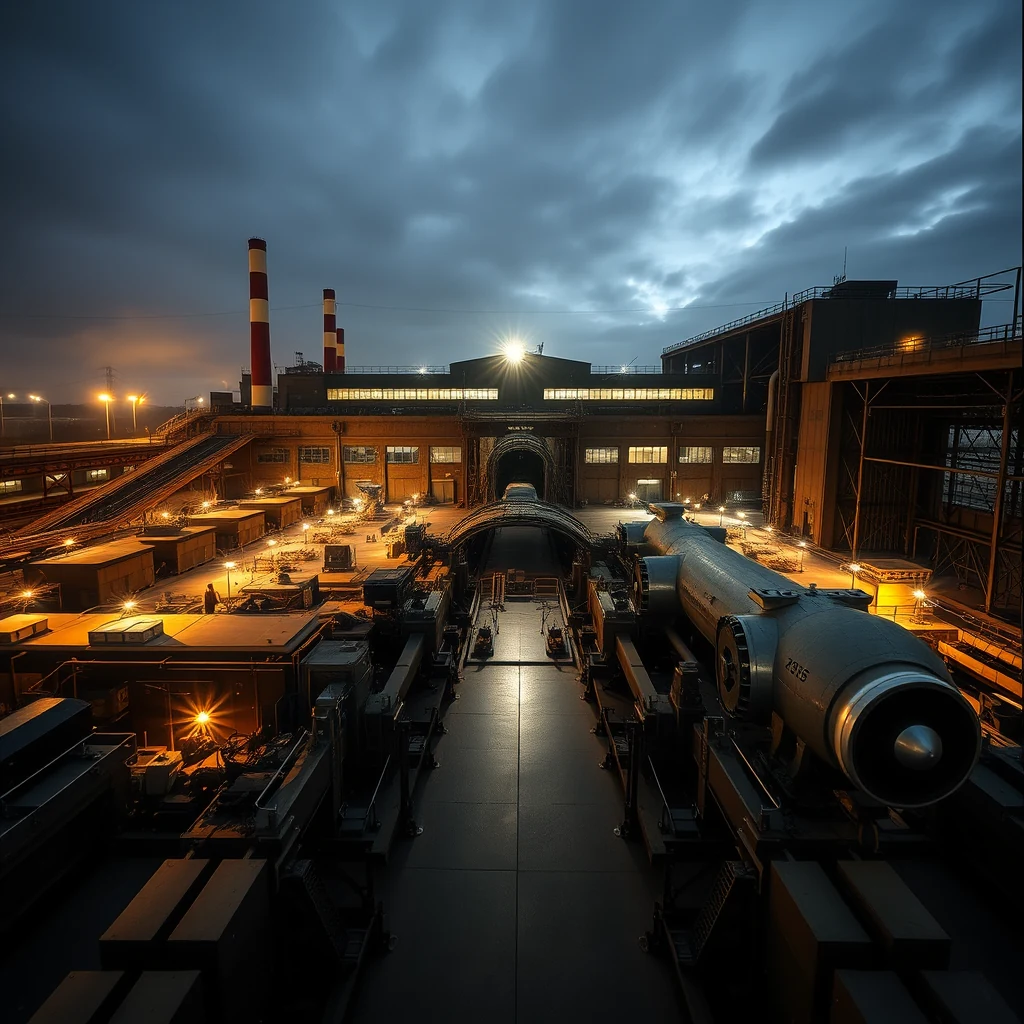 Institution Rolls-Royce Hillington A wartime aero-engine plant on the western edge of Glasgow, opened in 1940 as a shadow factory to Rolls-Royce Derby. By 1943 it employed around twenty-five thousand people, the majority of them women, and turned out roughly a third of all Merlin engines built in Britain during the war. The site continued engine work into the 1980s and was eventually closed in 2005.希灵顿劳斯莱斯工厂是位于格拉斯哥西郊的战时航空发动机工厂,于1940年作为德比劳斯莱斯的影子工厂投入使用。到1943年,它雇用了约2.5万人,其中大部分是妇女,并在战争期间生产了英国制造的所有梅林发动机的约三分之一。该厂发动机业务一直持续到20世纪80年代,并最终于2005年关闭。Planta de motores aeronáuticos de la época de guerra en el extremo oeste de Glasgow, inaugurada en 1940 como fábrica en la sombra de Rolls-Royce Derby. Para 1943 empleaba a unas veinticinco mil personas, la mayoría mujeres, y produjo aproximadamente un tercio de todos los motores Merlin fabricados en Gran Bretaña durante la guerra. La planta continuó con el trabajo de motores hasta la década de 1980 y cerró definitivamente en 2005.مصنع رولز رويس هيلينجتون هو مصنع محركات طيران من زمن الحرب يقع على الأطراف الغربية لغلاسكو، افتتح عام 1940 كمصنع ظل لمصنع رولز رويس في ديربي. بحلول عام 1943، كان المصنع يوظف حوالي خمسة وعشرين ألف شخص، غالبيتهم من النساء، وأنتج حوالي ثلث إجمالي محركات ميرلين المبنية في بريطانيا خلال الحرب. استمر الموقع في إنتاج المحركات حتى ثمانينيات القرن الماضي وأغلق نهائياً عام 2005.Uma fábrica de motores aeronáuticos do período de guerra no extremo oeste de Glasgow, aberta em 1940 como uma fábrica paralela à Rolls-Royce Derby. Em 1943, empregava cerca de vinte e cinco mil pessoas, em sua maioria mulheres, e fabricou cerca de um terço de todos os motores Merlin construídos na Grã-Bretanha durante a guerra. O local continuou o trabalho com motores até a década de 1980, fechando em 2005.ग्लासगो के पश्चिमी छोर पर युद्धकालीन हवाई जहाज के इंजन बनाने वाला कारखाना, जो 1940 में रोल्स-रॉयस डर्बी के लिए एक शैडो फैक्ट्री के रूप में खोला गया था, जिसे रोल्स-रॉयस हिलिंगटन (Rolls-Royce Hillington) कहा जाता है। 1943 तक इसमें लगभग पच्चीस हजार लोग कार्यरत थे, जिनमें अधिकांश महिलाएं थीं, और युद्ध के दौरान ब्रिटेन में बने सभी मर्लिन इंजनों में से लगभग एक तिहाई का निर्माण यहीं हुआ था। इंजन का काम 1980 के दशक तक चलता रहा और अंततः 2005 में इसे बंद कर दिया गया।Pabrik mesin pesawat era perang di pinggiran barat Glasgow, dibuka pada tahun 1940 sebagai shadow factory bagi Rolls-Royce Derby. Pada tahun 1943, pabrik ini mempekerjakan sekitar 25.000 orang, yang sebagian besar adalah perempuan, dan memproduksi sekitar sepertiga dari seluruh mesin Merlin yang dibangun di Inggris selama perang. Pabrik ini melanjutkan pembuatan mesin hingga tahun 1980-an dan akhirnya ditutup pada tahun 2005.Usine de moteurs d'avion de la Seconde Guerre mondiale située à l'ouest de Glasgow, ouverte en 1940 comme usine fantôme rattachée à l'usine Rolls-Royce de Derby. En 1943, elle employait environ vingt-cinq mille personnes, en majorité des femmes, et produisait environ un tiers de tous les moteurs Merlin fabriqués en Grande-Bretagne pendant la guerre. Le site a poursuivi ses activités jusqu'aux années 1980 et a fermé définitivement en 2005.グラスゴー西端にあった戦時中の航空機エンジン工場であり、ロール斯・ロイス・ダービー工場の代替として1940年に稼働を開始した。1943年までに、従業員の大半を女性とする約2万5千人を雇用し、大戦中に英国で製造された全マーリン・エンジンの約3分の1を生産した。その後も1980年代までエンジン製造を継続し、2005年に閉鎖された。Авиамоторный завод военного времени на западной окраине Глазго, открытый в 1940 году в качестве дублирующего предприятия для Rolls-Royce Derby. К 1943 году на нем работало около двадцати пяти тысяч человек, большинство из которых составляли женщины, и выпускалось около трети всех двигателей Merlin, построенных в Великобритании во время войны. Завод продолжал работать до 1980-х годов и был закрыт в 2005 году.Ein Flugmotorenwerk aus der Kriegszeit am westlichen Stadtrand von Glasgow, das 1940 als Schattenwerk für Rolls-Royce Derby eröffnet wurde. Bis 1943 beschäftigte es rund fünfundzwanzigtausend Menschen, die Mehrheit davon Frauen, und stellte etwa ein Drittel aller während des Krieges in Großbritannien gebauten Merlin-Motoren her. Das Werk setzte den Motorenbau bis in die 1980er Jahre fort und wurde 2005 geschlossen.글래스고 서쪽 가장자리에 위치한 전시 항공기 엔진 공장으로, 1940년 롤스로이스 더비 공장의 백업 공장으로 개업했다. 1943년까지 약 2만 5천 명을 고용했으며 이들 중 다수가 여성이었다. 대전 기간 영국에서 생산된 멀린 엔진 총량의 약 3분의 1을 생산했다. 공장은 1980년대까지 엔진 제조를 계속하다가 2005년에 최종 폐쇄되었다. plant outside Glasgow built Merlin engines
 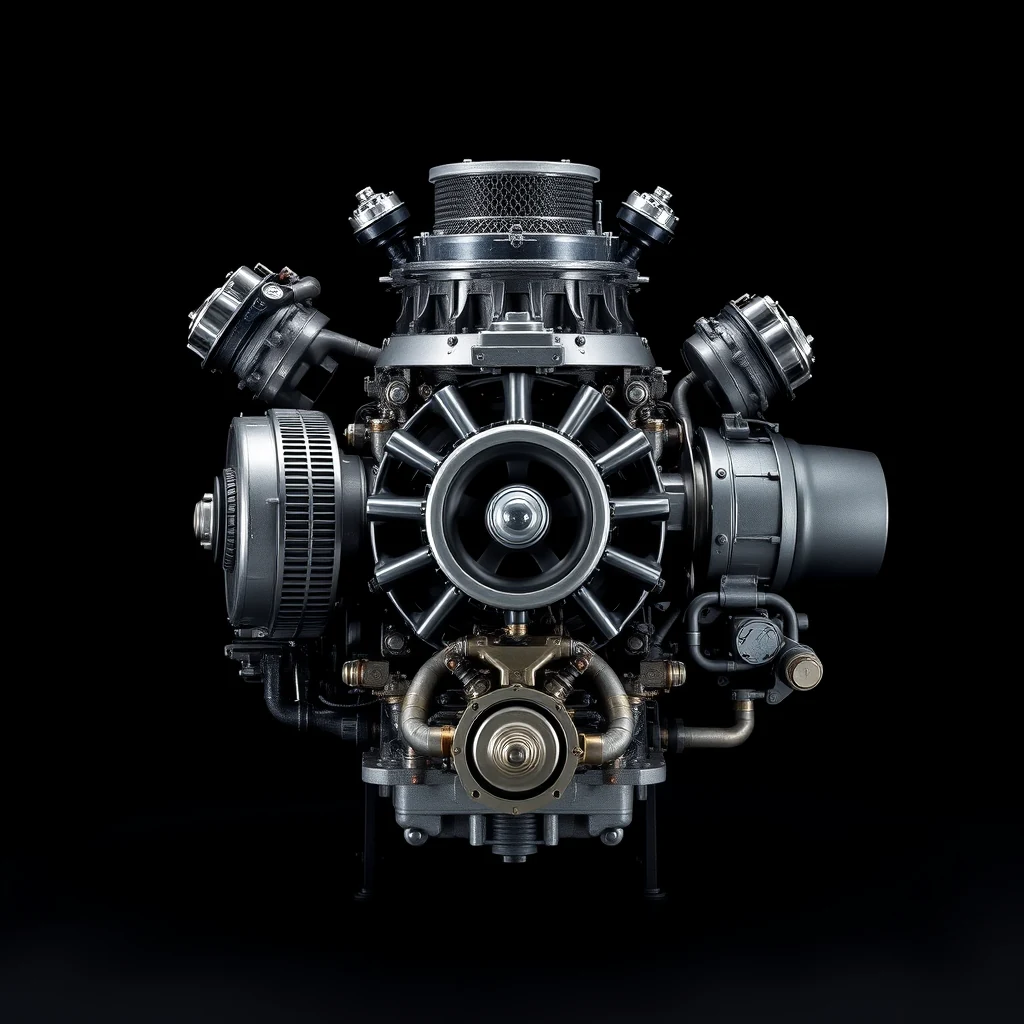 Object Merlin engine A liquid-cooled, supercharged V-12 designed by Rolls-Royce in the mid-1930s, displacing about twenty-seven litres and producing between one thousand and seventeen hundred horsepower across its variants. It powered the Spitfire, the Hurricane, the Mosquito, the Lancaster, and — after Packard licensed the design in 1940 — the American P-51 Mustang. Around 168,000 Merlins were built between 1936 and 1950.梅林发动机是由劳斯莱斯在20世纪30年代中期设计的一款液冷增压V-12发动机,排量约27升,其不同型号可产生1000至1700马力的动力。它为喷火、飓风、蚊式、兰开斯特以及(在帕卡德于1940年获得专利许可后)美国的P-51野马战机提供动力。在1936至1950年间,共制造了约16.8万台梅林发动机。Motor V-12 sobrealimentado y refrigerado por líquido diseñado por Rolls-Royce a mediados de la década de 1930, con una cilindrada de unos veintisiete litros y que producía entre mil y mil setecientos caballos de fuerza según sus variantes. Propulsó al Spitfire, Hurricane, Mosquito, Lancaster y, tras licenciarse su diseño a Packard en 1940, al P-51 Mustang estadounidense. Se fabricaron unos 168.000 motores Merlin entre 1936 y 1950.محرك ميرلين هو محرك V-12 مبرد بالسائل فائق الشحن صممته شركة رولز رويس في منتصف ثلاثينيات القرن الماضي، بسعة تبلغ حوالي 27 ليتراً، وينتج ما بين ألف وسبعمئة حصان عبر طرازاته المختلفة. قام المحرك بتشغيل طائرات سبيتفاير، وهوريكين، وموسكيتو، ولانكستر، وطائرة P-51 موستانج الأمريكية بعد أن رخصت باكارد التصميم عام 1940. تم بناء حوالي 168,000 محرك ميرلين بين عامي 1936 و 1950.Um motor V-12 superalimentado, refrigerado a líquido, projetado pela Rolls-Royce em meados dos anos 1930, com deslocamento de cerca de vinte e sete litros e potência entre mil e mil e setecentos cavalos em suas variantes. Ele equipou os caças Spitfire, Hurricane, Mosquito, Lancaster e, após a Packard licenciar o projeto em 1940, o P-51 Mustang americano. Cerca de 168.000 motores Merlin foram construídos entre 1936 e 1950.रोल्स-रॉयस द्वारा 1930 के दशक के मध्य में डिज़ाइन किया गया एक लिक्विड-कूल्ड, सुपरचार्ज्ड V-12 इंजन था, जो लगभग सत्ताईस लीटर विस्थापित करता था और अपने विभिन्न रूपों में एक हजार से सत्रह सौ हॉर्स पावर पैदा करता था, जिसे मर्लिन इंजन (Merlin engine) कहा जाता है। इसने स्पिटफायर, हरिकेन, मॉस्किटो, लैंकेस्टर और 1940 में पैकर्ड द्वारा लाइसेंस मिलने के बाद अमेरिकी P-51 मस्टैंग को शक्ति प्रदान की। 1936 और 1950 के बीच लगभग 168,000 मर्लिन इंजन बनाए गए थे।Mesin Merlin adalah mesin V-12 berpendingin cair dan supercharged yang dirancang oleh Rolls-Royce pada pertengahan 1930-an. Mesin ini memiliki kapasitas sekitar 27 liter dan menghasilkan tenaga antara 1.000 hingga 1.700 tenaga kuda. Mesin ini mentenagai pesawat Spitfire, Hurricane, Mosquito, Lancaster, dan — setelah Packard melisensikan desainnya pada tahun 1940 — pesawat P-51 Mustang AS. Sekitar 168.000 mesin Merlin diproduksi antara tahun 1936 dan 1950.Le Merlin est un moteur V12 suralimenté à refroidissement liquide conçu par Rolls-Royce au milieu des années 1930, d'une cylindrée d'environ 27 litres et développant de 1 000 à 1 700 chevaux selon les versions. Il équipait le Spitfire, le Hurricane, le Mosquito, le Lancaster et, après l'achat de la licence par Packard en 1940, le P-51 Mustang américain. Environ 168 000 moteurs Merlin ont été fabriqués entre 1936 et 1950.1930年代半ばにロールス・ロイスが設計した水冷過給式V型12気筒航空エンジンであり、排気量は約27リットルで、派生型を含め1000〜1700馬力を発揮した。スピットファイア、ハリケーン、モスキート、ランカスター、そして1940年にパッカードがライセンス生産を行って以降は米国のP-51マスタングにも搭載された。1936年からの15年間に約16万8千基が製造された。Двигатель Merlin — V-образный 12-цилиндровый двигатель жидкостного охлаждения с наддувом, разработанный Rolls-Royce в середине 1930-х годов, объемом около 27 литров и мощностью от 1000 до 1700 л.с. в различных модификациях. Он устанавливался на Spitfire, Hurricane, Mosquito, Lancaster и — после лицензирования конструкции фирмой Packard в 1940 году — на американский P-51 Mustang. Всего с 1936 по 1950 год было выпущено около 168 000 двигателей.Ein flüssigkeitsgekühlter V-12-Aufladungsmotor, der Mitte der 1930er Jahre von Rolls-Royce entworfen wurde. Er hat einen Hubraum von rund siebenundzwanzig Litern und leistete je nach Variante zwischen eintausend und siebzehnhundert PS. Er trieb die Flugzeuge Spitfire, Hurricane, Mosquito, Lancaster und – nachdem Packard das Design 1940 lizenzierte – die amerikanische P-51 Mustang an. Zwischen 1936 und 1950 wurden etwa 168.000 Merlins gebaut.1930년대 중반 롤스로이스가 설계한 수랭식 과급형 V-12 항공기 엔진(Merlin engine)으로, 배기량은 약 27리터이며 사양에 따라 1,000~1,700마력을 냈다. 스핏파이어, 허리케인, 모스키토, 랜카스터에 탑재되었고, 1940년 패커드가 라이선스 생산을 시작한 후 미군 P-51 머스탱 CA에도 쓰였다. 1936년에서 1950년 사이에 총 16만 8천여 기가 제작되었다. — the supercharged V-12 that powered the Spitfire, the Hurricane, the Lancaster, and eventually the P-51 Mustang. By 1943 it employed around twenty-five thousand people, most of them women drafted in under the Essential Work Order
  Concept Essential Work Order A 1941 British wartime regulation, signed by labour minister Ernest Bevin, that compelled workers in designated industries — aircraft, shipbuilding, coal — to stay in their posts and accept reassignment. For women it became a mechanism of industrial conscription. By 1943 roughly seven and a half million British women were in some form of war work, a participation rate unmatched before or since.《关键行业工作命令》是1941年由英国劳工部长欧内斯特·贝文签署的战时法令和规章,它强制规定指定行业(飞机制造、造船、采煤)的工人必须留任并接受重新分配。对于女性而言,它成为了工业征兵的机制。到1943年,约有750万英国妇女参与了某种形式的战争工作,这一参与率在前所未有,后无来者。Regulación británica de la época de guerra de 1941, firmada por el ministro de trabajo Ernest Bevin, que obligaba a los trabajadores de industrias designadas —aviación, construcción naval, carbón— a permanecer en sus puestos y aceptar reasignaciones. Para las mujeres, fue una forma de reclutamiento industrial. Para 1943, unos 7,5 millones de mujeres británicas realizaban trabajo de guerra, tasa de participación inigualada.أمر العمل الأساسي (Essential Work Order) هو تنظيم بريطاني من زمن الحرب صدر عام 1941 بتوقيع وزير العمل إرنست بيفين، ويلزم العمال في صناعات محددة (كالطائرات وبناء السفن والفحم) بالبقاء في وظائفهم وقبول التكليفات الجديدة. أصبح التنظيم آلية للتجنيد الصناعي للنساء؛ وبحلول عام 1943، كانت حوالي 7.5 مليون امرأة بريطانية يشاركن في أعمال الحرب، وهو معدل مشاركة لم يتكرر.Regulamento britânico de guerra de 1941, assinado pelo ministro do trabalho Ernest Bevin, que obrigava os trabalhadores de indústrias designadas — aeronáutica, estaleiros, carvão — a permanecer em seus postos e aceitar transferências. Para as mulheres, tornou-se um meio de recrutamento industrial. Em 1943, cerca de 7,5 milhões de mulheres britânicas estavam envolvidas no esforço de guerra, taxa inédita e insuperável.1941 का ब्रिटिश युद्धकालीन विनियमन, जिस पर श्रम मंत्री अर्नेस्ट बेविन ने हस्ताक्षर किए थे, जिसने नामित उद्योगों — विमान, जहाज निर्माण, कोयला — के श्रमिकों को अपने पदों पर रहने और पुनर्नियोजन स्वीकार करने के लिए मजबूर किया, जिसे आवश्यक कार्य आदेश (Essential Work Order) कहा जाता है। महिलाओं के लिए यह औद्योगिक जबरन भर्ती का तंत्र बन गया। 1943 तक लगभग 7.5 मिलियन ब्रिटिश महिलाएं युद्ध कार्यों में शामिल थीं।Peraturan era perang Inggris tahun 1941, ditandatangani oleh menteri ketenagakerjaan Ernest Bevin, yang memaksa pekerja di industri yang ditunjuk — pesawat, pembuatan kapal, batu bara — untuk tetap di pos mereka dan menerima penugasan kembali. Bagi perempuan, peraturan ini menjadi mekanisme wajib kerja industri. Pada tahun 1943, sekitar 7,5 juta perempuan Inggris terlibat dalam pekerjaan perang, tingkat partisipasi tertinggi.Réglementation britannique de guerre de 1941, signée par le ministre du Travail Ernest Bevin, qui contraignait les travailleurs des industries stratégiques — aéronautique, chantiers navals, charbon — à rester à leur poste et à accepter les mutations. Pour les femmes, ce fut un mécanisme de conscription industrielle. En 1943, environ 7,5 millions de Britanniques effectuaient un travail de guerre, un taux de participation record.1941年に英労働大臣アーネスト・ベヴィンが署名した戦時規制であり、指定産業(航空機、造船、石炭)の労働者に対して、職場に留まり再配置を受け入れることを義務付けた。女性にとっては産業動員の仕組みとなり、1943年までに約750万人の英国人女性が何らかの戦時労働に従事した。この女性の就業率は、歴史上類を見ない高水準である。Британское постановление военного времени 1941 года, подписанное министром труда Эрнестом Бевином, обязывающее рабочих оборонных отраслей (авиастроение, судостроение, угольная промышленность) оставаться на местах и соглашаться на переводы. Для женщин оно стало механизмом мобилизации на производство. К 1943 году около 7,5 млн британских женщин работали на оборону, что стало беспрецедентным показателем.Eine britische Kriegsverordnung von 1941, unterzeichnet von Arbeitsminister Ernest Bevin, die Arbeiter in ausgewählten Schlüsselindustrien – Flugzeugbau, Schiffbau, Kohle – verpflichtete, an ihrem Arbeitsplatz zu bleiben. Für Frauen wurde die Verordnung zu einem Instrument der industriellen Dienstpflicht. Bis 1943 leisteten rund 7,5 Millionen britische Frauen Kriegsdienst, eine historisch unerreichte Beteiligung.1941년 영국 노동부 장관 어네스트 베빈이 서명한 전시 특별 규정(Essential Work Order)으로, 항공기, 조선, 석탄 등 지정 전시 업종 노동자의 퇴직을 금지하고 강제 부서 재배치 권한을 부여했다. 여성들에게는 전시 산업 징집 수단이 되어, 1943년까지 약 750만 명의 영국 여성이 전쟁 관련 업무에 투입되는 전무후무한 참여율을 보였다. . A propeller hub had to be finished to a tolerance of a few ten-thousandths of an inch. Slip outside that and the imbalance at three thousand revolutions a minute could tear the engine off its mounts at altitude.
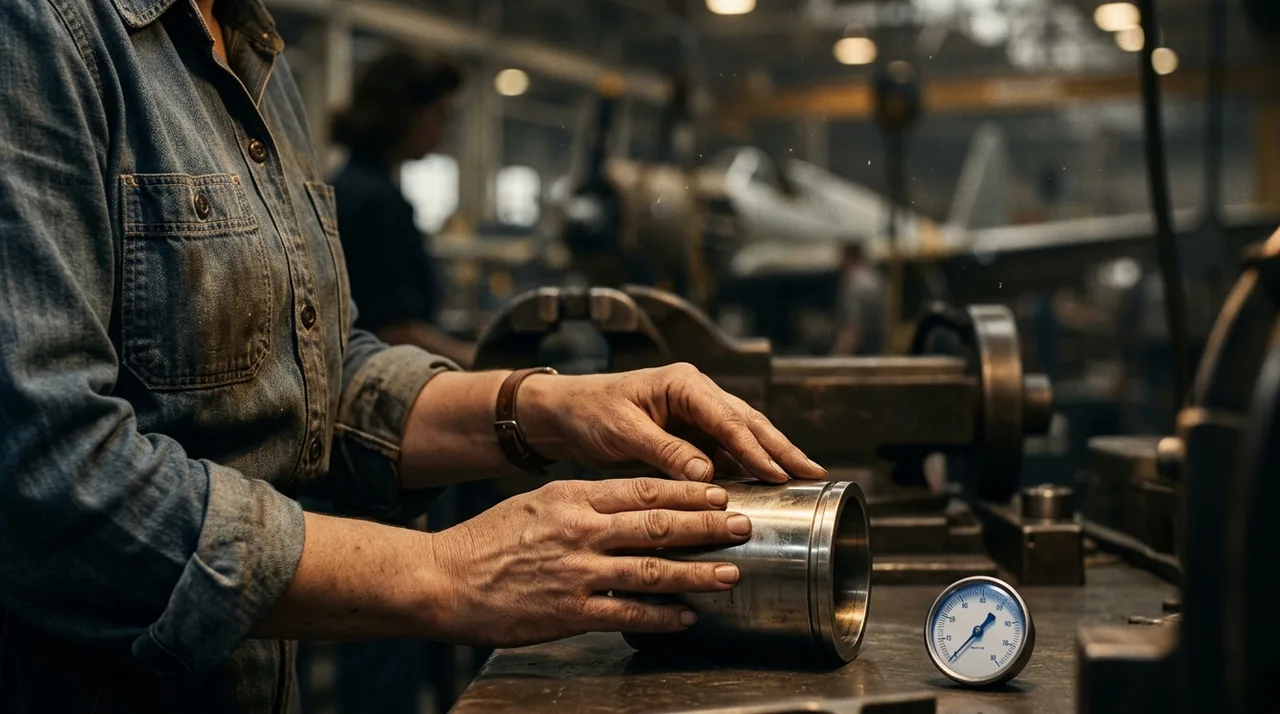
The factory had measuring instruments. It also had women whose job was to put a fingertip on the metal and decide whether the instruments had been right.

They were called gauge girls, or, in the more clinical paperwork, viewers. Their fingertips, the supervisors found, could resolve features the inspection rigs of the day could not reliably catch — surface waviness, faint scoring, the ridge where a cutting tool had chattered. Internal estimates put the threshold at around one ten-thousandth of an inch, roughly two and a half microns. A human red blood cell is about seven microns across.
The skin can do this
The pad of an adult fingertip carries something on the order of two thousand specialised mechanoreceptors per square centimetre — the densest array of touch sensors anywhere on the body apart from the lips and the tongue. Four kinds of receptor share the work. Meissner corpuscles  Concept Meissner corpuscles Encapsulated nerve endings in the upper dermis of glabrous skin — fingertips, palms, soles, lips — that fire when the skin is lightly stroked or when a held object begins to slip. They are tuned to low-frequency vibration in the thirty-to-fifty hertz range and adapt rapidly, signalling change rather than steady pressure. Their density in the fingertip declines markedly with age.梅斯纳小体是位于无毛皮肤(指尖、手掌、足底、嘴唇)真皮乳头层中的囊状神经末梢,在皮肤受到轻微抚摸或所持物体开始滑动时放电。它们对30至50赫兹范围的低频振动敏感,且适应迅速,主要信号发送的是变化而非恒定压力。指尖中梅斯纳小体的密度随着年龄增长而显著下降。Terminaciones nerviosas encapsuladas en la dermis superior de la piel glabra (yemas de los dedos, palmas, plantas, labios) que se activan cuando la piel recibe un roce ligero o cuando un objeto sostenido empieza a resbalar. Están sintonizadas con vibraciones de baja frecuencia (rango de 30 a 50 Hz) y se adaptan rápido, señalando el cambio más que la presión constante. Su densidad disminuye con la edad.جسيمات مايسنر (Meissner corpuscles) هي نهايات عصبية مغلفة تقع في الأدمة العلوية للجلد الأملس (أطراف الأصابع، والراحة، والأخمصين، والشفاه) وتنشط عند ملامسة الجلد بخفة أو عند بدء انزلاق جسم ممسك به. تتناغم هذه الجسيمات مع الاهتزازات منخفضة التردد في نطاق 30 إلى 50 هرتز وتتكيف بسرعة، مشيرةً إلى التغير بدلاً من الضغط المستقر. وتنخفض كثافتها في أطراف الأصابع بشكل ملحوظ مع تقدم العمر.Terminações nervosas encapsuladas na derme superior da pele glabra (pontas dos dedos, palmas, solas, lábios) que disparam quando a pele é levemente acariciada ou quando um objeto seguro começa a escorregar. Elas respondem à vibração de baixa frequência na faixa de 30 a 50 hertz e se adaptam rapidamente, sinalizando a mudança em vez de pressão constante. Sua densidade diminui significativamente com a idade.रोमक रहित त्वचा (जैसे उंगलियों, हथेलियों, तलवों, होठों) की ऊपरी डर्मिस में स्थित संपुटित तंत्रिका छोर (एनकैप्सुलेटेड नर्व एंडिंग्स) जो त्वचा को हल्के से छूने पर या पकड़ी हुई वस्तु के खिसकने पर सक्रिय होते हैं, जिन्हें मीस्नर कॉर्पसल्स (Meissner corpuscles) कहा जाता है। ये 30 से 50 हर्ट्ज़ रेंज में कम आवृत्ति वाले कंपन के प्रति संवेदनशील होते हैं और तेजी से अनुकूल होते हैं। उम्र के साथ उंगलियों में इनकी संख्या काफी कम हो जाती है।Korpuskula Meissner adalah ujung saraf berselubung di dermis atas kulit tidak berambut — ujung jari, telapak tangan, telapak kaki, bibir — yang aktif saat kulit dielus dengan lembut atau saat benda yang dipegang mulai tergelincir. Ujung saraf ini peka terhadap getaran frekuensi rendah dalam kisaran 30 hingga 50 hertz dan beradaptasi dengan cepat untuk memberi sinyal perubahan, bukan tekanan konstan.Les corpuscules de Meissner sont des terminaisons nerveuses encapsulées de la partie supérieure du derme de la peau glabre (bout des doigts, paumes, plantes, lèvres) qui s'activent lors d'un effleurement de la peau ou lorsqu'un objet tenu commence à glisser. Sensibles aux vibrations de basse fréquence (30-50 Hz), ils s'adaptent rapidement en signalant le changement plutôt qu'une pression constante. Leur densité diminue avec l'âge.無毛の皮膚(指先、手のひら、足の裏、唇など)の真皮上層に分布するカプセル包埋された神経末梢。皮膚が軽く擦られたり、保持している物体が滑り始めたりすると発火する。30〜50ヘルツ付近の低周波振動に感応し、順応が速いため、持続的な圧力ではなく「変化」を信号として送る。指先における分布密度は加齢に伴い著しく低下する。Тельца Мейснера — инкапсулированные нервные окончания в верхних слоях дермы безволосой кожи (кончики пальцев, ладони, подошвы, губы), которые возбуждаются при легком поглаживании кожи или выскальзывании удерживаемого предмета. Они настроены на низкочастотные вибрации в диапазоне от 30 до 50 Гц и быстро адаптируются, сигнализируя об изменении, а не о постоянном давлении. Их плотность снижается с возрастом.Verkapselte Nervenenden in der oberen Dermis der unbehaarten Haut – Fingerspitzen, Handflächen, Fußsohlen, Lippen –, die feuern, wenn die Haut leicht gestreichelt wird oder ein gehaltener Gegenstand abrutscht. Sie reagieren auf niederfrequente Vibrationen im Bereich von dreißig bis fünfzig Hertz und passen sich schnell an, indem sie Veränderungen statt gleichmäßigem Druck signalisieren. Ihre Dichte nimmt im Alter ab.무모신체 부위(손가락 끝, 손바닥, 발바닥, 입술 등)의 진피 상부에 밀집된 캡슐형 신경 말단(Meissner corpuscles)으로, 가벼운 접촉이나 쥐고 있는 물체가 미끄러질 때 전기 신호를 발산한다. 30~50Hz의 저주파 진동에 민감하게 작동하고 빠르게 적응하여, 지속적인 압력보다는 물리적 상태 변화를 감지한다. 손가락 끝의 수용체 밀도는 노화에 따라 현저히 감소한다. handle light, transient contact and the slip of an object against the skin. Merkel cells encode sustained pressure and edges. Pacinian corpuscles
  Concept Pacinian corpuscles Onion-layered mechanoreceptors set deep in the dermis and connective tissue, large enough to see with the naked eye in dissection. They respond to high-frequency vibration in the two-to-three-hundred hertz band, which lets a fingertip dragged across a surface hear texture as a tactile audio signal. Pacinians can also pick up vibrations transmitted through a held tool, letting a craftsman feel through a chisel or a probe.帕西尼小体是位于真皮深层和结缔组织中呈洋葱样分层的机械感受器,在解剖时肉眼清晰可见。它们对200至300赫兹频段的高频振动做出反应,使手指在掠过物体表面时能以触觉音频信号的形式“听”到纹理。帕西尼小体还能接收通过手持工具传导的振动,使工匠能通过凿子或探针进行感知。Mecanoreceptores con capas en forma de cebolla situados a gran profundidad en la dermis y el tejido conectivo, lo bastante grandes como para verse a simple vista en una disección. Responden a vibraciones de alta frecuencia (entre 200 y 300 Hz), lo que permite a la yema del dedo «oír» la textura al deslizarse sobre una superficie como una señal de audio táctil. Los pacinianos también captan vibraciones a través de herramientas, permitiendo sentir mediante un cincel o una sonda.جسيمات باتشيني (Pacinian corpuscles) هي مستقبلات ميكانيكية ذات طبقات تشبه البصلة تقع في عمق الأدمة والنسيج الضام، وهي كبيرة بما يكفي لرؤيتها بالعين المجردة أثناء التشريح. تستجيب هذه الجسيمات للاهتزازات عالية التردد في نطاق 200 إلى 300 هرتز، مما يسمح لطرف الإصبع المار فوق سطح ما بـ "سماع" ملمسه كإشارة صوتية لمسية. يمكن لجسيمات باتشيني أيضاً التقاط الاهتزازات المنقولة عبر أداة محمولة، مما يتيح للحرفي الشعور بالأشياء من خلال الإزميل أو المسبار.Mecanorreceptores em camadas de cebola situados profundamente na derme e no tecido conjuntivo, grandes o suficiente para serem vistos a olho nu em uma dissecação. Eles respondem à vibração de alta frequência na faixa de duzentos a trezentos hertz, permitindo que a ponta do dedo que se arrasta por uma superfície sinta a textura como um sinal de áudio tátil. Os corpúsculos de Pacini também captam vibrações transmitidas por ferramentas, permitindo ao artesão sentir através de um cinzel ou sonda.प्याज जैसी परतों वाले मैकेनोरिसेप्टर्स जो डर्मिस और संयोजी ऊतक (कनेक्टिव टिश्यू) की गहराई में स्थित होते हैं, जो इतने बड़े होते हैं कि विच्छेदन (डिसेक्शन) में नग्न आंखों से देखे जा सकते हैं, जिन्हें पैसिनियन कॉर्पसल्स (Pacinian corpuscles) कहा जाता है। ये दो सौ से तीन सौ हर्ट्ज़ बैंड में उच्च आवृत्ति कंपन के प्रति प्रतिक्रिया करते हैं, जिससे सतह पर रगड़ती हुई उंगली बनावट को महसूस कर सकती है। ये हाथ में पकड़े गए उपकरण से आने वाले कंपन को भी महसूस कर सकते हैं।Korpuskula Pacini adalah mekanoreseptor berlapis-lapis seperti bawang yang terletak jauh di dalam dermis dan jaringan ikat, berukuran cukup besar untuk dilihat dengan mata telanjang saat diseksi. Reseptor ini merespons getaran frekuensi tinggi dalam kisaran 200 hingga 300 hertz, sehingga ujung jari yang menyentuh permukaan dapat merasakan tekstur sebagai sinyal audio taktil. Reseptor ini juga dapat mendeteksi getaran yang merambat melalui alat yang dipegang.Les corpuscules de Pacini sont des mécanorécepteurs en couches d'oignon situés profondément dans le derme et le tissu conjonctif, assez grands pour être vus à l'œil nu lors d'une dissection. Ils répondent aux vibrations de haute fréquence dans la bande de 200 à 300 hertz, ce qui permet à l'extrémité du doigt glissant sur une surface d'en « entendre » la texture sous forme de signal audio tactile. Les paciniens captent aussi les vibrations d'un outil tenu en main, permettant de sentir via un ciseau ou une sonde.真皮深層および結合組織内に位置する、断面がタマゴ状の層板を形成する機械受容器であり、解剖時に肉眼で確認できるほど大きい。200〜300ヘルツの高周波振動に反応し、指先で表面をなぞった際に質感を触覚オーディオ信号として「聴く」ことを可能にする。パチニ小体はまた、保持している工具を介して伝わる振動を感知できるため、職人がノミやプローブを通じて感触を得るのに役立つ。Пластинчатые тельца Пачини — механорецепторы луковичного строения, расположенные глубоко в дерме и соединительной ткани, достаточно крупные, чтобы их можно было увидеть невооруженным глазом при вскрытии. Они реагируют на высокочастотную вибрацию в диапазоне 200–300 Гц, позволяя пальцу при движении по поверхности осязать текстуру как тактильный аудиосигнал. Тельца Пачини также улавливают вибрации от инструментов, давая мастеру чувствовать деталь через резец или щуп.Zwiebelschalenartig geschichtete Mechanorezeptoren, die tief in der Dermis und im Bindegewebe liegen und bei einer Sektion mit bloßem Auge zu erkennen sind. Sie reagieren auf hochfrequente Vibrationen im Bereich von zweihundert bis dreihundert Hertz, wodurch eine über eine Oberfläche gezogene Fingerspitze die Textur als taktiles Audiosignal wahrnimmt. Pacini-Körperchen registrieren auch Vibrationen, die über ein Werkzeug übertragen werden, sodass ein Handwerker durch Meißel oder Sonden spürt.진피 심부와 결합 조직에 분포하며 절개 시 육안으로 확인이 가능할 만큼 커다란 양파 껍질 모양의 기계적 수용체(Pacinian corpuscles)이다. 200~300Hz의 고주파 진동에 안내를 받아, 표면을 쓸어내리는 손가락 끝이 질감을 촉각 오디오 신호처럼 느끼게 해 준다. 팩시니 수용체는 쥐고 있는 도구를 통해 전달되는 진동도 포착할 수 있어서 장인이 끌이나 탐침을 통해 촉감을 고스란히 느낄 수 있도록 돕는다. , deeper in the tissue, respond to vibration in the two-hundred-hertz band. Ruffini endings track skin stretch.

A 2013 study by Lisa Skedung and colleagues in *Scientific Reports* showed volunteers could discriminate between glossy plates patterned with sinusoidal wrinkles whose amplitude differed by about thirteen nanometres — roughly the height of a large protein. The receptors do not detect that directly. The finger has to move. Movement turns a static surface feature into a transient vibration the Pacinians can hear, and the brain reads the result almost as sound.

The gauge girls were not exceptional in the way a perfect-pitch musician is exceptional. They were ordinary human fingertips trained to listen carefully to a narrow band of texture.

The training
Recruitment looked for soft, uncalloused hands. Women who had been domestic servants or laundry workers were often shunted to the rougher assembly stations; their fingertips were judged already too worn for the most sensitive viewing work. Once selected, a viewer's hands became her instrument. She wore cotton gloves between shifts. She avoided hot water and harsh soap. At Hillington and at the Castle Bromwich Aircraft Factory  Place Castle Bromwich Aircraft Factory A vast shadow factory east of Birmingham, built in 1938 and run from 1940 by Vickers-Armstrongs. Between 1940 and 1945 it produced more than twelve thousand Spitfires and three hundred Lancasters — the largest single source of Spitfires in the war. Its workforce was overwhelmingly female by the middle years of the conflict. The site is today a Jaguar Land Rover assembly plant.堡布罗姆维奇飞机厂是位于伯明翰东部的巨大影子工厂,建于1938年,从1940年起由维克斯-阿姆斯特朗公司运营。在1940年至1945年之间,它生产了12000多架喷火战斗机和300架兰开斯特轰炸机——是战争期间喷火战斗机最大的单一生产来源。到战争中期,其员工绝大多数为女性。该遗址如今是捷豹路虎的装配厂。Vasta fábrica en la sombra al este de Birmingham, construida en 1938 y dirigida desde 1940 por Vickers-Armstrongs. Entre 1940 y 1945 produjo más de doce mil Spitfires y trescientos Lancasters, siendo la mayor fuente individual de Spitfires durante la guerra. Su fuerza laboral era abrumadoramente femenina a mediados del conflicto. El sitio es hoy una planta de ensamblaje de Jaguar Land Rover.مصنع قلعة بروميتش للطائرات هو مصنع ظل ضخم يقع شرق برمنغهام، بُني عام 1938 وأدارته شركة فيكرز أرمسترونغز بدءاً من عام 1940. أنتج المصنع بين عامي 1940 و 1945 أكثر من اثني عشر ألف طائرة سبيتفاير وثلاثمئة طائرة لانكستر، وكان أكبر مصدر فردي لطائرات سبيتفاير في الحرب. تميزت قوته العاملة بحضور نسائي ساحق بحلول منتصف سنوات الصراع. والموقع اليوم هو مصنع لتجميع سيارات جاغوار لاند روفر.Uma vasta fábrica paralela (shadow factory) a leste de Birmingham, construída em 1938 e administrada a partir de 1940 pela Vickers-Armstrongs. Entre 1940 e 1945, produziu mais de doze mil Spitfires e trezentos Lancasters — a maior fonte individual de Spitfires na guerra. Sua força de trabalho era majoritariamente feminina em meados do conflito. O local é hoje uma fábrica de montagem da Jaguar Land Rover.बर्मिंघम के पूर्व में स्थित एक विशाल शैडो फैक्ट्री, जिसका निर्माण 1938 में किया गया था और 1940 से विकर्स-आर्मस्ट्रांग द्वारा इसका संचालन किया गया, जिसे कैसल ब्रोमविच एयरक्राफ्ट फैक्ट्री (Castle Bromwich Aircraft Factory) कहा जाता है। 1940 और 1945 के बीच इसने बारह हजार से अधिक स्पिटफायर और तीन सौ लैंकेस्टर का उत्पादन किया। युद्ध के मध्य वर्षों तक इसके कार्यबल में महिलाओं की संख्या बहुत अधिक थी। आज यह साइट जगुआर लैंड रोवर असेंबली प्लांट है।Pabrik pesawat raksasa (shadow factory) di timur Birmingham, dibangun pada tahun 1938 dan dikelola sejak tahun 1940 oleh Vickers-Armstrongs. Antara tahun 1940 dan 1945, pabrik ini memproduksi lebih dari 12.000 pesawat Spitfire dan 300 pesawat Lancaster — menjadikannya produsen Spitfire tunggal terbesar selama perang. Tenaga kerjanya sebagian besar perempuan pada pertengahan perang. Lokasi ini kini menjadi pabrik perakitan Jaguar Land Rover.Vaste usine fantôme à l'est de Birmingham, construite en 1938 et exploitée à partir de 1940 par Vickers-Armstrongs. Entre 1940 et 1945, elle a produit plus de douze mille Spitfire et trois cents Lancaster, constituant la plus importante source de Spitfire du conflit. Sa main-d'œuvre était très majoritairement féminine vers le milieu de la guerre. Le site est aujourd'hui une usine d'assemblage Jaguar Land Rover.バーミンガム東部に建設された巨大な代替工場であり、1938年に建設され1940年からはヴィッカース・アームストロングス社によって運営された。1940年から1945年の間に1万2千機以上のスピットファイアと300機のランカスターを生産し、戦時中最大のスピットファイア供給源となった。大戦中期には従業員の圧倒的多数を女性が占めていた。この跡地は現在、ジャガー・ランドローバーの組立工場となっている。Крупный дублирующий авиационный завод к востоку от Бирмингема, построенный в 1938 году и с 1940 года управлявшийся Vickers-Armstrongs. В период с 1940 по 1945 год он выпустил более 12 тысяч Spitfire и 300 бомбардировщиков Lancaster, ставший крупнейшим производителем Spitfire во время войны. К середине войны большинство рабочих составляли женщины. Сегодня на этом месте находится сборочный завод Jaguar Land Rover.Eine Schattenfabrik östlich von Birmingham, die 1938 gebaut und ab 1940 von Vickers-Armstrongs betrieben wurde. Zwischen 1940 und 1945 stellte sie über zwölftausend Spitfires und dreihundert Lancasters her – die größte Einzelquelle für Spitfires im Krieg. Bis zur Mitte des Konflikts war die Belegschaft überwiegend weiblich. Heute befindet sich auf dem Gelände ein Montagewerk von Jaguar Land Rover.버밍엄 동부에 건설된 대규모 특별 전시 백업 공장으로, 1938년에 완공되어 1940년부터 비커스-암스트롱에 의해 운영되었다. 1940~1945년 사이 12,000대 이상의 스핏파이어와 300대의 랜카스터를 제조하며 대전기 가장 큰 스핏파이어 공급처 역할을 했다. 전쟁 중반에 이르러 공장 인력의 대다수가 여성으로 채워졌다. 이 부지는 현재 재규어 랜드로버의 조립 공장으로 사용되고 있다. outside Birmingham, where more than twelve thousand Spitfires were eventually built, viewers earned a small premium and were excused from the fitting work that would have ruined them.

Training ran for months. A new viewer would pass hundreds of reference parts a day under her fingers — good ones and deliberately marred ones — until the difference became something she could feel before she could describe. Engineers who asked what was wrong with a rejected part often got nothing back beyond "it's not right." This is what cognitive scientists now call tacit knowledge  Concept tacit knowledge A term coined by the Hungarian-British chemist and philosopher Michael Polanyi in the late 1950s for skills and judgements a practitioner can reliably deploy but cannot fully verbalise. "We know more than we can tell," he wrote. Examples run from recognising a face, to riding a bicycle, to spotting a defect in a turbine blade. It marks the limit of what can be turned into written instructions.默会知识是匈牙利裔英国化学家兼哲学家迈克尔·波兰尼于20世纪50年代末提出的一个术语,指从业人员能可靠地应用但无法完全言传的技能和判断。他写道:“我们所知道的多于我们所能言传的。”其例子包括识别人脸、骑自行车或发现涡轮叶片上的缺陷。它标志着能被转化为书面说明的知识的极限。Término acuñado por el químico y filósofo húngaro-británico Michael Polanyi a finales de la década de 1950 para referirse a las habilidades y juicios que un profesional puede aplicar con fiabilidad pero no verbalizar por completo. «Sabemos más de lo que podemos decir», escribió. Los ejemplos van desde reconocer un rostro, montar en bicicleta, hasta detectar un defecto en un álabe de turbina. Marca el límite de lo que puede redactarse.المعرفة الضمنية (Tacit knowledge) هو مصطلح صاغه الكيميائي والفيلسوف المجري-البريطاني مايكل بولاني في أواخر خمسينيات القرن الماضي للإشارة إلى المهارات والأحكام التي يمكن للممارس تطبيقها بشكل موثوق ولكنه لا يستطيع التعبير عنها لفظياً بشكل كامل. كتب بولاني: "نحن نعرف أكثر مما يمكننا قوله". وتتراوح الأمثلة من التعرف على الوجه، إلى ركوب الدراجة، إلى رصد خلل في شفرة التوربين. وتحدد هذه المعرفة الحد الأقصى لما يمكن كتابته في تعليمات.Termo cunhado pelo químico e filósofo húngaro-britânico Michael Polanyi no final dos anos 1950 para designar habilidades e julgamentos que um profissional consegue aplicar com segurança, mas não expressar por completo em palavras. 'Sabemos mais do que podemos contar', escreveu. Exemplos incluem reconhecer rostos, andar de bicicleta ou detectar defeitos em pás de turbina. Representa o limite do que pode ser transformado em instruções escritas.1950 के दशक के उत्तरार्ध में हंगरी-ब्रिटिश रसायनज्ञ और दार्शनिक माइकल पोलानी द्वारा गढ़ा गया एक शब्द, जो उन कौशलों और निर्णयों के लिए है जिन्हें एक अभ्यासकर्ता विश्वसनीय रूप से तैनात तो कर सकता है लेकिन पूरी तरह से मौखिक रूप से बयां नहीं कर सकता, जिसे मूक ज्ञान (tacit knowledge) कहा जाता है। उन्होंने लिखा, "हम जितना बता सकते हैं उससे अधिक जानते हैं।" उदाहरणों में चेहरा पहचानना, साइकिल चलाना या टरबाइन ब्लेड में दोष ढूंढना शामिल है।Pengetahuan tak tertulis (tacit knowledge) adalah istilah yang dicetuskan oleh kimiawan sekaligus filsuf Hongaria-Inggris Michael Polanyi pada akhir 1950-an untuk menggambarkan keterampilan dan penilaian yang dapat diterapkan dengan andal oleh seorang praktisi namun tidak dapat dijelaskan secara verbal secara penuh. "Kita tahu lebih banyak daripada yang dapat kita ceritakan," tulisnya. Contohnya berkisar dari mengenali wajah, bersepeda, hingga mendeteksi cacat pada bilah turbin.Terme inventé par le chimiste et philosophe hungaro-britannique Michael Polanyi à la fin des années 1950 pour désigner les compétences et les jugements qu'un praticien peut appliquer de manière fiable mais ne peut pas formuler verbalement. « Nous savons plus que nous ne pouvons en dire », écrit-il. Les exemples vont de la reconnaissance d'un visage au vélo, en passant par la détection d'un défaut sur une aube de turbine. Il marque la limite de ce qui peut être écrit.1950年代後半にハンガリー系英国人の化学者・哲学者マイケル・ポランニーが提唱した、実践者が確実に発揮できるものの、言葉で完全に説明することはできない技能や判断力を指す用語。「我々は語り得る以上のことを知っている」と彼は記した。顔の識別、自転車の運転、タービンブレードの欠陥検出などがその例である。これは、文書の指示書に置き換えられる限界点を示している。Неявное знание — термин, предложенный венгерско-британским химиком и философом Майклом Полани в конце 1950-х годов для обозначения навыков и суждений, которые специалист применяет на практике, но не может полностью выразить словами. «Мы знаем больше, чем можем рассказать», — писал он. Примеры: узнавание лица, езда на велосипеде или поиск дефекта лопатки турбины. Оно обозначает границу того, что можно изложить в инструкциях.Ein Begriff, der Ende der 1950er Jahre von dem ungarisch-britischen Chemiker und Philosophen Michael Polanyi für Fähigkeiten geprägt wurde, die ein Praktiker zwar verlässlich anwenden, aber nicht vollständig verbalisieren kann. „Wir wissen mehr, als wir zu sagen vermögen“, schrieb er. Beispiele reichen vom Erkennen eines Gesichts über das Fahrradfahren bis zum Aufspüren eines Defekts an einer Turbinenschaufel. Es markiert die Grenze schriftlicher Anleitungen.1950년대 후반 헝가리계 영국인 화학자이자 철학자 마이클 폴라니가 제안한 용어로, 실무자가 확실하게 발휘할 수 있으나 말로는 온전히 서술할 수 없는 지식과 판별력을 의미한다(tacit knowledge). 그는 "우리는 말할 수 있는 것보다 더 많이 알고 있다"라고 썼다. 얼굴 알아보기, 자전거 타기, 터빈 블레이드 균열 포착 등이 이에 해당한다. 문서화된 지침서로 매뉴얼화할 수 있는 것의 한계를 상징한다. : a perceptual skill the practitioner cannot fully verbalise. The hand learns faster than the language for what the hand has learned.
The work was repetitive and the stakes were absolute. A Merlin that threw a blade over the Channel killed its pilot. A bomber off-balance on takeoff killed seven men and any ground crew under the run-up. The viewers were the last filter between the lathe and the airfield.

What we still don't know
We do not have a clean count of how many women did this work. Rolls-Royce's Hillington personnel records are partial; the Ministry of Aircraft Production grouped inspectors under general assembly labour. The total across British, American and Canadian aero and ordnance plants is plausibly in the tens of thousands, but nobody has ever added it up.

We do not really know how good they were against modern instruments. A small set of post-war studies in the 1950s, some of them at the National Physical Laboratory 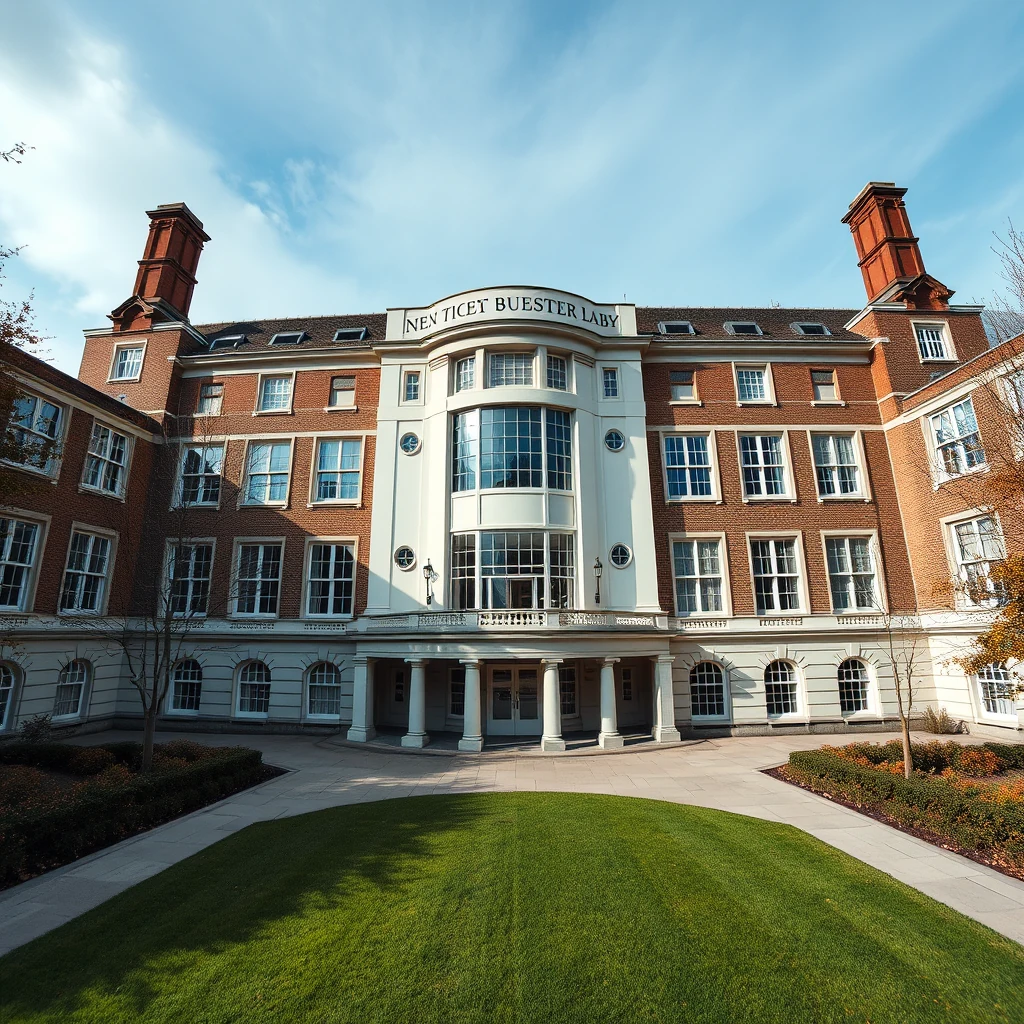 Institution National Physical Laboratory Britain's national metrology institute, founded in 1900 in the grounds of Bushy House in Teddington. It maintains the country's standards for length, mass, time, temperature, and electrical units, and has historically led research on the limits of measurement — including post-war studies comparing trained human surface inspectors against the first generation of mechanical profilometers.国家物理实验室(NPL)是英国的国家计量院,于1900年在泰丁敦的布什府邸成立。它维护着该国关于长度、质量、时间、温度和电学单位的标准,并在历史上引领了关于测量极限的研究——包括战后将训练有素的人类表面检测员与第一代机械表面轮廓仪进行对比的研究。Instituto nacional de metrología de Gran Bretaña, fundado en 1900 en los terrenos de Bushy House en Teddington. Mantiene los patrones del país para longitud, masa, tiempo, temperatura y unidades eléctricas, e históricamente ha liderado la investigación sobre los límites de la medición, incluidos estudios de posguerra que comparaban inspectores humanos con los primeros perfilómetros mecánicos.المختبر الفيزيائي الوطني (NPL) هو معهد القياس الوطني في بريطانيا، تأسس عام 1900 في أراضي بوشي هاوس في تيدينغتون. يحتفظ المختبر بمعايير الدولة للطول والكتلة والوقت ودرجة الحرارة والوحدات الكهربائية، وقاد تاريخياً الأبحاث حول حدود القياس، بما في ذلك دراسات ما بعد الحرب التي قارنت بين مفتشي الأسطح البشرية المدربين والجيل الأول من أجهزة قياس الملامح الميكانيكية.O laboratório nacional de metrologia da Grã-Bretanha, fundado em 1900 nas dependências da Bushy House em Teddington. Ele mantém os padrões do país para comprimento, masa, tempo, temperatura e unidades elétricas, além de historicamente liderar pesquisas sobre limites de medição — incluindo estudos pós-guerra comparando inspetores de superfície humanos a perfilômetros mecânicos.ब्रिटेन का राष्ट्रीय मेट्रोलॉजी संस्थान, जिसकी स्थापना 1900 में टेडिंगटन में बुशी हाउस के परिसर में हुई थी, जिसे राष्ट्रीय भौतिक प्रयोगशाला (National Physical Laboratory - NPL) कहा जाता है। यह लंबाई, द्रव्यमान, समय, तापमान और विद्युत इकाइयों के लिए देश के मानकों को बनाए रखता है, और ऐतिहासिक रूप से माप की सीमाओं पर अनुसंधान का नेतृत्व करता है — जिसमें युद्ध के बाद के तुलनात्मक अध्ययन शामिल हैं।Laboratorium Fisika Nasional (NPL) adalah lembaga metrologi nasional Inggris, didirikan pada tahun 1900 di kawasan Bushy House di Teddington. Lembaga ini memelihara standar nasional untuk panjang, massa, waktu, suhu, dan satuan listrik, serta secara historis memimpin penelitian tentang batasan pengukuran — termasuk studi pascaperang yang membandingkan inspektur permukaan manusia dengan generasi pertama profilometer mekanis.Le National Physical Laboratory (NPL) est l'institut national de métrologie de Grande-Bretagne, fondé en 1900 dans le domaine de Bushy House à Teddington. Il conserve les étalons du pays pour la longueur, la masse, le temps, la température et les unités électriques. Il a mené des recherches sur les limites de la mesure, notamment des études d'après-guerre comparant des inspecteurs humains et la première génération de profilomètres mécaniques.テディントンのブシー・ハウスの敷地内に1900年に設立された英国の国立物理研究所。長さ、質量、時間、温度、電気単位の国家基準を維持管理しており、測定の限界に関する研究を歴史的に牽引してきた。これには、戦後に行われた、訓練された人間の目視表面検査員と第一世代の機械式プロフィロメーター(表面粗さ計)の性能比較研究などが含まれる。Национальная физическая лаборатория — национальный метрологический институт Великобритании, основанный в 1900 году на территории Буши-хаус в Теддингтоне. Она хранит государственные эталоны длины, массы, времени, температуры и электрических единиц, а также исторически лидирует в исследованиях пределов измерений — включая послевоенные работы по сравнению инспекторов ОТК с первыми механическими профилометрами.Das nationale Metrologieinstitut Großbritanniens, gegründet 1900 auf dem Gelände von Bushy House in Teddington. Es verwahrt die nationalen Standards für Länge, Masse, Zeit, Temperatur sowie elektrische Einheiten und war historisch führend in der Forschung zu Messgrenzen – einschließlich Nachkriegsstudien, die ausgebildete menschliche Oberflächenprüfer mit der ersten Generation mechanischer Profilometer verglichen.테딩턴의 부시 하우스 부지에 1900년에 설립된 영국의 국립 측정 표준 연구원(NPL)이다. 길이, 질량, 시간, 온도, 전기 단위의 국가 표준을 유지 및 관리하며, 역사적으로 측정 정밀도 한계에 관한 연구를 주도해 왔다. 여기에는 전후에 진행된 인간 숙련 표면 검사원과 1세대 기계식 표면 거칠기 측정기(profilometer)의 정밀도 비교 연구 등이 포함된다. in Teddington, compared trained human inspectors against early profilometers and concluded the humans were faster and roughly comparable on a defined class of surface defects. The studies were not repeated. By the 1970s optical interferometry made the industrial question moot, though not the scientific one.

And we do not know what those women might have been able to teach a neuroscientist. Most were demobilised in 1945, returned to domestic life, and were never interviewed about how they did what they did. The skill, such as it was, walked out of the factories in their hands and was not written down.
A trained fingertip in 1943 could resolve a feature smaller than a cell. The hand was the instrument; the war was the laboratory in which it was calibrated.