Concept
Pauli exclusion principle
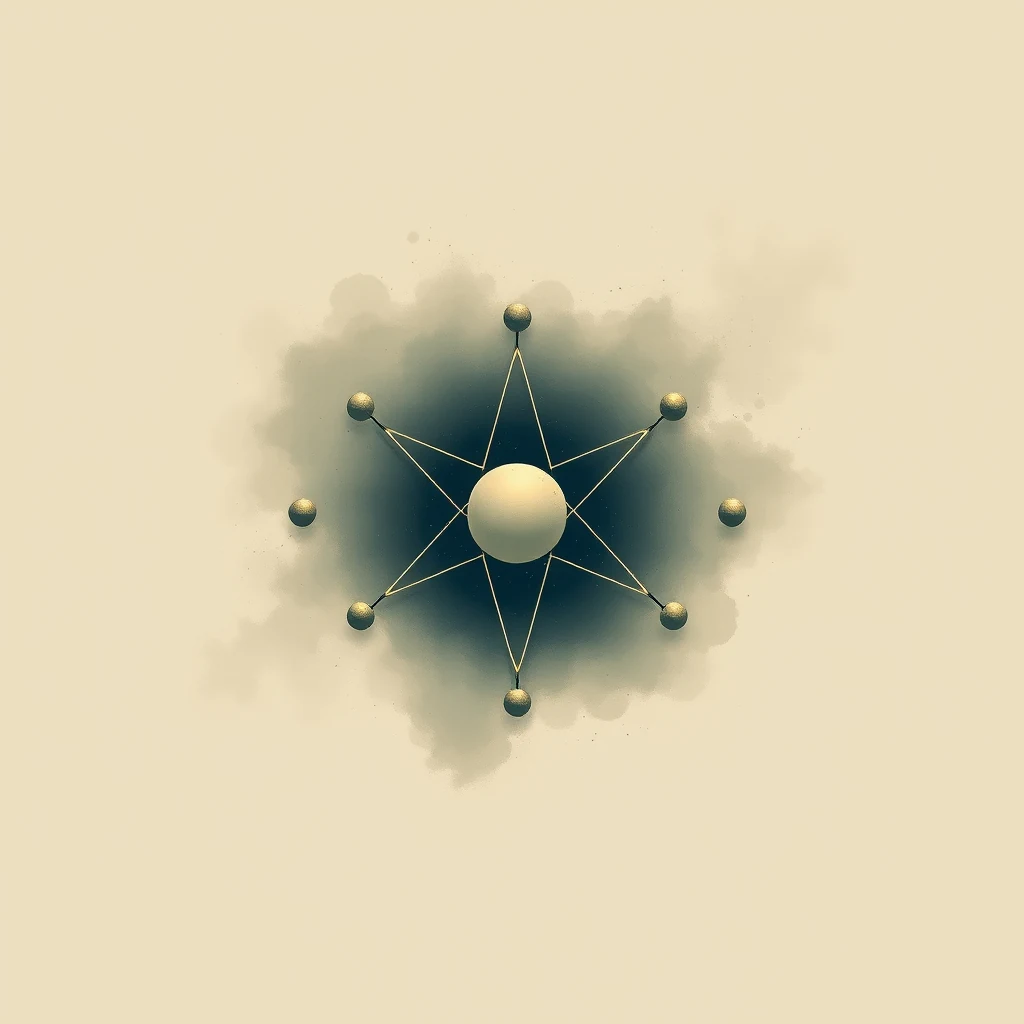
A rule of quantum mechanics, formulated by Wolfgang Pauli in 1925, stating that no two identical fermions — electrons, protons, neutrons and their kin — can occupy the same quantum state simultaneously. It is the reason atoms have shell structure rather than collapsing into their ground state, the reason chemistry exists, and the reason a kilogram of lead does not shrink to the size of a pinhead under its own gravity.
量子力学的一条基本规则,由沃尔夫冈·泡利于1925年提出,指出没有两个相同的费米子——电子、质子、中子及其同类——能够同时占据相同的量子态。正是由于这一规则,原子才具有壳层结构,而非坍缩至基态;正是由于这一规则,化学才得以存在;也正是由于这一规则,一千克铅不会在自身引力作用下收缩至针头大小。
Un principio de la mecánica cuántica, formulado por Wolfgang Pauli en 1925, que establece que dos fermiones idénticos —electrones, protones, neutrones y partículas afines— no pueden ocupar simultáneamente el mismo estado cuántico. Es la razón por la que los átomos presentan estructura de capas en lugar de colapsar a su estado fundamental, la razón por la que existe la química y la razón por la que un kilogramo de plomo no se comprime hasta el tamaño de una cabeza de alfiler bajo su propio peso.
مبدأ من مبادئ ميكانيكا الكم، صاغه فولفغانغ باولي عام 1925، ينصّ على أنه لا يمكن لفرميونين متطابقين — كالإلكترونات والبروتونات والنيوترونات وما شاكلها — أن يشغلا الحالةَ الكمية ذاتها في آنٍ واحد. وهو السبب في أن الذرات تتخذ بنيةً قشريةً بدلاً من أن تنهار إلى حالتها الأساسية، والسبب في وجود الكيمياء أصلاً، والسبب في أن كيلوغراماً من الرصاص لا يتقلّص إلى حجم رأس الدبوس تحت وطأة جاذبيته الذاتية.
Um princípio da mecânica quântica, formulado por Wolfgang Pauli em 1925, que estabelece que dois férmions idênticos — elétrons, prótons, nêutrons e partículas afins — não podem ocupar simultaneamente o mesmo estado quântico. É a razão pela qual os átomos possuem estrutura em camadas em vez de colapsarem para o estado fundamental, a razão pela qual a química existe e a razão pela qual um quilograma de chumbo não se reduz ao tamanho de uma cabeça de alfinete sob a ação de sua própria gravidade.
क्वांटम यांत्रिकी का एक नियम, जिसे वोल्फगांग पाउली ने 1925 में प्रतिपादित किया, जिसके अनुसार कोई भी दो समरूप फ़र्मिऑन — इलेक्ट्रॉन, प्रोटॉन, न्यूट्रॉन और उनके सजातीय कण — एक साथ एक ही क्वांटम अवस्था में नहीं रह सकते। यही कारण है कि परमाणुओं में कोश-संरचना होती है न कि वे अपनी निम्नतम अवस्था में संकुचित हो जाते हैं, यही कारण है कि रसायन विज्ञान का अस्तित्व है, और यही कारण है कि सीसे का एक किलोग्राम अपने ही गुरुत्व के अधीन सुई की नोक के आकार तक नहीं सिकुड़ जाता।
Sebuah kaidah mekanika kuantum, yang dirumuskan oleh Wolfgang Pauli pada tahun 1925, yang menyatakan bahwa tidak ada dua fermion identik — elektron, proton, neutron, dan sejenisnya — yang dapat menempati keadaan kuantum yang sama secara bersamaan. Kaidah inilah yang menjadi alasan atom memiliki struktur kulit alih-alih runtuh ke keadaan dasarnya, alasan kimia ada, dan alasan sekeping timbal seberat satu kilogram tidak menyusut hingga sebesar kepala jarum karena gravitasinya sendiri.
Un principe de la mécanique quantique, formulé par Wolfgang Pauli en 1925, stipulant qu'aucun fermion identique — électrons, protons, neutrons et particules apparentées — ne peut occuper simultanément le même état quantique. C'est ce principe qui confère aux atomes leur structure en couches plutôt que de les laisser s'effondrer dans leur état fondamental, qui rend la chimie possible, et qui empêche un kilogramme de plomb de se contracter jusqu'à la taille d'une tête d'épingle sous l'effet de sa propre gravité.
パウリの排他原理は、1925年にヴォルフガング・パウリが定式化した量子力学の法則であり、電子・陽子・中性子をはじめとする同種フェルミオンが同一の量子状態を同時に占めることはできないと述べる。原子が基底状態へ崩壊することなく殻構造を持つのも、化学が成立するのも、また1キログラムの鉛が自重によって針の頭ほどの大きさに収縮しないのも、いずれもこの原理に由来する。
Принцип запрета Паули — правило квантовой механики, сформулированное Вольфгангом Паули в 1925 году, согласно которому никакие два одинаковых фермиона — электроны, протоны, нейтроны и родственные им частицы — не могут одновременно находиться в одном квантовом состоянии. Именно этот принцип обусловливает оболочечную структуру атомов вместо коллапса в основное состояние, определяет само существование химии и препятствует тому, чтобы килограмм свинца сжался до размеров булавочной головки под действием собственной гравитации.
Ein Grundsatz der Quantenmechanik, 1925 von Wolfgang Pauli formuliert, der besagt, dass keine zwei identischen Fermionen – Elektronen, Protonen, Neutronen und verwandte Teilchen – gleichzeitig denselben Quantenzustand einnehmen können. Er ist der Grund dafür, dass Atome eine Schalenstruktur aufweisen, anstatt in ihren Grundzustand zu kollabieren, der Grund dafür, dass Chemie existiert, und der Grund dafür, dass ein Kilogramm Blei unter seiner eigenen Schwerkraft nicht auf die Größe eines Stecknadelkopfes schrumpft.
1925년 볼프강 파울리가 정립한 양자역학의 원리로, 전자·양성자·중성자 및 그 동류를 포함하는 동일한 페르미온 두 개는 동시에 같은 양자 상태를 점유할 수 없다고 규정한다. 원자가 바닥 상태로 붕괴하지 않고 껍질 구조를 가지는 이유, 화학이 존재하는 이유, 그리고 1킬로그램의 납 덩어리가 자체 중력에 의해 바늘 끝만 한 크기로 수축하지 않는 이유가 모두 이 원리에 있다.