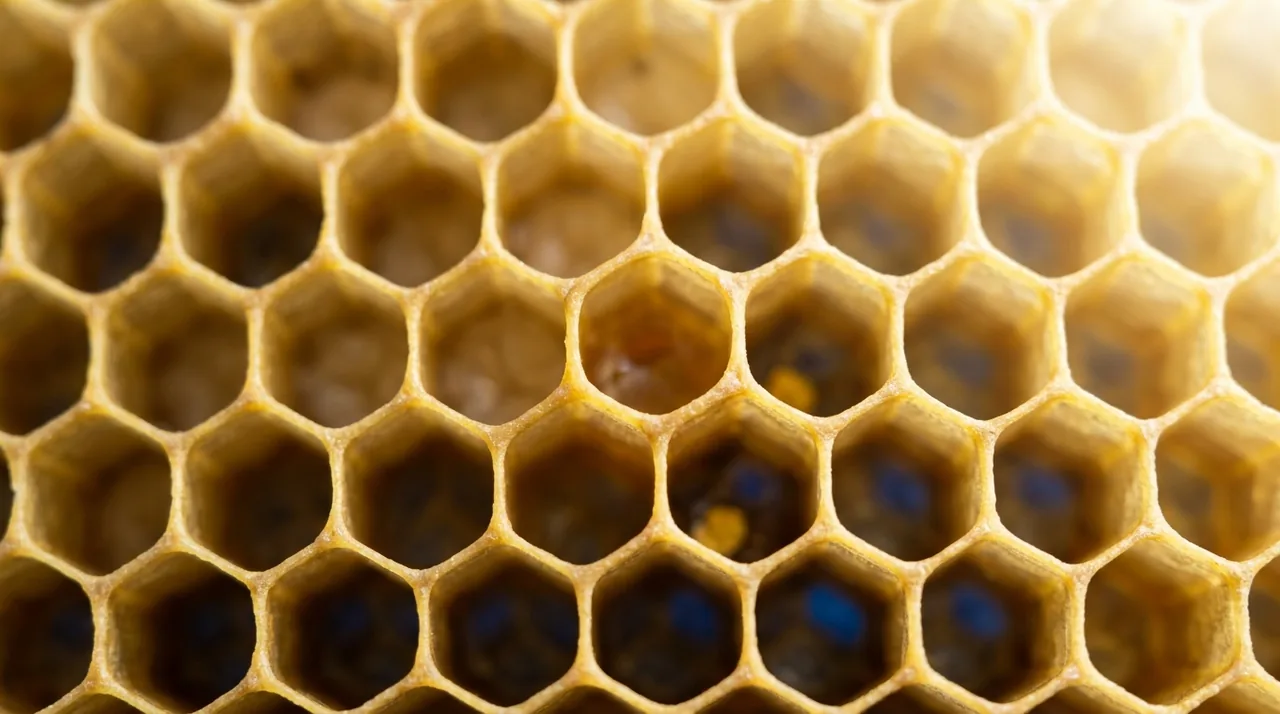
A worker bee weighs about a tenth of a gram. To secrete one gram of wax from the four pairs of glands on her abdomen, she has to eat roughly eight grams of honey, which she and her sisters gathered one flower at a time. Wax is the most expensive thing a colony makes. So when forty thousand bees set about building a comb the size of a dinner plate, the geometry of that comb is not an aesthetic choice. It is a budget.
The budget has a known optimum. If you want to tile a flat surface with identical cells and no wasted space, only three regular shapes will do the job: equilateral triangles, squares, and regular hexagons. Of those three, the hexagon encloses the most area for the least perimeter. Less perimeter means less wall, which means less wax, which means less honey burned to make the wall. A bee that builds in squares is, in effect, paying a tax.
The Greeks noticed. Around 36 BCE the Roman polymath Marcus Varro  Person Marcus Varro Roman scholar (116–27 BCE), sometimes called the most learned of the Romans. His treatise Rerum Rusticarum, written around 36 BCE, is one of the earliest surviving texts to note that the hexagonal honeycomb is the most economical use of wax. He wrote on agriculture, language, religion and antiquities; of his reputed 74 works, only fragments survive, mostly through later citation.马库斯·瓦罗是罗马学者(公元前116—前27年),有时被称为最博学的罗马人。他写于公元前36年左右的著作《论农业》,是现存最早指出六角形蜂巢是最节省蜂蜡的结构的文献之一。他撰写了关于农业、语言、宗教和古物的文章;在他声誉卓著的74部著作中,只有碎片残存,且多是通过后世的引用得以保留。Erudito romano (116-27 a.C.), a veces llamado el más docto de los romanos. Su tratado Rerum Rusticarum, escrito hacia el 36 a.C., es uno de los primeros textos conservados que señalan que el panal hexagonal es el uso más económico de la cera. Escribió sobre agricultura, lengua, religión y antigüedades; de sus 74 obras estimadas, sólo sobreviven fragmentos.ماركوس فارو هو عالم روماني (116-27 ق.م.)، يُدعى أحياناً الأكثر علماً بين الرومان. ويُعد مؤلفه (Rerum Rusticarum)، الذي كُتب حوالي عام 36 ق.م.، أحد أقدم النصوص الباقية التي تشير إلى أن قرص العسل السداسي هو الاستخدام الأكثر اقتصاداً للشمع. كتب فارو في الزراعة واللغة والدين والآثار؛ ومن بين 74 عملاً منسوباً إليه، لم يتبق سوى شذرات، معظمها عبر اقتباسات لاحقة.Erudito romano (116–27 a.C.), às vezes chamado de o mais douto dos romanos. Seu tratado Rerum Rusticarum, escrito por volta de 36 a.C., é um dos textos mais antigos sobreviventes a notar que o favo de mel hexagonal é o uso mais econômico de cera. Escreveu sobre agricultura, linguagem, religião e antiguidades; de suas 74 obras reputadas, restam apenas fragmentos.रोमन विद्वान (116-27 ईसा पूर्व), जिन्हें कभी-कभी रोमनों में सबसे विद्वान कहा जाता था, जिन्हें मार्कस वैरो (Marcus Varro) कहा जाता है। लगभग 36 ईसा पूर्व लिखा गया उनका ग्रंथ 'रेरम रस्टकारम' (Rerum Rusticarum) जीवित बचे शुरुआती ग्रंथों में से एक है जिसमें यह उल्लेख किया गया है कि हेक्सागोनल हनीकॉम्ब मोम का सबसे किफायती उपयोग है। उन्होंने कृषि, भाषा, धर्म पर लिखा।Cendekiawan Romawi (116–27 SM), kadang disebut orang Romawi yang paling terpelajar. Risalahnya Rerum Rusticarum, ditulis sekitar tahun 36 SM, adalah salah satu teks paling awal yang mencatat bahwa sarang madu heksagonal adalah penggunaan lilin yang paling ekonomis. Ia menulis tentang pertanian, bahasa, agama, dan barang antik; dari 74 karyanya, hanya fragmen yang tersisa.Érudit romain (116-27 av. J.-C.), parfois qualifié de plus savant des Romains. Son traité Rerum Rusticarum, écrit vers 36 av. J.-C., est l'un des plus anciens textes mentionnant que le nid d'abeilles hexagonal permet l'usage le plus économique de la cire. Il a écrit sur l'agriculture, la langue, la religion et l'histoire. De ses 74 œuvres présumées, seuls des fragments subsistent.ローマーの学者(前116〜前27年)であり、しばしば「ローマ人の中で最も博識な人物」と称される。前36年頃に執筆された彼の農耕論『Rerum Rusticarum』は、六角形のハニカム構造が最も蝋を節約できる形状であると指摘した現存する最古の文献の一つである。農業、言語、宗教、考古学について執筆したが、伝わる74の著作のうち、後世の引用を除き断片しか残っていない。Римский ученый (116–27 до н.э.), которого иногда называют самым ученым из римлян. Его трактат Rerum Rusticarum, написанный около 36 года до н.э., — один из самых ранних сохранившихся текстов, в которых отмечается, что соты представляют собой наиболее экономичное использование воска. Из его 74 трудов сохранились лишь фрагменты, в основном в цитатах более поздних авторов.Römischer Gelehrter (116–27 v. Chr.), der manchmal als der gelehrteste der Römer bezeichnet wird. Seine Abhandlung Rerum Rusticarum, geschrieben um 36 v. Chr., ist einer der frühesten erhaltenen Texte, die erwähnen, dass die hexagonale Wabe die wirtschaftlichste Wachsnutzung darstellt. Er schrieb über Landwirtschaft, Sprache und Religion; von 74 Werken sind nur Fragmente erhalten.역사상 가장 박식한 로마인으로 평가받는 로마의 학자(Marcus Varro, 기원전 116~27)이다. 기원전 36년경에 지어진 그의 농업론 저서 《Rerum Rusticarum》은 육각형 벌집 구조가 밀랍을 가장 경제적으로 사용하는 구조임을 언급한 현존하는 최초의 문헌이다. 농업, 언어, 종교, 고고학 등을 집필했으나 총 74개의 저작 중 후대 인용을 거친 파편만 전해진다. wrote that the hexagonal comb was the most economical shape a bee could choose, and three centuries later Pappus of Alexandria
  Person Pappus of Alexandria Greek mathematician of the fourth century CE, the last great geometer of antiquity. His Synagoge, a sprawling compendium of classical mathematics, preserves the work of predecessors who would otherwise be lost. The fifth book contains his statement of the honeycomb conjecture: that among equal-area tilings of the plane, the regular hexagon has the least perimeter. He could not prove it.亚历山大港的帕普斯是公元四世纪的希腊数学家,也是古代最后一位伟大的几何学家。他的著作《数学汇编》是一部庞大的古典数学汇编,保存了许多前人可能会因此失传的研究成果。第五卷包含了关于蜂巢猜想的表述:在平面等面积的铺砖方式中,正六边形的周长最小。他未能给出证明。Matemático griego del siglo IV d.C., el último grande geómetra de la antigüedad. Su Synagoge, un extenso compendio de matemática clásica, conserva la obra de predecesores que de otro modo se habrían perdido. El quinto libro contiene su enunciado de la conjetura del panal: que entre los teselados del plano de igual área, el hexágono regular tiene el menor perímetro. No pudo probarlo.بابوس السكندري هو عالم رياضيات يوناني من القرن الرابع الميلادي، وآخر علماء الهندسة العظام في العصور القديمة. يحفظ مؤلفه (Synagoge)، وهو ملخص واسع للرياضيات الكلاسيكية، أعمال أسلافه التي كانت ستضيع لولا ذلك. ويحتوي الكتاب الخامس على صياغته لتخمين قرص العسل: أنه من بين تبليطات المستوي ذات المساحة المتساوية، فإن السداسي المنتظم له أقل محيط. ولم يتمكن من إثبات ذلك.Matemático grego do século IV d.C., o último grande geômetra da antiguidade. Sua Synagoge, um extenso compêndio de matemática clássica, preserva a obra de predecessores que de outra forma estaria perdida. O quinto livro contém sua declaração da conjectura do favo de mel: que entre os ladrilhamentos do plano de igual área, o hexágono regular tem o menor perímetro. Ele não pôde prová-lo.चौथी शताब्दी ईस्वी के ग्रीक गणितज्ञ, प्राचीन काल के अंतिम महान ज्यामितीय विद्वान, जिन्हें अलेक्जेंड्रिया के पप्पस (Pappus of Alexandria) कहा जाता है। classical गणित का एक विशाल संग्रह 'सिनैगोगा' (Synagoge) उनके पूर्ववर्तियों के काम को सुरक्षित रखता है जो अन्यथा खो जाते। इसकी पांचवीं पुस्तक में हनीकॉम्ब अनुमान का उनका कथन है। वे इसे सिद्ध नहीं कर सके।Matematikawan Yunani abad keempat Masehi, geometriwan agung terakhir dari zaman kuno. Karyanya Synagoge, sebuah kompendium matematika klasik yang luas, melestarikan karya para pendahulunya yang jika tidak dikumpulkan akan hilang. Buku kelima berisi pernyataan konjektur sarang madu: bahwa di antara pengubinan bidang dengan luas yang sama, segi enam beraturan memiliki keliling terkecil. Ia tidak dapat membuktikannya.Mathématicien grec du IVe siècle de notre ère, le dernier grand géomètre de l'Antiquité. Sa Collection mathématique (Synagoge), vaste recueil de mathématiques classiques, préserve les travaux de prédécesseurs qui auraient sinon été perdus. Le cinquième livre contient son énoncé de la conjecture du nid d'abeilles : parmi les pavages du plan de même aire, l'hexagone régulier possède le plus petit périmètre. Il n'a pu le prouver.公元4世紀のギリシャの数学者であり、古代における最後の偉大な幾何学者。古典数学の膨大な学術選集である彼の著作『数学集成』は、散逸する恐れがあった先人たちの研究業績を現在に伝えている。その第5巻には「等面積の平面充填の中で、正六角形が最小の周長を持つ」という「蜂の巣予想」が記載されているが、彼はそれを証明できなかった。Греческий математик IV века н.э., последний великий геометр древности. Его «Математическое собрание» (Synagoge), обширный свод античной математики, сохранил труды предшественников, которые иначе были бы утрачены. Пятая книга содержит формулировку гипотезы сотов: среди мозаик плоскости равной площади правильный шестиугольник имеет наименьший периметр. Он не смог это доказать.Griechischer Mathematiker des vierten Jahrhunderts n. Chr. und der letzte große Geometer der Antike. Seine Synagoge, ein umfassendes Kompendium der klassischen Mathematik, bewahrt das Werk von Vorgängern, das andernfalls verloren gegangen wäre. Das fünfte Buch enthält seine Formulierung der Wabenvermutung: dass unter flächengleichen Pflasterungen der Ebene das regelmäßige Sechseck den geringsten Umfang hat. Er konnte es nicht beweisen.기원후 4세기경 활동한 그리스의 수학자이자 고대 마지막 위대한 기하학자(Pappus of Alexandria)이다. 고전 수학의 방대한 종합 해설서인 그의 저서 《Synagoge》는 유실될 뻔했던 선대 수학자들의 업적을 담고 있다. 제5권에는 '평면 위에 넓이가 같은 도형들을 채울 때 정육각형의 둘레가 가장 짧다'는 벌집 추측(honeycomb conjecture)의 명제가 실려 있으나, 그는 이를 증명하지 못했다. turned the observation into a formal claim: among all the ways to divide a plane into equal cells, hexagons minimise the total boundary. He could not prove it. Neither could anyone else.

A two-thousand-year conjecture
The statement is harder than it looks. It is easy enough to compare hexagons against squares and triangles. It is much harder to rule out every irregular tiling — wobbly cells, mixed shapes, curved walls — that might, in some clever arrangement, beat the honeycomb. The problem sat open through the entire history of European mathematics. Carl Friedrich Gauss  Person Carl Friedrich Gauss German mathematician (1777–1855), often ranked with Archimedes and Newton. His work touched number theory, statistics, astronomy, geodesy and electromagnetism. In 1831 he proved a restricted form of the honeycomb conjecture, showing the hexagon optimal among convex tilings. The full proof, removing the convexity restriction, eluded him and everyone after him for the better part of two centuries.卡尔·弗里德里希·高斯是德国数学家(1777—1855年),常与阿基米德和牛顿并列。他的研究涉及数论、统计学、天文学、大地测量学和电磁学。1831年,他证明了蜂巢猜想的一个受限形式,表明六边形在凸铺砖方式中是最优的。在近两个世纪的大部分时间里,高斯以及他之后的学者都未能给出免除凸性限制的完整证明。Matemático alemán (1777-1855), a menudo equiparado a Arquímedes y Newton. Su obra abarcó la teoría de números, la estadística, la astronomía, la geodesia y el electromagnetismo. En 1831 demostró una forma restringida de la conjetura del panal, demostrando que el hexágono es óptimo entre los teselados convexos. La prueba completa, eliminando la restricción de convexidad, se le resistió a él y a los demás durante casi dos siglos.كارل فريدريش غاوس هو عالم رياضيات ألماني (1777-1855)، يُصنف غالباً مع أرخميدس ونيوتن. شمل عمله نظرية الأعداد والإحصاء والفلك والجيوديسيا والكهرومغناطيسية. وفي عام 1831، أثبت صيغة مقيدة لتخمين قرص العسل، مبيناً أن الشكل السداسي هو الأمثل بين التبليطات المحدبة. لكن الإثبات الكامل، بإزالة قيد التحدب، استعصى عليه وعلى كل من جاء بعده لما يقرب من قرنين من الزمان.Matemático alemão (1777–1855), muitas vezes classificado ao lado de Arquimedes e Newton. Seu trabalho tocou a teoria dos números, estatística, astronomia, geodesia e eletromagnetismo. Em 1831, ele provou uma forma restrita da conjectura do favo de mel, mostrando que o hexágono é ideal entre ladrilhamentos convexos. A prova completa, removendo a restrição de convexidade, escapou dele e de todos depois dele por quase dois séculos.जर्मन गणितज्ञ (1777-1855), जिन्हें अक्सर आर्किमिडीज और न्यूटन के साथ स्थान दिया जाता है, जिन्हें कार्ल फ्रेडरिक गॉस (Carl Friedrich Gauss) कहा जाता है। उनका कार्य संख्या सिद्धांत, सांख्यिकी, खगोल विज्ञान, भूगणित और विद्युत चुंबकत्व को छूता था। 1831 में उन्होंने हनीकॉम्ब अनुमान के एक सीमित रूप को सिद्ध किया, जिसमें उन्होंने दिखाया कि उत्तल टाइलिंग में षट्भुज इष्टतम है।Matematikawan Jerman (1777–1855), sering disejajarkan dengan Archimedes dan Newton. Karyanya menyentuh teori bilangan, statistika, astronomi, geodesi, dan elektromagnetisme. Pada 1831 ia membuktikan bentuk terbatas dari konjektur sarang madu, menunjukkan bahwa segi enam adalah yang paling optimal di antara pengubinan konveks. Pembuktian penuh tanpa batasan konveksitas luput darinya dan ilmuwan setelahnya selama hampir dua abad.Mathématicien allemand (1777-1855), souvent classé aux côtés d'Archimède et de Newton. Ses travaux ont concerné la théorie des nombres, les statistiques, l'astronomie, la géodésie et l'électromagnétisme. En 1831, il a prouvé une version restreinte de la conjecture du nid d'abeilles, montrant l'optimalité de l'hexagone pour les pavages connexes. La preuve générale, sans cette restriction, lui a échappé, ainsi qu'à ses successeurs, pendant près de deux siècles.アルキメデスやニュートンと並び称されるドイツの数学者(1777〜1855年)。その研究分野は数論、統計学、天文学、測地学、電磁気学に及ぶ。1831年、凸多角形による平面充填という制限条件下において六角形が最適であることを示し、蜂の巣予想の限定的な証明を与えた。凸性制限を排した完全な証明は、彼も含め誰一人としてその後約2世紀にわたり到達できなかった。Немецкий математик (1777–1855), часто упоминаемый в одном ряду с Архимедом и Ньютоном. Его труды относятся к теории чисел, статистике, астрономии, геодезии и электромагнетизму. В 1831 году он доказал ограниченную форму гипотезы сотов, показав оптимальность шестиугольника среди выпуклых мозаик. Полное доказательство без ограничения выпуклости ускользало от него и его последователей почти два столетия.Deutscher Mathematiker (1777–1855), der oft mit Archimedes und Newton auf eine Stufe gestellt wird. Seine Arbeit berührte Zahlentheorie, Statistik, Astronomie, Geodäsie und Elektromagnetismus. 1831 bewies er eine eingeschränkte Form der Wabenvermutung und zeigte, dass das Sechseck unter konvexen Pflasterungen optimal ist. Der vollständige Beweis ohne Konvexitätsbeschränkung blieb ihm und allen Nachfolgern fast zwei Jahrhunderte lang verwehrt.아르키메데스, 뉴턴과 더불어 역사상 가장 위대한 수학자로 꼽히는 독일의 수학자(Carl Friedrich Gauss, 1777~1855)이다. 정수론, 통계학, 천문학, 측지학, 전자기학 등 다양한 학문 분야에 족적을 남겼다. 1831년 벌집 추측의 제한적 형태를 증명하여 볼록 다각형 타일링 조건 하에서는 정육각형이 최적임을 입증했다. 볼록성 제한을 없앤 일반적인 벌집 추측의 완전한 증명은 그의 사후 2세기 동안 아무도 규명해 내지 못했다. gave a partial answer in the 1830s, restricted to convex shapes. The general case held out.

In 1999 the American mathematician Thomas Hales  Person Thomas Hales American mathematician, born 1958, now at the University of Pittsburgh. In 1998 he announced a computer-assisted proof of the Kepler conjecture on sphere packing, a problem open since 1611. His shorter 1999 proof of the honeycomb conjecture closed a question first posed by Varro and formalised by Pappus. He has since led the Flyspeck project to mechanically verify his Kepler proof.托马斯·海尔斯是美国数学家(1958年出生),目前任职于匹兹堡大学。1998年,他宣布了关于球体装箱的开普勒猜想的计算机辅助证明,该问题自1611年以来一直悬而未决。他于1999年给出的关于蜂巢猜想的较简短证明,解决了一个由瓦罗首次提出并由帕普斯形式化的古老问题。此后,他领导了Flyspeck项目,以对他的开普勒证明进行计算机形式化验证。Matemático estadounidense (nacido en 1958), actualmente en la Universidad de Pittsburgh. En 1998 anunció una demostración asistida por ordenador de la conjetura de Kepler sobre el empaquetamiento de esferas, un problema abierto desde 1611. Su demostración más breve en 1999 de la conjetura del panal cerró una cuestión planteada por Varro y formalizada por Pappus. Desde entonces lidera el proyecto Flyspeck para verificar mecánicamente su demostración.توماس هيلز هو عالم رياضيات أمريكي (ولد عام 1958)، ويعمل حالياً في جامعة بيتسبرغ. أعلن هيلز عام 1998 عن إثبات بمساعدة الكمبيوتر لتخمين كيبلر حول تعبئة الكرات، وهو سؤال ظل مفتوحاً منذ عام 1611. وأغلق إثباته الأقصر لتخمين قرص العسل عام 1999 سؤالاً طرحه فارو لأول مرة وصاغه بابوس. يقود هيلز منذ ذلك الحين مشروع (Flyspeck) للتحقق آلياً من إثباته لتخمين كيبلر.Matemático americano (nascido em 1958), atualmente na University of Pittsburgh. Em 1998, ele anunciou uma demonstração assistida por computador da conjectura de Kepler sobre o empacotamento de esferas, um problema aberto desde 1611. Sua demonstração mais curta de 1999 da conjectura do favo de mel encerrou uma questão proposta por Varro e formalizada por Pappus. Ele lidera desde então o projeto Flyspeck para verificar mecanicamente sua prova de Kepler.अमेरिकी गणितज्ञ (जन्म 1958), जो वर्तमान में पिट्सबर्ग विश्वविद्यालय में हैं, जिन्हें थॉमस हेल्स (Thomas Hales) कहा जाता है। 1998 में उन्होंने क्षेत्र पैकिंग (sphere packing) पर केपलर अनुमान के कंप्यूटर-सहायता प्राप्त प्रमाण की घोषणा की, जो 1611 से एक खुला प्रश्न था। हनीकॉम्ब अनुमान के उनके 1999 के छोटे प्रमाण ने वैरो द्वारा पूछे गए और पप्पस द्वारा औपचारिक रूप दिए गए प्रश्न को बंद कर दिया।Matematikawan Amerika, lahir 1958, kini di University of Pittsburgh. Pada 1998 ia mengumumkan pembuktian berbantuan komputer untuk konjektur Kepler tentang pengepakan bola, sebuah masalah yang belum terpecahkan sejak 1611. Pembuktian konjektur sarang madunya yang lebih singkat pada 1999 menutup pertanyaan yang pertama kali diajukan oleh Varro dan diformalisasikan oleh Pappus. Ia memimpin proyek Flyspeck untuk verifikasi.Mathématicien américain (né en 1958), professeur à l'université de Pittsburgh. En 1998, il a publié une démonstration assistée par ordinateur de la conjecture de Kepler sur l'empilement de sphères, un problème ouvert depuis 1611. Sa démonstration plus courte en 1999 de la conjecture du nid d'abeilles a résolu la question posée par Varron et formalisée par Pappus. Il a depuis mené le projet Flyspeck pour vérifier formellement sa preuve de Kepler.1958年生まれのアメリカの数学者であり、現在はピッツバーグ大学に在籍。1998年に、1611年以来未解決であった球充填に関する「ケプラー予想」をコンピュータ支援を用いて証明したと発表した。1999年には、ヴァロが提起しパップスが定式化したハニカム予想について、より簡潔な証明を与えてこの古くからの問題に終止符を打った。その後、ケプラー予想の証明を機械的に検証するFlyspeckプロジェクトを主導している。Американский математик (родился в 1958 году), ныне работающий в Питтсбургском университете. В 1998 году он объявил о компьютерном доказательстве гипотезы Кеплера об упаковке шаров — проблемы, остававшейся открытой с 1611 года. Его более короткое доказательство гипотезы сотов в 1999 году закрыло вопрос, впервые поставленный Варроном и формализованный Паппом. С тех пор он руководит проектом Flyspeck по машинной проверке своего доказательства Кеплера.US-amerikanischer Mathematiker (geb. 1958), derzeit an der University of Pittsburgh. 1998 kündigte er einen computergestützten Beweis der Kepler-Vermutung zur Kugelpackung an, ein seit 1611 offenes Problem. Sein kürzerer Beweis der Wabenvermutung von 1999 schloss eine Frage ab, die zuerst von Varro aufgeworfen und von Pappus formalisiert worden war. Seitdem leitet er das Flyspeck-Projekt zur maschinellen Verifizierung seines Kepler-Beweises.피츠버그 대학교에 재직 중인 미국의 수학자(Thomas Hales, 1958년생)이다. 1998년, 1611년 이래 미해결 과제였던 구형 채우기에 관한 케플러 추측(Kepler conjecture)을 컴퓨터 계산 지원을 통해 증명했다고 발표했다. 1999년에는 바로가 최초 제안하고 파푸스가 정립한 벌집 추측을 훨씬 짧은 수식으로 완벽히 증명했다. 이후 자신의 케플러 추측 증명 결과물을 기계 연산으로 공식 검증하는 '플라이스펙(Flyspeck)' 프로젝트를 주도했다. published a proof. He was already known for settling the Kepler conjecture
 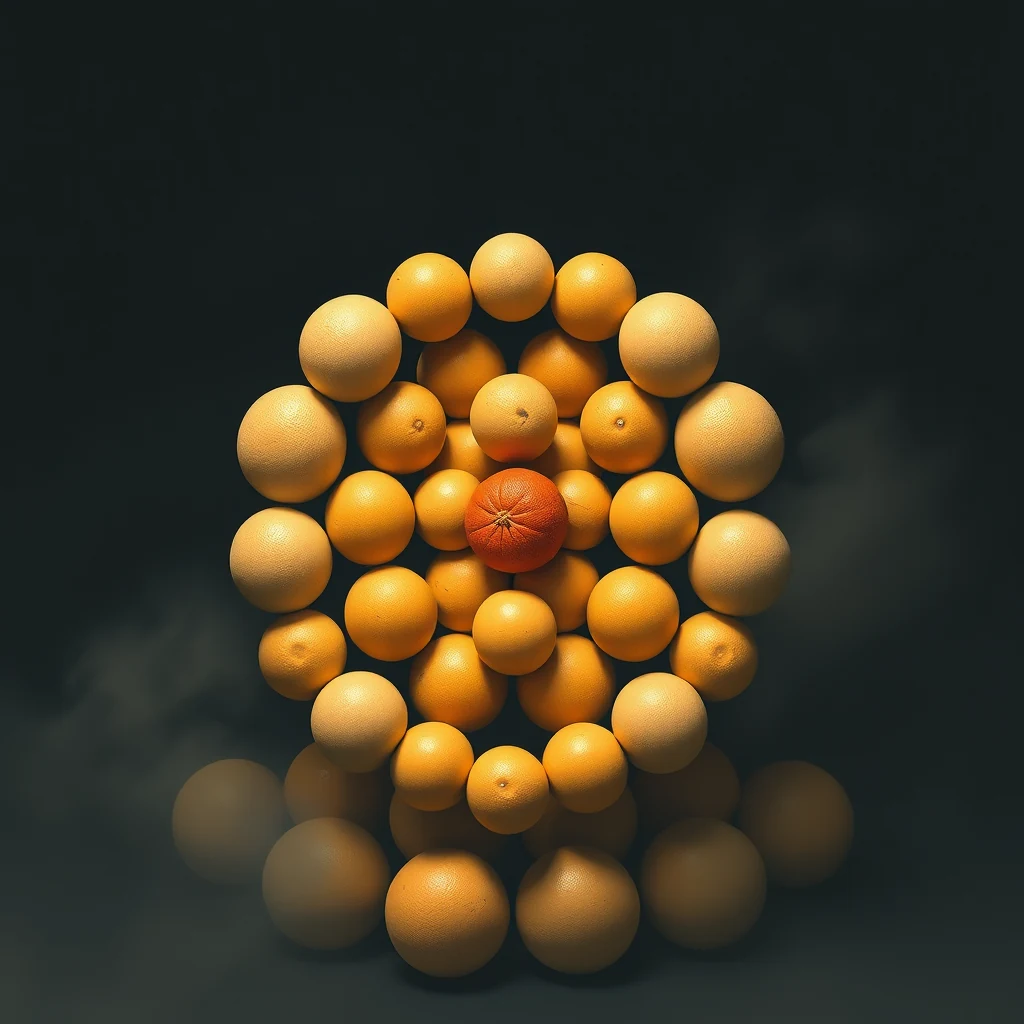 Concept Kepler conjecture The claim, first made by Johannes Kepler in 1611, that no arrangement of equal spheres in three-dimensional space achieves a higher average density than the face-centred cubic packing used by every greengrocer stacking oranges. Density: roughly 74 percent. The conjecture resisted proof for nearly four centuries until Thomas Hales completed a computer-assisted argument in 1998, later formally verified by machine in 2014.开普勒猜想是由约翰内斯·开普勒于1611年首次提出的主张,即在三维空间中,没有任何等球体排列能达到比面心立方堆积更高的平均密度,这种堆积方式也就是每个水果商叠放橙子时使用的方法。该堆积密度约为74%。该猜想在近四个世纪里一直未能得到证明,直到托马斯·海尔斯于1998年完成了计算机辅助证明,并于2014年通过计算机进行了形式化验证。Afirmación formulada por Johannes Kepler en 1611 de que ninguna disposición de esferas iguales en el espacio tridimensional logra una densidad media superior al empaquetamiento cúbico centrado en las caras, el usado para apilar naranjas. Densidad: unos 74 por ciento. Resistió demostración casi cuatro siglos hasta que Thomas Hales completó un argumento asistido por ordenador en 1998, verificado formalmente en 2014.تخمين كيبلر هو ادعاء قدمه يوهانس كيبلر لأول مرة عام 1611، ومفاده أنه لا يوجد ترتيب للكرات المتساوية في فضاء ثلاثي الأبعاد يحقق كثافة متوسطة أعلى من التعبئة المكعبة ممركزة الوجه التي يستخدمها البائعون لرص البرتقال. تبلغ الكثافة حوالي 74 بالمائة. قاوم التخمين الإثبات لقرابة أربعة قرون حتى أكمل توماس هيلز حجة بمساعدة الكمبيوتر عام 1998، وتم التحقق منها رسمياً بالآلة عام 2014.A conjectura de Kepler é a afirmação, feita pela primeira vez por Johannes Kepler em 1611, de que nenhum arranjo de esferas iguais no espaço tridimensional atinge uma densidade média maior do que o empacotamento cúbico de faces centradas, usado para empilhar laranjas. Densidade: cerca de 74 por cento. O problema resistiu a provas por quase quatro séculos até que Thomas Hales completou um argumento em 1998, verificado em 2014.योहानस केपलर द्वारा 1611 में किया गया दावा कि त्रि-आयामी अंतरिक्ष में समान क्षेत्रों की कोई भी व्यवस्था फल विक्रेताओं द्वारा संतरे की ढेरी लगाने के लिए उपयोग की जाने वाली फेस-सेंटर्ड क्यूबिक पैकिंग से अधिक औसत घनत्व प्राप्त नहीं कर सकती है, जिसे केपलर अनुमान (Kepler conjecture) कहा जाता है। इसका घनत्व लगभग 74 प्रतिशत होता है। थॉमस हेल्स ने 1998 में इसका कंप्यूटर-सहायता प्राप्त प्रमाण पूरा किया।Konjektur Kepler adalah klaim yang pertama kali diajukan oleh Johannes Kepler pada tahun 1611, bahwa tidak ada susunan bola-bola dengan ukuran yang sama dalam ruang tiga dimensi yang mencapai kepadatan rata-rata lebih tinggi daripada susunan kubik berpusat muka (face-centred cubic) yang biasa digunakan pedagang untuk menumpuk jeruk. Kepadatan ini berkisar 74 persen. Masalah ini terbukti oleh Hales pada 1998.Assertion formulée par Johannes Kepler en 1611, selon laquelle aucun arrangement de sphères identiques dans l'espace tridimensionnel ne présente une densité moyenne supérieure à l'empilement compact (cubique à faces centrées), couramment utilisé pour empiler des oranges. Cette densité est d'environ 74 pour cent. La conjecture a résisté jusqu'à ce que Thomas Hales publie une preuve informatique en 1998, validée formellement en 2014.1611年にヨハネス・ケプラーが初めて提唱した「3次元空間において、等しい球体の配置の平均密度は、八百屋がオレンジを積み上げる際に使用する面心立方格子構造(および六方最密充填構造)を超えることはできない」という主張。その密度は約74%である。この予想は約4世紀にわたって証明を拒み続けたが、1998年にトマス・ヘイルズがコンピュータ支援証明を完成させ、2014年に機械的に検証された。Гипотеза Кеплера — утверждение, впервые высказанное Иоганном Кеплером в 1611 году, о том, что никакое расположение одинаковых шаров в трехмерном пространстве не имеет средней плотности выше, чем гранецентрированная кубическая упаковка (так укладывают апельсины торговцы). Плотность составляет около 74%. Гипотеза не была доказана почти четыре века, пока Томас Хейлс не завершил в 1998 году доказательство, проверенное машиной в 2014 году.Die Kepler-Vermutung ist die 1611 von Johannes Kepler aufgestellte Behauptung, dass keine Anordnung gleicher Kugeln im dreidimensionalen Raum eine höhere mittlere Dichte erreicht als die kubisch-flächenzentrierte Packung, die beim Stapeln von Orangen verwendet wird. Die Dichte beträgt etwa 74 Prozent. Die Vermutung widerstand fast vier Jahrhunderte lang einem Beweis, bis Thomas Hales 1998 einen computergestützten Beweis erbrachte, der 2014 verifiziert wurde.요하네스 케플러가 1611년 처음 제기한 가설로, 3차원 공간에서 크기가 같은 구체들을 쌓을 때 면심 입방 격자 구조(과일 가게에서 오렌지를 쌓을 때 쓰는 방식)보다 높은 평균 밀도를 달성할 수 없다는 주장(Kepler conjecture)이다. 이때의 충전 밀도는 약 74%이다. 이 가설은 400년 가까이 증명되지 못하다가, 1998년 토머스 헤일스가 컴퓨터 연산의 도움을 받아 증명을 완료했고 2014년 기계 연산 정밀 검증을 거쳤다. on sphere packing, a problem Kepler
  Person Kepler German astronomer Johannes Kepler (1571–1630). His three laws of planetary motion — published between 1609 and 1619 — were the first quantitative account of why the planets appear to slow down, speed up, and double back across the sky. The Antikythera Mechanism's pin-and-slot gearing models exactly this irregular motion, mechanically, sixteen centuries before Kepler explained it mathematically.德国天文学家约翰内斯·开普勒(1571–1630)。他在1609年至1619年间发表的三大行星运动定律,是人类首次定量地解释了行星在天空中为何会出现减速、加速和逆行现象。安提基特拉机械装置中的销槽齿轮机构,在开普勒通过数学方法解释这一现象的十六个世纪之前,就已经以机械方式精确地模拟了这种不规则运动。Astrónomo alemán Johannes Kepler (1571–1630). Sus tres leyes del movimiento planetario —publicadas entre 1609 y 1619— fueron la primera explicación cuantitativa de por qué los planetas parecen desacelerar, acelerar y retroceder a través del cielo. El engranaje de pasador y ranura del mecanismo de Anticitera modela exactamente este movimiento irregular, mecánicamente, dieciséis siglos antes de que Kepler lo explicara matemáticamente.الفلكي الألماني يوهانس كيبلر (1571–1630). مثّلت قوانينه الثلاثة لحركة الكواكب، التي نُشرت بين عامي 1609 و1619، أول وصف كمّي لسبب ظهور الكواكب وهي تبطئ وتتسارع وتتراجع في السماء. وتعمل آلية أنتيكيثيرا عبر نظام تروس «الدبوس والفتحة» على نمذجة هذه الحركة غير المنتظمة ميكانيكيًا بدقة، وذلك قبل ستة عشر قرنًا من التفسير الرياضي الذي قدمه كيبلر.O astrônomo alemão Johannes Kepler (1571–1630). As suas três leis do movimento planetário — publicadas entre 1609 e 1619 — foram a primeira explicação quantitativa do porquê de os planetas parecerem desacelerar, acelerar e retroceder pelo céu. A engrenagem de pino e ranhura do Mecanismo de Anticítera modela exatamente este movimento irregular, mecanicamente, dezesseis séculos antes de Kepler o ter explicado matematicamente.जर्मन खगोलशास्त्री जोहान्स केपलर (1571–1630)। 1609 और 1619 के बीच प्रकाशित ग्रहीय गति के उनके तीन नियम, इस बात का पहला मात्रात्मक विवरण थे कि ग्रह आकाश में धीमे, तेज और पीछे मुड़ते हुए क्यों दिखाई देते हैं। एंटिकिथेरा यंत्र की पिन-एंड-स्लॉट गियरिंग, केपलर द्वारा इसे गणितीय रूप से समझाने से सोलह शताब्दी पहले, यांत्रिक रूप से ठीक इसी अनियमित गति का मॉडल प्रस्तुत करती है।Astronom Jerman Johannes Kepler (1571–1630). Tiga hukum gerak planetnya — diterbitkan antara tahun 1609 dan 1619 — merupakan penjelasan kuantitatif pertama mengenai mengapa planet tampak melambat, mempercepat, dan berbalik arah melintasi langit. Roda gigi pin-dan-slot pada Mekanisme Antikythera memodelkan gerakan tidak teratur ini secara tepat dan mekanis, enam belas abad sebelum Kepler menjelaskannya secara matematis.L'astronome allemand Johannes Kepler (1571-1630). Ses trois lois du mouvement planétaire — publiées entre 1609 et 1619 — constituent la première description quantitative expliquant pourquoi les planètes semblent ralentir, accélérer et rebrousser chemin dans le ciel. Le mécanisme d'Anticythère, grâce à son engrenage à goupille et fente, modélise exactement ce mouvement irrégulier, mécaniquement, seize siècles avant que Kepler ne l'explique mathématiquement.ドイツの天文学者ヨハネス・ケプラー(1571–1630年)。1609年から1619年にかけて発表された彼の惑星運動の三法則は、惑星が空を横切る際に減速、加速、そして逆行して見える理由を初めて定量的に説明したものである。アンティキティラ島の機械のピン・アンド・スロット機構は、ケプラーが数学的に説明する16世紀も前に、まさにこの不規則な運動を機械的にモデル化していた。Немецкий астроном Иоганн Кеплер (1571–1630). Его три закона движения планет, опубликованные в период между 1609 и 1619 годами, стали первым количественным объяснением того, почему планеты на небосводе кажутся замедляющимися, ускоряющимися и движущимися попятно. Штифтово-пазовая передача Антикитерского механизма в точности моделирует это неравномерное движение механическим путём, за шестнадцать столетий до того, как Кеплер объяснил его математически.Der deutsche Astronom Johannes Kepler (1571–1630). Seine drei Gesetze der Planetenbewegung – veröffentlicht zwischen 1609 und 1619 – bildeten die erste quantitative Erklärung dafür, warum die Planeten am Himmel scheinbar langsamer werden, sich beschleunigen und ihre Richtung umkehren. Das Stift-Schlitz-Getriebe des Mechanismus von Antikythera bildet genau diese unregelmäßige Bewegung mechanisch nach, sechzehn Jahrhunderte bevor Kepler sie mathematisch erklärte.독일의 천문학자 요하네스 케플러(1571–1630). 1609년에서 1619년 사이에 발표된 그의 세 가지 행성 운동 법칙은 행성이 하늘을 가로질러 느려지고, 빨라지고, 역행하는 것처럼 보이는 이유에 대한 최초의 정량적 설명이었다. 안티키테라 기계의 핀-슬롯 기어 장치는 케플러가 이를 수학적으로 설명하기 16세기 전에 이미 이러한 불규칙한 운동을 기계적으로 정확하게 구현했다. had posed in 1611. The honeycomb proof was, by comparison, short — about twenty pages — but it closed a question Varro had raised before the birth of Christ. Hales showed that any partition of the plane into regions of equal area has total perimeter at least as great as the regular hexagonal tiling. The bees had been correct since the Cretaceous.
How the cell actually forms
The second mystery is how a colony achieves the pattern at all. No bee sees the whole comb. Each worker tends a small patch in the dark, secreting wax scales from her abdomen, softening them with her mandibles, and pressing them onto an existing edge. There is no foreman.

The cells do not, in fact, start as hexagons. High-speed video and X-ray studies of comb construction — notably by Bhushan Karihaloo  Person Bhushan Karihaloo British-Indian engineer at Cardiff University, working on the mechanics of materials. In 2013 he and colleagues published high-resolution observations of fresh honeycomb showing that bees lay down cylindrical cells which then flow into hexagons under the influence of body heat and surface tension. The result reframed the honeycomb not as a built object but as a self-assembled one, finished by physics rather than by the bee.布尚·卡里哈卢是卡迪夫大学致力于材料力学研究的英籍印度裔工程师。2013年,他和同事发表了对新鲜蜂巢的高分辨率观测结果,表明蜜蜂最初构建的是圆柱形巢室,然后这些巢室在体温和表面张力的影响下熔融流动为六角形。这一结果重新将蜂巢界定为一种自组装结构,由物理学而非蜜蜂自身来完成最终构建。Ingeniero británico-indio de la Universidad de Cardiff que trabaja en la mecánica de materiales. En 2013, él y sus colegas publicaron observaciones de alta resolución de panales frescos que demostraban que las abejas construyen celdas cilíndricas que fluyen hacia hexágonos debido al calor corporal y la tensión superficial. El resultado redefinió el panal como un objeto autoensamblado, acabado por la física más que por la abeja.بهوشان كاريالو هو مهندس بريطاني هندي في جامعة كارديف، يعمل في ميكانيكا المواد. وفي عام 2013، نشر كاريالو وزملاؤه ملاحظات عالية الدقة لقرص عسل طازج تبين أن النحل يبني خلايا أسطوانية تتدفق بعد ذلك لتصبح سداسية الشكل تحت تأثير حرارة الجسم والتوتر السطحي. أعادت هذه النتيجة صياغة قرص العسل ليس كجسم مبني بل كجسم مجمع ذاتياً، أكملته الفيزياء بدلاً من النحلة.Engenheiro britânico-indiano da Cardiff University, que trabalha na mecânica de materiais. Em 2013, ele e colegas publicaram observações de alta resolução de favos de mel frescos mostrando que as abelhas constroem células cilíndricas que depois fluem em hexágonos sob a influência do calor corporal e da tensão superficial. O resultado redefiniu o favo de mel não como um objeto construído, mas como um auto-organizado pela física.कार्डिफ विश्वविद्यालय में ब्रिटिश-भारतीय इंजीनियर, जो सामग्रियों के मैकेनिक्स पर काम कर रहे हैं, जिन्हें भूषण करीहालू (Bhushan Karihaloo) कहा जाता है। 2013 में उन्होंने और उनके सहयोगियों ने ताजे हनीकॉम्ब के उच्च-रिज़ॉल्यूशन अवलोकन प्रकाशित किए, जिसमें दिखाया गया कि मधुमक्खियां बेलनाकार कोशिकाएं बनाती हैं जो शरीर की गर्मी और सतह के तनाव के प्रभाव में षट्भुज में बह जाती हैं।Insinyur Inggris-India di Cardiff University yang meneliti mekanika bahan. Pada 2013 ia dan rekan-rekannya menerbitkan observasi resolusi tinggi terhadap sarang madu segar, menunjukkan bahwa lebah awalnya membangun sel silinder yang kemudian meleleh menjadi heksagonal di bawah pengaruh panas tubuh lebah dan tegangan permukaan. Hasil ini mendefinisikan sarang madu sebagai struktur rakitan mandiri oleh hukum fisika.Ingénieur anglo-indien de l'université de Cardiff, spécialiste de la mécanique des matériaux. En 2013, il a publié avec ses collègues des observations à haute résolution de rayons de miel frais, montrant que les abeilles façonnent d'abord des alvéoles cylindriques qui se transforment ensuite en hexagones sous l'effet de leur chaleur corporelle et de la tension superficielle. Le nid d'abeilles apparaît ainsi comme auto-assemblé par la physique.材料力学を専門とするカーディフ大学の英系インド人エンジニア。2013年、彼と同僚らは作りたてのハニカム構造の高解像度観察結果を発表し、ミツバチは当初円柱状の巣房を形成するが、それが体温と表面張力の影響で流動して六角形に変化することを明らかにした。この結果は、ハニカムがミツバチの職人技による建造物ではなく、物理法則によって完成する自己組織化構造であることを裏付けた。Британско-индийский инженер из Кардиффского университета, специалист по механике материалов. В 2013 году он с коллегами опубликовал результаты высокоточных наблюдений свежих сот, показавшие, что пчелы строят цилиндрические ячейки, которые затем превращаются в шестиугольники под действием тепла их тел и поверхностного натяжения. Это показало, что соты — самособирающийся объект, завершаемый физикой.Britisch-indischer Ingenieur an der Cardiff University, der sich mit der Mechanik von Werkstoffen befasst. 2013 veröffentlichte er mit Kollegen hochauflösende Beobachtungen frischer Waben, die zeigen, dass Bienen zylindrische Zellen anlegen, die sich unter dem Einfluss von Körperwärme und Oberflächenspannung zu Sechsecken verformen. Das Ergebnis definierte die Wabe als selbstorganisiertes, von der Physik vollendetes Objekt.카디프 대학교 소속의 영국계 인도인 재료역학 엔지니어(Bhushan Karihaloo)이다. 2013년 동료들과 함께 갓 지은 벌집을 고해상도로 관측한 결과물을 발표하여, 벌들이 처음에 원통형 벌집 공간을 짓지만 이것이 벌들의 체온과 밀랍의 표면 장력에 의해 서서히 흘러내려 정육각형 구조로 정착됨을 고찰했다. 이는 벌집이 벌들이 건축한 산물이 아니라 물리학적 현상에 의해 완성된 자가 조립 구조임 을 나타낸다. at Cardiff in 2013 — show that bees first build rough cylinders. Body heat from clustered workers, around 40 °C near the comb face, softens the wax to the point where surface tension takes over. Like soap films meeting at a junction, the cylindrical walls flow into the lowest-energy configuration available: three walls meeting at 120-degree angles. That configuration is the hexagonal lattice. The bees supply the wax and the warmth; physics finishes the geometry.

The back wall is a separate piece of cleverness. Cells on opposite faces of a comb interlock through three rhombic panels tilted at roughly 109.47 degrees — the angle of a regular tetrahedron. Giacomo Maraldi 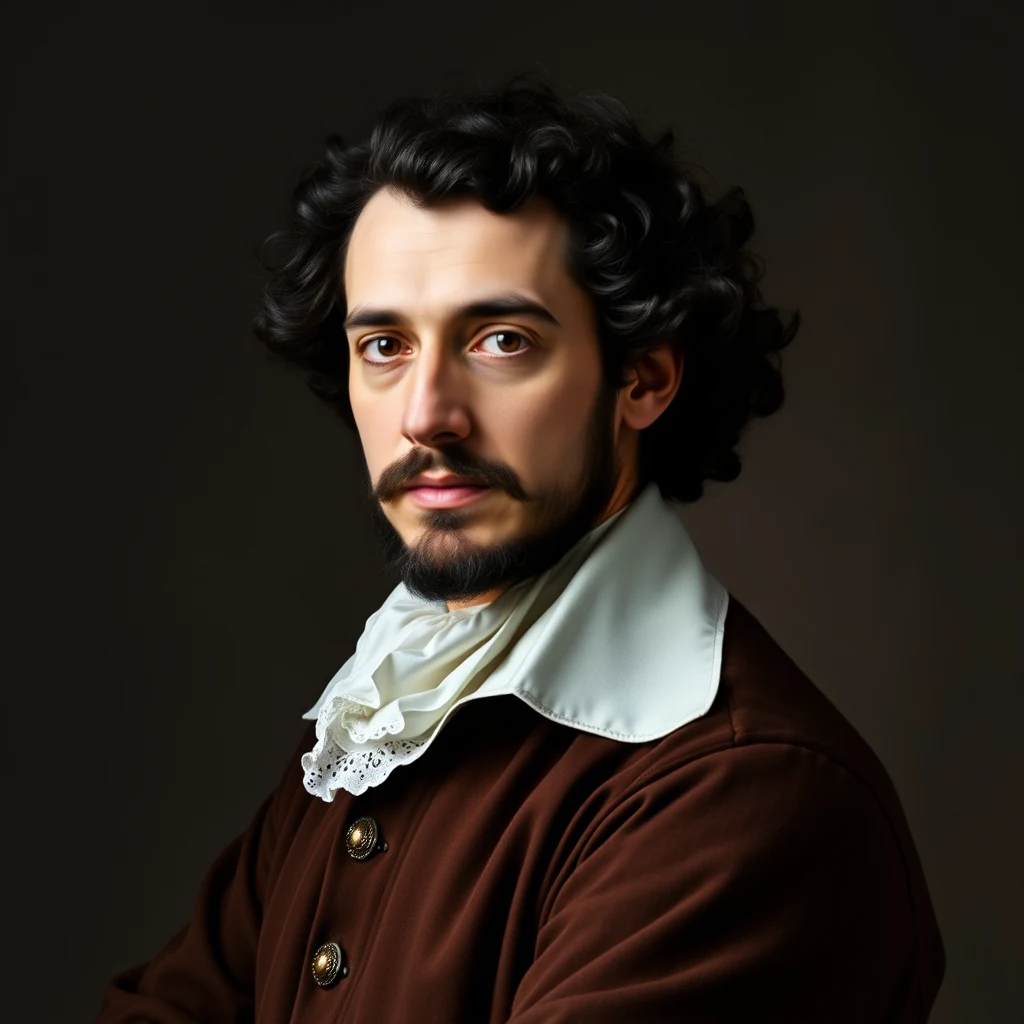 Person Giacomo Maraldi Italian-French astronomer (1665–1729), nephew of Cassini and a fixture at the Paris Observatory. Best remembered for cataloguing stars and observing Mars, he also turned his instruments on bees. In 1712 he measured the rhombic angles at the back of honeycomb cells and found them remarkably consistent at about 109.47 degrees, prompting later mathematicians to ask whether the angle was the optimal one.热亚科莫·马拉尔迪(1665—1729年)是意裔法国天文学家,卡西尼的侄子,也是巴黎天文台的常驻人员。他最著名的成就是编制星表和观测火星,但他也将仪器对准了蜜蜂。1712年,他测量了蜂巢巢室底部的菱形角度,发现它们非常一致,约为109.47度,这促使后来的数学家开始探究该角度是否为几何上的最优解。Astrónomo italiano-francés (1665–1729), sobrino de Cassini y figura destacada del Observatorio de París. Recordado por catalogar estrellas y observar Marte, también dirigió sus instrumentos hacia las abejas. En 1712, midió los ángulos rómbicos del fondo de las celdas del panal y descubrió que eran notablemente consistentes, de unos 109,47 grados, lo que llevó a matemáticos posteriores a preguntarse si ese ángulo era el óptimo.عالم فلك إيطالي فرنسي (1665-1729)، وابن شقيق كاسيني وعضو بارز في مرصد باريس. اشتهر بفهرسة النجوم ورصد المريخ، كما وجه أدواته نحو النحل. في عام 1712، قام بقياس الزوايا المعينية في الجزء الخلفي من خلايا قرص العسل ووجد أنها متسقة بشكل ملحوظ عند حوالي 109.47 درجة، مما دفع علماء الرياضيات اللاحقين إلى التساؤل عما إذا كانت هذه الزاوية هي المثالية.Astrônomo ítalo-francês (1665–1729), sobrino de Cassini e figura constante no Observatório de Paris. Mais lembrado por catalogar estrelas e observar Marte, ele também voltou seus instrumentos para as abelhas. Em 1712, mediu os ângulos rômbicos no fundo das células do favo de mel e descobriu que eram notavelmente consistentes em cerca de 109,47 graus, levando matemáticos posteriores a questionar se o ângulo era o ideal.इतालवी-फ्रांसीसी खगोलशास्त्री (1665-1729), जो पेरिस वेधशाला में कार्यरत थे और कैसिनी के भतीजे थे। उन्हें तारों को सूचीबद्ध करने और मंगल ग्रह का अवलोकन करने के लिए याद किया जाता है। 1712 में, उन्होंने मधुमक्खियों के छत्ते की कोशिकाओं के पीछे के समचतुर्भुज कोणों को मापा और उन्हें लगभग 109.47 डिग्री पर लगातार पाया। इसने बाद के गणितज्ञों को यह सोचने पर मजबूर किया कि क्या यह कोण इष्टतम था।Astronom Italia-Prancis (1665–1729), keponakan Cassini dan tokoh tetap di Observatorium Paris. Paling dikenal karena mengatalogkan bintang dan mengamati planet Mars, ia juga mengarahkan instrumennya pada lebah. Pada tahun 1712 ia mengukur sudut rhombik di bagian belakang sel sarang lebah dan menemukan bahwa sudut tersebut sangat konsisten pada 109,47 derajat, mendorong matematikawan kemudian untuk meneliti apakah sudut itu paling optimal.Astronome italo-français (1665–1729), neveu de Cassini et figure marquante de l'Observatoire de Paris. Surtout connu pour avoir catalogué les étoiles et observé Mars, il a également tourné ses instruments vers les abeilles. En 1712, il mesura les angles des rhombes au fond des alvéoles d'abeilles et les trouva remarquablement constants autour de 109,47 degrés, incitant les mathématiciens à chercher s'il s'agissait de l'angle optimal.イタリア系フランス人の天文学者(1665〜1729年)。カッシーニの甥であり、パリ天文台の重鎮として活躍した。星表の作成や火星의観測で知られるが、彼はその観測機器をミツバチにも向けた。1712年、蜂の巣の巣房の底にあるひし形の角度を測定し、それらが約109.47度で非常に一致していることを発見した。この発見は、後の数学者たちにその角度が幾何学的に最適であるかを問う契機を与えた。Итальяно-французский астроном (1665–1729), племянник Кассини и постоянный сотрудник Парижской обсерватории. Наиболее известный каталогизацией звезд и наблюдениями Марса, он также направил свои приборы на пчел. В 1712 году он измерил ромбические углы в основании пчелиных сот и обнаружил, что они удивительно постоянны и составляют около 109,47 градуса, что побудило математиков выяснить, является ли этот угол оптимальным.Italienisch-französischer Astronom (1665–1729), Neffe von Cassini und feste Größe am Pariser Observatorium. Hauptsächlich für die Katalogisierung von Sternen und die Beobachtung des Mars bekannt, untersuchte er auch Bienen. 1712 maß er die rhombischen Winkel an der Rückseite von Wabenzellen und stellte fest, dass sie mit etwa 109,47 Grad bemerkenswert konstant waren, was spätere Mathematiker zu der Frage veranlasste, ob dies der optimale Winkel sei.이탈리아계 프랑스 천문학자(Giacomo Maraldi, 1665~1729)로 카시니의 조카이며 파리 천문학 연구소의 핵심 인물이다. 별자리 카탈로그 작성과 화성 관측으로 유명하지만, 현미경 등의 기구를 벌의 생태 관측에도 적용했다. 1712년 벌집 세포 후면의 마름모꼴 각도를 측정하여 약 109.47도로 매우 일정함을 발견했으며, 이는 후대 수학자들로 하여금 해당 각도가 물리학적으로 최적의 각도인지 탐구하게 만드는 계기가 되었다. , an Italian astronomer at the Paris Observatory, measured the angle in 1712 and asked whether it was optimal. Johann Samuel Koenig
 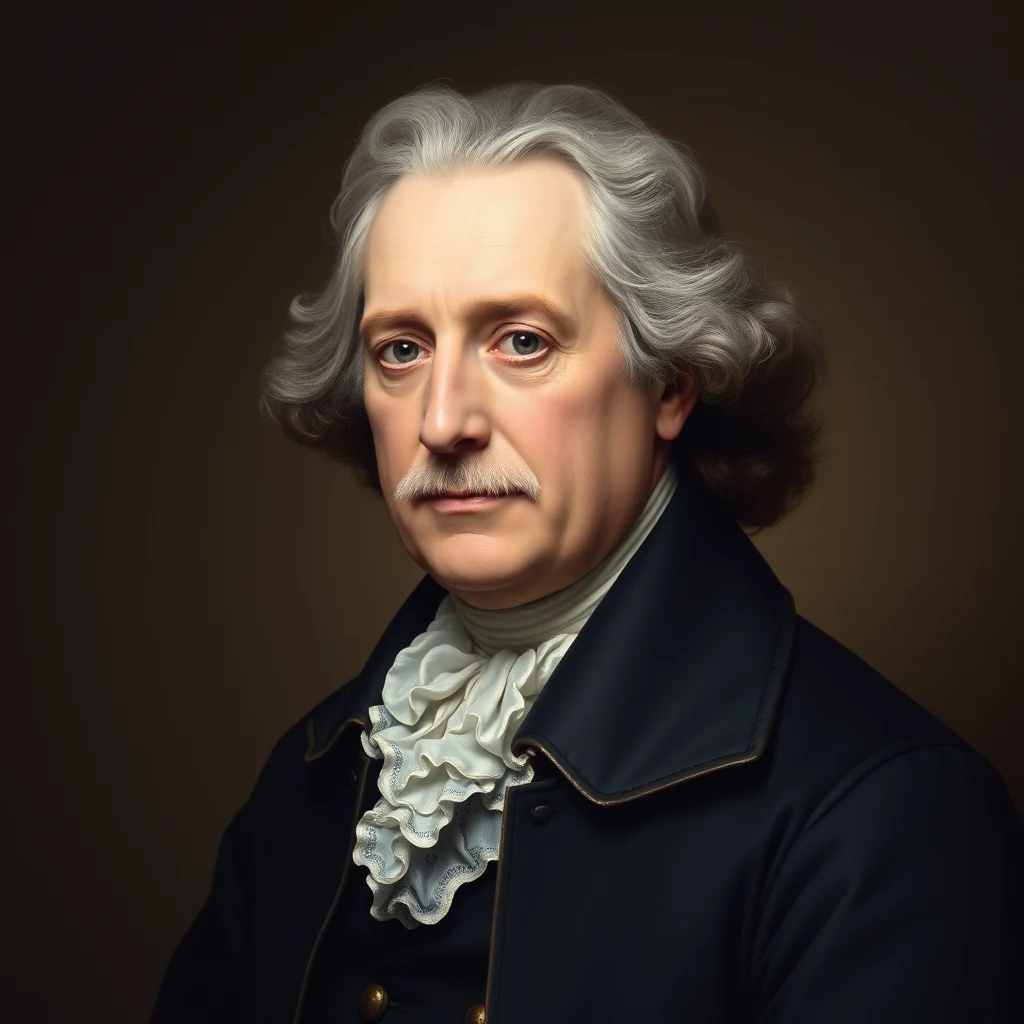 Person Johann Samuel Koenig Swiss mathematician (1712–1757), tutor to Émilie du Châtelet and a player in the bitter dispute over Maupertuis's principle of least action. In 1739 he calculated the angle that minimises wax in a honeycomb cell of given volume and arrived at a figure within minutes of arc of Maraldi's measurement. The agreement helped establish that bees were, in some operational sense, solving an optimisation problem.约翰·塞缪尔·柯尼希(1712—1757年)是瑞士数学家,曾担任艾米莉·迪·夏特莱的家庭教师,并在关于莫佩尔蒂最小作用量原理的激烈争论中扮演了重要角色。1739年,他计算了在给定体积的蜂巢巢室中使蜡用量最省的角度,得出的数值与马拉尔迪的测量值仅差几角分。这一吻合有助于证明蜜蜂在某种实际操作意义上正在解决一个优化问题。Matemático suizo (1712–1757), tutor de Émilie du Châtelet y participante en la agria disputa sobre el principio de mínima acción de Maupertuis. En 1739 calculó el ángulo que minimiza el uso de cera en una celda de panal de volumen dado y obtuvo un valor a solo minutos de arco de la medición de Maraldi. Esta coincidencia ayudó a establecer que las abejas, en un sentido práctico, resolvían un problema de optimización.عالم رياضيات سويسري (1712-1757)، ومعلم إميلي دو شاتليه ولاعب في النزاع المرير حول مبدأ الفعل الأقل لموبيرتوي. في عام 1739، قام بحساب الزاوية التي تقلل من استهلاك الشمع في خلية قرص العسل لحجم معين، ووصل إلى رقم لا يفصله سوى دقائق قوسية عن قياس مارالدي. وساعد هذا التوافق في إثبات أن النحل كان، من الناحية العملية، يحل مسألة تحسين رياضي.Matemático suíço (1712–1757), tutor de Émilie du Châtelet e participante na disputa acirrada sobre o princípio da menor ação de Maupertuis. Em 1739, calculou o ângulo que minimiza a cera em uma célula de favo de mel de volume dado, chegando a um valor a poucos minutos de arco da medição de Maraldi. O acordo ajudou a estabelecer que as abelhas estavam, de certa forma operacional, resolvendo um problema de otimização.स्विस गणितज्ञ (1712-1757), जो एमिली डू शैटलेट के शिक्षक थे और मौपरटूस के न्यूनतम क्रिया सिद्धांत पर कड़वे विवाद में शामिल थे, जिन्हें जोहान सैमुअल कोएनिग (Johann Samuel Koenig) कहा जाता है। 1739 में उन्होंने दिए गए आयतन की मधुमक्खी के छत्ते में मोम को न्यूनतम करने वाले कोण की गणना की और वे मारालदी के माप के बेहद करीब पहुंचे। इस समझौते से यह स्थापित करने में मदद मिली कि मधुमक्खियां एक अनुकूलन समस्या का समाधान कर रही थीं।Matematikawan Swiss (1712–1757), tutor Émilie du Châtelet dan tokoh dalam perselisihan sengit mengenai prinsip aksi terkecil Maupertuis. Pada 1739 ia menghitung sudut yang meminimalkan penggunaan lilin dalam sel sarang lebah dengan volume tertentu dan menghasilkan angka yang hanya berselisih beberapa menit busur dari pengukuran Maraldi. Kesesuaian ini membuktikan bahwa lebah secara operasional memecahkan masalah optimasi.Mathématicien suisse (1712–1757), tuteur d'Émilie du Châtelet et acteur de la vive querelle autour du principe de moindre action de Maupertuis. En 1739, il calcula l'angle minimisant la quantité de cire requise pour une alvéole de volume donné, et parvint à une valeur différant de seulement quelques minutes d'arc de la mesure de Maraldi. Cette correspondance montra que les abeilles résolvaient, en pratique, un problème d'optimisation.スイスの数学者(1712〜1757年)。エミリー・デュ・シャトレの家庭教師を務め、モーペルテュイの最小作用の原理をめぐる激しい論争の中心人物となった。1739年、与えられた体積の蜂의巣の巣房において、蝋の消費量を最小限にする角度を計算し、マラルディの測定値とわずか数分(分角)しか違わない数値に達した。この一致は、ミツバチが実質的な意味で最適化問題を解いていることを裏付けることになった。Швейцарский математик (1712–1757), учитель Эмили дю Шатле и участник яростного спора вокруг принципа наименьшего действия Мопертюи. В 1739 году он вычислил угол, минимизирующий расход воска в ячейке сот заданного объема, получив значение, отличающееся от измерений Маральди всего на несколько угловых минут. Это согласие помогло доказать, что пчелы в практическом смысле решают задачу оптимизации.Schweizer Mathematiker (1712–1757), Vormund von Émilie du Châtelet und Beteiligter am erbitterten Streit über Maupertuis' Prinzip der kleinsten Wirkung. 1739 berechnete er den Winkel, der den Wachsverbrauch in einer Wabenzelle bei gegebenem Volumen minimiert, und gelangte zu einem Wert, der nur wenige Bogenminuten von Maraldis Messung abwich. Diese Übereinstimmung half zu beweisen, dass Bienen ein Optimierungsproblem lösen.스위스의 수학자(Johann Samuel Koenig, 1712~1757)로 에밀리 뒤 샤틀레의 개인 교사이자 모페르튀의 최소 작용 원리를 둘러싼 격렬한 논쟁의 주역이다. 1739년 주어진 부피의 벌집 세포에서 밀랍 소비를 최소화하는 각도를 계산하여 마랄디가 측정한 값과 단 몇 분(arcminute) 차이밖에 나지 않는 수치에 도달했다. 이 계산의 일치는 벌들이 실제 공간 최적화 문제를 스스로 해결하고 있음을 뒷받침했다. and later Colin Maclaurin
 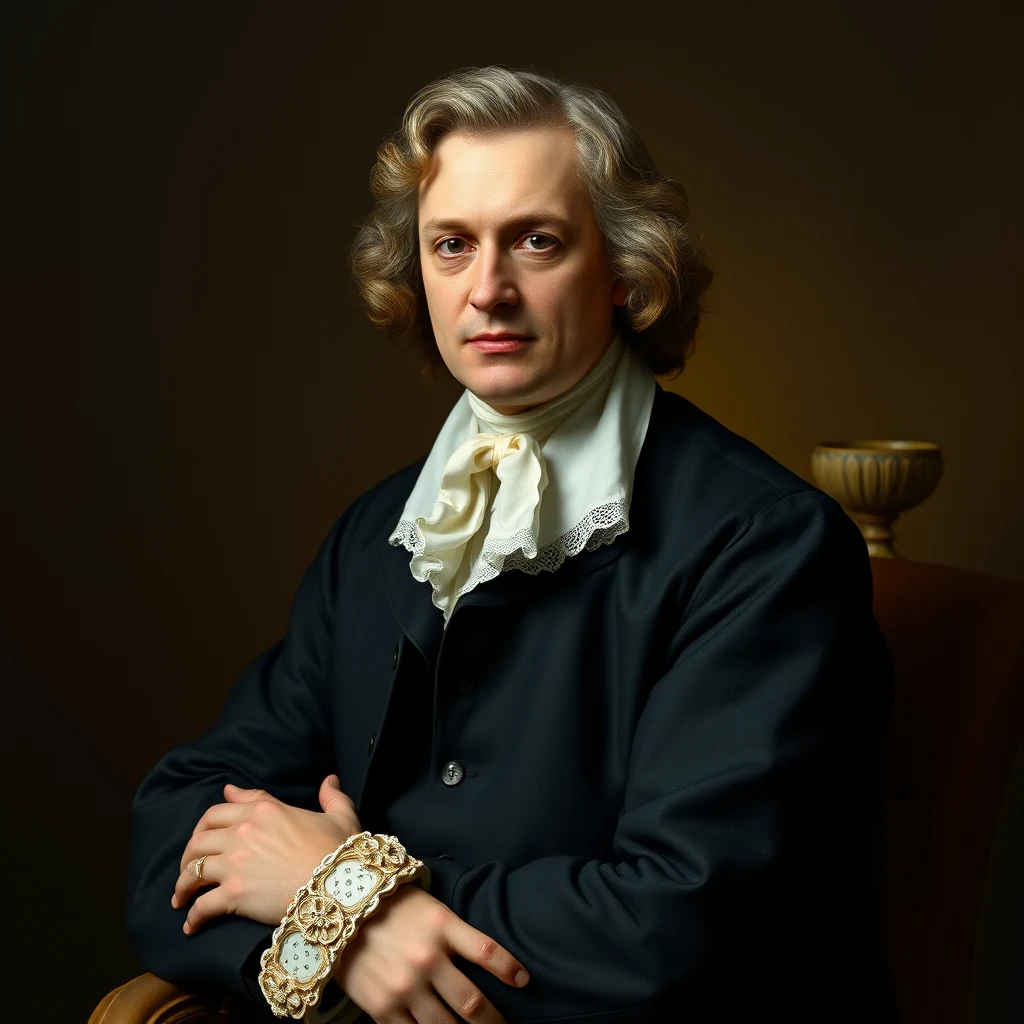 Person Colin Maclaurin Scottish mathematician (1698–1746), a precocious graduate of Glasgow who became professor at Edinburgh on Newton's personal recommendation. His treatises on fluxions and algebra defended and extended Newtonian methods against continental critics. In 1743 he gave an independent derivation of the optimal angle of the rhombic faces of a honeycomb cell, refining Koenig's result and confirming that bees built close to the geometric minimum.科林·麦克劳林(1698—1746年)是苏格兰数学家,毕业于格拉斯哥大学,是一位早慧的学者,后经牛顿亲自推荐成为爱丁堡大学教授。他的流数和代数论著捍卫并延伸了牛顿的方法,以此反击欧洲大陆批评家的质疑。1743年,他独立推导出了蜂巢巢室菱形面的最优角度,修正了柯尼希的计算错误,并证实了蜜蜂筑巢的结构已极其接近几何学上的最小值。Matemático escocés (1698–1746), graduado precoz de Glasgow que llegó a profesor en Edimburgo por recomendación personal de Newton. Sus tratados sobre fluxiones y álgebra defendieron y ampliaron los métodos newtonianos frente a los críticos continentales. En 1743, dedujo de forma independiente el ángulo óptimo de las caras rómbicas de una celda del panal, refinando el resultado de Koenig y confirmando que las abejas construyen cerca del mínimo geométrico.عالم رياضيات إسكتلندي (1698-1746), متخرج نابه من غلاسكو وأصبح أستاذاً في إدنبرة بتوصية شخصية من نيوتن. دافعت أطروحاته حول التدفقات والجبر عن الأساليب النيوتونية ومددتها ضد النقاد القاريين. في عام 1743، قدم اشتقاقاً مستقلاً للزاوية المثالية للوجوه المعينية لخلية قرص العسل، مما أدى إلى تنقية نتيجة كونيغ وتأكيد أن النحل يبني قريباً جداً من الحد الأدنى الهندسي.Matemático escocês (1698–1746), graduado precoce em Glasgow que se tornou professor em Edimburgo por recomendação pessoal de Newton. Seus tratados sobre fluxões e álgebra defenderam e estenderam os métodos newtonianos contra críticos continentais. Em 1743, deu uma derivação independente do ângulo ideal das faces rômbicas de uma célula de favo de mel, refinando o resultado de Koenig e confirmando que as abejas constroem perto do mínimo geométrico.स्कॉटिश गणितज्ञ (1698-1746), ग्लासगो के एक मेधावी स्नातक, जो न्यूटन की व्यक्तिगत सिफारिश पर एडिनबर्ग में प्रोफेसर बने, जिन्हें कॉलिन मैकलॉरिन (Colin Maclaurin) कहा जाता है। फ्लक्सियन और बीजगणित पर उनके ग्रंथों ने महाद्वीपीय आलोचकों के खिलाफ न्यूटोनियन तरीकों का बचाव और विस्तार किया। 1743 में उन्होंने हनीकॉम्ब सेल के समचतुर्भुज चेहरों के इष्टतम कोण की स्वतंत्र व्युत्पत्ति दी, जिससे कोएनिग के परिणाम में सुधार हुआ।Matematikawan Skotlandia (1698–1746), lulusan berbakat dari Glasgow yang menjadi profesor di Edinburgh atas rekomendasi pribadi Newton. Risalahnya tentang fluks dan aljabar membela serta memperluas metode Newtonian terhadap para kritikus Eropa daratan. Pada 1743 ia menurunkan rumus sudut optimal permukaan rhombik sel sarang lebah secara independen, menyempurnakan hasil Koenig dan memastikan lebah membangun sangat dekat dengan batas minimum geometris.Mathématicien écossais (1698–1746), diplômé précoce de Glasgow, devenu professeur à Édimbourg sur recommandation personnelle de Newton. Ses traités sur les fluxions et l'algèbre ont défendu et développé les méthodes newtoniennes face aux critiques continentales. En 1743, il calcula indépendamment l'angle optimal des faces rhombiques des alvéoles, corrigeant le résultat de Koenig et confirmant que les abeilles bâtissent très près du minimum géométrique.スコットランドの数学者(1698〜1746年)。グラスゴー大学を若くして卒業し、ニュートンの強い推薦によってエディンバラ大学の教授に就任した。流率法や代数学に関する彼の著作は、ヨーロッパ大陸の批判者に対してニュートン流の微積分法を擁護し拡張した。1743年、蜂の巣の巣房のひし形面の最適角度を独自に導き出し、ケーニヒの計算を修正して、ミツバチが幾何学的な最小値に極めて近い形で巣を作っていることを証明した。Шотландский математик (1698–1746), одаренный выпускник Глазго, ставший профессором в Эдинбурге по личной рекомендации Ньютона. Его трактаты о флюксиях и алгебре защищали и развивали ньютоновские методы против европейских критиков. В 1743 году он дал независимый вывод оптимального угла ромбических граней ячейки сот, уточнив результат Кенига и подтвердив, что пчелы строят свои жилища с точностью до геометрического минимума.Schottischer Mathematiker (1698–1746), ein frühreifer Absolvent von Glasgow, der auf Newtons persönliche Empfehlung hin Professor in Edinburgh wurde. Seine Abhandlungen über Fluxionen und Algebra verteidigten und erweiterten die Newtonschen Methoden gegen kontinentale Kritiker. 1743 leitete er unabhängig den optimalen Winkel der Wabenflächen her, verfeinerte Koenigs Ergebnis und bestätigte, dass Bienen nahe am geometrischen Minimum bauen.스코틀랜드의 수학자(Colin Maclaurin, 1698~1746)로 글래스고 대학교를 조기 졸업하고 뉴턴의 개인적 추천에 의해 에든버러 대학교 교수가 되었다. 유율법과 대수학에 관한 그의 논저들은 대륙의 비판자들에 맞서 뉴턴적 수학 기법을 옹호하고 확장했다. 1743년 그는 벌집 세포 마름모꼴 단면의 최적 각도를 독자적으로 유도해 냄으로써 쾨니히의 계산 결과를 정밀화하고 벌들이 기하학적 최소치에 아주 근접하게 집을 짓는다는 것을 증명했다. showed it was, to within the precision of the instruments of the day. A small correction came two centuries later: real combs deviate from the ideal angle by a fraction of a degree, and the deviation is itself the true optimum once the thickness of the wax wall is taken into account.

What we still don't know
We do not know how much of the pattern is built into the bee and how much is delegated to the physics of warm wax. Karihaloo's surface-tension model is compelling but contested; some entomologists argue that bees actively measure and shape the walls, citing the regularity of cells built in cold weather when wax does not flow freely.

We do not know why the hexagon shows up in so many other unrelated places — the columns of basalt at the Giant's Causeway 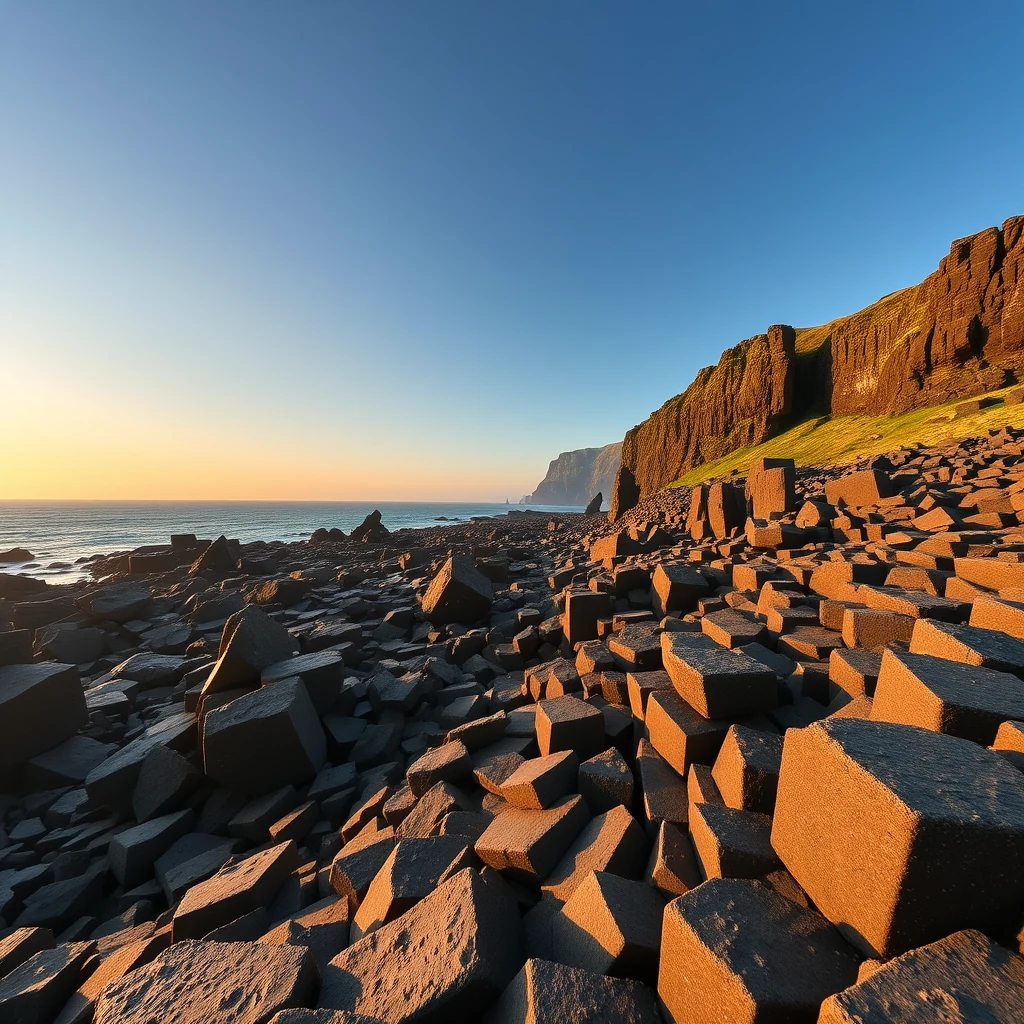 Place Giant's Causeway A stretch of coastline in County Antrim, Northern Ireland, where roughly forty thousand interlocking basalt columns, most of them hexagonal, step down into the sea. They formed about sixty million years ago when a thick lava flow cooled and contracted, fracturing along lines that minimised surface energy — the same hexagonal solution bees converge on in wax. UNESCO listed the site in 1986.巨人之路是北爱尔兰安特里姆郡的一段海岸线,那里约有四万根相互交错的玄武岩石柱(其中大多数呈六角形)层层延伸入海。它们形成于约六千万年前,当时厚厚的熔岩流冷却收缩,沿着使表面能最小化的线条发生断裂——这与蜜蜂在蜂蜡中采用的六角形解决方案如出一辙。联合国教科文组织于1986年将该遗址列入名录。Tramo de costa en el condado de Antrim, Irlanda del Norte, donde unas cuarenta mil columnas de basalto interconectadas, la mayoría hexagonales, descienden hacia el mar. Se formaron hace unos sesenta millones de años al enfriarse y contraerse un denso flujo de lava, fracturándose por líneas que minimizaban la energía superficial, la misma solución hexagonal que las abejas usan en la cera. Declarado Patrimonio de la Humanidad por la UNESCO en 1986.امتداد ساحلي في مقاطعة أنتريم بأيرلندا الشمالية، حيث تنحدر حوالي أربعين ألفاً من الأعمدة البازلتية المتشابكة، ومعظمها سداسي الشكل، نحو البحر. تشكلت قبل حوالي ستين مليون سنة عندما بردت تدفقات الحمم البركانية الكثيفة وانكمشت، متصدعة على طول خطوط قللت من الطاقة السطحية، وهو نفس الحل السداسي الذي يلتقي عنده النحل في الشمع. أدرجتها اليونسكو عام 1986.Uma extensão de costa no Condado de Antrim, Irlanda do Norte, onde cerca de quarenta mil colunas de basalto interconectadas, a maioria delas hexagonais, descem para o mar. Elas se formaram há cerca de sessenta milhões de anos, quando um fluxo espesso de lava esfriou e se contraiu, fraturando-se ao longo de linhas que minimizavam a energia superficial — a mesma solução hexagonal que as abelhas adotam na cera. A UNESCO listou o local em 1986.उत्तरी आयरलैंड के काउंटी एंट्रिम में समुद्र तट का एक हिस्सा, जहां लगभग चालीस हजार इंटरलॉकिंग बेसाल्ट कॉलम, जिनमें से अधिकांश हेक्सागोनल हैं, समुद्र में उतरते हैं, जिन्हें जायंट्स कॉजवे (Giant's Causeway) कहा जाता है। ये लगभग साठ मिलियन वर्ष पहले बने थे जब एक गाढ़ा लावा प्रवाह ठंडा और संकुचित हो गया था, जिससे सतह की ऊर्जा को न्यूनतम करने वाली रेखाओं के साथ फ्रैक्चर हो गया था। यूनेस्को ने इसे 1986 में सूचीबद्ध किया।Hamparan garis pantai di County Antrim, Irlandia Utara, tempat sekitar empat puluh ribu kolom basal yang saling bertautan, sebagian besar berbentuk heksagonal, turun ke laut. Kolom ini terbentuk sekitar enam puluh juta tahun lalu ketika aliran lava tebal mendingin dan menyusut, retak di sepanjang garis yang meminimalkan energi permukaan — solusi heksagonal yang sama yang diterapkan lebah pada lilin. Situs ini terdaftar di UNESCO tahun 1986.Une portion de côte dans le comté d'Antrim, en Irlande du Nord, où environ quarante mille colonnes de basalte imbriquées, pour la plupart hexagonales, descendent vers la mer. Elles se sont formées il y a environ soixante millions d'années lorsqu'une épaisse coulée de lave s'est refroidie et contractée, se fracturant selon des lignes minimisant l'énergie de surface — la même solution hexagonale que celle adoptée par les abeilles dans la cire. L'UNESCO l'a classée en 1986.北アイルランドのアントリム州に位置する海岸線。大部分が六角形をした約4万本の玄武岩の柱状節理が、連なって海へと沈んでいく景観が広がる。約6000万年前に厚い溶岩流が冷却・収縮した際、表面エネルギーを最小化するような線に沿って割れ目が生じたことで形成された。これはミツバチが蝋で作る六角形と同様の幾何学的解決策である。1986年にユネスコの世界遺産に登録された。Участок побережья в графстве Антрим, Северная Ирландия, где около сорока тысяч переплетенных базальтовых колонн, большинство из которых шестигранные, спускаются в море. Они сформировались около шестидесяти миллионов лет назад, когда мощный лавовый поток остыл и сжался, растрескиваясь по линиям, которые минимизировали поверхностную энергию — то же шестиугольное решение, которое пчелы используют в воске. Внесен в список ЮНЕСКО в 1986 году.Ein Küstenabschnitt im County Antrim in Nordirland, an dem etwa vierzigtausend ineinandergreifende Basaltsäulen, die meisten davon sechseckig, ins Meer abfallen. Sie entstanden vor etwa sechzig Millionen Jahren, als ein dicker Lavastrom abkühlte und schrumpfte, wobei er entlang von Linien brach, die die Oberflächenenergie minimierten — dieselbe sechseckige Lösung, die auch Bienen im Wachs nutzen. Die UNESCO nahm die Stätte 1986 auf.북아일랜드 앤트림주 해안에 위치한 지형으로, 대부분 육각형 모양의 서로 맞물린 현무암 기둥 약 4만 개가 바다로 뻗어 내려가 있는 형태의 기둥 지대(Giant's Causeway)이다. 약 6,000만 년 전 두꺼운 용암류가 식으면서 수축할 때 표면 에너지를 최소화하는 균열 선을 따라 굳어지며 형성되었는데, 이는 벌들이 집을 지을 때 사용하는 육각형 구조와 동일한 물리적 솔루션이다. 1986년 유네스코 세계유산에 등록되었다. , the cells of a developing fruit-fly eye, the convection patterns in a heated pan of oil. The same minimum-perimeter principle is presumably at work, but the boundary conditions differ wildly and the equivalence is not yet fully formal.

And we do not know what other animals are quietly solving theorems we have not bothered to state. Paper wasps build hexagons too, with a different wax-free recipe. Stingless bees build spirals. Termites build ventilation shafts whose airflow geometry took human engineers until the 1990s to model.
A bee lives about six weeks. In that span she may secrete enough wax for forty cells. She will never see the comb finished, and she could not, in any meaningful sense, describe what she is making. The comb is made anyway.