
In the winter of 1961, a meteorologist at MIT named Edward Lorenz  Person Edward Lorenz American mathematician and meteorologist (1917–2008), trained at Dartmouth and Harvard, who spent his working life at MIT modelling the atmosphere. His 1963 paper "Deterministic Nonperiodic Flow" is the founding document of chaos theory, though it sat largely unread for a decade. He coined no terminology; the phrase "butterfly effect" was attached to his work by a conference organiser in 1972 and stuck because the picture his equations made looked like wings.美国数学家、气象学家(1917–2008),先后就读于达特茅斯学院与哈佛大学,毕生供职于麻省理工学院,从事大气建模研究。其1963年的论文《确定性非周期流》是混沌理论的奠基性文献,但在此后十年间几乎无人问津。他本人并未创造任何术语;"蝴蝶效应"一词是1972年一位会议组织者为其研究所拟,因其方程所绘图形状似双翼,遂沿用至今。Matemático y meteorólogo estadounidense (1917-2008), formado en Dartmouth y Harvard, que pasó toda su vida laboral en el MIT modelizando la atmósfera. Su artículo de 1963 «Deterministic Nonperiodic Flow» es el documento fundacional de la teoría del caos, aunque permaneció prácticamente sin lectores durante una década. No acuñó ninguna terminología; la expresión «efecto mariposa» fue adherida a su obra por un organizador de congresos en 1972 y arraigó porque la figura que dibujaban sus ecuaciones parecía un par de alas.عالم رياضيات وأرصاد جوية أمريكي (1917–2008)، تلقّى تعليمه في كليّة دارتموث وجامعة هارفارد، وأمضى حياته المهنية في معهد ماساتشوستس للتكنولوجيا منشغلاً بنمذجة الغلاف الجوي. تُعدّ ورقته البحثية الصادرة عام 1963 بعنوان "التدفق الحتمي غير الدوري" الوثيقة المؤسِّسة لنظرية الفوضى، وإن ظلّت في معظمها طيّ الإهمال طوال عقد من الزمن. لم يَسكّ أيّ مصطلح؛ فعبارة "تأثير الفراشة" ألصقها بأعماله أحدُ منظّمي المؤتمرات عام 1972 ورسخت لأن الشكل الذي رسمته معادلاته بدا أشبه بجناحين.Matemático e meteorologista estadunidense (1917–2008), formado em Dartmouth e Harvard, que dedicou sua vida profissional ao MIT modelando a atmosfera. Seu artigo de 1963, "Deterministic Nonperiodic Flow", é o documento fundador da teoria do caos, embora tenha permanecido em grande parte sem leitores por uma década. Não cunhou nenhuma terminologia; a expressão "efeito borboleta" foi associada à sua obra por um organizador de conferência em 1972 e pegou porque a figura traçada por suas equações lembrava asas.अमेरिकी गणितज्ञ और मौसमविज्ञानी (1917–2008), जिन्होंने डार्टमाउथ और हार्वर्ड में शिक्षा प्राप्त की और अपना समूचा कार्यजीवन MIT में वायुमंडल के प्रतिरूपण में बिताया। उनका 1963 का शोधपत्र "डिटरमिनिस्टिक नॉनपीरियॉडिक फ़्लो" अराजकता सिद्धांत का संस्थापक दस्तावेज़ है, यद्यपि यह लगभग एक दशक तक बड़े पैमाने पर अपठित पड़ा रहा। उन्होंने स्वयं कोई पारिभाषिक शब्द नहीं गढ़ा; "तितली प्रभाव" वाक्यांश को उनके कार्य से 1972 में एक सम्मेलन आयोजक ने जोड़ा था और यह इसलिए चल पड़ा क्योंकि उनके समीकरणों से बनी आकृति पंखों जैसी दिखाई देती थी।Matematikawan dan meteorolog Amerika (1917–2008), dididik di Dartmouth dan Harvard, yang menghabiskan masa kerjanya di MIT untuk memodelkan atmosfer. Makalahnya tahun 1963 berjudul "Deterministic Nonperiodic Flow" merupakan dokumen pendiri teori chaos, meski selama satu dekade nyaris tak terbaca. Ia tidak mencetuskan istilah apa pun; frasa "efek kupu-kupu" dilekatkan pada karyanya oleh seorang penyelenggara konferensi pada 1972 dan melekat karena gambar yang dihasilkan persamaannya menyerupai sayap.Mathématicien et météorologue américain (1917-2008), formé à Dartmouth et à Harvard, qui passa sa carrière au MIT à modéliser l'atmosphère. Son article de 1963, « Deterministic Nonperiodic Flow », est le texte fondateur de la théorie du chaos, bien qu'il soit resté largement ignoré pendant une décennie. Il ne forgea aucun terme ; l'expression « effet papillon » fut accolée à ses travaux par un organisateur de colloque en 1972 et s'imposa parce que l'image dessinée par ses équations évoquait des ailes.アメリカの数学者・気象学者(1917〜2008年)。ダートマス大学とハーバード大学で学び、生涯をMITで大気のモデル化に捧げた。1963年の論文「決定論的非周期流」はカオス理論の創始文献であるが、その後十年ほどはほとんど読まれないままであった。彼自身は新たな術語を造らず、「バタフライ効果」という言葉は1972年の学会主催者によって彼の研究に結び付けられ、その方程式が描き出す図形が翅のように見えたため定着した。Американский математик и метеоролог (1917–2008), получивший образование в Дартмуте и Гарварде и проработавший всю жизнь в Массачусетском технологическом институте, где занимался моделированием атмосферы. Его статья 1963 года «Детерминированное непериодическое течение» является основополагающим документом теории хаоса, хотя на протяжении десятилетия оставалась практически непрочитанной. Сам он не ввёл никакой терминологии; выражение «эффект бабочки» было привязано к его работам организатором конференции в 1972 году и закрепилось потому, что картина, которую рисовали его уравнения, напоминала крылья.Amerikanischer Mathematiker und Meteorologe (1917–2008), ausgebildet in Dartmouth und Harvard, der sein Berufsleben am MIT der Modellierung der Atmosphäre widmete. Seine 1963 erschienene Arbeit „Deterministic Nonperiodic Flow" ist das Gründungsdokument der Chaostheorie, blieb jedoch ein Jahrzehnt lang weitgehend ungelesen. Er prägte keine Fachbegriffe; die Wendung „Schmetterlingseffekt" wurde seinem Werk 1972 von einem Konferenzorganisator zugeschrieben und blieb haften, weil das Bild, das seine Gleichungen erzeugten, an Flügel erinnerte.미국의 수학자이자 기상학자(1917–2008)로, 다트머스대와 하버드대에서 수학했으며 평생을 MIT에서 대기 모형화 연구에 바쳤다. 1963년 논문 「결정론적 비주기 흐름(Deterministic Nonperiodic Flow)」은 카오스 이론의 창시 문헌이지만, 10년 가까이 거의 읽히지 않은 채로 묻혀 있었다. 그는 어떤 용어도 직접 만들지 않았다. "나비 효과"라는 표현은 1972년 한 학회 주최자가 그의 연구에 갖다 붙인 것으로, 그의 방정식이 그려낸 도형이 마치 날개처럼 보였기에 그대로 굳어졌다. left his office for a cup of coffee while a Royal McBee LGP-30
  Object Royal McBee LGP-30 A desk-sized vacuum-tube computer sold from 1956 by the Royal McBee Corporation, with 4,096 words of magnetic-drum memory and a clock measured in kilohertz. It cost around $47,000. Lorenz's 1961 weather model ran on one for hours to produce a few simulated months. The machine carried six decimal digits of internal precision but printed only three: the gap in which chaos was hiding.一台桌面大小的真空管计算机,由皇家麦克比公司(Royal McBee Corporation)自1956年起销售,配有4,096字的磁鼓存储器,时钟频率以千赫兹计量。售价约47,000美元。1961年,洛伦茨的天气模型在此机上运行数小时,方能模拟出数月气象。该机内部精度为六位十进制数字,但仅打印三位:混沌正藏身于这一缝隙之中。Una computadora de válvulas de vacío del tamaño de un escritorio, comercializada desde 1956 por la Royal McBee Corporation, con 4.096 palabras de memoria de tambor magnético y un reloj medido en kilohercios. Costaba alrededor de 47.000 dólares. El modelo meteorológico de Lorenz de 1961 corrió en una de ellas durante horas para producir unos pocos meses simulados. La máquina manejaba seis dígitos decimales de precisión interna, pero imprimía solo tres: la grieta en la que se ocultaba el caos.حاسوب بحجم المكتب يعمل بالأنابيب المفرغة، طُرح للبيع عام 1956 من قِبَل شركة رويال ماكبي، بذاكرة أسطوانة مغناطيسية سعتها 4096 كلمة وتردد ساعة يُقاس بالكيلوهرتز. بلغ ثمنه نحو 47000 دولار. شغّل عليه لورنز نموذجه المناخي لعام 1961 ساعاتٍ طويلة لإنتاج محاكاة تمتدّ بضعة أشهر. كان الجهاز يحمل ستّ خانات عشرية من الدقّة الداخلية، غير أنه كان يطبع ثلاثًا فقط: تلك الفجوة التي اختبأت فيها الفوضى.Um computador de tubos de vácuo do tamanho de uma escrivaninha, vendido a partir de 1956 pela Royal McBee Corporation, com 4.096 palavras de memória de tambor magnético e um relógio medido em kilohertz. Custava cerca de 47.000 dólares. O modelo meteorológico de Lorenz, de 1961, executou-se nele durante horas para produzir alguns meses simulados. A máquina mantinha seis dígitos decimais de precisão interna, mas imprimia apenas três: a lacuna em que o caos estava escondido.१९५६ से रॉयल मैकबी कॉर्पोरेशन द्वारा बेचा गया एक डेस्क-आकार का वैक्यूम-ट्यूब कंप्यूटर, जिसमें ४,०९६ शब्दों की चुंबकीय-ड्रम स्मृति और किलोहर्ट्ज़ में मापी जाने वाली घड़ी थी। इसकी कीमत लगभग $४७,००० थी। लॉरेंज़ का १९६१ का मौसम मॉडल कुछ अनुकरणीय महीनों का परिणाम देने के लिए इस पर घंटों चलता था। मशीन आंतरिक परिशुद्धता के छह दशमलव अंक रखती थी पर केवल तीन छापती थी: वही अंतराल जिसमें अराजकता छिपी हुई थी।Komputer tabung hampa seukuran meja yang dijual mulai 1956 oleh Royal McBee Corporation, dengan memori drum magnetik berkapasitas 4.096 kata dan kecepatan clock dalam orde kilohertz. Harganya sekitar $47.000. Model cuaca Lorenz tahun 1961 berjalan di mesin ini selama berjam-jam untuk menghasilkan simulasi beberapa bulan. Mesin tersebut menyimpan enam digit desimal presisi internal tetapi hanya mencetak tiga: celah tempat chaos bersembunyi.Ordinateur à tubes à vide de la taille d'un bureau, commercialisé à partir de 1956 par la Royal McBee Corporation, doté d'une mémoire à tambour magnétique de 4 096 mots et d'une horloge se mesurant en kilohertz. Il coûtait environ 47 000 dollars. Le modèle météorologique de Lorenz, en 1961, y tourna pendant des heures pour produire quelques mois simulés. La machine portait six chiffres décimaux de précision interne mais n'en imprimait que trois : l'intervalle dans lequel se cachait le chaos.1956年よりRoyal McBee社が販売した、机ほどの大きさの真空管式コンピュータ。磁気ドラム記憶装置に4,096語を備え、クロック周波数はキロヘルツ単位で計測された。価格はおよそ47,000ドル。ローレンツが1961年に行った気象モデルの計算では、本機を数時間稼働させてようやく数か月分のシミュレーションを得た。内部精度は10進6桁を保持していたが、印字されるのは3桁のみ──カオスが潜んでいたのは、まさにその差の中であった。Настольный ламповый компьютер, продававшийся с 1956 года корпорацией Royal McBee, с памятью на магнитном барабане объёмом 4096 слов и тактовой частотой, измерявшейся в килогерцах. Стоил около 47 000 долларов. Погодная модель Лоренца 1961 года работала на нём часами, чтобы воспроизвести несколько смоделированных месяцев. Машина оперировала шестью десятичными разрядами внутренней точности, но печатала лишь три: в этом зазоре и скрывался хаос.Ein schreibtischgroßer Röhrenrechner, der ab 1956 von der Royal McBee Corporation verkauft wurde, mit 4.096 Wörtern Magnettrommelspeicher und einem Takt im Kilohertzbereich. Er kostete etwa 47.000 Dollar. Lorenz' Wettermodell von 1961 lief stundenlang auf einem solchen Gerät, um wenige simulierte Monate zu erzeugen. Die Maschine führte sechs Dezimalstellen interner Genauigkeit, druckte jedoch nur drei: die Lücke, in der sich das Chaos verbarg.1956년 로열 맥비 사가 판매한 책상 크기의 진공관 컴퓨터로, 4,096워드의 자기 드럼 기억 장치와 킬로헤르츠 단위의 클록을 갖추었다. 가격은 약 4만 7천 달러였다. 로런츠의 1961년 기상 모형은 이 기계로 수 시간을 돌려 시뮬레이션상 몇 개월치의 결과를 산출했다. 내부 연산은 십진수 여섯 자리의 정밀도를 유지했으나 출력은 세 자리에 그쳤다. 카오스가 숨어 있던 틈이 바로 그곳이었다. — a vacuum-tube computer about the size of a deep freezer — ground through a twelve-variable weather model. When he came back, the simulation had diverged from the previous day's run into something unrecognisable. Same equations, same machine. The only difference was that he had retyped 0.506 into the restart, where the original run had carried 0.506127 in memory. A rounding error in the fourth decimal place had produced an entirely different two-month forecast.
Lorenz published the result in 1963 in the Journal of the Atmospheric Sciences, in a paper called "Deterministic Nonperiodic Flow." Almost no meteorologist read it. The paper was filed under the working assumption that any sensible system, fed nearly identical inputs, returns nearly identical outputs. Lorenz's twelve equations did not. They were stable in their gross behaviour: the trajectory always settled onto a shape that, plotted in three dimensions, resembled a pair of overlapping butterfly wings. But the path along that shape was exquisitely sensitive to where it began. Two trajectories starting a millionth of a unit apart would, after a few simulated weeks, sit on opposite wings.

The phrase "butterfly effect" came later, and not from Lorenz. In 1972 he gave a talk titled, by someone else on the conference programme, "Does the flap of a butterfly's wings in Brazil set off a tornado in Texas?" The metaphor stuck. The mathematics it pointed at was already a century old.
The shape of a chaotic system
The first hint that determinism and unpredictability could coexist came from Henri Poincaré 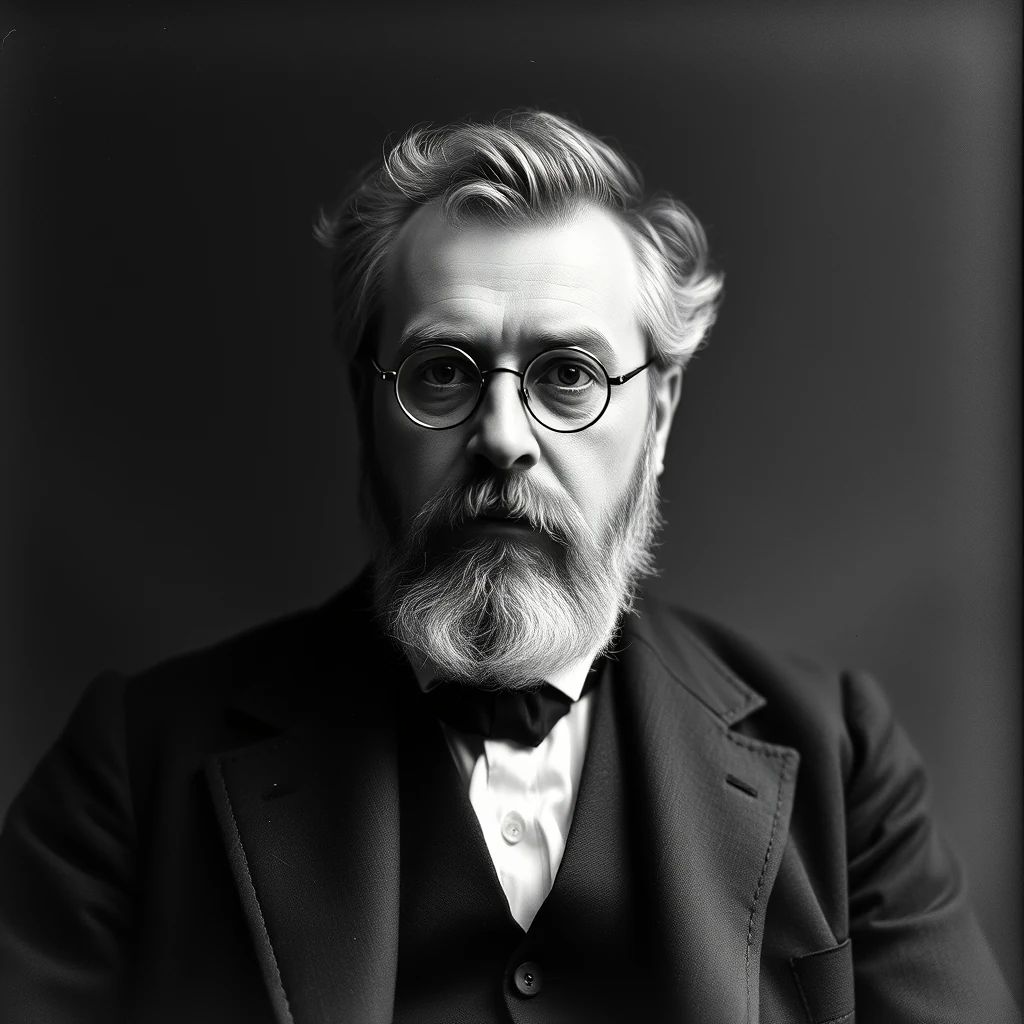 Person Henri Poincaré French mathematician (1854–1912) whose 1890 prize-winning paper on the three-body problem contained, in passing, the first description of what would later be called chaotic dynamics. He could see the homoclinic tangle but could not draw it; the geometry was too involved for ink on paper. Most of his peers concluded that the three-body problem was simply hard. Poincaré understood it was something deeper.法国数学家(1854—1912),其1890年的三体问题获奖论文中,顺带给出了后来被称为混沌动力学现象的最早描述。他能够洞见同宿缠结的存在,却无法将其描绘出来——其几何结构过于错综,难以落于笔墨。同时代的大多数人由此得出结论:三体问题不过是难解而已。庞加莱却明白,这背后藏着更深层的东西。Matemático francés (1854-1912) cuyo galardonado artículo de 1890 sobre el problema de los tres cuerpos contenía, de pasada, la primera descripción de lo que más tarde se llamaría dinámica caótica. Podía ver la maraña homoclínica, pero no podía dibujarla; la geometría era demasiado intrincada para la tinta sobre el papel. La mayoría de sus colegas concluyeron que el problema de los tres cuerpos era simplemente difícil. Poincaré comprendió que se trataba de algo más profundo.عالم رياضيات فرنسي (1854–1912)، تضمّنت ورقته الفائزة بالجائزة عام 1890 حول مسألة الأجسام الثلاثة، بصورة عابرة، أول وصف لما سيُعرف لاحقًا بالديناميكا الفوضوية. كان قادرًا على رؤية التشابك الهوموكليني، لكنه عجز عن رسمه؛ فالهندسة كانت أعقد من أن يحتويها الحبر على الورق. خلص معظم أقرانه إلى أن مسألة الأجسام الثلاثة صعبة وحسب. أما بوانكاريه فقد أدرك أن الأمر أعمق من ذلك بكثير.Matemático francês (1854–1912) cujo artigo premiado de 1890 sobre o problema dos três corpos continha, de passagem, a primeira descrição do que mais tarde seria chamado de dinâmica caótica. Ele conseguia enxergar o emaranhado homoclínico, mas não podia desenhá-lo; a geometria era intrincada demais para a tinta sobre o papel. A maioria de seus pares concluiu que o problema dos três corpos era simplesmente difícil. Poincaré compreendeu que se tratava de algo mais profundo.फ़्रांसीसी गणितज्ञ (1854–1912), जिनके त्रिकाय समस्या पर 1890 के पुरस्कार-विजेता शोधपत्र में, प्रसंगवश, उस परिघटना का पहला विवरण निहित था जिसे आगे चलकर अराजक गतिकी कहा जाएगा। वे होमोक्लिनिक उलझाव को देख तो सकते थे, पर उसे चित्रित नहीं कर सके; काग़ज़ पर स्याही से उतारने के लिए वह ज्यामिति अत्यधिक जटिल थी। उनके अधिकांश समकालीनों ने यही निष्कर्ष निकाला कि त्रिकाय समस्या केवल कठिन है। पोआँकारे समझ गए थे कि बात इससे कहीं अधिक गहरी है।Matematikawan Prancis (1854–1912) yang makalah pemenang hadiahnya pada 1890 tentang masalah tiga benda memuat, secara sepintas, deskripsi pertama tentang apa yang kelak disebut dinamika kaotik. Ia dapat melihat jalinan homoklinik itu, tetapi tidak mampu menggambarnya; geometrinya terlalu rumit untuk dituangkan dengan tinta di atas kertas. Sebagian besar rekan sezamannya menyimpulkan bahwa masalah tiga benda memang sekadar sulit. Poincaré memahami bahwa itu adalah sesuatu yang lebih dalam.Mathématicien français (1854-1912) dont le mémoire primé de 1890 sur le problème des trois corps contenait, au détour d'une page, la première description de ce qu'on appellerait plus tard la dynamique chaotique. Il discernait l'enchevêtrement homocline sans pouvoir le dessiner ; la géométrie était trop touffue pour l'encre sur papier. La plupart de ses pairs en conclurent que le problème des trois corps était tout simplement ardu. Poincaré, lui, comprit qu'il s'agissait de quelque chose de plus profond.フランスの数学者(1854–1912)。1890年の懸賞論文「三体問題」の中で、のちにカオス力学と呼ばれることになる現象を、副次的にではあるが初めて記述した。彼にはホモクリニック・タングルが見えていたが、それを描くことはできなかった。その幾何学的構造は、紙とインクで表すには複雑すぎたのである。同時代の研究者の多くは、三体問題は単に難しい問題だと結論づけた。ポアンカレはそれがより深い何かであることを理解していた。Французский математик (1854–1912), чья удостоенная премии работа 1890 года о задаче трёх тел содержала, между прочим, первое описание того, что впоследствии будет названо хаотической динамикой. Он видел гомоклинное сплетение, но не мог его изобразить: геометрия оказалась слишком сложной для пера и бумаги. Большинство его современников заключили, что задача трёх тел просто трудна. Пуанкаре понимал, что дело в чём-то более глубоком.Französischer Mathematiker (1854–1912), dessen 1890 mit einem Preis ausgezeichnete Arbeit zum Dreikörperproblem beiläufig die erste Beschreibung dessen enthielt, was später chaotische Dynamik genannt werden sollte. Er konnte das homokline Geflecht sehen, aber nicht zeichnen; die Geometrie war zu verwickelt für Tinte auf Papier. Die meisten seiner Zeitgenossen folgerten, das Dreikörperproblem sei schlicht schwer. Poincaré begriff, dass es um etwas Tieferes ging.프랑스의 수학자(1854–1912). 1890년 삼체문제(三體問題)를 다룬 수상 논문에서 훗날 카오스 동역학이라 불리게 될 현상을 지나는 길에 처음으로 기술하였다. 그는 호모클리닉 얽힘을 보았으나 그릴 수는 없었다. 그 기하는 종이 위의 잉크로 담기에는 너무 복잡했다. 동시대인 대부분은 삼체문제가 그저 어려운 문제라고 결론지었다. 푸앵카레는 그것이 더 깊은 무엇임을 알아차렸다. in the 1890s, working on the three-body problem
 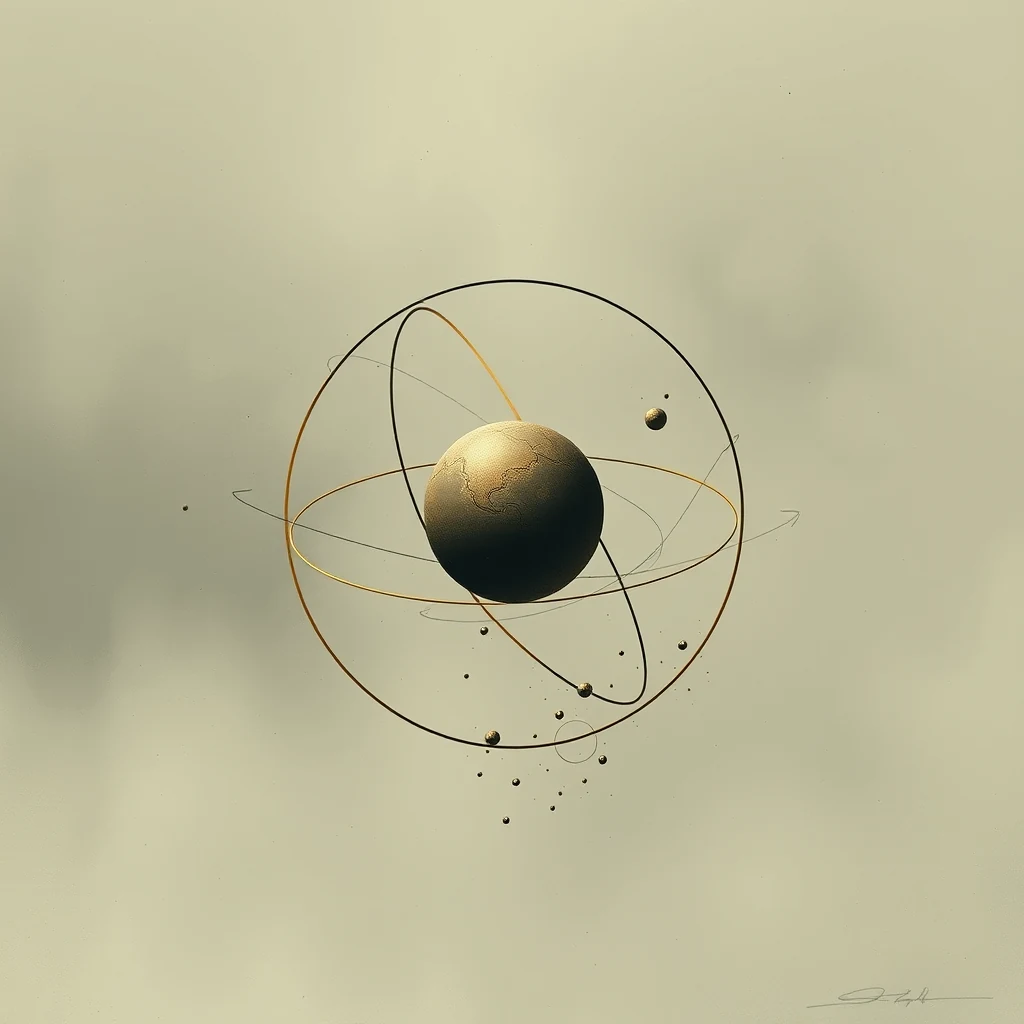 Concept Three-body problem The question, posed by Newton, of how three masses move under mutual gravity. The two-body problem has clean elliptical solutions; the three-body problem does not. In 1890 Poincaré showed that the general case contains orbits whose long-term behaviour cannot be written in closed form and depends sensitively on initial conditions. The discovery cost King Oscar II of Sweden a prize medal and rewrote celestial mechanics.牛顿提出的问题:三个质量在相互引力作用下如何运动。二体问题有简洁的椭圆解,三体问题则没有。1890年,庞加莱证明,一般情形下存在某些轨道,其长期行为无法以闭合形式写出,且对初始条件极为敏感。这一发现让瑞典国王奥斯卡二世输掉了一枚奖章,并改写了天体力学。La cuestión, planteada por Newton, de cómo tres masas se mueven bajo gravedad mutua. El problema de los dos cuerpos tiene soluciones elípticas limpias; el problema de los tres cuerpos, no. En 1890 Poincaré demostró que el caso general contiene órbitas cuyo comportamiento a largo plazo no puede escribirse en forma cerrada y depende sensiblemente de las condiciones iniciales. El descubrimiento le costó al rey Óscar II de Suecia una medalla de premio y reescribió la mecánica celeste.المسألة التي طرحها نيوتن حول كيفية حركة ثلاث كتل تحت تأثير الجاذبية المتبادلة. تمتلك مسألة الجسمين حلولاً إهليلجية أنيقة، أما مسألة الأجسام الثلاثة فلا. في عام 1890 أثبت بوانكاريه أن الحالة العامة تتضمن مدارات لا يمكن كتابة سلوكها بعيد المدى في صورة مغلقة، وتعتمد اعتماداً شديد الحساسية على الشروط الابتدائية. كلّف هذا الاكتشاف الملك أوسكار الثاني ملك السويد ميدالية جائزته، وأعاد كتابة علم ميكانيكا الأجرام السماوية.A questão, formulada por Newton, de como três massas se movem sob gravidade mútua. O problema de dois corpos tem soluções elípticas limpas; o problema de três corpos não. Em 1890, Poincaré demonstrou que o caso geral contém órbitas cujo comportamento de longo prazo não pode ser escrito em forma fechada e depende sensivelmente das condições iniciais. A descoberta custou ao rei Óscar II da Suécia uma medalha de prémio e reescreveu a mecânica celeste.न्यूटन द्वारा प्रस्तुत यह प्रश्न कि पारस्परिक गुरुत्वाकर्षण के अधीन तीन पिंड किस प्रकार गति करते हैं। द्विपिंड समस्या के स्पष्ट दीर्घवृत्तीय हल हैं; त्रिपिंड समस्या के नहीं। 1890 में पोएंकारे ने दिखाया कि सामान्य स्थिति में ऐसी कक्षाएँ निहित हैं जिनके दीर्घकालिक व्यवहार को बंद रूप में नहीं लिखा जा सकता और जो प्रारंभिक स्थितियों पर संवेदनशील रूप से निर्भर करता है। इस खोज ने स्वीडन के राजा ऑस्कर द्वितीय का पुरस्कार-पदक गँवाया और खगोलीय यांत्रिकी को पुनर्लिखित कर दिया।Pertanyaan, yang diajukan oleh Newton, tentang bagaimana tiga massa bergerak di bawah gravitasi timbal balik. Masalah dua benda memiliki solusi elips yang rapi; masalah tiga benda tidak. Pada tahun 1890, Poincaré menunjukkan bahwa kasus umumnya mengandung orbit yang perilaku jangka panjangnya tidak dapat ditulis dalam bentuk tertutup dan bergantung secara sensitif pada kondisi awal. Penemuan ini menghabiskan satu medali hadiah dari Raja Oscar II dari Swedia dan menulis ulang mekanika benda langit.La question, posée par Newton, de la manière dont trois masses se meuvent sous l'effet de leur gravitation mutuelle. Le problème à deux corps admet des solutions elliptiques limpides ; le problème à trois corps, non. En 1890, Poincaré montra que le cas général contient des orbites dont le comportement à long terme ne peut s'écrire sous forme close et dépend sensiblement des conditions initiales. Cette découverte coûta une médaille à Oscar II de Suède et refonda la mécanique céleste.ニュートンが提起した、相互の重力下で三つの質量がどのように運動するかという問題。二体問題はきれいな楕円解を持つが、三体問題はそうではない。1890年、ポアンカレは、一般の場合には長期的な挙動を閉じた形で書き表すことができず、初期条件に敏感に依存する軌道が含まれることを示した。この発見はスウェーデン王オスカル2世の懸賞メダルを犠牲にし、天体力学を書き換えた。Вопрос, поставленный Ньютоном: как движутся три массы под действием взаимного тяготения. Задача двух тел имеет изящные эллиптические решения; задача трёх тел — нет. В 1890 году Пуанкаре показал, что общий случай содержит орбиты, чьё долговременное поведение не может быть записано в замкнутой форме и чувствительно зависит от начальных условий. Это открытие стоило шведскому королю Оскару II призовой медали и переписало небесную механику.Die von Newton gestellte Frage, wie sich drei Massen unter wechselseitiger Gravitation bewegen. Das Zweikörperproblem besitzt klare elliptische Lösungen; das Dreikörperproblem nicht. 1890 zeigte Poincaré, dass der allgemeine Fall Bahnen enthält, deren Langzeitverhalten sich nicht in geschlossener Form darstellen lässt und empfindlich von den Anfangsbedingungen abhängt. Die Entdeckung kostete König Oskar II. von Schweden eine Preismedaille und schrieb die Himmelsmechanik neu.뉴턴이 제기한 문제로, 세 질량이 상호 중력 아래에서 어떻게 운동하는가를 다룬다. 이체 문제는 깔끔한 타원 해를 가지지만, 삼체 문제는 그렇지 않다. 1890년 푸앵카레는 일반적인 경우에 장기 거동을 닫힌 형태로 표현할 수 없으며 초기 조건에 민감하게 의존하는 궤도가 포함됨을 보였다. 이 발견은 스웨덴 국왕 오스카르 2세의 상패를 앗아갔고, 천체역학을 다시 쓰게 했다. : the question of how three gravitating masses move under Newtonian gravity. Two bodies have a clean closed-form orbit. Three do not. Poincaré showed that the three-body system contains orbits sensitive to initial conditions in exactly Lorenz's sense, with tiny perturbations growing exponentially in time. He called the resulting geometry "homoclinic tangles." He could not draw them. The picture would have to wait for computers.

A chaotic system, in the modern definition, is a deterministic dynamical system that exhibits sensitive dependence on initial conditions, is topologically mixing, and has dense periodic orbits. Strip the jargon and the point is this: the equations contain no randomness. If you knew the starting state exactly, the future would be fixed. But "exactly" means infinitely many decimal places, and every measurement has a finite precision. The error in that precision doubles, then doubles again, then doubles a hundred more times. By the hundredth doubling, the original uncertainty is the size of the system itself.

This is why weather forecasts decay. The atmosphere's doubling time for small errors is roughly a day and a half. After two weeks, an error the size of a single dropped sensor reading covers the entire forecast. Better measurements push the horizon a little further out. They cannot push it to infinity. The ECMWF  Institution ECMWF The European Centre for Medium-Range Weather Forecasts, an intergovernmental organisation founded in 1975 and based in Reading, England, with sites in Bonn and Bologna. Its global model is widely regarded as the most accurate operational forecast in the world. Its predictive skill, measured against observation, decays smoothly toward zero around two weeks out — the practical edge of the Lorenz horizon.欧洲中期天气预报中心,成立于1975年的政府间组织,总部位于英国雷丁,并在波恩和博洛尼亚设有站点。其全球模式被广泛认为是世界上最精确的业务预报系统。以观测数据为参照衡量,其预报技巧在约两周时平稳衰减至零——这正是洛伦兹可预报性极限的实际边界。El Centro Europeo de Previsiones Meteorológicas a Plazo Medio, una organización intergubernamental fundada en 1975 y con sede en Reading, Inglaterra, con instalaciones en Bonn y Bolonia. Su modelo global está ampliamente considerado como la previsión operativa más precisa del mundo. Su capacidad predictiva, medida frente a la observación, decae suavemente hacia cero en torno a las dos semanas — el límite práctico del horizonte de Lorenz.المركز الأوروبي للتنبؤات الجوية متوسطة المدى، منظمة حكومية دولية تأسست عام 1975 ومقرها في ريدينغ بإنجلترا، مع مواقع في بون وبولونيا. يُعدّ نموذجه العالمي على نطاق واسع التنبؤ التشغيلي الأكثر دقة في العالم. تتلاشى مهارته التنبؤية، مقيسةً مقابل الرصد، تلاشيًا سلسًا نحو الصفر عند نحو أسبوعين — وهو الحدّ العملي لأفق لورنتس.O Centro Europeu de Previsões Meteorológicas a Médio Prazo, uma organização intergovernamental fundada em 1975 e sediada em Reading, Inglaterra, com instalações em Bona e Bolonha. Seu modelo global é amplamente considerado a previsão operacional mais precisa do mundo. Sua habilidade preditiva, medida em relação à observação, decai suavemente em direção a zero por volta de duas semanas — o limite prático do horizonte de Lorenz.यूरोपीय मध्यम-अवधि मौसम पूर्वानुमान केंद्र, 1975 में स्थापित एक अंतर-सरकारी संगठन, जिसका मुख्यालय रीडिंग, इंग्लैंड में है तथा बॉन और बोलोग्ना में अतिरिक्त परिसर हैं। इसका वैश्विक मॉडल व्यापक रूप से विश्व का सर्वाधिक सटीक प्रचालनात्मक पूर्वानुमान माना जाता है। प्रेक्षण के सापेक्ष मापी गई इसकी पूर्वानुमान-क्षमता लगभग दो सप्ताह के आसपास सहजता से शून्य की ओर क्षीण हो जाती है — यही लोरेन्ज़ क्षितिज की व्यावहारिक सीमा है।European Centre for Medium-Range Weather Forecasts, sebuah organisasi antarpemerintah yang didirikan pada tahun 1975 dan bermarkas di Reading, Inggris, dengan situs di Bonn dan Bologna. Model globalnya secara luas dianggap sebagai prakiraan operasional paling akurat di dunia. Keterampilan prediktifnya, yang diukur terhadap observasi, meluruh secara mulus menuju nol di sekitar dua minggu ke depan — batas praktis dari horizon Lorenz.Le Centre européen pour les prévisions météorologiques à moyen terme, organisation intergouvernementale fondée en 1975 et établie à Reading, en Angleterre, avec des sites à Bonn et à Bologne. Son modèle global est largement considéré comme la prévision opérationnelle la plus précise au monde. Son habileté prédictive, mesurée par rapport à l'observation, décroît régulièrement vers zéro autour de deux semaines — la limite pratique de l'horizon de Lorenz.ヨーロッパ中期予報センターは、1975年に設立された政府間機関で、イングランドのレディングに本部を置き、ボンおよびボローニャに拠点を有する。同センターの全球モデルは、世界で最も正確な現業予報として広く認められている。観測値との照合によって測られるその予測精度は、約2週間先で滑らかにゼロへと減衰し、これがローレンツ・ホライズンの実用的限界となっている。Европейский центр среднесрочных прогнозов погоды — межправительственная организация, основанная в 1975 году, со штаб-квартирой в Рединге (Англия) и подразделениями в Бонне и Болонье. Его глобальная модель повсеместно считается самым точным оперативным прогнозом в мире. Его предсказательная способность, измеряемая по сопоставлению с наблюдениями, плавно затухает до нуля примерно на двухнедельном рубеже — практической границе горизонта Лоренца.Das Europäische Zentrum für mittelfristige Wettervorhersage, eine 1975 gegründete zwischenstaatliche Organisation mit Sitz in Reading, England, sowie Standorten in Bonn und Bologna. Sein globales Modell gilt weithin als die genaueste operationelle Wettervorhersage der Welt. Seine an Beobachtungen gemessene Vorhersagegüte fällt um die Zwei-Wochen-Marke gleichmäßig gegen null ab – die praktische Grenze des Lorenz-Horizonts.유럽 중기예보센터는 1975년에 설립된 정부 간 기구로, 영국 레딩에 본부를 두고 본과 볼로냐에 부속 시설을 운영한다. 이곳의 전 지구 모델은 세계에서 가장 정확한 운영 예보로 널리 평가받는다. 관측치와 대조해 측정되는 예측 능력은 약 2주를 전후로 매끄럽게 0에 수렴하는데, 이는 로렌츠 한계의 실질적 경계에 해당한다. publishes skill scores that hit this wall on schedule, and have done for fifty years.

Strange attractors
When Lorenz plotted his twelve-variable system in three dimensions, he found that the trajectories, for all their unpredictability in time, were confined to a thin, infinitely folded surface. They never crossed. They never repeated. They never left. The shape became the emblem of the field: a strange attractor 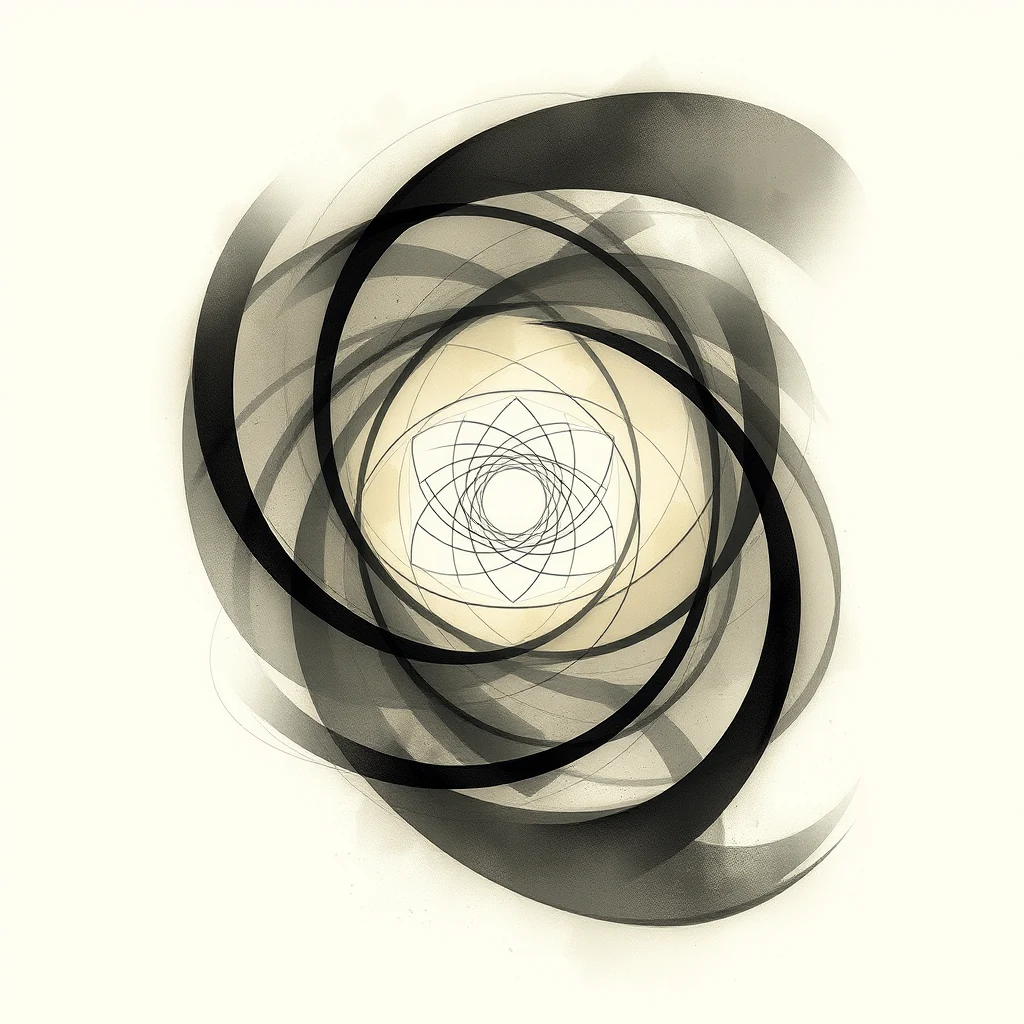 Concept Strange attractor A geometric object in the state space of a dynamical system onto which trajectories settle but never repeat. Strange attractors have fractal dimension, sitting between an integer and the next, and are the signature of deterministic chaos. The Lorenz attractor, first plotted by hand from punched output in 1963, is the canonical example. Others have since been found in chemistry, cardiology, ecology, and fluid dynamics.动力系统状态空间中的一种几何对象,轨迹会向其收敛但永不重复。奇异吸引子具有分形维度,介于某一整数与下一整数之间,是确定性混沌的标志。洛伦兹吸引子是其典型范例,于1963年根据穿孔输出首次手工绘出。此后人们在化学、心脏病学、生态学和流体力学中陆续发现了其他奇异吸引子。Objeto geométrico en el espacio de estados de un sistema dinámico sobre el cual las trayectorias se asientan sin repetirse jamás. Los atractores extraños poseen dimensión fractal, situada entre un entero y el siguiente, y constituyen la firma del caos determinista. El atractor de Lorenz, trazado por primera vez a mano a partir de salidas perforadas en 1963, es el ejemplo canónico. Desde entonces se han hallado otros en química, cardiología, ecología y dinámica de fluidos.جسمٌ هندسي في فضاء الحالات لنظام ديناميكي تستقر عليه المسارات دون أن تتكرر أبدًا. تمتلك الجاذبات الغريبة بُعدًا كسوريًا يقع بين عدد صحيح والذي يليه، وهي السمة المميِّزة للفوضى الحتمية. وجاذب لورنتس، الذي رُسم لأول مرة يدويًا من مخرجات مثقَّبة عام 1963، هو المثال النموذجي. وقد عُثر منذ ذلك الحين على جاذبات أخرى في الكيمياء وعلم القلب والإيكولوجيا وديناميكا الموائع.Objeto geométrico no espaço de estados de um sistema dinâmico sobre o qual as trajetórias se acomodam, mas que nunca se repete. Atratores estranhos possuem dimensão fractal, situando-se entre um inteiro e o seguinte, e são a assinatura do caos determinístico. O atrator de Lorenz, plotado à mão pela primeira vez a partir de saídas perfuradas em 1963, é o exemplo canônico. Outros têm sido encontrados desde então em química, cardiologia, ecologia e dinâmica de fluidos.किसी गतिक तंत्र के अवस्था-समष्टि में स्थित एक ज्यामितीय वस्तु, जिस पर प्रक्षेप-पथ टिकते तो हैं पर कभी पुनरावृत्त नहीं होते। विचित्र आकर्षकों का विमा भिन्नात्मक होती है, जो किसी पूर्णांक और अगले पूर्णांक के बीच पड़ती है, और यह नियतात्मक अव्यवस्था का चिह्न है। लोरेंज़ आकर्षक, जिसे 1963 में पंच किए गए आउटपुट से पहली बार हाथ से आरेखित किया गया था, इसका प्रतिमान उदाहरण है। इसके बाद से ऐसे आकर्षक रसायन विज्ञान, हृदय विज्ञान, पारिस्थितिकी और तरल गतिकी में भी पाए गए हैं।Sebuah objek geometris dalam ruang keadaan suatu sistem dinamis tempat lintasan-lintasan menetap tetapi tidak pernah berulang. Strange attractor memiliki dimensi fraktal, terletak di antara satu bilangan bulat dan bilangan bulat berikutnya, dan merupakan ciri khas kekacauan deterministik. Atraktor Lorenz, yang pertama kali diplot dengan tangan dari keluaran kartu berlubang pada tahun 1963, merupakan contoh kanoniknya. Yang lain sejak itu telah ditemukan dalam bidang kimia, kardiologi, ekologi, dan dinamika fluida.Objet géométrique de l'espace des phases d'un système dynamique sur lequel les trajectoires se stabilisent sans jamais se répéter. Les attracteurs étranges possèdent une dimension fractale, comprise entre un entier et le suivant, et constituent la signature du chaos déterministe. L'attracteur de Lorenz, tracé pour la première fois à la main à partir d'une sortie perforée en 1963, en est l'exemple canonique. D'autres ont depuis été mis en évidence en chimie, en cardiologie, en écologie et en mécanique des fluides.力学系の状態空間内に存在する幾何学的対象で、軌道がそこへ収束しつつも決して反復しないもの。ストレンジアトラクターはフラクタル次元を持ち、その値は整数と次の整数の間に位置し、決定論的カオスの徴表である。1963年に穿孔紙テープの出力から手作業でプロットされたローレンツアトラクターは、その典型例である。以来、化学、心臓学、生態学、流体力学の分野でも他のものが発見されてきた。Геометрический объект в пространстве состояний динамической системы, на котором оседают траектории, никогда не повторяясь. Странные аттракторы обладают фрактальной размерностью, лежащей между целым числом и следующим за ним, и служат отличительным признаком детерминированного хаоса. Каноническим примером является аттрактор Лоренца, впервые вручную построенный по перфорированной распечатке в 1963 году. С тех пор подобные объекты обнаружены в химии, кардиологии, экологии и гидродинамике.Ein geometrisches Objekt im Zustandsraum eines dynamischen Systems, auf dem sich Trajektorien einpendeln, ohne sich jemals zu wiederholen. Seltsame Attraktoren besitzen eine fraktale Dimension, die zwischen einer ganzen Zahl und der nächsten liegt, und sind das Kennzeichen deterministischen Chaos. Der Lorenz-Attraktor, 1963 erstmals von Hand aus Lochkartenausgaben gezeichnet, ist das kanonische Beispiel. Weitere wurden seither in der Chemie, Kardiologie, Ökologie und Strömungsmechanik nachgewiesen.동역학계의 상태 공간 안에서 궤적이 안착하되 결코 반복되지 않는 기하학적 대상. 기묘한 끌개는 정수와 그다음 정수 사이에 놓이는 프랙털 차원을 가지며, 결정론적 혼돈의 표지이다. 1963년에 천공 출력물로부터 손으로 처음 그려진 로렌츠 끌개가 대표적인 사례이다. 이후 화학, 심장학, 생태학, 유체역학에서도 다른 기묘한 끌개들이 발견되었다. .

Strange attractors turn up wherever nonlinear feedback meets dissipation. Heart arrhythmias trace them. Dripping taps trace them. The population dynamics of measles outbreaks before mass vaccination traced one. Fluid turbulence, the great unsolved problem of classical physics, almost certainly lives on attractors no one has yet been able to write down. In 1975 the mathematician James Yorke 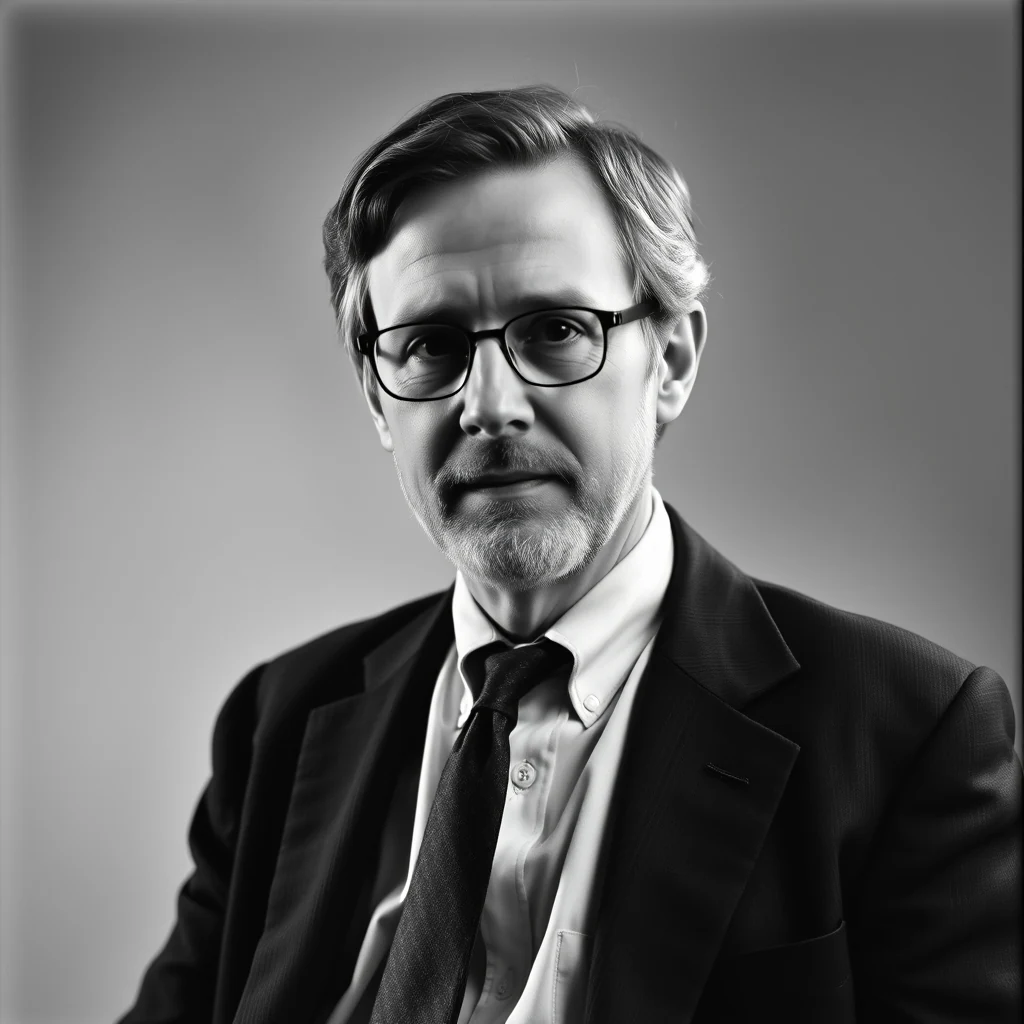 Person James Yorke American mathematician at the University of Maryland who, with his student Tien-Yien Li, published "Period Three Implies Chaos" in 1975 — the paper that gave the field its name. Yorke had read Lorenz's 1963 paper after a colleague handed it to him; he later said the meteorologists had buried one of the great mathematical discoveries of the century in a journal no mathematician was reading.美国马里兰大学数学家,1975年与其学生李天岩共同发表《周期三蕴含混沌》一文,这篇论文为该领域命名。约克在一位同事将洛伦茨1963年的论文交给他之后才读到它;他后来说,气象学家把本世纪最伟大的数学发现之一埋没在了一份没有数学家阅读的期刊里。Matemático estadounidense de la Universidad de Maryland que, junto con su estudiante Tien-Yien Li, publicó "Period Three Implies Chaos" en 1975, el artículo que dio nombre al campo. Yorke había leído el artículo de Lorenz de 1963 después de que un colega se lo entregara; más tarde afirmó que los meteorólogos habían sepultado uno de los grandes descubrimientos matemáticos del siglo en una revista que ningún matemático leía.عالم رياضيات أمريكي في جامعة ميريلاند، نشر مع طالبه تيين-يين لي ورقة "الدورة الثلاثية تستلزم الفوضى" عام 1975 — وهي الورقة التي منحت هذا الحقل اسمه. كان يورك قد قرأ ورقة لورنتس الصادرة عام 1963 بعد أن ناولها إياه أحد زملائه؛ وقال لاحقًا إن علماء الأرصاد الجوية دفنوا واحدًا من أعظم الاكتشافات الرياضية في القرن داخل دورية لم يكن يقرؤها أي عالم رياضيات.Matemático norte-americano da Universidade de Maryland que, com seu aluno Tien-Yien Li, publicou "Period Three Implies Chaos" em 1975 — o artigo que deu nome ao campo. Yorke leu o artigo de Lorenz de 1963 depois que um colega o entregou a ele; mais tarde, declarou que os meteorologistas haviam enterrado uma das grandes descobertas matemáticas do século em uma revista que nenhum matemático lia.मैरीलैंड विश्वविद्यालय के अमेरिकी गणितज्ञ, जिन्होंने अपने छात्र तिएन-यिएन ली के साथ मिलकर 1975 में "पीरियड थ्री इम्प्लाइज़ कैऑस" शीर्षक का शोधपत्र प्रकाशित किया — वही पत्र जिसने इस क्षेत्र को इसका नाम दिया। यॉर्क ने एक सहकर्मी द्वारा सौंपे जाने के बाद लोरेन्ज़ का 1963 का शोधपत्र पढ़ा था; उन्होंने बाद में कहा कि मौसम-विज्ञानियों ने सदी की सबसे बड़ी गणितीय खोजों में से एक को ऐसी पत्रिका में दफ़न कर दिया था जिसे कोई गणितज्ञ नहीं पढ़ रहा था।Matematikawan Amerika di University of Maryland yang, bersama muridnya Tien-Yien Li, menerbitkan "Period Three Implies Chaos" pada 1975 — makalah yang memberi nama pada bidang tersebut. Yorke membaca makalah Lorenz tahun 1963 setelah seorang kolega menyodorkannya; ia kemudian mengatakan bahwa para ahli meteorologi telah mengubur salah satu penemuan matematika terbesar abad ini di sebuah jurnal yang tidak dibaca oleh seorang matematikawan pun.Mathématicien américain de l'Université du Maryland qui, avec son étudiant Tien-Yien Li, publia « Period Three Implies Chaos » en 1975 — l'article qui donna son nom à la discipline. Yorke avait lu l'article de Lorenz de 1963 après qu'un collègue le lui eut remis ; il déclara plus tard que les météorologues avaient enseveli l'une des plus grandes découvertes mathématiques du siècle dans une revue qu'aucun mathématicien ne lisait.メリーランド大学のアメリカ人数学者。1975年に学生のティエン・イェン・リー(李天岩)とともに論文「周期3はカオスを意味する(Period Three Implies Chaos)」を発表し、この分野に「カオス」という名称を与えた。ヨークは同僚から手渡されたローレンツの1963年の論文を読んでおり、後に、気象学者たちは世紀の偉大な数学的発見の一つを、どの数学者も読まない雑誌に埋もれさせていたのだ、と語っている。Американский математик из Мэрилендского университета, опубликовавший в 1975 году вместе со своим учеником Ли Тянь-Янем статью «Period Three Implies Chaos» («Период три влечёт хаос») — работу, давшую название всей области. Йорк прочёл статью Лоренца 1963 года после того, как её передал ему коллега; впоследствии он говорил, что метеорологи похоронили одно из величайших математических открытий века в журнале, который не читал ни один математик.Amerikanischer Mathematiker an der University of Maryland, der gemeinsam mit seinem Schüler Tien-Yien Li 1975 die Arbeit „Period Three Implies Chaos" veröffentlichte – jenes Papier, das dem Forschungsgebiet seinen Namen gab. Yorke hatte Lorenz' Arbeit von 1963 gelesen, nachdem ein Kollege sie ihm in die Hand gedrückt hatte; später sagte er, die Meteorologen hätten eine der großen mathematischen Entdeckungen des Jahrhunderts in einer Zeitschrift vergraben, die kein Mathematiker las.메릴랜드 대학교의 미국 수학자로, 제자 톈옌 리(Tien-Yien Li)와 함께 1975년 「주기 3은 혼돈을 함의한다(Period Three Implies Chaos)」를 발표하여 이 분야에 이름을 붙였다. 요크는 동료가 건네준 로런츠의 1963년 논문을 읽었으며, 훗날 그는 기상학자들이 금세기 가장 위대한 수학적 발견 중 하나를 어떤 수학자도 읽지 않는 학술지에 묻어 두었다고 말했다. and his student Tien-Yien Li gave the field its name, in a paper called "Period Three Implies Chaos."
What we still don't know
We do not know whether turbulence is chaos in Lorenz's sense or something stranger. The Navier–Stokes equations  Concept Navier–Stokes equations The system of partial differential equations, formulated by Claude-Louis Navier and George Gabriel Stokes in the 1820s and 1840s, that describes the motion of viscous fluids. They underlie every weather model, every aircraft wing, every prediction of ocean current. Whether they always admit smooth solutions in three dimensions is an open question, formally unsolved since their statement nearly two centuries ago.由克劳德-路易·纳维与乔治·加布里埃尔·斯托克斯分别于1820年代和1840年代提出的一组偏微分方程,用以描述黏性流体的运动。它们是所有天气模型、所有飞机机翼、所有洋流预测的基础。在三维空间中,它们是否始终存在光滑解,仍是一个悬而未决的问题,自其近两个世纪前问世以来始终未获正式解答。El sistema de ecuaciones en derivadas parciales, formulado por Claude-Louis Navier y George Gabriel Stokes en las décadas de 1820 y 1840, que describe el movimiento de los fluidos viscosos. Sustentan todo modelo meteorológico, toda ala de avión, toda predicción de corrientes oceánicas. Si siempre admiten soluciones suaves en tres dimensiones es una cuestión abierta, formalmente no resuelta desde su enunciado hace casi dos siglos.منظومةُ المعادلات التفاضلية الجزئية التي صاغها كلود-لويس نافييه وجورج غابرييل ستوكس في عشرينيات وأربعينيات القرن التاسع عشر، وتصف حركة الموائع اللزجة. تقومُ عليها كلُّ نماذج الطقس، وكلُّ جناح طائرة، وكلُّ تنبؤ بتيارات المحيطات. أمّا مسألةُ ما إذا كانت تقبلُ دائماً حلولاً ملساء في ثلاثة أبعاد فهي سؤالٌ مفتوح، لم يُحسم رسمياً منذ صياغتها قبل قرنين تقريباً.O sistema de equações diferenciais parciais, formulado por Claude-Louis Navier e George Gabriel Stokes nas décadas de 1820 e 1840, que descreve o movimento de fluidos viscosos. Elas são a base de todo modelo meteorológico, de toda asa de aeronave, de toda previsão de corrente oceânica. Se sempre admitem soluções suaves em três dimensões é uma questão em aberto, formalmente sem solução desde a sua formulação há quase dois séculos.आंशिक अवकल समीकरणों का वह निकाय, जिसे क्लॉद-लुई नेवियर और जॉर्ज गैब्रिएल स्टोक्स ने 1820 और 1840 के दशकों में सूत्रबद्ध किया, और जो श्यान तरलों की गति का वर्णन करता है। ये प्रत्येक मौसम मॉडल, प्रत्येक विमान के पंख, और महासागरीय धाराओं के प्रत्येक पूर्वानुमान का आधार हैं। क्या ये त्रिविमीय अवकाश में सदैव निष्कोण (smooth) हल स्वीकार करते हैं — यह एक खुला प्रश्न है, जो इनके निरूपण के बाद से लगभग दो शताब्दियों से औपचारिक रूप से अनसुलझा है।Sistem persamaan diferensial parsial, yang dirumuskan oleh Claude-Louis Navier dan George Gabriel Stokes pada tahun 1820-an dan 1840-an, yang menggambarkan gerak fluida kental. Persamaan ini mendasari setiap model cuaca, setiap sayap pesawat terbang, setiap prediksi arus laut. Apakah persamaan ini selalu memiliki solusi mulus dalam tiga dimensi merupakan pertanyaan terbuka, yang secara formal belum terpecahkan sejak pernyataannya hampir dua abad lalu.Le système d'équations aux dérivées partielles, formulé par Claude-Louis Navier et George Gabriel Stokes dans les années 1820 et 1840, qui décrit le mouvement des fluides visqueux. Elles sous-tendent tout modèle météorologique, toute aile d'avion, toute prédiction de courant océanique. La question de savoir si elles admettent toujours des solutions régulières en trois dimensions demeure ouverte, formellement non résolue depuis leur énoncé il y a près de deux siècles.粘性流体の運動を記述する偏微分方程式系であり、1820年代から1840年代にかけてクロード=ルイ・ナビエとジョージ・ガブリエル・ストークスによって定式化された。あらゆる気象モデル、あらゆる航空機の翼、あらゆる海流予測の基礎を成している。三次元において常に滑らかな解を持つかどうかは未解決の問題であり、その提唱からおよそ二世紀を経た今もなお正式には解かれていない。Система дифференциальных уравнений в частных производных, сформулированная Клодом-Луи Навье и Джорджем Габриэлем Стоксом в 1820-х и 1840-х годах, описывающая движение вязких жидкостей. Они лежат в основе всякой модели погоды, всякого авиационного крыла, всякого прогноза океанических течений. Допускают ли они всегда гладкие решения в трёхмерном пространстве — открытый вопрос, формально не разрешённый со времени их формулировки почти два столетия назад.Das System partieller Differentialgleichungen, formuliert von Claude-Louis Navier und George Gabriel Stokes in den 1820er und 1840er Jahren, das die Bewegung viskoser Flüssigkeiten beschreibt. Sie liegen jedem Wettermodell, jeder Flugzeugtragfläche, jeder Vorhersage von Meeresströmungen zugrunde. Ob sie im dreidimensionalen Raum stets glatte Lösungen zulassen, ist eine offene Frage, formell ungelöst seit ihrer Formulierung vor nahezu zwei Jahrhunderten.1820년대와 1840년대에 클로드루이 나비에와 조지 가브리엘 스토크스가 정식화한, 점성 유체의 운동을 기술하는 편미분 방정식 체계. 모든 기상 모델, 모든 항공기 날개, 모든 해류 예측의 근간을 이룬다. 3차원에서 매끄러운 해가 항상 존재하는지의 여부는 미해결 문제로, 거의 두 세기 전 방정식이 제시된 이래 공식적으로 풀리지 않은 채 남아 있다. that describe fluid flow have never been proven to have smooth solutions for all time in three dimensions. The question is one of the Clay Mathematics Institute
  Institution Clay Mathematics Institute A private non-profit foundation established in 1998 in Cambridge, Massachusetts, by businessman Landon Clay to promote mathematical research. In 2000 it announced seven Millennium Prize Problems — the unsolved questions judged most important to the discipline — each carrying a million-dollar prize. One, the Poincaré conjecture, has been solved. The Navier–Stokes existence and smoothness problem has not.一家私立非营利基金会,由商人兰登·克莱(Landon Clay)于1998年在马萨诸塞州剑桥市创立,旨在推动数学研究。2000年,该基金会公布了七项"千禧年大奖难题"——被认为是该学科最重要的未解难题——每项悬赏一百万美元。其中一项,庞加莱猜想,已被解决。纳维–斯托克斯方程解的存在性与光滑性问题尚未解决。Fundación privada sin ánimo de lucro establecida en 1998 en Cambridge, Massachusetts, por el empresario Landon Clay para promover la investigación matemática. En 2000 anunció los siete Problemas del Milenio —las cuestiones no resueltas consideradas más importantes para la disciplina—, cada uno con un premio de un millón de dólares. Uno, la conjetura de Poincaré, ha sido resuelto. El problema de la existencia y suavidad de las ecuaciones de Navier-Stokes no lo ha sido.مؤسسة خاصة غير ربحية أُسِّست عام 1998 في كامبريدج بولاية ماساتشوستس على يد رجل الأعمال لاندون كلاي بهدف دعم البحث الرياضي. وفي عام 2000 أعلنت عن مسائل جوائز الألفية السبع — وهي المسائل غير المحلولة التي رُئي أنها الأهم في هذا الحقل — مع تخصيص جائزة قدرها مليون دولار لكل منها. حُلَّت إحداها، وهي حدسية بوانكاريه. أما مسألة وجود حلول معادلات نافيي–ستوكس وسلاستها فلا تزال دون حل.Fundação privada sem fins lucrativos, estabelecida em 1998 em Cambridge, Massachusetts, pelo empresário Landon Clay para promover a pesquisa matemática. Em 2000, anunciou sete Problemas do Prémio Millennium — as questões em aberto consideradas as mais importantes da disciplina —, cada um com um prémio de um milhão de dólares. Um deles, a conjectura de Poincaré, foi resolvido. O problema da existência e suavidade de Navier–Stokes não.१९९८ में कैम्ब्रिज, मैसाचुसेट्स में व्यवसायी लैंडन क्ले द्वारा गणितीय अनुसंधान को बढ़ावा देने के लिए स्थापित एक निजी गैर-लाभकारी फाउंडेशन। २००० में इसने सात मिलेनियम पुरस्कार समस्याएँ घोषित कीं — विषय की दृष्टि से सबसे महत्वपूर्ण मानी जाने वाली अनसुलझी समस्याएँ — जिनमें से प्रत्येक पर दस लाख डॉलर का पुरस्कार रखा गया। इनमें से एक, पोंकारे अनुमान, हल हो चुका है। नेवियर–स्टोक्स अस्तित्व एवं सहजता समस्या अब तक अनसुलझी है।Sebuah yayasan nirlaba swasta yang didirikan pada 1998 di Cambridge, Massachusetts, oleh pengusaha Landon Clay untuk mempromosikan penelitian matematika. Pada tahun 2000 yayasan ini mengumumkan tujuh Masalah Hadiah Milenium — pertanyaan-pertanyaan tak terpecahkan yang dinilai paling penting bagi disiplin tersebut — masing-masing menyandang hadiah satu juta dolar. Salah satunya, konjektur Poincaré, telah terpecahkan. Masalah keberadaan dan kemulusan Navier–Stokes belum.Fondation privée à but non lucratif créée en 1998 à Cambridge, dans le Massachusetts, par l'homme d'affaires Landon Clay pour promouvoir la recherche mathématique. En 2000, elle annonça sept problèmes du prix du millénaire — les questions non résolues jugées les plus importantes de la discipline —, chacun assorti d'un prix d'un million de dollars. L'un d'eux, la conjecture de Poincaré, a été résolu. Le problème de l'existence et de la régularité des solutions des équations de Navier-Stokes ne l'a pas été.1998年にマサチューセッツ州ケンブリッジで実業家ランドン・クレイによって設立された、数学研究の振興を目的とする私立の非営利財団。2000年に、同分野で最も重要と判断された未解決問題である7つのミレニアム懸賞問題を発表し、それぞれに100万ドルの賞金が懸けられている。そのうちポアンカレ予想は解決済みである。ナビエ–ストークス方程式の解の存在と滑らかさに関する問題は未解決である。Частный некоммерческий фонд, основанный в 1998 году в Кембридже, штат Массачусетс, бизнесменом Лэндоном Клэем для содействия математическим исследованиям. В 2000 году объявил семь «Задач тысячелетия» — нерешённых вопросов, признанных наиболее важными для дисциплины, — за решение каждой из которых назначен приз в миллион долларов. Одна из них, гипотеза Пуанкаре, решена. Задача о существовании и гладкости решений уравнений Навье — Стокса остаётся нерешённой.Eine private gemeinnützige Stiftung, gegründet 1998 in Cambridge, Massachusetts, vom Geschäftsmann Landon Clay zur Förderung der mathematischen Forschung. Im Jahr 2000 schrieb sie sieben Millennium-Probleme aus – die als bedeutendsten geltenden ungelösten Fragen der Disziplin –, jedes mit einem Preisgeld von einer Million Dollar dotiert. Eines, die Poincaré-Vermutung, wurde gelöst. Das Problem der Existenz und Glattheit der Navier-Stokes-Gleichungen ist es nicht.1998년 매사추세츠주 케임브리지에서 사업가 랜던 클레이가 수학 연구를 진흥하기 위해 설립한 민간 비영리 재단. 2000년에 학문에서 가장 중요하다고 판단되는 미해결 문제 일곱 개를 밀레니엄 문제로 발표했으며, 각 문제마다 100만 달러의 상금이 걸려 있다. 그중 푸앵카레 추측은 해결되었으나, 나비에-스토크스 방정식의 해의 존재성과 매끄러움 문제는 아직 해결되지 않았다. 's million-dollar Millennium Prize Problems, unclaimed since 2000.

We do not know the limits of prediction in systems where classical chaos meets quantum mechanics. Quantum systems are linear and, in isolation, do not show chaos in Lorenz's form at all. How chaos emerges in the classical limit, the question of "quantum chaos," remains contested.

We do not know how far machine-learning forecasts can push the weather horizon. Recent neural models from DeepMind and Huawei now beat the operational physics-based forecasts at ten days. Whether they can reach fifteen, or twenty, or hit the Lorenz wall earlier than the equations would predict, is being argued in the literature this year.

And we do not know, in any practical sense, which of the systems we care about — markets, climate tipping points, ecosystems, brains — are chaotic, which are merely complicated, and which are something else entirely.
A butterfly in Brazil cannot, as a matter of physics, cause a hurricane in Texas. The energy is wrong by twenty orders of magnitude. What it can do is shift which hurricane forms, and when, and where it lands, selecting from a menu the atmosphere was going to serve anyway. The weather is not a story being written. It is a story being chosen, atom by atom, from a shelf of stories the equations already contain.