Person
Thomas Hobbes
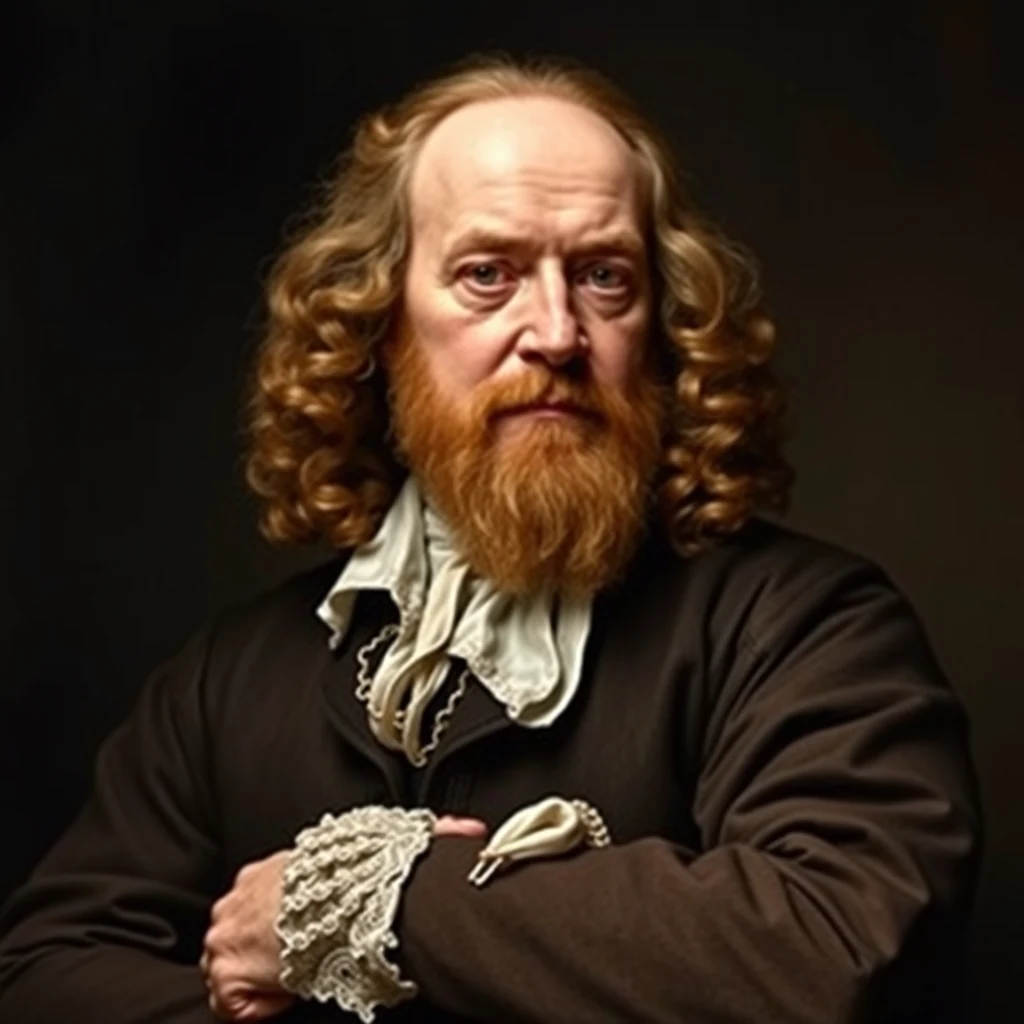
English political philosopher (1588–1679), author of Leviathan, who fancied himself a geometer and conducted a long, public feud with the Oxford mathematician John Wallis over the foundations of mathematics. He rejected the new calculus and its infinitesimals as a logical scandal, attacking Torricelli's hyperbolic solid in print in 1656. The mathematical community treated his objections as a sideshow; historians of mathematics still find them clarifying.
托马斯·霍布斯是英国政治哲学家(1588—1679年),《利维坦》的作者,他自诩为几何学家,并与牛津大学数学家约翰·沃利斯就数学基础展开了长期公开的论战。他拒绝接受新的微积分及其无穷小量,认为这是一种逻辑上的丑闻,并于1656年撰文抨击托里拆利研究的双曲几何体。数学界虽然视他的反对为插曲,但数学史学家至今仍认为它们具有澄清意义。
Filósofo político inglés (1588–1679), autor de Leviatán, que se creía geómetra y mantuvo una larga disputa pública con el matemático de Oxford John Wallis sobre los fundamentos matemáticos. Rechazó el nuevo cálculo y sus infinitesimales considerándolos un escándalo lógico, y atacó el sólido hiperbólico de Torricelli. La comunidad matemática ignoró sus críticas, pero los historiadores las consideran interesantes.
توماس هوبز هو فيلسوف سياسي إنجليزي (1588-1679)، مؤلف كتاب (Leviathan)، الذي تخيل نفسه عالم هندسة وأدار نزاعاً عاماً طويلاً مع عالم الرياضيات في أكسفورد جون واليس حول أسس الرياضيات. ورفض حساب التفاضل والتكامل الجديد والكميات متناهية الصغر باعتبارها فضيحة منطقية، مهاجماً مجسم تورشيللي الزائدي في عام 1656.
Filósofo político inglês (1588–1679), autor do Leviatã, que se considerava um geômetra e manteve uma longa disputa pública com o matemático de Oxford John Wallis sobre os fundamentos da matemática. Rejeitou o novo cálculo e seus infinitesimais como um escândalo lógico, atacando o sólido hiperbólico de Torricelli em 1656. A comunidade matemática ignorou suas objeções.
अंग्रेजी राजनीतिक दार्शनिक (1588-1679), लेविआथन के लेखक, जो खुद को एक ज्यामितीय मानते थे और गणित की नींव को लेकर ऑक्सफोर्ड के गणितज्ञ जॉन वालिस के साथ एक लंबा, सार्वजनिक विवाद किया था, जिन्हें थॉमस हॉब्स (Thomas Hobbes) कहा जाता है। उन्होंने नए कैलकुलस को खारिज कर दिया और 1656 में टॉरीसेली के अतिशयोक्तिपूर्ण ठोस पर हमला किया।
Thomas Hobbes (1588–1679) adalah filsuf politik Inggris, penulis Leviathan, yang menganggap dirinya geometriwan dan terlibat perseteruan publik yang panjang dengan matematikawan Oxford John Wallis tentang fondasi matematika. Ia menolak kalkulus baru dan konsep infinitesimal sebagai skandal logika, menyerang bangun hiperbolik Torricelli pada 1656.
Philosophe politique anglais (1588–1679), auteur du Léviathan. Se piquant de géométrie, il mena une longue querelle publique avec le mathématicien d'Oxford John Wallis sur les fondements des mathématiques. Il rejeta le nouveau calcul et ses infinitésimaux, criant au scandale logique, et attaqua par écrit le solide hyperbolique de Torricelli en 1656. Ses objections restent intéressantes pour les historiens.
トマス・ホッブズ(1588〜1679年)はイギリスの政治哲学者であり、『リヴァイアサン』の著者。自らを幾何学者と任じ、数学の基礎をめぐってオックスフォード大学の数学者ジョン・ウォリスと长年にわたり公の場で論争を繰り広げた。彼は新しい微积分学とその無限小の概念を「論理的スキャンダル」として拒絶し、1656年にトリチェリの双曲線立体を批判した。当時の数学界からは相手にされなかったが、数学史家からは今なお評価されている。
Английский политический философ (1588–1679), автор «Левиафана», считавший себя геометром и ведший многолетний спор с оксфордским математиком Джоном Валлисом об основаниях математики. Он отвергал новое исчисление и бесконечно малые величины как логический скандал, раскритиковав гиперболическое тело Торричелли в 1656 году. Математики проигнорировали его нападки.
Englischer Staatsphilosoph (1588–1679) und Autor des Leviathan, der sich selbst für einen Geometer hielt und eine lange, öffentliche Fehde mit dem Oxforder Mathematiker John Wallis führte. Er lehnte die neue Analysis und ihre Infinitesimalien als logischen Skandal ab und griff 1656 Torricellis hyperbolischen Körper schriftlich an. Die Mathematiker ignorierten seine Einwände.
영국의 정치철학자(Thomas Hobbes, 1588~1679)이자 《리바이어던》의 저자이다. 스스로를 뛰어난 기하학자라 칭하며 옥스퍼드 대학교의 수학자 존 월리스와 수학의 기초 정립을 두고 평생 공개 논쟁을 벌였다. 새로운 미적분학 및 무한소 기법을 논리적 붕괴로 규정해 배격했으며, 1656년 토리첼리가 정의한 나팔 모양 입체 도형을 서면으로 맹공격했다. 당시 수학계는 이를 무시했으나 수학사학자들은 그의 지적에 의의를 둔다.
Mentioned in 2 articles
- Math Gabriel's Horn A seventeenth-century Italian rotated a curve around an axis and built a trumpet of infinite length, finite volume, and infinite surface area. You can fill it with paint. You cannot paint it. Mathematicians have been arguing about what that means for nearly four hundred years.
- Math Gabriel's Horn In 1641, a young Italian mathematician rotated a simple curve around an axis and produced a shape that broke the logic of his century. It was a horn of infinite length and area, yet it could hold only a finite amount of wine.