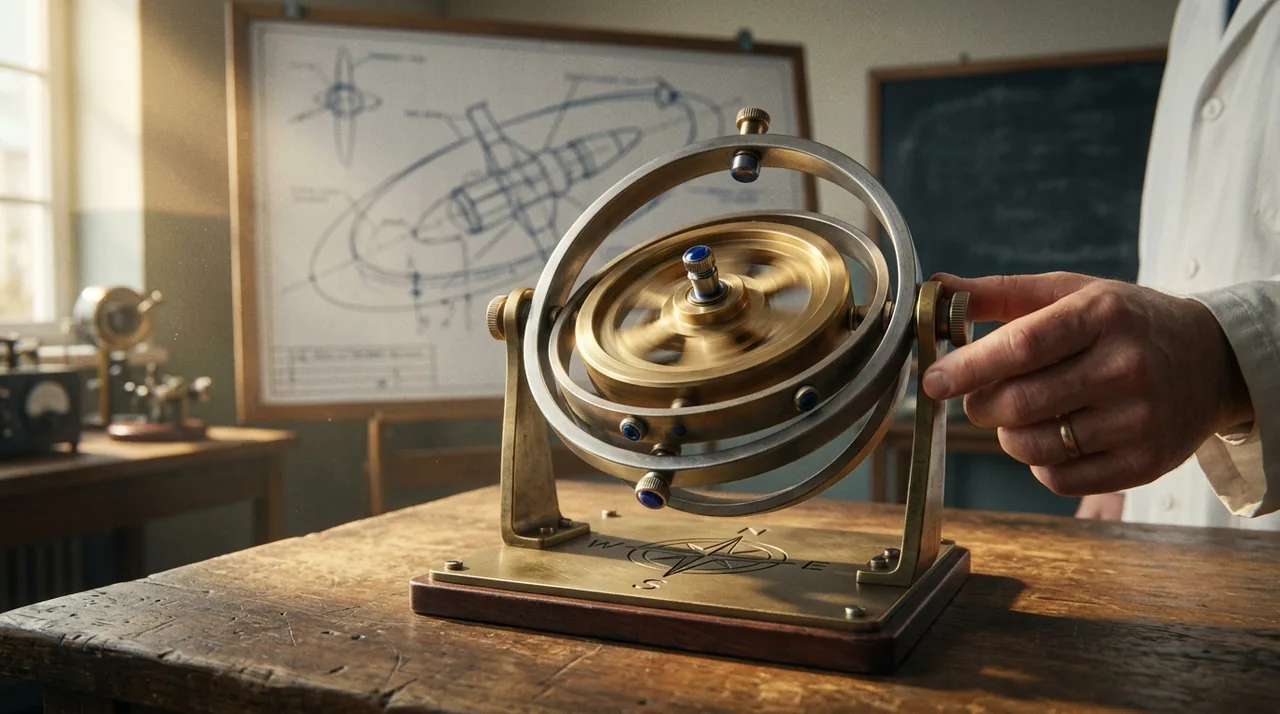
In 1953, an American B-29 bomber took off from a runway in Massachusetts and flew across the United States to Los Angeles. The pilot had a map and a compass, but they were largely ceremonial. For the entire twelve-hour flight, the aircraft was guided by a refrigerator-sized box of spinning metal mounted in the bomb bay. It took no radio bearings. It made no star sightings. It did not look outside. When the plane crossed the California coast, the system reported its position to within a few miles of absolute ground truth.
The man sitting next to the box was Charles Stark Draper  Person Charles Stark Draper American aeronautical engineer (1901–1987), founder of the MIT Instrumentation Laboratory and the principal architect of inertial guidance. He famously offered, when pitching Apollo to NASA, to fly the mission himself as proof his system would work. He did not, but the system did. His name now sits on the laboratory that built it.查尔斯·斯塔克·德雷珀是美国航空工程师(1901-1987年),麻省理工学院仪器实验室的创始人以及惯性导航系统的主要奠基人。在向美国国家航空航天局(NASA)推介阿波罗计划时,他曾著名地提出自己亲自执行飞行任务,以证明他的系统可行。他虽未亲自上天,但他的系统完美运行。现在,他的名字被冠以建造该系统的实验室上。Ingeniero aeronáutico estadounidense (1901-1987), fundador del Laboratorio de Instrumentación del MIT y arquitecto principal del guiado inercial. Es famoso por haber ofrecido, al presentar el programa Apolo a la NASA, volar él mismo en la misión como prueba de que su sistema funcionaría. Él no lo hizo, pero el sistema sí. Su nombre figura ahora en el laboratorio que construyó los equipos de navegación.تشارلز ستارك دريبر هو مهندس طيران أمريكي (1901-1987)، ومؤسس مختبر الأدوات الدقيقة في معهد ماساتشوستس للتكنولوجيا والمبتكر الرئيسي لأنظمة التوجيه الذاتي (القصوري). عُرف بعرضه الشهير عندما طرح مشروع أبولو على وكالة ناسا بأن يطير في المهمة بنفسه كإثبات على نجاح نظامه. لم يسافر دريبر في الرحلة، لكن النظام نجح تماماً، ويحمل المختبر الذي بنى هذا النظام اسمه اليوم تكريماً له.Engenheiro aeronáutico americano (1901–1987), fundador do Laboratório de Instrumentação do MIT e principal arquiteto do sistema de orientação inercial. Ele ficou famoso ao oferecer, quando apresentou o programa Apollo para a NASA, pilotar ele mesmo a missão como prova de que seu sistema funcionaria. Ele não voou, mas o sistema funcionou perfeitamente. Seu nome hoje batiza o laboratório que o projetou e construiu.अमेरिकी वैमानिकी इंजीनियर (1901-1987), एमआईटी इंस्ट्रूमेंटेशन लेबोरेटरी के संस्थापक और जड़त्वीय मार्गदर्शन (इनर्शियल गाइडेंस) प्रणाली के मुख्य शिल्पकार, जिन्हें चार्ल्स स्टार्क ड्रेपर (Charles Stark Draper) कहा जाता है। उन्होंने नासा के सामने अपोलो के प्रस्ताव के समय प्रसिद्ध रूप से खुद मिशन पर जाने की पेशकश की थी ताकि साबित हो सके कि उनकी प्रणाली काम करेगी। वे खुद तो नहीं गए, लेकिन प्रणाली ने काम किया। उनका नाम अब उस प्रयोगशाला पर है जिसने इसे बनाया था।Insinyur aeronautika Amerika (1901–1987), pendiri Laboratorium Instrumentasi MIT dan arsitek utama pemandu inersia. Ia terkenal karena pernah menawarkan diri untuk menerbangkan misi Apollo secara pribadi saat mempresentasikannya ke NASA sebagai bukti bahwa sistemnya akan berfungsi. Ia tidak jadi terbang, tetapi sistemnya bekerja dengan sukses. Namanya kini diabadikan pada laboratorium yang membangun sistem tersebut.Ingénieur aéronautique américain (1901-1987), fondateur du laboratoire d'instrumentation du MIT et principal concepteur du guidage inertiel. Il est célèbre pour avoir proposé, lors de la présentation d'Apollo à la NASA, de piloter lui-même la mission afin de prouver l'efficacité de son système. Il ne l'a pas fait, mais le système a parfaitement fonctionné. Son nom désigne désormais le laboratoire qui a construit ces équipements de vol.アメリカの航空宇宙工学者(1901〜1987年)であり、MIT計器研究所の創設者、そして慣性誘導装置の主任設計者である。アポロ計画をNASAに売り込む際、自らのシステムが正常に動作する証明として、自身がミッションに搭乗して宇宙へ飛ぶと提案したことで有名である。彼は搭乗しなかったが、システムは見事に動作した。彼の名は、その装置を構築した研究所に残されている。Американский авиационный инженер (1901–1987), основатель Лаборатории приборостроения Массачусетского технологического института (MIT) и главный создатель систем инерциальной навигации. При продвижении проекта «Аполлон» в НАСА он предложил лично лететь в космос в качестве доказательства надежности своей системы. Он не полетел, но навигационная система отработала идеально. Имя Дрейпера теперь носит создавшая ее лаборатория.US-amerikanischer Luftfahrtingenieur (1901–1987), Gründer des MIT Instrumentation Laboratory und Hauptarchitekt der Trägheitsnavigation. Berühmt wurde er, als er bei der Vorstellung von Apollo gegenüber der NASA anbot, die Mission selbst zu fliegen, um zu beweisen, dass sein System funktioniert. Er flog zwar nicht, aber das System funktionierte einwandfrei. Sein Name ziert heute das Labor, das diese Technologie entwickelt hat.미국의 항공우주 공학자(1901~1987)이자 MIT 계기연구소의 설립자이며, 관성 유도 제어 시스템의 핵심 설계자(Charles Stark Draper)이다. 아폴로 계획을 NASA에 제안할 당시 자신의 시스템이 작동함을 보증하기 위해 스스로 우주선에 탑승해 임무를 수행하겠다고 제안한 일화로 유명하다. 직접 탑승하지는 않았지만 시스템은 성공적으로 가동되었으며, 현재 그의 이름은 장치를 구축한 연구소의 이름으로 보존되어 있다. , a professor at MIT
  Institution MIT The Massachusetts Institute of Technology, in Cambridge, Massachusetts, founded in 1861. Its civil and environmental engineering department has run a long programme of work on ancient cementitious materials. The 2023 paper identifying lime clasts as the self-healing agent in Roman concrete came from a group there led by the materials scientist Admir Masic, working with collaborators in Switzerland and Italy.麻省理工学院,简称MIT,于1861年创立于马萨诸塞州剑桥市。其土木与环境工程系在古代胶凝材料领域开展了一项长期的研究计划。2023年发表的一篇将石灰结块确定为罗马混凝土自我修复剂的论文即出自该校,由材料科学家阿德米尔·马西奇领导的研究小组与瑞士和意大利的合作者共同完成。El Instituto Tecnológico de Massachusetts, en Cambridge, Massachusetts, fundado en 1861. Su departamento de ingeniería civil y ambiental ha desarrollado un extenso programa de investigación sobre materiales cementantes antiguos. El artículo de 2023 que identificó los clastos de cal como el agente autorreparador del hormigón romano surgió de un grupo dirigido por el científico de materiales Admir Masic, en colaboración con investigadores de Suiza e Italia.معهد ماساتشوستس للتكنولوجيا في كامبريدج بولاية ماساتشوستس، تأسس عام 1861. أجرى قسم الهندسة المدنية والبيئية فيه برنامجاً طويلاً من الأبحاث حول المواد الإسمنتية القديمة. صدرت الورقة البحثية لعام 2023 التي حددت كتل الجير كعامل ذاتي الإصلاح في الخرسانة الرومانية عن مجموعة هناك بقيادة عالم المواد أدمير ماسيتش، بالتعاون مع باحثين من سويسرا وإيطاليا.O Massachusetts Institute of Technology, em Cambridge, Massachusetts, foi fundado em 1861. O seu departamento de engenharia civil e ambiental tem realizado um longo programa de trabalho sobre materiais cimentícios antigos. O artigo de 2023 que identificou os clastos de cal como o agente autorreparador do concreto romano proveio de um grupo do instituto liderado pelo cientista de materiais Admir Masic, que trabalhou com colaboradores na Suíça e na Itália.1861 में स्थापित मैसाचुसेट्स इंस्टीट्यूट ऑफ टेक्नोलॉजी, कैम्ब्रिज, मैसाचुसेट्स में स्थित है। इसके सिविल और पर्यावरण इंजीनियरिंग विभाग ने प्राचीन सीमेंटीय पदार्थों पर एक दीर्घकालिक कार्यक्रम चलाया है। 2023 का वह शोधपत्र जिसने रोमन कंक्रीट में चूने के कणों को स्व-उपचार कारक के रूप में पहचाना, वहाँ के एक समूह से आया जिसका नेतृत्व पदार्थ वैज्ञानिक एडमिर मासिच ने किया, जो स्विट्ज़रलैंड और इटली के सहयोगियों के साथ काम कर रहे थे।Institut Teknologi Massachusetts, di Cambridge, Massachusetts, didirikan pada tahun 1861. Departemen Teknik Sipil dan Lingkungannya telah menjalankan program penelitian jangka panjang mengenai material semen kuno. Makalah tahun 2023 yang mengidentifikasi klas kapur sebagai agen penyembuhan diri pada beton Romawi berasal dari sebuah kelompok di sana yang dipimpin oleh ilmuwan material Admir Masic, bekerja sama dengan rekan-rekan di Swiss dan Italia.Le Massachusetts Institute of Technology, à Cambridge, dans le Massachusetts, fondé en 1861. Son département de génie civil et environnemental mène depuis longtemps un programme de recherche sur les matériaux cimentaires anciens. L’article de 2023 identifiant les clastes de chaux comme l’agent auto-cicatrisant du béton romain est issu d’un groupe de ce département dirigé par le spécialiste des matériaux Admir Masic, en collaboration avec des partenaires en Suisse et en Italie.マサチューセッツ工科大学は、1861年に設立され、マサチューセッツ州ケンブリッジに所在する。同大学の土木環境工学科では、古代のセメント質材料に関する長期研究プログラムが行われてきた。ローマン・コンクリートにおいて石灰片が自己修復剤として機能することを特定した2023年の論文は、材料科学者アドミル・マシッチが主導し、スイスとイタリアの共同研究者らとともに同大学のグループから発表された。Массачусетский технологический институт в Кембридже (штат Массачусетс), основанный в 1861 году. Его факультет гражданского и экологического строительства ведёт долгосрочную программу исследований древних цементирующих материалов. Статья 2023 года, определившая известковые включения как самовосстанавливающийся компонент римского бетона, была подготовлена группой под руководством материаловеда Адмира Масича, работавшего с коллегами из Швейцарии и Италии.Das Massachusetts Institute of Technology in Cambridge, Massachusetts, gegründet 1861. Sein Fachbereich Bau- und Umweltingenieurwesen hat ein langjähriges Forschungsprogramm zu antiken zementösen Materialien betrieben. Der Aufsatz von 2023, der Kalkklasten als selbstheilenden Bestandteil in römischem Beton identifizierte, stammt von einer dortigen Gruppe unter der Leitung des Materialwissenschaftlers Admir Masic, die mit Kooperationspartnern in der Schweiz und Italien zusammenarbeitete.매사추세츠주 케임브리지에 위치한 매사추세츠 공과대학교는 1861년에 설립되었다. 이 대학의 토목환경공학과는 고대 시멘트질 재료에 관한 장기 연구 프로그램을 운영해 왔다. 로마 콘크리트에서 자가 치유 물질로서 석회 클래스트를 밝혀낸 2023년 논문은 재료과학자 아드미르 마시치가 이끄는 그룹이 스위스와 이탈리아의 협력자들과 함께 작업하여 이곳에서 나왔다. who had spent the previous two decades insisting that a machine could navigate purely by feeling its own movement. Everyone had told him it was impossible. Navigating blindly, a process known as dead reckoning, relies on continuously adding up your heading and your speed over time. Any tiny error in measurement compounds. Over a transcontinental flight, standard instruments would accumulate so much error that you could miss your destination by a state or two.

Draper believed the error could be engineered out. His discipline was inertial navigation  Concept inertial navigation Inertial navigation is a self-contained method of calculating position, velocity, and orientation without referencing external signals. It relies on a combination of accelerometers and gyroscopes to continuously calculate a moving object's dead reckoning position. Developed for aircraft and missiles, it remains critical for submarines and spacecraft.惯性导航是一种无需借助外部信号便能计算位置、速度与姿态的自成体系的方法。它依靠加速度计与陀螺仪的组合,持续推算运动物体的航位推算位置。这一技术最初为飞机与导弹而开发,至今仍对潜艇与航天器至关重要。La navegación inercial es un método autónomo para calcular la posición, la velocidad y la orientación sin recurrir a señales externas. Se basa en una combinación de acelerómetros y giroscopios para calcular de forma continua la posición estimada de un objeto en movimiento. Desarrollada para aeronaves y misiles, sigue siendo fundamental para submarinos y naves espaciales.الملاحة بالقصور الذاتي طريقة قائمة بذاتها لحساب الموضع والسرعة والاتجاه دون الرجوع إلى إشارات خارجية. وتعتمد على مزيج من مقاييس التسارع والجيروسكوبات لحساب موضع الجسم المتحرك بالاستدلال الميت بصورة مستمرة. طُوّرت للطائرات والصواريخ، ولا تزال أساسية للغواصات والمركبات الفضائية.A navegação inercial é um método autônomo de calcular posição, velocidade e orientação sem recorrer a sinais externos. Baseia-se em uma combinação de acelerômetros e giroscópios para calcular continuamente a posição estimada de um objeto em movimento. Desenvolvida para aeronaves e mísseis, continua essencial para submarinos e naves espaciais.जड़त्वीय नौवहन बाहरी संकेतों का संदर्भ लिए बिना स्थिति, वेग और दिशा-विन्यास की गणना करने की एक स्वावलंबी पद्धति है। यह किसी गतिमान वस्तु की डेड-रेकनिंग स्थिति की सतत गणना के लिए त्वरणमापियों और घूर्णदर्शियों के संयोजन पर निर्भर करती है। विमानों और प्रक्षेपास्त्रों के लिए विकसित यह पद्धति आज भी पनडुब्बियों और अंतरिक्षयानों के लिए अत्यावश्यक बनी हुई है।Navigasi inersia adalah metode mandiri untuk menghitung posisi, kecepatan, dan orientasi tanpa mengacu pada sinyal eksternal. Metode ini mengandalkan kombinasi akselerometer dan giroskop untuk secara terus-menerus menghitung posisi perhitungan mati (dead reckoning) sebuah objek yang bergerak. Dikembangkan untuk pesawat terbang dan rudal, metode ini tetap krusial bagi kapal selam dan pesawat ruang angkasa.La navigation inertielle est une méthode autonome de calcul de la position, de la vitesse et de l'orientation sans recours à des signaux extérieurs. Elle s'appuie sur une combinaison d'accéléromètres et de gyroscopes pour calculer en continu la position estimée d'un objet en mouvement. Mise au point pour les aéronefs et les missiles, elle demeure essentielle aux sous-marins et aux engins spatiaux.慣性航法は、外部信号に頼ることなく位置、速度、姿勢を算出する自己完結型の手法である。加速度計とジャイロスコープを組み合わせて、移動する物体の推測航法による位置を連続的に計算する。航空機やミサイル向けに開発されたが、今なお潜水艦や宇宙船にとって不可欠であり続けている。Инерциальная навигация — это автономный метод вычисления положения, скорости и ориентации без обращения к внешним сигналам. Она опирается на сочетание акселерометров и гироскопов для непрерывного расчёта счислимого положения движущегося объекта. Разработанная для самолётов и ракет, она остаётся критически важной для подводных лодок и космических аппаратов.Die Trägheitsnavigation ist ein autarkes Verfahren zur Berechnung von Position, Geschwindigkeit und Ausrichtung ohne Bezug auf externe Signale. Sie stützt sich auf eine Kombination aus Beschleunigungsmessern und Kreiseln, um fortlaufend die Koppelnavigationsposition eines bewegten Objekts zu berechnen. Ursprünglich für Flugzeuge und Raketen entwickelt, bleibt sie für U-Boote und Raumfahrzeuge von entscheidender Bedeutung.관성 항법은 외부 신호에 의존하지 않고 위치와 속도, 방향을 계산하는 자체 완결적 방식이다. 가속도계와 자이로스코프의 조합에 기대어 움직이는 물체의 추측 항법 위치를 끊임없이 산출한다. 항공기와 미사일을 위해 개발되었으나, 잠수함과 우주선에는 여전히 없어서는 안 될 기술이다. , a system built around two ancient physical principles. A gyroscope
 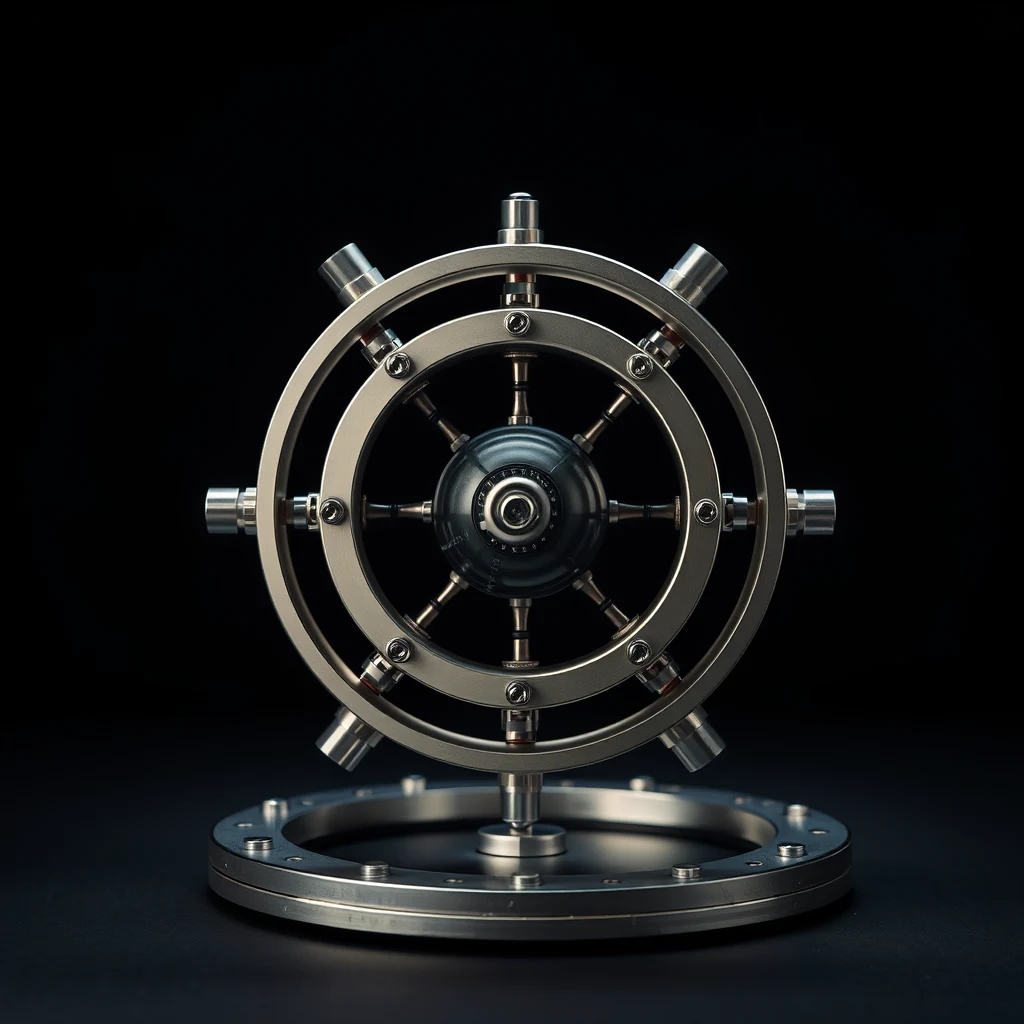 Object gyroscope A gyroscope is a physical device consisting of a spinning mass mounted on a set of gimbals, allowing it to maintain its orientation regardless of external movement. Exploiting the conservation of angular momentum, gyroscopes form the core of inertial navigation systems, providing an absolute reference for attitude and rotation.陀螺仪是一种物理装置,由安装在一组万向支架上的旋转质量体构成,使其无论外部如何运动都能保持自身的指向。陀螺仪利用角动量守恒原理,构成了惯性导航系统的核心,为姿态与转动提供了一个绝对参照。Un giroscopio es un dispositivo físico que consta de una masa giratoria montada sobre un conjunto de cardanes, lo que le permite mantener su orientación independientemente del movimiento externo. Aprovechando la conservación del momento angular, los giroscopios constituyen el núcleo de los sistemas de navegación inercial, ya que proporcionan una referencia absoluta de actitud y rotación.الجيروسكوب جهاز مادي يتألف من كتلة دوّارة مركّبة على مجموعة من المحامل المفصلية، مما يتيح له الحفاظ على اتجاهه بصرف النظر عن الحركة الخارجية. وباستثمار حفظ الزخم الزاوي، تشكّل الجيروسكوبات جوهر أنظمة الملاحة بالقصور الذاتي، إذ توفّر مرجعاً مطلقاً للوضعية والدوران.Um giroscópio é um dispositivo físico composto por uma massa giratória montada sobre um conjunto de suspensões cardânicas, o que lhe permite manter sua orientação independentemente do movimento externo. Aproveitando a conservação do momento angular, os giroscópios formam o núcleo dos sistemas de navegação inercial, fornecendo uma referência absoluta para atitude e rotação.घूर्णदर्शी एक भौतिक उपकरण है जिसमें गिम्बल के एक समूह पर आरूढ़ एक घूमता हुआ द्रव्यमान होता है, जो इसे बाहरी गति की परवाह किए बिना अपना दिशा-विन्यास बनाए रखने देता है। कोणीय संवेग के संरक्षण का उपयोग करते हुए, घूर्णदर्शी जड़त्वीय नौवहन प्रणालियों का केंद्र बनते हैं और अभिवृत्ति तथा घूर्णन के लिए एक निरपेक्ष संदर्भ प्रदान करते हैं।Giroskop adalah sebuah perangkat fisik yang terdiri atas massa berputar yang dipasang pada serangkaian gimbal, sehingga mampu mempertahankan orientasinya terlepas dari gerakan eksternal. Dengan memanfaatkan kekekalan momentum sudut, giroskop menjadi inti dari sistem navigasi inersia, menyediakan acuan mutlak untuk sikap dan rotasi.Un gyroscope est un dispositif physique constitué d'une masse en rotation montée sur un ensemble de cardans, ce qui lui permet de conserver son orientation indépendamment de tout mouvement extérieur. Exploitant la conservation du moment cinétique, les gyroscopes forment le cœur des systèmes de navigation inertielle, offrant une référence absolue d'assiette et de rotation.ジャイロスコープは、ジンバルの組に取り付けられた回転する質量から成る物理装置であり、外部の動きにかかわらずその向きを保ち続けることができる。角運動量保存の法則を利用し、ジャイロスコープは慣性航法装置の中核を成し、姿勢と回転についての絶対的な基準を与える。Гироскоп — это физическое устройство, состоящее из вращающейся массы, закреплённой в системе карданных подвесов, что позволяет ему сохранять свою ориентацию независимо от внешнего движения. Используя закон сохранения момента импульса, гироскопы образуют сердце инерциальных навигационных систем, обеспечивая абсолютный отсчёт для углового положения и вращения.Ein Gyroskop ist ein physikalisches Gerät, das aus einer rotierenden Masse besteht, die in einem Satz kardanischer Aufhängungen gelagert ist, wodurch es seine Ausrichtung unabhängig von äußerer Bewegung beibehalten kann. Unter Ausnutzung der Drehimpulserhaltung bilden Gyroskope den Kern von Trägheitsnavigationssystemen und liefern eine absolute Referenz für Lage und Drehung.자이로스코프는 회전하는 질량체를 짐벌 묶음에 장착한 물리적 장치로, 외부의 움직임과 무관하게 자신의 방향을 유지할 수 있다. 각운동량 보존을 활용하는 자이로스코프는 관성 항법 시스템의 핵심을 이루며, 자세와 회전에 대한 절대적인 기준을 제공한다. , typically a rapidly spinning wheel, will resist any attempt to change its orientation in space. An accelerometer
 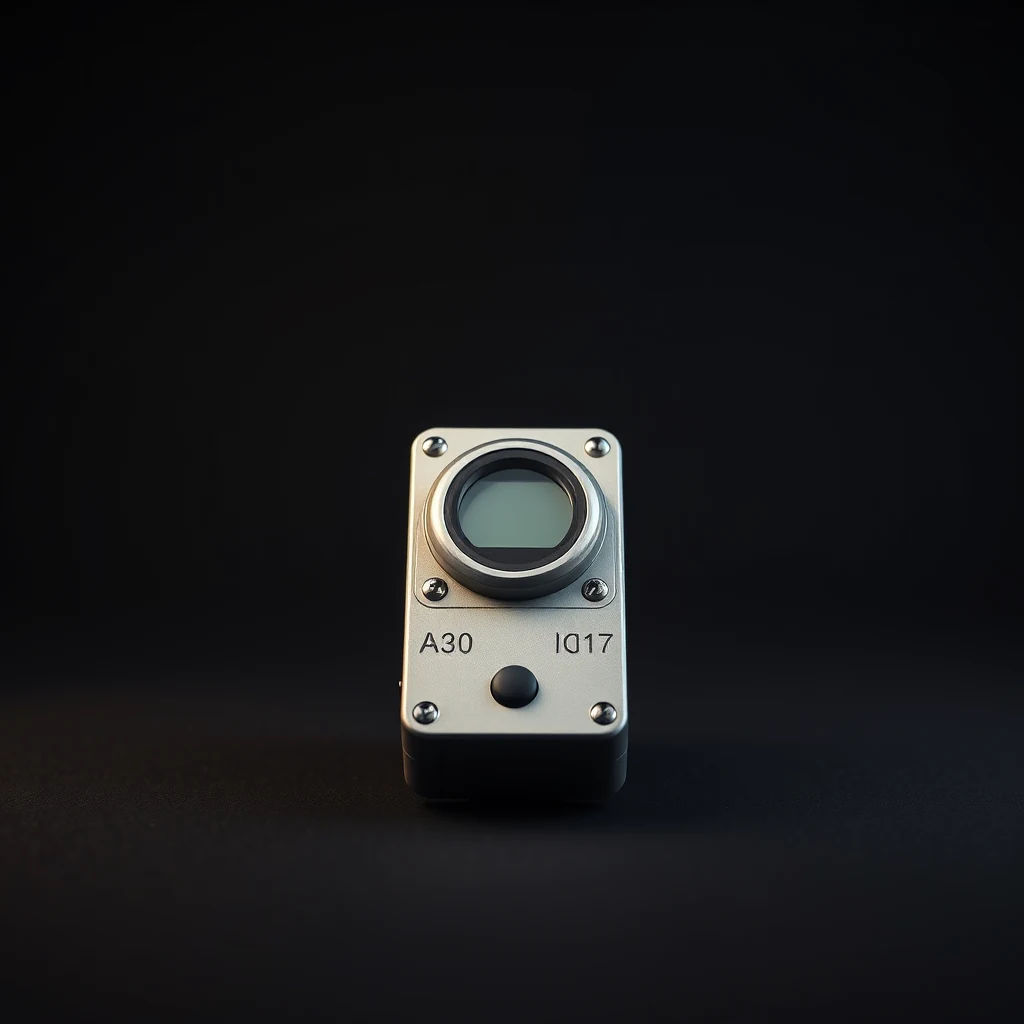 Object accelerometer An accelerometer is an electromechanical device that measures proper acceleration—the rate of change of velocity relative to a free-falling frame of reference. In inertial navigation systems, accelerometers detect linear forces along specific axes. Onboard computers integrate these continuous measurements over time to determine exact changes in velocity and position.加速度计是一种机电装置,用于测量真加速度——即相对于自由落体参照系的速度变化率。在惯性导航系统中,加速度计探测沿特定轴向的线性力。机载计算机对这些连续测量值随时间进行积分,从而确定速度和位置的精确变化。Un acelerómetro es un dispositivo electromecánico que mide la aceleración propia, es decir, la tasa de cambio de la velocidad respecto a un marco de referencia en caída libre. En los sistemas de navegación inercial, los acelerómetros detectan fuerzas lineales a lo largo de ejes específicos. Las computadoras de a bordo integran estas mediciones continuas a lo largo del tiempo para determinar los cambios exactos de velocidad y posición.المِقياس التسارعي جهاز كهروميكانيكي يقيس التسارع الذاتي — أي معدل تغيُّر السرعة بالنسبة إلى إطار مرجعي في حالة سقوط حر. في أنظمة الملاحة بالقصور الذاتي، تكشف المقاييس التسارعية القوى الخطية على امتداد محاور مُحدَّدة. وتُكامِل الحواسيب المُضمَّنة هذه القياسات المستمرة عبر الزمن لتحديد التغيرات الدقيقة في السرعة والموضع.Um acelerômetro é um dispositivo eletromecânico que mede a aceleração própria, ou seja, a taxa de variação da velocidade em relação a um referencial em queda livre. Nos sistemas de navegação inercial, os acelerômetros detectam forças lineares ao longo de eixos específicos. Computadores de bordo integram essas medições contínuas ao longo do tempo para determinar variações exatas de velocidade e posição.एक्सेलेरोमीटर एक विद्युत-यांत्रिक उपकरण है जो वास्तविक त्वरण—मुक्त रूप से गिरते संदर्भ-तंत्र के सापेक्ष वेग के परिवर्तन की दर—को मापता है। जड़त्वीय नौवहन प्रणालियों में, एक्सेलेरोमीटर विशिष्ट अक्षों के अनुदिश रैखिक बलों का पता लगाते हैं। ऑनबोर्ड कंप्यूटर इन सतत मापों को समय के साथ समाकलित करके वेग और स्थिति में हुए सटीक परिवर्तनों को निर्धारित करते हैं।Akselerometer adalah perangkat elektromekanis yang mengukur percepatan sebenarnya—laju perubahan kecepatan relatif terhadap kerangka acuan yang jatuh bebas. Dalam sistem navigasi inersia, akselerometer mendeteksi gaya linear sepanjang sumbu-sumbu tertentu. Komputer terpasang mengintegrasikan pengukuran kontinu ini terhadap waktu untuk menentukan perubahan kecepatan dan posisi secara tepat.Un accéléromètre est un dispositif électromécanique qui mesure l'accélération propre — le taux de variation de la vitesse par rapport à un référentiel en chute libre. Dans les systèmes de navigation inertielle, les accéléromètres détectent les forces linéaires selon des axes déterminés. Les ordinateurs de bord intègrent ces mesures continues au fil du temps afin de déterminer les variations exactes de vitesse et de position.加速度計は、固有加速度——自由落下する基準系に対する速度の変化率——を測定する電気機械装置である。慣性航法システムにおいて、加速度計は特定の軸に沿った直線的な力を検出する。搭載されたコンピューターは、これらの連続的な測定値を時間に対して積分し、速度と位置の正確な変化を割り出す。Акселерометр — это электромеханическое устройство, измеряющее собственное ускорение, то есть скорость изменения скорости относительно свободно падающей системы отсчёта. В инерциальных навигационных системах акселерометры регистрируют линейные силы вдоль определённых осей. Бортовые компьютеры интегрируют эти непрерывные измерения во времени, чтобы определить точные изменения скорости и положения.Ein Beschleunigungssensor ist ein elektromechanisches Gerät, das die eigentliche Beschleunigung misst – die Änderungsrate der Geschwindigkeit relativ zu einem frei fallenden Bezugssystem. In Trägheitsnavigationssystemen erfassen Beschleunigungssensoren lineare Kräfte entlang bestimmter Achsen. Bordrechner integrieren diese kontinuierlichen Messwerte über die Zeit, um genaue Änderungen von Geschwindigkeit und Position zu bestimmen.안가속도계는 자유 낙하하는 기준틀에 대한 상대적인 속도 변화율, 즉 고유 가속도를 측정하는 전기기계 장치이다. 관성 항법 시스템에서 가속도계는 특정 축을 따라 작용하는 선형 힘을 감지한다. 탑재 컴퓨터는 이러한 연속적인 측정값을 시간에 대해 적분하여 속도와 위치의 정확한 변화를 산출한다. , essentially a mass on a spring, will measure the exact force of acceleration along a single axis. Put three gyroscopes and three accelerometers together in a gimballed frame, and you have a mathematical model of your movement in three dimensions. You just had to build them to a tolerance the world had never seen.
The fifty-pound brain
Draper founded the MIT Instrumentation Laboratory  Institution MIT Instrumentation Laboratory The Massachusetts research lab, founded by Charles Stark Draper in 1932, that designed inertial guidance systems for missiles, submarines and spacecraft. Awarded the first major Apollo contract in August 1961, it built the guidance computers and navigation software for every crewed lunar mission. Renamed the Charles Stark Draper Laboratory in 1973, when MIT spun it off under political pressure during the Vietnam War.麻省理工学院仪器实验室是由查尔斯·斯塔克·德雷珀于1932年创立的马萨诸塞州研究实验室,主要为导弹、潜艇和航天器设计惯性导航系统。该实验室于1961年8月获得了第一份主要的阿波罗计划合同,为每一次载人登月任务建造了引导计算机和导航软件。1973年,在越南战争期间的政治压力下,麻省理工学院将其剥离,该实验室随后更名为查尔斯·斯塔克·德雷珀实验室。El laboratorio de investigación de Massachusetts, fundado por Charles Stark Draper en 1932, que diseñó los sistemas de guiado inercial para misiles, submarinos y naves espaciales. Galardonado con el primer gran contrato del programa Apolo en agosto de 1961, construyó los ordenadores de guiado y el software de navegación para cada misión lunar tripulada. Rebautizado como Laboratorio Charles Stark Draper en 1973, cuando el MIT se desprendió de él bajo presiones políticas durante la guerra de Vietnam.مختبر ماساتشوستس للأبحاث، أسسه تشارلز ستارك دريبر عام 1932، وهو المختبر الذي صمم أنظمة التوجيه الذاتي للقمصورات والصواريخ والغواصات والمركبات الفضائية. حصل المختبر على أول عقد رئيسي لبرنامج أبولو في أغسطس 1961، وقام ببناء كمبيوترات التوجيه وبرامج الملاحة لكل مهمة قمرية مأهولة. تم تغيير اسمه إلى مختبر تشارلز ستارك دريبر عام 1973، عندما فصله معهد ماساتشوستس للتكنولوجيا تحت ضغوط سياسية خلال حرب فيتنام.O laboratório de pesquisa de Massachusetts, fundado por Charles Stark Draper em 1932, que projetou sistemas de orientação inercial para mísseis, submarinos e naves espaciais. Contratado para o primeiro grande contrato do Apollo em agosto de 1961, construiu os computadores de orientação e o software de navegação para todas as missões lunares tripuladas. Foi renomeado como Laboratório Charles Stark Draper em 1973, quando o MIT o desvinculou sob pressão política durante a Guerra do Vietnã.मैसाचुसेट्स अनुसंधान प्रयोगशाला, जिसकी स्थापना 1932 में चार्ल्स स्टार्क ड्रेपर द्वारा की गई थी, जिसने मिसाइलों, पनडुब्बियों और अंतरिक्ष यान के लिए जड़त्वीय मार्गदर्शन (इनर्शियल गाइडेंस) प्रणाली को डिजाइन किया था। अगस्त 1961 में पहला बड़ा अपोलो अनुबंध प्राप्त करने के बाद, इसने हर मानवयुक्त चंद्र मिशन के लिए मार्गदर्शन कंप्यूटर और नेविगेशन सॉफ्टवेयर का निर्माण किया। वियतनाम युद्ध के दौरान राजनीतिक दबाव में 1973 में एमआईटी (MIT) से अलग होने पर इसका नाम बदलकर चार्ल्स स्टार्क ड्रेपर प्रयोगशाला कर दिया गया।Laboratorium penelitian Massachusetts, didirikan oleh Charles Stark Draper pada tahun 1932, yang merancang sistem pemandu inersia untuk rudal, kapal selam, dan pesawat luar angkasa. Mendapatkan kontrak besar pertama Apollo pada Agustus 1961, laboratorium ini membangun komputer pemandu dan perangkat lunak navigasi untuk setiap misi bulan berawak. Berganti nama menjadi Laboratorium Charles Stark Draper pada 1973, ketika MIT memisahkannya karena tekanan politik selama Perang Vietnam.Laboratoire de recherche du Massachusetts, fondé par Charles Stark Draper en 1932, qui a conçu les systèmes de guidage inertiel pour les missiles, les sous-marins et les engins spatiaux. Lauréat du premier grand contrat Apollo en août 1961, il a construit les ordinateurs de guidage et le logiciel de navigation pour chaque mission lunaire habitée. Renommé Laboratoire Charles Stark Draper en 1973, lorsque le MIT s'en est séparé sous la pression politique pendant la guerre du Viêt Nam.チャールズ・スターク・ドレイパーによって1932年に設立されたマサチューセッツ州の研究機関であり、ミサイル、潜水艦、および宇宙船用の慣性誘導装置を設計した。1961年8月に最初のアポロ計画の主要契約を獲得し、すべての有人月ミッション向けの誘導コンピュータとナビゲーションソフトウェアを開発した。ベトナム戦争中の政治的圧力により1973年にMITから分離独立し、チャールズ・スターク・ドレイパー研究所と改称された。Массачусетская исследовательская лаборатория, основанная Чарльзом Старком Дрейпером в 1932 году, которая разрабатывала системы инерциального наведения для ракет, подводных лодок и космических аппаратов. Получив в августе 1961 года первый крупный контракт по программе «Аполлон», она создала бортовые компьютеры и навигационное программное обеспечение для всех пилотируемых лунных полетов. Переименована в Лабораторию Чарльза Старка Дрейпера в 1973 году, когда MIT вывел ее из своего состава под политическим давлением во время войны во Вьетнаме.Das Forschungslabor in Massachusetts, das 1932 von Charles Stark Draper gegründet wurde und Trägheitsnavigationssysteme für Raketen, U-Boote und Raumschiffe entwickelte. Nachdem es im August 1961 den ersten großen Apollo-Auftrag erhalten hatte, baute es die Lenkcomputer und die Navigationssoftware für jede bemannte Mondmission. Im Jahr 1973 wurde es unter politischem Druck während des Vietnamkriegs vom MIT ausgegliedert und in Charles Stark Draper Laboratory umbenannt.찰스 스타크 드레이퍼가 1932년에 설립한 매사추세츠주 소재 연구소로, 미사일, 잠수함, 우주선용 관성 유도 시스템을 설계했다. 1961년 8월 최초의 대규모 아포로 프로젝트 계약자로 선정되어 모든 유인 달 탐사 임무의 유도 컴퓨터와 내비게이션 소프트웨어를 제작했다. 베트남 전쟁 당시 정치적 압력으로 인해 1973년 MIT에서 분리 독립하면서 찰스 스타크 드레이퍼 연구소로 명칭을 변경했다. to build these precise sensors. To eliminate friction, his team floated their gyroscope rotors in a dense fluorocarbon fluid, balancing them so perfectly that the load on the bearings was effectively zero. They machined parts from beryllium to tolerances of a few millionths of a centimetre. They controlled the temperature of the fluid to within a fraction of a degree.

By the early 1960s, Draper’s gyroscopes could measure rotation a million times more precisely than standard aircraft instruments. The timing was fortuitous. NASA  Institution NASA The United States civil space agency, founded in 1958 in response to Sputnik. NASA led the Webb program in partnership with ESA and CSA, with day-to-day science operations handled by the Space Telescope Science Institute in Baltimore. The agency's Goddard Space Flight Center managed the development, integration, and testing of the spacecraft.美国国家航空航天局(NASA)是成立于1958年的美国民用航天机构,旨在应对苏联发射人造卫星(Sputnik)的挑战。NASA与欧空局(ESA)及加拿大空间局(CSA)合作领导了韦布计划,日常的科学运营由位于巴尔的摩的空间望远镜科学研究所(STScI)负责。该机构的戈达德空间飞行中心负责管理航天器的开发、集成和测试。Agencia espacial civil de los Estados Unidos, fundada en 1958 en respuesta al Sputnik. La NASA dirigió el programa Webb en asociación con la ESA y la CSA, y las operaciones científicas diarias corren a cargo del Instituto de Ciencias del Telescopio Espacial en Baltimore. El Centro de Vuelo Espacial Goddard de la agencia gestionó el desarrollo, integración y pruebas de la nave.وكالة ناسا هي وكالة الفضاء المدنية التابعة للولايات المتحدة، تأسست عام 1958 استجابة لإطلاق الاتحاد السوفيتي للقمر الصناعي سبوتنيك. قادت ناسا برنامج ويب بالشراكة مع وكالتي الفضاء الأوروبية والكندية، بينما يتولى معهد علوم تلسكوب الفضاء في بالتيمور العمليات العلمية اليومية. أدار مركز غودارد لرحلات الفضاء التابع للوكالة عمليات تطوير المركبة وتجميعها واختبارها.A agência espacial civil dos Estados Unidos, fundada em 1958 em resposta ao Sputnik. A NASA liderou o programa Webb em parceria com a ESA e a CSA, com as operações científicas diárias coordenadas pelo Space Telescope Science Institute em Baltimore. O Goddard Space Flight Center da agência gerenciou o desenvolvimento, a integração e os testes da espaçonave.संयुक्त राज्य अमेरिका की नागरिक अंतरिक्ष एजेंसी, जिसकी स्थापना 1958 में स्पुतनिक (Sputnik) के जवाब में की गई थी, जिसे नासा (NASA) कहा जाता है। नासा ने ईएसए (ESA) और सीएसए (CSA) के साथ साझेदारी में जेम्स वेब कार्यक्रम का नेतृत्व किया, जिसमें बाल्टीमोर में स्पेस टेलीस्कोप साइंस इंस्टीट्यूट दैनिक विज्ञान संचालन संभालता है। एजेंसी के गोडार्ड स्पेस फ्लाइट सेंटर ने यान के विकास का प्रबंधन किया।Lembaga antariksa sipil Amerika Serikat, didirikan pada tahun 1958 sebagai tanggapan atas peluncuran Sputnik oleh Uni Soviet. NASA memimpin program Webb dalam kemitraan dengan ESA dan CSA, dengan operasi sains sehari-hari ditangani oleh Space Telescope Science Institute di Baltimore. Goddard Space Flight Center mengelola pengembangan, integrasi, dan pengujian wahana.Agence spatiale civile des États-Unis, fondée en 1958 en réponse au lancement de Spoutnik. La NASA a dirigé le programme Webb en partenariat avec l'ESA et la CSA, les opérations scientifiques quotidiennes étant gérées par le Space Telescope Science Institute à Baltimore. Le centre de vol spatial Goddard de l'agence a supervisé le développement, l'intégration et les tests de la sonde.スプートニク・ショックに対応して1958年に設立されたアメリカ合衆国の政府機関。ESA(欧州宇宙機関)およびCSA(カナダ宇宙機関)と提携してウェブ計画を主導し、日々の科学運用はボルチモアの宇宙望遠鏡科学研究所(STScI)が担当している。同機関のゴダード宇宙飛行センターが宇宙船の開発、統合、およびテストを管理した。Гражданское космическое агентство США, основанное в 1958 году в ответ на запуск советского «Спутника». НАСА возглавило программу «Уэбб» в партнерстве с ЕКА и ККА, при этом повседневной научной работой занимается Научный институт космического телескопа в Балтиморе. Центр космических полетов имени Годдарда руководил проектированием, сборкой и испытаниями аппарата.Die zivile Weltraumbehörde der Vereinigten Staaten, gegründet 1958 als Reaktion auf den Start von Sputnik. Die NASA leitete das Webb-Programm in Partnerschaft mit der ESA und der CSA, wobei der tägliche Wissenschaftsbetrieb vom Space Telescope Science Institute in Baltimore abgewickelt wird. Das Goddard Space Flight Center der Behörde verwaltete die Entwicklung, Integration und Erprobung der Sonde.1958년 소련의 스푸트니크 발사에 대응하여 설립된 미국의 민간 우주 기관(NASA)이다. 유럽우주국(ESA), 캐나다우주국(CSA)과의 파트너십 하에 제임스 웹 망원경 프로젝트를 총괄했으며, 일상적인 과학 관측 업무는 볼티모어의 우주망원경과학연구소(STScI)에서 수행한다. NASA 산하 고다드 우주비행센터가 우주선 설계 개발, 통합 및 조립 테스트 과정을 관리했다. was trying to figure out how to hit a moving target 384,000 kilometres away, travelling at roughly 40,000 kilometres per hour, in a vacuum.

Radio navigation from Earth was too slow. The signal delay during a lunar descent would be fatal if sudden corrections were required. Celestial navigation required the astronauts to take manual sextant sightings through the spacecraft windows, a process prone to human error and impossible if the spacecraft was tumbling. The mission required an autonomous system. It required Draper’s spinning metal.
The resulting hardware became the heart of the Apollo Guidance Computer 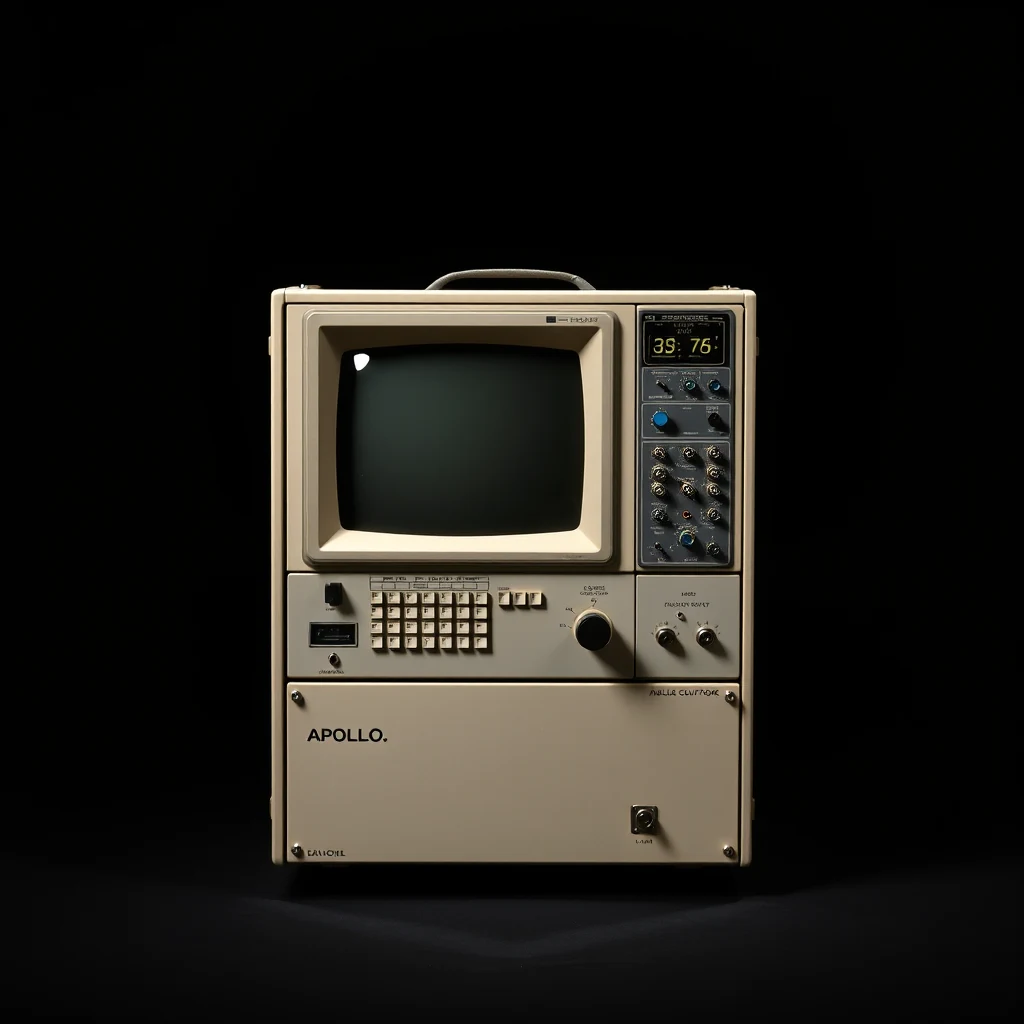 Object Apollo Guidance Computer The on-board flight computer of the Apollo command and lunar modules, designed at MIT between 1961 and 1966. About the size of a briefcase, with roughly four kilobytes of erasable memory and seventy-two of woven read-only memory, it ran a priority-scheduled real-time operating system at an effective 40 kHz. It flew every crewed Apollo mission and was the first computer built almost entirely from integrated circuits.阿波罗引导计算机是阿波罗指令舱和登月舱的机载航天计算机,由麻省理工学院于1961至1966年间设计。它的体积大约相当于一个公文包,拥有约4千字节的可擦写随机存储内存和72千字节的织入式只读存储器。它在40千赫兹的有效频率下运行一个基于优先级调度的实时操作系统。它参与了每一次载人阿波罗任务,是第一台几乎完全由集成电路构建的计算机。El ordenador de guiado del Apolo (Apollo Guidance Computer) fue el computador de a bordo de los módulos de mando y lunar del programa Apolo, diseñado en el MIT entre 1961 y 1966. Con un tamaño similar al de un maletín, disponía de unos cuatro kilobytes de memoria borrable y setenta y dos de memoria de sólo lectura de núcleos trenzados. Ejecutaba un sistema operativo en tempo real programado por prioridades a una frecuencia de 40 kHz. Voló en todas las misiones tripuladas del Apolo y fue la primera computadora construida casi en su totalidad con circuitos integrados.كمبيوتر توجيه أبولو هو كمبيوتر الطيران على متن مركبة القيادة ووحدات الهبوط على القمر لبرنامج أبولو، وتم تصميمه في معهد ماساتشوستس للتكنولوجيا بين عامي 1961 و1966. يبلغ حجمه حجم حقيبة يد تقريباً، ويحتوي على حوالي أربعة كيلوبايت من الذاكرة القابلة للمحو واثنين وسبعين كيلوبايت من ذاكرة القراءة فقط المنسوجة. وكان يعمل بنظام تشغيل في الوقت الفعلي يعتمد على جدولة الأولويات بتردد فعال يبلغ 40 كيلوهرتز. حلق هذا الجهاز في كل مهمة أبولو مأهولة، وكان أول كمبيوتر يُبنى بالكامل تقريباً من الدوائر المتكاملة.O Computador de Orientação do Apollo (Apollo Guidance Computer) foi o computador de bordo dos módulos de comando e lunar do programa Apollo, projetado no MIT entre 1961 e 1966. Com o tamanho aproximado de uma maleta, possuía cerca de quatro kilobytes de memória apagável e setenta e dois kilobytes de memória somente leitura de corda tecida. Ele executava um sistema operacional de tempo real programado por prioridades a uma frequência de 40 kHz. Voou em todas as missões tripuladas do Apollo e foi o primeiro computador construído quase totalmente com circuitos integrados.अपोलो गाइडेंस कंप्यूटर (Apollo Guidance Computer) अपोलो कमांड और लूनर मॉड्यूल का ऑन-बोर्ड उड़ान कंप्यूटर था, जिसे 1961 और 1966 के बीच एमआईटी (MIT) में डिजाइन किया गया था। एक ब्रीफकेस के आकार के इस कंप्यूटर में लगभग चार किलोबाइट की इरेज़ेबल मेमोरी और बहत्तर किलोबाइट की वोवन रीड-ओनली मेमोरी (रोप मेमोरी) थी। यह प्रभावी 40 kHz पर प्राथमिकता-निर्धारित रीयल-टाइम ऑपरेटिंग सिस्टम चलाता था। इसने प्रत्येक मानवयुक्त अपोलो मिशन में उड़ान भरी और यह लगभग पूरी तरह से एकीकृत परिपथों (इंटीग्रेटेड सर्किट) से निर्मित पहला कंप्यूटर था।Apollo Guidance Computer adalah komputer penerbangan internal pada modul komando dan modul lunar Apollo, yang dirancang di MIT antara tahun 1961 dan 1966. Berukuran sebesar koper, dengan memori yang dapat dihapus sekitar empat kilobita dan memori tebatan anyaman hanya-baca sebesar tujuh puluh dua kilobita, komputer ini menjalankan sistem operasi waktu nyata dengan jadwal prioritas pada kecepatan efektif 40 kHz. Komputer ini terbang di setiap misi berawak Apollo dan merupakan komputer pertama yang hampir seluruhnya dibuat dari sirkuit terpadu.L'ordinateur de guidage d'Apollo (Apollo Guidance Computer) était l'ordinateur de bord des modules de commande et lunaires d'Apollo, conçu au MIT entre 1961 et 1966. De la taille d'une mallette, avec environ quatre kilo-octets de mémoire effaçable et soixante-douze de mémoire morte tissée, il exécutait un système d'exploitation en temps réel avec ordonnancement par priorité à une fréquence de 40 kHz. Il a équipé chaque mission Apollo habitée et a été le premier ordinateur construit presque entièrement à partir de circuits intégrés.アポロ誘導コンピュータは、1961年から1966年にかけてMITで設計された、アポロ司令船および月着陸船のオンボード飛行制御コンピュータである。アタッシュケースほどの大きさで、約4キロバイトの消去可能メモリと72キロバイトの編み込み式読み出し専用メモリを搭載し、実効40 kHzの優先度スケジュール型リアルタイムオペレーティングシステムを実行した。すべての有人アポロ宇宙飛行ミッションに搭載され、ほぼ完全に集積回路のみで構築された世界初のコンピュータとなった。Бортовой управляющий компьютер «Аполлона» (Apollo Guidance Computer) — бортовой навигационный компьютер командного и лунного модулей космического корабля «Аполлон», разработанный в Массачусетском технологическом институте (MIT) между 1961 и 1966 годами. Прибор размером с чемодан обладал четырьмя килобайтами перезаписываемой памяти и 72 килобайтами постоянной памяти на магнитных сердечниках. Он работал под управлением операционной системы реального времени с приоритетным планированием на частоте 40 кГц, использовался во всех пилотируемых миссиях «Аполлон» и стал первым компьютером, построенным почти полностью на интегральных схемах.Der Apollo Guidance Computer war der Bordcomputer der Apollo-Kommando- und Mondlandemodule, der zwischen 1961 und 1966 am MIT entworfen wurde. Er hatte die Größe eines Aktenkoffers, besaß etwa vier Kilobyte löschbaren Speicher und zweiundsiebzig Kilobyte geflochtenen Festwertspeicher (Rope Memory) und betrieb ein prioritätsgesteuertes Echtzeit-Betriebssystem mit einer effektiven Taktfrequenz von 40 kHz. Er kam bei jeder bemannten Apollo-Mission zum Einsatz und war der erste Computer, der fast vollständig aus integrierten Schaltkreisen gebaut wurde.아폴로 유도 컴퓨터(Apollo Guidance Computer)는 1961년에서 1966년 사이에 MIT에서 설계한 아폴로 사령선 및 월면착륙선의 온보드 비행 컴퓨터이다. 서류가방 크기에 약 4킬로바이트의 소거 가능 메모리와 72킬로바이트의 직조형 읽기 전용 메모리(코어 로프 메모리)를 탑재했으며, 실효 40kHz의 우선순위 스케줄링 실시간 운영체제를 구동했다. 모든 유인 아폴로 임무에 비행 제어용으로 사용되었으며, 거의 전적으로 집적 회로를 사용하여 제작된 역사상 최초의 컴퓨터였다. . It weighed twenty-five kilograms and replaced the refrigerator-sized box of the 1953 flight. Throughout the lunar missions, Draper’s inertial measurement unit kept track of up, down, left, right, forward, and backward with absolute mathematical certainty. During the Apollo 11 descent, when computer alarms blared and Neil Armstrong
  Person Neil Armstrong Neil Armstrong was an American astronaut, aeronautical engineer, and test pilot. As commander of Apollo 11, he became the first person to walk on the Moon in July 1969. His precise manual piloting during the final moments of the lunar descent secured a safe landing despite computer alarms and rocky terrain.尼尔·阿姆斯特朗是美国宇航员、航空工程师和试飞员。作为阿波罗11号的指令长,他于1969年7月成为首位在月球上行走的人。在登月下降的最后时刻,他凭借精准的手动操控,在计算机警报频发、地形崎岖的情况下确保了安全着陆。Neil Armstrong fue un astronauta, ingeniero aeronáutico y piloto de pruebas estadounidense. Como comandante del Apolo 11, se convirtió en la primera persona en caminar sobre la Luna en julio de 1969. Su pilotaje manual preciso durante los últimos instantes del descenso lunar aseguró un alunizaje seguro a pesar de las alarmas de la computadora y el terreno rocoso.كان نيل أرمسترونغ رائد فضاء ومهندس طيران وطياراً تجريبياً أمريكياً. وبصفته قائد مهمة أبولو 11، أصبح أول إنسان يمشي على سطح القمر في يوليو 1969. وقد ضمنت قيادته اليدوية الدقيقة في اللحظات الأخيرة من الهبوط القمري نزولاً آمناً رغم إنذارات الحاسوب ووعورة التضاريس.Neil Armstrong foi um astronauta, engenheiro aeronáutico e piloto de testes norte-americano. Como comandante da Apollo 11, tornou-se a primeira pessoa a caminhar na Lua em julho de 1969. Sua pilotagem manual precisa nos momentos finais da descida lunar garantiu um pouso seguro, apesar dos alarmes do computador e do terreno acidentado.नील आर्मस्ट्रॉन्ग एक अमेरिकी अंतरिक्षयात्री, वैमानिकी अभियंता और परीक्षण-पायलट थे। अपोलो 11 के कमांडर के रूप में, वे जुलाई 1969 में चंद्रमा पर चलने वाले पहले व्यक्ति बने। चंद्र-अवतरण के अंतिम क्षणों में उनके सटीक मैनुअल संचालन ने कंप्यूटर चेतावनियों और पथरीले भूभाग के बावजूद एक सुरक्षित लैंडिंग सुनिश्चित की।Neil Armstrong adalah seorang astronaut, insinyur penerbangan, dan pilot uji asal Amerika. Sebagai komandan Apollo 11, ia menjadi orang pertama yang berjalan di Bulan pada Juli 1969. Kepiawaiannya mengendalikan pesawat secara manual pada saat-saat terakhir pendaratan di Bulan memastikan pendaratan yang aman meski terjadi alarm komputer dan medan yang berbatu.Neil Armstrong était un astronaute, ingénieur aéronautique et pilote d'essai américain. En tant que commandant d'Apollo 11, il devint la première personne à marcher sur la Lune en juillet 1969. Son pilotage manuel d'une grande précision durant les ultimes instants de la descente lunaire assura un atterrissage sûr malgré les alarmes informatiques et un terrain accidenté.ニール・アームストロングはアメリカの宇宙飛行士、航空工学者、そしてテストパイロットであった。アポロ十一号の船長として、彼は一九六九年七月に人類で初めて月面に降り立った。月への降下の最終局面における正確な手動操縦が、コンピュータの警報と岩だらけの地形にもかかわらず、安全な着陸を成し遂げた。Нил Армстронг был американским астронавтом, инженером-авиаконструктором и лётчиком-испытателем. Будучи командиром «Аполлона-11», в июле 1969 года он стал первым человеком, ступившим на Луну. Его точное ручное пилотирование в последние мгновения лунного спуска обеспечило безопасную посадку, несмотря на сигналы тревоги бортового компьютера и каменистый рельеф.Neil Armstrong war ein amerikanischer Astronaut, Luftfahrtingenieur und Testpilot. Als Kommandant von Apollo 11 wurde er im Juli 1969 der erste Mensch, der den Mond betrat. Sein präzises manuelles Steuern in den letzten Augenblicken des Landeanflugs sicherte trotz Computerwarnungen und felsigen Geländes eine sichere Landung.닐 암스트롱은 미국의 우주 비행사이자 항공 공학자, 시험 비행사였다. 아폴로 11호의 선장으로서 그는 1969년 7월 인류 최초로 달 위를 걸은 사람이 되었다. 달 착륙 막바지에 보여 준 그의 정밀한 수동 조종은 컴퓨터 경보와 험준한 지형에도 불구하고 안전한 착륙을 이끌어 냈다. had to take manual control to avoid a boulder field, it was Draper’s system that fed him the precise velocity data required to land with just seconds of fuel remaining.

The silent patrol
The success of Apollo made inertial navigation the invisible backbone of the Cold War. If a system does not emit signals and does not need to receive them, it cannot be jammed, and it cannot be detected.

The United States Navy adopted Draper’s technology for its fleet of nuclear submarines, starting with the USS George Washington 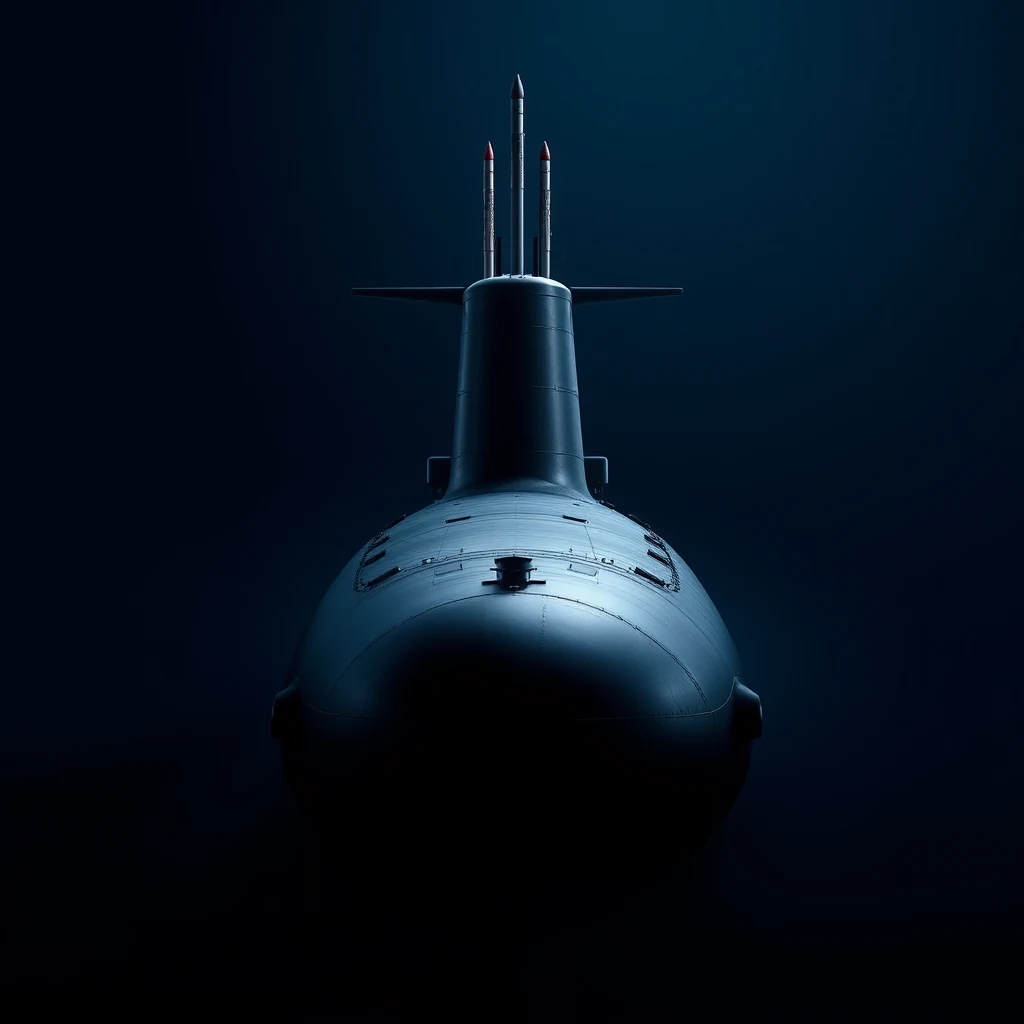 Object USS George Washington The USS George Washington was the United States Navy's first nuclear-powered ballistic missile submarine. Commissioned in 1959, it required absolute navigational precision to launch missiles from submerged, undetectable positions. It achieved this using an early Ship's Inertial Navigation System derived from Charles Stark Draper's pioneering aerospace research.乔治·华盛顿号是美国海军第一艘核动力弹道导弹潜艇。它于1959年服役,要从水下不被察觉的位置发射导弹,就必须具备绝对精准的导航能力。它依靠一套源自查尔斯·斯塔克·德雷珀开创性航空航天研究的早期舰用惯性导航系统实现了这一点。El USS George Washington fue el primer submarino de misiles balísticos de propulsión nuclear de la Armada de los Estados Unidos. Puesto en servicio en 1959, requería una precisión de navegación absoluta para lanzar misiles desde posiciones sumergidas e indetectables. Lo lograba mediante un temprano Sistema de Navegación Inercial del Buque derivado de la pionera investigación aeroespacial de Charles Stark Draper.كانت يو إس إس جورج واشنطن أول غواصة أمريكية تعمل بالطاقة النووية وتحمل صواريخ باليستية. دخلت الخدمة عام 1959، وتطلّبت دقة ملاحية مطلقة لإطلاق الصواريخ من مواقع مغمورة يتعذّر كشفها. وقد حقّقت ذلك باستخدام نظام مبكر للملاحة بالقصور الذاتي للسفن مستمد من أبحاث الفضاء الجوي الرائدة التي أجراها تشارلز ستارك درايبر.O USS George Washington foi o primeiro submarino de mísseis balísticos com propulsão nuclear da Marinha dos Estados Unidos. Comissionado em 1959, exigia precisão de navegação absoluta para lançar mísseis a partir de posições submersas e indetectáveis. Conseguiu isso usando um Sistema de Navegação Inercial de Bordo pioneiro, derivado das pesquisas aeroespaciais inovadoras de Charles Stark Draper.यूएसएस जॉर्ज वॉशिंगटन संयुक्त राज्य नौसेना की पहली परमाणु-शक्ति-चालित बैलिस्टिक प्रक्षेपास्त्र पनडुब्बी थी। 1959 में सेवा में लाई गई इस पनडुब्बी को जलमग्न, अनिर्दिष्ट स्थितियों से प्रक्षेपास्त्र दागने हेतु पूर्ण नौवहन परिशुद्धता की आवश्यकता थी। इसने यह उपलब्धि चार्ल्स स्टार्क ड्रैपर के अग्रणी एयरोस्पेस अनुसंधान से व्युत्पन्न एक आरंभिक शिप्स इनर्शियल नेविगेशन सिस्टम का उपयोग करके प्राप्त की।USS George Washington adalah kapal selam rudal balistik bertenaga nuklir pertama milik Angkatan Laut Amerika Serikat. Ditugaskan pada 1959, kapal ini menuntut ketepatan navigasi yang mutlak untuk meluncurkan rudal dari posisi terendam yang tak terdeteksi. Hal itu dicapai dengan menggunakan Sistem Navigasi Inersia Kapal awal yang berasal dari penelitian dirgantara perintis karya Charles Stark Draper.L'USS George Washington fut le premier sous-marin lance-missiles balistiques à propulsion nucléaire de la marine des États-Unis. Mis en service en 1959, il exigeait une précision de navigation absolue pour lancer des missiles depuis des positions immergées et indétectables. Il y parvenait grâce à un premier système de navigation inertielle embarquée, issu des recherches aérospatiales pionnières de Charles Stark Draper.USSジョージ・ワシントンは、アメリカ海軍初の原子力弾道ミサイル潜水艦であった。一九五九年に就役したこの艦は、潜航したまま発見されない位置からミサイルを発射するために、絶対的な航法精度を必要とした。それを、チャールズ・スターク・ドレイパーの先駆的な航空宇宙研究から派生した初期の艦載慣性航法装置によって実現した。«Джордж Вашингтон» был первой в военно-морском флоте США атомной подводной лодкой с баллистическими ракетами. Принятая на вооружение в 1959 году, она требовала абсолютной навигационной точности для запуска ракет из подводного, необнаружимого положения. Этого она достигала с помощью ранней корабельной инерциальной навигационной системы, выросшей из новаторских аэрокосмических исследований Чарльза Старка Дрейпера.Die USS George Washington war das erste mit Atomkraft betriebene ballistische Raketen-U-Boot der United States Navy. 1959 in Dienst gestellt, erforderte es absolute navigatorische Präzision, um Raketen aus getauchten, unentdeckbaren Positionen abzuschießen. Es erreichte dies mithilfe eines frühen Trägheitsnavigationssystems für Schiffe, das aus der bahnbrechenden Luft- und Raumfahrtforschung von Charles Stark Draper hervorging.USS 조지 워싱턴은 미국 해군 최초의 핵추진 탄도미사일 잠수함이었다. 1959년에 취역한 이 잠수함은 수중의 들키지 않는 위치에서 미사일을 발사하기 위해 절대적인 항법 정밀도를 요구받았다. 이를 위해 찰스 스타크 드레이퍼의 선구적 항공우주 연구에서 비롯된 초기 함정 관성 항법 장치를 사용했다. . A ballistic missile submarine must remain submerged for months at a time, hidden beneath the thermal layers of the ocean where satellite signals cannot penetrate. Yet to launch a missile accurately, the submarine must know its own exact position on the Earth's surface at the moment of firing. Inertial navigation systems, quietly spinning in the dark, provided that absolute truth.

Today, variations of Draper’s concept are everywhere. Intercontinental ballistic missiles rely on them to find targets across oceans. Commercial airliners use ring laser gyroscopes, which replace spinning metal wheels with counter-propagating beams of light, to cross the Atlantic when satellite coverage fails. Even modern smartphones contain microscopic MEMS  Concept MEMS Micro-electromechanical systems (MEMS) are miniaturised mechanical elements made using microfabrication techniques. In modern navigation, MEMS technology allows gyroscopes and accelerometers to be etched onto microscopic silicon chips. While less precise than aerospace-grade systems, their microscopic size and low cost make them ubiquitous in smartphones and drones.微机电系统(MEMS)是采用微加工工艺制成的微型机械元件。在现代导航中,MEMS技术使陀螺仪与加速度计得以蚀刻在微小的硅芯片之上。虽然其精度不及航空航天级系统,但其微小的尺寸与低廉的成本使它在智能手机与无人机中无处不在。Los sistemas microelectromecánicos (MEMS) son elementos mecánicos miniaturizados fabricados mediante técnicas de microfabricación. En la navegación moderna, la tecnología MEMS permite grabar giroscopios y acelerómetros sobre chips de silicio microscópicos. Aunque son menos precisos que los sistemas de calidad aeroespacial, su tamaño microscópico y su bajo costo los hacen omnipresentes en teléfonos inteligentes y drones.الأنظمة الكهروميكانيكية الدقيقة (MEMS) عناصر ميكانيكية مصغّرة تُصنع بتقنيات التصنيع الدقيق. وفي الملاحة الحديثة، تتيح تقنية MEMS حفر الجيروسكوبات ومقاييس التسارع على رقائق سيليكون مجهرية. ومع أنها أقل دقة من الأنظمة من الدرجة الفضائية، فإن حجمها المجهري وتكلفتها المنخفضة يجعلانها واسعة الانتشار في الهواتف الذكية والطائرات المسيّرة.Os sistemas microeletromecânicos (MEMS) são elementos mecânicos miniaturizados fabricados por técnicas de microfabricação. Na navegação moderna, a tecnologia MEMS permite que giroscópios e acelerômetros sejam gravados em chips microscópicos de silício. Embora menos precisos que os sistemas de grau aeroespacial, seu tamanho diminuto e baixo custo os tornam onipresentes em smartphones e drones.सूक्ष्म-विद्युत-यांत्रिक प्रणालियाँ (MEMS) सूक्ष्म-निर्माण तकनीकों का उपयोग करके बनाए गए लघुरूपित यांत्रिक तत्व हैं। आधुनिक नौवहन में, MEMS तकनीक घूर्णदर्शियों और त्वरणमापियों को सूक्ष्मदर्शीय सिलिकॉन चिपों पर उत्कीर्ण करने की अनुमति देती है। एयरोस्पेस-श्रेणी की प्रणालियों की तुलना में कम सटीक होने पर भी, इनका सूक्ष्म आकार और कम लागत इन्हें स्मार्टफ़ोन और ड्रोन में सर्वव्यापी बना देती है।Sistem mikro-elektromekanis (MEMS) adalah elemen mekanis berukuran sangat kecil yang dibuat menggunakan teknik mikrofabrikasi. Dalam navigasi modern, teknologi MEMS memungkinkan giroskop dan akselerometer diukir ke dalam keping silikon yang berukuran mikroskopis. Meskipun kurang presisi dibanding sistem kelas dirgantara, ukurannya yang mikroskopis dan biayanya yang rendah membuatnya tersebar luas pada ponsel pintar dan drone.Les systèmes micro-électromécaniques (MEMS) sont des éléments mécaniques miniaturisés fabriqués au moyen de techniques de microfabrication. Dans la navigation moderne, la technologie MEMS permet de graver gyroscopes et accéléromètres sur des puces de silicium microscopiques. Bien que moins précis que les systèmes de qualité aérospatiale, leur taille minuscule et leur faible coût les rendent omniprésents dans les smartphones et les drones.微小電気機械システム(MEMS)は、微細加工技術を用いて作られた小型化された機械要素である。現代の航法において、MEMS技術はジャイロスコープと加速度計を微小なシリコンチップ上に刻み込むことを可能にする。航空宇宙級の装置ほど精密ではないものの、その極小の寸法と低い費用ゆえに、スマートフォンやドローンに広く普及している。Микроэлектромеханические системы (МЭМС) — это миниатюрные механические элементы, изготовленные методами микрообработки. В современной навигации технология МЭМС позволяет вытравливать гироскопы и акселерометры на микроскопических кремниевых чипах. Будучи менее точными, чем системы аэрокосмического класса, они благодаря своему ничтожному размеру и низкой стоимости стали повсеместными в смартфонах и дронах.Mikroelektromechanische Systeme (MEMS) sind miniaturisierte mechanische Elemente, die mit Mikrofertigungsverfahren hergestellt werden. In der modernen Navigation ermöglicht die MEMS-Technologie, Kreisel und Beschleunigungsmesser auf mikroskopisch kleine Siliziumchips zu ätzen. Obwohl weniger präzise als Systeme in Luft- und Raumfahrtqualität, machen ihre winzige Größe und geringen Kosten sie in Smartphones und Drohnen allgegenwärtig.미세전자기계시스템(MEMS)은 미세 가공 기법으로 만들어진 소형화된 기계 요소다. 현대 항법에서 MEMS 기술은 자이로스코프와 가속도계를 미세한 실리콘 칩 위에 새겨 넣을 수 있게 한다. 항공우주급 시스템보다 정밀도는 떨어지지만, 미세한 크기와 낮은 비용 덕분에 스마트폰과 드론에 두루 쓰인다. accelerometers to know which way is up, a distant, mass-produced echo of the beryllium spheres machined in Cambridge, Massachusetts.
What we still can't ignore
We still cannot completely eliminate drift. The laws of physics demand that any classical inertial system, no matter how precisely machined, will eventually accumulate error. A submarine on a three-month patrol still has to occasionally raise an antenna to the surface to check its position against external satellites and reset its inertial clocks.

We do not yet have a working quantum inertial navigation system. Physicists are experimenting with atom interferometry, using the wave-like properties of supercooled rubidium atoms to measure acceleration with profound precision. In theory, a quantum compass would drift by only metres over a period of months. In practice, the equipment currently requires a laboratory full of lasers and vacuum chambers.

And we cannot abandon dead reckoning. As global satellite navigation systems become increasingly vulnerable to spoofing and anti-satellite weapons, the military and civilian aviation sectors are realising the danger of relying on external signals. Inertial navigation is returning to the forefront of strategic planning, precisely because it is self-contained.
A machine that knows where it is by feeling where it has been represents a profound kind of autonomy. When the outside world cannot be trusted, internal certainty is the only way home.