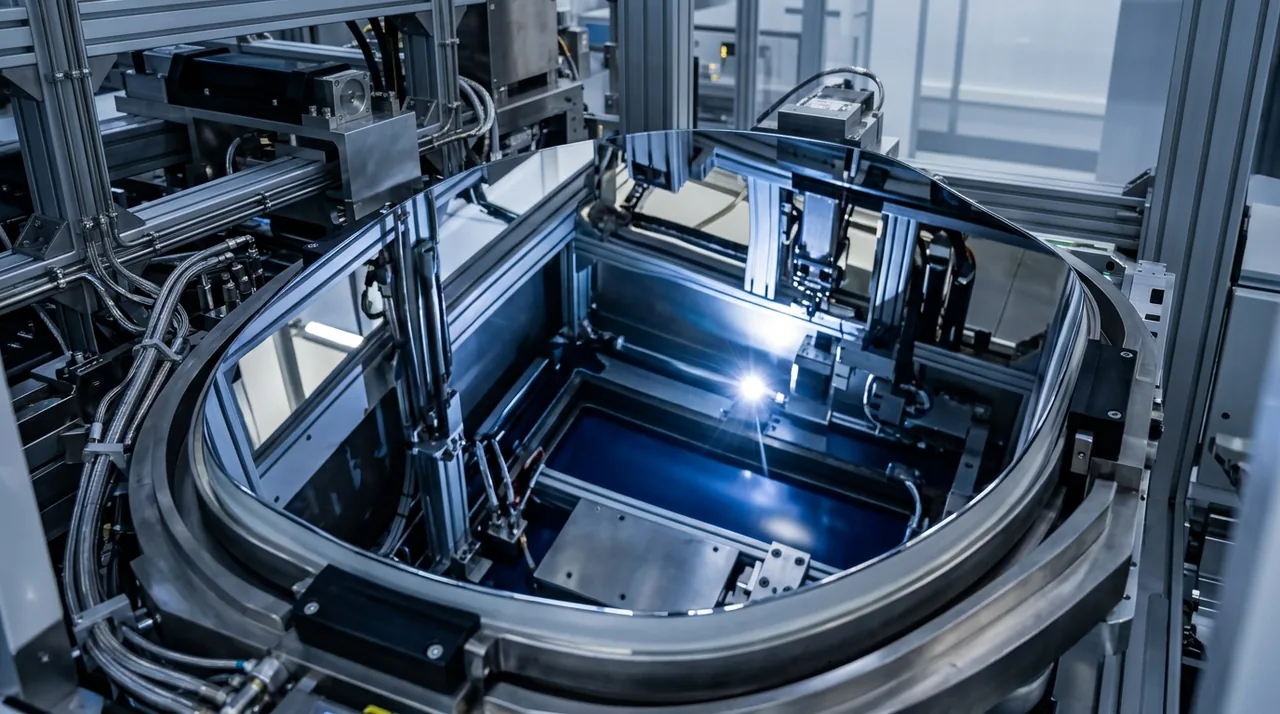
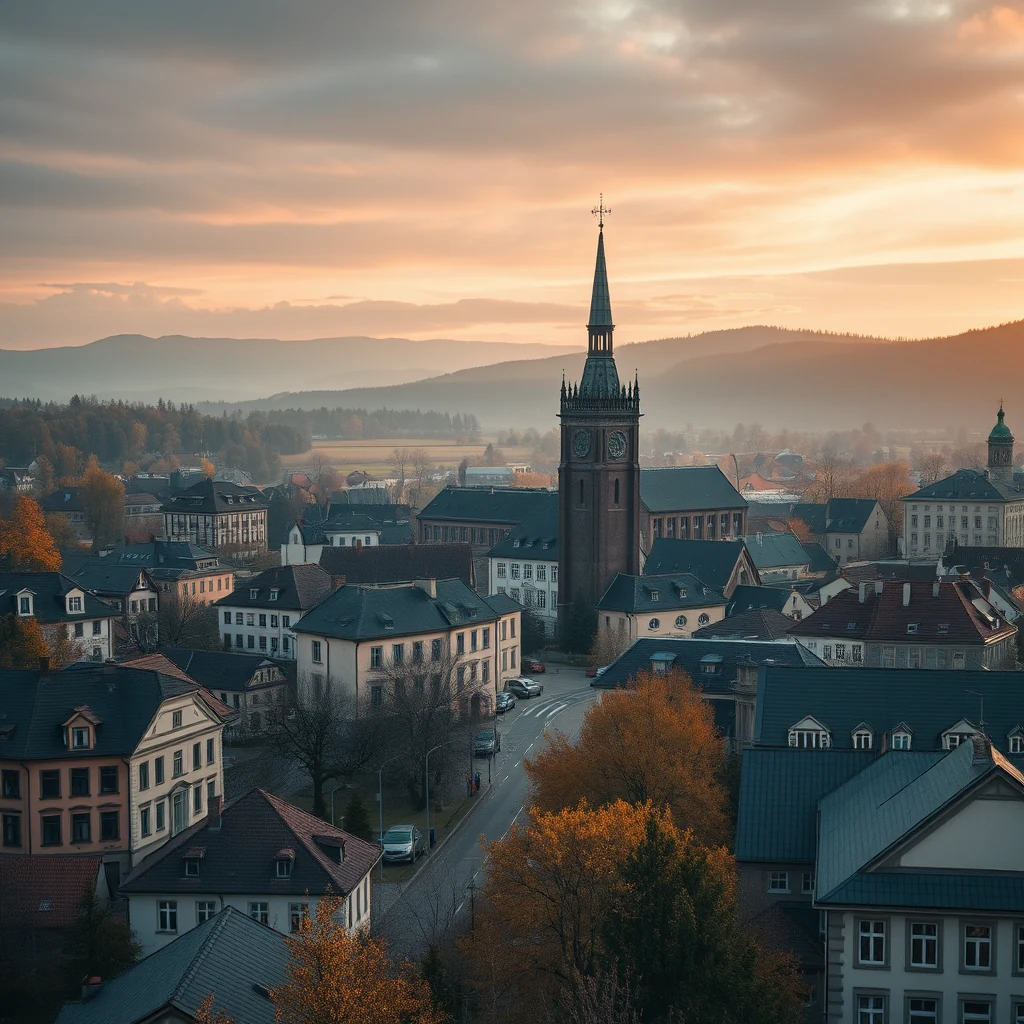
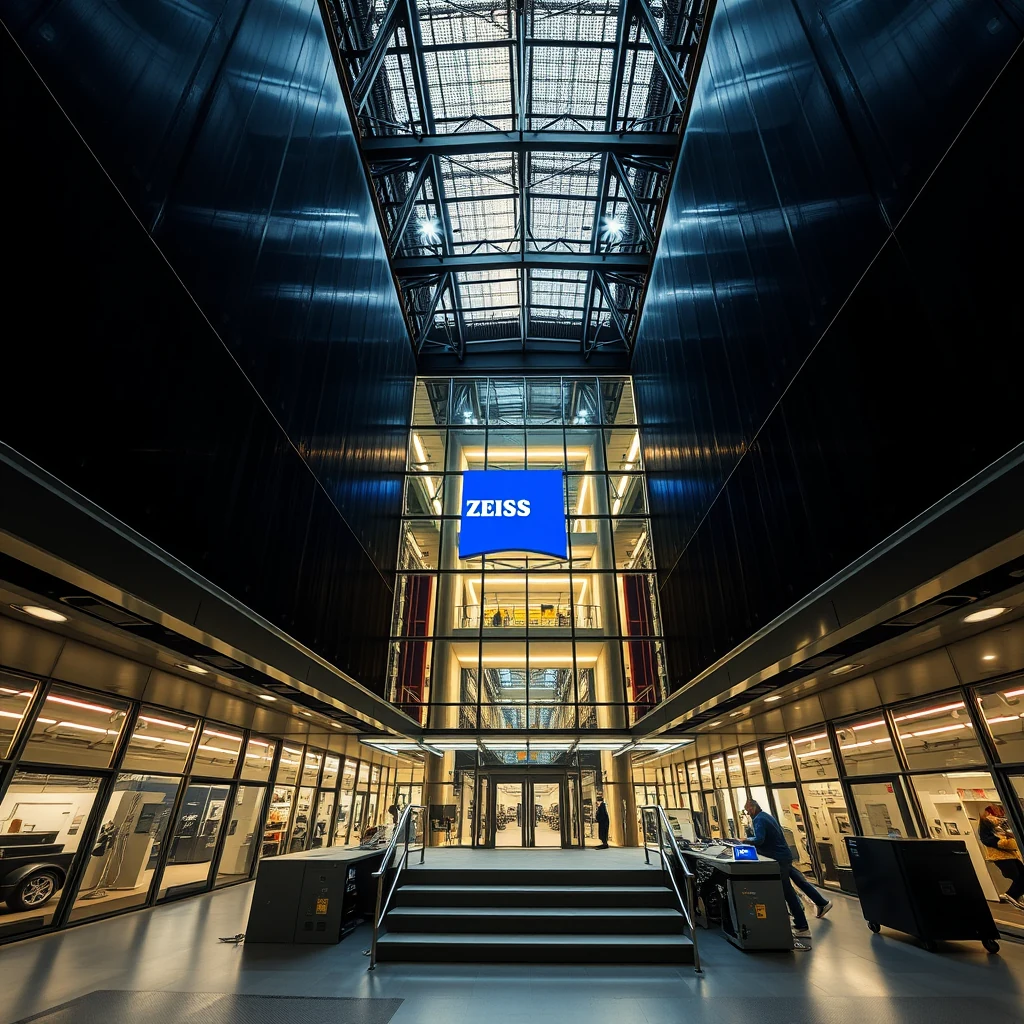
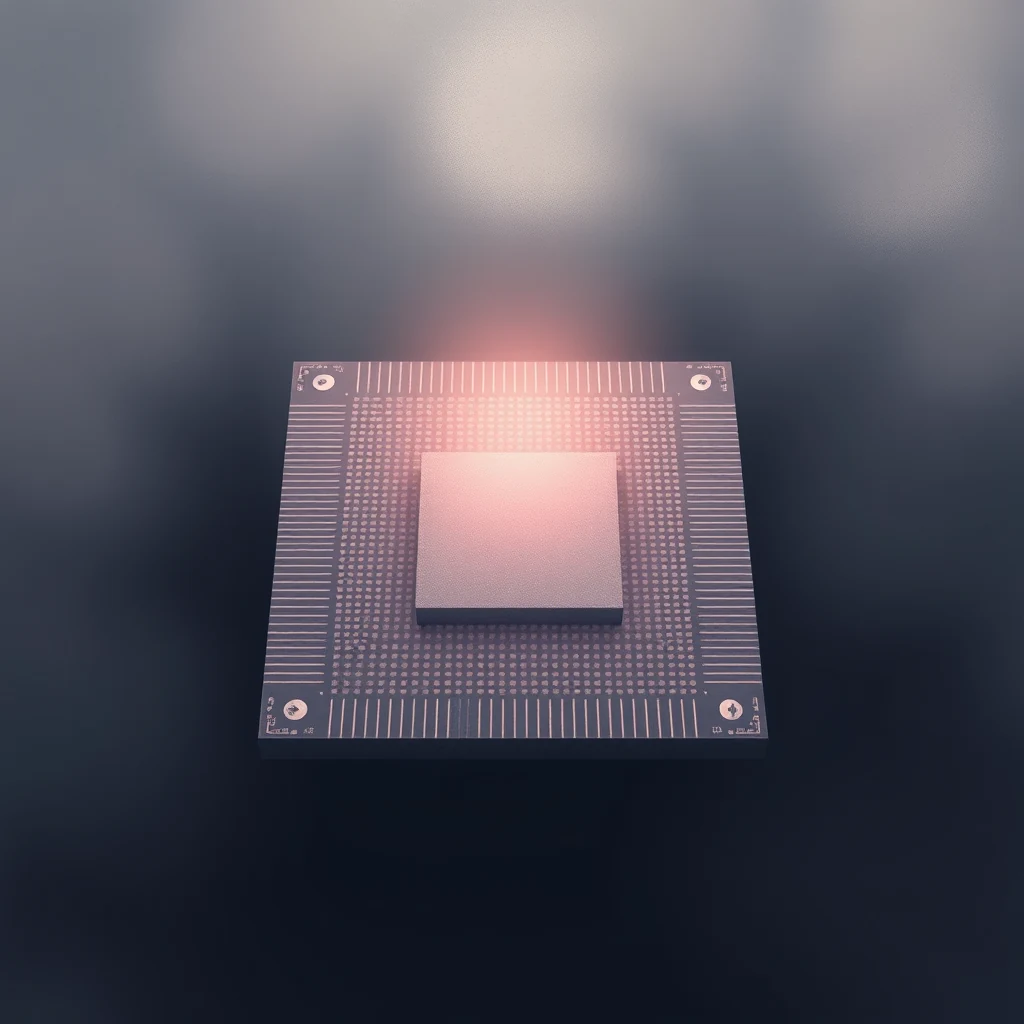
A mirror in Baden-Württemberg, polished for the better part of a year by a focused beam of argon ions, is flat to within fifty picometres — half the width of an atom. Six of them, stacked inside a Dutch machine the size of a city bus, are why your phone exists.
In a clean room in OberkochenPlaceOberkochenTown in Baden-Württemberg, southwest Germany, where the western half of Carl Zeiss relocated after 1945 when the Soviet occupation took control of the original Jena works. The two firms operated separately for forty-five years under the same name until German reunification merged them in 1990. The semiconductor optics division Zeiss SMT is still headquartered there.位于德国西南部巴登-符腾堡州的一个小镇。1945年苏联占领并接管原耶拿工厂后,卡尔·蔡司的西半部分搬迁于此。在1990年德国重新统一将它们合并之前,这两家公司以相同的名称独立运营了45年。半导体光学事业部蔡司半导体制造技术公司(Zeiss SMT)的总部目前仍设在这里。Ciudad de Baden-Württemberg, en el suroeste de Alemania, donde se trasladó la mitad occidental de Carl Zeiss después de 1945, cuando la ocupación soviética tomó el control de la fábrica original de Jena. Las dos empresas operaron por separado durante cuarenta y cinco años bajo el mismo nombre hasta que la reunificación alemana las fusionó en 1990. La división de óptica de semiconductores Zeiss SMT todavía tiene su sede allí.بلدة في بادن فورتمبيرغ، جنوب غرب ألمانيا، حيث انتقل النصف الغربي من شركة كارل زايس بعد عام 1945 عندما سيطر الاحتلال السوفيتي على مصانع ينا الأصلية. عملت الشركتان بشكل منفصل لمدة خمسة وأربعين عاماً تحت نفس الاسم حتى وحدتهما إعادة توحيد ألمانيا في عام 1990. ولا يزال المقر الرئيسي لقسم البصريات لأشباه الموصلات "زايس إس إم تي" هناك.Cidade em Baden-Württemberg, sudoeste da Alemanha, para onde a metade ocidental da Carl Zeiss se mudou após 1945, quando a ocupação soviética assumiu o controle da fábrica original em Jena. As duas empresas operaram separadamente por quarenta e cinco anos sob o mesmo nome até que a reunificação alemã as fundiu em 1990. A divisão de óptica de semicondutores Zeiss SMT ainda está sediada lá.दक्षिण-पश्चिम जर्मनी के बाडेन-वुर्टेमबर्ग में स्थित एक कस्बा, जहाँ 1945 के बाद कार्ल ज़ीस का पश्चिमी हिस्सा स्थानांतरित हो गया था, जब सोवियत नियंत्रण ने जेना के मूल कारखाने पर कब्ज़ा कर लिया था। दोनों फर्मों ने 1990 में जर्मन एकीकरण द्वारा विलय होने तक एक ही नाम के तहत पैंतालीस वर्षों तक अलग-अलग काम किया। सेमीकंडक्टर ऑप्टिक्स डिवीजन ज़ीस एसएमटी का मुख्यालय आज भी वहीं है।Kota di Baden-Württemberg, barat daya Jerman, tempat paruh barat Carl Zeiss pindah setelah tahun 1945 ketika pendudukan Uni Soviet mengambil alih kendali pabrik Jena yang asli. Kedua perusahaan beroperasi secara terpisah selama empat puluh lima tahun dengan nama yang sama hingga penyatuan kembali Jerman menggabungkan mereka pada tahun 1990. Divisi optik semikonduktor Zeiss SMT masih berkantor pusat di sana.Ville du Bade-Wurtemberg, dans le sud-ouest de l'Allemagne, où s'est installée la moitié occidentale de Carl Zeiss après 1945, lorsque l'occupation soviétique a pris le contrôle de l'usine d'origine à Iéna. Les deux entreprises ont fonctionné séparément pendant quarante-cinq ans sous le même nom, jusqu'à ce que la réunification allemande les fusionne en 1990. La division d'optique pour semi-conducteurs Zeiss SMT y a toujours son siège.ドイツ南西部バーデン=ヴュルテンベルク州の町。1945年にソ連占領軍がイェーナのオリジナル工場を管理下に置いたため、カール・ツァイスの西侧半分が这里に移転した。同名の2つの企業は1990年のドイツ再統一で合併するまで、45年間にわたり別個に操業していた。現在も半導体光学部門であるツァイスSMTがここに本社を置いている。Город в Баден-Вюртемберге на юго-западе Германии, куда после 1945 года переехала западная часть компании Carl Zeiss после того, как советская оккупация установила контроль над оригинальным заводом в Йене. Две фирмы работали независимо в течение сорока пяти лет под одним именем до их слияния в 1990 году после воссоединения Германии. Там по-прежнему находится штаб-квартира полупроводникового подразделения Zeiss SMT.Stadt in Baden-Württemberg im Südwesten Deutschlands, wohin die westliche Hälfte von Carl Zeiss nach 1945 übersiedelte, als die sowjetische Besatzung die Kontrolle über das Jenaer Stammwerk übernahm. Die beiden Unternehmen arbeiteten 45 Jahre lang unter demselben Namen getrennt, bis sie durch die deutsche Wiedervereinigung 1990 fusionierten. Die Halbleiteroptik-Sparte Zeiss SMT hat dort noch immer ihren Hauptsitz.독일 남서부 바덴뷔르템베르크주의 도시로, 1945년 소련군이 예나의 원조 공장을 장악하자 카를 차이스의 서독 법인이 이곳으로 이주했다. 동독의 예나 공장과 서독의 오버코헨 공장은 1990년 독일이 재통일되면서 하나로 합쳐질 때까지 45년 동안 동일한 이름 아래 별개로 운영되었다. 현재도 반도체 광학 부문인 자이스 SMT의 본사가 이곳에 있다., a small Swabian town between Stuttgart and Munich, a glass-ceramic blank the size of a dinner plate sits on a stage being bombarded with argon ions. Each ion knocks loose roughly one atom of material from the surface. The mirror has been on this stage, or one like it, for months. When it is finally finished, checked, recoated, and checked again, it will be flat to within fifty picometres, which is less than the diameter of a hydrogen atom. It will cost more than a hundred million euros. And it will be one of six or so similar mirrors inside a single machine that is, in turn, the only kind of machine on Earth capable of printing the patterns on the chip in your phone.
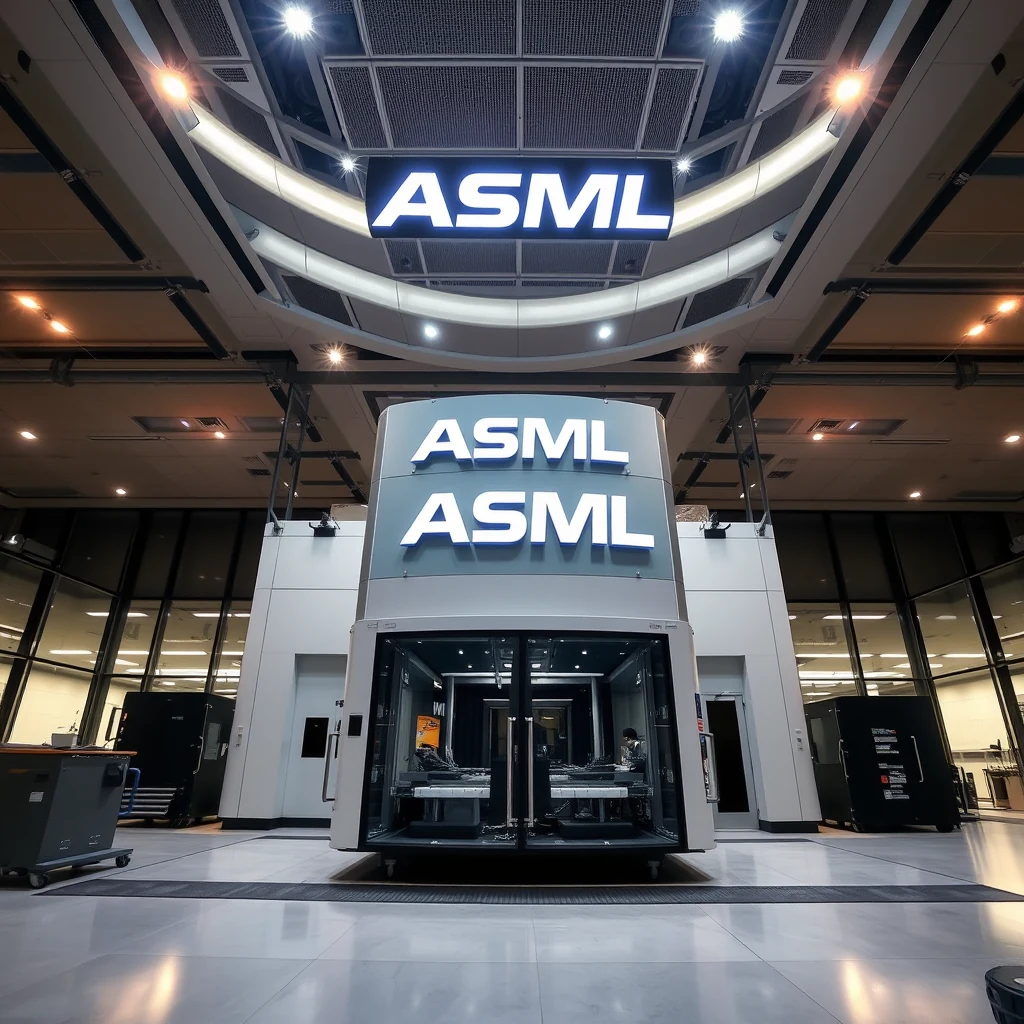
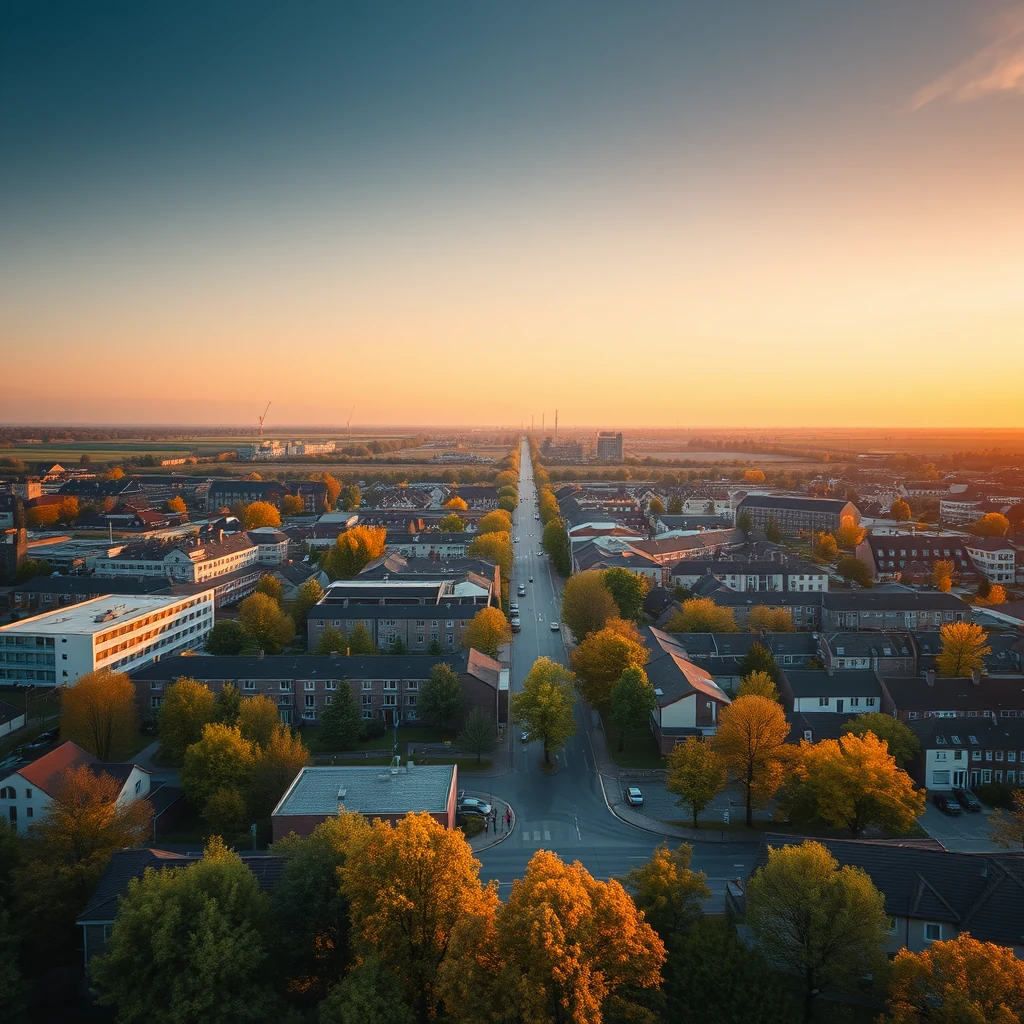
The machine is built by ASMLInstitutionASMLA Dutch company based in Veldhoven, founded in 1984 as a small spin-out from Philips. It builds the photolithography machines that print circuit patterns onto silicon wafers, and is the sole manufacturer of the extreme-ultraviolet scanners that the leading chipmakers depend on. A single high-NA EUV machine sells for around 380 million dollars and contains roughly 100,000 parts.总部位于维尔德霍芬的荷兰公司,于1984年作为飞利浦的一个小型分拆公司成立。它制造将电路图形印刷到硅片上的光刻机,并且是领先芯片制造商所依赖的极紫外光刻机的唯一制造商。一台高数值孔径极紫外光刻机售价约为3.8亿美元,包含约10万个零部件。Empresa holandesa con sede en Veldhoven, fundada en 1984 como una pequeña filial de Philips. Fabrica las máquinas de fotolitografía que graban patrones de circuitos en obleas de silicio, y es el único fabricante de los escáneres de ultravioleta extremo de los que dependen los fabricantes de chips. Una sola máquina cuesta unos 380 millones de dólares.شركة هولندية مقرها في فيلدهوفن، تأسست عام 1984 كفرع صغير منفصل عن شركة فيليبس. تبني آلات الطباعة الحجرية الضوئية التي تطبع أنماط الدوائر على رقاقات السيليكون، وهي الشركة المصنعة الوحيدة لماسحات الأشعة فوق البنفسجية القصوى التي تعتمد عليها شركات الرقائق الرائدة. تباع الآلة الواحدة بحوالي 380 مليون دولار.Empresa holandesa sediada em Veldhoven, fundada em 1984 como uma pequena cisão da Philips. Constrói as máquinas de fotolitografia que desenham circuitos em placas de silício e é a única fabricante dos equipamentos de ultravioleta extremo de que dependem os principais fabricantes de chips. Uma única máquina custa cerca de 380 milhões de dólares.वेल्डहोवेन में स्थित एक डच कंपनी, जिसकी स्थापना १९८४ में फिलिप्स से एक छोटे स्पिन-आउट के रूप में हुई थी। यह उन फोटोलिथोग्राफी मशीनों का निर्माण करती है जो सिलिकॉन वेफर्स पर सर्किट पैटर्न प्रिंट करती हैं, और अत्यधिक-पराबैंगनी (ईयूवी) स्कैनर की एकमात्र निर्माता है。एक सिंगल हाई-एनए ईयूवी मशीन की कीमत लगभग ३८० मिलियन डॉलर होती है।Perusahaan Belanda yang berbasis di Veldhoven, didirikan pada tahun 1984 sebagai sempalan kecil dari Philips. Perusahaan ini memproduksi mesin fotolitografi yang mencetak pola sirkuit pada wafer silikon, dan merupakan satu-satunya produsen pemindai ultraviolet ekstrem (EUV) di dunia. Satu mesin EUV ber-NA tinggi dijual seharga 380 juta dolar AS.Entreprise néerlandaise basée à Veldhoven, fondée en 1984 comme une petite scission de Philips. Elle construit les machines de photolithographie qui gravent les circuits sur le silicium, et est l'unique fabricant des scanners à ultraviolet extrême indispensables aux fabricants de puces. Une seule machine à haute ouverture numérique coûte environ 380 millions de dollars.オランダのヴェルトホーフェンに本社を置く企業。1984年にフィリップス社からスピンアウトした小さな新興企業として設立された。シリコンウェハ上に回路パターンを焼き付ける露光装置を製造しており、最先端半導体メーカーが依存する極端紫外線露光装置を供給できる世界で唯一のメーカーである。最新の高NA EUV装置は1台あたり約3億8000万ドルで販売され、約10万点の部品で構成されている。Нидерландская компания со штаб-квартирой в Велдховене, основанная в 1984 году как небольшое подразделение Philips. Она производит фотолитографические установки для нанесения рисунка микросхем на кремниевые пластины и является единственным производителем сканеров экстремального ультрафиолета (EUV). Одна установка с высокой апертурой стоит около 380 млн долларов.Ein niederländisches Unternehmen mit Sitz in Veldhoven, das 1984 als kleine Ausgründung aus dem Philips-Konzern gegründet wurde. Es baut die Fotolithografiemaschinen zur Belichtung von Siliziumwafern und ist der weltweit einzige Hersteller der EUV-Belichtungsgeräte für die modernsten Chips. Eine einzelne High-NA-EUV-Maschine kostet rund 380 Millionen Dollar.네덜란드 벨트호벤에 본사를 둔 기업으로, 1984년 필립스사의 소규모 스핀오프 벤처로 설립되었다. 실리콘 웨이퍼에 미세 회로 패턴을 인쇄하는 반도체 노광 장비를 건조하며, 전 세계 주요 반도체 제조사들이 전적으로 의존하는 극자외선 스캐너를 독점 생산하는 유일한 기업이다. 대당 판매 가격이 약 3억 8천만 달러에 달하는 고개구수 EUV 장비는 약 10만 개의 부품으로 구성된다., a Dutch company headquartered in VeldhovenPlaceVeldhovenA town of about 45,000 in the southern Dutch province of North Brabant, immediately adjacent to Eindhoven. It would be unremarkable were it not the headquarters of ASML, whose campus dominates the local economy. The town's growth since 2010, in housing, English-language schooling, and a tram extension, has tracked the company's expansion almost one-for-one.位于荷兰南部北布拉班特省的一个拥有约4.5万人口的城镇,紧邻埃因霍温。如果不是因为它是阿斯麦(ASML)的总部所在地,这个城镇本会默默无闻,阿斯麦的园区主导了当地的经济。自2010年以来,该城镇在住房、英语教育和轻轨延伸线建设方面的增长,几乎与阿斯麦公司的扩张步调完全一致。Municipio de unos 45.000 habitantes en la provincia de Brabante Septentrional, en el sur de los Países Bajos, colindante con Eindhoven. Sería un lugar ordinario de no ser por albergar la sede de ASML, cuyo campus domina la economía local. El crecimiento urbano, la vivienda y las escuelas de inglés han seguido el ritmo de expansión de la empresa.بلدة يبلغ عدد سكانها حوالي 45,000 نسمة في مقاطعة شمال برابانت بجنوب هولندا، وتجاور آيندهوفن مباشرة. لم تكن لتلفت الانتباه لولا وجود المقر الرئيسي لشركة ASML، التي يهيمن مجمعها على الاقتصاد المحلي. واكب نمو البلدة منذ عام 2010 في الإسكان والمدارس الناطقة بالإنجليزية وتوسيع الترام توسع الشركة بدقة.Uma cidade de cerca de 45.000 habitantes na província de Brabante do Norte, no sul dos Países Baixos, vizinha de Eindhoven. Seria irrelevante se não albergasse a sede da ASML, cujo campus domina a economia local. O crescimento urbano desde 2010, na habitação, escolas de língua inglesa e expansão do elétrico, acompanhou o crescimento da empresa.दक्षिणी डच प्रांत उत्तरी ब्रेबेंट में लगभग ४५,००० की आबादी वाला एक शहर, जो आइंडहोवन के बिल्कुल बगल में स्थित है। यदि यह एएसएमएल का मुख्यालय न होता, तो यह एक साधारण शहर होता, जिसका परिसर स्थानीय अर्थव्यवस्था पर हावी है। २०१० के बाद से आवास, अंग्रेजी माध्यम के स्कूलों और ट्राम विस्तार में शहर का विकास कंपनी के विस्तार से जुड़ा है।Kota berpenduduk sekitar 45.000 jiwa di provinsi Brabant Utara, Belanda selatan, yang berbatasan langsung dengan Eindhoven. Kota ini akan menjadi kota biasa saja jika bukan karena menjadi lokasi kantor pusat ASML, yang kawasannya mendominasi ekonomi lokal. Pertumbuhan kota sejak 2010, dalam perumahan, sekolah bahasa Inggris, dan trem, mengikuti ekspansi ASML.Ville de 45 000 habitants dans la province du Brabant-Septentrional, dans le sud des Pays-Bas, jouxtant Eindhoven. Elle serait méconnue si elle n'abritait le siège d'ASML, dont le campus domine l'économie locale. Le développement de la ville depuis 2010 (logement, écoles anglophones, tramway) a calqué presque exactement l'expansion de l'entreprise.オランダ南部の北ブラバント州にある、アイントホーフェンに隣接する人口約4万5000人の町。半導体露光装置大手ASMLの本社が置かれていなければ、ごくありふれた地方都市のままであったが、同社の巨大な開発・製造拠点が地元経済を圧倒的に支配している。2010年以降の住宅建設、英語による教育機関の増加、路面電車の延伸といった町の成長は、同社の事業拡大とほぼ完全に比例している。Город с населением около 45 тысяч человек в южной нидерландской провинции Северный Брабант, примыкающий к Эйндховену. Он был бы ничем не примечателен, если бы не штаб-квартира ASML, чей кампус определяет местную экономику. Развитие города с 2010 года — в строительстве жилья, англоязычных школ и линии трамвая — практически полностью повторяет расширение компании.Eine Stadt mit etwa 45.000 Einwohnern in der südniederländischen Provinz Nordbrabant, direkt angrenzend an Eindhoven. Sie wäre unauffällig, wenn sie nicht der Hauptsitz von ASML wäre, dessen Werksgelände die lokale Wirtschaft dominiert. Das Wachstum der Stadt seit 2010 bei Wohnraum, englischsprachigen Schulen und Straßenbahnen folgte fast deckungsgleich der Expansion der Firma.에인트호번과 바로 인접한 네덜란드 남부 노르트브라반트주의 인구 약 4만 5천 명의 소도시이다. 지역 경제를 지배하는 대기업 ASML의 본사가 위치하지 않았다면 평범한 교외 도시에 불과했을 곳이다. 2010년 이후 신규 주택 공급, 영어 교육 인프라 확충, 트램 노선 연장 등 도시의 성장 추이는 ASML사의 확장 추이와 거의 일대일로 매칭되어 진행되었다.. The mirrors are built by Carl Zeiss SMTInstitutionCarl Zeiss SMTThe semiconductor manufacturing technology division of Carl Zeiss AG, headquartered in Oberkochen. Zeiss SMT employs around two thousand engineers and is the sole supplier of the precision optics inside every ASML lithography machine. The relationship dates to the 1980s; ASML acquired a minority stake in Zeiss SMT in 2016 to lock in the partnership and fund the development of high-NA optics.卡尔·蔡司公司(Carl Zeiss AG)的半导体制造技术部门,总部设在奥伯科亨。蔡司半导体制造技术公司(Zeiss SMT)拥有大约两千名工程师,是阿斯麦(ASML)每台光刻机内部精密光学器件的唯一供应商。双方的合作关系可以追溯到20世纪80年代。2016年,ASML收购了蔡司SMT的少数股权,以锁定这一合作伙伴关系,并为高数值孔径光学器件的开发提供资金。División de tecnología de fabricación de semiconductores de Carl Zeiss AG, con sede en Oberkochen. Emplea a unos dos mil ingenieros y es el único proveedor de la óptica de precisión de las máquinas de litografía de ASML. Esta alianza comenzó en la década de 1980; ASML adquirió una participación minoritaria en 2016 para asegurar la colaboración.قسم تكنولوجيا تصنيع أشباه الموصلات في شركة كارل زايس، ومقره الرئيسي في أوبركوخن. يوظف القسم حوالي ألفي مهندس وهو المورد الوحيد للبصريات الدقيقة داخل كل آلة طباعة حجرية من ASML. تعود العلاقة إلى ثمانينيات القرن العشرين؛ واستحوذت ASML على حصة أقلية في القسم عام 2016 لضمان الشراكة وتمويل تطوير البصريات الدقيقة.A divisão de tecnologia de fabrico de semicondutores da Carl Zeiss AG, sediada em Oberkochen. A Zeiss SMT emprega cerca de dois mil engenheiros e é a fornecedora exclusiva das óticas de precisão em todas as máquinas de fotolitografia da ASML. A parceria remonta à década de 1980; a ASML adquiriu uma participação minoritária em 2016 para assegurar a colaboração.ओबेरकोचेन में स्थित कार्ल ज़ीस एजी का सेमीकंडक्टर निर्माण तकनीक विभाग। ज़ीस एसएमटी लगभग दो हजार इंजीनियरों को रोजगार देता है और प्रत्येक एएसएमएल लिथोग्राफी मशीन के अंदर सटीक प्रकाशिकी का एकमात्र आपूर्तिकर्ता है। यह संबंध १९८० के दशक का है; एएसएमएल ने साझेदारी को मजबूत करने के लिए २०१६ में ज़ीस एसएमटी में अल्प हिस्सेदारी खरीदी थी।Divisi teknologi manufaktur semikonduktor dari Carl Zeiss AG, berkantor pusat di Oberkochen. Zeiss SMT mempekerjakan sekitar dua ribu insinyur dan merupakan satu-satunya pemasok optik presisi di dalam setiap mesin litografi ASML. Kemitraan ini bermula sejak 1980-an; ASML mengakuisisi saham minoritas Zeiss SMT pada 2016 untuk mempererat kemitran.Division de technologie de fabrication de semi-conducteurs de Carl Zeiss AG, sise à Oberkochen. Elle emploie environ deux mille ingénieurs et est le fournisseur exclusif des optiques de précision des machines ASML. Ce partenariat remonte aux années 1980 ; ASML a acquis une part minoritaire en 2016 pour sécuriser l'alliance et financer l'optique à haute ouverture.オーベルコッヘンに本社を置く、カール・ツァイス社の半導体制造技術部門。约2000人の技術者を擁し、ASML社の露光装置に搭載される超精密光学系の唯一のサプライヤーである。両社の協力関係は1980年代に遡り、ASMLはパートナーシップの維持と高NA光学系の開発資金提供を目的に、2016年にツァイスSMTの少数株式を取得した。Подразделение полупроводниковых технологий компании Carl Zeiss AG со штаб-квартирой в Оберкохене. В Zeiss SMT работает около двух тысяч инженеров, и оно является единственным поставщиком прецизионной оптики для литографических установок ASML. Их сотрудничество началось в 1980-х годах; в 2016 году ASML приобрела миноритарный пакет акций Zeiss SMT.Die Sparte für Halbleitertechnik der Carl Zeiss AG mit Hauptsitz in Oberkochen. Zeiss SMT beschäftigt rund zweitausend Ingenieure und ist der einzige Lieferant für die Präzisionsoptiken in den Belichtungsmaschinen von ASML. Die Partnerschaft geht auf die 1980er Jahre zurück; ASML erwarb 2016 eine Minderheitsbeteiligung, um die Entwicklung neuer Optiken zu finanzieren.독일 오버코헨에 본사를 둔 칼 자이스 AG의 반도체 공정 광학 기술 사업부이다. 약 2,000명의 엔지니어가 근무하고 있으며, 전 세계 ASML 노광 장비 내부의 핵심 정밀 광학 모듈을 독점 공급하는 유일한 파트너사이다. 두 회사의 협력 관계는 1980년대부터 시작되었으며, ASML은 긴밀한 공동 연구 체계를 굳건히 하고 고개구수 렌즈 및 반사경 개발 기금을 지원하기 위해 2016년 Zeiss SMT의 소수 지분을 인수했다., the semiconductor division of the German optics house in Oberkochen. Between them they have a monopoly on a piece of physics that is, by any reasonable measure, the hardest engineering anyone has ever pulled off.
ASML Holding N.V. logoPixelpatser · BY-SA 4.0
Why mirrors at all
The reason has to do with the wavelength of the light you draw with. To pack more transistors onto a chip, you need finer lines, and finer lines need shorter wavelengths. For thirty years the industry crept down through the ultraviolet — 365 nm, 248 nm, 193 nm — using ordinary refractive lenses made of fused quartz. Below 193 nm, quartz starts absorbing the light. Below about 100 nm, every material absorbs the light. There are no lenses you can use, because there is no transparent substance.
Inside an ASML cleanroomIllustration · AI-generated (FLUX.1-dev)
Extreme ultravioletConceptEUV lithographyPhotolithographic process that uses extreme-ultraviolet light at 13.5 nanometres to pattern features on silicon wafers far smaller than any visible-light system could reach. The optical column is built from mirrors rather than lenses, polished by Zeiss SMT in Oberkochen to a smoothness measured in tens of picometres. ASML in the Netherlands integrates them into the machines that print every leading-edge microchip.使用13.5纳米极紫外光的显影工艺,在硅片上雕刻出远小于任何可见光系统所能达到尺寸的特征。其光学物镜系统由反射镜而非透镜构建,由奥伯科亨的蔡司半导体制造技术公司(Zeiss SMT)抛光至皮米级的平整度。荷兰的阿斯麦(ASML)将它们集成到用于印刷每颗前沿微芯片的机器中。Proceso fotolitográfico que utiliza luz ultravioleta extrema a 13,5 nanómetros para plasmar patrones en obleas de silicio mucho más pequeños de lo que cualquier sistema de luz visible podría alcanzar. La columna óptica está construida con espejos en lugar de lentes, pulidos por Zeiss SMT en Oberkochen con una suavidad medida en decenas de picómetros. ASML en los Países Bajos los integra en las máquinas que imprimen cada chip de vanguardia.عملية تصوير ضوئي تستخدم الأشعة فوق البنفسجية القصوى عند طول موجي 13.5 نانومتر لطباعة أنماط على رقاقات السيليكون أصغر بكثير مما يمكن لأي نظام ضوء مرئي الوصول إليه. يتم بناء العمود البصري من مرايا بدلاً من العدسات، ويتم صقلها بواسطة شركة "زايس إس إم تي" في أوبيركوشين بنعومة تُقاس بعشرات البيكومترات. وتقوم شركة "إيه إس إم إل" في هولندا بدمجها في الآلات التي تطبع كل شريحة ميكروية متطورة.Processo fotolitográfico que usa luz ultravioleta extrema a 13,5 nanômetros para desenhar circuitos em wafers de silício muito menores do que qualquer sistema de luz visível poderia alcançar. A coluna óptica é construída com espelhos em vez de lentes, polidos pela Zeiss SMT em Oberkochen com uma suavidade medida em dezenas de picômetros. A ASML na Holanda integra-os nas máquinas que fabricam todos os microchips de última geração.एक फोटोलिथोग्राफिक प्रक्रिया जो सिलिकॉन वेफर्स पर दृश्यमान-प्रकाश प्रणालियों की पहुंच से कहीं छोटे पैटर्न बनाने के लिए 13.5 नैनोमीटर के एक्सट्रीम-अल्ट्रावॉयलेट प्रकाश का उपयोग करती है। इसका ऑप्टिकल कॉलम लेंस के बजाय दर्पणों से बना है, जिसे ओबेरकोचेन में ज़ीस एसएमटी द्वारा पिकोमीटर के स्तर की चिकनाई तक पॉलिश किया जाता है। नीदरलैंड की एएसएमएल कंपनी इन्हें उन मशीनों में एकीकृत करती है जो हर अग्रणी माइक्रोचिप को प्रिंट करती हैं।Proses fotolitografi yang menggunakan cahaya ultraviolet ekstrem pada panjang gelombang 13,5 nanometer untuk mempola fitur pada wafer silikon yang jauh lebih kecil daripada yang dapat dicapai oleh sistem cahaya tampak mana pun. Kolom optiknya dibangun dari cermin alih-alih lensa, dipoles oleh Zeiss SMT di Oberkochen hingga kehalusan berukuran puluhan pikometer. ASML di Belanda mengintegrasikannya ke dalam mesin yang mencetak setiap mikrocip tercanggih.Procédé de photolithographie utilisant une lumière ultraviolette extrême de 13,5 nanomètres pour graver sur les plaques de silicium des motifs bien plus fins que ceux des systèmes à lumière visible. La colonne optique est constituée de miroirs plutôt que de lentilles, polis par Zeiss SMT à Oberkochen avec une précision de l'ordre de la dizaine de picomètres. ASML aux Pays-Bas les intègre dans les machines qui impriment les puces de pointe.13.5ナノメートルの極端紫外線(EUV)を用いて、可視光システムでは到達不可能な超微細なパターンをシリコンウェハ上に露光する光リソグラフィ技術。光学系はレンズではなく反射鏡で構成され、オーバーコッヘンのツァイスSMTが数十ピコメートル単位の超高精度で研磨している。オランダのASMLがこれらを組み込み、最先端のマイクロチップを製造する露光装置を完成させる。Процесс фотолитографии, использующий экстремальный ультрафиолет на длине волны 13,5 нанометров для формирования на кремниевых пластинах структур намного меньших, чем достижимо для систем видимого спектра. Оптический тракт собран из зеркал вместо линз, отполированных подразделением Zeiss SMT в Оберкохене до шероховатости в десятки пикометров. Нидерландская компания ASML лидирует в интеграции их в установки для печати передовых микросхем.Ein fotolithografisches Verfahren, das extrem ultraviolettes Licht bei 13,5 Nanometern nutzt, um Strukturen auf Silizium-Wafern zu belichten, die weitaus kleiner sind, als es jedes sichtbare Lichtsystem könnte. Die Optik besteht aus Spiegeln statt Linsen, die von Zeiss SMT in Oberkochen auf eine Rauheit im Bereich von Pikometern poliert werden. ASML in den Niederlanden integriert sie in die Maschinen, die jeden modernen Mikrochip drucken.13.5나노미터 파장의 극자외선(EUV)을 사용하여 가시광선 기반 시스템보다 훨씬 미세한 회로 패턴을 실리콘 웨이퍼 위에 그려내는 광노광 공정이다. 경통 안의 광학계는 렌즈 대신 거울들로 구성되며, 오버코헨에 위치한 자이스 SMT에서 수십 피코미터 수준의 오차로 정밀 연마한다. 네덜란드의 ASML은 이 반사경들을 첨단 마이크로칩을 인쇄하는 장비에 통합하여 제조한다. light is shorter still: 13.5 nm, in the soft-X-ray range. It is absorbed by air, by glass, by most metals. You cannot focus it with a lens. You cannot even let it travel through the room. The entire optical column of an EUV machine sits inside a vacuum, and every surface the light touches has to be a mirror — and not an ordinary mirror, because a single layer of any element reflects almost no EUV at all.
What Zeiss makes instead is a stack. The mirror substrate is a glass-ceramic called Zerodur, chosen because it barely expands when heated. Onto it, in a vacuum chamber, the company deposits roughly a hundred alternating layers of molybdenum and silicon, each three or four atoms thick. The spacing is tuned so that the faint reflections from each interface add up in phase, like a Bragg crystal. Even then, only about 70 per cent of the light bounces back. Six bounces later, half your light is gone.
Lens from ASMLThe Next Web · BY-SA 2.0
The polish
The geometric tolerances on these mirrors are what make people stare. A typical Zeiss specification quotes a surface figure error of around fifty picometres root-mean-square over an aperture of roughly thirty centimetres. Scaled up so that the mirror covered Germany, the largest bump would be about a millimetre.
A Zeiss polishing facility shows a large mirror blank mounted in a quietIllustration · AI-generated (FLUX.1-dev)
You cannot get there by grinding. You start by grinding — coarse diamond tools, then progressively finer slurries, the same trade that has made telescope mirrors for two hundred years — and you finish, more or less, at the limits of what mechanical contact can do. Then you switch to ion beam figuringConceptIon beam figuringA subtractive fabrication technique in which a focused beam of inert-gas ions, usually argon, is rastered across an optical surface to sputter away material one atom at a time. Because no tool touches the surface, the process avoids the sub-surface damage of conventional polishing. It is the only known method capable of producing the picometre-scale figure tolerances required for EUV mirrors.一种减材制造技术,利用惰性气体离子(通常是氩气)的聚焦束扫描光学表面,以一次溅射掉一个原子的方式去除材料。由于没有机械工具接触表面,该过程避免了传统抛光带来的亚表面损伤。这是目前唯一已知能够达到极紫外(EUV)反射镜所要求的皮米级面形公差的方法。Técnica de fabricación sustractiva en la que un haz enfocado de iones de gas inerte, normalmente argón, barre una superficie óptica para pulverizar el material átomo a átomo. Al no haber contacto físico, evita el daño subsuperficial del pulido convencional. Es el único método capaz de lograr las tolerancias a escala de picómetros para los espejos de EUV.تقنية تصنيع طرحية يتم فيها توجيه شعاع مركز من أيونات الغاز الخامل، عادة الأرجون، عبر سطح بصري لرش المواد ذرة تلو أخرى. نظراً لعدم ملامسة أي أداة للسطح، تتجنب العملية التلف تحت السطحي للصقل التقليدي. وهي الطريقة الوحيدة المعروفة القادرة على إنتاج تفاوتات الشكل بمقياس البيكومتر المطلوبة لمرايا الأشعة فوق البنفسجية.Técnica de fabrico subtrativa na qual um feixe focado de iões de gás inerte, normalmente árgon, é projetado sobre uma superfície ótica para remover material átomo a átomo. Como nenhuma ferramenta toca na superfície, o processo evita os danos subsuperficiais do polimento convencional. É o único método capaz de produzir as tolerâncias de picómetros exigidas nos espelhos EUV.एक घटिया निर्माण तकनीक जिसमें अक्रिय-गैस आयनों, आमतौर पर आर्गन, के एक केंद्रित बीम को एक ऑप्टिकल सतह पर घुमाया जाता है ताकि एक समय में एक परमाणु सामग्री को हटाया जा सके। चूंकि कोई भी उपकरण सतह को नहीं छूता है, इसलिए यह प्रक्रिया पारंपरिक पॉलिशिंग के उप-सतह नुकसान से बचाती है। यह ईयूवी दर्पणों के लिए पिकोमीटर-पैमाने की सटीकता प्राप्त करने का एकमात्र ज्ञात तरीका है।Teknik pabrikasi subtraktif dengan menembakkan berkas fokus ion gas mulia, biasanya argon, pada permukaan optik untuk mengikis material satu atom per waktu. Karena tanpa kontak fisik alat pada permukaan, proses ini menghindari kerusakan bawah permukaan akibat pemolesan konvensional. Ini satu-satunya metode yang mampu mencapai toleransi skala pikometer cermin EUV.Technique de fabrication soustractive dans laquelle un faisceau focalisé d'ions de gaz rare (généralement de l'argon) balaie une surface optique pour pulvériser le matériau atome par atome. Aucun outil ne touchant la surface, le procédé évite les défauts sous-jacents du polissage classique. C'est la seule méthode connue pour obtenir la précision picométrique requise par les miroirs EUV.一般にアルゴンなどの不活性ガス粒子の集束イオンビームを用いて、光学素子の表面を走査し、一度に原子1個分の薄さで材料を削り取る減法的な超精密加工技术。物理的な工具が表面に一切接触しないため、従来の機械的研磨で発生する素材表面下の微細な損傷を完全に防止できる。EUV反射鏡に要求されるピコメートル単位の極限の表面形状精度を達成できる、現在知られている唯一の加工方法である。Технология ионно-лучевой полировки — субтрактивный метод обработки, при котором сфокусированный пучок ионов инертного газа (обычно аргона) сканирует оптическую поверхность, выбивая материал по одному атому. Поскольку инструмент не касается детали, метод исключает подповерхностные повреждения. Это единственный способ достичь пикометровой точности зеркал EUV.Ein abtragendes Herstellungsverfahren, bei dem ein fokussierter Strahl von Edelgasionen (meist Argon) über eine optische Oberfläche gerastert wird, um Material Atom für Atom abzusprengen. Da kein Werkzeug die Oberfläche berührt, vermeidet das Verfahren die bei konventionellem Polieren auftretenden Risse unter der Oberfläche. Es ist die einzige Methode zur Erreichung der Pikometer-Toleranzen für EUV-Spiegel.주로 아르곤 등 불활성 가스의 집속 이온빔을 광학 소자 표면에 주사하여 물질을 원자 한 개 단위로 깎아내는 감산기법 방식의 초정밀 가공 기술이다. 물리적인 공구가 재료 표면에 전혀 접촉하지 않기 때문에, 일반적인 기계 연마 시 발생하는 소재 내부 미세 손상을 원천 방지한다. 이는 극자외선 반사경 제작에 필수적인 피코미터 단위의 형상 정밀도 허용 오차를 맞춰낼 수 있는 유일한 가공법이다.. A focused beam of argon ions, steered by a computer over a map of the residual high spots, sputters away material an atom at a time. The map itself comes from interferometry against a reference flat that has been calibrated against another reference flat that has been calibrated, ultimately, against a sphere whose roundness is measured by rotating it on a bearing while another interferometer watches. The whole metrology chain is its own decades-long story.
The polishing run on a single high-NA mirror lasts, by Zeiss's own accounts, the better part of a year. The mirror is repeatedly recoated, remeasured, and put back on the ion beam. It is then assembled into a mount whose thermal stability and vibration isolation are themselves the subject of doctoral theses, and shipped from Oberkochen to Veldhoven, where ASML integrates it into a system the size of a city bus.
Ton Willekens wih a lens from ASML (cropped)The Next Web · BY-SA 2.0
How we got here
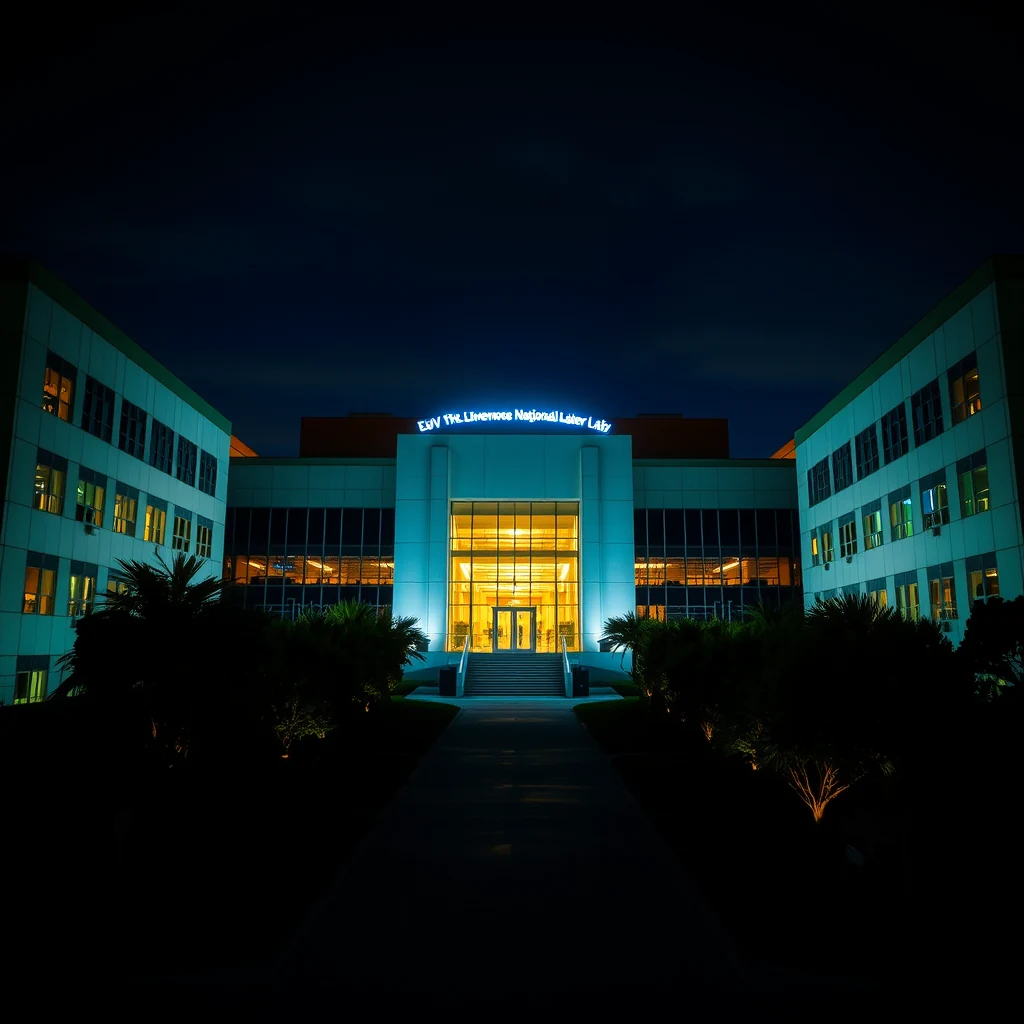
None of this was obvious. In the 1980s, when Lawrence Livermore National LaboratoryInstitutionLawrence Livermore National LaboratoryA US Department of Energy national laboratory in Livermore, California, founded in 1952 primarily for nuclear weapons research. It has also been a central player in EUV lithography: in the 1980s and 1990s, Livermore physicists developed the multilayer molybdenum-silicon coatings that make EUV mirrors possible, work that was later transferred to industry through the EUV LLC consortium.位于加利福尼亚州利弗莫尔的美国能源部国家实验室,成立于1952年,最初主要用于核武器研究。它也是极紫外(EUV)光刻技术发展的核心参与者:在20世纪80年代和90年代,利弗莫尔的物理学家开发了使EUV反射镜成为可能的多层钼-硅涂层,这一成果后来通过EUV有限责任公司(EUV LLC)联盟转移到了工业界。Laboratorio nacional del Departamento de Energía de EE. UU. en Livermore, California, fundado en 1952 principalmente para la investigación de armas nucleares. También desempeñó un papel clave en la litografía EUV: en las décadas de 1980 y 1990, sus físicos desarrollaron los recubrimientos multicapa de molibdeno y silicio para los espejos de EUV.مختبر وطني تابع لوزارة الطاقة الأمريكية في ليفرمور، كاليفورنيا، تأسس عام 1952 لإجراء أبحاث الأسلحة النووية في المقام الأول. كان أيضاً لاعباً رئيسياً في الطباعة الحجرية بالأشعة فوق البنفسجية القصوى: ففي الثمانينيات والتسعينيات، طور فيزيائيو المختبر طلاءات الموليبدينوم والسيليكون متعددة الطبقات التي تجعل مرايا الأشعة فوق البنفسجية ممكنة.Um laboratório nacional do Departamento de Energia dos EUA em Livermore, Califórnia, fundado em 1952 principalmente para investigação de armas nucleares. Foi também um elemento central na fotolitografia EUV: nas décadas de 1980 e 1990, os físicos de Livermore desenvolveram os revestimentos multicamada de molibdénio-silício que viabilizam os espelhos EUV.कैलिफोर्निया के लिवरमोर में स्थित अमेरिकी ऊर्जा विभाग की राष्ट्रीय प्रयोगशाला, जिसकी स्थापना मुख्य रूप से परमाणु हथियार अनुसंधान के लिए १९५२ में की गई थी। यह ईयूवी लिथोग्राफी में भी एक केंद्रीय भागीदार रहा है: १९८० और १९९० के दशक में, लिवरमोर के भौतिकविदों ने बहु-परत मोलिब्डेनम-सिलिकॉन कोटिंग्स विकसित की थीं जो ईयूवी दर्पणों को संभव बनाती हैं।Laboratorium nasional Departemen Energi AS di Livermore, California, didirikan tahun 1952 terutama untuk riset senjata nuklir. Lembaga ini juga berperan penting dalam litografi EUV: pada 1980-an dan 1990-an, fisikawan Livermore ngembangkan lapisan multilayer molibdenum-silikon yang memungkinkan pembuatan cermin EUV.Laboratoire national du département de l'Énergie des États-Unis situé à Livermore, en Californie, fondé en 1952 pour la recherche sur les armes nucléaires. Il joua aussi un rôle majeur dans la lithographie EUV : dans les années 1980 et 1990, ses physiciens développèrent les revêtements multicouches molybdène-silicium indispensables aux miroirs EUV.カリフォルニア州リバモアにある米国エネルギー省傘下の国立研究所。主に核兵器研究を目的として1952年に設立された。EUV露光技術の開発においても中心的な役割を果たしており、1980年代から1990年代にかけて、同研究所の物理学者たちがEUV反射鏡の実現に不可欠な「モリブデンとケイ素による多層膜コーティング技術」を開発した。この成果は後にEUV LLCコンソーシアムを通じて産業界へ技術移転された。Ливерморская национальная лаборатория им. Лоуренса Министерства энергетики США в Ливерморе, основанная в 1952 году для исследований ядерного оружия. Она также сыграла ключевую роль в литографии EUV: в 1980–1990-х годах ее физики разработали многослойные молибден-кремниевые покрытия, сделавшие возможными зеркала EUV.Ein nationales Labor des US-Energieministeriums in Livermore, Kalifornien, das 1952 primär für die Kernwaffenforschung gegründet wurde. Es war auch ein zentraler Akteur bei der EUV-Lithografie: In den 1980er und 1990er Jahren entwickelten Physiker in Livermore die Molybdän-Silizium-Mehrfachbeschichtungen für EUV-Spiegel, die später über ein Konsortium an die Industrie lizenziert wurden.캘리포니아주 리버모어에 위치한 미국 에너지부 산하 국립연구소로, 1952년 주로 핵무기 연구 개발을 목적으로 설립되었다. 반도체 EUV 노광 공정 기술 개발사에서도 매우 핵심적인 역할을 수행했는데, 1980년대와 90년대에 걸쳐 이곳의 물리학자들이 EUV 반사경 성능을 좌우하는 결정적 기술인 '몰리브덴-실리콘 다층 박막 코팅 공정'을 최초로 개발해 냈다. 이 특허 기술은 훗날 EUV LLC 컨소시엄을 통해 산업계에 이전되었다. and a handful of other US labs began arguing that EUV might be the future of chipmaking, the consensus was that the optical tolerances were impossible. The American research consortium SEMATECHInstitutionSEMATECHA semiconductor manufacturing research consortium founded in 1987 by the US government and fourteen American chipmakers, in response to the Japanese capture of the DRAM market. Headquartered in Austin, Texas, SEMATECH coordinated pre-competitive research on equipment and materials, including the seed funding for EUV lithography in the 1990s. It wound down in 2015, by which point the technology had become global.SEMATECH是于1987年由美国政府和十四家美国芯片制造商共同成立的半导体制造技术研发联合体,旨在应对日本企业夺取DRAM市场份额的挑战。该组织总部设在德克萨斯州奥斯汀,负责协调半导体设备与材料的竞争前联合研发,并在1990年代为极紫外(EUV)光刻技术提供了种子资金。该研发联合体于2015年解散,此时相关技术已走向全球。SEMATECH fue un consorcio de investigación en fabricación de semiconductores fundado en 1987 por el gobierno de los Estados Unidos y catorce fabricantes de chips estadounidenses, en respuesta al dominio japonés del mercado de memorias DRAM. Con sede en Austin, Texas, coordinó la investigación precompetitiva en equipos y materiales, incluyendo el financiamiento inicial para la litografía EUV en la década de 1990. Se disolvió en 2015, momento en el cual la tecnología ya se había globalizado.سيماتيك (SEMATECH) هو تحالف بحثي لتصنيع أشباه الموصلات تأسس عام 1987 من قِبل حكومة الولايات المتحدة وأربعة عشر صانع رقائق أمريكيًا، استجابةً لسيطرة اليابان على سوق ذاكرة الوصول العشوائي الديناميكية (DRAM). نسق هذا التحالف، الذي يقع مقره الرئيسي في أوستن بتكساس، البحوث قبل التنافسية حول المعدات والمواد، بما في ذلك التمويل الأولي لتقنية الطباعة الحجرية بالأشعة فوق البنفسجية القصوى (EUV) في التسعينيات. تم إنهاء أعماله في عام 2015 بعد أن أصبحت التقنية عالمية.A SEMATECH foi um consórcio de pesquisa em fabricação de semicondutores fundado em 1987 pelo governo dos Estados Unidos e catorze fabricantes de chips americanos, em resposta à captura japonesa do mercado de memórias DRAM. Com sede em Austin, Texas, a SEMATECH coordenou pesquisas pré-competitivas em equipamentos e materiais, incluindo o financiamento inicial para a litografia EUV na década de 1990. O consórcio encerrou suas atividades em 2015, quando a tecnologia já havia se tornado global.सेमाटेक (SEMATECH) एक सेमीकंडक्टर विनिर्माण अनुसंधान संघ था जिसकी स्थापना 1987 में अमेरिकी सरकार और चौदह अमेरिकी चिप निर्माताओं द्वारा की गई थी। इसका उद्देश्य डीआरएएम (DRAM) बाजार पर जापानी नियंत्रण का मुकाबला करना था। ऑस्टिन, टेक्सास में मुख्यालय वाले सेमाटेक ने उपकरणों और सामग्रियों पर प्रतिस्पर्धी-पूर्व अनुसंधान का समन्वय किया, जिसमें 1990 के दशक में ईयूवी (EUV) लिथोग्राफी के लिए बीज वित्तपोषण भी शामिल था। इसे 2015 में समाप्त कर दिया गया, जब तक यह तकनीक वैश्विक हो चुकी थी।SEMATECH adalah konsorsium riset manufaktur semikonduktor yang didirikan pada tahun 1987 oleh pemerintah Amerika Serikat dan empat belas pembuat chip Amerika, sebagai tanggapan atas penguasaan pasar DRAM oleh Jepang. Berpusat di Austin, Texas, SEMATECH mengoordinasikan penelitian pra-kompetitif tentang peralatan dan material, termasuk pendanaan awal untuk litografi EUV pada tahun 1990-an. Konsorsium ini ditutup pada tahun 2015, di mana pada saat itu teknologi tersebut telah menjadi global.SEMATECH était un consortium de recherche sur la fabrication de semi-conducteurs fondé en 1987 par le gouvernement américain et quatorze fabricants de puces américains, en réaction à la domination japonaise sur le marché des mémoires DRAM. Basé à Austin, au Texas, il a coordonné la recherche préconcurrentielle sur les équipements et les matériaux, notamment le financement initial de la lithographie EUV dans les années 1990. Il a cessé ses activités en 2015, la technologie étant alors devenue mondiale.セマテック(SEMATECH)は、日本によるDRAM市場の席巻に対抗して、1987年に米国政府と国内の半導体メーカー14社によって設立された半導体制造技術の共同研究コンソーシアムである。テキサス州オースティンに本部を置き、装置や材料の非競争分野における共同研究を調整し、1990年代には極端紫外線(EUV)リソグラフィの初期資金を提供した。技術が完全に一般化した2015年にその役割を終え、解散した。SEMATECH — научно-исследовательский консорциум по производству полупроводников, основанный в 1987 году правительством США и четырнадцатью американскими производителями микросхем в ответ на захват Японией рынка памяти DRAM. Со штаб-квартирой в Остине, штат Техас, SEMATECH координировал предконкурентные исследования оборудования и материалов, включая стартовое финансирование литографии EUV в 1990-х годах. Консорциум прекратил работу в 2015 году, когда технология стала глобальной.SEMATECH war ein Forschungskonsortium für die Halbleiterherstellung, das 1987 von der US-Regierung und vierzehn amerikanischen Chipherstellern als Reaktion auf die japanische Dominanz auf dem DRAM-Markt gegründet wurde. SEMATECH mit Hauptsitz in Austin, Texas, koordinierte die vorwettbewerbliche Forschung zu Geräten und Materialien, einschließlich der Anschubfinanzierung für die EUV-Lithografie in den 1990er Jahren. Das Konsortium wurde 2015 aufgelöst, als die Technologie global geworden war.세마텍(SEMATECH)은 일본의 DRAM 시장 선점에 대응하여 1987년 미국 정부와 14개 미국 칩 제조업체들이 설립한 반도체 제조 연구 컨소시엄이다. 텍사스주 오스틴에 본사를 두고 장비 및 재료에 대한 경쟁 전 공동 연구를 조율했으며, 1990년대 극자외선(EUV) 노광 기술을 위한 초기 자금을 지원했다. 해당 기술이 글로벌화된 시점인 2015년에 운영을 종료했다. funded the EUV LLCInstitutionEUV LLCA private consortium organised in 1997 by Intel, Motorola, and AMD, with the US Department of Energy national laboratories as research partners. With a budget of roughly 250 million dollars over five years, the EUV LLC funded the foundational work on multilayer mirrors, plasma light sources, and resist chemistry that ASML and Zeiss eventually turned into a commercial product.EUV LLC是于1997年由英特尔、摩托罗拉和超微半导体(AMD)共同组建的私营联合体,并邀请美国能源部国家实验室作为其研发合作伙伴。在五年期间,EUV LLC拥有大约2.5亿美元的预算,资助了多层反射镜、等离子体光源以及光刻胶化学的基础研发工作,这些成果最终由阿斯麦(ASML)和蔡司(Zeiss)转化为商业化产品。EUV LLC fue un consorcio privado organizado en 1997 por Intel, Motorola y AMD, con los laboratorios nacionales del Departamento de Energía de los Estados Unidos como socios de investigación. Con un presupuesto de aproximadamente 250 millones de dólares durante cinco años, financió el trabajo fundamental en espejos multicapa, fuentes de luz de plasma y química de resinas protectoras que ASML y Zeiss finalmente convirtieron en un producto comercial.تأسس تحالف (EUV LLC) الخاص في عام 1997 من قبل شركات إنتل وموتورولا وإيه إم دي، بمشاركة المختبرات الوطنية التابعة لوزارة الطاقة الأمريكية كشركاء بحثيين. بميزانية بلغت حوالي 250 مليون دولار على مدى خمس سنوات، مول التحالف العمل التأسيسي على المرايا متعددة الطبقات، ومصادر ضوء البلازما، وكيمياء المواد المقاومة للضوء، والتي حولتها شركتا ASML وزايس في النهاية إلى منتج تجاري.A EUV LLC foi um consórcio privado organizado em 1997 pela Intel, Motorola e AMD, tendo os laboratórios nacionais do Departamento de Energia dos EUA como parceiros de pesquisa. Com um orçamento de cerca de 250 milhões de dólares ao longo de cinco anos, a EUV LLC financiou o trabalho fundamental em espelhos multicamadas, fontes de luz de plasma e química de fotorresistes que a ASML e a Zeiss eventualmente transformaram em um produto comercial.ईयूवी एलएलसी (EUV LLC) एक निजी संघ था जिसे 1997 में इंटेल, मोटोरोला और एएमडी द्वारा संगठित किया गया था, जिसमें अमेरिकी ऊर्जा विभाग की राष्ट्रीय प्रयोगशालाएं अनुसंधान भागीदार थीं। पांच वर्षों में लगभग 250 मिलियन डॉलर के बजट के साथ, ईयूवी एलएलसी ने बहुपरत दर्पणों, प्लाज्मा प्रकाश स्रोतों और प्रतिरोधी रसायन विज्ञान पर मूलभूत कार्यों का वित्तपोषण किया, जिसे अंततः एएसएमएल (ASML) और ज़ीस (Zeiss) ने एक व्यावसायिक उत्पाद में बदल दिया।EUV LLC adalah konsorsium swasta yang didirikan pada tahun 1997 oleh Intel, Motorola, dan AMD, dengan laboratorium nasional Departemen Energi AS sebagai mitra penelitian. Dengan anggaran sekitar 250 juta dolar selama lima tahun, EUV LLC mendanai pekerjaan mendasar pada cermin multilayer, sumber cahaya plasma, dan kimia fotoresis yang pada akhirnya diubah oleh ASML dan Zeiss menjadi produk komersial.L'EUV LLC était un consortium privé créé en 1997 par Intel, Motorola et AMD, avec les laboratoires nationaux du département américain de l'Énergie comme partenaires de recherche. Disposant d'un budget d'environ 250 millions de dollars sur cinq ans, il a financé les travaux fondamentaux sur les miroirs multicouches, les sources de lumière plasma et la chimie des résines qu'ASML et Zeiss ont finalement transformés en produit commercial.EUV LLCは、1997年にインテル、モトローラ、AMDによって設立された民間コンソーシアムであり、米国エネルギー省の国立研究所を研究パートナーとしていた。5年間で約2億5,000万ドルの予算を投じ、多層膜ミラー、プラズマ光源、およびレジスト化学に関する基礎研究を支援した。これらの研究成果は、最終的にASMLとツァイスによって製品として実用化された。EUV LLC — частный консорциум, организованный в 1997 году компаниями Intel, Motorola и AMD при участии национальных лабораторий Министерства энергетики США в качестве партнеров по исследованиям. С бюджетом около 250 миллионов долларов на пять лет консорциум финансировал фундаментальные работы по многослойным зеркалам, плазменным источникам света и фоторезистам, которые ASML и Zeiss в конечном итоге превратили в коммерческий продукт.Die EUV LLC war ein 1997 von Intel, Motorola und AMD gegründetes privates Konsortium mit den nationalen Laboratorien des US-Energieministeriums als Forschungspartnern. Mit einem Budget von rund 250 Millionen Dollar über fünf Jahre finanzierte die EUV LLC die Grundlagenarbeit zu Mehrschichtspiegeln, Plasmalichtquellen und Fotolackchemie, die ASML und Zeiss schließlich in ein kommerzielles Produkt umsetzten.EUV LLC는 1997년 인텔, 모토로라, AMD가 미국 에너지부 국립연구소를 연구 파트너로 삼아 조직한 민간 컨소시엄이다. 5년 동안 약 2억 5천만 달러의 예산을 투입하여 다층 거울, 플라스마 광원, 감광액 화학 등에 관한 기초 연구를 지원했으며, 이 기술은 최종적으로 ASML과 자이스(Zeiss)에 의해 상용 제품으로 결실을 맺었다. in 1997 — Intel, Motorola, AMD, and the national labs, with a budget of around 250 million dollars — to find out. Most of the early breakthroughs on multilayer coatings came out of Livermore and Berkeley. ASML, then a small Dutch carve-out from Philips, won the contract to build the prototype scanner. The first production EUV tool, the NXE:3300, shipped in 2013, sixteen years after the consortium started. The first chips printed entirely with EUV, in TSMC's N5 node, appeared in 2020.
An extreme macro material study of an EUV multilayer mirror: the polished surface curves iIllustration · AI-generated (FLUX.1-dev)
The current generation, called High-NA EUV, uses anamorphic mirrors that are not round but oval, magnifying the image four times in one direction and eight in the other. The first one was delivered to Intel in Hillsboro at the end of 2023 and accepted in 2024. It cost roughly 380 million dollars.
What we still don't know
We do not know whether the line can be pushed much further. Below about 8 nm wavelengths, the multilayer coating physics that makes the molybdenum-silicon stack work begins to fail; the candidate materials for any beyond-EUV mirror are still in the lab. Whether the industry's next jump comes from shorter light or from stacking transistors vertically is an active argument.
ASML HoldingA ansems · Public domain
We also do not know how long the monopoly holds. Zeiss SMT employs perhaps two thousand people on this product line; the knowledge is largely tacit, embedded in the polishers and metrologists who actually do the work. The Chinese government has reportedly committed tens of billions to building a domestic equivalent. Nobody outside Oberkochen has any clear sense of how close they are.
Ion beam figuring in progress: a focused beam gently removes atoms from a mirror surface iIllustration · AI-generated (FLUX.1-dev)
And we do not really know what the long-term failure modes look like. ASML ships only a few dozen EUV machines a year. The number of years of continuous operation on the early ones is still small. Picometre-flat mirrors, hit by plasma light in a vacuum chamber for a decade, eventually do something. What, exactly, is something the world's largest fabs are finding out in real time.
The chip in your pocket exists because, somewhere in Baden-Württemberg, someone is shooting argon atoms at a piece of glass and counting them.
在OberkochenPlaceOberkochenTown in Baden-Württemberg, southwest Germany, where the western half of Carl Zeiss relocated after 1945 when the Soviet occupation took control of the original Jena works. The two firms operated separately for forty-five years under the same name until German reunification merged them in 1990. The semiconductor optics division Zeiss SMT is still headquartered there.位于德国西南部巴登-符腾堡州的一个小镇。1945年苏联占领并接管原耶拿工厂后,卡尔·蔡司的西半部分搬迁于此。在1990年德国重新统一将它们合并之前,这两家公司以相同的名称独立运营了45年。半导体光学事业部蔡司半导体制造技术公司(Zeiss SMT)的总部目前仍设在这里。Ciudad de Baden-Württemberg, en el suroeste de Alemania, donde se trasladó la mitad occidental de Carl Zeiss después de 1945, cuando la ocupación soviética tomó el control de la fábrica original de Jena. Las dos empresas operaron por separado durante cuarenta y cinco años bajo el mismo nombre hasta que la reunificación alemana las fusionó en 1990. La división de óptica de semiconductores Zeiss SMT todavía tiene su sede allí.بلدة في بادن فورتمبيرغ، جنوب غرب ألمانيا، حيث انتقل النصف الغربي من شركة كارل زايس بعد عام 1945 عندما سيطر الاحتلال السوفيتي على مصانع ينا الأصلية. عملت الشركتان بشكل منفصل لمدة خمسة وأربعين عاماً تحت نفس الاسم حتى وحدتهما إعادة توحيد ألمانيا في عام 1990. ولا يزال المقر الرئيسي لقسم البصريات لأشباه الموصلات "زايس إس إم تي" هناك.Cidade em Baden-Württemberg, sudoeste da Alemanha, para onde a metade ocidental da Carl Zeiss se mudou após 1945, quando a ocupação soviética assumiu o controle da fábrica original em Jena. As duas empresas operaram separadamente por quarenta e cinco anos sob o mesmo nome até que a reunificação alemã as fundiu em 1990. A divisão de óptica de semicondutores Zeiss SMT ainda está sediada lá.दक्षिण-पश्चिम जर्मनी के बाडेन-वुर्टेमबर्ग में स्थित एक कस्बा, जहाँ 1945 के बाद कार्ल ज़ीस का पश्चिमी हिस्सा स्थानांतरित हो गया था, जब सोवियत नियंत्रण ने जेना के मूल कारखाने पर कब्ज़ा कर लिया था। दोनों फर्मों ने 1990 में जर्मन एकीकरण द्वारा विलय होने तक एक ही नाम के तहत पैंतालीस वर्षों तक अलग-अलग काम किया। सेमीकंडक्टर ऑप्टिक्स डिवीजन ज़ीस एसएमटी का मुख्यालय आज भी वहीं है।Kota di Baden-Württemberg, barat daya Jerman, tempat paruh barat Carl Zeiss pindah setelah tahun 1945 ketika pendudukan Uni Soviet mengambil alih kendali pabrik Jena yang asli. Kedua perusahaan beroperasi secara terpisah selama empat puluh lima tahun dengan nama yang sama hingga penyatuan kembali Jerman menggabungkan mereka pada tahun 1990. Divisi optik semikonduktor Zeiss SMT masih berkantor pusat di sana.Ville du Bade-Wurtemberg, dans le sud-ouest de l'Allemagne, où s'est installée la moitié occidentale de Carl Zeiss après 1945, lorsque l'occupation soviétique a pris le contrôle de l'usine d'origine à Iéna. Les deux entreprises ont fonctionné séparément pendant quarante-cinq ans sous le même nom, jusqu'à ce que la réunification allemande les fusionne en 1990. La division d'optique pour semi-conducteurs Zeiss SMT y a toujours son siège.ドイツ南西部バーデン=ヴュルテンベルク州の町。1945年にソ連占領軍がイェーナのオリジナル工場を管理下に置いたため、カール・ツァイスの西侧半分が这里に移転した。同名の2つの企業は1990年のドイツ再統一で合併するまで、45年間にわたり別個に操業していた。現在も半導体光学部門であるツァイスSMTがここに本社を置いている。Город в Баден-Вюртемберге на юго-западе Германии, куда после 1945 года переехала западная часть компании Carl Zeiss после того, как советская оккупация установила контроль над оригинальным заводом в Йене. Две фирмы работали независимо в течение сорока пяти лет под одним именем до их слияния в 1990 году после воссоединения Германии. Там по-прежнему находится штаб-квартира полупроводникового подразделения Zeiss SMT.Stadt in Baden-Württemberg im Südwesten Deutschlands, wohin die westliche Hälfte von Carl Zeiss nach 1945 übersiedelte, als die sowjetische Besatzung die Kontrolle über das Jenaer Stammwerk übernahm. Die beiden Unternehmen arbeiteten 45 Jahre lang unter demselben Namen getrennt, bis sie durch die deutsche Wiedervereinigung 1990 fusionierten. Die Halbleiteroptik-Sparte Zeiss SMT hat dort noch immer ihren Hauptsitz.독일 남서부 바덴뷔르템베르크주의 도시로, 1945년 소련군이 예나의 원조 공장을 장악하자 카를 차이스의 서독 법인이 이곳으로 이주했다. 동독의 예나 공장과 서독의 오버코헨 공장은 1990년 독일이 재통일되면서 하나로 합쳐질 때까지 45년 동안 동일한 이름 아래 별개로 운영되었다. 현재도 반도체 광학 부문인 자이스 SMT의 본사가 이곳에 있다.——这座位于斯图加特和慕尼黑之间的施瓦本小镇——的一间洁净室里,一块餐盘大小的微晶玻璃毛坯正静置在工作台上,接受着氩离子的轰击。每一个离子都会从表面撞击出大约一个原子的材料。这面反射镜已经在这个或类似的工作台上放置了数月之久。当它最终完工、检测、重新涂层并再次检测后,其平整度误差将控制在50皮米以内,这甚至小于一个氢原子的直径。它的造价将超过一亿欧元。而它将是一台机器内部六面左右类似反射镜之一,而这台机器,则是地球上唯一能够在你手机芯片上打印图案的机器。
这台机器由总部位于VeldhovenPlaceVeldhovenA town of about 45,000 in the southern Dutch province of North Brabant, immediately adjacent to Eindhoven. It would be unremarkable were it not the headquarters of ASML, whose campus dominates the local economy. The town's growth since 2010, in housing, English-language schooling, and a tram extension, has tracked the company's expansion almost one-for-one.位于荷兰南部北布拉班特省的一个拥有约4.5万人口的城镇,紧邻埃因霍温。如果不是因为它是阿斯麦(ASML)的总部所在地,这个城镇本会默默无闻,阿斯麦的园区主导了当地的经济。自2010年以来,该城镇在住房、英语教育和轻轨延伸线建设方面的增长,几乎与阿斯麦公司的扩张步调完全一致。Municipio de unos 45.000 habitantes en la provincia de Brabante Septentrional, en el sur de los Países Bajos, colindante con Eindhoven. Sería un lugar ordinario de no ser por albergar la sede de ASML, cuyo campus domina la economía local. El crecimiento urbano, la vivienda y las escuelas de inglés han seguido el ritmo de expansión de la empresa.بلدة يبلغ عدد سكانها حوالي 45,000 نسمة في مقاطعة شمال برابانت بجنوب هولندا، وتجاور آيندهوفن مباشرة. لم تكن لتلفت الانتباه لولا وجود المقر الرئيسي لشركة ASML، التي يهيمن مجمعها على الاقتصاد المحلي. واكب نمو البلدة منذ عام 2010 في الإسكان والمدارس الناطقة بالإنجليزية وتوسيع الترام توسع الشركة بدقة.Uma cidade de cerca de 45.000 habitantes na província de Brabante do Norte, no sul dos Países Baixos, vizinha de Eindhoven. Seria irrelevante se não albergasse a sede da ASML, cujo campus domina a economia local. O crescimento urbano desde 2010, na habitação, escolas de língua inglesa e expansão do elétrico, acompanhou o crescimento da empresa.दक्षिणी डच प्रांत उत्तरी ब्रेबेंट में लगभग ४५,००० की आबादी वाला एक शहर, जो आइंडहोवन के बिल्कुल बगल में स्थित है। यदि यह एएसएमएल का मुख्यालय न होता, तो यह एक साधारण शहर होता, जिसका परिसर स्थानीय अर्थव्यवस्था पर हावी है। २०१० के बाद से आवास, अंग्रेजी माध्यम के स्कूलों और ट्राम विस्तार में शहर का विकास कंपनी के विस्तार से जुड़ा है।Kota berpenduduk sekitar 45.000 jiwa di provinsi Brabant Utara, Belanda selatan, yang berbatasan langsung dengan Eindhoven. Kota ini akan menjadi kota biasa saja jika bukan karena menjadi lokasi kantor pusat ASML, yang kawasannya mendominasi ekonomi lokal. Pertumbuhan kota sejak 2010, dalam perumahan, sekolah bahasa Inggris, dan trem, mengikuti ekspansi ASML.Ville de 45 000 habitants dans la province du Brabant-Septentrional, dans le sud des Pays-Bas, jouxtant Eindhoven. Elle serait méconnue si elle n'abritait le siège d'ASML, dont le campus domine l'économie locale. Le développement de la ville depuis 2010 (logement, écoles anglophones, tramway) a calqué presque exactement l'expansion de l'entreprise.オランダ南部の北ブラバント州にある、アイントホーフェンに隣接する人口約4万5000人の町。半導体露光装置大手ASMLの本社が置かれていなければ、ごくありふれた地方都市のままであったが、同社の巨大な開発・製造拠点が地元経済を圧倒的に支配している。2010年以降の住宅建設、英語による教育機関の増加、路面電車の延伸といった町の成長は、同社の事業拡大とほぼ完全に比例している。Город с населением около 45 тысяч человек в южной нидерландской провинции Северный Брабант, примыкающий к Эйндховену. Он был бы ничем не примечателен, если бы не штаб-квартира ASML, чей кампус определяет местную экономику. Развитие города с 2010 года — в строительстве жилья, англоязычных школ и линии трамвая — практически полностью повторяет расширение компании.Eine Stadt mit etwa 45.000 Einwohnern in der südniederländischen Provinz Nordbrabant, direkt angrenzend an Eindhoven. Sie wäre unauffällig, wenn sie nicht der Hauptsitz von ASML wäre, dessen Werksgelände die lokale Wirtschaft dominiert. Das Wachstum der Stadt seit 2010 bei Wohnraum, englischsprachigen Schulen und Straßenbahnen folgte fast deckungsgleich der Expansion der Firma.에인트호번과 바로 인접한 네덜란드 남부 노르트브라반트주의 인구 약 4만 5천 명의 소도시이다. 지역 경제를 지배하는 대기업 ASML의 본사가 위치하지 않았다면 평범한 교외 도시에 불과했을 곳이다. 2010년 이후 신규 주택 공급, 영어 교육 인프라 확충, 트램 노선 연장 등 도시의 성장 추이는 ASML사의 확장 추이와 거의 일대일로 매칭되어 진행되었다.的荷兰公司ASMLInstitutionASMLA Dutch company based in Veldhoven, founded in 1984 as a small spin-out from Philips. It builds the photolithography machines that print circuit patterns onto silicon wafers, and is the sole manufacturer of the extreme-ultraviolet scanners that the leading chipmakers depend on. A single high-NA EUV machine sells for around 380 million dollars and contains roughly 100,000 parts.总部位于维尔德霍芬的荷兰公司,于1984年作为飞利浦的一个小型分拆公司成立。它制造将电路图形印刷到硅片上的光刻机,并且是领先芯片制造商所依赖的极紫外光刻机的唯一制造商。一台高数值孔径极紫外光刻机售价约为3.8亿美元,包含约10万个零部件。Empresa holandesa con sede en Veldhoven, fundada en 1984 como una pequeña filial de Philips. Fabrica las máquinas de fotolitografía que graban patrones de circuitos en obleas de silicio, y es el único fabricante de los escáneres de ultravioleta extremo de los que dependen los fabricantes de chips. Una sola máquina cuesta unos 380 millones de dólares.شركة هولندية مقرها في فيلدهوفن، تأسست عام 1984 كفرع صغير منفصل عن شركة فيليبس. تبني آلات الطباعة الحجرية الضوئية التي تطبع أنماط الدوائر على رقاقات السيليكون، وهي الشركة المصنعة الوحيدة لماسحات الأشعة فوق البنفسجية القصوى التي تعتمد عليها شركات الرقائق الرائدة. تباع الآلة الواحدة بحوالي 380 مليون دولار.Empresa holandesa sediada em Veldhoven, fundada em 1984 como uma pequena cisão da Philips. Constrói as máquinas de fotolitografia que desenham circuitos em placas de silício e é a única fabricante dos equipamentos de ultravioleta extremo de que dependem os principais fabricantes de chips. Uma única máquina custa cerca de 380 milhões de dólares.वेल्डहोवेन में स्थित एक डच कंपनी, जिसकी स्थापना १९८४ में फिलिप्स से एक छोटे स्पिन-आउट के रूप में हुई थी। यह उन फोटोलिथोग्राफी मशीनों का निर्माण करती है जो सिलिकॉन वेफर्स पर सर्किट पैटर्न प्रिंट करती हैं, और अत्यधिक-पराबैंगनी (ईयूवी) स्कैनर की एकमात्र निर्माता है。एक सिंगल हाई-एनए ईयूवी मशीन की कीमत लगभग ३८० मिलियन डॉलर होती है।Perusahaan Belanda yang berbasis di Veldhoven, didirikan pada tahun 1984 sebagai sempalan kecil dari Philips. Perusahaan ini memproduksi mesin fotolitografi yang mencetak pola sirkuit pada wafer silikon, dan merupakan satu-satunya produsen pemindai ultraviolet ekstrem (EUV) di dunia. Satu mesin EUV ber-NA tinggi dijual seharga 380 juta dolar AS.Entreprise néerlandaise basée à Veldhoven, fondée en 1984 comme une petite scission de Philips. Elle construit les machines de photolithographie qui gravent les circuits sur le silicium, et est l'unique fabricant des scanners à ultraviolet extrême indispensables aux fabricants de puces. Une seule machine à haute ouverture numérique coûte environ 380 millions de dollars.オランダのヴェルトホーフェンに本社を置く企業。1984年にフィリップス社からスピンアウトした小さな新興企業として設立された。シリコンウェハ上に回路パターンを焼き付ける露光装置を製造しており、最先端半導体メーカーが依存する極端紫外線露光装置を供給できる世界で唯一のメーカーである。最新の高NA EUV装置は1台あたり約3億8000万ドルで販売され、約10万点の部品で構成されている。Нидерландская компания со штаб-квартирой в Велдховене, основанная в 1984 году как небольшое подразделение Philips. Она производит фотолитографические установки для нанесения рисунка микросхем на кремниевые пластины и является единственным производителем сканеров экстремального ультрафиолета (EUV). Одна установка с высокой апертурой стоит около 380 млн долларов.Ein niederländisches Unternehmen mit Sitz in Veldhoven, das 1984 als kleine Ausgründung aus dem Philips-Konzern gegründet wurde. Es baut die Fotolithografiemaschinen zur Belichtung von Siliziumwafern und ist der weltweit einzige Hersteller der EUV-Belichtungsgeräte für die modernsten Chips. Eine einzelne High-NA-EUV-Maschine kostet rund 380 Millionen Dollar.네덜란드 벨트호벤에 본사를 둔 기업으로, 1984년 필립스사의 소규모 스핀오프 벤처로 설립되었다. 실리콘 웨이퍼에 미세 회로 패턴을 인쇄하는 반도체 노광 장비를 건조하며, 전 세계 주요 반도체 제조사들이 전적으로 의존하는 극자외선 스캐너를 독점 생산하는 유일한 기업이다. 대당 판매 가격이 약 3억 8천만 달러에 달하는 고개구수 EUV 장비는 약 10만 개의 부품으로 구성된다.制造。而反射镜则由位于奥伯科亨的德国光学巨头蔡司的半导体部门Carl Zeiss SMTInstitutionCarl Zeiss SMTThe semiconductor manufacturing technology division of Carl Zeiss AG, headquartered in Oberkochen. Zeiss SMT employs around two thousand engineers and is the sole supplier of the precision optics inside every ASML lithography machine. The relationship dates to the 1980s; ASML acquired a minority stake in Zeiss SMT in 2016 to lock in the partnership and fund the development of high-NA optics.卡尔·蔡司公司(Carl Zeiss AG)的半导体制造技术部门,总部设在奥伯科亨。蔡司半导体制造技术公司(Zeiss SMT)拥有大约两千名工程师,是阿斯麦(ASML)每台光刻机内部精密光学器件的唯一供应商。双方的合作关系可以追溯到20世纪80年代。2016年,ASML收购了蔡司SMT的少数股权,以锁定这一合作伙伴关系,并为高数值孔径光学器件的开发提供资金。División de tecnología de fabricación de semiconductores de Carl Zeiss AG, con sede en Oberkochen. Emplea a unos dos mil ingenieros y es el único proveedor de la óptica de precisión de las máquinas de litografía de ASML. Esta alianza comenzó en la década de 1980; ASML adquirió una participación minoritaria en 2016 para asegurar la colaboración.قسم تكنولوجيا تصنيع أشباه الموصلات في شركة كارل زايس، ومقره الرئيسي في أوبركوخن. يوظف القسم حوالي ألفي مهندس وهو المورد الوحيد للبصريات الدقيقة داخل كل آلة طباعة حجرية من ASML. تعود العلاقة إلى ثمانينيات القرن العشرين؛ واستحوذت ASML على حصة أقلية في القسم عام 2016 لضمان الشراكة وتمويل تطوير البصريات الدقيقة.A divisão de tecnologia de fabrico de semicondutores da Carl Zeiss AG, sediada em Oberkochen. A Zeiss SMT emprega cerca de dois mil engenheiros e é a fornecedora exclusiva das óticas de precisão em todas as máquinas de fotolitografia da ASML. A parceria remonta à década de 1980; a ASML adquiriu uma participação minoritária em 2016 para assegurar a colaboração.ओबेरकोचेन में स्थित कार्ल ज़ीस एजी का सेमीकंडक्टर निर्माण तकनीक विभाग। ज़ीस एसएमटी लगभग दो हजार इंजीनियरों को रोजगार देता है और प्रत्येक एएसएमएल लिथोग्राफी मशीन के अंदर सटीक प्रकाशिकी का एकमात्र आपूर्तिकर्ता है। यह संबंध १९८० के दशक का है; एएसएमएल ने साझेदारी को मजबूत करने के लिए २०१६ में ज़ीस एसएमटी में अल्प हिस्सेदारी खरीदी थी।Divisi teknologi manufaktur semikonduktor dari Carl Zeiss AG, berkantor pusat di Oberkochen. Zeiss SMT mempekerjakan sekitar dua ribu insinyur dan merupakan satu-satunya pemasok optik presisi di dalam setiap mesin litografi ASML. Kemitraan ini bermula sejak 1980-an; ASML mengakuisisi saham minoritas Zeiss SMT pada 2016 untuk mempererat kemitran.Division de technologie de fabrication de semi-conducteurs de Carl Zeiss AG, sise à Oberkochen. Elle emploie environ deux mille ingénieurs et est le fournisseur exclusif des optiques de précision des machines ASML. Ce partenariat remonte aux années 1980 ; ASML a acquis une part minoritaire en 2016 pour sécuriser l'alliance et financer l'optique à haute ouverture.オーベルコッヘンに本社を置く、カール・ツァイス社の半導体制造技術部門。约2000人の技術者を擁し、ASML社の露光装置に搭載される超精密光学系の唯一のサプライヤーである。両社の協力関係は1980年代に遡り、ASMLはパートナーシップの維持と高NA光学系の開発資金提供を目的に、2016年にツァイスSMTの少数株式を取得した。Подразделение полупроводниковых технологий компании Carl Zeiss AG со штаб-квартирой в Оберкохене. В Zeiss SMT работает около двух тысяч инженеров, и оно является единственным поставщиком прецизионной оптики для литографических установок ASML. Их сотрудничество началось в 1980-х годах; в 2016 году ASML приобрела миноритарный пакет акций Zeiss SMT.Die Sparte für Halbleitertechnik der Carl Zeiss AG mit Hauptsitz in Oberkochen. Zeiss SMT beschäftigt rund zweitausend Ingenieure und ist der einzige Lieferant für die Präzisionsoptiken in den Belichtungsmaschinen von ASML. Die Partnerschaft geht auf die 1980er Jahre zurück; ASML erwarb 2016 eine Minderheitsbeteiligung, um die Entwicklung neuer Optiken zu finanzieren.독일 오버코헨에 본사를 둔 칼 자이스 AG의 반도체 공정 광학 기술 사업부이다. 약 2,000명의 엔지니어가 근무하고 있으며, 전 세계 ASML 노광 장비 내부의 핵심 정밀 광학 모듈을 독점 공급하는 유일한 파트너사이다. 두 회사의 협력 관계는 1980년대부터 시작되었으며, ASML은 긴밀한 공동 연구 체계를 굳건히 하고 고개구수 렌즈 및 반사경 개발 기금을 지원하기 위해 2016년 Zeiss SMT의 소수 지분을 인수했다.打造。两家公司联手垄断了一项物理技术,无论从哪个合理的衡量标准来看,这都是人类迄今为止完成的最艰巨的工程挑战。
Inside an ASML cleanroomIllustration · AI-generated (FLUX.1-dev)
Extreme ultravioletConceptEUV lithographyPhotolithographic process that uses extreme-ultraviolet light at 13.5 nanometres to pattern features on silicon wafers far smaller than any visible-light system could reach. The optical column is built from mirrors rather than lenses, polished by Zeiss SMT in Oberkochen to a smoothness measured in tens of picometres. ASML in the Netherlands integrates them into the machines that print every leading-edge microchip.使用13.5纳米极紫外光的显影工艺,在硅片上雕刻出远小于任何可见光系统所能达到尺寸的特征。其光学物镜系统由反射镜而非透镜构建,由奥伯科亨的蔡司半导体制造技术公司(Zeiss SMT)抛光至皮米级的平整度。荷兰的阿斯麦(ASML)将它们集成到用于印刷每颗前沿微芯片的机器中。Proceso fotolitográfico que utiliza luz ultravioleta extrema a 13,5 nanómetros para plasmar patrones en obleas de silicio mucho más pequeños de lo que cualquier sistema de luz visible podría alcanzar. La columna óptica está construida con espejos en lugar de lentes, pulidos por Zeiss SMT en Oberkochen con una suavidad medida en decenas de picómetros. ASML en los Países Bajos los integra en las máquinas que imprimen cada chip de vanguardia.عملية تصوير ضوئي تستخدم الأشعة فوق البنفسجية القصوى عند طول موجي 13.5 نانومتر لطباعة أنماط على رقاقات السيليكون أصغر بكثير مما يمكن لأي نظام ضوء مرئي الوصول إليه. يتم بناء العمود البصري من مرايا بدلاً من العدسات، ويتم صقلها بواسطة شركة "زايس إس إم تي" في أوبيركوشين بنعومة تُقاس بعشرات البيكومترات. وتقوم شركة "إيه إس إم إل" في هولندا بدمجها في الآلات التي تطبع كل شريحة ميكروية متطورة.Processo fotolitográfico que usa luz ultravioleta extrema a 13,5 nanômetros para desenhar circuitos em wafers de silício muito menores do que qualquer sistema de luz visível poderia alcançar. A coluna óptica é construída com espelhos em vez de lentes, polidos pela Zeiss SMT em Oberkochen com uma suavidade medida em dezenas de picômetros. A ASML na Holanda integra-os nas máquinas que fabricam todos os microchips de última geração.एक फोटोलिथोग्राफिक प्रक्रिया जो सिलिकॉन वेफर्स पर दृश्यमान-प्रकाश प्रणालियों की पहुंच से कहीं छोटे पैटर्न बनाने के लिए 13.5 नैनोमीटर के एक्सट्रीम-अल्ट्रावॉयलेट प्रकाश का उपयोग करती है। इसका ऑप्टिकल कॉलम लेंस के बजाय दर्पणों से बना है, जिसे ओबेरकोचेन में ज़ीस एसएमटी द्वारा पिकोमीटर के स्तर की चिकनाई तक पॉलिश किया जाता है। नीदरलैंड की एएसएमएल कंपनी इन्हें उन मशीनों में एकीकृत करती है जो हर अग्रणी माइक्रोचिप को प्रिंट करती हैं।Proses fotolitografi yang menggunakan cahaya ultraviolet ekstrem pada panjang gelombang 13,5 nanometer untuk mempola fitur pada wafer silikon yang jauh lebih kecil daripada yang dapat dicapai oleh sistem cahaya tampak mana pun. Kolom optiknya dibangun dari cermin alih-alih lensa, dipoles oleh Zeiss SMT di Oberkochen hingga kehalusan berukuran puluhan pikometer. ASML di Belanda mengintegrasikannya ke dalam mesin yang mencetak setiap mikrocip tercanggih.Procédé de photolithographie utilisant une lumière ultraviolette extrême de 13,5 nanomètres pour graver sur les plaques de silicium des motifs bien plus fins que ceux des systèmes à lumière visible. La colonne optique est constituée de miroirs plutôt que de lentilles, polis par Zeiss SMT à Oberkochen avec une précision de l'ordre de la dizaine de picomètres. ASML aux Pays-Bas les intègre dans les machines qui impriment les puces de pointe.13.5ナノメートルの極端紫外線(EUV)を用いて、可視光システムでは到達不可能な超微細なパターンをシリコンウェハ上に露光する光リソグラフィ技術。光学系はレンズではなく反射鏡で構成され、オーバーコッヘンのツァイスSMTが数十ピコメートル単位の超高精度で研磨している。オランダのASMLがこれらを組み込み、最先端のマイクロチップを製造する露光装置を完成させる。Процесс фотолитографии, использующий экстремальный ультрафиолет на длине волны 13,5 нанометров для формирования на кремниевых пластинах структур намного меньших, чем достижимо для систем видимого спектра. Оптический тракт собран из зеркал вместо линз, отполированных подразделением Zeiss SMT в Оберкохене до шероховатости в десятки пикометров. Нидерландская компания ASML лидирует в интеграции их в установки для печати передовых микросхем.Ein fotolithografisches Verfahren, das extrem ultraviolettes Licht bei 13,5 Nanometern nutzt, um Strukturen auf Silizium-Wafern zu belichten, die weitaus kleiner sind, als es jedes sichtbare Lichtsystem könnte. Die Optik besteht aus Spiegeln statt Linsen, die von Zeiss SMT in Oberkochen auf eine Rauheit im Bereich von Pikometern poliert werden. ASML in den Niederlanden integriert sie in die Maschinen, die jeden modernen Mikrochip drucken.13.5나노미터 파장의 극자외선(EUV)을 사용하여 가시광선 기반 시스템보다 훨씬 미세한 회로 패턴을 실리콘 웨이퍼 위에 그려내는 광노광 공정이다. 경통 안의 광학계는 렌즈 대신 거울들로 구성되며, 오버코헨에 위치한 자이스 SMT에서 수십 피코미터 수준의 오차로 정밀 연마한다. 네덜란드의 ASML은 이 반사경들을 첨단 마이크로칩을 인쇄하는 장비에 통합하여 제조한다.(极紫外光)的波长更短:13.5纳米,处于软X射线范围。它会被空气、玻璃和大多数金属吸收。你无法用透镜对其聚焦,甚至不能让它在空气中传播。因此,EUV机器的整个光学镜筒都置于真空环境里,光线接触到的每一个表面都必须是反射镜——而且不能是普通的反射镜,因为任何元素的单层膜几乎都无法反射EUV。
A Zeiss polishing facility shows a large mirror blank mounted in a quietIllustration · AI-generated (FLUX.1-dev)
这种精度无法通过研磨实现。起步阶段确实是研磨——先用粗糙的金刚石工具,再用逐渐变细的研磨液,这与两百年来制造天文望远镜镜片的行当并无二致——但当你达到机械接触所能实现的极限时,工艺便告一段落。随后,你需要转向ion beam figuringConceptIon beam figuringA subtractive fabrication technique in which a focused beam of inert-gas ions, usually argon, is rastered across an optical surface to sputter away material one atom at a time. Because no tool touches the surface, the process avoids the sub-surface damage of conventional polishing. It is the only known method capable of producing the picometre-scale figure tolerances required for EUV mirrors.一种减材制造技术,利用惰性气体离子(通常是氩气)的聚焦束扫描光学表面,以一次溅射掉一个原子的方式去除材料。由于没有机械工具接触表面,该过程避免了传统抛光带来的亚表面损伤。这是目前唯一已知能够达到极紫外(EUV)反射镜所要求的皮米级面形公差的方法。Técnica de fabricación sustractiva en la que un haz enfocado de iones de gas inerte, normalmente argón, barre una superficie óptica para pulverizar el material átomo a átomo. Al no haber contacto físico, evita el daño subsuperficial del pulido convencional. Es el único método capaz de lograr las tolerancias a escala de picómetros para los espejos de EUV.تقنية تصنيع طرحية يتم فيها توجيه شعاع مركز من أيونات الغاز الخامل، عادة الأرجون، عبر سطح بصري لرش المواد ذرة تلو أخرى. نظراً لعدم ملامسة أي أداة للسطح، تتجنب العملية التلف تحت السطحي للصقل التقليدي. وهي الطريقة الوحيدة المعروفة القادرة على إنتاج تفاوتات الشكل بمقياس البيكومتر المطلوبة لمرايا الأشعة فوق البنفسجية.Técnica de fabrico subtrativa na qual um feixe focado de iões de gás inerte, normalmente árgon, é projetado sobre uma superfície ótica para remover material átomo a átomo. Como nenhuma ferramenta toca na superfície, o processo evita os danos subsuperficiais do polimento convencional. É o único método capaz de produzir as tolerâncias de picómetros exigidas nos espelhos EUV.एक घटिया निर्माण तकनीक जिसमें अक्रिय-गैस आयनों, आमतौर पर आर्गन, के एक केंद्रित बीम को एक ऑप्टिकल सतह पर घुमाया जाता है ताकि एक समय में एक परमाणु सामग्री को हटाया जा सके। चूंकि कोई भी उपकरण सतह को नहीं छूता है, इसलिए यह प्रक्रिया पारंपरिक पॉलिशिंग के उप-सतह नुकसान से बचाती है। यह ईयूवी दर्पणों के लिए पिकोमीटर-पैमाने की सटीकता प्राप्त करने का एकमात्र ज्ञात तरीका है।Teknik pabrikasi subtraktif dengan menembakkan berkas fokus ion gas mulia, biasanya argon, pada permukaan optik untuk mengikis material satu atom per waktu. Karena tanpa kontak fisik alat pada permukaan, proses ini menghindari kerusakan bawah permukaan akibat pemolesan konvensional. Ini satu-satunya metode yang mampu mencapai toleransi skala pikometer cermin EUV.Technique de fabrication soustractive dans laquelle un faisceau focalisé d'ions de gaz rare (généralement de l'argon) balaie une surface optique pour pulvériser le matériau atome par atome. Aucun outil ne touchant la surface, le procédé évite les défauts sous-jacents du polissage classique. C'est la seule méthode connue pour obtenir la précision picométrique requise par les miroirs EUV.一般にアルゴンなどの不活性ガス粒子の集束イオンビームを用いて、光学素子の表面を走査し、一度に原子1個分の薄さで材料を削り取る減法的な超精密加工技术。物理的な工具が表面に一切接触しないため、従来の機械的研磨で発生する素材表面下の微細な損傷を完全に防止できる。EUV反射鏡に要求されるピコメートル単位の極限の表面形状精度を達成できる、現在知られている唯一の加工方法である。Технология ионно-лучевой полировки — субтрактивный метод обработки, при котором сфокусированный пучок ионов инертного газа (обычно аргона) сканирует оптическую поверхность, выбивая материал по одному атому. Поскольку инструмент не касается детали, метод исключает подповерхностные повреждения. Это единственный способ достичь пикометровой точности зеркал EUV.Ein abtragendes Herstellungsverfahren, bei dem ein fokussierter Strahl von Edelgasionen (meist Argon) über eine optische Oberfläche gerastert wird, um Material Atom für Atom abzusprengen. Da kein Werkzeug die Oberfläche berührt, vermeidet das Verfahren die bei konventionellem Polieren auftretenden Risse unter der Oberfläche. Es ist die einzige Methode zur Erreichung der Pikometer-Toleranzen für EUV-Spiegel.주로 아르곤 등 불활성 가스의 집속 이온빔을 광학 소자 표면에 주사하여 물질을 원자 한 개 단위로 깎아내는 감산기법 방식의 초정밀 가공 기술이다. 물리적인 공구가 재료 표면에 전혀 접촉하지 않기 때문에, 일반적인 기계 연마 시 발생하는 소재 내부 미세 손상을 원천 방지한다. 이는 극자외선 반사경 제작에 필수적인 피코미터 단위의 형상 정밀도 허용 오차를 맞춰낼 수 있는 유일한 가공법이다.(离子束修形)。一束受计算机控制的聚焦氩离子流,根据残余高点的分布图,以一次一个原子的速度剥离材料。这张分布图本身源自干涉测量,通过与一个参考平面对比得出,而该参考平面又校准自另一个参考平面,最终溯源至一个球体,其圆度是通过在轴承上旋转并由另一台干涉仪监测来测量的。整个计量链本身就是一个跨越数十年的传奇故事。
Ton Willekens wih a lens from ASML (cropped)The Next Web · BY-SA 2.0
溯源往昔
这一切在最初并非显而易见。20世纪80年代,当Lawrence Livermore National LaboratoryInstitutionLawrence Livermore National LaboratoryA US Department of Energy national laboratory in Livermore, California, founded in 1952 primarily for nuclear weapons research. It has also been a central player in EUV lithography: in the 1980s and 1990s, Livermore physicists developed the multilayer molybdenum-silicon coatings that make EUV mirrors possible, work that was later transferred to industry through the EUV LLC consortium.位于加利福尼亚州利弗莫尔的美国能源部国家实验室,成立于1952年,最初主要用于核武器研究。它也是极紫外(EUV)光刻技术发展的核心参与者:在20世纪80年代和90年代,利弗莫尔的物理学家开发了使EUV反射镜成为可能的多层钼-硅涂层,这一成果后来通过EUV有限责任公司(EUV LLC)联盟转移到了工业界。Laboratorio nacional del Departamento de Energía de EE. UU. en Livermore, California, fundado en 1952 principalmente para la investigación de armas nucleares. También desempeñó un papel clave en la litografía EUV: en las décadas de 1980 y 1990, sus físicos desarrollaron los recubrimientos multicapa de molibdeno y silicio para los espejos de EUV.مختبر وطني تابع لوزارة الطاقة الأمريكية في ليفرمور، كاليفورنيا، تأسس عام 1952 لإجراء أبحاث الأسلحة النووية في المقام الأول. كان أيضاً لاعباً رئيسياً في الطباعة الحجرية بالأشعة فوق البنفسجية القصوى: ففي الثمانينيات والتسعينيات، طور فيزيائيو المختبر طلاءات الموليبدينوم والسيليكون متعددة الطبقات التي تجعل مرايا الأشعة فوق البنفسجية ممكنة.Um laboratório nacional do Departamento de Energia dos EUA em Livermore, Califórnia, fundado em 1952 principalmente para investigação de armas nucleares. Foi também um elemento central na fotolitografia EUV: nas décadas de 1980 e 1990, os físicos de Livermore desenvolveram os revestimentos multicamada de molibdénio-silício que viabilizam os espelhos EUV.कैलिफोर्निया के लिवरमोर में स्थित अमेरिकी ऊर्जा विभाग की राष्ट्रीय प्रयोगशाला, जिसकी स्थापना मुख्य रूप से परमाणु हथियार अनुसंधान के लिए १९५२ में की गई थी। यह ईयूवी लिथोग्राफी में भी एक केंद्रीय भागीदार रहा है: १९८० और १९९० के दशक में, लिवरमोर के भौतिकविदों ने बहु-परत मोलिब्डेनम-सिलिकॉन कोटिंग्स विकसित की थीं जो ईयूवी दर्पणों को संभव बनाती हैं।Laboratorium nasional Departemen Energi AS di Livermore, California, didirikan tahun 1952 terutama untuk riset senjata nuklir. Lembaga ini juga berperan penting dalam litografi EUV: pada 1980-an dan 1990-an, fisikawan Livermore ngembangkan lapisan multilayer molibdenum-silikon yang memungkinkan pembuatan cermin EUV.Laboratoire national du département de l'Énergie des États-Unis situé à Livermore, en Californie, fondé en 1952 pour la recherche sur les armes nucléaires. Il joua aussi un rôle majeur dans la lithographie EUV : dans les années 1980 et 1990, ses physiciens développèrent les revêtements multicouches molybdène-silicium indispensables aux miroirs EUV.カリフォルニア州リバモアにある米国エネルギー省傘下の国立研究所。主に核兵器研究を目的として1952年に設立された。EUV露光技術の開発においても中心的な役割を果たしており、1980年代から1990年代にかけて、同研究所の物理学者たちがEUV反射鏡の実現に不可欠な「モリブデンとケイ素による多層膜コーティング技術」を開発した。この成果は後にEUV LLCコンソーシアムを通じて産業界へ技術移転された。Ливерморская национальная лаборатория им. Лоуренса Министерства энергетики США в Ливерморе, основанная в 1952 году для исследований ядерного оружия. Она также сыграла ключевую роль в литографии EUV: в 1980–1990-х годах ее физики разработали многослойные молибден-кремниевые покрытия, сделавшие возможными зеркала EUV.Ein nationales Labor des US-Energieministeriums in Livermore, Kalifornien, das 1952 primär für die Kernwaffenforschung gegründet wurde. Es war auch ein zentraler Akteur bei der EUV-Lithografie: In den 1980er und 1990er Jahren entwickelten Physiker in Livermore die Molybdän-Silizium-Mehrfachbeschichtungen für EUV-Spiegel, die später über ein Konsortium an die Industrie lizenziert wurden.캘리포니아주 리버모어에 위치한 미국 에너지부 산하 국립연구소로, 1952년 주로 핵무기 연구 개발을 목적으로 설립되었다. 반도체 EUV 노광 공정 기술 개발사에서도 매우 핵심적인 역할을 수행했는데, 1980년대와 90년대에 걸쳐 이곳의 물리학자들이 EUV 반사경 성능을 좌우하는 결정적 기술인 '몰리브덴-실리콘 다층 박막 코팅 공정'을 최초로 개발해 냈다. 이 특허 기술은 훗날 EUV LLC 컨소시엄을 통해 산업계에 이전되었다.和少数几家美国实验室开始主张EUV可能是芯片制造的未来时,主流共识认为光学公差是不可能实现的。美国研究财团SEMATECHInstitutionSEMATECHA semiconductor manufacturing research consortium founded in 1987 by the US government and fourteen American chipmakers, in response to the Japanese capture of the DRAM market. Headquartered in Austin, Texas, SEMATECH coordinated pre-competitive research on equipment and materials, including the seed funding for EUV lithography in the 1990s. It wound down in 2015, by which point the technology had become global.SEMATECH是于1987年由美国政府和十四家美国芯片制造商共同成立的半导体制造技术研发联合体,旨在应对日本企业夺取DRAM市场份额的挑战。该组织总部设在德克萨斯州奥斯汀,负责协调半导体设备与材料的竞争前联合研发,并在1990年代为极紫外(EUV)光刻技术提供了种子资金。该研发联合体于2015年解散,此时相关技术已走向全球。SEMATECH fue un consorcio de investigación en fabricación de semiconductores fundado en 1987 por el gobierno de los Estados Unidos y catorce fabricantes de chips estadounidenses, en respuesta al dominio japonés del mercado de memorias DRAM. Con sede en Austin, Texas, coordinó la investigación precompetitiva en equipos y materiales, incluyendo el financiamiento inicial para la litografía EUV en la década de 1990. Se disolvió en 2015, momento en el cual la tecnología ya se había globalizado.سيماتيك (SEMATECH) هو تحالف بحثي لتصنيع أشباه الموصلات تأسس عام 1987 من قِبل حكومة الولايات المتحدة وأربعة عشر صانع رقائق أمريكيًا، استجابةً لسيطرة اليابان على سوق ذاكرة الوصول العشوائي الديناميكية (DRAM). نسق هذا التحالف، الذي يقع مقره الرئيسي في أوستن بتكساس، البحوث قبل التنافسية حول المعدات والمواد، بما في ذلك التمويل الأولي لتقنية الطباعة الحجرية بالأشعة فوق البنفسجية القصوى (EUV) في التسعينيات. تم إنهاء أعماله في عام 2015 بعد أن أصبحت التقنية عالمية.A SEMATECH foi um consórcio de pesquisa em fabricação de semicondutores fundado em 1987 pelo governo dos Estados Unidos e catorze fabricantes de chips americanos, em resposta à captura japonesa do mercado de memórias DRAM. Com sede em Austin, Texas, a SEMATECH coordenou pesquisas pré-competitivas em equipamentos e materiais, incluindo o financiamento inicial para a litografia EUV na década de 1990. O consórcio encerrou suas atividades em 2015, quando a tecnologia já havia se tornado global.सेमाटेक (SEMATECH) एक सेमीकंडक्टर विनिर्माण अनुसंधान संघ था जिसकी स्थापना 1987 में अमेरिकी सरकार और चौदह अमेरिकी चिप निर्माताओं द्वारा की गई थी। इसका उद्देश्य डीआरएएम (DRAM) बाजार पर जापानी नियंत्रण का मुकाबला करना था। ऑस्टिन, टेक्सास में मुख्यालय वाले सेमाटेक ने उपकरणों और सामग्रियों पर प्रतिस्पर्धी-पूर्व अनुसंधान का समन्वय किया, जिसमें 1990 के दशक में ईयूवी (EUV) लिथोग्राफी के लिए बीज वित्तपोषण भी शामिल था। इसे 2015 में समाप्त कर दिया गया, जब तक यह तकनीक वैश्विक हो चुकी थी।SEMATECH adalah konsorsium riset manufaktur semikonduktor yang didirikan pada tahun 1987 oleh pemerintah Amerika Serikat dan empat belas pembuat chip Amerika, sebagai tanggapan atas penguasaan pasar DRAM oleh Jepang. Berpusat di Austin, Texas, SEMATECH mengoordinasikan penelitian pra-kompetitif tentang peralatan dan material, termasuk pendanaan awal untuk litografi EUV pada tahun 1990-an. Konsorsium ini ditutup pada tahun 2015, di mana pada saat itu teknologi tersebut telah menjadi global.SEMATECH était un consortium de recherche sur la fabrication de semi-conducteurs fondé en 1987 par le gouvernement américain et quatorze fabricants de puces américains, en réaction à la domination japonaise sur le marché des mémoires DRAM. Basé à Austin, au Texas, il a coordonné la recherche préconcurrentielle sur les équipements et les matériaux, notamment le financement initial de la lithographie EUV dans les années 1990. Il a cessé ses activités en 2015, la technologie étant alors devenue mondiale.セマテック(SEMATECH)は、日本によるDRAM市場の席巻に対抗して、1987年に米国政府と国内の半導体メーカー14社によって設立された半導体制造技術の共同研究コンソーシアムである。テキサス州オースティンに本部を置き、装置や材料の非競争分野における共同研究を調整し、1990年代には極端紫外線(EUV)リソグラフィの初期資金を提供した。技術が完全に一般化した2015年にその役割を終え、解散した。SEMATECH — научно-исследовательский консорциум по производству полупроводников, основанный в 1987 году правительством США и четырнадцатью американскими производителями микросхем в ответ на захват Японией рынка памяти DRAM. Со штаб-квартирой в Остине, штат Техас, SEMATECH координировал предконкурентные исследования оборудования и материалов, включая стартовое финансирование литографии EUV в 1990-х годах. Консорциум прекратил работу в 2015 году, когда технология стала глобальной.SEMATECH war ein Forschungskonsortium für die Halbleiterherstellung, das 1987 von der US-Regierung und vierzehn amerikanischen Chipherstellern als Reaktion auf die japanische Dominanz auf dem DRAM-Markt gegründet wurde. SEMATECH mit Hauptsitz in Austin, Texas, koordinierte die vorwettbewerbliche Forschung zu Geräten und Materialien, einschließlich der Anschubfinanzierung für die EUV-Lithografie in den 1990er Jahren. Das Konsortium wurde 2015 aufgelöst, als die Technologie global geworden war.세마텍(SEMATECH)은 일본의 DRAM 시장 선점에 대응하여 1987년 미국 정부와 14개 미국 칩 제조업체들이 설립한 반도체 제조 연구 컨소시엄이다. 텍사스주 오스틴에 본사를 두고 장비 및 재료에 대한 경쟁 전 공동 연구를 조율했으며, 1990년대 극자외선(EUV) 노광 기술을 위한 초기 자금을 지원했다. 해당 기술이 글로벌화된 시점인 2015년에 운영을 종료했다.于1997年资助成立了EUV LLCInstitutionEUV LLCA private consortium organised in 1997 by Intel, Motorola, and AMD, with the US Department of Energy national laboratories as research partners. With a budget of roughly 250 million dollars over five years, the EUV LLC funded the foundational work on multilayer mirrors, plasma light sources, and resist chemistry that ASML and Zeiss eventually turned into a commercial product.EUV LLC是于1997年由英特尔、摩托罗拉和超微半导体(AMD)共同组建的私营联合体,并邀请美国能源部国家实验室作为其研发合作伙伴。在五年期间,EUV LLC拥有大约2.5亿美元的预算,资助了多层反射镜、等离子体光源以及光刻胶化学的基础研发工作,这些成果最终由阿斯麦(ASML)和蔡司(Zeiss)转化为商业化产品。EUV LLC fue un consorcio privado organizado en 1997 por Intel, Motorola y AMD, con los laboratorios nacionales del Departamento de Energía de los Estados Unidos como socios de investigación. Con un presupuesto de aproximadamente 250 millones de dólares durante cinco años, financió el trabajo fundamental en espejos multicapa, fuentes de luz de plasma y química de resinas protectoras que ASML y Zeiss finalmente convirtieron en un producto comercial.تأسس تحالف (EUV LLC) الخاص في عام 1997 من قبل شركات إنتل وموتورولا وإيه إم دي، بمشاركة المختبرات الوطنية التابعة لوزارة الطاقة الأمريكية كشركاء بحثيين. بميزانية بلغت حوالي 250 مليون دولار على مدى خمس سنوات، مول التحالف العمل التأسيسي على المرايا متعددة الطبقات، ومصادر ضوء البلازما، وكيمياء المواد المقاومة للضوء، والتي حولتها شركتا ASML وزايس في النهاية إلى منتج تجاري.A EUV LLC foi um consórcio privado organizado em 1997 pela Intel, Motorola e AMD, tendo os laboratórios nacionais do Departamento de Energia dos EUA como parceiros de pesquisa. Com um orçamento de cerca de 250 milhões de dólares ao longo de cinco anos, a EUV LLC financiou o trabalho fundamental em espelhos multicamadas, fontes de luz de plasma e química de fotorresistes que a ASML e a Zeiss eventualmente transformaram em um produto comercial.ईयूवी एलएलसी (EUV LLC) एक निजी संघ था जिसे 1997 में इंटेल, मोटोरोला और एएमडी द्वारा संगठित किया गया था, जिसमें अमेरिकी ऊर्जा विभाग की राष्ट्रीय प्रयोगशालाएं अनुसंधान भागीदार थीं। पांच वर्षों में लगभग 250 मिलियन डॉलर के बजट के साथ, ईयूवी एलएलसी ने बहुपरत दर्पणों, प्लाज्मा प्रकाश स्रोतों और प्रतिरोधी रसायन विज्ञान पर मूलभूत कार्यों का वित्तपोषण किया, जिसे अंततः एएसएमएल (ASML) और ज़ीस (Zeiss) ने एक व्यावसायिक उत्पाद में बदल दिया।EUV LLC adalah konsorsium swasta yang didirikan pada tahun 1997 oleh Intel, Motorola, dan AMD, dengan laboratorium nasional Departemen Energi AS sebagai mitra penelitian. Dengan anggaran sekitar 250 juta dolar selama lima tahun, EUV LLC mendanai pekerjaan mendasar pada cermin multilayer, sumber cahaya plasma, dan kimia fotoresis yang pada akhirnya diubah oleh ASML dan Zeiss menjadi produk komersial.L'EUV LLC était un consortium privé créé en 1997 par Intel, Motorola et AMD, avec les laboratoires nationaux du département américain de l'Énergie comme partenaires de recherche. Disposant d'un budget d'environ 250 millions de dollars sur cinq ans, il a financé les travaux fondamentaux sur les miroirs multicouches, les sources de lumière plasma et la chimie des résines qu'ASML et Zeiss ont finalement transformés en produit commercial.EUV LLCは、1997年にインテル、モトローラ、AMDによって設立された民間コンソーシアムであり、米国エネルギー省の国立研究所を研究パートナーとしていた。5年間で約2億5,000万ドルの予算を投じ、多層膜ミラー、プラズマ光源、およびレジスト化学に関する基礎研究を支援した。これらの研究成果は、最終的にASMLとツァイスによって製品として実用化された。EUV LLC — частный консорциум, организованный в 1997 году компаниями Intel, Motorola и AMD при участии национальных лабораторий Министерства энергетики США в качестве партнеров по исследованиям. С бюджетом около 250 миллионов долларов на пять лет консорциум финансировал фундаментальные работы по многослойным зеркалам, плазменным источникам света и фоторезистам, которые ASML и Zeiss в конечном итоге превратили в коммерческий продукт.Die EUV LLC war ein 1997 von Intel, Motorola und AMD gegründetes privates Konsortium mit den nationalen Laboratorien des US-Energieministeriums als Forschungspartnern. Mit einem Budget von rund 250 Millionen Dollar über fünf Jahre finanzierte die EUV LLC die Grundlagenarbeit zu Mehrschichtspiegeln, Plasmalichtquellen und Fotolackchemie, die ASML und Zeiss schließlich in ein kommerzielles Produkt umsetzten.EUV LLC는 1997년 인텔, 모토로라, AMD가 미국 에너지부 국립연구소를 연구 파트너로 삼아 조직한 민간 컨소시엄이다. 5년 동안 약 2억 5천만 달러의 예산을 투입하여 다층 거울, 플라스마 광원, 감광액 화학 등에 관한 기초 연구를 지원했으며, 이 기술은 최종적으로 ASML과 자이스(Zeiss)에 의해 상용 제품으로 결실을 맺었다.(成员包括英特尔、摩托罗拉、AMD和国家实验室,预算约为2.5亿美元)以探寻真相。多层涂层技术的许多早期突破都出自利弗莫尔和伯克利。当时刚从飞利浦剥离出来的荷兰小公司ASML赢得了制造原型光刻机的合同。第一台量产型EUV工具NXE:3300于2013年交付,距财团成立已过去十六年。2020年,台积电N5工艺节点首次出现了完全由EUV打印出的芯片。
An extreme macro material study of an EUV multilayer mirror: the polished surface curves iIllustration · AI-generated (FLUX.1-dev)
Sebuah cermin di Baden-Württemberg, dipoles selama hampir setahun penuh oleh berkas ion argon terfokus, rata hingga lima puluh pikometer — separuh lebar sebuah atom. Enam buah cermin ini, yang tersusun di dalam mesin buatan Belanda seukuran bus kota, adalah alasan keberadaan ponsel Anda.
Di sebuah ruang bersih di OberkochenPlaceOberkochenTown in Baden-Württemberg, southwest Germany, where the western half of Carl Zeiss relocated after 1945 when the Soviet occupation took control of the original Jena works. The two firms operated separately for forty-five years under the same name until German reunification merged them in 1990. The semiconductor optics division Zeiss SMT is still headquartered there.位于德国西南部巴登-符腾堡州的一个小镇。1945年苏联占领并接管原耶拿工厂后,卡尔·蔡司的西半部分搬迁于此。在1990年德国重新统一将它们合并之前,这两家公司以相同的名称独立运营了45年。半导体光学事业部蔡司半导体制造技术公司(Zeiss SMT)的总部目前仍设在这里。Ciudad de Baden-Württemberg, en el suroeste de Alemania, donde se trasladó la mitad occidental de Carl Zeiss después de 1945, cuando la ocupación soviética tomó el control de la fábrica original de Jena. Las dos empresas operaron por separado durante cuarenta y cinco años bajo el mismo nombre hasta que la reunificación alemana las fusionó en 1990. La división de óptica de semiconductores Zeiss SMT todavía tiene su sede allí.بلدة في بادن فورتمبيرغ، جنوب غرب ألمانيا، حيث انتقل النصف الغربي من شركة كارل زايس بعد عام 1945 عندما سيطر الاحتلال السوفيتي على مصانع ينا الأصلية. عملت الشركتان بشكل منفصل لمدة خمسة وأربعين عاماً تحت نفس الاسم حتى وحدتهما إعادة توحيد ألمانيا في عام 1990. ولا يزال المقر الرئيسي لقسم البصريات لأشباه الموصلات "زايس إس إم تي" هناك.Cidade em Baden-Württemberg, sudoeste da Alemanha, para onde a metade ocidental da Carl Zeiss se mudou após 1945, quando a ocupação soviética assumiu o controle da fábrica original em Jena. As duas empresas operaram separadamente por quarenta e cinco anos sob o mesmo nome até que a reunificação alemã as fundiu em 1990. A divisão de óptica de semicondutores Zeiss SMT ainda está sediada lá.दक्षिण-पश्चिम जर्मनी के बाडेन-वुर्टेमबर्ग में स्थित एक कस्बा, जहाँ 1945 के बाद कार्ल ज़ीस का पश्चिमी हिस्सा स्थानांतरित हो गया था, जब सोवियत नियंत्रण ने जेना के मूल कारखाने पर कब्ज़ा कर लिया था। दोनों फर्मों ने 1990 में जर्मन एकीकरण द्वारा विलय होने तक एक ही नाम के तहत पैंतालीस वर्षों तक अलग-अलग काम किया। सेमीकंडक्टर ऑप्टिक्स डिवीजन ज़ीस एसएमटी का मुख्यालय आज भी वहीं है।Kota di Baden-Württemberg, barat daya Jerman, tempat paruh barat Carl Zeiss pindah setelah tahun 1945 ketika pendudukan Uni Soviet mengambil alih kendali pabrik Jena yang asli. Kedua perusahaan beroperasi secara terpisah selama empat puluh lima tahun dengan nama yang sama hingga penyatuan kembali Jerman menggabungkan mereka pada tahun 1990. Divisi optik semikonduktor Zeiss SMT masih berkantor pusat di sana.Ville du Bade-Wurtemberg, dans le sud-ouest de l'Allemagne, où s'est installée la moitié occidentale de Carl Zeiss après 1945, lorsque l'occupation soviétique a pris le contrôle de l'usine d'origine à Iéna. Les deux entreprises ont fonctionné séparément pendant quarante-cinq ans sous le même nom, jusqu'à ce que la réunification allemande les fusionne en 1990. La division d'optique pour semi-conducteurs Zeiss SMT y a toujours son siège.ドイツ南西部バーデン=ヴュルテンベルク州の町。1945年にソ連占領軍がイェーナのオリジナル工場を管理下に置いたため、カール・ツァイスの西侧半分が这里に移転した。同名の2つの企業は1990年のドイツ再統一で合併するまで、45年間にわたり別個に操業していた。現在も半導体光学部門であるツァイスSMTがここに本社を置いている。Город в Баден-Вюртемберге на юго-западе Германии, куда после 1945 года переехала западная часть компании Carl Zeiss после того, как советская оккупация установила контроль над оригинальным заводом в Йене. Две фирмы работали независимо в течение сорока пяти лет под одним именем до их слияния в 1990 году после воссоединения Германии. Там по-прежнему находится штаб-квартира полупроводникового подразделения Zeiss SMT.Stadt in Baden-Württemberg im Südwesten Deutschlands, wohin die westliche Hälfte von Carl Zeiss nach 1945 übersiedelte, als die sowjetische Besatzung die Kontrolle über das Jenaer Stammwerk übernahm. Die beiden Unternehmen arbeiteten 45 Jahre lang unter demselben Namen getrennt, bis sie durch die deutsche Wiedervereinigung 1990 fusionierten. Die Halbleiteroptik-Sparte Zeiss SMT hat dort noch immer ihren Hauptsitz.독일 남서부 바덴뷔르템베르크주의 도시로, 1945년 소련군이 예나의 원조 공장을 장악하자 카를 차이스의 서독 법인이 이곳으로 이주했다. 동독의 예나 공장과 서독의 오버코헨 공장은 1990년 독일이 재통일되면서 하나로 합쳐질 때까지 45년 동안 동일한 이름 아래 별개로 운영되었다. 현재도 반도체 광학 부문인 자이스 SMT의 본사가 이곳에 있다., sebuah kota kecil di Swabia yang terletak di antara Stuttgart dan Munich, sebuah bakal keramik-kaca seukuran piring makan berada di atas panggung sembari dibombardir dengan ion argon. Setiap ion melepaskan kira-kira satu atom material dari permukaannya. Cermin ini telah berada di panggung ini, atau yang serupa dengannya, selama berbulan-bulan. Ketika akhirnya selesai, diperiksa, dilapisi ulang, dan diperiksa kembali, permukaannya akan rata dalam rentang lima puluh pikometer, yang berarti kurang dari diameter sebuah atom hidrogen. Biayanya akan mencapai lebih dari seratus juta euro. Dan benda ini akan menjadi salah satu dari enam atau lebih cermin serupa di dalam sebuah mesin tunggal yang, pada gilirannya, merupakan satu-satunya jenis mesin di Bumi yang mampu mencetak pola pada cip di ponsel Anda.
Mesin tersebut dibuat oleh ASMLInstitutionASMLA Dutch company based in Veldhoven, founded in 1984 as a small spin-out from Philips. It builds the photolithography machines that print circuit patterns onto silicon wafers, and is the sole manufacturer of the extreme-ultraviolet scanners that the leading chipmakers depend on. A single high-NA EUV machine sells for around 380 million dollars and contains roughly 100,000 parts.总部位于维尔德霍芬的荷兰公司,于1984年作为飞利浦的一个小型分拆公司成立。它制造将电路图形印刷到硅片上的光刻机,并且是领先芯片制造商所依赖的极紫外光刻机的唯一制造商。一台高数值孔径极紫外光刻机售价约为3.8亿美元,包含约10万个零部件。Empresa holandesa con sede en Veldhoven, fundada en 1984 como una pequeña filial de Philips. Fabrica las máquinas de fotolitografía que graban patrones de circuitos en obleas de silicio, y es el único fabricante de los escáneres de ultravioleta extremo de los que dependen los fabricantes de chips. Una sola máquina cuesta unos 380 millones de dólares.شركة هولندية مقرها في فيلدهوفن، تأسست عام 1984 كفرع صغير منفصل عن شركة فيليبس. تبني آلات الطباعة الحجرية الضوئية التي تطبع أنماط الدوائر على رقاقات السيليكون، وهي الشركة المصنعة الوحيدة لماسحات الأشعة فوق البنفسجية القصوى التي تعتمد عليها شركات الرقائق الرائدة. تباع الآلة الواحدة بحوالي 380 مليون دولار.Empresa holandesa sediada em Veldhoven, fundada em 1984 como uma pequena cisão da Philips. Constrói as máquinas de fotolitografia que desenham circuitos em placas de silício e é a única fabricante dos equipamentos de ultravioleta extremo de que dependem os principais fabricantes de chips. Uma única máquina custa cerca de 380 milhões de dólares.वेल्डहोवेन में स्थित एक डच कंपनी, जिसकी स्थापना १९८४ में फिलिप्स से एक छोटे स्पिन-आउट के रूप में हुई थी। यह उन फोटोलिथोग्राफी मशीनों का निर्माण करती है जो सिलिकॉन वेफर्स पर सर्किट पैटर्न प्रिंट करती हैं, और अत्यधिक-पराबैंगनी (ईयूवी) स्कैनर की एकमात्र निर्माता है。एक सिंगल हाई-एनए ईयूवी मशीन की कीमत लगभग ३८० मिलियन डॉलर होती है।Perusahaan Belanda yang berbasis di Veldhoven, didirikan pada tahun 1984 sebagai sempalan kecil dari Philips. Perusahaan ini memproduksi mesin fotolitografi yang mencetak pola sirkuit pada wafer silikon, dan merupakan satu-satunya produsen pemindai ultraviolet ekstrem (EUV) di dunia. Satu mesin EUV ber-NA tinggi dijual seharga 380 juta dolar AS.Entreprise néerlandaise basée à Veldhoven, fondée en 1984 comme une petite scission de Philips. Elle construit les machines de photolithographie qui gravent les circuits sur le silicium, et est l'unique fabricant des scanners à ultraviolet extrême indispensables aux fabricants de puces. Une seule machine à haute ouverture numérique coûte environ 380 millions de dollars.オランダのヴェルトホーフェンに本社を置く企業。1984年にフィリップス社からスピンアウトした小さな新興企業として設立された。シリコンウェハ上に回路パターンを焼き付ける露光装置を製造しており、最先端半導体メーカーが依存する極端紫外線露光装置を供給できる世界で唯一のメーカーである。最新の高NA EUV装置は1台あたり約3億8000万ドルで販売され、約10万点の部品で構成されている。Нидерландская компания со штаб-квартирой в Велдховене, основанная в 1984 году как небольшое подразделение Philips. Она производит фотолитографические установки для нанесения рисунка микросхем на кремниевые пластины и является единственным производителем сканеров экстремального ультрафиолета (EUV). Одна установка с высокой апертурой стоит около 380 млн долларов.Ein niederländisches Unternehmen mit Sitz in Veldhoven, das 1984 als kleine Ausgründung aus dem Philips-Konzern gegründet wurde. Es baut die Fotolithografiemaschinen zur Belichtung von Siliziumwafern und ist der weltweit einzige Hersteller der EUV-Belichtungsgeräte für die modernsten Chips. Eine einzelne High-NA-EUV-Maschine kostet rund 380 Millionen Dollar.네덜란드 벨트호벤에 본사를 둔 기업으로, 1984년 필립스사의 소규모 스핀오프 벤처로 설립되었다. 실리콘 웨이퍼에 미세 회로 패턴을 인쇄하는 반도체 노광 장비를 건조하며, 전 세계 주요 반도체 제조사들이 전적으로 의존하는 극자외선 스캐너를 독점 생산하는 유일한 기업이다. 대당 판매 가격이 약 3억 8천만 달러에 달하는 고개구수 EUV 장비는 약 10만 개의 부품으로 구성된다., sebuah perusahaan Belanda yang bermarkas di VeldhovenPlaceVeldhovenA town of about 45,000 in the southern Dutch province of North Brabant, immediately adjacent to Eindhoven. It would be unremarkable were it not the headquarters of ASML, whose campus dominates the local economy. The town's growth since 2010, in housing, English-language schooling, and a tram extension, has tracked the company's expansion almost one-for-one.位于荷兰南部北布拉班特省的一个拥有约4.5万人口的城镇,紧邻埃因霍温。如果不是因为它是阿斯麦(ASML)的总部所在地,这个城镇本会默默无闻,阿斯麦的园区主导了当地的经济。自2010年以来,该城镇在住房、英语教育和轻轨延伸线建设方面的增长,几乎与阿斯麦公司的扩张步调完全一致。Municipio de unos 45.000 habitantes en la provincia de Brabante Septentrional, en el sur de los Países Bajos, colindante con Eindhoven. Sería un lugar ordinario de no ser por albergar la sede de ASML, cuyo campus domina la economía local. El crecimiento urbano, la vivienda y las escuelas de inglés han seguido el ritmo de expansión de la empresa.بلدة يبلغ عدد سكانها حوالي 45,000 نسمة في مقاطعة شمال برابانت بجنوب هولندا، وتجاور آيندهوفن مباشرة. لم تكن لتلفت الانتباه لولا وجود المقر الرئيسي لشركة ASML، التي يهيمن مجمعها على الاقتصاد المحلي. واكب نمو البلدة منذ عام 2010 في الإسكان والمدارس الناطقة بالإنجليزية وتوسيع الترام توسع الشركة بدقة.Uma cidade de cerca de 45.000 habitantes na província de Brabante do Norte, no sul dos Países Baixos, vizinha de Eindhoven. Seria irrelevante se não albergasse a sede da ASML, cujo campus domina a economia local. O crescimento urbano desde 2010, na habitação, escolas de língua inglesa e expansão do elétrico, acompanhou o crescimento da empresa.दक्षिणी डच प्रांत उत्तरी ब्रेबेंट में लगभग ४५,००० की आबादी वाला एक शहर, जो आइंडहोवन के बिल्कुल बगल में स्थित है। यदि यह एएसएमएल का मुख्यालय न होता, तो यह एक साधारण शहर होता, जिसका परिसर स्थानीय अर्थव्यवस्था पर हावी है। २०१० के बाद से आवास, अंग्रेजी माध्यम के स्कूलों और ट्राम विस्तार में शहर का विकास कंपनी के विस्तार से जुड़ा है।Kota berpenduduk sekitar 45.000 jiwa di provinsi Brabant Utara, Belanda selatan, yang berbatasan langsung dengan Eindhoven. Kota ini akan menjadi kota biasa saja jika bukan karena menjadi lokasi kantor pusat ASML, yang kawasannya mendominasi ekonomi lokal. Pertumbuhan kota sejak 2010, dalam perumahan, sekolah bahasa Inggris, dan trem, mengikuti ekspansi ASML.Ville de 45 000 habitants dans la province du Brabant-Septentrional, dans le sud des Pays-Bas, jouxtant Eindhoven. Elle serait méconnue si elle n'abritait le siège d'ASML, dont le campus domine l'économie locale. Le développement de la ville depuis 2010 (logement, écoles anglophones, tramway) a calqué presque exactement l'expansion de l'entreprise.オランダ南部の北ブラバント州にある、アイントホーフェンに隣接する人口約4万5000人の町。半導体露光装置大手ASMLの本社が置かれていなければ、ごくありふれた地方都市のままであったが、同社の巨大な開発・製造拠点が地元経済を圧倒的に支配している。2010年以降の住宅建設、英語による教育機関の増加、路面電車の延伸といった町の成長は、同社の事業拡大とほぼ完全に比例している。Город с населением около 45 тысяч человек в южной нидерландской провинции Северный Брабант, примыкающий к Эйндховену. Он был бы ничем не примечателен, если бы не штаб-квартира ASML, чей кампус определяет местную экономику. Развитие города с 2010 года — в строительстве жилья, англоязычных школ и линии трамвая — практически полностью повторяет расширение компании.Eine Stadt mit etwa 45.000 Einwohnern in der südniederländischen Provinz Nordbrabant, direkt angrenzend an Eindhoven. Sie wäre unauffällig, wenn sie nicht der Hauptsitz von ASML wäre, dessen Werksgelände die lokale Wirtschaft dominiert. Das Wachstum der Stadt seit 2010 bei Wohnraum, englischsprachigen Schulen und Straßenbahnen folgte fast deckungsgleich der Expansion der Firma.에인트호번과 바로 인접한 네덜란드 남부 노르트브라반트주의 인구 약 4만 5천 명의 소도시이다. 지역 경제를 지배하는 대기업 ASML의 본사가 위치하지 않았다면 평범한 교외 도시에 불과했을 곳이다. 2010년 이후 신규 주택 공급, 영어 교육 인프라 확충, 트램 노선 연장 등 도시의 성장 추이는 ASML사의 확장 추이와 거의 일대일로 매칭되어 진행되었다.. Cermin-cerminnya dibuat oleh Carl Zeiss SMTInstitutionCarl Zeiss SMTThe semiconductor manufacturing technology division of Carl Zeiss AG, headquartered in Oberkochen. Zeiss SMT employs around two thousand engineers and is the sole supplier of the precision optics inside every ASML lithography machine. The relationship dates to the 1980s; ASML acquired a minority stake in Zeiss SMT in 2016 to lock in the partnership and fund the development of high-NA optics.卡尔·蔡司公司(Carl Zeiss AG)的半导体制造技术部门,总部设在奥伯科亨。蔡司半导体制造技术公司(Zeiss SMT)拥有大约两千名工程师,是阿斯麦(ASML)每台光刻机内部精密光学器件的唯一供应商。双方的合作关系可以追溯到20世纪80年代。2016年,ASML收购了蔡司SMT的少数股权,以锁定这一合作伙伴关系,并为高数值孔径光学器件的开发提供资金。División de tecnología de fabricación de semiconductores de Carl Zeiss AG, con sede en Oberkochen. Emplea a unos dos mil ingenieros y es el único proveedor de la óptica de precisión de las máquinas de litografía de ASML. Esta alianza comenzó en la década de 1980; ASML adquirió una participación minoritaria en 2016 para asegurar la colaboración.قسم تكنولوجيا تصنيع أشباه الموصلات في شركة كارل زايس، ومقره الرئيسي في أوبركوخن. يوظف القسم حوالي ألفي مهندس وهو المورد الوحيد للبصريات الدقيقة داخل كل آلة طباعة حجرية من ASML. تعود العلاقة إلى ثمانينيات القرن العشرين؛ واستحوذت ASML على حصة أقلية في القسم عام 2016 لضمان الشراكة وتمويل تطوير البصريات الدقيقة.A divisão de tecnologia de fabrico de semicondutores da Carl Zeiss AG, sediada em Oberkochen. A Zeiss SMT emprega cerca de dois mil engenheiros e é a fornecedora exclusiva das óticas de precisão em todas as máquinas de fotolitografia da ASML. A parceria remonta à década de 1980; a ASML adquiriu uma participação minoritária em 2016 para assegurar a colaboração.ओबेरकोचेन में स्थित कार्ल ज़ीस एजी का सेमीकंडक्टर निर्माण तकनीक विभाग। ज़ीस एसएमटी लगभग दो हजार इंजीनियरों को रोजगार देता है और प्रत्येक एएसएमएल लिथोग्राफी मशीन के अंदर सटीक प्रकाशिकी का एकमात्र आपूर्तिकर्ता है। यह संबंध १९८० के दशक का है; एएसएमएल ने साझेदारी को मजबूत करने के लिए २०१६ में ज़ीस एसएमटी में अल्प हिस्सेदारी खरीदी थी।Divisi teknologi manufaktur semikonduktor dari Carl Zeiss AG, berkantor pusat di Oberkochen. Zeiss SMT mempekerjakan sekitar dua ribu insinyur dan merupakan satu-satunya pemasok optik presisi di dalam setiap mesin litografi ASML. Kemitraan ini bermula sejak 1980-an; ASML mengakuisisi saham minoritas Zeiss SMT pada 2016 untuk mempererat kemitran.Division de technologie de fabrication de semi-conducteurs de Carl Zeiss AG, sise à Oberkochen. Elle emploie environ deux mille ingénieurs et est le fournisseur exclusif des optiques de précision des machines ASML. Ce partenariat remonte aux années 1980 ; ASML a acquis une part minoritaire en 2016 pour sécuriser l'alliance et financer l'optique à haute ouverture.オーベルコッヘンに本社を置く、カール・ツァイス社の半導体制造技術部門。约2000人の技術者を擁し、ASML社の露光装置に搭載される超精密光学系の唯一のサプライヤーである。両社の協力関係は1980年代に遡り、ASMLはパートナーシップの維持と高NA光学系の開発資金提供を目的に、2016年にツァイスSMTの少数株式を取得した。Подразделение полупроводниковых технологий компании Carl Zeiss AG со штаб-квартирой в Оберкохене. В Zeiss SMT работает около двух тысяч инженеров, и оно является единственным поставщиком прецизионной оптики для литографических установок ASML. Их сотрудничество началось в 1980-х годах; в 2016 году ASML приобрела миноритарный пакет акций Zeiss SMT.Die Sparte für Halbleitertechnik der Carl Zeiss AG mit Hauptsitz in Oberkochen. Zeiss SMT beschäftigt rund zweitausend Ingenieure und ist der einzige Lieferant für die Präzisionsoptiken in den Belichtungsmaschinen von ASML. Die Partnerschaft geht auf die 1980er Jahre zurück; ASML erwarb 2016 eine Minderheitsbeteiligung, um die Entwicklung neuer Optiken zu finanzieren.독일 오버코헨에 본사를 둔 칼 자이스 AG의 반도체 공정 광학 기술 사업부이다. 약 2,000명의 엔지니어가 근무하고 있으며, 전 세계 ASML 노광 장비 내부의 핵심 정밀 광학 모듈을 독점 공급하는 유일한 파트너사이다. 두 회사의 협력 관계는 1980년대부터 시작되었으며, ASML은 긴밀한 공동 연구 체계를 굳건히 하고 고개구수 렌즈 및 반사경 개발 기금을 지원하기 위해 2016년 Zeiss SMT의 소수 지분을 인수했다., divisi semikonduktor dari perusahaan optik Jerman di Oberkochen. Di antara keduanya, mereka memegang monopoli atas sekelumit fisika yang, menurut standar masuk akal apa pun, merupakan rekayasa tersulit yang pernah berhasil diwujudkan oleh manusia.
ASML Holding N.V. logoPixelpatser · BY-SA 4.0
Mengapa harus cermin
Alasannya berkaitan dengan panjang gelombang cahaya yang Anda gunakan untuk melukis. Untuk memadatkan lebih banyak transistor ke dalam sebuah cip, Anda memerlukan garis-garis yang lebih halus, dan garis yang lebih halus membutuhkan panjang gelombang yang lebih pendek. Selama tiga puluh tahun, industri ini merayap turun melalui spektrum ultraviolet — 365 nm, 248 nm, 193 nm — menggunakan lensa refraksi biasa yang terbuat dari kuarsa leburan. Di bawah 193 nm, kuarsa mulai menyerap cahaya. Di bawah sekitar 100 nm, setiap material menyerap cahaya. Tidak ada lensa yang bisa Anda gunakan, karena tidak ada zat yang transparan.
Inside an ASML cleanroomIllustration · AI-generated (FLUX.1-dev)
Cahaya Extreme ultravioletConceptEUV lithographyPhotolithographic process that uses extreme-ultraviolet light at 13.5 nanometres to pattern features on silicon wafers far smaller than any visible-light system could reach. The optical column is built from mirrors rather than lenses, polished by Zeiss SMT in Oberkochen to a smoothness measured in tens of picometres. ASML in the Netherlands integrates them into the machines that print every leading-edge microchip.使用13.5纳米极紫外光的显影工艺,在硅片上雕刻出远小于任何可见光系统所能达到尺寸的特征。其光学物镜系统由反射镜而非透镜构建,由奥伯科亨的蔡司半导体制造技术公司(Zeiss SMT)抛光至皮米级的平整度。荷兰的阿斯麦(ASML)将它们集成到用于印刷每颗前沿微芯片的机器中。Proceso fotolitográfico que utiliza luz ultravioleta extrema a 13,5 nanómetros para plasmar patrones en obleas de silicio mucho más pequeños de lo que cualquier sistema de luz visible podría alcanzar. La columna óptica está construida con espejos en lugar de lentes, pulidos por Zeiss SMT en Oberkochen con una suavidad medida en decenas de picómetros. ASML en los Países Bajos los integra en las máquinas que imprimen cada chip de vanguardia.عملية تصوير ضوئي تستخدم الأشعة فوق البنفسجية القصوى عند طول موجي 13.5 نانومتر لطباعة أنماط على رقاقات السيليكون أصغر بكثير مما يمكن لأي نظام ضوء مرئي الوصول إليه. يتم بناء العمود البصري من مرايا بدلاً من العدسات، ويتم صقلها بواسطة شركة "زايس إس إم تي" في أوبيركوشين بنعومة تُقاس بعشرات البيكومترات. وتقوم شركة "إيه إس إم إل" في هولندا بدمجها في الآلات التي تطبع كل شريحة ميكروية متطورة.Processo fotolitográfico que usa luz ultravioleta extrema a 13,5 nanômetros para desenhar circuitos em wafers de silício muito menores do que qualquer sistema de luz visível poderia alcançar. A coluna óptica é construída com espelhos em vez de lentes, polidos pela Zeiss SMT em Oberkochen com uma suavidade medida em dezenas de picômetros. A ASML na Holanda integra-os nas máquinas que fabricam todos os microchips de última geração.एक फोटोलिथोग्राफिक प्रक्रिया जो सिलिकॉन वेफर्स पर दृश्यमान-प्रकाश प्रणालियों की पहुंच से कहीं छोटे पैटर्न बनाने के लिए 13.5 नैनोमीटर के एक्सट्रीम-अल्ट्रावॉयलेट प्रकाश का उपयोग करती है। इसका ऑप्टिकल कॉलम लेंस के बजाय दर्पणों से बना है, जिसे ओबेरकोचेन में ज़ीस एसएमटी द्वारा पिकोमीटर के स्तर की चिकनाई तक पॉलिश किया जाता है। नीदरलैंड की एएसएमएल कंपनी इन्हें उन मशीनों में एकीकृत करती है जो हर अग्रणी माइक्रोचिप को प्रिंट करती हैं।Proses fotolitografi yang menggunakan cahaya ultraviolet ekstrem pada panjang gelombang 13,5 nanometer untuk mempola fitur pada wafer silikon yang jauh lebih kecil daripada yang dapat dicapai oleh sistem cahaya tampak mana pun. Kolom optiknya dibangun dari cermin alih-alih lensa, dipoles oleh Zeiss SMT di Oberkochen hingga kehalusan berukuran puluhan pikometer. ASML di Belanda mengintegrasikannya ke dalam mesin yang mencetak setiap mikrocip tercanggih.Procédé de photolithographie utilisant une lumière ultraviolette extrême de 13,5 nanomètres pour graver sur les plaques de silicium des motifs bien plus fins que ceux des systèmes à lumière visible. La colonne optique est constituée de miroirs plutôt que de lentilles, polis par Zeiss SMT à Oberkochen avec une précision de l'ordre de la dizaine de picomètres. ASML aux Pays-Bas les intègre dans les machines qui impriment les puces de pointe.13.5ナノメートルの極端紫外線(EUV)を用いて、可視光システムでは到達不可能な超微細なパターンをシリコンウェハ上に露光する光リソグラフィ技術。光学系はレンズではなく反射鏡で構成され、オーバーコッヘンのツァイスSMTが数十ピコメートル単位の超高精度で研磨している。オランダのASMLがこれらを組み込み、最先端のマイクロチップを製造する露光装置を完成させる。Процесс фотолитографии, использующий экстремальный ультрафиолет на длине волны 13,5 нанометров для формирования на кремниевых пластинах структур намного меньших, чем достижимо для систем видимого спектра. Оптический тракт собран из зеркал вместо линз, отполированных подразделением Zeiss SMT в Оберкохене до шероховатости в десятки пикометров. Нидерландская компания ASML лидирует в интеграции их в установки для печати передовых микросхем.Ein fotolithografisches Verfahren, das extrem ultraviolettes Licht bei 13,5 Nanometern nutzt, um Strukturen auf Silizium-Wafern zu belichten, die weitaus kleiner sind, als es jedes sichtbare Lichtsystem könnte. Die Optik besteht aus Spiegeln statt Linsen, die von Zeiss SMT in Oberkochen auf eine Rauheit im Bereich von Pikometern poliert werden. ASML in den Niederlanden integriert sie in die Maschinen, die jeden modernen Mikrochip drucken.13.5나노미터 파장의 극자외선(EUV)을 사용하여 가시광선 기반 시스템보다 훨씬 미세한 회로 패턴을 실리콘 웨이퍼 위에 그려내는 광노광 공정이다. 경통 안의 광학계는 렌즈 대신 거울들로 구성되며, 오버코헨에 위치한 자이스 SMT에서 수십 피코미터 수준의 오차로 정밀 연마한다. 네덜란드의 ASML은 이 반사경들을 첨단 마이크로칩을 인쇄하는 장비에 통합하여 제조한다. bahkan lebih pendek lagi: 13,5 nm, masuk dalam rentang sinar-X lunak. Cahaya ini diserap oleh udara, oleh kaca, dan oleh sebagian besar logam. Anda tidak bisa memfokuskannya dengan lensa. Anda bahkan tidak bisa membiarkannya merambat melalui ruangan. Seluruh kolom optik mesin EUV berada di dalam ruang hampa, dan setiap permukaan yang disentuh cahaya harus berupa cermin — dan bukan cermin biasa, karena satu lapisan unsur apa pun hampir tidak memantulkan EUV sama sekali.
Apa yang dibuat Zeiss sebagai gantinya adalah sebuah tumpukan lapisan. Substrat cerminnya berupa keramik-kaca yang disebut Zerodur, dipilih karena material ini nyaris tidak memuai saat dipanaskan. Di atasnya, di dalam ruang hampa, perusahaan mengendapkan sekitar seratus lapisan molibdenum dan silikon yang berselang-seling, masing-masing setebal tiga atau empat atom. Jaraknya disetel sedemikian rupa sehingga pantulan lemah dari setiap antarmuka menjumlah secara sefase, layaknya kristal Bragg. Meski begitu, hanya sekitar 70 persen cahaya yang terpantul kembali. Enam pantulan kemudian, separuh cahaya Anda telah lenyap.
Lens from ASMLThe Next Web · BY-SA 2.0
Pemolesan
Toleransi geometris pada cermin-cermin inilah yang membuat orang terbelalak. Spesifikasi tipikal Zeiss mencantumkan galat figur permukaan sekitar lima puluh pikometer *root-mean-square* pada bukaan sekitar tiga puluh sentimeter. Jika diperbesar hingga cermin itu menutupi seluruh wilayah Jerman, tonjolan terbesarnya hanya akan setinggi sekitar satu milimeter.
A Zeiss polishing facility shows a large mirror blank mounted in a quietIllustration · AI-generated (FLUX.1-dev)
Anda tidak bisa mencapai tingkat itu dengan pengasahan. Anda memulainya dengan pengasahan — menggunakan alat intan kasar, lalu bubur pemoles yang semakin halus, keahlian yang sama yang telah menghasilkan cermin teleskop selama dua ratus tahun — dan Anda berakhir, kurang lebih, di ambang batas kemampuan kontak mekanis. Kemudian Anda beralih ke ion beam figuringConceptIon beam figuringA subtractive fabrication technique in which a focused beam of inert-gas ions, usually argon, is rastered across an optical surface to sputter away material one atom at a time. Because no tool touches the surface, the process avoids the sub-surface damage of conventional polishing. It is the only known method capable of producing the picometre-scale figure tolerances required for EUV mirrors.一种减材制造技术,利用惰性气体离子(通常是氩气)的聚焦束扫描光学表面,以一次溅射掉一个原子的方式去除材料。由于没有机械工具接触表面,该过程避免了传统抛光带来的亚表面损伤。这是目前唯一已知能够达到极紫外(EUV)反射镜所要求的皮米级面形公差的方法。Técnica de fabricación sustractiva en la que un haz enfocado de iones de gas inerte, normalmente argón, barre una superficie óptica para pulverizar el material átomo a átomo. Al no haber contacto físico, evita el daño subsuperficial del pulido convencional. Es el único método capaz de lograr las tolerancias a escala de picómetros para los espejos de EUV.تقنية تصنيع طرحية يتم فيها توجيه شعاع مركز من أيونات الغاز الخامل، عادة الأرجون، عبر سطح بصري لرش المواد ذرة تلو أخرى. نظراً لعدم ملامسة أي أداة للسطح، تتجنب العملية التلف تحت السطحي للصقل التقليدي. وهي الطريقة الوحيدة المعروفة القادرة على إنتاج تفاوتات الشكل بمقياس البيكومتر المطلوبة لمرايا الأشعة فوق البنفسجية.Técnica de fabrico subtrativa na qual um feixe focado de iões de gás inerte, normalmente árgon, é projetado sobre uma superfície ótica para remover material átomo a átomo. Como nenhuma ferramenta toca na superfície, o processo evita os danos subsuperficiais do polimento convencional. É o único método capaz de produzir as tolerâncias de picómetros exigidas nos espelhos EUV.एक घटिया निर्माण तकनीक जिसमें अक्रिय-गैस आयनों, आमतौर पर आर्गन, के एक केंद्रित बीम को एक ऑप्टिकल सतह पर घुमाया जाता है ताकि एक समय में एक परमाणु सामग्री को हटाया जा सके। चूंकि कोई भी उपकरण सतह को नहीं छूता है, इसलिए यह प्रक्रिया पारंपरिक पॉलिशिंग के उप-सतह नुकसान से बचाती है। यह ईयूवी दर्पणों के लिए पिकोमीटर-पैमाने की सटीकता प्राप्त करने का एकमात्र ज्ञात तरीका है।Teknik pabrikasi subtraktif dengan menembakkan berkas fokus ion gas mulia, biasanya argon, pada permukaan optik untuk mengikis material satu atom per waktu. Karena tanpa kontak fisik alat pada permukaan, proses ini menghindari kerusakan bawah permukaan akibat pemolesan konvensional. Ini satu-satunya metode yang mampu mencapai toleransi skala pikometer cermin EUV.Technique de fabrication soustractive dans laquelle un faisceau focalisé d'ions de gaz rare (généralement de l'argon) balaie une surface optique pour pulvériser le matériau atome par atome. Aucun outil ne touchant la surface, le procédé évite les défauts sous-jacents du polissage classique. C'est la seule méthode connue pour obtenir la précision picométrique requise par les miroirs EUV.一般にアルゴンなどの不活性ガス粒子の集束イオンビームを用いて、光学素子の表面を走査し、一度に原子1個分の薄さで材料を削り取る減法的な超精密加工技术。物理的な工具が表面に一切接触しないため、従来の機械的研磨で発生する素材表面下の微細な損傷を完全に防止できる。EUV反射鏡に要求されるピコメートル単位の極限の表面形状精度を達成できる、現在知られている唯一の加工方法である。Технология ионно-лучевой полировки — субтрактивный метод обработки, при котором сфокусированный пучок ионов инертного газа (обычно аргона) сканирует оптическую поверхность, выбивая материал по одному атому. Поскольку инструмент не касается детали, метод исключает подповерхностные повреждения. Это единственный способ достичь пикометровой точности зеркал EUV.Ein abtragendes Herstellungsverfahren, bei dem ein fokussierter Strahl von Edelgasionen (meist Argon) über eine optische Oberfläche gerastert wird, um Material Atom für Atom abzusprengen. Da kein Werkzeug die Oberfläche berührt, vermeidet das Verfahren die bei konventionellem Polieren auftretenden Risse unter der Oberfläche. Es ist die einzige Methode zur Erreichung der Pikometer-Toleranzen für EUV-Spiegel.주로 아르곤 등 불활성 가스의 집속 이온빔을 광학 소자 표면에 주사하여 물질을 원자 한 개 단위로 깎아내는 감산기법 방식의 초정밀 가공 기술이다. 물리적인 공구가 재료 표면에 전혀 접촉하지 않기 때문에, 일반적인 기계 연마 시 발생하는 소재 내부 미세 손상을 원천 방지한다. 이는 극자외선 반사경 제작에 필수적인 피코미터 단위의 형상 정밀도 허용 오차를 맞춰낼 수 있는 유일한 가공법이다.. Sebuah berkas terfokus ion argon, yang dikendalikan oleh komputer di atas peta titik-titik tinggi yang tersisa, mengikis material satu atom demi satu atom. Peta itu sendiri berasal dari interferometri terhadap bidang acuan rata yang telah dikalibrasi terhadap bidang acuan rata lainnya yang, pada akhirnya, dikalibrasi terhadap sebuah bola yang kebulatannya diukur dengan memutarnya pada sebuah bantalan sementara interferometer lain mengawasinya. Seluruh rantai metrologi ini adalah kisahnya sendiri yang telah berlangsung selama puluhan tahun.
Proses pemolesan pada sebuah cermin High-NA tunggal berlangsung, menurut catatan Zeiss sendiri, selama sebagian besar waktu dalam setahun. Cermin tersebut berulang kali dilapisi ulang, diukur ulang, dan dikembalikan ke berkas ion. Benda itu kemudian dirakit ke dalam sebuah dudukan yang stabilitas termal dan isolasi getarannya sendiri merupakan subjek tesis-tesis doktoral, lalu dikirim dari Oberkochen ke Veldhoven, tempat ASML mengintegrasikannya ke dalam sistem seukuran bus kota.
Ton Willekens wih a lens from ASML (cropped)The Next Web · BY-SA 2.0
Bagaimana kita sampai di sini
Semua ini tidaklah jelas sejak awal. Pada tahun 1980-an, ketika Lawrence Livermore National LaboratoryInstitutionLawrence Livermore National LaboratoryA US Department of Energy national laboratory in Livermore, California, founded in 1952 primarily for nuclear weapons research. It has also been a central player in EUV lithography: in the 1980s and 1990s, Livermore physicists developed the multilayer molybdenum-silicon coatings that make EUV mirrors possible, work that was later transferred to industry through the EUV LLC consortium.位于加利福尼亚州利弗莫尔的美国能源部国家实验室,成立于1952年,最初主要用于核武器研究。它也是极紫外(EUV)光刻技术发展的核心参与者:在20世纪80年代和90年代,利弗莫尔的物理学家开发了使EUV反射镜成为可能的多层钼-硅涂层,这一成果后来通过EUV有限责任公司(EUV LLC)联盟转移到了工业界。Laboratorio nacional del Departamento de Energía de EE. UU. en Livermore, California, fundado en 1952 principalmente para la investigación de armas nucleares. También desempeñó un papel clave en la litografía EUV: en las décadas de 1980 y 1990, sus físicos desarrollaron los recubrimientos multicapa de molibdeno y silicio para los espejos de EUV.مختبر وطني تابع لوزارة الطاقة الأمريكية في ليفرمور، كاليفورنيا، تأسس عام 1952 لإجراء أبحاث الأسلحة النووية في المقام الأول. كان أيضاً لاعباً رئيسياً في الطباعة الحجرية بالأشعة فوق البنفسجية القصوى: ففي الثمانينيات والتسعينيات، طور فيزيائيو المختبر طلاءات الموليبدينوم والسيليكون متعددة الطبقات التي تجعل مرايا الأشعة فوق البنفسجية ممكنة.Um laboratório nacional do Departamento de Energia dos EUA em Livermore, Califórnia, fundado em 1952 principalmente para investigação de armas nucleares. Foi também um elemento central na fotolitografia EUV: nas décadas de 1980 e 1990, os físicos de Livermore desenvolveram os revestimentos multicamada de molibdénio-silício que viabilizam os espelhos EUV.कैलिफोर्निया के लिवरमोर में स्थित अमेरिकी ऊर्जा विभाग की राष्ट्रीय प्रयोगशाला, जिसकी स्थापना मुख्य रूप से परमाणु हथियार अनुसंधान के लिए १९५२ में की गई थी। यह ईयूवी लिथोग्राफी में भी एक केंद्रीय भागीदार रहा है: १९८० और १९९० के दशक में, लिवरमोर के भौतिकविदों ने बहु-परत मोलिब्डेनम-सिलिकॉन कोटिंग्स विकसित की थीं जो ईयूवी दर्पणों को संभव बनाती हैं।Laboratorium nasional Departemen Energi AS di Livermore, California, didirikan tahun 1952 terutama untuk riset senjata nuklir. Lembaga ini juga berperan penting dalam litografi EUV: pada 1980-an dan 1990-an, fisikawan Livermore ngembangkan lapisan multilayer molibdenum-silikon yang memungkinkan pembuatan cermin EUV.Laboratoire national du département de l'Énergie des États-Unis situé à Livermore, en Californie, fondé en 1952 pour la recherche sur les armes nucléaires. Il joua aussi un rôle majeur dans la lithographie EUV : dans les années 1980 et 1990, ses physiciens développèrent les revêtements multicouches molybdène-silicium indispensables aux miroirs EUV.カリフォルニア州リバモアにある米国エネルギー省傘下の国立研究所。主に核兵器研究を目的として1952年に設立された。EUV露光技術の開発においても中心的な役割を果たしており、1980年代から1990年代にかけて、同研究所の物理学者たちがEUV反射鏡の実現に不可欠な「モリブデンとケイ素による多層膜コーティング技術」を開発した。この成果は後にEUV LLCコンソーシアムを通じて産業界へ技術移転された。Ливерморская национальная лаборатория им. Лоуренса Министерства энергетики США в Ливерморе, основанная в 1952 году для исследований ядерного оружия. Она также сыграла ключевую роль в литографии EUV: в 1980–1990-х годах ее физики разработали многослойные молибден-кремниевые покрытия, сделавшие возможными зеркала EUV.Ein nationales Labor des US-Energieministeriums in Livermore, Kalifornien, das 1952 primär für die Kernwaffenforschung gegründet wurde. Es war auch ein zentraler Akteur bei der EUV-Lithografie: In den 1980er und 1990er Jahren entwickelten Physiker in Livermore die Molybdän-Silizium-Mehrfachbeschichtungen für EUV-Spiegel, die später über ein Konsortium an die Industrie lizenziert wurden.캘리포니아주 리버모어에 위치한 미국 에너지부 산하 국립연구소로, 1952년 주로 핵무기 연구 개발을 목적으로 설립되었다. 반도체 EUV 노광 공정 기술 개발사에서도 매우 핵심적인 역할을 수행했는데, 1980년대와 90년대에 걸쳐 이곳의 물리학자들이 EUV 반사경 성능을 좌우하는 결정적 기술인 '몰리브덴-실리콘 다층 박막 코팅 공정'을 최초로 개발해 냈다. 이 특허 기술은 훗날 EUV LLC 컨소시엄을 통해 산업계에 이전되었다. dan segelintir laboratorium AS lainnya mulai berargumen bahwa EUV mungkin menjadi masa depan pembuatan cip, konsensus saat itu adalah bahwa toleransi optiknya mustahil dicapai. Konsorsium riset Amerika SEMATECHInstitutionSEMATECHA semiconductor manufacturing research consortium founded in 1987 by the US government and fourteen American chipmakers, in response to the Japanese capture of the DRAM market. Headquartered in Austin, Texas, SEMATECH coordinated pre-competitive research on equipment and materials, including the seed funding for EUV lithography in the 1990s. It wound down in 2015, by which point the technology had become global.SEMATECH是于1987年由美国政府和十四家美国芯片制造商共同成立的半导体制造技术研发联合体,旨在应对日本企业夺取DRAM市场份额的挑战。该组织总部设在德克萨斯州奥斯汀,负责协调半导体设备与材料的竞争前联合研发,并在1990年代为极紫外(EUV)光刻技术提供了种子资金。该研发联合体于2015年解散,此时相关技术已走向全球。SEMATECH fue un consorcio de investigación en fabricación de semiconductores fundado en 1987 por el gobierno de los Estados Unidos y catorce fabricantes de chips estadounidenses, en respuesta al dominio japonés del mercado de memorias DRAM. Con sede en Austin, Texas, coordinó la investigación precompetitiva en equipos y materiales, incluyendo el financiamiento inicial para la litografía EUV en la década de 1990. Se disolvió en 2015, momento en el cual la tecnología ya se había globalizado.سيماتيك (SEMATECH) هو تحالف بحثي لتصنيع أشباه الموصلات تأسس عام 1987 من قِبل حكومة الولايات المتحدة وأربعة عشر صانع رقائق أمريكيًا، استجابةً لسيطرة اليابان على سوق ذاكرة الوصول العشوائي الديناميكية (DRAM). نسق هذا التحالف، الذي يقع مقره الرئيسي في أوستن بتكساس، البحوث قبل التنافسية حول المعدات والمواد، بما في ذلك التمويل الأولي لتقنية الطباعة الحجرية بالأشعة فوق البنفسجية القصوى (EUV) في التسعينيات. تم إنهاء أعماله في عام 2015 بعد أن أصبحت التقنية عالمية.A SEMATECH foi um consórcio de pesquisa em fabricação de semicondutores fundado em 1987 pelo governo dos Estados Unidos e catorze fabricantes de chips americanos, em resposta à captura japonesa do mercado de memórias DRAM. Com sede em Austin, Texas, a SEMATECH coordenou pesquisas pré-competitivas em equipamentos e materiais, incluindo o financiamento inicial para a litografia EUV na década de 1990. O consórcio encerrou suas atividades em 2015, quando a tecnologia já havia se tornado global.सेमाटेक (SEMATECH) एक सेमीकंडक्टर विनिर्माण अनुसंधान संघ था जिसकी स्थापना 1987 में अमेरिकी सरकार और चौदह अमेरिकी चिप निर्माताओं द्वारा की गई थी। इसका उद्देश्य डीआरएएम (DRAM) बाजार पर जापानी नियंत्रण का मुकाबला करना था। ऑस्टिन, टेक्सास में मुख्यालय वाले सेमाटेक ने उपकरणों और सामग्रियों पर प्रतिस्पर्धी-पूर्व अनुसंधान का समन्वय किया, जिसमें 1990 के दशक में ईयूवी (EUV) लिथोग्राफी के लिए बीज वित्तपोषण भी शामिल था। इसे 2015 में समाप्त कर दिया गया, जब तक यह तकनीक वैश्विक हो चुकी थी।SEMATECH adalah konsorsium riset manufaktur semikonduktor yang didirikan pada tahun 1987 oleh pemerintah Amerika Serikat dan empat belas pembuat chip Amerika, sebagai tanggapan atas penguasaan pasar DRAM oleh Jepang. Berpusat di Austin, Texas, SEMATECH mengoordinasikan penelitian pra-kompetitif tentang peralatan dan material, termasuk pendanaan awal untuk litografi EUV pada tahun 1990-an. Konsorsium ini ditutup pada tahun 2015, di mana pada saat itu teknologi tersebut telah menjadi global.SEMATECH était un consortium de recherche sur la fabrication de semi-conducteurs fondé en 1987 par le gouvernement américain et quatorze fabricants de puces américains, en réaction à la domination japonaise sur le marché des mémoires DRAM. Basé à Austin, au Texas, il a coordonné la recherche préconcurrentielle sur les équipements et les matériaux, notamment le financement initial de la lithographie EUV dans les années 1990. Il a cessé ses activités en 2015, la technologie étant alors devenue mondiale.セマテック(SEMATECH)は、日本によるDRAM市場の席巻に対抗して、1987年に米国政府と国内の半導体メーカー14社によって設立された半導体制造技術の共同研究コンソーシアムである。テキサス州オースティンに本部を置き、装置や材料の非競争分野における共同研究を調整し、1990年代には極端紫外線(EUV)リソグラフィの初期資金を提供した。技術が完全に一般化した2015年にその役割を終え、解散した。SEMATECH — научно-исследовательский консорциум по производству полупроводников, основанный в 1987 году правительством США и четырнадцатью американскими производителями микросхем в ответ на захват Японией рынка памяти DRAM. Со штаб-квартирой в Остине, штат Техас, SEMATECH координировал предконкурентные исследования оборудования и материалов, включая стартовое финансирование литографии EUV в 1990-х годах. Консорциум прекратил работу в 2015 году, когда технология стала глобальной.SEMATECH war ein Forschungskonsortium für die Halbleiterherstellung, das 1987 von der US-Regierung und vierzehn amerikanischen Chipherstellern als Reaktion auf die japanische Dominanz auf dem DRAM-Markt gegründet wurde. SEMATECH mit Hauptsitz in Austin, Texas, koordinierte die vorwettbewerbliche Forschung zu Geräten und Materialien, einschließlich der Anschubfinanzierung für die EUV-Lithografie in den 1990er Jahren. Das Konsortium wurde 2015 aufgelöst, als die Technologie global geworden war.세마텍(SEMATECH)은 일본의 DRAM 시장 선점에 대응하여 1987년 미국 정부와 14개 미국 칩 제조업체들이 설립한 반도체 제조 연구 컨소시엄이다. 텍사스주 오스틴에 본사를 두고 장비 및 재료에 대한 경쟁 전 공동 연구를 조율했으며, 1990년대 극자외선(EUV) 노광 기술을 위한 초기 자금을 지원했다. 해당 기술이 글로벌화된 시점인 2015년에 운영을 종료했다. mendanai EUV LLCInstitutionEUV LLCA private consortium organised in 1997 by Intel, Motorola, and AMD, with the US Department of Energy national laboratories as research partners. With a budget of roughly 250 million dollars over five years, the EUV LLC funded the foundational work on multilayer mirrors, plasma light sources, and resist chemistry that ASML and Zeiss eventually turned into a commercial product.EUV LLC是于1997年由英特尔、摩托罗拉和超微半导体(AMD)共同组建的私营联合体,并邀请美国能源部国家实验室作为其研发合作伙伴。在五年期间,EUV LLC拥有大约2.5亿美元的预算,资助了多层反射镜、等离子体光源以及光刻胶化学的基础研发工作,这些成果最终由阿斯麦(ASML)和蔡司(Zeiss)转化为商业化产品。EUV LLC fue un consorcio privado organizado en 1997 por Intel, Motorola y AMD, con los laboratorios nacionales del Departamento de Energía de los Estados Unidos como socios de investigación. Con un presupuesto de aproximadamente 250 millones de dólares durante cinco años, financió el trabajo fundamental en espejos multicapa, fuentes de luz de plasma y química de resinas protectoras que ASML y Zeiss finalmente convirtieron en un producto comercial.تأسس تحالف (EUV LLC) الخاص في عام 1997 من قبل شركات إنتل وموتورولا وإيه إم دي، بمشاركة المختبرات الوطنية التابعة لوزارة الطاقة الأمريكية كشركاء بحثيين. بميزانية بلغت حوالي 250 مليون دولار على مدى خمس سنوات، مول التحالف العمل التأسيسي على المرايا متعددة الطبقات، ومصادر ضوء البلازما، وكيمياء المواد المقاومة للضوء، والتي حولتها شركتا ASML وزايس في النهاية إلى منتج تجاري.A EUV LLC foi um consórcio privado organizado em 1997 pela Intel, Motorola e AMD, tendo os laboratórios nacionais do Departamento de Energia dos EUA como parceiros de pesquisa. Com um orçamento de cerca de 250 milhões de dólares ao longo de cinco anos, a EUV LLC financiou o trabalho fundamental em espelhos multicamadas, fontes de luz de plasma e química de fotorresistes que a ASML e a Zeiss eventualmente transformaram em um produto comercial.ईयूवी एलएलसी (EUV LLC) एक निजी संघ था जिसे 1997 में इंटेल, मोटोरोला और एएमडी द्वारा संगठित किया गया था, जिसमें अमेरिकी ऊर्जा विभाग की राष्ट्रीय प्रयोगशालाएं अनुसंधान भागीदार थीं। पांच वर्षों में लगभग 250 मिलियन डॉलर के बजट के साथ, ईयूवी एलएलसी ने बहुपरत दर्पणों, प्लाज्मा प्रकाश स्रोतों और प्रतिरोधी रसायन विज्ञान पर मूलभूत कार्यों का वित्तपोषण किया, जिसे अंततः एएसएमएल (ASML) और ज़ीस (Zeiss) ने एक व्यावसायिक उत्पाद में बदल दिया।EUV LLC adalah konsorsium swasta yang didirikan pada tahun 1997 oleh Intel, Motorola, dan AMD, dengan laboratorium nasional Departemen Energi AS sebagai mitra penelitian. Dengan anggaran sekitar 250 juta dolar selama lima tahun, EUV LLC mendanai pekerjaan mendasar pada cermin multilayer, sumber cahaya plasma, dan kimia fotoresis yang pada akhirnya diubah oleh ASML dan Zeiss menjadi produk komersial.L'EUV LLC était un consortium privé créé en 1997 par Intel, Motorola et AMD, avec les laboratoires nationaux du département américain de l'Énergie comme partenaires de recherche. Disposant d'un budget d'environ 250 millions de dollars sur cinq ans, il a financé les travaux fondamentaux sur les miroirs multicouches, les sources de lumière plasma et la chimie des résines qu'ASML et Zeiss ont finalement transformés en produit commercial.EUV LLCは、1997年にインテル、モトローラ、AMDによって設立された民間コンソーシアムであり、米国エネルギー省の国立研究所を研究パートナーとしていた。5年間で約2億5,000万ドルの予算を投じ、多層膜ミラー、プラズマ光源、およびレジスト化学に関する基礎研究を支援した。これらの研究成果は、最終的にASMLとツァイスによって製品として実用化された。EUV LLC — частный консорциум, организованный в 1997 году компаниями Intel, Motorola и AMD при участии национальных лабораторий Министерства энергетики США в качестве партнеров по исследованиям. С бюджетом около 250 миллионов долларов на пять лет консорциум финансировал фундаментальные работы по многослойным зеркалам, плазменным источникам света и фоторезистам, которые ASML и Zeiss в конечном итоге превратили в коммерческий продукт.Die EUV LLC war ein 1997 von Intel, Motorola und AMD gegründetes privates Konsortium mit den nationalen Laboratorien des US-Energieministeriums als Forschungspartnern. Mit einem Budget von rund 250 Millionen Dollar über fünf Jahre finanzierte die EUV LLC die Grundlagenarbeit zu Mehrschichtspiegeln, Plasmalichtquellen und Fotolackchemie, die ASML und Zeiss schließlich in ein kommerzielles Produkt umsetzten.EUV LLC는 1997년 인텔, 모토로라, AMD가 미국 에너지부 국립연구소를 연구 파트너로 삼아 조직한 민간 컨소시엄이다. 5년 동안 약 2억 5천만 달러의 예산을 투입하여 다층 거울, 플라스마 광원, 감광액 화학 등에 관한 기초 연구를 지원했으며, 이 기술은 최종적으로 ASML과 자이스(Zeiss)에 의해 상용 제품으로 결실을 맺었다. pada tahun 1997 — yang beranggotakan Intel, Motorola, AMD, dan laboratorium nasional, dengan anggaran sekitar 250 juta dolar — untuk mencari tahu jawabannya. Sebagian besar terobosan awal pada lapisan jamak berasal dari Livermore dan Berkeley. ASML, yang saat itu merupakan perusahaan kecil Belanda sempalan dari Philips, memenangkan kontrak untuk membangun prototipe pemindainya. Alat produksi EUV pertama, NXE:3300, dikirim pada tahun 2013, enam belas tahun setelah konsorsium dimulai. Cip pertama yang dicetak sepenuhnya dengan EUV, dalam node N5 milik TSMC, muncul pada tahun 2020.
An extreme macro material study of an EUV multilayer mirror: the polished surface curves iIllustration · AI-generated (FLUX.1-dev)
Generasi saat ini, yang disebut High-NA EUV, menggunakan cermin anamorfik yang tidak bulat melainkan lonjong, memperbesar citra empat kali ke satu arah dan delapan kali ke arah lainnya. Unit pertama dikirim ke Intel di Hillsboro pada akhir tahun 2023 dan diterima pada tahun 2024. Harganya sekitar 380 juta dolar.
Apa yang masih belum kita ketahui
Kita tidak tahu apakah batasan ini bisa didorong lebih jauh lagi. Di bawah panjang gelombang sekitar 8 nm, fisika lapisan jamak yang membuat tumpukan molibdenum-silikon bekerja mulai gagal; material kandidat untuk cermin apa pun pasca-EUV masih berada di laboratorium. Apakah lompatan industri berikutnya akan datang dari cahaya yang lebih pendek atau dari penumpukan transistor secara vertikal merupakan perdebatan yang masih aktif.
ASML HoldingA ansems · Public domain
Kita juga tidak tahu berapa lama monopoli ini akan bertahan. Zeiss SMT mempekerjakan mungkin dua ribu orang di lini produk ini; pengetahuannya sebagian besar bersifat tasit, melekat pada para pemoles dan ahli metrologi yang benar-benar melakukan pekerjaannya. Pemerintah Tiongkok dilaporkan telah menggelontorkan puluhan miliar untuk membangun padanan domestik. Tidak ada seorang pun di luar Oberkochen yang tahu pasti seberapa dekat mereka dengan tujuan tersebut.
Ion beam figuring in progress: a focused beam gently removes atoms from a mirror surface iIllustration · AI-generated (FLUX.1-dev)
Dan kita tidak benar-benar tahu seperti apa modus kegagalan jangka panjangnya. ASML hanya mengirimkan beberapa lusin mesin EUV dalam setahun. Jumlah tahun pengoperasian terus-menerus pada unit-unit awal masih sedikit. Cermin yang rata dalam skala pikometer, yang dihantam cahaya plasma di dalam ruang hampa selama satu dekade, pada akhirnya akan mengalami sesuatu. Apa pastinya "sesuatu" itu adalah hal yang sedang dipelajari oleh pabrik-pabrik cip terbesar di dunia secara *real-time*.
Cip di saku Anda ada karena, di suatu tempat di Baden-Württemberg, seseorang sedang menembakkan atom argon ke sepotong kaca dan menghitungnya.
Un espejo en Baden-Wurtemberg, pulido durante buena parte de un año por un haz enfocado de iones de argón, es plano con una precisión de cincuenta picómetros —la mitad de la anchura de un átomo. Seis de ellos, apilados dentro de una máquina neerlandesa del tamaño de un autobús, son la razón de que su teléfono exista.
En una sala blanca de OberkochenPlaceOberkochenTown in Baden-Württemberg, southwest Germany, where the western half of Carl Zeiss relocated after 1945 when the Soviet occupation took control of the original Jena works. The two firms operated separately for forty-five years under the same name until German reunification merged them in 1990. The semiconductor optics division Zeiss SMT is still headquartered there.位于德国西南部巴登-符腾堡州的一个小镇。1945年苏联占领并接管原耶拿工厂后,卡尔·蔡司的西半部分搬迁于此。在1990年德国重新统一将它们合并之前,这两家公司以相同的名称独立运营了45年。半导体光学事业部蔡司半导体制造技术公司(Zeiss SMT)的总部目前仍设在这里。Ciudad de Baden-Württemberg, en el suroeste de Alemania, donde se trasladó la mitad occidental de Carl Zeiss después de 1945, cuando la ocupación soviética tomó el control de la fábrica original de Jena. Las dos empresas operaron por separado durante cuarenta y cinco años bajo el mismo nombre hasta que la reunificación alemana las fusionó en 1990. La división de óptica de semiconductores Zeiss SMT todavía tiene su sede allí.بلدة في بادن فورتمبيرغ، جنوب غرب ألمانيا، حيث انتقل النصف الغربي من شركة كارل زايس بعد عام 1945 عندما سيطر الاحتلال السوفيتي على مصانع ينا الأصلية. عملت الشركتان بشكل منفصل لمدة خمسة وأربعين عاماً تحت نفس الاسم حتى وحدتهما إعادة توحيد ألمانيا في عام 1990. ولا يزال المقر الرئيسي لقسم البصريات لأشباه الموصلات "زايس إس إم تي" هناك.Cidade em Baden-Württemberg, sudoeste da Alemanha, para onde a metade ocidental da Carl Zeiss se mudou após 1945, quando a ocupação soviética assumiu o controle da fábrica original em Jena. As duas empresas operaram separadamente por quarenta e cinco anos sob o mesmo nome até que a reunificação alemã as fundiu em 1990. A divisão de óptica de semicondutores Zeiss SMT ainda está sediada lá.दक्षिण-पश्चिम जर्मनी के बाडेन-वुर्टेमबर्ग में स्थित एक कस्बा, जहाँ 1945 के बाद कार्ल ज़ीस का पश्चिमी हिस्सा स्थानांतरित हो गया था, जब सोवियत नियंत्रण ने जेना के मूल कारखाने पर कब्ज़ा कर लिया था। दोनों फर्मों ने 1990 में जर्मन एकीकरण द्वारा विलय होने तक एक ही नाम के तहत पैंतालीस वर्षों तक अलग-अलग काम किया। सेमीकंडक्टर ऑप्टिक्स डिवीजन ज़ीस एसएमटी का मुख्यालय आज भी वहीं है।Kota di Baden-Württemberg, barat daya Jerman, tempat paruh barat Carl Zeiss pindah setelah tahun 1945 ketika pendudukan Uni Soviet mengambil alih kendali pabrik Jena yang asli. Kedua perusahaan beroperasi secara terpisah selama empat puluh lima tahun dengan nama yang sama hingga penyatuan kembali Jerman menggabungkan mereka pada tahun 1990. Divisi optik semikonduktor Zeiss SMT masih berkantor pusat di sana.Ville du Bade-Wurtemberg, dans le sud-ouest de l'Allemagne, où s'est installée la moitié occidentale de Carl Zeiss après 1945, lorsque l'occupation soviétique a pris le contrôle de l'usine d'origine à Iéna. Les deux entreprises ont fonctionné séparément pendant quarante-cinq ans sous le même nom, jusqu'à ce que la réunification allemande les fusionne en 1990. La division d'optique pour semi-conducteurs Zeiss SMT y a toujours son siège.ドイツ南西部バーデン=ヴュルテンベルク州の町。1945年にソ連占領軍がイェーナのオリジナル工場を管理下に置いたため、カール・ツァイスの西侧半分が这里に移転した。同名の2つの企業は1990年のドイツ再統一で合併するまで、45年間にわたり別個に操業していた。現在も半導体光学部門であるツァイスSMTがここに本社を置いている。Город в Баден-Вюртемберге на юго-западе Германии, куда после 1945 года переехала западная часть компании Carl Zeiss после того, как советская оккупация установила контроль над оригинальным заводом в Йене. Две фирмы работали независимо в течение сорока пяти лет под одним именем до их слияния в 1990 году после воссоединения Германии. Там по-прежнему находится штаб-квартира полупроводникового подразделения Zeiss SMT.Stadt in Baden-Württemberg im Südwesten Deutschlands, wohin die westliche Hälfte von Carl Zeiss nach 1945 übersiedelte, als die sowjetische Besatzung die Kontrolle über das Jenaer Stammwerk übernahm. Die beiden Unternehmen arbeiteten 45 Jahre lang unter demselben Namen getrennt, bis sie durch die deutsche Wiedervereinigung 1990 fusionierten. Die Halbleiteroptik-Sparte Zeiss SMT hat dort noch immer ihren Hauptsitz.독일 남서부 바덴뷔르템베르크주의 도시로, 1945년 소련군이 예나의 원조 공장을 장악하자 카를 차이스의 서독 법인이 이곳으로 이주했다. 동독의 예나 공장과 서독의 오버코헨 공장은 1990년 독일이 재통일되면서 하나로 합쳐질 때까지 45년 동안 동일한 이름 아래 별개로 운영되었다. 현재도 반도체 광학 부문인 자이스 SMT의 본사가 이곳에 있다., una pequeña localidad suaba situada entre Stuttgart y Múnich, una preforma de vitrocerámica del tamaño de un plato llano descansa sobre una plataforma mientras es bombardeada con iones de argón. Cada ion desprende, aproximadamente, un átomo de material de la superficie. El espejo ha permanecido en esta plataforma, o en una similar, durante meses. Cuando finalmente esté terminado, verificado, recubierto y vuelto a verificar, tendrá una planicidad de cincuenta picómetros, lo que representa menos del diámetro de un átomo de hidrógeno. Su coste superará los cien millones de euros. Y será uno de los seis espejos similares alojados en el interior de una sola máquina que es, a su vez, el único tipo de artefacto sobre la faz de la Tierra capaz de imprimir los patrones del chip de su teléfono.
La máquina es obra de ASMLInstitutionASMLA Dutch company based in Veldhoven, founded in 1984 as a small spin-out from Philips. It builds the photolithography machines that print circuit patterns onto silicon wafers, and is the sole manufacturer of the extreme-ultraviolet scanners that the leading chipmakers depend on. A single high-NA EUV machine sells for around 380 million dollars and contains roughly 100,000 parts.总部位于维尔德霍芬的荷兰公司,于1984年作为飞利浦的一个小型分拆公司成立。它制造将电路图形印刷到硅片上的光刻机,并且是领先芯片制造商所依赖的极紫外光刻机的唯一制造商。一台高数值孔径极紫外光刻机售价约为3.8亿美元,包含约10万个零部件。Empresa holandesa con sede en Veldhoven, fundada en 1984 como una pequeña filial de Philips. Fabrica las máquinas de fotolitografía que graban patrones de circuitos en obleas de silicio, y es el único fabricante de los escáneres de ultravioleta extremo de los que dependen los fabricantes de chips. Una sola máquina cuesta unos 380 millones de dólares.شركة هولندية مقرها في فيلدهوفن، تأسست عام 1984 كفرع صغير منفصل عن شركة فيليبس. تبني آلات الطباعة الحجرية الضوئية التي تطبع أنماط الدوائر على رقاقات السيليكون، وهي الشركة المصنعة الوحيدة لماسحات الأشعة فوق البنفسجية القصوى التي تعتمد عليها شركات الرقائق الرائدة. تباع الآلة الواحدة بحوالي 380 مليون دولار.Empresa holandesa sediada em Veldhoven, fundada em 1984 como uma pequena cisão da Philips. Constrói as máquinas de fotolitografia que desenham circuitos em placas de silício e é a única fabricante dos equipamentos de ultravioleta extremo de que dependem os principais fabricantes de chips. Uma única máquina custa cerca de 380 milhões de dólares.वेल्डहोवेन में स्थित एक डच कंपनी, जिसकी स्थापना १९८४ में फिलिप्स से एक छोटे स्पिन-आउट के रूप में हुई थी। यह उन फोटोलिथोग्राफी मशीनों का निर्माण करती है जो सिलिकॉन वेफर्स पर सर्किट पैटर्न प्रिंट करती हैं, और अत्यधिक-पराबैंगनी (ईयूवी) स्कैनर की एकमात्र निर्माता है。एक सिंगल हाई-एनए ईयूवी मशीन की कीमत लगभग ३८० मिलियन डॉलर होती है।Perusahaan Belanda yang berbasis di Veldhoven, didirikan pada tahun 1984 sebagai sempalan kecil dari Philips. Perusahaan ini memproduksi mesin fotolitografi yang mencetak pola sirkuit pada wafer silikon, dan merupakan satu-satunya produsen pemindai ultraviolet ekstrem (EUV) di dunia. Satu mesin EUV ber-NA tinggi dijual seharga 380 juta dolar AS.Entreprise néerlandaise basée à Veldhoven, fondée en 1984 comme une petite scission de Philips. Elle construit les machines de photolithographie qui gravent les circuits sur le silicium, et est l'unique fabricant des scanners à ultraviolet extrême indispensables aux fabricants de puces. Une seule machine à haute ouverture numérique coûte environ 380 millions de dollars.オランダのヴェルトホーフェンに本社を置く企業。1984年にフィリップス社からスピンアウトした小さな新興企業として設立された。シリコンウェハ上に回路パターンを焼き付ける露光装置を製造しており、最先端半導体メーカーが依存する極端紫外線露光装置を供給できる世界で唯一のメーカーである。最新の高NA EUV装置は1台あたり約3億8000万ドルで販売され、約10万点の部品で構成されている。Нидерландская компания со штаб-квартирой в Велдховене, основанная в 1984 году как небольшое подразделение Philips. Она производит фотолитографические установки для нанесения рисунка микросхем на кремниевые пластины и является единственным производителем сканеров экстремального ультрафиолета (EUV). Одна установка с высокой апертурой стоит около 380 млн долларов.Ein niederländisches Unternehmen mit Sitz in Veldhoven, das 1984 als kleine Ausgründung aus dem Philips-Konzern gegründet wurde. Es baut die Fotolithografiemaschinen zur Belichtung von Siliziumwafern und ist der weltweit einzige Hersteller der EUV-Belichtungsgeräte für die modernsten Chips. Eine einzelne High-NA-EUV-Maschine kostet rund 380 Millionen Dollar.네덜란드 벨트호벤에 본사를 둔 기업으로, 1984년 필립스사의 소규모 스핀오프 벤처로 설립되었다. 실리콘 웨이퍼에 미세 회로 패턴을 인쇄하는 반도체 노광 장비를 건조하며, 전 세계 주요 반도체 제조사들이 전적으로 의존하는 극자외선 스캐너를 독점 생산하는 유일한 기업이다. 대당 판매 가격이 약 3억 8천만 달러에 달하는 고개구수 EUV 장비는 약 10만 개의 부품으로 구성된다., una empresa holandesa con sede en VeldhovenPlaceVeldhovenA town of about 45,000 in the southern Dutch province of North Brabant, immediately adjacent to Eindhoven. It would be unremarkable were it not the headquarters of ASML, whose campus dominates the local economy. The town's growth since 2010, in housing, English-language schooling, and a tram extension, has tracked the company's expansion almost one-for-one.位于荷兰南部北布拉班特省的一个拥有约4.5万人口的城镇,紧邻埃因霍温。如果不是因为它是阿斯麦(ASML)的总部所在地,这个城镇本会默默无闻,阿斯麦的园区主导了当地的经济。自2010年以来,该城镇在住房、英语教育和轻轨延伸线建设方面的增长,几乎与阿斯麦公司的扩张步调完全一致。Municipio de unos 45.000 habitantes en la provincia de Brabante Septentrional, en el sur de los Países Bajos, colindante con Eindhoven. Sería un lugar ordinario de no ser por albergar la sede de ASML, cuyo campus domina la economía local. El crecimiento urbano, la vivienda y las escuelas de inglés han seguido el ritmo de expansión de la empresa.بلدة يبلغ عدد سكانها حوالي 45,000 نسمة في مقاطعة شمال برابانت بجنوب هولندا، وتجاور آيندهوفن مباشرة. لم تكن لتلفت الانتباه لولا وجود المقر الرئيسي لشركة ASML، التي يهيمن مجمعها على الاقتصاد المحلي. واكب نمو البلدة منذ عام 2010 في الإسكان والمدارس الناطقة بالإنجليزية وتوسيع الترام توسع الشركة بدقة.Uma cidade de cerca de 45.000 habitantes na província de Brabante do Norte, no sul dos Países Baixos, vizinha de Eindhoven. Seria irrelevante se não albergasse a sede da ASML, cujo campus domina a economia local. O crescimento urbano desde 2010, na habitação, escolas de língua inglesa e expansão do elétrico, acompanhou o crescimento da empresa.दक्षिणी डच प्रांत उत्तरी ब्रेबेंट में लगभग ४५,००० की आबादी वाला एक शहर, जो आइंडहोवन के बिल्कुल बगल में स्थित है। यदि यह एएसएमएल का मुख्यालय न होता, तो यह एक साधारण शहर होता, जिसका परिसर स्थानीय अर्थव्यवस्था पर हावी है। २०१० के बाद से आवास, अंग्रेजी माध्यम के स्कूलों और ट्राम विस्तार में शहर का विकास कंपनी के विस्तार से जुड़ा है।Kota berpenduduk sekitar 45.000 jiwa di provinsi Brabant Utara, Belanda selatan, yang berbatasan langsung dengan Eindhoven. Kota ini akan menjadi kota biasa saja jika bukan karena menjadi lokasi kantor pusat ASML, yang kawasannya mendominasi ekonomi lokal. Pertumbuhan kota sejak 2010, dalam perumahan, sekolah bahasa Inggris, dan trem, mengikuti ekspansi ASML.Ville de 45 000 habitants dans la province du Brabant-Septentrional, dans le sud des Pays-Bas, jouxtant Eindhoven. Elle serait méconnue si elle n'abritait le siège d'ASML, dont le campus domine l'économie locale. Le développement de la ville depuis 2010 (logement, écoles anglophones, tramway) a calqué presque exactement l'expansion de l'entreprise.オランダ南部の北ブラバント州にある、アイントホーフェンに隣接する人口約4万5000人の町。半導体露光装置大手ASMLの本社が置かれていなければ、ごくありふれた地方都市のままであったが、同社の巨大な開発・製造拠点が地元経済を圧倒的に支配している。2010年以降の住宅建設、英語による教育機関の増加、路面電車の延伸といった町の成長は、同社の事業拡大とほぼ完全に比例している。Город с населением около 45 тысяч человек в южной нидерландской провинции Северный Брабант, примыкающий к Эйндховену. Он был бы ничем не примечателен, если бы не штаб-квартира ASML, чей кампус определяет местную экономику. Развитие города с 2010 года — в строительстве жилья, англоязычных школ и линии трамвая — практически полностью повторяет расширение компании.Eine Stadt mit etwa 45.000 Einwohnern in der südniederländischen Provinz Nordbrabant, direkt angrenzend an Eindhoven. Sie wäre unauffällig, wenn sie nicht der Hauptsitz von ASML wäre, dessen Werksgelände die lokale Wirtschaft dominiert. Das Wachstum der Stadt seit 2010 bei Wohnraum, englischsprachigen Schulen und Straßenbahnen folgte fast deckungsgleich der Expansion der Firma.에인트호번과 바로 인접한 네덜란드 남부 노르트브라반트주의 인구 약 4만 5천 명의 소도시이다. 지역 경제를 지배하는 대기업 ASML의 본사가 위치하지 않았다면 평범한 교외 도시에 불과했을 곳이다. 2010년 이후 신규 주택 공급, 영어 교육 인프라 확충, 트램 노선 연장 등 도시의 성장 추이는 ASML사의 확장 추이와 거의 일대일로 매칭되어 진행되었다.. Los espejos son fabricados por Carl Zeiss SMTInstitutionCarl Zeiss SMTThe semiconductor manufacturing technology division of Carl Zeiss AG, headquartered in Oberkochen. Zeiss SMT employs around two thousand engineers and is the sole supplier of the precision optics inside every ASML lithography machine. The relationship dates to the 1980s; ASML acquired a minority stake in Zeiss SMT in 2016 to lock in the partnership and fund the development of high-NA optics.卡尔·蔡司公司(Carl Zeiss AG)的半导体制造技术部门,总部设在奥伯科亨。蔡司半导体制造技术公司(Zeiss SMT)拥有大约两千名工程师,是阿斯麦(ASML)每台光刻机内部精密光学器件的唯一供应商。双方的合作关系可以追溯到20世纪80年代。2016年,ASML收购了蔡司SMT的少数股权,以锁定这一合作伙伴关系,并为高数值孔径光学器件的开发提供资金。División de tecnología de fabricación de semiconductores de Carl Zeiss AG, con sede en Oberkochen. Emplea a unos dos mil ingenieros y es el único proveedor de la óptica de precisión de las máquinas de litografía de ASML. Esta alianza comenzó en la década de 1980; ASML adquirió una participación minoritaria en 2016 para asegurar la colaboración.قسم تكنولوجيا تصنيع أشباه الموصلات في شركة كارل زايس، ومقره الرئيسي في أوبركوخن. يوظف القسم حوالي ألفي مهندس وهو المورد الوحيد للبصريات الدقيقة داخل كل آلة طباعة حجرية من ASML. تعود العلاقة إلى ثمانينيات القرن العشرين؛ واستحوذت ASML على حصة أقلية في القسم عام 2016 لضمان الشراكة وتمويل تطوير البصريات الدقيقة.A divisão de tecnologia de fabrico de semicondutores da Carl Zeiss AG, sediada em Oberkochen. A Zeiss SMT emprega cerca de dois mil engenheiros e é a fornecedora exclusiva das óticas de precisão em todas as máquinas de fotolitografia da ASML. A parceria remonta à década de 1980; a ASML adquiriu uma participação minoritária em 2016 para assegurar a colaboração.ओबेरकोचेन में स्थित कार्ल ज़ीस एजी का सेमीकंडक्टर निर्माण तकनीक विभाग। ज़ीस एसएमटी लगभग दो हजार इंजीनियरों को रोजगार देता है और प्रत्येक एएसएमएल लिथोग्राफी मशीन के अंदर सटीक प्रकाशिकी का एकमात्र आपूर्तिकर्ता है। यह संबंध १९८० के दशक का है; एएसएमएल ने साझेदारी को मजबूत करने के लिए २०१६ में ज़ीस एसएमटी में अल्प हिस्सेदारी खरीदी थी।Divisi teknologi manufaktur semikonduktor dari Carl Zeiss AG, berkantor pusat di Oberkochen. Zeiss SMT mempekerjakan sekitar dua ribu insinyur dan merupakan satu-satunya pemasok optik presisi di dalam setiap mesin litografi ASML. Kemitraan ini bermula sejak 1980-an; ASML mengakuisisi saham minoritas Zeiss SMT pada 2016 untuk mempererat kemitran.Division de technologie de fabrication de semi-conducteurs de Carl Zeiss AG, sise à Oberkochen. Elle emploie environ deux mille ingénieurs et est le fournisseur exclusif des optiques de précision des machines ASML. Ce partenariat remonte aux années 1980 ; ASML a acquis une part minoritaire en 2016 pour sécuriser l'alliance et financer l'optique à haute ouverture.オーベルコッヘンに本社を置く、カール・ツァイス社の半導体制造技術部門。约2000人の技術者を擁し、ASML社の露光装置に搭載される超精密光学系の唯一のサプライヤーである。両社の協力関係は1980年代に遡り、ASMLはパートナーシップの維持と高NA光学系の開発資金提供を目的に、2016年にツァイスSMTの少数株式を取得した。Подразделение полупроводниковых технологий компании Carl Zeiss AG со штаб-квартирой в Оберкохене. В Zeiss SMT работает около двух тысяч инженеров, и оно является единственным поставщиком прецизионной оптики для литографических установок ASML. Их сотрудничество началось в 1980-х годах; в 2016 году ASML приобрела миноритарный пакет акций Zeiss SMT.Die Sparte für Halbleitertechnik der Carl Zeiss AG mit Hauptsitz in Oberkochen. Zeiss SMT beschäftigt rund zweitausend Ingenieure und ist der einzige Lieferant für die Präzisionsoptiken in den Belichtungsmaschinen von ASML. Die Partnerschaft geht auf die 1980er Jahre zurück; ASML erwarb 2016 eine Minderheitsbeteiligung, um die Entwicklung neuer Optiken zu finanzieren.독일 오버코헨에 본사를 둔 칼 자이스 AG의 반도체 공정 광학 기술 사업부이다. 약 2,000명의 엔지니어가 근무하고 있으며, 전 세계 ASML 노광 장비 내부의 핵심 정밀 광학 모듈을 독점 공급하는 유일한 파트너사이다. 두 회사의 협력 관계는 1980년대부터 시작되었으며, ASML은 긴밀한 공동 연구 체계를 굳건히 하고 고개구수 렌즈 및 반사경 개발 기금을 지원하기 위해 2016년 Zeiss SMT의 소수 지분을 인수했다., la división de semiconductores de la casa de óptica alemana radicada en Oberkochen. Entre ambas poseen el monopolio de una parcela de la física que constituye, bajo cualquier medida razonable, la proeza de ingeniería más difícil jamás realizada por el ser humano.
ASML Holding N.V. logoPixelpatser · BY-SA 4.0
¿Por qué espejos?
La razón reside en la longitud de onda de la luz con la que se dibuja. Para comprimir más transistores en un chip se necesitan líneas más finas, y las líneas más finas exigen longitudes de onda más cortas. Durante treinta años, la industria descendió paulatinamente a través del espectro ultravioleta —365 nm, 248 nm, 193 nm— empleando lentes refractivas convencionales de cuarzo fundido. Por debajo de los 193 nm, el cuarzo comienza a absorber la luz. Por debajo de los 100 nm, aproximadamente, todos los materiales la absorben. No existen lentes que se puedan utilizar, porque no hay ninguna sustancia transparente.
Inside an ASML cleanroomIllustration · AI-generated (FLUX.1-dev)
La luz del Extreme ultravioletConceptEUV lithographyPhotolithographic process that uses extreme-ultraviolet light at 13.5 nanometres to pattern features on silicon wafers far smaller than any visible-light system could reach. The optical column is built from mirrors rather than lenses, polished by Zeiss SMT in Oberkochen to a smoothness measured in tens of picometres. ASML in the Netherlands integrates them into the machines that print every leading-edge microchip.使用13.5纳米极紫外光的显影工艺,在硅片上雕刻出远小于任何可见光系统所能达到尺寸的特征。其光学物镜系统由反射镜而非透镜构建,由奥伯科亨的蔡司半导体制造技术公司(Zeiss SMT)抛光至皮米级的平整度。荷兰的阿斯麦(ASML)将它们集成到用于印刷每颗前沿微芯片的机器中。Proceso fotolitográfico que utiliza luz ultravioleta extrema a 13,5 nanómetros para plasmar patrones en obleas de silicio mucho más pequeños de lo que cualquier sistema de luz visible podría alcanzar. La columna óptica está construida con espejos en lugar de lentes, pulidos por Zeiss SMT en Oberkochen con una suavidad medida en decenas de picómetros. ASML en los Países Bajos los integra en las máquinas que imprimen cada chip de vanguardia.عملية تصوير ضوئي تستخدم الأشعة فوق البنفسجية القصوى عند طول موجي 13.5 نانومتر لطباعة أنماط على رقاقات السيليكون أصغر بكثير مما يمكن لأي نظام ضوء مرئي الوصول إليه. يتم بناء العمود البصري من مرايا بدلاً من العدسات، ويتم صقلها بواسطة شركة "زايس إس إم تي" في أوبيركوشين بنعومة تُقاس بعشرات البيكومترات. وتقوم شركة "إيه إس إم إل" في هولندا بدمجها في الآلات التي تطبع كل شريحة ميكروية متطورة.Processo fotolitográfico que usa luz ultravioleta extrema a 13,5 nanômetros para desenhar circuitos em wafers de silício muito menores do que qualquer sistema de luz visível poderia alcançar. A coluna óptica é construída com espelhos em vez de lentes, polidos pela Zeiss SMT em Oberkochen com uma suavidade medida em dezenas de picômetros. A ASML na Holanda integra-os nas máquinas que fabricam todos os microchips de última geração.एक फोटोलिथोग्राफिक प्रक्रिया जो सिलिकॉन वेफर्स पर दृश्यमान-प्रकाश प्रणालियों की पहुंच से कहीं छोटे पैटर्न बनाने के लिए 13.5 नैनोमीटर के एक्सट्रीम-अल्ट्रावॉयलेट प्रकाश का उपयोग करती है। इसका ऑप्टिकल कॉलम लेंस के बजाय दर्पणों से बना है, जिसे ओबेरकोचेन में ज़ीस एसएमटी द्वारा पिकोमीटर के स्तर की चिकनाई तक पॉलिश किया जाता है। नीदरलैंड की एएसएमएल कंपनी इन्हें उन मशीनों में एकीकृत करती है जो हर अग्रणी माइक्रोचिप को प्रिंट करती हैं।Proses fotolitografi yang menggunakan cahaya ultraviolet ekstrem pada panjang gelombang 13,5 nanometer untuk mempola fitur pada wafer silikon yang jauh lebih kecil daripada yang dapat dicapai oleh sistem cahaya tampak mana pun. Kolom optiknya dibangun dari cermin alih-alih lensa, dipoles oleh Zeiss SMT di Oberkochen hingga kehalusan berukuran puluhan pikometer. ASML di Belanda mengintegrasikannya ke dalam mesin yang mencetak setiap mikrocip tercanggih.Procédé de photolithographie utilisant une lumière ultraviolette extrême de 13,5 nanomètres pour graver sur les plaques de silicium des motifs bien plus fins que ceux des systèmes à lumière visible. La colonne optique est constituée de miroirs plutôt que de lentilles, polis par Zeiss SMT à Oberkochen avec une précision de l'ordre de la dizaine de picomètres. ASML aux Pays-Bas les intègre dans les machines qui impriment les puces de pointe.13.5ナノメートルの極端紫外線(EUV)を用いて、可視光システムでは到達不可能な超微細なパターンをシリコンウェハ上に露光する光リソグラフィ技術。光学系はレンズではなく反射鏡で構成され、オーバーコッヘンのツァイスSMTが数十ピコメートル単位の超高精度で研磨している。オランダのASMLがこれらを組み込み、最先端のマイクロチップを製造する露光装置を完成させる。Процесс фотолитографии, использующий экстремальный ультрафиолет на длине волны 13,5 нанометров для формирования на кремниевых пластинах структур намного меньших, чем достижимо для систем видимого спектра. Оптический тракт собран из зеркал вместо линз, отполированных подразделением Zeiss SMT в Оберкохене до шероховатости в десятки пикометров. Нидерландская компания ASML лидирует в интеграции их в установки для печати передовых микросхем.Ein fotolithografisches Verfahren, das extrem ultraviolettes Licht bei 13,5 Nanometern nutzt, um Strukturen auf Silizium-Wafern zu belichten, die weitaus kleiner sind, als es jedes sichtbare Lichtsystem könnte. Die Optik besteht aus Spiegeln statt Linsen, die von Zeiss SMT in Oberkochen auf eine Rauheit im Bereich von Pikometern poliert werden. ASML in den Niederlanden integriert sie in die Maschinen, die jeden modernen Mikrochip drucken.13.5나노미터 파장의 극자외선(EUV)을 사용하여 가시광선 기반 시스템보다 훨씬 미세한 회로 패턴을 실리콘 웨이퍼 위에 그려내는 광노광 공정이다. 경통 안의 광학계는 렌즈 대신 거울들로 구성되며, 오버코헨에 위치한 자이스 SMT에서 수십 피코미터 수준의 오차로 정밀 연마한다. 네덜란드의 ASML은 이 반사경들을 첨단 마이크로칩을 인쇄하는 장비에 통합하여 제조한다. es aún más corta: 13,5 nm, situada en el rango de los rayos X blandos. Es absorbida por el aire, por el vidrio y por la mayoría de los metales. No se puede enfocar con una lente. Ni siquiera se puede permitir que viaje a través de una habitación. Toda la columna óptica de una máquina de EUV se encuentra dentro del vacío, y cada superficie que la luz toca debe ser un espejo; y no un espejo cualquiera, pues una sola capa de cualquier elemento no refleja prácticamente nada de EUV.
Lo que Zeiss fabrica, en su lugar, es un apilamiento. El sustrato del espejo es una vitrocerámica llamada Zerodur, elegida porque apenas se expande al calentarse. Sobre ella, en una cámara de vacío, la compañía deposita cerca de un centenar de capas alternas de molibdeno y silicio, cada una con un espesor de tres o cuatro átomos. El espaciado se ajusta para que las tenues reflexiones de cada interfaz se sumen en fase, como en un cristal de Bragg. Aun así, solo alrededor del 70 por ciento de la luz rebota. Tras seis rebotes, la mitad de la luz se ha perdido.
Lens from ASMLThe Next Web · BY-SA 2.0
El pulido
Las tolerancias geométricas de estos espejos son lo que deja atónito a cualquiera. Una especificación típica de Zeiss cita un error de forma de la superficie de unos cincuenta picómetros de media cuadrática sobre una apertura de unos treinta centímetros. Si se ampliara la escala para que el espejo cubriera Alemania, la protuberancia más grande mediría aproximadamente un milímetro.
A Zeiss polishing facility shows a large mirror blank mounted in a quietIllustration · AI-generated (FLUX.1-dev)
Es imposible alcanzar esa precisión mediante el esmerilado. Se comienza con él —herramientas de diamante de grano grueso, luego pastas abrasivas progresivamente más finas, el mismo oficio que ha fabricado espejos de telescopio durante doscientos años— y se termina, más o menos, en los límites de lo que el contacto mecánico permite. Entonces se pasa al ion beam figuringConceptIon beam figuringA subtractive fabrication technique in which a focused beam of inert-gas ions, usually argon, is rastered across an optical surface to sputter away material one atom at a time. Because no tool touches the surface, the process avoids the sub-surface damage of conventional polishing. It is the only known method capable of producing the picometre-scale figure tolerances required for EUV mirrors.一种减材制造技术,利用惰性气体离子(通常是氩气)的聚焦束扫描光学表面,以一次溅射掉一个原子的方式去除材料。由于没有机械工具接触表面,该过程避免了传统抛光带来的亚表面损伤。这是目前唯一已知能够达到极紫外(EUV)反射镜所要求的皮米级面形公差的方法。Técnica de fabricación sustractiva en la que un haz enfocado de iones de gas inerte, normalmente argón, barre una superficie óptica para pulverizar el material átomo a átomo. Al no haber contacto físico, evita el daño subsuperficial del pulido convencional. Es el único método capaz de lograr las tolerancias a escala de picómetros para los espejos de EUV.تقنية تصنيع طرحية يتم فيها توجيه شعاع مركز من أيونات الغاز الخامل، عادة الأرجون، عبر سطح بصري لرش المواد ذرة تلو أخرى. نظراً لعدم ملامسة أي أداة للسطح، تتجنب العملية التلف تحت السطحي للصقل التقليدي. وهي الطريقة الوحيدة المعروفة القادرة على إنتاج تفاوتات الشكل بمقياس البيكومتر المطلوبة لمرايا الأشعة فوق البنفسجية.Técnica de fabrico subtrativa na qual um feixe focado de iões de gás inerte, normalmente árgon, é projetado sobre uma superfície ótica para remover material átomo a átomo. Como nenhuma ferramenta toca na superfície, o processo evita os danos subsuperficiais do polimento convencional. É o único método capaz de produzir as tolerâncias de picómetros exigidas nos espelhos EUV.एक घटिया निर्माण तकनीक जिसमें अक्रिय-गैस आयनों, आमतौर पर आर्गन, के एक केंद्रित बीम को एक ऑप्टिकल सतह पर घुमाया जाता है ताकि एक समय में एक परमाणु सामग्री को हटाया जा सके। चूंकि कोई भी उपकरण सतह को नहीं छूता है, इसलिए यह प्रक्रिया पारंपरिक पॉलिशिंग के उप-सतह नुकसान से बचाती है। यह ईयूवी दर्पणों के लिए पिकोमीटर-पैमाने की सटीकता प्राप्त करने का एकमात्र ज्ञात तरीका है।Teknik pabrikasi subtraktif dengan menembakkan berkas fokus ion gas mulia, biasanya argon, pada permukaan optik untuk mengikis material satu atom per waktu. Karena tanpa kontak fisik alat pada permukaan, proses ini menghindari kerusakan bawah permukaan akibat pemolesan konvensional. Ini satu-satunya metode yang mampu mencapai toleransi skala pikometer cermin EUV.Technique de fabrication soustractive dans laquelle un faisceau focalisé d'ions de gaz rare (généralement de l'argon) balaie une surface optique pour pulvériser le matériau atome par atome. Aucun outil ne touchant la surface, le procédé évite les défauts sous-jacents du polissage classique. C'est la seule méthode connue pour obtenir la précision picométrique requise par les miroirs EUV.一般にアルゴンなどの不活性ガス粒子の集束イオンビームを用いて、光学素子の表面を走査し、一度に原子1個分の薄さで材料を削り取る減法的な超精密加工技术。物理的な工具が表面に一切接触しないため、従来の機械的研磨で発生する素材表面下の微細な損傷を完全に防止できる。EUV反射鏡に要求されるピコメートル単位の極限の表面形状精度を達成できる、現在知られている唯一の加工方法である。Технология ионно-лучевой полировки — субтрактивный метод обработки, при котором сфокусированный пучок ионов инертного газа (обычно аргона) сканирует оптическую поверхность, выбивая материал по одному атому. Поскольку инструмент не касается детали, метод исключает подповерхностные повреждения. Это единственный способ достичь пикометровой точности зеркал EUV.Ein abtragendes Herstellungsverfahren, bei dem ein fokussierter Strahl von Edelgasionen (meist Argon) über eine optische Oberfläche gerastert wird, um Material Atom für Atom abzusprengen. Da kein Werkzeug die Oberfläche berührt, vermeidet das Verfahren die bei konventionellem Polieren auftretenden Risse unter der Oberfläche. Es ist die einzige Methode zur Erreichung der Pikometer-Toleranzen für EUV-Spiegel.주로 아르곤 등 불활성 가스의 집속 이온빔을 광학 소자 표면에 주사하여 물질을 원자 한 개 단위로 깎아내는 감산기법 방식의 초정밀 가공 기술이다. 물리적인 공구가 재료 표면에 전혀 접촉하지 않기 때문에, 일반적인 기계 연마 시 발생하는 소재 내부 미세 손상을 원천 방지한다. 이는 극자외선 반사경 제작에 필수적인 피코미터 단위의 형상 정밀도 허용 오차를 맞춰낼 수 있는 유일한 가공법이다.. Un haz enfocado de iones de argón, dirigido por ordenador sobre un mapa de los puntos altos residuales, pulveriza el material átomo por átomo. El mapa en sí proviene de la interferometría contra un plano de referencia que ha sido calibrado contra otro plano de referencia que ha sido calibrado, en última instancia, contra una esfera cuya redondez se mide haciéndola rotar sobre un rodamiento mientras otro interferómetro la observa. Toda la cadena de metrología es, por sí sola, una historia que ha abarcado décadas.
El proceso de pulido de un solo espejo de alta apertura numérica (High-NA) dura, según los propios informes de Zeiss, la mayor parte de un año. El espejo es recubierto, medido y devuelto al haz de iones repetidamente. Después se ensambla en una montura cuya estabilidad térmica y aislamiento de vibraciones son, por sí mismos, objeto de tesis doctorales, y se envía desde Oberkochen a Veldhoven, donde ASML lo integra en un sistema del tamaño de un autobús urbano.
Ton Willekens wih a lens from ASML (cropped)The Next Web · BY-SA 2.0
Cómo hemos llegado hasta aquí
Nada de esto era evidente. En la década de 1980, cuando el Lawrence Livermore National LaboratoryInstitutionLawrence Livermore National LaboratoryA US Department of Energy national laboratory in Livermore, California, founded in 1952 primarily for nuclear weapons research. It has also been a central player in EUV lithography: in the 1980s and 1990s, Livermore physicists developed the multilayer molybdenum-silicon coatings that make EUV mirrors possible, work that was later transferred to industry through the EUV LLC consortium.位于加利福尼亚州利弗莫尔的美国能源部国家实验室,成立于1952年,最初主要用于核武器研究。它也是极紫外(EUV)光刻技术发展的核心参与者:在20世纪80年代和90年代,利弗莫尔的物理学家开发了使EUV反射镜成为可能的多层钼-硅涂层,这一成果后来通过EUV有限责任公司(EUV LLC)联盟转移到了工业界。Laboratorio nacional del Departamento de Energía de EE. UU. en Livermore, California, fundado en 1952 principalmente para la investigación de armas nucleares. También desempeñó un papel clave en la litografía EUV: en las décadas de 1980 y 1990, sus físicos desarrollaron los recubrimientos multicapa de molibdeno y silicio para los espejos de EUV.مختبر وطني تابع لوزارة الطاقة الأمريكية في ليفرمور، كاليفورنيا، تأسس عام 1952 لإجراء أبحاث الأسلحة النووية في المقام الأول. كان أيضاً لاعباً رئيسياً في الطباعة الحجرية بالأشعة فوق البنفسجية القصوى: ففي الثمانينيات والتسعينيات، طور فيزيائيو المختبر طلاءات الموليبدينوم والسيليكون متعددة الطبقات التي تجعل مرايا الأشعة فوق البنفسجية ممكنة.Um laboratório nacional do Departamento de Energia dos EUA em Livermore, Califórnia, fundado em 1952 principalmente para investigação de armas nucleares. Foi também um elemento central na fotolitografia EUV: nas décadas de 1980 e 1990, os físicos de Livermore desenvolveram os revestimentos multicamada de molibdénio-silício que viabilizam os espelhos EUV.कैलिफोर्निया के लिवरमोर में स्थित अमेरिकी ऊर्जा विभाग की राष्ट्रीय प्रयोगशाला, जिसकी स्थापना मुख्य रूप से परमाणु हथियार अनुसंधान के लिए १९५२ में की गई थी। यह ईयूवी लिथोग्राफी में भी एक केंद्रीय भागीदार रहा है: १९८० और १९९० के दशक में, लिवरमोर के भौतिकविदों ने बहु-परत मोलिब्डेनम-सिलिकॉन कोटिंग्स विकसित की थीं जो ईयूवी दर्पणों को संभव बनाती हैं।Laboratorium nasional Departemen Energi AS di Livermore, California, didirikan tahun 1952 terutama untuk riset senjata nuklir. Lembaga ini juga berperan penting dalam litografi EUV: pada 1980-an dan 1990-an, fisikawan Livermore ngembangkan lapisan multilayer molibdenum-silikon yang memungkinkan pembuatan cermin EUV.Laboratoire national du département de l'Énergie des États-Unis situé à Livermore, en Californie, fondé en 1952 pour la recherche sur les armes nucléaires. Il joua aussi un rôle majeur dans la lithographie EUV : dans les années 1980 et 1990, ses physiciens développèrent les revêtements multicouches molybdène-silicium indispensables aux miroirs EUV.カリフォルニア州リバモアにある米国エネルギー省傘下の国立研究所。主に核兵器研究を目的として1952年に設立された。EUV露光技術の開発においても中心的な役割を果たしており、1980年代から1990年代にかけて、同研究所の物理学者たちがEUV反射鏡の実現に不可欠な「モリブデンとケイ素による多層膜コーティング技術」を開発した。この成果は後にEUV LLCコンソーシアムを通じて産業界へ技術移転された。Ливерморская национальная лаборатория им. Лоуренса Министерства энергетики США в Ливерморе, основанная в 1952 году для исследований ядерного оружия. Она также сыграла ключевую роль в литографии EUV: в 1980–1990-х годах ее физики разработали многослойные молибден-кремниевые покрытия, сделавшие возможными зеркала EUV.Ein nationales Labor des US-Energieministeriums in Livermore, Kalifornien, das 1952 primär für die Kernwaffenforschung gegründet wurde. Es war auch ein zentraler Akteur bei der EUV-Lithografie: In den 1980er und 1990er Jahren entwickelten Physiker in Livermore die Molybdän-Silizium-Mehrfachbeschichtungen für EUV-Spiegel, die später über ein Konsortium an die Industrie lizenziert wurden.캘리포니아주 리버모어에 위치한 미국 에너지부 산하 국립연구소로, 1952년 주로 핵무기 연구 개발을 목적으로 설립되었다. 반도체 EUV 노광 공정 기술 개발사에서도 매우 핵심적인 역할을 수행했는데, 1980년대와 90년대에 걸쳐 이곳의 물리학자들이 EUV 반사경 성능을 좌우하는 결정적 기술인 '몰리브덴-실리콘 다층 박막 코팅 공정'을 최초로 개발해 냈다. 이 특허 기술은 훗날 EUV LLC 컨소시엄을 통해 산업계에 이전되었다. y un puñado de otros laboratorios estadounidenses empezaron a sostener que el EUV podría ser el futuro de la fabricación de chips, el consenso dictaba que las tolerancias ópticas eran imposibles. El consorcio de investigación estadounidense SEMATECHInstitutionSEMATECHA semiconductor manufacturing research consortium founded in 1987 by the US government and fourteen American chipmakers, in response to the Japanese capture of the DRAM market. Headquartered in Austin, Texas, SEMATECH coordinated pre-competitive research on equipment and materials, including the seed funding for EUV lithography in the 1990s. It wound down in 2015, by which point the technology had become global.SEMATECH是于1987年由美国政府和十四家美国芯片制造商共同成立的半导体制造技术研发联合体,旨在应对日本企业夺取DRAM市场份额的挑战。该组织总部设在德克萨斯州奥斯汀,负责协调半导体设备与材料的竞争前联合研发,并在1990年代为极紫外(EUV)光刻技术提供了种子资金。该研发联合体于2015年解散,此时相关技术已走向全球。SEMATECH fue un consorcio de investigación en fabricación de semiconductores fundado en 1987 por el gobierno de los Estados Unidos y catorce fabricantes de chips estadounidenses, en respuesta al dominio japonés del mercado de memorias DRAM. Con sede en Austin, Texas, coordinó la investigación precompetitiva en equipos y materiales, incluyendo el financiamiento inicial para la litografía EUV en la década de 1990. Se disolvió en 2015, momento en el cual la tecnología ya se había globalizado.سيماتيك (SEMATECH) هو تحالف بحثي لتصنيع أشباه الموصلات تأسس عام 1987 من قِبل حكومة الولايات المتحدة وأربعة عشر صانع رقائق أمريكيًا، استجابةً لسيطرة اليابان على سوق ذاكرة الوصول العشوائي الديناميكية (DRAM). نسق هذا التحالف، الذي يقع مقره الرئيسي في أوستن بتكساس، البحوث قبل التنافسية حول المعدات والمواد، بما في ذلك التمويل الأولي لتقنية الطباعة الحجرية بالأشعة فوق البنفسجية القصوى (EUV) في التسعينيات. تم إنهاء أعماله في عام 2015 بعد أن أصبحت التقنية عالمية.A SEMATECH foi um consórcio de pesquisa em fabricação de semicondutores fundado em 1987 pelo governo dos Estados Unidos e catorze fabricantes de chips americanos, em resposta à captura japonesa do mercado de memórias DRAM. Com sede em Austin, Texas, a SEMATECH coordenou pesquisas pré-competitivas em equipamentos e materiais, incluindo o financiamento inicial para a litografia EUV na década de 1990. O consórcio encerrou suas atividades em 2015, quando a tecnologia já havia se tornado global.सेमाटेक (SEMATECH) एक सेमीकंडक्टर विनिर्माण अनुसंधान संघ था जिसकी स्थापना 1987 में अमेरिकी सरकार और चौदह अमेरिकी चिप निर्माताओं द्वारा की गई थी। इसका उद्देश्य डीआरएएम (DRAM) बाजार पर जापानी नियंत्रण का मुकाबला करना था। ऑस्टिन, टेक्सास में मुख्यालय वाले सेमाटेक ने उपकरणों और सामग्रियों पर प्रतिस्पर्धी-पूर्व अनुसंधान का समन्वय किया, जिसमें 1990 के दशक में ईयूवी (EUV) लिथोग्राफी के लिए बीज वित्तपोषण भी शामिल था। इसे 2015 में समाप्त कर दिया गया, जब तक यह तकनीक वैश्विक हो चुकी थी।SEMATECH adalah konsorsium riset manufaktur semikonduktor yang didirikan pada tahun 1987 oleh pemerintah Amerika Serikat dan empat belas pembuat chip Amerika, sebagai tanggapan atas penguasaan pasar DRAM oleh Jepang. Berpusat di Austin, Texas, SEMATECH mengoordinasikan penelitian pra-kompetitif tentang peralatan dan material, termasuk pendanaan awal untuk litografi EUV pada tahun 1990-an. Konsorsium ini ditutup pada tahun 2015, di mana pada saat itu teknologi tersebut telah menjadi global.SEMATECH était un consortium de recherche sur la fabrication de semi-conducteurs fondé en 1987 par le gouvernement américain et quatorze fabricants de puces américains, en réaction à la domination japonaise sur le marché des mémoires DRAM. Basé à Austin, au Texas, il a coordonné la recherche préconcurrentielle sur les équipements et les matériaux, notamment le financement initial de la lithographie EUV dans les années 1990. Il a cessé ses activités en 2015, la technologie étant alors devenue mondiale.セマテック(SEMATECH)は、日本によるDRAM市場の席巻に対抗して、1987年に米国政府と国内の半導体メーカー14社によって設立された半導体制造技術の共同研究コンソーシアムである。テキサス州オースティンに本部を置き、装置や材料の非競争分野における共同研究を調整し、1990年代には極端紫外線(EUV)リソグラフィの初期資金を提供した。技術が完全に一般化した2015年にその役割を終え、解散した。SEMATECH — научно-исследовательский консорциум по производству полупроводников, основанный в 1987 году правительством США и четырнадцатью американскими производителями микросхем в ответ на захват Японией рынка памяти DRAM. Со штаб-квартирой в Остине, штат Техас, SEMATECH координировал предконкурентные исследования оборудования и материалов, включая стартовое финансирование литографии EUV в 1990-х годах. Консорциум прекратил работу в 2015 году, когда технология стала глобальной.SEMATECH war ein Forschungskonsortium für die Halbleiterherstellung, das 1987 von der US-Regierung und vierzehn amerikanischen Chipherstellern als Reaktion auf die japanische Dominanz auf dem DRAM-Markt gegründet wurde. SEMATECH mit Hauptsitz in Austin, Texas, koordinierte die vorwettbewerbliche Forschung zu Geräten und Materialien, einschließlich der Anschubfinanzierung für die EUV-Lithografie in den 1990er Jahren. Das Konsortium wurde 2015 aufgelöst, als die Technologie global geworden war.세마텍(SEMATECH)은 일본의 DRAM 시장 선점에 대응하여 1987년 미국 정부와 14개 미국 칩 제조업체들이 설립한 반도체 제조 연구 컨소시엄이다. 텍사스주 오스틴에 본사를 두고 장비 및 재료에 대한 경쟁 전 공동 연구를 조율했으며, 1990년대 극자외선(EUV) 노광 기술을 위한 초기 자금을 지원했다. 해당 기술이 글로벌화된 시점인 2015년에 운영을 종료했다. financió el EUV LLCInstitutionEUV LLCA private consortium organised in 1997 by Intel, Motorola, and AMD, with the US Department of Energy national laboratories as research partners. With a budget of roughly 250 million dollars over five years, the EUV LLC funded the foundational work on multilayer mirrors, plasma light sources, and resist chemistry that ASML and Zeiss eventually turned into a commercial product.EUV LLC是于1997年由英特尔、摩托罗拉和超微半导体(AMD)共同组建的私营联合体,并邀请美国能源部国家实验室作为其研发合作伙伴。在五年期间,EUV LLC拥有大约2.5亿美元的预算,资助了多层反射镜、等离子体光源以及光刻胶化学的基础研发工作,这些成果最终由阿斯麦(ASML)和蔡司(Zeiss)转化为商业化产品。EUV LLC fue un consorcio privado organizado en 1997 por Intel, Motorola y AMD, con los laboratorios nacionales del Departamento de Energía de los Estados Unidos como socios de investigación. Con un presupuesto de aproximadamente 250 millones de dólares durante cinco años, financió el trabajo fundamental en espejos multicapa, fuentes de luz de plasma y química de resinas protectoras que ASML y Zeiss finalmente convirtieron en un producto comercial.تأسس تحالف (EUV LLC) الخاص في عام 1997 من قبل شركات إنتل وموتورولا وإيه إم دي، بمشاركة المختبرات الوطنية التابعة لوزارة الطاقة الأمريكية كشركاء بحثيين. بميزانية بلغت حوالي 250 مليون دولار على مدى خمس سنوات، مول التحالف العمل التأسيسي على المرايا متعددة الطبقات، ومصادر ضوء البلازما، وكيمياء المواد المقاومة للضوء، والتي حولتها شركتا ASML وزايس في النهاية إلى منتج تجاري.A EUV LLC foi um consórcio privado organizado em 1997 pela Intel, Motorola e AMD, tendo os laboratórios nacionais do Departamento de Energia dos EUA como parceiros de pesquisa. Com um orçamento de cerca de 250 milhões de dólares ao longo de cinco anos, a EUV LLC financiou o trabalho fundamental em espelhos multicamadas, fontes de luz de plasma e química de fotorresistes que a ASML e a Zeiss eventualmente transformaram em um produto comercial.ईयूवी एलएलसी (EUV LLC) एक निजी संघ था जिसे 1997 में इंटेल, मोटोरोला और एएमडी द्वारा संगठित किया गया था, जिसमें अमेरिकी ऊर्जा विभाग की राष्ट्रीय प्रयोगशालाएं अनुसंधान भागीदार थीं। पांच वर्षों में लगभग 250 मिलियन डॉलर के बजट के साथ, ईयूवी एलएलसी ने बहुपरत दर्पणों, प्लाज्मा प्रकाश स्रोतों और प्रतिरोधी रसायन विज्ञान पर मूलभूत कार्यों का वित्तपोषण किया, जिसे अंततः एएसएमएल (ASML) और ज़ीस (Zeiss) ने एक व्यावसायिक उत्पाद में बदल दिया।EUV LLC adalah konsorsium swasta yang didirikan pada tahun 1997 oleh Intel, Motorola, dan AMD, dengan laboratorium nasional Departemen Energi AS sebagai mitra penelitian. Dengan anggaran sekitar 250 juta dolar selama lima tahun, EUV LLC mendanai pekerjaan mendasar pada cermin multilayer, sumber cahaya plasma, dan kimia fotoresis yang pada akhirnya diubah oleh ASML dan Zeiss menjadi produk komersial.L'EUV LLC était un consortium privé créé en 1997 par Intel, Motorola et AMD, avec les laboratoires nationaux du département américain de l'Énergie comme partenaires de recherche. Disposant d'un budget d'environ 250 millions de dollars sur cinq ans, il a financé les travaux fondamentaux sur les miroirs multicouches, les sources de lumière plasma et la chimie des résines qu'ASML et Zeiss ont finalement transformés en produit commercial.EUV LLCは、1997年にインテル、モトローラ、AMDによって設立された民間コンソーシアムであり、米国エネルギー省の国立研究所を研究パートナーとしていた。5年間で約2億5,000万ドルの予算を投じ、多層膜ミラー、プラズマ光源、およびレジスト化学に関する基礎研究を支援した。これらの研究成果は、最終的にASMLとツァイスによって製品として実用化された。EUV LLC — частный консорциум, организованный в 1997 году компаниями Intel, Motorola и AMD при участии национальных лабораторий Министерства энергетики США в качестве партнеров по исследованиям. С бюджетом около 250 миллионов долларов на пять лет консорциум финансировал фундаментальные работы по многослойным зеркалам, плазменным источникам света и фоторезистам, которые ASML и Zeiss в конечном итоге превратили в коммерческий продукт.Die EUV LLC war ein 1997 von Intel, Motorola und AMD gegründetes privates Konsortium mit den nationalen Laboratorien des US-Energieministeriums als Forschungspartnern. Mit einem Budget von rund 250 Millionen Dollar über fünf Jahre finanzierte die EUV LLC die Grundlagenarbeit zu Mehrschichtspiegeln, Plasmalichtquellen und Fotolackchemie, die ASML und Zeiss schließlich in ein kommerzielles Produkt umsetzten.EUV LLC는 1997년 인텔, 모토로라, AMD가 미국 에너지부 국립연구소를 연구 파트너로 삼아 조직한 민간 컨소시엄이다. 5년 동안 약 2억 5천만 달러의 예산을 투입하여 다층 거울, 플라스마 광원, 감광액 화학 등에 관한 기초 연구를 지원했으며, 이 기술은 최종적으로 ASML과 자이스(Zeiss)에 의해 상용 제품으로 결실을 맺었다. en 1997 —formado por Intel, Motorola, AMD y los laboratorios nacionales, con un presupuesto de unos 250 millones de dólares— para averiguarlo. La mayoría de los primeros hitos en los recubrimientos multicapa surgieron de Livermore y Berkeley. ASML, por entonces una pequeña escisión holandesa de Philips, obtuvo el contrato para construir el escáner prototipo. La primera herramienta de producción de EUV, la NXE:3300, se entregó en 2013, dieciséis años después de la creación del consorcio. Los primeros chips impresos íntegramente con EUV, en el nodo N5 de TSMC, aparecieron en 2020.
An extreme macro material study of an EUV multilayer mirror: the polished surface curves iIllustration · AI-generated (FLUX.1-dev)
La generación actual, denominada High-NA EUV, utiliza espejos anamórficos que no son redondos sino ovalados, y que magnifican la imagen cuatro veces en una dirección y ocho en la otra. El primero fue entregado a Intel en Hillsboro a finales de 2023 y aceptado en 2024. Su coste fue de unos 380 millones de dólares.
Lo que aún no sabemos
No sabemos si el límite se podrá desplazar mucho más allá. Por debajo de las longitudes de onda de unos 8 nm, la física de los recubrimientos multicapa que hace que el apilamiento de molibdeno y silicio funcione empieza a fallar; los materiales candidatos para cualquier espejo post-EUV aún se encuentran en fase de laboratorio. Si el próximo salto de la industria vendrá de una luz más corta o del apilamiento vertical de transistores es objeto de un debate abierto.
ASML HoldingA ansems · Public domain
Tampoco sabemos cuánto tiempo durará el monopolio. Zeiss SMT emplea a unas dos mil personas en esta línea de producto; el conocimiento es en gran medida tácito, encarnado en los pulidores y metrólogos que realizan el trabajo de campo. Según se informa, el gobierno chino ha comprometido decenas de miles de millones para construir un equivalente nacional. Nadie fuera de Oberkochen tiene una idea clara de cuán cerca están de lograrlo.
Ion beam figuring in progress: a focused beam gently removes atoms from a mirror surface iIllustration · AI-generated (FLUX.1-dev)
Y, en realidad, desconocemos cómo son los modos de fallo a largo plazo. ASML entrega solo unas pocas docenas de máquinas EUV al año. El número de años de funcionamiento continuo de las primeras unidades sigue siendo escaso. Los espejos con una planicidad de picómetros, golpeados por luz de plasma en una cámara de vacío durante una década, acaban experimentando alguna alteración. Qué ocurre exactamente es algo que las fábricas más grandes del mundo están descubriendo en tiempo real.
El chip que lleva en su bolsillo existe porque, en algún lugar de Baden-Württemberg, alguien está disparando átomos de argón contra un trozo de vidrio y contándolos.
बाडेन-वुर्टेमबर्ग का एक आईना, जिसे आर्गन आयनों की केंद्रित किरणपुंज ने साल के अधिकांश हिस्से तक तराशा है, पचास पिकोमीटर की सटीकता तक समतल है—यानी एक परमाणु की चौड़ाई का भी आधा। सिटी बस जितनी विशाल एक डच मशीन के भीतर लगे ऐसे ही छह आईने वह वजह हैं, जिसकी बदौलत आपके फोन का अस्तित्व है।
OberkochenPlaceOberkochenTown in Baden-Württemberg, southwest Germany, where the western half of Carl Zeiss relocated after 1945 when the Soviet occupation took control of the original Jena works. The two firms operated separately for forty-five years under the same name until German reunification merged them in 1990. The semiconductor optics division Zeiss SMT is still headquartered there.位于德国西南部巴登-符腾堡州的一个小镇。1945年苏联占领并接管原耶拿工厂后,卡尔·蔡司的西半部分搬迁于此。在1990年德国重新统一将它们合并之前,这两家公司以相同的名称独立运营了45年。半导体光学事业部蔡司半导体制造技术公司(Zeiss SMT)的总部目前仍设在这里。Ciudad de Baden-Württemberg, en el suroeste de Alemania, donde se trasladó la mitad occidental de Carl Zeiss después de 1945, cuando la ocupación soviética tomó el control de la fábrica original de Jena. Las dos empresas operaron por separado durante cuarenta y cinco años bajo el mismo nombre hasta que la reunificación alemana las fusionó en 1990. La división de óptica de semiconductores Zeiss SMT todavía tiene su sede allí.بلدة في بادن فورتمبيرغ، جنوب غرب ألمانيا، حيث انتقل النصف الغربي من شركة كارل زايس بعد عام 1945 عندما سيطر الاحتلال السوفيتي على مصانع ينا الأصلية. عملت الشركتان بشكل منفصل لمدة خمسة وأربعين عاماً تحت نفس الاسم حتى وحدتهما إعادة توحيد ألمانيا في عام 1990. ولا يزال المقر الرئيسي لقسم البصريات لأشباه الموصلات "زايس إس إم تي" هناك.Cidade em Baden-Württemberg, sudoeste da Alemanha, para onde a metade ocidental da Carl Zeiss se mudou após 1945, quando a ocupação soviética assumiu o controle da fábrica original em Jena. As duas empresas operaram separadamente por quarenta e cinco anos sob o mesmo nome até que a reunificação alemã as fundiu em 1990. A divisão de óptica de semicondutores Zeiss SMT ainda está sediada lá.दक्षिण-पश्चिम जर्मनी के बाडेन-वुर्टेमबर्ग में स्थित एक कस्बा, जहाँ 1945 के बाद कार्ल ज़ीस का पश्चिमी हिस्सा स्थानांतरित हो गया था, जब सोवियत नियंत्रण ने जेना के मूल कारखाने पर कब्ज़ा कर लिया था। दोनों फर्मों ने 1990 में जर्मन एकीकरण द्वारा विलय होने तक एक ही नाम के तहत पैंतालीस वर्षों तक अलग-अलग काम किया। सेमीकंडक्टर ऑप्टिक्स डिवीजन ज़ीस एसएमटी का मुख्यालय आज भी वहीं है।Kota di Baden-Württemberg, barat daya Jerman, tempat paruh barat Carl Zeiss pindah setelah tahun 1945 ketika pendudukan Uni Soviet mengambil alih kendali pabrik Jena yang asli. Kedua perusahaan beroperasi secara terpisah selama empat puluh lima tahun dengan nama yang sama hingga penyatuan kembali Jerman menggabungkan mereka pada tahun 1990. Divisi optik semikonduktor Zeiss SMT masih berkantor pusat di sana.Ville du Bade-Wurtemberg, dans le sud-ouest de l'Allemagne, où s'est installée la moitié occidentale de Carl Zeiss après 1945, lorsque l'occupation soviétique a pris le contrôle de l'usine d'origine à Iéna. Les deux entreprises ont fonctionné séparément pendant quarante-cinq ans sous le même nom, jusqu'à ce que la réunification allemande les fusionne en 1990. La division d'optique pour semi-conducteurs Zeiss SMT y a toujours son siège.ドイツ南西部バーデン=ヴュルテンベルク州の町。1945年にソ連占領軍がイェーナのオリジナル工場を管理下に置いたため、カール・ツァイスの西侧半分が这里に移転した。同名の2つの企業は1990年のドイツ再統一で合併するまで、45年間にわたり別個に操業していた。現在も半導体光学部門であるツァイスSMTがここに本社を置いている。Город в Баден-Вюртемберге на юго-западе Германии, куда после 1945 года переехала западная часть компании Carl Zeiss после того, как советская оккупация установила контроль над оригинальным заводом в Йене. Две фирмы работали независимо в течение сорока пяти лет под одним именем до их слияния в 1990 году после воссоединения Германии. Там по-прежнему находится штаб-квартира полупроводникового подразделения Zeiss SMT.Stadt in Baden-Württemberg im Südwesten Deutschlands, wohin die westliche Hälfte von Carl Zeiss nach 1945 übersiedelte, als die sowjetische Besatzung die Kontrolle über das Jenaer Stammwerk übernahm. Die beiden Unternehmen arbeiteten 45 Jahre lang unter demselben Namen getrennt, bis sie durch die deutsche Wiedervereinigung 1990 fusionierten. Die Halbleiteroptik-Sparte Zeiss SMT hat dort noch immer ihren Hauptsitz.독일 남서부 바덴뷔르템베르크주의 도시로, 1945년 소련군이 예나의 원조 공장을 장악하자 카를 차이스의 서독 법인이 이곳으로 이주했다. 동독의 예나 공장과 서독의 오버코헨 공장은 1990년 독일이 재통일되면서 하나로 합쳐질 때까지 45년 동안 동일한 이름 아래 별개로 운영되었다. 현재도 반도체 광학 부문인 자이스 SMT의 본사가 이곳에 있다. के एक स्वच्छ कक्ष में, जो स्टटगार्ट और म्यूनिख के बीच स्थित स्वाबियन क्षेत्र का एक छोटा सा शहर है, रात के खाने की प्लेट के आकार का एक ग्लास-सिरेमिक ब्लैंक एक मंच पर रखा है, जिस पर आर्गन आयनों की बौछार की जा रही है। प्रत्येक आयन सतह से लगभग एक परमाणु को बाहर धकेल देता है। यह दर्पण महीनों से इसी मंच पर या इसके जैसे ही किसी दूसरे मंच पर रखा है। जब यह अंततः बनकर तैयार होगा, जांचा जाएगा, फिर से लेपित होगा और पुनः जांचा जाएगा, तब यह पचास पिकोमीटर की सीमा के भीतर बिल्कुल सपाट होगा, जो हाइड्रोजन परमाणु के व्यास से भी कम है। इसकी लागत दस करोड़ यूरो से अधिक होगी। और यह एक ही मशीन के भीतर मौजूद छह या उससे अधिक समान दर्पणों में से एक होगा, जो बदले में, पृथ्वी पर एकमात्र ऐसी मशीन है जो आपके फोन में मौजूद चिप के पैटर्न छापने में सक्षम है।
यह मशीन ASMLInstitutionASMLA Dutch company based in Veldhoven, founded in 1984 as a small spin-out from Philips. It builds the photolithography machines that print circuit patterns onto silicon wafers, and is the sole manufacturer of the extreme-ultraviolet scanners that the leading chipmakers depend on. A single high-NA EUV machine sells for around 380 million dollars and contains roughly 100,000 parts.总部位于维尔德霍芬的荷兰公司,于1984年作为飞利浦的一个小型分拆公司成立。它制造将电路图形印刷到硅片上的光刻机,并且是领先芯片制造商所依赖的极紫外光刻机的唯一制造商。一台高数值孔径极紫外光刻机售价约为3.8亿美元,包含约10万个零部件。Empresa holandesa con sede en Veldhoven, fundada en 1984 como una pequeña filial de Philips. Fabrica las máquinas de fotolitografía que graban patrones de circuitos en obleas de silicio, y es el único fabricante de los escáneres de ultravioleta extremo de los que dependen los fabricantes de chips. Una sola máquina cuesta unos 380 millones de dólares.شركة هولندية مقرها في فيلدهوفن، تأسست عام 1984 كفرع صغير منفصل عن شركة فيليبس. تبني آلات الطباعة الحجرية الضوئية التي تطبع أنماط الدوائر على رقاقات السيليكون، وهي الشركة المصنعة الوحيدة لماسحات الأشعة فوق البنفسجية القصوى التي تعتمد عليها شركات الرقائق الرائدة. تباع الآلة الواحدة بحوالي 380 مليون دولار.Empresa holandesa sediada em Veldhoven, fundada em 1984 como uma pequena cisão da Philips. Constrói as máquinas de fotolitografia que desenham circuitos em placas de silício e é a única fabricante dos equipamentos de ultravioleta extremo de que dependem os principais fabricantes de chips. Uma única máquina custa cerca de 380 milhões de dólares.वेल्डहोवेन में स्थित एक डच कंपनी, जिसकी स्थापना १९८४ में फिलिप्स से एक छोटे स्पिन-आउट के रूप में हुई थी। यह उन फोटोलिथोग्राफी मशीनों का निर्माण करती है जो सिलिकॉन वेफर्स पर सर्किट पैटर्न प्रिंट करती हैं, और अत्यधिक-पराबैंगनी (ईयूवी) स्कैनर की एकमात्र निर्माता है。एक सिंगल हाई-एनए ईयूवी मशीन की कीमत लगभग ३८० मिलियन डॉलर होती है।Perusahaan Belanda yang berbasis di Veldhoven, didirikan pada tahun 1984 sebagai sempalan kecil dari Philips. Perusahaan ini memproduksi mesin fotolitografi yang mencetak pola sirkuit pada wafer silikon, dan merupakan satu-satunya produsen pemindai ultraviolet ekstrem (EUV) di dunia. Satu mesin EUV ber-NA tinggi dijual seharga 380 juta dolar AS.Entreprise néerlandaise basée à Veldhoven, fondée en 1984 comme une petite scission de Philips. Elle construit les machines de photolithographie qui gravent les circuits sur le silicium, et est l'unique fabricant des scanners à ultraviolet extrême indispensables aux fabricants de puces. Une seule machine à haute ouverture numérique coûte environ 380 millions de dollars.オランダのヴェルトホーフェンに本社を置く企業。1984年にフィリップス社からスピンアウトした小さな新興企業として設立された。シリコンウェハ上に回路パターンを焼き付ける露光装置を製造しており、最先端半導体メーカーが依存する極端紫外線露光装置を供給できる世界で唯一のメーカーである。最新の高NA EUV装置は1台あたり約3億8000万ドルで販売され、約10万点の部品で構成されている。Нидерландская компания со штаб-квартирой в Велдховене, основанная в 1984 году как небольшое подразделение Philips. Она производит фотолитографические установки для нанесения рисунка микросхем на кремниевые пластины и является единственным производителем сканеров экстремального ультрафиолета (EUV). Одна установка с высокой апертурой стоит около 380 млн долларов.Ein niederländisches Unternehmen mit Sitz in Veldhoven, das 1984 als kleine Ausgründung aus dem Philips-Konzern gegründet wurde. Es baut die Fotolithografiemaschinen zur Belichtung von Siliziumwafern und ist der weltweit einzige Hersteller der EUV-Belichtungsgeräte für die modernsten Chips. Eine einzelne High-NA-EUV-Maschine kostet rund 380 Millionen Dollar.네덜란드 벨트호벤에 본사를 둔 기업으로, 1984년 필립스사의 소규모 스핀오프 벤처로 설립되었다. 실리콘 웨이퍼에 미세 회로 패턴을 인쇄하는 반도체 노광 장비를 건조하며, 전 세계 주요 반도체 제조사들이 전적으로 의존하는 극자외선 스캐너를 독점 생산하는 유일한 기업이다. 대당 판매 가격이 약 3억 8천만 달러에 달하는 고개구수 EUV 장비는 약 10만 개의 부품으로 구성된다. द्वारा बनाई गई है, जो VeldhovenPlaceVeldhovenA town of about 45,000 in the southern Dutch province of North Brabant, immediately adjacent to Eindhoven. It would be unremarkable were it not the headquarters of ASML, whose campus dominates the local economy. The town's growth since 2010, in housing, English-language schooling, and a tram extension, has tracked the company's expansion almost one-for-one.位于荷兰南部北布拉班特省的一个拥有约4.5万人口的城镇,紧邻埃因霍温。如果不是因为它是阿斯麦(ASML)的总部所在地,这个城镇本会默默无闻,阿斯麦的园区主导了当地的经济。自2010年以来,该城镇在住房、英语教育和轻轨延伸线建设方面的增长,几乎与阿斯麦公司的扩张步调完全一致。Municipio de unos 45.000 habitantes en la provincia de Brabante Septentrional, en el sur de los Países Bajos, colindante con Eindhoven. Sería un lugar ordinario de no ser por albergar la sede de ASML, cuyo campus domina la economía local. El crecimiento urbano, la vivienda y las escuelas de inglés han seguido el ritmo de expansión de la empresa.بلدة يبلغ عدد سكانها حوالي 45,000 نسمة في مقاطعة شمال برابانت بجنوب هولندا، وتجاور آيندهوفن مباشرة. لم تكن لتلفت الانتباه لولا وجود المقر الرئيسي لشركة ASML، التي يهيمن مجمعها على الاقتصاد المحلي. واكب نمو البلدة منذ عام 2010 في الإسكان والمدارس الناطقة بالإنجليزية وتوسيع الترام توسع الشركة بدقة.Uma cidade de cerca de 45.000 habitantes na província de Brabante do Norte, no sul dos Países Baixos, vizinha de Eindhoven. Seria irrelevante se não albergasse a sede da ASML, cujo campus domina a economia local. O crescimento urbano desde 2010, na habitação, escolas de língua inglesa e expansão do elétrico, acompanhou o crescimento da empresa.दक्षिणी डच प्रांत उत्तरी ब्रेबेंट में लगभग ४५,००० की आबादी वाला एक शहर, जो आइंडहोवन के बिल्कुल बगल में स्थित है। यदि यह एएसएमएल का मुख्यालय न होता, तो यह एक साधारण शहर होता, जिसका परिसर स्थानीय अर्थव्यवस्था पर हावी है। २०१० के बाद से आवास, अंग्रेजी माध्यम के स्कूलों और ट्राम विस्तार में शहर का विकास कंपनी के विस्तार से जुड़ा है।Kota berpenduduk sekitar 45.000 jiwa di provinsi Brabant Utara, Belanda selatan, yang berbatasan langsung dengan Eindhoven. Kota ini akan menjadi kota biasa saja jika bukan karena menjadi lokasi kantor pusat ASML, yang kawasannya mendominasi ekonomi lokal. Pertumbuhan kota sejak 2010, dalam perumahan, sekolah bahasa Inggris, dan trem, mengikuti ekspansi ASML.Ville de 45 000 habitants dans la province du Brabant-Septentrional, dans le sud des Pays-Bas, jouxtant Eindhoven. Elle serait méconnue si elle n'abritait le siège d'ASML, dont le campus domine l'économie locale. Le développement de la ville depuis 2010 (logement, écoles anglophones, tramway) a calqué presque exactement l'expansion de l'entreprise.オランダ南部の北ブラバント州にある、アイントホーフェンに隣接する人口約4万5000人の町。半導体露光装置大手ASMLの本社が置かれていなければ、ごくありふれた地方都市のままであったが、同社の巨大な開発・製造拠点が地元経済を圧倒的に支配している。2010年以降の住宅建設、英語による教育機関の増加、路面電車の延伸といった町の成長は、同社の事業拡大とほぼ完全に比例している。Город с населением около 45 тысяч человек в южной нидерландской провинции Северный Брабант, примыкающий к Эйндховену. Он был бы ничем не примечателен, если бы не штаб-квартира ASML, чей кампус определяет местную экономику. Развитие города с 2010 года — в строительстве жилья, англоязычных школ и линии трамвая — практически полностью повторяет расширение компании.Eine Stadt mit etwa 45.000 Einwohnern in der südniederländischen Provinz Nordbrabant, direkt angrenzend an Eindhoven. Sie wäre unauffällig, wenn sie nicht der Hauptsitz von ASML wäre, dessen Werksgelände die lokale Wirtschaft dominiert. Das Wachstum der Stadt seit 2010 bei Wohnraum, englischsprachigen Schulen und Straßenbahnen folgte fast deckungsgleich der Expansion der Firma.에인트호번과 바로 인접한 네덜란드 남부 노르트브라반트주의 인구 약 4만 5천 명의 소도시이다. 지역 경제를 지배하는 대기업 ASML의 본사가 위치하지 않았다면 평범한 교외 도시에 불과했을 곳이다. 2010년 이후 신규 주택 공급, 영어 교육 인프라 확충, 트램 노선 연장 등 도시의 성장 추이는 ASML사의 확장 추이와 거의 일대일로 매칭되어 진행되었다. में मुख्यालय वाली एक डच कंपनी है। दर्पणों का निर्माण ओबेरकोचेन में स्थित जर्मन ऑप्टिक्स हाउस के सेमीकंडक्टर विभाग Carl Zeiss SMTInstitutionCarl Zeiss SMTThe semiconductor manufacturing technology division of Carl Zeiss AG, headquartered in Oberkochen. Zeiss SMT employs around two thousand engineers and is the sole supplier of the precision optics inside every ASML lithography machine. The relationship dates to the 1980s; ASML acquired a minority stake in Zeiss SMT in 2016 to lock in the partnership and fund the development of high-NA optics.卡尔·蔡司公司(Carl Zeiss AG)的半导体制造技术部门,总部设在奥伯科亨。蔡司半导体制造技术公司(Zeiss SMT)拥有大约两千名工程师,是阿斯麦(ASML)每台光刻机内部精密光学器件的唯一供应商。双方的合作关系可以追溯到20世纪80年代。2016年,ASML收购了蔡司SMT的少数股权,以锁定这一合作伙伴关系,并为高数值孔径光学器件的开发提供资金。División de tecnología de fabricación de semiconductores de Carl Zeiss AG, con sede en Oberkochen. Emplea a unos dos mil ingenieros y es el único proveedor de la óptica de precisión de las máquinas de litografía de ASML. Esta alianza comenzó en la década de 1980; ASML adquirió una participación minoritaria en 2016 para asegurar la colaboración.قسم تكنولوجيا تصنيع أشباه الموصلات في شركة كارل زايس، ومقره الرئيسي في أوبركوخن. يوظف القسم حوالي ألفي مهندس وهو المورد الوحيد للبصريات الدقيقة داخل كل آلة طباعة حجرية من ASML. تعود العلاقة إلى ثمانينيات القرن العشرين؛ واستحوذت ASML على حصة أقلية في القسم عام 2016 لضمان الشراكة وتمويل تطوير البصريات الدقيقة.A divisão de tecnologia de fabrico de semicondutores da Carl Zeiss AG, sediada em Oberkochen. A Zeiss SMT emprega cerca de dois mil engenheiros e é a fornecedora exclusiva das óticas de precisão em todas as máquinas de fotolitografia da ASML. A parceria remonta à década de 1980; a ASML adquiriu uma participação minoritária em 2016 para assegurar a colaboração.ओबेरकोचेन में स्थित कार्ल ज़ीस एजी का सेमीकंडक्टर निर्माण तकनीक विभाग। ज़ीस एसएमटी लगभग दो हजार इंजीनियरों को रोजगार देता है और प्रत्येक एएसएमएल लिथोग्राफी मशीन के अंदर सटीक प्रकाशिकी का एकमात्र आपूर्तिकर्ता है। यह संबंध १९८० के दशक का है; एएसएमएल ने साझेदारी को मजबूत करने के लिए २०१६ में ज़ीस एसएमटी में अल्प हिस्सेदारी खरीदी थी।Divisi teknologi manufaktur semikonduktor dari Carl Zeiss AG, berkantor pusat di Oberkochen. Zeiss SMT mempekerjakan sekitar dua ribu insinyur dan merupakan satu-satunya pemasok optik presisi di dalam setiap mesin litografi ASML. Kemitraan ini bermula sejak 1980-an; ASML mengakuisisi saham minoritas Zeiss SMT pada 2016 untuk mempererat kemitran.Division de technologie de fabrication de semi-conducteurs de Carl Zeiss AG, sise à Oberkochen. Elle emploie environ deux mille ingénieurs et est le fournisseur exclusif des optiques de précision des machines ASML. Ce partenariat remonte aux années 1980 ; ASML a acquis une part minoritaire en 2016 pour sécuriser l'alliance et financer l'optique à haute ouverture.オーベルコッヘンに本社を置く、カール・ツァイス社の半導体制造技術部門。约2000人の技術者を擁し、ASML社の露光装置に搭載される超精密光学系の唯一のサプライヤーである。両社の協力関係は1980年代に遡り、ASMLはパートナーシップの維持と高NA光学系の開発資金提供を目的に、2016年にツァイスSMTの少数株式を取得した。Подразделение полупроводниковых технологий компании Carl Zeiss AG со штаб-квартирой в Оберкохене. В Zeiss SMT работает около двух тысяч инженеров, и оно является единственным поставщиком прецизионной оптики для литографических установок ASML. Их сотрудничество началось в 1980-х годах; в 2016 году ASML приобрела миноритарный пакет акций Zeiss SMT.Die Sparte für Halbleitertechnik der Carl Zeiss AG mit Hauptsitz in Oberkochen. Zeiss SMT beschäftigt rund zweitausend Ingenieure und ist der einzige Lieferant für die Präzisionsoptiken in den Belichtungsmaschinen von ASML. Die Partnerschaft geht auf die 1980er Jahre zurück; ASML erwarb 2016 eine Minderheitsbeteiligung, um die Entwicklung neuer Optiken zu finanzieren.독일 오버코헨에 본사를 둔 칼 자이스 AG의 반도체 공정 광학 기술 사업부이다. 약 2,000명의 엔지니어가 근무하고 있으며, 전 세계 ASML 노광 장비 내부의 핵심 정밀 광학 모듈을 독점 공급하는 유일한 파트너사이다. 두 회사의 협력 관계는 1980년대부터 시작되었으며, ASML은 긴밀한 공동 연구 체계를 굳건히 하고 고개구수 렌즈 및 반사경 개발 기금을 지원하기 위해 2016년 Zeiss SMT의 소수 지분을 인수했다. द्वारा किया जाता है। इन दोनों के पास भौतिकी के एक ऐसे क्षेत्र पर एकाधिकार है, जो किसी भी तर्कसंगत पैमाने पर, मनुष्य द्वारा अब तक की गई सबसे कठिन इंजीनियरिंग है।
ASML Holding N.V. logoPixelpatser · BY-SA 4.0
दर्पण ही क्यों
इसका कारण उस प्रकाश की तरंग दैर्ध्य से जुड़ा है जिससे आप चित्रण करते हैं। चिप पर अधिक ट्रांजिस्टर पैक करने के लिए, आपको महीन रेखाओं की आवश्यकता होती है, और महीन रेखाओं के लिए छोटी तरंग दैर्ध्य की। तीस वर्षों तक, उद्योग ने पराबैंगनी प्रकाश के विभिन्न स्तरों — 365 एनएम, 248 एनएम, 193 एनएम — का सहारा लिया और फ्यूज्ड क्वार्ट्ज से बने साधारण रिफ्रैक्टिव लेंस का उपयोग किया। 193 एनएम से नीचे, क्वार्ट्ज प्रकाश को अवशोषित करना शुरू कर देता है। लगभग 100 एनएम से नीचे, हर पदार्थ प्रकाश को सोख लेता है। वहां आप किसी भी लेंस का उपयोग नहीं कर सकते, क्योंकि कोई भी पारदर्शी पदार्थ शेष नहीं बचता।
Inside an ASML cleanroomIllustration · AI-generated (FLUX.1-dev)
Extreme ultravioletConceptEUV lithographyPhotolithographic process that uses extreme-ultraviolet light at 13.5 nanometres to pattern features on silicon wafers far smaller than any visible-light system could reach. The optical column is built from mirrors rather than lenses, polished by Zeiss SMT in Oberkochen to a smoothness measured in tens of picometres. ASML in the Netherlands integrates them into the machines that print every leading-edge microchip.使用13.5纳米极紫外光的显影工艺,在硅片上雕刻出远小于任何可见光系统所能达到尺寸的特征。其光学物镜系统由反射镜而非透镜构建,由奥伯科亨的蔡司半导体制造技术公司(Zeiss SMT)抛光至皮米级的平整度。荷兰的阿斯麦(ASML)将它们集成到用于印刷每颗前沿微芯片的机器中。Proceso fotolitográfico que utiliza luz ultravioleta extrema a 13,5 nanómetros para plasmar patrones en obleas de silicio mucho más pequeños de lo que cualquier sistema de luz visible podría alcanzar. La columna óptica está construida con espejos en lugar de lentes, pulidos por Zeiss SMT en Oberkochen con una suavidad medida en decenas de picómetros. ASML en los Países Bajos los integra en las máquinas que imprimen cada chip de vanguardia.عملية تصوير ضوئي تستخدم الأشعة فوق البنفسجية القصوى عند طول موجي 13.5 نانومتر لطباعة أنماط على رقاقات السيليكون أصغر بكثير مما يمكن لأي نظام ضوء مرئي الوصول إليه. يتم بناء العمود البصري من مرايا بدلاً من العدسات، ويتم صقلها بواسطة شركة "زايس إس إم تي" في أوبيركوشين بنعومة تُقاس بعشرات البيكومترات. وتقوم شركة "إيه إس إم إل" في هولندا بدمجها في الآلات التي تطبع كل شريحة ميكروية متطورة.Processo fotolitográfico que usa luz ultravioleta extrema a 13,5 nanômetros para desenhar circuitos em wafers de silício muito menores do que qualquer sistema de luz visível poderia alcançar. A coluna óptica é construída com espelhos em vez de lentes, polidos pela Zeiss SMT em Oberkochen com uma suavidade medida em dezenas de picômetros. A ASML na Holanda integra-os nas máquinas que fabricam todos os microchips de última geração.एक फोटोलिथोग्राफिक प्रक्रिया जो सिलिकॉन वेफर्स पर दृश्यमान-प्रकाश प्रणालियों की पहुंच से कहीं छोटे पैटर्न बनाने के लिए 13.5 नैनोमीटर के एक्सट्रीम-अल्ट्रावॉयलेट प्रकाश का उपयोग करती है। इसका ऑप्टिकल कॉलम लेंस के बजाय दर्पणों से बना है, जिसे ओबेरकोचेन में ज़ीस एसएमटी द्वारा पिकोमीटर के स्तर की चिकनाई तक पॉलिश किया जाता है। नीदरलैंड की एएसएमएल कंपनी इन्हें उन मशीनों में एकीकृत करती है जो हर अग्रणी माइक्रोचिप को प्रिंट करती हैं।Proses fotolitografi yang menggunakan cahaya ultraviolet ekstrem pada panjang gelombang 13,5 nanometer untuk mempola fitur pada wafer silikon yang jauh lebih kecil daripada yang dapat dicapai oleh sistem cahaya tampak mana pun. Kolom optiknya dibangun dari cermin alih-alih lensa, dipoles oleh Zeiss SMT di Oberkochen hingga kehalusan berukuran puluhan pikometer. ASML di Belanda mengintegrasikannya ke dalam mesin yang mencetak setiap mikrocip tercanggih.Procédé de photolithographie utilisant une lumière ultraviolette extrême de 13,5 nanomètres pour graver sur les plaques de silicium des motifs bien plus fins que ceux des systèmes à lumière visible. La colonne optique est constituée de miroirs plutôt que de lentilles, polis par Zeiss SMT à Oberkochen avec une précision de l'ordre de la dizaine de picomètres. ASML aux Pays-Bas les intègre dans les machines qui impriment les puces de pointe.13.5ナノメートルの極端紫外線(EUV)を用いて、可視光システムでは到達不可能な超微細なパターンをシリコンウェハ上に露光する光リソグラフィ技術。光学系はレンズではなく反射鏡で構成され、オーバーコッヘンのツァイスSMTが数十ピコメートル単位の超高精度で研磨している。オランダのASMLがこれらを組み込み、最先端のマイクロチップを製造する露光装置を完成させる。Процесс фотолитографии, использующий экстремальный ультрафиолет на длине волны 13,5 нанометров для формирования на кремниевых пластинах структур намного меньших, чем достижимо для систем видимого спектра. Оптический тракт собран из зеркал вместо линз, отполированных подразделением Zeiss SMT в Оберкохене до шероховатости в десятки пикометров. Нидерландская компания ASML лидирует в интеграции их в установки для печати передовых микросхем.Ein fotolithografisches Verfahren, das extrem ultraviolettes Licht bei 13,5 Nanometern nutzt, um Strukturen auf Silizium-Wafern zu belichten, die weitaus kleiner sind, als es jedes sichtbare Lichtsystem könnte. Die Optik besteht aus Spiegeln statt Linsen, die von Zeiss SMT in Oberkochen auf eine Rauheit im Bereich von Pikometern poliert werden. ASML in den Niederlanden integriert sie in die Maschinen, die jeden modernen Mikrochip drucken.13.5나노미터 파장의 극자외선(EUV)을 사용하여 가시광선 기반 시스템보다 훨씬 미세한 회로 패턴을 실리콘 웨이퍼 위에 그려내는 광노광 공정이다. 경통 안의 광학계는 렌즈 대신 거울들로 구성되며, 오버코헨에 위치한 자이스 SMT에서 수십 피코미터 수준의 오차로 정밀 연마한다. 네덜란드의 ASML은 이 반사경들을 첨단 마이크로칩을 인쇄하는 장비에 통합하여 제조한다. प्रकाश और भी छोटा है: 13.5 एनएम, जो सॉफ्ट-एक्स-रे रेंज में आता है। यह हवा, कांच और अधिकांश धातुओं द्वारा अवशोषित कर लिया जाता है। आप इसे लेंस से केंद्रित नहीं कर सकते। आप इसे कमरे में यात्रा तक नहीं करने दे सकते। एक ईयूवी मशीन का पूरा ऑप्टिकल कॉलम एक निर्वात के भीतर स्थित होता है, और जिस भी सतह को प्रकाश छूता है उसे एक दर्पण होना चाहिए — और वह भी कोई साधारण दर्पण नहीं, क्योंकि किसी भी तत्व की एक एकल परत लगभग शून्य ईयूवी परावर्तित करती है।
इसके बजाय ज़ीस जो बनाता है वह एक 'स्टैक' है। दर्पण का आधार ज़ीरोडुर नामक एक ग्लास-सिरेमिक है, जिसे इसलिए चुना गया क्योंकि गर्म होने पर यह न के बराबर फैलता है। एक वैक्यूम चैंबर में, कंपनी उस पर मोलिब्डेनम और सिलिकॉन की लगभग सौ वैकल्पिक परतें जमा करती है, जिनमें से प्रत्येक तीन या चार परमाणु मोटी होती है। इनके बीच की दूरी को इस तरह संयोजित किया जाता है कि प्रत्येक इंटरफेस से होने वाले हल्के परावर्तन एक साथ मिलकर प्रबल हो जाएं, ठीक एक ब्रैग क्रिस्टल की तरह। इसके बावजूद, केवल 70 प्रतिशत प्रकाश ही वापस लौट पाता है। छह परावर्तनों के बाद, आपका आधा प्रकाश खत्म हो चुका होता है।
Lens from ASMLThe Next Web · BY-SA 2.0
पॉलिश
इन दर्पणों की ज्यामितीय सहनशीलता ऐसी है जिसे देखकर लोग दंग रह जाते हैं। एक विशिष्ट ज़ीस विनिर्देश लगभग तीस सेंटीमीटर के एपर्चर पर पचास पिकोमीटर रूट-मीन-स्क्वायर के आसपास सतह की त्रुटि का उद्धरण देता है। यदि इसे इस पैमाने पर बढ़ाया जाए कि दर्पण पूरे जर्मनी को ढक ले, तो सबसे बड़ा उभार केवल एक मिलीमीटर का होगा।
A Zeiss polishing facility shows a large mirror blank mounted in a quietIllustration · AI-generated (FLUX.1-dev)
आप वहां तक केवल घिसाई करके नहीं पहुँच सकते। आप शुरुआत घिसाई से ही करते हैं — मोटे हीरे के औजारों से, फिर धीरे-धीरे महीन घोल से, वही पेशा जिसने दो सौ वर्षों तक टेलीस्कोप के दर्पण बनाए हैं — और आप कमोबेश उस सीमा पर पहुँचते हैं जहाँ यांत्रिक संपर्क की क्षमता समाप्त हो जाती है। फिर आप ion beam figuringConceptIon beam figuringA subtractive fabrication technique in which a focused beam of inert-gas ions, usually argon, is rastered across an optical surface to sputter away material one atom at a time. Because no tool touches the surface, the process avoids the sub-surface damage of conventional polishing. It is the only known method capable of producing the picometre-scale figure tolerances required for EUV mirrors.一种减材制造技术,利用惰性气体离子(通常是氩气)的聚焦束扫描光学表面,以一次溅射掉一个原子的方式去除材料。由于没有机械工具接触表面,该过程避免了传统抛光带来的亚表面损伤。这是目前唯一已知能够达到极紫外(EUV)反射镜所要求的皮米级面形公差的方法。Técnica de fabricación sustractiva en la que un haz enfocado de iones de gas inerte, normalmente argón, barre una superficie óptica para pulverizar el material átomo a átomo. Al no haber contacto físico, evita el daño subsuperficial del pulido convencional. Es el único método capaz de lograr las tolerancias a escala de picómetros para los espejos de EUV.تقنية تصنيع طرحية يتم فيها توجيه شعاع مركز من أيونات الغاز الخامل، عادة الأرجون، عبر سطح بصري لرش المواد ذرة تلو أخرى. نظراً لعدم ملامسة أي أداة للسطح، تتجنب العملية التلف تحت السطحي للصقل التقليدي. وهي الطريقة الوحيدة المعروفة القادرة على إنتاج تفاوتات الشكل بمقياس البيكومتر المطلوبة لمرايا الأشعة فوق البنفسجية.Técnica de fabrico subtrativa na qual um feixe focado de iões de gás inerte, normalmente árgon, é projetado sobre uma superfície ótica para remover material átomo a átomo. Como nenhuma ferramenta toca na superfície, o processo evita os danos subsuperficiais do polimento convencional. É o único método capaz de produzir as tolerâncias de picómetros exigidas nos espelhos EUV.एक घटिया निर्माण तकनीक जिसमें अक्रिय-गैस आयनों, आमतौर पर आर्गन, के एक केंद्रित बीम को एक ऑप्टिकल सतह पर घुमाया जाता है ताकि एक समय में एक परमाणु सामग्री को हटाया जा सके। चूंकि कोई भी उपकरण सतह को नहीं छूता है, इसलिए यह प्रक्रिया पारंपरिक पॉलिशिंग के उप-सतह नुकसान से बचाती है। यह ईयूवी दर्पणों के लिए पिकोमीटर-पैमाने की सटीकता प्राप्त करने का एकमात्र ज्ञात तरीका है।Teknik pabrikasi subtraktif dengan menembakkan berkas fokus ion gas mulia, biasanya argon, pada permukaan optik untuk mengikis material satu atom per waktu. Karena tanpa kontak fisik alat pada permukaan, proses ini menghindari kerusakan bawah permukaan akibat pemolesan konvensional. Ini satu-satunya metode yang mampu mencapai toleransi skala pikometer cermin EUV.Technique de fabrication soustractive dans laquelle un faisceau focalisé d'ions de gaz rare (généralement de l'argon) balaie une surface optique pour pulvériser le matériau atome par atome. Aucun outil ne touchant la surface, le procédé évite les défauts sous-jacents du polissage classique. C'est la seule méthode connue pour obtenir la précision picométrique requise par les miroirs EUV.一般にアルゴンなどの不活性ガス粒子の集束イオンビームを用いて、光学素子の表面を走査し、一度に原子1個分の薄さで材料を削り取る減法的な超精密加工技术。物理的な工具が表面に一切接触しないため、従来の機械的研磨で発生する素材表面下の微細な損傷を完全に防止できる。EUV反射鏡に要求されるピコメートル単位の極限の表面形状精度を達成できる、現在知られている唯一の加工方法である。Технология ионно-лучевой полировки — субтрактивный метод обработки, при котором сфокусированный пучок ионов инертного газа (обычно аргона) сканирует оптическую поверхность, выбивая материал по одному атому. Поскольку инструмент не касается детали, метод исключает подповерхностные повреждения. Это единственный способ достичь пикометровой точности зеркал EUV.Ein abtragendes Herstellungsverfahren, bei dem ein fokussierter Strahl von Edelgasionen (meist Argon) über eine optische Oberfläche gerastert wird, um Material Atom für Atom abzusprengen. Da kein Werkzeug die Oberfläche berührt, vermeidet das Verfahren die bei konventionellem Polieren auftretenden Risse unter der Oberfläche. Es ist die einzige Methode zur Erreichung der Pikometer-Toleranzen für EUV-Spiegel.주로 아르곤 등 불활성 가스의 집속 이온빔을 광학 소자 표면에 주사하여 물질을 원자 한 개 단위로 깎아내는 감산기법 방식의 초정밀 가공 기술이다. 물리적인 공구가 재료 표면에 전혀 접촉하지 않기 때문에, 일반적인 기계 연마 시 발생하는 소재 내부 미세 손상을 원천 방지한다. 이는 극자외선 반사경 제작에 필수적인 피코미터 단위의 형상 정밀도 허용 오차를 맞춰낼 수 있는 유일한 가공법이다. पर स्विच करते हैं। आर्गन आयनों की एक केंद्रित किरण, जिसे कंप्यूटर द्वारा अवशिष्ट ऊंचे स्थानों के मानचित्र के आधार पर नियंत्रित किया जाता है, एक बार में एक परमाणु के हिसाब से सामग्री को हटाती है। यह मानचित्र स्वयं इंटरफेरोमेट्री से आता है, जो एक संदर्भ सतह के सापेक्ष तैयार किया जाता है, जिसे एक अन्य संदर्भ सतह के विरुद्ध कैलिब्रेट किया गया होता है, और अंततः एक ऐसे गोले के विरुद्ध कैलिब्रेट किया जाता है जिसकी गोलाई को एक बेयरिंग पर घुमाकर मापा जाता है जबकि एक अन्य इंटरफेरोमीटर उस पर नज़र रखता है। यह पूरी माप श्रृंखला अपने आप में दशकों लंबी कहानी है।
ज़ीस के अपने विवरणों के अनुसार, एक सिंगल हाई-एनए दर्पण पर पॉलिशिंग का काम साल के बेहतर हिस्से तक चलता है। दर्पण को बार-बार दोबारा लेपित किया जाता है, दोबारा मापा जाता है और वापस आयन बीम पर रखा जाता है। फिर इसे एक ऐसे माउंट में असेंबल किया जाता है जिसकी थर्मल स्थिरता और कंपन पृथक्करण स्वयं डॉक्टरेट थीसिस के विषय हैं, और ओबेरकोचेन से वेल्डहोवन भेज दिया जाता है, जहाँ एएसएमएल इसे एक शहर की बस के आकार के सिस्टम में एकीकृत करता है।
Ton Willekens wih a lens from ASML (cropped)The Next Web · BY-SA 2.0
हम यहाँ कैसे पहुँचे
इनमें से कुछ भी स्पष्ट नहीं था। 1980 के दशक में, जब Lawrence Livermore National LaboratoryInstitutionLawrence Livermore National LaboratoryA US Department of Energy national laboratory in Livermore, California, founded in 1952 primarily for nuclear weapons research. It has also been a central player in EUV lithography: in the 1980s and 1990s, Livermore physicists developed the multilayer molybdenum-silicon coatings that make EUV mirrors possible, work that was later transferred to industry through the EUV LLC consortium.位于加利福尼亚州利弗莫尔的美国能源部国家实验室,成立于1952年,最初主要用于核武器研究。它也是极紫外(EUV)光刻技术发展的核心参与者:在20世纪80年代和90年代,利弗莫尔的物理学家开发了使EUV反射镜成为可能的多层钼-硅涂层,这一成果后来通过EUV有限责任公司(EUV LLC)联盟转移到了工业界。Laboratorio nacional del Departamento de Energía de EE. UU. en Livermore, California, fundado en 1952 principalmente para la investigación de armas nucleares. También desempeñó un papel clave en la litografía EUV: en las décadas de 1980 y 1990, sus físicos desarrollaron los recubrimientos multicapa de molibdeno y silicio para los espejos de EUV.مختبر وطني تابع لوزارة الطاقة الأمريكية في ليفرمور، كاليفورنيا، تأسس عام 1952 لإجراء أبحاث الأسلحة النووية في المقام الأول. كان أيضاً لاعباً رئيسياً في الطباعة الحجرية بالأشعة فوق البنفسجية القصوى: ففي الثمانينيات والتسعينيات، طور فيزيائيو المختبر طلاءات الموليبدينوم والسيليكون متعددة الطبقات التي تجعل مرايا الأشعة فوق البنفسجية ممكنة.Um laboratório nacional do Departamento de Energia dos EUA em Livermore, Califórnia, fundado em 1952 principalmente para investigação de armas nucleares. Foi também um elemento central na fotolitografia EUV: nas décadas de 1980 e 1990, os físicos de Livermore desenvolveram os revestimentos multicamada de molibdénio-silício que viabilizam os espelhos EUV.कैलिफोर्निया के लिवरमोर में स्थित अमेरिकी ऊर्जा विभाग की राष्ट्रीय प्रयोगशाला, जिसकी स्थापना मुख्य रूप से परमाणु हथियार अनुसंधान के लिए १९५२ में की गई थी। यह ईयूवी लिथोग्राफी में भी एक केंद्रीय भागीदार रहा है: १९८० और १९९० के दशक में, लिवरमोर के भौतिकविदों ने बहु-परत मोलिब्डेनम-सिलिकॉन कोटिंग्स विकसित की थीं जो ईयूवी दर्पणों को संभव बनाती हैं।Laboratorium nasional Departemen Energi AS di Livermore, California, didirikan tahun 1952 terutama untuk riset senjata nuklir. Lembaga ini juga berperan penting dalam litografi EUV: pada 1980-an dan 1990-an, fisikawan Livermore ngembangkan lapisan multilayer molibdenum-silikon yang memungkinkan pembuatan cermin EUV.Laboratoire national du département de l'Énergie des États-Unis situé à Livermore, en Californie, fondé en 1952 pour la recherche sur les armes nucléaires. Il joua aussi un rôle majeur dans la lithographie EUV : dans les années 1980 et 1990, ses physiciens développèrent les revêtements multicouches molybdène-silicium indispensables aux miroirs EUV.カリフォルニア州リバモアにある米国エネルギー省傘下の国立研究所。主に核兵器研究を目的として1952年に設立された。EUV露光技術の開発においても中心的な役割を果たしており、1980年代から1990年代にかけて、同研究所の物理学者たちがEUV反射鏡の実現に不可欠な「モリブデンとケイ素による多層膜コーティング技術」を開発した。この成果は後にEUV LLCコンソーシアムを通じて産業界へ技術移転された。Ливерморская национальная лаборатория им. Лоуренса Министерства энергетики США в Ливерморе, основанная в 1952 году для исследований ядерного оружия. Она также сыграла ключевую роль в литографии EUV: в 1980–1990-х годах ее физики разработали многослойные молибден-кремниевые покрытия, сделавшие возможными зеркала EUV.Ein nationales Labor des US-Energieministeriums in Livermore, Kalifornien, das 1952 primär für die Kernwaffenforschung gegründet wurde. Es war auch ein zentraler Akteur bei der EUV-Lithografie: In den 1980er und 1990er Jahren entwickelten Physiker in Livermore die Molybdän-Silizium-Mehrfachbeschichtungen für EUV-Spiegel, die später über ein Konsortium an die Industrie lizenziert wurden.캘리포니아주 리버모어에 위치한 미국 에너지부 산하 국립연구소로, 1952년 주로 핵무기 연구 개발을 목적으로 설립되었다. 반도체 EUV 노광 공정 기술 개발사에서도 매우 핵심적인 역할을 수행했는데, 1980년대와 90년대에 걸쳐 이곳의 물리학자들이 EUV 반사경 성능을 좌우하는 결정적 기술인 '몰리브덴-실리콘 다층 박막 코팅 공정'을 최초로 개발해 냈다. 이 특허 기술은 훗날 EUV LLC 컨소시엄을 통해 산업계에 이전되었다. और कुछ अन्य अमेरिकी प्रयोगशालाओं ने तर्क देना शुरू किया कि ईयूवी चिप निर्माण का भविष्य हो सकता है, तब आम सहमति यह थी कि ऑप्टिकल टॉलरेंस असंभव थे। अमेरिकी अनुसंधान संघ SEMATECHInstitutionSEMATECHA semiconductor manufacturing research consortium founded in 1987 by the US government and fourteen American chipmakers, in response to the Japanese capture of the DRAM market. Headquartered in Austin, Texas, SEMATECH coordinated pre-competitive research on equipment and materials, including the seed funding for EUV lithography in the 1990s. It wound down in 2015, by which point the technology had become global.SEMATECH是于1987年由美国政府和十四家美国芯片制造商共同成立的半导体制造技术研发联合体,旨在应对日本企业夺取DRAM市场份额的挑战。该组织总部设在德克萨斯州奥斯汀,负责协调半导体设备与材料的竞争前联合研发,并在1990年代为极紫外(EUV)光刻技术提供了种子资金。该研发联合体于2015年解散,此时相关技术已走向全球。SEMATECH fue un consorcio de investigación en fabricación de semiconductores fundado en 1987 por el gobierno de los Estados Unidos y catorce fabricantes de chips estadounidenses, en respuesta al dominio japonés del mercado de memorias DRAM. Con sede en Austin, Texas, coordinó la investigación precompetitiva en equipos y materiales, incluyendo el financiamiento inicial para la litografía EUV en la década de 1990. Se disolvió en 2015, momento en el cual la tecnología ya se había globalizado.سيماتيك (SEMATECH) هو تحالف بحثي لتصنيع أشباه الموصلات تأسس عام 1987 من قِبل حكومة الولايات المتحدة وأربعة عشر صانع رقائق أمريكيًا، استجابةً لسيطرة اليابان على سوق ذاكرة الوصول العشوائي الديناميكية (DRAM). نسق هذا التحالف، الذي يقع مقره الرئيسي في أوستن بتكساس، البحوث قبل التنافسية حول المعدات والمواد، بما في ذلك التمويل الأولي لتقنية الطباعة الحجرية بالأشعة فوق البنفسجية القصوى (EUV) في التسعينيات. تم إنهاء أعماله في عام 2015 بعد أن أصبحت التقنية عالمية.A SEMATECH foi um consórcio de pesquisa em fabricação de semicondutores fundado em 1987 pelo governo dos Estados Unidos e catorze fabricantes de chips americanos, em resposta à captura japonesa do mercado de memórias DRAM. Com sede em Austin, Texas, a SEMATECH coordenou pesquisas pré-competitivas em equipamentos e materiais, incluindo o financiamento inicial para a litografia EUV na década de 1990. O consórcio encerrou suas atividades em 2015, quando a tecnologia já havia se tornado global.सेमाटेक (SEMATECH) एक सेमीकंडक्टर विनिर्माण अनुसंधान संघ था जिसकी स्थापना 1987 में अमेरिकी सरकार और चौदह अमेरिकी चिप निर्माताओं द्वारा की गई थी। इसका उद्देश्य डीआरएएम (DRAM) बाजार पर जापानी नियंत्रण का मुकाबला करना था। ऑस्टिन, टेक्सास में मुख्यालय वाले सेमाटेक ने उपकरणों और सामग्रियों पर प्रतिस्पर्धी-पूर्व अनुसंधान का समन्वय किया, जिसमें 1990 के दशक में ईयूवी (EUV) लिथोग्राफी के लिए बीज वित्तपोषण भी शामिल था। इसे 2015 में समाप्त कर दिया गया, जब तक यह तकनीक वैश्विक हो चुकी थी।SEMATECH adalah konsorsium riset manufaktur semikonduktor yang didirikan pada tahun 1987 oleh pemerintah Amerika Serikat dan empat belas pembuat chip Amerika, sebagai tanggapan atas penguasaan pasar DRAM oleh Jepang. Berpusat di Austin, Texas, SEMATECH mengoordinasikan penelitian pra-kompetitif tentang peralatan dan material, termasuk pendanaan awal untuk litografi EUV pada tahun 1990-an. Konsorsium ini ditutup pada tahun 2015, di mana pada saat itu teknologi tersebut telah menjadi global.SEMATECH était un consortium de recherche sur la fabrication de semi-conducteurs fondé en 1987 par le gouvernement américain et quatorze fabricants de puces américains, en réaction à la domination japonaise sur le marché des mémoires DRAM. Basé à Austin, au Texas, il a coordonné la recherche préconcurrentielle sur les équipements et les matériaux, notamment le financement initial de la lithographie EUV dans les années 1990. Il a cessé ses activités en 2015, la technologie étant alors devenue mondiale.セマテック(SEMATECH)は、日本によるDRAM市場の席巻に対抗して、1987年に米国政府と国内の半導体メーカー14社によって設立された半導体制造技術の共同研究コンソーシアムである。テキサス州オースティンに本部を置き、装置や材料の非競争分野における共同研究を調整し、1990年代には極端紫外線(EUV)リソグラフィの初期資金を提供した。技術が完全に一般化した2015年にその役割を終え、解散した。SEMATECH — научно-исследовательский консорциум по производству полупроводников, основанный в 1987 году правительством США и четырнадцатью американскими производителями микросхем в ответ на захват Японией рынка памяти DRAM. Со штаб-квартирой в Остине, штат Техас, SEMATECH координировал предконкурентные исследования оборудования и материалов, включая стартовое финансирование литографии EUV в 1990-х годах. Консорциум прекратил работу в 2015 году, когда технология стала глобальной.SEMATECH war ein Forschungskonsortium für die Halbleiterherstellung, das 1987 von der US-Regierung und vierzehn amerikanischen Chipherstellern als Reaktion auf die japanische Dominanz auf dem DRAM-Markt gegründet wurde. SEMATECH mit Hauptsitz in Austin, Texas, koordinierte die vorwettbewerbliche Forschung zu Geräten und Materialien, einschließlich der Anschubfinanzierung für die EUV-Lithografie in den 1990er Jahren. Das Konsortium wurde 2015 aufgelöst, als die Technologie global geworden war.세마텍(SEMATECH)은 일본의 DRAM 시장 선점에 대응하여 1987년 미국 정부와 14개 미국 칩 제조업체들이 설립한 반도체 제조 연구 컨소시엄이다. 텍사스주 오스틴에 본사를 두고 장비 및 재료에 대한 경쟁 전 공동 연구를 조율했으며, 1990년대 극자외선(EUV) 노광 기술을 위한 초기 자금을 지원했다. 해당 기술이 글로벌화된 시점인 2015년에 운영을 종료했다. ने 1997 में इसकी जांच के लिए EUV LLCInstitutionEUV LLCA private consortium organised in 1997 by Intel, Motorola, and AMD, with the US Department of Energy national laboratories as research partners. With a budget of roughly 250 million dollars over five years, the EUV LLC funded the foundational work on multilayer mirrors, plasma light sources, and resist chemistry that ASML and Zeiss eventually turned into a commercial product.EUV LLC是于1997年由英特尔、摩托罗拉和超微半导体(AMD)共同组建的私营联合体,并邀请美国能源部国家实验室作为其研发合作伙伴。在五年期间,EUV LLC拥有大约2.5亿美元的预算,资助了多层反射镜、等离子体光源以及光刻胶化学的基础研发工作,这些成果最终由阿斯麦(ASML)和蔡司(Zeiss)转化为商业化产品。EUV LLC fue un consorcio privado organizado en 1997 por Intel, Motorola y AMD, con los laboratorios nacionales del Departamento de Energía de los Estados Unidos como socios de investigación. Con un presupuesto de aproximadamente 250 millones de dólares durante cinco años, financió el trabajo fundamental en espejos multicapa, fuentes de luz de plasma y química de resinas protectoras que ASML y Zeiss finalmente convirtieron en un producto comercial.تأسس تحالف (EUV LLC) الخاص في عام 1997 من قبل شركات إنتل وموتورولا وإيه إم دي، بمشاركة المختبرات الوطنية التابعة لوزارة الطاقة الأمريكية كشركاء بحثيين. بميزانية بلغت حوالي 250 مليون دولار على مدى خمس سنوات، مول التحالف العمل التأسيسي على المرايا متعددة الطبقات، ومصادر ضوء البلازما، وكيمياء المواد المقاومة للضوء، والتي حولتها شركتا ASML وزايس في النهاية إلى منتج تجاري.A EUV LLC foi um consórcio privado organizado em 1997 pela Intel, Motorola e AMD, tendo os laboratórios nacionais do Departamento de Energia dos EUA como parceiros de pesquisa. Com um orçamento de cerca de 250 milhões de dólares ao longo de cinco anos, a EUV LLC financiou o trabalho fundamental em espelhos multicamadas, fontes de luz de plasma e química de fotorresistes que a ASML e a Zeiss eventualmente transformaram em um produto comercial.ईयूवी एलएलसी (EUV LLC) एक निजी संघ था जिसे 1997 में इंटेल, मोटोरोला और एएमडी द्वारा संगठित किया गया था, जिसमें अमेरिकी ऊर्जा विभाग की राष्ट्रीय प्रयोगशालाएं अनुसंधान भागीदार थीं। पांच वर्षों में लगभग 250 मिलियन डॉलर के बजट के साथ, ईयूवी एलएलसी ने बहुपरत दर्पणों, प्लाज्मा प्रकाश स्रोतों और प्रतिरोधी रसायन विज्ञान पर मूलभूत कार्यों का वित्तपोषण किया, जिसे अंततः एएसएमएल (ASML) और ज़ीस (Zeiss) ने एक व्यावसायिक उत्पाद में बदल दिया।EUV LLC adalah konsorsium swasta yang didirikan pada tahun 1997 oleh Intel, Motorola, dan AMD, dengan laboratorium nasional Departemen Energi AS sebagai mitra penelitian. Dengan anggaran sekitar 250 juta dolar selama lima tahun, EUV LLC mendanai pekerjaan mendasar pada cermin multilayer, sumber cahaya plasma, dan kimia fotoresis yang pada akhirnya diubah oleh ASML dan Zeiss menjadi produk komersial.L'EUV LLC était un consortium privé créé en 1997 par Intel, Motorola et AMD, avec les laboratoires nationaux du département américain de l'Énergie comme partenaires de recherche. Disposant d'un budget d'environ 250 millions de dollars sur cinq ans, il a financé les travaux fondamentaux sur les miroirs multicouches, les sources de lumière plasma et la chimie des résines qu'ASML et Zeiss ont finalement transformés en produit commercial.EUV LLCは、1997年にインテル、モトローラ、AMDによって設立された民間コンソーシアムであり、米国エネルギー省の国立研究所を研究パートナーとしていた。5年間で約2億5,000万ドルの予算を投じ、多層膜ミラー、プラズマ光源、およびレジスト化学に関する基礎研究を支援した。これらの研究成果は、最終的にASMLとツァイスによって製品として実用化された。EUV LLC — частный консорциум, организованный в 1997 году компаниями Intel, Motorola и AMD при участии национальных лабораторий Министерства энергетики США в качестве партнеров по исследованиям. С бюджетом около 250 миллионов долларов на пять лет консорциум финансировал фундаментальные работы по многослойным зеркалам, плазменным источникам света и фоторезистам, которые ASML и Zeiss в конечном итоге превратили в коммерческий продукт.Die EUV LLC war ein 1997 von Intel, Motorola und AMD gegründetes privates Konsortium mit den nationalen Laboratorien des US-Energieministeriums als Forschungspartnern. Mit einem Budget von rund 250 Millionen Dollar über fünf Jahre finanzierte die EUV LLC die Grundlagenarbeit zu Mehrschichtspiegeln, Plasmalichtquellen und Fotolackchemie, die ASML und Zeiss schließlich in ein kommerzielles Produkt umsetzten.EUV LLC는 1997년 인텔, 모토로라, AMD가 미국 에너지부 국립연구소를 연구 파트너로 삼아 조직한 민간 컨소시엄이다. 5년 동안 약 2억 5천만 달러의 예산을 투입하여 다층 거울, 플라스마 광원, 감광액 화학 등에 관한 기초 연구를 지원했으며, 이 기술은 최종적으로 ASML과 자이스(Zeiss)에 의해 상용 제품으로 결실을 맺었다. को वित्त पोषित किया — जिसमें इंटेल, मोटोरोला, एएमडी और राष्ट्रीय प्रयोगशालाएं शामिल थीं, जिनका बजट लगभग 25 करोड़ डॉलर था। मल्टीलेयर कोटिंग्स पर शुरुआती सफलताओं में से अधिकांश लिवरमोर और बर्कले से आईं। फिलिप्स से अलग हुई एक छोटी डच कंपनी, एएसएमएल ने प्रोटोटाइप स्कैनर बनाने का अनुबंध जीता। पहला उत्पादन ईयूवी उपकरण, NXE:3300, संघ के शुरू होने के सोलह साल बाद, 2013 में भेजा गया था। पूरी तरह से ईयूवी के साथ छपी पहली चिप्स, टीएसएमसी के N5 नोड में, 2020 में सामने आईं।
An extreme macro material study of an EUV multilayer mirror: the polished surface curves iIllustration · AI-generated (FLUX.1-dev)
वर्तमान पीढ़ी, जिसे हाई-एनए ईयूवी कहा जाता है, एनामोर्फिक दर्पणों का उपयोग करती है जो गोल नहीं बल्कि अंडाकार होते हैं, जो छवि को एक दिशा में चार गुना और दूसरी दिशा में आठ गुना बढ़ाते हैं। पहला उपकरण 2023 के अंत में हिल्सबरो में इंटेल को दिया गया और 2024 में स्वीकार किया गया। इसकी लागत लगभग 38 करोड़ डॉलर थी।
हम अब भी क्या नहीं जानते
हम नहीं जानते कि क्या इस तकनीक को और आगे धकेला जा सकता है। लगभग 8 एनएम तरंग दैर्ध्य से नीचे, मल्टीलेयर कोटिंग की वह भौतिकी जो मोलिब्डेनम-सिलिकॉन स्टैक को काम करने योग्य बनाती है, विफल होने लगती है; ईयूवी से परे किसी भी दर्पण के लिए संभावित सामग्रियां अभी भी प्रयोगशाला में ही हैं। क्या उद्योग की अगली छलांग और छोटी तरंग दैर्ध्य वाले प्रकाश से आएगी या ट्रांजिस्टर को लंबवत रूप से एक के ऊपर एक रखने से, यह एक सक्रिय बहस का विषय है।
ASML HoldingA ansems · Public domain
हम यह भी नहीं जानते कि यह एकाधिकार कब तक कायम रहेगा। ज़ीस एसएमटी इस उत्पाद श्रृंखला पर शायद दो हजार लोगों को नियुक्त करता है; यह ज्ञान काफी हद तक व्यावहारिक अनुभव पर आधारित है, जो उन पॉलिश करने वालों और मेट्रोलॉजिस्टों में रचा-बसा है जो वास्तव में यह कार्य करते हैं। बताया जाता है कि चीनी सरकार ने घरेलू समकक्ष बनाने के लिए अरबों डॉलर खर्च करने की प्रतिबद्धता जताई है। ओबेरकोचेन के बाहर किसी को भी स्पष्ट अंदाजा नहीं है कि वे सफलता के कितने करीब हैं।
Ion beam figuring in progress: a focused beam gently removes atoms from a mirror surface iIllustration · AI-generated (FLUX.1-dev)
और हम वास्तव में यह नहीं जानते कि लंबी अवधि में विफलता के लक्षण कैसे दिखेंगे। एएसएमएल साल में केवल कुछ दर्जन ईयूवी मशीनें ही भेजता है। शुरुआती मशीनों के निरंतर संचालन के वर्षों की संख्या अभी भी कम है। पिकोमीटर की शुद्धता वाले सपाट दर्पण, जब एक दशक तक निर्वात कक्ष में प्लाज्मा प्रकाश की मार झेलेंगे, तो अंततः उनमें कुछ बदलाव तो आएंगे ही। वह बदलाव वास्तव में क्या है, यह दुनिया की सबसे बड़ी चिप निर्माण इकाइयां (फैब्स) वास्तविक समय में पता लगा रही हैं।
आपकी जेब में मौजूद चिप इसलिए अस्तित्व में है क्योंकि बाडेन-वुर्टेमबर्ग में कहीं कोई व्यक्ति कांच के टुकड़े पर आर्गन परमाणुओं की बौछार कर रहा है और उन्हें गिन रहा है।
Un miroir du Bade-Wurtemberg, poli pendant la majeure partie d'une année par un faisceau focalisé d'ions argon, est plat à cinquante picomètres près — soit la moitié de la largeur d'un atome. Six d'entre eux, empilés dans une machine néerlandaise de la taille d'un bus, sont la raison pour laquelle votre téléphone existe.
Dans une salle blanche à OberkochenPlaceOberkochenTown in Baden-Württemberg, southwest Germany, where the western half of Carl Zeiss relocated after 1945 when the Soviet occupation took control of the original Jena works. The two firms operated separately for forty-five years under the same name until German reunification merged them in 1990. The semiconductor optics division Zeiss SMT is still headquartered there.位于德国西南部巴登-符腾堡州的一个小镇。1945年苏联占领并接管原耶拿工厂后,卡尔·蔡司的西半部分搬迁于此。在1990年德国重新统一将它们合并之前,这两家公司以相同的名称独立运营了45年。半导体光学事业部蔡司半导体制造技术公司(Zeiss SMT)的总部目前仍设在这里。Ciudad de Baden-Württemberg, en el suroeste de Alemania, donde se trasladó la mitad occidental de Carl Zeiss después de 1945, cuando la ocupación soviética tomó el control de la fábrica original de Jena. Las dos empresas operaron por separado durante cuarenta y cinco años bajo el mismo nombre hasta que la reunificación alemana las fusionó en 1990. La división de óptica de semiconductores Zeiss SMT todavía tiene su sede allí.بلدة في بادن فورتمبيرغ، جنوب غرب ألمانيا، حيث انتقل النصف الغربي من شركة كارل زايس بعد عام 1945 عندما سيطر الاحتلال السوفيتي على مصانع ينا الأصلية. عملت الشركتان بشكل منفصل لمدة خمسة وأربعين عاماً تحت نفس الاسم حتى وحدتهما إعادة توحيد ألمانيا في عام 1990. ولا يزال المقر الرئيسي لقسم البصريات لأشباه الموصلات "زايس إس إم تي" هناك.Cidade em Baden-Württemberg, sudoeste da Alemanha, para onde a metade ocidental da Carl Zeiss se mudou após 1945, quando a ocupação soviética assumiu o controle da fábrica original em Jena. As duas empresas operaram separadamente por quarenta e cinco anos sob o mesmo nome até que a reunificação alemã as fundiu em 1990. A divisão de óptica de semicondutores Zeiss SMT ainda está sediada lá.दक्षिण-पश्चिम जर्मनी के बाडेन-वुर्टेमबर्ग में स्थित एक कस्बा, जहाँ 1945 के बाद कार्ल ज़ीस का पश्चिमी हिस्सा स्थानांतरित हो गया था, जब सोवियत नियंत्रण ने जेना के मूल कारखाने पर कब्ज़ा कर लिया था। दोनों फर्मों ने 1990 में जर्मन एकीकरण द्वारा विलय होने तक एक ही नाम के तहत पैंतालीस वर्षों तक अलग-अलग काम किया। सेमीकंडक्टर ऑप्टिक्स डिवीजन ज़ीस एसएमटी का मुख्यालय आज भी वहीं है।Kota di Baden-Württemberg, barat daya Jerman, tempat paruh barat Carl Zeiss pindah setelah tahun 1945 ketika pendudukan Uni Soviet mengambil alih kendali pabrik Jena yang asli. Kedua perusahaan beroperasi secara terpisah selama empat puluh lima tahun dengan nama yang sama hingga penyatuan kembali Jerman menggabungkan mereka pada tahun 1990. Divisi optik semikonduktor Zeiss SMT masih berkantor pusat di sana.Ville du Bade-Wurtemberg, dans le sud-ouest de l'Allemagne, où s'est installée la moitié occidentale de Carl Zeiss après 1945, lorsque l'occupation soviétique a pris le contrôle de l'usine d'origine à Iéna. Les deux entreprises ont fonctionné séparément pendant quarante-cinq ans sous le même nom, jusqu'à ce que la réunification allemande les fusionne en 1990. La division d'optique pour semi-conducteurs Zeiss SMT y a toujours son siège.ドイツ南西部バーデン=ヴュルテンベルク州の町。1945年にソ連占領軍がイェーナのオリジナル工場を管理下に置いたため、カール・ツァイスの西侧半分が这里に移転した。同名の2つの企業は1990年のドイツ再統一で合併するまで、45年間にわたり別個に操業していた。現在も半導体光学部門であるツァイスSMTがここに本社を置いている。Город в Баден-Вюртемберге на юго-западе Германии, куда после 1945 года переехала западная часть компании Carl Zeiss после того, как советская оккупация установила контроль над оригинальным заводом в Йене. Две фирмы работали независимо в течение сорока пяти лет под одним именем до их слияния в 1990 году после воссоединения Германии. Там по-прежнему находится штаб-квартира полупроводникового подразделения Zeiss SMT.Stadt in Baden-Württemberg im Südwesten Deutschlands, wohin die westliche Hälfte von Carl Zeiss nach 1945 übersiedelte, als die sowjetische Besatzung die Kontrolle über das Jenaer Stammwerk übernahm. Die beiden Unternehmen arbeiteten 45 Jahre lang unter demselben Namen getrennt, bis sie durch die deutsche Wiedervereinigung 1990 fusionierten. Die Halbleiteroptik-Sparte Zeiss SMT hat dort noch immer ihren Hauptsitz.독일 남서부 바덴뷔르템베르크주의 도시로, 1945년 소련군이 예나의 원조 공장을 장악하자 카를 차이스의 서독 법인이 이곳으로 이주했다. 동독의 예나 공장과 서독의 오버코헨 공장은 1990년 독일이 재통일되면서 하나로 합쳐질 때까지 45년 동안 동일한 이름 아래 별개로 운영되었다. 현재도 반도체 광학 부문인 자이스 SMT의 본사가 이곳에 있다., une petite ville souabe située entre Stuttgart et Munich, un disque de vitrocéramique de la taille d'une assiette repose sur un support, bombardé par des ions d'argon. Chaque ion arrache environ un atome de matière à la surface. Le miroir se trouve sur ce support, ou un autre semblable, depuis des mois. Lorsqu'il sera enfin terminé, vérifié, revêtu d'une couche protectrice et vérifié à nouveau, sa planéité sera précise à cinquante picomètres près — soit moins que le diamètre d'un atome d'hydrogène. Il coûtera plus de cent millions d'euros. Et il sera l'un des quelque six miroirs similaires logés au cœur d'une seule machine qui, à son tour, est la seule au monde capable d'imprimer les motifs sur la puce de votre téléphone.
La machine est construite par ASMLInstitutionASMLA Dutch company based in Veldhoven, founded in 1984 as a small spin-out from Philips. It builds the photolithography machines that print circuit patterns onto silicon wafers, and is the sole manufacturer of the extreme-ultraviolet scanners that the leading chipmakers depend on. A single high-NA EUV machine sells for around 380 million dollars and contains roughly 100,000 parts.总部位于维尔德霍芬的荷兰公司,于1984年作为飞利浦的一个小型分拆公司成立。它制造将电路图形印刷到硅片上的光刻机,并且是领先芯片制造商所依赖的极紫外光刻机的唯一制造商。一台高数值孔径极紫外光刻机售价约为3.8亿美元,包含约10万个零部件。Empresa holandesa con sede en Veldhoven, fundada en 1984 como una pequeña filial de Philips. Fabrica las máquinas de fotolitografía que graban patrones de circuitos en obleas de silicio, y es el único fabricante de los escáneres de ultravioleta extremo de los que dependen los fabricantes de chips. Una sola máquina cuesta unos 380 millones de dólares.شركة هولندية مقرها في فيلدهوفن، تأسست عام 1984 كفرع صغير منفصل عن شركة فيليبس. تبني آلات الطباعة الحجرية الضوئية التي تطبع أنماط الدوائر على رقاقات السيليكون، وهي الشركة المصنعة الوحيدة لماسحات الأشعة فوق البنفسجية القصوى التي تعتمد عليها شركات الرقائق الرائدة. تباع الآلة الواحدة بحوالي 380 مليون دولار.Empresa holandesa sediada em Veldhoven, fundada em 1984 como uma pequena cisão da Philips. Constrói as máquinas de fotolitografia que desenham circuitos em placas de silício e é a única fabricante dos equipamentos de ultravioleta extremo de que dependem os principais fabricantes de chips. Uma única máquina custa cerca de 380 milhões de dólares.वेल्डहोवेन में स्थित एक डच कंपनी, जिसकी स्थापना १९८४ में फिलिप्स से एक छोटे स्पिन-आउट के रूप में हुई थी। यह उन फोटोलिथोग्राफी मशीनों का निर्माण करती है जो सिलिकॉन वेफर्स पर सर्किट पैटर्न प्रिंट करती हैं, और अत्यधिक-पराबैंगनी (ईयूवी) स्कैनर की एकमात्र निर्माता है。एक सिंगल हाई-एनए ईयूवी मशीन की कीमत लगभग ३८० मिलियन डॉलर होती है।Perusahaan Belanda yang berbasis di Veldhoven, didirikan pada tahun 1984 sebagai sempalan kecil dari Philips. Perusahaan ini memproduksi mesin fotolitografi yang mencetak pola sirkuit pada wafer silikon, dan merupakan satu-satunya produsen pemindai ultraviolet ekstrem (EUV) di dunia. Satu mesin EUV ber-NA tinggi dijual seharga 380 juta dolar AS.Entreprise néerlandaise basée à Veldhoven, fondée en 1984 comme une petite scission de Philips. Elle construit les machines de photolithographie qui gravent les circuits sur le silicium, et est l'unique fabricant des scanners à ultraviolet extrême indispensables aux fabricants de puces. Une seule machine à haute ouverture numérique coûte environ 380 millions de dollars.オランダのヴェルトホーフェンに本社を置く企業。1984年にフィリップス社からスピンアウトした小さな新興企業として設立された。シリコンウェハ上に回路パターンを焼き付ける露光装置を製造しており、最先端半導体メーカーが依存する極端紫外線露光装置を供給できる世界で唯一のメーカーである。最新の高NA EUV装置は1台あたり約3億8000万ドルで販売され、約10万点の部品で構成されている。Нидерландская компания со штаб-квартирой в Велдховене, основанная в 1984 году как небольшое подразделение Philips. Она производит фотолитографические установки для нанесения рисунка микросхем на кремниевые пластины и является единственным производителем сканеров экстремального ультрафиолета (EUV). Одна установка с высокой апертурой стоит около 380 млн долларов.Ein niederländisches Unternehmen mit Sitz in Veldhoven, das 1984 als kleine Ausgründung aus dem Philips-Konzern gegründet wurde. Es baut die Fotolithografiemaschinen zur Belichtung von Siliziumwafern und ist der weltweit einzige Hersteller der EUV-Belichtungsgeräte für die modernsten Chips. Eine einzelne High-NA-EUV-Maschine kostet rund 380 Millionen Dollar.네덜란드 벨트호벤에 본사를 둔 기업으로, 1984년 필립스사의 소규모 스핀오프 벤처로 설립되었다. 실리콘 웨이퍼에 미세 회로 패턴을 인쇄하는 반도체 노광 장비를 건조하며, 전 세계 주요 반도체 제조사들이 전적으로 의존하는 극자외선 스캐너를 독점 생산하는 유일한 기업이다. 대당 판매 가격이 약 3억 8천만 달러에 달하는 고개구수 EUV 장비는 약 10만 개의 부품으로 구성된다., une entreprise néerlandaise dont le siège est à VeldhovenPlaceVeldhovenA town of about 45,000 in the southern Dutch province of North Brabant, immediately adjacent to Eindhoven. It would be unremarkable were it not the headquarters of ASML, whose campus dominates the local economy. The town's growth since 2010, in housing, English-language schooling, and a tram extension, has tracked the company's expansion almost one-for-one.位于荷兰南部北布拉班特省的一个拥有约4.5万人口的城镇,紧邻埃因霍温。如果不是因为它是阿斯麦(ASML)的总部所在地,这个城镇本会默默无闻,阿斯麦的园区主导了当地的经济。自2010年以来,该城镇在住房、英语教育和轻轨延伸线建设方面的增长,几乎与阿斯麦公司的扩张步调完全一致。Municipio de unos 45.000 habitantes en la provincia de Brabante Septentrional, en el sur de los Países Bajos, colindante con Eindhoven. Sería un lugar ordinario de no ser por albergar la sede de ASML, cuyo campus domina la economía local. El crecimiento urbano, la vivienda y las escuelas de inglés han seguido el ritmo de expansión de la empresa.بلدة يبلغ عدد سكانها حوالي 45,000 نسمة في مقاطعة شمال برابانت بجنوب هولندا، وتجاور آيندهوفن مباشرة. لم تكن لتلفت الانتباه لولا وجود المقر الرئيسي لشركة ASML، التي يهيمن مجمعها على الاقتصاد المحلي. واكب نمو البلدة منذ عام 2010 في الإسكان والمدارس الناطقة بالإنجليزية وتوسيع الترام توسع الشركة بدقة.Uma cidade de cerca de 45.000 habitantes na província de Brabante do Norte, no sul dos Países Baixos, vizinha de Eindhoven. Seria irrelevante se não albergasse a sede da ASML, cujo campus domina a economia local. O crescimento urbano desde 2010, na habitação, escolas de língua inglesa e expansão do elétrico, acompanhou o crescimento da empresa.दक्षिणी डच प्रांत उत्तरी ब्रेबेंट में लगभग ४५,००० की आबादी वाला एक शहर, जो आइंडहोवन के बिल्कुल बगल में स्थित है। यदि यह एएसएमएल का मुख्यालय न होता, तो यह एक साधारण शहर होता, जिसका परिसर स्थानीय अर्थव्यवस्था पर हावी है। २०१० के बाद से आवास, अंग्रेजी माध्यम के स्कूलों और ट्राम विस्तार में शहर का विकास कंपनी के विस्तार से जुड़ा है।Kota berpenduduk sekitar 45.000 jiwa di provinsi Brabant Utara, Belanda selatan, yang berbatasan langsung dengan Eindhoven. Kota ini akan menjadi kota biasa saja jika bukan karena menjadi lokasi kantor pusat ASML, yang kawasannya mendominasi ekonomi lokal. Pertumbuhan kota sejak 2010, dalam perumahan, sekolah bahasa Inggris, dan trem, mengikuti ekspansi ASML.Ville de 45 000 habitants dans la province du Brabant-Septentrional, dans le sud des Pays-Bas, jouxtant Eindhoven. Elle serait méconnue si elle n'abritait le siège d'ASML, dont le campus domine l'économie locale. Le développement de la ville depuis 2010 (logement, écoles anglophones, tramway) a calqué presque exactement l'expansion de l'entreprise.オランダ南部の北ブラバント州にある、アイントホーフェンに隣接する人口約4万5000人の町。半導体露光装置大手ASMLの本社が置かれていなければ、ごくありふれた地方都市のままであったが、同社の巨大な開発・製造拠点が地元経済を圧倒的に支配している。2010年以降の住宅建設、英語による教育機関の増加、路面電車の延伸といった町の成長は、同社の事業拡大とほぼ完全に比例している。Город с населением около 45 тысяч человек в южной нидерландской провинции Северный Брабант, примыкающий к Эйндховену. Он был бы ничем не примечателен, если бы не штаб-квартира ASML, чей кампус определяет местную экономику. Развитие города с 2010 года — в строительстве жилья, англоязычных школ и линии трамвая — практически полностью повторяет расширение компании.Eine Stadt mit etwa 45.000 Einwohnern in der südniederländischen Provinz Nordbrabant, direkt angrenzend an Eindhoven. Sie wäre unauffällig, wenn sie nicht der Hauptsitz von ASML wäre, dessen Werksgelände die lokale Wirtschaft dominiert. Das Wachstum der Stadt seit 2010 bei Wohnraum, englischsprachigen Schulen und Straßenbahnen folgte fast deckungsgleich der Expansion der Firma.에인트호번과 바로 인접한 네덜란드 남부 노르트브라반트주의 인구 약 4만 5천 명의 소도시이다. 지역 경제를 지배하는 대기업 ASML의 본사가 위치하지 않았다면 평범한 교외 도시에 불과했을 곳이다. 2010년 이후 신규 주택 공급, 영어 교육 인프라 확충, 트램 노선 연장 등 도시의 성장 추이는 ASML사의 확장 추이와 거의 일대일로 매칭되어 진행되었다.. Les miroirs sont fabriqués par Carl Zeiss SMTInstitutionCarl Zeiss SMTThe semiconductor manufacturing technology division of Carl Zeiss AG, headquartered in Oberkochen. Zeiss SMT employs around two thousand engineers and is the sole supplier of the precision optics inside every ASML lithography machine. The relationship dates to the 1980s; ASML acquired a minority stake in Zeiss SMT in 2016 to lock in the partnership and fund the development of high-NA optics.卡尔·蔡司公司(Carl Zeiss AG)的半导体制造技术部门,总部设在奥伯科亨。蔡司半导体制造技术公司(Zeiss SMT)拥有大约两千名工程师,是阿斯麦(ASML)每台光刻机内部精密光学器件的唯一供应商。双方的合作关系可以追溯到20世纪80年代。2016年,ASML收购了蔡司SMT的少数股权,以锁定这一合作伙伴关系,并为高数值孔径光学器件的开发提供资金。División de tecnología de fabricación de semiconductores de Carl Zeiss AG, con sede en Oberkochen. Emplea a unos dos mil ingenieros y es el único proveedor de la óptica de precisión de las máquinas de litografía de ASML. Esta alianza comenzó en la década de 1980; ASML adquirió una participación minoritaria en 2016 para asegurar la colaboración.قسم تكنولوجيا تصنيع أشباه الموصلات في شركة كارل زايس، ومقره الرئيسي في أوبركوخن. يوظف القسم حوالي ألفي مهندس وهو المورد الوحيد للبصريات الدقيقة داخل كل آلة طباعة حجرية من ASML. تعود العلاقة إلى ثمانينيات القرن العشرين؛ واستحوذت ASML على حصة أقلية في القسم عام 2016 لضمان الشراكة وتمويل تطوير البصريات الدقيقة.A divisão de tecnologia de fabrico de semicondutores da Carl Zeiss AG, sediada em Oberkochen. A Zeiss SMT emprega cerca de dois mil engenheiros e é a fornecedora exclusiva das óticas de precisão em todas as máquinas de fotolitografia da ASML. A parceria remonta à década de 1980; a ASML adquiriu uma participação minoritária em 2016 para assegurar a colaboração.ओबेरकोचेन में स्थित कार्ल ज़ीस एजी का सेमीकंडक्टर निर्माण तकनीक विभाग। ज़ीस एसएमटी लगभग दो हजार इंजीनियरों को रोजगार देता है और प्रत्येक एएसएमएल लिथोग्राफी मशीन के अंदर सटीक प्रकाशिकी का एकमात्र आपूर्तिकर्ता है। यह संबंध १९८० के दशक का है; एएसएमएल ने साझेदारी को मजबूत करने के लिए २०१६ में ज़ीस एसएमटी में अल्प हिस्सेदारी खरीदी थी।Divisi teknologi manufaktur semikonduktor dari Carl Zeiss AG, berkantor pusat di Oberkochen. Zeiss SMT mempekerjakan sekitar dua ribu insinyur dan merupakan satu-satunya pemasok optik presisi di dalam setiap mesin litografi ASML. Kemitraan ini bermula sejak 1980-an; ASML mengakuisisi saham minoritas Zeiss SMT pada 2016 untuk mempererat kemitran.Division de technologie de fabrication de semi-conducteurs de Carl Zeiss AG, sise à Oberkochen. Elle emploie environ deux mille ingénieurs et est le fournisseur exclusif des optiques de précision des machines ASML. Ce partenariat remonte aux années 1980 ; ASML a acquis une part minoritaire en 2016 pour sécuriser l'alliance et financer l'optique à haute ouverture.オーベルコッヘンに本社を置く、カール・ツァイス社の半導体制造技術部門。约2000人の技術者を擁し、ASML社の露光装置に搭載される超精密光学系の唯一のサプライヤーである。両社の協力関係は1980年代に遡り、ASMLはパートナーシップの維持と高NA光学系の開発資金提供を目的に、2016年にツァイスSMTの少数株式を取得した。Подразделение полупроводниковых технологий компании Carl Zeiss AG со штаб-квартирой в Оберкохене. В Zeiss SMT работает около двух тысяч инженеров, и оно является единственным поставщиком прецизионной оптики для литографических установок ASML. Их сотрудничество началось в 1980-х годах; в 2016 году ASML приобрела миноритарный пакет акций Zeiss SMT.Die Sparte für Halbleitertechnik der Carl Zeiss AG mit Hauptsitz in Oberkochen. Zeiss SMT beschäftigt rund zweitausend Ingenieure und ist der einzige Lieferant für die Präzisionsoptiken in den Belichtungsmaschinen von ASML. Die Partnerschaft geht auf die 1980er Jahre zurück; ASML erwarb 2016 eine Minderheitsbeteiligung, um die Entwicklung neuer Optiken zu finanzieren.독일 오버코헨에 본사를 둔 칼 자이스 AG의 반도체 공정 광학 기술 사업부이다. 약 2,000명의 엔지니어가 근무하고 있으며, 전 세계 ASML 노광 장비 내부의 핵심 정밀 광학 모듈을 독점 공급하는 유일한 파트너사이다. 두 회사의 협력 관계는 1980년대부터 시작되었으며, ASML은 긴밀한 공동 연구 체계를 굳건히 하고 고개구수 렌즈 및 반사경 개발 기금을 지원하기 위해 2016년 Zeiss SMT의 소수 지분을 인수했다., la division semi-conducteurs de la maison d'optique allemande d'Oberkochen. À elles deux, elles détiennent le monopole d'un pan de la physique qui constitue, à n'en pas douter, le défi d'ingénierie le plus complexe jamais relevé par l'humanité.
ASML Holding N.V. logoPixelpatser · BY-SA 4.0
Pourquoi des miroirs ?
La raison tient à la longueur d'onde de la lumière utilisée pour le tracé. Pour intégrer davantage de transistors sur une puce, il faut des lignes plus fines, et ces lignes plus fines exigent des longueurs d'onde plus courtes. Pendant trente ans, l'industrie a progressé à tâtons dans l'ultraviolet — 365 nm, 248 nm, 193 nm — en utilisant des lentilles réfractives ordinaires en quartz fondu. En dessous de 193 nm, le quartz commence à absorber la lumière. Sous la barre des 100 nm environ, tous les matériaux absorbent la lumière. Il n'existe plus de lentille possible, car il n'existe plus de substance transparente.
Inside an ASML cleanroomIllustration · AI-generated (FLUX.1-dev)
La lumière Extreme ultravioletConceptEUV lithographyPhotolithographic process that uses extreme-ultraviolet light at 13.5 nanometres to pattern features on silicon wafers far smaller than any visible-light system could reach. The optical column is built from mirrors rather than lenses, polished by Zeiss SMT in Oberkochen to a smoothness measured in tens of picometres. ASML in the Netherlands integrates them into the machines that print every leading-edge microchip.使用13.5纳米极紫外光的显影工艺,在硅片上雕刻出远小于任何可见光系统所能达到尺寸的特征。其光学物镜系统由反射镜而非透镜构建,由奥伯科亨的蔡司半导体制造技术公司(Zeiss SMT)抛光至皮米级的平整度。荷兰的阿斯麦(ASML)将它们集成到用于印刷每颗前沿微芯片的机器中。Proceso fotolitográfico que utiliza luz ultravioleta extrema a 13,5 nanómetros para plasmar patrones en obleas de silicio mucho más pequeños de lo que cualquier sistema de luz visible podría alcanzar. La columna óptica está construida con espejos en lugar de lentes, pulidos por Zeiss SMT en Oberkochen con una suavidad medida en decenas de picómetros. ASML en los Países Bajos los integra en las máquinas que imprimen cada chip de vanguardia.عملية تصوير ضوئي تستخدم الأشعة فوق البنفسجية القصوى عند طول موجي 13.5 نانومتر لطباعة أنماط على رقاقات السيليكون أصغر بكثير مما يمكن لأي نظام ضوء مرئي الوصول إليه. يتم بناء العمود البصري من مرايا بدلاً من العدسات، ويتم صقلها بواسطة شركة "زايس إس إم تي" في أوبيركوشين بنعومة تُقاس بعشرات البيكومترات. وتقوم شركة "إيه إس إم إل" في هولندا بدمجها في الآلات التي تطبع كل شريحة ميكروية متطورة.Processo fotolitográfico que usa luz ultravioleta extrema a 13,5 nanômetros para desenhar circuitos em wafers de silício muito menores do que qualquer sistema de luz visível poderia alcançar. A coluna óptica é construída com espelhos em vez de lentes, polidos pela Zeiss SMT em Oberkochen com uma suavidade medida em dezenas de picômetros. A ASML na Holanda integra-os nas máquinas que fabricam todos os microchips de última geração.एक फोटोलिथोग्राफिक प्रक्रिया जो सिलिकॉन वेफर्स पर दृश्यमान-प्रकाश प्रणालियों की पहुंच से कहीं छोटे पैटर्न बनाने के लिए 13.5 नैनोमीटर के एक्सट्रीम-अल्ट्रावॉयलेट प्रकाश का उपयोग करती है। इसका ऑप्टिकल कॉलम लेंस के बजाय दर्पणों से बना है, जिसे ओबेरकोचेन में ज़ीस एसएमटी द्वारा पिकोमीटर के स्तर की चिकनाई तक पॉलिश किया जाता है। नीदरलैंड की एएसएमएल कंपनी इन्हें उन मशीनों में एकीकृत करती है जो हर अग्रणी माइक्रोचिप को प्रिंट करती हैं।Proses fotolitografi yang menggunakan cahaya ultraviolet ekstrem pada panjang gelombang 13,5 nanometer untuk mempola fitur pada wafer silikon yang jauh lebih kecil daripada yang dapat dicapai oleh sistem cahaya tampak mana pun. Kolom optiknya dibangun dari cermin alih-alih lensa, dipoles oleh Zeiss SMT di Oberkochen hingga kehalusan berukuran puluhan pikometer. ASML di Belanda mengintegrasikannya ke dalam mesin yang mencetak setiap mikrocip tercanggih.Procédé de photolithographie utilisant une lumière ultraviolette extrême de 13,5 nanomètres pour graver sur les plaques de silicium des motifs bien plus fins que ceux des systèmes à lumière visible. La colonne optique est constituée de miroirs plutôt que de lentilles, polis par Zeiss SMT à Oberkochen avec une précision de l'ordre de la dizaine de picomètres. ASML aux Pays-Bas les intègre dans les machines qui impriment les puces de pointe.13.5ナノメートルの極端紫外線(EUV)を用いて、可視光システムでは到達不可能な超微細なパターンをシリコンウェハ上に露光する光リソグラフィ技術。光学系はレンズではなく反射鏡で構成され、オーバーコッヘンのツァイスSMTが数十ピコメートル単位の超高精度で研磨している。オランダのASMLがこれらを組み込み、最先端のマイクロチップを製造する露光装置を完成させる。Процесс фотолитографии, использующий экстремальный ультрафиолет на длине волны 13,5 нанометров для формирования на кремниевых пластинах структур намного меньших, чем достижимо для систем видимого спектра. Оптический тракт собран из зеркал вместо линз, отполированных подразделением Zeiss SMT в Оберкохене до шероховатости в десятки пикометров. Нидерландская компания ASML лидирует в интеграции их в установки для печати передовых микросхем.Ein fotolithografisches Verfahren, das extrem ultraviolettes Licht bei 13,5 Nanometern nutzt, um Strukturen auf Silizium-Wafern zu belichten, die weitaus kleiner sind, als es jedes sichtbare Lichtsystem könnte. Die Optik besteht aus Spiegeln statt Linsen, die von Zeiss SMT in Oberkochen auf eine Rauheit im Bereich von Pikometern poliert werden. ASML in den Niederlanden integriert sie in die Maschinen, die jeden modernen Mikrochip drucken.13.5나노미터 파장의 극자외선(EUV)을 사용하여 가시광선 기반 시스템보다 훨씬 미세한 회로 패턴을 실리콘 웨이퍼 위에 그려내는 광노광 공정이다. 경통 안의 광학계는 렌즈 대신 거울들로 구성되며, 오버코헨에 위치한 자이스 SMT에서 수십 피코미터 수준의 오차로 정밀 연마한다. 네덜란드의 ASML은 이 반사경들을 첨단 마이크로칩을 인쇄하는 장비에 통합하여 제조한다. est encore plus courte : 13,5 nm, dans la gamme des rayons X mous. Elle est absorbée par l'air, par le verre, par la plupart des métaux. On ne peut pas la focaliser avec une lentille. On ne peut même pas la laisser traverser la pièce. Toute la colonne optique d'une machine EUV se trouve sous vide, et chaque surface que la lumière effleure doit être un miroir — et pas un miroir ordinaire, car une couche unique de n'importe quel élément ne réfléchit pratiquement aucun rayonnement EUV.
Ce que Zeiss fabrique à la place est un empilement. Le substrat du miroir est une vitrocéramique appelée Zerodur, choisie parce qu'elle ne se dilate pratiquement pas sous l'effet de la chaleur. Sur ce support, dans une chambre à vide, l'entreprise dépose environ une centaine de couches alternées de molybdène et de silicium, chacune épaisse de trois ou quatre atomes. L'espacement est réglé de telle sorte que les faibles réflexions de chaque interface s'additionnent en phase, à la manière d'un cristal de Bragg. Même ainsi, environ 70 % seulement de la lumière est réfléchie. Six rebonds plus tard, la moitié de votre lumière s'est évanouie.
Lens from ASMLThe Next Web · BY-SA 2.0
Le polissage
Les tolérances géométriques de ces miroirs laissent pantois. Une spécification typique de Zeiss indique une erreur de forme de surface d'environ cinquante picomètres en valeur efficace sur une ouverture d'une trentaine de centimètres. À l'échelle de l'Allemagne, la plus grosse bosse sur le miroir ne mesurerait qu'environ un millimètre.
A Zeiss polishing facility shows a large mirror blank mounted in a quietIllustration · AI-generated (FLUX.1-dev)
On ne parvient pas à un tel résultat par le meulage. On commence certes par là — des outils diamantés grossiers, puis des pâtes de plus en plus fines, selon le même métier qui façonne les miroirs de télescope depuis deux siècles — et l'on finit, peu ou prou, aux limites de ce que le contact mécanique peut accomplir. On passe alors à l'ion beam figuringConceptIon beam figuringA subtractive fabrication technique in which a focused beam of inert-gas ions, usually argon, is rastered across an optical surface to sputter away material one atom at a time. Because no tool touches the surface, the process avoids the sub-surface damage of conventional polishing. It is the only known method capable of producing the picometre-scale figure tolerances required for EUV mirrors.一种减材制造技术,利用惰性气体离子(通常是氩气)的聚焦束扫描光学表面,以一次溅射掉一个原子的方式去除材料。由于没有机械工具接触表面,该过程避免了传统抛光带来的亚表面损伤。这是目前唯一已知能够达到极紫外(EUV)反射镜所要求的皮米级面形公差的方法。Técnica de fabricación sustractiva en la que un haz enfocado de iones de gas inerte, normalmente argón, barre una superficie óptica para pulverizar el material átomo a átomo. Al no haber contacto físico, evita el daño subsuperficial del pulido convencional. Es el único método capaz de lograr las tolerancias a escala de picómetros para los espejos de EUV.تقنية تصنيع طرحية يتم فيها توجيه شعاع مركز من أيونات الغاز الخامل، عادة الأرجون، عبر سطح بصري لرش المواد ذرة تلو أخرى. نظراً لعدم ملامسة أي أداة للسطح، تتجنب العملية التلف تحت السطحي للصقل التقليدي. وهي الطريقة الوحيدة المعروفة القادرة على إنتاج تفاوتات الشكل بمقياس البيكومتر المطلوبة لمرايا الأشعة فوق البنفسجية.Técnica de fabrico subtrativa na qual um feixe focado de iões de gás inerte, normalmente árgon, é projetado sobre uma superfície ótica para remover material átomo a átomo. Como nenhuma ferramenta toca na superfície, o processo evita os danos subsuperficiais do polimento convencional. É o único método capaz de produzir as tolerâncias de picómetros exigidas nos espelhos EUV.एक घटिया निर्माण तकनीक जिसमें अक्रिय-गैस आयनों, आमतौर पर आर्गन, के एक केंद्रित बीम को एक ऑप्टिकल सतह पर घुमाया जाता है ताकि एक समय में एक परमाणु सामग्री को हटाया जा सके। चूंकि कोई भी उपकरण सतह को नहीं छूता है, इसलिए यह प्रक्रिया पारंपरिक पॉलिशिंग के उप-सतह नुकसान से बचाती है। यह ईयूवी दर्पणों के लिए पिकोमीटर-पैमाने की सटीकता प्राप्त करने का एकमात्र ज्ञात तरीका है।Teknik pabrikasi subtraktif dengan menembakkan berkas fokus ion gas mulia, biasanya argon, pada permukaan optik untuk mengikis material satu atom per waktu. Karena tanpa kontak fisik alat pada permukaan, proses ini menghindari kerusakan bawah permukaan akibat pemolesan konvensional. Ini satu-satunya metode yang mampu mencapai toleransi skala pikometer cermin EUV.Technique de fabrication soustractive dans laquelle un faisceau focalisé d'ions de gaz rare (généralement de l'argon) balaie une surface optique pour pulvériser le matériau atome par atome. Aucun outil ne touchant la surface, le procédé évite les défauts sous-jacents du polissage classique. C'est la seule méthode connue pour obtenir la précision picométrique requise par les miroirs EUV.一般にアルゴンなどの不活性ガス粒子の集束イオンビームを用いて、光学素子の表面を走査し、一度に原子1個分の薄さで材料を削り取る減法的な超精密加工技术。物理的な工具が表面に一切接触しないため、従来の機械的研磨で発生する素材表面下の微細な損傷を完全に防止できる。EUV反射鏡に要求されるピコメートル単位の極限の表面形状精度を達成できる、現在知られている唯一の加工方法である。Технология ионно-лучевой полировки — субтрактивный метод обработки, при котором сфокусированный пучок ионов инертного газа (обычно аргона) сканирует оптическую поверхность, выбивая материал по одному атому. Поскольку инструмент не касается детали, метод исключает подповерхностные повреждения. Это единственный способ достичь пикометровой точности зеркал EUV.Ein abtragendes Herstellungsverfahren, bei dem ein fokussierter Strahl von Edelgasionen (meist Argon) über eine optische Oberfläche gerastert wird, um Material Atom für Atom abzusprengen. Da kein Werkzeug die Oberfläche berührt, vermeidet das Verfahren die bei konventionellem Polieren auftretenden Risse unter der Oberfläche. Es ist die einzige Methode zur Erreichung der Pikometer-Toleranzen für EUV-Spiegel.주로 아르곤 등 불활성 가스의 집속 이온빔을 광학 소자 표면에 주사하여 물질을 원자 한 개 단위로 깎아내는 감산기법 방식의 초정밀 가공 기술이다. 물리적인 공구가 재료 표면에 전혀 접촉하지 않기 때문에, 일반적인 기계 연마 시 발생하는 소재 내부 미세 손상을 원천 방지한다. 이는 극자외선 반사경 제작에 필수적인 피코미터 단위의 형상 정밀도 허용 오차를 맞춰낼 수 있는 유일한 가공법이다.. Un faisceau focalisé d'ions d'argon, guidé par ordinateur sur une carte des points hauts résiduels, pulvérise la matière atome par atome. La carte elle-même provient d'une interférométrie réalisée par rapport à un plan de référence calibré sur un autre plan de référence, lui-même calibré, en dernier ressort, sur une sphère dont la rondeur est mesurée par rotation sur un palier sous l'œil d'un autre interféromètre. Toute la chaîne de métrologie est une épopée qui s'étend sur plusieurs décennies.
Le cycle de polissage d'un seul miroir à haute ouverture numérique (High-NA) dure, de l'aveu même de Zeiss, la majeure partie d'une année. Le miroir est maintes fois revêtu, remesuré et soumis à nouveau au faisceau d'ions. Il est ensuite assemblé dans une monture dont la stabilité thermique et l'isolation vibratoire font elles-mêmes l'objet de thèses de doctorat, puis expédié d'Oberkochen à Veldhoven, où ASML l'intègre dans un système de la taille d'un autobus.
Ton Willekens wih a lens from ASML (cropped)The Next Web · BY-SA 2.0
Comment nous en sommes arrivés là
Rien de tout cela n'était évident. Dans les années 1980, lorsque le Lawrence Livermore National LaboratoryInstitutionLawrence Livermore National LaboratoryA US Department of Energy national laboratory in Livermore, California, founded in 1952 primarily for nuclear weapons research. It has also been a central player in EUV lithography: in the 1980s and 1990s, Livermore physicists developed the multilayer molybdenum-silicon coatings that make EUV mirrors possible, work that was later transferred to industry through the EUV LLC consortium.位于加利福尼亚州利弗莫尔的美国能源部国家实验室,成立于1952年,最初主要用于核武器研究。它也是极紫外(EUV)光刻技术发展的核心参与者:在20世纪80年代和90年代,利弗莫尔的物理学家开发了使EUV反射镜成为可能的多层钼-硅涂层,这一成果后来通过EUV有限责任公司(EUV LLC)联盟转移到了工业界。Laboratorio nacional del Departamento de Energía de EE. UU. en Livermore, California, fundado en 1952 principalmente para la investigación de armas nucleares. También desempeñó un papel clave en la litografía EUV: en las décadas de 1980 y 1990, sus físicos desarrollaron los recubrimientos multicapa de molibdeno y silicio para los espejos de EUV.مختبر وطني تابع لوزارة الطاقة الأمريكية في ليفرمور، كاليفورنيا، تأسس عام 1952 لإجراء أبحاث الأسلحة النووية في المقام الأول. كان أيضاً لاعباً رئيسياً في الطباعة الحجرية بالأشعة فوق البنفسجية القصوى: ففي الثمانينيات والتسعينيات، طور فيزيائيو المختبر طلاءات الموليبدينوم والسيليكون متعددة الطبقات التي تجعل مرايا الأشعة فوق البنفسجية ممكنة.Um laboratório nacional do Departamento de Energia dos EUA em Livermore, Califórnia, fundado em 1952 principalmente para investigação de armas nucleares. Foi também um elemento central na fotolitografia EUV: nas décadas de 1980 e 1990, os físicos de Livermore desenvolveram os revestimentos multicamada de molibdénio-silício que viabilizam os espelhos EUV.कैलिफोर्निया के लिवरमोर में स्थित अमेरिकी ऊर्जा विभाग की राष्ट्रीय प्रयोगशाला, जिसकी स्थापना मुख्य रूप से परमाणु हथियार अनुसंधान के लिए १९५२ में की गई थी। यह ईयूवी लिथोग्राफी में भी एक केंद्रीय भागीदार रहा है: १९८० और १९९० के दशक में, लिवरमोर के भौतिकविदों ने बहु-परत मोलिब्डेनम-सिलिकॉन कोटिंग्स विकसित की थीं जो ईयूवी दर्पणों को संभव बनाती हैं।Laboratorium nasional Departemen Energi AS di Livermore, California, didirikan tahun 1952 terutama untuk riset senjata nuklir. Lembaga ini juga berperan penting dalam litografi EUV: pada 1980-an dan 1990-an, fisikawan Livermore ngembangkan lapisan multilayer molibdenum-silikon yang memungkinkan pembuatan cermin EUV.Laboratoire national du département de l'Énergie des États-Unis situé à Livermore, en Californie, fondé en 1952 pour la recherche sur les armes nucléaires. Il joua aussi un rôle majeur dans la lithographie EUV : dans les années 1980 et 1990, ses physiciens développèrent les revêtements multicouches molybdène-silicium indispensables aux miroirs EUV.カリフォルニア州リバモアにある米国エネルギー省傘下の国立研究所。主に核兵器研究を目的として1952年に設立された。EUV露光技術の開発においても中心的な役割を果たしており、1980年代から1990年代にかけて、同研究所の物理学者たちがEUV反射鏡の実現に不可欠な「モリブデンとケイ素による多層膜コーティング技術」を開発した。この成果は後にEUV LLCコンソーシアムを通じて産業界へ技術移転された。Ливерморская национальная лаборатория им. Лоуренса Министерства энергетики США в Ливерморе, основанная в 1952 году для исследований ядерного оружия. Она также сыграла ключевую роль в литографии EUV: в 1980–1990-х годах ее физики разработали многослойные молибден-кремниевые покрытия, сделавшие возможными зеркала EUV.Ein nationales Labor des US-Energieministeriums in Livermore, Kalifornien, das 1952 primär für die Kernwaffenforschung gegründet wurde. Es war auch ein zentraler Akteur bei der EUV-Lithografie: In den 1980er und 1990er Jahren entwickelten Physiker in Livermore die Molybdän-Silizium-Mehrfachbeschichtungen für EUV-Spiegel, die später über ein Konsortium an die Industrie lizenziert wurden.캘리포니아주 리버모어에 위치한 미국 에너지부 산하 국립연구소로, 1952년 주로 핵무기 연구 개발을 목적으로 설립되었다. 반도체 EUV 노광 공정 기술 개발사에서도 매우 핵심적인 역할을 수행했는데, 1980년대와 90년대에 걸쳐 이곳의 물리학자들이 EUV 반사경 성능을 좌우하는 결정적 기술인 '몰리브덴-실리콘 다층 박막 코팅 공정'을 최초로 개발해 냈다. 이 특허 기술은 훗날 EUV LLC 컨소시엄을 통해 산업계에 이전되었다. et une poignée d'autres laboratoires américains ont commencé à soutenir que l'EUV pourrait être l'avenir de la fabrication de puces, le consensus voulait que les tolérances optiques soient impossibles à atteindre. Le consortium de recherche américain SEMATECHInstitutionSEMATECHA semiconductor manufacturing research consortium founded in 1987 by the US government and fourteen American chipmakers, in response to the Japanese capture of the DRAM market. Headquartered in Austin, Texas, SEMATECH coordinated pre-competitive research on equipment and materials, including the seed funding for EUV lithography in the 1990s. It wound down in 2015, by which point the technology had become global.SEMATECH是于1987年由美国政府和十四家美国芯片制造商共同成立的半导体制造技术研发联合体,旨在应对日本企业夺取DRAM市场份额的挑战。该组织总部设在德克萨斯州奥斯汀,负责协调半导体设备与材料的竞争前联合研发,并在1990年代为极紫外(EUV)光刻技术提供了种子资金。该研发联合体于2015年解散,此时相关技术已走向全球。SEMATECH fue un consorcio de investigación en fabricación de semiconductores fundado en 1987 por el gobierno de los Estados Unidos y catorce fabricantes de chips estadounidenses, en respuesta al dominio japonés del mercado de memorias DRAM. Con sede en Austin, Texas, coordinó la investigación precompetitiva en equipos y materiales, incluyendo el financiamiento inicial para la litografía EUV en la década de 1990. Se disolvió en 2015, momento en el cual la tecnología ya se había globalizado.سيماتيك (SEMATECH) هو تحالف بحثي لتصنيع أشباه الموصلات تأسس عام 1987 من قِبل حكومة الولايات المتحدة وأربعة عشر صانع رقائق أمريكيًا، استجابةً لسيطرة اليابان على سوق ذاكرة الوصول العشوائي الديناميكية (DRAM). نسق هذا التحالف، الذي يقع مقره الرئيسي في أوستن بتكساس، البحوث قبل التنافسية حول المعدات والمواد، بما في ذلك التمويل الأولي لتقنية الطباعة الحجرية بالأشعة فوق البنفسجية القصوى (EUV) في التسعينيات. تم إنهاء أعماله في عام 2015 بعد أن أصبحت التقنية عالمية.A SEMATECH foi um consórcio de pesquisa em fabricação de semicondutores fundado em 1987 pelo governo dos Estados Unidos e catorze fabricantes de chips americanos, em resposta à captura japonesa do mercado de memórias DRAM. Com sede em Austin, Texas, a SEMATECH coordenou pesquisas pré-competitivas em equipamentos e materiais, incluindo o financiamento inicial para a litografia EUV na década de 1990. O consórcio encerrou suas atividades em 2015, quando a tecnologia já havia se tornado global.सेमाटेक (SEMATECH) एक सेमीकंडक्टर विनिर्माण अनुसंधान संघ था जिसकी स्थापना 1987 में अमेरिकी सरकार और चौदह अमेरिकी चिप निर्माताओं द्वारा की गई थी। इसका उद्देश्य डीआरएएम (DRAM) बाजार पर जापानी नियंत्रण का मुकाबला करना था। ऑस्टिन, टेक्सास में मुख्यालय वाले सेमाटेक ने उपकरणों और सामग्रियों पर प्रतिस्पर्धी-पूर्व अनुसंधान का समन्वय किया, जिसमें 1990 के दशक में ईयूवी (EUV) लिथोग्राफी के लिए बीज वित्तपोषण भी शामिल था। इसे 2015 में समाप्त कर दिया गया, जब तक यह तकनीक वैश्विक हो चुकी थी।SEMATECH adalah konsorsium riset manufaktur semikonduktor yang didirikan pada tahun 1987 oleh pemerintah Amerika Serikat dan empat belas pembuat chip Amerika, sebagai tanggapan atas penguasaan pasar DRAM oleh Jepang. Berpusat di Austin, Texas, SEMATECH mengoordinasikan penelitian pra-kompetitif tentang peralatan dan material, termasuk pendanaan awal untuk litografi EUV pada tahun 1990-an. Konsorsium ini ditutup pada tahun 2015, di mana pada saat itu teknologi tersebut telah menjadi global.SEMATECH était un consortium de recherche sur la fabrication de semi-conducteurs fondé en 1987 par le gouvernement américain et quatorze fabricants de puces américains, en réaction à la domination japonaise sur le marché des mémoires DRAM. Basé à Austin, au Texas, il a coordonné la recherche préconcurrentielle sur les équipements et les matériaux, notamment le financement initial de la lithographie EUV dans les années 1990. Il a cessé ses activités en 2015, la technologie étant alors devenue mondiale.セマテック(SEMATECH)は、日本によるDRAM市場の席巻に対抗して、1987年に米国政府と国内の半導体メーカー14社によって設立された半導体制造技術の共同研究コンソーシアムである。テキサス州オースティンに本部を置き、装置や材料の非競争分野における共同研究を調整し、1990年代には極端紫外線(EUV)リソグラフィの初期資金を提供した。技術が完全に一般化した2015年にその役割を終え、解散した。SEMATECH — научно-исследовательский консорциум по производству полупроводников, основанный в 1987 году правительством США и четырнадцатью американскими производителями микросхем в ответ на захват Японией рынка памяти DRAM. Со штаб-квартирой в Остине, штат Техас, SEMATECH координировал предконкурентные исследования оборудования и материалов, включая стартовое финансирование литографии EUV в 1990-х годах. Консорциум прекратил работу в 2015 году, когда технология стала глобальной.SEMATECH war ein Forschungskonsortium für die Halbleiterherstellung, das 1987 von der US-Regierung und vierzehn amerikanischen Chipherstellern als Reaktion auf die japanische Dominanz auf dem DRAM-Markt gegründet wurde. SEMATECH mit Hauptsitz in Austin, Texas, koordinierte die vorwettbewerbliche Forschung zu Geräten und Materialien, einschließlich der Anschubfinanzierung für die EUV-Lithografie in den 1990er Jahren. Das Konsortium wurde 2015 aufgelöst, als die Technologie global geworden war.세마텍(SEMATECH)은 일본의 DRAM 시장 선점에 대응하여 1987년 미국 정부와 14개 미국 칩 제조업체들이 설립한 반도체 제조 연구 컨소시엄이다. 텍사스주 오스틴에 본사를 두고 장비 및 재료에 대한 경쟁 전 공동 연구를 조율했으며, 1990년대 극자외선(EUV) 노광 기술을 위한 초기 자금을 지원했다. 해당 기술이 글로벌화된 시점인 2015년에 운영을 종료했다. a financé l'EUV LLCInstitutionEUV LLCA private consortium organised in 1997 by Intel, Motorola, and AMD, with the US Department of Energy national laboratories as research partners. With a budget of roughly 250 million dollars over five years, the EUV LLC funded the foundational work on multilayer mirrors, plasma light sources, and resist chemistry that ASML and Zeiss eventually turned into a commercial product.EUV LLC是于1997年由英特尔、摩托罗拉和超微半导体(AMD)共同组建的私营联合体,并邀请美国能源部国家实验室作为其研发合作伙伴。在五年期间,EUV LLC拥有大约2.5亿美元的预算,资助了多层反射镜、等离子体光源以及光刻胶化学的基础研发工作,这些成果最终由阿斯麦(ASML)和蔡司(Zeiss)转化为商业化产品。EUV LLC fue un consorcio privado organizado en 1997 por Intel, Motorola y AMD, con los laboratorios nacionales del Departamento de Energía de los Estados Unidos como socios de investigación. Con un presupuesto de aproximadamente 250 millones de dólares durante cinco años, financió el trabajo fundamental en espejos multicapa, fuentes de luz de plasma y química de resinas protectoras que ASML y Zeiss finalmente convirtieron en un producto comercial.تأسس تحالف (EUV LLC) الخاص في عام 1997 من قبل شركات إنتل وموتورولا وإيه إم دي، بمشاركة المختبرات الوطنية التابعة لوزارة الطاقة الأمريكية كشركاء بحثيين. بميزانية بلغت حوالي 250 مليون دولار على مدى خمس سنوات، مول التحالف العمل التأسيسي على المرايا متعددة الطبقات، ومصادر ضوء البلازما، وكيمياء المواد المقاومة للضوء، والتي حولتها شركتا ASML وزايس في النهاية إلى منتج تجاري.A EUV LLC foi um consórcio privado organizado em 1997 pela Intel, Motorola e AMD, tendo os laboratórios nacionais do Departamento de Energia dos EUA como parceiros de pesquisa. Com um orçamento de cerca de 250 milhões de dólares ao longo de cinco anos, a EUV LLC financiou o trabalho fundamental em espelhos multicamadas, fontes de luz de plasma e química de fotorresistes que a ASML e a Zeiss eventualmente transformaram em um produto comercial.ईयूवी एलएलसी (EUV LLC) एक निजी संघ था जिसे 1997 में इंटेल, मोटोरोला और एएमडी द्वारा संगठित किया गया था, जिसमें अमेरिकी ऊर्जा विभाग की राष्ट्रीय प्रयोगशालाएं अनुसंधान भागीदार थीं। पांच वर्षों में लगभग 250 मिलियन डॉलर के बजट के साथ, ईयूवी एलएलसी ने बहुपरत दर्पणों, प्लाज्मा प्रकाश स्रोतों और प्रतिरोधी रसायन विज्ञान पर मूलभूत कार्यों का वित्तपोषण किया, जिसे अंततः एएसएमएल (ASML) और ज़ीस (Zeiss) ने एक व्यावसायिक उत्पाद में बदल दिया।EUV LLC adalah konsorsium swasta yang didirikan pada tahun 1997 oleh Intel, Motorola, dan AMD, dengan laboratorium nasional Departemen Energi AS sebagai mitra penelitian. Dengan anggaran sekitar 250 juta dolar selama lima tahun, EUV LLC mendanai pekerjaan mendasar pada cermin multilayer, sumber cahaya plasma, dan kimia fotoresis yang pada akhirnya diubah oleh ASML dan Zeiss menjadi produk komersial.L'EUV LLC était un consortium privé créé en 1997 par Intel, Motorola et AMD, avec les laboratoires nationaux du département américain de l'Énergie comme partenaires de recherche. Disposant d'un budget d'environ 250 millions de dollars sur cinq ans, il a financé les travaux fondamentaux sur les miroirs multicouches, les sources de lumière plasma et la chimie des résines qu'ASML et Zeiss ont finalement transformés en produit commercial.EUV LLCは、1997年にインテル、モトローラ、AMDによって設立された民間コンソーシアムであり、米国エネルギー省の国立研究所を研究パートナーとしていた。5年間で約2億5,000万ドルの予算を投じ、多層膜ミラー、プラズマ光源、およびレジスト化学に関する基礎研究を支援した。これらの研究成果は、最終的にASMLとツァイスによって製品として実用化された。EUV LLC — частный консорциум, организованный в 1997 году компаниями Intel, Motorola и AMD при участии национальных лабораторий Министерства энергетики США в качестве партнеров по исследованиям. С бюджетом около 250 миллионов долларов на пять лет консорциум финансировал фундаментальные работы по многослойным зеркалам, плазменным источникам света и фоторезистам, которые ASML и Zeiss в конечном итоге превратили в коммерческий продукт.Die EUV LLC war ein 1997 von Intel, Motorola und AMD gegründetes privates Konsortium mit den nationalen Laboratorien des US-Energieministeriums als Forschungspartnern. Mit einem Budget von rund 250 Millionen Dollar über fünf Jahre finanzierte die EUV LLC die Grundlagenarbeit zu Mehrschichtspiegeln, Plasmalichtquellen und Fotolackchemie, die ASML und Zeiss schließlich in ein kommerzielles Produkt umsetzten.EUV LLC는 1997년 인텔, 모토로라, AMD가 미국 에너지부 국립연구소를 연구 파트너로 삼아 조직한 민간 컨소시엄이다. 5년 동안 약 2억 5천만 달러의 예산을 투입하여 다층 거울, 플라스마 광원, 감광액 화학 등에 관한 기초 연구를 지원했으며, 이 기술은 최종적으로 ASML과 자이스(Zeiss)에 의해 상용 제품으로 결실을 맺었다. en 1997 — réunissant Intel, Motorola, AMD et les laboratoires nationaux avec un budget d'environ 250 millions de dollars — pour en avoir le cœur net. La plupart des premières percées sur les revêtements multicouches sont venues de Livermore et de Berkeley. ASML, qui n'était alors qu'une petite scission néerlandaise de Philips, a remporté le contrat pour la construction du prototype de scanner. Le premier outil de production EUV, le NXE:3300, a été livré en 2013, soit seize ans après le lancement du consortium. Les premières puces entièrement imprimées par EUV, dans le nœud N5 de TSMC, sont apparues en 2020.
An extreme macro material study of an EUV multilayer mirror: the polished surface curves iIllustration · AI-generated (FLUX.1-dev)
La génération actuelle, baptisée High-NA EUV, utilise des miroirs anamorphiques qui ne sont pas ronds mais ovales, grossissant l'image quatre fois dans une direction et huit fois dans l'autre. Le premier exemplaire a été livré à Intel à Hillsboro fin 2023 et accepté en 2024. Il a coûté environ 380 millions de dollars.
Ce que nous ignorons encore
Nous ignorons si les limites peuvent être repoussées encore davantage. En dessous d'une longueur d'onde de 8 nm environ, la physique des revêtements multicouches qui permet à l'empilement molybdène-silicium de fonctionner commence à montrer ses limites ; les matériaux candidats pour un éventuel miroir « post-EUV » en sont encore au stade du laboratoire. La question de savoir si le prochain saut de l'industrie viendra d'une lumière plus courte ou de l'empilement vertical des transistors fait l'objet de débats intenses.
ASML HoldingA ansems · Public domain
Nous ne savons pas non plus combien de temps ce monopole tiendra. Zeiss SMT emploie peut-être deux mille personnes sur cette ligne de produits ; le savoir-faire est largement tacite, ancré chez les polisseurs et les métrologues qui effectuent le travail. Le gouvernement chinois aurait engagé des dizaines de milliards pour construire un équivalent national. Personne en dehors d'Oberkochen ne sait précisément à quel point ils en sont proches.
Ion beam figuring in progress: a focused beam gently removes atoms from a mirror surface iIllustration · AI-generated (FLUX.1-dev)
Et nous ne savons pas vraiment à quoi ressemblent les modes de défaillance à long terme. ASML ne livre que quelques dizaines de machines EUV par an. Le nombre d'années de fonctionnement continu des premières unités reste faible. Les miroirs d'une planéité picométrique, frappés par une lumière plasma dans une chambre à vide pendant une décennie, finissent par subir une altération. Laquelle exactement ? C'est ce que les plus grandes usines de puces au monde découvrent en temps réel.
La puce qui se trouve dans votre poche existe parce que, quelque part dans le Bade-Wurtemberg, quelqu'un projette des atomes d'argon sur un morceau de verre en les comptant un à un.
Зеркало в Баден-Вюртемберге, которое без малого год полировали сфокусированным пучком ионов аргона, отличается безупречной гладкостью: отклонение от плоскости составляет не более пятидесяти пикометров — это половина ширины атома. Шесть таких зеркал, установленных внутри голландской машины размером с городской автобус, — вот причина, по которой существует ваш телефон.
В чистой комнате в OberkochenPlaceOberkochenTown in Baden-Württemberg, southwest Germany, where the western half of Carl Zeiss relocated after 1945 when the Soviet occupation took control of the original Jena works. The two firms operated separately for forty-five years under the same name until German reunification merged them in 1990. The semiconductor optics division Zeiss SMT is still headquartered there.位于德国西南部巴登-符腾堡州的一个小镇。1945年苏联占领并接管原耶拿工厂后,卡尔·蔡司的西半部分搬迁于此。在1990年德国重新统一将它们合并之前,这两家公司以相同的名称独立运营了45年。半导体光学事业部蔡司半导体制造技术公司(Zeiss SMT)的总部目前仍设在这里。Ciudad de Baden-Württemberg, en el suroeste de Alemania, donde se trasladó la mitad occidental de Carl Zeiss después de 1945, cuando la ocupación soviética tomó el control de la fábrica original de Jena. Las dos empresas operaron por separado durante cuarenta y cinco años bajo el mismo nombre hasta que la reunificación alemana las fusionó en 1990. La división de óptica de semiconductores Zeiss SMT todavía tiene su sede allí.بلدة في بادن فورتمبيرغ، جنوب غرب ألمانيا، حيث انتقل النصف الغربي من شركة كارل زايس بعد عام 1945 عندما سيطر الاحتلال السوفيتي على مصانع ينا الأصلية. عملت الشركتان بشكل منفصل لمدة خمسة وأربعين عاماً تحت نفس الاسم حتى وحدتهما إعادة توحيد ألمانيا في عام 1990. ولا يزال المقر الرئيسي لقسم البصريات لأشباه الموصلات "زايس إس إم تي" هناك.Cidade em Baden-Württemberg, sudoeste da Alemanha, para onde a metade ocidental da Carl Zeiss se mudou após 1945, quando a ocupação soviética assumiu o controle da fábrica original em Jena. As duas empresas operaram separadamente por quarenta e cinco anos sob o mesmo nome até que a reunificação alemã as fundiu em 1990. A divisão de óptica de semicondutores Zeiss SMT ainda está sediada lá.दक्षिण-पश्चिम जर्मनी के बाडेन-वुर्टेमबर्ग में स्थित एक कस्बा, जहाँ 1945 के बाद कार्ल ज़ीस का पश्चिमी हिस्सा स्थानांतरित हो गया था, जब सोवियत नियंत्रण ने जेना के मूल कारखाने पर कब्ज़ा कर लिया था। दोनों फर्मों ने 1990 में जर्मन एकीकरण द्वारा विलय होने तक एक ही नाम के तहत पैंतालीस वर्षों तक अलग-अलग काम किया। सेमीकंडक्टर ऑप्टिक्स डिवीजन ज़ीस एसएमटी का मुख्यालय आज भी वहीं है।Kota di Baden-Württemberg, barat daya Jerman, tempat paruh barat Carl Zeiss pindah setelah tahun 1945 ketika pendudukan Uni Soviet mengambil alih kendali pabrik Jena yang asli. Kedua perusahaan beroperasi secara terpisah selama empat puluh lima tahun dengan nama yang sama hingga penyatuan kembali Jerman menggabungkan mereka pada tahun 1990. Divisi optik semikonduktor Zeiss SMT masih berkantor pusat di sana.Ville du Bade-Wurtemberg, dans le sud-ouest de l'Allemagne, où s'est installée la moitié occidentale de Carl Zeiss après 1945, lorsque l'occupation soviétique a pris le contrôle de l'usine d'origine à Iéna. Les deux entreprises ont fonctionné séparément pendant quarante-cinq ans sous le même nom, jusqu'à ce que la réunification allemande les fusionne en 1990. La division d'optique pour semi-conducteurs Zeiss SMT y a toujours son siège.ドイツ南西部バーデン=ヴュルテンベルク州の町。1945年にソ連占領軍がイェーナのオリジナル工場を管理下に置いたため、カール・ツァイスの西侧半分が这里に移転した。同名の2つの企業は1990年のドイツ再統一で合併するまで、45年間にわたり別個に操業していた。現在も半導体光学部門であるツァイスSMTがここに本社を置いている。Город в Баден-Вюртемберге на юго-западе Германии, куда после 1945 года переехала западная часть компании Carl Zeiss после того, как советская оккупация установила контроль над оригинальным заводом в Йене. Две фирмы работали независимо в течение сорока пяти лет под одним именем до их слияния в 1990 году после воссоединения Германии. Там по-прежнему находится штаб-квартира полупроводникового подразделения Zeiss SMT.Stadt in Baden-Württemberg im Südwesten Deutschlands, wohin die westliche Hälfte von Carl Zeiss nach 1945 übersiedelte, als die sowjetische Besatzung die Kontrolle über das Jenaer Stammwerk übernahm. Die beiden Unternehmen arbeiteten 45 Jahre lang unter demselben Namen getrennt, bis sie durch die deutsche Wiedervereinigung 1990 fusionierten. Die Halbleiteroptik-Sparte Zeiss SMT hat dort noch immer ihren Hauptsitz.독일 남서부 바덴뷔르템베르크주의 도시로, 1945년 소련군이 예나의 원조 공장을 장악하자 카를 차이스의 서독 법인이 이곳으로 이주했다. 동독의 예나 공장과 서독의 오버코헨 공장은 1990년 독일이 재통일되면서 하나로 합쳐질 때까지 45년 동안 동일한 이름 아래 별개로 운영되었다. 현재도 반도체 광학 부문인 자이스 SMT의 본사가 이곳에 있다., маленьком швабском городке между Штутгартом и Мюнхеном, на платформе лежит заготовка из стеклокерамики размером с обеденную тарелку, подвергаясь бомбардировке ионами аргона. Каждый ион выбивает с поверхности примерно один атом материала. Зеркало находится на этой платформе — или на ей подобной — уже несколько месяцев. Когда оно будет окончательно готово, проверено, покрыто защитным слоем и снова проверено, отклонение его поверхности от идеальной плоскости не будет превышать пятидесяти пикометров, что меньше диаметра атома водорода. Его стоимость составит более ста миллионов евро. Оно станет одним из примерно шести подобных зеркал внутри одной машины, которая, в свою очередь, является единственным на Земле устройством, способным печатать структуры на чипе вашего телефона.
Эту машину строит ASMLInstitutionASMLA Dutch company based in Veldhoven, founded in 1984 as a small spin-out from Philips. It builds the photolithography machines that print circuit patterns onto silicon wafers, and is the sole manufacturer of the extreme-ultraviolet scanners that the leading chipmakers depend on. A single high-NA EUV machine sells for around 380 million dollars and contains roughly 100,000 parts.总部位于维尔德霍芬的荷兰公司,于1984年作为飞利浦的一个小型分拆公司成立。它制造将电路图形印刷到硅片上的光刻机,并且是领先芯片制造商所依赖的极紫外光刻机的唯一制造商。一台高数值孔径极紫外光刻机售价约为3.8亿美元,包含约10万个零部件。Empresa holandesa con sede en Veldhoven, fundada en 1984 como una pequeña filial de Philips. Fabrica las máquinas de fotolitografía que graban patrones de circuitos en obleas de silicio, y es el único fabricante de los escáneres de ultravioleta extremo de los que dependen los fabricantes de chips. Una sola máquina cuesta unos 380 millones de dólares.شركة هولندية مقرها في فيلدهوفن، تأسست عام 1984 كفرع صغير منفصل عن شركة فيليبس. تبني آلات الطباعة الحجرية الضوئية التي تطبع أنماط الدوائر على رقاقات السيليكون، وهي الشركة المصنعة الوحيدة لماسحات الأشعة فوق البنفسجية القصوى التي تعتمد عليها شركات الرقائق الرائدة. تباع الآلة الواحدة بحوالي 380 مليون دولار.Empresa holandesa sediada em Veldhoven, fundada em 1984 como uma pequena cisão da Philips. Constrói as máquinas de fotolitografia que desenham circuitos em placas de silício e é a única fabricante dos equipamentos de ultravioleta extremo de que dependem os principais fabricantes de chips. Uma única máquina custa cerca de 380 milhões de dólares.वेल्डहोवेन में स्थित एक डच कंपनी, जिसकी स्थापना १९८४ में फिलिप्स से एक छोटे स्पिन-आउट के रूप में हुई थी। यह उन फोटोलिथोग्राफी मशीनों का निर्माण करती है जो सिलिकॉन वेफर्स पर सर्किट पैटर्न प्रिंट करती हैं, और अत्यधिक-पराबैंगनी (ईयूवी) स्कैनर की एकमात्र निर्माता है。एक सिंगल हाई-एनए ईयूवी मशीन की कीमत लगभग ३८० मिलियन डॉलर होती है।Perusahaan Belanda yang berbasis di Veldhoven, didirikan pada tahun 1984 sebagai sempalan kecil dari Philips. Perusahaan ini memproduksi mesin fotolitografi yang mencetak pola sirkuit pada wafer silikon, dan merupakan satu-satunya produsen pemindai ultraviolet ekstrem (EUV) di dunia. Satu mesin EUV ber-NA tinggi dijual seharga 380 juta dolar AS.Entreprise néerlandaise basée à Veldhoven, fondée en 1984 comme une petite scission de Philips. Elle construit les machines de photolithographie qui gravent les circuits sur le silicium, et est l'unique fabricant des scanners à ultraviolet extrême indispensables aux fabricants de puces. Une seule machine à haute ouverture numérique coûte environ 380 millions de dollars.オランダのヴェルトホーフェンに本社を置く企業。1984年にフィリップス社からスピンアウトした小さな新興企業として設立された。シリコンウェハ上に回路パターンを焼き付ける露光装置を製造しており、最先端半導体メーカーが依存する極端紫外線露光装置を供給できる世界で唯一のメーカーである。最新の高NA EUV装置は1台あたり約3億8000万ドルで販売され、約10万点の部品で構成されている。Нидерландская компания со штаб-квартирой в Велдховене, основанная в 1984 году как небольшое подразделение Philips. Она производит фотолитографические установки для нанесения рисунка микросхем на кремниевые пластины и является единственным производителем сканеров экстремального ультрафиолета (EUV). Одна установка с высокой апертурой стоит около 380 млн долларов.Ein niederländisches Unternehmen mit Sitz in Veldhoven, das 1984 als kleine Ausgründung aus dem Philips-Konzern gegründet wurde. Es baut die Fotolithografiemaschinen zur Belichtung von Siliziumwafern und ist der weltweit einzige Hersteller der EUV-Belichtungsgeräte für die modernsten Chips. Eine einzelne High-NA-EUV-Maschine kostet rund 380 Millionen Dollar.네덜란드 벨트호벤에 본사를 둔 기업으로, 1984년 필립스사의 소규모 스핀오프 벤처로 설립되었다. 실리콘 웨이퍼에 미세 회로 패턴을 인쇄하는 반도체 노광 장비를 건조하며, 전 세계 주요 반도체 제조사들이 전적으로 의존하는 극자외선 스캐너를 독점 생산하는 유일한 기업이다. 대당 판매 가격이 약 3억 8천만 달러에 달하는 고개구수 EUV 장비는 약 10만 개의 부품으로 구성된다., голландская компания со штаб-квартирой в VeldhovenPlaceVeldhovenA town of about 45,000 in the southern Dutch province of North Brabant, immediately adjacent to Eindhoven. It would be unremarkable were it not the headquarters of ASML, whose campus dominates the local economy. The town's growth since 2010, in housing, English-language schooling, and a tram extension, has tracked the company's expansion almost one-for-one.位于荷兰南部北布拉班特省的一个拥有约4.5万人口的城镇,紧邻埃因霍温。如果不是因为它是阿斯麦(ASML)的总部所在地,这个城镇本会默默无闻,阿斯麦的园区主导了当地的经济。自2010年以来,该城镇在住房、英语教育和轻轨延伸线建设方面的增长,几乎与阿斯麦公司的扩张步调完全一致。Municipio de unos 45.000 habitantes en la provincia de Brabante Septentrional, en el sur de los Países Bajos, colindante con Eindhoven. Sería un lugar ordinario de no ser por albergar la sede de ASML, cuyo campus domina la economía local. El crecimiento urbano, la vivienda y las escuelas de inglés han seguido el ritmo de expansión de la empresa.بلدة يبلغ عدد سكانها حوالي 45,000 نسمة في مقاطعة شمال برابانت بجنوب هولندا، وتجاور آيندهوفن مباشرة. لم تكن لتلفت الانتباه لولا وجود المقر الرئيسي لشركة ASML، التي يهيمن مجمعها على الاقتصاد المحلي. واكب نمو البلدة منذ عام 2010 في الإسكان والمدارس الناطقة بالإنجليزية وتوسيع الترام توسع الشركة بدقة.Uma cidade de cerca de 45.000 habitantes na província de Brabante do Norte, no sul dos Países Baixos, vizinha de Eindhoven. Seria irrelevante se não albergasse a sede da ASML, cujo campus domina a economia local. O crescimento urbano desde 2010, na habitação, escolas de língua inglesa e expansão do elétrico, acompanhou o crescimento da empresa.दक्षिणी डच प्रांत उत्तरी ब्रेबेंट में लगभग ४५,००० की आबादी वाला एक शहर, जो आइंडहोवन के बिल्कुल बगल में स्थित है। यदि यह एएसएमएल का मुख्यालय न होता, तो यह एक साधारण शहर होता, जिसका परिसर स्थानीय अर्थव्यवस्था पर हावी है। २०१० के बाद से आवास, अंग्रेजी माध्यम के स्कूलों और ट्राम विस्तार में शहर का विकास कंपनी के विस्तार से जुड़ा है।Kota berpenduduk sekitar 45.000 jiwa di provinsi Brabant Utara, Belanda selatan, yang berbatasan langsung dengan Eindhoven. Kota ini akan menjadi kota biasa saja jika bukan karena menjadi lokasi kantor pusat ASML, yang kawasannya mendominasi ekonomi lokal. Pertumbuhan kota sejak 2010, dalam perumahan, sekolah bahasa Inggris, dan trem, mengikuti ekspansi ASML.Ville de 45 000 habitants dans la province du Brabant-Septentrional, dans le sud des Pays-Bas, jouxtant Eindhoven. Elle serait méconnue si elle n'abritait le siège d'ASML, dont le campus domine l'économie locale. Le développement de la ville depuis 2010 (logement, écoles anglophones, tramway) a calqué presque exactement l'expansion de l'entreprise.オランダ南部の北ブラバント州にある、アイントホーフェンに隣接する人口約4万5000人の町。半導体露光装置大手ASMLの本社が置かれていなければ、ごくありふれた地方都市のままであったが、同社の巨大な開発・製造拠点が地元経済を圧倒的に支配している。2010年以降の住宅建設、英語による教育機関の増加、路面電車の延伸といった町の成長は、同社の事業拡大とほぼ完全に比例している。Город с населением около 45 тысяч человек в южной нидерландской провинции Северный Брабант, примыкающий к Эйндховену. Он был бы ничем не примечателен, если бы не штаб-квартира ASML, чей кампус определяет местную экономику. Развитие города с 2010 года — в строительстве жилья, англоязычных школ и линии трамвая — практически полностью повторяет расширение компании.Eine Stadt mit etwa 45.000 Einwohnern in der südniederländischen Provinz Nordbrabant, direkt angrenzend an Eindhoven. Sie wäre unauffällig, wenn sie nicht der Hauptsitz von ASML wäre, dessen Werksgelände die lokale Wirtschaft dominiert. Das Wachstum der Stadt seit 2010 bei Wohnraum, englischsprachigen Schulen und Straßenbahnen folgte fast deckungsgleich der Expansion der Firma.에인트호번과 바로 인접한 네덜란드 남부 노르트브라반트주의 인구 약 4만 5천 명의 소도시이다. 지역 경제를 지배하는 대기업 ASML의 본사가 위치하지 않았다면 평범한 교외 도시에 불과했을 곳이다. 2010년 이후 신규 주택 공급, 영어 교육 인프라 확충, 트램 노선 연장 등 도시의 성장 추이는 ASML사의 확장 추이와 거의 일대일로 매칭되어 진행되었다.. Зеркала изготавливает Carl Zeiss SMTInstitutionCarl Zeiss SMTThe semiconductor manufacturing technology division of Carl Zeiss AG, headquartered in Oberkochen. Zeiss SMT employs around two thousand engineers and is the sole supplier of the precision optics inside every ASML lithography machine. The relationship dates to the 1980s; ASML acquired a minority stake in Zeiss SMT in 2016 to lock in the partnership and fund the development of high-NA optics.卡尔·蔡司公司(Carl Zeiss AG)的半导体制造技术部门,总部设在奥伯科亨。蔡司半导体制造技术公司(Zeiss SMT)拥有大约两千名工程师,是阿斯麦(ASML)每台光刻机内部精密光学器件的唯一供应商。双方的合作关系可以追溯到20世纪80年代。2016年,ASML收购了蔡司SMT的少数股权,以锁定这一合作伙伴关系,并为高数值孔径光学器件的开发提供资金。División de tecnología de fabricación de semiconductores de Carl Zeiss AG, con sede en Oberkochen. Emplea a unos dos mil ingenieros y es el único proveedor de la óptica de precisión de las máquinas de litografía de ASML. Esta alianza comenzó en la década de 1980; ASML adquirió una participación minoritaria en 2016 para asegurar la colaboración.قسم تكنولوجيا تصنيع أشباه الموصلات في شركة كارل زايس، ومقره الرئيسي في أوبركوخن. يوظف القسم حوالي ألفي مهندس وهو المورد الوحيد للبصريات الدقيقة داخل كل آلة طباعة حجرية من ASML. تعود العلاقة إلى ثمانينيات القرن العشرين؛ واستحوذت ASML على حصة أقلية في القسم عام 2016 لضمان الشراكة وتمويل تطوير البصريات الدقيقة.A divisão de tecnologia de fabrico de semicondutores da Carl Zeiss AG, sediada em Oberkochen. A Zeiss SMT emprega cerca de dois mil engenheiros e é a fornecedora exclusiva das óticas de precisão em todas as máquinas de fotolitografia da ASML. A parceria remonta à década de 1980; a ASML adquiriu uma participação minoritária em 2016 para assegurar a colaboração.ओबेरकोचेन में स्थित कार्ल ज़ीस एजी का सेमीकंडक्टर निर्माण तकनीक विभाग। ज़ीस एसएमटी लगभग दो हजार इंजीनियरों को रोजगार देता है और प्रत्येक एएसएमएल लिथोग्राफी मशीन के अंदर सटीक प्रकाशिकी का एकमात्र आपूर्तिकर्ता है। यह संबंध १९८० के दशक का है; एएसएमएल ने साझेदारी को मजबूत करने के लिए २०१६ में ज़ीस एसएमटी में अल्प हिस्सेदारी खरीदी थी।Divisi teknologi manufaktur semikonduktor dari Carl Zeiss AG, berkantor pusat di Oberkochen. Zeiss SMT mempekerjakan sekitar dua ribu insinyur dan merupakan satu-satunya pemasok optik presisi di dalam setiap mesin litografi ASML. Kemitraan ini bermula sejak 1980-an; ASML mengakuisisi saham minoritas Zeiss SMT pada 2016 untuk mempererat kemitran.Division de technologie de fabrication de semi-conducteurs de Carl Zeiss AG, sise à Oberkochen. Elle emploie environ deux mille ingénieurs et est le fournisseur exclusif des optiques de précision des machines ASML. Ce partenariat remonte aux années 1980 ; ASML a acquis une part minoritaire en 2016 pour sécuriser l'alliance et financer l'optique à haute ouverture.オーベルコッヘンに本社を置く、カール・ツァイス社の半導体制造技術部門。约2000人の技術者を擁し、ASML社の露光装置に搭載される超精密光学系の唯一のサプライヤーである。両社の協力関係は1980年代に遡り、ASMLはパートナーシップの維持と高NA光学系の開発資金提供を目的に、2016年にツァイスSMTの少数株式を取得した。Подразделение полупроводниковых технологий компании Carl Zeiss AG со штаб-квартирой в Оберкохене. В Zeiss SMT работает около двух тысяч инженеров, и оно является единственным поставщиком прецизионной оптики для литографических установок ASML. Их сотрудничество началось в 1980-х годах; в 2016 году ASML приобрела миноритарный пакет акций Zeiss SMT.Die Sparte für Halbleitertechnik der Carl Zeiss AG mit Hauptsitz in Oberkochen. Zeiss SMT beschäftigt rund zweitausend Ingenieure und ist der einzige Lieferant für die Präzisionsoptiken in den Belichtungsmaschinen von ASML. Die Partnerschaft geht auf die 1980er Jahre zurück; ASML erwarb 2016 eine Minderheitsbeteiligung, um die Entwicklung neuer Optiken zu finanzieren.독일 오버코헨에 본사를 둔 칼 자이스 AG의 반도체 공정 광학 기술 사업부이다. 약 2,000명의 엔지니어가 근무하고 있으며, 전 세계 ASML 노광 장비 내부의 핵심 정밀 광학 모듈을 독점 공급하는 유일한 파트너사이다. 두 회사의 협력 관계는 1980년대부터 시작되었으며, ASML은 긴밀한 공동 연구 체계를 굳건히 하고 고개구수 렌즈 및 반사경 개발 기금을 지원하기 위해 2016년 Zeiss SMT의 소수 지분을 인수했다., полупроводниковое подразделение немецкого оптического дома в Оберкохене. Вместе они владеют монополией на область физики, которая, по любым разумным меркам, представляет собой сложнейшую инженерную задачу, когда-либо решенную человечеством.
ASML Holding N.V. logoPixelpatser · BY-SA 4.0
Почему именно зеркала
Причина кроется в длине волны света, которым вы «рисуете». Чтобы разместить на чипе больше транзисторов, нужны более тонкие линии, а для них требуются более короткие волны. На протяжении тридцати лет индустрия постепенно продвигалась вглубь ультрафиолетового спектра — 365 нм, 248 нм, 193 нм — используя обычные преломляющие линзы из плавленого кварца. Однако на длине волны ниже 193 нм кварц начинает поглощать свет. А ниже 100 нм свет поглощается практически любым материалом. Использовать линзы становится невозможно, так как не существует прозрачных веществ.
Inside an ASML cleanroomIllustration · AI-generated (FLUX.1-dev)
Extreme ultravioletConceptEUV lithographyPhotolithographic process that uses extreme-ultraviolet light at 13.5 nanometres to pattern features on silicon wafers far smaller than any visible-light system could reach. The optical column is built from mirrors rather than lenses, polished by Zeiss SMT in Oberkochen to a smoothness measured in tens of picometres. ASML in the Netherlands integrates them into the machines that print every leading-edge microchip.使用13.5纳米极紫外光的显影工艺,在硅片上雕刻出远小于任何可见光系统所能达到尺寸的特征。其光学物镜系统由反射镜而非透镜构建,由奥伯科亨的蔡司半导体制造技术公司(Zeiss SMT)抛光至皮米级的平整度。荷兰的阿斯麦(ASML)将它们集成到用于印刷每颗前沿微芯片的机器中。Proceso fotolitográfico que utiliza luz ultravioleta extrema a 13,5 nanómetros para plasmar patrones en obleas de silicio mucho más pequeños de lo que cualquier sistema de luz visible podría alcanzar. La columna óptica está construida con espejos en lugar de lentes, pulidos por Zeiss SMT en Oberkochen con una suavidad medida en decenas de picómetros. ASML en los Países Bajos los integra en las máquinas que imprimen cada chip de vanguardia.عملية تصوير ضوئي تستخدم الأشعة فوق البنفسجية القصوى عند طول موجي 13.5 نانومتر لطباعة أنماط على رقاقات السيليكون أصغر بكثير مما يمكن لأي نظام ضوء مرئي الوصول إليه. يتم بناء العمود البصري من مرايا بدلاً من العدسات، ويتم صقلها بواسطة شركة "زايس إس إم تي" في أوبيركوشين بنعومة تُقاس بعشرات البيكومترات. وتقوم شركة "إيه إس إم إل" في هولندا بدمجها في الآلات التي تطبع كل شريحة ميكروية متطورة.Processo fotolitográfico que usa luz ultravioleta extrema a 13,5 nanômetros para desenhar circuitos em wafers de silício muito menores do que qualquer sistema de luz visível poderia alcançar. A coluna óptica é construída com espelhos em vez de lentes, polidos pela Zeiss SMT em Oberkochen com uma suavidade medida em dezenas de picômetros. A ASML na Holanda integra-os nas máquinas que fabricam todos os microchips de última geração.एक फोटोलिथोग्राफिक प्रक्रिया जो सिलिकॉन वेफर्स पर दृश्यमान-प्रकाश प्रणालियों की पहुंच से कहीं छोटे पैटर्न बनाने के लिए 13.5 नैनोमीटर के एक्सट्रीम-अल्ट्रावॉयलेट प्रकाश का उपयोग करती है। इसका ऑप्टिकल कॉलम लेंस के बजाय दर्पणों से बना है, जिसे ओबेरकोचेन में ज़ीस एसएमटी द्वारा पिकोमीटर के स्तर की चिकनाई तक पॉलिश किया जाता है। नीदरलैंड की एएसएमएल कंपनी इन्हें उन मशीनों में एकीकृत करती है जो हर अग्रणी माइक्रोचिप को प्रिंट करती हैं।Proses fotolitografi yang menggunakan cahaya ultraviolet ekstrem pada panjang gelombang 13,5 nanometer untuk mempola fitur pada wafer silikon yang jauh lebih kecil daripada yang dapat dicapai oleh sistem cahaya tampak mana pun. Kolom optiknya dibangun dari cermin alih-alih lensa, dipoles oleh Zeiss SMT di Oberkochen hingga kehalusan berukuran puluhan pikometer. ASML di Belanda mengintegrasikannya ke dalam mesin yang mencetak setiap mikrocip tercanggih.Procédé de photolithographie utilisant une lumière ultraviolette extrême de 13,5 nanomètres pour graver sur les plaques de silicium des motifs bien plus fins que ceux des systèmes à lumière visible. La colonne optique est constituée de miroirs plutôt que de lentilles, polis par Zeiss SMT à Oberkochen avec une précision de l'ordre de la dizaine de picomètres. ASML aux Pays-Bas les intègre dans les machines qui impriment les puces de pointe.13.5ナノメートルの極端紫外線(EUV)を用いて、可視光システムでは到達不可能な超微細なパターンをシリコンウェハ上に露光する光リソグラフィ技術。光学系はレンズではなく反射鏡で構成され、オーバーコッヘンのツァイスSMTが数十ピコメートル単位の超高精度で研磨している。オランダのASMLがこれらを組み込み、最先端のマイクロチップを製造する露光装置を完成させる。Процесс фотолитографии, использующий экстремальный ультрафиолет на длине волны 13,5 нанометров для формирования на кремниевых пластинах структур намного меньших, чем достижимо для систем видимого спектра. Оптический тракт собран из зеркал вместо линз, отполированных подразделением Zeiss SMT в Оберкохене до шероховатости в десятки пикометров. Нидерландская компания ASML лидирует в интеграции их в установки для печати передовых микросхем.Ein fotolithografisches Verfahren, das extrem ultraviolettes Licht bei 13,5 Nanometern nutzt, um Strukturen auf Silizium-Wafern zu belichten, die weitaus kleiner sind, als es jedes sichtbare Lichtsystem könnte. Die Optik besteht aus Spiegeln statt Linsen, die von Zeiss SMT in Oberkochen auf eine Rauheit im Bereich von Pikometern poliert werden. ASML in den Niederlanden integriert sie in die Maschinen, die jeden modernen Mikrochip drucken.13.5나노미터 파장의 극자외선(EUV)을 사용하여 가시광선 기반 시스템보다 훨씬 미세한 회로 패턴을 실리콘 웨이퍼 위에 그려내는 광노광 공정이다. 경통 안의 광학계는 렌즈 대신 거울들로 구성되며, 오버코헨에 위치한 자이스 SMT에서 수십 피코미터 수준의 오차로 정밀 연마한다. 네덜란드의 ASML은 이 반사경들을 첨단 마이크로칩을 인쇄하는 장비에 통합하여 제조한다. — свет еще более коротковолновый: 13,5 нм, что соответствует диапазону мягкого рентгеновского излучения. Его поглощает воздух, стекло, большинство металлов. Его нельзя сфокусировать линзой. Ему даже нельзя позволить перемещаться по комнате. Вся оптическая колонна ЭУФ-машины находится в вакууме, и каждая поверхность, которой касается свет, должна быть зеркалом. Причем не обычным, поскольку один слой любого химического элемента почти не отражает ЭУФ-излучение.
Вместо этого Zeiss создает многослойную структуру. Основанием зеркала служит стеклокерамика под названием «Зеродур», выбранная из-за того, что она почти не расширяется при нагреве. На нее в вакуумной камере компания наносит около ста чередующихся слоев молибдена и кремния, каждый толщиной в три-четыре атома. Расстояние между слоями подобрано так, чтобы слабые отражения от каждой границы раздела фаз суммировались, как в брэгговском кристалле. Даже при этом отражается лишь около 70 процентов света. Через шесть отражений половина световой энергии теряется.
Lens from ASMLThe Next Web · BY-SA 2.0
Полировка
Геометрические допуски этих зеркал заставляют замереть от изумления. Типичная спецификация Zeiss требует, чтобы среднеквадратичная ошибка формы поверхности составляла около пятидесяти пикометров на апертуре примерно в тридцать сантиметров. Если увеличить зеркало до размеров Германии, то самый большой бугор на нем был бы высотой около миллиметра.
A Zeiss polishing facility shows a large mirror blank mounted in a quietIllustration · AI-generated (FLUX.1-dev)
Такого результата невозможно добиться шлифовкой. Все начинается со шлифовки — грубыми алмазными инструментами, затем все более мелкими суспензиями, по той же технологии, по которой зеркала для телескопов изготавливались последние двести лет. Работа завершается примерно там, где исчерпываются возможности механического контакта. Затем наступает очередь ion beam figuringConceptIon beam figuringA subtractive fabrication technique in which a focused beam of inert-gas ions, usually argon, is rastered across an optical surface to sputter away material one atom at a time. Because no tool touches the surface, the process avoids the sub-surface damage of conventional polishing. It is the only known method capable of producing the picometre-scale figure tolerances required for EUV mirrors.一种减材制造技术,利用惰性气体离子(通常是氩气)的聚焦束扫描光学表面,以一次溅射掉一个原子的方式去除材料。由于没有机械工具接触表面,该过程避免了传统抛光带来的亚表面损伤。这是目前唯一已知能够达到极紫外(EUV)反射镜所要求的皮米级面形公差的方法。Técnica de fabricación sustractiva en la que un haz enfocado de iones de gas inerte, normalmente argón, barre una superficie óptica para pulverizar el material átomo a átomo. Al no haber contacto físico, evita el daño subsuperficial del pulido convencional. Es el único método capaz de lograr las tolerancias a escala de picómetros para los espejos de EUV.تقنية تصنيع طرحية يتم فيها توجيه شعاع مركز من أيونات الغاز الخامل، عادة الأرجون، عبر سطح بصري لرش المواد ذرة تلو أخرى. نظراً لعدم ملامسة أي أداة للسطح، تتجنب العملية التلف تحت السطحي للصقل التقليدي. وهي الطريقة الوحيدة المعروفة القادرة على إنتاج تفاوتات الشكل بمقياس البيكومتر المطلوبة لمرايا الأشعة فوق البنفسجية.Técnica de fabrico subtrativa na qual um feixe focado de iões de gás inerte, normalmente árgon, é projetado sobre uma superfície ótica para remover material átomo a átomo. Como nenhuma ferramenta toca na superfície, o processo evita os danos subsuperficiais do polimento convencional. É o único método capaz de produzir as tolerâncias de picómetros exigidas nos espelhos EUV.एक घटिया निर्माण तकनीक जिसमें अक्रिय-गैस आयनों, आमतौर पर आर्गन, के एक केंद्रित बीम को एक ऑप्टिकल सतह पर घुमाया जाता है ताकि एक समय में एक परमाणु सामग्री को हटाया जा सके। चूंकि कोई भी उपकरण सतह को नहीं छूता है, इसलिए यह प्रक्रिया पारंपरिक पॉलिशिंग के उप-सतह नुकसान से बचाती है। यह ईयूवी दर्पणों के लिए पिकोमीटर-पैमाने की सटीकता प्राप्त करने का एकमात्र ज्ञात तरीका है।Teknik pabrikasi subtraktif dengan menembakkan berkas fokus ion gas mulia, biasanya argon, pada permukaan optik untuk mengikis material satu atom per waktu. Karena tanpa kontak fisik alat pada permukaan, proses ini menghindari kerusakan bawah permukaan akibat pemolesan konvensional. Ini satu-satunya metode yang mampu mencapai toleransi skala pikometer cermin EUV.Technique de fabrication soustractive dans laquelle un faisceau focalisé d'ions de gaz rare (généralement de l'argon) balaie une surface optique pour pulvériser le matériau atome par atome. Aucun outil ne touchant la surface, le procédé évite les défauts sous-jacents du polissage classique. C'est la seule méthode connue pour obtenir la précision picométrique requise par les miroirs EUV.一般にアルゴンなどの不活性ガス粒子の集束イオンビームを用いて、光学素子の表面を走査し、一度に原子1個分の薄さで材料を削り取る減法的な超精密加工技术。物理的な工具が表面に一切接触しないため、従来の機械的研磨で発生する素材表面下の微細な損傷を完全に防止できる。EUV反射鏡に要求されるピコメートル単位の極限の表面形状精度を達成できる、現在知られている唯一の加工方法である。Технология ионно-лучевой полировки — субтрактивный метод обработки, при котором сфокусированный пучок ионов инертного газа (обычно аргона) сканирует оптическую поверхность, выбивая материал по одному атому. Поскольку инструмент не касается детали, метод исключает подповерхностные повреждения. Это единственный способ достичь пикометровой точности зеркал EUV.Ein abtragendes Herstellungsverfahren, bei dem ein fokussierter Strahl von Edelgasionen (meist Argon) über eine optische Oberfläche gerastert wird, um Material Atom für Atom abzusprengen. Da kein Werkzeug die Oberfläche berührt, vermeidet das Verfahren die bei konventionellem Polieren auftretenden Risse unter der Oberfläche. Es ist die einzige Methode zur Erreichung der Pikometer-Toleranzen für EUV-Spiegel.주로 아르곤 등 불활성 가스의 집속 이온빔을 광학 소자 표면에 주사하여 물질을 원자 한 개 단위로 깎아내는 감산기법 방식의 초정밀 가공 기술이다. 물리적인 공구가 재료 표면에 전혀 접촉하지 않기 때문에, 일반적인 기계 연마 시 발생하는 소재 내부 미세 손상을 원천 방지한다. 이는 극자외선 반사경 제작에 필수적인 피코미터 단위의 형상 정밀도 허용 오차를 맞춰낼 수 있는 유일한 가공법이다. — ионно-лучевой коррекции формы. Сфокусированный пучок ионов аргона, направляемый компьютером по карте остаточных микронеровностей, распыляет материал по одному атому за раз. Сама карта получается методом интерферометрии путем сравнения с эталонной плоскостью, которая была откалибрована по другой эталонной плоскости, а та, в свою очередь, — по сфере, чья округлость измеряется при вращении на подшипнике под наблюдением другого интерферометра. Вся эта метрологическая цепочка — сама по себе отдельная история длиной в десятилетия.
Цикл полировки одного зеркала с высокой числовой апертурой (high-NA), по собственным данным Zeiss, занимает большую часть года. Зеркало неоднократно покрывают слоями, перемеряют и снова возвращают под ионный луч. Затем его устанавливают в оправу, чья термическая стабильность и виброизоляция сами по себе являются темами докторских диссертаций, и отправляют из Оберкохена в Велдховен. Там ASML интегрирует его в систему размером с городской автобус.
Ton Willekens wih a lens from ASML (cropped)The Next Web · BY-SA 2.0
Как мы к этому пришли
Ничто из этого не было очевидным. В 1980-х годах, когда Lawrence Livermore National LaboratoryInstitutionLawrence Livermore National LaboratoryA US Department of Energy national laboratory in Livermore, California, founded in 1952 primarily for nuclear weapons research. It has also been a central player in EUV lithography: in the 1980s and 1990s, Livermore physicists developed the multilayer molybdenum-silicon coatings that make EUV mirrors possible, work that was later transferred to industry through the EUV LLC consortium.位于加利福尼亚州利弗莫尔的美国能源部国家实验室,成立于1952年,最初主要用于核武器研究。它也是极紫外(EUV)光刻技术发展的核心参与者:在20世纪80年代和90年代,利弗莫尔的物理学家开发了使EUV反射镜成为可能的多层钼-硅涂层,这一成果后来通过EUV有限责任公司(EUV LLC)联盟转移到了工业界。Laboratorio nacional del Departamento de Energía de EE. UU. en Livermore, California, fundado en 1952 principalmente para la investigación de armas nucleares. También desempeñó un papel clave en la litografía EUV: en las décadas de 1980 y 1990, sus físicos desarrollaron los recubrimientos multicapa de molibdeno y silicio para los espejos de EUV.مختبر وطني تابع لوزارة الطاقة الأمريكية في ليفرمور، كاليفورنيا، تأسس عام 1952 لإجراء أبحاث الأسلحة النووية في المقام الأول. كان أيضاً لاعباً رئيسياً في الطباعة الحجرية بالأشعة فوق البنفسجية القصوى: ففي الثمانينيات والتسعينيات، طور فيزيائيو المختبر طلاءات الموليبدينوم والسيليكون متعددة الطبقات التي تجعل مرايا الأشعة فوق البنفسجية ممكنة.Um laboratório nacional do Departamento de Energia dos EUA em Livermore, Califórnia, fundado em 1952 principalmente para investigação de armas nucleares. Foi também um elemento central na fotolitografia EUV: nas décadas de 1980 e 1990, os físicos de Livermore desenvolveram os revestimentos multicamada de molibdénio-silício que viabilizam os espelhos EUV.कैलिफोर्निया के लिवरमोर में स्थित अमेरिकी ऊर्जा विभाग की राष्ट्रीय प्रयोगशाला, जिसकी स्थापना मुख्य रूप से परमाणु हथियार अनुसंधान के लिए १९५२ में की गई थी। यह ईयूवी लिथोग्राफी में भी एक केंद्रीय भागीदार रहा है: १९८० और १९९० के दशक में, लिवरमोर के भौतिकविदों ने बहु-परत मोलिब्डेनम-सिलिकॉन कोटिंग्स विकसित की थीं जो ईयूवी दर्पणों को संभव बनाती हैं।Laboratorium nasional Departemen Energi AS di Livermore, California, didirikan tahun 1952 terutama untuk riset senjata nuklir. Lembaga ini juga berperan penting dalam litografi EUV: pada 1980-an dan 1990-an, fisikawan Livermore ngembangkan lapisan multilayer molibdenum-silikon yang memungkinkan pembuatan cermin EUV.Laboratoire national du département de l'Énergie des États-Unis situé à Livermore, en Californie, fondé en 1952 pour la recherche sur les armes nucléaires. Il joua aussi un rôle majeur dans la lithographie EUV : dans les années 1980 et 1990, ses physiciens développèrent les revêtements multicouches molybdène-silicium indispensables aux miroirs EUV.カリフォルニア州リバモアにある米国エネルギー省傘下の国立研究所。主に核兵器研究を目的として1952年に設立された。EUV露光技術の開発においても中心的な役割を果たしており、1980年代から1990年代にかけて、同研究所の物理学者たちがEUV反射鏡の実現に不可欠な「モリブデンとケイ素による多層膜コーティング技術」を開発した。この成果は後にEUV LLCコンソーシアムを通じて産業界へ技術移転された。Ливерморская национальная лаборатория им. Лоуренса Министерства энергетики США в Ливерморе, основанная в 1952 году для исследований ядерного оружия. Она также сыграла ключевую роль в литографии EUV: в 1980–1990-х годах ее физики разработали многослойные молибден-кремниевые покрытия, сделавшие возможными зеркала EUV.Ein nationales Labor des US-Energieministeriums in Livermore, Kalifornien, das 1952 primär für die Kernwaffenforschung gegründet wurde. Es war auch ein zentraler Akteur bei der EUV-Lithografie: In den 1980er und 1990er Jahren entwickelten Physiker in Livermore die Molybdän-Silizium-Mehrfachbeschichtungen für EUV-Spiegel, die später über ein Konsortium an die Industrie lizenziert wurden.캘리포니아주 리버모어에 위치한 미국 에너지부 산하 국립연구소로, 1952년 주로 핵무기 연구 개발을 목적으로 설립되었다. 반도체 EUV 노광 공정 기술 개발사에서도 매우 핵심적인 역할을 수행했는데, 1980년대와 90년대에 걸쳐 이곳의 물리학자들이 EUV 반사경 성능을 좌우하는 결정적 기술인 '몰리브덴-실리콘 다층 박막 코팅 공정'을 최초로 개발해 냈다. 이 특허 기술은 훗날 EUV LLC 컨소시엄을 통해 산업계에 이전되었다. и несколько других американских лабораторий начали утверждать, что ЭУФ может стать будущим микроэлектроники, консенсус заключался в том, что подобные оптические допуски недостижимы. Чтобы проверить это, в 1997 году американский исследовательский консорциум SEMATECHInstitutionSEMATECHA semiconductor manufacturing research consortium founded in 1987 by the US government and fourteen American chipmakers, in response to the Japanese capture of the DRAM market. Headquartered in Austin, Texas, SEMATECH coordinated pre-competitive research on equipment and materials, including the seed funding for EUV lithography in the 1990s. It wound down in 2015, by which point the technology had become global.SEMATECH是于1987年由美国政府和十四家美国芯片制造商共同成立的半导体制造技术研发联合体,旨在应对日本企业夺取DRAM市场份额的挑战。该组织总部设在德克萨斯州奥斯汀,负责协调半导体设备与材料的竞争前联合研发,并在1990年代为极紫外(EUV)光刻技术提供了种子资金。该研发联合体于2015年解散,此时相关技术已走向全球。SEMATECH fue un consorcio de investigación en fabricación de semiconductores fundado en 1987 por el gobierno de los Estados Unidos y catorce fabricantes de chips estadounidenses, en respuesta al dominio japonés del mercado de memorias DRAM. Con sede en Austin, Texas, coordinó la investigación precompetitiva en equipos y materiales, incluyendo el financiamiento inicial para la litografía EUV en la década de 1990. Se disolvió en 2015, momento en el cual la tecnología ya se había globalizado.سيماتيك (SEMATECH) هو تحالف بحثي لتصنيع أشباه الموصلات تأسس عام 1987 من قِبل حكومة الولايات المتحدة وأربعة عشر صانع رقائق أمريكيًا، استجابةً لسيطرة اليابان على سوق ذاكرة الوصول العشوائي الديناميكية (DRAM). نسق هذا التحالف، الذي يقع مقره الرئيسي في أوستن بتكساس، البحوث قبل التنافسية حول المعدات والمواد، بما في ذلك التمويل الأولي لتقنية الطباعة الحجرية بالأشعة فوق البنفسجية القصوى (EUV) في التسعينيات. تم إنهاء أعماله في عام 2015 بعد أن أصبحت التقنية عالمية.A SEMATECH foi um consórcio de pesquisa em fabricação de semicondutores fundado em 1987 pelo governo dos Estados Unidos e catorze fabricantes de chips americanos, em resposta à captura japonesa do mercado de memórias DRAM. Com sede em Austin, Texas, a SEMATECH coordenou pesquisas pré-competitivas em equipamentos e materiais, incluindo o financiamento inicial para a litografia EUV na década de 1990. O consórcio encerrou suas atividades em 2015, quando a tecnologia já havia se tornado global.सेमाटेक (SEMATECH) एक सेमीकंडक्टर विनिर्माण अनुसंधान संघ था जिसकी स्थापना 1987 में अमेरिकी सरकार और चौदह अमेरिकी चिप निर्माताओं द्वारा की गई थी। इसका उद्देश्य डीआरएएम (DRAM) बाजार पर जापानी नियंत्रण का मुकाबला करना था। ऑस्टिन, टेक्सास में मुख्यालय वाले सेमाटेक ने उपकरणों और सामग्रियों पर प्रतिस्पर्धी-पूर्व अनुसंधान का समन्वय किया, जिसमें 1990 के दशक में ईयूवी (EUV) लिथोग्राफी के लिए बीज वित्तपोषण भी शामिल था। इसे 2015 में समाप्त कर दिया गया, जब तक यह तकनीक वैश्विक हो चुकी थी।SEMATECH adalah konsorsium riset manufaktur semikonduktor yang didirikan pada tahun 1987 oleh pemerintah Amerika Serikat dan empat belas pembuat chip Amerika, sebagai tanggapan atas penguasaan pasar DRAM oleh Jepang. Berpusat di Austin, Texas, SEMATECH mengoordinasikan penelitian pra-kompetitif tentang peralatan dan material, termasuk pendanaan awal untuk litografi EUV pada tahun 1990-an. Konsorsium ini ditutup pada tahun 2015, di mana pada saat itu teknologi tersebut telah menjadi global.SEMATECH était un consortium de recherche sur la fabrication de semi-conducteurs fondé en 1987 par le gouvernement américain et quatorze fabricants de puces américains, en réaction à la domination japonaise sur le marché des mémoires DRAM. Basé à Austin, au Texas, il a coordonné la recherche préconcurrentielle sur les équipements et les matériaux, notamment le financement initial de la lithographie EUV dans les années 1990. Il a cessé ses activités en 2015, la technologie étant alors devenue mondiale.セマテック(SEMATECH)は、日本によるDRAM市場の席巻に対抗して、1987年に米国政府と国内の半導体メーカー14社によって設立された半導体制造技術の共同研究コンソーシアムである。テキサス州オースティンに本部を置き、装置や材料の非競争分野における共同研究を調整し、1990年代には極端紫外線(EUV)リソグラフィの初期資金を提供した。技術が完全に一般化した2015年にその役割を終え、解散した。SEMATECH — научно-исследовательский консорциум по производству полупроводников, основанный в 1987 году правительством США и четырнадцатью американскими производителями микросхем в ответ на захват Японией рынка памяти DRAM. Со штаб-квартирой в Остине, штат Техас, SEMATECH координировал предконкурентные исследования оборудования и материалов, включая стартовое финансирование литографии EUV в 1990-х годах. Консорциум прекратил работу в 2015 году, когда технология стала глобальной.SEMATECH war ein Forschungskonsortium für die Halbleiterherstellung, das 1987 von der US-Regierung und vierzehn amerikanischen Chipherstellern als Reaktion auf die japanische Dominanz auf dem DRAM-Markt gegründet wurde. SEMATECH mit Hauptsitz in Austin, Texas, koordinierte die vorwettbewerbliche Forschung zu Geräten und Materialien, einschließlich der Anschubfinanzierung für die EUV-Lithografie in den 1990er Jahren. Das Konsortium wurde 2015 aufgelöst, als die Technologie global geworden war.세마텍(SEMATECH)은 일본의 DRAM 시장 선점에 대응하여 1987년 미국 정부와 14개 미국 칩 제조업체들이 설립한 반도체 제조 연구 컨소시엄이다. 텍사스주 오스틴에 본사를 두고 장비 및 재료에 대한 경쟁 전 공동 연구를 조율했으며, 1990년대 극자외선(EUV) 노광 기술을 위한 초기 자금을 지원했다. 해당 기술이 글로벌화된 시점인 2015년에 운영을 종료했다. профинансировал проект EUV LLCInstitutionEUV LLCA private consortium organised in 1997 by Intel, Motorola, and AMD, with the US Department of Energy national laboratories as research partners. With a budget of roughly 250 million dollars over five years, the EUV LLC funded the foundational work on multilayer mirrors, plasma light sources, and resist chemistry that ASML and Zeiss eventually turned into a commercial product.EUV LLC是于1997年由英特尔、摩托罗拉和超微半导体(AMD)共同组建的私营联合体,并邀请美国能源部国家实验室作为其研发合作伙伴。在五年期间,EUV LLC拥有大约2.5亿美元的预算,资助了多层反射镜、等离子体光源以及光刻胶化学的基础研发工作,这些成果最终由阿斯麦(ASML)和蔡司(Zeiss)转化为商业化产品。EUV LLC fue un consorcio privado organizado en 1997 por Intel, Motorola y AMD, con los laboratorios nacionales del Departamento de Energía de los Estados Unidos como socios de investigación. Con un presupuesto de aproximadamente 250 millones de dólares durante cinco años, financió el trabajo fundamental en espejos multicapa, fuentes de luz de plasma y química de resinas protectoras que ASML y Zeiss finalmente convirtieron en un producto comercial.تأسس تحالف (EUV LLC) الخاص في عام 1997 من قبل شركات إنتل وموتورولا وإيه إم دي، بمشاركة المختبرات الوطنية التابعة لوزارة الطاقة الأمريكية كشركاء بحثيين. بميزانية بلغت حوالي 250 مليون دولار على مدى خمس سنوات، مول التحالف العمل التأسيسي على المرايا متعددة الطبقات، ومصادر ضوء البلازما، وكيمياء المواد المقاومة للضوء، والتي حولتها شركتا ASML وزايس في النهاية إلى منتج تجاري.A EUV LLC foi um consórcio privado organizado em 1997 pela Intel, Motorola e AMD, tendo os laboratórios nacionais do Departamento de Energia dos EUA como parceiros de pesquisa. Com um orçamento de cerca de 250 milhões de dólares ao longo de cinco anos, a EUV LLC financiou o trabalho fundamental em espelhos multicamadas, fontes de luz de plasma e química de fotorresistes que a ASML e a Zeiss eventualmente transformaram em um produto comercial.ईयूवी एलएलसी (EUV LLC) एक निजी संघ था जिसे 1997 में इंटेल, मोटोरोला और एएमडी द्वारा संगठित किया गया था, जिसमें अमेरिकी ऊर्जा विभाग की राष्ट्रीय प्रयोगशालाएं अनुसंधान भागीदार थीं। पांच वर्षों में लगभग 250 मिलियन डॉलर के बजट के साथ, ईयूवी एलएलसी ने बहुपरत दर्पणों, प्लाज्मा प्रकाश स्रोतों और प्रतिरोधी रसायन विज्ञान पर मूलभूत कार्यों का वित्तपोषण किया, जिसे अंततः एएसएमएल (ASML) और ज़ीस (Zeiss) ने एक व्यावसायिक उत्पाद में बदल दिया।EUV LLC adalah konsorsium swasta yang didirikan pada tahun 1997 oleh Intel, Motorola, dan AMD, dengan laboratorium nasional Departemen Energi AS sebagai mitra penelitian. Dengan anggaran sekitar 250 juta dolar selama lima tahun, EUV LLC mendanai pekerjaan mendasar pada cermin multilayer, sumber cahaya plasma, dan kimia fotoresis yang pada akhirnya diubah oleh ASML dan Zeiss menjadi produk komersial.L'EUV LLC était un consortium privé créé en 1997 par Intel, Motorola et AMD, avec les laboratoires nationaux du département américain de l'Énergie comme partenaires de recherche. Disposant d'un budget d'environ 250 millions de dollars sur cinq ans, il a financé les travaux fondamentaux sur les miroirs multicouches, les sources de lumière plasma et la chimie des résines qu'ASML et Zeiss ont finalement transformés en produit commercial.EUV LLCは、1997年にインテル、モトローラ、AMDによって設立された民間コンソーシアムであり、米国エネルギー省の国立研究所を研究パートナーとしていた。5年間で約2億5,000万ドルの予算を投じ、多層膜ミラー、プラズマ光源、およびレジスト化学に関する基礎研究を支援した。これらの研究成果は、最終的にASMLとツァイスによって製品として実用化された。EUV LLC — частный консорциум, организованный в 1997 году компаниями Intel, Motorola и AMD при участии национальных лабораторий Министерства энергетики США в качестве партнеров по исследованиям. С бюджетом около 250 миллионов долларов на пять лет консорциум финансировал фундаментальные работы по многослойным зеркалам, плазменным источникам света и фоторезистам, которые ASML и Zeiss в конечном итоге превратили в коммерческий продукт.Die EUV LLC war ein 1997 von Intel, Motorola und AMD gegründetes privates Konsortium mit den nationalen Laboratorien des US-Energieministeriums als Forschungspartnern. Mit einem Budget von rund 250 Millionen Dollar über fünf Jahre finanzierte die EUV LLC die Grundlagenarbeit zu Mehrschichtspiegeln, Plasmalichtquellen und Fotolackchemie, die ASML und Zeiss schließlich in ein kommerzielles Produkt umsetzten.EUV LLC는 1997년 인텔, 모토로라, AMD가 미국 에너지부 국립연구소를 연구 파트너로 삼아 조직한 민간 컨소시엄이다. 5년 동안 약 2억 5천만 달러의 예산을 투입하여 다층 거울, 플라스마 광원, 감광액 화학 등에 관한 기초 연구를 지원했으며, 이 기술은 최종적으로 ASML과 자이스(Zeiss)에 의해 상용 제품으로 결실을 맺었다. — при участии Intel, Motorola, AMD и национальных лабораторий — с бюджетом около 250 миллионов долларов. Большая часть ранних прорывов в области многослойных покрытий была совершена в Ливерморе и Беркли. ASML, бывшая тогда небольшим подразделением Philips, получила контракт на строительство прототипа сканера. Первая серийная ЭУФ-установка, NXE:3300, была поставлена в 2013 году, спустя шестнадцать лет после создания консорциума. Первые чипы, полностью напечатанные с помощью ЭУФ (техпроцесс N5 компании TSMC), появились в 2020 году.
An extreme macro material study of an EUV multilayer mirror: the polished surface curves iIllustration · AI-generated (FLUX.1-dev)
Нынешнее поколение установок, называемое High-NA EUV, использует анаморфные зеркала — не круглые, а овальные, которые увеличивают изображение в четыре раза в одном направлении и в восемь раз в другом. Первая такая установка была доставлена компании Intel в Хилсборо в конце 2023 года и принята в эксплуатацию в 2024-м. Ее стоимость составила примерно 380 миллионов долларов.
Чего мы до сих пор не знаем
Мы не знаем, удастся ли продвинуть эту технологию намного дальше. На длинах волн ниже 8 нм физика многослойных покрытий, благодаря которой работает связка молибден-кремний, начинает давать сбои; материалы-кандидаты для зеркал «пост-ЭУФ» эпохи все еще находятся на стадии лабораторных исследований. Будет ли следующий скачок индустрии связан с еще более коротким светом или с вертикальной компоновкой транзисторов — предмет активных споров.
ASML HoldingA ansems · Public domain
Мы также не знаем, как долго продержится монополия. В Zeiss SMT на этой производственной линии занято, пожалуй, две тысячи человек; знания здесь во многом носят неявный характер, они сосредоточены в руках мастеров по полировке и метрологов, которые непосредственно выполняют работу. Сообщается, что китайское правительство выделило десятки миллиардов на создание отечественного аналога. Никто за пределами Оберкохена не имеет четкого представления о том, насколько близко они подошли к цели.
Ion beam figuring in progress: a focused beam gently removes atoms from a mirror surface iIllustration · AI-generated (FLUX.1-dev)
И мы на самом деле не знаем, как выглядят долгосрочные сценарии отказов. ASML поставляет всего несколько десятков ЭУФ-машин в год. Опыт непрерывной эксплуатации первых экземпляров все еще невелик. Зеркала с пикометровой точностью, на протяжении десятилетия подвергающиеся воздействию плазменного излучения в вакуумной камере, в конечном итоге неизбежно изменятся. Что именно с ними произойдет — это то, что крупнейшие мировые фабрики выясняют в режиме реального времени.
Чип в вашем кармане существует потому, что где-то в Баден-Вюртемберге кто-то обстреливает кусок стекла атомами аргона и ведет им строгий счет.
مرآة في بادن فورتمبيرغ، صُقلت طوال جُلِّ عام بفيض مركّز من أيونات الأرغون، تبلغ دقة استوائها خمسين بيكومتراً — أي نصف عرض الذرة. ستُّ مرايا من هذا الطراز، مصفوفة داخل آلة هولندية بضخامة حافلة ركاب، هي السبب في وجود هاتفك.
في غرفة نظيفة في OberkochenPlaceOberkochenTown in Baden-Württemberg, southwest Germany, where the western half of Carl Zeiss relocated after 1945 when the Soviet occupation took control of the original Jena works. The two firms operated separately for forty-five years under the same name until German reunification merged them in 1990. The semiconductor optics division Zeiss SMT is still headquartered there.位于德国西南部巴登-符腾堡州的一个小镇。1945年苏联占领并接管原耶拿工厂后,卡尔·蔡司的西半部分搬迁于此。在1990年德国重新统一将它们合并之前,这两家公司以相同的名称独立运营了45年。半导体光学事业部蔡司半导体制造技术公司(Zeiss SMT)的总部目前仍设在这里。Ciudad de Baden-Württemberg, en el suroeste de Alemania, donde se trasladó la mitad occidental de Carl Zeiss después de 1945, cuando la ocupación soviética tomó el control de la fábrica original de Jena. Las dos empresas operaron por separado durante cuarenta y cinco años bajo el mismo nombre hasta que la reunificación alemana las fusionó en 1990. La división de óptica de semiconductores Zeiss SMT todavía tiene su sede allí.بلدة في بادن فورتمبيرغ، جنوب غرب ألمانيا، حيث انتقل النصف الغربي من شركة كارل زايس بعد عام 1945 عندما سيطر الاحتلال السوفيتي على مصانع ينا الأصلية. عملت الشركتان بشكل منفصل لمدة خمسة وأربعين عاماً تحت نفس الاسم حتى وحدتهما إعادة توحيد ألمانيا في عام 1990. ولا يزال المقر الرئيسي لقسم البصريات لأشباه الموصلات "زايس إس إم تي" هناك.Cidade em Baden-Württemberg, sudoeste da Alemanha, para onde a metade ocidental da Carl Zeiss se mudou após 1945, quando a ocupação soviética assumiu o controle da fábrica original em Jena. As duas empresas operaram separadamente por quarenta e cinco anos sob o mesmo nome até que a reunificação alemã as fundiu em 1990. A divisão de óptica de semicondutores Zeiss SMT ainda está sediada lá.दक्षिण-पश्चिम जर्मनी के बाडेन-वुर्टेमबर्ग में स्थित एक कस्बा, जहाँ 1945 के बाद कार्ल ज़ीस का पश्चिमी हिस्सा स्थानांतरित हो गया था, जब सोवियत नियंत्रण ने जेना के मूल कारखाने पर कब्ज़ा कर लिया था। दोनों फर्मों ने 1990 में जर्मन एकीकरण द्वारा विलय होने तक एक ही नाम के तहत पैंतालीस वर्षों तक अलग-अलग काम किया। सेमीकंडक्टर ऑप्टिक्स डिवीजन ज़ीस एसएमटी का मुख्यालय आज भी वहीं है।Kota di Baden-Württemberg, barat daya Jerman, tempat paruh barat Carl Zeiss pindah setelah tahun 1945 ketika pendudukan Uni Soviet mengambil alih kendali pabrik Jena yang asli. Kedua perusahaan beroperasi secara terpisah selama empat puluh lima tahun dengan nama yang sama hingga penyatuan kembali Jerman menggabungkan mereka pada tahun 1990. Divisi optik semikonduktor Zeiss SMT masih berkantor pusat di sana.Ville du Bade-Wurtemberg, dans le sud-ouest de l'Allemagne, où s'est installée la moitié occidentale de Carl Zeiss après 1945, lorsque l'occupation soviétique a pris le contrôle de l'usine d'origine à Iéna. Les deux entreprises ont fonctionné séparément pendant quarante-cinq ans sous le même nom, jusqu'à ce que la réunification allemande les fusionne en 1990. La division d'optique pour semi-conducteurs Zeiss SMT y a toujours son siège.ドイツ南西部バーデン=ヴュルテンベルク州の町。1945年にソ連占領軍がイェーナのオリジナル工場を管理下に置いたため、カール・ツァイスの西侧半分が这里に移転した。同名の2つの企業は1990年のドイツ再統一で合併するまで、45年間にわたり別個に操業していた。現在も半導体光学部門であるツァイスSMTがここに本社を置いている。Город в Баден-Вюртемберге на юго-западе Германии, куда после 1945 года переехала западная часть компании Carl Zeiss после того, как советская оккупация установила контроль над оригинальным заводом в Йене. Две фирмы работали независимо в течение сорока пяти лет под одним именем до их слияния в 1990 году после воссоединения Германии. Там по-прежнему находится штаб-квартира полупроводникового подразделения Zeiss SMT.Stadt in Baden-Württemberg im Südwesten Deutschlands, wohin die westliche Hälfte von Carl Zeiss nach 1945 übersiedelte, als die sowjetische Besatzung die Kontrolle über das Jenaer Stammwerk übernahm. Die beiden Unternehmen arbeiteten 45 Jahre lang unter demselben Namen getrennt, bis sie durch die deutsche Wiedervereinigung 1990 fusionierten. Die Halbleiteroptik-Sparte Zeiss SMT hat dort noch immer ihren Hauptsitz.독일 남서부 바덴뷔르템베르크주의 도시로, 1945년 소련군이 예나의 원조 공장을 장악하자 카를 차이스의 서독 법인이 이곳으로 이주했다. 동독의 예나 공장과 서독의 오버코헨 공장은 1990년 독일이 재통일되면서 하나로 합쳐질 때까지 45년 동안 동일한 이름 아래 별개로 운영되었다. 현재도 반도체 광학 부문인 자이스 SMT의 본사가 이곳에 있다.، تلك البلدة السوابية الصغيرة القابعة بين شتوتغارت وميونيخ، تستقر قطعة خام من السيراميك الزجاجي بحجم طبق العشاء فوق منصة تتعرض لقصف من أيونات الأرغون. كل أيون يزيح ذرة واحدة تقريبًا من المادة عن السطح. لقد ظلت هذه المرآة فوق هذه المنصة، أو واحدة تشبهها، لشهور طوال. وحين تكتمل أخيرًا، وتُفحص، وتُغطى بطبقة جديدة، وتُفحص ثانية، ستصبح مستوية بدقة تصل إلى خمسين بيكومترًا، وهو ما يقل عن قطر ذرة الهيدروجين. ستتجاوز تكلفتها مئة مليون يورو. وستكون واحدة من ست مرايا متماثلة أو نحو ذلك داخل آلة واحدة، هي بدورها النوع الوحيد من الآلات على وجه الأرض القادر على طباعة الأنماط على الرقاقة الموجودة في هاتفك.
تُصنّع هذه الآلة شركة ASMLInstitutionASMLA Dutch company based in Veldhoven, founded in 1984 as a small spin-out from Philips. It builds the photolithography machines that print circuit patterns onto silicon wafers, and is the sole manufacturer of the extreme-ultraviolet scanners that the leading chipmakers depend on. A single high-NA EUV machine sells for around 380 million dollars and contains roughly 100,000 parts.总部位于维尔德霍芬的荷兰公司,于1984年作为飞利浦的一个小型分拆公司成立。它制造将电路图形印刷到硅片上的光刻机,并且是领先芯片制造商所依赖的极紫外光刻机的唯一制造商。一台高数值孔径极紫外光刻机售价约为3.8亿美元,包含约10万个零部件。Empresa holandesa con sede en Veldhoven, fundada en 1984 como una pequeña filial de Philips. Fabrica las máquinas de fotolitografía que graban patrones de circuitos en obleas de silicio, y es el único fabricante de los escáneres de ultravioleta extremo de los que dependen los fabricantes de chips. Una sola máquina cuesta unos 380 millones de dólares.شركة هولندية مقرها في فيلدهوفن، تأسست عام 1984 كفرع صغير منفصل عن شركة فيليبس. تبني آلات الطباعة الحجرية الضوئية التي تطبع أنماط الدوائر على رقاقات السيليكون، وهي الشركة المصنعة الوحيدة لماسحات الأشعة فوق البنفسجية القصوى التي تعتمد عليها شركات الرقائق الرائدة. تباع الآلة الواحدة بحوالي 380 مليون دولار.Empresa holandesa sediada em Veldhoven, fundada em 1984 como uma pequena cisão da Philips. Constrói as máquinas de fotolitografia que desenham circuitos em placas de silício e é a única fabricante dos equipamentos de ultravioleta extremo de que dependem os principais fabricantes de chips. Uma única máquina custa cerca de 380 milhões de dólares.वेल्डहोवेन में स्थित एक डच कंपनी, जिसकी स्थापना १९८४ में फिलिप्स से एक छोटे स्पिन-आउट के रूप में हुई थी। यह उन फोटोलिथोग्राफी मशीनों का निर्माण करती है जो सिलिकॉन वेफर्स पर सर्किट पैटर्न प्रिंट करती हैं, और अत्यधिक-पराबैंगनी (ईयूवी) स्कैनर की एकमात्र निर्माता है。एक सिंगल हाई-एनए ईयूवी मशीन की कीमत लगभग ३८० मिलियन डॉलर होती है।Perusahaan Belanda yang berbasis di Veldhoven, didirikan pada tahun 1984 sebagai sempalan kecil dari Philips. Perusahaan ini memproduksi mesin fotolitografi yang mencetak pola sirkuit pada wafer silikon, dan merupakan satu-satunya produsen pemindai ultraviolet ekstrem (EUV) di dunia. Satu mesin EUV ber-NA tinggi dijual seharga 380 juta dolar AS.Entreprise néerlandaise basée à Veldhoven, fondée en 1984 comme une petite scission de Philips. Elle construit les machines de photolithographie qui gravent les circuits sur le silicium, et est l'unique fabricant des scanners à ultraviolet extrême indispensables aux fabricants de puces. Une seule machine à haute ouverture numérique coûte environ 380 millions de dollars.オランダのヴェルトホーフェンに本社を置く企業。1984年にフィリップス社からスピンアウトした小さな新興企業として設立された。シリコンウェハ上に回路パターンを焼き付ける露光装置を製造しており、最先端半導体メーカーが依存する極端紫外線露光装置を供給できる世界で唯一のメーカーである。最新の高NA EUV装置は1台あたり約3億8000万ドルで販売され、約10万点の部品で構成されている。Нидерландская компания со штаб-квартирой в Велдховене, основанная в 1984 году как небольшое подразделение Philips. Она производит фотолитографические установки для нанесения рисунка микросхем на кремниевые пластины и является единственным производителем сканеров экстремального ультрафиолета (EUV). Одна установка с высокой апертурой стоит около 380 млн долларов.Ein niederländisches Unternehmen mit Sitz in Veldhoven, das 1984 als kleine Ausgründung aus dem Philips-Konzern gegründet wurde. Es baut die Fotolithografiemaschinen zur Belichtung von Siliziumwafern und ist der weltweit einzige Hersteller der EUV-Belichtungsgeräte für die modernsten Chips. Eine einzelne High-NA-EUV-Maschine kostet rund 380 Millionen Dollar.네덜란드 벨트호벤에 본사를 둔 기업으로, 1984년 필립스사의 소규모 스핀오프 벤처로 설립되었다. 실리콘 웨이퍼에 미세 회로 패턴을 인쇄하는 반도체 노광 장비를 건조하며, 전 세계 주요 반도체 제조사들이 전적으로 의존하는 극자외선 스캐너를 독점 생산하는 유일한 기업이다. 대당 판매 가격이 약 3억 8천만 달러에 달하는 고개구수 EUV 장비는 약 10만 개의 부품으로 구성된다.، وهي شركة هولندية يقع مقرها الرئيسي في VeldhovenPlaceVeldhovenA town of about 45,000 in the southern Dutch province of North Brabant, immediately adjacent to Eindhoven. It would be unremarkable were it not the headquarters of ASML, whose campus dominates the local economy. The town's growth since 2010, in housing, English-language schooling, and a tram extension, has tracked the company's expansion almost one-for-one.位于荷兰南部北布拉班特省的一个拥有约4.5万人口的城镇,紧邻埃因霍温。如果不是因为它是阿斯麦(ASML)的总部所在地,这个城镇本会默默无闻,阿斯麦的园区主导了当地的经济。自2010年以来,该城镇在住房、英语教育和轻轨延伸线建设方面的增长,几乎与阿斯麦公司的扩张步调完全一致。Municipio de unos 45.000 habitantes en la provincia de Brabante Septentrional, en el sur de los Países Bajos, colindante con Eindhoven. Sería un lugar ordinario de no ser por albergar la sede de ASML, cuyo campus domina la economía local. El crecimiento urbano, la vivienda y las escuelas de inglés han seguido el ritmo de expansión de la empresa.بلدة يبلغ عدد سكانها حوالي 45,000 نسمة في مقاطعة شمال برابانت بجنوب هولندا، وتجاور آيندهوفن مباشرة. لم تكن لتلفت الانتباه لولا وجود المقر الرئيسي لشركة ASML، التي يهيمن مجمعها على الاقتصاد المحلي. واكب نمو البلدة منذ عام 2010 في الإسكان والمدارس الناطقة بالإنجليزية وتوسيع الترام توسع الشركة بدقة.Uma cidade de cerca de 45.000 habitantes na província de Brabante do Norte, no sul dos Países Baixos, vizinha de Eindhoven. Seria irrelevante se não albergasse a sede da ASML, cujo campus domina a economia local. O crescimento urbano desde 2010, na habitação, escolas de língua inglesa e expansão do elétrico, acompanhou o crescimento da empresa.दक्षिणी डच प्रांत उत्तरी ब्रेबेंट में लगभग ४५,००० की आबादी वाला एक शहर, जो आइंडहोवन के बिल्कुल बगल में स्थित है। यदि यह एएसएमएल का मुख्यालय न होता, तो यह एक साधारण शहर होता, जिसका परिसर स्थानीय अर्थव्यवस्था पर हावी है। २०१० के बाद से आवास, अंग्रेजी माध्यम के स्कूलों और ट्राम विस्तार में शहर का विकास कंपनी के विस्तार से जुड़ा है।Kota berpenduduk sekitar 45.000 jiwa di provinsi Brabant Utara, Belanda selatan, yang berbatasan langsung dengan Eindhoven. Kota ini akan menjadi kota biasa saja jika bukan karena menjadi lokasi kantor pusat ASML, yang kawasannya mendominasi ekonomi lokal. Pertumbuhan kota sejak 2010, dalam perumahan, sekolah bahasa Inggris, dan trem, mengikuti ekspansi ASML.Ville de 45 000 habitants dans la province du Brabant-Septentrional, dans le sud des Pays-Bas, jouxtant Eindhoven. Elle serait méconnue si elle n'abritait le siège d'ASML, dont le campus domine l'économie locale. Le développement de la ville depuis 2010 (logement, écoles anglophones, tramway) a calqué presque exactement l'expansion de l'entreprise.オランダ南部の北ブラバント州にある、アイントホーフェンに隣接する人口約4万5000人の町。半導体露光装置大手ASMLの本社が置かれていなければ、ごくありふれた地方都市のままであったが、同社の巨大な開発・製造拠点が地元経済を圧倒的に支配している。2010年以降の住宅建設、英語による教育機関の増加、路面電車の延伸といった町の成長は、同社の事業拡大とほぼ完全に比例している。Город с населением около 45 тысяч человек в южной нидерландской провинции Северный Брабант, примыкающий к Эйндховену. Он был бы ничем не примечателен, если бы не штаб-квартира ASML, чей кампус определяет местную экономику. Развитие города с 2010 года — в строительстве жилья, англоязычных школ и линии трамвая — практически полностью повторяет расширение компании.Eine Stadt mit etwa 45.000 Einwohnern in der südniederländischen Provinz Nordbrabant, direkt angrenzend an Eindhoven. Sie wäre unauffällig, wenn sie nicht der Hauptsitz von ASML wäre, dessen Werksgelände die lokale Wirtschaft dominiert. Das Wachstum der Stadt seit 2010 bei Wohnraum, englischsprachigen Schulen und Straßenbahnen folgte fast deckungsgleich der Expansion der Firma.에인트호번과 바로 인접한 네덜란드 남부 노르트브라반트주의 인구 약 4만 5천 명의 소도시이다. 지역 경제를 지배하는 대기업 ASML의 본사가 위치하지 않았다면 평범한 교외 도시에 불과했을 곳이다. 2010년 이후 신규 주택 공급, 영어 교육 인프라 확충, 트램 노선 연장 등 도시의 성장 추이는 ASML사의 확장 추이와 거의 일대일로 매칭되어 진행되었다.. أما المرايا فتصنعها Carl Zeiss SMTInstitutionCarl Zeiss SMTThe semiconductor manufacturing technology division of Carl Zeiss AG, headquartered in Oberkochen. Zeiss SMT employs around two thousand engineers and is the sole supplier of the precision optics inside every ASML lithography machine. The relationship dates to the 1980s; ASML acquired a minority stake in Zeiss SMT in 2016 to lock in the partnership and fund the development of high-NA optics.卡尔·蔡司公司(Carl Zeiss AG)的半导体制造技术部门,总部设在奥伯科亨。蔡司半导体制造技术公司(Zeiss SMT)拥有大约两千名工程师,是阿斯麦(ASML)每台光刻机内部精密光学器件的唯一供应商。双方的合作关系可以追溯到20世纪80年代。2016年,ASML收购了蔡司SMT的少数股权,以锁定这一合作伙伴关系,并为高数值孔径光学器件的开发提供资金。División de tecnología de fabricación de semiconductores de Carl Zeiss AG, con sede en Oberkochen. Emplea a unos dos mil ingenieros y es el único proveedor de la óptica de precisión de las máquinas de litografía de ASML. Esta alianza comenzó en la década de 1980; ASML adquirió una participación minoritaria en 2016 para asegurar la colaboración.قسم تكنولوجيا تصنيع أشباه الموصلات في شركة كارل زايس، ومقره الرئيسي في أوبركوخن. يوظف القسم حوالي ألفي مهندس وهو المورد الوحيد للبصريات الدقيقة داخل كل آلة طباعة حجرية من ASML. تعود العلاقة إلى ثمانينيات القرن العشرين؛ واستحوذت ASML على حصة أقلية في القسم عام 2016 لضمان الشراكة وتمويل تطوير البصريات الدقيقة.A divisão de tecnologia de fabrico de semicondutores da Carl Zeiss AG, sediada em Oberkochen. A Zeiss SMT emprega cerca de dois mil engenheiros e é a fornecedora exclusiva das óticas de precisão em todas as máquinas de fotolitografia da ASML. A parceria remonta à década de 1980; a ASML adquiriu uma participação minoritária em 2016 para assegurar a colaboração.ओबेरकोचेन में स्थित कार्ल ज़ीस एजी का सेमीकंडक्टर निर्माण तकनीक विभाग। ज़ीस एसएमटी लगभग दो हजार इंजीनियरों को रोजगार देता है और प्रत्येक एएसएमएल लिथोग्राफी मशीन के अंदर सटीक प्रकाशिकी का एकमात्र आपूर्तिकर्ता है। यह संबंध १९८० के दशक का है; एएसएमएल ने साझेदारी को मजबूत करने के लिए २०१६ में ज़ीस एसएमटी में अल्प हिस्सेदारी खरीदी थी।Divisi teknologi manufaktur semikonduktor dari Carl Zeiss AG, berkantor pusat di Oberkochen. Zeiss SMT mempekerjakan sekitar dua ribu insinyur dan merupakan satu-satunya pemasok optik presisi di dalam setiap mesin litografi ASML. Kemitraan ini bermula sejak 1980-an; ASML mengakuisisi saham minoritas Zeiss SMT pada 2016 untuk mempererat kemitran.Division de technologie de fabrication de semi-conducteurs de Carl Zeiss AG, sise à Oberkochen. Elle emploie environ deux mille ingénieurs et est le fournisseur exclusif des optiques de précision des machines ASML. Ce partenariat remonte aux années 1980 ; ASML a acquis une part minoritaire en 2016 pour sécuriser l'alliance et financer l'optique à haute ouverture.オーベルコッヘンに本社を置く、カール・ツァイス社の半導体制造技術部門。约2000人の技術者を擁し、ASML社の露光装置に搭載される超精密光学系の唯一のサプライヤーである。両社の協力関係は1980年代に遡り、ASMLはパートナーシップの維持と高NA光学系の開発資金提供を目的に、2016年にツァイスSMTの少数株式を取得した。Подразделение полупроводниковых технологий компании Carl Zeiss AG со штаб-квартирой в Оберкохене. В Zeiss SMT работает около двух тысяч инженеров, и оно является единственным поставщиком прецизионной оптики для литографических установок ASML. Их сотрудничество началось в 1980-х годах; в 2016 году ASML приобрела миноритарный пакет акций Zeiss SMT.Die Sparte für Halbleitertechnik der Carl Zeiss AG mit Hauptsitz in Oberkochen. Zeiss SMT beschäftigt rund zweitausend Ingenieure und ist der einzige Lieferant für die Präzisionsoptiken in den Belichtungsmaschinen von ASML. Die Partnerschaft geht auf die 1980er Jahre zurück; ASML erwarb 2016 eine Minderheitsbeteiligung, um die Entwicklung neuer Optiken zu finanzieren.독일 오버코헨에 본사를 둔 칼 자이스 AG의 반도체 공정 광학 기술 사업부이다. 약 2,000명의 엔지니어가 근무하고 있으며, 전 세계 ASML 노광 장비 내부의 핵심 정밀 광학 모듈을 독점 공급하는 유일한 파트너사이다. 두 회사의 협력 관계는 1980년대부터 시작되었으며, ASML은 긴밀한 공동 연구 체계를 굳건히 하고 고개구수 렌즈 및 반사경 개발 기금을 지원하기 위해 2016년 Zeiss SMT의 소수 지분을 인수했다.، قسم أشباه الموصلات في دار البصريات الألمانية في أوبيركوخن. وبين الاثنين، يمتلكان احتكارًا لقطعة من الفيزياء تُعد، بأي مقياس معقول، أصعب عمل هندسي أنجزه البشر على الإطلاق.
ASML Holding N.V. logoPixelpatser · BY-SA 4.0
لماذا المرايا أصلًا؟
يعود السبب إلى الطول الموجي للضوء الذي ترسم به. فمن أجل حشد المزيد من الترانزستورات على رقاقة واحدة، تحتاج إلى خطوط أدق، والخطوط الأدق تتطلب أطوالاً موجية أقصر. على مدى ثلاثين عامًا، تسللت الصناعة نزولاً عبر نطاق الأشعة فوق البنفسجية — 365 نانومتر، ثم 248 نانومتر، ثم 193 نانومتر — باستخدام عدسات انكسارية عادية مصنوعة من الكوارتز المصهور. وبمجرد النزول عن 193 نانومتر، يبدأ الكوارتز في امتصاص الضوء. وعند النزول عن حوالي 100 نانومتر، تمتص كل المواد الضوء. لا توجد عدسات يمكنك استخدامها، لأنه لا توجد مادة شفافة.
Inside an ASML cleanroomIllustration · AI-generated (FLUX.1-dev)
أما ضوء Extreme ultravioletConceptEUV lithographyPhotolithographic process that uses extreme-ultraviolet light at 13.5 nanometres to pattern features on silicon wafers far smaller than any visible-light system could reach. The optical column is built from mirrors rather than lenses, polished by Zeiss SMT in Oberkochen to a smoothness measured in tens of picometres. ASML in the Netherlands integrates them into the machines that print every leading-edge microchip.使用13.5纳米极紫外光的显影工艺,在硅片上雕刻出远小于任何可见光系统所能达到尺寸的特征。其光学物镜系统由反射镜而非透镜构建,由奥伯科亨的蔡司半导体制造技术公司(Zeiss SMT)抛光至皮米级的平整度。荷兰的阿斯麦(ASML)将它们集成到用于印刷每颗前沿微芯片的机器中。Proceso fotolitográfico que utiliza luz ultravioleta extrema a 13,5 nanómetros para plasmar patrones en obleas de silicio mucho más pequeños de lo que cualquier sistema de luz visible podría alcanzar. La columna óptica está construida con espejos en lugar de lentes, pulidos por Zeiss SMT en Oberkochen con una suavidad medida en decenas de picómetros. ASML en los Países Bajos los integra en las máquinas que imprimen cada chip de vanguardia.عملية تصوير ضوئي تستخدم الأشعة فوق البنفسجية القصوى عند طول موجي 13.5 نانومتر لطباعة أنماط على رقاقات السيليكون أصغر بكثير مما يمكن لأي نظام ضوء مرئي الوصول إليه. يتم بناء العمود البصري من مرايا بدلاً من العدسات، ويتم صقلها بواسطة شركة "زايس إس إم تي" في أوبيركوشين بنعومة تُقاس بعشرات البيكومترات. وتقوم شركة "إيه إس إم إل" في هولندا بدمجها في الآلات التي تطبع كل شريحة ميكروية متطورة.Processo fotolitográfico que usa luz ultravioleta extrema a 13,5 nanômetros para desenhar circuitos em wafers de silício muito menores do que qualquer sistema de luz visível poderia alcançar. A coluna óptica é construída com espelhos em vez de lentes, polidos pela Zeiss SMT em Oberkochen com uma suavidade medida em dezenas de picômetros. A ASML na Holanda integra-os nas máquinas que fabricam todos os microchips de última geração.एक फोटोलिथोग्राफिक प्रक्रिया जो सिलिकॉन वेफर्स पर दृश्यमान-प्रकाश प्रणालियों की पहुंच से कहीं छोटे पैटर्न बनाने के लिए 13.5 नैनोमीटर के एक्सट्रीम-अल्ट्रावॉयलेट प्रकाश का उपयोग करती है। इसका ऑप्टिकल कॉलम लेंस के बजाय दर्पणों से बना है, जिसे ओबेरकोचेन में ज़ीस एसएमटी द्वारा पिकोमीटर के स्तर की चिकनाई तक पॉलिश किया जाता है। नीदरलैंड की एएसएमएल कंपनी इन्हें उन मशीनों में एकीकृत करती है जो हर अग्रणी माइक्रोचिप को प्रिंट करती हैं।Proses fotolitografi yang menggunakan cahaya ultraviolet ekstrem pada panjang gelombang 13,5 nanometer untuk mempola fitur pada wafer silikon yang jauh lebih kecil daripada yang dapat dicapai oleh sistem cahaya tampak mana pun. Kolom optiknya dibangun dari cermin alih-alih lensa, dipoles oleh Zeiss SMT di Oberkochen hingga kehalusan berukuran puluhan pikometer. ASML di Belanda mengintegrasikannya ke dalam mesin yang mencetak setiap mikrocip tercanggih.Procédé de photolithographie utilisant une lumière ultraviolette extrême de 13,5 nanomètres pour graver sur les plaques de silicium des motifs bien plus fins que ceux des systèmes à lumière visible. La colonne optique est constituée de miroirs plutôt que de lentilles, polis par Zeiss SMT à Oberkochen avec une précision de l'ordre de la dizaine de picomètres. ASML aux Pays-Bas les intègre dans les machines qui impriment les puces de pointe.13.5ナノメートルの極端紫外線(EUV)を用いて、可視光システムでは到達不可能な超微細なパターンをシリコンウェハ上に露光する光リソグラフィ技術。光学系はレンズではなく反射鏡で構成され、オーバーコッヘンのツァイスSMTが数十ピコメートル単位の超高精度で研磨している。オランダのASMLがこれらを組み込み、最先端のマイクロチップを製造する露光装置を完成させる。Процесс фотолитографии, использующий экстремальный ультрафиолет на длине волны 13,5 нанометров для формирования на кремниевых пластинах структур намного меньших, чем достижимо для систем видимого спектра. Оптический тракт собран из зеркал вместо линз, отполированных подразделением Zeiss SMT в Оберкохене до шероховатости в десятки пикометров. Нидерландская компания ASML лидирует в интеграции их в установки для печати передовых микросхем.Ein fotolithografisches Verfahren, das extrem ultraviolettes Licht bei 13,5 Nanometern nutzt, um Strukturen auf Silizium-Wafern zu belichten, die weitaus kleiner sind, als es jedes sichtbare Lichtsystem könnte. Die Optik besteht aus Spiegeln statt Linsen, die von Zeiss SMT in Oberkochen auf eine Rauheit im Bereich von Pikometern poliert werden. ASML in den Niederlanden integriert sie in die Maschinen, die jeden modernen Mikrochip drucken.13.5나노미터 파장의 극자외선(EUV)을 사용하여 가시광선 기반 시스템보다 훨씬 미세한 회로 패턴을 실리콘 웨이퍼 위에 그려내는 광노광 공정이다. 경통 안의 광학계는 렌즈 대신 거울들로 구성되며, 오버코헨에 위치한 자이스 SMT에서 수십 피코미터 수준의 오차로 정밀 연마한다. 네덜란드의 ASML은 이 반사경들을 첨단 마이크로칩을 인쇄하는 장비에 통합하여 제조한다. فهو أقصر من ذلك: 13.5 نانومتر، وهو يقع في نطاق الأشعة السينية اللينة. يمتصه الهواء، ويمتصه الزجاج، ومعظم المعادن. لا يمكنك تركيزه بعدسة، ولا يمكنك حتى السماح له بالانتقال عبر الغرفة. لذا، يقبع العمود البصري لآلة "EUV" بالكامل داخل فراغ، ويجب أن يكون كل سطح يلمسه الضوء عبارة عن مرآة — وليست مرآة عادية، لأن طبقة واحدة من أي عنصر لا تعكس تقريبًا أي ضوء من نوع "EUV" على الإطلاق.
ما تصنعه شركة "زايس" بدلاً من ذلك هو حزمة طبقات. مادة المرآة الأساسية هي سيراميك زجاجي يسمى "زيرودور"، اختير لأنه لا يتمدد إلا قليلاً عند تسخينه. فوق هذه المادة، وفي غرفة مفرغة، ترسب الشركة حوالي مئة طبقة متناوبة من الموليبدينوم والسيليكون، لا تتجاوز سماكة كل منها ثلاث أو أربع ذرات. تُضبط المسافات بينها بحيث تتراكم الانعكاسات الضئيلة من كل سطح بيني لتتفق في الطور، تمامًا مثل بلورة "براغ". وحتى مع ذلك، فإن حوالي 70 بالمئة فقط من الضوء يرتد. وبعد ستة ارتدادات، يكون نصف الضوء قد فُقد.
Lens from ASMLThe Next Web · BY-SA 2.0
الصقل
إن التفاوتات الهندسية المسموح بها في هذه المرايا هي ما يجعل الناس يحدقون في ذهول. فالمواصفات النموذجية لشركة زايس تنص على خطأ في شكل السطح يبلغ حوالي خمسين بيكومترًا (جذر متوسط المربع) فوق فتحة قطرها حوالي ثلاثين سنتيمترًا. وإذا كبرنا المرآة لتغطي مساحة ألمانيا بأكملها، فإن أكبر نتوء فيها سيكون بارتفاع مليمتر واحد تقريبًا.
A Zeiss polishing facility shows a large mirror blank mounted in a quietIllustration · AI-generated (FLUX.1-dev)
لا يمكن الوصول إلى هذه النتيجة عبر التجليخ. أنت تبدأ بالتجليخ — باستخدام أدوات ماسية خشنة، ثم عجائن صقل أنعم فأصقل، وهي الحرفة ذاتها التي صنعت مرايا التلسكوبات لمدى مئتي عام — وتنتهي، تقريبًا، عند حدود ما يمكن للتلامس الميكانيكي تحقيقه. ثم تنتقل إلى ion beam figuringConceptIon beam figuringA subtractive fabrication technique in which a focused beam of inert-gas ions, usually argon, is rastered across an optical surface to sputter away material one atom at a time. Because no tool touches the surface, the process avoids the sub-surface damage of conventional polishing. It is the only known method capable of producing the picometre-scale figure tolerances required for EUV mirrors.一种减材制造技术,利用惰性气体离子(通常是氩气)的聚焦束扫描光学表面,以一次溅射掉一个原子的方式去除材料。由于没有机械工具接触表面,该过程避免了传统抛光带来的亚表面损伤。这是目前唯一已知能够达到极紫外(EUV)反射镜所要求的皮米级面形公差的方法。Técnica de fabricación sustractiva en la que un haz enfocado de iones de gas inerte, normalmente argón, barre una superficie óptica para pulverizar el material átomo a átomo. Al no haber contacto físico, evita el daño subsuperficial del pulido convencional. Es el único método capaz de lograr las tolerancias a escala de picómetros para los espejos de EUV.تقنية تصنيع طرحية يتم فيها توجيه شعاع مركز من أيونات الغاز الخامل، عادة الأرجون، عبر سطح بصري لرش المواد ذرة تلو أخرى. نظراً لعدم ملامسة أي أداة للسطح، تتجنب العملية التلف تحت السطحي للصقل التقليدي. وهي الطريقة الوحيدة المعروفة القادرة على إنتاج تفاوتات الشكل بمقياس البيكومتر المطلوبة لمرايا الأشعة فوق البنفسجية.Técnica de fabrico subtrativa na qual um feixe focado de iões de gás inerte, normalmente árgon, é projetado sobre uma superfície ótica para remover material átomo a átomo. Como nenhuma ferramenta toca na superfície, o processo evita os danos subsuperficiais do polimento convencional. É o único método capaz de produzir as tolerâncias de picómetros exigidas nos espelhos EUV.एक घटिया निर्माण तकनीक जिसमें अक्रिय-गैस आयनों, आमतौर पर आर्गन, के एक केंद्रित बीम को एक ऑप्टिकल सतह पर घुमाया जाता है ताकि एक समय में एक परमाणु सामग्री को हटाया जा सके। चूंकि कोई भी उपकरण सतह को नहीं छूता है, इसलिए यह प्रक्रिया पारंपरिक पॉलिशिंग के उप-सतह नुकसान से बचाती है। यह ईयूवी दर्पणों के लिए पिकोमीटर-पैमाने की सटीकता प्राप्त करने का एकमात्र ज्ञात तरीका है।Teknik pabrikasi subtraktif dengan menembakkan berkas fokus ion gas mulia, biasanya argon, pada permukaan optik untuk mengikis material satu atom per waktu. Karena tanpa kontak fisik alat pada permukaan, proses ini menghindari kerusakan bawah permukaan akibat pemolesan konvensional. Ini satu-satunya metode yang mampu mencapai toleransi skala pikometer cermin EUV.Technique de fabrication soustractive dans laquelle un faisceau focalisé d'ions de gaz rare (généralement de l'argon) balaie une surface optique pour pulvériser le matériau atome par atome. Aucun outil ne touchant la surface, le procédé évite les défauts sous-jacents du polissage classique. C'est la seule méthode connue pour obtenir la précision picométrique requise par les miroirs EUV.一般にアルゴンなどの不活性ガス粒子の集束イオンビームを用いて、光学素子の表面を走査し、一度に原子1個分の薄さで材料を削り取る減法的な超精密加工技术。物理的な工具が表面に一切接触しないため、従来の機械的研磨で発生する素材表面下の微細な損傷を完全に防止できる。EUV反射鏡に要求されるピコメートル単位の極限の表面形状精度を達成できる、現在知られている唯一の加工方法である。Технология ионно-лучевой полировки — субтрактивный метод обработки, при котором сфокусированный пучок ионов инертного газа (обычно аргона) сканирует оптическую поверхность, выбивая материал по одному атому. Поскольку инструмент не касается детали, метод исключает подповерхностные повреждения. Это единственный способ достичь пикометровой точности зеркал EUV.Ein abtragendes Herstellungsverfahren, bei dem ein fokussierter Strahl von Edelgasionen (meist Argon) über eine optische Oberfläche gerastert wird, um Material Atom für Atom abzusprengen. Da kein Werkzeug die Oberfläche berührt, vermeidet das Verfahren die bei konventionellem Polieren auftretenden Risse unter der Oberfläche. Es ist die einzige Methode zur Erreichung der Pikometer-Toleranzen für EUV-Spiegel.주로 아르곤 등 불활성 가스의 집속 이온빔을 광학 소자 표면에 주사하여 물질을 원자 한 개 단위로 깎아내는 감산기법 방식의 초정밀 가공 기술이다. 물리적인 공구가 재료 표면에 전혀 접촉하지 않기 때문에, 일반적인 기계 연마 시 발생하는 소재 내부 미세 손상을 원천 방지한다. 이는 극자외선 반사경 제작에 필수적인 피코미터 단위의 형상 정밀도 허용 오차를 맞춰낼 수 있는 유일한 가공법이다.. حيث يقوم شعاع مركز من أيونات الأرغون، يوجهه حاسوب بناءً على خريطة للنقاط العالية المتبقية، بإزاحة المادة ذرة تلو الأخرى. وتأتي الخريطة نفسها من قياس التداخل مقابل مرآة مرجعية مستوية تمت معايرتها مقابل مرآة أخرى، والتي تمت معايرتها في النهاية مقابل كرة تُقاس كرويتها عن طريق تدويرها على محمل بينما يراقبها جهاز آخر لقياس التداخل. إن سلسلة المقاييس هذه بأكملها هي قصة قائمة بذاتها تمتد لعقود.
تستغرق عملية الصقل لمرآة واحدة ذات فتحة عددية عالية (High-NA) الجزء الأكبر من عام كامل، وفقًا لتقارير شركة زايس نفسها. تُطلى المرآة مرارًا وتكرارًا، وتُقاس من جديد، وتُعاد إلى شعاع الأيونات. ثم تُجمع في حامل تُعد استقراريته الحرارية وعزله للاهتزازات موضوعات لرسائل دكتوراه، وتُشحن من أوبيركوخن إلى فيلدهوفن، حيث تدمجها شركة "ASML" في نظام يماثل حجم حافلة المدينة.
Ton Willekens wih a lens from ASML (cropped)The Next Web · BY-SA 2.0
كيف وصلنا إلى هنا
لم يكن أي من هذا واضحًا في البداية. في الثمانينيات، عندما بدأ Lawrence Livermore National LaboratoryInstitutionLawrence Livermore National LaboratoryA US Department of Energy national laboratory in Livermore, California, founded in 1952 primarily for nuclear weapons research. It has also been a central player in EUV lithography: in the 1980s and 1990s, Livermore physicists developed the multilayer molybdenum-silicon coatings that make EUV mirrors possible, work that was later transferred to industry through the EUV LLC consortium.位于加利福尼亚州利弗莫尔的美国能源部国家实验室,成立于1952年,最初主要用于核武器研究。它也是极紫外(EUV)光刻技术发展的核心参与者:在20世纪80年代和90年代,利弗莫尔的物理学家开发了使EUV反射镜成为可能的多层钼-硅涂层,这一成果后来通过EUV有限责任公司(EUV LLC)联盟转移到了工业界。Laboratorio nacional del Departamento de Energía de EE. UU. en Livermore, California, fundado en 1952 principalmente para la investigación de armas nucleares. También desempeñó un papel clave en la litografía EUV: en las décadas de 1980 y 1990, sus físicos desarrollaron los recubrimientos multicapa de molibdeno y silicio para los espejos de EUV.مختبر وطني تابع لوزارة الطاقة الأمريكية في ليفرمور، كاليفورنيا، تأسس عام 1952 لإجراء أبحاث الأسلحة النووية في المقام الأول. كان أيضاً لاعباً رئيسياً في الطباعة الحجرية بالأشعة فوق البنفسجية القصوى: ففي الثمانينيات والتسعينيات، طور فيزيائيو المختبر طلاءات الموليبدينوم والسيليكون متعددة الطبقات التي تجعل مرايا الأشعة فوق البنفسجية ممكنة.Um laboratório nacional do Departamento de Energia dos EUA em Livermore, Califórnia, fundado em 1952 principalmente para investigação de armas nucleares. Foi também um elemento central na fotolitografia EUV: nas décadas de 1980 e 1990, os físicos de Livermore desenvolveram os revestimentos multicamada de molibdénio-silício que viabilizam os espelhos EUV.कैलिफोर्निया के लिवरमोर में स्थित अमेरिकी ऊर्जा विभाग की राष्ट्रीय प्रयोगशाला, जिसकी स्थापना मुख्य रूप से परमाणु हथियार अनुसंधान के लिए १९५२ में की गई थी। यह ईयूवी लिथोग्राफी में भी एक केंद्रीय भागीदार रहा है: १९८० और १९९० के दशक में, लिवरमोर के भौतिकविदों ने बहु-परत मोलिब्डेनम-सिलिकॉन कोटिंग्स विकसित की थीं जो ईयूवी दर्पणों को संभव बनाती हैं।Laboratorium nasional Departemen Energi AS di Livermore, California, didirikan tahun 1952 terutama untuk riset senjata nuklir. Lembaga ini juga berperan penting dalam litografi EUV: pada 1980-an dan 1990-an, fisikawan Livermore ngembangkan lapisan multilayer molibdenum-silikon yang memungkinkan pembuatan cermin EUV.Laboratoire national du département de l'Énergie des États-Unis situé à Livermore, en Californie, fondé en 1952 pour la recherche sur les armes nucléaires. Il joua aussi un rôle majeur dans la lithographie EUV : dans les années 1980 et 1990, ses physiciens développèrent les revêtements multicouches molybdène-silicium indispensables aux miroirs EUV.カリフォルニア州リバモアにある米国エネルギー省傘下の国立研究所。主に核兵器研究を目的として1952年に設立された。EUV露光技術の開発においても中心的な役割を果たしており、1980年代から1990年代にかけて、同研究所の物理学者たちがEUV反射鏡の実現に不可欠な「モリブデンとケイ素による多層膜コーティング技術」を開発した。この成果は後にEUV LLCコンソーシアムを通じて産業界へ技術移転された。Ливерморская национальная лаборатория им. Лоуренса Министерства энергетики США в Ливерморе, основанная в 1952 году для исследований ядерного оружия. Она также сыграла ключевую роль в литографии EUV: в 1980–1990-х годах ее физики разработали многослойные молибден-кремниевые покрытия, сделавшие возможными зеркала EUV.Ein nationales Labor des US-Energieministeriums in Livermore, Kalifornien, das 1952 primär für die Kernwaffenforschung gegründet wurde. Es war auch ein zentraler Akteur bei der EUV-Lithografie: In den 1980er und 1990er Jahren entwickelten Physiker in Livermore die Molybdän-Silizium-Mehrfachbeschichtungen für EUV-Spiegel, die später über ein Konsortium an die Industrie lizenziert wurden.캘리포니아주 리버모어에 위치한 미국 에너지부 산하 국립연구소로, 1952년 주로 핵무기 연구 개발을 목적으로 설립되었다. 반도체 EUV 노광 공정 기술 개발사에서도 매우 핵심적인 역할을 수행했는데, 1980년대와 90년대에 걸쳐 이곳의 물리학자들이 EUV 반사경 성능을 좌우하는 결정적 기술인 '몰리브덴-실리콘 다층 박막 코팅 공정'을 최초로 개발해 냈다. 이 특허 기술은 훗날 EUV LLC 컨소시엄을 통해 산업계에 이전되었다. وحفنة من المختبرات الأمريكية الأخرى يجادلون بأن "EUV" قد تكون مستقبل صناعة الرقاقات، كان الإجماع يرى أن التفاوتات البصرية المطلوبة مستحيلة. مَوَّل كونسورتيوم الأبحاث الأمريكي SEMATECHInstitutionSEMATECHA semiconductor manufacturing research consortium founded in 1987 by the US government and fourteen American chipmakers, in response to the Japanese capture of the DRAM market. Headquartered in Austin, Texas, SEMATECH coordinated pre-competitive research on equipment and materials, including the seed funding for EUV lithography in the 1990s. It wound down in 2015, by which point the technology had become global.SEMATECH是于1987年由美国政府和十四家美国芯片制造商共同成立的半导体制造技术研发联合体,旨在应对日本企业夺取DRAM市场份额的挑战。该组织总部设在德克萨斯州奥斯汀,负责协调半导体设备与材料的竞争前联合研发,并在1990年代为极紫外(EUV)光刻技术提供了种子资金。该研发联合体于2015年解散,此时相关技术已走向全球。SEMATECH fue un consorcio de investigación en fabricación de semiconductores fundado en 1987 por el gobierno de los Estados Unidos y catorce fabricantes de chips estadounidenses, en respuesta al dominio japonés del mercado de memorias DRAM. Con sede en Austin, Texas, coordinó la investigación precompetitiva en equipos y materiales, incluyendo el financiamiento inicial para la litografía EUV en la década de 1990. Se disolvió en 2015, momento en el cual la tecnología ya se había globalizado.سيماتيك (SEMATECH) هو تحالف بحثي لتصنيع أشباه الموصلات تأسس عام 1987 من قِبل حكومة الولايات المتحدة وأربعة عشر صانع رقائق أمريكيًا، استجابةً لسيطرة اليابان على سوق ذاكرة الوصول العشوائي الديناميكية (DRAM). نسق هذا التحالف، الذي يقع مقره الرئيسي في أوستن بتكساس، البحوث قبل التنافسية حول المعدات والمواد، بما في ذلك التمويل الأولي لتقنية الطباعة الحجرية بالأشعة فوق البنفسجية القصوى (EUV) في التسعينيات. تم إنهاء أعماله في عام 2015 بعد أن أصبحت التقنية عالمية.A SEMATECH foi um consórcio de pesquisa em fabricação de semicondutores fundado em 1987 pelo governo dos Estados Unidos e catorze fabricantes de chips americanos, em resposta à captura japonesa do mercado de memórias DRAM. Com sede em Austin, Texas, a SEMATECH coordenou pesquisas pré-competitivas em equipamentos e materiais, incluindo o financiamento inicial para a litografia EUV na década de 1990. O consórcio encerrou suas atividades em 2015, quando a tecnologia já havia se tornado global.सेमाटेक (SEMATECH) एक सेमीकंडक्टर विनिर्माण अनुसंधान संघ था जिसकी स्थापना 1987 में अमेरिकी सरकार और चौदह अमेरिकी चिप निर्माताओं द्वारा की गई थी। इसका उद्देश्य डीआरएएम (DRAM) बाजार पर जापानी नियंत्रण का मुकाबला करना था। ऑस्टिन, टेक्सास में मुख्यालय वाले सेमाटेक ने उपकरणों और सामग्रियों पर प्रतिस्पर्धी-पूर्व अनुसंधान का समन्वय किया, जिसमें 1990 के दशक में ईयूवी (EUV) लिथोग्राफी के लिए बीज वित्तपोषण भी शामिल था। इसे 2015 में समाप्त कर दिया गया, जब तक यह तकनीक वैश्विक हो चुकी थी।SEMATECH adalah konsorsium riset manufaktur semikonduktor yang didirikan pada tahun 1987 oleh pemerintah Amerika Serikat dan empat belas pembuat chip Amerika, sebagai tanggapan atas penguasaan pasar DRAM oleh Jepang. Berpusat di Austin, Texas, SEMATECH mengoordinasikan penelitian pra-kompetitif tentang peralatan dan material, termasuk pendanaan awal untuk litografi EUV pada tahun 1990-an. Konsorsium ini ditutup pada tahun 2015, di mana pada saat itu teknologi tersebut telah menjadi global.SEMATECH était un consortium de recherche sur la fabrication de semi-conducteurs fondé en 1987 par le gouvernement américain et quatorze fabricants de puces américains, en réaction à la domination japonaise sur le marché des mémoires DRAM. Basé à Austin, au Texas, il a coordonné la recherche préconcurrentielle sur les équipements et les matériaux, notamment le financement initial de la lithographie EUV dans les années 1990. Il a cessé ses activités en 2015, la technologie étant alors devenue mondiale.セマテック(SEMATECH)は、日本によるDRAM市場の席巻に対抗して、1987年に米国政府と国内の半導体メーカー14社によって設立された半導体制造技術の共同研究コンソーシアムである。テキサス州オースティンに本部を置き、装置や材料の非競争分野における共同研究を調整し、1990年代には極端紫外線(EUV)リソグラフィの初期資金を提供した。技術が完全に一般化した2015年にその役割を終え、解散した。SEMATECH — научно-исследовательский консорциум по производству полупроводников, основанный в 1987 году правительством США и четырнадцатью американскими производителями микросхем в ответ на захват Японией рынка памяти DRAM. Со штаб-квартирой в Остине, штат Техас, SEMATECH координировал предконкурентные исследования оборудования и материалов, включая стартовое финансирование литографии EUV в 1990-х годах. Консорциум прекратил работу в 2015 году, когда технология стала глобальной.SEMATECH war ein Forschungskonsortium für die Halbleiterherstellung, das 1987 von der US-Regierung und vierzehn amerikanischen Chipherstellern als Reaktion auf die japanische Dominanz auf dem DRAM-Markt gegründet wurde. SEMATECH mit Hauptsitz in Austin, Texas, koordinierte die vorwettbewerbliche Forschung zu Geräten und Materialien, einschließlich der Anschubfinanzierung für die EUV-Lithografie in den 1990er Jahren. Das Konsortium wurde 2015 aufgelöst, als die Technologie global geworden war.세마텍(SEMATECH)은 일본의 DRAM 시장 선점에 대응하여 1987년 미국 정부와 14개 미국 칩 제조업체들이 설립한 반도체 제조 연구 컨소시엄이다. 텍사스주 오스틴에 본사를 두고 장비 및 재료에 대한 경쟁 전 공동 연구를 조율했으며, 1990년대 극자외선(EUV) 노광 기술을 위한 초기 자금을 지원했다. 해당 기술이 글로벌화된 시점인 2015년에 운영을 종료했다. مشروع EUV LLCInstitutionEUV LLCA private consortium organised in 1997 by Intel, Motorola, and AMD, with the US Department of Energy national laboratories as research partners. With a budget of roughly 250 million dollars over five years, the EUV LLC funded the foundational work on multilayer mirrors, plasma light sources, and resist chemistry that ASML and Zeiss eventually turned into a commercial product.EUV LLC是于1997年由英特尔、摩托罗拉和超微半导体(AMD)共同组建的私营联合体,并邀请美国能源部国家实验室作为其研发合作伙伴。在五年期间,EUV LLC拥有大约2.5亿美元的预算,资助了多层反射镜、等离子体光源以及光刻胶化学的基础研发工作,这些成果最终由阿斯麦(ASML)和蔡司(Zeiss)转化为商业化产品。EUV LLC fue un consorcio privado organizado en 1997 por Intel, Motorola y AMD, con los laboratorios nacionales del Departamento de Energía de los Estados Unidos como socios de investigación. Con un presupuesto de aproximadamente 250 millones de dólares durante cinco años, financió el trabajo fundamental en espejos multicapa, fuentes de luz de plasma y química de resinas protectoras que ASML y Zeiss finalmente convirtieron en un producto comercial.تأسس تحالف (EUV LLC) الخاص في عام 1997 من قبل شركات إنتل وموتورولا وإيه إم دي، بمشاركة المختبرات الوطنية التابعة لوزارة الطاقة الأمريكية كشركاء بحثيين. بميزانية بلغت حوالي 250 مليون دولار على مدى خمس سنوات، مول التحالف العمل التأسيسي على المرايا متعددة الطبقات، ومصادر ضوء البلازما، وكيمياء المواد المقاومة للضوء، والتي حولتها شركتا ASML وزايس في النهاية إلى منتج تجاري.A EUV LLC foi um consórcio privado organizado em 1997 pela Intel, Motorola e AMD, tendo os laboratórios nacionais do Departamento de Energia dos EUA como parceiros de pesquisa. Com um orçamento de cerca de 250 milhões de dólares ao longo de cinco anos, a EUV LLC financiou o trabalho fundamental em espelhos multicamadas, fontes de luz de plasma e química de fotorresistes que a ASML e a Zeiss eventualmente transformaram em um produto comercial.ईयूवी एलएलसी (EUV LLC) एक निजी संघ था जिसे 1997 में इंटेल, मोटोरोला और एएमडी द्वारा संगठित किया गया था, जिसमें अमेरिकी ऊर्जा विभाग की राष्ट्रीय प्रयोगशालाएं अनुसंधान भागीदार थीं। पांच वर्षों में लगभग 250 मिलियन डॉलर के बजट के साथ, ईयूवी एलएलसी ने बहुपरत दर्पणों, प्लाज्मा प्रकाश स्रोतों और प्रतिरोधी रसायन विज्ञान पर मूलभूत कार्यों का वित्तपोषण किया, जिसे अंततः एएसएमएल (ASML) और ज़ीस (Zeiss) ने एक व्यावसायिक उत्पाद में बदल दिया।EUV LLC adalah konsorsium swasta yang didirikan pada tahun 1997 oleh Intel, Motorola, dan AMD, dengan laboratorium nasional Departemen Energi AS sebagai mitra penelitian. Dengan anggaran sekitar 250 juta dolar selama lima tahun, EUV LLC mendanai pekerjaan mendasar pada cermin multilayer, sumber cahaya plasma, dan kimia fotoresis yang pada akhirnya diubah oleh ASML dan Zeiss menjadi produk komersial.L'EUV LLC était un consortium privé créé en 1997 par Intel, Motorola et AMD, avec les laboratoires nationaux du département américain de l'Énergie comme partenaires de recherche. Disposant d'un budget d'environ 250 millions de dollars sur cinq ans, il a financé les travaux fondamentaux sur les miroirs multicouches, les sources de lumière plasma et la chimie des résines qu'ASML et Zeiss ont finalement transformés en produit commercial.EUV LLCは、1997年にインテル、モトローラ、AMDによって設立された民間コンソーシアムであり、米国エネルギー省の国立研究所を研究パートナーとしていた。5年間で約2億5,000万ドルの予算を投じ、多層膜ミラー、プラズマ光源、およびレジスト化学に関する基礎研究を支援した。これらの研究成果は、最終的にASMLとツァイスによって製品として実用化された。EUV LLC — частный консорциум, организованный в 1997 году компаниями Intel, Motorola и AMD при участии национальных лабораторий Министерства энергетики США в качестве партнеров по исследованиям. С бюджетом около 250 миллионов долларов на пять лет консорциум финансировал фундаментальные работы по многослойным зеркалам, плазменным источникам света и фоторезистам, которые ASML и Zeiss в конечном итоге превратили в коммерческий продукт.Die EUV LLC war ein 1997 von Intel, Motorola und AMD gegründetes privates Konsortium mit den nationalen Laboratorien des US-Energieministeriums als Forschungspartnern. Mit einem Budget von rund 250 Millionen Dollar über fünf Jahre finanzierte die EUV LLC die Grundlagenarbeit zu Mehrschichtspiegeln, Plasmalichtquellen und Fotolackchemie, die ASML und Zeiss schließlich in ein kommerzielles Produkt umsetzten.EUV LLC는 1997년 인텔, 모토로라, AMD가 미국 에너지부 국립연구소를 연구 파트너로 삼아 조직한 민간 컨소시엄이다. 5년 동안 약 2억 5천만 달러의 예산을 투입하여 다층 거울, 플라스마 광원, 감광액 화학 등에 관한 기초 연구를 지원했으며, 이 기술은 최종적으로 ASML과 자이스(Zeiss)에 의해 상용 제품으로 결실을 맺었다. في عام 1997 — بمشاركة إنتل وموتورولا وإيه إم دي والمختبرات الوطنية، بميزانية بلغت حوالي 250 مليون دولار — لمعرفة الحقيقة. خرجت معظم الاختراقات المبكرة في الطلاءات متعددة الطبقات من ليفرمور وبيركلي. وفازت شركة "ASML"، التي كانت آنذاك شركة هولندية صغيرة انفصلت عن شركة فيليبس، بعقد بناء النموذج الأولي لآلة المسح. أما أول أداة إنتاجية تعمل بتقنية "EUV"، وهي "NXE:3300"، فتم شحنها في عام 2013، بعد ستة عشر عامًا من بدء الكونسورتيوم. وظهرت أولى الرقاقات المطبوعة بالكامل بتقنية "EUV"، في عقدة "N5" لشركة "TSMC"، في عام 2020.
An extreme macro material study of an EUV multilayer mirror: the polished surface curves iIllustration · AI-generated (FLUX.1-dev)
يستخدم الجيل الحالي، المسمى "High-NA EUV"، مرايا تحويلية ليست مستديرة بل بيضاوية، تضاعف الصورة أربع مرات في اتجاه وثماني مرات في الاتجاه الآخر. سُلّمت أول آلة من هذا النوع لشركة إنتل في هيلزبورو في نهاية عام 2023 وتم قبولها في عام 2024. وقد بلغت تكلفتها حوالي 380 مليون دولار.
ما لا نزال نجهله
لا نعرف ما إذا كان من الممكن دفع هذا المسار إلى أبعد من ذلك. فعند الأطوال الموجية التي تقل عن 8 نانومتر تقريبًا، تبدأ فيزياء الطلاء متعدد الطبقات التي تجعل حزمة الموليبدينوم والسيليكون تعمل في الفشل؛ ولا تزال المواد المرشحة لأي مرآة تتجاوز تقنية "EUV" حبيسة المختبرات. ولا يزال الجدل قائمًا حول ما إذا كانت القفزة التالية للصناعة ستأتي من ضوء أقصر أم من تكديس الترانزستورات رأسيًا.
ASML HoldingA ansems · Public domain
كما أننا لا نعرف إلى متى سيصمد هذا الاحتكار. يعمل في "Zeiss SMT" ربما ألفا شخص في خط الإنتاج هذا؛ والمعرفة هناك هي في معظمها معرفة ضمنية، مترسخة في عقول وخبرات عمال الصقل وخبراء المقاييس الذين ينجزون العمل فعليًا. وتفيد التقارير بأن الحكومة الصينية خصصت عشرات المليارات لبناء معادل محلي. ولا يملك أحد خارج أوبيركوخن أي تصور واضح عن مدى اقترابهم من ذلك.
Ion beam figuring in progress: a focused beam gently removes atoms from a mirror surface iIllustration · AI-generated (FLUX.1-dev)
ولا نعرف حقًا كيف ستبدو أنماط الفشل على المدى الطويل. تشحن شركة "ASML" بضع عشرات فقط من آلات "EUV" سنويًا. وعدد سنوات التشغيل المستمر للآلات الأولى لا يزال قليلاً. فالمرايا المستوية بدقة البيكومتر، التي يضربها ضوء البلازما في غرفة مفرغة لمدة عقد من الزمن، ستتأثر بشيء ما في النهاية. وما هو هذا "الشيء" تحديدًا هو ما تكتشفه أكبر مصانع الرقاقات في العالم في الوقت الفعلي.
إن الرقاقة الموجودة في جيبك موجودة لأن شخصًا ما، في مكان ما في ولاية بادن فورتمبيرغ، يطلق ذرات الأرغون على قطعة زجاج ويقوم بعدها.
Ein Spiegel in Baden-Württemberg, den Großteil eines Jahres von einem fokussierten Argon-Ionen-Strahl poliert, ist bis auf fünfzig Pikometer eben – die halbe Breite eines Atoms. Sechs davon, gestapelt im Inneren einer niederländischen Maschine von der Größe eines Stadtbusses, sind der Grund, warum Ihr Telefon existiert.
In einem Reinraum in OberkochenPlaceOberkochenTown in Baden-Württemberg, southwest Germany, where the western half of Carl Zeiss relocated after 1945 when the Soviet occupation took control of the original Jena works. The two firms operated separately for forty-five years under the same name until German reunification merged them in 1990. The semiconductor optics division Zeiss SMT is still headquartered there.位于德国西南部巴登-符腾堡州的一个小镇。1945年苏联占领并接管原耶拿工厂后,卡尔·蔡司的西半部分搬迁于此。在1990年德国重新统一将它们合并之前,这两家公司以相同的名称独立运营了45年。半导体光学事业部蔡司半导体制造技术公司(Zeiss SMT)的总部目前仍设在这里。Ciudad de Baden-Württemberg, en el suroeste de Alemania, donde se trasladó la mitad occidental de Carl Zeiss después de 1945, cuando la ocupación soviética tomó el control de la fábrica original de Jena. Las dos empresas operaron por separado durante cuarenta y cinco años bajo el mismo nombre hasta que la reunificación alemana las fusionó en 1990. La división de óptica de semiconductores Zeiss SMT todavía tiene su sede allí.بلدة في بادن فورتمبيرغ، جنوب غرب ألمانيا، حيث انتقل النصف الغربي من شركة كارل زايس بعد عام 1945 عندما سيطر الاحتلال السوفيتي على مصانع ينا الأصلية. عملت الشركتان بشكل منفصل لمدة خمسة وأربعين عاماً تحت نفس الاسم حتى وحدتهما إعادة توحيد ألمانيا في عام 1990. ولا يزال المقر الرئيسي لقسم البصريات لأشباه الموصلات "زايس إس إم تي" هناك.Cidade em Baden-Württemberg, sudoeste da Alemanha, para onde a metade ocidental da Carl Zeiss se mudou após 1945, quando a ocupação soviética assumiu o controle da fábrica original em Jena. As duas empresas operaram separadamente por quarenta e cinco anos sob o mesmo nome até que a reunificação alemã as fundiu em 1990. A divisão de óptica de semicondutores Zeiss SMT ainda está sediada lá.दक्षिण-पश्चिम जर्मनी के बाडेन-वुर्टेमबर्ग में स्थित एक कस्बा, जहाँ 1945 के बाद कार्ल ज़ीस का पश्चिमी हिस्सा स्थानांतरित हो गया था, जब सोवियत नियंत्रण ने जेना के मूल कारखाने पर कब्ज़ा कर लिया था। दोनों फर्मों ने 1990 में जर्मन एकीकरण द्वारा विलय होने तक एक ही नाम के तहत पैंतालीस वर्षों तक अलग-अलग काम किया। सेमीकंडक्टर ऑप्टिक्स डिवीजन ज़ीस एसएमटी का मुख्यालय आज भी वहीं है।Kota di Baden-Württemberg, barat daya Jerman, tempat paruh barat Carl Zeiss pindah setelah tahun 1945 ketika pendudukan Uni Soviet mengambil alih kendali pabrik Jena yang asli. Kedua perusahaan beroperasi secara terpisah selama empat puluh lima tahun dengan nama yang sama hingga penyatuan kembali Jerman menggabungkan mereka pada tahun 1990. Divisi optik semikonduktor Zeiss SMT masih berkantor pusat di sana.Ville du Bade-Wurtemberg, dans le sud-ouest de l'Allemagne, où s'est installée la moitié occidentale de Carl Zeiss après 1945, lorsque l'occupation soviétique a pris le contrôle de l'usine d'origine à Iéna. Les deux entreprises ont fonctionné séparément pendant quarante-cinq ans sous le même nom, jusqu'à ce que la réunification allemande les fusionne en 1990. La division d'optique pour semi-conducteurs Zeiss SMT y a toujours son siège.ドイツ南西部バーデン=ヴュルテンベルク州の町。1945年にソ連占領軍がイェーナのオリジナル工場を管理下に置いたため、カール・ツァイスの西侧半分が这里に移転した。同名の2つの企業は1990年のドイツ再統一で合併するまで、45年間にわたり別個に操業していた。現在も半導体光学部門であるツァイスSMTがここに本社を置いている。Город в Баден-Вюртемберге на юго-западе Германии, куда после 1945 года переехала западная часть компании Carl Zeiss после того, как советская оккупация установила контроль над оригинальным заводом в Йене. Две фирмы работали независимо в течение сорока пяти лет под одним именем до их слияния в 1990 году после воссоединения Германии. Там по-прежнему находится штаб-квартира полупроводникового подразделения Zeiss SMT.Stadt in Baden-Württemberg im Südwesten Deutschlands, wohin die westliche Hälfte von Carl Zeiss nach 1945 übersiedelte, als die sowjetische Besatzung die Kontrolle über das Jenaer Stammwerk übernahm. Die beiden Unternehmen arbeiteten 45 Jahre lang unter demselben Namen getrennt, bis sie durch die deutsche Wiedervereinigung 1990 fusionierten. Die Halbleiteroptik-Sparte Zeiss SMT hat dort noch immer ihren Hauptsitz.독일 남서부 바덴뷔르템베르크주의 도시로, 1945년 소련군이 예나의 원조 공장을 장악하자 카를 차이스의 서독 법인이 이곳으로 이주했다. 동독의 예나 공장과 서독의 오버코헨 공장은 1990년 독일이 재통일되면서 하나로 합쳐질 때까지 45년 동안 동일한 이름 아래 별개로 운영되었다. 현재도 반도체 광학 부문인 자이스 SMT의 본사가 이곳에 있다., einer schwäbischen Kleinstadt zwischen Stuttgart und München, liegt ein Glaskeramik-Rohling von der Größe eines Speisetellers auf einem Träger und wird mit Argon-Ionen beschossen. Jedes Ion schlägt etwa ein Atom des Materials aus der Oberfläche heraus. Der Spiegel befindet sich seit Monaten auf diesem oder einem ähnlichen Träger. Wenn er schließlich fertiggestellt, geprüft, neu beschichtet und erneut geprüft ist, wird seine Ebenheit bis auf fünfzig Pikometer genau sein – das ist weniger als der Durchmesser eines Wasserstoffatoms. Er wird mehr als einhundert Millionen Euro kosten. Und er wird einer von etwa sechs ähnlichen Spiegeln im Inneren einer einzigen Maschine sein, die wiederum die einzige Art von Maschine auf der Erde ist, die in der Lage ist, die Strukturen auf den Chip in Ihrem Telefon zu drucken.
Die Maschine wird von ASMLInstitutionASMLA Dutch company based in Veldhoven, founded in 1984 as a small spin-out from Philips. It builds the photolithography machines that print circuit patterns onto silicon wafers, and is the sole manufacturer of the extreme-ultraviolet scanners that the leading chipmakers depend on. A single high-NA EUV machine sells for around 380 million dollars and contains roughly 100,000 parts.总部位于维尔德霍芬的荷兰公司,于1984年作为飞利浦的一个小型分拆公司成立。它制造将电路图形印刷到硅片上的光刻机,并且是领先芯片制造商所依赖的极紫外光刻机的唯一制造商。一台高数值孔径极紫外光刻机售价约为3.8亿美元,包含约10万个零部件。Empresa holandesa con sede en Veldhoven, fundada en 1984 como una pequeña filial de Philips. Fabrica las máquinas de fotolitografía que graban patrones de circuitos en obleas de silicio, y es el único fabricante de los escáneres de ultravioleta extremo de los que dependen los fabricantes de chips. Una sola máquina cuesta unos 380 millones de dólares.شركة هولندية مقرها في فيلدهوفن، تأسست عام 1984 كفرع صغير منفصل عن شركة فيليبس. تبني آلات الطباعة الحجرية الضوئية التي تطبع أنماط الدوائر على رقاقات السيليكون، وهي الشركة المصنعة الوحيدة لماسحات الأشعة فوق البنفسجية القصوى التي تعتمد عليها شركات الرقائق الرائدة. تباع الآلة الواحدة بحوالي 380 مليون دولار.Empresa holandesa sediada em Veldhoven, fundada em 1984 como uma pequena cisão da Philips. Constrói as máquinas de fotolitografia que desenham circuitos em placas de silício e é a única fabricante dos equipamentos de ultravioleta extremo de que dependem os principais fabricantes de chips. Uma única máquina custa cerca de 380 milhões de dólares.वेल्डहोवेन में स्थित एक डच कंपनी, जिसकी स्थापना १९८४ में फिलिप्स से एक छोटे स्पिन-आउट के रूप में हुई थी। यह उन फोटोलिथोग्राफी मशीनों का निर्माण करती है जो सिलिकॉन वेफर्स पर सर्किट पैटर्न प्रिंट करती हैं, और अत्यधिक-पराबैंगनी (ईयूवी) स्कैनर की एकमात्र निर्माता है。एक सिंगल हाई-एनए ईयूवी मशीन की कीमत लगभग ३८० मिलियन डॉलर होती है।Perusahaan Belanda yang berbasis di Veldhoven, didirikan pada tahun 1984 sebagai sempalan kecil dari Philips. Perusahaan ini memproduksi mesin fotolitografi yang mencetak pola sirkuit pada wafer silikon, dan merupakan satu-satunya produsen pemindai ultraviolet ekstrem (EUV) di dunia. Satu mesin EUV ber-NA tinggi dijual seharga 380 juta dolar AS.Entreprise néerlandaise basée à Veldhoven, fondée en 1984 comme une petite scission de Philips. Elle construit les machines de photolithographie qui gravent les circuits sur le silicium, et est l'unique fabricant des scanners à ultraviolet extrême indispensables aux fabricants de puces. Une seule machine à haute ouverture numérique coûte environ 380 millions de dollars.オランダのヴェルトホーフェンに本社を置く企業。1984年にフィリップス社からスピンアウトした小さな新興企業として設立された。シリコンウェハ上に回路パターンを焼き付ける露光装置を製造しており、最先端半導体メーカーが依存する極端紫外線露光装置を供給できる世界で唯一のメーカーである。最新の高NA EUV装置は1台あたり約3億8000万ドルで販売され、約10万点の部品で構成されている。Нидерландская компания со штаб-квартирой в Велдховене, основанная в 1984 году как небольшое подразделение Philips. Она производит фотолитографические установки для нанесения рисунка микросхем на кремниевые пластины и является единственным производителем сканеров экстремального ультрафиолета (EUV). Одна установка с высокой апертурой стоит около 380 млн долларов.Ein niederländisches Unternehmen mit Sitz in Veldhoven, das 1984 als kleine Ausgründung aus dem Philips-Konzern gegründet wurde. Es baut die Fotolithografiemaschinen zur Belichtung von Siliziumwafern und ist der weltweit einzige Hersteller der EUV-Belichtungsgeräte für die modernsten Chips. Eine einzelne High-NA-EUV-Maschine kostet rund 380 Millionen Dollar.네덜란드 벨트호벤에 본사를 둔 기업으로, 1984년 필립스사의 소규모 스핀오프 벤처로 설립되었다. 실리콘 웨이퍼에 미세 회로 패턴을 인쇄하는 반도체 노광 장비를 건조하며, 전 세계 주요 반도체 제조사들이 전적으로 의존하는 극자외선 스캐너를 독점 생산하는 유일한 기업이다. 대당 판매 가격이 약 3억 8천만 달러에 달하는 고개구수 EUV 장비는 약 10만 개의 부품으로 구성된다. gebaut, einem niederländischen Unternehmen mit Hauptsitz in VeldhovenPlaceVeldhovenA town of about 45,000 in the southern Dutch province of North Brabant, immediately adjacent to Eindhoven. It would be unremarkable were it not the headquarters of ASML, whose campus dominates the local economy. The town's growth since 2010, in housing, English-language schooling, and a tram extension, has tracked the company's expansion almost one-for-one.位于荷兰南部北布拉班特省的一个拥有约4.5万人口的城镇,紧邻埃因霍温。如果不是因为它是阿斯麦(ASML)的总部所在地,这个城镇本会默默无闻,阿斯麦的园区主导了当地的经济。自2010年以来,该城镇在住房、英语教育和轻轨延伸线建设方面的增长,几乎与阿斯麦公司的扩张步调完全一致。Municipio de unos 45.000 habitantes en la provincia de Brabante Septentrional, en el sur de los Países Bajos, colindante con Eindhoven. Sería un lugar ordinario de no ser por albergar la sede de ASML, cuyo campus domina la economía local. El crecimiento urbano, la vivienda y las escuelas de inglés han seguido el ritmo de expansión de la empresa.بلدة يبلغ عدد سكانها حوالي 45,000 نسمة في مقاطعة شمال برابانت بجنوب هولندا، وتجاور آيندهوفن مباشرة. لم تكن لتلفت الانتباه لولا وجود المقر الرئيسي لشركة ASML، التي يهيمن مجمعها على الاقتصاد المحلي. واكب نمو البلدة منذ عام 2010 في الإسكان والمدارس الناطقة بالإنجليزية وتوسيع الترام توسع الشركة بدقة.Uma cidade de cerca de 45.000 habitantes na província de Brabante do Norte, no sul dos Países Baixos, vizinha de Eindhoven. Seria irrelevante se não albergasse a sede da ASML, cujo campus domina a economia local. O crescimento urbano desde 2010, na habitação, escolas de língua inglesa e expansão do elétrico, acompanhou o crescimento da empresa.दक्षिणी डच प्रांत उत्तरी ब्रेबेंट में लगभग ४५,००० की आबादी वाला एक शहर, जो आइंडहोवन के बिल्कुल बगल में स्थित है। यदि यह एएसएमएल का मुख्यालय न होता, तो यह एक साधारण शहर होता, जिसका परिसर स्थानीय अर्थव्यवस्था पर हावी है। २०१० के बाद से आवास, अंग्रेजी माध्यम के स्कूलों और ट्राम विस्तार में शहर का विकास कंपनी के विस्तार से जुड़ा है।Kota berpenduduk sekitar 45.000 jiwa di provinsi Brabant Utara, Belanda selatan, yang berbatasan langsung dengan Eindhoven. Kota ini akan menjadi kota biasa saja jika bukan karena menjadi lokasi kantor pusat ASML, yang kawasannya mendominasi ekonomi lokal. Pertumbuhan kota sejak 2010, dalam perumahan, sekolah bahasa Inggris, dan trem, mengikuti ekspansi ASML.Ville de 45 000 habitants dans la province du Brabant-Septentrional, dans le sud des Pays-Bas, jouxtant Eindhoven. Elle serait méconnue si elle n'abritait le siège d'ASML, dont le campus domine l'économie locale. Le développement de la ville depuis 2010 (logement, écoles anglophones, tramway) a calqué presque exactement l'expansion de l'entreprise.オランダ南部の北ブラバント州にある、アイントホーフェンに隣接する人口約4万5000人の町。半導体露光装置大手ASMLの本社が置かれていなければ、ごくありふれた地方都市のままであったが、同社の巨大な開発・製造拠点が地元経済を圧倒的に支配している。2010年以降の住宅建設、英語による教育機関の増加、路面電車の延伸といった町の成長は、同社の事業拡大とほぼ完全に比例している。Город с населением около 45 тысяч человек в южной нидерландской провинции Северный Брабант, примыкающий к Эйндховену. Он был бы ничем не примечателен, если бы не штаб-квартира ASML, чей кампус определяет местную экономику. Развитие города с 2010 года — в строительстве жилья, англоязычных школ и линии трамвая — практически полностью повторяет расширение компании.Eine Stadt mit etwa 45.000 Einwohnern in der südniederländischen Provinz Nordbrabant, direkt angrenzend an Eindhoven. Sie wäre unauffällig, wenn sie nicht der Hauptsitz von ASML wäre, dessen Werksgelände die lokale Wirtschaft dominiert. Das Wachstum der Stadt seit 2010 bei Wohnraum, englischsprachigen Schulen und Straßenbahnen folgte fast deckungsgleich der Expansion der Firma.에인트호번과 바로 인접한 네덜란드 남부 노르트브라반트주의 인구 약 4만 5천 명의 소도시이다. 지역 경제를 지배하는 대기업 ASML의 본사가 위치하지 않았다면 평범한 교외 도시에 불과했을 곳이다. 2010년 이후 신규 주택 공급, 영어 교육 인프라 확충, 트램 노선 연장 등 도시의 성장 추이는 ASML사의 확장 추이와 거의 일대일로 매칭되어 진행되었다.. Die Spiegel werden von Carl Zeiss SMTInstitutionCarl Zeiss SMTThe semiconductor manufacturing technology division of Carl Zeiss AG, headquartered in Oberkochen. Zeiss SMT employs around two thousand engineers and is the sole supplier of the precision optics inside every ASML lithography machine. The relationship dates to the 1980s; ASML acquired a minority stake in Zeiss SMT in 2016 to lock in the partnership and fund the development of high-NA optics.卡尔·蔡司公司(Carl Zeiss AG)的半导体制造技术部门,总部设在奥伯科亨。蔡司半导体制造技术公司(Zeiss SMT)拥有大约两千名工程师,是阿斯麦(ASML)每台光刻机内部精密光学器件的唯一供应商。双方的合作关系可以追溯到20世纪80年代。2016年,ASML收购了蔡司SMT的少数股权,以锁定这一合作伙伴关系,并为高数值孔径光学器件的开发提供资金。División de tecnología de fabricación de semiconductores de Carl Zeiss AG, con sede en Oberkochen. Emplea a unos dos mil ingenieros y es el único proveedor de la óptica de precisión de las máquinas de litografía de ASML. Esta alianza comenzó en la década de 1980; ASML adquirió una participación minoritaria en 2016 para asegurar la colaboración.قسم تكنولوجيا تصنيع أشباه الموصلات في شركة كارل زايس، ومقره الرئيسي في أوبركوخن. يوظف القسم حوالي ألفي مهندس وهو المورد الوحيد للبصريات الدقيقة داخل كل آلة طباعة حجرية من ASML. تعود العلاقة إلى ثمانينيات القرن العشرين؛ واستحوذت ASML على حصة أقلية في القسم عام 2016 لضمان الشراكة وتمويل تطوير البصريات الدقيقة.A divisão de tecnologia de fabrico de semicondutores da Carl Zeiss AG, sediada em Oberkochen. A Zeiss SMT emprega cerca de dois mil engenheiros e é a fornecedora exclusiva das óticas de precisão em todas as máquinas de fotolitografia da ASML. A parceria remonta à década de 1980; a ASML adquiriu uma participação minoritária em 2016 para assegurar a colaboração.ओबेरकोचेन में स्थित कार्ल ज़ीस एजी का सेमीकंडक्टर निर्माण तकनीक विभाग। ज़ीस एसएमटी लगभग दो हजार इंजीनियरों को रोजगार देता है और प्रत्येक एएसएमएल लिथोग्राफी मशीन के अंदर सटीक प्रकाशिकी का एकमात्र आपूर्तिकर्ता है। यह संबंध १९८० के दशक का है; एएसएमएल ने साझेदारी को मजबूत करने के लिए २०१६ में ज़ीस एसएमटी में अल्प हिस्सेदारी खरीदी थी।Divisi teknologi manufaktur semikonduktor dari Carl Zeiss AG, berkantor pusat di Oberkochen. Zeiss SMT mempekerjakan sekitar dua ribu insinyur dan merupakan satu-satunya pemasok optik presisi di dalam setiap mesin litografi ASML. Kemitraan ini bermula sejak 1980-an; ASML mengakuisisi saham minoritas Zeiss SMT pada 2016 untuk mempererat kemitran.Division de technologie de fabrication de semi-conducteurs de Carl Zeiss AG, sise à Oberkochen. Elle emploie environ deux mille ingénieurs et est le fournisseur exclusif des optiques de précision des machines ASML. Ce partenariat remonte aux années 1980 ; ASML a acquis une part minoritaire en 2016 pour sécuriser l'alliance et financer l'optique à haute ouverture.オーベルコッヘンに本社を置く、カール・ツァイス社の半導体制造技術部門。约2000人の技術者を擁し、ASML社の露光装置に搭載される超精密光学系の唯一のサプライヤーである。両社の協力関係は1980年代に遡り、ASMLはパートナーシップの維持と高NA光学系の開発資金提供を目的に、2016年にツァイスSMTの少数株式を取得した。Подразделение полупроводниковых технологий компании Carl Zeiss AG со штаб-квартирой в Оберкохене. В Zeiss SMT работает около двух тысяч инженеров, и оно является единственным поставщиком прецизионной оптики для литографических установок ASML. Их сотрудничество началось в 1980-х годах; в 2016 году ASML приобрела миноритарный пакет акций Zeiss SMT.Die Sparte für Halbleitertechnik der Carl Zeiss AG mit Hauptsitz in Oberkochen. Zeiss SMT beschäftigt rund zweitausend Ingenieure und ist der einzige Lieferant für die Präzisionsoptiken in den Belichtungsmaschinen von ASML. Die Partnerschaft geht auf die 1980er Jahre zurück; ASML erwarb 2016 eine Minderheitsbeteiligung, um die Entwicklung neuer Optiken zu finanzieren.독일 오버코헨에 본사를 둔 칼 자이스 AG의 반도체 공정 광학 기술 사업부이다. 약 2,000명의 엔지니어가 근무하고 있으며, 전 세계 ASML 노광 장비 내부의 핵심 정밀 광학 모듈을 독점 공급하는 유일한 파트너사이다. 두 회사의 협력 관계는 1980년대부터 시작되었으며, ASML은 긴밀한 공동 연구 체계를 굳건히 하고 고개구수 렌즈 및 반사경 개발 기금을 지원하기 위해 2016년 Zeiss SMT의 소수 지분을 인수했다. gefertigt, der Halbleitersparte des deutschen Optikhauses in Oberkochen. Gemeinsam besitzen sie ein Monopol auf ein Stück Physik, das nach jedem vernünftigen Maßstab die schwierigste Ingenieursleistung darstellt, die jemals vollbracht wurde.
ASML Holding N.V. logoPixelpatser · BY-SA 4.0
Warum überhaupt Spiegel
Der Grund liegt in der Wellenlänge des Lichts, mit dem man zeichnet. Um mehr Transistoren auf einen Chip zu packen, benötigt man feinere Linien, und feinere Linien erfordern kürzere Wellenlängen. Dreißig Jahre lang arbeitete sich die Industrie durch das Ultraviolett-Spektrum hinunter – 365 nm, 248 nm, 193 nm –, wobei gewöhnliche refraktive Linsen aus Quarzglas zum Einsatz kamen. Unterhalb von 193 nm beginnt Quarz, das Licht zu absorbieren. Unterhalb von etwa 100 nm absorbiert jedes Material das Licht. Es gibt keine Linsen, die man verwenden könnte, da es keine transparente Substanz mehr gibt.
Inside an ASML cleanroomIllustration · AI-generated (FLUX.1-dev)
Extreme ultravioletConceptEUV lithographyPhotolithographic process that uses extreme-ultraviolet light at 13.5 nanometres to pattern features on silicon wafers far smaller than any visible-light system could reach. The optical column is built from mirrors rather than lenses, polished by Zeiss SMT in Oberkochen to a smoothness measured in tens of picometres. ASML in the Netherlands integrates them into the machines that print every leading-edge microchip.使用13.5纳米极紫外光的显影工艺,在硅片上雕刻出远小于任何可见光系统所能达到尺寸的特征。其光学物镜系统由反射镜而非透镜构建,由奥伯科亨的蔡司半导体制造技术公司(Zeiss SMT)抛光至皮米级的平整度。荷兰的阿斯麦(ASML)将它们集成到用于印刷每颗前沿微芯片的机器中。Proceso fotolitográfico que utiliza luz ultravioleta extrema a 13,5 nanómetros para plasmar patrones en obleas de silicio mucho más pequeños de lo que cualquier sistema de luz visible podría alcanzar. La columna óptica está construida con espejos en lugar de lentes, pulidos por Zeiss SMT en Oberkochen con una suavidad medida en decenas de picómetros. ASML en los Países Bajos los integra en las máquinas que imprimen cada chip de vanguardia.عملية تصوير ضوئي تستخدم الأشعة فوق البنفسجية القصوى عند طول موجي 13.5 نانومتر لطباعة أنماط على رقاقات السيليكون أصغر بكثير مما يمكن لأي نظام ضوء مرئي الوصول إليه. يتم بناء العمود البصري من مرايا بدلاً من العدسات، ويتم صقلها بواسطة شركة "زايس إس إم تي" في أوبيركوشين بنعومة تُقاس بعشرات البيكومترات. وتقوم شركة "إيه إس إم إل" في هولندا بدمجها في الآلات التي تطبع كل شريحة ميكروية متطورة.Processo fotolitográfico que usa luz ultravioleta extrema a 13,5 nanômetros para desenhar circuitos em wafers de silício muito menores do que qualquer sistema de luz visível poderia alcançar. A coluna óptica é construída com espelhos em vez de lentes, polidos pela Zeiss SMT em Oberkochen com uma suavidade medida em dezenas de picômetros. A ASML na Holanda integra-os nas máquinas que fabricam todos os microchips de última geração.एक फोटोलिथोग्राफिक प्रक्रिया जो सिलिकॉन वेफर्स पर दृश्यमान-प्रकाश प्रणालियों की पहुंच से कहीं छोटे पैटर्न बनाने के लिए 13.5 नैनोमीटर के एक्सट्रीम-अल्ट्रावॉयलेट प्रकाश का उपयोग करती है। इसका ऑप्टिकल कॉलम लेंस के बजाय दर्पणों से बना है, जिसे ओबेरकोचेन में ज़ीस एसएमटी द्वारा पिकोमीटर के स्तर की चिकनाई तक पॉलिश किया जाता है। नीदरलैंड की एएसएमएल कंपनी इन्हें उन मशीनों में एकीकृत करती है जो हर अग्रणी माइक्रोचिप को प्रिंट करती हैं।Proses fotolitografi yang menggunakan cahaya ultraviolet ekstrem pada panjang gelombang 13,5 nanometer untuk mempola fitur pada wafer silikon yang jauh lebih kecil daripada yang dapat dicapai oleh sistem cahaya tampak mana pun. Kolom optiknya dibangun dari cermin alih-alih lensa, dipoles oleh Zeiss SMT di Oberkochen hingga kehalusan berukuran puluhan pikometer. ASML di Belanda mengintegrasikannya ke dalam mesin yang mencetak setiap mikrocip tercanggih.Procédé de photolithographie utilisant une lumière ultraviolette extrême de 13,5 nanomètres pour graver sur les plaques de silicium des motifs bien plus fins que ceux des systèmes à lumière visible. La colonne optique est constituée de miroirs plutôt que de lentilles, polis par Zeiss SMT à Oberkochen avec une précision de l'ordre de la dizaine de picomètres. ASML aux Pays-Bas les intègre dans les machines qui impriment les puces de pointe.13.5ナノメートルの極端紫外線(EUV)を用いて、可視光システムでは到達不可能な超微細なパターンをシリコンウェハ上に露光する光リソグラフィ技術。光学系はレンズではなく反射鏡で構成され、オーバーコッヘンのツァイスSMTが数十ピコメートル単位の超高精度で研磨している。オランダのASMLがこれらを組み込み、最先端のマイクロチップを製造する露光装置を完成させる。Процесс фотолитографии, использующий экстремальный ультрафиолет на длине волны 13,5 нанометров для формирования на кремниевых пластинах структур намного меньших, чем достижимо для систем видимого спектра. Оптический тракт собран из зеркал вместо линз, отполированных подразделением Zeiss SMT в Оберкохене до шероховатости в десятки пикометров. Нидерландская компания ASML лидирует в интеграции их в установки для печати передовых микросхем.Ein fotolithografisches Verfahren, das extrem ultraviolettes Licht bei 13,5 Nanometern nutzt, um Strukturen auf Silizium-Wafern zu belichten, die weitaus kleiner sind, als es jedes sichtbare Lichtsystem könnte. Die Optik besteht aus Spiegeln statt Linsen, die von Zeiss SMT in Oberkochen auf eine Rauheit im Bereich von Pikometern poliert werden. ASML in den Niederlanden integriert sie in die Maschinen, die jeden modernen Mikrochip drucken.13.5나노미터 파장의 극자외선(EUV)을 사용하여 가시광선 기반 시스템보다 훨씬 미세한 회로 패턴을 실리콘 웨이퍼 위에 그려내는 광노광 공정이다. 경통 안의 광학계는 렌즈 대신 거울들로 구성되며, 오버코헨에 위치한 자이스 SMT에서 수십 피코미터 수준의 오차로 정밀 연마한다. 네덜란드의 ASML은 이 반사경들을 첨단 마이크로칩을 인쇄하는 장비에 통합하여 제조한다. Licht ist noch kurzwelliger: 13,5 nm, im Bereich der weichen Röntgenstrahlung. Es wird von Luft, von Glas und von den meisten Metallen absorbiert. Man kann es nicht mit einer Linse fokussieren. Man kann es nicht einmal durch den Raum wandern lassen. Die gesamte Optiksäule einer EUV-Maschine befindet sich in einem Vakuum, und jede Oberfläche, die das Licht berührt, muss ein Spiegel sein – und zwar kein gewöhnlicher Spiegel, denn eine einzelne Schicht eines beliebigen Elements reflektiert fast gar kein EUV.
Was Zeiss stattdessen herstellt, ist ein Schichtsystem. Das Spiegelsubstrat ist eine Glaskeramik namens Zerodur, die gewählt wurde, weil sie sich bei Erwärmung kaum ausdehnt. Darauf bringt das Unternehmen in einer Vakuumkammer etwa einhundert abwechselnde Schichten aus Molybdän und Silizium auf, jede von ihnen drei oder vier Atome dick. Die Abstände sind so abgestimmt, dass sich die schwachen Reflexionen an jeder Grenzfläche phasengleich addieren, ähnlich wie bei einem Bragg-Kristall. Selbst dann werden nur etwa 70 Prozent des Lichts zurückgeworfen. Nach sechs Reflexionen ist die Hälfte des Lichts verloren.
Lens from ASMLThe Next Web · BY-SA 2.0
Die Politur
Die geometrischen Toleranzen dieser Spiegel sorgen für ungläubiges Staunen. Eine typische Spezifikation von Zeiss gibt einen Oberflächenformfehler von etwa fünfzig Pikometern (Effektivwert) über eine Apertur von rund dreißig Zentimetern an. Würde man den Spiegel auf die Größe Deutschlands skalieren, wäre die größte Unebenheit etwa einen Millimeter hoch.
A Zeiss polishing facility shows a large mirror blank mounted in a quietIllustration · AI-generated (FLUX.1-dev)
Dieses Ziel lässt sich nicht durch Schleifen erreichen. Man beginnt mit dem Schleifen – grobe Diamantwerkzeuge, dann immer feinere Poliersuspensionen, dasselbe Handwerk, das seit zweihundert Jahren Teleskopspiegel fertigt – und man endet mehr oder weniger an den Grenzen dessen, was durch mechanischen Kontakt möglich ist. Dann wechselt man zum ion beam figuringConceptIon beam figuringA subtractive fabrication technique in which a focused beam of inert-gas ions, usually argon, is rastered across an optical surface to sputter away material one atom at a time. Because no tool touches the surface, the process avoids the sub-surface damage of conventional polishing. It is the only known method capable of producing the picometre-scale figure tolerances required for EUV mirrors.一种减材制造技术,利用惰性气体离子(通常是氩气)的聚焦束扫描光学表面,以一次溅射掉一个原子的方式去除材料。由于没有机械工具接触表面,该过程避免了传统抛光带来的亚表面损伤。这是目前唯一已知能够达到极紫外(EUV)反射镜所要求的皮米级面形公差的方法。Técnica de fabricación sustractiva en la que un haz enfocado de iones de gas inerte, normalmente argón, barre una superficie óptica para pulverizar el material átomo a átomo. Al no haber contacto físico, evita el daño subsuperficial del pulido convencional. Es el único método capaz de lograr las tolerancias a escala de picómetros para los espejos de EUV.تقنية تصنيع طرحية يتم فيها توجيه شعاع مركز من أيونات الغاز الخامل، عادة الأرجون، عبر سطح بصري لرش المواد ذرة تلو أخرى. نظراً لعدم ملامسة أي أداة للسطح، تتجنب العملية التلف تحت السطحي للصقل التقليدي. وهي الطريقة الوحيدة المعروفة القادرة على إنتاج تفاوتات الشكل بمقياس البيكومتر المطلوبة لمرايا الأشعة فوق البنفسجية.Técnica de fabrico subtrativa na qual um feixe focado de iões de gás inerte, normalmente árgon, é projetado sobre uma superfície ótica para remover material átomo a átomo. Como nenhuma ferramenta toca na superfície, o processo evita os danos subsuperficiais do polimento convencional. É o único método capaz de produzir as tolerâncias de picómetros exigidas nos espelhos EUV.एक घटिया निर्माण तकनीक जिसमें अक्रिय-गैस आयनों, आमतौर पर आर्गन, के एक केंद्रित बीम को एक ऑप्टिकल सतह पर घुमाया जाता है ताकि एक समय में एक परमाणु सामग्री को हटाया जा सके। चूंकि कोई भी उपकरण सतह को नहीं छूता है, इसलिए यह प्रक्रिया पारंपरिक पॉलिशिंग के उप-सतह नुकसान से बचाती है। यह ईयूवी दर्पणों के लिए पिकोमीटर-पैमाने की सटीकता प्राप्त करने का एकमात्र ज्ञात तरीका है।Teknik pabrikasi subtraktif dengan menembakkan berkas fokus ion gas mulia, biasanya argon, pada permukaan optik untuk mengikis material satu atom per waktu. Karena tanpa kontak fisik alat pada permukaan, proses ini menghindari kerusakan bawah permukaan akibat pemolesan konvensional. Ini satu-satunya metode yang mampu mencapai toleransi skala pikometer cermin EUV.Technique de fabrication soustractive dans laquelle un faisceau focalisé d'ions de gaz rare (généralement de l'argon) balaie une surface optique pour pulvériser le matériau atome par atome. Aucun outil ne touchant la surface, le procédé évite les défauts sous-jacents du polissage classique. C'est la seule méthode connue pour obtenir la précision picométrique requise par les miroirs EUV.一般にアルゴンなどの不活性ガス粒子の集束イオンビームを用いて、光学素子の表面を走査し、一度に原子1個分の薄さで材料を削り取る減法的な超精密加工技术。物理的な工具が表面に一切接触しないため、従来の機械的研磨で発生する素材表面下の微細な損傷を完全に防止できる。EUV反射鏡に要求されるピコメートル単位の極限の表面形状精度を達成できる、現在知られている唯一の加工方法である。Технология ионно-лучевой полировки — субтрактивный метод обработки, при котором сфокусированный пучок ионов инертного газа (обычно аргона) сканирует оптическую поверхность, выбивая материал по одному атому. Поскольку инструмент не касается детали, метод исключает подповерхностные повреждения. Это единственный способ достичь пикометровой точности зеркал EUV.Ein abtragendes Herstellungsverfahren, bei dem ein fokussierter Strahl von Edelgasionen (meist Argon) über eine optische Oberfläche gerastert wird, um Material Atom für Atom abzusprengen. Da kein Werkzeug die Oberfläche berührt, vermeidet das Verfahren die bei konventionellem Polieren auftretenden Risse unter der Oberfläche. Es ist die einzige Methode zur Erreichung der Pikometer-Toleranzen für EUV-Spiegel.주로 아르곤 등 불활성 가스의 집속 이온빔을 광학 소자 표면에 주사하여 물질을 원자 한 개 단위로 깎아내는 감산기법 방식의 초정밀 가공 기술이다. 물리적인 공구가 재료 표면에 전혀 접촉하지 않기 때문에, 일반적인 기계 연마 시 발생하는 소재 내부 미세 손상을 원천 방지한다. 이는 극자외선 반사경 제작에 필수적인 피코미터 단위의 형상 정밀도 허용 오차를 맞춰낼 수 있는 유일한 가공법이다.. Ein fokussierter Strahl aus Argon-Ionen, der von einem Computer über eine Karte der verbliebenen Erhebungen gesteuert wird, trägt das Material Atom für Atom ab. Die Karte selbst stammt aus der Interferometrie gegen ein Referenz-Planflächenelement, das gegen ein weiteres Referenz-Planflächenelement kalibriert wurde, welches wiederum letztlich gegen eine Kugel kalibriert wurde, deren Rundheit gemessen wird, indem man sie in einem Lager dreht, während ein weiteres Interferometer sie beobachtet. Die gesamte Metrologiekette ist eine eigene, jahrzehntelange Geschichte.
Der Polierzyklus für einen einzelnen High-NA-Spiegel dauert nach Angaben von Zeiss fast ein ganzes Jahr. Der Spiegel wird wiederholt neu beschichtet, neu vermessen und erneut dem Ionenstrahl ausgesetzt. Anschließend wird er in eine Fassung montiert, deren thermische Stabilität und Schwingungsisolierung selbst Gegenstand von Dissertationen sind, und von Oberkochen nach Veldhoven geliefert, wo ASML ihn in ein System von der Größe eines Linienbusses integriert.
Ton Willekens wih a lens from ASML (cropped)The Next Web · BY-SA 2.0
Wie wir hierher kamen
Nichts davon war selbstverständlich. Als das Lawrence Livermore National LaboratoryInstitutionLawrence Livermore National LaboratoryA US Department of Energy national laboratory in Livermore, California, founded in 1952 primarily for nuclear weapons research. It has also been a central player in EUV lithography: in the 1980s and 1990s, Livermore physicists developed the multilayer molybdenum-silicon coatings that make EUV mirrors possible, work that was later transferred to industry through the EUV LLC consortium.位于加利福尼亚州利弗莫尔的美国能源部国家实验室,成立于1952年,最初主要用于核武器研究。它也是极紫外(EUV)光刻技术发展的核心参与者:在20世纪80年代和90年代,利弗莫尔的物理学家开发了使EUV反射镜成为可能的多层钼-硅涂层,这一成果后来通过EUV有限责任公司(EUV LLC)联盟转移到了工业界。Laboratorio nacional del Departamento de Energía de EE. UU. en Livermore, California, fundado en 1952 principalmente para la investigación de armas nucleares. También desempeñó un papel clave en la litografía EUV: en las décadas de 1980 y 1990, sus físicos desarrollaron los recubrimientos multicapa de molibdeno y silicio para los espejos de EUV.مختبر وطني تابع لوزارة الطاقة الأمريكية في ليفرمور، كاليفورنيا، تأسس عام 1952 لإجراء أبحاث الأسلحة النووية في المقام الأول. كان أيضاً لاعباً رئيسياً في الطباعة الحجرية بالأشعة فوق البنفسجية القصوى: ففي الثمانينيات والتسعينيات، طور فيزيائيو المختبر طلاءات الموليبدينوم والسيليكون متعددة الطبقات التي تجعل مرايا الأشعة فوق البنفسجية ممكنة.Um laboratório nacional do Departamento de Energia dos EUA em Livermore, Califórnia, fundado em 1952 principalmente para investigação de armas nucleares. Foi também um elemento central na fotolitografia EUV: nas décadas de 1980 e 1990, os físicos de Livermore desenvolveram os revestimentos multicamada de molibdénio-silício que viabilizam os espelhos EUV.कैलिफोर्निया के लिवरमोर में स्थित अमेरिकी ऊर्जा विभाग की राष्ट्रीय प्रयोगशाला, जिसकी स्थापना मुख्य रूप से परमाणु हथियार अनुसंधान के लिए १९५२ में की गई थी। यह ईयूवी लिथोग्राफी में भी एक केंद्रीय भागीदार रहा है: १९८० और १९९० के दशक में, लिवरमोर के भौतिकविदों ने बहु-परत मोलिब्डेनम-सिलिकॉन कोटिंग्स विकसित की थीं जो ईयूवी दर्पणों को संभव बनाती हैं।Laboratorium nasional Departemen Energi AS di Livermore, California, didirikan tahun 1952 terutama untuk riset senjata nuklir. Lembaga ini juga berperan penting dalam litografi EUV: pada 1980-an dan 1990-an, fisikawan Livermore ngembangkan lapisan multilayer molibdenum-silikon yang memungkinkan pembuatan cermin EUV.Laboratoire national du département de l'Énergie des États-Unis situé à Livermore, en Californie, fondé en 1952 pour la recherche sur les armes nucléaires. Il joua aussi un rôle majeur dans la lithographie EUV : dans les années 1980 et 1990, ses physiciens développèrent les revêtements multicouches molybdène-silicium indispensables aux miroirs EUV.カリフォルニア州リバモアにある米国エネルギー省傘下の国立研究所。主に核兵器研究を目的として1952年に設立された。EUV露光技術の開発においても中心的な役割を果たしており、1980年代から1990年代にかけて、同研究所の物理学者たちがEUV反射鏡の実現に不可欠な「モリブデンとケイ素による多層膜コーティング技術」を開発した。この成果は後にEUV LLCコンソーシアムを通じて産業界へ技術移転された。Ливерморская национальная лаборатория им. Лоуренса Министерства энергетики США в Ливерморе, основанная в 1952 году для исследований ядерного оружия. Она также сыграла ключевую роль в литографии EUV: в 1980–1990-х годах ее физики разработали многослойные молибден-кремниевые покрытия, сделавшие возможными зеркала EUV.Ein nationales Labor des US-Energieministeriums in Livermore, Kalifornien, das 1952 primär für die Kernwaffenforschung gegründet wurde. Es war auch ein zentraler Akteur bei der EUV-Lithografie: In den 1980er und 1990er Jahren entwickelten Physiker in Livermore die Molybdän-Silizium-Mehrfachbeschichtungen für EUV-Spiegel, die später über ein Konsortium an die Industrie lizenziert wurden.캘리포니아주 리버모어에 위치한 미국 에너지부 산하 국립연구소로, 1952년 주로 핵무기 연구 개발을 목적으로 설립되었다. 반도체 EUV 노광 공정 기술 개발사에서도 매우 핵심적인 역할을 수행했는데, 1980년대와 90년대에 걸쳐 이곳의 물리학자들이 EUV 반사경 성능을 좌우하는 결정적 기술인 '몰리브덴-실리콘 다층 박막 코팅 공정'을 최초로 개발해 냈다. 이 특허 기술은 훗날 EUV LLC 컨소시엄을 통해 산업계에 이전되었다. und eine Handvoll anderer US-Labore in den 1980er Jahren zu argumentieren begannen, dass EUV die Zukunft der Chipherstellung sein könnte, herrschte Konsens darüber, dass die optischen Toleranzen unerreichbar seien. Das amerikanische Forschungskonsortium SEMATECHInstitutionSEMATECHA semiconductor manufacturing research consortium founded in 1987 by the US government and fourteen American chipmakers, in response to the Japanese capture of the DRAM market. Headquartered in Austin, Texas, SEMATECH coordinated pre-competitive research on equipment and materials, including the seed funding for EUV lithography in the 1990s. It wound down in 2015, by which point the technology had become global.SEMATECH是于1987年由美国政府和十四家美国芯片制造商共同成立的半导体制造技术研发联合体,旨在应对日本企业夺取DRAM市场份额的挑战。该组织总部设在德克萨斯州奥斯汀,负责协调半导体设备与材料的竞争前联合研发,并在1990年代为极紫外(EUV)光刻技术提供了种子资金。该研发联合体于2015年解散,此时相关技术已走向全球。SEMATECH fue un consorcio de investigación en fabricación de semiconductores fundado en 1987 por el gobierno de los Estados Unidos y catorce fabricantes de chips estadounidenses, en respuesta al dominio japonés del mercado de memorias DRAM. Con sede en Austin, Texas, coordinó la investigación precompetitiva en equipos y materiales, incluyendo el financiamiento inicial para la litografía EUV en la década de 1990. Se disolvió en 2015, momento en el cual la tecnología ya se había globalizado.سيماتيك (SEMATECH) هو تحالف بحثي لتصنيع أشباه الموصلات تأسس عام 1987 من قِبل حكومة الولايات المتحدة وأربعة عشر صانع رقائق أمريكيًا، استجابةً لسيطرة اليابان على سوق ذاكرة الوصول العشوائي الديناميكية (DRAM). نسق هذا التحالف، الذي يقع مقره الرئيسي في أوستن بتكساس، البحوث قبل التنافسية حول المعدات والمواد، بما في ذلك التمويل الأولي لتقنية الطباعة الحجرية بالأشعة فوق البنفسجية القصوى (EUV) في التسعينيات. تم إنهاء أعماله في عام 2015 بعد أن أصبحت التقنية عالمية.A SEMATECH foi um consórcio de pesquisa em fabricação de semicondutores fundado em 1987 pelo governo dos Estados Unidos e catorze fabricantes de chips americanos, em resposta à captura japonesa do mercado de memórias DRAM. Com sede em Austin, Texas, a SEMATECH coordenou pesquisas pré-competitivas em equipamentos e materiais, incluindo o financiamento inicial para a litografia EUV na década de 1990. O consórcio encerrou suas atividades em 2015, quando a tecnologia já havia se tornado global.सेमाटेक (SEMATECH) एक सेमीकंडक्टर विनिर्माण अनुसंधान संघ था जिसकी स्थापना 1987 में अमेरिकी सरकार और चौदह अमेरिकी चिप निर्माताओं द्वारा की गई थी। इसका उद्देश्य डीआरएएम (DRAM) बाजार पर जापानी नियंत्रण का मुकाबला करना था। ऑस्टिन, टेक्सास में मुख्यालय वाले सेमाटेक ने उपकरणों और सामग्रियों पर प्रतिस्पर्धी-पूर्व अनुसंधान का समन्वय किया, जिसमें 1990 के दशक में ईयूवी (EUV) लिथोग्राफी के लिए बीज वित्तपोषण भी शामिल था। इसे 2015 में समाप्त कर दिया गया, जब तक यह तकनीक वैश्विक हो चुकी थी।SEMATECH adalah konsorsium riset manufaktur semikonduktor yang didirikan pada tahun 1987 oleh pemerintah Amerika Serikat dan empat belas pembuat chip Amerika, sebagai tanggapan atas penguasaan pasar DRAM oleh Jepang. Berpusat di Austin, Texas, SEMATECH mengoordinasikan penelitian pra-kompetitif tentang peralatan dan material, termasuk pendanaan awal untuk litografi EUV pada tahun 1990-an. Konsorsium ini ditutup pada tahun 2015, di mana pada saat itu teknologi tersebut telah menjadi global.SEMATECH était un consortium de recherche sur la fabrication de semi-conducteurs fondé en 1987 par le gouvernement américain et quatorze fabricants de puces américains, en réaction à la domination japonaise sur le marché des mémoires DRAM. Basé à Austin, au Texas, il a coordonné la recherche préconcurrentielle sur les équipements et les matériaux, notamment le financement initial de la lithographie EUV dans les années 1990. Il a cessé ses activités en 2015, la technologie étant alors devenue mondiale.セマテック(SEMATECH)は、日本によるDRAM市場の席巻に対抗して、1987年に米国政府と国内の半導体メーカー14社によって設立された半導体制造技術の共同研究コンソーシアムである。テキサス州オースティンに本部を置き、装置や材料の非競争分野における共同研究を調整し、1990年代には極端紫外線(EUV)リソグラフィの初期資金を提供した。技術が完全に一般化した2015年にその役割を終え、解散した。SEMATECH — научно-исследовательский консорциум по производству полупроводников, основанный в 1987 году правительством США и четырнадцатью американскими производителями микросхем в ответ на захват Японией рынка памяти DRAM. Со штаб-квартирой в Остине, штат Техас, SEMATECH координировал предконкурентные исследования оборудования и материалов, включая стартовое финансирование литографии EUV в 1990-х годах. Консорциум прекратил работу в 2015 году, когда технология стала глобальной.SEMATECH war ein Forschungskonsortium für die Halbleiterherstellung, das 1987 von der US-Regierung und vierzehn amerikanischen Chipherstellern als Reaktion auf die japanische Dominanz auf dem DRAM-Markt gegründet wurde. SEMATECH mit Hauptsitz in Austin, Texas, koordinierte die vorwettbewerbliche Forschung zu Geräten und Materialien, einschließlich der Anschubfinanzierung für die EUV-Lithografie in den 1990er Jahren. Das Konsortium wurde 2015 aufgelöst, als die Technologie global geworden war.세마텍(SEMATECH)은 일본의 DRAM 시장 선점에 대응하여 1987년 미국 정부와 14개 미국 칩 제조업체들이 설립한 반도체 제조 연구 컨소시엄이다. 텍사스주 오스틴에 본사를 두고 장비 및 재료에 대한 경쟁 전 공동 연구를 조율했으며, 1990년대 극자외선(EUV) 노광 기술을 위한 초기 자금을 지원했다. 해당 기술이 글로벌화된 시점인 2015년에 운영을 종료했다. finanzierte 1997 die EUV LLCInstitutionEUV LLCA private consortium organised in 1997 by Intel, Motorola, and AMD, with the US Department of Energy national laboratories as research partners. With a budget of roughly 250 million dollars over five years, the EUV LLC funded the foundational work on multilayer mirrors, plasma light sources, and resist chemistry that ASML and Zeiss eventually turned into a commercial product.EUV LLC是于1997年由英特尔、摩托罗拉和超微半导体(AMD)共同组建的私营联合体,并邀请美国能源部国家实验室作为其研发合作伙伴。在五年期间,EUV LLC拥有大约2.5亿美元的预算,资助了多层反射镜、等离子体光源以及光刻胶化学的基础研发工作,这些成果最终由阿斯麦(ASML)和蔡司(Zeiss)转化为商业化产品。EUV LLC fue un consorcio privado organizado en 1997 por Intel, Motorola y AMD, con los laboratorios nacionales del Departamento de Energía de los Estados Unidos como socios de investigación. Con un presupuesto de aproximadamente 250 millones de dólares durante cinco años, financió el trabajo fundamental en espejos multicapa, fuentes de luz de plasma y química de resinas protectoras que ASML y Zeiss finalmente convirtieron en un producto comercial.تأسس تحالف (EUV LLC) الخاص في عام 1997 من قبل شركات إنتل وموتورولا وإيه إم دي، بمشاركة المختبرات الوطنية التابعة لوزارة الطاقة الأمريكية كشركاء بحثيين. بميزانية بلغت حوالي 250 مليون دولار على مدى خمس سنوات، مول التحالف العمل التأسيسي على المرايا متعددة الطبقات، ومصادر ضوء البلازما، وكيمياء المواد المقاومة للضوء، والتي حولتها شركتا ASML وزايس في النهاية إلى منتج تجاري.A EUV LLC foi um consórcio privado organizado em 1997 pela Intel, Motorola e AMD, tendo os laboratórios nacionais do Departamento de Energia dos EUA como parceiros de pesquisa. Com um orçamento de cerca de 250 milhões de dólares ao longo de cinco anos, a EUV LLC financiou o trabalho fundamental em espelhos multicamadas, fontes de luz de plasma e química de fotorresistes que a ASML e a Zeiss eventualmente transformaram em um produto comercial.ईयूवी एलएलसी (EUV LLC) एक निजी संघ था जिसे 1997 में इंटेल, मोटोरोला और एएमडी द्वारा संगठित किया गया था, जिसमें अमेरिकी ऊर्जा विभाग की राष्ट्रीय प्रयोगशालाएं अनुसंधान भागीदार थीं। पांच वर्षों में लगभग 250 मिलियन डॉलर के बजट के साथ, ईयूवी एलएलसी ने बहुपरत दर्पणों, प्लाज्मा प्रकाश स्रोतों और प्रतिरोधी रसायन विज्ञान पर मूलभूत कार्यों का वित्तपोषण किया, जिसे अंततः एएसएमएल (ASML) और ज़ीस (Zeiss) ने एक व्यावसायिक उत्पाद में बदल दिया।EUV LLC adalah konsorsium swasta yang didirikan pada tahun 1997 oleh Intel, Motorola, dan AMD, dengan laboratorium nasional Departemen Energi AS sebagai mitra penelitian. Dengan anggaran sekitar 250 juta dolar selama lima tahun, EUV LLC mendanai pekerjaan mendasar pada cermin multilayer, sumber cahaya plasma, dan kimia fotoresis yang pada akhirnya diubah oleh ASML dan Zeiss menjadi produk komersial.L'EUV LLC était un consortium privé créé en 1997 par Intel, Motorola et AMD, avec les laboratoires nationaux du département américain de l'Énergie comme partenaires de recherche. Disposant d'un budget d'environ 250 millions de dollars sur cinq ans, il a financé les travaux fondamentaux sur les miroirs multicouches, les sources de lumière plasma et la chimie des résines qu'ASML et Zeiss ont finalement transformés en produit commercial.EUV LLCは、1997年にインテル、モトローラ、AMDによって設立された民間コンソーシアムであり、米国エネルギー省の国立研究所を研究パートナーとしていた。5年間で約2億5,000万ドルの予算を投じ、多層膜ミラー、プラズマ光源、およびレジスト化学に関する基礎研究を支援した。これらの研究成果は、最終的にASMLとツァイスによって製品として実用化された。EUV LLC — частный консорциум, организованный в 1997 году компаниями Intel, Motorola и AMD при участии национальных лабораторий Министерства энергетики США в качестве партнеров по исследованиям. С бюджетом около 250 миллионов долларов на пять лет консорциум финансировал фундаментальные работы по многослойным зеркалам, плазменным источникам света и фоторезистам, которые ASML и Zeiss в конечном итоге превратили в коммерческий продукт.Die EUV LLC war ein 1997 von Intel, Motorola und AMD gegründetes privates Konsortium mit den nationalen Laboratorien des US-Energieministeriums als Forschungspartnern. Mit einem Budget von rund 250 Millionen Dollar über fünf Jahre finanzierte die EUV LLC die Grundlagenarbeit zu Mehrschichtspiegeln, Plasmalichtquellen und Fotolackchemie, die ASML und Zeiss schließlich in ein kommerzielles Produkt umsetzten.EUV LLC는 1997년 인텔, 모토로라, AMD가 미국 에너지부 국립연구소를 연구 파트너로 삼아 조직한 민간 컨소시엄이다. 5년 동안 약 2억 5천만 달러의 예산을 투입하여 다층 거울, 플라스마 광원, 감광액 화학 등에 관한 기초 연구를 지원했으며, 이 기술은 최종적으로 ASML과 자이스(Zeiss)에 의해 상용 제품으로 결실을 맺었다. – Intel, Motorola, AMD und die nationalen Labore mit einem Budget von rund 250 Millionen Dollar –, um dies herauszufinden. Die meisten der frühen Durchbrüche bei den Mehrlagenbeschichtungen stammten aus Livermore und Berkeley. ASML, damals eine kleine niederländische Ausgründung von Philips, erhielt den Zuschlag für den Bau des Prototyp-Scanners. Das erste EUV-Serienwerkzeug, die NXE:3300, wurde 2013 ausgeliefert, sechzehn Jahre nach dem Start des Konsortiums. Die ersten Chips, die vollständig mit EUV gedruckt wurden, im N5-Knoten von TSMC, erschienen im Jahr 2020.
An extreme macro material study of an EUV multilayer mirror: the polished surface curves iIllustration · AI-generated (FLUX.1-dev)
Die aktuelle Generation, genannt High-NA-EUV, verwendet anamorphotische Spiegel, die nicht rund, sondern oval sind und das Bild in der einen Richtung vierfach und in der anderen achtfach vergrößern. Das erste Exemplar wurde Ende 2023 an Intel in Hillsboro geliefert und 2024 abgenommen. Es kostete etwa 380 Millionen Dollar.
Was wir noch nicht wissen
Wir wissen nicht, ob sich die Grenzen noch viel weiter hinausschieben lassen. Unterhalb von etwa 8 nm Wellenlänge beginnt die Physik der Mehrlagenbeschichtung, die das Molybdän-Silizium-Schichtsystem ermöglicht, zu versagen; die potenziellen Materialien für Spiegel jenseits von EUV befinden sich noch im Laborstadium. Ob der nächste Sprung der Industrie durch kürzerwelligeres Licht oder durch das vertikale Stapeln von Transistoren erfolgt, ist Gegenstand aktueller Debatten.
ASML HoldingA ansems · Public domain
Wir wissen auch nicht, wie lange das Monopol Bestand haben wird. Zeiss SMT beschäftigt vielleicht zweitausend Mitarbeiter in dieser Produktlinie; das Wissen ist größtenteils implizit vorhanden, verankert in den Polierern und Metrologen, die die eigentliche Arbeit verrichten. Die chinesische Regierung hat Berichten zufolge zig Milliarden in den Aufbau eines einheimischen Äquivalents investiert. Niemand außerhalb von Oberkochen hat eine klare Vorstellung davon, wie nahe sie dem Ziel sind.
Ion beam figuring in progress: a focused beam gently removes atoms from a mirror surface iIllustration · AI-generated (FLUX.1-dev)
Und wir wissen nicht wirklich, wie die langfristigen Ausfallmechanismen aussehen. ASML liefert nur wenige Dutzend EUV-Maschinen pro Jahr aus. Die Anzahl der Jahre im Dauerbetrieb ist bei den frühen Geräten noch gering. Pikometer-flache Spiegel, die ein Jahrzehnt lang in einer Vakuumkammer von Plasmalicht getroffen werden, zeigen irgendwann eine Reaktion. Was genau das ist, finden die weltweit größten Fabs gerade in Echtzeit heraus.
Der Chip in Ihrer Tasche existiert, weil irgendwo in Baden-Württemberg jemand Argon-Atome auf ein Stück Glas schießt und sie dabei zählt.
Um espelho em Baden-Württemberg, polido durante a maior parte de um ano por um feixe focado de íons de argônio, é plano até cinquenta picômetros — metade da largura de um átomo. Seis deles, empilhados no interior de uma máquina holandesa do tamanho de um ônibus, são a razão de o seu celular existir.
Numa sala limpa em OberkochenPlaceOberkochenTown in Baden-Württemberg, southwest Germany, where the western half of Carl Zeiss relocated after 1945 when the Soviet occupation took control of the original Jena works. The two firms operated separately for forty-five years under the same name until German reunification merged them in 1990. The semiconductor optics division Zeiss SMT is still headquartered there.位于德国西南部巴登-符腾堡州的一个小镇。1945年苏联占领并接管原耶拿工厂后,卡尔·蔡司的西半部分搬迁于此。在1990年德国重新统一将它们合并之前,这两家公司以相同的名称独立运营了45年。半导体光学事业部蔡司半导体制造技术公司(Zeiss SMT)的总部目前仍设在这里。Ciudad de Baden-Württemberg, en el suroeste de Alemania, donde se trasladó la mitad occidental de Carl Zeiss después de 1945, cuando la ocupación soviética tomó el control de la fábrica original de Jena. Las dos empresas operaron por separado durante cuarenta y cinco años bajo el mismo nombre hasta que la reunificación alemana las fusionó en 1990. La división de óptica de semiconductores Zeiss SMT todavía tiene su sede allí.بلدة في بادن فورتمبيرغ، جنوب غرب ألمانيا، حيث انتقل النصف الغربي من شركة كارل زايس بعد عام 1945 عندما سيطر الاحتلال السوفيتي على مصانع ينا الأصلية. عملت الشركتان بشكل منفصل لمدة خمسة وأربعين عاماً تحت نفس الاسم حتى وحدتهما إعادة توحيد ألمانيا في عام 1990. ولا يزال المقر الرئيسي لقسم البصريات لأشباه الموصلات "زايس إس إم تي" هناك.Cidade em Baden-Württemberg, sudoeste da Alemanha, para onde a metade ocidental da Carl Zeiss se mudou após 1945, quando a ocupação soviética assumiu o controle da fábrica original em Jena. As duas empresas operaram separadamente por quarenta e cinco anos sob o mesmo nome até que a reunificação alemã as fundiu em 1990. A divisão de óptica de semicondutores Zeiss SMT ainda está sediada lá.दक्षिण-पश्चिम जर्मनी के बाडेन-वुर्टेमबर्ग में स्थित एक कस्बा, जहाँ 1945 के बाद कार्ल ज़ीस का पश्चिमी हिस्सा स्थानांतरित हो गया था, जब सोवियत नियंत्रण ने जेना के मूल कारखाने पर कब्ज़ा कर लिया था। दोनों फर्मों ने 1990 में जर्मन एकीकरण द्वारा विलय होने तक एक ही नाम के तहत पैंतालीस वर्षों तक अलग-अलग काम किया। सेमीकंडक्टर ऑप्टिक्स डिवीजन ज़ीस एसएमटी का मुख्यालय आज भी वहीं है।Kota di Baden-Württemberg, barat daya Jerman, tempat paruh barat Carl Zeiss pindah setelah tahun 1945 ketika pendudukan Uni Soviet mengambil alih kendali pabrik Jena yang asli. Kedua perusahaan beroperasi secara terpisah selama empat puluh lima tahun dengan nama yang sama hingga penyatuan kembali Jerman menggabungkan mereka pada tahun 1990. Divisi optik semikonduktor Zeiss SMT masih berkantor pusat di sana.Ville du Bade-Wurtemberg, dans le sud-ouest de l'Allemagne, où s'est installée la moitié occidentale de Carl Zeiss après 1945, lorsque l'occupation soviétique a pris le contrôle de l'usine d'origine à Iéna. Les deux entreprises ont fonctionné séparément pendant quarante-cinq ans sous le même nom, jusqu'à ce que la réunification allemande les fusionne en 1990. La division d'optique pour semi-conducteurs Zeiss SMT y a toujours son siège.ドイツ南西部バーデン=ヴュルテンベルク州の町。1945年にソ連占領軍がイェーナのオリジナル工場を管理下に置いたため、カール・ツァイスの西侧半分が这里に移転した。同名の2つの企業は1990年のドイツ再統一で合併するまで、45年間にわたり別個に操業していた。現在も半導体光学部門であるツァイスSMTがここに本社を置いている。Город в Баден-Вюртемберге на юго-западе Германии, куда после 1945 года переехала западная часть компании Carl Zeiss после того, как советская оккупация установила контроль над оригинальным заводом в Йене. Две фирмы работали независимо в течение сорока пяти лет под одним именем до их слияния в 1990 году после воссоединения Германии. Там по-прежнему находится штаб-квартира полупроводникового подразделения Zeiss SMT.Stadt in Baden-Württemberg im Südwesten Deutschlands, wohin die westliche Hälfte von Carl Zeiss nach 1945 übersiedelte, als die sowjetische Besatzung die Kontrolle über das Jenaer Stammwerk übernahm. Die beiden Unternehmen arbeiteten 45 Jahre lang unter demselben Namen getrennt, bis sie durch die deutsche Wiedervereinigung 1990 fusionierten. Die Halbleiteroptik-Sparte Zeiss SMT hat dort noch immer ihren Hauptsitz.독일 남서부 바덴뷔르템베르크주의 도시로, 1945년 소련군이 예나의 원조 공장을 장악하자 카를 차이스의 서독 법인이 이곳으로 이주했다. 동독의 예나 공장과 서독의 오버코헨 공장은 1990년 독일이 재통일되면서 하나로 합쳐질 때까지 45년 동안 동일한 이름 아래 별개로 운영되었다. 현재도 반도체 광학 부문인 자이스 SMT의 본사가 이곳에 있다., uma pequena cidade suábia entre Estugarda e Munique, um bloco de vitrocerâmica do tamanho de um prato de jantar repousa sobre um suporte, sendo bombardeado com iões de árgon. Cada ião desprende aproximadamente um átomo de material da superfície. O espelho tem estado neste suporte, ou num semelhante, há meses. Quando estiver finalmente concluído, verificado, revestido e verificado novamente, apresentará uma planicidade com uma precisão de cinquenta picómetros, o que é menos do que o diâmetro de um átomo de hidrogénio. Custará mais de cem milhões de euros. E será um de cerca de seis espelhos semelhantes dentro de uma única máquina que é, por sua vez, o único tipo de máquina na Terra capaz de imprimir os padrões no chip do seu telefone.
A máquina é fabricada pela ASMLInstitutionASMLA Dutch company based in Veldhoven, founded in 1984 as a small spin-out from Philips. It builds the photolithography machines that print circuit patterns onto silicon wafers, and is the sole manufacturer of the extreme-ultraviolet scanners that the leading chipmakers depend on. A single high-NA EUV machine sells for around 380 million dollars and contains roughly 100,000 parts.总部位于维尔德霍芬的荷兰公司,于1984年作为飞利浦的一个小型分拆公司成立。它制造将电路图形印刷到硅片上的光刻机,并且是领先芯片制造商所依赖的极紫外光刻机的唯一制造商。一台高数值孔径极紫外光刻机售价约为3.8亿美元,包含约10万个零部件。Empresa holandesa con sede en Veldhoven, fundada en 1984 como una pequeña filial de Philips. Fabrica las máquinas de fotolitografía que graban patrones de circuitos en obleas de silicio, y es el único fabricante de los escáneres de ultravioleta extremo de los que dependen los fabricantes de chips. Una sola máquina cuesta unos 380 millones de dólares.شركة هولندية مقرها في فيلدهوفن، تأسست عام 1984 كفرع صغير منفصل عن شركة فيليبس. تبني آلات الطباعة الحجرية الضوئية التي تطبع أنماط الدوائر على رقاقات السيليكون، وهي الشركة المصنعة الوحيدة لماسحات الأشعة فوق البنفسجية القصوى التي تعتمد عليها شركات الرقائق الرائدة. تباع الآلة الواحدة بحوالي 380 مليون دولار.Empresa holandesa sediada em Veldhoven, fundada em 1984 como uma pequena cisão da Philips. Constrói as máquinas de fotolitografia que desenham circuitos em placas de silício e é a única fabricante dos equipamentos de ultravioleta extremo de que dependem os principais fabricantes de chips. Uma única máquina custa cerca de 380 milhões de dólares.वेल्डहोवेन में स्थित एक डच कंपनी, जिसकी स्थापना १९८४ में फिलिप्स से एक छोटे स्पिन-आउट के रूप में हुई थी। यह उन फोटोलिथोग्राफी मशीनों का निर्माण करती है जो सिलिकॉन वेफर्स पर सर्किट पैटर्न प्रिंट करती हैं, और अत्यधिक-पराबैंगनी (ईयूवी) स्कैनर की एकमात्र निर्माता है。एक सिंगल हाई-एनए ईयूवी मशीन की कीमत लगभग ३८० मिलियन डॉलर होती है।Perusahaan Belanda yang berbasis di Veldhoven, didirikan pada tahun 1984 sebagai sempalan kecil dari Philips. Perusahaan ini memproduksi mesin fotolitografi yang mencetak pola sirkuit pada wafer silikon, dan merupakan satu-satunya produsen pemindai ultraviolet ekstrem (EUV) di dunia. Satu mesin EUV ber-NA tinggi dijual seharga 380 juta dolar AS.Entreprise néerlandaise basée à Veldhoven, fondée en 1984 comme une petite scission de Philips. Elle construit les machines de photolithographie qui gravent les circuits sur le silicium, et est l'unique fabricant des scanners à ultraviolet extrême indispensables aux fabricants de puces. Une seule machine à haute ouverture numérique coûte environ 380 millions de dollars.オランダのヴェルトホーフェンに本社を置く企業。1984年にフィリップス社からスピンアウトした小さな新興企業として設立された。シリコンウェハ上に回路パターンを焼き付ける露光装置を製造しており、最先端半導体メーカーが依存する極端紫外線露光装置を供給できる世界で唯一のメーカーである。最新の高NA EUV装置は1台あたり約3億8000万ドルで販売され、約10万点の部品で構成されている。Нидерландская компания со штаб-квартирой в Велдховене, основанная в 1984 году как небольшое подразделение Philips. Она производит фотолитографические установки для нанесения рисунка микросхем на кремниевые пластины и является единственным производителем сканеров экстремального ультрафиолета (EUV). Одна установка с высокой апертурой стоит около 380 млн долларов.Ein niederländisches Unternehmen mit Sitz in Veldhoven, das 1984 als kleine Ausgründung aus dem Philips-Konzern gegründet wurde. Es baut die Fotolithografiemaschinen zur Belichtung von Siliziumwafern und ist der weltweit einzige Hersteller der EUV-Belichtungsgeräte für die modernsten Chips. Eine einzelne High-NA-EUV-Maschine kostet rund 380 Millionen Dollar.네덜란드 벨트호벤에 본사를 둔 기업으로, 1984년 필립스사의 소규모 스핀오프 벤처로 설립되었다. 실리콘 웨이퍼에 미세 회로 패턴을 인쇄하는 반도체 노광 장비를 건조하며, 전 세계 주요 반도체 제조사들이 전적으로 의존하는 극자외선 스캐너를 독점 생산하는 유일한 기업이다. 대당 판매 가격이 약 3억 8천만 달러에 달하는 고개구수 EUV 장비는 약 10만 개의 부품으로 구성된다., uma empresa neerlandesa com sede em VeldhovenPlaceVeldhovenA town of about 45,000 in the southern Dutch province of North Brabant, immediately adjacent to Eindhoven. It would be unremarkable were it not the headquarters of ASML, whose campus dominates the local economy. The town's growth since 2010, in housing, English-language schooling, and a tram extension, has tracked the company's expansion almost one-for-one.位于荷兰南部北布拉班特省的一个拥有约4.5万人口的城镇,紧邻埃因霍温。如果不是因为它是阿斯麦(ASML)的总部所在地,这个城镇本会默默无闻,阿斯麦的园区主导了当地的经济。自2010年以来,该城镇在住房、英语教育和轻轨延伸线建设方面的增长,几乎与阿斯麦公司的扩张步调完全一致。Municipio de unos 45.000 habitantes en la provincia de Brabante Septentrional, en el sur de los Países Bajos, colindante con Eindhoven. Sería un lugar ordinario de no ser por albergar la sede de ASML, cuyo campus domina la economía local. El crecimiento urbano, la vivienda y las escuelas de inglés han seguido el ritmo de expansión de la empresa.بلدة يبلغ عدد سكانها حوالي 45,000 نسمة في مقاطعة شمال برابانت بجنوب هولندا، وتجاور آيندهوفن مباشرة. لم تكن لتلفت الانتباه لولا وجود المقر الرئيسي لشركة ASML، التي يهيمن مجمعها على الاقتصاد المحلي. واكب نمو البلدة منذ عام 2010 في الإسكان والمدارس الناطقة بالإنجليزية وتوسيع الترام توسع الشركة بدقة.Uma cidade de cerca de 45.000 habitantes na província de Brabante do Norte, no sul dos Países Baixos, vizinha de Eindhoven. Seria irrelevante se não albergasse a sede da ASML, cujo campus domina a economia local. O crescimento urbano desde 2010, na habitação, escolas de língua inglesa e expansão do elétrico, acompanhou o crescimento da empresa.दक्षिणी डच प्रांत उत्तरी ब्रेबेंट में लगभग ४५,००० की आबादी वाला एक शहर, जो आइंडहोवन के बिल्कुल बगल में स्थित है। यदि यह एएसएमएल का मुख्यालय न होता, तो यह एक साधारण शहर होता, जिसका परिसर स्थानीय अर्थव्यवस्था पर हावी है। २०१० के बाद से आवास, अंग्रेजी माध्यम के स्कूलों और ट्राम विस्तार में शहर का विकास कंपनी के विस्तार से जुड़ा है।Kota berpenduduk sekitar 45.000 jiwa di provinsi Brabant Utara, Belanda selatan, yang berbatasan langsung dengan Eindhoven. Kota ini akan menjadi kota biasa saja jika bukan karena menjadi lokasi kantor pusat ASML, yang kawasannya mendominasi ekonomi lokal. Pertumbuhan kota sejak 2010, dalam perumahan, sekolah bahasa Inggris, dan trem, mengikuti ekspansi ASML.Ville de 45 000 habitants dans la province du Brabant-Septentrional, dans le sud des Pays-Bas, jouxtant Eindhoven. Elle serait méconnue si elle n'abritait le siège d'ASML, dont le campus domine l'économie locale. Le développement de la ville depuis 2010 (logement, écoles anglophones, tramway) a calqué presque exactement l'expansion de l'entreprise.オランダ南部の北ブラバント州にある、アイントホーフェンに隣接する人口約4万5000人の町。半導体露光装置大手ASMLの本社が置かれていなければ、ごくありふれた地方都市のままであったが、同社の巨大な開発・製造拠点が地元経済を圧倒的に支配している。2010年以降の住宅建設、英語による教育機関の増加、路面電車の延伸といった町の成長は、同社の事業拡大とほぼ完全に比例している。Город с населением около 45 тысяч человек в южной нидерландской провинции Северный Брабант, примыкающий к Эйндховену. Он был бы ничем не примечателен, если бы не штаб-квартира ASML, чей кампус определяет местную экономику. Развитие города с 2010 года — в строительстве жилья, англоязычных школ и линии трамвая — практически полностью повторяет расширение компании.Eine Stadt mit etwa 45.000 Einwohnern in der südniederländischen Provinz Nordbrabant, direkt angrenzend an Eindhoven. Sie wäre unauffällig, wenn sie nicht der Hauptsitz von ASML wäre, dessen Werksgelände die lokale Wirtschaft dominiert. Das Wachstum der Stadt seit 2010 bei Wohnraum, englischsprachigen Schulen und Straßenbahnen folgte fast deckungsgleich der Expansion der Firma.에인트호번과 바로 인접한 네덜란드 남부 노르트브라반트주의 인구 약 4만 5천 명의 소도시이다. 지역 경제를 지배하는 대기업 ASML의 본사가 위치하지 않았다면 평범한 교외 도시에 불과했을 곳이다. 2010년 이후 신규 주택 공급, 영어 교육 인프라 확충, 트램 노선 연장 등 도시의 성장 추이는 ASML사의 확장 추이와 거의 일대일로 매칭되어 진행되었다.. Os espelhos são fabricados pela Carl Zeiss SMTInstitutionCarl Zeiss SMTThe semiconductor manufacturing technology division of Carl Zeiss AG, headquartered in Oberkochen. Zeiss SMT employs around two thousand engineers and is the sole supplier of the precision optics inside every ASML lithography machine. The relationship dates to the 1980s; ASML acquired a minority stake in Zeiss SMT in 2016 to lock in the partnership and fund the development of high-NA optics.卡尔·蔡司公司(Carl Zeiss AG)的半导体制造技术部门,总部设在奥伯科亨。蔡司半导体制造技术公司(Zeiss SMT)拥有大约两千名工程师,是阿斯麦(ASML)每台光刻机内部精密光学器件的唯一供应商。双方的合作关系可以追溯到20世纪80年代。2016年,ASML收购了蔡司SMT的少数股权,以锁定这一合作伙伴关系,并为高数值孔径光学器件的开发提供资金。División de tecnología de fabricación de semiconductores de Carl Zeiss AG, con sede en Oberkochen. Emplea a unos dos mil ingenieros y es el único proveedor de la óptica de precisión de las máquinas de litografía de ASML. Esta alianza comenzó en la década de 1980; ASML adquirió una participación minoritaria en 2016 para asegurar la colaboración.قسم تكنولوجيا تصنيع أشباه الموصلات في شركة كارل زايس، ومقره الرئيسي في أوبركوخن. يوظف القسم حوالي ألفي مهندس وهو المورد الوحيد للبصريات الدقيقة داخل كل آلة طباعة حجرية من ASML. تعود العلاقة إلى ثمانينيات القرن العشرين؛ واستحوذت ASML على حصة أقلية في القسم عام 2016 لضمان الشراكة وتمويل تطوير البصريات الدقيقة.A divisão de tecnologia de fabrico de semicondutores da Carl Zeiss AG, sediada em Oberkochen. A Zeiss SMT emprega cerca de dois mil engenheiros e é a fornecedora exclusiva das óticas de precisão em todas as máquinas de fotolitografia da ASML. A parceria remonta à década de 1980; a ASML adquiriu uma participação minoritária em 2016 para assegurar a colaboração.ओबेरकोचेन में स्थित कार्ल ज़ीस एजी का सेमीकंडक्टर निर्माण तकनीक विभाग। ज़ीस एसएमटी लगभग दो हजार इंजीनियरों को रोजगार देता है और प्रत्येक एएसएमएल लिथोग्राफी मशीन के अंदर सटीक प्रकाशिकी का एकमात्र आपूर्तिकर्ता है। यह संबंध १९८० के दशक का है; एएसएमएल ने साझेदारी को मजबूत करने के लिए २०१६ में ज़ीस एसएमटी में अल्प हिस्सेदारी खरीदी थी।Divisi teknologi manufaktur semikonduktor dari Carl Zeiss AG, berkantor pusat di Oberkochen. Zeiss SMT mempekerjakan sekitar dua ribu insinyur dan merupakan satu-satunya pemasok optik presisi di dalam setiap mesin litografi ASML. Kemitraan ini bermula sejak 1980-an; ASML mengakuisisi saham minoritas Zeiss SMT pada 2016 untuk mempererat kemitran.Division de technologie de fabrication de semi-conducteurs de Carl Zeiss AG, sise à Oberkochen. Elle emploie environ deux mille ingénieurs et est le fournisseur exclusif des optiques de précision des machines ASML. Ce partenariat remonte aux années 1980 ; ASML a acquis une part minoritaire en 2016 pour sécuriser l'alliance et financer l'optique à haute ouverture.オーベルコッヘンに本社を置く、カール・ツァイス社の半導体制造技術部門。约2000人の技術者を擁し、ASML社の露光装置に搭載される超精密光学系の唯一のサプライヤーである。両社の協力関係は1980年代に遡り、ASMLはパートナーシップの維持と高NA光学系の開発資金提供を目的に、2016年にツァイスSMTの少数株式を取得した。Подразделение полупроводниковых технологий компании Carl Zeiss AG со штаб-квартирой в Оберкохене. В Zeiss SMT работает около двух тысяч инженеров, и оно является единственным поставщиком прецизионной оптики для литографических установок ASML. Их сотрудничество началось в 1980-х годах; в 2016 году ASML приобрела миноритарный пакет акций Zeiss SMT.Die Sparte für Halbleitertechnik der Carl Zeiss AG mit Hauptsitz in Oberkochen. Zeiss SMT beschäftigt rund zweitausend Ingenieure und ist der einzige Lieferant für die Präzisionsoptiken in den Belichtungsmaschinen von ASML. Die Partnerschaft geht auf die 1980er Jahre zurück; ASML erwarb 2016 eine Minderheitsbeteiligung, um die Entwicklung neuer Optiken zu finanzieren.독일 오버코헨에 본사를 둔 칼 자이스 AG의 반도체 공정 광학 기술 사업부이다. 약 2,000명의 엔지니어가 근무하고 있으며, 전 세계 ASML 노광 장비 내부의 핵심 정밀 광학 모듈을 독점 공급하는 유일한 파트너사이다. 두 회사의 협력 관계는 1980년대부터 시작되었으며, ASML은 긴밀한 공동 연구 체계를 굳건히 하고 고개구수 렌즈 및 반사경 개발 기금을 지원하기 위해 2016년 Zeiss SMT의 소수 지분을 인수했다., a divisão de semicondutores da casa de ótica alemã em Oberkochen. Entre elas, detêm o monopólio de um ramo da física que representa, sob qualquer métrica razoável, o feito de engenharia mais difícil que a humanidade já realizou.
ASML Holding N.V. logoPixelpatser · BY-SA 4.0
Porquê usar espelhos
A razão prende-se com o comprimento de onda da luz com que se desenha. Para comprimir mais transístores num chip, são necessárias linhas mais finas, e linhas mais finas exigem comprimentos de onda mais curtos. Durante trinta anos, a indústria avançou lentamente pelo ultravioleta — 365 nm, 248 nm, 193 nm — utilizando lentes refrativas comuns feitas de quartzo fundido. Abaixo dos 193 nm, o quartzo começa a absorver a luz. Abaixo de cerca de 100 nm, todos os materiais absorvem a luz. Não há lentes que possam ser usadas, porque não existe qualquer substância transparente.
Inside an ASML cleanroomIllustration · AI-generated (FLUX.1-dev)
A luz Extreme ultravioletConceptEUV lithographyPhotolithographic process that uses extreme-ultraviolet light at 13.5 nanometres to pattern features on silicon wafers far smaller than any visible-light system could reach. The optical column is built from mirrors rather than lenses, polished by Zeiss SMT in Oberkochen to a smoothness measured in tens of picometres. ASML in the Netherlands integrates them into the machines that print every leading-edge microchip.使用13.5纳米极紫外光的显影工艺,在硅片上雕刻出远小于任何可见光系统所能达到尺寸的特征。其光学物镜系统由反射镜而非透镜构建,由奥伯科亨的蔡司半导体制造技术公司(Zeiss SMT)抛光至皮米级的平整度。荷兰的阿斯麦(ASML)将它们集成到用于印刷每颗前沿微芯片的机器中。Proceso fotolitográfico que utiliza luz ultravioleta extrema a 13,5 nanómetros para plasmar patrones en obleas de silicio mucho más pequeños de lo que cualquier sistema de luz visible podría alcanzar. La columna óptica está construida con espejos en lugar de lentes, pulidos por Zeiss SMT en Oberkochen con una suavidad medida en decenas de picómetros. ASML en los Países Bajos los integra en las máquinas que imprimen cada chip de vanguardia.عملية تصوير ضوئي تستخدم الأشعة فوق البنفسجية القصوى عند طول موجي 13.5 نانومتر لطباعة أنماط على رقاقات السيليكون أصغر بكثير مما يمكن لأي نظام ضوء مرئي الوصول إليه. يتم بناء العمود البصري من مرايا بدلاً من العدسات، ويتم صقلها بواسطة شركة "زايس إس إم تي" في أوبيركوشين بنعومة تُقاس بعشرات البيكومترات. وتقوم شركة "إيه إس إم إل" في هولندا بدمجها في الآلات التي تطبع كل شريحة ميكروية متطورة.Processo fotolitográfico que usa luz ultravioleta extrema a 13,5 nanômetros para desenhar circuitos em wafers de silício muito menores do que qualquer sistema de luz visível poderia alcançar. A coluna óptica é construída com espelhos em vez de lentes, polidos pela Zeiss SMT em Oberkochen com uma suavidade medida em dezenas de picômetros. A ASML na Holanda integra-os nas máquinas que fabricam todos os microchips de última geração.एक फोटोलिथोग्राफिक प्रक्रिया जो सिलिकॉन वेफर्स पर दृश्यमान-प्रकाश प्रणालियों की पहुंच से कहीं छोटे पैटर्न बनाने के लिए 13.5 नैनोमीटर के एक्सट्रीम-अल्ट्रावॉयलेट प्रकाश का उपयोग करती है। इसका ऑप्टिकल कॉलम लेंस के बजाय दर्पणों से बना है, जिसे ओबेरकोचेन में ज़ीस एसएमटी द्वारा पिकोमीटर के स्तर की चिकनाई तक पॉलिश किया जाता है। नीदरलैंड की एएसएमएल कंपनी इन्हें उन मशीनों में एकीकृत करती है जो हर अग्रणी माइक्रोचिप को प्रिंट करती हैं।Proses fotolitografi yang menggunakan cahaya ultraviolet ekstrem pada panjang gelombang 13,5 nanometer untuk mempola fitur pada wafer silikon yang jauh lebih kecil daripada yang dapat dicapai oleh sistem cahaya tampak mana pun. Kolom optiknya dibangun dari cermin alih-alih lensa, dipoles oleh Zeiss SMT di Oberkochen hingga kehalusan berukuran puluhan pikometer. ASML di Belanda mengintegrasikannya ke dalam mesin yang mencetak setiap mikrocip tercanggih.Procédé de photolithographie utilisant une lumière ultraviolette extrême de 13,5 nanomètres pour graver sur les plaques de silicium des motifs bien plus fins que ceux des systèmes à lumière visible. La colonne optique est constituée de miroirs plutôt que de lentilles, polis par Zeiss SMT à Oberkochen avec une précision de l'ordre de la dizaine de picomètres. ASML aux Pays-Bas les intègre dans les machines qui impriment les puces de pointe.13.5ナノメートルの極端紫外線(EUV)を用いて、可視光システムでは到達不可能な超微細なパターンをシリコンウェハ上に露光する光リソグラフィ技術。光学系はレンズではなく反射鏡で構成され、オーバーコッヘンのツァイスSMTが数十ピコメートル単位の超高精度で研磨している。オランダのASMLがこれらを組み込み、最先端のマイクロチップを製造する露光装置を完成させる。Процесс фотолитографии, использующий экстремальный ультрафиолет на длине волны 13,5 нанометров для формирования на кремниевых пластинах структур намного меньших, чем достижимо для систем видимого спектра. Оптический тракт собран из зеркал вместо линз, отполированных подразделением Zeiss SMT в Оберкохене до шероховатости в десятки пикометров. Нидерландская компания ASML лидирует в интеграции их в установки для печати передовых микросхем.Ein fotolithografisches Verfahren, das extrem ultraviolettes Licht bei 13,5 Nanometern nutzt, um Strukturen auf Silizium-Wafern zu belichten, die weitaus kleiner sind, als es jedes sichtbare Lichtsystem könnte. Die Optik besteht aus Spiegeln statt Linsen, die von Zeiss SMT in Oberkochen auf eine Rauheit im Bereich von Pikometern poliert werden. ASML in den Niederlanden integriert sie in die Maschinen, die jeden modernen Mikrochip drucken.13.5나노미터 파장의 극자외선(EUV)을 사용하여 가시광선 기반 시스템보다 훨씬 미세한 회로 패턴을 실리콘 웨이퍼 위에 그려내는 광노광 공정이다. 경통 안의 광학계는 렌즈 대신 거울들로 구성되며, 오버코헨에 위치한 자이스 SMT에서 수십 피코미터 수준의 오차로 정밀 연마한다. 네덜란드의 ASML은 이 반사경들을 첨단 마이크로칩을 인쇄하는 장비에 통합하여 제조한다. (ultravioleta extremo) é ainda mais curta: 13,5 nm, na gama dos raios X moles. É absorvida pelo ar, pelo vidro e pela maioria dos metais. Não pode ser focada com uma lente. Nem sequer se pode permitir que viaje pelo ar da sala. Toda a coluna ótica de uma máquina EUV situa-se dentro de um vácuo, e cada superfície em que a luz toca tem de ser um espelho — e não um espelho comum, pois uma única camada de qualquer elemento não reflete quase nenhum EUV.
O que a Zeiss fabrica, em vez disso, é um empilhamento. O substrato do espelho é uma vitrocerâmica chamada Zerodur, escolhida por mal se expandir quando aquecida. Sobre ele, numa câmara de vácuo, a empresa deposita cerca de cem camadas alternadas de molibdénio e silício, cada uma com três ou quatro átomos de espessura. O espaçamento é ajustado de modo a que as ténues reflexões de cada interface se somem em fase, como num cristal de Bragg. Mesmo assim, apenas cerca de 70 por cento da luz é refletida. Seis reflexões depois, metade da luz desapareceu.
Lens from ASMLThe Next Web · BY-SA 2.0
O polimento
As tolerâncias geométricas destes espelhos são de pasmar. Uma especificação típica da Zeiss refere um erro de forma da superfície de cerca de cinquenta picómetros (valor quadrático médio - RMS) numa abertura de aproximadamente trinta centímetros. Numa escala em que o espelho cobrisse a Alemanha, a maior saliência teria cerca de um milímetro.
A Zeiss polishing facility shows a large mirror blank mounted in a quietIllustration · AI-generated (FLUX.1-dev)
Não se chega lá através do desbaste. Começa-se pelo desbaste — ferramentas de diamante grosseiras, depois pastas abrasivas progressivamente mais finas, o mesmo ofício que fabrica espelhos de telescópio há duzentos anos — e termina-se, mais ou menos, nos limites do que o contacto mecânico permite. Depois, passa-se para o ion beam figuringConceptIon beam figuringA subtractive fabrication technique in which a focused beam of inert-gas ions, usually argon, is rastered across an optical surface to sputter away material one atom at a time. Because no tool touches the surface, the process avoids the sub-surface damage of conventional polishing. It is the only known method capable of producing the picometre-scale figure tolerances required for EUV mirrors.一种减材制造技术,利用惰性气体离子(通常是氩气)的聚焦束扫描光学表面,以一次溅射掉一个原子的方式去除材料。由于没有机械工具接触表面,该过程避免了传统抛光带来的亚表面损伤。这是目前唯一已知能够达到极紫外(EUV)反射镜所要求的皮米级面形公差的方法。Técnica de fabricación sustractiva en la que un haz enfocado de iones de gas inerte, normalmente argón, barre una superficie óptica para pulverizar el material átomo a átomo. Al no haber contacto físico, evita el daño subsuperficial del pulido convencional. Es el único método capaz de lograr las tolerancias a escala de picómetros para los espejos de EUV.تقنية تصنيع طرحية يتم فيها توجيه شعاع مركز من أيونات الغاز الخامل، عادة الأرجون، عبر سطح بصري لرش المواد ذرة تلو أخرى. نظراً لعدم ملامسة أي أداة للسطح، تتجنب العملية التلف تحت السطحي للصقل التقليدي. وهي الطريقة الوحيدة المعروفة القادرة على إنتاج تفاوتات الشكل بمقياس البيكومتر المطلوبة لمرايا الأشعة فوق البنفسجية.Técnica de fabrico subtrativa na qual um feixe focado de iões de gás inerte, normalmente árgon, é projetado sobre uma superfície ótica para remover material átomo a átomo. Como nenhuma ferramenta toca na superfície, o processo evita os danos subsuperficiais do polimento convencional. É o único método capaz de produzir as tolerâncias de picómetros exigidas nos espelhos EUV.एक घटिया निर्माण तकनीक जिसमें अक्रिय-गैस आयनों, आमतौर पर आर्गन, के एक केंद्रित बीम को एक ऑप्टिकल सतह पर घुमाया जाता है ताकि एक समय में एक परमाणु सामग्री को हटाया जा सके। चूंकि कोई भी उपकरण सतह को नहीं छूता है, इसलिए यह प्रक्रिया पारंपरिक पॉलिशिंग के उप-सतह नुकसान से बचाती है। यह ईयूवी दर्पणों के लिए पिकोमीटर-पैमाने की सटीकता प्राप्त करने का एकमात्र ज्ञात तरीका है।Teknik pabrikasi subtraktif dengan menembakkan berkas fokus ion gas mulia, biasanya argon, pada permukaan optik untuk mengikis material satu atom per waktu. Karena tanpa kontak fisik alat pada permukaan, proses ini menghindari kerusakan bawah permukaan akibat pemolesan konvensional. Ini satu-satunya metode yang mampu mencapai toleransi skala pikometer cermin EUV.Technique de fabrication soustractive dans laquelle un faisceau focalisé d'ions de gaz rare (généralement de l'argon) balaie une surface optique pour pulvériser le matériau atome par atome. Aucun outil ne touchant la surface, le procédé évite les défauts sous-jacents du polissage classique. C'est la seule méthode connue pour obtenir la précision picométrique requise par les miroirs EUV.一般にアルゴンなどの不活性ガス粒子の集束イオンビームを用いて、光学素子の表面を走査し、一度に原子1個分の薄さで材料を削り取る減法的な超精密加工技术。物理的な工具が表面に一切接触しないため、従来の機械的研磨で発生する素材表面下の微細な損傷を完全に防止できる。EUV反射鏡に要求されるピコメートル単位の極限の表面形状精度を達成できる、現在知られている唯一の加工方法である。Технология ионно-лучевой полировки — субтрактивный метод обработки, при котором сфокусированный пучок ионов инертного газа (обычно аргона) сканирует оптическую поверхность, выбивая материал по одному атому. Поскольку инструмент не касается детали, метод исключает подповерхностные повреждения. Это единственный способ достичь пикометровой точности зеркал EUV.Ein abtragendes Herstellungsverfahren, bei dem ein fokussierter Strahl von Edelgasionen (meist Argon) über eine optische Oberfläche gerastert wird, um Material Atom für Atom abzusprengen. Da kein Werkzeug die Oberfläche berührt, vermeidet das Verfahren die bei konventionellem Polieren auftretenden Risse unter der Oberfläche. Es ist die einzige Methode zur Erreichung der Pikometer-Toleranzen für EUV-Spiegel.주로 아르곤 등 불활성 가스의 집속 이온빔을 광학 소자 표면에 주사하여 물질을 원자 한 개 단위로 깎아내는 감산기법 방식의 초정밀 가공 기술이다. 물리적인 공구가 재료 표면에 전혀 접촉하지 않기 때문에, 일반적인 기계 연마 시 발생하는 소재 내부 미세 손상을 원천 방지한다. 이는 극자외선 반사경 제작에 필수적인 피코미터 단위의 형상 정밀도 허용 오차를 맞춰낼 수 있는 유일한 가공법이다. (configuração por feixe de iões). Um feixe focado de iões de árgon, guiado por um computador sobre um mapa dos pontos altos residuais, remove material átomo a átomo. O mapa propriamente dito provém de interferometria contra um plano de referência que foi calibrado contra outro plano de referência que foi calibrado, em última instância, contra uma esfera cuja redondeza é medida ao rodá-la num rolamento enquanto outro interferómetro observa. Toda a cadeia de metrologia é, por si só, uma história que dura há décadas.
O processo de polimento de um único espelho High-NA dura, segundo os próprios relatos da Zeiss, a maior parte de um ano. O espelho é repetidamente revestido, medido e devolvido ao feixe de iões. É depois montado num suporte cuja estabilidade térmica e isolamento de vibrações são, por si só, tema de teses de doutoramento, e enviado de Oberkochen para Veldhoven, onde a ASML o integra num sistema do tamanho de um autocarro urbano.
Ton Willekens wih a lens from ASML (cropped)The Next Web · BY-SA 2.0
Como aqui chegámos
Nada disto era óbvio. Na década de 1980, quando o Lawrence Livermore National LaboratoryInstitutionLawrence Livermore National LaboratoryA US Department of Energy national laboratory in Livermore, California, founded in 1952 primarily for nuclear weapons research. It has also been a central player in EUV lithography: in the 1980s and 1990s, Livermore physicists developed the multilayer molybdenum-silicon coatings that make EUV mirrors possible, work that was later transferred to industry through the EUV LLC consortium.位于加利福尼亚州利弗莫尔的美国能源部国家实验室,成立于1952年,最初主要用于核武器研究。它也是极紫外(EUV)光刻技术发展的核心参与者:在20世纪80年代和90年代,利弗莫尔的物理学家开发了使EUV反射镜成为可能的多层钼-硅涂层,这一成果后来通过EUV有限责任公司(EUV LLC)联盟转移到了工业界。Laboratorio nacional del Departamento de Energía de EE. UU. en Livermore, California, fundado en 1952 principalmente para la investigación de armas nucleares. También desempeñó un papel clave en la litografía EUV: en las décadas de 1980 y 1990, sus físicos desarrollaron los recubrimientos multicapa de molibdeno y silicio para los espejos de EUV.مختبر وطني تابع لوزارة الطاقة الأمريكية في ليفرمور، كاليفورنيا، تأسس عام 1952 لإجراء أبحاث الأسلحة النووية في المقام الأول. كان أيضاً لاعباً رئيسياً في الطباعة الحجرية بالأشعة فوق البنفسجية القصوى: ففي الثمانينيات والتسعينيات، طور فيزيائيو المختبر طلاءات الموليبدينوم والسيليكون متعددة الطبقات التي تجعل مرايا الأشعة فوق البنفسجية ممكنة.Um laboratório nacional do Departamento de Energia dos EUA em Livermore, Califórnia, fundado em 1952 principalmente para investigação de armas nucleares. Foi também um elemento central na fotolitografia EUV: nas décadas de 1980 e 1990, os físicos de Livermore desenvolveram os revestimentos multicamada de molibdénio-silício que viabilizam os espelhos EUV.कैलिफोर्निया के लिवरमोर में स्थित अमेरिकी ऊर्जा विभाग की राष्ट्रीय प्रयोगशाला, जिसकी स्थापना मुख्य रूप से परमाणु हथियार अनुसंधान के लिए १९५२ में की गई थी। यह ईयूवी लिथोग्राफी में भी एक केंद्रीय भागीदार रहा है: १९८० और १९९० के दशक में, लिवरमोर के भौतिकविदों ने बहु-परत मोलिब्डेनम-सिलिकॉन कोटिंग्स विकसित की थीं जो ईयूवी दर्पणों को संभव बनाती हैं।Laboratorium nasional Departemen Energi AS di Livermore, California, didirikan tahun 1952 terutama untuk riset senjata nuklir. Lembaga ini juga berperan penting dalam litografi EUV: pada 1980-an dan 1990-an, fisikawan Livermore ngembangkan lapisan multilayer molibdenum-silikon yang memungkinkan pembuatan cermin EUV.Laboratoire national du département de l'Énergie des États-Unis situé à Livermore, en Californie, fondé en 1952 pour la recherche sur les armes nucléaires. Il joua aussi un rôle majeur dans la lithographie EUV : dans les années 1980 et 1990, ses physiciens développèrent les revêtements multicouches molybdène-silicium indispensables aux miroirs EUV.カリフォルニア州リバモアにある米国エネルギー省傘下の国立研究所。主に核兵器研究を目的として1952年に設立された。EUV露光技術の開発においても中心的な役割を果たしており、1980年代から1990年代にかけて、同研究所の物理学者たちがEUV反射鏡の実現に不可欠な「モリブデンとケイ素による多層膜コーティング技術」を開発した。この成果は後にEUV LLCコンソーシアムを通じて産業界へ技術移転された。Ливерморская национальная лаборатория им. Лоуренса Министерства энергетики США в Ливерморе, основанная в 1952 году для исследований ядерного оружия. Она также сыграла ключевую роль в литографии EUV: в 1980–1990-х годах ее физики разработали многослойные молибден-кремниевые покрытия, сделавшие возможными зеркала EUV.Ein nationales Labor des US-Energieministeriums in Livermore, Kalifornien, das 1952 primär für die Kernwaffenforschung gegründet wurde. Es war auch ein zentraler Akteur bei der EUV-Lithografie: In den 1980er und 1990er Jahren entwickelten Physiker in Livermore die Molybdän-Silizium-Mehrfachbeschichtungen für EUV-Spiegel, die später über ein Konsortium an die Industrie lizenziert wurden.캘리포니아주 리버모어에 위치한 미국 에너지부 산하 국립연구소로, 1952년 주로 핵무기 연구 개발을 목적으로 설립되었다. 반도체 EUV 노광 공정 기술 개발사에서도 매우 핵심적인 역할을 수행했는데, 1980년대와 90년대에 걸쳐 이곳의 물리학자들이 EUV 반사경 성능을 좌우하는 결정적 기술인 '몰리브덴-실리콘 다층 박막 코팅 공정'을 최초로 개발해 냈다. 이 특허 기술은 훗날 EUV LLC 컨소시엄을 통해 산업계에 이전되었다. e um punhado de outros laboratórios americanos começaram a defender que o EUV poderia ser o futuro do fabrico de chips, o consenso era que as tolerâncias óticas eram impossíveis. O consórcio de investigação americano SEMATECHInstitutionSEMATECHA semiconductor manufacturing research consortium founded in 1987 by the US government and fourteen American chipmakers, in response to the Japanese capture of the DRAM market. Headquartered in Austin, Texas, SEMATECH coordinated pre-competitive research on equipment and materials, including the seed funding for EUV lithography in the 1990s. It wound down in 2015, by which point the technology had become global.SEMATECH是于1987年由美国政府和十四家美国芯片制造商共同成立的半导体制造技术研发联合体,旨在应对日本企业夺取DRAM市场份额的挑战。该组织总部设在德克萨斯州奥斯汀,负责协调半导体设备与材料的竞争前联合研发,并在1990年代为极紫外(EUV)光刻技术提供了种子资金。该研发联合体于2015年解散,此时相关技术已走向全球。SEMATECH fue un consorcio de investigación en fabricación de semiconductores fundado en 1987 por el gobierno de los Estados Unidos y catorce fabricantes de chips estadounidenses, en respuesta al dominio japonés del mercado de memorias DRAM. Con sede en Austin, Texas, coordinó la investigación precompetitiva en equipos y materiales, incluyendo el financiamiento inicial para la litografía EUV en la década de 1990. Se disolvió en 2015, momento en el cual la tecnología ya se había globalizado.سيماتيك (SEMATECH) هو تحالف بحثي لتصنيع أشباه الموصلات تأسس عام 1987 من قِبل حكومة الولايات المتحدة وأربعة عشر صانع رقائق أمريكيًا، استجابةً لسيطرة اليابان على سوق ذاكرة الوصول العشوائي الديناميكية (DRAM). نسق هذا التحالف، الذي يقع مقره الرئيسي في أوستن بتكساس، البحوث قبل التنافسية حول المعدات والمواد، بما في ذلك التمويل الأولي لتقنية الطباعة الحجرية بالأشعة فوق البنفسجية القصوى (EUV) في التسعينيات. تم إنهاء أعماله في عام 2015 بعد أن أصبحت التقنية عالمية.A SEMATECH foi um consórcio de pesquisa em fabricação de semicondutores fundado em 1987 pelo governo dos Estados Unidos e catorze fabricantes de chips americanos, em resposta à captura japonesa do mercado de memórias DRAM. Com sede em Austin, Texas, a SEMATECH coordenou pesquisas pré-competitivas em equipamentos e materiais, incluindo o financiamento inicial para a litografia EUV na década de 1990. O consórcio encerrou suas atividades em 2015, quando a tecnologia já havia se tornado global.सेमाटेक (SEMATECH) एक सेमीकंडक्टर विनिर्माण अनुसंधान संघ था जिसकी स्थापना 1987 में अमेरिकी सरकार और चौदह अमेरिकी चिप निर्माताओं द्वारा की गई थी। इसका उद्देश्य डीआरएएम (DRAM) बाजार पर जापानी नियंत्रण का मुकाबला करना था। ऑस्टिन, टेक्सास में मुख्यालय वाले सेमाटेक ने उपकरणों और सामग्रियों पर प्रतिस्पर्धी-पूर्व अनुसंधान का समन्वय किया, जिसमें 1990 के दशक में ईयूवी (EUV) लिथोग्राफी के लिए बीज वित्तपोषण भी शामिल था। इसे 2015 में समाप्त कर दिया गया, जब तक यह तकनीक वैश्विक हो चुकी थी।SEMATECH adalah konsorsium riset manufaktur semikonduktor yang didirikan pada tahun 1987 oleh pemerintah Amerika Serikat dan empat belas pembuat chip Amerika, sebagai tanggapan atas penguasaan pasar DRAM oleh Jepang. Berpusat di Austin, Texas, SEMATECH mengoordinasikan penelitian pra-kompetitif tentang peralatan dan material, termasuk pendanaan awal untuk litografi EUV pada tahun 1990-an. Konsorsium ini ditutup pada tahun 2015, di mana pada saat itu teknologi tersebut telah menjadi global.SEMATECH était un consortium de recherche sur la fabrication de semi-conducteurs fondé en 1987 par le gouvernement américain et quatorze fabricants de puces américains, en réaction à la domination japonaise sur le marché des mémoires DRAM. Basé à Austin, au Texas, il a coordonné la recherche préconcurrentielle sur les équipements et les matériaux, notamment le financement initial de la lithographie EUV dans les années 1990. Il a cessé ses activités en 2015, la technologie étant alors devenue mondiale.セマテック(SEMATECH)は、日本によるDRAM市場の席巻に対抗して、1987年に米国政府と国内の半導体メーカー14社によって設立された半導体制造技術の共同研究コンソーシアムである。テキサス州オースティンに本部を置き、装置や材料の非競争分野における共同研究を調整し、1990年代には極端紫外線(EUV)リソグラフィの初期資金を提供した。技術が完全に一般化した2015年にその役割を終え、解散した。SEMATECH — научно-исследовательский консорциум по производству полупроводников, основанный в 1987 году правительством США и четырнадцатью американскими производителями микросхем в ответ на захват Японией рынка памяти DRAM. Со штаб-квартирой в Остине, штат Техас, SEMATECH координировал предконкурентные исследования оборудования и материалов, включая стартовое финансирование литографии EUV в 1990-х годах. Консорциум прекратил работу в 2015 году, когда технология стала глобальной.SEMATECH war ein Forschungskonsortium für die Halbleiterherstellung, das 1987 von der US-Regierung und vierzehn amerikanischen Chipherstellern als Reaktion auf die japanische Dominanz auf dem DRAM-Markt gegründet wurde. SEMATECH mit Hauptsitz in Austin, Texas, koordinierte die vorwettbewerbliche Forschung zu Geräten und Materialien, einschließlich der Anschubfinanzierung für die EUV-Lithografie in den 1990er Jahren. Das Konsortium wurde 2015 aufgelöst, als die Technologie global geworden war.세마텍(SEMATECH)은 일본의 DRAM 시장 선점에 대응하여 1987년 미국 정부와 14개 미국 칩 제조업체들이 설립한 반도체 제조 연구 컨소시엄이다. 텍사스주 오스틴에 본사를 두고 장비 및 재료에 대한 경쟁 전 공동 연구를 조율했으며, 1990년대 극자외선(EUV) 노광 기술을 위한 초기 자금을 지원했다. 해당 기술이 글로벌화된 시점인 2015년에 운영을 종료했다. financiou a EUV LLCInstitutionEUV LLCA private consortium organised in 1997 by Intel, Motorola, and AMD, with the US Department of Energy national laboratories as research partners. With a budget of roughly 250 million dollars over five years, the EUV LLC funded the foundational work on multilayer mirrors, plasma light sources, and resist chemistry that ASML and Zeiss eventually turned into a commercial product.EUV LLC是于1997年由英特尔、摩托罗拉和超微半导体(AMD)共同组建的私营联合体,并邀请美国能源部国家实验室作为其研发合作伙伴。在五年期间,EUV LLC拥有大约2.5亿美元的预算,资助了多层反射镜、等离子体光源以及光刻胶化学的基础研发工作,这些成果最终由阿斯麦(ASML)和蔡司(Zeiss)转化为商业化产品。EUV LLC fue un consorcio privado organizado en 1997 por Intel, Motorola y AMD, con los laboratorios nacionales del Departamento de Energía de los Estados Unidos como socios de investigación. Con un presupuesto de aproximadamente 250 millones de dólares durante cinco años, financió el trabajo fundamental en espejos multicapa, fuentes de luz de plasma y química de resinas protectoras que ASML y Zeiss finalmente convirtieron en un producto comercial.تأسس تحالف (EUV LLC) الخاص في عام 1997 من قبل شركات إنتل وموتورولا وإيه إم دي، بمشاركة المختبرات الوطنية التابعة لوزارة الطاقة الأمريكية كشركاء بحثيين. بميزانية بلغت حوالي 250 مليون دولار على مدى خمس سنوات، مول التحالف العمل التأسيسي على المرايا متعددة الطبقات، ومصادر ضوء البلازما، وكيمياء المواد المقاومة للضوء، والتي حولتها شركتا ASML وزايس في النهاية إلى منتج تجاري.A EUV LLC foi um consórcio privado organizado em 1997 pela Intel, Motorola e AMD, tendo os laboratórios nacionais do Departamento de Energia dos EUA como parceiros de pesquisa. Com um orçamento de cerca de 250 milhões de dólares ao longo de cinco anos, a EUV LLC financiou o trabalho fundamental em espelhos multicamadas, fontes de luz de plasma e química de fotorresistes que a ASML e a Zeiss eventualmente transformaram em um produto comercial.ईयूवी एलएलसी (EUV LLC) एक निजी संघ था जिसे 1997 में इंटेल, मोटोरोला और एएमडी द्वारा संगठित किया गया था, जिसमें अमेरिकी ऊर्जा विभाग की राष्ट्रीय प्रयोगशालाएं अनुसंधान भागीदार थीं। पांच वर्षों में लगभग 250 मिलियन डॉलर के बजट के साथ, ईयूवी एलएलसी ने बहुपरत दर्पणों, प्लाज्मा प्रकाश स्रोतों और प्रतिरोधी रसायन विज्ञान पर मूलभूत कार्यों का वित्तपोषण किया, जिसे अंततः एएसएमएल (ASML) और ज़ीस (Zeiss) ने एक व्यावसायिक उत्पाद में बदल दिया।EUV LLC adalah konsorsium swasta yang didirikan pada tahun 1997 oleh Intel, Motorola, dan AMD, dengan laboratorium nasional Departemen Energi AS sebagai mitra penelitian. Dengan anggaran sekitar 250 juta dolar selama lima tahun, EUV LLC mendanai pekerjaan mendasar pada cermin multilayer, sumber cahaya plasma, dan kimia fotoresis yang pada akhirnya diubah oleh ASML dan Zeiss menjadi produk komersial.L'EUV LLC était un consortium privé créé en 1997 par Intel, Motorola et AMD, avec les laboratoires nationaux du département américain de l'Énergie comme partenaires de recherche. Disposant d'un budget d'environ 250 millions de dollars sur cinq ans, il a financé les travaux fondamentaux sur les miroirs multicouches, les sources de lumière plasma et la chimie des résines qu'ASML et Zeiss ont finalement transformés en produit commercial.EUV LLCは、1997年にインテル、モトローラ、AMDによって設立された民間コンソーシアムであり、米国エネルギー省の国立研究所を研究パートナーとしていた。5年間で約2億5,000万ドルの予算を投じ、多層膜ミラー、プラズマ光源、およびレジスト化学に関する基礎研究を支援した。これらの研究成果は、最終的にASMLとツァイスによって製品として実用化された。EUV LLC — частный консорциум, организованный в 1997 году компаниями Intel, Motorola и AMD при участии национальных лабораторий Министерства энергетики США в качестве партнеров по исследованиям. С бюджетом около 250 миллионов долларов на пять лет консорциум финансировал фундаментальные работы по многослойным зеркалам, плазменным источникам света и фоторезистам, которые ASML и Zeiss в конечном итоге превратили в коммерческий продукт.Die EUV LLC war ein 1997 von Intel, Motorola und AMD gegründetes privates Konsortium mit den nationalen Laboratorien des US-Energieministeriums als Forschungspartnern. Mit einem Budget von rund 250 Millionen Dollar über fünf Jahre finanzierte die EUV LLC die Grundlagenarbeit zu Mehrschichtspiegeln, Plasmalichtquellen und Fotolackchemie, die ASML und Zeiss schließlich in ein kommerzielles Produkt umsetzten.EUV LLC는 1997년 인텔, 모토로라, AMD가 미국 에너지부 국립연구소를 연구 파트너로 삼아 조직한 민간 컨소시엄이다. 5년 동안 약 2억 5천만 달러의 예산을 투입하여 다층 거울, 플라스마 광원, 감광액 화학 등에 관한 기초 연구를 지원했으며, 이 기술은 최종적으로 ASML과 자이스(Zeiss)에 의해 상용 제품으로 결실을 맺었다. em 1997 — Intel, Motorola, AMD e os laboratórios nacionais, com um orçamento de cerca de 250 milhões de dólares — para descobrir a verdade. A maior parte dos primeiros avanços nos revestimentos multicamada surgiu em Livermore e Berkeley. A ASML, na altura uma pequena cisão neerlandesa da Philips, ganhou o contrato para construir o protótipo do scanner. A primeira ferramenta de produção EUV, a NXE:3300, foi enviada em 2013, dezasseis anos após o início do consórcio. Os primeiros chips impressos inteiramente com EUV, no nó N5 da TSMC, surgiram em 2020.
An extreme macro material study of an EUV multilayer mirror: the polished surface curves iIllustration · AI-generated (FLUX.1-dev)
A geração atual, designada High-NA EUV, utiliza espelhos anamórficos que não são redondos, mas sim ovais, ampliando a imagem quatro vezes numa direção e oito na outra. A primeira unidade foi entregue à Intel em Hillsboro no final de 2023 e aceite em 2024. Custou aproximadamente 380 milhões de dólares.
O que ainda não sabemos
Não sabemos se é possível levar este limite muito mais além. Abaixo de comprimentos de onda de cerca de 8 nm, a física do revestimento multicamada que faz funcionar o empilhamento de molibdénio-silício começa a falhar; os materiais candidatos para qualquer espelho pós-EUV ainda estão no laboratório. Se o próximo salto da indústria virá de luz mais curta ou do empilhamento vertical de transístores é um debate aceso.
ASML HoldingA ansems · Public domain
Também não sabemos quanto tempo durará o monopólio. A Zeiss SMT emprega talvez duas mil pessoas nesta linha de produtos; o conhecimento é, em grande parte, tácito, incrustado nos polidores e metrologistas que realizam efetivamente o trabalho. O governo chinês terá alegadamente investido dezenas de milhares de milhões na construção de um equivalente doméstico. Ninguém fora de Oberkochen tem uma noção clara de quão próximos eles estão.
Ion beam figuring in progress: a focused beam gently removes atoms from a mirror surface iIllustration · AI-generated (FLUX.1-dev)
E não sabemos realmente quais são os modos de falha a longo prazo. A ASML envia apenas algumas dezenas de máquinas EUV por ano. O número de anos de operação contínua das primeiras unidades ainda é reduzido. Espelhos com planicidade ao nível do picómetro, atingidos por luz de plasma numa câmara de vácuo durante uma década, acabam por sofrer alterações. O que são exatamente essas alterações é algo que as maiores fábricas do mundo estão a descobrir em tempo real.
O chip no seu bolso existe porque, algures em Baden-Württemberg, alguém está a disparar átomos de árgon contra um pedaço de vidro e a contá-los.
바덴뷔르템베르크의 한 거울은 아르곤 이온의 집중된 빔으로 거의 1년 가까이 연마되어, 원자 너비의 절반인 50피코미터 이내의 평탄도를 유지한다. 시내버스 크기의 네덜란드산 기계 속에 층층이 쌓인 이 거울 여섯 개가 바로 당신의 휴대폰이 존재하는 이유다.
슈투트가르트와 뮌헨 사이의 작은 슈바벤 마을 OberkochenPlaceOberkochenTown in Baden-Württemberg, southwest Germany, where the western half of Carl Zeiss relocated after 1945 when the Soviet occupation took control of the original Jena works. The two firms operated separately for forty-five years under the same name until German reunification merged them in 1990. The semiconductor optics division Zeiss SMT is still headquartered there.位于德国西南部巴登-符腾堡州的一个小镇。1945年苏联占领并接管原耶拿工厂后,卡尔·蔡司的西半部分搬迁于此。在1990年德国重新统一将它们合并之前,这两家公司以相同的名称独立运营了45年。半导体光学事业部蔡司半导体制造技术公司(Zeiss SMT)的总部目前仍设在这里。Ciudad de Baden-Württemberg, en el suroeste de Alemania, donde se trasladó la mitad occidental de Carl Zeiss después de 1945, cuando la ocupación soviética tomó el control de la fábrica original de Jena. Las dos empresas operaron por separado durante cuarenta y cinco años bajo el mismo nombre hasta que la reunificación alemana las fusionó en 1990. La división de óptica de semiconductores Zeiss SMT todavía tiene su sede allí.بلدة في بادن فورتمبيرغ، جنوب غرب ألمانيا، حيث انتقل النصف الغربي من شركة كارل زايس بعد عام 1945 عندما سيطر الاحتلال السوفيتي على مصانع ينا الأصلية. عملت الشركتان بشكل منفصل لمدة خمسة وأربعين عاماً تحت نفس الاسم حتى وحدتهما إعادة توحيد ألمانيا في عام 1990. ولا يزال المقر الرئيسي لقسم البصريات لأشباه الموصلات "زايس إس إم تي" هناك.Cidade em Baden-Württemberg, sudoeste da Alemanha, para onde a metade ocidental da Carl Zeiss se mudou após 1945, quando a ocupação soviética assumiu o controle da fábrica original em Jena. As duas empresas operaram separadamente por quarenta e cinco anos sob o mesmo nome até que a reunificação alemã as fundiu em 1990. A divisão de óptica de semicondutores Zeiss SMT ainda está sediada lá.दक्षिण-पश्चिम जर्मनी के बाडेन-वुर्टेमबर्ग में स्थित एक कस्बा, जहाँ 1945 के बाद कार्ल ज़ीस का पश्चिमी हिस्सा स्थानांतरित हो गया था, जब सोवियत नियंत्रण ने जेना के मूल कारखाने पर कब्ज़ा कर लिया था। दोनों फर्मों ने 1990 में जर्मन एकीकरण द्वारा विलय होने तक एक ही नाम के तहत पैंतालीस वर्षों तक अलग-अलग काम किया। सेमीकंडक्टर ऑप्टिक्स डिवीजन ज़ीस एसएमटी का मुख्यालय आज भी वहीं है।Kota di Baden-Württemberg, barat daya Jerman, tempat paruh barat Carl Zeiss pindah setelah tahun 1945 ketika pendudukan Uni Soviet mengambil alih kendali pabrik Jena yang asli. Kedua perusahaan beroperasi secara terpisah selama empat puluh lima tahun dengan nama yang sama hingga penyatuan kembali Jerman menggabungkan mereka pada tahun 1990. Divisi optik semikonduktor Zeiss SMT masih berkantor pusat di sana.Ville du Bade-Wurtemberg, dans le sud-ouest de l'Allemagne, où s'est installée la moitié occidentale de Carl Zeiss après 1945, lorsque l'occupation soviétique a pris le contrôle de l'usine d'origine à Iéna. Les deux entreprises ont fonctionné séparément pendant quarante-cinq ans sous le même nom, jusqu'à ce que la réunification allemande les fusionne en 1990. La division d'optique pour semi-conducteurs Zeiss SMT y a toujours son siège.ドイツ南西部バーデン=ヴュルテンベルク州の町。1945年にソ連占領軍がイェーナのオリジナル工場を管理下に置いたため、カール・ツァイスの西侧半分が这里に移転した。同名の2つの企業は1990年のドイツ再統一で合併するまで、45年間にわたり別個に操業していた。現在も半導体光学部門であるツァイスSMTがここに本社を置いている。Город в Баден-Вюртемберге на юго-западе Германии, куда после 1945 года переехала западная часть компании Carl Zeiss после того, как советская оккупация установила контроль над оригинальным заводом в Йене. Две фирмы работали независимо в течение сорока пяти лет под одним именем до их слияния в 1990 году после воссоединения Германии. Там по-прежнему находится штаб-квартира полупроводникового подразделения Zeiss SMT.Stadt in Baden-Württemberg im Südwesten Deutschlands, wohin die westliche Hälfte von Carl Zeiss nach 1945 übersiedelte, als die sowjetische Besatzung die Kontrolle über das Jenaer Stammwerk übernahm. Die beiden Unternehmen arbeiteten 45 Jahre lang unter demselben Namen getrennt, bis sie durch die deutsche Wiedervereinigung 1990 fusionierten. Die Halbleiteroptik-Sparte Zeiss SMT hat dort noch immer ihren Hauptsitz.독일 남서부 바덴뷔르템베르크주의 도시로, 1945년 소련군이 예나의 원조 공장을 장악하자 카를 차이스의 서독 법인이 이곳으로 이주했다. 동독의 예나 공장과 서독의 오버코헨 공장은 1990년 독일이 재통일되면서 하나로 합쳐질 때까지 45년 동안 동일한 이름 아래 별개로 운영되었다. 현재도 반도체 광학 부문인 자이스 SMT의 본사가 이곳에 있다.에 위치한 한 클린룸에서, 저녁 식사 접시 크기의 유리 세라믹 판이 아르곤 이온 폭격을 받는 작업대에 놓여 있습니다. 이온 하나하나가 표면에서 원자 약 한 개 분량의 물질을 떨어뜨립니다. 이 거울은 수개월째 이 작업대 혹은 이와 유사한 곳에 머물러 있습니다. 마침내 제작이 완료되어 검사, 재코팅, 재검사를 거치면, 이 거울은 수소 원자 지름보다 작은 50피코미터 이내의 평탄도를 갖게 될 것입니다. 비용은 1억 유로가 넘습니다. 그리고 이 거울은 거대한 기계 안에 들어가는 6개 정도의 유사한 거울 중 하나가 될 것이며, 이 기계는 다시 말해 지구상에서 여러분의 휴대폰에 들어가는 칩의 패턴을 인쇄할 수 있는 유일한 종류의 장비가 됩니다.
이 기계는 VeldhovenPlaceVeldhovenA town of about 45,000 in the southern Dutch province of North Brabant, immediately adjacent to Eindhoven. It would be unremarkable were it not the headquarters of ASML, whose campus dominates the local economy. The town's growth since 2010, in housing, English-language schooling, and a tram extension, has tracked the company's expansion almost one-for-one.位于荷兰南部北布拉班特省的一个拥有约4.5万人口的城镇,紧邻埃因霍温。如果不是因为它是阿斯麦(ASML)的总部所在地,这个城镇本会默默无闻,阿斯麦的园区主导了当地的经济。自2010年以来,该城镇在住房、英语教育和轻轨延伸线建设方面的增长,几乎与阿斯麦公司的扩张步调完全一致。Municipio de unos 45.000 habitantes en la provincia de Brabante Septentrional, en el sur de los Países Bajos, colindante con Eindhoven. Sería un lugar ordinario de no ser por albergar la sede de ASML, cuyo campus domina la economía local. El crecimiento urbano, la vivienda y las escuelas de inglés han seguido el ritmo de expansión de la empresa.بلدة يبلغ عدد سكانها حوالي 45,000 نسمة في مقاطعة شمال برابانت بجنوب هولندا، وتجاور آيندهوفن مباشرة. لم تكن لتلفت الانتباه لولا وجود المقر الرئيسي لشركة ASML، التي يهيمن مجمعها على الاقتصاد المحلي. واكب نمو البلدة منذ عام 2010 في الإسكان والمدارس الناطقة بالإنجليزية وتوسيع الترام توسع الشركة بدقة.Uma cidade de cerca de 45.000 habitantes na província de Brabante do Norte, no sul dos Países Baixos, vizinha de Eindhoven. Seria irrelevante se não albergasse a sede da ASML, cujo campus domina a economia local. O crescimento urbano desde 2010, na habitação, escolas de língua inglesa e expansão do elétrico, acompanhou o crescimento da empresa.दक्षिणी डच प्रांत उत्तरी ब्रेबेंट में लगभग ४५,००० की आबादी वाला एक शहर, जो आइंडहोवन के बिल्कुल बगल में स्थित है। यदि यह एएसएमएल का मुख्यालय न होता, तो यह एक साधारण शहर होता, जिसका परिसर स्थानीय अर्थव्यवस्था पर हावी है। २०१० के बाद से आवास, अंग्रेजी माध्यम के स्कूलों और ट्राम विस्तार में शहर का विकास कंपनी के विस्तार से जुड़ा है।Kota berpenduduk sekitar 45.000 jiwa di provinsi Brabant Utara, Belanda selatan, yang berbatasan langsung dengan Eindhoven. Kota ini akan menjadi kota biasa saja jika bukan karena menjadi lokasi kantor pusat ASML, yang kawasannya mendominasi ekonomi lokal. Pertumbuhan kota sejak 2010, dalam perumahan, sekolah bahasa Inggris, dan trem, mengikuti ekspansi ASML.Ville de 45 000 habitants dans la province du Brabant-Septentrional, dans le sud des Pays-Bas, jouxtant Eindhoven. Elle serait méconnue si elle n'abritait le siège d'ASML, dont le campus domine l'économie locale. Le développement de la ville depuis 2010 (logement, écoles anglophones, tramway) a calqué presque exactement l'expansion de l'entreprise.オランダ南部の北ブラバント州にある、アイントホーフェンに隣接する人口約4万5000人の町。半導体露光装置大手ASMLの本社が置かれていなければ、ごくありふれた地方都市のままであったが、同社の巨大な開発・製造拠点が地元経済を圧倒的に支配している。2010年以降の住宅建設、英語による教育機関の増加、路面電車の延伸といった町の成長は、同社の事業拡大とほぼ完全に比例している。Город с населением около 45 тысяч человек в южной нидерландской провинции Северный Брабант, примыкающий к Эйндховену. Он был бы ничем не примечателен, если бы не штаб-квартира ASML, чей кампус определяет местную экономику. Развитие города с 2010 года — в строительстве жилья, англоязычных школ и линии трамвая — практически полностью повторяет расширение компании.Eine Stadt mit etwa 45.000 Einwohnern in der südniederländischen Provinz Nordbrabant, direkt angrenzend an Eindhoven. Sie wäre unauffällig, wenn sie nicht der Hauptsitz von ASML wäre, dessen Werksgelände die lokale Wirtschaft dominiert. Das Wachstum der Stadt seit 2010 bei Wohnraum, englischsprachigen Schulen und Straßenbahnen folgte fast deckungsgleich der Expansion der Firma.에인트호번과 바로 인접한 네덜란드 남부 노르트브라반트주의 인구 약 4만 5천 명의 소도시이다. 지역 경제를 지배하는 대기업 ASML의 본사가 위치하지 않았다면 평범한 교외 도시에 불과했을 곳이다. 2010년 이후 신규 주택 공급, 영어 교육 인프라 확충, 트램 노선 연장 등 도시의 성장 추이는 ASML사의 확장 추이와 거의 일대일로 매칭되어 진행되었다.에 본사를 둔 네덜란드 기업 ASMLInstitutionASMLA Dutch company based in Veldhoven, founded in 1984 as a small spin-out from Philips. It builds the photolithography machines that print circuit patterns onto silicon wafers, and is the sole manufacturer of the extreme-ultraviolet scanners that the leading chipmakers depend on. A single high-NA EUV machine sells for around 380 million dollars and contains roughly 100,000 parts.总部位于维尔德霍芬的荷兰公司,于1984年作为飞利浦的一个小型分拆公司成立。它制造将电路图形印刷到硅片上的光刻机,并且是领先芯片制造商所依赖的极紫外光刻机的唯一制造商。一台高数值孔径极紫外光刻机售价约为3.8亿美元,包含约10万个零部件。Empresa holandesa con sede en Veldhoven, fundada en 1984 como una pequeña filial de Philips. Fabrica las máquinas de fotolitografía que graban patrones de circuitos en obleas de silicio, y es el único fabricante de los escáneres de ultravioleta extremo de los que dependen los fabricantes de chips. Una sola máquina cuesta unos 380 millones de dólares.شركة هولندية مقرها في فيلدهوفن، تأسست عام 1984 كفرع صغير منفصل عن شركة فيليبس. تبني آلات الطباعة الحجرية الضوئية التي تطبع أنماط الدوائر على رقاقات السيليكون، وهي الشركة المصنعة الوحيدة لماسحات الأشعة فوق البنفسجية القصوى التي تعتمد عليها شركات الرقائق الرائدة. تباع الآلة الواحدة بحوالي 380 مليون دولار.Empresa holandesa sediada em Veldhoven, fundada em 1984 como uma pequena cisão da Philips. Constrói as máquinas de fotolitografia que desenham circuitos em placas de silício e é a única fabricante dos equipamentos de ultravioleta extremo de que dependem os principais fabricantes de chips. Uma única máquina custa cerca de 380 milhões de dólares.वेल्डहोवेन में स्थित एक डच कंपनी, जिसकी स्थापना १९८४ में फिलिप्स से एक छोटे स्पिन-आउट के रूप में हुई थी। यह उन फोटोलिथोग्राफी मशीनों का निर्माण करती है जो सिलिकॉन वेफर्स पर सर्किट पैटर्न प्रिंट करती हैं, और अत्यधिक-पराबैंगनी (ईयूवी) स्कैनर की एकमात्र निर्माता है。एक सिंगल हाई-एनए ईयूवी मशीन की कीमत लगभग ३८० मिलियन डॉलर होती है।Perusahaan Belanda yang berbasis di Veldhoven, didirikan pada tahun 1984 sebagai sempalan kecil dari Philips. Perusahaan ini memproduksi mesin fotolitografi yang mencetak pola sirkuit pada wafer silikon, dan merupakan satu-satunya produsen pemindai ultraviolet ekstrem (EUV) di dunia. Satu mesin EUV ber-NA tinggi dijual seharga 380 juta dolar AS.Entreprise néerlandaise basée à Veldhoven, fondée en 1984 comme une petite scission de Philips. Elle construit les machines de photolithographie qui gravent les circuits sur le silicium, et est l'unique fabricant des scanners à ultraviolet extrême indispensables aux fabricants de puces. Une seule machine à haute ouverture numérique coûte environ 380 millions de dollars.オランダのヴェルトホーフェンに本社を置く企業。1984年にフィリップス社からスピンアウトした小さな新興企業として設立された。シリコンウェハ上に回路パターンを焼き付ける露光装置を製造しており、最先端半導体メーカーが依存する極端紫外線露光装置を供給できる世界で唯一のメーカーである。最新の高NA EUV装置は1台あたり約3億8000万ドルで販売され、約10万点の部品で構成されている。Нидерландская компания со штаб-квартирой в Велдховене, основанная в 1984 году как небольшое подразделение Philips. Она производит фотолитографические установки для нанесения рисунка микросхем на кремниевые пластины и является единственным производителем сканеров экстремального ультрафиолета (EUV). Одна установка с высокой апертурой стоит около 380 млн долларов.Ein niederländisches Unternehmen mit Sitz in Veldhoven, das 1984 als kleine Ausgründung aus dem Philips-Konzern gegründet wurde. Es baut die Fotolithografiemaschinen zur Belichtung von Siliziumwafern und ist der weltweit einzige Hersteller der EUV-Belichtungsgeräte für die modernsten Chips. Eine einzelne High-NA-EUV-Maschine kostet rund 380 Millionen Dollar.네덜란드 벨트호벤에 본사를 둔 기업으로, 1984년 필립스사의 소규모 스핀오프 벤처로 설립되었다. 실리콘 웨이퍼에 미세 회로 패턴을 인쇄하는 반도체 노광 장비를 건조하며, 전 세계 주요 반도체 제조사들이 전적으로 의존하는 극자외선 스캐너를 독점 생산하는 유일한 기업이다. 대당 판매 가격이 약 3억 8천만 달러에 달하는 고개구수 EUV 장비는 약 10만 개의 부품으로 구성된다.이 제작합니다. 거울은 오버코헨에 위치한 독일 광학 기업의 반도체 부문인 Carl Zeiss SMTInstitutionCarl Zeiss SMTThe semiconductor manufacturing technology division of Carl Zeiss AG, headquartered in Oberkochen. Zeiss SMT employs around two thousand engineers and is the sole supplier of the precision optics inside every ASML lithography machine. The relationship dates to the 1980s; ASML acquired a minority stake in Zeiss SMT in 2016 to lock in the partnership and fund the development of high-NA optics.卡尔·蔡司公司(Carl Zeiss AG)的半导体制造技术部门,总部设在奥伯科亨。蔡司半导体制造技术公司(Zeiss SMT)拥有大约两千名工程师,是阿斯麦(ASML)每台光刻机内部精密光学器件的唯一供应商。双方的合作关系可以追溯到20世纪80年代。2016年,ASML收购了蔡司SMT的少数股权,以锁定这一合作伙伴关系,并为高数值孔径光学器件的开发提供资金。División de tecnología de fabricación de semiconductores de Carl Zeiss AG, con sede en Oberkochen. Emplea a unos dos mil ingenieros y es el único proveedor de la óptica de precisión de las máquinas de litografía de ASML. Esta alianza comenzó en la década de 1980; ASML adquirió una participación minoritaria en 2016 para asegurar la colaboración.قسم تكنولوجيا تصنيع أشباه الموصلات في شركة كارل زايس، ومقره الرئيسي في أوبركوخن. يوظف القسم حوالي ألفي مهندس وهو المورد الوحيد للبصريات الدقيقة داخل كل آلة طباعة حجرية من ASML. تعود العلاقة إلى ثمانينيات القرن العشرين؛ واستحوذت ASML على حصة أقلية في القسم عام 2016 لضمان الشراكة وتمويل تطوير البصريات الدقيقة.A divisão de tecnologia de fabrico de semicondutores da Carl Zeiss AG, sediada em Oberkochen. A Zeiss SMT emprega cerca de dois mil engenheiros e é a fornecedora exclusiva das óticas de precisão em todas as máquinas de fotolitografia da ASML. A parceria remonta à década de 1980; a ASML adquiriu uma participação minoritária em 2016 para assegurar a colaboração.ओबेरकोचेन में स्थित कार्ल ज़ीस एजी का सेमीकंडक्टर निर्माण तकनीक विभाग। ज़ीस एसएमटी लगभग दो हजार इंजीनियरों को रोजगार देता है और प्रत्येक एएसएमएल लिथोग्राफी मशीन के अंदर सटीक प्रकाशिकी का एकमात्र आपूर्तिकर्ता है। यह संबंध १९८० के दशक का है; एएसएमएल ने साझेदारी को मजबूत करने के लिए २०१६ में ज़ीस एसएमटी में अल्प हिस्सेदारी खरीदी थी।Divisi teknologi manufaktur semikonduktor dari Carl Zeiss AG, berkantor pusat di Oberkochen. Zeiss SMT mempekerjakan sekitar dua ribu insinyur dan merupakan satu-satunya pemasok optik presisi di dalam setiap mesin litografi ASML. Kemitraan ini bermula sejak 1980-an; ASML mengakuisisi saham minoritas Zeiss SMT pada 2016 untuk mempererat kemitran.Division de technologie de fabrication de semi-conducteurs de Carl Zeiss AG, sise à Oberkochen. Elle emploie environ deux mille ingénieurs et est le fournisseur exclusif des optiques de précision des machines ASML. Ce partenariat remonte aux années 1980 ; ASML a acquis une part minoritaire en 2016 pour sécuriser l'alliance et financer l'optique à haute ouverture.オーベルコッヘンに本社を置く、カール・ツァイス社の半導体制造技術部門。约2000人の技術者を擁し、ASML社の露光装置に搭載される超精密光学系の唯一のサプライヤーである。両社の協力関係は1980年代に遡り、ASMLはパートナーシップの維持と高NA光学系の開発資金提供を目的に、2016年にツァイスSMTの少数株式を取得した。Подразделение полупроводниковых технологий компании Carl Zeiss AG со штаб-квартирой в Оберкохене. В Zeiss SMT работает около двух тысяч инженеров, и оно является единственным поставщиком прецизионной оптики для литографических установок ASML. Их сотрудничество началось в 1980-х годах; в 2016 году ASML приобрела миноритарный пакет акций Zeiss SMT.Die Sparte für Halbleitertechnik der Carl Zeiss AG mit Hauptsitz in Oberkochen. Zeiss SMT beschäftigt rund zweitausend Ingenieure und ist der einzige Lieferant für die Präzisionsoptiken in den Belichtungsmaschinen von ASML. Die Partnerschaft geht auf die 1980er Jahre zurück; ASML erwarb 2016 eine Minderheitsbeteiligung, um die Entwicklung neuer Optiken zu finanzieren.독일 오버코헨에 본사를 둔 칼 자이스 AG의 반도체 공정 광학 기술 사업부이다. 약 2,000명의 엔지니어가 근무하고 있으며, 전 세계 ASML 노광 장비 내부의 핵심 정밀 광학 모듈을 독점 공급하는 유일한 파트너사이다. 두 회사의 협력 관계는 1980년대부터 시작되었으며, ASML은 긴밀한 공동 연구 체계를 굳건히 하고 고개구수 렌즈 및 반사경 개발 기금을 지원하기 위해 2016년 Zeiss SMT의 소수 지분을 인수했다.가 만듭니다. 양사는 협력을 통해 그 어떤 합리적인 잣대로 보아도 인류가 달성한 가장 어려운 공학적 성과인 물리학의 한 영역을 독점하고 있습니다.
ASML Holding N.V. logoPixelpatser · BY-SA 4.0
왜 거울이어야 하는가
그 이유는 우리가 회로를 그리는 빛의 파장과 관련이 있습니다. 칩에 더 많은 트랜지스터를 집적하려면 더 미세한 선이 필요하며, 더 미세한 선을 얻으려면 더 짧은 파장이 필요합니다. 30년 동안 이 산업은 용융 석영으로 만든 일반적인 굴절 렌즈를 사용하여 365nm, 248nm, 193nm 등 자외선 영역으로 파장을 줄여왔습니다. 193nm 미만에서는 석영이 빛을 흡수하기 시작합니다. 약 100nm 미만으로 내려가면 모든 물질이 빛을 흡수합니다. 투명한 물질이 존재하지 않으므로 사용할 수 있는 렌즈가 없습니다.
Inside an ASML cleanroomIllustration · AI-generated (FLUX.1-dev)
Extreme ultravioletConceptEUV lithographyPhotolithographic process that uses extreme-ultraviolet light at 13.5 nanometres to pattern features on silicon wafers far smaller than any visible-light system could reach. The optical column is built from mirrors rather than lenses, polished by Zeiss SMT in Oberkochen to a smoothness measured in tens of picometres. ASML in the Netherlands integrates them into the machines that print every leading-edge microchip.使用13.5纳米极紫外光的显影工艺,在硅片上雕刻出远小于任何可见光系统所能达到尺寸的特征。其光学物镜系统由反射镜而非透镜构建,由奥伯科亨的蔡司半导体制造技术公司(Zeiss SMT)抛光至皮米级的平整度。荷兰的阿斯麦(ASML)将它们集成到用于印刷每颗前沿微芯片的机器中。Proceso fotolitográfico que utiliza luz ultravioleta extrema a 13,5 nanómetros para plasmar patrones en obleas de silicio mucho más pequeños de lo que cualquier sistema de luz visible podría alcanzar. La columna óptica está construida con espejos en lugar de lentes, pulidos por Zeiss SMT en Oberkochen con una suavidad medida en decenas de picómetros. ASML en los Países Bajos los integra en las máquinas que imprimen cada chip de vanguardia.عملية تصوير ضوئي تستخدم الأشعة فوق البنفسجية القصوى عند طول موجي 13.5 نانومتر لطباعة أنماط على رقاقات السيليكون أصغر بكثير مما يمكن لأي نظام ضوء مرئي الوصول إليه. يتم بناء العمود البصري من مرايا بدلاً من العدسات، ويتم صقلها بواسطة شركة "زايس إس إم تي" في أوبيركوشين بنعومة تُقاس بعشرات البيكومترات. وتقوم شركة "إيه إس إم إل" في هولندا بدمجها في الآلات التي تطبع كل شريحة ميكروية متطورة.Processo fotolitográfico que usa luz ultravioleta extrema a 13,5 nanômetros para desenhar circuitos em wafers de silício muito menores do que qualquer sistema de luz visível poderia alcançar. A coluna óptica é construída com espelhos em vez de lentes, polidos pela Zeiss SMT em Oberkochen com uma suavidade medida em dezenas de picômetros. A ASML na Holanda integra-os nas máquinas que fabricam todos os microchips de última geração.एक फोटोलिथोग्राफिक प्रक्रिया जो सिलिकॉन वेफर्स पर दृश्यमान-प्रकाश प्रणालियों की पहुंच से कहीं छोटे पैटर्न बनाने के लिए 13.5 नैनोमीटर के एक्सट्रीम-अल्ट्रावॉयलेट प्रकाश का उपयोग करती है। इसका ऑप्टिकल कॉलम लेंस के बजाय दर्पणों से बना है, जिसे ओबेरकोचेन में ज़ीस एसएमटी द्वारा पिकोमीटर के स्तर की चिकनाई तक पॉलिश किया जाता है। नीदरलैंड की एएसएमएल कंपनी इन्हें उन मशीनों में एकीकृत करती है जो हर अग्रणी माइक्रोचिप को प्रिंट करती हैं।Proses fotolitografi yang menggunakan cahaya ultraviolet ekstrem pada panjang gelombang 13,5 nanometer untuk mempola fitur pada wafer silikon yang jauh lebih kecil daripada yang dapat dicapai oleh sistem cahaya tampak mana pun. Kolom optiknya dibangun dari cermin alih-alih lensa, dipoles oleh Zeiss SMT di Oberkochen hingga kehalusan berukuran puluhan pikometer. ASML di Belanda mengintegrasikannya ke dalam mesin yang mencetak setiap mikrocip tercanggih.Procédé de photolithographie utilisant une lumière ultraviolette extrême de 13,5 nanomètres pour graver sur les plaques de silicium des motifs bien plus fins que ceux des systèmes à lumière visible. La colonne optique est constituée de miroirs plutôt que de lentilles, polis par Zeiss SMT à Oberkochen avec une précision de l'ordre de la dizaine de picomètres. ASML aux Pays-Bas les intègre dans les machines qui impriment les puces de pointe.13.5ナノメートルの極端紫外線(EUV)を用いて、可視光システムでは到達不可能な超微細なパターンをシリコンウェハ上に露光する光リソグラフィ技術。光学系はレンズではなく反射鏡で構成され、オーバーコッヘンのツァイスSMTが数十ピコメートル単位の超高精度で研磨している。オランダのASMLがこれらを組み込み、最先端のマイクロチップを製造する露光装置を完成させる。Процесс фотолитографии, использующий экстремальный ультрафиолет на длине волны 13,5 нанометров для формирования на кремниевых пластинах структур намного меньших, чем достижимо для систем видимого спектра. Оптический тракт собран из зеркал вместо линз, отполированных подразделением Zeiss SMT в Оберкохене до шероховатости в десятки пикометров. Нидерландская компания ASML лидирует в интеграции их в установки для печати передовых микросхем.Ein fotolithografisches Verfahren, das extrem ultraviolettes Licht bei 13,5 Nanometern nutzt, um Strukturen auf Silizium-Wafern zu belichten, die weitaus kleiner sind, als es jedes sichtbare Lichtsystem könnte. Die Optik besteht aus Spiegeln statt Linsen, die von Zeiss SMT in Oberkochen auf eine Rauheit im Bereich von Pikometern poliert werden. ASML in den Niederlanden integriert sie in die Maschinen, die jeden modernen Mikrochip drucken.13.5나노미터 파장의 극자외선(EUV)을 사용하여 가시광선 기반 시스템보다 훨씬 미세한 회로 패턴을 실리콘 웨이퍼 위에 그려내는 광노광 공정이다. 경통 안의 광학계는 렌즈 대신 거울들로 구성되며, 오버코헨에 위치한 자이스 SMT에서 수십 피코미터 수준의 오차로 정밀 연마한다. 네덜란드의 ASML은 이 반사경들을 첨단 마이크로칩을 인쇄하는 장비에 통합하여 제조한다. 빛은 이보다 더 짧은 13.5nm로, 연 X선 범위에 속합니다. 이 빛은 공기, 유리, 대부분의 금속에 흡수됩니다. 렌즈로는 초점을 맞출 수 없습니다. 심지어 실내를 통과하게 할 수도 없습니다. EUV 기계의 전체 광학 칼럼은 진공 상태에 있으며, 빛이 닿는 모든 표면은 거울이어야 합니다. 하지만 일반 거울은 안 됩니다. 어떤 원소든 단일 층으로는 EUV를 거의 반사하지 못하기 때문입니다.
그 대신 자이스(Zeiss)가 만드는 것은 적층 구조입니다. 거울 기판으로는 가열 시 팽창이 거의 없는 제로듀어(Zerodur)라는 유리 세라믹을 사용합니다. 진공 챔버 안에서 회사는 여기에 몰리브덴과 실리콘을 번갈아 가며 각각 원자 3~4개 두께로 약 100층을 증착합니다. 각 경계면에서 발생하는 미세한 반사가 브래그 결정(Bragg crystal)처럼 위상이 더해지도록 간격을 조정합니다. 그렇게 해도 빛의 약 70% 정도만 반사되어 돌아옵니다. 거울을 6번 거치고 나면 빛의 절반이 사라집니다.
Lens from ASMLThe Next Web · BY-SA 2.0
연마
이 거울들의 기하학적 공차는 경이로울 정도입니다. 자이스의 일반적인 사양은 약 30cm 구경에 걸쳐 제곱평균제곱근(RMS) 기준 약 50피코미터의 표면 오차를 명시합니다. 이 거울을 독일 전체를 덮을 정도로 확대한다면, 가장 높은 돌출부의 높이는 약 1밀리미터에 불과할 것입니다.
A Zeiss polishing facility shows a large mirror blank mounted in a quietIllustration · AI-generated (FLUX.1-dev)
연마만으로는 이 수준에 도달할 수 없습니다. 처음에는 거친 다이아몬드 도구로 시작하여 점차 고운 슬러리를 사용하는, 200년간 망원경 거울을 만들어온 것과 같은 전통적인 연마 방식을 거쳐 기계적 접촉이 허용하는 한계치까지 작업합니다. 그런 다음 ion beam figuringConceptIon beam figuringA subtractive fabrication technique in which a focused beam of inert-gas ions, usually argon, is rastered across an optical surface to sputter away material one atom at a time. Because no tool touches the surface, the process avoids the sub-surface damage of conventional polishing. It is the only known method capable of producing the picometre-scale figure tolerances required for EUV mirrors.一种减材制造技术,利用惰性气体离子(通常是氩气)的聚焦束扫描光学表面,以一次溅射掉一个原子的方式去除材料。由于没有机械工具接触表面,该过程避免了传统抛光带来的亚表面损伤。这是目前唯一已知能够达到极紫外(EUV)反射镜所要求的皮米级面形公差的方法。Técnica de fabricación sustractiva en la que un haz enfocado de iones de gas inerte, normalmente argón, barre una superficie óptica para pulverizar el material átomo a átomo. Al no haber contacto físico, evita el daño subsuperficial del pulido convencional. Es el único método capaz de lograr las tolerancias a escala de picómetros para los espejos de EUV.تقنية تصنيع طرحية يتم فيها توجيه شعاع مركز من أيونات الغاز الخامل، عادة الأرجون، عبر سطح بصري لرش المواد ذرة تلو أخرى. نظراً لعدم ملامسة أي أداة للسطح، تتجنب العملية التلف تحت السطحي للصقل التقليدي. وهي الطريقة الوحيدة المعروفة القادرة على إنتاج تفاوتات الشكل بمقياس البيكومتر المطلوبة لمرايا الأشعة فوق البنفسجية.Técnica de fabrico subtrativa na qual um feixe focado de iões de gás inerte, normalmente árgon, é projetado sobre uma superfície ótica para remover material átomo a átomo. Como nenhuma ferramenta toca na superfície, o processo evita os danos subsuperficiais do polimento convencional. É o único método capaz de produzir as tolerâncias de picómetros exigidas nos espelhos EUV.एक घटिया निर्माण तकनीक जिसमें अक्रिय-गैस आयनों, आमतौर पर आर्गन, के एक केंद्रित बीम को एक ऑप्टिकल सतह पर घुमाया जाता है ताकि एक समय में एक परमाणु सामग्री को हटाया जा सके। चूंकि कोई भी उपकरण सतह को नहीं छूता है, इसलिए यह प्रक्रिया पारंपरिक पॉलिशिंग के उप-सतह नुकसान से बचाती है। यह ईयूवी दर्पणों के लिए पिकोमीटर-पैमाने की सटीकता प्राप्त करने का एकमात्र ज्ञात तरीका है।Teknik pabrikasi subtraktif dengan menembakkan berkas fokus ion gas mulia, biasanya argon, pada permukaan optik untuk mengikis material satu atom per waktu. Karena tanpa kontak fisik alat pada permukaan, proses ini menghindari kerusakan bawah permukaan akibat pemolesan konvensional. Ini satu-satunya metode yang mampu mencapai toleransi skala pikometer cermin EUV.Technique de fabrication soustractive dans laquelle un faisceau focalisé d'ions de gaz rare (généralement de l'argon) balaie une surface optique pour pulvériser le matériau atome par atome. Aucun outil ne touchant la surface, le procédé évite les défauts sous-jacents du polissage classique. C'est la seule méthode connue pour obtenir la précision picométrique requise par les miroirs EUV.一般にアルゴンなどの不活性ガス粒子の集束イオンビームを用いて、光学素子の表面を走査し、一度に原子1個分の薄さで材料を削り取る減法的な超精密加工技术。物理的な工具が表面に一切接触しないため、従来の機械的研磨で発生する素材表面下の微細な損傷を完全に防止できる。EUV反射鏡に要求されるピコメートル単位の極限の表面形状精度を達成できる、現在知られている唯一の加工方法である。Технология ионно-лучевой полировки — субтрактивный метод обработки, при котором сфокусированный пучок ионов инертного газа (обычно аргона) сканирует оптическую поверхность, выбивая материал по одному атому. Поскольку инструмент не касается детали, метод исключает подповерхностные повреждения. Это единственный способ достичь пикометровой точности зеркал EUV.Ein abtragendes Herstellungsverfahren, bei dem ein fokussierter Strahl von Edelgasionen (meist Argon) über eine optische Oberfläche gerastert wird, um Material Atom für Atom abzusprengen. Da kein Werkzeug die Oberfläche berührt, vermeidet das Verfahren die bei konventionellem Polieren auftretenden Risse unter der Oberfläche. Es ist die einzige Methode zur Erreichung der Pikometer-Toleranzen für EUV-Spiegel.주로 아르곤 등 불활성 가스의 집속 이온빔을 광학 소자 표면에 주사하여 물질을 원자 한 개 단위로 깎아내는 감산기법 방식의 초정밀 가공 기술이다. 물리적인 공구가 재료 표면에 전혀 접촉하지 않기 때문에, 일반적인 기계 연마 시 발생하는 소재 내부 미세 손상을 원천 방지한다. 이는 극자외선 반사경 제작에 필수적인 피코미터 단위의 형상 정밀도 허용 오차를 맞춰낼 수 있는 유일한 가공법이다. 단계로 넘어갑니다. 컴퓨터로 제어되는 집중된 아르곤 이온 빔이 표면의 잔류 돌출부를 따라 이동하며 원자 단위로 물질을 깎아냅니다. 이 지도 자체는 기준 평면과의 간섭계 측정을 통해 얻어지며, 이 기준 평면 또한 또 다른 기준 평면과 보정된 구체에 대해 검교정된 것입니다. 이 구체의 진원도는 베어링 위에서 회전할 때 다른 간섭계가 관찰하는 방식으로 측정됩니다. 이 전체 계측 체계 자체가 수십 년에 걸친 하나의 역사입니다.
자이스의 설명에 따르면, 단 하나의 고개구수(High-NA) 거울을 연마하는 데만 거의 1년 가까운 시간이 걸립니다. 거울은 반복적으로 재코팅되고, 재측정되며, 다시 이온 빔 작업대로 돌아갑니다. 그 후 열 안정성과 진동 차단 자체가 박사 학위 논문 주제가 될 만큼 정교한 마운트에 조립되어 오버코헨에서 벨트호번으로 배송되며, 이곳에서 ASML은 이를 시내버스 크기의 시스템에 통합합니다.
Ton Willekens wih a lens from ASML (cropped)The Next Web · BY-SA 2.0
우리가 여기까지 온 과정
이 모든 과정이 당연했던 것은 아닙니다. 1980년대에 Lawrence Livermore National LaboratoryInstitutionLawrence Livermore National LaboratoryA US Department of Energy national laboratory in Livermore, California, founded in 1952 primarily for nuclear weapons research. It has also been a central player in EUV lithography: in the 1980s and 1990s, Livermore physicists developed the multilayer molybdenum-silicon coatings that make EUV mirrors possible, work that was later transferred to industry through the EUV LLC consortium.位于加利福尼亚州利弗莫尔的美国能源部国家实验室,成立于1952年,最初主要用于核武器研究。它也是极紫外(EUV)光刻技术发展的核心参与者:在20世纪80年代和90年代,利弗莫尔的物理学家开发了使EUV反射镜成为可能的多层钼-硅涂层,这一成果后来通过EUV有限责任公司(EUV LLC)联盟转移到了工业界。Laboratorio nacional del Departamento de Energía de EE. UU. en Livermore, California, fundado en 1952 principalmente para la investigación de armas nucleares. También desempeñó un papel clave en la litografía EUV: en las décadas de 1980 y 1990, sus físicos desarrollaron los recubrimientos multicapa de molibdeno y silicio para los espejos de EUV.مختبر وطني تابع لوزارة الطاقة الأمريكية في ليفرمور، كاليفورنيا، تأسس عام 1952 لإجراء أبحاث الأسلحة النووية في المقام الأول. كان أيضاً لاعباً رئيسياً في الطباعة الحجرية بالأشعة فوق البنفسجية القصوى: ففي الثمانينيات والتسعينيات، طور فيزيائيو المختبر طلاءات الموليبدينوم والسيليكون متعددة الطبقات التي تجعل مرايا الأشعة فوق البنفسجية ممكنة.Um laboratório nacional do Departamento de Energia dos EUA em Livermore, Califórnia, fundado em 1952 principalmente para investigação de armas nucleares. Foi também um elemento central na fotolitografia EUV: nas décadas de 1980 e 1990, os físicos de Livermore desenvolveram os revestimentos multicamada de molibdénio-silício que viabilizam os espelhos EUV.कैलिफोर्निया के लिवरमोर में स्थित अमेरिकी ऊर्जा विभाग की राष्ट्रीय प्रयोगशाला, जिसकी स्थापना मुख्य रूप से परमाणु हथियार अनुसंधान के लिए १९५२ में की गई थी। यह ईयूवी लिथोग्राफी में भी एक केंद्रीय भागीदार रहा है: १९८० और १९९० के दशक में, लिवरमोर के भौतिकविदों ने बहु-परत मोलिब्डेनम-सिलिकॉन कोटिंग्स विकसित की थीं जो ईयूवी दर्पणों को संभव बनाती हैं।Laboratorium nasional Departemen Energi AS di Livermore, California, didirikan tahun 1952 terutama untuk riset senjata nuklir. Lembaga ini juga berperan penting dalam litografi EUV: pada 1980-an dan 1990-an, fisikawan Livermore ngembangkan lapisan multilayer molibdenum-silikon yang memungkinkan pembuatan cermin EUV.Laboratoire national du département de l'Énergie des États-Unis situé à Livermore, en Californie, fondé en 1952 pour la recherche sur les armes nucléaires. Il joua aussi un rôle majeur dans la lithographie EUV : dans les années 1980 et 1990, ses physiciens développèrent les revêtements multicouches molybdène-silicium indispensables aux miroirs EUV.カリフォルニア州リバモアにある米国エネルギー省傘下の国立研究所。主に核兵器研究を目的として1952年に設立された。EUV露光技術の開発においても中心的な役割を果たしており、1980年代から1990年代にかけて、同研究所の物理学者たちがEUV反射鏡の実現に不可欠な「モリブデンとケイ素による多層膜コーティング技術」を開発した。この成果は後にEUV LLCコンソーシアムを通じて産業界へ技術移転された。Ливерморская национальная лаборатория им. Лоуренса Министерства энергетики США в Ливерморе, основанная в 1952 году для исследований ядерного оружия. Она также сыграла ключевую роль в литографии EUV: в 1980–1990-х годах ее физики разработали многослойные молибден-кремниевые покрытия, сделавшие возможными зеркала EUV.Ein nationales Labor des US-Energieministeriums in Livermore, Kalifornien, das 1952 primär für die Kernwaffenforschung gegründet wurde. Es war auch ein zentraler Akteur bei der EUV-Lithografie: In den 1980er und 1990er Jahren entwickelten Physiker in Livermore die Molybdän-Silizium-Mehrfachbeschichtungen für EUV-Spiegel, die später über ein Konsortium an die Industrie lizenziert wurden.캘리포니아주 리버모어에 위치한 미국 에너지부 산하 국립연구소로, 1952년 주로 핵무기 연구 개발을 목적으로 설립되었다. 반도체 EUV 노광 공정 기술 개발사에서도 매우 핵심적인 역할을 수행했는데, 1980년대와 90년대에 걸쳐 이곳의 물리학자들이 EUV 반사경 성능을 좌우하는 결정적 기술인 '몰리브덴-실리콘 다층 박막 코팅 공정'을 최초로 개발해 냈다. 이 특허 기술은 훗날 EUV LLC 컨소시엄을 통해 산업계에 이전되었다.와 몇몇 미국 연구소들이 EUV가 칩 제조의 미래가 될 수 있다고 주장했을 때, 당시의 지배적인 의견은 광학적 공차 달성이 불가능하다는 것이었습니다. 미국 연구 컨소시엄인 SEMATECHInstitutionSEMATECHA semiconductor manufacturing research consortium founded in 1987 by the US government and fourteen American chipmakers, in response to the Japanese capture of the DRAM market. Headquartered in Austin, Texas, SEMATECH coordinated pre-competitive research on equipment and materials, including the seed funding for EUV lithography in the 1990s. It wound down in 2015, by which point the technology had become global.SEMATECH是于1987年由美国政府和十四家美国芯片制造商共同成立的半导体制造技术研发联合体,旨在应对日本企业夺取DRAM市场份额的挑战。该组织总部设在德克萨斯州奥斯汀,负责协调半导体设备与材料的竞争前联合研发,并在1990年代为极紫外(EUV)光刻技术提供了种子资金。该研发联合体于2015年解散,此时相关技术已走向全球。SEMATECH fue un consorcio de investigación en fabricación de semiconductores fundado en 1987 por el gobierno de los Estados Unidos y catorce fabricantes de chips estadounidenses, en respuesta al dominio japonés del mercado de memorias DRAM. Con sede en Austin, Texas, coordinó la investigación precompetitiva en equipos y materiales, incluyendo el financiamiento inicial para la litografía EUV en la década de 1990. Se disolvió en 2015, momento en el cual la tecnología ya se había globalizado.سيماتيك (SEMATECH) هو تحالف بحثي لتصنيع أشباه الموصلات تأسس عام 1987 من قِبل حكومة الولايات المتحدة وأربعة عشر صانع رقائق أمريكيًا، استجابةً لسيطرة اليابان على سوق ذاكرة الوصول العشوائي الديناميكية (DRAM). نسق هذا التحالف، الذي يقع مقره الرئيسي في أوستن بتكساس، البحوث قبل التنافسية حول المعدات والمواد، بما في ذلك التمويل الأولي لتقنية الطباعة الحجرية بالأشعة فوق البنفسجية القصوى (EUV) في التسعينيات. تم إنهاء أعماله في عام 2015 بعد أن أصبحت التقنية عالمية.A SEMATECH foi um consórcio de pesquisa em fabricação de semicondutores fundado em 1987 pelo governo dos Estados Unidos e catorze fabricantes de chips americanos, em resposta à captura japonesa do mercado de memórias DRAM. Com sede em Austin, Texas, a SEMATECH coordenou pesquisas pré-competitivas em equipamentos e materiais, incluindo o financiamento inicial para a litografia EUV na década de 1990. O consórcio encerrou suas atividades em 2015, quando a tecnologia já havia se tornado global.सेमाटेक (SEMATECH) एक सेमीकंडक्टर विनिर्माण अनुसंधान संघ था जिसकी स्थापना 1987 में अमेरिकी सरकार और चौदह अमेरिकी चिप निर्माताओं द्वारा की गई थी। इसका उद्देश्य डीआरएएम (DRAM) बाजार पर जापानी नियंत्रण का मुकाबला करना था। ऑस्टिन, टेक्सास में मुख्यालय वाले सेमाटेक ने उपकरणों और सामग्रियों पर प्रतिस्पर्धी-पूर्व अनुसंधान का समन्वय किया, जिसमें 1990 के दशक में ईयूवी (EUV) लिथोग्राफी के लिए बीज वित्तपोषण भी शामिल था। इसे 2015 में समाप्त कर दिया गया, जब तक यह तकनीक वैश्विक हो चुकी थी।SEMATECH adalah konsorsium riset manufaktur semikonduktor yang didirikan pada tahun 1987 oleh pemerintah Amerika Serikat dan empat belas pembuat chip Amerika, sebagai tanggapan atas penguasaan pasar DRAM oleh Jepang. Berpusat di Austin, Texas, SEMATECH mengoordinasikan penelitian pra-kompetitif tentang peralatan dan material, termasuk pendanaan awal untuk litografi EUV pada tahun 1990-an. Konsorsium ini ditutup pada tahun 2015, di mana pada saat itu teknologi tersebut telah menjadi global.SEMATECH était un consortium de recherche sur la fabrication de semi-conducteurs fondé en 1987 par le gouvernement américain et quatorze fabricants de puces américains, en réaction à la domination japonaise sur le marché des mémoires DRAM. Basé à Austin, au Texas, il a coordonné la recherche préconcurrentielle sur les équipements et les matériaux, notamment le financement initial de la lithographie EUV dans les années 1990. Il a cessé ses activités en 2015, la technologie étant alors devenue mondiale.セマテック(SEMATECH)は、日本によるDRAM市場の席巻に対抗して、1987年に米国政府と国内の半導体メーカー14社によって設立された半導体制造技術の共同研究コンソーシアムである。テキサス州オースティンに本部を置き、装置や材料の非競争分野における共同研究を調整し、1990年代には極端紫外線(EUV)リソグラフィの初期資金を提供した。技術が完全に一般化した2015年にその役割を終え、解散した。SEMATECH — научно-исследовательский консорциум по производству полупроводников, основанный в 1987 году правительством США и четырнадцатью американскими производителями микросхем в ответ на захват Японией рынка памяти DRAM. Со штаб-квартирой в Остине, штат Техас, SEMATECH координировал предконкурентные исследования оборудования и материалов, включая стартовое финансирование литографии EUV в 1990-х годах. Консорциум прекратил работу в 2015 году, когда технология стала глобальной.SEMATECH war ein Forschungskonsortium für die Halbleiterherstellung, das 1987 von der US-Regierung und vierzehn amerikanischen Chipherstellern als Reaktion auf die japanische Dominanz auf dem DRAM-Markt gegründet wurde. SEMATECH mit Hauptsitz in Austin, Texas, koordinierte die vorwettbewerbliche Forschung zu Geräten und Materialien, einschließlich der Anschubfinanzierung für die EUV-Lithografie in den 1990er Jahren. Das Konsortium wurde 2015 aufgelöst, als die Technologie global geworden war.세마텍(SEMATECH)은 일본의 DRAM 시장 선점에 대응하여 1987년 미국 정부와 14개 미국 칩 제조업체들이 설립한 반도체 제조 연구 컨소시엄이다. 텍사스주 오스틴에 본사를 두고 장비 및 재료에 대한 경쟁 전 공동 연구를 조율했으며, 1990년대 극자외선(EUV) 노광 기술을 위한 초기 자금을 지원했다. 해당 기술이 글로벌화된 시점인 2015년에 운영을 종료했다.는 1997년 인텔, 모토로라, AMD 및 국립 연구소들이 참여하여 약 2억 5천만 달러의 예산을 투입한 EUV LLCInstitutionEUV LLCA private consortium organised in 1997 by Intel, Motorola, and AMD, with the US Department of Energy national laboratories as research partners. With a budget of roughly 250 million dollars over five years, the EUV LLC funded the foundational work on multilayer mirrors, plasma light sources, and resist chemistry that ASML and Zeiss eventually turned into a commercial product.EUV LLC是于1997年由英特尔、摩托罗拉和超微半导体(AMD)共同组建的私营联合体,并邀请美国能源部国家实验室作为其研发合作伙伴。在五年期间,EUV LLC拥有大约2.5亿美元的预算,资助了多层反射镜、等离子体光源以及光刻胶化学的基础研发工作,这些成果最终由阿斯麦(ASML)和蔡司(Zeiss)转化为商业化产品。EUV LLC fue un consorcio privado organizado en 1997 por Intel, Motorola y AMD, con los laboratorios nacionales del Departamento de Energía de los Estados Unidos como socios de investigación. Con un presupuesto de aproximadamente 250 millones de dólares durante cinco años, financió el trabajo fundamental en espejos multicapa, fuentes de luz de plasma y química de resinas protectoras que ASML y Zeiss finalmente convirtieron en un producto comercial.تأسس تحالف (EUV LLC) الخاص في عام 1997 من قبل شركات إنتل وموتورولا وإيه إم دي، بمشاركة المختبرات الوطنية التابعة لوزارة الطاقة الأمريكية كشركاء بحثيين. بميزانية بلغت حوالي 250 مليون دولار على مدى خمس سنوات، مول التحالف العمل التأسيسي على المرايا متعددة الطبقات، ومصادر ضوء البلازما، وكيمياء المواد المقاومة للضوء، والتي حولتها شركتا ASML وزايس في النهاية إلى منتج تجاري.A EUV LLC foi um consórcio privado organizado em 1997 pela Intel, Motorola e AMD, tendo os laboratórios nacionais do Departamento de Energia dos EUA como parceiros de pesquisa. Com um orçamento de cerca de 250 milhões de dólares ao longo de cinco anos, a EUV LLC financiou o trabalho fundamental em espelhos multicamadas, fontes de luz de plasma e química de fotorresistes que a ASML e a Zeiss eventualmente transformaram em um produto comercial.ईयूवी एलएलसी (EUV LLC) एक निजी संघ था जिसे 1997 में इंटेल, मोटोरोला और एएमडी द्वारा संगठित किया गया था, जिसमें अमेरिकी ऊर्जा विभाग की राष्ट्रीय प्रयोगशालाएं अनुसंधान भागीदार थीं। पांच वर्षों में लगभग 250 मिलियन डॉलर के बजट के साथ, ईयूवी एलएलसी ने बहुपरत दर्पणों, प्लाज्मा प्रकाश स्रोतों और प्रतिरोधी रसायन विज्ञान पर मूलभूत कार्यों का वित्तपोषण किया, जिसे अंततः एएसएमएल (ASML) और ज़ीस (Zeiss) ने एक व्यावसायिक उत्पाद में बदल दिया।EUV LLC adalah konsorsium swasta yang didirikan pada tahun 1997 oleh Intel, Motorola, dan AMD, dengan laboratorium nasional Departemen Energi AS sebagai mitra penelitian. Dengan anggaran sekitar 250 juta dolar selama lima tahun, EUV LLC mendanai pekerjaan mendasar pada cermin multilayer, sumber cahaya plasma, dan kimia fotoresis yang pada akhirnya diubah oleh ASML dan Zeiss menjadi produk komersial.L'EUV LLC était un consortium privé créé en 1997 par Intel, Motorola et AMD, avec les laboratoires nationaux du département américain de l'Énergie comme partenaires de recherche. Disposant d'un budget d'environ 250 millions de dollars sur cinq ans, il a financé les travaux fondamentaux sur les miroirs multicouches, les sources de lumière plasma et la chimie des résines qu'ASML et Zeiss ont finalement transformés en produit commercial.EUV LLCは、1997年にインテル、モトローラ、AMDによって設立された民間コンソーシアムであり、米国エネルギー省の国立研究所を研究パートナーとしていた。5年間で約2億5,000万ドルの予算を投じ、多層膜ミラー、プラズマ光源、およびレジスト化学に関する基礎研究を支援した。これらの研究成果は、最終的にASMLとツァイスによって製品として実用化された。EUV LLC — частный консорциум, организованный в 1997 году компаниями Intel, Motorola и AMD при участии национальных лабораторий Министерства энергетики США в качестве партнеров по исследованиям. С бюджетом около 250 миллионов долларов на пять лет консорциум финансировал фундаментальные работы по многослойным зеркалам, плазменным источникам света и фоторезистам, которые ASML и Zeiss в конечном итоге превратили в коммерческий продукт.Die EUV LLC war ein 1997 von Intel, Motorola und AMD gegründetes privates Konsortium mit den nationalen Laboratorien des US-Energieministeriums als Forschungspartnern. Mit einem Budget von rund 250 Millionen Dollar über fünf Jahre finanzierte die EUV LLC die Grundlagenarbeit zu Mehrschichtspiegeln, Plasmalichtquellen und Fotolackchemie, die ASML und Zeiss schließlich in ein kommerzielles Produkt umsetzten.EUV LLC는 1997년 인텔, 모토로라, AMD가 미국 에너지부 국립연구소를 연구 파트너로 삼아 조직한 민간 컨소시엄이다. 5년 동안 약 2억 5천만 달러의 예산을 투입하여 다층 거울, 플라스마 광원, 감광액 화학 등에 관한 기초 연구를 지원했으며, 이 기술은 최종적으로 ASML과 자이스(Zeiss)에 의해 상용 제품으로 결실을 맺었다.를 설립하여 가능성을 타진했습니다. 다층 코팅에 대한 초기 돌파구의 대부분은 리버모어와 버클리에서 나왔습니다. 당시 필립스에서 분사된 작은 네덜란드 기업이었던 ASML은 프로토타입 스캐너를 제작하는 계약을 따냈습니다. 최초의 양산형 EUV 장비인 NXE:3300은 컨소시엄 시작 16년 후인 2013년에 출하되었습니다. EUV로 완전히 인쇄된 최초의 칩은 TSMC의 N5 노드에서 2020년에 등장했습니다.
An extreme macro material study of an EUV multilayer mirror: the polished surface curves iIllustration · AI-generated (FLUX.1-dev)
High-NA EUV라고 불리는 현재 세대는 둥근 모양이 아닌 타원형의 아나모픽(anamorphic) 거울을 사용하여 한쪽 방향으로는 이미지를 4배, 다른 방향으로는 8배 확대합니다. 첫 번째 장비는 2023년 말 힐스버러에 있는 인텔에 인도되어 2024년에 승인되었습니다. 비용은 약 3억 8천만 달러였습니다.
여전히 알 수 없는 것들
회로 선폭을 이보다 더 줄일 수 있을지는 알 수 없습니다. 약 8nm 파장 이하에서는 몰리브덴-실리콘 적층 구조를 가능하게 하는 다층 코팅 물리학이 작동하지 않기 시작합니다. EUV를 넘어서는 차세대 거울을 위한 후보 물질들은 여전히 실험실 단계에 머물러 있습니다. 산업계의 다음 도약이 더 짧은 파장에서 올 것인지, 아니면 트랜지스터를 수직으로 쌓는 방식에서 올 것인지는 활발한 논쟁거리입니다.
ASML HoldingA ansems · Public domain
이 독점이 얼마나 오래갈지도 알 수 없습니다. 자이스 SMT는 이 제품군에 아마 2천 명 정도를 고용하고 있을 것입니다. 그 지식은 대부분 암묵지이며, 실제로 작업을 수행하는 연마사와 계측사들의 손에 녹아 있습니다. 중국 정부는 자국 내 유사 기술을 개발하기 위해 수백억 달러를 투입했다고 알려져 있습니다. 오버코헨 외부의 그 누구도 그들이 얼마나 근접했는지 명확히 알지 못합니다.
Ion beam figuring in progress: a focused beam gently removes atoms from a mirror surface iIllustration · AI-generated (FLUX.1-dev)
또한 장기적인 고장 유형이 어떤 모습일지도 실제로 알 수 없습니다. ASML은 매년 수십 대의 EUV 장비만을 출하합니다. 초기 장비들이 연속 가동된 시간도 아직 짧습니다. 진공 챔버 안에서 10년 동안 플라즈마 빛에 노출되는 피코미터 단위의 평탄한 거울은 결국 어떠한 변화를 겪을 것입니다. 정확히 어떤 변화가 일어날지는 세계 최대의 반도체 공장들이 실시간으로 확인하고 있는 중입니다.
여러분의 주머니 속에 있는 칩은 바덴뷔르템베르크 어딘가에서 누군가 유리 조각에 아르곤 원자를 쏘며 그것을 하나하나 세고 있기 때문에 존재합니다.
シュトゥットガルトとミュンヘンの間に位置するシュヴァーベンの小さな町、OberkochenPlaceOberkochenTown in Baden-Württemberg, southwest Germany, where the western half of Carl Zeiss relocated after 1945 when the Soviet occupation took control of the original Jena works. The two firms operated separately for forty-five years under the same name until German reunification merged them in 1990. The semiconductor optics division Zeiss SMT is still headquartered there.位于德国西南部巴登-符腾堡州的一个小镇。1945年苏联占领并接管原耶拿工厂后,卡尔·蔡司的西半部分搬迁于此。在1990年德国重新统一将它们合并之前,这两家公司以相同的名称独立运营了45年。半导体光学事业部蔡司半导体制造技术公司(Zeiss SMT)的总部目前仍设在这里。Ciudad de Baden-Württemberg, en el suroeste de Alemania, donde se trasladó la mitad occidental de Carl Zeiss después de 1945, cuando la ocupación soviética tomó el control de la fábrica original de Jena. Las dos empresas operaron por separado durante cuarenta y cinco años bajo el mismo nombre hasta que la reunificación alemana las fusionó en 1990. La división de óptica de semiconductores Zeiss SMT todavía tiene su sede allí.بلدة في بادن فورتمبيرغ، جنوب غرب ألمانيا، حيث انتقل النصف الغربي من شركة كارل زايس بعد عام 1945 عندما سيطر الاحتلال السوفيتي على مصانع ينا الأصلية. عملت الشركتان بشكل منفصل لمدة خمسة وأربعين عاماً تحت نفس الاسم حتى وحدتهما إعادة توحيد ألمانيا في عام 1990. ولا يزال المقر الرئيسي لقسم البصريات لأشباه الموصلات "زايس إس إم تي" هناك.Cidade em Baden-Württemberg, sudoeste da Alemanha, para onde a metade ocidental da Carl Zeiss se mudou após 1945, quando a ocupação soviética assumiu o controle da fábrica original em Jena. As duas empresas operaram separadamente por quarenta e cinco anos sob o mesmo nome até que a reunificação alemã as fundiu em 1990. A divisão de óptica de semicondutores Zeiss SMT ainda está sediada lá.दक्षिण-पश्चिम जर्मनी के बाडेन-वुर्टेमबर्ग में स्थित एक कस्बा, जहाँ 1945 के बाद कार्ल ज़ीस का पश्चिमी हिस्सा स्थानांतरित हो गया था, जब सोवियत नियंत्रण ने जेना के मूल कारखाने पर कब्ज़ा कर लिया था। दोनों फर्मों ने 1990 में जर्मन एकीकरण द्वारा विलय होने तक एक ही नाम के तहत पैंतालीस वर्षों तक अलग-अलग काम किया। सेमीकंडक्टर ऑप्टिक्स डिवीजन ज़ीस एसएमटी का मुख्यालय आज भी वहीं है।Kota di Baden-Württemberg, barat daya Jerman, tempat paruh barat Carl Zeiss pindah setelah tahun 1945 ketika pendudukan Uni Soviet mengambil alih kendali pabrik Jena yang asli. Kedua perusahaan beroperasi secara terpisah selama empat puluh lima tahun dengan nama yang sama hingga penyatuan kembali Jerman menggabungkan mereka pada tahun 1990. Divisi optik semikonduktor Zeiss SMT masih berkantor pusat di sana.Ville du Bade-Wurtemberg, dans le sud-ouest de l'Allemagne, où s'est installée la moitié occidentale de Carl Zeiss après 1945, lorsque l'occupation soviétique a pris le contrôle de l'usine d'origine à Iéna. Les deux entreprises ont fonctionné séparément pendant quarante-cinq ans sous le même nom, jusqu'à ce que la réunification allemande les fusionne en 1990. La division d'optique pour semi-conducteurs Zeiss SMT y a toujours son siège.ドイツ南西部バーデン=ヴュルテンベルク州の町。1945年にソ連占領軍がイェーナのオリジナル工場を管理下に置いたため、カール・ツァイスの西侧半分が这里に移転した。同名の2つの企業は1990年のドイツ再統一で合併するまで、45年間にわたり別個に操業していた。現在も半導体光学部門であるツァイスSMTがここに本社を置いている。Город в Баден-Вюртемберге на юго-западе Германии, куда после 1945 года переехала западная часть компании Carl Zeiss после того, как советская оккупация установила контроль над оригинальным заводом в Йене. Две фирмы работали независимо в течение сорока пяти лет под одним именем до их слияния в 1990 году после воссоединения Германии. Там по-прежнему находится штаб-квартира полупроводникового подразделения Zeiss SMT.Stadt in Baden-Württemberg im Südwesten Deutschlands, wohin die westliche Hälfte von Carl Zeiss nach 1945 übersiedelte, als die sowjetische Besatzung die Kontrolle über das Jenaer Stammwerk übernahm. Die beiden Unternehmen arbeiteten 45 Jahre lang unter demselben Namen getrennt, bis sie durch die deutsche Wiedervereinigung 1990 fusionierten. Die Halbleiteroptik-Sparte Zeiss SMT hat dort noch immer ihren Hauptsitz.독일 남서부 바덴뷔르템베르크주의 도시로, 1945년 소련군이 예나의 원조 공장을 장악하자 카를 차이스의 서독 법인이 이곳으로 이주했다. 동독의 예나 공장과 서독의 오버코헨 공장은 1990년 독일이 재통일되면서 하나로 합쳐질 때까지 45년 동안 동일한 이름 아래 별개로 운영되었다. 현재도 반도체 광학 부문인 자이스 SMT의 본사가 이곳에 있다.にあるクリーンルームで、ディナープレートほどの大きさのガラスセラミックのブランクが、アルゴンイオンの照射を受けている。各イオンは、表面から原子を1個ずつ弾き飛ばしていく。このミラーは、このステージ、あるいはこれと同等の装置の上に数ヶ月間置かれている。最終的に完成し、検査を受け、再コーティングされ、さらに検査を重ねたとき、その平坦度は50ピコメートル以内――水素原子の直径よりも小さい――に収まることになる。費用は1億ユーロを超える。そして、それが完成すれば、同様のミラー6枚ほどが1台の機械に組み込まれる。その機械こそが、あなたのスマートフォンに入っているチップのパターンをプリントできる、地球上で唯一の存在なのだ。
この機械を製造するのは、VeldhovenPlaceVeldhovenA town of about 45,000 in the southern Dutch province of North Brabant, immediately adjacent to Eindhoven. It would be unremarkable were it not the headquarters of ASML, whose campus dominates the local economy. The town's growth since 2010, in housing, English-language schooling, and a tram extension, has tracked the company's expansion almost one-for-one.位于荷兰南部北布拉班特省的一个拥有约4.5万人口的城镇,紧邻埃因霍温。如果不是因为它是阿斯麦(ASML)的总部所在地,这个城镇本会默默无闻,阿斯麦的园区主导了当地的经济。自2010年以来,该城镇在住房、英语教育和轻轨延伸线建设方面的增长,几乎与阿斯麦公司的扩张步调完全一致。Municipio de unos 45.000 habitantes en la provincia de Brabante Septentrional, en el sur de los Países Bajos, colindante con Eindhoven. Sería un lugar ordinario de no ser por albergar la sede de ASML, cuyo campus domina la economía local. El crecimiento urbano, la vivienda y las escuelas de inglés han seguido el ritmo de expansión de la empresa.بلدة يبلغ عدد سكانها حوالي 45,000 نسمة في مقاطعة شمال برابانت بجنوب هولندا، وتجاور آيندهوفن مباشرة. لم تكن لتلفت الانتباه لولا وجود المقر الرئيسي لشركة ASML، التي يهيمن مجمعها على الاقتصاد المحلي. واكب نمو البلدة منذ عام 2010 في الإسكان والمدارس الناطقة بالإنجليزية وتوسيع الترام توسع الشركة بدقة.Uma cidade de cerca de 45.000 habitantes na província de Brabante do Norte, no sul dos Países Baixos, vizinha de Eindhoven. Seria irrelevante se não albergasse a sede da ASML, cujo campus domina a economia local. O crescimento urbano desde 2010, na habitação, escolas de língua inglesa e expansão do elétrico, acompanhou o crescimento da empresa.दक्षिणी डच प्रांत उत्तरी ब्रेबेंट में लगभग ४५,००० की आबादी वाला एक शहर, जो आइंडहोवन के बिल्कुल बगल में स्थित है। यदि यह एएसएमएल का मुख्यालय न होता, तो यह एक साधारण शहर होता, जिसका परिसर स्थानीय अर्थव्यवस्था पर हावी है। २०१० के बाद से आवास, अंग्रेजी माध्यम के स्कूलों और ट्राम विस्तार में शहर का विकास कंपनी के विस्तार से जुड़ा है।Kota berpenduduk sekitar 45.000 jiwa di provinsi Brabant Utara, Belanda selatan, yang berbatasan langsung dengan Eindhoven. Kota ini akan menjadi kota biasa saja jika bukan karena menjadi lokasi kantor pusat ASML, yang kawasannya mendominasi ekonomi lokal. Pertumbuhan kota sejak 2010, dalam perumahan, sekolah bahasa Inggris, dan trem, mengikuti ekspansi ASML.Ville de 45 000 habitants dans la province du Brabant-Septentrional, dans le sud des Pays-Bas, jouxtant Eindhoven. Elle serait méconnue si elle n'abritait le siège d'ASML, dont le campus domine l'économie locale. Le développement de la ville depuis 2010 (logement, écoles anglophones, tramway) a calqué presque exactement l'expansion de l'entreprise.オランダ南部の北ブラバント州にある、アイントホーフェンに隣接する人口約4万5000人の町。半導体露光装置大手ASMLの本社が置かれていなければ、ごくありふれた地方都市のままであったが、同社の巨大な開発・製造拠点が地元経済を圧倒的に支配している。2010年以降の住宅建設、英語による教育機関の増加、路面電車の延伸といった町の成長は、同社の事業拡大とほぼ完全に比例している。Город с населением около 45 тысяч человек в южной нидерландской провинции Северный Брабант, примыкающий к Эйндховену. Он был бы ничем не примечателен, если бы не штаб-квартира ASML, чей кампус определяет местную экономику. Развитие города с 2010 года — в строительстве жилья, англоязычных школ и линии трамвая — практически полностью повторяет расширение компании.Eine Stadt mit etwa 45.000 Einwohnern in der südniederländischen Provinz Nordbrabant, direkt angrenzend an Eindhoven. Sie wäre unauffällig, wenn sie nicht der Hauptsitz von ASML wäre, dessen Werksgelände die lokale Wirtschaft dominiert. Das Wachstum der Stadt seit 2010 bei Wohnraum, englischsprachigen Schulen und Straßenbahnen folgte fast deckungsgleich der Expansion der Firma.에인트호번과 바로 인접한 네덜란드 남부 노르트브라반트주의 인구 약 4만 5천 명의 소도시이다. 지역 경제를 지배하는 대기업 ASML의 본사가 위치하지 않았다면 평범한 교외 도시에 불과했을 곳이다. 2010년 이후 신규 주택 공급, 영어 교육 인프라 확충, 트램 노선 연장 등 도시의 성장 추이는 ASML사의 확장 추이와 거의 일대일로 매칭되어 진행되었다.に本社を置くオランダの企業、ASMLInstitutionASMLA Dutch company based in Veldhoven, founded in 1984 as a small spin-out from Philips. It builds the photolithography machines that print circuit patterns onto silicon wafers, and is the sole manufacturer of the extreme-ultraviolet scanners that the leading chipmakers depend on. A single high-NA EUV machine sells for around 380 million dollars and contains roughly 100,000 parts.总部位于维尔德霍芬的荷兰公司,于1984年作为飞利浦的一个小型分拆公司成立。它制造将电路图形印刷到硅片上的光刻机,并且是领先芯片制造商所依赖的极紫外光刻机的唯一制造商。一台高数值孔径极紫外光刻机售价约为3.8亿美元,包含约10万个零部件。Empresa holandesa con sede en Veldhoven, fundada en 1984 como una pequeña filial de Philips. Fabrica las máquinas de fotolitografía que graban patrones de circuitos en obleas de silicio, y es el único fabricante de los escáneres de ultravioleta extremo de los que dependen los fabricantes de chips. Una sola máquina cuesta unos 380 millones de dólares.شركة هولندية مقرها في فيلدهوفن، تأسست عام 1984 كفرع صغير منفصل عن شركة فيليبس. تبني آلات الطباعة الحجرية الضوئية التي تطبع أنماط الدوائر على رقاقات السيليكون، وهي الشركة المصنعة الوحيدة لماسحات الأشعة فوق البنفسجية القصوى التي تعتمد عليها شركات الرقائق الرائدة. تباع الآلة الواحدة بحوالي 380 مليون دولار.Empresa holandesa sediada em Veldhoven, fundada em 1984 como uma pequena cisão da Philips. Constrói as máquinas de fotolitografia que desenham circuitos em placas de silício e é a única fabricante dos equipamentos de ultravioleta extremo de que dependem os principais fabricantes de chips. Uma única máquina custa cerca de 380 milhões de dólares.वेल्डहोवेन में स्थित एक डच कंपनी, जिसकी स्थापना १९८४ में फिलिप्स से एक छोटे स्पिन-आउट के रूप में हुई थी। यह उन फोटोलिथोग्राफी मशीनों का निर्माण करती है जो सिलिकॉन वेफर्स पर सर्किट पैटर्न प्रिंट करती हैं, और अत्यधिक-पराबैंगनी (ईयूवी) स्कैनर की एकमात्र निर्माता है。एक सिंगल हाई-एनए ईयूवी मशीन की कीमत लगभग ३८० मिलियन डॉलर होती है।Perusahaan Belanda yang berbasis di Veldhoven, didirikan pada tahun 1984 sebagai sempalan kecil dari Philips. Perusahaan ini memproduksi mesin fotolitografi yang mencetak pola sirkuit pada wafer silikon, dan merupakan satu-satunya produsen pemindai ultraviolet ekstrem (EUV) di dunia. Satu mesin EUV ber-NA tinggi dijual seharga 380 juta dolar AS.Entreprise néerlandaise basée à Veldhoven, fondée en 1984 comme une petite scission de Philips. Elle construit les machines de photolithographie qui gravent les circuits sur le silicium, et est l'unique fabricant des scanners à ultraviolet extrême indispensables aux fabricants de puces. Une seule machine à haute ouverture numérique coûte environ 380 millions de dollars.オランダのヴェルトホーフェンに本社を置く企業。1984年にフィリップス社からスピンアウトした小さな新興企業として設立された。シリコンウェハ上に回路パターンを焼き付ける露光装置を製造しており、最先端半導体メーカーが依存する極端紫外線露光装置を供給できる世界で唯一のメーカーである。最新の高NA EUV装置は1台あたり約3億8000万ドルで販売され、約10万点の部品で構成されている。Нидерландская компания со штаб-квартирой в Велдховене, основанная в 1984 году как небольшое подразделение Philips. Она производит фотолитографические установки для нанесения рисунка микросхем на кремниевые пластины и является единственным производителем сканеров экстремального ультрафиолета (EUV). Одна установка с высокой апертурой стоит около 380 млн долларов.Ein niederländisches Unternehmen mit Sitz in Veldhoven, das 1984 als kleine Ausgründung aus dem Philips-Konzern gegründet wurde. Es baut die Fotolithografiemaschinen zur Belichtung von Siliziumwafern und ist der weltweit einzige Hersteller der EUV-Belichtungsgeräte für die modernsten Chips. Eine einzelne High-NA-EUV-Maschine kostet rund 380 Millionen Dollar.네덜란드 벨트호벤에 본사를 둔 기업으로, 1984년 필립스사의 소규모 스핀오프 벤처로 설립되었다. 실리콘 웨이퍼에 미세 회로 패턴을 인쇄하는 반도체 노광 장비를 건조하며, 전 세계 주요 반도체 제조사들이 전적으로 의존하는 극자외선 스캐너를 독점 생산하는 유일한 기업이다. 대당 판매 가격이 약 3억 8천만 달러에 달하는 고개구수 EUV 장비는 약 10만 개의 부품으로 구성된다.である。ミラーを製造するのは、オーバーコッヘンにあるドイツの光学機器メーカーの半導体部門、Carl Zeiss SMTInstitutionCarl Zeiss SMTThe semiconductor manufacturing technology division of Carl Zeiss AG, headquartered in Oberkochen. Zeiss SMT employs around two thousand engineers and is the sole supplier of the precision optics inside every ASML lithography machine. The relationship dates to the 1980s; ASML acquired a minority stake in Zeiss SMT in 2016 to lock in the partnership and fund the development of high-NA optics.卡尔·蔡司公司(Carl Zeiss AG)的半导体制造技术部门,总部设在奥伯科亨。蔡司半导体制造技术公司(Zeiss SMT)拥有大约两千名工程师,是阿斯麦(ASML)每台光刻机内部精密光学器件的唯一供应商。双方的合作关系可以追溯到20世纪80年代。2016年,ASML收购了蔡司SMT的少数股权,以锁定这一合作伙伴关系,并为高数值孔径光学器件的开发提供资金。División de tecnología de fabricación de semiconductores de Carl Zeiss AG, con sede en Oberkochen. Emplea a unos dos mil ingenieros y es el único proveedor de la óptica de precisión de las máquinas de litografía de ASML. Esta alianza comenzó en la década de 1980; ASML adquirió una participación minoritaria en 2016 para asegurar la colaboración.قسم تكنولوجيا تصنيع أشباه الموصلات في شركة كارل زايس، ومقره الرئيسي في أوبركوخن. يوظف القسم حوالي ألفي مهندس وهو المورد الوحيد للبصريات الدقيقة داخل كل آلة طباعة حجرية من ASML. تعود العلاقة إلى ثمانينيات القرن العشرين؛ واستحوذت ASML على حصة أقلية في القسم عام 2016 لضمان الشراكة وتمويل تطوير البصريات الدقيقة.A divisão de tecnologia de fabrico de semicondutores da Carl Zeiss AG, sediada em Oberkochen. A Zeiss SMT emprega cerca de dois mil engenheiros e é a fornecedora exclusiva das óticas de precisão em todas as máquinas de fotolitografia da ASML. A parceria remonta à década de 1980; a ASML adquiriu uma participação minoritária em 2016 para assegurar a colaboração.ओबेरकोचेन में स्थित कार्ल ज़ीस एजी का सेमीकंडक्टर निर्माण तकनीक विभाग। ज़ीस एसएमटी लगभग दो हजार इंजीनियरों को रोजगार देता है और प्रत्येक एएसएमएल लिथोग्राफी मशीन के अंदर सटीक प्रकाशिकी का एकमात्र आपूर्तिकर्ता है। यह संबंध १९८० के दशक का है; एएसएमएल ने साझेदारी को मजबूत करने के लिए २०१६ में ज़ीस एसएमटी में अल्प हिस्सेदारी खरीदी थी।Divisi teknologi manufaktur semikonduktor dari Carl Zeiss AG, berkantor pusat di Oberkochen. Zeiss SMT mempekerjakan sekitar dua ribu insinyur dan merupakan satu-satunya pemasok optik presisi di dalam setiap mesin litografi ASML. Kemitraan ini bermula sejak 1980-an; ASML mengakuisisi saham minoritas Zeiss SMT pada 2016 untuk mempererat kemitran.Division de technologie de fabrication de semi-conducteurs de Carl Zeiss AG, sise à Oberkochen. Elle emploie environ deux mille ingénieurs et est le fournisseur exclusif des optiques de précision des machines ASML. Ce partenariat remonte aux années 1980 ; ASML a acquis une part minoritaire en 2016 pour sécuriser l'alliance et financer l'optique à haute ouverture.オーベルコッヘンに本社を置く、カール・ツァイス社の半導体制造技術部門。约2000人の技術者を擁し、ASML社の露光装置に搭載される超精密光学系の唯一のサプライヤーである。両社の協力関係は1980年代に遡り、ASMLはパートナーシップの維持と高NA光学系の開発資金提供を目的に、2016年にツァイスSMTの少数株式を取得した。Подразделение полупроводниковых технологий компании Carl Zeiss AG со штаб-квартирой в Оберкохене. В Zeiss SMT работает около двух тысяч инженеров, и оно является единственным поставщиком прецизионной оптики для литографических установок ASML. Их сотрудничество началось в 1980-х годах; в 2016 году ASML приобрела миноритарный пакет акций Zeiss SMT.Die Sparte für Halbleitertechnik der Carl Zeiss AG mit Hauptsitz in Oberkochen. Zeiss SMT beschäftigt rund zweitausend Ingenieure und ist der einzige Lieferant für die Präzisionsoptiken in den Belichtungsmaschinen von ASML. Die Partnerschaft geht auf die 1980er Jahre zurück; ASML erwarb 2016 eine Minderheitsbeteiligung, um die Entwicklung neuer Optiken zu finanzieren.독일 오버코헨에 본사를 둔 칼 자이스 AG의 반도체 공정 광학 기술 사업부이다. 약 2,000명의 엔지니어가 근무하고 있으며, 전 세계 ASML 노광 장비 내부의 핵심 정밀 광학 모듈을 독점 공급하는 유일한 파트너사이다. 두 회사의 협력 관계는 1980년대부터 시작되었으며, ASML은 긴밀한 공동 연구 체계를 굳건히 하고 고개구수 렌즈 및 반사경 개발 기금을 지원하기 위해 2016년 Zeiss SMT의 소수 지분을 인수했다.だ。両社は、どのような合理的な尺度で見ても、人類がこれまでに成し遂げた中で最も困難なエンジニアリングである物理学の一分野において、独占的な地位を築いている。
Inside an ASML cleanroomIllustration · AI-generated (FLUX.1-dev)
Extreme ultravioletConceptEUV lithographyPhotolithographic process that uses extreme-ultraviolet light at 13.5 nanometres to pattern features on silicon wafers far smaller than any visible-light system could reach. The optical column is built from mirrors rather than lenses, polished by Zeiss SMT in Oberkochen to a smoothness measured in tens of picometres. ASML in the Netherlands integrates them into the machines that print every leading-edge microchip.使用13.5纳米极紫外光的显影工艺,在硅片上雕刻出远小于任何可见光系统所能达到尺寸的特征。其光学物镜系统由反射镜而非透镜构建,由奥伯科亨的蔡司半导体制造技术公司(Zeiss SMT)抛光至皮米级的平整度。荷兰的阿斯麦(ASML)将它们集成到用于印刷每颗前沿微芯片的机器中。Proceso fotolitográfico que utiliza luz ultravioleta extrema a 13,5 nanómetros para plasmar patrones en obleas de silicio mucho más pequeños de lo que cualquier sistema de luz visible podría alcanzar. La columna óptica está construida con espejos en lugar de lentes, pulidos por Zeiss SMT en Oberkochen con una suavidad medida en decenas de picómetros. ASML en los Países Bajos los integra en las máquinas que imprimen cada chip de vanguardia.عملية تصوير ضوئي تستخدم الأشعة فوق البنفسجية القصوى عند طول موجي 13.5 نانومتر لطباعة أنماط على رقاقات السيليكون أصغر بكثير مما يمكن لأي نظام ضوء مرئي الوصول إليه. يتم بناء العمود البصري من مرايا بدلاً من العدسات، ويتم صقلها بواسطة شركة "زايس إس إم تي" في أوبيركوشين بنعومة تُقاس بعشرات البيكومترات. وتقوم شركة "إيه إس إم إل" في هولندا بدمجها في الآلات التي تطبع كل شريحة ميكروية متطورة.Processo fotolitográfico que usa luz ultravioleta extrema a 13,5 nanômetros para desenhar circuitos em wafers de silício muito menores do que qualquer sistema de luz visível poderia alcançar. A coluna óptica é construída com espelhos em vez de lentes, polidos pela Zeiss SMT em Oberkochen com uma suavidade medida em dezenas de picômetros. A ASML na Holanda integra-os nas máquinas que fabricam todos os microchips de última geração.एक फोटोलिथोग्राफिक प्रक्रिया जो सिलिकॉन वेफर्स पर दृश्यमान-प्रकाश प्रणालियों की पहुंच से कहीं छोटे पैटर्न बनाने के लिए 13.5 नैनोमीटर के एक्सट्रीम-अल्ट्रावॉयलेट प्रकाश का उपयोग करती है। इसका ऑप्टिकल कॉलम लेंस के बजाय दर्पणों से बना है, जिसे ओबेरकोचेन में ज़ीस एसएमटी द्वारा पिकोमीटर के स्तर की चिकनाई तक पॉलिश किया जाता है। नीदरलैंड की एएसएमएल कंपनी इन्हें उन मशीनों में एकीकृत करती है जो हर अग्रणी माइक्रोचिप को प्रिंट करती हैं।Proses fotolitografi yang menggunakan cahaya ultraviolet ekstrem pada panjang gelombang 13,5 nanometer untuk mempola fitur pada wafer silikon yang jauh lebih kecil daripada yang dapat dicapai oleh sistem cahaya tampak mana pun. Kolom optiknya dibangun dari cermin alih-alih lensa, dipoles oleh Zeiss SMT di Oberkochen hingga kehalusan berukuran puluhan pikometer. ASML di Belanda mengintegrasikannya ke dalam mesin yang mencetak setiap mikrocip tercanggih.Procédé de photolithographie utilisant une lumière ultraviolette extrême de 13,5 nanomètres pour graver sur les plaques de silicium des motifs bien plus fins que ceux des systèmes à lumière visible. La colonne optique est constituée de miroirs plutôt que de lentilles, polis par Zeiss SMT à Oberkochen avec une précision de l'ordre de la dizaine de picomètres. ASML aux Pays-Bas les intègre dans les machines qui impriment les puces de pointe.13.5ナノメートルの極端紫外線(EUV)を用いて、可視光システムでは到達不可能な超微細なパターンをシリコンウェハ上に露光する光リソグラフィ技術。光学系はレンズではなく反射鏡で構成され、オーバーコッヘンのツァイスSMTが数十ピコメートル単位の超高精度で研磨している。オランダのASMLがこれらを組み込み、最先端のマイクロチップを製造する露光装置を完成させる。Процесс фотолитографии, использующий экстремальный ультрафиолет на длине волны 13,5 нанометров для формирования на кремниевых пластинах структур намного меньших, чем достижимо для систем видимого спектра. Оптический тракт собран из зеркал вместо линз, отполированных подразделением Zeiss SMT в Оберкохене до шероховатости в десятки пикометров. Нидерландская компания ASML лидирует в интеграции их в установки для печати передовых микросхем.Ein fotolithografisches Verfahren, das extrem ultraviolettes Licht bei 13,5 Nanometern nutzt, um Strukturen auf Silizium-Wafern zu belichten, die weitaus kleiner sind, als es jedes sichtbare Lichtsystem könnte. Die Optik besteht aus Spiegeln statt Linsen, die von Zeiss SMT in Oberkochen auf eine Rauheit im Bereich von Pikometern poliert werden. ASML in den Niederlanden integriert sie in die Maschinen, die jeden modernen Mikrochip drucken.13.5나노미터 파장의 극자외선(EUV)을 사용하여 가시광선 기반 시스템보다 훨씬 미세한 회로 패턴을 실리콘 웨이퍼 위에 그려내는 광노광 공정이다. 경통 안의 광학계는 렌즈 대신 거울들로 구성되며, 오버코헨에 위치한 자이스 SMT에서 수십 피코미터 수준의 오차로 정밀 연마한다. 네덜란드의 ASML은 이 반사경들을 첨단 마이크로칩을 인쇄하는 장비에 통합하여 제조한다.(極端紫外線)の波長はさらに短く、軟X線領域に相当する13.5nmである。この光は空気、ガラス、そしてほとんどの金属に吸収されてしまう。レンズで焦点を合わせることはできない。それどころか、室内を通すことさえ不可能だ。EUV装置の光学系全体は真空容器内に設置され、光が触れるすべての表面はミラーでなければならない。それも、通常のミラーでは不十分だ。なぜなら、どのような元素であっても単層ではEUV光をほとんど反射しないからである。
A Zeiss polishing facility shows a large mirror blank mounted in a quietIllustration · AI-generated (FLUX.1-dev)
研磨だけでこの精度に到達することは不可能だ。最初に行うのは研磨――粗いダイヤモンド工具を使い、徐々に細かいスラリーへと移行する。これは200年間、望遠鏡のミラーを作り続けてきた伝統的な手法と同じだ――。そして、機械的な接触による加工が限界に達したところで、ion beam figuringConceptIon beam figuringA subtractive fabrication technique in which a focused beam of inert-gas ions, usually argon, is rastered across an optical surface to sputter away material one atom at a time. Because no tool touches the surface, the process avoids the sub-surface damage of conventional polishing. It is the only known method capable of producing the picometre-scale figure tolerances required for EUV mirrors.一种减材制造技术,利用惰性气体离子(通常是氩气)的聚焦束扫描光学表面,以一次溅射掉一个原子的方式去除材料。由于没有机械工具接触表面,该过程避免了传统抛光带来的亚表面损伤。这是目前唯一已知能够达到极紫外(EUV)反射镜所要求的皮米级面形公差的方法。Técnica de fabricación sustractiva en la que un haz enfocado de iones de gas inerte, normalmente argón, barre una superficie óptica para pulverizar el material átomo a átomo. Al no haber contacto físico, evita el daño subsuperficial del pulido convencional. Es el único método capaz de lograr las tolerancias a escala de picómetros para los espejos de EUV.تقنية تصنيع طرحية يتم فيها توجيه شعاع مركز من أيونات الغاز الخامل، عادة الأرجون، عبر سطح بصري لرش المواد ذرة تلو أخرى. نظراً لعدم ملامسة أي أداة للسطح، تتجنب العملية التلف تحت السطحي للصقل التقليدي. وهي الطريقة الوحيدة المعروفة القادرة على إنتاج تفاوتات الشكل بمقياس البيكومتر المطلوبة لمرايا الأشعة فوق البنفسجية.Técnica de fabrico subtrativa na qual um feixe focado de iões de gás inerte, normalmente árgon, é projetado sobre uma superfície ótica para remover material átomo a átomo. Como nenhuma ferramenta toca na superfície, o processo evita os danos subsuperficiais do polimento convencional. É o único método capaz de produzir as tolerâncias de picómetros exigidas nos espelhos EUV.एक घटिया निर्माण तकनीक जिसमें अक्रिय-गैस आयनों, आमतौर पर आर्गन, के एक केंद्रित बीम को एक ऑप्टिकल सतह पर घुमाया जाता है ताकि एक समय में एक परमाणु सामग्री को हटाया जा सके। चूंकि कोई भी उपकरण सतह को नहीं छूता है, इसलिए यह प्रक्रिया पारंपरिक पॉलिशिंग के उप-सतह नुकसान से बचाती है। यह ईयूवी दर्पणों के लिए पिकोमीटर-पैमाने की सटीकता प्राप्त करने का एकमात्र ज्ञात तरीका है।Teknik pabrikasi subtraktif dengan menembakkan berkas fokus ion gas mulia, biasanya argon, pada permukaan optik untuk mengikis material satu atom per waktu. Karena tanpa kontak fisik alat pada permukaan, proses ini menghindari kerusakan bawah permukaan akibat pemolesan konvensional. Ini satu-satunya metode yang mampu mencapai toleransi skala pikometer cermin EUV.Technique de fabrication soustractive dans laquelle un faisceau focalisé d'ions de gaz rare (généralement de l'argon) balaie une surface optique pour pulvériser le matériau atome par atome. Aucun outil ne touchant la surface, le procédé évite les défauts sous-jacents du polissage classique. C'est la seule méthode connue pour obtenir la précision picométrique requise par les miroirs EUV.一般にアルゴンなどの不活性ガス粒子の集束イオンビームを用いて、光学素子の表面を走査し、一度に原子1個分の薄さで材料を削り取る減法的な超精密加工技术。物理的な工具が表面に一切接触しないため、従来の機械的研磨で発生する素材表面下の微細な損傷を完全に防止できる。EUV反射鏡に要求されるピコメートル単位の極限の表面形状精度を達成できる、現在知られている唯一の加工方法である。Технология ионно-лучевой полировки — субтрактивный метод обработки, при котором сфокусированный пучок ионов инертного газа (обычно аргона) сканирует оптическую поверхность, выбивая материал по одному атому. Поскольку инструмент не касается детали, метод исключает подповерхностные повреждения. Это единственный способ достичь пикометровой точности зеркал EUV.Ein abtragendes Herstellungsverfahren, bei dem ein fokussierter Strahl von Edelgasionen (meist Argon) über eine optische Oberfläche gerastert wird, um Material Atom für Atom abzusprengen. Da kein Werkzeug die Oberfläche berührt, vermeidet das Verfahren die bei konventionellem Polieren auftretenden Risse unter der Oberfläche. Es ist die einzige Methode zur Erreichung der Pikometer-Toleranzen für EUV-Spiegel.주로 아르곤 등 불활성 가스의 집속 이온빔을 광학 소자 표면에 주사하여 물질을 원자 한 개 단위로 깎아내는 감산기법 방식의 초정밀 가공 기술이다. 물리적인 공구가 재료 표면에 전혀 접촉하지 않기 때문에, 일반적인 기계 연마 시 발생하는 소재 내부 미세 손상을 원천 방지한다. 이는 극자외선 반사경 제작에 필수적인 피코미터 단위의 형상 정밀도 허용 오차를 맞춰낼 수 있는 유일한 가공법이다.(イオンビーム加工)に切り替える。コンピュータが制御するアルゴンイオンの集束ビームを、残存する高い部分の地図に基づいて走査し、原子単位で材料をスパッタリングによって除去していく。その地図自体も、基準となる平面との干渉計測定から得られたものであり、その基準平面もまた別の基準平面で校正され、最終的には、回転軸上で回転させながら別の干渉計で監視して真円度を測定した球体まで遡って校正されている。この測定チェーン全体が、数十年にわたる歴史そのものなのだ。
Ton Willekens wih a lens from ASML (cropped)The Next Web · BY-SA 2.0
ここに至るまで
これらすべてが当然の帰結だったわけではない。1980年代、Lawrence Livermore National LaboratoryInstitutionLawrence Livermore National LaboratoryA US Department of Energy national laboratory in Livermore, California, founded in 1952 primarily for nuclear weapons research. It has also been a central player in EUV lithography: in the 1980s and 1990s, Livermore physicists developed the multilayer molybdenum-silicon coatings that make EUV mirrors possible, work that was later transferred to industry through the EUV LLC consortium.位于加利福尼亚州利弗莫尔的美国能源部国家实验室,成立于1952年,最初主要用于核武器研究。它也是极紫外(EUV)光刻技术发展的核心参与者:在20世纪80年代和90年代,利弗莫尔的物理学家开发了使EUV反射镜成为可能的多层钼-硅涂层,这一成果后来通过EUV有限责任公司(EUV LLC)联盟转移到了工业界。Laboratorio nacional del Departamento de Energía de EE. UU. en Livermore, California, fundado en 1952 principalmente para la investigación de armas nucleares. También desempeñó un papel clave en la litografía EUV: en las décadas de 1980 y 1990, sus físicos desarrollaron los recubrimientos multicapa de molibdeno y silicio para los espejos de EUV.مختبر وطني تابع لوزارة الطاقة الأمريكية في ليفرمور، كاليفورنيا، تأسس عام 1952 لإجراء أبحاث الأسلحة النووية في المقام الأول. كان أيضاً لاعباً رئيسياً في الطباعة الحجرية بالأشعة فوق البنفسجية القصوى: ففي الثمانينيات والتسعينيات، طور فيزيائيو المختبر طلاءات الموليبدينوم والسيليكون متعددة الطبقات التي تجعل مرايا الأشعة فوق البنفسجية ممكنة.Um laboratório nacional do Departamento de Energia dos EUA em Livermore, Califórnia, fundado em 1952 principalmente para investigação de armas nucleares. Foi também um elemento central na fotolitografia EUV: nas décadas de 1980 e 1990, os físicos de Livermore desenvolveram os revestimentos multicamada de molibdénio-silício que viabilizam os espelhos EUV.कैलिफोर्निया के लिवरमोर में स्थित अमेरिकी ऊर्जा विभाग की राष्ट्रीय प्रयोगशाला, जिसकी स्थापना मुख्य रूप से परमाणु हथियार अनुसंधान के लिए १९५२ में की गई थी। यह ईयूवी लिथोग्राफी में भी एक केंद्रीय भागीदार रहा है: १९८० और १९९० के दशक में, लिवरमोर के भौतिकविदों ने बहु-परत मोलिब्डेनम-सिलिकॉन कोटिंग्स विकसित की थीं जो ईयूवी दर्पणों को संभव बनाती हैं।Laboratorium nasional Departemen Energi AS di Livermore, California, didirikan tahun 1952 terutama untuk riset senjata nuklir. Lembaga ini juga berperan penting dalam litografi EUV: pada 1980-an dan 1990-an, fisikawan Livermore ngembangkan lapisan multilayer molibdenum-silikon yang memungkinkan pembuatan cermin EUV.Laboratoire national du département de l'Énergie des États-Unis situé à Livermore, en Californie, fondé en 1952 pour la recherche sur les armes nucléaires. Il joua aussi un rôle majeur dans la lithographie EUV : dans les années 1980 et 1990, ses physiciens développèrent les revêtements multicouches molybdène-silicium indispensables aux miroirs EUV.カリフォルニア州リバモアにある米国エネルギー省傘下の国立研究所。主に核兵器研究を目的として1952年に設立された。EUV露光技術の開発においても中心的な役割を果たしており、1980年代から1990年代にかけて、同研究所の物理学者たちがEUV反射鏡の実現に不可欠な「モリブデンとケイ素による多層膜コーティング技術」を開発した。この成果は後にEUV LLCコンソーシアムを通じて産業界へ技術移転された。Ливерморская национальная лаборатория им. Лоуренса Министерства энергетики США в Ливерморе, основанная в 1952 году для исследований ядерного оружия. Она также сыграла ключевую роль в литографии EUV: в 1980–1990-х годах ее физики разработали многослойные молибден-кремниевые покрытия, сделавшие возможными зеркала EUV.Ein nationales Labor des US-Energieministeriums in Livermore, Kalifornien, das 1952 primär für die Kernwaffenforschung gegründet wurde. Es war auch ein zentraler Akteur bei der EUV-Lithografie: In den 1980er und 1990er Jahren entwickelten Physiker in Livermore die Molybdän-Silizium-Mehrfachbeschichtungen für EUV-Spiegel, die später über ein Konsortium an die Industrie lizenziert wurden.캘리포니아주 리버모어에 위치한 미국 에너지부 산하 국립연구소로, 1952년 주로 핵무기 연구 개발을 목적으로 설립되었다. 반도체 EUV 노광 공정 기술 개발사에서도 매우 핵심적인 역할을 수행했는데, 1980년대와 90년대에 걸쳐 이곳의 물리학자들이 EUV 반사경 성능을 좌우하는 결정적 기술인 '몰리브덴-실리콘 다층 박막 코팅 공정'을 최초로 개발해 냈다. 이 특허 기술은 훗날 EUV LLC 컨소시엄을 통해 산업계에 이전되었다.や米国のいくつかの研究所が、チップ製造の未来はEUVにあるかもしれないと主張し始めた当時、光学的な公差は実現不可能であるというのが共通の認識だった。1997年、米国の研究コンソーシアムSEMATECHInstitutionSEMATECHA semiconductor manufacturing research consortium founded in 1987 by the US government and fourteen American chipmakers, in response to the Japanese capture of the DRAM market. Headquartered in Austin, Texas, SEMATECH coordinated pre-competitive research on equipment and materials, including the seed funding for EUV lithography in the 1990s. It wound down in 2015, by which point the technology had become global.SEMATECH是于1987年由美国政府和十四家美国芯片制造商共同成立的半导体制造技术研发联合体,旨在应对日本企业夺取DRAM市场份额的挑战。该组织总部设在德克萨斯州奥斯汀,负责协调半导体设备与材料的竞争前联合研发,并在1990年代为极紫外(EUV)光刻技术提供了种子资金。该研发联合体于2015年解散,此时相关技术已走向全球。SEMATECH fue un consorcio de investigación en fabricación de semiconductores fundado en 1987 por el gobierno de los Estados Unidos y catorce fabricantes de chips estadounidenses, en respuesta al dominio japonés del mercado de memorias DRAM. Con sede en Austin, Texas, coordinó la investigación precompetitiva en equipos y materiales, incluyendo el financiamiento inicial para la litografía EUV en la década de 1990. Se disolvió en 2015, momento en el cual la tecnología ya se había globalizado.سيماتيك (SEMATECH) هو تحالف بحثي لتصنيع أشباه الموصلات تأسس عام 1987 من قِبل حكومة الولايات المتحدة وأربعة عشر صانع رقائق أمريكيًا، استجابةً لسيطرة اليابان على سوق ذاكرة الوصول العشوائي الديناميكية (DRAM). نسق هذا التحالف، الذي يقع مقره الرئيسي في أوستن بتكساس، البحوث قبل التنافسية حول المعدات والمواد، بما في ذلك التمويل الأولي لتقنية الطباعة الحجرية بالأشعة فوق البنفسجية القصوى (EUV) في التسعينيات. تم إنهاء أعماله في عام 2015 بعد أن أصبحت التقنية عالمية.A SEMATECH foi um consórcio de pesquisa em fabricação de semicondutores fundado em 1987 pelo governo dos Estados Unidos e catorze fabricantes de chips americanos, em resposta à captura japonesa do mercado de memórias DRAM. Com sede em Austin, Texas, a SEMATECH coordenou pesquisas pré-competitivas em equipamentos e materiais, incluindo o financiamento inicial para a litografia EUV na década de 1990. O consórcio encerrou suas atividades em 2015, quando a tecnologia já havia se tornado global.सेमाटेक (SEMATECH) एक सेमीकंडक्टर विनिर्माण अनुसंधान संघ था जिसकी स्थापना 1987 में अमेरिकी सरकार और चौदह अमेरिकी चिप निर्माताओं द्वारा की गई थी। इसका उद्देश्य डीआरएएम (DRAM) बाजार पर जापानी नियंत्रण का मुकाबला करना था। ऑस्टिन, टेक्सास में मुख्यालय वाले सेमाटेक ने उपकरणों और सामग्रियों पर प्रतिस्पर्धी-पूर्व अनुसंधान का समन्वय किया, जिसमें 1990 के दशक में ईयूवी (EUV) लिथोग्राफी के लिए बीज वित्तपोषण भी शामिल था। इसे 2015 में समाप्त कर दिया गया, जब तक यह तकनीक वैश्विक हो चुकी थी।SEMATECH adalah konsorsium riset manufaktur semikonduktor yang didirikan pada tahun 1987 oleh pemerintah Amerika Serikat dan empat belas pembuat chip Amerika, sebagai tanggapan atas penguasaan pasar DRAM oleh Jepang. Berpusat di Austin, Texas, SEMATECH mengoordinasikan penelitian pra-kompetitif tentang peralatan dan material, termasuk pendanaan awal untuk litografi EUV pada tahun 1990-an. Konsorsium ini ditutup pada tahun 2015, di mana pada saat itu teknologi tersebut telah menjadi global.SEMATECH était un consortium de recherche sur la fabrication de semi-conducteurs fondé en 1987 par le gouvernement américain et quatorze fabricants de puces américains, en réaction à la domination japonaise sur le marché des mémoires DRAM. Basé à Austin, au Texas, il a coordonné la recherche préconcurrentielle sur les équipements et les matériaux, notamment le financement initial de la lithographie EUV dans les années 1990. Il a cessé ses activités en 2015, la technologie étant alors devenue mondiale.セマテック(SEMATECH)は、日本によるDRAM市場の席巻に対抗して、1987年に米国政府と国内の半導体メーカー14社によって設立された半導体制造技術の共同研究コンソーシアムである。テキサス州オースティンに本部を置き、装置や材料の非競争分野における共同研究を調整し、1990年代には極端紫外線(EUV)リソグラフィの初期資金を提供した。技術が完全に一般化した2015年にその役割を終え、解散した。SEMATECH — научно-исследовательский консорциум по производству полупроводников, основанный в 1987 году правительством США и четырнадцатью американскими производителями микросхем в ответ на захват Японией рынка памяти DRAM. Со штаб-квартирой в Остине, штат Техас, SEMATECH координировал предконкурентные исследования оборудования и материалов, включая стартовое финансирование литографии EUV в 1990-х годах. Консорциум прекратил работу в 2015 году, когда технология стала глобальной.SEMATECH war ein Forschungskonsortium für die Halbleiterherstellung, das 1987 von der US-Regierung und vierzehn amerikanischen Chipherstellern als Reaktion auf die japanische Dominanz auf dem DRAM-Markt gegründet wurde. SEMATECH mit Hauptsitz in Austin, Texas, koordinierte die vorwettbewerbliche Forschung zu Geräten und Materialien, einschließlich der Anschubfinanzierung für die EUV-Lithografie in den 1990er Jahren. Das Konsortium wurde 2015 aufgelöst, als die Technologie global geworden war.세마텍(SEMATECH)은 일본의 DRAM 시장 선점에 대응하여 1987년 미국 정부와 14개 미국 칩 제조업체들이 설립한 반도체 제조 연구 컨소시엄이다. 텍사스주 오스틴에 본사를 두고 장비 및 재료에 대한 경쟁 전 공동 연구를 조율했으며, 1990년대 극자외선(EUV) 노광 기술을 위한 초기 자금을 지원했다. 해당 기술이 글로벌화된 시점인 2015년에 운영을 종료했다.が、その可能性を探るべく、インテル、モトローラ、AMD、そして国立研究所からなる予算約2億5000万ドルのEUV LLCInstitutionEUV LLCA private consortium organised in 1997 by Intel, Motorola, and AMD, with the US Department of Energy national laboratories as research partners. With a budget of roughly 250 million dollars over five years, the EUV LLC funded the foundational work on multilayer mirrors, plasma light sources, and resist chemistry that ASML and Zeiss eventually turned into a commercial product.EUV LLC是于1997年由英特尔、摩托罗拉和超微半导体(AMD)共同组建的私营联合体,并邀请美国能源部国家实验室作为其研发合作伙伴。在五年期间,EUV LLC拥有大约2.5亿美元的预算,资助了多层反射镜、等离子体光源以及光刻胶化学的基础研发工作,这些成果最终由阿斯麦(ASML)和蔡司(Zeiss)转化为商业化产品。EUV LLC fue un consorcio privado organizado en 1997 por Intel, Motorola y AMD, con los laboratorios nacionales del Departamento de Energía de los Estados Unidos como socios de investigación. Con un presupuesto de aproximadamente 250 millones de dólares durante cinco años, financió el trabajo fundamental en espejos multicapa, fuentes de luz de plasma y química de resinas protectoras que ASML y Zeiss finalmente convirtieron en un producto comercial.تأسس تحالف (EUV LLC) الخاص في عام 1997 من قبل شركات إنتل وموتورولا وإيه إم دي، بمشاركة المختبرات الوطنية التابعة لوزارة الطاقة الأمريكية كشركاء بحثيين. بميزانية بلغت حوالي 250 مليون دولار على مدى خمس سنوات، مول التحالف العمل التأسيسي على المرايا متعددة الطبقات، ومصادر ضوء البلازما، وكيمياء المواد المقاومة للضوء، والتي حولتها شركتا ASML وزايس في النهاية إلى منتج تجاري.A EUV LLC foi um consórcio privado organizado em 1997 pela Intel, Motorola e AMD, tendo os laboratórios nacionais do Departamento de Energia dos EUA como parceiros de pesquisa. Com um orçamento de cerca de 250 milhões de dólares ao longo de cinco anos, a EUV LLC financiou o trabalho fundamental em espelhos multicamadas, fontes de luz de plasma e química de fotorresistes que a ASML e a Zeiss eventualmente transformaram em um produto comercial.ईयूवी एलएलसी (EUV LLC) एक निजी संघ था जिसे 1997 में इंटेल, मोटोरोला और एएमडी द्वारा संगठित किया गया था, जिसमें अमेरिकी ऊर्जा विभाग की राष्ट्रीय प्रयोगशालाएं अनुसंधान भागीदार थीं। पांच वर्षों में लगभग 250 मिलियन डॉलर के बजट के साथ, ईयूवी एलएलसी ने बहुपरत दर्पणों, प्लाज्मा प्रकाश स्रोतों और प्रतिरोधी रसायन विज्ञान पर मूलभूत कार्यों का वित्तपोषण किया, जिसे अंततः एएसएमएल (ASML) और ज़ीस (Zeiss) ने एक व्यावसायिक उत्पाद में बदल दिया।EUV LLC adalah konsorsium swasta yang didirikan pada tahun 1997 oleh Intel, Motorola, dan AMD, dengan laboratorium nasional Departemen Energi AS sebagai mitra penelitian. Dengan anggaran sekitar 250 juta dolar selama lima tahun, EUV LLC mendanai pekerjaan mendasar pada cermin multilayer, sumber cahaya plasma, dan kimia fotoresis yang pada akhirnya diubah oleh ASML dan Zeiss menjadi produk komersial.L'EUV LLC était un consortium privé créé en 1997 par Intel, Motorola et AMD, avec les laboratoires nationaux du département américain de l'Énergie comme partenaires de recherche. Disposant d'un budget d'environ 250 millions de dollars sur cinq ans, il a financé les travaux fondamentaux sur les miroirs multicouches, les sources de lumière plasma et la chimie des résines qu'ASML et Zeiss ont finalement transformés en produit commercial.EUV LLCは、1997年にインテル、モトローラ、AMDによって設立された民間コンソーシアムであり、米国エネルギー省の国立研究所を研究パートナーとしていた。5年間で約2億5,000万ドルの予算を投じ、多層膜ミラー、プラズマ光源、およびレジスト化学に関する基礎研究を支援した。これらの研究成果は、最終的にASMLとツァイスによって製品として実用化された。EUV LLC — частный консорциум, организованный в 1997 году компаниями Intel, Motorola и AMD при участии национальных лабораторий Министерства энергетики США в качестве партнеров по исследованиям. С бюджетом около 250 миллионов долларов на пять лет консорциум финансировал фундаментальные работы по многослойным зеркалам, плазменным источникам света и фоторезистам, которые ASML и Zeiss в конечном итоге превратили в коммерческий продукт.Die EUV LLC war ein 1997 von Intel, Motorola und AMD gegründetes privates Konsortium mit den nationalen Laboratorien des US-Energieministeriums als Forschungspartnern. Mit einem Budget von rund 250 Millionen Dollar über fünf Jahre finanzierte die EUV LLC die Grundlagenarbeit zu Mehrschichtspiegeln, Plasmalichtquellen und Fotolackchemie, die ASML und Zeiss schließlich in ein kommerzielles Produkt umsetzten.EUV LLC는 1997년 인텔, 모토로라, AMD가 미국 에너지부 국립연구소를 연구 파트너로 삼아 조직한 민간 컨소시엄이다. 5년 동안 약 2억 5천만 달러의 예산을 투입하여 다층 거울, 플라스마 광원, 감광액 화학 등에 관한 기초 연구를 지원했으며, 이 기술은 최종적으로 ASML과 자이스(Zeiss)에 의해 상용 제품으로 결실을 맺었다.を立ち上げた。多層コーティングに関する初期のブレイクスルーのほとんどは、リバモア研究所とバークレー研究所から生まれた。当時フィリップスから独立したばかりの小さなオランダ企業だったASMLが、プロトタイプスキャナーの製造契約を勝ち取った。最初の量産型EUVツール「NXE:3300」が出荷されたのは、コンソーシアムの発足から16年後の2013年である。TSMCのN5ノードで、完全にEUVのみを使用してプリントされたチップが登場したのは2020年のことだった。
An extreme macro material study of an EUV multilayer mirror: the polished surface curves iIllustration · AI-generated (FLUX.1-dev)
Corporate headquarters of ASML (NASDAQ:ASMLD), a supplier of lithography systems for the semiconductor industry. The office building is 82 m — A ansems, Public domain. Source (commons)
This is Ton Willekens and Patrick de Laive. Ton is holding a lens from ASML which was once used to manufacture microchips. The lens used to — The Next Web, CC BY-SA 2.0. Source (commons)
Bakshi, V. (ed.) (2018). EUV Lithography (2nd ed.). SPIE Press.
Wagner, C. and Harned, N. (2010). "EUV lithography: Lithography gets extreme." Nature Photonics 4, 24–26.
Benschop, J. et al. (2008). "Extreme ultraviolet lithography: Status and prospects." Journal of Vacuum Science & Technology B 26 (6), 2204.
Miller, C. (2022). Chip War: The Fight for the World's Most Critical Technology. Scribner.
Banine, V. and Moors, R. (2004). "Plasma sources for EUV lithography exposure tools." Journal of Physics D: Applied Physics 37 (23), 3207.
Production storyboard
The 90-second video script behind this article.
EN script
The most precise mirrors ever made cost over 100 million dollars each. They're so flat that if you scaled one up to the size of Germany, the biggest bump would be 1 millimeter tall. These mirrors live inside ASML's EUV lithography machines - the most complex devices ever built. Without them, modern smartphones wouldn't exist. Here's why they're so insane: to make computer chips with tiny transistors, you need to project patterns using extreme ultraviolet light. But EUV light is absorbed by everything - even air. It can only bounce off nearly perfect mirrors. ASML's mirrors are coated with 100 alternating layers of molybdenum and silicon, each layer exactly 3 atoms thick. The flatness must be accurate to 50 picometers - half the width of an atom. How do you even make something this precise? You don't grind it. You fire atoms at it. Ion beam figuring removes one atom at a time from high spots. The process takes months. Only one company on Earth can make these mirrors: Zeiss. Only one company can build the machines: ASML. Only three companies can make the chips: TSMC, Samsung, and Intel. The mind-blowing truth? Your phone contains billions of transistors that only exist because someone figured out how to make a mirror flat to atomic scales. The entire global economy runs on mirrors most people don't know exist.
HI script
Ab tak bane sabse precise mirrors ki cost 100 million dollars se zyada hai har ek ki. Ye itne flat hain ki agar aap ek ko Germany ke size tak scale karo, sabse bada bump 1 millimeter tall hoga.
Ab tak bane sabse precise mirrors ki cost 100 million dollars se zyada hai har ek ki. Ye itne flat hain ki agar aap ek ko Germany ke size tak scale karo, sabse bada bump 1 millimeter tall hoga. Ye mirrors ASML ki EUV lithography machines ke andar rehte hain - ab tak bani sabse complex devices. Inke bina, modern smartphones exist nahi karte. Yeh kyun itne insane hain: tiny transistors wale computer chips banane ke liye, tumhe extreme ultraviolet light use karke patterns project karne hote hain. Par EUV light sab absorb kar leta hai - air bhi. Yeh sirf nearly perfect mirrors se bounce ho sakti hai. ASML ke mirrors par molybdenum aur silicon ki 100 alternating layers coating hain, har layer exactly 3 atoms thick. Flatness 50 picometers tak accurate honi chahiye - atom ki width ki aadhi. Tum itna precise kuch banate kaise ho? Grind nahi karte. Atoms fire karte ho. Ion beam figuring ek ek atom remove karti hai high spots se. Process mahine leta hai. Sirf ek company Earth par ye mirrors bana sakti hai: Zeiss. Sirf ek company machines bana sakti hai: ASML. Sirf teen companies chips bana sakti hain: TSMC, Samsung, aur Intel. Mind-blowing sach? Tumhare phone mein billions transistors hain jo sirf isliye exist karte hain kyunki kisine figure out kiya mirror ko atomic scales tak flat kaise banayein. Poori global economy un mirrors par chalti hai jinke baare mein zyada log jaante bhi nahi.
01
ASML cleanroom technicians handling a mirror assembly