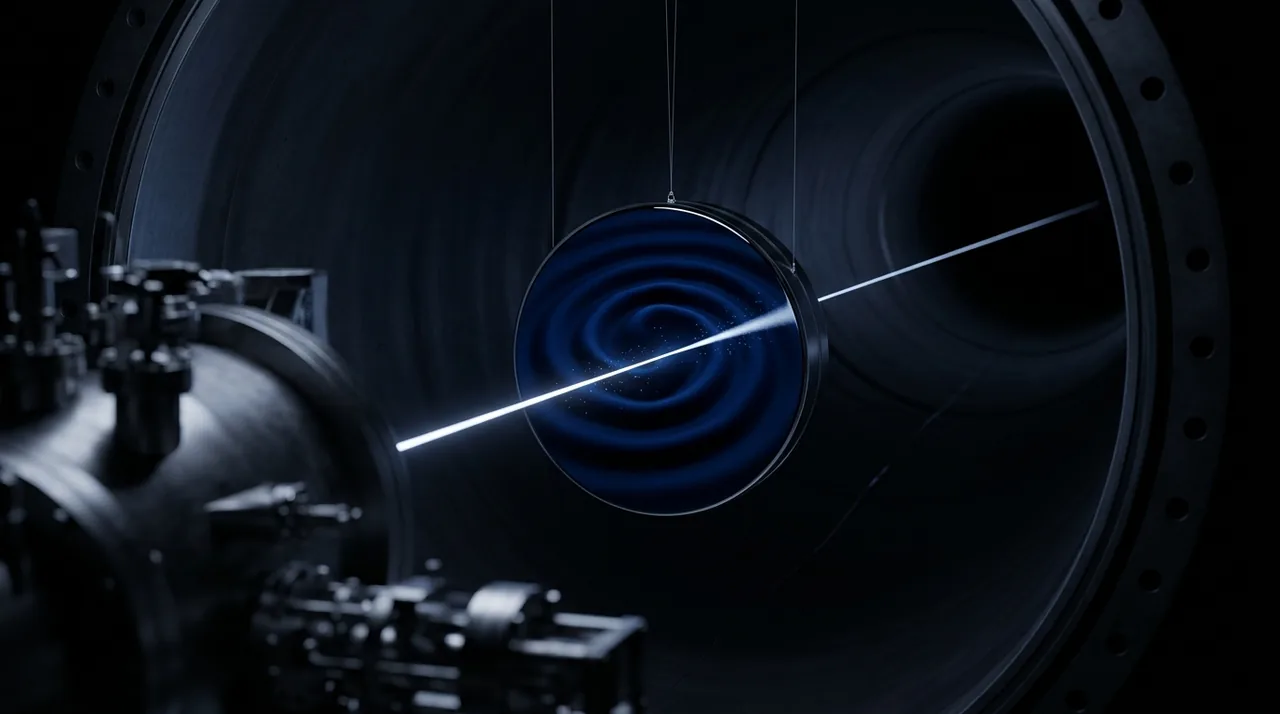
At 09:50:45 UTC on 14 September 2015, a faint chirp rose through the data stream at the LIGO Livingston Observatory 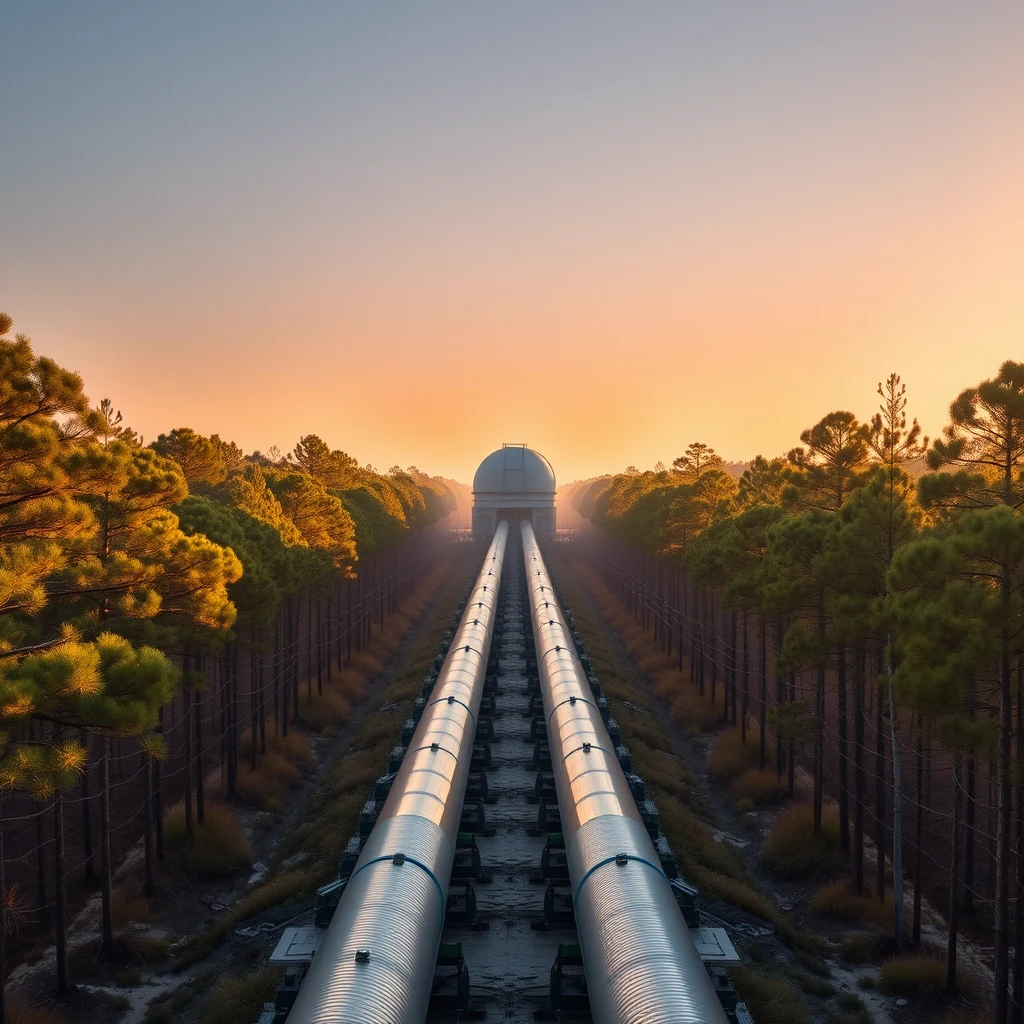 Place LIGO Livingston Observatory One of the two original LIGO sites, set in pine forest outside Livingston, Louisiana. The four-kilometre L-shaped vacuum pipes run through cleared corridors of cypress and slash pine. Operated jointly by Caltech and MIT, the observatory began full operations in 2002 and recorded the louder of the two GW150914 signals on 14 September 2015.LIGO利文斯顿天文台是LIGO最初的两个观测基地之一,坐落于路易斯安那州利文斯顿郊外的松树林中。其长达四公里的L形真空管道穿行于砍伐清理出的杉树和湿地松走廊之间。该天文台由加州理工学院和麻省理工学院联合运营,于2002年正式投入运行,并在2015年9月14日记录到了两组GW150914引力波信号中较强的那一组。Es uno de los dos sitios originales de LIGO, ubicado en un bosque de pinos en las afueras de Livingston, Luisiana. Los tubos de vacío de cuatro kilómetros en forma de L atraviesan corredores despejados de cipreses y pinos. Operado conjuntamente por Caltech y el MIT, el observatorio comenzó a operar plenamente en 2002 y registró la más fuerte de las dos señales de GW150914 el 14 de septiembre de 2015.يعد موقع ليغو ليفينغستون (LIGO Livingston) أحد موقعين أصليين لمرصد ليغو، ويقع في غابة صنوبر خارج ليفينغستون بلويزيانا. تمتد أنابيب الفراغ التي يبلغ طولها أربعة كيلومترات على شكل حرف L عبر ممرات خالية من أشجار السرو والصنوبر. بدأ المرصد، الذي يديره معهد كاليفورنيا للتكنولوجيا ومعهد ماساتشوستس للتكنولوجيا بشكل مشترك، عملياته الكاملة عام 2002 وسجل الإشارة الأقوى للحدثين GW150914 في 14 سبتمبر 2015.O observatório de LIGO em Livingston é um dos dois locais originais do LIGO, situado em uma floresta de pinheiros nos arredores de Livingston, Louisiana. Os tubos de vácuo em forma de L com quatro quilômetros de extensão cruzam corredores desmatados de ciprestes e pinheiros. Operado conjuntamente pela Caltech e pelo MIT, o observatório iniciou operações completas em 2002 e registrou o mais forte dos dois sinais GW150914 em 14 de setembro de 2015.लीगो लिविंगस्टन (LIGO Livingston) लुइसियाना के लिविंगस्टन के बाहर देवदार के जंगल में स्थित मूल लीगो स्थलों में से एक है। चार किलोमीटर लंबी एल (L) आकार की वैक्यूम पाइपें सरू और देवदार के पेड़ों के साफ किए गए गलियारों से होकर गुजरती हैं। कैलटेक और एमआईटी द्वारा संयुक्त रूप से संचालित इस वेधशाला ने 2002 में पूर्ण संचालन शुरू किया और 14 सितंबर 2015 को दो GW150914 संकेतों में से अधिक स्पष्ट संकेत को रिकॉर्ड किया।LIGO Livingston adalah salah satu dari dua situs LIGO asli, yang terletak di hutan pinus di luar Livingston, Louisiana. Pipa vakum berbentuk L sepanjang empat kilometer membentang melalui koridor pohon cemara dan pinus yang telah dibersihkan. Dioperasikan bersama oleh Caltech dan MIT, observatorium ini memulai operasi penuh pada tahun 2002 dan merekam sinyal GW150914 yang lebih kuat pada 14 September 2015.C'est l'un des deux sites d'origine de LIGO, implanté dans une forêt de pins près de Livingston, en Louisiane. Ses tubes à vide en forme de L, longs de quatre kilomètres, traversent des couloirs déboisés de cyprès et de pins. Géré conjointement par Caltech et le MIT, l'observatoire a commencé à fonctionner pleinement en 2002 et a enregistré le plus fort des deux signaux GW150914 le 14 septembre 2015.LIGOリビングストンは、ルイジアナ州リビングストン郊外의松林に建設された、LIGOの最初期の2つの観測拠点の1つである。長さ4キロメートルのL字型真空パイプが、切り開かれたイトスギやマツの回廊を通り抜けている。カリフォルニア理工大学とMITによって共同運営されており、2002年に全面的な観測を開始し、2015年9月14日に最初の重力波信号であるGW150914のより強い方を検出した。Ливингстон — одна из двух оригинальных площадок LIGO, расположенная в сосновом лесу за пределами Ливингстона, штат Луизиана. Четырехкилометровые L-образные вакуумные трубы проходят по расчищенным коридорам среди болотных кипарисов и сосен. Обсерватория, управляемая совместно Калтехом и MIT, начала полноценную работу в 2002 году и зафиксировала более сильный из двух сигналов GW150914 14 сентября 2015 года.LIGO Livingston ist einer der beiden ursprünglichen LIGO-Standorte und liegt in einem Kiefernwald außerhalb von Livingston, Louisiana. Die vier Kilometer langen, L-förmigen Vakuumröhren verlaufen durch geräumte Korridore aus Zypressen und Kiefern. Das gemeinsam von Caltech und MIT betriebene Observatorium nahm 2002 den vollen Betrieb auf und zeichnete am 14. September 2015 das stärkere der beiden GW150914-Signale auf.라이고 리빙스턴(LIGO Livingston)은 루이지애나주 리빙스턴 외곽의 소나무 숲에 위치한 두 개의 초기 라이고 사이트 중 하나이다. 4km 길이의 L자형 진공 파이프가 삼나무와 소나무 숲길 사이로 곧게 뻗어 있다. 칼텍과 MIT가 공동으로 운영하며, 2002년에 본격적인 관측에 들어갔고 2015년 9월 14일 두 개의 GW150914 신호 중 더 강한 신호를 포착했다. in rural Louisiana. Seven milliseconds later the same chirp appeared at LIGO Hanford
 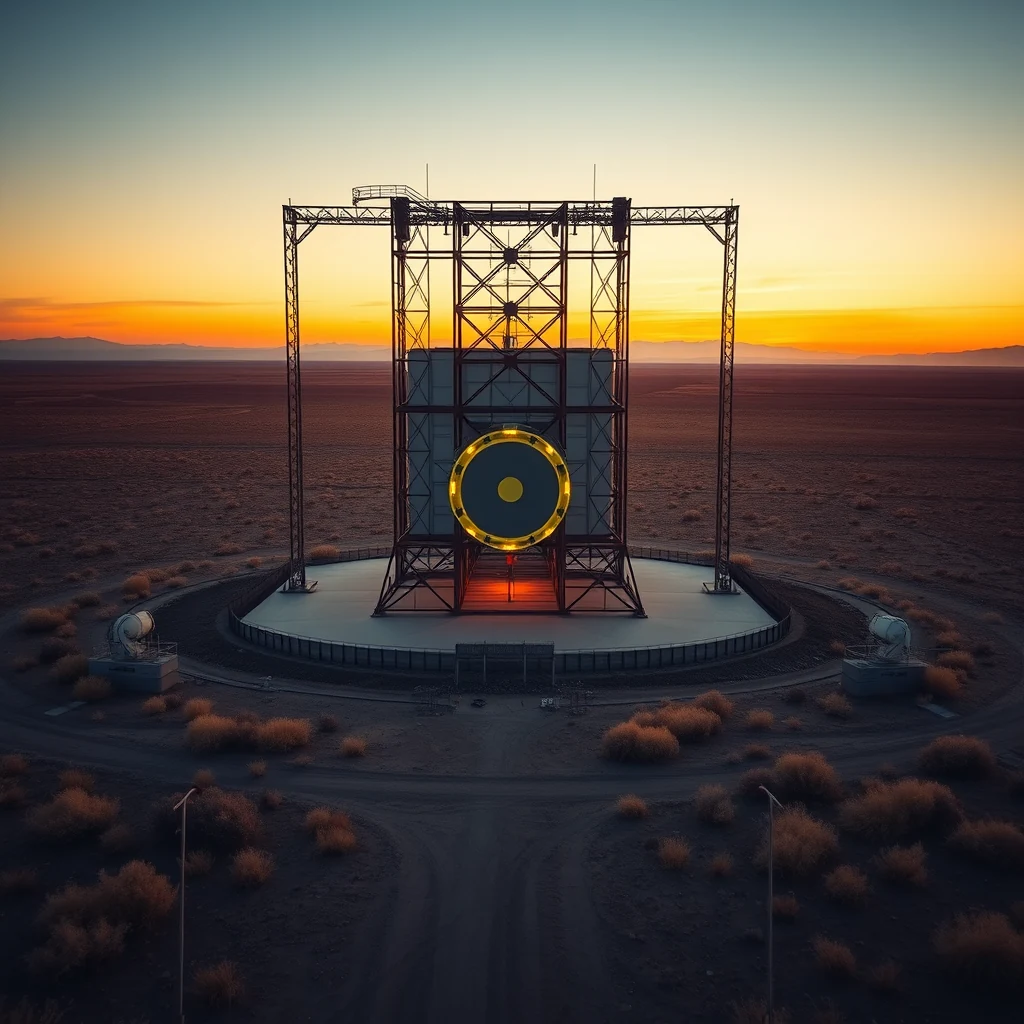 Place LIGO Hanford LIGO's northern detector, built on a corner of the Hanford nuclear reservation in eastern Washington state. The site's flat, dry sagebrush plain offers a quieter seismic environment than Livingston. Hanford registered the first confirmed gravitational-wave signal seven milliseconds after Livingston did, in September 2015 — the time it took the wave to cross the continent.LIGO汉福德天文台是LIGO北部的检测中心,建于华盛顿州东部汉福德核保护区的一个角落里。该观察基地的地势平坦、干燥且布满山艾树,其地震噪声环境比特利文斯顿基地更为安静。汉福德在2015年9月比利文斯顿晚了7毫秒记录到首个确认的引力波信号,这7毫秒正是引力波穿过美洲大陆所需的时间。Es el detector norte de LIGO, construido en un rincón de la reserva nuclear de Hanford en el este del estado de Washington. La llanura plana y seca de artemisas del sitio ofrece un entorno sísmico más silencioso que el de Livingston. Hanford registró la primera señal confirmada de ondas gravitacionales siete milisegundos después que Livingston, en septiembre de 2015, el tiempo que tardó la onda en cruzar el continente.يعد كاشف ليغو هانفورد (LIGO Hanford) الكاشف الشمالي لمرصد ليغو، وقد تم بناؤه في زاوية من محمية هانفورد النووية في شرق ولاية واشنطن. يوفر سهل المريمية المسطح والجاف في الموقع بيئة زلزالية أكثر هدوءًا من ليفينغستون. سجل هانفورد أول إشارة مؤكدة لموجات الجاذبية بعد سبعة أجزاء من الألف من الثانية من تسجيل ليفينغستون لها في سبتمبر 2015، وهو الوقت الذي استغرقته الموجة لعبور القارة.O observatório de LIGO em Hanford é o detector norte do LIGO, construído em um canto da reserva nuclear de Hanford, no leste do estado de Washington. A planície plana e seca de artemísias do local oferece um ambiente sísmico mais silencioso do que o de Livingston. Hanford registrou o primeiro sinal confirmado de ondas gravitacionais sete milissegundos após Livingston, em setembro de 2015 — o tempo que a onda levou para cruzar o continente.लीगो हैनफोर्ड (LIGO Hanford) लीगो का उत्तरी डिटेक्टर है, जिसे पूर्वी वाशिंगटन राज्य में हैनफोर्ड परमाणु रिजर्व के एक कोने पर बनाया गया है। इस स्थल का सपाट, सूखा मैदान लिविंगस्टन की तुलना में शांत भूकंपीय वातावरण प्रदान करता है। हैनफोर्ड ने सितंबर 2015 में लिविंगस्टन के सात मिलीसेकंड बाद पहला पुष्टि किया गया गुरुत्वाकर्षण-तरंग संकेत दर्ज किया था—जो तरंग को महाद्वीप पार करने में लगा समय था।LIGO Hanford adalah detektor utara LIGO, yang dibangun di sudut reservasi nuklir Hanford di timur negara bagian Washington. Dataran semak sage yang datar dan kering di situs ini menawarkan lingkungan seismik yang lebih tenang daripada Livingston. Hanford mencatat sinyal gelombang gravitasi pertama yang terkonfirmasi tujuh milidetik setelah Livingston melakukannya pada September 2015 — waktu yang dibutuhkan gelombang untuk melintasi benua.C'est le détecteur nord de LIGO, construit dans un coin de la réserve nucléaire de Hanford, dans l'est de l'État de Washington. Sa plaine plate et sèche d'armoises offre un environnement sismique plus calme que celui de Livingston. Hanford a enregistré le premier signal d'ondes gravitationnelles confirmé sept millisecondes après Livingston, en septembre de 2015, soit le temps mis par l'onde pour traverser le continent.LIGOハンフォードは、ワシントン州东部のハンフォード核保留地の一角に建設された、LIGOの北側の検出器である。平坦で乾燥したヤマヨモギの平原が広がり、リビングストンよりも地震雑音の少ない静かな観測環境を備えている。2015年9月、ハンフォードはリビングストンから7ミリ秒遅れて最初の重力波信号を検出した。この時間差は、重力波が北米大陸を横断するのに要した時間である。Хэнфорд — северный детектор LIGO, построенный на территории ядерного резерва Хэнфорд на востоке штата Вашингтон. Плоская, сухая полынная равнина обеспечивает более спокойную сейсмическую обстановку, чем в Ливингстоне. Хэнфорд зарегистрировал первый подтвержденный сигнал гравитационных волн через семь миллисекунд после Ливингстона в сентябре 2015 года — именно столько времени потребовалось волне, чтобы пересечь континент.LIGO Hanford ist der nördliche Detektor von LIGO, der in einer Ecke des Nukleargebiets Hanford im Osten des Bundesstaats Washington errichtet wurde. Die flache, trockene Wüsten-Beifuß-Ebene des Standorts bietet eine ruhigere seismische Umgebung als Livingston. Hanford registrierte das erste bestätigte Gravitationswellensignal im September 2015 sieben Millisekunden nach Livingston – der Zeit, die die Welle benötigte, um den Kontinent zu durchqueren.라이고 핸포드(LIGO Hanford)는 워싱턴주 동부 핸포드 원자력 단지 내에 지어진 라이고의 북부 탐지기이다. 이 지역의 평평하고 건조한 초원은 리빙스턴에 비해 지진 노이즈가 적은 조용한 관측 환경을 제공한다. 핸포드는 2015년 9월 리빙스턴이 신호를 탐지하고 7밀리초 후에 첫 중력파 신호를 기록했는데, 이는 중력파가 북미 대륙을 가로지르는 데 걸린 시간과 일치한다. , three thousand kilometres away in the scrubland of eastern Washington. The signal lasted two-tenths of a second. It swept from 35 hertz up to 250 — a clean upward glissando, the kind a finger makes sliding up a piano. At each detector, a hanging mirror had moved by roughly one ten-thousandth the width of a proton. Nothing else on Earth could have produced the coincidence. The two black holes that made the signal had finished merging 1.3 billion years before the dinosaurs went extinct.
The announcement came five months later, after the team had spent the intervening time trying, and failing, to convince themselves they were wrong. The signal was named GW150914. It was the first direct detection of a gravitational wave, a century after Albert Einstein 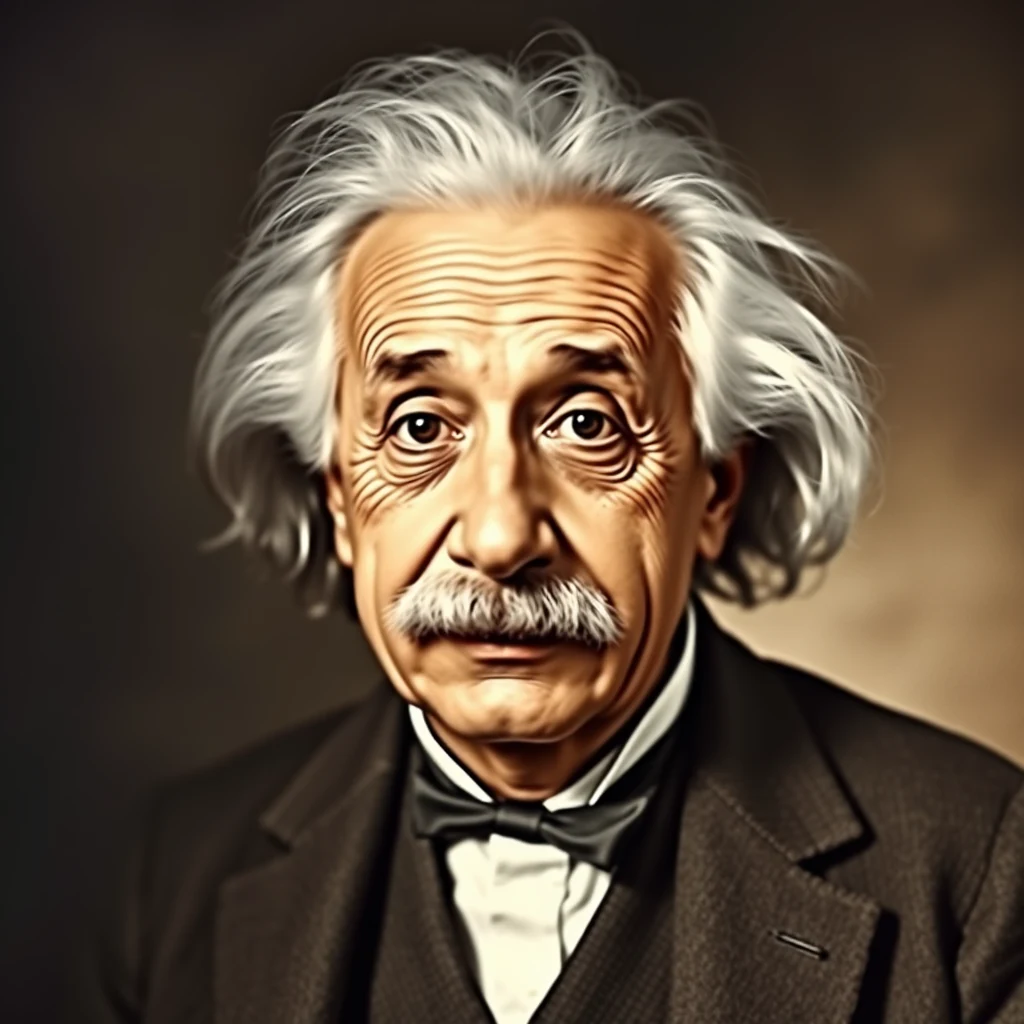 Person Albert Einstein German-born theoretical physicist (1879–1955) whose 1915 general theory of relativity recast gravity as the curvature of spacetime. Einstein predicted gravitational waves in 1916, retracted the prediction in a 1936 paper he tried to publish in Physical Review, and accepted them again only after an anonymous referee caught the error. He died believing they would never be detected.爱因斯坦(Albert Einstein,1879–1955)是德裔理论物理学家,其于1915年创立的广义相对论将引力重新解释为时空的弯曲。爱因斯坦在1916年预测了引力波的存在,但在1936年试图发表在《物理评论》上的一篇论文中撤回了这一预测,直到一位匿名审稿人指出其错误后才重新接受该观点。他去世时仍深信引力波永远无法被人类检测到。Físico teórico de origen alemán (1879-1955) cuya teoría general de la relatividad de 1915 reformuló la gravedad como la curvatura del espacio-tiempo. Einstein predijo las ondas gravitacionales en 1916, se retractó de su predicción en un artículo de 1936 que intentó publicar en Physical Review, y las aceptó de nuevo solo después de que un revisor anónimo detectara el error. Murió creyendo que nunca serían detectadas.ألبرت أينشتاين (1879-1955) هو عالم فيزياء نظرية ألماني المولد، أعادت نظريته العامة للنسبية عام 1915 صياغة الجاذبية باعتبارها انحناءً للزمكان. تنبأ أينشتاين بموجات الجاذبية عام 1916، ثم تراجع عن هذا التنبؤ في ورقة بحثية عام 1936 حاول نشرها في مجلة (Physical Review)، ولم يقبلها مجددًا إلا после أن اكتشف مراجع مجهول هذا الخطأ. توفي وهو يعتقد أنه لن يتم اكتشافها أبدًا.Físico teórico nascido na Alemanha (1879–1955) cuja teoria da relatividade geral de 1915 reformulou la gravidade como a curvatura do espaço-tempo. Einstein previu as ondas gravitacionais em 1916, retratou a previsão em um artigo de 1936 que tentou publicar na Physical Review e as aceitou novamente apenas depois que um revisor anônimo detectou o erro. Ele morreu acreditando que elas nunca seriam detectadas.अल्बर्ट आइंस्टीन (1879-1955) जर्मनी में जन्मे एक सैद्धांतिक भौतिक विज्ञानी थे, जिनके 1915 के सामान्य सापेक्षता के सिद्धांत ने गुरुत्वाकर्षण को स्पेस-टाइम की वक्रता के रूप में फिर से परिभाषित किया। आइंस्टीन ने 1916 में गुरुत्वाकर्षण तरंगों की भविष्यवाणी की थी, 1936 के एक शोध पत्र में उन्होंने इस भविष्यवाणी को वापस ले लिया था जिसे उन्होंने फिजिकल रिव्यू में प्रकाशित करने का प्रयास किया था, और एक अज्ञात समीक्षक द्वारा त्रुटि पकड़े जाने के बाद ही उन्होंने इसे फिर से स्वीकार किया। वे यह मानते हुए मरे कि इन्हें कभी खोजा नहीं जा सकेगा।Fisikawan teoritis kelahiran Jerman (1879–1955) yang teori relativitas umum-nya pada tahun 1915 merumuskan kembali gravitasi sebagai kelengkungan ruang-waktu. Einstein meramalkan gelombang gravitasi pada tahun 1916, menarik kembali ramalan tersebut dalam makalah tahun 1936 que ia coba publikasikan di Physical Review, dan menerimanya kembali hanya setelah peninjau anonim menemukan kesalahan tersebut. Ia meninggal dengan keyakinan bahwa gelombang tersebut tidak akan pernah terdeteksi.Physicien théoricien d'origine allemande (1879-1955) dont la théorie de la relativité générale de 1915 a redéfini la gravité comme la courbure de l'espace-temps. Einstein a prédit les ondes gravitationnelles en 1916, s'est rétracté dans un article de 1936 qu'il a tenté de publier dans la Physical Review, et ne les a réacceptées qu'après qu'un relecteur anonyme a décelé son erreur. Il est mort en étant persuadé qu'elles ne seraient jamais détectées.ドイツ生まれの理論物理学者(1879〜1955年)。1915年に発表した一般相対性理論により、重力を時空の歪みとして再定義した。1916年に重力波の存在を予言したが、1936年に『フィジカル・レビュー』誌に投稿しようとした論文でその予言を一度撤回した。その後、匿名の査読者が計算ミスを指摘したことで予言を再び受け入れた。重力波が実際に検出されることはないと信じたまま死去した。Физик-теоретик немецкого происхождения (1879–1955), чья общая теория относительности 1915 года переосмыслила гравитацию как искривление пространства-времени. Эйнштейн предсказал гравитационные волны в 1916 году, отказался от своего предсказания в статье 1936 года, которую пытался опубликовать в Physical Review, и признал их снова только после того, как анонимный рецензент заметил ошибку. Он умер, веря, что они никогда не будут обнаружены.In Deutschland geborener theoretischer Physiker (1879–1955), dessen allgemeine Relativitätstheorie von 1915 die Gravitation als Krümmung der Raumzeit neu definierte. Einstein sagte 1916 Gravitationswellen voraus, zog die Vorhersage in einer Arbeit von 1936 zurück, die er in Physical Review zu veröffentlichen versuchte, und akzeptierte sie erst wieder, nachdem ein anonymer Gutachter den Fehler entdeckt hatte. Er starb im Glauben, sie würden nie nachgewiesen werden.독일 태생의 이론물리학자(1879~1955)로, 1915년 일반상대성이론을 통해 중력을 시공간의 곡률로 재정의했다. 1916년 중력파의 존재를 예견했으나 1936년 『피지컬 리뷰』에 투고하려던 논문에서 이 예측을 철회했다가, 익명의 심사위원이 오류를 잡아낸 후에야 이를 다시 인정했다. 그는 중력파가 인간에 의해 탐지되는 일은 결코 없을 것이라 믿으며 세상을 떠났다. had predicted them in the general theory of relativity
  Concept general theory of relativity Einstein's 1915 theory of gravity, which replaced Newton's instantaneous force with a geometric description: mass tells spacetime how to curve, curved spacetime tells mass how to move. The theory predicts black holes, the bending of light by the Sun, the precession of Mercury's orbit, and the existence of gravitational waves. Every prediction has so far survived experimental test.广义相对论是爱因斯坦于1915年提出的引力理论,它用几何描述取代了牛顿的瞬时超距作用力:物质告诉时空如何弯曲,弯曲的时空告诉物质如何运动。该理论预测了黑洞、太阳引起的偏折光线、水星轨道的进动以及引力波的存在。迄今为止,其中的每一项预测都成功通过了实验检验。La teoría de la gravedad de Einstein de 1915, que reemplazó la fuerza instantánea de Newton por una descripción geométrica: la masa le dice al espacio-tiempo cómo curvarse, y el espacio-tiempo curvado le dice a la masa cómo moverse. La teoría predice los agujeros negros, la curvatura de la luz por el Sol, la precesión de la órbita de Mercurio y la existencia de ondas gravitacionales. Cada predicción ha superado hasta ahora las pruebas experimentales.النظرية النسبية العامة هي نظرية الجاذبية التي وضعها أينشتاين عام 1915، والتي استبدلت قوة نيوتن اللحظية بوصف هندسي: الكتلة تخبر الزمكان كيف ينحني، والزمكان المنحني يخبر الكتلة كيف تتحرك. تتنبأ النظرية بالثقوب السوداء، وانحناء الضوء بفعل الشمس، وبدارية مدار عطارد، ووجود موجات الجاذبية. وقد اجتاز كل تنبؤ منها الاختبار التجريبي حتى الآن بنجاح.A teoria da gravidade de Einstein de 1915, que substituiu a força instantânea de Newton por uma descrição geométrica: a massa diz ao espaço-tempo como se curvar, e o espaço-tempo curvado diz à massa como se mover. A teoria prevê buracos negros, a deflexão da luz pelo Sol, la precessão da órbita de Mercúrio e a existência de ondas gravitacionais. Todas as previsões sobreviveram aos testes experimentais até agora.सामान्य सापेक्षता आइंस्टीन का 1915 का गुरुत्वाकर्षण का सिद्धांत है, जिसने न्यूटन के तात्कालिक बल को एक ज्यामितीय विवरण से बदल दिया: द्रव्यमान स्पेस-टाइम को बताता है कि कैसे मुड़ना है, और मुड़ा हुआ स्पेस-टाइम द्रव्यमान को बताता है कि कैसे गति करनी है। यह सिद्धांत ब्लैक होल, सूर्य द्वारा प्रकाश के झुकने, बुध की कक्षा के पुरस्सरण (प्रिसेशन) और गुरुत्वाकर्षण तरंगों के अस्तित्व की भविष्यवाणी करता है। अब तक हर भविष्यवाणी प्रायोगिक परीक्षण में खरी उतरी है।Teori gravitasi Einstein tahun 1915, yang menggantikan gaya instan Newton dengan deskripsi geometris: massa memberi tahu ruang-waktu bagaimana melengkung, ruang-waktu yang melengkung memberi tahu massa bagaimana bergerak. Teori ini memprediksi lubang hitam, pembelokan cahaya oleh Matahari, presesi orbit Merkurius, dan keberadaan gelombang gravitasi. Setiap prediksi sejauh ini telah lolos uji eksperimental.Théorie de la gravité d'Einstein de 1915, qui a remplacé la force instantanée de Newton par une description géométrique : la masse indique à l'espace-temps comment se courber, et l'espace-temps courbé indique à la masse comment se déplacer. La théorie prédit les trous noirs, la déviation de la lumière par le Soleil, la précession de l'orbite de Mercure et l'existence d'ondes gravitationnelles. Chaque prédiction a jusqu'à présent survécu aux tests internationaux (tests expérimentaux).一般相対性理論は、1915年にアインシュタインが提唱した重力理论であり、ニュートンの瞬时遠隔力を「物質が时空に歪みを与え、歪んだ時空が物質の運動を決める」という幾何学的な記述に置き換えた。この理論は、ブラックホール、太陽による光の屈曲、水星の近日点移動、そして重力波の存在を予言している。これまでのところ、すべての予言が実験的検証をクリアしている。Общая теория относительности — созданная Эйнштейном в 1915 году теория гравитации, заменившая ньютоновское мгновенное действие на расстоянии геометрическим описанием: масса говорит пространству-времени, как искривляться, а искривленное пространство-время говорит массе, как двигаться. Теория предсказывает черные дыры, отклонение света Солнцем, прецессию орбиты Меркурия и существование гравитационных волн. Все предсказания к настоящему времени прошли экспериментальную проверку.Einsteins Gravitationstheorie von 1915, die Newtons instantane Kraft durch eine geometrische Beschreibung ersetzte: Masse sagt der Raumzeit, wie sie sich krümmen soll, die gekrümmte Raumzeit sagt der Masse, wie sie sich bewegen soll. Die Theorie sagt Schwarze Löcher, die Ablenkung des Lichts durch die Sonne, die Präzession der Merkurbahn und die Existenz von Gravitationswellen voraus. Jede Vorhersage hat bislang experimentellen Tests standgehalten.일반상대성이론은 1915년 아인슈타인이 발표한 중력 이론으로, 뉴턴의 즉각적인 원격력을 기하학적 설명으로 대체했다. 즉, 질량이 시공간에 곡률을 부여하고, 곡률을 가진 시공간이 질량의 운동 방식을 결정한다는 개념이다. 이 이론은 블랙홀, 태양에 의한 빛의 굴절, 수성의 근일점 이동, 중력파의 존재를 예견한다. 현재까지 모든 예측이 실험적 검증을 통과했다. and then spent decades doubting his own arithmetic. The 2017 Nobel Prize in Physics went to three of the people who had pushed the project for forty years: Rainer Weiss
  Person Rainer Weiss American physicist born in Berlin in 1932, who fled Nazi Germany as a child. In 1972, while teaching a general relativity course at MIT, Weiss wrote up the laser-interferometer detector concept as an internal report. He spent the next four decades shepherding LIGO from idea to working instrument and shared the 2017 Nobel Prize in Physics for the first detection.雷纳·韦斯(Rainer Weiss)是1932年出生于柏林的美国物理学家,童年时为躲避纳粹德国而流亡。1972年,在麻省理工学院教授广义相对论课程期间,韦斯撰写了一份内部报告,首次提出了激光干涉仪检测器的概念。在此后的四十年里,他致力于推动LIGO项目从一个构想发展为实际运行的科学仪器,并因首次成功探测到引力波而荣获2017年诺贝尔物理学奖。Físico estadounidense nacido en Berlín en 1932, que huyó de la Alemania nazi cuando era niño. En 1972, mientras impartía un curso de relatividad general en el MIT, Weiss propuso el concepto de detector de interferómetro láser en un informe interno. Pasó las siguientes cuatro décadas guiando a LIGO desde una idea hasta un instrumento funcional y compartió el Premio Nobel de Física de 2017 por la primera detección.رينر فايس هو عالم فيزياء أمريكي ولد في برلين عام 1932، وفر من ألمانيا النازية كطفل. في عام 1972، وأثناء تدريسه لمساق النسبية العامة في معهد ماساتشوستس للتكنولوجيا، صاغ فايس مفهوم كاشف مقياس التداخل الليزري كتقرير داخلي. أمضى العقود الأربعة التالية في قيادة مشروع ليغو (LIGO) من فكرة إلى أداة عمل حقيقية، وشارك في جائزة نوبل في الفيزياء لعام 2017 عن أول كشف للموجات.Rainer Weiss é um físico americano nascido em Berlim em 1932, que fugiu da Alemanha nazista ainda criança. Em 1972, enquanto ministrava um curso de relatividade geral no MIT, Weiss descreveu o conceito de detector por interferômetro laser em um relatório interno. Ele passou as quatro décadas seguintes liderando o LIGO, de uma ideia inicial a um instrumento funcional, e compartilhou o Prêmio Nobel de Física de 2017 pela primeira detecção.रेनर वीस (Rainer Weiss) 1932 में बर्लिन में जन्मे एक अमेरिकी भौतिक विज्ञानी हैं, जो बचपन में नाजी जर्मनी से भाग गए थे। 1972 में, एमआईटी में एक सामान्य सापेक्षता पाठ्यक्रम पढ़ाते समय, वीस ने एक आंतरिक रिपोर्ट के रूप में लेजर-इंटरफेरोमीटर डिटेक्टर अवधारणा को लिखा। उन्होंने अगले चार दशक लीगो (LIGO) को एक विचार से एक कार्यशील उपकरण में बदलने में बिताए और पहली खोज के लिए भौतिकी में 2017 का नोबेल पुरस्कार साझा किया।Rainer Weiss adalah fisikawan Amerika kelahiran Berlin tahun 1932, yang melarikan diri dari Nazi Jerman saat masih anak-anak. Pada tahun 1972, saat mengajar mata kuliah relativitas umum di MIT, Weiss menulis konsep detektor interferometer laser sebagai laporan internal. Ia menghabiskan empat dekade berikutnya mengawal LIGO dari sebuah ide menjadi instrumen yang berfungsi dan berbagi Hadiah Nobel Fisika 2017 untuk deteksi pertama tersebut.Rainer Weiss est un physicien américain né à Berlin en 1932, qui a fui l'Allemagne nazie dans son enfance. En 1972, alors qu'il enseignait la relativité générale au MIT, Weiss a décrit le concept de détecteur par interférométrie laser dans un rapport interne. Il a passé les quatre décennies suivantes à accompagner LIGO du stade d'idée à celui d'instrument opérationnel, et a partagé le prix Nobel de physique 2017 pour la première détection.レイナー・ワイス(Rainer Weiss)は、1932年ベルリン生まれの米国物理学者であり、幼少期にナチス・ドイツから亡命した。1972年、MITで一般相対性理論の講義を担当していた際、レーザー干渉計を用いた重力波検出器のコンセプトを内部レポートとして執筆した。その後40年間にわたりLIGOプロジェクトを構想から実用装置へと牽引し、初の重力波検出の功绩により2017年のノーベル物理学賞を共同受賞した。Райнер Вайсс — американский физик, родился в Берлине в 1932 году, в детстве бежал из нацистской Германии. В 1972 году, ведя курс общей теории относительности в MIT, Вайсс описал концепцию лазерного интерферометра в качестве внутреннего отчета. Следующие сорок лет он посвятил ведению проекта LIGO от идеи до работающего прибора, разделив в 2017 году Нобелевскую премию по физике за первую регистрацию волн.Rainer Weiss ist ein 1932 in Berlin geborener amerikanischer Physiker, der als Kind aus Nazi-Deutschland floh. 1972, während er einen Kurs über Allgemeine Relativitätstheorie am MIT abhielt, verfasste Weiss das Konzept für den Laser-Interferometer-Detektor als internen Bericht. Er verbrachte die nächsten vier Jahrzehnte damit, LIGO von einer Idee zu einem funktionierenden Instrument zu führen, und erhielt 2017 den Nobelpreis für Physik für den ersten Nachweis.라이너 바이스(Rainer Weiss)는 1932년 베를린 태생의 미국 물리학자로, 어린 시절 나치 독일을 탈출했다. 1972년 MIT에서 일반상대성이론 강의를 하던 중 레이저 간섭계 기반 탐지기 개념을 담은 내부 보고서를 작성했다. 이후 40년 동안 라이고 프로젝트를 구상 단계에서 실물 관측 장비로 발전시키는 데 기여했으며, 최초 탐지 공로로 2017년 노벨 물리학상을 공동 수상했다. , Kip Thorne
  Person Kip Thorne American theoretical physicist (b. 1940), longtime professor at Caltech and a central figure in twentieth-century gravitational physics. Thorne co-founded the LIGO project with Rainer Weiss and Ronald Drever, supervised the theoretical work behind the detection templates, and consulted on the black-hole visualisations for the film Interstellar. He shared the 2017 Nobel Prize for the GW150914 detection.基普·索恩(Kip Thorne,生于1940年)是美国理论物理学家,长期担任加州理工学院教授,是二十世纪引力物理学的核心人物。索恩与雷纳·韦斯和罗纳德·德雷弗共同创立了LIGO项目,指导了探测波形模板背后的理论研究工作,并为电影《星际穿越》中的黑洞可视化提供了科学咨询。他因GW150914探测成果共同获得了2017年诺贝尔物理学奖。Físico teórico estadounidense (nacido en 1940), profesor durante muchos años en Caltech y figura central de la física gravitacional del siglo XX. Thorne cofundó el proyecto LIGO con Rainer Weiss y Ronald Drever, supervisó el trabajo teórico detrás de las plantillas de detección y asesoró en las visualizaciones de agujeros negros para la película Interstellar. Compartió el Premio Nobel de 2017 por la detección de GW150914.كيب ثورن (ولد عام 1940) هو عالم فيزياء نظرية أمريكي، أستاذ لفترة طويلة في معهد كاليفورنيا للتكنولوجيا وشخصية محورية في فيزياء الجاذبية في القرن العشرين. شارك ثورن في تأسيس مشروع ليغو مع رينر فايس ورونالد دريفر، وأشرف على العمل النظري وراء قوالب الكشف، وعمل كمستشار للمحاكاة البصرية للثقوب السوداء لفيلم (Interstellar). شارك في جائزة نوبل لعام 2017 لكشف إشارة GW150914.Kip Thorne (n. 1940) é um físico teórico americano, professor de longa data na Caltech e figura central na física gravitacional do século XX. Thorne co-fundou o projeto LIGO com Rainer Weiss e Ronald Drever, supervisionou o trabalho teórico por trás dos modelos de detecção e prestou consultoria científica nas visualizações de buracos negros para o filme Interstellar. Ele compartilhou o Prêmio Nobel de 2017 pela detecção do sinal GW150914.किप थॉर्न (Kip Thorne) (जन्म 1940) एक अमेरिकी सैद्धांतिक भौतिक विज्ञानी हैं, जो कैलटेक में लंबे समय तक प्रोफेसर रहे और बीसवीं सदी के गुरुत्वाकर्षण भौतिकी के एक प्रमुख व्यक्ति हैं। थॉर्न ने रेनर वीस और रोनाल्ड ड्रेवर के साथ मिलकर लीगो (LIGO) परियोजना की सह-स्थापना की, गुरुत्वाकर्षण तरंगों की पहचान के लिए सैद्धांतिक कार्य का निरीक्षण किया, और फिल्म 'इंटरस्टेलर' के लिए ब्लैक-होल विज़ुअलाइज़ेशन पर सलाह दी। उन्होंने GW150914 की खोज के लिए 2017 का नोबेल पुरस्कार साझा किया।Kip Thorne (lahir 1940) adalah fisikawan teoritis Amerika, profesor lama di Caltech dan tokoh sentral dalam fisika gravitasi abad ke-20. Thorne mendirikan proyek LIGO bersama Rainer Weiss dan Ronald Drever, mengawasi pekerjaan teoritis di balik templat deteksi, dan menjadi konsultan untuk visualisasi lubang hitam dalam film Interstellar. Ia berbagi Hadiah Nobel 2017 untuk deteksi GW150914.Physicien théoricien américain (né en 1940), professeur de longue date à Caltech et figure centrale de la physique gravitationnelle du XXe siècle. Thorne a cofondé le projet LIGO avec Rainer Weiss et Ronald Drever, a supervisé les travaux théoriques à l'origine des modèles de détection et a apporté ses conseils pour les modélisations de trous noirs du film Interstellar. Il a partagé le prix Nobel 2017 pour la détection de GW150914.キップ・ソーン(Kip Thorne、1940年生まれ)は米国の理論物理学者であり、长年にわたりカリフォルニア理工大学の教授を務め、20世紀の重力物理学における中心的人物であった。レイナー・ワイス、ロナルド・ドリーバーとともにLIGOプロジェクトを共同設立し、重力波検出の波形テンプレートの理論研究を監修したほか、映画『インターステラー』のブラックホール視覚化の監修も行った。GW150914の検出により2017年ノーベル物理学賞を共同受賞した。Кип Торн — американский физик-теоретик (родился в 1940 году), давний профессор Калтеха и центральная фигура в гравитационной физике двадцатого века. Торн стал сооснователем проекта LIGO вместе с Райнером Вайссом и Рональдом Древером, курировал теоретическую работу по созданию шаблонов обнаружения сигналов и консультировал создателей фильма «Интерстеллар» по вопросам визуализации черных дыр. Он разделил Нобелевскую премию 2017 года за регистрацию GW150914.Kip Thorne (geb. 1940) ist ein amerikanischer theoretischer Physiker, langjähriger Professor am Caltech und eine zentrale Figur der Gravitationsphysik des 20. Jahrhunderts. Thorne gründete das LIGO-Projekt gemeinsam mit Rainer Weiss und Ronald Drever, leitete die theoretische Arbeit hinter den Detektionsschablonen und beriet bei den Visualisierungen Schwarzer Löcher für den Film Interstellar. Er teilte sich den Nobelpreis 2017 für den Nachweis von GW150914.킵 손(Kip Thorne, 1940년 태생)은 미국의 이론물리학자로, 오랜 기간 칼텍의 교수로 재직하며 20세기 중력 물리학계의 핵심 인물로 활동했다. 라이너 바이스, 로널드 드레버와 함께 라이고 프로젝트를 공동 설립했으며, 탐지 파형 템플릿의 기반이 되는 이론 연구를 지도했고, 영화 『인터스텔라』의 블랙홀 시각화 작업에 자문으로 참여했다. GW150914 탐지 공로로 2017년 노벨 물리학상을 공동 수상했다. , and Barry Barish.

What Einstein had predicted, and what LIGO finally measured, is that space itself is springy. A heavy object accelerating — two black holes spiralling toward each other, say — sends out ripples in the geometry of the universe. The ripples stretch space in one direction and squeeze it perpendicular, then reverse, hundreds of times a second. By the time those ripples cross a billion light-years and reach us, the stretch and squeeze is absurdly small. Detecting it required building the most sensitive measuring device ever made.

Four kilometres of vacuum
Each LIGO detector is a vacuum pipe in the shape of an L, four kilometres on each arm. A laser is split at the corner, sent down both arms, bounced off a mirror at the end of each, and recombined back at the corner. If the two arms are exactly the same length, the recombined beams cancel each other and the detector reads zero. If a gravitational wave passes, one arm gets slightly longer and the other slightly shorter. The light stops cancelling. A photodetector sees a faint glow.

The required sensitivity is, in round numbers, one part in 10^21. Over the four-kilometre arm length, that is a displacement of about 10^-18 metres — a thousandth the diameter of a proton. Everything tries to drown this out. A truck on a road ten kilometres away. Surf breaking on the Pacific coast. The thermal jiggling of atoms in the mirrors themselves. The 40-kilogram fused-silica test masses are suspended on quadruple pendulums of glass fibre so thin they are nearly invisible, inside vacuum chambers held at a trillionth of atmospheric pressure. The mirrors are polished to a smoothness of about an atomic layer. They are among the stillest objects in the solar system.

The laser is folded back and forth between the mirrors several hundred times to multiply the path length, then squeezed using a quantum-optical trick that trades phase noise against amplitude noise to push below the standard quantum limit. None of this would have been possible in 1972, when Weiss wrote the original proposal as a problem set for an MIT class he was teaching. It barely worked in 2015. It works routinely now.
A new kind of telescope
In the decade since GW150914, LIGO and its partners Virgo  Object Virgo European gravitational-wave detector near Cascina, Italy, operated by a consortium led by France's CNRS and Italy's INFN. Its three-kilometre arms came online in 2007 and joined LIGO in coincident observation in 2017, enabling sky localisation by triangulation. The three-detector network was what made it possible to point optical telescopes at the source of GW170817 within hours.处女座引力波探测器(Virgo)是位于意大利卡希纳附近的欧洲引力波探测装置,由法国国家科学研究中心(CNRS)和意大利核物理国家研究所(INFN)领导的联合体运营。其三公里长的探测臂于2007年投入使用,并于2017年加入LIGO进行联合观测,从而实现了通过三角测量定位引力波源天区。这套由三台探测器组成的网络使得在数小时内将光学望远镜对准GW170817的源头成为可能。Detector europeo de ondas gravitacionales cerca de Cascina, Italia, operado por un consorcio liderado por el CNRS de Francia y el INFN de Italia. Sus brazos de tres kilómetros entraron en funcionamiento en 2007 y se unieron a LIGO en observación coincidente en 2017, lo que permitió la localización en el cielo mediante triangulación. La red de tres detectores fue lo que hizo posible apuntar telescopios ópticos al origen de GW170817 en cuestión de horas.كاشف فيرغو (Virgo) هو كاشف أوروبي لموجات الجاذبية يقع بالقرب من كاشينا بإيطاليا، ويديره تحالف يقوده المركز الوطني الفرنسي للبحث العلمي (CNRS) والمعهد الوطني الإيطالي للفيزياء النووية (INFN). دخلت أذرعه البالغ طولها ثلاثة كيلومترات الخدمة عام 2007 وانضمت إلى مرصد ليغو في المراقبة المتزامنة عام 2017، مما أتاح تحديد موقع الإشارات في السماء عن طريق التثليث. كانت شبكة الكواشف الثلاثة هي ما مكن التلسكوبات البصرية من الرصد الموجه لمصدر GW170817 خلال ساعات.O detector europeu de ondas gravitacionais Virgo, situado perto de Cascina, Itália, é operado por um consórcio liderado pelo CNRS da França e pelo INFN da Itália. Seus braços de três quilômetros de extensão entraram em operação em 2007 e se juntaram ao LIGO em observação coincidente em 2017, permitindo a localização no céu por triangulação. A rede de três detectores foi o que possibilitou apontar telescópios ópticos para a fonte do sinal GW170817 em poucas horas.विर्गो डिटेक्टर (Virgo detector) इटली के कैस्किना के पास स्थित एक यूरोपीय गुरुत्वाकर्षण-तरंग डिटेक्टर है, जिसे फ्रांस के सीएनआरएस (CNRS) और इटली के आईएनएफएन (INFN) के नेतृत्व वाले एक संघ द्वारा संचालित किया जाता है। इसकी तीन किलोमीटर लंबी भुजाएं 2007 में चालू हुईं और 2017 में सह-अवलोकन के लिए लीगो (LIGO) में शामिल हो गईं, जिससे ट्राइएंगुलेशन (त्रिकोणीयकरण) द्वारा आकाश में सटीक स्थान का पता लगाना संभव हो गया। इस तीन-डिटेक्टर नेटवर्क के कारण ही कुछ ही घंटों में ऑप्टिकल दूरबीनों को GW170817 के स्रोत की ओर लक्षित करना संभव हो पाया था।Detektor gelombang gravitasi Eropa di dekat Cascina, Italia, yang dioperasikan oleh konsorsium yang dipimpin oleh CNRS Prancis dan INFN Italia. Lengan sepanjang tiga kilometernya mulai beroperasi pada tahun 2007 dan bergabung dengan LIGO dalam pengamatan bersama pada tahun 2017, memungkinkan lokalisasi langit melalui triangulasi. Jaringan tiga detektor inilah yang memungkinkan teleskop optik diarahkan ke sumber GW170817 dalam hitungan jam.Détecteur européen d'ondes gravitationnelles situé près de Cascina, en Italie, exploité par un consortium dirigé par le CNRS français et l'INFN italien. Ses bras de trois kilomètres ont été mis en service en 2007 et ont rejoint LIGO pour des observations conjointes en 2017, permettant de localiser les sources dans le ciel par triangulation. Ce réseau de trois détecteurs a permis de pointer des télescopes optiques vers la source de GW170817 en quelques heures seulement.バーゴ(Virgo)は、イタリアのカシーナ近郊にある欧州の重力波検出器であり、フランスのCNRSとイタリアのINFNが主导するコンソーシアムによって運営されている。長さ3キロメートルのアームを持ち、2007年に稼働を開始、2017年にLIGOとの共同観測に参加したことで、三角測量による重力波源の天球定位が可能となった。この3台の検出器によるネットワークの存在により、GW170817の検出から数時間以内に光学望遠鏡を光源へ向けることが可能となった。Virgo — европейский детектор гравитационных волн близ Кашины, Италия, управляемый консорциумом во главе с французским CNRS и итальянским INFN. Его трехкилометровые плечи заработали в 2007 году, а в 2017 году он присоединился к совместным наблюдениям с LIGO, что позволило определять положение источников на небе методом триангуляции. Сеть из трех детекторов позволила направить оптические телескопы на источник GW170817 в течение нескольких часов.Virgo ist ein europäischer Gravitationswellendetektor in der Nähe von Cascina, Italien, der von einem Konsortium unter der Leitung des französischen CNRS und des italienischen INFN betrieben wird. Seine drei Kilometer langen Arme gingen 2007 in Betrieb und schlossen sich 2017 LIGO für gemeinsame Beobachtungen an, was eine Positionsbestimmung am Himmel durch Triangulation ermöglichte. Dieses Netzwerk aus drei Detektoren machte es möglich, optische Teleskope innerhalb weniger Stunden auf die Quelle von GW170817 auszurichten.비르고(Virgo) 탐지기는 이탈리아 카시나 인근에 위치한 유럽의 중력파 탐지기로, 프랑스의 CNRS와 이탈리아의 INFN이 이끄는 컨소시엄에 의해 운영된다. 3km 길이의 아ーム을 가졌으며, 2007년에 가동을 시작했고 2017년 라이고와의 공동 관측에 참여하여 삼각측량을 통한 발생원 천구 위치 파악을 가능하게 했다. 이 3대 탐지기 네트워크의 가동 덕분에 탐지 후 수 시간 내에 광학 망원경을 GW170817의 광원으로 정밀 지향할 수 있었다. in Italy and KAGRA in Japan have logged something like two hundred mergers. Most are black-hole pairs. A handful are neutron stars. One — GW170817
  Event GW170817 The gravitational-wave signal from a binary neutron-star merger detected on 17 August 2017 by LIGO and Virgo. Seconds later the Fermi satellite recorded a short gamma-ray burst from the same patch of sky; over the following weeks ground-based telescopes captured the optical kilonova. It was the first cosmic event observed in both gravitational waves and light, and it settled the origin of the universe's heavy elements.GW170817是LIGO和Virgo于2017年8月17日探测到的双中子星合并产生的引力波信号。几秒钟后,费米卫星记录到了来自同一天区的短暂伽马射线暴;在此后的几周内,地面望远镜捕捉到了光学千新星。这是首个同时在引力波和光波波段观测到的宇宙事件,它彻底查明了宇宙中重元素的起源。La señal de ondas gravitacionales de una fusión de estrellas de neutrones binarias detectada el 17 de agosto de 2017 por LIGO y Virgo. Segundos después, el satélite Fermi registró un breve estallido de rayos gamma en la misma zona del cielo; durante las semanas siguientes, los telescopios terrestres capturaron la kilonova óptica. Fue el primer evento cósmico observado tanto en ondas gravitacionales como en luz, y resolvió el origen de los elementos pesados del universo.الإشارة GW170817 هي إشارة موجات جاذبية ناتجة عن اندмаج نجمين نيوترونيين ثنائيين رصدها مرصدا ليغو وفيرغو في 17 أغسطس 2017. بعد ثوانٍ معدودة، سجل قمر فيرمي الصناعي انفجار أشعة غاما قصيرًا من نفس البقعة في السماء؛ وعلى مدار الأسابيع التالية، التقطت التلسكوبات الأرضية الكيلونوفا البصرية. كان هذا أول حدث كوني يُرصد في كل من موجات الجاذبية والضوء، وحسم مسألة أصل العناصر الثقيلة في الكون.O sinal de ondas gravitacionais GW170817, originado pela fusão de um sistema binário de estrelas de nêutrons, foi detectado em 17 de agosto de 2017 pelo LIGO e pelo Virgo. Segundos depois, o satélite Fermi registrou uma breve erupção de raios gama na mesma região do céu; nas semanas seguintes, telescópios terrestres capturaram a kilonova óptica. Foi o primeiro evento cósmico observado tanto em ondas gravitacionais quanto em luz, revelando a origem dos elementos químicos pesados do universo.GW170817 एक बाइनरी न्यूट्रॉन-स्टार विलय से प्राप्त गुरुत्वाकर्षण-तरंग संकेत है जिसे 17 अगस्त 2017 को लीगो (LIGO) और विर्गो (Virgo) द्वारा खोजा गया था। कुछ ही सेकंड बाद फर्मी उपग्रह ने आकाश के उसी हिस्से से एक संक्षिप्त गामा-किरण विस्फोट दर्ज किया; अगले कुछ हफ्तों में जमीन पर आधारित दूरबीनों ने ऑप्टिकल किलोनोवा को कैद किया। यह गुरुत्वाकर्षण तरंगों और प्रकाश दोनों में देखा जाने वाला पहला ब्रह्मांडीय घटनाक्रम था, और इसने ब्रह्मांड के भारी तत्वों की उत्पत्ति का रहस्य सुलझाया।Sinyal gelombang gravitasi dari penggabungan bintang neutron biner yang dideteksi pada 17 Agustus 2017 oleh LIGO dan Virgo. Beberapa detik kemudian satelit Fermi merekam ledakan sinar gamma singkat dari petak langit yang sama; selama minggu-minggu berikutnya teleskop berbasis darat menangkap kilonova optik. Ini adalah peristiwa kosmik pertama yang diamati baik dalam gelombang gravitasi maupun cahaya, dan menentukan asal-usul elemen berat di alam semesta.GW170817 est le signal d'ondes gravitationnelles provenant de la fusion de deux étoiles à neutrons, détecté le 17 août 2017 par LIGO et Virgo. Quelques secondes plus tard, le satellite Fermi a enregistré un sursaut gamma court dans la même zone du ciel ; au cours des semaines suivantes, les télescopes terrestres ont capturé la kilonova optique. Ce fut le premier événement cosmique observé à la fois sous forme d'ondes gravitationnelles et de lumière, ce qui a permis de déterminer l'origine des éléments lourds de l'univers.GW170817は、2017年8月17日にLIGOとVirgoによって検出された、連星中子星の合体による重力波信号である。その数秒後、フェルミ衛星が天球の同じ領域からショート・ガンマ線バーストを記録し、その後の数週間にわたり地上望遠鏡が可視光でのキロノーバを捉えた。これは重力波と光の両方で観測された史上初の天体イベントであり、宇宙における重元素の起源を突き止める契機となった。GW170817 — гравитационно-волновой сигнал от слияния двойной нейтронной звезды, зарегистрированный 17 августа 2017 года детекторами LIGO и Virgo. Спустя секунды спутник Fermi зафиксировал короткий гамма-всплеск в том же районе неба; в течение следующих недель наземные телескопы вели наблюдения оптической килоновой. Это стало первым космическим событием, наблюдавшимся как в гравитационных волнах, так и в электромагнитном спектре, прояснив происхождение тяжелых элементов во Вселенной.GW170817 ist das Gavitationalwellensignal einer Verschmelzung zweier Neutronensterne, das am 17. August 2017 von LIGO und Virgo nachgewiesen wurde. Sekunden später zeichnete der Fermi-Satellit einen kurzen Gammablitz aus demselben Himmelsbereich auf; in den folgenden Wochen erfassten bodengebundene Teleskope die optische Kilonova. Es war das erste kosmische Ereignis, das sowohl in Gravitationswellen als auch im Licht beobachtet wurde, und klärte den Ursprung der schweren Elemente des Universums.GW170817은 2017년 8월 17일 라이고와 비르고가 검출한 쌍성 중성자별 병합에 따른 중력파 신호이다. 탐지 수 초 후 페르미 위성이 천구의 동일한 구역에서 짧은 감마선 폭발을 기록했으며, 이후 수 주 동안 지상 망원경들이 가시광선 영역에서 킬로노바를 관측했다. 이는 중력파와 빛 모두로 관측된 최초의 우주 이벤트였으며, 우주의 중원소들의 기원을 규명해 냈다. — was a neutron-star collision that was also seen by conventional telescopes across the electromagnetic spectrum, the first event ever observed in both gravitational waves and light. It settled, in an afternoon, the decades-old question of where the universe's gold comes from. Neutron-star mergers, it turns out. About a Jupiter's mass per event.

What we still don't know

We do not know the upper mass limit of stellar black holes. Several LIGO detections sit in a range that stellar-evolution models said should be empty. Something we do not yet understand is making heavier black holes than the textbooks allow.

We do not know whether there is a background hum of gravitational waves from the early universe — a relic of the first 10^-32 seconds after the Big Bang. The next generation of detectors, including the space-based LISA 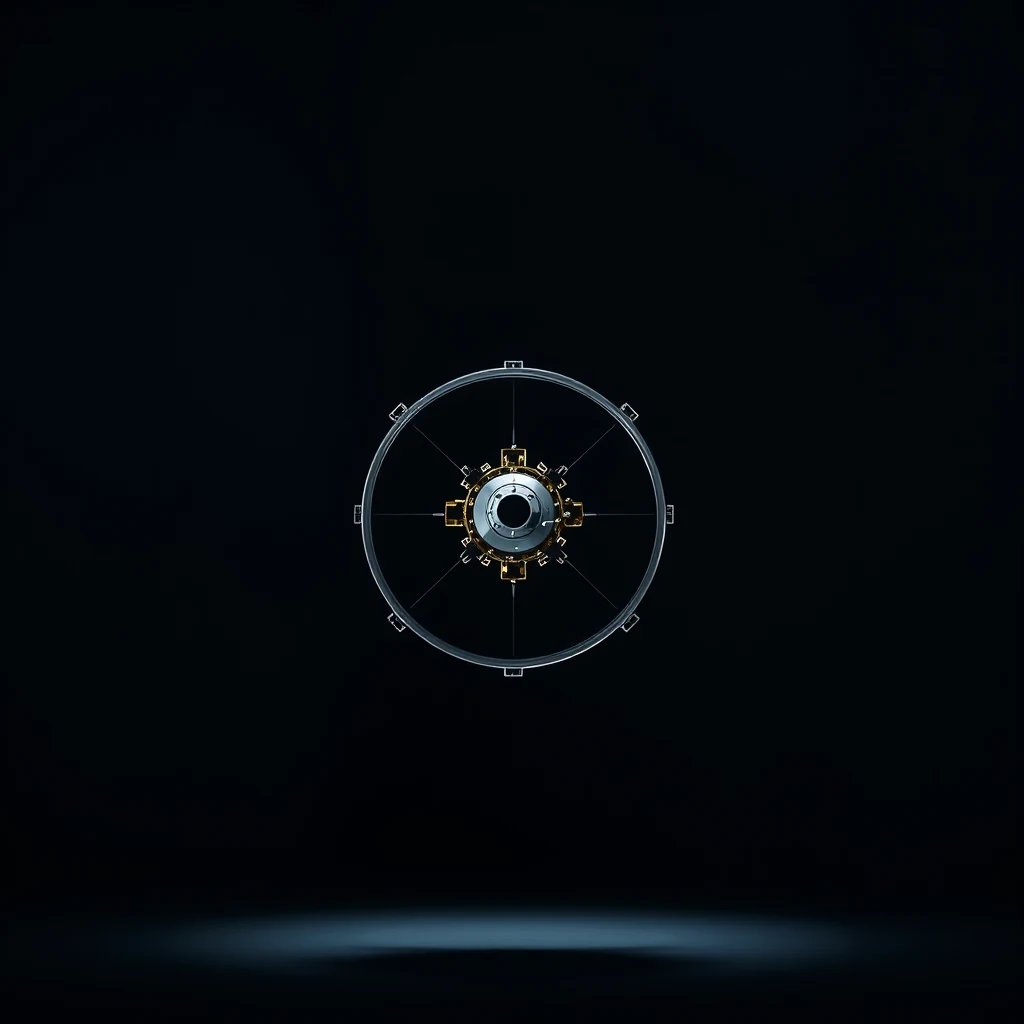 Object LISA The Laser Interferometer Space Antenna, a planned ESA-led space mission targeting launch in the mid-2030s. LISA will fly three spacecraft in a triangular formation 2.5 million kilometres on a side, trailing Earth's orbit around the Sun, using laser interferometry to detect gravitational waves at frequencies far below LIGO's range — the band where supermassive black-hole mergers and primordial signals are expected to live.激光干涉空间天线(LISA)是由欧洲空间局(ESA)主导的计划于2030年代中期发射的太空任务。LISA将由三艘航天器组成,在绕日轨道上呈等边三角形运行,每边长约250万公里。它将利用激光干涉技术探测频率远低于LIGO探测范围的低频引力波。这一波段预计将探测到超大质量黑洞合并以及宇宙初期的原初引力波信号。La Antena Espacial de Interferómetro Láser (LISA) es una misión espacial planificada y liderada por la ESA, cuyo lanzamiento está previsto para mediados de la década de 2030. LISA constará de tres naves espaciales en una formación triangular de 2,5 millones de kilómetros de lado, siguiendo la órbita de la Tierra alrededor del Sol. Utilizará interferometría láser para detectar ondas gravitacionales a frecuencias muy por debajo del rango de LIGO, la banda donde se espera encontrar fusiones de agujeros negros supermasivos y señales primordiales.إن هوائي المساحة بمقياس التداخل الليزري (LISA) هو مهمة فضائية مخططة بقيادة وكالة الفضاء الأوروبية (ESA) ويستهدف إطلاقها في منتصف ثلاثينيات القرن الحالي. ستتألف ليزا من ثلاث مركبات فضائية تحلق في تشكيل مثلثي يصل طول ضلعه إلى 2.5 مليون كيلومتر، وتتبع مدار الأرض حول الشمس. ستستخدم ليزا قياس التداخل الليزري للكشف عن موجات الجاذبية بترددات أقل بكثير من نطاق ليغو، وهو النطاق الذي يعتقد أنه يضم اندماجات الثقوب السوداء الهائلة والإشارات الأولية.A Antena Espacial de Interferômetro Laser (LISA) é uma missão espacial planejada e liderada pela ESA, com lançamento previsto para meados da década de 2030. A LISA consistirá em três espaçonaves voando em uma formação triangular com 2,5 milhões de quilômetros de lado, seguindo a órbita de la Terra ao redor do Sol. Ela utilizará interferometria laser para detectar ondas gravitacionais em frequências muito abaixo do alcance do LIGO, a banda onde se espera encontrar fusões de buracos negros supermassivos e sinais primordiais.लेजर इंटरफेरोमीटर स्पेस एंटीना (LISA) यूरोपीय अंतरिक्ष एजेंसी (ESA) के नेतृत्व में एक नियोजित अंतरिक्ष मिशन है, जिसे 2030 के दशक के मध्य में लॉन्च करने का लक्ष्य है। लीसा (LISA) सूर्य के चारों ओर पृथ्वी की कक्षा के पीछे 25 लाख किलोमीटर की दूरी पर एक त्रिकोणीय विन्यास में तीन अंतरिक्ष यान संचालित करेगा। यह लेजर इंटरफेरोमेट्री का उपयोग करके लीगो (LIGO) की सीमा से काफी कम आवृत्तियों पर गुरुत्वाकर्षण तरंगों का पता लगाएगा, जहां सुपरमैसिव ब्लैक होल विलय और आदिम संकेत मौजूद होने की उम्मीद है।Laser Interferometer Space Antenna (LISA) adalah misi luar angkasa terencana yang dipimpin oleh ESA dengan target peluncuran pada pertengahan 2030-an. LISA akan menerbangkan tiga pesawat luar angkasa dalam formasi segitiga dengan panjang sisi 2,5 juta kilometer, mengekor orbit Bumi mengelilingi Matahari. Misi ini menggunakan teknologi interferometer laser untuk mendeteksi gelombang gravitasi pada frekuensi jauh di bawah jangkauan LIGO, rentang frekuensi tempat bertemunya penggabungan lubang hitam supermasif dan sinyal purba.L'antenne spatiale à interféromètre laser (LISA) est une mission spatiale planifiée, dirigée par l'ESA, dont le lancement est prévu au milieu des années 2030. LISA se composera de trois engins spatiaux volant en formation triangulaire de 2,5 millions de kilomètres de côté, suivant l'orbite de la Terre autour du Soleil. Elle utilisera l'interférométrie laser pour détecter des ondes gravitationnelles à des fréquences bien inférieures à celles de LIGO, une bande où se situent les fusions de trous noirs supermassifs et les signaux primordiaux.レーザー干渉計宇宙アンテナ(LISA)は、欧州宇宙機関(ESA)が主导する、2030年代半ばの打ち上げを目指した宇宙重力波望遠鏡計画である。LISAは、太陽を周回する地球軌道上を追従する、1辺250万キロメートルの正三角形を形成する3機の宇宙船で構成される。レーザー干渉計を用いて、LIGOの測定限界を大幅に下回る低周波の重力波を検出する。この帯域には、超巨大ブラックホールの合体や宇宙初期の原始重力波信号が存在すると予想されている。Космическая антенна с лазерным интерферометром (LISA) — планируемая космическая миссия под руководством ЕКА, запуск которой намечен на середину 2030-х годов. LISA будет состоять из трех космических аппаратов, летящих треугольной формацией со стороной 2,5 млн километров по орбите вокруг Солнца вслед за Землей. Проект использует лазерную интерферометрию для обнаружения гравитационных волн на частотах гораздо ниже диапазона LIGO, где, как ожидается, находятся сигналы от слияний сверхмассивных черных дыр и первичные сигналы.Die Laser Interferometer Space Antenna (LISA) ist eine geplante Weltraummission unter der Leitung der ESA, deren Start für Mitte der 2030er Jahre vorgesehen ist. LISA wird aus drei Raumfahrzeugen bestehen, die in einer Dreiecksformation mit einer Seitenlänge von 2,5 Millionen Kilometern der Erdumlaufbahn um die Sonne folgen. Durch Laserinterferometrie soll LISA Gravitationswellen in Frequenzbereichen weit unterhalb der LIGO-Empfindlichkeit messen, in denen man Verschmelzungen supermassereicher Schwarzer Löcher und primordiale Signale erwartet.레이저 간섭계 우주 안테나(LISA)는 2030년대 중반 발사를 목표로 유럽우주국(ESA)이 주도하는 우주 탐사 미션이다. LISA는 태양을 공전하는 지구 궤도를 뒤따라 비행하는 한 변 250만 킬로미터 크기의 정삼각형 편대를 형성하는 세 대의 우주선으로 구성된다. 레이저 간섭계를 활용하여 기존 LIGO의 감지 한계보다 훨씬 낮은 주파수 대역의 중력파를 관측하며, 이 대역은 초대질량 블랙홀의 병합이나 우주 초기 원초 중력파 신호가 존재할 것으로 예상된다. mission planned for the 2030s, is designed to look for it.

And we do not know whether general relativity is the final word. Every LIGO event so far has matched Einstein's predictions to within the measurement error. At some point, presumably, it won't. That deviation, when it comes, will be the start of the next physics.
The machine in Louisiana is still running tonight. The mirrors hang in their vacuum, motionless to a precision the rest of the universe doesn't bother with, listening for the next chirp.