
In June 1977, an Air Force satellite called NTS-2 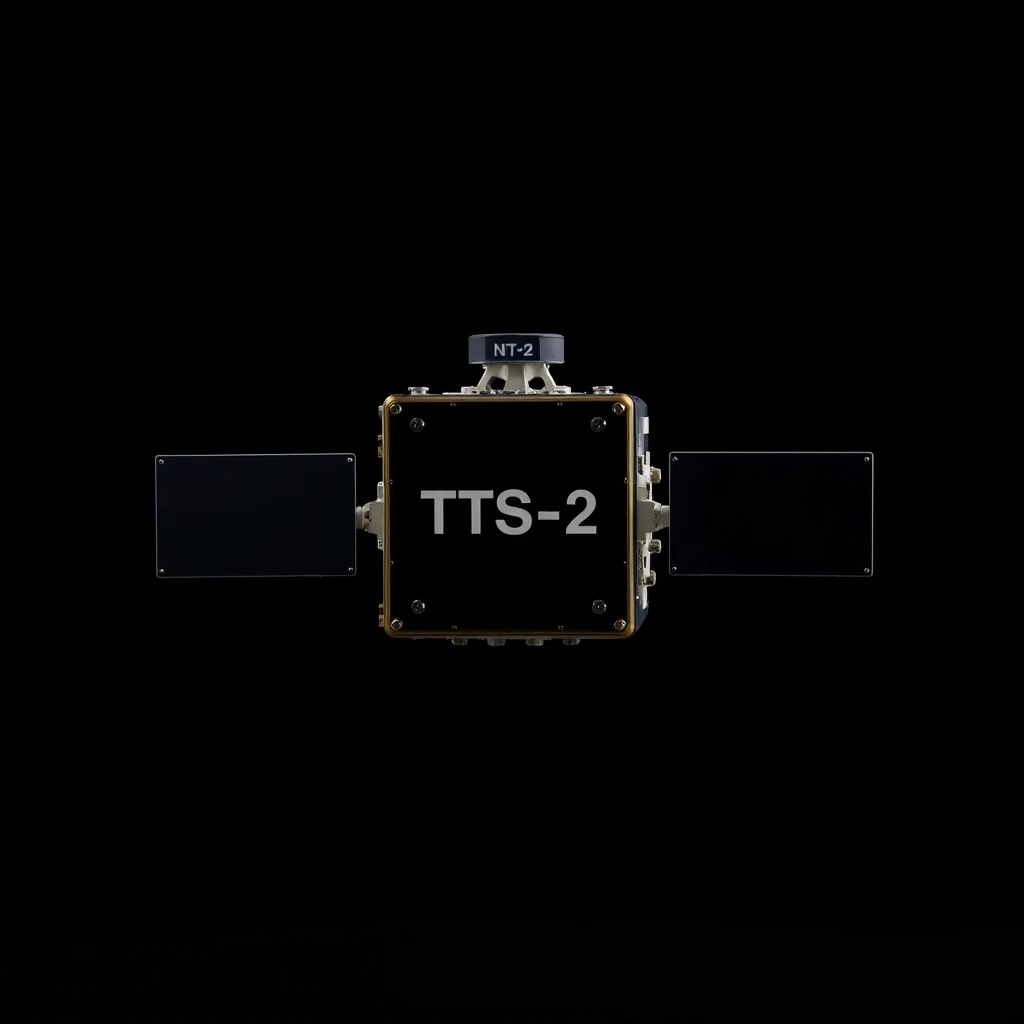 Object NTS-2 Navigation Technology Satellite 2, an experimental U.S. Air Force satellite launched in June 1977 to flight-test cesium atomic clocks for the planned GPS constellation. It was the first spacecraft to carry the relativistic frequency offset that makes an orbiting clock tick at the same rate as one on the ground. Within twenty days of launch the predicted shift had been confirmed and the offset was permanently engaged.导航技术卫星2号(NTS-2)是美国空军于1977年6月发射的一颗实验卫星,旨在为计划中的GPS星座飞行测试铯原子钟。它是第一艘携带相对论频率偏移量的航天器,使轨道时钟的滴答速率与地面时钟相同。发射后不到20天,预测的漂移量得到证实,该频率偏移量被永久启用。Satélite experimental de la Fuerza Aérea de EE. UU. lanzado en junio de 1977 (Navigation Technology Satellite 2) para probar en vuelo relojes atómicos de cesio para la constelación GPS. Fue la primera nave espacial en incorporar la compensación de frecuencia relativista que hace que un reloj en órbita avance al mismo ritmo que uno en tierra. En los veinte días posteriores al lanzamiento se confirmó el desfase previsto y la compensación se activó de forma permanente.الساتل التجريبي لتقنية الملاحة 2 (NTS-2) هو قمر صناعي تابع للقوات الجوية الأمريكية تم إطلاقه في يونيو 1977 لاختبار الساعات الذرية للسيزيوم أثناء الطيران من أجل كوكبة تحديد المواقع (GPS) المخطط لها. كان أول مركبة فضائية تحمل إزاحة التردد النسبي الذي يجعل الساعة التي تدور في المدار تدق بنفس معدل الساعة على الأرض. في غضون عشرين يوماً من إطلاقه، تم تأكيد الإزاحة المتوقعة وتفعيلها بشكل دائم.Satélite experimental da Força Aérea dos EUA (Navigation Technology Satellite 2), lançado em junho de 1977 para testar em voo os relógios atômicos de césio da planejada constelação GPS. Foi a primeira espaçonave a carregar a compensação de frequência relativística que faz um relógio em órbita funcionar na mesma velocidade que um no solo. O desvio previsto foi confirmado dentro de vinte dias após o lançamento e a compensação foi ativada permanentemente.नेविगेशन टेक्नोलॉजी सैटेलाइट 2 (NTS-2) अमेरिकी वायु सेना का एक प्रयोगात्मक उपग्रह था जिसे जून 1977 में नियोजित जीपीएस (GPS) तारामंडल के लिए सीज़ियम परमाणु घड़ियों का परीक्षण करने के लिए लॉन्च किया गया था। यह आपेक्षिक आवृत्ति ऑफसेट (रैलेटिविस्टिक फ्रीक्वेंसी ऑफसेट) ले जाने वाला पहला अंतरिक्ष यान था, जो एक परिक्रमा करने वाले क्लॉक को जमीन पर चलने वाले क्लॉक के समान दर पर चलाता है। प्रक्षेपण के बीस दिनों के भीतर अनुमानित बदलाव की पुष्टि हो गई और ऑफसेट को स्थायी रूप से लागू कर दिया गया।Navigation Technology Satellite 2 (NTS-2) adalah satelit eksperimental Angkatan Udara AS yang diluncurkan pada Juni 1977 untuk menguji jam atom sesium dalam penerbangan bagi rasi satelit GPS yang direncanakan. NTS-2 merupakan pesawat luar angkasa pertama yang menerapkan kompensasi frekuensi relativistik agar jam di orbit berdetak dengan kecepatan yang sama dengan jam di darat. Pergeseran tersebut terbukti dalam waktu dua puluh hari sejak peluncuran dan kompensasi ini diterapkan secara permanen.Navigation Technology Satellite 2, un satellite expérimental de l'US Air Force lancé en juin 1977 pour tester en vol des horloges atomiques au césium destinées à la future constellation GPS. Ce fut le premier engin spatial à appliquer le décalage de fréquence relativiste permettant à une horloge en orbite de battre au même rythme qu'au sol. Moins de vingt jours après le lancement, le décalage prévu était confirmé et la correction était définitivement activée.ナビゲーション技術衛星2号(NTS-2)は、計画されていたGPS衛星群用のセシウム原子時計を軌道試験するため、1977年6月に米空軍が打ち上げた実験衛星。軌道上の時計の進み方を地上の時計と同期させるための「相対論的周波数オフセット」を初めて搭載した宇宙船である。打ち上げから20日以内に予測された周波数偏移が確認され、このオフセット設定は恒久的に固定された。Экспериментальный спутник ВВС США Navigation Technology Satellite 2, запущенный в июне 1977 года для летных испытаний цезиевых атомных часов для планируемой группировки GPS. Он стал первым космическим аппаратом с релятивистской частотной поправкой, благодаря которой орбитальные часы идут с той же скоростью, что и на земле. Через двадцать дней после запуска предсказанный сдвиг подтвердился, и поправку задействовали навсегда.Navigation Technology Satellite 2 (NTS-2) war ein im Juni 1977 gestarteter experimenteller Satellit der US-Luftwaffe zur Erprobung von Cäsium-Atomuhren für das geplante GPS-Netzwerk. Er trug als erstes Raumfahrzeug die relativistische Frequenzkorrektur, die dafür sorgt, dass eine Uhr im Orbit genauso schnell geht wie auf der Erde. Innerhalb von zwanzig Tagen nach dem Start wurde die vorhergesagte Verschiebung bestätigt und die Korrektur dauerhaft aktiviert.1977년 6월 미 공군이 계획 중인 GPS 위성 편대에 쓰일 세슘 원자시계를 우주 환경에서 시험하기 위해 발사한 실험용 위성(Navigation Technology Satellite 2)이다. 궤도를 도는 시계가 지상의 시계와 동일한 속도로 가도록 보정해 주는 '상대론적 주파수 오프셋'을 탑재한 최초의 우주선이었다. 발사 후 20일 이내에 예측된 주파수 변화가 입증되었으며 오프셋 보정치가 영구적으로 적용되었다. went into orbit carrying the first cesium atomic clock ever flown in space. The clock had been factory-tuned to tick a deliberate amount slower than it would have on the ground — 4.46 parts in ten billion slow — because Einstein
  Person Einstein A German-born theoretical physicist (1879–1955) who between 1905 and 1916, first as a patent clerk in Bern and then as a professor in Berlin, produced the two theories of relativity that reshaped twentieth-century physics. Special relativity unified space and time and showed that moving clocks run slow; general relativity recast gravity as the curvature of spacetime by mass and energy. He died in Princeton, still trying to unify gravity with the rest of physics.阿尔伯特·爱因斯坦(Albert Einstein,1879–1955)是出生于德国的理论物理学家。在1905年至1916年期间,他先是在伯尔尼担任专利局技术员,后来在柏林担任教授,期间创立了重塑20世纪物理学的狭义和广义相对论。狭义相对论将空间与时间统一起来,并指出运动的时钟会变慢;广义相对论则将引力重新解释为质量和能量引起的时空弯曲。他最终在普林斯顿逝世,当时他仍在尝试将引力与物理学的其他力统一起来。Físico teórico nacido en Alemania (1879–1955) que, entre 1905 y 1916, primero como empleado de patentes en Berna y luego como profesor en Berlín, desarrolló las dos teorías de la relatividad que redefinieron la física del siglo XX. La relatividad especial unificó el espacio y el tiempo, demostrando que los relojes en movimiento funcionan más despacio; la relatividad general redefinió la gravedad como la curvatura del espacio-tiempo causada por la masa y la energía. Murió en Princeton, intentando unificar la gravedad con el resto de la física.ألبرت أينشتاين هو عالم فيزياء نظرية ألماني المولد (1879-1955) صاغ بين عامي 1905 و1916، أولاً كموظف براءات اختراع في برن ثم كأستاذ في برلين، نظريتي النسبية اللتين أعادتا تشكيل فيزياء القرن العشرين. وحدت النسبية الخاصة بين المكان والزمان وأظهرت أن الساعات المتحركة تسير ببطء، بينما أعادت النسبية العامة صياغة الجاذبية باعتبارها انحناءً للزمكان بسبب الكتلة والطاقة. توفي في برينستون بينما كان لا يزال يحاول توحيد الجاذبية مع بقية الفيزياء.Físico teórico nascido na Alemanha (1879–1955) que, entre 1905 e 1916, primeiro como funcionário de patentes em Berna e depois como professor em Berlim, formulou as duas teorias da relatividade que redefiniram a física do século XX. A relatividade especial unificou o espaço e o tempo e revelou que relógios em movimento correm mais devagar; a relatividade geral redefiniu a gravidade como a curvatura do espaço-tempo provocada pela massa e energia. Ele faleceu em Princeton, tentando unificar a gravidade com o restante da física.अल्बर्ट आइंस्टीन (1879-1955) जर्मनी में जन्मे एक सैद्धांतिक भौतिक विज्ञानी थे, जिन्होंने 1905 से 1916 के बीच, पहले बर्न में पेटेंट क्लर्क और फिर बर्लिन में प्रोफेसर के रूप में काम करते हुए, सापेक्षता के दो सिद्धांत दिए जिन्होंने भौतिकी को बदल दिया। विशिष्ट सापेक्षता ने अंतरिक्ष और समय को जोड़ा और दिखाया कि चलती घड़ी धीमी होती है; सामान्य सापेक्षता ने गुरुत्वाकर्षण को द्रव्यमान और ऊर्जा द्वारा स्पेस-टाइम के झुकाव के रूप में परिभाषित किया। प्रिंसटन में उनका निधन हुआ, जब वे गुरुत्वाकर्षण को अन्य शक्तियों से एकीकृत करने का प्रयास कर रहे थे।Fisikawan teoritis kelahiran Jerman (1879–1955) yang antara 1905 dan 1916, awalnya bekerja sebagai juru tulis paten di Bern lalu sebagai profesor di Berlin, menghasilkan dua teori relativitas yang membentuk kembali fisika abad ke-20. Relativitas khusus menyatukan ruang dan waktu serta menunjukkan bahwa jam yang bergerak berjalan lambat. Relativitas umum merumuskan kembali gravitasi sebagai kelengkungan ruang-waktu oleh massa dan energi. Ia wafat di Princeton, saat masih mencoba menyatukan gravitasi dengan cabang fisika lainnya.Physicien théoricien d'origine allemande (1879-1955) qui, entre 1905 et 1916, d'abord comme commis aux brevets à Berne puis comme professeur à Berlin, a produit les deux théories de la relativité qui ont remodelé la physique du XXe siècle. La relativité restreinte a unifié l'espace et le temps et a montré que les horloges en mouvement ralentissent ; la relativité générale a redéfini la gravité comme la courbure de l'espace-temps par la masse et l'énergie. Il est mort à Princeton, tentant toujours d'unifier la gravité avec le reste de la physique.ドイツ生まれの理論物理学者(1879–1955)。1905年から1916年にかけて、最初はベルンで特許局の技师として、後にベルリンで教授として、20世紀物理学を再構築した2つの相対性理論を発表した。特殊相対性理論は时间と空間を統合し、移動する時計が遅れることを示した。一般相対性理论は、重力を質量とエネルギーによる時空の歪みとして再定義した。アインシュタインはプリンストンで、重力と他の物理学分野の統合を試みながら没した。Физик-теоретик немецкого происхождения (1879–1955), который в период между 1905 и 1916 годами, сначала в качестве патентного служащего в Берне, а затем профессора в Берлине, создал две теории относительности, изменившие физику XX века. Специальная теория относительности объединила пространство и время и показала, что движущиеся часы идут медленнее; общая теория относительности представила гравитацию как искривление пространства-времени массой и энергией. Он умер в Принстоне, пытаясь объединить гравитацию с остальной физикой.Ein in Deutschland geborener theoretischer Physiker (1879–1955), der zwischen 1905 und 1916, zunächst als Patentbeamter in Bern und später als Professor in Berlin, die beiden Relativitätstheorien entwickelte, die die Physik des 20. Jahrhunderts neu gestalteten. Die Spezielle Relativitätstheorie vereinte Raum und Zeit und zeigte, dass bewegte Uhren langsamer laufen; die Allgemeine Relativitätstheorie beschrieb Gravitation als Krümmung der Raumzeit durch Masse und Energie. Er starb in Princeton, während er versuchte, die Gravitation mit der restlichen Physik zu vereinheitlichen.독일 태생의 이론물리학자(1879~1955)로, 1905년에서 1916년 사이에 베른의 특허청 서기로 시작해 베를린의 교수로 재직하며 20세기 물리학을 완전히 재편한 두 가지 상대성이론을 정립했다. 특수상대성이론은 공간과 시간을 통합하고 운동하는 시계가 느리게 간다는 것을 입증했다. 일반상대성이론은 중력을 질량과 에너지에 의한 시공간의 곡률로 재정의했다. 그는 프린스턴에서 사망할 때까지 중력과 물리학의 다른 힘들을 통합하려는 연구를 멈추지 않았다. said that once it was in orbit it would speed up by exactly that amount. Several of the engineers on the program were not convinced. A switch was wired into the satellite so the offset could be disabled if the prediction turned out to be wrong.
It did not turn out to be wrong. Within twenty days of launch the clock was running fast by precisely the figure the equations gave, and the offset was switched on for good. A piece of 1915 physics had moved from a chalkboard to a circuit board.

Every GPS satellite that has flown since carries the same trick.
The two corrections
A GPS satellite orbits at about 14,000 kilometres per hour at an altitude of 20,200 km. Two of Einstein's theories operate on its clock at the same time, and they pull in opposite directions.

Special relativity  Concept special relativity Einstein's 1905 theory, built on two postulates: that the laws of physics are the same in every inertial reference frame, and that the speed of light is the same for every observer regardless of their motion. The consequences are unintuitive. Moving clocks tick slower, moving rulers shrink along the direction of travel, and simultaneity is not absolute. The theory underlies particle accelerators, nuclear energy and satellite navigation.爱因斯坦在1905年提出的理论,基于两个公设:物理定律在所有惯性参考系中都是相同的,且光速对于所有观察者而言都是相同的,无论其运动状态如何。其推论十分违背直觉:运动的时钟变慢,运动的尺子沿运动方向收缩,且同时性不是绝对的。该理论是粒子加速器、核能和卫星导航技术的基石。La teoría de Einstein de 1905, basada en dos postulados: que las leyes de la física son idénticas en todos los sistemas de referencia inerciales, y que la velocidad de la luz es constante para cualquier observador independientemente de su movimiento. Las consecuencias son contraintuitivas: los relojes en movimiento avanzan más despacio, las reglas en movimiento se contraen en la dirección del viaje y la simultaneidad no es absoluta. Esta teoría fundamenta los aceleradores de partículas, la energía nuclear y la navegación satelital.نظريّة أينشتاين لعام 1905، المبنيّة على فرضيّتين: الأولى أن قوانين الفيزياء هي نفسها في كل إطار مرجعي قصوري، والثانية أن سرعة الضوء ثابتة لجميع المراقبين بغض النظر عن حركتهم. تؤدي هذه الفرضيات إلى نتائج غير بديهية: فالساعات المتحركة تدق بشكل أبطأ، والمساطر المتحركة تنكمش على طول اتجاه الحركة، كما أن التزامن ليس مطلقاً. تشكل هذه النظرية الأساس لمسرعات الجسيمات والطاقة النووية وأنظمة الملاحة عبر الأقمار الصناعية.A teoria de Einstein de 1905, baseada em dois postulados: as leis da física são as mesmas em qualquer referencial inercial, e a velocidade da luz é idêntica para qualquer observador, independentemente de seu movimento. As consequências são contraintuitivas: relógios em movimento funcionam mais devagar, réguas em movimento encolhem ao longo da direção do deslocamento e a simultaneidade não é absoluta. A teoria serve de base para aceleradores de partículas, energia nuclear e navegação por satélite.आइंस्टीन का 1905 का सिद्धांत, जो दो मान्यताओं पर आधारित है: कि भौतिकी के नियम हर जड़त्वीय संदर्भ फ्रेम (इनर्शियल फ्रेम) में समान होते हैं, और प्रकाश की गति हर पर्यवेक्षक के लिए समान होती है, चाहे उनकी गति कुछ भी हो। इसके परिणाम सामान्य समझ के विपरीत हैं। चलती हुई घड़ियाँ धीमी टिक करती हैं, चलते हुए पैमाने यात्रा की दिशा में सिकुड़ जाते हैं, और समकालिकता (सिमल्टेनिटी) निरपेक्ष नहीं है। यह सिद्धांत कण त्वरक (पार्टिकल एक्सेलरेटर), परमाणु ऊर्जा और उपग्रह नेविगेशन का आधार है।Teori Einstein tahun 1905, yang dibangun di atas dua postulat: bahwa hukum fisika adalah sama di setiap kerangka acuan inersia, dan kecepatan cahaya adalah sama untuk setiap pengamat tanpa memandang gerakan mereka. Konsekuensinya tidak intuitif: jam yang bergerak berdetak lebih lambat, penggaris yang bergerak menyusut di sepanjang arah perjalanan, dan simultanitas tidaklah mutlak. Teori ini menjadi dasar bagi akselerator partikel, energi nuklir, dan navigasi satelit.Théorie d'Einstein de 1905, reposant sur deux postulats : les lois de la physique sont les mêmes dans tout référentiel inertiel, et la vitesse de la lumière est identique pour tout observateur quel que soit son mouvement. Les conséquences sont contre-intuitives : les horloges en mouvement tournent plus lentement, les règles en mouvement se contractent dans la direction du déplacement et la simultanéité n'est pas absolue. Cette théorie sous-tend les accélérateurs de particules, l'énergie nucléaire et la navigation par satellite.1905年にアインシュタインが発表した理論で、2つの公設(物理法則はすべての慣性基準系において同一であること、および光速度は観測者の運動状態に関わらず常に一定であること)に基づいている。この理論がもたらす結論は直感に反しており、移動する時計は遅れ、移動する物体の長さは移動方向に収縮し、同時性は絶対的ではない。この理論は、粒子加速器、原子力、人工衛星ナビゲーションの基礎となっている。Теория Эйнштейна 1905 года, основанная на двух постулатах: законы физики одинаковы во всех инерциальных системах отсчета, а скорость света одинакова для всех наблюдателей независимо от их движения. Последствия этого не интуитивны: движущиеся часы идут медленнее, движущиеся линейки сокращаются в направлении движения, а одновременность не является абсолютной. Теория лежит в основе работы ускорителей частиц, ядерной энергетики и спутниковой навигации.Einsteins Theorie von 1905, die auf zwei Postulaten basiert: dass die Gesetze der Physik in jedem Inertialsystem gleich sind und dass die Lichtgeschwindigkeit für jeden Beobachter unabhängig von dessen Bewegung konstant ist. Die Konsequenzen sind kontraintuitiv: Bewegte Uhren gehen langsamer, bewegte Maßstäbe schrumpfen in Bewegungsrichtung und Gleichzeitigkeit ist nicht absolut. Die Theorie bildet das Fundament für Teilchenbeschleuniger, Kernenergie und Satellitennavigation.1905년 아인슈타인이 발표한 이론으로, 물리 법칙은 모든 관성 기준계에서 동일하며 빛의 속도는 관찰자의 운동 상태에 관계없이 항상 일정하다는 두 가지 가정을 바탕으로 한다. 이 이론이 가져오는 결과는 직관에 반한다. 움직이는 시계는 느리게 가고, 움직이는 자는 이동 방향으로 수축하며, 동시성은 절대적이지 않다. 이 이론은 입자 가속기, 원자력 발전, 위성 항법 시스템의 물리학적 기반이 된다. says that a moving clock ticks slower than a stationary one. The satellite is moving fast relative to a receiver on the ground, so its onboard clock loses about seven microseconds per day to motion alone.

General relativity  Concept general theory of relativity Einstein's 1915 theory of gravity, which replaced Newton's instantaneous force with a geometric description: mass tells spacetime how to curve, curved spacetime tells mass how to move. The theory predicts black holes, the bending of light by the Sun, the precession of Mercury's orbit, and the existence of gravitational waves. Every prediction has so far survived experimental test.广义相对论是爱因斯坦于1915年提出的引力理论,它用几何描述取代了牛顿的瞬时超距作用力:物质告诉时空如何弯曲,弯曲的时空告诉物质如何运动。该理论预测了黑洞、太阳引起的偏折光线、水星轨道的进动以及引力波的存在。迄今为止,其中的每一项预测都成功通过了实验检验。La teoría de la gravedad de Einstein de 1915, que reemplazó la fuerza instantánea de Newton por una descripción geométrica: la masa le dice al espacio-tiempo cómo curvarse, y el espacio-tiempo curvado le dice a la masa cómo moverse. La teoría predice los agujeros negros, la curvatura de la luz por el Sol, la precesión de la órbita de Mercurio y la existencia de ondas gravitacionales. Cada predicción ha superado hasta ahora las pruebas experimentales.النظرية النسبية العامة هي نظرية الجاذبية التي وضعها أينشتاين عام 1915، والتي استبدلت قوة نيوتن اللحظية بوصف هندسي: الكتلة تخبر الزمكان كيف ينحني، والزمكان المنحني يخبر الكتلة كيف تتحرك. تتنبأ النظرية بالثقوب السوداء، وانحناء الضوء بفعل الشمس، وبدارية مدار عطارد، ووجود موجات الجاذبية. وقد اجتاز كل تنبؤ منها الاختبار التجريبي حتى الآن بنجاح.A teoria da gravidade de Einstein de 1915, que substituiu a força instantânea de Newton por uma descrição geométrica: a massa diz ao espaço-tempo como se curvar, e o espaço-tempo curvado diz à massa como se mover. A teoria prevê buracos negros, a deflexão da luz pelo Sol, la precessão da órbita de Mercúrio e a existência de ondas gravitacionais. Todas as previsões sobreviveram aos testes experimentais até agora.सामान्य सापेक्षता आइंस्टीन का 1915 का गुरुत्वाकर्षण का सिद्धांत है, जिसने न्यूटन के तात्कालिक बल को एक ज्यामितीय विवरण से बदल दिया: द्रव्यमान स्पेस-टाइम को बताता है कि कैसे मुड़ना है, और मुड़ा हुआ स्पेस-टाइम द्रव्यमान को बताता है कि कैसे गति करनी है। यह सिद्धांत ब्लैक होल, सूर्य द्वारा प्रकाश के झुकने, बुध की कक्षा के पुरस्सरण (प्रिसेशन) और गुरुत्वाकर्षण तरंगों के अस्तित्व की भविष्यवाणी करता है। अब तक हर भविष्यवाणी प्रायोगिक परीक्षण में खरी उतरी है।Teori gravitasi Einstein tahun 1915, yang menggantikan gaya instan Newton dengan deskripsi geometris: massa memberi tahu ruang-waktu bagaimana melengkung, ruang-waktu yang melengkung memberi tahu massa bagaimana bergerak. Teori ini memprediksi lubang hitam, pembelokan cahaya oleh Matahari, presesi orbit Merkurius, dan keberadaan gelombang gravitasi. Setiap prediksi sejauh ini telah lolos uji eksperimental.Théorie de la gravité d'Einstein de 1915, qui a remplacé la force instantanée de Newton par une description géométrique : la masse indique à l'espace-temps comment se courber, et l'espace-temps courbé indique à la masse comment se déplacer. La théorie prédit les trous noirs, la déviation de la lumière par le Soleil, la précession de l'orbite de Mercure et l'existence d'ondes gravitationnelles. Chaque prédiction a jusqu'à présent survécu aux tests internationaux (tests expérimentaux).一般相対性理論は、1915年にアインシュタインが提唱した重力理论であり、ニュートンの瞬时遠隔力を「物質が时空に歪みを与え、歪んだ時空が物質の運動を決める」という幾何学的な記述に置き換えた。この理論は、ブラックホール、太陽による光の屈曲、水星の近日点移動、そして重力波の存在を予言している。これまでのところ、すべての予言が実験的検証をクリアしている。Общая теория относительности — созданная Эйнштейном в 1915 году теория гравитации, заменившая ньютоновское мгновенное действие на расстоянии геометрическим описанием: масса говорит пространству-времени, как искривляться, а искривленное пространство-время говорит массе, как двигаться. Теория предсказывает черные дыры, отклонение света Солнцем, прецессию орбиты Меркурия и существование гравитационных волн. Все предсказания к настоящему времени прошли экспериментальную проверку.Einsteins Gravitationstheorie von 1915, die Newtons instantane Kraft durch eine geometrische Beschreibung ersetzte: Masse sagt der Raumzeit, wie sie sich krümmen soll, die gekrümmte Raumzeit sagt der Masse, wie sie sich bewegen soll. Die Theorie sagt Schwarze Löcher, die Ablenkung des Lichts durch die Sonne, die Präzession der Merkurbahn und die Existenz von Gravitationswellen voraus. Jede Vorhersage hat bislang experimentellen Tests standgehalten.일반상대성이론은 1915년 아인슈타인이 발표한 중력 이론으로, 뉴턴의 즉각적인 원격력을 기하학적 설명으로 대체했다. 즉, 질량이 시공간에 곡률을 부여하고, 곡률을 가진 시공간이 질량의 운동 방식을 결정한다는 개념이다. 이 이론은 블랙홀, 태양에 의한 빛의 굴절, 수성의 근일점 이동, 중력파의 존재를 예견한다. 현재까지 모든 예측이 실험적 검증을 통과했다. says that a clock sitting deeper in a gravitational well ticks slower than one higher up. The satellite is twenty thousand kilometres further from the centre of the Earth than your phone is, in much weaker gravity, so its clock gains about forty-five microseconds per day.
The effects do not cancel. The net result is an orbiting clock that runs thirty-eight microseconds per day fast compared to identical hardware on the ground. Forty-five minus seven.

Thirty-eight microseconds sounds like nothing. But GPS works by measuring how long a radio signal takes to reach you from the satellite, and light covers three hundred metres in a microsecond. An uncorrected drift of thirty-eight microseconds per day, compounded across a constellation, would push your apparent position out by something on the order of ten kilometres in twenty-four hours. By the end of a week your phone would believe you were in the next county.
A patent clerk's correction
The numbers were known well before GPS existed. The first direct test of gravitational time dilation came in 1959, when Robert Pound  Person Robert Pound An American physicist (1919–2010) at Harvard who in 1959, with his student Glen Rebka, used the recently discovered Mössbauer effect to measure the gravitational redshift of gamma rays falling down a 22.5-metre tower in the Jefferson Laboratory. The experiment confirmed Einstein's prediction to within ten percent and was the first direct laboratory test of general relativity. A refined version in 1964 brought the agreement to within one percent.罗伯特·庞德(Robert Pound,1919–2010)是哈佛大学的美国物理学家。1959年,他与学生格伦·雷布卡利用新发现的穆斯堡尔效应,测量了在杰斐逊实验室22.5米高的塔楼中下落的伽马射线的引力红移。该实验证实了爱因斯坦的预测,误差在10%以内,是广义相对论的首次直接实验室验证。1964年的改进版本将精确度提高到了1%以内。Físico estadounidense (1919–2010) de Harvard que en 1959, junto a su estudiante Glen Rebka, utilizó el recién descubierto efecto Mössbauer para medir el corrimiento al rojo gravitacional de los rayos gamma al caer por una torre de 22,5 metros en el Laboratorio Jefferson. El experimento confirmó la predicción de Einstein con un margen del diez por ciento y fue la primera prueba directa de laboratorio de la relatividad general. Una versión perfeccionada en 1964 redujo el margen de error a menos del uno por ciento.روبرت باوند هو عالم فيزياء أمريكي (1919-2010) في جامعة هارفارد، استخدم في عام 1959 مع طالبه غلين ريبكا تأثير موشباور المكتشف حديثاً لقياس الانزياح الجذبي الأحمر لأشعة غاما الساقطة داخل برج يبلغ ارتفاعه 22.5 متراً في مختبر جيفرسون. أكدت التجربة تنبؤ أينشتاين في حدود عشرة بالمائة، وكانت أول اختبار معملي مباشر للنسبية العامة. وفي عام 1964، أدت نسخة محسنة من التجربة إلى رفع دقة المطابقة إلى حدود واحد بالمائة فقط.Um físico americano (1919–2010) de Harvard que, em 1959, com seu aluno Glen Rebka, usou o recém-descoberto efeito Mössbauer para medir o desvio para o vermelho gravitacional de raios gama caindo por uma torre de 22,5 metros no Laboratório Jefferson. O experimento confirmou a previsão de Einstein com precisão de dez por cento e representou o primeiro teste laboratorial direto da relatividade geral. Uma versão aprimorada em 1964 reduziu a margem para menos de um por cento.हार्वर्ड विश्वविद्यालय के एक अमेरिकी भौतिक विज्ञानी रॉबर्ट पाउंड (1919-2010) थे, जिन्होंने 1959 में अपने छात्र ग्लेन रेबका के साथ मिलकर, जेफरसन प्रयोगशाला में 22.5 मीटर ऊंचे टावर से गिरने वाली गामा किरणों के गुरुत्वाकर्षण रेडशिफ्ट को मापने के लिए हाल ही में खोजे गए मॉसबावर प्रभाव (Mössbauer effect) का उपयोग किया। इस प्रयोग ने आइंस्टीन की भविष्यवाणी की दस प्रतिशत के भीतर पुष्टि की और यह सामान्य सापेक्षता का पहला प्रत्यक्ष प्रयोगशाला परीक्षण था। 1964 में एक परिष्कृत संस्करण ने इस अंतर को एक प्रतिशत के भीतर ला दिया।Fisikawan Amerika (1919–2010) di Harvard yang pada tahun 1959, bersama mahasiswanya Glen Rebka, menggunakan efek Mössbauer yang baru ditemukan untuk mengukur pergeseran merah gravitasi dari sinar gama yang jatuh di menara setinggi 22,5 meter di Laboratorium Jefferson. Eksperimen tersebut mengonfirmasi prediksi Einstein dalam batas sepuluh persen dan merupakan uji laboratorium langsung pertama terhadap relativitas umum. Versi penyempurnaan pada tahun 1964 membawa tingkat kecocokan dalam batas satu persen.Physicien américain (1919-2010) à Harvard qui, en 1959, avec son étudiant Glen Rebka, a utilisé l'effet Mössbauer récemment découvert pour mesurer le décalage vers le rouge gravitationnel de rayons gamma tombant d'une tour de 22,5 mètres dans le laboratoire Jefferson. L'expérience a confirmé la prédiction d'Einstein à dix pour cent près et a constitué le premier test direct de la relativité générale en laboratoire. Une version affinée en 1964 a ramené l'écart à moins d'un pour cent.ハーバード大学の米国人物理学者(1919–2010)。1959年、弟子のグレン・レブкаとともに、当時発見されたばかりのメスバウアー効果を利用して、ジェファーソン研究棟の22.5メートルの塔を落下するガンマ線の重力赤方偏移を測定した。この実験は、アインシュタインの予言を10%以内の精度で検証し、一般相対性理論初の直接的な実験室での実証となった。1964年の改良版では、精度が1%以内にまで向上した。Американский физик (1919–2010) из Гарварда, который в 1959 году вместе со своим студентом Гленом Ребкой использовал недавно открытый эффект Мёссбауэра для измерения гравитационного красного смещения гамма-лучей, проходящих вниз по 22,5-метровой башне в лаборатории Джефферсона. Эксперимент подтвердил предсказание Эйнштейна с точностью до десяти процентов, став первой прямой лабораторной проверкой общей теории относительности. Улучшенная версия 1964 года довела точность до одного процента.Ein amerikanischer Physiker (1919–2010) in Harvard, der 1959 mit seinem Studenten Glen Rebka den neu entdeckten Mößbauer-Effekt nutzte, um die gravitative Rotverschiebung von Gammastrahlen zu messen, die in einem 22,5 Meter hohen Turm des Jefferson-Labors herabfielen. Das Experiment bestätigte Einsteins Vorhersage bis auf zehn Prozent Genauigkeit und war der erste direkte Labortest der Allgemeinen Relativitätstheorie. Eine verfeinerte Version im Jahr 1964 verbesserte die Übereinstimmung auf unter ein Prozent.하버드 대학교의 미국 물리학자(1919~2010)로, 1959년 그의 제자인 글렌 렙카와 함께 최근 발견된 뫼스바우어 효과를 이용해 제퍼슨 실험실의 22.5미터 타워 아래로 떨어지는 감마선의 중력 적색편이를 측정했다. 이 실험은 아인슈타인의 예측을 10% 오차 범위 내에서 증명하며 일반상대성이론의 첫 번째 직접적인 실험실 검증이 되었다. 1964년에 수행된 개정 실험에서는 오차 범위를 1% 이내로 더욱 줄였다. and his student Glen Rebka used gamma rays falling down a 22.5-metre tower at Harvard to measure the tiny frequency shift Einstein had predicted in 1915. The first test with actual clocks flew in 1971, when Joseph Hafele
  Person Joseph Hafele An American physicist who in October 1971, with astronomer Richard Keating, carried four cesium-beam atomic clocks on commercial round-the-world flights to test the time dilation predictions of both special and general relativity. The eastbound clocks lost roughly fifty-nine nanoseconds; the westbound ones gained two hundred and seventy-three, both consistent with theory. The Hafele–Keating experiment is now a textbook demonstration of relativity outside the laboratory.约瑟夫·哈菲尔(Joseph Hafele)是美国物理学家。1971年10月,他与天文学家理查德·基廷携带四个铯光束原子钟搭乘民航飞机环球飞行,以检验狭义和广义相对论的时间膨胀预测。向东飞行的时钟慢了大约59纳秒,向西飞行的时钟快了大约273纳秒,均与理论预测相符。哈菲尔-基廷实验现已成为实验室外相对论效应的教科书级经典演示。Físico estadounidense que en octubre de 1971, junto al astrónomo Richard Keating, llevó cuatro relojes atómicos de haz de cesio en vuelos comerciales alrededor del mundo para probar las predicciones de la dilatación del tiempo de la relatividad especial y general. Los relojes que viajaron hacia el este perdieron unos 59 nanosegundos; los que viajaron hacia el oeste ganaron 273, ambos resultados coherentes con la teoría. El experimento Hafele-Keating es hoy una demostración clásica de la relatividad fuera del laboratorio.جوزيف هافيلي هو عالم فيزياء أمريكي قام في أكتوبر 1971، مع عالم الفلك ريتشارد كيتنغ، بنقل أربعة ساعات ذرية ذات شعاع سيزيوم على متن رحلات تجارية حول العالم لاختبار تنبؤات تمدد الزمن في النسبية الخاصة والعامة. فقدت الساعات المتجهة شرقاً حوالي 59 نانوثانية، بينما كسبت المتجهة غرباً 273 نانوثانية، وكلاهما يتفق مع النظرية. أصبحت تجربة هافيلي-كيتنغ الآن عرضاً مرجعياً في الكتب الدراسية للنسبية خارج المختبر.Um físico americano que, em outubro de 1971, com o astrônomo Richard Keating, levou quatro relógios atômicos de feixe de césio em voos comerciais de volta ao mundo para testar as previsões de dilatação do tempo da relatividade especial e geral. Os relógios no voo para o leste perderam cerca de 59 nanossegundos; os que viajaram para o oeste ganharam 273 nanossegundos, resultados consistentes com a teoria. O experimento Hafele-Keating é hoje uma demonstração clássica de relatividade fora de laboratório.जोसेफ हाफेले (Joseph Hafele) एक अमेरिकी भौतिक विज्ञानी थे, जिन्होंने अक्टूबर 1971 में खगोलशास्त्री रिचर्ड कीटिंग के साथ मिलकर, विशिष्ट और सामान्य सापेक्षता दोनों के समय विस्तार (टाइम डाइलेशन) के अनुमानों का परीक्षण करने के लिए व्यावसायिक उड़ानों से चार सीज़ियम-बीम परमाणु घड़ियों को दुनिया भर में घुमाया। पूर्व की ओर जाने वाली घड़ियाँ लगभग 59 नैनोसेकंड पीछे हो गईं; पश्चिम की ओर जाने वाली घड़ियाँ 273 नैनोसेकंड आगे बढ़ गईं, जो सिद्धांत के अनुरूप थीं। हाफेले-कीटिंग प्रयोग अब प्रयोगशाला के बाहर सापेक्षता का एक पाठ्यपुस्तक उदाहरण है।Fisikawan Amerika yang pada Oktober 1971, bersama astronom Richard Keating, membawa empat jam atom berkas sesium dalam penerbangan komersial keliling dunia untuk menguji prediksi dilatasi waktu dari relativitas khusus dan umum. Jam yang terbang ke arah timur kehilangan sekitar 59 nanodetik; sementara yang terbang ke arah barat bertambah 273 nanodetik, keduanya konsisten dengan teori. Eksperimen Hafele–Keating kini menjadi peragaan klasik relativitas di luar laboratorium dalam buku-buku pelajaran.Physicien américain qui, en octobre 1971, avec l'astronome Richard Keating, a embarqué quatre horloges atomiques à jet de césium sur des vols commerciaux autour du monde pour tester les prédictions de dilatation du temps de la relativité restreinte et générale. Les horloges voyageant vers l'est ont perdu environ 59 nanosecondes ; celles voyageant vers l'ouest ont gagné 273 nanosecondes, des valeurs cohérentes avec la théorie. L'expérience Hafele-Keating est aujourd'hui une démonstration classique de la relativité hors laboratoire.1971年10月、天文学者のリチャード・キーティングとともに、特殊および一般相対性理論の時間の遅れの予測をテストするため、4台のセシウムビーム原子時計を商业用の世界一周便に搭載した米国人物理学者。東回りの時計は約59ナノ秒遅れ、西回りの時計は273ナノ秒進み、いずれも理論と一致した。ハフェル・キーティングの実験は、今日、実験室外における相対性理論の実証例として教科書に掲載されている。Американский физик, который в октябре 1971 года совместно с астрономом Ричардом Китингом совершил кругосветные полеты на коммерческих авиалайнерах с четырьмя атомными часами на пучке атомов цезия для проверки предсказаний замедления времени специальной и общей теорий относительности. Часы, летевшие на восток, отстали примерно на 59 наносекунд; летевшие на запад — ушли вперед на 273 наносекунды, что согласуется с теорией. Эксперимент Хафеле — Китинга стал хрестоматийным примером демонстрации относительности вне лаборатории.Ein amerikanischer Physiker, der im Oktober 1971 zusammen mit dem Astronomen Richard Keating vier Cäsium-Atomuhren auf kommerziellen Flügen um die Welt transportierte, um die Vorhersagen zur Zeitdilatation der Speziellen und Allgemeinen Relativitätstheorie zu testen. Die nach Osten reisenden Uhren verloren etwa 59 Nanosekunden; die nach Westen reisenden gewannen 273 Nanosekunden, was beides mit der Theorie übereinstimmte. Das Hafele-Keating-Experiment ist heute eine klassische Lehrbuchdemonstration der Relativitätstheorie außerhalb des Labors.1971년 10월 천문학자 리처드 키팅과 함께 특수 및 일반상대성이론의 시간 지연 예측을 검증하고자 네 개의 세슘 빔 원자시계를 들고 상업용 전 세계 항공편에 탑승한 미국의 물리학자이다. 동쪽으로 비행한 시계는 약 59나노초가 느려졌고, 서쪽으로 비행한 시계는 약 273나노초가 빨라졌는데, 이는 모두 상대성이론의 예측값과 일치했다. 하펠-키팅 실험은 이제 실험실 밖에서 상대성이론을 입증한 교과서적인 대표 사례로 꼽힌다. and Richard Keating put four cesium-beam clocks on commercial airliners and sent them around the world in both directions. The eastbound clocks ran slow, the westbound clocks ran fast, and both differed from a reference clock at the U.S. Naval Observatory
  Institution U.S. Naval Observatory One of the oldest scientific agencies in the United States, founded in 1830 in Washington, D.C., and the source of the official time scale used by the U.S. military and the Global Positioning System. The observatory operates a vault of around a hundred cesium-beam and hydrogen-maser atomic clocks whose collective weighted average defines UTC(USNO) to within nanoseconds of international atomic time.美国海军天文台是美国最古老的科学机构之一,于1830年在华盛顿特区成立,是美军和全球定位系统(GPS)所用官方时间标度的来源。该天文台运营着一个由约一百个铯光束和氢脉泽原子钟组成的钟库,它们的加权平均值定义了UTC(USNO)时间,与国际原子时的误差在纳秒以内。Uno de los organismos científicos más antiguos de los Estados Unidos, fundado en 1830 en Washington D.C., y la fuente de la escala de tiempo oficial utilizada por las fuerzas armadas estadounidenses y el Sistema de Posicionamiento Global. El observatorio opera una bóveda con alrededor de cien relojes atómicos de haz de cesio y máser de hidrógeno, cuyo promedio ponderado define el UTC(USNO) con una precisión de nanosegundos respecto al tiempo atómico internacional.مرصد البحرية الأمريكية هو أحد أقدم المؤسسات العلمية في الولايات المتحدة، تأسس عام 1830 في واشنطن العاصمة، ويمثل مصدر المقياس الزمني الرسمي الذي يستخدمه الجيش الأمريكي ونظام تحديد المواقع العالمي (GPS). يدير المرصد قبواً يحتوي على حوالي مئة ساعة ذرية من عوارض السيزيوم ومازر الهيدروجين، حيث يحدد متوسطها المرجح الجماعي مقياس UTC(USNO) في حدود نانوثوانٍ من التوقيت الذري الدولي.Uma das agências científicas mais antigas dos Estados Unidos, fundada em 1830 em Washington, D.C., e a fonte da escala de tempo oficial usada pelas forças armadas americanas e pelo Sistema de Posicionamento Global (GPS). O observatório opera uma abóbada com cerca de cem relógios atômicos de feixe de césio e maser de hidrogênio, cujo cálculo de média ponderada define o UTC(USNO) com precisão de nanossegundos em relação ao tempo atômico internacional.अमेरिकी नौसेना वेधशाला (USNO) संयुक्त राज्य अमेरिका की सबसे पुरानी वैज्ञानिक एजेंसियों में से एक है, जिसकी स्थापना 1830 में वाशिंगटन, डी.सी. में हुई थी, और यह अमेरिकी सेना और ग्लोबल पोजिशनिंग सिस्टम (GPS) द्वारा उपयोग किए जाने वाले आधिकारिक समय पैमाने का स्रोत है। वेधशाला लगभग सौ सीज़ियम-बीम और हाइड्रोजन-मेसर परमाणु घड़ियों की एक तिजोरी का संचालन करती है जिसका सामूहिक भारित औसत UTC(USNO) को अंतर्राष्ट्रीय परमाणु समय के नैनोसेकंड के भीतर परिभाषित करता है।Salah satu lembaga ilmiah tertua di Amerika Serikat, didirikan pada tahun 1830 di Washington, D.C., dan merupakan sumber skala waktu resmi yang digunakan oleh militer AS dan Global Positioning System. Observatorium ini mengoperasikan ruang penyimpanan yang berisi sekitar seratus jam atom pancaran sesium dan maser hidrogen, yang rata-rata tertimbang kolektifnya menetapkan UTC(USNO) dalam akurasi nanodetik dari waktu atom internasional.L'un des plus anciens organismes scientifiques des États-Unis, fondé en 1830 à Washington, D.C., et à l'origine de l'échelle de temps officielle utilisée par l'armée américaine et le système de positionnement global. L'observatoire exploite une voûte d'environ une centaine d'horloges atomiques à jet de césio et maser à hydrogène, dont la moyenne pondérée définit l'UTC(USNO) à quelques nanosecondes près par rapport au temps atomique international.1830年にワシントンD.C.で設立された、米国で最も古い科学機関の一つであり、米軍およびGPSで採用されている公式时间尺度の发信元。同天文台は、约100台のセシウムビーム原子時計および水素メーザー原子時計を保管する保管庫を運営しており、それらの加権平均によって、国際原子時との誤差がナノ秒以内のUTC(USNO)を定義している。Одна из старейших научных организаций в США, основанная в 1830 году в Вашингтоне и являющаяся источником официальной шкалы времени для американских военных и GPS. Обсерватория управляет хранилищем с примерно сотней цезиевых и водородных атомных часов, средневзвешенное значение которых определяет шкалу UTC(USNO) с точностью до наносекунд относительно Международного атомного времени.Eine der ältesten wissenschaftlichen Behörden der USA, gegründet 1830 in Washington, D.C., und Quelle der offiziellen Zeitskala des US-Militärs sowie des Global Positioning System. Das Observatorium betreibt einen Tresorraum mit etwa einhundert Cäsium-Atomuhren und Wasserstoff-Masern, deren gewichtetes Mittel die Zeitskala UTC(USNO) bis auf wenige Nanosekunden Abweichung zur Internationalen Atomzeit definiert.1830년 워싱턴 D.C.에 설립된 미국에서 가장 오래된 과학 기관 중 하나로, 미국 군대와 GPS에서 공식적으로 사용하는 표준 시간 측정 체계의 원천이다. 이 천문대는 약 100대의 세슘 빔 및 수소 메이저 원자시계가 보관된 금고를 운영하고 있으며, 이 시계들의 가중 평균값을 통해 국제 원자시와 나노초 단위 오차를 유지하는 UTC(USNO) 기준시를 정의한다. by tens of nanoseconds, in line with the equations to within experimental error.

By the time GPS was being designed in the mid-1970s, the only open question was whether to apply the correction in software on the ground or build it into the satellite itself. The hardware route won. The cesium oscillators on every GPS satellite are deliberately tuned to 10.22999999543 MHz instead of 10.23 MHz, a built-in slowdown that makes the clock run at the right rate once it is in orbit. Your phone still applies smaller corrections in software, because the satellites travel slightly elliptical orbits and the relativistic shift varies through each pass, but the bulk of Einstein's bill is paid at the factory.

What we still don't know
We know GPS works. What we still cannot fully reconcile is the framework underneath it.

General relativity and quantum mechanics, the two theories that built the twentieth century, do not get along at small scales. A GPS clock is a quantum object whose tick rate is being modulated by classical curved spacetime: the cesium atom's hyperfine transition, tuned by Einstein's field equations. The combination works in practice because the curvatures involved are gentle, but there is no agreed theory that contains both. A quantum description of gravity remains the largest open problem in physics.
We do not have a clean explanation for why gravity is so much weaker than the other forces, which is part of why its effect on an orbiting clock — forty-five microseconds in eighty-six thousand seconds — is small enough to be a correction rather than the headline.

The practical edges are still being tested. China's BeiDou  Object BeiDou China's global satellite navigation system, named for the Big Dipper. Built out in three generations from 2000 onward, it reached full global coverage in 2020 with around thirty-five satellites distributed across medium, geostationary and inclined geosynchronous orbits. Its onboard timekeepers are a mix of rubidium standards and hydrogen masers, and like GPS and Galileo it must apply relativistic corrections to deliver position fixes accurate to a few metres.北斗卫星导航系统是中国以北斗七星命名的全球卫星导航系统。自2000年起分三代建设,于2020年达到完全全球覆盖,约有35颗卫星分布在中轨道、地球静止轨道和倾斜地球同步轨道上。其搭载的计时器混合使用了铷标准钟和氢脉泽钟。与GPS和伽利略系统类似,它必须应用相对论修正以提供精确到数米的定位服务。El sistema global de navegación por satélite de China, bautizado con el nombre de la Osa Mayor (BeiDou). Construido en tres generaciones a partir del año 2000, alcanzó la cobertura global completa en 2020 con unos 35 satélites distribuidos en órbitas medianas, geoestacionarias y geosíncronas inclinadas. Sus cronómetros a bordo combinan estándares de rubidio y máseres de hidrógeno y, al igual que el GPS y Galileo, aplica correcciones relativistas para ofrecer precisiones métricas.نظام بيدو (BeiDou) هو نظام الملاحة العالمي الصيني عبر الأقمار الصناعية، وسُمي تيمناً بمجموعة الدب الأكبر. تم بناؤه عبر ثلاثة أجيال بدءاً من عام 2000، ووصل إلى التغطية العالمية الكاملة في عام 2020 بوجود حوالي 35 ساتلاً موزعاً عبر مدارات متوسطة وجيومستقرة ومدارات متزامنة مع الأرض مائلة. تجمع آليات ضبط الوقت فيه بين معايير الروبيديوم ومازر الهيدروجين، ويتعين عليه مثل أنظمة GPS وغاليليو تطبيق تصحيحات نسبية لتوفير دقة تحديد مواقع في حدود أمتار قليلة.O sistema de navegação global por satélite da China, batizado com o nome da Ursa Maior (BeiDou). Desenvolvido em três gerações a partir de 2000, alcançou cobertura global completa em 2020 com cerca de 35 satélites distribuídos em órbitas médias, geoestacionárias e geossíncronas inclinadas. Seus relógios de bordo utilizam uma combinação de padrões de rubídio e masers de hidrogênio e, assim como o GPS e o Galileo, o sistema precisa aplicar correções relativísticas para fornecer coordenadas com precisão de poucos metros.चीन की वैश्विक उपग्रह नेविगेशन प्रणाली, जिसका नाम सप्तर्षि (Big Dipper) के नाम पर रखा गया है, जिसे 'बेइदौ' (BeiDou) कहा जाता है। 2000 के बाद से तीन पीढ़ियों में विकसित, यह 2020 में लगभग पैंतीस उपग्रहों के साथ पूर्ण वैश्विक कवरेज तक पहुंच गया, जो मध्यम, भूस्थैतिक और झुकी हुई भू-तुल्यकालिक कक्षाओं में फैले हुए हैं। इसके ऑनबोर्ड टाइमकीपर रूबिडियम मानकों और हाइड्रोजन मेसर का मिश्रण हैं, और जीपीएस और गैलीलियो की तरह इसे भी सटीक मीटर-स्तरीय स्थान प्रदान करने के लिए आपेक्षिक सुधार (रिलेटिविस्टिक करेक्शन) लागू करने होते हैं।Sistem navigasi satelit global Tiongkok, BeiDou, dinamai berdasarkan konstelasi Bintang Biduk. Dibangun dalam tiga generasi sejak tahun 2000, BeiDou mencapai cakupan global penuh pada tahun 2020 dengan sekitar 35 satelit yang tersebar di orbit bumi menengah, geostasioner, dan geosinkron miring. Pengukur waktu onboard-nya merupakan campuran dari rubidium dan maser hidrogen. Seperti GPS dan Galileo, BeiDou harus menerapkan koreksi relativistik untuk memberikan akurasi posisi hingga beberapa meter.Le système mondial de navigation par satellite de la Chine, baptisé du nom de la Grande Ourse (BeiDou). Développé sur trois générations à partir de 2000, il a atteint une couverture mondiale totale en 2020 avec environ 35 satellites répartis sur des orbites moyennes, géostationnaires et géosynchrones inclinées. Ses chronomètres de bord sont un mélange d'étalons au rubidium et de masers à hydrogène et, comme le GPS et Galileo, il doit appliquer des corrections relativistes pour fournir un positionnement précis à quelques mètres près.「北斗七星」にちなんで名付けられた中国の全球測位衛星システム。2000年以降、3世代にわたって整備され、2020年に中軌道、静止軌道、傾斜地球同期軌道に配置された約35機の衛星によって完全な全球カバーを達成した。搭載されている時計はルビジウム基準器と水素メーザーの組み合わせであり、GPSやガリレオと同様に、数メートルの測位精度を提供するために相対論的補正を適用している。Китайская глобальная спутниковая навигационная система BeiDou, названная в честь созвездия Большая Медведица. Создаваемая в три этапа с 2000 года, она достигла полного глобального покрытия в 2020 году благодаря примерно 35 спутникам на средних, геостационарных и наклонных геосинхронных орбитах. Бортовые часы сочетают в себе рубидиевые стандарты частоты и водородные мазеры, и, подобно GPS и Galileo, система использует релятивистские поправки для определения координат с точностью до нескольких метров.Chinas globales Satellitennavigationssystem BeiDou, benannt nach dem Großen Wagen. Es wurde ab dem Jahr 2000 in drei Generationen aufgebaut und erreichte 2020 die vollständige globale Abdeckung mit rund 35 Satelliten, die auf mittleren Erdumlaufbahnen, geostationären und geneigten geosynchronen Umlaufbahnen verteilt sind. Seine Bordzeitmesser nutzen Cäsium-Rubidium-Standards und Wasserstoff-Maser, und wie GPS und Galileo muss es relativistische Korrekturen anwenden, um metergenaue Positionsdaten zu liefern.북두칠성에서 이름을 딴 중국의 글로벌 위성 항법 시스템(BeiDou)이다. 2000년부터 3세대에 걸쳐 구축되었으며, 2020년 중궤도, 정지궤도, 경사지구동기궤도에 배치된 약 35대의 위성을 통해 완전한 전 세계 서비스 영역을 달성했다. 위성에 탑재된 시계 장치는 루비듐 표준기와 수소 메이저를 혼합하여 사용하며, GPS 및 갈릴레오와 마찬가지로 수 미터 수준의 위치 정확도를 위해 상대론적 시간 보정치를 필수적으로 반영한다. system, Europe's Galileo
  Object Galileo The European Union's civilian satellite navigation system, operated by the European Space Agency from a constellation of around twenty-four medium-Earth-orbit satellites plus spares. Declared operational in 2016 and reaching full service in 2020, it delivers metre-level positioning. A 2018 analysis using two Galileo satellites accidentally launched into elliptical orbits produced the most precise test of the gravitational redshift to date, improving the limit by a factor of about five.伽利略定位系统是欧盟的民用卫星导航系统,由欧洲空间局运营,拥有约24颗中地球轨道卫星及备用卫星。该系统于2016年宣布投入运行,并在2020年达到完全服务,提供米级定位精度。2018年,科学家利用两颗意外被送入椭圆轨道的伽利略卫星进行分析,完成了迄今为止最精确的引力红移检验,将测试极限提高了约五倍。El sistema civil de navegación por satélite de la Unión Europea, operado por la Agencia Espacial Europea a partir de una constelación de unos 24 satélites en órbita terrestre media más repuestos. Declarado operativo en 2016 y alcanzando el servicio completo en 2020, ofrece posicionamiento métrico. Un análisis de 2018 con dos satélites Galileo lanzados accidentalmente a órbitas elípticas produjo la prueba más precisa del corrimiento al rojo gravitacional hasta la fecha, mejorando el límite por un factor de cinco.نظام غاليليو (Galileo) هو نظام الملاحة المدني التابع للاتحاد الأوروبي، وتديره وكالة الفضاء الأوروبية باستخدام كوكبة تتكون من حوالي 24 ساتلاً في المدار الأرضي المتوسط بالإضافة إلى الأقمار الاحتياطية. تم الإعلان عن بدء تشغيله عام 2016 ووصل إلى الخدمة الكاملة عام 2020، وهو يوفر دقة تحديد مواقع على مستوى الأمتار. أدى تحليل أُجري عام 2018 باستخدام قمرين صناعيين لغاليليو أُطلقا بالخطأ في مدارين بيضاويين إلى تقديم أدق اختبار للانزياح الجذبي الأحمر حتى الآن، مما حسن الدقة بمقدار خمس مرات تقريباً.O sistema civil de navegação por satélite da União Europeia, operado pela Agência Espacial Europeia a partir de uma constelação de cerca de 24 satélites em órbita média da Terra, além de unidades sobressalentes. Declarado operacional em 2016 e em pleno serviço a partir de 2020, ele fornece posicionamento com precisão métrica. Uma análise de 2018 usando dois satélites Galileo lançados acidentalmente em órbitas elípticas resultou no teste mais preciso do desvio gravitacional para o vermelho até hoje, melhorando o limite anterior em cerca de cinco vezes.यूरोपीय संघ की नागरिक उपग्रह नेविगेशन प्रणाली, जिसे यूरोपीय अंतरिक्ष एजेंसी द्वारा लगभग चौबीस मध्यम-पृथ्वी-कक्षा उपग्रहों और अतिरिक्त स्पेयर उपग्रहों के एक तारामंडल से संचालित किया जाता है। इसे 2016 में चालू घोषित किया गया था और 2020 में पूर्ण सेवा तक पहुंचकर यह मीटर-स्तरीय स्थान प्रदान करता है। 2018 में गलती से अंडाकार कक्षाओं में लॉन्च किए गए दो गैलीलियो उपग्रहों का उपयोग करके किए गए विश्लेषण ने अब तक का सबसे सटीक गुरुत्वाकर्षण परीक्षण प्रदान किया, जिससे सटीकता सीमा में लगभग पांच गुना सुधार हुआ।Sistem navigasi satelit sipil Uni Eropa, Galileo, dioperasikan oleh Badan Antariksa Eropa dengan rasi bintang sekitar 24 satelit orbit Bumi menengah beserta cadangannya. Dinyatakan operasional pada tahun 2016 dan mencapai layanan penuh pada tahun 2020, Galileo memberikan akurasi posisi tingkat meter. Analisis tahun 2018 yang menggunakan dua satelit Galileo yang secara tidak sengaja diluncurkan ke orbit elips menghasilkan uji pergeseran merah gravitasi paling tepat hingga saat ini, meningkatkan batas akurasi sekitar lima kali lipat.Le système civil de navigation par satellite de l'Union européenne, exploité par l'Agence spatiale européenne à partir d'une constellation d'environ 24 satellites en orbite terrestre moyenne, plus des rechanges. Déclaré opérationnel en 2016 et atteignant son plein service en 2020, il fournit un positionnement métrique. Une analyse de 2018 réalisée à l'aide de deux satellites Galileo accidentellement lancés sur des orbites elliptiques a produit le test le plus précis du décalage vers le rouge gravitationnel à ce jour, améliorant la limite d'un facteur d'environ cinq.欧州宇宙機関(ESA)が運営する欧州連合の民生用衛星測位システムであり、中地球軌道に配置された約24機の衛星と予備機によって構成されている。2016年に運用が開始され、2020年に完全サービスに達し、メートル単位の定位を提供する。2018年、誤って楕円軌道に投入された2機のガリレオ衛星を用いた分析により、重力赤方偏移のこれまでで最も精密な検証が行われ、その精度限界が約5倍向上した。Гражданская спутниковая навигационная система Европейского союза Galileo, управляемая Европейским космическим агентством и состоящая из группировки примерно в 24 спутника на средней околоземной орбите плюс резервные аппараты. Запущенная в тестовом режиме в 2016 году и заработавшая в полную силу в 2020 году, она обеспечивает точность позиционирования на уровне метра. Анализ 2018 года с использованием двух спутников Galileo, случайно запущенных на эллиптические орбиты, позволил провести наиболее точную проверку гравитационного красного смещения на сегодняшний день, улучшив предел точности примерно в пять раз.Das zivile Satellitennavigationssystem Galileo der Europäischen Union, das von der ESA betrieben wird und aus einer Konstellation von etwa 24 Satelliten auf mittleren Umlaufbahnen sowie Reservesatelliten besteht. Es wurde 2016 für betriebsbereit erklärt, erreichte 2020 den vollen Service und liefert metergenaue Positionsdaten. Eine Analyse aus dem Jahr 2018, bei der zwei versehentlich in elliptische Umlaufbahnen gestartete Galileo-Satelliten genutzt wurden, lieferte den bisher präzisesten Test der gravitativen Rotverschiebung und verbesserte den Grenzwert um das Fünffache.유럽연합의 민간 위성 항법 시스템(Galileo)으로, 유럽우주국이 약 24대의 중궤도 위성과 예비 위성들을 통해 운영한다. 2016년에 초기 서비스를 선언하고 2020년에 정식 서비스를 제공하기 시작했으며, 수 미터 이내 오차의 정밀 위치 정보를 송신한다. 2018년 타원 궤도로 잘못 발사된 두 대의 갈릴레오 위성을 이용한 연구를 통해 역사상 가장 정밀한 중력 적색편이 검증이 진행되었고, 기존 측정 정밀도를 약 5배 개선했다. constellation and the next generation of GPS satellites carry clocks ten to a hundred times more precise than the originals, fine enough that second-order effects now have to be modelled in: the slight oblateness of Earth's gravity, the frame-dragging produced by its rotation. The corrections are getting more relativistic, not less.
Einstein wrote special relativity as a patent clerk in Bern in 1905, on a salary of 3500 francs a year, with no laboratory and no professorship. Every time your phone resolves a location to within a few metres, several dozen of his equations execute somewhere between the satellite and the receiver, and one of the strangest predictions in the history of science, that time itself runs at different speeds in different places, is silently confirmed several billion times a day by people looking for the nearest petrol station.