A spacecraft with no fuel left to spare can still reach Neptune, if it knows how to steal momentum from a planet on the way past. The maths was worked out by a graduate student in 1964, and we had one chance to use it.
On 20 August 1977, a Titan IIIE lifted off from Cape Canaveral carrying a 722-kilogram probe with a plutonium battery, a gold-plated record, and nowhere near enough propellant to do what it had been built to do. Voyager 2ObjectVoyager 2NASA probe launched 20 August 1977, the only spacecraft to have flown past all four outer planets. Built around a radioisotope generator and a 3.7-metre dish antenna, it crossed the heliopause into interstellar space in November 2018 and continues to return data on the interstellar medium. Its sibling Voyager 1, launched sixteen days later on a faster trajectory, crossed the same boundary in 2012.旅行者2号是美国国家航空航天局(NASA)于1977年8月20日发射的探测器,是唯一一艘曾飞越全部四颗外行星的航天器。它围绕一台放射性同位素发电机和一面3.7米口径的抛物面天线构建,于2018年11月越过日球层顶进入星际空间,并继续发回关于星际介质的数据。它的孪生兄弟旅行者1号在16天后发射,以更快的轨道运行,并于2012年越过了相同的边界。Sonda de la NASA lanzada el 20 de agosto de 1977, la única nave espacial que ha sobrevolado los cuatro planetas exteriores. Construida en torno a un generador de radioisótopos y una antena parabólica de 3,7 metros, cruzó la heliopausa hacia el espacio interestelar en noviembre de 2018 y sigue enviando datos sobre el medio interestelar. Su gemela Voyager 1, lanzada dieciséis días después con una trayectoria más rápida, cruzó la misma frontera en 2012.مسبار وويجر 2 هو مسبار تابع لوكالة ناسا أُطلق في 20 أغسطس 1977، وهو المركبة الفضائية الوحيدة التي حلقت بالقرب من جميع الكواكب الخارجية الأربعة. تم بناؤه حول مولد نظائر مشعة وهوائي قطره 3.7 متر، وعبر حدود الغلاف الشمسي إلى الفضاء النجمي في نوفمبر 2018 ولا يزال يرسل بيانات عن الوسط النجمي. وكان شقيقه وويجر 1 قد أُطلق بعده بستة عشر يوماً بمسار أسرع وعبر نفس الحدود عام 2012.Sonda da NASA lançada em 20 de agosto de 1977, a única espaçonave a ter sobrevoado todos os quatro planetas gigantes exteriores. Construída em torno de um gerador de radioisótopos e de uma antena parabólica de 3,7 metros, cruzou a heliopausa para o espaço interestelar em novembro de 2018 e continua a enviar dados sobre o meio interestelar. Sua irmã Voyager 1, lançada dezesseis dias depois em uma trajetória mais rápida, cruzou a mesma fronteira em 2012.नासा (NASA) का यान जिसे 20 अगस्त 1977 को लॉन्च किया गया था, और जो सभी चार बाहरी ग्रहों (बृहस्पति, शनि, यूरेनस, नेपच्यून) से होकर गुजरने वाला एकमात्र अंतरिक्ष यान है, जिसे वॉयजर 2 (Voyager 2) कहा जाता है। एक रेडियोआइसोटोप जनरेटर और 3.7-मीटर डिश एंटीना के साथ निर्मित, इसने नवंबर 2018 में हेलिओपॉज़ को पार कर अंतरतारकीय अंतरिक्ष में प्रवेश किया। इसके सह-यान वॉयजर 1 को सोलह दिन बाद एक तेज़ प्रक्षेपवक्र पर लॉन्च किया गया था और उसने 2012 में इसी सीमा को पार किया था।Wahana NASA yang diluncurkan 20 Agustus 1977, satu-satunya pesawat antariksa yang pernah terbang melewati keempat planet luar. Dibangun dengan generator radioisotop dan antena piringan 3,7 meter, wahana ini melintasi heliopause ke ruang antarbintang pada November 2018 dan terus mengirimkan data tentang medium antarbintang. Saudara kembarnya, Voyager 1, diluncurkan delapan belas hari kemudian dengan lintasan yang lebih cepat, melintasi batas yang sama pada tahun 2012.Sonde de la NASA lancée le 20 août 1977, seul engin spatial à avoir survolé les quatre planètes géantes externes. Conçue autour d'un générateur thermoélectrique à radioisotope et d'une antenne parabolique de 3,7 mètres, elle a franchi l'héliopause pour entrer dans l'espace interstellaire en novembre 2018. Sa jumelle Voyager 1, lancée seize jours plus tard sur une trajectoire plus rapide, a franchi cette même frontière en 2012.1977年8月20日に打ち上げられたNASAの探査機であり、4つの巨大外惑星すべてをフライバイした唯一の宇宙船。放射性同位体熱電発電機と直径3.7メートルのパラボラアンテナを中心に設計され、2018年11月にヘリオポーズを通過して星間空間に入り、現在も星間物質のデータを送信し続けている。16日後に打ち上げられた姉妹機ボイジャー1号は、より速い軌道で2012年に同じ境界を通過した。Зонд НАСА, запущенный 20 августа 1977 года, единственный космический аппарат, пролетевший мимо всех четырех внешних планет. Построенный на базе радиоизотопного генератора и 3,7-метровой параболической антенны, он пересек гелиопаузу в ноябре 2018 года и продолжает передавать данные о межзвездной среде. Его близнец «Вояджер-1», запущенный на 16 дней позже по более быстрой траектории, пересек ту же границу в 2012 году.NASA-Sonde, die am 20. August 1977 gestartet wurde und als einziges Raumschiff alle vier äußeren Planeten anflog. Sie ist um einen Radioisotopengenerator und eine 3,7-Meter-Parabolantenne herum gebaut, überquerte im November 2018 die Heliopause in den interstellaren Raum und sendet weiterhin Daten über das interstellare Medium. Ihr Geschwisterteil Voyager 1, das sechzehn Tage später auf einer schnelleren Flugbahn gestartet war, überquerte dieselbe Grenze 2012.1977년 8월 20일 발사된 NASA의 탐사선(Voyager 2)으로, 태양계 외곽의 네 가지 가스 거대 행성을 모두 근접 비행한 유일한 우주선이다. 방사성 동위원소 열전 발전기(RTG)와 3.7미터 접시형 안테나를 축으로 설계되었으며, 2018년 11월 헬리오포즈를 통과해 성간 공간에 진입한 후 성간 물질 데이터를 계속 송신하고 있다. 16일 뒤에 더 빠른 궤도로 발사된 쌍둥이 보이저 1호는 2012년에 같은 경계를 넘었다. was meant to visit four planets. Its hydrazine tanks held enough to nudge the spacecraft a few hundred metres per second over the course of its life. To reach Neptune from Earth on rocket power alone would have required a velocity change closer to thirty kilometres per second. The mission was, by any honest accounting of the fuel budget, impossible.
It worked anyway, because the planets did the work. Each of the four gas giants that Voyager 2 flew past — Jupiter in 1979, Saturn in 1981, Uranus in 1986, Neptune in 1989 — handed the spacecraft a slug of orbital momentum on the way through, and flung it onward at a heading the next planet could catch. The technique is called a gravity assistConceptgravity assistTrajectory manoeuvre in which a spacecraft alters its heliocentric velocity by flying close to a planet, exchanging momentum with the planet's motion around the Sun. The spacecraft's speed relative to the planet is unchanged, but its speed relative to the Sun rises or falls depending on the encounter geometry. The technique has been used since 1959 and underwrites essentially every modern deep-space mission.重力助推是航天器通过靠近行星飞行来改变其日心速度的轨道操纵,借此与行星绕太阳的运动交换动量。航天器相对于行星的速度保持不变,但其相对于太阳的速度会上升或下降,这取决于交会时的几何构型。该技术自1959年起投入使用,并几乎为所有现代深空探测任务提供了轨道支持。La asistencia gravitatoria es una maniobra de trayectoria en la que una nave espacial altera su velocidad heliocéntrica al volar cerca de un planeta, intercambiando impulso con el movimiento del planeta alrededor del Sol. La velocidad de la nave con respecto al planeta no varía, pero su velocidad respecto al Sol sube o baja según la geometría del encuentro. La técnica se usa desde 1959 y sustenta casi toda misión espacial profunda moderna.مساعدة الجاذبية هي مناورة مسار تُغير فيها المركبة الفضائية سرعتها بالنسبة للشمس عن طريق التحليق بالقرب من كوكب ما، مما يسمح بتبادل الزخم مع حركة الكوكب حول الشمس. تظل سرعة المركبة الفضائية بالنسبة للكوكب دون تغيير، ولكن سرعتها بالنسبة للشمس ترتفع أو تنخفض بناءً على هندسة اللقاء. تُستخدم هذه التقنية منذ عام 1959 وتعتمد عليها تقريباً كل مهمة حديثة للفضاء العميق.A assistência gravitacional é uma manobra de trajetória na qual uma espaçonave altera sua velocidade heliocêntrica ao voar perto de um planeta, trocando momento com o movimento do planeta ao redor do Sol. A velocidade da espaçonave em relação ao planeta permanece inalterada, mas sua velocidade em relação ao Sol aumenta ou diminui dependendo da geometria do encontro. A técnica é usada desde 1959 e serve de base para praticamente toda missão moderna de espaço profundo.गुरुत्वाकर्षण सहायता (gravity assist) एक प्रक्षेपवक्र पैंतरेबाज़ी है जिसमें एक अंतरिक्ष यान सूर्य के चारों ओर ग्रह की गति के साथ संवेग (मोमेंटम) का आदान-प्रदान करके एक ग्रह के करीब से उड़ान भरकर अपने सूर्यकेंद्रित (हेलियोसेंट्रिक) वेग को बदलता है। ग्रह के सापेक्ष यान की गति अपरिवर्तित रहती है, लेकिन सूर्य के सापेक्ष इसकी गति मुठभेड़ ज्यामिति के आधार पर बढ़ती या घटती है। इस तकनीक का उपयोग 1959 से किया जा रहा है और यह अनिवार्य रूप से हर आधुनिक गहरे अंतरिक्ष मिशन का आधार है।Bantuan gravitasi adalah manuver lintasan di mana pesawat antariksa mengubah kecepatan heliosentrisnya dengan terbang mendekati sebuah planet, bertukar momentum dengan gerakan planet di sekitar Matahari. Kecepatan pesawat terhadap planet tidak berubah, tetapi kecepatannya terhadap Matahari naik atau turun tergantung geometri pertemuan. Teknik ini telah digunakan sejak 1959 dan mendasari hampir setiap misi luar angkasa dalam modern.L'assistance gravitationnelle est une manœuvre de trajectoire par laquelle un engin spatial modifie sa vitesse héliocentrique en survolant de près une planète, échangeant ainsi de la quantité de mouvement avec le mouvement de la planète autour du Soleil. La vitesse de l'engin par rapport à la planète reste inchangée, mais sa vitesse par rapport au Soleil augmente ou diminue selon la géométrie du survol. Utilisée depuis 1959, cette technique sous-tend presque toutes les missions lointaines modernes.宇宙船が惑星の近くを飞行することで太阳周回速度を変更し、太阳を回る惑星の运动量とエネルギーを交換する轨道操作技术(スイングバイ)。惑星に対する相対速度は変化しないが、遭遇時の幾何学的条件によって太陽に対する相対速度は上昇または下降する。1959年以来使用されており、実質的にすべての現代の深宇宙探査ミッションの基盤となっている。Гравитационный маневр — маневр, при котором космический аппарат изменяет свою гелиоцентрическую скорость за счет сближения с планетой, обмениваясь импульсом с ее движением вокруг Солнца. Скорость аппарата относительно планеты остается неизменной, но его скорость относительно Солнца увеличивается или уменьшается в зависимости от геометрии сближения. Метод используется с 1959 года и лежит в основе практически всех современных миссий в дальний космос.Die Gravity-Assist-Flugbahn (Schwerkraftumlenkung) ist ein Bahnmanöver, bei dem ein Raumschiff seine heliozentrische Geschwindigkeit verändert, indem es nahe an einem Planeten vorbeifliegt und dabei Impuls mit der Bewegung des Planeten um die Sonne austauscht. Die Geschwindigkeit der Sonde relativ zum Planeten bleibt unverändert, aber ihre Geschwindigkeit relativ zur Sonne steigt oder fällt je nach Begegnungsgeometrie. Die Technik wird seit 1959 eingesetzt und bildet die Basis fast jeder modernen Deep-Space-Mission.중력 도움(gravity assist, 스윙바이)은 우주선이 행성 근처를 지나가며 비행할 때 행성의 공전 운동량과 에너지를 교환하여 태양 기준 속도를 변경하는 궤도 제어 기법이다. 행성에 대한 상대 속도는 일정하게 유지되지만, 비행 기하학적 형태에 따라 태양 기준 상대 속도는 빨라지거나 느려진다. 이 기술은 1959년부터 도입되어 사실상 모든 현대의 심우주 탐사 임무의 근간을 형성해 왔다., or a swing-by, and it is the closest thing interplanetary navigation has to a free lunch.
Lucy Earth Gravity Assist One- Animations (SVS20372 - Lucy EGA Shot6 2160p30)NASA's Scientific Visualization Studio - KBR Wyle Services, · Public domain
The physics is unintuitive only because the usual frame is wrong. In the planet's own reference frame, a spacecraft falls in, swings around, and leaves at exactly the same speed it arrived with — gravity is conservative, energy in equals energy out. But the planet is not standing still. It is moving around the Sun at, in Jupiter's case, thirteen kilometres per second. Switch to the Sun's frame and the spacecraft's exit vector is added to the planet's orbital velocity. The probe leaves faster. The planet, by an exactly equal and opposite amount of momentum, leaves a fraction slower. The numbers are uneven because the masses are. Voyager 2's Jupiter flyby slowed Jupiter's orbit by something on the order of a foot per trillion years.
The grand tour
The specific alignment that made Voyager possible was spotted in 1964 by Gary FlandroPersonGary FlandroAmerican aerospace engineer who, as a doctoral candidate working at JPL in the summer of 1964, identified the rare planetary alignment of the late 1970s that allowed a single spacecraft to chain flybys of Jupiter, Saturn, Uranus, and Neptune. His memo became the foundation of the Voyager Grand Tour. He spent most of his later career as a professor at the University of Tennessee Space Institute.加里·弗兰德罗是美国航空航天工程师。1964年夏天,作为在喷气推进实验室(JPL)工作的博士生,他发现并确认了1970年代后期罕见的行星排列,这使得单一航天器能够连续飞掠木星、土星、天王星和海王星。他的备忘录成为了旅行者计划“大巡游”的基础。他的后期职业生涯主要在田纳西大学太空研究所担任教授。Ingeniero aeroespacial estadounidense que, como estudiante de doctorado trabajando en el JPL en el verano de 1964, identificó la rara alineación planetaria de finales de la década de 1970 que permitió a una sola nave encadenar sobrevuelos de Júpiter, Saturno, Urano y Neptuno. Su informe se convirtió en la base del Gran Viaje de las Voyager. Pasó la mayor parte de su carrera posterior como profesor en el Instituto Espacial de la Universidad de Tennessee.غاري فلاندرو هو مهندس طيران وفضاء أمريكي، حدد كطالب دكتوراه يعمل في مختبر الدفع النفاث (JPL) في صيف عام 1964، الاصطفاف النادر للكواكب في أواخر السبعينيات والذي سمح لمركبة فضائية واحدة بسلسلة تحليقات حول المشتري وزحل وأورانوس ونبتون. أصبحت مذكرته أساس الجولة الكبرى لوويجر، وقضى معظم مسيرته المهنية اللاحقة كأستاذ في معهد الفضاء بجامعة تينيسي.Engenheiro aeroespacial americano que, como candidato ao doutorado trabalhando no JPL no verão de 1964, identificou o raro alinhamento planetário do final dos anos 1970 que permitiu a uma única espaçonave encadear sobrevoos de Júpiter, Saturno, Urano e Netuno. Seu memorando tornou-se a base do Grand Tour do Voyager. Ele passou a maior parte de sua carreira posterior como professor no Instituto Espacial da Universidade do Tennessee.अमेरिकी एयरोस्पेस इंजीनियर जिन्होंने 1964 की गर्मियों में जेपीएल (JPL) में काम करने वाले एक डॉक्टरेट छात्र के रूप में, 1970 के दशक के अंत में दुर्लभ ग्रहीय संरेखण की पहचान की थी, जिसने एक एकल अंतरिक्ष यान को बृहस्पति, शनि, यूरेनस और नेपच्यून की श्रृंखला उड़ान (फ्लाईबाई) की अनुमति दी थी, जिन्हें गैरी फ्लैंड्रो (Gary Flandro) कहा जाता है। उनका मेमो वॉयजर ग्रैंड टूर का आधार बना। उन्होंने अपने बाद के करियर का अधिकांश समय टेनेसी विश्वविद्यालय के अंतरिक्ष संस्थान में प्रोफेसर के रूप में बिताया।Insinyur dirgantara Amerika yang, sebagai mahasiswa doktoral yang bekerja di JPL pada musim panas 1964, mengidentifikasi kesejajaran planet yang langka pada akhir 1970-an yang memungkinkan satu pesawat antariksa melakukan flyby berantai ke Yupiter, Saturnus, Uranus, dan Neptunus. Memonya menjadi dasar Voyager Grand Tour. Ia menghabiskan sebagian besar karir berikutnya sebagai profesor di University of Tennessee Space Institute.Ingénieur aérospatial américain qui, en tant que doctorant travaillant au JPL à l'été 1964, a identifié l'alignement planétaire rare de la fin des années 1970 ayant permis à un seul engin de survoler successivement Jupiter, Saturne, Uranus et Neptune. Son rapport est devenu la base du Grand Tour des sondes Voyager. Il a passé la majeure partie de sa fin de carrière comme professeur à l'Institut spatial de l'Université du Tennessee.アメリカの航空宇宙工学者。1964年夏にJPLで働く博士課程の学生だった際、1970年代後半に発生する極めて稀な惑星直列を発見し、単一の宇宙船で木星、土星、天王星、海王星の连续フライバイが可能であることを突き止めた。彼の研究メモはボイジャー計画の「グランドツアー」の理論的基礎となった。後半のキャリアの多くをテネシー大学宇宙研究所の教授として過ごした。Американский аэрокосмический инженер, который, будучи аспирантом в JPL летом 1964 года, рассчитал редкий парад планет конца 1970-х годов. Это выравнивание позволило одному аппарату последовательно пролететь мимо Юпитера, Сатурна, Урана и Нептуна. Его расчеты легли в основу программы «Гранд Тур» «Вояджеров». Большую часть последующей карьеры он провел в должности профессора в Космическом институте Университета Теннесси.US-amerikanischer Luft- und Raumfahrtingenieur, der im Sommer 1964 als Doktorand am JPL die seltene Planetenkonstellation der späten 1970er Jahre entdeckte, die es einer einzelnen Sonde ermöglichte, nacheinander an Jupiter, Saturn, Uranus und Neptun vorbeizufliegen. Sein Entwurf wurde zur Grundlage der Voyager Grand Tour. Er verbrachte den Großteil seiner späteren Karriere als Professor am Space Institute der University of Tennessee.미국의 항공우주 공학자(Gary Flandro)로, 1964년 여름 JPL에서 박사과정 연구원으로 일할 당시 1970년대 후반의 희귀한 행성 정렬 상태를 규명해 내었다. 행성 정렬 조건 하에서 단 한 대의 우주선으로 목성, 토성, 천왕성, 해왕성을 연쇄적으로 근접 비행할 수 있게 만드는 조건이었다. 그의 보고서는 보이저 계획 '그랜드 투어'의 기초가 되었으며, 이후 커리어의 대부분을 테네시 대학교 우주연구소 교수로 보냈다., a doctoral student then working a summer at the Jet Propulsion LaboratoryInstitutionJet Propulsion LaboratoryNASA's deep-space research centre in Pasadena, California, operated by Caltech. Founded in 1936 as a rocket-testing outfit on the dry bed of the Arroyo Seco, JPL designed and operates almost every American mission to the outer Solar System, including the Voyagers, Galileo, Cassini, the Mars rovers, and the ongoing Deep Space Network that keeps in touch with all of them.喷气推进实验室是位于加利福尼亚州帕萨迪纳的美国国家航空航天局(NASA)深空研究中心,由加州理工学院负责运营。它于1936年创立,起初是位于阿罗约塞科干涸河床上的火箭测试机构。JPL设计并运营了几乎所有美国的太阳系外围探测任务,包括旅行者号、伽利略号、卡西尼号、火星车,以及负责与它们保持联系的深空网络。Centro de investigación de espacio profundo de la NASA en Pasadena, California, gestionado por Caltech. Fundado en 1936 como un equipo de pruebas de cohetes en el lecho seco del Arroyo Seco, el JPL ha diseñado y opera casi toda misión estadounidense al sistema solar exterior, incluyendo las Voyager, Galileo, Cassini, los exploradores de Marte y la Red del Espacio Profundo.مختبر الدفع النفاث (JPL) هو مركز أبحاث الفضاء العميق التابع لوكالة ناسا في باسادينا بكاليفورنيا، وتديره جامعة كالتيك. تأسس عام 1936 كمرفق لاختبار الصواريخ في المجرى الجاف لأرويو سيكو. صمم المختبر ويشغل تقريباً كل مهمة أمريكية إلى النظام الشمسي الخارجي، بما في ذلك مركبات وويجر وغاليليو وكاسيني وعربات المريخ وشبكة الفضاء العميق.Centro de pesquisa de espaço profundo da NASA em Pasadena, Califórnia, operado pelo Caltech. Fundado em 1936 como uma equipe de testes de foguetes no leito seco do Arroyo Seco, o JPL projetou e opera quase todas as missões americanas ao Sistema Solar exterior, incluindo os Voyagers, Galileo, Cassini, os jipes robóticos de Marte e a Rede de Espaço Profundo.कैलिफोर्निया के पासाडेना में स्थित नासा (NASA) का गहरा अंतरिक्ष अनुसंधान केंद्र, जिसका संचालन कैलटेक (Caltech) द्वारा किया जाता है, जिसे जेट प्रोपल्शन लेबोरेटरी (Jet Propulsion Laboratory) कहा जाता है। 1936 में अरोयो सेको के सूखे बिस्तर पर रॉकेट-परीक्षण संगठन के रूप में स्थापित, जेपीएल ने बाहरी सौर मंडल के लगभग हर अमेरिकी मिशन को डिजाइन और संचालित किया है।Pusat penelitian ruang angkasa dalam NASA di Pasadena, California, yang dikelola oleh Caltech. Didirikan pada tahun 1936 sebagai unit pengujian roket di dasar kering Arroyo Seco, JPL merancang dan mengoperasikan hampir setiap misi AS ke Tata Surya luar, termasuk Voyager, Galileo, Cassini, robot penjelajah Mars, dan Deep Space Network.Centre de recherche de la NASA pour l'espace lointain situé à Pasadena, en Californie, et géré par Caltech. Fondé en 1936 pour tester des fusées sur le lit asséché de l'Arroyo Seco, le JPL a conçu et pilote presque toutes les missions américaines vers le système solaire externe, dont les sondes Voyager, Galileo, Cassini, les astromobiles martiens et le réseau Deep Space.カリフォルニア州パサデナにあり、カリフォルニア理工大学(カルテック)が運営するNASAの深宇宙研究センター。1936年にアロヨ・セコの干上がった川床でロケット試験を行うグループとして設立され、ボイジャー、ガリレオ、カッシーニ、歴代のマーズ・ローバー、そしてそれらと通信を維持するディープスペースネットワークなど、外太陽系に向けたほぼすべての米国ミッションを設計・運用している。Центр исследований дальнего космоса НАСА в Пасадине, штат Калифорния, управляемый Калифорнийским технологическим институтом. Основанная в 1936 году как группа по испытанию ракет на сухом русле Арройо-Секо, JPL разработала и эксплуатирует почти все американские миссии к внешней Солнечной системе, включая «Вояджеры», «Галилео», «Кассини», марсоходы и сеть Deep Space Network.Forschungszentrum der NASA für Deep-Space-Missionen in Pasadena, Kalifornien, das vom Caltech betrieben wird. Gegründet 1936 als Raketentestgruppe auf dem trockenen Bett des Arroyo Seco, das JPL hat fast jede US-Mission ins äußere Sonnensystem entworfen und betrieben, darunter die Voyagers, Galileo, Cassini, die Mars-Rover und das Deep Space Network, das die Verbindung zu ihnen hält.캘리포니아주 패서디나에 위치하고 칼텍(Caltech)에서 운영하는 NASA의 심우주 연구 센터(Jet Propulsion Laboratory)이다. 1936년 아로요 세코의 마른 하천 부지에서 로켓 테스트 모임으로 출범한 이래, 보이저, 갈릴레오, 카시니, 화성 탐사 로버, 그리고 이들과 교신을 유지하는 심우주 통신망(DSN)을 포함해 태양계 외곽을 향한 거의 모든 미국 우주 탐사 임무를 설계하고 운영해 왔다.. Flandro was looking at trajectories to the outer planets and noticed that between roughly 1976 and 1980 the four gas giants would be strung out along the same side of the Sun in a configuration that allowed a single spacecraft, launched once, to chain flybys from Jupiter all the way out to Neptune. The geometry recurs every 175 years or so. The previous window had opened during the presidency of Thomas Jefferson.
Earth Departure MovieNASA/Johns Hopkins University Applied Physics Laboratory/Car · NASA / Public Domain
Flandro's memo argued the obvious thing: a four-planet tour by chemical rocket alone would take forty years; with gravity assists it could be done in twelve. NASA initially proposed a flagship called the Grand Tour, then cancelled it as too expensive, then quietly rebuilt the same mission inside a cheaper programme called Mariner Jupiter-Saturn, which was renamed Voyager just before launch. Voyager 1 took the faster route via Jupiter and Saturn, with a side-trip to Titan that closed off the outer planets. Voyager 2 took the long road and used every assist on the way.
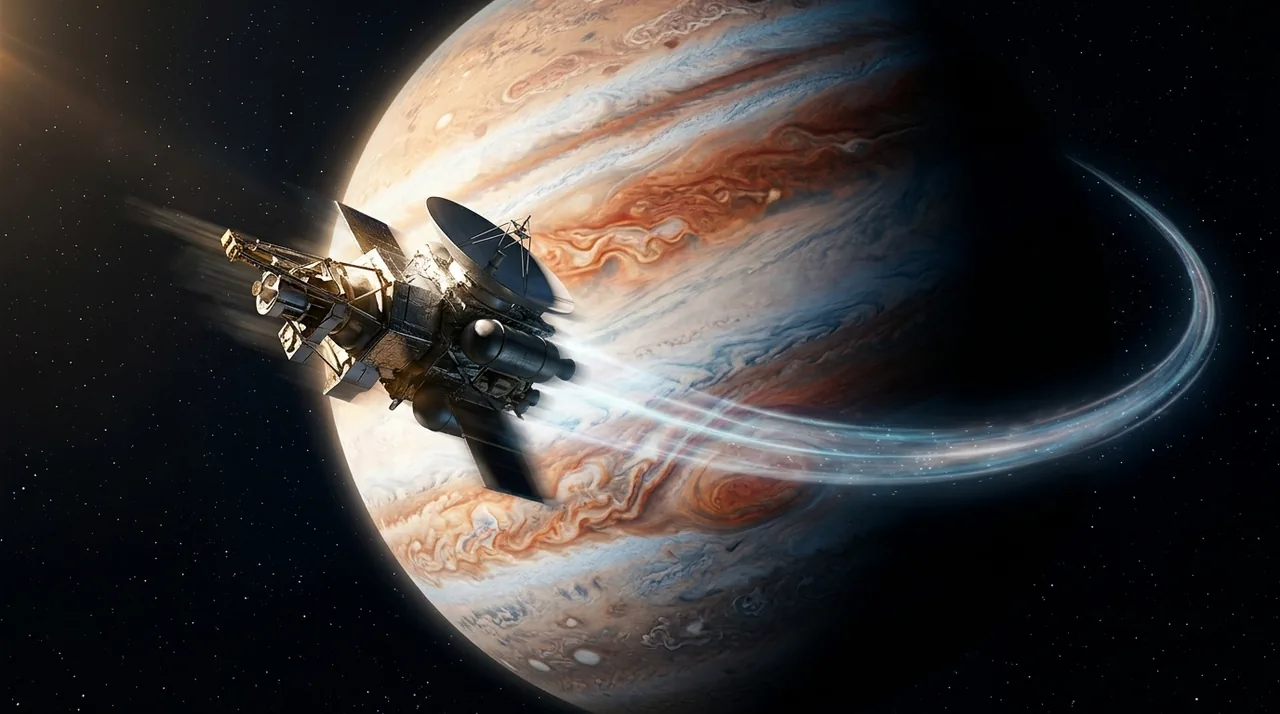
Voyager 2 sweeps past Jupiter at immense scaleIllustration · AI-generated (FLUX.1-dev)
Gravity assists were not new in 1977. The Soviet Luna 3ObjectLuna 3Soviet probe launched in October 1959 that returned the first photographs of the Moon's far side. To reach a vantage point above the lunar south pole and back, mission planners used a lunar gravity assist — the first ever flown — to bend its trajectory into a wide loop that returned the spacecraft to Earth range for film readout. The images were grainy, but they showed a hemisphere no human had ever seen.月球3号是苏联于1959年10月发射的太空探测器,它传回了月球背面的首批照片。为了到达月球南极上方并返回的有利位置,任务规划者使用了月球重力助推(人类首次进行的重力助推飞行),将探测器的轨道弯曲成一个巨大的环路,使航天器回到地球范围内进行胶片读取。照片虽有颗粒感,但展现了一个人类从未见过的半球。Sonda soviética lanzada en octubre de 1959 que devolvió las primeras fotografías de la cara oculta de la Luna. Para alcanzar un punto de observación sobre el polo sur lunar y regresar, los planificadores usaron una asistencia gravitatoria lunar —la primera de la historia— para desviar su trayectoria en un amplio bucle que trajo la nave de vuelta para revelar la película.لونا 3 هو مسبار سوفيتي أُطلق في أكتوبر 1959 وأرسل الصور الأولى للجانب البعيد من القمر. للوصول إلى نقطة مراقبة فوق القطب الجنوبي للقمر والعودة، استخدم مخططو المهمة مساعدة الجاذبية القمرية - وهي الأولى من نوعها في تاريخ الطيران الفضائي - لثني مسار المسبار في حلقة واسعة أعادت المركبة الفضائية إلى مدى الأرض لقراءة الفيلم. كانت الصور محببة، لكنها أظهرت نصف كرة لم يره أي إنسان من قبل.Sonda soviética lançada em outubro de 1959 que enviou as primeiras fotografias do lado oculto da Lua. Para alcançar um ponto de observação ideal acima do polo sul lunar e retornar, os planejadores da missão usaram uma assistência gravitacional lunar — a primeira da história — para curvar sua trajetória em um amplo laço que trouxe a espaçonave de volta à Terra para a transmissão do filme.सोवियत संघ का यान जिसे अक्टूबर 1959 में लॉन्च किया गया था और जिसने चंद्रमा के पीछे के हिस्से (far side) की पहली तस्वीरें भेजी थीं, जिसे लूना 3 (Luna 3) कहा जाता है। चंद्रमा के दक्षिणी ध्रुव के ऊपर एक सुविधाजनक स्थिति तक पहुंचने और वापस आने के लिए, मिशन योजनाकारों ने चंद्र गुरुत्वाकर्षण सहायता का उपयोग किया — जो पहली बार उड़ान भरी गई थी — ताकि इसके प्रक्षेपवक्र को एक विस्तृत लूप में मोड़ा जा सके।Wahana antariksa Soviet yang diluncurkan pada Oktober 1959 yang mengirimkan foto-foto pertama sisi jauh Bulan. Untuk mencapai titik pandang di atas kutub selatan lunar dan kembali, perencana misi menggunakan bantuan gravitasi bulan — yang pertama kali dilakukan — guna membelokkan lintasannya menjadi putaran lebar yang mengembalikan wahana ke jangkauan Bumi untuk pembacaan film.Sonde soviétique lancée en octobre de 1959 qui a renvoyé les premières photographies de la face cachée de la Lune. Pour atteindre un point d'observation au-dessus du pôle Sud lunaire et revenir, les planificateurs ont utilisé l'assistance gravitationnelle de la Lune — la première de l'histoire — pour incurver sa trajectoire en une large boucle ramenant la sonde vers la Terre.1959年10月に打ち上げられ、月裏側の初の写真を撮影・送信したソ連の探査機。月の南極上空の観測点に到達して帰還するため、計画担当者は人類初となる月スイングバイを利用し、軌道を大きく湾曲させて地球付近に戻し、現像したフィルムの画像電送を行った。画像は粒子が荒かったが、人類が一度も見たことのない半球の姿を示していた。Советский зонд, запущенный в октябре 1959 года, который передал первые фотографии обратной стороны Луны. Чтобы выйти на позицию над южным полюсом Луны и вернуться назад, планировщики миссии использовали гравитационный маневр у Луны — первый в истории — для искривления траектории в широкую петлю, вернувшую аппарат к Земле для считывания пленки. Снимки были зернистыми, но показали полушарие, которого никто не видел.Sowjetische Sonde, die im Oktober 1959 gestart wurde und die ersten Fotos der Rückseite des Mondes lieferte. Um einen Beobachtungspunkt über dem lunaren Südpol und zurück zu erreichen, nutzten die Missionsplaner eine Mond-Schwerkraftumlenkung – die erste ihrer Art –, um die Flugbahn in eine weite Schleife zu biegen, die das Raumschiff zur Bildübertragung in Erdnähe zurückbrachte. Die Bilder waren körnig, zeigten aber eine Halbkugel, die kein Mensch zuvor gesehen hatte.1959년 10월 발사되어 인류 최초로 달 뒷면의 사진을 전송한 소련의 탐사선(Luna 3)이다. 달의 남극 상공에 도달했다가 돌아오는 궤적을 그리기 위해, 임무 설계자들은 사상 최초로 달 중력 도움(gravity assist)을 활용해 우주선의 궤도를 커다란 루프 형태로 구부려 지구와의 통신 범위 내로 귀환시켰다. 사진은 노이즈가 많았지만 인간이 한 번도 보지 못한 반구를 선명하게 보여주었다. mission had used a lunar swing-by to photograph the far side of the Moon as early as 1959, and Mariner 10 had bounced off Venus en route to Mercury in 1973. But Voyager was the first time the technique was used to chain four targets in series, with each flyby's exit velocity tuned to drop the next planet into the spacecraft's path years later. The targeting tolerances at Neptune, twelve years after launch, were measured in tens of kilometres.
Galapagos Islands ImageNASA/Johns Hopkins University Applied Physics Laboratory/Car · NASA / Public Domain
Borrowed momentum
The energy ledger of a swing-by is worth dwelling on, because it is where the apparent magic lives. The spacecraft is not stealing kinetic energy in any local sense — at every instant it is in free fall, gaining speed on the way in and losing the same amount on the way out. What it steals is the planet's heliocentric kinetic energy: a quantity defined only in the Sun's frame, and one the planet has in enormous abundance. Jupiter's orbital kinetic energy is around 10^35 joules. A spacecraft taking a few gigajoules of it on the way past is roughly as noticeable as a mosquito clipping a cargo ship.
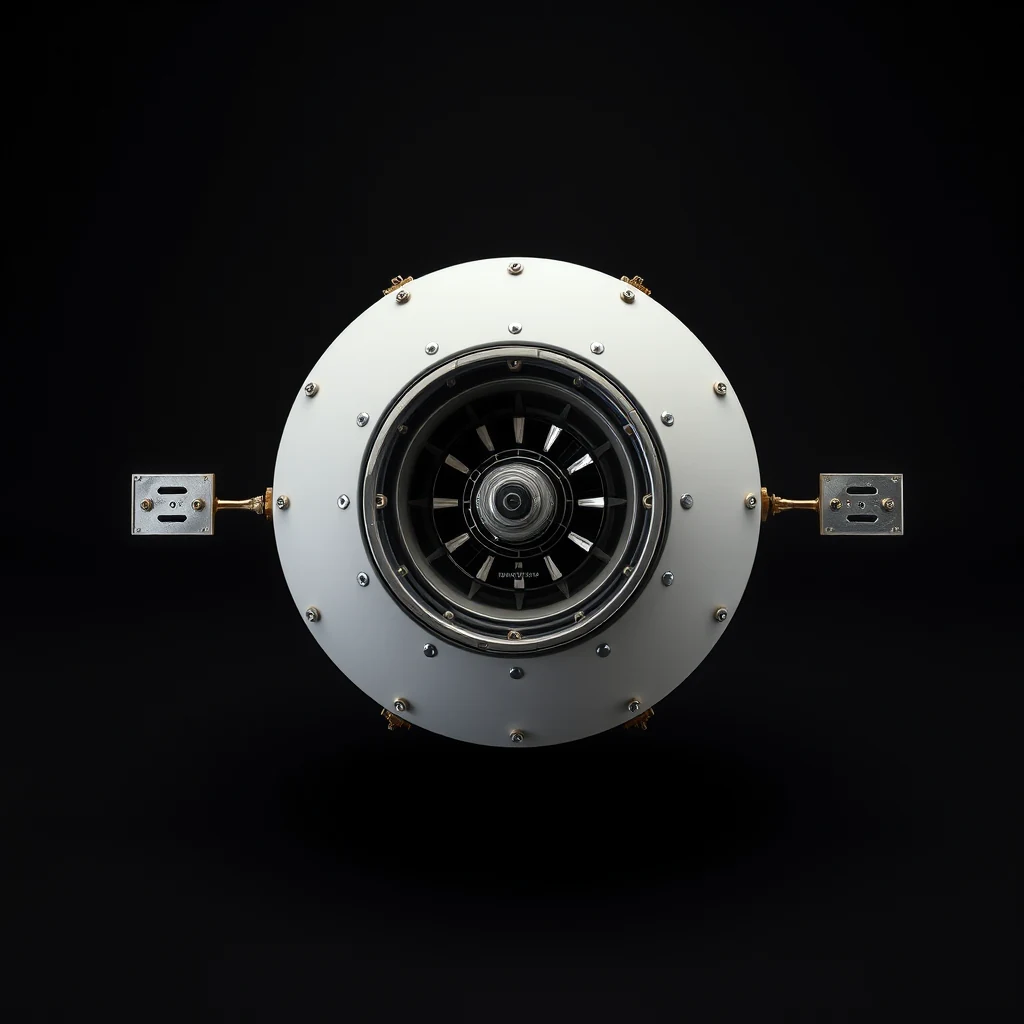
A tabletop astrodynamics demonstration in a 1970s laboratory: a polished steel ball rolls Illustration · AI-generated (FLUX.1-dev)
The limit on the technique is the geometry. You can only gain as much velocity as the planet has to give, and only if the encounter geometry steers the exit vector forward along the planet's motion. A flyby that swings the spacecraft the wrong way costs energy — this is how missions to the inner Solar System bleed off speed, the way BepiColomboObjectBepiColomboJoint European–Japanese mission to Mercury, launched in October 2018. Reaching Mercury orbit requires shedding so much heliocentric velocity that BepiColombo will spend more than seven years using a single Earth flyby, two Venus flybys, and six flybys of Mercury itself to slow down before final orbital insertion in late 2026. The mission carries two orbiters, one European, one Japanese, that will separate on arrival.贝皮科伦坡是欧洲和日本联合进行的的水星探测任务,于2018年10月发射。到达水星轨道需要消耗极大的日心速度,因此贝皮科伦坡将花费七年多的时间,利用一次地球飞掠、两次金星飞掠以及六次水星飞掠来减速,然后于2026年底进行最终的轨道切入。该任务携带了两个轨道器(一欧一日),它们将在到达时分离。Misión conjunta europeo-japonés a Mercurio, lanzada en octubre de 2018. Llegar a la órbita de Mercurio requiere perder tanta velocidad heliocéntrica que BepiColombo pasará más de siete años utilizando un sobrevuelo de la Tierra, dos de Venus y seis del propio Mercurio para frenar antes de la inserción orbital definitiva a finales de 2026. La misión lleva dos orbitadores que se separarán al llegar.بيبوكولومبو هي مهمة مشتركة بين أوروبا واليابان إلى كوكب عطارد، أُطلق في أكتوبر 2018. يتطلب الوصول إلى مدار عطارد التخلص من الكثير من السرعة الشمسية لدرجة أن مسبار بيبوكولومبو سيقضي أكثر من سبع سنوات مستخدماً تحليقاً واحداً حول الأرض، وتحليقين حول الزهرة، وستة تحليقات حول عطارد نفسه لتقليل سرعته قبل الدخول النهائي في المدار في أواخر عام 2026. تحمل المهمة مسبارين مداريين، أحدهما أوروبي والآخر ياباني، وسينفصلان عند الوصول.Missão conjunta europeia-japonesa a Mercúrio, lançada em outubro de 2018. Alcançar a órbita de Mercúrio exige perder tanta velocidade heliocêntrica que o BepiColombo passará mais de sete anos usando um sobrevoo da Terra, dois de Vênus e seis do próprio Mercúrio para desacelerar antes da inserção orbital final no final de 2026. A missão transporta dois orbitadores, um europeu e um japonês, que se separarão na chegada.बुध (Mercury) के लिए संयुक्त यूरोपीय-जापानी मिशन, जिसे अक्टूबर 2018 में लॉन्च किया गया था, जिसे बेपीकोलंबो (BepiColombo) कहा जाता है। बुध की कक्षा में पहुँचने के लिए बहुत अधिक सूर्यकेंद्रित वेग को कम करने की आवश्यकता होती है, इसलिए बेपीकोलंबो 2026 के अंत में अंतिम कक्षीय प्रवेश से पहले गति धीमी करने के लिए एक पृथ्वी फ्लाईबाई, दो शुक्र फ्लाईबाई और बुध की छह फ्लाईबाई का उपयोग करते हुए सात साल से अधिक का समय बिताएगा।Misi bersama Eropa–Jepang ke Merkurius, diluncurkan pada Oktober 2018. Untuk mencapai orbit Merkurius diperlukan pengurangan kecepatan heliosentris yang sangat besar sehingga BepiColombo akan menghabiskan lebih dari tujuh tahun menggunakan satu kali terbang lintas Bumi, dua kali Venus, dan enam kali Merkurius sendiri untuk memperlambat diri sebelum masuk orbit akhir pada akhir 2026. Misi ini membawa dua pengorbit.Mission conjointe Europe-Japon vers Mercure, lancée en octobre de 2018. Atteindre l'orbite de Mercure nécessite de perdre tellement de vitesse héliocentrale que BepiColombo passera plus de sept ans à effectuer un survol de la Terre, deux de Vénus et six de Mercure elle-même pour ralentir avant l'insertion orbitale finale prévue fin 2026. La mission transporte deux orbiteurs qui se sépareront à l'arrivée.2018年10月に打ち上げられた、欧州と日本による共同の水星探査ミッション。水星周回軌道に入るには太陽周回速度を大幅に減速する必要があるため、ベピ・コロンボは2026年末の最終軌道投入前に、1回の地球スイングバイ、2回の金星スイングバイ、および6回の水星スイングバイを7年以上かけて行い減速する。欧州と日本の2つの周回軌道機を搭載しており、到着時に分離する。Совместная европейско-японская миссия к Меркурию, запущенная в октябре 2018 года. Выход на орбиту Меркурия требует гашения столь большой гелиоцентрической скорости, что BepiColombo проведет более семи лет, используя один пролет мимо Земли, два мимо Венеры и шесть мимо самого Меркурия для замедления перед выходом на орбиту в конце 2026 года. Аппарат несет два орбитальных модуля, которые разделятся по прибытии.Gemeinsame europäisch-japanische Mission zum Merkur, gestartet im Oktober 2018. Das Erreichen der Merkurumlaufbahn erfordert den Abbau so großer heliozentrischer Geschwindigkeit, dass BepiColombo mehr als sieben Jahre lang einen Vorbeiflug an der Erde, zwei an der Venus und sechs am Merkur selbst nutzt, um vor dem Einschwenken in den Orbit Ende 2026 abzubremsen. Die Mission trägt zwei Orbiter, die sich bei der Ankunft trennen.2018년 10월 발사된 유럽·일본 합작의 수성 탐사 미션(BepiColombo)이다. 수성 궤도에 진입하기 위해서는 매우 큰 태양 기준 속도를 감쇄시켜야 하므로, 베피콜롬보는 2026년 말 최종 궤도 진입 전까지 1회의 지구 근접 비행, 2회의 금성 근접 비행, 6회의 수성 자체 근접 비행을 7년에 걸쳐 행하며 감속을 진행한다. 유럽과 일본의 탐사선 두 대를 탑재하여 도착 시 분리될 예정이다. is currently doing on its long climb down to Mercury, using nine flybys of Earth, Venus, and Mercury itself to lose velocity rather than gain it.
The other limit is patience. Voyager 2 took twelve years to reach Neptune. New HorizonsObjectNew HorizonsNASA probe launched January 2006 on the fastest direct trajectory ever flown from Earth — fast enough that it crossed the Moon's orbit in nine hours. A single Jupiter flyby in 2007 added about four kilometres per second and shaved three years off the cruise. It reached Pluto in July 2015 and went on to fly past the Kuiper-belt object Arrokoth on New Year's Day 2019.新视野号是美国国家航空航天局(NASA)于2006年1月发射的太空探测器,运行在有史以来从地球发射的最快直接轨道上——其速度之快使其在九小时内就越过了月球轨道。2007年的一次木星飞掠为其增加了约每秒四公里的速度,并将巡航时间缩短了三年。它于2015年7月到达冥王星,并于2019年元旦飞掠了柯伊伯带天体阿罗科斯。Sonda de la NASA lanzada en enero de 2006 en la trayectoria directa más rápida jamás realizada desde la Tierra, lo bastante rápida como para cruzar la órbita de la Luna en nueve horas. Un único sobrevuelo de Júpiter en 2007 añadió unos cuatro kilómetros por segundo y redujo en tres años el viaje. Llegó a Plutón en julio de 2015 y sobrevoló el objeto del cinturón de Kuiper Arrokoth el día de Año Nuevo de 2019.نيوهورايزنز هو مسبار تابع لوكالة ناسا أُطلق في يناير 2006 في أسرع مسار مباشر تم تسييره من الأرض على الإطلاق - وبسرعة كافية لعبور مدار القمر في تسع ساعات. أضاف تحليق واحد حول المشتري عام 2007 حوالي أربعة كيلومترات في الثانية إلى سرعته واختصر ثلاث سنوات من الرحلة. وصل المسبار إلى بلوتو في يوليو 2015 وحلق بجوار جرم حزام كايبر (أروكوث) في رأس سنة 2019.Sonda da NASA lançada em janeiro de 2006 na trajetória direta mais rápida já feita a partir da Terra — rápida o suficiente para cruzar a órbita da Lua em nove horas. Um único sobrevoo de Júpiter em 2007 adicionou cerca de quatro quilômetros por segundo e reduziu em três anos o tempo de viagem. Alcançou Plutão em julho de 2015 e passou pelo objeto do cinturão de Kuiper Arrokoth no Ano Novo de 2019.नासा (NASA) का यान जिसे जनवरी 2006 में पृथ्वी से प्रक्षेपित सबसे तेज़ सीधे प्रक्षेपवक्र पर लॉन्च किया गया था — यह इतनी तेज़ गति से चला कि नौ घंटे में चंद्रमा की कक्षा को पार कर गया, जिसे न्यू होराइजंस (New Horizons) कहा जाता है। 2007 में एक एकल बृहस्पति फ्लाईबाई ने इसकी गति में लगभग चार किलोमीटर प्रति सेकंड की वृद्धि की और यात्रा के तीन वर्ष बचाए। यह जुलाई 2015 में प्लूटो पर पहुँचा और 2019 को कुइपर-बेल्ट वस्तु एरोकोथ (Arrokoth) के पास से गुजरा।Wahana NASA yang diluncurkan Januari 2006 pada lintasan langsung tercepat yang pernah diterbangkan dari Bumi — cukup cepat untuk melintasi orbit Bulan dalam sembilan jam. Satu kali terbang lintas Yupiter pada 2007 menambah kecepatan sekitar empat kilometer per detik dan memangkas waktu perjalanan selama tiga tahun. Wahana ini mencapai Pluto pada Juli 2015 dan terbang melewati objek sabuk Kuiper Arrokoth pada 1 Januari 2019.Sonde de la NASA lancée en janvier de 2006 sur la trajectoire directe la plus rapide jamais empruntée depuis la Terre — assez rapide pour traverser l'orbite de la Lune en neuf heures. Un unique survol de Jupiter en 2007 a ajouté environ quatre kilomètres par seconde et a écourté le voyage de trois ans. Elle a atteint Pluton en juillet 2015, puis a survolé l'objet de la ceinture de Kuiper Arrokoth le jour de l'An 2019.2006年1月、地球から打ち上げられた直接軌道としては史上最高速の軌道に乗り、わずか9時間で月軌道を通過したNASAの探査機。2007年に木星スイングバイを行って毎秒約4キロメートルを加速し、巡航期間を3年短縮した。2015年7月に冥王星に到達し、2019年の元日にはエッジワース・カイパーベルト天体であるアロコスのフライバイに成功した。Зонд НАСА, запущенный в январе 2006 года по самой быстрой прямой траектории в истории — скорости хватило, чтобы пересечь орбиту Луны за 9 часов. Одиночный пролет мимо Юпитера в 2007 году добавил около 4 км/с и сократил время полета на 3 года. Он достиг Плутона в июле 2015 года, а в первый день 2019 года пролетел мимо объекта пояса Койпера Аррокот.NASA-Sonde, die im Januar 2006 auf der schnellsten direkten Flugbahn gestartet wurde, die je von der Erde aus geflogen wurde – schnell genug, um die Mondbahn in neun Stunden zu kreuzen. Ein einziger Vorbeiflug an Jupiter im Jahr 2007 brachte ein Geschwindigkeitsplus von etwa vier Kilometern pro Sekunde und verkürzte die Reisezeit um drei Jahre. Sie erreichte Pluto im Juli 2015 und flog am Neujahrstag 2019 am Kuipergürtel-Objekt Arrokoth vorbei.2006년 1월 지구에서 발사된 역사상 가장 빠른 직접 투사 궤적의 NASA 탐사선(New Horizons)으로, 발사 후 단 9시간 만에 달 궤도를 통과했다. 2007년 1회의 목성 중력 도움을 통해 초당 약 4킬로미터를 가속하여 비행 기간을 3년 단축했다. 2015년 7월 명왕성에 도달했으며, 2019년 새해 첫날에는 카이퍼 벨트 천체인 아로코스(Arrokoth) 근접 비행에 성공했다., launched in 2006 on a much bigger rocket and using only a single Jupiter assist, took nine and a half years to reach Pluto. The Galileo orbiter, denied a direct Jupiter trajectory after the Challenger disaster grounded the Centaur upper stage, instead spent six years on a route that flew it past Venus once and Earth twice before it ever turned outward.
Juno Earth Flyby Artist RenderingNASA/JPL-Caltech · NASA / Public Domain
What we still don't know
We do not know whether the next outer-planets mission will get a comparable break. The Jupiter–Saturn–Uranus–Neptune geometry will not return until the 2150s. A Uranus orbiter, which the National AcademiesInstitutionNational AcademiesThe U.S. National Academies of Sciences, Engineering, and Medicine, which every ten years convenes a Planetary Science Decadal Survey to rank the next decade's flagship missions. The 2023–2032 survey, published in 2022, placed a Uranus orbiter and probe at the top of its list, citing the planet's tilted magnetic field, its ring system, and the geological strangeness of its larger moons.美国国家学术院(包括科学、工程和医学三院)每十年召集一次行星科学十年调查,以对未来十年的旗舰任务进行排名。该调查于2022年发布了2023—2032年度报告,将天王星轨道器和探测器置于其推荐清单的首位,理由是天王星倾斜的磁场、其光环系统以及其大型卫星的地质奇异性。Las Academias Nacionales de Ciencias, Ingeniería y Medicina de EE.UU., que cada diez años convocan un Estudio Decenal de Ciencia Planetaria para clasificar las misiones insignia de la próxima década. El estudio 2023-2032, publicado en 2022, situó un orbitador y una sonda para Urano a la cabeza de su lista, citando el campo magnético inclinado del planeta, su sistema de anillos y la extrañeza geológica de sus lunas.الأكاديميات الوطنية للعلوم والهندسة والطب في الولايات المتحدة، والتي تعقد كل عشر سنوات مسحاً عشرياً للعلوم الكوكبية لتصنيف المهمات الرائدة للعقد القادم. وضع مسح 2023-2032، الذي نُشر عام 2022، مسباراً ومركبة مدارية لأورانوس في مقدمة قائمته، مستشهداً بالمجال المغناطيسي المائل للكوكب، ونظام حلقاته، والغرابة الجيولوجية لأقماره الأكبر.As Academias Nacionais de Ciências, Engenharia e Medicina dos EUA, que a cada dez anos realizam um Levantamento Decenal de Ciência Planetária para classificar as missões emblemáticas da década seguinte. O levantamento de 2023–2032, publicado em 2022, colocou um orbitador e uma sonda para Urano no topo de sua lista, citando o campo magnético inclinado do planeta, seu sistema de anéis e a estranheza geológica de suas luas maiores.यू.एस. नेशनल एकेडेमी ऑफ साइंसेज, इंजीनियरिंग एंड मेडिसिन, जो हर दस साल में अगले दशक के प्रमुख मिशनों को रैंक करने के लिए एक प्लैनेटरी साइंस डेकाडल सर्वे (Planetary Science Decadal Survey) आयोजित करती है। 2022 में प्रकाशित 2023-2032 के सर्वेक्षण में यूरेनस ऑर्बिटर और प्रोब को सूची में सबसे ऊपर रखा गया, जिसका कारण ग्रह का झुका हुआ चुंबकीय क्षेत्र, इसकी वलय प्रणाली और इसके बड़े चंद्रमाओं की भूवैज्ञानिक विचित्रता थी।Akademi Sains, Teknik, dan Kedokteran Nasional AS, yang setiap sepuluh tahun menyelenggarakan Survei Dekade Sains Planet untuk memeringkat misi utama dekade berikutnya. Survei 2023–2032, yang diterbitkan pada 2022, menempatkan pengorbit dan wahana Uranus di posisi teratas daftar prioritasnya, merujuk pada medan magnet Uranus yang miring, sistem cincinnya, dan keanehan geologis bulan-bulan besarnya.Académies nationales des sciences, d'ingénierie et de médecine des États-Unis, qui réunissent tous les dix ans une enquête décennale sur les sciences planétaires pour classer les missions phares de la décennie suivante. L'enquête 2023-2032, publiée en 2022, a placé un orbiteur et une sonde vers Uranus en tête de liste, citant le champ magnétique incliné de la planète, son système d'anneaux et la bizarrerie géologique de ses lunes.米国科学・工学・医学アカデミー。10年ごとに「惑星科学の10年計画調査」を招集し、次の10年間のフラッグシップ・ミッションの優先順位を決定している。2022年に発表された2023〜2032年の調査では、天王星の傾いた磁場、環システム、および主要衛星の地質学的特異性を挙げ、天王星周回機とプローブの計画を最優先事項に位置づけた。Национальные академии наук, техники и медицины США, которые каждые десять лет проводят Десятилетний обзор планетарных наук для ранжирования флагманских миссий следующего десятилетия. Обзор на 2023–2032 годы, опубликованный в 2022 году, поставил на первое место орбитальный аппарат и зонд к Урану, ссылаясь на наклоненное магнитное поле планеты, ее систему колец и геологические странности ее крупных лун.Die US-amerikanischen National Academies of Sciences, Engineering, and Medicine, die alle zehn Jahre einen Planetary Science Decadal Survey einberufen, um die Flaggschiff-Missionen des nächsten Jahrzehnts einzustufen. Die in 2022 veröffentlichte Umfrage für 2023–2032 setzte einen Uranus-Orbiter und eine Uranus-Sonde an die Spitze der Liste und begründete dies mit dem geneigten Magnetfeld des Planeten, seinem Ringsystem und der geologischen Eigenart seiner Monde.미국의 국립과학·공학·의학아카데미(National Academies)로, 10년마다 '행성 과학 10개년 조사(Planetary Science Decadal Survey)'를 개최하여 향후 10년간의 최우선 플래그십 탐사 임무의 순위를 매긴다. 2022년에 발표된 2023~2032년 조사 보고서에서는 우라누스(천왕성) 궤도선 및 탐사선 임무를 1위로 선정했으며, 그 사유로 천왕성의 기울어진 자기장, 고리 계통, 거대 위성들의 지질학적 독특성을 언급했다. flagged as the top planetary priority for the 2023–2032 decade, will probably need a Jupiter assist in the early 2030s; miss that and the trip stretches by years.
A Titan IIIE launch rises from Cape Canaveral in humid morning lightIllustration · AI-generated (FLUX.1-dev)
We do not fully know how to use gravity assists at relativistic speeds. Proposals for interstellar precursors — Oberth manoeuvres that dive close to the Sun, or swing-bys of stellar-mass black holes in the very long term — sit at the edge of what general relativity allows and what engineering can survive.
Gravity assistPhoenix7777 · CC BY-SA 4.0
And we do not know what Voyager 2 is flying through now. It crossed the heliopause in November 2018, more than forty years after launch, and is still returning data on the interstellar magnetic field from beyond it. Its plutonium will run out around 2030. Whatever momentum the planets gave it, it keeps.
The tennis ball is still going. The train, somewhere behind it, has not noticed a thing.
ईंधन की एक भी बूंद शेष न होने पर भी एक अंतरिक्ष यान नेपच्यून तक पहुँच सकता है, बशर्ते उसे रास्ते में पड़ने वाले किसी ग्रह से गुजरते हुए उसकी गति चुराने का हुनर पता हो। इसका गणित 1964 में एक स्नातक छात्र ने तैयार किया था, और हमारे पास इसका उपयोग करने का बस एक ही अवसर था।
20 अगस्त 1977 को, केप केनवेरल से एक टाइटन IIIE रॉकेट ने उड़ान भरी। इसमें 722 किलोग्राम का एक यान सवार था, जिसमें एक प्लूटोनियम बैटरी थी, सोने की परत चढ़ा एक रिकॉर्ड था, और वह सब करने के लिए पर्याप्त मात्रा से कहीं कम प्रणोदक था जिसके लिए इसे बनाया गया था। Voyager 2ObjectVoyager 2NASA probe launched 20 August 1977, the only spacecraft to have flown past all four outer planets. Built around a radioisotope generator and a 3.7-metre dish antenna, it crossed the heliopause into interstellar space in November 2018 and continues to return data on the interstellar medium. Its sibling Voyager 1, launched sixteen days later on a faster trajectory, crossed the same boundary in 2012.旅行者2号是美国国家航空航天局(NASA)于1977年8月20日发射的探测器,是唯一一艘曾飞越全部四颗外行星的航天器。它围绕一台放射性同位素发电机和一面3.7米口径的抛物面天线构建,于2018年11月越过日球层顶进入星际空间,并继续发回关于星际介质的数据。它的孪生兄弟旅行者1号在16天后发射,以更快的轨道运行,并于2012年越过了相同的边界。Sonda de la NASA lanzada el 20 de agosto de 1977, la única nave espacial que ha sobrevolado los cuatro planetas exteriores. Construida en torno a un generador de radioisótopos y una antena parabólica de 3,7 metros, cruzó la heliopausa hacia el espacio interestelar en noviembre de 2018 y sigue enviando datos sobre el medio interestelar. Su gemela Voyager 1, lanzada dieciséis días después con una trayectoria más rápida, cruzó la misma frontera en 2012.مسبار وويجر 2 هو مسبار تابع لوكالة ناسا أُطلق في 20 أغسطس 1977، وهو المركبة الفضائية الوحيدة التي حلقت بالقرب من جميع الكواكب الخارجية الأربعة. تم بناؤه حول مولد نظائر مشعة وهوائي قطره 3.7 متر، وعبر حدود الغلاف الشمسي إلى الفضاء النجمي في نوفمبر 2018 ولا يزال يرسل بيانات عن الوسط النجمي. وكان شقيقه وويجر 1 قد أُطلق بعده بستة عشر يوماً بمسار أسرع وعبر نفس الحدود عام 2012.Sonda da NASA lançada em 20 de agosto de 1977, a única espaçonave a ter sobrevoado todos os quatro planetas gigantes exteriores. Construída em torno de um gerador de radioisótopos e de uma antena parabólica de 3,7 metros, cruzou a heliopausa para o espaço interestelar em novembro de 2018 e continua a enviar dados sobre o meio interestelar. Sua irmã Voyager 1, lançada dezesseis dias depois em uma trajetória mais rápida, cruzou a mesma fronteira em 2012.नासा (NASA) का यान जिसे 20 अगस्त 1977 को लॉन्च किया गया था, और जो सभी चार बाहरी ग्रहों (बृहस्पति, शनि, यूरेनस, नेपच्यून) से होकर गुजरने वाला एकमात्र अंतरिक्ष यान है, जिसे वॉयजर 2 (Voyager 2) कहा जाता है। एक रेडियोआइसोटोप जनरेटर और 3.7-मीटर डिश एंटीना के साथ निर्मित, इसने नवंबर 2018 में हेलिओपॉज़ को पार कर अंतरतारकीय अंतरिक्ष में प्रवेश किया। इसके सह-यान वॉयजर 1 को सोलह दिन बाद एक तेज़ प्रक्षेपवक्र पर लॉन्च किया गया था और उसने 2012 में इसी सीमा को पार किया था।Wahana NASA yang diluncurkan 20 Agustus 1977, satu-satunya pesawat antariksa yang pernah terbang melewati keempat planet luar. Dibangun dengan generator radioisotop dan antena piringan 3,7 meter, wahana ini melintasi heliopause ke ruang antarbintang pada November 2018 dan terus mengirimkan data tentang medium antarbintang. Saudara kembarnya, Voyager 1, diluncurkan delapan belas hari kemudian dengan lintasan yang lebih cepat, melintasi batas yang sama pada tahun 2012.Sonde de la NASA lancée le 20 août 1977, seul engin spatial à avoir survolé les quatre planètes géantes externes. Conçue autour d'un générateur thermoélectrique à radioisotope et d'une antenne parabolique de 3,7 mètres, elle a franchi l'héliopause pour entrer dans l'espace interstellaire en novembre 2018. Sa jumelle Voyager 1, lancée seize jours plus tard sur une trajectoire plus rapide, a franchi cette même frontière en 2012.1977年8月20日に打ち上げられたNASAの探査機であり、4つの巨大外惑星すべてをフライバイした唯一の宇宙船。放射性同位体熱電発電機と直径3.7メートルのパラボラアンテナを中心に設計され、2018年11月にヘリオポーズを通過して星間空間に入り、現在も星間物質のデータを送信し続けている。16日後に打ち上げられた姉妹機ボイジャー1号は、より速い軌道で2012年に同じ境界を通過した。Зонд НАСА, запущенный 20 августа 1977 года, единственный космический аппарат, пролетевший мимо всех четырех внешних планет. Построенный на базе радиоизотопного генератора и 3,7-метровой параболической антенны, он пересек гелиопаузу в ноябре 2018 года и продолжает передавать данные о межзвездной среде. Его близнец «Вояджер-1», запущенный на 16 дней позже по более быстрой траектории, пересек ту же границу в 2012 году.NASA-Sonde, die am 20. August 1977 gestartet wurde und als einziges Raumschiff alle vier äußeren Planeten anflog. Sie ist um einen Radioisotopengenerator und eine 3,7-Meter-Parabolantenne herum gebaut, überquerte im November 2018 die Heliopause in den interstellaren Raum und sendet weiterhin Daten über das interstellare Medium. Ihr Geschwisterteil Voyager 1, das sechzehn Tage später auf einer schnelleren Flugbahn gestartet war, überquerte dieselbe Grenze 2012.1977년 8월 20일 발사된 NASA의 탐사선(Voyager 2)으로, 태양계 외곽의 네 가지 가스 거대 행성을 모두 근접 비행한 유일한 우주선이다. 방사성 동위원소 열전 발전기(RTG)와 3.7미터 접시형 안테나를 축으로 설계되었으며, 2018년 11월 헬리오포즈를 통과해 성간 공간에 진입한 후 성간 물질 데이터를 계속 송신하고 있다. 16일 뒤에 더 빠른 궤도로 발사된 쌍둥이 보이저 1호는 2012년에 같은 경계를 넘었다. का लक्ष्य चार ग्रहों का दौरा करना था। इसके हाइड्राज़ीन टैंकों में इतना ही ईंधन था जो अपने पूरे जीवनकाल में अंतरिक्ष यान को कुछ सौ मीटर प्रति सेकंड की गति दे सके। पृथ्वी से केवल रॉकेट की शक्ति के बल पर नेपच्यून (वरुण) तक पहुँचने के लिए लगभग तीस किलोमीटर प्रति सेकंड के वेग परिवर्तन की आवश्यकता होती। ईंधन के बजट के किसी भी ईमानदार आकलन के हिसाब से, यह मिशन असंभव था।
फिर भी इसने काम किया, क्योंकि ग्रहों ने सारा काम कर दिया। उन चार विशाल गैसीय ग्रहों में से प्रत्येक — 1979 में बृहस्पति, 1981 में शनि, 1986 में अरुण और 1989 में वरुण — जिनके पास से होकर वॉयजर 2 गुज़रा, उसने रास्ते में यान को कक्षीय संवेग (मोमेंटम) की एक भारी मात्रा प्रदान की और उसे ऐसी दिशा में आगे बढ़ा दिया जिसे अगला ग्रह संभाल सके। इस तकनीक को gravity assistConceptgravity assistTrajectory manoeuvre in which a spacecraft alters its heliocentric velocity by flying close to a planet, exchanging momentum with the planet's motion around the Sun. The spacecraft's speed relative to the planet is unchanged, but its speed relative to the Sun rises or falls depending on the encounter geometry. The technique has been used since 1959 and underwrites essentially every modern deep-space mission.重力助推是航天器通过靠近行星飞行来改变其日心速度的轨道操纵,借此与行星绕太阳的运动交换动量。航天器相对于行星的速度保持不变,但其相对于太阳的速度会上升或下降,这取决于交会时的几何构型。该技术自1959年起投入使用,并几乎为所有现代深空探测任务提供了轨道支持。La asistencia gravitatoria es una maniobra de trayectoria en la que una nave espacial altera su velocidad heliocéntrica al volar cerca de un planeta, intercambiando impulso con el movimiento del planeta alrededor del Sol. La velocidad de la nave con respecto al planeta no varía, pero su velocidad respecto al Sol sube o baja según la geometría del encuentro. La técnica se usa desde 1959 y sustenta casi toda misión espacial profunda moderna.مساعدة الجاذبية هي مناورة مسار تُغير فيها المركبة الفضائية سرعتها بالنسبة للشمس عن طريق التحليق بالقرب من كوكب ما، مما يسمح بتبادل الزخم مع حركة الكوكب حول الشمس. تظل سرعة المركبة الفضائية بالنسبة للكوكب دون تغيير، ولكن سرعتها بالنسبة للشمس ترتفع أو تنخفض بناءً على هندسة اللقاء. تُستخدم هذه التقنية منذ عام 1959 وتعتمد عليها تقريباً كل مهمة حديثة للفضاء العميق.A assistência gravitacional é uma manobra de trajetória na qual uma espaçonave altera sua velocidade heliocêntrica ao voar perto de um planeta, trocando momento com o movimento do planeta ao redor do Sol. A velocidade da espaçonave em relação ao planeta permanece inalterada, mas sua velocidade em relação ao Sol aumenta ou diminui dependendo da geometria do encontro. A técnica é usada desde 1959 e serve de base para praticamente toda missão moderna de espaço profundo.गुरुत्वाकर्षण सहायता (gravity assist) एक प्रक्षेपवक्र पैंतरेबाज़ी है जिसमें एक अंतरिक्ष यान सूर्य के चारों ओर ग्रह की गति के साथ संवेग (मोमेंटम) का आदान-प्रदान करके एक ग्रह के करीब से उड़ान भरकर अपने सूर्यकेंद्रित (हेलियोसेंट्रिक) वेग को बदलता है। ग्रह के सापेक्ष यान की गति अपरिवर्तित रहती है, लेकिन सूर्य के सापेक्ष इसकी गति मुठभेड़ ज्यामिति के आधार पर बढ़ती या घटती है। इस तकनीक का उपयोग 1959 से किया जा रहा है और यह अनिवार्य रूप से हर आधुनिक गहरे अंतरिक्ष मिशन का आधार है।Bantuan gravitasi adalah manuver lintasan di mana pesawat antariksa mengubah kecepatan heliosentrisnya dengan terbang mendekati sebuah planet, bertukar momentum dengan gerakan planet di sekitar Matahari. Kecepatan pesawat terhadap planet tidak berubah, tetapi kecepatannya terhadap Matahari naik atau turun tergantung geometri pertemuan. Teknik ini telah digunakan sejak 1959 dan mendasari hampir setiap misi luar angkasa dalam modern.L'assistance gravitationnelle est une manœuvre de trajectoire par laquelle un engin spatial modifie sa vitesse héliocentrique en survolant de près une planète, échangeant ainsi de la quantité de mouvement avec le mouvement de la planète autour du Soleil. La vitesse de l'engin par rapport à la planète reste inchangée, mais sa vitesse par rapport au Soleil augmente ou diminue selon la géométrie du survol. Utilisée depuis 1959, cette technique sous-tend presque toutes les missions lointaines modernes.宇宙船が惑星の近くを飞行することで太阳周回速度を変更し、太阳を回る惑星の运动量とエネルギーを交換する轨道操作技术(スイングバイ)。惑星に対する相対速度は変化しないが、遭遇時の幾何学的条件によって太陽に対する相対速度は上昇または下降する。1959年以来使用されており、実質的にすべての現代の深宇宙探査ミッションの基盤となっている。Гравитационный маневр — маневр, при котором космический аппарат изменяет свою гелиоцентрическую скорость за счет сближения с планетой, обмениваясь импульсом с ее движением вокруг Солнца. Скорость аппарата относительно планеты остается неизменной, но его скорость относительно Солнца увеличивается или уменьшается в зависимости от геометрии сближения. Метод используется с 1959 года и лежит в основе практически всех современных миссий в дальний космос.Die Gravity-Assist-Flugbahn (Schwerkraftumlenkung) ist ein Bahnmanöver, bei dem ein Raumschiff seine heliozentrische Geschwindigkeit verändert, indem es nahe an einem Planeten vorbeifliegt und dabei Impuls mit der Bewegung des Planeten um die Sonne austauscht. Die Geschwindigkeit der Sonde relativ zum Planeten bleibt unverändert, aber ihre Geschwindigkeit relativ zur Sonne steigt oder fällt je nach Begegnungsgeometrie. Die Technik wird seit 1959 eingesetzt und bildet die Basis fast jeder modernen Deep-Space-Mission.중력 도움(gravity assist, 스윙바이)은 우주선이 행성 근처를 지나가며 비행할 때 행성의 공전 운동량과 에너지를 교환하여 태양 기준 속도를 변경하는 궤도 제어 기법이다. 행성에 대한 상대 속도는 일정하게 유지되지만, 비행 기하학적 형태에 따라 태양 기준 상대 속도는 빨라지거나 느려진다. 이 기술은 1959년부터 도입되어 사실상 모든 현대의 심우주 탐사 임무의 근간을 형성해 왔다. या स्विंग-बाय कहा जाता है, और यह अंतरग्रहीय नौवहन में किसी मुफ़्त के सौदे जैसी ही चीज़ है।
Lucy Earth Gravity Assist One- Animations (SVS20372 - Lucy EGA Shot6 2160p30)NASA's Scientific Visualization Studio - KBR Wyle Services, · Public domain
इसकी भौतिकी केवल इसलिए अबूझ लगती है क्योंकि अक्सर हमारा नज़रिया गलत होता है। ग्रह के अपने निर्देश तंत्र (रेफरेंस फ्रेम) में, एक अंतरिक्ष यान अंदर की ओर गिरता है, ग्रह के चारों ओर घूमता है, और ठीक उसी गति से बाहर निकलता है जिससे वह पहुँचा था — गुरुत्वाकर्षण ऊर्जा का संरक्षण करता है, जितनी ऊर्जा अंदर आई उतनी ही बाहर गई। लेकिन ग्रह स्थिर नहीं है। वह सूर्य के चारों ओर घूम रहा है, जो बृहस्पति के मामले में तेरह किलोमीटर प्रति सेकंड है। जब हम सूर्य के निर्देश तंत्र में देखते हैं, तो यान का निकास वेक्टर ग्रह के कक्षीय वेग में जुड़ जाता है। यान और अधिक तीव्र गति से बाहर निकलता है। ग्रह, संवेग की बिल्कुल बराबर और विपरीत मात्रा के कारण, थोड़ा धीमा हो जाता है। ये आँकड़े विषम हैं क्योंकि उनके द्रव्यमान विषम हैं। वॉयजर 2 के बृहस्पति के पास से गुजरने (फ्लाईबाई) ने बृहस्पति की कक्षा को प्रति ट्रिलियन वर्ष में लगभग एक फुट की दर से धीमा कर दिया।
महाभ्रमण
वह विशिष्ट संरेखण जिसने वॉयजर को संभव बनाया, उसे 1964 में Gary FlandroPersonGary FlandroAmerican aerospace engineer who, as a doctoral candidate working at JPL in the summer of 1964, identified the rare planetary alignment of the late 1970s that allowed a single spacecraft to chain flybys of Jupiter, Saturn, Uranus, and Neptune. His memo became the foundation of the Voyager Grand Tour. He spent most of his later career as a professor at the University of Tennessee Space Institute.加里·弗兰德罗是美国航空航天工程师。1964年夏天,作为在喷气推进实验室(JPL)工作的博士生,他发现并确认了1970年代后期罕见的行星排列,这使得单一航天器能够连续飞掠木星、土星、天王星和海王星。他的备忘录成为了旅行者计划“大巡游”的基础。他的后期职业生涯主要在田纳西大学太空研究所担任教授。Ingeniero aeroespacial estadounidense que, como estudiante de doctorado trabajando en el JPL en el verano de 1964, identificó la rara alineación planetaria de finales de la década de 1970 que permitió a una sola nave encadenar sobrevuelos de Júpiter, Saturno, Urano y Neptuno. Su informe se convirtió en la base del Gran Viaje de las Voyager. Pasó la mayor parte de su carrera posterior como profesor en el Instituto Espacial de la Universidad de Tennessee.غاري فلاندرو هو مهندس طيران وفضاء أمريكي، حدد كطالب دكتوراه يعمل في مختبر الدفع النفاث (JPL) في صيف عام 1964، الاصطفاف النادر للكواكب في أواخر السبعينيات والذي سمح لمركبة فضائية واحدة بسلسلة تحليقات حول المشتري وزحل وأورانوس ونبتون. أصبحت مذكرته أساس الجولة الكبرى لوويجر، وقضى معظم مسيرته المهنية اللاحقة كأستاذ في معهد الفضاء بجامعة تينيسي.Engenheiro aeroespacial americano que, como candidato ao doutorado trabalhando no JPL no verão de 1964, identificou o raro alinhamento planetário do final dos anos 1970 que permitiu a uma única espaçonave encadear sobrevoos de Júpiter, Saturno, Urano e Netuno. Seu memorando tornou-se a base do Grand Tour do Voyager. Ele passou a maior parte de sua carreira posterior como professor no Instituto Espacial da Universidade do Tennessee.अमेरिकी एयरोस्पेस इंजीनियर जिन्होंने 1964 की गर्मियों में जेपीएल (JPL) में काम करने वाले एक डॉक्टरेट छात्र के रूप में, 1970 के दशक के अंत में दुर्लभ ग्रहीय संरेखण की पहचान की थी, जिसने एक एकल अंतरिक्ष यान को बृहस्पति, शनि, यूरेनस और नेपच्यून की श्रृंखला उड़ान (फ्लाईबाई) की अनुमति दी थी, जिन्हें गैरी फ्लैंड्रो (Gary Flandro) कहा जाता है। उनका मेमो वॉयजर ग्रैंड टूर का आधार बना। उन्होंने अपने बाद के करियर का अधिकांश समय टेनेसी विश्वविद्यालय के अंतरिक्ष संस्थान में प्रोफेसर के रूप में बिताया।Insinyur dirgantara Amerika yang, sebagai mahasiswa doktoral yang bekerja di JPL pada musim panas 1964, mengidentifikasi kesejajaran planet yang langka pada akhir 1970-an yang memungkinkan satu pesawat antariksa melakukan flyby berantai ke Yupiter, Saturnus, Uranus, dan Neptunus. Memonya menjadi dasar Voyager Grand Tour. Ia menghabiskan sebagian besar karir berikutnya sebagai profesor di University of Tennessee Space Institute.Ingénieur aérospatial américain qui, en tant que doctorant travaillant au JPL à l'été 1964, a identifié l'alignement planétaire rare de la fin des années 1970 ayant permis à un seul engin de survoler successivement Jupiter, Saturne, Uranus et Neptune. Son rapport est devenu la base du Grand Tour des sondes Voyager. Il a passé la majeure partie de sa fin de carrière comme professeur à l'Institut spatial de l'Université du Tennessee.アメリカの航空宇宙工学者。1964年夏にJPLで働く博士課程の学生だった際、1970年代後半に発生する極めて稀な惑星直列を発見し、単一の宇宙船で木星、土星、天王星、海王星の连续フライバイが可能であることを突き止めた。彼の研究メモはボイジャー計画の「グランドツアー」の理論的基礎となった。後半のキャリアの多くをテネシー大学宇宙研究所の教授として過ごした。Американский аэрокосмический инженер, который, будучи аспирантом в JPL летом 1964 года, рассчитал редкий парад планет конца 1970-х годов. Это выравнивание позволило одному аппарату последовательно пролететь мимо Юпитера, Сатурна, Урана и Нептуна. Его расчеты легли в основу программы «Гранд Тур» «Вояджеров». Большую часть последующей карьеры он провел в должности профессора в Космическом институте Университета Теннесси.US-amerikanischer Luft- und Raumfahrtingenieur, der im Sommer 1964 als Doktorand am JPL die seltene Planetenkonstellation der späten 1970er Jahre entdeckte, die es einer einzelnen Sonde ermöglichte, nacheinander an Jupiter, Saturn, Uranus und Neptun vorbeizufliegen. Sein Entwurf wurde zur Grundlage der Voyager Grand Tour. Er verbrachte den Großteil seiner späteren Karriere als Professor am Space Institute der University of Tennessee.미국의 항공우주 공학자(Gary Flandro)로, 1964년 여름 JPL에서 박사과정 연구원으로 일할 당시 1970년대 후반의 희귀한 행성 정렬 상태를 규명해 내었다. 행성 정렬 조건 하에서 단 한 대의 우주선으로 목성, 토성, 천왕성, 해왕성을 연쇄적으로 근접 비행할 수 있게 만드는 조건이었다. 그의 보고서는 보이저 계획 '그랜드 투어'의 기초가 되었으며, 이후 커리어의 대부분을 테네시 대학교 우주연구소 교수로 보냈다. द्वारा पहचाना गया था, जो उस समय Jet Propulsion LaboratoryInstitutionJet Propulsion LaboratoryNASA's deep-space research centre in Pasadena, California, operated by Caltech. Founded in 1936 as a rocket-testing outfit on the dry bed of the Arroyo Seco, JPL designed and operates almost every American mission to the outer Solar System, including the Voyagers, Galileo, Cassini, the Mars rovers, and the ongoing Deep Space Network that keeps in touch with all of them.喷气推进实验室是位于加利福尼亚州帕萨迪纳的美国国家航空航天局(NASA)深空研究中心,由加州理工学院负责运营。它于1936年创立,起初是位于阿罗约塞科干涸河床上的火箭测试机构。JPL设计并运营了几乎所有美国的太阳系外围探测任务,包括旅行者号、伽利略号、卡西尼号、火星车,以及负责与它们保持联系的深空网络。Centro de investigación de espacio profundo de la NASA en Pasadena, California, gestionado por Caltech. Fundado en 1936 como un equipo de pruebas de cohetes en el lecho seco del Arroyo Seco, el JPL ha diseñado y opera casi toda misión estadounidense al sistema solar exterior, incluyendo las Voyager, Galileo, Cassini, los exploradores de Marte y la Red del Espacio Profundo.مختبر الدفع النفاث (JPL) هو مركز أبحاث الفضاء العميق التابع لوكالة ناسا في باسادينا بكاليفورنيا، وتديره جامعة كالتيك. تأسس عام 1936 كمرفق لاختبار الصواريخ في المجرى الجاف لأرويو سيكو. صمم المختبر ويشغل تقريباً كل مهمة أمريكية إلى النظام الشمسي الخارجي، بما في ذلك مركبات وويجر وغاليليو وكاسيني وعربات المريخ وشبكة الفضاء العميق.Centro de pesquisa de espaço profundo da NASA em Pasadena, Califórnia, operado pelo Caltech. Fundado em 1936 como uma equipe de testes de foguetes no leito seco do Arroyo Seco, o JPL projetou e opera quase todas as missões americanas ao Sistema Solar exterior, incluindo os Voyagers, Galileo, Cassini, os jipes robóticos de Marte e a Rede de Espaço Profundo.कैलिफोर्निया के पासाडेना में स्थित नासा (NASA) का गहरा अंतरिक्ष अनुसंधान केंद्र, जिसका संचालन कैलटेक (Caltech) द्वारा किया जाता है, जिसे जेट प्रोपल्शन लेबोरेटरी (Jet Propulsion Laboratory) कहा जाता है। 1936 में अरोयो सेको के सूखे बिस्तर पर रॉकेट-परीक्षण संगठन के रूप में स्थापित, जेपीएल ने बाहरी सौर मंडल के लगभग हर अमेरिकी मिशन को डिजाइन और संचालित किया है।Pusat penelitian ruang angkasa dalam NASA di Pasadena, California, yang dikelola oleh Caltech. Didirikan pada tahun 1936 sebagai unit pengujian roket di dasar kering Arroyo Seco, JPL merancang dan mengoperasikan hampir setiap misi AS ke Tata Surya luar, termasuk Voyager, Galileo, Cassini, robot penjelajah Mars, dan Deep Space Network.Centre de recherche de la NASA pour l'espace lointain situé à Pasadena, en Californie, et géré par Caltech. Fondé en 1936 pour tester des fusées sur le lit asséché de l'Arroyo Seco, le JPL a conçu et pilote presque toutes les missions américaines vers le système solaire externe, dont les sondes Voyager, Galileo, Cassini, les astromobiles martiens et le réseau Deep Space.カリフォルニア州パサデナにあり、カリフォルニア理工大学(カルテック)が運営するNASAの深宇宙研究センター。1936年にアロヨ・セコの干上がった川床でロケット試験を行うグループとして設立され、ボイジャー、ガリレオ、カッシーニ、歴代のマーズ・ローバー、そしてそれらと通信を維持するディープスペースネットワークなど、外太陽系に向けたほぼすべての米国ミッションを設計・運用している。Центр исследований дальнего космоса НАСА в Пасадине, штат Калифорния, управляемый Калифорнийским технологическим институтом. Основанная в 1936 году как группа по испытанию ракет на сухом русле Арройо-Секо, JPL разработала и эксплуатирует почти все американские миссии к внешней Солнечной системе, включая «Вояджеры», «Галилео», «Кассини», марсоходы и сеть Deep Space Network.Forschungszentrum der NASA für Deep-Space-Missionen in Pasadena, Kalifornien, das vom Caltech betrieben wird. Gegründet 1936 als Raketentestgruppe auf dem trockenen Bett des Arroyo Seco, das JPL hat fast jede US-Mission ins äußere Sonnensystem entworfen und betrieben, darunter die Voyagers, Galileo, Cassini, die Mars-Rover und das Deep Space Network, das die Verbindung zu ihnen hält.캘리포니아주 패서디나에 위치하고 칼텍(Caltech)에서 운영하는 NASA의 심우주 연구 센터(Jet Propulsion Laboratory)이다. 1936년 아로요 세코의 마른 하천 부지에서 로켓 테스트 모임으로 출범한 이래, 보이저, 갈릴레오, 카시니, 화성 탐사 로버, 그리고 이들과 교신을 유지하는 심우주 통신망(DSN)을 포함해 태양계 외곽을 향한 거의 모든 미국 우주 탐사 임무를 설계하고 운영해 왔다. में गर्मियों की छुट्टियों के दौरान काम करने वाले एक डॉक्टरेट छात्र थे। फ्लैंड्रो बाहरी ग्रहों के प्रक्षेपवक्र (ट्रेजेक्टरी) का अध्ययन कर रहे थे और उन्होंने देखा कि लगभग 1976 और 1980 के बीच चारों विशाल गैसीय ग्रह सूर्य के एक ही ओर इस तरह पंक्तिबद्ध होंगे कि एक ही बार में लॉन्च किया गया एक अंतरिक्ष यान, बृहस्पति से लेकर वरुण तक एक के बाद एक फ्लाईबाई कर सकेगा। यह ज्यामिति हर 175 साल में एक बार बनती है। इससे पहले यह अवसर थॉमस जेफ़रसन के राष्ट्रपति काल के दौरान आया था।
Earth Departure MovieNASA/Johns Hopkins University Applied Physics Laboratory/Car · NASA / Public Domain
फ्लैंड्रो के ज्ञापन (मेमो) ने एक स्पष्ट तर्क दिया: केवल रासायनिक रॉकेट द्वारा चार ग्रहों की यात्रा में चालीस साल लगेंगे; गुरुत्वीय सहायता के साथ इसे बारह वर्षों में किया जा सकता है। नासा ने शुरू में 'ग्रैंड टूर' (महाभ्रमण) नामक एक प्रमुख मिशन का प्रस्ताव दिया, फिर इसे बहुत महंगा मानकर रद्द कर दिया, और फिर चुपचाप उसी मिशन को 'मैरिनर जुपिटर-सैटर्न' नामक एक सस्ते कार्यक्रम के भीतर पुनर्जीवित किया, जिसका नाम लॉन्च से ठीक पहले वॉयजर कर दिया गया। वॉयजर 1 ने बृहस्पति और शनि के माध्यम से तेज़ रास्ता अपनाया, जिसमें टाइटन की एक अतिरिक्त यात्रा भी शामिल थी जिसने बाहरी ग्रहों के रास्ते बंद कर दिए। वॉयजर 2 ने लंबा रास्ता चुना और रास्ते में मिलने वाली हर सहायता का उपयोग किया।
Voyager 2 sweeps past Jupiter at immense scaleIllustration · AI-generated (FLUX.1-dev)
1977 में गुरुत्वीय सहायता कोई नई बात नहीं थी। सोवियत संघ के Luna 3ObjectLuna 3Soviet probe launched in October 1959 that returned the first photographs of the Moon's far side. To reach a vantage point above the lunar south pole and back, mission planners used a lunar gravity assist — the first ever flown — to bend its trajectory into a wide loop that returned the spacecraft to Earth range for film readout. The images were grainy, but they showed a hemisphere no human had ever seen.月球3号是苏联于1959年10月发射的太空探测器,它传回了月球背面的首批照片。为了到达月球南极上方并返回的有利位置,任务规划者使用了月球重力助推(人类首次进行的重力助推飞行),将探测器的轨道弯曲成一个巨大的环路,使航天器回到地球范围内进行胶片读取。照片虽有颗粒感,但展现了一个人类从未见过的半球。Sonda soviética lanzada en octubre de 1959 que devolvió las primeras fotografías de la cara oculta de la Luna. Para alcanzar un punto de observación sobre el polo sur lunar y regresar, los planificadores usaron una asistencia gravitatoria lunar —la primera de la historia— para desviar su trayectoria en un amplio bucle que trajo la nave de vuelta para revelar la película.لونا 3 هو مسبار سوفيتي أُطلق في أكتوبر 1959 وأرسل الصور الأولى للجانب البعيد من القمر. للوصول إلى نقطة مراقبة فوق القطب الجنوبي للقمر والعودة، استخدم مخططو المهمة مساعدة الجاذبية القمرية - وهي الأولى من نوعها في تاريخ الطيران الفضائي - لثني مسار المسبار في حلقة واسعة أعادت المركبة الفضائية إلى مدى الأرض لقراءة الفيلم. كانت الصور محببة، لكنها أظهرت نصف كرة لم يره أي إنسان من قبل.Sonda soviética lançada em outubro de 1959 que enviou as primeiras fotografias do lado oculto da Lua. Para alcançar um ponto de observação ideal acima do polo sul lunar e retornar, os planejadores da missão usaram uma assistência gravitacional lunar — a primeira da história — para curvar sua trajetória em um amplo laço que trouxe a espaçonave de volta à Terra para a transmissão do filme.सोवियत संघ का यान जिसे अक्टूबर 1959 में लॉन्च किया गया था और जिसने चंद्रमा के पीछे के हिस्से (far side) की पहली तस्वीरें भेजी थीं, जिसे लूना 3 (Luna 3) कहा जाता है। चंद्रमा के दक्षिणी ध्रुव के ऊपर एक सुविधाजनक स्थिति तक पहुंचने और वापस आने के लिए, मिशन योजनाकारों ने चंद्र गुरुत्वाकर्षण सहायता का उपयोग किया — जो पहली बार उड़ान भरी गई थी — ताकि इसके प्रक्षेपवक्र को एक विस्तृत लूप में मोड़ा जा सके।Wahana antariksa Soviet yang diluncurkan pada Oktober 1959 yang mengirimkan foto-foto pertama sisi jauh Bulan. Untuk mencapai titik pandang di atas kutub selatan lunar dan kembali, perencana misi menggunakan bantuan gravitasi bulan — yang pertama kali dilakukan — guna membelokkan lintasannya menjadi putaran lebar yang mengembalikan wahana ke jangkauan Bumi untuk pembacaan film.Sonde soviétique lancée en octobre de 1959 qui a renvoyé les premières photographies de la face cachée de la Lune. Pour atteindre un point d'observation au-dessus du pôle Sud lunaire et revenir, les planificateurs ont utilisé l'assistance gravitationnelle de la Lune — la première de l'histoire — pour incurver sa trajectoire en une large boucle ramenant la sonde vers la Terre.1959年10月に打ち上げられ、月裏側の初の写真を撮影・送信したソ連の探査機。月の南極上空の観測点に到達して帰還するため、計画担当者は人類初となる月スイングバイを利用し、軌道を大きく湾曲させて地球付近に戻し、現像したフィルムの画像電送を行った。画像は粒子が荒かったが、人類が一度も見たことのない半球の姿を示していた。Советский зонд, запущенный в октябре 1959 года, который передал первые фотографии обратной стороны Луны. Чтобы выйти на позицию над южным полюсом Луны и вернуться назад, планировщики миссии использовали гравитационный маневр у Луны — первый в истории — для искривления траектории в широкую петлю, вернувшую аппарат к Земле для считывания пленки. Снимки были зернистыми, но показали полушарие, которого никто не видел.Sowjetische Sonde, die im Oktober 1959 gestart wurde und die ersten Fotos der Rückseite des Mondes lieferte. Um einen Beobachtungspunkt über dem lunaren Südpol und zurück zu erreichen, nutzten die Missionsplaner eine Mond-Schwerkraftumlenkung – die erste ihrer Art –, um die Flugbahn in eine weite Schleife zu biegen, die das Raumschiff zur Bildübertragung in Erdnähe zurückbrachte. Die Bilder waren körnig, zeigten aber eine Halbkugel, die kein Mensch zuvor gesehen hatte.1959년 10월 발사되어 인류 최초로 달 뒷면의 사진을 전송한 소련의 탐사선(Luna 3)이다. 달의 남극 상공에 도달했다가 돌아오는 궤적을 그리기 위해, 임무 설계자들은 사상 최초로 달 중력 도움(gravity assist)을 활용해 우주선의 궤도를 커다란 루프 형태로 구부려 지구와의 통신 범위 내로 귀환시켰다. 사진은 노이즈가 많았지만 인간이 한 번도 보지 못한 반구를 선명하게 보여주었다. मिशन ने 1959 में ही चंद्रमा के दूसरी ओर की तस्वीर लेने के लिए चंद्र स्विंग-बाय का उपयोग किया था, और मैरिनर 10 ने 1973 में बुध के रास्ते में शुक्र का सहारा लिया था। लेकिन वॉयजर पहली बार था जब इस तकनीक का उपयोग लगातार चार लक्ष्यों को जोड़ने के लिए किया गया था, जहाँ प्रत्येक फ्लाईबाई की निकास गति को इस तरह नियंत्रित किया गया था कि वर्षों बाद अगला ग्रह अंतरिक्ष यान के रास्ते में आ सके। लॉन्च के बारह साल बाद, वरुण पर लक्ष्य की सटीकता का पैमाना मात्र कुछ दसियों किलोमीटर था।
Galapagos Islands ImageNASA/Johns Hopkins University Applied Physics Laboratory/Car · NASA / Public Domain
उधार लिया गया संवेग
स्विंग-बाय के ऊर्जा लेखा-जोखा पर गौर करना ज़रूरी है, क्योंकि यहीं सारा जादुई अहसास छिपा है। अंतरिक्ष यान किसी स्थानीय अर्थ में गतिज ऊर्जा की चोरी नहीं कर रहा है — हर क्षण वह मुक्त पतन (फ्री फॉल) में है, आते समय गति प्राप्त कर रहा है और जाते समय उतनी ही ऊर्जा खो रहा है। वह जो चुराता है, वह ग्रह की सूर्य-केंद्रित (हेलियोसेंट्रिक) गतिज ऊर्जा है: एक ऐसी मात्रा जिसे केवल सूर्य के निर्देश तंत्र में परिभाषित किया गया है, और जो ग्रहों के पास प्रचुर मात्रा में उपलब्ध है। बृहस्पति की कक्षीय गतिज ऊर्जा लगभग 10^35 जूल है। यान द्वारा रास्ते में इसमें से कुछ गीगाजूल ले लेना उतना ही नगण्य है जितना कि एक मालवाही जहाज़ से किसी मच्छर का टकराना।
A tabletop astrodynamics demonstration in a 1970s laboratory: a polished steel ball rolls Illustration · AI-generated (FLUX.1-dev)
इस तकनीक की सीमा इसकी ज्यामिति है। आप केवल उतनी ही गति प्राप्त कर सकते हैं जितनी ग्रह दे सकता है, और वह भी केवल तभी जब टकराव की ज्यामिति निकास वेक्टर को ग्रह की गति की दिशा में आगे की ओर मोड़ दे। एक फ्लाईबाई जो यान को गलत दिशा में घुमा देती है, वह ऊर्जा की हानि का कारण बनती है — सौर मंडल के आंतरिक हिस्से में जाने वाले मिशन इसी तरह अपनी गति कम करते हैं, जैसा कि BepiColomboObjectBepiColomboJoint European–Japanese mission to Mercury, launched in October 2018. Reaching Mercury orbit requires shedding so much heliocentric velocity that BepiColombo will spend more than seven years using a single Earth flyby, two Venus flybys, and six flybys of Mercury itself to slow down before final orbital insertion in late 2026. The mission carries two orbiters, one European, one Japanese, that will separate on arrival.贝皮科伦坡是欧洲和日本联合进行的的水星探测任务,于2018年10月发射。到达水星轨道需要消耗极大的日心速度,因此贝皮科伦坡将花费七年多的时间,利用一次地球飞掠、两次金星飞掠以及六次水星飞掠来减速,然后于2026年底进行最终的轨道切入。该任务携带了两个轨道器(一欧一日),它们将在到达时分离。Misión conjunta europeo-japonés a Mercurio, lanzada en octubre de 2018. Llegar a la órbita de Mercurio requiere perder tanta velocidad heliocéntrica que BepiColombo pasará más de siete años utilizando un sobrevuelo de la Tierra, dos de Venus y seis del propio Mercurio para frenar antes de la inserción orbital definitiva a finales de 2026. La misión lleva dos orbitadores que se separarán al llegar.بيبوكولومبو هي مهمة مشتركة بين أوروبا واليابان إلى كوكب عطارد، أُطلق في أكتوبر 2018. يتطلب الوصول إلى مدار عطارد التخلص من الكثير من السرعة الشمسية لدرجة أن مسبار بيبوكولومبو سيقضي أكثر من سبع سنوات مستخدماً تحليقاً واحداً حول الأرض، وتحليقين حول الزهرة، وستة تحليقات حول عطارد نفسه لتقليل سرعته قبل الدخول النهائي في المدار في أواخر عام 2026. تحمل المهمة مسبارين مداريين، أحدهما أوروبي والآخر ياباني، وسينفصلان عند الوصول.Missão conjunta europeia-japonesa a Mercúrio, lançada em outubro de 2018. Alcançar a órbita de Mercúrio exige perder tanta velocidade heliocêntrica que o BepiColombo passará mais de sete anos usando um sobrevoo da Terra, dois de Vênus e seis do próprio Mercúrio para desacelerar antes da inserção orbital final no final de 2026. A missão transporta dois orbitadores, um europeu e um japonês, que se separarão na chegada.बुध (Mercury) के लिए संयुक्त यूरोपीय-जापानी मिशन, जिसे अक्टूबर 2018 में लॉन्च किया गया था, जिसे बेपीकोलंबो (BepiColombo) कहा जाता है। बुध की कक्षा में पहुँचने के लिए बहुत अधिक सूर्यकेंद्रित वेग को कम करने की आवश्यकता होती है, इसलिए बेपीकोलंबो 2026 के अंत में अंतिम कक्षीय प्रवेश से पहले गति धीमी करने के लिए एक पृथ्वी फ्लाईबाई, दो शुक्र फ्लाईबाई और बुध की छह फ्लाईबाई का उपयोग करते हुए सात साल से अधिक का समय बिताएगा।Misi bersama Eropa–Jepang ke Merkurius, diluncurkan pada Oktober 2018. Untuk mencapai orbit Merkurius diperlukan pengurangan kecepatan heliosentris yang sangat besar sehingga BepiColombo akan menghabiskan lebih dari tujuh tahun menggunakan satu kali terbang lintas Bumi, dua kali Venus, dan enam kali Merkurius sendiri untuk memperlambat diri sebelum masuk orbit akhir pada akhir 2026. Misi ini membawa dua pengorbit.Mission conjointe Europe-Japon vers Mercure, lancée en octobre de 2018. Atteindre l'orbite de Mercure nécessite de perdre tellement de vitesse héliocentrale que BepiColombo passera plus de sept ans à effectuer un survol de la Terre, deux de Vénus et six de Mercure elle-même pour ralentir avant l'insertion orbitale finale prévue fin 2026. La mission transporte deux orbiteurs qui se sépareront à l'arrivée.2018年10月に打ち上げられた、欧州と日本による共同の水星探査ミッション。水星周回軌道に入るには太陽周回速度を大幅に減速する必要があるため、ベピ・コロンボは2026年末の最終軌道投入前に、1回の地球スイングバイ、2回の金星スイングバイ、および6回の水星スイングバイを7年以上かけて行い減速する。欧州と日本の2つの周回軌道機を搭載しており、到着時に分離する。Совместная европейско-японская миссия к Меркурию, запущенная в октябре 2018 года. Выход на орбиту Меркурия требует гашения столь большой гелиоцентрической скорости, что BepiColombo проведет более семи лет, используя один пролет мимо Земли, два мимо Венеры и шесть мимо самого Меркурия для замедления перед выходом на орбиту в конце 2026 года. Аппарат несет два орбитальных модуля, которые разделятся по прибытии.Gemeinsame europäisch-japanische Mission zum Merkur, gestartet im Oktober 2018. Das Erreichen der Merkurumlaufbahn erfordert den Abbau so großer heliozentrischer Geschwindigkeit, dass BepiColombo mehr als sieben Jahre lang einen Vorbeiflug an der Erde, zwei an der Venus und sechs am Merkur selbst nutzt, um vor dem Einschwenken in den Orbit Ende 2026 abzubremsen. Die Mission trägt zwei Orbiter, die sich bei der Ankunft trennen.2018년 10월 발사된 유럽·일본 합작의 수성 탐사 미션(BepiColombo)이다. 수성 궤도에 진입하기 위해서는 매우 큰 태양 기준 속도를 감쇄시켜야 하므로, 베피콜롬보는 2026년 말 최종 궤도 진입 전까지 1회의 지구 근접 비행, 2회의 금성 근접 비행, 6회의 수성 자체 근접 비행을 7년에 걸쳐 행하며 감속을 진행한다. 유럽과 일본의 탐사선 두 대를 탑재하여 도착 시 분리될 예정이다. वर्तमान में बुध की ओर अपनी लंबी यात्रा पर कर रहा है, जहाँ वह गति बढ़ाने के बजाय उसे कम करने के लिए पृथ्वी, शुक्र और स्वयं बुध के नौ फ्लाईबाई का उपयोग कर रहा है।
दूसरी सीमा धैर्य है। वॉयजर 2 को वरुण तक पहुँचने में बारह साल लगे। New HorizonsObjectNew HorizonsNASA probe launched January 2006 on the fastest direct trajectory ever flown from Earth — fast enough that it crossed the Moon's orbit in nine hours. A single Jupiter flyby in 2007 added about four kilometres per second and shaved three years off the cruise. It reached Pluto in July 2015 and went on to fly past the Kuiper-belt object Arrokoth on New Year's Day 2019.新视野号是美国国家航空航天局(NASA)于2006年1月发射的太空探测器,运行在有史以来从地球发射的最快直接轨道上——其速度之快使其在九小时内就越过了月球轨道。2007年的一次木星飞掠为其增加了约每秒四公里的速度,并将巡航时间缩短了三年。它于2015年7月到达冥王星,并于2019年元旦飞掠了柯伊伯带天体阿罗科斯。Sonda de la NASA lanzada en enero de 2006 en la trayectoria directa más rápida jamás realizada desde la Tierra, lo bastante rápida como para cruzar la órbita de la Luna en nueve horas. Un único sobrevuelo de Júpiter en 2007 añadió unos cuatro kilómetros por segundo y redujo en tres años el viaje. Llegó a Plutón en julio de 2015 y sobrevoló el objeto del cinturón de Kuiper Arrokoth el día de Año Nuevo de 2019.نيوهورايزنز هو مسبار تابع لوكالة ناسا أُطلق في يناير 2006 في أسرع مسار مباشر تم تسييره من الأرض على الإطلاق - وبسرعة كافية لعبور مدار القمر في تسع ساعات. أضاف تحليق واحد حول المشتري عام 2007 حوالي أربعة كيلومترات في الثانية إلى سرعته واختصر ثلاث سنوات من الرحلة. وصل المسبار إلى بلوتو في يوليو 2015 وحلق بجوار جرم حزام كايبر (أروكوث) في رأس سنة 2019.Sonda da NASA lançada em janeiro de 2006 na trajetória direta mais rápida já feita a partir da Terra — rápida o suficiente para cruzar a órbita da Lua em nove horas. Um único sobrevoo de Júpiter em 2007 adicionou cerca de quatro quilômetros por segundo e reduziu em três anos o tempo de viagem. Alcançou Plutão em julho de 2015 e passou pelo objeto do cinturão de Kuiper Arrokoth no Ano Novo de 2019.नासा (NASA) का यान जिसे जनवरी 2006 में पृथ्वी से प्रक्षेपित सबसे तेज़ सीधे प्रक्षेपवक्र पर लॉन्च किया गया था — यह इतनी तेज़ गति से चला कि नौ घंटे में चंद्रमा की कक्षा को पार कर गया, जिसे न्यू होराइजंस (New Horizons) कहा जाता है। 2007 में एक एकल बृहस्पति फ्लाईबाई ने इसकी गति में लगभग चार किलोमीटर प्रति सेकंड की वृद्धि की और यात्रा के तीन वर्ष बचाए। यह जुलाई 2015 में प्लूटो पर पहुँचा और 2019 को कुइपर-बेल्ट वस्तु एरोकोथ (Arrokoth) के पास से गुजरा।Wahana NASA yang diluncurkan Januari 2006 pada lintasan langsung tercepat yang pernah diterbangkan dari Bumi — cukup cepat untuk melintasi orbit Bulan dalam sembilan jam. Satu kali terbang lintas Yupiter pada 2007 menambah kecepatan sekitar empat kilometer per detik dan memangkas waktu perjalanan selama tiga tahun. Wahana ini mencapai Pluto pada Juli 2015 dan terbang melewati objek sabuk Kuiper Arrokoth pada 1 Januari 2019.Sonde de la NASA lancée en janvier de 2006 sur la trajectoire directe la plus rapide jamais empruntée depuis la Terre — assez rapide pour traverser l'orbite de la Lune en neuf heures. Un unique survol de Jupiter en 2007 a ajouté environ quatre kilomètres par seconde et a écourté le voyage de trois ans. Elle a atteint Pluton en juillet 2015, puis a survolé l'objet de la ceinture de Kuiper Arrokoth le jour de l'An 2019.2006年1月、地球から打ち上げられた直接軌道としては史上最高速の軌道に乗り、わずか9時間で月軌道を通過したNASAの探査機。2007年に木星スイングバイを行って毎秒約4キロメートルを加速し、巡航期間を3年短縮した。2015年7月に冥王星に到達し、2019年の元日にはエッジワース・カイパーベルト天体であるアロコスのフライバイに成功した。Зонд НАСА, запущенный в январе 2006 года по самой быстрой прямой траектории в истории — скорости хватило, чтобы пересечь орбиту Луны за 9 часов. Одиночный пролет мимо Юпитера в 2007 году добавил около 4 км/с и сократил время полета на 3 года. Он достиг Плутона в июле 2015 года, а в первый день 2019 года пролетел мимо объекта пояса Койпера Аррокот.NASA-Sonde, die im Januar 2006 auf der schnellsten direkten Flugbahn gestartet wurde, die je von der Erde aus geflogen wurde – schnell genug, um die Mondbahn in neun Stunden zu kreuzen. Ein einziger Vorbeiflug an Jupiter im Jahr 2007 brachte ein Geschwindigkeitsplus von etwa vier Kilometern pro Sekunde und verkürzte die Reisezeit um drei Jahre. Sie erreichte Pluto im Juli 2015 und flog am Neujahrstag 2019 am Kuipergürtel-Objekt Arrokoth vorbei.2006년 1월 지구에서 발사된 역사상 가장 빠른 직접 투사 궤적의 NASA 탐사선(New Horizons)으로, 발사 후 단 9시간 만에 달 궤도를 통과했다. 2007년 1회의 목성 중력 도움을 통해 초당 약 4킬로미터를 가속하여 비행 기간을 3년 단축했다. 2015년 7월 명왕성에 도달했으며, 2019년 새해 첫날에는 카이퍼 벨트 천체인 아로코스(Arrokoth) 근접 비행에 성공했다., जिसे 2006 में बहुत बड़े रॉकेट से लॉन्च किया गया था और जिसने केवल एक बार बृहस्पति की सहायता ली थी, उसे प्लूटो तक पहुँचने में साढ़े नौ साल लगे। गैलीलियो ऑर्बिटर को चैलेंजर आपदा के बाद सेंटूर ऊपरी चरण के प्रतिबंधित होने के कारण सीधे बृहस्पति के प्रक्षेपवक्र से वंचित कर दिया गया था, इसके बजाय उसने एक ऐसे रास्ते पर छह साल बिताए जिसने उसे बाहरी ग्रहों की ओर मुड़ने से पहले एक बार शुक्र और दो बार पृथ्वी के पास से गुज़ारा।
Juno Earth Flyby Artist RenderingNASA/JPL-Caltech · NASA / Public Domain
वह जो हम अब भी नहीं जानते
हम नहीं जानते कि अगले बाहरी ग्रहों के मिशन को क्या ऐसा ही अनुकूल अवसर मिलेगा। बृहस्पति-शनि-अरुण-वरुण का यह संरेखण 2150 के दशक तक वापस नहीं आएगा। एक यूरेनस ऑर्बिटर (अरुण यान), जिसे National AcademiesInstitutionNational AcademiesThe U.S. National Academies of Sciences, Engineering, and Medicine, which every ten years convenes a Planetary Science Decadal Survey to rank the next decade's flagship missions. The 2023–2032 survey, published in 2022, placed a Uranus orbiter and probe at the top of its list, citing the planet's tilted magnetic field, its ring system, and the geological strangeness of its larger moons.美国国家学术院(包括科学、工程和医学三院)每十年召集一次行星科学十年调查,以对未来十年的旗舰任务进行排名。该调查于2022年发布了2023—2032年度报告,将天王星轨道器和探测器置于其推荐清单的首位,理由是天王星倾斜的磁场、其光环系统以及其大型卫星的地质奇异性。Las Academias Nacionales de Ciencias, Ingeniería y Medicina de EE.UU., que cada diez años convocan un Estudio Decenal de Ciencia Planetaria para clasificar las misiones insignia de la próxima década. El estudio 2023-2032, publicado en 2022, situó un orbitador y una sonda para Urano a la cabeza de su lista, citando el campo magnético inclinado del planeta, su sistema de anillos y la extrañeza geológica de sus lunas.الأكاديميات الوطنية للعلوم والهندسة والطب في الولايات المتحدة، والتي تعقد كل عشر سنوات مسحاً عشرياً للعلوم الكوكبية لتصنيف المهمات الرائدة للعقد القادم. وضع مسح 2023-2032، الذي نُشر عام 2022، مسباراً ومركبة مدارية لأورانوس في مقدمة قائمته، مستشهداً بالمجال المغناطيسي المائل للكوكب، ونظام حلقاته، والغرابة الجيولوجية لأقماره الأكبر.As Academias Nacionais de Ciências, Engenharia e Medicina dos EUA, que a cada dez anos realizam um Levantamento Decenal de Ciência Planetária para classificar as missões emblemáticas da década seguinte. O levantamento de 2023–2032, publicado em 2022, colocou um orbitador e uma sonda para Urano no topo de sua lista, citando o campo magnético inclinado do planeta, seu sistema de anéis e a estranheza geológica de suas luas maiores.यू.एस. नेशनल एकेडेमी ऑफ साइंसेज, इंजीनियरिंग एंड मेडिसिन, जो हर दस साल में अगले दशक के प्रमुख मिशनों को रैंक करने के लिए एक प्लैनेटरी साइंस डेकाडल सर्वे (Planetary Science Decadal Survey) आयोजित करती है। 2022 में प्रकाशित 2023-2032 के सर्वेक्षण में यूरेनस ऑर्बिटर और प्रोब को सूची में सबसे ऊपर रखा गया, जिसका कारण ग्रह का झुका हुआ चुंबकीय क्षेत्र, इसकी वलय प्रणाली और इसके बड़े चंद्रमाओं की भूवैज्ञानिक विचित्रता थी।Akademi Sains, Teknik, dan Kedokteran Nasional AS, yang setiap sepuluh tahun menyelenggarakan Survei Dekade Sains Planet untuk memeringkat misi utama dekade berikutnya. Survei 2023–2032, yang diterbitkan pada 2022, menempatkan pengorbit dan wahana Uranus di posisi teratas daftar prioritasnya, merujuk pada medan magnet Uranus yang miring, sistem cincinnya, dan keanehan geologis bulan-bulan besarnya.Académies nationales des sciences, d'ingénierie et de médecine des États-Unis, qui réunissent tous les dix ans une enquête décennale sur les sciences planétaires pour classer les missions phares de la décennie suivante. L'enquête 2023-2032, publiée en 2022, a placé un orbiteur et une sonde vers Uranus en tête de liste, citant le champ magnétique incliné de la planète, son système d'anneaux et la bizarrerie géologique de ses lunes.米国科学・工学・医学アカデミー。10年ごとに「惑星科学の10年計画調査」を招集し、次の10年間のフラッグシップ・ミッションの優先順位を決定している。2022年に発表された2023〜2032年の調査では、天王星の傾いた磁場、環システム、および主要衛星の地質学的特異性を挙げ、天王星周回機とプローブの計画を最優先事項に位置づけた。Национальные академии наук, техники и медицины США, которые каждые десять лет проводят Десятилетний обзор планетарных наук для ранжирования флагманских миссий следующего десятилетия. Обзор на 2023–2032 годы, опубликованный в 2022 году, поставил на первое место орбитальный аппарат и зонд к Урану, ссылаясь на наклоненное магнитное поле планеты, ее систему колец и геологические странности ее крупных лун.Die US-amerikanischen National Academies of Sciences, Engineering, and Medicine, die alle zehn Jahre einen Planetary Science Decadal Survey einberufen, um die Flaggschiff-Missionen des nächsten Jahrzehnts einzustufen. Die in 2022 veröffentlichte Umfrage für 2023–2032 setzte einen Uranus-Orbiter und eine Uranus-Sonde an die Spitze der Liste und begründete dies mit dem geneigten Magnetfeld des Planeten, seinem Ringsystem und der geologischen Eigenart seiner Monde.미국의 국립과학·공학·의학아카데미(National Academies)로, 10년마다 '행성 과학 10개년 조사(Planetary Science Decadal Survey)'를 개최하여 향후 10년간의 최우선 플래그십 탐사 임무의 순위를 매긴다. 2022년에 발표된 2023~2032년 조사 보고서에서는 우라누스(천왕성) 궤도선 및 탐사선 임무를 1위로 선정했으며, 그 사유로 천왕성의 기울어진 자기장, 고리 계통, 거대 위성들의 지질학적 독특성을 언급했다. ने 2023-2032 के दशक के लिए शीर्ष प्राथमिकता के रूप में चिह्नित किया है, उसे संभवतः 2030 के दशक की शुरुआत में बृहस्पति की सहायता की आवश्यकता होगी; यदि वह अवसर चूक गया, तो यात्रा वर्षों लंबी खिंच जाएगी।
A Titan IIIE launch rises from Cape Canaveral in humid morning lightIllustration · AI-generated (FLUX.1-dev)
हम पूरी तरह से यह नहीं जानते कि सापेक्षिक (रिलेटिविस्टिक) गति पर गुरुत्वीय सहायता का उपयोग कैसे किया जाए। अंतरतारकीय (इंटरस्टेलर) अग्रदूतों के प्रस्ताव — जैसे ओबर्थ युद्धाभ्यास (ओबर्थ मैन्यूवर) जो सूर्य के बहुत करीब से गुजरते हैं, या बहुत लंबी अवधि में तारकीय-द्रव्यमान वाले ब्लैक होल के स्विंग-बाय — सामान्य आपेक्षिकता और इंजीनियरिंग की सीमाओं के मुहाने पर खड़े हैं।
Gravity assistPhoenix7777 · CC BY-SA 4.0
और हम यह नहीं जानते कि वॉयजर 2 अभी कहाँ से गुजर रहा है। इसने लॉन्च के चालीस से अधिक वर्षों बाद, नवंबर 2018 में हेलियोपॉज़ को पार किया, और अब भी वहाँ से परे अंतरतारकीय चुंबकीय क्षेत्र पर डेटा भेज रहा है। इसका प्लूटोनियम लगभग 2030 तक समाप्त हो जाएगा। ग्रहों ने इसे जो भी संवेग दिया है, वह इसे अपने पास रखेगा।
टेनिस की वह गेंद अब भी चल रही है। ट्रेन ने, जो उसके कहीं पीछे है, कुछ महसूस तक नहीं किया है।
بوسع مركبة فضائية لم يتبقَّ لديها فائضٌ من وقود أن تصل إلى نبتون، إن هي عرفت كيف تسرق الزخم من كوكبٍ تمر به في طريقها. وُضعت الحسابات الرياضية على يد طالب دراسات عليا في عام ١٩٦٤، ولم تكن أمامنا سوى فرصة واحدة لاستخدامها.
في 20 أغسطس 1977، انطلق الصاروخ «تيتان 3 إي» من كيب كانافيرال حاملاً مسباراً يزن 722 كيلوغراماً، مزوداً ببطارية بلوتونيوم، وأسطوانة مطلية بالذهب، وكمية من وقود الدفع لا تكفي بأي حال من الأحوال لإتمام المهمة التي صُنع من أجلها. كان من المفترض أن يزور Voyager 2ObjectVoyager 2NASA probe launched 20 August 1977, the only spacecraft to have flown past all four outer planets. Built around a radioisotope generator and a 3.7-metre dish antenna, it crossed the heliopause into interstellar space in November 2018 and continues to return data on the interstellar medium. Its sibling Voyager 1, launched sixteen days later on a faster trajectory, crossed the same boundary in 2012.旅行者2号是美国国家航空航天局(NASA)于1977年8月20日发射的探测器,是唯一一艘曾飞越全部四颗外行星的航天器。它围绕一台放射性同位素发电机和一面3.7米口径的抛物面天线构建,于2018年11月越过日球层顶进入星际空间,并继续发回关于星际介质的数据。它的孪生兄弟旅行者1号在16天后发射,以更快的轨道运行,并于2012年越过了相同的边界。Sonda de la NASA lanzada el 20 de agosto de 1977, la única nave espacial que ha sobrevolado los cuatro planetas exteriores. Construida en torno a un generador de radioisótopos y una antena parabólica de 3,7 metros, cruzó la heliopausa hacia el espacio interestelar en noviembre de 2018 y sigue enviando datos sobre el medio interestelar. Su gemela Voyager 1, lanzada dieciséis días después con una trayectoria más rápida, cruzó la misma frontera en 2012.مسبار وويجر 2 هو مسبار تابع لوكالة ناسا أُطلق في 20 أغسطس 1977، وهو المركبة الفضائية الوحيدة التي حلقت بالقرب من جميع الكواكب الخارجية الأربعة. تم بناؤه حول مولد نظائر مشعة وهوائي قطره 3.7 متر، وعبر حدود الغلاف الشمسي إلى الفضاء النجمي في نوفمبر 2018 ولا يزال يرسل بيانات عن الوسط النجمي. وكان شقيقه وويجر 1 قد أُطلق بعده بستة عشر يوماً بمسار أسرع وعبر نفس الحدود عام 2012.Sonda da NASA lançada em 20 de agosto de 1977, a única espaçonave a ter sobrevoado todos os quatro planetas gigantes exteriores. Construída em torno de um gerador de radioisótopos e de uma antena parabólica de 3,7 metros, cruzou a heliopausa para o espaço interestelar em novembro de 2018 e continua a enviar dados sobre o meio interestelar. Sua irmã Voyager 1, lançada dezesseis dias depois em uma trajetória mais rápida, cruzou a mesma fronteira em 2012.नासा (NASA) का यान जिसे 20 अगस्त 1977 को लॉन्च किया गया था, और जो सभी चार बाहरी ग्रहों (बृहस्पति, शनि, यूरेनस, नेपच्यून) से होकर गुजरने वाला एकमात्र अंतरिक्ष यान है, जिसे वॉयजर 2 (Voyager 2) कहा जाता है। एक रेडियोआइसोटोप जनरेटर और 3.7-मीटर डिश एंटीना के साथ निर्मित, इसने नवंबर 2018 में हेलिओपॉज़ को पार कर अंतरतारकीय अंतरिक्ष में प्रवेश किया। इसके सह-यान वॉयजर 1 को सोलह दिन बाद एक तेज़ प्रक्षेपवक्र पर लॉन्च किया गया था और उसने 2012 में इसी सीमा को पार किया था।Wahana NASA yang diluncurkan 20 Agustus 1977, satu-satunya pesawat antariksa yang pernah terbang melewati keempat planet luar. Dibangun dengan generator radioisotop dan antena piringan 3,7 meter, wahana ini melintasi heliopause ke ruang antarbintang pada November 2018 dan terus mengirimkan data tentang medium antarbintang. Saudara kembarnya, Voyager 1, diluncurkan delapan belas hari kemudian dengan lintasan yang lebih cepat, melintasi batas yang sama pada tahun 2012.Sonde de la NASA lancée le 20 août 1977, seul engin spatial à avoir survolé les quatre planètes géantes externes. Conçue autour d'un générateur thermoélectrique à radioisotope et d'une antenne parabolique de 3,7 mètres, elle a franchi l'héliopause pour entrer dans l'espace interstellaire en novembre 2018. Sa jumelle Voyager 1, lancée seize jours plus tard sur une trajectoire plus rapide, a franchi cette même frontière en 2012.1977年8月20日に打ち上げられたNASAの探査機であり、4つの巨大外惑星すべてをフライバイした唯一の宇宙船。放射性同位体熱電発電機と直径3.7メートルのパラボラアンテナを中心に設計され、2018年11月にヘリオポーズを通過して星間空間に入り、現在も星間物質のデータを送信し続けている。16日後に打ち上げられた姉妹機ボイジャー1号は、より速い軌道で2012年に同じ境界を通過した。Зонд НАСА, запущенный 20 августа 1977 года, единственный космический аппарат, пролетевший мимо всех четырех внешних планет. Построенный на базе радиоизотопного генератора и 3,7-метровой параболической антенны, он пересек гелиопаузу в ноябре 2018 года и продолжает передавать данные о межзвездной среде. Его близнец «Вояджер-1», запущенный на 16 дней позже по более быстрой траектории, пересек ту же границу в 2012 году.NASA-Sonde, die am 20. August 1977 gestartet wurde und als einziges Raumschiff alle vier äußeren Planeten anflog. Sie ist um einen Radioisotopengenerator und eine 3,7-Meter-Parabolantenne herum gebaut, überquerte im November 2018 die Heliopause in den interstellaren Raum und sendet weiterhin Daten über das interstellare Medium. Ihr Geschwisterteil Voyager 1, das sechzehn Tage später auf einer schnelleren Flugbahn gestartet war, überquerte dieselbe Grenze 2012.1977년 8월 20일 발사된 NASA의 탐사선(Voyager 2)으로, 태양계 외곽의 네 가지 가스 거대 행성을 모두 근접 비행한 유일한 우주선이다. 방사성 동위원소 열전 발전기(RTG)와 3.7미터 접시형 안테나를 축으로 설계되었으며, 2018년 11월 헬리오포즈를 통과해 성간 공간에 진입한 후 성간 물질 데이터를 계속 송신하고 있다. 16일 뒤에 더 빠른 궤도로 발사된 쌍둥이 보이저 1호는 2012년에 같은 경계를 넘었다. أربعة كواكب، لكن خزانات الهيدرازين فيه لم تكن تحوي سوى ما يكفي لدفع المركبة بضع مئات من الأمتار في الثانية على مدار عمرها الافتراضي. أما الوصول إلى نبتون من الأرض بالاعتماد على قوة الدفع الصاروخي وحدها، فكان سيتطلب تغييراً في السرعة يقترب من ثلاثين كيلومتراً في الثانية. كانت المهمة، وفقاً لأي حسابات دقيقة لميزانية الوقود، مستحيلة.
ومع ذلك، فقد نجحت المهمة لأن الكواكب هي من قامت بالعمل. فكل عمالقة الغاز الأربعة الذين مر بهم فوياجر 2 — المشتري في عام 1979، وزحل في عام 1981، وأورانوس في عام 1986، ونبتون في عام 1989 — قد منح المركبة الفضائية دفعة من الزخم المداري أثناء عبورها، وقذف بها فوراُ نحو وجهة يمكن للكوكب التالي أن يلتقطها. تُسمى هذه التقنية gravity assistConceptgravity assistTrajectory manoeuvre in which a spacecraft alters its heliocentric velocity by flying close to a planet, exchanging momentum with the planet's motion around the Sun. The spacecraft's speed relative to the planet is unchanged, but its speed relative to the Sun rises or falls depending on the encounter geometry. The technique has been used since 1959 and underwrites essentially every modern deep-space mission.重力助推是航天器通过靠近行星飞行来改变其日心速度的轨道操纵,借此与行星绕太阳的运动交换动量。航天器相对于行星的速度保持不变,但其相对于太阳的速度会上升或下降,这取决于交会时的几何构型。该技术自1959年起投入使用,并几乎为所有现代深空探测任务提供了轨道支持。La asistencia gravitatoria es una maniobra de trayectoria en la que una nave espacial altera su velocidad heliocéntrica al volar cerca de un planeta, intercambiando impulso con el movimiento del planeta alrededor del Sol. La velocidad de la nave con respecto al planeta no varía, pero su velocidad respecto al Sol sube o baja según la geometría del encuentro. La técnica se usa desde 1959 y sustenta casi toda misión espacial profunda moderna.مساعدة الجاذبية هي مناورة مسار تُغير فيها المركبة الفضائية سرعتها بالنسبة للشمس عن طريق التحليق بالقرب من كوكب ما، مما يسمح بتبادل الزخم مع حركة الكوكب حول الشمس. تظل سرعة المركبة الفضائية بالنسبة للكوكب دون تغيير، ولكن سرعتها بالنسبة للشمس ترتفع أو تنخفض بناءً على هندسة اللقاء. تُستخدم هذه التقنية منذ عام 1959 وتعتمد عليها تقريباً كل مهمة حديثة للفضاء العميق.A assistência gravitacional é uma manobra de trajetória na qual uma espaçonave altera sua velocidade heliocêntrica ao voar perto de um planeta, trocando momento com o movimento do planeta ao redor do Sol. A velocidade da espaçonave em relação ao planeta permanece inalterada, mas sua velocidade em relação ao Sol aumenta ou diminui dependendo da geometria do encontro. A técnica é usada desde 1959 e serve de base para praticamente toda missão moderna de espaço profundo.गुरुत्वाकर्षण सहायता (gravity assist) एक प्रक्षेपवक्र पैंतरेबाज़ी है जिसमें एक अंतरिक्ष यान सूर्य के चारों ओर ग्रह की गति के साथ संवेग (मोमेंटम) का आदान-प्रदान करके एक ग्रह के करीब से उड़ान भरकर अपने सूर्यकेंद्रित (हेलियोसेंट्रिक) वेग को बदलता है। ग्रह के सापेक्ष यान की गति अपरिवर्तित रहती है, लेकिन सूर्य के सापेक्ष इसकी गति मुठभेड़ ज्यामिति के आधार पर बढ़ती या घटती है। इस तकनीक का उपयोग 1959 से किया जा रहा है और यह अनिवार्य रूप से हर आधुनिक गहरे अंतरिक्ष मिशन का आधार है।Bantuan gravitasi adalah manuver lintasan di mana pesawat antariksa mengubah kecepatan heliosentrisnya dengan terbang mendekati sebuah planet, bertukar momentum dengan gerakan planet di sekitar Matahari. Kecepatan pesawat terhadap planet tidak berubah, tetapi kecepatannya terhadap Matahari naik atau turun tergantung geometri pertemuan. Teknik ini telah digunakan sejak 1959 dan mendasari hampir setiap misi luar angkasa dalam modern.L'assistance gravitationnelle est une manœuvre de trajectoire par laquelle un engin spatial modifie sa vitesse héliocentrique en survolant de près une planète, échangeant ainsi de la quantité de mouvement avec le mouvement de la planète autour du Soleil. La vitesse de l'engin par rapport à la planète reste inchangée, mais sa vitesse par rapport au Soleil augmente ou diminue selon la géométrie du survol. Utilisée depuis 1959, cette technique sous-tend presque toutes les missions lointaines modernes.宇宙船が惑星の近くを飞行することで太阳周回速度を変更し、太阳を回る惑星の运动量とエネルギーを交換する轨道操作技术(スイングバイ)。惑星に対する相対速度は変化しないが、遭遇時の幾何学的条件によって太陽に対する相対速度は上昇または下降する。1959年以来使用されており、実質的にすべての現代の深宇宙探査ミッションの基盤となっている。Гравитационный маневр — маневр, при котором космический аппарат изменяет свою гелиоцентрическую скорость за счет сближения с планетой, обмениваясь импульсом с ее движением вокруг Солнца. Скорость аппарата относительно планеты остается неизменной, но его скорость относительно Солнца увеличивается или уменьшается в зависимости от геометрии сближения. Метод используется с 1959 года и лежит в основе практически всех современных миссий в дальний космос.Die Gravity-Assist-Flugbahn (Schwerkraftumlenkung) ist ein Bahnmanöver, bei dem ein Raumschiff seine heliozentrische Geschwindigkeit verändert, indem es nahe an einem Planeten vorbeifliegt und dabei Impuls mit der Bewegung des Planeten um die Sonne austauscht. Die Geschwindigkeit der Sonde relativ zum Planeten bleibt unverändert, aber ihre Geschwindigkeit relativ zur Sonne steigt oder fällt je nach Begegnungsgeometrie. Die Technik wird seit 1959 eingesetzt und bildet die Basis fast jeder modernen Deep-Space-Mission.중력 도움(gravity assist, 스윙바이)은 우주선이 행성 근처를 지나가며 비행할 때 행성의 공전 운동량과 에너지를 교환하여 태양 기준 속도를 변경하는 궤도 제어 기법이다. 행성에 대한 상대 속도는 일정하게 유지되지만, 비행 기하학적 형태에 따라 태양 기준 상대 속도는 빨라지거나 느려진다. 이 기술은 1959년부터 도입되어 사실상 모든 현대의 심우주 탐사 임무의 근간을 형성해 왔다.، أو التحليق المؤازر بالجاذبية، وهي أقرب شيء في الملاحة بين الكواكب إلى «وجبة غداء مجانية».
Lucy Earth Gravity Assist One- Animations (SVS20372 - Lucy EGA Shot6 2160p30)NASA's Scientific Visualization Studio - KBR Wyle Services, · Public domain
تبدو الفيزياء هنا غير بديهية فقط لأن الإطار المرجعي المعتاد خاطئ. ففي الإطار المرجعي الخاص بالكوكب، يسقط المسبار نحو الداخل، ويدور حوله، ثم يغادره بنفس السرعة التي وصل بها تماماً — فالجاذبية محافظة، والطاقة الداخلة تساوي الطاقة الخارجة. لكن الكوكب ليس ثابتاً، بل يتحرك حول الشمس بسرعة تصل، في حالة المشتري، إلى ثلاثة عشر كيلومتراً في الثانية. وعند الانتقال إلى إطار الشمس المرجعي، يُضاف متجه خروج المركبة الفضائية إلى السرعة المدارية للكوكب؛ وبذلك يغادر المسبار بسرعة أكبر، بينما يغادر الكوكب بسرعة أقل بجزء ضئيل جداً، نتيجة كمية مساوية ومعاكسة تماماً من الزخم. الأرقام غير متناسبة لأن الكتل غير متناسبة؛ إذ أدى تحليق فوياجر 2 بالقرب من المشتري إلى إبطاء مدار المشتري بمقدار يصل إلى قدم واحدة كل تريليون سنة.
الجولة الكبرى
رصد Gary FlandroPersonGary FlandroAmerican aerospace engineer who, as a doctoral candidate working at JPL in the summer of 1964, identified the rare planetary alignment of the late 1970s that allowed a single spacecraft to chain flybys of Jupiter, Saturn, Uranus, and Neptune. His memo became the foundation of the Voyager Grand Tour. He spent most of his later career as a professor at the University of Tennessee Space Institute.加里·弗兰德罗是美国航空航天工程师。1964年夏天,作为在喷气推进实验室(JPL)工作的博士生,他发现并确认了1970年代后期罕见的行星排列,这使得单一航天器能够连续飞掠木星、土星、天王星和海王星。他的备忘录成为了旅行者计划“大巡游”的基础。他的后期职业生涯主要在田纳西大学太空研究所担任教授。Ingeniero aeroespacial estadounidense que, como estudiante de doctorado trabajando en el JPL en el verano de 1964, identificó la rara alineación planetaria de finales de la década de 1970 que permitió a una sola nave encadenar sobrevuelos de Júpiter, Saturno, Urano y Neptuno. Su informe se convirtió en la base del Gran Viaje de las Voyager. Pasó la mayor parte de su carrera posterior como profesor en el Instituto Espacial de la Universidad de Tennessee.غاري فلاندرو هو مهندس طيران وفضاء أمريكي، حدد كطالب دكتوراه يعمل في مختبر الدفع النفاث (JPL) في صيف عام 1964، الاصطفاف النادر للكواكب في أواخر السبعينيات والذي سمح لمركبة فضائية واحدة بسلسلة تحليقات حول المشتري وزحل وأورانوس ونبتون. أصبحت مذكرته أساس الجولة الكبرى لوويجر، وقضى معظم مسيرته المهنية اللاحقة كأستاذ في معهد الفضاء بجامعة تينيسي.Engenheiro aeroespacial americano que, como candidato ao doutorado trabalhando no JPL no verão de 1964, identificou o raro alinhamento planetário do final dos anos 1970 que permitiu a uma única espaçonave encadear sobrevoos de Júpiter, Saturno, Urano e Netuno. Seu memorando tornou-se a base do Grand Tour do Voyager. Ele passou a maior parte de sua carreira posterior como professor no Instituto Espacial da Universidade do Tennessee.अमेरिकी एयरोस्पेस इंजीनियर जिन्होंने 1964 की गर्मियों में जेपीएल (JPL) में काम करने वाले एक डॉक्टरेट छात्र के रूप में, 1970 के दशक के अंत में दुर्लभ ग्रहीय संरेखण की पहचान की थी, जिसने एक एकल अंतरिक्ष यान को बृहस्पति, शनि, यूरेनस और नेपच्यून की श्रृंखला उड़ान (फ्लाईबाई) की अनुमति दी थी, जिन्हें गैरी फ्लैंड्रो (Gary Flandro) कहा जाता है। उनका मेमो वॉयजर ग्रैंड टूर का आधार बना। उन्होंने अपने बाद के करियर का अधिकांश समय टेनेसी विश्वविद्यालय के अंतरिक्ष संस्थान में प्रोफेसर के रूप में बिताया।Insinyur dirgantara Amerika yang, sebagai mahasiswa doktoral yang bekerja di JPL pada musim panas 1964, mengidentifikasi kesejajaran planet yang langka pada akhir 1970-an yang memungkinkan satu pesawat antariksa melakukan flyby berantai ke Yupiter, Saturnus, Uranus, dan Neptunus. Memonya menjadi dasar Voyager Grand Tour. Ia menghabiskan sebagian besar karir berikutnya sebagai profesor di University of Tennessee Space Institute.Ingénieur aérospatial américain qui, en tant que doctorant travaillant au JPL à l'été 1964, a identifié l'alignement planétaire rare de la fin des années 1970 ayant permis à un seul engin de survoler successivement Jupiter, Saturne, Uranus et Neptune. Son rapport est devenu la base du Grand Tour des sondes Voyager. Il a passé la majeure partie de sa fin de carrière comme professeur à l'Institut spatial de l'Université du Tennessee.アメリカの航空宇宙工学者。1964年夏にJPLで働く博士課程の学生だった際、1970年代後半に発生する極めて稀な惑星直列を発見し、単一の宇宙船で木星、土星、天王星、海王星の连续フライバイが可能であることを突き止めた。彼の研究メモはボイジャー計画の「グランドツアー」の理論的基礎となった。後半のキャリアの多くをテネシー大学宇宙研究所の教授として過ごした。Американский аэрокосмический инженер, который, будучи аспирантом в JPL летом 1964 года, рассчитал редкий парад планет конца 1970-х годов. Это выравнивание позволило одному аппарату последовательно пролететь мимо Юпитера, Сатурна, Урана и Нептуна. Его расчеты легли в основу программы «Гранд Тур» «Вояджеров». Большую часть последующей карьеры он провел в должности профессора в Космическом институте Университета Теннесси.US-amerikanischer Luft- und Raumfahrtingenieur, der im Sommer 1964 als Doktorand am JPL die seltene Planetenkonstellation der späten 1970er Jahre entdeckte, die es einer einzelnen Sonde ermöglichte, nacheinander an Jupiter, Saturn, Uranus und Neptun vorbeizufliegen. Sein Entwurf wurde zur Grundlage der Voyager Grand Tour. Er verbrachte den Großteil seiner späteren Karriere als Professor am Space Institute der University of Tennessee.미국의 항공우주 공학자(Gary Flandro)로, 1964년 여름 JPL에서 박사과정 연구원으로 일할 당시 1970년대 후반의 희귀한 행성 정렬 상태를 규명해 내었다. 행성 정렬 조건 하에서 단 한 대의 우주선으로 목성, 토성, 천왕성, 해왕성을 연쇄적으로 근접 비행할 수 있게 만드는 조건이었다. 그의 보고서는 보이저 계획 '그랜드 투어'의 기초가 되었으며, 이후 커리어의 대부분을 테네시 대학교 우주연구소 교수로 보냈다.، طالب الدكتوراه الذي كان يعمل حينها في فصل الصيف في Jet Propulsion LaboratoryInstitutionJet Propulsion LaboratoryNASA's deep-space research centre in Pasadena, California, operated by Caltech. Founded in 1936 as a rocket-testing outfit on the dry bed of the Arroyo Seco, JPL designed and operates almost every American mission to the outer Solar System, including the Voyagers, Galileo, Cassini, the Mars rovers, and the ongoing Deep Space Network that keeps in touch with all of them.喷气推进实验室是位于加利福尼亚州帕萨迪纳的美国国家航空航天局(NASA)深空研究中心,由加州理工学院负责运营。它于1936年创立,起初是位于阿罗约塞科干涸河床上的火箭测试机构。JPL设计并运营了几乎所有美国的太阳系外围探测任务,包括旅行者号、伽利略号、卡西尼号、火星车,以及负责与它们保持联系的深空网络。Centro de investigación de espacio profundo de la NASA en Pasadena, California, gestionado por Caltech. Fundado en 1936 como un equipo de pruebas de cohetes en el lecho seco del Arroyo Seco, el JPL ha diseñado y opera casi toda misión estadounidense al sistema solar exterior, incluyendo las Voyager, Galileo, Cassini, los exploradores de Marte y la Red del Espacio Profundo.مختبر الدفع النفاث (JPL) هو مركز أبحاث الفضاء العميق التابع لوكالة ناسا في باسادينا بكاليفورنيا، وتديره جامعة كالتيك. تأسس عام 1936 كمرفق لاختبار الصواريخ في المجرى الجاف لأرويو سيكو. صمم المختبر ويشغل تقريباً كل مهمة أمريكية إلى النظام الشمسي الخارجي، بما في ذلك مركبات وويجر وغاليليو وكاسيني وعربات المريخ وشبكة الفضاء العميق.Centro de pesquisa de espaço profundo da NASA em Pasadena, Califórnia, operado pelo Caltech. Fundado em 1936 como uma equipe de testes de foguetes no leito seco do Arroyo Seco, o JPL projetou e opera quase todas as missões americanas ao Sistema Solar exterior, incluindo os Voyagers, Galileo, Cassini, os jipes robóticos de Marte e a Rede de Espaço Profundo.कैलिफोर्निया के पासाडेना में स्थित नासा (NASA) का गहरा अंतरिक्ष अनुसंधान केंद्र, जिसका संचालन कैलटेक (Caltech) द्वारा किया जाता है, जिसे जेट प्रोपल्शन लेबोरेटरी (Jet Propulsion Laboratory) कहा जाता है। 1936 में अरोयो सेको के सूखे बिस्तर पर रॉकेट-परीक्षण संगठन के रूप में स्थापित, जेपीएल ने बाहरी सौर मंडल के लगभग हर अमेरिकी मिशन को डिजाइन और संचालित किया है।Pusat penelitian ruang angkasa dalam NASA di Pasadena, California, yang dikelola oleh Caltech. Didirikan pada tahun 1936 sebagai unit pengujian roket di dasar kering Arroyo Seco, JPL merancang dan mengoperasikan hampir setiap misi AS ke Tata Surya luar, termasuk Voyager, Galileo, Cassini, robot penjelajah Mars, dan Deep Space Network.Centre de recherche de la NASA pour l'espace lointain situé à Pasadena, en Californie, et géré par Caltech. Fondé en 1936 pour tester des fusées sur le lit asséché de l'Arroyo Seco, le JPL a conçu et pilote presque toutes les missions américaines vers le système solaire externe, dont les sondes Voyager, Galileo, Cassini, les astromobiles martiens et le réseau Deep Space.カリフォルニア州パサデナにあり、カリフォルニア理工大学(カルテック)が運営するNASAの深宇宙研究センター。1936年にアロヨ・セコの干上がった川床でロケット試験を行うグループとして設立され、ボイジャー、ガリレオ、カッシーニ、歴代のマーズ・ローバー、そしてそれらと通信を維持するディープスペースネットワークなど、外太陽系に向けたほぼすべての米国ミッションを設計・運用している。Центр исследований дальнего космоса НАСА в Пасадине, штат Калифорния, управляемый Калифорнийским технологическим институтом. Основанная в 1936 году как группа по испытанию ракет на сухом русле Арройо-Секо, JPL разработала и эксплуатирует почти все американские миссии к внешней Солнечной системе, включая «Вояджеры», «Галилео», «Кассини», марсоходы и сеть Deep Space Network.Forschungszentrum der NASA für Deep-Space-Missionen in Pasadena, Kalifornien, das vom Caltech betrieben wird. Gegründet 1936 als Raketentestgruppe auf dem trockenen Bett des Arroyo Seco, das JPL hat fast jede US-Mission ins äußere Sonnensystem entworfen und betrieben, darunter die Voyagers, Galileo, Cassini, die Mars-Rover und das Deep Space Network, das die Verbindung zu ihnen hält.캘리포니아주 패서디나에 위치하고 칼텍(Caltech)에서 운영하는 NASA의 심우주 연구 센터(Jet Propulsion Laboratory)이다. 1936년 아로요 세코의 마른 하천 부지에서 로켓 테스트 모임으로 출범한 이래, 보이저, 갈릴레오, 카시니, 화성 탐사 로버, 그리고 이들과 교신을 유지하는 심우주 통신망(DSN)을 포함해 태양계 외곽을 향한 거의 모든 미국 우주 탐사 임무를 설계하고 운영해 왔다.، الاصطفاف المحدد الذي جعل مهمة فوياجر ممكنة في عام 1964. كان فلاندرو يدرس مسارات الرحلات إلى الكواكب الخارجية ولاحظ أنه بين عامي 1976 و1980 تقريباً، ستصطف عمالقة الغاز الأربعة على نفس الجانب من الشمس في تكوين يسمح لمركبة فضائية واحدة، تُطلق مرة واحدة، بربط رحلات التحليق من المشتري وصولاً إلى نبتون. تتكرر هذه الهندسة الكونية كل 175 عاماً تقريباً؛ وكانت النافذة السابقة قد فُتحت خلال رئاسة توماس جيفرسون.
Earth Departure MovieNASA/Johns Hopkins University Applied Physics Laboratory/Car · NASA / Public Domain
جادلت مذكرة فلاندرو في الأمر البديهي: إن جولة لأربعة كواكب بالاعتماد على الصواريخ الكيميائية وحدها ستستغرق أربعين عاماً، بينما يمكن إنجازها في اثني عشر عاماً باستخدام مساعدات الجاذبية. اقترحت وكالة ناسا في البداية مهمة رائدة تسمى «الجولة الكبرى»، ثم ألغتها بدعوى تكلفتها الباهظة، ثم أعادت بناء المهمة نفسها بهدوء ضمن برنامج أرخص يسمى «مارينر المشتري-زحل»، والذي تم تغيير اسمه إلى فوياجر قبيل الإطلاق. اتخذ فوياجر 1 المسار الأسرع عبر المشتري وزحل، مع رحلة جانبية إلى تيتان أغلقت الطريق أمام الكواكب الخارجية، بينما سلك فوياجر 2 الطريق الطويل واستخدم كل مساعدة جاذبية متاحة في طريقه.
Voyager 2 sweeps past Jupiter at immense scaleIllustration · AI-generated (FLUX.1-dev)
لم تكن مساعدات الجاذبية أمراً جديداً في عام 1977. فقد استخدمت مهمة Luna 3ObjectLuna 3Soviet probe launched in October 1959 that returned the first photographs of the Moon's far side. To reach a vantage point above the lunar south pole and back, mission planners used a lunar gravity assist — the first ever flown — to bend its trajectory into a wide loop that returned the spacecraft to Earth range for film readout. The images were grainy, but they showed a hemisphere no human had ever seen.月球3号是苏联于1959年10月发射的太空探测器,它传回了月球背面的首批照片。为了到达月球南极上方并返回的有利位置,任务规划者使用了月球重力助推(人类首次进行的重力助推飞行),将探测器的轨道弯曲成一个巨大的环路,使航天器回到地球范围内进行胶片读取。照片虽有颗粒感,但展现了一个人类从未见过的半球。Sonda soviética lanzada en octubre de 1959 que devolvió las primeras fotografías de la cara oculta de la Luna. Para alcanzar un punto de observación sobre el polo sur lunar y regresar, los planificadores usaron una asistencia gravitatoria lunar —la primera de la historia— para desviar su trayectoria en un amplio bucle que trajo la nave de vuelta para revelar la película.لونا 3 هو مسبار سوفيتي أُطلق في أكتوبر 1959 وأرسل الصور الأولى للجانب البعيد من القمر. للوصول إلى نقطة مراقبة فوق القطب الجنوبي للقمر والعودة، استخدم مخططو المهمة مساعدة الجاذبية القمرية - وهي الأولى من نوعها في تاريخ الطيران الفضائي - لثني مسار المسبار في حلقة واسعة أعادت المركبة الفضائية إلى مدى الأرض لقراءة الفيلم. كانت الصور محببة، لكنها أظهرت نصف كرة لم يره أي إنسان من قبل.Sonda soviética lançada em outubro de 1959 que enviou as primeiras fotografias do lado oculto da Lua. Para alcançar um ponto de observação ideal acima do polo sul lunar e retornar, os planejadores da missão usaram uma assistência gravitacional lunar — a primeira da história — para curvar sua trajetória em um amplo laço que trouxe a espaçonave de volta à Terra para a transmissão do filme.सोवियत संघ का यान जिसे अक्टूबर 1959 में लॉन्च किया गया था और जिसने चंद्रमा के पीछे के हिस्से (far side) की पहली तस्वीरें भेजी थीं, जिसे लूना 3 (Luna 3) कहा जाता है। चंद्रमा के दक्षिणी ध्रुव के ऊपर एक सुविधाजनक स्थिति तक पहुंचने और वापस आने के लिए, मिशन योजनाकारों ने चंद्र गुरुत्वाकर्षण सहायता का उपयोग किया — जो पहली बार उड़ान भरी गई थी — ताकि इसके प्रक्षेपवक्र को एक विस्तृत लूप में मोड़ा जा सके।Wahana antariksa Soviet yang diluncurkan pada Oktober 1959 yang mengirimkan foto-foto pertama sisi jauh Bulan. Untuk mencapai titik pandang di atas kutub selatan lunar dan kembali, perencana misi menggunakan bantuan gravitasi bulan — yang pertama kali dilakukan — guna membelokkan lintasannya menjadi putaran lebar yang mengembalikan wahana ke jangkauan Bumi untuk pembacaan film.Sonde soviétique lancée en octobre de 1959 qui a renvoyé les premières photographies de la face cachée de la Lune. Pour atteindre un point d'observation au-dessus du pôle Sud lunaire et revenir, les planificateurs ont utilisé l'assistance gravitationnelle de la Lune — la première de l'histoire — pour incurver sa trajectoire en une large boucle ramenant la sonde vers la Terre.1959年10月に打ち上げられ、月裏側の初の写真を撮影・送信したソ連の探査機。月の南極上空の観測点に到達して帰還するため、計画担当者は人類初となる月スイングバイを利用し、軌道を大きく湾曲させて地球付近に戻し、現像したフィルムの画像電送を行った。画像は粒子が荒かったが、人類が一度も見たことのない半球の姿を示していた。Советский зонд, запущенный в октябре 1959 года, который передал первые фотографии обратной стороны Луны. Чтобы выйти на позицию над южным полюсом Луны и вернуться назад, планировщики миссии использовали гравитационный маневр у Луны — первый в истории — для искривления траектории в широкую петлю, вернувшую аппарат к Земле для считывания пленки. Снимки были зернистыми, но показали полушарие, которого никто не видел.Sowjetische Sonde, die im Oktober 1959 gestart wurde und die ersten Fotos der Rückseite des Mondes lieferte. Um einen Beobachtungspunkt über dem lunaren Südpol und zurück zu erreichen, nutzten die Missionsplaner eine Mond-Schwerkraftumlenkung – die erste ihrer Art –, um die Flugbahn in eine weite Schleife zu biegen, die das Raumschiff zur Bildübertragung in Erdnähe zurückbrachte. Die Bilder waren körnig, zeigten aber eine Halbkugel, die kein Mensch zuvor gesehen hatte.1959년 10월 발사되어 인류 최초로 달 뒷면의 사진을 전송한 소련의 탐사선(Luna 3)이다. 달의 남극 상공에 도달했다가 돌아오는 궤적을 그리기 위해, 임무 설계자들은 사상 최초로 달 중력 도움(gravity assist)을 활용해 우주선의 궤도를 커다란 루프 형태로 구부려 지구와의 통신 범위 내로 귀환시켰다. 사진은 노이즈가 많았지만 인간이 한 번도 보지 못한 반구를 선명하게 보여주었다. السوفيتية التحليق المداري القمري لتصوير الجانب البعيد من القمر في وقت مبكر من عام 1959، كما ارتدت ميرامار 10 عن كوكب الزهرة في طريقها إلى عطارد في عام 1973. لكن فوياجر كان المرة الأولى التي تُستخدم فيها هذه التقنية لربط أربعة أهداف في سلسلة واحدة، مع ضبط سرعة الخروج من كل كوكب بدقة لتضع الكوكب التالي في مسار المركبة الفضائية بعد سنوات. كانت هوامش الخطأ المستهدفة عند نبتون، بعد اثني عشر عاماً من الإطلاق، تُقاس بعشرات الكيلومترات فقط.
Galapagos Islands ImageNASA/Johns Hopkins University Applied Physics Laboratory/Car · NASA / Public Domain
زخمٌ مستعار
إن سجل الطاقة في عملية التحليق المؤازر يستحق التأمل، لأن هذا هو المكان الذي يكمن فيه السحر الظاهري. فالمركبة الفضائية لا تسرق الطاقة الحركية بمعناها المحلي؛ فهي في كل لحظة في حالة سقوط حر، تكتسب السرعة في طريقها للداخل وتفقد نفس المقدار في طريقها للخارج. ما تسرقه هو الطاقة الحركية للكوكب بالنسبة للشمس: وهي كمية لا تُعرَّف إلا في إطار الشمس، ويمتلكها الكوكب بوفرة هائلة. تبلغ الطاقة الحركية المدارية للمشتري حوالي 10^35 جول، واستيلاء مركبة فضائية على بضعة جيجا جول منها أثناء مرورها لا يكاد يُلحظ، تماماً كبعوضة تصطدم بسفينة شحن.
A tabletop astrodynamics demonstration in a 1970s laboratory: a polished steel ball rolls Illustration · AI-generated (FLUX.1-dev)
تكمن حدود هذه التقنية في الهندسة الكونية؛ فلا يمكنك اكتساب سرعة أكثر مما يمتلكه الكوكب ليعطيه، وفقط إذا كانت هندسة اللقاء توجه متجه الخروج للأمام على طول حركة الكوكب. فالتحليق الذي يقذف المركبة في الاتجاه الخاطئ يكلف طاقة — وهذه هي الطريقة التي تفقد بها المهمات المتجهة إلى النظام الشمسي الداخلي سرعتها، كما تفعل مركبة BepiColomboObjectBepiColomboJoint European–Japanese mission to Mercury, launched in October 2018. Reaching Mercury orbit requires shedding so much heliocentric velocity that BepiColombo will spend more than seven years using a single Earth flyby, two Venus flybys, and six flybys of Mercury itself to slow down before final orbital insertion in late 2026. The mission carries two orbiters, one European, one Japanese, that will separate on arrival.贝皮科伦坡是欧洲和日本联合进行的的水星探测任务,于2018年10月发射。到达水星轨道需要消耗极大的日心速度,因此贝皮科伦坡将花费七年多的时间,利用一次地球飞掠、两次金星飞掠以及六次水星飞掠来减速,然后于2026年底进行最终的轨道切入。该任务携带了两个轨道器(一欧一日),它们将在到达时分离。Misión conjunta europeo-japonés a Mercurio, lanzada en octubre de 2018. Llegar a la órbita de Mercurio requiere perder tanta velocidad heliocéntrica que BepiColombo pasará más de siete años utilizando un sobrevuelo de la Tierra, dos de Venus y seis del propio Mercurio para frenar antes de la inserción orbital definitiva a finales de 2026. La misión lleva dos orbitadores que se separarán al llegar.بيبوكولومبو هي مهمة مشتركة بين أوروبا واليابان إلى كوكب عطارد، أُطلق في أكتوبر 2018. يتطلب الوصول إلى مدار عطارد التخلص من الكثير من السرعة الشمسية لدرجة أن مسبار بيبوكولومبو سيقضي أكثر من سبع سنوات مستخدماً تحليقاً واحداً حول الأرض، وتحليقين حول الزهرة، وستة تحليقات حول عطارد نفسه لتقليل سرعته قبل الدخول النهائي في المدار في أواخر عام 2026. تحمل المهمة مسبارين مداريين، أحدهما أوروبي والآخر ياباني، وسينفصلان عند الوصول.Missão conjunta europeia-japonesa a Mercúrio, lançada em outubro de 2018. Alcançar a órbita de Mercúrio exige perder tanta velocidade heliocêntrica que o BepiColombo passará mais de sete anos usando um sobrevoo da Terra, dois de Vênus e seis do próprio Mercúrio para desacelerar antes da inserção orbital final no final de 2026. A missão transporta dois orbitadores, um europeu e um japonês, que se separarão na chegada.बुध (Mercury) के लिए संयुक्त यूरोपीय-जापानी मिशन, जिसे अक्टूबर 2018 में लॉन्च किया गया था, जिसे बेपीकोलंबो (BepiColombo) कहा जाता है। बुध की कक्षा में पहुँचने के लिए बहुत अधिक सूर्यकेंद्रित वेग को कम करने की आवश्यकता होती है, इसलिए बेपीकोलंबो 2026 के अंत में अंतिम कक्षीय प्रवेश से पहले गति धीमी करने के लिए एक पृथ्वी फ्लाईबाई, दो शुक्र फ्लाईबाई और बुध की छह फ्लाईबाई का उपयोग करते हुए सात साल से अधिक का समय बिताएगा।Misi bersama Eropa–Jepang ke Merkurius, diluncurkan pada Oktober 2018. Untuk mencapai orbit Merkurius diperlukan pengurangan kecepatan heliosentris yang sangat besar sehingga BepiColombo akan menghabiskan lebih dari tujuh tahun menggunakan satu kali terbang lintas Bumi, dua kali Venus, dan enam kali Merkurius sendiri untuk memperlambat diri sebelum masuk orbit akhir pada akhir 2026. Misi ini membawa dua pengorbit.Mission conjointe Europe-Japon vers Mercure, lancée en octobre de 2018. Atteindre l'orbite de Mercure nécessite de perdre tellement de vitesse héliocentrale que BepiColombo passera plus de sept ans à effectuer un survol de la Terre, deux de Vénus et six de Mercure elle-même pour ralentir avant l'insertion orbitale finale prévue fin 2026. La mission transporte deux orbiteurs qui se sépareront à l'arrivée.2018年10月に打ち上げられた、欧州と日本による共同の水星探査ミッション。水星周回軌道に入るには太陽周回速度を大幅に減速する必要があるため、ベピ・コロンボは2026年末の最終軌道投入前に、1回の地球スイングバイ、2回の金星スイングバイ、および6回の水星スイングバイを7年以上かけて行い減速する。欧州と日本の2つの周回軌道機を搭載しており、到着時に分離する。Совместная европейско-японская миссия к Меркурию, запущенная в октябре 2018 года. Выход на орбиту Меркурия требует гашения столь большой гелиоцентрической скорости, что BepiColombo проведет более семи лет, используя один пролет мимо Земли, два мимо Венеры и шесть мимо самого Меркурия для замедления перед выходом на орбиту в конце 2026 года. Аппарат несет два орбитальных модуля, которые разделятся по прибытии.Gemeinsame europäisch-japanische Mission zum Merkur, gestartet im Oktober 2018. Das Erreichen der Merkurumlaufbahn erfordert den Abbau so großer heliozentrischer Geschwindigkeit, dass BepiColombo mehr als sieben Jahre lang einen Vorbeiflug an der Erde, zwei an der Venus und sechs am Merkur selbst nutzt, um vor dem Einschwenken in den Orbit Ende 2026 abzubremsen. Die Mission trägt zwei Orbiter, die sich bei der Ankunft trennen.2018년 10월 발사된 유럽·일본 합작의 수성 탐사 미션(BepiColombo)이다. 수성 궤도에 진입하기 위해서는 매우 큰 태양 기준 속도를 감쇄시켜야 하므로, 베피콜롬보는 2026년 말 최종 궤도 진입 전까지 1회의 지구 근접 비행, 2회의 금성 근접 비행, 6회의 수성 자체 근접 비행을 7년에 걸쳐 행하며 감속을 진행한다. 유럽과 일본의 탐사선 두 대를 탑재하여 도착 시 분리될 예정이다. حالياً في رحلة صعودها الطويلة (هبوطاً في ميزان الطاقة) نحو عطارد، مستخدمة تسع عمليات تحليق بالقرب من الأرض والزهرة وعطارد نفسه لفقدان السرعة بدلاً من اكتسابها.
أما العائق الآخر فهو الصبر. فقد استغرق فوياجر 2 اثني عشر عاماً للوصول إلى نبتون. بينما استغرق مسبار New HorizonsObjectNew HorizonsNASA probe launched January 2006 on the fastest direct trajectory ever flown from Earth — fast enough that it crossed the Moon's orbit in nine hours. A single Jupiter flyby in 2007 added about four kilometres per second and shaved three years off the cruise. It reached Pluto in July 2015 and went on to fly past the Kuiper-belt object Arrokoth on New Year's Day 2019.新视野号是美国国家航空航天局(NASA)于2006年1月发射的太空探测器,运行在有史以来从地球发射的最快直接轨道上——其速度之快使其在九小时内就越过了月球轨道。2007年的一次木星飞掠为其增加了约每秒四公里的速度,并将巡航时间缩短了三年。它于2015年7月到达冥王星,并于2019年元旦飞掠了柯伊伯带天体阿罗科斯。Sonda de la NASA lanzada en enero de 2006 en la trayectoria directa más rápida jamás realizada desde la Tierra, lo bastante rápida como para cruzar la órbita de la Luna en nueve horas. Un único sobrevuelo de Júpiter en 2007 añadió unos cuatro kilómetros por segundo y redujo en tres años el viaje. Llegó a Plutón en julio de 2015 y sobrevoló el objeto del cinturón de Kuiper Arrokoth el día de Año Nuevo de 2019.نيوهورايزنز هو مسبار تابع لوكالة ناسا أُطلق في يناير 2006 في أسرع مسار مباشر تم تسييره من الأرض على الإطلاق - وبسرعة كافية لعبور مدار القمر في تسع ساعات. أضاف تحليق واحد حول المشتري عام 2007 حوالي أربعة كيلومترات في الثانية إلى سرعته واختصر ثلاث سنوات من الرحلة. وصل المسبار إلى بلوتو في يوليو 2015 وحلق بجوار جرم حزام كايبر (أروكوث) في رأس سنة 2019.Sonda da NASA lançada em janeiro de 2006 na trajetória direta mais rápida já feita a partir da Terra — rápida o suficiente para cruzar a órbita da Lua em nove horas. Um único sobrevoo de Júpiter em 2007 adicionou cerca de quatro quilômetros por segundo e reduziu em três anos o tempo de viagem. Alcançou Plutão em julho de 2015 e passou pelo objeto do cinturão de Kuiper Arrokoth no Ano Novo de 2019.नासा (NASA) का यान जिसे जनवरी 2006 में पृथ्वी से प्रक्षेपित सबसे तेज़ सीधे प्रक्षेपवक्र पर लॉन्च किया गया था — यह इतनी तेज़ गति से चला कि नौ घंटे में चंद्रमा की कक्षा को पार कर गया, जिसे न्यू होराइजंस (New Horizons) कहा जाता है। 2007 में एक एकल बृहस्पति फ्लाईबाई ने इसकी गति में लगभग चार किलोमीटर प्रति सेकंड की वृद्धि की और यात्रा के तीन वर्ष बचाए। यह जुलाई 2015 में प्लूटो पर पहुँचा और 2019 को कुइपर-बेल्ट वस्तु एरोकोथ (Arrokoth) के पास से गुजरा।Wahana NASA yang diluncurkan Januari 2006 pada lintasan langsung tercepat yang pernah diterbangkan dari Bumi — cukup cepat untuk melintasi orbit Bulan dalam sembilan jam. Satu kali terbang lintas Yupiter pada 2007 menambah kecepatan sekitar empat kilometer per detik dan memangkas waktu perjalanan selama tiga tahun. Wahana ini mencapai Pluto pada Juli 2015 dan terbang melewati objek sabuk Kuiper Arrokoth pada 1 Januari 2019.Sonde de la NASA lancée en janvier de 2006 sur la trajectoire directe la plus rapide jamais empruntée depuis la Terre — assez rapide pour traverser l'orbite de la Lune en neuf heures. Un unique survol de Jupiter en 2007 a ajouté environ quatre kilomètres par seconde et a écourté le voyage de trois ans. Elle a atteint Pluton en juillet 2015, puis a survolé l'objet de la ceinture de Kuiper Arrokoth le jour de l'An 2019.2006年1月、地球から打ち上げられた直接軌道としては史上最高速の軌道に乗り、わずか9時間で月軌道を通過したNASAの探査機。2007年に木星スイングバイを行って毎秒約4キロメートルを加速し、巡航期間を3年短縮した。2015年7月に冥王星に到達し、2019年の元日にはエッジワース・カイパーベルト天体であるアロコスのフライバイに成功した。Зонд НАСА, запущенный в январе 2006 года по самой быстрой прямой траектории в истории — скорости хватило, чтобы пересечь орбиту Луны за 9 часов. Одиночный пролет мимо Юпитера в 2007 году добавил около 4 км/с и сократил время полета на 3 года. Он достиг Плутона в июле 2015 года, а в первый день 2019 года пролетел мимо объекта пояса Койпера Аррокот.NASA-Sonde, die im Januar 2006 auf der schnellsten direkten Flugbahn gestartet wurde, die je von der Erde aus geflogen wurde – schnell genug, um die Mondbahn in neun Stunden zu kreuzen. Ein einziger Vorbeiflug an Jupiter im Jahr 2007 brachte ein Geschwindigkeitsplus von etwa vier Kilometern pro Sekunde und verkürzte die Reisezeit um drei Jahre. Sie erreichte Pluto im Juli 2015 und flog am Neujahrstag 2019 am Kuipergürtel-Objekt Arrokoth vorbei.2006년 1월 지구에서 발사된 역사상 가장 빠른 직접 투사 궤적의 NASA 탐사선(New Horizons)으로, 발사 후 단 9시간 만에 달 궤도를 통과했다. 2007년 1회의 목성 중력 도움을 통해 초당 약 4킬로미터를 가속하여 비행 기간을 3년 단축했다. 2015년 7월 명왕성에 도달했으며, 2019년 새해 첫날에는 카이퍼 벨트 천체인 아로코스(Arrokoth) 근접 비행에 성공했다.، الذي انطلق في عام 2006 على متن صاروخ أكبر بكثير واستخدم مساعدة جاذبية واحدة فقط من المشتري، تسع سنوات ونصف للوصول إلى بلوتو. أما المسبار المداري «غاليلو»، الذي حُرم من مسار مباشر إلى المشتري بعد كارثة «تشالنجر» التي أدت إلى إيقاف تشغيل المرحلة العليا من الصاروخ «سنتور»، فقد قضى بدلاً من ذلك ست سنوات في مسار حلّق فيه بالقرب من الزهرة مرة واحدة والأرض مرتين قبل أن يتجه أخيراً نحو الخارج.
Juno Earth Flyby Artist RenderingNASA/JPL-Caltech · NASA / Public Domain
ما لا نزال نجهله
لا نعرف ما إذا كانت المهمة القادمة إلى الكواكب الخارجية ستحظى بفرصة مماثلة. فالهندسة الكونية التي تجمع المشتري وزحل وأورانوس ونبتون لن تعود حتى خمسينيات القرن الثاني والعشرين. ومن المرجح أن يحتاج مسبار مداري لأورانوس، الذي صنفته National AcademiesInstitutionNational AcademiesThe U.S. National Academies of Sciences, Engineering, and Medicine, which every ten years convenes a Planetary Science Decadal Survey to rank the next decade's flagship missions. The 2023–2032 survey, published in 2022, placed a Uranus orbiter and probe at the top of its list, citing the planet's tilted magnetic field, its ring system, and the geological strangeness of its larger moons.美国国家学术院(包括科学、工程和医学三院)每十年召集一次行星科学十年调查,以对未来十年的旗舰任务进行排名。该调查于2022年发布了2023—2032年度报告,将天王星轨道器和探测器置于其推荐清单的首位,理由是天王星倾斜的磁场、其光环系统以及其大型卫星的地质奇异性。Las Academias Nacionales de Ciencias, Ingeniería y Medicina de EE.UU., que cada diez años convocan un Estudio Decenal de Ciencia Planetaria para clasificar las misiones insignia de la próxima década. El estudio 2023-2032, publicado en 2022, situó un orbitador y una sonda para Urano a la cabeza de su lista, citando el campo magnético inclinado del planeta, su sistema de anillos y la extrañeza geológica de sus lunas.الأكاديميات الوطنية للعلوم والهندسة والطب في الولايات المتحدة، والتي تعقد كل عشر سنوات مسحاً عشرياً للعلوم الكوكبية لتصنيف المهمات الرائدة للعقد القادم. وضع مسح 2023-2032، الذي نُشر عام 2022، مسباراً ومركبة مدارية لأورانوس في مقدمة قائمته، مستشهداً بالمجال المغناطيسي المائل للكوكب، ونظام حلقاته، والغرابة الجيولوجية لأقماره الأكبر.As Academias Nacionais de Ciências, Engenharia e Medicina dos EUA, que a cada dez anos realizam um Levantamento Decenal de Ciência Planetária para classificar as missões emblemáticas da década seguinte. O levantamento de 2023–2032, publicado em 2022, colocou um orbitador e uma sonda para Urano no topo de sua lista, citando o campo magnético inclinado do planeta, seu sistema de anéis e a estranheza geológica de suas luas maiores.यू.एस. नेशनल एकेडेमी ऑफ साइंसेज, इंजीनियरिंग एंड मेडिसिन, जो हर दस साल में अगले दशक के प्रमुख मिशनों को रैंक करने के लिए एक प्लैनेटरी साइंस डेकाडल सर्वे (Planetary Science Decadal Survey) आयोजित करती है। 2022 में प्रकाशित 2023-2032 के सर्वेक्षण में यूरेनस ऑर्बिटर और प्रोब को सूची में सबसे ऊपर रखा गया, जिसका कारण ग्रह का झुका हुआ चुंबकीय क्षेत्र, इसकी वलय प्रणाली और इसके बड़े चंद्रमाओं की भूवैज्ञानिक विचित्रता थी।Akademi Sains, Teknik, dan Kedokteran Nasional AS, yang setiap sepuluh tahun menyelenggarakan Survei Dekade Sains Planet untuk memeringkat misi utama dekade berikutnya. Survei 2023–2032, yang diterbitkan pada 2022, menempatkan pengorbit dan wahana Uranus di posisi teratas daftar prioritasnya, merujuk pada medan magnet Uranus yang miring, sistem cincinnya, dan keanehan geologis bulan-bulan besarnya.Académies nationales des sciences, d'ingénierie et de médecine des États-Unis, qui réunissent tous les dix ans une enquête décennale sur les sciences planétaires pour classer les missions phares de la décennie suivante. L'enquête 2023-2032, publiée en 2022, a placé un orbiteur et une sonde vers Uranus en tête de liste, citant le champ magnétique incliné de la planète, son système d'anneaux et la bizarrerie géologique de ses lunes.米国科学・工学・医学アカデミー。10年ごとに「惑星科学の10年計画調査」を招集し、次の10年間のフラッグシップ・ミッションの優先順位を決定している。2022年に発表された2023〜2032年の調査では、天王星の傾いた磁場、環システム、および主要衛星の地質学的特異性を挙げ、天王星周回機とプローブの計画を最優先事項に位置づけた。Национальные академии наук, техники и медицины США, которые каждые десять лет проводят Десятилетний обзор планетарных наук для ранжирования флагманских миссий следующего десятилетия. Обзор на 2023–2032 годы, опубликованный в 2022 году, поставил на первое место орбитальный аппарат и зонд к Урану, ссылаясь на наклоненное магнитное поле планеты, ее систему колец и геологические странности ее крупных лун.Die US-amerikanischen National Academies of Sciences, Engineering, and Medicine, die alle zehn Jahre einen Planetary Science Decadal Survey einberufen, um die Flaggschiff-Missionen des nächsten Jahrzehnts einzustufen. Die in 2022 veröffentlichte Umfrage für 2023–2032 setzte einen Uranus-Orbiter und eine Uranus-Sonde an die Spitze der Liste und begründete dies mit dem geneigten Magnetfeld des Planeten, seinem Ringsystem und der geologischen Eigenart seiner Monde.미국의 국립과학·공학·의학아카데미(National Academies)로, 10년마다 '행성 과학 10개년 조사(Planetary Science Decadal Survey)'를 개최하여 향후 10년간의 최우선 플래그십 탐사 임무의 순위를 매긴다. 2022년에 발표된 2023~2032년 조사 보고서에서는 우라누스(천왕성) 궤도선 및 탐사선 임무를 1위로 선정했으며, 그 사유로 천왕성의 기울어진 자기장, 고리 계통, 거대 위성들의 지질학적 독특성을 언급했다. كأولوية قصوى لاستكشاف الكواكب في العقد 2023-2032، إلى مساعدة من المشتري في أوائل ثلاثينيات القرن الحالي؛ وإذا ضاعت تلك الفرصة، فستمتد الرحلة لسنوات إضافية.
A Titan IIIE launch rises from Cape Canaveral in humid morning lightIllustration · AI-generated (FLUX.1-dev)
ولا نعرف تماماً كيف نستخدم مساعدات الجاذبية عند السرعات النسبية. فالمقترحات الخاصة بالمركبات السابقة للرحلات بين النجوم — مثل مناورات أوبيرث التي تغوص بالقرب من الشمس، أو عمليات التحليق بالقرب من ثقوب سوداء ذات كتلة نجمية في المدى البعيد جداً — تقف عند الحافة الفاصلة بين ما تسمح به النسبية العامة وما يمكن للهندسة البشرية أن تتحمله.
Gravity assistPhoenix7777 · CC BY-SA 4.0
ولا نعرف ما الذي يمر عبره فوياجر 2 الآن. فقد عبر غلاف التوقف الشمسي في نوفمبر 2018، بعد أكثر من أربعين عاماً من إطلاقه، ولا يزال يرسل بيانات عن المجال المغناطيسي بين النجوم من وراء تلك الحدود. سينفد البلوتونيوم الخاص به في عام 2030 تقريباً، ولكن مهما كان الزخم الذي منحته إياه الكواكب، فإنه سيحتفظ به.
لا تزال كرة التنس تمضي في طريقها. أما القطار، الذي يتبعها في مكان ما خلفها، فلم يلحظ شيئاً على الإطلاق.
Un vaisseau spatial n'ayant plus la moindre réserve de carburant peut encore atteindre Neptune, s'il sait comment dérober de l'élan à une planète croisée au passage. Les calculs furent établis par un doctorant en 1964, et nous n'avions qu'une seule chance de les mettre à profit.
Le 20 août 1977, une fusée Titan IIIE décollait de Cap Canaveral, emportant une sonde de 722 kilogrammes équipée d'une pile au plutonium, d'un disque plaqué or et de bien trop peu d'ergol pour accomplir sa mission. Voyager 2ObjectVoyager 2NASA probe launched 20 August 1977, the only spacecraft to have flown past all four outer planets. Built around a radioisotope generator and a 3.7-metre dish antenna, it crossed the heliopause into interstellar space in November 2018 and continues to return data on the interstellar medium. Its sibling Voyager 1, launched sixteen days later on a faster trajectory, crossed the same boundary in 2012.旅行者2号是美国国家航空航天局(NASA)于1977年8月20日发射的探测器,是唯一一艘曾飞越全部四颗外行星的航天器。它围绕一台放射性同位素发电机和一面3.7米口径的抛物面天线构建,于2018年11月越过日球层顶进入星际空间,并继续发回关于星际介质的数据。它的孪生兄弟旅行者1号在16天后发射,以更快的轨道运行,并于2012年越过了相同的边界。Sonda de la NASA lanzada el 20 de agosto de 1977, la única nave espacial que ha sobrevolado los cuatro planetas exteriores. Construida en torno a un generador de radioisótopos y una antena parabólica de 3,7 metros, cruzó la heliopausa hacia el espacio interestelar en noviembre de 2018 y sigue enviando datos sobre el medio interestelar. Su gemela Voyager 1, lanzada dieciséis días después con una trayectoria más rápida, cruzó la misma frontera en 2012.مسبار وويجر 2 هو مسبار تابع لوكالة ناسا أُطلق في 20 أغسطس 1977، وهو المركبة الفضائية الوحيدة التي حلقت بالقرب من جميع الكواكب الخارجية الأربعة. تم بناؤه حول مولد نظائر مشعة وهوائي قطره 3.7 متر، وعبر حدود الغلاف الشمسي إلى الفضاء النجمي في نوفمبر 2018 ولا يزال يرسل بيانات عن الوسط النجمي. وكان شقيقه وويجر 1 قد أُطلق بعده بستة عشر يوماً بمسار أسرع وعبر نفس الحدود عام 2012.Sonda da NASA lançada em 20 de agosto de 1977, a única espaçonave a ter sobrevoado todos os quatro planetas gigantes exteriores. Construída em torno de um gerador de radioisótopos e de uma antena parabólica de 3,7 metros, cruzou a heliopausa para o espaço interestelar em novembro de 2018 e continua a enviar dados sobre o meio interestelar. Sua irmã Voyager 1, lançada dezesseis dias depois em uma trajetória mais rápida, cruzou a mesma fronteira em 2012.नासा (NASA) का यान जिसे 20 अगस्त 1977 को लॉन्च किया गया था, और जो सभी चार बाहरी ग्रहों (बृहस्पति, शनि, यूरेनस, नेपच्यून) से होकर गुजरने वाला एकमात्र अंतरिक्ष यान है, जिसे वॉयजर 2 (Voyager 2) कहा जाता है। एक रेडियोआइसोटोप जनरेटर और 3.7-मीटर डिश एंटीना के साथ निर्मित, इसने नवंबर 2018 में हेलिओपॉज़ को पार कर अंतरतारकीय अंतरिक्ष में प्रवेश किया। इसके सह-यान वॉयजर 1 को सोलह दिन बाद एक तेज़ प्रक्षेपवक्र पर लॉन्च किया गया था और उसने 2012 में इसी सीमा को पार किया था।Wahana NASA yang diluncurkan 20 Agustus 1977, satu-satunya pesawat antariksa yang pernah terbang melewati keempat planet luar. Dibangun dengan generator radioisotop dan antena piringan 3,7 meter, wahana ini melintasi heliopause ke ruang antarbintang pada November 2018 dan terus mengirimkan data tentang medium antarbintang. Saudara kembarnya, Voyager 1, diluncurkan delapan belas hari kemudian dengan lintasan yang lebih cepat, melintasi batas yang sama pada tahun 2012.Sonde de la NASA lancée le 20 août 1977, seul engin spatial à avoir survolé les quatre planètes géantes externes. Conçue autour d'un générateur thermoélectrique à radioisotope et d'une antenne parabolique de 3,7 mètres, elle a franchi l'héliopause pour entrer dans l'espace interstellaire en novembre 2018. Sa jumelle Voyager 1, lancée seize jours plus tard sur une trajectoire plus rapide, a franchi cette même frontière en 2012.1977年8月20日に打ち上げられたNASAの探査機であり、4つの巨大外惑星すべてをフライバイした唯一の宇宙船。放射性同位体熱電発電機と直径3.7メートルのパラボラアンテナを中心に設計され、2018年11月にヘリオポーズを通過して星間空間に入り、現在も星間物質のデータを送信し続けている。16日後に打ち上げられた姉妹機ボイジャー1号は、より速い軌道で2012年に同じ境界を通過した。Зонд НАСА, запущенный 20 августа 1977 года, единственный космический аппарат, пролетевший мимо всех четырех внешних планет. Построенный на базе радиоизотопного генератора и 3,7-метровой параболической антенны, он пересек гелиопаузу в ноябре 2018 года и продолжает передавать данные о межзвездной среде. Его близнец «Вояджер-1», запущенный на 16 дней позже по более быстрой траектории, пересек ту же границу в 2012 году.NASA-Sonde, die am 20. August 1977 gestartet wurde und als einziges Raumschiff alle vier äußeren Planeten anflog. Sie ist um einen Radioisotopengenerator und eine 3,7-Meter-Parabolantenne herum gebaut, überquerte im November 2018 die Heliopause in den interstellaren Raum und sendet weiterhin Daten über das interstellare Medium. Ihr Geschwisterteil Voyager 1, das sechzehn Tage später auf einer schnelleren Flugbahn gestartet war, überquerte dieselbe Grenze 2012.1977년 8월 20일 발사된 NASA의 탐사선(Voyager 2)으로, 태양계 외곽의 네 가지 가스 거대 행성을 모두 근접 비행한 유일한 우주선이다. 방사성 동위원소 열전 발전기(RTG)와 3.7미터 접시형 안테나를 축으로 설계되었으며, 2018년 11월 헬리오포즈를 통과해 성간 공간에 진입한 후 성간 물질 데이터를 계속 송신하고 있다. 16일 뒤에 더 빠른 궤도로 발사된 쌍둥이 보이저 1호는 2012년에 같은 경계를 넘었다. devait visiter quatre planètes. Ses réservoirs d'hydrazine contenaient juste assez de carburant pour impulser au vaisseau quelques centaines de mètres par seconde au cours de sa vie. Pour atteindre Neptune depuis la Terre à la seule force de ses moteurs, il aurait fallu un changement de vitesse proche de trente kilomètres par seconde. Au regard de tout calcul honnête du budget carburant, la mission était impossible.
Elle a pourtant réussi, car les planètes ont fait le travail. Chacune des quatre géantes gazeuses que Voyager 2 a survolées — Jupiter en 1979, Saturne en 1981, Uranus en 1986, Neptune en 1989 — a transmis à la sonde une impulsion de moment orbital au passage, la propulsant vers une trajectoire que la planète suivante pourrait intercepter. Cette technique est appelée gravity assistConceptgravity assistTrajectory manoeuvre in which a spacecraft alters its heliocentric velocity by flying close to a planet, exchanging momentum with the planet's motion around the Sun. The spacecraft's speed relative to the planet is unchanged, but its speed relative to the Sun rises or falls depending on the encounter geometry. The technique has been used since 1959 and underwrites essentially every modern deep-space mission.重力助推是航天器通过靠近行星飞行来改变其日心速度的轨道操纵,借此与行星绕太阳的运动交换动量。航天器相对于行星的速度保持不变,但其相对于太阳的速度会上升或下降,这取决于交会时的几何构型。该技术自1959年起投入使用,并几乎为所有现代深空探测任务提供了轨道支持。La asistencia gravitatoria es una maniobra de trayectoria en la que una nave espacial altera su velocidad heliocéntrica al volar cerca de un planeta, intercambiando impulso con el movimiento del planeta alrededor del Sol. La velocidad de la nave con respecto al planeta no varía, pero su velocidad respecto al Sol sube o baja según la geometría del encuentro. La técnica se usa desde 1959 y sustenta casi toda misión espacial profunda moderna.مساعدة الجاذبية هي مناورة مسار تُغير فيها المركبة الفضائية سرعتها بالنسبة للشمس عن طريق التحليق بالقرب من كوكب ما، مما يسمح بتبادل الزخم مع حركة الكوكب حول الشمس. تظل سرعة المركبة الفضائية بالنسبة للكوكب دون تغيير، ولكن سرعتها بالنسبة للشمس ترتفع أو تنخفض بناءً على هندسة اللقاء. تُستخدم هذه التقنية منذ عام 1959 وتعتمد عليها تقريباً كل مهمة حديثة للفضاء العميق.A assistência gravitacional é uma manobra de trajetória na qual uma espaçonave altera sua velocidade heliocêntrica ao voar perto de um planeta, trocando momento com o movimento do planeta ao redor do Sol. A velocidade da espaçonave em relação ao planeta permanece inalterada, mas sua velocidade em relação ao Sol aumenta ou diminui dependendo da geometria do encontro. A técnica é usada desde 1959 e serve de base para praticamente toda missão moderna de espaço profundo.गुरुत्वाकर्षण सहायता (gravity assist) एक प्रक्षेपवक्र पैंतरेबाज़ी है जिसमें एक अंतरिक्ष यान सूर्य के चारों ओर ग्रह की गति के साथ संवेग (मोमेंटम) का आदान-प्रदान करके एक ग्रह के करीब से उड़ान भरकर अपने सूर्यकेंद्रित (हेलियोसेंट्रिक) वेग को बदलता है। ग्रह के सापेक्ष यान की गति अपरिवर्तित रहती है, लेकिन सूर्य के सापेक्ष इसकी गति मुठभेड़ ज्यामिति के आधार पर बढ़ती या घटती है। इस तकनीक का उपयोग 1959 से किया जा रहा है और यह अनिवार्य रूप से हर आधुनिक गहरे अंतरिक्ष मिशन का आधार है।Bantuan gravitasi adalah manuver lintasan di mana pesawat antariksa mengubah kecepatan heliosentrisnya dengan terbang mendekati sebuah planet, bertukar momentum dengan gerakan planet di sekitar Matahari. Kecepatan pesawat terhadap planet tidak berubah, tetapi kecepatannya terhadap Matahari naik atau turun tergantung geometri pertemuan. Teknik ini telah digunakan sejak 1959 dan mendasari hampir setiap misi luar angkasa dalam modern.L'assistance gravitationnelle est une manœuvre de trajectoire par laquelle un engin spatial modifie sa vitesse héliocentrique en survolant de près une planète, échangeant ainsi de la quantité de mouvement avec le mouvement de la planète autour du Soleil. La vitesse de l'engin par rapport à la planète reste inchangée, mais sa vitesse par rapport au Soleil augmente ou diminue selon la géométrie du survol. Utilisée depuis 1959, cette technique sous-tend presque toutes les missions lointaines modernes.宇宙船が惑星の近くを飞行することで太阳周回速度を変更し、太阳を回る惑星の运动量とエネルギーを交換する轨道操作技术(スイングバイ)。惑星に対する相対速度は変化しないが、遭遇時の幾何学的条件によって太陽に対する相対速度は上昇または下降する。1959年以来使用されており、実質的にすべての現代の深宇宙探査ミッションの基盤となっている。Гравитационный маневр — маневр, при котором космический аппарат изменяет свою гелиоцентрическую скорость за счет сближения с планетой, обмениваясь импульсом с ее движением вокруг Солнца. Скорость аппарата относительно планеты остается неизменной, но его скорость относительно Солнца увеличивается или уменьшается в зависимости от геометрии сближения. Метод используется с 1959 года и лежит в основе практически всех современных миссий в дальний космос.Die Gravity-Assist-Flugbahn (Schwerkraftumlenkung) ist ein Bahnmanöver, bei dem ein Raumschiff seine heliozentrische Geschwindigkeit verändert, indem es nahe an einem Planeten vorbeifliegt und dabei Impuls mit der Bewegung des Planeten um die Sonne austauscht. Die Geschwindigkeit der Sonde relativ zum Planeten bleibt unverändert, aber ihre Geschwindigkeit relativ zur Sonne steigt oder fällt je nach Begegnungsgeometrie. Die Technik wird seit 1959 eingesetzt und bildet die Basis fast jeder modernen Deep-Space-Mission.중력 도움(gravity assist, 스윙바이)은 우주선이 행성 근처를 지나가며 비행할 때 행성의 공전 운동량과 에너지를 교환하여 태양 기준 속도를 변경하는 궤도 제어 기법이다. 행성에 대한 상대 속도는 일정하게 유지되지만, 비행 기하학적 형태에 따라 태양 기준 상대 속도는 빨라지거나 느려진다. 이 기술은 1959년부터 도입되어 사실상 모든 현대의 심우주 탐사 임무의 근간을 형성해 왔다., ou assistance gravitationnelle, et c'est ce qui se rapproche le plus d'un repas gratuit en navigation interplanétaire.
Lucy Earth Gravity Assist One- Animations (SVS20372 - Lucy EGA Shot6 2160p30)NASA's Scientific Visualization Studio - KBR Wyle Services, · Public domain
La physique n'en est contre-intuitive que parce que le référentiel habituel est erroné. Dans le référentiel propre de la planète, un vaisseau spatial tombe vers elle, vire de bord et repart exactement à la même vitesse qu'à son arrivée — la gravité est conservative, l'énergie entrante est égale à l'énergie sortante. Mais la planète n'est pas immobile. Elle se déplace autour du Soleil à une vitesse qui, pour Jupiter, atteint treize kilomètres par seconde. Passez au référentiel du Soleil, et le vecteur de sortie du vaisseau s'ajoute à la vitesse orbitale de la planète. La sonde repart plus vite. La planète, par une quantité de mouvement exactement égale et opposée, ralentit d'une fraction infime. Les chiffres sont disproportionnés, tout comme les masses. Le survol de Jupiter par Voyager 2 a ralenti l'orbite de la géante d'environ trente centimètres par billion d'années.
Le Grand Tour
L'alignement spécifique qui a rendu Voyager possible a été repéré en 1964 par Gary FlandroPersonGary FlandroAmerican aerospace engineer who, as a doctoral candidate working at JPL in the summer of 1964, identified the rare planetary alignment of the late 1970s that allowed a single spacecraft to chain flybys of Jupiter, Saturn, Uranus, and Neptune. His memo became the foundation of the Voyager Grand Tour. He spent most of his later career as a professor at the University of Tennessee Space Institute.加里·弗兰德罗是美国航空航天工程师。1964年夏天,作为在喷气推进实验室(JPL)工作的博士生,他发现并确认了1970年代后期罕见的行星排列,这使得单一航天器能够连续飞掠木星、土星、天王星和海王星。他的备忘录成为了旅行者计划“大巡游”的基础。他的后期职业生涯主要在田纳西大学太空研究所担任教授。Ingeniero aeroespacial estadounidense que, como estudiante de doctorado trabajando en el JPL en el verano de 1964, identificó la rara alineación planetaria de finales de la década de 1970 que permitió a una sola nave encadenar sobrevuelos de Júpiter, Saturno, Urano y Neptuno. Su informe se convirtió en la base del Gran Viaje de las Voyager. Pasó la mayor parte de su carrera posterior como profesor en el Instituto Espacial de la Universidad de Tennessee.غاري فلاندرو هو مهندس طيران وفضاء أمريكي، حدد كطالب دكتوراه يعمل في مختبر الدفع النفاث (JPL) في صيف عام 1964، الاصطفاف النادر للكواكب في أواخر السبعينيات والذي سمح لمركبة فضائية واحدة بسلسلة تحليقات حول المشتري وزحل وأورانوس ونبتون. أصبحت مذكرته أساس الجولة الكبرى لوويجر، وقضى معظم مسيرته المهنية اللاحقة كأستاذ في معهد الفضاء بجامعة تينيسي.Engenheiro aeroespacial americano que, como candidato ao doutorado trabalhando no JPL no verão de 1964, identificou o raro alinhamento planetário do final dos anos 1970 que permitiu a uma única espaçonave encadear sobrevoos de Júpiter, Saturno, Urano e Netuno. Seu memorando tornou-se a base do Grand Tour do Voyager. Ele passou a maior parte de sua carreira posterior como professor no Instituto Espacial da Universidade do Tennessee.अमेरिकी एयरोस्पेस इंजीनियर जिन्होंने 1964 की गर्मियों में जेपीएल (JPL) में काम करने वाले एक डॉक्टरेट छात्र के रूप में, 1970 के दशक के अंत में दुर्लभ ग्रहीय संरेखण की पहचान की थी, जिसने एक एकल अंतरिक्ष यान को बृहस्पति, शनि, यूरेनस और नेपच्यून की श्रृंखला उड़ान (फ्लाईबाई) की अनुमति दी थी, जिन्हें गैरी फ्लैंड्रो (Gary Flandro) कहा जाता है। उनका मेमो वॉयजर ग्रैंड टूर का आधार बना। उन्होंने अपने बाद के करियर का अधिकांश समय टेनेसी विश्वविद्यालय के अंतरिक्ष संस्थान में प्रोफेसर के रूप में बिताया।Insinyur dirgantara Amerika yang, sebagai mahasiswa doktoral yang bekerja di JPL pada musim panas 1964, mengidentifikasi kesejajaran planet yang langka pada akhir 1970-an yang memungkinkan satu pesawat antariksa melakukan flyby berantai ke Yupiter, Saturnus, Uranus, dan Neptunus. Memonya menjadi dasar Voyager Grand Tour. Ia menghabiskan sebagian besar karir berikutnya sebagai profesor di University of Tennessee Space Institute.Ingénieur aérospatial américain qui, en tant que doctorant travaillant au JPL à l'été 1964, a identifié l'alignement planétaire rare de la fin des années 1970 ayant permis à un seul engin de survoler successivement Jupiter, Saturne, Uranus et Neptune. Son rapport est devenu la base du Grand Tour des sondes Voyager. Il a passé la majeure partie de sa fin de carrière comme professeur à l'Institut spatial de l'Université du Tennessee.アメリカの航空宇宙工学者。1964年夏にJPLで働く博士課程の学生だった際、1970年代後半に発生する極めて稀な惑星直列を発見し、単一の宇宙船で木星、土星、天王星、海王星の连续フライバイが可能であることを突き止めた。彼の研究メモはボイジャー計画の「グランドツアー」の理論的基礎となった。後半のキャリアの多くをテネシー大学宇宙研究所の教授として過ごした。Американский аэрокосмический инженер, который, будучи аспирантом в JPL летом 1964 года, рассчитал редкий парад планет конца 1970-х годов. Это выравнивание позволило одному аппарату последовательно пролететь мимо Юпитера, Сатурна, Урана и Нептуна. Его расчеты легли в основу программы «Гранд Тур» «Вояджеров». Большую часть последующей карьеры он провел в должности профессора в Космическом институте Университета Теннесси.US-amerikanischer Luft- und Raumfahrtingenieur, der im Sommer 1964 als Doktorand am JPL die seltene Planetenkonstellation der späten 1970er Jahre entdeckte, die es einer einzelnen Sonde ermöglichte, nacheinander an Jupiter, Saturn, Uranus und Neptun vorbeizufliegen. Sein Entwurf wurde zur Grundlage der Voyager Grand Tour. Er verbrachte den Großteil seiner späteren Karriere als Professor am Space Institute der University of Tennessee.미국의 항공우주 공학자(Gary Flandro)로, 1964년 여름 JPL에서 박사과정 연구원으로 일할 당시 1970년대 후반의 희귀한 행성 정렬 상태를 규명해 내었다. 행성 정렬 조건 하에서 단 한 대의 우주선으로 목성, 토성, 천왕성, 해왕성을 연쇄적으로 근접 비행할 수 있게 만드는 조건이었다. 그의 보고서는 보이저 계획 '그랜드 투어'의 기초가 되었으며, 이후 커리어의 대부분을 테네시 대학교 우주연구소 교수로 보냈다., un doctorant effectuant alors un stage d'été au Jet Propulsion LaboratoryInstitutionJet Propulsion LaboratoryNASA's deep-space research centre in Pasadena, California, operated by Caltech. Founded in 1936 as a rocket-testing outfit on the dry bed of the Arroyo Seco, JPL designed and operates almost every American mission to the outer Solar System, including the Voyagers, Galileo, Cassini, the Mars rovers, and the ongoing Deep Space Network that keeps in touch with all of them.喷气推进实验室是位于加利福尼亚州帕萨迪纳的美国国家航空航天局(NASA)深空研究中心,由加州理工学院负责运营。它于1936年创立,起初是位于阿罗约塞科干涸河床上的火箭测试机构。JPL设计并运营了几乎所有美国的太阳系外围探测任务,包括旅行者号、伽利略号、卡西尼号、火星车,以及负责与它们保持联系的深空网络。Centro de investigación de espacio profundo de la NASA en Pasadena, California, gestionado por Caltech. Fundado en 1936 como un equipo de pruebas de cohetes en el lecho seco del Arroyo Seco, el JPL ha diseñado y opera casi toda misión estadounidense al sistema solar exterior, incluyendo las Voyager, Galileo, Cassini, los exploradores de Marte y la Red del Espacio Profundo.مختبر الدفع النفاث (JPL) هو مركز أبحاث الفضاء العميق التابع لوكالة ناسا في باسادينا بكاليفورنيا، وتديره جامعة كالتيك. تأسس عام 1936 كمرفق لاختبار الصواريخ في المجرى الجاف لأرويو سيكو. صمم المختبر ويشغل تقريباً كل مهمة أمريكية إلى النظام الشمسي الخارجي، بما في ذلك مركبات وويجر وغاليليو وكاسيني وعربات المريخ وشبكة الفضاء العميق.Centro de pesquisa de espaço profundo da NASA em Pasadena, Califórnia, operado pelo Caltech. Fundado em 1936 como uma equipe de testes de foguetes no leito seco do Arroyo Seco, o JPL projetou e opera quase todas as missões americanas ao Sistema Solar exterior, incluindo os Voyagers, Galileo, Cassini, os jipes robóticos de Marte e a Rede de Espaço Profundo.कैलिफोर्निया के पासाडेना में स्थित नासा (NASA) का गहरा अंतरिक्ष अनुसंधान केंद्र, जिसका संचालन कैलटेक (Caltech) द्वारा किया जाता है, जिसे जेट प्रोपल्शन लेबोरेटरी (Jet Propulsion Laboratory) कहा जाता है। 1936 में अरोयो सेको के सूखे बिस्तर पर रॉकेट-परीक्षण संगठन के रूप में स्थापित, जेपीएल ने बाहरी सौर मंडल के लगभग हर अमेरिकी मिशन को डिजाइन और संचालित किया है।Pusat penelitian ruang angkasa dalam NASA di Pasadena, California, yang dikelola oleh Caltech. Didirikan pada tahun 1936 sebagai unit pengujian roket di dasar kering Arroyo Seco, JPL merancang dan mengoperasikan hampir setiap misi AS ke Tata Surya luar, termasuk Voyager, Galileo, Cassini, robot penjelajah Mars, dan Deep Space Network.Centre de recherche de la NASA pour l'espace lointain situé à Pasadena, en Californie, et géré par Caltech. Fondé en 1936 pour tester des fusées sur le lit asséché de l'Arroyo Seco, le JPL a conçu et pilote presque toutes les missions américaines vers le système solaire externe, dont les sondes Voyager, Galileo, Cassini, les astromobiles martiens et le réseau Deep Space.カリフォルニア州パサデナにあり、カリフォルニア理工大学(カルテック)が運営するNASAの深宇宙研究センター。1936年にアロヨ・セコの干上がった川床でロケット試験を行うグループとして設立され、ボイジャー、ガリレオ、カッシーニ、歴代のマーズ・ローバー、そしてそれらと通信を維持するディープスペースネットワークなど、外太陽系に向けたほぼすべての米国ミッションを設計・運用している。Центр исследований дальнего космоса НАСА в Пасадине, штат Калифорния, управляемый Калифорнийским технологическим институтом. Основанная в 1936 году как группа по испытанию ракет на сухом русле Арройо-Секо, JPL разработала и эксплуатирует почти все американские миссии к внешней Солнечной системе, включая «Вояджеры», «Галилео», «Кассини», марсоходы и сеть Deep Space Network.Forschungszentrum der NASA für Deep-Space-Missionen in Pasadena, Kalifornien, das vom Caltech betrieben wird. Gegründet 1936 als Raketentestgruppe auf dem trockenen Bett des Arroyo Seco, das JPL hat fast jede US-Mission ins äußere Sonnensystem entworfen und betrieben, darunter die Voyagers, Galileo, Cassini, die Mars-Rover und das Deep Space Network, das die Verbindung zu ihnen hält.캘리포니아주 패서디나에 위치하고 칼텍(Caltech)에서 운영하는 NASA의 심우주 연구 센터(Jet Propulsion Laboratory)이다. 1936년 아로요 세코의 마른 하천 부지에서 로켓 테스트 모임으로 출범한 이래, 보이저, 갈릴레오, 카시니, 화성 탐사 로버, 그리고 이들과 교신을 유지하는 심우주 통신망(DSN)을 포함해 태양계 외곽을 향한 거의 모든 미국 우주 탐사 임무를 설계하고 운영해 왔다.. Flandro étudiait les trajectoires vers les planètes extérieures lorsqu'il remarqua qu'entre 1976 et 1980 environ, les quatre géantes gazeuses seraient alignées du même côté du Soleil selon une configuration permettant à un seul vaisseau, lancé une seule fois, d'enchaîner les survols depuis Jupiter jusqu'à Neptune. Cette géométrie se reproduit tous les 175 ans environ. La fenêtre précédente s'était ouverte sous la présidence de Thomas Jefferson.
Earth Departure MovieNASA/Johns Hopkins University Applied Physics Laboratory/Car · NASA / Public Domain
La note de Flandro avançait l'évidence : un tour de quatre planètes par la seule propulsion chimique prendrait quarante ans ; avec l'assistance gravitationnelle, il pourrait être bouclé en douze ans. La NASA proposa initialement une mission phare appelée le Grand Tour, puis l'annula car jugée trop coûteuse, avant de reconstruire discrètement la même mission au sein d'un programme moins onéreux nommé Mariner Jupiter-Saturn, rebaptisé Voyager juste avant le lancement. Voyager 1 prit la route la plus rapide via Jupiter et Saturne, avec un détour par Titan qui ferma l'accès aux planètes extérieures. Voyager 2 prit le chemin le plus long et utilisa chaque assistance en route.
Voyager 2 sweeps past Jupiter at immense scaleIllustration · AI-generated (FLUX.1-dev)
L'assistance gravitationnelle n'était pas une nouveauté en 1977. La mission soviétique Luna 3ObjectLuna 3Soviet probe launched in October 1959 that returned the first photographs of the Moon's far side. To reach a vantage point above the lunar south pole and back, mission planners used a lunar gravity assist — the first ever flown — to bend its trajectory into a wide loop that returned the spacecraft to Earth range for film readout. The images were grainy, but they showed a hemisphere no human had ever seen.月球3号是苏联于1959年10月发射的太空探测器,它传回了月球背面的首批照片。为了到达月球南极上方并返回的有利位置,任务规划者使用了月球重力助推(人类首次进行的重力助推飞行),将探测器的轨道弯曲成一个巨大的环路,使航天器回到地球范围内进行胶片读取。照片虽有颗粒感,但展现了一个人类从未见过的半球。Sonda soviética lanzada en octubre de 1959 que devolvió las primeras fotografías de la cara oculta de la Luna. Para alcanzar un punto de observación sobre el polo sur lunar y regresar, los planificadores usaron una asistencia gravitatoria lunar —la primera de la historia— para desviar su trayectoria en un amplio bucle que trajo la nave de vuelta para revelar la película.لونا 3 هو مسبار سوفيتي أُطلق في أكتوبر 1959 وأرسل الصور الأولى للجانب البعيد من القمر. للوصول إلى نقطة مراقبة فوق القطب الجنوبي للقمر والعودة، استخدم مخططو المهمة مساعدة الجاذبية القمرية - وهي الأولى من نوعها في تاريخ الطيران الفضائي - لثني مسار المسبار في حلقة واسعة أعادت المركبة الفضائية إلى مدى الأرض لقراءة الفيلم. كانت الصور محببة، لكنها أظهرت نصف كرة لم يره أي إنسان من قبل.Sonda soviética lançada em outubro de 1959 que enviou as primeiras fotografias do lado oculto da Lua. Para alcançar um ponto de observação ideal acima do polo sul lunar e retornar, os planejadores da missão usaram uma assistência gravitacional lunar — a primeira da história — para curvar sua trajetória em um amplo laço que trouxe a espaçonave de volta à Terra para a transmissão do filme.सोवियत संघ का यान जिसे अक्टूबर 1959 में लॉन्च किया गया था और जिसने चंद्रमा के पीछे के हिस्से (far side) की पहली तस्वीरें भेजी थीं, जिसे लूना 3 (Luna 3) कहा जाता है। चंद्रमा के दक्षिणी ध्रुव के ऊपर एक सुविधाजनक स्थिति तक पहुंचने और वापस आने के लिए, मिशन योजनाकारों ने चंद्र गुरुत्वाकर्षण सहायता का उपयोग किया — जो पहली बार उड़ान भरी गई थी — ताकि इसके प्रक्षेपवक्र को एक विस्तृत लूप में मोड़ा जा सके।Wahana antariksa Soviet yang diluncurkan pada Oktober 1959 yang mengirimkan foto-foto pertama sisi jauh Bulan. Untuk mencapai titik pandang di atas kutub selatan lunar dan kembali, perencana misi menggunakan bantuan gravitasi bulan — yang pertama kali dilakukan — guna membelokkan lintasannya menjadi putaran lebar yang mengembalikan wahana ke jangkauan Bumi untuk pembacaan film.Sonde soviétique lancée en octobre de 1959 qui a renvoyé les premières photographies de la face cachée de la Lune. Pour atteindre un point d'observation au-dessus du pôle Sud lunaire et revenir, les planificateurs ont utilisé l'assistance gravitationnelle de la Lune — la première de l'histoire — pour incurver sa trajectoire en une large boucle ramenant la sonde vers la Terre.1959年10月に打ち上げられ、月裏側の初の写真を撮影・送信したソ連の探査機。月の南極上空の観測点に到達して帰還するため、計画担当者は人類初となる月スイングバイを利用し、軌道を大きく湾曲させて地球付近に戻し、現像したフィルムの画像電送を行った。画像は粒子が荒かったが、人類が一度も見たことのない半球の姿を示していた。Советский зонд, запущенный в октябре 1959 года, который передал первые фотографии обратной стороны Луны. Чтобы выйти на позицию над южным полюсом Луны и вернуться назад, планировщики миссии использовали гравитационный маневр у Луны — первый в истории — для искривления траектории в широкую петлю, вернувшую аппарат к Земле для считывания пленки. Снимки были зернистыми, но показали полушарие, которого никто не видел.Sowjetische Sonde, die im Oktober 1959 gestart wurde und die ersten Fotos der Rückseite des Mondes lieferte. Um einen Beobachtungspunkt über dem lunaren Südpol und zurück zu erreichen, nutzten die Missionsplaner eine Mond-Schwerkraftumlenkung – die erste ihrer Art –, um die Flugbahn in eine weite Schleife zu biegen, die das Raumschiff zur Bildübertragung in Erdnähe zurückbrachte. Die Bilder waren körnig, zeigten aber eine Halbkugel, die kein Mensch zuvor gesehen hatte.1959년 10월 발사되어 인류 최초로 달 뒷면의 사진을 전송한 소련의 탐사선(Luna 3)이다. 달의 남극 상공에 도달했다가 돌아오는 궤적을 그리기 위해, 임무 설계자들은 사상 최초로 달 중력 도움(gravity assist)을 활용해 우주선의 궤도를 커다란 루프 형태로 구부려 지구와의 통신 범위 내로 귀환시켰다. 사진은 노이즈가 많았지만 인간이 한 번도 보지 못한 반구를 선명하게 보여주었다. avait utilisé un survol lunaire pour photographier la face cachée de la Lune dès 1959, et Mariner 10 avait rebondi sur Vénus en route vers Mercure en 1973. Mais avec Voyager, c'était la première fois que la technique était employée pour enchaîner quatre cibles en série, la vitesse de sortie de chaque survol étant ajustée pour placer la planète suivante sur la trajectoire de la sonde des années plus tard. À l'approche de Neptune, douze ans après le lancement, les tolérances de visée se mesuraient en dizaines de kilomètres.
Galapagos Islands ImageNASA/Johns Hopkins University Applied Physics Laboratory/Car · NASA / Public Domain
Un élan emprunté
Le bilan énergétique d'un survol mérite qu'on s'y attarde, car c'est là que réside l'apparente magie. Le vaisseau ne vole pas d'énergie cinétique au sens local — à chaque instant, il est en chute libre, gagnant de la vitesse à l'approche et perdant la même quantité en s'éloignant. Ce qu'il dérobe, c'est l'énergie cinétique héliocentrique de la planète : une quantité définie uniquement dans le référentiel du Soleil, et dont la planète dispose en abondance. L'énergie cinétique orbitale de Jupiter est de l'ordre de 10^35 joules. Qu'un vaisseau spatial en prélève quelques gigajoules au passage est à peu près aussi perceptible qu'un moustique percutant un cargo.
A tabletop astrodynamics demonstration in a 1970s laboratory: a polished steel ball rolls Illustration · AI-generated (FLUX.1-dev)
La limite de cette technique est la géométrie. On ne peut gagner que la vitesse que la planète est capable de donner, et seulement si la géométrie de la rencontre oriente le vecteur de sortie vers l'avant, dans le sens du mouvement planétaire. Un survol qui propulse le vaisseau dans la mauvaise direction coûte de l'énergie — c'est ainsi que les missions vers le système solaire interne dissipent leur vitesse, comme le fait actuellement BepiColomboObjectBepiColomboJoint European–Japanese mission to Mercury, launched in October 2018. Reaching Mercury orbit requires shedding so much heliocentric velocity that BepiColombo will spend more than seven years using a single Earth flyby, two Venus flybys, and six flybys of Mercury itself to slow down before final orbital insertion in late 2026. The mission carries two orbiters, one European, one Japanese, that will separate on arrival.贝皮科伦坡是欧洲和日本联合进行的的水星探测任务,于2018年10月发射。到达水星轨道需要消耗极大的日心速度,因此贝皮科伦坡将花费七年多的时间,利用一次地球飞掠、两次金星飞掠以及六次水星飞掠来减速,然后于2026年底进行最终的轨道切入。该任务携带了两个轨道器(一欧一日),它们将在到达时分离。Misión conjunta europeo-japonés a Mercurio, lanzada en octubre de 2018. Llegar a la órbita de Mercurio requiere perder tanta velocidad heliocéntrica que BepiColombo pasará más de siete años utilizando un sobrevuelo de la Tierra, dos de Venus y seis del propio Mercurio para frenar antes de la inserción orbital definitiva a finales de 2026. La misión lleva dos orbitadores que se separarán al llegar.بيبوكولومبو هي مهمة مشتركة بين أوروبا واليابان إلى كوكب عطارد، أُطلق في أكتوبر 2018. يتطلب الوصول إلى مدار عطارد التخلص من الكثير من السرعة الشمسية لدرجة أن مسبار بيبوكولومبو سيقضي أكثر من سبع سنوات مستخدماً تحليقاً واحداً حول الأرض، وتحليقين حول الزهرة، وستة تحليقات حول عطارد نفسه لتقليل سرعته قبل الدخول النهائي في المدار في أواخر عام 2026. تحمل المهمة مسبارين مداريين، أحدهما أوروبي والآخر ياباني، وسينفصلان عند الوصول.Missão conjunta europeia-japonesa a Mercúrio, lançada em outubro de 2018. Alcançar a órbita de Mercúrio exige perder tanta velocidade heliocêntrica que o BepiColombo passará mais de sete anos usando um sobrevoo da Terra, dois de Vênus e seis do próprio Mercúrio para desacelerar antes da inserção orbital final no final de 2026. A missão transporta dois orbitadores, um europeu e um japonês, que se separarão na chegada.बुध (Mercury) के लिए संयुक्त यूरोपीय-जापानी मिशन, जिसे अक्टूबर 2018 में लॉन्च किया गया था, जिसे बेपीकोलंबो (BepiColombo) कहा जाता है। बुध की कक्षा में पहुँचने के लिए बहुत अधिक सूर्यकेंद्रित वेग को कम करने की आवश्यकता होती है, इसलिए बेपीकोलंबो 2026 के अंत में अंतिम कक्षीय प्रवेश से पहले गति धीमी करने के लिए एक पृथ्वी फ्लाईबाई, दो शुक्र फ्लाईबाई और बुध की छह फ्लाईबाई का उपयोग करते हुए सात साल से अधिक का समय बिताएगा।Misi bersama Eropa–Jepang ke Merkurius, diluncurkan pada Oktober 2018. Untuk mencapai orbit Merkurius diperlukan pengurangan kecepatan heliosentris yang sangat besar sehingga BepiColombo akan menghabiskan lebih dari tujuh tahun menggunakan satu kali terbang lintas Bumi, dua kali Venus, dan enam kali Merkurius sendiri untuk memperlambat diri sebelum masuk orbit akhir pada akhir 2026. Misi ini membawa dua pengorbit.Mission conjointe Europe-Japon vers Mercure, lancée en octobre de 2018. Atteindre l'orbite de Mercure nécessite de perdre tellement de vitesse héliocentrale que BepiColombo passera plus de sept ans à effectuer un survol de la Terre, deux de Vénus et six de Mercure elle-même pour ralentir avant l'insertion orbitale finale prévue fin 2026. La mission transporte deux orbiteurs qui se sépareront à l'arrivée.2018年10月に打ち上げられた、欧州と日本による共同の水星探査ミッション。水星周回軌道に入るには太陽周回速度を大幅に減速する必要があるため、ベピ・コロンボは2026年末の最終軌道投入前に、1回の地球スイングバイ、2回の金星スイングバイ、および6回の水星スイングバイを7年以上かけて行い減速する。欧州と日本の2つの周回軌道機を搭載しており、到着時に分離する。Совместная европейско-японская миссия к Меркурию, запущенная в октябре 2018 года. Выход на орбиту Меркурия требует гашения столь большой гелиоцентрической скорости, что BepiColombo проведет более семи лет, используя один пролет мимо Земли, два мимо Венеры и шесть мимо самого Меркурия для замедления перед выходом на орбиту в конце 2026 года. Аппарат несет два орбитальных модуля, которые разделятся по прибытии.Gemeinsame europäisch-japanische Mission zum Merkur, gestartet im Oktober 2018. Das Erreichen der Merkurumlaufbahn erfordert den Abbau so großer heliozentrischer Geschwindigkeit, dass BepiColombo mehr als sieben Jahre lang einen Vorbeiflug an der Erde, zwei an der Venus und sechs am Merkur selbst nutzt, um vor dem Einschwenken in den Orbit Ende 2026 abzubremsen. Die Mission trägt zwei Orbiter, die sich bei der Ankunft trennen.2018년 10월 발사된 유럽·일본 합작의 수성 탐사 미션(BepiColombo)이다. 수성 궤도에 진입하기 위해서는 매우 큰 태양 기준 속도를 감쇄시켜야 하므로, 베피콜롬보는 2026년 말 최종 궤도 진입 전까지 1회의 지구 근접 비행, 2회의 금성 근접 비행, 6회의 수성 자체 근접 비행을 7년에 걸쳐 행하며 감속을 진행한다. 유럽과 일본의 탐사선 두 대를 탑재하여 도착 시 분리될 예정이다. dans sa longue descente vers Mercure, utilisant neuf survols de la Terre, de Vénus et de Mercure elle-même pour perdre de la vitesse au lieu d'en gagner.
L'autre limite est la patience. Voyager 2 a mis douze ans pour atteindre Neptune. New HorizonsObjectNew HorizonsNASA probe launched January 2006 on the fastest direct trajectory ever flown from Earth — fast enough that it crossed the Moon's orbit in nine hours. A single Jupiter flyby in 2007 added about four kilometres per second and shaved three years off the cruise. It reached Pluto in July 2015 and went on to fly past the Kuiper-belt object Arrokoth on New Year's Day 2019.新视野号是美国国家航空航天局(NASA)于2006年1月发射的太空探测器,运行在有史以来从地球发射的最快直接轨道上——其速度之快使其在九小时内就越过了月球轨道。2007年的一次木星飞掠为其增加了约每秒四公里的速度,并将巡航时间缩短了三年。它于2015年7月到达冥王星,并于2019年元旦飞掠了柯伊伯带天体阿罗科斯。Sonda de la NASA lanzada en enero de 2006 en la trayectoria directa más rápida jamás realizada desde la Tierra, lo bastante rápida como para cruzar la órbita de la Luna en nueve horas. Un único sobrevuelo de Júpiter en 2007 añadió unos cuatro kilómetros por segundo y redujo en tres años el viaje. Llegó a Plutón en julio de 2015 y sobrevoló el objeto del cinturón de Kuiper Arrokoth el día de Año Nuevo de 2019.نيوهورايزنز هو مسبار تابع لوكالة ناسا أُطلق في يناير 2006 في أسرع مسار مباشر تم تسييره من الأرض على الإطلاق - وبسرعة كافية لعبور مدار القمر في تسع ساعات. أضاف تحليق واحد حول المشتري عام 2007 حوالي أربعة كيلومترات في الثانية إلى سرعته واختصر ثلاث سنوات من الرحلة. وصل المسبار إلى بلوتو في يوليو 2015 وحلق بجوار جرم حزام كايبر (أروكوث) في رأس سنة 2019.Sonda da NASA lançada em janeiro de 2006 na trajetória direta mais rápida já feita a partir da Terra — rápida o suficiente para cruzar a órbita da Lua em nove horas. Um único sobrevoo de Júpiter em 2007 adicionou cerca de quatro quilômetros por segundo e reduziu em três anos o tempo de viagem. Alcançou Plutão em julho de 2015 e passou pelo objeto do cinturão de Kuiper Arrokoth no Ano Novo de 2019.नासा (NASA) का यान जिसे जनवरी 2006 में पृथ्वी से प्रक्षेपित सबसे तेज़ सीधे प्रक्षेपवक्र पर लॉन्च किया गया था — यह इतनी तेज़ गति से चला कि नौ घंटे में चंद्रमा की कक्षा को पार कर गया, जिसे न्यू होराइजंस (New Horizons) कहा जाता है। 2007 में एक एकल बृहस्पति फ्लाईबाई ने इसकी गति में लगभग चार किलोमीटर प्रति सेकंड की वृद्धि की और यात्रा के तीन वर्ष बचाए। यह जुलाई 2015 में प्लूटो पर पहुँचा और 2019 को कुइपर-बेल्ट वस्तु एरोकोथ (Arrokoth) के पास से गुजरा।Wahana NASA yang diluncurkan Januari 2006 pada lintasan langsung tercepat yang pernah diterbangkan dari Bumi — cukup cepat untuk melintasi orbit Bulan dalam sembilan jam. Satu kali terbang lintas Yupiter pada 2007 menambah kecepatan sekitar empat kilometer per detik dan memangkas waktu perjalanan selama tiga tahun. Wahana ini mencapai Pluto pada Juli 2015 dan terbang melewati objek sabuk Kuiper Arrokoth pada 1 Januari 2019.Sonde de la NASA lancée en janvier de 2006 sur la trajectoire directe la plus rapide jamais empruntée depuis la Terre — assez rapide pour traverser l'orbite de la Lune en neuf heures. Un unique survol de Jupiter en 2007 a ajouté environ quatre kilomètres par seconde et a écourté le voyage de trois ans. Elle a atteint Pluton en juillet 2015, puis a survolé l'objet de la ceinture de Kuiper Arrokoth le jour de l'An 2019.2006年1月、地球から打ち上げられた直接軌道としては史上最高速の軌道に乗り、わずか9時間で月軌道を通過したNASAの探査機。2007年に木星スイングバイを行って毎秒約4キロメートルを加速し、巡航期間を3年短縮した。2015年7月に冥王星に到達し、2019年の元日にはエッジワース・カイパーベルト天体であるアロコスのフライバイに成功した。Зонд НАСА, запущенный в январе 2006 года по самой быстрой прямой траектории в истории — скорости хватило, чтобы пересечь орбиту Луны за 9 часов. Одиночный пролет мимо Юпитера в 2007 году добавил около 4 км/с и сократил время полета на 3 года. Он достиг Плутона в июле 2015 года, а в первый день 2019 года пролетел мимо объекта пояса Койпера Аррокот.NASA-Sonde, die im Januar 2006 auf der schnellsten direkten Flugbahn gestartet wurde, die je von der Erde aus geflogen wurde – schnell genug, um die Mondbahn in neun Stunden zu kreuzen. Ein einziger Vorbeiflug an Jupiter im Jahr 2007 brachte ein Geschwindigkeitsplus von etwa vier Kilometern pro Sekunde und verkürzte die Reisezeit um drei Jahre. Sie erreichte Pluto im Juli 2015 und flog am Neujahrstag 2019 am Kuipergürtel-Objekt Arrokoth vorbei.2006년 1월 지구에서 발사된 역사상 가장 빠른 직접 투사 궤적의 NASA 탐사선(New Horizons)으로, 발사 후 단 9시간 만에 달 궤도를 통과했다. 2007년 1회의 목성 중력 도움을 통해 초당 약 4킬로미터를 가속하여 비행 기간을 3년 단축했다. 2015년 7월 명왕성에 도달했으며, 2019년 새해 첫날에는 카이퍼 벨트 천체인 아로코스(Arrokoth) 근접 비행에 성공했다., lancée en 2006 sur une fusée bien plus puissante et n'utilisant qu'une seule assistance de Jupiter, a mis neuf ans et demi pour atteindre Pluton. L'orbiteur Galileo, privé d'une trajectoire directe vers Jupiter après que la catastrophe de Challenger eut cloué au sol l'étage supérieur Centaur, passa six ans sur une route qui lui fit survoler Vénus une fois et la Terre deux fois avant de pouvoir enfin se diriger vers l'extérieur.
Juno Earth Flyby Artist RenderingNASA/JPL-Caltech · NASA / Public Domain
Ce que nous ne savons toujours pas
Nous ignorons si la prochaine mission vers les planètes extérieures bénéficiera d'une opportunité comparable. La géométrie Jupiter-Saturne-Uranus-Neptune ne reviendra pas avant les années 2150. Un orbiteur vers Uranus, que les National AcademiesInstitutionNational AcademiesThe U.S. National Academies of Sciences, Engineering, and Medicine, which every ten years convenes a Planetary Science Decadal Survey to rank the next decade's flagship missions. The 2023–2032 survey, published in 2022, placed a Uranus orbiter and probe at the top of its list, citing the planet's tilted magnetic field, its ring system, and the geological strangeness of its larger moons.美国国家学术院(包括科学、工程和医学三院)每十年召集一次行星科学十年调查,以对未来十年的旗舰任务进行排名。该调查于2022年发布了2023—2032年度报告,将天王星轨道器和探测器置于其推荐清单的首位,理由是天王星倾斜的磁场、其光环系统以及其大型卫星的地质奇异性。Las Academias Nacionales de Ciencias, Ingeniería y Medicina de EE.UU., que cada diez años convocan un Estudio Decenal de Ciencia Planetaria para clasificar las misiones insignia de la próxima década. El estudio 2023-2032, publicado en 2022, situó un orbitador y una sonda para Urano a la cabeza de su lista, citando el campo magnético inclinado del planeta, su sistema de anillos y la extrañeza geológica de sus lunas.الأكاديميات الوطنية للعلوم والهندسة والطب في الولايات المتحدة، والتي تعقد كل عشر سنوات مسحاً عشرياً للعلوم الكوكبية لتصنيف المهمات الرائدة للعقد القادم. وضع مسح 2023-2032، الذي نُشر عام 2022، مسباراً ومركبة مدارية لأورانوس في مقدمة قائمته، مستشهداً بالمجال المغناطيسي المائل للكوكب، ونظام حلقاته، والغرابة الجيولوجية لأقماره الأكبر.As Academias Nacionais de Ciências, Engenharia e Medicina dos EUA, que a cada dez anos realizam um Levantamento Decenal de Ciência Planetária para classificar as missões emblemáticas da década seguinte. O levantamento de 2023–2032, publicado em 2022, colocou um orbitador e uma sonda para Urano no topo de sua lista, citando o campo magnético inclinado do planeta, seu sistema de anéis e a estranheza geológica de suas luas maiores.यू.एस. नेशनल एकेडेमी ऑफ साइंसेज, इंजीनियरिंग एंड मेडिसिन, जो हर दस साल में अगले दशक के प्रमुख मिशनों को रैंक करने के लिए एक प्लैनेटरी साइंस डेकाडल सर्वे (Planetary Science Decadal Survey) आयोजित करती है। 2022 में प्रकाशित 2023-2032 के सर्वेक्षण में यूरेनस ऑर्बिटर और प्रोब को सूची में सबसे ऊपर रखा गया, जिसका कारण ग्रह का झुका हुआ चुंबकीय क्षेत्र, इसकी वलय प्रणाली और इसके बड़े चंद्रमाओं की भूवैज्ञानिक विचित्रता थी।Akademi Sains, Teknik, dan Kedokteran Nasional AS, yang setiap sepuluh tahun menyelenggarakan Survei Dekade Sains Planet untuk memeringkat misi utama dekade berikutnya. Survei 2023–2032, yang diterbitkan pada 2022, menempatkan pengorbit dan wahana Uranus di posisi teratas daftar prioritasnya, merujuk pada medan magnet Uranus yang miring, sistem cincinnya, dan keanehan geologis bulan-bulan besarnya.Académies nationales des sciences, d'ingénierie et de médecine des États-Unis, qui réunissent tous les dix ans une enquête décennale sur les sciences planétaires pour classer les missions phares de la décennie suivante. L'enquête 2023-2032, publiée en 2022, a placé un orbiteur et une sonde vers Uranus en tête de liste, citant le champ magnétique incliné de la planète, son système d'anneaux et la bizarrerie géologique de ses lunes.米国科学・工学・医学アカデミー。10年ごとに「惑星科学の10年計画調査」を招集し、次の10年間のフラッグシップ・ミッションの優先順位を決定している。2022年に発表された2023〜2032年の調査では、天王星の傾いた磁場、環システム、および主要衛星の地質学的特異性を挙げ、天王星周回機とプローブの計画を最優先事項に位置づけた。Национальные академии наук, техники и медицины США, которые каждые десять лет проводят Десятилетний обзор планетарных наук для ранжирования флагманских миссий следующего десятилетия. Обзор на 2023–2032 годы, опубликованный в 2022 году, поставил на первое место орбитальный аппарат и зонд к Урану, ссылаясь на наклоненное магнитное поле планеты, ее систему колец и геологические странности ее крупных лун.Die US-amerikanischen National Academies of Sciences, Engineering, and Medicine, die alle zehn Jahre einen Planetary Science Decadal Survey einberufen, um die Flaggschiff-Missionen des nächsten Jahrzehnts einzustufen. Die in 2022 veröffentlichte Umfrage für 2023–2032 setzte einen Uranus-Orbiter und eine Uranus-Sonde an die Spitze der Liste und begründete dies mit dem geneigten Magnetfeld des Planeten, seinem Ringsystem und der geologischen Eigenart seiner Monde.미국의 국립과학·공학·의학아카데미(National Academies)로, 10년마다 '행성 과학 10개년 조사(Planetary Science Decadal Survey)'를 개최하여 향후 10년간의 최우선 플래그십 탐사 임무의 순위를 매긴다. 2022년에 발표된 2023~2032년 조사 보고서에서는 우라누스(천왕성) 궤도선 및 탐사선 임무를 1위로 선정했으며, 그 사유로 천왕성의 기울어진 자기장, 고리 계통, 거대 위성들의 지질학적 독특성을 언급했다. ont désigné comme la priorité planétaire absolue pour la décennie 2023-2032, aura probablement besoin d'une assistance de Jupiter au début des années 2030 ; si cette fenêtre est manquée, le voyage se prolongera de plusieurs années.
A Titan IIIE launch rises from Cape Canaveral in humid morning lightIllustration · AI-generated (FLUX.1-dev)
Nous ne savons pas non plus tout à fait comment utiliser l'assistance gravitationnelle à des vitesses relativistes. Les projets de précurseurs interstellaires — manœuvres d'Oberth plongeant près du Soleil, ou survols de trous noirs de masse stellaire à très long terme — se situent à la limite de ce que permet la relativité générale et de ce que l'ingénierie peut endurer.
Gravity assistPhoenix7777 · CC BY-SA 4.0
Enfin, nous ignorons ce que Voyager 2 traverse actuellement. Elle a franchi l'héliopause en novembre 2018, plus de quarante ans après son départ, et continue de transmettre des données sur le champ magnétique interstellaire au-delà de cette frontière. Son plutonium s'épuisera vers 2030. Quel que soit l'élan que les planètes lui ont donné, elle le conserve.
La balle de tennis continue sa course. Le train, quelque part derrière elle, n'a absolument rien remarqué.
Sebuah wahana antariksa tanpa sisa bahan bakar sedikit pun masih bisa menjangkau Neptunus, asalkan ia tahu cara mencuri momentum dari planet yang ia lintasi. Perhitungannya dirumuskan oleh seorang mahasiswa pascasarjana pada 1964, dan kita hanya punya satu kesempatan untuk memanfaatkannya.
Pada 20 Agustus 1977, sebuah Titan IIIE lepas landas dari Cape Canaveral dengan membawa wahana seberat 722 kilogram yang dilengkapi baterai plutonium, piringan rekaman berlapis emas, dan bahan pendorong yang sama sekali tidak cukup untuk melakukan apa yang seharusnya ia lakukan. Voyager 2ObjectVoyager 2NASA probe launched 20 August 1977, the only spacecraft to have flown past all four outer planets. Built around a radioisotope generator and a 3.7-metre dish antenna, it crossed the heliopause into interstellar space in November 2018 and continues to return data on the interstellar medium. Its sibling Voyager 1, launched sixteen days later on a faster trajectory, crossed the same boundary in 2012.旅行者2号是美国国家航空航天局(NASA)于1977年8月20日发射的探测器,是唯一一艘曾飞越全部四颗外行星的航天器。它围绕一台放射性同位素发电机和一面3.7米口径的抛物面天线构建,于2018年11月越过日球层顶进入星际空间,并继续发回关于星际介质的数据。它的孪生兄弟旅行者1号在16天后发射,以更快的轨道运行,并于2012年越过了相同的边界。Sonda de la NASA lanzada el 20 de agosto de 1977, la única nave espacial que ha sobrevolado los cuatro planetas exteriores. Construida en torno a un generador de radioisótopos y una antena parabólica de 3,7 metros, cruzó la heliopausa hacia el espacio interestelar en noviembre de 2018 y sigue enviando datos sobre el medio interestelar. Su gemela Voyager 1, lanzada dieciséis días después con una trayectoria más rápida, cruzó la misma frontera en 2012.مسبار وويجر 2 هو مسبار تابع لوكالة ناسا أُطلق في 20 أغسطس 1977، وهو المركبة الفضائية الوحيدة التي حلقت بالقرب من جميع الكواكب الخارجية الأربعة. تم بناؤه حول مولد نظائر مشعة وهوائي قطره 3.7 متر، وعبر حدود الغلاف الشمسي إلى الفضاء النجمي في نوفمبر 2018 ولا يزال يرسل بيانات عن الوسط النجمي. وكان شقيقه وويجر 1 قد أُطلق بعده بستة عشر يوماً بمسار أسرع وعبر نفس الحدود عام 2012.Sonda da NASA lançada em 20 de agosto de 1977, a única espaçonave a ter sobrevoado todos os quatro planetas gigantes exteriores. Construída em torno de um gerador de radioisótopos e de uma antena parabólica de 3,7 metros, cruzou a heliopausa para o espaço interestelar em novembro de 2018 e continua a enviar dados sobre o meio interestelar. Sua irmã Voyager 1, lançada dezesseis dias depois em uma trajetória mais rápida, cruzou a mesma fronteira em 2012.नासा (NASA) का यान जिसे 20 अगस्त 1977 को लॉन्च किया गया था, और जो सभी चार बाहरी ग्रहों (बृहस्पति, शनि, यूरेनस, नेपच्यून) से होकर गुजरने वाला एकमात्र अंतरिक्ष यान है, जिसे वॉयजर 2 (Voyager 2) कहा जाता है। एक रेडियोआइसोटोप जनरेटर और 3.7-मीटर डिश एंटीना के साथ निर्मित, इसने नवंबर 2018 में हेलिओपॉज़ को पार कर अंतरतारकीय अंतरिक्ष में प्रवेश किया। इसके सह-यान वॉयजर 1 को सोलह दिन बाद एक तेज़ प्रक्षेपवक्र पर लॉन्च किया गया था और उसने 2012 में इसी सीमा को पार किया था।Wahana NASA yang diluncurkan 20 Agustus 1977, satu-satunya pesawat antariksa yang pernah terbang melewati keempat planet luar. Dibangun dengan generator radioisotop dan antena piringan 3,7 meter, wahana ini melintasi heliopause ke ruang antarbintang pada November 2018 dan terus mengirimkan data tentang medium antarbintang. Saudara kembarnya, Voyager 1, diluncurkan delapan belas hari kemudian dengan lintasan yang lebih cepat, melintasi batas yang sama pada tahun 2012.Sonde de la NASA lancée le 20 août 1977, seul engin spatial à avoir survolé les quatre planètes géantes externes. Conçue autour d'un générateur thermoélectrique à radioisotope et d'une antenne parabolique de 3,7 mètres, elle a franchi l'héliopause pour entrer dans l'espace interstellaire en novembre 2018. Sa jumelle Voyager 1, lancée seize jours plus tard sur une trajectoire plus rapide, a franchi cette même frontière en 2012.1977年8月20日に打ち上げられたNASAの探査機であり、4つの巨大外惑星すべてをフライバイした唯一の宇宙船。放射性同位体熱電発電機と直径3.7メートルのパラボラアンテナを中心に設計され、2018年11月にヘリオポーズを通過して星間空間に入り、現在も星間物質のデータを送信し続けている。16日後に打ち上げられた姉妹機ボイジャー1号は、より速い軌道で2012年に同じ境界を通過した。Зонд НАСА, запущенный 20 августа 1977 года, единственный космический аппарат, пролетевший мимо всех четырех внешних планет. Построенный на базе радиоизотопного генератора и 3,7-метровой параболической антенны, он пересек гелиопаузу в ноябре 2018 года и продолжает передавать данные о межзвездной среде. Его близнец «Вояджер-1», запущенный на 16 дней позже по более быстрой траектории, пересек ту же границу в 2012 году.NASA-Sonde, die am 20. August 1977 gestartet wurde und als einziges Raumschiff alle vier äußeren Planeten anflog. Sie ist um einen Radioisotopengenerator und eine 3,7-Meter-Parabolantenne herum gebaut, überquerte im November 2018 die Heliopause in den interstellaren Raum und sendet weiterhin Daten über das interstellare Medium. Ihr Geschwisterteil Voyager 1, das sechzehn Tage später auf einer schnelleren Flugbahn gestartet war, überquerte dieselbe Grenze 2012.1977년 8월 20일 발사된 NASA의 탐사선(Voyager 2)으로, 태양계 외곽의 네 가지 가스 거대 행성을 모두 근접 비행한 유일한 우주선이다. 방사성 동위원소 열전 발전기(RTG)와 3.7미터 접시형 안테나를 축으로 설계되었으며, 2018년 11월 헬리오포즈를 통과해 성간 공간에 진입한 후 성간 물질 데이터를 계속 송신하고 있다. 16일 뒤에 더 빠른 궤도로 발사된 쌍둥이 보이저 1호는 2012년에 같은 경계를 넘었다. dimaksudkan untuk mengunjungi empat planet. Tangki hidrazinnya hanya berisi cukup bahan bakar untuk mendorong wahana antariksa itu beberapa ratus meter per detik selama masa hidupnya. Untuk mencapai Neptunus dari Bumi hanya dengan tenaga roket, diperlukan perubahan kecepatan yang mendekati tiga puluh kilometer per detik. Misi ini, menurut perhitungan anggaran bahan bakar yang jujur, adalah sebuah kemustahilan.
Namun, misi itu tetap berhasil karena planet-planetlah yang bekerja. Masing-masing dari empat raksasa gas yang dilewati Voyager 2 — Jupiter pada 1979, Saturnus pada 1981, Uranus pada 1986, Neptunus pada 1989 — memberikan sebongkah momentum orbit kepada wahana tersebut saat melintas, dan melontarkannya ke arah yang bisa ditangkap oleh planet berikutnya. Teknik ini disebut gravity assistConceptgravity assistTrajectory manoeuvre in which a spacecraft alters its heliocentric velocity by flying close to a planet, exchanging momentum with the planet's motion around the Sun. The spacecraft's speed relative to the planet is unchanged, but its speed relative to the Sun rises or falls depending on the encounter geometry. The technique has been used since 1959 and underwrites essentially every modern deep-space mission.重力助推是航天器通过靠近行星飞行来改变其日心速度的轨道操纵,借此与行星绕太阳的运动交换动量。航天器相对于行星的速度保持不变,但其相对于太阳的速度会上升或下降,这取决于交会时的几何构型。该技术自1959年起投入使用,并几乎为所有现代深空探测任务提供了轨道支持。La asistencia gravitatoria es una maniobra de trayectoria en la que una nave espacial altera su velocidad heliocéntrica al volar cerca de un planeta, intercambiando impulso con el movimiento del planeta alrededor del Sol. La velocidad de la nave con respecto al planeta no varía, pero su velocidad respecto al Sol sube o baja según la geometría del encuentro. La técnica se usa desde 1959 y sustenta casi toda misión espacial profunda moderna.مساعدة الجاذبية هي مناورة مسار تُغير فيها المركبة الفضائية سرعتها بالنسبة للشمس عن طريق التحليق بالقرب من كوكب ما، مما يسمح بتبادل الزخم مع حركة الكوكب حول الشمس. تظل سرعة المركبة الفضائية بالنسبة للكوكب دون تغيير، ولكن سرعتها بالنسبة للشمس ترتفع أو تنخفض بناءً على هندسة اللقاء. تُستخدم هذه التقنية منذ عام 1959 وتعتمد عليها تقريباً كل مهمة حديثة للفضاء العميق.A assistência gravitacional é uma manobra de trajetória na qual uma espaçonave altera sua velocidade heliocêntrica ao voar perto de um planeta, trocando momento com o movimento do planeta ao redor do Sol. A velocidade da espaçonave em relação ao planeta permanece inalterada, mas sua velocidade em relação ao Sol aumenta ou diminui dependendo da geometria do encontro. A técnica é usada desde 1959 e serve de base para praticamente toda missão moderna de espaço profundo.गुरुत्वाकर्षण सहायता (gravity assist) एक प्रक्षेपवक्र पैंतरेबाज़ी है जिसमें एक अंतरिक्ष यान सूर्य के चारों ओर ग्रह की गति के साथ संवेग (मोमेंटम) का आदान-प्रदान करके एक ग्रह के करीब से उड़ान भरकर अपने सूर्यकेंद्रित (हेलियोसेंट्रिक) वेग को बदलता है। ग्रह के सापेक्ष यान की गति अपरिवर्तित रहती है, लेकिन सूर्य के सापेक्ष इसकी गति मुठभेड़ ज्यामिति के आधार पर बढ़ती या घटती है। इस तकनीक का उपयोग 1959 से किया जा रहा है और यह अनिवार्य रूप से हर आधुनिक गहरे अंतरिक्ष मिशन का आधार है।Bantuan gravitasi adalah manuver lintasan di mana pesawat antariksa mengubah kecepatan heliosentrisnya dengan terbang mendekati sebuah planet, bertukar momentum dengan gerakan planet di sekitar Matahari. Kecepatan pesawat terhadap planet tidak berubah, tetapi kecepatannya terhadap Matahari naik atau turun tergantung geometri pertemuan. Teknik ini telah digunakan sejak 1959 dan mendasari hampir setiap misi luar angkasa dalam modern.L'assistance gravitationnelle est une manœuvre de trajectoire par laquelle un engin spatial modifie sa vitesse héliocentrique en survolant de près une planète, échangeant ainsi de la quantité de mouvement avec le mouvement de la planète autour du Soleil. La vitesse de l'engin par rapport à la planète reste inchangée, mais sa vitesse par rapport au Soleil augmente ou diminue selon la géométrie du survol. Utilisée depuis 1959, cette technique sous-tend presque toutes les missions lointaines modernes.宇宙船が惑星の近くを飞行することで太阳周回速度を変更し、太阳を回る惑星の运动量とエネルギーを交換する轨道操作技术(スイングバイ)。惑星に対する相対速度は変化しないが、遭遇時の幾何学的条件によって太陽に対する相対速度は上昇または下降する。1959年以来使用されており、実質的にすべての現代の深宇宙探査ミッションの基盤となっている。Гравитационный маневр — маневр, при котором космический аппарат изменяет свою гелиоцентрическую скорость за счет сближения с планетой, обмениваясь импульсом с ее движением вокруг Солнца. Скорость аппарата относительно планеты остается неизменной, но его скорость относительно Солнца увеличивается или уменьшается в зависимости от геометрии сближения. Метод используется с 1959 года и лежит в основе практически всех современных миссий в дальний космос.Die Gravity-Assist-Flugbahn (Schwerkraftumlenkung) ist ein Bahnmanöver, bei dem ein Raumschiff seine heliozentrische Geschwindigkeit verändert, indem es nahe an einem Planeten vorbeifliegt und dabei Impuls mit der Bewegung des Planeten um die Sonne austauscht. Die Geschwindigkeit der Sonde relativ zum Planeten bleibt unverändert, aber ihre Geschwindigkeit relativ zur Sonne steigt oder fällt je nach Begegnungsgeometrie. Die Technik wird seit 1959 eingesetzt und bildet die Basis fast jeder modernen Deep-Space-Mission.중력 도움(gravity assist, 스윙바이)은 우주선이 행성 근처를 지나가며 비행할 때 행성의 공전 운동량과 에너지를 교환하여 태양 기준 속도를 변경하는 궤도 제어 기법이다. 행성에 대한 상대 속도는 일정하게 유지되지만, 비행 기하학적 형태에 따라 태양 기준 상대 속도는 빨라지거나 느려진다. 이 기술은 1959년부터 도입되어 사실상 모든 현대의 심우주 탐사 임무의 근간을 형성해 왔다., atau *swing-by*, dan merupakan hal terdekat yang dimiliki navigasi antarplanet dengan "makan siang gratis".
Lucy Earth Gravity Assist One- Animations (SVS20372 - Lucy EGA Shot6 2160p30)NASA's Scientific Visualization Studio - KBR Wyle Services, · Public domain
Fisikanya terasa tidak intuitif hanya karena kerangka acuan yang biasa digunakan salah. Dalam kerangka acuan planet itu sendiri, sebuah wahana antariksa jatuh ke dalam, berayun di sekelilingnya, dan pergi dengan kecepatan yang persis sama dengan saat ia tiba — gravitasi bersifat konservatif, energi yang masuk sama dengan energi yang keluar. Namun, planet itu tidak diam di tempat. Ia bergerak mengelilingi Matahari dengan kecepatan, dalam kasus Jupiter, tiga belas kilometer per detik. Beralihlah ke kerangka acuan Matahari, maka vektor keluar wahana antariksa tersebut ditambahkan ke kecepatan orbit planet. Wahana itu pergi lebih cepat. Planet tersebut, dengan jumlah momentum yang persis sama namun berlawanan arah, pergi sedikit lebih lambat. Angka-angkanya tidak seimbang karena massanya pun demikian. Terbang-lintas Voyager 2 di Jupiter memperlambat orbit Jupiter kira-kira sebesar satu kaki per triliun tahun.
Tur akbar
Penyejajaran spesifik yang memungkinkan misi Voyager terlaksana ditemukan pada tahun 1964 oleh Gary FlandroPersonGary FlandroAmerican aerospace engineer who, as a doctoral candidate working at JPL in the summer of 1964, identified the rare planetary alignment of the late 1970s that allowed a single spacecraft to chain flybys of Jupiter, Saturn, Uranus, and Neptune. His memo became the foundation of the Voyager Grand Tour. He spent most of his later career as a professor at the University of Tennessee Space Institute.加里·弗兰德罗是美国航空航天工程师。1964年夏天,作为在喷气推进实验室(JPL)工作的博士生,他发现并确认了1970年代后期罕见的行星排列,这使得单一航天器能够连续飞掠木星、土星、天王星和海王星。他的备忘录成为了旅行者计划“大巡游”的基础。他的后期职业生涯主要在田纳西大学太空研究所担任教授。Ingeniero aeroespacial estadounidense que, como estudiante de doctorado trabajando en el JPL en el verano de 1964, identificó la rara alineación planetaria de finales de la década de 1970 que permitió a una sola nave encadenar sobrevuelos de Júpiter, Saturno, Urano y Neptuno. Su informe se convirtió en la base del Gran Viaje de las Voyager. Pasó la mayor parte de su carrera posterior como profesor en el Instituto Espacial de la Universidad de Tennessee.غاري فلاندرو هو مهندس طيران وفضاء أمريكي، حدد كطالب دكتوراه يعمل في مختبر الدفع النفاث (JPL) في صيف عام 1964، الاصطفاف النادر للكواكب في أواخر السبعينيات والذي سمح لمركبة فضائية واحدة بسلسلة تحليقات حول المشتري وزحل وأورانوس ونبتون. أصبحت مذكرته أساس الجولة الكبرى لوويجر، وقضى معظم مسيرته المهنية اللاحقة كأستاذ في معهد الفضاء بجامعة تينيسي.Engenheiro aeroespacial americano que, como candidato ao doutorado trabalhando no JPL no verão de 1964, identificou o raro alinhamento planetário do final dos anos 1970 que permitiu a uma única espaçonave encadear sobrevoos de Júpiter, Saturno, Urano e Netuno. Seu memorando tornou-se a base do Grand Tour do Voyager. Ele passou a maior parte de sua carreira posterior como professor no Instituto Espacial da Universidade do Tennessee.अमेरिकी एयरोस्पेस इंजीनियर जिन्होंने 1964 की गर्मियों में जेपीएल (JPL) में काम करने वाले एक डॉक्टरेट छात्र के रूप में, 1970 के दशक के अंत में दुर्लभ ग्रहीय संरेखण की पहचान की थी, जिसने एक एकल अंतरिक्ष यान को बृहस्पति, शनि, यूरेनस और नेपच्यून की श्रृंखला उड़ान (फ्लाईबाई) की अनुमति दी थी, जिन्हें गैरी फ्लैंड्रो (Gary Flandro) कहा जाता है। उनका मेमो वॉयजर ग्रैंड टूर का आधार बना। उन्होंने अपने बाद के करियर का अधिकांश समय टेनेसी विश्वविद्यालय के अंतरिक्ष संस्थान में प्रोफेसर के रूप में बिताया।Insinyur dirgantara Amerika yang, sebagai mahasiswa doktoral yang bekerja di JPL pada musim panas 1964, mengidentifikasi kesejajaran planet yang langka pada akhir 1970-an yang memungkinkan satu pesawat antariksa melakukan flyby berantai ke Yupiter, Saturnus, Uranus, dan Neptunus. Memonya menjadi dasar Voyager Grand Tour. Ia menghabiskan sebagian besar karir berikutnya sebagai profesor di University of Tennessee Space Institute.Ingénieur aérospatial américain qui, en tant que doctorant travaillant au JPL à l'été 1964, a identifié l'alignement planétaire rare de la fin des années 1970 ayant permis à un seul engin de survoler successivement Jupiter, Saturne, Uranus et Neptune. Son rapport est devenu la base du Grand Tour des sondes Voyager. Il a passé la majeure partie de sa fin de carrière comme professeur à l'Institut spatial de l'Université du Tennessee.アメリカの航空宇宙工学者。1964年夏にJPLで働く博士課程の学生だった際、1970年代後半に発生する極めて稀な惑星直列を発見し、単一の宇宙船で木星、土星、天王星、海王星の连续フライバイが可能であることを突き止めた。彼の研究メモはボイジャー計画の「グランドツアー」の理論的基礎となった。後半のキャリアの多くをテネシー大学宇宙研究所の教授として過ごした。Американский аэрокосмический инженер, который, будучи аспирантом в JPL летом 1964 года, рассчитал редкий парад планет конца 1970-х годов. Это выравнивание позволило одному аппарату последовательно пролететь мимо Юпитера, Сатурна, Урана и Нептуна. Его расчеты легли в основу программы «Гранд Тур» «Вояджеров». Большую часть последующей карьеры он провел в должности профессора в Космическом институте Университета Теннесси.US-amerikanischer Luft- und Raumfahrtingenieur, der im Sommer 1964 als Doktorand am JPL die seltene Planetenkonstellation der späten 1970er Jahre entdeckte, die es einer einzelnen Sonde ermöglichte, nacheinander an Jupiter, Saturn, Uranus und Neptun vorbeizufliegen. Sein Entwurf wurde zur Grundlage der Voyager Grand Tour. Er verbrachte den Großteil seiner späteren Karriere als Professor am Space Institute der University of Tennessee.미국의 항공우주 공학자(Gary Flandro)로, 1964년 여름 JPL에서 박사과정 연구원으로 일할 당시 1970년대 후반의 희귀한 행성 정렬 상태를 규명해 내었다. 행성 정렬 조건 하에서 단 한 대의 우주선으로 목성, 토성, 천왕성, 해왕성을 연쇄적으로 근접 비행할 수 있게 만드는 조건이었다. 그의 보고서는 보이저 계획 '그랜드 투어'의 기초가 되었으며, 이후 커리어의 대부분을 테네시 대학교 우주연구소 교수로 보냈다., seorang mahasiswa doktoral yang saat itu sedang menjalani kerja musim panas di Jet Propulsion LaboratoryInstitutionJet Propulsion LaboratoryNASA's deep-space research centre in Pasadena, California, operated by Caltech. Founded in 1936 as a rocket-testing outfit on the dry bed of the Arroyo Seco, JPL designed and operates almost every American mission to the outer Solar System, including the Voyagers, Galileo, Cassini, the Mars rovers, and the ongoing Deep Space Network that keeps in touch with all of them.喷气推进实验室是位于加利福尼亚州帕萨迪纳的美国国家航空航天局(NASA)深空研究中心,由加州理工学院负责运营。它于1936年创立,起初是位于阿罗约塞科干涸河床上的火箭测试机构。JPL设计并运营了几乎所有美国的太阳系外围探测任务,包括旅行者号、伽利略号、卡西尼号、火星车,以及负责与它们保持联系的深空网络。Centro de investigación de espacio profundo de la NASA en Pasadena, California, gestionado por Caltech. Fundado en 1936 como un equipo de pruebas de cohetes en el lecho seco del Arroyo Seco, el JPL ha diseñado y opera casi toda misión estadounidense al sistema solar exterior, incluyendo las Voyager, Galileo, Cassini, los exploradores de Marte y la Red del Espacio Profundo.مختبر الدفع النفاث (JPL) هو مركز أبحاث الفضاء العميق التابع لوكالة ناسا في باسادينا بكاليفورنيا، وتديره جامعة كالتيك. تأسس عام 1936 كمرفق لاختبار الصواريخ في المجرى الجاف لأرويو سيكو. صمم المختبر ويشغل تقريباً كل مهمة أمريكية إلى النظام الشمسي الخارجي، بما في ذلك مركبات وويجر وغاليليو وكاسيني وعربات المريخ وشبكة الفضاء العميق.Centro de pesquisa de espaço profundo da NASA em Pasadena, Califórnia, operado pelo Caltech. Fundado em 1936 como uma equipe de testes de foguetes no leito seco do Arroyo Seco, o JPL projetou e opera quase todas as missões americanas ao Sistema Solar exterior, incluindo os Voyagers, Galileo, Cassini, os jipes robóticos de Marte e a Rede de Espaço Profundo.कैलिफोर्निया के पासाडेना में स्थित नासा (NASA) का गहरा अंतरिक्ष अनुसंधान केंद्र, जिसका संचालन कैलटेक (Caltech) द्वारा किया जाता है, जिसे जेट प्रोपल्शन लेबोरेटरी (Jet Propulsion Laboratory) कहा जाता है। 1936 में अरोयो सेको के सूखे बिस्तर पर रॉकेट-परीक्षण संगठन के रूप में स्थापित, जेपीएल ने बाहरी सौर मंडल के लगभग हर अमेरिकी मिशन को डिजाइन और संचालित किया है।Pusat penelitian ruang angkasa dalam NASA di Pasadena, California, yang dikelola oleh Caltech. Didirikan pada tahun 1936 sebagai unit pengujian roket di dasar kering Arroyo Seco, JPL merancang dan mengoperasikan hampir setiap misi AS ke Tata Surya luar, termasuk Voyager, Galileo, Cassini, robot penjelajah Mars, dan Deep Space Network.Centre de recherche de la NASA pour l'espace lointain situé à Pasadena, en Californie, et géré par Caltech. Fondé en 1936 pour tester des fusées sur le lit asséché de l'Arroyo Seco, le JPL a conçu et pilote presque toutes les missions américaines vers le système solaire externe, dont les sondes Voyager, Galileo, Cassini, les astromobiles martiens et le réseau Deep Space.カリフォルニア州パサデナにあり、カリフォルニア理工大学(カルテック)が運営するNASAの深宇宙研究センター。1936年にアロヨ・セコの干上がった川床でロケット試験を行うグループとして設立され、ボイジャー、ガリレオ、カッシーニ、歴代のマーズ・ローバー、そしてそれらと通信を維持するディープスペースネットワークなど、外太陽系に向けたほぼすべての米国ミッションを設計・運用している。Центр исследований дальнего космоса НАСА в Пасадине, штат Калифорния, управляемый Калифорнийским технологическим институтом. Основанная в 1936 году как группа по испытанию ракет на сухом русле Арройо-Секо, JPL разработала и эксплуатирует почти все американские миссии к внешней Солнечной системе, включая «Вояджеры», «Галилео», «Кассини», марсоходы и сеть Deep Space Network.Forschungszentrum der NASA für Deep-Space-Missionen in Pasadena, Kalifornien, das vom Caltech betrieben wird. Gegründet 1936 als Raketentestgruppe auf dem trockenen Bett des Arroyo Seco, das JPL hat fast jede US-Mission ins äußere Sonnensystem entworfen und betrieben, darunter die Voyagers, Galileo, Cassini, die Mars-Rover und das Deep Space Network, das die Verbindung zu ihnen hält.캘리포니아주 패서디나에 위치하고 칼텍(Caltech)에서 운영하는 NASA의 심우주 연구 센터(Jet Propulsion Laboratory)이다. 1936년 아로요 세코의 마른 하천 부지에서 로켓 테스트 모임으로 출범한 이래, 보이저, 갈릴레오, 카시니, 화성 탐사 로버, 그리고 이들과 교신을 유지하는 심우주 통신망(DSN)을 포함해 태양계 외곽을 향한 거의 모든 미국 우주 탐사 임무를 설계하고 운영해 왔다.. Flandro sedang mengamati lintasan-lintasan menuju planet-planet luar dan menyadari bahwa antara sekitar tahun 1976 dan 1980, keempat raksasa gas tersebut akan berderet di sisi Matahari yang sama dalam sebuah konfigurasi yang memungkinkan satu wahana antariksa, yang diluncurkan satu kali, untuk merantai terbang-lintas dari Jupiter hingga ke Neptunus. Geometri ini berulang setiap 175 tahun atau lebih. Jendela peluncuran sebelumnya telah terbuka pada masa kepresidenan Thomas Jefferson.
Earth Departure MovieNASA/Johns Hopkins University Applied Physics Laboratory/Car · NASA / Public Domain
Memo Flandro mengemukakan hal yang sudah jelas: wisata ke empat planet hanya dengan roket kimia akan memakan waktu empat puluh tahun; dengan bantuan gravitasi, hal itu bisa diselesaikan dalam dua belas tahun. NASA awalnya mengusulkan proyek unggulan bernama Grand Tour, namun kemudian membatalkannya karena dianggap terlalu mahal, lalu diam-diam membangun kembali misi yang sama di bawah program yang lebih murah bernama Mariner Jupiter-Saturn, yang dinamai ulang menjadi Voyager sesaat sebelum peluncuran. Voyager 1 mengambil rute yang lebih cepat melalui Jupiter dan Saturnus, dengan perjalanan sampingan ke Titan yang menutup akses ke planet-planet luar. Voyager 2 menempuh rute panjang dan menggunakan setiap bantuan gravitasi di sepanjang jalan.
Voyager 2 sweeps past Jupiter at immense scaleIllustration · AI-generated (FLUX.1-dev)
Bantuan gravitasi bukanlah hal baru pada tahun 1977. Misi Luna 3ObjectLuna 3Soviet probe launched in October 1959 that returned the first photographs of the Moon's far side. To reach a vantage point above the lunar south pole and back, mission planners used a lunar gravity assist — the first ever flown — to bend its trajectory into a wide loop that returned the spacecraft to Earth range for film readout. The images were grainy, but they showed a hemisphere no human had ever seen.月球3号是苏联于1959年10月发射的太空探测器,它传回了月球背面的首批照片。为了到达月球南极上方并返回的有利位置,任务规划者使用了月球重力助推(人类首次进行的重力助推飞行),将探测器的轨道弯曲成一个巨大的环路,使航天器回到地球范围内进行胶片读取。照片虽有颗粒感,但展现了一个人类从未见过的半球。Sonda soviética lanzada en octubre de 1959 que devolvió las primeras fotografías de la cara oculta de la Luna. Para alcanzar un punto de observación sobre el polo sur lunar y regresar, los planificadores usaron una asistencia gravitatoria lunar —la primera de la historia— para desviar su trayectoria en un amplio bucle que trajo la nave de vuelta para revelar la película.لونا 3 هو مسبار سوفيتي أُطلق في أكتوبر 1959 وأرسل الصور الأولى للجانب البعيد من القمر. للوصول إلى نقطة مراقبة فوق القطب الجنوبي للقمر والعودة، استخدم مخططو المهمة مساعدة الجاذبية القمرية - وهي الأولى من نوعها في تاريخ الطيران الفضائي - لثني مسار المسبار في حلقة واسعة أعادت المركبة الفضائية إلى مدى الأرض لقراءة الفيلم. كانت الصور محببة، لكنها أظهرت نصف كرة لم يره أي إنسان من قبل.Sonda soviética lançada em outubro de 1959 que enviou as primeiras fotografias do lado oculto da Lua. Para alcançar um ponto de observação ideal acima do polo sul lunar e retornar, os planejadores da missão usaram uma assistência gravitacional lunar — a primeira da história — para curvar sua trajetória em um amplo laço que trouxe a espaçonave de volta à Terra para a transmissão do filme.सोवियत संघ का यान जिसे अक्टूबर 1959 में लॉन्च किया गया था और जिसने चंद्रमा के पीछे के हिस्से (far side) की पहली तस्वीरें भेजी थीं, जिसे लूना 3 (Luna 3) कहा जाता है। चंद्रमा के दक्षिणी ध्रुव के ऊपर एक सुविधाजनक स्थिति तक पहुंचने और वापस आने के लिए, मिशन योजनाकारों ने चंद्र गुरुत्वाकर्षण सहायता का उपयोग किया — जो पहली बार उड़ान भरी गई थी — ताकि इसके प्रक्षेपवक्र को एक विस्तृत लूप में मोड़ा जा सके।Wahana antariksa Soviet yang diluncurkan pada Oktober 1959 yang mengirimkan foto-foto pertama sisi jauh Bulan. Untuk mencapai titik pandang di atas kutub selatan lunar dan kembali, perencana misi menggunakan bantuan gravitasi bulan — yang pertama kali dilakukan — guna membelokkan lintasannya menjadi putaran lebar yang mengembalikan wahana ke jangkauan Bumi untuk pembacaan film.Sonde soviétique lancée en octobre de 1959 qui a renvoyé les premières photographies de la face cachée de la Lune. Pour atteindre un point d'observation au-dessus du pôle Sud lunaire et revenir, les planificateurs ont utilisé l'assistance gravitationnelle de la Lune — la première de l'histoire — pour incurver sa trajectoire en une large boucle ramenant la sonde vers la Terre.1959年10月に打ち上げられ、月裏側の初の写真を撮影・送信したソ連の探査機。月の南極上空の観測点に到達して帰還するため、計画担当者は人類初となる月スイングバイを利用し、軌道を大きく湾曲させて地球付近に戻し、現像したフィルムの画像電送を行った。画像は粒子が荒かったが、人類が一度も見たことのない半球の姿を示していた。Советский зонд, запущенный в октябре 1959 года, который передал первые фотографии обратной стороны Луны. Чтобы выйти на позицию над южным полюсом Луны и вернуться назад, планировщики миссии использовали гравитационный маневр у Луны — первый в истории — для искривления траектории в широкую петлю, вернувшую аппарат к Земле для считывания пленки. Снимки были зернистыми, но показали полушарие, которого никто не видел.Sowjetische Sonde, die im Oktober 1959 gestart wurde und die ersten Fotos der Rückseite des Mondes lieferte. Um einen Beobachtungspunkt über dem lunaren Südpol und zurück zu erreichen, nutzten die Missionsplaner eine Mond-Schwerkraftumlenkung – die erste ihrer Art –, um die Flugbahn in eine weite Schleife zu biegen, die das Raumschiff zur Bildübertragung in Erdnähe zurückbrachte. Die Bilder waren körnig, zeigten aber eine Halbkugel, die kein Mensch zuvor gesehen hatte.1959년 10월 발사되어 인류 최초로 달 뒷면의 사진을 전송한 소련의 탐사선(Luna 3)이다. 달의 남극 상공에 도달했다가 돌아오는 궤적을 그리기 위해, 임무 설계자들은 사상 최초로 달 중력 도움(gravity assist)을 활용해 우주선의 궤도를 커다란 루프 형태로 구부려 지구와의 통신 범위 내로 귀환시켰다. 사진은 노이즈가 많았지만 인간이 한 번도 보지 못한 반구를 선명하게 보여주었다. milik Soviet telah menggunakan ayunan bulan untuk memotret sisi jauh Bulan sejak tahun 1959, dan Mariner 10 telah memantul dari Venus dalam perjalanan menuju Merkurius pada tahun 1973. Namun, Voyager adalah kali pertama teknik tersebut digunakan untuk merantai empat target secara berurutan, dengan kecepatan keluar dari setiap terbang-lintas disetel sedemikian rupa agar planet berikutnya berada tepat di lintasan wahana antariksa itu bertahun-tahun kemudian. Toleransi sasaran di Neptunus, dua belas tahun setelah peluncuran, diukur dalam satuan puluhan kilometer.
Galapagos Islands ImageNASA/Johns Hopkins University Applied Physics Laboratory/Car · NASA / Public Domain
Momentum pinjaman
Pembukuan energi dari sebuah *swing-by* layak untuk dicermati, karena di situlah letak keajaiban semu itu berada. Wahana antariksa tersebut tidak mencuri energi kinetik dalam arti lokal — di setiap saat ia berada dalam kondisi jatuh bebas, menambah kecepatan saat mendekat dan kehilangan jumlah yang sama saat menjauh. Yang ia curi adalah energi kinetik heliosentris planet tersebut: sebuah kuantitas yang hanya didefinisikan dalam kerangka acuan Matahari, dan jumlah yang dimiliki planet dalam kelimpahan yang luar biasa. Energi kinetik orbit Jupiter adalah sekitar 10^35 joule. Sebuah wahana antariksa yang mengambil beberapa gigajoule darinya saat melintas kira-kira sama pengaruhnya dengan seekor nyamuk yang menyerempet kapal kargo.
A tabletop astrodynamics demonstration in a 1970s laboratory: a polished steel ball rolls Illustration · AI-generated (FLUX.1-dev)
Batasan dari teknik ini adalah geometri. Anda hanya bisa mendapatkan kecepatan sebanyak yang bisa diberikan oleh planet itu, dan hanya jika geometri pertemuan mengarahkan vektor keluar ke depan searah dengan gerak planet. Terbang-lintas yang mengayunkan wahana antariksa ke arah yang salah justru akan menghabiskan energi — inilah cara misi-misi ke Tata Surya bagian dalam membuang kecepatan, seperti yang sedang dilakukan BepiColomboObjectBepiColomboJoint European–Japanese mission to Mercury, launched in October 2018. Reaching Mercury orbit requires shedding so much heliocentric velocity that BepiColombo will spend more than seven years using a single Earth flyby, two Venus flybys, and six flybys of Mercury itself to slow down before final orbital insertion in late 2026. The mission carries two orbiters, one European, one Japanese, that will separate on arrival.贝皮科伦坡是欧洲和日本联合进行的的水星探测任务,于2018年10月发射。到达水星轨道需要消耗极大的日心速度,因此贝皮科伦坡将花费七年多的时间,利用一次地球飞掠、两次金星飞掠以及六次水星飞掠来减速,然后于2026年底进行最终的轨道切入。该任务携带了两个轨道器(一欧一日),它们将在到达时分离。Misión conjunta europeo-japonés a Mercurio, lanzada en octubre de 2018. Llegar a la órbita de Mercurio requiere perder tanta velocidad heliocéntrica que BepiColombo pasará más de siete años utilizando un sobrevuelo de la Tierra, dos de Venus y seis del propio Mercurio para frenar antes de la inserción orbital definitiva a finales de 2026. La misión lleva dos orbitadores que se separarán al llegar.بيبوكولومبو هي مهمة مشتركة بين أوروبا واليابان إلى كوكب عطارد، أُطلق في أكتوبر 2018. يتطلب الوصول إلى مدار عطارد التخلص من الكثير من السرعة الشمسية لدرجة أن مسبار بيبوكولومبو سيقضي أكثر من سبع سنوات مستخدماً تحليقاً واحداً حول الأرض، وتحليقين حول الزهرة، وستة تحليقات حول عطارد نفسه لتقليل سرعته قبل الدخول النهائي في المدار في أواخر عام 2026. تحمل المهمة مسبارين مداريين، أحدهما أوروبي والآخر ياباني، وسينفصلان عند الوصول.Missão conjunta europeia-japonesa a Mercúrio, lançada em outubro de 2018. Alcançar a órbita de Mercúrio exige perder tanta velocidade heliocêntrica que o BepiColombo passará mais de sete anos usando um sobrevoo da Terra, dois de Vênus e seis do próprio Mercúrio para desacelerar antes da inserção orbital final no final de 2026. A missão transporta dois orbitadores, um europeu e um japonês, que se separarão na chegada.बुध (Mercury) के लिए संयुक्त यूरोपीय-जापानी मिशन, जिसे अक्टूबर 2018 में लॉन्च किया गया था, जिसे बेपीकोलंबो (BepiColombo) कहा जाता है। बुध की कक्षा में पहुँचने के लिए बहुत अधिक सूर्यकेंद्रित वेग को कम करने की आवश्यकता होती है, इसलिए बेपीकोलंबो 2026 के अंत में अंतिम कक्षीय प्रवेश से पहले गति धीमी करने के लिए एक पृथ्वी फ्लाईबाई, दो शुक्र फ्लाईबाई और बुध की छह फ्लाईबाई का उपयोग करते हुए सात साल से अधिक का समय बिताएगा।Misi bersama Eropa–Jepang ke Merkurius, diluncurkan pada Oktober 2018. Untuk mencapai orbit Merkurius diperlukan pengurangan kecepatan heliosentris yang sangat besar sehingga BepiColombo akan menghabiskan lebih dari tujuh tahun menggunakan satu kali terbang lintas Bumi, dua kali Venus, dan enam kali Merkurius sendiri untuk memperlambat diri sebelum masuk orbit akhir pada akhir 2026. Misi ini membawa dua pengorbit.Mission conjointe Europe-Japon vers Mercure, lancée en octobre de 2018. Atteindre l'orbite de Mercure nécessite de perdre tellement de vitesse héliocentrale que BepiColombo passera plus de sept ans à effectuer un survol de la Terre, deux de Vénus et six de Mercure elle-même pour ralentir avant l'insertion orbitale finale prévue fin 2026. La mission transporte deux orbiteurs qui se sépareront à l'arrivée.2018年10月に打ち上げられた、欧州と日本による共同の水星探査ミッション。水星周回軌道に入るには太陽周回速度を大幅に減速する必要があるため、ベピ・コロンボは2026年末の最終軌道投入前に、1回の地球スイングバイ、2回の金星スイングバイ、および6回の水星スイングバイを7年以上かけて行い減速する。欧州と日本の2つの周回軌道機を搭載しており、到着時に分離する。Совместная европейско-японская миссия к Меркурию, запущенная в октябре 2018 года. Выход на орбиту Меркурия требует гашения столь большой гелиоцентрической скорости, что BepiColombo проведет более семи лет, используя один пролет мимо Земли, два мимо Венеры и шесть мимо самого Меркурия для замедления перед выходом на орбиту в конце 2026 года. Аппарат несет два орбитальных модуля, которые разделятся по прибытии.Gemeinsame europäisch-japanische Mission zum Merkur, gestartet im Oktober 2018. Das Erreichen der Merkurumlaufbahn erfordert den Abbau so großer heliozentrischer Geschwindigkeit, dass BepiColombo mehr als sieben Jahre lang einen Vorbeiflug an der Erde, zwei an der Venus und sechs am Merkur selbst nutzt, um vor dem Einschwenken in den Orbit Ende 2026 abzubremsen. Die Mission trägt zwei Orbiter, die sich bei der Ankunft trennen.2018년 10월 발사된 유럽·일본 합작의 수성 탐사 미션(BepiColombo)이다. 수성 궤도에 진입하기 위해서는 매우 큰 태양 기준 속도를 감쇄시켜야 하므로, 베피콜롬보는 2026년 말 최종 궤도 진입 전까지 1회의 지구 근접 비행, 2회의 금성 근접 비행, 6회의 수성 자체 근접 비행을 7년에 걸쳐 행하며 감속을 진행한다. 유럽과 일본의 탐사선 두 대를 탑재하여 도착 시 분리될 예정이다. dalam perjalanannya yang panjang "turun" ke Merkurius, menggunakan sembilan terbang-lintas di Bumi, Venus, dan Merkurius itu sendiri untuk mengurangi kecepatan, bukannya menambahnya.
Batasan lainnya adalah kesabaran. Voyager 2 membutuhkan waktu dua belas tahun untuk mencapai Neptunus. New HorizonsObjectNew HorizonsNASA probe launched January 2006 on the fastest direct trajectory ever flown from Earth — fast enough that it crossed the Moon's orbit in nine hours. A single Jupiter flyby in 2007 added about four kilometres per second and shaved three years off the cruise. It reached Pluto in July 2015 and went on to fly past the Kuiper-belt object Arrokoth on New Year's Day 2019.新视野号是美国国家航空航天局(NASA)于2006年1月发射的太空探测器,运行在有史以来从地球发射的最快直接轨道上——其速度之快使其在九小时内就越过了月球轨道。2007年的一次木星飞掠为其增加了约每秒四公里的速度,并将巡航时间缩短了三年。它于2015年7月到达冥王星,并于2019年元旦飞掠了柯伊伯带天体阿罗科斯。Sonda de la NASA lanzada en enero de 2006 en la trayectoria directa más rápida jamás realizada desde la Tierra, lo bastante rápida como para cruzar la órbita de la Luna en nueve horas. Un único sobrevuelo de Júpiter en 2007 añadió unos cuatro kilómetros por segundo y redujo en tres años el viaje. Llegó a Plutón en julio de 2015 y sobrevoló el objeto del cinturón de Kuiper Arrokoth el día de Año Nuevo de 2019.نيوهورايزنز هو مسبار تابع لوكالة ناسا أُطلق في يناير 2006 في أسرع مسار مباشر تم تسييره من الأرض على الإطلاق - وبسرعة كافية لعبور مدار القمر في تسع ساعات. أضاف تحليق واحد حول المشتري عام 2007 حوالي أربعة كيلومترات في الثانية إلى سرعته واختصر ثلاث سنوات من الرحلة. وصل المسبار إلى بلوتو في يوليو 2015 وحلق بجوار جرم حزام كايبر (أروكوث) في رأس سنة 2019.Sonda da NASA lançada em janeiro de 2006 na trajetória direta mais rápida já feita a partir da Terra — rápida o suficiente para cruzar a órbita da Lua em nove horas. Um único sobrevoo de Júpiter em 2007 adicionou cerca de quatro quilômetros por segundo e reduziu em três anos o tempo de viagem. Alcançou Plutão em julho de 2015 e passou pelo objeto do cinturão de Kuiper Arrokoth no Ano Novo de 2019.नासा (NASA) का यान जिसे जनवरी 2006 में पृथ्वी से प्रक्षेपित सबसे तेज़ सीधे प्रक्षेपवक्र पर लॉन्च किया गया था — यह इतनी तेज़ गति से चला कि नौ घंटे में चंद्रमा की कक्षा को पार कर गया, जिसे न्यू होराइजंस (New Horizons) कहा जाता है। 2007 में एक एकल बृहस्पति फ्लाईबाई ने इसकी गति में लगभग चार किलोमीटर प्रति सेकंड की वृद्धि की और यात्रा के तीन वर्ष बचाए। यह जुलाई 2015 में प्लूटो पर पहुँचा और 2019 को कुइपर-बेल्ट वस्तु एरोकोथ (Arrokoth) के पास से गुजरा।Wahana NASA yang diluncurkan Januari 2006 pada lintasan langsung tercepat yang pernah diterbangkan dari Bumi — cukup cepat untuk melintasi orbit Bulan dalam sembilan jam. Satu kali terbang lintas Yupiter pada 2007 menambah kecepatan sekitar empat kilometer per detik dan memangkas waktu perjalanan selama tiga tahun. Wahana ini mencapai Pluto pada Juli 2015 dan terbang melewati objek sabuk Kuiper Arrokoth pada 1 Januari 2019.Sonde de la NASA lancée en janvier de 2006 sur la trajectoire directe la plus rapide jamais empruntée depuis la Terre — assez rapide pour traverser l'orbite de la Lune en neuf heures. Un unique survol de Jupiter en 2007 a ajouté environ quatre kilomètres par seconde et a écourté le voyage de trois ans. Elle a atteint Pluton en juillet 2015, puis a survolé l'objet de la ceinture de Kuiper Arrokoth le jour de l'An 2019.2006年1月、地球から打ち上げられた直接軌道としては史上最高速の軌道に乗り、わずか9時間で月軌道を通過したNASAの探査機。2007年に木星スイングバイを行って毎秒約4キロメートルを加速し、巡航期間を3年短縮した。2015年7月に冥王星に到達し、2019年の元日にはエッジワース・カイパーベルト天体であるアロコスのフライバイに成功した。Зонд НАСА, запущенный в январе 2006 года по самой быстрой прямой траектории в истории — скорости хватило, чтобы пересечь орбиту Луны за 9 часов. Одиночный пролет мимо Юпитера в 2007 году добавил около 4 км/с и сократил время полета на 3 года. Он достиг Плутона в июле 2015 года, а в первый день 2019 года пролетел мимо объекта пояса Койпера Аррокот.NASA-Sonde, die im Januar 2006 auf der schnellsten direkten Flugbahn gestartet wurde, die je von der Erde aus geflogen wurde – schnell genug, um die Mondbahn in neun Stunden zu kreuzen. Ein einziger Vorbeiflug an Jupiter im Jahr 2007 brachte ein Geschwindigkeitsplus von etwa vier Kilometern pro Sekunde und verkürzte die Reisezeit um drei Jahre. Sie erreichte Pluto im Juli 2015 und flog am Neujahrstag 2019 am Kuipergürtel-Objekt Arrokoth vorbei.2006년 1월 지구에서 발사된 역사상 가장 빠른 직접 투사 궤적의 NASA 탐사선(New Horizons)으로, 발사 후 단 9시간 만에 달 궤도를 통과했다. 2007년 1회의 목성 중력 도움을 통해 초당 약 4킬로미터를 가속하여 비행 기간을 3년 단축했다. 2015년 7월 명왕성에 도달했으며, 2019년 새해 첫날에는 카이퍼 벨트 천체인 아로코스(Arrokoth) 근접 비행에 성공했다., yang diluncurkan pada 2006 dengan roket yang jauh lebih besar dan hanya menggunakan satu bantuan Jupiter, membutuhkan waktu sembilan setengah tahun untuk mencapai Pluto. Pengorbit Galileo, yang tidak mendapatkan lintasan langsung ke Jupiter setelah bencana Challenger membuat tahap atas Centaur dilarang terbang, terpaksa menghabiskan enam tahun menempuh rute yang membawanya melewati Venus sekali dan Bumi dua kali sebelum akhirnya berbelok ke arah luar.
Juno Earth Flyby Artist RenderingNASA/JPL-Caltech · NASA / Public Domain
Apa yang masih belum kita ketahui
Kita tidak tahu apakah misi planet-planet luar berikutnya akan mendapatkan kesempatan serupa. Geometri Jupiter–Saturnus–Uranus–Neptunus tidak akan terulang hingga tahun 2150-an. Sebuah pengorbit Uranus, yang oleh National AcademiesInstitutionNational AcademiesThe U.S. National Academies of Sciences, Engineering, and Medicine, which every ten years convenes a Planetary Science Decadal Survey to rank the next decade's flagship missions. The 2023–2032 survey, published in 2022, placed a Uranus orbiter and probe at the top of its list, citing the planet's tilted magnetic field, its ring system, and the geological strangeness of its larger moons.美国国家学术院(包括科学、工程和医学三院)每十年召集一次行星科学十年调查,以对未来十年的旗舰任务进行排名。该调查于2022年发布了2023—2032年度报告,将天王星轨道器和探测器置于其推荐清单的首位,理由是天王星倾斜的磁场、其光环系统以及其大型卫星的地质奇异性。Las Academias Nacionales de Ciencias, Ingeniería y Medicina de EE.UU., que cada diez años convocan un Estudio Decenal de Ciencia Planetaria para clasificar las misiones insignia de la próxima década. El estudio 2023-2032, publicado en 2022, situó un orbitador y una sonda para Urano a la cabeza de su lista, citando el campo magnético inclinado del planeta, su sistema de anillos y la extrañeza geológica de sus lunas.الأكاديميات الوطنية للعلوم والهندسة والطب في الولايات المتحدة، والتي تعقد كل عشر سنوات مسحاً عشرياً للعلوم الكوكبية لتصنيف المهمات الرائدة للعقد القادم. وضع مسح 2023-2032، الذي نُشر عام 2022، مسباراً ومركبة مدارية لأورانوس في مقدمة قائمته، مستشهداً بالمجال المغناطيسي المائل للكوكب، ونظام حلقاته، والغرابة الجيولوجية لأقماره الأكبر.As Academias Nacionais de Ciências, Engenharia e Medicina dos EUA, que a cada dez anos realizam um Levantamento Decenal de Ciência Planetária para classificar as missões emblemáticas da década seguinte. O levantamento de 2023–2032, publicado em 2022, colocou um orbitador e uma sonda para Urano no topo de sua lista, citando o campo magnético inclinado do planeta, seu sistema de anéis e a estranheza geológica de suas luas maiores.यू.एस. नेशनल एकेडेमी ऑफ साइंसेज, इंजीनियरिंग एंड मेडिसिन, जो हर दस साल में अगले दशक के प्रमुख मिशनों को रैंक करने के लिए एक प्लैनेटरी साइंस डेकाडल सर्वे (Planetary Science Decadal Survey) आयोजित करती है। 2022 में प्रकाशित 2023-2032 के सर्वेक्षण में यूरेनस ऑर्बिटर और प्रोब को सूची में सबसे ऊपर रखा गया, जिसका कारण ग्रह का झुका हुआ चुंबकीय क्षेत्र, इसकी वलय प्रणाली और इसके बड़े चंद्रमाओं की भूवैज्ञानिक विचित्रता थी।Akademi Sains, Teknik, dan Kedokteran Nasional AS, yang setiap sepuluh tahun menyelenggarakan Survei Dekade Sains Planet untuk memeringkat misi utama dekade berikutnya. Survei 2023–2032, yang diterbitkan pada 2022, menempatkan pengorbit dan wahana Uranus di posisi teratas daftar prioritasnya, merujuk pada medan magnet Uranus yang miring, sistem cincinnya, dan keanehan geologis bulan-bulan besarnya.Académies nationales des sciences, d'ingénierie et de médecine des États-Unis, qui réunissent tous les dix ans une enquête décennale sur les sciences planétaires pour classer les missions phares de la décennie suivante. L'enquête 2023-2032, publiée en 2022, a placé un orbiteur et une sonde vers Uranus en tête de liste, citant le champ magnétique incliné de la planète, son système d'anneaux et la bizarrerie géologique de ses lunes.米国科学・工学・医学アカデミー。10年ごとに「惑星科学の10年計画調査」を招集し、次の10年間のフラッグシップ・ミッションの優先順位を決定している。2022年に発表された2023〜2032年の調査では、天王星の傾いた磁場、環システム、および主要衛星の地質学的特異性を挙げ、天王星周回機とプローブの計画を最優先事項に位置づけた。Национальные академии наук, техники и медицины США, которые каждые десять лет проводят Десятилетний обзор планетарных наук для ранжирования флагманских миссий следующего десятилетия. Обзор на 2023–2032 годы, опубликованный в 2022 году, поставил на первое место орбитальный аппарат и зонд к Урану, ссылаясь на наклоненное магнитное поле планеты, ее систему колец и геологические странности ее крупных лун.Die US-amerikanischen National Academies of Sciences, Engineering, and Medicine, die alle zehn Jahre einen Planetary Science Decadal Survey einberufen, um die Flaggschiff-Missionen des nächsten Jahrzehnts einzustufen. Die in 2022 veröffentlichte Umfrage für 2023–2032 setzte einen Uranus-Orbiter und eine Uranus-Sonde an die Spitze der Liste und begründete dies mit dem geneigten Magnetfeld des Planeten, seinem Ringsystem und der geologischen Eigenart seiner Monde.미국의 국립과학·공학·의학아카데미(National Academies)로, 10년마다 '행성 과학 10개년 조사(Planetary Science Decadal Survey)'를 개최하여 향후 10년간의 최우선 플래그십 탐사 임무의 순위를 매긴다. 2022년에 발표된 2023~2032년 조사 보고서에서는 우라누스(천왕성) 궤도선 및 탐사선 임무를 1위로 선정했으며, 그 사유로 천왕성의 기울어진 자기장, 고리 계통, 거대 위성들의 지질학적 독특성을 언급했다. ditandai sebagai prioritas planet utama untuk dekade 2023–2032, kemungkinan akan membutuhkan bantuan Jupiter pada awal 2030-an; jika melewatkan itu, perjalanan akan molor bertahun-tahun.
A Titan IIIE launch rises from Cape Canaveral in humid morning lightIllustration · AI-generated (FLUX.1-dev)
Kita belum sepenuhnya tahu bagaimana menggunakan bantuan gravitasi pada kecepatan relativistik. Usulan untuk perintis antarbintang — manuver Oberth yang menukik dekat ke Matahari, atau ayunan di lubang hitam bermassa bintang dalam jangka sangat panjang — berada di ambang batas apa yang diizinkan oleh relativitas umum dan apa yang bisa bertahan secara rekayasa.
Gravity assistPhoenix7777 · CC BY-SA 4.0
Dan kita tidak tahu apa yang sedang dilewati Voyager 2 sekarang. Wahana itu melintasi heliopause pada November 2018, lebih dari empat puluh tahun setelah peluncuran, dan masih mengirimkan data tentang medan magnet antarbintang dari baliknya. Plutoniumnya akan habis sekitar tahun 2030. Momentum apa pun yang diberikan planet-planet kepadanya, akan terus ia simpan.
Bola tenis itu masih terus melaju. Kereta api tersebut, di suatu tempat di belakangnya, tidak menyadari apa pun.
Una nave espacial sin combustible de sobra aún puede alcanzar Neptuno si sabe cómo arrebatarle impulso a un planeta al pasar de largo. Los cálculos fueron obra de un estudiante de posgrado en 1964, y solo tuvimos una oportunidad de ponerlos en práctica.
El 20 de agosto de 1977, un Titan IIIE despegó de Cabo Cañaveral transportando una sonda de 722 kilogramos con una batería de plutonio, un disco bañado en oro y ni de lejos el combustible suficiente para cumplir su cometido original. La Voyager 2ObjectVoyager 2NASA probe launched 20 August 1977, the only spacecraft to have flown past all four outer planets. Built around a radioisotope generator and a 3.7-metre dish antenna, it crossed the heliopause into interstellar space in November 2018 and continues to return data on the interstellar medium. Its sibling Voyager 1, launched sixteen days later on a faster trajectory, crossed the same boundary in 2012.旅行者2号是美国国家航空航天局(NASA)于1977年8月20日发射的探测器,是唯一一艘曾飞越全部四颗外行星的航天器。它围绕一台放射性同位素发电机和一面3.7米口径的抛物面天线构建,于2018年11月越过日球层顶进入星际空间,并继续发回关于星际介质的数据。它的孪生兄弟旅行者1号在16天后发射,以更快的轨道运行,并于2012年越过了相同的边界。Sonda de la NASA lanzada el 20 de agosto de 1977, la única nave espacial que ha sobrevolado los cuatro planetas exteriores. Construida en torno a un generador de radioisótopos y una antena parabólica de 3,7 metros, cruzó la heliopausa hacia el espacio interestelar en noviembre de 2018 y sigue enviando datos sobre el medio interestelar. Su gemela Voyager 1, lanzada dieciséis días después con una trayectoria más rápida, cruzó la misma frontera en 2012.مسبار وويجر 2 هو مسبار تابع لوكالة ناسا أُطلق في 20 أغسطس 1977، وهو المركبة الفضائية الوحيدة التي حلقت بالقرب من جميع الكواكب الخارجية الأربعة. تم بناؤه حول مولد نظائر مشعة وهوائي قطره 3.7 متر، وعبر حدود الغلاف الشمسي إلى الفضاء النجمي في نوفمبر 2018 ولا يزال يرسل بيانات عن الوسط النجمي. وكان شقيقه وويجر 1 قد أُطلق بعده بستة عشر يوماً بمسار أسرع وعبر نفس الحدود عام 2012.Sonda da NASA lançada em 20 de agosto de 1977, a única espaçonave a ter sobrevoado todos os quatro planetas gigantes exteriores. Construída em torno de um gerador de radioisótopos e de uma antena parabólica de 3,7 metros, cruzou a heliopausa para o espaço interestelar em novembro de 2018 e continua a enviar dados sobre o meio interestelar. Sua irmã Voyager 1, lançada dezesseis dias depois em uma trajetória mais rápida, cruzou a mesma fronteira em 2012.नासा (NASA) का यान जिसे 20 अगस्त 1977 को लॉन्च किया गया था, और जो सभी चार बाहरी ग्रहों (बृहस्पति, शनि, यूरेनस, नेपच्यून) से होकर गुजरने वाला एकमात्र अंतरिक्ष यान है, जिसे वॉयजर 2 (Voyager 2) कहा जाता है। एक रेडियोआइसोटोप जनरेटर और 3.7-मीटर डिश एंटीना के साथ निर्मित, इसने नवंबर 2018 में हेलिओपॉज़ को पार कर अंतरतारकीय अंतरिक्ष में प्रवेश किया। इसके सह-यान वॉयजर 1 को सोलह दिन बाद एक तेज़ प्रक्षेपवक्र पर लॉन्च किया गया था और उसने 2012 में इसी सीमा को पार किया था।Wahana NASA yang diluncurkan 20 Agustus 1977, satu-satunya pesawat antariksa yang pernah terbang melewati keempat planet luar. Dibangun dengan generator radioisotop dan antena piringan 3,7 meter, wahana ini melintasi heliopause ke ruang antarbintang pada November 2018 dan terus mengirimkan data tentang medium antarbintang. Saudara kembarnya, Voyager 1, diluncurkan delapan belas hari kemudian dengan lintasan yang lebih cepat, melintasi batas yang sama pada tahun 2012.Sonde de la NASA lancée le 20 août 1977, seul engin spatial à avoir survolé les quatre planètes géantes externes. Conçue autour d'un générateur thermoélectrique à radioisotope et d'une antenne parabolique de 3,7 mètres, elle a franchi l'héliopause pour entrer dans l'espace interstellaire en novembre 2018. Sa jumelle Voyager 1, lancée seize jours plus tard sur une trajectoire plus rapide, a franchi cette même frontière en 2012.1977年8月20日に打ち上げられたNASAの探査機であり、4つの巨大外惑星すべてをフライバイした唯一の宇宙船。放射性同位体熱電発電機と直径3.7メートルのパラボラアンテナを中心に設計され、2018年11月にヘリオポーズを通過して星間空間に入り、現在も星間物質のデータを送信し続けている。16日後に打ち上げられた姉妹機ボイジャー1号は、より速い軌道で2012年に同じ境界を通過した。Зонд НАСА, запущенный 20 августа 1977 года, единственный космический аппарат, пролетевший мимо всех четырех внешних планет. Построенный на базе радиоизотопного генератора и 3,7-метровой параболической антенны, он пересек гелиопаузу в ноябре 2018 года и продолжает передавать данные о межзвездной среде. Его близнец «Вояджер-1», запущенный на 16 дней позже по более быстрой траектории, пересек ту же границу в 2012 году.NASA-Sonde, die am 20. August 1977 gestartet wurde und als einziges Raumschiff alle vier äußeren Planeten anflog. Sie ist um einen Radioisotopengenerator und eine 3,7-Meter-Parabolantenne herum gebaut, überquerte im November 2018 die Heliopause in den interstellaren Raum und sendet weiterhin Daten über das interstellare Medium. Ihr Geschwisterteil Voyager 1, das sechzehn Tage später auf einer schnelleren Flugbahn gestartet war, überquerte dieselbe Grenze 2012.1977년 8월 20일 발사된 NASA의 탐사선(Voyager 2)으로, 태양계 외곽의 네 가지 가스 거대 행성을 모두 근접 비행한 유일한 우주선이다. 방사성 동위원소 열전 발전기(RTG)와 3.7미터 접시형 안테나를 축으로 설계되었으며, 2018년 11월 헬리오포즈를 통과해 성간 공간에 진입한 후 성간 물질 데이터를 계속 송신하고 있다. 16일 뒤에 더 빠른 궤도로 발사된 쌍둥이 보이저 1호는 2012년에 같은 경계를 넘었다. debía visitar cuatro planetas. Sus tanques de hidracina apenas contenían lo necesario para impulsar la nave unos cientos de metros por segundo a lo largo de toda su vida útil. Para llegar a Neptuno desde la Tierra utilizando únicamente la propulsión de cohetes, se habría requerido un cambio de velocidad cercano a los treinta kilómetros por segundo. La misión era, según cualquier balance honesto de las reservas de combustible, imposible.
Funcionó de todos modos, porque los planetas hicieron el trabajo. Cada uno de los cuatro gigantes gaseosos que la Voyager 2 sobrevoló —Júpiter en 1979, Saturno en 1981, Urano en 1986 y Neptuno en 1989— cedió a la nave una dosis de impulso orbital a su paso, lanzándola hacia adelante con un rumbo que el siguiente planeta pudiera interceptar. La técnica se denomina gravity assistConceptgravity assistTrajectory manoeuvre in which a spacecraft alters its heliocentric velocity by flying close to a planet, exchanging momentum with the planet's motion around the Sun. The spacecraft's speed relative to the planet is unchanged, but its speed relative to the Sun rises or falls depending on the encounter geometry. The technique has been used since 1959 and underwrites essentially every modern deep-space mission.重力助推是航天器通过靠近行星飞行来改变其日心速度的轨道操纵,借此与行星绕太阳的运动交换动量。航天器相对于行星的速度保持不变,但其相对于太阳的速度会上升或下降,这取决于交会时的几何构型。该技术自1959年起投入使用,并几乎为所有现代深空探测任务提供了轨道支持。La asistencia gravitatoria es una maniobra de trayectoria en la que una nave espacial altera su velocidad heliocéntrica al volar cerca de un planeta, intercambiando impulso con el movimiento del planeta alrededor del Sol. La velocidad de la nave con respecto al planeta no varía, pero su velocidad respecto al Sol sube o baja según la geometría del encuentro. La técnica se usa desde 1959 y sustenta casi toda misión espacial profunda moderna.مساعدة الجاذبية هي مناورة مسار تُغير فيها المركبة الفضائية سرعتها بالنسبة للشمس عن طريق التحليق بالقرب من كوكب ما، مما يسمح بتبادل الزخم مع حركة الكوكب حول الشمس. تظل سرعة المركبة الفضائية بالنسبة للكوكب دون تغيير، ولكن سرعتها بالنسبة للشمس ترتفع أو تنخفض بناءً على هندسة اللقاء. تُستخدم هذه التقنية منذ عام 1959 وتعتمد عليها تقريباً كل مهمة حديثة للفضاء العميق.A assistência gravitacional é uma manobra de trajetória na qual uma espaçonave altera sua velocidade heliocêntrica ao voar perto de um planeta, trocando momento com o movimento do planeta ao redor do Sol. A velocidade da espaçonave em relação ao planeta permanece inalterada, mas sua velocidade em relação ao Sol aumenta ou diminui dependendo da geometria do encontro. A técnica é usada desde 1959 e serve de base para praticamente toda missão moderna de espaço profundo.गुरुत्वाकर्षण सहायता (gravity assist) एक प्रक्षेपवक्र पैंतरेबाज़ी है जिसमें एक अंतरिक्ष यान सूर्य के चारों ओर ग्रह की गति के साथ संवेग (मोमेंटम) का आदान-प्रदान करके एक ग्रह के करीब से उड़ान भरकर अपने सूर्यकेंद्रित (हेलियोसेंट्रिक) वेग को बदलता है। ग्रह के सापेक्ष यान की गति अपरिवर्तित रहती है, लेकिन सूर्य के सापेक्ष इसकी गति मुठभेड़ ज्यामिति के आधार पर बढ़ती या घटती है। इस तकनीक का उपयोग 1959 से किया जा रहा है और यह अनिवार्य रूप से हर आधुनिक गहरे अंतरिक्ष मिशन का आधार है।Bantuan gravitasi adalah manuver lintasan di mana pesawat antariksa mengubah kecepatan heliosentrisnya dengan terbang mendekati sebuah planet, bertukar momentum dengan gerakan planet di sekitar Matahari. Kecepatan pesawat terhadap planet tidak berubah, tetapi kecepatannya terhadap Matahari naik atau turun tergantung geometri pertemuan. Teknik ini telah digunakan sejak 1959 dan mendasari hampir setiap misi luar angkasa dalam modern.L'assistance gravitationnelle est une manœuvre de trajectoire par laquelle un engin spatial modifie sa vitesse héliocentrique en survolant de près une planète, échangeant ainsi de la quantité de mouvement avec le mouvement de la planète autour du Soleil. La vitesse de l'engin par rapport à la planète reste inchangée, mais sa vitesse par rapport au Soleil augmente ou diminue selon la géométrie du survol. Utilisée depuis 1959, cette technique sous-tend presque toutes les missions lointaines modernes.宇宙船が惑星の近くを飞行することで太阳周回速度を変更し、太阳を回る惑星の运动量とエネルギーを交換する轨道操作技术(スイングバイ)。惑星に対する相対速度は変化しないが、遭遇時の幾何学的条件によって太陽に対する相対速度は上昇または下降する。1959年以来使用されており、実質的にすべての現代の深宇宙探査ミッションの基盤となっている。Гравитационный маневр — маневр, при котором космический аппарат изменяет свою гелиоцентрическую скорость за счет сближения с планетой, обмениваясь импульсом с ее движением вокруг Солнца. Скорость аппарата относительно планеты остается неизменной, но его скорость относительно Солнца увеличивается или уменьшается в зависимости от геометрии сближения. Метод используется с 1959 года и лежит в основе практически всех современных миссий в дальний космос.Die Gravity-Assist-Flugbahn (Schwerkraftumlenkung) ist ein Bahnmanöver, bei dem ein Raumschiff seine heliozentrische Geschwindigkeit verändert, indem es nahe an einem Planeten vorbeifliegt und dabei Impuls mit der Bewegung des Planeten um die Sonne austauscht. Die Geschwindigkeit der Sonde relativ zum Planeten bleibt unverändert, aber ihre Geschwindigkeit relativ zur Sonne steigt oder fällt je nach Begegnungsgeometrie. Die Technik wird seit 1959 eingesetzt und bildet die Basis fast jeder modernen Deep-Space-Mission.중력 도움(gravity assist, 스윙바이)은 우주선이 행성 근처를 지나가며 비행할 때 행성의 공전 운동량과 에너지를 교환하여 태양 기준 속도를 변경하는 궤도 제어 기법이다. 행성에 대한 상대 속도는 일정하게 유지되지만, 비행 기하학적 형태에 따라 태양 기준 상대 속도는 빨라지거나 느려진다. 이 기술은 1959년부터 도입되어 사실상 모든 현대의 심우주 탐사 임무의 근간을 형성해 왔다., o sobrevuelo, y es lo más parecido a un almuerzo gratis que existe en la navegación interplanetaria.
Lucy Earth Gravity Assist One- Animations (SVS20372 - Lucy EGA Shot6 2160p30)NASA's Scientific Visualization Studio - KBR Wyle Services, · Public domain
La física resulta poco intuitiva solo porque el marco de referencia habitual es erróneo. En el propio marco de referencia del planeta, una nave espacial cae hacia él, lo rodea y sale exactamente a la misma velocidad con la que llegó: la gravedad es conservativa, la energía que entra es igual a la que sale. Pero el planeta no está estático. Se desplaza alrededor del Sol a una velocidad que, en el caso de Júpiter, alcanza los trece kilómetros por segundo. Si cambiamos al marco del Sol, el vector de salida de la nave se suma a la velocidad orbital del planeta. La sonda sale más rápido. El planeta, por una cantidad de impulso exactamente igual y opuesta, sale una fracción más lento. Las cifras son desiguales porque las masas lo son. El sobrevuelo de la Voyager 2 sobre Júpiter frenó la órbita de este en algo así como un pie cada billón de años.
El gran tour
La alineación específica que hizo posible la misión Voyager fue detectada en 1964 por Gary FlandroPersonGary FlandroAmerican aerospace engineer who, as a doctoral candidate working at JPL in the summer of 1964, identified the rare planetary alignment of the late 1970s that allowed a single spacecraft to chain flybys of Jupiter, Saturn, Uranus, and Neptune. His memo became the foundation of the Voyager Grand Tour. He spent most of his later career as a professor at the University of Tennessee Space Institute.加里·弗兰德罗是美国航空航天工程师。1964年夏天,作为在喷气推进实验室(JPL)工作的博士生,他发现并确认了1970年代后期罕见的行星排列,这使得单一航天器能够连续飞掠木星、土星、天王星和海王星。他的备忘录成为了旅行者计划“大巡游”的基础。他的后期职业生涯主要在田纳西大学太空研究所担任教授。Ingeniero aeroespacial estadounidense que, como estudiante de doctorado trabajando en el JPL en el verano de 1964, identificó la rara alineación planetaria de finales de la década de 1970 que permitió a una sola nave encadenar sobrevuelos de Júpiter, Saturno, Urano y Neptuno. Su informe se convirtió en la base del Gran Viaje de las Voyager. Pasó la mayor parte de su carrera posterior como profesor en el Instituto Espacial de la Universidad de Tennessee.غاري فلاندرو هو مهندس طيران وفضاء أمريكي، حدد كطالب دكتوراه يعمل في مختبر الدفع النفاث (JPL) في صيف عام 1964، الاصطفاف النادر للكواكب في أواخر السبعينيات والذي سمح لمركبة فضائية واحدة بسلسلة تحليقات حول المشتري وزحل وأورانوس ونبتون. أصبحت مذكرته أساس الجولة الكبرى لوويجر، وقضى معظم مسيرته المهنية اللاحقة كأستاذ في معهد الفضاء بجامعة تينيسي.Engenheiro aeroespacial americano que, como candidato ao doutorado trabalhando no JPL no verão de 1964, identificou o raro alinhamento planetário do final dos anos 1970 que permitiu a uma única espaçonave encadear sobrevoos de Júpiter, Saturno, Urano e Netuno. Seu memorando tornou-se a base do Grand Tour do Voyager. Ele passou a maior parte de sua carreira posterior como professor no Instituto Espacial da Universidade do Tennessee.अमेरिकी एयरोस्पेस इंजीनियर जिन्होंने 1964 की गर्मियों में जेपीएल (JPL) में काम करने वाले एक डॉक्टरेट छात्र के रूप में, 1970 के दशक के अंत में दुर्लभ ग्रहीय संरेखण की पहचान की थी, जिसने एक एकल अंतरिक्ष यान को बृहस्पति, शनि, यूरेनस और नेपच्यून की श्रृंखला उड़ान (फ्लाईबाई) की अनुमति दी थी, जिन्हें गैरी फ्लैंड्रो (Gary Flandro) कहा जाता है। उनका मेमो वॉयजर ग्रैंड टूर का आधार बना। उन्होंने अपने बाद के करियर का अधिकांश समय टेनेसी विश्वविद्यालय के अंतरिक्ष संस्थान में प्रोफेसर के रूप में बिताया।Insinyur dirgantara Amerika yang, sebagai mahasiswa doktoral yang bekerja di JPL pada musim panas 1964, mengidentifikasi kesejajaran planet yang langka pada akhir 1970-an yang memungkinkan satu pesawat antariksa melakukan flyby berantai ke Yupiter, Saturnus, Uranus, dan Neptunus. Memonya menjadi dasar Voyager Grand Tour. Ia menghabiskan sebagian besar karir berikutnya sebagai profesor di University of Tennessee Space Institute.Ingénieur aérospatial américain qui, en tant que doctorant travaillant au JPL à l'été 1964, a identifié l'alignement planétaire rare de la fin des années 1970 ayant permis à un seul engin de survoler successivement Jupiter, Saturne, Uranus et Neptune. Son rapport est devenu la base du Grand Tour des sondes Voyager. Il a passé la majeure partie de sa fin de carrière comme professeur à l'Institut spatial de l'Université du Tennessee.アメリカの航空宇宙工学者。1964年夏にJPLで働く博士課程の学生だった際、1970年代後半に発生する極めて稀な惑星直列を発見し、単一の宇宙船で木星、土星、天王星、海王星の连续フライバイが可能であることを突き止めた。彼の研究メモはボイジャー計画の「グランドツアー」の理論的基礎となった。後半のキャリアの多くをテネシー大学宇宙研究所の教授として過ごした。Американский аэрокосмический инженер, который, будучи аспирантом в JPL летом 1964 года, рассчитал редкий парад планет конца 1970-х годов. Это выравнивание позволило одному аппарату последовательно пролететь мимо Юпитера, Сатурна, Урана и Нептуна. Его расчеты легли в основу программы «Гранд Тур» «Вояджеров». Большую часть последующей карьеры он провел в должности профессора в Космическом институте Университета Теннесси.US-amerikanischer Luft- und Raumfahrtingenieur, der im Sommer 1964 als Doktorand am JPL die seltene Planetenkonstellation der späten 1970er Jahre entdeckte, die es einer einzelnen Sonde ermöglichte, nacheinander an Jupiter, Saturn, Uranus und Neptun vorbeizufliegen. Sein Entwurf wurde zur Grundlage der Voyager Grand Tour. Er verbrachte den Großteil seiner späteren Karriere als Professor am Space Institute der University of Tennessee.미국의 항공우주 공학자(Gary Flandro)로, 1964년 여름 JPL에서 박사과정 연구원으로 일할 당시 1970년대 후반의 희귀한 행성 정렬 상태를 규명해 내었다. 행성 정렬 조건 하에서 단 한 대의 우주선으로 목성, 토성, 천왕성, 해왕성을 연쇄적으로 근접 비행할 수 있게 만드는 조건이었다. 그의 보고서는 보이저 계획 '그랜드 투어'의 기초가 되었으며, 이후 커리어의 대부분을 테네시 대학교 우주연구소 교수로 보냈다., un estudiante de doctorado que trabajaba aquel verano en el Jet Propulsion LaboratoryInstitutionJet Propulsion LaboratoryNASA's deep-space research centre in Pasadena, California, operated by Caltech. Founded in 1936 as a rocket-testing outfit on the dry bed of the Arroyo Seco, JPL designed and operates almost every American mission to the outer Solar System, including the Voyagers, Galileo, Cassini, the Mars rovers, and the ongoing Deep Space Network that keeps in touch with all of them.喷气推进实验室是位于加利福尼亚州帕萨迪纳的美国国家航空航天局(NASA)深空研究中心,由加州理工学院负责运营。它于1936年创立,起初是位于阿罗约塞科干涸河床上的火箭测试机构。JPL设计并运营了几乎所有美国的太阳系外围探测任务,包括旅行者号、伽利略号、卡西尼号、火星车,以及负责与它们保持联系的深空网络。Centro de investigación de espacio profundo de la NASA en Pasadena, California, gestionado por Caltech. Fundado en 1936 como un equipo de pruebas de cohetes en el lecho seco del Arroyo Seco, el JPL ha diseñado y opera casi toda misión estadounidense al sistema solar exterior, incluyendo las Voyager, Galileo, Cassini, los exploradores de Marte y la Red del Espacio Profundo.مختبر الدفع النفاث (JPL) هو مركز أبحاث الفضاء العميق التابع لوكالة ناسا في باسادينا بكاليفورنيا، وتديره جامعة كالتيك. تأسس عام 1936 كمرفق لاختبار الصواريخ في المجرى الجاف لأرويو سيكو. صمم المختبر ويشغل تقريباً كل مهمة أمريكية إلى النظام الشمسي الخارجي، بما في ذلك مركبات وويجر وغاليليو وكاسيني وعربات المريخ وشبكة الفضاء العميق.Centro de pesquisa de espaço profundo da NASA em Pasadena, Califórnia, operado pelo Caltech. Fundado em 1936 como uma equipe de testes de foguetes no leito seco do Arroyo Seco, o JPL projetou e opera quase todas as missões americanas ao Sistema Solar exterior, incluindo os Voyagers, Galileo, Cassini, os jipes robóticos de Marte e a Rede de Espaço Profundo.कैलिफोर्निया के पासाडेना में स्थित नासा (NASA) का गहरा अंतरिक्ष अनुसंधान केंद्र, जिसका संचालन कैलटेक (Caltech) द्वारा किया जाता है, जिसे जेट प्रोपल्शन लेबोरेटरी (Jet Propulsion Laboratory) कहा जाता है। 1936 में अरोयो सेको के सूखे बिस्तर पर रॉकेट-परीक्षण संगठन के रूप में स्थापित, जेपीएल ने बाहरी सौर मंडल के लगभग हर अमेरिकी मिशन को डिजाइन और संचालित किया है।Pusat penelitian ruang angkasa dalam NASA di Pasadena, California, yang dikelola oleh Caltech. Didirikan pada tahun 1936 sebagai unit pengujian roket di dasar kering Arroyo Seco, JPL merancang dan mengoperasikan hampir setiap misi AS ke Tata Surya luar, termasuk Voyager, Galileo, Cassini, robot penjelajah Mars, dan Deep Space Network.Centre de recherche de la NASA pour l'espace lointain situé à Pasadena, en Californie, et géré par Caltech. Fondé en 1936 pour tester des fusées sur le lit asséché de l'Arroyo Seco, le JPL a conçu et pilote presque toutes les missions américaines vers le système solaire externe, dont les sondes Voyager, Galileo, Cassini, les astromobiles martiens et le réseau Deep Space.カリフォルニア州パサデナにあり、カリフォルニア理工大学(カルテック)が運営するNASAの深宇宙研究センター。1936年にアロヨ・セコの干上がった川床でロケット試験を行うグループとして設立され、ボイジャー、ガリレオ、カッシーニ、歴代のマーズ・ローバー、そしてそれらと通信を維持するディープスペースネットワークなど、外太陽系に向けたほぼすべての米国ミッションを設計・運用している。Центр исследований дальнего космоса НАСА в Пасадине, штат Калифорния, управляемый Калифорнийским технологическим институтом. Основанная в 1936 году как группа по испытанию ракет на сухом русле Арройо-Секо, JPL разработала и эксплуатирует почти все американские миссии к внешней Солнечной системе, включая «Вояджеры», «Галилео», «Кассини», марсоходы и сеть Deep Space Network.Forschungszentrum der NASA für Deep-Space-Missionen in Pasadena, Kalifornien, das vom Caltech betrieben wird. Gegründet 1936 als Raketentestgruppe auf dem trockenen Bett des Arroyo Seco, das JPL hat fast jede US-Mission ins äußere Sonnensystem entworfen und betrieben, darunter die Voyagers, Galileo, Cassini, die Mars-Rover und das Deep Space Network, das die Verbindung zu ihnen hält.캘리포니아주 패서디나에 위치하고 칼텍(Caltech)에서 운영하는 NASA의 심우주 연구 센터(Jet Propulsion Laboratory)이다. 1936년 아로요 세코의 마른 하천 부지에서 로켓 테스트 모임으로 출범한 이래, 보이저, 갈릴레오, 카시니, 화성 탐사 로버, 그리고 이들과 교신을 유지하는 심우주 통신망(DSN)을 포함해 태양계 외곽을 향한 거의 모든 미국 우주 탐사 임무를 설계하고 운영해 왔다.. Flandro estaba analizando trayectorias hacia los planetas exteriores y notó que, aproximadamente entre 1976 y 1980, los cuatro gigantes gaseosos estarían alineados en el mismo lado del Sol, en una configuración que permitiría a una sola nave, lanzada una única vez, encadenar sobrevuelos desde Júpiter hasta Neptuno. Esta geometría se repite cada 175 años más o menos. La ventana anterior se había abierto durante la presidencia de Thomas Jefferson.
Earth Departure MovieNASA/Johns Hopkins University Applied Physics Laboratory/Car · NASA / Public Domain
El informe de Flandro planteaba lo evidente: un viaje por los cuatro planetas utilizando solo cohetes químicos tardaría cuarenta años; con asistencias gravitatorias podría realizarse en doce. Inicialmente, la NASA propuso una misión insignia llamada el Gran Tour, pero luego la canceló por ser demasiado costosa. Después, reconstruyó discretamente la misma misión dentro de un programa más económico llamado Mariner Júpiter-Saturno, que fue rebautizado como Voyager justo antes del lanzamiento. La Voyager 1 tomó la ruta más rápida a través de Júpiter y Saturno, con un desvío a Titán que le cerró el camino hacia los planetas exteriores. La Voyager 2 tomó el camino largo y aprovechó cada asistencia gravitatoria en el trayecto.
Voyager 2 sweeps past Jupiter at immense scaleIllustration · AI-generated (FLUX.1-dev)
Las asistencias gravitatorias no eran algo nuevo en 1977. La misión soviética Luna 3ObjectLuna 3Soviet probe launched in October 1959 that returned the first photographs of the Moon's far side. To reach a vantage point above the lunar south pole and back, mission planners used a lunar gravity assist — the first ever flown — to bend its trajectory into a wide loop that returned the spacecraft to Earth range for film readout. The images were grainy, but they showed a hemisphere no human had ever seen.月球3号是苏联于1959年10月发射的太空探测器,它传回了月球背面的首批照片。为了到达月球南极上方并返回的有利位置,任务规划者使用了月球重力助推(人类首次进行的重力助推飞行),将探测器的轨道弯曲成一个巨大的环路,使航天器回到地球范围内进行胶片读取。照片虽有颗粒感,但展现了一个人类从未见过的半球。Sonda soviética lanzada en octubre de 1959 que devolvió las primeras fotografías de la cara oculta de la Luna. Para alcanzar un punto de observación sobre el polo sur lunar y regresar, los planificadores usaron una asistencia gravitatoria lunar —la primera de la historia— para desviar su trayectoria en un amplio bucle que trajo la nave de vuelta para revelar la película.لونا 3 هو مسبار سوفيتي أُطلق في أكتوبر 1959 وأرسل الصور الأولى للجانب البعيد من القمر. للوصول إلى نقطة مراقبة فوق القطب الجنوبي للقمر والعودة، استخدم مخططو المهمة مساعدة الجاذبية القمرية - وهي الأولى من نوعها في تاريخ الطيران الفضائي - لثني مسار المسبار في حلقة واسعة أعادت المركبة الفضائية إلى مدى الأرض لقراءة الفيلم. كانت الصور محببة، لكنها أظهرت نصف كرة لم يره أي إنسان من قبل.Sonda soviética lançada em outubro de 1959 que enviou as primeiras fotografias do lado oculto da Lua. Para alcançar um ponto de observação ideal acima do polo sul lunar e retornar, os planejadores da missão usaram uma assistência gravitacional lunar — a primeira da história — para curvar sua trajetória em um amplo laço que trouxe a espaçonave de volta à Terra para a transmissão do filme.सोवियत संघ का यान जिसे अक्टूबर 1959 में लॉन्च किया गया था और जिसने चंद्रमा के पीछे के हिस्से (far side) की पहली तस्वीरें भेजी थीं, जिसे लूना 3 (Luna 3) कहा जाता है। चंद्रमा के दक्षिणी ध्रुव के ऊपर एक सुविधाजनक स्थिति तक पहुंचने और वापस आने के लिए, मिशन योजनाकारों ने चंद्र गुरुत्वाकर्षण सहायता का उपयोग किया — जो पहली बार उड़ान भरी गई थी — ताकि इसके प्रक्षेपवक्र को एक विस्तृत लूप में मोड़ा जा सके।Wahana antariksa Soviet yang diluncurkan pada Oktober 1959 yang mengirimkan foto-foto pertama sisi jauh Bulan. Untuk mencapai titik pandang di atas kutub selatan lunar dan kembali, perencana misi menggunakan bantuan gravitasi bulan — yang pertama kali dilakukan — guna membelokkan lintasannya menjadi putaran lebar yang mengembalikan wahana ke jangkauan Bumi untuk pembacaan film.Sonde soviétique lancée en octobre de 1959 qui a renvoyé les premières photographies de la face cachée de la Lune. Pour atteindre un point d'observation au-dessus du pôle Sud lunaire et revenir, les planificateurs ont utilisé l'assistance gravitationnelle de la Lune — la première de l'histoire — pour incurver sa trajectoire en une large boucle ramenant la sonde vers la Terre.1959年10月に打ち上げられ、月裏側の初の写真を撮影・送信したソ連の探査機。月の南極上空の観測点に到達して帰還するため、計画担当者は人類初となる月スイングバイを利用し、軌道を大きく湾曲させて地球付近に戻し、現像したフィルムの画像電送を行った。画像は粒子が荒かったが、人類が一度も見たことのない半球の姿を示していた。Советский зонд, запущенный в октябре 1959 года, который передал первые фотографии обратной стороны Луны. Чтобы выйти на позицию над южным полюсом Луны и вернуться назад, планировщики миссии использовали гравитационный маневр у Луны — первый в истории — для искривления траектории в широкую петлю, вернувшую аппарат к Земле для считывания пленки. Снимки были зернистыми, но показали полушарие, которого никто не видел.Sowjetische Sonde, die im Oktober 1959 gestart wurde und die ersten Fotos der Rückseite des Mondes lieferte. Um einen Beobachtungspunkt über dem lunaren Südpol und zurück zu erreichen, nutzten die Missionsplaner eine Mond-Schwerkraftumlenkung – die erste ihrer Art –, um die Flugbahn in eine weite Schleife zu biegen, die das Raumschiff zur Bildübertragung in Erdnähe zurückbrachte. Die Bilder waren körnig, zeigten aber eine Halbkugel, die kein Mensch zuvor gesehen hatte.1959년 10월 발사되어 인류 최초로 달 뒷면의 사진을 전송한 소련의 탐사선(Luna 3)이다. 달의 남극 상공에 도달했다가 돌아오는 궤적을 그리기 위해, 임무 설계자들은 사상 최초로 달 중력 도움(gravity assist)을 활용해 우주선의 궤도를 커다란 루프 형태로 구부려 지구와의 통신 범위 내로 귀환시켰다. 사진은 노이즈가 많았지만 인간이 한 번도 보지 못한 반구를 선명하게 보여주었다. ya había utilizado un sobrevuelo lunar para fotografiar la cara oculta de la Luna en 1959, y la Mariner 10 había rebotado en Venus de camino a Mercurio en 1973. Pero la Voyager fue la primera vez que la técnica se utilizó para encadenar cuatro objetivos en serie, con la velocidad de salida de cada sobrevuelo ajustada para que el siguiente planeta se cruzara en la trayectoria de la nave años después. Las tolerancias de puntería en Neptuno, doce años después del lanzamiento, se medían en apenas decenas de kilómetros.
Galapagos Islands ImageNASA/Johns Hopkins University Applied Physics Laboratory/Car · NASA / Public Domain
Impulso prestado
Merece la pena detenerse en el balance energético de un sobrevuelo, porque es ahí donde reside la aparente magia. La nave no está robando energía cinética en un sentido local; en cada instante se encuentra en caída libre, ganando velocidad al acercarse y perdiendo la misma cantidad al alejarse. Lo que roba es la energía cinética heliocéntrica del planeta: una magnitud definida únicamente en el marco del Sol, y que el planeta posee en enorme abundancia. La energía cinética orbital de Júpiter es de unos 10^35 julios. Que una nave espacial tome unos pocos gigajulios a su paso es tan perceptible como el roce de un mosquito contra un carguero.
A tabletop astrodynamics demonstration in a 1970s laboratory: a polished steel ball rolls Illustration · AI-generated (FLUX.1-dev)
El límite de la técnica reside en la geometría. Solo se puede ganar tanta velocidad como el planeta sea capaz de ceder, y únicamente si la geometría del encuentro dirige el vector de salida hacia adelante, a lo largo del movimiento del planeta. Un sobrevuelo que desvíe la nave en la dirección equivocada consume energía; así es como las misiones al sistema solar interior disipan velocidad, tal como lo está haciendo actualmente la sonda BepiColomboObjectBepiColomboJoint European–Japanese mission to Mercury, launched in October 2018. Reaching Mercury orbit requires shedding so much heliocentric velocity that BepiColombo will spend more than seven years using a single Earth flyby, two Venus flybys, and six flybys of Mercury itself to slow down before final orbital insertion in late 2026. The mission carries two orbiters, one European, one Japanese, that will separate on arrival.贝皮科伦坡是欧洲和日本联合进行的的水星探测任务,于2018年10月发射。到达水星轨道需要消耗极大的日心速度,因此贝皮科伦坡将花费七年多的时间,利用一次地球飞掠、两次金星飞掠以及六次水星飞掠来减速,然后于2026年底进行最终的轨道切入。该任务携带了两个轨道器(一欧一日),它们将在到达时分离。Misión conjunta europeo-japonés a Mercurio, lanzada en octubre de 2018. Llegar a la órbita de Mercurio requiere perder tanta velocidad heliocéntrica que BepiColombo pasará más de siete años utilizando un sobrevuelo de la Tierra, dos de Venus y seis del propio Mercurio para frenar antes de la inserción orbital definitiva a finales de 2026. La misión lleva dos orbitadores que se separarán al llegar.بيبوكولومبو هي مهمة مشتركة بين أوروبا واليابان إلى كوكب عطارد، أُطلق في أكتوبر 2018. يتطلب الوصول إلى مدار عطارد التخلص من الكثير من السرعة الشمسية لدرجة أن مسبار بيبوكولومبو سيقضي أكثر من سبع سنوات مستخدماً تحليقاً واحداً حول الأرض، وتحليقين حول الزهرة، وستة تحليقات حول عطارد نفسه لتقليل سرعته قبل الدخول النهائي في المدار في أواخر عام 2026. تحمل المهمة مسبارين مداريين، أحدهما أوروبي والآخر ياباني، وسينفصلان عند الوصول.Missão conjunta europeia-japonesa a Mercúrio, lançada em outubro de 2018. Alcançar a órbita de Mercúrio exige perder tanta velocidade heliocêntrica que o BepiColombo passará mais de sete anos usando um sobrevoo da Terra, dois de Vênus e seis do próprio Mercúrio para desacelerar antes da inserção orbital final no final de 2026. A missão transporta dois orbitadores, um europeu e um japonês, que se separarão na chegada.बुध (Mercury) के लिए संयुक्त यूरोपीय-जापानी मिशन, जिसे अक्टूबर 2018 में लॉन्च किया गया था, जिसे बेपीकोलंबो (BepiColombo) कहा जाता है। बुध की कक्षा में पहुँचने के लिए बहुत अधिक सूर्यकेंद्रित वेग को कम करने की आवश्यकता होती है, इसलिए बेपीकोलंबो 2026 के अंत में अंतिम कक्षीय प्रवेश से पहले गति धीमी करने के लिए एक पृथ्वी फ्लाईबाई, दो शुक्र फ्लाईबाई और बुध की छह फ्लाईबाई का उपयोग करते हुए सात साल से अधिक का समय बिताएगा।Misi bersama Eropa–Jepang ke Merkurius, diluncurkan pada Oktober 2018. Untuk mencapai orbit Merkurius diperlukan pengurangan kecepatan heliosentris yang sangat besar sehingga BepiColombo akan menghabiskan lebih dari tujuh tahun menggunakan satu kali terbang lintas Bumi, dua kali Venus, dan enam kali Merkurius sendiri untuk memperlambat diri sebelum masuk orbit akhir pada akhir 2026. Misi ini membawa dua pengorbit.Mission conjointe Europe-Japon vers Mercure, lancée en octobre de 2018. Atteindre l'orbite de Mercure nécessite de perdre tellement de vitesse héliocentrale que BepiColombo passera plus de sept ans à effectuer un survol de la Terre, deux de Vénus et six de Mercure elle-même pour ralentir avant l'insertion orbitale finale prévue fin 2026. La mission transporte deux orbiteurs qui se sépareront à l'arrivée.2018年10月に打ち上げられた、欧州と日本による共同の水星探査ミッション。水星周回軌道に入るには太陽周回速度を大幅に減速する必要があるため、ベピ・コロンボは2026年末の最終軌道投入前に、1回の地球スイングバイ、2回の金星スイングバイ、および6回の水星スイングバイを7年以上かけて行い減速する。欧州と日本の2つの周回軌道機を搭載しており、到着時に分離する。Совместная европейско-японская миссия к Меркурию, запущенная в октябре 2018 года. Выход на орбиту Меркурия требует гашения столь большой гелиоцентрической скорости, что BepiColombo проведет более семи лет, используя один пролет мимо Земли, два мимо Венеры и шесть мимо самого Меркурия для замедления перед выходом на орбиту в конце 2026 года. Аппарат несет два орбитальных модуля, которые разделятся по прибытии.Gemeinsame europäisch-japanische Mission zum Merkur, gestartet im Oktober 2018. Das Erreichen der Merkurumlaufbahn erfordert den Abbau so großer heliozentrischer Geschwindigkeit, dass BepiColombo mehr als sieben Jahre lang einen Vorbeiflug an der Erde, zwei an der Venus und sechs am Merkur selbst nutzt, um vor dem Einschwenken in den Orbit Ende 2026 abzubremsen. Die Mission trägt zwei Orbiter, die sich bei der Ankunft trennen.2018년 10월 발사된 유럽·일본 합작의 수성 탐사 미션(BepiColombo)이다. 수성 궤도에 진입하기 위해서는 매우 큰 태양 기준 속도를 감쇄시켜야 하므로, 베피콜롬보는 2026년 말 최종 궤도 진입 전까지 1회의 지구 근접 비행, 2회의 금성 근접 비행, 6회의 수성 자체 근접 비행을 7년에 걸쳐 행하며 감속을 진행한다. 유럽과 일본의 탐사선 두 대를 탑재하여 도착 시 분리될 예정이다. en su largo descenso hacia Mercurio, utilizando nueve sobrevuelos de la Tierra, Venus y el propio Mercurio para perder velocidad en lugar de ganarla.
El otro límite es la paciencia. La Voyager 2 tardó doce años en llegar a Neptuno. La sonda New HorizonsObjectNew HorizonsNASA probe launched January 2006 on the fastest direct trajectory ever flown from Earth — fast enough that it crossed the Moon's orbit in nine hours. A single Jupiter flyby in 2007 added about four kilometres per second and shaved three years off the cruise. It reached Pluto in July 2015 and went on to fly past the Kuiper-belt object Arrokoth on New Year's Day 2019.新视野号是美国国家航空航天局(NASA)于2006年1月发射的太空探测器,运行在有史以来从地球发射的最快直接轨道上——其速度之快使其在九小时内就越过了月球轨道。2007年的一次木星飞掠为其增加了约每秒四公里的速度,并将巡航时间缩短了三年。它于2015年7月到达冥王星,并于2019年元旦飞掠了柯伊伯带天体阿罗科斯。Sonda de la NASA lanzada en enero de 2006 en la trayectoria directa más rápida jamás realizada desde la Tierra, lo bastante rápida como para cruzar la órbita de la Luna en nueve horas. Un único sobrevuelo de Júpiter en 2007 añadió unos cuatro kilómetros por segundo y redujo en tres años el viaje. Llegó a Plutón en julio de 2015 y sobrevoló el objeto del cinturón de Kuiper Arrokoth el día de Año Nuevo de 2019.نيوهورايزنز هو مسبار تابع لوكالة ناسا أُطلق في يناير 2006 في أسرع مسار مباشر تم تسييره من الأرض على الإطلاق - وبسرعة كافية لعبور مدار القمر في تسع ساعات. أضاف تحليق واحد حول المشتري عام 2007 حوالي أربعة كيلومترات في الثانية إلى سرعته واختصر ثلاث سنوات من الرحلة. وصل المسبار إلى بلوتو في يوليو 2015 وحلق بجوار جرم حزام كايبر (أروكوث) في رأس سنة 2019.Sonda da NASA lançada em janeiro de 2006 na trajetória direta mais rápida já feita a partir da Terra — rápida o suficiente para cruzar a órbita da Lua em nove horas. Um único sobrevoo de Júpiter em 2007 adicionou cerca de quatro quilômetros por segundo e reduziu em três anos o tempo de viagem. Alcançou Plutão em julho de 2015 e passou pelo objeto do cinturão de Kuiper Arrokoth no Ano Novo de 2019.नासा (NASA) का यान जिसे जनवरी 2006 में पृथ्वी से प्रक्षेपित सबसे तेज़ सीधे प्रक्षेपवक्र पर लॉन्च किया गया था — यह इतनी तेज़ गति से चला कि नौ घंटे में चंद्रमा की कक्षा को पार कर गया, जिसे न्यू होराइजंस (New Horizons) कहा जाता है। 2007 में एक एकल बृहस्पति फ्लाईबाई ने इसकी गति में लगभग चार किलोमीटर प्रति सेकंड की वृद्धि की और यात्रा के तीन वर्ष बचाए। यह जुलाई 2015 में प्लूटो पर पहुँचा और 2019 को कुइपर-बेल्ट वस्तु एरोकोथ (Arrokoth) के पास से गुजरा।Wahana NASA yang diluncurkan Januari 2006 pada lintasan langsung tercepat yang pernah diterbangkan dari Bumi — cukup cepat untuk melintasi orbit Bulan dalam sembilan jam. Satu kali terbang lintas Yupiter pada 2007 menambah kecepatan sekitar empat kilometer per detik dan memangkas waktu perjalanan selama tiga tahun. Wahana ini mencapai Pluto pada Juli 2015 dan terbang melewati objek sabuk Kuiper Arrokoth pada 1 Januari 2019.Sonde de la NASA lancée en janvier de 2006 sur la trajectoire directe la plus rapide jamais empruntée depuis la Terre — assez rapide pour traverser l'orbite de la Lune en neuf heures. Un unique survol de Jupiter en 2007 a ajouté environ quatre kilomètres par seconde et a écourté le voyage de trois ans. Elle a atteint Pluton en juillet 2015, puis a survolé l'objet de la ceinture de Kuiper Arrokoth le jour de l'An 2019.2006年1月、地球から打ち上げられた直接軌道としては史上最高速の軌道に乗り、わずか9時間で月軌道を通過したNASAの探査機。2007年に木星スイングバイを行って毎秒約4キロメートルを加速し、巡航期間を3年短縮した。2015年7月に冥王星に到達し、2019年の元日にはエッジワース・カイパーベルト天体であるアロコスのフライバイに成功した。Зонд НАСА, запущенный в январе 2006 года по самой быстрой прямой траектории в истории — скорости хватило, чтобы пересечь орбиту Луны за 9 часов. Одиночный пролет мимо Юпитера в 2007 году добавил около 4 км/с и сократил время полета на 3 года. Он достиг Плутона в июле 2015 года, а в первый день 2019 года пролетел мимо объекта пояса Койпера Аррокот.NASA-Sonde, die im Januar 2006 auf der schnellsten direkten Flugbahn gestartet wurde, die je von der Erde aus geflogen wurde – schnell genug, um die Mondbahn in neun Stunden zu kreuzen. Ein einziger Vorbeiflug an Jupiter im Jahr 2007 brachte ein Geschwindigkeitsplus von etwa vier Kilometern pro Sekunde und verkürzte die Reisezeit um drei Jahre. Sie erreichte Pluto im Juli 2015 und flog am Neujahrstag 2019 am Kuipergürtel-Objekt Arrokoth vorbei.2006년 1월 지구에서 발사된 역사상 가장 빠른 직접 투사 궤적의 NASA 탐사선(New Horizons)으로, 발사 후 단 9시간 만에 달 궤도를 통과했다. 2007년 1회의 목성 중력 도움을 통해 초당 약 4킬로미터를 가속하여 비행 기간을 3년 단축했다. 2015년 7월 명왕성에 도달했으며, 2019년 새해 첫날에는 카이퍼 벨트 천체인 아로코스(Arrokoth) 근접 비행에 성공했다., lanzada en 2006 con un cohete mucho más grande y utilizando una sola asistencia de Júpiter, tardó nueve años y medio en alcanzar Plutón. El orbitador Galileo, al que se le denegó una trayectoria directa a Júpiter después de que el desastre del Challenger dejara en tierra la etapa superior Centaur, pasó en cambio seis años en una ruta que lo llevó a sobrevolar Venus una vez y la Tierra dos veces antes de poner rumbo definitivo al exterior.
Juno Earth Flyby Artist RenderingNASA/JPL-Caltech · NASA / Public Domain
Lo que aún no sabemos
No sabemos si la próxima misión a los planetas exteriores contará con una oportunidad comparable. La geometría Júpiter-Saturno-Urano-Neptuno no volverá a producirse hasta la década de 2150. Un orbitador para Urano, que las National AcademiesInstitutionNational AcademiesThe U.S. National Academies of Sciences, Engineering, and Medicine, which every ten years convenes a Planetary Science Decadal Survey to rank the next decade's flagship missions. The 2023–2032 survey, published in 2022, placed a Uranus orbiter and probe at the top of its list, citing the planet's tilted magnetic field, its ring system, and the geological strangeness of its larger moons.美国国家学术院(包括科学、工程和医学三院)每十年召集一次行星科学十年调查,以对未来十年的旗舰任务进行排名。该调查于2022年发布了2023—2032年度报告,将天王星轨道器和探测器置于其推荐清单的首位,理由是天王星倾斜的磁场、其光环系统以及其大型卫星的地质奇异性。Las Academias Nacionales de Ciencias, Ingeniería y Medicina de EE.UU., que cada diez años convocan un Estudio Decenal de Ciencia Planetaria para clasificar las misiones insignia de la próxima década. El estudio 2023-2032, publicado en 2022, situó un orbitador y una sonda para Urano a la cabeza de su lista, citando el campo magnético inclinado del planeta, su sistema de anillos y la extrañeza geológica de sus lunas.الأكاديميات الوطنية للعلوم والهندسة والطب في الولايات المتحدة، والتي تعقد كل عشر سنوات مسحاً عشرياً للعلوم الكوكبية لتصنيف المهمات الرائدة للعقد القادم. وضع مسح 2023-2032، الذي نُشر عام 2022، مسباراً ومركبة مدارية لأورانوس في مقدمة قائمته، مستشهداً بالمجال المغناطيسي المائل للكوكب، ونظام حلقاته، والغرابة الجيولوجية لأقماره الأكبر.As Academias Nacionais de Ciências, Engenharia e Medicina dos EUA, que a cada dez anos realizam um Levantamento Decenal de Ciência Planetária para classificar as missões emblemáticas da década seguinte. O levantamento de 2023–2032, publicado em 2022, colocou um orbitador e uma sonda para Urano no topo de sua lista, citando o campo magnético inclinado do planeta, seu sistema de anéis e a estranheza geológica de suas luas maiores.यू.एस. नेशनल एकेडेमी ऑफ साइंसेज, इंजीनियरिंग एंड मेडिसिन, जो हर दस साल में अगले दशक के प्रमुख मिशनों को रैंक करने के लिए एक प्लैनेटरी साइंस डेकाडल सर्वे (Planetary Science Decadal Survey) आयोजित करती है। 2022 में प्रकाशित 2023-2032 के सर्वेक्षण में यूरेनस ऑर्बिटर और प्रोब को सूची में सबसे ऊपर रखा गया, जिसका कारण ग्रह का झुका हुआ चुंबकीय क्षेत्र, इसकी वलय प्रणाली और इसके बड़े चंद्रमाओं की भूवैज्ञानिक विचित्रता थी।Akademi Sains, Teknik, dan Kedokteran Nasional AS, yang setiap sepuluh tahun menyelenggarakan Survei Dekade Sains Planet untuk memeringkat misi utama dekade berikutnya. Survei 2023–2032, yang diterbitkan pada 2022, menempatkan pengorbit dan wahana Uranus di posisi teratas daftar prioritasnya, merujuk pada medan magnet Uranus yang miring, sistem cincinnya, dan keanehan geologis bulan-bulan besarnya.Académies nationales des sciences, d'ingénierie et de médecine des États-Unis, qui réunissent tous les dix ans une enquête décennale sur les sciences planétaires pour classer les missions phares de la décennie suivante. L'enquête 2023-2032, publiée en 2022, a placé un orbiteur et une sonde vers Uranus en tête de liste, citant le champ magnétique incliné de la planète, son système d'anneaux et la bizarrerie géologique de ses lunes.米国科学・工学・医学アカデミー。10年ごとに「惑星科学の10年計画調査」を招集し、次の10年間のフラッグシップ・ミッションの優先順位を決定している。2022年に発表された2023〜2032年の調査では、天王星の傾いた磁場、環システム、および主要衛星の地質学的特異性を挙げ、天王星周回機とプローブの計画を最優先事項に位置づけた。Национальные академии наук, техники и медицины США, которые каждые десять лет проводят Десятилетний обзор планетарных наук для ранжирования флагманских миссий следующего десятилетия. Обзор на 2023–2032 годы, опубликованный в 2022 году, поставил на первое место орбитальный аппарат и зонд к Урану, ссылаясь на наклоненное магнитное поле планеты, ее систему колец и геологические странности ее крупных лун.Die US-amerikanischen National Academies of Sciences, Engineering, and Medicine, die alle zehn Jahre einen Planetary Science Decadal Survey einberufen, um die Flaggschiff-Missionen des nächsten Jahrzehnts einzustufen. Die in 2022 veröffentlichte Umfrage für 2023–2032 setzte einen Uranus-Orbiter und eine Uranus-Sonde an die Spitze der Liste und begründete dies mit dem geneigten Magnetfeld des Planeten, seinem Ringsystem und der geologischen Eigenart seiner Monde.미국의 국립과학·공학·의학아카데미(National Academies)로, 10년마다 '행성 과학 10개년 조사(Planetary Science Decadal Survey)'를 개최하여 향후 10년간의 최우선 플래그십 탐사 임무의 순위를 매긴다. 2022년에 발표된 2023~2032년 조사 보고서에서는 우라누스(천왕성) 궤도선 및 탐사선 임무를 1위로 선정했으며, 그 사유로 천왕성의 기울어진 자기장, 고리 계통, 거대 위성들의 지질학적 독특성을 언급했다. señalaron como la máxima prioridad planetaria para la década 2023-2032, probablemente necesitará una asistencia de Júpiter a principios de la década de 2030; si se pierde esa ventana, el viaje se prolongará durante años.
A Titan IIIE launch rises from Cape Canaveral in humid morning lightIllustration · AI-generated (FLUX.1-dev)
No sabemos del todo cómo utilizar las asistencias gravitatorias a velocidades relativistas. Las propuestas de precursores interestelares —maniobras de Oberth que se sumergen cerca del Sol o sobrevuelos de agujeros negros de masa estelar a larguísimo plazo— se sitúan en el límite de lo que la relatividad general permite y lo que la ingeniería puede soportar.
Gravity assistPhoenix7777 · CC BY-SA 4.0
Y no sabemos qué está atravesando la Voyager 2 ahora mismo. Cruzó la heliopausa en noviembre de 2018, más de cuarenta años después de su lanzamiento, y todavía envía datos sobre el campo magnético interestelar desde más allá de sus límites. Su plutonio se agotará alrededor de 2030. Todo el impulso que los planetas le dieron, lo conserva.
La pelota de tenis sigue su curso. El tren, en algún lugar a sus espaldas, no ha notado absolutamente nada.
Ein Raumschiff, dem kein Rest Treibstoff mehr bleibt, kann den Neptun dennoch erreichen, wenn es versteht, einem Planeten im Vorbeiflug Schwung zu stehlen. Die Mathematik dahinter wurde 1964 von einem Doktoranden entwickelt, und wir hatten genau eine Chance, sie zu nutzen.
Am 20. August 1977 hob eine Titan IIIE von Cape Canaveral ab. An Bord befand sich eine 722 Kilogramm schwere Sonde mit einer Plutoniumbatterie, einer vergoldeten Schallplatte und bei weitem nicht genug Treibstoff, um das zu vollbringen, wofür sie gebaut worden war. Voyager 2ObjectVoyager 2NASA probe launched 20 August 1977, the only spacecraft to have flown past all four outer planets. Built around a radioisotope generator and a 3.7-metre dish antenna, it crossed the heliopause into interstellar space in November 2018 and continues to return data on the interstellar medium. Its sibling Voyager 1, launched sixteen days later on a faster trajectory, crossed the same boundary in 2012.旅行者2号是美国国家航空航天局(NASA)于1977年8月20日发射的探测器,是唯一一艘曾飞越全部四颗外行星的航天器。它围绕一台放射性同位素发电机和一面3.7米口径的抛物面天线构建,于2018年11月越过日球层顶进入星际空间,并继续发回关于星际介质的数据。它的孪生兄弟旅行者1号在16天后发射,以更快的轨道运行,并于2012年越过了相同的边界。Sonda de la NASA lanzada el 20 de agosto de 1977, la única nave espacial que ha sobrevolado los cuatro planetas exteriores. Construida en torno a un generador de radioisótopos y una antena parabólica de 3,7 metros, cruzó la heliopausa hacia el espacio interestelar en noviembre de 2018 y sigue enviando datos sobre el medio interestelar. Su gemela Voyager 1, lanzada dieciséis días después con una trayectoria más rápida, cruzó la misma frontera en 2012.مسبار وويجر 2 هو مسبار تابع لوكالة ناسا أُطلق في 20 أغسطس 1977، وهو المركبة الفضائية الوحيدة التي حلقت بالقرب من جميع الكواكب الخارجية الأربعة. تم بناؤه حول مولد نظائر مشعة وهوائي قطره 3.7 متر، وعبر حدود الغلاف الشمسي إلى الفضاء النجمي في نوفمبر 2018 ولا يزال يرسل بيانات عن الوسط النجمي. وكان شقيقه وويجر 1 قد أُطلق بعده بستة عشر يوماً بمسار أسرع وعبر نفس الحدود عام 2012.Sonda da NASA lançada em 20 de agosto de 1977, a única espaçonave a ter sobrevoado todos os quatro planetas gigantes exteriores. Construída em torno de um gerador de radioisótopos e de uma antena parabólica de 3,7 metros, cruzou a heliopausa para o espaço interestelar em novembro de 2018 e continua a enviar dados sobre o meio interestelar. Sua irmã Voyager 1, lançada dezesseis dias depois em uma trajetória mais rápida, cruzou a mesma fronteira em 2012.नासा (NASA) का यान जिसे 20 अगस्त 1977 को लॉन्च किया गया था, और जो सभी चार बाहरी ग्रहों (बृहस्पति, शनि, यूरेनस, नेपच्यून) से होकर गुजरने वाला एकमात्र अंतरिक्ष यान है, जिसे वॉयजर 2 (Voyager 2) कहा जाता है। एक रेडियोआइसोटोप जनरेटर और 3.7-मीटर डिश एंटीना के साथ निर्मित, इसने नवंबर 2018 में हेलिओपॉज़ को पार कर अंतरतारकीय अंतरिक्ष में प्रवेश किया। इसके सह-यान वॉयजर 1 को सोलह दिन बाद एक तेज़ प्रक्षेपवक्र पर लॉन्च किया गया था और उसने 2012 में इसी सीमा को पार किया था।Wahana NASA yang diluncurkan 20 Agustus 1977, satu-satunya pesawat antariksa yang pernah terbang melewati keempat planet luar. Dibangun dengan generator radioisotop dan antena piringan 3,7 meter, wahana ini melintasi heliopause ke ruang antarbintang pada November 2018 dan terus mengirimkan data tentang medium antarbintang. Saudara kembarnya, Voyager 1, diluncurkan delapan belas hari kemudian dengan lintasan yang lebih cepat, melintasi batas yang sama pada tahun 2012.Sonde de la NASA lancée le 20 août 1977, seul engin spatial à avoir survolé les quatre planètes géantes externes. Conçue autour d'un générateur thermoélectrique à radioisotope et d'une antenne parabolique de 3,7 mètres, elle a franchi l'héliopause pour entrer dans l'espace interstellaire en novembre 2018. Sa jumelle Voyager 1, lancée seize jours plus tard sur une trajectoire plus rapide, a franchi cette même frontière en 2012.1977年8月20日に打ち上げられたNASAの探査機であり、4つの巨大外惑星すべてをフライバイした唯一の宇宙船。放射性同位体熱電発電機と直径3.7メートルのパラボラアンテナを中心に設計され、2018年11月にヘリオポーズを通過して星間空間に入り、現在も星間物質のデータを送信し続けている。16日後に打ち上げられた姉妹機ボイジャー1号は、より速い軌道で2012年に同じ境界を通過した。Зонд НАСА, запущенный 20 августа 1977 года, единственный космический аппарат, пролетевший мимо всех четырех внешних планет. Построенный на базе радиоизотопного генератора и 3,7-метровой параболической антенны, он пересек гелиопаузу в ноябре 2018 года и продолжает передавать данные о межзвездной среде. Его близнец «Вояджер-1», запущенный на 16 дней позже по более быстрой траектории, пересек ту же границу в 2012 году.NASA-Sonde, die am 20. August 1977 gestartet wurde und als einziges Raumschiff alle vier äußeren Planeten anflog. Sie ist um einen Radioisotopengenerator und eine 3,7-Meter-Parabolantenne herum gebaut, überquerte im November 2018 die Heliopause in den interstellaren Raum und sendet weiterhin Daten über das interstellare Medium. Ihr Geschwisterteil Voyager 1, das sechzehn Tage später auf einer schnelleren Flugbahn gestartet war, überquerte dieselbe Grenze 2012.1977년 8월 20일 발사된 NASA의 탐사선(Voyager 2)으로, 태양계 외곽의 네 가지 가스 거대 행성을 모두 근접 비행한 유일한 우주선이다. 방사성 동위원소 열전 발전기(RTG)와 3.7미터 접시형 안테나를 축으로 설계되었으며, 2018년 11월 헬리오포즈를 통과해 성간 공간에 진입한 후 성간 물질 데이터를 계속 송신하고 있다. 16일 뒤에 더 빠른 궤도로 발사된 쌍둥이 보이저 1호는 2012년에 같은 경계를 넘었다. sollte vier Planeten besuchen. Ihre Hydrazintanks fassten gerade genug, um das Raumschiff im Laufe seines Lebens um ein paar hundert Meter pro Sekunde anzustupsen. Um Neptun von der Erde aus allein mit Raketenkraft zu erreichen, wäre eine Geschwindigkeitsänderung von fast dreißig Kilometern pro Sekunde erforderlich gewesen. Die Mission war, bei ehrlicher Bilanzierung des Treibstoffbudgets, schlichtweg unmöglich.
Es funktionierte dennoch, weil die Planeten die Arbeit erledigten. Jeder der vier Gasriesen, an denen Voyager 2 vorbeiflog – Jupiter 1979, Saturn 1981, Uranus 1986, Neptun 1989 –, verlieh der Raumsonde beim Vorbeiflug eine ordentliche Portion Bahnimpuls und schleuderte sie auf einem Kurs weiter, den der nächste Planet abfangen konnte. Diese Technik wird als gravity assistConceptgravity assistTrajectory manoeuvre in which a spacecraft alters its heliocentric velocity by flying close to a planet, exchanging momentum with the planet's motion around the Sun. The spacecraft's speed relative to the planet is unchanged, but its speed relative to the Sun rises or falls depending on the encounter geometry. The technique has been used since 1959 and underwrites essentially every modern deep-space mission.重力助推是航天器通过靠近行星飞行来改变其日心速度的轨道操纵,借此与行星绕太阳的运动交换动量。航天器相对于行星的速度保持不变,但其相对于太阳的速度会上升或下降,这取决于交会时的几何构型。该技术自1959年起投入使用,并几乎为所有现代深空探测任务提供了轨道支持。La asistencia gravitatoria es una maniobra de trayectoria en la que una nave espacial altera su velocidad heliocéntrica al volar cerca de un planeta, intercambiando impulso con el movimiento del planeta alrededor del Sol. La velocidad de la nave con respecto al planeta no varía, pero su velocidad respecto al Sol sube o baja según la geometría del encuentro. La técnica se usa desde 1959 y sustenta casi toda misión espacial profunda moderna.مساعدة الجاذبية هي مناورة مسار تُغير فيها المركبة الفضائية سرعتها بالنسبة للشمس عن طريق التحليق بالقرب من كوكب ما، مما يسمح بتبادل الزخم مع حركة الكوكب حول الشمس. تظل سرعة المركبة الفضائية بالنسبة للكوكب دون تغيير، ولكن سرعتها بالنسبة للشمس ترتفع أو تنخفض بناءً على هندسة اللقاء. تُستخدم هذه التقنية منذ عام 1959 وتعتمد عليها تقريباً كل مهمة حديثة للفضاء العميق.A assistência gravitacional é uma manobra de trajetória na qual uma espaçonave altera sua velocidade heliocêntrica ao voar perto de um planeta, trocando momento com o movimento do planeta ao redor do Sol. A velocidade da espaçonave em relação ao planeta permanece inalterada, mas sua velocidade em relação ao Sol aumenta ou diminui dependendo da geometria do encontro. A técnica é usada desde 1959 e serve de base para praticamente toda missão moderna de espaço profundo.गुरुत्वाकर्षण सहायता (gravity assist) एक प्रक्षेपवक्र पैंतरेबाज़ी है जिसमें एक अंतरिक्ष यान सूर्य के चारों ओर ग्रह की गति के साथ संवेग (मोमेंटम) का आदान-प्रदान करके एक ग्रह के करीब से उड़ान भरकर अपने सूर्यकेंद्रित (हेलियोसेंट्रिक) वेग को बदलता है। ग्रह के सापेक्ष यान की गति अपरिवर्तित रहती है, लेकिन सूर्य के सापेक्ष इसकी गति मुठभेड़ ज्यामिति के आधार पर बढ़ती या घटती है। इस तकनीक का उपयोग 1959 से किया जा रहा है और यह अनिवार्य रूप से हर आधुनिक गहरे अंतरिक्ष मिशन का आधार है।Bantuan gravitasi adalah manuver lintasan di mana pesawat antariksa mengubah kecepatan heliosentrisnya dengan terbang mendekati sebuah planet, bertukar momentum dengan gerakan planet di sekitar Matahari. Kecepatan pesawat terhadap planet tidak berubah, tetapi kecepatannya terhadap Matahari naik atau turun tergantung geometri pertemuan. Teknik ini telah digunakan sejak 1959 dan mendasari hampir setiap misi luar angkasa dalam modern.L'assistance gravitationnelle est une manœuvre de trajectoire par laquelle un engin spatial modifie sa vitesse héliocentrique en survolant de près une planète, échangeant ainsi de la quantité de mouvement avec le mouvement de la planète autour du Soleil. La vitesse de l'engin par rapport à la planète reste inchangée, mais sa vitesse par rapport au Soleil augmente ou diminue selon la géométrie du survol. Utilisée depuis 1959, cette technique sous-tend presque toutes les missions lointaines modernes.宇宙船が惑星の近くを飞行することで太阳周回速度を変更し、太阳を回る惑星の运动量とエネルギーを交換する轨道操作技术(スイングバイ)。惑星に対する相対速度は変化しないが、遭遇時の幾何学的条件によって太陽に対する相対速度は上昇または下降する。1959年以来使用されており、実質的にすべての現代の深宇宙探査ミッションの基盤となっている。Гравитационный маневр — маневр, при котором космический аппарат изменяет свою гелиоцентрическую скорость за счет сближения с планетой, обмениваясь импульсом с ее движением вокруг Солнца. Скорость аппарата относительно планеты остается неизменной, но его скорость относительно Солнца увеличивается или уменьшается в зависимости от геометрии сближения. Метод используется с 1959 года и лежит в основе практически всех современных миссий в дальний космос.Die Gravity-Assist-Flugbahn (Schwerkraftumlenkung) ist ein Bahnmanöver, bei dem ein Raumschiff seine heliozentrische Geschwindigkeit verändert, indem es nahe an einem Planeten vorbeifliegt und dabei Impuls mit der Bewegung des Planeten um die Sonne austauscht. Die Geschwindigkeit der Sonde relativ zum Planeten bleibt unverändert, aber ihre Geschwindigkeit relativ zur Sonne steigt oder fällt je nach Begegnungsgeometrie. Die Technik wird seit 1959 eingesetzt und bildet die Basis fast jeder modernen Deep-Space-Mission.중력 도움(gravity assist, 스윙바이)은 우주선이 행성 근처를 지나가며 비행할 때 행성의 공전 운동량과 에너지를 교환하여 태양 기준 속도를 변경하는 궤도 제어 기법이다. 행성에 대한 상대 속도는 일정하게 유지되지만, 비행 기하학적 형태에 따라 태양 기준 상대 속도는 빨라지거나 느려진다. 이 기술은 1959년부터 도입되어 사실상 모든 현대의 심우주 탐사 임무의 근간을 형성해 왔다. (Gravitationsunterstützung) oder Swing-by bezeichnet und ist das Einzige, was in der interplanetaren Navigation einem Gratis-Mittagessen am nächsten kommt.
Lucy Earth Gravity Assist One- Animations (SVS20372 - Lucy EGA Shot6 2160p30)NASA's Scientific Visualization Studio - KBR Wyle Services, · Public domain
Die Physik dahinter ist nur deshalb wenig intuitiv, weil das übliche Bezugssystem falsch gewählt ist. Im eigenen Bezugssystem des Planeten fällt ein Raumschiff hinein, schwingt um ihn herum und verlässt ihn mit exakt derselben Geschwindigkeit, mit der es angekommen ist – die Gravitation ist eine konservative Kraft, die einfließende Energie entspricht der ausfließenden. Doch der Planet steht nicht still. Er bewegt sich um die Sonne, im Fall von Jupiter mit dreizehn Kilometern pro Sekunde. Wechselt man in das Bezugssystem der Sonne, addiert sich der Austrittsvektor der Raumsonde zur Bahngeschwindigkeit des Planeten. Die Sonde verlässt ihn schneller. Der Planet wird durch einen exakt gleichen und entgegengesetzten Impulsbetrag um einen Bruchteil langsamer. Die Zahlenverhältnisse sind extrem ungleich, da es die Massen auch sind. Voyager 2s Vorbeiflug an Jupiter verlangsamte dessen Umlaufbahn um etwa einen Fuß pro Billion Jahre.
Die Große Tour
Die spezifische Konstellation, die Voyager möglich machte, wurde 1964 von Gary FlandroPersonGary FlandroAmerican aerospace engineer who, as a doctoral candidate working at JPL in the summer of 1964, identified the rare planetary alignment of the late 1970s that allowed a single spacecraft to chain flybys of Jupiter, Saturn, Uranus, and Neptune. His memo became the foundation of the Voyager Grand Tour. He spent most of his later career as a professor at the University of Tennessee Space Institute.加里·弗兰德罗是美国航空航天工程师。1964年夏天,作为在喷气推进实验室(JPL)工作的博士生,他发现并确认了1970年代后期罕见的行星排列,这使得单一航天器能够连续飞掠木星、土星、天王星和海王星。他的备忘录成为了旅行者计划“大巡游”的基础。他的后期职业生涯主要在田纳西大学太空研究所担任教授。Ingeniero aeroespacial estadounidense que, como estudiante de doctorado trabajando en el JPL en el verano de 1964, identificó la rara alineación planetaria de finales de la década de 1970 que permitió a una sola nave encadenar sobrevuelos de Júpiter, Saturno, Urano y Neptuno. Su informe se convirtió en la base del Gran Viaje de las Voyager. Pasó la mayor parte de su carrera posterior como profesor en el Instituto Espacial de la Universidad de Tennessee.غاري فلاندرو هو مهندس طيران وفضاء أمريكي، حدد كطالب دكتوراه يعمل في مختبر الدفع النفاث (JPL) في صيف عام 1964، الاصطفاف النادر للكواكب في أواخر السبعينيات والذي سمح لمركبة فضائية واحدة بسلسلة تحليقات حول المشتري وزحل وأورانوس ونبتون. أصبحت مذكرته أساس الجولة الكبرى لوويجر، وقضى معظم مسيرته المهنية اللاحقة كأستاذ في معهد الفضاء بجامعة تينيسي.Engenheiro aeroespacial americano que, como candidato ao doutorado trabalhando no JPL no verão de 1964, identificou o raro alinhamento planetário do final dos anos 1970 que permitiu a uma única espaçonave encadear sobrevoos de Júpiter, Saturno, Urano e Netuno. Seu memorando tornou-se a base do Grand Tour do Voyager. Ele passou a maior parte de sua carreira posterior como professor no Instituto Espacial da Universidade do Tennessee.अमेरिकी एयरोस्पेस इंजीनियर जिन्होंने 1964 की गर्मियों में जेपीएल (JPL) में काम करने वाले एक डॉक्टरेट छात्र के रूप में, 1970 के दशक के अंत में दुर्लभ ग्रहीय संरेखण की पहचान की थी, जिसने एक एकल अंतरिक्ष यान को बृहस्पति, शनि, यूरेनस और नेपच्यून की श्रृंखला उड़ान (फ्लाईबाई) की अनुमति दी थी, जिन्हें गैरी फ्लैंड्रो (Gary Flandro) कहा जाता है। उनका मेमो वॉयजर ग्रैंड टूर का आधार बना। उन्होंने अपने बाद के करियर का अधिकांश समय टेनेसी विश्वविद्यालय के अंतरिक्ष संस्थान में प्रोफेसर के रूप में बिताया।Insinyur dirgantara Amerika yang, sebagai mahasiswa doktoral yang bekerja di JPL pada musim panas 1964, mengidentifikasi kesejajaran planet yang langka pada akhir 1970-an yang memungkinkan satu pesawat antariksa melakukan flyby berantai ke Yupiter, Saturnus, Uranus, dan Neptunus. Memonya menjadi dasar Voyager Grand Tour. Ia menghabiskan sebagian besar karir berikutnya sebagai profesor di University of Tennessee Space Institute.Ingénieur aérospatial américain qui, en tant que doctorant travaillant au JPL à l'été 1964, a identifié l'alignement planétaire rare de la fin des années 1970 ayant permis à un seul engin de survoler successivement Jupiter, Saturne, Uranus et Neptune. Son rapport est devenu la base du Grand Tour des sondes Voyager. Il a passé la majeure partie de sa fin de carrière comme professeur à l'Institut spatial de l'Université du Tennessee.アメリカの航空宇宙工学者。1964年夏にJPLで働く博士課程の学生だった際、1970年代後半に発生する極めて稀な惑星直列を発見し、単一の宇宙船で木星、土星、天王星、海王星の连续フライバイが可能であることを突き止めた。彼の研究メモはボイジャー計画の「グランドツアー」の理論的基礎となった。後半のキャリアの多くをテネシー大学宇宙研究所の教授として過ごした。Американский аэрокосмический инженер, который, будучи аспирантом в JPL летом 1964 года, рассчитал редкий парад планет конца 1970-х годов. Это выравнивание позволило одному аппарату последовательно пролететь мимо Юпитера, Сатурна, Урана и Нептуна. Его расчеты легли в основу программы «Гранд Тур» «Вояджеров». Большую часть последующей карьеры он провел в должности профессора в Космическом институте Университета Теннесси.US-amerikanischer Luft- und Raumfahrtingenieur, der im Sommer 1964 als Doktorand am JPL die seltene Planetenkonstellation der späten 1970er Jahre entdeckte, die es einer einzelnen Sonde ermöglichte, nacheinander an Jupiter, Saturn, Uranus und Neptun vorbeizufliegen. Sein Entwurf wurde zur Grundlage der Voyager Grand Tour. Er verbrachte den Großteil seiner späteren Karriere als Professor am Space Institute der University of Tennessee.미국의 항공우주 공학자(Gary Flandro)로, 1964년 여름 JPL에서 박사과정 연구원으로 일할 당시 1970년대 후반의 희귀한 행성 정렬 상태를 규명해 내었다. 행성 정렬 조건 하에서 단 한 대의 우주선으로 목성, 토성, 천왕성, 해왕성을 연쇄적으로 근접 비행할 수 있게 만드는 조건이었다. 그의 보고서는 보이저 계획 '그랜드 투어'의 기초가 되었으며, 이후 커리어의 대부분을 테네시 대학교 우주연구소 교수로 보냈다. entdeckt, einem Doktoranden, der damals einen Sommer am Jet Propulsion LaboratoryInstitutionJet Propulsion LaboratoryNASA's deep-space research centre in Pasadena, California, operated by Caltech. Founded in 1936 as a rocket-testing outfit on the dry bed of the Arroyo Seco, JPL designed and operates almost every American mission to the outer Solar System, including the Voyagers, Galileo, Cassini, the Mars rovers, and the ongoing Deep Space Network that keeps in touch with all of them.喷气推进实验室是位于加利福尼亚州帕萨迪纳的美国国家航空航天局(NASA)深空研究中心,由加州理工学院负责运营。它于1936年创立,起初是位于阿罗约塞科干涸河床上的火箭测试机构。JPL设计并运营了几乎所有美国的太阳系外围探测任务,包括旅行者号、伽利略号、卡西尼号、火星车,以及负责与它们保持联系的深空网络。Centro de investigación de espacio profundo de la NASA en Pasadena, California, gestionado por Caltech. Fundado en 1936 como un equipo de pruebas de cohetes en el lecho seco del Arroyo Seco, el JPL ha diseñado y opera casi toda misión estadounidense al sistema solar exterior, incluyendo las Voyager, Galileo, Cassini, los exploradores de Marte y la Red del Espacio Profundo.مختبر الدفع النفاث (JPL) هو مركز أبحاث الفضاء العميق التابع لوكالة ناسا في باسادينا بكاليفورنيا، وتديره جامعة كالتيك. تأسس عام 1936 كمرفق لاختبار الصواريخ في المجرى الجاف لأرويو سيكو. صمم المختبر ويشغل تقريباً كل مهمة أمريكية إلى النظام الشمسي الخارجي، بما في ذلك مركبات وويجر وغاليليو وكاسيني وعربات المريخ وشبكة الفضاء العميق.Centro de pesquisa de espaço profundo da NASA em Pasadena, Califórnia, operado pelo Caltech. Fundado em 1936 como uma equipe de testes de foguetes no leito seco do Arroyo Seco, o JPL projetou e opera quase todas as missões americanas ao Sistema Solar exterior, incluindo os Voyagers, Galileo, Cassini, os jipes robóticos de Marte e a Rede de Espaço Profundo.कैलिफोर्निया के पासाडेना में स्थित नासा (NASA) का गहरा अंतरिक्ष अनुसंधान केंद्र, जिसका संचालन कैलटेक (Caltech) द्वारा किया जाता है, जिसे जेट प्रोपल्शन लेबोरेटरी (Jet Propulsion Laboratory) कहा जाता है। 1936 में अरोयो सेको के सूखे बिस्तर पर रॉकेट-परीक्षण संगठन के रूप में स्थापित, जेपीएल ने बाहरी सौर मंडल के लगभग हर अमेरिकी मिशन को डिजाइन और संचालित किया है।Pusat penelitian ruang angkasa dalam NASA di Pasadena, California, yang dikelola oleh Caltech. Didirikan pada tahun 1936 sebagai unit pengujian roket di dasar kering Arroyo Seco, JPL merancang dan mengoperasikan hampir setiap misi AS ke Tata Surya luar, termasuk Voyager, Galileo, Cassini, robot penjelajah Mars, dan Deep Space Network.Centre de recherche de la NASA pour l'espace lointain situé à Pasadena, en Californie, et géré par Caltech. Fondé en 1936 pour tester des fusées sur le lit asséché de l'Arroyo Seco, le JPL a conçu et pilote presque toutes les missions américaines vers le système solaire externe, dont les sondes Voyager, Galileo, Cassini, les astromobiles martiens et le réseau Deep Space.カリフォルニア州パサデナにあり、カリフォルニア理工大学(カルテック)が運営するNASAの深宇宙研究センター。1936年にアロヨ・セコの干上がった川床でロケット試験を行うグループとして設立され、ボイジャー、ガリレオ、カッシーニ、歴代のマーズ・ローバー、そしてそれらと通信を維持するディープスペースネットワークなど、外太陽系に向けたほぼすべての米国ミッションを設計・運用している。Центр исследований дальнего космоса НАСА в Пасадине, штат Калифорния, управляемый Калифорнийским технологическим институтом. Основанная в 1936 году как группа по испытанию ракет на сухом русле Арройо-Секо, JPL разработала и эксплуатирует почти все американские миссии к внешней Солнечной системе, включая «Вояджеры», «Галилео», «Кассини», марсоходы и сеть Deep Space Network.Forschungszentrum der NASA für Deep-Space-Missionen in Pasadena, Kalifornien, das vom Caltech betrieben wird. Gegründet 1936 als Raketentestgruppe auf dem trockenen Bett des Arroyo Seco, das JPL hat fast jede US-Mission ins äußere Sonnensystem entworfen und betrieben, darunter die Voyagers, Galileo, Cassini, die Mars-Rover und das Deep Space Network, das die Verbindung zu ihnen hält.캘리포니아주 패서디나에 위치하고 칼텍(Caltech)에서 운영하는 NASA의 심우주 연구 센터(Jet Propulsion Laboratory)이다. 1936년 아로요 세코의 마른 하천 부지에서 로켓 테스트 모임으로 출범한 이래, 보이저, 갈릴레오, 카시니, 화성 탐사 로버, 그리고 이들과 교신을 유지하는 심우주 통신망(DSN)을 포함해 태양계 외곽을 향한 거의 모든 미국 우주 탐사 임무를 설계하고 운영해 왔다. arbeitete. Flandro untersuchte Flugbahnen zu den äußeren Planeten und bemerkte, dass zwischen etwa 1976 und 1980 die vier Gasriesen auf derselben Seite der Sonne aufgereiht sein würden – in einer Konfiguration, die es einem einzigen, einmal gestarteten Raumschiff erlaubte, Vorbeiflüge von Jupiter bis hin zu Neptun aneinanderzuketten. Diese Geometrie wiederholt sich etwa alle 175 Jahre. Das vorangegangene Fenster hatte sich während der Präsidentschaft von Thomas Jefferson geöffnet.
Earth Departure MovieNASA/Johns Hopkins University Applied Physics Laboratory/Car · NASA / Public Domain
Flandros Memo argumentierte das Naheliegende: Eine Tour zu vier Planeten allein mit chemischen Raketen würde vierzig Jahre dauern; mit Gravitationsunterstützung ließe sie sich in zwölf Jahren bewältigen. Die NASA schlug zunächst eine Vorzeigemission namens „Grand Tour“ vor, strich sie dann als zu teuer und baute dieselbe Mission schließlich im Stillen innerhalb eines günstigeren Programms namens „Mariner Jupiter-Saturn“ wieder auf, das kurz vor dem Start in Voyager umbenannt wurde. Voyager 1 nahm die schnellere Route über Jupiter und Saturn mit einem Abstecher zu Titan, der den Weg zu den äußeren Planeten versperrte. Voyager 2 nahm den langen Weg und nutzte jede Unterstützung auf der Strecke.
Voyager 2 sweeps past Jupiter at immense scaleIllustration · AI-generated (FLUX.1-dev)
Gravitationsunterstützungen waren 1977 nicht neu. Die sowjetische Mission Luna 3ObjectLuna 3Soviet probe launched in October 1959 that returned the first photographs of the Moon's far side. To reach a vantage point above the lunar south pole and back, mission planners used a lunar gravity assist — the first ever flown — to bend its trajectory into a wide loop that returned the spacecraft to Earth range for film readout. The images were grainy, but they showed a hemisphere no human had ever seen.月球3号是苏联于1959年10月发射的太空探测器,它传回了月球背面的首批照片。为了到达月球南极上方并返回的有利位置,任务规划者使用了月球重力助推(人类首次进行的重力助推飞行),将探测器的轨道弯曲成一个巨大的环路,使航天器回到地球范围内进行胶片读取。照片虽有颗粒感,但展现了一个人类从未见过的半球。Sonda soviética lanzada en octubre de 1959 que devolvió las primeras fotografías de la cara oculta de la Luna. Para alcanzar un punto de observación sobre el polo sur lunar y regresar, los planificadores usaron una asistencia gravitatoria lunar —la primera de la historia— para desviar su trayectoria en un amplio bucle que trajo la nave de vuelta para revelar la película.لونا 3 هو مسبار سوفيتي أُطلق في أكتوبر 1959 وأرسل الصور الأولى للجانب البعيد من القمر. للوصول إلى نقطة مراقبة فوق القطب الجنوبي للقمر والعودة، استخدم مخططو المهمة مساعدة الجاذبية القمرية - وهي الأولى من نوعها في تاريخ الطيران الفضائي - لثني مسار المسبار في حلقة واسعة أعادت المركبة الفضائية إلى مدى الأرض لقراءة الفيلم. كانت الصور محببة، لكنها أظهرت نصف كرة لم يره أي إنسان من قبل.Sonda soviética lançada em outubro de 1959 que enviou as primeiras fotografias do lado oculto da Lua. Para alcançar um ponto de observação ideal acima do polo sul lunar e retornar, os planejadores da missão usaram uma assistência gravitacional lunar — a primeira da história — para curvar sua trajetória em um amplo laço que trouxe a espaçonave de volta à Terra para a transmissão do filme.सोवियत संघ का यान जिसे अक्टूबर 1959 में लॉन्च किया गया था और जिसने चंद्रमा के पीछे के हिस्से (far side) की पहली तस्वीरें भेजी थीं, जिसे लूना 3 (Luna 3) कहा जाता है। चंद्रमा के दक्षिणी ध्रुव के ऊपर एक सुविधाजनक स्थिति तक पहुंचने और वापस आने के लिए, मिशन योजनाकारों ने चंद्र गुरुत्वाकर्षण सहायता का उपयोग किया — जो पहली बार उड़ान भरी गई थी — ताकि इसके प्रक्षेपवक्र को एक विस्तृत लूप में मोड़ा जा सके।Wahana antariksa Soviet yang diluncurkan pada Oktober 1959 yang mengirimkan foto-foto pertama sisi jauh Bulan. Untuk mencapai titik pandang di atas kutub selatan lunar dan kembali, perencana misi menggunakan bantuan gravitasi bulan — yang pertama kali dilakukan — guna membelokkan lintasannya menjadi putaran lebar yang mengembalikan wahana ke jangkauan Bumi untuk pembacaan film.Sonde soviétique lancée en octobre de 1959 qui a renvoyé les premières photographies de la face cachée de la Lune. Pour atteindre un point d'observation au-dessus du pôle Sud lunaire et revenir, les planificateurs ont utilisé l'assistance gravitationnelle de la Lune — la première de l'histoire — pour incurver sa trajectoire en une large boucle ramenant la sonde vers la Terre.1959年10月に打ち上げられ、月裏側の初の写真を撮影・送信したソ連の探査機。月の南極上空の観測点に到達して帰還するため、計画担当者は人類初となる月スイングバイを利用し、軌道を大きく湾曲させて地球付近に戻し、現像したフィルムの画像電送を行った。画像は粒子が荒かったが、人類が一度も見たことのない半球の姿を示していた。Советский зонд, запущенный в октябре 1959 года, который передал первые фотографии обратной стороны Луны. Чтобы выйти на позицию над южным полюсом Луны и вернуться назад, планировщики миссии использовали гравитационный маневр у Луны — первый в истории — для искривления траектории в широкую петлю, вернувшую аппарат к Земле для считывания пленки. Снимки были зернистыми, но показали полушарие, которого никто не видел.Sowjetische Sonde, die im Oktober 1959 gestart wurde und die ersten Fotos der Rückseite des Mondes lieferte. Um einen Beobachtungspunkt über dem lunaren Südpol und zurück zu erreichen, nutzten die Missionsplaner eine Mond-Schwerkraftumlenkung – die erste ihrer Art –, um die Flugbahn in eine weite Schleife zu biegen, die das Raumschiff zur Bildübertragung in Erdnähe zurückbrachte. Die Bilder waren körnig, zeigten aber eine Halbkugel, die kein Mensch zuvor gesehen hatte.1959년 10월 발사되어 인류 최초로 달 뒷면의 사진을 전송한 소련의 탐사선(Luna 3)이다. 달의 남극 상공에 도달했다가 돌아오는 궤적을 그리기 위해, 임무 설계자들은 사상 최초로 달 중력 도움(gravity assist)을 활용해 우주선의 궤도를 커다란 루프 형태로 구부려 지구와의 통신 범위 내로 귀환시켰다. 사진은 노이즈가 많았지만 인간이 한 번도 보지 못한 반구를 선명하게 보여주었다. hatte bereits 1959 einen Vorbeiflug am Mond genutzt, um dessen Rückseite zu fotografieren, und Mariner 10 war 1973 auf dem Weg zum Merkur an der Venus abgeprallt. Aber mit Voyager wurde die Technik zum ersten Mal eingesetzt, um vier Ziele in Folge zu verketten, wobei die Austrittsgeschwindigkeit jedes Vorbeiflugs so abgestimmt war, dass sie den nächsten Planeten Jahre später genau in den Pfad der Raumsonde fallen ließ. Die Zieltoleranzen bei Neptun, zwölf Jahre nach dem Start, wurden in Zehnerkilometern gemessen.
Galapagos Islands ImageNASA/Johns Hopkins University Applied Physics Laboratory/Car · NASA / Public Domain
Geliehener Impuls
Es lohnt sich, bei der Energiebilanz eines Swing-bys zu verweilen, denn hier liegt die scheinbare Magie verborgen. Das Raumschiff stiehlt keine kinetische Energie im lokalen Sinne – in jedem Moment befindet es sich im freien Fall, gewinnt beim Anflug an Geschwindigkeit und verliert beim Wegflug denselben Betrag wieder. Was es stiehlt, ist die heliozentrische kinetische Energie des Planeten: eine Größe, die nur im Bezugssystem der Sonne definiert ist und über die der Planet im Überfluss verfügt. Jupiters kinetische Energie in seiner Umlaufbahn beträgt etwa 10^35 Joule. Wenn ein Raumschiff im Vorbeiflug ein paar Gigajoule davon abgreift, ist das etwa so auffällig wie eine Mücke, die ein Frachtschiff rammt.
A tabletop astrodynamics demonstration in a 1970s laboratory: a polished steel ball rolls Illustration · AI-generated (FLUX.1-dev)
Die Grenze dieser Technik liegt in der Geometrie. Man kann nur so viel Geschwindigkeit gewinnen, wie der Planet abzugeben hat, und auch das nur, wenn die Begegnungsgeometrie den Austrittsvektor in Fahrtrichtung des Planeten lenkt. Ein Vorbeiflug, der die Raumsonde in die falsche Richtung schwingt, kostet Energie – so bauen Missionen in das innere Sonnensystem Geschwindigkeit ab, wie es BepiColomboObjectBepiColomboJoint European–Japanese mission to Mercury, launched in October 2018. Reaching Mercury orbit requires shedding so much heliocentric velocity that BepiColombo will spend more than seven years using a single Earth flyby, two Venus flybys, and six flybys of Mercury itself to slow down before final orbital insertion in late 2026. The mission carries two orbiters, one European, one Japanese, that will separate on arrival.贝皮科伦坡是欧洲和日本联合进行的的水星探测任务,于2018年10月发射。到达水星轨道需要消耗极大的日心速度,因此贝皮科伦坡将花费七年多的时间,利用一次地球飞掠、两次金星飞掠以及六次水星飞掠来减速,然后于2026年底进行最终的轨道切入。该任务携带了两个轨道器(一欧一日),它们将在到达时分离。Misión conjunta europeo-japonés a Mercurio, lanzada en octubre de 2018. Llegar a la órbita de Mercurio requiere perder tanta velocidad heliocéntrica que BepiColombo pasará más de siete años utilizando un sobrevuelo de la Tierra, dos de Venus y seis del propio Mercurio para frenar antes de la inserción orbital definitiva a finales de 2026. La misión lleva dos orbitadores que se separarán al llegar.بيبوكولومبو هي مهمة مشتركة بين أوروبا واليابان إلى كوكب عطارد، أُطلق في أكتوبر 2018. يتطلب الوصول إلى مدار عطارد التخلص من الكثير من السرعة الشمسية لدرجة أن مسبار بيبوكولومبو سيقضي أكثر من سبع سنوات مستخدماً تحليقاً واحداً حول الأرض، وتحليقين حول الزهرة، وستة تحليقات حول عطارد نفسه لتقليل سرعته قبل الدخول النهائي في المدار في أواخر عام 2026. تحمل المهمة مسبارين مداريين، أحدهما أوروبي والآخر ياباني، وسينفصلان عند الوصول.Missão conjunta europeia-japonesa a Mercúrio, lançada em outubro de 2018. Alcançar a órbita de Mercúrio exige perder tanta velocidade heliocêntrica que o BepiColombo passará mais de sete anos usando um sobrevoo da Terra, dois de Vênus e seis do próprio Mercúrio para desacelerar antes da inserção orbital final no final de 2026. A missão transporta dois orbitadores, um europeu e um japonês, que se separarão na chegada.बुध (Mercury) के लिए संयुक्त यूरोपीय-जापानी मिशन, जिसे अक्टूबर 2018 में लॉन्च किया गया था, जिसे बेपीकोलंबो (BepiColombo) कहा जाता है। बुध की कक्षा में पहुँचने के लिए बहुत अधिक सूर्यकेंद्रित वेग को कम करने की आवश्यकता होती है, इसलिए बेपीकोलंबो 2026 के अंत में अंतिम कक्षीय प्रवेश से पहले गति धीमी करने के लिए एक पृथ्वी फ्लाईबाई, दो शुक्र फ्लाईबाई और बुध की छह फ्लाईबाई का उपयोग करते हुए सात साल से अधिक का समय बिताएगा।Misi bersama Eropa–Jepang ke Merkurius, diluncurkan pada Oktober 2018. Untuk mencapai orbit Merkurius diperlukan pengurangan kecepatan heliosentris yang sangat besar sehingga BepiColombo akan menghabiskan lebih dari tujuh tahun menggunakan satu kali terbang lintas Bumi, dua kali Venus, dan enam kali Merkurius sendiri untuk memperlambat diri sebelum masuk orbit akhir pada akhir 2026. Misi ini membawa dua pengorbit.Mission conjointe Europe-Japon vers Mercure, lancée en octobre de 2018. Atteindre l'orbite de Mercure nécessite de perdre tellement de vitesse héliocentrale que BepiColombo passera plus de sept ans à effectuer un survol de la Terre, deux de Vénus et six de Mercure elle-même pour ralentir avant l'insertion orbitale finale prévue fin 2026. La mission transporte deux orbiteurs qui se sépareront à l'arrivée.2018年10月に打ち上げられた、欧州と日本による共同の水星探査ミッション。水星周回軌道に入るには太陽周回速度を大幅に減速する必要があるため、ベピ・コロンボは2026年末の最終軌道投入前に、1回の地球スイングバイ、2回の金星スイングバイ、および6回の水星スイングバイを7年以上かけて行い減速する。欧州と日本の2つの周回軌道機を搭載しており、到着時に分離する。Совместная европейско-японская миссия к Меркурию, запущенная в октябре 2018 года. Выход на орбиту Меркурия требует гашения столь большой гелиоцентрической скорости, что BepiColombo проведет более семи лет, используя один пролет мимо Земли, два мимо Венеры и шесть мимо самого Меркурия для замедления перед выходом на орбиту в конце 2026 года. Аппарат несет два орбитальных модуля, которые разделятся по прибытии.Gemeinsame europäisch-japanische Mission zum Merkur, gestartet im Oktober 2018. Das Erreichen der Merkurumlaufbahn erfordert den Abbau so großer heliozentrischer Geschwindigkeit, dass BepiColombo mehr als sieben Jahre lang einen Vorbeiflug an der Erde, zwei an der Venus und sechs am Merkur selbst nutzt, um vor dem Einschwenken in den Orbit Ende 2026 abzubremsen. Die Mission trägt zwei Orbiter, die sich bei der Ankunft trennen.2018년 10월 발사된 유럽·일본 합작의 수성 탐사 미션(BepiColombo)이다. 수성 궤도에 진입하기 위해서는 매우 큰 태양 기준 속도를 감쇄시켜야 하므로, 베피콜롬보는 2026년 말 최종 궤도 진입 전까지 1회의 지구 근접 비행, 2회의 금성 근접 비행, 6회의 수성 자체 근접 비행을 7년에 걸쳐 행하며 감속을 진행한다. 유럽과 일본의 탐사선 두 대를 탑재하여 도착 시 분리될 예정이다. derzeit auf seinem langen Abstieg zum Merkur tut, indem sie neun Vorbeiflüge an der Erde, der Venus und dem Merkur selbst nutzt, um Geschwindigkeit zu verlieren statt zu gewinnen.
Die andere Grenze ist die Geduld. Voyager 2 brauchte zwölf Jahre, um Neptun zu erreichen. New HorizonsObjectNew HorizonsNASA probe launched January 2006 on the fastest direct trajectory ever flown from Earth — fast enough that it crossed the Moon's orbit in nine hours. A single Jupiter flyby in 2007 added about four kilometres per second and shaved three years off the cruise. It reached Pluto in July 2015 and went on to fly past the Kuiper-belt object Arrokoth on New Year's Day 2019.新视野号是美国国家航空航天局(NASA)于2006年1月发射的太空探测器,运行在有史以来从地球发射的最快直接轨道上——其速度之快使其在九小时内就越过了月球轨道。2007年的一次木星飞掠为其增加了约每秒四公里的速度,并将巡航时间缩短了三年。它于2015年7月到达冥王星,并于2019年元旦飞掠了柯伊伯带天体阿罗科斯。Sonda de la NASA lanzada en enero de 2006 en la trayectoria directa más rápida jamás realizada desde la Tierra, lo bastante rápida como para cruzar la órbita de la Luna en nueve horas. Un único sobrevuelo de Júpiter en 2007 añadió unos cuatro kilómetros por segundo y redujo en tres años el viaje. Llegó a Plutón en julio de 2015 y sobrevoló el objeto del cinturón de Kuiper Arrokoth el día de Año Nuevo de 2019.نيوهورايزنز هو مسبار تابع لوكالة ناسا أُطلق في يناير 2006 في أسرع مسار مباشر تم تسييره من الأرض على الإطلاق - وبسرعة كافية لعبور مدار القمر في تسع ساعات. أضاف تحليق واحد حول المشتري عام 2007 حوالي أربعة كيلومترات في الثانية إلى سرعته واختصر ثلاث سنوات من الرحلة. وصل المسبار إلى بلوتو في يوليو 2015 وحلق بجوار جرم حزام كايبر (أروكوث) في رأس سنة 2019.Sonda da NASA lançada em janeiro de 2006 na trajetória direta mais rápida já feita a partir da Terra — rápida o suficiente para cruzar a órbita da Lua em nove horas. Um único sobrevoo de Júpiter em 2007 adicionou cerca de quatro quilômetros por segundo e reduziu em três anos o tempo de viagem. Alcançou Plutão em julho de 2015 e passou pelo objeto do cinturão de Kuiper Arrokoth no Ano Novo de 2019.नासा (NASA) का यान जिसे जनवरी 2006 में पृथ्वी से प्रक्षेपित सबसे तेज़ सीधे प्रक्षेपवक्र पर लॉन्च किया गया था — यह इतनी तेज़ गति से चला कि नौ घंटे में चंद्रमा की कक्षा को पार कर गया, जिसे न्यू होराइजंस (New Horizons) कहा जाता है। 2007 में एक एकल बृहस्पति फ्लाईबाई ने इसकी गति में लगभग चार किलोमीटर प्रति सेकंड की वृद्धि की और यात्रा के तीन वर्ष बचाए। यह जुलाई 2015 में प्लूटो पर पहुँचा और 2019 को कुइपर-बेल्ट वस्तु एरोकोथ (Arrokoth) के पास से गुजरा।Wahana NASA yang diluncurkan Januari 2006 pada lintasan langsung tercepat yang pernah diterbangkan dari Bumi — cukup cepat untuk melintasi orbit Bulan dalam sembilan jam. Satu kali terbang lintas Yupiter pada 2007 menambah kecepatan sekitar empat kilometer per detik dan memangkas waktu perjalanan selama tiga tahun. Wahana ini mencapai Pluto pada Juli 2015 dan terbang melewati objek sabuk Kuiper Arrokoth pada 1 Januari 2019.Sonde de la NASA lancée en janvier de 2006 sur la trajectoire directe la plus rapide jamais empruntée depuis la Terre — assez rapide pour traverser l'orbite de la Lune en neuf heures. Un unique survol de Jupiter en 2007 a ajouté environ quatre kilomètres par seconde et a écourté le voyage de trois ans. Elle a atteint Pluton en juillet 2015, puis a survolé l'objet de la ceinture de Kuiper Arrokoth le jour de l'An 2019.2006年1月、地球から打ち上げられた直接軌道としては史上最高速の軌道に乗り、わずか9時間で月軌道を通過したNASAの探査機。2007年に木星スイングバイを行って毎秒約4キロメートルを加速し、巡航期間を3年短縮した。2015年7月に冥王星に到達し、2019年の元日にはエッジワース・カイパーベルト天体であるアロコスのフライバイに成功した。Зонд НАСА, запущенный в январе 2006 года по самой быстрой прямой траектории в истории — скорости хватило, чтобы пересечь орбиту Луны за 9 часов. Одиночный пролет мимо Юпитера в 2007 году добавил около 4 км/с и сократил время полета на 3 года. Он достиг Плутона в июле 2015 года, а в первый день 2019 года пролетел мимо объекта пояса Койпера Аррокот.NASA-Sonde, die im Januar 2006 auf der schnellsten direkten Flugbahn gestartet wurde, die je von der Erde aus geflogen wurde – schnell genug, um die Mondbahn in neun Stunden zu kreuzen. Ein einziger Vorbeiflug an Jupiter im Jahr 2007 brachte ein Geschwindigkeitsplus von etwa vier Kilometern pro Sekunde und verkürzte die Reisezeit um drei Jahre. Sie erreichte Pluto im Juli 2015 und flog am Neujahrstag 2019 am Kuipergürtel-Objekt Arrokoth vorbei.2006년 1월 지구에서 발사된 역사상 가장 빠른 직접 투사 궤적의 NASA 탐사선(New Horizons)으로, 발사 후 단 9시간 만에 달 궤도를 통과했다. 2007년 1회의 목성 중력 도움을 통해 초당 약 4킬로미터를 가속하여 비행 기간을 3년 단축했다. 2015년 7월 명왕성에 도달했으며, 2019년 새해 첫날에는 카이퍼 벨트 천체인 아로코스(Arrokoth) 근접 비행에 성공했다., 2006 auf einer weitaus größeren Rakete gestartet und mit nur einer einzigen Jupiter-Unterstützung, benötigte neuneinhalb Jahre bis Pluto. Die Galileo-Sonde, der nach der Challenger-Katastrophe die direkte Flugbahn zum Jupiter verwehrt blieb, weil die Centaur-Oberstufe am Boden bleiben musste, verbrachte stattdessen sechs Jahre auf einer Route, die sie einmal an der Venus und zweimal an der Erde vorbeiführte, bevor sie sich endgültig nach außen wandte.
Juno Earth Flyby Artist RenderingNASA/JPL-Caltech · NASA / Public Domain
Was wir noch immer nicht wissen
Wir wissen nicht, ob die nächste Mission zu den äußeren Planeten eine vergleichbare Chance erhalten wird. Die Konstellation Jupiter-Saturn-Uranus-Neptun wird erst in den 2150er Jahren zurückkehren. Ein Uranus-Orbiter, den die National AcademiesInstitutionNational AcademiesThe U.S. National Academies of Sciences, Engineering, and Medicine, which every ten years convenes a Planetary Science Decadal Survey to rank the next decade's flagship missions. The 2023–2032 survey, published in 2022, placed a Uranus orbiter and probe at the top of its list, citing the planet's tilted magnetic field, its ring system, and the geological strangeness of its larger moons.美国国家学术院(包括科学、工程和医学三院)每十年召集一次行星科学十年调查,以对未来十年的旗舰任务进行排名。该调查于2022年发布了2023—2032年度报告,将天王星轨道器和探测器置于其推荐清单的首位,理由是天王星倾斜的磁场、其光环系统以及其大型卫星的地质奇异性。Las Academias Nacionales de Ciencias, Ingeniería y Medicina de EE.UU., que cada diez años convocan un Estudio Decenal de Ciencia Planetaria para clasificar las misiones insignia de la próxima década. El estudio 2023-2032, publicado en 2022, situó un orbitador y una sonda para Urano a la cabeza de su lista, citando el campo magnético inclinado del planeta, su sistema de anillos y la extrañeza geológica de sus lunas.الأكاديميات الوطنية للعلوم والهندسة والطب في الولايات المتحدة، والتي تعقد كل عشر سنوات مسحاً عشرياً للعلوم الكوكبية لتصنيف المهمات الرائدة للعقد القادم. وضع مسح 2023-2032، الذي نُشر عام 2022، مسباراً ومركبة مدارية لأورانوس في مقدمة قائمته، مستشهداً بالمجال المغناطيسي المائل للكوكب، ونظام حلقاته، والغرابة الجيولوجية لأقماره الأكبر.As Academias Nacionais de Ciências, Engenharia e Medicina dos EUA, que a cada dez anos realizam um Levantamento Decenal de Ciência Planetária para classificar as missões emblemáticas da década seguinte. O levantamento de 2023–2032, publicado em 2022, colocou um orbitador e uma sonda para Urano no topo de sua lista, citando o campo magnético inclinado do planeta, seu sistema de anéis e a estranheza geológica de suas luas maiores.यू.एस. नेशनल एकेडेमी ऑफ साइंसेज, इंजीनियरिंग एंड मेडिसिन, जो हर दस साल में अगले दशक के प्रमुख मिशनों को रैंक करने के लिए एक प्लैनेटरी साइंस डेकाडल सर्वे (Planetary Science Decadal Survey) आयोजित करती है। 2022 में प्रकाशित 2023-2032 के सर्वेक्षण में यूरेनस ऑर्बिटर और प्रोब को सूची में सबसे ऊपर रखा गया, जिसका कारण ग्रह का झुका हुआ चुंबकीय क्षेत्र, इसकी वलय प्रणाली और इसके बड़े चंद्रमाओं की भूवैज्ञानिक विचित्रता थी।Akademi Sains, Teknik, dan Kedokteran Nasional AS, yang setiap sepuluh tahun menyelenggarakan Survei Dekade Sains Planet untuk memeringkat misi utama dekade berikutnya. Survei 2023–2032, yang diterbitkan pada 2022, menempatkan pengorbit dan wahana Uranus di posisi teratas daftar prioritasnya, merujuk pada medan magnet Uranus yang miring, sistem cincinnya, dan keanehan geologis bulan-bulan besarnya.Académies nationales des sciences, d'ingénierie et de médecine des États-Unis, qui réunissent tous les dix ans une enquête décennale sur les sciences planétaires pour classer les missions phares de la décennie suivante. L'enquête 2023-2032, publiée en 2022, a placé un orbiteur et une sonde vers Uranus en tête de liste, citant le champ magnétique incliné de la planète, son système d'anneaux et la bizarrerie géologique de ses lunes.米国科学・工学・医学アカデミー。10年ごとに「惑星科学の10年計画調査」を招集し、次の10年間のフラッグシップ・ミッションの優先順位を決定している。2022年に発表された2023〜2032年の調査では、天王星の傾いた磁場、環システム、および主要衛星の地質学的特異性を挙げ、天王星周回機とプローブの計画を最優先事項に位置づけた。Национальные академии наук, техники и медицины США, которые каждые десять лет проводят Десятилетний обзор планетарных наук для ранжирования флагманских миссий следующего десятилетия. Обзор на 2023–2032 годы, опубликованный в 2022 году, поставил на первое место орбитальный аппарат и зонд к Урану, ссылаясь на наклоненное магнитное поле планеты, ее систему колец и геологические странности ее крупных лун.Die US-amerikanischen National Academies of Sciences, Engineering, and Medicine, die alle zehn Jahre einen Planetary Science Decadal Survey einberufen, um die Flaggschiff-Missionen des nächsten Jahrzehnts einzustufen. Die in 2022 veröffentlichte Umfrage für 2023–2032 setzte einen Uranus-Orbiter und eine Uranus-Sonde an die Spitze der Liste und begründete dies mit dem geneigten Magnetfeld des Planeten, seinem Ringsystem und der geologischen Eigenart seiner Monde.미국의 국립과학·공학·의학아카데미(National Academies)로, 10년마다 '행성 과학 10개년 조사(Planetary Science Decadal Survey)'를 개최하여 향후 10년간의 최우선 플래그십 탐사 임무의 순위를 매긴다. 2022년에 발표된 2023~2032년 조사 보고서에서는 우라누스(천왕성) 궤도선 및 탐사선 임무를 1위로 선정했으며, 그 사유로 천왕성의 기울어진 자기장, 고리 계통, 거대 위성들의 지질학적 독특성을 언급했다. als oberste planetare Priorität für das Jahrzehnt 2023–2032 eingestuft haben, wird wahrscheinlich in den frühen 2030er Jahren eine Jupiter-Unterstützung benötigen; verpasst man diese, verlängert sich die Reise um Jahre.
A Titan IIIE launch rises from Cape Canaveral in humid morning lightIllustration · AI-generated (FLUX.1-dev)
Wir wissen noch nicht vollständig, wie man Gravitationsunterstützungen bei relativistischen Geschwindigkeiten nutzt. Entwürfe für interstellare Vorläufermissionen – Oberth-Manöver, die dicht an der Sonne vorbeiführen, oder Swing-bys an stellaren Schwarzen Löchern in ferner Zukunft – bewegen sich an der Grenze dessen, was die Allgemeine Relativitätstheorie zulässt und was die Technik überstehen kann.
Gravity assistPhoenix7777 · CC BY-SA 4.0
Und wir wissen nicht, was Voyager 2 jetzt gerade durchfliegt. Sie überquerte die Heliopause im November 2018, mehr als vierzig Jahre nach ihrem Start, und sendet noch immer Daten über das interstellare Magnetfeld von jenseits dieser Grenze. Ihr Plutoniumvorrat wird etwa um das Jahr 2030 erschöpft sein. Welchen Impuls auch immer die Planeten ihr mitgegeben haben – sie behält ihn.
Der Tennisball fliegt weiter. Der Zug, irgendwo hinter ihm, hat von alledem nichts bemerkt.
Космический аппарат, у которого не осталось ни капли лишнего топлива, всё же может достичь Нептуна — если знает, как украсть импульс у планеты, пролетая мимо. Математические расчеты подготовил аспирант в 1964 году, и у нас был всего один шанс ими воспользоваться.
20 августа 1977 года ракета-носитель «Титан-IIIE» стартовала с мыса Канаверал, неся на борту 722-килограммовый зонд с плутониевой батареей, позолоченной пластинкой и запасом топлива, которого и близко не хватало для выполнения поставленной задачи. Voyager 2ObjectVoyager 2NASA probe launched 20 August 1977, the only spacecraft to have flown past all four outer planets. Built around a radioisotope generator and a 3.7-metre dish antenna, it crossed the heliopause into interstellar space in November 2018 and continues to return data on the interstellar medium. Its sibling Voyager 1, launched sixteen days later on a faster trajectory, crossed the same boundary in 2012.旅行者2号是美国国家航空航天局(NASA)于1977年8月20日发射的探测器,是唯一一艘曾飞越全部四颗外行星的航天器。它围绕一台放射性同位素发电机和一面3.7米口径的抛物面天线构建,于2018年11月越过日球层顶进入星际空间,并继续发回关于星际介质的数据。它的孪生兄弟旅行者1号在16天后发射,以更快的轨道运行,并于2012年越过了相同的边界。Sonda de la NASA lanzada el 20 de agosto de 1977, la única nave espacial que ha sobrevolado los cuatro planetas exteriores. Construida en torno a un generador de radioisótopos y una antena parabólica de 3,7 metros, cruzó la heliopausa hacia el espacio interestelar en noviembre de 2018 y sigue enviando datos sobre el medio interestelar. Su gemela Voyager 1, lanzada dieciséis días después con una trayectoria más rápida, cruzó la misma frontera en 2012.مسبار وويجر 2 هو مسبار تابع لوكالة ناسا أُطلق في 20 أغسطس 1977، وهو المركبة الفضائية الوحيدة التي حلقت بالقرب من جميع الكواكب الخارجية الأربعة. تم بناؤه حول مولد نظائر مشعة وهوائي قطره 3.7 متر، وعبر حدود الغلاف الشمسي إلى الفضاء النجمي في نوفمبر 2018 ولا يزال يرسل بيانات عن الوسط النجمي. وكان شقيقه وويجر 1 قد أُطلق بعده بستة عشر يوماً بمسار أسرع وعبر نفس الحدود عام 2012.Sonda da NASA lançada em 20 de agosto de 1977, a única espaçonave a ter sobrevoado todos os quatro planetas gigantes exteriores. Construída em torno de um gerador de radioisótopos e de uma antena parabólica de 3,7 metros, cruzou a heliopausa para o espaço interestelar em novembro de 2018 e continua a enviar dados sobre o meio interestelar. Sua irmã Voyager 1, lançada dezesseis dias depois em uma trajetória mais rápida, cruzou a mesma fronteira em 2012.नासा (NASA) का यान जिसे 20 अगस्त 1977 को लॉन्च किया गया था, और जो सभी चार बाहरी ग्रहों (बृहस्पति, शनि, यूरेनस, नेपच्यून) से होकर गुजरने वाला एकमात्र अंतरिक्ष यान है, जिसे वॉयजर 2 (Voyager 2) कहा जाता है। एक रेडियोआइसोटोप जनरेटर और 3.7-मीटर डिश एंटीना के साथ निर्मित, इसने नवंबर 2018 में हेलिओपॉज़ को पार कर अंतरतारकीय अंतरिक्ष में प्रवेश किया। इसके सह-यान वॉयजर 1 को सोलह दिन बाद एक तेज़ प्रक्षेपवक्र पर लॉन्च किया गया था और उसने 2012 में इसी सीमा को पार किया था।Wahana NASA yang diluncurkan 20 Agustus 1977, satu-satunya pesawat antariksa yang pernah terbang melewati keempat planet luar. Dibangun dengan generator radioisotop dan antena piringan 3,7 meter, wahana ini melintasi heliopause ke ruang antarbintang pada November 2018 dan terus mengirimkan data tentang medium antarbintang. Saudara kembarnya, Voyager 1, diluncurkan delapan belas hari kemudian dengan lintasan yang lebih cepat, melintasi batas yang sama pada tahun 2012.Sonde de la NASA lancée le 20 août 1977, seul engin spatial à avoir survolé les quatre planètes géantes externes. Conçue autour d'un générateur thermoélectrique à radioisotope et d'une antenne parabolique de 3,7 mètres, elle a franchi l'héliopause pour entrer dans l'espace interstellaire en novembre 2018. Sa jumelle Voyager 1, lancée seize jours plus tard sur une trajectoire plus rapide, a franchi cette même frontière en 2012.1977年8月20日に打ち上げられたNASAの探査機であり、4つの巨大外惑星すべてをフライバイした唯一の宇宙船。放射性同位体熱電発電機と直径3.7メートルのパラボラアンテナを中心に設計され、2018年11月にヘリオポーズを通過して星間空間に入り、現在も星間物質のデータを送信し続けている。16日後に打ち上げられた姉妹機ボイジャー1号は、より速い軌道で2012年に同じ境界を通過した。Зонд НАСА, запущенный 20 августа 1977 года, единственный космический аппарат, пролетевший мимо всех четырех внешних планет. Построенный на базе радиоизотопного генератора и 3,7-метровой параболической антенны, он пересек гелиопаузу в ноябре 2018 года и продолжает передавать данные о межзвездной среде. Его близнец «Вояджер-1», запущенный на 16 дней позже по более быстрой траектории, пересек ту же границу в 2012 году.NASA-Sonde, die am 20. August 1977 gestartet wurde und als einziges Raumschiff alle vier äußeren Planeten anflog. Sie ist um einen Radioisotopengenerator und eine 3,7-Meter-Parabolantenne herum gebaut, überquerte im November 2018 die Heliopause in den interstellaren Raum und sendet weiterhin Daten über das interstellare Medium. Ihr Geschwisterteil Voyager 1, das sechzehn Tage später auf einer schnelleren Flugbahn gestartet war, überquerte dieselbe Grenze 2012.1977년 8월 20일 발사된 NASA의 탐사선(Voyager 2)으로, 태양계 외곽의 네 가지 가스 거대 행성을 모두 근접 비행한 유일한 우주선이다. 방사성 동위원소 열전 발전기(RTG)와 3.7미터 접시형 안테나를 축으로 설계되었으며, 2018년 11월 헬리오포즈를 통과해 성간 공간에 진입한 후 성간 물질 데이터를 계속 송신하고 있다. 16일 뒤에 더 빠른 궤도로 발사된 쌍둥이 보이저 1호는 2012년에 같은 경계를 넘었다. должен был посетить четыре планеты. Его гидразиновых баков хватало лишь на то, чтобы придать аппарату ускорение в несколько сотен метров в секунду за весь срок его службы. Чтобы добраться от Земли до Нептуна только на реактивной тяге, потребовалось бы изменение скорости почти в тридцать километров в секунду. С точки зрения любого честного расчета топливного баланса, миссия была невыполнимой.
Тем не менее, она удалась, потому что всю работу проделали планеты. Каждый из четырех газовых гигантов, мимо которых пролетал «Вояджер-2» — Юпитер в 1979-м, Сатурн в 1981-м, Уран в 1986-м и Нептун в 1989-м — по пути делился с аппаратом солидной порцией орбитального импульса и отбрасывал его дальше по курсу, который могла подхватить следующая планета. Эта техника называется gravity assistConceptgravity assistTrajectory manoeuvre in which a spacecraft alters its heliocentric velocity by flying close to a planet, exchanging momentum with the planet's motion around the Sun. The spacecraft's speed relative to the planet is unchanged, but its speed relative to the Sun rises or falls depending on the encounter geometry. The technique has been used since 1959 and underwrites essentially every modern deep-space mission.重力助推是航天器通过靠近行星飞行来改变其日心速度的轨道操纵,借此与行星绕太阳的运动交换动量。航天器相对于行星的速度保持不变,但其相对于太阳的速度会上升或下降,这取决于交会时的几何构型。该技术自1959年起投入使用,并几乎为所有现代深空探测任务提供了轨道支持。La asistencia gravitatoria es una maniobra de trayectoria en la que una nave espacial altera su velocidad heliocéntrica al volar cerca de un planeta, intercambiando impulso con el movimiento del planeta alrededor del Sol. La velocidad de la nave con respecto al planeta no varía, pero su velocidad respecto al Sol sube o baja según la geometría del encuentro. La técnica se usa desde 1959 y sustenta casi toda misión espacial profunda moderna.مساعدة الجاذبية هي مناورة مسار تُغير فيها المركبة الفضائية سرعتها بالنسبة للشمس عن طريق التحليق بالقرب من كوكب ما، مما يسمح بتبادل الزخم مع حركة الكوكب حول الشمس. تظل سرعة المركبة الفضائية بالنسبة للكوكب دون تغيير، ولكن سرعتها بالنسبة للشمس ترتفع أو تنخفض بناءً على هندسة اللقاء. تُستخدم هذه التقنية منذ عام 1959 وتعتمد عليها تقريباً كل مهمة حديثة للفضاء العميق.A assistência gravitacional é uma manobra de trajetória na qual uma espaçonave altera sua velocidade heliocêntrica ao voar perto de um planeta, trocando momento com o movimento do planeta ao redor do Sol. A velocidade da espaçonave em relação ao planeta permanece inalterada, mas sua velocidade em relação ao Sol aumenta ou diminui dependendo da geometria do encontro. A técnica é usada desde 1959 e serve de base para praticamente toda missão moderna de espaço profundo.गुरुत्वाकर्षण सहायता (gravity assist) एक प्रक्षेपवक्र पैंतरेबाज़ी है जिसमें एक अंतरिक्ष यान सूर्य के चारों ओर ग्रह की गति के साथ संवेग (मोमेंटम) का आदान-प्रदान करके एक ग्रह के करीब से उड़ान भरकर अपने सूर्यकेंद्रित (हेलियोसेंट्रिक) वेग को बदलता है। ग्रह के सापेक्ष यान की गति अपरिवर्तित रहती है, लेकिन सूर्य के सापेक्ष इसकी गति मुठभेड़ ज्यामिति के आधार पर बढ़ती या घटती है। इस तकनीक का उपयोग 1959 से किया जा रहा है और यह अनिवार्य रूप से हर आधुनिक गहरे अंतरिक्ष मिशन का आधार है।Bantuan gravitasi adalah manuver lintasan di mana pesawat antariksa mengubah kecepatan heliosentrisnya dengan terbang mendekati sebuah planet, bertukar momentum dengan gerakan planet di sekitar Matahari. Kecepatan pesawat terhadap planet tidak berubah, tetapi kecepatannya terhadap Matahari naik atau turun tergantung geometri pertemuan. Teknik ini telah digunakan sejak 1959 dan mendasari hampir setiap misi luar angkasa dalam modern.L'assistance gravitationnelle est une manœuvre de trajectoire par laquelle un engin spatial modifie sa vitesse héliocentrique en survolant de près une planète, échangeant ainsi de la quantité de mouvement avec le mouvement de la planète autour du Soleil. La vitesse de l'engin par rapport à la planète reste inchangée, mais sa vitesse par rapport au Soleil augmente ou diminue selon la géométrie du survol. Utilisée depuis 1959, cette technique sous-tend presque toutes les missions lointaines modernes.宇宙船が惑星の近くを飞行することで太阳周回速度を変更し、太阳を回る惑星の运动量とエネルギーを交換する轨道操作技术(スイングバイ)。惑星に対する相対速度は変化しないが、遭遇時の幾何学的条件によって太陽に対する相対速度は上昇または下降する。1959年以来使用されており、実質的にすべての現代の深宇宙探査ミッションの基盤となっている。Гравитационный маневр — маневр, при котором космический аппарат изменяет свою гелиоцентрическую скорость за счет сближения с планетой, обмениваясь импульсом с ее движением вокруг Солнца. Скорость аппарата относительно планеты остается неизменной, но его скорость относительно Солнца увеличивается или уменьшается в зависимости от геометрии сближения. Метод используется с 1959 года и лежит в основе практически всех современных миссий в дальний космос.Die Gravity-Assist-Flugbahn (Schwerkraftumlenkung) ist ein Bahnmanöver, bei dem ein Raumschiff seine heliozentrische Geschwindigkeit verändert, indem es nahe an einem Planeten vorbeifliegt und dabei Impuls mit der Bewegung des Planeten um die Sonne austauscht. Die Geschwindigkeit der Sonde relativ zum Planeten bleibt unverändert, aber ihre Geschwindigkeit relativ zur Sonne steigt oder fällt je nach Begegnungsgeometrie. Die Technik wird seit 1959 eingesetzt und bildet die Basis fast jeder modernen Deep-Space-Mission.중력 도움(gravity assist, 스윙바이)은 우주선이 행성 근처를 지나가며 비행할 때 행성의 공전 운동량과 에너지를 교환하여 태양 기준 속도를 변경하는 궤도 제어 기법이다. 행성에 대한 상대 속도는 일정하게 유지되지만, 비행 기하학적 형태에 따라 태양 기준 상대 속도는 빨라지거나 느려진다. 이 기술은 1959년부터 도입되어 사실상 모든 현대의 심우주 탐사 임무의 근간을 형성해 왔다., или гравитационный маневр, и в межпланетной навигации это самое близкое к понятию «бесплатного сыра».
Lucy Earth Gravity Assist One- Animations (SVS20372 - Lucy EGA Shot6 2160p30)NASA's Scientific Visualization Studio - KBR Wyle Services, · Public domain
Физика этого процесса кажется контринтуитивной лишь потому, что мы обычно выбираем неверную систему координат. В собственной системе отсчета планеты космический аппарат падает на нее, огибает и улетает ровно с той же скоростью, с которой прибыл — гравитация консервативна, энергия на входе равна энергии на выходе. Но планета не стоит на месте. Она движется вокруг Солнца со скоростью — в случае Юпитера — тринадцать километров в секунду. Перейдите в систему отсчета Солнца, и вектор выхода аппарата сложится с орбитальной скоростью планеты. Зонд улетает быстрее. Планета, получив точно такой же по величине и противоположный по направлению импульс, замедляется на крошечную долю. Числа несопоставимы из-за разницы в массах. Пролет «Вояджера-2» мимо Юпитера замедлил орбитальное движение гиганта примерно на один фут за триллион лет.
Большое путешествие
Особое расположение планет, сделавшее «Вояджер» возможным, заметил в 1964 году Gary FlandroPersonGary FlandroAmerican aerospace engineer who, as a doctoral candidate working at JPL in the summer of 1964, identified the rare planetary alignment of the late 1970s that allowed a single spacecraft to chain flybys of Jupiter, Saturn, Uranus, and Neptune. His memo became the foundation of the Voyager Grand Tour. He spent most of his later career as a professor at the University of Tennessee Space Institute.加里·弗兰德罗是美国航空航天工程师。1964年夏天,作为在喷气推进实验室(JPL)工作的博士生,他发现并确认了1970年代后期罕见的行星排列,这使得单一航天器能够连续飞掠木星、土星、天王星和海王星。他的备忘录成为了旅行者计划“大巡游”的基础。他的后期职业生涯主要在田纳西大学太空研究所担任教授。Ingeniero aeroespacial estadounidense que, como estudiante de doctorado trabajando en el JPL en el verano de 1964, identificó la rara alineación planetaria de finales de la década de 1970 que permitió a una sola nave encadenar sobrevuelos de Júpiter, Saturno, Urano y Neptuno. Su informe se convirtió en la base del Gran Viaje de las Voyager. Pasó la mayor parte de su carrera posterior como profesor en el Instituto Espacial de la Universidad de Tennessee.غاري فلاندرو هو مهندس طيران وفضاء أمريكي، حدد كطالب دكتوراه يعمل في مختبر الدفع النفاث (JPL) في صيف عام 1964، الاصطفاف النادر للكواكب في أواخر السبعينيات والذي سمح لمركبة فضائية واحدة بسلسلة تحليقات حول المشتري وزحل وأورانوس ونبتون. أصبحت مذكرته أساس الجولة الكبرى لوويجر، وقضى معظم مسيرته المهنية اللاحقة كأستاذ في معهد الفضاء بجامعة تينيسي.Engenheiro aeroespacial americano que, como candidato ao doutorado trabalhando no JPL no verão de 1964, identificou o raro alinhamento planetário do final dos anos 1970 que permitiu a uma única espaçonave encadear sobrevoos de Júpiter, Saturno, Urano e Netuno. Seu memorando tornou-se a base do Grand Tour do Voyager. Ele passou a maior parte de sua carreira posterior como professor no Instituto Espacial da Universidade do Tennessee.अमेरिकी एयरोस्पेस इंजीनियर जिन्होंने 1964 की गर्मियों में जेपीएल (JPL) में काम करने वाले एक डॉक्टरेट छात्र के रूप में, 1970 के दशक के अंत में दुर्लभ ग्रहीय संरेखण की पहचान की थी, जिसने एक एकल अंतरिक्ष यान को बृहस्पति, शनि, यूरेनस और नेपच्यून की श्रृंखला उड़ान (फ्लाईबाई) की अनुमति दी थी, जिन्हें गैरी फ्लैंड्रो (Gary Flandro) कहा जाता है। उनका मेमो वॉयजर ग्रैंड टूर का आधार बना। उन्होंने अपने बाद के करियर का अधिकांश समय टेनेसी विश्वविद्यालय के अंतरिक्ष संस्थान में प्रोफेसर के रूप में बिताया।Insinyur dirgantara Amerika yang, sebagai mahasiswa doktoral yang bekerja di JPL pada musim panas 1964, mengidentifikasi kesejajaran planet yang langka pada akhir 1970-an yang memungkinkan satu pesawat antariksa melakukan flyby berantai ke Yupiter, Saturnus, Uranus, dan Neptunus. Memonya menjadi dasar Voyager Grand Tour. Ia menghabiskan sebagian besar karir berikutnya sebagai profesor di University of Tennessee Space Institute.Ingénieur aérospatial américain qui, en tant que doctorant travaillant au JPL à l'été 1964, a identifié l'alignement planétaire rare de la fin des années 1970 ayant permis à un seul engin de survoler successivement Jupiter, Saturne, Uranus et Neptune. Son rapport est devenu la base du Grand Tour des sondes Voyager. Il a passé la majeure partie de sa fin de carrière comme professeur à l'Institut spatial de l'Université du Tennessee.アメリカの航空宇宙工学者。1964年夏にJPLで働く博士課程の学生だった際、1970年代後半に発生する極めて稀な惑星直列を発見し、単一の宇宙船で木星、土星、天王星、海王星の连续フライバイが可能であることを突き止めた。彼の研究メモはボイジャー計画の「グランドツアー」の理論的基礎となった。後半のキャリアの多くをテネシー大学宇宙研究所の教授として過ごした。Американский аэрокосмический инженер, который, будучи аспирантом в JPL летом 1964 года, рассчитал редкий парад планет конца 1970-х годов. Это выравнивание позволило одному аппарату последовательно пролететь мимо Юпитера, Сатурна, Урана и Нептуна. Его расчеты легли в основу программы «Гранд Тур» «Вояджеров». Большую часть последующей карьеры он провел в должности профессора в Космическом институте Университета Теннесси.US-amerikanischer Luft- und Raumfahrtingenieur, der im Sommer 1964 als Doktorand am JPL die seltene Planetenkonstellation der späten 1970er Jahre entdeckte, die es einer einzelnen Sonde ermöglichte, nacheinander an Jupiter, Saturn, Uranus und Neptun vorbeizufliegen. Sein Entwurf wurde zur Grundlage der Voyager Grand Tour. Er verbrachte den Großteil seiner späteren Karriere als Professor am Space Institute der University of Tennessee.미국의 항공우주 공학자(Gary Flandro)로, 1964년 여름 JPL에서 박사과정 연구원으로 일할 당시 1970년대 후반의 희귀한 행성 정렬 상태를 규명해 내었다. 행성 정렬 조건 하에서 단 한 대의 우주선으로 목성, 토성, 천왕성, 해왕성을 연쇄적으로 근접 비행할 수 있게 만드는 조건이었다. 그의 보고서는 보이저 계획 '그랜드 투어'의 기초가 되었으며, 이후 커리어의 대부분을 테네시 대학교 우주연구소 교수로 보냈다., докторант, подрабатывавший летом в Jet Propulsion LaboratoryInstitutionJet Propulsion LaboratoryNASA's deep-space research centre in Pasadena, California, operated by Caltech. Founded in 1936 as a rocket-testing outfit on the dry bed of the Arroyo Seco, JPL designed and operates almost every American mission to the outer Solar System, including the Voyagers, Galileo, Cassini, the Mars rovers, and the ongoing Deep Space Network that keeps in touch with all of them.喷气推进实验室是位于加利福尼亚州帕萨迪纳的美国国家航空航天局(NASA)深空研究中心,由加州理工学院负责运营。它于1936年创立,起初是位于阿罗约塞科干涸河床上的火箭测试机构。JPL设计并运营了几乎所有美国的太阳系外围探测任务,包括旅行者号、伽利略号、卡西尼号、火星车,以及负责与它们保持联系的深空网络。Centro de investigación de espacio profundo de la NASA en Pasadena, California, gestionado por Caltech. Fundado en 1936 como un equipo de pruebas de cohetes en el lecho seco del Arroyo Seco, el JPL ha diseñado y opera casi toda misión estadounidense al sistema solar exterior, incluyendo las Voyager, Galileo, Cassini, los exploradores de Marte y la Red del Espacio Profundo.مختبر الدفع النفاث (JPL) هو مركز أبحاث الفضاء العميق التابع لوكالة ناسا في باسادينا بكاليفورنيا، وتديره جامعة كالتيك. تأسس عام 1936 كمرفق لاختبار الصواريخ في المجرى الجاف لأرويو سيكو. صمم المختبر ويشغل تقريباً كل مهمة أمريكية إلى النظام الشمسي الخارجي، بما في ذلك مركبات وويجر وغاليليو وكاسيني وعربات المريخ وشبكة الفضاء العميق.Centro de pesquisa de espaço profundo da NASA em Pasadena, Califórnia, operado pelo Caltech. Fundado em 1936 como uma equipe de testes de foguetes no leito seco do Arroyo Seco, o JPL projetou e opera quase todas as missões americanas ao Sistema Solar exterior, incluindo os Voyagers, Galileo, Cassini, os jipes robóticos de Marte e a Rede de Espaço Profundo.कैलिफोर्निया के पासाडेना में स्थित नासा (NASA) का गहरा अंतरिक्ष अनुसंधान केंद्र, जिसका संचालन कैलटेक (Caltech) द्वारा किया जाता है, जिसे जेट प्रोपल्शन लेबोरेटरी (Jet Propulsion Laboratory) कहा जाता है। 1936 में अरोयो सेको के सूखे बिस्तर पर रॉकेट-परीक्षण संगठन के रूप में स्थापित, जेपीएल ने बाहरी सौर मंडल के लगभग हर अमेरिकी मिशन को डिजाइन और संचालित किया है।Pusat penelitian ruang angkasa dalam NASA di Pasadena, California, yang dikelola oleh Caltech. Didirikan pada tahun 1936 sebagai unit pengujian roket di dasar kering Arroyo Seco, JPL merancang dan mengoperasikan hampir setiap misi AS ke Tata Surya luar, termasuk Voyager, Galileo, Cassini, robot penjelajah Mars, dan Deep Space Network.Centre de recherche de la NASA pour l'espace lointain situé à Pasadena, en Californie, et géré par Caltech. Fondé en 1936 pour tester des fusées sur le lit asséché de l'Arroyo Seco, le JPL a conçu et pilote presque toutes les missions américaines vers le système solaire externe, dont les sondes Voyager, Galileo, Cassini, les astromobiles martiens et le réseau Deep Space.カリフォルニア州パサデナにあり、カリフォルニア理工大学(カルテック)が運営するNASAの深宇宙研究センター。1936年にアロヨ・セコの干上がった川床でロケット試験を行うグループとして設立され、ボイジャー、ガリレオ、カッシーニ、歴代のマーズ・ローバー、そしてそれらと通信を維持するディープスペースネットワークなど、外太陽系に向けたほぼすべての米国ミッションを設計・運用している。Центр исследований дальнего космоса НАСА в Пасадине, штат Калифорния, управляемый Калифорнийским технологическим институтом. Основанная в 1936 году как группа по испытанию ракет на сухом русле Арройо-Секо, JPL разработала и эксплуатирует почти все американские миссии к внешней Солнечной системе, включая «Вояджеры», «Галилео», «Кассини», марсоходы и сеть Deep Space Network.Forschungszentrum der NASA für Deep-Space-Missionen in Pasadena, Kalifornien, das vom Caltech betrieben wird. Gegründet 1936 als Raketentestgruppe auf dem trockenen Bett des Arroyo Seco, das JPL hat fast jede US-Mission ins äußere Sonnensystem entworfen und betrieben, darunter die Voyagers, Galileo, Cassini, die Mars-Rover und das Deep Space Network, das die Verbindung zu ihnen hält.캘리포니아주 패서디나에 위치하고 칼텍(Caltech)에서 운영하는 NASA의 심우주 연구 센터(Jet Propulsion Laboratory)이다. 1936년 아로요 세코의 마른 하천 부지에서 로켓 테스트 모임으로 출범한 이래, 보이저, 갈릴레오, 카시니, 화성 탐사 로버, 그리고 이들과 교신을 유지하는 심우주 통신망(DSN)을 포함해 태양계 외곽을 향한 거의 모든 미국 우주 탐사 임무를 설계하고 운영해 왔다.. Фландро изучал траектории к внешним планетам и обнаружил, что примерно между 1976 и 1980 годами четыре газовых гиганта выстроятся по одну сторону от Солнца в конфигурации, позволяющей одному аппарату при единственном запуске последовательно пролететь мимо всех — от Юпитера до самого Нептуна. Подобная геометрия повторяется примерно каждые 175 лет. Предыдущее окно открывалось во времена президентства Томаса Джефферсона.
Earth Departure MovieNASA/Johns Hopkins University Applied Physics Laboratory/Car · NASA / Public Domain
В записке Фландро приводился очевидный довод: полет к четырем планетам только на химических ракетах занял бы сорок лет; с помощью гравитационных маневров его можно было совершить за двенадцать. НАСА сначала предложило флагманский проект под названием Grand Tour («Большое путешествие»), затем отменило его как слишком дорогой, а потом потихоньку воссоздало ту же миссию в рамках более дешевой программы Mariner Jupiter-Saturn, которую незадолго до запуска переименовали в «Вояджер». «Вояджер-1» пошел по более быстрому маршруту через Юпитер и Сатурн с заходом к Титану, что закрыло для него путь к внешним планетам. «Вояджер-2» выбрал долгий путь и использовал каждый маневр на своем пути.
Voyager 2 sweeps past Jupiter at immense scaleIllustration · AI-generated (FLUX.1-dev)
Гравитационные маневры не были новинкой в 1977 году. Советская станция Luna 3ObjectLuna 3Soviet probe launched in October 1959 that returned the first photographs of the Moon's far side. To reach a vantage point above the lunar south pole and back, mission planners used a lunar gravity assist — the first ever flown — to bend its trajectory into a wide loop that returned the spacecraft to Earth range for film readout. The images were grainy, but they showed a hemisphere no human had ever seen.月球3号是苏联于1959年10月发射的太空探测器,它传回了月球背面的首批照片。为了到达月球南极上方并返回的有利位置,任务规划者使用了月球重力助推(人类首次进行的重力助推飞行),将探测器的轨道弯曲成一个巨大的环路,使航天器回到地球范围内进行胶片读取。照片虽有颗粒感,但展现了一个人类从未见过的半球。Sonda soviética lanzada en octubre de 1959 que devolvió las primeras fotografías de la cara oculta de la Luna. Para alcanzar un punto de observación sobre el polo sur lunar y regresar, los planificadores usaron una asistencia gravitatoria lunar —la primera de la historia— para desviar su trayectoria en un amplio bucle que trajo la nave de vuelta para revelar la película.لونا 3 هو مسبار سوفيتي أُطلق في أكتوبر 1959 وأرسل الصور الأولى للجانب البعيد من القمر. للوصول إلى نقطة مراقبة فوق القطب الجنوبي للقمر والعودة، استخدم مخططو المهمة مساعدة الجاذبية القمرية - وهي الأولى من نوعها في تاريخ الطيران الفضائي - لثني مسار المسبار في حلقة واسعة أعادت المركبة الفضائية إلى مدى الأرض لقراءة الفيلم. كانت الصور محببة، لكنها أظهرت نصف كرة لم يره أي إنسان من قبل.Sonda soviética lançada em outubro de 1959 que enviou as primeiras fotografias do lado oculto da Lua. Para alcançar um ponto de observação ideal acima do polo sul lunar e retornar, os planejadores da missão usaram uma assistência gravitacional lunar — a primeira da história — para curvar sua trajetória em um amplo laço que trouxe a espaçonave de volta à Terra para a transmissão do filme.सोवियत संघ का यान जिसे अक्टूबर 1959 में लॉन्च किया गया था और जिसने चंद्रमा के पीछे के हिस्से (far side) की पहली तस्वीरें भेजी थीं, जिसे लूना 3 (Luna 3) कहा जाता है। चंद्रमा के दक्षिणी ध्रुव के ऊपर एक सुविधाजनक स्थिति तक पहुंचने और वापस आने के लिए, मिशन योजनाकारों ने चंद्र गुरुत्वाकर्षण सहायता का उपयोग किया — जो पहली बार उड़ान भरी गई थी — ताकि इसके प्रक्षेपवक्र को एक विस्तृत लूप में मोड़ा जा सके।Wahana antariksa Soviet yang diluncurkan pada Oktober 1959 yang mengirimkan foto-foto pertama sisi jauh Bulan. Untuk mencapai titik pandang di atas kutub selatan lunar dan kembali, perencana misi menggunakan bantuan gravitasi bulan — yang pertama kali dilakukan — guna membelokkan lintasannya menjadi putaran lebar yang mengembalikan wahana ke jangkauan Bumi untuk pembacaan film.Sonde soviétique lancée en octobre de 1959 qui a renvoyé les premières photographies de la face cachée de la Lune. Pour atteindre un point d'observation au-dessus du pôle Sud lunaire et revenir, les planificateurs ont utilisé l'assistance gravitationnelle de la Lune — la première de l'histoire — pour incurver sa trajectoire en une large boucle ramenant la sonde vers la Terre.1959年10月に打ち上げられ、月裏側の初の写真を撮影・送信したソ連の探査機。月の南極上空の観測点に到達して帰還するため、計画担当者は人類初となる月スイングバイを利用し、軌道を大きく湾曲させて地球付近に戻し、現像したフィルムの画像電送を行った。画像は粒子が荒かったが、人類が一度も見たことのない半球の姿を示していた。Советский зонд, запущенный в октябре 1959 года, который передал первые фотографии обратной стороны Луны. Чтобы выйти на позицию над южным полюсом Луны и вернуться назад, планировщики миссии использовали гравитационный маневр у Луны — первый в истории — для искривления траектории в широкую петлю, вернувшую аппарат к Земле для считывания пленки. Снимки были зернистыми, но показали полушарие, которого никто не видел.Sowjetische Sonde, die im Oktober 1959 gestart wurde und die ersten Fotos der Rückseite des Mondes lieferte. Um einen Beobachtungspunkt über dem lunaren Südpol und zurück zu erreichen, nutzten die Missionsplaner eine Mond-Schwerkraftumlenkung – die erste ihrer Art –, um die Flugbahn in eine weite Schleife zu biegen, die das Raumschiff zur Bildübertragung in Erdnähe zurückbrachte. Die Bilder waren körnig, zeigten aber eine Halbkugel, die kein Mensch zuvor gesehen hatte.1959년 10월 발사되어 인류 최초로 달 뒷면의 사진을 전송한 소련의 탐사선(Luna 3)이다. 달의 남극 상공에 도달했다가 돌아오는 궤적을 그리기 위해, 임무 설계자들은 사상 최초로 달 중력 도움(gravity assist)을 활용해 우주선의 궤도를 커다란 루프 형태로 구부려 지구와의 통신 범위 내로 귀환시켰다. 사진은 노이즈가 많았지만 인간이 한 번도 보지 못한 반구를 선명하게 보여주었다. использовала облет Луны для фотографирования ее обратной стороны еще в 1959-м, а «Маринер-10» оттолкнулся от Венеры на пути к Меркурию в 1973-м. Но «Вояджер» стал первым случаем, когда эта техника использовалась для объединения четырех целей в одну цепочку, где выходная скорость каждого пролета была настроена так, чтобы спустя годы следующая планета оказалась точно на пути аппарата. Погрешность прицеливания у Нептуна через двенадцать лет после запуска измерялась десятками километров.
Galapagos Islands ImageNASA/Johns Hopkins University Applied Physics Laboratory/Car · NASA / Public Domain
Заимствованный импульс
На энергетическом балансе гравитационного маневра стоит задержаться, потому что именно здесь кроется кажущаяся магия. Космический аппарат не ворует кинетическую энергию в локальном смысле — в каждый момент времени он находится в свободном падении, набирая скорость на подлете и теряя столько же на отлете. Он крадет гелиоцентрическую кинетическую энергию планеты: величину, определяемую только в системе отсчета Солнца, и ту, которой у планеты в избытке. Кинетическая энергия орбитального движения Юпитера составляет около 10^35 джоулей. Потеря нескольких гигаджоулей при пролете аппарата для него так же заметна, как для сухогруза — столкновение с комаром.
A tabletop astrodynamics demonstration in a 1970s laboratory: a polished steel ball rolls Illustration · AI-generated (FLUX.1-dev)
Ограничением метода является геометрия. Вы можете получить лишь столько скорости, сколько способна отдать планета, и только если геометрия сближения направит вектор выхода вперед по ходу движения планеты. Пролет, который разворачивает аппарат в «неправильную» сторону, обходится потерей энергии — именно так сбрасывают скорость миссии к внутренней Солнечной системе. Именно это сейчас делает BepiColomboObjectBepiColomboJoint European–Japanese mission to Mercury, launched in October 2018. Reaching Mercury orbit requires shedding so much heliocentric velocity that BepiColombo will spend more than seven years using a single Earth flyby, two Venus flybys, and six flybys of Mercury itself to slow down before final orbital insertion in late 2026. The mission carries two orbiters, one European, one Japanese, that will separate on arrival.贝皮科伦坡是欧洲和日本联合进行的的水星探测任务,于2018年10月发射。到达水星轨道需要消耗极大的日心速度,因此贝皮科伦坡将花费七年多的时间,利用一次地球飞掠、两次金星飞掠以及六次水星飞掠来减速,然后于2026年底进行最终的轨道切入。该任务携带了两个轨道器(一欧一日),它们将在到达时分离。Misión conjunta europeo-japonés a Mercurio, lanzada en octubre de 2018. Llegar a la órbita de Mercurio requiere perder tanta velocidad heliocéntrica que BepiColombo pasará más de siete años utilizando un sobrevuelo de la Tierra, dos de Venus y seis del propio Mercurio para frenar antes de la inserción orbital definitiva a finales de 2026. La misión lleva dos orbitadores que se separarán al llegar.بيبوكولومبو هي مهمة مشتركة بين أوروبا واليابان إلى كوكب عطارد، أُطلق في أكتوبر 2018. يتطلب الوصول إلى مدار عطارد التخلص من الكثير من السرعة الشمسية لدرجة أن مسبار بيبوكولومبو سيقضي أكثر من سبع سنوات مستخدماً تحليقاً واحداً حول الأرض، وتحليقين حول الزهرة، وستة تحليقات حول عطارد نفسه لتقليل سرعته قبل الدخول النهائي في المدار في أواخر عام 2026. تحمل المهمة مسبارين مداريين، أحدهما أوروبي والآخر ياباني، وسينفصلان عند الوصول.Missão conjunta europeia-japonesa a Mercúrio, lançada em outubro de 2018. Alcançar a órbita de Mercúrio exige perder tanta velocidade heliocêntrica que o BepiColombo passará mais de sete anos usando um sobrevoo da Terra, dois de Vênus e seis do próprio Mercúrio para desacelerar antes da inserção orbital final no final de 2026. A missão transporta dois orbitadores, um europeu e um japonês, que se separarão na chegada.बुध (Mercury) के लिए संयुक्त यूरोपीय-जापानी मिशन, जिसे अक्टूबर 2018 में लॉन्च किया गया था, जिसे बेपीकोलंबो (BepiColombo) कहा जाता है। बुध की कक्षा में पहुँचने के लिए बहुत अधिक सूर्यकेंद्रित वेग को कम करने की आवश्यकता होती है, इसलिए बेपीकोलंबो 2026 के अंत में अंतिम कक्षीय प्रवेश से पहले गति धीमी करने के लिए एक पृथ्वी फ्लाईबाई, दो शुक्र फ्लाईबाई और बुध की छह फ्लाईबाई का उपयोग करते हुए सात साल से अधिक का समय बिताएगा।Misi bersama Eropa–Jepang ke Merkurius, diluncurkan pada Oktober 2018. Untuk mencapai orbit Merkurius diperlukan pengurangan kecepatan heliosentris yang sangat besar sehingga BepiColombo akan menghabiskan lebih dari tujuh tahun menggunakan satu kali terbang lintas Bumi, dua kali Venus, dan enam kali Merkurius sendiri untuk memperlambat diri sebelum masuk orbit akhir pada akhir 2026. Misi ini membawa dua pengorbit.Mission conjointe Europe-Japon vers Mercure, lancée en octobre de 2018. Atteindre l'orbite de Mercure nécessite de perdre tellement de vitesse héliocentrale que BepiColombo passera plus de sept ans à effectuer un survol de la Terre, deux de Vénus et six de Mercure elle-même pour ralentir avant l'insertion orbitale finale prévue fin 2026. La mission transporte deux orbiteurs qui se sépareront à l'arrivée.2018年10月に打ち上げられた、欧州と日本による共同の水星探査ミッション。水星周回軌道に入るには太陽周回速度を大幅に減速する必要があるため、ベピ・コロンボは2026年末の最終軌道投入前に、1回の地球スイングバイ、2回の金星スイングバイ、および6回の水星スイングバイを7年以上かけて行い減速する。欧州と日本の2つの周回軌道機を搭載しており、到着時に分離する。Совместная европейско-японская миссия к Меркурию, запущенная в октябре 2018 года. Выход на орбиту Меркурия требует гашения столь большой гелиоцентрической скорости, что BepiColombo проведет более семи лет, используя один пролет мимо Земли, два мимо Венеры и шесть мимо самого Меркурия для замедления перед выходом на орбиту в конце 2026 года. Аппарат несет два орбитальных модуля, которые разделятся по прибытии.Gemeinsame europäisch-japanische Mission zum Merkur, gestartet im Oktober 2018. Das Erreichen der Merkurumlaufbahn erfordert den Abbau so großer heliozentrischer Geschwindigkeit, dass BepiColombo mehr als sieben Jahre lang einen Vorbeiflug an der Erde, zwei an der Venus und sechs am Merkur selbst nutzt, um vor dem Einschwenken in den Orbit Ende 2026 abzubremsen. Die Mission trägt zwei Orbiter, die sich bei der Ankunft trennen.2018년 10월 발사된 유럽·일본 합작의 수성 탐사 미션(BepiColombo)이다. 수성 궤도에 진입하기 위해서는 매우 큰 태양 기준 속도를 감쇄시켜야 하므로, 베피콜롬보는 2026년 말 최종 궤도 진입 전까지 1회의 지구 근접 비행, 2회의 금성 근접 비행, 6회의 수성 자체 근접 비행을 7년에 걸쳐 행하며 감속을 진행한다. 유럽과 일본의 탐사선 두 대를 탑재하여 도착 시 분리될 예정이다. на своем долгом спуске к Меркурию, используя девять пролетов мимо Земли, Венеры и самого Меркурия, чтобы терять скорость, а не набирать ее.
Другое ограничение — терпение. «Вояджеру-2» потребовалось двенадцать лет, чтобы достичь Нептуна. New HorizonsObjectNew HorizonsNASA probe launched January 2006 on the fastest direct trajectory ever flown from Earth — fast enough that it crossed the Moon's orbit in nine hours. A single Jupiter flyby in 2007 added about four kilometres per second and shaved three years off the cruise. It reached Pluto in July 2015 and went on to fly past the Kuiper-belt object Arrokoth on New Year's Day 2019.新视野号是美国国家航空航天局(NASA)于2006年1月发射的太空探测器,运行在有史以来从地球发射的最快直接轨道上——其速度之快使其在九小时内就越过了月球轨道。2007年的一次木星飞掠为其增加了约每秒四公里的速度,并将巡航时间缩短了三年。它于2015年7月到达冥王星,并于2019年元旦飞掠了柯伊伯带天体阿罗科斯。Sonda de la NASA lanzada en enero de 2006 en la trayectoria directa más rápida jamás realizada desde la Tierra, lo bastante rápida como para cruzar la órbita de la Luna en nueve horas. Un único sobrevuelo de Júpiter en 2007 añadió unos cuatro kilómetros por segundo y redujo en tres años el viaje. Llegó a Plutón en julio de 2015 y sobrevoló el objeto del cinturón de Kuiper Arrokoth el día de Año Nuevo de 2019.نيوهورايزنز هو مسبار تابع لوكالة ناسا أُطلق في يناير 2006 في أسرع مسار مباشر تم تسييره من الأرض على الإطلاق - وبسرعة كافية لعبور مدار القمر في تسع ساعات. أضاف تحليق واحد حول المشتري عام 2007 حوالي أربعة كيلومترات في الثانية إلى سرعته واختصر ثلاث سنوات من الرحلة. وصل المسبار إلى بلوتو في يوليو 2015 وحلق بجوار جرم حزام كايبر (أروكوث) في رأس سنة 2019.Sonda da NASA lançada em janeiro de 2006 na trajetória direta mais rápida já feita a partir da Terra — rápida o suficiente para cruzar a órbita da Lua em nove horas. Um único sobrevoo de Júpiter em 2007 adicionou cerca de quatro quilômetros por segundo e reduziu em três anos o tempo de viagem. Alcançou Plutão em julho de 2015 e passou pelo objeto do cinturão de Kuiper Arrokoth no Ano Novo de 2019.नासा (NASA) का यान जिसे जनवरी 2006 में पृथ्वी से प्रक्षेपित सबसे तेज़ सीधे प्रक्षेपवक्र पर लॉन्च किया गया था — यह इतनी तेज़ गति से चला कि नौ घंटे में चंद्रमा की कक्षा को पार कर गया, जिसे न्यू होराइजंस (New Horizons) कहा जाता है। 2007 में एक एकल बृहस्पति फ्लाईबाई ने इसकी गति में लगभग चार किलोमीटर प्रति सेकंड की वृद्धि की और यात्रा के तीन वर्ष बचाए। यह जुलाई 2015 में प्लूटो पर पहुँचा और 2019 को कुइपर-बेल्ट वस्तु एरोकोथ (Arrokoth) के पास से गुजरा।Wahana NASA yang diluncurkan Januari 2006 pada lintasan langsung tercepat yang pernah diterbangkan dari Bumi — cukup cepat untuk melintasi orbit Bulan dalam sembilan jam. Satu kali terbang lintas Yupiter pada 2007 menambah kecepatan sekitar empat kilometer per detik dan memangkas waktu perjalanan selama tiga tahun. Wahana ini mencapai Pluto pada Juli 2015 dan terbang melewati objek sabuk Kuiper Arrokoth pada 1 Januari 2019.Sonde de la NASA lancée en janvier de 2006 sur la trajectoire directe la plus rapide jamais empruntée depuis la Terre — assez rapide pour traverser l'orbite de la Lune en neuf heures. Un unique survol de Jupiter en 2007 a ajouté environ quatre kilomètres par seconde et a écourté le voyage de trois ans. Elle a atteint Pluton en juillet 2015, puis a survolé l'objet de la ceinture de Kuiper Arrokoth le jour de l'An 2019.2006年1月、地球から打ち上げられた直接軌道としては史上最高速の軌道に乗り、わずか9時間で月軌道を通過したNASAの探査機。2007年に木星スイングバイを行って毎秒約4キロメートルを加速し、巡航期間を3年短縮した。2015年7月に冥王星に到達し、2019年の元日にはエッジワース・カイパーベルト天体であるアロコスのフライバイに成功した。Зонд НАСА, запущенный в январе 2006 года по самой быстрой прямой траектории в истории — скорости хватило, чтобы пересечь орбиту Луны за 9 часов. Одиночный пролет мимо Юпитера в 2007 году добавил около 4 км/с и сократил время полета на 3 года. Он достиг Плутона в июле 2015 года, а в первый день 2019 года пролетел мимо объекта пояса Койпера Аррокот.NASA-Sonde, die im Januar 2006 auf der schnellsten direkten Flugbahn gestartet wurde, die je von der Erde aus geflogen wurde – schnell genug, um die Mondbahn in neun Stunden zu kreuzen. Ein einziger Vorbeiflug an Jupiter im Jahr 2007 brachte ein Geschwindigkeitsplus von etwa vier Kilometern pro Sekunde und verkürzte die Reisezeit um drei Jahre. Sie erreichte Pluto im Juli 2015 und flog am Neujahrstag 2019 am Kuipergürtel-Objekt Arrokoth vorbei.2006년 1월 지구에서 발사된 역사상 가장 빠른 직접 투사 궤적의 NASA 탐사선(New Horizons)으로, 발사 후 단 9시간 만에 달 궤도를 통과했다. 2007년 1회의 목성 중력 도움을 통해 초당 약 4킬로미터를 가속하여 비행 기간을 3년 단축했다. 2015년 7월 명왕성에 도달했으며, 2019년 새해 첫날에는 카이퍼 벨트 천체인 아로코스(Arrokoth) 근접 비행에 성공했다., запущенный в 2006 году на гораздо более мощной ракете и использовавший лишь один маневр у Юпитера, добирался до Плутона девять с половиной лет. Орбитальный аппарат «Галилео», лишенный прямой траектории к Юпитеру после катастрофы «Челленджера», из-за которой запретили использование разгонного блока «Центавр», провел шесть лет на маршруте, пролегавшем один раз мимо Венеры и дважды мимо Земли, прежде чем наконец взял курс во внешнюю систему.
Juno Earth Flyby Artist RenderingNASA/JPL-Caltech · NASA / Public Domain
Чего мы до сих пор не знаем
Мы не знаем, выпадет ли следующей миссии к внешним планетам подобная удача. Геометрия Юпитер — Сатурн — Уран — Нептун не повторится до 2150-х годов. Аппарату для исследования Урана, который National AcademiesInstitutionNational AcademiesThe U.S. National Academies of Sciences, Engineering, and Medicine, which every ten years convenes a Planetary Science Decadal Survey to rank the next decade's flagship missions. The 2023–2032 survey, published in 2022, placed a Uranus orbiter and probe at the top of its list, citing the planet's tilted magnetic field, its ring system, and the geological strangeness of its larger moons.美国国家学术院(包括科学、工程和医学三院)每十年召集一次行星科学十年调查,以对未来十年的旗舰任务进行排名。该调查于2022年发布了2023—2032年度报告,将天王星轨道器和探测器置于其推荐清单的首位,理由是天王星倾斜的磁场、其光环系统以及其大型卫星的地质奇异性。Las Academias Nacionales de Ciencias, Ingeniería y Medicina de EE.UU., que cada diez años convocan un Estudio Decenal de Ciencia Planetaria para clasificar las misiones insignia de la próxima década. El estudio 2023-2032, publicado en 2022, situó un orbitador y una sonda para Urano a la cabeza de su lista, citando el campo magnético inclinado del planeta, su sistema de anillos y la extrañeza geológica de sus lunas.الأكاديميات الوطنية للعلوم والهندسة والطب في الولايات المتحدة، والتي تعقد كل عشر سنوات مسحاً عشرياً للعلوم الكوكبية لتصنيف المهمات الرائدة للعقد القادم. وضع مسح 2023-2032، الذي نُشر عام 2022، مسباراً ومركبة مدارية لأورانوس في مقدمة قائمته، مستشهداً بالمجال المغناطيسي المائل للكوكب، ونظام حلقاته، والغرابة الجيولوجية لأقماره الأكبر.As Academias Nacionais de Ciências, Engenharia e Medicina dos EUA, que a cada dez anos realizam um Levantamento Decenal de Ciência Planetária para classificar as missões emblemáticas da década seguinte. O levantamento de 2023–2032, publicado em 2022, colocou um orbitador e uma sonda para Urano no topo de sua lista, citando o campo magnético inclinado do planeta, seu sistema de anéis e a estranheza geológica de suas luas maiores.यू.एस. नेशनल एकेडेमी ऑफ साइंसेज, इंजीनियरिंग एंड मेडिसिन, जो हर दस साल में अगले दशक के प्रमुख मिशनों को रैंक करने के लिए एक प्लैनेटरी साइंस डेकाडल सर्वे (Planetary Science Decadal Survey) आयोजित करती है। 2022 में प्रकाशित 2023-2032 के सर्वेक्षण में यूरेनस ऑर्बिटर और प्रोब को सूची में सबसे ऊपर रखा गया, जिसका कारण ग्रह का झुका हुआ चुंबकीय क्षेत्र, इसकी वलय प्रणाली और इसके बड़े चंद्रमाओं की भूवैज्ञानिक विचित्रता थी।Akademi Sains, Teknik, dan Kedokteran Nasional AS, yang setiap sepuluh tahun menyelenggarakan Survei Dekade Sains Planet untuk memeringkat misi utama dekade berikutnya. Survei 2023–2032, yang diterbitkan pada 2022, menempatkan pengorbit dan wahana Uranus di posisi teratas daftar prioritasnya, merujuk pada medan magnet Uranus yang miring, sistem cincinnya, dan keanehan geologis bulan-bulan besarnya.Académies nationales des sciences, d'ingénierie et de médecine des États-Unis, qui réunissent tous les dix ans une enquête décennale sur les sciences planétaires pour classer les missions phares de la décennie suivante. L'enquête 2023-2032, publiée en 2022, a placé un orbiteur et une sonde vers Uranus en tête de liste, citant le champ magnétique incliné de la planète, son système d'anneaux et la bizarrerie géologique de ses lunes.米国科学・工学・医学アカデミー。10年ごとに「惑星科学の10年計画調査」を招集し、次の10年間のフラッグシップ・ミッションの優先順位を決定している。2022年に発表された2023〜2032年の調査では、天王星の傾いた磁場、環システム、および主要衛星の地質学的特異性を挙げ、天王星周回機とプローブの計画を最優先事項に位置づけた。Национальные академии наук, техники и медицины США, которые каждые десять лет проводят Десятилетний обзор планетарных наук для ранжирования флагманских миссий следующего десятилетия. Обзор на 2023–2032 годы, опубликованный в 2022 году, поставил на первое место орбитальный аппарат и зонд к Урану, ссылаясь на наклоненное магнитное поле планеты, ее систему колец и геологические странности ее крупных лун.Die US-amerikanischen National Academies of Sciences, Engineering, and Medicine, die alle zehn Jahre einen Planetary Science Decadal Survey einberufen, um die Flaggschiff-Missionen des nächsten Jahrzehnts einzustufen. Die in 2022 veröffentlichte Umfrage für 2023–2032 setzte einen Uranus-Orbiter und eine Uranus-Sonde an die Spitze der Liste und begründete dies mit dem geneigten Magnetfeld des Planeten, seinem Ringsystem und der geologischen Eigenart seiner Monde.미국의 국립과학·공학·의학아카데미(National Academies)로, 10년마다 '행성 과학 10개년 조사(Planetary Science Decadal Survey)'를 개최하여 향후 10년간의 최우선 플래그십 탐사 임무의 순위를 매긴다. 2022년에 발표된 2023~2032년 조사 보고서에서는 우라누스(천왕성) 궤도선 및 탐사선 임무를 1위로 선정했으며, 그 사유로 천왕성의 기울어진 자기장, 고리 계통, 거대 위성들의 지질학적 독특성을 언급했다. назвали главным приоритетом в области планетных исследований на десятилетие 2023–2032 годов, вероятно, потребуется помощь Юпитера в начале 2030-х; если упустить это окно, путешествие растянется на годы.
A Titan IIIE launch rises from Cape Canaveral in humid morning lightIllustration · AI-generated (FLUX.1-dev)
Мы не до конца понимаем, как использовать гравитационные маневры на релятивистских скоростях. Проекты межзвездных зондов-предшественников — маневры Оберта с глубоким погружением к Солнцу или, в очень далекой перспективе, облеты черных дыр звездных масс — находятся на грани того, что допускает общая теория относительности и что способна выдержать техника.
Gravity assistPhoenix7777 · CC BY-SA 4.0
И мы не знаем, через что сейчас пролетает «Вояджер-2». Он пересек гелиопаузу в ноябре 2018 года, спустя сорок с лишним лет после запуска, и до сих пор передает данные о межзвездном магнитном поле из-за ее пределов. Запас плутония в его батареях иссякнет около 2030 года. Но какой бы импульс ни передали ему планеты, он останется при нем.
Теннисный мяч все еще в полете. Поезд, оставшийся где-то позади, ничего не заметил.
Uma nave espacial sem combustível de sobra ainda pode alcançar Netuno, se souber como roubar momento de um planeta ao passar por ele. A matemática foi elaborada por um estudante de pós-graduação em 1964, e tivemos uma única oportunidade de a utilizar.
Em 20 de agosto de 1977, um Titan IIIE decolou do Cabo Canaveral transportando uma sonda de 722 quilogramas com uma bateria de plutônio, um disco banhado a ouro e nada que se assemelhasse a propelente suficiente para realizar o que fora construída para fazer. A Voyager 2ObjectVoyager 2NASA probe launched 20 August 1977, the only spacecraft to have flown past all four outer planets. Built around a radioisotope generator and a 3.7-metre dish antenna, it crossed the heliopause into interstellar space in November 2018 and continues to return data on the interstellar medium. Its sibling Voyager 1, launched sixteen days later on a faster trajectory, crossed the same boundary in 2012.旅行者2号是美国国家航空航天局(NASA)于1977年8月20日发射的探测器,是唯一一艘曾飞越全部四颗外行星的航天器。它围绕一台放射性同位素发电机和一面3.7米口径的抛物面天线构建,于2018年11月越过日球层顶进入星际空间,并继续发回关于星际介质的数据。它的孪生兄弟旅行者1号在16天后发射,以更快的轨道运行,并于2012年越过了相同的边界。Sonda de la NASA lanzada el 20 de agosto de 1977, la única nave espacial que ha sobrevolado los cuatro planetas exteriores. Construida en torno a un generador de radioisótopos y una antena parabólica de 3,7 metros, cruzó la heliopausa hacia el espacio interestelar en noviembre de 2018 y sigue enviando datos sobre el medio interestelar. Su gemela Voyager 1, lanzada dieciséis días después con una trayectoria más rápida, cruzó la misma frontera en 2012.مسبار وويجر 2 هو مسبار تابع لوكالة ناسا أُطلق في 20 أغسطس 1977، وهو المركبة الفضائية الوحيدة التي حلقت بالقرب من جميع الكواكب الخارجية الأربعة. تم بناؤه حول مولد نظائر مشعة وهوائي قطره 3.7 متر، وعبر حدود الغلاف الشمسي إلى الفضاء النجمي في نوفمبر 2018 ولا يزال يرسل بيانات عن الوسط النجمي. وكان شقيقه وويجر 1 قد أُطلق بعده بستة عشر يوماً بمسار أسرع وعبر نفس الحدود عام 2012.Sonda da NASA lançada em 20 de agosto de 1977, a única espaçonave a ter sobrevoado todos os quatro planetas gigantes exteriores. Construída em torno de um gerador de radioisótopos e de uma antena parabólica de 3,7 metros, cruzou a heliopausa para o espaço interestelar em novembro de 2018 e continua a enviar dados sobre o meio interestelar. Sua irmã Voyager 1, lançada dezesseis dias depois em uma trajetória mais rápida, cruzou a mesma fronteira em 2012.नासा (NASA) का यान जिसे 20 अगस्त 1977 को लॉन्च किया गया था, और जो सभी चार बाहरी ग्रहों (बृहस्पति, शनि, यूरेनस, नेपच्यून) से होकर गुजरने वाला एकमात्र अंतरिक्ष यान है, जिसे वॉयजर 2 (Voyager 2) कहा जाता है। एक रेडियोआइसोटोप जनरेटर और 3.7-मीटर डिश एंटीना के साथ निर्मित, इसने नवंबर 2018 में हेलिओपॉज़ को पार कर अंतरतारकीय अंतरिक्ष में प्रवेश किया। इसके सह-यान वॉयजर 1 को सोलह दिन बाद एक तेज़ प्रक्षेपवक्र पर लॉन्च किया गया था और उसने 2012 में इसी सीमा को पार किया था।Wahana NASA yang diluncurkan 20 Agustus 1977, satu-satunya pesawat antariksa yang pernah terbang melewati keempat planet luar. Dibangun dengan generator radioisotop dan antena piringan 3,7 meter, wahana ini melintasi heliopause ke ruang antarbintang pada November 2018 dan terus mengirimkan data tentang medium antarbintang. Saudara kembarnya, Voyager 1, diluncurkan delapan belas hari kemudian dengan lintasan yang lebih cepat, melintasi batas yang sama pada tahun 2012.Sonde de la NASA lancée le 20 août 1977, seul engin spatial à avoir survolé les quatre planètes géantes externes. Conçue autour d'un générateur thermoélectrique à radioisotope et d'une antenne parabolique de 3,7 mètres, elle a franchi l'héliopause pour entrer dans l'espace interstellaire en novembre 2018. Sa jumelle Voyager 1, lancée seize jours plus tard sur une trajectoire plus rapide, a franchi cette même frontière en 2012.1977年8月20日に打ち上げられたNASAの探査機であり、4つの巨大外惑星すべてをフライバイした唯一の宇宙船。放射性同位体熱電発電機と直径3.7メートルのパラボラアンテナを中心に設計され、2018年11月にヘリオポーズを通過して星間空間に入り、現在も星間物質のデータを送信し続けている。16日後に打ち上げられた姉妹機ボイジャー1号は、より速い軌道で2012年に同じ境界を通過した。Зонд НАСА, запущенный 20 августа 1977 года, единственный космический аппарат, пролетевший мимо всех четырех внешних планет. Построенный на базе радиоизотопного генератора и 3,7-метровой параболической антенны, он пересек гелиопаузу в ноябре 2018 года и продолжает передавать данные о межзвездной среде. Его близнец «Вояджер-1», запущенный на 16 дней позже по более быстрой траектории, пересек ту же границу в 2012 году.NASA-Sonde, die am 20. August 1977 gestartet wurde und als einziges Raumschiff alle vier äußeren Planeten anflog. Sie ist um einen Radioisotopengenerator und eine 3,7-Meter-Parabolantenne herum gebaut, überquerte im November 2018 die Heliopause in den interstellaren Raum und sendet weiterhin Daten über das interstellare Medium. Ihr Geschwisterteil Voyager 1, das sechzehn Tage später auf einer schnelleren Flugbahn gestartet war, überquerte dieselbe Grenze 2012.1977년 8월 20일 발사된 NASA의 탐사선(Voyager 2)으로, 태양계 외곽의 네 가지 가스 거대 행성을 모두 근접 비행한 유일한 우주선이다. 방사성 동위원소 열전 발전기(RTG)와 3.7미터 접시형 안테나를 축으로 설계되었으며, 2018년 11월 헬리오포즈를 통과해 성간 공간에 진입한 후 성간 물질 데이터를 계속 송신하고 있다. 16일 뒤에 더 빠른 궤도로 발사된 쌍둥이 보이저 1호는 2012년에 같은 경계를 넘었다. fora destinada a visitar quatro planetas. Seus tanques de hidrazina continham o suficiente apenas para deslocar a espaçonave algumas centenas de metros por segundo ao longo de sua vida. Alcançar Netuno a partir da Terra apenas com a força de foguetes teria exigido uma mudança de velocidade próxima de trinta quilômetros por segundo. A missão era, sob qualquer análise honesta do orçamento de combustível, impossível.
Funcionou mesmo assim, porque os planetas fizeram o trabalho. Cada um dos quatro gigantes gasosos pelos quais a Voyager 2 passou — Júpiter em 1979, Saturno em 1981, Urano em 1986, Netuno em 1989 — entregou à espaçonave uma dose de momento orbital na passagem e a arremessou adiante em uma direção que o próximo planeta pudesse capturar. A técnica chama-se gravity assistConceptgravity assistTrajectory manoeuvre in which a spacecraft alters its heliocentric velocity by flying close to a planet, exchanging momentum with the planet's motion around the Sun. The spacecraft's speed relative to the planet is unchanged, but its speed relative to the Sun rises or falls depending on the encounter geometry. The technique has been used since 1959 and underwrites essentially every modern deep-space mission.重力助推是航天器通过靠近行星飞行来改变其日心速度的轨道操纵,借此与行星绕太阳的运动交换动量。航天器相对于行星的速度保持不变,但其相对于太阳的速度会上升或下降,这取决于交会时的几何构型。该技术自1959年起投入使用,并几乎为所有现代深空探测任务提供了轨道支持。La asistencia gravitatoria es una maniobra de trayectoria en la que una nave espacial altera su velocidad heliocéntrica al volar cerca de un planeta, intercambiando impulso con el movimiento del planeta alrededor del Sol. La velocidad de la nave con respecto al planeta no varía, pero su velocidad respecto al Sol sube o baja según la geometría del encuentro. La técnica se usa desde 1959 y sustenta casi toda misión espacial profunda moderna.مساعدة الجاذبية هي مناورة مسار تُغير فيها المركبة الفضائية سرعتها بالنسبة للشمس عن طريق التحليق بالقرب من كوكب ما، مما يسمح بتبادل الزخم مع حركة الكوكب حول الشمس. تظل سرعة المركبة الفضائية بالنسبة للكوكب دون تغيير، ولكن سرعتها بالنسبة للشمس ترتفع أو تنخفض بناءً على هندسة اللقاء. تُستخدم هذه التقنية منذ عام 1959 وتعتمد عليها تقريباً كل مهمة حديثة للفضاء العميق.A assistência gravitacional é uma manobra de trajetória na qual uma espaçonave altera sua velocidade heliocêntrica ao voar perto de um planeta, trocando momento com o movimento do planeta ao redor do Sol. A velocidade da espaçonave em relação ao planeta permanece inalterada, mas sua velocidade em relação ao Sol aumenta ou diminui dependendo da geometria do encontro. A técnica é usada desde 1959 e serve de base para praticamente toda missão moderna de espaço profundo.गुरुत्वाकर्षण सहायता (gravity assist) एक प्रक्षेपवक्र पैंतरेबाज़ी है जिसमें एक अंतरिक्ष यान सूर्य के चारों ओर ग्रह की गति के साथ संवेग (मोमेंटम) का आदान-प्रदान करके एक ग्रह के करीब से उड़ान भरकर अपने सूर्यकेंद्रित (हेलियोसेंट्रिक) वेग को बदलता है। ग्रह के सापेक्ष यान की गति अपरिवर्तित रहती है, लेकिन सूर्य के सापेक्ष इसकी गति मुठभेड़ ज्यामिति के आधार पर बढ़ती या घटती है। इस तकनीक का उपयोग 1959 से किया जा रहा है और यह अनिवार्य रूप से हर आधुनिक गहरे अंतरिक्ष मिशन का आधार है।Bantuan gravitasi adalah manuver lintasan di mana pesawat antariksa mengubah kecepatan heliosentrisnya dengan terbang mendekati sebuah planet, bertukar momentum dengan gerakan planet di sekitar Matahari. Kecepatan pesawat terhadap planet tidak berubah, tetapi kecepatannya terhadap Matahari naik atau turun tergantung geometri pertemuan. Teknik ini telah digunakan sejak 1959 dan mendasari hampir setiap misi luar angkasa dalam modern.L'assistance gravitationnelle est une manœuvre de trajectoire par laquelle un engin spatial modifie sa vitesse héliocentrique en survolant de près une planète, échangeant ainsi de la quantité de mouvement avec le mouvement de la planète autour du Soleil. La vitesse de l'engin par rapport à la planète reste inchangée, mais sa vitesse par rapport au Soleil augmente ou diminue selon la géométrie du survol. Utilisée depuis 1959, cette technique sous-tend presque toutes les missions lointaines modernes.宇宙船が惑星の近くを飞行することで太阳周回速度を変更し、太阳を回る惑星の运动量とエネルギーを交換する轨道操作技术(スイングバイ)。惑星に対する相対速度は変化しないが、遭遇時の幾何学的条件によって太陽に対する相対速度は上昇または下降する。1959年以来使用されており、実質的にすべての現代の深宇宙探査ミッションの基盤となっている。Гравитационный маневр — маневр, при котором космический аппарат изменяет свою гелиоцентрическую скорость за счет сближения с планетой, обмениваясь импульсом с ее движением вокруг Солнца. Скорость аппарата относительно планеты остается неизменной, но его скорость относительно Солнца увеличивается или уменьшается в зависимости от геометрии сближения. Метод используется с 1959 года и лежит в основе практически всех современных миссий в дальний космос.Die Gravity-Assist-Flugbahn (Schwerkraftumlenkung) ist ein Bahnmanöver, bei dem ein Raumschiff seine heliozentrische Geschwindigkeit verändert, indem es nahe an einem Planeten vorbeifliegt und dabei Impuls mit der Bewegung des Planeten um die Sonne austauscht. Die Geschwindigkeit der Sonde relativ zum Planeten bleibt unverändert, aber ihre Geschwindigkeit relativ zur Sonne steigt oder fällt je nach Begegnungsgeometrie. Die Technik wird seit 1959 eingesetzt und bildet die Basis fast jeder modernen Deep-Space-Mission.중력 도움(gravity assist, 스윙바이)은 우주선이 행성 근처를 지나가며 비행할 때 행성의 공전 운동량과 에너지를 교환하여 태양 기준 속도를 변경하는 궤도 제어 기법이다. 행성에 대한 상대 속도는 일정하게 유지되지만, 비행 기하학적 형태에 따라 태양 기준 상대 속도는 빨라지거나 느려진다. 이 기술은 1959년부터 도입되어 사실상 모든 현대의 심우주 탐사 임무의 근간을 형성해 왔다., ou "swing-by", e é o que de mais próximo a navegação interplanetária tem de um almoço grátis.
Lucy Earth Gravity Assist One- Animations (SVS20372 - Lucy EGA Shot6 2160p30)NASA's Scientific Visualization Studio - KBR Wyle Services, · Public domain
A física é contraintuitiva apenas porque o referencial habitual está errado. No próprio referencial do planeta, uma espaçonave cai em sua direção, faz a curva e parte exatamente com a mesma velocidade com que chegou — a gravidade é conservativa, a energia que entra é igual à energia que sai. Mas o planeta não está parado. Ele se move ao redor do Sol a, no caso de Júpiter, treze quilômetros por segundo. Mude para o referencial do Sol e o vetor de saída da espaçonave é somado à velocidade orbital do planeta. A sonda parte mais rápido. O planeta, por uma quantidade de momento exatamente igual e oposta, torna-se uma fração mais lento. Os números são desiguais porque as massas também o são. A passagem da Voyager 2 por Júpiter desacelerou a órbita de Júpiter em algo na ordem de trinta centímetros a cada trilhão de anos.
A grande viagem
O alinhamento específico que tornou a Voyager possível foi detectado em 1964 por Gary FlandroPersonGary FlandroAmerican aerospace engineer who, as a doctoral candidate working at JPL in the summer of 1964, identified the rare planetary alignment of the late 1970s that allowed a single spacecraft to chain flybys of Jupiter, Saturn, Uranus, and Neptune. His memo became the foundation of the Voyager Grand Tour. He spent most of his later career as a professor at the University of Tennessee Space Institute.加里·弗兰德罗是美国航空航天工程师。1964年夏天,作为在喷气推进实验室(JPL)工作的博士生,他发现并确认了1970年代后期罕见的行星排列,这使得单一航天器能够连续飞掠木星、土星、天王星和海王星。他的备忘录成为了旅行者计划“大巡游”的基础。他的后期职业生涯主要在田纳西大学太空研究所担任教授。Ingeniero aeroespacial estadounidense que, como estudiante de doctorado trabajando en el JPL en el verano de 1964, identificó la rara alineación planetaria de finales de la década de 1970 que permitió a una sola nave encadenar sobrevuelos de Júpiter, Saturno, Urano y Neptuno. Su informe se convirtió en la base del Gran Viaje de las Voyager. Pasó la mayor parte de su carrera posterior como profesor en el Instituto Espacial de la Universidad de Tennessee.غاري فلاندرو هو مهندس طيران وفضاء أمريكي، حدد كطالب دكتوراه يعمل في مختبر الدفع النفاث (JPL) في صيف عام 1964، الاصطفاف النادر للكواكب في أواخر السبعينيات والذي سمح لمركبة فضائية واحدة بسلسلة تحليقات حول المشتري وزحل وأورانوس ونبتون. أصبحت مذكرته أساس الجولة الكبرى لوويجر، وقضى معظم مسيرته المهنية اللاحقة كأستاذ في معهد الفضاء بجامعة تينيسي.Engenheiro aeroespacial americano que, como candidato ao doutorado trabalhando no JPL no verão de 1964, identificou o raro alinhamento planetário do final dos anos 1970 que permitiu a uma única espaçonave encadear sobrevoos de Júpiter, Saturno, Urano e Netuno. Seu memorando tornou-se a base do Grand Tour do Voyager. Ele passou a maior parte de sua carreira posterior como professor no Instituto Espacial da Universidade do Tennessee.अमेरिकी एयरोस्पेस इंजीनियर जिन्होंने 1964 की गर्मियों में जेपीएल (JPL) में काम करने वाले एक डॉक्टरेट छात्र के रूप में, 1970 के दशक के अंत में दुर्लभ ग्रहीय संरेखण की पहचान की थी, जिसने एक एकल अंतरिक्ष यान को बृहस्पति, शनि, यूरेनस और नेपच्यून की श्रृंखला उड़ान (फ्लाईबाई) की अनुमति दी थी, जिन्हें गैरी फ्लैंड्रो (Gary Flandro) कहा जाता है। उनका मेमो वॉयजर ग्रैंड टूर का आधार बना। उन्होंने अपने बाद के करियर का अधिकांश समय टेनेसी विश्वविद्यालय के अंतरिक्ष संस्थान में प्रोफेसर के रूप में बिताया।Insinyur dirgantara Amerika yang, sebagai mahasiswa doktoral yang bekerja di JPL pada musim panas 1964, mengidentifikasi kesejajaran planet yang langka pada akhir 1970-an yang memungkinkan satu pesawat antariksa melakukan flyby berantai ke Yupiter, Saturnus, Uranus, dan Neptunus. Memonya menjadi dasar Voyager Grand Tour. Ia menghabiskan sebagian besar karir berikutnya sebagai profesor di University of Tennessee Space Institute.Ingénieur aérospatial américain qui, en tant que doctorant travaillant au JPL à l'été 1964, a identifié l'alignement planétaire rare de la fin des années 1970 ayant permis à un seul engin de survoler successivement Jupiter, Saturne, Uranus et Neptune. Son rapport est devenu la base du Grand Tour des sondes Voyager. Il a passé la majeure partie de sa fin de carrière comme professeur à l'Institut spatial de l'Université du Tennessee.アメリカの航空宇宙工学者。1964年夏にJPLで働く博士課程の学生だった際、1970年代後半に発生する極めて稀な惑星直列を発見し、単一の宇宙船で木星、土星、天王星、海王星の连续フライバイが可能であることを突き止めた。彼の研究メモはボイジャー計画の「グランドツアー」の理論的基礎となった。後半のキャリアの多くをテネシー大学宇宙研究所の教授として過ごした。Американский аэрокосмический инженер, который, будучи аспирантом в JPL летом 1964 года, рассчитал редкий парад планет конца 1970-х годов. Это выравнивание позволило одному аппарату последовательно пролететь мимо Юпитера, Сатурна, Урана и Нептуна. Его расчеты легли в основу программы «Гранд Тур» «Вояджеров». Большую часть последующей карьеры он провел в должности профессора в Космическом институте Университета Теннесси.US-amerikanischer Luft- und Raumfahrtingenieur, der im Sommer 1964 als Doktorand am JPL die seltene Planetenkonstellation der späten 1970er Jahre entdeckte, die es einer einzelnen Sonde ermöglichte, nacheinander an Jupiter, Saturn, Uranus und Neptun vorbeizufliegen. Sein Entwurf wurde zur Grundlage der Voyager Grand Tour. Er verbrachte den Großteil seiner späteren Karriere als Professor am Space Institute der University of Tennessee.미국의 항공우주 공학자(Gary Flandro)로, 1964년 여름 JPL에서 박사과정 연구원으로 일할 당시 1970년대 후반의 희귀한 행성 정렬 상태를 규명해 내었다. 행성 정렬 조건 하에서 단 한 대의 우주선으로 목성, 토성, 천왕성, 해왕성을 연쇄적으로 근접 비행할 수 있게 만드는 조건이었다. 그의 보고서는 보이저 계획 '그랜드 투어'의 기초가 되었으며, 이후 커리어의 대부분을 테네시 대학교 우주연구소 교수로 보냈다., um doutorando que na época trabalhava um verão no Jet Propulsion LaboratoryInstitutionJet Propulsion LaboratoryNASA's deep-space research centre in Pasadena, California, operated by Caltech. Founded in 1936 as a rocket-testing outfit on the dry bed of the Arroyo Seco, JPL designed and operates almost every American mission to the outer Solar System, including the Voyagers, Galileo, Cassini, the Mars rovers, and the ongoing Deep Space Network that keeps in touch with all of them.喷气推进实验室是位于加利福尼亚州帕萨迪纳的美国国家航空航天局(NASA)深空研究中心,由加州理工学院负责运营。它于1936年创立,起初是位于阿罗约塞科干涸河床上的火箭测试机构。JPL设计并运营了几乎所有美国的太阳系外围探测任务,包括旅行者号、伽利略号、卡西尼号、火星车,以及负责与它们保持联系的深空网络。Centro de investigación de espacio profundo de la NASA en Pasadena, California, gestionado por Caltech. Fundado en 1936 como un equipo de pruebas de cohetes en el lecho seco del Arroyo Seco, el JPL ha diseñado y opera casi toda misión estadounidense al sistema solar exterior, incluyendo las Voyager, Galileo, Cassini, los exploradores de Marte y la Red del Espacio Profundo.مختبر الدفع النفاث (JPL) هو مركز أبحاث الفضاء العميق التابع لوكالة ناسا في باسادينا بكاليفورنيا، وتديره جامعة كالتيك. تأسس عام 1936 كمرفق لاختبار الصواريخ في المجرى الجاف لأرويو سيكو. صمم المختبر ويشغل تقريباً كل مهمة أمريكية إلى النظام الشمسي الخارجي، بما في ذلك مركبات وويجر وغاليليو وكاسيني وعربات المريخ وشبكة الفضاء العميق.Centro de pesquisa de espaço profundo da NASA em Pasadena, Califórnia, operado pelo Caltech. Fundado em 1936 como uma equipe de testes de foguetes no leito seco do Arroyo Seco, o JPL projetou e opera quase todas as missões americanas ao Sistema Solar exterior, incluindo os Voyagers, Galileo, Cassini, os jipes robóticos de Marte e a Rede de Espaço Profundo.कैलिफोर्निया के पासाडेना में स्थित नासा (NASA) का गहरा अंतरिक्ष अनुसंधान केंद्र, जिसका संचालन कैलटेक (Caltech) द्वारा किया जाता है, जिसे जेट प्रोपल्शन लेबोरेटरी (Jet Propulsion Laboratory) कहा जाता है। 1936 में अरोयो सेको के सूखे बिस्तर पर रॉकेट-परीक्षण संगठन के रूप में स्थापित, जेपीएल ने बाहरी सौर मंडल के लगभग हर अमेरिकी मिशन को डिजाइन और संचालित किया है।Pusat penelitian ruang angkasa dalam NASA di Pasadena, California, yang dikelola oleh Caltech. Didirikan pada tahun 1936 sebagai unit pengujian roket di dasar kering Arroyo Seco, JPL merancang dan mengoperasikan hampir setiap misi AS ke Tata Surya luar, termasuk Voyager, Galileo, Cassini, robot penjelajah Mars, dan Deep Space Network.Centre de recherche de la NASA pour l'espace lointain situé à Pasadena, en Californie, et géré par Caltech. Fondé en 1936 pour tester des fusées sur le lit asséché de l'Arroyo Seco, le JPL a conçu et pilote presque toutes les missions américaines vers le système solaire externe, dont les sondes Voyager, Galileo, Cassini, les astromobiles martiens et le réseau Deep Space.カリフォルニア州パサデナにあり、カリフォルニア理工大学(カルテック)が運営するNASAの深宇宙研究センター。1936年にアロヨ・セコの干上がった川床でロケット試験を行うグループとして設立され、ボイジャー、ガリレオ、カッシーニ、歴代のマーズ・ローバー、そしてそれらと通信を維持するディープスペースネットワークなど、外太陽系に向けたほぼすべての米国ミッションを設計・運用している。Центр исследований дальнего космоса НАСА в Пасадине, штат Калифорния, управляемый Калифорнийским технологическим институтом. Основанная в 1936 году как группа по испытанию ракет на сухом русле Арройо-Секо, JPL разработала и эксплуатирует почти все американские миссии к внешней Солнечной системе, включая «Вояджеры», «Галилео», «Кассини», марсоходы и сеть Deep Space Network.Forschungszentrum der NASA für Deep-Space-Missionen in Pasadena, Kalifornien, das vom Caltech betrieben wird. Gegründet 1936 als Raketentestgruppe auf dem trockenen Bett des Arroyo Seco, das JPL hat fast jede US-Mission ins äußere Sonnensystem entworfen und betrieben, darunter die Voyagers, Galileo, Cassini, die Mars-Rover und das Deep Space Network, das die Verbindung zu ihnen hält.캘리포니아주 패서디나에 위치하고 칼텍(Caltech)에서 운영하는 NASA의 심우주 연구 센터(Jet Propulsion Laboratory)이다. 1936년 아로요 세코의 마른 하천 부지에서 로켓 테스트 모임으로 출범한 이래, 보이저, 갈릴레오, 카시니, 화성 탐사 로버, 그리고 이들과 교신을 유지하는 심우주 통신망(DSN)을 포함해 태양계 외곽을 향한 거의 모든 미국 우주 탐사 임무를 설계하고 운영해 왔다.. Flandro estava analisando trajetórias para os planetas exteriores e notou que, entre aproximadamente 1976 e 1980, os quatro gigantes gasosos estariam enfileirados ao longo do mesmo lado do Sol em uma configuração que permitia a uma única espaçonave, lançada uma única vez, encadear passagens desde Júpiter até Netuno. A geometria repete-se a cada 175 anos, mais ou menos. A janela anterior abrira-se durante a presidência de Thomas Jefferson.
Earth Departure MovieNASA/Johns Hopkins University Applied Physics Laboratory/Car · NASA / Public Domain
O memorando de Flandro defendia o óbvio: uma viagem por quatro planetas apenas com foguetes químicos levaria quarenta anos; com assistências gravitatórias, poderia ser feita em doze. A NASA propôs inicialmente uma missão principal chamada "Grand Tour", depois a cancelou por ser demasiado cara e, em seguida, reconstruiu discretamente a mesma missão dentro de um programa mais barato chamado "Mariner Júpiter-Saturno", rebatizado como Voyager pouco antes do lançamento. A Voyager 1 seguiu a rota mais rápida via Júpiter e Saturno, com um desvio para Titã que encerrou as visitas aos planetas exteriores. A Voyager 2 tomou o caminho longo e utilizou cada assistência pelo caminho.
Voyager 2 sweeps past Jupiter at immense scaleIllustration · AI-generated (FLUX.1-dev)
As assistências gravitatórias não eram novidade em 1977. A missão soviética Luna 3ObjectLuna 3Soviet probe launched in October 1959 that returned the first photographs of the Moon's far side. To reach a vantage point above the lunar south pole and back, mission planners used a lunar gravity assist — the first ever flown — to bend its trajectory into a wide loop that returned the spacecraft to Earth range for film readout. The images were grainy, but they showed a hemisphere no human had ever seen.月球3号是苏联于1959年10月发射的太空探测器,它传回了月球背面的首批照片。为了到达月球南极上方并返回的有利位置,任务规划者使用了月球重力助推(人类首次进行的重力助推飞行),将探测器的轨道弯曲成一个巨大的环路,使航天器回到地球范围内进行胶片读取。照片虽有颗粒感,但展现了一个人类从未见过的半球。Sonda soviética lanzada en octubre de 1959 que devolvió las primeras fotografías de la cara oculta de la Luna. Para alcanzar un punto de observación sobre el polo sur lunar y regresar, los planificadores usaron una asistencia gravitatoria lunar —la primera de la historia— para desviar su trayectoria en un amplio bucle que trajo la nave de vuelta para revelar la película.لونا 3 هو مسبار سوفيتي أُطلق في أكتوبر 1959 وأرسل الصور الأولى للجانب البعيد من القمر. للوصول إلى نقطة مراقبة فوق القطب الجنوبي للقمر والعودة، استخدم مخططو المهمة مساعدة الجاذبية القمرية - وهي الأولى من نوعها في تاريخ الطيران الفضائي - لثني مسار المسبار في حلقة واسعة أعادت المركبة الفضائية إلى مدى الأرض لقراءة الفيلم. كانت الصور محببة، لكنها أظهرت نصف كرة لم يره أي إنسان من قبل.Sonda soviética lançada em outubro de 1959 que enviou as primeiras fotografias do lado oculto da Lua. Para alcançar um ponto de observação ideal acima do polo sul lunar e retornar, os planejadores da missão usaram uma assistência gravitacional lunar — a primeira da história — para curvar sua trajetória em um amplo laço que trouxe a espaçonave de volta à Terra para a transmissão do filme.सोवियत संघ का यान जिसे अक्टूबर 1959 में लॉन्च किया गया था और जिसने चंद्रमा के पीछे के हिस्से (far side) की पहली तस्वीरें भेजी थीं, जिसे लूना 3 (Luna 3) कहा जाता है। चंद्रमा के दक्षिणी ध्रुव के ऊपर एक सुविधाजनक स्थिति तक पहुंचने और वापस आने के लिए, मिशन योजनाकारों ने चंद्र गुरुत्वाकर्षण सहायता का उपयोग किया — जो पहली बार उड़ान भरी गई थी — ताकि इसके प्रक्षेपवक्र को एक विस्तृत लूप में मोड़ा जा सके।Wahana antariksa Soviet yang diluncurkan pada Oktober 1959 yang mengirimkan foto-foto pertama sisi jauh Bulan. Untuk mencapai titik pandang di atas kutub selatan lunar dan kembali, perencana misi menggunakan bantuan gravitasi bulan — yang pertama kali dilakukan — guna membelokkan lintasannya menjadi putaran lebar yang mengembalikan wahana ke jangkauan Bumi untuk pembacaan film.Sonde soviétique lancée en octobre de 1959 qui a renvoyé les premières photographies de la face cachée de la Lune. Pour atteindre un point d'observation au-dessus du pôle Sud lunaire et revenir, les planificateurs ont utilisé l'assistance gravitationnelle de la Lune — la première de l'histoire — pour incurver sa trajectoire en une large boucle ramenant la sonde vers la Terre.1959年10月に打ち上げられ、月裏側の初の写真を撮影・送信したソ連の探査機。月の南極上空の観測点に到達して帰還するため、計画担当者は人類初となる月スイングバイを利用し、軌道を大きく湾曲させて地球付近に戻し、現像したフィルムの画像電送を行った。画像は粒子が荒かったが、人類が一度も見たことのない半球の姿を示していた。Советский зонд, запущенный в октябре 1959 года, который передал первые фотографии обратной стороны Луны. Чтобы выйти на позицию над южным полюсом Луны и вернуться назад, планировщики миссии использовали гравитационный маневр у Луны — первый в истории — для искривления траектории в широкую петлю, вернувшую аппарат к Земле для считывания пленки. Снимки были зернистыми, но показали полушарие, которого никто не видел.Sowjetische Sonde, die im Oktober 1959 gestart wurde und die ersten Fotos der Rückseite des Mondes lieferte. Um einen Beobachtungspunkt über dem lunaren Südpol und zurück zu erreichen, nutzten die Missionsplaner eine Mond-Schwerkraftumlenkung – die erste ihrer Art –, um die Flugbahn in eine weite Schleife zu biegen, die das Raumschiff zur Bildübertragung in Erdnähe zurückbrachte. Die Bilder waren körnig, zeigten aber eine Halbkugel, die kein Mensch zuvor gesehen hatte.1959년 10월 발사되어 인류 최초로 달 뒷면의 사진을 전송한 소련의 탐사선(Luna 3)이다. 달의 남극 상공에 도달했다가 돌아오는 궤적을 그리기 위해, 임무 설계자들은 사상 최초로 달 중력 도움(gravity assist)을 활용해 우주선의 궤도를 커다란 루프 형태로 구부려 지구와의 통신 범위 내로 귀환시켰다. 사진은 노이즈가 많았지만 인간이 한 번도 보지 못한 반구를 선명하게 보여주었다. já utilizara uma passagem lunar para fotografar o lado oculto da Lua em 1959, e a Mariner 10 ricocheteara em Vênus a caminho de Mercúrio em 1973. Mas a Voyager foi a primeira vez que a técnica foi usada para encadear quatro alvos em série, com a velocidade de saída de cada passagem ajustada para colocar o próximo planeta no caminho da espaçonave anos depois. As tolerâncias de alvo em Netuno, doze anos após o lançamento, foram medidas em dezenas de quilômetros.
Galapagos Islands ImageNASA/Johns Hopkins University Applied Physics Laboratory/Car · NASA / Public Domain
Momento emprestado
Vale a pena deter-se no balanço energético de um "swing-by", pois é nele que reside a aparente magia. A espaçonave não está roubando energia cinética em qualquer sentido local — a cada instante ela está em queda livre, ganhando velocidade na aproximação e perdendo a mesma quantidade no afastamento. O que ela rouba é a energia cinética heliocêntrica do planeta: uma quantidade definida apenas no referencial do Sol, e uma que o planeta possui em enorme abundância. A energia cinética orbital de Júpiter é de cerca de 10^35 joules. Uma espaçonave tomando alguns gigajoules na passagem é tão perceptível quanto um mosquito roçando um navio de carga.
A tabletop astrodynamics demonstration in a 1970s laboratory: a polished steel ball rolls Illustration · AI-generated (FLUX.1-dev)
O limite da técnica é a geometria. Só se pode ganhar tanta velocidade quanto o planeta tem para dar, e apenas se a geometria do encontro direcionar o vetor de saída para a frente, acompanhando o movimento do planeta. Uma passagem que lance a espaçonave na direção errada custa energia — é assim que missões para o Sistema Solar interior perdem velocidade, como a BepiColomboObjectBepiColomboJoint European–Japanese mission to Mercury, launched in October 2018. Reaching Mercury orbit requires shedding so much heliocentric velocity that BepiColombo will spend more than seven years using a single Earth flyby, two Venus flybys, and six flybys of Mercury itself to slow down before final orbital insertion in late 2026. The mission carries two orbiters, one European, one Japanese, that will separate on arrival.贝皮科伦坡是欧洲和日本联合进行的的水星探测任务,于2018年10月发射。到达水星轨道需要消耗极大的日心速度,因此贝皮科伦坡将花费七年多的时间,利用一次地球飞掠、两次金星飞掠以及六次水星飞掠来减速,然后于2026年底进行最终的轨道切入。该任务携带了两个轨道器(一欧一日),它们将在到达时分离。Misión conjunta europeo-japonés a Mercurio, lanzada en octubre de 2018. Llegar a la órbita de Mercurio requiere perder tanta velocidad heliocéntrica que BepiColombo pasará más de siete años utilizando un sobrevuelo de la Tierra, dos de Venus y seis del propio Mercurio para frenar antes de la inserción orbital definitiva a finales de 2026. La misión lleva dos orbitadores que se separarán al llegar.بيبوكولومبو هي مهمة مشتركة بين أوروبا واليابان إلى كوكب عطارد، أُطلق في أكتوبر 2018. يتطلب الوصول إلى مدار عطارد التخلص من الكثير من السرعة الشمسية لدرجة أن مسبار بيبوكولومبو سيقضي أكثر من سبع سنوات مستخدماً تحليقاً واحداً حول الأرض، وتحليقين حول الزهرة، وستة تحليقات حول عطارد نفسه لتقليل سرعته قبل الدخول النهائي في المدار في أواخر عام 2026. تحمل المهمة مسبارين مداريين، أحدهما أوروبي والآخر ياباني، وسينفصلان عند الوصول.Missão conjunta europeia-japonesa a Mercúrio, lançada em outubro de 2018. Alcançar a órbita de Mercúrio exige perder tanta velocidade heliocêntrica que o BepiColombo passará mais de sete anos usando um sobrevoo da Terra, dois de Vênus e seis do próprio Mercúrio para desacelerar antes da inserção orbital final no final de 2026. A missão transporta dois orbitadores, um europeu e um japonês, que se separarão na chegada.बुध (Mercury) के लिए संयुक्त यूरोपीय-जापानी मिशन, जिसे अक्टूबर 2018 में लॉन्च किया गया था, जिसे बेपीकोलंबो (BepiColombo) कहा जाता है। बुध की कक्षा में पहुँचने के लिए बहुत अधिक सूर्यकेंद्रित वेग को कम करने की आवश्यकता होती है, इसलिए बेपीकोलंबो 2026 के अंत में अंतिम कक्षीय प्रवेश से पहले गति धीमी करने के लिए एक पृथ्वी फ्लाईबाई, दो शुक्र फ्लाईबाई और बुध की छह फ्लाईबाई का उपयोग करते हुए सात साल से अधिक का समय बिताएगा।Misi bersama Eropa–Jepang ke Merkurius, diluncurkan pada Oktober 2018. Untuk mencapai orbit Merkurius diperlukan pengurangan kecepatan heliosentris yang sangat besar sehingga BepiColombo akan menghabiskan lebih dari tujuh tahun menggunakan satu kali terbang lintas Bumi, dua kali Venus, dan enam kali Merkurius sendiri untuk memperlambat diri sebelum masuk orbit akhir pada akhir 2026. Misi ini membawa dua pengorbit.Mission conjointe Europe-Japon vers Mercure, lancée en octobre de 2018. Atteindre l'orbite de Mercure nécessite de perdre tellement de vitesse héliocentrale que BepiColombo passera plus de sept ans à effectuer un survol de la Terre, deux de Vénus et six de Mercure elle-même pour ralentir avant l'insertion orbitale finale prévue fin 2026. La mission transporte deux orbiteurs qui se sépareront à l'arrivée.2018年10月に打ち上げられた、欧州と日本による共同の水星探査ミッション。水星周回軌道に入るには太陽周回速度を大幅に減速する必要があるため、ベピ・コロンボは2026年末の最終軌道投入前に、1回の地球スイングバイ、2回の金星スイングバイ、および6回の水星スイングバイを7年以上かけて行い減速する。欧州と日本の2つの周回軌道機を搭載しており、到着時に分離する。Совместная европейско-японская миссия к Меркурию, запущенная в октябре 2018 года. Выход на орбиту Меркурия требует гашения столь большой гелиоцентрической скорости, что BepiColombo проведет более семи лет, используя один пролет мимо Земли, два мимо Венеры и шесть мимо самого Меркурия для замедления перед выходом на орбиту в конце 2026 года. Аппарат несет два орбитальных модуля, которые разделятся по прибытии.Gemeinsame europäisch-japanische Mission zum Merkur, gestartet im Oktober 2018. Das Erreichen der Merkurumlaufbahn erfordert den Abbau so großer heliozentrischer Geschwindigkeit, dass BepiColombo mehr als sieben Jahre lang einen Vorbeiflug an der Erde, zwei an der Venus und sechs am Merkur selbst nutzt, um vor dem Einschwenken in den Orbit Ende 2026 abzubremsen. Die Mission trägt zwei Orbiter, die sich bei der Ankunft trennen.2018년 10월 발사된 유럽·일본 합작의 수성 탐사 미션(BepiColombo)이다. 수성 궤도에 진입하기 위해서는 매우 큰 태양 기준 속도를 감쇄시켜야 하므로, 베피콜롬보는 2026년 말 최종 궤도 진입 전까지 1회의 지구 근접 비행, 2회의 금성 근접 비행, 6회의 수성 자체 근접 비행을 7년에 걸쳐 행하며 감속을 진행한다. 유럽과 일본의 탐사선 두 대를 탑재하여 도착 시 분리될 예정이다. está fazendo atualmente em sua longa descida até Mercúrio, usando nove passagens pela Terra, Vênus e pelo próprio Mercúrio para perder velocidade em vez de ganhá-la.
O outro limite é a paciência. A Voyager 2 levou doze anos para chegar a Netuno. A New HorizonsObjectNew HorizonsNASA probe launched January 2006 on the fastest direct trajectory ever flown from Earth — fast enough that it crossed the Moon's orbit in nine hours. A single Jupiter flyby in 2007 added about four kilometres per second and shaved three years off the cruise. It reached Pluto in July 2015 and went on to fly past the Kuiper-belt object Arrokoth on New Year's Day 2019.新视野号是美国国家航空航天局(NASA)于2006年1月发射的太空探测器,运行在有史以来从地球发射的最快直接轨道上——其速度之快使其在九小时内就越过了月球轨道。2007年的一次木星飞掠为其增加了约每秒四公里的速度,并将巡航时间缩短了三年。它于2015年7月到达冥王星,并于2019年元旦飞掠了柯伊伯带天体阿罗科斯。Sonda de la NASA lanzada en enero de 2006 en la trayectoria directa más rápida jamás realizada desde la Tierra, lo bastante rápida como para cruzar la órbita de la Luna en nueve horas. Un único sobrevuelo de Júpiter en 2007 añadió unos cuatro kilómetros por segundo y redujo en tres años el viaje. Llegó a Plutón en julio de 2015 y sobrevoló el objeto del cinturón de Kuiper Arrokoth el día de Año Nuevo de 2019.نيوهورايزنز هو مسبار تابع لوكالة ناسا أُطلق في يناير 2006 في أسرع مسار مباشر تم تسييره من الأرض على الإطلاق - وبسرعة كافية لعبور مدار القمر في تسع ساعات. أضاف تحليق واحد حول المشتري عام 2007 حوالي أربعة كيلومترات في الثانية إلى سرعته واختصر ثلاث سنوات من الرحلة. وصل المسبار إلى بلوتو في يوليو 2015 وحلق بجوار جرم حزام كايبر (أروكوث) في رأس سنة 2019.Sonda da NASA lançada em janeiro de 2006 na trajetória direta mais rápida já feita a partir da Terra — rápida o suficiente para cruzar a órbita da Lua em nove horas. Um único sobrevoo de Júpiter em 2007 adicionou cerca de quatro quilômetros por segundo e reduziu em três anos o tempo de viagem. Alcançou Plutão em julho de 2015 e passou pelo objeto do cinturão de Kuiper Arrokoth no Ano Novo de 2019.नासा (NASA) का यान जिसे जनवरी 2006 में पृथ्वी से प्रक्षेपित सबसे तेज़ सीधे प्रक्षेपवक्र पर लॉन्च किया गया था — यह इतनी तेज़ गति से चला कि नौ घंटे में चंद्रमा की कक्षा को पार कर गया, जिसे न्यू होराइजंस (New Horizons) कहा जाता है। 2007 में एक एकल बृहस्पति फ्लाईबाई ने इसकी गति में लगभग चार किलोमीटर प्रति सेकंड की वृद्धि की और यात्रा के तीन वर्ष बचाए। यह जुलाई 2015 में प्लूटो पर पहुँचा और 2019 को कुइपर-बेल्ट वस्तु एरोकोथ (Arrokoth) के पास से गुजरा।Wahana NASA yang diluncurkan Januari 2006 pada lintasan langsung tercepat yang pernah diterbangkan dari Bumi — cukup cepat untuk melintasi orbit Bulan dalam sembilan jam. Satu kali terbang lintas Yupiter pada 2007 menambah kecepatan sekitar empat kilometer per detik dan memangkas waktu perjalanan selama tiga tahun. Wahana ini mencapai Pluto pada Juli 2015 dan terbang melewati objek sabuk Kuiper Arrokoth pada 1 Januari 2019.Sonde de la NASA lancée en janvier de 2006 sur la trajectoire directe la plus rapide jamais empruntée depuis la Terre — assez rapide pour traverser l'orbite de la Lune en neuf heures. Un unique survol de Jupiter en 2007 a ajouté environ quatre kilomètres par seconde et a écourté le voyage de trois ans. Elle a atteint Pluton en juillet 2015, puis a survolé l'objet de la ceinture de Kuiper Arrokoth le jour de l'An 2019.2006年1月、地球から打ち上げられた直接軌道としては史上最高速の軌道に乗り、わずか9時間で月軌道を通過したNASAの探査機。2007年に木星スイングバイを行って毎秒約4キロメートルを加速し、巡航期間を3年短縮した。2015年7月に冥王星に到達し、2019年の元日にはエッジワース・カイパーベルト天体であるアロコスのフライバイに成功した。Зонд НАСА, запущенный в январе 2006 года по самой быстрой прямой траектории в истории — скорости хватило, чтобы пересечь орбиту Луны за 9 часов. Одиночный пролет мимо Юпитера в 2007 году добавил около 4 км/с и сократил время полета на 3 года. Он достиг Плутона в июле 2015 года, а в первый день 2019 года пролетел мимо объекта пояса Койпера Аррокот.NASA-Sonde, die im Januar 2006 auf der schnellsten direkten Flugbahn gestartet wurde, die je von der Erde aus geflogen wurde – schnell genug, um die Mondbahn in neun Stunden zu kreuzen. Ein einziger Vorbeiflug an Jupiter im Jahr 2007 brachte ein Geschwindigkeitsplus von etwa vier Kilometern pro Sekunde und verkürzte die Reisezeit um drei Jahre. Sie erreichte Pluto im Juli 2015 und flog am Neujahrstag 2019 am Kuipergürtel-Objekt Arrokoth vorbei.2006년 1월 지구에서 발사된 역사상 가장 빠른 직접 투사 궤적의 NASA 탐사선(New Horizons)으로, 발사 후 단 9시간 만에 달 궤도를 통과했다. 2007년 1회의 목성 중력 도움을 통해 초당 약 4킬로미터를 가속하여 비행 기간을 3년 단축했다. 2015년 7월 명왕성에 도달했으며, 2019년 새해 첫날에는 카이퍼 벨트 천체인 아로코스(Arrokoth) 근접 비행에 성공했다., lançada em 2006 em um foguete muito maior e usando apenas uma assistência de Júpiter, levou nove anos e meio para chegar a Plutão. A sonda orbital Galileu, impedida de seguir uma trajetória direta para Júpiter após o desastre da Challenger suspender o estágio superior Centaur, passou seis anos em uma rota que a levou por Vênus uma vez e pela Terra duas vezes antes de finalmente se voltar para o exterior.
Juno Earth Flyby Artist RenderingNASA/JPL-Caltech · NASA / Public Domain
O que ainda não sabemos
Não sabemos se a próxima missão aos planetas exteriores terá uma sorte comparável. A geometria Júpiter–Saturno–Urano–Netuno não retornará até a década de 2150. Uma sonda orbital para Urano, que as National AcademiesInstitutionNational AcademiesThe U.S. National Academies of Sciences, Engineering, and Medicine, which every ten years convenes a Planetary Science Decadal Survey to rank the next decade's flagship missions. The 2023–2032 survey, published in 2022, placed a Uranus orbiter and probe at the top of its list, citing the planet's tilted magnetic field, its ring system, and the geological strangeness of its larger moons.美国国家学术院(包括科学、工程和医学三院)每十年召集一次行星科学十年调查,以对未来十年的旗舰任务进行排名。该调查于2022年发布了2023—2032年度报告,将天王星轨道器和探测器置于其推荐清单的首位,理由是天王星倾斜的磁场、其光环系统以及其大型卫星的地质奇异性。Las Academias Nacionales de Ciencias, Ingeniería y Medicina de EE.UU., que cada diez años convocan un Estudio Decenal de Ciencia Planetaria para clasificar las misiones insignia de la próxima década. El estudio 2023-2032, publicado en 2022, situó un orbitador y una sonda para Urano a la cabeza de su lista, citando el campo magnético inclinado del planeta, su sistema de anillos y la extrañeza geológica de sus lunas.الأكاديميات الوطنية للعلوم والهندسة والطب في الولايات المتحدة، والتي تعقد كل عشر سنوات مسحاً عشرياً للعلوم الكوكبية لتصنيف المهمات الرائدة للعقد القادم. وضع مسح 2023-2032، الذي نُشر عام 2022، مسباراً ومركبة مدارية لأورانوس في مقدمة قائمته، مستشهداً بالمجال المغناطيسي المائل للكوكب، ونظام حلقاته، والغرابة الجيولوجية لأقماره الأكبر.As Academias Nacionais de Ciências, Engenharia e Medicina dos EUA, que a cada dez anos realizam um Levantamento Decenal de Ciência Planetária para classificar as missões emblemáticas da década seguinte. O levantamento de 2023–2032, publicado em 2022, colocou um orbitador e uma sonda para Urano no topo de sua lista, citando o campo magnético inclinado do planeta, seu sistema de anéis e a estranheza geológica de suas luas maiores.यू.एस. नेशनल एकेडेमी ऑफ साइंसेज, इंजीनियरिंग एंड मेडिसिन, जो हर दस साल में अगले दशक के प्रमुख मिशनों को रैंक करने के लिए एक प्लैनेटरी साइंस डेकाडल सर्वे (Planetary Science Decadal Survey) आयोजित करती है। 2022 में प्रकाशित 2023-2032 के सर्वेक्षण में यूरेनस ऑर्बिटर और प्रोब को सूची में सबसे ऊपर रखा गया, जिसका कारण ग्रह का झुका हुआ चुंबकीय क्षेत्र, इसकी वलय प्रणाली और इसके बड़े चंद्रमाओं की भूवैज्ञानिक विचित्रता थी।Akademi Sains, Teknik, dan Kedokteran Nasional AS, yang setiap sepuluh tahun menyelenggarakan Survei Dekade Sains Planet untuk memeringkat misi utama dekade berikutnya. Survei 2023–2032, yang diterbitkan pada 2022, menempatkan pengorbit dan wahana Uranus di posisi teratas daftar prioritasnya, merujuk pada medan magnet Uranus yang miring, sistem cincinnya, dan keanehan geologis bulan-bulan besarnya.Académies nationales des sciences, d'ingénierie et de médecine des États-Unis, qui réunissent tous les dix ans une enquête décennale sur les sciences planétaires pour classer les missions phares de la décennie suivante. L'enquête 2023-2032, publiée en 2022, a placé un orbiteur et une sonde vers Uranus en tête de liste, citant le champ magnétique incliné de la planète, son système d'anneaux et la bizarrerie géologique de ses lunes.米国科学・工学・医学アカデミー。10年ごとに「惑星科学の10年計画調査」を招集し、次の10年間のフラッグシップ・ミッションの優先順位を決定している。2022年に発表された2023〜2032年の調査では、天王星の傾いた磁場、環システム、および主要衛星の地質学的特異性を挙げ、天王星周回機とプローブの計画を最優先事項に位置づけた。Национальные академии наук, техники и медицины США, которые каждые десять лет проводят Десятилетний обзор планетарных наук для ранжирования флагманских миссий следующего десятилетия. Обзор на 2023–2032 годы, опубликованный в 2022 году, поставил на первое место орбитальный аппарат и зонд к Урану, ссылаясь на наклоненное магнитное поле планеты, ее систему колец и геологические странности ее крупных лун.Die US-amerikanischen National Academies of Sciences, Engineering, and Medicine, die alle zehn Jahre einen Planetary Science Decadal Survey einberufen, um die Flaggschiff-Missionen des nächsten Jahrzehnts einzustufen. Die in 2022 veröffentlichte Umfrage für 2023–2032 setzte einen Uranus-Orbiter und eine Uranus-Sonde an die Spitze der Liste und begründete dies mit dem geneigten Magnetfeld des Planeten, seinem Ringsystem und der geologischen Eigenart seiner Monde.미국의 국립과학·공학·의학아카데미(National Academies)로, 10년마다 '행성 과학 10개년 조사(Planetary Science Decadal Survey)'를 개최하여 향후 10년간의 최우선 플래그십 탐사 임무의 순위를 매긴다. 2022년에 발표된 2023~2032년 조사 보고서에서는 우라누스(천왕성) 궤도선 및 탐사선 임무를 1위로 선정했으며, 그 사유로 천왕성의 기울어진 자기장, 고리 계통, 거대 위성들의 지질학적 독특성을 언급했다. assinalaram como a prioridade planetária máxima para a década de 2023–2032, precisará provavelmente de uma assistência de Júpiter no início da década de 2030; perder essa janela significa que a viagem se prolongará por anos.
A Titan IIIE launch rises from Cape Canaveral in humid morning lightIllustration · AI-generated (FLUX.1-dev)
Não sabemos totalmente como usar assistências gravitatórias a velocidades relativísticas. Propostas para precursores interestelares — manobras de Oberth que mergulham perto do Sol, ou passagens por buracos negros de massa estelar a muito longo prazo — situam-se no limite do que a relatividade geral permite e do que a engenharia pode sobreviver.
Gravity assistPhoenix7777 · CC BY-SA 4.0
E não sabemos o que a Voyager 2 está atravessando agora. Ela cruzou a heliopausa em novembro de 2018, mais de quarenta anos após o lançamento, e ainda envia dados sobre o campo magnético interestelar para lá dela. Seu plutônio esgotar-se-á por volta de 2030. Qualquer que tenha sido o momento que os planetas lhe deram, ela o conserva.
A bola de tênis continua em movimento. O trem, em algum lugar atrás dela, não percebeu absolutamente nada.
연료가 바닥난 우주선이라도 지나가는 행성으로부터 운동량을 훔쳐내는 법을 안다면 해왕성까지 도달할 수 있다. 그 수학적 계산은 1964년 한 대학원생에 의해 완성되었고, 우리에게는 그것을 실행할 단 한 번의 기회가 있었다.
1977년 8월 20일, 타이탄 IIIE 로켓이 케이프커내버럴에서 발사되었다. 로켓에는 플루토늄 배터리, 금도금 레코드판, 그리고 애초에 부여된 임무를 수행하기에는 턱없이 부족한 추진제를 실은 722kg짜리 탐사선이 탑재되어 있었다. Voyager 2ObjectVoyager 2NASA probe launched 20 August 1977, the only spacecraft to have flown past all four outer planets. Built around a radioisotope generator and a 3.7-metre dish antenna, it crossed the heliopause into interstellar space in November 2018 and continues to return data on the interstellar medium. Its sibling Voyager 1, launched sixteen days later on a faster trajectory, crossed the same boundary in 2012.旅行者2号是美国国家航空航天局(NASA)于1977年8月20日发射的探测器,是唯一一艘曾飞越全部四颗外行星的航天器。它围绕一台放射性同位素发电机和一面3.7米口径的抛物面天线构建,于2018年11月越过日球层顶进入星际空间,并继续发回关于星际介质的数据。它的孪生兄弟旅行者1号在16天后发射,以更快的轨道运行,并于2012年越过了相同的边界。Sonda de la NASA lanzada el 20 de agosto de 1977, la única nave espacial que ha sobrevolado los cuatro planetas exteriores. Construida en torno a un generador de radioisótopos y una antena parabólica de 3,7 metros, cruzó la heliopausa hacia el espacio interestelar en noviembre de 2018 y sigue enviando datos sobre el medio interestelar. Su gemela Voyager 1, lanzada dieciséis días después con una trayectoria más rápida, cruzó la misma frontera en 2012.مسبار وويجر 2 هو مسبار تابع لوكالة ناسا أُطلق في 20 أغسطس 1977، وهو المركبة الفضائية الوحيدة التي حلقت بالقرب من جميع الكواكب الخارجية الأربعة. تم بناؤه حول مولد نظائر مشعة وهوائي قطره 3.7 متر، وعبر حدود الغلاف الشمسي إلى الفضاء النجمي في نوفمبر 2018 ولا يزال يرسل بيانات عن الوسط النجمي. وكان شقيقه وويجر 1 قد أُطلق بعده بستة عشر يوماً بمسار أسرع وعبر نفس الحدود عام 2012.Sonda da NASA lançada em 20 de agosto de 1977, a única espaçonave a ter sobrevoado todos os quatro planetas gigantes exteriores. Construída em torno de um gerador de radioisótopos e de uma antena parabólica de 3,7 metros, cruzou a heliopausa para o espaço interestelar em novembro de 2018 e continua a enviar dados sobre o meio interestelar. Sua irmã Voyager 1, lançada dezesseis dias depois em uma trajetória mais rápida, cruzou a mesma fronteira em 2012.नासा (NASA) का यान जिसे 20 अगस्त 1977 को लॉन्च किया गया था, और जो सभी चार बाहरी ग्रहों (बृहस्पति, शनि, यूरेनस, नेपच्यून) से होकर गुजरने वाला एकमात्र अंतरिक्ष यान है, जिसे वॉयजर 2 (Voyager 2) कहा जाता है। एक रेडियोआइसोटोप जनरेटर और 3.7-मीटर डिश एंटीना के साथ निर्मित, इसने नवंबर 2018 में हेलिओपॉज़ को पार कर अंतरतारकीय अंतरिक्ष में प्रवेश किया। इसके सह-यान वॉयजर 1 को सोलह दिन बाद एक तेज़ प्रक्षेपवक्र पर लॉन्च किया गया था और उसने 2012 में इसी सीमा को पार किया था।Wahana NASA yang diluncurkan 20 Agustus 1977, satu-satunya pesawat antariksa yang pernah terbang melewati keempat planet luar. Dibangun dengan generator radioisotop dan antena piringan 3,7 meter, wahana ini melintasi heliopause ke ruang antarbintang pada November 2018 dan terus mengirimkan data tentang medium antarbintang. Saudara kembarnya, Voyager 1, diluncurkan delapan belas hari kemudian dengan lintasan yang lebih cepat, melintasi batas yang sama pada tahun 2012.Sonde de la NASA lancée le 20 août 1977, seul engin spatial à avoir survolé les quatre planètes géantes externes. Conçue autour d'un générateur thermoélectrique à radioisotope et d'une antenne parabolique de 3,7 mètres, elle a franchi l'héliopause pour entrer dans l'espace interstellaire en novembre 2018. Sa jumelle Voyager 1, lancée seize jours plus tard sur une trajectoire plus rapide, a franchi cette même frontière en 2012.1977年8月20日に打ち上げられたNASAの探査機であり、4つの巨大外惑星すべてをフライバイした唯一の宇宙船。放射性同位体熱電発電機と直径3.7メートルのパラボラアンテナを中心に設計され、2018年11月にヘリオポーズを通過して星間空間に入り、現在も星間物質のデータを送信し続けている。16日後に打ち上げられた姉妹機ボイジャー1号は、より速い軌道で2012年に同じ境界を通過した。Зонд НАСА, запущенный 20 августа 1977 года, единственный космический аппарат, пролетевший мимо всех четырех внешних планет. Построенный на базе радиоизотопного генератора и 3,7-метровой параболической антенны, он пересек гелиопаузу в ноябре 2018 года и продолжает передавать данные о межзвездной среде. Его близнец «Вояджер-1», запущенный на 16 дней позже по более быстрой траектории, пересек ту же границу в 2012 году.NASA-Sonde, die am 20. August 1977 gestartet wurde und als einziges Raumschiff alle vier äußeren Planeten anflog. Sie ist um einen Radioisotopengenerator und eine 3,7-Meter-Parabolantenne herum gebaut, überquerte im November 2018 die Heliopause in den interstellaren Raum und sendet weiterhin Daten über das interstellare Medium. Ihr Geschwisterteil Voyager 1, das sechzehn Tage später auf einer schnelleren Flugbahn gestartet war, überquerte dieselbe Grenze 2012.1977년 8월 20일 발사된 NASA의 탐사선(Voyager 2)으로, 태양계 외곽의 네 가지 가스 거대 행성을 모두 근접 비행한 유일한 우주선이다. 방사성 동위원소 열전 발전기(RTG)와 3.7미터 접시형 안테나를 축으로 설계되었으며, 2018년 11월 헬리오포즈를 통과해 성간 공간에 진입한 후 성간 물질 데이터를 계속 송신하고 있다. 16일 뒤에 더 빠른 궤도로 발사된 쌍둥이 보이저 1호는 2012년에 같은 경계를 넘었다.는 4개의 행성을 방문할 예정이었다. 탐사선의 하이드라진 탱크에 담긴 연료는 수명을 다할 때까지 탐사선을 초당 수백 미터 정도 살짝 밀어줄 수 있는 양에 불과했다. 로켓 동력만으로 지구에서 해왕성까지 도달하려면 초당 약 30km에 가까운 속도 변화가 필요했다. 연료 예산을 정직하게 계산해보면, 이 임무는 불가능했다.
하지만 임무는 성공했다. 행성들이 그 일을 대신해주었기 때문이다. Voyager 2가 지나쳐 간 4개의 거대 가스 행성들(1979년 목성, 1981년 토성, 1986년 천왕성, 1989년 해왕성)은 통과하는 동안 탐사선에 궤도 운동량을 조금씩 넘겨주었고, 다음 행성이 포착할 수 있는 궤도로 탐사선을 던져주었다. 이 기술을 gravity assistConceptgravity assistTrajectory manoeuvre in which a spacecraft alters its heliocentric velocity by flying close to a planet, exchanging momentum with the planet's motion around the Sun. The spacecraft's speed relative to the planet is unchanged, but its speed relative to the Sun rises or falls depending on the encounter geometry. The technique has been used since 1959 and underwrites essentially every modern deep-space mission.重力助推是航天器通过靠近行星飞行来改变其日心速度的轨道操纵,借此与行星绕太阳的运动交换动量。航天器相对于行星的速度保持不变,但其相对于太阳的速度会上升或下降,这取决于交会时的几何构型。该技术自1959年起投入使用,并几乎为所有现代深空探测任务提供了轨道支持。La asistencia gravitatoria es una maniobra de trayectoria en la que una nave espacial altera su velocidad heliocéntrica al volar cerca de un planeta, intercambiando impulso con el movimiento del planeta alrededor del Sol. La velocidad de la nave con respecto al planeta no varía, pero su velocidad respecto al Sol sube o baja según la geometría del encuentro. La técnica se usa desde 1959 y sustenta casi toda misión espacial profunda moderna.مساعدة الجاذبية هي مناورة مسار تُغير فيها المركبة الفضائية سرعتها بالنسبة للشمس عن طريق التحليق بالقرب من كوكب ما، مما يسمح بتبادل الزخم مع حركة الكوكب حول الشمس. تظل سرعة المركبة الفضائية بالنسبة للكوكب دون تغيير، ولكن سرعتها بالنسبة للشمس ترتفع أو تنخفض بناءً على هندسة اللقاء. تُستخدم هذه التقنية منذ عام 1959 وتعتمد عليها تقريباً كل مهمة حديثة للفضاء العميق.A assistência gravitacional é uma manobra de trajetória na qual uma espaçonave altera sua velocidade heliocêntrica ao voar perto de um planeta, trocando momento com o movimento do planeta ao redor do Sol. A velocidade da espaçonave em relação ao planeta permanece inalterada, mas sua velocidade em relação ao Sol aumenta ou diminui dependendo da geometria do encontro. A técnica é usada desde 1959 e serve de base para praticamente toda missão moderna de espaço profundo.गुरुत्वाकर्षण सहायता (gravity assist) एक प्रक्षेपवक्र पैंतरेबाज़ी है जिसमें एक अंतरिक्ष यान सूर्य के चारों ओर ग्रह की गति के साथ संवेग (मोमेंटम) का आदान-प्रदान करके एक ग्रह के करीब से उड़ान भरकर अपने सूर्यकेंद्रित (हेलियोसेंट्रिक) वेग को बदलता है। ग्रह के सापेक्ष यान की गति अपरिवर्तित रहती है, लेकिन सूर्य के सापेक्ष इसकी गति मुठभेड़ ज्यामिति के आधार पर बढ़ती या घटती है। इस तकनीक का उपयोग 1959 से किया जा रहा है और यह अनिवार्य रूप से हर आधुनिक गहरे अंतरिक्ष मिशन का आधार है।Bantuan gravitasi adalah manuver lintasan di mana pesawat antariksa mengubah kecepatan heliosentrisnya dengan terbang mendekati sebuah planet, bertukar momentum dengan gerakan planet di sekitar Matahari. Kecepatan pesawat terhadap planet tidak berubah, tetapi kecepatannya terhadap Matahari naik atau turun tergantung geometri pertemuan. Teknik ini telah digunakan sejak 1959 dan mendasari hampir setiap misi luar angkasa dalam modern.L'assistance gravitationnelle est une manœuvre de trajectoire par laquelle un engin spatial modifie sa vitesse héliocentrique en survolant de près une planète, échangeant ainsi de la quantité de mouvement avec le mouvement de la planète autour du Soleil. La vitesse de l'engin par rapport à la planète reste inchangée, mais sa vitesse par rapport au Soleil augmente ou diminue selon la géométrie du survol. Utilisée depuis 1959, cette technique sous-tend presque toutes les missions lointaines modernes.宇宙船が惑星の近くを飞行することで太阳周回速度を変更し、太阳を回る惑星の运动量とエネルギーを交換する轨道操作技术(スイングバイ)。惑星に対する相対速度は変化しないが、遭遇時の幾何学的条件によって太陽に対する相対速度は上昇または下降する。1959年以来使用されており、実質的にすべての現代の深宇宙探査ミッションの基盤となっている。Гравитационный маневр — маневр, при котором космический аппарат изменяет свою гелиоцентрическую скорость за счет сближения с планетой, обмениваясь импульсом с ее движением вокруг Солнца. Скорость аппарата относительно планеты остается неизменной, но его скорость относительно Солнца увеличивается или уменьшается в зависимости от геометрии сближения. Метод используется с 1959 года и лежит в основе практически всех современных миссий в дальний космос.Die Gravity-Assist-Flugbahn (Schwerkraftumlenkung) ist ein Bahnmanöver, bei dem ein Raumschiff seine heliozentrische Geschwindigkeit verändert, indem es nahe an einem Planeten vorbeifliegt und dabei Impuls mit der Bewegung des Planeten um die Sonne austauscht. Die Geschwindigkeit der Sonde relativ zum Planeten bleibt unverändert, aber ihre Geschwindigkeit relativ zur Sonne steigt oder fällt je nach Begegnungsgeometrie. Die Technik wird seit 1959 eingesetzt und bildet die Basis fast jeder modernen Deep-Space-Mission.중력 도움(gravity assist, 스윙바이)은 우주선이 행성 근처를 지나가며 비행할 때 행성의 공전 운동량과 에너지를 교환하여 태양 기준 속도를 변경하는 궤도 제어 기법이다. 행성에 대한 상대 속도는 일정하게 유지되지만, 비행 기하학적 형태에 따라 태양 기준 상대 속도는 빨라지거나 느려진다. 이 기술은 1959년부터 도입되어 사실상 모든 현대의 심우주 탐사 임무의 근간을 형성해 왔다. 또는 스윙바이라고 부르는데, 행성 간 항법에서 ‘공짜 점심’에 가장 가까운 개념이다.
Lucy Earth Gravity Assist One- Animations (SVS20372 - Lucy EGA Shot6 2160p30)NASA's Scientific Visualization Studio - KBR Wyle Services, · Public domain
이 물리학 원리가 직관적이지 않은 이유는 우리가 관찰하는 기준 틀이 잘못되었기 때문이다. 행성 자체의 기준 틀에서 보면, 탐사선은 행성으로 다가와서 선회한 뒤 도착했을 때와 정확히 같은 속도로 떠난다. 중력은 보존적이며, 들어온 에너지는 나가는 에너지와 같기 때문이다. 하지만 행성은 가만히 있지 않다. 목성의 경우 초당 13km의 속도로 태양 주위를 공전하고 있다. 태양을 기준으로 기준 틀을 바꾸면, 탐사선의 이탈 벡터에 행성의 공전 속도가 더해진다. 탐사선은 더 빠르게 떠난다. 그만큼 정확히 반대되는 양의 운동량을 잃은 행성은 아주 미세하게 느리게 공전한다. 질량이 다르기 때문에 수치는 균등하지 않다. Voyager 2의 목성 근접 비행은 목성의 궤도 속도를 1조 년당 약 1피트(약 30cm) 정도 늦추었을 뿐이다.
그랜드 투어
Voyager 임무를 가능케 한 구체적인 행성 정렬은 1964년 당시 Jet Propulsion LaboratoryInstitutionJet Propulsion LaboratoryNASA's deep-space research centre in Pasadena, California, operated by Caltech. Founded in 1936 as a rocket-testing outfit on the dry bed of the Arroyo Seco, JPL designed and operates almost every American mission to the outer Solar System, including the Voyagers, Galileo, Cassini, the Mars rovers, and the ongoing Deep Space Network that keeps in touch with all of them.喷气推进实验室是位于加利福尼亚州帕萨迪纳的美国国家航空航天局(NASA)深空研究中心,由加州理工学院负责运营。它于1936年创立,起初是位于阿罗约塞科干涸河床上的火箭测试机构。JPL设计并运营了几乎所有美国的太阳系外围探测任务,包括旅行者号、伽利略号、卡西尼号、火星车,以及负责与它们保持联系的深空网络。Centro de investigación de espacio profundo de la NASA en Pasadena, California, gestionado por Caltech. Fundado en 1936 como un equipo de pruebas de cohetes en el lecho seco del Arroyo Seco, el JPL ha diseñado y opera casi toda misión estadounidense al sistema solar exterior, incluyendo las Voyager, Galileo, Cassini, los exploradores de Marte y la Red del Espacio Profundo.مختبر الدفع النفاث (JPL) هو مركز أبحاث الفضاء العميق التابع لوكالة ناسا في باسادينا بكاليفورنيا، وتديره جامعة كالتيك. تأسس عام 1936 كمرفق لاختبار الصواريخ في المجرى الجاف لأرويو سيكو. صمم المختبر ويشغل تقريباً كل مهمة أمريكية إلى النظام الشمسي الخارجي، بما في ذلك مركبات وويجر وغاليليو وكاسيني وعربات المريخ وشبكة الفضاء العميق.Centro de pesquisa de espaço profundo da NASA em Pasadena, Califórnia, operado pelo Caltech. Fundado em 1936 como uma equipe de testes de foguetes no leito seco do Arroyo Seco, o JPL projetou e opera quase todas as missões americanas ao Sistema Solar exterior, incluindo os Voyagers, Galileo, Cassini, os jipes robóticos de Marte e a Rede de Espaço Profundo.कैलिफोर्निया के पासाडेना में स्थित नासा (NASA) का गहरा अंतरिक्ष अनुसंधान केंद्र, जिसका संचालन कैलटेक (Caltech) द्वारा किया जाता है, जिसे जेट प्रोपल्शन लेबोरेटरी (Jet Propulsion Laboratory) कहा जाता है। 1936 में अरोयो सेको के सूखे बिस्तर पर रॉकेट-परीक्षण संगठन के रूप में स्थापित, जेपीएल ने बाहरी सौर मंडल के लगभग हर अमेरिकी मिशन को डिजाइन और संचालित किया है।Pusat penelitian ruang angkasa dalam NASA di Pasadena, California, yang dikelola oleh Caltech. Didirikan pada tahun 1936 sebagai unit pengujian roket di dasar kering Arroyo Seco, JPL merancang dan mengoperasikan hampir setiap misi AS ke Tata Surya luar, termasuk Voyager, Galileo, Cassini, robot penjelajah Mars, dan Deep Space Network.Centre de recherche de la NASA pour l'espace lointain situé à Pasadena, en Californie, et géré par Caltech. Fondé en 1936 pour tester des fusées sur le lit asséché de l'Arroyo Seco, le JPL a conçu et pilote presque toutes les missions américaines vers le système solaire externe, dont les sondes Voyager, Galileo, Cassini, les astromobiles martiens et le réseau Deep Space.カリフォルニア州パサデナにあり、カリフォルニア理工大学(カルテック)が運営するNASAの深宇宙研究センター。1936年にアロヨ・セコの干上がった川床でロケット試験を行うグループとして設立され、ボイジャー、ガリレオ、カッシーニ、歴代のマーズ・ローバー、そしてそれらと通信を維持するディープスペースネットワークなど、外太陽系に向けたほぼすべての米国ミッションを設計・運用している。Центр исследований дальнего космоса НАСА в Пасадине, штат Калифорния, управляемый Калифорнийским технологическим институтом. Основанная в 1936 году как группа по испытанию ракет на сухом русле Арройо-Секо, JPL разработала и эксплуатирует почти все американские миссии к внешней Солнечной системе, включая «Вояджеры», «Галилео», «Кассини», марсоходы и сеть Deep Space Network.Forschungszentrum der NASA für Deep-Space-Missionen in Pasadena, Kalifornien, das vom Caltech betrieben wird. Gegründet 1936 als Raketentestgruppe auf dem trockenen Bett des Arroyo Seco, das JPL hat fast jede US-Mission ins äußere Sonnensystem entworfen und betrieben, darunter die Voyagers, Galileo, Cassini, die Mars-Rover und das Deep Space Network, das die Verbindung zu ihnen hält.캘리포니아주 패서디나에 위치하고 칼텍(Caltech)에서 운영하는 NASA의 심우주 연구 센터(Jet Propulsion Laboratory)이다. 1936년 아로요 세코의 마른 하천 부지에서 로켓 테스트 모임으로 출범한 이래, 보이저, 갈릴레오, 카시니, 화성 탐사 로버, 그리고 이들과 교신을 유지하는 심우주 통신망(DSN)을 포함해 태양계 외곽을 향한 거의 모든 미국 우주 탐사 임무를 설계하고 운영해 왔다.에서 여름 인턴으로 일하던 박사 과정 학생 Gary FlandroPersonGary FlandroAmerican aerospace engineer who, as a doctoral candidate working at JPL in the summer of 1964, identified the rare planetary alignment of the late 1970s that allowed a single spacecraft to chain flybys of Jupiter, Saturn, Uranus, and Neptune. His memo became the foundation of the Voyager Grand Tour. He spent most of his later career as a professor at the University of Tennessee Space Institute.加里·弗兰德罗是美国航空航天工程师。1964年夏天,作为在喷气推进实验室(JPL)工作的博士生,他发现并确认了1970年代后期罕见的行星排列,这使得单一航天器能够连续飞掠木星、土星、天王星和海王星。他的备忘录成为了旅行者计划“大巡游”的基础。他的后期职业生涯主要在田纳西大学太空研究所担任教授。Ingeniero aeroespacial estadounidense que, como estudiante de doctorado trabajando en el JPL en el verano de 1964, identificó la rara alineación planetaria de finales de la década de 1970 que permitió a una sola nave encadenar sobrevuelos de Júpiter, Saturno, Urano y Neptuno. Su informe se convirtió en la base del Gran Viaje de las Voyager. Pasó la mayor parte de su carrera posterior como profesor en el Instituto Espacial de la Universidad de Tennessee.غاري فلاندرو هو مهندس طيران وفضاء أمريكي، حدد كطالب دكتوراه يعمل في مختبر الدفع النفاث (JPL) في صيف عام 1964، الاصطفاف النادر للكواكب في أواخر السبعينيات والذي سمح لمركبة فضائية واحدة بسلسلة تحليقات حول المشتري وزحل وأورانوس ونبتون. أصبحت مذكرته أساس الجولة الكبرى لوويجر، وقضى معظم مسيرته المهنية اللاحقة كأستاذ في معهد الفضاء بجامعة تينيسي.Engenheiro aeroespacial americano que, como candidato ao doutorado trabalhando no JPL no verão de 1964, identificou o raro alinhamento planetário do final dos anos 1970 que permitiu a uma única espaçonave encadear sobrevoos de Júpiter, Saturno, Urano e Netuno. Seu memorando tornou-se a base do Grand Tour do Voyager. Ele passou a maior parte de sua carreira posterior como professor no Instituto Espacial da Universidade do Tennessee.अमेरिकी एयरोस्पेस इंजीनियर जिन्होंने 1964 की गर्मियों में जेपीएल (JPL) में काम करने वाले एक डॉक्टरेट छात्र के रूप में, 1970 के दशक के अंत में दुर्लभ ग्रहीय संरेखण की पहचान की थी, जिसने एक एकल अंतरिक्ष यान को बृहस्पति, शनि, यूरेनस और नेपच्यून की श्रृंखला उड़ान (फ्लाईबाई) की अनुमति दी थी, जिन्हें गैरी फ्लैंड्रो (Gary Flandro) कहा जाता है। उनका मेमो वॉयजर ग्रैंड टूर का आधार बना। उन्होंने अपने बाद के करियर का अधिकांश समय टेनेसी विश्वविद्यालय के अंतरिक्ष संस्थान में प्रोफेसर के रूप में बिताया।Insinyur dirgantara Amerika yang, sebagai mahasiswa doktoral yang bekerja di JPL pada musim panas 1964, mengidentifikasi kesejajaran planet yang langka pada akhir 1970-an yang memungkinkan satu pesawat antariksa melakukan flyby berantai ke Yupiter, Saturnus, Uranus, dan Neptunus. Memonya menjadi dasar Voyager Grand Tour. Ia menghabiskan sebagian besar karir berikutnya sebagai profesor di University of Tennessee Space Institute.Ingénieur aérospatial américain qui, en tant que doctorant travaillant au JPL à l'été 1964, a identifié l'alignement planétaire rare de la fin des années 1970 ayant permis à un seul engin de survoler successivement Jupiter, Saturne, Uranus et Neptune. Son rapport est devenu la base du Grand Tour des sondes Voyager. Il a passé la majeure partie de sa fin de carrière comme professeur à l'Institut spatial de l'Université du Tennessee.アメリカの航空宇宙工学者。1964年夏にJPLで働く博士課程の学生だった際、1970年代後半に発生する極めて稀な惑星直列を発見し、単一の宇宙船で木星、土星、天王星、海王星の连续フライバイが可能であることを突き止めた。彼の研究メモはボイジャー計画の「グランドツアー」の理論的基礎となった。後半のキャリアの多くをテネシー大学宇宙研究所の教授として過ごした。Американский аэрокосмический инженер, который, будучи аспирантом в JPL летом 1964 года, рассчитал редкий парад планет конца 1970-х годов. Это выравнивание позволило одному аппарату последовательно пролететь мимо Юпитера, Сатурна, Урана и Нептуна. Его расчеты легли в основу программы «Гранд Тур» «Вояджеров». Большую часть последующей карьеры он провел в должности профессора в Космическом институте Университета Теннесси.US-amerikanischer Luft- und Raumfahrtingenieur, der im Sommer 1964 als Doktorand am JPL die seltene Planetenkonstellation der späten 1970er Jahre entdeckte, die es einer einzelnen Sonde ermöglichte, nacheinander an Jupiter, Saturn, Uranus und Neptun vorbeizufliegen. Sein Entwurf wurde zur Grundlage der Voyager Grand Tour. Er verbrachte den Großteil seiner späteren Karriere als Professor am Space Institute der University of Tennessee.미국의 항공우주 공학자(Gary Flandro)로, 1964년 여름 JPL에서 박사과정 연구원으로 일할 당시 1970년대 후반의 희귀한 행성 정렬 상태를 규명해 내었다. 행성 정렬 조건 하에서 단 한 대의 우주선으로 목성, 토성, 천왕성, 해왕성을 연쇄적으로 근접 비행할 수 있게 만드는 조건이었다. 그의 보고서는 보이저 계획 '그랜드 투어'의 기초가 되었으며, 이후 커리어의 대부분을 테네시 대학교 우주연구소 교수로 보냈다.가 발견했다. Flandro는 외행성으로 향하는 궤도를 연구하던 중, 대략 1976년에서 1980년 사이에 4개의 거대 가스 행성이 태양 한쪽 방향에 일렬로 늘어서는 배치를 발견했다. 이 구성을 이용하면 한 번 발사된 단일 우주선으로 목성에서 해왕성까지 연속해서 근접 비행을 할 수 있었다. 이러한 기하학적 배치는 약 175년마다 반복된다. 이전의 기회는 토머스 제퍼슨 대통령 재임 시절에 있었다.
Earth Departure MovieNASA/Johns Hopkins University Applied Physics Laboratory/Car · NASA / Public Domain
Flandro의 메모는 명백한 사실을 주장했다. 화학 로켓만으로 4개의 행성을 여행하려면 40년이 걸리지만, 중력 도움을 이용하면 12년 만에 끝낼 수 있다는 것이었다. NASA는 처음에 ‘그랜드 투어’라는 기함급 임무를 제안했다가 비용 문제로 취소한 뒤, ‘매리너 목성-토성’이라는 더 저렴한 프로그램 안에 같은 임무를 은밀히 재건했다. 이 프로그램은 발사 직전 Voyager로 이름이 바뀌었다. Voyager 1은 목성과 토성을 거쳐 타이탄을 방문하는 더 빠른 경로를 택했고, 이로써 외행성 탐사는 마무리되었다. Voyager 2는 더 긴 경로를 택하며 이동하는 내내 모든 도움을 활용했다.
Voyager 2 sweeps past Jupiter at immense scaleIllustration · AI-generated (FLUX.1-dev)
1977년 당시 중력 도움은 새로운 기술이 아니었다. 소련의 Luna 3ObjectLuna 3Soviet probe launched in October 1959 that returned the first photographs of the Moon's far side. To reach a vantage point above the lunar south pole and back, mission planners used a lunar gravity assist — the first ever flown — to bend its trajectory into a wide loop that returned the spacecraft to Earth range for film readout. The images were grainy, but they showed a hemisphere no human had ever seen.月球3号是苏联于1959年10月发射的太空探测器,它传回了月球背面的首批照片。为了到达月球南极上方并返回的有利位置,任务规划者使用了月球重力助推(人类首次进行的重力助推飞行),将探测器的轨道弯曲成一个巨大的环路,使航天器回到地球范围内进行胶片读取。照片虽有颗粒感,但展现了一个人类从未见过的半球。Sonda soviética lanzada en octubre de 1959 que devolvió las primeras fotografías de la cara oculta de la Luna. Para alcanzar un punto de observación sobre el polo sur lunar y regresar, los planificadores usaron una asistencia gravitatoria lunar —la primera de la historia— para desviar su trayectoria en un amplio bucle que trajo la nave de vuelta para revelar la película.لونا 3 هو مسبار سوفيتي أُطلق في أكتوبر 1959 وأرسل الصور الأولى للجانب البعيد من القمر. للوصول إلى نقطة مراقبة فوق القطب الجنوبي للقمر والعودة، استخدم مخططو المهمة مساعدة الجاذبية القمرية - وهي الأولى من نوعها في تاريخ الطيران الفضائي - لثني مسار المسبار في حلقة واسعة أعادت المركبة الفضائية إلى مدى الأرض لقراءة الفيلم. كانت الصور محببة، لكنها أظهرت نصف كرة لم يره أي إنسان من قبل.Sonda soviética lançada em outubro de 1959 que enviou as primeiras fotografias do lado oculto da Lua. Para alcançar um ponto de observação ideal acima do polo sul lunar e retornar, os planejadores da missão usaram uma assistência gravitacional lunar — a primeira da história — para curvar sua trajetória em um amplo laço que trouxe a espaçonave de volta à Terra para a transmissão do filme.सोवियत संघ का यान जिसे अक्टूबर 1959 में लॉन्च किया गया था और जिसने चंद्रमा के पीछे के हिस्से (far side) की पहली तस्वीरें भेजी थीं, जिसे लूना 3 (Luna 3) कहा जाता है। चंद्रमा के दक्षिणी ध्रुव के ऊपर एक सुविधाजनक स्थिति तक पहुंचने और वापस आने के लिए, मिशन योजनाकारों ने चंद्र गुरुत्वाकर्षण सहायता का उपयोग किया — जो पहली बार उड़ान भरी गई थी — ताकि इसके प्रक्षेपवक्र को एक विस्तृत लूप में मोड़ा जा सके।Wahana antariksa Soviet yang diluncurkan pada Oktober 1959 yang mengirimkan foto-foto pertama sisi jauh Bulan. Untuk mencapai titik pandang di atas kutub selatan lunar dan kembali, perencana misi menggunakan bantuan gravitasi bulan — yang pertama kali dilakukan — guna membelokkan lintasannya menjadi putaran lebar yang mengembalikan wahana ke jangkauan Bumi untuk pembacaan film.Sonde soviétique lancée en octobre de 1959 qui a renvoyé les premières photographies de la face cachée de la Lune. Pour atteindre un point d'observation au-dessus du pôle Sud lunaire et revenir, les planificateurs ont utilisé l'assistance gravitationnelle de la Lune — la première de l'histoire — pour incurver sa trajectoire en une large boucle ramenant la sonde vers la Terre.1959年10月に打ち上げられ、月裏側の初の写真を撮影・送信したソ連の探査機。月の南極上空の観測点に到達して帰還するため、計画担当者は人類初となる月スイングバイを利用し、軌道を大きく湾曲させて地球付近に戻し、現像したフィルムの画像電送を行った。画像は粒子が荒かったが、人類が一度も見たことのない半球の姿を示していた。Советский зонд, запущенный в октябре 1959 года, который передал первые фотографии обратной стороны Луны. Чтобы выйти на позицию над южным полюсом Луны и вернуться назад, планировщики миссии использовали гравитационный маневр у Луны — первый в истории — для искривления траектории в широкую петлю, вернувшую аппарат к Земле для считывания пленки. Снимки были зернистыми, но показали полушарие, которого никто не видел.Sowjetische Sonde, die im Oktober 1959 gestart wurde und die ersten Fotos der Rückseite des Mondes lieferte. Um einen Beobachtungspunkt über dem lunaren Südpol und zurück zu erreichen, nutzten die Missionsplaner eine Mond-Schwerkraftumlenkung – die erste ihrer Art –, um die Flugbahn in eine weite Schleife zu biegen, die das Raumschiff zur Bildübertragung in Erdnähe zurückbrachte. Die Bilder waren körnig, zeigten aber eine Halbkugel, die kein Mensch zuvor gesehen hatte.1959년 10월 발사되어 인류 최초로 달 뒷면의 사진을 전송한 소련의 탐사선(Luna 3)이다. 달의 남극 상공에 도달했다가 돌아오는 궤적을 그리기 위해, 임무 설계자들은 사상 최초로 달 중력 도움(gravity assist)을 활용해 우주선의 궤도를 커다란 루프 형태로 구부려 지구와의 통신 범위 내로 귀환시켰다. 사진은 노이즈가 많았지만 인간이 한 번도 보지 못한 반구를 선명하게 보여주었다. 임무는 이미 1959년에 달 스윙바이를 이용해 달 뒷면을 촬영했고, 매리너 10호는 1973년 수성으로 향하는 도중 금성을 스쳐 지나갔다. 하지만 Voyager는 4개의 목표를 연속으로 연결하는 방식에 이 기술을 최초로 사용한 사례였으며, 각 비행에서 나오는 이탈 속도를 조절하여 수년 후 다음 행성이 탐사선의 경로상에 놓이도록 정밀하게 설계했다. 발사 12년 후 해왕성에서의 표적 조준 오차는 수십 킬로미터 이내였다.
Galapagos Islands ImageNASA/Johns Hopkins University Applied Physics Laboratory/Car · NASA / Public Domain
빌려온 운동량
스윙바이의 에너지 장부를 자세히 살펴볼 가치가 있는데, 마법처럼 보이는 이유가 바로 여기에 있기 때문이다. 탐사선은 국소적인 의미에서 운동 에너지를 훔치는 것이 아니다. 탐사선은 매 순간 자유 낙하하며, 다가갈 때 속도가 빨라졌다가 멀어질 때 같은 양만큼 느려진다. 탐사선이 훔치는 것은 행성의 태양 중심 운동 에너지다. 이는 태양의 기준 틀에서만 정의되는 양이며, 행성은 이 에너지를 엄청나게 많이 가지고 있다. 목성의 공전 운동 에너지는 약 10^35줄이다. 탐사선이 지나가며 기가줄 단위의 에너지를 가져가는 것은 모기가 화물선을 스치는 것과 다를 바가 없다.
A tabletop astrodynamics demonstration in a 1970s laboratory: a polished steel ball rolls Illustration · AI-generated (FLUX.1-dev)
이 기술의 한계는 기하학에 있다. 행성이 줄 수 있는 만큼의 속도만 얻을 수 있으며, 인카운터 기하학이 이탈 벡터를 행성의 운동 방향으로 앞서게 유도할 때만 가능하다. 탐사선을 반대 방향으로 선회시키는 근접 비행은 에너지를 소모하게 만든다. 이것이 바로 태양계 안쪽으로 향하는 임무들이 속도를 줄이는 방식이다. 현재 BepiColomboObjectBepiColomboJoint European–Japanese mission to Mercury, launched in October 2018. Reaching Mercury orbit requires shedding so much heliocentric velocity that BepiColombo will spend more than seven years using a single Earth flyby, two Venus flybys, and six flybys of Mercury itself to slow down before final orbital insertion in late 2026. The mission carries two orbiters, one European, one Japanese, that will separate on arrival.贝皮科伦坡是欧洲和日本联合进行的的水星探测任务,于2018年10月发射。到达水星轨道需要消耗极大的日心速度,因此贝皮科伦坡将花费七年多的时间,利用一次地球飞掠、两次金星飞掠以及六次水星飞掠来减速,然后于2026年底进行最终的轨道切入。该任务携带了两个轨道器(一欧一日),它们将在到达时分离。Misión conjunta europeo-japonés a Mercurio, lanzada en octubre de 2018. Llegar a la órbita de Mercurio requiere perder tanta velocidad heliocéntrica que BepiColombo pasará más de siete años utilizando un sobrevuelo de la Tierra, dos de Venus y seis del propio Mercurio para frenar antes de la inserción orbital definitiva a finales de 2026. La misión lleva dos orbitadores que se separarán al llegar.بيبوكولومبو هي مهمة مشتركة بين أوروبا واليابان إلى كوكب عطارد، أُطلق في أكتوبر 2018. يتطلب الوصول إلى مدار عطارد التخلص من الكثير من السرعة الشمسية لدرجة أن مسبار بيبوكولومبو سيقضي أكثر من سبع سنوات مستخدماً تحليقاً واحداً حول الأرض، وتحليقين حول الزهرة، وستة تحليقات حول عطارد نفسه لتقليل سرعته قبل الدخول النهائي في المدار في أواخر عام 2026. تحمل المهمة مسبارين مداريين، أحدهما أوروبي والآخر ياباني، وسينفصلان عند الوصول.Missão conjunta europeia-japonesa a Mercúrio, lançada em outubro de 2018. Alcançar a órbita de Mercúrio exige perder tanta velocidade heliocêntrica que o BepiColombo passará mais de sete anos usando um sobrevoo da Terra, dois de Vênus e seis do próprio Mercúrio para desacelerar antes da inserção orbital final no final de 2026. A missão transporta dois orbitadores, um europeu e um japonês, que se separarão na chegada.बुध (Mercury) के लिए संयुक्त यूरोपीय-जापानी मिशन, जिसे अक्टूबर 2018 में लॉन्च किया गया था, जिसे बेपीकोलंबो (BepiColombo) कहा जाता है। बुध की कक्षा में पहुँचने के लिए बहुत अधिक सूर्यकेंद्रित वेग को कम करने की आवश्यकता होती है, इसलिए बेपीकोलंबो 2026 के अंत में अंतिम कक्षीय प्रवेश से पहले गति धीमी करने के लिए एक पृथ्वी फ्लाईबाई, दो शुक्र फ्लाईबाई और बुध की छह फ्लाईबाई का उपयोग करते हुए सात साल से अधिक का समय बिताएगा।Misi bersama Eropa–Jepang ke Merkurius, diluncurkan pada Oktober 2018. Untuk mencapai orbit Merkurius diperlukan pengurangan kecepatan heliosentris yang sangat besar sehingga BepiColombo akan menghabiskan lebih dari tujuh tahun menggunakan satu kali terbang lintas Bumi, dua kali Venus, dan enam kali Merkurius sendiri untuk memperlambat diri sebelum masuk orbit akhir pada akhir 2026. Misi ini membawa dua pengorbit.Mission conjointe Europe-Japon vers Mercure, lancée en octobre de 2018. Atteindre l'orbite de Mercure nécessite de perdre tellement de vitesse héliocentrale que BepiColombo passera plus de sept ans à effectuer un survol de la Terre, deux de Vénus et six de Mercure elle-même pour ralentir avant l'insertion orbitale finale prévue fin 2026. La mission transporte deux orbiteurs qui se sépareront à l'arrivée.2018年10月に打ち上げられた、欧州と日本による共同の水星探査ミッション。水星周回軌道に入るには太陽周回速度を大幅に減速する必要があるため、ベピ・コロンボは2026年末の最終軌道投入前に、1回の地球スイングバイ、2回の金星スイングバイ、および6回の水星スイングバイを7年以上かけて行い減速する。欧州と日本の2つの周回軌道機を搭載しており、到着時に分離する。Совместная европейско-японская миссия к Меркурию, запущенная в октябре 2018 года. Выход на орбиту Меркурия требует гашения столь большой гелиоцентрической скорости, что BepiColombo проведет более семи лет, используя один пролет мимо Земли, два мимо Венеры и шесть мимо самого Меркурия для замедления перед выходом на орбиту в конце 2026 года. Аппарат несет два орбитальных модуля, которые разделятся по прибытии.Gemeinsame europäisch-japanische Mission zum Merkur, gestartet im Oktober 2018. Das Erreichen der Merkurumlaufbahn erfordert den Abbau so großer heliozentrischer Geschwindigkeit, dass BepiColombo mehr als sieben Jahre lang einen Vorbeiflug an der Erde, zwei an der Venus und sechs am Merkur selbst nutzt, um vor dem Einschwenken in den Orbit Ende 2026 abzubremsen. Die Mission trägt zwei Orbiter, die sich bei der Ankunft trennen.2018년 10월 발사된 유럽·일본 합작의 수성 탐사 미션(BepiColombo)이다. 수성 궤도에 진입하기 위해서는 매우 큰 태양 기준 속도를 감쇄시켜야 하므로, 베피콜롬보는 2026년 말 최종 궤도 진입 전까지 1회의 지구 근접 비행, 2회의 금성 근접 비행, 6회의 수성 자체 근접 비행을 7년에 걸쳐 행하며 감속을 진행한다. 유럽과 일본의 탐사선 두 대를 탑재하여 도착 시 분리될 예정이다.가 수성으로 내려가는 긴 하강 경로에서 지구, 금성, 수성을 9번 근접 비행하며 속도를 높이는 것이 아니라 줄이고 있는 원리와 같다.
또 다른 한계는 인내심이다. Voyager 2가 해왕성에 도달하는 데는 12년이 걸렸다. 2006년 훨씬 더 큰 로켓으로 발사되어 목성 스윙바이 딱 한 번을 이용한 New HorizonsObjectNew HorizonsNASA probe launched January 2006 on the fastest direct trajectory ever flown from Earth — fast enough that it crossed the Moon's orbit in nine hours. A single Jupiter flyby in 2007 added about four kilometres per second and shaved three years off the cruise. It reached Pluto in July 2015 and went on to fly past the Kuiper-belt object Arrokoth on New Year's Day 2019.新视野号是美国国家航空航天局(NASA)于2006年1月发射的太空探测器,运行在有史以来从地球发射的最快直接轨道上——其速度之快使其在九小时内就越过了月球轨道。2007年的一次木星飞掠为其增加了约每秒四公里的速度,并将巡航时间缩短了三年。它于2015年7月到达冥王星,并于2019年元旦飞掠了柯伊伯带天体阿罗科斯。Sonda de la NASA lanzada en enero de 2006 en la trayectoria directa más rápida jamás realizada desde la Tierra, lo bastante rápida como para cruzar la órbita de la Luna en nueve horas. Un único sobrevuelo de Júpiter en 2007 añadió unos cuatro kilómetros por segundo y redujo en tres años el viaje. Llegó a Plutón en julio de 2015 y sobrevoló el objeto del cinturón de Kuiper Arrokoth el día de Año Nuevo de 2019.نيوهورايزنز هو مسبار تابع لوكالة ناسا أُطلق في يناير 2006 في أسرع مسار مباشر تم تسييره من الأرض على الإطلاق - وبسرعة كافية لعبور مدار القمر في تسع ساعات. أضاف تحليق واحد حول المشتري عام 2007 حوالي أربعة كيلومترات في الثانية إلى سرعته واختصر ثلاث سنوات من الرحلة. وصل المسبار إلى بلوتو في يوليو 2015 وحلق بجوار جرم حزام كايبر (أروكوث) في رأس سنة 2019.Sonda da NASA lançada em janeiro de 2006 na trajetória direta mais rápida já feita a partir da Terra — rápida o suficiente para cruzar a órbita da Lua em nove horas. Um único sobrevoo de Júpiter em 2007 adicionou cerca de quatro quilômetros por segundo e reduziu em três anos o tempo de viagem. Alcançou Plutão em julho de 2015 e passou pelo objeto do cinturão de Kuiper Arrokoth no Ano Novo de 2019.नासा (NASA) का यान जिसे जनवरी 2006 में पृथ्वी से प्रक्षेपित सबसे तेज़ सीधे प्रक्षेपवक्र पर लॉन्च किया गया था — यह इतनी तेज़ गति से चला कि नौ घंटे में चंद्रमा की कक्षा को पार कर गया, जिसे न्यू होराइजंस (New Horizons) कहा जाता है। 2007 में एक एकल बृहस्पति फ्लाईबाई ने इसकी गति में लगभग चार किलोमीटर प्रति सेकंड की वृद्धि की और यात्रा के तीन वर्ष बचाए। यह जुलाई 2015 में प्लूटो पर पहुँचा और 2019 को कुइपर-बेल्ट वस्तु एरोकोथ (Arrokoth) के पास से गुजरा।Wahana NASA yang diluncurkan Januari 2006 pada lintasan langsung tercepat yang pernah diterbangkan dari Bumi — cukup cepat untuk melintasi orbit Bulan dalam sembilan jam. Satu kali terbang lintas Yupiter pada 2007 menambah kecepatan sekitar empat kilometer per detik dan memangkas waktu perjalanan selama tiga tahun. Wahana ini mencapai Pluto pada Juli 2015 dan terbang melewati objek sabuk Kuiper Arrokoth pada 1 Januari 2019.Sonde de la NASA lancée en janvier de 2006 sur la trajectoire directe la plus rapide jamais empruntée depuis la Terre — assez rapide pour traverser l'orbite de la Lune en neuf heures. Un unique survol de Jupiter en 2007 a ajouté environ quatre kilomètres par seconde et a écourté le voyage de trois ans. Elle a atteint Pluton en juillet 2015, puis a survolé l'objet de la ceinture de Kuiper Arrokoth le jour de l'An 2019.2006年1月、地球から打ち上げられた直接軌道としては史上最高速の軌道に乗り、わずか9時間で月軌道を通過したNASAの探査機。2007年に木星スイングバイを行って毎秒約4キロメートルを加速し、巡航期間を3年短縮した。2015年7月に冥王星に到達し、2019年の元日にはエッジワース・カイパーベルト天体であるアロコスのフライバイに成功した。Зонд НАСА, запущенный в январе 2006 года по самой быстрой прямой траектории в истории — скорости хватило, чтобы пересечь орбиту Луны за 9 часов. Одиночный пролет мимо Юпитера в 2007 году добавил около 4 км/с и сократил время полета на 3 года. Он достиг Плутона в июле 2015 года, а в первый день 2019 года пролетел мимо объекта пояса Койпера Аррокот.NASA-Sonde, die im Januar 2006 auf der schnellsten direkten Flugbahn gestartet wurde, die je von der Erde aus geflogen wurde – schnell genug, um die Mondbahn in neun Stunden zu kreuzen. Ein einziger Vorbeiflug an Jupiter im Jahr 2007 brachte ein Geschwindigkeitsplus von etwa vier Kilometern pro Sekunde und verkürzte die Reisezeit um drei Jahre. Sie erreichte Pluto im Juli 2015 und flog am Neujahrstag 2019 am Kuipergürtel-Objekt Arrokoth vorbei.2006년 1월 지구에서 발사된 역사상 가장 빠른 직접 투사 궤적의 NASA 탐사선(New Horizons)으로, 발사 후 단 9시간 만에 달 궤도를 통과했다. 2007년 1회의 목성 중력 도움을 통해 초당 약 4킬로미터를 가속하여 비행 기간을 3년 단축했다. 2015년 7월 명왕성에 도달했으며, 2019년 새해 첫날에는 카이퍼 벨트 천체인 아로코스(Arrokoth) 근접 비행에 성공했다.는 명왕성에 도달하는 데 9년 6개월이 걸렸다. 챌린저호 참사 이후 센타우르 상단 로켓이 운항을 중단하면서 목성으로 바로 가는 궤도를 잃은 갈릴레오 탐사선은, 외행성으로 방향을 틀기 전까지 금성 1회, 지구 2회 근접 비행을 포함해 6년을 허비해야 했다.
Juno Earth Flyby Artist RenderingNASA/JPL-Caltech · NASA / Public Domain
우리가 여전히 모르는 것
다음 외행성 탐사 임무가 비슷한 기회를 얻을 수 있을지는 알 수 없다. 목성-토성-천왕성-해왕성의 배치는 2150년대가 되어서야 돌아온다. National AcademiesInstitutionNational AcademiesThe U.S. National Academies of Sciences, Engineering, and Medicine, which every ten years convenes a Planetary Science Decadal Survey to rank the next decade's flagship missions. The 2023–2032 survey, published in 2022, placed a Uranus orbiter and probe at the top of its list, citing the planet's tilted magnetic field, its ring system, and the geological strangeness of its larger moons.美国国家学术院(包括科学、工程和医学三院)每十年召集一次行星科学十年调查,以对未来十年的旗舰任务进行排名。该调查于2022年发布了2023—2032年度报告,将天王星轨道器和探测器置于其推荐清单的首位,理由是天王星倾斜的磁场、其光环系统以及其大型卫星的地质奇异性。Las Academias Nacionales de Ciencias, Ingeniería y Medicina de EE.UU., que cada diez años convocan un Estudio Decenal de Ciencia Planetaria para clasificar las misiones insignia de la próxima década. El estudio 2023-2032, publicado en 2022, situó un orbitador y una sonda para Urano a la cabeza de su lista, citando el campo magnético inclinado del planeta, su sistema de anillos y la extrañeza geológica de sus lunas.الأكاديميات الوطنية للعلوم والهندسة والطب في الولايات المتحدة، والتي تعقد كل عشر سنوات مسحاً عشرياً للعلوم الكوكبية لتصنيف المهمات الرائدة للعقد القادم. وضع مسح 2023-2032، الذي نُشر عام 2022، مسباراً ومركبة مدارية لأورانوس في مقدمة قائمته، مستشهداً بالمجال المغناطيسي المائل للكوكب، ونظام حلقاته، والغرابة الجيولوجية لأقماره الأكبر.As Academias Nacionais de Ciências, Engenharia e Medicina dos EUA, que a cada dez anos realizam um Levantamento Decenal de Ciência Planetária para classificar as missões emblemáticas da década seguinte. O levantamento de 2023–2032, publicado em 2022, colocou um orbitador e uma sonda para Urano no topo de sua lista, citando o campo magnético inclinado do planeta, seu sistema de anéis e a estranheza geológica de suas luas maiores.यू.एस. नेशनल एकेडेमी ऑफ साइंसेज, इंजीनियरिंग एंड मेडिसिन, जो हर दस साल में अगले दशक के प्रमुख मिशनों को रैंक करने के लिए एक प्लैनेटरी साइंस डेकाडल सर्वे (Planetary Science Decadal Survey) आयोजित करती है। 2022 में प्रकाशित 2023-2032 के सर्वेक्षण में यूरेनस ऑर्बिटर और प्रोब को सूची में सबसे ऊपर रखा गया, जिसका कारण ग्रह का झुका हुआ चुंबकीय क्षेत्र, इसकी वलय प्रणाली और इसके बड़े चंद्रमाओं की भूवैज्ञानिक विचित्रता थी।Akademi Sains, Teknik, dan Kedokteran Nasional AS, yang setiap sepuluh tahun menyelenggarakan Survei Dekade Sains Planet untuk memeringkat misi utama dekade berikutnya. Survei 2023–2032, yang diterbitkan pada 2022, menempatkan pengorbit dan wahana Uranus di posisi teratas daftar prioritasnya, merujuk pada medan magnet Uranus yang miring, sistem cincinnya, dan keanehan geologis bulan-bulan besarnya.Académies nationales des sciences, d'ingénierie et de médecine des États-Unis, qui réunissent tous les dix ans une enquête décennale sur les sciences planétaires pour classer les missions phares de la décennie suivante. L'enquête 2023-2032, publiée en 2022, a placé un orbiteur et une sonde vers Uranus en tête de liste, citant le champ magnétique incliné de la planète, son système d'anneaux et la bizarrerie géologique de ses lunes.米国科学・工学・医学アカデミー。10年ごとに「惑星科学の10年計画調査」を招集し、次の10年間のフラッグシップ・ミッションの優先順位を決定している。2022年に発表された2023〜2032年の調査では、天王星の傾いた磁場、環システム、および主要衛星の地質学的特異性を挙げ、天王星周回機とプローブの計画を最優先事項に位置づけた。Национальные академии наук, техники и медицины США, которые каждые десять лет проводят Десятилетний обзор планетарных наук для ранжирования флагманских миссий следующего десятилетия. Обзор на 2023–2032 годы, опубликованный в 2022 году, поставил на первое место орбитальный аппарат и зонд к Урану, ссылаясь на наклоненное магнитное поле планеты, ее систему колец и геологические странности ее крупных лун.Die US-amerikanischen National Academies of Sciences, Engineering, and Medicine, die alle zehn Jahre einen Planetary Science Decadal Survey einberufen, um die Flaggschiff-Missionen des nächsten Jahrzehnts einzustufen. Die in 2022 veröffentlichte Umfrage für 2023–2032 setzte einen Uranus-Orbiter und eine Uranus-Sonde an die Spitze der Liste und begründete dies mit dem geneigten Magnetfeld des Planeten, seinem Ringsystem und der geologischen Eigenart seiner Monde.미국의 국립과학·공학·의학아카데미(National Academies)로, 10년마다 '행성 과학 10개년 조사(Planetary Science Decadal Survey)'를 개최하여 향후 10년간의 최우선 플래그십 탐사 임무의 순위를 매긴다. 2022년에 발표된 2023~2032년 조사 보고서에서는 우라누스(천왕성) 궤도선 및 탐사선 임무를 1위로 선정했으며, 그 사유로 천왕성의 기울어진 자기장, 고리 계통, 거대 위성들의 지질학적 독특성을 언급했다.가 2023~2032년 10년간 가장 우선순위가 높은 행성 탐사로 꼽은 천왕성 궤도선 임무는 아마도 2030년대 초반에 목성 스윙바이가 필요할 것이다. 이 기회를 놓치면 여행 기간은 몇 년씩 늘어난다.
A Titan IIIE launch rises from Cape Canaveral in humid morning lightIllustration · AI-generated (FLUX.1-dev)
우리는 상대론적 속도에서 중력 도움을 활용하는 방법을 완벽히 알지 못한다. 태양 근처를 파고드는 오베르트 기동이나 아주 먼 미래에 항성 질량의 블랙홀을 스윙바이하는 것과 같은 성간 탐사선 제안들은 일반 상대성 이론이 허용하는 범위와 공학적으로 생존 가능한 범위의 경계에 서 있다.
Gravity assistPhoenix7777 · CC BY-SA 4.0
그리고 우리는 Voyager 2가 지금 무엇을 통과하고 있는지 알지 못한다. 발사 후 40년이 넘은 2018년 11월, 탐사선은 헬리오포즈를 통과했으며 그 너머 성간 자기장에 관한 데이터를 여전히 전송하고 있다. 탐사선의 플루토늄은 2030년경 고갈될 것이다. 행성들이 준 운동량이 무엇이든, 탐사선은 그것을 간직하고 있다.
테니스 공은 계속 날아가고 있다. 그 뒤 어딘가에 있는 기차는 아무것도 알아차리지 못했다.
1977年8月20日、タイタンIIIEロケットがケープカナベラルから打ち上げられた。その機体は、プルトニウム電池と金メッキが施されたレコードを搭載した722キログラムの探査機を乗せていた。しかし、この探査機には、本来の任務を遂行するために必要な推進剤は到底足りていなかった。Voyager 2ObjectVoyager 2NASA probe launched 20 August 1977, the only spacecraft to have flown past all four outer planets. Built around a radioisotope generator and a 3.7-metre dish antenna, it crossed the heliopause into interstellar space in November 2018 and continues to return data on the interstellar medium. Its sibling Voyager 1, launched sixteen days later on a faster trajectory, crossed the same boundary in 2012.旅行者2号是美国国家航空航天局(NASA)于1977年8月20日发射的探测器,是唯一一艘曾飞越全部四颗外行星的航天器。它围绕一台放射性同位素发电机和一面3.7米口径的抛物面天线构建,于2018年11月越过日球层顶进入星际空间,并继续发回关于星际介质的数据。它的孪生兄弟旅行者1号在16天后发射,以更快的轨道运行,并于2012年越过了相同的边界。Sonda de la NASA lanzada el 20 de agosto de 1977, la única nave espacial que ha sobrevolado los cuatro planetas exteriores. Construida en torno a un generador de radioisótopos y una antena parabólica de 3,7 metros, cruzó la heliopausa hacia el espacio interestelar en noviembre de 2018 y sigue enviando datos sobre el medio interestelar. Su gemela Voyager 1, lanzada dieciséis días después con una trayectoria más rápida, cruzó la misma frontera en 2012.مسبار وويجر 2 هو مسبار تابع لوكالة ناسا أُطلق في 20 أغسطس 1977، وهو المركبة الفضائية الوحيدة التي حلقت بالقرب من جميع الكواكب الخارجية الأربعة. تم بناؤه حول مولد نظائر مشعة وهوائي قطره 3.7 متر، وعبر حدود الغلاف الشمسي إلى الفضاء النجمي في نوفمبر 2018 ولا يزال يرسل بيانات عن الوسط النجمي. وكان شقيقه وويجر 1 قد أُطلق بعده بستة عشر يوماً بمسار أسرع وعبر نفس الحدود عام 2012.Sonda da NASA lançada em 20 de agosto de 1977, a única espaçonave a ter sobrevoado todos os quatro planetas gigantes exteriores. Construída em torno de um gerador de radioisótopos e de uma antena parabólica de 3,7 metros, cruzou a heliopausa para o espaço interestelar em novembro de 2018 e continua a enviar dados sobre o meio interestelar. Sua irmã Voyager 1, lançada dezesseis dias depois em uma trajetória mais rápida, cruzou a mesma fronteira em 2012.नासा (NASA) का यान जिसे 20 अगस्त 1977 को लॉन्च किया गया था, और जो सभी चार बाहरी ग्रहों (बृहस्पति, शनि, यूरेनस, नेपच्यून) से होकर गुजरने वाला एकमात्र अंतरिक्ष यान है, जिसे वॉयजर 2 (Voyager 2) कहा जाता है। एक रेडियोआइसोटोप जनरेटर और 3.7-मीटर डिश एंटीना के साथ निर्मित, इसने नवंबर 2018 में हेलिओपॉज़ को पार कर अंतरतारकीय अंतरिक्ष में प्रवेश किया। इसके सह-यान वॉयजर 1 को सोलह दिन बाद एक तेज़ प्रक्षेपवक्र पर लॉन्च किया गया था और उसने 2012 में इसी सीमा को पार किया था।Wahana NASA yang diluncurkan 20 Agustus 1977, satu-satunya pesawat antariksa yang pernah terbang melewati keempat planet luar. Dibangun dengan generator radioisotop dan antena piringan 3,7 meter, wahana ini melintasi heliopause ke ruang antarbintang pada November 2018 dan terus mengirimkan data tentang medium antarbintang. Saudara kembarnya, Voyager 1, diluncurkan delapan belas hari kemudian dengan lintasan yang lebih cepat, melintasi batas yang sama pada tahun 2012.Sonde de la NASA lancée le 20 août 1977, seul engin spatial à avoir survolé les quatre planètes géantes externes. Conçue autour d'un générateur thermoélectrique à radioisotope et d'une antenne parabolique de 3,7 mètres, elle a franchi l'héliopause pour entrer dans l'espace interstellaire en novembre 2018. Sa jumelle Voyager 1, lancée seize jours plus tard sur une trajectoire plus rapide, a franchi cette même frontière en 2012.1977年8月20日に打ち上げられたNASAの探査機であり、4つの巨大外惑星すべてをフライバイした唯一の宇宙船。放射性同位体熱電発電機と直径3.7メートルのパラボラアンテナを中心に設計され、2018年11月にヘリオポーズを通過して星間空間に入り、現在も星間物質のデータを送信し続けている。16日後に打ち上げられた姉妹機ボイジャー1号は、より速い軌道で2012年に同じ境界を通過した。Зонд НАСА, запущенный 20 августа 1977 года, единственный космический аппарат, пролетевший мимо всех четырех внешних планет. Построенный на базе радиоизотопного генератора и 3,7-метровой параболической антенны, он пересек гелиопаузу в ноябре 2018 года и продолжает передавать данные о межзвездной среде. Его близнец «Вояджер-1», запущенный на 16 дней позже по более быстрой траектории, пересек ту же границу в 2012 году.NASA-Sonde, die am 20. August 1977 gestartet wurde und als einziges Raumschiff alle vier äußeren Planeten anflog. Sie ist um einen Radioisotopengenerator und eine 3,7-Meter-Parabolantenne herum gebaut, überquerte im November 2018 die Heliopause in den interstellaren Raum und sendet weiterhin Daten über das interstellare Medium. Ihr Geschwisterteil Voyager 1, das sechzehn Tage später auf einer schnelleren Flugbahn gestartet war, überquerte dieselbe Grenze 2012.1977년 8월 20일 발사된 NASA의 탐사선(Voyager 2)으로, 태양계 외곽의 네 가지 가스 거대 행성을 모두 근접 비행한 유일한 우주선이다. 방사성 동위원소 열전 발전기(RTG)와 3.7미터 접시형 안테나를 축으로 설계되었으며, 2018년 11월 헬리오포즈를 통과해 성간 공간에 진입한 후 성간 물질 데이터를 계속 송신하고 있다. 16일 뒤에 더 빠른 궤도로 발사된 쌍둥이 보이저 1호는 2012년에 같은 경계를 넘었다.には4つの惑星を訪問する計画が課されていたが、搭載されたヒドラジン燃料では、機体の全生涯を通じて毎秒数百メートル加速させるのがせいぜいだった。地球からロケット推進のみで海王星に到達しようとすれば、毎秒30キロメートル近い速度変化が必要となる。燃料収支を正直に計算すれば、このミッションは不可能だった。
それでも成功したのは、惑星がその役割を果たしたからである。ボイジャー2号が通過した4つの巨大ガス惑星(1979年の木星、1981年の土星、1986年の天王星、1989年の海王星)は、通過のたびに探査機へ軌道運動量という「一押し」を与え、次の惑星が捕らえられる方位へと放り出したのである。この手法はgravity assistConceptgravity assistTrajectory manoeuvre in which a spacecraft alters its heliocentric velocity by flying close to a planet, exchanging momentum with the planet's motion around the Sun. The spacecraft's speed relative to the planet is unchanged, but its speed relative to the Sun rises or falls depending on the encounter geometry. The technique has been used since 1959 and underwrites essentially every modern deep-space mission.重力助推是航天器通过靠近行星飞行来改变其日心速度的轨道操纵,借此与行星绕太阳的运动交换动量。航天器相对于行星的速度保持不变,但其相对于太阳的速度会上升或下降,这取决于交会时的几何构型。该技术自1959年起投入使用,并几乎为所有现代深空探测任务提供了轨道支持。La asistencia gravitatoria es una maniobra de trayectoria en la que una nave espacial altera su velocidad heliocéntrica al volar cerca de un planeta, intercambiando impulso con el movimiento del planeta alrededor del Sol. La velocidad de la nave con respecto al planeta no varía, pero su velocidad respecto al Sol sube o baja según la geometría del encuentro. La técnica se usa desde 1959 y sustenta casi toda misión espacial profunda moderna.مساعدة الجاذبية هي مناورة مسار تُغير فيها المركبة الفضائية سرعتها بالنسبة للشمس عن طريق التحليق بالقرب من كوكب ما، مما يسمح بتبادل الزخم مع حركة الكوكب حول الشمس. تظل سرعة المركبة الفضائية بالنسبة للكوكب دون تغيير، ولكن سرعتها بالنسبة للشمس ترتفع أو تنخفض بناءً على هندسة اللقاء. تُستخدم هذه التقنية منذ عام 1959 وتعتمد عليها تقريباً كل مهمة حديثة للفضاء العميق.A assistência gravitacional é uma manobra de trajetória na qual uma espaçonave altera sua velocidade heliocêntrica ao voar perto de um planeta, trocando momento com o movimento do planeta ao redor do Sol. A velocidade da espaçonave em relação ao planeta permanece inalterada, mas sua velocidade em relação ao Sol aumenta ou diminui dependendo da geometria do encontro. A técnica é usada desde 1959 e serve de base para praticamente toda missão moderna de espaço profundo.गुरुत्वाकर्षण सहायता (gravity assist) एक प्रक्षेपवक्र पैंतरेबाज़ी है जिसमें एक अंतरिक्ष यान सूर्य के चारों ओर ग्रह की गति के साथ संवेग (मोमेंटम) का आदान-प्रदान करके एक ग्रह के करीब से उड़ान भरकर अपने सूर्यकेंद्रित (हेलियोसेंट्रिक) वेग को बदलता है। ग्रह के सापेक्ष यान की गति अपरिवर्तित रहती है, लेकिन सूर्य के सापेक्ष इसकी गति मुठभेड़ ज्यामिति के आधार पर बढ़ती या घटती है। इस तकनीक का उपयोग 1959 से किया जा रहा है और यह अनिवार्य रूप से हर आधुनिक गहरे अंतरिक्ष मिशन का आधार है।Bantuan gravitasi adalah manuver lintasan di mana pesawat antariksa mengubah kecepatan heliosentrisnya dengan terbang mendekati sebuah planet, bertukar momentum dengan gerakan planet di sekitar Matahari. Kecepatan pesawat terhadap planet tidak berubah, tetapi kecepatannya terhadap Matahari naik atau turun tergantung geometri pertemuan. Teknik ini telah digunakan sejak 1959 dan mendasari hampir setiap misi luar angkasa dalam modern.L'assistance gravitationnelle est une manœuvre de trajectoire par laquelle un engin spatial modifie sa vitesse héliocentrique en survolant de près une planète, échangeant ainsi de la quantité de mouvement avec le mouvement de la planète autour du Soleil. La vitesse de l'engin par rapport à la planète reste inchangée, mais sa vitesse par rapport au Soleil augmente ou diminue selon la géométrie du survol. Utilisée depuis 1959, cette technique sous-tend presque toutes les missions lointaines modernes.宇宙船が惑星の近くを飞行することで太阳周回速度を変更し、太阳を回る惑星の运动量とエネルギーを交換する轨道操作技术(スイングバイ)。惑星に対する相対速度は変化しないが、遭遇時の幾何学的条件によって太陽に対する相対速度は上昇または下降する。1959年以来使用されており、実質的にすべての現代の深宇宙探査ミッションの基盤となっている。Гравитационный маневр — маневр, при котором космический аппарат изменяет свою гелиоцентрическую скорость за счет сближения с планетой, обмениваясь импульсом с ее движением вокруг Солнца. Скорость аппарата относительно планеты остается неизменной, но его скорость относительно Солнца увеличивается или уменьшается в зависимости от геометрии сближения. Метод используется с 1959 года и лежит в основе практически всех современных миссий в дальний космос.Die Gravity-Assist-Flugbahn (Schwerkraftumlenkung) ist ein Bahnmanöver, bei dem ein Raumschiff seine heliozentrische Geschwindigkeit verändert, indem es nahe an einem Planeten vorbeifliegt und dabei Impuls mit der Bewegung des Planeten um die Sonne austauscht. Die Geschwindigkeit der Sonde relativ zum Planeten bleibt unverändert, aber ihre Geschwindigkeit relativ zur Sonne steigt oder fällt je nach Begegnungsgeometrie. Die Technik wird seit 1959 eingesetzt und bildet die Basis fast jeder modernen Deep-Space-Mission.중력 도움(gravity assist, 스윙바이)은 우주선이 행성 근처를 지나가며 비행할 때 행성의 공전 운동량과 에너지를 교환하여 태양 기준 속도를 변경하는 궤도 제어 기법이다. 행성에 대한 상대 속도는 일정하게 유지되지만, 비행 기하학적 형태에 따라 태양 기준 상대 속도는 빨라지거나 느려진다. 이 기술은 1959년부터 도입되어 사실상 모든 현대의 심우주 탐사 임무의 근간을 형성해 왔다.(重力アシスト)、あるいはスイングバイと呼ばれ、惑星間航法において「ただ飯」に最も近い存在である。
Lucy Earth Gravity Assist One- Animations (SVS20372 - Lucy EGA Shot6 2160p30)NASA's Scientific Visualization Studio - KBR Wyle Services, · Public domain
ボイジャーを可能にした特殊な惑星配置は、1964年、当時Jet Propulsion LaboratoryInstitutionJet Propulsion LaboratoryNASA's deep-space research centre in Pasadena, California, operated by Caltech. Founded in 1936 as a rocket-testing outfit on the dry bed of the Arroyo Seco, JPL designed and operates almost every American mission to the outer Solar System, including the Voyagers, Galileo, Cassini, the Mars rovers, and the ongoing Deep Space Network that keeps in touch with all of them.喷气推进实验室是位于加利福尼亚州帕萨迪纳的美国国家航空航天局(NASA)深空研究中心,由加州理工学院负责运营。它于1936年创立,起初是位于阿罗约塞科干涸河床上的火箭测试机构。JPL设计并运营了几乎所有美国的太阳系外围探测任务,包括旅行者号、伽利略号、卡西尼号、火星车,以及负责与它们保持联系的深空网络。Centro de investigación de espacio profundo de la NASA en Pasadena, California, gestionado por Caltech. Fundado en 1936 como un equipo de pruebas de cohetes en el lecho seco del Arroyo Seco, el JPL ha diseñado y opera casi toda misión estadounidense al sistema solar exterior, incluyendo las Voyager, Galileo, Cassini, los exploradores de Marte y la Red del Espacio Profundo.مختبر الدفع النفاث (JPL) هو مركز أبحاث الفضاء العميق التابع لوكالة ناسا في باسادينا بكاليفورنيا، وتديره جامعة كالتيك. تأسس عام 1936 كمرفق لاختبار الصواريخ في المجرى الجاف لأرويو سيكو. صمم المختبر ويشغل تقريباً كل مهمة أمريكية إلى النظام الشمسي الخارجي، بما في ذلك مركبات وويجر وغاليليو وكاسيني وعربات المريخ وشبكة الفضاء العميق.Centro de pesquisa de espaço profundo da NASA em Pasadena, Califórnia, operado pelo Caltech. Fundado em 1936 como uma equipe de testes de foguetes no leito seco do Arroyo Seco, o JPL projetou e opera quase todas as missões americanas ao Sistema Solar exterior, incluindo os Voyagers, Galileo, Cassini, os jipes robóticos de Marte e a Rede de Espaço Profundo.कैलिफोर्निया के पासाडेना में स्थित नासा (NASA) का गहरा अंतरिक्ष अनुसंधान केंद्र, जिसका संचालन कैलटेक (Caltech) द्वारा किया जाता है, जिसे जेट प्रोपल्शन लेबोरेटरी (Jet Propulsion Laboratory) कहा जाता है। 1936 में अरोयो सेको के सूखे बिस्तर पर रॉकेट-परीक्षण संगठन के रूप में स्थापित, जेपीएल ने बाहरी सौर मंडल के लगभग हर अमेरिकी मिशन को डिजाइन और संचालित किया है।Pusat penelitian ruang angkasa dalam NASA di Pasadena, California, yang dikelola oleh Caltech. Didirikan pada tahun 1936 sebagai unit pengujian roket di dasar kering Arroyo Seco, JPL merancang dan mengoperasikan hampir setiap misi AS ke Tata Surya luar, termasuk Voyager, Galileo, Cassini, robot penjelajah Mars, dan Deep Space Network.Centre de recherche de la NASA pour l'espace lointain situé à Pasadena, en Californie, et géré par Caltech. Fondé en 1936 pour tester des fusées sur le lit asséché de l'Arroyo Seco, le JPL a conçu et pilote presque toutes les missions américaines vers le système solaire externe, dont les sondes Voyager, Galileo, Cassini, les astromobiles martiens et le réseau Deep Space.カリフォルニア州パサデナにあり、カリフォルニア理工大学(カルテック)が運営するNASAの深宇宙研究センター。1936年にアロヨ・セコの干上がった川床でロケット試験を行うグループとして設立され、ボイジャー、ガリレオ、カッシーニ、歴代のマーズ・ローバー、そしてそれらと通信を維持するディープスペースネットワークなど、外太陽系に向けたほぼすべての米国ミッションを設計・運用している。Центр исследований дальнего космоса НАСА в Пасадине, штат Калифорния, управляемый Калифорнийским технологическим институтом. Основанная в 1936 году как группа по испытанию ракет на сухом русле Арройо-Секо, JPL разработала и эксплуатирует почти все американские миссии к внешней Солнечной системе, включая «Вояджеры», «Галилео», «Кассини», марсоходы и сеть Deep Space Network.Forschungszentrum der NASA für Deep-Space-Missionen in Pasadena, Kalifornien, das vom Caltech betrieben wird. Gegründet 1936 als Raketentestgruppe auf dem trockenen Bett des Arroyo Seco, das JPL hat fast jede US-Mission ins äußere Sonnensystem entworfen und betrieben, darunter die Voyagers, Galileo, Cassini, die Mars-Rover und das Deep Space Network, das die Verbindung zu ihnen hält.캘리포니아주 패서디나에 위치하고 칼텍(Caltech)에서 운영하는 NASA의 심우주 연구 센터(Jet Propulsion Laboratory)이다. 1936년 아로요 세코의 마른 하천 부지에서 로켓 테스트 모임으로 출범한 이래, 보이저, 갈릴레오, 카시니, 화성 탐사 로버, 그리고 이들과 교신을 유지하는 심우주 통신망(DSN)을 포함해 태양계 외곽을 향한 거의 모든 미국 우주 탐사 임무를 설계하고 운영해 왔다.で夏季研修生をしていた大学院生、Gary FlandroPersonGary FlandroAmerican aerospace engineer who, as a doctoral candidate working at JPL in the summer of 1964, identified the rare planetary alignment of the late 1970s that allowed a single spacecraft to chain flybys of Jupiter, Saturn, Uranus, and Neptune. His memo became the foundation of the Voyager Grand Tour. He spent most of his later career as a professor at the University of Tennessee Space Institute.加里·弗兰德罗是美国航空航天工程师。1964年夏天,作为在喷气推进实验室(JPL)工作的博士生,他发现并确认了1970年代后期罕见的行星排列,这使得单一航天器能够连续飞掠木星、土星、天王星和海王星。他的备忘录成为了旅行者计划“大巡游”的基础。他的后期职业生涯主要在田纳西大学太空研究所担任教授。Ingeniero aeroespacial estadounidense que, como estudiante de doctorado trabajando en el JPL en el verano de 1964, identificó la rara alineación planetaria de finales de la década de 1970 que permitió a una sola nave encadenar sobrevuelos de Júpiter, Saturno, Urano y Neptuno. Su informe se convirtió en la base del Gran Viaje de las Voyager. Pasó la mayor parte de su carrera posterior como profesor en el Instituto Espacial de la Universidad de Tennessee.غاري فلاندرو هو مهندس طيران وفضاء أمريكي، حدد كطالب دكتوراه يعمل في مختبر الدفع النفاث (JPL) في صيف عام 1964، الاصطفاف النادر للكواكب في أواخر السبعينيات والذي سمح لمركبة فضائية واحدة بسلسلة تحليقات حول المشتري وزحل وأورانوس ونبتون. أصبحت مذكرته أساس الجولة الكبرى لوويجر، وقضى معظم مسيرته المهنية اللاحقة كأستاذ في معهد الفضاء بجامعة تينيسي.Engenheiro aeroespacial americano que, como candidato ao doutorado trabalhando no JPL no verão de 1964, identificou o raro alinhamento planetário do final dos anos 1970 que permitiu a uma única espaçonave encadear sobrevoos de Júpiter, Saturno, Urano e Netuno. Seu memorando tornou-se a base do Grand Tour do Voyager. Ele passou a maior parte de sua carreira posterior como professor no Instituto Espacial da Universidade do Tennessee.अमेरिकी एयरोस्पेस इंजीनियर जिन्होंने 1964 की गर्मियों में जेपीएल (JPL) में काम करने वाले एक डॉक्टरेट छात्र के रूप में, 1970 के दशक के अंत में दुर्लभ ग्रहीय संरेखण की पहचान की थी, जिसने एक एकल अंतरिक्ष यान को बृहस्पति, शनि, यूरेनस और नेपच्यून की श्रृंखला उड़ान (फ्लाईबाई) की अनुमति दी थी, जिन्हें गैरी फ्लैंड्रो (Gary Flandro) कहा जाता है। उनका मेमो वॉयजर ग्रैंड टूर का आधार बना। उन्होंने अपने बाद के करियर का अधिकांश समय टेनेसी विश्वविद्यालय के अंतरिक्ष संस्थान में प्रोफेसर के रूप में बिताया।Insinyur dirgantara Amerika yang, sebagai mahasiswa doktoral yang bekerja di JPL pada musim panas 1964, mengidentifikasi kesejajaran planet yang langka pada akhir 1970-an yang memungkinkan satu pesawat antariksa melakukan flyby berantai ke Yupiter, Saturnus, Uranus, dan Neptunus. Memonya menjadi dasar Voyager Grand Tour. Ia menghabiskan sebagian besar karir berikutnya sebagai profesor di University of Tennessee Space Institute.Ingénieur aérospatial américain qui, en tant que doctorant travaillant au JPL à l'été 1964, a identifié l'alignement planétaire rare de la fin des années 1970 ayant permis à un seul engin de survoler successivement Jupiter, Saturne, Uranus et Neptune. Son rapport est devenu la base du Grand Tour des sondes Voyager. Il a passé la majeure partie de sa fin de carrière comme professeur à l'Institut spatial de l'Université du Tennessee.アメリカの航空宇宙工学者。1964年夏にJPLで働く博士課程の学生だった際、1970年代後半に発生する極めて稀な惑星直列を発見し、単一の宇宙船で木星、土星、天王星、海王星の连续フライバイが可能であることを突き止めた。彼の研究メモはボイジャー計画の「グランドツアー」の理論的基礎となった。後半のキャリアの多くをテネシー大学宇宙研究所の教授として過ごした。Американский аэрокосмический инженер, который, будучи аспирантом в JPL летом 1964 года, рассчитал редкий парад планет конца 1970-х годов. Это выравнивание позволило одному аппарату последовательно пролететь мимо Юпитера, Сатурна, Урана и Нептуна. Его расчеты легли в основу программы «Гранд Тур» «Вояджеров». Большую часть последующей карьеры он провел в должности профессора в Космическом институте Университета Теннесси.US-amerikanischer Luft- und Raumfahrtingenieur, der im Sommer 1964 als Doktorand am JPL die seltene Planetenkonstellation der späten 1970er Jahre entdeckte, die es einer einzelnen Sonde ermöglichte, nacheinander an Jupiter, Saturn, Uranus und Neptun vorbeizufliegen. Sein Entwurf wurde zur Grundlage der Voyager Grand Tour. Er verbrachte den Großteil seiner späteren Karriere als Professor am Space Institute der University of Tennessee.미국의 항공우주 공학자(Gary Flandro)로, 1964년 여름 JPL에서 박사과정 연구원으로 일할 당시 1970년대 후반의 희귀한 행성 정렬 상태를 규명해 내었다. 행성 정렬 조건 하에서 단 한 대의 우주선으로 목성, 토성, 천왕성, 해왕성을 연쇄적으로 근접 비행할 수 있게 만드는 조건이었다. 그의 보고서는 보이저 계획 '그랜드 투어'의 기초가 되었으며, 이후 커리어의 대부분을 테네시 대학교 우주연구소 교수로 보냈다.によって発見された。フランドロは外惑星への軌道を検討する中で、1976年から1980年頃にかけて、4つのガス巨大惑星が太陽の同じ側に並び、一度の打ち上げで木星から海王星まで連続したフライバイが可能になる配置になることに気づいた。この幾何学的な配置は約175年ごとに繰り返される。前回の好機は、トーマス・ジェファーソンが大統領だった時代に開かれていた。
Earth Departure MovieNASA/Johns Hopkins University Applied Physics Laboratory/Car · NASA / Public Domain
Voyager 2 sweeps past Jupiter at immense scaleIllustration · AI-generated (FLUX.1-dev)
1977年の時点で、重力アシストは新しい技術ではなかった。ソ連のLuna 3ObjectLuna 3Soviet probe launched in October 1959 that returned the first photographs of the Moon's far side. To reach a vantage point above the lunar south pole and back, mission planners used a lunar gravity assist — the first ever flown — to bend its trajectory into a wide loop that returned the spacecraft to Earth range for film readout. The images were grainy, but they showed a hemisphere no human had ever seen.月球3号是苏联于1959年10月发射的太空探测器,它传回了月球背面的首批照片。为了到达月球南极上方并返回的有利位置,任务规划者使用了月球重力助推(人类首次进行的重力助推飞行),将探测器的轨道弯曲成一个巨大的环路,使航天器回到地球范围内进行胶片读取。照片虽有颗粒感,但展现了一个人类从未见过的半球。Sonda soviética lanzada en octubre de 1959 que devolvió las primeras fotografías de la cara oculta de la Luna. Para alcanzar un punto de observación sobre el polo sur lunar y regresar, los planificadores usaron una asistencia gravitatoria lunar —la primera de la historia— para desviar su trayectoria en un amplio bucle que trajo la nave de vuelta para revelar la película.لونا 3 هو مسبار سوفيتي أُطلق في أكتوبر 1959 وأرسل الصور الأولى للجانب البعيد من القمر. للوصول إلى نقطة مراقبة فوق القطب الجنوبي للقمر والعودة، استخدم مخططو المهمة مساعدة الجاذبية القمرية - وهي الأولى من نوعها في تاريخ الطيران الفضائي - لثني مسار المسبار في حلقة واسعة أعادت المركبة الفضائية إلى مدى الأرض لقراءة الفيلم. كانت الصور محببة، لكنها أظهرت نصف كرة لم يره أي إنسان من قبل.Sonda soviética lançada em outubro de 1959 que enviou as primeiras fotografias do lado oculto da Lua. Para alcançar um ponto de observação ideal acima do polo sul lunar e retornar, os planejadores da missão usaram uma assistência gravitacional lunar — a primeira da história — para curvar sua trajetória em um amplo laço que trouxe a espaçonave de volta à Terra para a transmissão do filme.सोवियत संघ का यान जिसे अक्टूबर 1959 में लॉन्च किया गया था और जिसने चंद्रमा के पीछे के हिस्से (far side) की पहली तस्वीरें भेजी थीं, जिसे लूना 3 (Luna 3) कहा जाता है। चंद्रमा के दक्षिणी ध्रुव के ऊपर एक सुविधाजनक स्थिति तक पहुंचने और वापस आने के लिए, मिशन योजनाकारों ने चंद्र गुरुत्वाकर्षण सहायता का उपयोग किया — जो पहली बार उड़ान भरी गई थी — ताकि इसके प्रक्षेपवक्र को एक विस्तृत लूप में मोड़ा जा सके।Wahana antariksa Soviet yang diluncurkan pada Oktober 1959 yang mengirimkan foto-foto pertama sisi jauh Bulan. Untuk mencapai titik pandang di atas kutub selatan lunar dan kembali, perencana misi menggunakan bantuan gravitasi bulan — yang pertama kali dilakukan — guna membelokkan lintasannya menjadi putaran lebar yang mengembalikan wahana ke jangkauan Bumi untuk pembacaan film.Sonde soviétique lancée en octobre de 1959 qui a renvoyé les premières photographies de la face cachée de la Lune. Pour atteindre un point d'observation au-dessus du pôle Sud lunaire et revenir, les planificateurs ont utilisé l'assistance gravitationnelle de la Lune — la première de l'histoire — pour incurver sa trajectoire en une large boucle ramenant la sonde vers la Terre.1959年10月に打ち上げられ、月裏側の初の写真を撮影・送信したソ連の探査機。月の南極上空の観測点に到達して帰還するため、計画担当者は人類初となる月スイングバイを利用し、軌道を大きく湾曲させて地球付近に戻し、現像したフィルムの画像電送を行った。画像は粒子が荒かったが、人類が一度も見たことのない半球の姿を示していた。Советский зонд, запущенный в октябре 1959 года, который передал первые фотографии обратной стороны Луны. Чтобы выйти на позицию над южным полюсом Луны и вернуться назад, планировщики миссии использовали гравитационный маневр у Луны — первый в истории — для искривления траектории в широкую петлю, вернувшую аппарат к Земле для считывания пленки. Снимки были зернистыми, но показали полушарие, которого никто не видел.Sowjetische Sonde, die im Oktober 1959 gestart wurde und die ersten Fotos der Rückseite des Mondes lieferte. Um einen Beobachtungspunkt über dem lunaren Südpol und zurück zu erreichen, nutzten die Missionsplaner eine Mond-Schwerkraftumlenkung – die erste ihrer Art –, um die Flugbahn in eine weite Schleife zu biegen, die das Raumschiff zur Bildübertragung in Erdnähe zurückbrachte. Die Bilder waren körnig, zeigten aber eine Halbkugel, die kein Mensch zuvor gesehen hatte.1959년 10월 발사되어 인류 최초로 달 뒷면의 사진을 전송한 소련의 탐사선(Luna 3)이다. 달의 남극 상공에 도달했다가 돌아오는 궤적을 그리기 위해, 임무 설계자들은 사상 최초로 달 중력 도움(gravity assist)을 활용해 우주선의 궤도를 커다란 루프 형태로 구부려 지구와의 통신 범위 내로 귀환시켰다. 사진은 노이즈가 많았지만 인간이 한 번도 보지 못한 반구를 선명하게 보여주었다.ミッションは1959年の時点で月スイングバイを利用して月の裏側を撮影しており、マリナー10号も1973年に水星へ向かう途中で金星を利用していた。しかし、ボイジャーは、各フライバイの離脱速度を調整して数年後に次の惑星を正確な進路に配置する、という一連のフライバイを連続させた初めての試みであった。打ち上げから12年後の海王星における標的の許容誤差は、わずか数十キロメートルという単位で測定されていた。
Galapagos Islands ImageNASA/Johns Hopkins University Applied Physics Laboratory/Car · NASA / Public Domain
A tabletop astrodynamics demonstration in a 1970s laboratory: a polished steel ball rolls Illustration · AI-generated (FLUX.1-dev)
この手法の限界は幾何学的な条件にある。惑星が与えられるだけの速度しか得られず、かつ、遭遇時の形状によって離脱ベクトルを惑星の運動方向に合わせて加速させる必要がある。探査機を誤った方向に振るフライバイはエネルギーを奪う。これが、太陽系内側へのミッションが速度を殺す方法である。BepiColomboObjectBepiColomboJoint European–Japanese mission to Mercury, launched in October 2018. Reaching Mercury orbit requires shedding so much heliocentric velocity that BepiColombo will spend more than seven years using a single Earth flyby, two Venus flybys, and six flybys of Mercury itself to slow down before final orbital insertion in late 2026. The mission carries two orbiters, one European, one Japanese, that will separate on arrival.贝皮科伦坡是欧洲和日本联合进行的的水星探测任务,于2018年10月发射。到达水星轨道需要消耗极大的日心速度,因此贝皮科伦坡将花费七年多的时间,利用一次地球飞掠、两次金星飞掠以及六次水星飞掠来减速,然后于2026年底进行最终的轨道切入。该任务携带了两个轨道器(一欧一日),它们将在到达时分离。Misión conjunta europeo-japonés a Mercurio, lanzada en octubre de 2018. Llegar a la órbita de Mercurio requiere perder tanta velocidad heliocéntrica que BepiColombo pasará más de siete años utilizando un sobrevuelo de la Tierra, dos de Venus y seis del propio Mercurio para frenar antes de la inserción orbital definitiva a finales de 2026. La misión lleva dos orbitadores que se separarán al llegar.بيبوكولومبو هي مهمة مشتركة بين أوروبا واليابان إلى كوكب عطارد، أُطلق في أكتوبر 2018. يتطلب الوصول إلى مدار عطارد التخلص من الكثير من السرعة الشمسية لدرجة أن مسبار بيبوكولومبو سيقضي أكثر من سبع سنوات مستخدماً تحليقاً واحداً حول الأرض، وتحليقين حول الزهرة، وستة تحليقات حول عطارد نفسه لتقليل سرعته قبل الدخول النهائي في المدار في أواخر عام 2026. تحمل المهمة مسبارين مداريين، أحدهما أوروبي والآخر ياباني، وسينفصلان عند الوصول.Missão conjunta europeia-japonesa a Mercúrio, lançada em outubro de 2018. Alcançar a órbita de Mercúrio exige perder tanta velocidade heliocêntrica que o BepiColombo passará mais de sete anos usando um sobrevoo da Terra, dois de Vênus e seis do próprio Mercúrio para desacelerar antes da inserção orbital final no final de 2026. A missão transporta dois orbitadores, um europeu e um japonês, que se separarão na chegada.बुध (Mercury) के लिए संयुक्त यूरोपीय-जापानी मिशन, जिसे अक्टूबर 2018 में लॉन्च किया गया था, जिसे बेपीकोलंबो (BepiColombo) कहा जाता है। बुध की कक्षा में पहुँचने के लिए बहुत अधिक सूर्यकेंद्रित वेग को कम करने की आवश्यकता होती है, इसलिए बेपीकोलंबो 2026 के अंत में अंतिम कक्षीय प्रवेश से पहले गति धीमी करने के लिए एक पृथ्वी फ्लाईबाई, दो शुक्र फ्लाईबाई और बुध की छह फ्लाईबाई का उपयोग करते हुए सात साल से अधिक का समय बिताएगा।Misi bersama Eropa–Jepang ke Merkurius, diluncurkan pada Oktober 2018. Untuk mencapai orbit Merkurius diperlukan pengurangan kecepatan heliosentris yang sangat besar sehingga BepiColombo akan menghabiskan lebih dari tujuh tahun menggunakan satu kali terbang lintas Bumi, dua kali Venus, dan enam kali Merkurius sendiri untuk memperlambat diri sebelum masuk orbit akhir pada akhir 2026. Misi ini membawa dua pengorbit.Mission conjointe Europe-Japon vers Mercure, lancée en octobre de 2018. Atteindre l'orbite de Mercure nécessite de perdre tellement de vitesse héliocentrale que BepiColombo passera plus de sept ans à effectuer un survol de la Terre, deux de Vénus et six de Mercure elle-même pour ralentir avant l'insertion orbitale finale prévue fin 2026. La mission transporte deux orbiteurs qui se sépareront à l'arrivée.2018年10月に打ち上げられた、欧州と日本による共同の水星探査ミッション。水星周回軌道に入るには太陽周回速度を大幅に減速する必要があるため、ベピ・コロンボは2026年末の最終軌道投入前に、1回の地球スイングバイ、2回の金星スイングバイ、および6回の水星スイングバイを7年以上かけて行い減速する。欧州と日本の2つの周回軌道機を搭載しており、到着時に分離する。Совместная европейско-японская миссия к Меркурию, запущенная в октябре 2018 года. Выход на орбиту Меркурия требует гашения столь большой гелиоцентрической скорости, что BepiColombo проведет более семи лет, используя один пролет мимо Земли, два мимо Венеры и шесть мимо самого Меркурия для замедления перед выходом на орбиту в конце 2026 года. Аппарат несет два орбитальных модуля, которые разделятся по прибытии.Gemeinsame europäisch-japanische Mission zum Merkur, gestartet im Oktober 2018. Das Erreichen der Merkurumlaufbahn erfordert den Abbau so großer heliozentrischer Geschwindigkeit, dass BepiColombo mehr als sieben Jahre lang einen Vorbeiflug an der Erde, zwei an der Venus und sechs am Merkur selbst nutzt, um vor dem Einschwenken in den Orbit Ende 2026 abzubremsen. Die Mission trägt zwei Orbiter, die sich bei der Ankunft trennen.2018년 10월 발사된 유럽·일본 합작의 수성 탐사 미션(BepiColombo)이다. 수성 궤도에 진입하기 위해서는 매우 큰 태양 기준 속도를 감쇄시켜야 하므로, 베피콜롬보는 2026년 말 최종 궤도 진입 전까지 1회의 지구 근접 비행, 2회의 금성 근접 비행, 6회의 수성 자체 근접 비행을 7년에 걸쳐 행하며 감속을 진행한다. 유럽과 일본의 탐사선 두 대를 탑재하여 도착 시 분리될 예정이다.が、地球、金星、そして水星自身での計9回のフライバイを使い、速度を落としながら水星への長い降下を続けているのがその例だ。
もう一つの限界は忍耐である。ボイジャー2号が海王星に到達するまで12年かかった。2006年に打ち上げられたNew HorizonsObjectNew HorizonsNASA probe launched January 2006 on the fastest direct trajectory ever flown from Earth — fast enough that it crossed the Moon's orbit in nine hours. A single Jupiter flyby in 2007 added about four kilometres per second and shaved three years off the cruise. It reached Pluto in July 2015 and went on to fly past the Kuiper-belt object Arrokoth on New Year's Day 2019.新视野号是美国国家航空航天局(NASA)于2006年1月发射的太空探测器,运行在有史以来从地球发射的最快直接轨道上——其速度之快使其在九小时内就越过了月球轨道。2007年的一次木星飞掠为其增加了约每秒四公里的速度,并将巡航时间缩短了三年。它于2015年7月到达冥王星,并于2019年元旦飞掠了柯伊伯带天体阿罗科斯。Sonda de la NASA lanzada en enero de 2006 en la trayectoria directa más rápida jamás realizada desde la Tierra, lo bastante rápida como para cruzar la órbita de la Luna en nueve horas. Un único sobrevuelo de Júpiter en 2007 añadió unos cuatro kilómetros por segundo y redujo en tres años el viaje. Llegó a Plutón en julio de 2015 y sobrevoló el objeto del cinturón de Kuiper Arrokoth el día de Año Nuevo de 2019.نيوهورايزنز هو مسبار تابع لوكالة ناسا أُطلق في يناير 2006 في أسرع مسار مباشر تم تسييره من الأرض على الإطلاق - وبسرعة كافية لعبور مدار القمر في تسع ساعات. أضاف تحليق واحد حول المشتري عام 2007 حوالي أربعة كيلومترات في الثانية إلى سرعته واختصر ثلاث سنوات من الرحلة. وصل المسبار إلى بلوتو في يوليو 2015 وحلق بجوار جرم حزام كايبر (أروكوث) في رأس سنة 2019.Sonda da NASA lançada em janeiro de 2006 na trajetória direta mais rápida já feita a partir da Terra — rápida o suficiente para cruzar a órbita da Lua em nove horas. Um único sobrevoo de Júpiter em 2007 adicionou cerca de quatro quilômetros por segundo e reduziu em três anos o tempo de viagem. Alcançou Plutão em julho de 2015 e passou pelo objeto do cinturão de Kuiper Arrokoth no Ano Novo de 2019.नासा (NASA) का यान जिसे जनवरी 2006 में पृथ्वी से प्रक्षेपित सबसे तेज़ सीधे प्रक्षेपवक्र पर लॉन्च किया गया था — यह इतनी तेज़ गति से चला कि नौ घंटे में चंद्रमा की कक्षा को पार कर गया, जिसे न्यू होराइजंस (New Horizons) कहा जाता है। 2007 में एक एकल बृहस्पति फ्लाईबाई ने इसकी गति में लगभग चार किलोमीटर प्रति सेकंड की वृद्धि की और यात्रा के तीन वर्ष बचाए। यह जुलाई 2015 में प्लूटो पर पहुँचा और 2019 को कुइपर-बेल्ट वस्तु एरोकोथ (Arrokoth) के पास से गुजरा।Wahana NASA yang diluncurkan Januari 2006 pada lintasan langsung tercepat yang pernah diterbangkan dari Bumi — cukup cepat untuk melintasi orbit Bulan dalam sembilan jam. Satu kali terbang lintas Yupiter pada 2007 menambah kecepatan sekitar empat kilometer per detik dan memangkas waktu perjalanan selama tiga tahun. Wahana ini mencapai Pluto pada Juli 2015 dan terbang melewati objek sabuk Kuiper Arrokoth pada 1 Januari 2019.Sonde de la NASA lancée en janvier de 2006 sur la trajectoire directe la plus rapide jamais empruntée depuis la Terre — assez rapide pour traverser l'orbite de la Lune en neuf heures. Un unique survol de Jupiter en 2007 a ajouté environ quatre kilomètres par seconde et a écourté le voyage de trois ans. Elle a atteint Pluton en juillet 2015, puis a survolé l'objet de la ceinture de Kuiper Arrokoth le jour de l'An 2019.2006年1月、地球から打ち上げられた直接軌道としては史上最高速の軌道に乗り、わずか9時間で月軌道を通過したNASAの探査機。2007年に木星スイングバイを行って毎秒約4キロメートルを加速し、巡航期間を3年短縮した。2015年7月に冥王星に到達し、2019年の元日にはエッジワース・カイパーベルト天体であるアロコスのフライバイに成功した。Зонд НАСА, запущенный в январе 2006 года по самой быстрой прямой траектории в истории — скорости хватило, чтобы пересечь орбиту Луны за 9 часов. Одиночный пролет мимо Юпитера в 2007 году добавил около 4 км/с и сократил время полета на 3 года. Он достиг Плутона в июле 2015 года, а в первый день 2019 года пролетел мимо объекта пояса Койпера Аррокот.NASA-Sonde, die im Januar 2006 auf der schnellsten direkten Flugbahn gestartet wurde, die je von der Erde aus geflogen wurde – schnell genug, um die Mondbahn in neun Stunden zu kreuzen. Ein einziger Vorbeiflug an Jupiter im Jahr 2007 brachte ein Geschwindigkeitsplus von etwa vier Kilometern pro Sekunde und verkürzte die Reisezeit um drei Jahre. Sie erreichte Pluto im Juli 2015 und flog am Neujahrstag 2019 am Kuipergürtel-Objekt Arrokoth vorbei.2006년 1월 지구에서 발사된 역사상 가장 빠른 직접 투사 궤적의 NASA 탐사선(New Horizons)으로, 발사 후 단 9시간 만에 달 궤도를 통과했다. 2007년 1회의 목성 중력 도움을 통해 초당 약 4킬로미터를 가속하여 비행 기간을 3년 단축했다. 2015년 7월 명왕성에 도달했으며, 2019년 새해 첫날에는 카이퍼 벨트 천체인 아로코스(Arrokoth) 근접 비행에 성공했다.は、より大きなロケットを使用し、木星のアシストを一度だけ利用して冥王星に到達するまでに9年半を要した。ガリレオ探査機は、チャレンジャー号爆発事故によって上段ロケットが使用できなくなり、木星への直行軌道を断たれた結果、外惑星へ向かう前に金星で1回、地球で2回フライバイを行う6年間のルートを余儀なくされた。
Juno Earth Flyby Artist RenderingNASA/JPL-Caltech · NASA / Public Domain
私たちがまだ知らないこと
次の外惑星ミッションが同等の好機に恵まれるかは分からない。木星、土星、天王星、海王星が揃う配置は2150年代まで訪れない。National AcademiesInstitutionNational AcademiesThe U.S. National Academies of Sciences, Engineering, and Medicine, which every ten years convenes a Planetary Science Decadal Survey to rank the next decade's flagship missions. The 2023–2032 survey, published in 2022, placed a Uranus orbiter and probe at the top of its list, citing the planet's tilted magnetic field, its ring system, and the geological strangeness of its larger moons.美国国家学术院(包括科学、工程和医学三院)每十年召集一次行星科学十年调查,以对未来十年的旗舰任务进行排名。该调查于2022年发布了2023—2032年度报告,将天王星轨道器和探测器置于其推荐清单的首位,理由是天王星倾斜的磁场、其光环系统以及其大型卫星的地质奇异性。Las Academias Nacionales de Ciencias, Ingeniería y Medicina de EE.UU., que cada diez años convocan un Estudio Decenal de Ciencia Planetaria para clasificar las misiones insignia de la próxima década. El estudio 2023-2032, publicado en 2022, situó un orbitador y una sonda para Urano a la cabeza de su lista, citando el campo magnético inclinado del planeta, su sistema de anillos y la extrañeza geológica de sus lunas.الأكاديميات الوطنية للعلوم والهندسة والطب في الولايات المتحدة، والتي تعقد كل عشر سنوات مسحاً عشرياً للعلوم الكوكبية لتصنيف المهمات الرائدة للعقد القادم. وضع مسح 2023-2032، الذي نُشر عام 2022، مسباراً ومركبة مدارية لأورانوس في مقدمة قائمته، مستشهداً بالمجال المغناطيسي المائل للكوكب، ونظام حلقاته، والغرابة الجيولوجية لأقماره الأكبر.As Academias Nacionais de Ciências, Engenharia e Medicina dos EUA, que a cada dez anos realizam um Levantamento Decenal de Ciência Planetária para classificar as missões emblemáticas da década seguinte. O levantamento de 2023–2032, publicado em 2022, colocou um orbitador e uma sonda para Urano no topo de sua lista, citando o campo magnético inclinado do planeta, seu sistema de anéis e a estranheza geológica de suas luas maiores.यू.एस. नेशनल एकेडेमी ऑफ साइंसेज, इंजीनियरिंग एंड मेडिसिन, जो हर दस साल में अगले दशक के प्रमुख मिशनों को रैंक करने के लिए एक प्लैनेटरी साइंस डेकाडल सर्वे (Planetary Science Decadal Survey) आयोजित करती है। 2022 में प्रकाशित 2023-2032 के सर्वेक्षण में यूरेनस ऑर्बिटर और प्रोब को सूची में सबसे ऊपर रखा गया, जिसका कारण ग्रह का झुका हुआ चुंबकीय क्षेत्र, इसकी वलय प्रणाली और इसके बड़े चंद्रमाओं की भूवैज्ञानिक विचित्रता थी।Akademi Sains, Teknik, dan Kedokteran Nasional AS, yang setiap sepuluh tahun menyelenggarakan Survei Dekade Sains Planet untuk memeringkat misi utama dekade berikutnya. Survei 2023–2032, yang diterbitkan pada 2022, menempatkan pengorbit dan wahana Uranus di posisi teratas daftar prioritasnya, merujuk pada medan magnet Uranus yang miring, sistem cincinnya, dan keanehan geologis bulan-bulan besarnya.Académies nationales des sciences, d'ingénierie et de médecine des États-Unis, qui réunissent tous les dix ans une enquête décennale sur les sciences planétaires pour classer les missions phares de la décennie suivante. L'enquête 2023-2032, publiée en 2022, a placé un orbiteur et une sonde vers Uranus en tête de liste, citant le champ magnétique incliné de la planète, son système d'anneaux et la bizarrerie géologique de ses lunes.米国科学・工学・医学アカデミー。10年ごとに「惑星科学の10年計画調査」を招集し、次の10年間のフラッグシップ・ミッションの優先順位を決定している。2022年に発表された2023〜2032年の調査では、天王星の傾いた磁場、環システム、および主要衛星の地質学的特異性を挙げ、天王星周回機とプローブの計画を最優先事項に位置づけた。Национальные академии наук, техники и медицины США, которые каждые десять лет проводят Десятилетний обзор планетарных наук для ранжирования флагманских миссий следующего десятилетия. Обзор на 2023–2032 годы, опубликованный в 2022 году, поставил на первое место орбитальный аппарат и зонд к Урану, ссылаясь на наклоненное магнитное поле планеты, ее систему колец и геологические странности ее крупных лун.Die US-amerikanischen National Academies of Sciences, Engineering, and Medicine, die alle zehn Jahre einen Planetary Science Decadal Survey einberufen, um die Flaggschiff-Missionen des nächsten Jahrzehnts einzustufen. Die in 2022 veröffentlichte Umfrage für 2023–2032 setzte einen Uranus-Orbiter und eine Uranus-Sonde an die Spitze der Liste und begründete dies mit dem geneigten Magnetfeld des Planeten, seinem Ringsystem und der geologischen Eigenart seiner Monde.미국의 국립과학·공학·의학아카데미(National Academies)로, 10년마다 '행성 과학 10개년 조사(Planetary Science Decadal Survey)'를 개최하여 향후 10년간의 최우선 플래그십 탐사 임무의 순위를 매긴다. 2022년에 발표된 2023~2032년 조사 보고서에서는 우라누스(천왕성) 궤도선 및 탐사선 임무를 1위로 선정했으며, 그 사유로 천왕성의 기울어진 자기장, 고리 계통, 거대 위성들의 지질학적 독특성을 언급했다.が2023年から2032年の10年間で惑星探査の最優先事項に挙げた天王星探査機は、2030年代初頭の木星アシストが必要になる可能性が高い。それを逃せば、到達までの旅路は数年単位で延びることになる。
A Titan IIIE launch rises from Cape Canaveral in humid morning lightIllustration · AI-generated (FLUX.1-dev)
1977年8月20日,一枚泰坦IIIE型火箭从卡纳维拉尔角升空,它搭载着一个722公斤重的探测器。探测器上有一块钚电池、一张镀金唱片,以及远不足以完成其使命的推进剂。Voyager 2ObjectVoyager 2NASA probe launched 20 August 1977, the only spacecraft to have flown past all four outer planets. Built around a radioisotope generator and a 3.7-metre dish antenna, it crossed the heliopause into interstellar space in November 2018 and continues to return data on the interstellar medium. Its sibling Voyager 1, launched sixteen days later on a faster trajectory, crossed the same boundary in 2012.旅行者2号是美国国家航空航天局(NASA)于1977年8月20日发射的探测器,是唯一一艘曾飞越全部四颗外行星的航天器。它围绕一台放射性同位素发电机和一面3.7米口径的抛物面天线构建,于2018年11月越过日球层顶进入星际空间,并继续发回关于星际介质的数据。它的孪生兄弟旅行者1号在16天后发射,以更快的轨道运行,并于2012年越过了相同的边界。Sonda de la NASA lanzada el 20 de agosto de 1977, la única nave espacial que ha sobrevolado los cuatro planetas exteriores. Construida en torno a un generador de radioisótopos y una antena parabólica de 3,7 metros, cruzó la heliopausa hacia el espacio interestelar en noviembre de 2018 y sigue enviando datos sobre el medio interestelar. Su gemela Voyager 1, lanzada dieciséis días después con una trayectoria más rápida, cruzó la misma frontera en 2012.مسبار وويجر 2 هو مسبار تابع لوكالة ناسا أُطلق في 20 أغسطس 1977، وهو المركبة الفضائية الوحيدة التي حلقت بالقرب من جميع الكواكب الخارجية الأربعة. تم بناؤه حول مولد نظائر مشعة وهوائي قطره 3.7 متر، وعبر حدود الغلاف الشمسي إلى الفضاء النجمي في نوفمبر 2018 ولا يزال يرسل بيانات عن الوسط النجمي. وكان شقيقه وويجر 1 قد أُطلق بعده بستة عشر يوماً بمسار أسرع وعبر نفس الحدود عام 2012.Sonda da NASA lançada em 20 de agosto de 1977, a única espaçonave a ter sobrevoado todos os quatro planetas gigantes exteriores. Construída em torno de um gerador de radioisótopos e de uma antena parabólica de 3,7 metros, cruzou a heliopausa para o espaço interestelar em novembro de 2018 e continua a enviar dados sobre o meio interestelar. Sua irmã Voyager 1, lançada dezesseis dias depois em uma trajetória mais rápida, cruzou a mesma fronteira em 2012.नासा (NASA) का यान जिसे 20 अगस्त 1977 को लॉन्च किया गया था, और जो सभी चार बाहरी ग्रहों (बृहस्पति, शनि, यूरेनस, नेपच्यून) से होकर गुजरने वाला एकमात्र अंतरिक्ष यान है, जिसे वॉयजर 2 (Voyager 2) कहा जाता है। एक रेडियोआइसोटोप जनरेटर और 3.7-मीटर डिश एंटीना के साथ निर्मित, इसने नवंबर 2018 में हेलिओपॉज़ को पार कर अंतरतारकीय अंतरिक्ष में प्रवेश किया। इसके सह-यान वॉयजर 1 को सोलह दिन बाद एक तेज़ प्रक्षेपवक्र पर लॉन्च किया गया था और उसने 2012 में इसी सीमा को पार किया था।Wahana NASA yang diluncurkan 20 Agustus 1977, satu-satunya pesawat antariksa yang pernah terbang melewati keempat planet luar. Dibangun dengan generator radioisotop dan antena piringan 3,7 meter, wahana ini melintasi heliopause ke ruang antarbintang pada November 2018 dan terus mengirimkan data tentang medium antarbintang. Saudara kembarnya, Voyager 1, diluncurkan delapan belas hari kemudian dengan lintasan yang lebih cepat, melintasi batas yang sama pada tahun 2012.Sonde de la NASA lancée le 20 août 1977, seul engin spatial à avoir survolé les quatre planètes géantes externes. Conçue autour d'un générateur thermoélectrique à radioisotope et d'une antenne parabolique de 3,7 mètres, elle a franchi l'héliopause pour entrer dans l'espace interstellaire en novembre 2018. Sa jumelle Voyager 1, lancée seize jours plus tard sur une trajectoire plus rapide, a franchi cette même frontière en 2012.1977年8月20日に打ち上げられたNASAの探査機であり、4つの巨大外惑星すべてをフライバイした唯一の宇宙船。放射性同位体熱電発電機と直径3.7メートルのパラボラアンテナを中心に設計され、2018年11月にヘリオポーズを通過して星間空間に入り、現在も星間物質のデータを送信し続けている。16日後に打ち上げられた姉妹機ボイジャー1号は、より速い軌道で2012年に同じ境界を通過した。Зонд НАСА, запущенный 20 августа 1977 года, единственный космический аппарат, пролетевший мимо всех четырех внешних планет. Построенный на базе радиоизотопного генератора и 3,7-метровой параболической антенны, он пересек гелиопаузу в ноябре 2018 года и продолжает передавать данные о межзвездной среде. Его близнец «Вояджер-1», запущенный на 16 дней позже по более быстрой траектории, пересек ту же границу в 2012 году.NASA-Sonde, die am 20. August 1977 gestartet wurde und als einziges Raumschiff alle vier äußeren Planeten anflog. Sie ist um einen Radioisotopengenerator und eine 3,7-Meter-Parabolantenne herum gebaut, überquerte im November 2018 die Heliopause in den interstellaren Raum und sendet weiterhin Daten über das interstellare Medium. Ihr Geschwisterteil Voyager 1, das sechzehn Tage später auf einer schnelleren Flugbahn gestartet war, überquerte dieselbe Grenze 2012.1977년 8월 20일 발사된 NASA의 탐사선(Voyager 2)으로, 태양계 외곽의 네 가지 가스 거대 행성을 모두 근접 비행한 유일한 우주선이다. 방사성 동위원소 열전 발전기(RTG)와 3.7미터 접시형 안테나를 축으로 설계되었으며, 2018년 11월 헬리오포즈를 통과해 성간 공간에 진입한 후 성간 물질 데이터를 계속 송신하고 있다. 16일 뒤에 더 빠른 궤도로 발사된 쌍둥이 보이저 1호는 2012년에 같은 경계를 넘었다.的目标是造访四颗行星。它所携带的联氨燃料箱,只够在整个任务期间为探测器提供每秒几百米的速度微调。而若要仅凭火箭动力从地球抵达海王星,所需的速度改变量接近每秒三十公里。坦白说,从燃料预算来看,这项任务根本不可能完成。
但它还是成功了,因为行星为它代劳了。旅行者2号飞掠的四颗气态巨行星——1979年的木星、1981年的土星、1986年的天王星和1989年的海王星——都在它途经时赋予了其一部分轨道动量,并将其甩向下一个行星可以捕捉到的航向上。这项技术被称为gravity assistConceptgravity assistTrajectory manoeuvre in which a spacecraft alters its heliocentric velocity by flying close to a planet, exchanging momentum with the planet's motion around the Sun. The spacecraft's speed relative to the planet is unchanged, but its speed relative to the Sun rises or falls depending on the encounter geometry. The technique has been used since 1959 and underwrites essentially every modern deep-space mission.重力助推是航天器通过靠近行星飞行来改变其日心速度的轨道操纵,借此与行星绕太阳的运动交换动量。航天器相对于行星的速度保持不变,但其相对于太阳的速度会上升或下降,这取决于交会时的几何构型。该技术自1959年起投入使用,并几乎为所有现代深空探测任务提供了轨道支持。La asistencia gravitatoria es una maniobra de trayectoria en la que una nave espacial altera su velocidad heliocéntrica al volar cerca de un planeta, intercambiando impulso con el movimiento del planeta alrededor del Sol. La velocidad de la nave con respecto al planeta no varía, pero su velocidad respecto al Sol sube o baja según la geometría del encuentro. La técnica se usa desde 1959 y sustenta casi toda misión espacial profunda moderna.مساعدة الجاذبية هي مناورة مسار تُغير فيها المركبة الفضائية سرعتها بالنسبة للشمس عن طريق التحليق بالقرب من كوكب ما، مما يسمح بتبادل الزخم مع حركة الكوكب حول الشمس. تظل سرعة المركبة الفضائية بالنسبة للكوكب دون تغيير، ولكن سرعتها بالنسبة للشمس ترتفع أو تنخفض بناءً على هندسة اللقاء. تُستخدم هذه التقنية منذ عام 1959 وتعتمد عليها تقريباً كل مهمة حديثة للفضاء العميق.A assistência gravitacional é uma manobra de trajetória na qual uma espaçonave altera sua velocidade heliocêntrica ao voar perto de um planeta, trocando momento com o movimento do planeta ao redor do Sol. A velocidade da espaçonave em relação ao planeta permanece inalterada, mas sua velocidade em relação ao Sol aumenta ou diminui dependendo da geometria do encontro. A técnica é usada desde 1959 e serve de base para praticamente toda missão moderna de espaço profundo.गुरुत्वाकर्षण सहायता (gravity assist) एक प्रक्षेपवक्र पैंतरेबाज़ी है जिसमें एक अंतरिक्ष यान सूर्य के चारों ओर ग्रह की गति के साथ संवेग (मोमेंटम) का आदान-प्रदान करके एक ग्रह के करीब से उड़ान भरकर अपने सूर्यकेंद्रित (हेलियोसेंट्रिक) वेग को बदलता है। ग्रह के सापेक्ष यान की गति अपरिवर्तित रहती है, लेकिन सूर्य के सापेक्ष इसकी गति मुठभेड़ ज्यामिति के आधार पर बढ़ती या घटती है। इस तकनीक का उपयोग 1959 से किया जा रहा है और यह अनिवार्य रूप से हर आधुनिक गहरे अंतरिक्ष मिशन का आधार है।Bantuan gravitasi adalah manuver lintasan di mana pesawat antariksa mengubah kecepatan heliosentrisnya dengan terbang mendekati sebuah planet, bertukar momentum dengan gerakan planet di sekitar Matahari. Kecepatan pesawat terhadap planet tidak berubah, tetapi kecepatannya terhadap Matahari naik atau turun tergantung geometri pertemuan. Teknik ini telah digunakan sejak 1959 dan mendasari hampir setiap misi luar angkasa dalam modern.L'assistance gravitationnelle est une manœuvre de trajectoire par laquelle un engin spatial modifie sa vitesse héliocentrique en survolant de près une planète, échangeant ainsi de la quantité de mouvement avec le mouvement de la planète autour du Soleil. La vitesse de l'engin par rapport à la planète reste inchangée, mais sa vitesse par rapport au Soleil augmente ou diminue selon la géométrie du survol. Utilisée depuis 1959, cette technique sous-tend presque toutes les missions lointaines modernes.宇宙船が惑星の近くを飞行することで太阳周回速度を変更し、太阳を回る惑星の运动量とエネルギーを交換する轨道操作技术(スイングバイ)。惑星に対する相対速度は変化しないが、遭遇時の幾何学的条件によって太陽に対する相対速度は上昇または下降する。1959年以来使用されており、実質的にすべての現代の深宇宙探査ミッションの基盤となっている。Гравитационный маневр — маневр, при котором космический аппарат изменяет свою гелиоцентрическую скорость за счет сближения с планетой, обмениваясь импульсом с ее движением вокруг Солнца. Скорость аппарата относительно планеты остается неизменной, но его скорость относительно Солнца увеличивается или уменьшается в зависимости от геометрии сближения. Метод используется с 1959 года и лежит в основе практически всех современных миссий в дальний космос.Die Gravity-Assist-Flugbahn (Schwerkraftumlenkung) ist ein Bahnmanöver, bei dem ein Raumschiff seine heliozentrische Geschwindigkeit verändert, indem es nahe an einem Planeten vorbeifliegt und dabei Impuls mit der Bewegung des Planeten um die Sonne austauscht. Die Geschwindigkeit der Sonde relativ zum Planeten bleibt unverändert, aber ihre Geschwindigkeit relativ zur Sonne steigt oder fällt je nach Begegnungsgeometrie. Die Technik wird seit 1959 eingesetzt und bildet die Basis fast jeder modernen Deep-Space-Mission.중력 도움(gravity assist, 스윙바이)은 우주선이 행성 근처를 지나가며 비행할 때 행성의 공전 운동량과 에너지를 교환하여 태양 기준 속도를 변경하는 궤도 제어 기법이다. 행성에 대한 상대 속도는 일정하게 유지되지만, 비행 기하학적 형태에 따라 태양 기준 상대 속도는 빨라지거나 느려진다. 이 기술은 1959년부터 도입되어 사실상 모든 현대의 심우주 탐사 임무의 근간을 형성해 왔다.(引力弹弓),或称飞掠,是星际航行中近乎免费的午餐。
Lucy Earth Gravity Assist One- Animations (SVS20372 - Lucy EGA Shot6 2160p30)NASA's Scientific Visualization Studio - KBR Wyle Services, · Public domain
1964年,当时正在Jet Propulsion LaboratoryInstitutionJet Propulsion LaboratoryNASA's deep-space research centre in Pasadena, California, operated by Caltech. Founded in 1936 as a rocket-testing outfit on the dry bed of the Arroyo Seco, JPL designed and operates almost every American mission to the outer Solar System, including the Voyagers, Galileo, Cassini, the Mars rovers, and the ongoing Deep Space Network that keeps in touch with all of them.喷气推进实验室是位于加利福尼亚州帕萨迪纳的美国国家航空航天局(NASA)深空研究中心,由加州理工学院负责运营。它于1936年创立,起初是位于阿罗约塞科干涸河床上的火箭测试机构。JPL设计并运营了几乎所有美国的太阳系外围探测任务,包括旅行者号、伽利略号、卡西尼号、火星车,以及负责与它们保持联系的深空网络。Centro de investigación de espacio profundo de la NASA en Pasadena, California, gestionado por Caltech. Fundado en 1936 como un equipo de pruebas de cohetes en el lecho seco del Arroyo Seco, el JPL ha diseñado y opera casi toda misión estadounidense al sistema solar exterior, incluyendo las Voyager, Galileo, Cassini, los exploradores de Marte y la Red del Espacio Profundo.مختبر الدفع النفاث (JPL) هو مركز أبحاث الفضاء العميق التابع لوكالة ناسا في باسادينا بكاليفورنيا، وتديره جامعة كالتيك. تأسس عام 1936 كمرفق لاختبار الصواريخ في المجرى الجاف لأرويو سيكو. صمم المختبر ويشغل تقريباً كل مهمة أمريكية إلى النظام الشمسي الخارجي، بما في ذلك مركبات وويجر وغاليليو وكاسيني وعربات المريخ وشبكة الفضاء العميق.Centro de pesquisa de espaço profundo da NASA em Pasadena, Califórnia, operado pelo Caltech. Fundado em 1936 como uma equipe de testes de foguetes no leito seco do Arroyo Seco, o JPL projetou e opera quase todas as missões americanas ao Sistema Solar exterior, incluindo os Voyagers, Galileo, Cassini, os jipes robóticos de Marte e a Rede de Espaço Profundo.कैलिफोर्निया के पासाडेना में स्थित नासा (NASA) का गहरा अंतरिक्ष अनुसंधान केंद्र, जिसका संचालन कैलटेक (Caltech) द्वारा किया जाता है, जिसे जेट प्रोपल्शन लेबोरेटरी (Jet Propulsion Laboratory) कहा जाता है। 1936 में अरोयो सेको के सूखे बिस्तर पर रॉकेट-परीक्षण संगठन के रूप में स्थापित, जेपीएल ने बाहरी सौर मंडल के लगभग हर अमेरिकी मिशन को डिजाइन और संचालित किया है।Pusat penelitian ruang angkasa dalam NASA di Pasadena, California, yang dikelola oleh Caltech. Didirikan pada tahun 1936 sebagai unit pengujian roket di dasar kering Arroyo Seco, JPL merancang dan mengoperasikan hampir setiap misi AS ke Tata Surya luar, termasuk Voyager, Galileo, Cassini, robot penjelajah Mars, dan Deep Space Network.Centre de recherche de la NASA pour l'espace lointain situé à Pasadena, en Californie, et géré par Caltech. Fondé en 1936 pour tester des fusées sur le lit asséché de l'Arroyo Seco, le JPL a conçu et pilote presque toutes les missions américaines vers le système solaire externe, dont les sondes Voyager, Galileo, Cassini, les astromobiles martiens et le réseau Deep Space.カリフォルニア州パサデナにあり、カリフォルニア理工大学(カルテック)が運営するNASAの深宇宙研究センター。1936年にアロヨ・セコの干上がった川床でロケット試験を行うグループとして設立され、ボイジャー、ガリレオ、カッシーニ、歴代のマーズ・ローバー、そしてそれらと通信を維持するディープスペースネットワークなど、外太陽系に向けたほぼすべての米国ミッションを設計・運用している。Центр исследований дальнего космоса НАСА в Пасадине, штат Калифорния, управляемый Калифорнийским технологическим институтом. Основанная в 1936 году как группа по испытанию ракет на сухом русле Арройо-Секо, JPL разработала и эксплуатирует почти все американские миссии к внешней Солнечной системе, включая «Вояджеры», «Галилео», «Кассини», марсоходы и сеть Deep Space Network.Forschungszentrum der NASA für Deep-Space-Missionen in Pasadena, Kalifornien, das vom Caltech betrieben wird. Gegründet 1936 als Raketentestgruppe auf dem trockenen Bett des Arroyo Seco, das JPL hat fast jede US-Mission ins äußere Sonnensystem entworfen und betrieben, darunter die Voyagers, Galileo, Cassini, die Mars-Rover und das Deep Space Network, das die Verbindung zu ihnen hält.캘리포니아주 패서디나에 위치하고 칼텍(Caltech)에서 운영하는 NASA의 심우주 연구 센터(Jet Propulsion Laboratory)이다. 1936년 아로요 세코의 마른 하천 부지에서 로켓 테스트 모임으로 출범한 이래, 보이저, 갈릴레오, 카시니, 화성 탐사 로버, 그리고 이들과 교신을 유지하는 심우주 통신망(DSN)을 포함해 태양계 외곽을 향한 거의 모든 미국 우주 탐사 임무를 설계하고 운영해 왔다.暑期实习的博士生Gary FlandroPersonGary FlandroAmerican aerospace engineer who, as a doctoral candidate working at JPL in the summer of 1964, identified the rare planetary alignment of the late 1970s that allowed a single spacecraft to chain flybys of Jupiter, Saturn, Uranus, and Neptune. His memo became the foundation of the Voyager Grand Tour. He spent most of his later career as a professor at the University of Tennessee Space Institute.加里·弗兰德罗是美国航空航天工程师。1964年夏天,作为在喷气推进实验室(JPL)工作的博士生,他发现并确认了1970年代后期罕见的行星排列,这使得单一航天器能够连续飞掠木星、土星、天王星和海王星。他的备忘录成为了旅行者计划“大巡游”的基础。他的后期职业生涯主要在田纳西大学太空研究所担任教授。Ingeniero aeroespacial estadounidense que, como estudiante de doctorado trabajando en el JPL en el verano de 1964, identificó la rara alineación planetaria de finales de la década de 1970 que permitió a una sola nave encadenar sobrevuelos de Júpiter, Saturno, Urano y Neptuno. Su informe se convirtió en la base del Gran Viaje de las Voyager. Pasó la mayor parte de su carrera posterior como profesor en el Instituto Espacial de la Universidad de Tennessee.غاري فلاندرو هو مهندس طيران وفضاء أمريكي، حدد كطالب دكتوراه يعمل في مختبر الدفع النفاث (JPL) في صيف عام 1964، الاصطفاف النادر للكواكب في أواخر السبعينيات والذي سمح لمركبة فضائية واحدة بسلسلة تحليقات حول المشتري وزحل وأورانوس ونبتون. أصبحت مذكرته أساس الجولة الكبرى لوويجر، وقضى معظم مسيرته المهنية اللاحقة كأستاذ في معهد الفضاء بجامعة تينيسي.Engenheiro aeroespacial americano que, como candidato ao doutorado trabalhando no JPL no verão de 1964, identificou o raro alinhamento planetário do final dos anos 1970 que permitiu a uma única espaçonave encadear sobrevoos de Júpiter, Saturno, Urano e Netuno. Seu memorando tornou-se a base do Grand Tour do Voyager. Ele passou a maior parte de sua carreira posterior como professor no Instituto Espacial da Universidade do Tennessee.अमेरिकी एयरोस्पेस इंजीनियर जिन्होंने 1964 की गर्मियों में जेपीएल (JPL) में काम करने वाले एक डॉक्टरेट छात्र के रूप में, 1970 के दशक के अंत में दुर्लभ ग्रहीय संरेखण की पहचान की थी, जिसने एक एकल अंतरिक्ष यान को बृहस्पति, शनि, यूरेनस और नेपच्यून की श्रृंखला उड़ान (फ्लाईबाई) की अनुमति दी थी, जिन्हें गैरी फ्लैंड्रो (Gary Flandro) कहा जाता है। उनका मेमो वॉयजर ग्रैंड टूर का आधार बना। उन्होंने अपने बाद के करियर का अधिकांश समय टेनेसी विश्वविद्यालय के अंतरिक्ष संस्थान में प्रोफेसर के रूप में बिताया।Insinyur dirgantara Amerika yang, sebagai mahasiswa doktoral yang bekerja di JPL pada musim panas 1964, mengidentifikasi kesejajaran planet yang langka pada akhir 1970-an yang memungkinkan satu pesawat antariksa melakukan flyby berantai ke Yupiter, Saturnus, Uranus, dan Neptunus. Memonya menjadi dasar Voyager Grand Tour. Ia menghabiskan sebagian besar karir berikutnya sebagai profesor di University of Tennessee Space Institute.Ingénieur aérospatial américain qui, en tant que doctorant travaillant au JPL à l'été 1964, a identifié l'alignement planétaire rare de la fin des années 1970 ayant permis à un seul engin de survoler successivement Jupiter, Saturne, Uranus et Neptune. Son rapport est devenu la base du Grand Tour des sondes Voyager. Il a passé la majeure partie de sa fin de carrière comme professeur à l'Institut spatial de l'Université du Tennessee.アメリカの航空宇宙工学者。1964年夏にJPLで働く博士課程の学生だった際、1970年代後半に発生する極めて稀な惑星直列を発見し、単一の宇宙船で木星、土星、天王星、海王星の连续フライバイが可能であることを突き止めた。彼の研究メモはボイジャー計画の「グランドツアー」の理論的基礎となった。後半のキャリアの多くをテネシー大学宇宙研究所の教授として過ごした。Американский аэрокосмический инженер, который, будучи аспирантом в JPL летом 1964 года, рассчитал редкий парад планет конца 1970-х годов. Это выравнивание позволило одному аппарату последовательно пролететь мимо Юпитера, Сатурна, Урана и Нептуна. Его расчеты легли в основу программы «Гранд Тур» «Вояджеров». Большую часть последующей карьеры он провел в должности профессора в Космическом институте Университета Теннесси.US-amerikanischer Luft- und Raumfahrtingenieur, der im Sommer 1964 als Doktorand am JPL die seltene Planetenkonstellation der späten 1970er Jahre entdeckte, die es einer einzelnen Sonde ermöglichte, nacheinander an Jupiter, Saturn, Uranus und Neptun vorbeizufliegen. Sein Entwurf wurde zur Grundlage der Voyager Grand Tour. Er verbrachte den Großteil seiner späteren Karriere als Professor am Space Institute der University of Tennessee.미국의 항공우주 공학자(Gary Flandro)로, 1964년 여름 JPL에서 박사과정 연구원으로 일할 당시 1970년대 후반의 희귀한 행성 정렬 상태를 규명해 내었다. 행성 정렬 조건 하에서 단 한 대의 우주선으로 목성, 토성, 천왕성, 해왕성을 연쇄적으로 근접 비행할 수 있게 만드는 조건이었다. 그의 보고서는 보이저 계획 '그랜드 투어'의 기초가 되었으며, 이후 커리어의 대부분을 테네시 대학교 우주연구소 교수로 보냈다.发现了使旅行者号成为可能的特殊行星排列。弗兰德罗在研究前往外行星的轨道时注意到,大约在1976年到1980年间,四颗气态巨行星将排布在太阳的同一侧。这种构型允许一个探测器一次发射,便能从木星一路连续飞掠,直至海王星。这种几何排列大约每175年重现一次。上一个窗口期,还是在托马斯·杰斐逊担任总统的时候。
Earth Departure MovieNASA/Johns Hopkins University Applied Physics Laboratory/Car · NASA / Public Domain
Voyager 2 sweeps past Jupiter at immense scaleIllustration · AI-generated (FLUX.1-dev)
引力弹弓在1977年并非新技术。早在1959年,苏联的Luna 3ObjectLuna 3Soviet probe launched in October 1959 that returned the first photographs of the Moon's far side. To reach a vantage point above the lunar south pole and back, mission planners used a lunar gravity assist — the first ever flown — to bend its trajectory into a wide loop that returned the spacecraft to Earth range for film readout. The images were grainy, but they showed a hemisphere no human had ever seen.月球3号是苏联于1959年10月发射的太空探测器,它传回了月球背面的首批照片。为了到达月球南极上方并返回的有利位置,任务规划者使用了月球重力助推(人类首次进行的重力助推飞行),将探测器的轨道弯曲成一个巨大的环路,使航天器回到地球范围内进行胶片读取。照片虽有颗粒感,但展现了一个人类从未见过的半球。Sonda soviética lanzada en octubre de 1959 que devolvió las primeras fotografías de la cara oculta de la Luna. Para alcanzar un punto de observación sobre el polo sur lunar y regresar, los planificadores usaron una asistencia gravitatoria lunar —la primera de la historia— para desviar su trayectoria en un amplio bucle que trajo la nave de vuelta para revelar la película.لونا 3 هو مسبار سوفيتي أُطلق في أكتوبر 1959 وأرسل الصور الأولى للجانب البعيد من القمر. للوصول إلى نقطة مراقبة فوق القطب الجنوبي للقمر والعودة، استخدم مخططو المهمة مساعدة الجاذبية القمرية - وهي الأولى من نوعها في تاريخ الطيران الفضائي - لثني مسار المسبار في حلقة واسعة أعادت المركبة الفضائية إلى مدى الأرض لقراءة الفيلم. كانت الصور محببة، لكنها أظهرت نصف كرة لم يره أي إنسان من قبل.Sonda soviética lançada em outubro de 1959 que enviou as primeiras fotografias do lado oculto da Lua. Para alcançar um ponto de observação ideal acima do polo sul lunar e retornar, os planejadores da missão usaram uma assistência gravitacional lunar — a primeira da história — para curvar sua trajetória em um amplo laço que trouxe a espaçonave de volta à Terra para a transmissão do filme.सोवियत संघ का यान जिसे अक्टूबर 1959 में लॉन्च किया गया था और जिसने चंद्रमा के पीछे के हिस्से (far side) की पहली तस्वीरें भेजी थीं, जिसे लूना 3 (Luna 3) कहा जाता है। चंद्रमा के दक्षिणी ध्रुव के ऊपर एक सुविधाजनक स्थिति तक पहुंचने और वापस आने के लिए, मिशन योजनाकारों ने चंद्र गुरुत्वाकर्षण सहायता का उपयोग किया — जो पहली बार उड़ान भरी गई थी — ताकि इसके प्रक्षेपवक्र को एक विस्तृत लूप में मोड़ा जा सके।Wahana antariksa Soviet yang diluncurkan pada Oktober 1959 yang mengirimkan foto-foto pertama sisi jauh Bulan. Untuk mencapai titik pandang di atas kutub selatan lunar dan kembali, perencana misi menggunakan bantuan gravitasi bulan — yang pertama kali dilakukan — guna membelokkan lintasannya menjadi putaran lebar yang mengembalikan wahana ke jangkauan Bumi untuk pembacaan film.Sonde soviétique lancée en octobre de 1959 qui a renvoyé les premières photographies de la face cachée de la Lune. Pour atteindre un point d'observation au-dessus du pôle Sud lunaire et revenir, les planificateurs ont utilisé l'assistance gravitationnelle de la Lune — la première de l'histoire — pour incurver sa trajectoire en une large boucle ramenant la sonde vers la Terre.1959年10月に打ち上げられ、月裏側の初の写真を撮影・送信したソ連の探査機。月の南極上空の観測点に到達して帰還するため、計画担当者は人類初となる月スイングバイを利用し、軌道を大きく湾曲させて地球付近に戻し、現像したフィルムの画像電送を行った。画像は粒子が荒かったが、人類が一度も見たことのない半球の姿を示していた。Советский зонд, запущенный в октябре 1959 года, который передал первые фотографии обратной стороны Луны. Чтобы выйти на позицию над южным полюсом Луны и вернуться назад, планировщики миссии использовали гравитационный маневр у Луны — первый в истории — для искривления траектории в широкую петлю, вернувшую аппарат к Земле для считывания пленки. Снимки были зернистыми, но показали полушарие, которого никто не видел.Sowjetische Sonde, die im Oktober 1959 gestart wurde und die ersten Fotos der Rückseite des Mondes lieferte. Um einen Beobachtungspunkt über dem lunaren Südpol und zurück zu erreichen, nutzten die Missionsplaner eine Mond-Schwerkraftumlenkung – die erste ihrer Art –, um die Flugbahn in eine weite Schleife zu biegen, die das Raumschiff zur Bildübertragung in Erdnähe zurückbrachte. Die Bilder waren körnig, zeigten aber eine Halbkugel, die kein Mensch zuvor gesehen hatte.1959년 10월 발사되어 인류 최초로 달 뒷면의 사진을 전송한 소련의 탐사선(Luna 3)이다. 달의 남극 상공에 도달했다가 돌아오는 궤적을 그리기 위해, 임무 설계자들은 사상 최초로 달 중력 도움(gravity assist)을 활용해 우주선의 궤도를 커다란 루프 형태로 구부려 지구와의 통신 범위 내로 귀환시켰다. 사진은 노이즈가 많았지만 인간이 한 번도 보지 못한 반구를 선명하게 보여주었다.任务就已利用月球飞掠拍摄了月球背面;1973年,水手10号在前往水星的途中也借助了金星的引力。但旅行者号是首次利用该技术连续飞掠四个目标,每一次飞掠的离开速度都经过精确调整,以便将下一个行星恰好送入探测器几年后的路径上。发射十二年后抵达海王星时,其瞄准精度以数十公里计。
Galapagos Islands ImageNASA/Johns Hopkins University Applied Physics Laboratory/Car · NASA / Public Domain
A tabletop astrodynamics demonstration in a 1970s laboratory: a polished steel ball rolls Illustration · AI-generated (FLUX.1-dev)
这项技术的限制在于几何构型。你能获得的速度增量,取决于行星能给予多少,而且只有当交会时的几何构型能将离开时的速度矢量导向行星运动的前方时才能实现。一次将探测器甩向错误方向的飞掠反而会消耗能量——前往内太阳系的探测任务正是这样降低速度的,就像BepiColomboObjectBepiColomboJoint European–Japanese mission to Mercury, launched in October 2018. Reaching Mercury orbit requires shedding so much heliocentric velocity that BepiColombo will spend more than seven years using a single Earth flyby, two Venus flybys, and six flybys of Mercury itself to slow down before final orbital insertion in late 2026. The mission carries two orbiters, one European, one Japanese, that will separate on arrival.贝皮科伦坡是欧洲和日本联合进行的的水星探测任务,于2018年10月发射。到达水星轨道需要消耗极大的日心速度,因此贝皮科伦坡将花费七年多的时间,利用一次地球飞掠、两次金星飞掠以及六次水星飞掠来减速,然后于2026年底进行最终的轨道切入。该任务携带了两个轨道器(一欧一日),它们将在到达时分离。Misión conjunta europeo-japonés a Mercurio, lanzada en octubre de 2018. Llegar a la órbita de Mercurio requiere perder tanta velocidad heliocéntrica que BepiColombo pasará más de siete años utilizando un sobrevuelo de la Tierra, dos de Venus y seis del propio Mercurio para frenar antes de la inserción orbital definitiva a finales de 2026. La misión lleva dos orbitadores que se separarán al llegar.بيبوكولومبو هي مهمة مشتركة بين أوروبا واليابان إلى كوكب عطارد، أُطلق في أكتوبر 2018. يتطلب الوصول إلى مدار عطارد التخلص من الكثير من السرعة الشمسية لدرجة أن مسبار بيبوكولومبو سيقضي أكثر من سبع سنوات مستخدماً تحليقاً واحداً حول الأرض، وتحليقين حول الزهرة، وستة تحليقات حول عطارد نفسه لتقليل سرعته قبل الدخول النهائي في المدار في أواخر عام 2026. تحمل المهمة مسبارين مداريين، أحدهما أوروبي والآخر ياباني، وسينفصلان عند الوصول.Missão conjunta europeia-japonesa a Mercúrio, lançada em outubro de 2018. Alcançar a órbita de Mercúrio exige perder tanta velocidade heliocêntrica que o BepiColombo passará mais de sete anos usando um sobrevoo da Terra, dois de Vênus e seis do próprio Mercúrio para desacelerar antes da inserção orbital final no final de 2026. A missão transporta dois orbitadores, um europeu e um japonês, que se separarão na chegada.बुध (Mercury) के लिए संयुक्त यूरोपीय-जापानी मिशन, जिसे अक्टूबर 2018 में लॉन्च किया गया था, जिसे बेपीकोलंबो (BepiColombo) कहा जाता है। बुध की कक्षा में पहुँचने के लिए बहुत अधिक सूर्यकेंद्रित वेग को कम करने की आवश्यकता होती है, इसलिए बेपीकोलंबो 2026 के अंत में अंतिम कक्षीय प्रवेश से पहले गति धीमी करने के लिए एक पृथ्वी फ्लाईबाई, दो शुक्र फ्लाईबाई और बुध की छह फ्लाईबाई का उपयोग करते हुए सात साल से अधिक का समय बिताएगा।Misi bersama Eropa–Jepang ke Merkurius, diluncurkan pada Oktober 2018. Untuk mencapai orbit Merkurius diperlukan pengurangan kecepatan heliosentris yang sangat besar sehingga BepiColombo akan menghabiskan lebih dari tujuh tahun menggunakan satu kali terbang lintas Bumi, dua kali Venus, dan enam kali Merkurius sendiri untuk memperlambat diri sebelum masuk orbit akhir pada akhir 2026. Misi ini membawa dua pengorbit.Mission conjointe Europe-Japon vers Mercure, lancée en octobre de 2018. Atteindre l'orbite de Mercure nécessite de perdre tellement de vitesse héliocentrale que BepiColombo passera plus de sept ans à effectuer un survol de la Terre, deux de Vénus et six de Mercure elle-même pour ralentir avant l'insertion orbitale finale prévue fin 2026. La mission transporte deux orbiteurs qui se sépareront à l'arrivée.2018年10月に打ち上げられた、欧州と日本による共同の水星探査ミッション。水星周回軌道に入るには太陽周回速度を大幅に減速する必要があるため、ベピ・コロンボは2026年末の最終軌道投入前に、1回の地球スイングバイ、2回の金星スイングバイ、および6回の水星スイングバイを7年以上かけて行い減速する。欧州と日本の2つの周回軌道機を搭載しており、到着時に分離する。Совместная европейско-японская миссия к Меркурию, запущенная в октябре 2018 года. Выход на орбиту Меркурия требует гашения столь большой гелиоцентрической скорости, что BepiColombo проведет более семи лет, используя один пролет мимо Земли, два мимо Венеры и шесть мимо самого Меркурия для замедления перед выходом на орбиту в конце 2026 года. Аппарат несет два орбитальных модуля, которые разделятся по прибытии.Gemeinsame europäisch-japanische Mission zum Merkur, gestartet im Oktober 2018. Das Erreichen der Merkurumlaufbahn erfordert den Abbau so großer heliozentrischer Geschwindigkeit, dass BepiColombo mehr als sieben Jahre lang einen Vorbeiflug an der Erde, zwei an der Venus und sechs am Merkur selbst nutzt, um vor dem Einschwenken in den Orbit Ende 2026 abzubremsen. Die Mission trägt zwei Orbiter, die sich bei der Ankunft trennen.2018년 10월 발사된 유럽·일본 합작의 수성 탐사 미션(BepiColombo)이다. 수성 궤도에 진입하기 위해서는 매우 큰 태양 기준 속도를 감쇄시켜야 하므로, 베피콜롬보는 2026년 말 최종 궤도 진입 전까지 1회의 지구 근접 비행, 2회의 금성 근접 비행, 6회의 수성 자체 근접 비행을 7년에 걸쳐 행하며 감속을 진행한다. 유럽과 일본의 탐사선 두 대를 탑재하여 도착 시 분리될 예정이다.号目前在其前往水星的漫长“下行”之旅中所做的那样,它利用对地球、金星和水星本身的九次飞掠来降低而非增加速度。
另一个限制是耐心。旅行者2号花了十二年才到达海王星。2006年由一枚更大火箭发射、仅利用一次木星引力弹弓的New HorizonsObjectNew HorizonsNASA probe launched January 2006 on the fastest direct trajectory ever flown from Earth — fast enough that it crossed the Moon's orbit in nine hours. A single Jupiter flyby in 2007 added about four kilometres per second and shaved three years off the cruise. It reached Pluto in July 2015 and went on to fly past the Kuiper-belt object Arrokoth on New Year's Day 2019.新视野号是美国国家航空航天局(NASA)于2006年1月发射的太空探测器,运行在有史以来从地球发射的最快直接轨道上——其速度之快使其在九小时内就越过了月球轨道。2007年的一次木星飞掠为其增加了约每秒四公里的速度,并将巡航时间缩短了三年。它于2015年7月到达冥王星,并于2019年元旦飞掠了柯伊伯带天体阿罗科斯。Sonda de la NASA lanzada en enero de 2006 en la trayectoria directa más rápida jamás realizada desde la Tierra, lo bastante rápida como para cruzar la órbita de la Luna en nueve horas. Un único sobrevuelo de Júpiter en 2007 añadió unos cuatro kilómetros por segundo y redujo en tres años el viaje. Llegó a Plutón en julio de 2015 y sobrevoló el objeto del cinturón de Kuiper Arrokoth el día de Año Nuevo de 2019.نيوهورايزنز هو مسبار تابع لوكالة ناسا أُطلق في يناير 2006 في أسرع مسار مباشر تم تسييره من الأرض على الإطلاق - وبسرعة كافية لعبور مدار القمر في تسع ساعات. أضاف تحليق واحد حول المشتري عام 2007 حوالي أربعة كيلومترات في الثانية إلى سرعته واختصر ثلاث سنوات من الرحلة. وصل المسبار إلى بلوتو في يوليو 2015 وحلق بجوار جرم حزام كايبر (أروكوث) في رأس سنة 2019.Sonda da NASA lançada em janeiro de 2006 na trajetória direta mais rápida já feita a partir da Terra — rápida o suficiente para cruzar a órbita da Lua em nove horas. Um único sobrevoo de Júpiter em 2007 adicionou cerca de quatro quilômetros por segundo e reduziu em três anos o tempo de viagem. Alcançou Plutão em julho de 2015 e passou pelo objeto do cinturão de Kuiper Arrokoth no Ano Novo de 2019.नासा (NASA) का यान जिसे जनवरी 2006 में पृथ्वी से प्रक्षेपित सबसे तेज़ सीधे प्रक्षेपवक्र पर लॉन्च किया गया था — यह इतनी तेज़ गति से चला कि नौ घंटे में चंद्रमा की कक्षा को पार कर गया, जिसे न्यू होराइजंस (New Horizons) कहा जाता है। 2007 में एक एकल बृहस्पति फ्लाईबाई ने इसकी गति में लगभग चार किलोमीटर प्रति सेकंड की वृद्धि की और यात्रा के तीन वर्ष बचाए। यह जुलाई 2015 में प्लूटो पर पहुँचा और 2019 को कुइपर-बेल्ट वस्तु एरोकोथ (Arrokoth) के पास से गुजरा।Wahana NASA yang diluncurkan Januari 2006 pada lintasan langsung tercepat yang pernah diterbangkan dari Bumi — cukup cepat untuk melintasi orbit Bulan dalam sembilan jam. Satu kali terbang lintas Yupiter pada 2007 menambah kecepatan sekitar empat kilometer per detik dan memangkas waktu perjalanan selama tiga tahun. Wahana ini mencapai Pluto pada Juli 2015 dan terbang melewati objek sabuk Kuiper Arrokoth pada 1 Januari 2019.Sonde de la NASA lancée en janvier de 2006 sur la trajectoire directe la plus rapide jamais empruntée depuis la Terre — assez rapide pour traverser l'orbite de la Lune en neuf heures. Un unique survol de Jupiter en 2007 a ajouté environ quatre kilomètres par seconde et a écourté le voyage de trois ans. Elle a atteint Pluton en juillet 2015, puis a survolé l'objet de la ceinture de Kuiper Arrokoth le jour de l'An 2019.2006年1月、地球から打ち上げられた直接軌道としては史上最高速の軌道に乗り、わずか9時間で月軌道を通過したNASAの探査機。2007年に木星スイングバイを行って毎秒約4キロメートルを加速し、巡航期間を3年短縮した。2015年7月に冥王星に到達し、2019年の元日にはエッジワース・カイパーベルト天体であるアロコスのフライバイに成功した。Зонд НАСА, запущенный в январе 2006 года по самой быстрой прямой траектории в истории — скорости хватило, чтобы пересечь орбиту Луны за 9 часов. Одиночный пролет мимо Юпитера в 2007 году добавил около 4 км/с и сократил время полета на 3 года. Он достиг Плутона в июле 2015 года, а в первый день 2019 года пролетел мимо объекта пояса Койпера Аррокот.NASA-Sonde, die im Januar 2006 auf der schnellsten direkten Flugbahn gestartet wurde, die je von der Erde aus geflogen wurde – schnell genug, um die Mondbahn in neun Stunden zu kreuzen. Ein einziger Vorbeiflug an Jupiter im Jahr 2007 brachte ein Geschwindigkeitsplus von etwa vier Kilometern pro Sekunde und verkürzte die Reisezeit um drei Jahre. Sie erreichte Pluto im Juli 2015 und flog am Neujahrstag 2019 am Kuipergürtel-Objekt Arrokoth vorbei.2006년 1월 지구에서 발사된 역사상 가장 빠른 직접 투사 궤적의 NASA 탐사선(New Horizons)으로, 발사 후 단 9시간 만에 달 궤도를 통과했다. 2007년 1회의 목성 중력 도움을 통해 초당 약 4킬로미터를 가속하여 비행 기간을 3년 단축했다. 2015년 7월 명왕성에 도달했으며, 2019년 새해 첫날에는 카이퍼 벨트 천체인 아로코스(Arrokoth) 근접 비행에 성공했다.,花了九年半才到达冥王星。伽利略号探测器在“挑战者号”灾难导致半人马座上面级停飞后,无法采用直飞木星的轨道,转而耗时六年,先后一次飞掠金星、两次飞掠地球,才最终转向外太阳系。
Juno Earth Flyby Artist RenderingNASA/JPL-Caltech · NASA / Public Domain
未解之谜
我们不知道下一个外行星探测任务是否能获得类似的机会。木星-土星-天王星-海王星的几何排列要到22世纪50年代才会再次出现。一个天王星轨道探测器,被National AcademiesInstitutionNational AcademiesThe U.S. National Academies of Sciences, Engineering, and Medicine, which every ten years convenes a Planetary Science Decadal Survey to rank the next decade's flagship missions. The 2023–2032 survey, published in 2022, placed a Uranus orbiter and probe at the top of its list, citing the planet's tilted magnetic field, its ring system, and the geological strangeness of its larger moons.美国国家学术院(包括科学、工程和医学三院)每十年召集一次行星科学十年调查,以对未来十年的旗舰任务进行排名。该调查于2022年发布了2023—2032年度报告,将天王星轨道器和探测器置于其推荐清单的首位,理由是天王星倾斜的磁场、其光环系统以及其大型卫星的地质奇异性。Las Academias Nacionales de Ciencias, Ingeniería y Medicina de EE.UU., que cada diez años convocan un Estudio Decenal de Ciencia Planetaria para clasificar las misiones insignia de la próxima década. El estudio 2023-2032, publicado en 2022, situó un orbitador y una sonda para Urano a la cabeza de su lista, citando el campo magnético inclinado del planeta, su sistema de anillos y la extrañeza geológica de sus lunas.الأكاديميات الوطنية للعلوم والهندسة والطب في الولايات المتحدة، والتي تعقد كل عشر سنوات مسحاً عشرياً للعلوم الكوكبية لتصنيف المهمات الرائدة للعقد القادم. وضع مسح 2023-2032، الذي نُشر عام 2022، مسباراً ومركبة مدارية لأورانوس في مقدمة قائمته، مستشهداً بالمجال المغناطيسي المائل للكوكب، ونظام حلقاته، والغرابة الجيولوجية لأقماره الأكبر.As Academias Nacionais de Ciências, Engenharia e Medicina dos EUA, que a cada dez anos realizam um Levantamento Decenal de Ciência Planetária para classificar as missões emblemáticas da década seguinte. O levantamento de 2023–2032, publicado em 2022, colocou um orbitador e uma sonda para Urano no topo de sua lista, citando o campo magnético inclinado do planeta, seu sistema de anéis e a estranheza geológica de suas luas maiores.यू.एस. नेशनल एकेडेमी ऑफ साइंसेज, इंजीनियरिंग एंड मेडिसिन, जो हर दस साल में अगले दशक के प्रमुख मिशनों को रैंक करने के लिए एक प्लैनेटरी साइंस डेकाडल सर्वे (Planetary Science Decadal Survey) आयोजित करती है। 2022 में प्रकाशित 2023-2032 के सर्वेक्षण में यूरेनस ऑर्बिटर और प्रोब को सूची में सबसे ऊपर रखा गया, जिसका कारण ग्रह का झुका हुआ चुंबकीय क्षेत्र, इसकी वलय प्रणाली और इसके बड़े चंद्रमाओं की भूवैज्ञानिक विचित्रता थी।Akademi Sains, Teknik, dan Kedokteran Nasional AS, yang setiap sepuluh tahun menyelenggarakan Survei Dekade Sains Planet untuk memeringkat misi utama dekade berikutnya. Survei 2023–2032, yang diterbitkan pada 2022, menempatkan pengorbit dan wahana Uranus di posisi teratas daftar prioritasnya, merujuk pada medan magnet Uranus yang miring, sistem cincinnya, dan keanehan geologis bulan-bulan besarnya.Académies nationales des sciences, d'ingénierie et de médecine des États-Unis, qui réunissent tous les dix ans une enquête décennale sur les sciences planétaires pour classer les missions phares de la décennie suivante. L'enquête 2023-2032, publiée en 2022, a placé un orbiteur et une sonde vers Uranus en tête de liste, citant le champ magnétique incliné de la planète, son système d'anneaux et la bizarrerie géologique de ses lunes.米国科学・工学・医学アカデミー。10年ごとに「惑星科学の10年計画調査」を招集し、次の10年間のフラッグシップ・ミッションの優先順位を決定している。2022年に発表された2023〜2032年の調査では、天王星の傾いた磁場、環システム、および主要衛星の地質学的特異性を挙げ、天王星周回機とプローブの計画を最優先事項に位置づけた。Национальные академии наук, техники и медицины США, которые каждые десять лет проводят Десятилетний обзор планетарных наук для ранжирования флагманских миссий следующего десятилетия. Обзор на 2023–2032 годы, опубликованный в 2022 году, поставил на первое место орбитальный аппарат и зонд к Урану, ссылаясь на наклоненное магнитное поле планеты, ее систему колец и геологические странности ее крупных лун.Die US-amerikanischen National Academies of Sciences, Engineering, and Medicine, die alle zehn Jahre einen Planetary Science Decadal Survey einberufen, um die Flaggschiff-Missionen des nächsten Jahrzehnts einzustufen. Die in 2022 veröffentlichte Umfrage für 2023–2032 setzte einen Uranus-Orbiter und eine Uranus-Sonde an die Spitze der Liste und begründete dies mit dem geneigten Magnetfeld des Planeten, seinem Ringsystem und der geologischen Eigenart seiner Monde.미국의 국립과학·공학·의학아카데미(National Academies)로, 10년마다 '행성 과학 10개년 조사(Planetary Science Decadal Survey)'를 개최하여 향후 10년간의 최우선 플래그십 탐사 임무의 순위를 매긴다. 2022년에 발표된 2023~2032년 조사 보고서에서는 우라누스(천왕성) 궤도선 및 탐사선 임무를 1위로 선정했으며, 그 사유로 천왕성의 기울어진 자기장, 고리 계통, 거대 위성들의 지질학적 독특성을 언급했다.列为2023-2032十年间的首要行星探测任务,很可能需要在21世纪30年代初借助木星的引力弹弓;如果错过,行程将延长数年。
A Titan IIIE launch rises from Cape Canaveral in humid morning lightIllustration · AI-generated (FLUX.1-dev)
Simple diagram of gravitational slingshot — Leafnode, CC BY-SA 3.0. Source (commons)
Stylistic painting of the Pioneer 10 probe using Jupiter for a gravitational slingshot, depicting a humanoid figure with a physical slingsho — Rick Guidice, Public domain. Source (commons)
Gravity assist maneuver during a planet flyby: 1) entering speeds triangle, 2) leaving speeds triangle, 3) ∆V is change in heliocentric spee — Kaidor, Public domain. Source (commons)
Flandro, G. A. (1966). "Fast Reconnaissance Missions to the Outer Solar System Utilizing Energy Derived from the Gravitational Field of Jupiter." Astronautica Acta 12, 329–337.
Stone, E. C. (1977). "The Voyager Missions to the Outer System." Space Science Reviews 21, 75–376.
Bate, R. R., Mueller, D. D., & White, J. E. (1971). Fundamentals of Astrodynamics. Dover Publications.
Dethloff, H. E. & Schorn, R. A. (2003). Voyager's Grand Tour: To the Outer Planets and Beyond. Smithsonian Books.
NASA/JPL (2024). Voyager Mission Status Bulletins, jpl.nasa.gov/missions/voyager.
Production storyboard
The 90-second video script behind this article.
EN script
Spacecraft don't have enough fuel to reach distant planets. So NASA uses a trick - they steal speed from planets themselves. It's called gravity assist, and it's the most elegant hack in space exploration. Here's how it works. When a spacecraft approaches a planet, it falls into the planet's gravitational pull. As it swings around, it picks up some of the planet's orbital momentum. When it exits, it's moving faster than when it arrived. The spacecraft gained speed. The planet lost a tiny bit. It's like throwing a tennis ball at a moving train - the ball bounces back faster than you threw it. The train doesn't notice. Now watch how NASA used this to explore the solar system. Voyager two launched in 1977 with barely enough fuel to reach Jupiter. But through gravity assists, it visited Jupiter, Saturn, Uranus, and Neptune - a grand tour that would have been impossible with rockets alone. Each planet flung it toward the next. Here's the mind-blowing part. In 1964, a graduate student named Gary Flandro discovered a rare planetary alignment. Jupiter, Saturn, Uranus, and Neptune would line up perfectly for sequential gravity assists - an opportunity that occurs once every one hundred seventy-five years. If we had missed that window, no human alive would see such a mission again. We had one chance. We took it. And now Voyager carries human presence to interstellar space - propelled not by fuel we burned, but by momentum we borrowed from giants.
HI script
Spacecraft ke paas distant planets tak pahunchne ke liye enough fuel nahi hota. Toh NASA ek trick use karta hai - woh planets se khud speed chura lete hain.
Spacecraft ke paas distant planets tak pahunchne ke liye enough fuel nahi hota. Toh NASA ek trick use karta hai - woh planets se khud speed chura lete hain. Ise gravity assist kehte hain, aur yeh space exploration ka sabse elegant hack hai. Yeh kaise kaam karta hai suniye. Jab spacecraft planet ke paas aata hai, yeh planet ki gravitational pull mein gir jaata hai. Jab yeh swing around karta hai, planet ke orbital momentum ka kuch part le leta hai. Jab bahar nikalta hai, yeh aane se zyada tez move kar raha hota hai. Spacecraft ne speed gain ki. Planet ne thodi si khoyi. Yeh aise hai jaise chalti train pe tennis ball fenkna - ball aapke fenkne se zyada tez bounce back hoti hai. Train ko pata bhi nahi chalta. Ab dekhiye NASA ne solar system explore karne ke liye yeh kaise use kiya. Voyager two 1977 mein launch hua sirf Jupiter tak pahunchne ke liye barely enough fuel ke saath. Lekin gravity assists ke through, isne Jupiter, Saturn, Uranus, aur Neptune visit kiye - ek grand tour jo rockets akele se impossible hota. Har planet ne ise agle ki taraf feka. Yeh mind-blowing part hai. 1964 mein, Gary Flandro naam ke graduate student ne ek rare planetary alignment discover ki. Jupiter, Saturn, Uranus, aur Neptune sequential gravity assists ke liye perfectly line up honge - ek opportunity jo har ek sau pachattar saal mein ek baar aati hai. Agar hum woh window miss kar dete, koi bhi jinda insaan aisi mission dubara nahi dekhta. Humare paas ek chance tha. Humne liya. Aur ab Voyager human presence interstellar space tak le jaata hai - propelled not by fuel humne jalayi, but by momentum humne giants se udhaar liya.