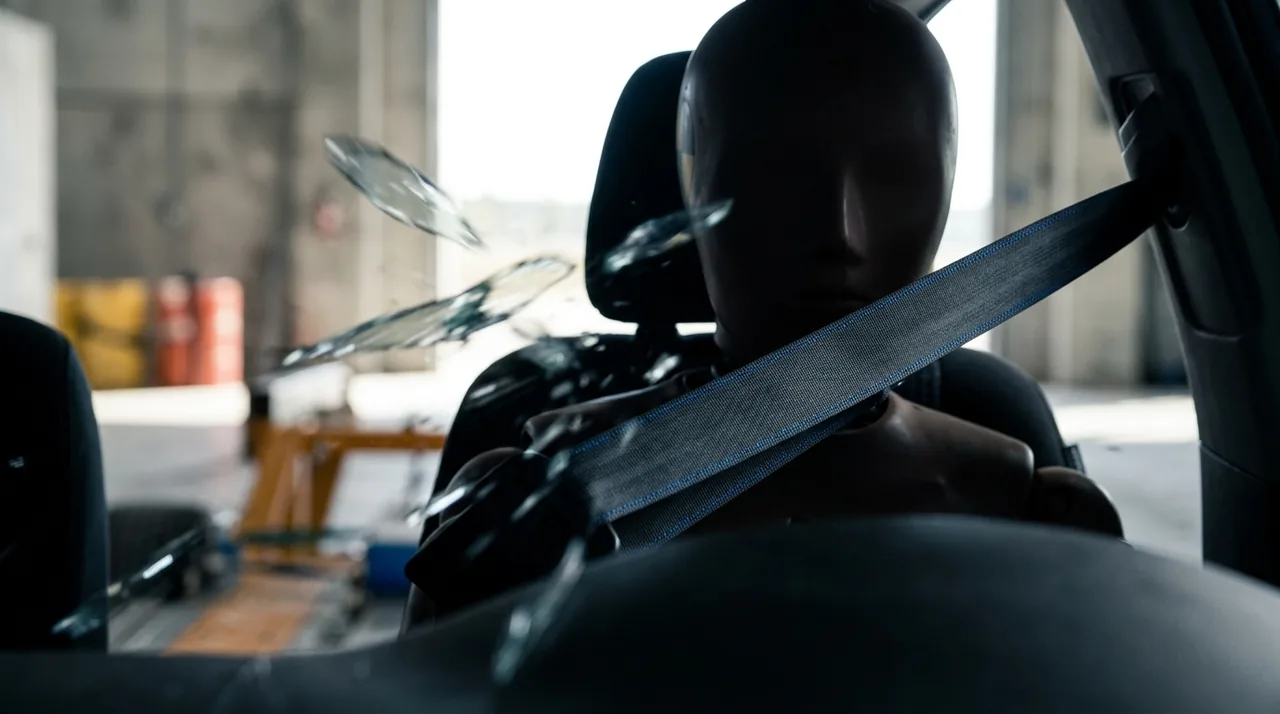
A car hits a wall at sixty kilometres per hour. The bumper crumples in eighty milliseconds. Inside, in the same fraction of a second, the driver's body continues at sixty kilometres per hour, because nothing has told it to stop. Newton described the problem in 1687.
The fastest survivable thing that can happen to a human body lasts about a tenth of a second. A car at 56 kilometres per hour strikes a rigid barrier. The front bumper begins to crumple. The engine block shifts rearward. The steering column collapses along an engineered failure line. Somewhere in those 120 milliseconds, a webbed strap three centimetres wide, rated to roughly 27 kilonewtons, does for the human inside what the wall is doing for the car: it imposes a force, and it imposes it over time.
The rule the strap is enforcing was written down, in Latin, by a Cambridge professor who had never seen a wheeled vehicle move faster than a horse could pull it.
Your lifekevin dooley · BY 2.0
Lex prima
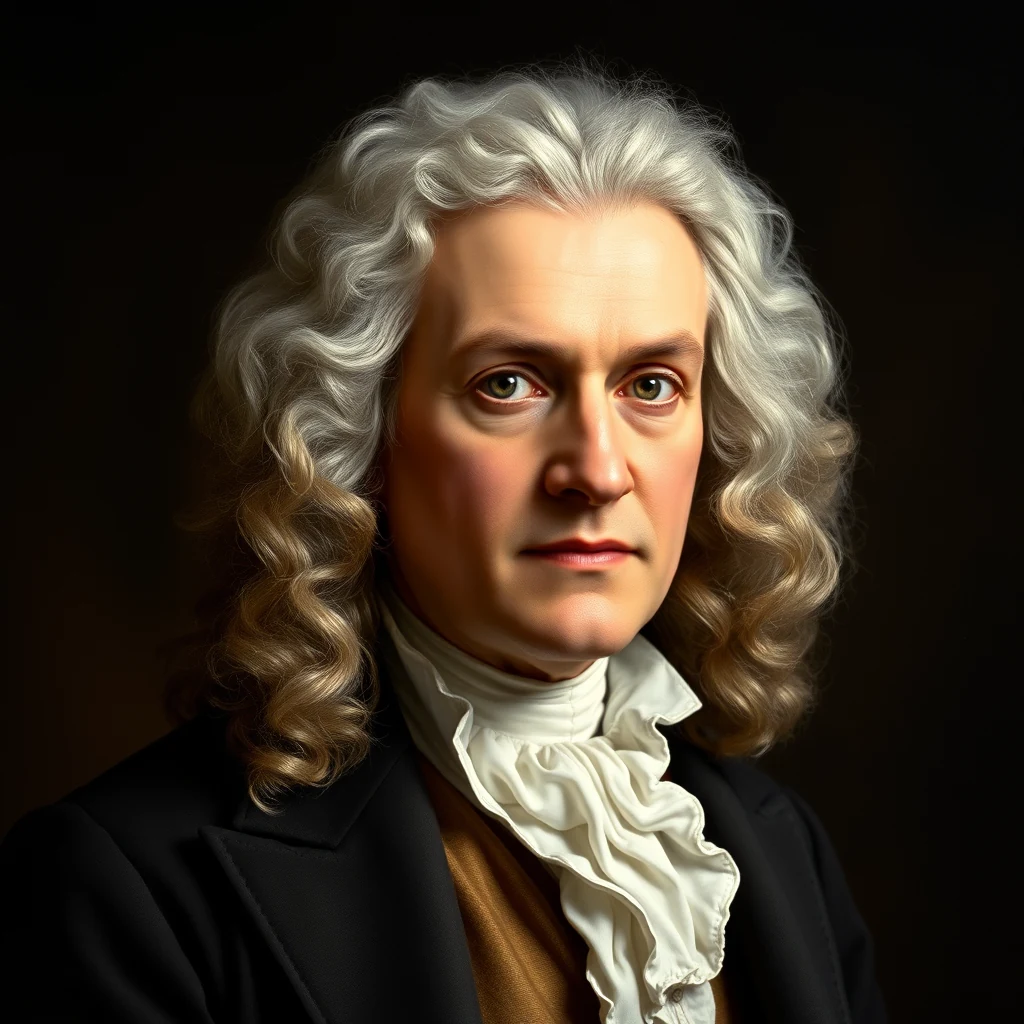
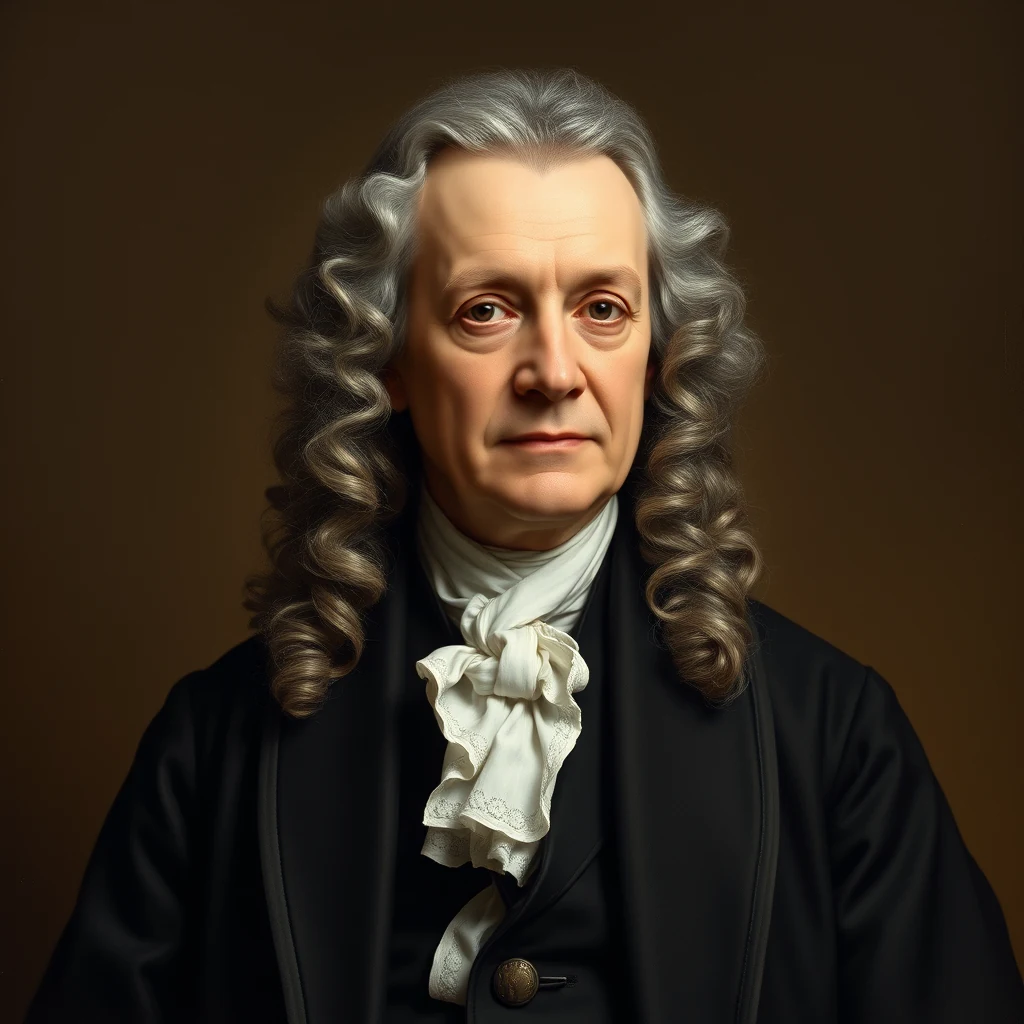
On 5 July 1687, the Royal Society published Isaac NewtonPersonIsaac NewtonEnglish natural philosopher (1642–1727), Master of the Mint and President of the Royal Society at the time of the Longitude Act. He testified before the parliamentary committee that drafted the Act and listed four possible methods of finding longitude, dismissing a sea-going clock as the least promising of them because no timekeeper could survive the motion and weather of a long voyage.英国自然哲学家(1642-1727年),在《经度法案》通过时担任皇家造币厂厂长和皇家学会会长。他在起草该法案的议会委员会面前作证,列出了寻找经度的四种可能方法,但认为航海钟是最没有前途的,因为没有钟表能在长期航行的颠簸和恶劣天气中幸存。Filósofo natural inglés (1642–1727), director de la Casa de la Moneda y presidente de la Royal Society. Testificó ante el comité parlamentario que redactó la Ley de Longitud, enumerando cuatro métodos para hallarla y descartando el reloj marino como el menos prometedor debido a que el movimiento marino alteraría la precisión.فيلسوف طبيعي إنجليزي (1642-1727)، شغل منصب مدير دار السك ورئيس الجمعية الملكية في وقت قانون خطوط الطول. أدلى بشهادته أمام اللجنة البرلمانية التي صاغت القانون وأدرج أربع طرق ممكنة للعثور على خطوط الطول، رافضاً فكرة ساعة السفر البحري باعتبارها الأقل وعداً نظراً لعدم قدرة الساعات على تحمل حركة السفن.Filósofo natural inglês (1642-1727), diretor da Casa da Moeda e presidente da Royal Society na época da Lei da Longitude. Testemunhou perante o comité parlamentar que elaborou a lei, listando quatro métodos para encontrar a longitude e descartando o relógio de mar por considerar que nenhum cronómetro resistiria ao mar.अंग्रेजी प्राकृतिक दार्शनिक (१६४२-१७२७), देशांतर अधिनियम के समय टकसाल के मास्टर और रॉयल सोसाइटी के अध्यक्ष। उन्होंने अधिनियम का मसौदा तैयार करने वाली संसदीय समिति के समक्ष गवाही दी और देशांतर खोजने के चार संभावित तरीकों को सूचीबद्ध किया, जिसमें एक समुद्री घड़ी को सबसे कम आशाजनक बताया क्योंकि कोई भी समयपालक लंबी यात्रा की हलचल और मौसम से बच नहीं सकता था।Filsuf alam Inggris (1642–1727), Master of the Mint dan Presiden Royal Society pada saat Undang-Undang Bujur disahkan. Ia memberikan kesaksian di depan komite parlemen yang merancang UU tersebut dan mencantumkan empat metode untuk menemukan bujur, menolak jam laut karena menganggap tidak ada pencatat waktu yang tahan guncangan laut.Philosophe de la nature anglais (1642–1727), directeur de la Monnaie et président de la Royal Society lors de l'adoption du Longitude Act. Témoignant devant le comité parlementaire, il lista quatre méthodes de calcul et écarta l'idée d'un chronomètre de marine, jugeant qu'aucune horloge ne résisterait aux mouvements d'un navire.解度法制定時に王立造幣局長および王立協会会長を務めた英国の自然哲学家(1642–1727)。同法の草案を作成した議会委員会で証言し、経度測定の4つの候補方法を挙げたが、长期航海の揺れや気候に耐えられる時計はないとして、海上用時計を最も見込みがない方法として退けた。Английский физик и математик (1642–1727), смотритель Монетного двора и президент Королевского общества во время принятия Закона о долготе. Он выступил в парламенте, перечислив четыре метода поиска долготы и назвав морские часы наименее перспективными, так как ни один механизм не выдержит качки и погоды в плавании.Englischer Naturphilosoph (1642–1727), Münzmeister und Präsident der Royal Society zur Zeit des Längengradgesetzes. Er sagte vor dem Parlamentsausschuss aus und nannte vier Methoden zur Längengradbestimmung, wies eine Schiffsuhr jedoch als am wenigsten vielversprechend zurück, da kein Zeitmesser die Bewegung und das Wetter einer langen Reise überstehen könne.영국의 자연철학자(1642~1727)로, 경도법 제정 당시 조폐국장과 왕립학회 회장을 맡고 있었다. 그는 법안을 기안한 의회 위원회에 출석해 경도를 측정하는 네 가지 후보안을 제시했으나, 바다 위의 혹독한 기후와 배의 흔들림을 견뎌낼 수 있는 정밀 시계는 존재하지 않는다고 단언하며 해상 시계 이용안을 가장 실현 가능성이 낮은 방법으로 깎아내렸다.'s *Philosophiæ Naturalis Principia Mathematica* at the personal expense of Edmond HalleyPersonEdmond HalleyEnglish astronomer (1656–1742), later Astronomer Royal, best known for predicting the return of the comet that bears his name. He lobbied for a longitude prize from the 1690s onward and personally examined John Harrison's first sea clock in 1730, encouraging the young carpenter to take it to George Graham, the leading London horologist, who lent Harrison money to build it.英国天文学家(1656-1742年),后任皇家天文学家,因预测以他名字命名的彗星的回归而闻名。他从1690年代起便游说设立经度奖,并在1730年亲自检查了约翰·哈里森的第一台航海钟,鼓励这位年轻的木匠将其带给伦敦著名的钟表匠乔治·格雷厄姆,后者资助了哈里森的建造工作。Astrónomo inglés (1656–1742), posterior Astrónomo Real, conocido por predecir el retorno del cometa que lleva su nombre. Promovió el premio de longitud desde la década de 1690 y examinó personalmente el primer reloj marino de John Harrison in 1730, recomendándole presentarlo ante George Graham, quien financió a Harrison.عالم فلك إنجليزي (1656-1742)، أصبح لاحقاً الفلكي الملكي، ويشتهر بتوقعه عودة المذنب الذي يحمل اسمه. ضغط من أجل تخصيص جائزة لخطوط الطول منذ تسعينيات القرن السابع عشر وفحص شخصياً أول ساعة بحرية لجون هاريسون عام 1730، مشجعاً النجار الشاب على نقلها إلى جورج غراهام، صانع الساعات الرائد الذي أقرض هاريسون المال.Astrónomo inglês (1656-1742), posterior Astrónomo Real, conhecido por prever o regresso do cometa que leva o seu nome. Defendeu um prémio para a longitude desde a década de 1690 e examinou pessoalmente o primeiro relógio de mar de John Harrison em 1730, incentivando o jovem carpinteiro a levá-lo ao relojoeiro George Graham.अंग्रेजी खगोलविद (१६५६-१७४२), बाद में खगोलविद रॉयल, जिन्हें उनके नाम के धूमकेतु की वापसी की भविष्यवाणी करने के लिए जाना जाता है। उन्होंने १६९० के दशक से देशांतर पुरस्कार के लिए पैरवी की और १७३० में जॉन हैरिसन की पहली समुद्री घड़ी की व्यक्तिगत रूप से जांच की, जिससे युवा बढ़ई को इसे प्रमुख घड़ीसाज जॉर्ज ग्राहम के पास ले जाने की प्रेरणा मिली।Astronom Inggris (1656–1742), kemudian menjabat Astronomer Royal, terkenal karena memprediksi kembalinya komet yang menyandang namanya. Ia melobi pemberian hadiah bujur sejak tahun 1690-an dan secara pribadi memeriksa jam laut pertama John Harrison pada tahun 1730, menyarankan sang tukang kayu untuk membawanya ke George Graham.Astronome anglais (1656–1742), plus tard Astronome royal, célèbre pour avoir prédit le retour de la comète qui porte son nom. Il milita pour la création du prix de la longitude dès les années 1690 et examina le premier chronomètre de John Harrison en 1730, l'encourageant à le présenter à l'horloger George Graham, qui le finança.後に王立天文学者となった英国の天文学者(1656–1742)。自身の名がつけられた彗星の回帰を予測したことで有名。1690年代から経度賞の設立を働きかけ、1730年にはジョン・ハリソンの最初の海上用時計を自ら検査した。そして若き大工ハリソンに対し、ロンドンの一流時計師ジョージ・グラハムに相談するよう勧め、グラハムは製作資金を貸し付けた。Английский астроном (1656–1742), Королевский астроном, наиболее известный предсказанием возвращения кометы, названной в его честь. Он лоббировал учреждение премии за долготу с 1690-х годов и лично изучил первые морские часы Джона Гаррисона в 1730 году, направив его к лондонскому часовому мастеру Джорджу Грэму, одолжившему Гаррисону денег.Englischer Astronom (1656–1742), späterer Astronomer Royal, bekannt für die Vorhersage der Wiederkehr des nach ihm benannten Kometen. Er setzte sich ab den 1690er Jahren für einen Längengradpreis ein und untersuchte 1730 persönlich John Harrisons erste Schiffsuhr, wobei er den jungen Zimmermann ermutigte, sie dem Londoner Uhrmacher George Graham zu zeigen.자신의 이름을 딴 혜성의 주기를 예측한 것으로 널리 알려진 영국의 천문학자(1656~1742)이자 왕립 천문학자이다. 1690년대부터 경도 상금 제정 운동을 벌였으며, 1730년에 시골 목수였던 존 해리슨의 첫 번째 해상 시계를 직접 검사했다. 해리슨에게 런던의 저명한 시계 제작자 조지 그레이엄을 소개해 시계 개발을 위한 자금 지원을 받을 수 있도록 주선했다., because the Society itself had spent its book budget on a lavishly illustrated history of fishes. The *Principia* opened with three laws of motion. The first, translated from the Latin, reads: every body perseveres in its state of rest, or of uniform motion in a straight line, unless compelled to change that state by forces impressed upon it.
A crash-test car moments after striking a barrierIllustration · AI-generated (FLUX.1-dev)
This is inertiaConceptInertiaThe tendency of a body to resist changes in its motion. A stationary object resists being set in motion; a moving one resists being slowed, sped up, or turned. The quantity of inertia is what we call mass. Galileo described the principle qualitatively; Newton made it the first of his laws of motion. Every collision, from billiards to car crashes, is inertia being negotiated.物体抵抗其运动状态发生改变的性质。静止的物体抵抗被推动;运动的物体抵抗被减速、加速或转向。惯性的量度即所谓的质量。伽利略对这一原理作出定性描述,牛顿则将其确立为运动定律中的第一定律。从台球碰撞到汽车相撞,每一次碰撞都是惯性之间的较量。La tendencia de un cuerpo a resistir cambios en su movimiento. Un objeto en reposo resiste ser puesto en movimiento; uno en movimiento resiste ser frenado, acelerado o desviado. La magnitud de la inercia es lo que denominamos masa. Galileo describió el principio de forma cualitativa; Newton lo convirtió en la primera de sus leyes del movimiento. Toda colisión, desde el billar hasta los accidentes de automóvil, es una negociación de la inercia.القصور الذاتي (العطالة)
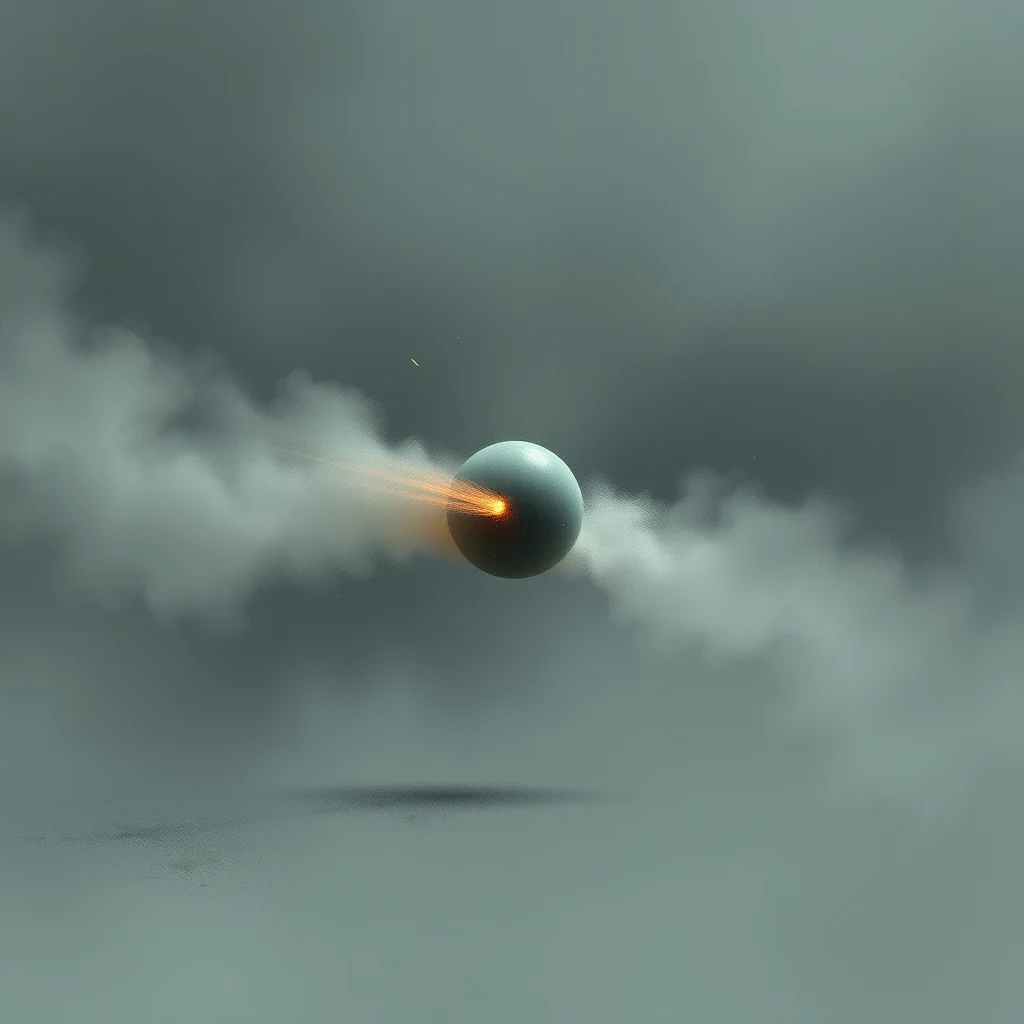
ميل الجسم إلى مقاومة التغيرات في حالته الحركية. يقاوم الجسم الساكن الانتقال إلى حالة الحركة، في حين يقاوم الجسم المتحرك أي تباطؤ أو تسارع أو انحراف عن مساره. والكمية التي تقيس هذا القصور الذاتي هي ما نسميه الكتلة. وصف غاليليو هذا المبدأ وصفاً نوعياً، ثم صاغه نيوتن بصورة كمية دقيقة ليُدرجه أول قوانينه في الحركة. وكل تصادم، من لعبة البلياردو إلى حوادث السيارات، ما هو إلا تجلٍّ لقوى القصور الذاتي وهي تتفاوض على نتائجها.A tendência de um corpo de resistir a alterações em seu movimento. Um objeto em repouso resiste a ser posto em movimento; um em movimento resiste a ser desacelerado, acelerado ou defletido. A grandeza da inércia é o que denominamos massa. Galileu descreveu o princípio de forma qualitativa; Newton o tornou a primeira de suas leis do movimento. Toda colisão, do bilhar aos acidentes automobilísticos, é a inércia sendo negociada.किसी वस्तु की अपनी गति में परिवर्तन का प्रतिरोध करने की प्रवृत्ति। एक स्थिर वस्तु गतिमान होने का प्रतिरोध करती है; एक गतिमान वस्तु धीमी होने, तेज होने या दिशा बदलने का प्रतिरोध करती है। जड़त्व की मात्रा को ही हम द्रव्यमान कहते हैं। गैलीलियो ने इस सिद्धांत का गुणात्मक वर्णन किया; न्यूटन ने इसे अपनी गति के नियमों में प्रथम नियम के रूप में स्थापित किया। प्रत्येक टक्कर — बिलियर्ड्स से लेकर कार दुर्घटनाओं तक — जड़त्व के परस्पर समायोजन की प्रक्रिया है।Kecenderungan suatu benda untuk menolak perubahan dalam gerakannya. Benda yang diam menolak untuk digerakkan; benda yang bergerak menolak untuk diperlambat, dipercepat, atau dibelokkan. Besaran inersia inilah yang kita sebut massa. Galileo mendeskripsikan prinsip ini secara kualitatif; Newton menjadikannya hukum pertama dari hukum-hukum geraknya. Setiap tumbukan, dari biliar hingga tabrakan mobil, merupakan negosiasi inersia.La tendance d'un corps à résister aux modifications de son mouvement. Un objet immobile résiste à être mis en mouvement ; un objet en déplacement résiste à être ralenti, accéléré ou dévié. La quantité d'inertie est ce que l'on appelle la masse. Galilée a décrit le principe de manière qualitative ; Newton en a fait la première de ses lois du mouvement. Toute collision, des billes de billard aux accidents de la route, est une négociation de l'inertie.静止した物体は運動を始めることに抵抗し、運動中の物体は減速・加速・方向転換に抵抗する、物体が運動の変化に抵抗する性質。慣性の量的尺度が質量である。ガリレオはこの原理を定性的に記述し、ニュートンはそれを運動の第一法則として定式化した。ビリヤードから自動車衝突に至るあらゆる衝突現象は、慣性が交渉される過程に他ならない。Склонность тела сопротивляться изменениям в его движении. Покоящийся объект сопротивляется приведению в движение; движущийся — торможению, ускорению или изменению направления. Количественной мерой инерции служит то, что мы называем массой. Галилей описал этот принцип качественно; Ньютон сделал его первым из своих законов движения. Любое столкновение — от бильярдных шаров до автомобильных аварий — есть не что иное, как столкновение инерций.Die Tendenz eines Körpers, Änderungen seines Bewegungszustands zu widerstehen. Ein ruhender Körper widersteht dem Versatz in Bewegung; ein bewegter widersteht dem Verlangsamen, Beschleunigen oder Ablenken. Das Maß der Trägheit ist das, was wir Masse nennen. Galilei beschrieb das Prinzip qualitativ; Newton erhob es zum ersten seiner Bewegungsgesetze. Jeder Stoß – vom Billard bis zum Autounfall – ist letztlich ein Aushandeln von Trägheit.정지한 물체는 운동 상태로 바뀌는 것에 저항하고, 운동 중인 물체는 감속·가속·방향 전환에 저항하는, 물체가 운동 변화에 저항하는 성질. 이 저항의 크기를 나타내는 양이 질량이다. 갈릴레오가 이 원리를 정성적으로 기술하였으며, 뉴턴은 이를 운동 법칙의 제1법칙으로 정식화하였다. 당구공의 충돌에서 자동차 충돌사고에 이르기까지 모든 충돌 현상은 관성이 작용하는 과정이다.. A bowling ball at rest stays on the floor. A bowling ball rolled across the floor continues until friction, or a wall, or your foot removes its momentum. The ball does not know it is in a room. It does not know it is on Earth. It stops only when something stops it.
Color your lifezigazou76 · BY 2.0
Inside a moving car, you are the bowling ball. You and the car share a velocity because the seat has been pushing you forward, gently, through every acceleration since the journey began. When the car decelerates abruptly — into a wall, a tree, the back of a stationary lorry — the seat stops pushing. The car decelerates. You do not. The dashboard arrives at whatever speed you were sharing a moment earlier.
A hundred milliseconds
A modern frontal crash at 56 km/h — the speed used by Euro NCAPInstitutionEuro NCAPThe European New Car Assessment Programme, founded in 1996, that crashes new cars into walls, poles and each other on behalf of consumers. Its five-star rating system has driven manufacturers to make structural and restraint changes that would not have been commercially rational under regulation alone. Its standard frontal test runs at 56 km/h into a deformable barrier offset to the driver's side.欧洲新车评估计划(Euro NCAP)成立于1996年,代表消费者对新车进行墙壁碰撞、柱碰撞及车对车碰撞测试。其五星评级体系促使制造商在车身结构与约束系统方面作出改进,而这些改进仅凭监管手段在商业上难以实现。标准正面碰撞测试以56公里/小时的速度撞向偏向驾驶侧的可变形壁障。El Programa Europeo de Evaluación de Nuevos Automóviles, fundado en 1996, somete vehículos nuevos a impactos contra muros, postes y otros vehículos en nombre de los consumidores. Su sistema de calificación de cinco estrellas ha impulsado a los fabricantes a introducir modificaciones estructurales y en los sistemas de retención que no habrían resultado comercialmente racionales únicamente mediante la regulación. Su prueba frontal estándar se realiza a 56 km/h contra una barrera deformable desplazada hacia el lado del conductor.برنامج تقييم السيارات الجديدة الأوروبي، المؤسَّس عام 1996، الذي يُخضع السيارات الجديدة لاختبارات الاصطدام بالجدران والأعمدة وبعضها البعض نيابةً عن المستهلكين. أسهم نظام تقييمه ذو الخمسة نجوم في دفع الشركات المصنِّعة إلى إجراء تحسينات هيكلية وتطوير أنظمة الحماية بما لم يكن ليكون مجدياً تجارياً في ظل الأطر التنظيمية وحدها. يُجرى الاختبار الأمامي المعياري بسرعة 56 كم/ساعة، مع اصطدام السيارة بحاجز قابل للتشوُّه مُحاذٍ لجانب السائق.O Programa Europeu de Avaliação de Novos Automóveis (Euro NCAP), fundado em 1996, submete veículos novos a colisões contra paredes, postes e entre si em nome dos consumidores. O seu sistema de classificação de cinco estrelas tem impelido os fabricantes a introduzir modificações estruturais e nos sistemas de retenção que não seriam comercialmente racionais sob a regulamentação por si só. O teste frontal padrão é realizado a 56 km/h contra uma barreira deformável deslocada para o lado do condutor.यूरोपीय नई कार आकलन कार्यक्रम (यूरो एनकैप), 1996 में स्थापित, उपभोक्ताओं की ओर से नई कारों को दीवारों, खंभों तथा एक-दूसरे से टकराता है। इसकी पाँच-सितारा रेटिंग प्रणाली ने निर्माताओं को संरचनात्मक एवं संयमक संबंधी ऐसे परिवर्तन करने के लिए प्रेरित किया है जो अकेले विनियमन के अधीन व्यावसायिक दृष्टि से तर्कसंगत नहीं होते। इसका मानक ललाट परीक्षण 56 किमी/घंटा की गति से चालक की दिशा में ऑफसेट विरूपणीय अवरोध के साथ संपन्न किया जाता है।European New Car Assessment Programme, didirikan pada 1996, adalah lembaga yang menabrakkan mobil baru ke dinding, tiang, dan satu sama lain atas nama konsumen. Sistem penilaian bintang limanya telah mendorong para produsen untuk melakukan perubahan pada struktur kendaraan dan sistem pengekang yang tidak akan rasional secara komersial apabila hanya mengandalkan regulasi semata. Uji tabrak frontal standarnya dijalankan pada kecepatan 56 km/jam ke arah penghalang yang dapat berubah bentuk, digeser ke sisi pengemudi.Le Programme européen d'évaluation des nouveaux véhicules (Euro NCAP), fondé en 1996, soumet des véhicules neufs à des impacts contre des murs, des poteaux et d'autres véhicules pour le compte des consommateurs. Son système de notation à cinq étoiles a conduit les constructeurs à apporter des modifications structurelles et aux dispositifs de retenue qui n'auraient pas été commercialement rationnelles sous la seule contrainte réglementaire. Son essai frontal normalisé s'effectue à 56 km/h contre une barrière déformable décalée du côté conducteur.ヨーロッパ新車アセスメントプログラム(Euro NCAP)は1996年に設立された消費者向け機関であり、新型自動車を壁面・柱・他車両に衝突させる試験を実施する。同機関の5つ星評価制度は、規制のみでは商業的に合理性を持たなかったであろう車体構造および乗員拘束装置の改良を自動車メーカーに促してきた。標準的な前面衝突試験は時速56kmで変形可能なバリアに対して運転席側オフセットの形で実施される。Европейская программа оценки новых автомобилей (Euro NCAP), основанная в 1996 году, проводит краш-тесты новых автомобилей — столкновения со стенами, столбами и друг с другом — в интересах потребителей. Введённая ею пятизвёздочная система рейтинга побудила производителей к изменениям конструкции кузова и систем удержания пассажиров, которые не были бы коммерчески целесообразны при опоре исключительно на нормативное регулирование. Стандартный фронтальный тест проводится на скорости 56 км/ч с ударом о деформируемый барьер со смещением в сторону водителя.Das European New Car Assessment Programme, gegründet 1996, unterzieht Neuwagen im Auftrag der Verbraucher Crashtests gegen Wände, Pfosten und gegeneinander. Sein Fünf-Sterne-Bewertungssystem hat Hersteller zu strukturellen Änderungen sowie zur Verbesserung der Rückhaltesysteme veranlasst, die unter rein regulatorischen Rahmenbedingungen betriebswirtschaftlich nicht rational gewesen wären. Der standardisierte Frontalaufpralltest wird bei 56 km/h gegen eine verformbare Barriere durchgeführt, versetzt zur Fahrerseite.1996년 설립된 유럽 신차 평가 프로그램(Euro NCAP)은 소비자를 대신하여 신차를 벽, 기둥 및 차량 상호 간 충돌 시험에 투입하는 기관이다. 5성 등급 체계는 규제만으로는 상업적으로 합리적이지 않았을 차체 구조 및 안전장치 개선을 제조사들이 단행하도록 이끌었다. 표준 정면 충돌 시험은 시속 56km로 운전석 측에 오프셋된 변형 배리어에 차량을 충돌시키는 방식으로 진행된다. in its rating tests — completes in roughly 120 milliseconds. The first thirty belong to the car. Crumple zones, patented in 1952 by the Mercedes-Benz engineer Béla BarényiPersonBéla BarényiAustro-Hungarian engineer (1907–1997) who spent his career at Mercedes-Benz quietly inventing most of the survivable car. His 1952 patent for a passenger cell with deformable front and rear sections — what we now call crumple zones — inverted a century of automotive engineering, which had treated rigidity as a virtue. He is credited with more than 2,500 patents and was inducted into the Detroit Automotive Hall of Fame in 1994.奥匈帝国裔工程师(1907—1997),职业生涯任职于梅赛德斯-奔驰,以近乎默默无闻的方式奠定了现代汽车安全工程的基础。1952年,他申请了一项关于具有可变形前后区段的乘员舱的专利——即今日所称的"溃缩区"——从而颠覆了延续百年的汽车工程理念。此前,工程界普遍将刚性结构视为设计准则。他一生共获得逾2,500项专利,并于1994年入选底特律汽车名人堂。Ingeniero austrohúngaro (1907-1997) que dedicó su carrera en Mercedes-Benz a inventar discretamente la mayor parte del automóvil supervivible. Su patente de 1952 para una célula de pasajeros con secciones deformables delantera y trasera —lo que hoy denominamos zonas de deformación programada— invirtió un siglo de ingeniería automotriz, que había tratado la rigidez como una virtud. Se le atribuyen más de 2.500 patentes y fue incluido en el Salón de la Fama del Automóvil de Detroit en 1994.مهندس نمساوي-مجري (1907–1997) أمضى مسيرته المهنية في شركة مرسيدس-بنز، إذ أسهم في صمت في اختراع معظم الأنظمة التي تجعل السيارة قادرةً على الصمود. براءة اختراعه المُسجَّلة عام 1952 الخاصة بمقصورة الركاب المزودة بمنطقتين أمامية وخلفية قابلتين للتشوه — وهو ما يُعرف اليوم بمناطق التشوه — أحدثت انقلاباً جذرياً في قرن من هندسة السيارات التي كانت تعدّ الصلابة فضيلة. يُنسب إليه ما يزيد على 2,500 براءة اختراع، وانتُخب عضواً في قاعة مشاهير صناعة السيارات في ديترويت عام 1994.Engenheiro austro-húngaro (1907–1997) que passou a carreira na Mercedes-Benz inventando discretamente a maior parte do automóvel sobrevivível. Sua patente de 1952 para um habitáculo com seções dianteira e traseira deformáveis — o que hoje chamamos de zonas de deformação progressiva — inverteu um século de engenharia automotiva, que tratava a rigidez como virtude. Credita-se a ele mais de 2.500 patentes e foi introduzido no Detroit Automotive Hall of Fame em 1994.ऑस्ट्रो-हंगेरियन इंजीनियर (1907–1997) जिन्होंने अपना समूचा कार्यकाल मर्सिडीज़-बेंज़ में बिताया और चुपचाप उस अधिकांश तकनीक का आविष्कार किया जो कार को दुर्घटना में जीवनरक्षक बनाती है। 1952 में पंजीकृत उनके पेटेंट ने एक ऐसी यात्री-कोष्ठिका प्रस्तुत की जिसके आगे और पीछे विकृत होने योग्य खंड थे — जिन्हें आज हम क्रम्पल ज़ोन कहते हैं — और इसने ऑटोमोबाइल इंजीनियरिंग की एक सदी पुरानी उस धारणा को उलट दिया जो दृढ़ता को गुण मानती आई थी। उनके नाम 2,500 से अधिक पेटेंट दर्ज हैं और 1994 में उन्हें डेट्रॉइट ऑटोमोटिव हॉल ऑफ़ फ़ेम में शामिल किया गया।Insinyur Austria-Hungaria (1907–1997) yang menghabiskan kariernya di Mercedes-Benz dengan diam-diam menciptakan sebagian besar fitur mobil yang dapat menyelamatkan nyawa. Patennya pada tahun 1952 untuk sel penumpang dengan bagian depan dan belakang yang dapat berdeformasi — yang sekarang kita sebut crumple zone — membalikkan satu abad rekayasa otomotif, yang sebelumnya memperlakukan kekakuan sebagai keutamaan. Ia dikreditkan atas lebih dari 2.500 paten dan dilantik ke Detroit Automotive Hall of Fame pada tahun 1994.Ingénieur austro-hongrois (1907–1997) qui passa sa carrière chez Mercedes-Benz à inventer discrètement la majeure partie de l'automobile survivable. Son brevet de 1952 portant sur une cellule passagers dotée de zones avant et arrière déformables — ce que l'on appelle aujourd'hui les zones froissables — renversa un siècle d'ingénierie automobile, qui avait jusqu'alors considéré la rigidité comme une vertu. On lui attribue plus de 2 500 brevets ; il fut intronisé au Detroit Automotive Hall of Fame en 1994.オーストリア=ハンガリー出身の技術者(1907年–1997年)。メルセデス・ベンツで生涯を過ごし、現代の安全な自動車のほぼすべてを目立たぬかたちで発明した。前後に変形可能な領域をもつ乗員保護セルに関する1952年の特許――今日いうところのクラッシャブルゾーン――は、剛性こそ美徳とみなしてきた自動車工学の一世紀におよぶ常識を覆した。2,500件を超える特許の発明者とされ、1994年にはデトロイトの自動車殿堂入りを果たした。Австро-венгерский инженер (1907–1997), проработавший всю карьеру в Mercedes-Benz и негромко создавший большую часть того, что делает автомобиль выживаемым. Его патент 1952 года на пассажирскую ячейку с деформируемыми передней и задней секциями — то, что мы сегодня называем зонами деформации, — перевернул столетие автомобильной инженерии, считавшей жёсткость конструкции достоинством. Ему приписывают более 2500 патентов; в 1994 году он был введён в Детройтский автомобильный зал славы.Österreichisch-ungarischer Ingenieur (1907–1997), der seine berufliche Laufbahn bei Mercedes-Benz verbrachte und dort im Stillen einen Großteil dessen erfand, was das überlebensfähige Automobil ausmacht. Sein Patent von 1952 für eine Fahrgastzelle mit verformbaren Front- und Heckpartien – heute als Knautschzonen bekannt – stellte ein Jahrhundert der Fahrzeugtechnik auf den Kopf, das Steifigkeit stets als Tugend betrachtet hatte. Ihm werden mehr als 2.500 Patente zugeschrieben, und 1994 wurde er in die Detroit Automotive Hall of Fame aufgenommen.오스트리아-헝가리 출신 엔지니어(1907–1997)로, 메르세데스-벤츠에서 평생을 보내며 오늘날 우리가 아는 생존 가능한 자동차의 대부분을 조용히 발명했다. 1952년에 출원한, 앞뒤가 변형되는 구획을 갖춘 승객실 특허—오늘날 크럼플 존이라 불리는 것—는 강성을 미덕으로 여겨온 한 세기에 걸친 자동차 공학을 뒤집어 놓았다. 2,500건이 넘는 특허의 발명자로 인정받고 있으며, 1994년 디트로이트 자동차 명예의 전당에 헌액되었다., fold along pre-cut failure lines, converting kinetic energy into the deformation of metal. Folding takes time. Time matters because force equals mass times acceleration: the same change in velocity, spread over a longer interval, demands less force.
A Royal Society room in 1687 with bound volumes stacked near a rolling wooden sphere and aIllustration · AI-generated (FLUX.1-dev)
A perfectly rigid car would stop in perhaps twenty milliseconds and deliver something on the order of 80 g to the occupant — survivable only in the way that being shot is survivable. A car with a metre of crumple stretches the event past a hundred milliseconds and brings the peak deceleration nearer 30 g. The crumple zone is a deliberate, expensive failure, calibrated to collapse in exactly the right way.
'Somebody could walk into this room and say your life is on fire.Cate Storymoon · BY-SA 2.0
The seatbelt does the same job for the body. The three-point belt was patented in 1959 by Nils BohlinPersonNils BohlinSwedish engineer (1920–2002) who designed the modern three-point seatbelt while working at Volvo in 1958, drawing on his earlier work on ejection seats at Saab. Earlier belts crossed only the lap or only the chest; Bohlin's combined both into a single buckle that could be operated one-handed. Volvo opened the patent to every other manufacturer in 1959. The design is estimated to have saved more than a million lives.瑞典工程师(1920—2002),1958年供职于沃尔沃期间设计了现代三点式安全带,其设计理念源于此前在萨博研发弹射座椅的经验。早期安全带仅横过腰部或仅横过胸部;博林的设计将两者合并为单一卡扣,可单手操作。沃尔沃于1959年向所有其他制造商开放了该专利。这一设计据估计已挽救逾百万人的生命。Ingeniero sueco (1920–2002) que diseñó el cinturón de seguridad moderno de tres puntos mientras trabajaba en Volvo en 1958, basándose en su trabajo previo sobre asientos eyectables en Saab. Los cinturones anteriores cruzaban únicamente el regazo o únicamente el pecho; el de Bohlin combinaba ambos en una sola hebilla que podía accionarse con una sola mano. Volvo abrió la patente a todos los demás fabricantes en 1959. Se estima que el diseño ha salvado más de un millón de vidas.مهندس سويدي (1920–2002) صمّم حزام الأمان الحديث ثلاثي النقاط أثناء عمله في شركة فولفو عام 1958، مستفيداً من خبرته السابقة في تصميم مقاعد القذف لدى شركة ساب. كانت الأحزمة السابقة تمتد إما على الحوض فقط أو على الصدر فقط، أما تصميم بوهلين فقد جمع بينهما في مشبك واحد يمكن تشغيله بيد واحدة. أتاحت فولفو براءة الاختراع لجميع الشركات المصنّعة الأخرى عام 1959. ويُقدَّر أن هذا التصميم قد أنقذ أكثر من مليون حياة.Engenheiro sueco (1920–2002) que projetou o moderno cinto de segurança de três pontos enquanto trabalhava na Volvo em 1958, baseando-se em seu trabalho anterior com assentos ejetáveis na Saab. Os cintos anteriores cruzavam apenas o colo ou apenas o peito; o de Bohlin combinava ambos em uma única fivela que podia ser operada com uma só mão. A Volvo abriu a patente a todos os demais fabricantes em 1959. Estima-se que o projeto tenha salvado mais de um milhão de vidas.स्वीडिश इंजीनियर (1920–2002) जिन्होंने 1958 में वोल्वो में कार्य करते हुए आधुनिक तीन-बिंदु सीटबेल्ट का डिज़ाइन तैयार किया, जिसमें उन्होंने साब में इजेक्शन सीटों पर अपने पूर्व कार्य का सहारा लिया। पहले की बेल्टें केवल कमर या केवल छाती पर ही बंधती थीं; बोहलिन ने दोनों को एक ही बकल में मिला दिया, जिसे एक हाथ से संचालित किया जा सकता था। वोल्वो ने 1959 में यह पेटेंट हर दूसरे निर्माता के लिए खोल दिया। अनुमान है कि इस डिज़ाइन ने दस लाख से अधिक जानें बचाई हैं।Insinyur Swedia (1920–2002) yang merancang sabuk pengaman tiga titik modern ketika bekerja di Volvo pada 1958, dengan memanfaatkan pengalamannya terdahulu pada kursi pelontar di Saab. Sabuk-sabuk sebelumnya hanya melintang di pangkuan atau hanya di dada; rancangan Bohlin menggabungkan keduanya ke dalam satu gesper yang dapat dioperasikan dengan satu tangan. Volvo membuka patennya untuk semua produsen lain pada 1959. Rancangan ini diperkirakan telah menyelamatkan lebih dari satu juta nyawa.Ingénieur suédois (1920-2002) qui conçut la ceinture de sécurité à trois points moderne alors qu'il travaillait chez Volvo en 1958, s'appuyant sur ses travaux antérieurs sur les sièges éjectables chez Saab. Les ceintures antérieures ne traversaient que les hanches ou que le torse ; celle de Bohlin combinait les deux en une boucle unique pouvant être manœuvrée d'une seule main. Volvo ouvrit le brevet à tous les autres constructeurs en 1959. On estime que cette conception a sauvé plus d'un million de vies.スウェーデンの技術者(1920–2002)。1958年、ボルボ在籍時に現代的な三点式シートベルトを設計した。サーブ社で携わった射出座席の研究が下地となっている。それ以前のベルトは腰部または胸部のいずれか一方のみを拘束する形式だったが、ボーリンは両者を単一のバックルに統合し、片手で操作できるようにした。ボルボは1959年、この特許を他のすべてのメーカーに開放した。この設計はこれまでに100万人以上の命を救ったと推定されている。Шведский инженер (1920–2002), сконструировавший в 1958 году современный трёхточечный ремень безопасности во время работы в Volvo, опираясь на свой более ранний опыт разработки катапультных кресел в Saab. Прежние ремни проходили либо только по бёдрам, либо только по груди; Болин объединил их в единую конструкцию с одной пряжкой, которая застёгивалась одной рукой. В 1959 году Volvo открыла патент для всех других производителей. По оценкам, эта конструкция спасла более миллиона жизней.Schwedischer Ingenieur (1920–2002), der 1958 bei Volvo den modernen Dreipunkt-Sicherheitsgurt entwickelte und dabei auf seine frühere Arbeit an Schleudersitzen bei Saab zurückgriff. Frühere Gurte verliefen nur über den Schoß oder nur über die Brust; Bohlin vereinte beide in einem einzigen, einhändig zu bedienenden Verschluss. Volvo gab das Patent 1959 für alle anderen Hersteller frei. Schätzungen zufolge hat die Konstruktion mehr als eine Million Menschenleben gerettet.볼보에서 1958년에 근무하며 사브에서 사출 좌석 작업을 했던 경험을 바탕으로 현대식 3점식 안전벨트를 설계한 스웨덴 엔지니어(1920–2002). 이전의 벨트는 허리 또는 가슴 한쪽만 가로질렀으나, 볼린은 두 방식을 하나의 버클로 결합해 한 손으로 조작할 수 있도록 했다. 볼보는 1959년 이 특허를 다른 모든 제조사에 개방했다. 이 설계는 100만 명 이상의 목숨을 구한 것으로 추정된다. at VolvoInstitutionVolvoSwedish vehicle manufacturer founded in Gothenburg in 1927 whose engineering culture has long centred on occupant safety. Beyond the three-point belt, Volvo introduced the rear-facing child seat (1964), the side-impact protection system (1991), and a public commitment that no one should die in a new Volvo by 2020. Its crash-research archive in Sweden remains one of the most detailed records of real-world collision injury in the world.瑞典汽车制造商,1927年于哥德堡创立,其工程文化长期以乘员安全为核心。除三点式安全带外,沃尔沃还推出了后向式儿童座椅(1964年)、侧撞保护系统(1991年),并公开承诺到2020年实现新款沃尔沃汽车零死亡。其位于瑞典的碰撞研究档案库,至今仍是全球关于真实碰撞伤害最为详尽的记录之一。Fabricante sueco de automóviles fundado en Gotemburgo en 1927 cuya cultura de ingeniería se ha centrado durante mucho tiempo en la seguridad de los ocupantes. Más allá del cinturón de tres puntos, Volvo introdujo la silla infantil orientada hacia atrás (1964), el sistema de protección contra impactos laterales (1991) y un compromiso público de que nadie debería morir en un Volvo nuevo para 2020. Su archivo de investigación de accidentes en Suecia sigue siendo uno de los registros más detallados del mundo sobre lesiones por colisiones en condiciones reales.شركة سويدية لتصنيع السيارات تأسست في غوتنبرغ عام 1927، وتمحورت ثقافتها الهندسية منذ أمد بعيد حول سلامة الركاب. وإلى جانب حزام الأمان الثلاثي النقاط، قدّمت فولفو مقعد الأطفال المواجه للخلف (1964)، ونظام الحماية من الاصطدام الجانبي (1991)، إضافةً إلى التزام علني بألا يلقى أحد حتفه داخل سيارة فولفو جديدة بحلول عام 2020. ولا يزال أرشيف أبحاث الحوادث التابع لها في السويد واحدًا من أكثر السجلات تفصيلًا في العالم لإصابات الاصطدامات في الواقع.Fabricante sueca de veículos fundada em Gotemburgo em 1927, cuja cultura de engenharia há muito se concentra na segurança dos ocupantes. Além do cinto de três pontos, a Volvo introduziu a cadeirinha infantil voltada para trás (1964), o sistema de proteção contra impactos laterais (1991) e um compromisso público de que ninguém deveria morrer em um Volvo novo até 2020. Seu arquivo de pesquisa de colisões na Suécia continua sendo um dos registros mais detalhados de lesões em acidentes reais no mundo.स्वीडिश वाहन निर्माता, जिसकी स्थापना 1927 में गोथेनबर्ग में हुई और जिसकी इंजीनियरिंग संस्कृति लंबे समय से यात्री सुरक्षा पर केंद्रित रही है। तीन-बिंदु सीट बेल्ट के अलावा, वोल्वो ने पीछे की ओर मुख वाली बाल सीट (1964), साइड-इम्पैक्ट सुरक्षा प्रणाली (1991), और यह सार्वजनिक प्रतिबद्धता पेश की कि 2020 तक किसी भी नई वोल्वो में कोई न मरे। स्वीडन स्थित इसका दुर्घटना-अनुसंधान संग्रह वास्तविक दुनिया की टक्कर से होने वाली चोटों का दुनिया के सबसे विस्तृत अभिलेखों में से एक बना हुआ है।Produsen kendaraan Swedia yang didirikan di Gothenburg pada 1927 dengan budaya rekayasa yang sejak lama berpusat pada keselamatan penumpang. Selain sabuk tiga titik, Volvo memperkenalkan kursi anak menghadap ke belakang (1964), sistem perlindungan benturan samping (1991), serta komitmen publik bahwa tidak seorang pun boleh meninggal di dalam Volvo baru pada 2020. Arsip riset tabrakannya di Swedia tetap menjadi salah satu catatan cedera tabrakan dunia nyata paling rinci di dunia.Constructeur automobile suédois fondé à Göteborg en 1927, dont la culture d'ingénierie est depuis longtemps axée sur la sécurité des occupants. Au-delà de la ceinture trois points, Volvo a introduit le siège enfant dos à la route (1964), le système de protection contre les chocs latéraux (1991), ainsi qu'un engagement public selon lequel personne ne devrait mourir dans une Volvo neuve d'ici 2020. Ses archives de recherche sur les collisions, conservées en Suède, demeurent l'un des relevés les plus détaillés au monde sur les blessures réelles consécutives aux accidents.1927年にイェーテボリで創業されたスウェーデンの自動車メーカーで、その技術文化は長年にわたり乗員の安全を中心に据えてきた。三点式シートベルトのみならず、ボルボは後ろ向きチャイルドシート(1964年)、側面衝突防護システム(SIPS、1991年)を導入し、2020年までに新型ボルボ車での死亡事故をゼロにするという公約を打ち出した。同社がスウェーデンに有する衝突研究アーカイブは、現実の衝突事故における傷害に関する世界で最も詳細な記録の一つであり続けている。Шведский автопроизводитель, основанный в Гётеборге в 1927 году, инженерная культура которого издавна сосредоточена на безопасности находящихся в автомобиле людей. Помимо трёхточечного ремня, Volvo представила обращённое назад детское кресло (1964), систему защиты от боковых ударов (1991), а также публично взяла на себя обязательство, что к 2020 году никто не должен погибать в новом Volvo. Её архив исследований аварий в Швеции остаётся одним из самых подробных в мире собраний данных о травмах при реальных дорожных столкновениях.Schwedischer Fahrzeughersteller, 1927 in Göteborg gegründet, dessen Ingenieurskultur seit jeher auf den Insassenschutz ausgerichtet ist. Über den Dreipunktgurt hinaus führte Volvo den rückwärts gerichteten Kindersitz (1964) und das Seitenaufprallschutzsystem (1991) ein und gab das öffentliche Versprechen ab, dass bis 2020 niemand mehr in einem neuen Volvo sterben solle. Das Crash-Forschungsarchiv des Unternehmens in Schweden zählt nach wie vor zu den weltweit detailliertesten Aufzeichnungen über reale Unfallverletzungen.1927년 예테보리에서 설립된 스웨덴의 자동차 제조사로, 오랜 기간 탑승자 안전을 엔지니어링 문화의 중심에 두어 왔다. 3점식 안전벨트 외에도 볼보는 후방을 향한 어린이용 시트(1964년), 측면 충돌 보호 시스템(1991년)을 도입했으며, 2020년까지 새 볼보 차량에서 사망자가 발생하지 않게 하겠다는 공개 선언을 발표했다. 스웨덴에 보관된 볼보의 충돌 연구 기록 보관소는 실제 충돌 사고로 인한 부상에 관해 세계에서 가장 상세한 기록 중 하나로 남아 있다.. Volvo released the patent to every other manufacturer on the reasonable view that lives saved were worth more than royalties collected. The webbing is engineered to stretch by ten to fifteen per cent under load, so that the chest decelerates over tens of milliseconds rather than the two or three it would take to hit the wheel. The airbag, fired in about thirty milliseconds by a sodium-azide charge, gives the head and chest a soft surface to find. Every device is buying time, and time is the only currency Newton's laws accept.
A seatbelt webbing sample pulled in a tensile tester beside crash dummy torsos of differenIllustration · AI-generated (FLUX.1-dev)
What we still don't know
We know the physics. We do not know how to apply it equally to every body. The standard crash-test dummy, the Hybrid III, was specified in the 1970s as a 78-kilogram male, 175 centimetres tall. Women in driver's seats are roughly seventeen per cent more likely to suffer serious injury in comparable frontal collisions — a gap the first female-form dummy, developed in Sweden in 2022, is only now beginning to close.
Entamoeba histolytica is an anaerobic parasitic protozoan, part of the genus Entamoeba. It infects predominantly humans and other primatesMariana Ruiz Villarreal LadyofHats · Public domain
We do not know what survives at the accelerations that electric cars and modern motorcycles reach in seconds. A Tesla Model S Plaid passes 100 km/h in under two; an unbelted passenger in that car who hits anything has more momentum to dissipate than the standard restraint envelope was designed around.
A modern electric vehicle test sled with battery packsIllustration · AI-generated (FLUX.1-dev)
And we have no clean answer yet for the autonomous car. If the vehicle is driving, must the occupant face forward? Must they sit upright? Half a century of restraint engineering assumes a posture that may not survive the next half-decade of cars.
Newton wrote down, in three sentences and a diagram, the rule that says a body in motion intends to remain in motion. Every belt, bag and crumpled bonnet on the road is an apology to that rule, negotiated in milliseconds. The rule has not been amended.
1687年7月5日,皇家学会出版了Isaac NewtonPersonIsaac NewtonEnglish natural philosopher (1642–1727), Master of the Mint and President of the Royal Society at the time of the Longitude Act. He testified before the parliamentary committee that drafted the Act and listed four possible methods of finding longitude, dismissing a sea-going clock as the least promising of them because no timekeeper could survive the motion and weather of a long voyage.英国自然哲学家(1642-1727年),在《经度法案》通过时担任皇家造币厂厂长和皇家学会会长。他在起草该法案的议会委员会面前作证,列出了寻找经度的四种可能方法,但认为航海钟是最没有前途的,因为没有钟表能在长期航行的颠簸和恶劣天气中幸存。Filósofo natural inglés (1642–1727), director de la Casa de la Moneda y presidente de la Royal Society. Testificó ante el comité parlamentario que redactó la Ley de Longitud, enumerando cuatro métodos para hallarla y descartando el reloj marino como el menos prometedor debido a que el movimiento marino alteraría la precisión.فيلسوف طبيعي إنجليزي (1642-1727)، شغل منصب مدير دار السك ورئيس الجمعية الملكية في وقت قانون خطوط الطول. أدلى بشهادته أمام اللجنة البرلمانية التي صاغت القانون وأدرج أربع طرق ممكنة للعثور على خطوط الطول، رافضاً فكرة ساعة السفر البحري باعتبارها الأقل وعداً نظراً لعدم قدرة الساعات على تحمل حركة السفن.Filósofo natural inglês (1642-1727), diretor da Casa da Moeda e presidente da Royal Society na época da Lei da Longitude. Testemunhou perante o comité parlamentar que elaborou a lei, listando quatro métodos para encontrar a longitude e descartando o relógio de mar por considerar que nenhum cronómetro resistiria ao mar.अंग्रेजी प्राकृतिक दार्शनिक (१६४२-१७२७), देशांतर अधिनियम के समय टकसाल के मास्टर और रॉयल सोसाइटी के अध्यक्ष। उन्होंने अधिनियम का मसौदा तैयार करने वाली संसदीय समिति के समक्ष गवाही दी और देशांतर खोजने के चार संभावित तरीकों को सूचीबद्ध किया, जिसमें एक समुद्री घड़ी को सबसे कम आशाजनक बताया क्योंकि कोई भी समयपालक लंबी यात्रा की हलचल और मौसम से बच नहीं सकता था।Filsuf alam Inggris (1642–1727), Master of the Mint dan Presiden Royal Society pada saat Undang-Undang Bujur disahkan. Ia memberikan kesaksian di depan komite parlemen yang merancang UU tersebut dan mencantumkan empat metode untuk menemukan bujur, menolak jam laut karena menganggap tidak ada pencatat waktu yang tahan guncangan laut.Philosophe de la nature anglais (1642–1727), directeur de la Monnaie et président de la Royal Society lors de l'adoption du Longitude Act. Témoignant devant le comité parlementaire, il lista quatre méthodes de calcul et écarta l'idée d'un chronomètre de marine, jugeant qu'aucune horloge ne résisterait aux mouvements d'un navire.解度法制定時に王立造幣局長および王立協会会長を務めた英国の自然哲学家(1642–1727)。同法の草案を作成した議会委員会で証言し、経度測定の4つの候補方法を挙げたが、长期航海の揺れや気候に耐えられる時計はないとして、海上用時計を最も見込みがない方法として退けた。Английский физик и математик (1642–1727), смотритель Монетного двора и президент Королевского общества во время принятия Закона о долготе. Он выступил в парламенте, перечислив четыре метода поиска долготы и назвав морские часы наименее перспективными, так как ни один механизм не выдержит качки и погоды в плавании.Englischer Naturphilosoph (1642–1727), Münzmeister und Präsident der Royal Society zur Zeit des Längengradgesetzes. Er sagte vor dem Parlamentsausschuss aus und nannte vier Methoden zur Längengradbestimmung, wies eine Schiffsuhr jedoch als am wenigsten vielversprechend zurück, da kein Zeitmesser die Bewegung und das Wetter einer langen Reise überstehen könne.영국의 자연철학자(1642~1727)로, 경도법 제정 당시 조폐국장과 왕립학회 회장을 맡고 있었다. 그는 법안을 기안한 의회 위원회에 출석해 경도를 측정하는 네 가지 후보안을 제시했으나, 바다 위의 혹독한 기후와 배의 흔들림을 견뎌낼 수 있는 정밀 시계는 존재하지 않는다고 단언하며 해상 시계 이용안을 가장 실현 가능성이 낮은 방법으로 깎아내렸다.的《自然哲学的数学原理》,费用由Edmond HalleyPersonEdmond HalleyEnglish astronomer (1656–1742), later Astronomer Royal, best known for predicting the return of the comet that bears his name. He lobbied for a longitude prize from the 1690s onward and personally examined John Harrison's first sea clock in 1730, encouraging the young carpenter to take it to George Graham, the leading London horologist, who lent Harrison money to build it.英国天文学家(1656-1742年),后任皇家天文学家,因预测以他名字命名的彗星的回归而闻名。他从1690年代起便游说设立经度奖,并在1730年亲自检查了约翰·哈里森的第一台航海钟,鼓励这位年轻的木匠将其带给伦敦著名的钟表匠乔治·格雷厄姆,后者资助了哈里森的建造工作。Astrónomo inglés (1656–1742), posterior Astrónomo Real, conocido por predecir el retorno del cometa que lleva su nombre. Promovió el premio de longitud desde la década de 1690 y examinó personalmente el primer reloj marino de John Harrison in 1730, recomendándole presentarlo ante George Graham, quien financió a Harrison.عالم فلك إنجليزي (1656-1742)، أصبح لاحقاً الفلكي الملكي، ويشتهر بتوقعه عودة المذنب الذي يحمل اسمه. ضغط من أجل تخصيص جائزة لخطوط الطول منذ تسعينيات القرن السابع عشر وفحص شخصياً أول ساعة بحرية لجون هاريسون عام 1730، مشجعاً النجار الشاب على نقلها إلى جورج غراهام، صانع الساعات الرائد الذي أقرض هاريسون المال.Astrónomo inglês (1656-1742), posterior Astrónomo Real, conhecido por prever o regresso do cometa que leva o seu nome. Defendeu um prémio para a longitude desde a década de 1690 e examinou pessoalmente o primeiro relógio de mar de John Harrison em 1730, incentivando o jovem carpinteiro a levá-lo ao relojoeiro George Graham.अंग्रेजी खगोलविद (१६५६-१७४२), बाद में खगोलविद रॉयल, जिन्हें उनके नाम के धूमकेतु की वापसी की भविष्यवाणी करने के लिए जाना जाता है। उन्होंने १६९० के दशक से देशांतर पुरस्कार के लिए पैरवी की और १७३० में जॉन हैरिसन की पहली समुद्री घड़ी की व्यक्तिगत रूप से जांच की, जिससे युवा बढ़ई को इसे प्रमुख घड़ीसाज जॉर्ज ग्राहम के पास ले जाने की प्रेरणा मिली।Astronom Inggris (1656–1742), kemudian menjabat Astronomer Royal, terkenal karena memprediksi kembalinya komet yang menyandang namanya. Ia melobi pemberian hadiah bujur sejak tahun 1690-an dan secara pribadi memeriksa jam laut pertama John Harrison pada tahun 1730, menyarankan sang tukang kayu untuk membawanya ke George Graham.Astronome anglais (1656–1742), plus tard Astronome royal, célèbre pour avoir prédit le retour de la comète qui porte son nom. Il milita pour la création du prix de la longitude dès les années 1690 et examina le premier chronomètre de John Harrison en 1730, l'encourageant à le présenter à l'horloger George Graham, qui le finança.後に王立天文学者となった英国の天文学者(1656–1742)。自身の名がつけられた彗星の回帰を予測したことで有名。1690年代から経度賞の設立を働きかけ、1730年にはジョン・ハリソンの最初の海上用時計を自ら検査した。そして若き大工ハリソンに対し、ロンドンの一流時計師ジョージ・グラハムに相談するよう勧め、グラハムは製作資金を貸し付けた。Английский астроном (1656–1742), Королевский астроном, наиболее известный предсказанием возвращения кометы, названной в его честь. Он лоббировал учреждение премии за долготу с 1690-х годов и лично изучил первые морские часы Джона Гаррисона в 1730 году, направив его к лондонскому часовому мастеру Джорджу Грэму, одолжившему Гаррисону денег.Englischer Astronom (1656–1742), späterer Astronomer Royal, bekannt für die Vorhersage der Wiederkehr des nach ihm benannten Kometen. Er setzte sich ab den 1690er Jahren für einen Längengradpreis ein und untersuchte 1730 persönlich John Harrisons erste Schiffsuhr, wobei er den jungen Zimmermann ermutigte, sie dem Londoner Uhrmacher George Graham zu zeigen.자신의 이름을 딴 혜성의 주기를 예측한 것으로 널리 알려진 영국의 천문학자(1656~1742)이자 왕립 천문학자이다. 1690년대부터 경도 상금 제정 운동을 벌였으며, 1730년에 시골 목수였던 존 해리슨의 첫 번째 해상 시계를 직접 검사했다. 해리슨에게 런던의 저명한 시계 제작자 조지 그레이엄을 소개해 시계 개발을 위한 자금 지원을 받을 수 있도록 주선했다.私人承担——因为学会自己的出版预算已花在一部图文华美的鱼类志上。《原理》以三条运动定律开篇。第一条,从拉丁文译来,内容如下:每一个物体都保持其静止状态或沿直线匀速运动的状态,除非受到外力的迫使而改变这一状态。
A crash-test car moments after striking a barrierIllustration · AI-generated (FLUX.1-dev)
这就是inertiaConceptInertiaThe tendency of a body to resist changes in its motion. A stationary object resists being set in motion; a moving one resists being slowed, sped up, or turned. The quantity of inertia is what we call mass. Galileo described the principle qualitatively; Newton made it the first of his laws of motion. Every collision, from billiards to car crashes, is inertia being negotiated.物体抵抗其运动状态发生改变的性质。静止的物体抵抗被推动;运动的物体抵抗被减速、加速或转向。惯性的量度即所谓的质量。伽利略对这一原理作出定性描述,牛顿则将其确立为运动定律中的第一定律。从台球碰撞到汽车相撞,每一次碰撞都是惯性之间的较量。La tendencia de un cuerpo a resistir cambios en su movimiento. Un objeto en reposo resiste ser puesto en movimiento; uno en movimiento resiste ser frenado, acelerado o desviado. La magnitud de la inercia es lo que denominamos masa. Galileo describió el principio de forma cualitativa; Newton lo convirtió en la primera de sus leyes del movimiento. Toda colisión, desde el billar hasta los accidentes de automóvil, es una negociación de la inercia.القصور الذاتي (العطالة)
ميل الجسم إلى مقاومة التغيرات في حالته الحركية. يقاوم الجسم الساكن الانتقال إلى حالة الحركة، في حين يقاوم الجسم المتحرك أي تباطؤ أو تسارع أو انحراف عن مساره. والكمية التي تقيس هذا القصور الذاتي هي ما نسميه الكتلة. وصف غاليليو هذا المبدأ وصفاً نوعياً، ثم صاغه نيوتن بصورة كمية دقيقة ليُدرجه أول قوانينه في الحركة. وكل تصادم، من لعبة البلياردو إلى حوادث السيارات، ما هو إلا تجلٍّ لقوى القصور الذاتي وهي تتفاوض على نتائجها.A tendência de um corpo de resistir a alterações em seu movimento. Um objeto em repouso resiste a ser posto em movimento; um em movimento resiste a ser desacelerado, acelerado ou defletido. A grandeza da inércia é o que denominamos massa. Galileu descreveu o princípio de forma qualitativa; Newton o tornou a primeira de suas leis do movimento. Toda colisão, do bilhar aos acidentes automobilísticos, é a inércia sendo negociada.किसी वस्तु की अपनी गति में परिवर्तन का प्रतिरोध करने की प्रवृत्ति। एक स्थिर वस्तु गतिमान होने का प्रतिरोध करती है; एक गतिमान वस्तु धीमी होने, तेज होने या दिशा बदलने का प्रतिरोध करती है। जड़त्व की मात्रा को ही हम द्रव्यमान कहते हैं। गैलीलियो ने इस सिद्धांत का गुणात्मक वर्णन किया; न्यूटन ने इसे अपनी गति के नियमों में प्रथम नियम के रूप में स्थापित किया। प्रत्येक टक्कर — बिलियर्ड्स से लेकर कार दुर्घटनाओं तक — जड़त्व के परस्पर समायोजन की प्रक्रिया है।Kecenderungan suatu benda untuk menolak perubahan dalam gerakannya. Benda yang diam menolak untuk digerakkan; benda yang bergerak menolak untuk diperlambat, dipercepat, atau dibelokkan. Besaran inersia inilah yang kita sebut massa. Galileo mendeskripsikan prinsip ini secara kualitatif; Newton menjadikannya hukum pertama dari hukum-hukum geraknya. Setiap tumbukan, dari biliar hingga tabrakan mobil, merupakan negosiasi inersia.La tendance d'un corps à résister aux modifications de son mouvement. Un objet immobile résiste à être mis en mouvement ; un objet en déplacement résiste à être ralenti, accéléré ou dévié. La quantité d'inertie est ce que l'on appelle la masse. Galilée a décrit le principe de manière qualitative ; Newton en a fait la première de ses lois du mouvement. Toute collision, des billes de billard aux accidents de la route, est une négociation de l'inertie.静止した物体は運動を始めることに抵抗し、運動中の物体は減速・加速・方向転換に抵抗する、物体が運動の変化に抵抗する性質。慣性の量的尺度が質量である。ガリレオはこの原理を定性的に記述し、ニュートンはそれを運動の第一法則として定式化した。ビリヤードから自動車衝突に至るあらゆる衝突現象は、慣性が交渉される過程に他ならない。Склонность тела сопротивляться изменениям в его движении. Покоящийся объект сопротивляется приведению в движение; движущийся — торможению, ускорению или изменению направления. Количественной мерой инерции служит то, что мы называем массой. Галилей описал этот принцип качественно; Ньютон сделал его первым из своих законов движения. Любое столкновение — от бильярдных шаров до автомобильных аварий — есть не что иное, как столкновение инерций.Die Tendenz eines Körpers, Änderungen seines Bewegungszustands zu widerstehen. Ein ruhender Körper widersteht dem Versatz in Bewegung; ein bewegter widersteht dem Verlangsamen, Beschleunigen oder Ablenken. Das Maß der Trägheit ist das, was wir Masse nennen. Galilei beschrieb das Prinzip qualitativ; Newton erhob es zum ersten seiner Bewegungsgesetze. Jeder Stoß – vom Billard bis zum Autounfall – ist letztlich ein Aushandeln von Trägheit.정지한 물체는 운동 상태로 바뀌는 것에 저항하고, 운동 중인 물체는 감속·가속·방향 전환에 저항하는, 물체가 운동 변화에 저항하는 성질. 이 저항의 크기를 나타내는 양이 질량이다. 갈릴레오가 이 원리를 정성적으로 기술하였으며, 뉴턴은 이를 운동 법칙의 제1법칙으로 정식화하였다. 당구공의 충돌에서 자동차 충돌사고에 이르기까지 모든 충돌 현상은 관성이 작용하는 과정이다.。一个静止的保龄球留在地板上。一个滚过地板的保龄球会持续滚动,直到摩擦力、墙壁或你的脚将其动量夺走。球不知道自己身处一个房间里,也不知道自己在地球上。它停下来,只因为有什么东西让它停下来。
现代正面碰撞以时速56公里进行——这是Euro NCAPInstitutionEuro NCAPThe European New Car Assessment Programme, founded in 1996, that crashes new cars into walls, poles and each other on behalf of consumers. Its five-star rating system has driven manufacturers to make structural and restraint changes that would not have been commercially rational under regulation alone. Its standard frontal test runs at 56 km/h into a deformable barrier offset to the driver's side.欧洲新车评估计划(Euro NCAP)成立于1996年,代表消费者对新车进行墙壁碰撞、柱碰撞及车对车碰撞测试。其五星评级体系促使制造商在车身结构与约束系统方面作出改进,而这些改进仅凭监管手段在商业上难以实现。标准正面碰撞测试以56公里/小时的速度撞向偏向驾驶侧的可变形壁障。El Programa Europeo de Evaluación de Nuevos Automóviles, fundado en 1996, somete vehículos nuevos a impactos contra muros, postes y otros vehículos en nombre de los consumidores. Su sistema de calificación de cinco estrellas ha impulsado a los fabricantes a introducir modificaciones estructurales y en los sistemas de retención que no habrían resultado comercialmente racionales únicamente mediante la regulación. Su prueba frontal estándar se realiza a 56 km/h contra una barrera deformable desplazada hacia el lado del conductor.برنامج تقييم السيارات الجديدة الأوروبي، المؤسَّس عام 1996، الذي يُخضع السيارات الجديدة لاختبارات الاصطدام بالجدران والأعمدة وبعضها البعض نيابةً عن المستهلكين. أسهم نظام تقييمه ذو الخمسة نجوم في دفع الشركات المصنِّعة إلى إجراء تحسينات هيكلية وتطوير أنظمة الحماية بما لم يكن ليكون مجدياً تجارياً في ظل الأطر التنظيمية وحدها. يُجرى الاختبار الأمامي المعياري بسرعة 56 كم/ساعة، مع اصطدام السيارة بحاجز قابل للتشوُّه مُحاذٍ لجانب السائق.O Programa Europeu de Avaliação de Novos Automóveis (Euro NCAP), fundado em 1996, submete veículos novos a colisões contra paredes, postes e entre si em nome dos consumidores. O seu sistema de classificação de cinco estrelas tem impelido os fabricantes a introduzir modificações estruturais e nos sistemas de retenção que não seriam comercialmente racionais sob a regulamentação por si só. O teste frontal padrão é realizado a 56 km/h contra uma barreira deformável deslocada para o lado do condutor.यूरोपीय नई कार आकलन कार्यक्रम (यूरो एनकैप), 1996 में स्थापित, उपभोक्ताओं की ओर से नई कारों को दीवारों, खंभों तथा एक-दूसरे से टकराता है। इसकी पाँच-सितारा रेटिंग प्रणाली ने निर्माताओं को संरचनात्मक एवं संयमक संबंधी ऐसे परिवर्तन करने के लिए प्रेरित किया है जो अकेले विनियमन के अधीन व्यावसायिक दृष्टि से तर्कसंगत नहीं होते। इसका मानक ललाट परीक्षण 56 किमी/घंटा की गति से चालक की दिशा में ऑफसेट विरूपणीय अवरोध के साथ संपन्न किया जाता है।European New Car Assessment Programme, didirikan pada 1996, adalah lembaga yang menabrakkan mobil baru ke dinding, tiang, dan satu sama lain atas nama konsumen. Sistem penilaian bintang limanya telah mendorong para produsen untuk melakukan perubahan pada struktur kendaraan dan sistem pengekang yang tidak akan rasional secara komersial apabila hanya mengandalkan regulasi semata. Uji tabrak frontal standarnya dijalankan pada kecepatan 56 km/jam ke arah penghalang yang dapat berubah bentuk, digeser ke sisi pengemudi.Le Programme européen d'évaluation des nouveaux véhicules (Euro NCAP), fondé en 1996, soumet des véhicules neufs à des impacts contre des murs, des poteaux et d'autres véhicules pour le compte des consommateurs. Son système de notation à cinq étoiles a conduit les constructeurs à apporter des modifications structurelles et aux dispositifs de retenue qui n'auraient pas été commercialement rationnelles sous la seule contrainte réglementaire. Son essai frontal normalisé s'effectue à 56 km/h contre une barrière déformable décalée du côté conducteur.ヨーロッパ新車アセスメントプログラム(Euro NCAP)は1996年に設立された消費者向け機関であり、新型自動車を壁面・柱・他車両に衝突させる試験を実施する。同機関の5つ星評価制度は、規制のみでは商業的に合理性を持たなかったであろう車体構造および乗員拘束装置の改良を自動車メーカーに促してきた。標準的な前面衝突試験は時速56kmで変形可能なバリアに対して運転席側オフセットの形で実施される。Европейская программа оценки новых автомобилей (Euro NCAP), основанная в 1996 году, проводит краш-тесты новых автомобилей — столкновения со стенами, столбами и друг с другом — в интересах потребителей. Введённая ею пятизвёздочная система рейтинга побудила производителей к изменениям конструкции кузова и систем удержания пассажиров, которые не были бы коммерчески целесообразны при опоре исключительно на нормативное регулирование. Стандартный фронтальный тест проводится на скорости 56 км/ч с ударом о деформируемый барьер со смещением в сторону водителя.Das European New Car Assessment Programme, gegründet 1996, unterzieht Neuwagen im Auftrag der Verbraucher Crashtests gegen Wände, Pfosten und gegeneinander. Sein Fünf-Sterne-Bewertungssystem hat Hersteller zu strukturellen Änderungen sowie zur Verbesserung der Rückhaltesysteme veranlasst, die unter rein regulatorischen Rahmenbedingungen betriebswirtschaftlich nicht rational gewesen wären. Der standardisierte Frontalaufpralltest wird bei 56 km/h gegen eine verformbare Barriere durchgeführt, versetzt zur Fahrerseite.1996년 설립된 유럽 신차 평가 프로그램(Euro NCAP)은 소비자를 대신하여 신차를 벽, 기둥 및 차량 상호 간 충돌 시험에 투입하는 기관이다. 5성 등급 체계는 규제만으로는 상업적으로 합리적이지 않았을 차체 구조 및 안전장치 개선을 제조사들이 단행하도록 이끌었다. 표준 정면 충돌 시험은 시속 56km로 운전석 측에 오프셋된 변형 배리어에 차량을 충돌시키는 방식으로 진행된다.评级测试所采用的速度——整个过程在大约120毫秒内完成。最初的三十毫秒属于汽车。溃缩区由梅赛德斯-奔驰工程师Béla BarényiPersonBéla BarényiAustro-Hungarian engineer (1907–1997) who spent his career at Mercedes-Benz quietly inventing most of the survivable car. His 1952 patent for a passenger cell with deformable front and rear sections — what we now call crumple zones — inverted a century of automotive engineering, which had treated rigidity as a virtue. He is credited with more than 2,500 patents and was inducted into the Detroit Automotive Hall of Fame in 1994.奥匈帝国裔工程师(1907—1997),职业生涯任职于梅赛德斯-奔驰,以近乎默默无闻的方式奠定了现代汽车安全工程的基础。1952年,他申请了一项关于具有可变形前后区段的乘员舱的专利——即今日所称的"溃缩区"——从而颠覆了延续百年的汽车工程理念。此前,工程界普遍将刚性结构视为设计准则。他一生共获得逾2,500项专利,并于1994年入选底特律汽车名人堂。Ingeniero austrohúngaro (1907-1997) que dedicó su carrera en Mercedes-Benz a inventar discretamente la mayor parte del automóvil supervivible. Su patente de 1952 para una célula de pasajeros con secciones deformables delantera y trasera —lo que hoy denominamos zonas de deformación programada— invirtió un siglo de ingeniería automotriz, que había tratado la rigidez como una virtud. Se le atribuyen más de 2.500 patentes y fue incluido en el Salón de la Fama del Automóvil de Detroit en 1994.مهندس نمساوي-مجري (1907–1997) أمضى مسيرته المهنية في شركة مرسيدس-بنز، إذ أسهم في صمت في اختراع معظم الأنظمة التي تجعل السيارة قادرةً على الصمود. براءة اختراعه المُسجَّلة عام 1952 الخاصة بمقصورة الركاب المزودة بمنطقتين أمامية وخلفية قابلتين للتشوه — وهو ما يُعرف اليوم بمناطق التشوه — أحدثت انقلاباً جذرياً في قرن من هندسة السيارات التي كانت تعدّ الصلابة فضيلة. يُنسب إليه ما يزيد على 2,500 براءة اختراع، وانتُخب عضواً في قاعة مشاهير صناعة السيارات في ديترويت عام 1994.Engenheiro austro-húngaro (1907–1997) que passou a carreira na Mercedes-Benz inventando discretamente a maior parte do automóvel sobrevivível. Sua patente de 1952 para um habitáculo com seções dianteira e traseira deformáveis — o que hoje chamamos de zonas de deformação progressiva — inverteu um século de engenharia automotiva, que tratava a rigidez como virtude. Credita-se a ele mais de 2.500 patentes e foi introduzido no Detroit Automotive Hall of Fame em 1994.ऑस्ट्रो-हंगेरियन इंजीनियर (1907–1997) जिन्होंने अपना समूचा कार्यकाल मर्सिडीज़-बेंज़ में बिताया और चुपचाप उस अधिकांश तकनीक का आविष्कार किया जो कार को दुर्घटना में जीवनरक्षक बनाती है। 1952 में पंजीकृत उनके पेटेंट ने एक ऐसी यात्री-कोष्ठिका प्रस्तुत की जिसके आगे और पीछे विकृत होने योग्य खंड थे — जिन्हें आज हम क्रम्पल ज़ोन कहते हैं — और इसने ऑटोमोबाइल इंजीनियरिंग की एक सदी पुरानी उस धारणा को उलट दिया जो दृढ़ता को गुण मानती आई थी। उनके नाम 2,500 से अधिक पेटेंट दर्ज हैं और 1994 में उन्हें डेट्रॉइट ऑटोमोटिव हॉल ऑफ़ फ़ेम में शामिल किया गया।Insinyur Austria-Hungaria (1907–1997) yang menghabiskan kariernya di Mercedes-Benz dengan diam-diam menciptakan sebagian besar fitur mobil yang dapat menyelamatkan nyawa. Patennya pada tahun 1952 untuk sel penumpang dengan bagian depan dan belakang yang dapat berdeformasi — yang sekarang kita sebut crumple zone — membalikkan satu abad rekayasa otomotif, yang sebelumnya memperlakukan kekakuan sebagai keutamaan. Ia dikreditkan atas lebih dari 2.500 paten dan dilantik ke Detroit Automotive Hall of Fame pada tahun 1994.Ingénieur austro-hongrois (1907–1997) qui passa sa carrière chez Mercedes-Benz à inventer discrètement la majeure partie de l'automobile survivable. Son brevet de 1952 portant sur une cellule passagers dotée de zones avant et arrière déformables — ce que l'on appelle aujourd'hui les zones froissables — renversa un siècle d'ingénierie automobile, qui avait jusqu'alors considéré la rigidité comme une vertu. On lui attribue plus de 2 500 brevets ; il fut intronisé au Detroit Automotive Hall of Fame en 1994.オーストリア=ハンガリー出身の技術者(1907年–1997年)。メルセデス・ベンツで生涯を過ごし、現代の安全な自動車のほぼすべてを目立たぬかたちで発明した。前後に変形可能な領域をもつ乗員保護セルに関する1952年の特許――今日いうところのクラッシャブルゾーン――は、剛性こそ美徳とみなしてきた自動車工学の一世紀におよぶ常識を覆した。2,500件を超える特許の発明者とされ、1994年にはデトロイトの自動車殿堂入りを果たした。Австро-венгерский инженер (1907–1997), проработавший всю карьеру в Mercedes-Benz и негромко создавший большую часть того, что делает автомобиль выживаемым. Его патент 1952 года на пассажирскую ячейку с деформируемыми передней и задней секциями — то, что мы сегодня называем зонами деформации, — перевернул столетие автомобильной инженерии, считавшей жёсткость конструкции достоинством. Ему приписывают более 2500 патентов; в 1994 году он был введён в Детройтский автомобильный зал славы.Österreichisch-ungarischer Ingenieur (1907–1997), der seine berufliche Laufbahn bei Mercedes-Benz verbrachte und dort im Stillen einen Großteil dessen erfand, was das überlebensfähige Automobil ausmacht. Sein Patent von 1952 für eine Fahrgastzelle mit verformbaren Front- und Heckpartien – heute als Knautschzonen bekannt – stellte ein Jahrhundert der Fahrzeugtechnik auf den Kopf, das Steifigkeit stets als Tugend betrachtet hatte. Ihm werden mehr als 2.500 Patente zugeschrieben, und 1994 wurde er in die Detroit Automotive Hall of Fame aufgenommen.오스트리아-헝가리 출신 엔지니어(1907–1997)로, 메르세데스-벤츠에서 평생을 보내며 오늘날 우리가 아는 생존 가능한 자동차의 대부분을 조용히 발명했다. 1952년에 출원한, 앞뒤가 변형되는 구획을 갖춘 승객실 특허—오늘날 크럼플 존이라 불리는 것—는 강성을 미덕으로 여겨온 한 세기에 걸친 자동차 공학을 뒤집어 놓았다. 2,500건이 넘는 특허의 발명자로 인정받고 있으며, 1994년 디트로이트 자동차 명예의 전당에 헌액되었다.于1952年申请专利,沿预切失效线折叠,将动能转化为金属的变形。折叠需要时间。时间之所以重要,是因为力等于质量乘以加速度:同样的速度变化,分摊到更长的时间区间,所需的力便更小。
A Royal Society room in 1687 with bound volumes stacked near a rolling wooden sphere and aIllustration · AI-generated (FLUX.1-dev)
'Somebody could walk into this room and say your life is on fire.Cate Storymoon · BY-SA 2.0
安全带为人体做同样的事。三点式安全带由Nils BohlinPersonNils BohlinSwedish engineer (1920–2002) who designed the modern three-point seatbelt while working at Volvo in 1958, drawing on his earlier work on ejection seats at Saab. Earlier belts crossed only the lap or only the chest; Bohlin's combined both into a single buckle that could be operated one-handed. Volvo opened the patent to every other manufacturer in 1959. The design is estimated to have saved more than a million lives.瑞典工程师(1920—2002),1958年供职于沃尔沃期间设计了现代三点式安全带,其设计理念源于此前在萨博研发弹射座椅的经验。早期安全带仅横过腰部或仅横过胸部;博林的设计将两者合并为单一卡扣,可单手操作。沃尔沃于1959年向所有其他制造商开放了该专利。这一设计据估计已挽救逾百万人的生命。Ingeniero sueco (1920–2002) que diseñó el cinturón de seguridad moderno de tres puntos mientras trabajaba en Volvo en 1958, basándose en su trabajo previo sobre asientos eyectables en Saab. Los cinturones anteriores cruzaban únicamente el regazo o únicamente el pecho; el de Bohlin combinaba ambos en una sola hebilla que podía accionarse con una sola mano. Volvo abrió la patente a todos los demás fabricantes en 1959. Se estima que el diseño ha salvado más de un millón de vidas.مهندس سويدي (1920–2002) صمّم حزام الأمان الحديث ثلاثي النقاط أثناء عمله في شركة فولفو عام 1958، مستفيداً من خبرته السابقة في تصميم مقاعد القذف لدى شركة ساب. كانت الأحزمة السابقة تمتد إما على الحوض فقط أو على الصدر فقط، أما تصميم بوهلين فقد جمع بينهما في مشبك واحد يمكن تشغيله بيد واحدة. أتاحت فولفو براءة الاختراع لجميع الشركات المصنّعة الأخرى عام 1959. ويُقدَّر أن هذا التصميم قد أنقذ أكثر من مليون حياة.Engenheiro sueco (1920–2002) que projetou o moderno cinto de segurança de três pontos enquanto trabalhava na Volvo em 1958, baseando-se em seu trabalho anterior com assentos ejetáveis na Saab. Os cintos anteriores cruzavam apenas o colo ou apenas o peito; o de Bohlin combinava ambos em uma única fivela que podia ser operada com uma só mão. A Volvo abriu a patente a todos os demais fabricantes em 1959. Estima-se que o projeto tenha salvado mais de um milhão de vidas.स्वीडिश इंजीनियर (1920–2002) जिन्होंने 1958 में वोल्वो में कार्य करते हुए आधुनिक तीन-बिंदु सीटबेल्ट का डिज़ाइन तैयार किया, जिसमें उन्होंने साब में इजेक्शन सीटों पर अपने पूर्व कार्य का सहारा लिया। पहले की बेल्टें केवल कमर या केवल छाती पर ही बंधती थीं; बोहलिन ने दोनों को एक ही बकल में मिला दिया, जिसे एक हाथ से संचालित किया जा सकता था। वोल्वो ने 1959 में यह पेटेंट हर दूसरे निर्माता के लिए खोल दिया। अनुमान है कि इस डिज़ाइन ने दस लाख से अधिक जानें बचाई हैं।Insinyur Swedia (1920–2002) yang merancang sabuk pengaman tiga titik modern ketika bekerja di Volvo pada 1958, dengan memanfaatkan pengalamannya terdahulu pada kursi pelontar di Saab. Sabuk-sabuk sebelumnya hanya melintang di pangkuan atau hanya di dada; rancangan Bohlin menggabungkan keduanya ke dalam satu gesper yang dapat dioperasikan dengan satu tangan. Volvo membuka patennya untuk semua produsen lain pada 1959. Rancangan ini diperkirakan telah menyelamatkan lebih dari satu juta nyawa.Ingénieur suédois (1920-2002) qui conçut la ceinture de sécurité à trois points moderne alors qu'il travaillait chez Volvo en 1958, s'appuyant sur ses travaux antérieurs sur les sièges éjectables chez Saab. Les ceintures antérieures ne traversaient que les hanches ou que le torse ; celle de Bohlin combinait les deux en une boucle unique pouvant être manœuvrée d'une seule main. Volvo ouvrit le brevet à tous les autres constructeurs en 1959. On estime que cette conception a sauvé plus d'un million de vies.スウェーデンの技術者(1920–2002)。1958年、ボルボ在籍時に現代的な三点式シートベルトを設計した。サーブ社で携わった射出座席の研究が下地となっている。それ以前のベルトは腰部または胸部のいずれか一方のみを拘束する形式だったが、ボーリンは両者を単一のバックルに統合し、片手で操作できるようにした。ボルボは1959年、この特許を他のすべてのメーカーに開放した。この設計はこれまでに100万人以上の命を救ったと推定されている。Шведский инженер (1920–2002), сконструировавший в 1958 году современный трёхточечный ремень безопасности во время работы в Volvo, опираясь на свой более ранний опыт разработки катапультных кресел в Saab. Прежние ремни проходили либо только по бёдрам, либо только по груди; Болин объединил их в единую конструкцию с одной пряжкой, которая застёгивалась одной рукой. В 1959 году Volvo открыла патент для всех других производителей. По оценкам, эта конструкция спасла более миллиона жизней.Schwedischer Ingenieur (1920–2002), der 1958 bei Volvo den modernen Dreipunkt-Sicherheitsgurt entwickelte und dabei auf seine frühere Arbeit an Schleudersitzen bei Saab zurückgriff. Frühere Gurte verliefen nur über den Schoß oder nur über die Brust; Bohlin vereinte beide in einem einzigen, einhändig zu bedienenden Verschluss. Volvo gab das Patent 1959 für alle anderen Hersteller frei. Schätzungen zufolge hat die Konstruktion mehr als eine Million Menschenleben gerettet.볼보에서 1958년에 근무하며 사브에서 사출 좌석 작업을 했던 경험을 바탕으로 현대식 3점식 안전벨트를 설계한 스웨덴 엔지니어(1920–2002). 이전의 벨트는 허리 또는 가슴 한쪽만 가로질렀으나, 볼린은 두 방식을 하나의 버클로 결합해 한 손으로 조작할 수 있도록 했다. 볼보는 1959년 이 특허를 다른 모든 제조사에 개방했다. 이 설계는 100만 명 이상의 목숨을 구한 것으로 추정된다.于1959年在VolvoInstitutionVolvoSwedish vehicle manufacturer founded in Gothenburg in 1927 whose engineering culture has long centred on occupant safety. Beyond the three-point belt, Volvo introduced the rear-facing child seat (1964), the side-impact protection system (1991), and a public commitment that no one should die in a new Volvo by 2020. Its crash-research archive in Sweden remains one of the most detailed records of real-world collision injury in the world.瑞典汽车制造商,1927年于哥德堡创立,其工程文化长期以乘员安全为核心。除三点式安全带外,沃尔沃还推出了后向式儿童座椅(1964年)、侧撞保护系统(1991年),并公开承诺到2020年实现新款沃尔沃汽车零死亡。其位于瑞典的碰撞研究档案库,至今仍是全球关于真实碰撞伤害最为详尽的记录之一。Fabricante sueco de automóviles fundado en Gotemburgo en 1927 cuya cultura de ingeniería se ha centrado durante mucho tiempo en la seguridad de los ocupantes. Más allá del cinturón de tres puntos, Volvo introdujo la silla infantil orientada hacia atrás (1964), el sistema de protección contra impactos laterales (1991) y un compromiso público de que nadie debería morir en un Volvo nuevo para 2020. Su archivo de investigación de accidentes en Suecia sigue siendo uno de los registros más detallados del mundo sobre lesiones por colisiones en condiciones reales.شركة سويدية لتصنيع السيارات تأسست في غوتنبرغ عام 1927، وتمحورت ثقافتها الهندسية منذ أمد بعيد حول سلامة الركاب. وإلى جانب حزام الأمان الثلاثي النقاط، قدّمت فولفو مقعد الأطفال المواجه للخلف (1964)، ونظام الحماية من الاصطدام الجانبي (1991)، إضافةً إلى التزام علني بألا يلقى أحد حتفه داخل سيارة فولفو جديدة بحلول عام 2020. ولا يزال أرشيف أبحاث الحوادث التابع لها في السويد واحدًا من أكثر السجلات تفصيلًا في العالم لإصابات الاصطدامات في الواقع.Fabricante sueca de veículos fundada em Gotemburgo em 1927, cuja cultura de engenharia há muito se concentra na segurança dos ocupantes. Além do cinto de três pontos, a Volvo introduziu a cadeirinha infantil voltada para trás (1964), o sistema de proteção contra impactos laterais (1991) e um compromisso público de que ninguém deveria morrer em um Volvo novo até 2020. Seu arquivo de pesquisa de colisões na Suécia continua sendo um dos registros mais detalhados de lesões em acidentes reais no mundo.स्वीडिश वाहन निर्माता, जिसकी स्थापना 1927 में गोथेनबर्ग में हुई और जिसकी इंजीनियरिंग संस्कृति लंबे समय से यात्री सुरक्षा पर केंद्रित रही है। तीन-बिंदु सीट बेल्ट के अलावा, वोल्वो ने पीछे की ओर मुख वाली बाल सीट (1964), साइड-इम्पैक्ट सुरक्षा प्रणाली (1991), और यह सार्वजनिक प्रतिबद्धता पेश की कि 2020 तक किसी भी नई वोल्वो में कोई न मरे। स्वीडन स्थित इसका दुर्घटना-अनुसंधान संग्रह वास्तविक दुनिया की टक्कर से होने वाली चोटों का दुनिया के सबसे विस्तृत अभिलेखों में से एक बना हुआ है।Produsen kendaraan Swedia yang didirikan di Gothenburg pada 1927 dengan budaya rekayasa yang sejak lama berpusat pada keselamatan penumpang. Selain sabuk tiga titik, Volvo memperkenalkan kursi anak menghadap ke belakang (1964), sistem perlindungan benturan samping (1991), serta komitmen publik bahwa tidak seorang pun boleh meninggal di dalam Volvo baru pada 2020. Arsip riset tabrakannya di Swedia tetap menjadi salah satu catatan cedera tabrakan dunia nyata paling rinci di dunia.Constructeur automobile suédois fondé à Göteborg en 1927, dont la culture d'ingénierie est depuis longtemps axée sur la sécurité des occupants. Au-delà de la ceinture trois points, Volvo a introduit le siège enfant dos à la route (1964), le système de protection contre les chocs latéraux (1991), ainsi qu'un engagement public selon lequel personne ne devrait mourir dans une Volvo neuve d'ici 2020. Ses archives de recherche sur les collisions, conservées en Suède, demeurent l'un des relevés les plus détaillés au monde sur les blessures réelles consécutives aux accidents.1927年にイェーテボリで創業されたスウェーデンの自動車メーカーで、その技術文化は長年にわたり乗員の安全を中心に据えてきた。三点式シートベルトのみならず、ボルボは後ろ向きチャイルドシート(1964年)、側面衝突防護システム(SIPS、1991年)を導入し、2020年までに新型ボルボ車での死亡事故をゼロにするという公約を打ち出した。同社がスウェーデンに有する衝突研究アーカイブは、現実の衝突事故における傷害に関する世界で最も詳細な記録の一つであり続けている。Шведский автопроизводитель, основанный в Гётеборге в 1927 году, инженерная культура которого издавна сосредоточена на безопасности находящихся в автомобиле людей. Помимо трёхточечного ремня, Volvo представила обращённое назад детское кресло (1964), систему защиты от боковых ударов (1991), а также публично взяла на себя обязательство, что к 2020 году никто не должен погибать в новом Volvo. Её архив исследований аварий в Швеции остаётся одним из самых подробных в мире собраний данных о травмах при реальных дорожных столкновениях.Schwedischer Fahrzeughersteller, 1927 in Göteborg gegründet, dessen Ingenieurskultur seit jeher auf den Insassenschutz ausgerichtet ist. Über den Dreipunktgurt hinaus führte Volvo den rückwärts gerichteten Kindersitz (1964) und das Seitenaufprallschutzsystem (1991) ein und gab das öffentliche Versprechen ab, dass bis 2020 niemand mehr in einem neuen Volvo sterben solle. Das Crash-Forschungsarchiv des Unternehmens in Schweden zählt nach wie vor zu den weltweit detailliertesten Aufzeichnungen über reale Unfallverletzungen.1927년 예테보리에서 설립된 스웨덴의 자동차 제조사로, 오랜 기간 탑승자 안전을 엔지니어링 문화의 중심에 두어 왔다. 3점식 안전벨트 외에도 볼보는 후방을 향한 어린이용 시트(1964년), 측면 충돌 보호 시스템(1991년)을 도입했으며, 2020년까지 새 볼보 차량에서 사망자가 발생하지 않게 하겠다는 공개 선언을 발표했다. 스웨덴에 보관된 볼보의 충돌 연구 기록 보관소는 실제 충돌 사고로 인한 부상에 관해 세계에서 가장 상세한 기록 중 하나로 남아 있다.申请专利。沃尔沃将这项专利向所有其他制造商开放,理由颇为朴素:挽救的生命比收取的版税更有价值。织带经过工程设计,在承载时可延伸百分之十至十五,使胸腔的减速过程延续数十毫秒,而非撞上方向盘所需的区区两三毫秒。安全气囊由叠氮化钠药剂在约三十毫秒内点爆,为头部和胸部提供一个柔软的缓冲面。每一件装置都在购买时间,而时间是牛顿定律唯一接受的货币。
A seatbelt webbing sample pulled in a tensile tester beside crash dummy torsos of differenIllustration · AI-generated (FLUX.1-dev)
Entamoeba histolytica is an anaerobic parasitic protozoan, part of the genus Entamoeba. It infects predominantly humans and other primatesMariana Ruiz Villarreal LadyofHats · Public domain
我们不知道,在电动汽车和现代摩托车数秒内所能达到的加速度下,什么能够存活。特斯拉Model S Plaid在不到两秒内便可突破时速100公里;车内未系安全带的乘客一旦撞上任何物体,其需要消散的动量,已远超标准约束系统的设计范畴。
A modern electric vehicle test sled with battery packsIllustration · AI-generated (FLUX.1-dev)
El auto golpea un muro a sesenta kilómetros por hora. El paragolpes se arruga en ochenta milisegundos. Adentro, en esa misma fracción de segundo, el cuerpo del conductor sigue a sesenta kilómetros por hora, porque nada le ha dicho que se detenga. Newton describió el problema en 1687.
Lo más rápido que puede sobrevivir el cuerpo humano dura alrededor de una décima de segundo. Un automóvil a 56 kilómetros por hora choca contra una barrera rígida. El parachoques delantero empieza a deformarse. El bloque motor se desplaza hacia atrás. La columna de dirección colapsa a lo largo de una línea de fallo diseñada para ello. En algún punto de esos 120 milisegundos, una correa entretejida de tres centímetros de ancho, con una resistencia de unos 27 kilonewtons, hace por el ser humano que va dentro lo que el muro está haciendo con el coche: impone una fuerza, y la impone a lo largo del tiempo.
La norma que aplica esa correa fue escrita, en latín, por un profesor de Cambridge que jamás había visto ningún vehículo de ruedas moverse más rápido de lo que un caballo podía arrastrarlo.
Your lifekevin dooley · BY 2.0
Lex prima
El 5 de julio de 1687, la Royal Society publicó la *Philosophiæ Naturalis Principia Mathematica* de Isaac NewtonPersonIsaac NewtonEnglish natural philosopher (1642–1727), Master of the Mint and President of the Royal Society at the time of the Longitude Act. He testified before the parliamentary committee that drafted the Act and listed four possible methods of finding longitude, dismissing a sea-going clock as the least promising of them because no timekeeper could survive the motion and weather of a long voyage.英国自然哲学家(1642-1727年),在《经度法案》通过时担任皇家造币厂厂长和皇家学会会长。他在起草该法案的议会委员会面前作证,列出了寻找经度的四种可能方法,但认为航海钟是最没有前途的,因为没有钟表能在长期航行的颠簸和恶劣天气中幸存。Filósofo natural inglés (1642–1727), director de la Casa de la Moneda y presidente de la Royal Society. Testificó ante el comité parlamentario que redactó la Ley de Longitud, enumerando cuatro métodos para hallarla y descartando el reloj marino como el menos prometedor debido a que el movimiento marino alteraría la precisión.فيلسوف طبيعي إنجليزي (1642-1727)، شغل منصب مدير دار السك ورئيس الجمعية الملكية في وقت قانون خطوط الطول. أدلى بشهادته أمام اللجنة البرلمانية التي صاغت القانون وأدرج أربع طرق ممكنة للعثور على خطوط الطول، رافضاً فكرة ساعة السفر البحري باعتبارها الأقل وعداً نظراً لعدم قدرة الساعات على تحمل حركة السفن.Filósofo natural inglês (1642-1727), diretor da Casa da Moeda e presidente da Royal Society na época da Lei da Longitude. Testemunhou perante o comité parlamentar que elaborou a lei, listando quatro métodos para encontrar a longitude e descartando o relógio de mar por considerar que nenhum cronómetro resistiria ao mar.अंग्रेजी प्राकृतिक दार्शनिक (१६४२-१७२७), देशांतर अधिनियम के समय टकसाल के मास्टर और रॉयल सोसाइटी के अध्यक्ष। उन्होंने अधिनियम का मसौदा तैयार करने वाली संसदीय समिति के समक्ष गवाही दी और देशांतर खोजने के चार संभावित तरीकों को सूचीबद्ध किया, जिसमें एक समुद्री घड़ी को सबसे कम आशाजनक बताया क्योंकि कोई भी समयपालक लंबी यात्रा की हलचल और मौसम से बच नहीं सकता था।Filsuf alam Inggris (1642–1727), Master of the Mint dan Presiden Royal Society pada saat Undang-Undang Bujur disahkan. Ia memberikan kesaksian di depan komite parlemen yang merancang UU tersebut dan mencantumkan empat metode untuk menemukan bujur, menolak jam laut karena menganggap tidak ada pencatat waktu yang tahan guncangan laut.Philosophe de la nature anglais (1642–1727), directeur de la Monnaie et président de la Royal Society lors de l'adoption du Longitude Act. Témoignant devant le comité parlementaire, il lista quatre méthodes de calcul et écarta l'idée d'un chronomètre de marine, jugeant qu'aucune horloge ne résisterait aux mouvements d'un navire.解度法制定時に王立造幣局長および王立協会会長を務めた英国の自然哲学家(1642–1727)。同法の草案を作成した議会委員会で証言し、経度測定の4つの候補方法を挙げたが、长期航海の揺れや気候に耐えられる時計はないとして、海上用時計を最も見込みがない方法として退けた。Английский физик и математик (1642–1727), смотритель Монетного двора и президент Королевского общества во время принятия Закона о долготе. Он выступил в парламенте, перечислив четыре метода поиска долготы и назвав морские часы наименее перспективными, так как ни один механизм не выдержит качки и погоды в плавании.Englischer Naturphilosoph (1642–1727), Münzmeister und Präsident der Royal Society zur Zeit des Längengradgesetzes. Er sagte vor dem Parlamentsausschuss aus und nannte vier Methoden zur Längengradbestimmung, wies eine Schiffsuhr jedoch als am wenigsten vielversprechend zurück, da kein Zeitmesser die Bewegung und das Wetter einer langen Reise überstehen könne.영국의 자연철학자(1642~1727)로, 경도법 제정 당시 조폐국장과 왕립학회 회장을 맡고 있었다. 그는 법안을 기안한 의회 위원회에 출석해 경도를 측정하는 네 가지 후보안을 제시했으나, 바다 위의 혹독한 기후와 배의 흔들림을 견뎌낼 수 있는 정밀 시계는 존재하지 않는다고 단언하며 해상 시계 이용안을 가장 실현 가능성이 낮은 방법으로 깎아내렸다. a expensas personales de Edmond HalleyPersonEdmond HalleyEnglish astronomer (1656–1742), later Astronomer Royal, best known for predicting the return of the comet that bears his name. He lobbied for a longitude prize from the 1690s onward and personally examined John Harrison's first sea clock in 1730, encouraging the young carpenter to take it to George Graham, the leading London horologist, who lent Harrison money to build it.英国天文学家(1656-1742年),后任皇家天文学家,因预测以他名字命名的彗星的回归而闻名。他从1690年代起便游说设立经度奖,并在1730年亲自检查了约翰·哈里森的第一台航海钟,鼓励这位年轻的木匠将其带给伦敦著名的钟表匠乔治·格雷厄姆,后者资助了哈里森的建造工作。Astrónomo inglés (1656–1742), posterior Astrónomo Real, conocido por predecir el retorno del cometa que lleva su nombre. Promovió el premio de longitud desde la década de 1690 y examinó personalmente el primer reloj marino de John Harrison in 1730, recomendándole presentarlo ante George Graham, quien financió a Harrison.عالم فلك إنجليزي (1656-1742)، أصبح لاحقاً الفلكي الملكي، ويشتهر بتوقعه عودة المذنب الذي يحمل اسمه. ضغط من أجل تخصيص جائزة لخطوط الطول منذ تسعينيات القرن السابع عشر وفحص شخصياً أول ساعة بحرية لجون هاريسون عام 1730، مشجعاً النجار الشاب على نقلها إلى جورج غراهام، صانع الساعات الرائد الذي أقرض هاريسون المال.Astrónomo inglês (1656-1742), posterior Astrónomo Real, conhecido por prever o regresso do cometa que leva o seu nome. Defendeu um prémio para a longitude desde a década de 1690 e examinou pessoalmente o primeiro relógio de mar de John Harrison em 1730, incentivando o jovem carpinteiro a levá-lo ao relojoeiro George Graham.अंग्रेजी खगोलविद (१६५६-१७४२), बाद में खगोलविद रॉयल, जिन्हें उनके नाम के धूमकेतु की वापसी की भविष्यवाणी करने के लिए जाना जाता है। उन्होंने १६९० के दशक से देशांतर पुरस्कार के लिए पैरवी की और १७३० में जॉन हैरिसन की पहली समुद्री घड़ी की व्यक्तिगत रूप से जांच की, जिससे युवा बढ़ई को इसे प्रमुख घड़ीसाज जॉर्ज ग्राहम के पास ले जाने की प्रेरणा मिली।Astronom Inggris (1656–1742), kemudian menjabat Astronomer Royal, terkenal karena memprediksi kembalinya komet yang menyandang namanya. Ia melobi pemberian hadiah bujur sejak tahun 1690-an dan secara pribadi memeriksa jam laut pertama John Harrison pada tahun 1730, menyarankan sang tukang kayu untuk membawanya ke George Graham.Astronome anglais (1656–1742), plus tard Astronome royal, célèbre pour avoir prédit le retour de la comète qui porte son nom. Il milita pour la création du prix de la longitude dès les années 1690 et examina le premier chronomètre de John Harrison en 1730, l'encourageant à le présenter à l'horloger George Graham, qui le finança.後に王立天文学者となった英国の天文学者(1656–1742)。自身の名がつけられた彗星の回帰を予測したことで有名。1690年代から経度賞の設立を働きかけ、1730年にはジョン・ハリソンの最初の海上用時計を自ら検査した。そして若き大工ハリソンに対し、ロンドンの一流時計師ジョージ・グラハムに相談するよう勧め、グラハムは製作資金を貸し付けた。Английский астроном (1656–1742), Королевский астроном, наиболее известный предсказанием возвращения кометы, названной в его честь. Он лоббировал учреждение премии за долготу с 1690-х годов и лично изучил первые морские часы Джона Гаррисона в 1730 году, направив его к лондонскому часовому мастеру Джорджу Грэму, одолжившему Гаррисону денег.Englischer Astronom (1656–1742), späterer Astronomer Royal, bekannt für die Vorhersage der Wiederkehr des nach ihm benannten Kometen. Er setzte sich ab den 1690er Jahren für einen Längengradpreis ein und untersuchte 1730 persönlich John Harrisons erste Schiffsuhr, wobei er den jungen Zimmermann ermutigte, sie dem Londoner Uhrmacher George Graham zu zeigen.자신의 이름을 딴 혜성의 주기를 예측한 것으로 널리 알려진 영국의 천문학자(1656~1742)이자 왕립 천문학자이다. 1690년대부터 경도 상금 제정 운동을 벌였으며, 1730년에 시골 목수였던 존 해리슨의 첫 번째 해상 시계를 직접 검사했다. 해리슨에게 런던의 저명한 시계 제작자 조지 그레이엄을 소개해 시계 개발을 위한 자금 지원을 받을 수 있도록 주선했다., pues la propia Sociedad había agotado su presupuesto en libros en una suntuosamente ilustrada historia de los peces. La *Principia* se abría con tres leyes del movimiento. La primera, traducida del latín, reza: todo cuerpo persevera en su estado de reposo o de movimiento uniforme en línea recta, a menos que se vea compelido a cambiar ese estado por fuerzas impresas sobre él.
A crash-test car moments after striking a barrierIllustration · AI-generated (FLUX.1-dev)
Esto es la inertiaConceptInertiaThe tendency of a body to resist changes in its motion. A stationary object resists being set in motion; a moving one resists being slowed, sped up, or turned. The quantity of inertia is what we call mass. Galileo described the principle qualitatively; Newton made it the first of his laws of motion. Every collision, from billiards to car crashes, is inertia being negotiated.物体抵抗其运动状态发生改变的性质。静止的物体抵抗被推动;运动的物体抵抗被减速、加速或转向。惯性的量度即所谓的质量。伽利略对这一原理作出定性描述,牛顿则将其确立为运动定律中的第一定律。从台球碰撞到汽车相撞,每一次碰撞都是惯性之间的较量。La tendencia de un cuerpo a resistir cambios en su movimiento. Un objeto en reposo resiste ser puesto en movimiento; uno en movimiento resiste ser frenado, acelerado o desviado. La magnitud de la inercia es lo que denominamos masa. Galileo describió el principio de forma cualitativa; Newton lo convirtió en la primera de sus leyes del movimiento. Toda colisión, desde el billar hasta los accidentes de automóvil, es una negociación de la inercia.القصور الذاتي (العطالة)
ميل الجسم إلى مقاومة التغيرات في حالته الحركية. يقاوم الجسم الساكن الانتقال إلى حالة الحركة، في حين يقاوم الجسم المتحرك أي تباطؤ أو تسارع أو انحراف عن مساره. والكمية التي تقيس هذا القصور الذاتي هي ما نسميه الكتلة. وصف غاليليو هذا المبدأ وصفاً نوعياً، ثم صاغه نيوتن بصورة كمية دقيقة ليُدرجه أول قوانينه في الحركة. وكل تصادم، من لعبة البلياردو إلى حوادث السيارات، ما هو إلا تجلٍّ لقوى القصور الذاتي وهي تتفاوض على نتائجها.A tendência de um corpo de resistir a alterações em seu movimento. Um objeto em repouso resiste a ser posto em movimento; um em movimento resiste a ser desacelerado, acelerado ou defletido. A grandeza da inércia é o que denominamos massa. Galileu descreveu o princípio de forma qualitativa; Newton o tornou a primeira de suas leis do movimento. Toda colisão, do bilhar aos acidentes automobilísticos, é a inércia sendo negociada.किसी वस्तु की अपनी गति में परिवर्तन का प्रतिरोध करने की प्रवृत्ति। एक स्थिर वस्तु गतिमान होने का प्रतिरोध करती है; एक गतिमान वस्तु धीमी होने, तेज होने या दिशा बदलने का प्रतिरोध करती है। जड़त्व की मात्रा को ही हम द्रव्यमान कहते हैं। गैलीलियो ने इस सिद्धांत का गुणात्मक वर्णन किया; न्यूटन ने इसे अपनी गति के नियमों में प्रथम नियम के रूप में स्थापित किया। प्रत्येक टक्कर — बिलियर्ड्स से लेकर कार दुर्घटनाओं तक — जड़त्व के परस्पर समायोजन की प्रक्रिया है।Kecenderungan suatu benda untuk menolak perubahan dalam gerakannya. Benda yang diam menolak untuk digerakkan; benda yang bergerak menolak untuk diperlambat, dipercepat, atau dibelokkan. Besaran inersia inilah yang kita sebut massa. Galileo mendeskripsikan prinsip ini secara kualitatif; Newton menjadikannya hukum pertama dari hukum-hukum geraknya. Setiap tumbukan, dari biliar hingga tabrakan mobil, merupakan negosiasi inersia.La tendance d'un corps à résister aux modifications de son mouvement. Un objet immobile résiste à être mis en mouvement ; un objet en déplacement résiste à être ralenti, accéléré ou dévié. La quantité d'inertie est ce que l'on appelle la masse. Galilée a décrit le principe de manière qualitative ; Newton en a fait la première de ses lois du mouvement. Toute collision, des billes de billard aux accidents de la route, est une négociation de l'inertie.静止した物体は運動を始めることに抵抗し、運動中の物体は減速・加速・方向転換に抵抗する、物体が運動の変化に抵抗する性質。慣性の量的尺度が質量である。ガリレオはこの原理を定性的に記述し、ニュートンはそれを運動の第一法則として定式化した。ビリヤードから自動車衝突に至るあらゆる衝突現象は、慣性が交渉される過程に他ならない。Склонность тела сопротивляться изменениям в его движении. Покоящийся объект сопротивляется приведению в движение; движущийся — торможению, ускорению или изменению направления. Количественной мерой инерции служит то, что мы называем массой. Галилей описал этот принцип качественно; Ньютон сделал его первым из своих законов движения. Любое столкновение — от бильярдных шаров до автомобильных аварий — есть не что иное, как столкновение инерций.Die Tendenz eines Körpers, Änderungen seines Bewegungszustands zu widerstehen. Ein ruhender Körper widersteht dem Versatz in Bewegung; ein bewegter widersteht dem Verlangsamen, Beschleunigen oder Ablenken. Das Maß der Trägheit ist das, was wir Masse nennen. Galilei beschrieb das Prinzip qualitativ; Newton erhob es zum ersten seiner Bewegungsgesetze. Jeder Stoß – vom Billard bis zum Autounfall – ist letztlich ein Aushandeln von Trägheit.정지한 물체는 운동 상태로 바뀌는 것에 저항하고, 운동 중인 물체는 감속·가속·방향 전환에 저항하는, 물체가 운동 변화에 저항하는 성질. 이 저항의 크기를 나타내는 양이 질량이다. 갈릴레오가 이 원리를 정성적으로 기술하였으며, 뉴턴은 이를 운동 법칙의 제1법칙으로 정식화하였다. 당구공의 충돌에서 자동차 충돌사고에 이르기까지 모든 충돌 현상은 관성이 작용하는 과정이다.. Una bola de bolos en reposo permanece en el suelo. Una bola de bolos lanzada por el suelo sigue avanzando hasta que la fricción, o una pared, o tu pie le arrebaten el impulso. La bola no sabe que está en una sala. No sabe que está en la Tierra. Solo se detiene cuando algo la detiene.
Color your lifezigazou76 · BY 2.0
Dentro de un coche en movimiento, tú eres la bola de bolos. Tú y el coche compartís una velocidad porque el asiento te ha ido empujando hacia delante, suavemente, a lo largo de cada aceleración desde que comenzó el trayecto. Cuando el coche frena de golpe —contra una pared, un árbol, la parte trasera de un camión parado— el asiento deja de empujarte. El coche decelera. Tú no. El salpicadero llega a la velocidad que compartíais un instante antes.
Cien milisegundos
Un choque frontal moderno a 56 km/h —la velocidad que emplea Euro NCAPInstitutionEuro NCAPThe European New Car Assessment Programme, founded in 1996, that crashes new cars into walls, poles and each other on behalf of consumers. Its five-star rating system has driven manufacturers to make structural and restraint changes that would not have been commercially rational under regulation alone. Its standard frontal test runs at 56 km/h into a deformable barrier offset to the driver's side.欧洲新车评估计划(Euro NCAP)成立于1996年,代表消费者对新车进行墙壁碰撞、柱碰撞及车对车碰撞测试。其五星评级体系促使制造商在车身结构与约束系统方面作出改进,而这些改进仅凭监管手段在商业上难以实现。标准正面碰撞测试以56公里/小时的速度撞向偏向驾驶侧的可变形壁障。El Programa Europeo de Evaluación de Nuevos Automóviles, fundado en 1996, somete vehículos nuevos a impactos contra muros, postes y otros vehículos en nombre de los consumidores. Su sistema de calificación de cinco estrellas ha impulsado a los fabricantes a introducir modificaciones estructurales y en los sistemas de retención que no habrían resultado comercialmente racionales únicamente mediante la regulación. Su prueba frontal estándar se realiza a 56 km/h contra una barrera deformable desplazada hacia el lado del conductor.برنامج تقييم السيارات الجديدة الأوروبي، المؤسَّس عام 1996، الذي يُخضع السيارات الجديدة لاختبارات الاصطدام بالجدران والأعمدة وبعضها البعض نيابةً عن المستهلكين. أسهم نظام تقييمه ذو الخمسة نجوم في دفع الشركات المصنِّعة إلى إجراء تحسينات هيكلية وتطوير أنظمة الحماية بما لم يكن ليكون مجدياً تجارياً في ظل الأطر التنظيمية وحدها. يُجرى الاختبار الأمامي المعياري بسرعة 56 كم/ساعة، مع اصطدام السيارة بحاجز قابل للتشوُّه مُحاذٍ لجانب السائق.O Programa Europeu de Avaliação de Novos Automóveis (Euro NCAP), fundado em 1996, submete veículos novos a colisões contra paredes, postes e entre si em nome dos consumidores. O seu sistema de classificação de cinco estrelas tem impelido os fabricantes a introduzir modificações estruturais e nos sistemas de retenção que não seriam comercialmente racionais sob a regulamentação por si só. O teste frontal padrão é realizado a 56 km/h contra uma barreira deformável deslocada para o lado do condutor.यूरोपीय नई कार आकलन कार्यक्रम (यूरो एनकैप), 1996 में स्थापित, उपभोक्ताओं की ओर से नई कारों को दीवारों, खंभों तथा एक-दूसरे से टकराता है। इसकी पाँच-सितारा रेटिंग प्रणाली ने निर्माताओं को संरचनात्मक एवं संयमक संबंधी ऐसे परिवर्तन करने के लिए प्रेरित किया है जो अकेले विनियमन के अधीन व्यावसायिक दृष्टि से तर्कसंगत नहीं होते। इसका मानक ललाट परीक्षण 56 किमी/घंटा की गति से चालक की दिशा में ऑफसेट विरूपणीय अवरोध के साथ संपन्न किया जाता है।European New Car Assessment Programme, didirikan pada 1996, adalah lembaga yang menabrakkan mobil baru ke dinding, tiang, dan satu sama lain atas nama konsumen. Sistem penilaian bintang limanya telah mendorong para produsen untuk melakukan perubahan pada struktur kendaraan dan sistem pengekang yang tidak akan rasional secara komersial apabila hanya mengandalkan regulasi semata. Uji tabrak frontal standarnya dijalankan pada kecepatan 56 km/jam ke arah penghalang yang dapat berubah bentuk, digeser ke sisi pengemudi.Le Programme européen d'évaluation des nouveaux véhicules (Euro NCAP), fondé en 1996, soumet des véhicules neufs à des impacts contre des murs, des poteaux et d'autres véhicules pour le compte des consommateurs. Son système de notation à cinq étoiles a conduit les constructeurs à apporter des modifications structurelles et aux dispositifs de retenue qui n'auraient pas été commercialement rationnelles sous la seule contrainte réglementaire. Son essai frontal normalisé s'effectue à 56 km/h contre une barrière déformable décalée du côté conducteur.ヨーロッパ新車アセスメントプログラム(Euro NCAP)は1996年に設立された消費者向け機関であり、新型自動車を壁面・柱・他車両に衝突させる試験を実施する。同機関の5つ星評価制度は、規制のみでは商業的に合理性を持たなかったであろう車体構造および乗員拘束装置の改良を自動車メーカーに促してきた。標準的な前面衝突試験は時速56kmで変形可能なバリアに対して運転席側オフセットの形で実施される。Европейская программа оценки новых автомобилей (Euro NCAP), основанная в 1996 году, проводит краш-тесты новых автомобилей — столкновения со стенами, столбами и друг с другом — в интересах потребителей. Введённая ею пятизвёздочная система рейтинга побудила производителей к изменениям конструкции кузова и систем удержания пассажиров, которые не были бы коммерчески целесообразны при опоре исключительно на нормативное регулирование. Стандартный фронтальный тест проводится на скорости 56 км/ч с ударом о деформируемый барьер со смещением в сторону водителя.Das European New Car Assessment Programme, gegründet 1996, unterzieht Neuwagen im Auftrag der Verbraucher Crashtests gegen Wände, Pfosten und gegeneinander. Sein Fünf-Sterne-Bewertungssystem hat Hersteller zu strukturellen Änderungen sowie zur Verbesserung der Rückhaltesysteme veranlasst, die unter rein regulatorischen Rahmenbedingungen betriebswirtschaftlich nicht rational gewesen wären. Der standardisierte Frontalaufpralltest wird bei 56 km/h gegen eine verformbare Barriere durchgeführt, versetzt zur Fahrerseite.1996년 설립된 유럽 신차 평가 프로그램(Euro NCAP)은 소비자를 대신하여 신차를 벽, 기둥 및 차량 상호 간 충돌 시험에 투입하는 기관이다. 5성 등급 체계는 규제만으로는 상업적으로 합리적이지 않았을 차체 구조 및 안전장치 개선을 제조사들이 단행하도록 이끌었다. 표준 정면 충돌 시험은 시속 56km로 운전석 측에 오프셋된 변형 배리어에 차량을 충돌시키는 방식으로 진행된다. en sus pruebas de calificación— se completa en aproximadamente 120 milisegundos. Los primeros treinta pertenecen al coche. Las zonas de deformación programada, patentadas en 1952 por el ingeniero de Mercedes-Benz Béla BarényiPersonBéla BarényiAustro-Hungarian engineer (1907–1997) who spent his career at Mercedes-Benz quietly inventing most of the survivable car. His 1952 patent for a passenger cell with deformable front and rear sections — what we now call crumple zones — inverted a century of automotive engineering, which had treated rigidity as a virtue. He is credited with more than 2,500 patents and was inducted into the Detroit Automotive Hall of Fame in 1994.奥匈帝国裔工程师(1907—1997),职业生涯任职于梅赛德斯-奔驰,以近乎默默无闻的方式奠定了现代汽车安全工程的基础。1952年,他申请了一项关于具有可变形前后区段的乘员舱的专利——即今日所称的"溃缩区"——从而颠覆了延续百年的汽车工程理念。此前,工程界普遍将刚性结构视为设计准则。他一生共获得逾2,500项专利,并于1994年入选底特律汽车名人堂。Ingeniero austrohúngaro (1907-1997) que dedicó su carrera en Mercedes-Benz a inventar discretamente la mayor parte del automóvil supervivible. Su patente de 1952 para una célula de pasajeros con secciones deformables delantera y trasera —lo que hoy denominamos zonas de deformación programada— invirtió un siglo de ingeniería automotriz, que había tratado la rigidez como una virtud. Se le atribuyen más de 2.500 patentes y fue incluido en el Salón de la Fama del Automóvil de Detroit en 1994.مهندس نمساوي-مجري (1907–1997) أمضى مسيرته المهنية في شركة مرسيدس-بنز، إذ أسهم في صمت في اختراع معظم الأنظمة التي تجعل السيارة قادرةً على الصمود. براءة اختراعه المُسجَّلة عام 1952 الخاصة بمقصورة الركاب المزودة بمنطقتين أمامية وخلفية قابلتين للتشوه — وهو ما يُعرف اليوم بمناطق التشوه — أحدثت انقلاباً جذرياً في قرن من هندسة السيارات التي كانت تعدّ الصلابة فضيلة. يُنسب إليه ما يزيد على 2,500 براءة اختراع، وانتُخب عضواً في قاعة مشاهير صناعة السيارات في ديترويت عام 1994.Engenheiro austro-húngaro (1907–1997) que passou a carreira na Mercedes-Benz inventando discretamente a maior parte do automóvel sobrevivível. Sua patente de 1952 para um habitáculo com seções dianteira e traseira deformáveis — o que hoje chamamos de zonas de deformação progressiva — inverteu um século de engenharia automotiva, que tratava a rigidez como virtude. Credita-se a ele mais de 2.500 patentes e foi introduzido no Detroit Automotive Hall of Fame em 1994.ऑस्ट्रो-हंगेरियन इंजीनियर (1907–1997) जिन्होंने अपना समूचा कार्यकाल मर्सिडीज़-बेंज़ में बिताया और चुपचाप उस अधिकांश तकनीक का आविष्कार किया जो कार को दुर्घटना में जीवनरक्षक बनाती है। 1952 में पंजीकृत उनके पेटेंट ने एक ऐसी यात्री-कोष्ठिका प्रस्तुत की जिसके आगे और पीछे विकृत होने योग्य खंड थे — जिन्हें आज हम क्रम्पल ज़ोन कहते हैं — और इसने ऑटोमोबाइल इंजीनियरिंग की एक सदी पुरानी उस धारणा को उलट दिया जो दृढ़ता को गुण मानती आई थी। उनके नाम 2,500 से अधिक पेटेंट दर्ज हैं और 1994 में उन्हें डेट्रॉइट ऑटोमोटिव हॉल ऑफ़ फ़ेम में शामिल किया गया।Insinyur Austria-Hungaria (1907–1997) yang menghabiskan kariernya di Mercedes-Benz dengan diam-diam menciptakan sebagian besar fitur mobil yang dapat menyelamatkan nyawa. Patennya pada tahun 1952 untuk sel penumpang dengan bagian depan dan belakang yang dapat berdeformasi — yang sekarang kita sebut crumple zone — membalikkan satu abad rekayasa otomotif, yang sebelumnya memperlakukan kekakuan sebagai keutamaan. Ia dikreditkan atas lebih dari 2.500 paten dan dilantik ke Detroit Automotive Hall of Fame pada tahun 1994.Ingénieur austro-hongrois (1907–1997) qui passa sa carrière chez Mercedes-Benz à inventer discrètement la majeure partie de l'automobile survivable. Son brevet de 1952 portant sur une cellule passagers dotée de zones avant et arrière déformables — ce que l'on appelle aujourd'hui les zones froissables — renversa un siècle d'ingénierie automobile, qui avait jusqu'alors considéré la rigidité comme une vertu. On lui attribue plus de 2 500 brevets ; il fut intronisé au Detroit Automotive Hall of Fame en 1994.オーストリア=ハンガリー出身の技術者(1907年–1997年)。メルセデス・ベンツで生涯を過ごし、現代の安全な自動車のほぼすべてを目立たぬかたちで発明した。前後に変形可能な領域をもつ乗員保護セルに関する1952年の特許――今日いうところのクラッシャブルゾーン――は、剛性こそ美徳とみなしてきた自動車工学の一世紀におよぶ常識を覆した。2,500件を超える特許の発明者とされ、1994年にはデトロイトの自動車殿堂入りを果たした。Австро-венгерский инженер (1907–1997), проработавший всю карьеру в Mercedes-Benz и негромко создавший большую часть того, что делает автомобиль выживаемым. Его патент 1952 года на пассажирскую ячейку с деформируемыми передней и задней секциями — то, что мы сегодня называем зонами деформации, — перевернул столетие автомобильной инженерии, считавшей жёсткость конструкции достоинством. Ему приписывают более 2500 патентов; в 1994 году он был введён в Детройтский автомобильный зал славы.Österreichisch-ungarischer Ingenieur (1907–1997), der seine berufliche Laufbahn bei Mercedes-Benz verbrachte und dort im Stillen einen Großteil dessen erfand, was das überlebensfähige Automobil ausmacht. Sein Patent von 1952 für eine Fahrgastzelle mit verformbaren Front- und Heckpartien – heute als Knautschzonen bekannt – stellte ein Jahrhundert der Fahrzeugtechnik auf den Kopf, das Steifigkeit stets als Tugend betrachtet hatte. Ihm werden mehr als 2.500 Patente zugeschrieben, und 1994 wurde er in die Detroit Automotive Hall of Fame aufgenommen.오스트리아-헝가리 출신 엔지니어(1907–1997)로, 메르세데스-벤츠에서 평생을 보내며 오늘날 우리가 아는 생존 가능한 자동차의 대부분을 조용히 발명했다. 1952년에 출원한, 앞뒤가 변형되는 구획을 갖춘 승객실 특허—오늘날 크럼플 존이라 불리는 것—는 강성을 미덕으로 여겨온 한 세기에 걸친 자동차 공학을 뒤집어 놓았다. 2,500건이 넘는 특허의 발명자로 인정받고 있으며, 1994년 디트로이트 자동차 명예의 전당에 헌액되었다., se pliegan a lo largo de líneas de fallo precortadas, convirtiendo la energía cinética en deformación del metal. Plegarse lleva tiempo. El tiempo importa porque la fuerza es igual a la masa por la aceleración: el mismo cambio de velocidad, extendido a lo largo de un intervalo mayor, exige menos fuerza.
A Royal Society room in 1687 with bound volumes stacked near a rolling wooden sphere and aIllustration · AI-generated (FLUX.1-dev)
Un coche perfectamente rígido se detendría en quizá veinte milisegundos y sometería al ocupante a algo del orden de 80 g —supervivible tan solo en el sentido en que recibir un disparo es supervivible. Un coche con un metro de zona de deformación estira el evento más allá de los cien milisegundos y acerca la deceleración máxima a los 30 g. La zona de deformación es un fallo deliberado y costoso, calibrado para colapsar exactamente de la manera correcta.
'Somebody could walk into this room and say your life is on fire.Cate Storymoon · BY-SA 2.0
El cinturón de seguridad hace el mismo trabajo para el cuerpo. El cinturón de tres puntos fue patentado en 1959 por Nils BohlinPersonNils BohlinSwedish engineer (1920–2002) who designed the modern three-point seatbelt while working at Volvo in 1958, drawing on his earlier work on ejection seats at Saab. Earlier belts crossed only the lap or only the chest; Bohlin's combined both into a single buckle that could be operated one-handed. Volvo opened the patent to every other manufacturer in 1959. The design is estimated to have saved more than a million lives.瑞典工程师(1920—2002),1958年供职于沃尔沃期间设计了现代三点式安全带,其设计理念源于此前在萨博研发弹射座椅的经验。早期安全带仅横过腰部或仅横过胸部;博林的设计将两者合并为单一卡扣,可单手操作。沃尔沃于1959年向所有其他制造商开放了该专利。这一设计据估计已挽救逾百万人的生命。Ingeniero sueco (1920–2002) que diseñó el cinturón de seguridad moderno de tres puntos mientras trabajaba en Volvo en 1958, basándose en su trabajo previo sobre asientos eyectables en Saab. Los cinturones anteriores cruzaban únicamente el regazo o únicamente el pecho; el de Bohlin combinaba ambos en una sola hebilla que podía accionarse con una sola mano. Volvo abrió la patente a todos los demás fabricantes en 1959. Se estima que el diseño ha salvado más de un millón de vidas.مهندس سويدي (1920–2002) صمّم حزام الأمان الحديث ثلاثي النقاط أثناء عمله في شركة فولفو عام 1958، مستفيداً من خبرته السابقة في تصميم مقاعد القذف لدى شركة ساب. كانت الأحزمة السابقة تمتد إما على الحوض فقط أو على الصدر فقط، أما تصميم بوهلين فقد جمع بينهما في مشبك واحد يمكن تشغيله بيد واحدة. أتاحت فولفو براءة الاختراع لجميع الشركات المصنّعة الأخرى عام 1959. ويُقدَّر أن هذا التصميم قد أنقذ أكثر من مليون حياة.Engenheiro sueco (1920–2002) que projetou o moderno cinto de segurança de três pontos enquanto trabalhava na Volvo em 1958, baseando-se em seu trabalho anterior com assentos ejetáveis na Saab. Os cintos anteriores cruzavam apenas o colo ou apenas o peito; o de Bohlin combinava ambos em uma única fivela que podia ser operada com uma só mão. A Volvo abriu a patente a todos os demais fabricantes em 1959. Estima-se que o projeto tenha salvado mais de um milhão de vidas.स्वीडिश इंजीनियर (1920–2002) जिन्होंने 1958 में वोल्वो में कार्य करते हुए आधुनिक तीन-बिंदु सीटबेल्ट का डिज़ाइन तैयार किया, जिसमें उन्होंने साब में इजेक्शन सीटों पर अपने पूर्व कार्य का सहारा लिया। पहले की बेल्टें केवल कमर या केवल छाती पर ही बंधती थीं; बोहलिन ने दोनों को एक ही बकल में मिला दिया, जिसे एक हाथ से संचालित किया जा सकता था। वोल्वो ने 1959 में यह पेटेंट हर दूसरे निर्माता के लिए खोल दिया। अनुमान है कि इस डिज़ाइन ने दस लाख से अधिक जानें बचाई हैं।Insinyur Swedia (1920–2002) yang merancang sabuk pengaman tiga titik modern ketika bekerja di Volvo pada 1958, dengan memanfaatkan pengalamannya terdahulu pada kursi pelontar di Saab. Sabuk-sabuk sebelumnya hanya melintang di pangkuan atau hanya di dada; rancangan Bohlin menggabungkan keduanya ke dalam satu gesper yang dapat dioperasikan dengan satu tangan. Volvo membuka patennya untuk semua produsen lain pada 1959. Rancangan ini diperkirakan telah menyelamatkan lebih dari satu juta nyawa.Ingénieur suédois (1920-2002) qui conçut la ceinture de sécurité à trois points moderne alors qu'il travaillait chez Volvo en 1958, s'appuyant sur ses travaux antérieurs sur les sièges éjectables chez Saab. Les ceintures antérieures ne traversaient que les hanches ou que le torse ; celle de Bohlin combinait les deux en une boucle unique pouvant être manœuvrée d'une seule main. Volvo ouvrit le brevet à tous les autres constructeurs en 1959. On estime que cette conception a sauvé plus d'un million de vies.スウェーデンの技術者(1920–2002)。1958年、ボルボ在籍時に現代的な三点式シートベルトを設計した。サーブ社で携わった射出座席の研究が下地となっている。それ以前のベルトは腰部または胸部のいずれか一方のみを拘束する形式だったが、ボーリンは両者を単一のバックルに統合し、片手で操作できるようにした。ボルボは1959年、この特許を他のすべてのメーカーに開放した。この設計はこれまでに100万人以上の命を救ったと推定されている。Шведский инженер (1920–2002), сконструировавший в 1958 году современный трёхточечный ремень безопасности во время работы в Volvo, опираясь на свой более ранний опыт разработки катапультных кресел в Saab. Прежние ремни проходили либо только по бёдрам, либо только по груди; Болин объединил их в единую конструкцию с одной пряжкой, которая застёгивалась одной рукой. В 1959 году Volvo открыла патент для всех других производителей. По оценкам, эта конструкция спасла более миллиона жизней.Schwedischer Ingenieur (1920–2002), der 1958 bei Volvo den modernen Dreipunkt-Sicherheitsgurt entwickelte und dabei auf seine frühere Arbeit an Schleudersitzen bei Saab zurückgriff. Frühere Gurte verliefen nur über den Schoß oder nur über die Brust; Bohlin vereinte beide in einem einzigen, einhändig zu bedienenden Verschluss. Volvo gab das Patent 1959 für alle anderen Hersteller frei. Schätzungen zufolge hat die Konstruktion mehr als eine Million Menschenleben gerettet.볼보에서 1958년에 근무하며 사브에서 사출 좌석 작업을 했던 경험을 바탕으로 현대식 3점식 안전벨트를 설계한 스웨덴 엔지니어(1920–2002). 이전의 벨트는 허리 또는 가슴 한쪽만 가로질렀으나, 볼린은 두 방식을 하나의 버클로 결합해 한 손으로 조작할 수 있도록 했다. 볼보는 1959년 이 특허를 다른 모든 제조사에 개방했다. 이 설계는 100만 명 이상의 목숨을 구한 것으로 추정된다. en VolvoInstitutionVolvoSwedish vehicle manufacturer founded in Gothenburg in 1927 whose engineering culture has long centred on occupant safety. Beyond the three-point belt, Volvo introduced the rear-facing child seat (1964), the side-impact protection system (1991), and a public commitment that no one should die in a new Volvo by 2020. Its crash-research archive in Sweden remains one of the most detailed records of real-world collision injury in the world.瑞典汽车制造商,1927年于哥德堡创立,其工程文化长期以乘员安全为核心。除三点式安全带外,沃尔沃还推出了后向式儿童座椅(1964年)、侧撞保护系统(1991年),并公开承诺到2020年实现新款沃尔沃汽车零死亡。其位于瑞典的碰撞研究档案库,至今仍是全球关于真实碰撞伤害最为详尽的记录之一。Fabricante sueco de automóviles fundado en Gotemburgo en 1927 cuya cultura de ingeniería se ha centrado durante mucho tiempo en la seguridad de los ocupantes. Más allá del cinturón de tres puntos, Volvo introdujo la silla infantil orientada hacia atrás (1964), el sistema de protección contra impactos laterales (1991) y un compromiso público de que nadie debería morir en un Volvo nuevo para 2020. Su archivo de investigación de accidentes en Suecia sigue siendo uno de los registros más detallados del mundo sobre lesiones por colisiones en condiciones reales.شركة سويدية لتصنيع السيارات تأسست في غوتنبرغ عام 1927، وتمحورت ثقافتها الهندسية منذ أمد بعيد حول سلامة الركاب. وإلى جانب حزام الأمان الثلاثي النقاط، قدّمت فولفو مقعد الأطفال المواجه للخلف (1964)، ونظام الحماية من الاصطدام الجانبي (1991)، إضافةً إلى التزام علني بألا يلقى أحد حتفه داخل سيارة فولفو جديدة بحلول عام 2020. ولا يزال أرشيف أبحاث الحوادث التابع لها في السويد واحدًا من أكثر السجلات تفصيلًا في العالم لإصابات الاصطدامات في الواقع.Fabricante sueca de veículos fundada em Gotemburgo em 1927, cuja cultura de engenharia há muito se concentra na segurança dos ocupantes. Além do cinto de três pontos, a Volvo introduziu a cadeirinha infantil voltada para trás (1964), o sistema de proteção contra impactos laterais (1991) e um compromisso público de que ninguém deveria morrer em um Volvo novo até 2020. Seu arquivo de pesquisa de colisões na Suécia continua sendo um dos registros mais detalhados de lesões em acidentes reais no mundo.स्वीडिश वाहन निर्माता, जिसकी स्थापना 1927 में गोथेनबर्ग में हुई और जिसकी इंजीनियरिंग संस्कृति लंबे समय से यात्री सुरक्षा पर केंद्रित रही है। तीन-बिंदु सीट बेल्ट के अलावा, वोल्वो ने पीछे की ओर मुख वाली बाल सीट (1964), साइड-इम्पैक्ट सुरक्षा प्रणाली (1991), और यह सार्वजनिक प्रतिबद्धता पेश की कि 2020 तक किसी भी नई वोल्वो में कोई न मरे। स्वीडन स्थित इसका दुर्घटना-अनुसंधान संग्रह वास्तविक दुनिया की टक्कर से होने वाली चोटों का दुनिया के सबसे विस्तृत अभिलेखों में से एक बना हुआ है।Produsen kendaraan Swedia yang didirikan di Gothenburg pada 1927 dengan budaya rekayasa yang sejak lama berpusat pada keselamatan penumpang. Selain sabuk tiga titik, Volvo memperkenalkan kursi anak menghadap ke belakang (1964), sistem perlindungan benturan samping (1991), serta komitmen publik bahwa tidak seorang pun boleh meninggal di dalam Volvo baru pada 2020. Arsip riset tabrakannya di Swedia tetap menjadi salah satu catatan cedera tabrakan dunia nyata paling rinci di dunia.Constructeur automobile suédois fondé à Göteborg en 1927, dont la culture d'ingénierie est depuis longtemps axée sur la sécurité des occupants. Au-delà de la ceinture trois points, Volvo a introduit le siège enfant dos à la route (1964), le système de protection contre les chocs latéraux (1991), ainsi qu'un engagement public selon lequel personne ne devrait mourir dans une Volvo neuve d'ici 2020. Ses archives de recherche sur les collisions, conservées en Suède, demeurent l'un des relevés les plus détaillés au monde sur les blessures réelles consécutives aux accidents.1927年にイェーテボリで創業されたスウェーデンの自動車メーカーで、その技術文化は長年にわたり乗員の安全を中心に据えてきた。三点式シートベルトのみならず、ボルボは後ろ向きチャイルドシート(1964年)、側面衝突防護システム(SIPS、1991年)を導入し、2020年までに新型ボルボ車での死亡事故をゼロにするという公約を打ち出した。同社がスウェーデンに有する衝突研究アーカイブは、現実の衝突事故における傷害に関する世界で最も詳細な記録の一つであり続けている。Шведский автопроизводитель, основанный в Гётеборге в 1927 году, инженерная культура которого издавна сосредоточена на безопасности находящихся в автомобиле людей. Помимо трёхточечного ремня, Volvo представила обращённое назад детское кресло (1964), систему защиты от боковых ударов (1991), а также публично взяла на себя обязательство, что к 2020 году никто не должен погибать в новом Volvo. Её архив исследований аварий в Швеции остаётся одним из самых подробных в мире собраний данных о травмах при реальных дорожных столкновениях.Schwedischer Fahrzeughersteller, 1927 in Göteborg gegründet, dessen Ingenieurskultur seit jeher auf den Insassenschutz ausgerichtet ist. Über den Dreipunktgurt hinaus führte Volvo den rückwärts gerichteten Kindersitz (1964) und das Seitenaufprallschutzsystem (1991) ein und gab das öffentliche Versprechen ab, dass bis 2020 niemand mehr in einem neuen Volvo sterben solle. Das Crash-Forschungsarchiv des Unternehmens in Schweden zählt nach wie vor zu den weltweit detailliertesten Aufzeichnungen über reale Unfallverletzungen.1927년 예테보리에서 설립된 스웨덴의 자동차 제조사로, 오랜 기간 탑승자 안전을 엔지니어링 문화의 중심에 두어 왔다. 3점식 안전벨트 외에도 볼보는 후방을 향한 어린이용 시트(1964년), 측면 충돌 보호 시스템(1991년)을 도입했으며, 2020년까지 새 볼보 차량에서 사망자가 발생하지 않게 하겠다는 공개 선언을 발표했다. 스웨덴에 보관된 볼보의 충돌 연구 기록 보관소는 실제 충돌 사고로 인한 부상에 관해 세계에서 가장 상세한 기록 중 하나로 남아 있다.. Volvo cedió la patente a todos los demás fabricantes con el razonamiento sensato de que las vidas salvadas valían más que los royalties recaudados. El tejido está diseñado para estirarse entre un diez y un quince por ciento bajo carga, de modo que el tórax decelere a lo largo de decenas de milisegundos en lugar de los dos o tres que tardaría en golpear el volante. El airbag, que se activa en unos treinta milisegundos mediante una carga de azida de sodio, ofrece a la cabeza y al tórax una superficie blanda donde encontrarse. Cada dispositivo está comprando tiempo, y el tiempo es la única moneda que aceptan las leyes de Newton.
A seatbelt webbing sample pulled in a tensile tester beside crash dummy torsos of differenIllustration · AI-generated (FLUX.1-dev)
Lo que aún no sabemos
Conocemos la física. No sabemos cómo aplicarla por igual a todos los cuerpos. El maniquí de prueba de choque estándar, el Hybrid III, se especificó en la década de 1970 como un varón de 78 kilogramos y 175 centímetros de altura. Las mujeres en el asiento del conductor tienen aproximadamente un diecisiete por ciento más de probabilidades de sufrir lesiones graves en colisiones frontales comparables —una brecha que el primer maniquí de forma femenina, desarrollado en Suecia en 2022, solo ahora empieza a cerrar.
Entamoeba histolytica is an anaerobic parasitic protozoan, part of the genus Entamoeba. It infects predominantly humans and other primatesMariana Ruiz Villarreal LadyofHats · Public domain
No sabemos qué sobrevive a las aceleraciones que los coches eléctricos y las motocicletas modernas alcanzan en cuestión de segundos. Un Tesla Model S Plaid supera los 100 km/h en menos de dos; un pasajero sin cinturón en ese coche que choque contra cualquier cosa tiene más cantidad de movimiento que disipar de la que contempla el envolvente estándar de retención.
A modern electric vehicle test sled with battery packsIllustration · AI-generated (FLUX.1-dev)
Y todavía no tenemos una respuesta clara para el coche autónomo. Si el vehículo conduce, ¿debe el ocupante mirar hacia delante? ¿Debe estar sentado erguido? Medio siglo de ingeniería de retención da por supuesta una postura que quizá no sobreviva a la siguiente media década de automóviles.
Newton escribió, en tres frases y un diagrama, la regla que dice que un cuerpo en movimiento tiene vocación de permanecer en movimiento. Cada cinturón, cada airbag y cada capó aplastado en la carretera son una disculpa ante esa regla, negociada en milisegundos. La regla no ha sido enmendada.
O carro atinge uma parede a sessenta quilómetros por hora. O para-choques amassa em oitenta milissegundos. Lá dentro, nessa mesma fração de segundo, o corpo do condutor continua a sessenta quilómetros por hora — porque nada lhe disse para parar. Newton descreveu o problema em 1687.
A coisa mais rápida que um corpo humano consegue sobreviver dura cerca de um décimo de segundo. Um carro a 56 quilómetros por hora embate contra uma barreira rígida. O para-choques dianteiro começa a amassar-se. O bloco do motor recua. A coluna de direção colapsa ao longo de uma linha de ruptura calculada. Algures nesses 120 milissegundos, uma correia de malha com três centímetros de largura, classificada para cerca de 27 quilonewtons, faz pelo ser humano lá dentro o que a parede está a fazer ao carro: impõe uma força, e impõe-a ao longo do tempo.
A regra que a correia aplica foi escrita, em latim, por um professor de Cambridge que nunca tinha visto um veículo de rodas mover-se mais depressa do que um cavalo conseguia puxá-lo.
Your lifekevin dooley · BY 2.0
Lex prima
Em 5 de julho de 1687, a Royal Society publicou a *Philosophiæ Naturalis Principia Mathematica* de Isaac NewtonPersonIsaac NewtonEnglish natural philosopher (1642–1727), Master of the Mint and President of the Royal Society at the time of the Longitude Act. He testified before the parliamentary committee that drafted the Act and listed four possible methods of finding longitude, dismissing a sea-going clock as the least promising of them because no timekeeper could survive the motion and weather of a long voyage.英国自然哲学家(1642-1727年),在《经度法案》通过时担任皇家造币厂厂长和皇家学会会长。他在起草该法案的议会委员会面前作证,列出了寻找经度的四种可能方法,但认为航海钟是最没有前途的,因为没有钟表能在长期航行的颠簸和恶劣天气中幸存。Filósofo natural inglés (1642–1727), director de la Casa de la Moneda y presidente de la Royal Society. Testificó ante el comité parlamentario que redactó la Ley de Longitud, enumerando cuatro métodos para hallarla y descartando el reloj marino como el menos prometedor debido a que el movimiento marino alteraría la precisión.فيلسوف طبيعي إنجليزي (1642-1727)، شغل منصب مدير دار السك ورئيس الجمعية الملكية في وقت قانون خطوط الطول. أدلى بشهادته أمام اللجنة البرلمانية التي صاغت القانون وأدرج أربع طرق ممكنة للعثور على خطوط الطول، رافضاً فكرة ساعة السفر البحري باعتبارها الأقل وعداً نظراً لعدم قدرة الساعات على تحمل حركة السفن.Filósofo natural inglês (1642-1727), diretor da Casa da Moeda e presidente da Royal Society na época da Lei da Longitude. Testemunhou perante o comité parlamentar que elaborou a lei, listando quatro métodos para encontrar a longitude e descartando o relógio de mar por considerar que nenhum cronómetro resistiria ao mar.अंग्रेजी प्राकृतिक दार्शनिक (१६४२-१७२७), देशांतर अधिनियम के समय टकसाल के मास्टर और रॉयल सोसाइटी के अध्यक्ष। उन्होंने अधिनियम का मसौदा तैयार करने वाली संसदीय समिति के समक्ष गवाही दी और देशांतर खोजने के चार संभावित तरीकों को सूचीबद्ध किया, जिसमें एक समुद्री घड़ी को सबसे कम आशाजनक बताया क्योंकि कोई भी समयपालक लंबी यात्रा की हलचल और मौसम से बच नहीं सकता था।Filsuf alam Inggris (1642–1727), Master of the Mint dan Presiden Royal Society pada saat Undang-Undang Bujur disahkan. Ia memberikan kesaksian di depan komite parlemen yang merancang UU tersebut dan mencantumkan empat metode untuk menemukan bujur, menolak jam laut karena menganggap tidak ada pencatat waktu yang tahan guncangan laut.Philosophe de la nature anglais (1642–1727), directeur de la Monnaie et président de la Royal Society lors de l'adoption du Longitude Act. Témoignant devant le comité parlementaire, il lista quatre méthodes de calcul et écarta l'idée d'un chronomètre de marine, jugeant qu'aucune horloge ne résisterait aux mouvements d'un navire.解度法制定時に王立造幣局長および王立協会会長を務めた英国の自然哲学家(1642–1727)。同法の草案を作成した議会委員会で証言し、経度測定の4つの候補方法を挙げたが、长期航海の揺れや気候に耐えられる時計はないとして、海上用時計を最も見込みがない方法として退けた。Английский физик и математик (1642–1727), смотритель Монетного двора и президент Королевского общества во время принятия Закона о долготе. Он выступил в парламенте, перечислив четыре метода поиска долготы и назвав морские часы наименее перспективными, так как ни один механизм не выдержит качки и погоды в плавании.Englischer Naturphilosoph (1642–1727), Münzmeister und Präsident der Royal Society zur Zeit des Längengradgesetzes. Er sagte vor dem Parlamentsausschuss aus und nannte vier Methoden zur Längengradbestimmung, wies eine Schiffsuhr jedoch als am wenigsten vielversprechend zurück, da kein Zeitmesser die Bewegung und das Wetter einer langen Reise überstehen könne.영국의 자연철학자(1642~1727)로, 경도법 제정 당시 조폐국장과 왕립학회 회장을 맡고 있었다. 그는 법안을 기안한 의회 위원회에 출석해 경도를 측정하는 네 가지 후보안을 제시했으나, 바다 위의 혹독한 기후와 배의 흔들림을 견뎌낼 수 있는 정밀 시계는 존재하지 않는다고 단언하며 해상 시계 이용안을 가장 실현 가능성이 낮은 방법으로 깎아내렸다. a expensas pessoais de Edmond HalleyPersonEdmond HalleyEnglish astronomer (1656–1742), later Astronomer Royal, best known for predicting the return of the comet that bears his name. He lobbied for a longitude prize from the 1690s onward and personally examined John Harrison's first sea clock in 1730, encouraging the young carpenter to take it to George Graham, the leading London horologist, who lent Harrison money to build it.英国天文学家(1656-1742年),后任皇家天文学家,因预测以他名字命名的彗星的回归而闻名。他从1690年代起便游说设立经度奖,并在1730年亲自检查了约翰·哈里森的第一台航海钟,鼓励这位年轻的木匠将其带给伦敦著名的钟表匠乔治·格雷厄姆,后者资助了哈里森的建造工作。Astrónomo inglés (1656–1742), posterior Astrónomo Real, conocido por predecir el retorno del cometa que lleva su nombre. Promovió el premio de longitud desde la década de 1690 y examinó personalmente el primer reloj marino de John Harrison in 1730, recomendándole presentarlo ante George Graham, quien financió a Harrison.عالم فلك إنجليزي (1656-1742)، أصبح لاحقاً الفلكي الملكي، ويشتهر بتوقعه عودة المذنب الذي يحمل اسمه. ضغط من أجل تخصيص جائزة لخطوط الطول منذ تسعينيات القرن السابع عشر وفحص شخصياً أول ساعة بحرية لجون هاريسون عام 1730، مشجعاً النجار الشاب على نقلها إلى جورج غراهام، صانع الساعات الرائد الذي أقرض هاريسون المال.Astrónomo inglês (1656-1742), posterior Astrónomo Real, conhecido por prever o regresso do cometa que leva o seu nome. Defendeu um prémio para a longitude desde a década de 1690 e examinou pessoalmente o primeiro relógio de mar de John Harrison em 1730, incentivando o jovem carpinteiro a levá-lo ao relojoeiro George Graham.अंग्रेजी खगोलविद (१६५६-१७४२), बाद में खगोलविद रॉयल, जिन्हें उनके नाम के धूमकेतु की वापसी की भविष्यवाणी करने के लिए जाना जाता है। उन्होंने १६९० के दशक से देशांतर पुरस्कार के लिए पैरवी की और १७३० में जॉन हैरिसन की पहली समुद्री घड़ी की व्यक्तिगत रूप से जांच की, जिससे युवा बढ़ई को इसे प्रमुख घड़ीसाज जॉर्ज ग्राहम के पास ले जाने की प्रेरणा मिली।Astronom Inggris (1656–1742), kemudian menjabat Astronomer Royal, terkenal karena memprediksi kembalinya komet yang menyandang namanya. Ia melobi pemberian hadiah bujur sejak tahun 1690-an dan secara pribadi memeriksa jam laut pertama John Harrison pada tahun 1730, menyarankan sang tukang kayu untuk membawanya ke George Graham.Astronome anglais (1656–1742), plus tard Astronome royal, célèbre pour avoir prédit le retour de la comète qui porte son nom. Il milita pour la création du prix de la longitude dès les années 1690 et examina le premier chronomètre de John Harrison en 1730, l'encourageant à le présenter à l'horloger George Graham, qui le finança.後に王立天文学者となった英国の天文学者(1656–1742)。自身の名がつけられた彗星の回帰を予測したことで有名。1690年代から経度賞の設立を働きかけ、1730年にはジョン・ハリソンの最初の海上用時計を自ら検査した。そして若き大工ハリソンに対し、ロンドンの一流時計師ジョージ・グラハムに相談するよう勧め、グラハムは製作資金を貸し付けた。Английский астроном (1656–1742), Королевский астроном, наиболее известный предсказанием возвращения кометы, названной в его честь. Он лоббировал учреждение премии за долготу с 1690-х годов и лично изучил первые морские часы Джона Гаррисона в 1730 году, направив его к лондонскому часовому мастеру Джорджу Грэму, одолжившему Гаррисону денег.Englischer Astronom (1656–1742), späterer Astronomer Royal, bekannt für die Vorhersage der Wiederkehr des nach ihm benannten Kometen. Er setzte sich ab den 1690er Jahren für einen Längengradpreis ein und untersuchte 1730 persönlich John Harrisons erste Schiffsuhr, wobei er den jungen Zimmermann ermutigte, sie dem Londoner Uhrmacher George Graham zu zeigen.자신의 이름을 딴 혜성의 주기를 예측한 것으로 널리 알려진 영국의 천문학자(1656~1742)이자 왕립 천문학자이다. 1690년대부터 경도 상금 제정 운동을 벌였으며, 1730년에 시골 목수였던 존 해리슨의 첫 번째 해상 시계를 직접 검사했다. 해리슨에게 런던의 저명한 시계 제작자 조지 그레이엄을 소개해 시계 개발을 위한 자금 지원을 받을 수 있도록 주선했다., porque a própria Sociedade tinha esgotado o orçamento editorial numa história ricamente ilustrada de peixes. O *Principia* abria com três leis do movimento. A primeira, traduzida do latim, diz: todo o corpo persevera no seu estado de repouso, ou de movimento uniforme em linha reta, salvo se for compelido a mudar esse estado por forças nele impressas.
A crash-test car moments after striking a barrierIllustration · AI-generated (FLUX.1-dev)
Isto é a inertiaConceptInertiaThe tendency of a body to resist changes in its motion. A stationary object resists being set in motion; a moving one resists being slowed, sped up, or turned. The quantity of inertia is what we call mass. Galileo described the principle qualitatively; Newton made it the first of his laws of motion. Every collision, from billiards to car crashes, is inertia being negotiated.物体抵抗其运动状态发生改变的性质。静止的物体抵抗被推动;运动的物体抵抗被减速、加速或转向。惯性的量度即所谓的质量。伽利略对这一原理作出定性描述,牛顿则将其确立为运动定律中的第一定律。从台球碰撞到汽车相撞,每一次碰撞都是惯性之间的较量。La tendencia de un cuerpo a resistir cambios en su movimiento. Un objeto en reposo resiste ser puesto en movimiento; uno en movimiento resiste ser frenado, acelerado o desviado. La magnitud de la inercia es lo que denominamos masa. Galileo describió el principio de forma cualitativa; Newton lo convirtió en la primera de sus leyes del movimiento. Toda colisión, desde el billar hasta los accidentes de automóvil, es una negociación de la inercia.القصور الذاتي (العطالة)
ميل الجسم إلى مقاومة التغيرات في حالته الحركية. يقاوم الجسم الساكن الانتقال إلى حالة الحركة، في حين يقاوم الجسم المتحرك أي تباطؤ أو تسارع أو انحراف عن مساره. والكمية التي تقيس هذا القصور الذاتي هي ما نسميه الكتلة. وصف غاليليو هذا المبدأ وصفاً نوعياً، ثم صاغه نيوتن بصورة كمية دقيقة ليُدرجه أول قوانينه في الحركة. وكل تصادم، من لعبة البلياردو إلى حوادث السيارات، ما هو إلا تجلٍّ لقوى القصور الذاتي وهي تتفاوض على نتائجها.A tendência de um corpo de resistir a alterações em seu movimento. Um objeto em repouso resiste a ser posto em movimento; um em movimento resiste a ser desacelerado, acelerado ou defletido. A grandeza da inércia é o que denominamos massa. Galileu descreveu o princípio de forma qualitativa; Newton o tornou a primeira de suas leis do movimento. Toda colisão, do bilhar aos acidentes automobilísticos, é a inércia sendo negociada.किसी वस्तु की अपनी गति में परिवर्तन का प्रतिरोध करने की प्रवृत्ति। एक स्थिर वस्तु गतिमान होने का प्रतिरोध करती है; एक गतिमान वस्तु धीमी होने, तेज होने या दिशा बदलने का प्रतिरोध करती है। जड़त्व की मात्रा को ही हम द्रव्यमान कहते हैं। गैलीलियो ने इस सिद्धांत का गुणात्मक वर्णन किया; न्यूटन ने इसे अपनी गति के नियमों में प्रथम नियम के रूप में स्थापित किया। प्रत्येक टक्कर — बिलियर्ड्स से लेकर कार दुर्घटनाओं तक — जड़त्व के परस्पर समायोजन की प्रक्रिया है।Kecenderungan suatu benda untuk menolak perubahan dalam gerakannya. Benda yang diam menolak untuk digerakkan; benda yang bergerak menolak untuk diperlambat, dipercepat, atau dibelokkan. Besaran inersia inilah yang kita sebut massa. Galileo mendeskripsikan prinsip ini secara kualitatif; Newton menjadikannya hukum pertama dari hukum-hukum geraknya. Setiap tumbukan, dari biliar hingga tabrakan mobil, merupakan negosiasi inersia.La tendance d'un corps à résister aux modifications de son mouvement. Un objet immobile résiste à être mis en mouvement ; un objet en déplacement résiste à être ralenti, accéléré ou dévié. La quantité d'inertie est ce que l'on appelle la masse. Galilée a décrit le principe de manière qualitative ; Newton en a fait la première de ses lois du mouvement. Toute collision, des billes de billard aux accidents de la route, est une négociation de l'inertie.静止した物体は運動を始めることに抵抗し、運動中の物体は減速・加速・方向転換に抵抗する、物体が運動の変化に抵抗する性質。慣性の量的尺度が質量である。ガリレオはこの原理を定性的に記述し、ニュートンはそれを運動の第一法則として定式化した。ビリヤードから自動車衝突に至るあらゆる衝突現象は、慣性が交渉される過程に他ならない。Склонность тела сопротивляться изменениям в его движении. Покоящийся объект сопротивляется приведению в движение; движущийся — торможению, ускорению или изменению направления. Количественной мерой инерции служит то, что мы называем массой. Галилей описал этот принцип качественно; Ньютон сделал его первым из своих законов движения. Любое столкновение — от бильярдных шаров до автомобильных аварий — есть не что иное, как столкновение инерций.Die Tendenz eines Körpers, Änderungen seines Bewegungszustands zu widerstehen. Ein ruhender Körper widersteht dem Versatz in Bewegung; ein bewegter widersteht dem Verlangsamen, Beschleunigen oder Ablenken. Das Maß der Trägheit ist das, was wir Masse nennen. Galilei beschrieb das Prinzip qualitativ; Newton erhob es zum ersten seiner Bewegungsgesetze. Jeder Stoß – vom Billard bis zum Autounfall – ist letztlich ein Aushandeln von Trägheit.정지한 물체는 운동 상태로 바뀌는 것에 저항하고, 운동 중인 물체는 감속·가속·방향 전환에 저항하는, 물체가 운동 변화에 저항하는 성질. 이 저항의 크기를 나타내는 양이 질량이다. 갈릴레오가 이 원리를 정성적으로 기술하였으며, 뉴턴은 이를 운동 법칙의 제1법칙으로 정식화하였다. 당구공의 충돌에서 자동차 충돌사고에 이르기까지 모든 충돌 현상은 관성이 작용하는 과정이다.. Uma bola de bowling em repouso fica no chão. Uma bola de bowling rolada pelo chão continua até que o atrito, ou uma parede, ou o seu pé lhe retire a quantidade de movimento. A bola não sabe que está dentro de uma sala. Não sabe que está na Terra. Só para quando algo a para.
Color your lifezigazou76 · BY 2.0
Dentro de um carro em movimento, você é a bola de bowling. Você e o carro partilham uma velocidade porque o banco o tem vindo a empurrar para a frente, suavemente, em cada aceleração desde o início da viagem. Quando o carro desacelera abruptamente — contra uma parede, uma árvore, a traseira de um camião imobilizado — o banco deixa de o empurrar. O carro abranda. Você não. O tablier chega a toda a velocidade que partilhava um momento antes.
Cem milissegundos
Um choque frontal moderno a 56 km/h — a velocidade usada pelo Euro NCAPInstitutionEuro NCAPThe European New Car Assessment Programme, founded in 1996, that crashes new cars into walls, poles and each other on behalf of consumers. Its five-star rating system has driven manufacturers to make structural and restraint changes that would not have been commercially rational under regulation alone. Its standard frontal test runs at 56 km/h into a deformable barrier offset to the driver's side.欧洲新车评估计划(Euro NCAP)成立于1996年,代表消费者对新车进行墙壁碰撞、柱碰撞及车对车碰撞测试。其五星评级体系促使制造商在车身结构与约束系统方面作出改进,而这些改进仅凭监管手段在商业上难以实现。标准正面碰撞测试以56公里/小时的速度撞向偏向驾驶侧的可变形壁障。El Programa Europeo de Evaluación de Nuevos Automóviles, fundado en 1996, somete vehículos nuevos a impactos contra muros, postes y otros vehículos en nombre de los consumidores. Su sistema de calificación de cinco estrellas ha impulsado a los fabricantes a introducir modificaciones estructurales y en los sistemas de retención que no habrían resultado comercialmente racionales únicamente mediante la regulación. Su prueba frontal estándar se realiza a 56 km/h contra una barrera deformable desplazada hacia el lado del conductor.برنامج تقييم السيارات الجديدة الأوروبي، المؤسَّس عام 1996، الذي يُخضع السيارات الجديدة لاختبارات الاصطدام بالجدران والأعمدة وبعضها البعض نيابةً عن المستهلكين. أسهم نظام تقييمه ذو الخمسة نجوم في دفع الشركات المصنِّعة إلى إجراء تحسينات هيكلية وتطوير أنظمة الحماية بما لم يكن ليكون مجدياً تجارياً في ظل الأطر التنظيمية وحدها. يُجرى الاختبار الأمامي المعياري بسرعة 56 كم/ساعة، مع اصطدام السيارة بحاجز قابل للتشوُّه مُحاذٍ لجانب السائق.O Programa Europeu de Avaliação de Novos Automóveis (Euro NCAP), fundado em 1996, submete veículos novos a colisões contra paredes, postes e entre si em nome dos consumidores. O seu sistema de classificação de cinco estrelas tem impelido os fabricantes a introduzir modificações estruturais e nos sistemas de retenção que não seriam comercialmente racionais sob a regulamentação por si só. O teste frontal padrão é realizado a 56 km/h contra uma barreira deformável deslocada para o lado do condutor.यूरोपीय नई कार आकलन कार्यक्रम (यूरो एनकैप), 1996 में स्थापित, उपभोक्ताओं की ओर से नई कारों को दीवारों, खंभों तथा एक-दूसरे से टकराता है। इसकी पाँच-सितारा रेटिंग प्रणाली ने निर्माताओं को संरचनात्मक एवं संयमक संबंधी ऐसे परिवर्तन करने के लिए प्रेरित किया है जो अकेले विनियमन के अधीन व्यावसायिक दृष्टि से तर्कसंगत नहीं होते। इसका मानक ललाट परीक्षण 56 किमी/घंटा की गति से चालक की दिशा में ऑफसेट विरूपणीय अवरोध के साथ संपन्न किया जाता है।European New Car Assessment Programme, didirikan pada 1996, adalah lembaga yang menabrakkan mobil baru ke dinding, tiang, dan satu sama lain atas nama konsumen. Sistem penilaian bintang limanya telah mendorong para produsen untuk melakukan perubahan pada struktur kendaraan dan sistem pengekang yang tidak akan rasional secara komersial apabila hanya mengandalkan regulasi semata. Uji tabrak frontal standarnya dijalankan pada kecepatan 56 km/jam ke arah penghalang yang dapat berubah bentuk, digeser ke sisi pengemudi.Le Programme européen d'évaluation des nouveaux véhicules (Euro NCAP), fondé en 1996, soumet des véhicules neufs à des impacts contre des murs, des poteaux et d'autres véhicules pour le compte des consommateurs. Son système de notation à cinq étoiles a conduit les constructeurs à apporter des modifications structurelles et aux dispositifs de retenue qui n'auraient pas été commercialement rationnelles sous la seule contrainte réglementaire. Son essai frontal normalisé s'effectue à 56 km/h contre une barrière déformable décalée du côté conducteur.ヨーロッパ新車アセスメントプログラム(Euro NCAP)は1996年に設立された消費者向け機関であり、新型自動車を壁面・柱・他車両に衝突させる試験を実施する。同機関の5つ星評価制度は、規制のみでは商業的に合理性を持たなかったであろう車体構造および乗員拘束装置の改良を自動車メーカーに促してきた。標準的な前面衝突試験は時速56kmで変形可能なバリアに対して運転席側オフセットの形で実施される。Европейская программа оценки новых автомобилей (Euro NCAP), основанная в 1996 году, проводит краш-тесты новых автомобилей — столкновения со стенами, столбами и друг с другом — в интересах потребителей. Введённая ею пятизвёздочная система рейтинга побудила производителей к изменениям конструкции кузова и систем удержания пассажиров, которые не были бы коммерчески целесообразны при опоре исключительно на нормативное регулирование. Стандартный фронтальный тест проводится на скорости 56 км/ч с ударом о деформируемый барьер со смещением в сторону водителя.Das European New Car Assessment Programme, gegründet 1996, unterzieht Neuwagen im Auftrag der Verbraucher Crashtests gegen Wände, Pfosten und gegeneinander. Sein Fünf-Sterne-Bewertungssystem hat Hersteller zu strukturellen Änderungen sowie zur Verbesserung der Rückhaltesysteme veranlasst, die unter rein regulatorischen Rahmenbedingungen betriebswirtschaftlich nicht rational gewesen wären. Der standardisierte Frontalaufpralltest wird bei 56 km/h gegen eine verformbare Barriere durchgeführt, versetzt zur Fahrerseite.1996년 설립된 유럽 신차 평가 프로그램(Euro NCAP)은 소비자를 대신하여 신차를 벽, 기둥 및 차량 상호 간 충돌 시험에 투입하는 기관이다. 5성 등급 체계는 규제만으로는 상업적으로 합리적이지 않았을 차체 구조 및 안전장치 개선을 제조사들이 단행하도록 이끌었다. 표준 정면 충돌 시험은 시속 56km로 운전석 측에 오프셋된 변형 배리어에 차량을 충돌시키는 방식으로 진행된다. nos seus testes de avaliação — completa-se em cerca de 120 milissegundos. Os primeiros trinta pertencem ao carro. As zonas de deformação programada, patenteadas em 1952 pelo engenheiro da Mercedes-Benz Béla BarényiPersonBéla BarényiAustro-Hungarian engineer (1907–1997) who spent his career at Mercedes-Benz quietly inventing most of the survivable car. His 1952 patent for a passenger cell with deformable front and rear sections — what we now call crumple zones — inverted a century of automotive engineering, which had treated rigidity as a virtue. He is credited with more than 2,500 patents and was inducted into the Detroit Automotive Hall of Fame in 1994.奥匈帝国裔工程师(1907—1997),职业生涯任职于梅赛德斯-奔驰,以近乎默默无闻的方式奠定了现代汽车安全工程的基础。1952年,他申请了一项关于具有可变形前后区段的乘员舱的专利——即今日所称的"溃缩区"——从而颠覆了延续百年的汽车工程理念。此前,工程界普遍将刚性结构视为设计准则。他一生共获得逾2,500项专利,并于1994年入选底特律汽车名人堂。Ingeniero austrohúngaro (1907-1997) que dedicó su carrera en Mercedes-Benz a inventar discretamente la mayor parte del automóvil supervivible. Su patente de 1952 para una célula de pasajeros con secciones deformables delantera y trasera —lo que hoy denominamos zonas de deformación programada— invirtió un siglo de ingeniería automotriz, que había tratado la rigidez como una virtud. Se le atribuyen más de 2.500 patentes y fue incluido en el Salón de la Fama del Automóvil de Detroit en 1994.مهندس نمساوي-مجري (1907–1997) أمضى مسيرته المهنية في شركة مرسيدس-بنز، إذ أسهم في صمت في اختراع معظم الأنظمة التي تجعل السيارة قادرةً على الصمود. براءة اختراعه المُسجَّلة عام 1952 الخاصة بمقصورة الركاب المزودة بمنطقتين أمامية وخلفية قابلتين للتشوه — وهو ما يُعرف اليوم بمناطق التشوه — أحدثت انقلاباً جذرياً في قرن من هندسة السيارات التي كانت تعدّ الصلابة فضيلة. يُنسب إليه ما يزيد على 2,500 براءة اختراع، وانتُخب عضواً في قاعة مشاهير صناعة السيارات في ديترويت عام 1994.Engenheiro austro-húngaro (1907–1997) que passou a carreira na Mercedes-Benz inventando discretamente a maior parte do automóvel sobrevivível. Sua patente de 1952 para um habitáculo com seções dianteira e traseira deformáveis — o que hoje chamamos de zonas de deformação progressiva — inverteu um século de engenharia automotiva, que tratava a rigidez como virtude. Credita-se a ele mais de 2.500 patentes e foi introduzido no Detroit Automotive Hall of Fame em 1994.ऑस्ट्रो-हंगेरियन इंजीनियर (1907–1997) जिन्होंने अपना समूचा कार्यकाल मर्सिडीज़-बेंज़ में बिताया और चुपचाप उस अधिकांश तकनीक का आविष्कार किया जो कार को दुर्घटना में जीवनरक्षक बनाती है। 1952 में पंजीकृत उनके पेटेंट ने एक ऐसी यात्री-कोष्ठिका प्रस्तुत की जिसके आगे और पीछे विकृत होने योग्य खंड थे — जिन्हें आज हम क्रम्पल ज़ोन कहते हैं — और इसने ऑटोमोबाइल इंजीनियरिंग की एक सदी पुरानी उस धारणा को उलट दिया जो दृढ़ता को गुण मानती आई थी। उनके नाम 2,500 से अधिक पेटेंट दर्ज हैं और 1994 में उन्हें डेट्रॉइट ऑटोमोटिव हॉल ऑफ़ फ़ेम में शामिल किया गया।Insinyur Austria-Hungaria (1907–1997) yang menghabiskan kariernya di Mercedes-Benz dengan diam-diam menciptakan sebagian besar fitur mobil yang dapat menyelamatkan nyawa. Patennya pada tahun 1952 untuk sel penumpang dengan bagian depan dan belakang yang dapat berdeformasi — yang sekarang kita sebut crumple zone — membalikkan satu abad rekayasa otomotif, yang sebelumnya memperlakukan kekakuan sebagai keutamaan. Ia dikreditkan atas lebih dari 2.500 paten dan dilantik ke Detroit Automotive Hall of Fame pada tahun 1994.Ingénieur austro-hongrois (1907–1997) qui passa sa carrière chez Mercedes-Benz à inventer discrètement la majeure partie de l'automobile survivable. Son brevet de 1952 portant sur une cellule passagers dotée de zones avant et arrière déformables — ce que l'on appelle aujourd'hui les zones froissables — renversa un siècle d'ingénierie automobile, qui avait jusqu'alors considéré la rigidité comme une vertu. On lui attribue plus de 2 500 brevets ; il fut intronisé au Detroit Automotive Hall of Fame en 1994.オーストリア=ハンガリー出身の技術者(1907年–1997年)。メルセデス・ベンツで生涯を過ごし、現代の安全な自動車のほぼすべてを目立たぬかたちで発明した。前後に変形可能な領域をもつ乗員保護セルに関する1952年の特許――今日いうところのクラッシャブルゾーン――は、剛性こそ美徳とみなしてきた自動車工学の一世紀におよぶ常識を覆した。2,500件を超える特許の発明者とされ、1994年にはデトロイトの自動車殿堂入りを果たした。Австро-венгерский инженер (1907–1997), проработавший всю карьеру в Mercedes-Benz и негромко создавший большую часть того, что делает автомобиль выживаемым. Его патент 1952 года на пассажирскую ячейку с деформируемыми передней и задней секциями — то, что мы сегодня называем зонами деформации, — перевернул столетие автомобильной инженерии, считавшей жёсткость конструкции достоинством. Ему приписывают более 2500 патентов; в 1994 году он был введён в Детройтский автомобильный зал славы.Österreichisch-ungarischer Ingenieur (1907–1997), der seine berufliche Laufbahn bei Mercedes-Benz verbrachte und dort im Stillen einen Großteil dessen erfand, was das überlebensfähige Automobil ausmacht. Sein Patent von 1952 für eine Fahrgastzelle mit verformbaren Front- und Heckpartien – heute als Knautschzonen bekannt – stellte ein Jahrhundert der Fahrzeugtechnik auf den Kopf, das Steifigkeit stets als Tugend betrachtet hatte. Ihm werden mehr als 2.500 Patente zugeschrieben, und 1994 wurde er in die Detroit Automotive Hall of Fame aufgenommen.오스트리아-헝가리 출신 엔지니어(1907–1997)로, 메르세데스-벤츠에서 평생을 보내며 오늘날 우리가 아는 생존 가능한 자동차의 대부분을 조용히 발명했다. 1952년에 출원한, 앞뒤가 변형되는 구획을 갖춘 승객실 특허—오늘날 크럼플 존이라 불리는 것—는 강성을 미덕으로 여겨온 한 세기에 걸친 자동차 공학을 뒤집어 놓았다. 2,500건이 넘는 특허의 발명자로 인정받고 있으며, 1994년 디트로이트 자동차 명예의 전당에 헌액되었다., dobram ao longo de linhas de ruptura pré-definidas, convertendo energia cinética em deformação do metal. Dobrar leva tempo. O tempo importa porque força é igual a massa vezes aceleração: a mesma variação de velocidade, distribuída por um intervalo mais longo, exige menos força.
A Royal Society room in 1687 with bound volumes stacked near a rolling wooden sphere and aIllustration · AI-generated (FLUX.1-dev)
Um carro perfeitamente rígido pararia em talvez vinte milissegundos e transmitiria ao ocupante algo na ordem dos 80 g — sobrevivível apenas da forma como uma bala é sobrevivível. Um carro com um metro de zona de deformação estende o evento para além de cem milissegundos e aproxima a desaceleração de pico dos 30 g. A zona de deformação é uma falha deliberada e dispendiosa, calibrada para colapsar exatamente da forma certa.
'Somebody could walk into this room and say your life is on fire.Cate Storymoon · BY-SA 2.0
O cinto de segurança faz o mesmo pelo corpo. O cinto de três pontos foi patenteado em 1959 por Nils BohlinPersonNils BohlinSwedish engineer (1920–2002) who designed the modern three-point seatbelt while working at Volvo in 1958, drawing on his earlier work on ejection seats at Saab. Earlier belts crossed only the lap or only the chest; Bohlin's combined both into a single buckle that could be operated one-handed. Volvo opened the patent to every other manufacturer in 1959. The design is estimated to have saved more than a million lives.瑞典工程师(1920—2002),1958年供职于沃尔沃期间设计了现代三点式安全带,其设计理念源于此前在萨博研发弹射座椅的经验。早期安全带仅横过腰部或仅横过胸部;博林的设计将两者合并为单一卡扣,可单手操作。沃尔沃于1959年向所有其他制造商开放了该专利。这一设计据估计已挽救逾百万人的生命。Ingeniero sueco (1920–2002) que diseñó el cinturón de seguridad moderno de tres puntos mientras trabajaba en Volvo en 1958, basándose en su trabajo previo sobre asientos eyectables en Saab. Los cinturones anteriores cruzaban únicamente el regazo o únicamente el pecho; el de Bohlin combinaba ambos en una sola hebilla que podía accionarse con una sola mano. Volvo abrió la patente a todos los demás fabricantes en 1959. Se estima que el diseño ha salvado más de un millón de vidas.مهندس سويدي (1920–2002) صمّم حزام الأمان الحديث ثلاثي النقاط أثناء عمله في شركة فولفو عام 1958، مستفيداً من خبرته السابقة في تصميم مقاعد القذف لدى شركة ساب. كانت الأحزمة السابقة تمتد إما على الحوض فقط أو على الصدر فقط، أما تصميم بوهلين فقد جمع بينهما في مشبك واحد يمكن تشغيله بيد واحدة. أتاحت فولفو براءة الاختراع لجميع الشركات المصنّعة الأخرى عام 1959. ويُقدَّر أن هذا التصميم قد أنقذ أكثر من مليون حياة.Engenheiro sueco (1920–2002) que projetou o moderno cinto de segurança de três pontos enquanto trabalhava na Volvo em 1958, baseando-se em seu trabalho anterior com assentos ejetáveis na Saab. Os cintos anteriores cruzavam apenas o colo ou apenas o peito; o de Bohlin combinava ambos em uma única fivela que podia ser operada com uma só mão. A Volvo abriu a patente a todos os demais fabricantes em 1959. Estima-se que o projeto tenha salvado mais de um milhão de vidas.स्वीडिश इंजीनियर (1920–2002) जिन्होंने 1958 में वोल्वो में कार्य करते हुए आधुनिक तीन-बिंदु सीटबेल्ट का डिज़ाइन तैयार किया, जिसमें उन्होंने साब में इजेक्शन सीटों पर अपने पूर्व कार्य का सहारा लिया। पहले की बेल्टें केवल कमर या केवल छाती पर ही बंधती थीं; बोहलिन ने दोनों को एक ही बकल में मिला दिया, जिसे एक हाथ से संचालित किया जा सकता था। वोल्वो ने 1959 में यह पेटेंट हर दूसरे निर्माता के लिए खोल दिया। अनुमान है कि इस डिज़ाइन ने दस लाख से अधिक जानें बचाई हैं।Insinyur Swedia (1920–2002) yang merancang sabuk pengaman tiga titik modern ketika bekerja di Volvo pada 1958, dengan memanfaatkan pengalamannya terdahulu pada kursi pelontar di Saab. Sabuk-sabuk sebelumnya hanya melintang di pangkuan atau hanya di dada; rancangan Bohlin menggabungkan keduanya ke dalam satu gesper yang dapat dioperasikan dengan satu tangan. Volvo membuka patennya untuk semua produsen lain pada 1959. Rancangan ini diperkirakan telah menyelamatkan lebih dari satu juta nyawa.Ingénieur suédois (1920-2002) qui conçut la ceinture de sécurité à trois points moderne alors qu'il travaillait chez Volvo en 1958, s'appuyant sur ses travaux antérieurs sur les sièges éjectables chez Saab. Les ceintures antérieures ne traversaient que les hanches ou que le torse ; celle de Bohlin combinait les deux en une boucle unique pouvant être manœuvrée d'une seule main. Volvo ouvrit le brevet à tous les autres constructeurs en 1959. On estime que cette conception a sauvé plus d'un million de vies.スウェーデンの技術者(1920–2002)。1958年、ボルボ在籍時に現代的な三点式シートベルトを設計した。サーブ社で携わった射出座席の研究が下地となっている。それ以前のベルトは腰部または胸部のいずれか一方のみを拘束する形式だったが、ボーリンは両者を単一のバックルに統合し、片手で操作できるようにした。ボルボは1959年、この特許を他のすべてのメーカーに開放した。この設計はこれまでに100万人以上の命を救ったと推定されている。Шведский инженер (1920–2002), сконструировавший в 1958 году современный трёхточечный ремень безопасности во время работы в Volvo, опираясь на свой более ранний опыт разработки катапультных кресел в Saab. Прежние ремни проходили либо только по бёдрам, либо только по груди; Болин объединил их в единую конструкцию с одной пряжкой, которая застёгивалась одной рукой. В 1959 году Volvo открыла патент для всех других производителей. По оценкам, эта конструкция спасла более миллиона жизней.Schwedischer Ingenieur (1920–2002), der 1958 bei Volvo den modernen Dreipunkt-Sicherheitsgurt entwickelte und dabei auf seine frühere Arbeit an Schleudersitzen bei Saab zurückgriff. Frühere Gurte verliefen nur über den Schoß oder nur über die Brust; Bohlin vereinte beide in einem einzigen, einhändig zu bedienenden Verschluss. Volvo gab das Patent 1959 für alle anderen Hersteller frei. Schätzungen zufolge hat die Konstruktion mehr als eine Million Menschenleben gerettet.볼보에서 1958년에 근무하며 사브에서 사출 좌석 작업을 했던 경험을 바탕으로 현대식 3점식 안전벨트를 설계한 스웨덴 엔지니어(1920–2002). 이전의 벨트는 허리 또는 가슴 한쪽만 가로질렀으나, 볼린은 두 방식을 하나의 버클로 결합해 한 손으로 조작할 수 있도록 했다. 볼보는 1959년 이 특허를 다른 모든 제조사에 개방했다. 이 설계는 100만 명 이상의 목숨을 구한 것으로 추정된다. na VolvoInstitutionVolvoSwedish vehicle manufacturer founded in Gothenburg in 1927 whose engineering culture has long centred on occupant safety. Beyond the three-point belt, Volvo introduced the rear-facing child seat (1964), the side-impact protection system (1991), and a public commitment that no one should die in a new Volvo by 2020. Its crash-research archive in Sweden remains one of the most detailed records of real-world collision injury in the world.瑞典汽车制造商,1927年于哥德堡创立,其工程文化长期以乘员安全为核心。除三点式安全带外,沃尔沃还推出了后向式儿童座椅(1964年)、侧撞保护系统(1991年),并公开承诺到2020年实现新款沃尔沃汽车零死亡。其位于瑞典的碰撞研究档案库,至今仍是全球关于真实碰撞伤害最为详尽的记录之一。Fabricante sueco de automóviles fundado en Gotemburgo en 1927 cuya cultura de ingeniería se ha centrado durante mucho tiempo en la seguridad de los ocupantes. Más allá del cinturón de tres puntos, Volvo introdujo la silla infantil orientada hacia atrás (1964), el sistema de protección contra impactos laterales (1991) y un compromiso público de que nadie debería morir en un Volvo nuevo para 2020. Su archivo de investigación de accidentes en Suecia sigue siendo uno de los registros más detallados del mundo sobre lesiones por colisiones en condiciones reales.شركة سويدية لتصنيع السيارات تأسست في غوتنبرغ عام 1927، وتمحورت ثقافتها الهندسية منذ أمد بعيد حول سلامة الركاب. وإلى جانب حزام الأمان الثلاثي النقاط، قدّمت فولفو مقعد الأطفال المواجه للخلف (1964)، ونظام الحماية من الاصطدام الجانبي (1991)، إضافةً إلى التزام علني بألا يلقى أحد حتفه داخل سيارة فولفو جديدة بحلول عام 2020. ولا يزال أرشيف أبحاث الحوادث التابع لها في السويد واحدًا من أكثر السجلات تفصيلًا في العالم لإصابات الاصطدامات في الواقع.Fabricante sueca de veículos fundada em Gotemburgo em 1927, cuja cultura de engenharia há muito se concentra na segurança dos ocupantes. Além do cinto de três pontos, a Volvo introduziu a cadeirinha infantil voltada para trás (1964), o sistema de proteção contra impactos laterais (1991) e um compromisso público de que ninguém deveria morrer em um Volvo novo até 2020. Seu arquivo de pesquisa de colisões na Suécia continua sendo um dos registros mais detalhados de lesões em acidentes reais no mundo.स्वीडिश वाहन निर्माता, जिसकी स्थापना 1927 में गोथेनबर्ग में हुई और जिसकी इंजीनियरिंग संस्कृति लंबे समय से यात्री सुरक्षा पर केंद्रित रही है। तीन-बिंदु सीट बेल्ट के अलावा, वोल्वो ने पीछे की ओर मुख वाली बाल सीट (1964), साइड-इम्पैक्ट सुरक्षा प्रणाली (1991), और यह सार्वजनिक प्रतिबद्धता पेश की कि 2020 तक किसी भी नई वोल्वो में कोई न मरे। स्वीडन स्थित इसका दुर्घटना-अनुसंधान संग्रह वास्तविक दुनिया की टक्कर से होने वाली चोटों का दुनिया के सबसे विस्तृत अभिलेखों में से एक बना हुआ है।Produsen kendaraan Swedia yang didirikan di Gothenburg pada 1927 dengan budaya rekayasa yang sejak lama berpusat pada keselamatan penumpang. Selain sabuk tiga titik, Volvo memperkenalkan kursi anak menghadap ke belakang (1964), sistem perlindungan benturan samping (1991), serta komitmen publik bahwa tidak seorang pun boleh meninggal di dalam Volvo baru pada 2020. Arsip riset tabrakannya di Swedia tetap menjadi salah satu catatan cedera tabrakan dunia nyata paling rinci di dunia.Constructeur automobile suédois fondé à Göteborg en 1927, dont la culture d'ingénierie est depuis longtemps axée sur la sécurité des occupants. Au-delà de la ceinture trois points, Volvo a introduit le siège enfant dos à la route (1964), le système de protection contre les chocs latéraux (1991), ainsi qu'un engagement public selon lequel personne ne devrait mourir dans une Volvo neuve d'ici 2020. Ses archives de recherche sur les collisions, conservées en Suède, demeurent l'un des relevés les plus détaillés au monde sur les blessures réelles consécutives aux accidents.1927年にイェーテボリで創業されたスウェーデンの自動車メーカーで、その技術文化は長年にわたり乗員の安全を中心に据えてきた。三点式シートベルトのみならず、ボルボは後ろ向きチャイルドシート(1964年)、側面衝突防護システム(SIPS、1991年)を導入し、2020年までに新型ボルボ車での死亡事故をゼロにするという公約を打ち出した。同社がスウェーデンに有する衝突研究アーカイブは、現実の衝突事故における傷害に関する世界で最も詳細な記録の一つであり続けている。Шведский автопроизводитель, основанный в Гётеборге в 1927 году, инженерная культура которого издавна сосредоточена на безопасности находящихся в автомобиле людей. Помимо трёхточечного ремня, Volvo представила обращённое назад детское кресло (1964), систему защиты от боковых ударов (1991), а также публично взяла на себя обязательство, что к 2020 году никто не должен погибать в новом Volvo. Её архив исследований аварий в Швеции остаётся одним из самых подробных в мире собраний данных о травмах при реальных дорожных столкновениях.Schwedischer Fahrzeughersteller, 1927 in Göteborg gegründet, dessen Ingenieurskultur seit jeher auf den Insassenschutz ausgerichtet ist. Über den Dreipunktgurt hinaus führte Volvo den rückwärts gerichteten Kindersitz (1964) und das Seitenaufprallschutzsystem (1991) ein und gab das öffentliche Versprechen ab, dass bis 2020 niemand mehr in einem neuen Volvo sterben solle. Das Crash-Forschungsarchiv des Unternehmens in Schweden zählt nach wie vor zu den weltweit detailliertesten Aufzeichnungen über reale Unfallverletzungen.1927년 예테보리에서 설립된 스웨덴의 자동차 제조사로, 오랜 기간 탑승자 안전을 엔지니어링 문화의 중심에 두어 왔다. 3점식 안전벨트 외에도 볼보는 후방을 향한 어린이용 시트(1964년), 측면 충돌 보호 시스템(1991년)을 도입했으며, 2020년까지 새 볼보 차량에서 사망자가 발생하지 않게 하겠다는 공개 선언을 발표했다. 스웨덴에 보관된 볼보의 충돌 연구 기록 보관소는 실제 충돌 사고로 인한 부상에 관해 세계에서 가장 상세한 기록 중 하나로 남아 있다.. A Volvo cedeu a patente a todos os outros fabricantes, com o argumento sensato de que as vidas salvas valiam mais do que os royalties cobrados. A correia é concebida para ceder dez a quinze por cento sob carga, de modo a que o tórax desacelere ao longo de dezenas de milissegundos, em vez dos dois ou três que levaria a embater no volante. O airbag, disparado em cerca de trinta milissegundos por uma carga de azida de sódio, oferece à cabeça e ao tórax uma superfície macia onde encontrar apoio. Cada dispositivo compra tempo, e o tempo é a única moeda que as leis de Newton aceitam.
A seatbelt webbing sample pulled in a tensile tester beside crash dummy torsos of differenIllustration · AI-generated (FLUX.1-dev)
O que ainda não sabemos
Conhecemos a física. Não sabemos como aplicá-la de forma igual a todos os corpos. O manequim padrão de teste de colisão, o Hybrid III, foi especificado nos anos 1970 com base num homem de 78 quilogramas e 175 centímetros de altura. As mulheres no lugar do condutor têm aproximadamente dezassete por cento mais probabilidade de sofrer lesões graves em colisões frontais comparáveis — uma lacuna que o primeiro manequim de forma feminina, desenvolvido na Suécia em 2022, só agora começa a colmatar.
Entamoeba histolytica is an anaerobic parasitic protozoan, part of the genus Entamoeba. It infects predominantly humans and other primatesMariana Ruiz Villarreal LadyofHats · Public domain
Não sabemos o que sobrevive às acelerações que os carros elétricos e as motocicletas modernas atingem em segundos. Um Tesla Model S Plaid passa dos 100 km/h em menos de dois; um passageiro sem cinto nesse carro que embata em qualquer coisa tem mais quantidade de movimento a dissipar do que o envelope de retenção padrão foi concebido para suportar.
A modern electric vehicle test sled with battery packsIllustration · AI-generated (FLUX.1-dev)
E ainda não temos uma resposta clara para o carro autónomo. Se o veículo está a conduzir, tem o ocupante de estar voltado para a frente? Tem de estar sentado na vertical? Meio século de engenharia de retenção assenta numa postura que pode não sobreviver à próxima meia década de automóveis.
Newton escreveu, em três frases e um diagrama, a regra que diz que um corpo em movimento tenciona permanecer em movimento. Cada cinto, airbag e capô amassado nas estradas é um pedido de desculpa a essa regra, negociado em milissegundos. A regra não foi alterada.
نصطدم بجدار عند ستين كيلومتراً في الساعة. يتجعّد المصدّ في ثمانين جزءاً من الألف من الثانية. وفي الداخل، في الكسر ذاته من اللحظة، يواصل جسد السائق مسيره عند ستين كيلومتراً في الساعة — إذ لم يُخبره شيءٌ بأن يتوقف. نيوتن صاغ المعضلة عام ألف وستمئة وسبعة وثمانين.
أسرع ما يمكن أن يتحمله جسد الإنسان وينجو منه لا يتجاوز عُشر ثانية. سيارة تسير بسرعة 56 كيلومترًا في الساعة تصطدم بحاجز صلب. يبدأ المصد الأمامي في التجعد. تنزاح كتلة المحرك للخلف. ينهار عمود التوجيه على طول خط انكسار مُصمَّم لهذا الغرض. في مكان ما من تلك الـ120 ميلي ثانية، يؤدي حزام نسيجي عرضه ثلاثة سنتيمترات، مُقيَّم بنحو 27 كيلونيوتن، للإنسان في الداخل ما يؤديه الجدار للسيارة: يفرض قوة، ويفرضها على امتداد الزمن.
القاعدة التي يُنفِّذها هذا الحزام كتبها باللاتينية أستاذ في كامبريدج لم يرَ في حياته مركبة ذات عجلات تتحرك أسرع مما تستطيع الخيل جره.
Your lifekevin dooley · BY 2.0
القانون الأول
في الخامس من يوليو 1687، نشرت الجمعية الملكية كتاب Isaac NewtonPersonIsaac NewtonEnglish natural philosopher (1642–1727), Master of the Mint and President of the Royal Society at the time of the Longitude Act. He testified before the parliamentary committee that drafted the Act and listed four possible methods of finding longitude, dismissing a sea-going clock as the least promising of them because no timekeeper could survive the motion and weather of a long voyage.英国自然哲学家(1642-1727年),在《经度法案》通过时担任皇家造币厂厂长和皇家学会会长。他在起草该法案的议会委员会面前作证,列出了寻找经度的四种可能方法,但认为航海钟是最没有前途的,因为没有钟表能在长期航行的颠簸和恶劣天气中幸存。Filósofo natural inglés (1642–1727), director de la Casa de la Moneda y presidente de la Royal Society. Testificó ante el comité parlamentario que redactó la Ley de Longitud, enumerando cuatro métodos para hallarla y descartando el reloj marino como el menos prometedor debido a que el movimiento marino alteraría la precisión.فيلسوف طبيعي إنجليزي (1642-1727)، شغل منصب مدير دار السك ورئيس الجمعية الملكية في وقت قانون خطوط الطول. أدلى بشهادته أمام اللجنة البرلمانية التي صاغت القانون وأدرج أربع طرق ممكنة للعثور على خطوط الطول، رافضاً فكرة ساعة السفر البحري باعتبارها الأقل وعداً نظراً لعدم قدرة الساعات على تحمل حركة السفن.Filósofo natural inglês (1642-1727), diretor da Casa da Moeda e presidente da Royal Society na época da Lei da Longitude. Testemunhou perante o comité parlamentar que elaborou a lei, listando quatro métodos para encontrar a longitude e descartando o relógio de mar por considerar que nenhum cronómetro resistiria ao mar.अंग्रेजी प्राकृतिक दार्शनिक (१६४२-१७२७), देशांतर अधिनियम के समय टकसाल के मास्टर और रॉयल सोसाइटी के अध्यक्ष। उन्होंने अधिनियम का मसौदा तैयार करने वाली संसदीय समिति के समक्ष गवाही दी और देशांतर खोजने के चार संभावित तरीकों को सूचीबद्ध किया, जिसमें एक समुद्री घड़ी को सबसे कम आशाजनक बताया क्योंकि कोई भी समयपालक लंबी यात्रा की हलचल और मौसम से बच नहीं सकता था।Filsuf alam Inggris (1642–1727), Master of the Mint dan Presiden Royal Society pada saat Undang-Undang Bujur disahkan. Ia memberikan kesaksian di depan komite parlemen yang merancang UU tersebut dan mencantumkan empat metode untuk menemukan bujur, menolak jam laut karena menganggap tidak ada pencatat waktu yang tahan guncangan laut.Philosophe de la nature anglais (1642–1727), directeur de la Monnaie et président de la Royal Society lors de l'adoption du Longitude Act. Témoignant devant le comité parlementaire, il lista quatre méthodes de calcul et écarta l'idée d'un chronomètre de marine, jugeant qu'aucune horloge ne résisterait aux mouvements d'un navire.解度法制定時に王立造幣局長および王立協会会長を務めた英国の自然哲学家(1642–1727)。同法の草案を作成した議会委員会で証言し、経度測定の4つの候補方法を挙げたが、长期航海の揺れや気候に耐えられる時計はないとして、海上用時計を最も見込みがない方法として退けた。Английский физик и математик (1642–1727), смотритель Монетного двора и президент Королевского общества во время принятия Закона о долготе. Он выступил в парламенте, перечислив четыре метода поиска долготы и назвав морские часы наименее перспективными, так как ни один механизм не выдержит качки и погоды в плавании.Englischer Naturphilosoph (1642–1727), Münzmeister und Präsident der Royal Society zur Zeit des Längengradgesetzes. Er sagte vor dem Parlamentsausschuss aus und nannte vier Methoden zur Längengradbestimmung, wies eine Schiffsuhr jedoch als am wenigsten vielversprechend zurück, da kein Zeitmesser die Bewegung und das Wetter einer langen Reise überstehen könne.영국의 자연철학자(1642~1727)로, 경도법 제정 당시 조폐국장과 왕립학회 회장을 맡고 있었다. 그는 법안을 기안한 의회 위원회에 출석해 경도를 측정하는 네 가지 후보안을 제시했으나, 바다 위의 혹독한 기후와 배의 흔들림을 견뎌낼 수 있는 정밀 시계는 존재하지 않는다고 단언하며 해상 시계 이용안을 가장 실현 가능성이 낮은 방법으로 깎아내렸다. *Philosophiæ Naturalis Principia Mathematica* على نفقة Edmond HalleyPersonEdmond HalleyEnglish astronomer (1656–1742), later Astronomer Royal, best known for predicting the return of the comet that bears his name. He lobbied for a longitude prize from the 1690s onward and personally examined John Harrison's first sea clock in 1730, encouraging the young carpenter to take it to George Graham, the leading London horologist, who lent Harrison money to build it.英国天文学家(1656-1742年),后任皇家天文学家,因预测以他名字命名的彗星的回归而闻名。他从1690年代起便游说设立经度奖,并在1730年亲自检查了约翰·哈里森的第一台航海钟,鼓励这位年轻的木匠将其带给伦敦著名的钟表匠乔治·格雷厄姆,后者资助了哈里森的建造工作。Astrónomo inglés (1656–1742), posterior Astrónomo Real, conocido por predecir el retorno del cometa que lleva su nombre. Promovió el premio de longitud desde la década de 1690 y examinó personalmente el primer reloj marino de John Harrison in 1730, recomendándole presentarlo ante George Graham, quien financió a Harrison.عالم فلك إنجليزي (1656-1742)، أصبح لاحقاً الفلكي الملكي، ويشتهر بتوقعه عودة المذنب الذي يحمل اسمه. ضغط من أجل تخصيص جائزة لخطوط الطول منذ تسعينيات القرن السابع عشر وفحص شخصياً أول ساعة بحرية لجون هاريسون عام 1730، مشجعاً النجار الشاب على نقلها إلى جورج غراهام، صانع الساعات الرائد الذي أقرض هاريسون المال.Astrónomo inglês (1656-1742), posterior Astrónomo Real, conhecido por prever o regresso do cometa que leva o seu nome. Defendeu um prémio para a longitude desde a década de 1690 e examinou pessoalmente o primeiro relógio de mar de John Harrison em 1730, incentivando o jovem carpinteiro a levá-lo ao relojoeiro George Graham.अंग्रेजी खगोलविद (१६५६-१७४२), बाद में खगोलविद रॉयल, जिन्हें उनके नाम के धूमकेतु की वापसी की भविष्यवाणी करने के लिए जाना जाता है। उन्होंने १६९० के दशक से देशांतर पुरस्कार के लिए पैरवी की और १७३० में जॉन हैरिसन की पहली समुद्री घड़ी की व्यक्तिगत रूप से जांच की, जिससे युवा बढ़ई को इसे प्रमुख घड़ीसाज जॉर्ज ग्राहम के पास ले जाने की प्रेरणा मिली।Astronom Inggris (1656–1742), kemudian menjabat Astronomer Royal, terkenal karena memprediksi kembalinya komet yang menyandang namanya. Ia melobi pemberian hadiah bujur sejak tahun 1690-an dan secara pribadi memeriksa jam laut pertama John Harrison pada tahun 1730, menyarankan sang tukang kayu untuk membawanya ke George Graham.Astronome anglais (1656–1742), plus tard Astronome royal, célèbre pour avoir prédit le retour de la comète qui porte son nom. Il milita pour la création du prix de la longitude dès les années 1690 et examina le premier chronomètre de John Harrison en 1730, l'encourageant à le présenter à l'horloger George Graham, qui le finança.後に王立天文学者となった英国の天文学者(1656–1742)。自身の名がつけられた彗星の回帰を予測したことで有名。1690年代から経度賞の設立を働きかけ、1730年にはジョン・ハリソンの最初の海上用時計を自ら検査した。そして若き大工ハリソンに対し、ロンドンの一流時計師ジョージ・グラハムに相談するよう勧め、グラハムは製作資金を貸し付けた。Английский астроном (1656–1742), Королевский астроном, наиболее известный предсказанием возвращения кометы, названной в его честь. Он лоббировал учреждение премии за долготу с 1690-х годов и лично изучил первые морские часы Джона Гаррисона в 1730 году, направив его к лондонскому часовому мастеру Джорджу Грэму, одолжившему Гаррисону денег.Englischer Astronom (1656–1742), späterer Astronomer Royal, bekannt für die Vorhersage der Wiederkehr des nach ihm benannten Kometen. Er setzte sich ab den 1690er Jahren für einen Längengradpreis ein und untersuchte 1730 persönlich John Harrisons erste Schiffsuhr, wobei er den jungen Zimmermann ermutigte, sie dem Londoner Uhrmacher George Graham zu zeigen.자신의 이름을 딴 혜성의 주기를 예측한 것으로 널리 알려진 영국의 천문학자(1656~1742)이자 왕립 천문학자이다. 1690년대부터 경도 상금 제정 운동을 벌였으며, 1730년에 시골 목수였던 존 해리슨의 첫 번째 해상 시계를 직접 검사했다. 해리슨에게 런던의 저명한 시계 제작자 조지 그레이엄을 소개해 시계 개발을 위한 자금 지원을 받을 수 있도록 주선했다. الشخصية، إذ كانت الجمعية ذاتها قد أنفقت ميزانيتها للكتب على تاريخ مصوَّر بالغ الثراء للأسماك. افتتحت *Principia* بثلاثة قوانين للحركة. ويُقرأ الأول، مترجَمًا من اللاتينية: كل جسم يستمر في حالة سكونه أو في حركته المنتظمة في خط مستقيم، ما لم تُجبره قوى مسلَّطة عليه على تغيير تلك الحالة.
A crash-test car moments after striking a barrierIllustration · AI-generated (FLUX.1-dev)
هذه هي inertiaConceptInertiaThe tendency of a body to resist changes in its motion. A stationary object resists being set in motion; a moving one resists being slowed, sped up, or turned. The quantity of inertia is what we call mass. Galileo described the principle qualitatively; Newton made it the first of his laws of motion. Every collision, from billiards to car crashes, is inertia being negotiated.物体抵抗其运动状态发生改变的性质。静止的物体抵抗被推动;运动的物体抵抗被减速、加速或转向。惯性的量度即所谓的质量。伽利略对这一原理作出定性描述,牛顿则将其确立为运动定律中的第一定律。从台球碰撞到汽车相撞,每一次碰撞都是惯性之间的较量。La tendencia de un cuerpo a resistir cambios en su movimiento. Un objeto en reposo resiste ser puesto en movimiento; uno en movimiento resiste ser frenado, acelerado o desviado. La magnitud de la inercia es lo que denominamos masa. Galileo describió el principio de forma cualitativa; Newton lo convirtió en la primera de sus leyes del movimiento. Toda colisión, desde el billar hasta los accidentes de automóvil, es una negociación de la inercia.القصور الذاتي (العطالة)
ميل الجسم إلى مقاومة التغيرات في حالته الحركية. يقاوم الجسم الساكن الانتقال إلى حالة الحركة، في حين يقاوم الجسم المتحرك أي تباطؤ أو تسارع أو انحراف عن مساره. والكمية التي تقيس هذا القصور الذاتي هي ما نسميه الكتلة. وصف غاليليو هذا المبدأ وصفاً نوعياً، ثم صاغه نيوتن بصورة كمية دقيقة ليُدرجه أول قوانينه في الحركة. وكل تصادم، من لعبة البلياردو إلى حوادث السيارات، ما هو إلا تجلٍّ لقوى القصور الذاتي وهي تتفاوض على نتائجها.A tendência de um corpo de resistir a alterações em seu movimento. Um objeto em repouso resiste a ser posto em movimento; um em movimento resiste a ser desacelerado, acelerado ou defletido. A grandeza da inércia é o que denominamos massa. Galileu descreveu o princípio de forma qualitativa; Newton o tornou a primeira de suas leis do movimento. Toda colisão, do bilhar aos acidentes automobilísticos, é a inércia sendo negociada.किसी वस्तु की अपनी गति में परिवर्तन का प्रतिरोध करने की प्रवृत्ति। एक स्थिर वस्तु गतिमान होने का प्रतिरोध करती है; एक गतिमान वस्तु धीमी होने, तेज होने या दिशा बदलने का प्रतिरोध करती है। जड़त्व की मात्रा को ही हम द्रव्यमान कहते हैं। गैलीलियो ने इस सिद्धांत का गुणात्मक वर्णन किया; न्यूटन ने इसे अपनी गति के नियमों में प्रथम नियम के रूप में स्थापित किया। प्रत्येक टक्कर — बिलियर्ड्स से लेकर कार दुर्घटनाओं तक — जड़त्व के परस्पर समायोजन की प्रक्रिया है।Kecenderungan suatu benda untuk menolak perubahan dalam gerakannya. Benda yang diam menolak untuk digerakkan; benda yang bergerak menolak untuk diperlambat, dipercepat, atau dibelokkan. Besaran inersia inilah yang kita sebut massa. Galileo mendeskripsikan prinsip ini secara kualitatif; Newton menjadikannya hukum pertama dari hukum-hukum geraknya. Setiap tumbukan, dari biliar hingga tabrakan mobil, merupakan negosiasi inersia.La tendance d'un corps à résister aux modifications de son mouvement. Un objet immobile résiste à être mis en mouvement ; un objet en déplacement résiste à être ralenti, accéléré ou dévié. La quantité d'inertie est ce que l'on appelle la masse. Galilée a décrit le principe de manière qualitative ; Newton en a fait la première de ses lois du mouvement. Toute collision, des billes de billard aux accidents de la route, est une négociation de l'inertie.静止した物体は運動を始めることに抵抗し、運動中の物体は減速・加速・方向転換に抵抗する、物体が運動の変化に抵抗する性質。慣性の量的尺度が質量である。ガリレオはこの原理を定性的に記述し、ニュートンはそれを運動の第一法則として定式化した。ビリヤードから自動車衝突に至るあらゆる衝突現象は、慣性が交渉される過程に他ならない。Склонность тела сопротивляться изменениям в его движении. Покоящийся объект сопротивляется приведению в движение; движущийся — торможению, ускорению или изменению направления. Количественной мерой инерции служит то, что мы называем массой. Галилей описал этот принцип качественно; Ньютон сделал его первым из своих законов движения. Любое столкновение — от бильярдных шаров до автомобильных аварий — есть не что иное, как столкновение инерций.Die Tendenz eines Körpers, Änderungen seines Bewegungszustands zu widerstehen. Ein ruhender Körper widersteht dem Versatz in Bewegung; ein bewegter widersteht dem Verlangsamen, Beschleunigen oder Ablenken. Das Maß der Trägheit ist das, was wir Masse nennen. Galilei beschrieb das Prinzip qualitativ; Newton erhob es zum ersten seiner Bewegungsgesetze. Jeder Stoß – vom Billard bis zum Autounfall – ist letztlich ein Aushandeln von Trägheit.정지한 물체는 운동 상태로 바뀌는 것에 저항하고, 운동 중인 물체는 감속·가속·방향 전환에 저항하는, 물체가 운동 변화에 저항하는 성질. 이 저항의 크기를 나타내는 양이 질량이다. 갈릴레오가 이 원리를 정성적으로 기술하였으며, 뉴턴은 이를 운동 법칙의 제1법칙으로 정식화하였다. 당구공의 충돌에서 자동차 충돌사고에 이르기까지 모든 충돌 현상은 관성이 작용하는 과정이다.. كرة البولينغ الساكنة تبقى على الأرض. وكرة البولينغ المدحرجة تمضي في مسيرها حتى تسلبها الاحتكاكُ، أو جدارٌ، أو قدمُك زخمَها. الكرة لا تعلم أنها في غرفة. لا تعلم أنها على الأرض. تتوقف فحسب حين يوقفها شيء.
Color your lifezigazou76 · BY 2.0
داخل سيارة متحركة، أنت كرة البولينغ. أنت والسيارة تتشاركان سرعة واحدة لأن المقعد كان يدفعك للأمام، بلطف، في كل تسارع منذ بدأت الرحلة. حين تتباطأ السيارة فجأة — في جدار، أو شجرة، أو مؤخرة شاحنة متوقفة — يتوقف المقعد عن الدفع. السيارة تتباطأ. أنت لا. تصل إليك لوحة القيادة بالسرعة التي كنتما تتشاركانها لحظةً من قبل.
مئة ميلي ثانية
تكتمل مواجهة أمامية حديثة بسرعة 56 كيلومترًا في الساعة — السرعة التي تستخدمها Euro NCAPInstitutionEuro NCAPThe European New Car Assessment Programme, founded in 1996, that crashes new cars into walls, poles and each other on behalf of consumers. Its five-star rating system has driven manufacturers to make structural and restraint changes that would not have been commercially rational under regulation alone. Its standard frontal test runs at 56 km/h into a deformable barrier offset to the driver's side.欧洲新车评估计划(Euro NCAP)成立于1996年,代表消费者对新车进行墙壁碰撞、柱碰撞及车对车碰撞测试。其五星评级体系促使制造商在车身结构与约束系统方面作出改进,而这些改进仅凭监管手段在商业上难以实现。标准正面碰撞测试以56公里/小时的速度撞向偏向驾驶侧的可变形壁障。El Programa Europeo de Evaluación de Nuevos Automóviles, fundado en 1996, somete vehículos nuevos a impactos contra muros, postes y otros vehículos en nombre de los consumidores. Su sistema de calificación de cinco estrellas ha impulsado a los fabricantes a introducir modificaciones estructurales y en los sistemas de retención que no habrían resultado comercialmente racionales únicamente mediante la regulación. Su prueba frontal estándar se realiza a 56 km/h contra una barrera deformable desplazada hacia el lado del conductor.برنامج تقييم السيارات الجديدة الأوروبي، المؤسَّس عام 1996، الذي يُخضع السيارات الجديدة لاختبارات الاصطدام بالجدران والأعمدة وبعضها البعض نيابةً عن المستهلكين. أسهم نظام تقييمه ذو الخمسة نجوم في دفع الشركات المصنِّعة إلى إجراء تحسينات هيكلية وتطوير أنظمة الحماية بما لم يكن ليكون مجدياً تجارياً في ظل الأطر التنظيمية وحدها. يُجرى الاختبار الأمامي المعياري بسرعة 56 كم/ساعة، مع اصطدام السيارة بحاجز قابل للتشوُّه مُحاذٍ لجانب السائق.O Programa Europeu de Avaliação de Novos Automóveis (Euro NCAP), fundado em 1996, submete veículos novos a colisões contra paredes, postes e entre si em nome dos consumidores. O seu sistema de classificação de cinco estrelas tem impelido os fabricantes a introduzir modificações estruturais e nos sistemas de retenção que não seriam comercialmente racionais sob a regulamentação por si só. O teste frontal padrão é realizado a 56 km/h contra uma barreira deformável deslocada para o lado do condutor.यूरोपीय नई कार आकलन कार्यक्रम (यूरो एनकैप), 1996 में स्थापित, उपभोक्ताओं की ओर से नई कारों को दीवारों, खंभों तथा एक-दूसरे से टकराता है। इसकी पाँच-सितारा रेटिंग प्रणाली ने निर्माताओं को संरचनात्मक एवं संयमक संबंधी ऐसे परिवर्तन करने के लिए प्रेरित किया है जो अकेले विनियमन के अधीन व्यावसायिक दृष्टि से तर्कसंगत नहीं होते। इसका मानक ललाट परीक्षण 56 किमी/घंटा की गति से चालक की दिशा में ऑफसेट विरूपणीय अवरोध के साथ संपन्न किया जाता है।European New Car Assessment Programme, didirikan pada 1996, adalah lembaga yang menabrakkan mobil baru ke dinding, tiang, dan satu sama lain atas nama konsumen. Sistem penilaian bintang limanya telah mendorong para produsen untuk melakukan perubahan pada struktur kendaraan dan sistem pengekang yang tidak akan rasional secara komersial apabila hanya mengandalkan regulasi semata. Uji tabrak frontal standarnya dijalankan pada kecepatan 56 km/jam ke arah penghalang yang dapat berubah bentuk, digeser ke sisi pengemudi.Le Programme européen d'évaluation des nouveaux véhicules (Euro NCAP), fondé en 1996, soumet des véhicules neufs à des impacts contre des murs, des poteaux et d'autres véhicules pour le compte des consommateurs. Son système de notation à cinq étoiles a conduit les constructeurs à apporter des modifications structurelles et aux dispositifs de retenue qui n'auraient pas été commercialement rationnelles sous la seule contrainte réglementaire. Son essai frontal normalisé s'effectue à 56 km/h contre une barrière déformable décalée du côté conducteur.ヨーロッパ新車アセスメントプログラム(Euro NCAP)は1996年に設立された消費者向け機関であり、新型自動車を壁面・柱・他車両に衝突させる試験を実施する。同機関の5つ星評価制度は、規制のみでは商業的に合理性を持たなかったであろう車体構造および乗員拘束装置の改良を自動車メーカーに促してきた。標準的な前面衝突試験は時速56kmで変形可能なバリアに対して運転席側オフセットの形で実施される。Европейская программа оценки новых автомобилей (Euro NCAP), основанная в 1996 году, проводит краш-тесты новых автомобилей — столкновения со стенами, столбами и друг с другом — в интересах потребителей. Введённая ею пятизвёздочная система рейтинга побудила производителей к изменениям конструкции кузова и систем удержания пассажиров, которые не были бы коммерчески целесообразны при опоре исключительно на нормативное регулирование. Стандартный фронтальный тест проводится на скорости 56 км/ч с ударом о деформируемый барьер со смещением в сторону водителя.Das European New Car Assessment Programme, gegründet 1996, unterzieht Neuwagen im Auftrag der Verbraucher Crashtests gegen Wände, Pfosten und gegeneinander. Sein Fünf-Sterne-Bewertungssystem hat Hersteller zu strukturellen Änderungen sowie zur Verbesserung der Rückhaltesysteme veranlasst, die unter rein regulatorischen Rahmenbedingungen betriebswirtschaftlich nicht rational gewesen wären. Der standardisierte Frontalaufpralltest wird bei 56 km/h gegen eine verformbare Barriere durchgeführt, versetzt zur Fahrerseite.1996년 설립된 유럽 신차 평가 프로그램(Euro NCAP)은 소비자를 대신하여 신차를 벽, 기둥 및 차량 상호 간 충돌 시험에 투입하는 기관이다. 5성 등급 체계는 규제만으로는 상업적으로 합리적이지 않았을 차체 구조 및 안전장치 개선을 제조사들이 단행하도록 이끌었다. 표준 정면 충돌 시험은 시속 56km로 운전석 측에 오프셋된 변형 배리어에 차량을 충돌시키는 방식으로 진행된다. في اختبارات التقييم — في نحو 120 ميلي ثانية. الثلاثون الأولى منها ملكٌ للسيارة. مناطق التجعد، التي نال مهندس مرسيدس بنز Béla BarényiPersonBéla BarényiAustro-Hungarian engineer (1907–1997) who spent his career at Mercedes-Benz quietly inventing most of the survivable car. His 1952 patent for a passenger cell with deformable front and rear sections — what we now call crumple zones — inverted a century of automotive engineering, which had treated rigidity as a virtue. He is credited with more than 2,500 patents and was inducted into the Detroit Automotive Hall of Fame in 1994.奥匈帝国裔工程师(1907—1997),职业生涯任职于梅赛德斯-奔驰,以近乎默默无闻的方式奠定了现代汽车安全工程的基础。1952年,他申请了一项关于具有可变形前后区段的乘员舱的专利——即今日所称的"溃缩区"——从而颠覆了延续百年的汽车工程理念。此前,工程界普遍将刚性结构视为设计准则。他一生共获得逾2,500项专利,并于1994年入选底特律汽车名人堂。Ingeniero austrohúngaro (1907-1997) que dedicó su carrera en Mercedes-Benz a inventar discretamente la mayor parte del automóvil supervivible. Su patente de 1952 para una célula de pasajeros con secciones deformables delantera y trasera —lo que hoy denominamos zonas de deformación programada— invirtió un siglo de ingeniería automotriz, que había tratado la rigidez como una virtud. Se le atribuyen más de 2.500 patentes y fue incluido en el Salón de la Fama del Automóvil de Detroit en 1994.مهندس نمساوي-مجري (1907–1997) أمضى مسيرته المهنية في شركة مرسيدس-بنز، إذ أسهم في صمت في اختراع معظم الأنظمة التي تجعل السيارة قادرةً على الصمود. براءة اختراعه المُسجَّلة عام 1952 الخاصة بمقصورة الركاب المزودة بمنطقتين أمامية وخلفية قابلتين للتشوه — وهو ما يُعرف اليوم بمناطق التشوه — أحدثت انقلاباً جذرياً في قرن من هندسة السيارات التي كانت تعدّ الصلابة فضيلة. يُنسب إليه ما يزيد على 2,500 براءة اختراع، وانتُخب عضواً في قاعة مشاهير صناعة السيارات في ديترويت عام 1994.Engenheiro austro-húngaro (1907–1997) que passou a carreira na Mercedes-Benz inventando discretamente a maior parte do automóvel sobrevivível. Sua patente de 1952 para um habitáculo com seções dianteira e traseira deformáveis — o que hoje chamamos de zonas de deformação progressiva — inverteu um século de engenharia automotiva, que tratava a rigidez como virtude. Credita-se a ele mais de 2.500 patentes e foi introduzido no Detroit Automotive Hall of Fame em 1994.ऑस्ट्रो-हंगेरियन इंजीनियर (1907–1997) जिन्होंने अपना समूचा कार्यकाल मर्सिडीज़-बेंज़ में बिताया और चुपचाप उस अधिकांश तकनीक का आविष्कार किया जो कार को दुर्घटना में जीवनरक्षक बनाती है। 1952 में पंजीकृत उनके पेटेंट ने एक ऐसी यात्री-कोष्ठिका प्रस्तुत की जिसके आगे और पीछे विकृत होने योग्य खंड थे — जिन्हें आज हम क्रम्पल ज़ोन कहते हैं — और इसने ऑटोमोबाइल इंजीनियरिंग की एक सदी पुरानी उस धारणा को उलट दिया जो दृढ़ता को गुण मानती आई थी। उनके नाम 2,500 से अधिक पेटेंट दर्ज हैं और 1994 में उन्हें डेट्रॉइट ऑटोमोटिव हॉल ऑफ़ फ़ेम में शामिल किया गया।Insinyur Austria-Hungaria (1907–1997) yang menghabiskan kariernya di Mercedes-Benz dengan diam-diam menciptakan sebagian besar fitur mobil yang dapat menyelamatkan nyawa. Patennya pada tahun 1952 untuk sel penumpang dengan bagian depan dan belakang yang dapat berdeformasi — yang sekarang kita sebut crumple zone — membalikkan satu abad rekayasa otomotif, yang sebelumnya memperlakukan kekakuan sebagai keutamaan. Ia dikreditkan atas lebih dari 2.500 paten dan dilantik ke Detroit Automotive Hall of Fame pada tahun 1994.Ingénieur austro-hongrois (1907–1997) qui passa sa carrière chez Mercedes-Benz à inventer discrètement la majeure partie de l'automobile survivable. Son brevet de 1952 portant sur une cellule passagers dotée de zones avant et arrière déformables — ce que l'on appelle aujourd'hui les zones froissables — renversa un siècle d'ingénierie automobile, qui avait jusqu'alors considéré la rigidité comme une vertu. On lui attribue plus de 2 500 brevets ; il fut intronisé au Detroit Automotive Hall of Fame en 1994.オーストリア=ハンガリー出身の技術者(1907年–1997年)。メルセデス・ベンツで生涯を過ごし、現代の安全な自動車のほぼすべてを目立たぬかたちで発明した。前後に変形可能な領域をもつ乗員保護セルに関する1952年の特許――今日いうところのクラッシャブルゾーン――は、剛性こそ美徳とみなしてきた自動車工学の一世紀におよぶ常識を覆した。2,500件を超える特許の発明者とされ、1994年にはデトロイトの自動車殿堂入りを果たした。Австро-венгерский инженер (1907–1997), проработавший всю карьеру в Mercedes-Benz и негромко создавший большую часть того, что делает автомобиль выживаемым. Его патент 1952 года на пассажирскую ячейку с деформируемыми передней и задней секциями — то, что мы сегодня называем зонами деформации, — перевернул столетие автомобильной инженерии, считавшей жёсткость конструкции достоинством. Ему приписывают более 2500 патентов; в 1994 году он был введён в Детройтский автомобильный зал славы.Österreichisch-ungarischer Ingenieur (1907–1997), der seine berufliche Laufbahn bei Mercedes-Benz verbrachte und dort im Stillen einen Großteil dessen erfand, was das überlebensfähige Automobil ausmacht. Sein Patent von 1952 für eine Fahrgastzelle mit verformbaren Front- und Heckpartien – heute als Knautschzonen bekannt – stellte ein Jahrhundert der Fahrzeugtechnik auf den Kopf, das Steifigkeit stets als Tugend betrachtet hatte. Ihm werden mehr als 2.500 Patente zugeschrieben, und 1994 wurde er in die Detroit Automotive Hall of Fame aufgenommen.오스트리아-헝가리 출신 엔지니어(1907–1997)로, 메르세데스-벤츠에서 평생을 보내며 오늘날 우리가 아는 생존 가능한 자동차의 대부분을 조용히 발명했다. 1952년에 출원한, 앞뒤가 변형되는 구획을 갖춘 승객실 특허—오늘날 크럼플 존이라 불리는 것—는 강성을 미덕으로 여겨온 한 세기에 걸친 자동차 공학을 뒤집어 놓았다. 2,500건이 넘는 특허의 발명자로 인정받고 있으며, 1994년 디트로이트 자동차 명예의 전당에 헌액되었다. براءة اختراعها عام 1952، تنطوي على طول خطوط انكسار محفورة مسبقًا، محوِّلةً الطاقة الحركية إلى تشوُّه في المعدن. الانطواء يستغرق وقتًا. والوقت يهم لأن القوة تساوي الكتلة في التسارع: التغيُّر ذاته في السرعة، مُوزَّعًا على فترة أطول، يتطلب قوة أقل.
A Royal Society room in 1687 with bound volumes stacked near a rolling wooden sphere and aIllustration · AI-generated (FLUX.1-dev)
سيارة صلبة تمامًا ستتوقف ربما في عشرين ميلي ثانية وتُوصل للراكب ما يقارب 80 جي — ليس البقاء منها حيًا سوى كالبقاء من طلق ناري. أما سيارة بمتر من التجعد فتمد الحدث إلى ما بعد مئة ميلي ثانية وتقرب الإبطاء الذروي من 30 جي. منطقة التجعد فشل متعمد ومُكلف، مُعايَر ليتداعى بالطريقة الصحيحة تمامًا.
'Somebody could walk into this room and say your life is on fire.Cate Storymoon · BY-SA 2.0
يؤدي حزام الأمان الوظيفة ذاتها للجسد. حصل Nils BohlinPersonNils BohlinSwedish engineer (1920–2002) who designed the modern three-point seatbelt while working at Volvo in 1958, drawing on his earlier work on ejection seats at Saab. Earlier belts crossed only the lap or only the chest; Bohlin's combined both into a single buckle that could be operated one-handed. Volvo opened the patent to every other manufacturer in 1959. The design is estimated to have saved more than a million lives.瑞典工程师(1920—2002),1958年供职于沃尔沃期间设计了现代三点式安全带,其设计理念源于此前在萨博研发弹射座椅的经验。早期安全带仅横过腰部或仅横过胸部;博林的设计将两者合并为单一卡扣,可单手操作。沃尔沃于1959年向所有其他制造商开放了该专利。这一设计据估计已挽救逾百万人的生命。Ingeniero sueco (1920–2002) que diseñó el cinturón de seguridad moderno de tres puntos mientras trabajaba en Volvo en 1958, basándose en su trabajo previo sobre asientos eyectables en Saab. Los cinturones anteriores cruzaban únicamente el regazo o únicamente el pecho; el de Bohlin combinaba ambos en una sola hebilla que podía accionarse con una sola mano. Volvo abrió la patente a todos los demás fabricantes en 1959. Se estima que el diseño ha salvado más de un millón de vidas.مهندس سويدي (1920–2002) صمّم حزام الأمان الحديث ثلاثي النقاط أثناء عمله في شركة فولفو عام 1958، مستفيداً من خبرته السابقة في تصميم مقاعد القذف لدى شركة ساب. كانت الأحزمة السابقة تمتد إما على الحوض فقط أو على الصدر فقط، أما تصميم بوهلين فقد جمع بينهما في مشبك واحد يمكن تشغيله بيد واحدة. أتاحت فولفو براءة الاختراع لجميع الشركات المصنّعة الأخرى عام 1959. ويُقدَّر أن هذا التصميم قد أنقذ أكثر من مليون حياة.Engenheiro sueco (1920–2002) que projetou o moderno cinto de segurança de três pontos enquanto trabalhava na Volvo em 1958, baseando-se em seu trabalho anterior com assentos ejetáveis na Saab. Os cintos anteriores cruzavam apenas o colo ou apenas o peito; o de Bohlin combinava ambos em uma única fivela que podia ser operada com uma só mão. A Volvo abriu a patente a todos os demais fabricantes em 1959. Estima-se que o projeto tenha salvado mais de um milhão de vidas.स्वीडिश इंजीनियर (1920–2002) जिन्होंने 1958 में वोल्वो में कार्य करते हुए आधुनिक तीन-बिंदु सीटबेल्ट का डिज़ाइन तैयार किया, जिसमें उन्होंने साब में इजेक्शन सीटों पर अपने पूर्व कार्य का सहारा लिया। पहले की बेल्टें केवल कमर या केवल छाती पर ही बंधती थीं; बोहलिन ने दोनों को एक ही बकल में मिला दिया, जिसे एक हाथ से संचालित किया जा सकता था। वोल्वो ने 1959 में यह पेटेंट हर दूसरे निर्माता के लिए खोल दिया। अनुमान है कि इस डिज़ाइन ने दस लाख से अधिक जानें बचाई हैं।Insinyur Swedia (1920–2002) yang merancang sabuk pengaman tiga titik modern ketika bekerja di Volvo pada 1958, dengan memanfaatkan pengalamannya terdahulu pada kursi pelontar di Saab. Sabuk-sabuk sebelumnya hanya melintang di pangkuan atau hanya di dada; rancangan Bohlin menggabungkan keduanya ke dalam satu gesper yang dapat dioperasikan dengan satu tangan. Volvo membuka patennya untuk semua produsen lain pada 1959. Rancangan ini diperkirakan telah menyelamatkan lebih dari satu juta nyawa.Ingénieur suédois (1920-2002) qui conçut la ceinture de sécurité à trois points moderne alors qu'il travaillait chez Volvo en 1958, s'appuyant sur ses travaux antérieurs sur les sièges éjectables chez Saab. Les ceintures antérieures ne traversaient que les hanches ou que le torse ; celle de Bohlin combinait les deux en une boucle unique pouvant être manœuvrée d'une seule main. Volvo ouvrit le brevet à tous les autres constructeurs en 1959. On estime que cette conception a sauvé plus d'un million de vies.スウェーデンの技術者(1920–2002)。1958年、ボルボ在籍時に現代的な三点式シートベルトを設計した。サーブ社で携わった射出座席の研究が下地となっている。それ以前のベルトは腰部または胸部のいずれか一方のみを拘束する形式だったが、ボーリンは両者を単一のバックルに統合し、片手で操作できるようにした。ボルボは1959年、この特許を他のすべてのメーカーに開放した。この設計はこれまでに100万人以上の命を救ったと推定されている。Шведский инженер (1920–2002), сконструировавший в 1958 году современный трёхточечный ремень безопасности во время работы в Volvo, опираясь на свой более ранний опыт разработки катапультных кресел в Saab. Прежние ремни проходили либо только по бёдрам, либо только по груди; Болин объединил их в единую конструкцию с одной пряжкой, которая застёгивалась одной рукой. В 1959 году Volvo открыла патент для всех других производителей. По оценкам, эта конструкция спасла более миллиона жизней.Schwedischer Ingenieur (1920–2002), der 1958 bei Volvo den modernen Dreipunkt-Sicherheitsgurt entwickelte und dabei auf seine frühere Arbeit an Schleudersitzen bei Saab zurückgriff. Frühere Gurte verliefen nur über den Schoß oder nur über die Brust; Bohlin vereinte beide in einem einzigen, einhändig zu bedienenden Verschluss. Volvo gab das Patent 1959 für alle anderen Hersteller frei. Schätzungen zufolge hat die Konstruktion mehr als eine Million Menschenleben gerettet.볼보에서 1958년에 근무하며 사브에서 사출 좌석 작업을 했던 경험을 바탕으로 현대식 3점식 안전벨트를 설계한 스웨덴 엔지니어(1920–2002). 이전의 벨트는 허리 또는 가슴 한쪽만 가로질렀으나, 볼린은 두 방식을 하나의 버클로 결합해 한 손으로 조작할 수 있도록 했다. 볼보는 1959년 이 특허를 다른 모든 제조사에 개방했다. 이 설계는 100만 명 이상의 목숨을 구한 것으로 추정된다. على براءة اختراع حزام النقطة الثلاث عام 1959 لدى VolvoInstitutionVolvoSwedish vehicle manufacturer founded in Gothenburg in 1927 whose engineering culture has long centred on occupant safety. Beyond the three-point belt, Volvo introduced the rear-facing child seat (1964), the side-impact protection system (1991), and a public commitment that no one should die in a new Volvo by 2020. Its crash-research archive in Sweden remains one of the most detailed records of real-world collision injury in the world.瑞典汽车制造商,1927年于哥德堡创立,其工程文化长期以乘员安全为核心。除三点式安全带外,沃尔沃还推出了后向式儿童座椅(1964年)、侧撞保护系统(1991年),并公开承诺到2020年实现新款沃尔沃汽车零死亡。其位于瑞典的碰撞研究档案库,至今仍是全球关于真实碰撞伤害最为详尽的记录之一。Fabricante sueco de automóviles fundado en Gotemburgo en 1927 cuya cultura de ingeniería se ha centrado durante mucho tiempo en la seguridad de los ocupantes. Más allá del cinturón de tres puntos, Volvo introdujo la silla infantil orientada hacia atrás (1964), el sistema de protección contra impactos laterales (1991) y un compromiso público de que nadie debería morir en un Volvo nuevo para 2020. Su archivo de investigación de accidentes en Suecia sigue siendo uno de los registros más detallados del mundo sobre lesiones por colisiones en condiciones reales.شركة سويدية لتصنيع السيارات تأسست في غوتنبرغ عام 1927، وتمحورت ثقافتها الهندسية منذ أمد بعيد حول سلامة الركاب. وإلى جانب حزام الأمان الثلاثي النقاط، قدّمت فولفو مقعد الأطفال المواجه للخلف (1964)، ونظام الحماية من الاصطدام الجانبي (1991)، إضافةً إلى التزام علني بألا يلقى أحد حتفه داخل سيارة فولفو جديدة بحلول عام 2020. ولا يزال أرشيف أبحاث الحوادث التابع لها في السويد واحدًا من أكثر السجلات تفصيلًا في العالم لإصابات الاصطدامات في الواقع.Fabricante sueca de veículos fundada em Gotemburgo em 1927, cuja cultura de engenharia há muito se concentra na segurança dos ocupantes. Além do cinto de três pontos, a Volvo introduziu a cadeirinha infantil voltada para trás (1964), o sistema de proteção contra impactos laterais (1991) e um compromisso público de que ninguém deveria morrer em um Volvo novo até 2020. Seu arquivo de pesquisa de colisões na Suécia continua sendo um dos registros mais detalhados de lesões em acidentes reais no mundo.स्वीडिश वाहन निर्माता, जिसकी स्थापना 1927 में गोथेनबर्ग में हुई और जिसकी इंजीनियरिंग संस्कृति लंबे समय से यात्री सुरक्षा पर केंद्रित रही है। तीन-बिंदु सीट बेल्ट के अलावा, वोल्वो ने पीछे की ओर मुख वाली बाल सीट (1964), साइड-इम्पैक्ट सुरक्षा प्रणाली (1991), और यह सार्वजनिक प्रतिबद्धता पेश की कि 2020 तक किसी भी नई वोल्वो में कोई न मरे। स्वीडन स्थित इसका दुर्घटना-अनुसंधान संग्रह वास्तविक दुनिया की टक्कर से होने वाली चोटों का दुनिया के सबसे विस्तृत अभिलेखों में से एक बना हुआ है।Produsen kendaraan Swedia yang didirikan di Gothenburg pada 1927 dengan budaya rekayasa yang sejak lama berpusat pada keselamatan penumpang. Selain sabuk tiga titik, Volvo memperkenalkan kursi anak menghadap ke belakang (1964), sistem perlindungan benturan samping (1991), serta komitmen publik bahwa tidak seorang pun boleh meninggal di dalam Volvo baru pada 2020. Arsip riset tabrakannya di Swedia tetap menjadi salah satu catatan cedera tabrakan dunia nyata paling rinci di dunia.Constructeur automobile suédois fondé à Göteborg en 1927, dont la culture d'ingénierie est depuis longtemps axée sur la sécurité des occupants. Au-delà de la ceinture trois points, Volvo a introduit le siège enfant dos à la route (1964), le système de protection contre les chocs latéraux (1991), ainsi qu'un engagement public selon lequel personne ne devrait mourir dans une Volvo neuve d'ici 2020. Ses archives de recherche sur les collisions, conservées en Suède, demeurent l'un des relevés les plus détaillés au monde sur les blessures réelles consécutives aux accidents.1927年にイェーテボリで創業されたスウェーデンの自動車メーカーで、その技術文化は長年にわたり乗員の安全を中心に据えてきた。三点式シートベルトのみならず、ボルボは後ろ向きチャイルドシート(1964年)、側面衝突防護システム(SIPS、1991年)を導入し、2020年までに新型ボルボ車での死亡事故をゼロにするという公約を打ち出した。同社がスウェーデンに有する衝突研究アーカイブは、現実の衝突事故における傷害に関する世界で最も詳細な記録の一つであり続けている。Шведский автопроизводитель, основанный в Гётеборге в 1927 году, инженерная культура которого издавна сосредоточена на безопасности находящихся в автомобиле людей. Помимо трёхточечного ремня, Volvo представила обращённое назад детское кресло (1964), систему защиты от боковых ударов (1991), а также публично взяла на себя обязательство, что к 2020 году никто не должен погибать в новом Volvo. Её архив исследований аварий в Швеции остаётся одним из самых подробных в мире собраний данных о травмах при реальных дорожных столкновениях.Schwedischer Fahrzeughersteller, 1927 in Göteborg gegründet, dessen Ingenieurskultur seit jeher auf den Insassenschutz ausgerichtet ist. Über den Dreipunktgurt hinaus führte Volvo den rückwärts gerichteten Kindersitz (1964) und das Seitenaufprallschutzsystem (1991) ein und gab das öffentliche Versprechen ab, dass bis 2020 niemand mehr in einem neuen Volvo sterben solle. Das Crash-Forschungsarchiv des Unternehmens in Schweden zählt nach wie vor zu den weltweit detailliertesten Aufzeichnungen über reale Unfallverletzungen.1927년 예테보리에서 설립된 스웨덴의 자동차 제조사로, 오랜 기간 탑승자 안전을 엔지니어링 문화의 중심에 두어 왔다. 3점식 안전벨트 외에도 볼보는 후방을 향한 어린이용 시트(1964년), 측면 충돌 보호 시스템(1991년)을 도입했으며, 2020년까지 새 볼보 차량에서 사망자가 발생하지 않게 하겠다는 공개 선언을 발표했다. 스웨덴에 보관된 볼보의 충돌 연구 기록 보관소는 실제 충돌 사고로 인한 부상에 관해 세계에서 가장 상세한 기록 중 하나로 남아 있다.. أطلقت فولفو البراءة لكل الشركات المصنِّعة الأخرى، من المنطلق المعقول أن الأرواح المنقذة تستحق أكثر من العائدات المحصَّلة. النسيج مُهندَس ليتمدد بين عشرة وخمسة عشر بالمئة تحت الحمل، فيتباطأ الصدر على مدى عشرات الميلي ثانية بدلًا من الميلي ثانيتين أو الثلاث التي يستغرقها الاصطدام بعجلة القيادة. الوسادة الهوائية، التي تنطلق في نحو ثلاثين ميلي ثانية بفعل شحنة أزيد الصوديوم، تمنح الرأس والصدر سطحًا ناعمًا يجدانه. كل جهاز يشتري الوقت، والوقت هو العملة الوحيدة التي تقبلها قوانين نيوتن.
A seatbelt webbing sample pulled in a tensile tester beside crash dummy torsos of differenIllustration · AI-generated (FLUX.1-dev)
ما زلنا نجهله
نعرف الفيزياء. لا نعرف كيف نطبقها بالتساوي على كل جسد. دمية اختبار التصادم المعيارية، Hybrid III، حُدِّدت في سبعينيات القرن الماضي بوصفها ذكرًا يزن 78 كيلوغرامًا وطوله 175 سنتيمترًا. النساء في مقاعد السائق أكثر عرضة بنحو سبعة عشر بالمئة للإصابة الخطيرة في مواجهات أمامية مماثلة — ثغرة لا تبدأ الدمية الأنثوية الأولى، التي طُوِّرت في السويد عام 2022، في سدِّها إلا الآن.
Entamoeba histolytica is an anaerobic parasitic protozoan, part of the genus Entamoeba. It infects predominantly humans and other primatesMariana Ruiz Villarreal LadyofHats · Public domain
لا نعرف ما الذي ينجو من التسارعات التي تبلغها السيارات الكهربائية والدراجات النارية الحديثة في ثوانٍ. تعبر تسلا موديل إس بلايد حاجز 100 كيلومتر في الساعة في أقل من ثانيتين؛ وأي راكب غير مربوط بالحزام في تلك السيارة يصطدم بشيء ما، تكون معه زخمة أكبر مما صُمِّم لاستيعابه غلاف التقييد المعياري.
A modern electric vehicle test sled with battery packsIllustration · AI-generated (FLUX.1-dev)
وليس بأيدينا بعدُ جواب واضح عن السيارة ذاتية القيادة. إن كانت المركبة هي من تقود، فهل يجب أن يواجه الراكب الأمام؟ هل يجب أن يجلس منتصبًا؟ نصف قرن من هندسة التقييد يفترض وضعية قد لا تصمد أمام سيارات السنوات الخمس القادمة.
دوَّن نيوتن، في ثلاث جمل ورسم، القاعدة القائلة بأن الجسم المتحرك يميل إلى البقاء في حركته. كل حزام، وكل وسادة، وكل غطاء محرك متجعد على الطريق اعتذار لتلك القاعدة، تُفاوَض عليه في الميلي ثانيات. القاعدة لم تُعدَّل.
En percutant un mur à soixante kilomètres par heure, le pare-chocs s'écrase en quatre-vingts millisecondes. À l'intérieur, dans ce même fragment de seconde, le corps du conducteur continue sa course à soixante kilomètres par heure — rien ne lui a encore signifié de s'arrêter. Newton avait posé le problème en 1687.
La chose la plus rapide qu'un corps humain puisse subir et y survivre dure environ un dixième de seconde. Une voiture à 56 kilomètres par heure percute un obstacle rigide. Le pare-chocs avant commence à se déformer. Le bloc moteur recule. La colonne de direction s'effondre le long d'une ligne de rupture calculée. Quelque part dans ces 120 millisecondes, une sangle tissée de trois centimètres de large, conçue pour résister à environ 27 kilonewtons, fait pour l'être humain à bord ce que le mur fait pour la voiture : elle impose une force, et elle l'impose dans le temps.
La règle qu'applique cette sangle a été consignée en latin par un professeur de Cambridge qui n'avait jamais vu un véhicule à roues se déplacer plus vite qu'un cheval pouvait le tirer.
Your lifekevin dooley · BY 2.0
Lex prima
Le 5 juillet 1687, la Royal Society publia la *Philosophiæ Naturalis Principia Mathematica* de Isaac NewtonPersonIsaac NewtonEnglish natural philosopher (1642–1727), Master of the Mint and President of the Royal Society at the time of the Longitude Act. He testified before the parliamentary committee that drafted the Act and listed four possible methods of finding longitude, dismissing a sea-going clock as the least promising of them because no timekeeper could survive the motion and weather of a long voyage.英国自然哲学家(1642-1727年),在《经度法案》通过时担任皇家造币厂厂长和皇家学会会长。他在起草该法案的议会委员会面前作证,列出了寻找经度的四种可能方法,但认为航海钟是最没有前途的,因为没有钟表能在长期航行的颠簸和恶劣天气中幸存。Filósofo natural inglés (1642–1727), director de la Casa de la Moneda y presidente de la Royal Society. Testificó ante el comité parlamentario que redactó la Ley de Longitud, enumerando cuatro métodos para hallarla y descartando el reloj marino como el menos prometedor debido a que el movimiento marino alteraría la precisión.فيلسوف طبيعي إنجليزي (1642-1727)، شغل منصب مدير دار السك ورئيس الجمعية الملكية في وقت قانون خطوط الطول. أدلى بشهادته أمام اللجنة البرلمانية التي صاغت القانون وأدرج أربع طرق ممكنة للعثور على خطوط الطول، رافضاً فكرة ساعة السفر البحري باعتبارها الأقل وعداً نظراً لعدم قدرة الساعات على تحمل حركة السفن.Filósofo natural inglês (1642-1727), diretor da Casa da Moeda e presidente da Royal Society na época da Lei da Longitude. Testemunhou perante o comité parlamentar que elaborou a lei, listando quatro métodos para encontrar a longitude e descartando o relógio de mar por considerar que nenhum cronómetro resistiria ao mar.अंग्रेजी प्राकृतिक दार्शनिक (१६४२-१७२७), देशांतर अधिनियम के समय टकसाल के मास्टर और रॉयल सोसाइटी के अध्यक्ष। उन्होंने अधिनियम का मसौदा तैयार करने वाली संसदीय समिति के समक्ष गवाही दी और देशांतर खोजने के चार संभावित तरीकों को सूचीबद्ध किया, जिसमें एक समुद्री घड़ी को सबसे कम आशाजनक बताया क्योंकि कोई भी समयपालक लंबी यात्रा की हलचल और मौसम से बच नहीं सकता था।Filsuf alam Inggris (1642–1727), Master of the Mint dan Presiden Royal Society pada saat Undang-Undang Bujur disahkan. Ia memberikan kesaksian di depan komite parlemen yang merancang UU tersebut dan mencantumkan empat metode untuk menemukan bujur, menolak jam laut karena menganggap tidak ada pencatat waktu yang tahan guncangan laut.Philosophe de la nature anglais (1642–1727), directeur de la Monnaie et président de la Royal Society lors de l'adoption du Longitude Act. Témoignant devant le comité parlementaire, il lista quatre méthodes de calcul et écarta l'idée d'un chronomètre de marine, jugeant qu'aucune horloge ne résisterait aux mouvements d'un navire.解度法制定時に王立造幣局長および王立協会会長を務めた英国の自然哲学家(1642–1727)。同法の草案を作成した議会委員会で証言し、経度測定の4つの候補方法を挙げたが、长期航海の揺れや気候に耐えられる時計はないとして、海上用時計を最も見込みがない方法として退けた。Английский физик и математик (1642–1727), смотритель Монетного двора и президент Королевского общества во время принятия Закона о долготе. Он выступил в парламенте, перечислив четыре метода поиска долготы и назвав морские часы наименее перспективными, так как ни один механизм не выдержит качки и погоды в плавании.Englischer Naturphilosoph (1642–1727), Münzmeister und Präsident der Royal Society zur Zeit des Längengradgesetzes. Er sagte vor dem Parlamentsausschuss aus und nannte vier Methoden zur Längengradbestimmung, wies eine Schiffsuhr jedoch als am wenigsten vielversprechend zurück, da kein Zeitmesser die Bewegung und das Wetter einer langen Reise überstehen könne.영국의 자연철학자(1642~1727)로, 경도법 제정 당시 조폐국장과 왕립학회 회장을 맡고 있었다. 그는 법안을 기안한 의회 위원회에 출석해 경도를 측정하는 네 가지 후보안을 제시했으나, 바다 위의 혹독한 기후와 배의 흔들림을 견뎌낼 수 있는 정밀 시계는 존재하지 않는다고 단언하며 해상 시계 이용안을 가장 실현 가능성이 낮은 방법으로 깎아내렸다. aux frais personnels d'Edmond HalleyPersonEdmond HalleyEnglish astronomer (1656–1742), later Astronomer Royal, best known for predicting the return of the comet that bears his name. He lobbied for a longitude prize from the 1690s onward and personally examined John Harrison's first sea clock in 1730, encouraging the young carpenter to take it to George Graham, the leading London horologist, who lent Harrison money to build it.英国天文学家(1656-1742年),后任皇家天文学家,因预测以他名字命名的彗星的回归而闻名。他从1690年代起便游说设立经度奖,并在1730年亲自检查了约翰·哈里森的第一台航海钟,鼓励这位年轻的木匠将其带给伦敦著名的钟表匠乔治·格雷厄姆,后者资助了哈里森的建造工作。Astrónomo inglés (1656–1742), posterior Astrónomo Real, conocido por predecir el retorno del cometa que lleva su nombre. Promovió el premio de longitud desde la década de 1690 y examinó personalmente el primer reloj marino de John Harrison in 1730, recomendándole presentarlo ante George Graham, quien financió a Harrison.عالم فلك إنجليزي (1656-1742)، أصبح لاحقاً الفلكي الملكي، ويشتهر بتوقعه عودة المذنب الذي يحمل اسمه. ضغط من أجل تخصيص جائزة لخطوط الطول منذ تسعينيات القرن السابع عشر وفحص شخصياً أول ساعة بحرية لجون هاريسون عام 1730، مشجعاً النجار الشاب على نقلها إلى جورج غراهام، صانع الساعات الرائد الذي أقرض هاريسون المال.Astrónomo inglês (1656-1742), posterior Astrónomo Real, conhecido por prever o regresso do cometa que leva o seu nome. Defendeu um prémio para a longitude desde a década de 1690 e examinou pessoalmente o primeiro relógio de mar de John Harrison em 1730, incentivando o jovem carpinteiro a levá-lo ao relojoeiro George Graham.अंग्रेजी खगोलविद (१६५६-१७४२), बाद में खगोलविद रॉयल, जिन्हें उनके नाम के धूमकेतु की वापसी की भविष्यवाणी करने के लिए जाना जाता है। उन्होंने १६९० के दशक से देशांतर पुरस्कार के लिए पैरवी की और १७३० में जॉन हैरिसन की पहली समुद्री घड़ी की व्यक्तिगत रूप से जांच की, जिससे युवा बढ़ई को इसे प्रमुख घड़ीसाज जॉर्ज ग्राहम के पास ले जाने की प्रेरणा मिली।Astronom Inggris (1656–1742), kemudian menjabat Astronomer Royal, terkenal karena memprediksi kembalinya komet yang menyandang namanya. Ia melobi pemberian hadiah bujur sejak tahun 1690-an dan secara pribadi memeriksa jam laut pertama John Harrison pada tahun 1730, menyarankan sang tukang kayu untuk membawanya ke George Graham.Astronome anglais (1656–1742), plus tard Astronome royal, célèbre pour avoir prédit le retour de la comète qui porte son nom. Il milita pour la création du prix de la longitude dès les années 1690 et examina le premier chronomètre de John Harrison en 1730, l'encourageant à le présenter à l'horloger George Graham, qui le finança.後に王立天文学者となった英国の天文学者(1656–1742)。自身の名がつけられた彗星の回帰を予測したことで有名。1690年代から経度賞の設立を働きかけ、1730年にはジョン・ハリソンの最初の海上用時計を自ら検査した。そして若き大工ハリソンに対し、ロンドンの一流時計師ジョージ・グラハムに相談するよう勧め、グラハムは製作資金を貸し付けた。Английский астроном (1656–1742), Королевский астроном, наиболее известный предсказанием возвращения кометы, названной в его честь. Он лоббировал учреждение премии за долготу с 1690-х годов и лично изучил первые морские часы Джона Гаррисона в 1730 году, направив его к лондонскому часовому мастеру Джорджу Грэму, одолжившему Гаррисону денег.Englischer Astronom (1656–1742), späterer Astronomer Royal, bekannt für die Vorhersage der Wiederkehr des nach ihm benannten Kometen. Er setzte sich ab den 1690er Jahren für einen Längengradpreis ein und untersuchte 1730 persönlich John Harrisons erste Schiffsuhr, wobei er den jungen Zimmermann ermutigte, sie dem Londoner Uhrmacher George Graham zu zeigen.자신의 이름을 딴 혜성의 주기를 예측한 것으로 널리 알려진 영국의 천문학자(1656~1742)이자 왕립 천문학자이다. 1690년대부터 경도 상금 제정 운동을 벌였으며, 1730년에 시골 목수였던 존 해리슨의 첫 번째 해상 시계를 직접 검사했다. 해리슨에게 런던의 저명한 시계 제작자 조지 그레이엄을 소개해 시계 개발을 위한 자금 지원을 받을 수 있도록 주선했다., car la Société avait dilapidé son budget librairie dans une histoire des poissons richement illustrée. La *Principia* s'ouvrait sur trois lois du mouvement. La première, traduite du latin, se lit ainsi : tout corps persévère dans son état de repos ou de mouvement uniforme en ligne droite, à moins d'être contraint à changer d'état par des forces qui lui sont appliquées.
A crash-test car moments after striking a barrierIllustration · AI-generated (FLUX.1-dev)
C'est l'inertiaConceptInertiaThe tendency of a body to resist changes in its motion. A stationary object resists being set in motion; a moving one resists being slowed, sped up, or turned. The quantity of inertia is what we call mass. Galileo described the principle qualitatively; Newton made it the first of his laws of motion. Every collision, from billiards to car crashes, is inertia being negotiated.物体抵抗其运动状态发生改变的性质。静止的物体抵抗被推动;运动的物体抵抗被减速、加速或转向。惯性的量度即所谓的质量。伽利略对这一原理作出定性描述,牛顿则将其确立为运动定律中的第一定律。从台球碰撞到汽车相撞,每一次碰撞都是惯性之间的较量。La tendencia de un cuerpo a resistir cambios en su movimiento. Un objeto en reposo resiste ser puesto en movimiento; uno en movimiento resiste ser frenado, acelerado o desviado. La magnitud de la inercia es lo que denominamos masa. Galileo describió el principio de forma cualitativa; Newton lo convirtió en la primera de sus leyes del movimiento. Toda colisión, desde el billar hasta los accidentes de automóvil, es una negociación de la inercia.القصور الذاتي (العطالة)
ميل الجسم إلى مقاومة التغيرات في حالته الحركية. يقاوم الجسم الساكن الانتقال إلى حالة الحركة، في حين يقاوم الجسم المتحرك أي تباطؤ أو تسارع أو انحراف عن مساره. والكمية التي تقيس هذا القصور الذاتي هي ما نسميه الكتلة. وصف غاليليو هذا المبدأ وصفاً نوعياً، ثم صاغه نيوتن بصورة كمية دقيقة ليُدرجه أول قوانينه في الحركة. وكل تصادم، من لعبة البلياردو إلى حوادث السيارات، ما هو إلا تجلٍّ لقوى القصور الذاتي وهي تتفاوض على نتائجها.A tendência de um corpo de resistir a alterações em seu movimento. Um objeto em repouso resiste a ser posto em movimento; um em movimento resiste a ser desacelerado, acelerado ou defletido. A grandeza da inércia é o que denominamos massa. Galileu descreveu o princípio de forma qualitativa; Newton o tornou a primeira de suas leis do movimento. Toda colisão, do bilhar aos acidentes automobilísticos, é a inércia sendo negociada.किसी वस्तु की अपनी गति में परिवर्तन का प्रतिरोध करने की प्रवृत्ति। एक स्थिर वस्तु गतिमान होने का प्रतिरोध करती है; एक गतिमान वस्तु धीमी होने, तेज होने या दिशा बदलने का प्रतिरोध करती है। जड़त्व की मात्रा को ही हम द्रव्यमान कहते हैं। गैलीलियो ने इस सिद्धांत का गुणात्मक वर्णन किया; न्यूटन ने इसे अपनी गति के नियमों में प्रथम नियम के रूप में स्थापित किया। प्रत्येक टक्कर — बिलियर्ड्स से लेकर कार दुर्घटनाओं तक — जड़त्व के परस्पर समायोजन की प्रक्रिया है।Kecenderungan suatu benda untuk menolak perubahan dalam gerakannya. Benda yang diam menolak untuk digerakkan; benda yang bergerak menolak untuk diperlambat, dipercepat, atau dibelokkan. Besaran inersia inilah yang kita sebut massa. Galileo mendeskripsikan prinsip ini secara kualitatif; Newton menjadikannya hukum pertama dari hukum-hukum geraknya. Setiap tumbukan, dari biliar hingga tabrakan mobil, merupakan negosiasi inersia.La tendance d'un corps à résister aux modifications de son mouvement. Un objet immobile résiste à être mis en mouvement ; un objet en déplacement résiste à être ralenti, accéléré ou dévié. La quantité d'inertie est ce que l'on appelle la masse. Galilée a décrit le principe de manière qualitative ; Newton en a fait la première de ses lois du mouvement. Toute collision, des billes de billard aux accidents de la route, est une négociation de l'inertie.静止した物体は運動を始めることに抵抗し、運動中の物体は減速・加速・方向転換に抵抗する、物体が運動の変化に抵抗する性質。慣性の量的尺度が質量である。ガリレオはこの原理を定性的に記述し、ニュートンはそれを運動の第一法則として定式化した。ビリヤードから自動車衝突に至るあらゆる衝突現象は、慣性が交渉される過程に他ならない。Склонность тела сопротивляться изменениям в его движении. Покоящийся объект сопротивляется приведению в движение; движущийся — торможению, ускорению или изменению направления. Количественной мерой инерции служит то, что мы называем массой. Галилей описал этот принцип качественно; Ньютон сделал его первым из своих законов движения. Любое столкновение — от бильярдных шаров до автомобильных аварий — есть не что иное, как столкновение инерций.Die Tendenz eines Körpers, Änderungen seines Bewegungszustands zu widerstehen. Ein ruhender Körper widersteht dem Versatz in Bewegung; ein bewegter widersteht dem Verlangsamen, Beschleunigen oder Ablenken. Das Maß der Trägheit ist das, was wir Masse nennen. Galilei beschrieb das Prinzip qualitativ; Newton erhob es zum ersten seiner Bewegungsgesetze. Jeder Stoß – vom Billard bis zum Autounfall – ist letztlich ein Aushandeln von Trägheit.정지한 물체는 운동 상태로 바뀌는 것에 저항하고, 운동 중인 물체는 감속·가속·방향 전환에 저항하는, 물체가 운동 변화에 저항하는 성질. 이 저항의 크기를 나타내는 양이 질량이다. 갈릴레오가 이 원리를 정성적으로 기술하였으며, 뉴턴은 이를 운동 법칙의 제1법칙으로 정식화하였다. 당구공의 충돌에서 자동차 충돌사고에 이르기까지 모든 충돌 현상은 관성이 작용하는 과정이다.. Une boule de bowling posée sur le sol y reste. Une boule de bowling lancée sur le sol continue jusqu'à ce que le frottement, un mur ou votre pied lui retire son élan. La boule ne sait pas qu'elle se trouve dans une pièce. Elle ne sait pas qu'elle est sur Terre. Elle ne s'arrête que lorsque quelque chose l'arrête.
Color your lifezigazou76 · BY 2.0
Dans une voiture en mouvement, vous êtes la boule de bowling. Vous et la voiture partagez une même vitesse parce que le siège vous a poussé en avant, doucement, à chaque accélération depuis le début du trajet. Quand la voiture décélère brusquement — contre un mur, un arbre, l'arrière d'un camion à l'arrêt —, le siège cesse de vous pousser. La voiture ralentit. Pas vous. Le tableau de bord arrive à la vitesse que vous partagiez l'instant d'avant.
Cent millisecondes
Une collision frontale moderne à 56 km/h — la vitesse utilisée par Euro NCAPInstitutionEuro NCAPThe European New Car Assessment Programme, founded in 1996, that crashes new cars into walls, poles and each other on behalf of consumers. Its five-star rating system has driven manufacturers to make structural and restraint changes that would not have been commercially rational under regulation alone. Its standard frontal test runs at 56 km/h into a deformable barrier offset to the driver's side.欧洲新车评估计划(Euro NCAP)成立于1996年,代表消费者对新车进行墙壁碰撞、柱碰撞及车对车碰撞测试。其五星评级体系促使制造商在车身结构与约束系统方面作出改进,而这些改进仅凭监管手段在商业上难以实现。标准正面碰撞测试以56公里/小时的速度撞向偏向驾驶侧的可变形壁障。El Programa Europeo de Evaluación de Nuevos Automóviles, fundado en 1996, somete vehículos nuevos a impactos contra muros, postes y otros vehículos en nombre de los consumidores. Su sistema de calificación de cinco estrellas ha impulsado a los fabricantes a introducir modificaciones estructurales y en los sistemas de retención que no habrían resultado comercialmente racionales únicamente mediante la regulación. Su prueba frontal estándar se realiza a 56 km/h contra una barrera deformable desplazada hacia el lado del conductor.برنامج تقييم السيارات الجديدة الأوروبي، المؤسَّس عام 1996، الذي يُخضع السيارات الجديدة لاختبارات الاصطدام بالجدران والأعمدة وبعضها البعض نيابةً عن المستهلكين. أسهم نظام تقييمه ذو الخمسة نجوم في دفع الشركات المصنِّعة إلى إجراء تحسينات هيكلية وتطوير أنظمة الحماية بما لم يكن ليكون مجدياً تجارياً في ظل الأطر التنظيمية وحدها. يُجرى الاختبار الأمامي المعياري بسرعة 56 كم/ساعة، مع اصطدام السيارة بحاجز قابل للتشوُّه مُحاذٍ لجانب السائق.O Programa Europeu de Avaliação de Novos Automóveis (Euro NCAP), fundado em 1996, submete veículos novos a colisões contra paredes, postes e entre si em nome dos consumidores. O seu sistema de classificação de cinco estrelas tem impelido os fabricantes a introduzir modificações estruturais e nos sistemas de retenção que não seriam comercialmente racionais sob a regulamentação por si só. O teste frontal padrão é realizado a 56 km/h contra uma barreira deformável deslocada para o lado do condutor.यूरोपीय नई कार आकलन कार्यक्रम (यूरो एनकैप), 1996 में स्थापित, उपभोक्ताओं की ओर से नई कारों को दीवारों, खंभों तथा एक-दूसरे से टकराता है। इसकी पाँच-सितारा रेटिंग प्रणाली ने निर्माताओं को संरचनात्मक एवं संयमक संबंधी ऐसे परिवर्तन करने के लिए प्रेरित किया है जो अकेले विनियमन के अधीन व्यावसायिक दृष्टि से तर्कसंगत नहीं होते। इसका मानक ललाट परीक्षण 56 किमी/घंटा की गति से चालक की दिशा में ऑफसेट विरूपणीय अवरोध के साथ संपन्न किया जाता है।European New Car Assessment Programme, didirikan pada 1996, adalah lembaga yang menabrakkan mobil baru ke dinding, tiang, dan satu sama lain atas nama konsumen. Sistem penilaian bintang limanya telah mendorong para produsen untuk melakukan perubahan pada struktur kendaraan dan sistem pengekang yang tidak akan rasional secara komersial apabila hanya mengandalkan regulasi semata. Uji tabrak frontal standarnya dijalankan pada kecepatan 56 km/jam ke arah penghalang yang dapat berubah bentuk, digeser ke sisi pengemudi.Le Programme européen d'évaluation des nouveaux véhicules (Euro NCAP), fondé en 1996, soumet des véhicules neufs à des impacts contre des murs, des poteaux et d'autres véhicules pour le compte des consommateurs. Son système de notation à cinq étoiles a conduit les constructeurs à apporter des modifications structurelles et aux dispositifs de retenue qui n'auraient pas été commercialement rationnelles sous la seule contrainte réglementaire. Son essai frontal normalisé s'effectue à 56 km/h contre une barrière déformable décalée du côté conducteur.ヨーロッパ新車アセスメントプログラム(Euro NCAP)は1996年に設立された消費者向け機関であり、新型自動車を壁面・柱・他車両に衝突させる試験を実施する。同機関の5つ星評価制度は、規制のみでは商業的に合理性を持たなかったであろう車体構造および乗員拘束装置の改良を自動車メーカーに促してきた。標準的な前面衝突試験は時速56kmで変形可能なバリアに対して運転席側オフセットの形で実施される。Европейская программа оценки новых автомобилей (Euro NCAP), основанная в 1996 году, проводит краш-тесты новых автомобилей — столкновения со стенами, столбами и друг с другом — в интересах потребителей. Введённая ею пятизвёздочная система рейтинга побудила производителей к изменениям конструкции кузова и систем удержания пассажиров, которые не были бы коммерчески целесообразны при опоре исключительно на нормативное регулирование. Стандартный фронтальный тест проводится на скорости 56 км/ч с ударом о деформируемый барьер со смещением в сторону водителя.Das European New Car Assessment Programme, gegründet 1996, unterzieht Neuwagen im Auftrag der Verbraucher Crashtests gegen Wände, Pfosten und gegeneinander. Sein Fünf-Sterne-Bewertungssystem hat Hersteller zu strukturellen Änderungen sowie zur Verbesserung der Rückhaltesysteme veranlasst, die unter rein regulatorischen Rahmenbedingungen betriebswirtschaftlich nicht rational gewesen wären. Der standardisierte Frontalaufpralltest wird bei 56 km/h gegen eine verformbare Barriere durchgeführt, versetzt zur Fahrerseite.1996년 설립된 유럽 신차 평가 프로그램(Euro NCAP)은 소비자를 대신하여 신차를 벽, 기둥 및 차량 상호 간 충돌 시험에 투입하는 기관이다. 5성 등급 체계는 규제만으로는 상업적으로 합리적이지 않았을 차체 구조 및 안전장치 개선을 제조사들이 단행하도록 이끌었다. 표준 정면 충돌 시험은 시속 56km로 운전석 측에 오프셋된 변형 배리어에 차량을 충돌시키는 방식으로 진행된다. dans ses tests de notation — se déroule en environ 120 millisecondes. Les trente premières appartiennent à la voiture. Les zones de déformation, brevetées en 1952 par l'ingénieur Mercedes-Benz Béla BarényiPersonBéla BarényiAustro-Hungarian engineer (1907–1997) who spent his career at Mercedes-Benz quietly inventing most of the survivable car. His 1952 patent for a passenger cell with deformable front and rear sections — what we now call crumple zones — inverted a century of automotive engineering, which had treated rigidity as a virtue. He is credited with more than 2,500 patents and was inducted into the Detroit Automotive Hall of Fame in 1994.奥匈帝国裔工程师(1907—1997),职业生涯任职于梅赛德斯-奔驰,以近乎默默无闻的方式奠定了现代汽车安全工程的基础。1952年,他申请了一项关于具有可变形前后区段的乘员舱的专利——即今日所称的"溃缩区"——从而颠覆了延续百年的汽车工程理念。此前,工程界普遍将刚性结构视为设计准则。他一生共获得逾2,500项专利,并于1994年入选底特律汽车名人堂。Ingeniero austrohúngaro (1907-1997) que dedicó su carrera en Mercedes-Benz a inventar discretamente la mayor parte del automóvil supervivible. Su patente de 1952 para una célula de pasajeros con secciones deformables delantera y trasera —lo que hoy denominamos zonas de deformación programada— invirtió un siglo de ingeniería automotriz, que había tratado la rigidez como una virtud. Se le atribuyen más de 2.500 patentes y fue incluido en el Salón de la Fama del Automóvil de Detroit en 1994.مهندس نمساوي-مجري (1907–1997) أمضى مسيرته المهنية في شركة مرسيدس-بنز، إذ أسهم في صمت في اختراع معظم الأنظمة التي تجعل السيارة قادرةً على الصمود. براءة اختراعه المُسجَّلة عام 1952 الخاصة بمقصورة الركاب المزودة بمنطقتين أمامية وخلفية قابلتين للتشوه — وهو ما يُعرف اليوم بمناطق التشوه — أحدثت انقلاباً جذرياً في قرن من هندسة السيارات التي كانت تعدّ الصلابة فضيلة. يُنسب إليه ما يزيد على 2,500 براءة اختراع، وانتُخب عضواً في قاعة مشاهير صناعة السيارات في ديترويت عام 1994.Engenheiro austro-húngaro (1907–1997) que passou a carreira na Mercedes-Benz inventando discretamente a maior parte do automóvel sobrevivível. Sua patente de 1952 para um habitáculo com seções dianteira e traseira deformáveis — o que hoje chamamos de zonas de deformação progressiva — inverteu um século de engenharia automotiva, que tratava a rigidez como virtude. Credita-se a ele mais de 2.500 patentes e foi introduzido no Detroit Automotive Hall of Fame em 1994.ऑस्ट्रो-हंगेरियन इंजीनियर (1907–1997) जिन्होंने अपना समूचा कार्यकाल मर्सिडीज़-बेंज़ में बिताया और चुपचाप उस अधिकांश तकनीक का आविष्कार किया जो कार को दुर्घटना में जीवनरक्षक बनाती है। 1952 में पंजीकृत उनके पेटेंट ने एक ऐसी यात्री-कोष्ठिका प्रस्तुत की जिसके आगे और पीछे विकृत होने योग्य खंड थे — जिन्हें आज हम क्रम्पल ज़ोन कहते हैं — और इसने ऑटोमोबाइल इंजीनियरिंग की एक सदी पुरानी उस धारणा को उलट दिया जो दृढ़ता को गुण मानती आई थी। उनके नाम 2,500 से अधिक पेटेंट दर्ज हैं और 1994 में उन्हें डेट्रॉइट ऑटोमोटिव हॉल ऑफ़ फ़ेम में शामिल किया गया।Insinyur Austria-Hungaria (1907–1997) yang menghabiskan kariernya di Mercedes-Benz dengan diam-diam menciptakan sebagian besar fitur mobil yang dapat menyelamatkan nyawa. Patennya pada tahun 1952 untuk sel penumpang dengan bagian depan dan belakang yang dapat berdeformasi — yang sekarang kita sebut crumple zone — membalikkan satu abad rekayasa otomotif, yang sebelumnya memperlakukan kekakuan sebagai keutamaan. Ia dikreditkan atas lebih dari 2.500 paten dan dilantik ke Detroit Automotive Hall of Fame pada tahun 1994.Ingénieur austro-hongrois (1907–1997) qui passa sa carrière chez Mercedes-Benz à inventer discrètement la majeure partie de l'automobile survivable. Son brevet de 1952 portant sur une cellule passagers dotée de zones avant et arrière déformables — ce que l'on appelle aujourd'hui les zones froissables — renversa un siècle d'ingénierie automobile, qui avait jusqu'alors considéré la rigidité comme une vertu. On lui attribue plus de 2 500 brevets ; il fut intronisé au Detroit Automotive Hall of Fame en 1994.オーストリア=ハンガリー出身の技術者(1907年–1997年)。メルセデス・ベンツで生涯を過ごし、現代の安全な自動車のほぼすべてを目立たぬかたちで発明した。前後に変形可能な領域をもつ乗員保護セルに関する1952年の特許――今日いうところのクラッシャブルゾーン――は、剛性こそ美徳とみなしてきた自動車工学の一世紀におよぶ常識を覆した。2,500件を超える特許の発明者とされ、1994年にはデトロイトの自動車殿堂入りを果たした。Австро-венгерский инженер (1907–1997), проработавший всю карьеру в Mercedes-Benz и негромко создавший большую часть того, что делает автомобиль выживаемым. Его патент 1952 года на пассажирскую ячейку с деформируемыми передней и задней секциями — то, что мы сегодня называем зонами деформации, — перевернул столетие автомобильной инженерии, считавшей жёсткость конструкции достоинством. Ему приписывают более 2500 патентов; в 1994 году он был введён в Детройтский автомобильный зал славы.Österreichisch-ungarischer Ingenieur (1907–1997), der seine berufliche Laufbahn bei Mercedes-Benz verbrachte und dort im Stillen einen Großteil dessen erfand, was das überlebensfähige Automobil ausmacht. Sein Patent von 1952 für eine Fahrgastzelle mit verformbaren Front- und Heckpartien – heute als Knautschzonen bekannt – stellte ein Jahrhundert der Fahrzeugtechnik auf den Kopf, das Steifigkeit stets als Tugend betrachtet hatte. Ihm werden mehr als 2.500 Patente zugeschrieben, und 1994 wurde er in die Detroit Automotive Hall of Fame aufgenommen.오스트리아-헝가리 출신 엔지니어(1907–1997)로, 메르세데스-벤츠에서 평생을 보내며 오늘날 우리가 아는 생존 가능한 자동차의 대부분을 조용히 발명했다. 1952년에 출원한, 앞뒤가 변형되는 구획을 갖춘 승객실 특허—오늘날 크럼플 존이라 불리는 것—는 강성을 미덕으로 여겨온 한 세기에 걸친 자동차 공학을 뒤집어 놓았다. 2,500건이 넘는 특허의 발명자로 인정받고 있으며, 1994년 디트로이트 자동차 명예의 전당에 헌액되었다., se plient le long de lignes de rupture prédécoupées, convertissant l'énergie cinétique en déformation du métal. L'écrasement prend du temps. Le temps compte parce que la force est égale à la masse multipliée par l'accélération : le même changement de vitesse, étalé sur un intervalle plus long, exige moins de force.
A Royal Society room in 1687 with bound volumes stacked near a rolling wooden sphere and aIllustration · AI-generated (FLUX.1-dev)
Une voiture parfaitement rigide s'arrêterait en peut-être vingt millisecondes et infligerait à l'occupant quelque chose de l'ordre de 80 g — survivable seulement comme peut l'être une blessure par balle. Une voiture dotée d'un mètre de déformation étire l'événement au-delà de cent millisecondes et ramène la décélération maximale aux alentours de 30 g. La zone de déformation est un échec délibéré et coûteux, calibré pour s'effondrer exactement comme il le faut.
'Somebody could walk into this room and say your life is on fire.Cate Storymoon · BY-SA 2.0
La ceinture de sécurité accomplit le même travail pour le corps. La ceinture à trois points a été brevetée en 1959 par Nils BohlinPersonNils BohlinSwedish engineer (1920–2002) who designed the modern three-point seatbelt while working at Volvo in 1958, drawing on his earlier work on ejection seats at Saab. Earlier belts crossed only the lap or only the chest; Bohlin's combined both into a single buckle that could be operated one-handed. Volvo opened the patent to every other manufacturer in 1959. The design is estimated to have saved more than a million lives.瑞典工程师(1920—2002),1958年供职于沃尔沃期间设计了现代三点式安全带,其设计理念源于此前在萨博研发弹射座椅的经验。早期安全带仅横过腰部或仅横过胸部;博林的设计将两者合并为单一卡扣,可单手操作。沃尔沃于1959年向所有其他制造商开放了该专利。这一设计据估计已挽救逾百万人的生命。Ingeniero sueco (1920–2002) que diseñó el cinturón de seguridad moderno de tres puntos mientras trabajaba en Volvo en 1958, basándose en su trabajo previo sobre asientos eyectables en Saab. Los cinturones anteriores cruzaban únicamente el regazo o únicamente el pecho; el de Bohlin combinaba ambos en una sola hebilla que podía accionarse con una sola mano. Volvo abrió la patente a todos los demás fabricantes en 1959. Se estima que el diseño ha salvado más de un millón de vidas.مهندس سويدي (1920–2002) صمّم حزام الأمان الحديث ثلاثي النقاط أثناء عمله في شركة فولفو عام 1958، مستفيداً من خبرته السابقة في تصميم مقاعد القذف لدى شركة ساب. كانت الأحزمة السابقة تمتد إما على الحوض فقط أو على الصدر فقط، أما تصميم بوهلين فقد جمع بينهما في مشبك واحد يمكن تشغيله بيد واحدة. أتاحت فولفو براءة الاختراع لجميع الشركات المصنّعة الأخرى عام 1959. ويُقدَّر أن هذا التصميم قد أنقذ أكثر من مليون حياة.Engenheiro sueco (1920–2002) que projetou o moderno cinto de segurança de três pontos enquanto trabalhava na Volvo em 1958, baseando-se em seu trabalho anterior com assentos ejetáveis na Saab. Os cintos anteriores cruzavam apenas o colo ou apenas o peito; o de Bohlin combinava ambos em uma única fivela que podia ser operada com uma só mão. A Volvo abriu a patente a todos os demais fabricantes em 1959. Estima-se que o projeto tenha salvado mais de um milhão de vidas.स्वीडिश इंजीनियर (1920–2002) जिन्होंने 1958 में वोल्वो में कार्य करते हुए आधुनिक तीन-बिंदु सीटबेल्ट का डिज़ाइन तैयार किया, जिसमें उन्होंने साब में इजेक्शन सीटों पर अपने पूर्व कार्य का सहारा लिया। पहले की बेल्टें केवल कमर या केवल छाती पर ही बंधती थीं; बोहलिन ने दोनों को एक ही बकल में मिला दिया, जिसे एक हाथ से संचालित किया जा सकता था। वोल्वो ने 1959 में यह पेटेंट हर दूसरे निर्माता के लिए खोल दिया। अनुमान है कि इस डिज़ाइन ने दस लाख से अधिक जानें बचाई हैं।Insinyur Swedia (1920–2002) yang merancang sabuk pengaman tiga titik modern ketika bekerja di Volvo pada 1958, dengan memanfaatkan pengalamannya terdahulu pada kursi pelontar di Saab. Sabuk-sabuk sebelumnya hanya melintang di pangkuan atau hanya di dada; rancangan Bohlin menggabungkan keduanya ke dalam satu gesper yang dapat dioperasikan dengan satu tangan. Volvo membuka patennya untuk semua produsen lain pada 1959. Rancangan ini diperkirakan telah menyelamatkan lebih dari satu juta nyawa.Ingénieur suédois (1920-2002) qui conçut la ceinture de sécurité à trois points moderne alors qu'il travaillait chez Volvo en 1958, s'appuyant sur ses travaux antérieurs sur les sièges éjectables chez Saab. Les ceintures antérieures ne traversaient que les hanches ou que le torse ; celle de Bohlin combinait les deux en une boucle unique pouvant être manœuvrée d'une seule main. Volvo ouvrit le brevet à tous les autres constructeurs en 1959. On estime que cette conception a sauvé plus d'un million de vies.スウェーデンの技術者(1920–2002)。1958年、ボルボ在籍時に現代的な三点式シートベルトを設計した。サーブ社で携わった射出座席の研究が下地となっている。それ以前のベルトは腰部または胸部のいずれか一方のみを拘束する形式だったが、ボーリンは両者を単一のバックルに統合し、片手で操作できるようにした。ボルボは1959年、この特許を他のすべてのメーカーに開放した。この設計はこれまでに100万人以上の命を救ったと推定されている。Шведский инженер (1920–2002), сконструировавший в 1958 году современный трёхточечный ремень безопасности во время работы в Volvo, опираясь на свой более ранний опыт разработки катапультных кресел в Saab. Прежние ремни проходили либо только по бёдрам, либо только по груди; Болин объединил их в единую конструкцию с одной пряжкой, которая застёгивалась одной рукой. В 1959 году Volvo открыла патент для всех других производителей. По оценкам, эта конструкция спасла более миллиона жизней.Schwedischer Ingenieur (1920–2002), der 1958 bei Volvo den modernen Dreipunkt-Sicherheitsgurt entwickelte und dabei auf seine frühere Arbeit an Schleudersitzen bei Saab zurückgriff. Frühere Gurte verliefen nur über den Schoß oder nur über die Brust; Bohlin vereinte beide in einem einzigen, einhändig zu bedienenden Verschluss. Volvo gab das Patent 1959 für alle anderen Hersteller frei. Schätzungen zufolge hat die Konstruktion mehr als eine Million Menschenleben gerettet.볼보에서 1958년에 근무하며 사브에서 사출 좌석 작업을 했던 경험을 바탕으로 현대식 3점식 안전벨트를 설계한 스웨덴 엔지니어(1920–2002). 이전의 벨트는 허리 또는 가슴 한쪽만 가로질렀으나, 볼린은 두 방식을 하나의 버클로 결합해 한 손으로 조작할 수 있도록 했다. 볼보는 1959년 이 특허를 다른 모든 제조사에 개방했다. 이 설계는 100만 명 이상의 목숨을 구한 것으로 추정된다. chez VolvoInstitutionVolvoSwedish vehicle manufacturer founded in Gothenburg in 1927 whose engineering culture has long centred on occupant safety. Beyond the three-point belt, Volvo introduced the rear-facing child seat (1964), the side-impact protection system (1991), and a public commitment that no one should die in a new Volvo by 2020. Its crash-research archive in Sweden remains one of the most detailed records of real-world collision injury in the world.瑞典汽车制造商,1927年于哥德堡创立,其工程文化长期以乘员安全为核心。除三点式安全带外,沃尔沃还推出了后向式儿童座椅(1964年)、侧撞保护系统(1991年),并公开承诺到2020年实现新款沃尔沃汽车零死亡。其位于瑞典的碰撞研究档案库,至今仍是全球关于真实碰撞伤害最为详尽的记录之一。Fabricante sueco de automóviles fundado en Gotemburgo en 1927 cuya cultura de ingeniería se ha centrado durante mucho tiempo en la seguridad de los ocupantes. Más allá del cinturón de tres puntos, Volvo introdujo la silla infantil orientada hacia atrás (1964), el sistema de protección contra impactos laterales (1991) y un compromiso público de que nadie debería morir en un Volvo nuevo para 2020. Su archivo de investigación de accidentes en Suecia sigue siendo uno de los registros más detallados del mundo sobre lesiones por colisiones en condiciones reales.شركة سويدية لتصنيع السيارات تأسست في غوتنبرغ عام 1927، وتمحورت ثقافتها الهندسية منذ أمد بعيد حول سلامة الركاب. وإلى جانب حزام الأمان الثلاثي النقاط، قدّمت فولفو مقعد الأطفال المواجه للخلف (1964)، ونظام الحماية من الاصطدام الجانبي (1991)، إضافةً إلى التزام علني بألا يلقى أحد حتفه داخل سيارة فولفو جديدة بحلول عام 2020. ولا يزال أرشيف أبحاث الحوادث التابع لها في السويد واحدًا من أكثر السجلات تفصيلًا في العالم لإصابات الاصطدامات في الواقع.Fabricante sueca de veículos fundada em Gotemburgo em 1927, cuja cultura de engenharia há muito se concentra na segurança dos ocupantes. Além do cinto de três pontos, a Volvo introduziu a cadeirinha infantil voltada para trás (1964), o sistema de proteção contra impactos laterais (1991) e um compromisso público de que ninguém deveria morrer em um Volvo novo até 2020. Seu arquivo de pesquisa de colisões na Suécia continua sendo um dos registros mais detalhados de lesões em acidentes reais no mundo.स्वीडिश वाहन निर्माता, जिसकी स्थापना 1927 में गोथेनबर्ग में हुई और जिसकी इंजीनियरिंग संस्कृति लंबे समय से यात्री सुरक्षा पर केंद्रित रही है। तीन-बिंदु सीट बेल्ट के अलावा, वोल्वो ने पीछे की ओर मुख वाली बाल सीट (1964), साइड-इम्पैक्ट सुरक्षा प्रणाली (1991), और यह सार्वजनिक प्रतिबद्धता पेश की कि 2020 तक किसी भी नई वोल्वो में कोई न मरे। स्वीडन स्थित इसका दुर्घटना-अनुसंधान संग्रह वास्तविक दुनिया की टक्कर से होने वाली चोटों का दुनिया के सबसे विस्तृत अभिलेखों में से एक बना हुआ है।Produsen kendaraan Swedia yang didirikan di Gothenburg pada 1927 dengan budaya rekayasa yang sejak lama berpusat pada keselamatan penumpang. Selain sabuk tiga titik, Volvo memperkenalkan kursi anak menghadap ke belakang (1964), sistem perlindungan benturan samping (1991), serta komitmen publik bahwa tidak seorang pun boleh meninggal di dalam Volvo baru pada 2020. Arsip riset tabrakannya di Swedia tetap menjadi salah satu catatan cedera tabrakan dunia nyata paling rinci di dunia.Constructeur automobile suédois fondé à Göteborg en 1927, dont la culture d'ingénierie est depuis longtemps axée sur la sécurité des occupants. Au-delà de la ceinture trois points, Volvo a introduit le siège enfant dos à la route (1964), le système de protection contre les chocs latéraux (1991), ainsi qu'un engagement public selon lequel personne ne devrait mourir dans une Volvo neuve d'ici 2020. Ses archives de recherche sur les collisions, conservées en Suède, demeurent l'un des relevés les plus détaillés au monde sur les blessures réelles consécutives aux accidents.1927年にイェーテボリで創業されたスウェーデンの自動車メーカーで、その技術文化は長年にわたり乗員の安全を中心に据えてきた。三点式シートベルトのみならず、ボルボは後ろ向きチャイルドシート(1964年)、側面衝突防護システム(SIPS、1991年)を導入し、2020年までに新型ボルボ車での死亡事故をゼロにするという公約を打ち出した。同社がスウェーデンに有する衝突研究アーカイブは、現実の衝突事故における傷害に関する世界で最も詳細な記録の一つであり続けている。Шведский автопроизводитель, основанный в Гётеборге в 1927 году, инженерная культура которого издавна сосредоточена на безопасности находящихся в автомобиле людей. Помимо трёхточечного ремня, Volvo представила обращённое назад детское кресло (1964), систему защиты от боковых ударов (1991), а также публично взяла на себя обязательство, что к 2020 году никто не должен погибать в новом Volvo. Её архив исследований аварий в Швеции остаётся одним из самых подробных в мире собраний данных о травмах при реальных дорожных столкновениях.Schwedischer Fahrzeughersteller, 1927 in Göteborg gegründet, dessen Ingenieurskultur seit jeher auf den Insassenschutz ausgerichtet ist. Über den Dreipunktgurt hinaus führte Volvo den rückwärts gerichteten Kindersitz (1964) und das Seitenaufprallschutzsystem (1991) ein und gab das öffentliche Versprechen ab, dass bis 2020 niemand mehr in einem neuen Volvo sterben solle. Das Crash-Forschungsarchiv des Unternehmens in Schweden zählt nach wie vor zu den weltweit detailliertesten Aufzeichnungen über reale Unfallverletzungen.1927년 예테보리에서 설립된 스웨덴의 자동차 제조사로, 오랜 기간 탑승자 안전을 엔지니어링 문화의 중심에 두어 왔다. 3점식 안전벨트 외에도 볼보는 후방을 향한 어린이용 시트(1964년), 측면 충돌 보호 시스템(1991년)을 도입했으며, 2020년까지 새 볼보 차량에서 사망자가 발생하지 않게 하겠다는 공개 선언을 발표했다. 스웨덴에 보관된 볼보의 충돌 연구 기록 보관소는 실제 충돌 사고로 인한 부상에 관해 세계에서 가장 상세한 기록 중 하나로 남아 있다.. Volvo a mis ce brevet à la disposition de tous les autres constructeurs, estimant raisonnablement que les vies sauvées valaient plus que les redevances perçues. La sangle est conçue pour s'allonger de dix à quinze pour cent sous charge, afin que la poitrine décélère sur des dizaines de millisecondes plutôt que les deux ou trois qu'il faudrait pour heurter le volant. L'airbag, déclenché en une trentaine de millisecondes par une charge d'azoture de sodium, offre à la tête et à la poitrine une surface souple à trouver. Chaque dispositif achète du temps, et le temps est la seule monnaie que les lois de Newton acceptent.
A seatbelt webbing sample pulled in a tensile tester beside crash dummy torsos of differenIllustration · AI-generated (FLUX.1-dev)
Ce que nous ignorons encore
Nous connaissons la physique. Nous ne savons pas comment l'appliquer équitablement à tous les corps. Le mannequin de crash-test standard, le Hybrid III, a été défini dans les années 1970 comme un homme de 78 kilogrammes et 175 centimètres. Les femmes au volant ont environ dix-sept pour cent de risques supplémentaires de subir des blessures graves lors de collisions frontales comparables — un écart que le premier mannequin de forme féminine, développé en Suède en 2022, commence seulement à combler.
Entamoeba histolytica is an anaerobic parasitic protozoan, part of the genus Entamoeba. It infects predominantly humans and other primatesMariana Ruiz Villarreal LadyofHats · Public domain
Nous ne savons pas ce qui survit aux accélérations que les voitures électriques et les motos modernes atteignent en quelques secondes. Une Tesla Model S Plaid passe à 100 km/h en moins de deux secondes ; un passager non attaché dans ce véhicule qui heurte quoi que ce soit dispose d'une quantité de mouvement à dissiper supérieure à ce pour quoi l'enveloppe de retenue standard a été conçue.
A modern electric vehicle test sled with battery packsIllustration · AI-generated (FLUX.1-dev)
Et nous n'avons pas encore de réponse nette pour la voiture autonome. Si le véhicule conduit lui-même, l'occupant doit-il faire face à l'avant ? Doit-il rester assis droit ? Un demi-siècle d'ingénierie des systèmes de retenue repose sur une posture qui ne survivra peut-être pas à la prochaine demi-décennie de l'automobile.
Newton a consigné en trois phrases et un schéma la règle selon laquelle un corps en mouvement tend à rester en mouvement. Chaque ceinture, chaque airbag et chaque capot froissé sur la route est une concession à cette règle, négociée en millisecondes. La règle n'a pas été modifiée.
1687年7月5日、王立協会はIsaac NewtonPersonIsaac NewtonEnglish natural philosopher (1642–1727), Master of the Mint and President of the Royal Society at the time of the Longitude Act. He testified before the parliamentary committee that drafted the Act and listed four possible methods of finding longitude, dismissing a sea-going clock as the least promising of them because no timekeeper could survive the motion and weather of a long voyage.英国自然哲学家(1642-1727年),在《经度法案》通过时担任皇家造币厂厂长和皇家学会会长。他在起草该法案的议会委员会面前作证,列出了寻找经度的四种可能方法,但认为航海钟是最没有前途的,因为没有钟表能在长期航行的颠簸和恶劣天气中幸存。Filósofo natural inglés (1642–1727), director de la Casa de la Moneda y presidente de la Royal Society. Testificó ante el comité parlamentario que redactó la Ley de Longitud, enumerando cuatro métodos para hallarla y descartando el reloj marino como el menos prometedor debido a que el movimiento marino alteraría la precisión.فيلسوف طبيعي إنجليزي (1642-1727)، شغل منصب مدير دار السك ورئيس الجمعية الملكية في وقت قانون خطوط الطول. أدلى بشهادته أمام اللجنة البرلمانية التي صاغت القانون وأدرج أربع طرق ممكنة للعثور على خطوط الطول، رافضاً فكرة ساعة السفر البحري باعتبارها الأقل وعداً نظراً لعدم قدرة الساعات على تحمل حركة السفن.Filósofo natural inglês (1642-1727), diretor da Casa da Moeda e presidente da Royal Society na época da Lei da Longitude. Testemunhou perante o comité parlamentar que elaborou a lei, listando quatro métodos para encontrar a longitude e descartando o relógio de mar por considerar que nenhum cronómetro resistiria ao mar.अंग्रेजी प्राकृतिक दार्शनिक (१६४२-१७२७), देशांतर अधिनियम के समय टकसाल के मास्टर और रॉयल सोसाइटी के अध्यक्ष। उन्होंने अधिनियम का मसौदा तैयार करने वाली संसदीय समिति के समक्ष गवाही दी और देशांतर खोजने के चार संभावित तरीकों को सूचीबद्ध किया, जिसमें एक समुद्री घड़ी को सबसे कम आशाजनक बताया क्योंकि कोई भी समयपालक लंबी यात्रा की हलचल और मौसम से बच नहीं सकता था।Filsuf alam Inggris (1642–1727), Master of the Mint dan Presiden Royal Society pada saat Undang-Undang Bujur disahkan. Ia memberikan kesaksian di depan komite parlemen yang merancang UU tersebut dan mencantumkan empat metode untuk menemukan bujur, menolak jam laut karena menganggap tidak ada pencatat waktu yang tahan guncangan laut.Philosophe de la nature anglais (1642–1727), directeur de la Monnaie et président de la Royal Society lors de l'adoption du Longitude Act. Témoignant devant le comité parlementaire, il lista quatre méthodes de calcul et écarta l'idée d'un chronomètre de marine, jugeant qu'aucune horloge ne résisterait aux mouvements d'un navire.解度法制定時に王立造幣局長および王立協会会長を務めた英国の自然哲学家(1642–1727)。同法の草案を作成した議会委員会で証言し、経度測定の4つの候補方法を挙げたが、长期航海の揺れや気候に耐えられる時計はないとして、海上用時計を最も見込みがない方法として退けた。Английский физик и математик (1642–1727), смотритель Монетного двора и президент Королевского общества во время принятия Закона о долготе. Он выступил в парламенте, перечислив четыре метода поиска долготы и назвав морские часы наименее перспективными, так как ни один механизм не выдержит качки и погоды в плавании.Englischer Naturphilosoph (1642–1727), Münzmeister und Präsident der Royal Society zur Zeit des Längengradgesetzes. Er sagte vor dem Parlamentsausschuss aus und nannte vier Methoden zur Längengradbestimmung, wies eine Schiffsuhr jedoch als am wenigsten vielversprechend zurück, da kein Zeitmesser die Bewegung und das Wetter einer langen Reise überstehen könne.영국의 자연철학자(1642~1727)로, 경도법 제정 당시 조폐국장과 왕립학회 회장을 맡고 있었다. 그는 법안을 기안한 의회 위원회에 출석해 경도를 측정하는 네 가지 후보안을 제시했으나, 바다 위의 혹독한 기후와 배의 흔들림을 견뎌낼 수 있는 정밀 시계는 존재하지 않는다고 단언하며 해상 시계 이용안을 가장 실현 가능성이 낮은 방법으로 깎아내렸다.の*Philosophiæ Naturalis Principia Mathematica*(自然哲学の数学的諸原理)をEdmond HalleyPersonEdmond HalleyEnglish astronomer (1656–1742), later Astronomer Royal, best known for predicting the return of the comet that bears his name. He lobbied for a longitude prize from the 1690s onward and personally examined John Harrison's first sea clock in 1730, encouraging the young carpenter to take it to George Graham, the leading London horologist, who lent Harrison money to build it.英国天文学家(1656-1742年),后任皇家天文学家,因预测以他名字命名的彗星的回归而闻名。他从1690年代起便游说设立经度奖,并在1730年亲自检查了约翰·哈里森的第一台航海钟,鼓励这位年轻的木匠将其带给伦敦著名的钟表匠乔治·格雷厄姆,后者资助了哈里森的建造工作。Astrónomo inglés (1656–1742), posterior Astrónomo Real, conocido por predecir el retorno del cometa que lleva su nombre. Promovió el premio de longitud desde la década de 1690 y examinó personalmente el primer reloj marino de John Harrison in 1730, recomendándole presentarlo ante George Graham, quien financió a Harrison.عالم فلك إنجليزي (1656-1742)، أصبح لاحقاً الفلكي الملكي، ويشتهر بتوقعه عودة المذنب الذي يحمل اسمه. ضغط من أجل تخصيص جائزة لخطوط الطول منذ تسعينيات القرن السابع عشر وفحص شخصياً أول ساعة بحرية لجون هاريسون عام 1730، مشجعاً النجار الشاب على نقلها إلى جورج غراهام، صانع الساعات الرائد الذي أقرض هاريسون المال.Astrónomo inglês (1656-1742), posterior Astrónomo Real, conhecido por prever o regresso do cometa que leva o seu nome. Defendeu um prémio para a longitude desde a década de 1690 e examinou pessoalmente o primeiro relógio de mar de John Harrison em 1730, incentivando o jovem carpinteiro a levá-lo ao relojoeiro George Graham.अंग्रेजी खगोलविद (१६५६-१७४२), बाद में खगोलविद रॉयल, जिन्हें उनके नाम के धूमकेतु की वापसी की भविष्यवाणी करने के लिए जाना जाता है। उन्होंने १६९० के दशक से देशांतर पुरस्कार के लिए पैरवी की और १७३० में जॉन हैरिसन की पहली समुद्री घड़ी की व्यक्तिगत रूप से जांच की, जिससे युवा बढ़ई को इसे प्रमुख घड़ीसाज जॉर्ज ग्राहम के पास ले जाने की प्रेरणा मिली।Astronom Inggris (1656–1742), kemudian menjabat Astronomer Royal, terkenal karena memprediksi kembalinya komet yang menyandang namanya. Ia melobi pemberian hadiah bujur sejak tahun 1690-an dan secara pribadi memeriksa jam laut pertama John Harrison pada tahun 1730, menyarankan sang tukang kayu untuk membawanya ke George Graham.Astronome anglais (1656–1742), plus tard Astronome royal, célèbre pour avoir prédit le retour de la comète qui porte son nom. Il milita pour la création du prix de la longitude dès les années 1690 et examina le premier chronomètre de John Harrison en 1730, l'encourageant à le présenter à l'horloger George Graham, qui le finança.後に王立天文学者となった英国の天文学者(1656–1742)。自身の名がつけられた彗星の回帰を予測したことで有名。1690年代から経度賞の設立を働きかけ、1730年にはジョン・ハリソンの最初の海上用時計を自ら検査した。そして若き大工ハリソンに対し、ロンドンの一流時計師ジョージ・グラハムに相談するよう勧め、グラハムは製作資金を貸し付けた。Английский астроном (1656–1742), Королевский астроном, наиболее известный предсказанием возвращения кометы, названной в его честь. Он лоббировал учреждение премии за долготу с 1690-х годов и лично изучил первые морские часы Джона Гаррисона в 1730 году, направив его к лондонскому часовому мастеру Джорджу Грэму, одолжившему Гаррисону денег.Englischer Astronom (1656–1742), späterer Astronomer Royal, bekannt für die Vorhersage der Wiederkehr des nach ihm benannten Kometen. Er setzte sich ab den 1690er Jahren für einen Längengradpreis ein und untersuchte 1730 persönlich John Harrisons erste Schiffsuhr, wobei er den jungen Zimmermann ermutigte, sie dem Londoner Uhrmacher George Graham zu zeigen.자신의 이름을 딴 혜성의 주기를 예측한 것으로 널리 알려진 영국의 천문학자(1656~1742)이자 왕립 천문학자이다. 1690년대부터 경도 상금 제정 운동을 벌였으며, 1730년에 시골 목수였던 존 해리슨의 첫 번째 해상 시계를 직접 검사했다. 해리슨에게 런던의 저명한 시계 제작자 조지 그레이엄을 소개해 시계 개발을 위한 자금 지원을 받을 수 있도록 주선했다.の個人負担で出版した。協会自体は書籍予算を、豪華な挿絵入りの魚類史に費やしてしまっていたからである。*Principia*は三つの運動法則をもって幕を開ける。第一法則をラテン語から訳せば、こうなる――すべての物体は、外力によってその状態を変えるよう強いられない限り、静止の状態、あるいは直線上の等速運動の状態を保ち続ける。
A crash-test car moments after striking a barrierIllustration · AI-generated (FLUX.1-dev)
これがinertiaConceptInertiaThe tendency of a body to resist changes in its motion. A stationary object resists being set in motion; a moving one resists being slowed, sped up, or turned. The quantity of inertia is what we call mass. Galileo described the principle qualitatively; Newton made it the first of his laws of motion. Every collision, from billiards to car crashes, is inertia being negotiated.物体抵抗其运动状态发生改变的性质。静止的物体抵抗被推动;运动的物体抵抗被减速、加速或转向。惯性的量度即所谓的质量。伽利略对这一原理作出定性描述,牛顿则将其确立为运动定律中的第一定律。从台球碰撞到汽车相撞,每一次碰撞都是惯性之间的较量。La tendencia de un cuerpo a resistir cambios en su movimiento. Un objeto en reposo resiste ser puesto en movimiento; uno en movimiento resiste ser frenado, acelerado o desviado. La magnitud de la inercia es lo que denominamos masa. Galileo describió el principio de forma cualitativa; Newton lo convirtió en la primera de sus leyes del movimiento. Toda colisión, desde el billar hasta los accidentes de automóvil, es una negociación de la inercia.القصور الذاتي (العطالة)
ميل الجسم إلى مقاومة التغيرات في حالته الحركية. يقاوم الجسم الساكن الانتقال إلى حالة الحركة، في حين يقاوم الجسم المتحرك أي تباطؤ أو تسارع أو انحراف عن مساره. والكمية التي تقيس هذا القصور الذاتي هي ما نسميه الكتلة. وصف غاليليو هذا المبدأ وصفاً نوعياً، ثم صاغه نيوتن بصورة كمية دقيقة ليُدرجه أول قوانينه في الحركة. وكل تصادم، من لعبة البلياردو إلى حوادث السيارات، ما هو إلا تجلٍّ لقوى القصور الذاتي وهي تتفاوض على نتائجها.A tendência de um corpo de resistir a alterações em seu movimento. Um objeto em repouso resiste a ser posto em movimento; um em movimento resiste a ser desacelerado, acelerado ou defletido. A grandeza da inércia é o que denominamos massa. Galileu descreveu o princípio de forma qualitativa; Newton o tornou a primeira de suas leis do movimento. Toda colisão, do bilhar aos acidentes automobilísticos, é a inércia sendo negociada.किसी वस्तु की अपनी गति में परिवर्तन का प्रतिरोध करने की प्रवृत्ति। एक स्थिर वस्तु गतिमान होने का प्रतिरोध करती है; एक गतिमान वस्तु धीमी होने, तेज होने या दिशा बदलने का प्रतिरोध करती है। जड़त्व की मात्रा को ही हम द्रव्यमान कहते हैं। गैलीलियो ने इस सिद्धांत का गुणात्मक वर्णन किया; न्यूटन ने इसे अपनी गति के नियमों में प्रथम नियम के रूप में स्थापित किया। प्रत्येक टक्कर — बिलियर्ड्स से लेकर कार दुर्घटनाओं तक — जड़त्व के परस्पर समायोजन की प्रक्रिया है।Kecenderungan suatu benda untuk menolak perubahan dalam gerakannya. Benda yang diam menolak untuk digerakkan; benda yang bergerak menolak untuk diperlambat, dipercepat, atau dibelokkan. Besaran inersia inilah yang kita sebut massa. Galileo mendeskripsikan prinsip ini secara kualitatif; Newton menjadikannya hukum pertama dari hukum-hukum geraknya. Setiap tumbukan, dari biliar hingga tabrakan mobil, merupakan negosiasi inersia.La tendance d'un corps à résister aux modifications de son mouvement. Un objet immobile résiste à être mis en mouvement ; un objet en déplacement résiste à être ralenti, accéléré ou dévié. La quantité d'inertie est ce que l'on appelle la masse. Galilée a décrit le principe de manière qualitative ; Newton en a fait la première de ses lois du mouvement. Toute collision, des billes de billard aux accidents de la route, est une négociation de l'inertie.静止した物体は運動を始めることに抵抗し、運動中の物体は減速・加速・方向転換に抵抗する、物体が運動の変化に抵抗する性質。慣性の量的尺度が質量である。ガリレオはこの原理を定性的に記述し、ニュートンはそれを運動の第一法則として定式化した。ビリヤードから自動車衝突に至るあらゆる衝突現象は、慣性が交渉される過程に他ならない。Склонность тела сопротивляться изменениям в его движении. Покоящийся объект сопротивляется приведению в движение; движущийся — торможению, ускорению или изменению направления. Количественной мерой инерции служит то, что мы называем массой. Галилей описал этот принцип качественно; Ньютон сделал его первым из своих законов движения. Любое столкновение — от бильярдных шаров до автомобильных аварий — есть не что иное, как столкновение инерций.Die Tendenz eines Körpers, Änderungen seines Bewegungszustands zu widerstehen. Ein ruhender Körper widersteht dem Versatz in Bewegung; ein bewegter widersteht dem Verlangsamen, Beschleunigen oder Ablenken. Das Maß der Trägheit ist das, was wir Masse nennen. Galilei beschrieb das Prinzip qualitativ; Newton erhob es zum ersten seiner Bewegungsgesetze. Jeder Stoß – vom Billard bis zum Autounfall – ist letztlich ein Aushandeln von Trägheit.정지한 물체는 운동 상태로 바뀌는 것에 저항하고, 운동 중인 물체는 감속·가속·방향 전환에 저항하는, 물체가 운동 변화에 저항하는 성질. 이 저항의 크기를 나타내는 양이 질량이다. 갈릴레오가 이 원리를 정성적으로 기술하였으며, 뉴턴은 이를 운동 법칙의 제1법칙으로 정식화하였다. 당구공의 충돌에서 자동차 충돌사고에 이르기까지 모든 충돌 현상은 관성이 작용하는 과정이다.(慣性)である。床に置かれたボウリングボールは床に留まる。床を転がるボウリングボールは、摩擦か、壁か、あなたの足がその運動量を奪うまで転がり続ける。ボールは自分が部屋の中にいることを知らない。地球の上にいることも知らない。何かが止めるまで、止まらない。
Euro NCAPInstitutionEuro NCAPThe European New Car Assessment Programme, founded in 1996, that crashes new cars into walls, poles and each other on behalf of consumers. Its five-star rating system has driven manufacturers to make structural and restraint changes that would not have been commercially rational under regulation alone. Its standard frontal test runs at 56 km/h into a deformable barrier offset to the driver's side.欧洲新车评估计划(Euro NCAP)成立于1996年,代表消费者对新车进行墙壁碰撞、柱碰撞及车对车碰撞测试。其五星评级体系促使制造商在车身结构与约束系统方面作出改进,而这些改进仅凭监管手段在商业上难以实现。标准正面碰撞测试以56公里/小时的速度撞向偏向驾驶侧的可变形壁障。El Programa Europeo de Evaluación de Nuevos Automóviles, fundado en 1996, somete vehículos nuevos a impactos contra muros, postes y otros vehículos en nombre de los consumidores. Su sistema de calificación de cinco estrellas ha impulsado a los fabricantes a introducir modificaciones estructurales y en los sistemas de retención que no habrían resultado comercialmente racionales únicamente mediante la regulación. Su prueba frontal estándar se realiza a 56 km/h contra una barrera deformable desplazada hacia el lado del conductor.برنامج تقييم السيارات الجديدة الأوروبي، المؤسَّس عام 1996، الذي يُخضع السيارات الجديدة لاختبارات الاصطدام بالجدران والأعمدة وبعضها البعض نيابةً عن المستهلكين. أسهم نظام تقييمه ذو الخمسة نجوم في دفع الشركات المصنِّعة إلى إجراء تحسينات هيكلية وتطوير أنظمة الحماية بما لم يكن ليكون مجدياً تجارياً في ظل الأطر التنظيمية وحدها. يُجرى الاختبار الأمامي المعياري بسرعة 56 كم/ساعة، مع اصطدام السيارة بحاجز قابل للتشوُّه مُحاذٍ لجانب السائق.O Programa Europeu de Avaliação de Novos Automóveis (Euro NCAP), fundado em 1996, submete veículos novos a colisões contra paredes, postes e entre si em nome dos consumidores. O seu sistema de classificação de cinco estrelas tem impelido os fabricantes a introduzir modificações estruturais e nos sistemas de retenção que não seriam comercialmente racionais sob a regulamentação por si só. O teste frontal padrão é realizado a 56 km/h contra uma barreira deformável deslocada para o lado do condutor.यूरोपीय नई कार आकलन कार्यक्रम (यूरो एनकैप), 1996 में स्थापित, उपभोक्ताओं की ओर से नई कारों को दीवारों, खंभों तथा एक-दूसरे से टकराता है। इसकी पाँच-सितारा रेटिंग प्रणाली ने निर्माताओं को संरचनात्मक एवं संयमक संबंधी ऐसे परिवर्तन करने के लिए प्रेरित किया है जो अकेले विनियमन के अधीन व्यावसायिक दृष्टि से तर्कसंगत नहीं होते। इसका मानक ललाट परीक्षण 56 किमी/घंटा की गति से चालक की दिशा में ऑफसेट विरूपणीय अवरोध के साथ संपन्न किया जाता है।European New Car Assessment Programme, didirikan pada 1996, adalah lembaga yang menabrakkan mobil baru ke dinding, tiang, dan satu sama lain atas nama konsumen. Sistem penilaian bintang limanya telah mendorong para produsen untuk melakukan perubahan pada struktur kendaraan dan sistem pengekang yang tidak akan rasional secara komersial apabila hanya mengandalkan regulasi semata. Uji tabrak frontal standarnya dijalankan pada kecepatan 56 km/jam ke arah penghalang yang dapat berubah bentuk, digeser ke sisi pengemudi.Le Programme européen d'évaluation des nouveaux véhicules (Euro NCAP), fondé en 1996, soumet des véhicules neufs à des impacts contre des murs, des poteaux et d'autres véhicules pour le compte des consommateurs. Son système de notation à cinq étoiles a conduit les constructeurs à apporter des modifications structurelles et aux dispositifs de retenue qui n'auraient pas été commercialement rationnelles sous la seule contrainte réglementaire. Son essai frontal normalisé s'effectue à 56 km/h contre une barrière déformable décalée du côté conducteur.ヨーロッパ新車アセスメントプログラム(Euro NCAP)は1996年に設立された消費者向け機関であり、新型自動車を壁面・柱・他車両に衝突させる試験を実施する。同機関の5つ星評価制度は、規制のみでは商業的に合理性を持たなかったであろう車体構造および乗員拘束装置の改良を自動車メーカーに促してきた。標準的な前面衝突試験は時速56kmで変形可能なバリアに対して運転席側オフセットの形で実施される。Европейская программа оценки новых автомобилей (Euro NCAP), основанная в 1996 году, проводит краш-тесты новых автомобилей — столкновения со стенами, столбами и друг с другом — в интересах потребителей. Введённая ею пятизвёздочная система рейтинга побудила производителей к изменениям конструкции кузова и систем удержания пассажиров, которые не были бы коммерчески целесообразны при опоре исключительно на нормативное регулирование. Стандартный фронтальный тест проводится на скорости 56 км/ч с ударом о деформируемый барьер со смещением в сторону водителя.Das European New Car Assessment Programme, gegründet 1996, unterzieht Neuwagen im Auftrag der Verbraucher Crashtests gegen Wände, Pfosten und gegeneinander. Sein Fünf-Sterne-Bewertungssystem hat Hersteller zu strukturellen Änderungen sowie zur Verbesserung der Rückhaltesysteme veranlasst, die unter rein regulatorischen Rahmenbedingungen betriebswirtschaftlich nicht rational gewesen wären. Der standardisierte Frontalaufpralltest wird bei 56 km/h gegen eine verformbare Barriere durchgeführt, versetzt zur Fahrerseite.1996년 설립된 유럽 신차 평가 프로그램(Euro NCAP)은 소비자를 대신하여 신차를 벽, 기둥 및 차량 상호 간 충돌 시험에 투입하는 기관이다. 5성 등급 체계는 규제만으로는 상업적으로 합리적이지 않았을 차체 구조 및 안전장치 개선을 제조사들이 단행하도록 이끌었다. 표준 정면 충돌 시험은 시속 56km로 운전석 측에 오프셋된 변형 배리어에 차량을 충돌시키는 방식으로 진행된다.の評価試験で使われる速度、時速56キロメートルでの現代的な正面衝突は、およそ120ミリ秒で完結する。最初の30ミリ秒は車のものだ。1952年にメルセデス・ベンツのエンジニアBéla BarényiPersonBéla BarényiAustro-Hungarian engineer (1907–1997) who spent his career at Mercedes-Benz quietly inventing most of the survivable car. His 1952 patent for a passenger cell with deformable front and rear sections — what we now call crumple zones — inverted a century of automotive engineering, which had treated rigidity as a virtue. He is credited with more than 2,500 patents and was inducted into the Detroit Automotive Hall of Fame in 1994.奥匈帝国裔工程师(1907—1997),职业生涯任职于梅赛德斯-奔驰,以近乎默默无闻的方式奠定了现代汽车安全工程的基础。1952年,他申请了一项关于具有可变形前后区段的乘员舱的专利——即今日所称的"溃缩区"——从而颠覆了延续百年的汽车工程理念。此前,工程界普遍将刚性结构视为设计准则。他一生共获得逾2,500项专利,并于1994年入选底特律汽车名人堂。Ingeniero austrohúngaro (1907-1997) que dedicó su carrera en Mercedes-Benz a inventar discretamente la mayor parte del automóvil supervivible. Su patente de 1952 para una célula de pasajeros con secciones deformables delantera y trasera —lo que hoy denominamos zonas de deformación programada— invirtió un siglo de ingeniería automotriz, que había tratado la rigidez como una virtud. Se le atribuyen más de 2.500 patentes y fue incluido en el Salón de la Fama del Automóvil de Detroit en 1994.مهندس نمساوي-مجري (1907–1997) أمضى مسيرته المهنية في شركة مرسيدس-بنز، إذ أسهم في صمت في اختراع معظم الأنظمة التي تجعل السيارة قادرةً على الصمود. براءة اختراعه المُسجَّلة عام 1952 الخاصة بمقصورة الركاب المزودة بمنطقتين أمامية وخلفية قابلتين للتشوه — وهو ما يُعرف اليوم بمناطق التشوه — أحدثت انقلاباً جذرياً في قرن من هندسة السيارات التي كانت تعدّ الصلابة فضيلة. يُنسب إليه ما يزيد على 2,500 براءة اختراع، وانتُخب عضواً في قاعة مشاهير صناعة السيارات في ديترويت عام 1994.Engenheiro austro-húngaro (1907–1997) que passou a carreira na Mercedes-Benz inventando discretamente a maior parte do automóvel sobrevivível. Sua patente de 1952 para um habitáculo com seções dianteira e traseira deformáveis — o que hoje chamamos de zonas de deformação progressiva — inverteu um século de engenharia automotiva, que tratava a rigidez como virtude. Credita-se a ele mais de 2.500 patentes e foi introduzido no Detroit Automotive Hall of Fame em 1994.ऑस्ट्रो-हंगेरियन इंजीनियर (1907–1997) जिन्होंने अपना समूचा कार्यकाल मर्सिडीज़-बेंज़ में बिताया और चुपचाप उस अधिकांश तकनीक का आविष्कार किया जो कार को दुर्घटना में जीवनरक्षक बनाती है। 1952 में पंजीकृत उनके पेटेंट ने एक ऐसी यात्री-कोष्ठिका प्रस्तुत की जिसके आगे और पीछे विकृत होने योग्य खंड थे — जिन्हें आज हम क्रम्पल ज़ोन कहते हैं — और इसने ऑटोमोबाइल इंजीनियरिंग की एक सदी पुरानी उस धारणा को उलट दिया जो दृढ़ता को गुण मानती आई थी। उनके नाम 2,500 से अधिक पेटेंट दर्ज हैं और 1994 में उन्हें डेट्रॉइट ऑटोमोटिव हॉल ऑफ़ फ़ेम में शामिल किया गया।Insinyur Austria-Hungaria (1907–1997) yang menghabiskan kariernya di Mercedes-Benz dengan diam-diam menciptakan sebagian besar fitur mobil yang dapat menyelamatkan nyawa. Patennya pada tahun 1952 untuk sel penumpang dengan bagian depan dan belakang yang dapat berdeformasi — yang sekarang kita sebut crumple zone — membalikkan satu abad rekayasa otomotif, yang sebelumnya memperlakukan kekakuan sebagai keutamaan. Ia dikreditkan atas lebih dari 2.500 paten dan dilantik ke Detroit Automotive Hall of Fame pada tahun 1994.Ingénieur austro-hongrois (1907–1997) qui passa sa carrière chez Mercedes-Benz à inventer discrètement la majeure partie de l'automobile survivable. Son brevet de 1952 portant sur une cellule passagers dotée de zones avant et arrière déformables — ce que l'on appelle aujourd'hui les zones froissables — renversa un siècle d'ingénierie automobile, qui avait jusqu'alors considéré la rigidité comme une vertu. On lui attribue plus de 2 500 brevets ; il fut intronisé au Detroit Automotive Hall of Fame en 1994.オーストリア=ハンガリー出身の技術者(1907年–1997年)。メルセデス・ベンツで生涯を過ごし、現代の安全な自動車のほぼすべてを目立たぬかたちで発明した。前後に変形可能な領域をもつ乗員保護セルに関する1952年の特許――今日いうところのクラッシャブルゾーン――は、剛性こそ美徳とみなしてきた自動車工学の一世紀におよぶ常識を覆した。2,500件を超える特許の発明者とされ、1994年にはデトロイトの自動車殿堂入りを果たした。Австро-венгерский инженер (1907–1997), проработавший всю карьеру в Mercedes-Benz и негромко создавший большую часть того, что делает автомобиль выживаемым. Его патент 1952 года на пассажирскую ячейку с деформируемыми передней и задней секциями — то, что мы сегодня называем зонами деформации, — перевернул столетие автомобильной инженерии, считавшей жёсткость конструкции достоинством. Ему приписывают более 2500 патентов; в 1994 году он был введён в Детройтский автомобильный зал славы.Österreichisch-ungarischer Ingenieur (1907–1997), der seine berufliche Laufbahn bei Mercedes-Benz verbrachte und dort im Stillen einen Großteil dessen erfand, was das überlebensfähige Automobil ausmacht. Sein Patent von 1952 für eine Fahrgastzelle mit verformbaren Front- und Heckpartien – heute als Knautschzonen bekannt – stellte ein Jahrhundert der Fahrzeugtechnik auf den Kopf, das Steifigkeit stets als Tugend betrachtet hatte. Ihm werden mehr als 2.500 Patente zugeschrieben, und 1994 wurde er in die Detroit Automotive Hall of Fame aufgenommen.오스트리아-헝가리 출신 엔지니어(1907–1997)로, 메르세데스-벤츠에서 평생을 보내며 오늘날 우리가 아는 생존 가능한 자동차의 대부분을 조용히 발명했다. 1952년에 출원한, 앞뒤가 변형되는 구획을 갖춘 승객실 특허—오늘날 크럼플 존이라 불리는 것—는 강성을 미덕으로 여겨온 한 세기에 걸친 자동차 공학을 뒤집어 놓았다. 2,500건이 넘는 특허의 발명자로 인정받고 있으며, 1994년 디트로이트 자동차 명예의 전당에 헌액되었다.が特許を取得したクラッシャブルゾーンは、あらかじめ設けられた破断線に沿って折れ畳まれ、運動エネルギーを金属の変形へと変換する。折れ畳まれることには時間がかかる。時間が重要なのは、力は質量に加速度を掛けたものだからだ――同じ速度変化も、より長い時間をかけて広げれば、必要な力は小さくなる。
A Royal Society room in 1687 with bound volumes stacked near a rolling wooden sphere and aIllustration · AI-generated (FLUX.1-dev)
'Somebody could walk into this room and say your life is on fire.Cate Storymoon · BY-SA 2.0
シートベルトは、身体に対して同じ役割を果たす。三点式ベルトは1959年にVolvoInstitutionVolvoSwedish vehicle manufacturer founded in Gothenburg in 1927 whose engineering culture has long centred on occupant safety. Beyond the three-point belt, Volvo introduced the rear-facing child seat (1964), the side-impact protection system (1991), and a public commitment that no one should die in a new Volvo by 2020. Its crash-research archive in Sweden remains one of the most detailed records of real-world collision injury in the world.瑞典汽车制造商,1927年于哥德堡创立,其工程文化长期以乘员安全为核心。除三点式安全带外,沃尔沃还推出了后向式儿童座椅(1964年)、侧撞保护系统(1991年),并公开承诺到2020年实现新款沃尔沃汽车零死亡。其位于瑞典的碰撞研究档案库,至今仍是全球关于真实碰撞伤害最为详尽的记录之一。Fabricante sueco de automóviles fundado en Gotemburgo en 1927 cuya cultura de ingeniería se ha centrado durante mucho tiempo en la seguridad de los ocupantes. Más allá del cinturón de tres puntos, Volvo introdujo la silla infantil orientada hacia atrás (1964), el sistema de protección contra impactos laterales (1991) y un compromiso público de que nadie debería morir en un Volvo nuevo para 2020. Su archivo de investigación de accidentes en Suecia sigue siendo uno de los registros más detallados del mundo sobre lesiones por colisiones en condiciones reales.شركة سويدية لتصنيع السيارات تأسست في غوتنبرغ عام 1927، وتمحورت ثقافتها الهندسية منذ أمد بعيد حول سلامة الركاب. وإلى جانب حزام الأمان الثلاثي النقاط، قدّمت فولفو مقعد الأطفال المواجه للخلف (1964)، ونظام الحماية من الاصطدام الجانبي (1991)، إضافةً إلى التزام علني بألا يلقى أحد حتفه داخل سيارة فولفو جديدة بحلول عام 2020. ولا يزال أرشيف أبحاث الحوادث التابع لها في السويد واحدًا من أكثر السجلات تفصيلًا في العالم لإصابات الاصطدامات في الواقع.Fabricante sueca de veículos fundada em Gotemburgo em 1927, cuja cultura de engenharia há muito se concentra na segurança dos ocupantes. Além do cinto de três pontos, a Volvo introduziu a cadeirinha infantil voltada para trás (1964), o sistema de proteção contra impactos laterais (1991) e um compromisso público de que ninguém deveria morrer em um Volvo novo até 2020. Seu arquivo de pesquisa de colisões na Suécia continua sendo um dos registros mais detalhados de lesões em acidentes reais no mundo.स्वीडिश वाहन निर्माता, जिसकी स्थापना 1927 में गोथेनबर्ग में हुई और जिसकी इंजीनियरिंग संस्कृति लंबे समय से यात्री सुरक्षा पर केंद्रित रही है। तीन-बिंदु सीट बेल्ट के अलावा, वोल्वो ने पीछे की ओर मुख वाली बाल सीट (1964), साइड-इम्पैक्ट सुरक्षा प्रणाली (1991), और यह सार्वजनिक प्रतिबद्धता पेश की कि 2020 तक किसी भी नई वोल्वो में कोई न मरे। स्वीडन स्थित इसका दुर्घटना-अनुसंधान संग्रह वास्तविक दुनिया की टक्कर से होने वाली चोटों का दुनिया के सबसे विस्तृत अभिलेखों में से एक बना हुआ है।Produsen kendaraan Swedia yang didirikan di Gothenburg pada 1927 dengan budaya rekayasa yang sejak lama berpusat pada keselamatan penumpang. Selain sabuk tiga titik, Volvo memperkenalkan kursi anak menghadap ke belakang (1964), sistem perlindungan benturan samping (1991), serta komitmen publik bahwa tidak seorang pun boleh meninggal di dalam Volvo baru pada 2020. Arsip riset tabrakannya di Swedia tetap menjadi salah satu catatan cedera tabrakan dunia nyata paling rinci di dunia.Constructeur automobile suédois fondé à Göteborg en 1927, dont la culture d'ingénierie est depuis longtemps axée sur la sécurité des occupants. Au-delà de la ceinture trois points, Volvo a introduit le siège enfant dos à la route (1964), le système de protection contre les chocs latéraux (1991), ainsi qu'un engagement public selon lequel personne ne devrait mourir dans une Volvo neuve d'ici 2020. Ses archives de recherche sur les collisions, conservées en Suède, demeurent l'un des relevés les plus détaillés au monde sur les blessures réelles consécutives aux accidents.1927年にイェーテボリで創業されたスウェーデンの自動車メーカーで、その技術文化は長年にわたり乗員の安全を中心に据えてきた。三点式シートベルトのみならず、ボルボは後ろ向きチャイルドシート(1964年)、側面衝突防護システム(SIPS、1991年)を導入し、2020年までに新型ボルボ車での死亡事故をゼロにするという公約を打ち出した。同社がスウェーデンに有する衝突研究アーカイブは、現実の衝突事故における傷害に関する世界で最も詳細な記録の一つであり続けている。Шведский автопроизводитель, основанный в Гётеборге в 1927 году, инженерная культура которого издавна сосредоточена на безопасности находящихся в автомобиле людей. Помимо трёхточечного ремня, Volvo представила обращённое назад детское кресло (1964), систему защиты от боковых ударов (1991), а также публично взяла на себя обязательство, что к 2020 году никто не должен погибать в новом Volvo. Её архив исследований аварий в Швеции остаётся одним из самых подробных в мире собраний данных о травмах при реальных дорожных столкновениях.Schwedischer Fahrzeughersteller, 1927 in Göteborg gegründet, dessen Ingenieurskultur seit jeher auf den Insassenschutz ausgerichtet ist. Über den Dreipunktgurt hinaus führte Volvo den rückwärts gerichteten Kindersitz (1964) und das Seitenaufprallschutzsystem (1991) ein und gab das öffentliche Versprechen ab, dass bis 2020 niemand mehr in einem neuen Volvo sterben solle. Das Crash-Forschungsarchiv des Unternehmens in Schweden zählt nach wie vor zu den weltweit detailliertesten Aufzeichnungen über reale Unfallverletzungen.1927년 예테보리에서 설립된 스웨덴의 자동차 제조사로, 오랜 기간 탑승자 안전을 엔지니어링 문화의 중심에 두어 왔다. 3점식 안전벨트 외에도 볼보는 후방을 향한 어린이용 시트(1964년), 측면 충돌 보호 시스템(1991년)을 도입했으며, 2020년까지 새 볼보 차량에서 사망자가 발생하지 않게 하겠다는 공개 선언을 발표했다. 스웨덴에 보관된 볼보의 충돌 연구 기록 보관소는 실제 충돌 사고로 인한 부상에 관해 세계에서 가장 상세한 기록 중 하나로 남아 있다.のNils BohlinPersonNils BohlinSwedish engineer (1920–2002) who designed the modern three-point seatbelt while working at Volvo in 1958, drawing on his earlier work on ejection seats at Saab. Earlier belts crossed only the lap or only the chest; Bohlin's combined both into a single buckle that could be operated one-handed. Volvo opened the patent to every other manufacturer in 1959. The design is estimated to have saved more than a million lives.瑞典工程师(1920—2002),1958年供职于沃尔沃期间设计了现代三点式安全带,其设计理念源于此前在萨博研发弹射座椅的经验。早期安全带仅横过腰部或仅横过胸部;博林的设计将两者合并为单一卡扣,可单手操作。沃尔沃于1959年向所有其他制造商开放了该专利。这一设计据估计已挽救逾百万人的生命。Ingeniero sueco (1920–2002) que diseñó el cinturón de seguridad moderno de tres puntos mientras trabajaba en Volvo en 1958, basándose en su trabajo previo sobre asientos eyectables en Saab. Los cinturones anteriores cruzaban únicamente el regazo o únicamente el pecho; el de Bohlin combinaba ambos en una sola hebilla que podía accionarse con una sola mano. Volvo abrió la patente a todos los demás fabricantes en 1959. Se estima que el diseño ha salvado más de un millón de vidas.مهندس سويدي (1920–2002) صمّم حزام الأمان الحديث ثلاثي النقاط أثناء عمله في شركة فولفو عام 1958، مستفيداً من خبرته السابقة في تصميم مقاعد القذف لدى شركة ساب. كانت الأحزمة السابقة تمتد إما على الحوض فقط أو على الصدر فقط، أما تصميم بوهلين فقد جمع بينهما في مشبك واحد يمكن تشغيله بيد واحدة. أتاحت فولفو براءة الاختراع لجميع الشركات المصنّعة الأخرى عام 1959. ويُقدَّر أن هذا التصميم قد أنقذ أكثر من مليون حياة.Engenheiro sueco (1920–2002) que projetou o moderno cinto de segurança de três pontos enquanto trabalhava na Volvo em 1958, baseando-se em seu trabalho anterior com assentos ejetáveis na Saab. Os cintos anteriores cruzavam apenas o colo ou apenas o peito; o de Bohlin combinava ambos em uma única fivela que podia ser operada com uma só mão. A Volvo abriu a patente a todos os demais fabricantes em 1959. Estima-se que o projeto tenha salvado mais de um milhão de vidas.स्वीडिश इंजीनियर (1920–2002) जिन्होंने 1958 में वोल्वो में कार्य करते हुए आधुनिक तीन-बिंदु सीटबेल्ट का डिज़ाइन तैयार किया, जिसमें उन्होंने साब में इजेक्शन सीटों पर अपने पूर्व कार्य का सहारा लिया। पहले की बेल्टें केवल कमर या केवल छाती पर ही बंधती थीं; बोहलिन ने दोनों को एक ही बकल में मिला दिया, जिसे एक हाथ से संचालित किया जा सकता था। वोल्वो ने 1959 में यह पेटेंट हर दूसरे निर्माता के लिए खोल दिया। अनुमान है कि इस डिज़ाइन ने दस लाख से अधिक जानें बचाई हैं।Insinyur Swedia (1920–2002) yang merancang sabuk pengaman tiga titik modern ketika bekerja di Volvo pada 1958, dengan memanfaatkan pengalamannya terdahulu pada kursi pelontar di Saab. Sabuk-sabuk sebelumnya hanya melintang di pangkuan atau hanya di dada; rancangan Bohlin menggabungkan keduanya ke dalam satu gesper yang dapat dioperasikan dengan satu tangan. Volvo membuka patennya untuk semua produsen lain pada 1959. Rancangan ini diperkirakan telah menyelamatkan lebih dari satu juta nyawa.Ingénieur suédois (1920-2002) qui conçut la ceinture de sécurité à trois points moderne alors qu'il travaillait chez Volvo en 1958, s'appuyant sur ses travaux antérieurs sur les sièges éjectables chez Saab. Les ceintures antérieures ne traversaient que les hanches ou que le torse ; celle de Bohlin combinait les deux en une boucle unique pouvant être manœuvrée d'une seule main. Volvo ouvrit le brevet à tous les autres constructeurs en 1959. On estime que cette conception a sauvé plus d'un million de vies.スウェーデンの技術者(1920–2002)。1958年、ボルボ在籍時に現代的な三点式シートベルトを設計した。サーブ社で携わった射出座席の研究が下地となっている。それ以前のベルトは腰部または胸部のいずれか一方のみを拘束する形式だったが、ボーリンは両者を単一のバックルに統合し、片手で操作できるようにした。ボルボは1959年、この特許を他のすべてのメーカーに開放した。この設計はこれまでに100万人以上の命を救ったと推定されている。Шведский инженер (1920–2002), сконструировавший в 1958 году современный трёхточечный ремень безопасности во время работы в Volvo, опираясь на свой более ранний опыт разработки катапультных кресел в Saab. Прежние ремни проходили либо только по бёдрам, либо только по груди; Болин объединил их в единую конструкцию с одной пряжкой, которая застёгивалась одной рукой. В 1959 году Volvo открыла патент для всех других производителей. По оценкам, эта конструкция спасла более миллиона жизней.Schwedischer Ingenieur (1920–2002), der 1958 bei Volvo den modernen Dreipunkt-Sicherheitsgurt entwickelte und dabei auf seine frühere Arbeit an Schleudersitzen bei Saab zurückgriff. Frühere Gurte verliefen nur über den Schoß oder nur über die Brust; Bohlin vereinte beide in einem einzigen, einhändig zu bedienenden Verschluss. Volvo gab das Patent 1959 für alle anderen Hersteller frei. Schätzungen zufolge hat die Konstruktion mehr als eine Million Menschenleben gerettet.볼보에서 1958년에 근무하며 사브에서 사출 좌석 작업을 했던 경험을 바탕으로 현대식 3점식 안전벨트를 설계한 스웨덴 엔지니어(1920–2002). 이전의 벨트는 허리 또는 가슴 한쪽만 가로질렀으나, 볼린은 두 방식을 하나의 버클로 결합해 한 손으로 조작할 수 있도록 했다. 볼보는 1959년 이 특허를 다른 모든 제조사에 개방했다. 이 설계는 100만 명 이상의 목숨을 구한 것으로 추정된다.によって特許取得された。ボルボはその特許をほかのすべてのメーカーに開放した――救われる命はロイヤリティより価値があるという、合理的な判断に基づいて。ウェビングは荷重下で10〜15パーセント伸びるよう設計されており、胸部がハンドルに当たるのにかかる2〜3ミリ秒ではなく、数十ミリ秒をかけて減速できるようになっている。アジ化ナトリウムの火薬によっておよそ30ミリ秒で展開するエアバッグは、頭部と胸部に柔らかい着地点を与える。どの装置も時間を稼いでいる。時間だけが、ニュートンの法則が受け入れる唯一の通貨だ。
A seatbelt webbing sample pulled in a tensile tester beside crash dummy torsos of differenIllustration · AI-generated (FLUX.1-dev)
Entamoeba histolytica is an anaerobic parasitic protozoan, part of the genus Entamoeba. It infects predominantly humans and other primatesMariana Ruiz Villarreal LadyofHats · Public domain
एक कार साठ किलोमीटर प्रति घंटे की रफ़्तार से दीवार से टकराती है। बम्पर अस्सी मिलीसेकंड में मुड़ जाता है। उसी क्षण, उसी क्षण के एक अंश में, चालक का शरीर साठ किलोमीटर प्रति घंटे की गति से आगे बढ़ता रहता है — क्योंकि किसी ने उसे रुकने को नहीं कहा। न्यूटन ने यह समस्या 1687 में बताई थी।
सबसे तेज़ और फिर भी जीवित बचा देने वाली घटना जो किसी मानव शरीर के साथ घट सकती है, वह लगभग एक दसवें सेकंड तक चलती है। 56 किलोमीटर प्रति घंटे की रफ़्तार से चलती एक कार एक कठोर अवरोध से टकराती है। अगला बम्पर चरमराने लगता है। इंजन ब्लॉक पीछे की ओर खिसकता है। स्टीयरिंग कॉलम एक सोची-समझी विफलता रेखा के सहारे ढह जाता है। उन 120 मिलीसेकंड के भीतर, तीन सेंटीमीटर चौड़ी एक जालीदार पट्टी — जो लगभग 27 किलोन्यूटन सहने में सक्षम है — भीतर बैठे इंसान के लिए वही करती है जो दीवार कार के लिए कर रही होती है: वह एक बल लगाती है, और उसे समय के साथ लगाती है।
वह नियम जिसे यह पट्टी लागू करती है, उसे लैटिन में एक ऐसे कैम्ब्रिज प्रोफ़ेसर ने लिखा था जिसने किसी भी पहिएदार वाहन को घोड़े की रफ़्तार से तेज़ चलते कभी नहीं देखा था।
Your lifekevin dooley · BY 2.0
पहला नियम
5 जुलाई 1687 को, रॉयल सोसाइटी ने Isaac NewtonPersonIsaac NewtonEnglish natural philosopher (1642–1727), Master of the Mint and President of the Royal Society at the time of the Longitude Act. He testified before the parliamentary committee that drafted the Act and listed four possible methods of finding longitude, dismissing a sea-going clock as the least promising of them because no timekeeper could survive the motion and weather of a long voyage.英国自然哲学家(1642-1727年),在《经度法案》通过时担任皇家造币厂厂长和皇家学会会长。他在起草该法案的议会委员会面前作证,列出了寻找经度的四种可能方法,但认为航海钟是最没有前途的,因为没有钟表能在长期航行的颠簸和恶劣天气中幸存。Filósofo natural inglés (1642–1727), director de la Casa de la Moneda y presidente de la Royal Society. Testificó ante el comité parlamentario que redactó la Ley de Longitud, enumerando cuatro métodos para hallarla y descartando el reloj marino como el menos prometedor debido a que el movimiento marino alteraría la precisión.فيلسوف طبيعي إنجليزي (1642-1727)، شغل منصب مدير دار السك ورئيس الجمعية الملكية في وقت قانون خطوط الطول. أدلى بشهادته أمام اللجنة البرلمانية التي صاغت القانون وأدرج أربع طرق ممكنة للعثور على خطوط الطول، رافضاً فكرة ساعة السفر البحري باعتبارها الأقل وعداً نظراً لعدم قدرة الساعات على تحمل حركة السفن.Filósofo natural inglês (1642-1727), diretor da Casa da Moeda e presidente da Royal Society na época da Lei da Longitude. Testemunhou perante o comité parlamentar que elaborou a lei, listando quatro métodos para encontrar a longitude e descartando o relógio de mar por considerar que nenhum cronómetro resistiria ao mar.अंग्रेजी प्राकृतिक दार्शनिक (१६४२-१७२७), देशांतर अधिनियम के समय टकसाल के मास्टर और रॉयल सोसाइटी के अध्यक्ष। उन्होंने अधिनियम का मसौदा तैयार करने वाली संसदीय समिति के समक्ष गवाही दी और देशांतर खोजने के चार संभावित तरीकों को सूचीबद्ध किया, जिसमें एक समुद्री घड़ी को सबसे कम आशाजनक बताया क्योंकि कोई भी समयपालक लंबी यात्रा की हलचल और मौसम से बच नहीं सकता था।Filsuf alam Inggris (1642–1727), Master of the Mint dan Presiden Royal Society pada saat Undang-Undang Bujur disahkan. Ia memberikan kesaksian di depan komite parlemen yang merancang UU tersebut dan mencantumkan empat metode untuk menemukan bujur, menolak jam laut karena menganggap tidak ada pencatat waktu yang tahan guncangan laut.Philosophe de la nature anglais (1642–1727), directeur de la Monnaie et président de la Royal Society lors de l'adoption du Longitude Act. Témoignant devant le comité parlementaire, il lista quatre méthodes de calcul et écarta l'idée d'un chronomètre de marine, jugeant qu'aucune horloge ne résisterait aux mouvements d'un navire.解度法制定時に王立造幣局長および王立協会会長を務めた英国の自然哲学家(1642–1727)。同法の草案を作成した議会委員会で証言し、経度測定の4つの候補方法を挙げたが、长期航海の揺れや気候に耐えられる時計はないとして、海上用時計を最も見込みがない方法として退けた。Английский физик и математик (1642–1727), смотритель Монетного двора и президент Королевского общества во время принятия Закона о долготе. Он выступил в парламенте, перечислив четыре метода поиска долготы и назвав морские часы наименее перспективными, так как ни один механизм не выдержит качки и погоды в плавании.Englischer Naturphilosoph (1642–1727), Münzmeister und Präsident der Royal Society zur Zeit des Längengradgesetzes. Er sagte vor dem Parlamentsausschuss aus und nannte vier Methoden zur Längengradbestimmung, wies eine Schiffsuhr jedoch als am wenigsten vielversprechend zurück, da kein Zeitmesser die Bewegung und das Wetter einer langen Reise überstehen könne.영국의 자연철학자(1642~1727)로, 경도법 제정 당시 조폐국장과 왕립학회 회장을 맡고 있었다. 그는 법안을 기안한 의회 위원회에 출석해 경도를 측정하는 네 가지 후보안을 제시했으나, 바다 위의 혹독한 기후와 배의 흔들림을 견뎌낼 수 있는 정밀 시계는 존재하지 않는다고 단언하며 해상 시계 이용안을 가장 실현 가능성이 낮은 방법으로 깎아내렸다. की *Philosophiæ Naturalis Principia Mathematica* Edmond HalleyPersonEdmond HalleyEnglish astronomer (1656–1742), later Astronomer Royal, best known for predicting the return of the comet that bears his name. He lobbied for a longitude prize from the 1690s onward and personally examined John Harrison's first sea clock in 1730, encouraging the young carpenter to take it to George Graham, the leading London horologist, who lent Harrison money to build it.英国天文学家(1656-1742年),后任皇家天文学家,因预测以他名字命名的彗星的回归而闻名。他从1690年代起便游说设立经度奖,并在1730年亲自检查了约翰·哈里森的第一台航海钟,鼓励这位年轻的木匠将其带给伦敦著名的钟表匠乔治·格雷厄姆,后者资助了哈里森的建造工作。Astrónomo inglés (1656–1742), posterior Astrónomo Real, conocido por predecir el retorno del cometa que lleva su nombre. Promovió el premio de longitud desde la década de 1690 y examinó personalmente el primer reloj marino de John Harrison in 1730, recomendándole presentarlo ante George Graham, quien financió a Harrison.عالم فلك إنجليزي (1656-1742)، أصبح لاحقاً الفلكي الملكي، ويشتهر بتوقعه عودة المذنب الذي يحمل اسمه. ضغط من أجل تخصيص جائزة لخطوط الطول منذ تسعينيات القرن السابع عشر وفحص شخصياً أول ساعة بحرية لجون هاريسون عام 1730، مشجعاً النجار الشاب على نقلها إلى جورج غراهام، صانع الساعات الرائد الذي أقرض هاريسون المال.Astrónomo inglês (1656-1742), posterior Astrónomo Real, conhecido por prever o regresso do cometa que leva o seu nome. Defendeu um prémio para a longitude desde a década de 1690 e examinou pessoalmente o primeiro relógio de mar de John Harrison em 1730, incentivando o jovem carpinteiro a levá-lo ao relojoeiro George Graham.अंग्रेजी खगोलविद (१६५६-१७४२), बाद में खगोलविद रॉयल, जिन्हें उनके नाम के धूमकेतु की वापसी की भविष्यवाणी करने के लिए जाना जाता है। उन्होंने १६९० के दशक से देशांतर पुरस्कार के लिए पैरवी की और १७३० में जॉन हैरिसन की पहली समुद्री घड़ी की व्यक्तिगत रूप से जांच की, जिससे युवा बढ़ई को इसे प्रमुख घड़ीसाज जॉर्ज ग्राहम के पास ले जाने की प्रेरणा मिली।Astronom Inggris (1656–1742), kemudian menjabat Astronomer Royal, terkenal karena memprediksi kembalinya komet yang menyandang namanya. Ia melobi pemberian hadiah bujur sejak tahun 1690-an dan secara pribadi memeriksa jam laut pertama John Harrison pada tahun 1730, menyarankan sang tukang kayu untuk membawanya ke George Graham.Astronome anglais (1656–1742), plus tard Astronome royal, célèbre pour avoir prédit le retour de la comète qui porte son nom. Il milita pour la création du prix de la longitude dès les années 1690 et examina le premier chronomètre de John Harrison en 1730, l'encourageant à le présenter à l'horloger George Graham, qui le finança.後に王立天文学者となった英国の天文学者(1656–1742)。自身の名がつけられた彗星の回帰を予測したことで有名。1690年代から経度賞の設立を働きかけ、1730年にはジョン・ハリソンの最初の海上用時計を自ら検査した。そして若き大工ハリソンに対し、ロンドンの一流時計師ジョージ・グラハムに相談するよう勧め、グラハムは製作資金を貸し付けた。Английский астроном (1656–1742), Королевский астроном, наиболее известный предсказанием возвращения кометы, названной в его честь. Он лоббировал учреждение премии за долготу с 1690-х годов и лично изучил первые морские часы Джона Гаррисона в 1730 году, направив его к лондонскому часовому мастеру Джорджу Грэму, одолжившему Гаррисону денег.Englischer Astronom (1656–1742), späterer Astronomer Royal, bekannt für die Vorhersage der Wiederkehr des nach ihm benannten Kometen. Er setzte sich ab den 1690er Jahren für einen Längengradpreis ein und untersuchte 1730 persönlich John Harrisons erste Schiffsuhr, wobei er den jungen Zimmermann ermutigte, sie dem Londoner Uhrmacher George Graham zu zeigen.자신의 이름을 딴 혜성의 주기를 예측한 것으로 널리 알려진 영국의 천문학자(1656~1742)이자 왕립 천문학자이다. 1690년대부터 경도 상금 제정 운동을 벌였으며, 1730년에 시골 목수였던 존 해리슨의 첫 번째 해상 시계를 직접 검사했다. 해리슨에게 런던의 저명한 시계 제작자 조지 그레이엄을 소개해 시계 개발을 위한 자금 지원을 받을 수 있도록 주선했다. के निजी खर्चे पर प्रकाशित की, क्योंकि सोसाइटी स्वयं अपना किताब-बजट मछलियों के एक भव्य चित्रों से भरे इतिहास-ग्रंथ पर उड़ा चुकी थी। *Principia* तीन गति के नियमों के साथ खुलती है। पहला नियम, लैटिन से अनुवाद करें तो, यह कहता है: प्रत्येक पिंड अपनी विराम अवस्था में, अथवा सरल रेखा में एकसमान गति की अवस्था में, तब तक बना रहता है जब तक उस पर कोई बाह्य बल आरोपित होकर उसे उस अवस्था में परिवर्तन करने पर विवश न करे।
A crash-test car moments after striking a barrierIllustration · AI-generated (FLUX.1-dev)
यही inertiaConceptInertiaThe tendency of a body to resist changes in its motion. A stationary object resists being set in motion; a moving one resists being slowed, sped up, or turned. The quantity of inertia is what we call mass. Galileo described the principle qualitatively; Newton made it the first of his laws of motion. Every collision, from billiards to car crashes, is inertia being negotiated.物体抵抗其运动状态发生改变的性质。静止的物体抵抗被推动;运动的物体抵抗被减速、加速或转向。惯性的量度即所谓的质量。伽利略对这一原理作出定性描述,牛顿则将其确立为运动定律中的第一定律。从台球碰撞到汽车相撞,每一次碰撞都是惯性之间的较量。La tendencia de un cuerpo a resistir cambios en su movimiento. Un objeto en reposo resiste ser puesto en movimiento; uno en movimiento resiste ser frenado, acelerado o desviado. La magnitud de la inercia es lo que denominamos masa. Galileo describió el principio de forma cualitativa; Newton lo convirtió en la primera de sus leyes del movimiento. Toda colisión, desde el billar hasta los accidentes de automóvil, es una negociación de la inercia.القصور الذاتي (العطالة)
ميل الجسم إلى مقاومة التغيرات في حالته الحركية. يقاوم الجسم الساكن الانتقال إلى حالة الحركة، في حين يقاوم الجسم المتحرك أي تباطؤ أو تسارع أو انحراف عن مساره. والكمية التي تقيس هذا القصور الذاتي هي ما نسميه الكتلة. وصف غاليليو هذا المبدأ وصفاً نوعياً، ثم صاغه نيوتن بصورة كمية دقيقة ليُدرجه أول قوانينه في الحركة. وكل تصادم، من لعبة البلياردو إلى حوادث السيارات، ما هو إلا تجلٍّ لقوى القصور الذاتي وهي تتفاوض على نتائجها.A tendência de um corpo de resistir a alterações em seu movimento. Um objeto em repouso resiste a ser posto em movimento; um em movimento resiste a ser desacelerado, acelerado ou defletido. A grandeza da inércia é o que denominamos massa. Galileu descreveu o princípio de forma qualitativa; Newton o tornou a primeira de suas leis do movimento. Toda colisão, do bilhar aos acidentes automobilísticos, é a inércia sendo negociada.किसी वस्तु की अपनी गति में परिवर्तन का प्रतिरोध करने की प्रवृत्ति। एक स्थिर वस्तु गतिमान होने का प्रतिरोध करती है; एक गतिमान वस्तु धीमी होने, तेज होने या दिशा बदलने का प्रतिरोध करती है। जड़त्व की मात्रा को ही हम द्रव्यमान कहते हैं। गैलीलियो ने इस सिद्धांत का गुणात्मक वर्णन किया; न्यूटन ने इसे अपनी गति के नियमों में प्रथम नियम के रूप में स्थापित किया। प्रत्येक टक्कर — बिलियर्ड्स से लेकर कार दुर्घटनाओं तक — जड़त्व के परस्पर समायोजन की प्रक्रिया है।Kecenderungan suatu benda untuk menolak perubahan dalam gerakannya. Benda yang diam menolak untuk digerakkan; benda yang bergerak menolak untuk diperlambat, dipercepat, atau dibelokkan. Besaran inersia inilah yang kita sebut massa. Galileo mendeskripsikan prinsip ini secara kualitatif; Newton menjadikannya hukum pertama dari hukum-hukum geraknya. Setiap tumbukan, dari biliar hingga tabrakan mobil, merupakan negosiasi inersia.La tendance d'un corps à résister aux modifications de son mouvement. Un objet immobile résiste à être mis en mouvement ; un objet en déplacement résiste à être ralenti, accéléré ou dévié. La quantité d'inertie est ce que l'on appelle la masse. Galilée a décrit le principe de manière qualitative ; Newton en a fait la première de ses lois du mouvement. Toute collision, des billes de billard aux accidents de la route, est une négociation de l'inertie.静止した物体は運動を始めることに抵抗し、運動中の物体は減速・加速・方向転換に抵抗する、物体が運動の変化に抵抗する性質。慣性の量的尺度が質量である。ガリレオはこの原理を定性的に記述し、ニュートンはそれを運動の第一法則として定式化した。ビリヤードから自動車衝突に至るあらゆる衝突現象は、慣性が交渉される過程に他ならない。Склонность тела сопротивляться изменениям в его движении. Покоящийся объект сопротивляется приведению в движение; движущийся — торможению, ускорению или изменению направления. Количественной мерой инерции служит то, что мы называем массой. Галилей описал этот принцип качественно; Ньютон сделал его первым из своих законов движения. Любое столкновение — от бильярдных шаров до автомобильных аварий — есть не что иное, как столкновение инерций.Die Tendenz eines Körpers, Änderungen seines Bewegungszustands zu widerstehen. Ein ruhender Körper widersteht dem Versatz in Bewegung; ein bewegter widersteht dem Verlangsamen, Beschleunigen oder Ablenken. Das Maß der Trägheit ist das, was wir Masse nennen. Galilei beschrieb das Prinzip qualitativ; Newton erhob es zum ersten seiner Bewegungsgesetze. Jeder Stoß – vom Billard bis zum Autounfall – ist letztlich ein Aushandeln von Trägheit.정지한 물체는 운동 상태로 바뀌는 것에 저항하고, 운동 중인 물체는 감속·가속·방향 전환에 저항하는, 물체가 운동 변화에 저항하는 성질. 이 저항의 크기를 나타내는 양이 질량이다. 갈릴레오가 이 원리를 정성적으로 기술하였으며, 뉴턴은 이를 운동 법칙의 제1법칙으로 정식화하였다. 당구공의 충돌에서 자동차 충돌사고에 이르기까지 모든 충돌 현상은 관성이 작용하는 과정이다. है। फ़र्श पर रखी एक गेंदबाज़ी की गेंद वहीं पड़ी रहती है। फ़र्श पर लुढ़काई गई वही गेंद तब तक चलती रहती है जब तक घर्षण, या कोई दीवार, या आपका पाँव उसकी गति को न रोक दे। गेंद को यह नहीं पता कि वह एक कमरे में है। उसे यह नहीं पता कि वह पृथ्वी पर है। वह रुकती है केवल तब जब कोई चीज़ उसे रोके।
Color your lifezigazou76 · BY 2.0
चलती कार के भीतर, आप वही गेंदबाज़ी की गेंद हैं। आप और कार एक ही वेग साझा करते हैं, क्योंकि सीट यात्रा के प्रारंभ से अब तक हर त्वरण में आपको आगे की ओर धकेलती रही है। जब कार अचानक मंद होती है — किसी दीवार से, किसी पेड़ से, या किसी खड़े ट्रक के पिछले हिस्से से — तो सीट धकेलना बंद कर देती है। कार की गति घटती है। आपकी नहीं। डैशबोर्ड उसी रफ़्तार से आप तक पहुँचता है जो एक क्षण पहले आप दोनों साझा कर रहे थे।
एक सौ मिलीसेकंड
56 किमी/घंटा की रफ़्तार पर एक आधुनिक सामने की टक्कर — जो Euro NCAPInstitutionEuro NCAPThe European New Car Assessment Programme, founded in 1996, that crashes new cars into walls, poles and each other on behalf of consumers. Its five-star rating system has driven manufacturers to make structural and restraint changes that would not have been commercially rational under regulation alone. Its standard frontal test runs at 56 km/h into a deformable barrier offset to the driver's side.欧洲新车评估计划(Euro NCAP)成立于1996年,代表消费者对新车进行墙壁碰撞、柱碰撞及车对车碰撞测试。其五星评级体系促使制造商在车身结构与约束系统方面作出改进,而这些改进仅凭监管手段在商业上难以实现。标准正面碰撞测试以56公里/小时的速度撞向偏向驾驶侧的可变形壁障。El Programa Europeo de Evaluación de Nuevos Automóviles, fundado en 1996, somete vehículos nuevos a impactos contra muros, postes y otros vehículos en nombre de los consumidores. Su sistema de calificación de cinco estrellas ha impulsado a los fabricantes a introducir modificaciones estructurales y en los sistemas de retención que no habrían resultado comercialmente racionales únicamente mediante la regulación. Su prueba frontal estándar se realiza a 56 km/h contra una barrera deformable desplazada hacia el lado del conductor.برنامج تقييم السيارات الجديدة الأوروبي، المؤسَّس عام 1996، الذي يُخضع السيارات الجديدة لاختبارات الاصطدام بالجدران والأعمدة وبعضها البعض نيابةً عن المستهلكين. أسهم نظام تقييمه ذو الخمسة نجوم في دفع الشركات المصنِّعة إلى إجراء تحسينات هيكلية وتطوير أنظمة الحماية بما لم يكن ليكون مجدياً تجارياً في ظل الأطر التنظيمية وحدها. يُجرى الاختبار الأمامي المعياري بسرعة 56 كم/ساعة، مع اصطدام السيارة بحاجز قابل للتشوُّه مُحاذٍ لجانب السائق.O Programa Europeu de Avaliação de Novos Automóveis (Euro NCAP), fundado em 1996, submete veículos novos a colisões contra paredes, postes e entre si em nome dos consumidores. O seu sistema de classificação de cinco estrelas tem impelido os fabricantes a introduzir modificações estruturais e nos sistemas de retenção que não seriam comercialmente racionais sob a regulamentação por si só. O teste frontal padrão é realizado a 56 km/h contra uma barreira deformável deslocada para o lado do condutor.यूरोपीय नई कार आकलन कार्यक्रम (यूरो एनकैप), 1996 में स्थापित, उपभोक्ताओं की ओर से नई कारों को दीवारों, खंभों तथा एक-दूसरे से टकराता है। इसकी पाँच-सितारा रेटिंग प्रणाली ने निर्माताओं को संरचनात्मक एवं संयमक संबंधी ऐसे परिवर्तन करने के लिए प्रेरित किया है जो अकेले विनियमन के अधीन व्यावसायिक दृष्टि से तर्कसंगत नहीं होते। इसका मानक ललाट परीक्षण 56 किमी/घंटा की गति से चालक की दिशा में ऑफसेट विरूपणीय अवरोध के साथ संपन्न किया जाता है।European New Car Assessment Programme, didirikan pada 1996, adalah lembaga yang menabrakkan mobil baru ke dinding, tiang, dan satu sama lain atas nama konsumen. Sistem penilaian bintang limanya telah mendorong para produsen untuk melakukan perubahan pada struktur kendaraan dan sistem pengekang yang tidak akan rasional secara komersial apabila hanya mengandalkan regulasi semata. Uji tabrak frontal standarnya dijalankan pada kecepatan 56 km/jam ke arah penghalang yang dapat berubah bentuk, digeser ke sisi pengemudi.Le Programme européen d'évaluation des nouveaux véhicules (Euro NCAP), fondé en 1996, soumet des véhicules neufs à des impacts contre des murs, des poteaux et d'autres véhicules pour le compte des consommateurs. Son système de notation à cinq étoiles a conduit les constructeurs à apporter des modifications structurelles et aux dispositifs de retenue qui n'auraient pas été commercialement rationnelles sous la seule contrainte réglementaire. Son essai frontal normalisé s'effectue à 56 km/h contre une barrière déformable décalée du côté conducteur.ヨーロッパ新車アセスメントプログラム(Euro NCAP)は1996年に設立された消費者向け機関であり、新型自動車を壁面・柱・他車両に衝突させる試験を実施する。同機関の5つ星評価制度は、規制のみでは商業的に合理性を持たなかったであろう車体構造および乗員拘束装置の改良を自動車メーカーに促してきた。標準的な前面衝突試験は時速56kmで変形可能なバリアに対して運転席側オフセットの形で実施される。Европейская программа оценки новых автомобилей (Euro NCAP), основанная в 1996 году, проводит краш-тесты новых автомобилей — столкновения со стенами, столбами и друг с другом — в интересах потребителей. Введённая ею пятизвёздочная система рейтинга побудила производителей к изменениям конструкции кузова и систем удержания пассажиров, которые не были бы коммерчески целесообразны при опоре исключительно на нормативное регулирование. Стандартный фронтальный тест проводится на скорости 56 км/ч с ударом о деформируемый барьер со смещением в сторону водителя.Das European New Car Assessment Programme, gegründet 1996, unterzieht Neuwagen im Auftrag der Verbraucher Crashtests gegen Wände, Pfosten und gegeneinander. Sein Fünf-Sterne-Bewertungssystem hat Hersteller zu strukturellen Änderungen sowie zur Verbesserung der Rückhaltesysteme veranlasst, die unter rein regulatorischen Rahmenbedingungen betriebswirtschaftlich nicht rational gewesen wären. Der standardisierte Frontalaufpralltest wird bei 56 km/h gegen eine verformbare Barriere durchgeführt, versetzt zur Fahrerseite.1996년 설립된 유럽 신차 평가 프로그램(Euro NCAP)은 소비자를 대신하여 신차를 벽, 기둥 및 차량 상호 간 충돌 시험에 투입하는 기관이다. 5성 등급 체계는 규제만으로는 상업적으로 합리적이지 않았을 차체 구조 및 안전장치 개선을 제조사들이 단행하도록 이끌었다. 표준 정면 충돌 시험은 시속 56km로 운전석 측에 오프셋된 변형 배리어에 차량을 충돌시키는 방식으로 진행된다. अपने रेटिंग परीक्षणों में उपयोग करता है — लगभग 120 मिलीसेकंड में पूरी होती है। पहले तीस मिलीसेकंड कार के होते हैं। क्रम्पल ज़ोन, जिन्हें 1952 में मर्सिडीज़-बेंज़ के इंजीनियर Béla BarényiPersonBéla BarényiAustro-Hungarian engineer (1907–1997) who spent his career at Mercedes-Benz quietly inventing most of the survivable car. His 1952 patent for a passenger cell with deformable front and rear sections — what we now call crumple zones — inverted a century of automotive engineering, which had treated rigidity as a virtue. He is credited with more than 2,500 patents and was inducted into the Detroit Automotive Hall of Fame in 1994.奥匈帝国裔工程师(1907—1997),职业生涯任职于梅赛德斯-奔驰,以近乎默默无闻的方式奠定了现代汽车安全工程的基础。1952年,他申请了一项关于具有可变形前后区段的乘员舱的专利——即今日所称的"溃缩区"——从而颠覆了延续百年的汽车工程理念。此前,工程界普遍将刚性结构视为设计准则。他一生共获得逾2,500项专利,并于1994年入选底特律汽车名人堂。Ingeniero austrohúngaro (1907-1997) que dedicó su carrera en Mercedes-Benz a inventar discretamente la mayor parte del automóvil supervivible. Su patente de 1952 para una célula de pasajeros con secciones deformables delantera y trasera —lo que hoy denominamos zonas de deformación programada— invirtió un siglo de ingeniería automotriz, que había tratado la rigidez como una virtud. Se le atribuyen más de 2.500 patentes y fue incluido en el Salón de la Fama del Automóvil de Detroit en 1994.مهندس نمساوي-مجري (1907–1997) أمضى مسيرته المهنية في شركة مرسيدس-بنز، إذ أسهم في صمت في اختراع معظم الأنظمة التي تجعل السيارة قادرةً على الصمود. براءة اختراعه المُسجَّلة عام 1952 الخاصة بمقصورة الركاب المزودة بمنطقتين أمامية وخلفية قابلتين للتشوه — وهو ما يُعرف اليوم بمناطق التشوه — أحدثت انقلاباً جذرياً في قرن من هندسة السيارات التي كانت تعدّ الصلابة فضيلة. يُنسب إليه ما يزيد على 2,500 براءة اختراع، وانتُخب عضواً في قاعة مشاهير صناعة السيارات في ديترويت عام 1994.Engenheiro austro-húngaro (1907–1997) que passou a carreira na Mercedes-Benz inventando discretamente a maior parte do automóvel sobrevivível. Sua patente de 1952 para um habitáculo com seções dianteira e traseira deformáveis — o que hoje chamamos de zonas de deformação progressiva — inverteu um século de engenharia automotiva, que tratava a rigidez como virtude. Credita-se a ele mais de 2.500 patentes e foi introduzido no Detroit Automotive Hall of Fame em 1994.ऑस्ट्रो-हंगेरियन इंजीनियर (1907–1997) जिन्होंने अपना समूचा कार्यकाल मर्सिडीज़-बेंज़ में बिताया और चुपचाप उस अधिकांश तकनीक का आविष्कार किया जो कार को दुर्घटना में जीवनरक्षक बनाती है। 1952 में पंजीकृत उनके पेटेंट ने एक ऐसी यात्री-कोष्ठिका प्रस्तुत की जिसके आगे और पीछे विकृत होने योग्य खंड थे — जिन्हें आज हम क्रम्पल ज़ोन कहते हैं — और इसने ऑटोमोबाइल इंजीनियरिंग की एक सदी पुरानी उस धारणा को उलट दिया जो दृढ़ता को गुण मानती आई थी। उनके नाम 2,500 से अधिक पेटेंट दर्ज हैं और 1994 में उन्हें डेट्रॉइट ऑटोमोटिव हॉल ऑफ़ फ़ेम में शामिल किया गया।Insinyur Austria-Hungaria (1907–1997) yang menghabiskan kariernya di Mercedes-Benz dengan diam-diam menciptakan sebagian besar fitur mobil yang dapat menyelamatkan nyawa. Patennya pada tahun 1952 untuk sel penumpang dengan bagian depan dan belakang yang dapat berdeformasi — yang sekarang kita sebut crumple zone — membalikkan satu abad rekayasa otomotif, yang sebelumnya memperlakukan kekakuan sebagai keutamaan. Ia dikreditkan atas lebih dari 2.500 paten dan dilantik ke Detroit Automotive Hall of Fame pada tahun 1994.Ingénieur austro-hongrois (1907–1997) qui passa sa carrière chez Mercedes-Benz à inventer discrètement la majeure partie de l'automobile survivable. Son brevet de 1952 portant sur une cellule passagers dotée de zones avant et arrière déformables — ce que l'on appelle aujourd'hui les zones froissables — renversa un siècle d'ingénierie automobile, qui avait jusqu'alors considéré la rigidité comme une vertu. On lui attribue plus de 2 500 brevets ; il fut intronisé au Detroit Automotive Hall of Fame en 1994.オーストリア=ハンガリー出身の技術者(1907年–1997年)。メルセデス・ベンツで生涯を過ごし、現代の安全な自動車のほぼすべてを目立たぬかたちで発明した。前後に変形可能な領域をもつ乗員保護セルに関する1952年の特許――今日いうところのクラッシャブルゾーン――は、剛性こそ美徳とみなしてきた自動車工学の一世紀におよぶ常識を覆した。2,500件を超える特許の発明者とされ、1994年にはデトロイトの自動車殿堂入りを果たした。Австро-венгерский инженер (1907–1997), проработавший всю карьеру в Mercedes-Benz и негромко создавший большую часть того, что делает автомобиль выживаемым. Его патент 1952 года на пассажирскую ячейку с деформируемыми передней и задней секциями — то, что мы сегодня называем зонами деформации, — перевернул столетие автомобильной инженерии, считавшей жёсткость конструкции достоинством. Ему приписывают более 2500 патентов; в 1994 году он был введён в Детройтский автомобильный зал славы.Österreichisch-ungarischer Ingenieur (1907–1997), der seine berufliche Laufbahn bei Mercedes-Benz verbrachte und dort im Stillen einen Großteil dessen erfand, was das überlebensfähige Automobil ausmacht. Sein Patent von 1952 für eine Fahrgastzelle mit verformbaren Front- und Heckpartien – heute als Knautschzonen bekannt – stellte ein Jahrhundert der Fahrzeugtechnik auf den Kopf, das Steifigkeit stets als Tugend betrachtet hatte. Ihm werden mehr als 2.500 Patente zugeschrieben, und 1994 wurde er in die Detroit Automotive Hall of Fame aufgenommen.오스트리아-헝가리 출신 엔지니어(1907–1997)로, 메르세데스-벤츠에서 평생을 보내며 오늘날 우리가 아는 생존 가능한 자동차의 대부분을 조용히 발명했다. 1952년에 출원한, 앞뒤가 변형되는 구획을 갖춘 승객실 특허—오늘날 크럼플 존이라 불리는 것—는 강성을 미덕으로 여겨온 한 세기에 걸친 자동차 공학을 뒤집어 놓았다. 2,500건이 넘는 특허의 발명자로 인정받고 있으며, 1994년 디트로이트 자동차 명예의 전당에 헌액되었다. ने पेटेंट कराया था, पूर्व-कटी विफलता रेखाओं के साथ सिकुड़ते हैं और गतिज ऊर्जा को धातु की विकृति में बदल देते हैं। सिकुड़ने में समय लगता है। और समय महत्त्वपूर्ण है, क्योंकि बल बराबर होता है द्रव्यमान गुणा त्वरण: वेग का वही परिवर्तन, एक लंबे अंतराल में फैलाया जाए, तो कम बल की आवश्यकता होती है।
A Royal Society room in 1687 with bound volumes stacked near a rolling wooden sphere and aIllustration · AI-generated (FLUX.1-dev)
एक बिल्कुल कठोर कार शायद बीस मिलीसेकंड में रुकती और यात्री पर लगभग 80 g का झटका देती — जो उसी अर्थ में जीवित रहने योग्य होता जिस अर्थ में गोली लगना जीवित रहने योग्य हो सकता है। एक मीटर के क्रम्पल स्थान वाली कार घटना को सौ मिलीसेकंड से अधिक में खींच लाती है और अधिकतम मंदन को 30 g के करीब ले आती है। क्रम्पल ज़ोन एक जानबूझकर की गई, महँगी विफलता है — ठीक उसी तरह ध्वस्त होने के लिए अंशांकित जैसा ज़रूरी है।
'Somebody could walk into this room and say your life is on fire.Cate Storymoon · BY-SA 2.0
सीटबेल्ट भी शरीर के लिए वही काम करती है। तीन-बिंदु वाली बेल्ट को 1959 में VolvoInstitutionVolvoSwedish vehicle manufacturer founded in Gothenburg in 1927 whose engineering culture has long centred on occupant safety. Beyond the three-point belt, Volvo introduced the rear-facing child seat (1964), the side-impact protection system (1991), and a public commitment that no one should die in a new Volvo by 2020. Its crash-research archive in Sweden remains one of the most detailed records of real-world collision injury in the world.瑞典汽车制造商,1927年于哥德堡创立,其工程文化长期以乘员安全为核心。除三点式安全带外,沃尔沃还推出了后向式儿童座椅(1964年)、侧撞保护系统(1991年),并公开承诺到2020年实现新款沃尔沃汽车零死亡。其位于瑞典的碰撞研究档案库,至今仍是全球关于真实碰撞伤害最为详尽的记录之一。Fabricante sueco de automóviles fundado en Gotemburgo en 1927 cuya cultura de ingeniería se ha centrado durante mucho tiempo en la seguridad de los ocupantes. Más allá del cinturón de tres puntos, Volvo introdujo la silla infantil orientada hacia atrás (1964), el sistema de protección contra impactos laterales (1991) y un compromiso público de que nadie debería morir en un Volvo nuevo para 2020. Su archivo de investigación de accidentes en Suecia sigue siendo uno de los registros más detallados del mundo sobre lesiones por colisiones en condiciones reales.شركة سويدية لتصنيع السيارات تأسست في غوتنبرغ عام 1927، وتمحورت ثقافتها الهندسية منذ أمد بعيد حول سلامة الركاب. وإلى جانب حزام الأمان الثلاثي النقاط، قدّمت فولفو مقعد الأطفال المواجه للخلف (1964)، ونظام الحماية من الاصطدام الجانبي (1991)، إضافةً إلى التزام علني بألا يلقى أحد حتفه داخل سيارة فولفو جديدة بحلول عام 2020. ولا يزال أرشيف أبحاث الحوادث التابع لها في السويد واحدًا من أكثر السجلات تفصيلًا في العالم لإصابات الاصطدامات في الواقع.Fabricante sueca de veículos fundada em Gotemburgo em 1927, cuja cultura de engenharia há muito se concentra na segurança dos ocupantes. Além do cinto de três pontos, a Volvo introduziu a cadeirinha infantil voltada para trás (1964), o sistema de proteção contra impactos laterais (1991) e um compromisso público de que ninguém deveria morrer em um Volvo novo até 2020. Seu arquivo de pesquisa de colisões na Suécia continua sendo um dos registros mais detalhados de lesões em acidentes reais no mundo.स्वीडिश वाहन निर्माता, जिसकी स्थापना 1927 में गोथेनबर्ग में हुई और जिसकी इंजीनियरिंग संस्कृति लंबे समय से यात्री सुरक्षा पर केंद्रित रही है। तीन-बिंदु सीट बेल्ट के अलावा, वोल्वो ने पीछे की ओर मुख वाली बाल सीट (1964), साइड-इम्पैक्ट सुरक्षा प्रणाली (1991), और यह सार्वजनिक प्रतिबद्धता पेश की कि 2020 तक किसी भी नई वोल्वो में कोई न मरे। स्वीडन स्थित इसका दुर्घटना-अनुसंधान संग्रह वास्तविक दुनिया की टक्कर से होने वाली चोटों का दुनिया के सबसे विस्तृत अभिलेखों में से एक बना हुआ है।Produsen kendaraan Swedia yang didirikan di Gothenburg pada 1927 dengan budaya rekayasa yang sejak lama berpusat pada keselamatan penumpang. Selain sabuk tiga titik, Volvo memperkenalkan kursi anak menghadap ke belakang (1964), sistem perlindungan benturan samping (1991), serta komitmen publik bahwa tidak seorang pun boleh meninggal di dalam Volvo baru pada 2020. Arsip riset tabrakannya di Swedia tetap menjadi salah satu catatan cedera tabrakan dunia nyata paling rinci di dunia.Constructeur automobile suédois fondé à Göteborg en 1927, dont la culture d'ingénierie est depuis longtemps axée sur la sécurité des occupants. Au-delà de la ceinture trois points, Volvo a introduit le siège enfant dos à la route (1964), le système de protection contre les chocs latéraux (1991), ainsi qu'un engagement public selon lequel personne ne devrait mourir dans une Volvo neuve d'ici 2020. Ses archives de recherche sur les collisions, conservées en Suède, demeurent l'un des relevés les plus détaillés au monde sur les blessures réelles consécutives aux accidents.1927年にイェーテボリで創業されたスウェーデンの自動車メーカーで、その技術文化は長年にわたり乗員の安全を中心に据えてきた。三点式シートベルトのみならず、ボルボは後ろ向きチャイルドシート(1964年)、側面衝突防護システム(SIPS、1991年)を導入し、2020年までに新型ボルボ車での死亡事故をゼロにするという公約を打ち出した。同社がスウェーデンに有する衝突研究アーカイブは、現実の衝突事故における傷害に関する世界で最も詳細な記録の一つであり続けている。Шведский автопроизводитель, основанный в Гётеборге в 1927 году, инженерная культура которого издавна сосредоточена на безопасности находящихся в автомобиле людей. Помимо трёхточечного ремня, Volvo представила обращённое назад детское кресло (1964), систему защиты от боковых ударов (1991), а также публично взяла на себя обязательство, что к 2020 году никто не должен погибать в новом Volvo. Её архив исследований аварий в Швеции остаётся одним из самых подробных в мире собраний данных о травмах при реальных дорожных столкновениях.Schwedischer Fahrzeughersteller, 1927 in Göteborg gegründet, dessen Ingenieurskultur seit jeher auf den Insassenschutz ausgerichtet ist. Über den Dreipunktgurt hinaus führte Volvo den rückwärts gerichteten Kindersitz (1964) und das Seitenaufprallschutzsystem (1991) ein und gab das öffentliche Versprechen ab, dass bis 2020 niemand mehr in einem neuen Volvo sterben solle. Das Crash-Forschungsarchiv des Unternehmens in Schweden zählt nach wie vor zu den weltweit detailliertesten Aufzeichnungen über reale Unfallverletzungen.1927년 예테보리에서 설립된 스웨덴의 자동차 제조사로, 오랜 기간 탑승자 안전을 엔지니어링 문화의 중심에 두어 왔다. 3점식 안전벨트 외에도 볼보는 후방을 향한 어린이용 시트(1964년), 측면 충돌 보호 시스템(1991년)을 도입했으며, 2020년까지 새 볼보 차량에서 사망자가 발생하지 않게 하겠다는 공개 선언을 발표했다. 스웨덴에 보관된 볼보의 충돌 연구 기록 보관소는 실제 충돌 사고로 인한 부상에 관해 세계에서 가장 상세한 기록 중 하나로 남아 있다. के Nils BohlinPersonNils BohlinSwedish engineer (1920–2002) who designed the modern three-point seatbelt while working at Volvo in 1958, drawing on his earlier work on ejection seats at Saab. Earlier belts crossed only the lap or only the chest; Bohlin's combined both into a single buckle that could be operated one-handed. Volvo opened the patent to every other manufacturer in 1959. The design is estimated to have saved more than a million lives.瑞典工程师(1920—2002),1958年供职于沃尔沃期间设计了现代三点式安全带,其设计理念源于此前在萨博研发弹射座椅的经验。早期安全带仅横过腰部或仅横过胸部;博林的设计将两者合并为单一卡扣,可单手操作。沃尔沃于1959年向所有其他制造商开放了该专利。这一设计据估计已挽救逾百万人的生命。Ingeniero sueco (1920–2002) que diseñó el cinturón de seguridad moderno de tres puntos mientras trabajaba en Volvo en 1958, basándose en su trabajo previo sobre asientos eyectables en Saab. Los cinturones anteriores cruzaban únicamente el regazo o únicamente el pecho; el de Bohlin combinaba ambos en una sola hebilla que podía accionarse con una sola mano. Volvo abrió la patente a todos los demás fabricantes en 1959. Se estima que el diseño ha salvado más de un millón de vidas.مهندس سويدي (1920–2002) صمّم حزام الأمان الحديث ثلاثي النقاط أثناء عمله في شركة فولفو عام 1958، مستفيداً من خبرته السابقة في تصميم مقاعد القذف لدى شركة ساب. كانت الأحزمة السابقة تمتد إما على الحوض فقط أو على الصدر فقط، أما تصميم بوهلين فقد جمع بينهما في مشبك واحد يمكن تشغيله بيد واحدة. أتاحت فولفو براءة الاختراع لجميع الشركات المصنّعة الأخرى عام 1959. ويُقدَّر أن هذا التصميم قد أنقذ أكثر من مليون حياة.Engenheiro sueco (1920–2002) que projetou o moderno cinto de segurança de três pontos enquanto trabalhava na Volvo em 1958, baseando-se em seu trabalho anterior com assentos ejetáveis na Saab. Os cintos anteriores cruzavam apenas o colo ou apenas o peito; o de Bohlin combinava ambos em uma única fivela que podia ser operada com uma só mão. A Volvo abriu a patente a todos os demais fabricantes em 1959. Estima-se que o projeto tenha salvado mais de um milhão de vidas.स्वीडिश इंजीनियर (1920–2002) जिन्होंने 1958 में वोल्वो में कार्य करते हुए आधुनिक तीन-बिंदु सीटबेल्ट का डिज़ाइन तैयार किया, जिसमें उन्होंने साब में इजेक्शन सीटों पर अपने पूर्व कार्य का सहारा लिया। पहले की बेल्टें केवल कमर या केवल छाती पर ही बंधती थीं; बोहलिन ने दोनों को एक ही बकल में मिला दिया, जिसे एक हाथ से संचालित किया जा सकता था। वोल्वो ने 1959 में यह पेटेंट हर दूसरे निर्माता के लिए खोल दिया। अनुमान है कि इस डिज़ाइन ने दस लाख से अधिक जानें बचाई हैं।Insinyur Swedia (1920–2002) yang merancang sabuk pengaman tiga titik modern ketika bekerja di Volvo pada 1958, dengan memanfaatkan pengalamannya terdahulu pada kursi pelontar di Saab. Sabuk-sabuk sebelumnya hanya melintang di pangkuan atau hanya di dada; rancangan Bohlin menggabungkan keduanya ke dalam satu gesper yang dapat dioperasikan dengan satu tangan. Volvo membuka patennya untuk semua produsen lain pada 1959. Rancangan ini diperkirakan telah menyelamatkan lebih dari satu juta nyawa.Ingénieur suédois (1920-2002) qui conçut la ceinture de sécurité à trois points moderne alors qu'il travaillait chez Volvo en 1958, s'appuyant sur ses travaux antérieurs sur les sièges éjectables chez Saab. Les ceintures antérieures ne traversaient que les hanches ou que le torse ; celle de Bohlin combinait les deux en une boucle unique pouvant être manœuvrée d'une seule main. Volvo ouvrit le brevet à tous les autres constructeurs en 1959. On estime que cette conception a sauvé plus d'un million de vies.スウェーデンの技術者(1920–2002)。1958年、ボルボ在籍時に現代的な三点式シートベルトを設計した。サーブ社で携わった射出座席の研究が下地となっている。それ以前のベルトは腰部または胸部のいずれか一方のみを拘束する形式だったが、ボーリンは両者を単一のバックルに統合し、片手で操作できるようにした。ボルボは1959年、この特許を他のすべてのメーカーに開放した。この設計はこれまでに100万人以上の命を救ったと推定されている。Шведский инженер (1920–2002), сконструировавший в 1958 году современный трёхточечный ремень безопасности во время работы в Volvo, опираясь на свой более ранний опыт разработки катапультных кресел в Saab. Прежние ремни проходили либо только по бёдрам, либо только по груди; Болин объединил их в единую конструкцию с одной пряжкой, которая застёгивалась одной рукой. В 1959 году Volvo открыла патент для всех других производителей. По оценкам, эта конструкция спасла более миллиона жизней.Schwedischer Ingenieur (1920–2002), der 1958 bei Volvo den modernen Dreipunkt-Sicherheitsgurt entwickelte und dabei auf seine frühere Arbeit an Schleudersitzen bei Saab zurückgriff. Frühere Gurte verliefen nur über den Schoß oder nur über die Brust; Bohlin vereinte beide in einem einzigen, einhändig zu bedienenden Verschluss. Volvo gab das Patent 1959 für alle anderen Hersteller frei. Schätzungen zufolge hat die Konstruktion mehr als eine Million Menschenleben gerettet.볼보에서 1958년에 근무하며 사브에서 사출 좌석 작업을 했던 경험을 바탕으로 현대식 3점식 안전벨트를 설계한 스웨덴 엔지니어(1920–2002). 이전의 벨트는 허리 또는 가슴 한쪽만 가로질렀으나, 볼린은 두 방식을 하나의 버클로 결합해 한 손으로 조작할 수 있도록 했다. 볼보는 1959년 이 특허를 다른 모든 제조사에 개방했다. 이 설계는 100만 명 이상의 목숨을 구한 것으로 추정된다. ने पेटेंट कराया था। Volvo ने यह पेटेंट सभी अन्य निर्माताओं के लिए मुक्त कर दिया — इस तर्कसंगत दृष्टिकोण के साथ कि बचाई गई जानें रॉयल्टी से कहीं अधिक मूल्यवान हैं। बुनाई को भार में दस से पंद्रह प्रतिशत तक खिंचने के लिए तैयार किया गया है, ताकि सीना दसियों मिलीसेकंड में मंद हो — न कि उन दो-तीन मिलीसेकंड में जो स्टीयरिंग व्हील से टकराने में लगते। एयरबैग, जो एक सोडियम-एज़ाइड चार्ज द्वारा लगभग तीस मिलीसेकंड में प्रज्वलित होती है, सिर और सीने को एक नरम सतह देती है। हर उपकरण समय खरीद रहा है, और समय ही वह एकमात्र मुद्रा है जो न्यूटन के नियम स्वीकार करते हैं।
A seatbelt webbing sample pulled in a tensile tester beside crash dummy torsos of differenIllustration · AI-generated (FLUX.1-dev)
जो हम अभी भी नहीं जानते
हम भौतिकी जानते हैं। हम यह नहीं जानते कि इसे हर शरीर पर समान रूप से कैसे लागू किया जाए। मानक क्रैश-टेस्ट डमी, Hybrid III, 1970 के दशक में 78 किलोग्राम वज़न और 175 सेंटीमीटर ऊँचाई वाले पुरुष के रूप में निर्दिष्ट किया गया था। चालक की सीट पर बैठी महिलाओं को तुलनात्मक सामने की टक्करों में गंभीर चोट झेलने की संभावना लगभग सत्रह प्रतिशत अधिक होती है — एक अंतर जिसे 2022 में स्वीडन में विकसित पहली महिला-स्वरूप डमी अभी-अभी पाटने की दिशा में बढ़ रही है।
Entamoeba histolytica is an anaerobic parasitic protozoan, part of the genus Entamoeba. It infects predominantly humans and other primatesMariana Ruiz Villarreal LadyofHats · Public domain
हम यह नहीं जानते कि वे त्वरण जो इलेक्ट्रिक कारें और आधुनिक मोटरसाइकिलें सेकंडों में प्राप्त कर लेती हैं, उनमें क्या-क्या जीवित रहता है। एक Tesla Model S Plaid दो सेकंड से भी कम में 100 किमी/घंटा पार कर लेती है; उस कार में बेल्ट के बिना बैठे यात्री के पास किसी भी चीज़ से टकराने पर उससे कहीं अधिक संवेग को विसर्जित करना होगा जिसके लिए मानक संयम-ढाँचा तैयार किया गया था।
A modern electric vehicle test sled with battery packsIllustration · AI-generated (FLUX.1-dev)
और स्वायत्त कार के लिए हमारे पास अभी तक कोई स्पष्ट उत्तर नहीं है। यदि वाहन स्वयं चला रहा है, तो क्या यात्री को आगे की ओर मुँह करके बैठना होगा? क्या उसे सीधा बैठना होगा? संयम अभियांत्रिकी के पाँच दशक एक ऐसे आसन को मानकर चले हैं जो शायद अगले पाँच वर्षों की कारों में टिक न सके।
न्यूटन ने तीन वाक्यों और एक आरेख में वह नियम लिख दिया जो यह कहता है कि गति में एक पिंड गतिशील रहने का इरादा रखता है। सड़क पर हर बेल्ट, हर एयरबैग, और हर चुरमुराया हुआ बोनट उस नियम से मिलीसेकंड में बातचीत कर निकाली गई एक माफ़ी है। वह नियम अभी तक संशोधित नहीं हुआ।
Ein Auto trifft mit sechzig Stundenkilometern auf eine Wand. Die Stoßstange faltet sich in achtzig Millisekunden. Im Inneren bewegt sich der Körper des Fahrers in derselben Sekundenbruchteile weiter mit sechzig Stundenkilometern – denn nichts hat ihm befohlen, zu stoppen. Newton beschrieb das Problem 1687.
Das Schnellste, was einem menschlichen Körper zustoßen kann und noch überlebbar ist, dauert etwa eine Zehntelsekunde. Ein Auto mit 56 Stundenkilometern trifft auf eine starre Barriere. Der vordere Stoßfänger beginnt sich zu falten. Der Motorblock verschiebt sich nach hinten. Die Lenksäule knickt entlang einer konstruierten Sollbruchstelle zusammen. Irgendwo in diesen 120 Millisekunden tut ein drei Zentimeter breites Gurtband, ausgelegt auf etwa 27 Kilonewton, für den Menschen darin dasselbe, was die Wand für das Auto tut: Es übt eine Kraft aus – und es tut dies über Zeit.
Die Regel, die der Gurt durchsetzt, wurde auf Latein von einem Cambridger Professor niedergeschrieben, der nie ein Fahrzeug auf Rädern gesehen hatte, das sich schneller bewegte, als ein Pferd es ziehen konnte.
Your lifekevin dooley · BY 2.0
Lex prima
Am 5. Juli 1687 veröffentlichte die Royal Society Isaac NewtonPersonIsaac NewtonEnglish natural philosopher (1642–1727), Master of the Mint and President of the Royal Society at the time of the Longitude Act. He testified before the parliamentary committee that drafted the Act and listed four possible methods of finding longitude, dismissing a sea-going clock as the least promising of them because no timekeeper could survive the motion and weather of a long voyage.英国自然哲学家(1642-1727年),在《经度法案》通过时担任皇家造币厂厂长和皇家学会会长。他在起草该法案的议会委员会面前作证,列出了寻找经度的四种可能方法,但认为航海钟是最没有前途的,因为没有钟表能在长期航行的颠簸和恶劣天气中幸存。Filósofo natural inglés (1642–1727), director de la Casa de la Moneda y presidente de la Royal Society. Testificó ante el comité parlamentario que redactó la Ley de Longitud, enumerando cuatro métodos para hallarla y descartando el reloj marino como el menos prometedor debido a que el movimiento marino alteraría la precisión.فيلسوف طبيعي إنجليزي (1642-1727)، شغل منصب مدير دار السك ورئيس الجمعية الملكية في وقت قانون خطوط الطول. أدلى بشهادته أمام اللجنة البرلمانية التي صاغت القانون وأدرج أربع طرق ممكنة للعثور على خطوط الطول، رافضاً فكرة ساعة السفر البحري باعتبارها الأقل وعداً نظراً لعدم قدرة الساعات على تحمل حركة السفن.Filósofo natural inglês (1642-1727), diretor da Casa da Moeda e presidente da Royal Society na época da Lei da Longitude. Testemunhou perante o comité parlamentar que elaborou a lei, listando quatro métodos para encontrar a longitude e descartando o relógio de mar por considerar que nenhum cronómetro resistiria ao mar.अंग्रेजी प्राकृतिक दार्शनिक (१६४२-१७२७), देशांतर अधिनियम के समय टकसाल के मास्टर और रॉयल सोसाइटी के अध्यक्ष। उन्होंने अधिनियम का मसौदा तैयार करने वाली संसदीय समिति के समक्ष गवाही दी और देशांतर खोजने के चार संभावित तरीकों को सूचीबद्ध किया, जिसमें एक समुद्री घड़ी को सबसे कम आशाजनक बताया क्योंकि कोई भी समयपालक लंबी यात्रा की हलचल और मौसम से बच नहीं सकता था।Filsuf alam Inggris (1642–1727), Master of the Mint dan Presiden Royal Society pada saat Undang-Undang Bujur disahkan. Ia memberikan kesaksian di depan komite parlemen yang merancang UU tersebut dan mencantumkan empat metode untuk menemukan bujur, menolak jam laut karena menganggap tidak ada pencatat waktu yang tahan guncangan laut.Philosophe de la nature anglais (1642–1727), directeur de la Monnaie et président de la Royal Society lors de l'adoption du Longitude Act. Témoignant devant le comité parlementaire, il lista quatre méthodes de calcul et écarta l'idée d'un chronomètre de marine, jugeant qu'aucune horloge ne résisterait aux mouvements d'un navire.解度法制定時に王立造幣局長および王立協会会長を務めた英国の自然哲学家(1642–1727)。同法の草案を作成した議会委員会で証言し、経度測定の4つの候補方法を挙げたが、长期航海の揺れや気候に耐えられる時計はないとして、海上用時計を最も見込みがない方法として退けた。Английский физик и математик (1642–1727), смотритель Монетного двора и президент Королевского общества во время принятия Закона о долготе. Он выступил в парламенте, перечислив четыре метода поиска долготы и назвав морские часы наименее перспективными, так как ни один механизм не выдержит качки и погоды в плавании.Englischer Naturphilosoph (1642–1727), Münzmeister und Präsident der Royal Society zur Zeit des Längengradgesetzes. Er sagte vor dem Parlamentsausschuss aus und nannte vier Methoden zur Längengradbestimmung, wies eine Schiffsuhr jedoch als am wenigsten vielversprechend zurück, da kein Zeitmesser die Bewegung und das Wetter einer langen Reise überstehen könne.영국의 자연철학자(1642~1727)로, 경도법 제정 당시 조폐국장과 왕립학회 회장을 맡고 있었다. 그는 법안을 기안한 의회 위원회에 출석해 경도를 측정하는 네 가지 후보안을 제시했으나, 바다 위의 혹독한 기후와 배의 흔들림을 견뎌낼 수 있는 정밀 시계는 존재하지 않는다고 단언하며 해상 시계 이용안을 가장 실현 가능성이 낮은 방법으로 깎아내렸다.s *Philosophiæ Naturalis Principia Mathematica* auf persönliche Kosten von Edmond HalleyPersonEdmond HalleyEnglish astronomer (1656–1742), later Astronomer Royal, best known for predicting the return of the comet that bears his name. He lobbied for a longitude prize from the 1690s onward and personally examined John Harrison's first sea clock in 1730, encouraging the young carpenter to take it to George Graham, the leading London horologist, who lent Harrison money to build it.英国天文学家(1656-1742年),后任皇家天文学家,因预测以他名字命名的彗星的回归而闻名。他从1690年代起便游说设立经度奖,并在1730年亲自检查了约翰·哈里森的第一台航海钟,鼓励这位年轻的木匠将其带给伦敦著名的钟表匠乔治·格雷厄姆,后者资助了哈里森的建造工作。Astrónomo inglés (1656–1742), posterior Astrónomo Real, conocido por predecir el retorno del cometa que lleva su nombre. Promovió el premio de longitud desde la década de 1690 y examinó personalmente el primer reloj marino de John Harrison in 1730, recomendándole presentarlo ante George Graham, quien financió a Harrison.عالم فلك إنجليزي (1656-1742)، أصبح لاحقاً الفلكي الملكي، ويشتهر بتوقعه عودة المذنب الذي يحمل اسمه. ضغط من أجل تخصيص جائزة لخطوط الطول منذ تسعينيات القرن السابع عشر وفحص شخصياً أول ساعة بحرية لجون هاريسون عام 1730، مشجعاً النجار الشاب على نقلها إلى جورج غراهام، صانع الساعات الرائد الذي أقرض هاريسون المال.Astrónomo inglês (1656-1742), posterior Astrónomo Real, conhecido por prever o regresso do cometa que leva o seu nome. Defendeu um prémio para a longitude desde a década de 1690 e examinou pessoalmente o primeiro relógio de mar de John Harrison em 1730, incentivando o jovem carpinteiro a levá-lo ao relojoeiro George Graham.अंग्रेजी खगोलविद (१६५६-१७४२), बाद में खगोलविद रॉयल, जिन्हें उनके नाम के धूमकेतु की वापसी की भविष्यवाणी करने के लिए जाना जाता है। उन्होंने १६९० के दशक से देशांतर पुरस्कार के लिए पैरवी की और १७३० में जॉन हैरिसन की पहली समुद्री घड़ी की व्यक्तिगत रूप से जांच की, जिससे युवा बढ़ई को इसे प्रमुख घड़ीसाज जॉर्ज ग्राहम के पास ले जाने की प्रेरणा मिली।Astronom Inggris (1656–1742), kemudian menjabat Astronomer Royal, terkenal karena memprediksi kembalinya komet yang menyandang namanya. Ia melobi pemberian hadiah bujur sejak tahun 1690-an dan secara pribadi memeriksa jam laut pertama John Harrison pada tahun 1730, menyarankan sang tukang kayu untuk membawanya ke George Graham.Astronome anglais (1656–1742), plus tard Astronome royal, célèbre pour avoir prédit le retour de la comète qui porte son nom. Il milita pour la création du prix de la longitude dès les années 1690 et examina le premier chronomètre de John Harrison en 1730, l'encourageant à le présenter à l'horloger George Graham, qui le finança.後に王立天文学者となった英国の天文学者(1656–1742)。自身の名がつけられた彗星の回帰を予測したことで有名。1690年代から経度賞の設立を働きかけ、1730年にはジョン・ハリソンの最初の海上用時計を自ら検査した。そして若き大工ハリソンに対し、ロンドンの一流時計師ジョージ・グラハムに相談するよう勧め、グラハムは製作資金を貸し付けた。Английский астроном (1656–1742), Королевский астроном, наиболее известный предсказанием возвращения кометы, названной в его честь. Он лоббировал учреждение премии за долготу с 1690-х годов и лично изучил первые морские часы Джона Гаррисона в 1730 году, направив его к лондонскому часовому мастеру Джорджу Грэму, одолжившему Гаррисону денег.Englischer Astronom (1656–1742), späterer Astronomer Royal, bekannt für die Vorhersage der Wiederkehr des nach ihm benannten Kometen. Er setzte sich ab den 1690er Jahren für einen Längengradpreis ein und untersuchte 1730 persönlich John Harrisons erste Schiffsuhr, wobei er den jungen Zimmermann ermutigte, sie dem Londoner Uhrmacher George Graham zu zeigen.자신의 이름을 딴 혜성의 주기를 예측한 것으로 널리 알려진 영국의 천문학자(1656~1742)이자 왕립 천문학자이다. 1690년대부터 경도 상금 제정 운동을 벌였으며, 1730년에 시골 목수였던 존 해리슨의 첫 번째 해상 시계를 직접 검사했다. 해리슨에게 런던의 저명한 시계 제작자 조지 그레이엄을 소개해 시계 개발을 위한 자금 지원을 받을 수 있도록 주선했다., weil die Gesellschaft ihr Buchbudget bereits für eine üppig illustrierte Geschichte der Fische ausgegeben hatte. Die *Principia* eröffnete mit drei Bewegungsgesetzen. Das erste, aus dem Lateinischen übersetzt, lautet: Jeder Körper verharrt in seinem Ruhezustand oder in seiner gleichförmigen geradlinigen Bewegung, sofern er nicht durch einwirkende Kräfte gezwungen wird, diesen Zustand zu ändern.
A crash-test car moments after striking a barrierIllustration · AI-generated (FLUX.1-dev)
Das ist inertiaConceptInertiaThe tendency of a body to resist changes in its motion. A stationary object resists being set in motion; a moving one resists being slowed, sped up, or turned. The quantity of inertia is what we call mass. Galileo described the principle qualitatively; Newton made it the first of his laws of motion. Every collision, from billiards to car crashes, is inertia being negotiated.物体抵抗其运动状态发生改变的性质。静止的物体抵抗被推动;运动的物体抵抗被减速、加速或转向。惯性的量度即所谓的质量。伽利略对这一原理作出定性描述,牛顿则将其确立为运动定律中的第一定律。从台球碰撞到汽车相撞,每一次碰撞都是惯性之间的较量。La tendencia de un cuerpo a resistir cambios en su movimiento. Un objeto en reposo resiste ser puesto en movimiento; uno en movimiento resiste ser frenado, acelerado o desviado. La magnitud de la inercia es lo que denominamos masa. Galileo describió el principio de forma cualitativa; Newton lo convirtió en la primera de sus leyes del movimiento. Toda colisión, desde el billar hasta los accidentes de automóvil, es una negociación de la inercia.القصور الذاتي (العطالة)
ميل الجسم إلى مقاومة التغيرات في حالته الحركية. يقاوم الجسم الساكن الانتقال إلى حالة الحركة، في حين يقاوم الجسم المتحرك أي تباطؤ أو تسارع أو انحراف عن مساره. والكمية التي تقيس هذا القصور الذاتي هي ما نسميه الكتلة. وصف غاليليو هذا المبدأ وصفاً نوعياً، ثم صاغه نيوتن بصورة كمية دقيقة ليُدرجه أول قوانينه في الحركة. وكل تصادم، من لعبة البلياردو إلى حوادث السيارات، ما هو إلا تجلٍّ لقوى القصور الذاتي وهي تتفاوض على نتائجها.A tendência de um corpo de resistir a alterações em seu movimento. Um objeto em repouso resiste a ser posto em movimento; um em movimento resiste a ser desacelerado, acelerado ou defletido. A grandeza da inércia é o que denominamos massa. Galileu descreveu o princípio de forma qualitativa; Newton o tornou a primeira de suas leis do movimento. Toda colisão, do bilhar aos acidentes automobilísticos, é a inércia sendo negociada.किसी वस्तु की अपनी गति में परिवर्तन का प्रतिरोध करने की प्रवृत्ति। एक स्थिर वस्तु गतिमान होने का प्रतिरोध करती है; एक गतिमान वस्तु धीमी होने, तेज होने या दिशा बदलने का प्रतिरोध करती है। जड़त्व की मात्रा को ही हम द्रव्यमान कहते हैं। गैलीलियो ने इस सिद्धांत का गुणात्मक वर्णन किया; न्यूटन ने इसे अपनी गति के नियमों में प्रथम नियम के रूप में स्थापित किया। प्रत्येक टक्कर — बिलियर्ड्स से लेकर कार दुर्घटनाओं तक — जड़त्व के परस्पर समायोजन की प्रक्रिया है।Kecenderungan suatu benda untuk menolak perubahan dalam gerakannya. Benda yang diam menolak untuk digerakkan; benda yang bergerak menolak untuk diperlambat, dipercepat, atau dibelokkan. Besaran inersia inilah yang kita sebut massa. Galileo mendeskripsikan prinsip ini secara kualitatif; Newton menjadikannya hukum pertama dari hukum-hukum geraknya. Setiap tumbukan, dari biliar hingga tabrakan mobil, merupakan negosiasi inersia.La tendance d'un corps à résister aux modifications de son mouvement. Un objet immobile résiste à être mis en mouvement ; un objet en déplacement résiste à être ralenti, accéléré ou dévié. La quantité d'inertie est ce que l'on appelle la masse. Galilée a décrit le principe de manière qualitative ; Newton en a fait la première de ses lois du mouvement. Toute collision, des billes de billard aux accidents de la route, est une négociation de l'inertie.静止した物体は運動を始めることに抵抗し、運動中の物体は減速・加速・方向転換に抵抗する、物体が運動の変化に抵抗する性質。慣性の量的尺度が質量である。ガリレオはこの原理を定性的に記述し、ニュートンはそれを運動の第一法則として定式化した。ビリヤードから自動車衝突に至るあらゆる衝突現象は、慣性が交渉される過程に他ならない。Склонность тела сопротивляться изменениям в его движении. Покоящийся объект сопротивляется приведению в движение; движущийся — торможению, ускорению или изменению направления. Количественной мерой инерции служит то, что мы называем массой. Галилей описал этот принцип качественно; Ньютон сделал его первым из своих законов движения. Любое столкновение — от бильярдных шаров до автомобильных аварий — есть не что иное, как столкновение инерций.Die Tendenz eines Körpers, Änderungen seines Bewegungszustands zu widerstehen. Ein ruhender Körper widersteht dem Versatz in Bewegung; ein bewegter widersteht dem Verlangsamen, Beschleunigen oder Ablenken. Das Maß der Trägheit ist das, was wir Masse nennen. Galilei beschrieb das Prinzip qualitativ; Newton erhob es zum ersten seiner Bewegungsgesetze. Jeder Stoß – vom Billard bis zum Autounfall – ist letztlich ein Aushandeln von Trägheit.정지한 물체는 운동 상태로 바뀌는 것에 저항하고, 운동 중인 물체는 감속·가속·방향 전환에 저항하는, 물체가 운동 변화에 저항하는 성질. 이 저항의 크기를 나타내는 양이 질량이다. 갈릴레오가 이 원리를 정성적으로 기술하였으며, 뉴턴은 이를 운동 법칙의 제1법칙으로 정식화하였다. 당구공의 충돌에서 자동차 충돌사고에 이르기까지 모든 충돌 현상은 관성이 작용하는 과정이다.. Eine ruhende Bowlingkugel bleibt auf dem Boden. Eine über den Boden rollende Bowlingkugel bewegt sich weiter, bis Reibung, eine Wand oder Ihr Fuß ihren Impuls aufhebt. Die Kugel weiß nicht, dass sie sich in einem Raum befindet. Sie weiß nicht, dass sie sich auf der Erde befindet. Sie hält nur an, wenn etwas sie anhält.
Color your lifezigazou76 · BY 2.0
In einem fahrenden Auto sind Sie die Bowlingkugel. Sie und das Auto teilen eine Geschwindigkeit, weil der Sitz Sie bei jeder Beschleunigung seit Fahrtbeginn sanft nach vorne geschoben hat. Wenn das Auto abrupt abbremst – gegen eine Wand, einen Baum, das Heck eines stehenden Lastwagens – hört der Sitz auf zu schieben. Das Auto verzögert. Sie nicht. Das Armaturenbrett trifft mit genau jener Geschwindigkeit ein, die Sie noch einen Moment zuvor geteilt hatten.
Hundert Millisekunden
Ein moderner Frontalaufprall bei 56 km/h – die Geschwindigkeit, die Euro NCAPInstitutionEuro NCAPThe European New Car Assessment Programme, founded in 1996, that crashes new cars into walls, poles and each other on behalf of consumers. Its five-star rating system has driven manufacturers to make structural and restraint changes that would not have been commercially rational under regulation alone. Its standard frontal test runs at 56 km/h into a deformable barrier offset to the driver's side.欧洲新车评估计划(Euro NCAP)成立于1996年,代表消费者对新车进行墙壁碰撞、柱碰撞及车对车碰撞测试。其五星评级体系促使制造商在车身结构与约束系统方面作出改进,而这些改进仅凭监管手段在商业上难以实现。标准正面碰撞测试以56公里/小时的速度撞向偏向驾驶侧的可变形壁障。El Programa Europeo de Evaluación de Nuevos Automóviles, fundado en 1996, somete vehículos nuevos a impactos contra muros, postes y otros vehículos en nombre de los consumidores. Su sistema de calificación de cinco estrellas ha impulsado a los fabricantes a introducir modificaciones estructurales y en los sistemas de retención que no habrían resultado comercialmente racionales únicamente mediante la regulación. Su prueba frontal estándar se realiza a 56 km/h contra una barrera deformable desplazada hacia el lado del conductor.برنامج تقييم السيارات الجديدة الأوروبي، المؤسَّس عام 1996، الذي يُخضع السيارات الجديدة لاختبارات الاصطدام بالجدران والأعمدة وبعضها البعض نيابةً عن المستهلكين. أسهم نظام تقييمه ذو الخمسة نجوم في دفع الشركات المصنِّعة إلى إجراء تحسينات هيكلية وتطوير أنظمة الحماية بما لم يكن ليكون مجدياً تجارياً في ظل الأطر التنظيمية وحدها. يُجرى الاختبار الأمامي المعياري بسرعة 56 كم/ساعة، مع اصطدام السيارة بحاجز قابل للتشوُّه مُحاذٍ لجانب السائق.O Programa Europeu de Avaliação de Novos Automóveis (Euro NCAP), fundado em 1996, submete veículos novos a colisões contra paredes, postes e entre si em nome dos consumidores. O seu sistema de classificação de cinco estrelas tem impelido os fabricantes a introduzir modificações estruturais e nos sistemas de retenção que não seriam comercialmente racionais sob a regulamentação por si só. O teste frontal padrão é realizado a 56 km/h contra uma barreira deformável deslocada para o lado do condutor.यूरोपीय नई कार आकलन कार्यक्रम (यूरो एनकैप), 1996 में स्थापित, उपभोक्ताओं की ओर से नई कारों को दीवारों, खंभों तथा एक-दूसरे से टकराता है। इसकी पाँच-सितारा रेटिंग प्रणाली ने निर्माताओं को संरचनात्मक एवं संयमक संबंधी ऐसे परिवर्तन करने के लिए प्रेरित किया है जो अकेले विनियमन के अधीन व्यावसायिक दृष्टि से तर्कसंगत नहीं होते। इसका मानक ललाट परीक्षण 56 किमी/घंटा की गति से चालक की दिशा में ऑफसेट विरूपणीय अवरोध के साथ संपन्न किया जाता है।European New Car Assessment Programme, didirikan pada 1996, adalah lembaga yang menabrakkan mobil baru ke dinding, tiang, dan satu sama lain atas nama konsumen. Sistem penilaian bintang limanya telah mendorong para produsen untuk melakukan perubahan pada struktur kendaraan dan sistem pengekang yang tidak akan rasional secara komersial apabila hanya mengandalkan regulasi semata. Uji tabrak frontal standarnya dijalankan pada kecepatan 56 km/jam ke arah penghalang yang dapat berubah bentuk, digeser ke sisi pengemudi.Le Programme européen d'évaluation des nouveaux véhicules (Euro NCAP), fondé en 1996, soumet des véhicules neufs à des impacts contre des murs, des poteaux et d'autres véhicules pour le compte des consommateurs. Son système de notation à cinq étoiles a conduit les constructeurs à apporter des modifications structurelles et aux dispositifs de retenue qui n'auraient pas été commercialement rationnelles sous la seule contrainte réglementaire. Son essai frontal normalisé s'effectue à 56 km/h contre une barrière déformable décalée du côté conducteur.ヨーロッパ新車アセスメントプログラム(Euro NCAP)は1996年に設立された消費者向け機関であり、新型自動車を壁面・柱・他車両に衝突させる試験を実施する。同機関の5つ星評価制度は、規制のみでは商業的に合理性を持たなかったであろう車体構造および乗員拘束装置の改良を自動車メーカーに促してきた。標準的な前面衝突試験は時速56kmで変形可能なバリアに対して運転席側オフセットの形で実施される。Европейская программа оценки новых автомобилей (Euro NCAP), основанная в 1996 году, проводит краш-тесты новых автомобилей — столкновения со стенами, столбами и друг с другом — в интересах потребителей. Введённая ею пятизвёздочная система рейтинга побудила производителей к изменениям конструкции кузова и систем удержания пассажиров, которые не были бы коммерчески целесообразны при опоре исключительно на нормативное регулирование. Стандартный фронтальный тест проводится на скорости 56 км/ч с ударом о деформируемый барьер со смещением в сторону водителя.Das European New Car Assessment Programme, gegründet 1996, unterzieht Neuwagen im Auftrag der Verbraucher Crashtests gegen Wände, Pfosten und gegeneinander. Sein Fünf-Sterne-Bewertungssystem hat Hersteller zu strukturellen Änderungen sowie zur Verbesserung der Rückhaltesysteme veranlasst, die unter rein regulatorischen Rahmenbedingungen betriebswirtschaftlich nicht rational gewesen wären. Der standardisierte Frontalaufpralltest wird bei 56 km/h gegen eine verformbare Barriere durchgeführt, versetzt zur Fahrerseite.1996년 설립된 유럽 신차 평가 프로그램(Euro NCAP)은 소비자를 대신하여 신차를 벽, 기둥 및 차량 상호 간 충돌 시험에 투입하는 기관이다. 5성 등급 체계는 규제만으로는 상업적으로 합리적이지 않았을 차체 구조 및 안전장치 개선을 제조사들이 단행하도록 이끌었다. 표준 정면 충돌 시험은 시속 56km로 운전석 측에 오프셋된 변형 배리어에 차량을 충돌시키는 방식으로 진행된다. in seinen Bewertungstests verwendet – dauert etwa 120 Millisekunden. Die ersten dreißig gehören dem Auto. Knautschzonen, 1952 vom Mercedes-Benz-Ingenieur Béla BarényiPersonBéla BarényiAustro-Hungarian engineer (1907–1997) who spent his career at Mercedes-Benz quietly inventing most of the survivable car. His 1952 patent for a passenger cell with deformable front and rear sections — what we now call crumple zones — inverted a century of automotive engineering, which had treated rigidity as a virtue. He is credited with more than 2,500 patents and was inducted into the Detroit Automotive Hall of Fame in 1994.奥匈帝国裔工程师(1907—1997),职业生涯任职于梅赛德斯-奔驰,以近乎默默无闻的方式奠定了现代汽车安全工程的基础。1952年,他申请了一项关于具有可变形前后区段的乘员舱的专利——即今日所称的"溃缩区"——从而颠覆了延续百年的汽车工程理念。此前,工程界普遍将刚性结构视为设计准则。他一生共获得逾2,500项专利,并于1994年入选底特律汽车名人堂。Ingeniero austrohúngaro (1907-1997) que dedicó su carrera en Mercedes-Benz a inventar discretamente la mayor parte del automóvil supervivible. Su patente de 1952 para una célula de pasajeros con secciones deformables delantera y trasera —lo que hoy denominamos zonas de deformación programada— invirtió un siglo de ingeniería automotriz, que había tratado la rigidez como una virtud. Se le atribuyen más de 2.500 patentes y fue incluido en el Salón de la Fama del Automóvil de Detroit en 1994.مهندس نمساوي-مجري (1907–1997) أمضى مسيرته المهنية في شركة مرسيدس-بنز، إذ أسهم في صمت في اختراع معظم الأنظمة التي تجعل السيارة قادرةً على الصمود. براءة اختراعه المُسجَّلة عام 1952 الخاصة بمقصورة الركاب المزودة بمنطقتين أمامية وخلفية قابلتين للتشوه — وهو ما يُعرف اليوم بمناطق التشوه — أحدثت انقلاباً جذرياً في قرن من هندسة السيارات التي كانت تعدّ الصلابة فضيلة. يُنسب إليه ما يزيد على 2,500 براءة اختراع، وانتُخب عضواً في قاعة مشاهير صناعة السيارات في ديترويت عام 1994.Engenheiro austro-húngaro (1907–1997) que passou a carreira na Mercedes-Benz inventando discretamente a maior parte do automóvel sobrevivível. Sua patente de 1952 para um habitáculo com seções dianteira e traseira deformáveis — o que hoje chamamos de zonas de deformação progressiva — inverteu um século de engenharia automotiva, que tratava a rigidez como virtude. Credita-se a ele mais de 2.500 patentes e foi introduzido no Detroit Automotive Hall of Fame em 1994.ऑस्ट्रो-हंगेरियन इंजीनियर (1907–1997) जिन्होंने अपना समूचा कार्यकाल मर्सिडीज़-बेंज़ में बिताया और चुपचाप उस अधिकांश तकनीक का आविष्कार किया जो कार को दुर्घटना में जीवनरक्षक बनाती है। 1952 में पंजीकृत उनके पेटेंट ने एक ऐसी यात्री-कोष्ठिका प्रस्तुत की जिसके आगे और पीछे विकृत होने योग्य खंड थे — जिन्हें आज हम क्रम्पल ज़ोन कहते हैं — और इसने ऑटोमोबाइल इंजीनियरिंग की एक सदी पुरानी उस धारणा को उलट दिया जो दृढ़ता को गुण मानती आई थी। उनके नाम 2,500 से अधिक पेटेंट दर्ज हैं और 1994 में उन्हें डेट्रॉइट ऑटोमोटिव हॉल ऑफ़ फ़ेम में शामिल किया गया।Insinyur Austria-Hungaria (1907–1997) yang menghabiskan kariernya di Mercedes-Benz dengan diam-diam menciptakan sebagian besar fitur mobil yang dapat menyelamatkan nyawa. Patennya pada tahun 1952 untuk sel penumpang dengan bagian depan dan belakang yang dapat berdeformasi — yang sekarang kita sebut crumple zone — membalikkan satu abad rekayasa otomotif, yang sebelumnya memperlakukan kekakuan sebagai keutamaan. Ia dikreditkan atas lebih dari 2.500 paten dan dilantik ke Detroit Automotive Hall of Fame pada tahun 1994.Ingénieur austro-hongrois (1907–1997) qui passa sa carrière chez Mercedes-Benz à inventer discrètement la majeure partie de l'automobile survivable. Son brevet de 1952 portant sur une cellule passagers dotée de zones avant et arrière déformables — ce que l'on appelle aujourd'hui les zones froissables — renversa un siècle d'ingénierie automobile, qui avait jusqu'alors considéré la rigidité comme une vertu. On lui attribue plus de 2 500 brevets ; il fut intronisé au Detroit Automotive Hall of Fame en 1994.オーストリア=ハンガリー出身の技術者(1907年–1997年)。メルセデス・ベンツで生涯を過ごし、現代の安全な自動車のほぼすべてを目立たぬかたちで発明した。前後に変形可能な領域をもつ乗員保護セルに関する1952年の特許――今日いうところのクラッシャブルゾーン――は、剛性こそ美徳とみなしてきた自動車工学の一世紀におよぶ常識を覆した。2,500件を超える特許の発明者とされ、1994年にはデトロイトの自動車殿堂入りを果たした。Австро-венгерский инженер (1907–1997), проработавший всю карьеру в Mercedes-Benz и негромко создавший большую часть того, что делает автомобиль выживаемым. Его патент 1952 года на пассажирскую ячейку с деформируемыми передней и задней секциями — то, что мы сегодня называем зонами деформации, — перевернул столетие автомобильной инженерии, считавшей жёсткость конструкции достоинством. Ему приписывают более 2500 патентов; в 1994 году он был введён в Детройтский автомобильный зал славы.Österreichisch-ungarischer Ingenieur (1907–1997), der seine berufliche Laufbahn bei Mercedes-Benz verbrachte und dort im Stillen einen Großteil dessen erfand, was das überlebensfähige Automobil ausmacht. Sein Patent von 1952 für eine Fahrgastzelle mit verformbaren Front- und Heckpartien – heute als Knautschzonen bekannt – stellte ein Jahrhundert der Fahrzeugtechnik auf den Kopf, das Steifigkeit stets als Tugend betrachtet hatte. Ihm werden mehr als 2.500 Patente zugeschrieben, und 1994 wurde er in die Detroit Automotive Hall of Fame aufgenommen.오스트리아-헝가리 출신 엔지니어(1907–1997)로, 메르세데스-벤츠에서 평생을 보내며 오늘날 우리가 아는 생존 가능한 자동차의 대부분을 조용히 발명했다. 1952년에 출원한, 앞뒤가 변형되는 구획을 갖춘 승객실 특허—오늘날 크럼플 존이라 불리는 것—는 강성을 미덕으로 여겨온 한 세기에 걸친 자동차 공학을 뒤집어 놓았다. 2,500건이 넘는 특허의 발명자로 인정받고 있으며, 1994년 디트로이트 자동차 명예의 전당에 헌액되었다. patentiert, falten sich entlang vorgefertigter Sollbruchlinien und wandeln kinetische Energie in die Verformung von Metall um. Das Verformen braucht Zeit. Zeit ist entscheidend, weil Kraft gleich Masse mal Beschleunigung ist: dieselbe Geschwindigkeitsänderung, über ein längeres Intervall verteilt, erfordert weniger Kraft.
A Royal Society room in 1687 with bound volumes stacked near a rolling wooden sphere and aIllustration · AI-generated (FLUX.1-dev)
Ein vollkommen starres Auto käme in vielleicht zwanzig Millisekunden zum Stillstand und würde dem Insassen eine Verzögerung von etwa 80 g auferlegen – überlebbar allenfalls in dem Sinne, in dem auch ein Schuss überlebt werden kann. Ein Auto mit einem Meter Knautschzone dehnt das Ereignis auf über hundert Millisekunden aus und senkt die Spitzenverzögerung auf etwa 30 g. Die Knautschzone ist ein absichtliches, kostspieliges Versagen, kalibriert, um genau auf die richtige Weise nachzugeben.
'Somebody could walk into this room and say your life is on fire.Cate Storymoon · BY-SA 2.0
Der Sicherheitsgurt erfüllt für den Körper dieselbe Aufgabe. Der Dreipunktgurt wurde 1959 von Nils BohlinPersonNils BohlinSwedish engineer (1920–2002) who designed the modern three-point seatbelt while working at Volvo in 1958, drawing on his earlier work on ejection seats at Saab. Earlier belts crossed only the lap or only the chest; Bohlin's combined both into a single buckle that could be operated one-handed. Volvo opened the patent to every other manufacturer in 1959. The design is estimated to have saved more than a million lives.瑞典工程师(1920—2002),1958年供职于沃尔沃期间设计了现代三点式安全带,其设计理念源于此前在萨博研发弹射座椅的经验。早期安全带仅横过腰部或仅横过胸部;博林的设计将两者合并为单一卡扣,可单手操作。沃尔沃于1959年向所有其他制造商开放了该专利。这一设计据估计已挽救逾百万人的生命。Ingeniero sueco (1920–2002) que diseñó el cinturón de seguridad moderno de tres puntos mientras trabajaba en Volvo en 1958, basándose en su trabajo previo sobre asientos eyectables en Saab. Los cinturones anteriores cruzaban únicamente el regazo o únicamente el pecho; el de Bohlin combinaba ambos en una sola hebilla que podía accionarse con una sola mano. Volvo abrió la patente a todos los demás fabricantes en 1959. Se estima que el diseño ha salvado más de un millón de vidas.مهندس سويدي (1920–2002) صمّم حزام الأمان الحديث ثلاثي النقاط أثناء عمله في شركة فولفو عام 1958، مستفيداً من خبرته السابقة في تصميم مقاعد القذف لدى شركة ساب. كانت الأحزمة السابقة تمتد إما على الحوض فقط أو على الصدر فقط، أما تصميم بوهلين فقد جمع بينهما في مشبك واحد يمكن تشغيله بيد واحدة. أتاحت فولفو براءة الاختراع لجميع الشركات المصنّعة الأخرى عام 1959. ويُقدَّر أن هذا التصميم قد أنقذ أكثر من مليون حياة.Engenheiro sueco (1920–2002) que projetou o moderno cinto de segurança de três pontos enquanto trabalhava na Volvo em 1958, baseando-se em seu trabalho anterior com assentos ejetáveis na Saab. Os cintos anteriores cruzavam apenas o colo ou apenas o peito; o de Bohlin combinava ambos em uma única fivela que podia ser operada com uma só mão. A Volvo abriu a patente a todos os demais fabricantes em 1959. Estima-se que o projeto tenha salvado mais de um milhão de vidas.स्वीडिश इंजीनियर (1920–2002) जिन्होंने 1958 में वोल्वो में कार्य करते हुए आधुनिक तीन-बिंदु सीटबेल्ट का डिज़ाइन तैयार किया, जिसमें उन्होंने साब में इजेक्शन सीटों पर अपने पूर्व कार्य का सहारा लिया। पहले की बेल्टें केवल कमर या केवल छाती पर ही बंधती थीं; बोहलिन ने दोनों को एक ही बकल में मिला दिया, जिसे एक हाथ से संचालित किया जा सकता था। वोल्वो ने 1959 में यह पेटेंट हर दूसरे निर्माता के लिए खोल दिया। अनुमान है कि इस डिज़ाइन ने दस लाख से अधिक जानें बचाई हैं।Insinyur Swedia (1920–2002) yang merancang sabuk pengaman tiga titik modern ketika bekerja di Volvo pada 1958, dengan memanfaatkan pengalamannya terdahulu pada kursi pelontar di Saab. Sabuk-sabuk sebelumnya hanya melintang di pangkuan atau hanya di dada; rancangan Bohlin menggabungkan keduanya ke dalam satu gesper yang dapat dioperasikan dengan satu tangan. Volvo membuka patennya untuk semua produsen lain pada 1959. Rancangan ini diperkirakan telah menyelamatkan lebih dari satu juta nyawa.Ingénieur suédois (1920-2002) qui conçut la ceinture de sécurité à trois points moderne alors qu'il travaillait chez Volvo en 1958, s'appuyant sur ses travaux antérieurs sur les sièges éjectables chez Saab. Les ceintures antérieures ne traversaient que les hanches ou que le torse ; celle de Bohlin combinait les deux en une boucle unique pouvant être manœuvrée d'une seule main. Volvo ouvrit le brevet à tous les autres constructeurs en 1959. On estime que cette conception a sauvé plus d'un million de vies.スウェーデンの技術者(1920–2002)。1958年、ボルボ在籍時に現代的な三点式シートベルトを設計した。サーブ社で携わった射出座席の研究が下地となっている。それ以前のベルトは腰部または胸部のいずれか一方のみを拘束する形式だったが、ボーリンは両者を単一のバックルに統合し、片手で操作できるようにした。ボルボは1959年、この特許を他のすべてのメーカーに開放した。この設計はこれまでに100万人以上の命を救ったと推定されている。Шведский инженер (1920–2002), сконструировавший в 1958 году современный трёхточечный ремень безопасности во время работы в Volvo, опираясь на свой более ранний опыт разработки катапультных кресел в Saab. Прежние ремни проходили либо только по бёдрам, либо только по груди; Болин объединил их в единую конструкцию с одной пряжкой, которая застёгивалась одной рукой. В 1959 году Volvo открыла патент для всех других производителей. По оценкам, эта конструкция спасла более миллиона жизней.Schwedischer Ingenieur (1920–2002), der 1958 bei Volvo den modernen Dreipunkt-Sicherheitsgurt entwickelte und dabei auf seine frühere Arbeit an Schleudersitzen bei Saab zurückgriff. Frühere Gurte verliefen nur über den Schoß oder nur über die Brust; Bohlin vereinte beide in einem einzigen, einhändig zu bedienenden Verschluss. Volvo gab das Patent 1959 für alle anderen Hersteller frei. Schätzungen zufolge hat die Konstruktion mehr als eine Million Menschenleben gerettet.볼보에서 1958년에 근무하며 사브에서 사출 좌석 작업을 했던 경험을 바탕으로 현대식 3점식 안전벨트를 설계한 스웨덴 엔지니어(1920–2002). 이전의 벨트는 허리 또는 가슴 한쪽만 가로질렀으나, 볼린은 두 방식을 하나의 버클로 결합해 한 손으로 조작할 수 있도록 했다. 볼보는 1959년 이 특허를 다른 모든 제조사에 개방했다. 이 설계는 100만 명 이상의 목숨을 구한 것으로 추정된다. bei VolvoInstitutionVolvoSwedish vehicle manufacturer founded in Gothenburg in 1927 whose engineering culture has long centred on occupant safety. Beyond the three-point belt, Volvo introduced the rear-facing child seat (1964), the side-impact protection system (1991), and a public commitment that no one should die in a new Volvo by 2020. Its crash-research archive in Sweden remains one of the most detailed records of real-world collision injury in the world.瑞典汽车制造商,1927年于哥德堡创立,其工程文化长期以乘员安全为核心。除三点式安全带外,沃尔沃还推出了后向式儿童座椅(1964年)、侧撞保护系统(1991年),并公开承诺到2020年实现新款沃尔沃汽车零死亡。其位于瑞典的碰撞研究档案库,至今仍是全球关于真实碰撞伤害最为详尽的记录之一。Fabricante sueco de automóviles fundado en Gotemburgo en 1927 cuya cultura de ingeniería se ha centrado durante mucho tiempo en la seguridad de los ocupantes. Más allá del cinturón de tres puntos, Volvo introdujo la silla infantil orientada hacia atrás (1964), el sistema de protección contra impactos laterales (1991) y un compromiso público de que nadie debería morir en un Volvo nuevo para 2020. Su archivo de investigación de accidentes en Suecia sigue siendo uno de los registros más detallados del mundo sobre lesiones por colisiones en condiciones reales.شركة سويدية لتصنيع السيارات تأسست في غوتنبرغ عام 1927، وتمحورت ثقافتها الهندسية منذ أمد بعيد حول سلامة الركاب. وإلى جانب حزام الأمان الثلاثي النقاط، قدّمت فولفو مقعد الأطفال المواجه للخلف (1964)، ونظام الحماية من الاصطدام الجانبي (1991)، إضافةً إلى التزام علني بألا يلقى أحد حتفه داخل سيارة فولفو جديدة بحلول عام 2020. ولا يزال أرشيف أبحاث الحوادث التابع لها في السويد واحدًا من أكثر السجلات تفصيلًا في العالم لإصابات الاصطدامات في الواقع.Fabricante sueca de veículos fundada em Gotemburgo em 1927, cuja cultura de engenharia há muito se concentra na segurança dos ocupantes. Além do cinto de três pontos, a Volvo introduziu a cadeirinha infantil voltada para trás (1964), o sistema de proteção contra impactos laterais (1991) e um compromisso público de que ninguém deveria morrer em um Volvo novo até 2020. Seu arquivo de pesquisa de colisões na Suécia continua sendo um dos registros mais detalhados de lesões em acidentes reais no mundo.स्वीडिश वाहन निर्माता, जिसकी स्थापना 1927 में गोथेनबर्ग में हुई और जिसकी इंजीनियरिंग संस्कृति लंबे समय से यात्री सुरक्षा पर केंद्रित रही है। तीन-बिंदु सीट बेल्ट के अलावा, वोल्वो ने पीछे की ओर मुख वाली बाल सीट (1964), साइड-इम्पैक्ट सुरक्षा प्रणाली (1991), और यह सार्वजनिक प्रतिबद्धता पेश की कि 2020 तक किसी भी नई वोल्वो में कोई न मरे। स्वीडन स्थित इसका दुर्घटना-अनुसंधान संग्रह वास्तविक दुनिया की टक्कर से होने वाली चोटों का दुनिया के सबसे विस्तृत अभिलेखों में से एक बना हुआ है।Produsen kendaraan Swedia yang didirikan di Gothenburg pada 1927 dengan budaya rekayasa yang sejak lama berpusat pada keselamatan penumpang. Selain sabuk tiga titik, Volvo memperkenalkan kursi anak menghadap ke belakang (1964), sistem perlindungan benturan samping (1991), serta komitmen publik bahwa tidak seorang pun boleh meninggal di dalam Volvo baru pada 2020. Arsip riset tabrakannya di Swedia tetap menjadi salah satu catatan cedera tabrakan dunia nyata paling rinci di dunia.Constructeur automobile suédois fondé à Göteborg en 1927, dont la culture d'ingénierie est depuis longtemps axée sur la sécurité des occupants. Au-delà de la ceinture trois points, Volvo a introduit le siège enfant dos à la route (1964), le système de protection contre les chocs latéraux (1991), ainsi qu'un engagement public selon lequel personne ne devrait mourir dans une Volvo neuve d'ici 2020. Ses archives de recherche sur les collisions, conservées en Suède, demeurent l'un des relevés les plus détaillés au monde sur les blessures réelles consécutives aux accidents.1927年にイェーテボリで創業されたスウェーデンの自動車メーカーで、その技術文化は長年にわたり乗員の安全を中心に据えてきた。三点式シートベルトのみならず、ボルボは後ろ向きチャイルドシート(1964年)、側面衝突防護システム(SIPS、1991年)を導入し、2020年までに新型ボルボ車での死亡事故をゼロにするという公約を打ち出した。同社がスウェーデンに有する衝突研究アーカイブは、現実の衝突事故における傷害に関する世界で最も詳細な記録の一つであり続けている。Шведский автопроизводитель, основанный в Гётеборге в 1927 году, инженерная культура которого издавна сосредоточена на безопасности находящихся в автомобиле людей. Помимо трёхточечного ремня, Volvo представила обращённое назад детское кресло (1964), систему защиты от боковых ударов (1991), а также публично взяла на себя обязательство, что к 2020 году никто не должен погибать в новом Volvo. Её архив исследований аварий в Швеции остаётся одним из самых подробных в мире собраний данных о травмах при реальных дорожных столкновениях.Schwedischer Fahrzeughersteller, 1927 in Göteborg gegründet, dessen Ingenieurskultur seit jeher auf den Insassenschutz ausgerichtet ist. Über den Dreipunktgurt hinaus führte Volvo den rückwärts gerichteten Kindersitz (1964) und das Seitenaufprallschutzsystem (1991) ein und gab das öffentliche Versprechen ab, dass bis 2020 niemand mehr in einem neuen Volvo sterben solle. Das Crash-Forschungsarchiv des Unternehmens in Schweden zählt nach wie vor zu den weltweit detailliertesten Aufzeichnungen über reale Unfallverletzungen.1927년 예테보리에서 설립된 스웨덴의 자동차 제조사로, 오랜 기간 탑승자 안전을 엔지니어링 문화의 중심에 두어 왔다. 3점식 안전벨트 외에도 볼보는 후방을 향한 어린이용 시트(1964년), 측면 충돌 보호 시스템(1991년)을 도입했으며, 2020년까지 새 볼보 차량에서 사망자가 발생하지 않게 하겠다는 공개 선언을 발표했다. 스웨덴에 보관된 볼보의 충돌 연구 기록 보관소는 실제 충돌 사고로 인한 부상에 관해 세계에서 가장 상세한 기록 중 하나로 남아 있다. patentiert. Volvo gab das Patent an alle anderen Hersteller frei, aus der vernünftigen Überzeugung, dass gerettete Leben mehr wert seien als eingenommene Lizenzgebühren. Das Gurtband ist so konstruiert, dass es unter Last um zehn bis fünfzehn Prozent nachgibt, damit der Brustkorb über Dutzende von Millisekunden abbremst und nicht in den zwei oder drei, die es dauern würde, auf das Lenkrad zu prallen. Der Airbag, ausgelöst durch eine Natriumazid-Ladung in etwa dreißig Millisekunden, bietet Kopf und Brust eine weiche Fläche. Jede dieser Vorrichtungen erkauft Zeit – und Zeit ist die einzige Währung, die Newtons Gesetze akzeptieren.
A seatbelt webbing sample pulled in a tensile tester beside crash dummy torsos of differenIllustration · AI-generated (FLUX.1-dev)
Was wir noch nicht wissen
Wir kennen die Physik. Wir wissen nicht, wie wir sie auf jeden Körper gleichermaßen anwenden sollen. Der Standard-Crashtest-Dummy, der Hybrid III, wurde in den 1970er Jahren als 78 Kilogramm schwerer Mann mit 175 Zentimetern Körpergröße spezifiziert. Frauen auf Fahrersitzen erleiden bei vergleichbaren Frontalkollisionen mit etwa siebzehn Prozent höherer Wahrscheinlichkeit schwere Verletzungen – eine Lücke, die der erste weibliche Dummy, 2022 in Schweden entwickelt, erst jetzt zu schließen beginnt.
Entamoeba histolytica is an anaerobic parasitic protozoan, part of the genus Entamoeba. It infects predominantly humans and other primatesMariana Ruiz Villarreal LadyofHats · Public domain
Wir wissen nicht, was bei jenen Beschleunigungen noch überlebt, die Elektroautos und moderne Motorräder in Sekunden erreichen. Ein Tesla Model S Plaid überschreitet 100 km/h in unter zwei Sekunden; ein nicht angeschnallter Insasse in diesem Auto, der auf irgendetwas trifft, hat mehr Impuls abzubauen, als das herkömmliche Rückhaltesystem in seiner Auslegung je vorgesehen hat.
A modern electric vehicle test sled with battery packsIllustration · AI-generated (FLUX.1-dev)
Und für das autonome Fahrzeug haben wir noch keine befriedigende Antwort. Wenn das Fahrzeug selbst fährt, muss der Insasse dann nach vorne schauen? Muss er aufrecht sitzen? Ein halbes Jahrhundert Rückhaltetechnik setzt eine Haltung voraus, die die nächste halbe Dekade der Fahrzeugentwicklung möglicherweise nicht überdauern wird.
Newton schrieb in drei Sätzen und einer Skizze die Regel nieder, die besagt, dass ein Körper in Bewegung in Bewegung zu bleiben trachtet. Jeder Gurt, jeder Airbag und jede zerknautschte Motorhaube auf der Straße ist eine Entschuldigung gegenüber dieser Regel, ausgehandelt in Millisekunden. Die Regel wurde nicht geändert.
Newton mendeskripsikan masalah ini pada 1687.
Sebuah mobil menghantam dinding dengan kecepatan enam puluh kilometer per jam. Bumper penyok dalam delapan puluh milidetik. Di dalamnya, dalam serpihan waktu yang sama, tubuh pengemudi terus melaju di enam puluh kilometer per jam — karena belum ada yang memerintahkannya untuk berhenti.
Peristiwa tercepat yang masih mampu dilewati tubuh manusia berlangsung sekitar sepersepuluh detik. Sebuah mobil berkecepatan 56 kilometer per jam menghantam penghalang yang kaku. Bemper depan mulai penyok. Blok mesin bergeser ke belakang. Kolom kemudi runtuh mengikuti garis patah yang telah dirancang sedemikian rupa. Di suatu titik dalam 120 milidetik itu, sebuah sabuk anyaman selebar tiga sentimeter dengan kapasitas beban sekitar 27 kilonewton melakukan bagi manusia di dalamnya apa yang sedang dilakukan tembok bagi mobil: ia menerapkan gaya, dan menerapkannya dalam rentang waktu.
Hukum yang ditegakkan oleh sabuk itu dituliskan, dalam bahasa Latin, oleh seorang profesor Cambridge yang belum pernah melihat kendaraan beroda bergerak lebih cepat dari yang bisa ditarik seekor kuda.
Your lifekevin dooley · BY 2.0
Lex prima
Pada 5 Juli 1687, Royal Society menerbitkan *Philosophiæ Naturalis Principia Mathematica* karya Isaac NewtonPersonIsaac NewtonEnglish natural philosopher (1642–1727), Master of the Mint and President of the Royal Society at the time of the Longitude Act. He testified before the parliamentary committee that drafted the Act and listed four possible methods of finding longitude, dismissing a sea-going clock as the least promising of them because no timekeeper could survive the motion and weather of a long voyage.英国自然哲学家(1642-1727年),在《经度法案》通过时担任皇家造币厂厂长和皇家学会会长。他在起草该法案的议会委员会面前作证,列出了寻找经度的四种可能方法,但认为航海钟是最没有前途的,因为没有钟表能在长期航行的颠簸和恶劣天气中幸存。Filósofo natural inglés (1642–1727), director de la Casa de la Moneda y presidente de la Royal Society. Testificó ante el comité parlamentario que redactó la Ley de Longitud, enumerando cuatro métodos para hallarla y descartando el reloj marino como el menos prometedor debido a que el movimiento marino alteraría la precisión.فيلسوف طبيعي إنجليزي (1642-1727)، شغل منصب مدير دار السك ورئيس الجمعية الملكية في وقت قانون خطوط الطول. أدلى بشهادته أمام اللجنة البرلمانية التي صاغت القانون وأدرج أربع طرق ممكنة للعثور على خطوط الطول، رافضاً فكرة ساعة السفر البحري باعتبارها الأقل وعداً نظراً لعدم قدرة الساعات على تحمل حركة السفن.Filósofo natural inglês (1642-1727), diretor da Casa da Moeda e presidente da Royal Society na época da Lei da Longitude. Testemunhou perante o comité parlamentar que elaborou a lei, listando quatro métodos para encontrar a longitude e descartando o relógio de mar por considerar que nenhum cronómetro resistiria ao mar.अंग्रेजी प्राकृतिक दार्शनिक (१६४२-१७२७), देशांतर अधिनियम के समय टकसाल के मास्टर और रॉयल सोसाइटी के अध्यक्ष। उन्होंने अधिनियम का मसौदा तैयार करने वाली संसदीय समिति के समक्ष गवाही दी और देशांतर खोजने के चार संभावित तरीकों को सूचीबद्ध किया, जिसमें एक समुद्री घड़ी को सबसे कम आशाजनक बताया क्योंकि कोई भी समयपालक लंबी यात्रा की हलचल और मौसम से बच नहीं सकता था।Filsuf alam Inggris (1642–1727), Master of the Mint dan Presiden Royal Society pada saat Undang-Undang Bujur disahkan. Ia memberikan kesaksian di depan komite parlemen yang merancang UU tersebut dan mencantumkan empat metode untuk menemukan bujur, menolak jam laut karena menganggap tidak ada pencatat waktu yang tahan guncangan laut.Philosophe de la nature anglais (1642–1727), directeur de la Monnaie et président de la Royal Society lors de l'adoption du Longitude Act. Témoignant devant le comité parlementaire, il lista quatre méthodes de calcul et écarta l'idée d'un chronomètre de marine, jugeant qu'aucune horloge ne résisterait aux mouvements d'un navire.解度法制定時に王立造幣局長および王立協会会長を務めた英国の自然哲学家(1642–1727)。同法の草案を作成した議会委員会で証言し、経度測定の4つの候補方法を挙げたが、长期航海の揺れや気候に耐えられる時計はないとして、海上用時計を最も見込みがない方法として退けた。Английский физик и математик (1642–1727), смотритель Монетного двора и президент Королевского общества во время принятия Закона о долготе. Он выступил в парламенте, перечислив четыре метода поиска долготы и назвав морские часы наименее перспективными, так как ни один механизм не выдержит качки и погоды в плавании.Englischer Naturphilosoph (1642–1727), Münzmeister und Präsident der Royal Society zur Zeit des Längengradgesetzes. Er sagte vor dem Parlamentsausschuss aus und nannte vier Methoden zur Längengradbestimmung, wies eine Schiffsuhr jedoch als am wenigsten vielversprechend zurück, da kein Zeitmesser die Bewegung und das Wetter einer langen Reise überstehen könne.영국의 자연철학자(1642~1727)로, 경도법 제정 당시 조폐국장과 왕립학회 회장을 맡고 있었다. 그는 법안을 기안한 의회 위원회에 출석해 경도를 측정하는 네 가지 후보안을 제시했으나, 바다 위의 혹독한 기후와 배의 흔들림을 견뎌낼 수 있는 정밀 시계는 존재하지 않는다고 단언하며 해상 시계 이용안을 가장 실현 가능성이 낮은 방법으로 깎아내렸다. atas biaya pribadi Edmond HalleyPersonEdmond HalleyEnglish astronomer (1656–1742), later Astronomer Royal, best known for predicting the return of the comet that bears his name. He lobbied for a longitude prize from the 1690s onward and personally examined John Harrison's first sea clock in 1730, encouraging the young carpenter to take it to George Graham, the leading London horologist, who lent Harrison money to build it.英国天文学家(1656-1742年),后任皇家天文学家,因预测以他名字命名的彗星的回归而闻名。他从1690年代起便游说设立经度奖,并在1730年亲自检查了约翰·哈里森的第一台航海钟,鼓励这位年轻的木匠将其带给伦敦著名的钟表匠乔治·格雷厄姆,后者资助了哈里森的建造工作。Astrónomo inglés (1656–1742), posterior Astrónomo Real, conocido por predecir el retorno del cometa que lleva su nombre. Promovió el premio de longitud desde la década de 1690 y examinó personalmente el primer reloj marino de John Harrison in 1730, recomendándole presentarlo ante George Graham, quien financió a Harrison.عالم فلك إنجليزي (1656-1742)، أصبح لاحقاً الفلكي الملكي، ويشتهر بتوقعه عودة المذنب الذي يحمل اسمه. ضغط من أجل تخصيص جائزة لخطوط الطول منذ تسعينيات القرن السابع عشر وفحص شخصياً أول ساعة بحرية لجون هاريسون عام 1730، مشجعاً النجار الشاب على نقلها إلى جورج غراهام، صانع الساعات الرائد الذي أقرض هاريسون المال.Astrónomo inglês (1656-1742), posterior Astrónomo Real, conhecido por prever o regresso do cometa que leva o seu nome. Defendeu um prémio para a longitude desde a década de 1690 e examinou pessoalmente o primeiro relógio de mar de John Harrison em 1730, incentivando o jovem carpinteiro a levá-lo ao relojoeiro George Graham.अंग्रेजी खगोलविद (१६५६-१७४२), बाद में खगोलविद रॉयल, जिन्हें उनके नाम के धूमकेतु की वापसी की भविष्यवाणी करने के लिए जाना जाता है। उन्होंने १६९० के दशक से देशांतर पुरस्कार के लिए पैरवी की और १७३० में जॉन हैरिसन की पहली समुद्री घड़ी की व्यक्तिगत रूप से जांच की, जिससे युवा बढ़ई को इसे प्रमुख घड़ीसाज जॉर्ज ग्राहम के पास ले जाने की प्रेरणा मिली।Astronom Inggris (1656–1742), kemudian menjabat Astronomer Royal, terkenal karena memprediksi kembalinya komet yang menyandang namanya. Ia melobi pemberian hadiah bujur sejak tahun 1690-an dan secara pribadi memeriksa jam laut pertama John Harrison pada tahun 1730, menyarankan sang tukang kayu untuk membawanya ke George Graham.Astronome anglais (1656–1742), plus tard Astronome royal, célèbre pour avoir prédit le retour de la comète qui porte son nom. Il milita pour la création du prix de la longitude dès les années 1690 et examina le premier chronomètre de John Harrison en 1730, l'encourageant à le présenter à l'horloger George Graham, qui le finança.後に王立天文学者となった英国の天文学者(1656–1742)。自身の名がつけられた彗星の回帰を予測したことで有名。1690年代から経度賞の設立を働きかけ、1730年にはジョン・ハリソンの最初の海上用時計を自ら検査した。そして若き大工ハリソンに対し、ロンドンの一流時計師ジョージ・グラハムに相談するよう勧め、グラハムは製作資金を貸し付けた。Английский астроном (1656–1742), Королевский астроном, наиболее известный предсказанием возвращения кометы, названной в его честь. Он лоббировал учреждение премии за долготу с 1690-х годов и лично изучил первые морские часы Джона Гаррисона в 1730 году, направив его к лондонскому часовому мастеру Джорджу Грэму, одолжившему Гаррисону денег.Englischer Astronom (1656–1742), späterer Astronomer Royal, bekannt für die Vorhersage der Wiederkehr des nach ihm benannten Kometen. Er setzte sich ab den 1690er Jahren für einen Längengradpreis ein und untersuchte 1730 persönlich John Harrisons erste Schiffsuhr, wobei er den jungen Zimmermann ermutigte, sie dem Londoner Uhrmacher George Graham zu zeigen.자신의 이름을 딴 혜성의 주기를 예측한 것으로 널리 알려진 영국의 천문학자(1656~1742)이자 왕립 천문학자이다. 1690년대부터 경도 상금 제정 운동을 벌였으며, 1730년에 시골 목수였던 존 해리슨의 첫 번째 해상 시계를 직접 검사했다. 해리슨에게 런던의 저명한 시계 제작자 조지 그레이엄을 소개해 시계 개발을 위한 자금 지원을 받을 수 있도록 주선했다., karena Society itu sendiri telah menghabiskan anggaran bukunya untuk sebuah sejarah ikan yang sarat ilustrasi mewah. *Principia* dibuka dengan tiga hukum gerak. Yang pertama, diterjemahkan dari bahasa Latin, berbunyi: setiap benda bertahan dalam keadaan diam, atau bergerak lurus beraturan, kecuali dipaksa mengubah keadaan itu oleh gaya-gaya yang bekerja padanya.
A crash-test car moments after striking a barrierIllustration · AI-generated (FLUX.1-dev)
Inilah inertiaConceptInertiaThe tendency of a body to resist changes in its motion. A stationary object resists being set in motion; a moving one resists being slowed, sped up, or turned. The quantity of inertia is what we call mass. Galileo described the principle qualitatively; Newton made it the first of his laws of motion. Every collision, from billiards to car crashes, is inertia being negotiated.物体抵抗其运动状态发生改变的性质。静止的物体抵抗被推动;运动的物体抵抗被减速、加速或转向。惯性的量度即所谓的质量。伽利略对这一原理作出定性描述,牛顿则将其确立为运动定律中的第一定律。从台球碰撞到汽车相撞,每一次碰撞都是惯性之间的较量。La tendencia de un cuerpo a resistir cambios en su movimiento. Un objeto en reposo resiste ser puesto en movimiento; uno en movimiento resiste ser frenado, acelerado o desviado. La magnitud de la inercia es lo que denominamos masa. Galileo describió el principio de forma cualitativa; Newton lo convirtió en la primera de sus leyes del movimiento. Toda colisión, desde el billar hasta los accidentes de automóvil, es una negociación de la inercia.القصور الذاتي (العطالة)
ميل الجسم إلى مقاومة التغيرات في حالته الحركية. يقاوم الجسم الساكن الانتقال إلى حالة الحركة، في حين يقاوم الجسم المتحرك أي تباطؤ أو تسارع أو انحراف عن مساره. والكمية التي تقيس هذا القصور الذاتي هي ما نسميه الكتلة. وصف غاليليو هذا المبدأ وصفاً نوعياً، ثم صاغه نيوتن بصورة كمية دقيقة ليُدرجه أول قوانينه في الحركة. وكل تصادم، من لعبة البلياردو إلى حوادث السيارات، ما هو إلا تجلٍّ لقوى القصور الذاتي وهي تتفاوض على نتائجها.A tendência de um corpo de resistir a alterações em seu movimento. Um objeto em repouso resiste a ser posto em movimento; um em movimento resiste a ser desacelerado, acelerado ou defletido. A grandeza da inércia é o que denominamos massa. Galileu descreveu o princípio de forma qualitativa; Newton o tornou a primeira de suas leis do movimento. Toda colisão, do bilhar aos acidentes automobilísticos, é a inércia sendo negociada.किसी वस्तु की अपनी गति में परिवर्तन का प्रतिरोध करने की प्रवृत्ति। एक स्थिर वस्तु गतिमान होने का प्रतिरोध करती है; एक गतिमान वस्तु धीमी होने, तेज होने या दिशा बदलने का प्रतिरोध करती है। जड़त्व की मात्रा को ही हम द्रव्यमान कहते हैं। गैलीलियो ने इस सिद्धांत का गुणात्मक वर्णन किया; न्यूटन ने इसे अपनी गति के नियमों में प्रथम नियम के रूप में स्थापित किया। प्रत्येक टक्कर — बिलियर्ड्स से लेकर कार दुर्घटनाओं तक — जड़त्व के परस्पर समायोजन की प्रक्रिया है।Kecenderungan suatu benda untuk menolak perubahan dalam gerakannya. Benda yang diam menolak untuk digerakkan; benda yang bergerak menolak untuk diperlambat, dipercepat, atau dibelokkan. Besaran inersia inilah yang kita sebut massa. Galileo mendeskripsikan prinsip ini secara kualitatif; Newton menjadikannya hukum pertama dari hukum-hukum geraknya. Setiap tumbukan, dari biliar hingga tabrakan mobil, merupakan negosiasi inersia.La tendance d'un corps à résister aux modifications de son mouvement. Un objet immobile résiste à être mis en mouvement ; un objet en déplacement résiste à être ralenti, accéléré ou dévié. La quantité d'inertie est ce que l'on appelle la masse. Galilée a décrit le principe de manière qualitative ; Newton en a fait la première de ses lois du mouvement. Toute collision, des billes de billard aux accidents de la route, est une négociation de l'inertie.静止した物体は運動を始めることに抵抗し、運動中の物体は減速・加速・方向転換に抵抗する、物体が運動の変化に抵抗する性質。慣性の量的尺度が質量である。ガリレオはこの原理を定性的に記述し、ニュートンはそれを運動の第一法則として定式化した。ビリヤードから自動車衝突に至るあらゆる衝突現象は、慣性が交渉される過程に他ならない。Склонность тела сопротивляться изменениям в его движении. Покоящийся объект сопротивляется приведению в движение; движущийся — торможению, ускорению или изменению направления. Количественной мерой инерции служит то, что мы называем массой. Галилей описал этот принцип качественно; Ньютон сделал его первым из своих законов движения. Любое столкновение — от бильярдных шаров до автомобильных аварий — есть не что иное, как столкновение инерций.Die Tendenz eines Körpers, Änderungen seines Bewegungszustands zu widerstehen. Ein ruhender Körper widersteht dem Versatz in Bewegung; ein bewegter widersteht dem Verlangsamen, Beschleunigen oder Ablenken. Das Maß der Trägheit ist das, was wir Masse nennen. Galilei beschrieb das Prinzip qualitativ; Newton erhob es zum ersten seiner Bewegungsgesetze. Jeder Stoß – vom Billard bis zum Autounfall – ist letztlich ein Aushandeln von Trägheit.정지한 물체는 운동 상태로 바뀌는 것에 저항하고, 운동 중인 물체는 감속·가속·방향 전환에 저항하는, 물체가 운동 변화에 저항하는 성질. 이 저항의 크기를 나타내는 양이 질량이다. 갈릴레오가 이 원리를 정성적으로 기술하였으며, 뉴턴은 이를 운동 법칙의 제1법칙으로 정식화하였다. 당구공의 충돌에서 자동차 충돌사고에 이르기까지 모든 충돌 현상은 관성이 작용하는 과정이다.. Bola bowling yang diam tetap di lantai. Bola bowling yang digelindingkan di lantai akan terus melaju sampai gesekan, atau dinding, atau kaki Anda menghentikannya. Bola itu tidak tahu bahwa dirinya berada dalam sebuah ruangan. Ia tidak tahu bahwa dirinya berada di Bumi. Ia berhenti hanya ketika sesuatu menghentikannya.
Color your lifezigazou76 · BY 2.0
Di dalam mobil yang bergerak, Anda adalah bola bowling itu. Anda dan mobil berbagi kecepatan yang sama karena kursi telah mendorong Anda ke depan, perlahan, melalui setiap percepatan sejak perjalanan dimulai. Ketika mobil tiba-tiba melambat mendadak — menabrak dinding, pohon, atau bagian belakang truk yang berhenti — kursi berhenti mendorong. Mobil melambat. Anda tidak. Dasbor menyambut Anda pada kecepatan yang baru saja kalian bagi bersama.
Seratus milidetik
Tabrakan frontal modern pada kecepatan 56 km/jam — kecepatan yang digunakan Euro NCAPInstitutionEuro NCAPThe European New Car Assessment Programme, founded in 1996, that crashes new cars into walls, poles and each other on behalf of consumers. Its five-star rating system has driven manufacturers to make structural and restraint changes that would not have been commercially rational under regulation alone. Its standard frontal test runs at 56 km/h into a deformable barrier offset to the driver's side.欧洲新车评估计划(Euro NCAP)成立于1996年,代表消费者对新车进行墙壁碰撞、柱碰撞及车对车碰撞测试。其五星评级体系促使制造商在车身结构与约束系统方面作出改进,而这些改进仅凭监管手段在商业上难以实现。标准正面碰撞测试以56公里/小时的速度撞向偏向驾驶侧的可变形壁障。El Programa Europeo de Evaluación de Nuevos Automóviles, fundado en 1996, somete vehículos nuevos a impactos contra muros, postes y otros vehículos en nombre de los consumidores. Su sistema de calificación de cinco estrellas ha impulsado a los fabricantes a introducir modificaciones estructurales y en los sistemas de retención que no habrían resultado comercialmente racionales únicamente mediante la regulación. Su prueba frontal estándar se realiza a 56 km/h contra una barrera deformable desplazada hacia el lado del conductor.برنامج تقييم السيارات الجديدة الأوروبي، المؤسَّس عام 1996، الذي يُخضع السيارات الجديدة لاختبارات الاصطدام بالجدران والأعمدة وبعضها البعض نيابةً عن المستهلكين. أسهم نظام تقييمه ذو الخمسة نجوم في دفع الشركات المصنِّعة إلى إجراء تحسينات هيكلية وتطوير أنظمة الحماية بما لم يكن ليكون مجدياً تجارياً في ظل الأطر التنظيمية وحدها. يُجرى الاختبار الأمامي المعياري بسرعة 56 كم/ساعة، مع اصطدام السيارة بحاجز قابل للتشوُّه مُحاذٍ لجانب السائق.O Programa Europeu de Avaliação de Novos Automóveis (Euro NCAP), fundado em 1996, submete veículos novos a colisões contra paredes, postes e entre si em nome dos consumidores. O seu sistema de classificação de cinco estrelas tem impelido os fabricantes a introduzir modificações estruturais e nos sistemas de retenção que não seriam comercialmente racionais sob a regulamentação por si só. O teste frontal padrão é realizado a 56 km/h contra uma barreira deformável deslocada para o lado do condutor.यूरोपीय नई कार आकलन कार्यक्रम (यूरो एनकैप), 1996 में स्थापित, उपभोक्ताओं की ओर से नई कारों को दीवारों, खंभों तथा एक-दूसरे से टकराता है। इसकी पाँच-सितारा रेटिंग प्रणाली ने निर्माताओं को संरचनात्मक एवं संयमक संबंधी ऐसे परिवर्तन करने के लिए प्रेरित किया है जो अकेले विनियमन के अधीन व्यावसायिक दृष्टि से तर्कसंगत नहीं होते। इसका मानक ललाट परीक्षण 56 किमी/घंटा की गति से चालक की दिशा में ऑफसेट विरूपणीय अवरोध के साथ संपन्न किया जाता है।European New Car Assessment Programme, didirikan pada 1996, adalah lembaga yang menabrakkan mobil baru ke dinding, tiang, dan satu sama lain atas nama konsumen. Sistem penilaian bintang limanya telah mendorong para produsen untuk melakukan perubahan pada struktur kendaraan dan sistem pengekang yang tidak akan rasional secara komersial apabila hanya mengandalkan regulasi semata. Uji tabrak frontal standarnya dijalankan pada kecepatan 56 km/jam ke arah penghalang yang dapat berubah bentuk, digeser ke sisi pengemudi.Le Programme européen d'évaluation des nouveaux véhicules (Euro NCAP), fondé en 1996, soumet des véhicules neufs à des impacts contre des murs, des poteaux et d'autres véhicules pour le compte des consommateurs. Son système de notation à cinq étoiles a conduit les constructeurs à apporter des modifications structurelles et aux dispositifs de retenue qui n'auraient pas été commercialement rationnelles sous la seule contrainte réglementaire. Son essai frontal normalisé s'effectue à 56 km/h contre une barrière déformable décalée du côté conducteur.ヨーロッパ新車アセスメントプログラム(Euro NCAP)は1996年に設立された消費者向け機関であり、新型自動車を壁面・柱・他車両に衝突させる試験を実施する。同機関の5つ星評価制度は、規制のみでは商業的に合理性を持たなかったであろう車体構造および乗員拘束装置の改良を自動車メーカーに促してきた。標準的な前面衝突試験は時速56kmで変形可能なバリアに対して運転席側オフセットの形で実施される。Европейская программа оценки новых автомобилей (Euro NCAP), основанная в 1996 году, проводит краш-тесты новых автомобилей — столкновения со стенами, столбами и друг с другом — в интересах потребителей. Введённая ею пятизвёздочная система рейтинга побудила производителей к изменениям конструкции кузова и систем удержания пассажиров, которые не были бы коммерчески целесообразны при опоре исключительно на нормативное регулирование. Стандартный фронтальный тест проводится на скорости 56 км/ч с ударом о деформируемый барьер со смещением в сторону водителя.Das European New Car Assessment Programme, gegründet 1996, unterzieht Neuwagen im Auftrag der Verbraucher Crashtests gegen Wände, Pfosten und gegeneinander. Sein Fünf-Sterne-Bewertungssystem hat Hersteller zu strukturellen Änderungen sowie zur Verbesserung der Rückhaltesysteme veranlasst, die unter rein regulatorischen Rahmenbedingungen betriebswirtschaftlich nicht rational gewesen wären. Der standardisierte Frontalaufpralltest wird bei 56 km/h gegen eine verformbare Barriere durchgeführt, versetzt zur Fahrerseite.1996년 설립된 유럽 신차 평가 프로그램(Euro NCAP)은 소비자를 대신하여 신차를 벽, 기둥 및 차량 상호 간 충돌 시험에 투입하는 기관이다. 5성 등급 체계는 규제만으로는 상업적으로 합리적이지 않았을 차체 구조 및 안전장치 개선을 제조사들이 단행하도록 이끌었다. 표준 정면 충돌 시험은 시속 56km로 운전석 측에 오프셋된 변형 배리어에 차량을 충돌시키는 방식으로 진행된다. dalam uji peringkatnya — selesai dalam sekitar 120 milidetik. Tiga puluh milidetik pertama milik mobil. Zona penyok, yang dipatenkan pada 1952 oleh insinyur Mercedes-Benz Béla BarényiPersonBéla BarényiAustro-Hungarian engineer (1907–1997) who spent his career at Mercedes-Benz quietly inventing most of the survivable car. His 1952 patent for a passenger cell with deformable front and rear sections — what we now call crumple zones — inverted a century of automotive engineering, which had treated rigidity as a virtue. He is credited with more than 2,500 patents and was inducted into the Detroit Automotive Hall of Fame in 1994.奥匈帝国裔工程师(1907—1997),职业生涯任职于梅赛德斯-奔驰,以近乎默默无闻的方式奠定了现代汽车安全工程的基础。1952年,他申请了一项关于具有可变形前后区段的乘员舱的专利——即今日所称的"溃缩区"——从而颠覆了延续百年的汽车工程理念。此前,工程界普遍将刚性结构视为设计准则。他一生共获得逾2,500项专利,并于1994年入选底特律汽车名人堂。Ingeniero austrohúngaro (1907-1997) que dedicó su carrera en Mercedes-Benz a inventar discretamente la mayor parte del automóvil supervivible. Su patente de 1952 para una célula de pasajeros con secciones deformables delantera y trasera —lo que hoy denominamos zonas de deformación programada— invirtió un siglo de ingeniería automotriz, que había tratado la rigidez como una virtud. Se le atribuyen más de 2.500 patentes y fue incluido en el Salón de la Fama del Automóvil de Detroit en 1994.مهندس نمساوي-مجري (1907–1997) أمضى مسيرته المهنية في شركة مرسيدس-بنز، إذ أسهم في صمت في اختراع معظم الأنظمة التي تجعل السيارة قادرةً على الصمود. براءة اختراعه المُسجَّلة عام 1952 الخاصة بمقصورة الركاب المزودة بمنطقتين أمامية وخلفية قابلتين للتشوه — وهو ما يُعرف اليوم بمناطق التشوه — أحدثت انقلاباً جذرياً في قرن من هندسة السيارات التي كانت تعدّ الصلابة فضيلة. يُنسب إليه ما يزيد على 2,500 براءة اختراع، وانتُخب عضواً في قاعة مشاهير صناعة السيارات في ديترويت عام 1994.Engenheiro austro-húngaro (1907–1997) que passou a carreira na Mercedes-Benz inventando discretamente a maior parte do automóvel sobrevivível. Sua patente de 1952 para um habitáculo com seções dianteira e traseira deformáveis — o que hoje chamamos de zonas de deformação progressiva — inverteu um século de engenharia automotiva, que tratava a rigidez como virtude. Credita-se a ele mais de 2.500 patentes e foi introduzido no Detroit Automotive Hall of Fame em 1994.ऑस्ट्रो-हंगेरियन इंजीनियर (1907–1997) जिन्होंने अपना समूचा कार्यकाल मर्सिडीज़-बेंज़ में बिताया और चुपचाप उस अधिकांश तकनीक का आविष्कार किया जो कार को दुर्घटना में जीवनरक्षक बनाती है। 1952 में पंजीकृत उनके पेटेंट ने एक ऐसी यात्री-कोष्ठिका प्रस्तुत की जिसके आगे और पीछे विकृत होने योग्य खंड थे — जिन्हें आज हम क्रम्पल ज़ोन कहते हैं — और इसने ऑटोमोबाइल इंजीनियरिंग की एक सदी पुरानी उस धारणा को उलट दिया जो दृढ़ता को गुण मानती आई थी। उनके नाम 2,500 से अधिक पेटेंट दर्ज हैं और 1994 में उन्हें डेट्रॉइट ऑटोमोटिव हॉल ऑफ़ फ़ेम में शामिल किया गया।Insinyur Austria-Hungaria (1907–1997) yang menghabiskan kariernya di Mercedes-Benz dengan diam-diam menciptakan sebagian besar fitur mobil yang dapat menyelamatkan nyawa. Patennya pada tahun 1952 untuk sel penumpang dengan bagian depan dan belakang yang dapat berdeformasi — yang sekarang kita sebut crumple zone — membalikkan satu abad rekayasa otomotif, yang sebelumnya memperlakukan kekakuan sebagai keutamaan. Ia dikreditkan atas lebih dari 2.500 paten dan dilantik ke Detroit Automotive Hall of Fame pada tahun 1994.Ingénieur austro-hongrois (1907–1997) qui passa sa carrière chez Mercedes-Benz à inventer discrètement la majeure partie de l'automobile survivable. Son brevet de 1952 portant sur une cellule passagers dotée de zones avant et arrière déformables — ce que l'on appelle aujourd'hui les zones froissables — renversa un siècle d'ingénierie automobile, qui avait jusqu'alors considéré la rigidité comme une vertu. On lui attribue plus de 2 500 brevets ; il fut intronisé au Detroit Automotive Hall of Fame en 1994.オーストリア=ハンガリー出身の技術者(1907年–1997年)。メルセデス・ベンツで生涯を過ごし、現代の安全な自動車のほぼすべてを目立たぬかたちで発明した。前後に変形可能な領域をもつ乗員保護セルに関する1952年の特許――今日いうところのクラッシャブルゾーン――は、剛性こそ美徳とみなしてきた自動車工学の一世紀におよぶ常識を覆した。2,500件を超える特許の発明者とされ、1994年にはデトロイトの自動車殿堂入りを果たした。Австро-венгерский инженер (1907–1997), проработавший всю карьеру в Mercedes-Benz и негромко создавший большую часть того, что делает автомобиль выживаемым. Его патент 1952 года на пассажирскую ячейку с деформируемыми передней и задней секциями — то, что мы сегодня называем зонами деформации, — перевернул столетие автомобильной инженерии, считавшей жёсткость конструкции достоинством. Ему приписывают более 2500 патентов; в 1994 году он был введён в Детройтский автомобильный зал славы.Österreichisch-ungarischer Ingenieur (1907–1997), der seine berufliche Laufbahn bei Mercedes-Benz verbrachte und dort im Stillen einen Großteil dessen erfand, was das überlebensfähige Automobil ausmacht. Sein Patent von 1952 für eine Fahrgastzelle mit verformbaren Front- und Heckpartien – heute als Knautschzonen bekannt – stellte ein Jahrhundert der Fahrzeugtechnik auf den Kopf, das Steifigkeit stets als Tugend betrachtet hatte. Ihm werden mehr als 2.500 Patente zugeschrieben, und 1994 wurde er in die Detroit Automotive Hall of Fame aufgenommen.오스트리아-헝가리 출신 엔지니어(1907–1997)로, 메르세데스-벤츠에서 평생을 보내며 오늘날 우리가 아는 생존 가능한 자동차의 대부분을 조용히 발명했다. 1952년에 출원한, 앞뒤가 변형되는 구획을 갖춘 승객실 특허—오늘날 크럼플 존이라 불리는 것—는 강성을 미덕으로 여겨온 한 세기에 걸친 자동차 공학을 뒤집어 놓았다. 2,500건이 넘는 특허의 발명자로 인정받고 있으며, 1994년 디트로이트 자동차 명예의 전당에 헌액되었다., melipat mengikuti garis patah yang telah ditentukan sebelumnya, mengubah energi kinetik menjadi deformasi logam. Pelipatan membutuhkan waktu. Waktu penting karena gaya sama dengan massa dikalikan percepatan: perubahan kecepatan yang sama, jika tersebar dalam selang waktu yang lebih panjang, menuntut gaya yang lebih kecil.
A Royal Society room in 1687 with bound volumes stacked near a rolling wooden sphere and aIllustration · AI-generated (FLUX.1-dev)
Mobil yang sepenuhnya kaku akan berhenti dalam mungkin dua puluh milidetik dan menyalurkan sekitar 80 g kepada penumpang — yang masih bisa dilewati hanya dalam arti yang sama dengan ditembak bisa dilewati. Mobil dengan zona penyok sepanjang satu meter meregangkan peristiwa itu melampaui seratus milidetik dan membawa puncak perlambatan lebih mendekati 30 g. Zona penyok adalah kegagalan yang disengaja dan mahal harganya, dikalibrasi untuk runtuh dengan tepat sebagaimana mestinya.
'Somebody could walk into this room and say your life is on fire.Cate Storymoon · BY-SA 2.0
Sabuk pengaman melakukan pekerjaan yang sama untuk tubuh. Sabuk tiga titik dipatenkan pada 1959 oleh Nils BohlinPersonNils BohlinSwedish engineer (1920–2002) who designed the modern three-point seatbelt while working at Volvo in 1958, drawing on his earlier work on ejection seats at Saab. Earlier belts crossed only the lap or only the chest; Bohlin's combined both into a single buckle that could be operated one-handed. Volvo opened the patent to every other manufacturer in 1959. The design is estimated to have saved more than a million lives.瑞典工程师(1920—2002),1958年供职于沃尔沃期间设计了现代三点式安全带,其设计理念源于此前在萨博研发弹射座椅的经验。早期安全带仅横过腰部或仅横过胸部;博林的设计将两者合并为单一卡扣,可单手操作。沃尔沃于1959年向所有其他制造商开放了该专利。这一设计据估计已挽救逾百万人的生命。Ingeniero sueco (1920–2002) que diseñó el cinturón de seguridad moderno de tres puntos mientras trabajaba en Volvo en 1958, basándose en su trabajo previo sobre asientos eyectables en Saab. Los cinturones anteriores cruzaban únicamente el regazo o únicamente el pecho; el de Bohlin combinaba ambos en una sola hebilla que podía accionarse con una sola mano. Volvo abrió la patente a todos los demás fabricantes en 1959. Se estima que el diseño ha salvado más de un millón de vidas.مهندس سويدي (1920–2002) صمّم حزام الأمان الحديث ثلاثي النقاط أثناء عمله في شركة فولفو عام 1958، مستفيداً من خبرته السابقة في تصميم مقاعد القذف لدى شركة ساب. كانت الأحزمة السابقة تمتد إما على الحوض فقط أو على الصدر فقط، أما تصميم بوهلين فقد جمع بينهما في مشبك واحد يمكن تشغيله بيد واحدة. أتاحت فولفو براءة الاختراع لجميع الشركات المصنّعة الأخرى عام 1959. ويُقدَّر أن هذا التصميم قد أنقذ أكثر من مليون حياة.Engenheiro sueco (1920–2002) que projetou o moderno cinto de segurança de três pontos enquanto trabalhava na Volvo em 1958, baseando-se em seu trabalho anterior com assentos ejetáveis na Saab. Os cintos anteriores cruzavam apenas o colo ou apenas o peito; o de Bohlin combinava ambos em uma única fivela que podia ser operada com uma só mão. A Volvo abriu a patente a todos os demais fabricantes em 1959. Estima-se que o projeto tenha salvado mais de um milhão de vidas.स्वीडिश इंजीनियर (1920–2002) जिन्होंने 1958 में वोल्वो में कार्य करते हुए आधुनिक तीन-बिंदु सीटबेल्ट का डिज़ाइन तैयार किया, जिसमें उन्होंने साब में इजेक्शन सीटों पर अपने पूर्व कार्य का सहारा लिया। पहले की बेल्टें केवल कमर या केवल छाती पर ही बंधती थीं; बोहलिन ने दोनों को एक ही बकल में मिला दिया, जिसे एक हाथ से संचालित किया जा सकता था। वोल्वो ने 1959 में यह पेटेंट हर दूसरे निर्माता के लिए खोल दिया। अनुमान है कि इस डिज़ाइन ने दस लाख से अधिक जानें बचाई हैं।Insinyur Swedia (1920–2002) yang merancang sabuk pengaman tiga titik modern ketika bekerja di Volvo pada 1958, dengan memanfaatkan pengalamannya terdahulu pada kursi pelontar di Saab. Sabuk-sabuk sebelumnya hanya melintang di pangkuan atau hanya di dada; rancangan Bohlin menggabungkan keduanya ke dalam satu gesper yang dapat dioperasikan dengan satu tangan. Volvo membuka patennya untuk semua produsen lain pada 1959. Rancangan ini diperkirakan telah menyelamatkan lebih dari satu juta nyawa.Ingénieur suédois (1920-2002) qui conçut la ceinture de sécurité à trois points moderne alors qu'il travaillait chez Volvo en 1958, s'appuyant sur ses travaux antérieurs sur les sièges éjectables chez Saab. Les ceintures antérieures ne traversaient que les hanches ou que le torse ; celle de Bohlin combinait les deux en une boucle unique pouvant être manœuvrée d'une seule main. Volvo ouvrit le brevet à tous les autres constructeurs en 1959. On estime que cette conception a sauvé plus d'un million de vies.スウェーデンの技術者(1920–2002)。1958年、ボルボ在籍時に現代的な三点式シートベルトを設計した。サーブ社で携わった射出座席の研究が下地となっている。それ以前のベルトは腰部または胸部のいずれか一方のみを拘束する形式だったが、ボーリンは両者を単一のバックルに統合し、片手で操作できるようにした。ボルボは1959年、この特許を他のすべてのメーカーに開放した。この設計はこれまでに100万人以上の命を救ったと推定されている。Шведский инженер (1920–2002), сконструировавший в 1958 году современный трёхточечный ремень безопасности во время работы в Volvo, опираясь на свой более ранний опыт разработки катапультных кресел в Saab. Прежние ремни проходили либо только по бёдрам, либо только по груди; Болин объединил их в единую конструкцию с одной пряжкой, которая застёгивалась одной рукой. В 1959 году Volvo открыла патент для всех других производителей. По оценкам, эта конструкция спасла более миллиона жизней.Schwedischer Ingenieur (1920–2002), der 1958 bei Volvo den modernen Dreipunkt-Sicherheitsgurt entwickelte und dabei auf seine frühere Arbeit an Schleudersitzen bei Saab zurückgriff. Frühere Gurte verliefen nur über den Schoß oder nur über die Brust; Bohlin vereinte beide in einem einzigen, einhändig zu bedienenden Verschluss. Volvo gab das Patent 1959 für alle anderen Hersteller frei. Schätzungen zufolge hat die Konstruktion mehr als eine Million Menschenleben gerettet.볼보에서 1958년에 근무하며 사브에서 사출 좌석 작업을 했던 경험을 바탕으로 현대식 3점식 안전벨트를 설계한 스웨덴 엔지니어(1920–2002). 이전의 벨트는 허리 또는 가슴 한쪽만 가로질렀으나, 볼린은 두 방식을 하나의 버클로 결합해 한 손으로 조작할 수 있도록 했다. 볼보는 1959년 이 특허를 다른 모든 제조사에 개방했다. 이 설계는 100만 명 이상의 목숨을 구한 것으로 추정된다. di VolvoInstitutionVolvoSwedish vehicle manufacturer founded in Gothenburg in 1927 whose engineering culture has long centred on occupant safety. Beyond the three-point belt, Volvo introduced the rear-facing child seat (1964), the side-impact protection system (1991), and a public commitment that no one should die in a new Volvo by 2020. Its crash-research archive in Sweden remains one of the most detailed records of real-world collision injury in the world.瑞典汽车制造商,1927年于哥德堡创立,其工程文化长期以乘员安全为核心。除三点式安全带外,沃尔沃还推出了后向式儿童座椅(1964年)、侧撞保护系统(1991年),并公开承诺到2020年实现新款沃尔沃汽车零死亡。其位于瑞典的碰撞研究档案库,至今仍是全球关于真实碰撞伤害最为详尽的记录之一。Fabricante sueco de automóviles fundado en Gotemburgo en 1927 cuya cultura de ingeniería se ha centrado durante mucho tiempo en la seguridad de los ocupantes. Más allá del cinturón de tres puntos, Volvo introdujo la silla infantil orientada hacia atrás (1964), el sistema de protección contra impactos laterales (1991) y un compromiso público de que nadie debería morir en un Volvo nuevo para 2020. Su archivo de investigación de accidentes en Suecia sigue siendo uno de los registros más detallados del mundo sobre lesiones por colisiones en condiciones reales.شركة سويدية لتصنيع السيارات تأسست في غوتنبرغ عام 1927، وتمحورت ثقافتها الهندسية منذ أمد بعيد حول سلامة الركاب. وإلى جانب حزام الأمان الثلاثي النقاط، قدّمت فولفو مقعد الأطفال المواجه للخلف (1964)، ونظام الحماية من الاصطدام الجانبي (1991)، إضافةً إلى التزام علني بألا يلقى أحد حتفه داخل سيارة فولفو جديدة بحلول عام 2020. ولا يزال أرشيف أبحاث الحوادث التابع لها في السويد واحدًا من أكثر السجلات تفصيلًا في العالم لإصابات الاصطدامات في الواقع.Fabricante sueca de veículos fundada em Gotemburgo em 1927, cuja cultura de engenharia há muito se concentra na segurança dos ocupantes. Além do cinto de três pontos, a Volvo introduziu a cadeirinha infantil voltada para trás (1964), o sistema de proteção contra impactos laterais (1991) e um compromisso público de que ninguém deveria morrer em um Volvo novo até 2020. Seu arquivo de pesquisa de colisões na Suécia continua sendo um dos registros mais detalhados de lesões em acidentes reais no mundo.स्वीडिश वाहन निर्माता, जिसकी स्थापना 1927 में गोथेनबर्ग में हुई और जिसकी इंजीनियरिंग संस्कृति लंबे समय से यात्री सुरक्षा पर केंद्रित रही है। तीन-बिंदु सीट बेल्ट के अलावा, वोल्वो ने पीछे की ओर मुख वाली बाल सीट (1964), साइड-इम्पैक्ट सुरक्षा प्रणाली (1991), और यह सार्वजनिक प्रतिबद्धता पेश की कि 2020 तक किसी भी नई वोल्वो में कोई न मरे। स्वीडन स्थित इसका दुर्घटना-अनुसंधान संग्रह वास्तविक दुनिया की टक्कर से होने वाली चोटों का दुनिया के सबसे विस्तृत अभिलेखों में से एक बना हुआ है।Produsen kendaraan Swedia yang didirikan di Gothenburg pada 1927 dengan budaya rekayasa yang sejak lama berpusat pada keselamatan penumpang. Selain sabuk tiga titik, Volvo memperkenalkan kursi anak menghadap ke belakang (1964), sistem perlindungan benturan samping (1991), serta komitmen publik bahwa tidak seorang pun boleh meninggal di dalam Volvo baru pada 2020. Arsip riset tabrakannya di Swedia tetap menjadi salah satu catatan cedera tabrakan dunia nyata paling rinci di dunia.Constructeur automobile suédois fondé à Göteborg en 1927, dont la culture d'ingénierie est depuis longtemps axée sur la sécurité des occupants. Au-delà de la ceinture trois points, Volvo a introduit le siège enfant dos à la route (1964), le système de protection contre les chocs latéraux (1991), ainsi qu'un engagement public selon lequel personne ne devrait mourir dans une Volvo neuve d'ici 2020. Ses archives de recherche sur les collisions, conservées en Suède, demeurent l'un des relevés les plus détaillés au monde sur les blessures réelles consécutives aux accidents.1927年にイェーテボリで創業されたスウェーデンの自動車メーカーで、その技術文化は長年にわたり乗員の安全を中心に据えてきた。三点式シートベルトのみならず、ボルボは後ろ向きチャイルドシート(1964年)、側面衝突防護システム(SIPS、1991年)を導入し、2020年までに新型ボルボ車での死亡事故をゼロにするという公約を打ち出した。同社がスウェーデンに有する衝突研究アーカイブは、現実の衝突事故における傷害に関する世界で最も詳細な記録の一つであり続けている。Шведский автопроизводитель, основанный в Гётеборге в 1927 году, инженерная культура которого издавна сосредоточена на безопасности находящихся в автомобиле людей. Помимо трёхточечного ремня, Volvo представила обращённое назад детское кресло (1964), систему защиты от боковых ударов (1991), а также публично взяла на себя обязательство, что к 2020 году никто не должен погибать в новом Volvo. Её архив исследований аварий в Швеции остаётся одним из самых подробных в мире собраний данных о травмах при реальных дорожных столкновениях.Schwedischer Fahrzeughersteller, 1927 in Göteborg gegründet, dessen Ingenieurskultur seit jeher auf den Insassenschutz ausgerichtet ist. Über den Dreipunktgurt hinaus führte Volvo den rückwärts gerichteten Kindersitz (1964) und das Seitenaufprallschutzsystem (1991) ein und gab das öffentliche Versprechen ab, dass bis 2020 niemand mehr in einem neuen Volvo sterben solle. Das Crash-Forschungsarchiv des Unternehmens in Schweden zählt nach wie vor zu den weltweit detailliertesten Aufzeichnungen über reale Unfallverletzungen.1927년 예테보리에서 설립된 스웨덴의 자동차 제조사로, 오랜 기간 탑승자 안전을 엔지니어링 문화의 중심에 두어 왔다. 3점식 안전벨트 외에도 볼보는 후방을 향한 어린이용 시트(1964년), 측면 충돌 보호 시스템(1991년)을 도입했으며, 2020년까지 새 볼보 차량에서 사망자가 발생하지 않게 하겠다는 공개 선언을 발표했다. 스웨덴에 보관된 볼보의 충돌 연구 기록 보관소는 실제 충돌 사고로 인한 부상에 관해 세계에서 가장 상세한 기록 중 하나로 남아 있다.. Volvo melepaskan paten itu kepada semua produsen lain atas pertimbangan sederhana bahwa nyawa yang terselamatkan lebih berharga dari royalti yang terkumpul. Anyaman sabuk dirancang untuk meregang sepuluh hingga lima belas persen di bawah beban, sehingga dada melambat dalam puluhan milidetik alih-alih dua atau tiga milidetik yang diperlukan jika langsung menghantam roda kemudi. Kantung udara, yang mengembang dalam sekitar tiga puluh milidetik berkat muatan natrium azida, menyiapkan permukaan lunak bagi kepala dan dada. Setiap perangkat membeli waktu, dan waktu adalah satu-satunya mata uang yang diterima hukum Newton.
A seatbelt webbing sample pulled in a tensile tester beside crash dummy torsos of differenIllustration · AI-generated (FLUX.1-dev)
Apa yang masih belum kita ketahui
Kita memahami fisikanya. Kita tidak tahu cara menerapkannya secara setara pada setiap tubuh. Boneka uji tabrak standar, Hybrid III, ditetapkan pada tahun 1970-an sebagai laki-laki berbobot 78 kilogram, setinggi 175 sentimeter. Perempuan yang duduk di kursi pengemudi sekitar tujuh belas persen lebih mungkin mengalami cedera serius dalam tabrakan frontal yang sebanding — kesenjangan yang baru mulai dijembatani oleh boneka berbentuk perempuan pertama, yang dikembangkan di Swedia pada 2022.
Entamoeba histolytica is an anaerobic parasitic protozoan, part of the genus Entamoeba. It infects predominantly humans and other primatesMariana Ruiz Villarreal LadyofHats · Public domain
Kita tidak tahu apa yang bisa bertahan pada percepatan yang dicapai mobil listrik dan sepeda motor modern dalam hitungan detik. Tesla Model S Plaid menembus 100 km/jam dalam kurang dari dua detik; penumpang tanpa sabuk di dalam mobil itu yang menghantam sesuatu memiliki momentum yang lebih besar dari yang pernah dirancang untuk ditanggung oleh sistem pengaman standar mana pun.
A modern electric vehicle test sled with battery packsIllustration · AI-generated (FLUX.1-dev)
Dan kita belum memiliki jawaban yang jelas untuk mobil otonom. Jika kendaraan yang mengemudikan dirinya sendiri, haruskah penumpang menghadap ke depan? Haruskah mereka duduk tegak? Setengah abad rekayasa sistem pengaman mengasumsikan postur yang mungkin tidak akan mampu bertahan menghadapi setengah dekade mobil berikutnya.
Newton menuliskan, dalam tiga kalimat dan sebuah diagram, hukum yang menyatakan bahwa benda yang bergerak berkehendak untuk terus bergerak. Setiap sabuk, kantung udara, dan kap mesin yang penyok di jalan adalah permintaan maaf kepada hukum itu, yang dinegosiasikan dalam milidetik. Hukum itu belum pernah diubah.
Автомобиль врезается в стену на скорости шестьдесят километров в час. Бампер сминается за восемьдесят миллисекунд. Внутри, за ту же долю секунды, тело водителя продолжает движение со скоростью шестьдесят километров в час — потому что никто не сказал ему остановиться. Ньютон описал эту проблему в 1687 году.
Самое быстрое из того, что может пережить человеческое тело, длится около десятой доли секунды. Автомобиль на скорости 56 километров в час врезается в жёсткое препятствие. Передний бампер начинает сминаться. Блок двигателя смещается назад. Рулевая колонка складывается по заранее рассчитанной линии разрушения. Где-то в эти 120 миллисекунд тканевый ремень шириной три сантиметра, рассчитанный примерно на 27 килоньютонов, делает для человека внутри то же, что стена делает для автомобиля: прикладывает силу — и прикладывает её во времени.
Закон, который этот ремень претворяет в жизнь, был записан на латыни кембриджским профессором, никогда не видевшим колёсного экипажа, двигавшегося быстрее лошади.
Your lifekevin dooley · BY 2.0
Lex prima
5 июля 1687 года Королевское общество опубликовало *Philosophiæ Naturalis Principia Mathematica* Isaac NewtonPersonIsaac NewtonEnglish natural philosopher (1642–1727), Master of the Mint and President of the Royal Society at the time of the Longitude Act. He testified before the parliamentary committee that drafted the Act and listed four possible methods of finding longitude, dismissing a sea-going clock as the least promising of them because no timekeeper could survive the motion and weather of a long voyage.英国自然哲学家(1642-1727年),在《经度法案》通过时担任皇家造币厂厂长和皇家学会会长。他在起草该法案的议会委员会面前作证,列出了寻找经度的四种可能方法,但认为航海钟是最没有前途的,因为没有钟表能在长期航行的颠簸和恶劣天气中幸存。Filósofo natural inglés (1642–1727), director de la Casa de la Moneda y presidente de la Royal Society. Testificó ante el comité parlamentario que redactó la Ley de Longitud, enumerando cuatro métodos para hallarla y descartando el reloj marino como el menos prometedor debido a que el movimiento marino alteraría la precisión.فيلسوف طبيعي إنجليزي (1642-1727)، شغل منصب مدير دار السك ورئيس الجمعية الملكية في وقت قانون خطوط الطول. أدلى بشهادته أمام اللجنة البرلمانية التي صاغت القانون وأدرج أربع طرق ممكنة للعثور على خطوط الطول، رافضاً فكرة ساعة السفر البحري باعتبارها الأقل وعداً نظراً لعدم قدرة الساعات على تحمل حركة السفن.Filósofo natural inglês (1642-1727), diretor da Casa da Moeda e presidente da Royal Society na época da Lei da Longitude. Testemunhou perante o comité parlamentar que elaborou a lei, listando quatro métodos para encontrar a longitude e descartando o relógio de mar por considerar que nenhum cronómetro resistiria ao mar.अंग्रेजी प्राकृतिक दार्शनिक (१६४२-१७२७), देशांतर अधिनियम के समय टकसाल के मास्टर और रॉयल सोसाइटी के अध्यक्ष। उन्होंने अधिनियम का मसौदा तैयार करने वाली संसदीय समिति के समक्ष गवाही दी और देशांतर खोजने के चार संभावित तरीकों को सूचीबद्ध किया, जिसमें एक समुद्री घड़ी को सबसे कम आशाजनक बताया क्योंकि कोई भी समयपालक लंबी यात्रा की हलचल और मौसम से बच नहीं सकता था।Filsuf alam Inggris (1642–1727), Master of the Mint dan Presiden Royal Society pada saat Undang-Undang Bujur disahkan. Ia memberikan kesaksian di depan komite parlemen yang merancang UU tersebut dan mencantumkan empat metode untuk menemukan bujur, menolak jam laut karena menganggap tidak ada pencatat waktu yang tahan guncangan laut.Philosophe de la nature anglais (1642–1727), directeur de la Monnaie et président de la Royal Society lors de l'adoption du Longitude Act. Témoignant devant le comité parlementaire, il lista quatre méthodes de calcul et écarta l'idée d'un chronomètre de marine, jugeant qu'aucune horloge ne résisterait aux mouvements d'un navire.解度法制定時に王立造幣局長および王立協会会長を務めた英国の自然哲学家(1642–1727)。同法の草案を作成した議会委員会で証言し、経度測定の4つの候補方法を挙げたが、长期航海の揺れや気候に耐えられる時計はないとして、海上用時計を最も見込みがない方法として退けた。Английский физик и математик (1642–1727), смотритель Монетного двора и президент Королевского общества во время принятия Закона о долготе. Он выступил в парламенте, перечислив четыре метода поиска долготы и назвав морские часы наименее перспективными, так как ни один механизм не выдержит качки и погоды в плавании.Englischer Naturphilosoph (1642–1727), Münzmeister und Präsident der Royal Society zur Zeit des Längengradgesetzes. Er sagte vor dem Parlamentsausschuss aus und nannte vier Methoden zur Längengradbestimmung, wies eine Schiffsuhr jedoch als am wenigsten vielversprechend zurück, da kein Zeitmesser die Bewegung und das Wetter einer langen Reise überstehen könne.영국의 자연철학자(1642~1727)로, 경도법 제정 당시 조폐국장과 왕립학회 회장을 맡고 있었다. 그는 법안을 기안한 의회 위원회에 출석해 경도를 측정하는 네 가지 후보안을 제시했으나, 바다 위의 혹독한 기후와 배의 흔들림을 견뎌낼 수 있는 정밀 시계는 존재하지 않는다고 단언하며 해상 시계 이용안을 가장 실현 가능성이 낮은 방법으로 깎아내렸다. за личный счёт Edmond HalleyPersonEdmond HalleyEnglish astronomer (1656–1742), later Astronomer Royal, best known for predicting the return of the comet that bears his name. He lobbied for a longitude prize from the 1690s onward and personally examined John Harrison's first sea clock in 1730, encouraging the young carpenter to take it to George Graham, the leading London horologist, who lent Harrison money to build it.英国天文学家(1656-1742年),后任皇家天文学家,因预测以他名字命名的彗星的回归而闻名。他从1690年代起便游说设立经度奖,并在1730年亲自检查了约翰·哈里森的第一台航海钟,鼓励这位年轻的木匠将其带给伦敦著名的钟表匠乔治·格雷厄姆,后者资助了哈里森的建造工作。Astrónomo inglés (1656–1742), posterior Astrónomo Real, conocido por predecir el retorno del cometa que lleva su nombre. Promovió el premio de longitud desde la década de 1690 y examinó personalmente el primer reloj marino de John Harrison in 1730, recomendándole presentarlo ante George Graham, quien financió a Harrison.عالم فلك إنجليزي (1656-1742)، أصبح لاحقاً الفلكي الملكي، ويشتهر بتوقعه عودة المذنب الذي يحمل اسمه. ضغط من أجل تخصيص جائزة لخطوط الطول منذ تسعينيات القرن السابع عشر وفحص شخصياً أول ساعة بحرية لجون هاريسون عام 1730، مشجعاً النجار الشاب على نقلها إلى جورج غراهام، صانع الساعات الرائد الذي أقرض هاريسون المال.Astrónomo inglês (1656-1742), posterior Astrónomo Real, conhecido por prever o regresso do cometa que leva o seu nome. Defendeu um prémio para a longitude desde a década de 1690 e examinou pessoalmente o primeiro relógio de mar de John Harrison em 1730, incentivando o jovem carpinteiro a levá-lo ao relojoeiro George Graham.अंग्रेजी खगोलविद (१६५६-१७४२), बाद में खगोलविद रॉयल, जिन्हें उनके नाम के धूमकेतु की वापसी की भविष्यवाणी करने के लिए जाना जाता है। उन्होंने १६९० के दशक से देशांतर पुरस्कार के लिए पैरवी की और १७३० में जॉन हैरिसन की पहली समुद्री घड़ी की व्यक्तिगत रूप से जांच की, जिससे युवा बढ़ई को इसे प्रमुख घड़ीसाज जॉर्ज ग्राहम के पास ले जाने की प्रेरणा मिली।Astronom Inggris (1656–1742), kemudian menjabat Astronomer Royal, terkenal karena memprediksi kembalinya komet yang menyandang namanya. Ia melobi pemberian hadiah bujur sejak tahun 1690-an dan secara pribadi memeriksa jam laut pertama John Harrison pada tahun 1730, menyarankan sang tukang kayu untuk membawanya ke George Graham.Astronome anglais (1656–1742), plus tard Astronome royal, célèbre pour avoir prédit le retour de la comète qui porte son nom. Il milita pour la création du prix de la longitude dès les années 1690 et examina le premier chronomètre de John Harrison en 1730, l'encourageant à le présenter à l'horloger George Graham, qui le finança.後に王立天文学者となった英国の天文学者(1656–1742)。自身の名がつけられた彗星の回帰を予測したことで有名。1690年代から経度賞の設立を働きかけ、1730年にはジョン・ハリソンの最初の海上用時計を自ら検査した。そして若き大工ハリソンに対し、ロンドンの一流時計師ジョージ・グラハムに相談するよう勧め、グラハムは製作資金を貸し付けた。Английский астроном (1656–1742), Королевский астроном, наиболее известный предсказанием возвращения кометы, названной в его честь. Он лоббировал учреждение премии за долготу с 1690-х годов и лично изучил первые морские часы Джона Гаррисона в 1730 году, направив его к лондонскому часовому мастеру Джорджу Грэму, одолжившему Гаррисону денег.Englischer Astronom (1656–1742), späterer Astronomer Royal, bekannt für die Vorhersage der Wiederkehr des nach ihm benannten Kometen. Er setzte sich ab den 1690er Jahren für einen Längengradpreis ein und untersuchte 1730 persönlich John Harrisons erste Schiffsuhr, wobei er den jungen Zimmermann ermutigte, sie dem Londoner Uhrmacher George Graham zu zeigen.자신의 이름을 딴 혜성의 주기를 예측한 것으로 널리 알려진 영국의 천문학자(1656~1742)이자 왕립 천문학자이다. 1690년대부터 경도 상금 제정 운동을 벌였으며, 1730년에 시골 목수였던 존 해리슨의 첫 번째 해상 시계를 직접 검사했다. 해리슨에게 런던의 저명한 시계 제작자 조지 그레이엄을 소개해 시계 개발을 위한 자금 지원을 받을 수 있도록 주선했다. — потому что само Общество уже успело потратить книжный бюджет на богато иллюстрированную историю рыб. «Начала» открывались тремя законами движения. Первый из них в переводе с латыни гласит: всякое тело пребывает в состоянии покоя или равномерного прямолинейного движения, пока приложенные к нему силы не принудят изменить это состояние.
A crash-test car moments after striking a barrierIllustration · AI-generated (FLUX.1-dev)
Это — inertiaConceptInertiaThe tendency of a body to resist changes in its motion. A stationary object resists being set in motion; a moving one resists being slowed, sped up, or turned. The quantity of inertia is what we call mass. Galileo described the principle qualitatively; Newton made it the first of his laws of motion. Every collision, from billiards to car crashes, is inertia being negotiated.物体抵抗其运动状态发生改变的性质。静止的物体抵抗被推动;运动的物体抵抗被减速、加速或转向。惯性的量度即所谓的质量。伽利略对这一原理作出定性描述,牛顿则将其确立为运动定律中的第一定律。从台球碰撞到汽车相撞,每一次碰撞都是惯性之间的较量。La tendencia de un cuerpo a resistir cambios en su movimiento. Un objeto en reposo resiste ser puesto en movimiento; uno en movimiento resiste ser frenado, acelerado o desviado. La magnitud de la inercia es lo que denominamos masa. Galileo describió el principio de forma cualitativa; Newton lo convirtió en la primera de sus leyes del movimiento. Toda colisión, desde el billar hasta los accidentes de automóvil, es una negociación de la inercia.القصور الذاتي (العطالة)
ميل الجسم إلى مقاومة التغيرات في حالته الحركية. يقاوم الجسم الساكن الانتقال إلى حالة الحركة، في حين يقاوم الجسم المتحرك أي تباطؤ أو تسارع أو انحراف عن مساره. والكمية التي تقيس هذا القصور الذاتي هي ما نسميه الكتلة. وصف غاليليو هذا المبدأ وصفاً نوعياً، ثم صاغه نيوتن بصورة كمية دقيقة ليُدرجه أول قوانينه في الحركة. وكل تصادم، من لعبة البلياردو إلى حوادث السيارات، ما هو إلا تجلٍّ لقوى القصور الذاتي وهي تتفاوض على نتائجها.A tendência de um corpo de resistir a alterações em seu movimento. Um objeto em repouso resiste a ser posto em movimento; um em movimento resiste a ser desacelerado, acelerado ou defletido. A grandeza da inércia é o que denominamos massa. Galileu descreveu o princípio de forma qualitativa; Newton o tornou a primeira de suas leis do movimento. Toda colisão, do bilhar aos acidentes automobilísticos, é a inércia sendo negociada.किसी वस्तु की अपनी गति में परिवर्तन का प्रतिरोध करने की प्रवृत्ति। एक स्थिर वस्तु गतिमान होने का प्रतिरोध करती है; एक गतिमान वस्तु धीमी होने, तेज होने या दिशा बदलने का प्रतिरोध करती है। जड़त्व की मात्रा को ही हम द्रव्यमान कहते हैं। गैलीलियो ने इस सिद्धांत का गुणात्मक वर्णन किया; न्यूटन ने इसे अपनी गति के नियमों में प्रथम नियम के रूप में स्थापित किया। प्रत्येक टक्कर — बिलियर्ड्स से लेकर कार दुर्घटनाओं तक — जड़त्व के परस्पर समायोजन की प्रक्रिया है।Kecenderungan suatu benda untuk menolak perubahan dalam gerakannya. Benda yang diam menolak untuk digerakkan; benda yang bergerak menolak untuk diperlambat, dipercepat, atau dibelokkan. Besaran inersia inilah yang kita sebut massa. Galileo mendeskripsikan prinsip ini secara kualitatif; Newton menjadikannya hukum pertama dari hukum-hukum geraknya. Setiap tumbukan, dari biliar hingga tabrakan mobil, merupakan negosiasi inersia.La tendance d'un corps à résister aux modifications de son mouvement. Un objet immobile résiste à être mis en mouvement ; un objet en déplacement résiste à être ralenti, accéléré ou dévié. La quantité d'inertie est ce que l'on appelle la masse. Galilée a décrit le principe de manière qualitative ; Newton en a fait la première de ses lois du mouvement. Toute collision, des billes de billard aux accidents de la route, est une négociation de l'inertie.静止した物体は運動を始めることに抵抗し、運動中の物体は減速・加速・方向転換に抵抗する、物体が運動の変化に抵抗する性質。慣性の量的尺度が質量である。ガリレオはこの原理を定性的に記述し、ニュートンはそれを運動の第一法則として定式化した。ビリヤードから自動車衝突に至るあらゆる衝突現象は、慣性が交渉される過程に他ならない。Склонность тела сопротивляться изменениям в его движении. Покоящийся объект сопротивляется приведению в движение; движущийся — торможению, ускорению или изменению направления. Количественной мерой инерции служит то, что мы называем массой. Галилей описал этот принцип качественно; Ньютон сделал его первым из своих законов движения. Любое столкновение — от бильярдных шаров до автомобильных аварий — есть не что иное, как столкновение инерций.Die Tendenz eines Körpers, Änderungen seines Bewegungszustands zu widerstehen. Ein ruhender Körper widersteht dem Versatz in Bewegung; ein bewegter widersteht dem Verlangsamen, Beschleunigen oder Ablenken. Das Maß der Trägheit ist das, was wir Masse nennen. Galilei beschrieb das Prinzip qualitativ; Newton erhob es zum ersten seiner Bewegungsgesetze. Jeder Stoß – vom Billard bis zum Autounfall – ist letztlich ein Aushandeln von Trägheit.정지한 물체는 운동 상태로 바뀌는 것에 저항하고, 운동 중인 물체는 감속·가속·방향 전환에 저항하는, 물체가 운동 변화에 저항하는 성질. 이 저항의 크기를 나타내는 양이 질량이다. 갈릴레오가 이 원리를 정성적으로 기술하였으며, 뉴턴은 이를 운동 법칙의 제1법칙으로 정식화하였다. 당구공의 충돌에서 자동차 충돌사고에 이르기까지 모든 충돌 현상은 관성이 작용하는 과정이다.. Шар для боулинга в покое остаётся на полу. Шар, брошенный по полу, катится до тех пор, пока трение, стена или ваша нога не отнимут у него импульс. Шар не знает, что находится в комнате. Он не знает, что находится на Земле. Он останавливается лишь тогда, когда что-то его останавливает.
Color your lifezigazou76 · BY 2.0
В движущемся автомобиле боулинговым шаром являетесь вы. Вы и автомобиль движетесь с одной скоростью, потому что сиденье всё это время мягко толкало вас вперёд при каждом ускорении с начала поездки. Когда автомобиль резко тормозит — врезавшись в стену, дерево или заднюю часть стоящего грузовика, — сиденье перестаёт вас толкать. Автомобиль замедляется. Вы — нет. Приборная панель встречает вас на той самой скорости, которую вы только что делили с машиной.
Сто миллисекунд
Современное лобовое столкновение на скорости 56 км/ч — скорости, которую использует Euro NCAPInstitutionEuro NCAPThe European New Car Assessment Programme, founded in 1996, that crashes new cars into walls, poles and each other on behalf of consumers. Its five-star rating system has driven manufacturers to make structural and restraint changes that would not have been commercially rational under regulation alone. Its standard frontal test runs at 56 km/h into a deformable barrier offset to the driver's side.欧洲新车评估计划(Euro NCAP)成立于1996年,代表消费者对新车进行墙壁碰撞、柱碰撞及车对车碰撞测试。其五星评级体系促使制造商在车身结构与约束系统方面作出改进,而这些改进仅凭监管手段在商业上难以实现。标准正面碰撞测试以56公里/小时的速度撞向偏向驾驶侧的可变形壁障。El Programa Europeo de Evaluación de Nuevos Automóviles, fundado en 1996, somete vehículos nuevos a impactos contra muros, postes y otros vehículos en nombre de los consumidores. Su sistema de calificación de cinco estrellas ha impulsado a los fabricantes a introducir modificaciones estructurales y en los sistemas de retención que no habrían resultado comercialmente racionales únicamente mediante la regulación. Su prueba frontal estándar se realiza a 56 km/h contra una barrera deformable desplazada hacia el lado del conductor.برنامج تقييم السيارات الجديدة الأوروبي، المؤسَّس عام 1996، الذي يُخضع السيارات الجديدة لاختبارات الاصطدام بالجدران والأعمدة وبعضها البعض نيابةً عن المستهلكين. أسهم نظام تقييمه ذو الخمسة نجوم في دفع الشركات المصنِّعة إلى إجراء تحسينات هيكلية وتطوير أنظمة الحماية بما لم يكن ليكون مجدياً تجارياً في ظل الأطر التنظيمية وحدها. يُجرى الاختبار الأمامي المعياري بسرعة 56 كم/ساعة، مع اصطدام السيارة بحاجز قابل للتشوُّه مُحاذٍ لجانب السائق.O Programa Europeu de Avaliação de Novos Automóveis (Euro NCAP), fundado em 1996, submete veículos novos a colisões contra paredes, postes e entre si em nome dos consumidores. O seu sistema de classificação de cinco estrelas tem impelido os fabricantes a introduzir modificações estruturais e nos sistemas de retenção que não seriam comercialmente racionais sob a regulamentação por si só. O teste frontal padrão é realizado a 56 km/h contra uma barreira deformável deslocada para o lado do condutor.यूरोपीय नई कार आकलन कार्यक्रम (यूरो एनकैप), 1996 में स्थापित, उपभोक्ताओं की ओर से नई कारों को दीवारों, खंभों तथा एक-दूसरे से टकराता है। इसकी पाँच-सितारा रेटिंग प्रणाली ने निर्माताओं को संरचनात्मक एवं संयमक संबंधी ऐसे परिवर्तन करने के लिए प्रेरित किया है जो अकेले विनियमन के अधीन व्यावसायिक दृष्टि से तर्कसंगत नहीं होते। इसका मानक ललाट परीक्षण 56 किमी/घंटा की गति से चालक की दिशा में ऑफसेट विरूपणीय अवरोध के साथ संपन्न किया जाता है।European New Car Assessment Programme, didirikan pada 1996, adalah lembaga yang menabrakkan mobil baru ke dinding, tiang, dan satu sama lain atas nama konsumen. Sistem penilaian bintang limanya telah mendorong para produsen untuk melakukan perubahan pada struktur kendaraan dan sistem pengekang yang tidak akan rasional secara komersial apabila hanya mengandalkan regulasi semata. Uji tabrak frontal standarnya dijalankan pada kecepatan 56 km/jam ke arah penghalang yang dapat berubah bentuk, digeser ke sisi pengemudi.Le Programme européen d'évaluation des nouveaux véhicules (Euro NCAP), fondé en 1996, soumet des véhicules neufs à des impacts contre des murs, des poteaux et d'autres véhicules pour le compte des consommateurs. Son système de notation à cinq étoiles a conduit les constructeurs à apporter des modifications structurelles et aux dispositifs de retenue qui n'auraient pas été commercialement rationnelles sous la seule contrainte réglementaire. Son essai frontal normalisé s'effectue à 56 km/h contre une barrière déformable décalée du côté conducteur.ヨーロッパ新車アセスメントプログラム(Euro NCAP)は1996年に設立された消費者向け機関であり、新型自動車を壁面・柱・他車両に衝突させる試験を実施する。同機関の5つ星評価制度は、規制のみでは商業的に合理性を持たなかったであろう車体構造および乗員拘束装置の改良を自動車メーカーに促してきた。標準的な前面衝突試験は時速56kmで変形可能なバリアに対して運転席側オフセットの形で実施される。Европейская программа оценки новых автомобилей (Euro NCAP), основанная в 1996 году, проводит краш-тесты новых автомобилей — столкновения со стенами, столбами и друг с другом — в интересах потребителей. Введённая ею пятизвёздочная система рейтинга побудила производителей к изменениям конструкции кузова и систем удержания пассажиров, которые не были бы коммерчески целесообразны при опоре исключительно на нормативное регулирование. Стандартный фронтальный тест проводится на скорости 56 км/ч с ударом о деформируемый барьер со смещением в сторону водителя.Das European New Car Assessment Programme, gegründet 1996, unterzieht Neuwagen im Auftrag der Verbraucher Crashtests gegen Wände, Pfosten und gegeneinander. Sein Fünf-Sterne-Bewertungssystem hat Hersteller zu strukturellen Änderungen sowie zur Verbesserung der Rückhaltesysteme veranlasst, die unter rein regulatorischen Rahmenbedingungen betriebswirtschaftlich nicht rational gewesen wären. Der standardisierte Frontalaufpralltest wird bei 56 km/h gegen eine verformbare Barriere durchgeführt, versetzt zur Fahrerseite.1996년 설립된 유럽 신차 평가 프로그램(Euro NCAP)은 소비자를 대신하여 신차를 벽, 기둥 및 차량 상호 간 충돌 시험에 투입하는 기관이다. 5성 등급 체계는 규제만으로는 상업적으로 합리적이지 않았을 차체 구조 및 안전장치 개선을 제조사들이 단행하도록 이끌었다. 표준 정면 충돌 시험은 시속 56km로 운전석 측에 오프셋된 변형 배리어에 차량을 충돌시키는 방식으로 진행된다. в своих рейтинговых испытаниях, — завершается примерно за 120 миллисекунд. Первые тридцать принадлежат автомобилю. Зоны деформации, запатентованные в 1952 году инженером Mercedes-Benz Béla BarényiPersonBéla BarényiAustro-Hungarian engineer (1907–1997) who spent his career at Mercedes-Benz quietly inventing most of the survivable car. His 1952 patent for a passenger cell with deformable front and rear sections — what we now call crumple zones — inverted a century of automotive engineering, which had treated rigidity as a virtue. He is credited with more than 2,500 patents and was inducted into the Detroit Automotive Hall of Fame in 1994.奥匈帝国裔工程师(1907—1997),职业生涯任职于梅赛德斯-奔驰,以近乎默默无闻的方式奠定了现代汽车安全工程的基础。1952年,他申请了一项关于具有可变形前后区段的乘员舱的专利——即今日所称的"溃缩区"——从而颠覆了延续百年的汽车工程理念。此前,工程界普遍将刚性结构视为设计准则。他一生共获得逾2,500项专利,并于1994年入选底特律汽车名人堂。Ingeniero austrohúngaro (1907-1997) que dedicó su carrera en Mercedes-Benz a inventar discretamente la mayor parte del automóvil supervivible. Su patente de 1952 para una célula de pasajeros con secciones deformables delantera y trasera —lo que hoy denominamos zonas de deformación programada— invirtió un siglo de ingeniería automotriz, que había tratado la rigidez como una virtud. Se le atribuyen más de 2.500 patentes y fue incluido en el Salón de la Fama del Automóvil de Detroit en 1994.مهندس نمساوي-مجري (1907–1997) أمضى مسيرته المهنية في شركة مرسيدس-بنز، إذ أسهم في صمت في اختراع معظم الأنظمة التي تجعل السيارة قادرةً على الصمود. براءة اختراعه المُسجَّلة عام 1952 الخاصة بمقصورة الركاب المزودة بمنطقتين أمامية وخلفية قابلتين للتشوه — وهو ما يُعرف اليوم بمناطق التشوه — أحدثت انقلاباً جذرياً في قرن من هندسة السيارات التي كانت تعدّ الصلابة فضيلة. يُنسب إليه ما يزيد على 2,500 براءة اختراع، وانتُخب عضواً في قاعة مشاهير صناعة السيارات في ديترويت عام 1994.Engenheiro austro-húngaro (1907–1997) que passou a carreira na Mercedes-Benz inventando discretamente a maior parte do automóvel sobrevivível. Sua patente de 1952 para um habitáculo com seções dianteira e traseira deformáveis — o que hoje chamamos de zonas de deformação progressiva — inverteu um século de engenharia automotiva, que tratava a rigidez como virtude. Credita-se a ele mais de 2.500 patentes e foi introduzido no Detroit Automotive Hall of Fame em 1994.ऑस्ट्रो-हंगेरियन इंजीनियर (1907–1997) जिन्होंने अपना समूचा कार्यकाल मर्सिडीज़-बेंज़ में बिताया और चुपचाप उस अधिकांश तकनीक का आविष्कार किया जो कार को दुर्घटना में जीवनरक्षक बनाती है। 1952 में पंजीकृत उनके पेटेंट ने एक ऐसी यात्री-कोष्ठिका प्रस्तुत की जिसके आगे और पीछे विकृत होने योग्य खंड थे — जिन्हें आज हम क्रम्पल ज़ोन कहते हैं — और इसने ऑटोमोबाइल इंजीनियरिंग की एक सदी पुरानी उस धारणा को उलट दिया जो दृढ़ता को गुण मानती आई थी। उनके नाम 2,500 से अधिक पेटेंट दर्ज हैं और 1994 में उन्हें डेट्रॉइट ऑटोमोटिव हॉल ऑफ़ फ़ेम में शामिल किया गया।Insinyur Austria-Hungaria (1907–1997) yang menghabiskan kariernya di Mercedes-Benz dengan diam-diam menciptakan sebagian besar fitur mobil yang dapat menyelamatkan nyawa. Patennya pada tahun 1952 untuk sel penumpang dengan bagian depan dan belakang yang dapat berdeformasi — yang sekarang kita sebut crumple zone — membalikkan satu abad rekayasa otomotif, yang sebelumnya memperlakukan kekakuan sebagai keutamaan. Ia dikreditkan atas lebih dari 2.500 paten dan dilantik ke Detroit Automotive Hall of Fame pada tahun 1994.Ingénieur austro-hongrois (1907–1997) qui passa sa carrière chez Mercedes-Benz à inventer discrètement la majeure partie de l'automobile survivable. Son brevet de 1952 portant sur une cellule passagers dotée de zones avant et arrière déformables — ce que l'on appelle aujourd'hui les zones froissables — renversa un siècle d'ingénierie automobile, qui avait jusqu'alors considéré la rigidité comme une vertu. On lui attribue plus de 2 500 brevets ; il fut intronisé au Detroit Automotive Hall of Fame en 1994.オーストリア=ハンガリー出身の技術者(1907年–1997年)。メルセデス・ベンツで生涯を過ごし、現代の安全な自動車のほぼすべてを目立たぬかたちで発明した。前後に変形可能な領域をもつ乗員保護セルに関する1952年の特許――今日いうところのクラッシャブルゾーン――は、剛性こそ美徳とみなしてきた自動車工学の一世紀におよぶ常識を覆した。2,500件を超える特許の発明者とされ、1994年にはデトロイトの自動車殿堂入りを果たした。Австро-венгерский инженер (1907–1997), проработавший всю карьеру в Mercedes-Benz и негромко создавший большую часть того, что делает автомобиль выживаемым. Его патент 1952 года на пассажирскую ячейку с деформируемыми передней и задней секциями — то, что мы сегодня называем зонами деформации, — перевернул столетие автомобильной инженерии, считавшей жёсткость конструкции достоинством. Ему приписывают более 2500 патентов; в 1994 году он был введён в Детройтский автомобильный зал славы.Österreichisch-ungarischer Ingenieur (1907–1997), der seine berufliche Laufbahn bei Mercedes-Benz verbrachte und dort im Stillen einen Großteil dessen erfand, was das überlebensfähige Automobil ausmacht. Sein Patent von 1952 für eine Fahrgastzelle mit verformbaren Front- und Heckpartien – heute als Knautschzonen bekannt – stellte ein Jahrhundert der Fahrzeugtechnik auf den Kopf, das Steifigkeit stets als Tugend betrachtet hatte. Ihm werden mehr als 2.500 Patente zugeschrieben, und 1994 wurde er in die Detroit Automotive Hall of Fame aufgenommen.오스트리아-헝가리 출신 엔지니어(1907–1997)로, 메르세데스-벤츠에서 평생을 보내며 오늘날 우리가 아는 생존 가능한 자동차의 대부분을 조용히 발명했다. 1952년에 출원한, 앞뒤가 변형되는 구획을 갖춘 승객실 특허—오늘날 크럼플 존이라 불리는 것—는 강성을 미덕으로 여겨온 한 세기에 걸친 자동차 공학을 뒤집어 놓았다. 2,500건이 넘는 특허의 발명자로 인정받고 있으며, 1994년 디트로이트 자동차 명예의 전당에 헌액되었다., складываются вдоль заранее рассчитанных линий разрушения, превращая кинетическую энергию в деформацию металла. Деформация требует времени. Время имеет значение, потому что сила равна произведению массы на ускорение: одно и то же изменение скорости, растянутое на больший промежуток, требует меньшей силы.
A Royal Society room in 1687 with bound volumes stacked near a rolling wooden sphere and aIllustration · AI-generated (FLUX.1-dev)
Абсолютно жёсткий автомобиль остановился бы примерно за двадцать миллисекунд и сообщил бы пассажиру перегрузку порядка 80 g — выживаемую примерно в той же мере, что и пулевое ранение. Автомобиль с метровой зоной деформации растягивает событие более чем на сто миллисекунд и снижает пиковое замедление примерно до 30 g. Зона деформации — это намеренное, дорогостоящее разрушение, откалиброванное так, чтобы складываться именно так, как нужно.
'Somebody could walk into this room and say your life is on fire.Cate Storymoon · BY-SA 2.0
Ремень безопасности делает то же самое для тела. Трёхточечный ремень был запатентован в 1959 году Nils BohlinPersonNils BohlinSwedish engineer (1920–2002) who designed the modern three-point seatbelt while working at Volvo in 1958, drawing on his earlier work on ejection seats at Saab. Earlier belts crossed only the lap or only the chest; Bohlin's combined both into a single buckle that could be operated one-handed. Volvo opened the patent to every other manufacturer in 1959. The design is estimated to have saved more than a million lives.瑞典工程师(1920—2002),1958年供职于沃尔沃期间设计了现代三点式安全带,其设计理念源于此前在萨博研发弹射座椅的经验。早期安全带仅横过腰部或仅横过胸部;博林的设计将两者合并为单一卡扣,可单手操作。沃尔沃于1959年向所有其他制造商开放了该专利。这一设计据估计已挽救逾百万人的生命。Ingeniero sueco (1920–2002) que diseñó el cinturón de seguridad moderno de tres puntos mientras trabajaba en Volvo en 1958, basándose en su trabajo previo sobre asientos eyectables en Saab. Los cinturones anteriores cruzaban únicamente el regazo o únicamente el pecho; el de Bohlin combinaba ambos en una sola hebilla que podía accionarse con una sola mano. Volvo abrió la patente a todos los demás fabricantes en 1959. Se estima que el diseño ha salvado más de un millón de vidas.مهندس سويدي (1920–2002) صمّم حزام الأمان الحديث ثلاثي النقاط أثناء عمله في شركة فولفو عام 1958، مستفيداً من خبرته السابقة في تصميم مقاعد القذف لدى شركة ساب. كانت الأحزمة السابقة تمتد إما على الحوض فقط أو على الصدر فقط، أما تصميم بوهلين فقد جمع بينهما في مشبك واحد يمكن تشغيله بيد واحدة. أتاحت فولفو براءة الاختراع لجميع الشركات المصنّعة الأخرى عام 1959. ويُقدَّر أن هذا التصميم قد أنقذ أكثر من مليون حياة.Engenheiro sueco (1920–2002) que projetou o moderno cinto de segurança de três pontos enquanto trabalhava na Volvo em 1958, baseando-se em seu trabalho anterior com assentos ejetáveis na Saab. Os cintos anteriores cruzavam apenas o colo ou apenas o peito; o de Bohlin combinava ambos em uma única fivela que podia ser operada com uma só mão. A Volvo abriu a patente a todos os demais fabricantes em 1959. Estima-se que o projeto tenha salvado mais de um milhão de vidas.स्वीडिश इंजीनियर (1920–2002) जिन्होंने 1958 में वोल्वो में कार्य करते हुए आधुनिक तीन-बिंदु सीटबेल्ट का डिज़ाइन तैयार किया, जिसमें उन्होंने साब में इजेक्शन सीटों पर अपने पूर्व कार्य का सहारा लिया। पहले की बेल्टें केवल कमर या केवल छाती पर ही बंधती थीं; बोहलिन ने दोनों को एक ही बकल में मिला दिया, जिसे एक हाथ से संचालित किया जा सकता था। वोल्वो ने 1959 में यह पेटेंट हर दूसरे निर्माता के लिए खोल दिया। अनुमान है कि इस डिज़ाइन ने दस लाख से अधिक जानें बचाई हैं।Insinyur Swedia (1920–2002) yang merancang sabuk pengaman tiga titik modern ketika bekerja di Volvo pada 1958, dengan memanfaatkan pengalamannya terdahulu pada kursi pelontar di Saab. Sabuk-sabuk sebelumnya hanya melintang di pangkuan atau hanya di dada; rancangan Bohlin menggabungkan keduanya ke dalam satu gesper yang dapat dioperasikan dengan satu tangan. Volvo membuka patennya untuk semua produsen lain pada 1959. Rancangan ini diperkirakan telah menyelamatkan lebih dari satu juta nyawa.Ingénieur suédois (1920-2002) qui conçut la ceinture de sécurité à trois points moderne alors qu'il travaillait chez Volvo en 1958, s'appuyant sur ses travaux antérieurs sur les sièges éjectables chez Saab. Les ceintures antérieures ne traversaient que les hanches ou que le torse ; celle de Bohlin combinait les deux en une boucle unique pouvant être manœuvrée d'une seule main. Volvo ouvrit le brevet à tous les autres constructeurs en 1959. On estime que cette conception a sauvé plus d'un million de vies.スウェーデンの技術者(1920–2002)。1958年、ボルボ在籍時に現代的な三点式シートベルトを設計した。サーブ社で携わった射出座席の研究が下地となっている。それ以前のベルトは腰部または胸部のいずれか一方のみを拘束する形式だったが、ボーリンは両者を単一のバックルに統合し、片手で操作できるようにした。ボルボは1959年、この特許を他のすべてのメーカーに開放した。この設計はこれまでに100万人以上の命を救ったと推定されている。Шведский инженер (1920–2002), сконструировавший в 1958 году современный трёхточечный ремень безопасности во время работы в Volvo, опираясь на свой более ранний опыт разработки катапультных кресел в Saab. Прежние ремни проходили либо только по бёдрам, либо только по груди; Болин объединил их в единую конструкцию с одной пряжкой, которая застёгивалась одной рукой. В 1959 году Volvo открыла патент для всех других производителей. По оценкам, эта конструкция спасла более миллиона жизней.Schwedischer Ingenieur (1920–2002), der 1958 bei Volvo den modernen Dreipunkt-Sicherheitsgurt entwickelte und dabei auf seine frühere Arbeit an Schleudersitzen bei Saab zurückgriff. Frühere Gurte verliefen nur über den Schoß oder nur über die Brust; Bohlin vereinte beide in einem einzigen, einhändig zu bedienenden Verschluss. Volvo gab das Patent 1959 für alle anderen Hersteller frei. Schätzungen zufolge hat die Konstruktion mehr als eine Million Menschenleben gerettet.볼보에서 1958년에 근무하며 사브에서 사출 좌석 작업을 했던 경험을 바탕으로 현대식 3점식 안전벨트를 설계한 스웨덴 엔지니어(1920–2002). 이전의 벨트는 허리 또는 가슴 한쪽만 가로질렀으나, 볼린은 두 방식을 하나의 버클로 결합해 한 손으로 조작할 수 있도록 했다. 볼보는 1959년 이 특허를 다른 모든 제조사에 개방했다. 이 설계는 100만 명 이상의 목숨을 구한 것으로 추정된다. в компании VolvoInstitutionVolvoSwedish vehicle manufacturer founded in Gothenburg in 1927 whose engineering culture has long centred on occupant safety. Beyond the three-point belt, Volvo introduced the rear-facing child seat (1964), the side-impact protection system (1991), and a public commitment that no one should die in a new Volvo by 2020. Its crash-research archive in Sweden remains one of the most detailed records of real-world collision injury in the world.瑞典汽车制造商,1927年于哥德堡创立,其工程文化长期以乘员安全为核心。除三点式安全带外,沃尔沃还推出了后向式儿童座椅(1964年)、侧撞保护系统(1991年),并公开承诺到2020年实现新款沃尔沃汽车零死亡。其位于瑞典的碰撞研究档案库,至今仍是全球关于真实碰撞伤害最为详尽的记录之一。Fabricante sueco de automóviles fundado en Gotemburgo en 1927 cuya cultura de ingeniería se ha centrado durante mucho tiempo en la seguridad de los ocupantes. Más allá del cinturón de tres puntos, Volvo introdujo la silla infantil orientada hacia atrás (1964), el sistema de protección contra impactos laterales (1991) y un compromiso público de que nadie debería morir en un Volvo nuevo para 2020. Su archivo de investigación de accidentes en Suecia sigue siendo uno de los registros más detallados del mundo sobre lesiones por colisiones en condiciones reales.شركة سويدية لتصنيع السيارات تأسست في غوتنبرغ عام 1927، وتمحورت ثقافتها الهندسية منذ أمد بعيد حول سلامة الركاب. وإلى جانب حزام الأمان الثلاثي النقاط، قدّمت فولفو مقعد الأطفال المواجه للخلف (1964)، ونظام الحماية من الاصطدام الجانبي (1991)، إضافةً إلى التزام علني بألا يلقى أحد حتفه داخل سيارة فولفو جديدة بحلول عام 2020. ولا يزال أرشيف أبحاث الحوادث التابع لها في السويد واحدًا من أكثر السجلات تفصيلًا في العالم لإصابات الاصطدامات في الواقع.Fabricante sueca de veículos fundada em Gotemburgo em 1927, cuja cultura de engenharia há muito se concentra na segurança dos ocupantes. Além do cinto de três pontos, a Volvo introduziu a cadeirinha infantil voltada para trás (1964), o sistema de proteção contra impactos laterais (1991) e um compromisso público de que ninguém deveria morrer em um Volvo novo até 2020. Seu arquivo de pesquisa de colisões na Suécia continua sendo um dos registros mais detalhados de lesões em acidentes reais no mundo.स्वीडिश वाहन निर्माता, जिसकी स्थापना 1927 में गोथेनबर्ग में हुई और जिसकी इंजीनियरिंग संस्कृति लंबे समय से यात्री सुरक्षा पर केंद्रित रही है। तीन-बिंदु सीट बेल्ट के अलावा, वोल्वो ने पीछे की ओर मुख वाली बाल सीट (1964), साइड-इम्पैक्ट सुरक्षा प्रणाली (1991), और यह सार्वजनिक प्रतिबद्धता पेश की कि 2020 तक किसी भी नई वोल्वो में कोई न मरे। स्वीडन स्थित इसका दुर्घटना-अनुसंधान संग्रह वास्तविक दुनिया की टक्कर से होने वाली चोटों का दुनिया के सबसे विस्तृत अभिलेखों में से एक बना हुआ है।Produsen kendaraan Swedia yang didirikan di Gothenburg pada 1927 dengan budaya rekayasa yang sejak lama berpusat pada keselamatan penumpang. Selain sabuk tiga titik, Volvo memperkenalkan kursi anak menghadap ke belakang (1964), sistem perlindungan benturan samping (1991), serta komitmen publik bahwa tidak seorang pun boleh meninggal di dalam Volvo baru pada 2020. Arsip riset tabrakannya di Swedia tetap menjadi salah satu catatan cedera tabrakan dunia nyata paling rinci di dunia.Constructeur automobile suédois fondé à Göteborg en 1927, dont la culture d'ingénierie est depuis longtemps axée sur la sécurité des occupants. Au-delà de la ceinture trois points, Volvo a introduit le siège enfant dos à la route (1964), le système de protection contre les chocs latéraux (1991), ainsi qu'un engagement public selon lequel personne ne devrait mourir dans une Volvo neuve d'ici 2020. Ses archives de recherche sur les collisions, conservées en Suède, demeurent l'un des relevés les plus détaillés au monde sur les blessures réelles consécutives aux accidents.1927年にイェーテボリで創業されたスウェーデンの自動車メーカーで、その技術文化は長年にわたり乗員の安全を中心に据えてきた。三点式シートベルトのみならず、ボルボは後ろ向きチャイルドシート(1964年)、側面衝突防護システム(SIPS、1991年)を導入し、2020年までに新型ボルボ車での死亡事故をゼロにするという公約を打ち出した。同社がスウェーデンに有する衝突研究アーカイブは、現実の衝突事故における傷害に関する世界で最も詳細な記録の一つであり続けている。Шведский автопроизводитель, основанный в Гётеборге в 1927 году, инженерная культура которого издавна сосредоточена на безопасности находящихся в автомобиле людей. Помимо трёхточечного ремня, Volvo представила обращённое назад детское кресло (1964), систему защиты от боковых ударов (1991), а также публично взяла на себя обязательство, что к 2020 году никто не должен погибать в новом Volvo. Её архив исследований аварий в Швеции остаётся одним из самых подробных в мире собраний данных о травмах при реальных дорожных столкновениях.Schwedischer Fahrzeughersteller, 1927 in Göteborg gegründet, dessen Ingenieurskultur seit jeher auf den Insassenschutz ausgerichtet ist. Über den Dreipunktgurt hinaus führte Volvo den rückwärts gerichteten Kindersitz (1964) und das Seitenaufprallschutzsystem (1991) ein und gab das öffentliche Versprechen ab, dass bis 2020 niemand mehr in einem neuen Volvo sterben solle. Das Crash-Forschungsarchiv des Unternehmens in Schweden zählt nach wie vor zu den weltweit detailliertesten Aufzeichnungen über reale Unfallverletzungen.1927년 예테보리에서 설립된 스웨덴의 자동차 제조사로, 오랜 기간 탑승자 안전을 엔지니어링 문화의 중심에 두어 왔다. 3점식 안전벨트 외에도 볼보는 후방을 향한 어린이용 시트(1964년), 측면 충돌 보호 시스템(1991년)을 도입했으며, 2020년까지 새 볼보 차량에서 사망자가 발생하지 않게 하겠다는 공개 선언을 발표했다. 스웨덴에 보관된 볼보의 충돌 연구 기록 보관소는 실제 충돌 사고로 인한 부상에 관해 세계에서 가장 상세한 기록 중 하나로 남아 있다.. Volvo передала патент всем остальным производителям, руководствуясь разумным соображением: спасённые жизни дороже собранных роялти. Лямка сконструирована так, чтобы под нагрузкой растягиваться на десять-пятнадцать процентов — и тогда грудная клетка замедляется в течение десятков миллисекунд, а не двух-трёх, за которые можно удариться об руль. Подушка безопасности, срабатывающая примерно за тридцать миллисекунд благодаря заряду азида натрия, даёт голове и груди мягкую поверхность для встречи. Каждое из этих устройств покупает время — единственную валюту, которую принимают законы Ньютона.
A seatbelt webbing sample pulled in a tensile tester beside crash dummy torsos of differenIllustration · AI-generated (FLUX.1-dev)
Чего мы пока не знаем
Физику мы знаем. Мы не знаем, как применить её одинаково к любому телу. Стандартный манекен для краш-тестов Hybrid III был разработан в 1970-х годах под мужчину весом 78 килограммов и ростом 175 сантиметров. Женщины за рулём примерно на семнадцать процентов чаще получают серьёзные травмы при сопоставимых лобовых столкновениях — разрыв, который первый манекен женской формы, разработанный в Швеции в 2022 году, лишь сейчас начинает сокращать.
Entamoeba histolytica is an anaerobic parasitic protozoan, part of the genus Entamoeba. It infects predominantly humans and other primatesMariana Ruiz Villarreal LadyofHats · Public domain
Мы не знаем, что выживает при ускорениях, которых электромобили и современные мотоциклы достигают за секунды. Tesla Model S Plaid разгоняется до 100 км/ч менее чем за две секунды; непристёгнутый пассажир в такой машине, врезавшись во что-либо, накапливает больший импульс, чем тот, на который рассчитана стандартная система удержания.
A modern electric vehicle test sled with battery packsIllustration · AI-generated (FLUX.1-dev)
И мы пока не имеем чёткого ответа в отношении беспилотного автомобиля. Если машина управляет сама собой, обязан ли пассажир смотреть вперёд? Обязан ли он сидеть прямо? Полвека инженерных разработок в области систем удержания опирались на позу, которая может не пережить следующих пяти лет автомобильной эволюции.
Ньютон записал — тремя фразами и одной схемой — закон, гласящий: тело в движении стремится оставаться в движении. Каждый ремень, каждая подушка и каждый смятый капот на дороге — это извинение перед этим законом, выторгованное в миллисекундах. Закон не был изменён.
시속 육십 킬로미터로 벽을 들이받은 차. 범퍼는 팔십 밀리초 만에 찌그러진다. 그 찰나, 차 안에서 운전자의 몸은 여전히 시속 육십 킬로미터로 나아간다—멈추라는 신호를 아직 받지 못했기에. 뉴턴은 1687년에 이 문제를 기술했다.
인체가 겪고도 살아남을 수 있는 가장 빠른 사건은 약 10분의 1초 동안 지속된다. 시속 56킬로미터로 달리던 자동차가 단단한 장벽에 충돌한다. 앞 범퍼가 구겨지기 시작한다. 엔진 블록이 뒤쪽으로 밀려난다. 스티어링 컬럼이 설계된 파괴선을 따라 무너진다. 그 120밀리초 어딘가에서, 폭 3센티미터에 약 27킬로뉴턴의 하중을 견디도록 만들어진 직조 띠 하나가, 자동차에 벽이 하는 일을 내부의 인간에게 대신 해낸다: 힘을 가하되, 시간을 두고 가하는 것이다.
그 띠가 집행하고 있는 법칙은, 말이 끄는 것보다 빠르게 달리는 바퀴 달린 탈것을 한 번도 본 적 없는 한 케임브리지 교수가 라틴어로 기록해 놓은 것이다.
Your lifekevin dooley · BY 2.0
Lex prima
1687년 7월 5일, 왕립학회는 Isaac NewtonPersonIsaac NewtonEnglish natural philosopher (1642–1727), Master of the Mint and President of the Royal Society at the time of the Longitude Act. He testified before the parliamentary committee that drafted the Act and listed four possible methods of finding longitude, dismissing a sea-going clock as the least promising of them because no timekeeper could survive the motion and weather of a long voyage.英国自然哲学家(1642-1727年),在《经度法案》通过时担任皇家造币厂厂长和皇家学会会长。他在起草该法案的议会委员会面前作证,列出了寻找经度的四种可能方法,但认为航海钟是最没有前途的,因为没有钟表能在长期航行的颠簸和恶劣天气中幸存。Filósofo natural inglés (1642–1727), director de la Casa de la Moneda y presidente de la Royal Society. Testificó ante el comité parlamentario que redactó la Ley de Longitud, enumerando cuatro métodos para hallarla y descartando el reloj marino como el menos prometedor debido a que el movimiento marino alteraría la precisión.فيلسوف طبيعي إنجليزي (1642-1727)، شغل منصب مدير دار السك ورئيس الجمعية الملكية في وقت قانون خطوط الطول. أدلى بشهادته أمام اللجنة البرلمانية التي صاغت القانون وأدرج أربع طرق ممكنة للعثور على خطوط الطول، رافضاً فكرة ساعة السفر البحري باعتبارها الأقل وعداً نظراً لعدم قدرة الساعات على تحمل حركة السفن.Filósofo natural inglês (1642-1727), diretor da Casa da Moeda e presidente da Royal Society na época da Lei da Longitude. Testemunhou perante o comité parlamentar que elaborou a lei, listando quatro métodos para encontrar a longitude e descartando o relógio de mar por considerar que nenhum cronómetro resistiria ao mar.अंग्रेजी प्राकृतिक दार्शनिक (१६४२-१७२७), देशांतर अधिनियम के समय टकसाल के मास्टर और रॉयल सोसाइटी के अध्यक्ष। उन्होंने अधिनियम का मसौदा तैयार करने वाली संसदीय समिति के समक्ष गवाही दी और देशांतर खोजने के चार संभावित तरीकों को सूचीबद्ध किया, जिसमें एक समुद्री घड़ी को सबसे कम आशाजनक बताया क्योंकि कोई भी समयपालक लंबी यात्रा की हलचल और मौसम से बच नहीं सकता था।Filsuf alam Inggris (1642–1727), Master of the Mint dan Presiden Royal Society pada saat Undang-Undang Bujur disahkan. Ia memberikan kesaksian di depan komite parlemen yang merancang UU tersebut dan mencantumkan empat metode untuk menemukan bujur, menolak jam laut karena menganggap tidak ada pencatat waktu yang tahan guncangan laut.Philosophe de la nature anglais (1642–1727), directeur de la Monnaie et président de la Royal Society lors de l'adoption du Longitude Act. Témoignant devant le comité parlementaire, il lista quatre méthodes de calcul et écarta l'idée d'un chronomètre de marine, jugeant qu'aucune horloge ne résisterait aux mouvements d'un navire.解度法制定時に王立造幣局長および王立協会会長を務めた英国の自然哲学家(1642–1727)。同法の草案を作成した議会委員会で証言し、経度測定の4つの候補方法を挙げたが、长期航海の揺れや気候に耐えられる時計はないとして、海上用時計を最も見込みがない方法として退けた。Английский физик и математик (1642–1727), смотритель Монетного двора и президент Королевского общества во время принятия Закона о долготе. Он выступил в парламенте, перечислив четыре метода поиска долготы и назвав морские часы наименее перспективными, так как ни один механизм не выдержит качки и погоды в плавании.Englischer Naturphilosoph (1642–1727), Münzmeister und Präsident der Royal Society zur Zeit des Längengradgesetzes. Er sagte vor dem Parlamentsausschuss aus und nannte vier Methoden zur Längengradbestimmung, wies eine Schiffsuhr jedoch als am wenigsten vielversprechend zurück, da kein Zeitmesser die Bewegung und das Wetter einer langen Reise überstehen könne.영국의 자연철학자(1642~1727)로, 경도법 제정 당시 조폐국장과 왕립학회 회장을 맡고 있었다. 그는 법안을 기안한 의회 위원회에 출석해 경도를 측정하는 네 가지 후보안을 제시했으나, 바다 위의 혹독한 기후와 배의 흔들림을 견뎌낼 수 있는 정밀 시계는 존재하지 않는다고 단언하며 해상 시계 이용안을 가장 실현 가능성이 낮은 방법으로 깎아내렸다.의 *Philosophiæ Naturalis Principia Mathematica*를 Edmond HalleyPersonEdmond HalleyEnglish astronomer (1656–1742), later Astronomer Royal, best known for predicting the return of the comet that bears his name. He lobbied for a longitude prize from the 1690s onward and personally examined John Harrison's first sea clock in 1730, encouraging the young carpenter to take it to George Graham, the leading London horologist, who lent Harrison money to build it.英国天文学家(1656-1742年),后任皇家天文学家,因预测以他名字命名的彗星的回归而闻名。他从1690年代起便游说设立经度奖,并在1730年亲自检查了约翰·哈里森的第一台航海钟,鼓励这位年轻的木匠将其带给伦敦著名的钟表匠乔治·格雷厄姆,后者资助了哈里森的建造工作。Astrónomo inglés (1656–1742), posterior Astrónomo Real, conocido por predecir el retorno del cometa que lleva su nombre. Promovió el premio de longitud desde la década de 1690 y examinó personalmente el primer reloj marino de John Harrison in 1730, recomendándole presentarlo ante George Graham, quien financió a Harrison.عالم فلك إنجليزي (1656-1742)، أصبح لاحقاً الفلكي الملكي، ويشتهر بتوقعه عودة المذنب الذي يحمل اسمه. ضغط من أجل تخصيص جائزة لخطوط الطول منذ تسعينيات القرن السابع عشر وفحص شخصياً أول ساعة بحرية لجون هاريسون عام 1730، مشجعاً النجار الشاب على نقلها إلى جورج غراهام، صانع الساعات الرائد الذي أقرض هاريسون المال.Astrónomo inglês (1656-1742), posterior Astrónomo Real, conhecido por prever o regresso do cometa que leva o seu nome. Defendeu um prémio para a longitude desde a década de 1690 e examinou pessoalmente o primeiro relógio de mar de John Harrison em 1730, incentivando o jovem carpinteiro a levá-lo ao relojoeiro George Graham.अंग्रेजी खगोलविद (१६५६-१७४२), बाद में खगोलविद रॉयल, जिन्हें उनके नाम के धूमकेतु की वापसी की भविष्यवाणी करने के लिए जाना जाता है। उन्होंने १६९० के दशक से देशांतर पुरस्कार के लिए पैरवी की और १७३० में जॉन हैरिसन की पहली समुद्री घड़ी की व्यक्तिगत रूप से जांच की, जिससे युवा बढ़ई को इसे प्रमुख घड़ीसाज जॉर्ज ग्राहम के पास ले जाने की प्रेरणा मिली।Astronom Inggris (1656–1742), kemudian menjabat Astronomer Royal, terkenal karena memprediksi kembalinya komet yang menyandang namanya. Ia melobi pemberian hadiah bujur sejak tahun 1690-an dan secara pribadi memeriksa jam laut pertama John Harrison pada tahun 1730, menyarankan sang tukang kayu untuk membawanya ke George Graham.Astronome anglais (1656–1742), plus tard Astronome royal, célèbre pour avoir prédit le retour de la comète qui porte son nom. Il milita pour la création du prix de la longitude dès les années 1690 et examina le premier chronomètre de John Harrison en 1730, l'encourageant à le présenter à l'horloger George Graham, qui le finança.後に王立天文学者となった英国の天文学者(1656–1742)。自身の名がつけられた彗星の回帰を予測したことで有名。1690年代から経度賞の設立を働きかけ、1730年にはジョン・ハリソンの最初の海上用時計を自ら検査した。そして若き大工ハリソンに対し、ロンドンの一流時計師ジョージ・グラハムに相談するよう勧め、グラハムは製作資金を貸し付けた。Английский астроном (1656–1742), Королевский астроном, наиболее известный предсказанием возвращения кометы, названной в его честь. Он лоббировал учреждение премии за долготу с 1690-х годов и лично изучил первые морские часы Джона Гаррисона в 1730 году, направив его к лондонскому часовому мастеру Джорджу Грэму, одолжившему Гаррисону денег.Englischer Astronom (1656–1742), späterer Astronomer Royal, bekannt für die Vorhersage der Wiederkehr des nach ihm benannten Kometen. Er setzte sich ab den 1690er Jahren für einen Längengradpreis ein und untersuchte 1730 persönlich John Harrisons erste Schiffsuhr, wobei er den jungen Zimmermann ermutigte, sie dem Londoner Uhrmacher George Graham zu zeigen.자신의 이름을 딴 혜성의 주기를 예측한 것으로 널리 알려진 영국의 천문학자(1656~1742)이자 왕립 천문학자이다. 1690년대부터 경도 상금 제정 운동을 벌였으며, 1730년에 시골 목수였던 존 해리슨의 첫 번째 해상 시계를 직접 검사했다. 해리슨에게 런던의 저명한 시계 제작자 조지 그레이엄을 소개해 시계 개발을 위한 자금 지원을 받을 수 있도록 주선했다.의 사비로 출판했다. 학회 자체는 도서 예산을 화려한 삽화가 가득한 어류의 역사서에 써버렸기 때문이었다. *프린키피아*는 세 가지 운동 법칙으로 시작했다. 첫 번째는, 라틴어에서 옮기면 이렇다: 모든 물체는 외부에서 가해지는 힘에 의해 그 상태가 변하도록 강제되지 않는 한, 정지 상태 또는 직선상의 등속 운동 상태를 유지한다.
A crash-test car moments after striking a barrierIllustration · AI-generated (FLUX.1-dev)
이것이 inertiaConceptInertiaThe tendency of a body to resist changes in its motion. A stationary object resists being set in motion; a moving one resists being slowed, sped up, or turned. The quantity of inertia is what we call mass. Galileo described the principle qualitatively; Newton made it the first of his laws of motion. Every collision, from billiards to car crashes, is inertia being negotiated.物体抵抗其运动状态发生改变的性质。静止的物体抵抗被推动;运动的物体抵抗被减速、加速或转向。惯性的量度即所谓的质量。伽利略对这一原理作出定性描述,牛顿则将其确立为运动定律中的第一定律。从台球碰撞到汽车相撞,每一次碰撞都是惯性之间的较量。La tendencia de un cuerpo a resistir cambios en su movimiento. Un objeto en reposo resiste ser puesto en movimiento; uno en movimiento resiste ser frenado, acelerado o desviado. La magnitud de la inercia es lo que denominamos masa. Galileo describió el principio de forma cualitativa; Newton lo convirtió en la primera de sus leyes del movimiento. Toda colisión, desde el billar hasta los accidentes de automóvil, es una negociación de la inercia.القصور الذاتي (العطالة)
ميل الجسم إلى مقاومة التغيرات في حالته الحركية. يقاوم الجسم الساكن الانتقال إلى حالة الحركة، في حين يقاوم الجسم المتحرك أي تباطؤ أو تسارع أو انحراف عن مساره. والكمية التي تقيس هذا القصور الذاتي هي ما نسميه الكتلة. وصف غاليليو هذا المبدأ وصفاً نوعياً، ثم صاغه نيوتن بصورة كمية دقيقة ليُدرجه أول قوانينه في الحركة. وكل تصادم، من لعبة البلياردو إلى حوادث السيارات، ما هو إلا تجلٍّ لقوى القصور الذاتي وهي تتفاوض على نتائجها.A tendência de um corpo de resistir a alterações em seu movimento. Um objeto em repouso resiste a ser posto em movimento; um em movimento resiste a ser desacelerado, acelerado ou defletido. A grandeza da inércia é o que denominamos massa. Galileu descreveu o princípio de forma qualitativa; Newton o tornou a primeira de suas leis do movimento. Toda colisão, do bilhar aos acidentes automobilísticos, é a inércia sendo negociada.किसी वस्तु की अपनी गति में परिवर्तन का प्रतिरोध करने की प्रवृत्ति। एक स्थिर वस्तु गतिमान होने का प्रतिरोध करती है; एक गतिमान वस्तु धीमी होने, तेज होने या दिशा बदलने का प्रतिरोध करती है। जड़त्व की मात्रा को ही हम द्रव्यमान कहते हैं। गैलीलियो ने इस सिद्धांत का गुणात्मक वर्णन किया; न्यूटन ने इसे अपनी गति के नियमों में प्रथम नियम के रूप में स्थापित किया। प्रत्येक टक्कर — बिलियर्ड्स से लेकर कार दुर्घटनाओं तक — जड़त्व के परस्पर समायोजन की प्रक्रिया है।Kecenderungan suatu benda untuk menolak perubahan dalam gerakannya. Benda yang diam menolak untuk digerakkan; benda yang bergerak menolak untuk diperlambat, dipercepat, atau dibelokkan. Besaran inersia inilah yang kita sebut massa. Galileo mendeskripsikan prinsip ini secara kualitatif; Newton menjadikannya hukum pertama dari hukum-hukum geraknya. Setiap tumbukan, dari biliar hingga tabrakan mobil, merupakan negosiasi inersia.La tendance d'un corps à résister aux modifications de son mouvement. Un objet immobile résiste à être mis en mouvement ; un objet en déplacement résiste à être ralenti, accéléré ou dévié. La quantité d'inertie est ce que l'on appelle la masse. Galilée a décrit le principe de manière qualitative ; Newton en a fait la première de ses lois du mouvement. Toute collision, des billes de billard aux accidents de la route, est une négociation de l'inertie.静止した物体は運動を始めることに抵抗し、運動中の物体は減速・加速・方向転換に抵抗する、物体が運動の変化に抵抗する性質。慣性の量的尺度が質量である。ガリレオはこの原理を定性的に記述し、ニュートンはそれを運動の第一法則として定式化した。ビリヤードから自動車衝突に至るあらゆる衝突現象は、慣性が交渉される過程に他ならない。Склонность тела сопротивляться изменениям в его движении. Покоящийся объект сопротивляется приведению в движение; движущийся — торможению, ускорению или изменению направления. Количественной мерой инерции служит то, что мы называем массой. Галилей описал этот принцип качественно; Ньютон сделал его первым из своих законов движения. Любое столкновение — от бильярдных шаров до автомобильных аварий — есть не что иное, как столкновение инерций.Die Tendenz eines Körpers, Änderungen seines Bewegungszustands zu widerstehen. Ein ruhender Körper widersteht dem Versatz in Bewegung; ein bewegter widersteht dem Verlangsamen, Beschleunigen oder Ablenken. Das Maß der Trägheit ist das, was wir Masse nennen. Galilei beschrieb das Prinzip qualitativ; Newton erhob es zum ersten seiner Bewegungsgesetze. Jeder Stoß – vom Billard bis zum Autounfall – ist letztlich ein Aushandeln von Trägheit.정지한 물체는 운동 상태로 바뀌는 것에 저항하고, 운동 중인 물체는 감속·가속·방향 전환에 저항하는, 물체가 운동 변화에 저항하는 성질. 이 저항의 크기를 나타내는 양이 질량이다. 갈릴레오가 이 원리를 정성적으로 기술하였으며, 뉴턴은 이를 운동 법칙의 제1법칙으로 정식화하였다. 당구공의 충돌에서 자동차 충돌사고에 이르기까지 모든 충돌 현상은 관성이 작용하는 과정이다.다. 정지한 볼링공은 바닥에 그대로 있다. 바닥을 가로질러 굴러가는 볼링공은 마찰이나 벽이나 발이 그 운동량을 빼앗을 때까지 계속 나아간다. 공은 자신이 방 안에 있다는 것을 모른다. 자신이 지구 위에 있다는 것도 모른다. 무언가가 멈추게 할 때에만 멈춘다.
Color your lifezigazou76 · BY 2.0
움직이는 자동차 안에서, 당신이 바로 그 볼링공이다. 당신과 자동차가 같은 속도를 공유하는 것은, 여정이 시작된 이후 모든 가속의 순간마다 좌석이 당신을 앞으로 부드럽게 밀어왔기 때문이다. 자동차가 갑자기 감속할 때 — 벽으로, 나무로, 정지한 트럭의 뒷면으로 — 좌석은 미는 것을 멈춘다. 자동차는 감속한다. 당신은 그렇지 않다. 계기판은 방금 전까지 함께 나누던 바로 그 속도 그대로 당신 앞에 들이닥친다.
100밀리초
시속 56킬로미터의 현대적인 정면충돌 — Euro NCAPInstitutionEuro NCAPThe European New Car Assessment Programme, founded in 1996, that crashes new cars into walls, poles and each other on behalf of consumers. Its five-star rating system has driven manufacturers to make structural and restraint changes that would not have been commercially rational under regulation alone. Its standard frontal test runs at 56 km/h into a deformable barrier offset to the driver's side.欧洲新车评估计划(Euro NCAP)成立于1996年,代表消费者对新车进行墙壁碰撞、柱碰撞及车对车碰撞测试。其五星评级体系促使制造商在车身结构与约束系统方面作出改进,而这些改进仅凭监管手段在商业上难以实现。标准正面碰撞测试以56公里/小时的速度撞向偏向驾驶侧的可变形壁障。El Programa Europeo de Evaluación de Nuevos Automóviles, fundado en 1996, somete vehículos nuevos a impactos contra muros, postes y otros vehículos en nombre de los consumidores. Su sistema de calificación de cinco estrellas ha impulsado a los fabricantes a introducir modificaciones estructurales y en los sistemas de retención que no habrían resultado comercialmente racionales únicamente mediante la regulación. Su prueba frontal estándar se realiza a 56 km/h contra una barrera deformable desplazada hacia el lado del conductor.برنامج تقييم السيارات الجديدة الأوروبي، المؤسَّس عام 1996، الذي يُخضع السيارات الجديدة لاختبارات الاصطدام بالجدران والأعمدة وبعضها البعض نيابةً عن المستهلكين. أسهم نظام تقييمه ذو الخمسة نجوم في دفع الشركات المصنِّعة إلى إجراء تحسينات هيكلية وتطوير أنظمة الحماية بما لم يكن ليكون مجدياً تجارياً في ظل الأطر التنظيمية وحدها. يُجرى الاختبار الأمامي المعياري بسرعة 56 كم/ساعة، مع اصطدام السيارة بحاجز قابل للتشوُّه مُحاذٍ لجانب السائق.O Programa Europeu de Avaliação de Novos Automóveis (Euro NCAP), fundado em 1996, submete veículos novos a colisões contra paredes, postes e entre si em nome dos consumidores. O seu sistema de classificação de cinco estrelas tem impelido os fabricantes a introduzir modificações estruturais e nos sistemas de retenção que não seriam comercialmente racionais sob a regulamentação por si só. O teste frontal padrão é realizado a 56 km/h contra uma barreira deformável deslocada para o lado do condutor.यूरोपीय नई कार आकलन कार्यक्रम (यूरो एनकैप), 1996 में स्थापित, उपभोक्ताओं की ओर से नई कारों को दीवारों, खंभों तथा एक-दूसरे से टकराता है। इसकी पाँच-सितारा रेटिंग प्रणाली ने निर्माताओं को संरचनात्मक एवं संयमक संबंधी ऐसे परिवर्तन करने के लिए प्रेरित किया है जो अकेले विनियमन के अधीन व्यावसायिक दृष्टि से तर्कसंगत नहीं होते। इसका मानक ललाट परीक्षण 56 किमी/घंटा की गति से चालक की दिशा में ऑफसेट विरूपणीय अवरोध के साथ संपन्न किया जाता है।European New Car Assessment Programme, didirikan pada 1996, adalah lembaga yang menabrakkan mobil baru ke dinding, tiang, dan satu sama lain atas nama konsumen. Sistem penilaian bintang limanya telah mendorong para produsen untuk melakukan perubahan pada struktur kendaraan dan sistem pengekang yang tidak akan rasional secara komersial apabila hanya mengandalkan regulasi semata. Uji tabrak frontal standarnya dijalankan pada kecepatan 56 km/jam ke arah penghalang yang dapat berubah bentuk, digeser ke sisi pengemudi.Le Programme européen d'évaluation des nouveaux véhicules (Euro NCAP), fondé en 1996, soumet des véhicules neufs à des impacts contre des murs, des poteaux et d'autres véhicules pour le compte des consommateurs. Son système de notation à cinq étoiles a conduit les constructeurs à apporter des modifications structurelles et aux dispositifs de retenue qui n'auraient pas été commercialement rationnelles sous la seule contrainte réglementaire. Son essai frontal normalisé s'effectue à 56 km/h contre une barrière déformable décalée du côté conducteur.ヨーロッパ新車アセスメントプログラム(Euro NCAP)は1996年に設立された消費者向け機関であり、新型自動車を壁面・柱・他車両に衝突させる試験を実施する。同機関の5つ星評価制度は、規制のみでは商業的に合理性を持たなかったであろう車体構造および乗員拘束装置の改良を自動車メーカーに促してきた。標準的な前面衝突試験は時速56kmで変形可能なバリアに対して運転席側オフセットの形で実施される。Европейская программа оценки новых автомобилей (Euro NCAP), основанная в 1996 году, проводит краш-тесты новых автомобилей — столкновения со стенами, столбами и друг с другом — в интересах потребителей. Введённая ею пятизвёздочная система рейтинга побудила производителей к изменениям конструкции кузова и систем удержания пассажиров, которые не были бы коммерчески целесообразны при опоре исключительно на нормативное регулирование. Стандартный фронтальный тест проводится на скорости 56 км/ч с ударом о деформируемый барьер со смещением в сторону водителя.Das European New Car Assessment Programme, gegründet 1996, unterzieht Neuwagen im Auftrag der Verbraucher Crashtests gegen Wände, Pfosten und gegeneinander. Sein Fünf-Sterne-Bewertungssystem hat Hersteller zu strukturellen Änderungen sowie zur Verbesserung der Rückhaltesysteme veranlasst, die unter rein regulatorischen Rahmenbedingungen betriebswirtschaftlich nicht rational gewesen wären. Der standardisierte Frontalaufpralltest wird bei 56 km/h gegen eine verformbare Barriere durchgeführt, versetzt zur Fahrerseite.1996년 설립된 유럽 신차 평가 프로그램(Euro NCAP)은 소비자를 대신하여 신차를 벽, 기둥 및 차량 상호 간 충돌 시험에 투입하는 기관이다. 5성 등급 체계는 규제만으로는 상업적으로 합리적이지 않았을 차체 구조 및 안전장치 개선을 제조사들이 단행하도록 이끌었다. 표준 정면 충돌 시험은 시속 56km로 운전석 측에 오프셋된 변형 배리어에 차량을 충돌시키는 방식으로 진행된다.이 등급 평가 시험에 사용하는 속도 — 은 약 120밀리초 만에 완결된다. 처음 30밀리초는 자동차의 것이다. 1952년 메르세데스-벤츠 엔지니어 Béla BarényiPersonBéla BarényiAustro-Hungarian engineer (1907–1997) who spent his career at Mercedes-Benz quietly inventing most of the survivable car. His 1952 patent for a passenger cell with deformable front and rear sections — what we now call crumple zones — inverted a century of automotive engineering, which had treated rigidity as a virtue. He is credited with more than 2,500 patents and was inducted into the Detroit Automotive Hall of Fame in 1994.奥匈帝国裔工程师(1907—1997),职业生涯任职于梅赛德斯-奔驰,以近乎默默无闻的方式奠定了现代汽车安全工程的基础。1952年,他申请了一项关于具有可变形前后区段的乘员舱的专利——即今日所称的"溃缩区"——从而颠覆了延续百年的汽车工程理念。此前,工程界普遍将刚性结构视为设计准则。他一生共获得逾2,500项专利,并于1994年入选底特律汽车名人堂。Ingeniero austrohúngaro (1907-1997) que dedicó su carrera en Mercedes-Benz a inventar discretamente la mayor parte del automóvil supervivible. Su patente de 1952 para una célula de pasajeros con secciones deformables delantera y trasera —lo que hoy denominamos zonas de deformación programada— invirtió un siglo de ingeniería automotriz, que había tratado la rigidez como una virtud. Se le atribuyen más de 2.500 patentes y fue incluido en el Salón de la Fama del Automóvil de Detroit en 1994.مهندس نمساوي-مجري (1907–1997) أمضى مسيرته المهنية في شركة مرسيدس-بنز، إذ أسهم في صمت في اختراع معظم الأنظمة التي تجعل السيارة قادرةً على الصمود. براءة اختراعه المُسجَّلة عام 1952 الخاصة بمقصورة الركاب المزودة بمنطقتين أمامية وخلفية قابلتين للتشوه — وهو ما يُعرف اليوم بمناطق التشوه — أحدثت انقلاباً جذرياً في قرن من هندسة السيارات التي كانت تعدّ الصلابة فضيلة. يُنسب إليه ما يزيد على 2,500 براءة اختراع، وانتُخب عضواً في قاعة مشاهير صناعة السيارات في ديترويت عام 1994.Engenheiro austro-húngaro (1907–1997) que passou a carreira na Mercedes-Benz inventando discretamente a maior parte do automóvel sobrevivível. Sua patente de 1952 para um habitáculo com seções dianteira e traseira deformáveis — o que hoje chamamos de zonas de deformação progressiva — inverteu um século de engenharia automotiva, que tratava a rigidez como virtude. Credita-se a ele mais de 2.500 patentes e foi introduzido no Detroit Automotive Hall of Fame em 1994.ऑस्ट्रो-हंगेरियन इंजीनियर (1907–1997) जिन्होंने अपना समूचा कार्यकाल मर्सिडीज़-बेंज़ में बिताया और चुपचाप उस अधिकांश तकनीक का आविष्कार किया जो कार को दुर्घटना में जीवनरक्षक बनाती है। 1952 में पंजीकृत उनके पेटेंट ने एक ऐसी यात्री-कोष्ठिका प्रस्तुत की जिसके आगे और पीछे विकृत होने योग्य खंड थे — जिन्हें आज हम क्रम्पल ज़ोन कहते हैं — और इसने ऑटोमोबाइल इंजीनियरिंग की एक सदी पुरानी उस धारणा को उलट दिया जो दृढ़ता को गुण मानती आई थी। उनके नाम 2,500 से अधिक पेटेंट दर्ज हैं और 1994 में उन्हें डेट्रॉइट ऑटोमोटिव हॉल ऑफ़ फ़ेम में शामिल किया गया।Insinyur Austria-Hungaria (1907–1997) yang menghabiskan kariernya di Mercedes-Benz dengan diam-diam menciptakan sebagian besar fitur mobil yang dapat menyelamatkan nyawa. Patennya pada tahun 1952 untuk sel penumpang dengan bagian depan dan belakang yang dapat berdeformasi — yang sekarang kita sebut crumple zone — membalikkan satu abad rekayasa otomotif, yang sebelumnya memperlakukan kekakuan sebagai keutamaan. Ia dikreditkan atas lebih dari 2.500 paten dan dilantik ke Detroit Automotive Hall of Fame pada tahun 1994.Ingénieur austro-hongrois (1907–1997) qui passa sa carrière chez Mercedes-Benz à inventer discrètement la majeure partie de l'automobile survivable. Son brevet de 1952 portant sur une cellule passagers dotée de zones avant et arrière déformables — ce que l'on appelle aujourd'hui les zones froissables — renversa un siècle d'ingénierie automobile, qui avait jusqu'alors considéré la rigidité comme une vertu. On lui attribue plus de 2 500 brevets ; il fut intronisé au Detroit Automotive Hall of Fame en 1994.オーストリア=ハンガリー出身の技術者(1907年–1997年)。メルセデス・ベンツで生涯を過ごし、現代の安全な自動車のほぼすべてを目立たぬかたちで発明した。前後に変形可能な領域をもつ乗員保護セルに関する1952年の特許――今日いうところのクラッシャブルゾーン――は、剛性こそ美徳とみなしてきた自動車工学の一世紀におよぶ常識を覆した。2,500件を超える特許の発明者とされ、1994年にはデトロイトの自動車殿堂入りを果たした。Австро-венгерский инженер (1907–1997), проработавший всю карьеру в Mercedes-Benz и негромко создавший большую часть того, что делает автомобиль выживаемым. Его патент 1952 года на пассажирскую ячейку с деформируемыми передней и задней секциями — то, что мы сегодня называем зонами деформации, — перевернул столетие автомобильной инженерии, считавшей жёсткость конструкции достоинством. Ему приписывают более 2500 патентов; в 1994 году он был введён в Детройтский автомобильный зал славы.Österreichisch-ungarischer Ingenieur (1907–1997), der seine berufliche Laufbahn bei Mercedes-Benz verbrachte und dort im Stillen einen Großteil dessen erfand, was das überlebensfähige Automobil ausmacht. Sein Patent von 1952 für eine Fahrgastzelle mit verformbaren Front- und Heckpartien – heute als Knautschzonen bekannt – stellte ein Jahrhundert der Fahrzeugtechnik auf den Kopf, das Steifigkeit stets als Tugend betrachtet hatte. Ihm werden mehr als 2.500 Patente zugeschrieben, und 1994 wurde er in die Detroit Automotive Hall of Fame aufgenommen.오스트리아-헝가리 출신 엔지니어(1907–1997)로, 메르세데스-벤츠에서 평생을 보내며 오늘날 우리가 아는 생존 가능한 자동차의 대부분을 조용히 발명했다. 1952년에 출원한, 앞뒤가 변형되는 구획을 갖춘 승객실 특허—오늘날 크럼플 존이라 불리는 것—는 강성을 미덕으로 여겨온 한 세기에 걸친 자동차 공학을 뒤집어 놓았다. 2,500건이 넘는 특허의 발명자로 인정받고 있으며, 1994년 디트로이트 자동차 명예의 전당에 헌액되었다.가 특허를 낸 크럼플 존은, 미리 설계된 파괴선을 따라 접히면서 운동에너지를 금속의 변형으로 전환한다. 접히는 데에는 시간이 걸린다. 시간이 중요한 것은 힘이 질량 곱하기 가속도이기 때문이다: 동일한 속도 변화도 더 긴 시간에 걸쳐 분산되면, 더 적은 힘이 필요하다.
A Royal Society room in 1687 with bound volumes stacked near a rolling wooden sphere and aIllustration · AI-generated (FLUX.1-dev)
완전한 강체 자동차는 아마도 20밀리초 만에 멈추면서 탑승자에게 약 80g에 달하는 충격을 전달할 것이다 — 총을 맞고도 살아날 수 있다는 의미에서만 '생존 가능'한 수준이다. 1미터의 크럼플을 갖춘 자동차는 충돌 시간을 100밀리초 이상으로 늘리고 최대 감속도를 30g 근처로 낮춘다. 크럼플 존은 의도적이고 값비싼 파괴이며, 정확히 올바른 방식으로 무너지도록 조율된 것이다.
'Somebody could walk into this room and say your life is on fire.Cate Storymoon · BY-SA 2.0
안전벨트는 몸에 대해 똑같은 역할을 한다. 3점식 벨트는 1959년 VolvoInstitutionVolvoSwedish vehicle manufacturer founded in Gothenburg in 1927 whose engineering culture has long centred on occupant safety. Beyond the three-point belt, Volvo introduced the rear-facing child seat (1964), the side-impact protection system (1991), and a public commitment that no one should die in a new Volvo by 2020. Its crash-research archive in Sweden remains one of the most detailed records of real-world collision injury in the world.瑞典汽车制造商,1927年于哥德堡创立,其工程文化长期以乘员安全为核心。除三点式安全带外,沃尔沃还推出了后向式儿童座椅(1964年)、侧撞保护系统(1991年),并公开承诺到2020年实现新款沃尔沃汽车零死亡。其位于瑞典的碰撞研究档案库,至今仍是全球关于真实碰撞伤害最为详尽的记录之一。Fabricante sueco de automóviles fundado en Gotemburgo en 1927 cuya cultura de ingeniería se ha centrado durante mucho tiempo en la seguridad de los ocupantes. Más allá del cinturón de tres puntos, Volvo introdujo la silla infantil orientada hacia atrás (1964), el sistema de protección contra impactos laterales (1991) y un compromiso público de que nadie debería morir en un Volvo nuevo para 2020. Su archivo de investigación de accidentes en Suecia sigue siendo uno de los registros más detallados del mundo sobre lesiones por colisiones en condiciones reales.شركة سويدية لتصنيع السيارات تأسست في غوتنبرغ عام 1927، وتمحورت ثقافتها الهندسية منذ أمد بعيد حول سلامة الركاب. وإلى جانب حزام الأمان الثلاثي النقاط، قدّمت فولفو مقعد الأطفال المواجه للخلف (1964)، ونظام الحماية من الاصطدام الجانبي (1991)، إضافةً إلى التزام علني بألا يلقى أحد حتفه داخل سيارة فولفو جديدة بحلول عام 2020. ولا يزال أرشيف أبحاث الحوادث التابع لها في السويد واحدًا من أكثر السجلات تفصيلًا في العالم لإصابات الاصطدامات في الواقع.Fabricante sueca de veículos fundada em Gotemburgo em 1927, cuja cultura de engenharia há muito se concentra na segurança dos ocupantes. Além do cinto de três pontos, a Volvo introduziu a cadeirinha infantil voltada para trás (1964), o sistema de proteção contra impactos laterais (1991) e um compromisso público de que ninguém deveria morrer em um Volvo novo até 2020. Seu arquivo de pesquisa de colisões na Suécia continua sendo um dos registros mais detalhados de lesões em acidentes reais no mundo.स्वीडिश वाहन निर्माता, जिसकी स्थापना 1927 में गोथेनबर्ग में हुई और जिसकी इंजीनियरिंग संस्कृति लंबे समय से यात्री सुरक्षा पर केंद्रित रही है। तीन-बिंदु सीट बेल्ट के अलावा, वोल्वो ने पीछे की ओर मुख वाली बाल सीट (1964), साइड-इम्पैक्ट सुरक्षा प्रणाली (1991), और यह सार्वजनिक प्रतिबद्धता पेश की कि 2020 तक किसी भी नई वोल्वो में कोई न मरे। स्वीडन स्थित इसका दुर्घटना-अनुसंधान संग्रह वास्तविक दुनिया की टक्कर से होने वाली चोटों का दुनिया के सबसे विस्तृत अभिलेखों में से एक बना हुआ है।Produsen kendaraan Swedia yang didirikan di Gothenburg pada 1927 dengan budaya rekayasa yang sejak lama berpusat pada keselamatan penumpang. Selain sabuk tiga titik, Volvo memperkenalkan kursi anak menghadap ke belakang (1964), sistem perlindungan benturan samping (1991), serta komitmen publik bahwa tidak seorang pun boleh meninggal di dalam Volvo baru pada 2020. Arsip riset tabrakannya di Swedia tetap menjadi salah satu catatan cedera tabrakan dunia nyata paling rinci di dunia.Constructeur automobile suédois fondé à Göteborg en 1927, dont la culture d'ingénierie est depuis longtemps axée sur la sécurité des occupants. Au-delà de la ceinture trois points, Volvo a introduit le siège enfant dos à la route (1964), le système de protection contre les chocs latéraux (1991), ainsi qu'un engagement public selon lequel personne ne devrait mourir dans une Volvo neuve d'ici 2020. Ses archives de recherche sur les collisions, conservées en Suède, demeurent l'un des relevés les plus détaillés au monde sur les blessures réelles consécutives aux accidents.1927年にイェーテボリで創業されたスウェーデンの自動車メーカーで、その技術文化は長年にわたり乗員の安全を中心に据えてきた。三点式シートベルトのみならず、ボルボは後ろ向きチャイルドシート(1964年)、側面衝突防護システム(SIPS、1991年)を導入し、2020年までに新型ボルボ車での死亡事故をゼロにするという公約を打ち出した。同社がスウェーデンに有する衝突研究アーカイブは、現実の衝突事故における傷害に関する世界で最も詳細な記録の一つであり続けている。Шведский автопроизводитель, основанный в Гётеборге в 1927 году, инженерная культура которого издавна сосредоточена на безопасности находящихся в автомобиле людей. Помимо трёхточечного ремня, Volvo представила обращённое назад детское кресло (1964), систему защиты от боковых ударов (1991), а также публично взяла на себя обязательство, что к 2020 году никто не должен погибать в новом Volvo. Её архив исследований аварий в Швеции остаётся одним из самых подробных в мире собраний данных о травмах при реальных дорожных столкновениях.Schwedischer Fahrzeughersteller, 1927 in Göteborg gegründet, dessen Ingenieurskultur seit jeher auf den Insassenschutz ausgerichtet ist. Über den Dreipunktgurt hinaus führte Volvo den rückwärts gerichteten Kindersitz (1964) und das Seitenaufprallschutzsystem (1991) ein und gab das öffentliche Versprechen ab, dass bis 2020 niemand mehr in einem neuen Volvo sterben solle. Das Crash-Forschungsarchiv des Unternehmens in Schweden zählt nach wie vor zu den weltweit detailliertesten Aufzeichnungen über reale Unfallverletzungen.1927년 예테보리에서 설립된 스웨덴의 자동차 제조사로, 오랜 기간 탑승자 안전을 엔지니어링 문화의 중심에 두어 왔다. 3점식 안전벨트 외에도 볼보는 후방을 향한 어린이용 시트(1964년), 측면 충돌 보호 시스템(1991년)을 도입했으며, 2020년까지 새 볼보 차량에서 사망자가 발생하지 않게 하겠다는 공개 선언을 발표했다. 스웨덴에 보관된 볼보의 충돌 연구 기록 보관소는 실제 충돌 사고로 인한 부상에 관해 세계에서 가장 상세한 기록 중 하나로 남아 있다.의 Nils BohlinPersonNils BohlinSwedish engineer (1920–2002) who designed the modern three-point seatbelt while working at Volvo in 1958, drawing on his earlier work on ejection seats at Saab. Earlier belts crossed only the lap or only the chest; Bohlin's combined both into a single buckle that could be operated one-handed. Volvo opened the patent to every other manufacturer in 1959. The design is estimated to have saved more than a million lives.瑞典工程师(1920—2002),1958年供职于沃尔沃期间设计了现代三点式安全带,其设计理念源于此前在萨博研发弹射座椅的经验。早期安全带仅横过腰部或仅横过胸部;博林的设计将两者合并为单一卡扣,可单手操作。沃尔沃于1959年向所有其他制造商开放了该专利。这一设计据估计已挽救逾百万人的生命。Ingeniero sueco (1920–2002) que diseñó el cinturón de seguridad moderno de tres puntos mientras trabajaba en Volvo en 1958, basándose en su trabajo previo sobre asientos eyectables en Saab. Los cinturones anteriores cruzaban únicamente el regazo o únicamente el pecho; el de Bohlin combinaba ambos en una sola hebilla que podía accionarse con una sola mano. Volvo abrió la patente a todos los demás fabricantes en 1959. Se estima que el diseño ha salvado más de un millón de vidas.مهندس سويدي (1920–2002) صمّم حزام الأمان الحديث ثلاثي النقاط أثناء عمله في شركة فولفو عام 1958، مستفيداً من خبرته السابقة في تصميم مقاعد القذف لدى شركة ساب. كانت الأحزمة السابقة تمتد إما على الحوض فقط أو على الصدر فقط، أما تصميم بوهلين فقد جمع بينهما في مشبك واحد يمكن تشغيله بيد واحدة. أتاحت فولفو براءة الاختراع لجميع الشركات المصنّعة الأخرى عام 1959. ويُقدَّر أن هذا التصميم قد أنقذ أكثر من مليون حياة.Engenheiro sueco (1920–2002) que projetou o moderno cinto de segurança de três pontos enquanto trabalhava na Volvo em 1958, baseando-se em seu trabalho anterior com assentos ejetáveis na Saab. Os cintos anteriores cruzavam apenas o colo ou apenas o peito; o de Bohlin combinava ambos em uma única fivela que podia ser operada com uma só mão. A Volvo abriu a patente a todos os demais fabricantes em 1959. Estima-se que o projeto tenha salvado mais de um milhão de vidas.स्वीडिश इंजीनियर (1920–2002) जिन्होंने 1958 में वोल्वो में कार्य करते हुए आधुनिक तीन-बिंदु सीटबेल्ट का डिज़ाइन तैयार किया, जिसमें उन्होंने साब में इजेक्शन सीटों पर अपने पूर्व कार्य का सहारा लिया। पहले की बेल्टें केवल कमर या केवल छाती पर ही बंधती थीं; बोहलिन ने दोनों को एक ही बकल में मिला दिया, जिसे एक हाथ से संचालित किया जा सकता था। वोल्वो ने 1959 में यह पेटेंट हर दूसरे निर्माता के लिए खोल दिया। अनुमान है कि इस डिज़ाइन ने दस लाख से अधिक जानें बचाई हैं।Insinyur Swedia (1920–2002) yang merancang sabuk pengaman tiga titik modern ketika bekerja di Volvo pada 1958, dengan memanfaatkan pengalamannya terdahulu pada kursi pelontar di Saab. Sabuk-sabuk sebelumnya hanya melintang di pangkuan atau hanya di dada; rancangan Bohlin menggabungkan keduanya ke dalam satu gesper yang dapat dioperasikan dengan satu tangan. Volvo membuka patennya untuk semua produsen lain pada 1959. Rancangan ini diperkirakan telah menyelamatkan lebih dari satu juta nyawa.Ingénieur suédois (1920-2002) qui conçut la ceinture de sécurité à trois points moderne alors qu'il travaillait chez Volvo en 1958, s'appuyant sur ses travaux antérieurs sur les sièges éjectables chez Saab. Les ceintures antérieures ne traversaient que les hanches ou que le torse ; celle de Bohlin combinait les deux en une boucle unique pouvant être manœuvrée d'une seule main. Volvo ouvrit le brevet à tous les autres constructeurs en 1959. On estime que cette conception a sauvé plus d'un million de vies.スウェーデンの技術者(1920–2002)。1958年、ボルボ在籍時に現代的な三点式シートベルトを設計した。サーブ社で携わった射出座席の研究が下地となっている。それ以前のベルトは腰部または胸部のいずれか一方のみを拘束する形式だったが、ボーリンは両者を単一のバックルに統合し、片手で操作できるようにした。ボルボは1959年、この特許を他のすべてのメーカーに開放した。この設計はこれまでに100万人以上の命を救ったと推定されている。Шведский инженер (1920–2002), сконструировавший в 1958 году современный трёхточечный ремень безопасности во время работы в Volvo, опираясь на свой более ранний опыт разработки катапультных кресел в Saab. Прежние ремни проходили либо только по бёдрам, либо только по груди; Болин объединил их в единую конструкцию с одной пряжкой, которая застёгивалась одной рукой. В 1959 году Volvo открыла патент для всех других производителей. По оценкам, эта конструкция спасла более миллиона жизней.Schwedischer Ingenieur (1920–2002), der 1958 bei Volvo den modernen Dreipunkt-Sicherheitsgurt entwickelte und dabei auf seine frühere Arbeit an Schleudersitzen bei Saab zurückgriff. Frühere Gurte verliefen nur über den Schoß oder nur über die Brust; Bohlin vereinte beide in einem einzigen, einhändig zu bedienenden Verschluss. Volvo gab das Patent 1959 für alle anderen Hersteller frei. Schätzungen zufolge hat die Konstruktion mehr als eine Million Menschenleben gerettet.볼보에서 1958년에 근무하며 사브에서 사출 좌석 작업을 했던 경험을 바탕으로 현대식 3점식 안전벨트를 설계한 스웨덴 엔지니어(1920–2002). 이전의 벨트는 허리 또는 가슴 한쪽만 가로질렀으나, 볼린은 두 방식을 하나의 버클로 결합해 한 손으로 조작할 수 있도록 했다. 볼보는 1959년 이 특허를 다른 모든 제조사에 개방했다. 이 설계는 100만 명 이상의 목숨을 구한 것으로 추정된다.이 특허를 냈다. 볼보는 구한 생명이 거둔 로열티보다 더 가치 있다는 합리적인 판단 아래 이 특허를 모든 제조사에 개방했다. 웨빙은 하중 하에서 10~15퍼센트 늘어나도록 설계되어 있어, 핸들에 부딪히는 데 걸릴 2~3밀리초가 아닌 수십 밀리초에 걸쳐 흉부가 감속된다. 소듐아지드 화약에 의해 약 30밀리초 만에 전개되는 에어백은 머리와 흉부가 안착할 부드러운 표면을 마련해준다. 모든 장치는 시간을 벌고 있으며, 시간은 뉴턴의 법칙이 받아들이는 유일한 통화다.
A seatbelt webbing sample pulled in a tensile tester beside crash dummy torsos of differenIllustration · AI-generated (FLUX.1-dev)
우리가 아직 모르는 것
우리는 물리학을 안다. 그것을 모든 신체에 동등하게 적용하는 방법은 모른다. 표준 충돌 시험용 더미인 하이브리드 III는 1970년대에 체중 78킬로그램, 키 175센티미터의 남성으로 규격화되었다. 운전석에 앉은 여성은 비슷한 조건의 정면충돌에서 심각한 부상을 입을 가능성이 약 17퍼센트 더 높다 — 2022년 스웨덴에서 개발된 최초의 여성형 더미가 이제야 그 격차를 좁히기 시작하고 있다.
Entamoeba histolytica is an anaerobic parasitic protozoan, part of the genus Entamoeba. It infects predominantly humans and other primatesMariana Ruiz Villarreal LadyofHats · Public domain
우리는 전기차와 현대식 오토바이가 몇 초 만에 도달하는 가속도에서 무엇이 살아남는지 알지 못한다. 테슬라 모델 S 플레이드는 2초도 채 안 되어 시속 100킬로미터를 넘긴다; 그 차 안에서 안전벨트를 매지 않고 무언가에 부딪히는 탑승자는, 표준 구속 장치 설계가 상정한 것보다 훨씬 많은 운동량을 소산해야 한다.
A modern electric vehicle test sled with battery packsIllustration · AI-generated (FLUX.1-dev)
그리고 자율주행차에 대한 명확한 답은 아직 없다. 차량이 스스로 운전한다면, 탑승자는 반드시 앞을 바라보아야 하는가? 반드시 똑바로 앉아 있어야 하는가? 반세기에 걸친 구속 장치 공학은, 앞으로 5년 안에 등장할 자동차들이 허락하지 않을 수도 있는 자세를 전제해왔다.
뉴턴은 세 문장과 하나의 도표로, 운동하는 물체는 계속 운동 상태를 유지하고자 한다는 법칙을 적어 놓았다. 도로 위의 모든 벨트와 에어백, 구겨진 보닛은 그 법칙에 바치는 사과이며, 밀리초 단위로 협상된 것이다. 그 법칙은 수정된 적이 없다.
'Somebody could walk into this room and say your life is on fire. — Cate Storymoon, BY-SA 2.0. Source (openverse)
Entamoeba histolytica is an anaerobic parasitic protozoan, part of the genus Entamoeba. It infects predominantly humans and other primates — Mariana Ruiz Villarreal LadyofHats, Public domain. Source (commons)
"Your motherland will never forget", an illustration from Canada in Khaki. — Adam Cuerden, Public domain. Source (commons)
Still life with an angel on a flea market in Stuttgart, Germany — AngMoKio, CC BY-SA 3.0. Source (commons)
Foreclosure - Men can take your life but the Lord judges the soul — kevin dooley, BY 2.0. Source (openverse)
Newton, I. (1687). Philosophiæ Naturalis Principia Mathematica. Royal Society, London.
Bohlin, N. (1967). "A Statistical Analysis of 28,000 Accident Cases with Emphasis on Occupant Restraint Value." SAE Technical Paper 670925.
Mackay, M. (2007). "The increasing importance of the biomechanics of impact trauma." Sadhana 32, 397–408.
Forman, J. et al. (2019). "Automobile injury trends in the contemporary fleet: Belted occupants in frontal collisions." Traffic Injury Prevention 20(6), 607–612.
Linder, A. & Svensson, M. Y. (2019). "Road safety: the average male as a norm in vehicle occupant crash safety assessment." Interdisciplinary Science Reviews 44, 140–153.
Production storyboard
The 90-second video script behind this article.
EN script
Seatbelts exist because of a law written 300 years ago. Every car crash is Newton's First Law trying to kill you. In 1687, Isaac Newton published three laws that explain how everything moves. The first one states: An object in motion stays in motion unless acted upon by an external force. Sounds simple. It's deadly. When your car is moving at 60 kilometers per hour, so are you. You and the car are moving together. When the car hits a wall, the wall stops the car. But nothing stops you. You keep moving at 60 kph straight toward the dashboard, the windshield, the outside. This is inertia. Your body doesn't know the car stopped. Your body wants to keep going. A seatbelt is an external force. It grabs you and forces you to stop with the car instead of continuing through it. Without it, your 70-kilogram body becomes a 70-kilogram projectile. Airbags exist for the same reason—they give your body something soft to decelerate against instead of something hard. Every safety feature in a car is an engineering answer to Newton's law. Crumple zones extend the stopping time. Longer stopping time means less force. Three centuries ago, a physicist described the universe. Today, his words are literally wrapped around you, keeping you alive every time you drive.
HI script
Seatbelts exist karti hain ek 300 saal pehle likhe law ki wajah se. Har car crash Newton ka First Law hai jo tumhe maarne ki koshish kar raha hai.
Seatbelts exist karti hain ek 300 saal pehle likhe law ki wajah se. Har car crash Newton ka First Law hai jo tumhe maarne ki koshish kar raha hai. 1687 mein, Isaac Newton ne teen laws publish kiye jo explain karte hain sab kuch kaise move karta hai. Pehla kehta hai: motion mein object motion mein rehta hai jab tak koi external force na lage. Simple lagta hai. Ye deadly hai. Jab tumhari car 60 kilometers per hour par chal rahi hai, tum bhi chal rahe ho. Tum aur car saath mein move kar rahe ho. Jab car wall se takraati hai, wall car ko rokti hai. Par tumhe kuch nahi rokta. Tum 60 kph par seedha dashboard ki taraf, windshield ki taraf, bahar ki taraf jaate rehte ho. Ye hai inertia. Tumhare body ko nahi pata car ruk gayi. Tumhara body aage jaana chahta hai. Seatbelt ek external force hai. Wo tumhe pakadti hai aur force karti hai car ke saath rukne ke liye instead of continuing through it. Iske bina, tumhara 70-kilogram body ek 70-kilogram projectile ban jaata hai. Airbags same reason se exist karte hain—wo tumhare body ko kuch soft dete hain decelerate karne ke liye instead of something hard. Car mein har safety feature Newton ke law ka engineering answer hai. Crumple zones stopping time extend karte hain. Longer stopping time matlab less force. Teen centuries pehle, ek physicist ne universe describe kiya. Aaj, uske words literally tumhare around wrapped hain, tumhe alive rakh rahe hain har baar jab tum drive karte ho.
01
Seventeenth-century study with Newton's quill, prism, and rolling ball
02
Crash test car moments after impact with crumpled front
03
Royal Society room with rolling sphere and stopped cart
04
Seatbelt webbing sample in tensile tester beside dummies
05
Modern electric vehicle test sled with airbags and sensors