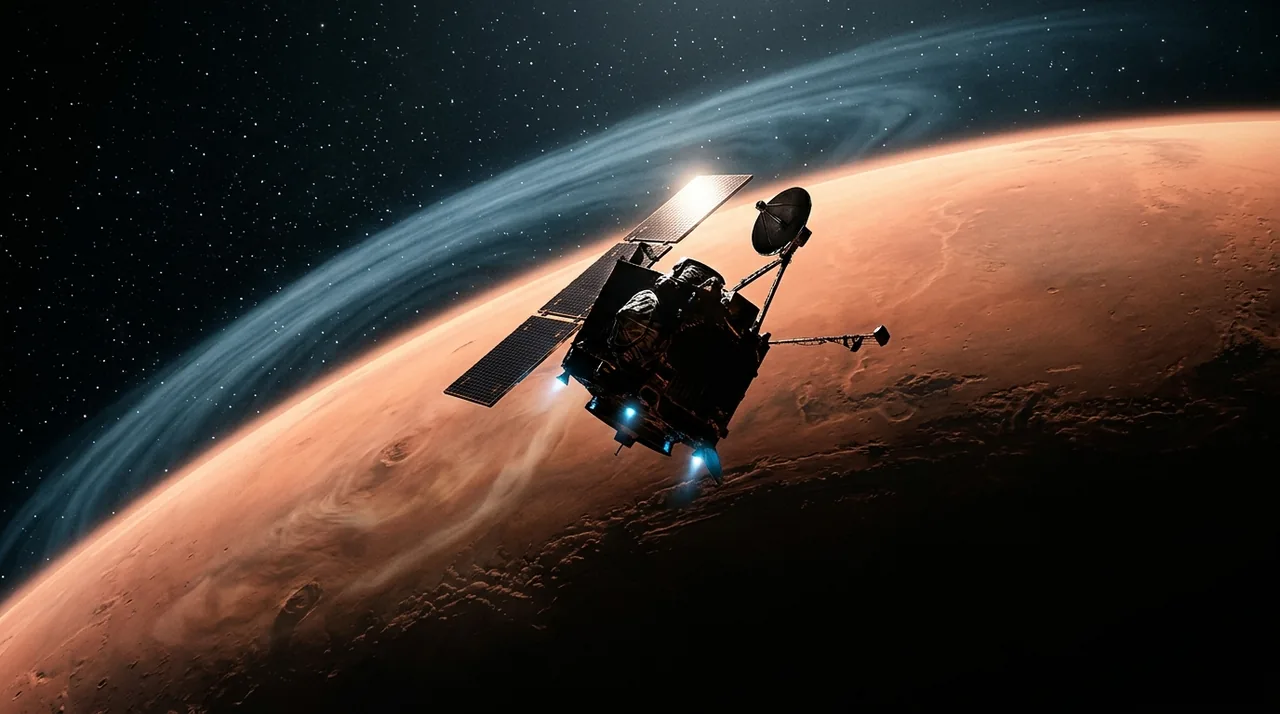
On 23 September 1999, a $327.6 million NASA spacecraft slipped behind Mars and never came out the other side. The cause, when they finally found it, was a multiplication by 4.45.
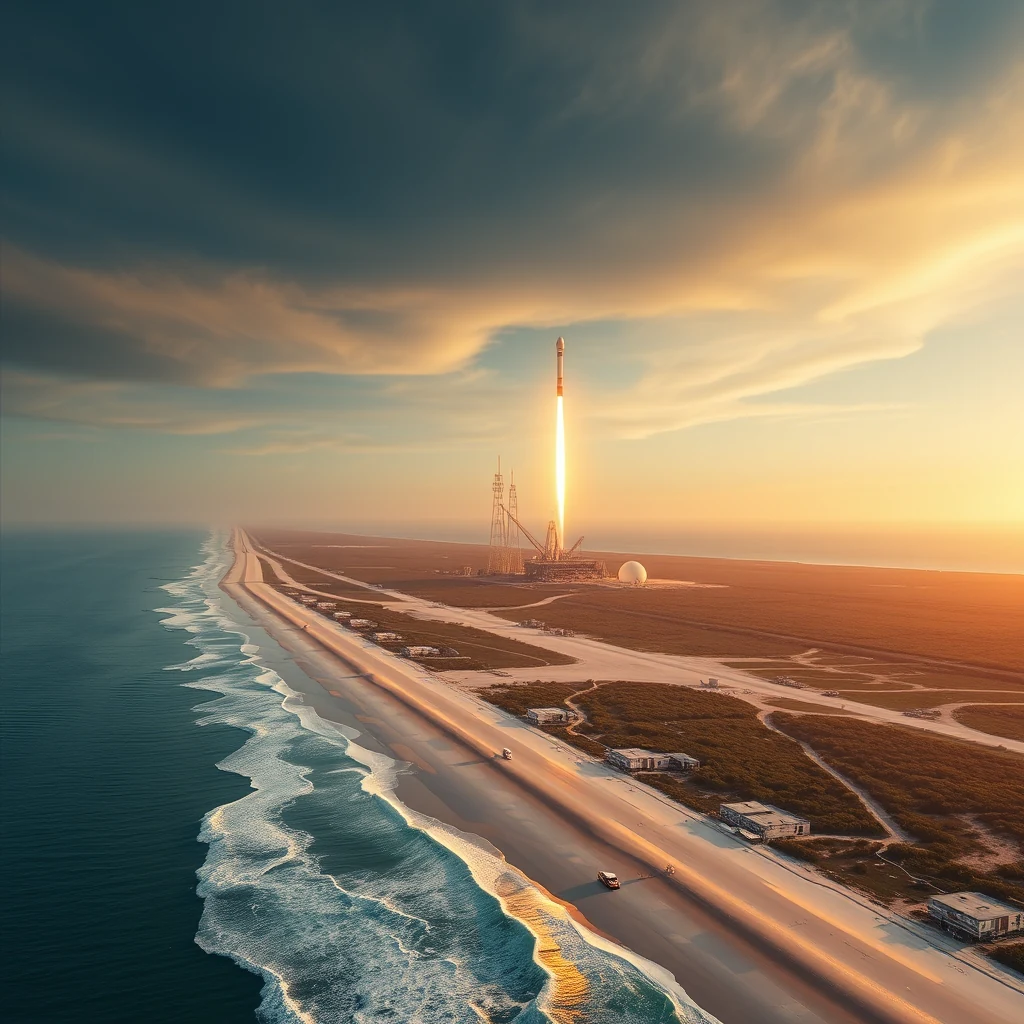
The Mars Climate Orbiter was supposed to be the dull half of a two-part mission. Its sister craft, the Mars Polar Lander, had the dramatic job — touching down near the south pole, digging into the regolith, looking for water ice. The Orbiter's role was to circle the planet at 421 kilometres altitude, watch the weather for a Martian year, and act as a radio relay for the lander. It launched from Cape CanaveralPlaceCape CanaveralA spit of barrier-island sand on Florida's Atlantic coast, used as the United States' primary launch site since 1949. Its low latitude gives rockets a useful kick from Earth's rotation, and the open ocean east of it means failed launches fall into water rather than onto people. Almost every American interplanetary mission, including both Voyagers and every Mars probe, has departed from here.位于佛罗里达州大西洋沿岸的沙质沙嘴屏障岛,自1949年以来一直作为美国的主要航天发射基地。该地较低的纬度使火箭能够借助地球自转获得有用的推力,且其东临开阔的海洋,意味着发射失败的火箭会坠入水中而不会砸向人群。几乎每一次美国际行星际探测任务(包括两艘旅行者号和所有的火星探测器)都是从此地出发。Una lengua de arena en la costa atlántica de Florida, utilizada como el principal lugar de lanzamiento de los Estados Unidos desde 1949. Su baja latitud proporciona a los cohetes un impulso útil gracias a la rotación de la Tierra, y el océano abierto hacia el este hace que los lanzamientos fallidos caigan en el agua y no sobre las personas. Casi todas las misiones interplanetarias estadounidenses, incluidos los Voyagers y todas las sondas de Marte, han partido de aquí.شريط رملي من جزر حاجزية على ساحل المحيط الأطلسي في فلوريدا، يُسخدم كموقع إطلاق رئيسي للولايات المتحدة منذ عام 1949. يمنح خط العرض المنخفض للموقع الصواريخ دفعة مفيدة من دوران الأرض، ويعني المحيط المفتوح شرقاً أن عمليات الإطلاق الفاشلة تسقط في المياه بدلاً من الناس. انطلقت من هنا كل المهمات الأمريكية بين الكواكب تقريباً، بما في ذلك مركبتي فوييجر وكل مسابر المريخ.Uma faixa de areia de uma ilha barreira na costa atlântica da Flórida, utilizada como o principal local de lançamento dos Estados Unidos desde 1949. A sua latitude baixa dá aos foguetões um impulso útil devido à rotação da Terra, e o oceano aberto a leste significa que os lançamentos falhados caem na água e não sobre as pessoas. Quase todas as missões interplanetárias americanas, incluindo as duas Voyager e todas as sondas de Marte, partiram daqui.फ्लोरिडा के अटलांटिक तट पर बैरियर-द्वीप रेत का एक टीला (स्पिट), जिसका उपयोग १९४९ से संयुक्त राज्य अमेरिका के प्राथमिक लॉन्च स्थल के रूप में किया जाता रहा है। इसका कम अक्षांश रॉकेटों को पृथ्वी के घूर्णन से एक उपयोगी गति प्रदान करता है, और इसके पूर्व में खुला महासागर होने का मतलब है कि असफल लॉन्च लोगों के बजाय पानी में गिरते हैं। दोनों वोयाजर और प्रत्येक मंगल जांच सहित लगभग हर अमेरिकी अंतरग्रहीय मिशन यहीं से रवाना हुआ है।Tanjung pasir pulau penghalang di pantai Atlantik Florida, digunakan sebagai lokasi peluncuran utama Amerika Serikat sejak tahun 1949. Letak lintangnya yang rendah memberi roket dorongan tambahan yang berguna dari rotasi Bumi, dan samudra terbuka di sebelah timurnya berarti peluncuran yang gagal akan jatuh ke air alih-alih menimpa orang. Hampir setiap misi antarplanet Amerika Serikat, termasuk kedua Voyager dan setiap penyelidikan Mars, berangkat dari sini.Une flèche de sable sur la côte atlantique de la Floride, utilisée comme principal site de lancement des États-Unis depuis 1949. Sa basse latitude donne aux fusées une impulsion utile grâce à la rotation de la Terre, et l'océan libre à l'est permet aux lancements ratés de tomber dans l'eau plutôt que sur des populations. Presque toutes les missions interplanétaires américaines, y compris les deux sondes Voyager et toutes les sondes martiennes, sont parties d'ici.フロリダ州の大西洋岸に位置する砂州状の障壁島で、1949年以来、米国の主要なロケット発射場として使用されている。低緯度に位置するため、ロケットは地球の自転から有効な推進力を得ることができ、また東側に開けた大洋があるため、打ち上げに失敗したロケットは人々の上ではなく海に落下する。2機のボイジャーや歴代の火星探査機を含む、米国のほぼすべての惑星間探査ミッションがここから出発している。Песчаная коса барьерного острова на атлантическом побережье Флориды, используемая в качестве основного космодрома США с 1949 года. Его низкая широта дает ракетам дополнительный импульс за счет вращения Земли, а открытый океан к востоку гарантирует, что обломки в случае аварии упадут в воду, а не на людей. Отсюда отправлялись почти все американские межпланетные миссии, включая оба «Вояджера» и все марсианские зонды.Nehrung einer Barriereinsel an der Atlantikküste Floridas, die seit 1949 als wichtigster Raketenstartplatz der USA dient. Die geringe geografische Breite verleiht Raketen durch die Erdrotation zusätzlichen Schwung, und das offene Meer im Osten sorgt dafür, dass Fehlstarts ins Wasser statt auf bewohnte Gebiete stürzen. Fast jede amerikanische interplanetare Mission, darunter die beiden Voyager-Sonden und alle Mars-Missionen, startete von hier.플로리다의 대서양 연안에 위치한 방벽도 사주로, 1949년부터 미국의 주력 발사 기지로 사용되어 왔다. 위도가 낮아 발사 시 지구 자전으로 인한 추진력을 효과적으로 얻을 수 있으며, 동쪽으로 넓은 대양을 끼고 있어 발사 실패 시 낙하물이 인가가 아닌 바다로 떨어진다는 장점이 있다. 두 보이저호와 모든 화성 탐사선을 포함해 미국의 거의 모든 행성 간 우주 임무가 이곳에서 출발했다. on 11 December 1998 aboard a Delta II, on a Hohmann transfer that would take 286 days.
The craft itself was a 638-kilogram box of aluminium honeycomb built by Lockheed Martin AstronauticsInstitutionLockheed Martin AstronauticsThe Denver-based spacecraft division of Lockheed Martin, descended from the Martin Marietta facility that built the Viking landers in the 1970s. Through the 1990s and 2000s it was the prime contractor for most of NASA's Mars orbiters and landers. Its responsibilities on Mars Climate Orbiter included building the bus, the thrusters, and the ground software that translated thruster activity into navigation inputs.洛克希德·马丁公司总部位于丹佛的航天器部门,前身为1970年代建造“海盗号”着陆器的马丁·玛丽埃塔工厂。在1990年代和2000年代,它是美国国家航空航天局(NASA)大多数火星轨道飞行器和着陆器的主要承包商。它在火星气候轨道器项目中的职责包括建造航天器主体平台、推进器,以及将推进活动转化为导航输入数据的地面软件。La división de naves espaciales de Lockheed Martin, con sede en Denver, heredera de la instalación de Martin Marietta que construyó los módulos de aterrizaje Viking en la década de 1970. Durante las décadas de 1990 y 2000 fue el contratista principal de la mayoría de los orbitadores y aterrizadores de la NASA en Marte. Sus responsabilidades en el Mars Climate Orbiter incluyeron la construcción del bus, los propulsores y el software de tierra que traducía la actividad de los propulsores en datos de navegación.قسم المركبات الفضائية التابع لشركة لوكهيد مارتن ومقره دنفر، وهو سليل منشأة مارتن ماريتا التي قامت ببناء مركبات الهبوط فايكنج في سبعينيات القرن العشرين. وخلال تسعينيات القرن العشرين وعقد 2000، كان المقاول الرئيسي لمعظم مركبات الهبوط المريخية التابعة لناسا. وتضمنت مسؤولياته في مشروع مرصد مناخ المريخ بناء هيكل المركبة، والدوافع، والبرمجيات الأرضية التي تترجم نشاط الدوافع إلى مدخلات ملاحة.A divisão de naves espaciais da Lockheed Martin baseada em Denver, descendente da instalação da Martin Marietta que construiu os módulos de pouso Viking na década de 1970. Ao longo das décadas de 1990 e 2000, foi a principal contratante para a maioria dos orbitadores e landers de Marte da NASA. Suas responsabilidades no Mars Climate Orbiter incluíam a construção do bus, dos propulsores e o software terrestre que traduzia a atividade do propulsor em comandos de navegação.लॉकहीड मार्टिन का डेनवर स्थित अंतरिक्ष यान प्रभाग, जो मार्टिन मैरियट सुविधा का उत्तराधिकारी था जिसने १९७० के दशक में वाइकिंग लैंडर्स का निर्माण किया था। १९९० और २००० के दशक के दौरान यह नासा के अधिकांश मंगल ऑर्बिटर्स और लैंडर्स के लिए मुख्य ठेकेदार था। मार्स क्लाइमेट ऑर्बिटर पर इसकी जिम्मेदारियों में बस, थ्रस्टर्स और ग्राउंड सॉफ़्टवेयर का निर्माण शामिल था जो थ्रस्टर गतिविधि को नेविगेशन इनपुट में अनुवादित करता था।Divisi pesawat luar angkasa Lockheed Martin yang berbasis di Denver, keturunan dari fasilitas Martin Marietta yang membangun pendarat Viking pada tahun 1970-an. Sepanjang tahun 1990-an dan 2000-an, divisi ini merupakan kontraktor utama untuk sebagian besar pengorbit dan pendarat Mars milik NASA. Tanggung jawabnya pada Mars Climate Orbiter mencakup pembuatan bus, pendorong, dan perangkat lunak darat yang menerjemahkan aktivitas pendorong menjadi input navigasi.La division spatiale de Lockheed Martin basée à Denver, issue de l'usine Martin Marietta qui construisit les atterrisseurs Viking dans les années 1970. Durant les années 1990 et 2000, elle fut le principal entrepreneur pour la plupart des orbiteurs et atterrisseurs martiens de la NASA. Ses responsabilités sur Mars Climate Orbiter incluaient la construction de la plateforme, des propulseurs et du logiciel au sol qui traduisait l'activité des moteurs en paramètres de navigation.デンバーに拠点を置くロッキード・マーティン社の宇宙船部門で、1970年代にバイキング着陸船を製造したマーティン・マリエッタ社の施設の流れを汲む。1990年代から2000年代にかけて、NASAの火星周回機や着陸船の大部分の主契約企業を務めた。マーズ・クライメート・オービターにおける担当業務には、バス(航行船体)、推進器、および推進器の作動状態を航法入力データに変換する地上ソフトウェアの構築が含まれていた。Расположенное в Денвере подразделение космических аппаратов корпорации Lockheed Martin, преемник предприятия Martin Marietta, построившего спускаемые аппараты «Викинг» в 1970-х годах. В 1990-е и 2000-е годы оно являлось генеральным подрядчиком большинства орбитальных и спускаемых марсианских аппаратов НАСА. Его задачи в проекте Mars Climate Orbiter включали создание платформы аппарата, двигателей и наземного программного обеспечения, преобразующего работу двигателей в данные для навигации.Die in Denver ansässige Raumfahrtabteilung von Lockheed Martin, hervorgegangen aus dem Werk von Martin Marietta, das in den 1970er Jahren die Viking-Lander baute. In den 1990er und 2000er Jahren war sie der Hauptauftragnehmer für die meisten Mars-Orbiter und -Lander der NASA. Ihre Aufgaben beim Mars Climate Orbiter umfassten den Bau des Busses, der Triebwerke und der Bodensoftware, die Triebwerksaktivitäten in Navigationseingaben umsetzte.덴버에 본사를 둔 록히드 마틴의 우주선 부서로, 1970년대 바이킹 착륙선을 건조했던 마틴 마리에타 시설의 후신이다. 1990년대와 2000년대에 걸쳐 NASA의 화성 궤도선 및 착륙선 대부분을 제작한 주계약업체였다. 마스 클라이메이트 오비터 임무에서의 역할은 우주선체(bus), 추진기, 그리고 추진기의 작동 상황을 항법 입력값으로 변환해 주는 지상 소프트웨어의 개발 등을 포함했다. in Denver. Navigation — the business of knowing exactly where the spacecraft was, and where to point its thrusters — belonged to NASA's Jet Propulsion LaboratoryInstitutionJet Propulsion LaboratoryA NASA field centre run by Caltech in Pasadena, California. It originated as a rocket-research outfit in the late 1930s and became the agency's lead house for robotic deep-space missions: Mariner, Voyager, Galileo, Cassini, the Mars rovers, and the Deep Space Network of radio dishes that talks to them. JPL handled navigation and operations for Mars Climate Orbiter.美国国家航空航天局的一个联邦出资研发中心,由加州理工学院管理,位于加利福尼亚州帕萨迪纳。它始建于1930年代后期,起初是一个火箭研究小组,后成为该机构机器人深空探测任务的主要基地,负责如水手号、旅行者号、伽利略号、卡西尼号、火星车以及与之通信的深空网络。喷气推进实验室还负责了火星气候轨道飞行器的导航与操作。Un centro de campo de la NASA administrado por Caltech en Pasadena, California. Se originó como un grupo de investigación de cohetes a finales de la década de 1930 y se convirtió en la instalación principal de la agencia para misiones robóticas de espacio profundo: Mariner, Voyager, Galileo, Cassini, los vehículos robóticos de Marte y la Red del Espacio Profundo. El JPL gestionó la navegación y las operaciones del Mars Climate Orbiter.مركز ميداني تابع لوكالة ناسا تديره معهد كاليفورنيا للتكنولوجيا في باسادينا بكاليفورنيا. بدأ كمجموعة لأبحاث الصواريخ في أواخر الثلاثينيات وأصبح المركز الرئيسي للوكالة لبعثات الفضاء العميق الروبوتية، مثل مارينر وفوياجر وغاليليو وكاسيني ومركبات المريخ وشبكة الفضاء العميق للاتصالات اللاسلكية. تولى المختبر الملاحة والعمليات لمركبة المريخ المدارية للمناخ.Um centro de campo da NASA gerido pela Caltech em Pasadena, Califórnia. Originou-se como um grupo de pesquisa de foguetes no final da década de 1930 e tornou-se a principal instalação da agência para missões robóticas no espaço profundo: Mariner, Voyager, Galileo, Cassini, os rovers de Marte e a Rede de Espaço Profundo. O JPL geriu a navegação e as operações do Mars Climate Orbiter.कैलिफोर्निया के पासाडेना में कैल्टेक द्वारा संचालित नासा का एक फील्ड सेंटर। इसकी शुरुआत १९३० के दशक के अंत में एक रॉकेट-अनुसंधान संगठन के रूप में हुई थी और यह रोबोटिक गहरे अंतरिक्ष मिशनों के लिए एजेंसी का प्रमुख केंद्र बन गया: मैरिनर, वोयाजर, गैलीलियो, कैसिनी, मार्स रोवर्स और उनके साथ संचार करने वाले रेडियो डिश का डीप स्पेस नेटवर्क। जेपीएल ने मार्स क्लाइमेट ऑर्बिटर के नेविगेशन और संचालन को संभाला था।Pusat lapangan NASA yang dikelola oleh Caltech di Pasadena, California. Berawal sebagai kelompok penelitian roket pada akhir 1930-an dan menjadi pusat utama lembaga tersebut untuk misi luar angkasa dalam robotik: Mariner, Voyager, Galileo, Cassini, penjelajah Mars, dan Deep Space Network yang berkomunikasi dengannya. JPL menangani navigasi dan operasi untuk Mars Climate Orbiter.Un centre de recherche de la NASA géré par Caltech à Pasadena, en Californie. Fondé à la fin des années 1930 comme laboratoire de recherche sur les fusées, il est devenu le centre principal de l'agence pour les missions robotiques d'exploration spatiale lointaine : Mariner, Voyager, Galileo, Cassini, les astromobiles martiens et le réseau de communications avec l'espace lointain. Le JPL a géré la navigation du Mars Climate Orbiter.カリフォルニア州パサディナに位置し、カリフォルニア工科大学が運営するNASAの研究開発センター。1930年代後半にロケット研究グループとして発足し、マリナー、ボイジャー、ガリレオ、カッシーニ、歴代の火星探査車、および通信を担うディープスペースネットワークなど、無人宇宙探査ミッション of 主导的役割を担うようになった。火星気候周回機のナビゲーションと運用も担当した。Исследовательский центр НАСА, управляемый Калифорнийским технологическим институтом в Пасадине, штат Калифорния. Он возник как группа по исследованию ракет в конце 1930-х годов и стал ведущим центром агентства по роботизированным миссиям в дальний космос: «Маринер», «Вояджер», «Галилей», «Кассини», марсоходы и Сеть дальней космической связи. Лаборатория отвечала за навигацию и управление аппаратом Mars Climate Orbiter.Ein NASA-Forschungszentrum in Pasadena, Kalifornien, das vom Caltech betrieben wird. Es entstand in den späten 1930er Jahren als Raketenforschungsgruppe und entwickelte sich zur führenden Einrichtung der Behörde für robotische Deep-Space-Missionen: Mariner, Voyager, Galileo, Cassini, die Mars-Rover und das Deep Space Network zur Kommunikation mit ihnen. Das JPL war für die Navigation und den Betrieb des Mars Climate Orbiter verantwortlich.캘리포니아주 패서디나에 위치하고 칼텍이 운영하는 NASA의 연구 개발 센터이다. 1930년대 후반 로켓 연구 단체로 시작하여 마리너, 보이저, 갈릴레오, 카시니, 화성 탐사선, 그리고 이들과 통신하는 심우주 통신망 등 무인 우주 탐사 임무를 주도하는 핵심 기관이 되었다. 제트추진연구소는 화성 기후 궤도선의 항법 및 운영을 직접 담당했다. in Pasadena. The two teams talked constantly. They exchanged files of telemetry. They ran the numbers. The numbers were wrong for nine months and nobody noticed.
Mars Climate Orbiter - mishap diagramXession · BY 3.0
On the night of 23 September, at 09:00:46 UTC, the Orbiter fired its main engine for a 16-minute burn to drop into Mars orbit. Forty-nine seconds before the scheduled end of the burn, the craft passed behind the planet as expected. Loss of signal. Twenty-one minutes later, when it should have re-emerged, the deep-space network heard nothing. It never heard anything again.
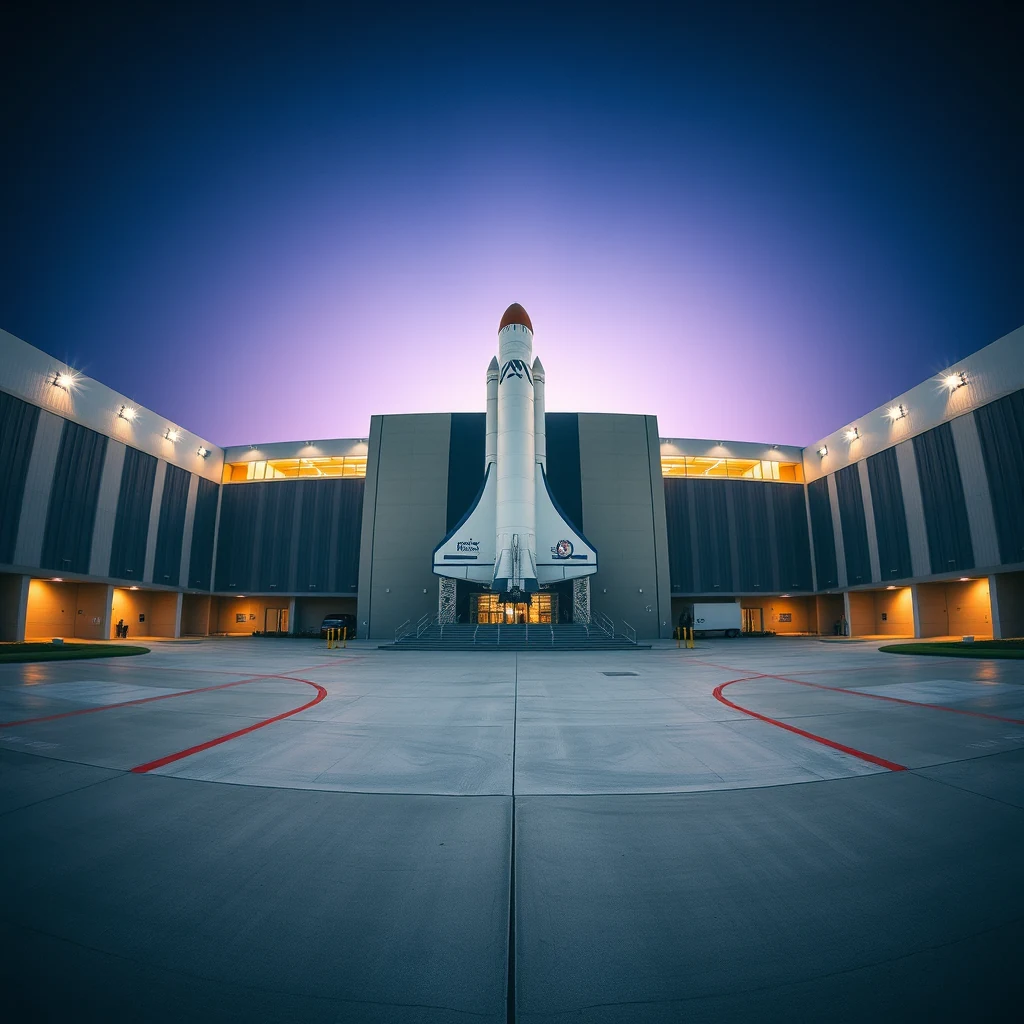
A Delta II rocket lifts the Mars Climate Orbiter from Cape Canaveral before dawnIllustration · AI-generated (FLUX.1-dev)
A file called SM_FORCES
The investigation, led by Arthur StephensonPersonArthur StephensonDirector of NASA's Marshall Space Flight Center in 1999 and chair of the Mars Climate Orbiter Mishap Investigation Board. A career propulsion engineer who had run the Space Shuttle Main Engine programme, he was chosen specifically because he sat outside the Mars Surveyor chain of command. The report his board produced is unusually direct about institutional, rather than purely technical, causes.1999年担任美国国家航空航天局马歇尔太空飞行中心主任,并担任火星气候轨道器事故调查委员会主席。作为一名曾管理过航天飞机主发动机项目的职业推进工程师,他被选中是因为他处于火星观测者号指挥链之外。他的委员会撰写的报告异常直接地指出了制度性原因,而非纯粹的技术原因。Director del Centro de Vuelo Espacial Marshall de la NASA en 1999 y presidente de la Junta de Investigación de Accidentes del Mars Climate Orbiter. Ingeniero de propulsión de carrera que había dirigido el programa del Motor Principal del Transbordador Espacial, fue elegido específicamente porque estaba fuera de la cadena de mando del Mars Surveyor. El informe de su junta es inusualmente directo sobre las causas institucionales, más que puramente técnicas.مدير مركز مارشال لبعثات الفضاء التابع لناسا في عام 1999 ورئيس مجلس التحقيق في حادثة مركبة المريخ المدارية للمناخ. وهو مهندس دفع محترف أدار برنامج محرك مكوك الفضاء الرئيسي، وتم اختياره خصيصاً لأنه كان خارج تسلسل القيادة الخاص بمرصد المريخ. كان التقرير الذي أعده مجلسه مباشراً بشكل غير معتاد بشأن الأسباب المؤسسية والتنظيمية بدلاً من الأسباب التقنية المحضة.Diretor do Marshall Space Flight Center da NASA em 1999 e presidente do Conselho de Investigação de Acidentes do Mars Climate Orbiter. Sendo um engenheiro de propulsão de carreira que tinha dirigido o programa do Motor Principal do Vaivém Espacial, foi escolhido especificamente porque estava fora da cadeia de comando do Mars Surveyor. O relatório produzido pelo seu conselho é invulgarmente direto sobre causas institucionais, e não puramente técnicas.१९९९ में नासा के मार्शल स्पेस फ्लाइट सेंटर के निदेशक और मार्स क्लाइमेट ऑर्बिटर दुर्घटना जांच बोर्ड के अध्यक्ष। एक करियर प्रणोदन इंजीनियर जिन्होंने स्पेस शटल मुख्य इंजन कार्यक्रम चलाया था, उन्हें विशेष रूप से इसलिए चुना गया था क्योंकि वे मार्स सर्वेयर की कमान श्रृंखला से बाहर थे। उनके बोर्ड द्वारा तैयार की गई रिपोर्ट विशुद्ध रूप से तकनीकी कारणों के बजाय संस्थागत कारणों के बारे में असामान्य रूप से स्पष्ट है।Direktur Marshall Space Flight Center NASA pada tahun 1999 dan ketua Dewan Penyelidikan Kecelakaan Mars Climate Orbiter. Sebagai insinyur propulsi karir yang pernah memimpin program Mesin Utama Pesawat Ulang-Alik, ia dipilih karena berada di luar rantai komando Mars Surveyor. Laporan yang dihasilkan oleh dewanya secara tidak biasa berterus terang mengenai penyebab institusional, alih-alih penyebab teknis murni.Directeur du Marshall Space Flight Center de la NASA en 1999 et président du conseil d'enquête sur l'accident du Mars Climate Orbiter. Ingénieur en propulsion de carrière ayant dirigé le programme des moteurs principaux de la navette spatiale, il fut choisi car il était extérieur à la chaîne de commandement de Mars Surveyor. Le rapport de son conseil est particulièrement direct sur les causes institutionnelles, plutôt que purement techniques.1999年当時のNASAマーシャル宇宙飛行センター所長であり、マーズ・クライメート・オービター事故調査委員会の委員長。スペースシャトルのメインエンジン計画を率いた経歴を持つ推進技術者であり、マーズ・サーベイヤー計画の指揮系統外の人物であったことから特別に選出された。彼の委員会がまとめた報告書は、単なる技術的な要因にとどまらず、組織的な問題点についても異例の率直さで指摘している。Директор Центра космических полетов имени Маршалла в 1999 году и председатель комиссии по расследованию гибели аппарата Mars Climate Orbiter. Будучи профессиональным инженером-двигателистом, руководившим программой основных двигателей шаттлов, он был выбран потому, что находился вне цепочки командования программой Mars Surveyor. Отчет его комиссии необычайно прямо указывает на организационные, а не только технические причины катастрофы.Direktor des Marshall Space Flight Center der NASA im Jahr 1999 und Vorsitzender des Untersuchungsausschusses für den Mars Climate Orbiter. Als Karriere-Antriebsingenieur, der das Haupttriebwerksprogramm des Space Shuttles geleitet hatte, wurde er ausgewählt, weil er außerhalb der Befehlskette von Mars Surveyor stand. Der von seinem Ausschuss erstellte Bericht spricht ungewöhnlich direkt institutionelle statt rein technischer Ursachen an.1999년 NASA 마셜 우주 비행 센터의 소장이자 화성 기후 궤도선 사고 조사위원회의 위원장이었다. 우주왕복선 메인 엔진 프로그램을 이끌었던 추진체 엔지니어 출신으로, 화성 서베이어 지휘 계통 외부의 인물이었기 때문에 특별히 임명되었다. 그의 조사위원회가 작성한 보고서는 순수한 기술적 원인보다는 조직적이고 제도적인 원인에 대해 이례적으로 솔직하고 직접적인 지적을 담고 있다. of Marshall Space Flight CenterInstitutionMarshall Space Flight CenterNASA's propulsion centre, based in Huntsville, Alabama, founded in 1960 around Wernher von Braun's team. Marshall built the Saturn V, manages the Space Launch System, and supplies engines and structural elements for crewed programmes. Its independence from the JPL and Lockheed Mars chain made it a natural home for the Climate Orbiter investigation.美国国家航空航天局的推进系统中心,位于阿拉巴马州亨茨维尔,于1960年围绕沃纳·冯·布劳恩的团队建立。马歇尔中心建造了土星五号火箭,管理着太空发射系统,并为载人航天项目提供发动机和结构部件。该中心独立于喷气推进实验室和洛克希德·马丁公司的火星项目链,这使其成为火星气候轨道器事故调查委员会的理想基地。El centro de propulsión de la NASA, con sede en Huntsville, Alabama, fundado en 1960 en torno al equipo de Wernher von Braun. Marshall construyó el Saturno V, gestiona el Sistema de Lanzamiento Espacial y suministra motores y elementos estructurales para programas tripulados. Su independencia de la cadena de JPL y Lockheed en Marte lo convirtió en la sede natural para la investigación del Climate Orbiter.مركز الدفع التابع لوكالة ناسا ومقره في هانتسفيل بألاباما، تأسس عام 1960 حول فريق فيرنر فون براون. قام المركز ببناء الصاروخ ساتورن 5، ويدير نظام الإطلاق الفضائي، ويوفر المحركات والعناصر الهيكلية للبرامج المأهولة. إن استقلاليته عن سلسلة قيادة المريخ التابعة للمختبر ولوكهيد مارتن جعلت منه المقر الطبيعي للتحقيق في حادثة مرصد المناخ.O centro de propulsão da NASA, baseado em Huntsville, Alabama, fundado em 1960 em torno da equipa de Wernher von Braun. O Marshall construiu o Saturno V, gere o Sistema de Lançamento Espacial e fornece motores e elementos estruturais para programas tripulados. A sua independência da cadeia de comando da JPL e da Lockheed tornou-o uma escolha óbvia para albergar a investigação do Climate Orbiter.हंत्सविले, अलबामा में स्थित नासा का प्रणोदन केंद्र, जिसकी स्थापना १९६० में वर्नर वॉन ब्रौन की टीम के इर्द-गिर्द की गई थी। मार्शल ने सैटर्न V का निर्माण किया, स्पेस लॉन्च सिस्टम का प्रबंधन करता है, और मानवयुक्त कार्यक्रमों के लिए इंजन और संरचनात्मक तत्व प्रदान करता है। जेपीएल और लॉकहीड मंगल श्रृंखला से इसकी स्वतंत्रता ने इसे क्लाइमेट ऑर्बिटर जांच के लिए एक आदर्श स्थान बना दिया।Pusat propulsi NASA, yang berbasis di Huntsville, Alabama, didirikan pada tahun 1960 di sekitar tim Wernher von Braun. Marshall membangun Saturn V, mengelola Space Launch System, serta menyediakan mesin dan elemen struktural untuk program berawak. Independensinya dari rantai komando Mars milik JPL dan Lockheed menjadikannya rumah yang tepat untuk penyelidikan kecelakaan Climate Orbiter.Le centre de propulsion de la NASA, basé à Huntsville en Alabama, fondé en 1960 autour de l'équipe de Wernher von Braun. Le Marshall Center a construit Saturn V, gère le Space Launch System et fournit les moteurs et structures des programmes habités. Son indépendance vis-à-vis du JPL et de Lockheed a fait de lui le siège idéal pour mener l'enquête sur le Mars Climate Orbiter.アラバマ州ハンツビルに位置するNASAの推進技術開発センター。1960年にヴェルナー・フォン・ブラウンの率いるチームを中心に設立された。サターンVロケットを建造し、宇宙輸送システムの管理や、有人計画向けエンジンおよび構造部材の供給を行っている。JPLやロッキード社の火星探索計画指揮系統から独立していたため、気候周回機事故調査の拠点として最適であった。Центр ракетных двигателей НАСА в Хантсвилле, штат Алабама, основанный в 1960 году вокруг команды Вернера фон Брауна. Центр Маршалла построил ракету Сатурн-5, управляет разработкой системы SLS и поставляет двигатели и элементы конструкций для пилотируемых программ. Его независимость от руководства JPL и Lockheed сделала его идеальной базой для расследования аварии Climate Orbiter.Das Antriebszentrum der NASA in Huntsville, Alabama, das 1960 um das Team von Wernher von Braun herum gegründet wurde. Marshall baute die Saturn V, verwaltet das Space Launch System und liefert Triebwerke sowie Strukturelemente für bemannte Programme. Seine Unabhängigkeit von der Mars-Befehlskette des JPL und Lockheed machte das Zentrum zum idealen Sitz für die Untersuchung des Climate Orbiter.앨라배마주 헌츠빌에 위치한 NASA의 추진체 전문 센터로, 1960년 베르너 폰 브라운의 팀을 중심으로 설립되었다. 마셜 센터는 새턴 5호 로켓을 건조했고, 우주 발사 시스템을 관리하며, 유인 우주 계획을 위한 엔진과 구조 부품을 공급한다. JPL 및 록히드 마틴의 화성 임무 지휘 계통으로부터 독립되어 있었기 때문에 클라이메이트 오비터 사고 조사 위원회를 유치하기에 적합했다., traced the failure to a single ground-software file. Lockheed's flight team computed the impulse imparted by the spacecraft's small angular-momentum-desaturation thrusters — the ones that fired briefly, several times a day, to bleed off the spin built up in the reaction wheels. They wrote those numbers into a file the navigators at JPL ingested to update their trajectory model.
A Boeing Delta II expendable launch vehicle lifts off with NASA s Mars Climate Orbiter on Dec. 11, 1998, from Launch Complex 17A, Cape CanavFree Public Domain Illustrations by rawpixel · BY 2.0
Lockheed wrote the file in pound-force seconds. JPL read it as newton-seconds. A pound-force is 4.45 newtons. Every time the thrusters fired, JPL's model under-counted the push by a factor of 4.45, and the spacecraft drifted a little further from where the model said it was.
The error was small per event and enormous in aggregate. By the time the Orbiter reached Mars, the navigators believed it would skim the atmosphere at 226 kilometres. The actual closest approach was somewhere between 57 and 80 kilometres — well inside an atmosphere that, though thin, is dense enough at that altitude to tear a spacecraft apart. The Orbiter either burned up or was thrown back into solar orbit as a slowly tumbling wreck. Nobody knows which.
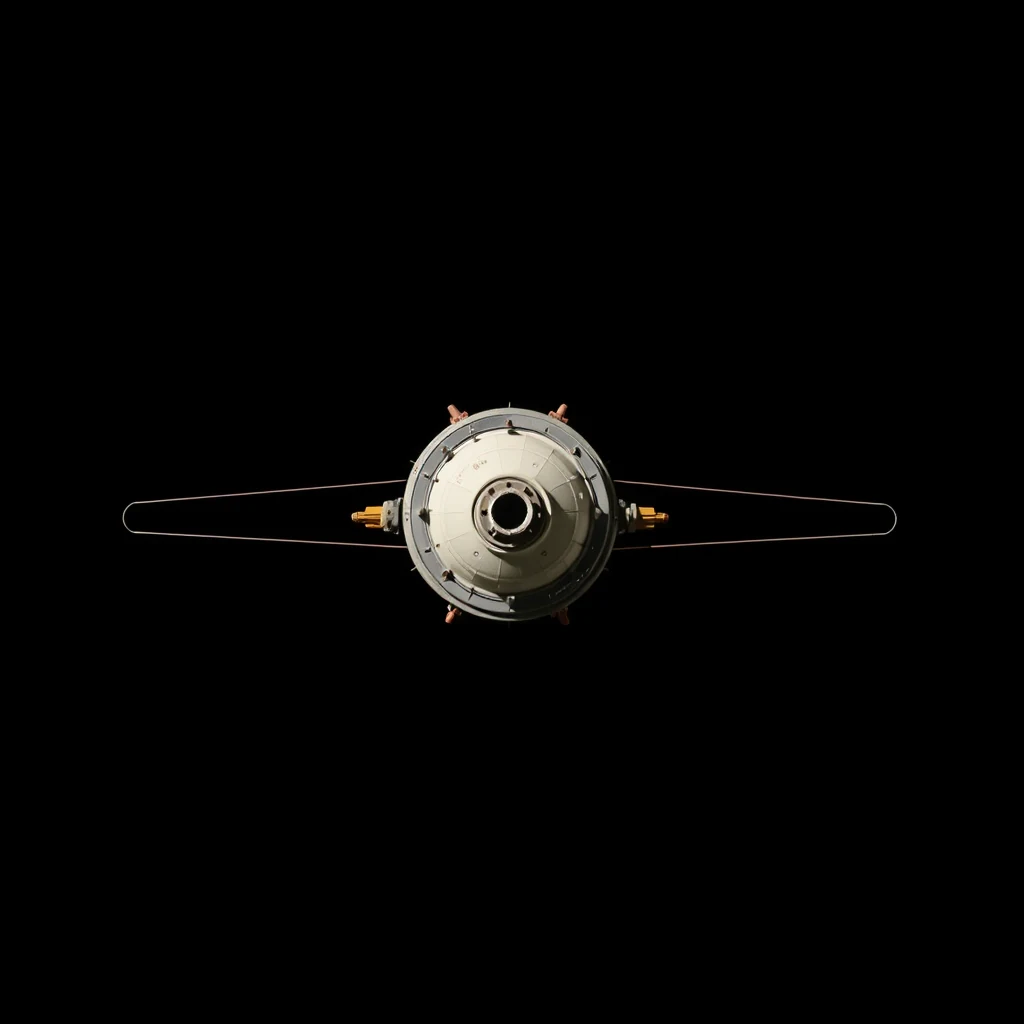
The Mars Climate Orbiter cruises toward Mars as a compact gold-and-silver spacecraft againIllustration · AI-generated (FLUX.1-dev)
The reviews that didn't happen
The units mismatch was, by itself, a single line of bad documentation. The deeper failure was that nine months of operations went by without anyone catching it. NASA's own Mishap Investigation BoardEventMars Climate Orbiter Mishap Investigation BoardThe seven-member panel NASA convened on 24 September 1999, the day after contact was lost, to determine why the Orbiter had been destroyed. It delivered a phase-one report in November 1999 identifying the pound-force versus newton-second mismatch as the proximate cause and the agency's faster-better-cheaper management culture as the underlying one. Its recommendations reshaped interface-verification procedures across NASA.美国国家航空航天局在1999年9月24日(即与轨道器失去联系的次日)召集的七人委员会,旨在确定轨道器被毁的原因。该委员会于1999年11月提交了第一阶段报告,将英磅力与牛顿秒的不匹配确定为直接原因,并将该机构“更快、更好、更便宜”的管理文化确定为深层原因。其建议重新塑造了整个NASA的接口验证程序。El panel de siete miembros convocado por la NASA el 24 de septiembre de 1999, el día posterior a la pérdida de contacto, para determinar por qué se destruyó el orbitador. Entregó un informe de fase uno en noviembre de 1999 identificando el error entre libra-fuerza y newton-segundo como causa inmediata, y la cultura de gestión de la agencia de más rápido, mejor y más barato como causa subyacente. Sus recomendaciones cambiaron los procedimientos de verificación en la NASA.لجنة مكونة من سبعة أعضاء شكلتها وكالة ناسا في 24 سبتمبر 1999، اليوم التالي لفقدان الاتصال بالمركبة، لتحديد سبب تدميرها. قدمت اللجنة تقريراً للمرحلة الأولى في نوفمبر 1999 حدد عدم التوافق بين الباوند قوة والنيوتن ثانية كسبب مباشر، وثقافة الإدارة الأسرع والأفضل والأرخص بالوكالة كسبب أساسي. أعادت توصياتها صياغة إجراءات التحقق من واجهات الأنظمة في ناسا.O painel de sete membros convocado pela NASA em 24 de setembro de 1999, o dia após a perda de contacto, para determinar o motivo da destruição do Orbitador. Apresentou um relatório de fase um em novembro de 1999 identificando a incompatibilidade entre libra-força e newton-segundo como causa imediata, e a cultura de gestão da agência de mais rápido, melhor e mais barato como causa subjacente. As suas recomendações remodelaram a verificação de interfaces na NASA.२४ सितंबर १९९९ को, संपर्क टूटने के अगले दिन, नासा द्वारा गठित सात सदस्यीय पैनल, जिसका उद्देश्य यह पता लगाना था कि ऑर्बिटर क्यों नष्ट हुआ। इसने नवंबर १९९९ में एक चरण-एक रिपोर्ट सौंपी जिसमें पाउंड-बल बनाम न्यूटन-सेकंड की विसंगति को तत्काल कारण और एजेंसी की 'तेज, बेहतर, सस्ता' प्रबंधन संस्कृति को अंतर्निहित कारण के रूप में पहचाना गया। इसकी सिफारिशों ने पूरे नासा में इंटरफ़ेस-सत्यापन प्रक्रियाओं को नया रूप दिया।Panel beranggotakan tujuh orang yang dibentuk NASA pada 24 September 1999, sehari setelah kehilangan kontak, untuk menentukan penyebab hancurnya Orbiter. Panel ini menyampaikan laporan fase satu pada November 1999 yang mengidentifikasi ketidakcocokan pound-force vs newton-second sebagai penyebab langsung dan budaya manajemen cepat, baik, murah sebagai penyebab dasarnya. Rekomendasinya membentuk ulang prosedur verifikasi antarmuka di NASA.Le comité de sept membres convoqué par la NASA le 24 septembre 1999, le lendemain de la perte de contact, pour déterminer les causes de la destruction de l'orbiteur. Il remit un rapport préliminaire en novembre 1999 identifiant l'incohérence entre livres-force et newtons-secondes comme cause directe, et la politique de gestion plus vite, mieux, moins cher comme cause sous-jacente. Ses recommandations ont modifié les procédures de vérification des interfaces de la NASA.通信が途絶えた翌日の1999年9月24日、NASAが周回機崩壊の原因究明のために招集した7人の調査委員会。1999年11月に第1次報告書を提出し、ポンド力とニュートン秒の単位誤認を直接の原因、NASAの「より速く、より良く、より安く」という管理文化を根本原因と特定した。この委員会による提言は、その後のNASA全体のインターフェース検証手順を根本的に改める契機となった。Комиссия из семи человек, созванная НАСА 24 сентября 1999 года, на следующий день после потери связи, для выяснения причин гибели аппарата. В ноябре 1999 года комиссия представила первый отчет, назвав несоответствие фунт-силы и ньютон-секунды непосредственной причиной, а административную культуру «быстрее, лучше, дешевле» — более глубокой. Рекомендации комиссии изменили процедуры проверки интерфейсов в НАСА.Das siebenköpfige Gremium, das die NASA am 24. September 1999, einen Tag nach dem Kontaktabbruch, einberief, um die Zerstörung des Orbiters zu untersuchen. Im November 1999 legte es einen ersten Bericht vor, der die Verwechslung von Pound-force und Newtonsekunden als unmittelbare Ursache und die Managementkultur schneller, besser, billiger als zugrundeliegende Ursache benannte. Seine Empfehlungen veränderten die Schnittstellenprüfung der NASA nachhaltig.통신 두절 다음 날인 1999년 9월 24일, 궤도선의 파괴 원인을 규명하기 위해 NASA가 소집한 7인의 위원회이다. 이들은 1999년 11월 1단계 보고서를 통해 파운드 힘과 뉴턴 초의 단위 불일치를 직접적 원인으로, 그리고 Agency의 '더 빠르게, 더 좋게, 더 싸게'라는 관리 문화를 근본적 원인으로 진단했다. 이 위원회의 권고안은 NASA 전반의 인터페이스 검증 절차를 재정립하는 계기가 되었다. was blunt: navigators had been reporting anomalies in the trajectory model for months. The spacecraft was consistently drifting south of its predicted track. Two correction burns scheduled for late in the cruise — Trajectory Correction Manoeuvres 4 and 5 — were considered and then descoped under schedule pressure. A formal peer review of the navigation software was on the plan and never happened.
Orbites aérofreinage Mars Climate OrbiterSavant-fou · BY-SA 3.0
The board's report named the cause as institutional, not technical. The Mars Surveyor program had been built around Daniel GoldinPersonDaniel GoldinNASA's longest-serving Administrator, in post from April 1992 to November 2001. Goldin pushed the agency away from expensive Viking-style flagship missions toward smaller, cheaper, more frequent probes — the doctrine known as faster, better, cheaper. The 1999 loss of both Mars Climate Orbiter and Mars Polar Lander was widely read as the limit case of that policy, and it never fully recovered its political cover afterward.美国国家航空航天局任职时间最长的局长,于1992年4月至2001年11月在任。金丁推动该机构告别昂贵的维京式旗舰任务,转向更小、更便宜、更频繁的探测器——这一理念被称为“更快、更好、更便宜”。1999年火星气候轨道器和火星极地着陆器的相继失利,被广泛视为该政策的极限案例,此后该政策失去了政治庇护。El Administrador de la NASA con más años de servicio, en el cargo desde abril de 1992 hasta noviembre de 2001. Goldin impulsó a la agencia a alejarse de las costosas misiones insignia tipo Viking hacia sondas más pequeñas, baratas y frecuentes, doctrina conocida como más rápido, mejor, más barato. La pérdida en 1999 del Mars Climate Orbiter y del Mars Polar Lander se interpretó como el límite de esta política, que no se recuperó.مدير وكالة ناسا الأطول خدمة، شغل منصبه من أبريل 1992 إلى نوفمبر 2001. دفع غولدين الوكالة بعيداً عن بعثات فايكنج الرائدة المكلفة نحو مسابر أصغر وأرخص وأكثر تواتراً، وهي العقيدة المعروفة باسم أسرع وأفضل وأرخص. واعتُبر فقدان مركبتي مرصد مناخ المريخ وهبوط قطب المريخ عام 1999 بمثابة الحالة القصوى لتلك السياسة، والتي لم تستعد غطاءها السياسي بالكامل بعد ذلك.O Administrador da NASA com mais anos de serviço, no cargo de abril de 1992 a novembro de 2001. Goldin afastou a agência das dispendiosas missões emblemáticas do tipo Viking em direção a sondas mais pequenas, baratas e frequentes — a doutrina conhecida como mais rápido, melhor e mais barato. A perda em 1999 do Mars Climate Orbiter e do Mars Polar Lander foi vista como o limite dessa política, que nunca recuperou.अप्रैल १९९२ से नवंबर २००१ तक पद पर रहने वाले नासा के सबसे लंबे समय तक सेवा करने वाले प्रशासक। गोल्डेन ने एजेंसी को महंगी वाइकिंग-शैली के प्रमुख मिशनों से दूर छोटे, सस्ते और अधिक बार भेजे जाने वाले जांच उपकरणों की ओर धकेला — इस सिद्धांत को 'तेज, बेहतर, सस्ता' के रूप में जाना जाता है। १९९९ में मार्स क्लाइमेट ऑर्बिटर और मार्स पोलर लैंडर दोनों की विफलता को उस नीति की चरम सीमा माना गया, जिसके बाद इस नीति का राजनीतिक समर्थन समाप्त हो गया।Administrator NASA dengan masa jabatan terlama, menjabat dari April 1992 hingga November 2001. Goldin mendorong badan tersebut menjauh dari misi unggulan bergaya Viking yang mahal menuju penyelidikan yang lebih kecil, lebih murah, dan lebih sering — doktrin yang dikenal sebagai cepat, baik, murah. Kehilangan Mars Climate Orbiter dan Mars Polar Lander pada tahun 1999 dianggap sebagai batas dari kebijakan tersebut, yang tidak pernah sepenuhnya pulih setelahnya.Administrateur de la NASA ayant exercé le plus long mandat, d'avril 1992 à novembre 2001. Goldin a éloigné l'agence des coûteuses mmissions phares de type Viking au profit de sondes plus petites, moins chères et plus fréquentes, une doctrine résumée par plus vite, mieux, moins cher. La perte en 1999 du Mars Climate Orbiter et du Mars Polar Lander fut perçue comme la limite de cette politique, qui perdit ensuite ses soutiens.1992年4月から2001年11月まで在任した、NASAの史上最長就任期間を誇る長官。ゴールディンは、高コストなバイキング計画のような旗艦ミッションから、より小型で安価、かつ頻繁な探査機計画への転換を推し進め、これは「より速く、より良く、より安く」という方針として知られた。1999年の気候周回機と極地着陸機の相次ぐ喪失は、この方針の限界を示す事例と捉えられ、その後の政治的支持は失われた。Руководитель НАСА с самым долгим сроком полномочий (с апреля 1992 по ноябрь 2001 года). Голдинг переориентировал агентство с дорогостоящих флагманских миссий типа «Викинг» на более мелкие, дешевые и частые зонды — доктрина, известная как «быстрее, лучше, дешевле». Потеря в 1999 году аппаратов Mars Climate Orbiter и Mars Polar Lander стала пределом этой политики, после чего ее политическая поддержка ослабла.Der am längsten amtierende NASA-Administrator (April 1992 bis November 2001). Goldin drängte die Behörde weg von teuren Vorzeige-Missionen im Viking-Stil hin zu kleineren, billigeren und häufigeren Missionen — eine Doktrin, die als schneller, besser, billiger bekannt wurde. Der Verlust des Mars Climate Orbiter und des Mars Polar Lander 1999 galt als Grenze dieser Politik, und sie verlor danach dauerhaft ihren politischen Rückhalt.1992년 4월부터 2001년 11월까지 재임한 NASA 최장수 행정관이다. 골딘은 고비용의 바이킹 스타일 플래그십 임무에서 벗어나 작고, 저렴하며, 더 빈번하게 발사하는 우주선 개발 정책인 '더 빠르게, 더 좋게, 더 싸게' 교리를 강력하게 추진했다. 1999년 화성 기후 궤도선과 화성 극지 착륙선의 연쇄 손실은 이 정책의 한계를 명확히 드러내며 이후 정치적 지지 기반을 잃었다.'s "faster, better, cheaper" doctrine, which cut mission budgets roughly in half from the Viking-era baseline and ran teams thin. Lockheed's flight operations group had eight people doing work that previous missions had given to twenty. When small anomalies showed up, there was no slack to chase them. Eleven weeks later, the Mars Polar Lander also vanished, almost certainly because its landing-leg sensors mistook deployment vibration for touchdown and shut the engines off forty metres above the ground. Same program. Same year. Different bug.
In a late-1990s navigation roomIllustration · AI-generated (FLUX.1-dev)
What we still don't know
We do not know the exact altitude at which the Orbiter was destroyed. The board's estimate of 57 km was based on tracking data extrapolated forward; the spacecraft itself stopped reporting before it reached the dense layer. Whether it burned up cleanly, broke up at high altitude, or skipped back out into a heliocentric orbit is technically still unresolved.
Mars Climate OrbiterNASA/JPL/Corby Waste · Public domain
We do not fully know why the SM_FORCES file was written in imperial units in the first place. The contract specified SI. Lockheed's own internal documents specified SI. The most likely answer is that an early prototype used pound-force and was never converted, and that the unit label on the file was lost somewhere in a chain of inherited code.
The Orbiter skims too low over Mars at the edge of the atmosphereIllustration · AI-generated (FLUX.1-dev)
We also do not know how many other near-misses the same program contained. The board interviewed staff who said similar small discrepancies had been noticed on earlier missions and rationalised away. The Orbiter was the one that happened to fail loudly.
A Delta II rocket costs about $50 million to launch. The Orbiter cost six times that. The lesson learned — verify the units on every interface, every time — was already in the engineering textbooks in 1962, when Mariner 1ObjectMariner 1A 1962 NASA probe intended to fly past Venus, destroyed by range safety 294 seconds after launch when its Atlas booster veered off course. The cause was a transcription error in the ground-based guidance equations, most often attributed to a missing overbar in the handwritten formulas. Arthur C. Clarke called it the most expensive hyphen in history, a phrase later applied, with some adjustment, to the Mars Climate Orbiter.一艘于1962年发射并计划飞越金星的美国宇航局探测器,在发射后294秒,因其宇宙神助推器偏离航向而被靶场安全人员摧毁。原因为地面制导方程中的转录错误,通常被归咎于手写公式中缺少一条上划线。阿瑟·C·克拉克称其为历史上最昂贵的连字符,这一说法后来经调整也被用于火星气候轨道器。Una sonda de la NASA de 1962 destinada a sobrevolar Venus, destruida por la seguridad del campo 294 segundos después del lanzamiento cuando su propulsor Atlas se desvió de su curso. La causa fue un error de transcripción en las ecuaciones de guía terrestres, atribuido a la falta de una barra superior en las fórmulas manuscritas. Arthur C. Clarke lo llamó el guion más caro de la historia.مسبار تابع لوكالة ناسا عام 1962 كان مخصصاً للتحليق بالقرب من كوكب الزهرة، ودمرته أنظمة السلامة بعد 294 ثانية من الإطلاق عندما انحرف معزز أطلس عن مساره. كان السبب خطأ في نسخ معادلات التوجيه الأرضية، ويُعزى غالباً إلى شريط علوي مفقود في الصيغ المكتوبة بخط اليد. وصفه آرثر سي كلارك بأنه أغلى خط واصل في التاريخ.Uma sonda da NASA de 1962 destinada a sobrevoar Vénus, destruída pela segurança de campo 294 segundos após o lançamento quando o seu propulsor Atlas se desviou da rota. A causa foi um erro de transcrição nas equações de orientação terrestres, atribuído à falta de uma barra superior nas fórmulas manuscritas. Arthur C. Clarke chamou-lhe o hífen mais caro da história.१९६२ का नासा का एक अंतरिक्ष यान जो शुक्र ग्रह के पास से उड़ान भरने के लिए था, जिसे लॉन्च के २९४ सेकंड बाद रेंज सुरक्षा द्वारा नष्ट कर दिया गया था जब इसका एटलस बूस्टर अपने रास्ते से भटक गया था। इसका कारण ग्राउंड-आधारित मार्गदर्शन समीकरणों में एक ट्रांसक्रिप्शन त्रुटि थी, जिसे अक्सर हस्तलिखित सूत्रों में ओवरबार गायब होने के लिए जिम्मेदार ठहराया जाता है। आर्थर सी. क्लार्क ने इसे इतिहास का सबसे महंगा हाइफ़न कहा था।Penyelidikan NASA tahun 1962 yang ditujukan untuk terbang melewati Venus, dihancurkan oleh petugas keselamatan jangkauan 294 detik setelah peluncuran ketika booster Atlas-nya melenceng dari jalur. Penyebabnya adalah kesalahan transkripsi dalam persamaan panduan berbasis darat, yang sering kali disebabkan oleh hilangnya garis atas pada formula tulisan tangan. Arthur C. Clarke menyebutnya sebagai tanda hubung termahal dalam sejarah.Une sonde de la NASA lancée en 1962 pour survoler Vénus, détruite par la sécurité de la base 294 secondes après le lancement lorsque son lanceur Atlas dévia de sa trajectoire. La cause était une erreur de transcription dans les équations de guidage au sol, attribuée à l'omission d'une barre supérieure dans les formules manuscrites. Arthur C. Clarke l'a qualifié de trait d'union le plus cher de l'histoire.1962年に打ち上げられ金星を通過する予定だったNASAの探査機。アトラス推進器がコースを外れたため、打ち上げから294秒後に射场安全管理官によって破壊された。原因は地上誘導方程式の転記ミスであり、手書きの数式の「オーバーバー」の欠落に起因するとされる。アーサー・C・クラークはこれを「歴史上最も高価なハイフン」と呼び、後にこの表現は火星気候周回機にも使われた。Зонд НАСА 1962 года, предназначенный для полета к Венере и уничтоженный службой безопасности через 294 секунды после запуска из-за отклонения ракеты-носителя «Атлас» от курса. Причиной стала ошибка при переносе уравнений наведения на наземный компьютер (обычно упоминается пропуск надстрочной черты в рукописных формулах). Артур Кларк назвал это самым дорогим дефисом в истории.Eine NASA-Sonde von 1962, die an Venus vorbeifliegen sollte, jedoch 294 Sekunden nach dem Start durch die Flugsicherung zerstört wurde, als ihr Atlas-Booster vom Kurs abkam. Die Ursache war ein Übertragungsfehler in den bodengestützten Steuerungsformeln, meist auf einen fehlenden Überstrich in den handgeschriebenen Formeln zurückgeführt. Arthur C. Clarke nannte es den teuersten Bindestrich der Geschichte.1962년 금성을 지나쳐 비행할 예정이었으나, 아틀라스 부스터가 경로를 이탈하여 발사 294초 만에 안전 통제관에 의해 파괴된 NASA의 탐사선이다. 원인은 지상 유도 방정식의 전사 오류였으며, 주로 수기 공식에서 오버바가 누락된 것에서 기인했다. 아서 C. 클라크는 이를 역사상 가장 비싼 하이픈이라고 불렀으며, 이 표현은 후에 화성 기후 궤도선 사건에도 적용되었다. was destroyed off the Florida coast because a guidance equation was mistranscribed by a single character. The textbook had not changed. Only the bill.
火星气候探测者号原本应是这项双重任务中平淡无奇的一半。它的姊妹探测器——火星极地着陆者号,承担着惊心动魄的工作——在火星南极附近着陆,挖掘风化层,寻找水冰。探测者号的角色则是在421公里的高空环绕这颗行星,观测一个火星年的天气,并充当着陆者的无线电中继站。1998年12月11日,它搭乘德尔塔2号运载火箭从Cape CanaveralPlaceCape CanaveralA spit of barrier-island sand on Florida's Atlantic coast, used as the United States' primary launch site since 1949. Its low latitude gives rockets a useful kick from Earth's rotation, and the open ocean east of it means failed launches fall into water rather than onto people. Almost every American interplanetary mission, including both Voyagers and every Mars probe, has departed from here.位于佛罗里达州大西洋沿岸的沙质沙嘴屏障岛,自1949年以来一直作为美国的主要航天发射基地。该地较低的纬度使火箭能够借助地球自转获得有用的推力,且其东临开阔的海洋,意味着发射失败的火箭会坠入水中而不会砸向人群。几乎每一次美国际行星际探测任务(包括两艘旅行者号和所有的火星探测器)都是从此地出发。Una lengua de arena en la costa atlántica de Florida, utilizada como el principal lugar de lanzamiento de los Estados Unidos desde 1949. Su baja latitud proporciona a los cohetes un impulso útil gracias a la rotación de la Tierra, y el océano abierto hacia el este hace que los lanzamientos fallidos caigan en el agua y no sobre las personas. Casi todas las misiones interplanetarias estadounidenses, incluidos los Voyagers y todas las sondas de Marte, han partido de aquí.شريط رملي من جزر حاجزية على ساحل المحيط الأطلسي في فلوريدا، يُسخدم كموقع إطلاق رئيسي للولايات المتحدة منذ عام 1949. يمنح خط العرض المنخفض للموقع الصواريخ دفعة مفيدة من دوران الأرض، ويعني المحيط المفتوح شرقاً أن عمليات الإطلاق الفاشلة تسقط في المياه بدلاً من الناس. انطلقت من هنا كل المهمات الأمريكية بين الكواكب تقريباً، بما في ذلك مركبتي فوييجر وكل مسابر المريخ.Uma faixa de areia de uma ilha barreira na costa atlântica da Flórida, utilizada como o principal local de lançamento dos Estados Unidos desde 1949. A sua latitude baixa dá aos foguetões um impulso útil devido à rotação da Terra, e o oceano aberto a leste significa que os lançamentos falhados caem na água e não sobre as pessoas. Quase todas as missões interplanetárias americanas, incluindo as duas Voyager e todas as sondas de Marte, partiram daqui.फ्लोरिडा के अटलांटिक तट पर बैरियर-द्वीप रेत का एक टीला (स्पिट), जिसका उपयोग १९४९ से संयुक्त राज्य अमेरिका के प्राथमिक लॉन्च स्थल के रूप में किया जाता रहा है। इसका कम अक्षांश रॉकेटों को पृथ्वी के घूर्णन से एक उपयोगी गति प्रदान करता है, और इसके पूर्व में खुला महासागर होने का मतलब है कि असफल लॉन्च लोगों के बजाय पानी में गिरते हैं। दोनों वोयाजर और प्रत्येक मंगल जांच सहित लगभग हर अमेरिकी अंतरग्रहीय मिशन यहीं से रवाना हुआ है।Tanjung pasir pulau penghalang di pantai Atlantik Florida, digunakan sebagai lokasi peluncuran utama Amerika Serikat sejak tahun 1949. Letak lintangnya yang rendah memberi roket dorongan tambahan yang berguna dari rotasi Bumi, dan samudra terbuka di sebelah timurnya berarti peluncuran yang gagal akan jatuh ke air alih-alih menimpa orang. Hampir setiap misi antarplanet Amerika Serikat, termasuk kedua Voyager dan setiap penyelidikan Mars, berangkat dari sini.Une flèche de sable sur la côte atlantique de la Floride, utilisée comme principal site de lancement des États-Unis depuis 1949. Sa basse latitude donne aux fusées une impulsion utile grâce à la rotation de la Terre, et l'océan libre à l'est permet aux lancements ratés de tomber dans l'eau plutôt que sur des populations. Presque toutes les missions interplanétaires américaines, y compris les deux sondes Voyager et toutes les sondes martiennes, sont parties d'ici.フロリダ州の大西洋岸に位置する砂州状の障壁島で、1949年以来、米国の主要なロケット発射場として使用されている。低緯度に位置するため、ロケットは地球の自転から有効な推進力を得ることができ、また東側に開けた大洋があるため、打ち上げに失敗したロケットは人々の上ではなく海に落下する。2機のボイジャーや歴代の火星探査機を含む、米国のほぼすべての惑星間探査ミッションがここから出発している。Песчаная коса барьерного острова на атлантическом побережье Флориды, используемая в качестве основного космодрома США с 1949 года. Его низкая широта дает ракетам дополнительный импульс за счет вращения Земли, а открытый океан к востоку гарантирует, что обломки в случае аварии упадут в воду, а не на людей. Отсюда отправлялись почти все американские межпланетные миссии, включая оба «Вояджера» и все марсианские зонды.Nehrung einer Barriereinsel an der Atlantikküste Floridas, die seit 1949 als wichtigster Raketenstartplatz der USA dient. Die geringe geografische Breite verleiht Raketen durch die Erdrotation zusätzlichen Schwung, und das offene Meer im Osten sorgt dafür, dass Fehlstarts ins Wasser statt auf bewohnte Gebiete stürzen. Fast jede amerikanische interplanetare Mission, darunter die beiden Voyager-Sonden und alle Mars-Missionen, startete von hier.플로리다의 대서양 연안에 위치한 방벽도 사주로, 1949년부터 미국의 주력 발사 기지로 사용되어 왔다. 위도가 낮아 발사 시 지구 자전으로 인한 추진력을 효과적으로 얻을 수 있으며, 동쪽으로 넓은 대양을 끼고 있어 발사 실패 시 낙하물이 인가가 아닌 바다로 떨어진다는 장점이 있다. 두 보이저호와 모든 화성 탐사선을 포함해 미국의 거의 모든 행성 간 우주 임무가 이곳에서 출발했다.发射升空,踏上了耗时286天的霍曼转移轨道。
探测器本身是一个重达638公斤的铝制蜂窝状箱体,由位于丹佛的Lockheed Martin AstronauticsInstitutionLockheed Martin AstronauticsThe Denver-based spacecraft division of Lockheed Martin, descended from the Martin Marietta facility that built the Viking landers in the 1970s. Through the 1990s and 2000s it was the prime contractor for most of NASA's Mars orbiters and landers. Its responsibilities on Mars Climate Orbiter included building the bus, the thrusters, and the ground software that translated thruster activity into navigation inputs.洛克希德·马丁公司总部位于丹佛的航天器部门,前身为1970年代建造“海盗号”着陆器的马丁·玛丽埃塔工厂。在1990年代和2000年代,它是美国国家航空航天局(NASA)大多数火星轨道飞行器和着陆器的主要承包商。它在火星气候轨道器项目中的职责包括建造航天器主体平台、推进器,以及将推进活动转化为导航输入数据的地面软件。La división de naves espaciales de Lockheed Martin, con sede en Denver, heredera de la instalación de Martin Marietta que construyó los módulos de aterrizaje Viking en la década de 1970. Durante las décadas de 1990 y 2000 fue el contratista principal de la mayoría de los orbitadores y aterrizadores de la NASA en Marte. Sus responsabilidades en el Mars Climate Orbiter incluyeron la construcción del bus, los propulsores y el software de tierra que traducía la actividad de los propulsores en datos de navegación.قسم المركبات الفضائية التابع لشركة لوكهيد مارتن ومقره دنفر، وهو سليل منشأة مارتن ماريتا التي قامت ببناء مركبات الهبوط فايكنج في سبعينيات القرن العشرين. وخلال تسعينيات القرن العشرين وعقد 2000، كان المقاول الرئيسي لمعظم مركبات الهبوط المريخية التابعة لناسا. وتضمنت مسؤولياته في مشروع مرصد مناخ المريخ بناء هيكل المركبة، والدوافع، والبرمجيات الأرضية التي تترجم نشاط الدوافع إلى مدخلات ملاحة.A divisão de naves espaciais da Lockheed Martin baseada em Denver, descendente da instalação da Martin Marietta que construiu os módulos de pouso Viking na década de 1970. Ao longo das décadas de 1990 e 2000, foi a principal contratante para a maioria dos orbitadores e landers de Marte da NASA. Suas responsabilidades no Mars Climate Orbiter incluíam a construção do bus, dos propulsores e o software terrestre que traduzia a atividade do propulsor em comandos de navegação.लॉकहीड मार्टिन का डेनवर स्थित अंतरिक्ष यान प्रभाग, जो मार्टिन मैरियट सुविधा का उत्तराधिकारी था जिसने १९७० के दशक में वाइकिंग लैंडर्स का निर्माण किया था। १९९० और २००० के दशक के दौरान यह नासा के अधिकांश मंगल ऑर्बिटर्स और लैंडर्स के लिए मुख्य ठेकेदार था। मार्स क्लाइमेट ऑर्बिटर पर इसकी जिम्मेदारियों में बस, थ्रस्टर्स और ग्राउंड सॉफ़्टवेयर का निर्माण शामिल था जो थ्रस्टर गतिविधि को नेविगेशन इनपुट में अनुवादित करता था।Divisi pesawat luar angkasa Lockheed Martin yang berbasis di Denver, keturunan dari fasilitas Martin Marietta yang membangun pendarat Viking pada tahun 1970-an. Sepanjang tahun 1990-an dan 2000-an, divisi ini merupakan kontraktor utama untuk sebagian besar pengorbit dan pendarat Mars milik NASA. Tanggung jawabnya pada Mars Climate Orbiter mencakup pembuatan bus, pendorong, dan perangkat lunak darat yang menerjemahkan aktivitas pendorong menjadi input navigasi.La division spatiale de Lockheed Martin basée à Denver, issue de l'usine Martin Marietta qui construisit les atterrisseurs Viking dans les années 1970. Durant les années 1990 et 2000, elle fut le principal entrepreneur pour la plupart des orbiteurs et atterrisseurs martiens de la NASA. Ses responsabilités sur Mars Climate Orbiter incluaient la construction de la plateforme, des propulseurs et du logiciel au sol qui traduisait l'activité des moteurs en paramètres de navigation.デンバーに拠点を置くロッキード・マーティン社の宇宙船部門で、1970年代にバイキング着陸船を製造したマーティン・マリエッタ社の施設の流れを汲む。1990年代から2000年代にかけて、NASAの火星周回機や着陸船の大部分の主契約企業を務めた。マーズ・クライメート・オービターにおける担当業務には、バス(航行船体)、推進器、および推進器の作動状態を航法入力データに変換する地上ソフトウェアの構築が含まれていた。Расположенное в Денвере подразделение космических аппаратов корпорации Lockheed Martin, преемник предприятия Martin Marietta, построившего спускаемые аппараты «Викинг» в 1970-х годах. В 1990-е и 2000-е годы оно являлось генеральным подрядчиком большинства орбитальных и спускаемых марсианских аппаратов НАСА. Его задачи в проекте Mars Climate Orbiter включали создание платформы аппарата, двигателей и наземного программного обеспечения, преобразующего работу двигателей в данные для навигации.Die in Denver ansässige Raumfahrtabteilung von Lockheed Martin, hervorgegangen aus dem Werk von Martin Marietta, das in den 1970er Jahren die Viking-Lander baute. In den 1990er und 2000er Jahren war sie der Hauptauftragnehmer für die meisten Mars-Orbiter und -Lander der NASA. Ihre Aufgaben beim Mars Climate Orbiter umfassten den Bau des Busses, der Triebwerke und der Bodensoftware, die Triebwerksaktivitäten in Navigationseingaben umsetzte.덴버에 본사를 둔 록히드 마틴의 우주선 부서로, 1970년대 바이킹 착륙선을 건조했던 마틴 마리에타 시설의 후신이다. 1990년대와 2000년대에 걸쳐 NASA의 화성 궤도선 및 착륙선 대부분을 제작한 주계약업체였다. 마스 클라이메이트 오비터 임무에서의 역할은 우주선체(bus), 추진기, 그리고 추진기의 작동 상황을 항법 입력값으로 변환해 주는 지상 소프트웨어의 개발 등을 포함했다.制造。导航——也就是精确掌握航天器位置并确定推进器朝向的工作——则归属于位于帕萨迪纳的NASA's Jet Propulsion LaboratoryInstitutionJet Propulsion LaboratoryA NASA field centre run by Caltech in Pasadena, California. It originated as a rocket-research outfit in the late 1930s and became the agency's lead house for robotic deep-space missions: Mariner, Voyager, Galileo, Cassini, the Mars rovers, and the Deep Space Network of radio dishes that talks to them. JPL handled navigation and operations for Mars Climate Orbiter.美国国家航空航天局的一个联邦出资研发中心,由加州理工学院管理,位于加利福尼亚州帕萨迪纳。它始建于1930年代后期,起初是一个火箭研究小组,后成为该机构机器人深空探测任务的主要基地,负责如水手号、旅行者号、伽利略号、卡西尼号、火星车以及与之通信的深空网络。喷气推进实验室还负责了火星气候轨道飞行器的导航与操作。Un centro de campo de la NASA administrado por Caltech en Pasadena, California. Se originó como un grupo de investigación de cohetes a finales de la década de 1930 y se convirtió en la instalación principal de la agencia para misiones robóticas de espacio profundo: Mariner, Voyager, Galileo, Cassini, los vehículos robóticos de Marte y la Red del Espacio Profundo. El JPL gestionó la navegación y las operaciones del Mars Climate Orbiter.مركز ميداني تابع لوكالة ناسا تديره معهد كاليفورنيا للتكنولوجيا في باسادينا بكاليفورنيا. بدأ كمجموعة لأبحاث الصواريخ في أواخر الثلاثينيات وأصبح المركز الرئيسي للوكالة لبعثات الفضاء العميق الروبوتية، مثل مارينر وفوياجر وغاليليو وكاسيني ومركبات المريخ وشبكة الفضاء العميق للاتصالات اللاسلكية. تولى المختبر الملاحة والعمليات لمركبة المريخ المدارية للمناخ.Um centro de campo da NASA gerido pela Caltech em Pasadena, Califórnia. Originou-se como um grupo de pesquisa de foguetes no final da década de 1930 e tornou-se a principal instalação da agência para missões robóticas no espaço profundo: Mariner, Voyager, Galileo, Cassini, os rovers de Marte e a Rede de Espaço Profundo. O JPL geriu a navegação e as operações do Mars Climate Orbiter.कैलिफोर्निया के पासाडेना में कैल्टेक द्वारा संचालित नासा का एक फील्ड सेंटर। इसकी शुरुआत १९३० के दशक के अंत में एक रॉकेट-अनुसंधान संगठन के रूप में हुई थी और यह रोबोटिक गहरे अंतरिक्ष मिशनों के लिए एजेंसी का प्रमुख केंद्र बन गया: मैरिनर, वोयाजर, गैलीलियो, कैसिनी, मार्स रोवर्स और उनके साथ संचार करने वाले रेडियो डिश का डीप स्पेस नेटवर्क। जेपीएल ने मार्स क्लाइमेट ऑर्बिटर के नेविगेशन और संचालन को संभाला था।Pusat lapangan NASA yang dikelola oleh Caltech di Pasadena, California. Berawal sebagai kelompok penelitian roket pada akhir 1930-an dan menjadi pusat utama lembaga tersebut untuk misi luar angkasa dalam robotik: Mariner, Voyager, Galileo, Cassini, penjelajah Mars, dan Deep Space Network yang berkomunikasi dengannya. JPL menangani navigasi dan operasi untuk Mars Climate Orbiter.Un centre de recherche de la NASA géré par Caltech à Pasadena, en Californie. Fondé à la fin des années 1930 comme laboratoire de recherche sur les fusées, il est devenu le centre principal de l'agence pour les missions robotiques d'exploration spatiale lointaine : Mariner, Voyager, Galileo, Cassini, les astromobiles martiens et le réseau de communications avec l'espace lointain. Le JPL a géré la navigation du Mars Climate Orbiter.カリフォルニア州パサディナに位置し、カリフォルニア工科大学が運営するNASAの研究開発センター。1930年代後半にロケット研究グループとして発足し、マリナー、ボイジャー、ガリレオ、カッシーニ、歴代の火星探査車、および通信を担うディープスペースネットワークなど、無人宇宙探査ミッション of 主导的役割を担うようになった。火星気候周回機のナビゲーションと運用も担当した。Исследовательский центр НАСА, управляемый Калифорнийским технологическим институтом в Пасадине, штат Калифорния. Он возник как группа по исследованию ракет в конце 1930-х годов и стал ведущим центром агентства по роботизированным миссиям в дальний космос: «Маринер», «Вояджер», «Галилей», «Кассини», марсоходы и Сеть дальней космической связи. Лаборатория отвечала за навигацию и управление аппаратом Mars Climate Orbiter.Ein NASA-Forschungszentrum in Pasadena, Kalifornien, das vom Caltech betrieben wird. Es entstand in den späten 1930er Jahren als Raketenforschungsgruppe und entwickelte sich zur führenden Einrichtung der Behörde für robotische Deep-Space-Missionen: Mariner, Voyager, Galileo, Cassini, die Mars-Rover und das Deep Space Network zur Kommunikation mit ihnen. Das JPL war für die Navigation und den Betrieb des Mars Climate Orbiter verantwortlich.캘리포니아주 패서디나에 위치하고 칼텍이 운영하는 NASA의 연구 개발 센터이다. 1930년대 후반 로켓 연구 단체로 시작하여 마리너, 보이저, 갈릴레오, 카시니, 화성 탐사선, 그리고 이들과 통신하는 심우주 통신망 등 무인 우주 탐사 임무를 주도하는 핵심 기관이 되었다. 제트추진연구소는 화성 기후 궤도선의 항법 및 운영을 직접 담당했다.。这两支团队保持着持续的沟通。他们互传遥测文件。他们计算着各项数据。这些数据整整错了九个月,却无人察觉。
Mars Climate Orbiter - mishap diagramXession · BY 3.0
A Delta II rocket lifts the Mars Climate Orbiter from Cape Canaveral before dawnIllustration · AI-generated (FLUX.1-dev)
一个名为SM_FORCES的文件
由Marshall Space Flight CenterInstitutionMarshall Space Flight CenterNASA's propulsion centre, based in Huntsville, Alabama, founded in 1960 around Wernher von Braun's team. Marshall built the Saturn V, manages the Space Launch System, and supplies engines and structural elements for crewed programmes. Its independence from the JPL and Lockheed Mars chain made it a natural home for the Climate Orbiter investigation.美国国家航空航天局的推进系统中心,位于阿拉巴马州亨茨维尔,于1960年围绕沃纳·冯·布劳恩的团队建立。马歇尔中心建造了土星五号火箭,管理着太空发射系统,并为载人航天项目提供发动机和结构部件。该中心独立于喷气推进实验室和洛克希德·马丁公司的火星项目链,这使其成为火星气候轨道器事故调查委员会的理想基地。El centro de propulsión de la NASA, con sede en Huntsville, Alabama, fundado en 1960 en torno al equipo de Wernher von Braun. Marshall construyó el Saturno V, gestiona el Sistema de Lanzamiento Espacial y suministra motores y elementos estructurales para programas tripulados. Su independencia de la cadena de JPL y Lockheed en Marte lo convirtió en la sede natural para la investigación del Climate Orbiter.مركز الدفع التابع لوكالة ناسا ومقره في هانتسفيل بألاباما، تأسس عام 1960 حول فريق فيرنر فون براون. قام المركز ببناء الصاروخ ساتورن 5، ويدير نظام الإطلاق الفضائي، ويوفر المحركات والعناصر الهيكلية للبرامج المأهولة. إن استقلاليته عن سلسلة قيادة المريخ التابعة للمختبر ولوكهيد مارتن جعلت منه المقر الطبيعي للتحقيق في حادثة مرصد المناخ.O centro de propulsão da NASA, baseado em Huntsville, Alabama, fundado em 1960 em torno da equipa de Wernher von Braun. O Marshall construiu o Saturno V, gere o Sistema de Lançamento Espacial e fornece motores e elementos estruturais para programas tripulados. A sua independência da cadeia de comando da JPL e da Lockheed tornou-o uma escolha óbvia para albergar a investigação do Climate Orbiter.हंत्सविले, अलबामा में स्थित नासा का प्रणोदन केंद्र, जिसकी स्थापना १९६० में वर्नर वॉन ब्रौन की टीम के इर्द-गिर्द की गई थी। मार्शल ने सैटर्न V का निर्माण किया, स्पेस लॉन्च सिस्टम का प्रबंधन करता है, और मानवयुक्त कार्यक्रमों के लिए इंजन और संरचनात्मक तत्व प्रदान करता है। जेपीएल और लॉकहीड मंगल श्रृंखला से इसकी स्वतंत्रता ने इसे क्लाइमेट ऑर्बिटर जांच के लिए एक आदर्श स्थान बना दिया।Pusat propulsi NASA, yang berbasis di Huntsville, Alabama, didirikan pada tahun 1960 di sekitar tim Wernher von Braun. Marshall membangun Saturn V, mengelola Space Launch System, serta menyediakan mesin dan elemen struktural untuk program berawak. Independensinya dari rantai komando Mars milik JPL dan Lockheed menjadikannya rumah yang tepat untuk penyelidikan kecelakaan Climate Orbiter.Le centre de propulsion de la NASA, basé à Huntsville en Alabama, fondé en 1960 autour de l'équipe de Wernher von Braun. Le Marshall Center a construit Saturn V, gère le Space Launch System et fournit les moteurs et structures des programmes habités. Son indépendance vis-à-vis du JPL et de Lockheed a fait de lui le siège idéal pour mener l'enquête sur le Mars Climate Orbiter.アラバマ州ハンツビルに位置するNASAの推進技術開発センター。1960年にヴェルナー・フォン・ブラウンの率いるチームを中心に設立された。サターンVロケットを建造し、宇宙輸送システムの管理や、有人計画向けエンジンおよび構造部材の供給を行っている。JPLやロッキード社の火星探索計画指揮系統から独立していたため、気候周回機事故調査の拠点として最適であった。Центр ракетных двигателей НАСА в Хантсвилле, штат Алабама, основанный в 1960 году вокруг команды Вернера фон Брауна. Центр Маршалла построил ракету Сатурн-5, управляет разработкой системы SLS и поставляет двигатели и элементы конструкций для пилотируемых программ. Его независимость от руководства JPL и Lockheed сделала его идеальной базой для расследования аварии Climate Orbiter.Das Antriebszentrum der NASA in Huntsville, Alabama, das 1960 um das Team von Wernher von Braun herum gegründet wurde. Marshall baute die Saturn V, verwaltet das Space Launch System und liefert Triebwerke sowie Strukturelemente für bemannte Programme. Seine Unabhängigkeit von der Mars-Befehlskette des JPL und Lockheed machte das Zentrum zum idealen Sitz für die Untersuchung des Climate Orbiter.앨라배마주 헌츠빌에 위치한 NASA의 추진체 전문 센터로, 1960년 베르너 폰 브라운의 팀을 중심으로 설립되었다. 마셜 센터는 새턴 5호 로켓을 건조했고, 우주 발사 시스템을 관리하며, 유인 우주 계획을 위한 엔진과 구조 부품을 공급한다. JPL 및 록히드 마틴의 화성 임무 지휘 계통으로부터 독립되어 있었기 때문에 클라이메이트 오비터 사고 조사 위원회를 유치하기에 적합했다.的Arthur StephensonPersonArthur StephensonDirector of NASA's Marshall Space Flight Center in 1999 and chair of the Mars Climate Orbiter Mishap Investigation Board. A career propulsion engineer who had run the Space Shuttle Main Engine programme, he was chosen specifically because he sat outside the Mars Surveyor chain of command. The report his board produced is unusually direct about institutional, rather than purely technical, causes.1999年担任美国国家航空航天局马歇尔太空飞行中心主任,并担任火星气候轨道器事故调查委员会主席。作为一名曾管理过航天飞机主发动机项目的职业推进工程师,他被选中是因为他处于火星观测者号指挥链之外。他的委员会撰写的报告异常直接地指出了制度性原因,而非纯粹的技术原因。Director del Centro de Vuelo Espacial Marshall de la NASA en 1999 y presidente de la Junta de Investigación de Accidentes del Mars Climate Orbiter. Ingeniero de propulsión de carrera que había dirigido el programa del Motor Principal del Transbordador Espacial, fue elegido específicamente porque estaba fuera de la cadena de mando del Mars Surveyor. El informe de su junta es inusualmente directo sobre las causas institucionales, más que puramente técnicas.مدير مركز مارشال لبعثات الفضاء التابع لناسا في عام 1999 ورئيس مجلس التحقيق في حادثة مركبة المريخ المدارية للمناخ. وهو مهندس دفع محترف أدار برنامج محرك مكوك الفضاء الرئيسي، وتم اختياره خصيصاً لأنه كان خارج تسلسل القيادة الخاص بمرصد المريخ. كان التقرير الذي أعده مجلسه مباشراً بشكل غير معتاد بشأن الأسباب المؤسسية والتنظيمية بدلاً من الأسباب التقنية المحضة.Diretor do Marshall Space Flight Center da NASA em 1999 e presidente do Conselho de Investigação de Acidentes do Mars Climate Orbiter. Sendo um engenheiro de propulsão de carreira que tinha dirigido o programa do Motor Principal do Vaivém Espacial, foi escolhido especificamente porque estava fora da cadeia de comando do Mars Surveyor. O relatório produzido pelo seu conselho é invulgarmente direto sobre causas institucionais, e não puramente técnicas.१९९९ में नासा के मार्शल स्पेस फ्लाइट सेंटर के निदेशक और मार्स क्लाइमेट ऑर्बिटर दुर्घटना जांच बोर्ड के अध्यक्ष। एक करियर प्रणोदन इंजीनियर जिन्होंने स्पेस शटल मुख्य इंजन कार्यक्रम चलाया था, उन्हें विशेष रूप से इसलिए चुना गया था क्योंकि वे मार्स सर्वेयर की कमान श्रृंखला से बाहर थे। उनके बोर्ड द्वारा तैयार की गई रिपोर्ट विशुद्ध रूप से तकनीकी कारणों के बजाय संस्थागत कारणों के बारे में असामान्य रूप से स्पष्ट है।Direktur Marshall Space Flight Center NASA pada tahun 1999 dan ketua Dewan Penyelidikan Kecelakaan Mars Climate Orbiter. Sebagai insinyur propulsi karir yang pernah memimpin program Mesin Utama Pesawat Ulang-Alik, ia dipilih karena berada di luar rantai komando Mars Surveyor. Laporan yang dihasilkan oleh dewanya secara tidak biasa berterus terang mengenai penyebab institusional, alih-alih penyebab teknis murni.Directeur du Marshall Space Flight Center de la NASA en 1999 et président du conseil d'enquête sur l'accident du Mars Climate Orbiter. Ingénieur en propulsion de carrière ayant dirigé le programme des moteurs principaux de la navette spatiale, il fut choisi car il était extérieur à la chaîne de commandement de Mars Surveyor. Le rapport de son conseil est particulièrement direct sur les causes institutionnelles, plutôt que purement techniques.1999年当時のNASAマーシャル宇宙飛行センター所長であり、マーズ・クライメート・オービター事故調査委員会の委員長。スペースシャトルのメインエンジン計画を率いた経歴を持つ推進技術者であり、マーズ・サーベイヤー計画の指揮系統外の人物であったことから特別に選出された。彼の委員会がまとめた報告書は、単なる技術的な要因にとどまらず、組織的な問題点についても異例の率直さで指摘している。Директор Центра космических полетов имени Маршалла в 1999 году и председатель комиссии по расследованию гибели аппарата Mars Climate Orbiter. Будучи профессиональным инженером-двигателистом, руководившим программой основных двигателей шаттлов, он был выбран потому, что находился вне цепочки командования программой Mars Surveyor. Отчет его комиссии необычайно прямо указывает на организационные, а не только технические причины катастрофы.Direktor des Marshall Space Flight Center der NASA im Jahr 1999 und Vorsitzender des Untersuchungsausschusses für den Mars Climate Orbiter. Als Karriere-Antriebsingenieur, der das Haupttriebwerksprogramm des Space Shuttles geleitet hatte, wurde er ausgewählt, weil er außerhalb der Befehlskette von Mars Surveyor stand. Der von seinem Ausschuss erstellte Bericht spricht ungewöhnlich direkt institutionelle statt rein technischer Ursachen an.1999년 NASA 마셜 우주 비행 센터의 소장이자 화성 기후 궤도선 사고 조사위원회의 위원장이었다. 우주왕복선 메인 엔진 프로그램을 이끌었던 추진체 엔지니어 출신으로, 화성 서베이어 지휘 계통 외부의 인물이었기 때문에 특별히 임명되었다. 그의 조사위원회가 작성한 보고서는 순수한 기술적 원인보다는 조직적이고 제도적인 원인에 대해 이례적으로 솔직하고 직접적인 지적을 담고 있다.领导的调查小组,将这次失败追溯到了地面软件中的一个单一文件。洛克希德的飞行团队计算了航天器上的小型角动量卸载推进器所产生的冲量——这些推进器每天会短暂点火几次,以抵消反应轮中累积的旋转。他们将这些数据写入了一个文件中,而JPL的导航员会读取该文件来更新他们的轨迹模型。
A Boeing Delta II expendable launch vehicle lifts off with NASA s Mars Climate Orbiter on Dec. 11, 1998, from Launch Complex 17A, Cape CanavFree Public Domain Illustrations by rawpixel · BY 2.0
The Mars Climate Orbiter cruises toward Mars as a compact gold-and-silver spacecraft againIllustration · AI-generated (FLUX.1-dev)
那些未曾进行的审查
单位不匹配本身只是一行糟糕的文档记录惹的祸。更深层次的失败在于,在长达九个月的运行中,竟然没有一个人发现这个问题。NASA内部的Mishap Investigation BoardEventMars Climate Orbiter Mishap Investigation BoardThe seven-member panel NASA convened on 24 September 1999, the day after contact was lost, to determine why the Orbiter had been destroyed. It delivered a phase-one report in November 1999 identifying the pound-force versus newton-second mismatch as the proximate cause and the agency's faster-better-cheaper management culture as the underlying one. Its recommendations reshaped interface-verification procedures across NASA.美国国家航空航天局在1999年9月24日(即与轨道器失去联系的次日)召集的七人委员会,旨在确定轨道器被毁的原因。该委员会于1999年11月提交了第一阶段报告,将英磅力与牛顿秒的不匹配确定为直接原因,并将该机构“更快、更好、更便宜”的管理文化确定为深层原因。其建议重新塑造了整个NASA的接口验证程序。El panel de siete miembros convocado por la NASA el 24 de septiembre de 1999, el día posterior a la pérdida de contacto, para determinar por qué se destruyó el orbitador. Entregó un informe de fase uno en noviembre de 1999 identificando el error entre libra-fuerza y newton-segundo como causa inmediata, y la cultura de gestión de la agencia de más rápido, mejor y más barato como causa subyacente. Sus recomendaciones cambiaron los procedimientos de verificación en la NASA.لجنة مكونة من سبعة أعضاء شكلتها وكالة ناسا في 24 سبتمبر 1999، اليوم التالي لفقدان الاتصال بالمركبة، لتحديد سبب تدميرها. قدمت اللجنة تقريراً للمرحلة الأولى في نوفمبر 1999 حدد عدم التوافق بين الباوند قوة والنيوتن ثانية كسبب مباشر، وثقافة الإدارة الأسرع والأفضل والأرخص بالوكالة كسبب أساسي. أعادت توصياتها صياغة إجراءات التحقق من واجهات الأنظمة في ناسا.O painel de sete membros convocado pela NASA em 24 de setembro de 1999, o dia após a perda de contacto, para determinar o motivo da destruição do Orbitador. Apresentou um relatório de fase um em novembro de 1999 identificando a incompatibilidade entre libra-força e newton-segundo como causa imediata, e a cultura de gestão da agência de mais rápido, melhor e mais barato como causa subjacente. As suas recomendações remodelaram a verificação de interfaces na NASA.२४ सितंबर १९९९ को, संपर्क टूटने के अगले दिन, नासा द्वारा गठित सात सदस्यीय पैनल, जिसका उद्देश्य यह पता लगाना था कि ऑर्बिटर क्यों नष्ट हुआ। इसने नवंबर १९९९ में एक चरण-एक रिपोर्ट सौंपी जिसमें पाउंड-बल बनाम न्यूटन-सेकंड की विसंगति को तत्काल कारण और एजेंसी की 'तेज, बेहतर, सस्ता' प्रबंधन संस्कृति को अंतर्निहित कारण के रूप में पहचाना गया। इसकी सिफारिशों ने पूरे नासा में इंटरफ़ेस-सत्यापन प्रक्रियाओं को नया रूप दिया।Panel beranggotakan tujuh orang yang dibentuk NASA pada 24 September 1999, sehari setelah kehilangan kontak, untuk menentukan penyebab hancurnya Orbiter. Panel ini menyampaikan laporan fase satu pada November 1999 yang mengidentifikasi ketidakcocokan pound-force vs newton-second sebagai penyebab langsung dan budaya manajemen cepat, baik, murah sebagai penyebab dasarnya. Rekomendasinya membentuk ulang prosedur verifikasi antarmuka di NASA.Le comité de sept membres convoqué par la NASA le 24 septembre 1999, le lendemain de la perte de contact, pour déterminer les causes de la destruction de l'orbiteur. Il remit un rapport préliminaire en novembre 1999 identifiant l'incohérence entre livres-force et newtons-secondes comme cause directe, et la politique de gestion plus vite, mieux, moins cher comme cause sous-jacente. Ses recommandations ont modifié les procédures de vérification des interfaces de la NASA.通信が途絶えた翌日の1999年9月24日、NASAが周回機崩壊の原因究明のために招集した7人の調査委員会。1999年11月に第1次報告書を提出し、ポンド力とニュートン秒の単位誤認を直接の原因、NASAの「より速く、より良く、より安く」という管理文化を根本原因と特定した。この委員会による提言は、その後のNASA全体のインターフェース検証手順を根本的に改める契機となった。Комиссия из семи человек, созванная НАСА 24 сентября 1999 года, на следующий день после потери связи, для выяснения причин гибели аппарата. В ноябре 1999 года комиссия представила первый отчет, назвав несоответствие фунт-силы и ньютон-секунды непосредственной причиной, а административную культуру «быстрее, лучше, дешевле» — более глубокой. Рекомендации комиссии изменили процедуры проверки интерфейсов в НАСА.Das siebenköpfige Gremium, das die NASA am 24. September 1999, einen Tag nach dem Kontaktabbruch, einberief, um die Zerstörung des Orbiters zu untersuchen. Im November 1999 legte es einen ersten Bericht vor, der die Verwechslung von Pound-force und Newtonsekunden als unmittelbare Ursache und die Managementkultur schneller, besser, billiger als zugrundeliegende Ursache benannte. Seine Empfehlungen veränderten die Schnittstellenprüfung der NASA nachhaltig.통신 두절 다음 날인 1999년 9월 24일, 궤도선의 파괴 원인을 규명하기 위해 NASA가 소집한 7인의 위원회이다. 이들은 1999년 11월 1단계 보고서를 통해 파운드 힘과 뉴턴 초의 단위 불일치를 직접적 원인으로, 그리고 Agency의 '더 빠르게, 더 좋게, 더 싸게'라는 관리 문화를 근본적 원인으로 진단했다. 이 위원회의 권고안은 NASA 전반의 인터페이스 검증 절차를 재정립하는 계기가 되었다.直言不讳地指出:几个月来,导航员们一直在报告轨迹模型中存在的异常情况。航天器始终偏向其预测轨迹的南方。原定于巡航后期的两次轨道修正点火——第4次和第5次轨迹修正机动——在经过考虑后,因进度压力而被取消。导航软件的正式同行评审原本在计划之内,却从未真正实行。
Orbites aérofreinage Mars Climate OrbiterSavant-fou · BY-SA 3.0
委员会的报告指出,事故的原因在于体制,而非技术。火星勘测者计划是围绕着Daniel GoldinPersonDaniel GoldinNASA's longest-serving Administrator, in post from April 1992 to November 2001. Goldin pushed the agency away from expensive Viking-style flagship missions toward smaller, cheaper, more frequent probes — the doctrine known as faster, better, cheaper. The 1999 loss of both Mars Climate Orbiter and Mars Polar Lander was widely read as the limit case of that policy, and it never fully recovered its political cover afterward.美国国家航空航天局任职时间最长的局长,于1992年4月至2001年11月在任。金丁推动该机构告别昂贵的维京式旗舰任务,转向更小、更便宜、更频繁的探测器——这一理念被称为“更快、更好、更便宜”。1999年火星气候轨道器和火星极地着陆器的相继失利,被广泛视为该政策的极限案例,此后该政策失去了政治庇护。El Administrador de la NASA con más años de servicio, en el cargo desde abril de 1992 hasta noviembre de 2001. Goldin impulsó a la agencia a alejarse de las costosas misiones insignia tipo Viking hacia sondas más pequeñas, baratas y frecuentes, doctrina conocida como más rápido, mejor, más barato. La pérdida en 1999 del Mars Climate Orbiter y del Mars Polar Lander se interpretó como el límite de esta política, que no se recuperó.مدير وكالة ناسا الأطول خدمة، شغل منصبه من أبريل 1992 إلى نوفمبر 2001. دفع غولدين الوكالة بعيداً عن بعثات فايكنج الرائدة المكلفة نحو مسابر أصغر وأرخص وأكثر تواتراً، وهي العقيدة المعروفة باسم أسرع وأفضل وأرخص. واعتُبر فقدان مركبتي مرصد مناخ المريخ وهبوط قطب المريخ عام 1999 بمثابة الحالة القصوى لتلك السياسة، والتي لم تستعد غطاءها السياسي بالكامل بعد ذلك.O Administrador da NASA com mais anos de serviço, no cargo de abril de 1992 a novembro de 2001. Goldin afastou a agência das dispendiosas missões emblemáticas do tipo Viking em direção a sondas mais pequenas, baratas e frequentes — a doutrina conhecida como mais rápido, melhor e mais barato. A perda em 1999 do Mars Climate Orbiter e do Mars Polar Lander foi vista como o limite dessa política, que nunca recuperou.अप्रैल १९९२ से नवंबर २००१ तक पद पर रहने वाले नासा के सबसे लंबे समय तक सेवा करने वाले प्रशासक। गोल्डेन ने एजेंसी को महंगी वाइकिंग-शैली के प्रमुख मिशनों से दूर छोटे, सस्ते और अधिक बार भेजे जाने वाले जांच उपकरणों की ओर धकेला — इस सिद्धांत को 'तेज, बेहतर, सस्ता' के रूप में जाना जाता है। १९९९ में मार्स क्लाइमेट ऑर्बिटर और मार्स पोलर लैंडर दोनों की विफलता को उस नीति की चरम सीमा माना गया, जिसके बाद इस नीति का राजनीतिक समर्थन समाप्त हो गया।Administrator NASA dengan masa jabatan terlama, menjabat dari April 1992 hingga November 2001. Goldin mendorong badan tersebut menjauh dari misi unggulan bergaya Viking yang mahal menuju penyelidikan yang lebih kecil, lebih murah, dan lebih sering — doktrin yang dikenal sebagai cepat, baik, murah. Kehilangan Mars Climate Orbiter dan Mars Polar Lander pada tahun 1999 dianggap sebagai batas dari kebijakan tersebut, yang tidak pernah sepenuhnya pulih setelahnya.Administrateur de la NASA ayant exercé le plus long mandat, d'avril 1992 à novembre 2001. Goldin a éloigné l'agence des coûteuses mmissions phares de type Viking au profit de sondes plus petites, moins chères et plus fréquentes, une doctrine résumée par plus vite, mieux, moins cher. La perte en 1999 du Mars Climate Orbiter et du Mars Polar Lander fut perçue comme la limite de cette politique, qui perdit ensuite ses soutiens.1992年4月から2001年11月まで在任した、NASAの史上最長就任期間を誇る長官。ゴールディンは、高コストなバイキング計画のような旗艦ミッションから、より小型で安価、かつ頻繁な探査機計画への転換を推し進め、これは「より速く、より良く、より安く」という方針として知られた。1999年の気候周回機と極地着陸機の相次ぐ喪失は、この方針の限界を示す事例と捉えられ、その後の政治的支持は失われた。Руководитель НАСА с самым долгим сроком полномочий (с апреля 1992 по ноябрь 2001 года). Голдинг переориентировал агентство с дорогостоящих флагманских миссий типа «Викинг» на более мелкие, дешевые и частые зонды — доктрина, известная как «быстрее, лучше, дешевле». Потеря в 1999 году аппаратов Mars Climate Orbiter и Mars Polar Lander стала пределом этой политики, после чего ее политическая поддержка ослабла.Der am längsten amtierende NASA-Administrator (April 1992 bis November 2001). Goldin drängte die Behörde weg von teuren Vorzeige-Missionen im Viking-Stil hin zu kleineren, billigeren und häufigeren Missionen — eine Doktrin, die als schneller, besser, billiger bekannt wurde. Der Verlust des Mars Climate Orbiter und des Mars Polar Lander 1999 galt als Grenze dieser Politik, und sie verlor danach dauerhaft ihren politischen Rückhalt.1992년 4월부터 2001년 11월까지 재임한 NASA 최장수 행정관이다. 골딘은 고비용의 바이킹 스타일 플래그십 임무에서 벗어나 작고, 저렴하며, 더 빈번하게 발사하는 우주선 개발 정책인 '더 빠르게, 더 좋게, 더 싸게' 교리를 강력하게 추진했다. 1999년 화성 기후 궤도선과 화성 극지 착륙선의 연쇄 손실은 이 정책의 한계를 명확히 드러내며 이후 정치적 지지 기반을 잃었다.“更快、更好、更便宜”的信条建立的,这一信条将任务预算从“海盗号”时代的基准线削减了约一半,并导致团队人手严重不足。洛克希德的飞行运行小组只有8个人,却要完成以往任务中交由20人承担的工作量。当微小的异常出现时,根本没有多余的精力去追查。11周后,火星极地着陆者号也离奇失踪了,几乎可以肯定是因为其着陆腿传感器将展开时的震动误认为已触地,从而在距地面40米的高空过早地关闭了引擎。同样的计划。同一年。不同的系统缺陷。
In a late-1990s navigation roomIllustration · AI-generated (FLUX.1-dev)
发射一枚德尔塔2号火箭大约耗资5000万美元。探测者号的造价是这个数字的六倍。从中吸取的教训——每次都要核对每个接口上的单位——早在1962年就已写进了工程学教科书中,当时Mariner 1ObjectMariner 1A 1962 NASA probe intended to fly past Venus, destroyed by range safety 294 seconds after launch when its Atlas booster veered off course. The cause was a transcription error in the ground-based guidance equations, most often attributed to a missing overbar in the handwritten formulas. Arthur C. Clarke called it the most expensive hyphen in history, a phrase later applied, with some adjustment, to the Mars Climate Orbiter.一艘于1962年发射并计划飞越金星的美国宇航局探测器,在发射后294秒,因其宇宙神助推器偏离航向而被靶场安全人员摧毁。原因为地面制导方程中的转录错误,通常被归咎于手写公式中缺少一条上划线。阿瑟·C·克拉克称其为历史上最昂贵的连字符,这一说法后来经调整也被用于火星气候轨道器。Una sonda de la NASA de 1962 destinada a sobrevolar Venus, destruida por la seguridad del campo 294 segundos después del lanzamiento cuando su propulsor Atlas se desvió de su curso. La causa fue un error de transcripción en las ecuaciones de guía terrestres, atribuido a la falta de una barra superior en las fórmulas manuscritas. Arthur C. Clarke lo llamó el guion más caro de la historia.مسبار تابع لوكالة ناسا عام 1962 كان مخصصاً للتحليق بالقرب من كوكب الزهرة، ودمرته أنظمة السلامة بعد 294 ثانية من الإطلاق عندما انحرف معزز أطلس عن مساره. كان السبب خطأ في نسخ معادلات التوجيه الأرضية، ويُعزى غالباً إلى شريط علوي مفقود في الصيغ المكتوبة بخط اليد. وصفه آرثر سي كلارك بأنه أغلى خط واصل في التاريخ.Uma sonda da NASA de 1962 destinada a sobrevoar Vénus, destruída pela segurança de campo 294 segundos após o lançamento quando o seu propulsor Atlas se desviou da rota. A causa foi um erro de transcrição nas equações de orientação terrestres, atribuído à falta de uma barra superior nas fórmulas manuscritas. Arthur C. Clarke chamou-lhe o hífen mais caro da história.१९६२ का नासा का एक अंतरिक्ष यान जो शुक्र ग्रह के पास से उड़ान भरने के लिए था, जिसे लॉन्च के २९४ सेकंड बाद रेंज सुरक्षा द्वारा नष्ट कर दिया गया था जब इसका एटलस बूस्टर अपने रास्ते से भटक गया था। इसका कारण ग्राउंड-आधारित मार्गदर्शन समीकरणों में एक ट्रांसक्रिप्शन त्रुटि थी, जिसे अक्सर हस्तलिखित सूत्रों में ओवरबार गायब होने के लिए जिम्मेदार ठहराया जाता है। आर्थर सी. क्लार्क ने इसे इतिहास का सबसे महंगा हाइफ़न कहा था।Penyelidikan NASA tahun 1962 yang ditujukan untuk terbang melewati Venus, dihancurkan oleh petugas keselamatan jangkauan 294 detik setelah peluncuran ketika booster Atlas-nya melenceng dari jalur. Penyebabnya adalah kesalahan transkripsi dalam persamaan panduan berbasis darat, yang sering kali disebabkan oleh hilangnya garis atas pada formula tulisan tangan. Arthur C. Clarke menyebutnya sebagai tanda hubung termahal dalam sejarah.Une sonde de la NASA lancée en 1962 pour survoler Vénus, détruite par la sécurité de la base 294 secondes après le lancement lorsque son lanceur Atlas dévia de sa trajectoire. La cause était une erreur de transcription dans les équations de guidage au sol, attribuée à l'omission d'une barre supérieure dans les formules manuscrites. Arthur C. Clarke l'a qualifié de trait d'union le plus cher de l'histoire.1962年に打ち上げられ金星を通過する予定だったNASAの探査機。アトラス推進器がコースを外れたため、打ち上げから294秒後に射场安全管理官によって破壊された。原因は地上誘導方程式の転記ミスであり、手書きの数式の「オーバーバー」の欠落に起因するとされる。アーサー・C・クラークはこれを「歴史上最も高価なハイフン」と呼び、後にこの表現は火星気候周回機にも使われた。Зонд НАСА 1962 года, предназначенный для полета к Венере и уничтоженный службой безопасности через 294 секунды после запуска из-за отклонения ракеты-носителя «Атлас» от курса. Причиной стала ошибка при переносе уравнений наведения на наземный компьютер (обычно упоминается пропуск надстрочной черты в рукописных формулах). Артур Кларк назвал это самым дорогим дефисом в истории.Eine NASA-Sonde von 1962, die an Venus vorbeifliegen sollte, jedoch 294 Sekunden nach dem Start durch die Flugsicherung zerstört wurde, als ihr Atlas-Booster vom Kurs abkam. Die Ursache war ein Übertragungsfehler in den bodengestützten Steuerungsformeln, meist auf einen fehlenden Überstrich in den handgeschriebenen Formeln zurückgeführt. Arthur C. Clarke nannte es den teuersten Bindestrich der Geschichte.1962년 금성을 지나쳐 비행할 예정이었으나, 아틀라스 부스터가 경로를 이탈하여 발사 294초 만에 안전 통제관에 의해 파괴된 NASA의 탐사선이다. 원인은 지상 유도 방정식의 전사 오류였으며, 주로 수기 공식에서 오버바가 누락된 것에서 기인했다. 아서 C. 클라크는 이를 역사상 가장 비싼 하이픈이라고 불렀으며, 이 표현은 후에 화성 기후 궤도선 사건에도 적용되었다.正是因为制导方程被抄错了一个字符,而在佛罗里达海岸坠毁。教科书未曾改变。变的只有这笔账单。
El 23 de septiembre de 1999, una nave espacial de la NASA de 327,6 millones de dólares se deslizó tras Marte y nunca salió por el otro lado. La causa, cuando finalmente la encontraron, fue una multiplicación por 4,45.
Se suponía que la Mars Climate Orbiter sería la parte monótona de una misión doble. Su nave hermana, la Mars Polar Lander, tenía la tarea espectacular: posarse cerca del polo sur, excavar en el regolito y buscar hielo de agua. La función del orbitador era circunvalar el planeta a 421 kilómetros de altitud, observar el clima durante un año marciano y actuar como repetidor de radio para el módulo de aterrizaje. Despegó desde Cape CanaveralPlaceCape CanaveralA spit of barrier-island sand on Florida's Atlantic coast, used as the United States' primary launch site since 1949. Its low latitude gives rockets a useful kick from Earth's rotation, and the open ocean east of it means failed launches fall into water rather than onto people. Almost every American interplanetary mission, including both Voyagers and every Mars probe, has departed from here.位于佛罗里达州大西洋沿岸的沙质沙嘴屏障岛,自1949年以来一直作为美国的主要航天发射基地。该地较低的纬度使火箭能够借助地球自转获得有用的推力,且其东临开阔的海洋,意味着发射失败的火箭会坠入水中而不会砸向人群。几乎每一次美国际行星际探测任务(包括两艘旅行者号和所有的火星探测器)都是从此地出发。Una lengua de arena en la costa atlántica de Florida, utilizada como el principal lugar de lanzamiento de los Estados Unidos desde 1949. Su baja latitud proporciona a los cohetes un impulso útil gracias a la rotación de la Tierra, y el océano abierto hacia el este hace que los lanzamientos fallidos caigan en el agua y no sobre las personas. Casi todas las misiones interplanetarias estadounidenses, incluidos los Voyagers y todas las sondas de Marte, han partido de aquí.شريط رملي من جزر حاجزية على ساحل المحيط الأطلسي في فلوريدا، يُسخدم كموقع إطلاق رئيسي للولايات المتحدة منذ عام 1949. يمنح خط العرض المنخفض للموقع الصواريخ دفعة مفيدة من دوران الأرض، ويعني المحيط المفتوح شرقاً أن عمليات الإطلاق الفاشلة تسقط في المياه بدلاً من الناس. انطلقت من هنا كل المهمات الأمريكية بين الكواكب تقريباً، بما في ذلك مركبتي فوييجر وكل مسابر المريخ.Uma faixa de areia de uma ilha barreira na costa atlântica da Flórida, utilizada como o principal local de lançamento dos Estados Unidos desde 1949. A sua latitude baixa dá aos foguetões um impulso útil devido à rotação da Terra, e o oceano aberto a leste significa que os lançamentos falhados caem na água e não sobre as pessoas. Quase todas as missões interplanetárias americanas, incluindo as duas Voyager e todas as sondas de Marte, partiram daqui.फ्लोरिडा के अटलांटिक तट पर बैरियर-द्वीप रेत का एक टीला (स्पिट), जिसका उपयोग १९४९ से संयुक्त राज्य अमेरिका के प्राथमिक लॉन्च स्थल के रूप में किया जाता रहा है। इसका कम अक्षांश रॉकेटों को पृथ्वी के घूर्णन से एक उपयोगी गति प्रदान करता है, और इसके पूर्व में खुला महासागर होने का मतलब है कि असफल लॉन्च लोगों के बजाय पानी में गिरते हैं। दोनों वोयाजर और प्रत्येक मंगल जांच सहित लगभग हर अमेरिकी अंतरग्रहीय मिशन यहीं से रवाना हुआ है।Tanjung pasir pulau penghalang di pantai Atlantik Florida, digunakan sebagai lokasi peluncuran utama Amerika Serikat sejak tahun 1949. Letak lintangnya yang rendah memberi roket dorongan tambahan yang berguna dari rotasi Bumi, dan samudra terbuka di sebelah timurnya berarti peluncuran yang gagal akan jatuh ke air alih-alih menimpa orang. Hampir setiap misi antarplanet Amerika Serikat, termasuk kedua Voyager dan setiap penyelidikan Mars, berangkat dari sini.Une flèche de sable sur la côte atlantique de la Floride, utilisée comme principal site de lancement des États-Unis depuis 1949. Sa basse latitude donne aux fusées une impulsion utile grâce à la rotation de la Terre, et l'océan libre à l'est permet aux lancements ratés de tomber dans l'eau plutôt que sur des populations. Presque toutes les missions interplanétaires américaines, y compris les deux sondes Voyager et toutes les sondes martiennes, sont parties d'ici.フロリダ州の大西洋岸に位置する砂州状の障壁島で、1949年以来、米国の主要なロケット発射場として使用されている。低緯度に位置するため、ロケットは地球の自転から有効な推進力を得ることができ、また東側に開けた大洋があるため、打ち上げに失敗したロケットは人々の上ではなく海に落下する。2機のボイジャーや歴代の火星探査機を含む、米国のほぼすべての惑星間探査ミッションがここから出発している。Песчаная коса барьерного острова на атлантическом побережье Флориды, используемая в качестве основного космодрома США с 1949 года. Его низкая широта дает ракетам дополнительный импульс за счет вращения Земли, а открытый океан к востоку гарантирует, что обломки в случае аварии упадут в воду, а не на людей. Отсюда отправлялись почти все американские межпланетные миссии, включая оба «Вояджера» и все марсианские зонды.Nehrung einer Barriereinsel an der Atlantikküste Floridas, die seit 1949 als wichtigster Raketenstartplatz der USA dient. Die geringe geografische Breite verleiht Raketen durch die Erdrotation zusätzlichen Schwung, und das offene Meer im Osten sorgt dafür, dass Fehlstarts ins Wasser statt auf bewohnte Gebiete stürzen. Fast jede amerikanische interplanetare Mission, darunter die beiden Voyager-Sonden und alle Mars-Missionen, startete von hier.플로리다의 대서양 연안에 위치한 방벽도 사주로, 1949년부터 미국의 주력 발사 기지로 사용되어 왔다. 위도가 낮아 발사 시 지구 자전으로 인한 추진력을 효과적으로 얻을 수 있으며, 동쪽으로 넓은 대양을 끼고 있어 발사 실패 시 낙하물이 인가가 아닌 바다로 떨어진다는 장점이 있다. 두 보이저호와 모든 화성 탐사선을 포함해 미국의 거의 모든 행성 간 우주 임무가 이곳에서 출발했다. el 11 de diciembre de 1998 a bordo de un Delta II, en una trayectoria de transferencia de Hohmann que duraría 286 días.
La nave en sí era una caja de 638 kilogramos de nido de abeja de aluminio construida por Lockheed Martin AstronauticsInstitutionLockheed Martin AstronauticsThe Denver-based spacecraft division of Lockheed Martin, descended from the Martin Marietta facility that built the Viking landers in the 1970s. Through the 1990s and 2000s it was the prime contractor for most of NASA's Mars orbiters and landers. Its responsibilities on Mars Climate Orbiter included building the bus, the thrusters, and the ground software that translated thruster activity into navigation inputs.洛克希德·马丁公司总部位于丹佛的航天器部门,前身为1970年代建造“海盗号”着陆器的马丁·玛丽埃塔工厂。在1990年代和2000年代,它是美国国家航空航天局(NASA)大多数火星轨道飞行器和着陆器的主要承包商。它在火星气候轨道器项目中的职责包括建造航天器主体平台、推进器,以及将推进活动转化为导航输入数据的地面软件。La división de naves espaciales de Lockheed Martin, con sede en Denver, heredera de la instalación de Martin Marietta que construyó los módulos de aterrizaje Viking en la década de 1970. Durante las décadas de 1990 y 2000 fue el contratista principal de la mayoría de los orbitadores y aterrizadores de la NASA en Marte. Sus responsabilidades en el Mars Climate Orbiter incluyeron la construcción del bus, los propulsores y el software de tierra que traducía la actividad de los propulsores en datos de navegación.قسم المركبات الفضائية التابع لشركة لوكهيد مارتن ومقره دنفر، وهو سليل منشأة مارتن ماريتا التي قامت ببناء مركبات الهبوط فايكنج في سبعينيات القرن العشرين. وخلال تسعينيات القرن العشرين وعقد 2000، كان المقاول الرئيسي لمعظم مركبات الهبوط المريخية التابعة لناسا. وتضمنت مسؤولياته في مشروع مرصد مناخ المريخ بناء هيكل المركبة، والدوافع، والبرمجيات الأرضية التي تترجم نشاط الدوافع إلى مدخلات ملاحة.A divisão de naves espaciais da Lockheed Martin baseada em Denver, descendente da instalação da Martin Marietta que construiu os módulos de pouso Viking na década de 1970. Ao longo das décadas de 1990 e 2000, foi a principal contratante para a maioria dos orbitadores e landers de Marte da NASA. Suas responsabilidades no Mars Climate Orbiter incluíam a construção do bus, dos propulsores e o software terrestre que traduzia a atividade do propulsor em comandos de navegação.लॉकहीड मार्टिन का डेनवर स्थित अंतरिक्ष यान प्रभाग, जो मार्टिन मैरियट सुविधा का उत्तराधिकारी था जिसने १९७० के दशक में वाइकिंग लैंडर्स का निर्माण किया था। १९९० और २००० के दशक के दौरान यह नासा के अधिकांश मंगल ऑर्बिटर्स और लैंडर्स के लिए मुख्य ठेकेदार था। मार्स क्लाइमेट ऑर्बिटर पर इसकी जिम्मेदारियों में बस, थ्रस्टर्स और ग्राउंड सॉफ़्टवेयर का निर्माण शामिल था जो थ्रस्टर गतिविधि को नेविगेशन इनपुट में अनुवादित करता था।Divisi pesawat luar angkasa Lockheed Martin yang berbasis di Denver, keturunan dari fasilitas Martin Marietta yang membangun pendarat Viking pada tahun 1970-an. Sepanjang tahun 1990-an dan 2000-an, divisi ini merupakan kontraktor utama untuk sebagian besar pengorbit dan pendarat Mars milik NASA. Tanggung jawabnya pada Mars Climate Orbiter mencakup pembuatan bus, pendorong, dan perangkat lunak darat yang menerjemahkan aktivitas pendorong menjadi input navigasi.La division spatiale de Lockheed Martin basée à Denver, issue de l'usine Martin Marietta qui construisit les atterrisseurs Viking dans les années 1970. Durant les années 1990 et 2000, elle fut le principal entrepreneur pour la plupart des orbiteurs et atterrisseurs martiens de la NASA. Ses responsabilités sur Mars Climate Orbiter incluaient la construction de la plateforme, des propulseurs et du logiciel au sol qui traduisait l'activité des moteurs en paramètres de navigation.デンバーに拠点を置くロッキード・マーティン社の宇宙船部門で、1970年代にバイキング着陸船を製造したマーティン・マリエッタ社の施設の流れを汲む。1990年代から2000年代にかけて、NASAの火星周回機や着陸船の大部分の主契約企業を務めた。マーズ・クライメート・オービターにおける担当業務には、バス(航行船体)、推進器、および推進器の作動状態を航法入力データに変換する地上ソフトウェアの構築が含まれていた。Расположенное в Денвере подразделение космических аппаратов корпорации Lockheed Martin, преемник предприятия Martin Marietta, построившего спускаемые аппараты «Викинг» в 1970-х годах. В 1990-е и 2000-е годы оно являлось генеральным подрядчиком большинства орбитальных и спускаемых марсианских аппаратов НАСА. Его задачи в проекте Mars Climate Orbiter включали создание платформы аппарата, двигателей и наземного программного обеспечения, преобразующего работу двигателей в данные для навигации.Die in Denver ansässige Raumfahrtabteilung von Lockheed Martin, hervorgegangen aus dem Werk von Martin Marietta, das in den 1970er Jahren die Viking-Lander baute. In den 1990er und 2000er Jahren war sie der Hauptauftragnehmer für die meisten Mars-Orbiter und -Lander der NASA. Ihre Aufgaben beim Mars Climate Orbiter umfassten den Bau des Busses, der Triebwerke und der Bodensoftware, die Triebwerksaktivitäten in Navigationseingaben umsetzte.덴버에 본사를 둔 록히드 마틴의 우주선 부서로, 1970년대 바이킹 착륙선을 건조했던 마틴 마리에타 시설의 후신이다. 1990년대와 2000년대에 걸쳐 NASA의 화성 궤도선 및 착륙선 대부분을 제작한 주계약업체였다. 마스 클라이메이트 오비터 임무에서의 역할은 우주선체(bus), 추진기, 그리고 추진기의 작동 상황을 항법 입력값으로 변환해 주는 지상 소프트웨어의 개발 등을 포함했다. en Denver. La navegación —el asunto de saber exactamente dónde estaba la nave espacial y hacia dónde apuntar sus propulsores— correspondía al NASA's Jet Propulsion LaboratoryInstitutionJet Propulsion LaboratoryA NASA field centre run by Caltech in Pasadena, California. It originated as a rocket-research outfit in the late 1930s and became the agency's lead house for robotic deep-space missions: Mariner, Voyager, Galileo, Cassini, the Mars rovers, and the Deep Space Network of radio dishes that talks to them. JPL handled navigation and operations for Mars Climate Orbiter.美国国家航空航天局的一个联邦出资研发中心,由加州理工学院管理,位于加利福尼亚州帕萨迪纳。它始建于1930年代后期,起初是一个火箭研究小组,后成为该机构机器人深空探测任务的主要基地,负责如水手号、旅行者号、伽利略号、卡西尼号、火星车以及与之通信的深空网络。喷气推进实验室还负责了火星气候轨道飞行器的导航与操作。Un centro de campo de la NASA administrado por Caltech en Pasadena, California. Se originó como un grupo de investigación de cohetes a finales de la década de 1930 y se convirtió en la instalación principal de la agencia para misiones robóticas de espacio profundo: Mariner, Voyager, Galileo, Cassini, los vehículos robóticos de Marte y la Red del Espacio Profundo. El JPL gestionó la navegación y las operaciones del Mars Climate Orbiter.مركز ميداني تابع لوكالة ناسا تديره معهد كاليفورنيا للتكنولوجيا في باسادينا بكاليفورنيا. بدأ كمجموعة لأبحاث الصواريخ في أواخر الثلاثينيات وأصبح المركز الرئيسي للوكالة لبعثات الفضاء العميق الروبوتية، مثل مارينر وفوياجر وغاليليو وكاسيني ومركبات المريخ وشبكة الفضاء العميق للاتصالات اللاسلكية. تولى المختبر الملاحة والعمليات لمركبة المريخ المدارية للمناخ.Um centro de campo da NASA gerido pela Caltech em Pasadena, Califórnia. Originou-se como um grupo de pesquisa de foguetes no final da década de 1930 e tornou-se a principal instalação da agência para missões robóticas no espaço profundo: Mariner, Voyager, Galileo, Cassini, os rovers de Marte e a Rede de Espaço Profundo. O JPL geriu a navegação e as operações do Mars Climate Orbiter.कैलिफोर्निया के पासाडेना में कैल्टेक द्वारा संचालित नासा का एक फील्ड सेंटर। इसकी शुरुआत १९३० के दशक के अंत में एक रॉकेट-अनुसंधान संगठन के रूप में हुई थी और यह रोबोटिक गहरे अंतरिक्ष मिशनों के लिए एजेंसी का प्रमुख केंद्र बन गया: मैरिनर, वोयाजर, गैलीलियो, कैसिनी, मार्स रोवर्स और उनके साथ संचार करने वाले रेडियो डिश का डीप स्पेस नेटवर्क। जेपीएल ने मार्स क्लाइमेट ऑर्बिटर के नेविगेशन और संचालन को संभाला था।Pusat lapangan NASA yang dikelola oleh Caltech di Pasadena, California. Berawal sebagai kelompok penelitian roket pada akhir 1930-an dan menjadi pusat utama lembaga tersebut untuk misi luar angkasa dalam robotik: Mariner, Voyager, Galileo, Cassini, penjelajah Mars, dan Deep Space Network yang berkomunikasi dengannya. JPL menangani navigasi dan operasi untuk Mars Climate Orbiter.Un centre de recherche de la NASA géré par Caltech à Pasadena, en Californie. Fondé à la fin des années 1930 comme laboratoire de recherche sur les fusées, il est devenu le centre principal de l'agence pour les missions robotiques d'exploration spatiale lointaine : Mariner, Voyager, Galileo, Cassini, les astromobiles martiens et le réseau de communications avec l'espace lointain. Le JPL a géré la navigation du Mars Climate Orbiter.カリフォルニア州パサディナに位置し、カリフォルニア工科大学が運営するNASAの研究開発センター。1930年代後半にロケット研究グループとして発足し、マリナー、ボイジャー、ガリレオ、カッシーニ、歴代の火星探査車、および通信を担うディープスペースネットワークなど、無人宇宙探査ミッション of 主导的役割を担うようになった。火星気候周回機のナビゲーションと運用も担当した。Исследовательский центр НАСА, управляемый Калифорнийским технологическим институтом в Пасадине, штат Калифорния. Он возник как группа по исследованию ракет в конце 1930-х годов и стал ведущим центром агентства по роботизированным миссиям в дальний космос: «Маринер», «Вояджер», «Галилей», «Кассини», марсоходы и Сеть дальней космической связи. Лаборатория отвечала за навигацию и управление аппаратом Mars Climate Orbiter.Ein NASA-Forschungszentrum in Pasadena, Kalifornien, das vom Caltech betrieben wird. Es entstand in den späten 1930er Jahren als Raketenforschungsgruppe und entwickelte sich zur führenden Einrichtung der Behörde für robotische Deep-Space-Missionen: Mariner, Voyager, Galileo, Cassini, die Mars-Rover und das Deep Space Network zur Kommunikation mit ihnen. Das JPL war für die Navigation und den Betrieb des Mars Climate Orbiter verantwortlich.캘리포니아주 패서디나에 위치하고 칼텍이 운영하는 NASA의 연구 개발 센터이다. 1930년대 후반 로켓 연구 단체로 시작하여 마리너, 보이저, 갈릴레오, 카시니, 화성 탐사선, 그리고 이들과 통신하는 심우주 통신망 등 무인 우주 탐사 임무를 주도하는 핵심 기관이 되었다. 제트추진연구소는 화성 기후 궤도선의 항법 및 운영을 직접 담당했다. en Pasadena. Los dos equipos hablaban constantemente. Intercambiaban archivos de telemetría. Hacían los cálculos. Los números estuvieron mal durante nueve meses y nadie se dio cuenta.
Mars Climate Orbiter - mishap diagramXession · BY 3.0
La noche del 23 de septiembre, a las 09:00:46 UTC, el orbitador encendió su motor principal para una ignición de 16 minutos a fin de insertarse en la órbita de Marte. Cuarenta y nueve segundos antes del final programado de la ignición, la nave pasó por detrás del planeta como se esperaba. Pérdida de señal. Veintiún minutos más tarde, cuando debía reaparecer, la Red del Espacio Profundo no escuchó nada. Nunca volvió a escuchar nada.
A Delta II rocket lifts the Mars Climate Orbiter from Cape Canaveral before dawnIllustration · AI-generated (FLUX.1-dev)
Un archivo llamado SM_FORCES
La investigación, dirigida por Arthur StephensonPersonArthur StephensonDirector of NASA's Marshall Space Flight Center in 1999 and chair of the Mars Climate Orbiter Mishap Investigation Board. A career propulsion engineer who had run the Space Shuttle Main Engine programme, he was chosen specifically because he sat outside the Mars Surveyor chain of command. The report his board produced is unusually direct about institutional, rather than purely technical, causes.1999年担任美国国家航空航天局马歇尔太空飞行中心主任,并担任火星气候轨道器事故调查委员会主席。作为一名曾管理过航天飞机主发动机项目的职业推进工程师,他被选中是因为他处于火星观测者号指挥链之外。他的委员会撰写的报告异常直接地指出了制度性原因,而非纯粹的技术原因。Director del Centro de Vuelo Espacial Marshall de la NASA en 1999 y presidente de la Junta de Investigación de Accidentes del Mars Climate Orbiter. Ingeniero de propulsión de carrera que había dirigido el programa del Motor Principal del Transbordador Espacial, fue elegido específicamente porque estaba fuera de la cadena de mando del Mars Surveyor. El informe de su junta es inusualmente directo sobre las causas institucionales, más que puramente técnicas.مدير مركز مارشال لبعثات الفضاء التابع لناسا في عام 1999 ورئيس مجلس التحقيق في حادثة مركبة المريخ المدارية للمناخ. وهو مهندس دفع محترف أدار برنامج محرك مكوك الفضاء الرئيسي، وتم اختياره خصيصاً لأنه كان خارج تسلسل القيادة الخاص بمرصد المريخ. كان التقرير الذي أعده مجلسه مباشراً بشكل غير معتاد بشأن الأسباب المؤسسية والتنظيمية بدلاً من الأسباب التقنية المحضة.Diretor do Marshall Space Flight Center da NASA em 1999 e presidente do Conselho de Investigação de Acidentes do Mars Climate Orbiter. Sendo um engenheiro de propulsão de carreira que tinha dirigido o programa do Motor Principal do Vaivém Espacial, foi escolhido especificamente porque estava fora da cadeia de comando do Mars Surveyor. O relatório produzido pelo seu conselho é invulgarmente direto sobre causas institucionais, e não puramente técnicas.१९९९ में नासा के मार्शल स्पेस फ्लाइट सेंटर के निदेशक और मार्स क्लाइमेट ऑर्बिटर दुर्घटना जांच बोर्ड के अध्यक्ष। एक करियर प्रणोदन इंजीनियर जिन्होंने स्पेस शटल मुख्य इंजन कार्यक्रम चलाया था, उन्हें विशेष रूप से इसलिए चुना गया था क्योंकि वे मार्स सर्वेयर की कमान श्रृंखला से बाहर थे। उनके बोर्ड द्वारा तैयार की गई रिपोर्ट विशुद्ध रूप से तकनीकी कारणों के बजाय संस्थागत कारणों के बारे में असामान्य रूप से स्पष्ट है।Direktur Marshall Space Flight Center NASA pada tahun 1999 dan ketua Dewan Penyelidikan Kecelakaan Mars Climate Orbiter. Sebagai insinyur propulsi karir yang pernah memimpin program Mesin Utama Pesawat Ulang-Alik, ia dipilih karena berada di luar rantai komando Mars Surveyor. Laporan yang dihasilkan oleh dewanya secara tidak biasa berterus terang mengenai penyebab institusional, alih-alih penyebab teknis murni.Directeur du Marshall Space Flight Center de la NASA en 1999 et président du conseil d'enquête sur l'accident du Mars Climate Orbiter. Ingénieur en propulsion de carrière ayant dirigé le programme des moteurs principaux de la navette spatiale, il fut choisi car il était extérieur à la chaîne de commandement de Mars Surveyor. Le rapport de son conseil est particulièrement direct sur les causes institutionnelles, plutôt que purement techniques.1999年当時のNASAマーシャル宇宙飛行センター所長であり、マーズ・クライメート・オービター事故調査委員会の委員長。スペースシャトルのメインエンジン計画を率いた経歴を持つ推進技術者であり、マーズ・サーベイヤー計画の指揮系統外の人物であったことから特別に選出された。彼の委員会がまとめた報告書は、単なる技術的な要因にとどまらず、組織的な問題点についても異例の率直さで指摘している。Директор Центра космических полетов имени Маршалла в 1999 году и председатель комиссии по расследованию гибели аппарата Mars Climate Orbiter. Будучи профессиональным инженером-двигателистом, руководившим программой основных двигателей шаттлов, он был выбран потому, что находился вне цепочки командования программой Mars Surveyor. Отчет его комиссии необычайно прямо указывает на организационные, а не только технические причины катастрофы.Direktor des Marshall Space Flight Center der NASA im Jahr 1999 und Vorsitzender des Untersuchungsausschusses für den Mars Climate Orbiter. Als Karriere-Antriebsingenieur, der das Haupttriebwerksprogramm des Space Shuttles geleitet hatte, wurde er ausgewählt, weil er außerhalb der Befehlskette von Mars Surveyor stand. Der von seinem Ausschuss erstellte Bericht spricht ungewöhnlich direkt institutionelle statt rein technischer Ursachen an.1999년 NASA 마셜 우주 비행 센터의 소장이자 화성 기후 궤도선 사고 조사위원회의 위원장이었다. 우주왕복선 메인 엔진 프로그램을 이끌었던 추진체 엔지니어 출신으로, 화성 서베이어 지휘 계통 외부의 인물이었기 때문에 특별히 임명되었다. 그의 조사위원회가 작성한 보고서는 순수한 기술적 원인보다는 조직적이고 제도적인 원인에 대해 이례적으로 솔직하고 직접적인 지적을 담고 있다. del Marshall Space Flight CenterInstitutionMarshall Space Flight CenterNASA's propulsion centre, based in Huntsville, Alabama, founded in 1960 around Wernher von Braun's team. Marshall built the Saturn V, manages the Space Launch System, and supplies engines and structural elements for crewed programmes. Its independence from the JPL and Lockheed Mars chain made it a natural home for the Climate Orbiter investigation.美国国家航空航天局的推进系统中心,位于阿拉巴马州亨茨维尔,于1960年围绕沃纳·冯·布劳恩的团队建立。马歇尔中心建造了土星五号火箭,管理着太空发射系统,并为载人航天项目提供发动机和结构部件。该中心独立于喷气推进实验室和洛克希德·马丁公司的火星项目链,这使其成为火星气候轨道器事故调查委员会的理想基地。El centro de propulsión de la NASA, con sede en Huntsville, Alabama, fundado en 1960 en torno al equipo de Wernher von Braun. Marshall construyó el Saturno V, gestiona el Sistema de Lanzamiento Espacial y suministra motores y elementos estructurales para programas tripulados. Su independencia de la cadena de JPL y Lockheed en Marte lo convirtió en la sede natural para la investigación del Climate Orbiter.مركز الدفع التابع لوكالة ناسا ومقره في هانتسفيل بألاباما، تأسس عام 1960 حول فريق فيرنر فون براون. قام المركز ببناء الصاروخ ساتورن 5، ويدير نظام الإطلاق الفضائي، ويوفر المحركات والعناصر الهيكلية للبرامج المأهولة. إن استقلاليته عن سلسلة قيادة المريخ التابعة للمختبر ولوكهيد مارتن جعلت منه المقر الطبيعي للتحقيق في حادثة مرصد المناخ.O centro de propulsão da NASA, baseado em Huntsville, Alabama, fundado em 1960 em torno da equipa de Wernher von Braun. O Marshall construiu o Saturno V, gere o Sistema de Lançamento Espacial e fornece motores e elementos estruturais para programas tripulados. A sua independência da cadeia de comando da JPL e da Lockheed tornou-o uma escolha óbvia para albergar a investigação do Climate Orbiter.हंत्सविले, अलबामा में स्थित नासा का प्रणोदन केंद्र, जिसकी स्थापना १९६० में वर्नर वॉन ब्रौन की टीम के इर्द-गिर्द की गई थी। मार्शल ने सैटर्न V का निर्माण किया, स्पेस लॉन्च सिस्टम का प्रबंधन करता है, और मानवयुक्त कार्यक्रमों के लिए इंजन और संरचनात्मक तत्व प्रदान करता है। जेपीएल और लॉकहीड मंगल श्रृंखला से इसकी स्वतंत्रता ने इसे क्लाइमेट ऑर्बिटर जांच के लिए एक आदर्श स्थान बना दिया।Pusat propulsi NASA, yang berbasis di Huntsville, Alabama, didirikan pada tahun 1960 di sekitar tim Wernher von Braun. Marshall membangun Saturn V, mengelola Space Launch System, serta menyediakan mesin dan elemen struktural untuk program berawak. Independensinya dari rantai komando Mars milik JPL dan Lockheed menjadikannya rumah yang tepat untuk penyelidikan kecelakaan Climate Orbiter.Le centre de propulsion de la NASA, basé à Huntsville en Alabama, fondé en 1960 autour de l'équipe de Wernher von Braun. Le Marshall Center a construit Saturn V, gère le Space Launch System et fournit les moteurs et structures des programmes habités. Son indépendance vis-à-vis du JPL et de Lockheed a fait de lui le siège idéal pour mener l'enquête sur le Mars Climate Orbiter.アラバマ州ハンツビルに位置するNASAの推進技術開発センター。1960年にヴェルナー・フォン・ブラウンの率いるチームを中心に設立された。サターンVロケットを建造し、宇宙輸送システムの管理や、有人計画向けエンジンおよび構造部材の供給を行っている。JPLやロッキード社の火星探索計画指揮系統から独立していたため、気候周回機事故調査の拠点として最適であった。Центр ракетных двигателей НАСА в Хантсвилле, штат Алабама, основанный в 1960 году вокруг команды Вернера фон Брауна. Центр Маршалла построил ракету Сатурн-5, управляет разработкой системы SLS и поставляет двигатели и элементы конструкций для пилотируемых программ. Его независимость от руководства JPL и Lockheed сделала его идеальной базой для расследования аварии Climate Orbiter.Das Antriebszentrum der NASA in Huntsville, Alabama, das 1960 um das Team von Wernher von Braun herum gegründet wurde. Marshall baute die Saturn V, verwaltet das Space Launch System und liefert Triebwerke sowie Strukturelemente für bemannte Programme. Seine Unabhängigkeit von der Mars-Befehlskette des JPL und Lockheed machte das Zentrum zum idealen Sitz für die Untersuchung des Climate Orbiter.앨라배마주 헌츠빌에 위치한 NASA의 추진체 전문 센터로, 1960년 베르너 폰 브라운의 팀을 중심으로 설립되었다. 마셜 센터는 새턴 5호 로켓을 건조했고, 우주 발사 시스템을 관리하며, 유인 우주 계획을 위한 엔진과 구조 부품을 공급한다. JPL 및 록히드 마틴의 화성 임무 지휘 계통으로부터 독립되어 있었기 때문에 클라이메이트 오비터 사고 조사 위원회를 유치하기에 적합했다., rastreó el origen del fallo hasta un único archivo de software de tierra. El equipo de vuelo de Lockheed calculaba el impulso impartido por los pequeños propulsores de desaturación de momento angular de la nave —aquellos que se encendían brevemente, varias veces al día, para disipar la rotación acumulada en las ruedas de reacción—. Escribían esos números en un archivo que los navegadores del JPL procesaban para actualizar su modelo de trayectoria.
A Boeing Delta II expendable launch vehicle lifts off with NASA s Mars Climate Orbiter on Dec. 11, 1998, from Launch Complex 17A, Cape CanavFree Public Domain Illustrations by rawpixel · BY 2.0
Lockheed escribía el archivo en libras-fuerza segundo. El JPL lo leía como newtons-segundo. Una libra-fuerza equivale a 4,45 newtons. Cada vez que los propulsores se encendían, el modelo del JPL subestimaba el empuje en un factor de 4,45, y la nave se desviaba un poco más del punto en el que el modelo afirmaba que estaba.
El error era pequeño en cada evento, pero enorme en su efecto acumulado. Para cuando el orbitador llegó a Marte, los navegadores creían que rozaría la atmósfera a 226 kilómetros. La aproximación máxima real fue en algún punto entre los 57 y los 80 kilómetros, muy por dentro de una atmósfera que, aunque tenue, es lo suficientemente densa a esa altitud como para despedazar una nave espacial. El orbitador o bien se calcinó por completo o salió despedido de vuelta a una órbita solar convertido en chatarra girando lentamente a la deriva. Nadie sabe qué ocurrió en realidad.
The Mars Climate Orbiter cruises toward Mars as a compact gold-and-silver spacecraft againIllustration · AI-generated (FLUX.1-dev)
Las revisiones que nunca se hicieron
La discrepancia en las unidades era, por sí sola, una simple línea de mala documentación. El fallo más profundo fue que pasaron nueve meses de operaciones sin que nadie se diera cuenta. La propia Mishap Investigation BoardEventMars Climate Orbiter Mishap Investigation BoardThe seven-member panel NASA convened on 24 September 1999, the day after contact was lost, to determine why the Orbiter had been destroyed. It delivered a phase-one report in November 1999 identifying the pound-force versus newton-second mismatch as the proximate cause and the agency's faster-better-cheaper management culture as the underlying one. Its recommendations reshaped interface-verification procedures across NASA.美国国家航空航天局在1999年9月24日(即与轨道器失去联系的次日)召集的七人委员会,旨在确定轨道器被毁的原因。该委员会于1999年11月提交了第一阶段报告,将英磅力与牛顿秒的不匹配确定为直接原因,并将该机构“更快、更好、更便宜”的管理文化确定为深层原因。其建议重新塑造了整个NASA的接口验证程序。El panel de siete miembros convocado por la NASA el 24 de septiembre de 1999, el día posterior a la pérdida de contacto, para determinar por qué se destruyó el orbitador. Entregó un informe de fase uno en noviembre de 1999 identificando el error entre libra-fuerza y newton-segundo como causa inmediata, y la cultura de gestión de la agencia de más rápido, mejor y más barato como causa subyacente. Sus recomendaciones cambiaron los procedimientos de verificación en la NASA.لجنة مكونة من سبعة أعضاء شكلتها وكالة ناسا في 24 سبتمبر 1999، اليوم التالي لفقدان الاتصال بالمركبة، لتحديد سبب تدميرها. قدمت اللجنة تقريراً للمرحلة الأولى في نوفمبر 1999 حدد عدم التوافق بين الباوند قوة والنيوتن ثانية كسبب مباشر، وثقافة الإدارة الأسرع والأفضل والأرخص بالوكالة كسبب أساسي. أعادت توصياتها صياغة إجراءات التحقق من واجهات الأنظمة في ناسا.O painel de sete membros convocado pela NASA em 24 de setembro de 1999, o dia após a perda de contacto, para determinar o motivo da destruição do Orbitador. Apresentou um relatório de fase um em novembro de 1999 identificando a incompatibilidade entre libra-força e newton-segundo como causa imediata, e a cultura de gestão da agência de mais rápido, melhor e mais barato como causa subjacente. As suas recomendações remodelaram a verificação de interfaces na NASA.२४ सितंबर १९९९ को, संपर्क टूटने के अगले दिन, नासा द्वारा गठित सात सदस्यीय पैनल, जिसका उद्देश्य यह पता लगाना था कि ऑर्बिटर क्यों नष्ट हुआ। इसने नवंबर १९९९ में एक चरण-एक रिपोर्ट सौंपी जिसमें पाउंड-बल बनाम न्यूटन-सेकंड की विसंगति को तत्काल कारण और एजेंसी की 'तेज, बेहतर, सस्ता' प्रबंधन संस्कृति को अंतर्निहित कारण के रूप में पहचाना गया। इसकी सिफारिशों ने पूरे नासा में इंटरफ़ेस-सत्यापन प्रक्रियाओं को नया रूप दिया।Panel beranggotakan tujuh orang yang dibentuk NASA pada 24 September 1999, sehari setelah kehilangan kontak, untuk menentukan penyebab hancurnya Orbiter. Panel ini menyampaikan laporan fase satu pada November 1999 yang mengidentifikasi ketidakcocokan pound-force vs newton-second sebagai penyebab langsung dan budaya manajemen cepat, baik, murah sebagai penyebab dasarnya. Rekomendasinya membentuk ulang prosedur verifikasi antarmuka di NASA.Le comité de sept membres convoqué par la NASA le 24 septembre 1999, le lendemain de la perte de contact, pour déterminer les causes de la destruction de l'orbiteur. Il remit un rapport préliminaire en novembre 1999 identifiant l'incohérence entre livres-force et newtons-secondes comme cause directe, et la politique de gestion plus vite, mieux, moins cher comme cause sous-jacente. Ses recommandations ont modifié les procédures de vérification des interfaces de la NASA.通信が途絶えた翌日の1999年9月24日、NASAが周回機崩壊の原因究明のために招集した7人の調査委員会。1999年11月に第1次報告書を提出し、ポンド力とニュートン秒の単位誤認を直接の原因、NASAの「より速く、より良く、より安く」という管理文化を根本原因と特定した。この委員会による提言は、その後のNASA全体のインターフェース検証手順を根本的に改める契機となった。Комиссия из семи человек, созванная НАСА 24 сентября 1999 года, на следующий день после потери связи, для выяснения причин гибели аппарата. В ноябре 1999 года комиссия представила первый отчет, назвав несоответствие фунт-силы и ньютон-секунды непосредственной причиной, а административную культуру «быстрее, лучше, дешевле» — более глубокой. Рекомендации комиссии изменили процедуры проверки интерфейсов в НАСА.Das siebenköpfige Gremium, das die NASA am 24. September 1999, einen Tag nach dem Kontaktabbruch, einberief, um die Zerstörung des Orbiters zu untersuchen. Im November 1999 legte es einen ersten Bericht vor, der die Verwechslung von Pound-force und Newtonsekunden als unmittelbare Ursache und die Managementkultur schneller, besser, billiger als zugrundeliegende Ursache benannte. Seine Empfehlungen veränderten die Schnittstellenprüfung der NASA nachhaltig.통신 두절 다음 날인 1999년 9월 24일, 궤도선의 파괴 원인을 규명하기 위해 NASA가 소집한 7인의 위원회이다. 이들은 1999년 11월 1단계 보고서를 통해 파운드 힘과 뉴턴 초의 단위 불일치를 직접적 원인으로, 그리고 Agency의 '더 빠르게, 더 좋게, 더 싸게'라는 관리 문화를 근본적 원인으로 진단했다. 이 위원회의 권고안은 NASA 전반의 인터페이스 검증 절차를 재정립하는 계기가 되었다. de la NASA fue tajante: los navegadores habían estado informando de anomalías en el modelo de trayectoria durante meses. La nave se estaba desviando sistemáticamente hacia el sur de su ruta prevista. Dos encendidos de corrección programados para finales de la fase de crucero —las Maniobras de Corrección de Trayectoria 4 y 5— fueron evaluados y luego descartados por la presión del calendario. En el plan figuraba una revisión formal por pares del software de navegación, pero nunca se llevó a cabo.
Orbites aérofreinage Mars Climate OrbiterSavant-fou · BY-SA 3.0
El informe de la junta señaló que la causa era institucional, no técnica. El programa Mars Surveyor se había construido en torno a la doctrina "más rápido, mejor, más barato" de Daniel GoldinPersonDaniel GoldinNASA's longest-serving Administrator, in post from April 1992 to November 2001. Goldin pushed the agency away from expensive Viking-style flagship missions toward smaller, cheaper, more frequent probes — the doctrine known as faster, better, cheaper. The 1999 loss of both Mars Climate Orbiter and Mars Polar Lander was widely read as the limit case of that policy, and it never fully recovered its political cover afterward.美国国家航空航天局任职时间最长的局长,于1992年4月至2001年11月在任。金丁推动该机构告别昂贵的维京式旗舰任务,转向更小、更便宜、更频繁的探测器——这一理念被称为“更快、更好、更便宜”。1999年火星气候轨道器和火星极地着陆器的相继失利,被广泛视为该政策的极限案例,此后该政策失去了政治庇护。El Administrador de la NASA con más años de servicio, en el cargo desde abril de 1992 hasta noviembre de 2001. Goldin impulsó a la agencia a alejarse de las costosas misiones insignia tipo Viking hacia sondas más pequeñas, baratas y frecuentes, doctrina conocida como más rápido, mejor, más barato. La pérdida en 1999 del Mars Climate Orbiter y del Mars Polar Lander se interpretó como el límite de esta política, que no se recuperó.مدير وكالة ناسا الأطول خدمة، شغل منصبه من أبريل 1992 إلى نوفمبر 2001. دفع غولدين الوكالة بعيداً عن بعثات فايكنج الرائدة المكلفة نحو مسابر أصغر وأرخص وأكثر تواتراً، وهي العقيدة المعروفة باسم أسرع وأفضل وأرخص. واعتُبر فقدان مركبتي مرصد مناخ المريخ وهبوط قطب المريخ عام 1999 بمثابة الحالة القصوى لتلك السياسة، والتي لم تستعد غطاءها السياسي بالكامل بعد ذلك.O Administrador da NASA com mais anos de serviço, no cargo de abril de 1992 a novembro de 2001. Goldin afastou a agência das dispendiosas missões emblemáticas do tipo Viking em direção a sondas mais pequenas, baratas e frequentes — a doutrina conhecida como mais rápido, melhor e mais barato. A perda em 1999 do Mars Climate Orbiter e do Mars Polar Lander foi vista como o limite dessa política, que nunca recuperou.अप्रैल १९९२ से नवंबर २००१ तक पद पर रहने वाले नासा के सबसे लंबे समय तक सेवा करने वाले प्रशासक। गोल्डेन ने एजेंसी को महंगी वाइकिंग-शैली के प्रमुख मिशनों से दूर छोटे, सस्ते और अधिक बार भेजे जाने वाले जांच उपकरणों की ओर धकेला — इस सिद्धांत को 'तेज, बेहतर, सस्ता' के रूप में जाना जाता है। १९९९ में मार्स क्लाइमेट ऑर्बिटर और मार्स पोलर लैंडर दोनों की विफलता को उस नीति की चरम सीमा माना गया, जिसके बाद इस नीति का राजनीतिक समर्थन समाप्त हो गया।Administrator NASA dengan masa jabatan terlama, menjabat dari April 1992 hingga November 2001. Goldin mendorong badan tersebut menjauh dari misi unggulan bergaya Viking yang mahal menuju penyelidikan yang lebih kecil, lebih murah, dan lebih sering — doktrin yang dikenal sebagai cepat, baik, murah. Kehilangan Mars Climate Orbiter dan Mars Polar Lander pada tahun 1999 dianggap sebagai batas dari kebijakan tersebut, yang tidak pernah sepenuhnya pulih setelahnya.Administrateur de la NASA ayant exercé le plus long mandat, d'avril 1992 à novembre 2001. Goldin a éloigné l'agence des coûteuses mmissions phares de type Viking au profit de sondes plus petites, moins chères et plus fréquentes, une doctrine résumée par plus vite, mieux, moins cher. La perte en 1999 du Mars Climate Orbiter et du Mars Polar Lander fut perçue comme la limite de cette politique, qui perdit ensuite ses soutiens.1992年4月から2001年11月まで在任した、NASAの史上最長就任期間を誇る長官。ゴールディンは、高コストなバイキング計画のような旗艦ミッションから、より小型で安価、かつ頻繁な探査機計画への転換を推し進め、これは「より速く、より良く、より安く」という方針として知られた。1999年の気候周回機と極地着陸機の相次ぐ喪失は、この方針の限界を示す事例と捉えられ、その後の政治的支持は失われた。Руководитель НАСА с самым долгим сроком полномочий (с апреля 1992 по ноябрь 2001 года). Голдинг переориентировал агентство с дорогостоящих флагманских миссий типа «Викинг» на более мелкие, дешевые и частые зонды — доктрина, известная как «быстрее, лучше, дешевле». Потеря в 1999 году аппаратов Mars Climate Orbiter и Mars Polar Lander стала пределом этой политики, после чего ее политическая поддержка ослабла.Der am längsten amtierende NASA-Administrator (April 1992 bis November 2001). Goldin drängte die Behörde weg von teuren Vorzeige-Missionen im Viking-Stil hin zu kleineren, billigeren und häufigeren Missionen — eine Doktrin, die als schneller, besser, billiger bekannt wurde. Der Verlust des Mars Climate Orbiter und des Mars Polar Lander 1999 galt als Grenze dieser Politik, und sie verlor danach dauerhaft ihren politischen Rückhalt.1992년 4월부터 2001년 11월까지 재임한 NASA 최장수 행정관이다. 골딘은 고비용의 바이킹 스타일 플래그십 임무에서 벗어나 작고, 저렴하며, 더 빈번하게 발사하는 우주선 개발 정책인 '더 빠르게, 더 좋게, 더 싸게' 교리를 강력하게 추진했다. 1999년 화성 기후 궤도선과 화성 극지 착륙선의 연쇄 손실은 이 정책의 한계를 명확히 드러내며 이후 정치적 지지 기반을 잃었다., la cual redujo los presupuestos de las misiones aproximadamente a la mitad respecto a la norma de la era Viking, y dejó a los equipos bajo mínimos. El grupo de operaciones de vuelo de Lockheed tenía a ocho personas haciendo el trabajo que en misiones anteriores habría correspondido a veinte. Cuando aparecían pequeñas anomalías, no había margen para investigarlas. Once semanas más tarde, la Mars Polar Lander también desapareció, casi con certeza porque los sensores de sus patas de aterrizaje confundieron la vibración del despliegue con el contacto con el suelo y apagaron los motores a cuarenta metros de altura. Mismo programa. Mismo año. Distinto fallo.
In a late-1990s navigation roomIllustration · AI-generated (FLUX.1-dev)
Lo que todavía no sabemos
No sabemos la altitud exacta a la que se destruyó el orbitador. La estimación de 57 km de la junta se basó en datos de seguimiento extrapolados hacia adelante; la propia nave dejó de transmitir antes de alcanzar la capa densa. Si se calcinó por completo, se despedazó a gran altitud, o rebotó de vuelta a una órbita heliocéntrica es una cuestión que, técnicamente, sigue sin resolverse.
Mars Climate OrbiterNASA/JPL/Corby Waste · Public domain
Tampoco sabemos del todo por qué el archivo SM_FORCES se escribió en unidades imperiales en primer lugar. El contrato especificaba el SI. Los propios documentos internos de Lockheed especificaban el SI. La respuesta más probable es que un prototipo temprano utilizara libras-fuerza y nunca se convirtiera, y que la etiqueta de la unidad en el archivo se perdiera en algún punto de una cadena de código heredado.
The Orbiter skims too low over Mars at the edge of the atmosphereIllustration · AI-generated (FLUX.1-dev)
También desconocemos cuántos otros cuasi accidentes albergó el mismo programa. La junta entrevistó a miembros del personal que dijeron que se habían notado pequeñas discrepancias similares en misiones anteriores, las cuales fueron descartadas mediante simples justificaciones. El orbitador resultó ser el que fracasó de forma estrepitosa.
El lanzamiento de un cohete Delta II cuesta alrededor de 50 millones de dólares. El orbitador costó seis veces esa cantidad. La lección aprendida —verificar las unidades en cada interfaz, siempre— ya estaba en los libros de texto de ingeniería en 1962, cuando la Mariner 1ObjectMariner 1A 1962 NASA probe intended to fly past Venus, destroyed by range safety 294 seconds after launch when its Atlas booster veered off course. The cause was a transcription error in the ground-based guidance equations, most often attributed to a missing overbar in the handwritten formulas. Arthur C. Clarke called it the most expensive hyphen in history, a phrase later applied, with some adjustment, to the Mars Climate Orbiter.一艘于1962年发射并计划飞越金星的美国宇航局探测器,在发射后294秒,因其宇宙神助推器偏离航向而被靶场安全人员摧毁。原因为地面制导方程中的转录错误,通常被归咎于手写公式中缺少一条上划线。阿瑟·C·克拉克称其为历史上最昂贵的连字符,这一说法后来经调整也被用于火星气候轨道器。Una sonda de la NASA de 1962 destinada a sobrevolar Venus, destruida por la seguridad del campo 294 segundos después del lanzamiento cuando su propulsor Atlas se desvió de su curso. La causa fue un error de transcripción en las ecuaciones de guía terrestres, atribuido a la falta de una barra superior en las fórmulas manuscritas. Arthur C. Clarke lo llamó el guion más caro de la historia.مسبار تابع لوكالة ناسا عام 1962 كان مخصصاً للتحليق بالقرب من كوكب الزهرة، ودمرته أنظمة السلامة بعد 294 ثانية من الإطلاق عندما انحرف معزز أطلس عن مساره. كان السبب خطأ في نسخ معادلات التوجيه الأرضية، ويُعزى غالباً إلى شريط علوي مفقود في الصيغ المكتوبة بخط اليد. وصفه آرثر سي كلارك بأنه أغلى خط واصل في التاريخ.Uma sonda da NASA de 1962 destinada a sobrevoar Vénus, destruída pela segurança de campo 294 segundos após o lançamento quando o seu propulsor Atlas se desviou da rota. A causa foi um erro de transcrição nas equações de orientação terrestres, atribuído à falta de uma barra superior nas fórmulas manuscritas. Arthur C. Clarke chamou-lhe o hífen mais caro da história.१९६२ का नासा का एक अंतरिक्ष यान जो शुक्र ग्रह के पास से उड़ान भरने के लिए था, जिसे लॉन्च के २९४ सेकंड बाद रेंज सुरक्षा द्वारा नष्ट कर दिया गया था जब इसका एटलस बूस्टर अपने रास्ते से भटक गया था। इसका कारण ग्राउंड-आधारित मार्गदर्शन समीकरणों में एक ट्रांसक्रिप्शन त्रुटि थी, जिसे अक्सर हस्तलिखित सूत्रों में ओवरबार गायब होने के लिए जिम्मेदार ठहराया जाता है। आर्थर सी. क्लार्क ने इसे इतिहास का सबसे महंगा हाइफ़न कहा था।Penyelidikan NASA tahun 1962 yang ditujukan untuk terbang melewati Venus, dihancurkan oleh petugas keselamatan jangkauan 294 detik setelah peluncuran ketika booster Atlas-nya melenceng dari jalur. Penyebabnya adalah kesalahan transkripsi dalam persamaan panduan berbasis darat, yang sering kali disebabkan oleh hilangnya garis atas pada formula tulisan tangan. Arthur C. Clarke menyebutnya sebagai tanda hubung termahal dalam sejarah.Une sonde de la NASA lancée en 1962 pour survoler Vénus, détruite par la sécurité de la base 294 secondes après le lancement lorsque son lanceur Atlas dévia de sa trajectoire. La cause était une erreur de transcription dans les équations de guidage au sol, attribuée à l'omission d'une barre supérieure dans les formules manuscrites. Arthur C. Clarke l'a qualifié de trait d'union le plus cher de l'histoire.1962年に打ち上げられ金星を通過する予定だったNASAの探査機。アトラス推進器がコースを外れたため、打ち上げから294秒後に射场安全管理官によって破壊された。原因は地上誘導方程式の転記ミスであり、手書きの数式の「オーバーバー」の欠落に起因するとされる。アーサー・C・クラークはこれを「歴史上最も高価なハイフン」と呼び、後にこの表現は火星気候周回機にも使われた。Зонд НАСА 1962 года, предназначенный для полета к Венере и уничтоженный службой безопасности через 294 секунды после запуска из-за отклонения ракеты-носителя «Атлас» от курса. Причиной стала ошибка при переносе уравнений наведения на наземный компьютер (обычно упоминается пропуск надстрочной черты в рукописных формулах). Артур Кларк назвал это самым дорогим дефисом в истории.Eine NASA-Sonde von 1962, die an Venus vorbeifliegen sollte, jedoch 294 Sekunden nach dem Start durch die Flugsicherung zerstört wurde, als ihr Atlas-Booster vom Kurs abkam. Die Ursache war ein Übertragungsfehler in den bodengestützten Steuerungsformeln, meist auf einen fehlenden Überstrich in den handgeschriebenen Formeln zurückgeführt. Arthur C. Clarke nannte es den teuersten Bindestrich der Geschichte.1962년 금성을 지나쳐 비행할 예정이었으나, 아틀라스 부스터가 경로를 이탈하여 발사 294초 만에 안전 통제관에 의해 파괴된 NASA의 탐사선이다. 원인은 지상 유도 방정식의 전사 오류였으며, 주로 수기 공식에서 오버바가 누락된 것에서 기인했다. 아서 C. 클라크는 이를 역사상 가장 비싼 하이픈이라고 불렀으며, 이 표현은 후에 화성 기후 궤도선 사건에도 적용되었다. fue destruida frente a la costa de Florida porque una ecuación de guiado fue transcrita erróneamente por un solo carácter. El libro de texto no había cambiado. Solo la factura.
23 सितंबर 1999 को, नासा का 327.6 मिलियन डॉलर का एक अंतरिक्ष यान मंगल ग्रह के पीछे ओझल हो गया और कभी दूसरी तरफ से बाहर नहीं आया। जब आखिरकार इसके कारण का पता चला, तो वह 4.45 से किया गया एक गुणा था।
मार्स क्लाइमेट ऑर्बिटर को एक दो-चरणीय मिशन का उबाऊ आधा हिस्सा माना जा रहा था। इसके सहयोगी यान, मार्स पोलर लैंडर का काम काफी रोमांचक था — दक्षिणी ध्रुव के करीब उतरना, रेगोलिथ की खुदाई करना और पानी की बर्फ खोजना। ऑर्बिटर की भूमिका 421 किलोमीटर की ऊंचाई पर ग्रह की परिक्रमा करना, एक मंगल-वर्ष तक मौसम पर नज़र रखना और लैंडर के लिए रेडियो रिले के रूप में काम करना था। इसे 11 दिसंबर 1998 को Cape CanaveralPlaceCape CanaveralA spit of barrier-island sand on Florida's Atlantic coast, used as the United States' primary launch site since 1949. Its low latitude gives rockets a useful kick from Earth's rotation, and the open ocean east of it means failed launches fall into water rather than onto people. Almost every American interplanetary mission, including both Voyagers and every Mars probe, has departed from here.位于佛罗里达州大西洋沿岸的沙质沙嘴屏障岛,自1949年以来一直作为美国的主要航天发射基地。该地较低的纬度使火箭能够借助地球自转获得有用的推力,且其东临开阔的海洋,意味着发射失败的火箭会坠入水中而不会砸向人群。几乎每一次美国际行星际探测任务(包括两艘旅行者号和所有的火星探测器)都是从此地出发。Una lengua de arena en la costa atlántica de Florida, utilizada como el principal lugar de lanzamiento de los Estados Unidos desde 1949. Su baja latitud proporciona a los cohetes un impulso útil gracias a la rotación de la Tierra, y el océano abierto hacia el este hace que los lanzamientos fallidos caigan en el agua y no sobre las personas. Casi todas las misiones interplanetarias estadounidenses, incluidos los Voyagers y todas las sondas de Marte, han partido de aquí.شريط رملي من جزر حاجزية على ساحل المحيط الأطلسي في فلوريدا، يُسخدم كموقع إطلاق رئيسي للولايات المتحدة منذ عام 1949. يمنح خط العرض المنخفض للموقع الصواريخ دفعة مفيدة من دوران الأرض، ويعني المحيط المفتوح شرقاً أن عمليات الإطلاق الفاشلة تسقط في المياه بدلاً من الناس. انطلقت من هنا كل المهمات الأمريكية بين الكواكب تقريباً، بما في ذلك مركبتي فوييجر وكل مسابر المريخ.Uma faixa de areia de uma ilha barreira na costa atlântica da Flórida, utilizada como o principal local de lançamento dos Estados Unidos desde 1949. A sua latitude baixa dá aos foguetões um impulso útil devido à rotação da Terra, e o oceano aberto a leste significa que os lançamentos falhados caem na água e não sobre as pessoas. Quase todas as missões interplanetárias americanas, incluindo as duas Voyager e todas as sondas de Marte, partiram daqui.फ्लोरिडा के अटलांटिक तट पर बैरियर-द्वीप रेत का एक टीला (स्पिट), जिसका उपयोग १९४९ से संयुक्त राज्य अमेरिका के प्राथमिक लॉन्च स्थल के रूप में किया जाता रहा है। इसका कम अक्षांश रॉकेटों को पृथ्वी के घूर्णन से एक उपयोगी गति प्रदान करता है, और इसके पूर्व में खुला महासागर होने का मतलब है कि असफल लॉन्च लोगों के बजाय पानी में गिरते हैं। दोनों वोयाजर और प्रत्येक मंगल जांच सहित लगभग हर अमेरिकी अंतरग्रहीय मिशन यहीं से रवाना हुआ है।Tanjung pasir pulau penghalang di pantai Atlantik Florida, digunakan sebagai lokasi peluncuran utama Amerika Serikat sejak tahun 1949. Letak lintangnya yang rendah memberi roket dorongan tambahan yang berguna dari rotasi Bumi, dan samudra terbuka di sebelah timurnya berarti peluncuran yang gagal akan jatuh ke air alih-alih menimpa orang. Hampir setiap misi antarplanet Amerika Serikat, termasuk kedua Voyager dan setiap penyelidikan Mars, berangkat dari sini.Une flèche de sable sur la côte atlantique de la Floride, utilisée comme principal site de lancement des États-Unis depuis 1949. Sa basse latitude donne aux fusées une impulsion utile grâce à la rotation de la Terre, et l'océan libre à l'est permet aux lancements ratés de tomber dans l'eau plutôt que sur des populations. Presque toutes les missions interplanétaires américaines, y compris les deux sondes Voyager et toutes les sondes martiennes, sont parties d'ici.フロリダ州の大西洋岸に位置する砂州状の障壁島で、1949年以来、米国の主要なロケット発射場として使用されている。低緯度に位置するため、ロケットは地球の自転から有効な推進力を得ることができ、また東側に開けた大洋があるため、打ち上げに失敗したロケットは人々の上ではなく海に落下する。2機のボイジャーや歴代の火星探査機を含む、米国のほぼすべての惑星間探査ミッションがここから出発している。Песчаная коса барьерного острова на атлантическом побережье Флориды, используемая в качестве основного космодрома США с 1949 года. Его низкая широта дает ракетам дополнительный импульс за счет вращения Земли, а открытый океан к востоку гарантирует, что обломки в случае аварии упадут в воду, а не на людей. Отсюда отправлялись почти все американские межпланетные миссии, включая оба «Вояджера» и все марсианские зонды.Nehrung einer Barriereinsel an der Atlantikküste Floridas, die seit 1949 als wichtigster Raketenstartplatz der USA dient. Die geringe geografische Breite verleiht Raketen durch die Erdrotation zusätzlichen Schwung, und das offene Meer im Osten sorgt dafür, dass Fehlstarts ins Wasser statt auf bewohnte Gebiete stürzen. Fast jede amerikanische interplanetare Mission, darunter die beiden Voyager-Sonden und alle Mars-Missionen, startete von hier.플로리다의 대서양 연안에 위치한 방벽도 사주로, 1949년부터 미국의 주력 발사 기지로 사용되어 왔다. 위도가 낮아 발사 시 지구 자전으로 인한 추진력을 효과적으로 얻을 수 있으며, 동쪽으로 넓은 대양을 끼고 있어 발사 실패 시 낙하물이 인가가 아닌 바다로 떨어진다는 장점이 있다. 두 보이저호와 모든 화성 탐사선을 포함해 미국의 거의 모든 행성 간 우주 임무가 이곳에서 출발했다. से डेल्टा II रॉकेट के जरिए प्रक्षेपित किया गया था, जो एक होहमन ट्रांसफर कक्षा पर था, जिसमें 286 दिन लगने वाले थे।
यह यान अपने आप में डेनवर में Lockheed Martin AstronauticsInstitutionLockheed Martin AstronauticsThe Denver-based spacecraft division of Lockheed Martin, descended from the Martin Marietta facility that built the Viking landers in the 1970s. Through the 1990s and 2000s it was the prime contractor for most of NASA's Mars orbiters and landers. Its responsibilities on Mars Climate Orbiter included building the bus, the thrusters, and the ground software that translated thruster activity into navigation inputs.洛克希德·马丁公司总部位于丹佛的航天器部门,前身为1970年代建造“海盗号”着陆器的马丁·玛丽埃塔工厂。在1990年代和2000年代,它是美国国家航空航天局(NASA)大多数火星轨道飞行器和着陆器的主要承包商。它在火星气候轨道器项目中的职责包括建造航天器主体平台、推进器,以及将推进活动转化为导航输入数据的地面软件。La división de naves espaciales de Lockheed Martin, con sede en Denver, heredera de la instalación de Martin Marietta que construyó los módulos de aterrizaje Viking en la década de 1970. Durante las décadas de 1990 y 2000 fue el contratista principal de la mayoría de los orbitadores y aterrizadores de la NASA en Marte. Sus responsabilidades en el Mars Climate Orbiter incluyeron la construcción del bus, los propulsores y el software de tierra que traducía la actividad de los propulsores en datos de navegación.قسم المركبات الفضائية التابع لشركة لوكهيد مارتن ومقره دنفر، وهو سليل منشأة مارتن ماريتا التي قامت ببناء مركبات الهبوط فايكنج في سبعينيات القرن العشرين. وخلال تسعينيات القرن العشرين وعقد 2000، كان المقاول الرئيسي لمعظم مركبات الهبوط المريخية التابعة لناسا. وتضمنت مسؤولياته في مشروع مرصد مناخ المريخ بناء هيكل المركبة، والدوافع، والبرمجيات الأرضية التي تترجم نشاط الدوافع إلى مدخلات ملاحة.A divisão de naves espaciais da Lockheed Martin baseada em Denver, descendente da instalação da Martin Marietta que construiu os módulos de pouso Viking na década de 1970. Ao longo das décadas de 1990 e 2000, foi a principal contratante para a maioria dos orbitadores e landers de Marte da NASA. Suas responsabilidades no Mars Climate Orbiter incluíam a construção do bus, dos propulsores e o software terrestre que traduzia a atividade do propulsor em comandos de navegação.लॉकहीड मार्टिन का डेनवर स्थित अंतरिक्ष यान प्रभाग, जो मार्टिन मैरियट सुविधा का उत्तराधिकारी था जिसने १९७० के दशक में वाइकिंग लैंडर्स का निर्माण किया था। १९९० और २००० के दशक के दौरान यह नासा के अधिकांश मंगल ऑर्बिटर्स और लैंडर्स के लिए मुख्य ठेकेदार था। मार्स क्लाइमेट ऑर्बिटर पर इसकी जिम्मेदारियों में बस, थ्रस्टर्स और ग्राउंड सॉफ़्टवेयर का निर्माण शामिल था जो थ्रस्टर गतिविधि को नेविगेशन इनपुट में अनुवादित करता था।Divisi pesawat luar angkasa Lockheed Martin yang berbasis di Denver, keturunan dari fasilitas Martin Marietta yang membangun pendarat Viking pada tahun 1970-an. Sepanjang tahun 1990-an dan 2000-an, divisi ini merupakan kontraktor utama untuk sebagian besar pengorbit dan pendarat Mars milik NASA. Tanggung jawabnya pada Mars Climate Orbiter mencakup pembuatan bus, pendorong, dan perangkat lunak darat yang menerjemahkan aktivitas pendorong menjadi input navigasi.La division spatiale de Lockheed Martin basée à Denver, issue de l'usine Martin Marietta qui construisit les atterrisseurs Viking dans les années 1970. Durant les années 1990 et 2000, elle fut le principal entrepreneur pour la plupart des orbiteurs et atterrisseurs martiens de la NASA. Ses responsabilités sur Mars Climate Orbiter incluaient la construction de la plateforme, des propulseurs et du logiciel au sol qui traduisait l'activité des moteurs en paramètres de navigation.デンバーに拠点を置くロッキード・マーティン社の宇宙船部門で、1970年代にバイキング着陸船を製造したマーティン・マリエッタ社の施設の流れを汲む。1990年代から2000年代にかけて、NASAの火星周回機や着陸船の大部分の主契約企業を務めた。マーズ・クライメート・オービターにおける担当業務には、バス(航行船体)、推進器、および推進器の作動状態を航法入力データに変換する地上ソフトウェアの構築が含まれていた。Расположенное в Денвере подразделение космических аппаратов корпорации Lockheed Martin, преемник предприятия Martin Marietta, построившего спускаемые аппараты «Викинг» в 1970-х годах. В 1990-е и 2000-е годы оно являлось генеральным подрядчиком большинства орбитальных и спускаемых марсианских аппаратов НАСА. Его задачи в проекте Mars Climate Orbiter включали создание платформы аппарата, двигателей и наземного программного обеспечения, преобразующего работу двигателей в данные для навигации.Die in Denver ansässige Raumfahrtabteilung von Lockheed Martin, hervorgegangen aus dem Werk von Martin Marietta, das in den 1970er Jahren die Viking-Lander baute. In den 1990er und 2000er Jahren war sie der Hauptauftragnehmer für die meisten Mars-Orbiter und -Lander der NASA. Ihre Aufgaben beim Mars Climate Orbiter umfassten den Bau des Busses, der Triebwerke und der Bodensoftware, die Triebwerksaktivitäten in Navigationseingaben umsetzte.덴버에 본사를 둔 록히드 마틴의 우주선 부서로, 1970년대 바이킹 착륙선을 건조했던 마틴 마리에타 시설의 후신이다. 1990년대와 2000년대에 걸쳐 NASA의 화성 궤도선 및 착륙선 대부분을 제작한 주계약업체였다. 마스 클라이메이트 오비터 임무에서의 역할은 우주선체(bus), 추진기, 그리고 추진기의 작동 상황을 항법 입력값으로 변환해 주는 지상 소프트웨어의 개발 등을 포함했다. द्वारा बनाया गया 638 किलोग्राम का एल्युमिनियम हनीकॉम्ब का एक डिब्बा था। नेविगेशन (दिशा-निर्देशन) — यानी यह जानने का काम कि अंतरिक्ष यान वास्तव में कहां था और इसके थ्रस्टर्स को किस दिशा में फायर करना था — पासाडेना में NASA's Jet Propulsion LaboratoryInstitutionJet Propulsion LaboratoryA NASA field centre run by Caltech in Pasadena, California. It originated as a rocket-research outfit in the late 1930s and became the agency's lead house for robotic deep-space missions: Mariner, Voyager, Galileo, Cassini, the Mars rovers, and the Deep Space Network of radio dishes that talks to them. JPL handled navigation and operations for Mars Climate Orbiter.美国国家航空航天局的一个联邦出资研发中心,由加州理工学院管理,位于加利福尼亚州帕萨迪纳。它始建于1930年代后期,起初是一个火箭研究小组,后成为该机构机器人深空探测任务的主要基地,负责如水手号、旅行者号、伽利略号、卡西尼号、火星车以及与之通信的深空网络。喷气推进实验室还负责了火星气候轨道飞行器的导航与操作。Un centro de campo de la NASA administrado por Caltech en Pasadena, California. Se originó como un grupo de investigación de cohetes a finales de la década de 1930 y se convirtió en la instalación principal de la agencia para misiones robóticas de espacio profundo: Mariner, Voyager, Galileo, Cassini, los vehículos robóticos de Marte y la Red del Espacio Profundo. El JPL gestionó la navegación y las operaciones del Mars Climate Orbiter.مركز ميداني تابع لوكالة ناسا تديره معهد كاليفورنيا للتكنولوجيا في باسادينا بكاليفورنيا. بدأ كمجموعة لأبحاث الصواريخ في أواخر الثلاثينيات وأصبح المركز الرئيسي للوكالة لبعثات الفضاء العميق الروبوتية، مثل مارينر وفوياجر وغاليليو وكاسيني ومركبات المريخ وشبكة الفضاء العميق للاتصالات اللاسلكية. تولى المختبر الملاحة والعمليات لمركبة المريخ المدارية للمناخ.Um centro de campo da NASA gerido pela Caltech em Pasadena, Califórnia. Originou-se como um grupo de pesquisa de foguetes no final da década de 1930 e tornou-se a principal instalação da agência para missões robóticas no espaço profundo: Mariner, Voyager, Galileo, Cassini, os rovers de Marte e a Rede de Espaço Profundo. O JPL geriu a navegação e as operações do Mars Climate Orbiter.कैलिफोर्निया के पासाडेना में कैल्टेक द्वारा संचालित नासा का एक फील्ड सेंटर। इसकी शुरुआत १९३० के दशक के अंत में एक रॉकेट-अनुसंधान संगठन के रूप में हुई थी और यह रोबोटिक गहरे अंतरिक्ष मिशनों के लिए एजेंसी का प्रमुख केंद्र बन गया: मैरिनर, वोयाजर, गैलीलियो, कैसिनी, मार्स रोवर्स और उनके साथ संचार करने वाले रेडियो डिश का डीप स्पेस नेटवर्क। जेपीएल ने मार्स क्लाइमेट ऑर्बिटर के नेविगेशन और संचालन को संभाला था।Pusat lapangan NASA yang dikelola oleh Caltech di Pasadena, California. Berawal sebagai kelompok penelitian roket pada akhir 1930-an dan menjadi pusat utama lembaga tersebut untuk misi luar angkasa dalam robotik: Mariner, Voyager, Galileo, Cassini, penjelajah Mars, dan Deep Space Network yang berkomunikasi dengannya. JPL menangani navigasi dan operasi untuk Mars Climate Orbiter.Un centre de recherche de la NASA géré par Caltech à Pasadena, en Californie. Fondé à la fin des années 1930 comme laboratoire de recherche sur les fusées, il est devenu le centre principal de l'agence pour les missions robotiques d'exploration spatiale lointaine : Mariner, Voyager, Galileo, Cassini, les astromobiles martiens et le réseau de communications avec l'espace lointain. Le JPL a géré la navigation du Mars Climate Orbiter.カリフォルニア州パサディナに位置し、カリフォルニア工科大学が運営するNASAの研究開発センター。1930年代後半にロケット研究グループとして発足し、マリナー、ボイジャー、ガリレオ、カッシーニ、歴代の火星探査車、および通信を担うディープスペースネットワークなど、無人宇宙探査ミッション of 主导的役割を担うようになった。火星気候周回機のナビゲーションと運用も担当した。Исследовательский центр НАСА, управляемый Калифорнийским технологическим институтом в Пасадине, штат Калифорния. Он возник как группа по исследованию ракет в конце 1930-х годов и стал ведущим центром агентства по роботизированным миссиям в дальний космос: «Маринер», «Вояджер», «Галилей», «Кассини», марсоходы и Сеть дальней космической связи. Лаборатория отвечала за навигацию и управление аппаратом Mars Climate Orbiter.Ein NASA-Forschungszentrum in Pasadena, Kalifornien, das vom Caltech betrieben wird. Es entstand in den späten 1930er Jahren als Raketenforschungsgruppe und entwickelte sich zur führenden Einrichtung der Behörde für robotische Deep-Space-Missionen: Mariner, Voyager, Galileo, Cassini, die Mars-Rover und das Deep Space Network zur Kommunikation mit ihnen. Das JPL war für die Navigation und den Betrieb des Mars Climate Orbiter verantwortlich.캘리포니아주 패서디나에 위치하고 칼텍이 운영하는 NASA의 연구 개발 센터이다. 1930년대 후반 로켓 연구 단체로 시작하여 마리너, 보이저, 갈릴레오, 카시니, 화성 탐사선, 그리고 이들과 통신하는 심우주 통신망 등 무인 우주 탐사 임무를 주도하는 핵심 기관이 되었다. 제트추진연구소는 화성 기후 궤도선의 항법 및 운영을 직접 담당했다. की जिम्मेदारी थी। दोनों टीमें लगातार बात करती थीं। उन्होंने टेलीमेट्री की फाइलों का आदान-प्रदान किया। उन्होंने आंकड़ों का हिसाब लगाया। नौ महीने तक वे आंकड़े गलत रहे और किसी ने ध्यान नहीं दिया।
Mars Climate Orbiter - mishap diagramXession · BY 3.0
23 सितंबर की रात को, 09:00:46 यूटीसी (UTC) पर, ऑर्बिटर ने मंगल की कक्षा में प्रवेश करने के लिए 16 मिनट तक अपना मुख्य इंजन फायर किया। इंजन फायर होने के निर्धारित समय के खत्म होने से उनचास सेकंड पहले, यान उम्मीद के मुताबिक ग्रह के पीछे चला गया। संपर्क टूट गया। इक्कीस मिनट बाद, जब इसे दोबारा प्रकट होना चाहिए था, तो डीप-स्पेस नेटवर्क को कोई सिग्नल नहीं मिला। उसके बाद उसे फिर कभी कोई सिग्नल नहीं मिला।
A Delta II rocket lifts the Mars Climate Orbiter from Cape Canaveral before dawnIllustration · AI-generated (FLUX.1-dev)
SM_FORCES नाम की एक फाइल
Marshall Space Flight CenterInstitutionMarshall Space Flight CenterNASA's propulsion centre, based in Huntsville, Alabama, founded in 1960 around Wernher von Braun's team. Marshall built the Saturn V, manages the Space Launch System, and supplies engines and structural elements for crewed programmes. Its independence from the JPL and Lockheed Mars chain made it a natural home for the Climate Orbiter investigation.美国国家航空航天局的推进系统中心,位于阿拉巴马州亨茨维尔,于1960年围绕沃纳·冯·布劳恩的团队建立。马歇尔中心建造了土星五号火箭,管理着太空发射系统,并为载人航天项目提供发动机和结构部件。该中心独立于喷气推进实验室和洛克希德·马丁公司的火星项目链,这使其成为火星气候轨道器事故调查委员会的理想基地。El centro de propulsión de la NASA, con sede en Huntsville, Alabama, fundado en 1960 en torno al equipo de Wernher von Braun. Marshall construyó el Saturno V, gestiona el Sistema de Lanzamiento Espacial y suministra motores y elementos estructurales para programas tripulados. Su independencia de la cadena de JPL y Lockheed en Marte lo convirtió en la sede natural para la investigación del Climate Orbiter.مركز الدفع التابع لوكالة ناسا ومقره في هانتسفيل بألاباما، تأسس عام 1960 حول فريق فيرنر فون براون. قام المركز ببناء الصاروخ ساتورن 5، ويدير نظام الإطلاق الفضائي، ويوفر المحركات والعناصر الهيكلية للبرامج المأهولة. إن استقلاليته عن سلسلة قيادة المريخ التابعة للمختبر ولوكهيد مارتن جعلت منه المقر الطبيعي للتحقيق في حادثة مرصد المناخ.O centro de propulsão da NASA, baseado em Huntsville, Alabama, fundado em 1960 em torno da equipa de Wernher von Braun. O Marshall construiu o Saturno V, gere o Sistema de Lançamento Espacial e fornece motores e elementos estruturais para programas tripulados. A sua independência da cadeia de comando da JPL e da Lockheed tornou-o uma escolha óbvia para albergar a investigação do Climate Orbiter.हंत्सविले, अलबामा में स्थित नासा का प्रणोदन केंद्र, जिसकी स्थापना १९६० में वर्नर वॉन ब्रौन की टीम के इर्द-गिर्द की गई थी। मार्शल ने सैटर्न V का निर्माण किया, स्पेस लॉन्च सिस्टम का प्रबंधन करता है, और मानवयुक्त कार्यक्रमों के लिए इंजन और संरचनात्मक तत्व प्रदान करता है। जेपीएल और लॉकहीड मंगल श्रृंखला से इसकी स्वतंत्रता ने इसे क्लाइमेट ऑर्बिटर जांच के लिए एक आदर्श स्थान बना दिया।Pusat propulsi NASA, yang berbasis di Huntsville, Alabama, didirikan pada tahun 1960 di sekitar tim Wernher von Braun. Marshall membangun Saturn V, mengelola Space Launch System, serta menyediakan mesin dan elemen struktural untuk program berawak. Independensinya dari rantai komando Mars milik JPL dan Lockheed menjadikannya rumah yang tepat untuk penyelidikan kecelakaan Climate Orbiter.Le centre de propulsion de la NASA, basé à Huntsville en Alabama, fondé en 1960 autour de l'équipe de Wernher von Braun. Le Marshall Center a construit Saturn V, gère le Space Launch System et fournit les moteurs et structures des programmes habités. Son indépendance vis-à-vis du JPL et de Lockheed a fait de lui le siège idéal pour mener l'enquête sur le Mars Climate Orbiter.アラバマ州ハンツビルに位置するNASAの推進技術開発センター。1960年にヴェルナー・フォン・ブラウンの率いるチームを中心に設立された。サターンVロケットを建造し、宇宙輸送システムの管理や、有人計画向けエンジンおよび構造部材の供給を行っている。JPLやロッキード社の火星探索計画指揮系統から独立していたため、気候周回機事故調査の拠点として最適であった。Центр ракетных двигателей НАСА в Хантсвилле, штат Алабама, основанный в 1960 году вокруг команды Вернера фон Брауна. Центр Маршалла построил ракету Сатурн-5, управляет разработкой системы SLS и поставляет двигатели и элементы конструкций для пилотируемых программ. Его независимость от руководства JPL и Lockheed сделала его идеальной базой для расследования аварии Climate Orbiter.Das Antriebszentrum der NASA in Huntsville, Alabama, das 1960 um das Team von Wernher von Braun herum gegründet wurde. Marshall baute die Saturn V, verwaltet das Space Launch System und liefert Triebwerke sowie Strukturelemente für bemannte Programme. Seine Unabhängigkeit von der Mars-Befehlskette des JPL und Lockheed machte das Zentrum zum idealen Sitz für die Untersuchung des Climate Orbiter.앨라배마주 헌츠빌에 위치한 NASA의 추진체 전문 센터로, 1960년 베르너 폰 브라운의 팀을 중심으로 설립되었다. 마셜 센터는 새턴 5호 로켓을 건조했고, 우주 발사 시스템을 관리하며, 유인 우주 계획을 위한 엔진과 구조 부품을 공급한다. JPL 및 록히드 마틴의 화성 임무 지휘 계통으로부터 독립되어 있었기 때문에 클라이메이트 오비터 사고 조사 위원회를 유치하기에 적합했다. के Arthur StephensonPersonArthur StephensonDirector of NASA's Marshall Space Flight Center in 1999 and chair of the Mars Climate Orbiter Mishap Investigation Board. A career propulsion engineer who had run the Space Shuttle Main Engine programme, he was chosen specifically because he sat outside the Mars Surveyor chain of command. The report his board produced is unusually direct about institutional, rather than purely technical, causes.1999年担任美国国家航空航天局马歇尔太空飞行中心主任,并担任火星气候轨道器事故调查委员会主席。作为一名曾管理过航天飞机主发动机项目的职业推进工程师,他被选中是因为他处于火星观测者号指挥链之外。他的委员会撰写的报告异常直接地指出了制度性原因,而非纯粹的技术原因。Director del Centro de Vuelo Espacial Marshall de la NASA en 1999 y presidente de la Junta de Investigación de Accidentes del Mars Climate Orbiter. Ingeniero de propulsión de carrera que había dirigido el programa del Motor Principal del Transbordador Espacial, fue elegido específicamente porque estaba fuera de la cadena de mando del Mars Surveyor. El informe de su junta es inusualmente directo sobre las causas institucionales, más que puramente técnicas.مدير مركز مارشال لبعثات الفضاء التابع لناسا في عام 1999 ورئيس مجلس التحقيق في حادثة مركبة المريخ المدارية للمناخ. وهو مهندس دفع محترف أدار برنامج محرك مكوك الفضاء الرئيسي، وتم اختياره خصيصاً لأنه كان خارج تسلسل القيادة الخاص بمرصد المريخ. كان التقرير الذي أعده مجلسه مباشراً بشكل غير معتاد بشأن الأسباب المؤسسية والتنظيمية بدلاً من الأسباب التقنية المحضة.Diretor do Marshall Space Flight Center da NASA em 1999 e presidente do Conselho de Investigação de Acidentes do Mars Climate Orbiter. Sendo um engenheiro de propulsão de carreira que tinha dirigido o programa do Motor Principal do Vaivém Espacial, foi escolhido especificamente porque estava fora da cadeia de comando do Mars Surveyor. O relatório produzido pelo seu conselho é invulgarmente direto sobre causas institucionais, e não puramente técnicas.१९९९ में नासा के मार्शल स्पेस फ्लाइट सेंटर के निदेशक और मार्स क्लाइमेट ऑर्बिटर दुर्घटना जांच बोर्ड के अध्यक्ष। एक करियर प्रणोदन इंजीनियर जिन्होंने स्पेस शटल मुख्य इंजन कार्यक्रम चलाया था, उन्हें विशेष रूप से इसलिए चुना गया था क्योंकि वे मार्स सर्वेयर की कमान श्रृंखला से बाहर थे। उनके बोर्ड द्वारा तैयार की गई रिपोर्ट विशुद्ध रूप से तकनीकी कारणों के बजाय संस्थागत कारणों के बारे में असामान्य रूप से स्पष्ट है।Direktur Marshall Space Flight Center NASA pada tahun 1999 dan ketua Dewan Penyelidikan Kecelakaan Mars Climate Orbiter. Sebagai insinyur propulsi karir yang pernah memimpin program Mesin Utama Pesawat Ulang-Alik, ia dipilih karena berada di luar rantai komando Mars Surveyor. Laporan yang dihasilkan oleh dewanya secara tidak biasa berterus terang mengenai penyebab institusional, alih-alih penyebab teknis murni.Directeur du Marshall Space Flight Center de la NASA en 1999 et président du conseil d'enquête sur l'accident du Mars Climate Orbiter. Ingénieur en propulsion de carrière ayant dirigé le programme des moteurs principaux de la navette spatiale, il fut choisi car il était extérieur à la chaîne de commandement de Mars Surveyor. Le rapport de son conseil est particulièrement direct sur les causes institutionnelles, plutôt que purement techniques.1999年当時のNASAマーシャル宇宙飛行センター所長であり、マーズ・クライメート・オービター事故調査委員会の委員長。スペースシャトルのメインエンジン計画を率いた経歴を持つ推進技術者であり、マーズ・サーベイヤー計画の指揮系統外の人物であったことから特別に選出された。彼の委員会がまとめた報告書は、単なる技術的な要因にとどまらず、組織的な問題点についても異例の率直さで指摘している。Директор Центра космических полетов имени Маршалла в 1999 году и председатель комиссии по расследованию гибели аппарата Mars Climate Orbiter. Будучи профессиональным инженером-двигателистом, руководившим программой основных двигателей шаттлов, он был выбран потому, что находился вне цепочки командования программой Mars Surveyor. Отчет его комиссии необычайно прямо указывает на организационные, а не только технические причины катастрофы.Direktor des Marshall Space Flight Center der NASA im Jahr 1999 und Vorsitzender des Untersuchungsausschusses für den Mars Climate Orbiter. Als Karriere-Antriebsingenieur, der das Haupttriebwerksprogramm des Space Shuttles geleitet hatte, wurde er ausgewählt, weil er außerhalb der Befehlskette von Mars Surveyor stand. Der von seinem Ausschuss erstellte Bericht spricht ungewöhnlich direkt institutionelle statt rein technischer Ursachen an.1999년 NASA 마셜 우주 비행 센터의 소장이자 화성 기후 궤도선 사고 조사위원회의 위원장이었다. 우주왕복선 메인 엔진 프로그램을 이끌었던 추진체 엔지니어 출신으로, 화성 서베이어 지휘 계통 외부의 인물이었기 때문에 특별히 임명되었다. 그의 조사위원회가 작성한 보고서는 순수한 기술적 원인보다는 조직적이고 제도적인 원인에 대해 이례적으로 솔직하고 직접적인 지적을 담고 있다. के नेतृत्व में हुई जांच ने इस विफलता की जड़ को ग्राउंड-सॉफ्टवेयर की एक फाइल तक खोज निकाला। लॉकहीड की उड़ान टीम ने अंतरिक्ष यान के छोटे एंगुलर-मोमेंटम-डिसैचुरेशन थ्रस्टर्स द्वारा उत्पन्न इम्पल्स (आवेग) की गणना की — ये वे थ्रस्टर्स थे जो रिएक्शन व्हील्स में बनने वाले घुमाव को कम करने के लिए दिन में कई बार थोड़ी देर के लिए फायर किए जाते थे। उन्होंने इन आंकड़ों को एक ऐसी फाइल में लिखा जिसे जेपीएल (JPL) के नेविगेटर्स ने अपने प्रक्षेपवक्र (trajectory) मॉडल को अपडेट करने के लिए इस्तेमाल किया।
A Boeing Delta II expendable launch vehicle lifts off with NASA s Mars Climate Orbiter on Dec. 11, 1998, from Launch Complex 17A, Cape CanavFree Public Domain Illustrations by rawpixel · BY 2.0
लॉकहीड ने फाइल को पाउंड-फोर्स सेकंड (pound-force seconds) में लिखा था। जेपीएल ने इसे न्यूटन-सेकंड (newton-seconds) के रूप में पढ़ा। एक पाउंड-फोर्स 4.45 न्यूटन के बराबर होता है। हर बार जब थ्रस्टर फायर होते, जेपीएल का मॉडल उसके धक्के को 4.45 के गुणक से कम आंकता था, और अंतरिक्ष यान उस स्थान से थोड़ा और दूर खिसक जाता था जहां मॉडल ने उसके होने का अनुमान लगाया था।
हर घटना के स्तर पर यह त्रुटि मामूली थी, लेकिन कुल मिलाकर यह विशाल हो गई। जब तक ऑर्बिटर मंगल पर पहुंचा, तब तक नेविगेटर्स को यकीन था कि यह 226 किलोमीटर की ऊंचाई पर वायुमंडल को छूता हुआ निकलेगा। इसकी वास्तविक सबसे करीबी दूरी 57 से 80 किलोमीटर के बीच कहीं थी — यह एक ऐसे वायुमंडल के काफी अंदर था, जो भले ही पतला हो, लेकिन उस ऊंचाई पर इतना घना होता है कि एक अंतरिक्ष यान के टुकड़े-टुकड़े कर सके। ऑर्बिटर या तो जलकर खाक हो गया, या फिर धीरे-धीरे लुढ़कते हुए मलबे के रूप में वापस सौर कक्षा में फेंक दिया गया। कोई नहीं जानता कि इनमें से क्या हुआ।
The Mars Climate Orbiter cruises toward Mars as a compact gold-and-silver spacecraft againIllustration · AI-generated (FLUX.1-dev)
वे समीक्षाएं जो कभी नहीं हुईं
इकाइयों का यह बेमेल होना, अपने आप में, खराब दस्तावेजीकरण की सिर्फ एक पंक्ति भर थी। इससे भी बड़ी विफलता यह थी कि संचालन के नौ महीने बीत गए और कोई इसे पकड़ नहीं पाया। नासा का अपना Mishap Investigation BoardEventMars Climate Orbiter Mishap Investigation BoardThe seven-member panel NASA convened on 24 September 1999, the day after contact was lost, to determine why the Orbiter had been destroyed. It delivered a phase-one report in November 1999 identifying the pound-force versus newton-second mismatch as the proximate cause and the agency's faster-better-cheaper management culture as the underlying one. Its recommendations reshaped interface-verification procedures across NASA.美国国家航空航天局在1999年9月24日(即与轨道器失去联系的次日)召集的七人委员会,旨在确定轨道器被毁的原因。该委员会于1999年11月提交了第一阶段报告,将英磅力与牛顿秒的不匹配确定为直接原因,并将该机构“更快、更好、更便宜”的管理文化确定为深层原因。其建议重新塑造了整个NASA的接口验证程序。El panel de siete miembros convocado por la NASA el 24 de septiembre de 1999, el día posterior a la pérdida de contacto, para determinar por qué se destruyó el orbitador. Entregó un informe de fase uno en noviembre de 1999 identificando el error entre libra-fuerza y newton-segundo como causa inmediata, y la cultura de gestión de la agencia de más rápido, mejor y más barato como causa subyacente. Sus recomendaciones cambiaron los procedimientos de verificación en la NASA.لجنة مكونة من سبعة أعضاء شكلتها وكالة ناسا في 24 سبتمبر 1999، اليوم التالي لفقدان الاتصال بالمركبة، لتحديد سبب تدميرها. قدمت اللجنة تقريراً للمرحلة الأولى في نوفمبر 1999 حدد عدم التوافق بين الباوند قوة والنيوتن ثانية كسبب مباشر، وثقافة الإدارة الأسرع والأفضل والأرخص بالوكالة كسبب أساسي. أعادت توصياتها صياغة إجراءات التحقق من واجهات الأنظمة في ناسا.O painel de sete membros convocado pela NASA em 24 de setembro de 1999, o dia após a perda de contacto, para determinar o motivo da destruição do Orbitador. Apresentou um relatório de fase um em novembro de 1999 identificando a incompatibilidade entre libra-força e newton-segundo como causa imediata, e a cultura de gestão da agência de mais rápido, melhor e mais barato como causa subjacente. As suas recomendações remodelaram a verificação de interfaces na NASA.२४ सितंबर १९९९ को, संपर्क टूटने के अगले दिन, नासा द्वारा गठित सात सदस्यीय पैनल, जिसका उद्देश्य यह पता लगाना था कि ऑर्बिटर क्यों नष्ट हुआ। इसने नवंबर १९९९ में एक चरण-एक रिपोर्ट सौंपी जिसमें पाउंड-बल बनाम न्यूटन-सेकंड की विसंगति को तत्काल कारण और एजेंसी की 'तेज, बेहतर, सस्ता' प्रबंधन संस्कृति को अंतर्निहित कारण के रूप में पहचाना गया। इसकी सिफारिशों ने पूरे नासा में इंटरफ़ेस-सत्यापन प्रक्रियाओं को नया रूप दिया।Panel beranggotakan tujuh orang yang dibentuk NASA pada 24 September 1999, sehari setelah kehilangan kontak, untuk menentukan penyebab hancurnya Orbiter. Panel ini menyampaikan laporan fase satu pada November 1999 yang mengidentifikasi ketidakcocokan pound-force vs newton-second sebagai penyebab langsung dan budaya manajemen cepat, baik, murah sebagai penyebab dasarnya. Rekomendasinya membentuk ulang prosedur verifikasi antarmuka di NASA.Le comité de sept membres convoqué par la NASA le 24 septembre 1999, le lendemain de la perte de contact, pour déterminer les causes de la destruction de l'orbiteur. Il remit un rapport préliminaire en novembre 1999 identifiant l'incohérence entre livres-force et newtons-secondes comme cause directe, et la politique de gestion plus vite, mieux, moins cher comme cause sous-jacente. Ses recommandations ont modifié les procédures de vérification des interfaces de la NASA.通信が途絶えた翌日の1999年9月24日、NASAが周回機崩壊の原因究明のために招集した7人の調査委員会。1999年11月に第1次報告書を提出し、ポンド力とニュートン秒の単位誤認を直接の原因、NASAの「より速く、より良く、より安く」という管理文化を根本原因と特定した。この委員会による提言は、その後のNASA全体のインターフェース検証手順を根本的に改める契機となった。Комиссия из семи человек, созванная НАСА 24 сентября 1999 года, на следующий день после потери связи, для выяснения причин гибели аппарата. В ноябре 1999 года комиссия представила первый отчет, назвав несоответствие фунт-силы и ньютон-секунды непосредственной причиной, а административную культуру «быстрее, лучше, дешевле» — более глубокой. Рекомендации комиссии изменили процедуры проверки интерфейсов в НАСА.Das siebenköpfige Gremium, das die NASA am 24. September 1999, einen Tag nach dem Kontaktabbruch, einberief, um die Zerstörung des Orbiters zu untersuchen. Im November 1999 legte es einen ersten Bericht vor, der die Verwechslung von Pound-force und Newtonsekunden als unmittelbare Ursache und die Managementkultur schneller, besser, billiger als zugrundeliegende Ursache benannte. Seine Empfehlungen veränderten die Schnittstellenprüfung der NASA nachhaltig.통신 두절 다음 날인 1999년 9월 24일, 궤도선의 파괴 원인을 규명하기 위해 NASA가 소집한 7인의 위원회이다. 이들은 1999년 11월 1단계 보고서를 통해 파운드 힘과 뉴턴 초의 단위 불일치를 직접적 원인으로, 그리고 Agency의 '더 빠르게, 더 좋게, 더 싸게'라는 관리 문화를 근본적 원인으로 진단했다. 이 위원회의 권고안은 NASA 전반의 인터페이스 검증 절차를 재정립하는 계기가 되었다. स्पष्ट था: नेविगेटर्स महीनों से प्रक्षेपवक्र मॉडल में विसंगतियों की रिपोर्ट कर रहे थे। अंतरिक्ष यान लगातार अपने अनुमानित रास्ते से दक्षिण की ओर खिसक रहा था। उड़ान के अंतिम चरण के लिए निर्धारित दो सुधार बर्न्स — ट्रैजेक्टरी करेक्शन मैनूवर्स 4 और 5 — पर विचार किया गया था और फिर समय-सीमा के दबाव में उन्हें योजना से हटा दिया गया। नेविगेशन सॉफ्टवेयर की एक औपचारिक सहकर्मी-समीक्षा योजना का हिस्सा थी, लेकिन वह कभी हुई ही नहीं।
Orbites aérofreinage Mars Climate OrbiterSavant-fou · BY-SA 3.0
बोर्ड की रिपोर्ट में इसका कारण तकनीकी नहीं, बल्कि संस्थागत बताया गया। मार्स सर्वेयर प्रोग्राम Daniel GoldinPersonDaniel GoldinNASA's longest-serving Administrator, in post from April 1992 to November 2001. Goldin pushed the agency away from expensive Viking-style flagship missions toward smaller, cheaper, more frequent probes — the doctrine known as faster, better, cheaper. The 1999 loss of both Mars Climate Orbiter and Mars Polar Lander was widely read as the limit case of that policy, and it never fully recovered its political cover afterward.美国国家航空航天局任职时间最长的局长,于1992年4月至2001年11月在任。金丁推动该机构告别昂贵的维京式旗舰任务,转向更小、更便宜、更频繁的探测器——这一理念被称为“更快、更好、更便宜”。1999年火星气候轨道器和火星极地着陆器的相继失利,被广泛视为该政策的极限案例,此后该政策失去了政治庇护。El Administrador de la NASA con más años de servicio, en el cargo desde abril de 1992 hasta noviembre de 2001. Goldin impulsó a la agencia a alejarse de las costosas misiones insignia tipo Viking hacia sondas más pequeñas, baratas y frecuentes, doctrina conocida como más rápido, mejor, más barato. La pérdida en 1999 del Mars Climate Orbiter y del Mars Polar Lander se interpretó como el límite de esta política, que no se recuperó.مدير وكالة ناسا الأطول خدمة، شغل منصبه من أبريل 1992 إلى نوفمبر 2001. دفع غولدين الوكالة بعيداً عن بعثات فايكنج الرائدة المكلفة نحو مسابر أصغر وأرخص وأكثر تواتراً، وهي العقيدة المعروفة باسم أسرع وأفضل وأرخص. واعتُبر فقدان مركبتي مرصد مناخ المريخ وهبوط قطب المريخ عام 1999 بمثابة الحالة القصوى لتلك السياسة، والتي لم تستعد غطاءها السياسي بالكامل بعد ذلك.O Administrador da NASA com mais anos de serviço, no cargo de abril de 1992 a novembro de 2001. Goldin afastou a agência das dispendiosas missões emblemáticas do tipo Viking em direção a sondas mais pequenas, baratas e frequentes — a doutrina conhecida como mais rápido, melhor e mais barato. A perda em 1999 do Mars Climate Orbiter e do Mars Polar Lander foi vista como o limite dessa política, que nunca recuperou.अप्रैल १९९२ से नवंबर २००१ तक पद पर रहने वाले नासा के सबसे लंबे समय तक सेवा करने वाले प्रशासक। गोल्डेन ने एजेंसी को महंगी वाइकिंग-शैली के प्रमुख मिशनों से दूर छोटे, सस्ते और अधिक बार भेजे जाने वाले जांच उपकरणों की ओर धकेला — इस सिद्धांत को 'तेज, बेहतर, सस्ता' के रूप में जाना जाता है। १९९९ में मार्स क्लाइमेट ऑर्बिटर और मार्स पोलर लैंडर दोनों की विफलता को उस नीति की चरम सीमा माना गया, जिसके बाद इस नीति का राजनीतिक समर्थन समाप्त हो गया।Administrator NASA dengan masa jabatan terlama, menjabat dari April 1992 hingga November 2001. Goldin mendorong badan tersebut menjauh dari misi unggulan bergaya Viking yang mahal menuju penyelidikan yang lebih kecil, lebih murah, dan lebih sering — doktrin yang dikenal sebagai cepat, baik, murah. Kehilangan Mars Climate Orbiter dan Mars Polar Lander pada tahun 1999 dianggap sebagai batas dari kebijakan tersebut, yang tidak pernah sepenuhnya pulih setelahnya.Administrateur de la NASA ayant exercé le plus long mandat, d'avril 1992 à novembre 2001. Goldin a éloigné l'agence des coûteuses mmissions phares de type Viking au profit de sondes plus petites, moins chères et plus fréquentes, une doctrine résumée par plus vite, mieux, moins cher. La perte en 1999 du Mars Climate Orbiter et du Mars Polar Lander fut perçue comme la limite de cette politique, qui perdit ensuite ses soutiens.1992年4月から2001年11月まで在任した、NASAの史上最長就任期間を誇る長官。ゴールディンは、高コストなバイキング計画のような旗艦ミッションから、より小型で安価、かつ頻繁な探査機計画への転換を推し進め、これは「より速く、より良く、より安く」という方針として知られた。1999年の気候周回機と極地着陸機の相次ぐ喪失は、この方針の限界を示す事例と捉えられ、その後の政治的支持は失われた。Руководитель НАСА с самым долгим сроком полномочий (с апреля 1992 по ноябрь 2001 года). Голдинг переориентировал агентство с дорогостоящих флагманских миссий типа «Викинг» на более мелкие, дешевые и частые зонды — доктрина, известная как «быстрее, лучше, дешевле». Потеря в 1999 году аппаратов Mars Climate Orbiter и Mars Polar Lander стала пределом этой политики, после чего ее политическая поддержка ослабла.Der am längsten amtierende NASA-Administrator (April 1992 bis November 2001). Goldin drängte die Behörde weg von teuren Vorzeige-Missionen im Viking-Stil hin zu kleineren, billigeren und häufigeren Missionen — eine Doktrin, die als schneller, besser, billiger bekannt wurde. Der Verlust des Mars Climate Orbiter und des Mars Polar Lander 1999 galt als Grenze dieser Politik, und sie verlor danach dauerhaft ihren politischen Rückhalt.1992년 4월부터 2001년 11월까지 재임한 NASA 최장수 행정관이다. 골딘은 고비용의 바이킹 스타일 플래그십 임무에서 벗어나 작고, 저렴하며, 더 빈번하게 발사하는 우주선 개발 정책인 '더 빠르게, 더 좋게, 더 싸게' 교리를 강력하게 추진했다. 1999년 화성 기후 궤도선과 화성 극지 착륙선의 연쇄 손실은 이 정책의 한계를 명확히 드러내며 이후 정치적 지지 기반을 잃었다. के "तेज़, बेहतर, सस्ता" सिद्धांत पर बनाया गया था, जिसने वाइकिंग-युग के आधार रेखा से मिशन के बजट को लगभग आधा कर दिया था और टीमों में कर्मचारियों की भारी कमी कर दी थी। लॉकहीड के उड़ान संचालन समूह में आठ लोग वह काम कर रहे थे जिसे पिछले मिशनों में बीस लोगों को सौंपा जाता था। जब छोटी-मोटी विसंगतियां सामने आईं, तो उनकी पड़ताल करने की कोई गुंजाइश नहीं थी। ग्यारह सप्ताह बाद, मार्स पोलर लैंडर भी गायब हो गया, लगभग निश्चित रूप से इसलिए क्योंकि इसके लैंडिंग-लेग के सेंसरों ने पैरों के खुलने के कंपन को जमीन पर उतरना समझ लिया, और जमीन से चालीस मीटर ऊपर ही इंजनों को बंद कर दिया। वही प्रोग्राम। वही साल। अलग खामी।
In a late-1990s navigation roomIllustration · AI-generated (FLUX.1-dev)
हम अभी भी क्या नहीं जानते
हम वह सटीक ऊंचाई नहीं जानते जिस पर ऑर्बिटर नष्ट हुआ था। बोर्ड का 57 किमी का अनुमान ट्रैकिंग डेटा को आगे बढ़ाकर लगाया गया था; घनी परत तक पहुंचने से पहले ही अंतरिक्ष यान ने रिपोर्ट करना बंद कर दिया था। क्या यह पूरी तरह से जल गया, क्या अधिक ऊंचाई पर इसके टुकड़े-टुकड़े हो गए, या क्या यह फिसलकर वापस सूर्य केंद्रित कक्षा (heliocentric orbit) में चला गया, तकनीकी रूप से यह रहस्य अब भी अनसुलझा है।
Mars Climate OrbiterNASA/JPL/Corby Waste · Public domain
हम पूरी तरह से यह भी नहीं जानते कि SM_FORCES फाइल को शुरुआत में ही इंपीरियल इकाइयों में क्यों लिखा गया था। अनुबंध में एसआई (SI) इकाइयों का उल्लेख था। लॉकहीड के अपने आंतरिक दस्तावेजों में भी एसआई इकाइयों का ही निर्देश था। सबसे संभावित उत्तर यह है कि किसी शुरुआती प्रोटोटाइप में पाउंड-फोर्स का उपयोग किया गया था जिसे कभी बदला नहीं गया, और फाइल पर से इकाई का लेबल पुराने और स्थानांतरित होते कोड की श्रृंखला में कहीं खो गया था।
The Orbiter skims too low over Mars at the edge of the atmosphereIllustration · AI-generated (FLUX.1-dev)
हम यह भी नहीं जानते कि इसी प्रोग्राम में ऐसे कितने अन्य बाल-बाल बचने वाले हादसे (near-misses) शामिल थे। बोर्ड ने उन कर्मचारियों का साक्षात्कार लिया जिन्होंने बताया कि पिछले मिशनों में भी इसी तरह की छोटी विसंगतियों को देखा गया था, लेकिन उन्हें तर्क देकर नजरअंदाज कर दिया गया था। ऑर्बिटर बस वह मामला था जिसकी विफलता छिप नहीं सकी।
एक डेल्टा II रॉकेट को लॉन्च करने में लगभग 5 करोड़ डॉलर का खर्च आता है। ऑर्बिटर की लागत इससे छह गुना अधिक थी। इससे मिली सीख — हर इंटरफेस पर इकाइयों की हर बार जांच करें — 1962 में ही इंजीनियरिंग की किताबों में दर्ज थी, जब फ्लोरिडा तट के पास Mariner 1ObjectMariner 1A 1962 NASA probe intended to fly past Venus, destroyed by range safety 294 seconds after launch when its Atlas booster veered off course. The cause was a transcription error in the ground-based guidance equations, most often attributed to a missing overbar in the handwritten formulas. Arthur C. Clarke called it the most expensive hyphen in history, a phrase later applied, with some adjustment, to the Mars Climate Orbiter.一艘于1962年发射并计划飞越金星的美国宇航局探测器,在发射后294秒,因其宇宙神助推器偏离航向而被靶场安全人员摧毁。原因为地面制导方程中的转录错误,通常被归咎于手写公式中缺少一条上划线。阿瑟·C·克拉克称其为历史上最昂贵的连字符,这一说法后来经调整也被用于火星气候轨道器。Una sonda de la NASA de 1962 destinada a sobrevolar Venus, destruida por la seguridad del campo 294 segundos después del lanzamiento cuando su propulsor Atlas se desvió de su curso. La causa fue un error de transcripción en las ecuaciones de guía terrestres, atribuido a la falta de una barra superior en las fórmulas manuscritas. Arthur C. Clarke lo llamó el guion más caro de la historia.مسبار تابع لوكالة ناسا عام 1962 كان مخصصاً للتحليق بالقرب من كوكب الزهرة، ودمرته أنظمة السلامة بعد 294 ثانية من الإطلاق عندما انحرف معزز أطلس عن مساره. كان السبب خطأ في نسخ معادلات التوجيه الأرضية، ويُعزى غالباً إلى شريط علوي مفقود في الصيغ المكتوبة بخط اليد. وصفه آرثر سي كلارك بأنه أغلى خط واصل في التاريخ.Uma sonda da NASA de 1962 destinada a sobrevoar Vénus, destruída pela segurança de campo 294 segundos após o lançamento quando o seu propulsor Atlas se desviou da rota. A causa foi um erro de transcrição nas equações de orientação terrestres, atribuído à falta de uma barra superior nas fórmulas manuscritas. Arthur C. Clarke chamou-lhe o hífen mais caro da história.१९६२ का नासा का एक अंतरिक्ष यान जो शुक्र ग्रह के पास से उड़ान भरने के लिए था, जिसे लॉन्च के २९४ सेकंड बाद रेंज सुरक्षा द्वारा नष्ट कर दिया गया था जब इसका एटलस बूस्टर अपने रास्ते से भटक गया था। इसका कारण ग्राउंड-आधारित मार्गदर्शन समीकरणों में एक ट्रांसक्रिप्शन त्रुटि थी, जिसे अक्सर हस्तलिखित सूत्रों में ओवरबार गायब होने के लिए जिम्मेदार ठहराया जाता है। आर्थर सी. क्लार्क ने इसे इतिहास का सबसे महंगा हाइफ़न कहा था।Penyelidikan NASA tahun 1962 yang ditujukan untuk terbang melewati Venus, dihancurkan oleh petugas keselamatan jangkauan 294 detik setelah peluncuran ketika booster Atlas-nya melenceng dari jalur. Penyebabnya adalah kesalahan transkripsi dalam persamaan panduan berbasis darat, yang sering kali disebabkan oleh hilangnya garis atas pada formula tulisan tangan. Arthur C. Clarke menyebutnya sebagai tanda hubung termahal dalam sejarah.Une sonde de la NASA lancée en 1962 pour survoler Vénus, détruite par la sécurité de la base 294 secondes après le lancement lorsque son lanceur Atlas dévia de sa trajectoire. La cause était une erreur de transcription dans les équations de guidage au sol, attribuée à l'omission d'une barre supérieure dans les formules manuscrites. Arthur C. Clarke l'a qualifié de trait d'union le plus cher de l'histoire.1962年に打ち上げられ金星を通過する予定だったNASAの探査機。アトラス推進器がコースを外れたため、打ち上げから294秒後に射场安全管理官によって破壊された。原因は地上誘導方程式の転記ミスであり、手書きの数式の「オーバーバー」の欠落に起因するとされる。アーサー・C・クラークはこれを「歴史上最も高価なハイフン」と呼び、後にこの表現は火星気候周回機にも使われた。Зонд НАСА 1962 года, предназначенный для полета к Венере и уничтоженный службой безопасности через 294 секунды после запуска из-за отклонения ракеты-носителя «Атлас» от курса. Причиной стала ошибка при переносе уравнений наведения на наземный компьютер (обычно упоминается пропуск надстрочной черты в рукописных формулах). Артур Кларк назвал это самым дорогим дефисом в истории.Eine NASA-Sonde von 1962, die an Venus vorbeifliegen sollte, jedoch 294 Sekunden nach dem Start durch die Flugsicherung zerstört wurde, als ihr Atlas-Booster vom Kurs abkam. Die Ursache war ein Übertragungsfehler in den bodengestützten Steuerungsformeln, meist auf einen fehlenden Überstrich in den handgeschriebenen Formeln zurückgeführt. Arthur C. Clarke nannte es den teuersten Bindestrich der Geschichte.1962년 금성을 지나쳐 비행할 예정이었으나, 아틀라스 부스터가 경로를 이탈하여 발사 294초 만에 안전 통제관에 의해 파괴된 NASA의 탐사선이다. 원인은 지상 유도 방정식의 전사 오류였으며, 주로 수기 공식에서 오버바가 누락된 것에서 기인했다. 아서 C. 클라크는 이를 역사상 가장 비싼 하이픈이라고 불렀으며, 이 표현은 후에 화성 기후 궤도선 사건에도 적용되었다. इसलिए नष्ट हो गया था क्योंकि दिशा-निर्देशन के एक समीकरण में एक अक्षर गलत लिख दिया गया था। पाठ्यपुस्तक नहीं बदली थी। केवल बिल की रकम बदल गई थी।
Em 23 de setembro de 1999, uma espaçonave da NASA de 327,6 milhões de dólares deslizou para trás de Marte e nunca saiu do outro lado. A causa, quando finalmente a encontraram, foi uma multiplicação por 4,45.
O Mars Climate Orbiter deveria ser a metade monótona de uma missão em duas partes. À sua sonda irmã, o Mars Polar Lander, cabia a tarefa dramática — pousar perto do polo sul, escavar o regolito e procurar gelo de água. O papel do Orbiter era orbitar o planeta a 421 quilómetros de altitude, monitorizar o clima durante um ano marciano e servir de retransmissor de rádio para o módulo de aterragem. Foi lançado do Cape CanaveralPlaceCape CanaveralA spit of barrier-island sand on Florida's Atlantic coast, used as the United States' primary launch site since 1949. Its low latitude gives rockets a useful kick from Earth's rotation, and the open ocean east of it means failed launches fall into water rather than onto people. Almost every American interplanetary mission, including both Voyagers and every Mars probe, has departed from here.位于佛罗里达州大西洋沿岸的沙质沙嘴屏障岛,自1949年以来一直作为美国的主要航天发射基地。该地较低的纬度使火箭能够借助地球自转获得有用的推力,且其东临开阔的海洋,意味着发射失败的火箭会坠入水中而不会砸向人群。几乎每一次美国际行星际探测任务(包括两艘旅行者号和所有的火星探测器)都是从此地出发。Una lengua de arena en la costa atlántica de Florida, utilizada como el principal lugar de lanzamiento de los Estados Unidos desde 1949. Su baja latitud proporciona a los cohetes un impulso útil gracias a la rotación de la Tierra, y el océano abierto hacia el este hace que los lanzamientos fallidos caigan en el agua y no sobre las personas. Casi todas las misiones interplanetarias estadounidenses, incluidos los Voyagers y todas las sondas de Marte, han partido de aquí.شريط رملي من جزر حاجزية على ساحل المحيط الأطلسي في فلوريدا، يُسخدم كموقع إطلاق رئيسي للولايات المتحدة منذ عام 1949. يمنح خط العرض المنخفض للموقع الصواريخ دفعة مفيدة من دوران الأرض، ويعني المحيط المفتوح شرقاً أن عمليات الإطلاق الفاشلة تسقط في المياه بدلاً من الناس. انطلقت من هنا كل المهمات الأمريكية بين الكواكب تقريباً، بما في ذلك مركبتي فوييجر وكل مسابر المريخ.Uma faixa de areia de uma ilha barreira na costa atlântica da Flórida, utilizada como o principal local de lançamento dos Estados Unidos desde 1949. A sua latitude baixa dá aos foguetões um impulso útil devido à rotação da Terra, e o oceano aberto a leste significa que os lançamentos falhados caem na água e não sobre as pessoas. Quase todas as missões interplanetárias americanas, incluindo as duas Voyager e todas as sondas de Marte, partiram daqui.फ्लोरिडा के अटलांटिक तट पर बैरियर-द्वीप रेत का एक टीला (स्पिट), जिसका उपयोग १९४९ से संयुक्त राज्य अमेरिका के प्राथमिक लॉन्च स्थल के रूप में किया जाता रहा है। इसका कम अक्षांश रॉकेटों को पृथ्वी के घूर्णन से एक उपयोगी गति प्रदान करता है, और इसके पूर्व में खुला महासागर होने का मतलब है कि असफल लॉन्च लोगों के बजाय पानी में गिरते हैं। दोनों वोयाजर और प्रत्येक मंगल जांच सहित लगभग हर अमेरिकी अंतरग्रहीय मिशन यहीं से रवाना हुआ है।Tanjung pasir pulau penghalang di pantai Atlantik Florida, digunakan sebagai lokasi peluncuran utama Amerika Serikat sejak tahun 1949. Letak lintangnya yang rendah memberi roket dorongan tambahan yang berguna dari rotasi Bumi, dan samudra terbuka di sebelah timurnya berarti peluncuran yang gagal akan jatuh ke air alih-alih menimpa orang. Hampir setiap misi antarplanet Amerika Serikat, termasuk kedua Voyager dan setiap penyelidikan Mars, berangkat dari sini.Une flèche de sable sur la côte atlantique de la Floride, utilisée comme principal site de lancement des États-Unis depuis 1949. Sa basse latitude donne aux fusées une impulsion utile grâce à la rotation de la Terre, et l'océan libre à l'est permet aux lancements ratés de tomber dans l'eau plutôt que sur des populations. Presque toutes les missions interplanétaires américaines, y compris les deux sondes Voyager et toutes les sondes martiennes, sont parties d'ici.フロリダ州の大西洋岸に位置する砂州状の障壁島で、1949年以来、米国の主要なロケット発射場として使用されている。低緯度に位置するため、ロケットは地球の自転から有効な推進力を得ることができ、また東側に開けた大洋があるため、打ち上げに失敗したロケットは人々の上ではなく海に落下する。2機のボイジャーや歴代の火星探査機を含む、米国のほぼすべての惑星間探査ミッションがここから出発している。Песчаная коса барьерного острова на атлантическом побережье Флориды, используемая в качестве основного космодрома США с 1949 года. Его низкая широта дает ракетам дополнительный импульс за счет вращения Земли, а открытый океан к востоку гарантирует, что обломки в случае аварии упадут в воду, а не на людей. Отсюда отправлялись почти все американские межпланетные миссии, включая оба «Вояджера» и все марсианские зонды.Nehrung einer Barriereinsel an der Atlantikküste Floridas, die seit 1949 als wichtigster Raketenstartplatz der USA dient. Die geringe geografische Breite verleiht Raketen durch die Erdrotation zusätzlichen Schwung, und das offene Meer im Osten sorgt dafür, dass Fehlstarts ins Wasser statt auf bewohnte Gebiete stürzen. Fast jede amerikanische interplanetare Mission, darunter die beiden Voyager-Sonden und alle Mars-Missionen, startete von hier.플로리다의 대서양 연안에 위치한 방벽도 사주로, 1949년부터 미국의 주력 발사 기지로 사용되어 왔다. 위도가 낮아 발사 시 지구 자전으로 인한 추진력을 효과적으로 얻을 수 있으며, 동쪽으로 넓은 대양을 끼고 있어 발사 실패 시 낙하물이 인가가 아닌 바다로 떨어진다는 장점이 있다. 두 보이저호와 모든 화성 탐사선을 포함해 미국의 거의 모든 행성 간 우주 임무가 이곳에서 출발했다. a 11 de dezembro de 1998, a bordo de um foguetão Delta II, numa órbita de transferência de Hohmann que demoraria 286 dias.
A sonda em si era uma caixa de 638 quilogramas feita de alumínio em favo de mel, construída pela Lockheed Martin AstronauticsInstitutionLockheed Martin AstronauticsThe Denver-based spacecraft division of Lockheed Martin, descended from the Martin Marietta facility that built the Viking landers in the 1970s. Through the 1990s and 2000s it was the prime contractor for most of NASA's Mars orbiters and landers. Its responsibilities on Mars Climate Orbiter included building the bus, the thrusters, and the ground software that translated thruster activity into navigation inputs.洛克希德·马丁公司总部位于丹佛的航天器部门,前身为1970年代建造“海盗号”着陆器的马丁·玛丽埃塔工厂。在1990年代和2000年代,它是美国国家航空航天局(NASA)大多数火星轨道飞行器和着陆器的主要承包商。它在火星气候轨道器项目中的职责包括建造航天器主体平台、推进器,以及将推进活动转化为导航输入数据的地面软件。La división de naves espaciales de Lockheed Martin, con sede en Denver, heredera de la instalación de Martin Marietta que construyó los módulos de aterrizaje Viking en la década de 1970. Durante las décadas de 1990 y 2000 fue el contratista principal de la mayoría de los orbitadores y aterrizadores de la NASA en Marte. Sus responsabilidades en el Mars Climate Orbiter incluyeron la construcción del bus, los propulsores y el software de tierra que traducía la actividad de los propulsores en datos de navegación.قسم المركبات الفضائية التابع لشركة لوكهيد مارتن ومقره دنفر، وهو سليل منشأة مارتن ماريتا التي قامت ببناء مركبات الهبوط فايكنج في سبعينيات القرن العشرين. وخلال تسعينيات القرن العشرين وعقد 2000، كان المقاول الرئيسي لمعظم مركبات الهبوط المريخية التابعة لناسا. وتضمنت مسؤولياته في مشروع مرصد مناخ المريخ بناء هيكل المركبة، والدوافع، والبرمجيات الأرضية التي تترجم نشاط الدوافع إلى مدخلات ملاحة.A divisão de naves espaciais da Lockheed Martin baseada em Denver, descendente da instalação da Martin Marietta que construiu os módulos de pouso Viking na década de 1970. Ao longo das décadas de 1990 e 2000, foi a principal contratante para a maioria dos orbitadores e landers de Marte da NASA. Suas responsabilidades no Mars Climate Orbiter incluíam a construção do bus, dos propulsores e o software terrestre que traduzia a atividade do propulsor em comandos de navegação.लॉकहीड मार्टिन का डेनवर स्थित अंतरिक्ष यान प्रभाग, जो मार्टिन मैरियट सुविधा का उत्तराधिकारी था जिसने १९७० के दशक में वाइकिंग लैंडर्स का निर्माण किया था। १९९० और २००० के दशक के दौरान यह नासा के अधिकांश मंगल ऑर्बिटर्स और लैंडर्स के लिए मुख्य ठेकेदार था। मार्स क्लाइमेट ऑर्बिटर पर इसकी जिम्मेदारियों में बस, थ्रस्टर्स और ग्राउंड सॉफ़्टवेयर का निर्माण शामिल था जो थ्रस्टर गतिविधि को नेविगेशन इनपुट में अनुवादित करता था।Divisi pesawat luar angkasa Lockheed Martin yang berbasis di Denver, keturunan dari fasilitas Martin Marietta yang membangun pendarat Viking pada tahun 1970-an. Sepanjang tahun 1990-an dan 2000-an, divisi ini merupakan kontraktor utama untuk sebagian besar pengorbit dan pendarat Mars milik NASA. Tanggung jawabnya pada Mars Climate Orbiter mencakup pembuatan bus, pendorong, dan perangkat lunak darat yang menerjemahkan aktivitas pendorong menjadi input navigasi.La division spatiale de Lockheed Martin basée à Denver, issue de l'usine Martin Marietta qui construisit les atterrisseurs Viking dans les années 1970. Durant les années 1990 et 2000, elle fut le principal entrepreneur pour la plupart des orbiteurs et atterrisseurs martiens de la NASA. Ses responsabilités sur Mars Climate Orbiter incluaient la construction de la plateforme, des propulseurs et du logiciel au sol qui traduisait l'activité des moteurs en paramètres de navigation.デンバーに拠点を置くロッキード・マーティン社の宇宙船部門で、1970年代にバイキング着陸船を製造したマーティン・マリエッタ社の施設の流れを汲む。1990年代から2000年代にかけて、NASAの火星周回機や着陸船の大部分の主契約企業を務めた。マーズ・クライメート・オービターにおける担当業務には、バス(航行船体)、推進器、および推進器の作動状態を航法入力データに変換する地上ソフトウェアの構築が含まれていた。Расположенное в Денвере подразделение космических аппаратов корпорации Lockheed Martin, преемник предприятия Martin Marietta, построившего спускаемые аппараты «Викинг» в 1970-х годах. В 1990-е и 2000-е годы оно являлось генеральным подрядчиком большинства орбитальных и спускаемых марсианских аппаратов НАСА. Его задачи в проекте Mars Climate Orbiter включали создание платформы аппарата, двигателей и наземного программного обеспечения, преобразующего работу двигателей в данные для навигации.Die in Denver ansässige Raumfahrtabteilung von Lockheed Martin, hervorgegangen aus dem Werk von Martin Marietta, das in den 1970er Jahren die Viking-Lander baute. In den 1990er und 2000er Jahren war sie der Hauptauftragnehmer für die meisten Mars-Orbiter und -Lander der NASA. Ihre Aufgaben beim Mars Climate Orbiter umfassten den Bau des Busses, der Triebwerke und der Bodensoftware, die Triebwerksaktivitäten in Navigationseingaben umsetzte.덴버에 본사를 둔 록히드 마틴의 우주선 부서로, 1970년대 바이킹 착륙선을 건조했던 마틴 마리에타 시설의 후신이다. 1990년대와 2000년대에 걸쳐 NASA의 화성 궤도선 및 착륙선 대부분을 제작한 주계약업체였다. 마스 클라이메이트 오비터 임무에서의 역할은 우주선체(bus), 추진기, 그리고 추진기의 작동 상황을 항법 입력값으로 변환해 주는 지상 소프트웨어의 개발 등을 포함했다. em Denver. A navegação — a responsabilidade de saber exatamente onde a sonda se encontrava e para onde apontar os seus propulsores — estava a cargo do NASA's Jet Propulsion LaboratoryInstitutionJet Propulsion LaboratoryA NASA field centre run by Caltech in Pasadena, California. It originated as a rocket-research outfit in the late 1930s and became the agency's lead house for robotic deep-space missions: Mariner, Voyager, Galileo, Cassini, the Mars rovers, and the Deep Space Network of radio dishes that talks to them. JPL handled navigation and operations for Mars Climate Orbiter.美国国家航空航天局的一个联邦出资研发中心,由加州理工学院管理,位于加利福尼亚州帕萨迪纳。它始建于1930年代后期,起初是一个火箭研究小组,后成为该机构机器人深空探测任务的主要基地,负责如水手号、旅行者号、伽利略号、卡西尼号、火星车以及与之通信的深空网络。喷气推进实验室还负责了火星气候轨道飞行器的导航与操作。Un centro de campo de la NASA administrado por Caltech en Pasadena, California. Se originó como un grupo de investigación de cohetes a finales de la década de 1930 y se convirtió en la instalación principal de la agencia para misiones robóticas de espacio profundo: Mariner, Voyager, Galileo, Cassini, los vehículos robóticos de Marte y la Red del Espacio Profundo. El JPL gestionó la navegación y las operaciones del Mars Climate Orbiter.مركز ميداني تابع لوكالة ناسا تديره معهد كاليفورنيا للتكنولوجيا في باسادينا بكاليفورنيا. بدأ كمجموعة لأبحاث الصواريخ في أواخر الثلاثينيات وأصبح المركز الرئيسي للوكالة لبعثات الفضاء العميق الروبوتية، مثل مارينر وفوياجر وغاليليو وكاسيني ومركبات المريخ وشبكة الفضاء العميق للاتصالات اللاسلكية. تولى المختبر الملاحة والعمليات لمركبة المريخ المدارية للمناخ.Um centro de campo da NASA gerido pela Caltech em Pasadena, Califórnia. Originou-se como um grupo de pesquisa de foguetes no final da década de 1930 e tornou-se a principal instalação da agência para missões robóticas no espaço profundo: Mariner, Voyager, Galileo, Cassini, os rovers de Marte e a Rede de Espaço Profundo. O JPL geriu a navegação e as operações do Mars Climate Orbiter.कैलिफोर्निया के पासाडेना में कैल्टेक द्वारा संचालित नासा का एक फील्ड सेंटर। इसकी शुरुआत १९३० के दशक के अंत में एक रॉकेट-अनुसंधान संगठन के रूप में हुई थी और यह रोबोटिक गहरे अंतरिक्ष मिशनों के लिए एजेंसी का प्रमुख केंद्र बन गया: मैरिनर, वोयाजर, गैलीलियो, कैसिनी, मार्स रोवर्स और उनके साथ संचार करने वाले रेडियो डिश का डीप स्पेस नेटवर्क। जेपीएल ने मार्स क्लाइमेट ऑर्बिटर के नेविगेशन और संचालन को संभाला था।Pusat lapangan NASA yang dikelola oleh Caltech di Pasadena, California. Berawal sebagai kelompok penelitian roket pada akhir 1930-an dan menjadi pusat utama lembaga tersebut untuk misi luar angkasa dalam robotik: Mariner, Voyager, Galileo, Cassini, penjelajah Mars, dan Deep Space Network yang berkomunikasi dengannya. JPL menangani navigasi dan operasi untuk Mars Climate Orbiter.Un centre de recherche de la NASA géré par Caltech à Pasadena, en Californie. Fondé à la fin des années 1930 comme laboratoire de recherche sur les fusées, il est devenu le centre principal de l'agence pour les missions robotiques d'exploration spatiale lointaine : Mariner, Voyager, Galileo, Cassini, les astromobiles martiens et le réseau de communications avec l'espace lointain. Le JPL a géré la navigation du Mars Climate Orbiter.カリフォルニア州パサディナに位置し、カリフォルニア工科大学が運営するNASAの研究開発センター。1930年代後半にロケット研究グループとして発足し、マリナー、ボイジャー、ガリレオ、カッシーニ、歴代の火星探査車、および通信を担うディープスペースネットワークなど、無人宇宙探査ミッション of 主导的役割を担うようになった。火星気候周回機のナビゲーションと運用も担当した。Исследовательский центр НАСА, управляемый Калифорнийским технологическим институтом в Пасадине, штат Калифорния. Он возник как группа по исследованию ракет в конце 1930-х годов и стал ведущим центром агентства по роботизированным миссиям в дальний космос: «Маринер», «Вояджер», «Галилей», «Кассини», марсоходы и Сеть дальней космической связи. Лаборатория отвечала за навигацию и управление аппаратом Mars Climate Orbiter.Ein NASA-Forschungszentrum in Pasadena, Kalifornien, das vom Caltech betrieben wird. Es entstand in den späten 1930er Jahren als Raketenforschungsgruppe und entwickelte sich zur führenden Einrichtung der Behörde für robotische Deep-Space-Missionen: Mariner, Voyager, Galileo, Cassini, die Mars-Rover und das Deep Space Network zur Kommunikation mit ihnen. Das JPL war für die Navigation und den Betrieb des Mars Climate Orbiter verantwortlich.캘리포니아주 패서디나에 위치하고 칼텍이 운영하는 NASA의 연구 개발 센터이다. 1930년대 후반 로켓 연구 단체로 시작하여 마리너, 보이저, 갈릴레오, 카시니, 화성 탐사선, 그리고 이들과 통신하는 심우주 통신망 등 무인 우주 탐사 임무를 주도하는 핵심 기관이 되었다. 제트추진연구소는 화성 기후 궤도선의 항법 및 운영을 직접 담당했다. em Pasadena. As duas equipas comunicavam constantemente. Trocavam arquivos de telemetria. Faziam os cálculos. Os números estiveram errados durante nove meses e ninguém reparou.
Mars Climate Orbiter - mishap diagramXession · BY 3.0
Na noite de 23 de setembro, às 09:00:46 UTC, o Orbiter acionou o seu motor principal numa queima de 16 minutos para entrar na órbita de Marte. Quarenta e nove segundos antes do fim programado da queima, a sonda passou por trás do planeta, conforme previsto. Perda de sinal. Vinte e um minutos depois, quando deveria ter ressurgido, a rede de espaço profundo não captou nada. E nunca mais voltou a captar qualquer sinal.
A Delta II rocket lifts the Mars Climate Orbiter from Cape Canaveral before dawnIllustration · AI-generated (FLUX.1-dev)
Um arquivo chamado SM_FORCES
A investigação, liderada por Arthur StephensonPersonArthur StephensonDirector of NASA's Marshall Space Flight Center in 1999 and chair of the Mars Climate Orbiter Mishap Investigation Board. A career propulsion engineer who had run the Space Shuttle Main Engine programme, he was chosen specifically because he sat outside the Mars Surveyor chain of command. The report his board produced is unusually direct about institutional, rather than purely technical, causes.1999年担任美国国家航空航天局马歇尔太空飞行中心主任,并担任火星气候轨道器事故调查委员会主席。作为一名曾管理过航天飞机主发动机项目的职业推进工程师,他被选中是因为他处于火星观测者号指挥链之外。他的委员会撰写的报告异常直接地指出了制度性原因,而非纯粹的技术原因。Director del Centro de Vuelo Espacial Marshall de la NASA en 1999 y presidente de la Junta de Investigación de Accidentes del Mars Climate Orbiter. Ingeniero de propulsión de carrera que había dirigido el programa del Motor Principal del Transbordador Espacial, fue elegido específicamente porque estaba fuera de la cadena de mando del Mars Surveyor. El informe de su junta es inusualmente directo sobre las causas institucionales, más que puramente técnicas.مدير مركز مارشال لبعثات الفضاء التابع لناسا في عام 1999 ورئيس مجلس التحقيق في حادثة مركبة المريخ المدارية للمناخ. وهو مهندس دفع محترف أدار برنامج محرك مكوك الفضاء الرئيسي، وتم اختياره خصيصاً لأنه كان خارج تسلسل القيادة الخاص بمرصد المريخ. كان التقرير الذي أعده مجلسه مباشراً بشكل غير معتاد بشأن الأسباب المؤسسية والتنظيمية بدلاً من الأسباب التقنية المحضة.Diretor do Marshall Space Flight Center da NASA em 1999 e presidente do Conselho de Investigação de Acidentes do Mars Climate Orbiter. Sendo um engenheiro de propulsão de carreira que tinha dirigido o programa do Motor Principal do Vaivém Espacial, foi escolhido especificamente porque estava fora da cadeia de comando do Mars Surveyor. O relatório produzido pelo seu conselho é invulgarmente direto sobre causas institucionais, e não puramente técnicas.१९९९ में नासा के मार्शल स्पेस फ्लाइट सेंटर के निदेशक और मार्स क्लाइमेट ऑर्बिटर दुर्घटना जांच बोर्ड के अध्यक्ष। एक करियर प्रणोदन इंजीनियर जिन्होंने स्पेस शटल मुख्य इंजन कार्यक्रम चलाया था, उन्हें विशेष रूप से इसलिए चुना गया था क्योंकि वे मार्स सर्वेयर की कमान श्रृंखला से बाहर थे। उनके बोर्ड द्वारा तैयार की गई रिपोर्ट विशुद्ध रूप से तकनीकी कारणों के बजाय संस्थागत कारणों के बारे में असामान्य रूप से स्पष्ट है।Direktur Marshall Space Flight Center NASA pada tahun 1999 dan ketua Dewan Penyelidikan Kecelakaan Mars Climate Orbiter. Sebagai insinyur propulsi karir yang pernah memimpin program Mesin Utama Pesawat Ulang-Alik, ia dipilih karena berada di luar rantai komando Mars Surveyor. Laporan yang dihasilkan oleh dewanya secara tidak biasa berterus terang mengenai penyebab institusional, alih-alih penyebab teknis murni.Directeur du Marshall Space Flight Center de la NASA en 1999 et président du conseil d'enquête sur l'accident du Mars Climate Orbiter. Ingénieur en propulsion de carrière ayant dirigé le programme des moteurs principaux de la navette spatiale, il fut choisi car il était extérieur à la chaîne de commandement de Mars Surveyor. Le rapport de son conseil est particulièrement direct sur les causes institutionnelles, plutôt que purement techniques.1999年当時のNASAマーシャル宇宙飛行センター所長であり、マーズ・クライメート・オービター事故調査委員会の委員長。スペースシャトルのメインエンジン計画を率いた経歴を持つ推進技術者であり、マーズ・サーベイヤー計画の指揮系統外の人物であったことから特別に選出された。彼の委員会がまとめた報告書は、単なる技術的な要因にとどまらず、組織的な問題点についても異例の率直さで指摘している。Директор Центра космических полетов имени Маршалла в 1999 году и председатель комиссии по расследованию гибели аппарата Mars Climate Orbiter. Будучи профессиональным инженером-двигателистом, руководившим программой основных двигателей шаттлов, он был выбран потому, что находился вне цепочки командования программой Mars Surveyor. Отчет его комиссии необычайно прямо указывает на организационные, а не только технические причины катастрофы.Direktor des Marshall Space Flight Center der NASA im Jahr 1999 und Vorsitzender des Untersuchungsausschusses für den Mars Climate Orbiter. Als Karriere-Antriebsingenieur, der das Haupttriebwerksprogramm des Space Shuttles geleitet hatte, wurde er ausgewählt, weil er außerhalb der Befehlskette von Mars Surveyor stand. Der von seinem Ausschuss erstellte Bericht spricht ungewöhnlich direkt institutionelle statt rein technischer Ursachen an.1999년 NASA 마셜 우주 비행 센터의 소장이자 화성 기후 궤도선 사고 조사위원회의 위원장이었다. 우주왕복선 메인 엔진 프로그램을 이끌었던 추진체 엔지니어 출신으로, 화성 서베이어 지휘 계통 외부의 인물이었기 때문에 특별히 임명되었다. 그의 조사위원회가 작성한 보고서는 순수한 기술적 원인보다는 조직적이고 제도적인 원인에 대해 이례적으로 솔직하고 직접적인 지적을 담고 있다. do Marshall Space Flight CenterInstitutionMarshall Space Flight CenterNASA's propulsion centre, based in Huntsville, Alabama, founded in 1960 around Wernher von Braun's team. Marshall built the Saturn V, manages the Space Launch System, and supplies engines and structural elements for crewed programmes. Its independence from the JPL and Lockheed Mars chain made it a natural home for the Climate Orbiter investigation.美国国家航空航天局的推进系统中心,位于阿拉巴马州亨茨维尔,于1960年围绕沃纳·冯·布劳恩的团队建立。马歇尔中心建造了土星五号火箭,管理着太空发射系统,并为载人航天项目提供发动机和结构部件。该中心独立于喷气推进实验室和洛克希德·马丁公司的火星项目链,这使其成为火星气候轨道器事故调查委员会的理想基地。El centro de propulsión de la NASA, con sede en Huntsville, Alabama, fundado en 1960 en torno al equipo de Wernher von Braun. Marshall construyó el Saturno V, gestiona el Sistema de Lanzamiento Espacial y suministra motores y elementos estructurales para programas tripulados. Su independencia de la cadena de JPL y Lockheed en Marte lo convirtió en la sede natural para la investigación del Climate Orbiter.مركز الدفع التابع لوكالة ناسا ومقره في هانتسفيل بألاباما، تأسس عام 1960 حول فريق فيرنر فون براون. قام المركز ببناء الصاروخ ساتورن 5، ويدير نظام الإطلاق الفضائي، ويوفر المحركات والعناصر الهيكلية للبرامج المأهولة. إن استقلاليته عن سلسلة قيادة المريخ التابعة للمختبر ولوكهيد مارتن جعلت منه المقر الطبيعي للتحقيق في حادثة مرصد المناخ.O centro de propulsão da NASA, baseado em Huntsville, Alabama, fundado em 1960 em torno da equipa de Wernher von Braun. O Marshall construiu o Saturno V, gere o Sistema de Lançamento Espacial e fornece motores e elementos estruturais para programas tripulados. A sua independência da cadeia de comando da JPL e da Lockheed tornou-o uma escolha óbvia para albergar a investigação do Climate Orbiter.हंत्सविले, अलबामा में स्थित नासा का प्रणोदन केंद्र, जिसकी स्थापना १९६० में वर्नर वॉन ब्रौन की टीम के इर्द-गिर्द की गई थी। मार्शल ने सैटर्न V का निर्माण किया, स्पेस लॉन्च सिस्टम का प्रबंधन करता है, और मानवयुक्त कार्यक्रमों के लिए इंजन और संरचनात्मक तत्व प्रदान करता है। जेपीएल और लॉकहीड मंगल श्रृंखला से इसकी स्वतंत्रता ने इसे क्लाइमेट ऑर्बिटर जांच के लिए एक आदर्श स्थान बना दिया।Pusat propulsi NASA, yang berbasis di Huntsville, Alabama, didirikan pada tahun 1960 di sekitar tim Wernher von Braun. Marshall membangun Saturn V, mengelola Space Launch System, serta menyediakan mesin dan elemen struktural untuk program berawak. Independensinya dari rantai komando Mars milik JPL dan Lockheed menjadikannya rumah yang tepat untuk penyelidikan kecelakaan Climate Orbiter.Le centre de propulsion de la NASA, basé à Huntsville en Alabama, fondé en 1960 autour de l'équipe de Wernher von Braun. Le Marshall Center a construit Saturn V, gère le Space Launch System et fournit les moteurs et structures des programmes habités. Son indépendance vis-à-vis du JPL et de Lockheed a fait de lui le siège idéal pour mener l'enquête sur le Mars Climate Orbiter.アラバマ州ハンツビルに位置するNASAの推進技術開発センター。1960年にヴェルナー・フォン・ブラウンの率いるチームを中心に設立された。サターンVロケットを建造し、宇宙輸送システムの管理や、有人計画向けエンジンおよび構造部材の供給を行っている。JPLやロッキード社の火星探索計画指揮系統から独立していたため、気候周回機事故調査の拠点として最適であった。Центр ракетных двигателей НАСА в Хантсвилле, штат Алабама, основанный в 1960 году вокруг команды Вернера фон Брауна. Центр Маршалла построил ракету Сатурн-5, управляет разработкой системы SLS и поставляет двигатели и элементы конструкций для пилотируемых программ. Его независимость от руководства JPL и Lockheed сделала его идеальной базой для расследования аварии Climate Orbiter.Das Antriebszentrum der NASA in Huntsville, Alabama, das 1960 um das Team von Wernher von Braun herum gegründet wurde. Marshall baute die Saturn V, verwaltet das Space Launch System und liefert Triebwerke sowie Strukturelemente für bemannte Programme. Seine Unabhängigkeit von der Mars-Befehlskette des JPL und Lockheed machte das Zentrum zum idealen Sitz für die Untersuchung des Climate Orbiter.앨라배마주 헌츠빌에 위치한 NASA의 추진체 전문 센터로, 1960년 베르너 폰 브라운의 팀을 중심으로 설립되었다. 마셜 센터는 새턴 5호 로켓을 건조했고, 우주 발사 시스템을 관리하며, 유인 우주 계획을 위한 엔진과 구조 부품을 공급한다. JPL 및 록히드 마틴의 화성 임무 지휘 계통으로부터 독립되어 있었기 때문에 클라이메이트 오비터 사고 조사 위원회를 유치하기에 적합했다., atribuiu a falha a um único arquivo do software de terra. A equipa de voo da Lockheed calculou o impulso gerado pelos pequenos propulsores de dessaturação de momento angular da sonda — aqueles que eram acionados brevemente, várias vezes ao dia, para dissipar a rotação acumulada nas rodas de reação. Registaram esses números num arquivo que os navegadores do JPL importavam para atualizar o seu modelo de trajetória.
A Boeing Delta II expendable launch vehicle lifts off with NASA s Mars Climate Orbiter on Dec. 11, 1998, from Launch Complex 17A, Cape CanavFree Public Domain Illustrations by rawpixel · BY 2.0
A Lockheed redigiu o arquivo em libras-força-segundo. O JPL leu-o em newtons-segundo. Uma libra-força equivale a 4,45 newtons. Sempre que os propulsores eram acionados, o modelo do JPL subestimava o impulso por um fator de 4,45, e a sonda desviava-se um pouco mais da posição onde o modelo indicava que ela estaria.
O erro era pequeno em cada evento, mas enorme no seu conjunto. Quando o Orbiter chegou a Marte, os navegadores acreditavam que este iria rasar a atmosfera a 226 quilómetros de altitude. A aproximação real situou-se algures entre 57 e 80 quilómetros — bem no interior de uma atmosfera que, embora ténue, é suficientemente densa a essa altitude para despedaçar uma sonda. O Orbiter ou ardeu na atmosfera ou foi ejetado de volta para a órbita solar como um destroço em lenta rotação. Ninguém sabe ao certo.
The Mars Climate Orbiter cruises toward Mars as a compact gold-and-silver spacecraft againIllustration · AI-generated (FLUX.1-dev)
As revisões que não aconteceram
A discrepância nas unidades era, por si só, uma única linha de má documentação. A falha mais profunda residiu no facto de que se passaram nove meses de operações sem que ninguém a detetasse. O próprio Mishap Investigation BoardEventMars Climate Orbiter Mishap Investigation BoardThe seven-member panel NASA convened on 24 September 1999, the day after contact was lost, to determine why the Orbiter had been destroyed. It delivered a phase-one report in November 1999 identifying the pound-force versus newton-second mismatch as the proximate cause and the agency's faster-better-cheaper management culture as the underlying one. Its recommendations reshaped interface-verification procedures across NASA.美国国家航空航天局在1999年9月24日(即与轨道器失去联系的次日)召集的七人委员会,旨在确定轨道器被毁的原因。该委员会于1999年11月提交了第一阶段报告,将英磅力与牛顿秒的不匹配确定为直接原因,并将该机构“更快、更好、更便宜”的管理文化确定为深层原因。其建议重新塑造了整个NASA的接口验证程序。El panel de siete miembros convocado por la NASA el 24 de septiembre de 1999, el día posterior a la pérdida de contacto, para determinar por qué se destruyó el orbitador. Entregó un informe de fase uno en noviembre de 1999 identificando el error entre libra-fuerza y newton-segundo como causa inmediata, y la cultura de gestión de la agencia de más rápido, mejor y más barato como causa subyacente. Sus recomendaciones cambiaron los procedimientos de verificación en la NASA.لجنة مكونة من سبعة أعضاء شكلتها وكالة ناسا في 24 سبتمبر 1999، اليوم التالي لفقدان الاتصال بالمركبة، لتحديد سبب تدميرها. قدمت اللجنة تقريراً للمرحلة الأولى في نوفمبر 1999 حدد عدم التوافق بين الباوند قوة والنيوتن ثانية كسبب مباشر، وثقافة الإدارة الأسرع والأفضل والأرخص بالوكالة كسبب أساسي. أعادت توصياتها صياغة إجراءات التحقق من واجهات الأنظمة في ناسا.O painel de sete membros convocado pela NASA em 24 de setembro de 1999, o dia após a perda de contacto, para determinar o motivo da destruição do Orbitador. Apresentou um relatório de fase um em novembro de 1999 identificando a incompatibilidade entre libra-força e newton-segundo como causa imediata, e a cultura de gestão da agência de mais rápido, melhor e mais barato como causa subjacente. As suas recomendações remodelaram a verificação de interfaces na NASA.२४ सितंबर १९९९ को, संपर्क टूटने के अगले दिन, नासा द्वारा गठित सात सदस्यीय पैनल, जिसका उद्देश्य यह पता लगाना था कि ऑर्बिटर क्यों नष्ट हुआ। इसने नवंबर १९९९ में एक चरण-एक रिपोर्ट सौंपी जिसमें पाउंड-बल बनाम न्यूटन-सेकंड की विसंगति को तत्काल कारण और एजेंसी की 'तेज, बेहतर, सस्ता' प्रबंधन संस्कृति को अंतर्निहित कारण के रूप में पहचाना गया। इसकी सिफारिशों ने पूरे नासा में इंटरफ़ेस-सत्यापन प्रक्रियाओं को नया रूप दिया।Panel beranggotakan tujuh orang yang dibentuk NASA pada 24 September 1999, sehari setelah kehilangan kontak, untuk menentukan penyebab hancurnya Orbiter. Panel ini menyampaikan laporan fase satu pada November 1999 yang mengidentifikasi ketidakcocokan pound-force vs newton-second sebagai penyebab langsung dan budaya manajemen cepat, baik, murah sebagai penyebab dasarnya. Rekomendasinya membentuk ulang prosedur verifikasi antarmuka di NASA.Le comité de sept membres convoqué par la NASA le 24 septembre 1999, le lendemain de la perte de contact, pour déterminer les causes de la destruction de l'orbiteur. Il remit un rapport préliminaire en novembre 1999 identifiant l'incohérence entre livres-force et newtons-secondes comme cause directe, et la politique de gestion plus vite, mieux, moins cher comme cause sous-jacente. Ses recommandations ont modifié les procédures de vérification des interfaces de la NASA.通信が途絶えた翌日の1999年9月24日、NASAが周回機崩壊の原因究明のために招集した7人の調査委員会。1999年11月に第1次報告書を提出し、ポンド力とニュートン秒の単位誤認を直接の原因、NASAの「より速く、より良く、より安く」という管理文化を根本原因と特定した。この委員会による提言は、その後のNASA全体のインターフェース検証手順を根本的に改める契機となった。Комиссия из семи человек, созванная НАСА 24 сентября 1999 года, на следующий день после потери связи, для выяснения причин гибели аппарата. В ноябре 1999 года комиссия представила первый отчет, назвав несоответствие фунт-силы и ньютон-секунды непосредственной причиной, а административную культуру «быстрее, лучше, дешевле» — более глубокой. Рекомендации комиссии изменили процедуры проверки интерфейсов в НАСА.Das siebenköpfige Gremium, das die NASA am 24. September 1999, einen Tag nach dem Kontaktabbruch, einberief, um die Zerstörung des Orbiters zu untersuchen. Im November 1999 legte es einen ersten Bericht vor, der die Verwechslung von Pound-force und Newtonsekunden als unmittelbare Ursache und die Managementkultur schneller, besser, billiger als zugrundeliegende Ursache benannte. Seine Empfehlungen veränderten die Schnittstellenprüfung der NASA nachhaltig.통신 두절 다음 날인 1999년 9월 24일, 궤도선의 파괴 원인을 규명하기 위해 NASA가 소집한 7인의 위원회이다. 이들은 1999년 11월 1단계 보고서를 통해 파운드 힘과 뉴턴 초의 단위 불일치를 직접적 원인으로, 그리고 Agency의 '더 빠르게, 더 좋게, 더 싸게'라는 관리 문화를 근본적 원인으로 진단했다. 이 위원회의 권고안은 NASA 전반의 인터페이스 검증 절차를 재정립하는 계기가 되었다. da NASA foi contundente: os navegadores andavam a reportar anomalias no modelo de trajetória há meses. A sonda estava consistentemente a desviar-se para sul da sua rota prevista. Duas queimas de correção programadas para a fase final da viagem — as Manobras de Correção de Trajetória 4 e 5 — chegaram a ser ponderadas, mas foram descartadas devido à pressão dos prazos. Uma revisão formal por pares do software de navegação estava planeada, mas nunca chegou a acontecer.
Orbites aérofreinage Mars Climate OrbiterSavant-fou · BY-SA 3.0
O relatório da comissão apontou a causa como institucional, e não técnica. O programa Mars Surveyor tinha sido construído em torno da doutrina «mais rápido, melhor, mais barato» de Daniel GoldinPersonDaniel GoldinNASA's longest-serving Administrator, in post from April 1992 to November 2001. Goldin pushed the agency away from expensive Viking-style flagship missions toward smaller, cheaper, more frequent probes — the doctrine known as faster, better, cheaper. The 1999 loss of both Mars Climate Orbiter and Mars Polar Lander was widely read as the limit case of that policy, and it never fully recovered its political cover afterward.美国国家航空航天局任职时间最长的局长,于1992年4月至2001年11月在任。金丁推动该机构告别昂贵的维京式旗舰任务,转向更小、更便宜、更频繁的探测器——这一理念被称为“更快、更好、更便宜”。1999年火星气候轨道器和火星极地着陆器的相继失利,被广泛视为该政策的极限案例,此后该政策失去了政治庇护。El Administrador de la NASA con más años de servicio, en el cargo desde abril de 1992 hasta noviembre de 2001. Goldin impulsó a la agencia a alejarse de las costosas misiones insignia tipo Viking hacia sondas más pequeñas, baratas y frecuentes, doctrina conocida como más rápido, mejor, más barato. La pérdida en 1999 del Mars Climate Orbiter y del Mars Polar Lander se interpretó como el límite de esta política, que no se recuperó.مدير وكالة ناسا الأطول خدمة، شغل منصبه من أبريل 1992 إلى نوفمبر 2001. دفع غولدين الوكالة بعيداً عن بعثات فايكنج الرائدة المكلفة نحو مسابر أصغر وأرخص وأكثر تواتراً، وهي العقيدة المعروفة باسم أسرع وأفضل وأرخص. واعتُبر فقدان مركبتي مرصد مناخ المريخ وهبوط قطب المريخ عام 1999 بمثابة الحالة القصوى لتلك السياسة، والتي لم تستعد غطاءها السياسي بالكامل بعد ذلك.O Administrador da NASA com mais anos de serviço, no cargo de abril de 1992 a novembro de 2001. Goldin afastou a agência das dispendiosas missões emblemáticas do tipo Viking em direção a sondas mais pequenas, baratas e frequentes — a doutrina conhecida como mais rápido, melhor e mais barato. A perda em 1999 do Mars Climate Orbiter e do Mars Polar Lander foi vista como o limite dessa política, que nunca recuperou.अप्रैल १९९२ से नवंबर २००१ तक पद पर रहने वाले नासा के सबसे लंबे समय तक सेवा करने वाले प्रशासक। गोल्डेन ने एजेंसी को महंगी वाइकिंग-शैली के प्रमुख मिशनों से दूर छोटे, सस्ते और अधिक बार भेजे जाने वाले जांच उपकरणों की ओर धकेला — इस सिद्धांत को 'तेज, बेहतर, सस्ता' के रूप में जाना जाता है। १९९९ में मार्स क्लाइमेट ऑर्बिटर और मार्स पोलर लैंडर दोनों की विफलता को उस नीति की चरम सीमा माना गया, जिसके बाद इस नीति का राजनीतिक समर्थन समाप्त हो गया।Administrator NASA dengan masa jabatan terlama, menjabat dari April 1992 hingga November 2001. Goldin mendorong badan tersebut menjauh dari misi unggulan bergaya Viking yang mahal menuju penyelidikan yang lebih kecil, lebih murah, dan lebih sering — doktrin yang dikenal sebagai cepat, baik, murah. Kehilangan Mars Climate Orbiter dan Mars Polar Lander pada tahun 1999 dianggap sebagai batas dari kebijakan tersebut, yang tidak pernah sepenuhnya pulih setelahnya.Administrateur de la NASA ayant exercé le plus long mandat, d'avril 1992 à novembre 2001. Goldin a éloigné l'agence des coûteuses mmissions phares de type Viking au profit de sondes plus petites, moins chères et plus fréquentes, une doctrine résumée par plus vite, mieux, moins cher. La perte en 1999 du Mars Climate Orbiter et du Mars Polar Lander fut perçue comme la limite de cette politique, qui perdit ensuite ses soutiens.1992年4月から2001年11月まで在任した、NASAの史上最長就任期間を誇る長官。ゴールディンは、高コストなバイキング計画のような旗艦ミッションから、より小型で安価、かつ頻繁な探査機計画への転換を推し進め、これは「より速く、より良く、より安く」という方針として知られた。1999年の気候周回機と極地着陸機の相次ぐ喪失は、この方針の限界を示す事例と捉えられ、その後の政治的支持は失われた。Руководитель НАСА с самым долгим сроком полномочий (с апреля 1992 по ноябрь 2001 года). Голдинг переориентировал агентство с дорогостоящих флагманских миссий типа «Викинг» на более мелкие, дешевые и частые зонды — доктрина, известная как «быстрее, лучше, дешевле». Потеря в 1999 году аппаратов Mars Climate Orbiter и Mars Polar Lander стала пределом этой политики, после чего ее политическая поддержка ослабла.Der am längsten amtierende NASA-Administrator (April 1992 bis November 2001). Goldin drängte die Behörde weg von teuren Vorzeige-Missionen im Viking-Stil hin zu kleineren, billigeren und häufigeren Missionen — eine Doktrin, die als schneller, besser, billiger bekannt wurde. Der Verlust des Mars Climate Orbiter und des Mars Polar Lander 1999 galt als Grenze dieser Politik, und sie verlor danach dauerhaft ihren politischen Rückhalt.1992년 4월부터 2001년 11월까지 재임한 NASA 최장수 행정관이다. 골딘은 고비용의 바이킹 스타일 플래그십 임무에서 벗어나 작고, 저렴하며, 더 빈번하게 발사하는 우주선 개발 정책인 '더 빠르게, 더 좋게, 더 싸게' 교리를 강력하게 추진했다. 1999년 화성 기후 궤도선과 화성 극지 착륙선의 연쇄 손실은 이 정책의 한계를 명확히 드러내며 이후 정치적 지지 기반을 잃었다., a qual reduziu os orçamentos das missões para cerca de metade em relação aos padrões da era Viking e esticou as equipas até ao limite. O grupo de operações de voo da Lockheed tinha oito pessoas a realizar o trabalho que missões anteriores atribuíam a vinte. Quando surgiam pequenas anomalias, não havia margem de tempo para as investigar. Onze semanas depois, o Mars Polar Lander também desapareceu, quase de certeza porque os sensores das pernas de aterragem confundiram a vibração do seu desdobramento com o impacto no solo, desligando os motores a quarenta metros de altitude. Mesmo programa. Mesmo ano. Erro diferente.
In a late-1990s navigation roomIllustration · AI-generated (FLUX.1-dev)
O que ainda não sabemos
Não sabemos a altitude exata a que o Orbiter foi destruído. A estimativa da comissão, de 57 km, baseou-se em dados de rastreio extrapolados; a sonda propriamente dita deixou de transmitir antes de alcançar a camada mais densa. Saber se ela ardeu por completo, se se desintegrou a alta altitude ou se ressaltou de volta para uma órbita heliocêntrica continua, do ponto de vista técnico, por resolver.
Mars Climate OrbiterNASA/JPL/Corby Waste · Public domain
Não sabemos ao certo a razão pela qual o arquivo SM_FORCES foi originalmente gerado em unidades imperiais. O contrato especificava o uso do SI. Os próprios documentos internos da Lockheed exigiam o SI. A resposta mais provável é a de que um dos primeiros protótipos utilizava libras-força e nunca foi convertido, e que a indicação da unidade no arquivo se perdeu algures numa cadeia de código herdado.
The Orbiter skims too low over Mars at the edge of the atmosphereIllustration · AI-generated (FLUX.1-dev)
Também não sabemos quantos outros quase-acidentes ocorreram no mesmo programa. A comissão entrevistou membros da equipa que afirmaram que pequenas discrepâncias semelhantes tinham sido notadas em missões anteriores e, logo em seguida, descartadas com justificações. O Orbiter foi simplesmente a sonda que acabou por falhar de forma estrondosa.
Um lançamento de um foguetão Delta II custa cerca de 50 milhões de dólares. O Orbiter custou seis vezes mais do que isso. A lição a reter — verificar as unidades em cada interface, sem exceção — já constava dos manuais de engenharia em 1962, quando a Mariner 1ObjectMariner 1A 1962 NASA probe intended to fly past Venus, destroyed by range safety 294 seconds after launch when its Atlas booster veered off course. The cause was a transcription error in the ground-based guidance equations, most often attributed to a missing overbar in the handwritten formulas. Arthur C. Clarke called it the most expensive hyphen in history, a phrase later applied, with some adjustment, to the Mars Climate Orbiter.一艘于1962年发射并计划飞越金星的美国宇航局探测器,在发射后294秒,因其宇宙神助推器偏离航向而被靶场安全人员摧毁。原因为地面制导方程中的转录错误,通常被归咎于手写公式中缺少一条上划线。阿瑟·C·克拉克称其为历史上最昂贵的连字符,这一说法后来经调整也被用于火星气候轨道器。Una sonda de la NASA de 1962 destinada a sobrevolar Venus, destruida por la seguridad del campo 294 segundos después del lanzamiento cuando su propulsor Atlas se desvió de su curso. La causa fue un error de transcripción en las ecuaciones de guía terrestres, atribuido a la falta de una barra superior en las fórmulas manuscritas. Arthur C. Clarke lo llamó el guion más caro de la historia.مسبار تابع لوكالة ناسا عام 1962 كان مخصصاً للتحليق بالقرب من كوكب الزهرة، ودمرته أنظمة السلامة بعد 294 ثانية من الإطلاق عندما انحرف معزز أطلس عن مساره. كان السبب خطأ في نسخ معادلات التوجيه الأرضية، ويُعزى غالباً إلى شريط علوي مفقود في الصيغ المكتوبة بخط اليد. وصفه آرثر سي كلارك بأنه أغلى خط واصل في التاريخ.Uma sonda da NASA de 1962 destinada a sobrevoar Vénus, destruída pela segurança de campo 294 segundos após o lançamento quando o seu propulsor Atlas se desviou da rota. A causa foi um erro de transcrição nas equações de orientação terrestres, atribuído à falta de uma barra superior nas fórmulas manuscritas. Arthur C. Clarke chamou-lhe o hífen mais caro da história.१९६२ का नासा का एक अंतरिक्ष यान जो शुक्र ग्रह के पास से उड़ान भरने के लिए था, जिसे लॉन्च के २९४ सेकंड बाद रेंज सुरक्षा द्वारा नष्ट कर दिया गया था जब इसका एटलस बूस्टर अपने रास्ते से भटक गया था। इसका कारण ग्राउंड-आधारित मार्गदर्शन समीकरणों में एक ट्रांसक्रिप्शन त्रुटि थी, जिसे अक्सर हस्तलिखित सूत्रों में ओवरबार गायब होने के लिए जिम्मेदार ठहराया जाता है। आर्थर सी. क्लार्क ने इसे इतिहास का सबसे महंगा हाइफ़न कहा था।Penyelidikan NASA tahun 1962 yang ditujukan untuk terbang melewati Venus, dihancurkan oleh petugas keselamatan jangkauan 294 detik setelah peluncuran ketika booster Atlas-nya melenceng dari jalur. Penyebabnya adalah kesalahan transkripsi dalam persamaan panduan berbasis darat, yang sering kali disebabkan oleh hilangnya garis atas pada formula tulisan tangan. Arthur C. Clarke menyebutnya sebagai tanda hubung termahal dalam sejarah.Une sonde de la NASA lancée en 1962 pour survoler Vénus, détruite par la sécurité de la base 294 secondes après le lancement lorsque son lanceur Atlas dévia de sa trajectoire. La cause était une erreur de transcription dans les équations de guidage au sol, attribuée à l'omission d'une barre supérieure dans les formules manuscrites. Arthur C. Clarke l'a qualifié de trait d'union le plus cher de l'histoire.1962年に打ち上げられ金星を通過する予定だったNASAの探査機。アトラス推進器がコースを外れたため、打ち上げから294秒後に射场安全管理官によって破壊された。原因は地上誘導方程式の転記ミスであり、手書きの数式の「オーバーバー」の欠落に起因するとされる。アーサー・C・クラークはこれを「歴史上最も高価なハイフン」と呼び、後にこの表現は火星気候周回機にも使われた。Зонд НАСА 1962 года, предназначенный для полета к Венере и уничтоженный службой безопасности через 294 секунды после запуска из-за отклонения ракеты-носителя «Атлас» от курса. Причиной стала ошибка при переносе уравнений наведения на наземный компьютер (обычно упоминается пропуск надстрочной черты в рукописных формулах). Артур Кларк назвал это самым дорогим дефисом в истории.Eine NASA-Sonde von 1962, die an Venus vorbeifliegen sollte, jedoch 294 Sekunden nach dem Start durch die Flugsicherung zerstört wurde, als ihr Atlas-Booster vom Kurs abkam. Die Ursache war ein Übertragungsfehler in den bodengestützten Steuerungsformeln, meist auf einen fehlenden Überstrich in den handgeschriebenen Formeln zurückgeführt. Arthur C. Clarke nannte es den teuersten Bindestrich der Geschichte.1962년 금성을 지나쳐 비행할 예정이었으나, 아틀라스 부스터가 경로를 이탈하여 발사 294초 만에 안전 통제관에 의해 파괴된 NASA의 탐사선이다. 원인은 지상 유도 방정식의 전사 오류였으며, 주로 수기 공식에서 오버바가 누락된 것에서 기인했다. 아서 C. 클라크는 이를 역사상 가장 비싼 하이픈이라고 불렀으며, 이 표현은 후에 화성 기후 궤도선 사건에도 적용되었다. foi destruída ao largo da costa da Flórida devido à transcrição incorreta de um único caráter numa equação de orientação. Os manuais não tinham mudado. Apenas a fatura.
في 23 سبتمبر 1999، انزلقت مركبة فضائية تابعة لناسا بقيمة 327.6 مليون دولار خلف المريخ، ولم تخرج من الجانب الآخر قط. والسبب، حينما اكتشفوه أخيرًا، كان عملية ضرب في 4.45.
كان من المفترض أن تكون مركبة "مارس كلايمت أوربيتر" النصف الأقل إثارة في مهمة تتكون من جزأين. فقد أُوكلت إلى شقيقتها، مركبة "مارس بولار لاندر"، المهمة الأكثر إثارة؛ والتي تمثلت في الهبوط بالقرب من القطب الجنوبي، والحفر في الثرى المريخي، والبحث عن الجليد المائي. أما دور المركبة المدارية فكان يقتصر على الدوران حول الكوكب على ارتفاع 421 كيلومترًا، ومراقبة الطقس لمدة سنة مريخية، والعمل كمحطة ترحيل لاسلكي لمركبة الهبوط. انطلقت المركبة من Cape CanaveralPlaceCape CanaveralA spit of barrier-island sand on Florida's Atlantic coast, used as the United States' primary launch site since 1949. Its low latitude gives rockets a useful kick from Earth's rotation, and the open ocean east of it means failed launches fall into water rather than onto people. Almost every American interplanetary mission, including both Voyagers and every Mars probe, has departed from here.位于佛罗里达州大西洋沿岸的沙质沙嘴屏障岛,自1949年以来一直作为美国的主要航天发射基地。该地较低的纬度使火箭能够借助地球自转获得有用的推力,且其东临开阔的海洋,意味着发射失败的火箭会坠入水中而不会砸向人群。几乎每一次美国际行星际探测任务(包括两艘旅行者号和所有的火星探测器)都是从此地出发。Una lengua de arena en la costa atlántica de Florida, utilizada como el principal lugar de lanzamiento de los Estados Unidos desde 1949. Su baja latitud proporciona a los cohetes un impulso útil gracias a la rotación de la Tierra, y el océano abierto hacia el este hace que los lanzamientos fallidos caigan en el agua y no sobre las personas. Casi todas las misiones interplanetarias estadounidenses, incluidos los Voyagers y todas las sondas de Marte, han partido de aquí.شريط رملي من جزر حاجزية على ساحل المحيط الأطلسي في فلوريدا، يُسخدم كموقع إطلاق رئيسي للولايات المتحدة منذ عام 1949. يمنح خط العرض المنخفض للموقع الصواريخ دفعة مفيدة من دوران الأرض، ويعني المحيط المفتوح شرقاً أن عمليات الإطلاق الفاشلة تسقط في المياه بدلاً من الناس. انطلقت من هنا كل المهمات الأمريكية بين الكواكب تقريباً، بما في ذلك مركبتي فوييجر وكل مسابر المريخ.Uma faixa de areia de uma ilha barreira na costa atlântica da Flórida, utilizada como o principal local de lançamento dos Estados Unidos desde 1949. A sua latitude baixa dá aos foguetões um impulso útil devido à rotação da Terra, e o oceano aberto a leste significa que os lançamentos falhados caem na água e não sobre as pessoas. Quase todas as missões interplanetárias americanas, incluindo as duas Voyager e todas as sondas de Marte, partiram daqui.फ्लोरिडा के अटलांटिक तट पर बैरियर-द्वीप रेत का एक टीला (स्पिट), जिसका उपयोग १९४९ से संयुक्त राज्य अमेरिका के प्राथमिक लॉन्च स्थल के रूप में किया जाता रहा है। इसका कम अक्षांश रॉकेटों को पृथ्वी के घूर्णन से एक उपयोगी गति प्रदान करता है, और इसके पूर्व में खुला महासागर होने का मतलब है कि असफल लॉन्च लोगों के बजाय पानी में गिरते हैं। दोनों वोयाजर और प्रत्येक मंगल जांच सहित लगभग हर अमेरिकी अंतरग्रहीय मिशन यहीं से रवाना हुआ है।Tanjung pasir pulau penghalang di pantai Atlantik Florida, digunakan sebagai lokasi peluncuran utama Amerika Serikat sejak tahun 1949. Letak lintangnya yang rendah memberi roket dorongan tambahan yang berguna dari rotasi Bumi, dan samudra terbuka di sebelah timurnya berarti peluncuran yang gagal akan jatuh ke air alih-alih menimpa orang. Hampir setiap misi antarplanet Amerika Serikat, termasuk kedua Voyager dan setiap penyelidikan Mars, berangkat dari sini.Une flèche de sable sur la côte atlantique de la Floride, utilisée comme principal site de lancement des États-Unis depuis 1949. Sa basse latitude donne aux fusées une impulsion utile grâce à la rotation de la Terre, et l'océan libre à l'est permet aux lancements ratés de tomber dans l'eau plutôt que sur des populations. Presque toutes les missions interplanétaires américaines, y compris les deux sondes Voyager et toutes les sondes martiennes, sont parties d'ici.フロリダ州の大西洋岸に位置する砂州状の障壁島で、1949年以来、米国の主要なロケット発射場として使用されている。低緯度に位置するため、ロケットは地球の自転から有効な推進力を得ることができ、また東側に開けた大洋があるため、打ち上げに失敗したロケットは人々の上ではなく海に落下する。2機のボイジャーや歴代の火星探査機を含む、米国のほぼすべての惑星間探査ミッションがここから出発している。Песчаная коса барьерного острова на атлантическом побережье Флориды, используемая в качестве основного космодрома США с 1949 года. Его низкая широта дает ракетам дополнительный импульс за счет вращения Земли, а открытый океан к востоку гарантирует, что обломки в случае аварии упадут в воду, а не на людей. Отсюда отправлялись почти все американские межпланетные миссии, включая оба «Вояджера» и все марсианские зонды.Nehrung einer Barriereinsel an der Atlantikküste Floridas, die seit 1949 als wichtigster Raketenstartplatz der USA dient. Die geringe geografische Breite verleiht Raketen durch die Erdrotation zusätzlichen Schwung, und das offene Meer im Osten sorgt dafür, dass Fehlstarts ins Wasser statt auf bewohnte Gebiete stürzen. Fast jede amerikanische interplanetare Mission, darunter die beiden Voyager-Sonden und alle Mars-Missionen, startete von hier.플로리다의 대서양 연안에 위치한 방벽도 사주로, 1949년부터 미국의 주력 발사 기지로 사용되어 왔다. 위도가 낮아 발사 시 지구 자전으로 인한 추진력을 효과적으로 얻을 수 있으며, 동쪽으로 넓은 대양을 끼고 있어 발사 실패 시 낙하물이 인가가 아닌 바다로 떨어진다는 장점이 있다. 두 보이저호와 모든 화성 탐사선을 포함해 미국의 거의 모든 행성 간 우주 임무가 이곳에서 출발했다. في 11 ديسمبر 1998 على متن صاروخ "دلتا 2"، متخذة مسار انتقال هوهمان في رحلة تستغرق 286 يومًا.
كانت المركبة نفسها عبارة عن صندوق يزن 638 كيلوغرامًا مصنوعًا من الألومنيوم المصمم على شكل خلية نحل، وهو من صُنع شركة Lockheed Martin AstronauticsInstitutionLockheed Martin AstronauticsThe Denver-based spacecraft division of Lockheed Martin, descended from the Martin Marietta facility that built the Viking landers in the 1970s. Through the 1990s and 2000s it was the prime contractor for most of NASA's Mars orbiters and landers. Its responsibilities on Mars Climate Orbiter included building the bus, the thrusters, and the ground software that translated thruster activity into navigation inputs.洛克希德·马丁公司总部位于丹佛的航天器部门,前身为1970年代建造“海盗号”着陆器的马丁·玛丽埃塔工厂。在1990年代和2000年代,它是美国国家航空航天局(NASA)大多数火星轨道飞行器和着陆器的主要承包商。它在火星气候轨道器项目中的职责包括建造航天器主体平台、推进器,以及将推进活动转化为导航输入数据的地面软件。La división de naves espaciales de Lockheed Martin, con sede en Denver, heredera de la instalación de Martin Marietta que construyó los módulos de aterrizaje Viking en la década de 1970. Durante las décadas de 1990 y 2000 fue el contratista principal de la mayoría de los orbitadores y aterrizadores de la NASA en Marte. Sus responsabilidades en el Mars Climate Orbiter incluyeron la construcción del bus, los propulsores y el software de tierra que traducía la actividad de los propulsores en datos de navegación.قسم المركبات الفضائية التابع لشركة لوكهيد مارتن ومقره دنفر، وهو سليل منشأة مارتن ماريتا التي قامت ببناء مركبات الهبوط فايكنج في سبعينيات القرن العشرين. وخلال تسعينيات القرن العشرين وعقد 2000، كان المقاول الرئيسي لمعظم مركبات الهبوط المريخية التابعة لناسا. وتضمنت مسؤولياته في مشروع مرصد مناخ المريخ بناء هيكل المركبة، والدوافع، والبرمجيات الأرضية التي تترجم نشاط الدوافع إلى مدخلات ملاحة.A divisão de naves espaciais da Lockheed Martin baseada em Denver, descendente da instalação da Martin Marietta que construiu os módulos de pouso Viking na década de 1970. Ao longo das décadas de 1990 e 2000, foi a principal contratante para a maioria dos orbitadores e landers de Marte da NASA. Suas responsabilidades no Mars Climate Orbiter incluíam a construção do bus, dos propulsores e o software terrestre que traduzia a atividade do propulsor em comandos de navegação.लॉकहीड मार्टिन का डेनवर स्थित अंतरिक्ष यान प्रभाग, जो मार्टिन मैरियट सुविधा का उत्तराधिकारी था जिसने १९७० के दशक में वाइकिंग लैंडर्स का निर्माण किया था। १९९० और २००० के दशक के दौरान यह नासा के अधिकांश मंगल ऑर्बिटर्स और लैंडर्स के लिए मुख्य ठेकेदार था। मार्स क्लाइमेट ऑर्बिटर पर इसकी जिम्मेदारियों में बस, थ्रस्टर्स और ग्राउंड सॉफ़्टवेयर का निर्माण शामिल था जो थ्रस्टर गतिविधि को नेविगेशन इनपुट में अनुवादित करता था।Divisi pesawat luar angkasa Lockheed Martin yang berbasis di Denver, keturunan dari fasilitas Martin Marietta yang membangun pendarat Viking pada tahun 1970-an. Sepanjang tahun 1990-an dan 2000-an, divisi ini merupakan kontraktor utama untuk sebagian besar pengorbit dan pendarat Mars milik NASA. Tanggung jawabnya pada Mars Climate Orbiter mencakup pembuatan bus, pendorong, dan perangkat lunak darat yang menerjemahkan aktivitas pendorong menjadi input navigasi.La division spatiale de Lockheed Martin basée à Denver, issue de l'usine Martin Marietta qui construisit les atterrisseurs Viking dans les années 1970. Durant les années 1990 et 2000, elle fut le principal entrepreneur pour la plupart des orbiteurs et atterrisseurs martiens de la NASA. Ses responsabilités sur Mars Climate Orbiter incluaient la construction de la plateforme, des propulseurs et du logiciel au sol qui traduisait l'activité des moteurs en paramètres de navigation.デンバーに拠点を置くロッキード・マーティン社の宇宙船部門で、1970年代にバイキング着陸船を製造したマーティン・マリエッタ社の施設の流れを汲む。1990年代から2000年代にかけて、NASAの火星周回機や着陸船の大部分の主契約企業を務めた。マーズ・クライメート・オービターにおける担当業務には、バス(航行船体)、推進器、および推進器の作動状態を航法入力データに変換する地上ソフトウェアの構築が含まれていた。Расположенное в Денвере подразделение космических аппаратов корпорации Lockheed Martin, преемник предприятия Martin Marietta, построившего спускаемые аппараты «Викинг» в 1970-х годах. В 1990-е и 2000-е годы оно являлось генеральным подрядчиком большинства орбитальных и спускаемых марсианских аппаратов НАСА. Его задачи в проекте Mars Climate Orbiter включали создание платформы аппарата, двигателей и наземного программного обеспечения, преобразующего работу двигателей в данные для навигации.Die in Denver ansässige Raumfahrtabteilung von Lockheed Martin, hervorgegangen aus dem Werk von Martin Marietta, das in den 1970er Jahren die Viking-Lander baute. In den 1990er und 2000er Jahren war sie der Hauptauftragnehmer für die meisten Mars-Orbiter und -Lander der NASA. Ihre Aufgaben beim Mars Climate Orbiter umfassten den Bau des Busses, der Triebwerke und der Bodensoftware, die Triebwerksaktivitäten in Navigationseingaben umsetzte.덴버에 본사를 둔 록히드 마틴의 우주선 부서로, 1970년대 바이킹 착륙선을 건조했던 마틴 마리에타 시설의 후신이다. 1990년대와 2000년대에 걸쳐 NASA의 화성 궤도선 및 착륙선 대부분을 제작한 주계약업체였다. 마스 클라이메이트 오비터 임무에서의 역할은 우주선체(bus), 추진기, 그리고 추진기의 작동 상황을 항법 입력값으로 변환해 주는 지상 소프트웨어의 개발 등을 포함했다. في دنفر. أما الملاحة، وهي مهمة التحديد الدقيق لموقع المركبة الفضائية والاتجاه الذي يجب توجيه محركاتها الدفعية إليه، فكانت من اختصاص NASA's Jet Propulsion LaboratoryInstitutionJet Propulsion LaboratoryA NASA field centre run by Caltech in Pasadena, California. It originated as a rocket-research outfit in the late 1930s and became the agency's lead house for robotic deep-space missions: Mariner, Voyager, Galileo, Cassini, the Mars rovers, and the Deep Space Network of radio dishes that talks to them. JPL handled navigation and operations for Mars Climate Orbiter.美国国家航空航天局的一个联邦出资研发中心,由加州理工学院管理,位于加利福尼亚州帕萨迪纳。它始建于1930年代后期,起初是一个火箭研究小组,后成为该机构机器人深空探测任务的主要基地,负责如水手号、旅行者号、伽利略号、卡西尼号、火星车以及与之通信的深空网络。喷气推进实验室还负责了火星气候轨道飞行器的导航与操作。Un centro de campo de la NASA administrado por Caltech en Pasadena, California. Se originó como un grupo de investigación de cohetes a finales de la década de 1930 y se convirtió en la instalación principal de la agencia para misiones robóticas de espacio profundo: Mariner, Voyager, Galileo, Cassini, los vehículos robóticos de Marte y la Red del Espacio Profundo. El JPL gestionó la navegación y las operaciones del Mars Climate Orbiter.مركز ميداني تابع لوكالة ناسا تديره معهد كاليفورنيا للتكنولوجيا في باسادينا بكاليفورنيا. بدأ كمجموعة لأبحاث الصواريخ في أواخر الثلاثينيات وأصبح المركز الرئيسي للوكالة لبعثات الفضاء العميق الروبوتية، مثل مارينر وفوياجر وغاليليو وكاسيني ومركبات المريخ وشبكة الفضاء العميق للاتصالات اللاسلكية. تولى المختبر الملاحة والعمليات لمركبة المريخ المدارية للمناخ.Um centro de campo da NASA gerido pela Caltech em Pasadena, Califórnia. Originou-se como um grupo de pesquisa de foguetes no final da década de 1930 e tornou-se a principal instalação da agência para missões robóticas no espaço profundo: Mariner, Voyager, Galileo, Cassini, os rovers de Marte e a Rede de Espaço Profundo. O JPL geriu a navegação e as operações do Mars Climate Orbiter.कैलिफोर्निया के पासाडेना में कैल्टेक द्वारा संचालित नासा का एक फील्ड सेंटर। इसकी शुरुआत १९३० के दशक के अंत में एक रॉकेट-अनुसंधान संगठन के रूप में हुई थी और यह रोबोटिक गहरे अंतरिक्ष मिशनों के लिए एजेंसी का प्रमुख केंद्र बन गया: मैरिनर, वोयाजर, गैलीलियो, कैसिनी, मार्स रोवर्स और उनके साथ संचार करने वाले रेडियो डिश का डीप स्पेस नेटवर्क। जेपीएल ने मार्स क्लाइमेट ऑर्बिटर के नेविगेशन और संचालन को संभाला था।Pusat lapangan NASA yang dikelola oleh Caltech di Pasadena, California. Berawal sebagai kelompok penelitian roket pada akhir 1930-an dan menjadi pusat utama lembaga tersebut untuk misi luar angkasa dalam robotik: Mariner, Voyager, Galileo, Cassini, penjelajah Mars, dan Deep Space Network yang berkomunikasi dengannya. JPL menangani navigasi dan operasi untuk Mars Climate Orbiter.Un centre de recherche de la NASA géré par Caltech à Pasadena, en Californie. Fondé à la fin des années 1930 comme laboratoire de recherche sur les fusées, il est devenu le centre principal de l'agence pour les missions robotiques d'exploration spatiale lointaine : Mariner, Voyager, Galileo, Cassini, les astromobiles martiens et le réseau de communications avec l'espace lointain. Le JPL a géré la navigation du Mars Climate Orbiter.カリフォルニア州パサディナに位置し、カリフォルニア工科大学が運営するNASAの研究開発センター。1930年代後半にロケット研究グループとして発足し、マリナー、ボイジャー、ガリレオ、カッシーニ、歴代の火星探査車、および通信を担うディープスペースネットワークなど、無人宇宙探査ミッション of 主导的役割を担うようになった。火星気候周回機のナビゲーションと運用も担当した。Исследовательский центр НАСА, управляемый Калифорнийским технологическим институтом в Пасадине, штат Калифорния. Он возник как группа по исследованию ракет в конце 1930-х годов и стал ведущим центром агентства по роботизированным миссиям в дальний космос: «Маринер», «Вояджер», «Галилей», «Кассини», марсоходы и Сеть дальней космической связи. Лаборатория отвечала за навигацию и управление аппаратом Mars Climate Orbiter.Ein NASA-Forschungszentrum in Pasadena, Kalifornien, das vom Caltech betrieben wird. Es entstand in den späten 1930er Jahren als Raketenforschungsgruppe und entwickelte sich zur führenden Einrichtung der Behörde für robotische Deep-Space-Missionen: Mariner, Voyager, Galileo, Cassini, die Mars-Rover und das Deep Space Network zur Kommunikation mit ihnen. Das JPL war für die Navigation und den Betrieb des Mars Climate Orbiter verantwortlich.캘리포니아주 패서디나에 위치하고 칼텍이 운영하는 NASA의 연구 개발 센터이다. 1930년대 후반 로켓 연구 단체로 시작하여 마리너, 보이저, 갈릴레오, 카시니, 화성 탐사선, 그리고 이들과 통신하는 심우주 통신망 등 무인 우주 탐사 임무를 주도하는 핵심 기관이 되었다. 제트추진연구소는 화성 기후 궤도선의 항법 및 운영을 직접 담당했다. في باسادينا. كان الفريقان يتواصلان باستمرار؛ حيث تبادلا ملفات القياس عن بُعد، وأجريا الحسابات. لكن الأرقام كانت خاطئة طوال تسعة أشهر، ولم يلاحظ أحد ذلك.
Mars Climate Orbiter - mishap diagramXession · BY 3.0
في ليلة 23 سبتمبر، وفي تمام الساعة 09:00:46 بالتوقيت العالمي المنسق، شغّلت المركبة المدارية محركها الرئيسي في عملية حرق استمرت 16 دقيقة للدخول في مدار المريخ. وقبل 49 ثانية من النهاية المقررة لعملية الحرق، مرت المركبة خلف الكوكب كما كان متوقعًا. فُقدت الإشارة. وبعد مرور 21 دقيقة، وهو الوقت الذي كان ينبغي أن تظهر فيه مجددًا، لم تتلقَ شبكة الفضاء العميق أي إشارة منها. ولم تتلقَ أي إشارة بعدها على الإطلاق.
A Delta II rocket lifts the Mars Climate Orbiter from Cape Canaveral before dawnIllustration · AI-generated (FLUX.1-dev)
ملف يُسمى SM_FORCES
أرجع التحقيق، الذي قاده Arthur StephensonPersonArthur StephensonDirector of NASA's Marshall Space Flight Center in 1999 and chair of the Mars Climate Orbiter Mishap Investigation Board. A career propulsion engineer who had run the Space Shuttle Main Engine programme, he was chosen specifically because he sat outside the Mars Surveyor chain of command. The report his board produced is unusually direct about institutional, rather than purely technical, causes.1999年担任美国国家航空航天局马歇尔太空飞行中心主任,并担任火星气候轨道器事故调查委员会主席。作为一名曾管理过航天飞机主发动机项目的职业推进工程师,他被选中是因为他处于火星观测者号指挥链之外。他的委员会撰写的报告异常直接地指出了制度性原因,而非纯粹的技术原因。Director del Centro de Vuelo Espacial Marshall de la NASA en 1999 y presidente de la Junta de Investigación de Accidentes del Mars Climate Orbiter. Ingeniero de propulsión de carrera que había dirigido el programa del Motor Principal del Transbordador Espacial, fue elegido específicamente porque estaba fuera de la cadena de mando del Mars Surveyor. El informe de su junta es inusualmente directo sobre las causas institucionales, más que puramente técnicas.مدير مركز مارشال لبعثات الفضاء التابع لناسا في عام 1999 ورئيس مجلس التحقيق في حادثة مركبة المريخ المدارية للمناخ. وهو مهندس دفع محترف أدار برنامج محرك مكوك الفضاء الرئيسي، وتم اختياره خصيصاً لأنه كان خارج تسلسل القيادة الخاص بمرصد المريخ. كان التقرير الذي أعده مجلسه مباشراً بشكل غير معتاد بشأن الأسباب المؤسسية والتنظيمية بدلاً من الأسباب التقنية المحضة.Diretor do Marshall Space Flight Center da NASA em 1999 e presidente do Conselho de Investigação de Acidentes do Mars Climate Orbiter. Sendo um engenheiro de propulsão de carreira que tinha dirigido o programa do Motor Principal do Vaivém Espacial, foi escolhido especificamente porque estava fora da cadeia de comando do Mars Surveyor. O relatório produzido pelo seu conselho é invulgarmente direto sobre causas institucionais, e não puramente técnicas.१९९९ में नासा के मार्शल स्पेस फ्लाइट सेंटर के निदेशक और मार्स क्लाइमेट ऑर्बिटर दुर्घटना जांच बोर्ड के अध्यक्ष। एक करियर प्रणोदन इंजीनियर जिन्होंने स्पेस शटल मुख्य इंजन कार्यक्रम चलाया था, उन्हें विशेष रूप से इसलिए चुना गया था क्योंकि वे मार्स सर्वेयर की कमान श्रृंखला से बाहर थे। उनके बोर्ड द्वारा तैयार की गई रिपोर्ट विशुद्ध रूप से तकनीकी कारणों के बजाय संस्थागत कारणों के बारे में असामान्य रूप से स्पष्ट है।Direktur Marshall Space Flight Center NASA pada tahun 1999 dan ketua Dewan Penyelidikan Kecelakaan Mars Climate Orbiter. Sebagai insinyur propulsi karir yang pernah memimpin program Mesin Utama Pesawat Ulang-Alik, ia dipilih karena berada di luar rantai komando Mars Surveyor. Laporan yang dihasilkan oleh dewanya secara tidak biasa berterus terang mengenai penyebab institusional, alih-alih penyebab teknis murni.Directeur du Marshall Space Flight Center de la NASA en 1999 et président du conseil d'enquête sur l'accident du Mars Climate Orbiter. Ingénieur en propulsion de carrière ayant dirigé le programme des moteurs principaux de la navette spatiale, il fut choisi car il était extérieur à la chaîne de commandement de Mars Surveyor. Le rapport de son conseil est particulièrement direct sur les causes institutionnelles, plutôt que purement techniques.1999年当時のNASAマーシャル宇宙飛行センター所長であり、マーズ・クライメート・オービター事故調査委員会の委員長。スペースシャトルのメインエンジン計画を率いた経歴を持つ推進技術者であり、マーズ・サーベイヤー計画の指揮系統外の人物であったことから特別に選出された。彼の委員会がまとめた報告書は、単なる技術的な要因にとどまらず、組織的な問題点についても異例の率直さで指摘している。Директор Центра космических полетов имени Маршалла в 1999 году и председатель комиссии по расследованию гибели аппарата Mars Climate Orbiter. Будучи профессиональным инженером-двигателистом, руководившим программой основных двигателей шаттлов, он был выбран потому, что находился вне цепочки командования программой Mars Surveyor. Отчет его комиссии необычайно прямо указывает на организационные, а не только технические причины катастрофы.Direktor des Marshall Space Flight Center der NASA im Jahr 1999 und Vorsitzender des Untersuchungsausschusses für den Mars Climate Orbiter. Als Karriere-Antriebsingenieur, der das Haupttriebwerksprogramm des Space Shuttles geleitet hatte, wurde er ausgewählt, weil er außerhalb der Befehlskette von Mars Surveyor stand. Der von seinem Ausschuss erstellte Bericht spricht ungewöhnlich direkt institutionelle statt rein technischer Ursachen an.1999년 NASA 마셜 우주 비행 센터의 소장이자 화성 기후 궤도선 사고 조사위원회의 위원장이었다. 우주왕복선 메인 엔진 프로그램을 이끌었던 추진체 엔지니어 출신으로, 화성 서베이어 지휘 계통 외부의 인물이었기 때문에 특별히 임명되었다. 그의 조사위원회가 작성한 보고서는 순수한 기술적 원인보다는 조직적이고 제도적인 원인에 대해 이례적으로 솔직하고 직접적인 지적을 담고 있다. من Marshall Space Flight CenterInstitutionMarshall Space Flight CenterNASA's propulsion centre, based in Huntsville, Alabama, founded in 1960 around Wernher von Braun's team. Marshall built the Saturn V, manages the Space Launch System, and supplies engines and structural elements for crewed programmes. Its independence from the JPL and Lockheed Mars chain made it a natural home for the Climate Orbiter investigation.美国国家航空航天局的推进系统中心,位于阿拉巴马州亨茨维尔,于1960年围绕沃纳·冯·布劳恩的团队建立。马歇尔中心建造了土星五号火箭,管理着太空发射系统,并为载人航天项目提供发动机和结构部件。该中心独立于喷气推进实验室和洛克希德·马丁公司的火星项目链,这使其成为火星气候轨道器事故调查委员会的理想基地。El centro de propulsión de la NASA, con sede en Huntsville, Alabama, fundado en 1960 en torno al equipo de Wernher von Braun. Marshall construyó el Saturno V, gestiona el Sistema de Lanzamiento Espacial y suministra motores y elementos estructurales para programas tripulados. Su independencia de la cadena de JPL y Lockheed en Marte lo convirtió en la sede natural para la investigación del Climate Orbiter.مركز الدفع التابع لوكالة ناسا ومقره في هانتسفيل بألاباما، تأسس عام 1960 حول فريق فيرنر فون براون. قام المركز ببناء الصاروخ ساتورن 5، ويدير نظام الإطلاق الفضائي، ويوفر المحركات والعناصر الهيكلية للبرامج المأهولة. إن استقلاليته عن سلسلة قيادة المريخ التابعة للمختبر ولوكهيد مارتن جعلت منه المقر الطبيعي للتحقيق في حادثة مرصد المناخ.O centro de propulsão da NASA, baseado em Huntsville, Alabama, fundado em 1960 em torno da equipa de Wernher von Braun. O Marshall construiu o Saturno V, gere o Sistema de Lançamento Espacial e fornece motores e elementos estruturais para programas tripulados. A sua independência da cadeia de comando da JPL e da Lockheed tornou-o uma escolha óbvia para albergar a investigação do Climate Orbiter.हंत्सविले, अलबामा में स्थित नासा का प्रणोदन केंद्र, जिसकी स्थापना १९६० में वर्नर वॉन ब्रौन की टीम के इर्द-गिर्द की गई थी। मार्शल ने सैटर्न V का निर्माण किया, स्पेस लॉन्च सिस्टम का प्रबंधन करता है, और मानवयुक्त कार्यक्रमों के लिए इंजन और संरचनात्मक तत्व प्रदान करता है। जेपीएल और लॉकहीड मंगल श्रृंखला से इसकी स्वतंत्रता ने इसे क्लाइमेट ऑर्बिटर जांच के लिए एक आदर्श स्थान बना दिया।Pusat propulsi NASA, yang berbasis di Huntsville, Alabama, didirikan pada tahun 1960 di sekitar tim Wernher von Braun. Marshall membangun Saturn V, mengelola Space Launch System, serta menyediakan mesin dan elemen struktural untuk program berawak. Independensinya dari rantai komando Mars milik JPL dan Lockheed menjadikannya rumah yang tepat untuk penyelidikan kecelakaan Climate Orbiter.Le centre de propulsion de la NASA, basé à Huntsville en Alabama, fondé en 1960 autour de l'équipe de Wernher von Braun. Le Marshall Center a construit Saturn V, gère le Space Launch System et fournit les moteurs et structures des programmes habités. Son indépendance vis-à-vis du JPL et de Lockheed a fait de lui le siège idéal pour mener l'enquête sur le Mars Climate Orbiter.アラバマ州ハンツビルに位置するNASAの推進技術開発センター。1960年にヴェルナー・フォン・ブラウンの率いるチームを中心に設立された。サターンVロケットを建造し、宇宙輸送システムの管理や、有人計画向けエンジンおよび構造部材の供給を行っている。JPLやロッキード社の火星探索計画指揮系統から独立していたため、気候周回機事故調査の拠点として最適であった。Центр ракетных двигателей НАСА в Хантсвилле, штат Алабама, основанный в 1960 году вокруг команды Вернера фон Брауна. Центр Маршалла построил ракету Сатурн-5, управляет разработкой системы SLS и поставляет двигатели и элементы конструкций для пилотируемых программ. Его независимость от руководства JPL и Lockheed сделала его идеальной базой для расследования аварии Climate Orbiter.Das Antriebszentrum der NASA in Huntsville, Alabama, das 1960 um das Team von Wernher von Braun herum gegründet wurde. Marshall baute die Saturn V, verwaltet das Space Launch System und liefert Triebwerke sowie Strukturelemente für bemannte Programme. Seine Unabhängigkeit von der Mars-Befehlskette des JPL und Lockheed machte das Zentrum zum idealen Sitz für die Untersuchung des Climate Orbiter.앨라배마주 헌츠빌에 위치한 NASA의 추진체 전문 센터로, 1960년 베르너 폰 브라운의 팀을 중심으로 설립되었다. 마셜 센터는 새턴 5호 로켓을 건조했고, 우주 발사 시스템을 관리하며, 유인 우주 계획을 위한 엔진과 구조 부품을 공급한다. JPL 및 록히드 마틴의 화성 임무 지휘 계통으로부터 독립되어 있었기 때문에 클라이메이트 오비터 사고 조사 위원회를 유치하기에 적합했다.، سبب هذا الإخفاق إلى ملف واحد في البرمجيات الأرضية. فقد قام فريق الرحلة في شركة لوكهيد بحساب كمية الدفع التي تنتجها محركات المركبة الصغيرة المخصصة لتخفيف الزخم الزاوي، وهي المحركات التي كانت تعمل لفترات وجيزة عدة مرات في اليوم لتصريف طاقة الدوران المتراكمة في عجلات التوجيه. ودونوا تلك الأرقام في ملف استورده الملاحون في مختبر الدفع النفاث لتحديث نموذج المسار الخاص بهم.
A Boeing Delta II expendable launch vehicle lifts off with NASA s Mars Climate Orbiter on Dec. 11, 1998, from Launch Complex 17A, Cape CanavFree Public Domain Illustrations by rawpixel · BY 2.0
كتبت لوكهيد بيانات الملف بوحدة "باوند-قوة ثانية"، بينما قرأها مختبر الدفع النفاث بوحدة "نيوتن-ثانية". ويعادل الباوند-قوة 4.45 نيوتن. وفي كل مرة كانت تعمل فيها المحركات الدفعية، كان نموذج مختبر الدفع النفاث يقلل من تقدير قوة الدفع بمعامل مقداره 4.45، مما جعل المركبة الفضائية تنحرف شيئًا فشيئًا عن الموقع الذي افترض النموذج وجودها فيه.
كان الخطأ ضئيلًا في كل عملية حرق، ولكنه كان هائلًا في مجمله. وبحلول الوقت الذي وصلت فيه المركبة المدارية إلى المريخ، اعتقد الملاحون أنها ستحلق بمحاذاة الغلاف الجوي على ارتفاع 226 كيلومترًا. إلا أن أقرب نقطة اقتراب فعلية كانت تتراوح بين 57 و80 كيلومترًا؛ أي في عمق غلاف جوي، رغم كونه رقيقًا، يتمتع بكثافة كافية عند هذا الارتفاع لتمزيق المركبة الفضائية إربًا. وبذلك، إما أن المركبة قد احترقت، أو أنها قُذفت مجددًا إلى مدار حول الشمس كحطام يتهاوى ببطء. ولا أحد يعرف أي المصيرين لاقت.
The Mars Climate Orbiter cruises toward Mars as a compact gold-and-silver spacecraft againIllustration · AI-generated (FLUX.1-dev)
المراجعات التي لم تُجرَ
كان عدم التطابق في وحدات القياس، بحد ذاته، مجرد سطر واحد من التوثيق السيء. لكن الفشل الأعمق تجلى في انقضاء تسعة أشهر من العمليات دون أن يكتشف أحد هذا الخطأ. فقد كانت لجنة Mishap Investigation BoardEventMars Climate Orbiter Mishap Investigation BoardThe seven-member panel NASA convened on 24 September 1999, the day after contact was lost, to determine why the Orbiter had been destroyed. It delivered a phase-one report in November 1999 identifying the pound-force versus newton-second mismatch as the proximate cause and the agency's faster-better-cheaper management culture as the underlying one. Its recommendations reshaped interface-verification procedures across NASA.美国国家航空航天局在1999年9月24日(即与轨道器失去联系的次日)召集的七人委员会,旨在确定轨道器被毁的原因。该委员会于1999年11月提交了第一阶段报告,将英磅力与牛顿秒的不匹配确定为直接原因,并将该机构“更快、更好、更便宜”的管理文化确定为深层原因。其建议重新塑造了整个NASA的接口验证程序。El panel de siete miembros convocado por la NASA el 24 de septiembre de 1999, el día posterior a la pérdida de contacto, para determinar por qué se destruyó el orbitador. Entregó un informe de fase uno en noviembre de 1999 identificando el error entre libra-fuerza y newton-segundo como causa inmediata, y la cultura de gestión de la agencia de más rápido, mejor y más barato como causa subyacente. Sus recomendaciones cambiaron los procedimientos de verificación en la NASA.لجنة مكونة من سبعة أعضاء شكلتها وكالة ناسا في 24 سبتمبر 1999، اليوم التالي لفقدان الاتصال بالمركبة، لتحديد سبب تدميرها. قدمت اللجنة تقريراً للمرحلة الأولى في نوفمبر 1999 حدد عدم التوافق بين الباوند قوة والنيوتن ثانية كسبب مباشر، وثقافة الإدارة الأسرع والأفضل والأرخص بالوكالة كسبب أساسي. أعادت توصياتها صياغة إجراءات التحقق من واجهات الأنظمة في ناسا.O painel de sete membros convocado pela NASA em 24 de setembro de 1999, o dia após a perda de contacto, para determinar o motivo da destruição do Orbitador. Apresentou um relatório de fase um em novembro de 1999 identificando a incompatibilidade entre libra-força e newton-segundo como causa imediata, e a cultura de gestão da agência de mais rápido, melhor e mais barato como causa subjacente. As suas recomendações remodelaram a verificação de interfaces na NASA.२४ सितंबर १९९९ को, संपर्क टूटने के अगले दिन, नासा द्वारा गठित सात सदस्यीय पैनल, जिसका उद्देश्य यह पता लगाना था कि ऑर्बिटर क्यों नष्ट हुआ। इसने नवंबर १९९९ में एक चरण-एक रिपोर्ट सौंपी जिसमें पाउंड-बल बनाम न्यूटन-सेकंड की विसंगति को तत्काल कारण और एजेंसी की 'तेज, बेहतर, सस्ता' प्रबंधन संस्कृति को अंतर्निहित कारण के रूप में पहचाना गया। इसकी सिफारिशों ने पूरे नासा में इंटरफ़ेस-सत्यापन प्रक्रियाओं को नया रूप दिया।Panel beranggotakan tujuh orang yang dibentuk NASA pada 24 September 1999, sehari setelah kehilangan kontak, untuk menentukan penyebab hancurnya Orbiter. Panel ini menyampaikan laporan fase satu pada November 1999 yang mengidentifikasi ketidakcocokan pound-force vs newton-second sebagai penyebab langsung dan budaya manajemen cepat, baik, murah sebagai penyebab dasarnya. Rekomendasinya membentuk ulang prosedur verifikasi antarmuka di NASA.Le comité de sept membres convoqué par la NASA le 24 septembre 1999, le lendemain de la perte de contact, pour déterminer les causes de la destruction de l'orbiteur. Il remit un rapport préliminaire en novembre 1999 identifiant l'incohérence entre livres-force et newtons-secondes comme cause directe, et la politique de gestion plus vite, mieux, moins cher comme cause sous-jacente. Ses recommandations ont modifié les procédures de vérification des interfaces de la NASA.通信が途絶えた翌日の1999年9月24日、NASAが周回機崩壊の原因究明のために招集した7人の調査委員会。1999年11月に第1次報告書を提出し、ポンド力とニュートン秒の単位誤認を直接の原因、NASAの「より速く、より良く、より安く」という管理文化を根本原因と特定した。この委員会による提言は、その後のNASA全体のインターフェース検証手順を根本的に改める契機となった。Комиссия из семи человек, созванная НАСА 24 сентября 1999 года, на следующий день после потери связи, для выяснения причин гибели аппарата. В ноябре 1999 года комиссия представила первый отчет, назвав несоответствие фунт-силы и ньютон-секунды непосредственной причиной, а административную культуру «быстрее, лучше, дешевле» — более глубокой. Рекомендации комиссии изменили процедуры проверки интерфейсов в НАСА.Das siebenköpfige Gremium, das die NASA am 24. September 1999, einen Tag nach dem Kontaktabbruch, einberief, um die Zerstörung des Orbiters zu untersuchen. Im November 1999 legte es einen ersten Bericht vor, der die Verwechslung von Pound-force und Newtonsekunden als unmittelbare Ursache und die Managementkultur schneller, besser, billiger als zugrundeliegende Ursache benannte. Seine Empfehlungen veränderten die Schnittstellenprüfung der NASA nachhaltig.통신 두절 다음 날인 1999년 9월 24일, 궤도선의 파괴 원인을 규명하기 위해 NASA가 소집한 7인의 위원회이다. 이들은 1999년 11월 1단계 보고서를 통해 파운드 힘과 뉴턴 초의 단위 불일치를 직접적 원인으로, 그리고 Agency의 '더 빠르게, 더 좋게, 더 싸게'라는 관리 문화를 근본적 원인으로 진단했다. 이 위원회의 권고안은 NASA 전반의 인터페이스 검증 절차를 재정립하는 계기가 되었다. التابعة لوكالة ناسا صريحة في تقريرها: كان الملاحون يبلغون عن شذوذ في نموذج المسار لعدة أشهر. وكانت المركبة الفضائية تنحرف باستمرار جنوب مسارها المتوقع. وقد نُظر في تنفيذ عمليتي حرق تصحيحيتين كانتا مقررتين في أواخر الرحلة — مناورتا تصحيح المسار 4 و5 — ولكنهما أُلغيتا لاحقًا تحت ضغط الجدول الزمني. كما كانت هناك مراجعة أقران رسمية لبرمجيات الملاحة مدرجة في الخطة، إلا أنها لم تُجرَ قط.
Orbites aérofreinage Mars Climate OrbiterSavant-fou · BY-SA 3.0
وحدد تقرير اللجنة أن السبب كان مؤسسيًا وليس تقنيًا. فقد تمحور بناء برنامج "مارس سيرفيور" حول مبدأ "أسرع، وأفضل، وأرخص" الذي أرساه Daniel GoldinPersonDaniel GoldinNASA's longest-serving Administrator, in post from April 1992 to November 2001. Goldin pushed the agency away from expensive Viking-style flagship missions toward smaller, cheaper, more frequent probes — the doctrine known as faster, better, cheaper. The 1999 loss of both Mars Climate Orbiter and Mars Polar Lander was widely read as the limit case of that policy, and it never fully recovered its political cover afterward.美国国家航空航天局任职时间最长的局长,于1992年4月至2001年11月在任。金丁推动该机构告别昂贵的维京式旗舰任务,转向更小、更便宜、更频繁的探测器——这一理念被称为“更快、更好、更便宜”。1999年火星气候轨道器和火星极地着陆器的相继失利,被广泛视为该政策的极限案例,此后该政策失去了政治庇护。El Administrador de la NASA con más años de servicio, en el cargo desde abril de 1992 hasta noviembre de 2001. Goldin impulsó a la agencia a alejarse de las costosas misiones insignia tipo Viking hacia sondas más pequeñas, baratas y frecuentes, doctrina conocida como más rápido, mejor, más barato. La pérdida en 1999 del Mars Climate Orbiter y del Mars Polar Lander se interpretó como el límite de esta política, que no se recuperó.مدير وكالة ناسا الأطول خدمة، شغل منصبه من أبريل 1992 إلى نوفمبر 2001. دفع غولدين الوكالة بعيداً عن بعثات فايكنج الرائدة المكلفة نحو مسابر أصغر وأرخص وأكثر تواتراً، وهي العقيدة المعروفة باسم أسرع وأفضل وأرخص. واعتُبر فقدان مركبتي مرصد مناخ المريخ وهبوط قطب المريخ عام 1999 بمثابة الحالة القصوى لتلك السياسة، والتي لم تستعد غطاءها السياسي بالكامل بعد ذلك.O Administrador da NASA com mais anos de serviço, no cargo de abril de 1992 a novembro de 2001. Goldin afastou a agência das dispendiosas missões emblemáticas do tipo Viking em direção a sondas mais pequenas, baratas e frequentes — a doutrina conhecida como mais rápido, melhor e mais barato. A perda em 1999 do Mars Climate Orbiter e do Mars Polar Lander foi vista como o limite dessa política, que nunca recuperou.अप्रैल १९९२ से नवंबर २००१ तक पद पर रहने वाले नासा के सबसे लंबे समय तक सेवा करने वाले प्रशासक। गोल्डेन ने एजेंसी को महंगी वाइकिंग-शैली के प्रमुख मिशनों से दूर छोटे, सस्ते और अधिक बार भेजे जाने वाले जांच उपकरणों की ओर धकेला — इस सिद्धांत को 'तेज, बेहतर, सस्ता' के रूप में जाना जाता है। १९९९ में मार्स क्लाइमेट ऑर्बिटर और मार्स पोलर लैंडर दोनों की विफलता को उस नीति की चरम सीमा माना गया, जिसके बाद इस नीति का राजनीतिक समर्थन समाप्त हो गया।Administrator NASA dengan masa jabatan terlama, menjabat dari April 1992 hingga November 2001. Goldin mendorong badan tersebut menjauh dari misi unggulan bergaya Viking yang mahal menuju penyelidikan yang lebih kecil, lebih murah, dan lebih sering — doktrin yang dikenal sebagai cepat, baik, murah. Kehilangan Mars Climate Orbiter dan Mars Polar Lander pada tahun 1999 dianggap sebagai batas dari kebijakan tersebut, yang tidak pernah sepenuhnya pulih setelahnya.Administrateur de la NASA ayant exercé le plus long mandat, d'avril 1992 à novembre 2001. Goldin a éloigné l'agence des coûteuses mmissions phares de type Viking au profit de sondes plus petites, moins chères et plus fréquentes, une doctrine résumée par plus vite, mieux, moins cher. La perte en 1999 du Mars Climate Orbiter et du Mars Polar Lander fut perçue comme la limite de cette politique, qui perdit ensuite ses soutiens.1992年4月から2001年11月まで在任した、NASAの史上最長就任期間を誇る長官。ゴールディンは、高コストなバイキング計画のような旗艦ミッションから、より小型で安価、かつ頻繁な探査機計画への転換を推し進め、これは「より速く、より良く、より安く」という方針として知られた。1999年の気候周回機と極地着陸機の相次ぐ喪失は、この方針の限界を示す事例と捉えられ、その後の政治的支持は失われた。Руководитель НАСА с самым долгим сроком полномочий (с апреля 1992 по ноябрь 2001 года). Голдинг переориентировал агентство с дорогостоящих флагманских миссий типа «Викинг» на более мелкие, дешевые и частые зонды — доктрина, известная как «быстрее, лучше, дешевле». Потеря в 1999 году аппаратов Mars Climate Orbiter и Mars Polar Lander стала пределом этой политики, после чего ее политическая поддержка ослабла.Der am längsten amtierende NASA-Administrator (April 1992 bis November 2001). Goldin drängte die Behörde weg von teuren Vorzeige-Missionen im Viking-Stil hin zu kleineren, billigeren und häufigeren Missionen — eine Doktrin, die als schneller, besser, billiger bekannt wurde. Der Verlust des Mars Climate Orbiter und des Mars Polar Lander 1999 galt als Grenze dieser Politik, und sie verlor danach dauerhaft ihren politischen Rückhalt.1992년 4월부터 2001년 11월까지 재임한 NASA 최장수 행정관이다. 골딘은 고비용의 바이킹 스타일 플래그십 임무에서 벗어나 작고, 저렴하며, 더 빈번하게 발사하는 우주선 개발 정책인 '더 빠르게, 더 좋게, 더 싸게' 교리를 강력하게 추진했다. 1999년 화성 기후 궤도선과 화성 극지 착륙선의 연쇄 손실은 이 정책의 한계를 명확히 드러내며 이후 정치적 지지 기반을 잃었다.، وهو المبدأ الذي قلّص ميزانيات المهام إلى النصف تقريبًا مقارنةً بخط الأساس في حقبة مهام "فايكنغ"، وأرهق فرق العمل لقلة أعدادها. كان فريق عمليات الرحلة في شركة لوكهيد يتألف من ثمانية أشخاص فقط لإنجاز عمل كان يُسند إلى عشرين شخصًا في المهام السابقة. وعندما كانت تظهر مفارقات صغيرة، لم يكن هناك متسع من الوقت للبحث في أسبابها. وبعد مرور أحد عشر أسبوعًا، اختفت مركبة "مارس بولار لاندر" أيضًا، ومن شبه المؤكد أن السبب يعود إلى أن مستشعرات أقدام الهبوط أخطأت في التمييز بين الاهتزاز الناتج عن عملية النشر وبين ملامسة السطح، فأوقفت تشغيل المحركات على ارتفاع أربعين مترًا فوق سطح الأرض. البرنامج نفسه. العام نفسه. لكن الخطأ البرمجي مختلف.
In a late-1990s navigation roomIllustration · AI-generated (FLUX.1-dev)
ما لا نزال نجهله
لا نعرف الارتفاع الدقيق الذي دُمرت عنده المركبة المدارية. فقد كان تقدير اللجنة البالغ 57 كيلومترًا مبنيًا على بيانات التتبع المستنبطة للمستقبل؛ إذ توقفت المركبة الفضائية نفسها عن إرسال البيانات قبل أن تصل إلى الطبقة الكثيفة. وما إذا كانت قد احترقت وتلاشت بالكامل، أو تفككت على ارتفاع شاهق، أو ارتدت لتعود إلى مدار حول الشمس، فكلها احتمالات لا تزال غير محسومة فنيًا حتى الآن.
Mars Climate OrbiterNASA/JPL/Corby Waste · Public domain
ولا ندرك بالكامل السبب الذي جعل ملف SM_FORCES يُكتب بالوحدات الإمبراطورية في المقام الأول. فقد نص العقد على استخدام النظام الدولي للوحدات (SI). وكذلك نصت وثائق شركة لوكهيد الداخلية. والإجابة الأكثر ترجيحًا هي أن نموذجًا أوليًا مبكرًا كان يستخدم "الباوند-قوة" ولم يُحوّل قط، وأن علامة الوحدة الموجودة في الملف قد ضاعت في مكان ما ضمن سلسلة من الأكواد البرمجية الموروثة.
The Orbiter skims too low over Mars at the edge of the atmosphereIllustration · AI-generated (FLUX.1-dev)
كما لا نعرف كم عدد الأخطاء الوشيكة الأخرى التي احتواها نفس البرنامج. فقد أجرت اللجنة مقابلات مع موظفين صرحوا بأن تفاوتات صغيرة مماثلة لوحظت في مهام سابقة، ولكن جرى تبريرها وتجاهلها. أما المركبة المدارية فكانت ببساطة تلك التي شاءت الأقدار أن تفشل فشلًا مدويًا.
تبلغ تكلفة إطلاق صاروخ "دلتا 2" حوالي 50 مليون دولار. في حين كلفت المركبة المدارية ستة أضعاف هذا المبلغ. وكان الدرس المستفاد — وهو ضرورة التحقق من وحدات القياس في كل واجهة اتصال، وفي كل مرة — مدونًا بالفعل في الكتب المنهجية الهندسية منذ عام 1962، حين دُمرت مركبة Mariner 1ObjectMariner 1A 1962 NASA probe intended to fly past Venus, destroyed by range safety 294 seconds after launch when its Atlas booster veered off course. The cause was a transcription error in the ground-based guidance equations, most often attributed to a missing overbar in the handwritten formulas. Arthur C. Clarke called it the most expensive hyphen in history, a phrase later applied, with some adjustment, to the Mars Climate Orbiter.一艘于1962年发射并计划飞越金星的美国宇航局探测器,在发射后294秒,因其宇宙神助推器偏离航向而被靶场安全人员摧毁。原因为地面制导方程中的转录错误,通常被归咎于手写公式中缺少一条上划线。阿瑟·C·克拉克称其为历史上最昂贵的连字符,这一说法后来经调整也被用于火星气候轨道器。Una sonda de la NASA de 1962 destinada a sobrevolar Venus, destruida por la seguridad del campo 294 segundos después del lanzamiento cuando su propulsor Atlas se desvió de su curso. La causa fue un error de transcripción en las ecuaciones de guía terrestres, atribuido a la falta de una barra superior en las fórmulas manuscritas. Arthur C. Clarke lo llamó el guion más caro de la historia.مسبار تابع لوكالة ناسا عام 1962 كان مخصصاً للتحليق بالقرب من كوكب الزهرة، ودمرته أنظمة السلامة بعد 294 ثانية من الإطلاق عندما انحرف معزز أطلس عن مساره. كان السبب خطأ في نسخ معادلات التوجيه الأرضية، ويُعزى غالباً إلى شريط علوي مفقود في الصيغ المكتوبة بخط اليد. وصفه آرثر سي كلارك بأنه أغلى خط واصل في التاريخ.Uma sonda da NASA de 1962 destinada a sobrevoar Vénus, destruída pela segurança de campo 294 segundos após o lançamento quando o seu propulsor Atlas se desviou da rota. A causa foi um erro de transcrição nas equações de orientação terrestres, atribuído à falta de uma barra superior nas fórmulas manuscritas. Arthur C. Clarke chamou-lhe o hífen mais caro da história.१९६२ का नासा का एक अंतरिक्ष यान जो शुक्र ग्रह के पास से उड़ान भरने के लिए था, जिसे लॉन्च के २९४ सेकंड बाद रेंज सुरक्षा द्वारा नष्ट कर दिया गया था जब इसका एटलस बूस्टर अपने रास्ते से भटक गया था। इसका कारण ग्राउंड-आधारित मार्गदर्शन समीकरणों में एक ट्रांसक्रिप्शन त्रुटि थी, जिसे अक्सर हस्तलिखित सूत्रों में ओवरबार गायब होने के लिए जिम्मेदार ठहराया जाता है। आर्थर सी. क्लार्क ने इसे इतिहास का सबसे महंगा हाइफ़न कहा था।Penyelidikan NASA tahun 1962 yang ditujukan untuk terbang melewati Venus, dihancurkan oleh petugas keselamatan jangkauan 294 detik setelah peluncuran ketika booster Atlas-nya melenceng dari jalur. Penyebabnya adalah kesalahan transkripsi dalam persamaan panduan berbasis darat, yang sering kali disebabkan oleh hilangnya garis atas pada formula tulisan tangan. Arthur C. Clarke menyebutnya sebagai tanda hubung termahal dalam sejarah.Une sonde de la NASA lancée en 1962 pour survoler Vénus, détruite par la sécurité de la base 294 secondes après le lancement lorsque son lanceur Atlas dévia de sa trajectoire. La cause était une erreur de transcription dans les équations de guidage au sol, attribuée à l'omission d'une barre supérieure dans les formules manuscrites. Arthur C. Clarke l'a qualifié de trait d'union le plus cher de l'histoire.1962年に打ち上げられ金星を通過する予定だったNASAの探査機。アトラス推進器がコースを外れたため、打ち上げから294秒後に射场安全管理官によって破壊された。原因は地上誘導方程式の転記ミスであり、手書きの数式の「オーバーバー」の欠落に起因するとされる。アーサー・C・クラークはこれを「歴史上最も高価なハイフン」と呼び、後にこの表現は火星気候周回機にも使われた。Зонд НАСА 1962 года, предназначенный для полета к Венере и уничтоженный службой безопасности через 294 секунды после запуска из-за отклонения ракеты-носителя «Атлас» от курса. Причиной стала ошибка при переносе уравнений наведения на наземный компьютер (обычно упоминается пропуск надстрочной черты в рукописных формулах). Артур Кларк назвал это самым дорогим дефисом в истории.Eine NASA-Sonde von 1962, die an Venus vorbeifliegen sollte, jedoch 294 Sekunden nach dem Start durch die Flugsicherung zerstört wurde, als ihr Atlas-Booster vom Kurs abkam. Die Ursache war ein Übertragungsfehler in den bodengestützten Steuerungsformeln, meist auf einen fehlenden Überstrich in den handgeschriebenen Formeln zurückgeführt. Arthur C. Clarke nannte es den teuersten Bindestrich der Geschichte.1962년 금성을 지나쳐 비행할 예정이었으나, 아틀라스 부스터가 경로를 이탈하여 발사 294초 만에 안전 통제관에 의해 파괴된 NASA의 탐사선이다. 원인은 지상 유도 방정식의 전사 오류였으며, 주로 수기 공식에서 오버바가 누락된 것에서 기인했다. 아서 C. 클라크는 이를 역사상 가장 비싼 하이픈이라고 불렀으며, 이 표현은 후에 화성 기후 궤도선 사건에도 적용되었다. قبالة ساحل فلوريدا بسبب رمز واحد نُسخ بشكل خاطئ في معادلة التوجيه. لم تتغير الكتب المنهجية، بل الفاتورة وحدها هي التي تغيرت.
Pada 23 September 1999, sebuah wahana antariksa NASA senilai $327,6 juta meluncur ke balik Mars dan tak pernah muncul lagi dari sisi sebaliknya. Penyebabnya, ketika mereka akhirnya menemukannya, adalah sebuah perkalian dengan 4,45.
Wahana Mars Climate Orbiter tadinya diharapkan menjadi bagian yang kurang menonjol dari sebuah misi ganda. Wahana saudaranya, Mars Polar Lander, mengemban tugas yang lebih dramatis—mendarat di dekat kutub selatan, menggali regolit, dan mencari keberadaan es air. Peran Orbiter sendiri hanyalah mengelilingi planet tersebut pada ketinggian 421 kilometer, memantau cuacanya selama satu tahun waktu Mars, dan bertindak sebagai relai radio bagi wahana pendarat. Wahana ini diluncurkan dari Cape CanaveralPlaceCape CanaveralA spit of barrier-island sand on Florida's Atlantic coast, used as the United States' primary launch site since 1949. Its low latitude gives rockets a useful kick from Earth's rotation, and the open ocean east of it means failed launches fall into water rather than onto people. Almost every American interplanetary mission, including both Voyagers and every Mars probe, has departed from here.位于佛罗里达州大西洋沿岸的沙质沙嘴屏障岛,自1949年以来一直作为美国的主要航天发射基地。该地较低的纬度使火箭能够借助地球自转获得有用的推力,且其东临开阔的海洋,意味着发射失败的火箭会坠入水中而不会砸向人群。几乎每一次美国际行星际探测任务(包括两艘旅行者号和所有的火星探测器)都是从此地出发。Una lengua de arena en la costa atlántica de Florida, utilizada como el principal lugar de lanzamiento de los Estados Unidos desde 1949. Su baja latitud proporciona a los cohetes un impulso útil gracias a la rotación de la Tierra, y el océano abierto hacia el este hace que los lanzamientos fallidos caigan en el agua y no sobre las personas. Casi todas las misiones interplanetarias estadounidenses, incluidos los Voyagers y todas las sondas de Marte, han partido de aquí.شريط رملي من جزر حاجزية على ساحل المحيط الأطلسي في فلوريدا، يُسخدم كموقع إطلاق رئيسي للولايات المتحدة منذ عام 1949. يمنح خط العرض المنخفض للموقع الصواريخ دفعة مفيدة من دوران الأرض، ويعني المحيط المفتوح شرقاً أن عمليات الإطلاق الفاشلة تسقط في المياه بدلاً من الناس. انطلقت من هنا كل المهمات الأمريكية بين الكواكب تقريباً، بما في ذلك مركبتي فوييجر وكل مسابر المريخ.Uma faixa de areia de uma ilha barreira na costa atlântica da Flórida, utilizada como o principal local de lançamento dos Estados Unidos desde 1949. A sua latitude baixa dá aos foguetões um impulso útil devido à rotação da Terra, e o oceano aberto a leste significa que os lançamentos falhados caem na água e não sobre as pessoas. Quase todas as missões interplanetárias americanas, incluindo as duas Voyager e todas as sondas de Marte, partiram daqui.फ्लोरिडा के अटलांटिक तट पर बैरियर-द्वीप रेत का एक टीला (स्पिट), जिसका उपयोग १९४९ से संयुक्त राज्य अमेरिका के प्राथमिक लॉन्च स्थल के रूप में किया जाता रहा है। इसका कम अक्षांश रॉकेटों को पृथ्वी के घूर्णन से एक उपयोगी गति प्रदान करता है, और इसके पूर्व में खुला महासागर होने का मतलब है कि असफल लॉन्च लोगों के बजाय पानी में गिरते हैं। दोनों वोयाजर और प्रत्येक मंगल जांच सहित लगभग हर अमेरिकी अंतरग्रहीय मिशन यहीं से रवाना हुआ है।Tanjung pasir pulau penghalang di pantai Atlantik Florida, digunakan sebagai lokasi peluncuran utama Amerika Serikat sejak tahun 1949. Letak lintangnya yang rendah memberi roket dorongan tambahan yang berguna dari rotasi Bumi, dan samudra terbuka di sebelah timurnya berarti peluncuran yang gagal akan jatuh ke air alih-alih menimpa orang. Hampir setiap misi antarplanet Amerika Serikat, termasuk kedua Voyager dan setiap penyelidikan Mars, berangkat dari sini.Une flèche de sable sur la côte atlantique de la Floride, utilisée comme principal site de lancement des États-Unis depuis 1949. Sa basse latitude donne aux fusées une impulsion utile grâce à la rotation de la Terre, et l'océan libre à l'est permet aux lancements ratés de tomber dans l'eau plutôt que sur des populations. Presque toutes les missions interplanétaires américaines, y compris les deux sondes Voyager et toutes les sondes martiennes, sont parties d'ici.フロリダ州の大西洋岸に位置する砂州状の障壁島で、1949年以来、米国の主要なロケット発射場として使用されている。低緯度に位置するため、ロケットは地球の自転から有効な推進力を得ることができ、また東側に開けた大洋があるため、打ち上げに失敗したロケットは人々の上ではなく海に落下する。2機のボイジャーや歴代の火星探査機を含む、米国のほぼすべての惑星間探査ミッションがここから出発している。Песчаная коса барьерного острова на атлантическом побережье Флориды, используемая в качестве основного космодрома США с 1949 года. Его низкая широта дает ракетам дополнительный импульс за счет вращения Земли, а открытый океан к востоку гарантирует, что обломки в случае аварии упадут в воду, а не на людей. Отсюда отправлялись почти все американские межпланетные миссии, включая оба «Вояджера» и все марсианские зонды.Nehrung einer Barriereinsel an der Atlantikküste Floridas, die seit 1949 als wichtigster Raketenstartplatz der USA dient. Die geringe geografische Breite verleiht Raketen durch die Erdrotation zusätzlichen Schwung, und das offene Meer im Osten sorgt dafür, dass Fehlstarts ins Wasser statt auf bewohnte Gebiete stürzen. Fast jede amerikanische interplanetare Mission, darunter die beiden Voyager-Sonden und alle Mars-Missionen, startete von hier.플로리다의 대서양 연안에 위치한 방벽도 사주로, 1949년부터 미국의 주력 발사 기지로 사용되어 왔다. 위도가 낮아 발사 시 지구 자전으로 인한 추진력을 효과적으로 얻을 수 있으며, 동쪽으로 넓은 대양을 끼고 있어 발사 실패 시 낙하물이 인가가 아닌 바다로 떨어진다는 장점이 있다. 두 보이저호와 모든 화성 탐사선을 포함해 미국의 거의 모든 행성 간 우주 임무가 이곳에서 출발했다. pada tanggal 11 Desember 1998 di atas roket Delta II, menempuh orbit transfer Hohmann yang memakan waktu selama 286 hari.
Wahana itu sendiri berbentuk semacam kotak aluminium berstruktur sarang lebah seberat 638 kilogram, yang dirakit oleh Lockheed Martin AstronauticsInstitutionLockheed Martin AstronauticsThe Denver-based spacecraft division of Lockheed Martin, descended from the Martin Marietta facility that built the Viking landers in the 1970s. Through the 1990s and 2000s it was the prime contractor for most of NASA's Mars orbiters and landers. Its responsibilities on Mars Climate Orbiter included building the bus, the thrusters, and the ground software that translated thruster activity into navigation inputs.洛克希德·马丁公司总部位于丹佛的航天器部门,前身为1970年代建造“海盗号”着陆器的马丁·玛丽埃塔工厂。在1990年代和2000年代,它是美国国家航空航天局(NASA)大多数火星轨道飞行器和着陆器的主要承包商。它在火星气候轨道器项目中的职责包括建造航天器主体平台、推进器,以及将推进活动转化为导航输入数据的地面软件。La división de naves espaciales de Lockheed Martin, con sede en Denver, heredera de la instalación de Martin Marietta que construyó los módulos de aterrizaje Viking en la década de 1970. Durante las décadas de 1990 y 2000 fue el contratista principal de la mayoría de los orbitadores y aterrizadores de la NASA en Marte. Sus responsabilidades en el Mars Climate Orbiter incluyeron la construcción del bus, los propulsores y el software de tierra que traducía la actividad de los propulsores en datos de navegación.قسم المركبات الفضائية التابع لشركة لوكهيد مارتن ومقره دنفر، وهو سليل منشأة مارتن ماريتا التي قامت ببناء مركبات الهبوط فايكنج في سبعينيات القرن العشرين. وخلال تسعينيات القرن العشرين وعقد 2000، كان المقاول الرئيسي لمعظم مركبات الهبوط المريخية التابعة لناسا. وتضمنت مسؤولياته في مشروع مرصد مناخ المريخ بناء هيكل المركبة، والدوافع، والبرمجيات الأرضية التي تترجم نشاط الدوافع إلى مدخلات ملاحة.A divisão de naves espaciais da Lockheed Martin baseada em Denver, descendente da instalação da Martin Marietta que construiu os módulos de pouso Viking na década de 1970. Ao longo das décadas de 1990 e 2000, foi a principal contratante para a maioria dos orbitadores e landers de Marte da NASA. Suas responsabilidades no Mars Climate Orbiter incluíam a construção do bus, dos propulsores e o software terrestre que traduzia a atividade do propulsor em comandos de navegação.लॉकहीड मार्टिन का डेनवर स्थित अंतरिक्ष यान प्रभाग, जो मार्टिन मैरियट सुविधा का उत्तराधिकारी था जिसने १९७० के दशक में वाइकिंग लैंडर्स का निर्माण किया था। १९९० और २००० के दशक के दौरान यह नासा के अधिकांश मंगल ऑर्बिटर्स और लैंडर्स के लिए मुख्य ठेकेदार था। मार्स क्लाइमेट ऑर्बिटर पर इसकी जिम्मेदारियों में बस, थ्रस्टर्स और ग्राउंड सॉफ़्टवेयर का निर्माण शामिल था जो थ्रस्टर गतिविधि को नेविगेशन इनपुट में अनुवादित करता था।Divisi pesawat luar angkasa Lockheed Martin yang berbasis di Denver, keturunan dari fasilitas Martin Marietta yang membangun pendarat Viking pada tahun 1970-an. Sepanjang tahun 1990-an dan 2000-an, divisi ini merupakan kontraktor utama untuk sebagian besar pengorbit dan pendarat Mars milik NASA. Tanggung jawabnya pada Mars Climate Orbiter mencakup pembuatan bus, pendorong, dan perangkat lunak darat yang menerjemahkan aktivitas pendorong menjadi input navigasi.La division spatiale de Lockheed Martin basée à Denver, issue de l'usine Martin Marietta qui construisit les atterrisseurs Viking dans les années 1970. Durant les années 1990 et 2000, elle fut le principal entrepreneur pour la plupart des orbiteurs et atterrisseurs martiens de la NASA. Ses responsabilités sur Mars Climate Orbiter incluaient la construction de la plateforme, des propulseurs et du logiciel au sol qui traduisait l'activité des moteurs en paramètres de navigation.デンバーに拠点を置くロッキード・マーティン社の宇宙船部門で、1970年代にバイキング着陸船を製造したマーティン・マリエッタ社の施設の流れを汲む。1990年代から2000年代にかけて、NASAの火星周回機や着陸船の大部分の主契約企業を務めた。マーズ・クライメート・オービターにおける担当業務には、バス(航行船体)、推進器、および推進器の作動状態を航法入力データに変換する地上ソフトウェアの構築が含まれていた。Расположенное в Денвере подразделение космических аппаратов корпорации Lockheed Martin, преемник предприятия Martin Marietta, построившего спускаемые аппараты «Викинг» в 1970-х годах. В 1990-е и 2000-е годы оно являлось генеральным подрядчиком большинства орбитальных и спускаемых марсианских аппаратов НАСА. Его задачи в проекте Mars Climate Orbiter включали создание платформы аппарата, двигателей и наземного программного обеспечения, преобразующего работу двигателей в данные для навигации.Die in Denver ansässige Raumfahrtabteilung von Lockheed Martin, hervorgegangen aus dem Werk von Martin Marietta, das in den 1970er Jahren die Viking-Lander baute. In den 1990er und 2000er Jahren war sie der Hauptauftragnehmer für die meisten Mars-Orbiter und -Lander der NASA. Ihre Aufgaben beim Mars Climate Orbiter umfassten den Bau des Busses, der Triebwerke und der Bodensoftware, die Triebwerksaktivitäten in Navigationseingaben umsetzte.덴버에 본사를 둔 록히드 마틴의 우주선 부서로, 1970년대 바이킹 착륙선을 건조했던 마틴 마리에타 시설의 후신이다. 1990년대와 2000년대에 걸쳐 NASA의 화성 궤도선 및 착륙선 대부분을 제작한 주계약업체였다. 마스 클라이메이트 오비터 임무에서의 역할은 우주선체(bus), 추진기, 그리고 추진기의 작동 상황을 항법 입력값으로 변환해 주는 지상 소프트웨어의 개발 등을 포함했다. di Denver. Urusan navigasi—yakni tugas untuk mengetahui posisi pasti wahana antariksa tersebut dan ke arah mana semburan pendorongnya harus diarahkan—menjadi tanggung jawab NASA's Jet Propulsion LaboratoryInstitutionJet Propulsion LaboratoryA NASA field centre run by Caltech in Pasadena, California. It originated as a rocket-research outfit in the late 1930s and became the agency's lead house for robotic deep-space missions: Mariner, Voyager, Galileo, Cassini, the Mars rovers, and the Deep Space Network of radio dishes that talks to them. JPL handled navigation and operations for Mars Climate Orbiter.美国国家航空航天局的一个联邦出资研发中心,由加州理工学院管理,位于加利福尼亚州帕萨迪纳。它始建于1930年代后期,起初是一个火箭研究小组,后成为该机构机器人深空探测任务的主要基地,负责如水手号、旅行者号、伽利略号、卡西尼号、火星车以及与之通信的深空网络。喷气推进实验室还负责了火星气候轨道飞行器的导航与操作。Un centro de campo de la NASA administrado por Caltech en Pasadena, California. Se originó como un grupo de investigación de cohetes a finales de la década de 1930 y se convirtió en la instalación principal de la agencia para misiones robóticas de espacio profundo: Mariner, Voyager, Galileo, Cassini, los vehículos robóticos de Marte y la Red del Espacio Profundo. El JPL gestionó la navegación y las operaciones del Mars Climate Orbiter.مركز ميداني تابع لوكالة ناسا تديره معهد كاليفورنيا للتكنولوجيا في باسادينا بكاليفورنيا. بدأ كمجموعة لأبحاث الصواريخ في أواخر الثلاثينيات وأصبح المركز الرئيسي للوكالة لبعثات الفضاء العميق الروبوتية، مثل مارينر وفوياجر وغاليليو وكاسيني ومركبات المريخ وشبكة الفضاء العميق للاتصالات اللاسلكية. تولى المختبر الملاحة والعمليات لمركبة المريخ المدارية للمناخ.Um centro de campo da NASA gerido pela Caltech em Pasadena, Califórnia. Originou-se como um grupo de pesquisa de foguetes no final da década de 1930 e tornou-se a principal instalação da agência para missões robóticas no espaço profundo: Mariner, Voyager, Galileo, Cassini, os rovers de Marte e a Rede de Espaço Profundo. O JPL geriu a navegação e as operações do Mars Climate Orbiter.कैलिफोर्निया के पासाडेना में कैल्टेक द्वारा संचालित नासा का एक फील्ड सेंटर। इसकी शुरुआत १९३० के दशक के अंत में एक रॉकेट-अनुसंधान संगठन के रूप में हुई थी और यह रोबोटिक गहरे अंतरिक्ष मिशनों के लिए एजेंसी का प्रमुख केंद्र बन गया: मैरिनर, वोयाजर, गैलीलियो, कैसिनी, मार्स रोवर्स और उनके साथ संचार करने वाले रेडियो डिश का डीप स्पेस नेटवर्क। जेपीएल ने मार्स क्लाइमेट ऑर्बिटर के नेविगेशन और संचालन को संभाला था।Pusat lapangan NASA yang dikelola oleh Caltech di Pasadena, California. Berawal sebagai kelompok penelitian roket pada akhir 1930-an dan menjadi pusat utama lembaga tersebut untuk misi luar angkasa dalam robotik: Mariner, Voyager, Galileo, Cassini, penjelajah Mars, dan Deep Space Network yang berkomunikasi dengannya. JPL menangani navigasi dan operasi untuk Mars Climate Orbiter.Un centre de recherche de la NASA géré par Caltech à Pasadena, en Californie. Fondé à la fin des années 1930 comme laboratoire de recherche sur les fusées, il est devenu le centre principal de l'agence pour les missions robotiques d'exploration spatiale lointaine : Mariner, Voyager, Galileo, Cassini, les astromobiles martiens et le réseau de communications avec l'espace lointain. Le JPL a géré la navigation du Mars Climate Orbiter.カリフォルニア州パサディナに位置し、カリフォルニア工科大学が運営するNASAの研究開発センター。1930年代後半にロケット研究グループとして発足し、マリナー、ボイジャー、ガリレオ、カッシーニ、歴代の火星探査車、および通信を担うディープスペースネットワークなど、無人宇宙探査ミッション of 主导的役割を担うようになった。火星気候周回機のナビゲーションと運用も担当した。Исследовательский центр НАСА, управляемый Калифорнийским технологическим институтом в Пасадине, штат Калифорния. Он возник как группа по исследованию ракет в конце 1930-х годов и стал ведущим центром агентства по роботизированным миссиям в дальний космос: «Маринер», «Вояджер», «Галилей», «Кассини», марсоходы и Сеть дальней космической связи. Лаборатория отвечала за навигацию и управление аппаратом Mars Climate Orbiter.Ein NASA-Forschungszentrum in Pasadena, Kalifornien, das vom Caltech betrieben wird. Es entstand in den späten 1930er Jahren als Raketenforschungsgruppe und entwickelte sich zur führenden Einrichtung der Behörde für robotische Deep-Space-Missionen: Mariner, Voyager, Galileo, Cassini, die Mars-Rover und das Deep Space Network zur Kommunikation mit ihnen. Das JPL war für die Navigation und den Betrieb des Mars Climate Orbiter verantwortlich.캘리포니아주 패서디나에 위치하고 칼텍이 운영하는 NASA의 연구 개발 센터이다. 1930년대 후반 로켓 연구 단체로 시작하여 마리너, 보이저, 갈릴레오, 카시니, 화성 탐사선, 그리고 이들과 통신하는 심우주 통신망 등 무인 우주 탐사 임무를 주도하는 핵심 기관이 되었다. 제트추진연구소는 화성 기후 궤도선의 항법 및 운영을 직접 담당했다. di Pasadena. Kedua tim terus berkomunikasi secara intens. Mereka saling bertukar berkas telemetri. Mereka saling berhitung. Angka-angka yang ada ternyata keliru selama sembilan bulan berturut-turut, dan tak ada satu pun yang menyadarinya.
Mars Climate Orbiter - mishap diagramXession · BY 3.0
Pada malam tanggal 23 September, pukul 09:00:46 UTC, Orbiter menyalakan mesin utamanya untuk melakukan pembakaran selama 16 menit agar dapat masuk ke orbit Mars. Empat puluh sembilan detik sebelum pembakaran dijadwalkan berakhir, wahana tersebut bergerak melintas di balik planet, sesuai perkiraan. Sinyal pun hilang. Dua puluh satu menit berselang, pada saat wahana itu seharusnya kembali muncul, jaringan komunikasi antariksa dalam (deep-space network) sama sekali tidak menangkap sinyal apa pun. Dan tidak pernah ada transmisi lagi semenjak saat itu.
A Delta II rocket lifts the Mars Climate Orbiter from Cape Canaveral before dawnIllustration · AI-generated (FLUX.1-dev)
Sebuah berkas bernama SM_FORCES
Investigasi yang dipimpin oleh Arthur StephensonPersonArthur StephensonDirector of NASA's Marshall Space Flight Center in 1999 and chair of the Mars Climate Orbiter Mishap Investigation Board. A career propulsion engineer who had run the Space Shuttle Main Engine programme, he was chosen specifically because he sat outside the Mars Surveyor chain of command. The report his board produced is unusually direct about institutional, rather than purely technical, causes.1999年担任美国国家航空航天局马歇尔太空飞行中心主任,并担任火星气候轨道器事故调查委员会主席。作为一名曾管理过航天飞机主发动机项目的职业推进工程师,他被选中是因为他处于火星观测者号指挥链之外。他的委员会撰写的报告异常直接地指出了制度性原因,而非纯粹的技术原因。Director del Centro de Vuelo Espacial Marshall de la NASA en 1999 y presidente de la Junta de Investigación de Accidentes del Mars Climate Orbiter. Ingeniero de propulsión de carrera que había dirigido el programa del Motor Principal del Transbordador Espacial, fue elegido específicamente porque estaba fuera de la cadena de mando del Mars Surveyor. El informe de su junta es inusualmente directo sobre las causas institucionales, más que puramente técnicas.مدير مركز مارشال لبعثات الفضاء التابع لناسا في عام 1999 ورئيس مجلس التحقيق في حادثة مركبة المريخ المدارية للمناخ. وهو مهندس دفع محترف أدار برنامج محرك مكوك الفضاء الرئيسي، وتم اختياره خصيصاً لأنه كان خارج تسلسل القيادة الخاص بمرصد المريخ. كان التقرير الذي أعده مجلسه مباشراً بشكل غير معتاد بشأن الأسباب المؤسسية والتنظيمية بدلاً من الأسباب التقنية المحضة.Diretor do Marshall Space Flight Center da NASA em 1999 e presidente do Conselho de Investigação de Acidentes do Mars Climate Orbiter. Sendo um engenheiro de propulsão de carreira que tinha dirigido o programa do Motor Principal do Vaivém Espacial, foi escolhido especificamente porque estava fora da cadeia de comando do Mars Surveyor. O relatório produzido pelo seu conselho é invulgarmente direto sobre causas institucionais, e não puramente técnicas.१९९९ में नासा के मार्शल स्पेस फ्लाइट सेंटर के निदेशक और मार्स क्लाइमेट ऑर्बिटर दुर्घटना जांच बोर्ड के अध्यक्ष। एक करियर प्रणोदन इंजीनियर जिन्होंने स्पेस शटल मुख्य इंजन कार्यक्रम चलाया था, उन्हें विशेष रूप से इसलिए चुना गया था क्योंकि वे मार्स सर्वेयर की कमान श्रृंखला से बाहर थे। उनके बोर्ड द्वारा तैयार की गई रिपोर्ट विशुद्ध रूप से तकनीकी कारणों के बजाय संस्थागत कारणों के बारे में असामान्य रूप से स्पष्ट है।Direktur Marshall Space Flight Center NASA pada tahun 1999 dan ketua Dewan Penyelidikan Kecelakaan Mars Climate Orbiter. Sebagai insinyur propulsi karir yang pernah memimpin program Mesin Utama Pesawat Ulang-Alik, ia dipilih karena berada di luar rantai komando Mars Surveyor. Laporan yang dihasilkan oleh dewanya secara tidak biasa berterus terang mengenai penyebab institusional, alih-alih penyebab teknis murni.Directeur du Marshall Space Flight Center de la NASA en 1999 et président du conseil d'enquête sur l'accident du Mars Climate Orbiter. Ingénieur en propulsion de carrière ayant dirigé le programme des moteurs principaux de la navette spatiale, il fut choisi car il était extérieur à la chaîne de commandement de Mars Surveyor. Le rapport de son conseil est particulièrement direct sur les causes institutionnelles, plutôt que purement techniques.1999年当時のNASAマーシャル宇宙飛行センター所長であり、マーズ・クライメート・オービター事故調査委員会の委員長。スペースシャトルのメインエンジン計画を率いた経歴を持つ推進技術者であり、マーズ・サーベイヤー計画の指揮系統外の人物であったことから特別に選出された。彼の委員会がまとめた報告書は、単なる技術的な要因にとどまらず、組織的な問題点についても異例の率直さで指摘している。Директор Центра космических полетов имени Маршалла в 1999 году и председатель комиссии по расследованию гибели аппарата Mars Climate Orbiter. Будучи профессиональным инженером-двигателистом, руководившим программой основных двигателей шаттлов, он был выбран потому, что находился вне цепочки командования программой Mars Surveyor. Отчет его комиссии необычайно прямо указывает на организационные, а не только технические причины катастрофы.Direktor des Marshall Space Flight Center der NASA im Jahr 1999 und Vorsitzender des Untersuchungsausschusses für den Mars Climate Orbiter. Als Karriere-Antriebsingenieur, der das Haupttriebwerksprogramm des Space Shuttles geleitet hatte, wurde er ausgewählt, weil er außerhalb der Befehlskette von Mars Surveyor stand. Der von seinem Ausschuss erstellte Bericht spricht ungewöhnlich direkt institutionelle statt rein technischer Ursachen an.1999년 NASA 마셜 우주 비행 센터의 소장이자 화성 기후 궤도선 사고 조사위원회의 위원장이었다. 우주왕복선 메인 엔진 프로그램을 이끌었던 추진체 엔지니어 출신으로, 화성 서베이어 지휘 계통 외부의 인물이었기 때문에 특별히 임명되었다. 그의 조사위원회가 작성한 보고서는 순수한 기술적 원인보다는 조직적이고 제도적인 원인에 대해 이례적으로 솔직하고 직접적인 지적을 담고 있다. dari Marshall Space Flight CenterInstitutionMarshall Space Flight CenterNASA's propulsion centre, based in Huntsville, Alabama, founded in 1960 around Wernher von Braun's team. Marshall built the Saturn V, manages the Space Launch System, and supplies engines and structural elements for crewed programmes. Its independence from the JPL and Lockheed Mars chain made it a natural home for the Climate Orbiter investigation.美国国家航空航天局的推进系统中心,位于阿拉巴马州亨茨维尔,于1960年围绕沃纳·冯·布劳恩的团队建立。马歇尔中心建造了土星五号火箭,管理着太空发射系统,并为载人航天项目提供发动机和结构部件。该中心独立于喷气推进实验室和洛克希德·马丁公司的火星项目链,这使其成为火星气候轨道器事故调查委员会的理想基地。El centro de propulsión de la NASA, con sede en Huntsville, Alabama, fundado en 1960 en torno al equipo de Wernher von Braun. Marshall construyó el Saturno V, gestiona el Sistema de Lanzamiento Espacial y suministra motores y elementos estructurales para programas tripulados. Su independencia de la cadena de JPL y Lockheed en Marte lo convirtió en la sede natural para la investigación del Climate Orbiter.مركز الدفع التابع لوكالة ناسا ومقره في هانتسفيل بألاباما، تأسس عام 1960 حول فريق فيرنر فون براون. قام المركز ببناء الصاروخ ساتورن 5، ويدير نظام الإطلاق الفضائي، ويوفر المحركات والعناصر الهيكلية للبرامج المأهولة. إن استقلاليته عن سلسلة قيادة المريخ التابعة للمختبر ولوكهيد مارتن جعلت منه المقر الطبيعي للتحقيق في حادثة مرصد المناخ.O centro de propulsão da NASA, baseado em Huntsville, Alabama, fundado em 1960 em torno da equipa de Wernher von Braun. O Marshall construiu o Saturno V, gere o Sistema de Lançamento Espacial e fornece motores e elementos estruturais para programas tripulados. A sua independência da cadeia de comando da JPL e da Lockheed tornou-o uma escolha óbvia para albergar a investigação do Climate Orbiter.हंत्सविले, अलबामा में स्थित नासा का प्रणोदन केंद्र, जिसकी स्थापना १९६० में वर्नर वॉन ब्रौन की टीम के इर्द-गिर्द की गई थी। मार्शल ने सैटर्न V का निर्माण किया, स्पेस लॉन्च सिस्टम का प्रबंधन करता है, और मानवयुक्त कार्यक्रमों के लिए इंजन और संरचनात्मक तत्व प्रदान करता है। जेपीएल और लॉकहीड मंगल श्रृंखला से इसकी स्वतंत्रता ने इसे क्लाइमेट ऑर्बिटर जांच के लिए एक आदर्श स्थान बना दिया।Pusat propulsi NASA, yang berbasis di Huntsville, Alabama, didirikan pada tahun 1960 di sekitar tim Wernher von Braun. Marshall membangun Saturn V, mengelola Space Launch System, serta menyediakan mesin dan elemen struktural untuk program berawak. Independensinya dari rantai komando Mars milik JPL dan Lockheed menjadikannya rumah yang tepat untuk penyelidikan kecelakaan Climate Orbiter.Le centre de propulsion de la NASA, basé à Huntsville en Alabama, fondé en 1960 autour de l'équipe de Wernher von Braun. Le Marshall Center a construit Saturn V, gère le Space Launch System et fournit les moteurs et structures des programmes habités. Son indépendance vis-à-vis du JPL et de Lockheed a fait de lui le siège idéal pour mener l'enquête sur le Mars Climate Orbiter.アラバマ州ハンツビルに位置するNASAの推進技術開発センター。1960年にヴェルナー・フォン・ブラウンの率いるチームを中心に設立された。サターンVロケットを建造し、宇宙輸送システムの管理や、有人計画向けエンジンおよび構造部材の供給を行っている。JPLやロッキード社の火星探索計画指揮系統から独立していたため、気候周回機事故調査の拠点として最適であった。Центр ракетных двигателей НАСА в Хантсвилле, штат Алабама, основанный в 1960 году вокруг команды Вернера фон Брауна. Центр Маршалла построил ракету Сатурн-5, управляет разработкой системы SLS и поставляет двигатели и элементы конструкций для пилотируемых программ. Его независимость от руководства JPL и Lockheed сделала его идеальной базой для расследования аварии Climate Orbiter.Das Antriebszentrum der NASA in Huntsville, Alabama, das 1960 um das Team von Wernher von Braun herum gegründet wurde. Marshall baute die Saturn V, verwaltet das Space Launch System und liefert Triebwerke sowie Strukturelemente für bemannte Programme. Seine Unabhängigkeit von der Mars-Befehlskette des JPL und Lockheed machte das Zentrum zum idealen Sitz für die Untersuchung des Climate Orbiter.앨라배마주 헌츠빌에 위치한 NASA의 추진체 전문 센터로, 1960년 베르너 폰 브라운의 팀을 중심으로 설립되었다. 마셜 센터는 새턴 5호 로켓을 건조했고, 우주 발사 시스템을 관리하며, 유인 우주 계획을 위한 엔진과 구조 부품을 공급한다. JPL 및 록히드 마틴의 화성 임무 지휘 계통으로부터 독립되어 있었기 때문에 클라이메이트 오비터 사고 조사 위원회를 유치하기에 적합했다. berhasil melacak penyebab kegagalan tersebut, yang bermuara pada satu berkas perangkat lunak darat. Tim operasi penerbangan Lockheed menghitung besaran impuls yang dihasilkan oleh pendorong desaturasi momentum sudut (angular-momentum-desaturation) berukuran kecil pada wahana tersebut—yakni mesin pendorong yang menyala sangat singkat beberapa kali dalam sehari untuk membuang gaya putar yang menumpuk di roda reaksi. Mereka kemudian mencatat angka-angka tersebut ke dalam sebuah berkas, yang kelak dimasukkan oleh para navigator di JPL untuk memperbarui model lintasan wahana mereka.
A Boeing Delta II expendable launch vehicle lifts off with NASA s Mars Climate Orbiter on Dec. 11, 1998, from Launch Complex 17A, Cape CanavFree Public Domain Illustrations by rawpixel · BY 2.0
Lockheed menulis berkas tersebut menggunakan satuan *pound-force second* (detik gaya pon). Sementara JPL membacanya dalam satuan *newton-second* (detik newton). Satu *pound-force* setara dengan 4,45 newton. Setiap kali mesin pendorong itu menyala, model JPL selalu menghitung gaya dorongnya 4,45 kali lipat lebih kecil, sehingga wahana itu pun melenceng menyimpang semakin jauh dari posisi yang diprediksi oleh model tersebut.
Ralat tersebut terbilang kecil untuk setiap kejadiannya, namun menjadi sangat masif jika diakumulasikan. Pada saat Orbiter mencapai Mars, para navigator meyakini bahwa wahana itu akan meluncur dan menggesek lapis atmosfer pada ketinggian 226 kilometer. Nyatanya, jarak pendekatan terdekat wahana tersebut berkisar di antara 57 hingga 80 kilometer—masuk terlalu dalam ke lapis atmosfer yang, meski terbilang tipis, sesungguhnya sudah cukup padat pada ketinggian tersebut untuk mencabik-cabik sebuah pesawat antariksa hingga hancur berkeping-keping. Orbiter tersebut mungkin habis terbakar, atau terlempar kembali ke orbit surya sebagai puing-puing rongsokan yang terpontang-panting secara perlahan. Tak ada satu pun orang yang tahu pasti kebenarannya.
The Mars Climate Orbiter cruises toward Mars as a compact gold-and-silver spacecraft againIllustration · AI-generated (FLUX.1-dev)
Tinjauan yang tak pernah terjadi
Ketidakcocokan satuan itu, pada dasarnya, hanyalah sebaris dokumentasi yang buruk. Namun kegagalan yang lebih mendasar adalah berlalunya sembilan bulan masa operasi tanpa ada satu pun orang yang menyadarinya. Mishap Investigation BoardEventMars Climate Orbiter Mishap Investigation BoardThe seven-member panel NASA convened on 24 September 1999, the day after contact was lost, to determine why the Orbiter had been destroyed. It delivered a phase-one report in November 1999 identifying the pound-force versus newton-second mismatch as the proximate cause and the agency's faster-better-cheaper management culture as the underlying one. Its recommendations reshaped interface-verification procedures across NASA.美国国家航空航天局在1999年9月24日(即与轨道器失去联系的次日)召集的七人委员会,旨在确定轨道器被毁的原因。该委员会于1999年11月提交了第一阶段报告,将英磅力与牛顿秒的不匹配确定为直接原因,并将该机构“更快、更好、更便宜”的管理文化确定为深层原因。其建议重新塑造了整个NASA的接口验证程序。El panel de siete miembros convocado por la NASA el 24 de septiembre de 1999, el día posterior a la pérdida de contacto, para determinar por qué se destruyó el orbitador. Entregó un informe de fase uno en noviembre de 1999 identificando el error entre libra-fuerza y newton-segundo como causa inmediata, y la cultura de gestión de la agencia de más rápido, mejor y más barato como causa subyacente. Sus recomendaciones cambiaron los procedimientos de verificación en la NASA.لجنة مكونة من سبعة أعضاء شكلتها وكالة ناسا في 24 سبتمبر 1999، اليوم التالي لفقدان الاتصال بالمركبة، لتحديد سبب تدميرها. قدمت اللجنة تقريراً للمرحلة الأولى في نوفمبر 1999 حدد عدم التوافق بين الباوند قوة والنيوتن ثانية كسبب مباشر، وثقافة الإدارة الأسرع والأفضل والأرخص بالوكالة كسبب أساسي. أعادت توصياتها صياغة إجراءات التحقق من واجهات الأنظمة في ناسا.O painel de sete membros convocado pela NASA em 24 de setembro de 1999, o dia após a perda de contacto, para determinar o motivo da destruição do Orbitador. Apresentou um relatório de fase um em novembro de 1999 identificando a incompatibilidade entre libra-força e newton-segundo como causa imediata, e a cultura de gestão da agência de mais rápido, melhor e mais barato como causa subjacente. As suas recomendações remodelaram a verificação de interfaces na NASA.२४ सितंबर १९९९ को, संपर्क टूटने के अगले दिन, नासा द्वारा गठित सात सदस्यीय पैनल, जिसका उद्देश्य यह पता लगाना था कि ऑर्बिटर क्यों नष्ट हुआ। इसने नवंबर १९९९ में एक चरण-एक रिपोर्ट सौंपी जिसमें पाउंड-बल बनाम न्यूटन-सेकंड की विसंगति को तत्काल कारण और एजेंसी की 'तेज, बेहतर, सस्ता' प्रबंधन संस्कृति को अंतर्निहित कारण के रूप में पहचाना गया। इसकी सिफारिशों ने पूरे नासा में इंटरफ़ेस-सत्यापन प्रक्रियाओं को नया रूप दिया।Panel beranggotakan tujuh orang yang dibentuk NASA pada 24 September 1999, sehari setelah kehilangan kontak, untuk menentukan penyebab hancurnya Orbiter. Panel ini menyampaikan laporan fase satu pada November 1999 yang mengidentifikasi ketidakcocokan pound-force vs newton-second sebagai penyebab langsung dan budaya manajemen cepat, baik, murah sebagai penyebab dasarnya. Rekomendasinya membentuk ulang prosedur verifikasi antarmuka di NASA.Le comité de sept membres convoqué par la NASA le 24 septembre 1999, le lendemain de la perte de contact, pour déterminer les causes de la destruction de l'orbiteur. Il remit un rapport préliminaire en novembre 1999 identifiant l'incohérence entre livres-force et newtons-secondes comme cause directe, et la politique de gestion plus vite, mieux, moins cher comme cause sous-jacente. Ses recommandations ont modifié les procédures de vérification des interfaces de la NASA.通信が途絶えた翌日の1999年9月24日、NASAが周回機崩壊の原因究明のために招集した7人の調査委員会。1999年11月に第1次報告書を提出し、ポンド力とニュートン秒の単位誤認を直接の原因、NASAの「より速く、より良く、より安く」という管理文化を根本原因と特定した。この委員会による提言は、その後のNASA全体のインターフェース検証手順を根本的に改める契機となった。Комиссия из семи человек, созванная НАСА 24 сентября 1999 года, на следующий день после потери связи, для выяснения причин гибели аппарата. В ноябре 1999 года комиссия представила первый отчет, назвав несоответствие фунт-силы и ньютон-секунды непосредственной причиной, а административную культуру «быстрее, лучше, дешевле» — более глубокой. Рекомендации комиссии изменили процедуры проверки интерфейсов в НАСА.Das siebenköpfige Gremium, das die NASA am 24. September 1999, einen Tag nach dem Kontaktabbruch, einberief, um die Zerstörung des Orbiters zu untersuchen. Im November 1999 legte es einen ersten Bericht vor, der die Verwechslung von Pound-force und Newtonsekunden als unmittelbare Ursache und die Managementkultur schneller, besser, billiger als zugrundeliegende Ursache benannte. Seine Empfehlungen veränderten die Schnittstellenprüfung der NASA nachhaltig.통신 두절 다음 날인 1999년 9월 24일, 궤도선의 파괴 원인을 규명하기 위해 NASA가 소집한 7인의 위원회이다. 이들은 1999년 11월 1단계 보고서를 통해 파운드 힘과 뉴턴 초의 단위 불일치를 직접적 원인으로, 그리고 Agency의 '더 빠르게, 더 좋게, 더 싸게'라는 관리 문화를 근본적 원인으로 진단했다. 이 위원회의 권고안은 NASA 전반의 인터페이스 검증 절차를 재정립하는 계기가 되었다. (Dewan Investigasi Kecelakaan) NASA bersikap berterus terang mengenai hal ini: para navigator telah berbulan-bulan melaporkan adanya anomali pada model lintasan. Wahana antariksa itu secara konsisten terus melenceng ke arah selatan dari jalur lintasannya yang diprediksi. Dua penyalaan mesin korektif yang sedianya dijadwalkan pada penghujung masa penjelajahan—Manuver Koreksi Lintasan 4 dan 5—sempat dipertimbangkan keberadaannya, namun akhirnya dicoret akibat tekanan tenggat waktu yang ketat. Sebuah tinjauan sejawat (*peer review*) formal untuk perangkat lunak navigasinya sejatinya sudah ada di dalam rencana, namun tidak pernah direalisasikan.
Orbites aérofreinage Mars Climate OrbiterSavant-fou · BY-SA 3.0
Laporan dewan investigasi menyebutkan bahwa akar persoalannya bersifat institusional, bukan teknis. Program Mars Surveyor dibangun berlandaskan doktrin "lebih cepat, lebih baik, lebih murah" gagasan Daniel GoldinPersonDaniel GoldinNASA's longest-serving Administrator, in post from April 1992 to November 2001. Goldin pushed the agency away from expensive Viking-style flagship missions toward smaller, cheaper, more frequent probes — the doctrine known as faster, better, cheaper. The 1999 loss of both Mars Climate Orbiter and Mars Polar Lander was widely read as the limit case of that policy, and it never fully recovered its political cover afterward.美国国家航空航天局任职时间最长的局长,于1992年4月至2001年11月在任。金丁推动该机构告别昂贵的维京式旗舰任务,转向更小、更便宜、更频繁的探测器——这一理念被称为“更快、更好、更便宜”。1999年火星气候轨道器和火星极地着陆器的相继失利,被广泛视为该政策的极限案例,此后该政策失去了政治庇护。El Administrador de la NASA con más años de servicio, en el cargo desde abril de 1992 hasta noviembre de 2001. Goldin impulsó a la agencia a alejarse de las costosas misiones insignia tipo Viking hacia sondas más pequeñas, baratas y frecuentes, doctrina conocida como más rápido, mejor, más barato. La pérdida en 1999 del Mars Climate Orbiter y del Mars Polar Lander se interpretó como el límite de esta política, que no se recuperó.مدير وكالة ناسا الأطول خدمة، شغل منصبه من أبريل 1992 إلى نوفمبر 2001. دفع غولدين الوكالة بعيداً عن بعثات فايكنج الرائدة المكلفة نحو مسابر أصغر وأرخص وأكثر تواتراً، وهي العقيدة المعروفة باسم أسرع وأفضل وأرخص. واعتُبر فقدان مركبتي مرصد مناخ المريخ وهبوط قطب المريخ عام 1999 بمثابة الحالة القصوى لتلك السياسة، والتي لم تستعد غطاءها السياسي بالكامل بعد ذلك.O Administrador da NASA com mais anos de serviço, no cargo de abril de 1992 a novembro de 2001. Goldin afastou a agência das dispendiosas missões emblemáticas do tipo Viking em direção a sondas mais pequenas, baratas e frequentes — a doutrina conhecida como mais rápido, melhor e mais barato. A perda em 1999 do Mars Climate Orbiter e do Mars Polar Lander foi vista como o limite dessa política, que nunca recuperou.अप्रैल १९९२ से नवंबर २००१ तक पद पर रहने वाले नासा के सबसे लंबे समय तक सेवा करने वाले प्रशासक। गोल्डेन ने एजेंसी को महंगी वाइकिंग-शैली के प्रमुख मिशनों से दूर छोटे, सस्ते और अधिक बार भेजे जाने वाले जांच उपकरणों की ओर धकेला — इस सिद्धांत को 'तेज, बेहतर, सस्ता' के रूप में जाना जाता है। १९९९ में मार्स क्लाइमेट ऑर्बिटर और मार्स पोलर लैंडर दोनों की विफलता को उस नीति की चरम सीमा माना गया, जिसके बाद इस नीति का राजनीतिक समर्थन समाप्त हो गया।Administrator NASA dengan masa jabatan terlama, menjabat dari April 1992 hingga November 2001. Goldin mendorong badan tersebut menjauh dari misi unggulan bergaya Viking yang mahal menuju penyelidikan yang lebih kecil, lebih murah, dan lebih sering — doktrin yang dikenal sebagai cepat, baik, murah. Kehilangan Mars Climate Orbiter dan Mars Polar Lander pada tahun 1999 dianggap sebagai batas dari kebijakan tersebut, yang tidak pernah sepenuhnya pulih setelahnya.Administrateur de la NASA ayant exercé le plus long mandat, d'avril 1992 à novembre 2001. Goldin a éloigné l'agence des coûteuses mmissions phares de type Viking au profit de sondes plus petites, moins chères et plus fréquentes, une doctrine résumée par plus vite, mieux, moins cher. La perte en 1999 du Mars Climate Orbiter et du Mars Polar Lander fut perçue comme la limite de cette politique, qui perdit ensuite ses soutiens.1992年4月から2001年11月まで在任した、NASAの史上最長就任期間を誇る長官。ゴールディンは、高コストなバイキング計画のような旗艦ミッションから、より小型で安価、かつ頻繁な探査機計画への転換を推し進め、これは「より速く、より良く、より安く」という方針として知られた。1999年の気候周回機と極地着陸機の相次ぐ喪失は、この方針の限界を示す事例と捉えられ、その後の政治的支持は失われた。Руководитель НАСА с самым долгим сроком полномочий (с апреля 1992 по ноябрь 2001 года). Голдинг переориентировал агентство с дорогостоящих флагманских миссий типа «Викинг» на более мелкие, дешевые и частые зонды — доктрина, известная как «быстрее, лучше, дешевле». Потеря в 1999 году аппаратов Mars Climate Orbiter и Mars Polar Lander стала пределом этой политики, после чего ее политическая поддержка ослабла.Der am längsten amtierende NASA-Administrator (April 1992 bis November 2001). Goldin drängte die Behörde weg von teuren Vorzeige-Missionen im Viking-Stil hin zu kleineren, billigeren und häufigeren Missionen — eine Doktrin, die als schneller, besser, billiger bekannt wurde. Der Verlust des Mars Climate Orbiter und des Mars Polar Lander 1999 galt als Grenze dieser Politik, und sie verlor danach dauerhaft ihren politischen Rückhalt.1992년 4월부터 2001년 11월까지 재임한 NASA 최장수 행정관이다. 골딘은 고비용의 바이킹 스타일 플래그십 임무에서 벗어나 작고, 저렴하며, 더 빈번하게 발사하는 우주선 개발 정책인 '더 빠르게, 더 좋게, 더 싸게' 교리를 강력하게 추진했다. 1999년 화성 기후 궤도선과 화성 극지 착륙선의 연쇄 손실은 이 정책의 한계를 명확히 드러내며 이후 정치적 지지 기반을 잃었다., yang memangkas anggaran misi hingga tersisa separuhnya bila dibandingkan standar dasar misi di era Viking, dan berujung pada sangat terbatasnya sumber daya tim. Grup operasi penerbangan Lockheed dipaksa beroperasi hanya dengan delapan orang staf, untuk beban kerja yang pada misi-misi terdahulu biasanya dikerjakan oleh dua puluh orang. Saat muncul beberapa anomali berukuran kecil, tidak ada sedikit pun kelonggaran waktu maupun tenaga untuk mengejarnya. Sebelas minggu setelahnya, wahana Mars Polar Lander turut hilang lenyap, di mana hampir bisa dipastikan bahwa insiden ini terjadi lantaran sensor pada kaki pendaratnya keliru menerjemahkan getaran saat perentangan kaki sebagai tanda mendarat di permukaan, dan serta-merta mematikan mesin saat wahana itu masih berada empat puluh meter dari atas tanah. Program yang sama. Di tahun yang sama. Dengan galat yang berbeda.
In a late-1990s navigation roomIllustration · AI-generated (FLUX.1-dev)
Apa yang masih belum kita ketahui
Kita tidak mengetahui pada ketinggian pasti berapa Orbiter tersebut dihancurkan. Perkiraan dewan yang menetapkan angka 57 km itu hanya didasarkan pada data pelacakan yang diekstrapolasi maju; wahana antariksa itu sendiri sudah berhenti mengirimkan laporannya sebelum ia menyentuh lapisan atmosfer yang padat. Perkara mengenai apakah wahana itu habis terbakar tak bersisa, hancur berkeping-keping di atmosfer atas, atau justru terpental ke luar kembali menuju lintasan orbit heliosentris, secara teknis masih belum dapat disimpulkan.
Mars Climate OrbiterNASA/JPL/Corby Waste · Public domain
Kita juga tidak sepenuhnya paham alasan mengapa berkas SM_FORCES tersebut sejak awal ditulis dengan menggunakan satuan imperial. Kontrak kerja mensyaratkan standar SI (Sistem Internasional). Dokumen internal perusahaan Lockheed sendiri pun mensyaratkan penggunaan SI. Jawaban yang paling masuk akal adalah bahwa sebuah purwarupa tahap awal menggunakan gaya pon namun tak pernah dikonversi, dan bahwa keterangan label satuannya pada berkas tersebut hilang entah di mana di dalam jejaring rantaian kode warisan.
The Orbiter skims too low over Mars at the edge of the atmosphereIllustration · AI-generated (FLUX.1-dev)
Kita juga tidak tahu persis ada berapa banyak lagi insiden nyaris-celaka (*near-miss*) yang bersemayam dalam program tersebut. Dewan investigasi telah mewawancarai sejumlah staf yang mengatakan bahwa ketidakcocokan-ketidakcocokan kecil yang serupa juga pernah disadari pada sejumlah misi sebelumnya, dan selalu ditepis serta dirasionalisasikan. Wahana Orbiter ini hanyalah satu kasus yang kebetulan berujung pada kegagalan yang fatal secara telak.
Peluncuran satu roket Delta II saja sudah memakan biaya operasional sekitar $50 juta. Biaya pembuatan wahana Orbiter-nya menelan angka enam kali lipat dari jumlah tersebut. Pelajaran yang dapat ditarik—yakni untuk selalu memverifikasi satuan besaran pada setiap titik antarmuka, setiap saat—sejatinya sudah tercantum di buku-buku diktat teknik sejak tahun 1962, yaitu di kala wahana Mariner 1ObjectMariner 1A 1962 NASA probe intended to fly past Venus, destroyed by range safety 294 seconds after launch when its Atlas booster veered off course. The cause was a transcription error in the ground-based guidance equations, most often attributed to a missing overbar in the handwritten formulas. Arthur C. Clarke called it the most expensive hyphen in history, a phrase later applied, with some adjustment, to the Mars Climate Orbiter.一艘于1962年发射并计划飞越金星的美国宇航局探测器,在发射后294秒,因其宇宙神助推器偏离航向而被靶场安全人员摧毁。原因为地面制导方程中的转录错误,通常被归咎于手写公式中缺少一条上划线。阿瑟·C·克拉克称其为历史上最昂贵的连字符,这一说法后来经调整也被用于火星气候轨道器。Una sonda de la NASA de 1962 destinada a sobrevolar Venus, destruida por la seguridad del campo 294 segundos después del lanzamiento cuando su propulsor Atlas se desvió de su curso. La causa fue un error de transcripción en las ecuaciones de guía terrestres, atribuido a la falta de una barra superior en las fórmulas manuscritas. Arthur C. Clarke lo llamó el guion más caro de la historia.مسبار تابع لوكالة ناسا عام 1962 كان مخصصاً للتحليق بالقرب من كوكب الزهرة، ودمرته أنظمة السلامة بعد 294 ثانية من الإطلاق عندما انحرف معزز أطلس عن مساره. كان السبب خطأ في نسخ معادلات التوجيه الأرضية، ويُعزى غالباً إلى شريط علوي مفقود في الصيغ المكتوبة بخط اليد. وصفه آرثر سي كلارك بأنه أغلى خط واصل في التاريخ.Uma sonda da NASA de 1962 destinada a sobrevoar Vénus, destruída pela segurança de campo 294 segundos após o lançamento quando o seu propulsor Atlas se desviou da rota. A causa foi um erro de transcrição nas equações de orientação terrestres, atribuído à falta de uma barra superior nas fórmulas manuscritas. Arthur C. Clarke chamou-lhe o hífen mais caro da história.१९६२ का नासा का एक अंतरिक्ष यान जो शुक्र ग्रह के पास से उड़ान भरने के लिए था, जिसे लॉन्च के २९४ सेकंड बाद रेंज सुरक्षा द्वारा नष्ट कर दिया गया था जब इसका एटलस बूस्टर अपने रास्ते से भटक गया था। इसका कारण ग्राउंड-आधारित मार्गदर्शन समीकरणों में एक ट्रांसक्रिप्शन त्रुटि थी, जिसे अक्सर हस्तलिखित सूत्रों में ओवरबार गायब होने के लिए जिम्मेदार ठहराया जाता है। आर्थर सी. क्लार्क ने इसे इतिहास का सबसे महंगा हाइफ़न कहा था।Penyelidikan NASA tahun 1962 yang ditujukan untuk terbang melewati Venus, dihancurkan oleh petugas keselamatan jangkauan 294 detik setelah peluncuran ketika booster Atlas-nya melenceng dari jalur. Penyebabnya adalah kesalahan transkripsi dalam persamaan panduan berbasis darat, yang sering kali disebabkan oleh hilangnya garis atas pada formula tulisan tangan. Arthur C. Clarke menyebutnya sebagai tanda hubung termahal dalam sejarah.Une sonde de la NASA lancée en 1962 pour survoler Vénus, détruite par la sécurité de la base 294 secondes après le lancement lorsque son lanceur Atlas dévia de sa trajectoire. La cause était une erreur de transcription dans les équations de guidage au sol, attribuée à l'omission d'une barre supérieure dans les formules manuscrites. Arthur C. Clarke l'a qualifié de trait d'union le plus cher de l'histoire.1962年に打ち上げられ金星を通過する予定だったNASAの探査機。アトラス推進器がコースを外れたため、打ち上げから294秒後に射场安全管理官によって破壊された。原因は地上誘導方程式の転記ミスであり、手書きの数式の「オーバーバー」の欠落に起因するとされる。アーサー・C・クラークはこれを「歴史上最も高価なハイフン」と呼び、後にこの表現は火星気候周回機にも使われた。Зонд НАСА 1962 года, предназначенный для полета к Венере и уничтоженный службой безопасности через 294 секунды после запуска из-за отклонения ракеты-носителя «Атлас» от курса. Причиной стала ошибка при переносе уравнений наведения на наземный компьютер (обычно упоминается пропуск надстрочной черты в рукописных формулах). Артур Кларк назвал это самым дорогим дефисом в истории.Eine NASA-Sonde von 1962, die an Venus vorbeifliegen sollte, jedoch 294 Sekunden nach dem Start durch die Flugsicherung zerstört wurde, als ihr Atlas-Booster vom Kurs abkam. Die Ursache war ein Übertragungsfehler in den bodengestützten Steuerungsformeln, meist auf einen fehlenden Überstrich in den handgeschriebenen Formeln zurückgeführt. Arthur C. Clarke nannte es den teuersten Bindestrich der Geschichte.1962년 금성을 지나쳐 비행할 예정이었으나, 아틀라스 부스터가 경로를 이탈하여 발사 294초 만에 안전 통제관에 의해 파괴된 NASA의 탐사선이다. 원인은 지상 유도 방정식의 전사 오류였으며, 주로 수기 공식에서 오버바가 누락된 것에서 기인했다. 아서 C. 클라크는 이를 역사상 가장 비싼 하이픈이라고 불렀으며, 이 표현은 후에 화성 기후 궤도선 사건에도 적용되었다. hancur luluh lantak di lepas pantai Florida hanya gara-gara satu buah karakter dalam persamaan sistem pemandunya salah disalin. Buku diktat tersebut tidak pernah berubah. Yang berubah hanyalah nilai kerugiannya.
マーズ・クライメイト・オービター(火星気候軌道船)は、2部構成のミッションにおける退屈な方の半分となるはずだった。姉妹船であるマーズ・ポーラー・ランダー(火星極地着陸船)には、南極付近に降下し、レゴリスを掘削して水の氷を探すというドラマチックな任務が与えられていた。一方、オービターの役割は、高度421キロメートルで火星を周回し、火星の1年間を通して気象を観測しつつ、着陸船の無線中継局として機能することだった。同機は1998年12月11日、デルタIIロケットに搭載されてCape CanaveralPlaceCape CanaveralA spit of barrier-island sand on Florida's Atlantic coast, used as the United States' primary launch site since 1949. Its low latitude gives rockets a useful kick from Earth's rotation, and the open ocean east of it means failed launches fall into water rather than onto people. Almost every American interplanetary mission, including both Voyagers and every Mars probe, has departed from here.位于佛罗里达州大西洋沿岸的沙质沙嘴屏障岛,自1949年以来一直作为美国的主要航天发射基地。该地较低的纬度使火箭能够借助地球自转获得有用的推力,且其东临开阔的海洋,意味着发射失败的火箭会坠入水中而不会砸向人群。几乎每一次美国际行星际探测任务(包括两艘旅行者号和所有的火星探测器)都是从此地出发。Una lengua de arena en la costa atlántica de Florida, utilizada como el principal lugar de lanzamiento de los Estados Unidos desde 1949. Su baja latitud proporciona a los cohetes un impulso útil gracias a la rotación de la Tierra, y el océano abierto hacia el este hace que los lanzamientos fallidos caigan en el agua y no sobre las personas. Casi todas las misiones interplanetarias estadounidenses, incluidos los Voyagers y todas las sondas de Marte, han partido de aquí.شريط رملي من جزر حاجزية على ساحل المحيط الأطلسي في فلوريدا، يُسخدم كموقع إطلاق رئيسي للولايات المتحدة منذ عام 1949. يمنح خط العرض المنخفض للموقع الصواريخ دفعة مفيدة من دوران الأرض، ويعني المحيط المفتوح شرقاً أن عمليات الإطلاق الفاشلة تسقط في المياه بدلاً من الناس. انطلقت من هنا كل المهمات الأمريكية بين الكواكب تقريباً، بما في ذلك مركبتي فوييجر وكل مسابر المريخ.Uma faixa de areia de uma ilha barreira na costa atlântica da Flórida, utilizada como o principal local de lançamento dos Estados Unidos desde 1949. A sua latitude baixa dá aos foguetões um impulso útil devido à rotação da Terra, e o oceano aberto a leste significa que os lançamentos falhados caem na água e não sobre as pessoas. Quase todas as missões interplanetárias americanas, incluindo as duas Voyager e todas as sondas de Marte, partiram daqui.फ्लोरिडा के अटलांटिक तट पर बैरियर-द्वीप रेत का एक टीला (स्पिट), जिसका उपयोग १९४९ से संयुक्त राज्य अमेरिका के प्राथमिक लॉन्च स्थल के रूप में किया जाता रहा है। इसका कम अक्षांश रॉकेटों को पृथ्वी के घूर्णन से एक उपयोगी गति प्रदान करता है, और इसके पूर्व में खुला महासागर होने का मतलब है कि असफल लॉन्च लोगों के बजाय पानी में गिरते हैं। दोनों वोयाजर और प्रत्येक मंगल जांच सहित लगभग हर अमेरिकी अंतरग्रहीय मिशन यहीं से रवाना हुआ है।Tanjung pasir pulau penghalang di pantai Atlantik Florida, digunakan sebagai lokasi peluncuran utama Amerika Serikat sejak tahun 1949. Letak lintangnya yang rendah memberi roket dorongan tambahan yang berguna dari rotasi Bumi, dan samudra terbuka di sebelah timurnya berarti peluncuran yang gagal akan jatuh ke air alih-alih menimpa orang. Hampir setiap misi antarplanet Amerika Serikat, termasuk kedua Voyager dan setiap penyelidikan Mars, berangkat dari sini.Une flèche de sable sur la côte atlantique de la Floride, utilisée comme principal site de lancement des États-Unis depuis 1949. Sa basse latitude donne aux fusées une impulsion utile grâce à la rotation de la Terre, et l'océan libre à l'est permet aux lancements ratés de tomber dans l'eau plutôt que sur des populations. Presque toutes les missions interplanétaires américaines, y compris les deux sondes Voyager et toutes les sondes martiennes, sont parties d'ici.フロリダ州の大西洋岸に位置する砂州状の障壁島で、1949年以来、米国の主要なロケット発射場として使用されている。低緯度に位置するため、ロケットは地球の自転から有効な推進力を得ることができ、また東側に開けた大洋があるため、打ち上げに失敗したロケットは人々の上ではなく海に落下する。2機のボイジャーや歴代の火星探査機を含む、米国のほぼすべての惑星間探査ミッションがここから出発している。Песчаная коса барьерного острова на атлантическом побережье Флориды, используемая в качестве основного космодрома США с 1949 года. Его низкая широта дает ракетам дополнительный импульс за счет вращения Земли, а открытый океан к востоку гарантирует, что обломки в случае аварии упадут в воду, а не на людей. Отсюда отправлялись почти все американские межпланетные миссии, включая оба «Вояджера» и все марсианские зонды.Nehrung einer Barriereinsel an der Atlantikküste Floridas, die seit 1949 als wichtigster Raketenstartplatz der USA dient. Die geringe geografische Breite verleiht Raketen durch die Erdrotation zusätzlichen Schwung, und das offene Meer im Osten sorgt dafür, dass Fehlstarts ins Wasser statt auf bewohnte Gebiete stürzen. Fast jede amerikanische interplanetare Mission, darunter die beiden Voyager-Sonden und alle Mars-Missionen, startete von hier.플로리다의 대서양 연안에 위치한 방벽도 사주로, 1949년부터 미국의 주력 발사 기지로 사용되어 왔다. 위도가 낮아 발사 시 지구 자전으로 인한 추진력을 효과적으로 얻을 수 있으며, 동쪽으로 넓은 대양을 끼고 있어 발사 실패 시 낙하물이 인가가 아닌 바다로 떨어진다는 장점이 있다. 두 보이저호와 모든 화성 탐사선을 포함해 미국의 거의 모든 행성 간 우주 임무가 이곳에서 출발했다.から打ち上げられ、286日を要するホーマン遷移軌道へと乗った。
探査機自体は、デンバーのLockheed Martin AstronauticsInstitutionLockheed Martin AstronauticsThe Denver-based spacecraft division of Lockheed Martin, descended from the Martin Marietta facility that built the Viking landers in the 1970s. Through the 1990s and 2000s it was the prime contractor for most of NASA's Mars orbiters and landers. Its responsibilities on Mars Climate Orbiter included building the bus, the thrusters, and the ground software that translated thruster activity into navigation inputs.洛克希德·马丁公司总部位于丹佛的航天器部门,前身为1970年代建造“海盗号”着陆器的马丁·玛丽埃塔工厂。在1990年代和2000年代,它是美国国家航空航天局(NASA)大多数火星轨道飞行器和着陆器的主要承包商。它在火星气候轨道器项目中的职责包括建造航天器主体平台、推进器,以及将推进活动转化为导航输入数据的地面软件。La división de naves espaciales de Lockheed Martin, con sede en Denver, heredera de la instalación de Martin Marietta que construyó los módulos de aterrizaje Viking en la década de 1970. Durante las décadas de 1990 y 2000 fue el contratista principal de la mayoría de los orbitadores y aterrizadores de la NASA en Marte. Sus responsabilidades en el Mars Climate Orbiter incluyeron la construcción del bus, los propulsores y el software de tierra que traducía la actividad de los propulsores en datos de navegación.قسم المركبات الفضائية التابع لشركة لوكهيد مارتن ومقره دنفر، وهو سليل منشأة مارتن ماريتا التي قامت ببناء مركبات الهبوط فايكنج في سبعينيات القرن العشرين. وخلال تسعينيات القرن العشرين وعقد 2000، كان المقاول الرئيسي لمعظم مركبات الهبوط المريخية التابعة لناسا. وتضمنت مسؤولياته في مشروع مرصد مناخ المريخ بناء هيكل المركبة، والدوافع، والبرمجيات الأرضية التي تترجم نشاط الدوافع إلى مدخلات ملاحة.A divisão de naves espaciais da Lockheed Martin baseada em Denver, descendente da instalação da Martin Marietta que construiu os módulos de pouso Viking na década de 1970. Ao longo das décadas de 1990 e 2000, foi a principal contratante para a maioria dos orbitadores e landers de Marte da NASA. Suas responsabilidades no Mars Climate Orbiter incluíam a construção do bus, dos propulsores e o software terrestre que traduzia a atividade do propulsor em comandos de navegação.लॉकहीड मार्टिन का डेनवर स्थित अंतरिक्ष यान प्रभाग, जो मार्टिन मैरियट सुविधा का उत्तराधिकारी था जिसने १९७० के दशक में वाइकिंग लैंडर्स का निर्माण किया था। १९९० और २००० के दशक के दौरान यह नासा के अधिकांश मंगल ऑर्बिटर्स और लैंडर्स के लिए मुख्य ठेकेदार था। मार्स क्लाइमेट ऑर्बिटर पर इसकी जिम्मेदारियों में बस, थ्रस्टर्स और ग्राउंड सॉफ़्टवेयर का निर्माण शामिल था जो थ्रस्टर गतिविधि को नेविगेशन इनपुट में अनुवादित करता था।Divisi pesawat luar angkasa Lockheed Martin yang berbasis di Denver, keturunan dari fasilitas Martin Marietta yang membangun pendarat Viking pada tahun 1970-an. Sepanjang tahun 1990-an dan 2000-an, divisi ini merupakan kontraktor utama untuk sebagian besar pengorbit dan pendarat Mars milik NASA. Tanggung jawabnya pada Mars Climate Orbiter mencakup pembuatan bus, pendorong, dan perangkat lunak darat yang menerjemahkan aktivitas pendorong menjadi input navigasi.La division spatiale de Lockheed Martin basée à Denver, issue de l'usine Martin Marietta qui construisit les atterrisseurs Viking dans les années 1970. Durant les années 1990 et 2000, elle fut le principal entrepreneur pour la plupart des orbiteurs et atterrisseurs martiens de la NASA. Ses responsabilités sur Mars Climate Orbiter incluaient la construction de la plateforme, des propulseurs et du logiciel au sol qui traduisait l'activité des moteurs en paramètres de navigation.デンバーに拠点を置くロッキード・マーティン社の宇宙船部門で、1970年代にバイキング着陸船を製造したマーティン・マリエッタ社の施設の流れを汲む。1990年代から2000年代にかけて、NASAの火星周回機や着陸船の大部分の主契約企業を務めた。マーズ・クライメート・オービターにおける担当業務には、バス(航行船体)、推進器、および推進器の作動状態を航法入力データに変換する地上ソフトウェアの構築が含まれていた。Расположенное в Денвере подразделение космических аппаратов корпорации Lockheed Martin, преемник предприятия Martin Marietta, построившего спускаемые аппараты «Викинг» в 1970-х годах. В 1990-е и 2000-е годы оно являлось генеральным подрядчиком большинства орбитальных и спускаемых марсианских аппаратов НАСА. Его задачи в проекте Mars Climate Orbiter включали создание платформы аппарата, двигателей и наземного программного обеспечения, преобразующего работу двигателей в данные для навигации.Die in Denver ansässige Raumfahrtabteilung von Lockheed Martin, hervorgegangen aus dem Werk von Martin Marietta, das in den 1970er Jahren die Viking-Lander baute. In den 1990er und 2000er Jahren war sie der Hauptauftragnehmer für die meisten Mars-Orbiter und -Lander der NASA. Ihre Aufgaben beim Mars Climate Orbiter umfassten den Bau des Busses, der Triebwerke und der Bodensoftware, die Triebwerksaktivitäten in Navigationseingaben umsetzte.덴버에 본사를 둔 록히드 마틴의 우주선 부서로, 1970년대 바이킹 착륙선을 건조했던 마틴 마리에타 시설의 후신이다. 1990년대와 2000년대에 걸쳐 NASA의 화성 궤도선 및 착륙선 대부분을 제작한 주계약업체였다. 마스 클라이메이트 오비터 임무에서의 역할은 우주선체(bus), 추진기, 그리고 추진기의 작동 상황을 항법 입력값으로 변환해 주는 지상 소프트웨어의 개발 등을 포함했다.によって製造された、重量638キログラムのアルミニウム・ハニカム構造の箱だった。ナビゲーション、すなわち宇宙船が現在どこにあり、スラスターをどの方向に向けるべきかを正確に把握する業務は、パサデナにあるNASA's Jet Propulsion LaboratoryInstitutionJet Propulsion LaboratoryA NASA field centre run by Caltech in Pasadena, California. It originated as a rocket-research outfit in the late 1930s and became the agency's lead house for robotic deep-space missions: Mariner, Voyager, Galileo, Cassini, the Mars rovers, and the Deep Space Network of radio dishes that talks to them. JPL handled navigation and operations for Mars Climate Orbiter.美国国家航空航天局的一个联邦出资研发中心,由加州理工学院管理,位于加利福尼亚州帕萨迪纳。它始建于1930年代后期,起初是一个火箭研究小组,后成为该机构机器人深空探测任务的主要基地,负责如水手号、旅行者号、伽利略号、卡西尼号、火星车以及与之通信的深空网络。喷气推进实验室还负责了火星气候轨道飞行器的导航与操作。Un centro de campo de la NASA administrado por Caltech en Pasadena, California. Se originó como un grupo de investigación de cohetes a finales de la década de 1930 y se convirtió en la instalación principal de la agencia para misiones robóticas de espacio profundo: Mariner, Voyager, Galileo, Cassini, los vehículos robóticos de Marte y la Red del Espacio Profundo. El JPL gestionó la navegación y las operaciones del Mars Climate Orbiter.مركز ميداني تابع لوكالة ناسا تديره معهد كاليفورنيا للتكنولوجيا في باسادينا بكاليفورنيا. بدأ كمجموعة لأبحاث الصواريخ في أواخر الثلاثينيات وأصبح المركز الرئيسي للوكالة لبعثات الفضاء العميق الروبوتية، مثل مارينر وفوياجر وغاليليو وكاسيني ومركبات المريخ وشبكة الفضاء العميق للاتصالات اللاسلكية. تولى المختبر الملاحة والعمليات لمركبة المريخ المدارية للمناخ.Um centro de campo da NASA gerido pela Caltech em Pasadena, Califórnia. Originou-se como um grupo de pesquisa de foguetes no final da década de 1930 e tornou-se a principal instalação da agência para missões robóticas no espaço profundo: Mariner, Voyager, Galileo, Cassini, os rovers de Marte e a Rede de Espaço Profundo. O JPL geriu a navegação e as operações do Mars Climate Orbiter.कैलिफोर्निया के पासाडेना में कैल्टेक द्वारा संचालित नासा का एक फील्ड सेंटर। इसकी शुरुआत १९३० के दशक के अंत में एक रॉकेट-अनुसंधान संगठन के रूप में हुई थी और यह रोबोटिक गहरे अंतरिक्ष मिशनों के लिए एजेंसी का प्रमुख केंद्र बन गया: मैरिनर, वोयाजर, गैलीलियो, कैसिनी, मार्स रोवर्स और उनके साथ संचार करने वाले रेडियो डिश का डीप स्पेस नेटवर्क। जेपीएल ने मार्स क्लाइमेट ऑर्बिटर के नेविगेशन और संचालन को संभाला था।Pusat lapangan NASA yang dikelola oleh Caltech di Pasadena, California. Berawal sebagai kelompok penelitian roket pada akhir 1930-an dan menjadi pusat utama lembaga tersebut untuk misi luar angkasa dalam robotik: Mariner, Voyager, Galileo, Cassini, penjelajah Mars, dan Deep Space Network yang berkomunikasi dengannya. JPL menangani navigasi dan operasi untuk Mars Climate Orbiter.Un centre de recherche de la NASA géré par Caltech à Pasadena, en Californie. Fondé à la fin des années 1930 comme laboratoire de recherche sur les fusées, il est devenu le centre principal de l'agence pour les missions robotiques d'exploration spatiale lointaine : Mariner, Voyager, Galileo, Cassini, les astromobiles martiens et le réseau de communications avec l'espace lointain. Le JPL a géré la navigation du Mars Climate Orbiter.カリフォルニア州パサディナに位置し、カリフォルニア工科大学が運営するNASAの研究開発センター。1930年代後半にロケット研究グループとして発足し、マリナー、ボイジャー、ガリレオ、カッシーニ、歴代の火星探査車、および通信を担うディープスペースネットワークなど、無人宇宙探査ミッション of 主导的役割を担うようになった。火星気候周回機のナビゲーションと運用も担当した。Исследовательский центр НАСА, управляемый Калифорнийским технологическим институтом в Пасадине, штат Калифорния. Он возник как группа по исследованию ракет в конце 1930-х годов и стал ведущим центром агентства по роботизированным миссиям в дальний космос: «Маринер», «Вояджер», «Галилей», «Кассини», марсоходы и Сеть дальней космической связи. Лаборатория отвечала за навигацию и управление аппаратом Mars Climate Orbiter.Ein NASA-Forschungszentrum in Pasadena, Kalifornien, das vom Caltech betrieben wird. Es entstand in den späten 1930er Jahren als Raketenforschungsgruppe und entwickelte sich zur führenden Einrichtung der Behörde für robotische Deep-Space-Missionen: Mariner, Voyager, Galileo, Cassini, die Mars-Rover und das Deep Space Network zur Kommunikation mit ihnen. Das JPL war für die Navigation und den Betrieb des Mars Climate Orbiter verantwortlich.캘리포니아주 패서디나에 위치하고 칼텍이 운영하는 NASA의 연구 개발 센터이다. 1930년대 후반 로켓 연구 단체로 시작하여 마리너, 보이저, 갈릴레오, 카시니, 화성 탐사선, 그리고 이들과 통신하는 심우주 통신망 등 무인 우주 탐사 임무를 주도하는 핵심 기관이 되었다. 제트추진연구소는 화성 기후 궤도선의 항법 및 운영을 직접 담당했다.の管轄であった。2つのチームは常に連絡を取り合っていた。テレメトリのファイルをやり取りし、数値を計算し続けた。その数値は9ヶ月間ずっと間違っていたのだが、誰もそれに気づかなかった。
Mars Climate Orbiter - mishap diagramXession · BY 3.0
A Delta II rocket lifts the Mars Climate Orbiter from Cape Canaveral before dawnIllustration · AI-generated (FLUX.1-dev)
SM_FORCESという名のファイル
Marshall Space Flight CenterInstitutionMarshall Space Flight CenterNASA's propulsion centre, based in Huntsville, Alabama, founded in 1960 around Wernher von Braun's team. Marshall built the Saturn V, manages the Space Launch System, and supplies engines and structural elements for crewed programmes. Its independence from the JPL and Lockheed Mars chain made it a natural home for the Climate Orbiter investigation.美国国家航空航天局的推进系统中心,位于阿拉巴马州亨茨维尔,于1960年围绕沃纳·冯·布劳恩的团队建立。马歇尔中心建造了土星五号火箭,管理着太空发射系统,并为载人航天项目提供发动机和结构部件。该中心独立于喷气推进实验室和洛克希德·马丁公司的火星项目链,这使其成为火星气候轨道器事故调查委员会的理想基地。El centro de propulsión de la NASA, con sede en Huntsville, Alabama, fundado en 1960 en torno al equipo de Wernher von Braun. Marshall construyó el Saturno V, gestiona el Sistema de Lanzamiento Espacial y suministra motores y elementos estructurales para programas tripulados. Su independencia de la cadena de JPL y Lockheed en Marte lo convirtió en la sede natural para la investigación del Climate Orbiter.مركز الدفع التابع لوكالة ناسا ومقره في هانتسفيل بألاباما، تأسس عام 1960 حول فريق فيرنر فون براون. قام المركز ببناء الصاروخ ساتورن 5، ويدير نظام الإطلاق الفضائي، ويوفر المحركات والعناصر الهيكلية للبرامج المأهولة. إن استقلاليته عن سلسلة قيادة المريخ التابعة للمختبر ولوكهيد مارتن جعلت منه المقر الطبيعي للتحقيق في حادثة مرصد المناخ.O centro de propulsão da NASA, baseado em Huntsville, Alabama, fundado em 1960 em torno da equipa de Wernher von Braun. O Marshall construiu o Saturno V, gere o Sistema de Lançamento Espacial e fornece motores e elementos estruturais para programas tripulados. A sua independência da cadeia de comando da JPL e da Lockheed tornou-o uma escolha óbvia para albergar a investigação do Climate Orbiter.हंत्सविले, अलबामा में स्थित नासा का प्रणोदन केंद्र, जिसकी स्थापना १९६० में वर्नर वॉन ब्रौन की टीम के इर्द-गिर्द की गई थी। मार्शल ने सैटर्न V का निर्माण किया, स्पेस लॉन्च सिस्टम का प्रबंधन करता है, और मानवयुक्त कार्यक्रमों के लिए इंजन और संरचनात्मक तत्व प्रदान करता है। जेपीएल और लॉकहीड मंगल श्रृंखला से इसकी स्वतंत्रता ने इसे क्लाइमेट ऑर्बिटर जांच के लिए एक आदर्श स्थान बना दिया।Pusat propulsi NASA, yang berbasis di Huntsville, Alabama, didirikan pada tahun 1960 di sekitar tim Wernher von Braun. Marshall membangun Saturn V, mengelola Space Launch System, serta menyediakan mesin dan elemen struktural untuk program berawak. Independensinya dari rantai komando Mars milik JPL dan Lockheed menjadikannya rumah yang tepat untuk penyelidikan kecelakaan Climate Orbiter.Le centre de propulsion de la NASA, basé à Huntsville en Alabama, fondé en 1960 autour de l'équipe de Wernher von Braun. Le Marshall Center a construit Saturn V, gère le Space Launch System et fournit les moteurs et structures des programmes habités. Son indépendance vis-à-vis du JPL et de Lockheed a fait de lui le siège idéal pour mener l'enquête sur le Mars Climate Orbiter.アラバマ州ハンツビルに位置するNASAの推進技術開発センター。1960年にヴェルナー・フォン・ブラウンの率いるチームを中心に設立された。サターンVロケットを建造し、宇宙輸送システムの管理や、有人計画向けエンジンおよび構造部材の供給を行っている。JPLやロッキード社の火星探索計画指揮系統から独立していたため、気候周回機事故調査の拠点として最適であった。Центр ракетных двигателей НАСА в Хантсвилле, штат Алабама, основанный в 1960 году вокруг команды Вернера фон Брауна. Центр Маршалла построил ракету Сатурн-5, управляет разработкой системы SLS и поставляет двигатели и элементы конструкций для пилотируемых программ. Его независимость от руководства JPL и Lockheed сделала его идеальной базой для расследования аварии Climate Orbiter.Das Antriebszentrum der NASA in Huntsville, Alabama, das 1960 um das Team von Wernher von Braun herum gegründet wurde. Marshall baute die Saturn V, verwaltet das Space Launch System und liefert Triebwerke sowie Strukturelemente für bemannte Programme. Seine Unabhängigkeit von der Mars-Befehlskette des JPL und Lockheed machte das Zentrum zum idealen Sitz für die Untersuchung des Climate Orbiter.앨라배마주 헌츠빌에 위치한 NASA의 추진체 전문 센터로, 1960년 베르너 폰 브라운의 팀을 중심으로 설립되었다. 마셜 센터는 새턴 5호 로켓을 건조했고, 우주 발사 시스템을 관리하며, 유인 우주 계획을 위한 엔진과 구조 부품을 공급한다. JPL 및 록히드 마틴의 화성 임무 지휘 계통으로부터 독립되어 있었기 때문에 클라이메이트 오비터 사고 조사 위원회를 유치하기에 적합했다.のArthur StephensonPersonArthur StephensonDirector of NASA's Marshall Space Flight Center in 1999 and chair of the Mars Climate Orbiter Mishap Investigation Board. A career propulsion engineer who had run the Space Shuttle Main Engine programme, he was chosen specifically because he sat outside the Mars Surveyor chain of command. The report his board produced is unusually direct about institutional, rather than purely technical, causes.1999年担任美国国家航空航天局马歇尔太空飞行中心主任,并担任火星气候轨道器事故调查委员会主席。作为一名曾管理过航天飞机主发动机项目的职业推进工程师,他被选中是因为他处于火星观测者号指挥链之外。他的委员会撰写的报告异常直接地指出了制度性原因,而非纯粹的技术原因。Director del Centro de Vuelo Espacial Marshall de la NASA en 1999 y presidente de la Junta de Investigación de Accidentes del Mars Climate Orbiter. Ingeniero de propulsión de carrera que había dirigido el programa del Motor Principal del Transbordador Espacial, fue elegido específicamente porque estaba fuera de la cadena de mando del Mars Surveyor. El informe de su junta es inusualmente directo sobre las causas institucionales, más que puramente técnicas.مدير مركز مارشال لبعثات الفضاء التابع لناسا في عام 1999 ورئيس مجلس التحقيق في حادثة مركبة المريخ المدارية للمناخ. وهو مهندس دفع محترف أدار برنامج محرك مكوك الفضاء الرئيسي، وتم اختياره خصيصاً لأنه كان خارج تسلسل القيادة الخاص بمرصد المريخ. كان التقرير الذي أعده مجلسه مباشراً بشكل غير معتاد بشأن الأسباب المؤسسية والتنظيمية بدلاً من الأسباب التقنية المحضة.Diretor do Marshall Space Flight Center da NASA em 1999 e presidente do Conselho de Investigação de Acidentes do Mars Climate Orbiter. Sendo um engenheiro de propulsão de carreira que tinha dirigido o programa do Motor Principal do Vaivém Espacial, foi escolhido especificamente porque estava fora da cadeia de comando do Mars Surveyor. O relatório produzido pelo seu conselho é invulgarmente direto sobre causas institucionais, e não puramente técnicas.१९९९ में नासा के मार्शल स्पेस फ्लाइट सेंटर के निदेशक और मार्स क्लाइमेट ऑर्बिटर दुर्घटना जांच बोर्ड के अध्यक्ष। एक करियर प्रणोदन इंजीनियर जिन्होंने स्पेस शटल मुख्य इंजन कार्यक्रम चलाया था, उन्हें विशेष रूप से इसलिए चुना गया था क्योंकि वे मार्स सर्वेयर की कमान श्रृंखला से बाहर थे। उनके बोर्ड द्वारा तैयार की गई रिपोर्ट विशुद्ध रूप से तकनीकी कारणों के बजाय संस्थागत कारणों के बारे में असामान्य रूप से स्पष्ट है।Direktur Marshall Space Flight Center NASA pada tahun 1999 dan ketua Dewan Penyelidikan Kecelakaan Mars Climate Orbiter. Sebagai insinyur propulsi karir yang pernah memimpin program Mesin Utama Pesawat Ulang-Alik, ia dipilih karena berada di luar rantai komando Mars Surveyor. Laporan yang dihasilkan oleh dewanya secara tidak biasa berterus terang mengenai penyebab institusional, alih-alih penyebab teknis murni.Directeur du Marshall Space Flight Center de la NASA en 1999 et président du conseil d'enquête sur l'accident du Mars Climate Orbiter. Ingénieur en propulsion de carrière ayant dirigé le programme des moteurs principaux de la navette spatiale, il fut choisi car il était extérieur à la chaîne de commandement de Mars Surveyor. Le rapport de son conseil est particulièrement direct sur les causes institutionnelles, plutôt que purement techniques.1999年当時のNASAマーシャル宇宙飛行センター所長であり、マーズ・クライメート・オービター事故調査委員会の委員長。スペースシャトルのメインエンジン計画を率いた経歴を持つ推進技術者であり、マーズ・サーベイヤー計画の指揮系統外の人物であったことから特別に選出された。彼の委員会がまとめた報告書は、単なる技術的な要因にとどまらず、組織的な問題点についても異例の率直さで指摘している。Директор Центра космических полетов имени Маршалла в 1999 году и председатель комиссии по расследованию гибели аппарата Mars Climate Orbiter. Будучи профессиональным инженером-двигателистом, руководившим программой основных двигателей шаттлов, он был выбран потому, что находился вне цепочки командования программой Mars Surveyor. Отчет его комиссии необычайно прямо указывает на организационные, а не только технические причины катастрофы.Direktor des Marshall Space Flight Center der NASA im Jahr 1999 und Vorsitzender des Untersuchungsausschusses für den Mars Climate Orbiter. Als Karriere-Antriebsingenieur, der das Haupttriebwerksprogramm des Space Shuttles geleitet hatte, wurde er ausgewählt, weil er außerhalb der Befehlskette von Mars Surveyor stand. Der von seinem Ausschuss erstellte Bericht spricht ungewöhnlich direkt institutionelle statt rein technischer Ursachen an.1999년 NASA 마셜 우주 비행 센터의 소장이자 화성 기후 궤도선 사고 조사위원회의 위원장이었다. 우주왕복선 메인 엔진 프로그램을 이끌었던 추진체 엔지니어 출신으로, 화성 서베이어 지휘 계통 외부의 인물이었기 때문에 특별히 임명되었다. 그의 조사위원회가 작성한 보고서는 순수한 기술적 원인보다는 조직적이고 제도적인 원인에 대해 이례적으로 솔직하고 직접적인 지적을 담고 있다.が率いた調査により、失敗の原因は地上ソフトウェアのたった1つのファイルにあることが突き止められた。ロッキードの飛行チームは、探査機の小型の角運動量アンローディング・スラスター(リアクションホイールに蓄積された回転を逃がすために、1日に数回、短時間だけ噴射されるもの)によって与えられる力積を計算していた。彼らはその数値をファイルに書き込み、JPLのナビゲーターたちがそれを読み込んで軌道モデルを更新していたのである。
A Boeing Delta II expendable launch vehicle lifts off with NASA s Mars Climate Orbiter on Dec. 11, 1998, from Launch Complex 17A, Cape CanavFree Public Domain Illustrations by rawpixel · BY 2.0
The Mars Climate Orbiter cruises toward Mars as a compact gold-and-silver spacecraft againIllustration · AI-generated (FLUX.1-dev)
行われなかったレビュー
単位の不一致それ自体は、不十分な文書化によるたった1行のミスにすぎなかった。より深刻な過失は、誰もそのミスに気づかないまま9ヶ月間の運用が続けられたことにある。NASA独自のMishap Investigation BoardEventMars Climate Orbiter Mishap Investigation BoardThe seven-member panel NASA convened on 24 September 1999, the day after contact was lost, to determine why the Orbiter had been destroyed. It delivered a phase-one report in November 1999 identifying the pound-force versus newton-second mismatch as the proximate cause and the agency's faster-better-cheaper management culture as the underlying one. Its recommendations reshaped interface-verification procedures across NASA.美国国家航空航天局在1999年9月24日(即与轨道器失去联系的次日)召集的七人委员会,旨在确定轨道器被毁的原因。该委员会于1999年11月提交了第一阶段报告,将英磅力与牛顿秒的不匹配确定为直接原因,并将该机构“更快、更好、更便宜”的管理文化确定为深层原因。其建议重新塑造了整个NASA的接口验证程序。El panel de siete miembros convocado por la NASA el 24 de septiembre de 1999, el día posterior a la pérdida de contacto, para determinar por qué se destruyó el orbitador. Entregó un informe de fase uno en noviembre de 1999 identificando el error entre libra-fuerza y newton-segundo como causa inmediata, y la cultura de gestión de la agencia de más rápido, mejor y más barato como causa subyacente. Sus recomendaciones cambiaron los procedimientos de verificación en la NASA.لجنة مكونة من سبعة أعضاء شكلتها وكالة ناسا في 24 سبتمبر 1999، اليوم التالي لفقدان الاتصال بالمركبة، لتحديد سبب تدميرها. قدمت اللجنة تقريراً للمرحلة الأولى في نوفمبر 1999 حدد عدم التوافق بين الباوند قوة والنيوتن ثانية كسبب مباشر، وثقافة الإدارة الأسرع والأفضل والأرخص بالوكالة كسبب أساسي. أعادت توصياتها صياغة إجراءات التحقق من واجهات الأنظمة في ناسا.O painel de sete membros convocado pela NASA em 24 de setembro de 1999, o dia após a perda de contacto, para determinar o motivo da destruição do Orbitador. Apresentou um relatório de fase um em novembro de 1999 identificando a incompatibilidade entre libra-força e newton-segundo como causa imediata, e a cultura de gestão da agência de mais rápido, melhor e mais barato como causa subjacente. As suas recomendações remodelaram a verificação de interfaces na NASA.२४ सितंबर १९९९ को, संपर्क टूटने के अगले दिन, नासा द्वारा गठित सात सदस्यीय पैनल, जिसका उद्देश्य यह पता लगाना था कि ऑर्बिटर क्यों नष्ट हुआ। इसने नवंबर १९९९ में एक चरण-एक रिपोर्ट सौंपी जिसमें पाउंड-बल बनाम न्यूटन-सेकंड की विसंगति को तत्काल कारण और एजेंसी की 'तेज, बेहतर, सस्ता' प्रबंधन संस्कृति को अंतर्निहित कारण के रूप में पहचाना गया। इसकी सिफारिशों ने पूरे नासा में इंटरफ़ेस-सत्यापन प्रक्रियाओं को नया रूप दिया।Panel beranggotakan tujuh orang yang dibentuk NASA pada 24 September 1999, sehari setelah kehilangan kontak, untuk menentukan penyebab hancurnya Orbiter. Panel ini menyampaikan laporan fase satu pada November 1999 yang mengidentifikasi ketidakcocokan pound-force vs newton-second sebagai penyebab langsung dan budaya manajemen cepat, baik, murah sebagai penyebab dasarnya. Rekomendasinya membentuk ulang prosedur verifikasi antarmuka di NASA.Le comité de sept membres convoqué par la NASA le 24 septembre 1999, le lendemain de la perte de contact, pour déterminer les causes de la destruction de l'orbiteur. Il remit un rapport préliminaire en novembre 1999 identifiant l'incohérence entre livres-force et newtons-secondes comme cause directe, et la politique de gestion plus vite, mieux, moins cher comme cause sous-jacente. Ses recommandations ont modifié les procédures de vérification des interfaces de la NASA.通信が途絶えた翌日の1999年9月24日、NASAが周回機崩壊の原因究明のために招集した7人の調査委員会。1999年11月に第1次報告書を提出し、ポンド力とニュートン秒の単位誤認を直接の原因、NASAの「より速く、より良く、より安く」という管理文化を根本原因と特定した。この委員会による提言は、その後のNASA全体のインターフェース検証手順を根本的に改める契機となった。Комиссия из семи человек, созванная НАСА 24 сентября 1999 года, на следующий день после потери связи, для выяснения причин гибели аппарата. В ноябре 1999 года комиссия представила первый отчет, назвав несоответствие фунт-силы и ньютон-секунды непосредственной причиной, а административную культуру «быстрее, лучше, дешевле» — более глубокой. Рекомендации комиссии изменили процедуры проверки интерфейсов в НАСА.Das siebenköpfige Gremium, das die NASA am 24. September 1999, einen Tag nach dem Kontaktabbruch, einberief, um die Zerstörung des Orbiters zu untersuchen. Im November 1999 legte es einen ersten Bericht vor, der die Verwechslung von Pound-force und Newtonsekunden als unmittelbare Ursache und die Managementkultur schneller, besser, billiger als zugrundeliegende Ursache benannte. Seine Empfehlungen veränderten die Schnittstellenprüfung der NASA nachhaltig.통신 두절 다음 날인 1999년 9월 24일, 궤도선의 파괴 원인을 규명하기 위해 NASA가 소집한 7인의 위원회이다. 이들은 1999년 11월 1단계 보고서를 통해 파운드 힘과 뉴턴 초의 단위 불일치를 직접적 원인으로, 그리고 Agency의 '더 빠르게, 더 좋게, 더 싸게'라는 관리 문화를 근본적 원인으로 진단했다. 이 위원회의 권고안은 NASA 전반의 인터페이스 검증 절차를 재정립하는 계기가 되었다.の報告は歯に衣着せぬものだった。ナビゲーターたちは何ヶ月も前から軌道モデルの異常を報告していたのである。探査機は常に、予測された軌道よりも南へと外れ続けていた。巡航の終盤に予定されていた2回の軌道修正噴射(軌道修正マヌーバ4および5)は、検討されたものの、スケジュールの逼迫によって実施は見送られた。ナビゲーション・ソフトウェアの正式なピアレビューは計画にこそあったが、一度も実施されることはなかった。
Orbites aérofreinage Mars Climate OrbiterSavant-fou · BY-SA 3.0
委員会の報告書は、原因は技術的なものではなく組織的なものだと名指しした。マーズ・サーベイヤー計画は、Daniel GoldinPersonDaniel GoldinNASA's longest-serving Administrator, in post from April 1992 to November 2001. Goldin pushed the agency away from expensive Viking-style flagship missions toward smaller, cheaper, more frequent probes — the doctrine known as faster, better, cheaper. The 1999 loss of both Mars Climate Orbiter and Mars Polar Lander was widely read as the limit case of that policy, and it never fully recovered its political cover afterward.美国国家航空航天局任职时间最长的局长,于1992年4月至2001年11月在任。金丁推动该机构告别昂贵的维京式旗舰任务,转向更小、更便宜、更频繁的探测器——这一理念被称为“更快、更好、更便宜”。1999年火星气候轨道器和火星极地着陆器的相继失利,被广泛视为该政策的极限案例,此后该政策失去了政治庇护。El Administrador de la NASA con más años de servicio, en el cargo desde abril de 1992 hasta noviembre de 2001. Goldin impulsó a la agencia a alejarse de las costosas misiones insignia tipo Viking hacia sondas más pequeñas, baratas y frecuentes, doctrina conocida como más rápido, mejor, más barato. La pérdida en 1999 del Mars Climate Orbiter y del Mars Polar Lander se interpretó como el límite de esta política, que no se recuperó.مدير وكالة ناسا الأطول خدمة، شغل منصبه من أبريل 1992 إلى نوفمبر 2001. دفع غولدين الوكالة بعيداً عن بعثات فايكنج الرائدة المكلفة نحو مسابر أصغر وأرخص وأكثر تواتراً، وهي العقيدة المعروفة باسم أسرع وأفضل وأرخص. واعتُبر فقدان مركبتي مرصد مناخ المريخ وهبوط قطب المريخ عام 1999 بمثابة الحالة القصوى لتلك السياسة، والتي لم تستعد غطاءها السياسي بالكامل بعد ذلك.O Administrador da NASA com mais anos de serviço, no cargo de abril de 1992 a novembro de 2001. Goldin afastou a agência das dispendiosas missões emblemáticas do tipo Viking em direção a sondas mais pequenas, baratas e frequentes — a doutrina conhecida como mais rápido, melhor e mais barato. A perda em 1999 do Mars Climate Orbiter e do Mars Polar Lander foi vista como o limite dessa política, que nunca recuperou.अप्रैल १९९२ से नवंबर २००१ तक पद पर रहने वाले नासा के सबसे लंबे समय तक सेवा करने वाले प्रशासक। गोल्डेन ने एजेंसी को महंगी वाइकिंग-शैली के प्रमुख मिशनों से दूर छोटे, सस्ते और अधिक बार भेजे जाने वाले जांच उपकरणों की ओर धकेला — इस सिद्धांत को 'तेज, बेहतर, सस्ता' के रूप में जाना जाता है। १९९९ में मार्स क्लाइमेट ऑर्बिटर और मार्स पोलर लैंडर दोनों की विफलता को उस नीति की चरम सीमा माना गया, जिसके बाद इस नीति का राजनीतिक समर्थन समाप्त हो गया।Administrator NASA dengan masa jabatan terlama, menjabat dari April 1992 hingga November 2001. Goldin mendorong badan tersebut menjauh dari misi unggulan bergaya Viking yang mahal menuju penyelidikan yang lebih kecil, lebih murah, dan lebih sering — doktrin yang dikenal sebagai cepat, baik, murah. Kehilangan Mars Climate Orbiter dan Mars Polar Lander pada tahun 1999 dianggap sebagai batas dari kebijakan tersebut, yang tidak pernah sepenuhnya pulih setelahnya.Administrateur de la NASA ayant exercé le plus long mandat, d'avril 1992 à novembre 2001. Goldin a éloigné l'agence des coûteuses mmissions phares de type Viking au profit de sondes plus petites, moins chères et plus fréquentes, une doctrine résumée par plus vite, mieux, moins cher. La perte en 1999 du Mars Climate Orbiter et du Mars Polar Lander fut perçue comme la limite de cette politique, qui perdit ensuite ses soutiens.1992年4月から2001年11月まで在任した、NASAの史上最長就任期間を誇る長官。ゴールディンは、高コストなバイキング計画のような旗艦ミッションから、より小型で安価、かつ頻繁な探査機計画への転換を推し進め、これは「より速く、より良く、より安く」という方針として知られた。1999年の気候周回機と極地着陸機の相次ぐ喪失は、この方針の限界を示す事例と捉えられ、その後の政治的支持は失われた。Руководитель НАСА с самым долгим сроком полномочий (с апреля 1992 по ноябрь 2001 года). Голдинг переориентировал агентство с дорогостоящих флагманских миссий типа «Викинг» на более мелкие, дешевые и частые зонды — доктрина, известная как «быстрее, лучше, дешевле». Потеря в 1999 году аппаратов Mars Climate Orbiter и Mars Polar Lander стала пределом этой политики, после чего ее политическая поддержка ослабла.Der am längsten amtierende NASA-Administrator (April 1992 bis November 2001). Goldin drängte die Behörde weg von teuren Vorzeige-Missionen im Viking-Stil hin zu kleineren, billigeren und häufigeren Missionen — eine Doktrin, die als schneller, besser, billiger bekannt wurde. Der Verlust des Mars Climate Orbiter und des Mars Polar Lander 1999 galt als Grenze dieser Politik, und sie verlor danach dauerhaft ihren politischen Rückhalt.1992년 4월부터 2001년 11월까지 재임한 NASA 최장수 행정관이다. 골딘은 고비용의 바이킹 스타일 플래그십 임무에서 벗어나 작고, 저렴하며, 더 빈번하게 발사하는 우주선 개발 정책인 '더 빠르게, 더 좋게, 더 싸게' 교리를 강력하게 추진했다. 1999년 화성 기후 궤도선과 화성 극지 착륙선의 연쇄 손실은 이 정책의 한계를 명확히 드러내며 이후 정치적 지지 기반을 잃었다.が提唱した「より速く、より良く、より安く」という方針に基づいて構築されており、ミッションの予算をバイキング時代の基準から約半分に削減し、少人数でチームを切り盛りさせていた。ロッキードの飛行運用グループでは、過去のミッションで20人が担当していた業務を、わずか8人でこなしていた。小さな異常が現れても、それを追究する余裕などなかったのだ。それから11週間後、マーズ・ポーラー・ランダーもまた姿を消した。着陸脚のセンサーが展開時の振動を着地と誤認し、地上40メートルの高さでエンジンを停止させてしまったことがほぼ確実な原因とされている。同じ計画。同じ年。異なるバグであった。
In a late-1990s navigation roomIllustration · AI-generated (FLUX.1-dev)
デルタIIロケットの打ち上げ費用は、約5000万ドルである。オービターにはその6倍の費用がかかっていた。ここから得られる教訓、すなわち「すべてのインターフェースで、常に単位を確認せよ」という鉄則は、1962年の時点で既に工学の教科書に載っていた。たった1文字の誘導方程式の転記ミスによって、Mariner 1ObjectMariner 1A 1962 NASA probe intended to fly past Venus, destroyed by range safety 294 seconds after launch when its Atlas booster veered off course. The cause was a transcription error in the ground-based guidance equations, most often attributed to a missing overbar in the handwritten formulas. Arthur C. Clarke called it the most expensive hyphen in history, a phrase later applied, with some adjustment, to the Mars Climate Orbiter.一艘于1962年发射并计划飞越金星的美国宇航局探测器,在发射后294秒,因其宇宙神助推器偏离航向而被靶场安全人员摧毁。原因为地面制导方程中的转录错误,通常被归咎于手写公式中缺少一条上划线。阿瑟·C·克拉克称其为历史上最昂贵的连字符,这一说法后来经调整也被用于火星气候轨道器。Una sonda de la NASA de 1962 destinada a sobrevolar Venus, destruida por la seguridad del campo 294 segundos después del lanzamiento cuando su propulsor Atlas se desvió de su curso. La causa fue un error de transcripción en las ecuaciones de guía terrestres, atribuido a la falta de una barra superior en las fórmulas manuscritas. Arthur C. Clarke lo llamó el guion más caro de la historia.مسبار تابع لوكالة ناسا عام 1962 كان مخصصاً للتحليق بالقرب من كوكب الزهرة، ودمرته أنظمة السلامة بعد 294 ثانية من الإطلاق عندما انحرف معزز أطلس عن مساره. كان السبب خطأ في نسخ معادلات التوجيه الأرضية، ويُعزى غالباً إلى شريط علوي مفقود في الصيغ المكتوبة بخط اليد. وصفه آرثر سي كلارك بأنه أغلى خط واصل في التاريخ.Uma sonda da NASA de 1962 destinada a sobrevoar Vénus, destruída pela segurança de campo 294 segundos após o lançamento quando o seu propulsor Atlas se desviou da rota. A causa foi um erro de transcrição nas equações de orientação terrestres, atribuído à falta de uma barra superior nas fórmulas manuscritas. Arthur C. Clarke chamou-lhe o hífen mais caro da história.१९६२ का नासा का एक अंतरिक्ष यान जो शुक्र ग्रह के पास से उड़ान भरने के लिए था, जिसे लॉन्च के २९४ सेकंड बाद रेंज सुरक्षा द्वारा नष्ट कर दिया गया था जब इसका एटलस बूस्टर अपने रास्ते से भटक गया था। इसका कारण ग्राउंड-आधारित मार्गदर्शन समीकरणों में एक ट्रांसक्रिप्शन त्रुटि थी, जिसे अक्सर हस्तलिखित सूत्रों में ओवरबार गायब होने के लिए जिम्मेदार ठहराया जाता है। आर्थर सी. क्लार्क ने इसे इतिहास का सबसे महंगा हाइफ़न कहा था।Penyelidikan NASA tahun 1962 yang ditujukan untuk terbang melewati Venus, dihancurkan oleh petugas keselamatan jangkauan 294 detik setelah peluncuran ketika booster Atlas-nya melenceng dari jalur. Penyebabnya adalah kesalahan transkripsi dalam persamaan panduan berbasis darat, yang sering kali disebabkan oleh hilangnya garis atas pada formula tulisan tangan. Arthur C. Clarke menyebutnya sebagai tanda hubung termahal dalam sejarah.Une sonde de la NASA lancée en 1962 pour survoler Vénus, détruite par la sécurité de la base 294 secondes après le lancement lorsque son lanceur Atlas dévia de sa trajectoire. La cause était une erreur de transcription dans les équations de guidage au sol, attribuée à l'omission d'une barre supérieure dans les formules manuscrites. Arthur C. Clarke l'a qualifié de trait d'union le plus cher de l'histoire.1962年に打ち上げられ金星を通過する予定だったNASAの探査機。アトラス推進器がコースを外れたため、打ち上げから294秒後に射场安全管理官によって破壊された。原因は地上誘導方程式の転記ミスであり、手書きの数式の「オーバーバー」の欠落に起因するとされる。アーサー・C・クラークはこれを「歴史上最も高価なハイフン」と呼び、後にこの表現は火星気候周回機にも使われた。Зонд НАСА 1962 года, предназначенный для полета к Венере и уничтоженный службой безопасности через 294 секунды после запуска из-за отклонения ракеты-носителя «Атлас» от курса. Причиной стала ошибка при переносе уравнений наведения на наземный компьютер (обычно упоминается пропуск надстрочной черты в рукописных формулах). Артур Кларк назвал это самым дорогим дефисом в истории.Eine NASA-Sonde von 1962, die an Venus vorbeifliegen sollte, jedoch 294 Sekunden nach dem Start durch die Flugsicherung zerstört wurde, als ihr Atlas-Booster vom Kurs abkam. Die Ursache war ein Übertragungsfehler in den bodengestützten Steuerungsformeln, meist auf einen fehlenden Überstrich in den handgeschriebenen Formeln zurückgeführt. Arthur C. Clarke nannte es den teuersten Bindestrich der Geschichte.1962년 금성을 지나쳐 비행할 예정이었으나, 아틀라스 부스터가 경로를 이탈하여 발사 294초 만에 안전 통제관에 의해 파괴된 NASA의 탐사선이다. 원인은 지상 유도 방정식의 전사 오류였으며, 주로 수기 공식에서 오버바가 누락된 것에서 기인했다. 아서 C. 클라크는 이를 역사상 가장 비싼 하이픈이라고 불렀으며, 이 표현은 후에 화성 기후 궤도선 사건에도 적용되었다.がフロリダ沖で破壊された時のことである。教科書は変わっていなかった。変わったのは、請求書の額面だけである。
Le 23 septembre 1999, un vaisseau spatial de la NASA à 327,6 millions de dollars se glissa derrière Mars et ne ressortit jamais de l'autre côté. La cause, lorsqu'ils la découvrirent enfin, était une multiplication par 4,45.
Le Mars Climate Orbiter était censé être la partie la moins palpitante d'une mission en deux volets. Sa sonde jumelle, le Mars Polar Lander, avait le rôle spectaculaire : se poser près du pôle Sud, forer le régolithe, à la recherche de glace d'eau. Le rôle de l'Orbiter consistait à tourner autour de la planète à 421 kilomètres d'altitude, à surveiller la météo pendant une année martienne et à servir de relais radio pour l'atterrisseur. Il a décollé de Cape CanaveralPlaceCape CanaveralA spit of barrier-island sand on Florida's Atlantic coast, used as the United States' primary launch site since 1949. Its low latitude gives rockets a useful kick from Earth's rotation, and the open ocean east of it means failed launches fall into water rather than onto people. Almost every American interplanetary mission, including both Voyagers and every Mars probe, has departed from here.位于佛罗里达州大西洋沿岸的沙质沙嘴屏障岛,自1949年以来一直作为美国的主要航天发射基地。该地较低的纬度使火箭能够借助地球自转获得有用的推力,且其东临开阔的海洋,意味着发射失败的火箭会坠入水中而不会砸向人群。几乎每一次美国际行星际探测任务(包括两艘旅行者号和所有的火星探测器)都是从此地出发。Una lengua de arena en la costa atlántica de Florida, utilizada como el principal lugar de lanzamiento de los Estados Unidos desde 1949. Su baja latitud proporciona a los cohetes un impulso útil gracias a la rotación de la Tierra, y el océano abierto hacia el este hace que los lanzamientos fallidos caigan en el agua y no sobre las personas. Casi todas las misiones interplanetarias estadounidenses, incluidos los Voyagers y todas las sondas de Marte, han partido de aquí.شريط رملي من جزر حاجزية على ساحل المحيط الأطلسي في فلوريدا، يُسخدم كموقع إطلاق رئيسي للولايات المتحدة منذ عام 1949. يمنح خط العرض المنخفض للموقع الصواريخ دفعة مفيدة من دوران الأرض، ويعني المحيط المفتوح شرقاً أن عمليات الإطلاق الفاشلة تسقط في المياه بدلاً من الناس. انطلقت من هنا كل المهمات الأمريكية بين الكواكب تقريباً، بما في ذلك مركبتي فوييجر وكل مسابر المريخ.Uma faixa de areia de uma ilha barreira na costa atlântica da Flórida, utilizada como o principal local de lançamento dos Estados Unidos desde 1949. A sua latitude baixa dá aos foguetões um impulso útil devido à rotação da Terra, e o oceano aberto a leste significa que os lançamentos falhados caem na água e não sobre as pessoas. Quase todas as missões interplanetárias americanas, incluindo as duas Voyager e todas as sondas de Marte, partiram daqui.फ्लोरिडा के अटलांटिक तट पर बैरियर-द्वीप रेत का एक टीला (स्पिट), जिसका उपयोग १९४९ से संयुक्त राज्य अमेरिका के प्राथमिक लॉन्च स्थल के रूप में किया जाता रहा है। इसका कम अक्षांश रॉकेटों को पृथ्वी के घूर्णन से एक उपयोगी गति प्रदान करता है, और इसके पूर्व में खुला महासागर होने का मतलब है कि असफल लॉन्च लोगों के बजाय पानी में गिरते हैं। दोनों वोयाजर और प्रत्येक मंगल जांच सहित लगभग हर अमेरिकी अंतरग्रहीय मिशन यहीं से रवाना हुआ है।Tanjung pasir pulau penghalang di pantai Atlantik Florida, digunakan sebagai lokasi peluncuran utama Amerika Serikat sejak tahun 1949. Letak lintangnya yang rendah memberi roket dorongan tambahan yang berguna dari rotasi Bumi, dan samudra terbuka di sebelah timurnya berarti peluncuran yang gagal akan jatuh ke air alih-alih menimpa orang. Hampir setiap misi antarplanet Amerika Serikat, termasuk kedua Voyager dan setiap penyelidikan Mars, berangkat dari sini.Une flèche de sable sur la côte atlantique de la Floride, utilisée comme principal site de lancement des États-Unis depuis 1949. Sa basse latitude donne aux fusées une impulsion utile grâce à la rotation de la Terre, et l'océan libre à l'est permet aux lancements ratés de tomber dans l'eau plutôt que sur des populations. Presque toutes les missions interplanétaires américaines, y compris les deux sondes Voyager et toutes les sondes martiennes, sont parties d'ici.フロリダ州の大西洋岸に位置する砂州状の障壁島で、1949年以来、米国の主要なロケット発射場として使用されている。低緯度に位置するため、ロケットは地球の自転から有効な推進力を得ることができ、また東側に開けた大洋があるため、打ち上げに失敗したロケットは人々の上ではなく海に落下する。2機のボイジャーや歴代の火星探査機を含む、米国のほぼすべての惑星間探査ミッションがここから出発している。Песчаная коса барьерного острова на атлантическом побережье Флориды, используемая в качестве основного космодрома США с 1949 года. Его низкая широта дает ракетам дополнительный импульс за счет вращения Земли, а открытый океан к востоку гарантирует, что обломки в случае аварии упадут в воду, а не на людей. Отсюда отправлялись почти все американские межпланетные миссии, включая оба «Вояджера» и все марсианские зонды.Nehrung einer Barriereinsel an der Atlantikküste Floridas, die seit 1949 als wichtigster Raketenstartplatz der USA dient. Die geringe geografische Breite verleiht Raketen durch die Erdrotation zusätzlichen Schwung, und das offene Meer im Osten sorgt dafür, dass Fehlstarts ins Wasser statt auf bewohnte Gebiete stürzen. Fast jede amerikanische interplanetare Mission, darunter die beiden Voyager-Sonden und alle Mars-Missionen, startete von hier.플로리다의 대서양 연안에 위치한 방벽도 사주로, 1949년부터 미국의 주력 발사 기지로 사용되어 왔다. 위도가 낮아 발사 시 지구 자전으로 인한 추진력을 효과적으로 얻을 수 있으며, 동쪽으로 넓은 대양을 끼고 있어 발사 실패 시 낙하물이 인가가 아닌 바다로 떨어진다는 장점이 있다. 두 보이저호와 모든 화성 탐사선을 포함해 미국의 거의 모든 행성 간 우주 임무가 이곳에서 출발했다. le 11 décembre 1998 à bord d'une fusée Delta II, pour s'insérer sur une orbite de transfert de Hohmann qui allait durer 286 jours.
L'engin lui-même était un caisson en nid d'abeille d'aluminium de 638 kilogrammes, construit par Lockheed Martin AstronauticsInstitutionLockheed Martin AstronauticsThe Denver-based spacecraft division of Lockheed Martin, descended from the Martin Marietta facility that built the Viking landers in the 1970s. Through the 1990s and 2000s it was the prime contractor for most of NASA's Mars orbiters and landers. Its responsibilities on Mars Climate Orbiter included building the bus, the thrusters, and the ground software that translated thruster activity into navigation inputs.洛克希德·马丁公司总部位于丹佛的航天器部门,前身为1970年代建造“海盗号”着陆器的马丁·玛丽埃塔工厂。在1990年代和2000年代,它是美国国家航空航天局(NASA)大多数火星轨道飞行器和着陆器的主要承包商。它在火星气候轨道器项目中的职责包括建造航天器主体平台、推进器,以及将推进活动转化为导航输入数据的地面软件。La división de naves espaciales de Lockheed Martin, con sede en Denver, heredera de la instalación de Martin Marietta que construyó los módulos de aterrizaje Viking en la década de 1970. Durante las décadas de 1990 y 2000 fue el contratista principal de la mayoría de los orbitadores y aterrizadores de la NASA en Marte. Sus responsabilidades en el Mars Climate Orbiter incluyeron la construcción del bus, los propulsores y el software de tierra que traducía la actividad de los propulsores en datos de navegación.قسم المركبات الفضائية التابع لشركة لوكهيد مارتن ومقره دنفر، وهو سليل منشأة مارتن ماريتا التي قامت ببناء مركبات الهبوط فايكنج في سبعينيات القرن العشرين. وخلال تسعينيات القرن العشرين وعقد 2000، كان المقاول الرئيسي لمعظم مركبات الهبوط المريخية التابعة لناسا. وتضمنت مسؤولياته في مشروع مرصد مناخ المريخ بناء هيكل المركبة، والدوافع، والبرمجيات الأرضية التي تترجم نشاط الدوافع إلى مدخلات ملاحة.A divisão de naves espaciais da Lockheed Martin baseada em Denver, descendente da instalação da Martin Marietta que construiu os módulos de pouso Viking na década de 1970. Ao longo das décadas de 1990 e 2000, foi a principal contratante para a maioria dos orbitadores e landers de Marte da NASA. Suas responsabilidades no Mars Climate Orbiter incluíam a construção do bus, dos propulsores e o software terrestre que traduzia a atividade do propulsor em comandos de navegação.लॉकहीड मार्टिन का डेनवर स्थित अंतरिक्ष यान प्रभाग, जो मार्टिन मैरियट सुविधा का उत्तराधिकारी था जिसने १९७० के दशक में वाइकिंग लैंडर्स का निर्माण किया था। १९९० और २००० के दशक के दौरान यह नासा के अधिकांश मंगल ऑर्बिटर्स और लैंडर्स के लिए मुख्य ठेकेदार था। मार्स क्लाइमेट ऑर्बिटर पर इसकी जिम्मेदारियों में बस, थ्रस्टर्स और ग्राउंड सॉफ़्टवेयर का निर्माण शामिल था जो थ्रस्टर गतिविधि को नेविगेशन इनपुट में अनुवादित करता था।Divisi pesawat luar angkasa Lockheed Martin yang berbasis di Denver, keturunan dari fasilitas Martin Marietta yang membangun pendarat Viking pada tahun 1970-an. Sepanjang tahun 1990-an dan 2000-an, divisi ini merupakan kontraktor utama untuk sebagian besar pengorbit dan pendarat Mars milik NASA. Tanggung jawabnya pada Mars Climate Orbiter mencakup pembuatan bus, pendorong, dan perangkat lunak darat yang menerjemahkan aktivitas pendorong menjadi input navigasi.La division spatiale de Lockheed Martin basée à Denver, issue de l'usine Martin Marietta qui construisit les atterrisseurs Viking dans les années 1970. Durant les années 1990 et 2000, elle fut le principal entrepreneur pour la plupart des orbiteurs et atterrisseurs martiens de la NASA. Ses responsabilités sur Mars Climate Orbiter incluaient la construction de la plateforme, des propulseurs et du logiciel au sol qui traduisait l'activité des moteurs en paramètres de navigation.デンバーに拠点を置くロッキード・マーティン社の宇宙船部門で、1970年代にバイキング着陸船を製造したマーティン・マリエッタ社の施設の流れを汲む。1990年代から2000年代にかけて、NASAの火星周回機や着陸船の大部分の主契約企業を務めた。マーズ・クライメート・オービターにおける担当業務には、バス(航行船体)、推進器、および推進器の作動状態を航法入力データに変換する地上ソフトウェアの構築が含まれていた。Расположенное в Денвере подразделение космических аппаратов корпорации Lockheed Martin, преемник предприятия Martin Marietta, построившего спускаемые аппараты «Викинг» в 1970-х годах. В 1990-е и 2000-е годы оно являлось генеральным подрядчиком большинства орбитальных и спускаемых марсианских аппаратов НАСА. Его задачи в проекте Mars Climate Orbiter включали создание платформы аппарата, двигателей и наземного программного обеспечения, преобразующего работу двигателей в данные для навигации.Die in Denver ansässige Raumfahrtabteilung von Lockheed Martin, hervorgegangen aus dem Werk von Martin Marietta, das in den 1970er Jahren die Viking-Lander baute. In den 1990er und 2000er Jahren war sie der Hauptauftragnehmer für die meisten Mars-Orbiter und -Lander der NASA. Ihre Aufgaben beim Mars Climate Orbiter umfassten den Bau des Busses, der Triebwerke und der Bodensoftware, die Triebwerksaktivitäten in Navigationseingaben umsetzte.덴버에 본사를 둔 록히드 마틴의 우주선 부서로, 1970년대 바이킹 착륙선을 건조했던 마틴 마리에타 시설의 후신이다. 1990년대와 2000년대에 걸쳐 NASA의 화성 궤도선 및 착륙선 대부분을 제작한 주계약업체였다. 마스 클라이메이트 오비터 임무에서의 역할은 우주선체(bus), 추진기, 그리고 추진기의 작동 상황을 항법 입력값으로 변환해 주는 지상 소프트웨어의 개발 등을 포함했다. à Denver. La navigation — c'est-à-dire l'art de savoir exactement où se trouvait la sonde et dans quelle direction orienter ses propulseurs — incombait au NASA's Jet Propulsion LaboratoryInstitutionJet Propulsion LaboratoryA NASA field centre run by Caltech in Pasadena, California. It originated as a rocket-research outfit in the late 1930s and became the agency's lead house for robotic deep-space missions: Mariner, Voyager, Galileo, Cassini, the Mars rovers, and the Deep Space Network of radio dishes that talks to them. JPL handled navigation and operations for Mars Climate Orbiter.美国国家航空航天局的一个联邦出资研发中心,由加州理工学院管理,位于加利福尼亚州帕萨迪纳。它始建于1930年代后期,起初是一个火箭研究小组,后成为该机构机器人深空探测任务的主要基地,负责如水手号、旅行者号、伽利略号、卡西尼号、火星车以及与之通信的深空网络。喷气推进实验室还负责了火星气候轨道飞行器的导航与操作。Un centro de campo de la NASA administrado por Caltech en Pasadena, California. Se originó como un grupo de investigación de cohetes a finales de la década de 1930 y se convirtió en la instalación principal de la agencia para misiones robóticas de espacio profundo: Mariner, Voyager, Galileo, Cassini, los vehículos robóticos de Marte y la Red del Espacio Profundo. El JPL gestionó la navegación y las operaciones del Mars Climate Orbiter.مركز ميداني تابع لوكالة ناسا تديره معهد كاليفورنيا للتكنولوجيا في باسادينا بكاليفورنيا. بدأ كمجموعة لأبحاث الصواريخ في أواخر الثلاثينيات وأصبح المركز الرئيسي للوكالة لبعثات الفضاء العميق الروبوتية، مثل مارينر وفوياجر وغاليليو وكاسيني ومركبات المريخ وشبكة الفضاء العميق للاتصالات اللاسلكية. تولى المختبر الملاحة والعمليات لمركبة المريخ المدارية للمناخ.Um centro de campo da NASA gerido pela Caltech em Pasadena, Califórnia. Originou-se como um grupo de pesquisa de foguetes no final da década de 1930 e tornou-se a principal instalação da agência para missões robóticas no espaço profundo: Mariner, Voyager, Galileo, Cassini, os rovers de Marte e a Rede de Espaço Profundo. O JPL geriu a navegação e as operações do Mars Climate Orbiter.कैलिफोर्निया के पासाडेना में कैल्टेक द्वारा संचालित नासा का एक फील्ड सेंटर। इसकी शुरुआत १९३० के दशक के अंत में एक रॉकेट-अनुसंधान संगठन के रूप में हुई थी और यह रोबोटिक गहरे अंतरिक्ष मिशनों के लिए एजेंसी का प्रमुख केंद्र बन गया: मैरिनर, वोयाजर, गैलीलियो, कैसिनी, मार्स रोवर्स और उनके साथ संचार करने वाले रेडियो डिश का डीप स्पेस नेटवर्क। जेपीएल ने मार्स क्लाइमेट ऑर्बिटर के नेविगेशन और संचालन को संभाला था।Pusat lapangan NASA yang dikelola oleh Caltech di Pasadena, California. Berawal sebagai kelompok penelitian roket pada akhir 1930-an dan menjadi pusat utama lembaga tersebut untuk misi luar angkasa dalam robotik: Mariner, Voyager, Galileo, Cassini, penjelajah Mars, dan Deep Space Network yang berkomunikasi dengannya. JPL menangani navigasi dan operasi untuk Mars Climate Orbiter.Un centre de recherche de la NASA géré par Caltech à Pasadena, en Californie. Fondé à la fin des années 1930 comme laboratoire de recherche sur les fusées, il est devenu le centre principal de l'agence pour les missions robotiques d'exploration spatiale lointaine : Mariner, Voyager, Galileo, Cassini, les astromobiles martiens et le réseau de communications avec l'espace lointain. Le JPL a géré la navigation du Mars Climate Orbiter.カリフォルニア州パサディナに位置し、カリフォルニア工科大学が運営するNASAの研究開発センター。1930年代後半にロケット研究グループとして発足し、マリナー、ボイジャー、ガリレオ、カッシーニ、歴代の火星探査車、および通信を担うディープスペースネットワークなど、無人宇宙探査ミッション of 主导的役割を担うようになった。火星気候周回機のナビゲーションと運用も担当した。Исследовательский центр НАСА, управляемый Калифорнийским технологическим институтом в Пасадине, штат Калифорния. Он возник как группа по исследованию ракет в конце 1930-х годов и стал ведущим центром агентства по роботизированным миссиям в дальний космос: «Маринер», «Вояджер», «Галилей», «Кассини», марсоходы и Сеть дальней космической связи. Лаборатория отвечала за навигацию и управление аппаратом Mars Climate Orbiter.Ein NASA-Forschungszentrum in Pasadena, Kalifornien, das vom Caltech betrieben wird. Es entstand in den späten 1930er Jahren als Raketenforschungsgruppe und entwickelte sich zur führenden Einrichtung der Behörde für robotische Deep-Space-Missionen: Mariner, Voyager, Galileo, Cassini, die Mars-Rover und das Deep Space Network zur Kommunikation mit ihnen. Das JPL war für die Navigation und den Betrieb des Mars Climate Orbiter verantwortlich.캘리포니아주 패서디나에 위치하고 칼텍이 운영하는 NASA의 연구 개발 센터이다. 1930년대 후반 로켓 연구 단체로 시작하여 마리너, 보이저, 갈릴레오, 카시니, 화성 탐사선, 그리고 이들과 통신하는 심우주 통신망 등 무인 우주 탐사 임무를 주도하는 핵심 기관이 되었다. 제트추진연구소는 화성 기후 궤도선의 항법 및 운영을 직접 담당했다. de Pasadena. Les deux équipes échangeaient constamment. Elles se transmettaient des fichiers de télémétrie. Elles effectuaient les calculs. Et les chiffres furent erronés pendant neuf mois, sans que personne ne s'en aperçoive.
Mars Climate Orbiter - mishap diagramXession · BY 3.0
Dans la nuit du 23 septembre, à 09:00:46 UTC, l'Orbiter a mis à feu son moteur principal pour une manœuvre de freinage de 16 minutes afin de s'insérer en orbite martienne. Quarante-neuf secondes avant la fin programmée de la poussée, l'engin est passé derrière la planète, comme prévu. Perte du signal. Vingt-et-une minutes plus tard, au moment où il aurait dû réapparaître, le réseau de communications avec l'espace lointain ne capta rien. Il ne capta plus jamais rien.
A Delta II rocket lifts the Mars Climate Orbiter from Cape Canaveral before dawnIllustration · AI-generated (FLUX.1-dev)
Un fichier nommé SM_FORCES
L'enquête, menée par Arthur StephensonPersonArthur StephensonDirector of NASA's Marshall Space Flight Center in 1999 and chair of the Mars Climate Orbiter Mishap Investigation Board. A career propulsion engineer who had run the Space Shuttle Main Engine programme, he was chosen specifically because he sat outside the Mars Surveyor chain of command. The report his board produced is unusually direct about institutional, rather than purely technical, causes.1999年担任美国国家航空航天局马歇尔太空飞行中心主任,并担任火星气候轨道器事故调查委员会主席。作为一名曾管理过航天飞机主发动机项目的职业推进工程师,他被选中是因为他处于火星观测者号指挥链之外。他的委员会撰写的报告异常直接地指出了制度性原因,而非纯粹的技术原因。Director del Centro de Vuelo Espacial Marshall de la NASA en 1999 y presidente de la Junta de Investigación de Accidentes del Mars Climate Orbiter. Ingeniero de propulsión de carrera que había dirigido el programa del Motor Principal del Transbordador Espacial, fue elegido específicamente porque estaba fuera de la cadena de mando del Mars Surveyor. El informe de su junta es inusualmente directo sobre las causas institucionales, más que puramente técnicas.مدير مركز مارشال لبعثات الفضاء التابع لناسا في عام 1999 ورئيس مجلس التحقيق في حادثة مركبة المريخ المدارية للمناخ. وهو مهندس دفع محترف أدار برنامج محرك مكوك الفضاء الرئيسي، وتم اختياره خصيصاً لأنه كان خارج تسلسل القيادة الخاص بمرصد المريخ. كان التقرير الذي أعده مجلسه مباشراً بشكل غير معتاد بشأن الأسباب المؤسسية والتنظيمية بدلاً من الأسباب التقنية المحضة.Diretor do Marshall Space Flight Center da NASA em 1999 e presidente do Conselho de Investigação de Acidentes do Mars Climate Orbiter. Sendo um engenheiro de propulsão de carreira que tinha dirigido o programa do Motor Principal do Vaivém Espacial, foi escolhido especificamente porque estava fora da cadeia de comando do Mars Surveyor. O relatório produzido pelo seu conselho é invulgarmente direto sobre causas institucionais, e não puramente técnicas.१९९९ में नासा के मार्शल स्पेस फ्लाइट सेंटर के निदेशक और मार्स क्लाइमेट ऑर्बिटर दुर्घटना जांच बोर्ड के अध्यक्ष। एक करियर प्रणोदन इंजीनियर जिन्होंने स्पेस शटल मुख्य इंजन कार्यक्रम चलाया था, उन्हें विशेष रूप से इसलिए चुना गया था क्योंकि वे मार्स सर्वेयर की कमान श्रृंखला से बाहर थे। उनके बोर्ड द्वारा तैयार की गई रिपोर्ट विशुद्ध रूप से तकनीकी कारणों के बजाय संस्थागत कारणों के बारे में असामान्य रूप से स्पष्ट है।Direktur Marshall Space Flight Center NASA pada tahun 1999 dan ketua Dewan Penyelidikan Kecelakaan Mars Climate Orbiter. Sebagai insinyur propulsi karir yang pernah memimpin program Mesin Utama Pesawat Ulang-Alik, ia dipilih karena berada di luar rantai komando Mars Surveyor. Laporan yang dihasilkan oleh dewanya secara tidak biasa berterus terang mengenai penyebab institusional, alih-alih penyebab teknis murni.Directeur du Marshall Space Flight Center de la NASA en 1999 et président du conseil d'enquête sur l'accident du Mars Climate Orbiter. Ingénieur en propulsion de carrière ayant dirigé le programme des moteurs principaux de la navette spatiale, il fut choisi car il était extérieur à la chaîne de commandement de Mars Surveyor. Le rapport de son conseil est particulièrement direct sur les causes institutionnelles, plutôt que purement techniques.1999年当時のNASAマーシャル宇宙飛行センター所長であり、マーズ・クライメート・オービター事故調査委員会の委員長。スペースシャトルのメインエンジン計画を率いた経歴を持つ推進技術者であり、マーズ・サーベイヤー計画の指揮系統外の人物であったことから特別に選出された。彼の委員会がまとめた報告書は、単なる技術的な要因にとどまらず、組織的な問題点についても異例の率直さで指摘している。Директор Центра космических полетов имени Маршалла в 1999 году и председатель комиссии по расследованию гибели аппарата Mars Climate Orbiter. Будучи профессиональным инженером-двигателистом, руководившим программой основных двигателей шаттлов, он был выбран потому, что находился вне цепочки командования программой Mars Surveyor. Отчет его комиссии необычайно прямо указывает на организационные, а не только технические причины катастрофы.Direktor des Marshall Space Flight Center der NASA im Jahr 1999 und Vorsitzender des Untersuchungsausschusses für den Mars Climate Orbiter. Als Karriere-Antriebsingenieur, der das Haupttriebwerksprogramm des Space Shuttles geleitet hatte, wurde er ausgewählt, weil er außerhalb der Befehlskette von Mars Surveyor stand. Der von seinem Ausschuss erstellte Bericht spricht ungewöhnlich direkt institutionelle statt rein technischer Ursachen an.1999년 NASA 마셜 우주 비행 센터의 소장이자 화성 기후 궤도선 사고 조사위원회의 위원장이었다. 우주왕복선 메인 엔진 프로그램을 이끌었던 추진체 엔지니어 출신으로, 화성 서베이어 지휘 계통 외부의 인물이었기 때문에 특별히 임명되었다. 그의 조사위원회가 작성한 보고서는 순수한 기술적 원인보다는 조직적이고 제도적인 원인에 대해 이례적으로 솔직하고 직접적인 지적을 담고 있다. du Marshall Space Flight CenterInstitutionMarshall Space Flight CenterNASA's propulsion centre, based in Huntsville, Alabama, founded in 1960 around Wernher von Braun's team. Marshall built the Saturn V, manages the Space Launch System, and supplies engines and structural elements for crewed programmes. Its independence from the JPL and Lockheed Mars chain made it a natural home for the Climate Orbiter investigation.美国国家航空航天局的推进系统中心,位于阿拉巴马州亨茨维尔,于1960年围绕沃纳·冯·布劳恩的团队建立。马歇尔中心建造了土星五号火箭,管理着太空发射系统,并为载人航天项目提供发动机和结构部件。该中心独立于喷气推进实验室和洛克希德·马丁公司的火星项目链,这使其成为火星气候轨道器事故调查委员会的理想基地。El centro de propulsión de la NASA, con sede en Huntsville, Alabama, fundado en 1960 en torno al equipo de Wernher von Braun. Marshall construyó el Saturno V, gestiona el Sistema de Lanzamiento Espacial y suministra motores y elementos estructurales para programas tripulados. Su independencia de la cadena de JPL y Lockheed en Marte lo convirtió en la sede natural para la investigación del Climate Orbiter.مركز الدفع التابع لوكالة ناسا ومقره في هانتسفيل بألاباما، تأسس عام 1960 حول فريق فيرنر فون براون. قام المركز ببناء الصاروخ ساتورن 5، ويدير نظام الإطلاق الفضائي، ويوفر المحركات والعناصر الهيكلية للبرامج المأهولة. إن استقلاليته عن سلسلة قيادة المريخ التابعة للمختبر ولوكهيد مارتن جعلت منه المقر الطبيعي للتحقيق في حادثة مرصد المناخ.O centro de propulsão da NASA, baseado em Huntsville, Alabama, fundado em 1960 em torno da equipa de Wernher von Braun. O Marshall construiu o Saturno V, gere o Sistema de Lançamento Espacial e fornece motores e elementos estruturais para programas tripulados. A sua independência da cadeia de comando da JPL e da Lockheed tornou-o uma escolha óbvia para albergar a investigação do Climate Orbiter.हंत्सविले, अलबामा में स्थित नासा का प्रणोदन केंद्र, जिसकी स्थापना १९६० में वर्नर वॉन ब्रौन की टीम के इर्द-गिर्द की गई थी। मार्शल ने सैटर्न V का निर्माण किया, स्पेस लॉन्च सिस्टम का प्रबंधन करता है, और मानवयुक्त कार्यक्रमों के लिए इंजन और संरचनात्मक तत्व प्रदान करता है। जेपीएल और लॉकहीड मंगल श्रृंखला से इसकी स्वतंत्रता ने इसे क्लाइमेट ऑर्बिटर जांच के लिए एक आदर्श स्थान बना दिया।Pusat propulsi NASA, yang berbasis di Huntsville, Alabama, didirikan pada tahun 1960 di sekitar tim Wernher von Braun. Marshall membangun Saturn V, mengelola Space Launch System, serta menyediakan mesin dan elemen struktural untuk program berawak. Independensinya dari rantai komando Mars milik JPL dan Lockheed menjadikannya rumah yang tepat untuk penyelidikan kecelakaan Climate Orbiter.Le centre de propulsion de la NASA, basé à Huntsville en Alabama, fondé en 1960 autour de l'équipe de Wernher von Braun. Le Marshall Center a construit Saturn V, gère le Space Launch System et fournit les moteurs et structures des programmes habités. Son indépendance vis-à-vis du JPL et de Lockheed a fait de lui le siège idéal pour mener l'enquête sur le Mars Climate Orbiter.アラバマ州ハンツビルに位置するNASAの推進技術開発センター。1960年にヴェルナー・フォン・ブラウンの率いるチームを中心に設立された。サターンVロケットを建造し、宇宙輸送システムの管理や、有人計画向けエンジンおよび構造部材の供給を行っている。JPLやロッキード社の火星探索計画指揮系統から独立していたため、気候周回機事故調査の拠点として最適であった。Центр ракетных двигателей НАСА в Хантсвилле, штат Алабама, основанный в 1960 году вокруг команды Вернера фон Брауна. Центр Маршалла построил ракету Сатурн-5, управляет разработкой системы SLS и поставляет двигатели и элементы конструкций для пилотируемых программ. Его независимость от руководства JPL и Lockheed сделала его идеальной базой для расследования аварии Climate Orbiter.Das Antriebszentrum der NASA in Huntsville, Alabama, das 1960 um das Team von Wernher von Braun herum gegründet wurde. Marshall baute die Saturn V, verwaltet das Space Launch System und liefert Triebwerke sowie Strukturelemente für bemannte Programme. Seine Unabhängigkeit von der Mars-Befehlskette des JPL und Lockheed machte das Zentrum zum idealen Sitz für die Untersuchung des Climate Orbiter.앨라배마주 헌츠빌에 위치한 NASA의 추진체 전문 센터로, 1960년 베르너 폰 브라운의 팀을 중심으로 설립되었다. 마셜 센터는 새턴 5호 로켓을 건조했고, 우주 발사 시스템을 관리하며, 유인 우주 계획을 위한 엔진과 구조 부품을 공급한다. JPL 및 록히드 마틴의 화성 임무 지휘 계통으로부터 독립되어 있었기 때문에 클라이메이트 오비터 사고 조사 위원회를 유치하기에 적합했다., a fait remonter l'origine de cet échec à un unique fichier du logiciel au sol. L'équipe de vol de Lockheed calculait l'impulsion imprimée par les petits propulseurs de désaturation cinétique de la sonde — ceux qui se déclenchaient brièvement, plusieurs fois par jour, pour dissiper l'énergie de rotation accumulée dans les roues de réaction. Elle inscrivait ces chiffres dans un fichier que les navigateurs du JPL intégraient ensuite pour mettre à jour leur modèle de trajectoire.
A Boeing Delta II expendable launch vehicle lifts off with NASA s Mars Climate Orbiter on Dec. 11, 1998, from Launch Complex 17A, Cape CanavFree Public Domain Illustrations by rawpixel · BY 2.0
Lockheed rédigeait ce fichier en livres-force-secondes. Le JPL le lisait en newtons-secondes. Une livre-force équivaut à 4,45 newtons. À chaque allumage des propulseurs, le modèle du JPL sous-évaluait la poussée d'un facteur 4,45, et la sonde dérivait un peu plus loin de la position indiquée par le modèle.
L'erreur était infime à chaque manœuvre, mais colossale au cumul. Au moment où l'Orbiter a atteint Mars, les navigateurs pensaient qu'il frôlerait l'atmosphère à 226 kilomètres d'altitude. La distance réelle lors de l'approche la plus serrée s'est située quelque part entre 57 et 80 kilomètres — bien à l'intérieur d'une atmosphère qui, bien que raréfiée, s'avère suffisamment dense à cette altitude pour disloquer un engin spatial. L'Orbiter s'est soit consumé, soit retrouvé éjecté sur une orbite solaire, réduit à l'état d'épave tournoyant lentement sur elle-même. Personne ne sait ce qu'il en est.
The Mars Climate Orbiter cruises toward Mars as a compact gold-and-silver spacecraft againIllustration · AI-generated (FLUX.1-dev)
Les vérifications qui n'ont pas eu lieu
Le problème de conversion d'unités n'était, en soi, qu'une simple ligne de documentation erronée. Le véritable échec, bien plus profond, réside dans le fait que neuf mois d'opérations se sont écoulés sans que personne ne décèle l'anomalie. La propre commission d'enquête de la NASA (Mishap Investigation BoardEventMars Climate Orbiter Mishap Investigation BoardThe seven-member panel NASA convened on 24 September 1999, the day after contact was lost, to determine why the Orbiter had been destroyed. It delivered a phase-one report in November 1999 identifying the pound-force versus newton-second mismatch as the proximate cause and the agency's faster-better-cheaper management culture as the underlying one. Its recommendations reshaped interface-verification procedures across NASA.美国国家航空航天局在1999年9月24日(即与轨道器失去联系的次日)召集的七人委员会,旨在确定轨道器被毁的原因。该委员会于1999年11月提交了第一阶段报告,将英磅力与牛顿秒的不匹配确定为直接原因,并将该机构“更快、更好、更便宜”的管理文化确定为深层原因。其建议重新塑造了整个NASA的接口验证程序。El panel de siete miembros convocado por la NASA el 24 de septiembre de 1999, el día posterior a la pérdida de contacto, para determinar por qué se destruyó el orbitador. Entregó un informe de fase uno en noviembre de 1999 identificando el error entre libra-fuerza y newton-segundo como causa inmediata, y la cultura de gestión de la agencia de más rápido, mejor y más barato como causa subyacente. Sus recomendaciones cambiaron los procedimientos de verificación en la NASA.لجنة مكونة من سبعة أعضاء شكلتها وكالة ناسا في 24 سبتمبر 1999، اليوم التالي لفقدان الاتصال بالمركبة، لتحديد سبب تدميرها. قدمت اللجنة تقريراً للمرحلة الأولى في نوفمبر 1999 حدد عدم التوافق بين الباوند قوة والنيوتن ثانية كسبب مباشر، وثقافة الإدارة الأسرع والأفضل والأرخص بالوكالة كسبب أساسي. أعادت توصياتها صياغة إجراءات التحقق من واجهات الأنظمة في ناسا.O painel de sete membros convocado pela NASA em 24 de setembro de 1999, o dia após a perda de contacto, para determinar o motivo da destruição do Orbitador. Apresentou um relatório de fase um em novembro de 1999 identificando a incompatibilidade entre libra-força e newton-segundo como causa imediata, e a cultura de gestão da agência de mais rápido, melhor e mais barato como causa subjacente. As suas recomendações remodelaram a verificação de interfaces na NASA.२४ सितंबर १९९९ को, संपर्क टूटने के अगले दिन, नासा द्वारा गठित सात सदस्यीय पैनल, जिसका उद्देश्य यह पता लगाना था कि ऑर्बिटर क्यों नष्ट हुआ। इसने नवंबर १९९९ में एक चरण-एक रिपोर्ट सौंपी जिसमें पाउंड-बल बनाम न्यूटन-सेकंड की विसंगति को तत्काल कारण और एजेंसी की 'तेज, बेहतर, सस्ता' प्रबंधन संस्कृति को अंतर्निहित कारण के रूप में पहचाना गया। इसकी सिफारिशों ने पूरे नासा में इंटरफ़ेस-सत्यापन प्रक्रियाओं को नया रूप दिया।Panel beranggotakan tujuh orang yang dibentuk NASA pada 24 September 1999, sehari setelah kehilangan kontak, untuk menentukan penyebab hancurnya Orbiter. Panel ini menyampaikan laporan fase satu pada November 1999 yang mengidentifikasi ketidakcocokan pound-force vs newton-second sebagai penyebab langsung dan budaya manajemen cepat, baik, murah sebagai penyebab dasarnya. Rekomendasinya membentuk ulang prosedur verifikasi antarmuka di NASA.Le comité de sept membres convoqué par la NASA le 24 septembre 1999, le lendemain de la perte de contact, pour déterminer les causes de la destruction de l'orbiteur. Il remit un rapport préliminaire en novembre 1999 identifiant l'incohérence entre livres-force et newtons-secondes comme cause directe, et la politique de gestion plus vite, mieux, moins cher comme cause sous-jacente. Ses recommandations ont modifié les procédures de vérification des interfaces de la NASA.通信が途絶えた翌日の1999年9月24日、NASAが周回機崩壊の原因究明のために招集した7人の調査委員会。1999年11月に第1次報告書を提出し、ポンド力とニュートン秒の単位誤認を直接の原因、NASAの「より速く、より良く、より安く」という管理文化を根本原因と特定した。この委員会による提言は、その後のNASA全体のインターフェース検証手順を根本的に改める契機となった。Комиссия из семи человек, созванная НАСА 24 сентября 1999 года, на следующий день после потери связи, для выяснения причин гибели аппарата. В ноябре 1999 года комиссия представила первый отчет, назвав несоответствие фунт-силы и ньютон-секунды непосредственной причиной, а административную культуру «быстрее, лучше, дешевле» — более глубокой. Рекомендации комиссии изменили процедуры проверки интерфейсов в НАСА.Das siebenköpfige Gremium, das die NASA am 24. September 1999, einen Tag nach dem Kontaktabbruch, einberief, um die Zerstörung des Orbiters zu untersuchen. Im November 1999 legte es einen ersten Bericht vor, der die Verwechslung von Pound-force und Newtonsekunden als unmittelbare Ursache und die Managementkultur schneller, besser, billiger als zugrundeliegende Ursache benannte. Seine Empfehlungen veränderten die Schnittstellenprüfung der NASA nachhaltig.통신 두절 다음 날인 1999년 9월 24일, 궤도선의 파괴 원인을 규명하기 위해 NASA가 소집한 7인의 위원회이다. 이들은 1999년 11월 1단계 보고서를 통해 파운드 힘과 뉴턴 초의 단위 불일치를 직접적 원인으로, 그리고 Agency의 '더 빠르게, 더 좋게, 더 싸게'라는 관리 문화를 근본적 원인으로 진단했다. 이 위원회의 권고안은 NASA 전반의 인터페이스 검증 절차를 재정립하는 계기가 되었다.) s'est montrée catégorique : cela faisait des mois que les navigateurs signalaient des anomalies dans le modèle de trajectoire. La sonde dérivait systématiquement au sud de la trajectoire prévue. Deux manœuvres correctives prévues en fin de croisière — les Trajectory Correction Manoeuvres 4 et 5 — ont été envisagées, puis abandonnées face aux contraintes de calendrier. Une revue formelle du logiciel de navigation par des pairs, bien que prévue au programme, n'a jamais eu lieu.
Orbites aérofreinage Mars Climate OrbiterSavant-fou · BY-SA 3.0
Le rapport de la commission a conclu que la cause de l'échec était de nature institutionnelle, et non technique. Le programme Mars Surveyor avait été conçu autour de la doctrine du « plus vite, mieux, moins cher » de Daniel GoldinPersonDaniel GoldinNASA's longest-serving Administrator, in post from April 1992 to November 2001. Goldin pushed the agency away from expensive Viking-style flagship missions toward smaller, cheaper, more frequent probes — the doctrine known as faster, better, cheaper. The 1999 loss of both Mars Climate Orbiter and Mars Polar Lander was widely read as the limit case of that policy, and it never fully recovered its political cover afterward.美国国家航空航天局任职时间最长的局长,于1992年4月至2001年11月在任。金丁推动该机构告别昂贵的维京式旗舰任务,转向更小、更便宜、更频繁的探测器——这一理念被称为“更快、更好、更便宜”。1999年火星气候轨道器和火星极地着陆器的相继失利,被广泛视为该政策的极限案例,此后该政策失去了政治庇护。El Administrador de la NASA con más años de servicio, en el cargo desde abril de 1992 hasta noviembre de 2001. Goldin impulsó a la agencia a alejarse de las costosas misiones insignia tipo Viking hacia sondas más pequeñas, baratas y frecuentes, doctrina conocida como más rápido, mejor, más barato. La pérdida en 1999 del Mars Climate Orbiter y del Mars Polar Lander se interpretó como el límite de esta política, que no se recuperó.مدير وكالة ناسا الأطول خدمة، شغل منصبه من أبريل 1992 إلى نوفمبر 2001. دفع غولدين الوكالة بعيداً عن بعثات فايكنج الرائدة المكلفة نحو مسابر أصغر وأرخص وأكثر تواتراً، وهي العقيدة المعروفة باسم أسرع وأفضل وأرخص. واعتُبر فقدان مركبتي مرصد مناخ المريخ وهبوط قطب المريخ عام 1999 بمثابة الحالة القصوى لتلك السياسة، والتي لم تستعد غطاءها السياسي بالكامل بعد ذلك.O Administrador da NASA com mais anos de serviço, no cargo de abril de 1992 a novembro de 2001. Goldin afastou a agência das dispendiosas missões emblemáticas do tipo Viking em direção a sondas mais pequenas, baratas e frequentes — a doutrina conhecida como mais rápido, melhor e mais barato. A perda em 1999 do Mars Climate Orbiter e do Mars Polar Lander foi vista como o limite dessa política, que nunca recuperou.अप्रैल १९९२ से नवंबर २००१ तक पद पर रहने वाले नासा के सबसे लंबे समय तक सेवा करने वाले प्रशासक। गोल्डेन ने एजेंसी को महंगी वाइकिंग-शैली के प्रमुख मिशनों से दूर छोटे, सस्ते और अधिक बार भेजे जाने वाले जांच उपकरणों की ओर धकेला — इस सिद्धांत को 'तेज, बेहतर, सस्ता' के रूप में जाना जाता है। १९९९ में मार्स क्लाइमेट ऑर्बिटर और मार्स पोलर लैंडर दोनों की विफलता को उस नीति की चरम सीमा माना गया, जिसके बाद इस नीति का राजनीतिक समर्थन समाप्त हो गया।Administrator NASA dengan masa jabatan terlama, menjabat dari April 1992 hingga November 2001. Goldin mendorong badan tersebut menjauh dari misi unggulan bergaya Viking yang mahal menuju penyelidikan yang lebih kecil, lebih murah, dan lebih sering — doktrin yang dikenal sebagai cepat, baik, murah. Kehilangan Mars Climate Orbiter dan Mars Polar Lander pada tahun 1999 dianggap sebagai batas dari kebijakan tersebut, yang tidak pernah sepenuhnya pulih setelahnya.Administrateur de la NASA ayant exercé le plus long mandat, d'avril 1992 à novembre 2001. Goldin a éloigné l'agence des coûteuses mmissions phares de type Viking au profit de sondes plus petites, moins chères et plus fréquentes, une doctrine résumée par plus vite, mieux, moins cher. La perte en 1999 du Mars Climate Orbiter et du Mars Polar Lander fut perçue comme la limite de cette politique, qui perdit ensuite ses soutiens.1992年4月から2001年11月まで在任した、NASAの史上最長就任期間を誇る長官。ゴールディンは、高コストなバイキング計画のような旗艦ミッションから、より小型で安価、かつ頻繁な探査機計画への転換を推し進め、これは「より速く、より良く、より安く」という方針として知られた。1999年の気候周回機と極地着陸機の相次ぐ喪失は、この方針の限界を示す事例と捉えられ、その後の政治的支持は失われた。Руководитель НАСА с самым долгим сроком полномочий (с апреля 1992 по ноябрь 2001 года). Голдинг переориентировал агентство с дорогостоящих флагманских миссий типа «Викинг» на более мелкие, дешевые и частые зонды — доктрина, известная как «быстрее, лучше, дешевле». Потеря в 1999 году аппаратов Mars Climate Orbiter и Mars Polar Lander стала пределом этой политики, после чего ее политическая поддержка ослабла.Der am längsten amtierende NASA-Administrator (April 1992 bis November 2001). Goldin drängte die Behörde weg von teuren Vorzeige-Missionen im Viking-Stil hin zu kleineren, billigeren und häufigeren Missionen — eine Doktrin, die als schneller, besser, billiger bekannt wurde. Der Verlust des Mars Climate Orbiter und des Mars Polar Lander 1999 galt als Grenze dieser Politik, und sie verlor danach dauerhaft ihren politischen Rückhalt.1992년 4월부터 2001년 11월까지 재임한 NASA 최장수 행정관이다. 골딘은 고비용의 바이킹 스타일 플래그십 임무에서 벗어나 작고, 저렴하며, 더 빈번하게 발사하는 우주선 개발 정책인 '더 빠르게, 더 좋게, 더 싸게' 교리를 강력하게 추진했다. 1999년 화성 기후 궤도선과 화성 극지 착륙선의 연쇄 손실은 이 정책의 한계를 명확히 드러내며 이후 정치적 지지 기반을 잃었다., laquelle réduisait les budgets des missions de moitié environ par rapport aux standards de l'ère Viking, imposant aux équipes de travailler en effectifs extrêmement réduits. Le groupe des opérations de vol de Lockheed ne comptait que huit personnes pour abattre un travail qui, lors des missions précédentes, en mobilisait vingt. Lorsque de petites anomalies se manifestaient, il n'y avait aucune marge de manœuvre pour creuser la question. Onze semaines plus tard, le Mars Polar Lander disparaissait à son tour, presque certainement parce que les capteurs de ses pieds d'atterrissage avaient confondu les vibrations de leur propre déploiement avec le contact au sol, coupant ainsi les moteurs à quarante mètres d'altitude. Même programme. Même année. Bug différent.
In a late-1990s navigation roomIllustration · AI-generated (FLUX.1-dev)
Ce que nous ignorons toujours
Nous ne connaissons pas l'altitude exacte à laquelle l'Orbiter a été détruit. L'estimation de 57 km avancée par la commission reposait sur une extrapolation des données de suivi ; l'engin lui-même ayant cessé d'émettre bien avant d'atteindre la couche dense. Savoir s'il s'est proprement consumé, s'il s'est disloqué à haute altitude, ou s'il a ricoché pour retourner sur une orbite héliocentrique reste une question techniquement non résolue.
Mars Climate OrbiterNASA/JPL/Corby Waste · Public domain
Nous ne savons pas non plus avec certitude pourquoi le fichier SM_FORCES a été initialement rédigé en unités impériales. Le contrat spécifiait le système international (SI). Les propres documents internes de Lockheed spécifiaient également le SI. L'explication la plus probable est que l'un des premiers prototypes utilisait la livre-force et n'a jamais été converti, et que l'indication de l'unité sur ce fichier s'est perdue quelque part dans une chaîne de code hérité.
The Orbiter skims too low over Mars at the edge of the atmosphereIllustration · AI-generated (FLUX.1-dev)
Nous ignorons également combien d'autres incidents ont été évités de justesse dans le cadre de ce même programme. La commission a interrogé des membres du personnel qui ont déclaré que de légères anomalies similaires avaient été remarquées lors de missions précédentes, puis balayées par des rationalisations. L'Orbiter s'est simplement avéré être celui dont l'échec fut retentissant.
Le lancement d'une fusée Delta II coûte environ 50 millions de dollars. L'Orbiter a coûté six fois ce montant. La leçon à en tirer — vérifier les unités à chaque interface, systématiquement — figurait déjà dans les manuels d'ingénierie en 1962, lorsque la sonde Mariner 1ObjectMariner 1A 1962 NASA probe intended to fly past Venus, destroyed by range safety 294 seconds after launch when its Atlas booster veered off course. The cause was a transcription error in the ground-based guidance equations, most often attributed to a missing overbar in the handwritten formulas. Arthur C. Clarke called it the most expensive hyphen in history, a phrase later applied, with some adjustment, to the Mars Climate Orbiter.一艘于1962年发射并计划飞越金星的美国宇航局探测器,在发射后294秒,因其宇宙神助推器偏离航向而被靶场安全人员摧毁。原因为地面制导方程中的转录错误,通常被归咎于手写公式中缺少一条上划线。阿瑟·C·克拉克称其为历史上最昂贵的连字符,这一说法后来经调整也被用于火星气候轨道器。Una sonda de la NASA de 1962 destinada a sobrevolar Venus, destruida por la seguridad del campo 294 segundos después del lanzamiento cuando su propulsor Atlas se desvió de su curso. La causa fue un error de transcripción en las ecuaciones de guía terrestres, atribuido a la falta de una barra superior en las fórmulas manuscritas. Arthur C. Clarke lo llamó el guion más caro de la historia.مسبار تابع لوكالة ناسا عام 1962 كان مخصصاً للتحليق بالقرب من كوكب الزهرة، ودمرته أنظمة السلامة بعد 294 ثانية من الإطلاق عندما انحرف معزز أطلس عن مساره. كان السبب خطأ في نسخ معادلات التوجيه الأرضية، ويُعزى غالباً إلى شريط علوي مفقود في الصيغ المكتوبة بخط اليد. وصفه آرثر سي كلارك بأنه أغلى خط واصل في التاريخ.Uma sonda da NASA de 1962 destinada a sobrevoar Vénus, destruída pela segurança de campo 294 segundos após o lançamento quando o seu propulsor Atlas se desviou da rota. A causa foi um erro de transcrição nas equações de orientação terrestres, atribuído à falta de uma barra superior nas fórmulas manuscritas. Arthur C. Clarke chamou-lhe o hífen mais caro da história.१९६२ का नासा का एक अंतरिक्ष यान जो शुक्र ग्रह के पास से उड़ान भरने के लिए था, जिसे लॉन्च के २९४ सेकंड बाद रेंज सुरक्षा द्वारा नष्ट कर दिया गया था जब इसका एटलस बूस्टर अपने रास्ते से भटक गया था। इसका कारण ग्राउंड-आधारित मार्गदर्शन समीकरणों में एक ट्रांसक्रिप्शन त्रुटि थी, जिसे अक्सर हस्तलिखित सूत्रों में ओवरबार गायब होने के लिए जिम्मेदार ठहराया जाता है। आर्थर सी. क्लार्क ने इसे इतिहास का सबसे महंगा हाइफ़न कहा था।Penyelidikan NASA tahun 1962 yang ditujukan untuk terbang melewati Venus, dihancurkan oleh petugas keselamatan jangkauan 294 detik setelah peluncuran ketika booster Atlas-nya melenceng dari jalur. Penyebabnya adalah kesalahan transkripsi dalam persamaan panduan berbasis darat, yang sering kali disebabkan oleh hilangnya garis atas pada formula tulisan tangan. Arthur C. Clarke menyebutnya sebagai tanda hubung termahal dalam sejarah.Une sonde de la NASA lancée en 1962 pour survoler Vénus, détruite par la sécurité de la base 294 secondes après le lancement lorsque son lanceur Atlas dévia de sa trajectoire. La cause était une erreur de transcription dans les équations de guidage au sol, attribuée à l'omission d'une barre supérieure dans les formules manuscrites. Arthur C. Clarke l'a qualifié de trait d'union le plus cher de l'histoire.1962年に打ち上げられ金星を通過する予定だったNASAの探査機。アトラス推進器がコースを外れたため、打ち上げから294秒後に射场安全管理官によって破壊された。原因は地上誘導方程式の転記ミスであり、手書きの数式の「オーバーバー」の欠落に起因するとされる。アーサー・C・クラークはこれを「歴史上最も高価なハイフン」と呼び、後にこの表現は火星気候周回機にも使われた。Зонд НАСА 1962 года, предназначенный для полета к Венере и уничтоженный службой безопасности через 294 секунды после запуска из-за отклонения ракеты-носителя «Атлас» от курса. Причиной стала ошибка при переносе уравнений наведения на наземный компьютер (обычно упоминается пропуск надстрочной черты в рукописных формулах). Артур Кларк назвал это самым дорогим дефисом в истории.Eine NASA-Sonde von 1962, die an Venus vorbeifliegen sollte, jedoch 294 Sekunden nach dem Start durch die Flugsicherung zerstört wurde, als ihr Atlas-Booster vom Kurs abkam. Die Ursache war ein Übertragungsfehler in den bodengestützten Steuerungsformeln, meist auf einen fehlenden Überstrich in den handgeschriebenen Formeln zurückgeführt. Arthur C. Clarke nannte es den teuersten Bindestrich der Geschichte.1962년 금성을 지나쳐 비행할 예정이었으나, 아틀라스 부스터가 경로를 이탈하여 발사 294초 만에 안전 통제관에 의해 파괴된 NASA의 탐사선이다. 원인은 지상 유도 방정식의 전사 오류였으며, 주로 수기 공식에서 오버바가 누락된 것에서 기인했다. 아서 C. 클라크는 이를 역사상 가장 비싼 하이픈이라고 불렀으며, 이 표현은 후에 화성 기후 궤도선 사건에도 적용되었다. fut détruite au large des côtes de Floride parce qu'une équation de guidage avait été mal transcrite, à un seul caractère près. Le manuel n'avait pas changé. Seulement la facture.
23 сентября 1999 года космический аппарат НАСА стоимостью 327,6 миллиона долларов скрылся за Марсом и так и не вышел с другой стороны. Причиной, когда ее наконец обнаружили, оказалось умножение на 4,45.
Предполагалось, что Mars Climate Orbiter станет скучной половиной миссии, состоящей из двух частей. У его аппарата-напарника, Mars Polar Lander, была куда более эффектная задача — совершить посадку около южного полюса, вкопаться в реголит и заняться поисками водяного льда. Роль орбитального аппарата заключалась в том, чтобы кружить над планетой на высоте 421 километра, наблюдать за погодой в течение марсианского года и служить радиоретранслятором для посадочного модуля. Он стартовал с Cape CanaveralPlaceCape CanaveralA spit of barrier-island sand on Florida's Atlantic coast, used as the United States' primary launch site since 1949. Its low latitude gives rockets a useful kick from Earth's rotation, and the open ocean east of it means failed launches fall into water rather than onto people. Almost every American interplanetary mission, including both Voyagers and every Mars probe, has departed from here.位于佛罗里达州大西洋沿岸的沙质沙嘴屏障岛,自1949年以来一直作为美国的主要航天发射基地。该地较低的纬度使火箭能够借助地球自转获得有用的推力,且其东临开阔的海洋,意味着发射失败的火箭会坠入水中而不会砸向人群。几乎每一次美国际行星际探测任务(包括两艘旅行者号和所有的火星探测器)都是从此地出发。Una lengua de arena en la costa atlántica de Florida, utilizada como el principal lugar de lanzamiento de los Estados Unidos desde 1949. Su baja latitud proporciona a los cohetes un impulso útil gracias a la rotación de la Tierra, y el océano abierto hacia el este hace que los lanzamientos fallidos caigan en el agua y no sobre las personas. Casi todas las misiones interplanetarias estadounidenses, incluidos los Voyagers y todas las sondas de Marte, han partido de aquí.شريط رملي من جزر حاجزية على ساحل المحيط الأطلسي في فلوريدا، يُسخدم كموقع إطلاق رئيسي للولايات المتحدة منذ عام 1949. يمنح خط العرض المنخفض للموقع الصواريخ دفعة مفيدة من دوران الأرض، ويعني المحيط المفتوح شرقاً أن عمليات الإطلاق الفاشلة تسقط في المياه بدلاً من الناس. انطلقت من هنا كل المهمات الأمريكية بين الكواكب تقريباً، بما في ذلك مركبتي فوييجر وكل مسابر المريخ.Uma faixa de areia de uma ilha barreira na costa atlântica da Flórida, utilizada como o principal local de lançamento dos Estados Unidos desde 1949. A sua latitude baixa dá aos foguetões um impulso útil devido à rotação da Terra, e o oceano aberto a leste significa que os lançamentos falhados caem na água e não sobre as pessoas. Quase todas as missões interplanetárias americanas, incluindo as duas Voyager e todas as sondas de Marte, partiram daqui.फ्लोरिडा के अटलांटिक तट पर बैरियर-द्वीप रेत का एक टीला (स्पिट), जिसका उपयोग १९४९ से संयुक्त राज्य अमेरिका के प्राथमिक लॉन्च स्थल के रूप में किया जाता रहा है। इसका कम अक्षांश रॉकेटों को पृथ्वी के घूर्णन से एक उपयोगी गति प्रदान करता है, और इसके पूर्व में खुला महासागर होने का मतलब है कि असफल लॉन्च लोगों के बजाय पानी में गिरते हैं। दोनों वोयाजर और प्रत्येक मंगल जांच सहित लगभग हर अमेरिकी अंतरग्रहीय मिशन यहीं से रवाना हुआ है।Tanjung pasir pulau penghalang di pantai Atlantik Florida, digunakan sebagai lokasi peluncuran utama Amerika Serikat sejak tahun 1949. Letak lintangnya yang rendah memberi roket dorongan tambahan yang berguna dari rotasi Bumi, dan samudra terbuka di sebelah timurnya berarti peluncuran yang gagal akan jatuh ke air alih-alih menimpa orang. Hampir setiap misi antarplanet Amerika Serikat, termasuk kedua Voyager dan setiap penyelidikan Mars, berangkat dari sini.Une flèche de sable sur la côte atlantique de la Floride, utilisée comme principal site de lancement des États-Unis depuis 1949. Sa basse latitude donne aux fusées une impulsion utile grâce à la rotation de la Terre, et l'océan libre à l'est permet aux lancements ratés de tomber dans l'eau plutôt que sur des populations. Presque toutes les missions interplanétaires américaines, y compris les deux sondes Voyager et toutes les sondes martiennes, sont parties d'ici.フロリダ州の大西洋岸に位置する砂州状の障壁島で、1949年以来、米国の主要なロケット発射場として使用されている。低緯度に位置するため、ロケットは地球の自転から有効な推進力を得ることができ、また東側に開けた大洋があるため、打ち上げに失敗したロケットは人々の上ではなく海に落下する。2機のボイジャーや歴代の火星探査機を含む、米国のほぼすべての惑星間探査ミッションがここから出発している。Песчаная коса барьерного острова на атлантическом побережье Флориды, используемая в качестве основного космодрома США с 1949 года. Его низкая широта дает ракетам дополнительный импульс за счет вращения Земли, а открытый океан к востоку гарантирует, что обломки в случае аварии упадут в воду, а не на людей. Отсюда отправлялись почти все американские межпланетные миссии, включая оба «Вояджера» и все марсианские зонды.Nehrung einer Barriereinsel an der Atlantikküste Floridas, die seit 1949 als wichtigster Raketenstartplatz der USA dient. Die geringe geografische Breite verleiht Raketen durch die Erdrotation zusätzlichen Schwung, und das offene Meer im Osten sorgt dafür, dass Fehlstarts ins Wasser statt auf bewohnte Gebiete stürzen. Fast jede amerikanische interplanetare Mission, darunter die beiden Voyager-Sonden und alle Mars-Missionen, startete von hier.플로리다의 대서양 연안에 위치한 방벽도 사주로, 1949년부터 미국의 주력 발사 기지로 사용되어 왔다. 위도가 낮아 발사 시 지구 자전으로 인한 추진력을 효과적으로 얻을 수 있으며, 동쪽으로 넓은 대양을 끼고 있어 발사 실패 시 낙하물이 인가가 아닌 바다로 떨어진다는 장점이 있다. 두 보이저호와 모든 화성 탐사선을 포함해 미국의 거의 모든 행성 간 우주 임무가 이곳에서 출발했다. 11 декабря 1998 года на борту ракеты Delta II, выйдя на гомановскую траекторию, полет по которой должен был занять 286 дней.
Сам аппарат представлял собой 638-килограммовую коробку из алюминиевых сот, построенную компанией Lockheed Martin AstronauticsInstitutionLockheed Martin AstronauticsThe Denver-based spacecraft division of Lockheed Martin, descended from the Martin Marietta facility that built the Viking landers in the 1970s. Through the 1990s and 2000s it was the prime contractor for most of NASA's Mars orbiters and landers. Its responsibilities on Mars Climate Orbiter included building the bus, the thrusters, and the ground software that translated thruster activity into navigation inputs.洛克希德·马丁公司总部位于丹佛的航天器部门,前身为1970年代建造“海盗号”着陆器的马丁·玛丽埃塔工厂。在1990年代和2000年代,它是美国国家航空航天局(NASA)大多数火星轨道飞行器和着陆器的主要承包商。它在火星气候轨道器项目中的职责包括建造航天器主体平台、推进器,以及将推进活动转化为导航输入数据的地面软件。La división de naves espaciales de Lockheed Martin, con sede en Denver, heredera de la instalación de Martin Marietta que construyó los módulos de aterrizaje Viking en la década de 1970. Durante las décadas de 1990 y 2000 fue el contratista principal de la mayoría de los orbitadores y aterrizadores de la NASA en Marte. Sus responsabilidades en el Mars Climate Orbiter incluyeron la construcción del bus, los propulsores y el software de tierra que traducía la actividad de los propulsores en datos de navegación.قسم المركبات الفضائية التابع لشركة لوكهيد مارتن ومقره دنفر، وهو سليل منشأة مارتن ماريتا التي قامت ببناء مركبات الهبوط فايكنج في سبعينيات القرن العشرين. وخلال تسعينيات القرن العشرين وعقد 2000، كان المقاول الرئيسي لمعظم مركبات الهبوط المريخية التابعة لناسا. وتضمنت مسؤولياته في مشروع مرصد مناخ المريخ بناء هيكل المركبة، والدوافع، والبرمجيات الأرضية التي تترجم نشاط الدوافع إلى مدخلات ملاحة.A divisão de naves espaciais da Lockheed Martin baseada em Denver, descendente da instalação da Martin Marietta que construiu os módulos de pouso Viking na década de 1970. Ao longo das décadas de 1990 e 2000, foi a principal contratante para a maioria dos orbitadores e landers de Marte da NASA. Suas responsabilidades no Mars Climate Orbiter incluíam a construção do bus, dos propulsores e o software terrestre que traduzia a atividade do propulsor em comandos de navegação.लॉकहीड मार्टिन का डेनवर स्थित अंतरिक्ष यान प्रभाग, जो मार्टिन मैरियट सुविधा का उत्तराधिकारी था जिसने १९७० के दशक में वाइकिंग लैंडर्स का निर्माण किया था। १९९० और २००० के दशक के दौरान यह नासा के अधिकांश मंगल ऑर्बिटर्स और लैंडर्स के लिए मुख्य ठेकेदार था। मार्स क्लाइमेट ऑर्बिटर पर इसकी जिम्मेदारियों में बस, थ्रस्टर्स और ग्राउंड सॉफ़्टवेयर का निर्माण शामिल था जो थ्रस्टर गतिविधि को नेविगेशन इनपुट में अनुवादित करता था।Divisi pesawat luar angkasa Lockheed Martin yang berbasis di Denver, keturunan dari fasilitas Martin Marietta yang membangun pendarat Viking pada tahun 1970-an. Sepanjang tahun 1990-an dan 2000-an, divisi ini merupakan kontraktor utama untuk sebagian besar pengorbit dan pendarat Mars milik NASA. Tanggung jawabnya pada Mars Climate Orbiter mencakup pembuatan bus, pendorong, dan perangkat lunak darat yang menerjemahkan aktivitas pendorong menjadi input navigasi.La division spatiale de Lockheed Martin basée à Denver, issue de l'usine Martin Marietta qui construisit les atterrisseurs Viking dans les années 1970. Durant les années 1990 et 2000, elle fut le principal entrepreneur pour la plupart des orbiteurs et atterrisseurs martiens de la NASA. Ses responsabilités sur Mars Climate Orbiter incluaient la construction de la plateforme, des propulseurs et du logiciel au sol qui traduisait l'activité des moteurs en paramètres de navigation.デンバーに拠点を置くロッキード・マーティン社の宇宙船部門で、1970年代にバイキング着陸船を製造したマーティン・マリエッタ社の施設の流れを汲む。1990年代から2000年代にかけて、NASAの火星周回機や着陸船の大部分の主契約企業を務めた。マーズ・クライメート・オービターにおける担当業務には、バス(航行船体)、推進器、および推進器の作動状態を航法入力データに変換する地上ソフトウェアの構築が含まれていた。Расположенное в Денвере подразделение космических аппаратов корпорации Lockheed Martin, преемник предприятия Martin Marietta, построившего спускаемые аппараты «Викинг» в 1970-х годах. В 1990-е и 2000-е годы оно являлось генеральным подрядчиком большинства орбитальных и спускаемых марсианских аппаратов НАСА. Его задачи в проекте Mars Climate Orbiter включали создание платформы аппарата, двигателей и наземного программного обеспечения, преобразующего работу двигателей в данные для навигации.Die in Denver ansässige Raumfahrtabteilung von Lockheed Martin, hervorgegangen aus dem Werk von Martin Marietta, das in den 1970er Jahren die Viking-Lander baute. In den 1990er und 2000er Jahren war sie der Hauptauftragnehmer für die meisten Mars-Orbiter und -Lander der NASA. Ihre Aufgaben beim Mars Climate Orbiter umfassten den Bau des Busses, der Triebwerke und der Bodensoftware, die Triebwerksaktivitäten in Navigationseingaben umsetzte.덴버에 본사를 둔 록히드 마틴의 우주선 부서로, 1970년대 바이킹 착륙선을 건조했던 마틴 마리에타 시설의 후신이다. 1990년대와 2000년대에 걸쳐 NASA의 화성 궤도선 및 착륙선 대부분을 제작한 주계약업체였다. 마스 클라이메이트 오비터 임무에서의 역할은 우주선체(bus), 추진기, 그리고 추진기의 작동 상황을 항법 입력값으로 변환해 주는 지상 소프트웨어의 개발 등을 포함했다. в Денвере. Навигацией — то есть пониманием того, где именно находится космический аппарат и куда следует направить его двигатели, — занималась NASA's Jet Propulsion LaboratoryInstitutionJet Propulsion LaboratoryA NASA field centre run by Caltech in Pasadena, California. It originated as a rocket-research outfit in the late 1930s and became the agency's lead house for robotic deep-space missions: Mariner, Voyager, Galileo, Cassini, the Mars rovers, and the Deep Space Network of radio dishes that talks to them. JPL handled navigation and operations for Mars Climate Orbiter.美国国家航空航天局的一个联邦出资研发中心,由加州理工学院管理,位于加利福尼亚州帕萨迪纳。它始建于1930年代后期,起初是一个火箭研究小组,后成为该机构机器人深空探测任务的主要基地,负责如水手号、旅行者号、伽利略号、卡西尼号、火星车以及与之通信的深空网络。喷气推进实验室还负责了火星气候轨道飞行器的导航与操作。Un centro de campo de la NASA administrado por Caltech en Pasadena, California. Se originó como un grupo de investigación de cohetes a finales de la década de 1930 y se convirtió en la instalación principal de la agencia para misiones robóticas de espacio profundo: Mariner, Voyager, Galileo, Cassini, los vehículos robóticos de Marte y la Red del Espacio Profundo. El JPL gestionó la navegación y las operaciones del Mars Climate Orbiter.مركز ميداني تابع لوكالة ناسا تديره معهد كاليفورنيا للتكنولوجيا في باسادينا بكاليفورنيا. بدأ كمجموعة لأبحاث الصواريخ في أواخر الثلاثينيات وأصبح المركز الرئيسي للوكالة لبعثات الفضاء العميق الروبوتية، مثل مارينر وفوياجر وغاليليو وكاسيني ومركبات المريخ وشبكة الفضاء العميق للاتصالات اللاسلكية. تولى المختبر الملاحة والعمليات لمركبة المريخ المدارية للمناخ.Um centro de campo da NASA gerido pela Caltech em Pasadena, Califórnia. Originou-se como um grupo de pesquisa de foguetes no final da década de 1930 e tornou-se a principal instalação da agência para missões robóticas no espaço profundo: Mariner, Voyager, Galileo, Cassini, os rovers de Marte e a Rede de Espaço Profundo. O JPL geriu a navegação e as operações do Mars Climate Orbiter.कैलिफोर्निया के पासाडेना में कैल्टेक द्वारा संचालित नासा का एक फील्ड सेंटर। इसकी शुरुआत १९३० के दशक के अंत में एक रॉकेट-अनुसंधान संगठन के रूप में हुई थी और यह रोबोटिक गहरे अंतरिक्ष मिशनों के लिए एजेंसी का प्रमुख केंद्र बन गया: मैरिनर, वोयाजर, गैलीलियो, कैसिनी, मार्स रोवर्स और उनके साथ संचार करने वाले रेडियो डिश का डीप स्पेस नेटवर्क। जेपीएल ने मार्स क्लाइमेट ऑर्बिटर के नेविगेशन और संचालन को संभाला था।Pusat lapangan NASA yang dikelola oleh Caltech di Pasadena, California. Berawal sebagai kelompok penelitian roket pada akhir 1930-an dan menjadi pusat utama lembaga tersebut untuk misi luar angkasa dalam robotik: Mariner, Voyager, Galileo, Cassini, penjelajah Mars, dan Deep Space Network yang berkomunikasi dengannya. JPL menangani navigasi dan operasi untuk Mars Climate Orbiter.Un centre de recherche de la NASA géré par Caltech à Pasadena, en Californie. Fondé à la fin des années 1930 comme laboratoire de recherche sur les fusées, il est devenu le centre principal de l'agence pour les missions robotiques d'exploration spatiale lointaine : Mariner, Voyager, Galileo, Cassini, les astromobiles martiens et le réseau de communications avec l'espace lointain. Le JPL a géré la navigation du Mars Climate Orbiter.カリフォルニア州パサディナに位置し、カリフォルニア工科大学が運営するNASAの研究開発センター。1930年代後半にロケット研究グループとして発足し、マリナー、ボイジャー、ガリレオ、カッシーニ、歴代の火星探査車、および通信を担うディープスペースネットワークなど、無人宇宙探査ミッション of 主导的役割を担うようになった。火星気候周回機のナビゲーションと運用も担当した。Исследовательский центр НАСА, управляемый Калифорнийским технологическим институтом в Пасадине, штат Калифорния. Он возник как группа по исследованию ракет в конце 1930-х годов и стал ведущим центром агентства по роботизированным миссиям в дальний космос: «Маринер», «Вояджер», «Галилей», «Кассини», марсоходы и Сеть дальней космической связи. Лаборатория отвечала за навигацию и управление аппаратом Mars Climate Orbiter.Ein NASA-Forschungszentrum in Pasadena, Kalifornien, das vom Caltech betrieben wird. Es entstand in den späten 1930er Jahren als Raketenforschungsgruppe und entwickelte sich zur führenden Einrichtung der Behörde für robotische Deep-Space-Missionen: Mariner, Voyager, Galileo, Cassini, die Mars-Rover und das Deep Space Network zur Kommunikation mit ihnen. Das JPL war für die Navigation und den Betrieb des Mars Climate Orbiter verantwortlich.캘리포니아주 패서디나에 위치하고 칼텍이 운영하는 NASA의 연구 개발 센터이다. 1930년대 후반 로켓 연구 단체로 시작하여 마리너, 보이저, 갈릴레오, 카시니, 화성 탐사선, 그리고 이들과 통신하는 심우주 통신망 등 무인 우주 탐사 임무를 주도하는 핵심 기관이 되었다. 제트추진연구소는 화성 기후 궤도선의 항법 및 운영을 직접 담당했다. в Пасадене. Обе команды общались постоянно. Они обменивались файлами с телеметрией. Они проводили расчеты. Девять месяцев эти цифры были неверными, и никто этого не замечал.
Mars Climate Orbiter - mishap diagramXession · BY 3.0
В ночь на 23 сентября, в 09:00:46 по UTC, орбитальный аппарат включил свой главный маршевый двигатель на 16 минут, чтобы выйти на орбиту Марса. За сорок девять секунд до запланированного окончания работы двигателя аппарат, как и ожидалось, скрылся за планетой. Потеря сигнала. Двадцать одну минуту спустя, когда он должен был появиться вновь, сеть дальней космической связи ничего не услышала. Больше она не слышала от него ни звука.
A Delta II rocket lifts the Mars Climate Orbiter from Cape Canaveral before dawnIllustration · AI-generated (FLUX.1-dev)
Файл под названием SM_FORCES
Расследование, которым руководил Arthur StephensonPersonArthur StephensonDirector of NASA's Marshall Space Flight Center in 1999 and chair of the Mars Climate Orbiter Mishap Investigation Board. A career propulsion engineer who had run the Space Shuttle Main Engine programme, he was chosen specifically because he sat outside the Mars Surveyor chain of command. The report his board produced is unusually direct about institutional, rather than purely technical, causes.1999年担任美国国家航空航天局马歇尔太空飞行中心主任,并担任火星气候轨道器事故调查委员会主席。作为一名曾管理过航天飞机主发动机项目的职业推进工程师,他被选中是因为他处于火星观测者号指挥链之外。他的委员会撰写的报告异常直接地指出了制度性原因,而非纯粹的技术原因。Director del Centro de Vuelo Espacial Marshall de la NASA en 1999 y presidente de la Junta de Investigación de Accidentes del Mars Climate Orbiter. Ingeniero de propulsión de carrera que había dirigido el programa del Motor Principal del Transbordador Espacial, fue elegido específicamente porque estaba fuera de la cadena de mando del Mars Surveyor. El informe de su junta es inusualmente directo sobre las causas institucionales, más que puramente técnicas.مدير مركز مارشال لبعثات الفضاء التابع لناسا في عام 1999 ورئيس مجلس التحقيق في حادثة مركبة المريخ المدارية للمناخ. وهو مهندس دفع محترف أدار برنامج محرك مكوك الفضاء الرئيسي، وتم اختياره خصيصاً لأنه كان خارج تسلسل القيادة الخاص بمرصد المريخ. كان التقرير الذي أعده مجلسه مباشراً بشكل غير معتاد بشأن الأسباب المؤسسية والتنظيمية بدلاً من الأسباب التقنية المحضة.Diretor do Marshall Space Flight Center da NASA em 1999 e presidente do Conselho de Investigação de Acidentes do Mars Climate Orbiter. Sendo um engenheiro de propulsão de carreira que tinha dirigido o programa do Motor Principal do Vaivém Espacial, foi escolhido especificamente porque estava fora da cadeia de comando do Mars Surveyor. O relatório produzido pelo seu conselho é invulgarmente direto sobre causas institucionais, e não puramente técnicas.१९९९ में नासा के मार्शल स्पेस फ्लाइट सेंटर के निदेशक और मार्स क्लाइमेट ऑर्बिटर दुर्घटना जांच बोर्ड के अध्यक्ष। एक करियर प्रणोदन इंजीनियर जिन्होंने स्पेस शटल मुख्य इंजन कार्यक्रम चलाया था, उन्हें विशेष रूप से इसलिए चुना गया था क्योंकि वे मार्स सर्वेयर की कमान श्रृंखला से बाहर थे। उनके बोर्ड द्वारा तैयार की गई रिपोर्ट विशुद्ध रूप से तकनीकी कारणों के बजाय संस्थागत कारणों के बारे में असामान्य रूप से स्पष्ट है।Direktur Marshall Space Flight Center NASA pada tahun 1999 dan ketua Dewan Penyelidikan Kecelakaan Mars Climate Orbiter. Sebagai insinyur propulsi karir yang pernah memimpin program Mesin Utama Pesawat Ulang-Alik, ia dipilih karena berada di luar rantai komando Mars Surveyor. Laporan yang dihasilkan oleh dewanya secara tidak biasa berterus terang mengenai penyebab institusional, alih-alih penyebab teknis murni.Directeur du Marshall Space Flight Center de la NASA en 1999 et président du conseil d'enquête sur l'accident du Mars Climate Orbiter. Ingénieur en propulsion de carrière ayant dirigé le programme des moteurs principaux de la navette spatiale, il fut choisi car il était extérieur à la chaîne de commandement de Mars Surveyor. Le rapport de son conseil est particulièrement direct sur les causes institutionnelles, plutôt que purement techniques.1999年当時のNASAマーシャル宇宙飛行センター所長であり、マーズ・クライメート・オービター事故調査委員会の委員長。スペースシャトルのメインエンジン計画を率いた経歴を持つ推進技術者であり、マーズ・サーベイヤー計画の指揮系統外の人物であったことから特別に選出された。彼の委員会がまとめた報告書は、単なる技術的な要因にとどまらず、組織的な問題点についても異例の率直さで指摘している。Директор Центра космических полетов имени Маршалла в 1999 году и председатель комиссии по расследованию гибели аппарата Mars Climate Orbiter. Будучи профессиональным инженером-двигателистом, руководившим программой основных двигателей шаттлов, он был выбран потому, что находился вне цепочки командования программой Mars Surveyor. Отчет его комиссии необычайно прямо указывает на организационные, а не только технические причины катастрофы.Direktor des Marshall Space Flight Center der NASA im Jahr 1999 und Vorsitzender des Untersuchungsausschusses für den Mars Climate Orbiter. Als Karriere-Antriebsingenieur, der das Haupttriebwerksprogramm des Space Shuttles geleitet hatte, wurde er ausgewählt, weil er außerhalb der Befehlskette von Mars Surveyor stand. Der von seinem Ausschuss erstellte Bericht spricht ungewöhnlich direkt institutionelle statt rein technischer Ursachen an.1999년 NASA 마셜 우주 비행 센터의 소장이자 화성 기후 궤도선 사고 조사위원회의 위원장이었다. 우주왕복선 메인 엔진 프로그램을 이끌었던 추진체 엔지니어 출신으로, 화성 서베이어 지휘 계통 외부의 인물이었기 때문에 특별히 임명되었다. 그의 조사위원회가 작성한 보고서는 순수한 기술적 원인보다는 조직적이고 제도적인 원인에 대해 이례적으로 솔직하고 직접적인 지적을 담고 있다. из Marshall Space Flight CenterInstitutionMarshall Space Flight CenterNASA's propulsion centre, based in Huntsville, Alabama, founded in 1960 around Wernher von Braun's team. Marshall built the Saturn V, manages the Space Launch System, and supplies engines and structural elements for crewed programmes. Its independence from the JPL and Lockheed Mars chain made it a natural home for the Climate Orbiter investigation.美国国家航空航天局的推进系统中心,位于阿拉巴马州亨茨维尔,于1960年围绕沃纳·冯·布劳恩的团队建立。马歇尔中心建造了土星五号火箭,管理着太空发射系统,并为载人航天项目提供发动机和结构部件。该中心独立于喷气推进实验室和洛克希德·马丁公司的火星项目链,这使其成为火星气候轨道器事故调查委员会的理想基地。El centro de propulsión de la NASA, con sede en Huntsville, Alabama, fundado en 1960 en torno al equipo de Wernher von Braun. Marshall construyó el Saturno V, gestiona el Sistema de Lanzamiento Espacial y suministra motores y elementos estructurales para programas tripulados. Su independencia de la cadena de JPL y Lockheed en Marte lo convirtió en la sede natural para la investigación del Climate Orbiter.مركز الدفع التابع لوكالة ناسا ومقره في هانتسفيل بألاباما، تأسس عام 1960 حول فريق فيرنر فون براون. قام المركز ببناء الصاروخ ساتورن 5، ويدير نظام الإطلاق الفضائي، ويوفر المحركات والعناصر الهيكلية للبرامج المأهولة. إن استقلاليته عن سلسلة قيادة المريخ التابعة للمختبر ولوكهيد مارتن جعلت منه المقر الطبيعي للتحقيق في حادثة مرصد المناخ.O centro de propulsão da NASA, baseado em Huntsville, Alabama, fundado em 1960 em torno da equipa de Wernher von Braun. O Marshall construiu o Saturno V, gere o Sistema de Lançamento Espacial e fornece motores e elementos estruturais para programas tripulados. A sua independência da cadeia de comando da JPL e da Lockheed tornou-o uma escolha óbvia para albergar a investigação do Climate Orbiter.हंत्सविले, अलबामा में स्थित नासा का प्रणोदन केंद्र, जिसकी स्थापना १९६० में वर्नर वॉन ब्रौन की टीम के इर्द-गिर्द की गई थी। मार्शल ने सैटर्न V का निर्माण किया, स्पेस लॉन्च सिस्टम का प्रबंधन करता है, और मानवयुक्त कार्यक्रमों के लिए इंजन और संरचनात्मक तत्व प्रदान करता है। जेपीएल और लॉकहीड मंगल श्रृंखला से इसकी स्वतंत्रता ने इसे क्लाइमेट ऑर्बिटर जांच के लिए एक आदर्श स्थान बना दिया।Pusat propulsi NASA, yang berbasis di Huntsville, Alabama, didirikan pada tahun 1960 di sekitar tim Wernher von Braun. Marshall membangun Saturn V, mengelola Space Launch System, serta menyediakan mesin dan elemen struktural untuk program berawak. Independensinya dari rantai komando Mars milik JPL dan Lockheed menjadikannya rumah yang tepat untuk penyelidikan kecelakaan Climate Orbiter.Le centre de propulsion de la NASA, basé à Huntsville en Alabama, fondé en 1960 autour de l'équipe de Wernher von Braun. Le Marshall Center a construit Saturn V, gère le Space Launch System et fournit les moteurs et structures des programmes habités. Son indépendance vis-à-vis du JPL et de Lockheed a fait de lui le siège idéal pour mener l'enquête sur le Mars Climate Orbiter.アラバマ州ハンツビルに位置するNASAの推進技術開発センター。1960年にヴェルナー・フォン・ブラウンの率いるチームを中心に設立された。サターンVロケットを建造し、宇宙輸送システムの管理や、有人計画向けエンジンおよび構造部材の供給を行っている。JPLやロッキード社の火星探索計画指揮系統から独立していたため、気候周回機事故調査の拠点として最適であった。Центр ракетных двигателей НАСА в Хантсвилле, штат Алабама, основанный в 1960 году вокруг команды Вернера фон Брауна. Центр Маршалла построил ракету Сатурн-5, управляет разработкой системы SLS и поставляет двигатели и элементы конструкций для пилотируемых программ. Его независимость от руководства JPL и Lockheed сделала его идеальной базой для расследования аварии Climate Orbiter.Das Antriebszentrum der NASA in Huntsville, Alabama, das 1960 um das Team von Wernher von Braun herum gegründet wurde. Marshall baute die Saturn V, verwaltet das Space Launch System und liefert Triebwerke sowie Strukturelemente für bemannte Programme. Seine Unabhängigkeit von der Mars-Befehlskette des JPL und Lockheed machte das Zentrum zum idealen Sitz für die Untersuchung des Climate Orbiter.앨라배마주 헌츠빌에 위치한 NASA의 추진체 전문 센터로, 1960년 베르너 폰 브라운의 팀을 중심으로 설립되었다. 마셜 센터는 새턴 5호 로켓을 건조했고, 우주 발사 시스템을 관리하며, 유인 우주 계획을 위한 엔진과 구조 부품을 공급한다. JPL 및 록히드 마틴의 화성 임무 지휘 계통으로부터 독립되어 있었기 때문에 클라이메이트 오비터 사고 조사 위원회를 유치하기에 적합했다., свело причину аварии к единственному файлу в наземном программном обеспечении. Летная команда Lockheed вычисляла импульс, передаваемый небольшими двигателями разгрузки маховиков — теми самыми, которые ненадолго включались несколько раз в день, чтобы сбросить кинетический момент, накопленный реактивными колесами. Они записывали эти цифры в файл, который навигаторы JPL загружали для обновления своей модели траектории.
A Boeing Delta II expendable launch vehicle lifts off with NASA s Mars Climate Orbiter on Dec. 11, 1998, from Launch Complex 17A, Cape CanavFree Public Domain Illustrations by rawpixel · BY 2.0
Специалисты Lockheed вели запись в файле в фунт-сила-секундах. Команда JPL считывала их как ньютон-секунды. Одна фунт-сила равна 4,45 ньютона. При каждом включении двигателей модель JPL недооценивала силу толчка в 4,45 раза, и космический аппарат все дальше отклонялся от того места, где он должен был находиться согласно расчетам.
При каждом отдельном включении ошибка была незначительной, но в совокупности она оказалась колоссальной. К тому времени, когда орбитальный аппарат достиг Марса, навигаторы полагали, что он пройдет над атмосферой на высоте 226 километров. Фактическое максимальное сближение составило от 57 до 80 километров — он оказался глубоко внутри атмосферы, которая, хоть и разрежена, на такой высоте достаточно плотна, чтобы разорвать космический аппарат на части. Аппарат либо сгорел, либо его выбросило обратно на солнечную орбиту в виде медленно кувыркающихся обломков. Что именно произошло, не знает никто.
The Mars Climate Orbiter cruises toward Mars as a compact gold-and-silver spacecraft againIllustration · AI-generated (FLUX.1-dev)
Проверки, которых не было
Несовпадение единиц измерения само по себе было лишь одной строчкой в некачественной документации. Куда более серьезный провал заключался в том, что за девять месяцев полета никто этого так и не заметил. Комиссия NASA по расследованию аварии (Mishap Investigation BoardEventMars Climate Orbiter Mishap Investigation BoardThe seven-member panel NASA convened on 24 September 1999, the day after contact was lost, to determine why the Orbiter had been destroyed. It delivered a phase-one report in November 1999 identifying the pound-force versus newton-second mismatch as the proximate cause and the agency's faster-better-cheaper management culture as the underlying one. Its recommendations reshaped interface-verification procedures across NASA.美国国家航空航天局在1999年9月24日(即与轨道器失去联系的次日)召集的七人委员会,旨在确定轨道器被毁的原因。该委员会于1999年11月提交了第一阶段报告,将英磅力与牛顿秒的不匹配确定为直接原因,并将该机构“更快、更好、更便宜”的管理文化确定为深层原因。其建议重新塑造了整个NASA的接口验证程序。El panel de siete miembros convocado por la NASA el 24 de septiembre de 1999, el día posterior a la pérdida de contacto, para determinar por qué se destruyó el orbitador. Entregó un informe de fase uno en noviembre de 1999 identificando el error entre libra-fuerza y newton-segundo como causa inmediata, y la cultura de gestión de la agencia de más rápido, mejor y más barato como causa subyacente. Sus recomendaciones cambiaron los procedimientos de verificación en la NASA.لجنة مكونة من سبعة أعضاء شكلتها وكالة ناسا في 24 سبتمبر 1999، اليوم التالي لفقدان الاتصال بالمركبة، لتحديد سبب تدميرها. قدمت اللجنة تقريراً للمرحلة الأولى في نوفمبر 1999 حدد عدم التوافق بين الباوند قوة والنيوتن ثانية كسبب مباشر، وثقافة الإدارة الأسرع والأفضل والأرخص بالوكالة كسبب أساسي. أعادت توصياتها صياغة إجراءات التحقق من واجهات الأنظمة في ناسا.O painel de sete membros convocado pela NASA em 24 de setembro de 1999, o dia após a perda de contacto, para determinar o motivo da destruição do Orbitador. Apresentou um relatório de fase um em novembro de 1999 identificando a incompatibilidade entre libra-força e newton-segundo como causa imediata, e a cultura de gestão da agência de mais rápido, melhor e mais barato como causa subjacente. As suas recomendações remodelaram a verificação de interfaces na NASA.२४ सितंबर १९९९ को, संपर्क टूटने के अगले दिन, नासा द्वारा गठित सात सदस्यीय पैनल, जिसका उद्देश्य यह पता लगाना था कि ऑर्बिटर क्यों नष्ट हुआ। इसने नवंबर १९९९ में एक चरण-एक रिपोर्ट सौंपी जिसमें पाउंड-बल बनाम न्यूटन-सेकंड की विसंगति को तत्काल कारण और एजेंसी की 'तेज, बेहतर, सस्ता' प्रबंधन संस्कृति को अंतर्निहित कारण के रूप में पहचाना गया। इसकी सिफारिशों ने पूरे नासा में इंटरफ़ेस-सत्यापन प्रक्रियाओं को नया रूप दिया।Panel beranggotakan tujuh orang yang dibentuk NASA pada 24 September 1999, sehari setelah kehilangan kontak, untuk menentukan penyebab hancurnya Orbiter. Panel ini menyampaikan laporan fase satu pada November 1999 yang mengidentifikasi ketidakcocokan pound-force vs newton-second sebagai penyebab langsung dan budaya manajemen cepat, baik, murah sebagai penyebab dasarnya. Rekomendasinya membentuk ulang prosedur verifikasi antarmuka di NASA.Le comité de sept membres convoqué par la NASA le 24 septembre 1999, le lendemain de la perte de contact, pour déterminer les causes de la destruction de l'orbiteur. Il remit un rapport préliminaire en novembre 1999 identifiant l'incohérence entre livres-force et newtons-secondes comme cause directe, et la politique de gestion plus vite, mieux, moins cher comme cause sous-jacente. Ses recommandations ont modifié les procédures de vérification des interfaces de la NASA.通信が途絶えた翌日の1999年9月24日、NASAが周回機崩壊の原因究明のために招集した7人の調査委員会。1999年11月に第1次報告書を提出し、ポンド力とニュートン秒の単位誤認を直接の原因、NASAの「より速く、より良く、より安く」という管理文化を根本原因と特定した。この委員会による提言は、その後のNASA全体のインターフェース検証手順を根本的に改める契機となった。Комиссия из семи человек, созванная НАСА 24 сентября 1999 года, на следующий день после потери связи, для выяснения причин гибели аппарата. В ноябре 1999 года комиссия представила первый отчет, назвав несоответствие фунт-силы и ньютон-секунды непосредственной причиной, а административную культуру «быстрее, лучше, дешевле» — более глубокой. Рекомендации комиссии изменили процедуры проверки интерфейсов в НАСА.Das siebenköpfige Gremium, das die NASA am 24. September 1999, einen Tag nach dem Kontaktabbruch, einberief, um die Zerstörung des Orbiters zu untersuchen. Im November 1999 legte es einen ersten Bericht vor, der die Verwechslung von Pound-force und Newtonsekunden als unmittelbare Ursache und die Managementkultur schneller, besser, billiger als zugrundeliegende Ursache benannte. Seine Empfehlungen veränderten die Schnittstellenprüfung der NASA nachhaltig.통신 두절 다음 날인 1999년 9월 24일, 궤도선의 파괴 원인을 규명하기 위해 NASA가 소집한 7인의 위원회이다. 이들은 1999년 11월 1단계 보고서를 통해 파운드 힘과 뉴턴 초의 단위 불일치를 직접적 원인으로, 그리고 Agency의 '더 빠르게, 더 좋게, 더 싸게'라는 관리 문화를 근본적 원인으로 진단했다. 이 위원회의 권고안은 NASA 전반의 인터페이스 검증 절차를 재정립하는 계기가 되었다.) высказалась прямо: навигаторы месяцами сообщали об аномалиях в модели траектории. Космический аппарат постоянно отклонялся к югу от расчетного курса. Два корректирующих включения двигателей, запланированных на конец перелета — маневры коррекции траектории 4 и 5, — обсуждались, но в итоге были отменены из-за жестких сроков. Формальная экспертная оценка навигационного программного обеспечения была в плане, но так и не состоялась.
Orbites aérofreinage Mars Climate OrbiterSavant-fou · BY-SA 3.0
В отчете комиссии причина была названа не технической, а институциональной. Программа Mars Surveyor строилась вокруг доктрины «быстрее, лучше, дешевле», предложенной Daniel GoldinPersonDaniel GoldinNASA's longest-serving Administrator, in post from April 1992 to November 2001. Goldin pushed the agency away from expensive Viking-style flagship missions toward smaller, cheaper, more frequent probes — the doctrine known as faster, better, cheaper. The 1999 loss of both Mars Climate Orbiter and Mars Polar Lander was widely read as the limit case of that policy, and it never fully recovered its political cover afterward.美国国家航空航天局任职时间最长的局长,于1992年4月至2001年11月在任。金丁推动该机构告别昂贵的维京式旗舰任务,转向更小、更便宜、更频繁的探测器——这一理念被称为“更快、更好、更便宜”。1999年火星气候轨道器和火星极地着陆器的相继失利,被广泛视为该政策的极限案例,此后该政策失去了政治庇护。El Administrador de la NASA con más años de servicio, en el cargo desde abril de 1992 hasta noviembre de 2001. Goldin impulsó a la agencia a alejarse de las costosas misiones insignia tipo Viking hacia sondas más pequeñas, baratas y frecuentes, doctrina conocida como más rápido, mejor, más barato. La pérdida en 1999 del Mars Climate Orbiter y del Mars Polar Lander se interpretó como el límite de esta política, que no se recuperó.مدير وكالة ناسا الأطول خدمة، شغل منصبه من أبريل 1992 إلى نوفمبر 2001. دفع غولدين الوكالة بعيداً عن بعثات فايكنج الرائدة المكلفة نحو مسابر أصغر وأرخص وأكثر تواتراً، وهي العقيدة المعروفة باسم أسرع وأفضل وأرخص. واعتُبر فقدان مركبتي مرصد مناخ المريخ وهبوط قطب المريخ عام 1999 بمثابة الحالة القصوى لتلك السياسة، والتي لم تستعد غطاءها السياسي بالكامل بعد ذلك.O Administrador da NASA com mais anos de serviço, no cargo de abril de 1992 a novembro de 2001. Goldin afastou a agência das dispendiosas missões emblemáticas do tipo Viking em direção a sondas mais pequenas, baratas e frequentes — a doutrina conhecida como mais rápido, melhor e mais barato. A perda em 1999 do Mars Climate Orbiter e do Mars Polar Lander foi vista como o limite dessa política, que nunca recuperou.अप्रैल १९९२ से नवंबर २००१ तक पद पर रहने वाले नासा के सबसे लंबे समय तक सेवा करने वाले प्रशासक। गोल्डेन ने एजेंसी को महंगी वाइकिंग-शैली के प्रमुख मिशनों से दूर छोटे, सस्ते और अधिक बार भेजे जाने वाले जांच उपकरणों की ओर धकेला — इस सिद्धांत को 'तेज, बेहतर, सस्ता' के रूप में जाना जाता है। १९९९ में मार्स क्लाइमेट ऑर्बिटर और मार्स पोलर लैंडर दोनों की विफलता को उस नीति की चरम सीमा माना गया, जिसके बाद इस नीति का राजनीतिक समर्थन समाप्त हो गया।Administrator NASA dengan masa jabatan terlama, menjabat dari April 1992 hingga November 2001. Goldin mendorong badan tersebut menjauh dari misi unggulan bergaya Viking yang mahal menuju penyelidikan yang lebih kecil, lebih murah, dan lebih sering — doktrin yang dikenal sebagai cepat, baik, murah. Kehilangan Mars Climate Orbiter dan Mars Polar Lander pada tahun 1999 dianggap sebagai batas dari kebijakan tersebut, yang tidak pernah sepenuhnya pulih setelahnya.Administrateur de la NASA ayant exercé le plus long mandat, d'avril 1992 à novembre 2001. Goldin a éloigné l'agence des coûteuses mmissions phares de type Viking au profit de sondes plus petites, moins chères et plus fréquentes, une doctrine résumée par plus vite, mieux, moins cher. La perte en 1999 du Mars Climate Orbiter et du Mars Polar Lander fut perçue comme la limite de cette politique, qui perdit ensuite ses soutiens.1992年4月から2001年11月まで在任した、NASAの史上最長就任期間を誇る長官。ゴールディンは、高コストなバイキング計画のような旗艦ミッションから、より小型で安価、かつ頻繁な探査機計画への転換を推し進め、これは「より速く、より良く、より安く」という方針として知られた。1999年の気候周回機と極地着陸機の相次ぐ喪失は、この方針の限界を示す事例と捉えられ、その後の政治的支持は失われた。Руководитель НАСА с самым долгим сроком полномочий (с апреля 1992 по ноябрь 2001 года). Голдинг переориентировал агентство с дорогостоящих флагманских миссий типа «Викинг» на более мелкие, дешевые и частые зонды — доктрина, известная как «быстрее, лучше, дешевле». Потеря в 1999 году аппаратов Mars Climate Orbiter и Mars Polar Lander стала пределом этой политики, после чего ее политическая поддержка ослабла.Der am längsten amtierende NASA-Administrator (April 1992 bis November 2001). Goldin drängte die Behörde weg von teuren Vorzeige-Missionen im Viking-Stil hin zu kleineren, billigeren und häufigeren Missionen — eine Doktrin, die als schneller, besser, billiger bekannt wurde. Der Verlust des Mars Climate Orbiter und des Mars Polar Lander 1999 galt als Grenze dieser Politik, und sie verlor danach dauerhaft ihren politischen Rückhalt.1992년 4월부터 2001년 11월까지 재임한 NASA 최장수 행정관이다. 골딘은 고비용의 바이킹 스타일 플래그십 임무에서 벗어나 작고, 저렴하며, 더 빈번하게 발사하는 우주선 개발 정책인 '더 빠르게, 더 좋게, 더 싸게' 교리를 강력하게 추진했다. 1999년 화성 기후 궤도선과 화성 극지 착륙선의 연쇄 손실은 이 정책의 한계를 명확히 드러내며 이후 정치적 지지 기반을 잃었다.. Эта концепция сократила бюджеты миссий примерно вдвое по сравнению с базовым уровнем эпохи «Викингов» и привела к острой нехватке персонала. В группе управления полетами Lockheed восемь человек выполняли работу, которую в предыдущих миссиях поручали двадцати. Когда возникали мелкие аномалии, просто не оставалось свободных ресурсов на то, чтобы в них разбираться. Одиннадцать недель спустя бесследно исчез и Mars Polar Lander: почти наверняка из-за того, что датчики на его посадочных опорах приняли вибрацию при их раскрытии за касание поверхности и отключили двигатели в сорока метрах над землей. Та же программа. Тот же год. Другая ошибка.
In a late-1990s navigation roomIllustration · AI-generated (FLUX.1-dev)
Чего мы до сих пор не знаем
Мы не знаем точной высоты, на которой разрушился орбитальный аппарат. Оценка комиссии в 57 километров была основана на экстраполяции данных слежения; сам аппарат перестал передавать сигналы еще до того, как достиг плотных слоев. Сгорел ли он без остатка, развалился ли на большой высоте или отскочил обратно на гелиоцентрическую орбиту — с технической точки зрения этот вопрос до сих пор остается без ответа.
Mars Climate OrbiterNASA/JPL/Corby Waste · Public domain
Мы также не до конца понимаем, почему файл SM_FORCES вообще записывался в имперских единицах. В контракте была прописана система СИ. Собственные внутренние документы Lockheed также требовали применения СИ. Наиболее вероятный ответ заключается в том, что в раннем прототипе использовалась фунт-сила, и он так и не был переведен в другую систему, а метка единиц измерения в файле потерялась где-то в цепочке унаследованного кода.
The Orbiter skims too low over Mars at the edge of the atmosphereIllustration · AI-generated (FLUX.1-dev)
Мы не знаем и того, сколько еще раз эта программа находилась на волосок от катастрофы. Комиссия опросила сотрудников, которые рассказали, что похожие мелкие нестыковки замечали и в предыдущих миссиях, но тогда им находили рациональное объяснение и закрывали на них глаза. Просто Orbiter оказался тем аппаратом, чья поломка обернулась громким провалом.
Запуск ракеты Delta II обходится примерно в 50 миллионов долларов. Orbiter стоил в шесть раз больше. Усвоенный урок — проверять единицы измерения на каждом стыке, каждый раз — был прописан в учебниках по инженерии еще в 1962 году, когда аппарат Mariner 1ObjectMariner 1A 1962 NASA probe intended to fly past Venus, destroyed by range safety 294 seconds after launch when its Atlas booster veered off course. The cause was a transcription error in the ground-based guidance equations, most often attributed to a missing overbar in the handwritten formulas. Arthur C. Clarke called it the most expensive hyphen in history, a phrase later applied, with some adjustment, to the Mars Climate Orbiter.一艘于1962年发射并计划飞越金星的美国宇航局探测器,在发射后294秒,因其宇宙神助推器偏离航向而被靶场安全人员摧毁。原因为地面制导方程中的转录错误,通常被归咎于手写公式中缺少一条上划线。阿瑟·C·克拉克称其为历史上最昂贵的连字符,这一说法后来经调整也被用于火星气候轨道器。Una sonda de la NASA de 1962 destinada a sobrevolar Venus, destruida por la seguridad del campo 294 segundos después del lanzamiento cuando su propulsor Atlas se desvió de su curso. La causa fue un error de transcripción en las ecuaciones de guía terrestres, atribuido a la falta de una barra superior en las fórmulas manuscritas. Arthur C. Clarke lo llamó el guion más caro de la historia.مسبار تابع لوكالة ناسا عام 1962 كان مخصصاً للتحليق بالقرب من كوكب الزهرة، ودمرته أنظمة السلامة بعد 294 ثانية من الإطلاق عندما انحرف معزز أطلس عن مساره. كان السبب خطأ في نسخ معادلات التوجيه الأرضية، ويُعزى غالباً إلى شريط علوي مفقود في الصيغ المكتوبة بخط اليد. وصفه آرثر سي كلارك بأنه أغلى خط واصل في التاريخ.Uma sonda da NASA de 1962 destinada a sobrevoar Vénus, destruída pela segurança de campo 294 segundos após o lançamento quando o seu propulsor Atlas se desviou da rota. A causa foi um erro de transcrição nas equações de orientação terrestres, atribuído à falta de uma barra superior nas fórmulas manuscritas. Arthur C. Clarke chamou-lhe o hífen mais caro da história.१९६२ का नासा का एक अंतरिक्ष यान जो शुक्र ग्रह के पास से उड़ान भरने के लिए था, जिसे लॉन्च के २९४ सेकंड बाद रेंज सुरक्षा द्वारा नष्ट कर दिया गया था जब इसका एटलस बूस्टर अपने रास्ते से भटक गया था। इसका कारण ग्राउंड-आधारित मार्गदर्शन समीकरणों में एक ट्रांसक्रिप्शन त्रुटि थी, जिसे अक्सर हस्तलिखित सूत्रों में ओवरबार गायब होने के लिए जिम्मेदार ठहराया जाता है। आर्थर सी. क्लार्क ने इसे इतिहास का सबसे महंगा हाइफ़न कहा था।Penyelidikan NASA tahun 1962 yang ditujukan untuk terbang melewati Venus, dihancurkan oleh petugas keselamatan jangkauan 294 detik setelah peluncuran ketika booster Atlas-nya melenceng dari jalur. Penyebabnya adalah kesalahan transkripsi dalam persamaan panduan berbasis darat, yang sering kali disebabkan oleh hilangnya garis atas pada formula tulisan tangan. Arthur C. Clarke menyebutnya sebagai tanda hubung termahal dalam sejarah.Une sonde de la NASA lancée en 1962 pour survoler Vénus, détruite par la sécurité de la base 294 secondes après le lancement lorsque son lanceur Atlas dévia de sa trajectoire. La cause était une erreur de transcription dans les équations de guidage au sol, attribuée à l'omission d'une barre supérieure dans les formules manuscrites. Arthur C. Clarke l'a qualifié de trait d'union le plus cher de l'histoire.1962年に打ち上げられ金星を通過する予定だったNASAの探査機。アトラス推進器がコースを外れたため、打ち上げから294秒後に射场安全管理官によって破壊された。原因は地上誘導方程式の転記ミスであり、手書きの数式の「オーバーバー」の欠落に起因するとされる。アーサー・C・クラークはこれを「歴史上最も高価なハイフン」と呼び、後にこの表現は火星気候周回機にも使われた。Зонд НАСА 1962 года, предназначенный для полета к Венере и уничтоженный службой безопасности через 294 секунды после запуска из-за отклонения ракеты-носителя «Атлас» от курса. Причиной стала ошибка при переносе уравнений наведения на наземный компьютер (обычно упоминается пропуск надстрочной черты в рукописных формулах). Артур Кларк назвал это самым дорогим дефисом в истории.Eine NASA-Sonde von 1962, die an Venus vorbeifliegen sollte, jedoch 294 Sekunden nach dem Start durch die Flugsicherung zerstört wurde, als ihr Atlas-Booster vom Kurs abkam. Die Ursache war ein Übertragungsfehler in den bodengestützten Steuerungsformeln, meist auf einen fehlenden Überstrich in den handgeschriebenen Formeln zurückgeführt. Arthur C. Clarke nannte es den teuersten Bindestrich der Geschichte.1962년 금성을 지나쳐 비행할 예정이었으나, 아틀라스 부스터가 경로를 이탈하여 발사 294초 만에 안전 통제관에 의해 파괴된 NASA의 탐사선이다. 원인은 지상 유도 방정식의 전사 오류였으며, 주로 수기 공식에서 오버바가 누락된 것에서 기인했다. 아서 C. 클라크는 이를 역사상 가장 비싼 하이픈이라고 불렀으며, 이 표현은 후에 화성 기후 궤도선 사건에도 적용되었다. был уничтожен у побережья Флориды из-за того, что в уравнение наведения закралась опечатка всего в один символ. Учебник остался прежним. Изменился только счет.
Am 23. September 1999 glitt eine 327,6 Millionen Dollar teure NASA-Raumsonde hinter den Mars und tauchte auf der anderen Seite nie wieder auf. Die Ursache – als man sie schließlich fand – war eine Multiplikation mit 4,45.
Der Mars Climate Orbiter sollte die unspektakuläre Hälfte einer zweiteiligen Mission sein. Sein Schwesterschiff, der Mars Polar Lander, hatte die dramatische Aufgabe – in der Nähe des Südpols aufzusetzen, in den Regolith zu graben und nach Wassereis zu suchen. Die Rolle des Orbiters bestand darin, den Planeten in 421 Kilometern Höhe zu umkreisen, das Wetter für ein Marsjahr zu beobachten und als Funkrelais für den Lander zu dienen. Er startete am 11. Dezember 1998 an Bord einer Delta II von Cape CanaveralPlaceCape CanaveralA spit of barrier-island sand on Florida's Atlantic coast, used as the United States' primary launch site since 1949. Its low latitude gives rockets a useful kick from Earth's rotation, and the open ocean east of it means failed launches fall into water rather than onto people. Almost every American interplanetary mission, including both Voyagers and every Mars probe, has departed from here.位于佛罗里达州大西洋沿岸的沙质沙嘴屏障岛,自1949年以来一直作为美国的主要航天发射基地。该地较低的纬度使火箭能够借助地球自转获得有用的推力,且其东临开阔的海洋,意味着发射失败的火箭会坠入水中而不会砸向人群。几乎每一次美国际行星际探测任务(包括两艘旅行者号和所有的火星探测器)都是从此地出发。Una lengua de arena en la costa atlántica de Florida, utilizada como el principal lugar de lanzamiento de los Estados Unidos desde 1949. Su baja latitud proporciona a los cohetes un impulso útil gracias a la rotación de la Tierra, y el océano abierto hacia el este hace que los lanzamientos fallidos caigan en el agua y no sobre las personas. Casi todas las misiones interplanetarias estadounidenses, incluidos los Voyagers y todas las sondas de Marte, han partido de aquí.شريط رملي من جزر حاجزية على ساحل المحيط الأطلسي في فلوريدا، يُسخدم كموقع إطلاق رئيسي للولايات المتحدة منذ عام 1949. يمنح خط العرض المنخفض للموقع الصواريخ دفعة مفيدة من دوران الأرض، ويعني المحيط المفتوح شرقاً أن عمليات الإطلاق الفاشلة تسقط في المياه بدلاً من الناس. انطلقت من هنا كل المهمات الأمريكية بين الكواكب تقريباً، بما في ذلك مركبتي فوييجر وكل مسابر المريخ.Uma faixa de areia de uma ilha barreira na costa atlântica da Flórida, utilizada como o principal local de lançamento dos Estados Unidos desde 1949. A sua latitude baixa dá aos foguetões um impulso útil devido à rotação da Terra, e o oceano aberto a leste significa que os lançamentos falhados caem na água e não sobre as pessoas. Quase todas as missões interplanetárias americanas, incluindo as duas Voyager e todas as sondas de Marte, partiram daqui.फ्लोरिडा के अटलांटिक तट पर बैरियर-द्वीप रेत का एक टीला (स्पिट), जिसका उपयोग १९४९ से संयुक्त राज्य अमेरिका के प्राथमिक लॉन्च स्थल के रूप में किया जाता रहा है। इसका कम अक्षांश रॉकेटों को पृथ्वी के घूर्णन से एक उपयोगी गति प्रदान करता है, और इसके पूर्व में खुला महासागर होने का मतलब है कि असफल लॉन्च लोगों के बजाय पानी में गिरते हैं। दोनों वोयाजर और प्रत्येक मंगल जांच सहित लगभग हर अमेरिकी अंतरग्रहीय मिशन यहीं से रवाना हुआ है।Tanjung pasir pulau penghalang di pantai Atlantik Florida, digunakan sebagai lokasi peluncuran utama Amerika Serikat sejak tahun 1949. Letak lintangnya yang rendah memberi roket dorongan tambahan yang berguna dari rotasi Bumi, dan samudra terbuka di sebelah timurnya berarti peluncuran yang gagal akan jatuh ke air alih-alih menimpa orang. Hampir setiap misi antarplanet Amerika Serikat, termasuk kedua Voyager dan setiap penyelidikan Mars, berangkat dari sini.Une flèche de sable sur la côte atlantique de la Floride, utilisée comme principal site de lancement des États-Unis depuis 1949. Sa basse latitude donne aux fusées une impulsion utile grâce à la rotation de la Terre, et l'océan libre à l'est permet aux lancements ratés de tomber dans l'eau plutôt que sur des populations. Presque toutes les missions interplanétaires américaines, y compris les deux sondes Voyager et toutes les sondes martiennes, sont parties d'ici.フロリダ州の大西洋岸に位置する砂州状の障壁島で、1949年以来、米国の主要なロケット発射場として使用されている。低緯度に位置するため、ロケットは地球の自転から有効な推進力を得ることができ、また東側に開けた大洋があるため、打ち上げに失敗したロケットは人々の上ではなく海に落下する。2機のボイジャーや歴代の火星探査機を含む、米国のほぼすべての惑星間探査ミッションがここから出発している。Песчаная коса барьерного острова на атлантическом побережье Флориды, используемая в качестве основного космодрома США с 1949 года. Его низкая широта дает ракетам дополнительный импульс за счет вращения Земли, а открытый океан к востоку гарантирует, что обломки в случае аварии упадут в воду, а не на людей. Отсюда отправлялись почти все американские межпланетные миссии, включая оба «Вояджера» и все марсианские зонды.Nehrung einer Barriereinsel an der Atlantikküste Floridas, die seit 1949 als wichtigster Raketenstartplatz der USA dient. Die geringe geografische Breite verleiht Raketen durch die Erdrotation zusätzlichen Schwung, und das offene Meer im Osten sorgt dafür, dass Fehlstarts ins Wasser statt auf bewohnte Gebiete stürzen. Fast jede amerikanische interplanetare Mission, darunter die beiden Voyager-Sonden und alle Mars-Missionen, startete von hier.플로리다의 대서양 연안에 위치한 방벽도 사주로, 1949년부터 미국의 주력 발사 기지로 사용되어 왔다. 위도가 낮아 발사 시 지구 자전으로 인한 추진력을 효과적으로 얻을 수 있으며, 동쪽으로 넓은 대양을 끼고 있어 발사 실패 시 낙하물이 인가가 아닌 바다로 떨어진다는 장점이 있다. 두 보이저호와 모든 화성 탐사선을 포함해 미국의 거의 모든 행성 간 우주 임무가 이곳에서 출발했다. und begab sich auf eine 286 Tage dauernde Hohmann-Bahn.
Die Sonde selbst war ein 638 Kilogramm schwerer Kasten aus Aluminiumwaben, der von Lockheed Martin AstronauticsInstitutionLockheed Martin AstronauticsThe Denver-based spacecraft division of Lockheed Martin, descended from the Martin Marietta facility that built the Viking landers in the 1970s. Through the 1990s and 2000s it was the prime contractor for most of NASA's Mars orbiters and landers. Its responsibilities on Mars Climate Orbiter included building the bus, the thrusters, and the ground software that translated thruster activity into navigation inputs.洛克希德·马丁公司总部位于丹佛的航天器部门,前身为1970年代建造“海盗号”着陆器的马丁·玛丽埃塔工厂。在1990年代和2000年代,它是美国国家航空航天局(NASA)大多数火星轨道飞行器和着陆器的主要承包商。它在火星气候轨道器项目中的职责包括建造航天器主体平台、推进器,以及将推进活动转化为导航输入数据的地面软件。La división de naves espaciales de Lockheed Martin, con sede en Denver, heredera de la instalación de Martin Marietta que construyó los módulos de aterrizaje Viking en la década de 1970. Durante las décadas de 1990 y 2000 fue el contratista principal de la mayoría de los orbitadores y aterrizadores de la NASA en Marte. Sus responsabilidades en el Mars Climate Orbiter incluyeron la construcción del bus, los propulsores y el software de tierra que traducía la actividad de los propulsores en datos de navegación.قسم المركبات الفضائية التابع لشركة لوكهيد مارتن ومقره دنفر، وهو سليل منشأة مارتن ماريتا التي قامت ببناء مركبات الهبوط فايكنج في سبعينيات القرن العشرين. وخلال تسعينيات القرن العشرين وعقد 2000، كان المقاول الرئيسي لمعظم مركبات الهبوط المريخية التابعة لناسا. وتضمنت مسؤولياته في مشروع مرصد مناخ المريخ بناء هيكل المركبة، والدوافع، والبرمجيات الأرضية التي تترجم نشاط الدوافع إلى مدخلات ملاحة.A divisão de naves espaciais da Lockheed Martin baseada em Denver, descendente da instalação da Martin Marietta que construiu os módulos de pouso Viking na década de 1970. Ao longo das décadas de 1990 e 2000, foi a principal contratante para a maioria dos orbitadores e landers de Marte da NASA. Suas responsabilidades no Mars Climate Orbiter incluíam a construção do bus, dos propulsores e o software terrestre que traduzia a atividade do propulsor em comandos de navegação.लॉकहीड मार्टिन का डेनवर स्थित अंतरिक्ष यान प्रभाग, जो मार्टिन मैरियट सुविधा का उत्तराधिकारी था जिसने १९७० के दशक में वाइकिंग लैंडर्स का निर्माण किया था। १९९० और २००० के दशक के दौरान यह नासा के अधिकांश मंगल ऑर्बिटर्स और लैंडर्स के लिए मुख्य ठेकेदार था। मार्स क्लाइमेट ऑर्बिटर पर इसकी जिम्मेदारियों में बस, थ्रस्टर्स और ग्राउंड सॉफ़्टवेयर का निर्माण शामिल था जो थ्रस्टर गतिविधि को नेविगेशन इनपुट में अनुवादित करता था।Divisi pesawat luar angkasa Lockheed Martin yang berbasis di Denver, keturunan dari fasilitas Martin Marietta yang membangun pendarat Viking pada tahun 1970-an. Sepanjang tahun 1990-an dan 2000-an, divisi ini merupakan kontraktor utama untuk sebagian besar pengorbit dan pendarat Mars milik NASA. Tanggung jawabnya pada Mars Climate Orbiter mencakup pembuatan bus, pendorong, dan perangkat lunak darat yang menerjemahkan aktivitas pendorong menjadi input navigasi.La division spatiale de Lockheed Martin basée à Denver, issue de l'usine Martin Marietta qui construisit les atterrisseurs Viking dans les années 1970. Durant les années 1990 et 2000, elle fut le principal entrepreneur pour la plupart des orbiteurs et atterrisseurs martiens de la NASA. Ses responsabilités sur Mars Climate Orbiter incluaient la construction de la plateforme, des propulseurs et du logiciel au sol qui traduisait l'activité des moteurs en paramètres de navigation.デンバーに拠点を置くロッキード・マーティン社の宇宙船部門で、1970年代にバイキング着陸船を製造したマーティン・マリエッタ社の施設の流れを汲む。1990年代から2000年代にかけて、NASAの火星周回機や着陸船の大部分の主契約企業を務めた。マーズ・クライメート・オービターにおける担当業務には、バス(航行船体)、推進器、および推進器の作動状態を航法入力データに変換する地上ソフトウェアの構築が含まれていた。Расположенное в Денвере подразделение космических аппаратов корпорации Lockheed Martin, преемник предприятия Martin Marietta, построившего спускаемые аппараты «Викинг» в 1970-х годах. В 1990-е и 2000-е годы оно являлось генеральным подрядчиком большинства орбитальных и спускаемых марсианских аппаратов НАСА. Его задачи в проекте Mars Climate Orbiter включали создание платформы аппарата, двигателей и наземного программного обеспечения, преобразующего работу двигателей в данные для навигации.Die in Denver ansässige Raumfahrtabteilung von Lockheed Martin, hervorgegangen aus dem Werk von Martin Marietta, das in den 1970er Jahren die Viking-Lander baute. In den 1990er und 2000er Jahren war sie der Hauptauftragnehmer für die meisten Mars-Orbiter und -Lander der NASA. Ihre Aufgaben beim Mars Climate Orbiter umfassten den Bau des Busses, der Triebwerke und der Bodensoftware, die Triebwerksaktivitäten in Navigationseingaben umsetzte.덴버에 본사를 둔 록히드 마틴의 우주선 부서로, 1970년대 바이킹 착륙선을 건조했던 마틴 마리에타 시설의 후신이다. 1990년대와 2000년대에 걸쳐 NASA의 화성 궤도선 및 착륙선 대부분을 제작한 주계약업체였다. 마스 클라이메이트 오비터 임무에서의 역할은 우주선체(bus), 추진기, 그리고 추진기의 작동 상황을 항법 입력값으로 변환해 주는 지상 소프트웨어의 개발 등을 포함했다. in Denver gebaut wurde. Die Navigation – die Aufgabe, genau zu wissen, wo sich die Raumsonde befand und wohin ihre Triebwerke ausgerichtet werden mussten – oblag dem NASA's Jet Propulsion LaboratoryInstitutionJet Propulsion LaboratoryA NASA field centre run by Caltech in Pasadena, California. It originated as a rocket-research outfit in the late 1930s and became the agency's lead house for robotic deep-space missions: Mariner, Voyager, Galileo, Cassini, the Mars rovers, and the Deep Space Network of radio dishes that talks to them. JPL handled navigation and operations for Mars Climate Orbiter.美国国家航空航天局的一个联邦出资研发中心,由加州理工学院管理,位于加利福尼亚州帕萨迪纳。它始建于1930年代后期,起初是一个火箭研究小组,后成为该机构机器人深空探测任务的主要基地,负责如水手号、旅行者号、伽利略号、卡西尼号、火星车以及与之通信的深空网络。喷气推进实验室还负责了火星气候轨道飞行器的导航与操作。Un centro de campo de la NASA administrado por Caltech en Pasadena, California. Se originó como un grupo de investigación de cohetes a finales de la década de 1930 y se convirtió en la instalación principal de la agencia para misiones robóticas de espacio profundo: Mariner, Voyager, Galileo, Cassini, los vehículos robóticos de Marte y la Red del Espacio Profundo. El JPL gestionó la navegación y las operaciones del Mars Climate Orbiter.مركز ميداني تابع لوكالة ناسا تديره معهد كاليفورنيا للتكنولوجيا في باسادينا بكاليفورنيا. بدأ كمجموعة لأبحاث الصواريخ في أواخر الثلاثينيات وأصبح المركز الرئيسي للوكالة لبعثات الفضاء العميق الروبوتية، مثل مارينر وفوياجر وغاليليو وكاسيني ومركبات المريخ وشبكة الفضاء العميق للاتصالات اللاسلكية. تولى المختبر الملاحة والعمليات لمركبة المريخ المدارية للمناخ.Um centro de campo da NASA gerido pela Caltech em Pasadena, Califórnia. Originou-se como um grupo de pesquisa de foguetes no final da década de 1930 e tornou-se a principal instalação da agência para missões robóticas no espaço profundo: Mariner, Voyager, Galileo, Cassini, os rovers de Marte e a Rede de Espaço Profundo. O JPL geriu a navegação e as operações do Mars Climate Orbiter.कैलिफोर्निया के पासाडेना में कैल्टेक द्वारा संचालित नासा का एक फील्ड सेंटर। इसकी शुरुआत १९३० के दशक के अंत में एक रॉकेट-अनुसंधान संगठन के रूप में हुई थी और यह रोबोटिक गहरे अंतरिक्ष मिशनों के लिए एजेंसी का प्रमुख केंद्र बन गया: मैरिनर, वोयाजर, गैलीलियो, कैसिनी, मार्स रोवर्स और उनके साथ संचार करने वाले रेडियो डिश का डीप स्पेस नेटवर्क। जेपीएल ने मार्स क्लाइमेट ऑर्बिटर के नेविगेशन और संचालन को संभाला था।Pusat lapangan NASA yang dikelola oleh Caltech di Pasadena, California. Berawal sebagai kelompok penelitian roket pada akhir 1930-an dan menjadi pusat utama lembaga tersebut untuk misi luar angkasa dalam robotik: Mariner, Voyager, Galileo, Cassini, penjelajah Mars, dan Deep Space Network yang berkomunikasi dengannya. JPL menangani navigasi dan operasi untuk Mars Climate Orbiter.Un centre de recherche de la NASA géré par Caltech à Pasadena, en Californie. Fondé à la fin des années 1930 comme laboratoire de recherche sur les fusées, il est devenu le centre principal de l'agence pour les missions robotiques d'exploration spatiale lointaine : Mariner, Voyager, Galileo, Cassini, les astromobiles martiens et le réseau de communications avec l'espace lointain. Le JPL a géré la navigation du Mars Climate Orbiter.カリフォルニア州パサディナに位置し、カリフォルニア工科大学が運営するNASAの研究開発センター。1930年代後半にロケット研究グループとして発足し、マリナー、ボイジャー、ガリレオ、カッシーニ、歴代の火星探査車、および通信を担うディープスペースネットワークなど、無人宇宙探査ミッション of 主导的役割を担うようになった。火星気候周回機のナビゲーションと運用も担当した。Исследовательский центр НАСА, управляемый Калифорнийским технологическим институтом в Пасадине, штат Калифорния. Он возник как группа по исследованию ракет в конце 1930-х годов и стал ведущим центром агентства по роботизированным миссиям в дальний космос: «Маринер», «Вояджер», «Галилей», «Кассини», марсоходы и Сеть дальней космической связи. Лаборатория отвечала за навигацию и управление аппаратом Mars Climate Orbiter.Ein NASA-Forschungszentrum in Pasadena, Kalifornien, das vom Caltech betrieben wird. Es entstand in den späten 1930er Jahren als Raketenforschungsgruppe und entwickelte sich zur führenden Einrichtung der Behörde für robotische Deep-Space-Missionen: Mariner, Voyager, Galileo, Cassini, die Mars-Rover und das Deep Space Network zur Kommunikation mit ihnen. Das JPL war für die Navigation und den Betrieb des Mars Climate Orbiter verantwortlich.캘리포니아주 패서디나에 위치하고 칼텍이 운영하는 NASA의 연구 개발 센터이다. 1930년대 후반 로켓 연구 단체로 시작하여 마리너, 보이저, 갈릴레오, 카시니, 화성 탐사선, 그리고 이들과 통신하는 심우주 통신망 등 무인 우주 탐사 임무를 주도하는 핵심 기관이 되었다. 제트추진연구소는 화성 기후 궤도선의 항법 및 운영을 직접 담당했다. in Pasadena. Die beiden Teams tauschten sich ständig aus. Sie übermittelten einander Telemetriedateien. Sie rechneten die Zahlen durch. Die Zahlen waren neun Monate lang falsch, und niemand bemerkte es.
Mars Climate Orbiter - mishap diagramXession · BY 3.0
In der Nacht des 23. September, um 09:00:46 Uhr UTC, zündete der Orbiter sein Haupttriebwerk für eine 16-minütige Brennphase, um in die Marsumlaufbahn einzuschwenken. Neunundvierzig Sekunden vor dem planmäßigen Ende der Brennphase verschwand die Sonde erwartungsgemäß hinter dem Planeten. Signalverlust. Einundzwanzig Minuten später, als sie wieder hätte auftauchen sollen, empfing das Deep-Space-Netzwerk nichts. Es empfing nie wieder etwas.
A Delta II rocket lifts the Mars Climate Orbiter from Cape Canaveral before dawnIllustration · AI-generated (FLUX.1-dev)
Eine Datei namens SM_FORCES
Die Untersuchung unter der Leitung von Arthur StephensonPersonArthur StephensonDirector of NASA's Marshall Space Flight Center in 1999 and chair of the Mars Climate Orbiter Mishap Investigation Board. A career propulsion engineer who had run the Space Shuttle Main Engine programme, he was chosen specifically because he sat outside the Mars Surveyor chain of command. The report his board produced is unusually direct about institutional, rather than purely technical, causes.1999年担任美国国家航空航天局马歇尔太空飞行中心主任,并担任火星气候轨道器事故调查委员会主席。作为一名曾管理过航天飞机主发动机项目的职业推进工程师,他被选中是因为他处于火星观测者号指挥链之外。他的委员会撰写的报告异常直接地指出了制度性原因,而非纯粹的技术原因。Director del Centro de Vuelo Espacial Marshall de la NASA en 1999 y presidente de la Junta de Investigación de Accidentes del Mars Climate Orbiter. Ingeniero de propulsión de carrera que había dirigido el programa del Motor Principal del Transbordador Espacial, fue elegido específicamente porque estaba fuera de la cadena de mando del Mars Surveyor. El informe de su junta es inusualmente directo sobre las causas institucionales, más que puramente técnicas.مدير مركز مارشال لبعثات الفضاء التابع لناسا في عام 1999 ورئيس مجلس التحقيق في حادثة مركبة المريخ المدارية للمناخ. وهو مهندس دفع محترف أدار برنامج محرك مكوك الفضاء الرئيسي، وتم اختياره خصيصاً لأنه كان خارج تسلسل القيادة الخاص بمرصد المريخ. كان التقرير الذي أعده مجلسه مباشراً بشكل غير معتاد بشأن الأسباب المؤسسية والتنظيمية بدلاً من الأسباب التقنية المحضة.Diretor do Marshall Space Flight Center da NASA em 1999 e presidente do Conselho de Investigação de Acidentes do Mars Climate Orbiter. Sendo um engenheiro de propulsão de carreira que tinha dirigido o programa do Motor Principal do Vaivém Espacial, foi escolhido especificamente porque estava fora da cadeia de comando do Mars Surveyor. O relatório produzido pelo seu conselho é invulgarmente direto sobre causas institucionais, e não puramente técnicas.१९९९ में नासा के मार्शल स्पेस फ्लाइट सेंटर के निदेशक और मार्स क्लाइमेट ऑर्बिटर दुर्घटना जांच बोर्ड के अध्यक्ष। एक करियर प्रणोदन इंजीनियर जिन्होंने स्पेस शटल मुख्य इंजन कार्यक्रम चलाया था, उन्हें विशेष रूप से इसलिए चुना गया था क्योंकि वे मार्स सर्वेयर की कमान श्रृंखला से बाहर थे। उनके बोर्ड द्वारा तैयार की गई रिपोर्ट विशुद्ध रूप से तकनीकी कारणों के बजाय संस्थागत कारणों के बारे में असामान्य रूप से स्पष्ट है।Direktur Marshall Space Flight Center NASA pada tahun 1999 dan ketua Dewan Penyelidikan Kecelakaan Mars Climate Orbiter. Sebagai insinyur propulsi karir yang pernah memimpin program Mesin Utama Pesawat Ulang-Alik, ia dipilih karena berada di luar rantai komando Mars Surveyor. Laporan yang dihasilkan oleh dewanya secara tidak biasa berterus terang mengenai penyebab institusional, alih-alih penyebab teknis murni.Directeur du Marshall Space Flight Center de la NASA en 1999 et président du conseil d'enquête sur l'accident du Mars Climate Orbiter. Ingénieur en propulsion de carrière ayant dirigé le programme des moteurs principaux de la navette spatiale, il fut choisi car il était extérieur à la chaîne de commandement de Mars Surveyor. Le rapport de son conseil est particulièrement direct sur les causes institutionnelles, plutôt que purement techniques.1999年当時のNASAマーシャル宇宙飛行センター所長であり、マーズ・クライメート・オービター事故調査委員会の委員長。スペースシャトルのメインエンジン計画を率いた経歴を持つ推進技術者であり、マーズ・サーベイヤー計画の指揮系統外の人物であったことから特別に選出された。彼の委員会がまとめた報告書は、単なる技術的な要因にとどまらず、組織的な問題点についても異例の率直さで指摘している。Директор Центра космических полетов имени Маршалла в 1999 году и председатель комиссии по расследованию гибели аппарата Mars Climate Orbiter. Будучи профессиональным инженером-двигателистом, руководившим программой основных двигателей шаттлов, он был выбран потому, что находился вне цепочки командования программой Mars Surveyor. Отчет его комиссии необычайно прямо указывает на организационные, а не только технические причины катастрофы.Direktor des Marshall Space Flight Center der NASA im Jahr 1999 und Vorsitzender des Untersuchungsausschusses für den Mars Climate Orbiter. Als Karriere-Antriebsingenieur, der das Haupttriebwerksprogramm des Space Shuttles geleitet hatte, wurde er ausgewählt, weil er außerhalb der Befehlskette von Mars Surveyor stand. Der von seinem Ausschuss erstellte Bericht spricht ungewöhnlich direkt institutionelle statt rein technischer Ursachen an.1999년 NASA 마셜 우주 비행 센터의 소장이자 화성 기후 궤도선 사고 조사위원회의 위원장이었다. 우주왕복선 메인 엔진 프로그램을 이끌었던 추진체 엔지니어 출신으로, 화성 서베이어 지휘 계통 외부의 인물이었기 때문에 특별히 임명되었다. 그의 조사위원회가 작성한 보고서는 순수한 기술적 원인보다는 조직적이고 제도적인 원인에 대해 이례적으로 솔직하고 직접적인 지적을 담고 있다. vom Marshall Space Flight CenterInstitutionMarshall Space Flight CenterNASA's propulsion centre, based in Huntsville, Alabama, founded in 1960 around Wernher von Braun's team. Marshall built the Saturn V, manages the Space Launch System, and supplies engines and structural elements for crewed programmes. Its independence from the JPL and Lockheed Mars chain made it a natural home for the Climate Orbiter investigation.美国国家航空航天局的推进系统中心,位于阿拉巴马州亨茨维尔,于1960年围绕沃纳·冯·布劳恩的团队建立。马歇尔中心建造了土星五号火箭,管理着太空发射系统,并为载人航天项目提供发动机和结构部件。该中心独立于喷气推进实验室和洛克希德·马丁公司的火星项目链,这使其成为火星气候轨道器事故调查委员会的理想基地。El centro de propulsión de la NASA, con sede en Huntsville, Alabama, fundado en 1960 en torno al equipo de Wernher von Braun. Marshall construyó el Saturno V, gestiona el Sistema de Lanzamiento Espacial y suministra motores y elementos estructurales para programas tripulados. Su independencia de la cadena de JPL y Lockheed en Marte lo convirtió en la sede natural para la investigación del Climate Orbiter.مركز الدفع التابع لوكالة ناسا ومقره في هانتسفيل بألاباما، تأسس عام 1960 حول فريق فيرنر فون براون. قام المركز ببناء الصاروخ ساتورن 5، ويدير نظام الإطلاق الفضائي، ويوفر المحركات والعناصر الهيكلية للبرامج المأهولة. إن استقلاليته عن سلسلة قيادة المريخ التابعة للمختبر ولوكهيد مارتن جعلت منه المقر الطبيعي للتحقيق في حادثة مرصد المناخ.O centro de propulsão da NASA, baseado em Huntsville, Alabama, fundado em 1960 em torno da equipa de Wernher von Braun. O Marshall construiu o Saturno V, gere o Sistema de Lançamento Espacial e fornece motores e elementos estruturais para programas tripulados. A sua independência da cadeia de comando da JPL e da Lockheed tornou-o uma escolha óbvia para albergar a investigação do Climate Orbiter.हंत्सविले, अलबामा में स्थित नासा का प्रणोदन केंद्र, जिसकी स्थापना १९६० में वर्नर वॉन ब्रौन की टीम के इर्द-गिर्द की गई थी। मार्शल ने सैटर्न V का निर्माण किया, स्पेस लॉन्च सिस्टम का प्रबंधन करता है, और मानवयुक्त कार्यक्रमों के लिए इंजन और संरचनात्मक तत्व प्रदान करता है। जेपीएल और लॉकहीड मंगल श्रृंखला से इसकी स्वतंत्रता ने इसे क्लाइमेट ऑर्बिटर जांच के लिए एक आदर्श स्थान बना दिया।Pusat propulsi NASA, yang berbasis di Huntsville, Alabama, didirikan pada tahun 1960 di sekitar tim Wernher von Braun. Marshall membangun Saturn V, mengelola Space Launch System, serta menyediakan mesin dan elemen struktural untuk program berawak. Independensinya dari rantai komando Mars milik JPL dan Lockheed menjadikannya rumah yang tepat untuk penyelidikan kecelakaan Climate Orbiter.Le centre de propulsion de la NASA, basé à Huntsville en Alabama, fondé en 1960 autour de l'équipe de Wernher von Braun. Le Marshall Center a construit Saturn V, gère le Space Launch System et fournit les moteurs et structures des programmes habités. Son indépendance vis-à-vis du JPL et de Lockheed a fait de lui le siège idéal pour mener l'enquête sur le Mars Climate Orbiter.アラバマ州ハンツビルに位置するNASAの推進技術開発センター。1960年にヴェルナー・フォン・ブラウンの率いるチームを中心に設立された。サターンVロケットを建造し、宇宙輸送システムの管理や、有人計画向けエンジンおよび構造部材の供給を行っている。JPLやロッキード社の火星探索計画指揮系統から独立していたため、気候周回機事故調査の拠点として最適であった。Центр ракетных двигателей НАСА в Хантсвилле, штат Алабама, основанный в 1960 году вокруг команды Вернера фон Брауна. Центр Маршалла построил ракету Сатурн-5, управляет разработкой системы SLS и поставляет двигатели и элементы конструкций для пилотируемых программ. Его независимость от руководства JPL и Lockheed сделала его идеальной базой для расследования аварии Climate Orbiter.Das Antriebszentrum der NASA in Huntsville, Alabama, das 1960 um das Team von Wernher von Braun herum gegründet wurde. Marshall baute die Saturn V, verwaltet das Space Launch System und liefert Triebwerke sowie Strukturelemente für bemannte Programme. Seine Unabhängigkeit von der Mars-Befehlskette des JPL und Lockheed machte das Zentrum zum idealen Sitz für die Untersuchung des Climate Orbiter.앨라배마주 헌츠빌에 위치한 NASA의 추진체 전문 센터로, 1960년 베르너 폰 브라운의 팀을 중심으로 설립되었다. 마셜 센터는 새턴 5호 로켓을 건조했고, 우주 발사 시스템을 관리하며, 유인 우주 계획을 위한 엔진과 구조 부품을 공급한다. JPL 및 록히드 마틴의 화성 임무 지휘 계통으로부터 독립되어 있었기 때문에 클라이메이트 오비터 사고 조사 위원회를 유치하기에 적합했다. führte den Fehler auf eine einzige Datei der Bodensoftware zurück. Das Flugteam von Lockheed berechnete den Impuls, der von den kleinen Triebwerken zur Entsättigung des Drehimpulses der Sonde ausging – jenen Triebwerken, die mehrmals täglich kurz zündeten, um den in den Reaktionsrädern aufgebauten Drall abzubauen. Sie schrieben diese Zahlen in eine Datei, die die Navigatoren am JPL einlasen, um ihr Flugbahnmodell zu aktualisieren.
A Boeing Delta II expendable launch vehicle lifts off with NASA s Mars Climate Orbiter on Dec. 11, 1998, from Launch Complex 17A, Cape CanavFree Public Domain Illustrations by rawpixel · BY 2.0
Lockheed verfasste die Datei in Pound-force-Sekunden. Das JPL las sie als Newtonsekunden. Eine Pound-force entspricht 4,45 Newton. Jedes Mal, wenn die Triebwerke zündeten, unterschätzte das Modell des JPL den Schub um den Faktor 4,45, und die Sonde driftete ein wenig weiter von dem Punkt weg, an dem sie sich laut Modell befinden sollte.
Der Fehler war pro Zündung klein, aber in der Summe gewaltig. Als der Orbiter den Mars erreichte, glaubten die Navigatoren, er würde die Atmosphäre in 226 Kilometern Höhe streifen. Die tatsächliche größte Annäherung lag irgendwo zwischen 57 und 80 Kilometern – weit innerhalb einer Atmosphäre, die zwar dünn ist, aber in dieser Höhe dicht genug, um ein Raumfahrzeug in Stücke zu reißen. Der Orbiter verglühte entweder oder wurde als langsam taumelndes Wrack zurück in eine Sonnenumlaufbahn geschleudert. Niemand weiß, was von beidem geschah.
The Mars Climate Orbiter cruises toward Mars as a compact gold-and-silver spacecraft againIllustration · AI-generated (FLUX.1-dev)
Die Überprüfungen, die nie stattfanden
Die Verwechslung der Einheiten war für sich genommen nur eine einzige Zeile mangelhafter Dokumentation. Das tieferliegende Versagen bestand darin, dass neun Betriebsmonate vergingen, ohne dass jemand den Fehler bemerkte. Das NASA-eigene Mishap Investigation BoardEventMars Climate Orbiter Mishap Investigation BoardThe seven-member panel NASA convened on 24 September 1999, the day after contact was lost, to determine why the Orbiter had been destroyed. It delivered a phase-one report in November 1999 identifying the pound-force versus newton-second mismatch as the proximate cause and the agency's faster-better-cheaper management culture as the underlying one. Its recommendations reshaped interface-verification procedures across NASA.美国国家航空航天局在1999年9月24日(即与轨道器失去联系的次日)召集的七人委员会,旨在确定轨道器被毁的原因。该委员会于1999年11月提交了第一阶段报告,将英磅力与牛顿秒的不匹配确定为直接原因,并将该机构“更快、更好、更便宜”的管理文化确定为深层原因。其建议重新塑造了整个NASA的接口验证程序。El panel de siete miembros convocado por la NASA el 24 de septiembre de 1999, el día posterior a la pérdida de contacto, para determinar por qué se destruyó el orbitador. Entregó un informe de fase uno en noviembre de 1999 identificando el error entre libra-fuerza y newton-segundo como causa inmediata, y la cultura de gestión de la agencia de más rápido, mejor y más barato como causa subyacente. Sus recomendaciones cambiaron los procedimientos de verificación en la NASA.لجنة مكونة من سبعة أعضاء شكلتها وكالة ناسا في 24 سبتمبر 1999، اليوم التالي لفقدان الاتصال بالمركبة، لتحديد سبب تدميرها. قدمت اللجنة تقريراً للمرحلة الأولى في نوفمبر 1999 حدد عدم التوافق بين الباوند قوة والنيوتن ثانية كسبب مباشر، وثقافة الإدارة الأسرع والأفضل والأرخص بالوكالة كسبب أساسي. أعادت توصياتها صياغة إجراءات التحقق من واجهات الأنظمة في ناسا.O painel de sete membros convocado pela NASA em 24 de setembro de 1999, o dia após a perda de contacto, para determinar o motivo da destruição do Orbitador. Apresentou um relatório de fase um em novembro de 1999 identificando a incompatibilidade entre libra-força e newton-segundo como causa imediata, e a cultura de gestão da agência de mais rápido, melhor e mais barato como causa subjacente. As suas recomendações remodelaram a verificação de interfaces na NASA.२४ सितंबर १९९९ को, संपर्क टूटने के अगले दिन, नासा द्वारा गठित सात सदस्यीय पैनल, जिसका उद्देश्य यह पता लगाना था कि ऑर्बिटर क्यों नष्ट हुआ। इसने नवंबर १९९९ में एक चरण-एक रिपोर्ट सौंपी जिसमें पाउंड-बल बनाम न्यूटन-सेकंड की विसंगति को तत्काल कारण और एजेंसी की 'तेज, बेहतर, सस्ता' प्रबंधन संस्कृति को अंतर्निहित कारण के रूप में पहचाना गया। इसकी सिफारिशों ने पूरे नासा में इंटरफ़ेस-सत्यापन प्रक्रियाओं को नया रूप दिया।Panel beranggotakan tujuh orang yang dibentuk NASA pada 24 September 1999, sehari setelah kehilangan kontak, untuk menentukan penyebab hancurnya Orbiter. Panel ini menyampaikan laporan fase satu pada November 1999 yang mengidentifikasi ketidakcocokan pound-force vs newton-second sebagai penyebab langsung dan budaya manajemen cepat, baik, murah sebagai penyebab dasarnya. Rekomendasinya membentuk ulang prosedur verifikasi antarmuka di NASA.Le comité de sept membres convoqué par la NASA le 24 septembre 1999, le lendemain de la perte de contact, pour déterminer les causes de la destruction de l'orbiteur. Il remit un rapport préliminaire en novembre 1999 identifiant l'incohérence entre livres-force et newtons-secondes comme cause directe, et la politique de gestion plus vite, mieux, moins cher comme cause sous-jacente. Ses recommandations ont modifié les procédures de vérification des interfaces de la NASA.通信が途絶えた翌日の1999年9月24日、NASAが周回機崩壊の原因究明のために招集した7人の調査委員会。1999年11月に第1次報告書を提出し、ポンド力とニュートン秒の単位誤認を直接の原因、NASAの「より速く、より良く、より安く」という管理文化を根本原因と特定した。この委員会による提言は、その後のNASA全体のインターフェース検証手順を根本的に改める契機となった。Комиссия из семи человек, созванная НАСА 24 сентября 1999 года, на следующий день после потери связи, для выяснения причин гибели аппарата. В ноябре 1999 года комиссия представила первый отчет, назвав несоответствие фунт-силы и ньютон-секунды непосредственной причиной, а административную культуру «быстрее, лучше, дешевле» — более глубокой. Рекомендации комиссии изменили процедуры проверки интерфейсов в НАСА.Das siebenköpfige Gremium, das die NASA am 24. September 1999, einen Tag nach dem Kontaktabbruch, einberief, um die Zerstörung des Orbiters zu untersuchen. Im November 1999 legte es einen ersten Bericht vor, der die Verwechslung von Pound-force und Newtonsekunden als unmittelbare Ursache und die Managementkultur schneller, besser, billiger als zugrundeliegende Ursache benannte. Seine Empfehlungen veränderten die Schnittstellenprüfung der NASA nachhaltig.통신 두절 다음 날인 1999년 9월 24일, 궤도선의 파괴 원인을 규명하기 위해 NASA가 소집한 7인의 위원회이다. 이들은 1999년 11월 1단계 보고서를 통해 파운드 힘과 뉴턴 초의 단위 불일치를 직접적 원인으로, 그리고 Agency의 '더 빠르게, 더 좋게, 더 싸게'라는 관리 문화를 근본적 원인으로 진단했다. 이 위원회의 권고안은 NASA 전반의 인터페이스 검증 절차를 재정립하는 계기가 되었다. drückte es schonungslos aus: Die Navigatoren hatten monatelang Anomalien im Flugbahnmodell gemeldet. Die Sonde wich kontinuierlich nach Süden von ihrer berechneten Flugbahn ab. Zwei für die späte Flugphase geplante Korrekturzündungen – die Flugbahnkorrekturmanöver 4 und 5 – wurden erwogen und dann unter Zeitdruck gestrichen. Ein formelles Peer-Review der Navigationssoftware stand auf dem Plan und fand nie statt.
Orbites aérofreinage Mars Climate OrbiterSavant-fou · BY-SA 3.0
Der Bericht der Untersuchungskommission benannte die Ursache als institutionell, nicht als technisch. Das Mars-Surveyor-Programm war um die Doktrin „schneller, besser, billiger“ von Daniel GoldinPersonDaniel GoldinNASA's longest-serving Administrator, in post from April 1992 to November 2001. Goldin pushed the agency away from expensive Viking-style flagship missions toward smaller, cheaper, more frequent probes — the doctrine known as faster, better, cheaper. The 1999 loss of both Mars Climate Orbiter and Mars Polar Lander was widely read as the limit case of that policy, and it never fully recovered its political cover afterward.美国国家航空航天局任职时间最长的局长,于1992年4月至2001年11月在任。金丁推动该机构告别昂贵的维京式旗舰任务,转向更小、更便宜、更频繁的探测器——这一理念被称为“更快、更好、更便宜”。1999年火星气候轨道器和火星极地着陆器的相继失利,被广泛视为该政策的极限案例,此后该政策失去了政治庇护。El Administrador de la NASA con más años de servicio, en el cargo desde abril de 1992 hasta noviembre de 2001. Goldin impulsó a la agencia a alejarse de las costosas misiones insignia tipo Viking hacia sondas más pequeñas, baratas y frecuentes, doctrina conocida como más rápido, mejor, más barato. La pérdida en 1999 del Mars Climate Orbiter y del Mars Polar Lander se interpretó como el límite de esta política, que no se recuperó.مدير وكالة ناسا الأطول خدمة، شغل منصبه من أبريل 1992 إلى نوفمبر 2001. دفع غولدين الوكالة بعيداً عن بعثات فايكنج الرائدة المكلفة نحو مسابر أصغر وأرخص وأكثر تواتراً، وهي العقيدة المعروفة باسم أسرع وأفضل وأرخص. واعتُبر فقدان مركبتي مرصد مناخ المريخ وهبوط قطب المريخ عام 1999 بمثابة الحالة القصوى لتلك السياسة، والتي لم تستعد غطاءها السياسي بالكامل بعد ذلك.O Administrador da NASA com mais anos de serviço, no cargo de abril de 1992 a novembro de 2001. Goldin afastou a agência das dispendiosas missões emblemáticas do tipo Viking em direção a sondas mais pequenas, baratas e frequentes — a doutrina conhecida como mais rápido, melhor e mais barato. A perda em 1999 do Mars Climate Orbiter e do Mars Polar Lander foi vista como o limite dessa política, que nunca recuperou.अप्रैल १९९२ से नवंबर २००१ तक पद पर रहने वाले नासा के सबसे लंबे समय तक सेवा करने वाले प्रशासक। गोल्डेन ने एजेंसी को महंगी वाइकिंग-शैली के प्रमुख मिशनों से दूर छोटे, सस्ते और अधिक बार भेजे जाने वाले जांच उपकरणों की ओर धकेला — इस सिद्धांत को 'तेज, बेहतर, सस्ता' के रूप में जाना जाता है। १९९९ में मार्स क्लाइमेट ऑर्बिटर और मार्स पोलर लैंडर दोनों की विफलता को उस नीति की चरम सीमा माना गया, जिसके बाद इस नीति का राजनीतिक समर्थन समाप्त हो गया।Administrator NASA dengan masa jabatan terlama, menjabat dari April 1992 hingga November 2001. Goldin mendorong badan tersebut menjauh dari misi unggulan bergaya Viking yang mahal menuju penyelidikan yang lebih kecil, lebih murah, dan lebih sering — doktrin yang dikenal sebagai cepat, baik, murah. Kehilangan Mars Climate Orbiter dan Mars Polar Lander pada tahun 1999 dianggap sebagai batas dari kebijakan tersebut, yang tidak pernah sepenuhnya pulih setelahnya.Administrateur de la NASA ayant exercé le plus long mandat, d'avril 1992 à novembre 2001. Goldin a éloigné l'agence des coûteuses mmissions phares de type Viking au profit de sondes plus petites, moins chères et plus fréquentes, une doctrine résumée par plus vite, mieux, moins cher. La perte en 1999 du Mars Climate Orbiter et du Mars Polar Lander fut perçue comme la limite de cette politique, qui perdit ensuite ses soutiens.1992年4月から2001年11月まで在任した、NASAの史上最長就任期間を誇る長官。ゴールディンは、高コストなバイキング計画のような旗艦ミッションから、より小型で安価、かつ頻繁な探査機計画への転換を推し進め、これは「より速く、より良く、より安く」という方針として知られた。1999年の気候周回機と極地着陸機の相次ぐ喪失は、この方針の限界を示す事例と捉えられ、その後の政治的支持は失われた。Руководитель НАСА с самым долгим сроком полномочий (с апреля 1992 по ноябрь 2001 года). Голдинг переориентировал агентство с дорогостоящих флагманских миссий типа «Викинг» на более мелкие, дешевые и частые зонды — доктрина, известная как «быстрее, лучше, дешевле». Потеря в 1999 году аппаратов Mars Climate Orbiter и Mars Polar Lander стала пределом этой политики, после чего ее политическая поддержка ослабла.Der am längsten amtierende NASA-Administrator (April 1992 bis November 2001). Goldin drängte die Behörde weg von teuren Vorzeige-Missionen im Viking-Stil hin zu kleineren, billigeren und häufigeren Missionen — eine Doktrin, die als schneller, besser, billiger bekannt wurde. Der Verlust des Mars Climate Orbiter und des Mars Polar Lander 1999 galt als Grenze dieser Politik, und sie verlor danach dauerhaft ihren politischen Rückhalt.1992년 4월부터 2001년 11월까지 재임한 NASA 최장수 행정관이다. 골딘은 고비용의 바이킹 스타일 플래그십 임무에서 벗어나 작고, 저렴하며, 더 빈번하게 발사하는 우주선 개발 정책인 '더 빠르게, 더 좋게, 더 싸게' 교리를 강력하게 추진했다. 1999년 화성 기후 궤도선과 화성 극지 착륙선의 연쇄 손실은 이 정책의 한계를 명확히 드러내며 이후 정치적 지지 기반을 잃었다. herum aufgebaut worden, die die Missionsbudgets gegenüber dem Basiswert der Viking-Ära in etwa halbierte und die Teams personell ausdünnte. Die Flugbetriebsgruppe von Lockheed bestand aus acht Personen, die die Arbeit erledigten, für die bei früheren Missionen zwanzig Personen eingesetzt worden waren. Als kleine Anomalien auftraten, gab es keinen Spielraum, um ihnen nachzugehen. Elf Wochen später verschwand auch der Mars Polar Lander, fast sicher deshalb, weil die Sensoren seiner Landebeine die Vibrationen beim Ausklappen fälschlicherweise für das Aufsetzen hielten und die Triebwerke vierzig Meter über dem Boden abschalteten. Gleiches Programm. Gleiches Jahr. Anderer Fehler.
In a late-1990s navigation roomIllustration · AI-generated (FLUX.1-dev)
Was wir noch immer nicht wissen
Wir kennen nicht die genaue Höhe, in der der Orbiter zerstört wurde. Die Schätzung der Kommission von 57 km basierte auf in die Zukunft extrapolierten Ortungsdaten; die Sonde selbst sendete keine Daten mehr, bevor sie die dichte Schicht erreichte. Ob sie restlos verglühte, in großer Höhe zerbrach oder wieder hinaus in eine heliozentrische Umlaufbahn abprallte, ist technisch gesehen noch immer ungeklärt.
Mars Climate OrbiterNASA/JPL/Corby Waste · Public domain
Wir wissen nicht vollständig, warum die Datei SM_FORCES überhaupt in imperialen Einheiten geschrieben wurde. Der Vertrag schrieb das SI-System vor. Auch Lockheeds eigene interne Dokumente schrieben das SI-System vor. Die wahrscheinlichste Antwort lautet, dass ein früher Prototyp Pound-force verwendete und nie umgewandelt wurde, und dass die Einheitenbezeichnung der Datei irgendwo in einer Kette von geerbtem Code verloren ging.
The Orbiter skims too low over Mars at the edge of the atmosphereIllustration · AI-generated (FLUX.1-dev)
Wir wissen auch nicht, wie viele andere Beinahe-Katastrophen dasselbe Programm barg. Die Kommission befragte Mitarbeiter, die aussagten, dass ähnliche kleine Diskrepanzen bereits bei früheren Missionen bemerkt und wegerklärt worden waren. Der Orbiter war lediglich derjenige, der unübersehbar scheiterte.
Der Start einer Delta-II-Rakete kostet etwa 50 Millionen Dollar. Der Orbiter kostete das Sechsfache davon. Die daraus gezogene Lehre – überprüfe die Einheiten an jeder Schnittstelle, jedes einzelne Mal – stand bereits 1962 in den Lehrbüchern der Ingenieurwissenschaften, als Mariner 1ObjectMariner 1A 1962 NASA probe intended to fly past Venus, destroyed by range safety 294 seconds after launch when its Atlas booster veered off course. The cause was a transcription error in the ground-based guidance equations, most often attributed to a missing overbar in the handwritten formulas. Arthur C. Clarke called it the most expensive hyphen in history, a phrase later applied, with some adjustment, to the Mars Climate Orbiter.一艘于1962年发射并计划飞越金星的美国宇航局探测器,在发射后294秒,因其宇宙神助推器偏离航向而被靶场安全人员摧毁。原因为地面制导方程中的转录错误,通常被归咎于手写公式中缺少一条上划线。阿瑟·C·克拉克称其为历史上最昂贵的连字符,这一说法后来经调整也被用于火星气候轨道器。Una sonda de la NASA de 1962 destinada a sobrevolar Venus, destruida por la seguridad del campo 294 segundos después del lanzamiento cuando su propulsor Atlas se desvió de su curso. La causa fue un error de transcripción en las ecuaciones de guía terrestres, atribuido a la falta de una barra superior en las fórmulas manuscritas. Arthur C. Clarke lo llamó el guion más caro de la historia.مسبار تابع لوكالة ناسا عام 1962 كان مخصصاً للتحليق بالقرب من كوكب الزهرة، ودمرته أنظمة السلامة بعد 294 ثانية من الإطلاق عندما انحرف معزز أطلس عن مساره. كان السبب خطأ في نسخ معادلات التوجيه الأرضية، ويُعزى غالباً إلى شريط علوي مفقود في الصيغ المكتوبة بخط اليد. وصفه آرثر سي كلارك بأنه أغلى خط واصل في التاريخ.Uma sonda da NASA de 1962 destinada a sobrevoar Vénus, destruída pela segurança de campo 294 segundos após o lançamento quando o seu propulsor Atlas se desviou da rota. A causa foi um erro de transcrição nas equações de orientação terrestres, atribuído à falta de uma barra superior nas fórmulas manuscritas. Arthur C. Clarke chamou-lhe o hífen mais caro da história.१९६२ का नासा का एक अंतरिक्ष यान जो शुक्र ग्रह के पास से उड़ान भरने के लिए था, जिसे लॉन्च के २९४ सेकंड बाद रेंज सुरक्षा द्वारा नष्ट कर दिया गया था जब इसका एटलस बूस्टर अपने रास्ते से भटक गया था। इसका कारण ग्राउंड-आधारित मार्गदर्शन समीकरणों में एक ट्रांसक्रिप्शन त्रुटि थी, जिसे अक्सर हस्तलिखित सूत्रों में ओवरबार गायब होने के लिए जिम्मेदार ठहराया जाता है। आर्थर सी. क्लार्क ने इसे इतिहास का सबसे महंगा हाइफ़न कहा था।Penyelidikan NASA tahun 1962 yang ditujukan untuk terbang melewati Venus, dihancurkan oleh petugas keselamatan jangkauan 294 detik setelah peluncuran ketika booster Atlas-nya melenceng dari jalur. Penyebabnya adalah kesalahan transkripsi dalam persamaan panduan berbasis darat, yang sering kali disebabkan oleh hilangnya garis atas pada formula tulisan tangan. Arthur C. Clarke menyebutnya sebagai tanda hubung termahal dalam sejarah.Une sonde de la NASA lancée en 1962 pour survoler Vénus, détruite par la sécurité de la base 294 secondes après le lancement lorsque son lanceur Atlas dévia de sa trajectoire. La cause était une erreur de transcription dans les équations de guidage au sol, attribuée à l'omission d'une barre supérieure dans les formules manuscrites. Arthur C. Clarke l'a qualifié de trait d'union le plus cher de l'histoire.1962年に打ち上げられ金星を通過する予定だったNASAの探査機。アトラス推進器がコースを外れたため、打ち上げから294秒後に射场安全管理官によって破壊された。原因は地上誘導方程式の転記ミスであり、手書きの数式の「オーバーバー」の欠落に起因するとされる。アーサー・C・クラークはこれを「歴史上最も高価なハイフン」と呼び、後にこの表現は火星気候周回機にも使われた。Зонд НАСА 1962 года, предназначенный для полета к Венере и уничтоженный службой безопасности через 294 секунды после запуска из-за отклонения ракеты-носителя «Атлас» от курса. Причиной стала ошибка при переносе уравнений наведения на наземный компьютер (обычно упоминается пропуск надстрочной черты в рукописных формулах). Артур Кларк назвал это самым дорогим дефисом в истории.Eine NASA-Sonde von 1962, die an Venus vorbeifliegen sollte, jedoch 294 Sekunden nach dem Start durch die Flugsicherung zerstört wurde, als ihr Atlas-Booster vom Kurs abkam. Die Ursache war ein Übertragungsfehler in den bodengestützten Steuerungsformeln, meist auf einen fehlenden Überstrich in den handgeschriebenen Formeln zurückgeführt. Arthur C. Clarke nannte es den teuersten Bindestrich der Geschichte.1962년 금성을 지나쳐 비행할 예정이었으나, 아틀라스 부스터가 경로를 이탈하여 발사 294초 만에 안전 통제관에 의해 파괴된 NASA의 탐사선이다. 원인은 지상 유도 방정식의 전사 오류였으며, 주로 수기 공식에서 오버바가 누락된 것에서 기인했다. 아서 C. 클라크는 이를 역사상 가장 비싼 하이픈이라고 불렀으며, 이 표현은 후에 화성 기후 궤도선 사건에도 적용되었다. vor der Küste Floridas zerstört wurde, weil bei einer Steuerungsgleichung ein einziges Zeichen falsch übertragen worden war. Das Lehrbuch hatte sich nicht geändert. Nur die Rechnung.
1999년 9월 23일, 3억 2,760만 달러에 달하는 NASA 우주선이 화성 뒤편으로 미끄러져 들어간 뒤 영영 반대편으로 빠져나오지 못했다. 마침내 밝혀진 그 원인은 4.45를 곱한 연산 하나였다.
화성 기후 궤도선(Mars Climate Orbiter)은 두 부분으로 구성된 임무 중 다소 밋밋한 역할을 맡기로 되어 있었다. 자매 탐사선인 화성 극지 착륙선(Mars Polar Lander)은 남극 근처에 착륙해 표토를 파고 들어가며 물과 얼음을 찾는, 훨씬 극적인 임무를 띠고 있었다. 궤도선의 역할은 고도 421킬로미터에서 행성을 맴돌며 화성의 1년 동안 날씨를 관측하고, 착륙선과 지구 사이의 무선 중계기 역할을 하는 것이었다. 1998년 12월 11일 Cape CanaveralPlaceCape CanaveralA spit of barrier-island sand on Florida's Atlantic coast, used as the United States' primary launch site since 1949. Its low latitude gives rockets a useful kick from Earth's rotation, and the open ocean east of it means failed launches fall into water rather than onto people. Almost every American interplanetary mission, including both Voyagers and every Mars probe, has departed from here.位于佛罗里达州大西洋沿岸的沙质沙嘴屏障岛,自1949年以来一直作为美国的主要航天发射基地。该地较低的纬度使火箭能够借助地球自转获得有用的推力,且其东临开阔的海洋,意味着发射失败的火箭会坠入水中而不会砸向人群。几乎每一次美国际行星际探测任务(包括两艘旅行者号和所有的火星探测器)都是从此地出发。Una lengua de arena en la costa atlántica de Florida, utilizada como el principal lugar de lanzamiento de los Estados Unidos desde 1949. Su baja latitud proporciona a los cohetes un impulso útil gracias a la rotación de la Tierra, y el océano abierto hacia el este hace que los lanzamientos fallidos caigan en el agua y no sobre las personas. Casi todas las misiones interplanetarias estadounidenses, incluidos los Voyagers y todas las sondas de Marte, han partido de aquí.شريط رملي من جزر حاجزية على ساحل المحيط الأطلسي في فلوريدا، يُسخدم كموقع إطلاق رئيسي للولايات المتحدة منذ عام 1949. يمنح خط العرض المنخفض للموقع الصواريخ دفعة مفيدة من دوران الأرض، ويعني المحيط المفتوح شرقاً أن عمليات الإطلاق الفاشلة تسقط في المياه بدلاً من الناس. انطلقت من هنا كل المهمات الأمريكية بين الكواكب تقريباً، بما في ذلك مركبتي فوييجر وكل مسابر المريخ.Uma faixa de areia de uma ilha barreira na costa atlântica da Flórida, utilizada como o principal local de lançamento dos Estados Unidos desde 1949. A sua latitude baixa dá aos foguetões um impulso útil devido à rotação da Terra, e o oceano aberto a leste significa que os lançamentos falhados caem na água e não sobre as pessoas. Quase todas as missões interplanetárias americanas, incluindo as duas Voyager e todas as sondas de Marte, partiram daqui.फ्लोरिडा के अटलांटिक तट पर बैरियर-द्वीप रेत का एक टीला (स्पिट), जिसका उपयोग १९४९ से संयुक्त राज्य अमेरिका के प्राथमिक लॉन्च स्थल के रूप में किया जाता रहा है। इसका कम अक्षांश रॉकेटों को पृथ्वी के घूर्णन से एक उपयोगी गति प्रदान करता है, और इसके पूर्व में खुला महासागर होने का मतलब है कि असफल लॉन्च लोगों के बजाय पानी में गिरते हैं। दोनों वोयाजर और प्रत्येक मंगल जांच सहित लगभग हर अमेरिकी अंतरग्रहीय मिशन यहीं से रवाना हुआ है।Tanjung pasir pulau penghalang di pantai Atlantik Florida, digunakan sebagai lokasi peluncuran utama Amerika Serikat sejak tahun 1949. Letak lintangnya yang rendah memberi roket dorongan tambahan yang berguna dari rotasi Bumi, dan samudra terbuka di sebelah timurnya berarti peluncuran yang gagal akan jatuh ke air alih-alih menimpa orang. Hampir setiap misi antarplanet Amerika Serikat, termasuk kedua Voyager dan setiap penyelidikan Mars, berangkat dari sini.Une flèche de sable sur la côte atlantique de la Floride, utilisée comme principal site de lancement des États-Unis depuis 1949. Sa basse latitude donne aux fusées une impulsion utile grâce à la rotation de la Terre, et l'océan libre à l'est permet aux lancements ratés de tomber dans l'eau plutôt que sur des populations. Presque toutes les missions interplanétaires américaines, y compris les deux sondes Voyager et toutes les sondes martiennes, sont parties d'ici.フロリダ州の大西洋岸に位置する砂州状の障壁島で、1949年以来、米国の主要なロケット発射場として使用されている。低緯度に位置するため、ロケットは地球の自転から有効な推進力を得ることができ、また東側に開けた大洋があるため、打ち上げに失敗したロケットは人々の上ではなく海に落下する。2機のボイジャーや歴代の火星探査機を含む、米国のほぼすべての惑星間探査ミッションがここから出発している。Песчаная коса барьерного острова на атлантическом побережье Флориды, используемая в качестве основного космодрома США с 1949 года. Его низкая широта дает ракетам дополнительный импульс за счет вращения Земли, а открытый океан к востоку гарантирует, что обломки в случае аварии упадут в воду, а не на людей. Отсюда отправлялись почти все американские межпланетные миссии, включая оба «Вояджера» и все марсианские зонды.Nehrung einer Barriereinsel an der Atlantikküste Floridas, die seit 1949 als wichtigster Raketenstartplatz der USA dient. Die geringe geografische Breite verleiht Raketen durch die Erdrotation zusätzlichen Schwung, und das offene Meer im Osten sorgt dafür, dass Fehlstarts ins Wasser statt auf bewohnte Gebiete stürzen. Fast jede amerikanische interplanetare Mission, darunter die beiden Voyager-Sonden und alle Mars-Missionen, startete von hier.플로리다의 대서양 연안에 위치한 방벽도 사주로, 1949년부터 미국의 주력 발사 기지로 사용되어 왔다. 위도가 낮아 발사 시 지구 자전으로 인한 추진력을 효과적으로 얻을 수 있으며, 동쪽으로 넓은 대양을 끼고 있어 발사 실패 시 낙하물이 인가가 아닌 바다로 떨어진다는 장점이 있다. 두 보이저호와 모든 화성 탐사선을 포함해 미국의 거의 모든 행성 간 우주 임무가 이곳에서 출발했다.에서 델타 II 로켓에 실려 발사된 이 궤도선은 286일이 소요되는 호만 전이 궤도(Hohmann transfer orbit)에 올랐다.
이 탐사선은 덴버에 위치한 Lockheed Martin AstronauticsInstitutionLockheed Martin AstronauticsThe Denver-based spacecraft division of Lockheed Martin, descended from the Martin Marietta facility that built the Viking landers in the 1970s. Through the 1990s and 2000s it was the prime contractor for most of NASA's Mars orbiters and landers. Its responsibilities on Mars Climate Orbiter included building the bus, the thrusters, and the ground software that translated thruster activity into navigation inputs.洛克希德·马丁公司总部位于丹佛的航天器部门,前身为1970年代建造“海盗号”着陆器的马丁·玛丽埃塔工厂。在1990年代和2000年代,它是美国国家航空航天局(NASA)大多数火星轨道飞行器和着陆器的主要承包商。它在火星气候轨道器项目中的职责包括建造航天器主体平台、推进器,以及将推进活动转化为导航输入数据的地面软件。La división de naves espaciales de Lockheed Martin, con sede en Denver, heredera de la instalación de Martin Marietta que construyó los módulos de aterrizaje Viking en la década de 1970. Durante las décadas de 1990 y 2000 fue el contratista principal de la mayoría de los orbitadores y aterrizadores de la NASA en Marte. Sus responsabilidades en el Mars Climate Orbiter incluyeron la construcción del bus, los propulsores y el software de tierra que traducía la actividad de los propulsores en datos de navegación.قسم المركبات الفضائية التابع لشركة لوكهيد مارتن ومقره دنفر، وهو سليل منشأة مارتن ماريتا التي قامت ببناء مركبات الهبوط فايكنج في سبعينيات القرن العشرين. وخلال تسعينيات القرن العشرين وعقد 2000، كان المقاول الرئيسي لمعظم مركبات الهبوط المريخية التابعة لناسا. وتضمنت مسؤولياته في مشروع مرصد مناخ المريخ بناء هيكل المركبة، والدوافع، والبرمجيات الأرضية التي تترجم نشاط الدوافع إلى مدخلات ملاحة.A divisão de naves espaciais da Lockheed Martin baseada em Denver, descendente da instalação da Martin Marietta que construiu os módulos de pouso Viking na década de 1970. Ao longo das décadas de 1990 e 2000, foi a principal contratante para a maioria dos orbitadores e landers de Marte da NASA. Suas responsabilidades no Mars Climate Orbiter incluíam a construção do bus, dos propulsores e o software terrestre que traduzia a atividade do propulsor em comandos de navegação.लॉकहीड मार्टिन का डेनवर स्थित अंतरिक्ष यान प्रभाग, जो मार्टिन मैरियट सुविधा का उत्तराधिकारी था जिसने १९७० के दशक में वाइकिंग लैंडर्स का निर्माण किया था। १९९० और २००० के दशक के दौरान यह नासा के अधिकांश मंगल ऑर्बिटर्स और लैंडर्स के लिए मुख्य ठेकेदार था। मार्स क्लाइमेट ऑर्बिटर पर इसकी जिम्मेदारियों में बस, थ्रस्टर्स और ग्राउंड सॉफ़्टवेयर का निर्माण शामिल था जो थ्रस्टर गतिविधि को नेविगेशन इनपुट में अनुवादित करता था।Divisi pesawat luar angkasa Lockheed Martin yang berbasis di Denver, keturunan dari fasilitas Martin Marietta yang membangun pendarat Viking pada tahun 1970-an. Sepanjang tahun 1990-an dan 2000-an, divisi ini merupakan kontraktor utama untuk sebagian besar pengorbit dan pendarat Mars milik NASA. Tanggung jawabnya pada Mars Climate Orbiter mencakup pembuatan bus, pendorong, dan perangkat lunak darat yang menerjemahkan aktivitas pendorong menjadi input navigasi.La division spatiale de Lockheed Martin basée à Denver, issue de l'usine Martin Marietta qui construisit les atterrisseurs Viking dans les années 1970. Durant les années 1990 et 2000, elle fut le principal entrepreneur pour la plupart des orbiteurs et atterrisseurs martiens de la NASA. Ses responsabilités sur Mars Climate Orbiter incluaient la construction de la plateforme, des propulseurs et du logiciel au sol qui traduisait l'activité des moteurs en paramètres de navigation.デンバーに拠点を置くロッキード・マーティン社の宇宙船部門で、1970年代にバイキング着陸船を製造したマーティン・マリエッタ社の施設の流れを汲む。1990年代から2000年代にかけて、NASAの火星周回機や着陸船の大部分の主契約企業を務めた。マーズ・クライメート・オービターにおける担当業務には、バス(航行船体)、推進器、および推進器の作動状態を航法入力データに変換する地上ソフトウェアの構築が含まれていた。Расположенное в Денвере подразделение космических аппаратов корпорации Lockheed Martin, преемник предприятия Martin Marietta, построившего спускаемые аппараты «Викинг» в 1970-х годах. В 1990-е и 2000-е годы оно являлось генеральным подрядчиком большинства орбитальных и спускаемых марсианских аппаратов НАСА. Его задачи в проекте Mars Climate Orbiter включали создание платформы аппарата, двигателей и наземного программного обеспечения, преобразующего работу двигателей в данные для навигации.Die in Denver ansässige Raumfahrtabteilung von Lockheed Martin, hervorgegangen aus dem Werk von Martin Marietta, das in den 1970er Jahren die Viking-Lander baute. In den 1990er und 2000er Jahren war sie der Hauptauftragnehmer für die meisten Mars-Orbiter und -Lander der NASA. Ihre Aufgaben beim Mars Climate Orbiter umfassten den Bau des Busses, der Triebwerke und der Bodensoftware, die Triebwerksaktivitäten in Navigationseingaben umsetzte.덴버에 본사를 둔 록히드 마틴의 우주선 부서로, 1970년대 바이킹 착륙선을 건조했던 마틴 마리에타 시설의 후신이다. 1990년대와 2000년대에 걸쳐 NASA의 화성 궤도선 및 착륙선 대부분을 제작한 주계약업체였다. 마스 클라이메이트 오비터 임무에서의 역할은 우주선체(bus), 추진기, 그리고 추진기의 작동 상황을 항법 입력값으로 변환해 주는 지상 소프트웨어의 개발 등을 포함했다.에서 제작한 638킬로그램짜리 알루미늄 벌집 구조의 상자였다. 항법(Navigation)—즉 우주선의 정확한 위치를 파악하고 추력기의 방향을 어디로 향할지 결정하는 일—은 패서디나에 있는 NASA's Jet Propulsion LaboratoryInstitutionJet Propulsion LaboratoryA NASA field centre run by Caltech in Pasadena, California. It originated as a rocket-research outfit in the late 1930s and became the agency's lead house for robotic deep-space missions: Mariner, Voyager, Galileo, Cassini, the Mars rovers, and the Deep Space Network of radio dishes that talks to them. JPL handled navigation and operations for Mars Climate Orbiter.美国国家航空航天局的一个联邦出资研发中心,由加州理工学院管理,位于加利福尼亚州帕萨迪纳。它始建于1930年代后期,起初是一个火箭研究小组,后成为该机构机器人深空探测任务的主要基地,负责如水手号、旅行者号、伽利略号、卡西尼号、火星车以及与之通信的深空网络。喷气推进实验室还负责了火星气候轨道飞行器的导航与操作。Un centro de campo de la NASA administrado por Caltech en Pasadena, California. Se originó como un grupo de investigación de cohetes a finales de la década de 1930 y se convirtió en la instalación principal de la agencia para misiones robóticas de espacio profundo: Mariner, Voyager, Galileo, Cassini, los vehículos robóticos de Marte y la Red del Espacio Profundo. El JPL gestionó la navegación y las operaciones del Mars Climate Orbiter.مركز ميداني تابع لوكالة ناسا تديره معهد كاليفورنيا للتكنولوجيا في باسادينا بكاليفورنيا. بدأ كمجموعة لأبحاث الصواريخ في أواخر الثلاثينيات وأصبح المركز الرئيسي للوكالة لبعثات الفضاء العميق الروبوتية، مثل مارينر وفوياجر وغاليليو وكاسيني ومركبات المريخ وشبكة الفضاء العميق للاتصالات اللاسلكية. تولى المختبر الملاحة والعمليات لمركبة المريخ المدارية للمناخ.Um centro de campo da NASA gerido pela Caltech em Pasadena, Califórnia. Originou-se como um grupo de pesquisa de foguetes no final da década de 1930 e tornou-se a principal instalação da agência para missões robóticas no espaço profundo: Mariner, Voyager, Galileo, Cassini, os rovers de Marte e a Rede de Espaço Profundo. O JPL geriu a navegação e as operações do Mars Climate Orbiter.कैलिफोर्निया के पासाडेना में कैल्टेक द्वारा संचालित नासा का एक फील्ड सेंटर। इसकी शुरुआत १९३० के दशक के अंत में एक रॉकेट-अनुसंधान संगठन के रूप में हुई थी और यह रोबोटिक गहरे अंतरिक्ष मिशनों के लिए एजेंसी का प्रमुख केंद्र बन गया: मैरिनर, वोयाजर, गैलीलियो, कैसिनी, मार्स रोवर्स और उनके साथ संचार करने वाले रेडियो डिश का डीप स्पेस नेटवर्क। जेपीएल ने मार्स क्लाइमेट ऑर्बिटर के नेविगेशन और संचालन को संभाला था।Pusat lapangan NASA yang dikelola oleh Caltech di Pasadena, California. Berawal sebagai kelompok penelitian roket pada akhir 1930-an dan menjadi pusat utama lembaga tersebut untuk misi luar angkasa dalam robotik: Mariner, Voyager, Galileo, Cassini, penjelajah Mars, dan Deep Space Network yang berkomunikasi dengannya. JPL menangani navigasi dan operasi untuk Mars Climate Orbiter.Un centre de recherche de la NASA géré par Caltech à Pasadena, en Californie. Fondé à la fin des années 1930 comme laboratoire de recherche sur les fusées, il est devenu le centre principal de l'agence pour les missions robotiques d'exploration spatiale lointaine : Mariner, Voyager, Galileo, Cassini, les astromobiles martiens et le réseau de communications avec l'espace lointain. Le JPL a géré la navigation du Mars Climate Orbiter.カリフォルニア州パサディナに位置し、カリフォルニア工科大学が運営するNASAの研究開発センター。1930年代後半にロケット研究グループとして発足し、マリナー、ボイジャー、ガリレオ、カッシーニ、歴代の火星探査車、および通信を担うディープスペースネットワークなど、無人宇宙探査ミッション of 主导的役割を担うようになった。火星気候周回機のナビゲーションと運用も担当した。Исследовательский центр НАСА, управляемый Калифорнийским технологическим институтом в Пасадине, штат Калифорния. Он возник как группа по исследованию ракет в конце 1930-х годов и стал ведущим центром агентства по роботизированным миссиям в дальний космос: «Маринер», «Вояджер», «Галилей», «Кассини», марсоходы и Сеть дальней космической связи. Лаборатория отвечала за навигацию и управление аппаратом Mars Climate Orbiter.Ein NASA-Forschungszentrum in Pasadena, Kalifornien, das vom Caltech betrieben wird. Es entstand in den späten 1930er Jahren als Raketenforschungsgruppe und entwickelte sich zur führenden Einrichtung der Behörde für robotische Deep-Space-Missionen: Mariner, Voyager, Galileo, Cassini, die Mars-Rover und das Deep Space Network zur Kommunikation mit ihnen. Das JPL war für die Navigation und den Betrieb des Mars Climate Orbiter verantwortlich.캘리포니아주 패서디나에 위치하고 칼텍이 운영하는 NASA의 연구 개발 센터이다. 1930년대 후반 로켓 연구 단체로 시작하여 마리너, 보이저, 갈릴레오, 카시니, 화성 탐사선, 그리고 이들과 통신하는 심우주 통신망 등 무인 우주 탐사 임무를 주도하는 핵심 기관이 되었다. 제트추진연구소는 화성 기후 궤도선의 항법 및 운영을 직접 담당했다.(JPL)의 몫이었다. 두 팀은 끊임없이 소통했다. 원격 측정 파일을 교환했고, 수치들을 계산했다. 하지만 그 수치들은 9개월 동안이나 틀려 있었고, 아무도 이를 눈치채지 못했다.
Mars Climate Orbiter - mishap diagramXession · BY 3.0
9월 23일 밤 09시 00분 46초(UTC 기준), 궤도선은 화성 궤도에 진입하기 위해 16분간 주 엔진을 점화했다. 엔진 연소가 끝나기로 예정된 시각보다 49초 앞서, 탐사선은 예상대로 화성 뒤편으로 넘어갔다. 신호 단절. 다시 모습을 드러내야 했을 21분 후, 심우주 통신망에는 아무런 신호도 잡히지 않았다. 그 후로도 영영 아무런 신호를 듣지 못했다.
A Delta II rocket lifts the Mars Climate Orbiter from Cape Canaveral before dawnIllustration · AI-generated (FLUX.1-dev)
SM_FORCES라는 이름의 파일
Marshall Space Flight CenterInstitutionMarshall Space Flight CenterNASA's propulsion centre, based in Huntsville, Alabama, founded in 1960 around Wernher von Braun's team. Marshall built the Saturn V, manages the Space Launch System, and supplies engines and structural elements for crewed programmes. Its independence from the JPL and Lockheed Mars chain made it a natural home for the Climate Orbiter investigation.美国国家航空航天局的推进系统中心,位于阿拉巴马州亨茨维尔,于1960年围绕沃纳·冯·布劳恩的团队建立。马歇尔中心建造了土星五号火箭,管理着太空发射系统,并为载人航天项目提供发动机和结构部件。该中心独立于喷气推进实验室和洛克希德·马丁公司的火星项目链,这使其成为火星气候轨道器事故调查委员会的理想基地。El centro de propulsión de la NASA, con sede en Huntsville, Alabama, fundado en 1960 en torno al equipo de Wernher von Braun. Marshall construyó el Saturno V, gestiona el Sistema de Lanzamiento Espacial y suministra motores y elementos estructurales para programas tripulados. Su independencia de la cadena de JPL y Lockheed en Marte lo convirtió en la sede natural para la investigación del Climate Orbiter.مركز الدفع التابع لوكالة ناسا ومقره في هانتسفيل بألاباما، تأسس عام 1960 حول فريق فيرنر فون براون. قام المركز ببناء الصاروخ ساتورن 5، ويدير نظام الإطلاق الفضائي، ويوفر المحركات والعناصر الهيكلية للبرامج المأهولة. إن استقلاليته عن سلسلة قيادة المريخ التابعة للمختبر ولوكهيد مارتن جعلت منه المقر الطبيعي للتحقيق في حادثة مرصد المناخ.O centro de propulsão da NASA, baseado em Huntsville, Alabama, fundado em 1960 em torno da equipa de Wernher von Braun. O Marshall construiu o Saturno V, gere o Sistema de Lançamento Espacial e fornece motores e elementos estruturais para programas tripulados. A sua independência da cadeia de comando da JPL e da Lockheed tornou-o uma escolha óbvia para albergar a investigação do Climate Orbiter.हंत्सविले, अलबामा में स्थित नासा का प्रणोदन केंद्र, जिसकी स्थापना १९६० में वर्नर वॉन ब्रौन की टीम के इर्द-गिर्द की गई थी। मार्शल ने सैटर्न V का निर्माण किया, स्पेस लॉन्च सिस्टम का प्रबंधन करता है, और मानवयुक्त कार्यक्रमों के लिए इंजन और संरचनात्मक तत्व प्रदान करता है। जेपीएल और लॉकहीड मंगल श्रृंखला से इसकी स्वतंत्रता ने इसे क्लाइमेट ऑर्बिटर जांच के लिए एक आदर्श स्थान बना दिया।Pusat propulsi NASA, yang berbasis di Huntsville, Alabama, didirikan pada tahun 1960 di sekitar tim Wernher von Braun. Marshall membangun Saturn V, mengelola Space Launch System, serta menyediakan mesin dan elemen struktural untuk program berawak. Independensinya dari rantai komando Mars milik JPL dan Lockheed menjadikannya rumah yang tepat untuk penyelidikan kecelakaan Climate Orbiter.Le centre de propulsion de la NASA, basé à Huntsville en Alabama, fondé en 1960 autour de l'équipe de Wernher von Braun. Le Marshall Center a construit Saturn V, gère le Space Launch System et fournit les moteurs et structures des programmes habités. Son indépendance vis-à-vis du JPL et de Lockheed a fait de lui le siège idéal pour mener l'enquête sur le Mars Climate Orbiter.アラバマ州ハンツビルに位置するNASAの推進技術開発センター。1960年にヴェルナー・フォン・ブラウンの率いるチームを中心に設立された。サターンVロケットを建造し、宇宙輸送システムの管理や、有人計画向けエンジンおよび構造部材の供給を行っている。JPLやロッキード社の火星探索計画指揮系統から独立していたため、気候周回機事故調査の拠点として最適であった。Центр ракетных двигателей НАСА в Хантсвилле, штат Алабама, основанный в 1960 году вокруг команды Вернера фон Брауна. Центр Маршалла построил ракету Сатурн-5, управляет разработкой системы SLS и поставляет двигатели и элементы конструкций для пилотируемых программ. Его независимость от руководства JPL и Lockheed сделала его идеальной базой для расследования аварии Climate Orbiter.Das Antriebszentrum der NASA in Huntsville, Alabama, das 1960 um das Team von Wernher von Braun herum gegründet wurde. Marshall baute die Saturn V, verwaltet das Space Launch System und liefert Triebwerke sowie Strukturelemente für bemannte Programme. Seine Unabhängigkeit von der Mars-Befehlskette des JPL und Lockheed machte das Zentrum zum idealen Sitz für die Untersuchung des Climate Orbiter.앨라배마주 헌츠빌에 위치한 NASA의 추진체 전문 센터로, 1960년 베르너 폰 브라운의 팀을 중심으로 설립되었다. 마셜 센터는 새턴 5호 로켓을 건조했고, 우주 발사 시스템을 관리하며, 유인 우주 계획을 위한 엔진과 구조 부품을 공급한다. JPL 및 록히드 마틴의 화성 임무 지휘 계통으로부터 독립되어 있었기 때문에 클라이메이트 오비터 사고 조사 위원회를 유치하기에 적합했다.의 Arthur StephensonPersonArthur StephensonDirector of NASA's Marshall Space Flight Center in 1999 and chair of the Mars Climate Orbiter Mishap Investigation Board. A career propulsion engineer who had run the Space Shuttle Main Engine programme, he was chosen specifically because he sat outside the Mars Surveyor chain of command. The report his board produced is unusually direct about institutional, rather than purely technical, causes.1999年担任美国国家航空航天局马歇尔太空飞行中心主任,并担任火星气候轨道器事故调查委员会主席。作为一名曾管理过航天飞机主发动机项目的职业推进工程师,他被选中是因为他处于火星观测者号指挥链之外。他的委员会撰写的报告异常直接地指出了制度性原因,而非纯粹的技术原因。Director del Centro de Vuelo Espacial Marshall de la NASA en 1999 y presidente de la Junta de Investigación de Accidentes del Mars Climate Orbiter. Ingeniero de propulsión de carrera que había dirigido el programa del Motor Principal del Transbordador Espacial, fue elegido específicamente porque estaba fuera de la cadena de mando del Mars Surveyor. El informe de su junta es inusualmente directo sobre las causas institucionales, más que puramente técnicas.مدير مركز مارشال لبعثات الفضاء التابع لناسا في عام 1999 ورئيس مجلس التحقيق في حادثة مركبة المريخ المدارية للمناخ. وهو مهندس دفع محترف أدار برنامج محرك مكوك الفضاء الرئيسي، وتم اختياره خصيصاً لأنه كان خارج تسلسل القيادة الخاص بمرصد المريخ. كان التقرير الذي أعده مجلسه مباشراً بشكل غير معتاد بشأن الأسباب المؤسسية والتنظيمية بدلاً من الأسباب التقنية المحضة.Diretor do Marshall Space Flight Center da NASA em 1999 e presidente do Conselho de Investigação de Acidentes do Mars Climate Orbiter. Sendo um engenheiro de propulsão de carreira que tinha dirigido o programa do Motor Principal do Vaivém Espacial, foi escolhido especificamente porque estava fora da cadeia de comando do Mars Surveyor. O relatório produzido pelo seu conselho é invulgarmente direto sobre causas institucionais, e não puramente técnicas.१९९९ में नासा के मार्शल स्पेस फ्लाइट सेंटर के निदेशक और मार्स क्लाइमेट ऑर्बिटर दुर्घटना जांच बोर्ड के अध्यक्ष। एक करियर प्रणोदन इंजीनियर जिन्होंने स्पेस शटल मुख्य इंजन कार्यक्रम चलाया था, उन्हें विशेष रूप से इसलिए चुना गया था क्योंकि वे मार्स सर्वेयर की कमान श्रृंखला से बाहर थे। उनके बोर्ड द्वारा तैयार की गई रिपोर्ट विशुद्ध रूप से तकनीकी कारणों के बजाय संस्थागत कारणों के बारे में असामान्य रूप से स्पष्ट है।Direktur Marshall Space Flight Center NASA pada tahun 1999 dan ketua Dewan Penyelidikan Kecelakaan Mars Climate Orbiter. Sebagai insinyur propulsi karir yang pernah memimpin program Mesin Utama Pesawat Ulang-Alik, ia dipilih karena berada di luar rantai komando Mars Surveyor. Laporan yang dihasilkan oleh dewanya secara tidak biasa berterus terang mengenai penyebab institusional, alih-alih penyebab teknis murni.Directeur du Marshall Space Flight Center de la NASA en 1999 et président du conseil d'enquête sur l'accident du Mars Climate Orbiter. Ingénieur en propulsion de carrière ayant dirigé le programme des moteurs principaux de la navette spatiale, il fut choisi car il était extérieur à la chaîne de commandement de Mars Surveyor. Le rapport de son conseil est particulièrement direct sur les causes institutionnelles, plutôt que purement techniques.1999年当時のNASAマーシャル宇宙飛行センター所長であり、マーズ・クライメート・オービター事故調査委員会の委員長。スペースシャトルのメインエンジン計画を率いた経歴を持つ推進技術者であり、マーズ・サーベイヤー計画の指揮系統外の人物であったことから特別に選出された。彼の委員会がまとめた報告書は、単なる技術的な要因にとどまらず、組織的な問題点についても異例の率直さで指摘している。Директор Центра космических полетов имени Маршалла в 1999 году и председатель комиссии по расследованию гибели аппарата Mars Climate Orbiter. Будучи профессиональным инженером-двигателистом, руководившим программой основных двигателей шаттлов, он был выбран потому, что находился вне цепочки командования программой Mars Surveyor. Отчет его комиссии необычайно прямо указывает на организационные, а не только технические причины катастрофы.Direktor des Marshall Space Flight Center der NASA im Jahr 1999 und Vorsitzender des Untersuchungsausschusses für den Mars Climate Orbiter. Als Karriere-Antriebsingenieur, der das Haupttriebwerksprogramm des Space Shuttles geleitet hatte, wurde er ausgewählt, weil er außerhalb der Befehlskette von Mars Surveyor stand. Der von seinem Ausschuss erstellte Bericht spricht ungewöhnlich direkt institutionelle statt rein technischer Ursachen an.1999년 NASA 마셜 우주 비행 센터의 소장이자 화성 기후 궤도선 사고 조사위원회의 위원장이었다. 우주왕복선 메인 엔진 프로그램을 이끌었던 추진체 엔지니어 출신으로, 화성 서베이어 지휘 계통 외부의 인물이었기 때문에 특별히 임명되었다. 그의 조사위원회가 작성한 보고서는 순수한 기술적 원인보다는 조직적이고 제도적인 원인에 대해 이례적으로 솔직하고 직접적인 지적을 담고 있다.이 이끈 조사 위원회는 이 실패의 원인을 지상 소프트웨어 파일 단 하나에서 찾아냈다. 록히드 마틴의 비행 팀은 우주선의 소형 각운동량 불포화(angular-momentum-desaturation) 추력기들이 가하는 충격량을 계산했다. 이 추력기들은 반작용 휠에 누적된 회전력을 상쇄하기 위해 하루에도 여러 번 짧게 점화되었다. 그들은 이 수치들을 파일에 기록했고, JPL의 항법 담당자들은 이 파일을 입력받아 궤도 모델을 갱신했다.
A Boeing Delta II expendable launch vehicle lifts off with NASA s Mars Climate Orbiter on Dec. 11, 1998, from Launch Complex 17A, Cape CanavFree Public Domain Illustrations by rawpixel · BY 2.0
록히드는 이 파일을 파운드-힘 초(pound-force seconds) 단위로 작성했다. 반면 JPL은 이를 뉴턴-초(newton-seconds) 단위로 읽어 들였다. 1 파운드-힘은 4.45 뉴턴이다. 추력기가 점화될 때마다 JPL의 모델은 추력을 실제보다 4.45배 적게 계산했고, 우주선은 모델이 가리키는 위치에서 조금씩 더 멀어져 갔다.
한 번의 오차는 미미했지만, 누적된 결과는 막대했다. 궤도선이 화성에 도달했을 때, 항법 담당자들은 탐사선이 고도 226킬로미터에서 대기권을 스치듯 지나갈 것이라고 믿었다. 하지만 실제 최접근 고도는 57킬로미터에서 80킬로미터 사이였다. 아무리 화성의 대기가 옅다 해도 우주선을 갈가리 찢어놓을 만큼은 충분히 밀도가 높은 고도였다. 궤도선은 대기권에서 불타버렸거나, 천천히 뒹구는 잔해가 되어 태양 궤도로 튕겨 나갔을 것이다. 어느 쪽인지는 아무도 모른다.
The Mars Climate Orbiter cruises toward Mars as a compact gold-and-silver spacecraft againIllustration · AI-generated (FLUX.1-dev)
이루어지지 않은 검토
단위 불일치 그 자체는 그저 문서화가 잘못된 한 줄의 오류에 불과했다. 더 깊고 근본적인 실패는 9개월간 운영이 이어지는 동안 아무도 이를 잡아내지 못했다는 점이다. NASA 자체적인 Mishap Investigation BoardEventMars Climate Orbiter Mishap Investigation BoardThe seven-member panel NASA convened on 24 September 1999, the day after contact was lost, to determine why the Orbiter had been destroyed. It delivered a phase-one report in November 1999 identifying the pound-force versus newton-second mismatch as the proximate cause and the agency's faster-better-cheaper management culture as the underlying one. Its recommendations reshaped interface-verification procedures across NASA.美国国家航空航天局在1999年9月24日(即与轨道器失去联系的次日)召集的七人委员会,旨在确定轨道器被毁的原因。该委员会于1999年11月提交了第一阶段报告,将英磅力与牛顿秒的不匹配确定为直接原因,并将该机构“更快、更好、更便宜”的管理文化确定为深层原因。其建议重新塑造了整个NASA的接口验证程序。El panel de siete miembros convocado por la NASA el 24 de septiembre de 1999, el día posterior a la pérdida de contacto, para determinar por qué se destruyó el orbitador. Entregó un informe de fase uno en noviembre de 1999 identificando el error entre libra-fuerza y newton-segundo como causa inmediata, y la cultura de gestión de la agencia de más rápido, mejor y más barato como causa subyacente. Sus recomendaciones cambiaron los procedimientos de verificación en la NASA.لجنة مكونة من سبعة أعضاء شكلتها وكالة ناسا في 24 سبتمبر 1999، اليوم التالي لفقدان الاتصال بالمركبة، لتحديد سبب تدميرها. قدمت اللجنة تقريراً للمرحلة الأولى في نوفمبر 1999 حدد عدم التوافق بين الباوند قوة والنيوتن ثانية كسبب مباشر، وثقافة الإدارة الأسرع والأفضل والأرخص بالوكالة كسبب أساسي. أعادت توصياتها صياغة إجراءات التحقق من واجهات الأنظمة في ناسا.O painel de sete membros convocado pela NASA em 24 de setembro de 1999, o dia após a perda de contacto, para determinar o motivo da destruição do Orbitador. Apresentou um relatório de fase um em novembro de 1999 identificando a incompatibilidade entre libra-força e newton-segundo como causa imediata, e a cultura de gestão da agência de mais rápido, melhor e mais barato como causa subjacente. As suas recomendações remodelaram a verificação de interfaces na NASA.२४ सितंबर १९९९ को, संपर्क टूटने के अगले दिन, नासा द्वारा गठित सात सदस्यीय पैनल, जिसका उद्देश्य यह पता लगाना था कि ऑर्बिटर क्यों नष्ट हुआ। इसने नवंबर १९९९ में एक चरण-एक रिपोर्ट सौंपी जिसमें पाउंड-बल बनाम न्यूटन-सेकंड की विसंगति को तत्काल कारण और एजेंसी की 'तेज, बेहतर, सस्ता' प्रबंधन संस्कृति को अंतर्निहित कारण के रूप में पहचाना गया। इसकी सिफारिशों ने पूरे नासा में इंटरफ़ेस-सत्यापन प्रक्रियाओं को नया रूप दिया।Panel beranggotakan tujuh orang yang dibentuk NASA pada 24 September 1999, sehari setelah kehilangan kontak, untuk menentukan penyebab hancurnya Orbiter. Panel ini menyampaikan laporan fase satu pada November 1999 yang mengidentifikasi ketidakcocokan pound-force vs newton-second sebagai penyebab langsung dan budaya manajemen cepat, baik, murah sebagai penyebab dasarnya. Rekomendasinya membentuk ulang prosedur verifikasi antarmuka di NASA.Le comité de sept membres convoqué par la NASA le 24 septembre 1999, le lendemain de la perte de contact, pour déterminer les causes de la destruction de l'orbiteur. Il remit un rapport préliminaire en novembre 1999 identifiant l'incohérence entre livres-force et newtons-secondes comme cause directe, et la politique de gestion plus vite, mieux, moins cher comme cause sous-jacente. Ses recommandations ont modifié les procédures de vérification des interfaces de la NASA.通信が途絶えた翌日の1999年9月24日、NASAが周回機崩壊の原因究明のために招集した7人の調査委員会。1999年11月に第1次報告書を提出し、ポンド力とニュートン秒の単位誤認を直接の原因、NASAの「より速く、より良く、より安く」という管理文化を根本原因と特定した。この委員会による提言は、その後のNASA全体のインターフェース検証手順を根本的に改める契機となった。Комиссия из семи человек, созванная НАСА 24 сентября 1999 года, на следующий день после потери связи, для выяснения причин гибели аппарата. В ноябре 1999 года комиссия представила первый отчет, назвав несоответствие фунт-силы и ньютон-секунды непосредственной причиной, а административную культуру «быстрее, лучше, дешевле» — более глубокой. Рекомендации комиссии изменили процедуры проверки интерфейсов в НАСА.Das siebenköpfige Gremium, das die NASA am 24. September 1999, einen Tag nach dem Kontaktabbruch, einberief, um die Zerstörung des Orbiters zu untersuchen. Im November 1999 legte es einen ersten Bericht vor, der die Verwechslung von Pound-force und Newtonsekunden als unmittelbare Ursache und die Managementkultur schneller, besser, billiger als zugrundeliegende Ursache benannte. Seine Empfehlungen veränderten die Schnittstellenprüfung der NASA nachhaltig.통신 두절 다음 날인 1999년 9월 24일, 궤도선의 파괴 원인을 규명하기 위해 NASA가 소집한 7인의 위원회이다. 이들은 1999년 11월 1단계 보고서를 통해 파운드 힘과 뉴턴 초의 단위 불일치를 직접적 원인으로, 그리고 Agency의 '더 빠르게, 더 좋게, 더 싸게'라는 관리 문화를 근본적 원인으로 진단했다. 이 위원회의 권고안은 NASA 전반의 인터페이스 검증 절차를 재정립하는 계기가 되었다.의 지적은 직설적이었다. 항법 담당자들은 이미 수개월 전부터 궤도 모델의 이상을 보고해 온 터였다. 우주선은 예측된 궤도보다 남쪽으로 지속적으로 벗어나고 있었다. 순항 후반에 예정되어 있던 두 차례의 궤도 수정 점화—궤도 수정 기동(TCM) 4와 5—는 검토 단계까지 갔으나 일정상의 압박으로 인해 취소되고 말았다. 항법 소프트웨어에 대한 공식적인 동료 평가(peer review) 또한 계획상에는 있었으나 결코 실행되지 않았다.
Orbites aérofreinage Mars Climate OrbiterSavant-fou · BY-SA 3.0
위원회의 보고서는 그 원인이 기술적인 것이 아니라 조직적인 것이라고 지목했다. 마스 서베이어(Mars Surveyor) 프로그램은 Daniel GoldinPersonDaniel GoldinNASA's longest-serving Administrator, in post from April 1992 to November 2001. Goldin pushed the agency away from expensive Viking-style flagship missions toward smaller, cheaper, more frequent probes — the doctrine known as faster, better, cheaper. The 1999 loss of both Mars Climate Orbiter and Mars Polar Lander was widely read as the limit case of that policy, and it never fully recovered its political cover afterward.美国国家航空航天局任职时间最长的局长,于1992年4月至2001年11月在任。金丁推动该机构告别昂贵的维京式旗舰任务,转向更小、更便宜、更频繁的探测器——这一理念被称为“更快、更好、更便宜”。1999年火星气候轨道器和火星极地着陆器的相继失利,被广泛视为该政策的极限案例,此后该政策失去了政治庇护。El Administrador de la NASA con más años de servicio, en el cargo desde abril de 1992 hasta noviembre de 2001. Goldin impulsó a la agencia a alejarse de las costosas misiones insignia tipo Viking hacia sondas más pequeñas, baratas y frecuentes, doctrina conocida como más rápido, mejor, más barato. La pérdida en 1999 del Mars Climate Orbiter y del Mars Polar Lander se interpretó como el límite de esta política, que no se recuperó.مدير وكالة ناسا الأطول خدمة، شغل منصبه من أبريل 1992 إلى نوفمبر 2001. دفع غولدين الوكالة بعيداً عن بعثات فايكنج الرائدة المكلفة نحو مسابر أصغر وأرخص وأكثر تواتراً، وهي العقيدة المعروفة باسم أسرع وأفضل وأرخص. واعتُبر فقدان مركبتي مرصد مناخ المريخ وهبوط قطب المريخ عام 1999 بمثابة الحالة القصوى لتلك السياسة، والتي لم تستعد غطاءها السياسي بالكامل بعد ذلك.O Administrador da NASA com mais anos de serviço, no cargo de abril de 1992 a novembro de 2001. Goldin afastou a agência das dispendiosas missões emblemáticas do tipo Viking em direção a sondas mais pequenas, baratas e frequentes — a doutrina conhecida como mais rápido, melhor e mais barato. A perda em 1999 do Mars Climate Orbiter e do Mars Polar Lander foi vista como o limite dessa política, que nunca recuperou.अप्रैल १९९२ से नवंबर २००१ तक पद पर रहने वाले नासा के सबसे लंबे समय तक सेवा करने वाले प्रशासक। गोल्डेन ने एजेंसी को महंगी वाइकिंग-शैली के प्रमुख मिशनों से दूर छोटे, सस्ते और अधिक बार भेजे जाने वाले जांच उपकरणों की ओर धकेला — इस सिद्धांत को 'तेज, बेहतर, सस्ता' के रूप में जाना जाता है। १९९९ में मार्स क्लाइमेट ऑर्बिटर और मार्स पोलर लैंडर दोनों की विफलता को उस नीति की चरम सीमा माना गया, जिसके बाद इस नीति का राजनीतिक समर्थन समाप्त हो गया।Administrator NASA dengan masa jabatan terlama, menjabat dari April 1992 hingga November 2001. Goldin mendorong badan tersebut menjauh dari misi unggulan bergaya Viking yang mahal menuju penyelidikan yang lebih kecil, lebih murah, dan lebih sering — doktrin yang dikenal sebagai cepat, baik, murah. Kehilangan Mars Climate Orbiter dan Mars Polar Lander pada tahun 1999 dianggap sebagai batas dari kebijakan tersebut, yang tidak pernah sepenuhnya pulih setelahnya.Administrateur de la NASA ayant exercé le plus long mandat, d'avril 1992 à novembre 2001. Goldin a éloigné l'agence des coûteuses mmissions phares de type Viking au profit de sondes plus petites, moins chères et plus fréquentes, une doctrine résumée par plus vite, mieux, moins cher. La perte en 1999 du Mars Climate Orbiter et du Mars Polar Lander fut perçue comme la limite de cette politique, qui perdit ensuite ses soutiens.1992年4月から2001年11月まで在任した、NASAの史上最長就任期間を誇る長官。ゴールディンは、高コストなバイキング計画のような旗艦ミッションから、より小型で安価、かつ頻繁な探査機計画への転換を推し進め、これは「より速く、より良く、より安く」という方針として知られた。1999年の気候周回機と極地着陸機の相次ぐ喪失は、この方針の限界を示す事例と捉えられ、その後の政治的支持は失われた。Руководитель НАСА с самым долгим сроком полномочий (с апреля 1992 по ноябрь 2001 года). Голдинг переориентировал агентство с дорогостоящих флагманских миссий типа «Викинг» на более мелкие, дешевые и частые зонды — доктрина, известная как «быстрее, лучше, дешевле». Потеря в 1999 году аппаратов Mars Climate Orbiter и Mars Polar Lander стала пределом этой политики, после чего ее политическая поддержка ослабла.Der am längsten amtierende NASA-Administrator (April 1992 bis November 2001). Goldin drängte die Behörde weg von teuren Vorzeige-Missionen im Viking-Stil hin zu kleineren, billigeren und häufigeren Missionen — eine Doktrin, die als schneller, besser, billiger bekannt wurde. Der Verlust des Mars Climate Orbiter und des Mars Polar Lander 1999 galt als Grenze dieser Politik, und sie verlor danach dauerhaft ihren politischen Rückhalt.1992년 4월부터 2001년 11월까지 재임한 NASA 최장수 행정관이다. 골딘은 고비용의 바이킹 스타일 플래그십 임무에서 벗어나 작고, 저렴하며, 더 빈번하게 발사하는 우주선 개발 정책인 '더 빠르게, 더 좋게, 더 싸게' 교리를 강력하게 추진했다. 1999년 화성 기후 궤도선과 화성 극지 착륙선의 연쇄 손실은 이 정책의 한계를 명확히 드러내며 이후 정치적 지지 기반을 잃었다.의 "더 빠르고, 더 낫게, 더 싸게(faster, better, cheaper)"라는 원칙을 바탕으로 구축되었는데, 이로 인해 임무 예산은 바이킹(Viking) 시대 기준점의 절반 수준으로 깎였고 팀의 인력은 부족한 상태로 운영되었다. 과거 임무였다면 20명에게 배정했을 업무를 록히드의 비행 운영 그룹에서는 단 8명이 처리하고 있었다. 작은 이상 징후가 나타나도, 이를 추적할 시간적 여유조차 없었다. 11주 후, 화성 극지 착륙선 또한 실종되었다. 착륙선 다리의 센서가 다리가 펼쳐질 때의 진동을 착륙으로 오인하여 지상 40미터 상공에서 엔진을 꺼버렸기 때문이 거의 확실했다. 같은 프로그램. 같은 해. 그리고 다른 버그였다.
In a late-1990s navigation roomIllustration · AI-generated (FLUX.1-dev)
우리가 아직 모르는 것들
우리는 궤도선이 정확히 어느 고도에서 파괴되었는지 알지 못한다. 57킬로미터라는 위원회의 추정치는 추적 데이터를 미래로 외삽(extrapolation)하여 얻어낸 것이었으며, 우주선 자체는 대기가 짙은 층에 도달하기도 전에 보고를 멈췄다. 우주선이 깔끔하게 타버렸는지, 높은 고도에서 산산조각 났는지, 아니면 다시 튕겨 나가 태양 주위 궤도로 들어갔는지에 대해서는 엄밀히 말해 아직까지 미해결 상태로 남아 있다.
Mars Climate OrbiterNASA/JPL/Corby Waste · Public domain
애초에 SM_FORCES 파일이 왜 야드파운드법으로 작성되었는지도 완전히 규명되지 않았다. 계약서에는 국제단위계(SI)가 명시되어 있었다. 록히드의 내부 문서 자체에도 SI가 명시되어 있었다. 가장 유력한 해답은 초기 프로토타입에서 파운드-힘을 사용했는데 이를 끝내 변환하지 않았으며, 물려받은 코드 사슬 어딘가에서 파일의 단위 꼬리표가 유실되었으리라는 것이다.
The Orbiter skims too low over Mars at the edge of the atmosphereIllustration · AI-generated (FLUX.1-dev)
이와 동일한 프로그램 내에 얼마나 많은 아찔한 순간들이 더 숨어 있었는지도 우리는 알 수 없다. 위원회와 면담한 직원들은, 이전 임무에서도 비슷한 사소한 불일치들이 발견되었으나 별것 아닌 것으로 합리화되어 넘어간 적이 있다고 진술했다. 기후 궤도선은 단지 우연히도 요란하게 실패해 버린 경우였을 뿐이다.
델타 II 로켓을 발사하는 데는 약 5천만 달러가 든다. 궤도선에는 그 6배의 비용이 들었다. 우리가 얻은 교훈—모든 인터페이스에서 매번 단위를 검증하라—은, 이미 1962년 플로리다 연안에서 유도 방정식의 문자 하나를 잘못 옮겨 적은 탓에 Mariner 1ObjectMariner 1A 1962 NASA probe intended to fly past Venus, destroyed by range safety 294 seconds after launch when its Atlas booster veered off course. The cause was a transcription error in the ground-based guidance equations, most often attributed to a missing overbar in the handwritten formulas. Arthur C. Clarke called it the most expensive hyphen in history, a phrase later applied, with some adjustment, to the Mars Climate Orbiter.一艘于1962年发射并计划飞越金星的美国宇航局探测器,在发射后294秒,因其宇宙神助推器偏离航向而被靶场安全人员摧毁。原因为地面制导方程中的转录错误,通常被归咎于手写公式中缺少一条上划线。阿瑟·C·克拉克称其为历史上最昂贵的连字符,这一说法后来经调整也被用于火星气候轨道器。Una sonda de la NASA de 1962 destinada a sobrevolar Venus, destruida por la seguridad del campo 294 segundos después del lanzamiento cuando su propulsor Atlas se desvió de su curso. La causa fue un error de transcripción en las ecuaciones de guía terrestres, atribuido a la falta de una barra superior en las fórmulas manuscritas. Arthur C. Clarke lo llamó el guion más caro de la historia.مسبار تابع لوكالة ناسا عام 1962 كان مخصصاً للتحليق بالقرب من كوكب الزهرة، ودمرته أنظمة السلامة بعد 294 ثانية من الإطلاق عندما انحرف معزز أطلس عن مساره. كان السبب خطأ في نسخ معادلات التوجيه الأرضية، ويُعزى غالباً إلى شريط علوي مفقود في الصيغ المكتوبة بخط اليد. وصفه آرثر سي كلارك بأنه أغلى خط واصل في التاريخ.Uma sonda da NASA de 1962 destinada a sobrevoar Vénus, destruída pela segurança de campo 294 segundos após o lançamento quando o seu propulsor Atlas se desviou da rota. A causa foi um erro de transcrição nas equações de orientação terrestres, atribuído à falta de uma barra superior nas fórmulas manuscritas. Arthur C. Clarke chamou-lhe o hífen mais caro da história.१९६२ का नासा का एक अंतरिक्ष यान जो शुक्र ग्रह के पास से उड़ान भरने के लिए था, जिसे लॉन्च के २९४ सेकंड बाद रेंज सुरक्षा द्वारा नष्ट कर दिया गया था जब इसका एटलस बूस्टर अपने रास्ते से भटक गया था। इसका कारण ग्राउंड-आधारित मार्गदर्शन समीकरणों में एक ट्रांसक्रिप्शन त्रुटि थी, जिसे अक्सर हस्तलिखित सूत्रों में ओवरबार गायब होने के लिए जिम्मेदार ठहराया जाता है। आर्थर सी. क्लार्क ने इसे इतिहास का सबसे महंगा हाइफ़न कहा था।Penyelidikan NASA tahun 1962 yang ditujukan untuk terbang melewati Venus, dihancurkan oleh petugas keselamatan jangkauan 294 detik setelah peluncuran ketika booster Atlas-nya melenceng dari jalur. Penyebabnya adalah kesalahan transkripsi dalam persamaan panduan berbasis darat, yang sering kali disebabkan oleh hilangnya garis atas pada formula tulisan tangan. Arthur C. Clarke menyebutnya sebagai tanda hubung termahal dalam sejarah.Une sonde de la NASA lancée en 1962 pour survoler Vénus, détruite par la sécurité de la base 294 secondes après le lancement lorsque son lanceur Atlas dévia de sa trajectoire. La cause était une erreur de transcription dans les équations de guidage au sol, attribuée à l'omission d'une barre supérieure dans les formules manuscrites. Arthur C. Clarke l'a qualifié de trait d'union le plus cher de l'histoire.1962年に打ち上げられ金星を通過する予定だったNASAの探査機。アトラス推進器がコースを外れたため、打ち上げから294秒後に射场安全管理官によって破壊された。原因は地上誘導方程式の転記ミスであり、手書きの数式の「オーバーバー」の欠落に起因するとされる。アーサー・C・クラークはこれを「歴史上最も高価なハイフン」と呼び、後にこの表現は火星気候周回機にも使われた。Зонд НАСА 1962 года, предназначенный для полета к Венере и уничтоженный службой безопасности через 294 секунды после запуска из-за отклонения ракеты-носителя «Атлас» от курса. Причиной стала ошибка при переносе уравнений наведения на наземный компьютер (обычно упоминается пропуск надстрочной черты в рукописных формулах). Артур Кларк назвал это самым дорогим дефисом в истории.Eine NASA-Sonde von 1962, die an Venus vorbeifliegen sollte, jedoch 294 Sekunden nach dem Start durch die Flugsicherung zerstört wurde, als ihr Atlas-Booster vom Kurs abkam. Die Ursache war ein Übertragungsfehler in den bodengestützten Steuerungsformeln, meist auf einen fehlenden Überstrich in den handgeschriebenen Formeln zurückgeführt. Arthur C. Clarke nannte es den teuersten Bindestrich der Geschichte.1962년 금성을 지나쳐 비행할 예정이었으나, 아틀라스 부스터가 경로를 이탈하여 발사 294초 만에 안전 통제관에 의해 파괴된 NASA의 탐사선이다. 원인은 지상 유도 방정식의 전사 오류였으며, 주로 수기 공식에서 오버바가 누락된 것에서 기인했다. 아서 C. 클라크는 이를 역사상 가장 비싼 하이픈이라고 불렀으며, 이 표현은 후에 화성 기후 궤도선 사건에도 적용되었다.이 파괴되었을 당시 공학 교과서에도 실려 있던 내용이다. 교과서의 내용은 달라지지 않았다. 청구서의 금액만 달라졌을 뿐이다.
Image sources & licenses (7)
Mars Climate Orbiter - mishap diagram — Xession, BY 3.0. Source (openverse)
A Boeing Delta II expendable launch vehicle lifts off with NASA s Mars Climate Orbiter on Dec. 11, 1998, from Launch Complex 17A, Cape Canav — Free Public Domain Illustrations by rawpixel, BY 2.0. Source (openverse)
Mars Climate Orbiter — NASA/JPL/Corby Waste, Public domain. Source (wikipedia)
Artist's rendering of the Mars Climate Orbiter — NASA/JPL/Corby Waste, Public domain. Source (commons)
Artistic depiction of Mars Climate Orbiter in orbit around Mars. — NASA/JPL, Public domain. Source (commons)
Mars Climate Orbiter photo taken in the Lockheed Martin Astronautics facility in Denver, Colorado in January 1998. It shows the assembly of — NASA/JPL, Public domain. Source (commons)
Stephenson, A. G. et al. (1999). "Mars Climate Orbiter Mishap Investigation Board Phase I Report." NASA, 10 November 1999.
NASA JPL (1999). "Mars Climate Orbiter Arrival Press Kit." September 1999.
Oberg, J. (1999). "Why the Mars Probe Went Off Course." IEEE Spectrum 36 (12), 34–39.
Sauser, B., Reilly, R. & Shenhar, A. (2009). "Why projects fail? How contingency theory can provide new insights — A comparative analysis of NASA's Mars Climate Orbiter loss." International Journal of Project Management 27 (7), 665–679.
McCurdy, H. E. (2001). Faster, Better, Cheaper: Low-Cost Innovation in the U.S. Space Program. Johns Hopkins University Press.
Production storyboard
The 90-second video script behind this article.
EN script
A $327 million spacecraft. Lost in space. Because someone forgot to convert units. September 23rd, 1999. NASA's Mars Climate Orbiter approaches the red planet after a nine-month journey. It's supposed to orbit Mars and study its weather patterns. Mission controllers send the command to enter orbit. Then silence. The spacecraft vanished. Weeks of investigation revealed the most embarrassing error in space exploration history. Lockheed Martin, who built the spacecraft's thrusters, had programmed them using imperial units—pounds of force. NASA's navigation team assumed the data was in metric units—newtons. For nine months, every course correction was slightly wrong. No one checked. No one converted. No one asked. When the orbiter arrived at Mars, it was 100 kilometers lower than planned. It either burned up in the atmosphere or skipped off into space. Three hundred twenty-seven million dollars. Years of work. Gone because of multiplication by 4.45. The truly shocking part? NASA had protocols to catch exactly this kind of error. But schedule pressure led teams to skip verification steps. Reviews that should have happened didn't. Warning signs were dismissed. After the disaster, NASA implemented mandatory unit verification on all missions. Every calculation now gets checked and rechecked. The lesson cost $327 million to learn: assumptions kill missions. In engineering, you verify everything. Or you verify nothing.
HI script
$327 million ka spacecraft. Space mein kho gaya. Kyunki kisine units convert nahi kiye.
$327 million ka spacecraft. Space mein kho gaya. Kyunki kisine units convert nahi kiye. 23 September, 1999. NASA ka Mars Climate Orbiter nau mahine ki journey ke baad red planet ke paas pahunchta hai. Ise Mars ki orbit mein jaake weather patterns study karne the. Mission controllers orbit enter karne ka command bhejte hain. Phir silence. Spacecraft gayab ho gaya. Hafton ki investigation ne space exploration history ki sabse embarrassing galti reveal ki. Lockheed Martin, jinhone spacecraft ke thrusters banaye the, unhone imperial units use kiye the—pounds of force. NASA ki navigation team ne assume kiya data metric units mein hai—newtons. Nau mahine tak, har course correction thoda galat tha. Kisine check nahi kiya. Kisine convert nahi kiya. Kisine poocha nahi. Jab orbiter Mars pahuncha, yeh planned se 100 kilometer neeche tha. Ya toh atmosphere mein jal gaya ya space mein nikal gaya. Teen sau sattaees million dollars. Saalon ka kaam. Gayab hua 4.45 se multiply na karne ki wajah se. Truly shocking baat? NASA ke paas protocols the exactly is tarah ki galti pakadne ke liye. Par schedule pressure ki wajah se teams ne verification steps skip kar diye. Jo reviews hone chahiye the, nahi hue. Warning signs ignore ho gaye. Disaster ke baad, NASA ne mandatory unit verification implement kiya sabhi missions par. Ab har calculation check aur recheck hoti hai. Yeh lesson seekhne mein $327 million lage: assumptions missions khatam karti hain. Engineering mein, tum sab verify karo. Ya kuch nahi.
01
Mars Climate Orbiter assembly in a Denver clean room
02
Delta II launch of Mars Climate Orbiter at Cape Canaveral
03
Mars Climate Orbiter approaching Mars in deep space
04
Engineers comparing data in a 1990s navigation room
05
Spacecraft skimming Mars atmosphere at low altitude
06
Post-accident verification bench with engineers and tools