A Tudor warship, Henry VIII’s 'noblest shippe,' disappeared beneath the waves of the Solent in 1545. Preserved by the suffocating silt of the English Channel, its return to the surface four centuries later provided a mirror into the lives, medicine, and violent ends of the men who sailed her.
On 19 July 1545, King Henry VIIIPersonHenry VIIIKing of England from 1509 to 1547, Henry oversaw the creation of the Navy Royal. The Mary Rose was one of his first purpose-built warships, reflecting his ambition to project English power across the Channel through heavy naval ordnance.亨利八世是1509年至1547年间的英格兰国王,他在位期间建立了皇家海军。玛丽玫瑰号是他最早建造的专用战舰之一,体现了他通过重型海军火炮将英国势力投射到海峡对岸的雄心。Rey de Inglaterra desde 1509 hasta 1547, Enrique supervisó la creación de la Armada Real. La *Mary Rose* fue una de sus primeras fragatas de guerra construidas específicamente, reflejando su ambición de proyectar el poder inglés a través del Canal mediante un fuerte armamento naval.ملك إنجلترا من 1509 إلى 1547، تولى هنري إنشاء البحرية الملكية. كانت سفينة "ماري روز" واحدة من أولى السفن الحربية التي تم بناؤها خصيصًا، انعكاسًا لطموحه في توجيه القوة الإنجليزية عبر القناة باستخدام ترسانة بحرية ثقيلة.Rei da Inglaterra de 1509 a 1547, Henrique supervisionou a criação da Marinha Real. A Mary Rose foi uma das primeiras fragatas de guerra construídas especificamente sob seu reinado, refletindo sua ambição de projetar o poder inglês através do Canal com uma artilharia naval pesada.इंग्लैंड के राजा 1509 से 1547 तक, हेनरी ने रॉयल नौसेना के निर्माण का नेतृत्व किया। मैरी रोज उनकी पहली लक्ष्यित रूप से बनाई गई युद्धपोतों में से एक थी, जो उनके इरादे को दर्शाती है कि भारी नौसैनिक आग्नेयास्त्रों के माध्यम से अंग्रेजी शक्ति को चैनल पर प्रकट करें।Raja Inggris dari 1509 hingga 1547, Henry memimpin pembentukan Navy Royal. Mary Rose adalah salah satu kapal perang pertama yang dikhususkan untuk tujuan militer, mencerminkan ambisinya untuk memproyeksikan kekuatan Inggris di seberang Selat melalui senjata laut yang berat.Roi d'Angleterre de 1509 à 1547, Henry supervisa la création de la Navy Royal. La Mary Rose fut l'une de ses premières frégates de guerre construites spécifiquement, reflétant son ambition de projeter la puissance anglaise au-delà du détroit à travers une artillerie navale lourde.イングランド国王(在位:1509年~1547年)のヘンリーは、王立海軍の創設を進めた。マリー・ローズ号は彼が最初に建造を命じた戦艦の一つであり、チャネルを越えてイングランドの力を艦砲によって行使しようとする彼の野望を反映している。Король Англии с 1509 по 1547 год, Генрих руководил созданием Королевского флота. «Мэри Роуз» была одной из его первых специально построенных военных кораблей, отражающих его стремление распространить английское влияние через Ла-Манш с помощью мощного вооружения флота.König von England von 1509 bis 1547, leitete Henry die Gründung der Royal Navy. Die Mary Rose war eines seiner ersten eigens für den Krieg gebauten Kriegsschiffe und spiegelte sein Bestreben wider, die englische Macht durch schweres Seegeschütz über den Ärmelkanal hinaus zu projizieren.헨리는 1509년부터 1547년까지 잉글랜드 왕으로 재위했으며, 왕실 해군(Royal Navy) 창설을 주도했다. 마리 로즈(Mary Rose)는 그가 처음으로 직접 건조한 전함 중 하나로, 그의 강력한 해군 화력으로 채널 반대편에 잉글랜드의 힘을 투사하려는 야망을 반영하고 있다. stood on the ramparts of Southsea Castle and watched the pride of his navy tip into the sea. The Mary RoseObjectMary RoseThe flagship of Henry VIII's navy, this 700-ton carrack served for 34 years before sinking in 1545. Its recovery in 1982 was a landmark in maritime archaeology, yielding thousands of Tudor artefacts preserved in the anaerobic silt of the Solent.亨利八世海军的旗舰,这艘700吨的克拉克帆船服役了34年,于1545年沉没。1982年它的打捞是水下考古学上的一个里程碑,从索伦特河口缺氧淤泥中保存下来的数千件都铎王朝文物被发掘出来。La nave insignia de la marina de Enrique VIII, esta carabela de 700 toneladas sirvió durante 34 años antes de hundirse en 1545. Su recuperación en 1982 marcó un hito en la arqueología marítima, obteniendo miles de artefactos tudos que se conservaron en la arcilla anóxica del Solent.سفينة هنري الثامن الملكية، كانت هذه السفينة الكاراك التي تزن 700 طن تخدم لمدة 34 عاماً قبل غرقها في عام 1545. وقد مثلت استعادتها في عام 1982 حدثاً مهماً في علم الأثريات البحرية، حيث تم العثور على آلاف القطع الأثرية من عصر تودر المحفوظة في الطمي اللاهوائي للسولنت.A embarcação-símbolo da marinha de Henrique VIII, esta caravela de 700 toneladas serviu durante 34 anos antes de afundar em 1545. Sua recuperação em 1982 foi um marco na arqueologia marítima, revelando milhares de artefatos Tudor preservados na lama anóxica do Solent.हेनरी अष्टम के नौसेना का ध्वजाधारी जहाज, यह 700-टन का कैरक जहाज 34 वर्षों तक सेवा में रहा, जब तक कि 1545 में डूब नहीं गया। सन 1982 में इसकी बरामदगी समुद्री विश्वकोशिकी के क्षेत्र में एक ऐतिहासिक घटना रही, जिससे हजारों ट्यूडर काल की वस्तुएं मिलीं, जो सॉलेंट के अनाक्सीजनिक चिकनी मिट्टी में संरक्षित रहीं।Kapal bendera angkatan laut Henry VIII, kapal karak 700 ton ini berlayar selama 34 tahun sebelum tenggelam pada tahun 1545. Pemulihannya pada tahun 1982 merupakan tonggak penting dalam arkeologi kelautan, menghasilkan ribuan artefak abad Tudor yang terawetkan dalam lumpur anoksia Selat Solent.Cette nef de 700 tonnes, pavillon de la marine d'Henri VIII, a servi pendant 34 ans avant de couler en 1545. Sa récupération en 1982 a marqué un tournant dans l'archéologie navale, dévoilant des milliers d'artefacts tudoriens préservés dans la vase anoxique du Solent.ヘンリー8世の海軍の象徴的な船であり、700トンのカラクだったこの船は、1545年に沈没するまで34年間活躍した。1982年の回収によって、海洋考古学の重要な出来事となり、ソーレントの嫌気性の泥に保存されていた数千点のチューダー朝の遺物が得られた。Эсминец флота Генриха VIII, эта 700-тонная каракка служила 34 года, прежде чем затонуть в 1545 году. Ее подъем в 1982 году стал важным этапом в подводной археологии, принес тысячами артефактов эпохи Тюдоров, сохранившихся в анаэробном иле Солента.Die Flaggschiff der Marine Heinrichs VIII., dieser 700-Tonnen-Karrack diente 34 Jahre, bevor er 1545 sank. Seine Bergung 1982 markierte einen Meilenstein in der Meeresarchäologie und brachte Tausende von Artefakten der Tudor-Zeit ans Tageslicht, die im anoxischen Schlamm der Solent erhalten geblieben waren.헨리 8세 해군의 상징적인 선박이었던 이 700톤급 카라크크는 1545년에 침몰하기까지 34년간 활동했다. 1982년에 회수된 이 선박은 해양 고고학의 획기적인 사건으로, 솔런트 지역의 무산소질 퇴적물 속에 보존된 수천 개의 투도어 시대 유물들을 드러냈다. was leading an attack against a French invasion fleet in the Battle of the SolentEventBattle of the SolentA naval engagement in 1545 between the fleets of Henry VIII and Francis I of France. While the battle was strategically inconclusive, it is remembered primarily for the loss of the Mary Rose, which sank in full view of the King.1545年英法两国舰队之间的一次海战。虽然这场战斗在战略上没有明确结果,但人们主要因其“玛丽·罗斯号”战舰的沉没而铭记,该舰在国王的目睹下完全沉入海底。Una acción naval en 1545 entre las flotas de Enrique VIII y Francisco I de Francia. Aunque la batalla fue estratégicamente inconclusa, se recuerda principalmente por la pérdida de la Mary Rose, que se hundió a la vista del rey.معركة بحرية وقعت في 1545 بين أسطولي هنري الثامن وفرانسيس الأول ملك فرنسا. على الرغم من أن المعركة لم تُسفر عن نتيجة استراتيجية واضحة، إلا أنها تُذكر بشكل رئيسي بسبب غرق سفينة "ماري روز"، التي غرقت أمام عين الملك.Um combate naval em 1545 entre as esquadras de Henrique VIII e Francisco I da França. Embora a batalha tenha sido estrategicamente inconclusiva, é lembrada principalmente pela perda da Mary Rose, que afundou à vista do rei.1545 में हेनरी आठवें और फ्रांस के फ्रांसिस प्रथम के बीच एक नौसैनिक युद्ध हुआ था। युद्ध रणनीतिक दृष्टि से अस्पष्ट रहा, लेकिन इसे मुख्य रूप से मैरी रोज के नुकसान के कारण याद किया जाता है, जो राजा के सामने डूब गया था।Pertempuran laut pada 1545 antara armada Henry VIII dan Francis I dari Prancis. Meskipun pertempuran ini secara strategis tidak menghasilkan keputusan, pertempuran ini terutama dikenang karena tenggelamnya kapal Mary Rose, yang tenggelam di depan mata Raja.Une bataille navale en 1545 entre les flottes d'Henri VIII et de François Ier de France. Bien que l'affrontement ait été stratégiquement indécis, il est principalement mémorable pour la perte de la Mary Rose, qui coula devant les yeux du roi.1545年にヘンリー8世の海軍とフランソワ1世のフランス海軍の間で行われた海戦。この戦闘は戦略的に決定的とはならなかったが、キングの目前で沈没した船「マリー・ローズ」の喪失によって主に記憶されている。Морское сражение 1545 года между флотами Генриха VIII и Франциска I Французского. Хотя битва стратегически не дала решающего результата, она запомнилась в первую очередь потерей корабля «Мэри Роуз», затонувшего у самого короля.Eine Seeschlacht im Jahr 1545 zwischen den Flotten Heinrichs VIII. und Frankreichs König Franz I. Obwohl die Schlacht strategisch unentschieden blieb, ist sie hauptsächlich für den Verlust der Mary Rose in Erinnerung geblieben, die vor den Augen des Königs sank.1545년 헨리 8세와 프랑스의 프랑수아 1세의 해군 간에 벌어진 해전이다. 전투는 전략적으로 결정적인 결과를 내지 못했지만, 왕이 직접 지켜보는 가운데 '메리 로즈' 호가 침몰한 사건으로 유명하다.. Under the weight of a sudden gust, the ship heeled over. Because her lower gunports were open and situated barely forty centimetres above the waterline, the sea rushed in. Within minutes, the flagship was gone. The bones of a total of 179 people were found during the excavations of the Mary Rose.
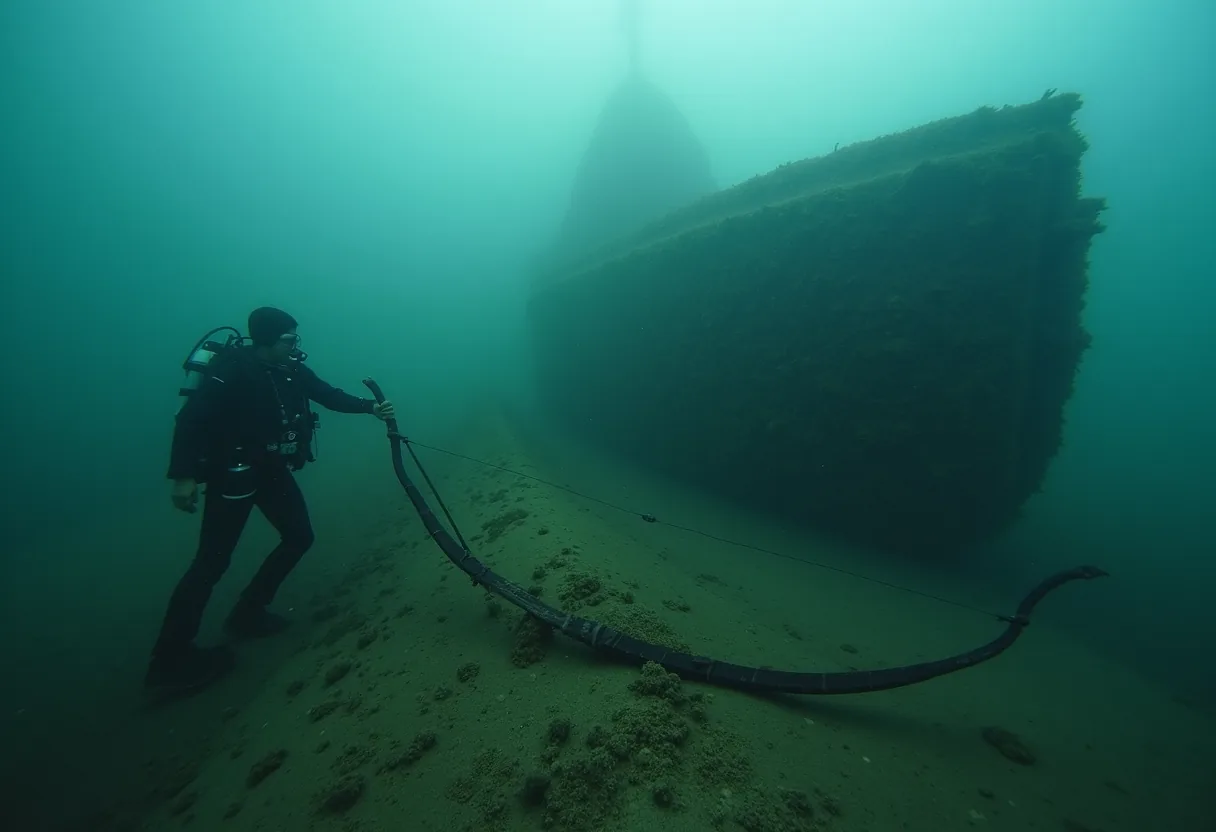
For four hundred years, the ship lay on her starboard side, buried in the anaerobic mud of the SolentPlacethe SolentThe strait separating the Isle of Wight from mainland England. Its complex tides and anaerobic silt were crucial in preserving the Mary Rose for over four centuries, protecting the organic materials from oxygen and biological decay.英伦三岛怀特岛与英格兰本土之间的海峡。其复杂的潮汐和厌氧淤泥在保存“玛丽玫瑰”号超过四个世纪中起到了关键作用,保护了有机材料免受氧气和生物降解的影响。El estrecho que separa la Isla de Wight del continente inglés. Sus corrientes complejas y su fango anabéxico fueron cruciales para la conservación del Mary Rose durante más de cuatro siglos, protegiendo los materiales orgánicos del oxígeno y la descomposición biológica.مضيق يفصل جزيرة وايت عن البر الرئيسي في إنجلترا. إن تيّاراته المعقّدة وطميّه اللاهوائيّ كانتا عاملاً حاسماً في الحفاظ على سفينة ماري روز لأكثر من أربعة قرون، حيث وفرتا حمايةً للمواد العضوية من الأكسجين والتحلّل البيولوجي.O estreito que separa a Ilha de Wight da Inglaterra continental. Suas marés complexas e lamas anaeróbicas foram cruciais para a preservação da Mary Rose por mais de quatro séculos, protegendo os materiais orgânicos do oxigênio e do decaimento biológico.वेट द्वीप और मुख्यभूमि इंग्लैंड के बीच स्थित जलडमरूमध्य। इसके जटिल ज्वार-भाटा और अवायवीय चिकनी मिट्टी मारी रोज़ के चार सौ से अधिक वर्षों तक संरक्षित रहने में महत्वपूर्ण भूमिका निभाई, जिससे सजीव पदार्थ ऑक्सीजन और जैविक क्षय से बचे रहे।Selat yang memisahkan Pulau Wight dari daratan Inggris. Arus balik yang kompleks dan lumpur anehnya menjadi penting dalam mempertahankan Mary Rose selama lebih dari empat abad, melindungi bahan organik dari oksigen dan kerusakan biologis.Le détroit séparant l'île de Wight du continent anglais. Ses marées complexes et ses boues anoxiques ont joué un rôle crucial dans la préservation de la Mary Rose pendant plus de quatre siècles, protégeant les matériaux organiques de l'oxygène et de la décomposition biologique.ウェストミンスター海峡は、アイル・オブ・ワイットとイングランド本土を分ける海峡である。その複雑な潮と無酸素の泥は、4世紀以上にわたってマリー・ローズを保存するのに重要な役割を果たし、有機物を酸素や生物による劣化から守った。Пролив, разделяющий Уайт и английский берег. Его сложные приливы и анаэробные илы сыграли ключевую роль в сохранении «Мэри Роуз» более чем на четыре столетия, защитив органические материалы от кислорода и биологического разложения.Der Kanal zwischen der Isle of Wight und dem Festland Englands. Seine komplexen Gezeiten und anoxische Schlammablagerung spielten eine entscheidende Rolle bei der Erhaltung der Mary Rose über vier Jahrhunderte, indem sie die organischen Materialien vor Sauerstoff und biologischem Zerfall schützten.화이트 섬과 본토 잉글랜드를 나누는 해협이다. 복잡한 조류와 무산소 퇴적물은 400년 이상 메리 로즈호를 보존하는 데 중요한 역할을 하였다. 이는 유기물을 산소와 생물학적 부패로부터 보호하였다.. This silt acted as a protective shroud, excluding the oxygen and bacteria that usually consume organic matter. While the exposed port side of the hull was scoured away by currents and wood-boring worms, the buried half remained an intact Tudor time capsule. When the wreck was rediscovered in 1971, it offered more than just timber; it offered the preserved remnants of a lost society.
Divers work over the Mary Rose hull half-buried in Solent siltIllustration · AI-generated (FLUX.1-dev)
The recovery of a ghost
The campaign to raise the ship was an exercise in extreme engineering led by the Mary Rose Trust. Between 1979 and 1982, divers spent 28,000 hours on the seabed, meticulously mapping the site and recovering nineteen thousand artefacts. The effort culminated on 11 October 1982, when the remaining hull section was lifted in a massive steel cradle by the crane barge Tog Mor. The world watched on live television as the timber frame, heavy with the water of four centuries, broke the surface.
A Tudor nit comb and leather shoe rest on a conservation tableIllustration · AI-generated (FLUX.1-dev)
Inside the hull, researchers found the intimate details of 16th-century life. There were wooden bowls marked with the initials of sailors, leather shoes still holding the shape of the feet that wore them, and nit combs containing the remains of Tudor lice. The skeletons of the crew provided a grim census: many suffered from rickets or scurvy, and many had the thickened bones of archers who had spent a lifetime pulling heavy longbows. Even the ship’s dog, a mongrel named Hatch, was found preserved near the carpenter’s cabin.
Weapons and warfare
The Mary RoseObjectMary RoseThe flagship of Henry VIII's navy, this 700-ton carrack served for 34 years before sinking in 1545. Its recovery in 1982 was a landmark in maritime archaeology, yielding thousands of Tudor artefacts preserved in the anaerobic silt of the Solent.亨利八世海军的旗舰,这艘700吨的克拉克帆船服役了34年,于1545年沉没。1982年它的打捞是水下考古学上的一个里程碑,从索伦特河口缺氧淤泥中保存下来的数千件都铎王朝文物被发掘出来。La nave insignia de la marina de Enrique VIII, esta carabela de 700 toneladas sirvió durante 34 años antes de hundirse en 1545. Su recuperación en 1982 marcó un hito en la arqueología marítima, obteniendo miles de artefactos tudos que se conservaron en la arcilla anóxica del Solent.سفينة هنري الثامن الملكية، كانت هذه السفينة الكاراك التي تزن 700 طن تخدم لمدة 34 عاماً قبل غرقها في عام 1545. وقد مثلت استعادتها في عام 1982 حدثاً مهماً في علم الأثريات البحرية، حيث تم العثور على آلاف القطع الأثرية من عصر تودر المحفوظة في الطمي اللاهوائي للسولنت.A embarcação-símbolo da marinha de Henrique VIII, esta caravela de 700 toneladas serviu durante 34 anos antes de afundar em 1545. Sua recuperação em 1982 foi um marco na arqueologia marítima, revelando milhares de artefatos Tudor preservados na lama anóxica do Solent.हेनरी अष्टम के नौसेना का ध्वजाधारी जहाज, यह 700-टन का कैरक जहाज 34 वर्षों तक सेवा में रहा, जब तक कि 1545 में डूब नहीं गया। सन 1982 में इसकी बरामदगी समुद्री विश्वकोशिकी के क्षेत्र में एक ऐतिहासिक घटना रही, जिससे हजारों ट्यूडर काल की वस्तुएं मिलीं, जो सॉलेंट के अनाक्सीजनिक चिकनी मिट्टी में संरक्षित रहीं।Kapal bendera angkatan laut Henry VIII, kapal karak 700 ton ini berlayar selama 34 tahun sebelum tenggelam pada tahun 1545. Pemulihannya pada tahun 1982 merupakan tonggak penting dalam arkeologi kelautan, menghasilkan ribuan artefak abad Tudor yang terawetkan dalam lumpur anoksia Selat Solent.Cette nef de 700 tonnes, pavillon de la marine d'Henri VIII, a servi pendant 34 ans avant de couler en 1545. Sa récupération en 1982 a marqué un tournant dans l'archéologie navale, dévoilant des milliers d'artefacts tudoriens préservés dans la vase anoxique du Solent.ヘンリー8世の海軍の象徴的な船であり、700トンのカラクだったこの船は、1545年に沈没するまで34年間活躍した。1982年の回収によって、海洋考古学の重要な出来事となり、ソーレントの嫌気性の泥に保存されていた数千点のチューダー朝の遺物が得られた。Эсминец флота Генриха VIII, эта 700-тонная каракка служила 34 года, прежде чем затонуть в 1545 году. Ее подъем в 1982 году стал важным этапом в подводной археологии, принес тысячами артефактов эпохи Тюдоров, сохранившихся в анаэробном иле Солента.Die Flaggschiff der Marine Heinrichs VIII., dieser 700-Tonnen-Karrack diente 34 Jahre, bevor er 1545 sank. Seine Bergung 1982 markierte einen Meilenstein in der Meeresarchäologie und brachte Tausende von Artefakten der Tudor-Zeit ans Tageslicht, die im anoxischen Schlamm der Solent erhalten geblieben waren.헨리 8세 해군의 상징적인 선박이었던 이 700톤급 카라크크는 1545년에 침몰하기까지 34년간 활동했다. 1982년에 회수된 이 선박은 해양 고고학의 획기적인 사건으로, 솔런트 지역의 무산소질 퇴적물 속에 보존된 수천 개의 투도어 시대 유물들을 드러냈다. represented a pivotal moment in naval architecture. Originally a carrack built in 1511, she was substantially refitted in 1536. This reconstruction added a tier of heavy bronze and iron guns capable of firing a broadside through the newly invented gunports. The Mary Rose represented a transitional ship design in naval warfare.
The yellow lifting frame raises the Mary Rose hull from the water in 1982Illustration · AI-generated (FLUX.1-dev)
Among the ordnance were 137 longbows and thousands of arrows, many still in their sheaves. The preservation of these weapons settled long-standing debates among historians regarding the draw-weight and construction of the English longbow. These were not the light tools of sport, but massive weapons of war, requiring a pull of up to 150 pounds. The ship was, in effect, a floating fortress caught in the exact moment the medieval world was being replaced by the modern.
A shipwright's model shows the Mary Rose hull shape with open gunport spaces as carved wooIllustration · AI-generated (FLUX.1-dev)
What we still don't know
We do not know the precise reason the ship listed so violently. While the open gunports were the immediate cause of the sinking, theories vary between a design flaw in the 1536 refit, human error by the crew, or a failure of communication between the officers and the men.
The ship's small dog skeleton rests beside a carpenter's tool chest in a labIllustration · AI-generated (FLUX.1-dev)
We do not know the identities of the vast majority of the crew. Despite the preservation of their bones and personal belongings, the contemporary muster rolls were lost. Modern DNA analysis is only now beginning to suggest the diverse origins of the sailors, with some evidence indicating crew members of African and Mediterranean descent.
Inside the Portsmouth museumIllustration · AI-generated (FLUX.1-dev)
And we do not know what happened to the port side of the ship. While the starboard half is famously displayed in Portsmouth, the upper sections and the entire port side were lost to the sea. Somewhere in the shifting sands of the Solent, smaller fragments and perhaps even another 'ghost' of the ship may still reside, waiting for a new generation of technology to find them.
The hull now sits in a dedicated museum, its timbers saturated with polyethylene glycol to prevent them from crumbling into dust. It is a ship that refuses to sink a second time.
1545年7月19日,Henry VIIIPersonHenry VIIIKing of England from 1509 to 1547, Henry oversaw the creation of the Navy Royal. The Mary Rose was one of his first purpose-built warships, reflecting his ambition to project English power across the Channel through heavy naval ordnance.亨利八世是1509年至1547年间的英格兰国王,他在位期间建立了皇家海军。玛丽玫瑰号是他最早建造的专用战舰之一,体现了他通过重型海军火炮将英国势力投射到海峡对岸的雄心。Rey de Inglaterra desde 1509 hasta 1547, Enrique supervisó la creación de la Armada Real. La *Mary Rose* fue una de sus primeras fragatas de guerra construidas específicamente, reflejando su ambición de proyectar el poder inglés a través del Canal mediante un fuerte armamento naval.ملك إنجلترا من 1509 إلى 1547، تولى هنري إنشاء البحرية الملكية. كانت سفينة "ماري روز" واحدة من أولى السفن الحربية التي تم بناؤها خصيصًا، انعكاسًا لطموحه في توجيه القوة الإنجليزية عبر القناة باستخدام ترسانة بحرية ثقيلة.Rei da Inglaterra de 1509 a 1547, Henrique supervisionou a criação da Marinha Real. A Mary Rose foi uma das primeiras fragatas de guerra construídas especificamente sob seu reinado, refletindo sua ambição de projetar o poder inglês através do Canal com uma artilharia naval pesada.इंग्लैंड के राजा 1509 से 1547 तक, हेनरी ने रॉयल नौसेना के निर्माण का नेतृत्व किया। मैरी रोज उनकी पहली लक्ष्यित रूप से बनाई गई युद्धपोतों में से एक थी, जो उनके इरादे को दर्शाती है कि भारी नौसैनिक आग्नेयास्त्रों के माध्यम से अंग्रेजी शक्ति को चैनल पर प्रकट करें।Raja Inggris dari 1509 hingga 1547, Henry memimpin pembentukan Navy Royal. Mary Rose adalah salah satu kapal perang pertama yang dikhususkan untuk tujuan militer, mencerminkan ambisinya untuk memproyeksikan kekuatan Inggris di seberang Selat melalui senjata laut yang berat.Roi d'Angleterre de 1509 à 1547, Henry supervisa la création de la Navy Royal. La Mary Rose fut l'une de ses premières frégates de guerre construites spécifiquement, reflétant son ambition de projeter la puissance anglaise au-delà du détroit à travers une artillerie navale lourde.イングランド国王(在位:1509年~1547年)のヘンリーは、王立海軍の創設を進めた。マリー・ローズ号は彼が最初に建造を命じた戦艦の一つであり、チャネルを越えてイングランドの力を艦砲によって行使しようとする彼の野望を反映している。Король Англии с 1509 по 1547 год, Генрих руководил созданием Королевского флота. «Мэри Роуз» была одной из его первых специально построенных военных кораблей, отражающих его стремление распространить английское влияние через Ла-Манш с помощью мощного вооружения флота.König von England von 1509 bis 1547, leitete Henry die Gründung der Royal Navy. Die Mary Rose war eines seiner ersten eigens für den Krieg gebauten Kriegsschiffe und spiegelte sein Bestreben wider, die englische Macht durch schweres Seegeschütz über den Ärmelkanal hinaus zu projizieren.헨리는 1509년부터 1547년까지 잉글랜드 왕으로 재위했으며, 왕실 해군(Royal Navy) 창설을 주도했다. 마리 로즈(Mary Rose)는 그가 처음으로 직접 건조한 전함 중 하나로, 그의 강력한 해군 화력으로 채널 반대편에 잉글랜드의 힘을 투사하려는 야망을 반영하고 있다.站在南塞城堡的城墙上,看着自己海军舰队中最引以为豪的战舰倾覆入海。Mary RoseObjectMary RoseThe flagship of Henry VIII's navy, this 700-ton carrack served for 34 years before sinking in 1545. Its recovery in 1982 was a landmark in maritime archaeology, yielding thousands of Tudor artefacts preserved in the anaerobic silt of the Solent.亨利八世海军的旗舰,这艘700吨的克拉克帆船服役了34年,于1545年沉没。1982年它的打捞是水下考古学上的一个里程碑,从索伦特河口缺氧淤泥中保存下来的数千件都铎王朝文物被发掘出来。La nave insignia de la marina de Enrique VIII, esta carabela de 700 toneladas sirvió durante 34 años antes de hundirse en 1545. Su recuperación en 1982 marcó un hito en la arqueología marítima, obteniendo miles de artefactos tudos que se conservaron en la arcilla anóxica del Solent.سفينة هنري الثامن الملكية، كانت هذه السفينة الكاراك التي تزن 700 طن تخدم لمدة 34 عاماً قبل غرقها في عام 1545. وقد مثلت استعادتها في عام 1982 حدثاً مهماً في علم الأثريات البحرية، حيث تم العثور على آلاف القطع الأثرية من عصر تودر المحفوظة في الطمي اللاهوائي للسولنت.A embarcação-símbolo da marinha de Henrique VIII, esta caravela de 700 toneladas serviu durante 34 anos antes de afundar em 1545. Sua recuperação em 1982 foi um marco na arqueologia marítima, revelando milhares de artefatos Tudor preservados na lama anóxica do Solent.हेनरी अष्टम के नौसेना का ध्वजाधारी जहाज, यह 700-टन का कैरक जहाज 34 वर्षों तक सेवा में रहा, जब तक कि 1545 में डूब नहीं गया। सन 1982 में इसकी बरामदगी समुद्री विश्वकोशिकी के क्षेत्र में एक ऐतिहासिक घटना रही, जिससे हजारों ट्यूडर काल की वस्तुएं मिलीं, जो सॉलेंट के अनाक्सीजनिक चिकनी मिट्टी में संरक्षित रहीं।Kapal bendera angkatan laut Henry VIII, kapal karak 700 ton ini berlayar selama 34 tahun sebelum tenggelam pada tahun 1545. Pemulihannya pada tahun 1982 merupakan tonggak penting dalam arkeologi kelautan, menghasilkan ribuan artefak abad Tudor yang terawetkan dalam lumpur anoksia Selat Solent.Cette nef de 700 tonnes, pavillon de la marine d'Henri VIII, a servi pendant 34 ans avant de couler en 1545. Sa récupération en 1982 a marqué un tournant dans l'archéologie navale, dévoilant des milliers d'artefacts tudoriens préservés dans la vase anoxique du Solent.ヘンリー8世の海軍の象徴的な船であり、700トンのカラクだったこの船は、1545年に沈没するまで34年間活躍した。1982年の回収によって、海洋考古学の重要な出来事となり、ソーレントの嫌気性の泥に保存されていた数千点のチューダー朝の遺物が得られた。Эсминец флота Генриха VIII, эта 700-тонная каракка служила 34 года, прежде чем затонуть в 1545 году. Ее подъем в 1982 году стал важным этапом в подводной археологии, принес тысячами артефактов эпохи Тюдоров, сохранившихся в анаэробном иле Солента.Die Flaggschiff der Marine Heinrichs VIII., dieser 700-Tonnen-Karrack diente 34 Jahre, bevor er 1545 sank. Seine Bergung 1982 markierte einen Meilenstein in der Meeresarchäologie und brachte Tausende von Artefakten der Tudor-Zeit ans Tageslicht, die im anoxischen Schlamm der Solent erhalten geblieben waren.헨리 8세 해군의 상징적인 선박이었던 이 700톤급 카라크크는 1545년에 침몰하기까지 34년간 활동했다. 1982년에 회수된 이 선박은 해양 고고학의 획기적인 사건으로, 솔런트 지역의 무산소질 퇴적물 속에 보존된 수천 개의 투도어 시대 유물들을 드러냈다.当时正率领舰队在Battle of the SolentEventBattle of the SolentA naval engagement in 1545 between the fleets of Henry VIII and Francis I of France. While the battle was strategically inconclusive, it is remembered primarily for the loss of the Mary Rose, which sank in full view of the King.1545年英法两国舰队之间的一次海战。虽然这场战斗在战略上没有明确结果,但人们主要因其“玛丽·罗斯号”战舰的沉没而铭记,该舰在国王的目睹下完全沉入海底。Una acción naval en 1545 entre las flotas de Enrique VIII y Francisco I de Francia. Aunque la batalla fue estratégicamente inconclusa, se recuerda principalmente por la pérdida de la Mary Rose, que se hundió a la vista del rey.معركة بحرية وقعت في 1545 بين أسطولي هنري الثامن وفرانسيس الأول ملك فرنسا. على الرغم من أن المعركة لم تُسفر عن نتيجة استراتيجية واضحة، إلا أنها تُذكر بشكل رئيسي بسبب غرق سفينة "ماري روز"، التي غرقت أمام عين الملك.Um combate naval em 1545 entre as esquadras de Henrique VIII e Francisco I da França. Embora a batalha tenha sido estrategicamente inconclusiva, é lembrada principalmente pela perda da Mary Rose, que afundou à vista do rei.1545 में हेनरी आठवें और फ्रांस के फ्रांसिस प्रथम के बीच एक नौसैनिक युद्ध हुआ था। युद्ध रणनीतिक दृष्टि से अस्पष्ट रहा, लेकिन इसे मुख्य रूप से मैरी रोज के नुकसान के कारण याद किया जाता है, जो राजा के सामने डूब गया था।Pertempuran laut pada 1545 antara armada Henry VIII dan Francis I dari Prancis. Meskipun pertempuran ini secara strategis tidak menghasilkan keputusan, pertempuran ini terutama dikenang karena tenggelamnya kapal Mary Rose, yang tenggelam di depan mata Raja.Une bataille navale en 1545 entre les flottes d'Henri VIII et de François Ier de France. Bien que l'affrontement ait été stratégiquement indécis, il est principalement mémorable pour la perte de la Mary Rose, qui coula devant les yeux du roi.1545年にヘンリー8世の海軍とフランソワ1世のフランス海軍の間で行われた海戦。この戦闘は戦略的に決定的とはならなかったが、キングの目前で沈没した船「マリー・ローズ」の喪失によって主に記憶されている。Морское сражение 1545 года между флотами Генриха VIII и Франциска I Французского. Хотя битва стратегически не дала решающего результата, она запомнилась в первую очередь потерей корабля «Мэри Роуз», затонувшего у самого короля.Eine Seeschlacht im Jahr 1545 zwischen den Flotten Heinrichs VIII. und Frankreichs König Franz I. Obwohl die Schlacht strategisch unentschieden blieb, ist sie hauptsächlich für den Verlust der Mary Rose in Erinnerung geblieben, die vor den Augen des Königs sank.1545년 헨리 8세와 프랑스의 프랑수아 1세의 해군 간에 벌어진 해전이다. 전투는 전략적으로 결정적인 결과를 내지 못했지만, 왕이 직접 지켜보는 가운데 '메리 로즈' 호가 침몰한 사건으로 유명하다.迎战法国入侵舰队。一阵突如其来的狂风使战舰倾斜,由于下层火炮舱口距离水面仅40厘米,海水迅速涌入。几分钟内,旗舰便沉入海底。在“玛丽玫瑰号”沉船的挖掘过程中,一共发现了179具遗骨。
在接下来的四百年里,这艘船一直侧躺在the SolentPlacethe SolentThe strait separating the Isle of Wight from mainland England. Its complex tides and anaerobic silt were crucial in preserving the Mary Rose for over four centuries, protecting the organic materials from oxygen and biological decay.英伦三岛怀特岛与英格兰本土之间的海峡。其复杂的潮汐和厌氧淤泥在保存“玛丽玫瑰”号超过四个世纪中起到了关键作用,保护了有机材料免受氧气和生物降解的影响。El estrecho que separa la Isla de Wight del continente inglés. Sus corrientes complejas y su fango anabéxico fueron cruciales para la conservación del Mary Rose durante más de cuatro siglos, protegiendo los materiales orgánicos del oxígeno y la descomposición biológica.مضيق يفصل جزيرة وايت عن البر الرئيسي في إنجلترا. إن تيّاراته المعقّدة وطميّه اللاهوائيّ كانتا عاملاً حاسماً في الحفاظ على سفينة ماري روز لأكثر من أربعة قرون، حيث وفرتا حمايةً للمواد العضوية من الأكسجين والتحلّل البيولوجي.O estreito que separa a Ilha de Wight da Inglaterra continental. Suas marés complexas e lamas anaeróbicas foram cruciais para a preservação da Mary Rose por mais de quatro séculos, protegendo os materiais orgânicos do oxigênio e do decaimento biológico.वेट द्वीप और मुख्यभूमि इंग्लैंड के बीच स्थित जलडमरूमध्य। इसके जटिल ज्वार-भाटा और अवायवीय चिकनी मिट्टी मारी रोज़ के चार सौ से अधिक वर्षों तक संरक्षित रहने में महत्वपूर्ण भूमिका निभाई, जिससे सजीव पदार्थ ऑक्सीजन और जैविक क्षय से बचे रहे।Selat yang memisahkan Pulau Wight dari daratan Inggris. Arus balik yang kompleks dan lumpur anehnya menjadi penting dalam mempertahankan Mary Rose selama lebih dari empat abad, melindungi bahan organik dari oksigen dan kerusakan biologis.Le détroit séparant l'île de Wight du continent anglais. Ses marées complexes et ses boues anoxiques ont joué un rôle crucial dans la préservation de la Mary Rose pendant plus de quatre siècles, protégeant les matériaux organiques de l'oxygène et de la décomposition biologique.ウェストミンスター海峡は、アイル・オブ・ワイットとイングランド本土を分ける海峡である。その複雑な潮と無酸素の泥は、4世紀以上にわたってマリー・ローズを保存するのに重要な役割を果たし、有機物を酸素や生物による劣化から守った。Пролив, разделяющий Уайт и английский берег. Его сложные приливы и анаэробные илы сыграли ключевую роль в сохранении «Мэри Роуз» более чем на четыре столетия, защитив органические материалы от кислорода и биологического разложения.Der Kanal zwischen der Isle of Wight und dem Festland Englands. Seine komplexen Gezeiten und anoxische Schlammablagerung spielten eine entscheidende Rolle bei der Erhaltung der Mary Rose über vier Jahrhunderte, indem sie die organischen Materialien vor Sauerstoff und biologischem Zerfall schützten.화이트 섬과 본토 잉글랜드를 나누는 해협이다. 복잡한 조류와 무산소 퇴적물은 400년 이상 메리 로즈호를 보존하는 데 중요한 역할을 하였다. 이는 유기물을 산소와 생물학적 부패로부터 보호하였다.的厌氧泥浆中。这些淤泥起到了保护作用,隔绝了通常会分解有机物的氧气和细菌。虽然暴露在外的左舷船体被海流和蛀木虫侵蚀殆尽,但埋藏在淤泥中的右半部分船体却像一个完整的都铎王朝时间胶囊。1971年,这艘沉船被重新发现,它不仅提供了木材,还提供了失落社会的保存遗迹。
Divers work over the Mary Rose hull half-buried in Solent siltIllustration · AI-generated (FLUX.1-dev)
Mary RoseObjectMary RoseThe flagship of Henry VIII's navy, this 700-ton carrack served for 34 years before sinking in 1545. Its recovery in 1982 was a landmark in maritime archaeology, yielding thousands of Tudor artefacts preserved in the anaerobic silt of the Solent.亨利八世海军的旗舰,这艘700吨的克拉克帆船服役了34年,于1545年沉没。1982年它的打捞是水下考古学上的一个里程碑,从索伦特河口缺氧淤泥中保存下来的数千件都铎王朝文物被发掘出来。La nave insignia de la marina de Enrique VIII, esta carabela de 700 toneladas sirvió durante 34 años antes de hundirse en 1545. Su recuperación en 1982 marcó un hito en la arqueología marítima, obteniendo miles de artefactos tudos que se conservaron en la arcilla anóxica del Solent.سفينة هنري الثامن الملكية، كانت هذه السفينة الكاراك التي تزن 700 طن تخدم لمدة 34 عاماً قبل غرقها في عام 1545. وقد مثلت استعادتها في عام 1982 حدثاً مهماً في علم الأثريات البحرية، حيث تم العثور على آلاف القطع الأثرية من عصر تودر المحفوظة في الطمي اللاهوائي للسولنت.A embarcação-símbolo da marinha de Henrique VIII, esta caravela de 700 toneladas serviu durante 34 anos antes de afundar em 1545. Sua recuperação em 1982 foi um marco na arqueologia marítima, revelando milhares de artefatos Tudor preservados na lama anóxica do Solent.हेनरी अष्टम के नौसेना का ध्वजाधारी जहाज, यह 700-टन का कैरक जहाज 34 वर्षों तक सेवा में रहा, जब तक कि 1545 में डूब नहीं गया। सन 1982 में इसकी बरामदगी समुद्री विश्वकोशिकी के क्षेत्र में एक ऐतिहासिक घटना रही, जिससे हजारों ट्यूडर काल की वस्तुएं मिलीं, जो सॉलेंट के अनाक्सीजनिक चिकनी मिट्टी में संरक्षित रहीं।Kapal bendera angkatan laut Henry VIII, kapal karak 700 ton ini berlayar selama 34 tahun sebelum tenggelam pada tahun 1545. Pemulihannya pada tahun 1982 merupakan tonggak penting dalam arkeologi kelautan, menghasilkan ribuan artefak abad Tudor yang terawetkan dalam lumpur anoksia Selat Solent.Cette nef de 700 tonnes, pavillon de la marine d'Henri VIII, a servi pendant 34 ans avant de couler en 1545. Sa récupération en 1982 a marqué un tournant dans l'archéologie navale, dévoilant des milliers d'artefacts tudoriens préservés dans la vase anoxique du Solent.ヘンリー8世の海軍の象徴的な船であり、700トンのカラクだったこの船は、1545年に沈没するまで34年間活躍した。1982年の回収によって、海洋考古学の重要な出来事となり、ソーレントの嫌気性の泥に保存されていた数千点のチューダー朝の遺物が得られた。Эсминец флота Генриха VIII, эта 700-тонная каракка служила 34 года, прежде чем затонуть в 1545 году. Ее подъем в 1982 году стал важным этапом в подводной археологии, принес тысячами артефактов эпохи Тюдоров, сохранившихся в анаэробном иле Солента.Die Flaggschiff der Marine Heinrichs VIII., dieser 700-Tonnen-Karrack diente 34 Jahre, bevor er 1545 sank. Seine Bergung 1982 markierte einen Meilenstein in der Meeresarchäologie und brachte Tausende von Artefakten der Tudor-Zeit ans Tageslicht, die im anoxischen Schlamm der Solent erhalten geblieben waren.헨리 8세 해군의 상징적인 선박이었던 이 700톤급 카라크크는 1545년에 침몰하기까지 34년간 활동했다. 1982년에 회수된 이 선박은 해양 고고학의 획기적인 사건으로, 솔런트 지역의 무산소질 퇴적물 속에 보존된 수천 개의 투도어 시대 유물들을 드러냈다.代表了海军建筑的一个关键转折点。最初于1511年建造为一艘卡拉克帆船,1536年进行了大规模改建。这次改建增加了一层重型青铜和铁制火炮,可以通过新发明的火炮舱口发射齐射。玛丽玫瑰号代表了海军战争中的一种过渡性船体设计。
The yellow lifting frame raises the Mary Rose hull from the water in 1982Illustration · AI-generated (FLUX.1-dev)
Una nave de guerra tudor, la "noble nave" de Enrique VIII, desapareció bajo las olas del Solent en 1545. Conservada por el sofocante lodo del Canal de la Mancha, su regreso a la superficie cuatro siglos más tarde proporcionó un espejo de las vidas, la medicina y las violentas muertes de los hombres que la tripularon.
El 19 de julio de 1545, el rey Henry VIIIPersonHenry VIIIKing of England from 1509 to 1547, Henry oversaw the creation of the Navy Royal. The Mary Rose was one of his first purpose-built warships, reflecting his ambition to project English power across the Channel through heavy naval ordnance.亨利八世是1509年至1547年间的英格兰国王,他在位期间建立了皇家海军。玛丽玫瑰号是他最早建造的专用战舰之一,体现了他通过重型海军火炮将英国势力投射到海峡对岸的雄心。Rey de Inglaterra desde 1509 hasta 1547, Enrique supervisó la creación de la Armada Real. La *Mary Rose* fue una de sus primeras fragatas de guerra construidas específicamente, reflejando su ambición de proyectar el poder inglés a través del Canal mediante un fuerte armamento naval.ملك إنجلترا من 1509 إلى 1547، تولى هنري إنشاء البحرية الملكية. كانت سفينة "ماري روز" واحدة من أولى السفن الحربية التي تم بناؤها خصيصًا، انعكاسًا لطموحه في توجيه القوة الإنجليزية عبر القناة باستخدام ترسانة بحرية ثقيلة.Rei da Inglaterra de 1509 a 1547, Henrique supervisionou a criação da Marinha Real. A Mary Rose foi uma das primeiras fragatas de guerra construídas especificamente sob seu reinado, refletindo sua ambição de projetar o poder inglês através do Canal com uma artilharia naval pesada.इंग्लैंड के राजा 1509 से 1547 तक, हेनरी ने रॉयल नौसेना के निर्माण का नेतृत्व किया। मैरी रोज उनकी पहली लक्ष्यित रूप से बनाई गई युद्धपोतों में से एक थी, जो उनके इरादे को दर्शाती है कि भारी नौसैनिक आग्नेयास्त्रों के माध्यम से अंग्रेजी शक्ति को चैनल पर प्रकट करें।Raja Inggris dari 1509 hingga 1547, Henry memimpin pembentukan Navy Royal. Mary Rose adalah salah satu kapal perang pertama yang dikhususkan untuk tujuan militer, mencerminkan ambisinya untuk memproyeksikan kekuatan Inggris di seberang Selat melalui senjata laut yang berat.Roi d'Angleterre de 1509 à 1547, Henry supervisa la création de la Navy Royal. La Mary Rose fut l'une de ses premières frégates de guerre construites spécifiquement, reflétant son ambition de projeter la puissance anglaise au-delà du détroit à travers une artillerie navale lourde.イングランド国王(在位:1509年~1547年)のヘンリーは、王立海軍の創設を進めた。マリー・ローズ号は彼が最初に建造を命じた戦艦の一つであり、チャネルを越えてイングランドの力を艦砲によって行使しようとする彼の野望を反映している。Король Англии с 1509 по 1547 год, Генрих руководил созданием Королевского флота. «Мэри Роуз» была одной из его первых специально построенных военных кораблей, отражающих его стремление распространить английское влияние через Ла-Манш с помощью мощного вооружения флота.König von England von 1509 bis 1547, leitete Henry die Gründung der Royal Navy. Die Mary Rose war eines seiner ersten eigens für den Krieg gebauten Kriegsschiffe und spiegelte sein Bestreben wider, die englische Macht durch schweres Seegeschütz über den Ärmelkanal hinaus zu projizieren.헨리는 1509년부터 1547년까지 잉글랜드 왕으로 재위했으며, 왕실 해군(Royal Navy) 창설을 주도했다. 마리 로즈(Mary Rose)는 그가 처음으로 직접 건조한 전함 중 하나로, 그의 강력한 해군 화력으로 채널 반대편에 잉글랜드의 힘을 투사하려는 야망을 반영하고 있다. se encontraba en las almenas del Castillo de Southsea y observaba cómo el orgullo de su marina se inclinaba hacia el mar. La Mary RoseObjectMary RoseThe flagship of Henry VIII's navy, this 700-ton carrack served for 34 years before sinking in 1545. Its recovery in 1982 was a landmark in maritime archaeology, yielding thousands of Tudor artefacts preserved in the anaerobic silt of the Solent.亨利八世海军的旗舰,这艘700吨的克拉克帆船服役了34年,于1545年沉没。1982年它的打捞是水下考古学上的一个里程碑,从索伦特河口缺氧淤泥中保存下来的数千件都铎王朝文物被发掘出来。La nave insignia de la marina de Enrique VIII, esta carabela de 700 toneladas sirvió durante 34 años antes de hundirse en 1545. Su recuperación en 1982 marcó un hito en la arqueología marítima, obteniendo miles de artefactos tudos que se conservaron en la arcilla anóxica del Solent.سفينة هنري الثامن الملكية، كانت هذه السفينة الكاراك التي تزن 700 طن تخدم لمدة 34 عاماً قبل غرقها في عام 1545. وقد مثلت استعادتها في عام 1982 حدثاً مهماً في علم الأثريات البحرية، حيث تم العثور على آلاف القطع الأثرية من عصر تودر المحفوظة في الطمي اللاهوائي للسولنت.A embarcação-símbolo da marinha de Henrique VIII, esta caravela de 700 toneladas serviu durante 34 anos antes de afundar em 1545. Sua recuperação em 1982 foi um marco na arqueologia marítima, revelando milhares de artefatos Tudor preservados na lama anóxica do Solent.हेनरी अष्टम के नौसेना का ध्वजाधारी जहाज, यह 700-टन का कैरक जहाज 34 वर्षों तक सेवा में रहा, जब तक कि 1545 में डूब नहीं गया। सन 1982 में इसकी बरामदगी समुद्री विश्वकोशिकी के क्षेत्र में एक ऐतिहासिक घटना रही, जिससे हजारों ट्यूडर काल की वस्तुएं मिलीं, जो सॉलेंट के अनाक्सीजनिक चिकनी मिट्टी में संरक्षित रहीं।Kapal bendera angkatan laut Henry VIII, kapal karak 700 ton ini berlayar selama 34 tahun sebelum tenggelam pada tahun 1545. Pemulihannya pada tahun 1982 merupakan tonggak penting dalam arkeologi kelautan, menghasilkan ribuan artefak abad Tudor yang terawetkan dalam lumpur anoksia Selat Solent.Cette nef de 700 tonnes, pavillon de la marine d'Henri VIII, a servi pendant 34 ans avant de couler en 1545. Sa récupération en 1982 a marqué un tournant dans l'archéologie navale, dévoilant des milliers d'artefacts tudoriens préservés dans la vase anoxique du Solent.ヘンリー8世の海軍の象徴的な船であり、700トンのカラクだったこの船は、1545年に沈没するまで34年間活躍した。1982年の回収によって、海洋考古学の重要な出来事となり、ソーレントの嫌気性の泥に保存されていた数千点のチューダー朝の遺物が得られた。Эсминец флота Генриха VIII, эта 700-тонная каракка служила 34 года, прежде чем затонуть в 1545 году. Ее подъем в 1982 году стал важным этапом в подводной археологии, принес тысячами артефактов эпохи Тюдоров, сохранившихся в анаэробном иле Солента.Die Flaggschiff der Marine Heinrichs VIII., dieser 700-Tonnen-Karrack diente 34 Jahre, bevor er 1545 sank. Seine Bergung 1982 markierte einen Meilenstein in der Meeresarchäologie und brachte Tausende von Artefakten der Tudor-Zeit ans Tageslicht, die im anoxischen Schlamm der Solent erhalten geblieben waren.헨리 8세 해군의 상징적인 선박이었던 이 700톤급 카라크크는 1545년에 침몰하기까지 34년간 활동했다. 1982년에 회수된 이 선박은 해양 고고학의 획기적인 사건으로, 솔런트 지역의 무산소질 퇴적물 속에 보존된 수천 개의 투도어 시대 유물들을 드러냈다. estaba liderando un ataque contra una flota francesa invasora en el Battle of the SolentEventBattle of the SolentA naval engagement in 1545 between the fleets of Henry VIII and Francis I of France. While the battle was strategically inconclusive, it is remembered primarily for the loss of the Mary Rose, which sank in full view of the King.1545年英法两国舰队之间的一次海战。虽然这场战斗在战略上没有明确结果,但人们主要因其“玛丽·罗斯号”战舰的沉没而铭记,该舰在国王的目睹下完全沉入海底。Una acción naval en 1545 entre las flotas de Enrique VIII y Francisco I de Francia. Aunque la batalla fue estratégicamente inconclusa, se recuerda principalmente por la pérdida de la Mary Rose, que se hundió a la vista del rey.معركة بحرية وقعت في 1545 بين أسطولي هنري الثامن وفرانسيس الأول ملك فرنسا. على الرغم من أن المعركة لم تُسفر عن نتيجة استراتيجية واضحة، إلا أنها تُذكر بشكل رئيسي بسبب غرق سفينة "ماري روز"، التي غرقت أمام عين الملك.Um combate naval em 1545 entre as esquadras de Henrique VIII e Francisco I da França. Embora a batalha tenha sido estrategicamente inconclusiva, é lembrada principalmente pela perda da Mary Rose, que afundou à vista do rei.1545 में हेनरी आठवें और फ्रांस के फ्रांसिस प्रथम के बीच एक नौसैनिक युद्ध हुआ था। युद्ध रणनीतिक दृष्टि से अस्पष्ट रहा, लेकिन इसे मुख्य रूप से मैरी रोज के नुकसान के कारण याद किया जाता है, जो राजा के सामने डूब गया था।Pertempuran laut pada 1545 antara armada Henry VIII dan Francis I dari Prancis. Meskipun pertempuran ini secara strategis tidak menghasilkan keputusan, pertempuran ini terutama dikenang karena tenggelamnya kapal Mary Rose, yang tenggelam di depan mata Raja.Une bataille navale en 1545 entre les flottes d'Henri VIII et de François Ier de France. Bien que l'affrontement ait été stratégiquement indécis, il est principalement mémorable pour la perte de la Mary Rose, qui coula devant les yeux du roi.1545年にヘンリー8世の海軍とフランソワ1世のフランス海軍の間で行われた海戦。この戦闘は戦略的に決定的とはならなかったが、キングの目前で沈没した船「マリー・ローズ」の喪失によって主に記憶されている。Морское сражение 1545 года между флотами Генриха VIII и Франциска I Французского. Хотя битва стратегически не дала решающего результата, она запомнилась в первую очередь потерей корабля «Мэри Роуз», затонувшего у самого короля.Eine Seeschlacht im Jahr 1545 zwischen den Flotten Heinrichs VIII. und Frankreichs König Franz I. Obwohl die Schlacht strategisch unentschieden blieb, ist sie hauptsächlich für den Verlust der Mary Rose in Erinnerung geblieben, die vor den Augen des Königs sank.1545년 헨리 8세와 프랑스의 프랑수아 1세의 해군 간에 벌어진 해전이다. 전투는 전략적으로 결정적인 결과를 내지 못했지만, 왕이 직접 지켜보는 가운데 '메리 로즈' 호가 침몰한 사건으로 유명하다.. Bajo el peso de un súbito viento, el barco se inclinó. Debido a que sus bocas de fuego inferiores estaban abiertas y situadas apenas a cuarenta centímetros por encima de la línea de flotación, el mar irrumpió. En cuestión de minutos, la nave insignia desapareció. Durante las excavaciones de la Mary Rose se encontraron los huesos de un total de 179 personas.
Durante cuatrocientos años, el barco permaneció sobre su banda de estribor, enterrado en la arcilla anóxica de the SolentPlacethe SolentThe strait separating the Isle of Wight from mainland England. Its complex tides and anaerobic silt were crucial in preserving the Mary Rose for over four centuries, protecting the organic materials from oxygen and biological decay.英伦三岛怀特岛与英格兰本土之间的海峡。其复杂的潮汐和厌氧淤泥在保存“玛丽玫瑰”号超过四个世纪中起到了关键作用,保护了有机材料免受氧气和生物降解的影响。El estrecho que separa la Isla de Wight del continente inglés. Sus corrientes complejas y su fango anabéxico fueron cruciales para la conservación del Mary Rose durante más de cuatro siglos, protegiendo los materiales orgánicos del oxígeno y la descomposición biológica.مضيق يفصل جزيرة وايت عن البر الرئيسي في إنجلترا. إن تيّاراته المعقّدة وطميّه اللاهوائيّ كانتا عاملاً حاسماً في الحفاظ على سفينة ماري روز لأكثر من أربعة قرون، حيث وفرتا حمايةً للمواد العضوية من الأكسجين والتحلّل البيولوجي.O estreito que separa a Ilha de Wight da Inglaterra continental. Suas marés complexas e lamas anaeróbicas foram cruciais para a preservação da Mary Rose por mais de quatro séculos, protegendo os materiais orgânicos do oxigênio e do decaimento biológico.वेट द्वीप और मुख्यभूमि इंग्लैंड के बीच स्थित जलडमरूमध्य। इसके जटिल ज्वार-भाटा और अवायवीय चिकनी मिट्टी मारी रोज़ के चार सौ से अधिक वर्षों तक संरक्षित रहने में महत्वपूर्ण भूमिका निभाई, जिससे सजीव पदार्थ ऑक्सीजन और जैविक क्षय से बचे रहे।Selat yang memisahkan Pulau Wight dari daratan Inggris. Arus balik yang kompleks dan lumpur anehnya menjadi penting dalam mempertahankan Mary Rose selama lebih dari empat abad, melindungi bahan organik dari oksigen dan kerusakan biologis.Le détroit séparant l'île de Wight du continent anglais. Ses marées complexes et ses boues anoxiques ont joué un rôle crucial dans la préservation de la Mary Rose pendant plus de quatre siècles, protégeant les matériaux organiques de l'oxygène et de la décomposition biologique.ウェストミンスター海峡は、アイル・オブ・ワイットとイングランド本土を分ける海峡である。その複雑な潮と無酸素の泥は、4世紀以上にわたってマリー・ローズを保存するのに重要な役割を果たし、有機物を酸素や生物による劣化から守った。Пролив, разделяющий Уайт и английский берег. Его сложные приливы и анаэробные илы сыграли ключевую роль в сохранении «Мэри Роуз» более чем на четыре столетия, защитив органические материалы от кислорода и биологического разложения.Der Kanal zwischen der Isle of Wight und dem Festland Englands. Seine komplexen Gezeiten und anoxische Schlammablagerung spielten eine entscheidende Rolle bei der Erhaltung der Mary Rose über vier Jahrhunderte, indem sie die organischen Materialien vor Sauerstoff und biologischem Zerfall schützten.화이트 섬과 본토 잉글랜드를 나누는 해협이다. 복잡한 조류와 무산소 퇴적물은 400년 이상 메리 로즈호를 보존하는 데 중요한 역할을 하였다. 이는 유기물을 산소와 생물학적 부패로부터 보호하였다.. Esta lama actuó como un velo protector, excluyendo el oxígeno y las bacterias que normalmente consumen la materia orgánica. Mientras que el costado expuesto del casco fue erosionado por las corrientes y los gusanos taladradores de madera, la mitad enterrada permaneció intacta como una cápsula del tiempo tudor. Cuando el naufragio fue redescubierto en 1971, ofreció más que solo madera; ofreció los restos preservados de una sociedad perdida.
Divers work over the Mary Rose hull half-buried in Solent siltIllustration · AI-generated (FLUX.1-dev)
La recuperación de un fantasma
La campaña para levantar el barco fue un ejercicio de ingeniería extrema liderado por el Mary Rose Trust. Entre 1979 y 1982, los buzos pasaron 28.000 horas en el fondo marino, mapeando minuciosamente el lugar y recuperando diecinueve mil artefactos. El esfuerzo culminó el 11 de octubre de 1982, cuando la sección restante del casco fue levantada en una jaula de acero masiva por la embarcación grúa Tog Mor. El mundo observó por televisión en directo cómo el marco de madera, pesado con el agua de cuatro siglos, rompió la superficie.
A Tudor nit comb and leather shoe rest on a conservation tableIllustration · AI-generated (FLUX.1-dev)
Dentro del casco, los investigadores encontraron detalles íntimos de la vida del siglo XVI. Había cuencos de madera marcados con las iniciales de los marineros, zapatos de cuero que aún conservaban la forma de los pies que los usaron, y peines para piojos que contenían los restos de los piojos de la época tudor. Los esqueletos de la tripulación proporcionaron un censo sombrío: muchos sufrían de raquitismo o escorbuto, y muchos tenían los huesos engrosados de arqueros que habían pasado toda su vida tirando de arcos largos pesados. Incluso el perro de la nave, un mestizo llamado Hatch, fue encontrado preservado cerca del camarote del carpintero.
Armas y guerra
La Mary RoseObjectMary RoseThe flagship of Henry VIII's navy, this 700-ton carrack served for 34 years before sinking in 1545. Its recovery in 1982 was a landmark in maritime archaeology, yielding thousands of Tudor artefacts preserved in the anaerobic silt of the Solent.亨利八世海军的旗舰,这艘700吨的克拉克帆船服役了34年,于1545年沉没。1982年它的打捞是水下考古学上的一个里程碑,从索伦特河口缺氧淤泥中保存下来的数千件都铎王朝文物被发掘出来。La nave insignia de la marina de Enrique VIII, esta carabela de 700 toneladas sirvió durante 34 años antes de hundirse en 1545. Su recuperación en 1982 marcó un hito en la arqueología marítima, obteniendo miles de artefactos tudos que se conservaron en la arcilla anóxica del Solent.سفينة هنري الثامن الملكية، كانت هذه السفينة الكاراك التي تزن 700 طن تخدم لمدة 34 عاماً قبل غرقها في عام 1545. وقد مثلت استعادتها في عام 1982 حدثاً مهماً في علم الأثريات البحرية، حيث تم العثور على آلاف القطع الأثرية من عصر تودر المحفوظة في الطمي اللاهوائي للسولنت.A embarcação-símbolo da marinha de Henrique VIII, esta caravela de 700 toneladas serviu durante 34 anos antes de afundar em 1545. Sua recuperação em 1982 foi um marco na arqueologia marítima, revelando milhares de artefatos Tudor preservados na lama anóxica do Solent.हेनरी अष्टम के नौसेना का ध्वजाधारी जहाज, यह 700-टन का कैरक जहाज 34 वर्षों तक सेवा में रहा, जब तक कि 1545 में डूब नहीं गया। सन 1982 में इसकी बरामदगी समुद्री विश्वकोशिकी के क्षेत्र में एक ऐतिहासिक घटना रही, जिससे हजारों ट्यूडर काल की वस्तुएं मिलीं, जो सॉलेंट के अनाक्सीजनिक चिकनी मिट्टी में संरक्षित रहीं।Kapal bendera angkatan laut Henry VIII, kapal karak 700 ton ini berlayar selama 34 tahun sebelum tenggelam pada tahun 1545. Pemulihannya pada tahun 1982 merupakan tonggak penting dalam arkeologi kelautan, menghasilkan ribuan artefak abad Tudor yang terawetkan dalam lumpur anoksia Selat Solent.Cette nef de 700 tonnes, pavillon de la marine d'Henri VIII, a servi pendant 34 ans avant de couler en 1545. Sa récupération en 1982 a marqué un tournant dans l'archéologie navale, dévoilant des milliers d'artefacts tudoriens préservés dans la vase anoxique du Solent.ヘンリー8世の海軍の象徴的な船であり、700トンのカラクだったこの船は、1545年に沈没するまで34年間活躍した。1982年の回収によって、海洋考古学の重要な出来事となり、ソーレントの嫌気性の泥に保存されていた数千点のチューダー朝の遺物が得られた。Эсминец флота Генриха VIII, эта 700-тонная каракка служила 34 года, прежде чем затонуть в 1545 году. Ее подъем в 1982 году стал важным этапом в подводной археологии, принес тысячами артефактов эпохи Тюдоров, сохранившихся в анаэробном иле Солента.Die Flaggschiff der Marine Heinrichs VIII., dieser 700-Tonnen-Karrack diente 34 Jahre, bevor er 1545 sank. Seine Bergung 1982 markierte einen Meilenstein in der Meeresarchäologie und brachte Tausende von Artefakten der Tudor-Zeit ans Tageslicht, die im anoxischen Schlamm der Solent erhalten geblieben waren.헨리 8세 해군의 상징적인 선박이었던 이 700톤급 카라크크는 1545년에 침몰하기까지 34년간 활동했다. 1982년에 회수된 이 선박은 해양 고고학의 획기적인 사건으로, 솔런트 지역의 무산소질 퇴적물 속에 보존된 수천 개의 투도어 시대 유물들을 드러냈다. representó un momento crucial en la arquitectura naval. Originalmente un carrack construido en 1511, fue ampliamente改装ada en 1536. Esta reconstrucción añadió una cubierta de cañones pesados de bronce y hierro capaces de disparar un fuego cruzado a través de las nuevas bocas de fuego. La Mary Rose representó un diseño de transición en la guerra naval.
The yellow lifting frame raises the Mary Rose hull from the water in 1982Illustration · AI-generated (FLUX.1-dev)
Entre la artillería se encontraron 137 arcos largos y miles de flechas, muchas aún en sus vainas. La preservación de estas armas resolvió debates de larga data entre los historiadores sobre el peso de tracción y la construcción del arco largo inglés. Estos no eran herramientas ligeras para el deporte, sino armas masivas de guerra, que requerían un tirón de hasta 150 libras. La nave era, en efecto, una fortaleza flotante atrapada en el preciso momento en que el mundo medieval estaba siendo reemplazado por el moderno.
A shipwright's model shows the Mary Rose hull shape with open gunport spaces as carved wooIllustration · AI-generated (FLUX.1-dev)
Lo que aún no sabemos
No conocemos la razón precisa por la cual el barco se inclinó tan violentamente. Aunque las bocas de fuego abiertas fueron la causa inmediata del hundimiento, las teorías varían entre un fallo de diseño en la改装ación de 1536, un error humano por parte de la tripulación, o una falla de comunicación entre los oficiales y los hombres.
The ship's small dog skeleton rests beside a carpenter's tool chest in a labIllustration · AI-generated (FLUX.1-dev)
No conocemos las identidades de la gran mayoría de la tripulación. A pesar de la preservación de sus huesos y pertenencias personales, los registros de asistencia de la época se perdieron. El análisis de ADN moderno solo comienza ahora a sugerir los orígenes diversos de los marineros, con algunas pruebas indicando que había tripulantes de ascendencia africana y mediterránea.
Inside the Portsmouth museumIllustration · AI-generated (FLUX.1-dev)
Y no sabemos qué le sucedió al costado de babor del barco. Mientras que la mitad de estribor se exhibe famosamente en Portsmouth, las secciones superiores y todo el costado de babor se perdieron en el mar. En alguna parte de las arenas cambiantes del Solent, fragmentos más pequeños y quizás incluso otro "fantasma" del barco aún podrían residir, esperando a que una nueva generación de tecnología los descubra.
El casco ahora se encuentra en un museo dedicado, sus maderas impregnadas de polietilenglicol para evitar que se desintegren en polvo. Es un barco que se niega a hundirse una segunda vez.
1545年7月19日、王Henry VIIIPersonHenry VIIIKing of England from 1509 to 1547, Henry oversaw the creation of the Navy Royal. The Mary Rose was one of his first purpose-built warships, reflecting his ambition to project English power across the Channel through heavy naval ordnance.亨利八世是1509年至1547年间的英格兰国王,他在位期间建立了皇家海军。玛丽玫瑰号是他最早建造的专用战舰之一,体现了他通过重型海军火炮将英国势力投射到海峡对岸的雄心。Rey de Inglaterra desde 1509 hasta 1547, Enrique supervisó la creación de la Armada Real. La *Mary Rose* fue una de sus primeras fragatas de guerra construidas específicamente, reflejando su ambición de proyectar el poder inglés a través del Canal mediante un fuerte armamento naval.ملك إنجلترا من 1509 إلى 1547، تولى هنري إنشاء البحرية الملكية. كانت سفينة "ماري روز" واحدة من أولى السفن الحربية التي تم بناؤها خصيصًا، انعكاسًا لطموحه في توجيه القوة الإنجليزية عبر القناة باستخدام ترسانة بحرية ثقيلة.Rei da Inglaterra de 1509 a 1547, Henrique supervisionou a criação da Marinha Real. A Mary Rose foi uma das primeiras fragatas de guerra construídas especificamente sob seu reinado, refletindo sua ambição de projetar o poder inglês através do Canal com uma artilharia naval pesada.इंग्लैंड के राजा 1509 से 1547 तक, हेनरी ने रॉयल नौसेना के निर्माण का नेतृत्व किया। मैरी रोज उनकी पहली लक्ष्यित रूप से बनाई गई युद्धपोतों में से एक थी, जो उनके इरादे को दर्शाती है कि भारी नौसैनिक आग्नेयास्त्रों के माध्यम से अंग्रेजी शक्ति को चैनल पर प्रकट करें।Raja Inggris dari 1509 hingga 1547, Henry memimpin pembentukan Navy Royal. Mary Rose adalah salah satu kapal perang pertama yang dikhususkan untuk tujuan militer, mencerminkan ambisinya untuk memproyeksikan kekuatan Inggris di seberang Selat melalui senjata laut yang berat.Roi d'Angleterre de 1509 à 1547, Henry supervisa la création de la Navy Royal. La Mary Rose fut l'une de ses premières frégates de guerre construites spécifiquement, reflétant son ambition de projeter la puissance anglaise au-delà du détroit à travers une artillerie navale lourde.イングランド国王(在位:1509年~1547年)のヘンリーは、王立海軍の創設を進めた。マリー・ローズ号は彼が最初に建造を命じた戦艦の一つであり、チャネルを越えてイングランドの力を艦砲によって行使しようとする彼の野望を反映している。Король Англии с 1509 по 1547 год, Генрих руководил созданием Королевского флота. «Мэри Роуз» была одной из его первых специально построенных военных кораблей, отражающих его стремление распространить английское влияние через Ла-Манш с помощью мощного вооружения флота.König von England von 1509 bis 1547, leitete Henry die Gründung der Royal Navy. Die Mary Rose war eines seiner ersten eigens für den Krieg gebauten Kriegsschiffe und spiegelte sein Bestreben wider, die englische Macht durch schweres Seegeschütz über den Ärmelkanal hinaus zu projizieren.헨리는 1509년부터 1547년까지 잉글랜드 왕으로 재위했으며, 왕실 해군(Royal Navy) 창설을 주도했다. 마리 로즈(Mary Rose)는 그가 처음으로 직접 건조한 전함 중 하나로, 그의 강력한 해군 화력으로 채널 반대편에 잉글랜드의 힘을 투사하려는 야망을 반영하고 있다.はサウスシー城の城壁に立ち、自分の海軍の誇りが海に傾いていくのを見ていた。Mary RoseObjectMary RoseThe flagship of Henry VIII's navy, this 700-ton carrack served for 34 years before sinking in 1545. Its recovery in 1982 was a landmark in maritime archaeology, yielding thousands of Tudor artefacts preserved in the anaerobic silt of the Solent.亨利八世海军的旗舰,这艘700吨的克拉克帆船服役了34年,于1545年沉没。1982年它的打捞是水下考古学上的一个里程碑,从索伦特河口缺氧淤泥中保存下来的数千件都铎王朝文物被发掘出来。La nave insignia de la marina de Enrique VIII, esta carabela de 700 toneladas sirvió durante 34 años antes de hundirse en 1545. Su recuperación en 1982 marcó un hito en la arqueología marítima, obteniendo miles de artefactos tudos que se conservaron en la arcilla anóxica del Solent.سفينة هنري الثامن الملكية، كانت هذه السفينة الكاراك التي تزن 700 طن تخدم لمدة 34 عاماً قبل غرقها في عام 1545. وقد مثلت استعادتها في عام 1982 حدثاً مهماً في علم الأثريات البحرية، حيث تم العثور على آلاف القطع الأثرية من عصر تودر المحفوظة في الطمي اللاهوائي للسولنت.A embarcação-símbolo da marinha de Henrique VIII, esta caravela de 700 toneladas serviu durante 34 anos antes de afundar em 1545. Sua recuperação em 1982 foi um marco na arqueologia marítima, revelando milhares de artefatos Tudor preservados na lama anóxica do Solent.हेनरी अष्टम के नौसेना का ध्वजाधारी जहाज, यह 700-टन का कैरक जहाज 34 वर्षों तक सेवा में रहा, जब तक कि 1545 में डूब नहीं गया। सन 1982 में इसकी बरामदगी समुद्री विश्वकोशिकी के क्षेत्र में एक ऐतिहासिक घटना रही, जिससे हजारों ट्यूडर काल की वस्तुएं मिलीं, जो सॉलेंट के अनाक्सीजनिक चिकनी मिट्टी में संरक्षित रहीं।Kapal bendera angkatan laut Henry VIII, kapal karak 700 ton ini berlayar selama 34 tahun sebelum tenggelam pada tahun 1545. Pemulihannya pada tahun 1982 merupakan tonggak penting dalam arkeologi kelautan, menghasilkan ribuan artefak abad Tudor yang terawetkan dalam lumpur anoksia Selat Solent.Cette nef de 700 tonnes, pavillon de la marine d'Henri VIII, a servi pendant 34 ans avant de couler en 1545. Sa récupération en 1982 a marqué un tournant dans l'archéologie navale, dévoilant des milliers d'artefacts tudoriens préservés dans la vase anoxique du Solent.ヘンリー8世の海軍の象徴的な船であり、700トンのカラクだったこの船は、1545年に沈没するまで34年間活躍した。1982年の回収によって、海洋考古学の重要な出来事となり、ソーレントの嫌気性の泥に保存されていた数千点のチューダー朝の遺物が得られた。Эсминец флота Генриха VIII, эта 700-тонная каракка служила 34 года, прежде чем затонуть в 1545 году. Ее подъем в 1982 году стал важным этапом в подводной археологии, принес тысячами артефактов эпохи Тюдоров, сохранившихся в анаэробном иле Солента.Die Flaggschiff der Marine Heinrichs VIII., dieser 700-Tonnen-Karrack diente 34 Jahre, bevor er 1545 sank. Seine Bergung 1982 markierte einen Meilenstein in der Meeresarchäologie und brachte Tausende von Artefakten der Tudor-Zeit ans Tageslicht, die im anoxischen Schlamm der Solent erhalten geblieben waren.헨리 8세 해군의 상징적인 선박이었던 이 700톤급 카라크크는 1545년에 침몰하기까지 34년간 활동했다. 1982년에 회수된 이 선박은 해양 고고학의 획기적인 사건으로, 솔런트 지역의 무산소질 퇴적물 속에 보존된 수천 개의 투도어 시대 유물들을 드러냈다.は、Battle of the SolentEventBattle of the SolentA naval engagement in 1545 between the fleets of Henry VIII and Francis I of France. While the battle was strategically inconclusive, it is remembered primarily for the loss of the Mary Rose, which sank in full view of the King.1545年英法两国舰队之间的一次海战。虽然这场战斗在战略上没有明确结果,但人们主要因其“玛丽·罗斯号”战舰的沉没而铭记,该舰在国王的目睹下完全沉入海底。Una acción naval en 1545 entre las flotas de Enrique VIII y Francisco I de Francia. Aunque la batalla fue estratégicamente inconclusa, se recuerda principalmente por la pérdida de la Mary Rose, que se hundió a la vista del rey.معركة بحرية وقعت في 1545 بين أسطولي هنري الثامن وفرانسيس الأول ملك فرنسا. على الرغم من أن المعركة لم تُسفر عن نتيجة استراتيجية واضحة، إلا أنها تُذكر بشكل رئيسي بسبب غرق سفينة "ماري روز"، التي غرقت أمام عين الملك.Um combate naval em 1545 entre as esquadras de Henrique VIII e Francisco I da França. Embora a batalha tenha sido estrategicamente inconclusiva, é lembrada principalmente pela perda da Mary Rose, que afundou à vista do rei.1545 में हेनरी आठवें और फ्रांस के फ्रांसिस प्रथम के बीच एक नौसैनिक युद्ध हुआ था। युद्ध रणनीतिक दृष्टि से अस्पष्ट रहा, लेकिन इसे मुख्य रूप से मैरी रोज के नुकसान के कारण याद किया जाता है, जो राजा के सामने डूब गया था।Pertempuran laut pada 1545 antara armada Henry VIII dan Francis I dari Prancis. Meskipun pertempuran ini secara strategis tidak menghasilkan keputusan, pertempuran ini terutama dikenang karena tenggelamnya kapal Mary Rose, yang tenggelam di depan mata Raja.Une bataille navale en 1545 entre les flottes d'Henri VIII et de François Ier de France. Bien que l'affrontement ait été stratégiquement indécis, il est principalement mémorable pour la perte de la Mary Rose, qui coula devant les yeux du roi.1545年にヘンリー8世の海軍とフランソワ1世のフランス海軍の間で行われた海戦。この戦闘は戦略的に決定的とはならなかったが、キングの目前で沈没した船「マリー・ローズ」の喪失によって主に記憶されている。Морское сражение 1545 года между флотами Генриха VIII и Франциска I Французского. Хотя битва стратегически не дала решающего результата, она запомнилась в первую очередь потерей корабля «Мэри Роуз», затонувшего у самого короля.Eine Seeschlacht im Jahr 1545 zwischen den Flotten Heinrichs VIII. und Frankreichs König Franz I. Obwohl die Schlacht strategisch unentschieden blieb, ist sie hauptsächlich für den Verlust der Mary Rose in Erinnerung geblieben, die vor den Augen des Königs sank.1545년 헨리 8세와 프랑스의 프랑수아 1세의 해군 간에 벌어진 해전이다. 전투는 전략적으로 결정적인 결과를 내지 못했지만, 왕이 직접 지켜보는 가운데 '메리 로즈' 호가 침몰한 사건으로 유명하다.でフランスの侵攻艦隊に攻撃を仕掛けていた。突然の強風によって船は傾き始めた。下部の銃門は開いており、水線からわずか40センチメートルの高さに位置していたため、海水が一気に中へと流入した。数分のうちに旗艦は姿を消した。マリー・ローズの発掘調査では、合計179人の骨が見つかった。
400年間、船は右舷側を下にして、the SolentPlacethe SolentThe strait separating the Isle of Wight from mainland England. Its complex tides and anaerobic silt were crucial in preserving the Mary Rose for over four centuries, protecting the organic materials from oxygen and biological decay.英伦三岛怀特岛与英格兰本土之间的海峡。其复杂的潮汐和厌氧淤泥在保存“玛丽玫瑰”号超过四个世纪中起到了关键作用,保护了有机材料免受氧气和生物降解的影响。El estrecho que separa la Isla de Wight del continente inglés. Sus corrientes complejas y su fango anabéxico fueron cruciales para la conservación del Mary Rose durante más de cuatro siglos, protegiendo los materiales orgánicos del oxígeno y la descomposición biológica.مضيق يفصل جزيرة وايت عن البر الرئيسي في إنجلترا. إن تيّاراته المعقّدة وطميّه اللاهوائيّ كانتا عاملاً حاسماً في الحفاظ على سفينة ماري روز لأكثر من أربعة قرون، حيث وفرتا حمايةً للمواد العضوية من الأكسجين والتحلّل البيولوجي.O estreito que separa a Ilha de Wight da Inglaterra continental. Suas marés complexas e lamas anaeróbicas foram cruciais para a preservação da Mary Rose por mais de quatro séculos, protegendo os materiais orgânicos do oxigênio e do decaimento biológico.वेट द्वीप और मुख्यभूमि इंग्लैंड के बीच स्थित जलडमरूमध्य। इसके जटिल ज्वार-भाटा और अवायवीय चिकनी मिट्टी मारी रोज़ के चार सौ से अधिक वर्षों तक संरक्षित रहने में महत्वपूर्ण भूमिका निभाई, जिससे सजीव पदार्थ ऑक्सीजन और जैविक क्षय से बचे रहे।Selat yang memisahkan Pulau Wight dari daratan Inggris. Arus balik yang kompleks dan lumpur anehnya menjadi penting dalam mempertahankan Mary Rose selama lebih dari empat abad, melindungi bahan organik dari oksigen dan kerusakan biologis.Le détroit séparant l'île de Wight du continent anglais. Ses marées complexes et ses boues anoxiques ont joué un rôle crucial dans la préservation de la Mary Rose pendant plus de quatre siècles, protégeant les matériaux organiques de l'oxygène et de la décomposition biologique.ウェストミンスター海峡は、アイル・オブ・ワイットとイングランド本土を分ける海峡である。その複雑な潮と無酸素の泥は、4世紀以上にわたってマリー・ローズを保存するのに重要な役割を果たし、有機物を酸素や生物による劣化から守った。Пролив, разделяющий Уайт и английский берег. Его сложные приливы и анаэробные илы сыграли ключевую роль в сохранении «Мэри Роуз» более чем на четыре столетия, защитив органические материалы от кислорода и биологического разложения.Der Kanal zwischen der Isle of Wight und dem Festland Englands. Seine komplexen Gezeiten und anoxische Schlammablagerung spielten eine entscheidende Rolle bei der Erhaltung der Mary Rose über vier Jahrhunderte, indem sie die organischen Materialien vor Sauerstoff und biologischem Zerfall schützten.화이트 섬과 본토 잉글랜드를 나누는 해협이다. 복잡한 조류와 무산소 퇴적물은 400년 이상 메리 로즈호를 보존하는 데 중요한 역할을 하였다. 이는 유기물을 산소와 생물학적 부패로부터 보호하였다.の無酸素性の泥に埋もれていた。この泥は保護的なヴェールのように働き、通常であれば有機物を分解してしまう酸素や細菌を遮断していた。露出した左舷側は海流や木食いの虫によって削られていったが、埋もれた半分は完全な都铎朝のタイムカプセルのままであった。1971年に遺跡が再発見されると、単なる木材だけではなく、失われた社会の保存された痕跡も提供された。
Divers work over the Mary Rose hull half-buried in Solent siltIllustration · AI-generated (FLUX.1-dev)
Mary RoseObjectMary RoseThe flagship of Henry VIII's navy, this 700-ton carrack served for 34 years before sinking in 1545. Its recovery in 1982 was a landmark in maritime archaeology, yielding thousands of Tudor artefacts preserved in the anaerobic silt of the Solent.亨利八世海军的旗舰,这艘700吨的克拉克帆船服役了34年,于1545年沉没。1982年它的打捞是水下考古学上的一个里程碑,从索伦特河口缺氧淤泥中保存下来的数千件都铎王朝文物被发掘出来。La nave insignia de la marina de Enrique VIII, esta carabela de 700 toneladas sirvió durante 34 años antes de hundirse en 1545. Su recuperación en 1982 marcó un hito en la arqueología marítima, obteniendo miles de artefactos tudos que se conservaron en la arcilla anóxica del Solent.سفينة هنري الثامن الملكية، كانت هذه السفينة الكاراك التي تزن 700 طن تخدم لمدة 34 عاماً قبل غرقها في عام 1545. وقد مثلت استعادتها في عام 1982 حدثاً مهماً في علم الأثريات البحرية، حيث تم العثور على آلاف القطع الأثرية من عصر تودر المحفوظة في الطمي اللاهوائي للسولنت.A embarcação-símbolo da marinha de Henrique VIII, esta caravela de 700 toneladas serviu durante 34 anos antes de afundar em 1545. Sua recuperação em 1982 foi um marco na arqueologia marítima, revelando milhares de artefatos Tudor preservados na lama anóxica do Solent.हेनरी अष्टम के नौसेना का ध्वजाधारी जहाज, यह 700-टन का कैरक जहाज 34 वर्षों तक सेवा में रहा, जब तक कि 1545 में डूब नहीं गया। सन 1982 में इसकी बरामदगी समुद्री विश्वकोशिकी के क्षेत्र में एक ऐतिहासिक घटना रही, जिससे हजारों ट्यूडर काल की वस्तुएं मिलीं, जो सॉलेंट के अनाक्सीजनिक चिकनी मिट्टी में संरक्षित रहीं।Kapal bendera angkatan laut Henry VIII, kapal karak 700 ton ini berlayar selama 34 tahun sebelum tenggelam pada tahun 1545. Pemulihannya pada tahun 1982 merupakan tonggak penting dalam arkeologi kelautan, menghasilkan ribuan artefak abad Tudor yang terawetkan dalam lumpur anoksia Selat Solent.Cette nef de 700 tonnes, pavillon de la marine d'Henri VIII, a servi pendant 34 ans avant de couler en 1545. Sa récupération en 1982 a marqué un tournant dans l'archéologie navale, dévoilant des milliers d'artefacts tudoriens préservés dans la vase anoxique du Solent.ヘンリー8世の海軍の象徴的な船であり、700トンのカラクだったこの船は、1545年に沈没するまで34年間活躍した。1982年の回収によって、海洋考古学の重要な出来事となり、ソーレントの嫌気性の泥に保存されていた数千点のチューダー朝の遺物が得られた。Эсминец флота Генриха VIII, эта 700-тонная каракка служила 34 года, прежде чем затонуть в 1545 году. Ее подъем в 1982 году стал важным этапом в подводной археологии, принес тысячами артефактов эпохи Тюдоров, сохранившихся в анаэробном иле Солента.Die Flaggschiff der Marine Heinrichs VIII., dieser 700-Tonnen-Karrack diente 34 Jahre, bevor er 1545 sank. Seine Bergung 1982 markierte einen Meilenstein in der Meeresarchäologie und brachte Tausende von Artefakten der Tudor-Zeit ans Tageslicht, die im anoxischen Schlamm der Solent erhalten geblieben waren.헨리 8세 해군의 상징적인 선박이었던 이 700톤급 카라크크는 1545년에 침몰하기까지 34년간 활동했다. 1982년에 회수된 이 선박은 해양 고고학의 획기적인 사건으로, 솔런트 지역의 무산소질 퇴적물 속에 보존된 수천 개의 투도어 시대 유물들을 드러냈다.は、海軍建築史における転換点を示す船だった。もともとは1511年に建造されたカラック船であり、1536年に大幅な改装が施された。この改修によって、新しい銃門から横一文字に発射可能な重い青銅製と鉄製の砲が一列設置された。マリー・ローズは、海軍戦闘における移行的な設計の船を象徴していた。
The yellow lifting frame raises the Mary Rose hull from the water in 1982Illustration · AI-generated (FLUX.1-dev)
Uma galeota tudesca, a 'nobre embarcação' de Henrique VIII, desapareceu sob as ondas do Solent em 1545. Preservada pela argila asfixiante do Canal da Mancha, sua volta à superfície quatro séculos depois ofereceu um espelho para as vidas, medicina e finais violentos dos homens que a navegaram.
Em 19 de Julho de 1545, o rei Henry VIIIPersonHenry VIIIKing of England from 1509 to 1547, Henry oversaw the creation of the Navy Royal. The Mary Rose was one of his first purpose-built warships, reflecting his ambition to project English power across the Channel through heavy naval ordnance.亨利八世是1509年至1547年间的英格兰国王,他在位期间建立了皇家海军。玛丽玫瑰号是他最早建造的专用战舰之一,体现了他通过重型海军火炮将英国势力投射到海峡对岸的雄心。Rey de Inglaterra desde 1509 hasta 1547, Enrique supervisó la creación de la Armada Real. La *Mary Rose* fue una de sus primeras fragatas de guerra construidas específicamente, reflejando su ambición de proyectar el poder inglés a través del Canal mediante un fuerte armamento naval.ملك إنجلترا من 1509 إلى 1547، تولى هنري إنشاء البحرية الملكية. كانت سفينة "ماري روز" واحدة من أولى السفن الحربية التي تم بناؤها خصيصًا، انعكاسًا لطموحه في توجيه القوة الإنجليزية عبر القناة باستخدام ترسانة بحرية ثقيلة.Rei da Inglaterra de 1509 a 1547, Henrique supervisionou a criação da Marinha Real. A Mary Rose foi uma das primeiras fragatas de guerra construídas especificamente sob seu reinado, refletindo sua ambição de projetar o poder inglês através do Canal com uma artilharia naval pesada.इंग्लैंड के राजा 1509 से 1547 तक, हेनरी ने रॉयल नौसेना के निर्माण का नेतृत्व किया। मैरी रोज उनकी पहली लक्ष्यित रूप से बनाई गई युद्धपोतों में से एक थी, जो उनके इरादे को दर्शाती है कि भारी नौसैनिक आग्नेयास्त्रों के माध्यम से अंग्रेजी शक्ति को चैनल पर प्रकट करें।Raja Inggris dari 1509 hingga 1547, Henry memimpin pembentukan Navy Royal. Mary Rose adalah salah satu kapal perang pertama yang dikhususkan untuk tujuan militer, mencerminkan ambisinya untuk memproyeksikan kekuatan Inggris di seberang Selat melalui senjata laut yang berat.Roi d'Angleterre de 1509 à 1547, Henry supervisa la création de la Navy Royal. La Mary Rose fut l'une de ses premières frégates de guerre construites spécifiquement, reflétant son ambition de projeter la puissance anglaise au-delà du détroit à travers une artillerie navale lourde.イングランド国王(在位:1509年~1547年)のヘンリーは、王立海軍の創設を進めた。マリー・ローズ号は彼が最初に建造を命じた戦艦の一つであり、チャネルを越えてイングランドの力を艦砲によって行使しようとする彼の野望を反映している。Король Англии с 1509 по 1547 год, Генрих руководил созданием Королевского флота. «Мэри Роуз» была одной из его первых специально построенных военных кораблей, отражающих его стремление распространить английское влияние через Ла-Манш с помощью мощного вооружения флота.König von England von 1509 bis 1547, leitete Henry die Gründung der Royal Navy. Die Mary Rose war eines seiner ersten eigens für den Krieg gebauten Kriegsschiffe und spiegelte sein Bestreben wider, die englische Macht durch schweres Seegeschütz über den Ärmelkanal hinaus zu projizieren.헨리는 1509년부터 1547년까지 잉글랜드 왕으로 재위했으며, 왕실 해군(Royal Navy) 창설을 주도했다. 마리 로즈(Mary Rose)는 그가 처음으로 직접 건조한 전함 중 하나로, 그의 강력한 해군 화력으로 채널 반대편에 잉글랜드의 힘을 투사하려는 야망을 반영하고 있다. ficou nas muralhas do Castelo de Southsea e assistiu à vaidade de sua marinha inclinar-se para o mar. O Mary RoseObjectMary RoseThe flagship of Henry VIII's navy, this 700-ton carrack served for 34 years before sinking in 1545. Its recovery in 1982 was a landmark in maritime archaeology, yielding thousands of Tudor artefacts preserved in the anaerobic silt of the Solent.亨利八世海军的旗舰,这艘700吨的克拉克帆船服役了34年,于1545年沉没。1982年它的打捞是水下考古学上的一个里程碑,从索伦特河口缺氧淤泥中保存下来的数千件都铎王朝文物被发掘出来。La nave insignia de la marina de Enrique VIII, esta carabela de 700 toneladas sirvió durante 34 años antes de hundirse en 1545. Su recuperación en 1982 marcó un hito en la arqueología marítima, obteniendo miles de artefactos tudos que se conservaron en la arcilla anóxica del Solent.سفينة هنري الثامن الملكية، كانت هذه السفينة الكاراك التي تزن 700 طن تخدم لمدة 34 عاماً قبل غرقها في عام 1545. وقد مثلت استعادتها في عام 1982 حدثاً مهماً في علم الأثريات البحرية، حيث تم العثور على آلاف القطع الأثرية من عصر تودر المحفوظة في الطمي اللاهوائي للسولنت.A embarcação-símbolo da marinha de Henrique VIII, esta caravela de 700 toneladas serviu durante 34 anos antes de afundar em 1545. Sua recuperação em 1982 foi um marco na arqueologia marítima, revelando milhares de artefatos Tudor preservados na lama anóxica do Solent.हेनरी अष्टम के नौसेना का ध्वजाधारी जहाज, यह 700-टन का कैरक जहाज 34 वर्षों तक सेवा में रहा, जब तक कि 1545 में डूब नहीं गया। सन 1982 में इसकी बरामदगी समुद्री विश्वकोशिकी के क्षेत्र में एक ऐतिहासिक घटना रही, जिससे हजारों ट्यूडर काल की वस्तुएं मिलीं, जो सॉलेंट के अनाक्सीजनिक चिकनी मिट्टी में संरक्षित रहीं।Kapal bendera angkatan laut Henry VIII, kapal karak 700 ton ini berlayar selama 34 tahun sebelum tenggelam pada tahun 1545. Pemulihannya pada tahun 1982 merupakan tonggak penting dalam arkeologi kelautan, menghasilkan ribuan artefak abad Tudor yang terawetkan dalam lumpur anoksia Selat Solent.Cette nef de 700 tonnes, pavillon de la marine d'Henri VIII, a servi pendant 34 ans avant de couler en 1545. Sa récupération en 1982 a marqué un tournant dans l'archéologie navale, dévoilant des milliers d'artefacts tudoriens préservés dans la vase anoxique du Solent.ヘンリー8世の海軍の象徴的な船であり、700トンのカラクだったこの船は、1545年に沈没するまで34年間活躍した。1982年の回収によって、海洋考古学の重要な出来事となり、ソーレントの嫌気性の泥に保存されていた数千点のチューダー朝の遺物が得られた。Эсминец флота Генриха VIII, эта 700-тонная каракка служила 34 года, прежде чем затонуть в 1545 году. Ее подъем в 1982 году стал важным этапом в подводной археологии, принес тысячами артефактов эпохи Тюдоров, сохранившихся в анаэробном иле Солента.Die Flaggschiff der Marine Heinrichs VIII., dieser 700-Tonnen-Karrack diente 34 Jahre, bevor er 1545 sank. Seine Bergung 1982 markierte einen Meilenstein in der Meeresarchäologie und brachte Tausende von Artefakten der Tudor-Zeit ans Tageslicht, die im anoxischen Schlamm der Solent erhalten geblieben waren.헨리 8세 해군의 상징적인 선박이었던 이 700톤급 카라크크는 1545년에 침몰하기까지 34년간 활동했다. 1982년에 회수된 이 선박은 해양 고고학의 획기적인 사건으로, 솔런트 지역의 무산소질 퇴적물 속에 보존된 수천 개의 투도어 시대 유물들을 드러냈다. liderava um ataque contra uma frota de invasão francesa no Battle of the SolentEventBattle of the SolentA naval engagement in 1545 between the fleets of Henry VIII and Francis I of France. While the battle was strategically inconclusive, it is remembered primarily for the loss of the Mary Rose, which sank in full view of the King.1545年英法两国舰队之间的一次海战。虽然这场战斗在战略上没有明确结果,但人们主要因其“玛丽·罗斯号”战舰的沉没而铭记,该舰在国王的目睹下完全沉入海底。Una acción naval en 1545 entre las flotas de Enrique VIII y Francisco I de Francia. Aunque la batalla fue estratégicamente inconclusa, se recuerda principalmente por la pérdida de la Mary Rose, que se hundió a la vista del rey.معركة بحرية وقعت في 1545 بين أسطولي هنري الثامن وفرانسيس الأول ملك فرنسا. على الرغم من أن المعركة لم تُسفر عن نتيجة استراتيجية واضحة، إلا أنها تُذكر بشكل رئيسي بسبب غرق سفينة "ماري روز"، التي غرقت أمام عين الملك.Um combate naval em 1545 entre as esquadras de Henrique VIII e Francisco I da França. Embora a batalha tenha sido estrategicamente inconclusiva, é lembrada principalmente pela perda da Mary Rose, que afundou à vista do rei.1545 में हेनरी आठवें और फ्रांस के फ्रांसिस प्रथम के बीच एक नौसैनिक युद्ध हुआ था। युद्ध रणनीतिक दृष्टि से अस्पष्ट रहा, लेकिन इसे मुख्य रूप से मैरी रोज के नुकसान के कारण याद किया जाता है, जो राजा के सामने डूब गया था।Pertempuran laut pada 1545 antara armada Henry VIII dan Francis I dari Prancis. Meskipun pertempuran ini secara strategis tidak menghasilkan keputusan, pertempuran ini terutama dikenang karena tenggelamnya kapal Mary Rose, yang tenggelam di depan mata Raja.Une bataille navale en 1545 entre les flottes d'Henri VIII et de François Ier de France. Bien que l'affrontement ait été stratégiquement indécis, il est principalement mémorable pour la perte de la Mary Rose, qui coula devant les yeux du roi.1545年にヘンリー8世の海軍とフランソワ1世のフランス海軍の間で行われた海戦。この戦闘は戦略的に決定的とはならなかったが、キングの目前で沈没した船「マリー・ローズ」の喪失によって主に記憶されている。Морское сражение 1545 года между флотами Генриха VIII и Франциска I Французского. Хотя битва стратегически не дала решающего результата, она запомнилась в первую очередь потерей корабля «Мэри Роуз», затонувшего у самого короля.Eine Seeschlacht im Jahr 1545 zwischen den Flotten Heinrichs VIII. und Frankreichs König Franz I. Obwohl die Schlacht strategisch unentschieden blieb, ist sie hauptsächlich für den Verlust der Mary Rose in Erinnerung geblieben, die vor den Augen des Königs sank.1545년 헨리 8세와 프랑스의 프랑수아 1세의 해군 간에 벌어진 해전이다. 전투는 전략적으로 결정적인 결과를 내지 못했지만, 왕이 직접 지켜보는 가운데 '메리 로즈' 호가 침몰한 사건으로 유명하다.. Sob o peso de um súbito vento, o navio inclinou-se. Como as suas portas de fogo inferior estavam abertas e situadas a apenas quarenta centímetros acima da linha d'água, o mar entrou. Em minutos, a nau capitânia desapareceu. Durante as escavações da Mary Rose, foram encontrados os ossos de um total de 179 pessoas.
Durante quatrocentos anos, o navio repousou sobre seu bordo direito, enterrado na lama anóxica de the SolentPlacethe SolentThe strait separating the Isle of Wight from mainland England. Its complex tides and anaerobic silt were crucial in preserving the Mary Rose for over four centuries, protecting the organic materials from oxygen and biological decay.英伦三岛怀特岛与英格兰本土之间的海峡。其复杂的潮汐和厌氧淤泥在保存“玛丽玫瑰”号超过四个世纪中起到了关键作用,保护了有机材料免受氧气和生物降解的影响。El estrecho que separa la Isla de Wight del continente inglés. Sus corrientes complejas y su fango anabéxico fueron cruciales para la conservación del Mary Rose durante más de cuatro siglos, protegiendo los materiales orgánicos del oxígeno y la descomposición biológica.مضيق يفصل جزيرة وايت عن البر الرئيسي في إنجلترا. إن تيّاراته المعقّدة وطميّه اللاهوائيّ كانتا عاملاً حاسماً في الحفاظ على سفينة ماري روز لأكثر من أربعة قرون، حيث وفرتا حمايةً للمواد العضوية من الأكسجين والتحلّل البيولوجي.O estreito que separa a Ilha de Wight da Inglaterra continental. Suas marés complexas e lamas anaeróbicas foram cruciais para a preservação da Mary Rose por mais de quatro séculos, protegendo os materiais orgânicos do oxigênio e do decaimento biológico.वेट द्वीप और मुख्यभूमि इंग्लैंड के बीच स्थित जलडमरूमध्य। इसके जटिल ज्वार-भाटा और अवायवीय चिकनी मिट्टी मारी रोज़ के चार सौ से अधिक वर्षों तक संरक्षित रहने में महत्वपूर्ण भूमिका निभाई, जिससे सजीव पदार्थ ऑक्सीजन और जैविक क्षय से बचे रहे।Selat yang memisahkan Pulau Wight dari daratan Inggris. Arus balik yang kompleks dan lumpur anehnya menjadi penting dalam mempertahankan Mary Rose selama lebih dari empat abad, melindungi bahan organik dari oksigen dan kerusakan biologis.Le détroit séparant l'île de Wight du continent anglais. Ses marées complexes et ses boues anoxiques ont joué un rôle crucial dans la préservation de la Mary Rose pendant plus de quatre siècles, protégeant les matériaux organiques de l'oxygène et de la décomposition biologique.ウェストミンスター海峡は、アイル・オブ・ワイットとイングランド本土を分ける海峡である。その複雑な潮と無酸素の泥は、4世紀以上にわたってマリー・ローズを保存するのに重要な役割を果たし、有機物を酸素や生物による劣化から守った。Пролив, разделяющий Уайт и английский берег. Его сложные приливы и анаэробные илы сыграли ключевую роль в сохранении «Мэри Роуз» более чем на четыре столетия, защитив органические материалы от кислорода и биологического разложения.Der Kanal zwischen der Isle of Wight und dem Festland Englands. Seine komplexen Gezeiten und anoxische Schlammablagerung spielten eine entscheidende Rolle bei der Erhaltung der Mary Rose über vier Jahrhunderte, indem sie die organischen Materialien vor Sauerstoff und biologischem Zerfall schützten.화이트 섬과 본토 잉글랜드를 나누는 해협이다. 복잡한 조류와 무산소 퇴적물은 400년 이상 메리 로즈호를 보존하는 데 중요한 역할을 하였다. 이는 유기물을 산소와 생물학적 부패로부터 보호하였다.. Este lodo atuou como um sudário protetor, excluindo o oxigénio e as bactérias que normalmente consomem a matéria orgânica. Enquanto o bordo esquerdo exposto da carcaça foi arrancado pelas correntes e pelos vermes que comem madeira, a metade enterrada manteve-se intacta como um cápsula do tempo Tudor. Quando o naufrágio foi redescoberto em 1971, ofereceu mais do que apenas madeira; ofereceu os restos preservados de uma sociedade perdida.
Divers work over the Mary Rose hull half-buried in Solent siltIllustration · AI-generated (FLUX.1-dev)
A recuperação de um fantasma
A campanha para levantar o navio foi uma demonstração de engenharia extrema liderada pelo Mary Rose Trust. Entre 1979 e 1982, mergulhadores passaram 28.000 horas no fundo do mar, mapeando meticulosamente o local e recuperando dezanove mil artefactos. O esforço culminou em 11 de Outubro de 1982, quando a seção restante da carcaça foi levantada em uma gaiola de aço maciça pela balsa guindaste Tog Mor. O mundo assistiu pela televisão em directo enquanto o esqueleto de madeira, pesado com a água de quatro séculos, rompeu a superfície.
A Tudor nit comb and leather shoe rest on a conservation tableIllustration · AI-generated (FLUX.1-dev)
Dentro da carcaça, os investigadores encontraram os detalhes íntimos da vida no século XVI. Havia tigelas de madeira marcadas com as iniciais dos marinheiros, sapatos de couro ainda com a forma dos pés que os usavam, e pente de nítrido contendo os restos de piolhos Tudor. Os esqueletos da tripulação forneceram um censo sombrio: muitos sofriam de raquitismo ou escorbuto, e muitos tinham os ossos engrossados dos arqueiros que passaram uma vida inteira puxando longas bestas pesadas. Mesmo o cão da nave, um vira-lata chamado Hatch, foi encontrado preservado perto do camarote do carpinteiro.
Armas e guerra
O Mary RoseObjectMary RoseThe flagship of Henry VIII's navy, this 700-ton carrack served for 34 years before sinking in 1545. Its recovery in 1982 was a landmark in maritime archaeology, yielding thousands of Tudor artefacts preserved in the anaerobic silt of the Solent.亨利八世海军的旗舰,这艘700吨的克拉克帆船服役了34年,于1545年沉没。1982年它的打捞是水下考古学上的一个里程碑,从索伦特河口缺氧淤泥中保存下来的数千件都铎王朝文物被发掘出来。La nave insignia de la marina de Enrique VIII, esta carabela de 700 toneladas sirvió durante 34 años antes de hundirse en 1545. Su recuperación en 1982 marcó un hito en la arqueología marítima, obteniendo miles de artefactos tudos que se conservaron en la arcilla anóxica del Solent.سفينة هنري الثامن الملكية، كانت هذه السفينة الكاراك التي تزن 700 طن تخدم لمدة 34 عاماً قبل غرقها في عام 1545. وقد مثلت استعادتها في عام 1982 حدثاً مهماً في علم الأثريات البحرية، حيث تم العثور على آلاف القطع الأثرية من عصر تودر المحفوظة في الطمي اللاهوائي للسولنت.A embarcação-símbolo da marinha de Henrique VIII, esta caravela de 700 toneladas serviu durante 34 anos antes de afundar em 1545. Sua recuperação em 1982 foi um marco na arqueologia marítima, revelando milhares de artefatos Tudor preservados na lama anóxica do Solent.हेनरी अष्टम के नौसेना का ध्वजाधारी जहाज, यह 700-टन का कैरक जहाज 34 वर्षों तक सेवा में रहा, जब तक कि 1545 में डूब नहीं गया। सन 1982 में इसकी बरामदगी समुद्री विश्वकोशिकी के क्षेत्र में एक ऐतिहासिक घटना रही, जिससे हजारों ट्यूडर काल की वस्तुएं मिलीं, जो सॉलेंट के अनाक्सीजनिक चिकनी मिट्टी में संरक्षित रहीं।Kapal bendera angkatan laut Henry VIII, kapal karak 700 ton ini berlayar selama 34 tahun sebelum tenggelam pada tahun 1545. Pemulihannya pada tahun 1982 merupakan tonggak penting dalam arkeologi kelautan, menghasilkan ribuan artefak abad Tudor yang terawetkan dalam lumpur anoksia Selat Solent.Cette nef de 700 tonnes, pavillon de la marine d'Henri VIII, a servi pendant 34 ans avant de couler en 1545. Sa récupération en 1982 a marqué un tournant dans l'archéologie navale, dévoilant des milliers d'artefacts tudoriens préservés dans la vase anoxique du Solent.ヘンリー8世の海軍の象徴的な船であり、700トンのカラクだったこの船は、1545年に沈没するまで34年間活躍した。1982年の回収によって、海洋考古学の重要な出来事となり、ソーレントの嫌気性の泥に保存されていた数千点のチューダー朝の遺物が得られた。Эсминец флота Генриха VIII, эта 700-тонная каракка служила 34 года, прежде чем затонуть в 1545 году. Ее подъем в 1982 году стал важным этапом в подводной археологии, принес тысячами артефактов эпохи Тюдоров, сохранившихся в анаэробном иле Солента.Die Flaggschiff der Marine Heinrichs VIII., dieser 700-Tonnen-Karrack diente 34 Jahre, bevor er 1545 sank. Seine Bergung 1982 markierte einen Meilenstein in der Meeresarchäologie und brachte Tausende von Artefakten der Tudor-Zeit ans Tageslicht, die im anoxischen Schlamm der Solent erhalten geblieben waren.헨리 8세 해군의 상징적인 선박이었던 이 700톤급 카라크크는 1545년에 침몰하기까지 34년간 활동했다. 1982년에 회수된 이 선박은 해양 고고학의 획기적인 사건으로, 솔런트 지역의 무산소질 퇴적물 속에 보존된 수천 개의 투도어 시대 유물들을 드러냈다. representou um momento crucial na arquitectura naval. Originalmente uma nau construída em 1511, foi substancialmente reformada em 1536. Esta reconstrução adicionou uma fileira de canhões pesados de bronze e ferro capazes de disparar uma salva através das recém-inventadas portas de fogo. A Mary Rose representou um projeto de navio transicional na guerra naval.
The yellow lifting frame raises the Mary Rose hull from the water in 1982Illustration · AI-generated (FLUX.1-dev)
Entre as armas estavam 137 longas bestas e milhares de flechas, muitas ainda em seus estojos. A preservação destas armas resolveu debates de longa data entre historiadores sobre o peso de tração e construção da longa besta inglesa. Estas não eram ferramentas leves de esporte, mas armas de guerra massivas, exigindo um puxão de até 150 libras. O navio era, de facto, uma fortaleza flutuante presa no momento exacto em que o mundo medieval estava a ser substituído pelo moderno.
A shipwright's model shows the Mary Rose hull shape with open gunport spaces as carved wooIllustration · AI-generated (FLUX.1-dev)
O que ainda não sabemos
Não sabemos a razão exacta pela qual o navio inclinou-se tão violentamente. Embora as portas de fogo abertas tenham sido a causa imediata do naufrágio, as teorias variam entre um defeito de design na reforma de 1536, um erro humano por parte da tripulação, ou uma falha de comunicação entre os oficiais e os homens.
The ship's small dog skeleton rests beside a carpenter's tool chest in a labIllustration · AI-generated (FLUX.1-dev)
Não sabemos as identidades da maioria dos tripulantes. Apesar da preservação dos seus ossos e pertences pessoais, os rolos de chamada da época foram perdidos. A análise moderna de DNA está apenas começando a sugerir as origens diversas dos marinheiros, com alguma evidência indicando membros da tripulação de descendência africana e mediterrânea.
Inside the Portsmouth museumIllustration · AI-generated (FLUX.1-dev)
E não sabemos o que aconteceu ao bordo esquerdo do navio. Enquanto a metade do bordo direito é famosamente exposta em Portsmouth, as partes superiores e todo o bordo esquerdo foram perdidos ao mar. Algures nas areias movediças do Solent, fragmentos menores e talvez até mesmo outro "fantasma" do navio possam ainda residir, à espera de uma nova geração de tecnologia para os encontrar.
A carcaça agora está num museu dedicado, seus troncos saturados com polietileno glicol para os impedir de desmoronar em pó. É um navio que se recusa a afundar uma segunda vez.
حربية تودور، "أعظم سفينة" لملك هنري الثامن، اختفت تحت مياه سولنت عام 1545. وقد حافظ الطمي الاختناقي لممر القناة الإنجليزية على سفنها، وعودتها إلى السطح بعد أربعة قرون قدّمت مرآة تُ映ع حياة هؤلاء الذين كانوا يبحرون بها، وطبهم، ونهايتهم المأساوية.
في 19 يوليو 1545، وقف الملك Henry VIIIPersonHenry VIIIKing of England from 1509 to 1547, Henry oversaw the creation of the Navy Royal. The Mary Rose was one of his first purpose-built warships, reflecting his ambition to project English power across the Channel through heavy naval ordnance.亨利八世是1509年至1547年间的英格兰国王,他在位期间建立了皇家海军。玛丽玫瑰号是他最早建造的专用战舰之一,体现了他通过重型海军火炮将英国势力投射到海峡对岸的雄心。Rey de Inglaterra desde 1509 hasta 1547, Enrique supervisó la creación de la Armada Real. La *Mary Rose* fue una de sus primeras fragatas de guerra construidas específicamente, reflejando su ambición de proyectar el poder inglés a través del Canal mediante un fuerte armamento naval.ملك إنجلترا من 1509 إلى 1547، تولى هنري إنشاء البحرية الملكية. كانت سفينة "ماري روز" واحدة من أولى السفن الحربية التي تم بناؤها خصيصًا، انعكاسًا لطموحه في توجيه القوة الإنجليزية عبر القناة باستخدام ترسانة بحرية ثقيلة.Rei da Inglaterra de 1509 a 1547, Henrique supervisionou a criação da Marinha Real. A Mary Rose foi uma das primeiras fragatas de guerra construídas especificamente sob seu reinado, refletindo sua ambição de projetar o poder inglês através do Canal com uma artilharia naval pesada.इंग्लैंड के राजा 1509 से 1547 तक, हेनरी ने रॉयल नौसेना के निर्माण का नेतृत्व किया। मैरी रोज उनकी पहली लक्ष्यित रूप से बनाई गई युद्धपोतों में से एक थी, जो उनके इरादे को दर्शाती है कि भारी नौसैनिक आग्नेयास्त्रों के माध्यम से अंग्रेजी शक्ति को चैनल पर प्रकट करें।Raja Inggris dari 1509 hingga 1547, Henry memimpin pembentukan Navy Royal. Mary Rose adalah salah satu kapal perang pertama yang dikhususkan untuk tujuan militer, mencerminkan ambisinya untuk memproyeksikan kekuatan Inggris di seberang Selat melalui senjata laut yang berat.Roi d'Angleterre de 1509 à 1547, Henry supervisa la création de la Navy Royal. La Mary Rose fut l'une de ses premières frégates de guerre construites spécifiquement, reflétant son ambition de projeter la puissance anglaise au-delà du détroit à travers une artillerie navale lourde.イングランド国王(在位:1509年~1547年)のヘンリーは、王立海軍の創設を進めた。マリー・ローズ号は彼が最初に建造を命じた戦艦の一つであり、チャネルを越えてイングランドの力を艦砲によって行使しようとする彼の野望を反映している。Король Англии с 1509 по 1547 год, Генрих руководил созданием Королевского флота. «Мэри Роуз» была одной из его первых специально построенных военных кораблей, отражающих его стремление распространить английское влияние через Ла-Манш с помощью мощного вооружения флота.König von England von 1509 bis 1547, leitete Henry die Gründung der Royal Navy. Die Mary Rose war eines seiner ersten eigens für den Krieg gebauten Kriegsschiffe und spiegelte sein Bestreben wider, die englische Macht durch schweres Seegeschütz über den Ärmelkanal hinaus zu projizieren.헨리는 1509년부터 1547년까지 잉글랜드 왕으로 재위했으며, 왕실 해군(Royal Navy) 창설을 주도했다. 마리 로즈(Mary Rose)는 그가 처음으로 직접 건조한 전함 중 하나로, 그의 강력한 해군 화력으로 채널 반대편에 잉글랜드의 힘을 투사하려는 야망을 반영하고 있다. على أسوار قلعة ساوثسي وشاهد فخر سفينته العسكرية يُقلع إلى البحر. كانت Mary RoseObjectMary RoseThe flagship of Henry VIII's navy, this 700-ton carrack served for 34 years before sinking in 1545. Its recovery in 1982 was a landmark in maritime archaeology, yielding thousands of Tudor artefacts preserved in the anaerobic silt of the Solent.亨利八世海军的旗舰,这艘700吨的克拉克帆船服役了34年,于1545年沉没。1982年它的打捞是水下考古学上的一个里程碑,从索伦特河口缺氧淤泥中保存下来的数千件都铎王朝文物被发掘出来。La nave insignia de la marina de Enrique VIII, esta carabela de 700 toneladas sirvió durante 34 años antes de hundirse en 1545. Su recuperación en 1982 marcó un hito en la arqueología marítima, obteniendo miles de artefactos tudos que se conservaron en la arcilla anóxica del Solent.سفينة هنري الثامن الملكية، كانت هذه السفينة الكاراك التي تزن 700 طن تخدم لمدة 34 عاماً قبل غرقها في عام 1545. وقد مثلت استعادتها في عام 1982 حدثاً مهماً في علم الأثريات البحرية، حيث تم العثور على آلاف القطع الأثرية من عصر تودر المحفوظة في الطمي اللاهوائي للسولنت.A embarcação-símbolo da marinha de Henrique VIII, esta caravela de 700 toneladas serviu durante 34 anos antes de afundar em 1545. Sua recuperação em 1982 foi um marco na arqueologia marítima, revelando milhares de artefatos Tudor preservados na lama anóxica do Solent.हेनरी अष्टम के नौसेना का ध्वजाधारी जहाज, यह 700-टन का कैरक जहाज 34 वर्षों तक सेवा में रहा, जब तक कि 1545 में डूब नहीं गया। सन 1982 में इसकी बरामदगी समुद्री विश्वकोशिकी के क्षेत्र में एक ऐतिहासिक घटना रही, जिससे हजारों ट्यूडर काल की वस्तुएं मिलीं, जो सॉलेंट के अनाक्सीजनिक चिकनी मिट्टी में संरक्षित रहीं।Kapal bendera angkatan laut Henry VIII, kapal karak 700 ton ini berlayar selama 34 tahun sebelum tenggelam pada tahun 1545. Pemulihannya pada tahun 1982 merupakan tonggak penting dalam arkeologi kelautan, menghasilkan ribuan artefak abad Tudor yang terawetkan dalam lumpur anoksia Selat Solent.Cette nef de 700 tonnes, pavillon de la marine d'Henri VIII, a servi pendant 34 ans avant de couler en 1545. Sa récupération en 1982 a marqué un tournant dans l'archéologie navale, dévoilant des milliers d'artefacts tudoriens préservés dans la vase anoxique du Solent.ヘンリー8世の海軍の象徴的な船であり、700トンのカラクだったこの船は、1545年に沈没するまで34年間活躍した。1982年の回収によって、海洋考古学の重要な出来事となり、ソーレントの嫌気性の泥に保存されていた数千点のチューダー朝の遺物が得られた。Эсминец флота Генриха VIII, эта 700-тонная каракка служила 34 года, прежде чем затонуть в 1545 году. Ее подъем в 1982 году стал важным этапом в подводной археологии, принес тысячами артефактов эпохи Тюдоров, сохранившихся в анаэробном иле Солента.Die Flaggschiff der Marine Heinrichs VIII., dieser 700-Tonnen-Karrack diente 34 Jahre, bevor er 1545 sank. Seine Bergung 1982 markierte einen Meilenstein in der Meeresarchäologie und brachte Tausende von Artefakten der Tudor-Zeit ans Tageslicht, die im anoxischen Schlamm der Solent erhalten geblieben waren.헨리 8세 해군의 상징적인 선박이었던 이 700톤급 카라크크는 1545년에 침몰하기까지 34년간 활동했다. 1982년에 회수된 이 선박은 해양 고고학의 획기적인 사건으로, 솔런트 지역의 무산소질 퇴적물 속에 보존된 수천 개의 투도어 시대 유물들을 드러냈다. تقود هجوماً على أسطول الغزو الفرنسي في Battle of the SolentEventBattle of the SolentA naval engagement in 1545 between the fleets of Henry VIII and Francis I of France. While the battle was strategically inconclusive, it is remembered primarily for the loss of the Mary Rose, which sank in full view of the King.1545年英法两国舰队之间的一次海战。虽然这场战斗在战略上没有明确结果,但人们主要因其“玛丽·罗斯号”战舰的沉没而铭记,该舰在国王的目睹下完全沉入海底。Una acción naval en 1545 entre las flotas de Enrique VIII y Francisco I de Francia. Aunque la batalla fue estratégicamente inconclusa, se recuerda principalmente por la pérdida de la Mary Rose, que se hundió a la vista del rey.معركة بحرية وقعت في 1545 بين أسطولي هنري الثامن وفرانسيس الأول ملك فرنسا. على الرغم من أن المعركة لم تُسفر عن نتيجة استراتيجية واضحة، إلا أنها تُذكر بشكل رئيسي بسبب غرق سفينة "ماري روز"، التي غرقت أمام عين الملك.Um combate naval em 1545 entre as esquadras de Henrique VIII e Francisco I da França. Embora a batalha tenha sido estrategicamente inconclusiva, é lembrada principalmente pela perda da Mary Rose, que afundou à vista do rei.1545 में हेनरी आठवें और फ्रांस के फ्रांसिस प्रथम के बीच एक नौसैनिक युद्ध हुआ था। युद्ध रणनीतिक दृष्टि से अस्पष्ट रहा, लेकिन इसे मुख्य रूप से मैरी रोज के नुकसान के कारण याद किया जाता है, जो राजा के सामने डूब गया था।Pertempuran laut pada 1545 antara armada Henry VIII dan Francis I dari Prancis. Meskipun pertempuran ini secara strategis tidak menghasilkan keputusan, pertempuran ini terutama dikenang karena tenggelamnya kapal Mary Rose, yang tenggelam di depan mata Raja.Une bataille navale en 1545 entre les flottes d'Henri VIII et de François Ier de France. Bien que l'affrontement ait été stratégiquement indécis, il est principalement mémorable pour la perte de la Mary Rose, qui coula devant les yeux du roi.1545年にヘンリー8世の海軍とフランソワ1世のフランス海軍の間で行われた海戦。この戦闘は戦略的に決定的とはならなかったが、キングの目前で沈没した船「マリー・ローズ」の喪失によって主に記憶されている。Морское сражение 1545 года между флотами Генриха VIII и Франциска I Французского. Хотя битва стратегически не дала решающего результата, она запомнилась в первую очередь потерей корабля «Мэри Роуз», затонувшего у самого короля.Eine Seeschlacht im Jahr 1545 zwischen den Flotten Heinrichs VIII. und Frankreichs König Franz I. Obwohl die Schlacht strategisch unentschieden blieb, ist sie hauptsächlich für den Verlust der Mary Rose in Erinnerung geblieben, die vor den Augen des Königs sank.1545년 헨리 8세와 프랑스의 프랑수아 1세의 해군 간에 벌어진 해전이다. 전투는 전략적으로 결정적인 결과를 내지 못했지만, 왕이 직접 지켜보는 가운데 '메리 로즈' 호가 침몰한 사건으로 유명하다.. تحت وزن هبوب الرياح المفاجئ، مالت السفينة إلى جانبها. وبما أن فتحات البنادق في أسفلها كانت مفتوحة وموجودة بمسافة لا تزيد عن أربعين سنتيمتراً فوق خط الماء، اندفعت الموجة إلى داخلها. وفي غضون دقائق، اختفت السفينة. وقد وُجدت عظام 179 شخصاً خلال الحفريات في سفينة ماري روز.
ظلَّت السفينة ممدَّدة على جانبها الأيمن لمدة أربعمائة عام، مدفونة في الطين اللاهوائي في the SolentPlacethe SolentThe strait separating the Isle of Wight from mainland England. Its complex tides and anaerobic silt were crucial in preserving the Mary Rose for over four centuries, protecting the organic materials from oxygen and biological decay.英伦三岛怀特岛与英格兰本土之间的海峡。其复杂的潮汐和厌氧淤泥在保存“玛丽玫瑰”号超过四个世纪中起到了关键作用,保护了有机材料免受氧气和生物降解的影响。El estrecho que separa la Isla de Wight del continente inglés. Sus corrientes complejas y su fango anabéxico fueron cruciales para la conservación del Mary Rose durante más de cuatro siglos, protegiendo los materiales orgánicos del oxígeno y la descomposición biológica.مضيق يفصل جزيرة وايت عن البر الرئيسي في إنجلترا. إن تيّاراته المعقّدة وطميّه اللاهوائيّ كانتا عاملاً حاسماً في الحفاظ على سفينة ماري روز لأكثر من أربعة قرون، حيث وفرتا حمايةً للمواد العضوية من الأكسجين والتحلّل البيولوجي.O estreito que separa a Ilha de Wight da Inglaterra continental. Suas marés complexas e lamas anaeróbicas foram cruciais para a preservação da Mary Rose por mais de quatro séculos, protegendo os materiais orgânicos do oxigênio e do decaimento biológico.वेट द्वीप और मुख्यभूमि इंग्लैंड के बीच स्थित जलडमरूमध्य। इसके जटिल ज्वार-भाटा और अवायवीय चिकनी मिट्टी मारी रोज़ के चार सौ से अधिक वर्षों तक संरक्षित रहने में महत्वपूर्ण भूमिका निभाई, जिससे सजीव पदार्थ ऑक्सीजन और जैविक क्षय से बचे रहे।Selat yang memisahkan Pulau Wight dari daratan Inggris. Arus balik yang kompleks dan lumpur anehnya menjadi penting dalam mempertahankan Mary Rose selama lebih dari empat abad, melindungi bahan organik dari oksigen dan kerusakan biologis.Le détroit séparant l'île de Wight du continent anglais. Ses marées complexes et ses boues anoxiques ont joué un rôle crucial dans la préservation de la Mary Rose pendant plus de quatre siècles, protégeant les matériaux organiques de l'oxygène et de la décomposition biologique.ウェストミンスター海峡は、アイル・オブ・ワイットとイングランド本土を分ける海峡である。その複雑な潮と無酸素の泥は、4世紀以上にわたってマリー・ローズを保存するのに重要な役割を果たし、有機物を酸素や生物による劣化から守った。Пролив, разделяющий Уайт и английский берег. Его сложные приливы и анаэробные илы сыграли ключевую роль в сохранении «Мэри Роуз» более чем на четыре столетия, защитив органические материалы от кислорода и биологического разложения.Der Kanal zwischen der Isle of Wight und dem Festland Englands. Seine komplexen Gezeiten und anoxische Schlammablagerung spielten eine entscheidende Rolle bei der Erhaltung der Mary Rose über vier Jahrhunderte, indem sie die organischen Materialien vor Sauerstoff und biologischem Zerfall schützten.화이트 섬과 본토 잉글랜드를 나누는 해협이다. 복잡한 조류와 무산소 퇴적물은 400년 이상 메리 로즈호를 보존하는 데 중요한 역할을 하였다. 이는 유기물을 산소와 생물학적 부패로부터 보호하였다.. أدى هذا الطين إلى تكوين غطاء وقائي، حيث استبعد الأوكسجين والبكتيريا التي تهضم عادةً المواد العضوية. بينما تآكل الجانب الغربي المكشوف من هيكل السفينة بسبب التيار والديدان الخشبية، ظل الجانب المدفون كبسولة زمنية تودور سليمة. عندما اكتشفوا الحطام مجددًا في عام 1971، فقد قدَّم أكثر من مجرد خشب؛ بل قدَّم بقايا محفوظة لمجتمع فقدان.
Divers work over the Mary Rose hull half-buried in Solent siltIllustration · AI-generated (FLUX.1-dev)
استعادة ظل
كانت حملة رفع السفينة تجربة هندسية استثنائية قادتها مؤسسة ماري روز. بين عامي 1979 و1982، قام الغواصون بـ 28,000 ساعة على قاع البحر، حيث رسموا الموقع بدقة واستعادوا تسعة عشر ألف قطعة أثرية. بلغت ذروة هذه الجهود في 11 أكتوبر 1982، عندما تم رفع الجزء المتبقي من الهيكل في حاملة فولاذية ضخمة بواسطة سفينة الرافعة توج مور. شاهد العالم على التلفزيون المباشر كيف خرج إطار الخشب الثقيل بمياه أربعة قرون من سطح الماء.
A Tudor nit comb and leather shoe rest on a conservation tableIllustration · AI-generated (FLUX.1-dev)
داخل الهيكل، وجد الباحثون تفاصيل شخصية عن الحياة في القرن السادس عشر. كانت هناك وعاء خشبي مُسجَّل عليه أحرف ملاحين، أحذية جلدية لا تزال تحمل شكل القدمين اللتين ارتداها، وفرش نيتة تحتوي على بقايا بعوض تودور. أظهرت عظام الطاقم تعداداً مخيباً: عانى الكثيرون من مرض رickets أو scorbut، وعُثر على عظام كثيرة مكثفة تخص رماة القوس الذين قضوا حياتهم كلها يسحبون قوساً ثقيلاً. حتى الكلب الموجود على متن السفينة، وهو كلب مختلط يُدعى هاتش، وُجد محفوظاً بالقرب من غرفة الخشب.
الأسلحة والقتال
تمثل Mary RoseObjectMary RoseThe flagship of Henry VIII's navy, this 700-ton carrack served for 34 years before sinking in 1545. Its recovery in 1982 was a landmark in maritime archaeology, yielding thousands of Tudor artefacts preserved in the anaerobic silt of the Solent.亨利八世海军的旗舰,这艘700吨的克拉克帆船服役了34年,于1545年沉没。1982年它的打捞是水下考古学上的一个里程碑,从索伦特河口缺氧淤泥中保存下来的数千件都铎王朝文物被发掘出来。La nave insignia de la marina de Enrique VIII, esta carabela de 700 toneladas sirvió durante 34 años antes de hundirse en 1545. Su recuperación en 1982 marcó un hito en la arqueología marítima, obteniendo miles de artefactos tudos que se conservaron en la arcilla anóxica del Solent.سفينة هنري الثامن الملكية، كانت هذه السفينة الكاراك التي تزن 700 طن تخدم لمدة 34 عاماً قبل غرقها في عام 1545. وقد مثلت استعادتها في عام 1982 حدثاً مهماً في علم الأثريات البحرية، حيث تم العثور على آلاف القطع الأثرية من عصر تودر المحفوظة في الطمي اللاهوائي للسولنت.A embarcação-símbolo da marinha de Henrique VIII, esta caravela de 700 toneladas serviu durante 34 anos antes de afundar em 1545. Sua recuperação em 1982 foi um marco na arqueologia marítima, revelando milhares de artefatos Tudor preservados na lama anóxica do Solent.हेनरी अष्टम के नौसेना का ध्वजाधारी जहाज, यह 700-टन का कैरक जहाज 34 वर्षों तक सेवा में रहा, जब तक कि 1545 में डूब नहीं गया। सन 1982 में इसकी बरामदगी समुद्री विश्वकोशिकी के क्षेत्र में एक ऐतिहासिक घटना रही, जिससे हजारों ट्यूडर काल की वस्तुएं मिलीं, जो सॉलेंट के अनाक्सीजनिक चिकनी मिट्टी में संरक्षित रहीं।Kapal bendera angkatan laut Henry VIII, kapal karak 700 ton ini berlayar selama 34 tahun sebelum tenggelam pada tahun 1545. Pemulihannya pada tahun 1982 merupakan tonggak penting dalam arkeologi kelautan, menghasilkan ribuan artefak abad Tudor yang terawetkan dalam lumpur anoksia Selat Solent.Cette nef de 700 tonnes, pavillon de la marine d'Henri VIII, a servi pendant 34 ans avant de couler en 1545. Sa récupération en 1982 a marqué un tournant dans l'archéologie navale, dévoilant des milliers d'artefacts tudoriens préservés dans la vase anoxique du Solent.ヘンリー8世の海軍の象徴的な船であり、700トンのカラクだったこの船は、1545年に沈没するまで34年間活躍した。1982年の回収によって、海洋考古学の重要な出来事となり、ソーレントの嫌気性の泥に保存されていた数千点のチューダー朝の遺物が得られた。Эсминец флота Генриха VIII, эта 700-тонная каракка служила 34 года, прежде чем затонуть в 1545 году. Ее подъем в 1982 году стал важным этапом в подводной археологии, принес тысячами артефактов эпохи Тюдоров, сохранившихся в анаэробном иле Солента.Die Flaggschiff der Marine Heinrichs VIII., dieser 700-Tonnen-Karrack diente 34 Jahre, bevor er 1545 sank. Seine Bergung 1982 markierte einen Meilenstein in der Meeresarchäologie und brachte Tausende von Artefakten der Tudor-Zeit ans Tageslicht, die im anoxischen Schlamm der Solent erhalten geblieben waren.헨리 8세 해군의 상징적인 선박이었던 이 700톤급 카라크크는 1545년에 침몰하기까지 34년간 활동했다. 1982년에 회수된 이 선박은 해양 고고학의 획기적인 사건으로, 솔런트 지역의 무산소질 퇴적물 속에 보존된 수천 개의 투도어 시대 유물들을 드러냈다. لحظة محورية في الهندسة البحرية. كانت في الأصل سفينة كاراك بُنيت في 1511، ثم تم تجديدها بشكل كبير في 1536. أضاف هذا التحديث طبقة من البنادق النحاسية والحديدية الثقيلة القادرة على إطلاق نيران جانبيّة من الفتحات المبتكرة حديثاً. كانت سفينة ماري روز تمثيلاً لتصميم انتقالي في الحروب البحرية.
The yellow lifting frame raises the Mary Rose hull from the water in 1982Illustration · AI-generated (FLUX.1-dev)
من بين الأسلحة، وُجد 137 قوساً طويلاً وآلاف السهام، كثيرة منها لا تزال في أكياسها. ساعدت الحفاظة على هذه الأسلحة في حل جدال طويل بين المؤرخين حول وزن السحب وبناء القوس الإنجليزي الطويل. لم تكن هذه الأدوات خفيفة كأدوات الرياضة، بل كانت أسلحة حرب ضخمة تتطلب سحب قوة تصل إلى 150 رطلاً. كانت السفينة، في الحقيقة، حصناً متحركاً ملتقطاً اللحظة الدقيقة التي يُحل فيها العالم الوسيط مكانه بالعالم الحديث.
A shipwright's model shows the Mary Rose hull shape with open gunport spaces as carved wooIllustration · AI-generated (FLUX.1-dev)
ما لا نزال لا نعرفه
لا نعرف السبب الدقيق لانحراف السفينة بعنف. بينما كانت فتحات البنادق المفتوحة السبب المباشر للغرق، تختلف النظريات بين عيب تصميمي في التجديد عام 1536، أو خطأ بشري من طاقم السفينة، أو فشل في الاتصال بين الضباط والجنود.
The ship's small dog skeleton rests beside a carpenter's tool chest in a labIllustration · AI-generated (FLUX.1-dev)
لا نعرف هويات معظم أفراد الطاقم. رغم الحفاظ على عظامهم وملحقاتهم الشخصية، فقد فقدت سجلات الطاقم القديمة. تبدأ تحليلات الحمض النووي الحديثة الآن في إظهار أصل متنوع للملاحين، حيث يشير بعض الأدلة إلى وجود أفراد من أصول إفريقية ومتوسطية.
Inside the Portsmouth museumIllustration · AI-generated (FLUX.1-dev)
ولا نعرف ما حدث للجانب الغربي من السفينة. بينما يُعرض الجانب الشرقي المشهور في بورتسبورت، فقد فقدت الأجزاء العلوية والجانب الغربي كاملاً في البحر. في مكان ما في الرمال المتحركة في سولنت، قد توجد قطع أصغر أو حتى "ظل" آخر للسفينة، ينتظر جيلاً جديداً من التكنولوجيا لاكتشافه.
يُجلس الهيكل الآن في متحف مخصص، حيث تُشبّه خشبته ببولي إيثيلين غليكول لمنعه من التفتت إلى الغبار. إنها سفينة ترفض الغرق مرتين.
Sebuah kapal perang Tudor, kapal 'terhormat' Henry VIII, lenyap di bawah gelombang Selat Solent pada tahun 1545. Dikubur oleh lumpur yang menghimpit di Selat Inggris, kembalinya kapal itu ke permukaan empat abad kemudian membuka jendela kehidupan, pengobatan, dan kematian tragis para awak yang mengayuhnya.
Pada 19 Juli 1545, Raja Henry VIIIPersonHenry VIIIKing of England from 1509 to 1547, Henry oversaw the creation of the Navy Royal. The Mary Rose was one of his first purpose-built warships, reflecting his ambition to project English power across the Channel through heavy naval ordnance.亨利八世是1509年至1547年间的英格兰国王,他在位期间建立了皇家海军。玛丽玫瑰号是他最早建造的专用战舰之一,体现了他通过重型海军火炮将英国势力投射到海峡对岸的雄心。Rey de Inglaterra desde 1509 hasta 1547, Enrique supervisó la creación de la Armada Real. La *Mary Rose* fue una de sus primeras fragatas de guerra construidas específicamente, reflejando su ambición de proyectar el poder inglés a través del Canal mediante un fuerte armamento naval.ملك إنجلترا من 1509 إلى 1547، تولى هنري إنشاء البحرية الملكية. كانت سفينة "ماري روز" واحدة من أولى السفن الحربية التي تم بناؤها خصيصًا، انعكاسًا لطموحه في توجيه القوة الإنجليزية عبر القناة باستخدام ترسانة بحرية ثقيلة.Rei da Inglaterra de 1509 a 1547, Henrique supervisionou a criação da Marinha Real. A Mary Rose foi uma das primeiras fragatas de guerra construídas especificamente sob seu reinado, refletindo sua ambição de projetar o poder inglês através do Canal com uma artilharia naval pesada.इंग्लैंड के राजा 1509 से 1547 तक, हेनरी ने रॉयल नौसेना के निर्माण का नेतृत्व किया। मैरी रोज उनकी पहली लक्ष्यित रूप से बनाई गई युद्धपोतों में से एक थी, जो उनके इरादे को दर्शाती है कि भारी नौसैनिक आग्नेयास्त्रों के माध्यम से अंग्रेजी शक्ति को चैनल पर प्रकट करें।Raja Inggris dari 1509 hingga 1547, Henry memimpin pembentukan Navy Royal. Mary Rose adalah salah satu kapal perang pertama yang dikhususkan untuk tujuan militer, mencerminkan ambisinya untuk memproyeksikan kekuatan Inggris di seberang Selat melalui senjata laut yang berat.Roi d'Angleterre de 1509 à 1547, Henry supervisa la création de la Navy Royal. La Mary Rose fut l'une de ses premières frégates de guerre construites spécifiquement, reflétant son ambition de projeter la puissance anglaise au-delà du détroit à travers une artillerie navale lourde.イングランド国王(在位:1509年~1547年)のヘンリーは、王立海軍の創設を進めた。マリー・ローズ号は彼が最初に建造を命じた戦艦の一つであり、チャネルを越えてイングランドの力を艦砲によって行使しようとする彼の野望を反映している。Король Англии с 1509 по 1547 год, Генрих руководил созданием Королевского флота. «Мэри Роуз» была одной из его первых специально построенных военных кораблей, отражающих его стремление распространить английское влияние через Ла-Манш с помощью мощного вооружения флота.König von England von 1509 bis 1547, leitete Henry die Gründung der Royal Navy. Die Mary Rose war eines seiner ersten eigens für den Krieg gebauten Kriegsschiffe und spiegelte sein Bestreben wider, die englische Macht durch schweres Seegeschütz über den Ärmelkanal hinaus zu projizieren.헨리는 1509년부터 1547년까지 잉글랜드 왕으로 재위했으며, 왕실 해군(Royal Navy) 창설을 주도했다. 마리 로즈(Mary Rose)는 그가 처음으로 직접 건조한 전함 중 하나로, 그의 강력한 해군 화력으로 채널 반대편에 잉글랜드의 힘을 투사하려는 야망을 반영하고 있다. berdiri di parit benteng Kastil Southsea dan menyaksikan kebanggaan angkatan lautnya terguling ke dalam laut. Mary RoseObjectMary RoseThe flagship of Henry VIII's navy, this 700-ton carrack served for 34 years before sinking in 1545. Its recovery in 1982 was a landmark in maritime archaeology, yielding thousands of Tudor artefacts preserved in the anaerobic silt of the Solent.亨利八世海军的旗舰,这艘700吨的克拉克帆船服役了34年,于1545年沉没。1982年它的打捞是水下考古学上的一个里程碑,从索伦特河口缺氧淤泥中保存下来的数千件都铎王朝文物被发掘出来。La nave insignia de la marina de Enrique VIII, esta carabela de 700 toneladas sirvió durante 34 años antes de hundirse en 1545. Su recuperación en 1982 marcó un hito en la arqueología marítima, obteniendo miles de artefactos tudos que se conservaron en la arcilla anóxica del Solent.سفينة هنري الثامن الملكية، كانت هذه السفينة الكاراك التي تزن 700 طن تخدم لمدة 34 عاماً قبل غرقها في عام 1545. وقد مثلت استعادتها في عام 1982 حدثاً مهماً في علم الأثريات البحرية، حيث تم العثور على آلاف القطع الأثرية من عصر تودر المحفوظة في الطمي اللاهوائي للسولنت.A embarcação-símbolo da marinha de Henrique VIII, esta caravela de 700 toneladas serviu durante 34 anos antes de afundar em 1545. Sua recuperação em 1982 foi um marco na arqueologia marítima, revelando milhares de artefatos Tudor preservados na lama anóxica do Solent.हेनरी अष्टम के नौसेना का ध्वजाधारी जहाज, यह 700-टन का कैरक जहाज 34 वर्षों तक सेवा में रहा, जब तक कि 1545 में डूब नहीं गया। सन 1982 में इसकी बरामदगी समुद्री विश्वकोशिकी के क्षेत्र में एक ऐतिहासिक घटना रही, जिससे हजारों ट्यूडर काल की वस्तुएं मिलीं, जो सॉलेंट के अनाक्सीजनिक चिकनी मिट्टी में संरक्षित रहीं।Kapal bendera angkatan laut Henry VIII, kapal karak 700 ton ini berlayar selama 34 tahun sebelum tenggelam pada tahun 1545. Pemulihannya pada tahun 1982 merupakan tonggak penting dalam arkeologi kelautan, menghasilkan ribuan artefak abad Tudor yang terawetkan dalam lumpur anoksia Selat Solent.Cette nef de 700 tonnes, pavillon de la marine d'Henri VIII, a servi pendant 34 ans avant de couler en 1545. Sa récupération en 1982 a marqué un tournant dans l'archéologie navale, dévoilant des milliers d'artefacts tudoriens préservés dans la vase anoxique du Solent.ヘンリー8世の海軍の象徴的な船であり、700トンのカラクだったこの船は、1545年に沈没するまで34年間活躍した。1982年の回収によって、海洋考古学の重要な出来事となり、ソーレントの嫌気性の泥に保存されていた数千点のチューダー朝の遺物が得られた。Эсминец флота Генриха VIII, эта 700-тонная каракка служила 34 года, прежде чем затонуть в 1545 году. Ее подъем в 1982 году стал важным этапом в подводной археологии, принес тысячами артефактов эпохи Тюдоров, сохранившихся в анаэробном иле Солента.Die Flaggschiff der Marine Heinrichs VIII., dieser 700-Tonnen-Karrack diente 34 Jahre, bevor er 1545 sank. Seine Bergung 1982 markierte einen Meilenstein in der Meeresarchäologie und brachte Tausende von Artefakten der Tudor-Zeit ans Tageslicht, die im anoxischen Schlamm der Solent erhalten geblieben waren.헨리 8세 해군의 상징적인 선박이었던 이 700톤급 카라크크는 1545년에 침몰하기까지 34년간 활동했다. 1982년에 회수된 이 선박은 해양 고고학의 획기적인 사건으로, 솔런트 지역의 무산소질 퇴적물 속에 보존된 수천 개의 투도어 시대 유물들을 드러냈다. sedang memimpin serangan terhadap armada invasi Prancis di Battle of the SolentEventBattle of the SolentA naval engagement in 1545 between the fleets of Henry VIII and Francis I of France. While the battle was strategically inconclusive, it is remembered primarily for the loss of the Mary Rose, which sank in full view of the King.1545年英法两国舰队之间的一次海战。虽然这场战斗在战略上没有明确结果,但人们主要因其“玛丽·罗斯号”战舰的沉没而铭记,该舰在国王的目睹下完全沉入海底。Una acción naval en 1545 entre las flotas de Enrique VIII y Francisco I de Francia. Aunque la batalla fue estratégicamente inconclusa, se recuerda principalmente por la pérdida de la Mary Rose, que se hundió a la vista del rey.معركة بحرية وقعت في 1545 بين أسطولي هنري الثامن وفرانسيس الأول ملك فرنسا. على الرغم من أن المعركة لم تُسفر عن نتيجة استراتيجية واضحة، إلا أنها تُذكر بشكل رئيسي بسبب غرق سفينة "ماري روز"، التي غرقت أمام عين الملك.Um combate naval em 1545 entre as esquadras de Henrique VIII e Francisco I da França. Embora a batalha tenha sido estrategicamente inconclusiva, é lembrada principalmente pela perda da Mary Rose, que afundou à vista do rei.1545 में हेनरी आठवें और फ्रांस के फ्रांसिस प्रथम के बीच एक नौसैनिक युद्ध हुआ था। युद्ध रणनीतिक दृष्टि से अस्पष्ट रहा, लेकिन इसे मुख्य रूप से मैरी रोज के नुकसान के कारण याद किया जाता है, जो राजा के सामने डूब गया था।Pertempuran laut pada 1545 antara armada Henry VIII dan Francis I dari Prancis. Meskipun pertempuran ini secara strategis tidak menghasilkan keputusan, pertempuran ini terutama dikenang karena tenggelamnya kapal Mary Rose, yang tenggelam di depan mata Raja.Une bataille navale en 1545 entre les flottes d'Henri VIII et de François Ier de France. Bien que l'affrontement ait été stratégiquement indécis, il est principalement mémorable pour la perte de la Mary Rose, qui coula devant les yeux du roi.1545年にヘンリー8世の海軍とフランソワ1世のフランス海軍の間で行われた海戦。この戦闘は戦略的に決定的とはならなかったが、キングの目前で沈没した船「マリー・ローズ」の喪失によって主に記憶されている。Морское сражение 1545 года между флотами Генриха VIII и Франциска I Французского. Хотя битва стратегически не дала решающего результата, она запомнилась в первую очередь потерей корабля «Мэри Роуз», затонувшего у самого короля.Eine Seeschlacht im Jahr 1545 zwischen den Flotten Heinrichs VIII. und Frankreichs König Franz I. Obwohl die Schlacht strategisch unentschieden blieb, ist sie hauptsächlich für den Verlust der Mary Rose in Erinnerung geblieben, die vor den Augen des Königs sank.1545년 헨리 8세와 프랑스의 프랑수아 1세의 해군 간에 벌어진 해전이다. 전투는 전략적으로 결정적인 결과를 내지 못했지만, 왕이 직접 지켜보는 가운데 '메리 로즈' 호가 침몰한 사건으로 유명하다.. Di bawah beban angin tiba-tiba, kapal itu miring. Karena lubang senjata bagian bawahnya terbuka dan hanya berada 40 sentimeter di atas garis air, laut mengalir masuk. Dalam beberapa menit, kapal perang utama itu lenyap. Selama penggalian terhadap Mary Rose, ditemukan tulang-tulang 179 orang.
Selama empat abad, kapal itu tergeletak miring ke sisi kanan, tertimbun di lumpur anoksia the SolentPlacethe SolentThe strait separating the Isle of Wight from mainland England. Its complex tides and anaerobic silt were crucial in preserving the Mary Rose for over four centuries, protecting the organic materials from oxygen and biological decay.英伦三岛怀特岛与英格兰本土之间的海峡。其复杂的潮汐和厌氧淤泥在保存“玛丽玫瑰”号超过四个世纪中起到了关键作用,保护了有机材料免受氧气和生物降解的影响。El estrecho que separa la Isla de Wight del continente inglés. Sus corrientes complejas y su fango anabéxico fueron cruciales para la conservación del Mary Rose durante más de cuatro siglos, protegiendo los materiales orgánicos del oxígeno y la descomposición biológica.مضيق يفصل جزيرة وايت عن البر الرئيسي في إنجلترا. إن تيّاراته المعقّدة وطميّه اللاهوائيّ كانتا عاملاً حاسماً في الحفاظ على سفينة ماري روز لأكثر من أربعة قرون، حيث وفرتا حمايةً للمواد العضوية من الأكسجين والتحلّل البيولوجي.O estreito que separa a Ilha de Wight da Inglaterra continental. Suas marés complexas e lamas anaeróbicas foram cruciais para a preservação da Mary Rose por mais de quatro séculos, protegendo os materiais orgânicos do oxigênio e do decaimento biológico.वेट द्वीप और मुख्यभूमि इंग्लैंड के बीच स्थित जलडमरूमध्य। इसके जटिल ज्वार-भाटा और अवायवीय चिकनी मिट्टी मारी रोज़ के चार सौ से अधिक वर्षों तक संरक्षित रहने में महत्वपूर्ण भूमिका निभाई, जिससे सजीव पदार्थ ऑक्सीजन और जैविक क्षय से बचे रहे।Selat yang memisahkan Pulau Wight dari daratan Inggris. Arus balik yang kompleks dan lumpur anehnya menjadi penting dalam mempertahankan Mary Rose selama lebih dari empat abad, melindungi bahan organik dari oksigen dan kerusakan biologis.Le détroit séparant l'île de Wight du continent anglais. Ses marées complexes et ses boues anoxiques ont joué un rôle crucial dans la préservation de la Mary Rose pendant plus de quatre siècles, protégeant les matériaux organiques de l'oxygène et de la décomposition biologique.ウェストミンスター海峡は、アイル・オブ・ワイットとイングランド本土を分ける海峡である。その複雑な潮と無酸素の泥は、4世紀以上にわたってマリー・ローズを保存するのに重要な役割を果たし、有機物を酸素や生物による劣化から守った。Пролив, разделяющий Уайт и английский берег. Его сложные приливы и анаэробные илы сыграли ключевую роль в сохранении «Мэри Роуз» более чем на четыре столетия, защитив органические материалы от кислорода и биологического разложения.Der Kanal zwischen der Isle of Wight und dem Festland Englands. Seine komplexen Gezeiten und anoxische Schlammablagerung spielten eine entscheidende Rolle bei der Erhaltung der Mary Rose über vier Jahrhunderte, indem sie die organischen Materialien vor Sauerstoff und biologischem Zerfall schützten.화이트 섬과 본토 잉글랜드를 나누는 해협이다. 복잡한 조류와 무산소 퇴적물은 400년 이상 메리 로즈호를 보존하는 데 중요한 역할을 하였다. 이는 유기물을 산소와 생물학적 부패로부터 보호하였다.. Lumpur ini bertindak sebagai kain pelindung, mengusir oksigen dan bakteri yang biasanya menghancurkan benda organik. Sementara sisi kiri kapal yang terpapar terkikis arus dan ulat kayu, setengah kapal yang tertimbun tetap menjadi kapsul waktu Tudor yang utuh. Ketika bangkai kapal ditemukan kembali pada 1971, ia tidak hanya menawarkan kayu, tetapi juga sisa-sisa terawat dari masyarakat yang hilang.
Divers work over the Mary Rose hull half-buried in Solent siltIllustration · AI-generated (FLUX.1-dev)
Pemulihan sebuah hantu
Kampanye untuk mengangkat kapal itu adalah latihan rekayasa ekstrem yang dipimpin oleh Mary Rose Trust. Antara 1979 dan 1982, penyelam menghabiskan 28.000 jam di dasar laut, memetakan lokasi secara teliti dan memulihkan sembilan belas ribu artefak. Upaya ini mencapai puncaknya pada 11 Oktober 1982, ketika sisa badan kapal diangkat dalam rangka baja besar oleh barge derek Tog Mor. Dunia menyaksikan melalui siaran langsung saat kerangka kayu, berat dengan air selama empat abad, muncul ke permukaan.
A Tudor nit comb and leather shoe rest on a conservation tableIllustration · AI-generated (FLUX.1-dev)
Di dalam badan kapal, para peneliti menemukan detail pribadi kehidupan abad ke-16. Ada mangkuk kayu yang bertanda inisial para pelaut, sepatu kulit yang masih mempertahankan bentuk kaki yang memakainya, dan sikat rambut berisi sisa kutu Tudor. Tulang-tulang awak kapal memberikan sensus yang mengerikan: banyak yang menderita rickets atau skurvi, dan banyak yang memiliki tulang tebal para pemanah yang seumur hidupnya menarik busur panjang berat. Bahkan anjing kapal, seekor anjing campuran bernama Hatch, ditemukan terawet di dekat kamar tukang kayu.
Senjata dan perang
Mary RoseObjectMary RoseThe flagship of Henry VIII's navy, this 700-ton carrack served for 34 years before sinking in 1545. Its recovery in 1982 was a landmark in maritime archaeology, yielding thousands of Tudor artefacts preserved in the anaerobic silt of the Solent.亨利八世海军的旗舰,这艘700吨的克拉克帆船服役了34年,于1545年沉没。1982年它的打捞是水下考古学上的一个里程碑,从索伦特河口缺氧淤泥中保存下来的数千件都铎王朝文物被发掘出来。La nave insignia de la marina de Enrique VIII, esta carabela de 700 toneladas sirvió durante 34 años antes de hundirse en 1545. Su recuperación en 1982 marcó un hito en la arqueología marítima, obteniendo miles de artefactos tudos que se conservaron en la arcilla anóxica del Solent.سفينة هنري الثامن الملكية، كانت هذه السفينة الكاراك التي تزن 700 طن تخدم لمدة 34 عاماً قبل غرقها في عام 1545. وقد مثلت استعادتها في عام 1982 حدثاً مهماً في علم الأثريات البحرية، حيث تم العثور على آلاف القطع الأثرية من عصر تودر المحفوظة في الطمي اللاهوائي للسولنت.A embarcação-símbolo da marinha de Henrique VIII, esta caravela de 700 toneladas serviu durante 34 anos antes de afundar em 1545. Sua recuperação em 1982 foi um marco na arqueologia marítima, revelando milhares de artefatos Tudor preservados na lama anóxica do Solent.हेनरी अष्टम के नौसेना का ध्वजाधारी जहाज, यह 700-टन का कैरक जहाज 34 वर्षों तक सेवा में रहा, जब तक कि 1545 में डूब नहीं गया। सन 1982 में इसकी बरामदगी समुद्री विश्वकोशिकी के क्षेत्र में एक ऐतिहासिक घटना रही, जिससे हजारों ट्यूडर काल की वस्तुएं मिलीं, जो सॉलेंट के अनाक्सीजनिक चिकनी मिट्टी में संरक्षित रहीं।Kapal bendera angkatan laut Henry VIII, kapal karak 700 ton ini berlayar selama 34 tahun sebelum tenggelam pada tahun 1545. Pemulihannya pada tahun 1982 merupakan tonggak penting dalam arkeologi kelautan, menghasilkan ribuan artefak abad Tudor yang terawetkan dalam lumpur anoksia Selat Solent.Cette nef de 700 tonnes, pavillon de la marine d'Henri VIII, a servi pendant 34 ans avant de couler en 1545. Sa récupération en 1982 a marqué un tournant dans l'archéologie navale, dévoilant des milliers d'artefacts tudoriens préservés dans la vase anoxique du Solent.ヘンリー8世の海軍の象徴的な船であり、700トンのカラクだったこの船は、1545年に沈没するまで34年間活躍した。1982年の回収によって、海洋考古学の重要な出来事となり、ソーレントの嫌気性の泥に保存されていた数千点のチューダー朝の遺物が得られた。Эсминец флота Генриха VIII, эта 700-тонная каракка служила 34 года, прежде чем затонуть в 1545 году. Ее подъем в 1982 году стал важным этапом в подводной археологии, принес тысячами артефактов эпохи Тюдоров, сохранившихся в анаэробном иле Солента.Die Flaggschiff der Marine Heinrichs VIII., dieser 700-Tonnen-Karrack diente 34 Jahre, bevor er 1545 sank. Seine Bergung 1982 markierte einen Meilenstein in der Meeresarchäologie und brachte Tausende von Artefakten der Tudor-Zeit ans Tageslicht, die im anoxischen Schlamm der Solent erhalten geblieben waren.헨리 8세 해군의 상징적인 선박이었던 이 700톤급 카라크크는 1545년에 침몰하기까지 34년간 활동했다. 1982년에 회수된 이 선박은 해양 고고학의 획기적인 사건으로, 솔런트 지역의 무산소질 퇴적물 속에 보존된 수천 개의 투도어 시대 유물들을 드러냈다. mewakili momen penting dalam arsitektur kapal perang. Awalnya sebuah kapal karak yang dibangun pada 1511, ia secara substansial direnovasi pada 1536. Rekonstruksi ini menambahkan tingkat senjata berat dari tembaga dan besi yang mampu menembakkan tembakan lateral melalui lubang senjata yang baru diciptakan. Mary Rose mewakili desain kapal transisional dalam perang laut.
The yellow lifting frame raises the Mary Rose hull from the water in 1982Illustration · AI-generated (FLUX.1-dev)
Di antara senjata-senjata itu terdapat 137 busur panjang dan ribuan anak panah, banyak yang masih dalam sarungnya. Kelestarian senjata-senjata ini menyelesaikan debat panjang di kalangan sejarawan mengenai berat tarikan dan konstruksi busur panjang Inggris. Ini bukanlah alat ringan untuk olahraga, tetapi senjata perang besar yang membutuhkan tarikan hingga 150 pon. Dalam hal ini, kapal itu adalah benteng mengapung yang tertangkap tepat pada momen dunia abad pertengahan digantikan oleh dunia modern.
A shipwright's model shows the Mary Rose hull shape with open gunport spaces as carved wooIllustration · AI-generated (FLUX.1-dev)
Apa yang masih kita tidak tahu
Kita tidak tahu alasan pasti mengapa kapal itu miring begitu hebat. Meskipun lubang senjata terbuka adalah penyebab langsung tenggelamnya kapal, teori bervariasi antara kelemahan desain pada renovasi 1536, kesalahan manusia oleh awak, atau kegagalan komunikasi antara para perwira dan awak.
The ship's small dog skeleton rests beside a carpenter's tool chest in a labIllustration · AI-generated (FLUX.1-dev)
Kita tidak tahu identitas kebanyakan awak. Meskipun tulang dan barang-barang pribadi mereka terawet, daftar kehadiran masa kini hilang. Analisis DNA modern baru saja mulai menunjukkan asal usul yang beragam dari para pelaut, dengan beberapa bukti menunjukkan awak berdarah Afrika dan Mediterania.
Inside the Portsmouth museumIllustration · AI-generated (FLUX.1-dev)
Dan kita tidak tahu apa yang terjadi pada sisi kiri kapal. Sementara setengah sisi kanan secara terkenal dipamerkan di Portsmouth, bagian atas dan seluruh sisi kiri hilang di laut. Di mana-mana di pasir bergerak Solent, fragmen-fragmen kecil dan mungkin bahkan hantu lain dari kapal itu masih tinggal, menunggu generasi baru teknologi untuk menemukannya.
Badan kapal kini berada di museum khusus, kayu-kayunya jenuh dengan polietilen glikol untuk mencegahnya hancur menjadi debu. Ini adalah kapal yang menolak tenggelam untuk kedua kalinya.
Une frégate de guerre des Tudors, la « noble navire » d'Henri VIII, disparut sous les vagues du Solent en 1545. Conservée par le limon étouffant du canal de la Manche, sa remontée à la surface quatre siècles plus tard offrit un miroir sur les vies, la médecine et les fins violentes des hommes qui l'avaient arpentée.
Le 19 juillet 1545, le roi Henry VIIIPersonHenry VIIIKing of England from 1509 to 1547, Henry oversaw the creation of the Navy Royal. The Mary Rose was one of his first purpose-built warships, reflecting his ambition to project English power across the Channel through heavy naval ordnance.亨利八世是1509年至1547年间的英格兰国王,他在位期间建立了皇家海军。玛丽玫瑰号是他最早建造的专用战舰之一,体现了他通过重型海军火炮将英国势力投射到海峡对岸的雄心。Rey de Inglaterra desde 1509 hasta 1547, Enrique supervisó la creación de la Armada Real. La *Mary Rose* fue una de sus primeras fragatas de guerra construidas específicamente, reflejando su ambición de proyectar el poder inglés a través del Canal mediante un fuerte armamento naval.ملك إنجلترا من 1509 إلى 1547، تولى هنري إنشاء البحرية الملكية. كانت سفينة "ماري روز" واحدة من أولى السفن الحربية التي تم بناؤها خصيصًا، انعكاسًا لطموحه في توجيه القوة الإنجليزية عبر القناة باستخدام ترسانة بحرية ثقيلة.Rei da Inglaterra de 1509 a 1547, Henrique supervisionou a criação da Marinha Real. A Mary Rose foi uma das primeiras fragatas de guerra construídas especificamente sob seu reinado, refletindo sua ambição de projetar o poder inglês através do Canal com uma artilharia naval pesada.इंग्लैंड के राजा 1509 से 1547 तक, हेनरी ने रॉयल नौसेना के निर्माण का नेतृत्व किया। मैरी रोज उनकी पहली लक्ष्यित रूप से बनाई गई युद्धपोतों में से एक थी, जो उनके इरादे को दर्शाती है कि भारी नौसैनिक आग्नेयास्त्रों के माध्यम से अंग्रेजी शक्ति को चैनल पर प्रकट करें।Raja Inggris dari 1509 hingga 1547, Henry memimpin pembentukan Navy Royal. Mary Rose adalah salah satu kapal perang pertama yang dikhususkan untuk tujuan militer, mencerminkan ambisinya untuk memproyeksikan kekuatan Inggris di seberang Selat melalui senjata laut yang berat.Roi d'Angleterre de 1509 à 1547, Henry supervisa la création de la Navy Royal. La Mary Rose fut l'une de ses premières frégates de guerre construites spécifiquement, reflétant son ambition de projeter la puissance anglaise au-delà du détroit à travers une artillerie navale lourde.イングランド国王(在位:1509年~1547年)のヘンリーは、王立海軍の創設を進めた。マリー・ローズ号は彼が最初に建造を命じた戦艦の一つであり、チャネルを越えてイングランドの力を艦砲によって行使しようとする彼の野望を反映している。Король Англии с 1509 по 1547 год, Генрих руководил созданием Королевского флота. «Мэри Роуз» была одной из его первых специально построенных военных кораблей, отражающих его стремление распространить английское влияние через Ла-Манш с помощью мощного вооружения флота.König von England von 1509 bis 1547, leitete Henry die Gründung der Royal Navy. Die Mary Rose war eines seiner ersten eigens für den Krieg gebauten Kriegsschiffe und spiegelte sein Bestreben wider, die englische Macht durch schweres Seegeschütz über den Ärmelkanal hinaus zu projizieren.헨리는 1509년부터 1547년까지 잉글랜드 왕으로 재위했으며, 왕실 해군(Royal Navy) 창설을 주도했다. 마리 로즈(Mary Rose)는 그가 처음으로 직접 건조한 전함 중 하나로, 그의 강력한 해군 화력으로 채널 반대편에 잉글랜드의 힘을 투사하려는 야망을 반영하고 있다. se tenait sur les remparts du château de Southsea et regardait la fierté de sa marine basculer dans la mer. Le Mary RoseObjectMary RoseThe flagship of Henry VIII's navy, this 700-ton carrack served for 34 years before sinking in 1545. Its recovery in 1982 was a landmark in maritime archaeology, yielding thousands of Tudor artefacts preserved in the anaerobic silt of the Solent.亨利八世海军的旗舰,这艘700吨的克拉克帆船服役了34年,于1545年沉没。1982年它的打捞是水下考古学上的一个里程碑,从索伦特河口缺氧淤泥中保存下来的数千件都铎王朝文物被发掘出来。La nave insignia de la marina de Enrique VIII, esta carabela de 700 toneladas sirvió durante 34 años antes de hundirse en 1545. Su recuperación en 1982 marcó un hito en la arqueología marítima, obteniendo miles de artefactos tudos que se conservaron en la arcilla anóxica del Solent.سفينة هنري الثامن الملكية، كانت هذه السفينة الكاراك التي تزن 700 طن تخدم لمدة 34 عاماً قبل غرقها في عام 1545. وقد مثلت استعادتها في عام 1982 حدثاً مهماً في علم الأثريات البحرية، حيث تم العثور على آلاف القطع الأثرية من عصر تودر المحفوظة في الطمي اللاهوائي للسولنت.A embarcação-símbolo da marinha de Henrique VIII, esta caravela de 700 toneladas serviu durante 34 anos antes de afundar em 1545. Sua recuperação em 1982 foi um marco na arqueologia marítima, revelando milhares de artefatos Tudor preservados na lama anóxica do Solent.हेनरी अष्टम के नौसेना का ध्वजाधारी जहाज, यह 700-टन का कैरक जहाज 34 वर्षों तक सेवा में रहा, जब तक कि 1545 में डूब नहीं गया। सन 1982 में इसकी बरामदगी समुद्री विश्वकोशिकी के क्षेत्र में एक ऐतिहासिक घटना रही, जिससे हजारों ट्यूडर काल की वस्तुएं मिलीं, जो सॉलेंट के अनाक्सीजनिक चिकनी मिट्टी में संरक्षित रहीं।Kapal bendera angkatan laut Henry VIII, kapal karak 700 ton ini berlayar selama 34 tahun sebelum tenggelam pada tahun 1545. Pemulihannya pada tahun 1982 merupakan tonggak penting dalam arkeologi kelautan, menghasilkan ribuan artefak abad Tudor yang terawetkan dalam lumpur anoksia Selat Solent.Cette nef de 700 tonnes, pavillon de la marine d'Henri VIII, a servi pendant 34 ans avant de couler en 1545. Sa récupération en 1982 a marqué un tournant dans l'archéologie navale, dévoilant des milliers d'artefacts tudoriens préservés dans la vase anoxique du Solent.ヘンリー8世の海軍の象徴的な船であり、700トンのカラクだったこの船は、1545年に沈没するまで34年間活躍した。1982年の回収によって、海洋考古学の重要な出来事となり、ソーレントの嫌気性の泥に保存されていた数千点のチューダー朝の遺物が得られた。Эсминец флота Генриха VIII, эта 700-тонная каракка служила 34 года, прежде чем затонуть в 1545 году. Ее подъем в 1982 году стал важным этапом в подводной археологии, принес тысячами артефактов эпохи Тюдоров, сохранившихся в анаэробном иле Солента.Die Flaggschiff der Marine Heinrichs VIII., dieser 700-Tonnen-Karrack diente 34 Jahre, bevor er 1545 sank. Seine Bergung 1982 markierte einen Meilenstein in der Meeresarchäologie und brachte Tausende von Artefakten der Tudor-Zeit ans Tageslicht, die im anoxischen Schlamm der Solent erhalten geblieben waren.헨리 8세 해군의 상징적인 선박이었던 이 700톤급 카라크크는 1545년에 침몰하기까지 34년간 활동했다. 1982년에 회수된 이 선박은 해양 고고학의 획기적인 사건으로, 솔런트 지역의 무산소질 퇴적물 속에 보존된 수천 개의 투도어 시대 유물들을 드러냈다. menait une attaque contre une flotte d'invasion française dans le Battle of the SolentEventBattle of the SolentA naval engagement in 1545 between the fleets of Henry VIII and Francis I of France. While the battle was strategically inconclusive, it is remembered primarily for the loss of the Mary Rose, which sank in full view of the King.1545年英法两国舰队之间的一次海战。虽然这场战斗在战略上没有明确结果,但人们主要因其“玛丽·罗斯号”战舰的沉没而铭记,该舰在国王的目睹下完全沉入海底。Una acción naval en 1545 entre las flotas de Enrique VIII y Francisco I de Francia. Aunque la batalla fue estratégicamente inconclusa, se recuerda principalmente por la pérdida de la Mary Rose, que se hundió a la vista del rey.معركة بحرية وقعت في 1545 بين أسطولي هنري الثامن وفرانسيس الأول ملك فرنسا. على الرغم من أن المعركة لم تُسفر عن نتيجة استراتيجية واضحة، إلا أنها تُذكر بشكل رئيسي بسبب غرق سفينة "ماري روز"، التي غرقت أمام عين الملك.Um combate naval em 1545 entre as esquadras de Henrique VIII e Francisco I da França. Embora a batalha tenha sido estrategicamente inconclusiva, é lembrada principalmente pela perda da Mary Rose, que afundou à vista do rei.1545 में हेनरी आठवें और फ्रांस के फ्रांसिस प्रथम के बीच एक नौसैनिक युद्ध हुआ था। युद्ध रणनीतिक दृष्टि से अस्पष्ट रहा, लेकिन इसे मुख्य रूप से मैरी रोज के नुकसान के कारण याद किया जाता है, जो राजा के सामने डूब गया था।Pertempuran laut pada 1545 antara armada Henry VIII dan Francis I dari Prancis. Meskipun pertempuran ini secara strategis tidak menghasilkan keputusan, pertempuran ini terutama dikenang karena tenggelamnya kapal Mary Rose, yang tenggelam di depan mata Raja.Une bataille navale en 1545 entre les flottes d'Henri VIII et de François Ier de France. Bien que l'affrontement ait été stratégiquement indécis, il est principalement mémorable pour la perte de la Mary Rose, qui coula devant les yeux du roi.1545年にヘンリー8世の海軍とフランソワ1世のフランス海軍の間で行われた海戦。この戦闘は戦略的に決定的とはならなかったが、キングの目前で沈没した船「マリー・ローズ」の喪失によって主に記憶されている。Морское сражение 1545 года между флотами Генриха VIII и Франциска I Французского. Хотя битва стратегически не дала решающего результата, она запомнилась в первую очередь потерей корабля «Мэри Роуз», затонувшего у самого короля.Eine Seeschlacht im Jahr 1545 zwischen den Flotten Heinrichs VIII. und Frankreichs König Franz I. Obwohl die Schlacht strategisch unentschieden blieb, ist sie hauptsächlich für den Verlust der Mary Rose in Erinnerung geblieben, die vor den Augen des Königs sank.1545년 헨리 8세와 프랑스의 프랑수아 1세의 해군 간에 벌어진 해전이다. 전투는 전략적으로 결정적인 결과를 내지 못했지만, 왕이 직접 지켜보는 가운데 '메리 로즈' 호가 침몰한 사건으로 유명하다.. Sous le poids d'un coup de vent soudain, le navire s'inclina. Puisque ses sabords d'artillerie inférieurs étaient ouverts et situés à peine quarante centimètres au-dessus de la ligne de flottaison, la mer s'engouffra à l'intérieur. En quelques minutes, le navire amiral avait disparu. Les os de 179 personnes au total ont été découverts lors des fouilles du Mary Rose.
Pendant quatre cents ans, le navire a reposé sur son bord tribord, enseveli dans la boue anoxique de the SolentPlacethe SolentThe strait separating the Isle of Wight from mainland England. Its complex tides and anaerobic silt were crucial in preserving the Mary Rose for over four centuries, protecting the organic materials from oxygen and biological decay.英伦三岛怀特岛与英格兰本土之间的海峡。其复杂的潮汐和厌氧淤泥在保存“玛丽玫瑰”号超过四个世纪中起到了关键作用,保护了有机材料免受氧气和生物降解的影响。El estrecho que separa la Isla de Wight del continente inglés. Sus corrientes complejas y su fango anabéxico fueron cruciales para la conservación del Mary Rose durante más de cuatro siglos, protegiendo los materiales orgánicos del oxígeno y la descomposición biológica.مضيق يفصل جزيرة وايت عن البر الرئيسي في إنجلترا. إن تيّاراته المعقّدة وطميّه اللاهوائيّ كانتا عاملاً حاسماً في الحفاظ على سفينة ماري روز لأكثر من أربعة قرون، حيث وفرتا حمايةً للمواد العضوية من الأكسجين والتحلّل البيولوجي.O estreito que separa a Ilha de Wight da Inglaterra continental. Suas marés complexas e lamas anaeróbicas foram cruciais para a preservação da Mary Rose por mais de quatro séculos, protegendo os materiais orgânicos do oxigênio e do decaimento biológico.वेट द्वीप और मुख्यभूमि इंग्लैंड के बीच स्थित जलडमरूमध्य। इसके जटिल ज्वार-भाटा और अवायवीय चिकनी मिट्टी मारी रोज़ के चार सौ से अधिक वर्षों तक संरक्षित रहने में महत्वपूर्ण भूमिका निभाई, जिससे सजीव पदार्थ ऑक्सीजन और जैविक क्षय से बचे रहे।Selat yang memisahkan Pulau Wight dari daratan Inggris. Arus balik yang kompleks dan lumpur anehnya menjadi penting dalam mempertahankan Mary Rose selama lebih dari empat abad, melindungi bahan organik dari oksigen dan kerusakan biologis.Le détroit séparant l'île de Wight du continent anglais. Ses marées complexes et ses boues anoxiques ont joué un rôle crucial dans la préservation de la Mary Rose pendant plus de quatre siècles, protégeant les matériaux organiques de l'oxygène et de la décomposition biologique.ウェストミンスター海峡は、アイル・オブ・ワイットとイングランド本土を分ける海峡である。その複雑な潮と無酸素の泥は、4世紀以上にわたってマリー・ローズを保存するのに重要な役割を果たし、有機物を酸素や生物による劣化から守った。Пролив, разделяющий Уайт и английский берег. Его сложные приливы и анаэробные илы сыграли ключевую роль в сохранении «Мэри Роуз» более чем на четыре столетия, защитив органические материалы от кислорода и биологического разложения.Der Kanal zwischen der Isle of Wight und dem Festland Englands. Seine komplexen Gezeiten und anoxische Schlammablagerung spielten eine entscheidende Rolle bei der Erhaltung der Mary Rose über vier Jahrhunderte, indem sie die organischen Materialien vor Sauerstoff und biologischem Zerfall schützten.화이트 섬과 본토 잉글랜드를 나누는 해협이다. 복잡한 조류와 무산소 퇴적물은 400년 이상 메리 로즈호를 보존하는 데 중요한 역할을 하였다. 이는 유기물을 산소와 생물학적 부패로부터 보호하였다.. Ce limon agissait comme un linceul protecteur, excluant l'oxygène et les bactéries qui habituellement consomment la matière organique. Alors que le côté bâbord exposé fut rongé par les courants et les vers mangeurs de bois, la moitié enterrée resta intacte, un véritable coffre-fort de l'époque Tudor. Lorsque l'épave fut redécouverte en 1971, elle offrit plus que du simple bois ; elle offrit des vestiges préservés d'une société perdue.
Divers work over the Mary Rose hull half-buried in Solent siltIllustration · AI-generated (FLUX.1-dev)
La récupération d'un fantôme
La campagne pour remonter le navire fut une entreprise d'ingénierie extrême menée par le trust du Mary Rose. Entre 1979 et 1982, les plongeurs passèrent 28 000 heures sur le fond marin, cartographiant méticuleusement le site et récupérant dix-neuf mille artefacts. L'effort atteignit son apogée le 11 octobre 1982, lorsque la section restante de la coque fut soulevée dans un énorme berceau en acier par la péniche grue Tog Mor. Le monde entier regarda en direct à la télévision lorsque le cadre en bois, lourd de l'eau de quatre siècles, rompit la surface.
A Tudor nit comb and leather shoe rest on a conservation tableIllustration · AI-generated (FLUX.1-dev)
À l'intérieur de la coque, les chercheurs découvrirent les détails intimes de la vie du XVIe siècle. Il y avait des bols en bois marqués des initiales des matelots, des chaussures en cuir qui conservaient encore la forme des pieds qui les portaient, et des peignes à poux contenant les restes de poux toudors. Les squelettes de l'équipage fournirent un recensement sinistre : beaucoup souffraient du rachitisme ou du scorbut, et beaucoup avaient les os épaissis des archers qui avaient passé une vie entière à tirer des arcs longs lourds. Même le chien du navire, un bâtard nommé Hatch, fut retrouvé préservé près de la cabine du charpentier.
Armes et guerre
Le Mary RoseObjectMary RoseThe flagship of Henry VIII's navy, this 700-ton carrack served for 34 years before sinking in 1545. Its recovery in 1982 was a landmark in maritime archaeology, yielding thousands of Tudor artefacts preserved in the anaerobic silt of the Solent.亨利八世海军的旗舰,这艘700吨的克拉克帆船服役了34年,于1545年沉没。1982年它的打捞是水下考古学上的一个里程碑,从索伦特河口缺氧淤泥中保存下来的数千件都铎王朝文物被发掘出来。La nave insignia de la marina de Enrique VIII, esta carabela de 700 toneladas sirvió durante 34 años antes de hundirse en 1545. Su recuperación en 1982 marcó un hito en la arqueología marítima, obteniendo miles de artefactos tudos que se conservaron en la arcilla anóxica del Solent.سفينة هنري الثامن الملكية، كانت هذه السفينة الكاراك التي تزن 700 طن تخدم لمدة 34 عاماً قبل غرقها في عام 1545. وقد مثلت استعادتها في عام 1982 حدثاً مهماً في علم الأثريات البحرية، حيث تم العثور على آلاف القطع الأثرية من عصر تودر المحفوظة في الطمي اللاهوائي للسولنت.A embarcação-símbolo da marinha de Henrique VIII, esta caravela de 700 toneladas serviu durante 34 anos antes de afundar em 1545. Sua recuperação em 1982 foi um marco na arqueologia marítima, revelando milhares de artefatos Tudor preservados na lama anóxica do Solent.हेनरी अष्टम के नौसेना का ध्वजाधारी जहाज, यह 700-टन का कैरक जहाज 34 वर्षों तक सेवा में रहा, जब तक कि 1545 में डूब नहीं गया। सन 1982 में इसकी बरामदगी समुद्री विश्वकोशिकी के क्षेत्र में एक ऐतिहासिक घटना रही, जिससे हजारों ट्यूडर काल की वस्तुएं मिलीं, जो सॉलेंट के अनाक्सीजनिक चिकनी मिट्टी में संरक्षित रहीं।Kapal bendera angkatan laut Henry VIII, kapal karak 700 ton ini berlayar selama 34 tahun sebelum tenggelam pada tahun 1545. Pemulihannya pada tahun 1982 merupakan tonggak penting dalam arkeologi kelautan, menghasilkan ribuan artefak abad Tudor yang terawetkan dalam lumpur anoksia Selat Solent.Cette nef de 700 tonnes, pavillon de la marine d'Henri VIII, a servi pendant 34 ans avant de couler en 1545. Sa récupération en 1982 a marqué un tournant dans l'archéologie navale, dévoilant des milliers d'artefacts tudoriens préservés dans la vase anoxique du Solent.ヘンリー8世の海軍の象徴的な船であり、700トンのカラクだったこの船は、1545年に沈没するまで34年間活躍した。1982年の回収によって、海洋考古学の重要な出来事となり、ソーレントの嫌気性の泥に保存されていた数千点のチューダー朝の遺物が得られた。Эсминец флота Генриха VIII, эта 700-тонная каракка служила 34 года, прежде чем затонуть в 1545 году. Ее подъем в 1982 году стал важным этапом в подводной археологии, принес тысячами артефактов эпохи Тюдоров, сохранившихся в анаэробном иле Солента.Die Flaggschiff der Marine Heinrichs VIII., dieser 700-Tonnen-Karrack diente 34 Jahre, bevor er 1545 sank. Seine Bergung 1982 markierte einen Meilenstein in der Meeresarchäologie und brachte Tausende von Artefakten der Tudor-Zeit ans Tageslicht, die im anoxischen Schlamm der Solent erhalten geblieben waren.헨리 8세 해군의 상징적인 선박이었던 이 700톤급 카라크크는 1545년에 침몰하기까지 34년간 활동했다. 1982년에 회수된 이 선박은 해양 고고학의 획기적인 사건으로, 솔런트 지역의 무산소질 퇴적물 속에 보존된 수천 개의 투도어 시대 유물들을 드러냈다. représentait un moment clé dans l'architecture navale. Originellement un caraque construit en 1511, il fut largement réaménagé en 1536. Cette reconstruction ajouta un rang d'armes lourdes en bronze et en fer capables de tirer un tir de barrage à travers les sabords récemment inventés. Le Mary Rose représentait un design de navire transitoire dans la guerre navale.
The yellow lifting frame raises the Mary Rose hull from the water in 1982Illustration · AI-generated (FLUX.1-dev)
Parmi les armes se trouvaient 137 arcs longs et des milliers de flèches, beaucoup encore dans leurs carquois. La préservation de ces armes a mis fin à des débats longtemps tenus entre historiens sur la puissance de traction et la construction de l'arc long anglais. Ce n'étaient pas de simples outils légers pour le sport, mais de massives armes de guerre, nécessitant une traction d'environ 150 livres. Le navire était, en effet, une forteresse flottante prise exactement au moment où le monde médiéval était remplacé par le moderne.
A shipwright's model shows the Mary Rose hull shape with open gunport spaces as carved wooIllustration · AI-generated (FLUX.1-dev)
Ce que nous ne savons toujours pas
Nous ne savons pas la raison précise pour laquelle le navire a si violemment basculé. Bien que les sabords ouverts aient été la cause immédiate de la noyade, les théories varient entre un défaut de conception dans le réaménagement de 1536, une erreur humaine de l'équipage, ou un échec de la communication entre les officiers et les hommes.
The ship's small dog skeleton rests beside a carpenter's tool chest in a labIllustration · AI-generated (FLUX.1-dev)
Nous ne savons pas les identités de la grande majorité de l'équipage. Malgré la préservation de leurs os et de leurs effets personnels, les listes d'effectifs de l'époque ont été perdues. L'analyse génétique moderne commence à peine à suggérer les origines diverses des marins, certains indices indiquant la présence d'équipages d'origine africaine et méditerranéenne.
Inside the Portsmouth museumIllustration · AI-generated (FLUX.1-dev)
Et nous ne savons pas ce qui est advenu du côté bâbord du navire. Alors que la moitié tribord est célèbre dans le port de Portsmouth, les parties supérieures et l'ensemble du côté bâbord ont été perdus en mer. Quelque part dans les sables mouvants du Solent, de petits fragments et peut-être même un autre « fantôme » du navire pourraient encore reposer, attendant une nouvelle génération de technologies pour les retrouver.
La coque se trouve maintenant dans un musée dédié, ses membrures saturées de glycol de polyéthylène pour les empêcher de se désintégrer en poussière. C'est un navire qui refuse de couler une deuxième fois.
Eine Tudor-Kriegsgaleere, Heinrichs VIII. „edelste Schiff“, verschwand 1545 unter den Wellen der Solent. Erhalten durch den ersticken Schlamm des Ärmelkanals, bot ihre Rückkehr an die Oberfläche vier Jahrhunderte später einen Spiegel in das Leben, die Medizin und die gewaltsamen Enden der Männer, die sie bestiegen.
Am 19. Juli 1545 stand König Henry VIIIPersonHenry VIIIKing of England from 1509 to 1547, Henry oversaw the creation of the Navy Royal. The Mary Rose was one of his first purpose-built warships, reflecting his ambition to project English power across the Channel through heavy naval ordnance.亨利八世是1509年至1547年间的英格兰国王,他在位期间建立了皇家海军。玛丽玫瑰号是他最早建造的专用战舰之一,体现了他通过重型海军火炮将英国势力投射到海峡对岸的雄心。Rey de Inglaterra desde 1509 hasta 1547, Enrique supervisó la creación de la Armada Real. La *Mary Rose* fue una de sus primeras fragatas de guerra construidas específicamente, reflejando su ambición de proyectar el poder inglés a través del Canal mediante un fuerte armamento naval.ملك إنجلترا من 1509 إلى 1547، تولى هنري إنشاء البحرية الملكية. كانت سفينة "ماري روز" واحدة من أولى السفن الحربية التي تم بناؤها خصيصًا، انعكاسًا لطموحه في توجيه القوة الإنجليزية عبر القناة باستخدام ترسانة بحرية ثقيلة.Rei da Inglaterra de 1509 a 1547, Henrique supervisionou a criação da Marinha Real. A Mary Rose foi uma das primeiras fragatas de guerra construídas especificamente sob seu reinado, refletindo sua ambição de projetar o poder inglês através do Canal com uma artilharia naval pesada.इंग्लैंड के राजा 1509 से 1547 तक, हेनरी ने रॉयल नौसेना के निर्माण का नेतृत्व किया। मैरी रोज उनकी पहली लक्ष्यित रूप से बनाई गई युद्धपोतों में से एक थी, जो उनके इरादे को दर्शाती है कि भारी नौसैनिक आग्नेयास्त्रों के माध्यम से अंग्रेजी शक्ति को चैनल पर प्रकट करें।Raja Inggris dari 1509 hingga 1547, Henry memimpin pembentukan Navy Royal. Mary Rose adalah salah satu kapal perang pertama yang dikhususkan untuk tujuan militer, mencerminkan ambisinya untuk memproyeksikan kekuatan Inggris di seberang Selat melalui senjata laut yang berat.Roi d'Angleterre de 1509 à 1547, Henry supervisa la création de la Navy Royal. La Mary Rose fut l'une de ses premières frégates de guerre construites spécifiquement, reflétant son ambition de projeter la puissance anglaise au-delà du détroit à travers une artillerie navale lourde.イングランド国王(在位:1509年~1547年)のヘンリーは、王立海軍の創設を進めた。マリー・ローズ号は彼が最初に建造を命じた戦艦の一つであり、チャネルを越えてイングランドの力を艦砲によって行使しようとする彼の野望を反映している。Король Англии с 1509 по 1547 год, Генрих руководил созданием Королевского флота. «Мэри Роуз» была одной из его первых специально построенных военных кораблей, отражающих его стремление распространить английское влияние через Ла-Манш с помощью мощного вооружения флота.König von England von 1509 bis 1547, leitete Henry die Gründung der Royal Navy. Die Mary Rose war eines seiner ersten eigens für den Krieg gebauten Kriegsschiffe und spiegelte sein Bestreben wider, die englische Macht durch schweres Seegeschütz über den Ärmelkanal hinaus zu projizieren.헨리는 1509년부터 1547년까지 잉글랜드 왕으로 재위했으며, 왕실 해군(Royal Navy) 창설을 주도했다. 마리 로즈(Mary Rose)는 그가 처음으로 직접 건조한 전함 중 하나로, 그의 강력한 해군 화력으로 채널 반대편에 잉글랜드의 힘을 투사하려는 야망을 반영하고 있다. auf den Mauern von Southsea Castle und beobachtete, wie das Wunder seiner Marine ins Meer kippte. Die Mary RoseObjectMary RoseThe flagship of Henry VIII's navy, this 700-ton carrack served for 34 years before sinking in 1545. Its recovery in 1982 was a landmark in maritime archaeology, yielding thousands of Tudor artefacts preserved in the anaerobic silt of the Solent.亨利八世海军的旗舰,这艘700吨的克拉克帆船服役了34年,于1545年沉没。1982年它的打捞是水下考古学上的一个里程碑,从索伦特河口缺氧淤泥中保存下来的数千件都铎王朝文物被发掘出来。La nave insignia de la marina de Enrique VIII, esta carabela de 700 toneladas sirvió durante 34 años antes de hundirse en 1545. Su recuperación en 1982 marcó un hito en la arqueología marítima, obteniendo miles de artefactos tudos que se conservaron en la arcilla anóxica del Solent.سفينة هنري الثامن الملكية، كانت هذه السفينة الكاراك التي تزن 700 طن تخدم لمدة 34 عاماً قبل غرقها في عام 1545. وقد مثلت استعادتها في عام 1982 حدثاً مهماً في علم الأثريات البحرية، حيث تم العثور على آلاف القطع الأثرية من عصر تودر المحفوظة في الطمي اللاهوائي للسولنت.A embarcação-símbolo da marinha de Henrique VIII, esta caravela de 700 toneladas serviu durante 34 anos antes de afundar em 1545. Sua recuperação em 1982 foi um marco na arqueologia marítima, revelando milhares de artefatos Tudor preservados na lama anóxica do Solent.हेनरी अष्टम के नौसेना का ध्वजाधारी जहाज, यह 700-टन का कैरक जहाज 34 वर्षों तक सेवा में रहा, जब तक कि 1545 में डूब नहीं गया। सन 1982 में इसकी बरामदगी समुद्री विश्वकोशिकी के क्षेत्र में एक ऐतिहासिक घटना रही, जिससे हजारों ट्यूडर काल की वस्तुएं मिलीं, जो सॉलेंट के अनाक्सीजनिक चिकनी मिट्टी में संरक्षित रहीं।Kapal bendera angkatan laut Henry VIII, kapal karak 700 ton ini berlayar selama 34 tahun sebelum tenggelam pada tahun 1545. Pemulihannya pada tahun 1982 merupakan tonggak penting dalam arkeologi kelautan, menghasilkan ribuan artefak abad Tudor yang terawetkan dalam lumpur anoksia Selat Solent.Cette nef de 700 tonnes, pavillon de la marine d'Henri VIII, a servi pendant 34 ans avant de couler en 1545. Sa récupération en 1982 a marqué un tournant dans l'archéologie navale, dévoilant des milliers d'artefacts tudoriens préservés dans la vase anoxique du Solent.ヘンリー8世の海軍の象徴的な船であり、700トンのカラクだったこの船は、1545年に沈没するまで34年間活躍した。1982年の回収によって、海洋考古学の重要な出来事となり、ソーレントの嫌気性の泥に保存されていた数千点のチューダー朝の遺物が得られた。Эсминец флота Генриха VIII, эта 700-тонная каракка служила 34 года, прежде чем затонуть в 1545 году. Ее подъем в 1982 году стал важным этапом в подводной археологии, принес тысячами артефактов эпохи Тюдоров, сохранившихся в анаэробном иле Солента.Die Flaggschiff der Marine Heinrichs VIII., dieser 700-Tonnen-Karrack diente 34 Jahre, bevor er 1545 sank. Seine Bergung 1982 markierte einen Meilenstein in der Meeresarchäologie und brachte Tausende von Artefakten der Tudor-Zeit ans Tageslicht, die im anoxischen Schlamm der Solent erhalten geblieben waren.헨리 8세 해군의 상징적인 선박이었던 이 700톤급 카라크크는 1545년에 침몰하기까지 34년간 활동했다. 1982년에 회수된 이 선박은 해양 고고학의 획기적인 사건으로, 솔런트 지역의 무산소질 퇴적물 속에 보존된 수천 개의 투도어 시대 유물들을 드러냈다. führte einen Angriff gegen eine französische Invasion in der Battle of the SolentEventBattle of the SolentA naval engagement in 1545 between the fleets of Henry VIII and Francis I of France. While the battle was strategically inconclusive, it is remembered primarily for the loss of the Mary Rose, which sank in full view of the King.1545年英法两国舰队之间的一次海战。虽然这场战斗在战略上没有明确结果,但人们主要因其“玛丽·罗斯号”战舰的沉没而铭记,该舰在国王的目睹下完全沉入海底。Una acción naval en 1545 entre las flotas de Enrique VIII y Francisco I de Francia. Aunque la batalla fue estratégicamente inconclusa, se recuerda principalmente por la pérdida de la Mary Rose, que se hundió a la vista del rey.معركة بحرية وقعت في 1545 بين أسطولي هنري الثامن وفرانسيس الأول ملك فرنسا. على الرغم من أن المعركة لم تُسفر عن نتيجة استراتيجية واضحة، إلا أنها تُذكر بشكل رئيسي بسبب غرق سفينة "ماري روز"، التي غرقت أمام عين الملك.Um combate naval em 1545 entre as esquadras de Henrique VIII e Francisco I da França. Embora a batalha tenha sido estrategicamente inconclusiva, é lembrada principalmente pela perda da Mary Rose, que afundou à vista do rei.1545 में हेनरी आठवें और फ्रांस के फ्रांसिस प्रथम के बीच एक नौसैनिक युद्ध हुआ था। युद्ध रणनीतिक दृष्टि से अस्पष्ट रहा, लेकिन इसे मुख्य रूप से मैरी रोज के नुकसान के कारण याद किया जाता है, जो राजा के सामने डूब गया था।Pertempuran laut pada 1545 antara armada Henry VIII dan Francis I dari Prancis. Meskipun pertempuran ini secara strategis tidak menghasilkan keputusan, pertempuran ini terutama dikenang karena tenggelamnya kapal Mary Rose, yang tenggelam di depan mata Raja.Une bataille navale en 1545 entre les flottes d'Henri VIII et de François Ier de France. Bien que l'affrontement ait été stratégiquement indécis, il est principalement mémorable pour la perte de la Mary Rose, qui coula devant les yeux du roi.1545年にヘンリー8世の海軍とフランソワ1世のフランス海軍の間で行われた海戦。この戦闘は戦略的に決定的とはならなかったが、キングの目前で沈没した船「マリー・ローズ」の喪失によって主に記憶されている。Морское сражение 1545 года между флотами Генриха VIII и Франциска I Французского. Хотя битва стратегически не дала решающего результата, она запомнилась в первую очередь потерей корабля «Мэри Роуз», затонувшего у самого короля.Eine Seeschlacht im Jahr 1545 zwischen den Flotten Heinrichs VIII. und Frankreichs König Franz I. Obwohl die Schlacht strategisch unentschieden blieb, ist sie hauptsächlich für den Verlust der Mary Rose in Erinnerung geblieben, die vor den Augen des Königs sank.1545년 헨리 8세와 프랑스의 프랑수아 1세의 해군 간에 벌어진 해전이다. 전투는 전략적으로 결정적인 결과를 내지 못했지만, 왕이 직접 지켜보는 가운데 '메리 로즈' 호가 침몰한 사건으로 유명하다.. Unter dem Gewicht eines plötzlichen Windstoßes kenterte das Schiff. Da ihre unteren Kanonenrohre geöffnet waren und sich kaum 40 Zentimeter über der Wasserlinie befanden, rauschte das Meer herein. Innerhalb weniger Minuten war die Flaggschiff verschwunden. Bei den Ausgrabungen der Mary Rose wurden die Knochen von insgesamt 179 Menschen gefunden.
Für vierhundert Jahre lag das Schiff auf ihrer Steuerbordseite, vergraben im anoxischen Schlamm von the SolentPlacethe SolentThe strait separating the Isle of Wight from mainland England. Its complex tides and anaerobic silt were crucial in preserving the Mary Rose for over four centuries, protecting the organic materials from oxygen and biological decay.英伦三岛怀特岛与英格兰本土之间的海峡。其复杂的潮汐和厌氧淤泥在保存“玛丽玫瑰”号超过四个世纪中起到了关键作用,保护了有机材料免受氧气和生物降解的影响。El estrecho que separa la Isla de Wight del continente inglés. Sus corrientes complejas y su fango anabéxico fueron cruciales para la conservación del Mary Rose durante más de cuatro siglos, protegiendo los materiales orgánicos del oxígeno y la descomposición biológica.مضيق يفصل جزيرة وايت عن البر الرئيسي في إنجلترا. إن تيّاراته المعقّدة وطميّه اللاهوائيّ كانتا عاملاً حاسماً في الحفاظ على سفينة ماري روز لأكثر من أربعة قرون، حيث وفرتا حمايةً للمواد العضوية من الأكسجين والتحلّل البيولوجي.O estreito que separa a Ilha de Wight da Inglaterra continental. Suas marés complexas e lamas anaeróbicas foram cruciais para a preservação da Mary Rose por mais de quatro séculos, protegendo os materiais orgânicos do oxigênio e do decaimento biológico.वेट द्वीप और मुख्यभूमि इंग्लैंड के बीच स्थित जलडमरूमध्य। इसके जटिल ज्वार-भाटा और अवायवीय चिकनी मिट्टी मारी रोज़ के चार सौ से अधिक वर्षों तक संरक्षित रहने में महत्वपूर्ण भूमिका निभाई, जिससे सजीव पदार्थ ऑक्सीजन और जैविक क्षय से बचे रहे।Selat yang memisahkan Pulau Wight dari daratan Inggris. Arus balik yang kompleks dan lumpur anehnya menjadi penting dalam mempertahankan Mary Rose selama lebih dari empat abad, melindungi bahan organik dari oksigen dan kerusakan biologis.Le détroit séparant l'île de Wight du continent anglais. Ses marées complexes et ses boues anoxiques ont joué un rôle crucial dans la préservation de la Mary Rose pendant plus de quatre siècles, protégeant les matériaux organiques de l'oxygène et de la décomposition biologique.ウェストミンスター海峡は、アイル・オブ・ワイットとイングランド本土を分ける海峡である。その複雑な潮と無酸素の泥は、4世紀以上にわたってマリー・ローズを保存するのに重要な役割を果たし、有機物を酸素や生物による劣化から守った。Пролив, разделяющий Уайт и английский берег. Его сложные приливы и анаэробные илы сыграли ключевую роль в сохранении «Мэри Роуз» более чем на четыре столетия, защитив органические материалы от кислорода и биологического разложения.Der Kanal zwischen der Isle of Wight und dem Festland Englands. Seine komplexen Gezeiten und anoxische Schlammablagerung spielten eine entscheidende Rolle bei der Erhaltung der Mary Rose über vier Jahrhunderte, indem sie die organischen Materialien vor Sauerstoff und biologischem Zerfall schützten.화이트 섬과 본토 잉글랜드를 나누는 해협이다. 복잡한 조류와 무산소 퇴적물은 400년 이상 메리 로즈호를 보존하는 데 중요한 역할을 하였다. 이는 유기물을 산소와 생물학적 부패로부터 보호하였다.. Dieser Schlamm wirkte wie ein Schutzsarg, der Sauerstoff und Bakterien ausschloss, die normalerweise organisches Material zersetzen. Während die freiliegende Backbordsite des Rumpfes von Strömungen und holzfressenden Würmern abgetragen wurde, blieb die vergrabene Hälfte eine intakte Tudor-Zeitkapsel. Als das Wrack 1971 wiedergefunden wurde, bot es mehr als nur Holz; es bot die erhaltenen Spuren einer verlorenen Gesellschaft.
Divers work over the Mary Rose hull half-buried in Solent siltIllustration · AI-generated (FLUX.1-dev)
Die Bergung eines Geists
Die Kampagne, das Schiff zu bergen, war ein Extrembeispiel für Ingenieurskunst, geleitet vom Mary Rose Trust. Zwischen 1979 und 1982 verbrachten Taucher 28.000 Stunden am Meeresboden, kartierten sorgfältig den Fundort und bergen 19.000 Artefakte. Der Einsatz erreichte seinen Höhepunkt am 11. Oktober 1982, als der verbleibende Rumpfabschnitt mit einem riesigen Stahlkorb vom Kran-Trawler Tog Mor angehoben wurde. Die Welt blickte über das Fernsehen zu, als das Holzgerüst, schwer beladen mit dem Wasser vieler Jahrhunderte, die Wasseroberfläche durchbrach.
A Tudor nit comb and leather shoe rest on a conservation tableIllustration · AI-generated (FLUX.1-dev)
Im Inneren des Rumpfes fanden Forscher die intimen Einblicke in das Leben des 16. Jahrhunderts. Es gab hölzerne Schüsseln mit den Initialen der Matrosen, Lederstiefel, die noch die Form der Füße trugen, die sie getragen hatten, und Nitkämme mit den Überresten von Tudor-Läusen. Die Skelette der Besatzung boten eine grausame Volkszählung: Viele litten unter Rachitis oder Skorbut, und viele hatten die verdickten Knochen von Bogenschützen, die ihr Leben lang schwere Langbogen gezogen hatten. Selbst das Schiffshund, ein Mischling namens Hatch, wurde nahe der Kabinen des Zimmermanns gefunden.
Waffen und Krieg
Die Mary RoseObjectMary RoseThe flagship of Henry VIII's navy, this 700-ton carrack served for 34 years before sinking in 1545. Its recovery in 1982 was a landmark in maritime archaeology, yielding thousands of Tudor artefacts preserved in the anaerobic silt of the Solent.亨利八世海军的旗舰,这艘700吨的克拉克帆船服役了34年,于1545年沉没。1982年它的打捞是水下考古学上的一个里程碑,从索伦特河口缺氧淤泥中保存下来的数千件都铎王朝文物被发掘出来。La nave insignia de la marina de Enrique VIII, esta carabela de 700 toneladas sirvió durante 34 años antes de hundirse en 1545. Su recuperación en 1982 marcó un hito en la arqueología marítima, obteniendo miles de artefactos tudos que se conservaron en la arcilla anóxica del Solent.سفينة هنري الثامن الملكية، كانت هذه السفينة الكاراك التي تزن 700 طن تخدم لمدة 34 عاماً قبل غرقها في عام 1545. وقد مثلت استعادتها في عام 1982 حدثاً مهماً في علم الأثريات البحرية، حيث تم العثور على آلاف القطع الأثرية من عصر تودر المحفوظة في الطمي اللاهوائي للسولنت.A embarcação-símbolo da marinha de Henrique VIII, esta caravela de 700 toneladas serviu durante 34 anos antes de afundar em 1545. Sua recuperação em 1982 foi um marco na arqueologia marítima, revelando milhares de artefatos Tudor preservados na lama anóxica do Solent.हेनरी अष्टम के नौसेना का ध्वजाधारी जहाज, यह 700-टन का कैरक जहाज 34 वर्षों तक सेवा में रहा, जब तक कि 1545 में डूब नहीं गया। सन 1982 में इसकी बरामदगी समुद्री विश्वकोशिकी के क्षेत्र में एक ऐतिहासिक घटना रही, जिससे हजारों ट्यूडर काल की वस्तुएं मिलीं, जो सॉलेंट के अनाक्सीजनिक चिकनी मिट्टी में संरक्षित रहीं।Kapal bendera angkatan laut Henry VIII, kapal karak 700 ton ini berlayar selama 34 tahun sebelum tenggelam pada tahun 1545. Pemulihannya pada tahun 1982 merupakan tonggak penting dalam arkeologi kelautan, menghasilkan ribuan artefak abad Tudor yang terawetkan dalam lumpur anoksia Selat Solent.Cette nef de 700 tonnes, pavillon de la marine d'Henri VIII, a servi pendant 34 ans avant de couler en 1545. Sa récupération en 1982 a marqué un tournant dans l'archéologie navale, dévoilant des milliers d'artefacts tudoriens préservés dans la vase anoxique du Solent.ヘンリー8世の海軍の象徴的な船であり、700トンのカラクだったこの船は、1545年に沈没するまで34年間活躍した。1982年の回収によって、海洋考古学の重要な出来事となり、ソーレントの嫌気性の泥に保存されていた数千点のチューダー朝の遺物が得られた。Эсминец флота Генриха VIII, эта 700-тонная каракка служила 34 года, прежде чем затонуть в 1545 году. Ее подъем в 1982 году стал важным этапом в подводной археологии, принес тысячами артефактов эпохи Тюдоров, сохранившихся в анаэробном иле Солента.Die Flaggschiff der Marine Heinrichs VIII., dieser 700-Tonnen-Karrack diente 34 Jahre, bevor er 1545 sank. Seine Bergung 1982 markierte einen Meilenstein in der Meeresarchäologie und brachte Tausende von Artefakten der Tudor-Zeit ans Tageslicht, die im anoxischen Schlamm der Solent erhalten geblieben waren.헨리 8세 해군의 상징적인 선박이었던 이 700톤급 카라크크는 1545년에 침몰하기까지 34년간 활동했다. 1982년에 회수된 이 선박은 해양 고고학의 획기적인 사건으로, 솔런트 지역의 무산소질 퇴적물 속에 보존된 수천 개의 투도어 시대 유물들을 드러냈다. stellte einen entscheidenden Moment in der Schiffsarchitektur dar. Ursprünglich 1511 als Karrack gebaut, wurde sie 1536 erheblich umgebaut. Diese Neugestaltung fügte eine Reihe schwerer Kupfer- und Eisenkanonen hinzu, die durch die neu erfundenen Kanonenrohre eine Breitseite abfeuern konnten. Die Mary Rose verkörperte ein Übergangsschiff in der Seeschlacht.
The yellow lifting frame raises the Mary Rose hull from the water in 1982Illustration · AI-generated (FLUX.1-dev)
Zu den Waffen gehörten 137 Langbogen und Tausende von Pfeilen, viele noch in ihren Köchern. Die Erhaltung dieser Waffen beendete langanhaltende Debatten unter Historikern über die Zugkraft und die Konstruktion des englischen Langbogens. Diese waren keine leichten Sportgeräte, sondern massive Waffen des Krieges, die bis zu 150 Pfund Zugkraft erforderten. Das Schiff war im Grunde eine schwimmende Festung, gefangen in dem exakten Moment, in dem die mittelalterliche Welt durch die moderne ersetzt wurde.
A shipwright's model shows the Mary Rose hull shape with open gunport spaces as carved wooIllustration · AI-generated (FLUX.1-dev)
Was wir immer noch nicht wissen
Wir wissen nicht den genauen Grund, warum das Schiff so heftig kenterte. Während die geöffneten Kanonenrohre der unmittelbare Grund des Untergangs waren, reichen die Theorien von einem Entwurfsfehler bei der 1536er-Umgestaltung über menschlichen Fehler der Besatzung bis hin zu einem Kommunikationsversagen zwischen Offizieren und Mannschaft.
The ship's small dog skeleton rests beside a carpenter's tool chest in a labIllustration · AI-generated (FLUX.1-dev)
Wir wissen nicht die Identitäten der überwiegenden Mehrheit der Besatzung. Trotz der Erhaltung ihrer Knochen und persönlichen Gegenstände, wurden die zeitgenössischen Besatzungslisten verloren. Moderne DNA-Analysen beginnen erst jetzt, die vielfältigen Herkünfte der Matrosen zu erkennen, mit einigen Hinweisen auf Besatzungsmitglieder aus afrikanischen und mediterranen Regionen.
Inside the Portsmouth museumIllustration · AI-generated (FLUX.1-dev)
Und wir wissen nicht, was mit der Backbordseite des Schiffes geschah. Während die Steuerbordhälfte berühmt in Portsmouth ausgestellt wird, wurden die oberen Abschnitte und die gesamte Backbordseite dem Meer überlassen. Irgendwo in den wandelnden Sanden der Solent könnten kleinere Fragmente und vielleicht sogar ein weiterer „Geist“ des Schiffes noch ruhen, auf die nächste Generation an Technologie warte, sie zu finden.
Der Rumpf befindet sich nun in einem speziell dafür eingerichteten Museum, seine Holzteile gesättigt mit Polyethylenglykol, um zu verhindern, dass sie in Staub zerfallen. Es ist ein Schiff, das sich ein zweites Mal versinken lassen weigert.
Войсковое судно Тюдоров, «noblest shippe» Генриха VIII, исчезло под волнами Солента в 1545 году. Сохраненное задушающим илом Ла-Манша, его возвращение на поверхность через четыре столетия стало зеркалом в жизни, медицине и насильственной гибели людей, которые плавали на нем.
19 июля 1545 года король Henry VIIIPersonHenry VIIIKing of England from 1509 to 1547, Henry oversaw the creation of the Navy Royal. The Mary Rose was one of his first purpose-built warships, reflecting his ambition to project English power across the Channel through heavy naval ordnance.亨利八世是1509年至1547年间的英格兰国王,他在位期间建立了皇家海军。玛丽玫瑰号是他最早建造的专用战舰之一,体现了他通过重型海军火炮将英国势力投射到海峡对岸的雄心。Rey de Inglaterra desde 1509 hasta 1547, Enrique supervisó la creación de la Armada Real. La *Mary Rose* fue una de sus primeras fragatas de guerra construidas específicamente, reflejando su ambición de proyectar el poder inglés a través del Canal mediante un fuerte armamento naval.ملك إنجلترا من 1509 إلى 1547، تولى هنري إنشاء البحرية الملكية. كانت سفينة "ماري روز" واحدة من أولى السفن الحربية التي تم بناؤها خصيصًا، انعكاسًا لطموحه في توجيه القوة الإنجليزية عبر القناة باستخدام ترسانة بحرية ثقيلة.Rei da Inglaterra de 1509 a 1547, Henrique supervisionou a criação da Marinha Real. A Mary Rose foi uma das primeiras fragatas de guerra construídas especificamente sob seu reinado, refletindo sua ambição de projetar o poder inglês através do Canal com uma artilharia naval pesada.इंग्लैंड के राजा 1509 से 1547 तक, हेनरी ने रॉयल नौसेना के निर्माण का नेतृत्व किया। मैरी रोज उनकी पहली लक्ष्यित रूप से बनाई गई युद्धपोतों में से एक थी, जो उनके इरादे को दर्शाती है कि भारी नौसैनिक आग्नेयास्त्रों के माध्यम से अंग्रेजी शक्ति को चैनल पर प्रकट करें।Raja Inggris dari 1509 hingga 1547, Henry memimpin pembentukan Navy Royal. Mary Rose adalah salah satu kapal perang pertama yang dikhususkan untuk tujuan militer, mencerminkan ambisinya untuk memproyeksikan kekuatan Inggris di seberang Selat melalui senjata laut yang berat.Roi d'Angleterre de 1509 à 1547, Henry supervisa la création de la Navy Royal. La Mary Rose fut l'une de ses premières frégates de guerre construites spécifiquement, reflétant son ambition de projeter la puissance anglaise au-delà du détroit à travers une artillerie navale lourde.イングランド国王(在位:1509年~1547年)のヘンリーは、王立海軍の創設を進めた。マリー・ローズ号は彼が最初に建造を命じた戦艦の一つであり、チャネルを越えてイングランドの力を艦砲によって行使しようとする彼の野望を反映している。Король Англии с 1509 по 1547 год, Генрих руководил созданием Королевского флота. «Мэри Роуз» была одной из его первых специально построенных военных кораблей, отражающих его стремление распространить английское влияние через Ла-Манш с помощью мощного вооружения флота.König von England von 1509 bis 1547, leitete Henry die Gründung der Royal Navy. Die Mary Rose war eines seiner ersten eigens für den Krieg gebauten Kriegsschiffe und spiegelte sein Bestreben wider, die englische Macht durch schweres Seegeschütz über den Ärmelkanal hinaus zu projizieren.헨리는 1509년부터 1547년까지 잉글랜드 왕으로 재위했으며, 왕실 해군(Royal Navy) 창설을 주도했다. 마리 로즈(Mary Rose)는 그가 처음으로 직접 건조한 전함 중 하나로, 그의 강력한 해군 화력으로 채널 반대편에 잉글랜드의 힘을 투사하려는 야망을 반영하고 있다. стоял на стенах Южного замка и смотрел, как гордость его флота переворачивается в море. Mary RoseObjectMary RoseThe flagship of Henry VIII's navy, this 700-ton carrack served for 34 years before sinking in 1545. Its recovery in 1982 was a landmark in maritime archaeology, yielding thousands of Tudor artefacts preserved in the anaerobic silt of the Solent.亨利八世海军的旗舰,这艘700吨的克拉克帆船服役了34年,于1545年沉没。1982年它的打捞是水下考古学上的一个里程碑,从索伦特河口缺氧淤泥中保存下来的数千件都铎王朝文物被发掘出来。La nave insignia de la marina de Enrique VIII, esta carabela de 700 toneladas sirvió durante 34 años antes de hundirse en 1545. Su recuperación en 1982 marcó un hito en la arqueología marítima, obteniendo miles de artefactos tudos que se conservaron en la arcilla anóxica del Solent.سفينة هنري الثامن الملكية، كانت هذه السفينة الكاراك التي تزن 700 طن تخدم لمدة 34 عاماً قبل غرقها في عام 1545. وقد مثلت استعادتها في عام 1982 حدثاً مهماً في علم الأثريات البحرية، حيث تم العثور على آلاف القطع الأثرية من عصر تودر المحفوظة في الطمي اللاهوائي للسولنت.A embarcação-símbolo da marinha de Henrique VIII, esta caravela de 700 toneladas serviu durante 34 anos antes de afundar em 1545. Sua recuperação em 1982 foi um marco na arqueologia marítima, revelando milhares de artefatos Tudor preservados na lama anóxica do Solent.हेनरी अष्टम के नौसेना का ध्वजाधारी जहाज, यह 700-टन का कैरक जहाज 34 वर्षों तक सेवा में रहा, जब तक कि 1545 में डूब नहीं गया। सन 1982 में इसकी बरामदगी समुद्री विश्वकोशिकी के क्षेत्र में एक ऐतिहासिक घटना रही, जिससे हजारों ट्यूडर काल की वस्तुएं मिलीं, जो सॉलेंट के अनाक्सीजनिक चिकनी मिट्टी में संरक्षित रहीं।Kapal bendera angkatan laut Henry VIII, kapal karak 700 ton ini berlayar selama 34 tahun sebelum tenggelam pada tahun 1545. Pemulihannya pada tahun 1982 merupakan tonggak penting dalam arkeologi kelautan, menghasilkan ribuan artefak abad Tudor yang terawetkan dalam lumpur anoksia Selat Solent.Cette nef de 700 tonnes, pavillon de la marine d'Henri VIII, a servi pendant 34 ans avant de couler en 1545. Sa récupération en 1982 a marqué un tournant dans l'archéologie navale, dévoilant des milliers d'artefacts tudoriens préservés dans la vase anoxique du Solent.ヘンリー8世の海軍の象徴的な船であり、700トンのカラクだったこの船は、1545年に沈没するまで34年間活躍した。1982年の回収によって、海洋考古学の重要な出来事となり、ソーレントの嫌気性の泥に保存されていた数千点のチューダー朝の遺物が得られた。Эсминец флота Генриха VIII, эта 700-тонная каракка служила 34 года, прежде чем затонуть в 1545 году. Ее подъем в 1982 году стал важным этапом в подводной археологии, принес тысячами артефактов эпохи Тюдоров, сохранившихся в анаэробном иле Солента.Die Flaggschiff der Marine Heinrichs VIII., dieser 700-Tonnen-Karrack diente 34 Jahre, bevor er 1545 sank. Seine Bergung 1982 markierte einen Meilenstein in der Meeresarchäologie und brachte Tausende von Artefakten der Tudor-Zeit ans Tageslicht, die im anoxischen Schlamm der Solent erhalten geblieben waren.헨리 8세 해군의 상징적인 선박이었던 이 700톤급 카라크크는 1545년에 침몰하기까지 34년간 활동했다. 1982년에 회수된 이 선박은 해양 고고학의 획기적인 사건으로, 솔런트 지역의 무산소질 퇴적물 속에 보존된 수천 개의 투도어 시대 유물들을 드러냈다. вела атаку против французского вторжения в Battle of the SolentEventBattle of the SolentA naval engagement in 1545 between the fleets of Henry VIII and Francis I of France. While the battle was strategically inconclusive, it is remembered primarily for the loss of the Mary Rose, which sank in full view of the King.1545年英法两国舰队之间的一次海战。虽然这场战斗在战略上没有明确结果,但人们主要因其“玛丽·罗斯号”战舰的沉没而铭记,该舰在国王的目睹下完全沉入海底。Una acción naval en 1545 entre las flotas de Enrique VIII y Francisco I de Francia. Aunque la batalla fue estratégicamente inconclusa, se recuerda principalmente por la pérdida de la Mary Rose, que se hundió a la vista del rey.معركة بحرية وقعت في 1545 بين أسطولي هنري الثامن وفرانسيس الأول ملك فرنسا. على الرغم من أن المعركة لم تُسفر عن نتيجة استراتيجية واضحة، إلا أنها تُذكر بشكل رئيسي بسبب غرق سفينة "ماري روز"، التي غرقت أمام عين الملك.Um combate naval em 1545 entre as esquadras de Henrique VIII e Francisco I da França. Embora a batalha tenha sido estrategicamente inconclusiva, é lembrada principalmente pela perda da Mary Rose, que afundou à vista do rei.1545 में हेनरी आठवें और फ्रांस के फ्रांसिस प्रथम के बीच एक नौसैनिक युद्ध हुआ था। युद्ध रणनीतिक दृष्टि से अस्पष्ट रहा, लेकिन इसे मुख्य रूप से मैरी रोज के नुकसान के कारण याद किया जाता है, जो राजा के सामने डूब गया था।Pertempuran laut pada 1545 antara armada Henry VIII dan Francis I dari Prancis. Meskipun pertempuran ini secara strategis tidak menghasilkan keputusan, pertempuran ini terutama dikenang karena tenggelamnya kapal Mary Rose, yang tenggelam di depan mata Raja.Une bataille navale en 1545 entre les flottes d'Henri VIII et de François Ier de France. Bien que l'affrontement ait été stratégiquement indécis, il est principalement mémorable pour la perte de la Mary Rose, qui coula devant les yeux du roi.1545年にヘンリー8世の海軍とフランソワ1世のフランス海軍の間で行われた海戦。この戦闘は戦略的に決定的とはならなかったが、キングの目前で沈没した船「マリー・ローズ」の喪失によって主に記憶されている。Морское сражение 1545 года между флотами Генриха VIII и Франциска I Французского. Хотя битва стратегически не дала решающего результата, она запомнилась в первую очередь потерей корабля «Мэри Роуз», затонувшего у самого короля.Eine Seeschlacht im Jahr 1545 zwischen den Flotten Heinrichs VIII. und Frankreichs König Franz I. Obwohl die Schlacht strategisch unentschieden blieb, ist sie hauptsächlich für den Verlust der Mary Rose in Erinnerung geblieben, die vor den Augen des Königs sank.1545년 헨리 8세와 프랑스의 프랑수아 1세의 해군 간에 벌어진 해전이다. 전투는 전략적으로 결정적인 결과를 내지 못했지만, 왕이 직접 지켜보는 가운데 '메리 로즈' 호가 침몰한 사건으로 유명하다.. Под тяжестью внезапного порыва ветра корабль накренился. Поскольку нижние пушки были открыты и находились всего в сорока сантиметрах от ватерлинии, вода хлынула внутрь. В течение нескольких минут корабль исчез. При раскопках Мэри Роз были найдены останки 179 человек.
В течение четырёхсот лет корабль лежал на правом борту, погребённый в анаэробном иле the SolentPlacethe SolentThe strait separating the Isle of Wight from mainland England. Its complex tides and anaerobic silt were crucial in preserving the Mary Rose for over four centuries, protecting the organic materials from oxygen and biological decay.英伦三岛怀特岛与英格兰本土之间的海峡。其复杂的潮汐和厌氧淤泥在保存“玛丽玫瑰”号超过四个世纪中起到了关键作用,保护了有机材料免受氧气和生物降解的影响。El estrecho que separa la Isla de Wight del continente inglés. Sus corrientes complejas y su fango anabéxico fueron cruciales para la conservación del Mary Rose durante más de cuatro siglos, protegiendo los materiales orgánicos del oxígeno y la descomposición biológica.مضيق يفصل جزيرة وايت عن البر الرئيسي في إنجلترا. إن تيّاراته المعقّدة وطميّه اللاهوائيّ كانتا عاملاً حاسماً في الحفاظ على سفينة ماري روز لأكثر من أربعة قرون، حيث وفرتا حمايةً للمواد العضوية من الأكسجين والتحلّل البيولوجي.O estreito que separa a Ilha de Wight da Inglaterra continental. Suas marés complexas e lamas anaeróbicas foram cruciais para a preservação da Mary Rose por mais de quatro séculos, protegendo os materiais orgânicos do oxigênio e do decaimento biológico.वेट द्वीप और मुख्यभूमि इंग्लैंड के बीच स्थित जलडमरूमध्य। इसके जटिल ज्वार-भाटा और अवायवीय चिकनी मिट्टी मारी रोज़ के चार सौ से अधिक वर्षों तक संरक्षित रहने में महत्वपूर्ण भूमिका निभाई, जिससे सजीव पदार्थ ऑक्सीजन और जैविक क्षय से बचे रहे।Selat yang memisahkan Pulau Wight dari daratan Inggris. Arus balik yang kompleks dan lumpur anehnya menjadi penting dalam mempertahankan Mary Rose selama lebih dari empat abad, melindungi bahan organik dari oksigen dan kerusakan biologis.Le détroit séparant l'île de Wight du continent anglais. Ses marées complexes et ses boues anoxiques ont joué un rôle crucial dans la préservation de la Mary Rose pendant plus de quatre siècles, protégeant les matériaux organiques de l'oxygène et de la décomposition biologique.ウェストミンスター海峡は、アイル・オブ・ワイットとイングランド本土を分ける海峡である。その複雑な潮と無酸素の泥は、4世紀以上にわたってマリー・ローズを保存するのに重要な役割を果たし、有機物を酸素や生物による劣化から守った。Пролив, разделяющий Уайт и английский берег. Его сложные приливы и анаэробные илы сыграли ключевую роль в сохранении «Мэри Роуз» более чем на четыре столетия, защитив органические материалы от кислорода и биологического разложения.Der Kanal zwischen der Isle of Wight und dem Festland Englands. Seine komplexen Gezeiten und anoxische Schlammablagerung spielten eine entscheidende Rolle bei der Erhaltung der Mary Rose über vier Jahrhunderte, indem sie die organischen Materialien vor Sauerstoff und biologischem Zerfall schützten.화이트 섬과 본토 잉글랜드를 나누는 해협이다. 복잡한 조류와 무산소 퇴적물은 400년 이상 메리 로즈호를 보존하는 데 중요한 역할을 하였다. 이는 유기물을 산소와 생물학적 부패로부터 보호하였다.. Этот ил действовал как защитная оболочка, исключая кислород и бактерии, обычно потребляющие органические вещества. В то время как обнажённый левый борт корпуса был разрушен течением и древесными червями, погребённая половина осталась целой тайной эпохи Тюдоров. Когда обломки были заново обнаружены в 1971 году, они предложили не просто древесину; они предложили сохранившиеся остатки утраченного общества.
Divers work over the Mary Rose hull half-buried in Solent siltIllustration · AI-generated (FLUX.1-dev)
Возвращение призрака
Кампания по поднятию корабля была актом чрезвычайного инженерного искусства, возглавленного фондом Мэри Роз. В период с 1979 по 1982 годы дайверы провели 28 000 часов на дне моря, тщательно картографируя место и извлекая девятнадцать тысяч артефактов. Всё это завершилось 11 октября 1982 года, когда оставшаяся часть корпуса была поднята в громадном стальном коконе крановым баржем Тог Мор. Мир наблюдал по телевидению, как деревянный каркас, тяжёлый от воды четырёх столетий, вышел на поверхность.
A Tudor nit comb and leather shoe rest on a conservation tableIllustration · AI-generated (FLUX.1-dev)
Внутри корпуса исследователи обнаружили интимные детали жизни XVI века. Там были деревянные миски, помеченные инициалами матросов, кожаные туфли, ещё сохраняющие форму ног, и расчёски для уничтожения вшей, содержащие остатки тюдоровских вшей. Скелеты экипажа дали мрачную статистику: многие страдали от рахита или цинги, а у многих были утолщённые кости лучников, которые всю жизнь тянули тяжёлые длинные луки. Даже собака корабля, беспородная собака по кличке Хэтч, была найдена в сохранности рядом с каютой плотника.
Оружие и война
Mary RoseObjectMary RoseThe flagship of Henry VIII's navy, this 700-ton carrack served for 34 years before sinking in 1545. Its recovery in 1982 was a landmark in maritime archaeology, yielding thousands of Tudor artefacts preserved in the anaerobic silt of the Solent.亨利八世海军的旗舰,这艘700吨的克拉克帆船服役了34年,于1545年沉没。1982年它的打捞是水下考古学上的一个里程碑,从索伦特河口缺氧淤泥中保存下来的数千件都铎王朝文物被发掘出来。La nave insignia de la marina de Enrique VIII, esta carabela de 700 toneladas sirvió durante 34 años antes de hundirse en 1545. Su recuperación en 1982 marcó un hito en la arqueología marítima, obteniendo miles de artefactos tudos que se conservaron en la arcilla anóxica del Solent.سفينة هنري الثامن الملكية، كانت هذه السفينة الكاراك التي تزن 700 طن تخدم لمدة 34 عاماً قبل غرقها في عام 1545. وقد مثلت استعادتها في عام 1982 حدثاً مهماً في علم الأثريات البحرية، حيث تم العثور على آلاف القطع الأثرية من عصر تودر المحفوظة في الطمي اللاهوائي للسولنت.A embarcação-símbolo da marinha de Henrique VIII, esta caravela de 700 toneladas serviu durante 34 anos antes de afundar em 1545. Sua recuperação em 1982 foi um marco na arqueologia marítima, revelando milhares de artefatos Tudor preservados na lama anóxica do Solent.हेनरी अष्टम के नौसेना का ध्वजाधारी जहाज, यह 700-टन का कैरक जहाज 34 वर्षों तक सेवा में रहा, जब तक कि 1545 में डूब नहीं गया। सन 1982 में इसकी बरामदगी समुद्री विश्वकोशिकी के क्षेत्र में एक ऐतिहासिक घटना रही, जिससे हजारों ट्यूडर काल की वस्तुएं मिलीं, जो सॉलेंट के अनाक्सीजनिक चिकनी मिट्टी में संरक्षित रहीं।Kapal bendera angkatan laut Henry VIII, kapal karak 700 ton ini berlayar selama 34 tahun sebelum tenggelam pada tahun 1545. Pemulihannya pada tahun 1982 merupakan tonggak penting dalam arkeologi kelautan, menghasilkan ribuan artefak abad Tudor yang terawetkan dalam lumpur anoksia Selat Solent.Cette nef de 700 tonnes, pavillon de la marine d'Henri VIII, a servi pendant 34 ans avant de couler en 1545. Sa récupération en 1982 a marqué un tournant dans l'archéologie navale, dévoilant des milliers d'artefacts tudoriens préservés dans la vase anoxique du Solent.ヘンリー8世の海軍の象徴的な船であり、700トンのカラクだったこの船は、1545年に沈没するまで34年間活躍した。1982年の回収によって、海洋考古学の重要な出来事となり、ソーレントの嫌気性の泥に保存されていた数千点のチューダー朝の遺物が得られた。Эсминец флота Генриха VIII, эта 700-тонная каракка служила 34 года, прежде чем затонуть в 1545 году. Ее подъем в 1982 году стал важным этапом в подводной археологии, принес тысячами артефактов эпохи Тюдоров, сохранившихся в анаэробном иле Солента.Die Flaggschiff der Marine Heinrichs VIII., dieser 700-Tonnen-Karrack diente 34 Jahre, bevor er 1545 sank. Seine Bergung 1982 markierte einen Meilenstein in der Meeresarchäologie und brachte Tausende von Artefakten der Tudor-Zeit ans Tageslicht, die im anoxischen Schlamm der Solent erhalten geblieben waren.헨리 8세 해군의 상징적인 선박이었던 이 700톤급 카라크크는 1545년에 침몰하기까지 34년간 활동했다. 1982년에 회수된 이 선박은 해양 고고학의 획기적인 사건으로, 솔런트 지역의 무산소질 퇴적물 속에 보존된 수천 개의 투도어 시대 유물들을 드러냈다. представляла собой ключевой момент в архитектуре военного флота. Изначально построенная как каравелла в 1511 году, она была существенно реконструирована в 1536. Эта реконструкция добавила уровень тяжёлых бронзовых и железных пушек, способных стрелять из только что изобретённых пушечных портов. Мэри Роз стала переходным дизайном военного корабля.
The yellow lifting frame raises the Mary Rose hull from the water in 1982Illustration · AI-generated (FLUX.1-dev)
Среди боеприпасов были 137 длинных луков и тысячи стрел, многие из которых всё ещё были в колчанах. Сохранность этих орудий решила давние споры среди историков относительно силы натяжения и конструкции английского длинного лука. Это не были лёгкие инструменты для спорта, а громадные орудия войны, требующие усилия до 150 фунтов. Корабль был, по сути, плавающей крепостью, захваченной в точный момент, когда средневековый мир сменялся современным.
A shipwright's model shows the Mary Rose hull shape with open gunport spaces as carved wooIllustration · AI-generated (FLUX.1-dev)
То, чего мы всё ещё не знаем
Мы не знаем точной причины, почему корабль так сильно накренился. Хотя открытые пушечные порты были прямой причиной затопления, теории различаются между дефектом конструкции в реконструкции 1536 года, ошибкой экипажа или сбоями в коммуникации между офицерами и матросами.
The ship's small dog skeleton rests beside a carpenter's tool chest in a labIllustration · AI-generated (FLUX.1-dev)
Мы не знаем идентичности подавляющего большинства экипажа. Несмотря на сохранность их костей и личных вещей, современные списки были утеряны. Современный анализ ДНК только начинает предполагать разнообразное происхождение моряков, некоторые доказательства указывают на членов экипажа африканского и средиземноморского происхождения.
Inside the Portsmouth museumIllustration · AI-generated (FLUX.1-dev)
И мы не знаем, что случилось с левым бортом корабля. В то время как правая половина знаменито выставлена в Портсмуте, верхние части и весь левый борт были утеряны в море. Где-то в сменяющихся песках Солента могут всё ещё находиться более мелкие фрагменты, и, возможно, даже ещё один «призрак» корабля, ожидая, когда новое поколение технологий найдёт его.
Корпус теперь находится в специальном музее, его доски пропитаны полимером этиленгликоля, чтобы предотвратить их превращение в пыль. Это корабль, который отказывается затонуть во второй раз.
튜도어 시대의 전함이자 헨리 8세의 '가장 위대한 선박'이었던 이 전함은 1545년 솔런트 해역의 물결 아래 사라졌다. 영국 채널의 질식시키는 진흙에 보존된 이 전함은 세기들을 지나 다시 표면으로 돌아오면서, 그 배를 항해했던 남자들의 삶과 의학, 그리고 폭력적인 최후를 비추는 거울이 되었다.
1545년 7월 19일, Henry VIIIPersonHenry VIIIKing of England from 1509 to 1547, Henry oversaw the creation of the Navy Royal. The Mary Rose was one of his first purpose-built warships, reflecting his ambition to project English power across the Channel through heavy naval ordnance.亨利八世是1509年至1547年间的英格兰国王,他在位期间建立了皇家海军。玛丽玫瑰号是他最早建造的专用战舰之一,体现了他通过重型海军火炮将英国势力投射到海峡对岸的雄心。Rey de Inglaterra desde 1509 hasta 1547, Enrique supervisó la creación de la Armada Real. La *Mary Rose* fue una de sus primeras fragatas de guerra construidas específicamente, reflejando su ambición de proyectar el poder inglés a través del Canal mediante un fuerte armamento naval.ملك إنجلترا من 1509 إلى 1547، تولى هنري إنشاء البحرية الملكية. كانت سفينة "ماري روز" واحدة من أولى السفن الحربية التي تم بناؤها خصيصًا، انعكاسًا لطموحه في توجيه القوة الإنجليزية عبر القناة باستخدام ترسانة بحرية ثقيلة.Rei da Inglaterra de 1509 a 1547, Henrique supervisionou a criação da Marinha Real. A Mary Rose foi uma das primeiras fragatas de guerra construídas especificamente sob seu reinado, refletindo sua ambição de projetar o poder inglês através do Canal com uma artilharia naval pesada.इंग्लैंड के राजा 1509 से 1547 तक, हेनरी ने रॉयल नौसेना के निर्माण का नेतृत्व किया। मैरी रोज उनकी पहली लक्ष्यित रूप से बनाई गई युद्धपोतों में से एक थी, जो उनके इरादे को दर्शाती है कि भारी नौसैनिक आग्नेयास्त्रों के माध्यम से अंग्रेजी शक्ति को चैनल पर प्रकट करें।Raja Inggris dari 1509 hingga 1547, Henry memimpin pembentukan Navy Royal. Mary Rose adalah salah satu kapal perang pertama yang dikhususkan untuk tujuan militer, mencerminkan ambisinya untuk memproyeksikan kekuatan Inggris di seberang Selat melalui senjata laut yang berat.Roi d'Angleterre de 1509 à 1547, Henry supervisa la création de la Navy Royal. La Mary Rose fut l'une de ses premières frégates de guerre construites spécifiquement, reflétant son ambition de projeter la puissance anglaise au-delà du détroit à travers une artillerie navale lourde.イングランド国王(在位:1509年~1547年)のヘンリーは、王立海軍の創設を進めた。マリー・ローズ号は彼が最初に建造を命じた戦艦の一つであり、チャネルを越えてイングランドの力を艦砲によって行使しようとする彼の野望を反映している。Король Англии с 1509 по 1547 год, Генрих руководил созданием Королевского флота. «Мэри Роуз» была одной из его первых специально построенных военных кораблей, отражающих его стремление распространить английское влияние через Ла-Манш с помощью мощного вооружения флота.König von England von 1509 bis 1547, leitete Henry die Gründung der Royal Navy. Die Mary Rose war eines seiner ersten eigens für den Krieg gebauten Kriegsschiffe und spiegelte sein Bestreben wider, die englische Macht durch schweres Seegeschütz über den Ärmelkanal hinaus zu projizieren.헨리는 1509년부터 1547년까지 잉글랜드 왕으로 재위했으며, 왕실 해군(Royal Navy) 창설을 주도했다. 마리 로즈(Mary Rose)는 그가 처음으로 직접 건조한 전함 중 하나로, 그의 강력한 해군 화력으로 채널 반대편에 잉글랜드의 힘을 투사하려는 야망을 반영하고 있다. 왕은 사우스시 루의 성벽 위에 서서 자신의 해군이 자랑스럽게 여겼던 전함이 바다 속으로 기울어지는 모습을 지켜보았다. Mary RoseObjectMary RoseThe flagship of Henry VIII's navy, this 700-ton carrack served for 34 years before sinking in 1545. Its recovery in 1982 was a landmark in maritime archaeology, yielding thousands of Tudor artefacts preserved in the anaerobic silt of the Solent.亨利八世海军的旗舰,这艘700吨的克拉克帆船服役了34年,于1545年沉没。1982年它的打捞是水下考古学上的一个里程碑,从索伦特河口缺氧淤泥中保存下来的数千件都铎王朝文物被发掘出来。La nave insignia de la marina de Enrique VIII, esta carabela de 700 toneladas sirvió durante 34 años antes de hundirse en 1545. Su recuperación en 1982 marcó un hito en la arqueología marítima, obteniendo miles de artefactos tudos que se conservaron en la arcilla anóxica del Solent.سفينة هنري الثامن الملكية، كانت هذه السفينة الكاراك التي تزن 700 طن تخدم لمدة 34 عاماً قبل غرقها في عام 1545. وقد مثلت استعادتها في عام 1982 حدثاً مهماً في علم الأثريات البحرية، حيث تم العثور على آلاف القطع الأثرية من عصر تودر المحفوظة في الطمي اللاهوائي للسولنت.A embarcação-símbolo da marinha de Henrique VIII, esta caravela de 700 toneladas serviu durante 34 anos antes de afundar em 1545. Sua recuperação em 1982 foi um marco na arqueologia marítima, revelando milhares de artefatos Tudor preservados na lama anóxica do Solent.हेनरी अष्टम के नौसेना का ध्वजाधारी जहाज, यह 700-टन का कैरक जहाज 34 वर्षों तक सेवा में रहा, जब तक कि 1545 में डूब नहीं गया। सन 1982 में इसकी बरामदगी समुद्री विश्वकोशिकी के क्षेत्र में एक ऐतिहासिक घटना रही, जिससे हजारों ट्यूडर काल की वस्तुएं मिलीं, जो सॉलेंट के अनाक्सीजनिक चिकनी मिट्टी में संरक्षित रहीं।Kapal bendera angkatan laut Henry VIII, kapal karak 700 ton ini berlayar selama 34 tahun sebelum tenggelam pada tahun 1545. Pemulihannya pada tahun 1982 merupakan tonggak penting dalam arkeologi kelautan, menghasilkan ribuan artefak abad Tudor yang terawetkan dalam lumpur anoksia Selat Solent.Cette nef de 700 tonnes, pavillon de la marine d'Henri VIII, a servi pendant 34 ans avant de couler en 1545. Sa récupération en 1982 a marqué un tournant dans l'archéologie navale, dévoilant des milliers d'artefacts tudoriens préservés dans la vase anoxique du Solent.ヘンリー8世の海軍の象徴的な船であり、700トンのカラクだったこの船は、1545年に沈没するまで34年間活躍した。1982年の回収によって、海洋考古学の重要な出来事となり、ソーレントの嫌気性の泥に保存されていた数千点のチューダー朝の遺物が得られた。Эсминец флота Генриха VIII, эта 700-тонная каракка служила 34 года, прежде чем затонуть в 1545 году. Ее подъем в 1982 году стал важным этапом в подводной археологии, принес тысячами артефактов эпохи Тюдоров, сохранившихся в анаэробном иле Солента.Die Flaggschiff der Marine Heinrichs VIII., dieser 700-Tonnen-Karrack diente 34 Jahre, bevor er 1545 sank. Seine Bergung 1982 markierte einen Meilenstein in der Meeresarchäologie und brachte Tausende von Artefakten der Tudor-Zeit ans Tageslicht, die im anoxischen Schlamm der Solent erhalten geblieben waren.헨리 8세 해군의 상징적인 선박이었던 이 700톤급 카라크크는 1545년에 침몰하기까지 34년간 활동했다. 1982년에 회수된 이 선박은 해양 고고학의 획기적인 사건으로, 솔런트 지역의 무산소질 퇴적물 속에 보존된 수천 개의 투도어 시대 유물들을 드러냈다.은 Battle of the SolentEventBattle of the SolentA naval engagement in 1545 between the fleets of Henry VIII and Francis I of France. While the battle was strategically inconclusive, it is remembered primarily for the loss of the Mary Rose, which sank in full view of the King.1545年英法两国舰队之间的一次海战。虽然这场战斗在战略上没有明确结果,但人们主要因其“玛丽·罗斯号”战舰的沉没而铭记,该舰在国王的目睹下完全沉入海底。Una acción naval en 1545 entre las flotas de Enrique VIII y Francisco I de Francia. Aunque la batalla fue estratégicamente inconclusa, se recuerda principalmente por la pérdida de la Mary Rose, que se hundió a la vista del rey.معركة بحرية وقعت في 1545 بين أسطولي هنري الثامن وفرانسيس الأول ملك فرنسا. على الرغم من أن المعركة لم تُسفر عن نتيجة استراتيجية واضحة، إلا أنها تُذكر بشكل رئيسي بسبب غرق سفينة "ماري روز"، التي غرقت أمام عين الملك.Um combate naval em 1545 entre as esquadras de Henrique VIII e Francisco I da França. Embora a batalha tenha sido estrategicamente inconclusiva, é lembrada principalmente pela perda da Mary Rose, que afundou à vista do rei.1545 में हेनरी आठवें और फ्रांस के फ्रांसिस प्रथम के बीच एक नौसैनिक युद्ध हुआ था। युद्ध रणनीतिक दृष्टि से अस्पष्ट रहा, लेकिन इसे मुख्य रूप से मैरी रोज के नुकसान के कारण याद किया जाता है, जो राजा के सामने डूब गया था।Pertempuran laut pada 1545 antara armada Henry VIII dan Francis I dari Prancis. Meskipun pertempuran ini secara strategis tidak menghasilkan keputusan, pertempuran ini terutama dikenang karena tenggelamnya kapal Mary Rose, yang tenggelam di depan mata Raja.Une bataille navale en 1545 entre les flottes d'Henri VIII et de François Ier de France. Bien que l'affrontement ait été stratégiquement indécis, il est principalement mémorable pour la perte de la Mary Rose, qui coula devant les yeux du roi.1545年にヘンリー8世の海軍とフランソワ1世のフランス海軍の間で行われた海戦。この戦闘は戦略的に決定的とはならなかったが、キングの目前で沈没した船「マリー・ローズ」の喪失によって主に記憶されている。Морское сражение 1545 года между флотами Генриха VIII и Франциска I Французского. Хотя битва стратегически не дала решающего результата, она запомнилась в первую очередь потерей корабля «Мэри Роуз», затонувшего у самого короля.Eine Seeschlacht im Jahr 1545 zwischen den Flotten Heinrichs VIII. und Frankreichs König Franz I. Obwohl die Schlacht strategisch unentschieden blieb, ist sie hauptsächlich für den Verlust der Mary Rose in Erinnerung geblieben, die vor den Augen des Königs sank.1545년 헨리 8세와 프랑스의 프랑수아 1세의 해군 간에 벌어진 해전이다. 전투는 전략적으로 결정적인 결과를 내지 못했지만, 왕이 직접 지켜보는 가운데 '메리 로즈' 호가 침몰한 사건으로 유명하다.에서 프랑스 침략 함대에 대항하는 공격을 주도하고 있었다. 갑작스러운 바람의 무게를 견디지 못해 배는 기울어졌다. 하단의 포문이 열려 있고, 물면에서 겨우 40센티미터 높이에 위치해 있었기 때문에 바닷물이 쏟아져 들어왔다. 몇 분 안에 이 함장선은 사라지고 말았다. 마리 로즈(Mary Rose)가 발굴될 때 179명의 뼈가 발견되었다.
400년 동안 배는 복잡하게 꼬인 채 the SolentPlacethe SolentThe strait separating the Isle of Wight from mainland England. Its complex tides and anaerobic silt were crucial in preserving the Mary Rose for over four centuries, protecting the organic materials from oxygen and biological decay.英伦三岛怀特岛与英格兰本土之间的海峡。其复杂的潮汐和厌氧淤泥在保存“玛丽玫瑰”号超过四个世纪中起到了关键作用,保护了有机材料免受氧气和生物降解的影响。El estrecho que separa la Isla de Wight del continente inglés. Sus corrientes complejas y su fango anabéxico fueron cruciales para la conservación del Mary Rose durante más de cuatro siglos, protegiendo los materiales orgánicos del oxígeno y la descomposición biológica.مضيق يفصل جزيرة وايت عن البر الرئيسي في إنجلترا. إن تيّاراته المعقّدة وطميّه اللاهوائيّ كانتا عاملاً حاسماً في الحفاظ على سفينة ماري روز لأكثر من أربعة قرون، حيث وفرتا حمايةً للمواد العضوية من الأكسجين والتحلّل البيولوجي.O estreito que separa a Ilha de Wight da Inglaterra continental. Suas marés complexas e lamas anaeróbicas foram cruciais para a preservação da Mary Rose por mais de quatro séculos, protegendo os materiais orgânicos do oxigênio e do decaimento biológico.वेट द्वीप और मुख्यभूमि इंग्लैंड के बीच स्थित जलडमरूमध्य। इसके जटिल ज्वार-भाटा और अवायवीय चिकनी मिट्टी मारी रोज़ के चार सौ से अधिक वर्षों तक संरक्षित रहने में महत्वपूर्ण भूमिका निभाई, जिससे सजीव पदार्थ ऑक्सीजन और जैविक क्षय से बचे रहे।Selat yang memisahkan Pulau Wight dari daratan Inggris. Arus balik yang kompleks dan lumpur anehnya menjadi penting dalam mempertahankan Mary Rose selama lebih dari empat abad, melindungi bahan organik dari oksigen dan kerusakan biologis.Le détroit séparant l'île de Wight du continent anglais. Ses marées complexes et ses boues anoxiques ont joué un rôle crucial dans la préservation de la Mary Rose pendant plus de quatre siècles, protégeant les matériaux organiques de l'oxygène et de la décomposition biologique.ウェストミンスター海峡は、アイル・オブ・ワイットとイングランド本土を分ける海峡である。その複雑な潮と無酸素の泥は、4世紀以上にわたってマリー・ローズを保存するのに重要な役割を果たし、有機物を酸素や生物による劣化から守った。Пролив, разделяющий Уайт и английский берег. Его сложные приливы и анаэробные илы сыграли ключевую роль в сохранении «Мэри Роуз» более чем на четыре столетия, защитив органические материалы от кислорода и биологического разложения.Der Kanal zwischen der Isle of Wight und dem Festland Englands. Seine komplexen Gezeiten und anoxische Schlammablagerung spielten eine entscheidende Rolle bei der Erhaltung der Mary Rose über vier Jahrhunderte, indem sie die organischen Materialien vor Sauerstoff und biologischem Zerfall schützten.화이트 섬과 본토 잉글랜드를 나누는 해협이다. 복잡한 조류와 무산소 퇴적물은 400년 이상 메리 로즈호를 보존하는 데 중요한 역할을 하였다. 이는 유기물을 산소와 생물학적 부패로부터 보호하였다.의 무산소 상태의 진흙 속에 묻혀 있었다. 이 진흙은 보호용 옷감처럼 작용하며, 유기물을 일반적으로 소비하는 산소와 박테리아를 배제시켰다. 노출된 포구 측의 선체는 해류와 목재를 파먹는 벌레들에게 갉아먹혔지만, 묻혀 있던 반쪽은 무사한 텐트리의 시간 캡슐처럼 남아 있었다. 1971년에 이 잔해가 다시 발견되었을 때, 단순히 나무뿐 아니라 사라진 사회의 보존된 흔적도 함께 제공해 주었다.
Divers work over the Mary Rose hull half-buried in Solent siltIllustration · AI-generated (FLUX.1-dev)
유령을 되찾다
배를 다시 끌어올리는 캠페인은 마리 로즈 트러스트(Mary Rose Trust)가 주도한 극한의 공학적 작업이었다. 1979년부터 1982년까지 잠수사들은 바다 바닥에서 28,000시간 동안 정밀하게 현장을 매핑하고 1만 9천 개의 유물들을 회수했다. 노력의 끝은 1982년 10월 11일, 잔해의 선체 부분이 크레인 보트 토그 모어(Tog Mor)의 거대한 철제 받침대에 의해 들어올려졌을 때 달성되었다. 세계는 생방송을 통해 4세기 동안 물속에 담긴 나무 골격이 표면을 뚫고 나오는 모습을 지켜보았다.
A Tudor nit comb and leather shoe rest on a conservation tableIllustration · AI-generated (FLUX.1-dev)
선체 내부에서 연구자들은 16세기 생활의 세부적인 모습을 발견했다. 해병들의 이니셜이 새겨진 나무 그릇, 발의 형태를 여전히 유지하고 있는 가죽 신발, 텐트리 시대의 벼룩이 남긴 머리카락이 있는 빗이 있었다. 선원들의 뼈는 끔찍한 인구 조사처럼 보였다. 많은 사람들이 빈혈이나 구루병에 시달렸고, 수십 년간 무거운 장궁을 당긴 궁수들의 두꺼운 뼈를 가진 이들도 있었다. 심지어 선장의 숙소 근처에서 선박의 개인, 하치(Hatch)라는 이름의 믹스견도 보존된 채 발견되었다.
무기와 전쟁
Mary RoseObjectMary RoseThe flagship of Henry VIII's navy, this 700-ton carrack served for 34 years before sinking in 1545. Its recovery in 1982 was a landmark in maritime archaeology, yielding thousands of Tudor artefacts preserved in the anaerobic silt of the Solent.亨利八世海军的旗舰,这艘700吨的克拉克帆船服役了34年,于1545年沉没。1982年它的打捞是水下考古学上的一个里程碑,从索伦特河口缺氧淤泥中保存下来的数千件都铎王朝文物被发掘出来。La nave insignia de la marina de Enrique VIII, esta carabela de 700 toneladas sirvió durante 34 años antes de hundirse en 1545. Su recuperación en 1982 marcó un hito en la arqueología marítima, obteniendo miles de artefactos tudos que se conservaron en la arcilla anóxica del Solent.سفينة هنري الثامن الملكية، كانت هذه السفينة الكاراك التي تزن 700 طن تخدم لمدة 34 عاماً قبل غرقها في عام 1545. وقد مثلت استعادتها في عام 1982 حدثاً مهماً في علم الأثريات البحرية، حيث تم العثور على آلاف القطع الأثرية من عصر تودر المحفوظة في الطمي اللاهوائي للسولنت.A embarcação-símbolo da marinha de Henrique VIII, esta caravela de 700 toneladas serviu durante 34 anos antes de afundar em 1545. Sua recuperação em 1982 foi um marco na arqueologia marítima, revelando milhares de artefatos Tudor preservados na lama anóxica do Solent.हेनरी अष्टम के नौसेना का ध्वजाधारी जहाज, यह 700-टन का कैरक जहाज 34 वर्षों तक सेवा में रहा, जब तक कि 1545 में डूब नहीं गया। सन 1982 में इसकी बरामदगी समुद्री विश्वकोशिकी के क्षेत्र में एक ऐतिहासिक घटना रही, जिससे हजारों ट्यूडर काल की वस्तुएं मिलीं, जो सॉलेंट के अनाक्सीजनिक चिकनी मिट्टी में संरक्षित रहीं।Kapal bendera angkatan laut Henry VIII, kapal karak 700 ton ini berlayar selama 34 tahun sebelum tenggelam pada tahun 1545. Pemulihannya pada tahun 1982 merupakan tonggak penting dalam arkeologi kelautan, menghasilkan ribuan artefak abad Tudor yang terawetkan dalam lumpur anoksia Selat Solent.Cette nef de 700 tonnes, pavillon de la marine d'Henri VIII, a servi pendant 34 ans avant de couler en 1545. Sa récupération en 1982 a marqué un tournant dans l'archéologie navale, dévoilant des milliers d'artefacts tudoriens préservés dans la vase anoxique du Solent.ヘンリー8世の海軍の象徴的な船であり、700トンのカラクだったこの船は、1545年に沈没するまで34年間活躍した。1982年の回収によって、海洋考古学の重要な出来事となり、ソーレントの嫌気性の泥に保存されていた数千点のチューダー朝の遺物が得られた。Эсминец флота Генриха VIII, эта 700-тонная каракка служила 34 года, прежде чем затонуть в 1545 году. Ее подъем в 1982 году стал важным этапом в подводной археологии, принес тысячами артефактов эпохи Тюдоров, сохранившихся в анаэробном иле Солента.Die Flaggschiff der Marine Heinrichs VIII., dieser 700-Tonnen-Karrack diente 34 Jahre, bevor er 1545 sank. Seine Bergung 1982 markierte einen Meilenstein in der Meeresarchäologie und brachte Tausende von Artefakten der Tudor-Zeit ans Tageslicht, die im anoxischen Schlamm der Solent erhalten geblieben waren.헨리 8세 해군의 상징적인 선박이었던 이 700톤급 카라크크는 1545년에 침몰하기까지 34년간 활동했다. 1982년에 회수된 이 선박은 해양 고고학의 획기적인 사건으로, 솔런트 지역의 무산소질 퇴적물 속에 보존된 수천 개의 투도어 시대 유물들을 드러냈다.은 해군 건축 역사에서 중요한 시점으로 간주된다. 원래 1511년에 건조된 카라크형 선박이었지만 1536년에 대대적인 리모델링을 겪었다. 이 개조는 새롭게 발명된 포문을 통해 폭격이 가능한 무거운 동과 철 포들을 한 줄로 배치할 수 있도록 했다. 마리 로즈는 해군 전쟁에서 전환기적인 선박 설계를 대표했다.
The yellow lifting frame raises the Mary Rose hull from the water in 1982Illustration · AI-generated (FLUX.1-dev)
무기류 중에는 137개의 장궁과 수천 개의 화살이 포함되어 있었으며, 많은 화살은 여전히 화살통에 담겨 있었다. 이러한 무기들의 보존은 역사학자들이 오랫동안 논쟁했던 영국 장궁의 끌어당기는 힘과 구조에 대한 오래된 논쟁을 해결해 주었다. 이들은 스포츠용의 가벼운 도구가 아니라, 최대 150파운드의 끌어당김을 요구하는 전쟁용의 거대한 무기였다. 이 배는 중세 시대가 현대로 바뀌는 정확한 순간에 포위된 부동의 요새였다.
A shipwright's model shows the Mary Rose hull shape with open gunport spaces as carved wooIllustration · AI-generated (FLUX.1-dev)
여전히 알 수 없는 것들
배가 극심하게 기울어진 정확한 이유는 여전히 알려지지 않았다. 포문이 열려 있었던 것이 침몰의 직접적인 원인이긴 했지만, 1536년 리모델링에서의 설계 결함, 선원들의 실수, 또는 간부와 선원들 간의 소통 실패라는 이론들이 제기되고 있다.
The ship's small dog skeleton rests beside a carpenter's tool chest in a labIllustration · AI-generated (FLUX.1-dev)
선원들의 대부분의 정체는 여전히 알려지지 않았다. 뼈와 개인 소유품이 보존되어 있었음에도 불구하고, 당시의 명부는 모두 사라졌다. 현대의 DNA 분석이 이제야 이 선원들이 다양한 출신지에서 온 사람들이라는 가능성을 제시하기 시작했으며, 일부 증거는 아프리카와 지중해 지역 출신의 선원들이 있었음을 나타내고 있다.
Inside the Portsmouth museumIllustration · AI-generated (FLUX.1-dev)
또한 배의 포구 측에 무슨 일이 일어났는지도 여전히 알 수 없다. 복잡하게 꼬인 복부 측면은 포츠머스에서 유명하게 전시되고 있지만, 상부 구조와 전체 포구 측은 바다 속으로 사라졌다. 솔런트의 이동하는 모래 속 어딘가에는 작은 조각들, 혹은 또 다른 '유령'이 여전히 잠들어 있을지도 모른다. 새 세대의 기술이 그들을 발견할 때까지 말이다.
선체는 이제 전용 박물관에 자리하고 있으며, 붕괴되지 않도록 폴리에틸렌 글리콜로 포화된 나무가 보존되어 있다. 이 배는 두 번째로 침몰하지 않으려는 저항을 하고 있다.
एक ट्यूडर युद्धपोत, हेनरी आठवें की 'सबले जहाज', 1545 में सॉलेंट की लहरों के नीचे गायब हो गया। अंग्रेजी चैनल के दबाव वाले चिकने मिट्टी द्वारा संरक्षित, इसकी सतरहवीं सदी के बाद सतह पर वापसी उन पुरुषों के जीवन, चिकित्सा और उनके खूनी अंत के बारे में एक दर्पण प्रदान करती है जिन्होंने इसे चलाया।
19 जुलाई 1545 को, राजा Henry VIIIPersonHenry VIIIKing of England from 1509 to 1547, Henry oversaw the creation of the Navy Royal. The Mary Rose was one of his first purpose-built warships, reflecting his ambition to project English power across the Channel through heavy naval ordnance.亨利八世是1509年至1547年间的英格兰国王,他在位期间建立了皇家海军。玛丽玫瑰号是他最早建造的专用战舰之一,体现了他通过重型海军火炮将英国势力投射到海峡对岸的雄心。Rey de Inglaterra desde 1509 hasta 1547, Enrique supervisó la creación de la Armada Real. La *Mary Rose* fue una de sus primeras fragatas de guerra construidas específicamente, reflejando su ambición de proyectar el poder inglés a través del Canal mediante un fuerte armamento naval.ملك إنجلترا من 1509 إلى 1547، تولى هنري إنشاء البحرية الملكية. كانت سفينة "ماري روز" واحدة من أولى السفن الحربية التي تم بناؤها خصيصًا، انعكاسًا لطموحه في توجيه القوة الإنجليزية عبر القناة باستخدام ترسانة بحرية ثقيلة.Rei da Inglaterra de 1509 a 1547, Henrique supervisionou a criação da Marinha Real. A Mary Rose foi uma das primeiras fragatas de guerra construídas especificamente sob seu reinado, refletindo sua ambição de projetar o poder inglês através do Canal com uma artilharia naval pesada.इंग्लैंड के राजा 1509 से 1547 तक, हेनरी ने रॉयल नौसेना के निर्माण का नेतृत्व किया। मैरी रोज उनकी पहली लक्ष्यित रूप से बनाई गई युद्धपोतों में से एक थी, जो उनके इरादे को दर्शाती है कि भारी नौसैनिक आग्नेयास्त्रों के माध्यम से अंग्रेजी शक्ति को चैनल पर प्रकट करें।Raja Inggris dari 1509 hingga 1547, Henry memimpin pembentukan Navy Royal. Mary Rose adalah salah satu kapal perang pertama yang dikhususkan untuk tujuan militer, mencerminkan ambisinya untuk memproyeksikan kekuatan Inggris di seberang Selat melalui senjata laut yang berat.Roi d'Angleterre de 1509 à 1547, Henry supervisa la création de la Navy Royal. La Mary Rose fut l'une de ses premières frégates de guerre construites spécifiquement, reflétant son ambition de projeter la puissance anglaise au-delà du détroit à travers une artillerie navale lourde.イングランド国王(在位:1509年~1547年)のヘンリーは、王立海軍の創設を進めた。マリー・ローズ号は彼が最初に建造を命じた戦艦の一つであり、チャネルを越えてイングランドの力を艦砲によって行使しようとする彼の野望を反映している。Король Англии с 1509 по 1547 год, Генрих руководил созданием Королевского флота. «Мэри Роуз» была одной из его первых специально построенных военных кораблей, отражающих его стремление распространить английское влияние через Ла-Манш с помощью мощного вооружения флота.König von England von 1509 bis 1547, leitete Henry die Gründung der Royal Navy. Die Mary Rose war eines seiner ersten eigens für den Krieg gebauten Kriegsschiffe und spiegelte sein Bestreben wider, die englische Macht durch schweres Seegeschütz über den Ärmelkanal hinaus zu projizieren.헨리는 1509년부터 1547년까지 잉글랜드 왕으로 재위했으며, 왕실 해군(Royal Navy) 창설을 주도했다. 마리 로즈(Mary Rose)는 그가 처음으로 직접 건조한 전함 중 하나로, 그의 강력한 해군 화력으로 채널 반대편에 잉글랜드의 힘을 투사하려는 야망을 반영하고 있다. दक्षिणसी किले के बलुआ दीवारों पर खड़े होकर अपने नौसैनिक बल के गौरव के जहाज को समुद्र में झुकते हुए देख रहे थे। Mary RoseObjectMary RoseThe flagship of Henry VIII's navy, this 700-ton carrack served for 34 years before sinking in 1545. Its recovery in 1982 was a landmark in maritime archaeology, yielding thousands of Tudor artefacts preserved in the anaerobic silt of the Solent.亨利八世海军的旗舰,这艘700吨的克拉克帆船服役了34年,于1545年沉没。1982年它的打捞是水下考古学上的一个里程碑,从索伦特河口缺氧淤泥中保存下来的数千件都铎王朝文物被发掘出来。La nave insignia de la marina de Enrique VIII, esta carabela de 700 toneladas sirvió durante 34 años antes de hundirse en 1545. Su recuperación en 1982 marcó un hito en la arqueología marítima, obteniendo miles de artefactos tudos que se conservaron en la arcilla anóxica del Solent.سفينة هنري الثامن الملكية، كانت هذه السفينة الكاراك التي تزن 700 طن تخدم لمدة 34 عاماً قبل غرقها في عام 1545. وقد مثلت استعادتها في عام 1982 حدثاً مهماً في علم الأثريات البحرية، حيث تم العثور على آلاف القطع الأثرية من عصر تودر المحفوظة في الطمي اللاهوائي للسولنت.A embarcação-símbolo da marinha de Henrique VIII, esta caravela de 700 toneladas serviu durante 34 anos antes de afundar em 1545. Sua recuperação em 1982 foi um marco na arqueologia marítima, revelando milhares de artefatos Tudor preservados na lama anóxica do Solent.हेनरी अष्टम के नौसेना का ध्वजाधारी जहाज, यह 700-टन का कैरक जहाज 34 वर्षों तक सेवा में रहा, जब तक कि 1545 में डूब नहीं गया। सन 1982 में इसकी बरामदगी समुद्री विश्वकोशिकी के क्षेत्र में एक ऐतिहासिक घटना रही, जिससे हजारों ट्यूडर काल की वस्तुएं मिलीं, जो सॉलेंट के अनाक्सीजनिक चिकनी मिट्टी में संरक्षित रहीं।Kapal bendera angkatan laut Henry VIII, kapal karak 700 ton ini berlayar selama 34 tahun sebelum tenggelam pada tahun 1545. Pemulihannya pada tahun 1982 merupakan tonggak penting dalam arkeologi kelautan, menghasilkan ribuan artefak abad Tudor yang terawetkan dalam lumpur anoksia Selat Solent.Cette nef de 700 tonnes, pavillon de la marine d'Henri VIII, a servi pendant 34 ans avant de couler en 1545. Sa récupération en 1982 a marqué un tournant dans l'archéologie navale, dévoilant des milliers d'artefacts tudoriens préservés dans la vase anoxique du Solent.ヘンリー8世の海軍の象徴的な船であり、700トンのカラクだったこの船は、1545年に沈没するまで34年間活躍した。1982年の回収によって、海洋考古学の重要な出来事となり、ソーレントの嫌気性の泥に保存されていた数千点のチューダー朝の遺物が得られた。Эсминец флота Генриха VIII, эта 700-тонная каракка служила 34 года, прежде чем затонуть в 1545 году. Ее подъем в 1982 году стал важным этапом в подводной археологии, принес тысячами артефактов эпохи Тюдоров, сохранившихся в анаэробном иле Солента.Die Flaggschiff der Marine Heinrichs VIII., dieser 700-Tonnen-Karrack diente 34 Jahre, bevor er 1545 sank. Seine Bergung 1982 markierte einen Meilenstein in der Meeresarchäologie und brachte Tausende von Artefakten der Tudor-Zeit ans Tageslicht, die im anoxischen Schlamm der Solent erhalten geblieben waren.헨리 8세 해군의 상징적인 선박이었던 이 700톤급 카라크크는 1545년에 침몰하기까지 34년간 활동했다. 1982년에 회수된 이 선박은 해양 고고학의 획기적인 사건으로, 솔런트 지역의 무산소질 퇴적물 속에 보존된 수천 개의 투도어 시대 유물들을 드러냈다. फ्रांसीसी आक्रमण बेड़े के खिलाफ Battle of the SolentEventBattle of the SolentA naval engagement in 1545 between the fleets of Henry VIII and Francis I of France. While the battle was strategically inconclusive, it is remembered primarily for the loss of the Mary Rose, which sank in full view of the King.1545年英法两国舰队之间的一次海战。虽然这场战斗在战略上没有明确结果,但人们主要因其“玛丽·罗斯号”战舰的沉没而铭记,该舰在国王的目睹下完全沉入海底。Una acción naval en 1545 entre las flotas de Enrique VIII y Francisco I de Francia. Aunque la batalla fue estratégicamente inconclusa, se recuerda principalmente por la pérdida de la Mary Rose, que se hundió a la vista del rey.معركة بحرية وقعت في 1545 بين أسطولي هنري الثامن وفرانسيس الأول ملك فرنسا. على الرغم من أن المعركة لم تُسفر عن نتيجة استراتيجية واضحة، إلا أنها تُذكر بشكل رئيسي بسبب غرق سفينة "ماري روز"، التي غرقت أمام عين الملك.Um combate naval em 1545 entre as esquadras de Henrique VIII e Francisco I da França. Embora a batalha tenha sido estrategicamente inconclusiva, é lembrada principalmente pela perda da Mary Rose, que afundou à vista do rei.1545 में हेनरी आठवें और फ्रांस के फ्रांसिस प्रथम के बीच एक नौसैनिक युद्ध हुआ था। युद्ध रणनीतिक दृष्टि से अस्पष्ट रहा, लेकिन इसे मुख्य रूप से मैरी रोज के नुकसान के कारण याद किया जाता है, जो राजा के सामने डूब गया था।Pertempuran laut pada 1545 antara armada Henry VIII dan Francis I dari Prancis. Meskipun pertempuran ini secara strategis tidak menghasilkan keputusan, pertempuran ini terutama dikenang karena tenggelamnya kapal Mary Rose, yang tenggelam di depan mata Raja.Une bataille navale en 1545 entre les flottes d'Henri VIII et de François Ier de France. Bien que l'affrontement ait été stratégiquement indécis, il est principalement mémorable pour la perte de la Mary Rose, qui coula devant les yeux du roi.1545年にヘンリー8世の海軍とフランソワ1世のフランス海軍の間で行われた海戦。この戦闘は戦略的に決定的とはならなかったが、キングの目前で沈没した船「マリー・ローズ」の喪失によって主に記憶されている。Морское сражение 1545 года между флотами Генриха VIII и Франциска I Французского. Хотя битва стратегически не дала решающего результата, она запомнилась в первую очередь потерей корабля «Мэри Роуз», затонувшего у самого короля.Eine Seeschlacht im Jahr 1545 zwischen den Flotten Heinrichs VIII. und Frankreichs König Franz I. Obwohl die Schlacht strategisch unentschieden blieb, ist sie hauptsächlich für den Verlust der Mary Rose in Erinnerung geblieben, die vor den Augen des Königs sank.1545년 헨리 8세와 프랑스의 프랑수아 1세의 해군 간에 벌어진 해전이다. 전투는 전략적으로 결정적인 결과를 내지 못했지만, 왕이 직접 지켜보는 가운데 '메리 로즈' 호가 침몰한 사건으로 유명하다. में एक हमले का नेतृत्व कर रहा था। अचानक बरसे हुए हवा के झोंके के कारण जहाज झुक गया। चूंकि नीचे के तोपखाने के छेद खुले हुए थे और जल सतह से केवल चालीस सेंटीमीटर ऊपर ही स्थित थे, इसलिए समुद्र में घुस गया। कुछ ही मिनटों में प्रमुख जहाज गायब हो गया। मैरी रोज की खुदाई के दौरान 179 लोगों के अस्थि खंड पाए गए।
चार सौ सालों तक जहाज अपनी दाहिनी ओर पर रहा, the SolentPlacethe SolentThe strait separating the Isle of Wight from mainland England. Its complex tides and anaerobic silt were crucial in preserving the Mary Rose for over four centuries, protecting the organic materials from oxygen and biological decay.英伦三岛怀特岛与英格兰本土之间的海峡。其复杂的潮汐和厌氧淤泥在保存“玛丽玫瑰”号超过四个世纪中起到了关键作用,保护了有机材料免受氧气和生物降解的影响。El estrecho que separa la Isla de Wight del continente inglés. Sus corrientes complejas y su fango anabéxico fueron cruciales para la conservación del Mary Rose durante más de cuatro siglos, protegiendo los materiales orgánicos del oxígeno y la descomposición biológica.مضيق يفصل جزيرة وايت عن البر الرئيسي في إنجلترا. إن تيّاراته المعقّدة وطميّه اللاهوائيّ كانتا عاملاً حاسماً في الحفاظ على سفينة ماري روز لأكثر من أربعة قرون، حيث وفرتا حمايةً للمواد العضوية من الأكسجين والتحلّل البيولوجي.O estreito que separa a Ilha de Wight da Inglaterra continental. Suas marés complexas e lamas anaeróbicas foram cruciais para a preservação da Mary Rose por mais de quatro séculos, protegendo os materiais orgânicos do oxigênio e do decaimento biológico.वेट द्वीप और मुख्यभूमि इंग्लैंड के बीच स्थित जलडमरूमध्य। इसके जटिल ज्वार-भाटा और अवायवीय चिकनी मिट्टी मारी रोज़ के चार सौ से अधिक वर्षों तक संरक्षित रहने में महत्वपूर्ण भूमिका निभाई, जिससे सजीव पदार्थ ऑक्सीजन और जैविक क्षय से बचे रहे।Selat yang memisahkan Pulau Wight dari daratan Inggris. Arus balik yang kompleks dan lumpur anehnya menjadi penting dalam mempertahankan Mary Rose selama lebih dari empat abad, melindungi bahan organik dari oksigen dan kerusakan biologis.Le détroit séparant l'île de Wight du continent anglais. Ses marées complexes et ses boues anoxiques ont joué un rôle crucial dans la préservation de la Mary Rose pendant plus de quatre siècles, protégeant les matériaux organiques de l'oxygène et de la décomposition biologique.ウェストミンスター海峡は、アイル・オブ・ワイットとイングランド本土を分ける海峡である。その複雑な潮と無酸素の泥は、4世紀以上にわたってマリー・ローズを保存するのに重要な役割を果たし、有機物を酸素や生物による劣化から守った。Пролив, разделяющий Уайт и английский берег. Его сложные приливы и анаэробные илы сыграли ключевую роль в сохранении «Мэри Роуз» более чем на четыре столетия, защитив органические материалы от кислорода и биологического разложения.Der Kanal zwischen der Isle of Wight und dem Festland Englands. Seine komplexen Gezeiten und anoxische Schlammablagerung spielten eine entscheidende Rolle bei der Erhaltung der Mary Rose über vier Jahrhunderte, indem sie die organischen Materialien vor Sauerstoff und biologischem Zerfall schützten.화이트 섬과 본토 잉글랜드를 나누는 해협이다. 복잡한 조류와 무산소 퇴적물은 400년 이상 메리 로즈호를 보존하는 데 중요한 역할을 하였다. 이는 유기물을 산소와 생물학적 부패로부터 보호하였다. के अनॉक्सी गीली मिट्टी में दफन होकर। यह गीली मिट्टी एक सुरक्षात्मक आवरण की तरह काम करती रही, जो आक्सीजन और जीवाणुओं को अक्सर जैविक पदार्थ का उपभोग करने से रोकती है। जबकि जहाज के खुले बाएँ पक्ष को धाराओं और लकड़ी के छेद करने वाले कीड़ों द्वारा ध्वस्त कर दिया गया था, दफन आधा हिस्सा एक अखंड ट्यूडर के समय के संग्रह के रूप में बना रहा। जब 1971 में इसकी खोज फिर से की गई, तो यह केवल लकड़ी के टुकड़े ही नहीं देता, बल्कि खोए हुए समाज के संरक्षित अवशेष भी देता है।
Divers work over the Mary Rose hull half-buried in Solent siltIllustration · AI-generated (FLUX.1-dev)
एक भूत की बरामदगी
जहाज को उठाने की अभियान मैरी रोज ट्रस्ट के नेतृत्व में एक अत्यधिक इंजीनियरिंग का अभ्यास था। 1979 और 1982 के बीच, डाइवर्स ने समुद्र तल पर 28,000 घंटे बिताए, सावधानीपूर्वक स्थल का मानचित्र बनाया और उन्नीस हजार सामग्रियों की बरामदगी की। यह प्रयास 11 अक्टूबर 1982 को अपने शीर्ष पर पहुँचा, जब जहाज के शेष हिस्से को टॉग मॉर नामक ले क्रेन बार्ज द्वारा एक भारी स्टील के आधार पर उठाया गया। दुनिया लाइव टेलीविजन पर देख रही थी कि लकड़ी का ढांचा, जिसमें चार शताब्दियों के पानी का भार था, सतह पर आ गया।
A Tudor nit comb and leather shoe rest on a conservation tableIllustration · AI-generated (FLUX.1-dev)
हुल के अंदर, शोधकर्ताओं ने 16वीं शताब्दी के जीवन के निजी विवरण पाए। वहां नौकायों के शुरुआती अक्षरों से चिह्नित लकड़ी के बाल्टी थे, जिन पर उनके पैरों के आकार को अभी भी बरकरार रखे हुए चमड़े के जूते थे, और नींबू के ब्रश में ट्यूडर के लार्वा के अवशेष थे। चालक दल के हड्डियों ने एक दुःखद जनगणना प्रस्तुत की: कई लोग रिकेट्स या स्कर्वी से पीड़ित थे, और कई के हड्डियां भारी लंबे बाणों को खींचने वाले तीरंदाजों के जैसे मोटी थीं। यहां तक कि जहाज के कुत्ते, जिसका नाम हैच था, को भी कारपेंटर के कमरे के पास संरक्षित पाया गया।
हथियार और युद्ध
Mary RoseObjectMary RoseThe flagship of Henry VIII's navy, this 700-ton carrack served for 34 years before sinking in 1545. Its recovery in 1982 was a landmark in maritime archaeology, yielding thousands of Tudor artefacts preserved in the anaerobic silt of the Solent.亨利八世海军的旗舰,这艘700吨的克拉克帆船服役了34年,于1545年沉没。1982年它的打捞是水下考古学上的一个里程碑,从索伦特河口缺氧淤泥中保存下来的数千件都铎王朝文物被发掘出来。La nave insignia de la marina de Enrique VIII, esta carabela de 700 toneladas sirvió durante 34 años antes de hundirse en 1545. Su recuperación en 1982 marcó un hito en la arqueología marítima, obteniendo miles de artefactos tudos que se conservaron en la arcilla anóxica del Solent.سفينة هنري الثامن الملكية، كانت هذه السفينة الكاراك التي تزن 700 طن تخدم لمدة 34 عاماً قبل غرقها في عام 1545. وقد مثلت استعادتها في عام 1982 حدثاً مهماً في علم الأثريات البحرية، حيث تم العثور على آلاف القطع الأثرية من عصر تودر المحفوظة في الطمي اللاهوائي للسولنت.A embarcação-símbolo da marinha de Henrique VIII, esta caravela de 700 toneladas serviu durante 34 anos antes de afundar em 1545. Sua recuperação em 1982 foi um marco na arqueologia marítima, revelando milhares de artefatos Tudor preservados na lama anóxica do Solent.हेनरी अष्टम के नौसेना का ध्वजाधारी जहाज, यह 700-टन का कैरक जहाज 34 वर्षों तक सेवा में रहा, जब तक कि 1545 में डूब नहीं गया। सन 1982 में इसकी बरामदगी समुद्री विश्वकोशिकी के क्षेत्र में एक ऐतिहासिक घटना रही, जिससे हजारों ट्यूडर काल की वस्तुएं मिलीं, जो सॉलेंट के अनाक्सीजनिक चिकनी मिट्टी में संरक्षित रहीं।Kapal bendera angkatan laut Henry VIII, kapal karak 700 ton ini berlayar selama 34 tahun sebelum tenggelam pada tahun 1545. Pemulihannya pada tahun 1982 merupakan tonggak penting dalam arkeologi kelautan, menghasilkan ribuan artefak abad Tudor yang terawetkan dalam lumpur anoksia Selat Solent.Cette nef de 700 tonnes, pavillon de la marine d'Henri VIII, a servi pendant 34 ans avant de couler en 1545. Sa récupération en 1982 a marqué un tournant dans l'archéologie navale, dévoilant des milliers d'artefacts tudoriens préservés dans la vase anoxique du Solent.ヘンリー8世の海軍の象徴的な船であり、700トンのカラクだったこの船は、1545年に沈没するまで34年間活躍した。1982年の回収によって、海洋考古学の重要な出来事となり、ソーレントの嫌気性の泥に保存されていた数千点のチューダー朝の遺物が得られた。Эсминец флота Генриха VIII, эта 700-тонная каракка служила 34 года, прежде чем затонуть в 1545 году. Ее подъем в 1982 году стал важным этапом в подводной археологии, принес тысячами артефактов эпохи Тюдоров, сохранившихся в анаэробном иле Солента.Die Flaggschiff der Marine Heinrichs VIII., dieser 700-Tonnen-Karrack diente 34 Jahre, bevor er 1545 sank. Seine Bergung 1982 markierte einen Meilenstein in der Meeresarchäologie und brachte Tausende von Artefakten der Tudor-Zeit ans Tageslicht, die im anoxischen Schlamm der Solent erhalten geblieben waren.헨리 8세 해군의 상징적인 선박이었던 이 700톤급 카라크크는 1545년에 침몰하기까지 34년간 활동했다. 1982년에 회수된 이 선박은 해양 고고학의 획기적인 사건으로, 솔런트 지역의 무산소질 퇴적물 속에 보존된 수천 개의 투도어 시대 유물들을 드러냈다. नौसैनिक वास्तुकला में एक महत्वपूर्ण क्षण का प्रतिनिधित्व करता है। मूल रूप से 1511 में बनाई गई एक कारक थी, जिसे 1536 में बड़े पैमाने पर फिर से बनाया गया था। इस पुनर्निर्माण ने एक पंक्ति में भारी तांबे और लोहे की तोपों को जोड़ दिया, जो नवनिर्मित तोपखाने के माध्यम से एक व्यापक तोप की आग दाग सकती थी। मैरी रोज नौसैनिक युद्ध में एक संक्रमणकालीन जहाज डिज़ाइन का प्रतिनिधित्व करता है।
The yellow lifting frame raises the Mary Rose hull from the water in 1982Illustration · AI-generated (FLUX.1-dev)
हथियारों में 137 लंबे बाण और हजारों तीर शामिल थे, जिनमें से कई अभी भी अपने बैग में रहे। इन हथियारों के संरक्षण ने ऐतिहासिकों के बीच लंबे समय से चल रहे विवादों को समाप्त कर दिया, जो अंग्रेजी लंबे बाण के खींचने के बल और निर्माण के बारे में थे। ये खेल के उपकरण नहीं थे, बल्कि युद्ध के भारी हथियार थे, जिन्हें 150 पाउंड तक खींचने की आवश्यकता थी। वास्तव में, जहाज एक तैरता हुआ किला था, जो मध्यकालीन दुनिया के स्थान पर आधुनिक दुनिया के ठीक उस क्षण में फंसा हुआ था।
A shipwright's model shows the Mary Rose hull shape with open gunport spaces as carved wooIllustration · AI-generated (FLUX.1-dev)
जो हम अभी भी नहीं जानते
हम जहाज के इतना जोरदार झुकाव के ठीक कारण के बारे में नहीं जानते। हालांकि खुले तोपखाने डूबने का तुरंत कारण थे, लेकिन विभिन्न सिद्धांत हैं, जिनमें 1536 के पुनर्निर्माण में डिज़ाइन दोष, चालक दल द्वारा मानवीय त्रुटि, या अधिकारियों और आदमियों के बीच संचार की विफलता शामिल है।
The ship's small dog skeleton rests beside a carpenter's tool chest in a labIllustration · AI-generated (FLUX.1-dev)
हम चालक दल के अधिकांश लोगों की पहचान के बारे में नहीं जानते। हड्डियों और व्यक्तिगत सामग्री के संरक्षण के बावजूद, उस समय के रजिस्टर खो गए थे। आधुनिक डीएनए विश्लेषण अब यह सुझाव देने लगा है कि नौकायों के विविध मूल हैं, जिसमें अफ्रीकी और मध्य एशियाई उत्पत्ति वाले चालक दल के सदस्यों के कुछ सबूत शामिल हैं।
Inside the Portsmouth museumIllustration · AI-generated (FLUX.1-dev)
और हम जहाज के बाएँ पक्ष के बारे में जो हुआ उसके बारे में नहीं जानते। जबकि दाहिने पक्ष का आधा हिस्सा पोर्टसमाउथ में प्रसिद्ध रूप से प्रदर्शित है, तो ऊपरी भाग और पूरा बाएँ पक्ष समुद्र में खो गया है। कहीं भी सोलेंट के बदलते रेत में, छोटे टुकड़े और शायद जहाज का एक और 'भूत' अभी भी रह सकता है, जिसे एक नई पीढ़ी की तकनीक ढूंढ सकती है।
अब हुल एक विशेष गैलरी में है, जिसकी लकड़ी पुटी बनने से बचाने के लिए पॉलिएथिलीन ग्लाइकॉल से संतृप्त है। यह एक जहाज है जो दूसरी बार डूबने की अनुमति नहीं देता।