Institution
MIT
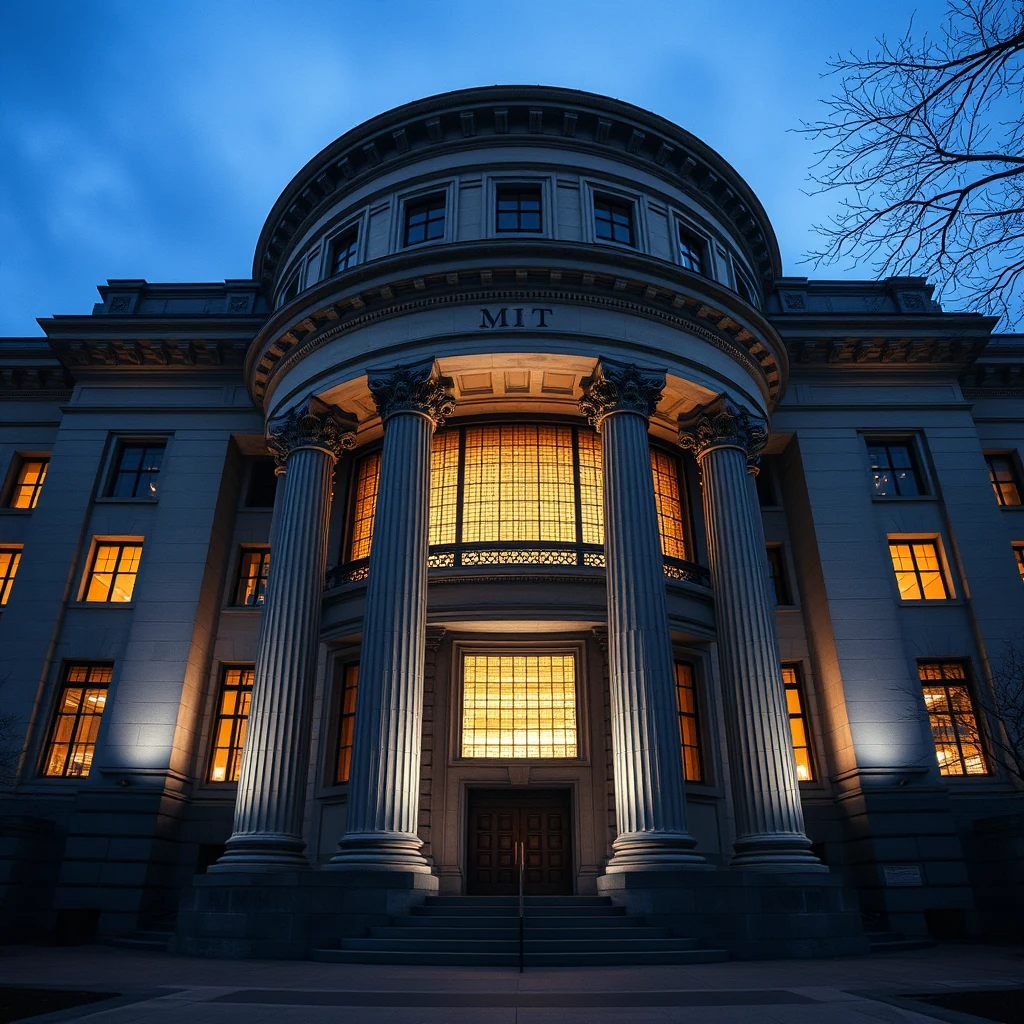
The Massachusetts Institute of Technology, in Cambridge, Massachusetts, founded in 1861. Its civil and environmental engineering department has run a long programme of work on ancient cementitious materials. The 2023 paper identifying lime clasts as the self-healing agent in Roman concrete came from a group there led by the materials scientist Admir Masic, working with collaborators in Switzerland and Italy.
麻省理工学院,简称MIT,于1861年创立于马萨诸塞州剑桥市。其土木与环境工程系在古代胶凝材料领域开展了一项长期的研究计划。2023年发表的一篇将石灰结块确定为罗马混凝土自我修复剂的论文即出自该校,由材料科学家阿德米尔·马西奇领导的研究小组与瑞士和意大利的合作者共同完成。
El Instituto Tecnológico de Massachusetts, en Cambridge, Massachusetts, fundado en 1861. Su departamento de ingeniería civil y ambiental ha desarrollado un extenso programa de investigación sobre materiales cementantes antiguos. El artículo de 2023 que identificó los clastos de cal como el agente autorreparador del hormigón romano surgió de un grupo dirigido por el científico de materiales Admir Masic, en colaboración con investigadores de Suiza e Italia.
معهد ماساتشوستس للتكنولوجيا في كامبريدج بولاية ماساتشوستس، تأسس عام 1861. أجرى قسم الهندسة المدنية والبيئية فيه برنامجاً طويلاً من الأبحاث حول المواد الإسمنتية القديمة. صدرت الورقة البحثية لعام 2023 التي حددت كتل الجير كعامل ذاتي الإصلاح في الخرسانة الرومانية عن مجموعة هناك بقيادة عالم المواد أدمير ماسيتش، بالتعاون مع باحثين من سويسرا وإيطاليا.
O Massachusetts Institute of Technology, em Cambridge, Massachusetts, foi fundado em 1861. O seu departamento de engenharia civil e ambiental tem realizado um longo programa de trabalho sobre materiais cimentícios antigos. O artigo de 2023 que identificou os clastos de cal como o agente autorreparador do concreto romano proveio de um grupo do instituto liderado pelo cientista de materiais Admir Masic, que trabalhou com colaboradores na Suíça e na Itália.
1861 में स्थापित मैसाचुसेट्स इंस्टीट्यूट ऑफ टेक्नोलॉजी, कैम्ब्रिज, मैसाचुसेट्स में स्थित है। इसके सिविल और पर्यावरण इंजीनियरिंग विभाग ने प्राचीन सीमेंटीय पदार्थों पर एक दीर्घकालिक कार्यक्रम चलाया है। 2023 का वह शोधपत्र जिसने रोमन कंक्रीट में चूने के कणों को स्व-उपचार कारक के रूप में पहचाना, वहाँ के एक समूह से आया जिसका नेतृत्व पदार्थ वैज्ञानिक एडमिर मासिच ने किया, जो स्विट्ज़रलैंड और इटली के सहयोगियों के साथ काम कर रहे थे।
Institut Teknologi Massachusetts, di Cambridge, Massachusetts, didirikan pada tahun 1861. Departemen Teknik Sipil dan Lingkungannya telah menjalankan program penelitian jangka panjang mengenai material semen kuno. Makalah tahun 2023 yang mengidentifikasi klas kapur sebagai agen penyembuhan diri pada beton Romawi berasal dari sebuah kelompok di sana yang dipimpin oleh ilmuwan material Admir Masic, bekerja sama dengan rekan-rekan di Swiss dan Italia.
Le Massachusetts Institute of Technology, à Cambridge, dans le Massachusetts, fondé en 1861. Son département de génie civil et environnemental mène depuis longtemps un programme de recherche sur les matériaux cimentaires anciens. L’article de 2023 identifiant les clastes de chaux comme l’agent auto-cicatrisant du béton romain est issu d’un groupe de ce département dirigé par le spécialiste des matériaux Admir Masic, en collaboration avec des partenaires en Suisse et en Italie.
マサチューセッツ工科大学は、1861年に設立され、マサチューセッツ州ケンブリッジに所在する。同大学の土木環境工学科では、古代のセメント質材料に関する長期研究プログラムが行われてきた。ローマン・コンクリートにおいて石灰片が自己修復剤として機能することを特定した2023年の論文は、材料科学者アドミル・マシッチが主導し、スイスとイタリアの共同研究者らとともに同大学のグループから発表された。
Массачусетский технологический институт в Кембридже (штат Массачусетс), основанный в 1861 году. Его факультет гражданского и экологического строительства ведёт долгосрочную программу исследований древних цементирующих материалов. Статья 2023 года, определившая известковые включения как самовосстанавливающийся компонент римского бетона, была подготовлена группой под руководством материаловеда Адмира Масича, работавшего с коллегами из Швейцарии и Италии.
Das Massachusetts Institute of Technology in Cambridge, Massachusetts, gegründet 1861. Sein Fachbereich Bau- und Umweltingenieurwesen hat ein langjähriges Forschungsprogramm zu antiken zementösen Materialien betrieben. Der Aufsatz von 2023, der Kalkklasten als selbstheilenden Bestandteil in römischem Beton identifizierte, stammt von einer dortigen Gruppe unter der Leitung des Materialwissenschaftlers Admir Masic, die mit Kooperationspartnern in der Schweiz und Italien zusammenarbeitete.
매사추세츠주 케임브리지에 위치한 매사추세츠 공과대학교는 1861년에 설립되었다. 이 대학의 토목환경공학과는 고대 시멘트질 재료에 관한 장기 연구 프로그램을 운영해 왔다. 로마 콘크리트에서 자가 치유 물질로서 석회 클래스트를 밝혀낸 2023년 논문은 재료과학자 아드미르 마시치가 이끄는 그룹이 스위스와 이탈리아의 협력자들과 함께 작업하여 이곳에서 나왔다.
Mentioned in 7 articles
- History Roman Concrete The dome of the Pantheon has stood in Rome since 125 CE. It is forty-three metres across, unreinforced, and still has no rival in concrete construction. The mortar holding it together is, by any sensible measure, getting stronger.
- Engineering Charles Stark Draper - Father of Inertial Navigation The Apollo astronauts could have missed the Moon by thousands of kilometres. The fact that they landed within feet of their target came down to one engineer's absolute refusal to rely on the stars, the horizon, or radio signals from Earth.
- Math Prime Numbers - The Secret Code Protecting Everything Every time a lock icon appears in your browser, a mathematical asymmetry is guarding your data. The security of the modern internet relies entirely on the fact that multiplying prime numbers is simple, but pulling them apart is almost impossible.
- Physics The Casimir Effect Two perfectly conducting metal plates, suspended in a hard vacuum with nothing between them, should feel no force at all. Hendrik Casimir calculated otherwise in 1948. The thing drawing them together turned out to be the structure of emptiness itself.
- Physics The Coldest Place in the Universe Is a Lab Deep in the Boomerang Nebula, five thousand light years from Earth, the temperature lingers at a single degree above absolute zero. It is the coldest natural place known to science. Yet, in laboratories from Boulder to the space station, humans have built machines that make the nebula look like a furnace.
- Biology Phineas Gage At 4:30 p.m. on a Tuesday in 1848, a six-kilogram iron rod was rocketed through the skull of a young railroad foreman. He survived, but the man who emerged from the bandages was a stranger to his friends, forcing the medical world to acknowledge that the brain is the seat of the soul.
- Math Conway's Game of Life On a chequered board in Cambridge, black stones were laid down, lifted away, and laid down again. From that slow bookkeeping came a universe where a five-cell creature could crawl diagonally forever, and a few collisions could behave like a computer.