The Pantheon in Rome is the largest unreinforced concrete dome ever built. Emperor Hadrian's engineers cast it in a more or less continuous pour around 125 CE, tapering the aggregate from heavy travertine at the base to porous pumice near the oculus. The roof has carried its own weight, through earthquakes and centuries of indifferent maintenance, for nineteen hundred years. A modern reinforced-concrete bridge is considered to be at the end of its design life after fifty.
That gap has been an open question for as long as the discipline of materials science has existed. The rough recipe was never secret. The Roman architect Vitruvius  Person Vitruvius Marcus Vitruvius Pollio was a Roman architect and military engineer active in the first century BCE, best known for De Architectura, a ten-book treatise on building dedicated to Augustus. It is the only architectural work to survive from classical antiquity. Vitruvius described concrete recipes, water supply, town planning, and machines, and his book shaped European architecture again when it was rediscovered in 1414.马尔库斯·维特鲁威·波利奥是活跃于公元前1世纪的罗马建筑师与军事工程师,以献给奥古斯都的十卷本建筑专著《建筑十书》而闻名。这是唯一从古典时期幸存下来的建筑著作。维特鲁威在书中描述了混凝土配方、供水系统、城市规划及机械,他的著作在1414年被重新发现后,再次塑造了欧洲建筑。Marco Vitruvio Polión fue un arquitecto e ingeniero militar romano activo en el siglo I a. C., célebre por De architectura, un tratado de diez libros sobre construcción dedicado a Augusto. Es la única obra arquitectónica que se conserva de la Antigüedad clásica. Vitruvio describió recetas de hormigón, abastecimiento de agua, urbanismo y máquinas, y su libro volvió a moldear la arquitectura europea cuando fue redescubierto en 1414.كان ماركوس فيتروفيوس بوليو مهندسًا معماريًا ومهندسًا عسكريًا رومانيًا نشط في القرن الأول قبل الميلاد، واشتهر بكتابه "دي أركيتيتورا"، وهو مؤلَّف من عشرة كتب في فن البناء أهداه إلى أغسطس. وهو العمل المعماري الوحيد الذي نجا من العصور الكلاسيكية القديمة. وصف فيتروفيوس خلطات الخرسانة، وإمدادات المياه، وتخطيط المدن، والآلات، وأعاد كتابه تشكيل العمارة الأوروبية عندما أعيد اكتشافه في عام 1414.Marco Vitrúvio Polião foi um arquiteto romano e engenheiro militar ativo no século I a.C., mais conhecido por De Architectura, um tratado de dez livros sobre construção dedicado a Augusto. É a única obra arquitetônica que sobreviveu da Antiguidade Clássica. Vitrúvio descreveu receitas de concreto, abastecimento de água, planejamento urbano e máquinas, e seu livro moldou novamente a arquitetura europeia quando foi redescoberto em 1414.मार्कस विट्रुवियस पोलियो पहली शताब्दी ईसा पूर्व में सक्रिय एक रोमन वास्तुकार और सैन्य अभियंता थे, जो ऑगस्टस को समर्पित भवन निर्माण पर दस पुस्तकों के ग्रंथ 'डी आर्किटेक्चर' के लिए सर्वाधिक प्रसिद्ध हैं। यह प्राचीन काल से बचा एकमात्र वास्तुकला ग्रंथ है। विट्रुवियस ने कंक्रीट मिश्रण विधि, जल आपूर्ति, नगर नियोजन और मशीनों का वर्णन किया, और उनकी पुस्तक ने 1414 में पुनः खोजे जाने पर यूरोपीय वास्तुकला को फिर से आकार दिया।Marcus Vitruvius Pollio adalah seorang arsitek dan insinyur militer Romawi yang aktif pada abad pertama SM, terkenal karena De Architectura, sebuah risalah sepuluh buku tentang bangunan yang dipersembahkan kepada Augustus. Ini adalah satu-satunya karya arsitektur yang bertahan dari zaman klasik. Vitruvius menjelaskan resep beton, pasokan air, perencanaan kota, dan mesin-mesin, dan bukunya kembali membentuk arsitektur Eropa ketika ditemukan kembali pada tahun 1414.Marcus Vitruvius Pollio était un architecte et ingénieur militaire romain actif au Ier siècle av. J.-C., surtout connu pour le De Architectura, un traité en dix livres sur la construction dédié à Auguste. Il s'agit du seul ouvrage architectural ayant survécu de l'Antiquité classique. Vitruve y décrit des recettes de béton, l'adduction d'eau, l'urbanisme et les machines, et son livre influença à nouveau l'architecture européenne lors de sa redécouverte en 1414.マルクス・ウィトルウィウス・ポッリオは、紀元前1世紀に活動したローマの建築家かつ軍事技術者であり、アウグストゥスに捧げられた建築に関する全10巻の著作『建築十書』(De Architectura)で最もよく知られている。これは古典古代から現存する唯一の建築書である。ウィトルウィウスはコンクリートの調合、給水、都市計画、機械について記述し、その書物は1414年に再発見されたことで再びヨーロッパ建築を形成した。Марк Витрувий Поллион — римский архитектор и военный инженер, работавший в I веке до н. э., наиболее известен как автор трактата «Десять книг об архитектуре» (лат. De architectura), посвящённого Августу. Это единственное архитектурное сочинение, дошедшее до нас от классической античности. Витрувий описал составы бетона, водоснабжение, градостроительство и механизмы; его труд, заново открытый в 1414 году, вновь определил пути развития европейской архитектуры.Marcus Vitruvius Pollio war ein römischer Architekt und Militäringenieur, der im ersten Jahrhundert v. Chr. tätig war. Er ist vor allem für De Architectura bekannt, eine dem Augustus gewidmete, zehn Bücher umfassende Abhandlung über das Bauwesen. Es ist das einzige Architekturwerk, das aus der klassischen Antike erhalten geblieben ist. Vitruv beschrieb Betonrezepturen, Wasserversorgung, Stadtplanung und Maschinen, und sein Buch prägte die europäische Architektur erneut, als es 1414 wiederentdeckt wurde.마르쿠스 비트루비우스 폴리오는 기원전 1세기에 활동한 로마의 건축가이자 군사 기술자로, 아우구스투스에게 헌정된 10권짜리 건축 논문 《건축론》으로 가장 잘 알려져 있다. 이 책은 고전 고대에서 현존하는 유일한 건축 저작이다. 비트루비우스는 콘크리트 배합, 송수, 도시 계획, 기계 등에 대해 서술했으며, 그의 책은 1414년에 재발견된 후 유럽 건축을 다시 형성했다. wrote it down in the first century BCE: slaked lime, volcanic ash from the Bay of Naples — known as pulvis puteolanus, or pozzolana
  Concept pozzolana A volcanic ash from the area around Pozzuoli, on the Bay of Naples, that the Romans mixed into mortar to produce a cement that set hard under water. The reactive silicates and aluminates in the ash combine with lime to form durable calcium-silicate-hydrate phases. Modern materials science still calls any ash with these properties a pozzolan, after the original Italian source.一种源自那不勒斯湾波佐利周边地区的火山灰,古罗马人将其混入砂浆中,制成可在水下硬化的水泥。火山灰中具有活性的硅酸盐和铝酸盐与石灰结合,形成持久的水化硅酸钙相。现代材料科学仍将任何具有此类特性的火山灰称为火山灰质材料(pozzolan),这一名称正是源于其最初的意大利产地。Una ceniza volcánica de la zona de Pozzuoli, en la bahía de Nápoles, que los romanos mezclaban con mortero para producir un cemento que fraguaba bajo el agua. Los silicatos y aluminatos reactivos de la ceniza se combinan con la cal para formar fases duraderas de silicato cálcico hidratado. La ciencia de materiales moderna sigue llamando puzolana a cualquier ceniza con estas propiedades, por la fuente original italiana.رماد بركاني من منطقة بوتسوولي على خليج نابولي، خلطه الرومان في الملاط لإنتاج إسمنت يتصلب تحت الماء. تتفاعل السيليكات والألومينات النشطة في الرماد مع الجير لتشكيل أطوار متينة من سيليكات الكالسيوم المميأة. ولا يزال علم المواد الحديث يُسمي أي رماد بهذه الخصائص بوزولانًا، نسبةً إلى المصدر الإيطالي الأصلي.Uma cinza vulcânica da região de Pozzuoli, na Baía de Nápoles, que os romanos misturavam à argamassa para produzir um cimento que endurecia debaixo d’água. Os silicatos e aluminatos reativos presentes na cinza combinam-se com a cal para formar fases duráveis de silicato de cálcio hidratado. A ciência dos materiais moderna ainda denomina qualquer cinza com essas propriedades de pozolana, em referência à fonte italiana original.यह एक ज्वालामुखीय राख है जो नेपल्स की खाड़ी पर स्थित पोज़्ज़ुओली के आसपास के क्षेत्र से आती है, जिसे रोमन लोग गारे में मिलाकर ऐसा सीमेंट बनाते थे जो पानी के नीचे कठोर हो जाता था। इस राख में उपस्थित क्रियाशील सिलिकेट और एलुमिनेट चूने के साथ मिलकर टिकाऊ कैल्शियम-सिलिकेट-हाइड्रेट अवस्थाएँ बनाते हैं। आधुनिक पदार्थ विज्ञान अब भी ऐसे गुणों वाली किसी भी राख को, इटली के मूल स्रोत के नाम पर, पोज़ोलान कहता है।Abu vulkanik dari daerah sekitar Pozzuoli, di Teluk Napoli, yang dicampurkan bangsa Romawi ke dalam mortar untuk menghasilkan semen yang mengeras di bawah air. Silikat dan aluminat reaktif dalam abu tersebut bergabung dengan kapur membentuk fase kalsium-silikat-hidrat yang tahan lama. Ilmu material modern masih menyebut abu dengan sifat-sifat ini sebagai pozzolan, mengikuti nama sumber aslinya di Italia.Cendre volcanique provenant des environs de Pozzuoli, sur la baie de Naples, que les Romains mélangeaient au mortier pour produire un ciment qui faisait prise sous l’eau. Les silicates et aluminates réactifs de cette cendre se combinent à la chaux pour former des phases durables d’hydrate de silicate de calcium. La science moderne des matériaux nomme encore pouzzolane toute cendre présentant ces propriétés, d’après la source italienne originelle.ナポリ湾に面したポッツオーリ周辺から産出する火山灰で、ローマ人はこれをモルタルに混ぜて水中で硬化するセメントを製造した。この灰に含まれる反応性のケイ酸塩とアルミン酸塩が石灰と結合し、耐久性のあるケイ酸カルシウム水和物相を形成する。現代の材料科学では、このような性質を持つ灰を、原産地イタリアの地名にちなんで今でもポゾランと呼んでいる。Вулканический пепел из района Пуццуоли на берегу Неаполитанского залива, который римляне добавляли в строительный раствор для получения цемента, затвердевающего под водой. Реакционноспособные силикаты и алюминаты в пепле соединяются с известью, образуя прочные фазы гидросиликатов кальция. В современном материаловедении любой пепел с такими свойствами по-прежнему называют пуццоланом — по названию первоначального итальянского источника.Eine Vulkanasche aus der Umgebung von Pozzuoli am Golf von Neapel, die die Römer in Mörtel mischten, um einen Zement zu erhalten, der unter Wasser aushärtete. Die reaktiven Silikate und Aluminate in der Asche verbinden sich mit Kalk zu dauerhaften Calciumsilicathydrat-Phasen. Die moderne Materialwissenschaft bezeichnet jede Asche mit diesen Eigenschaften nach der ursprünglichen italienischen Quelle noch immer als Puzzolan.나폴리 만의 포추올리 일대에서 나는 화산재로, 로마인들은 이를 모르타르에 혼합하여 물속에서도 단단하게 굳는 시멘트를 만들었다. 이 재 속의 반응성 규산염과 알루민산염이 석회와 결합하여 내구성 있는 칼슘-실리케이트-수화물 상을 형성한다. 현대 재료 과학에서는 여전히 이러한 특성을 지닌 화산재를 원래의 이탈리아 산지를 따서 포졸란이라 부른다. — coarse aggregate, and, for marine structures, seawater. Pliny the Elder
  Person Pliny the Elder Roman naturalist, military commander, and author of Naturalis Historia, a thirty-seven-book encyclopaedia of the known world finished around 77 CE. He recorded recipes for concrete, observations on metallurgy, and dubious claims about most animals. He died in 79 CE while attempting to rescue friends from the eruption of Vesuvius, suffocated by fumes on the beach at Stabiae.罗马博物学家、军事指挥官、《博物志》作者,这部三十七卷的百科全书于约公元77年完成,涵盖已知世界。他记录了混凝土配方、冶金观察,并对大多数动物提出了可疑说法。他于公元79年在试图从维苏威火山喷发中救援朋友时去世,在斯塔比亚海滩上被烟雾窒息而死。Naturalista, comandante militar y autor romano de la Naturalis Historia, una enciclopedia en treinta y siete libros del mundo conocido terminada alrededor del año 77 d. C. Registró recetas para el hormigón, observaciones sobre metalurgia y afirmaciones dudosas sobre la mayoría de los animales. Murió en el año 79 d. C. mientras intentaba rescatar a unos amigos de la erupción del Vesubio, asfixiado por los gases en la playa de Estabia.عالم طبيعة وقائد عسكري روماني، ومؤلف كتاب «التاريخ الطبيعي»، موسوعة في سبعة وثلاثين كتاباً عن العالم المعروف أُنجزت حوالي عام 77 ميلادي. دوّن وصفات للخرسانة، وملاحظات عن علم المعادن، ومزاعم مشكوك فيها عن معظم الحيوانات. توفي عام 79 ميلادي أثناء محاولته إنقاذ أصدقائه من ثوران بركان فيزوف، مختنقاً بالأبخرة على شاطئ ستابياي.Naturalista romano, comandante militar e autor da História Natural, uma enciclopédia de trinta e sete livros do mundo conhecido concluída por volta de 77 d.C. Registrou receitas para concreto, observações sobre metalurgia e alegações duvidosas sobre a maioria dos animais. Morreu em 79 d.C. ao tentar resgatar amigos da erupção do Vesúvio, sufocado pelas emanações na praia de Estábias.रोमन प्रकृतिविद्, सैन्य कमांडर और 'प्राकृतिक इतिहास' के लेखक, जो लगभग 77 ई. में पूर्ण हुआ सैंतीस पुस्तकों का ज्ञात संसार का विश्वकोश था। उन्होंने कंक्रीट बनाने की विधियाँ, धातुकर्म पर अवलोकन, और अधिकांश जानवरों के बारे में संदिग्ध दावे दर्ज किए। 79 ई. में वेसुवियस के विस्फोट से मित्रों को बचाने का प्रयास करते हुए, स्टेबिया के समुद्र तट पर धुएँ से दम घुटने से उनकी मृत्यु हो गई।Naturalis Romawi, komandan militer, dan penulis Naturalis Historia, sebuah ensiklopedia tiga puluh tujuh jilid tentang dunia yang dikenal, diselesaikan sekitar tahun 77 M. Ia mencatat resep beton, pengamatan tentang metalurgi, dan klaim-klaim yang meragukan tentang sebagian besar hewan. Ia meninggal pada tahun 79 M saat berusaha menyelamatkan teman-temannya dari letusan Gunung Vesuvius, mati lemas akibat gas beracun di pantai Stabiae.Naturaliste romain, commandant militaire et auteur de l'Histoire naturelle, une encyclopédie en trente-sept livres du monde connu achevée vers 77 apr. J.-C. Il consigna des recettes de béton, des observations sur la métallurgie et des affirmations douteuses sur la plupart des animaux. Il mourut en 79 apr. J.-C. en tentant de secourir des amis lors de l'éruption du Vésuve, asphyxié par les gaz sur la plage de Stabies.ローマの博物学者、軍司令官であり、西暦77年頃に完成した全37巻の既知世界の百科事典『博物誌』の著者。彼はコンクリートの製法、冶金学の観察、そしてほとんどの動物に関する疑わしい主張を記録した。西暦79年、ヴェスヴィオ火山の噴火から友人を救出しようとしてスタビアエの海岸で煙に窒息し死亡した。Римский натуралист, военачальник и автор «Естественной истории», энциклопедии из тридцати семи книг, описывающей известный мир, завершённой около 77 года н. э. Он записал рецепты бетона, наблюдения по металлургии и сомнительные утверждения о большинстве животных. Он умер в 79 году н. э., пытаясь спасти друзей во время извержения Везувия, задохнувшись от дыма на пляже в Стабиях.Römischer Naturforscher, Militärbefehlshaber und Verfasser der Naturalis Historia, einer 37 Bücher umfassenden Enzyklopädie der bekannten Welt, vollendet um 77 n. Chr. Er hielt Rezepturen für Beton fest, Beobachtungen zur Metallurgie und zweifelhafte Behauptungen über die meisten Tiere. Er starb 79 n. Chr. beim Versuch, Freunde vor dem Ausbruch des Vesuvs zu retten, erstickt von Dämpfen am Strand von Stabiae.로마의 박물학자이자 군 사령관이며, 서기 77년경 완성된 37권 분량의 세계 백과사전 《박물지》의 저자이다. 그는 콘크리트 제조법과 금속공학 관찰 기록, 그리고 대부분의 동물에 관한 의심스러운 주장을 남겼다. 서기 79년 베수비오 화산 폭발 당시 친구들을 구출하려다 스타비아이 해변에서 유독 가스에 질식하여 사망하였다. added notes a century later. By the eighteenth century, civil engineers were copying the formula. The copies cracked.

The lime clasts
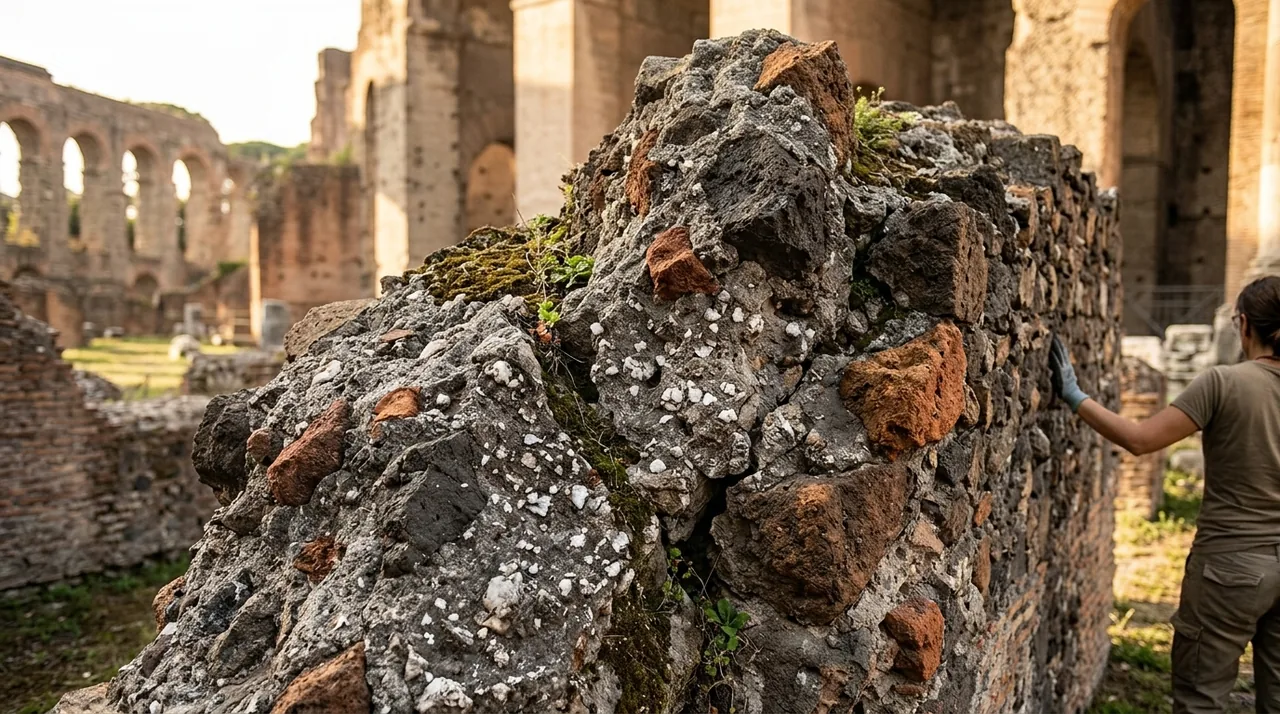
What changed in 2023 was a closer look at the things that were not supposed to be there. Bright white inclusions, a few millimetres across, dot the matrix of nearly every surviving sample of opus caementicium  Concept opus caementicium The Latin name for Roman concrete, the structural material that made the Pantheon, the Colosseum vaults, and the great imperial baths possible. It combined lime mortar with chunks of stone aggregate (caementa) and volcanic ash. Poured rather than laid, it freed Roman builders from the geometric limits of cut-stone masonry and enabled the domes and curved vaults that defined the architecture of the empire.罗马混凝土的拉丁名称,指那种使万神殿、斗兽场拱顶和宏伟帝国浴场得以建成的结构材料。它由石灰砂浆与碎石骨料(caementa)及火山灰混合而成。采用浇注而非砌筑的施工方式,罗马建造者由此摆脱了切割石砌体的几何桎梏,得以修筑标志着帝国建筑特色的穹顶与弧形拱券。El nombre latino del hormigón romano, el material estructural que hizo posibles el Panteón, las bóvedas del Coliseo y las grandes termas imperiales. Combinaba mortero de cal con trozos de árido de piedra (caementa) y ceniza volcánica. Vertido en lugar de colocado, liberó a los constructores romanos de los límites geométricos de la sillería y permitió las cúpulas y bóvedas curvas que definieron la arquitectura del imperio.الاسم اللاتيني للخرسانة الرومانية، المادة الإنشائية التي أتاحت تشييد البانثيون، وأقبية الكولوسيوم، والحمامات الإمبراطورية الكبرى. جمعت بين ملاط الجير وقطع الركام الحجري والرماد البركاني. صُبَّت بدلاً من أن تُرصَّ، فحررت البنائين الرومان من القيود الهندسية للبناء بالحجر المنحوت، ومكَّنت من إنشاء القباب والأقبية المنحنية التي ميزت عمارة الإمبراطورية.O nome latino do concreto romano, o material estrutural que tornou possível o Panteão, as abóbadas do Coliseu e os grandes banhos imperiais. Combinava argamassa de cal com pedaços de agregado pétreo (caementa) e cinzas vulcânicas. Derramado em vez de assentado, libertou os construtores romanos das limitações geométricas da alvenaria de pedra cortada e permitiu as cúpulas e abóbadas curvas que definiram a arquitetura do império.रोमन कंक्रीट का लैटिन नाम, वह संरचनात्मक सामग्री जिसने पैंथियन, कोलोसियम की तहखानों और विशाल शाही स्नानागारों को संभव बनाया। इसमें चूने के गारे को पत्थर के टुकड़ों (कैमेंटा) और ज्वालामुखी राख के साथ मिलाया जाता था। तराशे गए पत्थरों की चिनाई की ज्यामितीय सीमाओं से रोमन निर्माताओं को मुक्त करते हुए, बिछाने के बजाय ढाले जाने वाले इस पदार्थ ने गुंबदों और घुमावदार तहखानों को सक्षम किया, जिन्होंने साम्राज्य की वास्तुकला को परिभाषित किया।Nama Latin untuk beton Romawi, material struktural yang memungkinkan pembangunan Pantheon, kubah Koloseum, dan pemandian-pemandian kekaisaran yang megah. Material ini menggabungkan mortar kapur dengan bongkahan agregat batu (caementa) dan abu vulkanik. Dituang alih-alih disusun, beton ini membebaskan para pembangun Romawi dari batasan geometris konstruksi batu pahat dan memungkinkan terciptanya kubah-kubah dan langit-langit melengkung yang menjadi ciri khas arsitektur kekaisaran.Nom latin du béton romain, le matériau structurel qui rendit possibles le Panthéon, les voûtes du Colisée et les grands thermes impériaux. Il combinait un mortier de chaux avec des fragments de pierre (caementa) et de la cendre volcanique. Coulé plutôt que posé, il libéra les bâtisseurs romains des contraintes géométriques de la maçonnerie en pierre de taille et permit les dômes et les voûtes courbes qui définirent l’architecture de l’empire.ローマン・コンクリートのラテン語名称。パンテオン、コロッセウムの穹窿、大浴場を可能にした構造材料。石灰モルタルに石材骨材(カエメンタ)と火山灰を混合。積み上げるのではなく流し込むことで、ローマの建築家を切石組積の幾何学的制約から解放し、帝国建築を特徴づけるドームや曲面穹窿を実現した。Латинское название римского бетона — конструкционного материала, благодаря которому стали возможны Пантеон, своды Колизея и грандиозные императорские термы. Он сочетал известковый раствор с кусками каменного заполнителя (цемента) и вулканическим пеплом. Заливаемая, а не укладываемая, эта смесь освободила римских строителей от геометрических ограничений кладки из тёсаного камня и позволила создавать купола и криволинейные своды, определившие облик архитектуры империи.Die lateinische Bezeichnung für römischen Beton, jenen Baustoff, der das Pantheon, die Gewölbe des Kolosseums und die großen Kaiserthermen ermöglichte. Er bestand aus einer Mischung von Kalkmörtel, groben Steinstücken (Caementa) und Vulkanasche. Gegossen statt geschichtet, befreite er die römischen Baumeister von den geometrischen Beschränkungen des Quadermauerwerks und ermöglichte jene Kuppeln und Gewölbe, die die Architektur des Reiches prägten.로마 콘크리트의 라틴어 명칭으로, 판테온, 콜로세움의 둥근 천장, 그리고 거대한 제국 목욕탕들을 가능하게 한 구조 재료이다. 석회 모르타르에 돌 골재(카이멘타)와 화산재를 결합하여 만들었다. 쌓지 않고 부어 넣는 방식이었기에, 로마 건축가들은 다듬은 석조 건축의 기하학적 한계에서 벗어날 수 있었고, 제국 건축을 정의한 돔과 곡선형 둥근 천장을 실현할 수 있었다. . Generations of materials scientists had assumed these were defects — undissolved lumps of lime, evidence that the Roman foreman had skimped on mixing. The pieces were routinely discarded from cross-sections rather than analysed.

A team at MIT  Institution MIT The Massachusetts Institute of Technology, in Cambridge, Massachusetts, founded in 1861. Its civil and environmental engineering department has run a long programme of work on ancient cementitious materials. The 2023 paper identifying lime clasts as the self-healing agent in Roman concrete came from a group there led by the materials scientist Admir Masic, working with collaborators in Switzerland and Italy.麻省理工学院,简称MIT,于1861年创立于马萨诸塞州剑桥市。其土木与环境工程系在古代胶凝材料领域开展了一项长期的研究计划。2023年发表的一篇将石灰结块确定为罗马混凝土自我修复剂的论文即出自该校,由材料科学家阿德米尔·马西奇领导的研究小组与瑞士和意大利的合作者共同完成。El Instituto Tecnológico de Massachusetts, en Cambridge, Massachusetts, fundado en 1861. Su departamento de ingeniería civil y ambiental ha desarrollado un extenso programa de investigación sobre materiales cementantes antiguos. El artículo de 2023 que identificó los clastos de cal como el agente autorreparador del hormigón romano surgió de un grupo dirigido por el científico de materiales Admir Masic, en colaboración con investigadores de Suiza e Italia.معهد ماساتشوستس للتكنولوجيا في كامبريدج بولاية ماساتشوستس، تأسس عام 1861. أجرى قسم الهندسة المدنية والبيئية فيه برنامجاً طويلاً من الأبحاث حول المواد الإسمنتية القديمة. صدرت الورقة البحثية لعام 2023 التي حددت كتل الجير كعامل ذاتي الإصلاح في الخرسانة الرومانية عن مجموعة هناك بقيادة عالم المواد أدمير ماسيتش، بالتعاون مع باحثين من سويسرا وإيطاليا.O Massachusetts Institute of Technology, em Cambridge, Massachusetts, foi fundado em 1861. O seu departamento de engenharia civil e ambiental tem realizado um longo programa de trabalho sobre materiais cimentícios antigos. O artigo de 2023 que identificou os clastos de cal como o agente autorreparador do concreto romano proveio de um grupo do instituto liderado pelo cientista de materiais Admir Masic, que trabalhou com colaboradores na Suíça e na Itália.1861 में स्थापित मैसाचुसेट्स इंस्टीट्यूट ऑफ टेक्नोलॉजी, कैम्ब्रिज, मैसाचुसेट्स में स्थित है। इसके सिविल और पर्यावरण इंजीनियरिंग विभाग ने प्राचीन सीमेंटीय पदार्थों पर एक दीर्घकालिक कार्यक्रम चलाया है। 2023 का वह शोधपत्र जिसने रोमन कंक्रीट में चूने के कणों को स्व-उपचार कारक के रूप में पहचाना, वहाँ के एक समूह से आया जिसका नेतृत्व पदार्थ वैज्ञानिक एडमिर मासिच ने किया, जो स्विट्ज़रलैंड और इटली के सहयोगियों के साथ काम कर रहे थे।Institut Teknologi Massachusetts, di Cambridge, Massachusetts, didirikan pada tahun 1861. Departemen Teknik Sipil dan Lingkungannya telah menjalankan program penelitian jangka panjang mengenai material semen kuno. Makalah tahun 2023 yang mengidentifikasi klas kapur sebagai agen penyembuhan diri pada beton Romawi berasal dari sebuah kelompok di sana yang dipimpin oleh ilmuwan material Admir Masic, bekerja sama dengan rekan-rekan di Swiss dan Italia.Le Massachusetts Institute of Technology, à Cambridge, dans le Massachusetts, fondé en 1861. Son département de génie civil et environnemental mène depuis longtemps un programme de recherche sur les matériaux cimentaires anciens. L’article de 2023 identifiant les clastes de chaux comme l’agent auto-cicatrisant du béton romain est issu d’un groupe de ce département dirigé par le spécialiste des matériaux Admir Masic, en collaboration avec des partenaires en Suisse et en Italie.マサチューセッツ工科大学は、1861年に設立され、マサチューセッツ州ケンブリッジに所在する。同大学の土木環境工学科では、古代のセメント質材料に関する長期研究プログラムが行われてきた。ローマン・コンクリートにおいて石灰片が自己修復剤として機能することを特定した2023年の論文は、材料科学者アドミル・マシッチが主導し、スイスとイタリアの共同研究者らとともに同大学のグループから発表された。Массачусетский технологический институт в Кембридже (штат Массачусетс), основанный в 1861 году. Его факультет гражданского и экологического строительства ведёт долгосрочную программу исследований древних цементирующих материалов. Статья 2023 года, определившая известковые включения как самовосстанавливающийся компонент римского бетона, была подготовлена группой под руководством материаловеда Адмира Масича, работавшего с коллегами из Швейцарии и Италии.Das Massachusetts Institute of Technology in Cambridge, Massachusetts, gegründet 1861. Sein Fachbereich Bau- und Umweltingenieurwesen hat ein langjähriges Forschungsprogramm zu antiken zementösen Materialien betrieben. Der Aufsatz von 2023, der Kalkklasten als selbstheilenden Bestandteil in römischem Beton identifizierte, stammt von einer dortigen Gruppe unter der Leitung des Materialwissenschaftlers Admir Masic, die mit Kooperationspartnern in der Schweiz und Italien zusammenarbeitete.매사추세츠주 케임브리지에 위치한 매사추세츠 공과대학교는 1861년에 설립되었다. 이 대학의 토목환경공학과는 고대 시멘트질 재료에 관한 장기 연구 프로그램을 운영해 왔다. 로마 콘크리트에서 자가 치유 물질로서 석회 클래스트를 밝혀낸 2023년 논문은 재료과학자 아드미르 마시치가 이끄는 그룹이 스위스와 이탈리아의 협력자들과 함께 작업하여 이곳에서 나왔다. led by the materials scientist Admir Masic
  Person Admir Masic Materials scientist at MIT, born in Bosnia and trained in Italy, who led the team that identified the self-healing mechanism in Roman concrete in a 2023 Science Advances paper. His lab applies spectroscopic techniques to archaeological materials, including parchment, frescoes, and ancient mortars. He has co-founded a startup, DMAT, commercialising hot-mixed cement formulations for modern construction.麻省理工学院材料科学家,出生于波斯尼亚,在意大利受训。其领导的团队在2023年《Science Advances》发表的一篇论文中揭示了罗马混凝土的自修复机制。其实验室运用光谱技术分析考古材料,包括羊皮纸、壁画和古代砂浆。他还联合创办了一家名为DMAT的初创公司,将热混合水泥配方商业化,应用于现代建筑。Científico de materiales del MIT, nacido en Bosnia y formado en Italia, que lideró el equipo que identificó el mecanismo de autorreparación del hormigón romano en un artículo de Science Advances en 2023. Su laboratorio aplica técnicas espectroscópicas a materiales arqueológicos, como pergamino, frescos y morteros antiguos. Ha cofundado una start-up, DMAT, que comercializa formulaciones de cemento mezclado en caliente para la construcción moderna.عالم مواد في إم آي تي، وُلد في البوسنة وتلقى تدريبه في إيطاليا، قاد الفريق الذي حدد آلية الشفاء الذاتي في الخرسانة الرومانية في ورقة بحثية نُشرت في مجلة ساينس أدفانسز عام 2023. يطبّق مختبره التقنيات الطيفية على مواد أثرية تشمل الرقوق والجداريات والملاط القديم. شارك في تأسيس شركة ناشئة تُدعى DMAT تُسوِّق تركيبات الإسمنت المخلوط على الساخن لأغراض البناء الحديث.Cientista dos materiais no MIT, nascido na Bósnia e formado na Itália, que liderou a equipe que identificou o mecanismo de autocura no concreto romano em um artigo da Science Advances de 2023. Seu laboratório aplica técnicas espectroscópicas a materiais arqueológicos, incluindo pergaminhos, afrescos e argamassas antigas. Ele cofundou a startup DMAT, que comercializa formulações de cimento misturado a quente para a construção moderna.एमआईटी के पदार्थ वैज्ञानिक, बोस्निया में जन्मे और इटली में प्रशिक्षित, जिन्होंने 2023 के साइंस एडवांसेज पेपर में रोमन कंक्रीट की स्व-उपचार प्रणाली की पहचान करने वाली टीम का नेतृत्व किया। उनकी प्रयोगशाला चर्मपत्र, भित्तिचित्रों और प्राचीन गारों सहित पुरातात्विक सामग्रियों पर स्पेक्ट्रोस्कोपिक तकनीकें लागू करती है। उन्होंने आधुनिक निर्माण के लिए गर्म-मिश्रित सीमेंट मिश्रणों का व्यावसायीकरण करने वाले स्टार्टअप DMAT की सह-स्थापना की है।Ilmuwan material di MIT, lahir di Bosnia dan menempuh pendidikan di Italia, yang memimpin tim yang mengidentifikasi mekanisme penyembuhan diri pada beton Romawi dalam makalah Science Advances tahun 2023. Laboratoriumnya menerapkan teknik spektroskopi pada bahan-bahan arkeologis, termasuk perkamen, fresko, dan mortar kuno. Ia turut mendirikan perusahaan rintisan DMAT, yang mengkomersialkan formulasi semen campuran panas untuk konstruksi modern.Scientifique des matériaux au MIT, né en Bosnie et formé en Italie, qui a dirigé l’équipe ayant identifié le mécanisme d’auto-cicatrisation du béton romain dans un article de Science Advances en 2023. Son laboratoire applique des techniques spectroscopiques à des matériaux archéologiques, notamment le parchemin, les fresques et les mortiers anciens. Il a cofondé une startup, DMAT, commercialisant des formulations de ciment malaxé à chaud pour la construction moderne.MITの材料科学者。ボスニア生まれ、イタリアで教育を受ける。2023年の『Science Advances』論文でローマン・コンクリートの自己修復機構を特定したチームを率いた。彼の研究室では分光法を用いて羊皮紙、フレスコ画、古代モルタルなどの考古資料を分析している。共同創業したスタートアップDMATでは、現代建築向けの熱間混合セメント配合を商業化している。Материаловед из MIT, родившийся в Боснии и получивший образование в Италии, возглавил группу, которая в статье 2023 года в журнале Science Advances раскрыла механизм самовосстановления римского бетона. Его лаборатория использует спектроскопические методы для анализа археологических материалов, включая пергамент, фрески и древние строительные растворы. Он также является сооснователем стартапа DMAT, коммерциализирующего составы цемента горячего смешивания для современного строительства.Materialwissenschaftler am MIT, geboren in Bosnien und in Italien ausgebildet, der 2023 in einem Artikel in Science Advances den Selbstheilungsmechanismus von römischem Beton identifizierte. Sein Labor wendet spektroskopische Techniken auf archäologische Materialien an, darunter Pergament, Fresken und antike Mörtel. Er hat das Startup DMAT mitbegründet, das heiß gemischte Zementformulierungen für den modernen Bau kommerzialisiert.MIT 소속 재료과학자로 보스니아 출생에 이탈리아에서 수학한 그는, 2023년 Science Advances 논문에서 로마 콘크리트의 자가 치유 메커니즘을 규명한 팀을 이끌었으며, 그의 연구실에서는 양피지, 프레스코화, 고대 모르타르 등 고고학 재료에 분광학 기법을 적용한다. 또한 스타트업 DMAT을 공동 창업해 현대 건축용 열간 혼합 시멘트 배합을 상용화하고 있다. decided to analyse them anyway. Using scanning electron microscopy and Raman spectroscopy on samples from the archaeological site of Privernum, south of Rome, they found that the clasts were not mixing failures. They were structural. The chemistry of the surrounding cement showed it had been combined at high temperature in the presence of quicklime — the unslaked, caustic form — rather than the slaked-lime paste modern texts had always assumed. The Romans were hot-mixing.

The consequence is that every clast is a small reservoir of reactive calcium, locked into the matrix and waiting. When a hairline crack opens in the concrete and rainwater finds its way in, the water reaches a clast, dissolves a little of it, and the calcium-rich solution flows along the crack. Within weeks, it reprecipitates as calcium carbonate, fusing the surfaces back together. The MIT team demonstrated the effect in the lab. They deliberately cracked Roman-style samples, dripped water through them, and watched the cracks seal in two weeks. Modern Portland-cement controls did nothing of the kind.

The harbour at Caesarea
The story has a second layer, underwater. The Romans poured concrete into the Mediterranean to build harbours — most famously at Caesarea Maritima 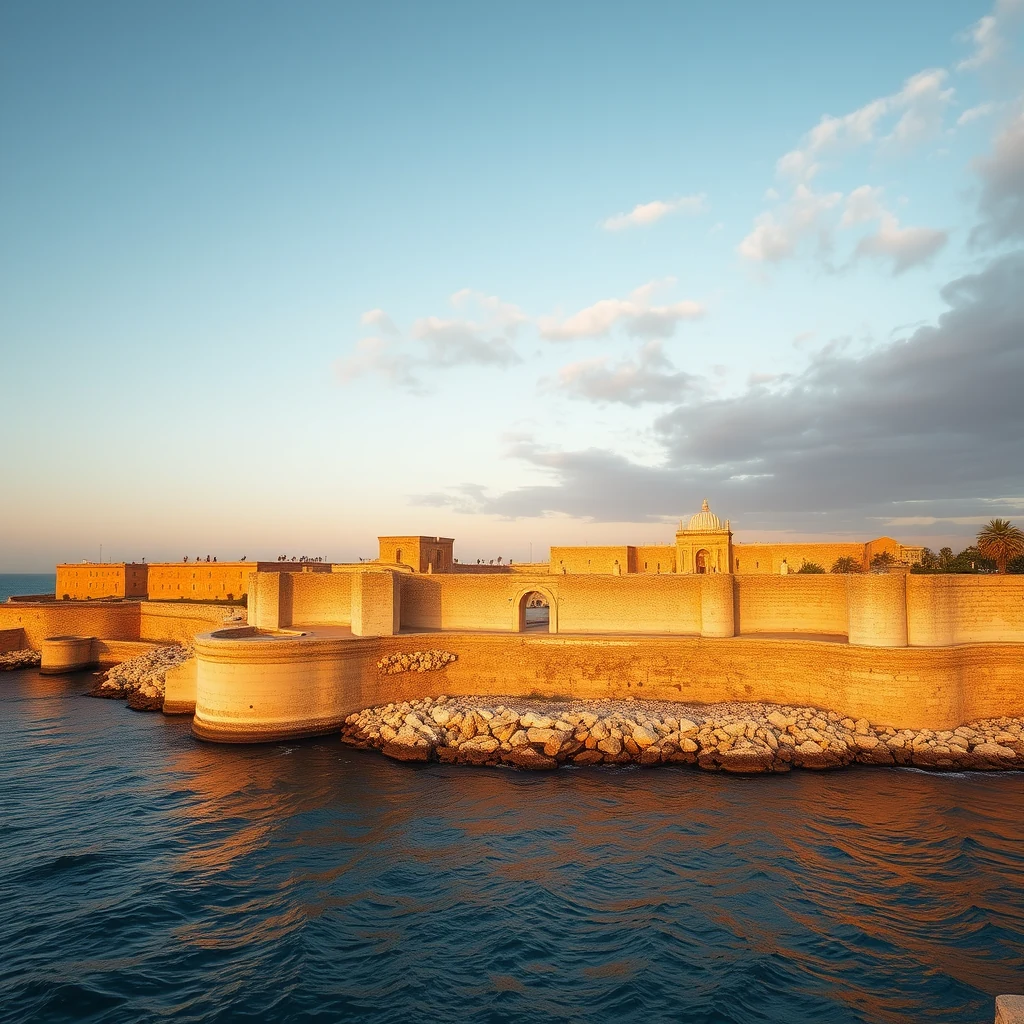 Place Caesarea Maritima Herod the Great's deep-water port on the coast of what is now Israel, built between roughly 22 and 10 BCE. The harbour breakwaters were constructed by pouring Roman concrete directly into wooden forms sunk in the sea, an engineering feat without parallel in the ancient world. The concrete has survived two thousand years of wave action and is the type-site for studies of Roman marine cement.大希律王在今以色列海岸建造的深水港,建于约公元前22年至公元前10年之间。该港口的防波堤是通过将罗马混凝土直接浇筑到沉入海中的木质模板中建造的,这在古代世界是无与伦比的工程壮举。该混凝土在两千年的波浪作用下得以幸存,是研究罗马海洋水泥的典型遗址。El puerto de aguas profundas de Herodes el Grande en la costa de lo que hoy es Israel, construido aproximadamente entre los años 22 y 10 a. C. Los rompeolas del puerto se levantaron vertiendo hormigón romano directamente en encofrados de madera sumergidos en el mar, una hazaña de ingeniería sin parangón en el mundo antiguo. El hormigón ha resistido dos mil años de embate de las olas y constituye el yacimiento tipo para los estudios del cemento marítimo romano.ميناء المياه العميقة الذي شيده هيرودس الكبير على ساحل ما يُعرف الآن بإسرائيل، والذي بُني بين عامي 22 و10 قبل الميلاد تقريبًا. شُيدت كاسرات الأمواج في الميناء عن طريق صب الخرسانة الرومانية مباشرةً في قوالب خشبية غاطسة في البحر، وهو إنجاز هندسي لا نظير له في العالم القديم. وقد صمدت الخرسانة أمام حركة الأمواج طوال ألفي عام، وتُعد الموقع المرجعي لدراسات الإسمنت البحري الروماني.O porto de águas profundas de Herodes, o Grande, na costa do que hoje é Israel, construído entre cerca de 22 e 10 AEC. Os quebra-mares do porto foram construídos despejando concreto romano diretamente em formas de madeira afundadas no mar, um feito de engenharia sem paralelo no mundo antigo. O concreto sobreviveu a dois mil anos de ação das ondas e é o sítio-tipo para estudos do cimento marinho romano.हेरोद महान का गहरे पानी का बंदरगाह, जो वर्तमान इज़राइल के तट पर स्थित है, लगभग 22 से 10 ईसा पूर्व के बीच निर्मित किया गया था। इस बंदरगाह की तरंग-रोधिकाएं समुद्र में डुबोई गई लकड़ी की साँचों में सीधे रोमन कंक्रीट डालकर बनाई गई थीं, जो प्राचीन विश्व की एक अद्वितीय इंजीनियरी उपलब्धि है। यह कंक्रीट दो हज़ार वर्षों की तरंग क्रिया को झेल चुका है और रोमन समुद्री सीमेंट के अध्ययनों के लिए प्रारूपिक स्थल है।Pelabuhan laut dalam Herodes Agung di pantai wilayah yang kini menjadi Israel dibangun kira-kira antara tahun 22 dan 10 SM. Pemecah gelombang pelabuhan dibangun dengan menuangkan beton Romawi langsung ke dalam cetakan kayu yang ditenggelamkan di laut, suatu prestasi teknik yang tiada bandingnya di dunia kuno. Beton tersebut telah bertahan selama dua ribu tahun dari gempuran gelombang dan merupakan situs tipe untuk studi tentang semen laut Romawi.Le port en eau profonde d’Hérode le Grand, sur la côte de l’actuel Israël, construit environ entre 22 et 10 av. J.-C. Les jetées du port furent édifiées en coulant du béton romain directement dans des coffrages en bois immergés dans la mer, un exploit technique sans équivalent dans le monde antique. Le béton a résisté à deux mille ans d’action des vagues et constitue le site de référence pour l’étude du ciment marin romain.ヘロデ大王が、現在のイスラエルにあたる海岸に建設した深水港で、紀元前22年から10年頃にかけて築かれた。港の防波堤は、海に沈められた木製の型枠にローマン・コンクリートを直接流し込むことで建設されており、古代世界に類を見ない工学的偉業である。そのコンクリートは2000年にわたる波浪の作用に耐え抜き、ローマの海洋セメント研究における模式地となっている。Глубоководный порт Ирода Великого на побережье современного Израиля, построенный примерно между 22 и 10 годами до н. э. Волноломы гавани были возведены путём заливки римского бетона непосредственно в деревянные опалубки, затопленные в море, — инженерное достижение, не имеющее аналогов в древнем мире. Бетон выдержал двухтысячелетнее воздействие волн и является эталонным объектом для изучения римского морского цемента.Der Tiefwasserhafen Herodes’ des Großen an der Küste des heutigen Israel, der etwa zwischen 22 und 10 v. Chr. erbaut wurde. Die Hafenmolen wurden durch direkt in versenkte Holzformen gegossenen römischen Beton errichtet, eine ingenieurtechnische Meisterleistung ohne Parallele in der antiken Welt. Der Beton hat zweitausend Jahre Wellenbewegung überdauert und gilt als Typuslokalität für die Erforschung römischen Meereszements.헤로데 대왕이 지금의 이스라엘 해안에 건설한 심해 항구로, 대략 기원전 22년에서 10년 사이에 건설되었다. 항구 방파제는 바다에 가라앉힌 나무 거푸집에 로마 콘크리트를 직접 부어 넣어 건설했는데, 이는 고대 세계에서 유례를 찾을 수 없는 공학적 위업이다. 이 콘크리트는 2천 년 동안의 파도 작용을 견뎌냈으며, 로마 해양 시멘트 연구의 표식 유적이다. , commissioned by Herod the Great around 22 BCE. The breakwater there sits in salt water and has refused to dissolve. In 2017, Marie Jackson
  Person Marie Jackson Geologist at the University of Utah whose work on Roman marine concrete, particularly the breakwater at Caesarea Maritima, identified the aluminous tobermorite crystals that strengthen the material over centuries. Her 2017 paper in American Mineralogist showed that seawater, normally a destroyer of modern concrete, was an active ingredient in the Roman recipe, slowly reacting with volcanic ash to produce durable crystalline phases.犹他大学地质学家。她对罗马海洋混凝土(尤其是凯撒利亚马里提马防波堤)的研究,确定了数世纪以来增强该材料强度的铝代托贝莫来石晶体。她在《美国矿物学家》上发表的2017年论文表明,通常会破坏现代混凝土的海水,实际上是罗马配方中的活性成分,它与火山灰缓慢反应,从而产生持久的结晶相。Geóloga de la Universidad de Utah cuyo trabajo sobre el hormigón marino romano, en particular el rompeolas de Cesarea Marítima, identificó los cristales de tobermorita aluminosa que fortalecen el material a lo largo de siglos. Su artículo de 2017 en American Mineralogist demostró que el agua de mar, normalmente un destructor del hormigón moderno, era un ingrediente activo en la receta romana, reaccionando lentamente con ceniza volcánica para producir fases cristalinas duraderas.جيولوجية في جامعة يوتا، حددت أبحاثها حول الخرسانة البحرية الرومانية، ولا سيما حاجز الأمواج في قيسارية ماريتيما، بلورات التوبرموريت الألومينية التي تقوي المادة على مر القرون. وأظهرت ورقتها البحثية المنشورة عام 2017 في مجلة "American Mineralogist" أن مياه البحر، التي تدمر الخرسانة الحديثة عادةً، كانت مكوناً نشطاً في الوصفة الرومانية، حيث تتفاعل ببطء مع الرماد البركاني لإنتاج أطوار بلورية متينة.Geóloga da Universidade de Utah cujo trabalho sobre o betão marinho romano, em particular o quebra-mar de Cesareia Marítima, identificou os cristais de tobermorite aluminosa que reforçam o material ao longo dos séculos. O seu artigo de 2017 na American Mineralogist demonstrou que a água do mar, normalmente um agente destrutivo do betão moderno, era um ingrediente ativo na receita romana, reagindo lentamente com a cinza vulcânica para produzir fases cristalinas duráveis.यूटा विश्वविद्यालय की एक भूवैज्ञानिक, जिनके रोमन समुद्री कंक्रीट, विशेषकर कैसरिया मारिटिमा के ब्रेकवाटर पर कार्य ने उन एल्युमिनस टोबरमोराइट क्रिस्टलों की पहचान की जो सदियों तक सामग्री को सुदृढ़ करते हैं। अमेरिकन मिनरलॉजिस्ट में प्रकाशित उनके 2017 के शोधपत्र ने यह दिखाया कि समुद्री जल, जो सामान्यतः आधुनिक कंक्रीट का विनाशक होता है, रोमन विधि में एक सक्रिय संघटक था और ज्वालामुखीय राख के साथ धीरे-धीरे अभिक्रिया करके टिकाऊ क्रिस्टलीय प्रावस्थाएं उत्पन्न करता था।Ahli geologi di University of Utah yang karyanya tentang beton laut Romawi, khususnya pemecah gelombang di Caesarea Maritima, mengidentifikasi kristal tobermorit alumin yang memperkuat material tersebut selama berabad-abad. Makalahnya tahun 2017 di American Mineralogist menunjukkan bahwa air laut, yang biasanya merusak beton modern, merupakan bahan aktif dalam resep Romawi, yang perlahan bereaksi dengan abu vulkanik untuk menghasilkan fase kristalin yang tahan lama.Géologue à l’université de l’Utah dont les travaux sur le béton marin romain, notamment le brise-lames de Césarée maritime, ont permis d’identifier les cristaux de tobermorite alumineuse qui renforcent le matériau au fil des siècles. Son article de 2017 paru dans American Mineralogist a montré que l’eau de mer, habituellement destructrice pour le béton moderne, entrait comme ingrédient actif dans la recette romaine, réagissant lentement avec la cendre volcanique pour produire des phases cristallines durables.ユタ大学の地質学者で、ローマ時代の海洋コンクリート、特にカイサリア・マリティマの防波堤の研究により、数世紀にわたって材料を強化するアルミナ質トバモライト結晶を特定した。2017年に『アメリカン・ミネラロジスト』誌で発表した論文では、通常は現代コンクリートを劣化させる海水が、ローマの調合においては有効成分であり、火山灰と緩やかに反応して耐久性の高い結晶相を生み出すことを示した。Геолог из Университета Юты, чья работа по изучению римского морского бетона, в частности волнолома в Кесарии Приморской, позволила идентифицировать алюмосодержащие кристаллы тоберморита, которые на протяжении столетий укрепляют материал. Её статья 2017 года в журнале American Mineralogist показала, что морская вода, обычно разрушающая современный бетон, была активным ингредиентом римского рецепта: она медленно реагирует с вулканическим пеплом, образуя прочные кристаллические фазы.Geologin an der University of Utah, deren Arbeit über römischen Meeresbeton, insbesondere die Wellenbrecher in Caesarea Maritima, die aluminösen Tobermorit-Kristalle identifizierte, die das Material über Jahrhunderte hinweg festigen. Ihr 2017 in American Mineralogist veröffentlichter Artikel zeigte, dass Meerwasser, normalerweise ein Zerstörer von modernem Beton, ein aktiver Bestandteil im römischen Rezept war, der langsam mit Vulkanasche reagierte und dauerhafte kristalline Phasen bildete.유타 대학교의 지질학자로, 로마 해양 콘크리트, 특히 카이사레아 마리티마의 방파제를 연구하여 오랜 시간에 걸쳐 재료를 강화하는 알루미나질 토버모라이트 결정을 규명했다. 그녀가 2017년 《아메리칸 미네랄로지스트》에 발표한 논문은, 일반적으로 현대 콘크리트를 파괴하는 바닷물이 로마의 배합에서는 오히려 활성 성분으로 작용하여 화산재와 천천히 반응함으로써 내구성 높은 결정상을 생성한다는 사실을 밝혔다. , a geologist at the University of Utah, drilled cores from the structure and found that the cement had not merely resisted seawater; it had used it. Aluminous tobermorite — a rare crystalline mineral normally formed at high temperatures inside volcanoes — was growing throughout the matrix, knitting the aggregate together over centuries.

In modern marine concrete, salt water is an enemy. Chloride ions attack the steel reinforcement, the steel rusts and expands, and the concrete spalls off in sheets. The Roman version had no steel and no reinforcement at all. The chemistry of the seawater was a feedstock.

What we still don't know
We do not know how deliberate any of this was. Hot-mixing would have appealed to a Roman builder for entirely practical reasons — quicklime sets faster and generates its own heat, and the technique was probably chosen for speed on the scaffold. The self-healing may have been a side effect. Whether the engineers understood that side effect, or merely benefited from it, is unrecoverable from the texts that survive.

We do not know what exactly was in the ash. Pozzolana from the Bay of Naples has a specific mineralogy, and Roman writers were clear that substitutes from elsewhere were inferior. Modern attempts to source equivalent material have settled on volcanic deposits in Italy and a few sites in Greece, but the matching is approximate, and laboratory pozzolanas are not interchangeable with the original.

We do not know how to make modern concrete behave the same way at scale. Several startups, including one spun out of Masic's lab, are working on commercial hot-mix formulations, but Portland cement remains overwhelmingly cheaper per cubic metre, and the global construction industry rebuilds on a fifty-year horizon, not a two-thousand-year one. The economics of permanence are unfamiliar.
The Pantheon's dome was poured by men who would not have recognised the word chemistry. It has outlasted the empire that built it, the religion it was built for, and every imitation since. Whatever they knew, they did not write down.