A Kurdish farmer's plough kept catching on something hard. The hill it stood on turned out to hide the oldest monumental architecture on Earth — stone circles raised eleven thousand years ago, by people who had not yet learned to farm. We are still arguing about what they meant.
In October 1994, a German archaeologist named Klaus SchmidtPersonKlaus SchmidtGerman prehistorian (1953–2014) who, in 1994, recognised that an unremarkable hill near Şanlıurfa, filed by an earlier American survey as a medieval cemetery, was in fact a Pre-Pottery Neolithic monument. He directed the excavations there for the German Archaeological Institute until his sudden death from a heart attack while swimming. His "temple of the hunter-gatherers" reading shaped the public understanding of the site; his successors have since revised much of it.德国史前史学家(1953年-2014年),于1994年认定尚勒乌尔法附近的一座不起眼的小山(曾被早期的美国调查归类为中世纪墓地)实际上是一处前陶新石器时代遗迹。他受德国考古研究所委托主持了该处的挖掘工作,直至他在游泳时突发心脏病去世。他对该遗址“狩猎采集者神庙”的解读塑造了公众对该遗址的认识;此后其继任者对这一观点进行了大量修正。Prehistoriador alemán (1953-2014) quien, en 1994, reconoció que una colina poco notable cerca de Şanlıurfa, catalogada por una prospección estadounidense anterior como un cementerio medieval, era en realidad un monumento del Neolítico precerámico. Dirigió las excavaciones en el lugar para el Instituto Arqueológico Alemán hasta su repentina muerte a causa de un infarto mientras nadaba. Su interpretación como "templo de los cazadores-recolectores" dio forma a la comprensión pública del yacimiento; sus sucesores han revisado gran parte de ella desde entonces.عالم ألماني متخصص في عصور ما قبل التاريخ (١٩٥٣–٢٠١٤)، أدرك في عام ١٩٩٤ أن تلاً غير لافت للنظر بالقرب من شانلي أورفا، كان قد صُنّف في مسح أمريكي سابق على أنه مقبرة من العصور الوسطى، هو في الواقع معلم أثري يعود للعصر الحجري الحديث ما قبل الفخاري. أشرف على أعمال التنقيب هناك لصالح المعهد الألماني للآثار حتى وفاته المفاجئة إثر نوبة قلبية أثناء السباحة. لقد شكّل تفسيره الذي وصف الموقع بـ "معبد الصيادين وجامعي الثمار" الفهم العام للموقع، وإن كان خلفاؤه قد قاموا منذ ذلك الحين بمراجعة الكثير منه.Pré-historiador alemão (1953–2014) que, em 1994, reconheceu que uma colina sem destaque perto de Şanlıurfa, classificada por um levantamento americano anterior como um cemitério medieval, era, na verdade, um monumento do Neolítico Pré-Cerâmico. Ele dirigiu as escavações no local pelo Instituto Arqueológico Alemão até sua morte súbita por ataque cardíaco enquanto nadava. Sua interpretação de "templo dos caçadores-coletores" moldou a compreensão pública do local; desde então, seus sucessores revisaram grande parte dela.एक जर्मन प्रागैतिहासविद (१९५३-२०१४) जिन्होंने १९९४ में यह पहचाना कि शानलिउर्फा के पास स्थित एक साधारण-सी पहाड़ी, जिसे पहले के एक अमेरिकी सर्वेक्षण में मध्ययुगीन कब्रिस्तान के रूप में दर्ज किया गया था, वास्तव में एक मृदभांड-पूर्व नवपाषाण स्मारक थी। उन्होंने तैराकी के दौरान दिल का दौरा पड़ने से हुई अपनी आकस्मिक मृत्यु तक जर्मन पुरातत्व संस्थान के लिए वहां उत्खनन का निर्देशन किया। उनकी "शिकारी-संग्रहकर्ताओं का मंदिर" वाली व्याख्या ने इस स्थल के बारे में सार्वजनिक समझ को आकार दिया; हालांकि उनके उत्तराधिकारियों ने तब से इसमें से काफी कुछ संशोधित कर दिया है।Ahli prasejarah Jerman (1953–2014) yang, pada tahun 1994, menyadari bahwa sebuah bukit yang tidak mencolok di dekat Şanlıurfa, yang diklasifikasikan oleh survei Amerika sebelumnya sebagai pemakaman abad pertengahan, sebenarnya adalah monumen Neolitikum Pra-Tembikar. Ia memimpin penggalian di sana untuk Institut Arkeologi Jerman hingga kematiannya yang mendadak akibat serangan jantung saat berenang. Interpretasinya mengenai "kuil pemburu-pengumpul" membentuk pemahaman publik tentang situs tersebut; penerusnya sejak saat itu telah merevisi banyak bagian darinya.Préhistorien allemand (1953–2014) qui, en 1994, a reconnu qu’une colline peu remarquable près de Şanlıurfa, classée par une étude américaine antérieure comme cimetière médiéval, était en fait un monument du Néolithique précéramique. Il y a dirigé les fouilles pour le compte de l’Institut archéologique allemand jusqu’à sa mort soudaine d’une crise cardiaque alors qu’il nageait. Son interprétation du « temple des chasseurs-cueilleurs » a façonné la compréhension publique du site ; ses successeurs ont depuis largement révisé celle-ci.ドイツの先史学者(1953年–2014年)。1994年、それまでアメリカの先行調査で中世の墓地として記録されていたシャンルウルファ近郊の平凡な丘が、実際には先土器新石器時代の遺跡であることを突き止めた。ドイツ考古学研究所の代表として同地の発掘調査を主導したが、水泳中に心臓発作で急死した。彼の提唱した「狩猟採集民の神殿」という解釈は同遺跡に対する一般の理解を形成したが、その後、後継者たちによってその多くが修正されている。Немецкий археолог (1953–2014), который в 1994 году установил, что непримечательный холм недалеко от Шанлыурфы, ранее классифицированный американскими исследователями как средневековое кладбище, на самом деле является памятником докерамического неолита. Он руководил раскопками на этом объекте от имени Германского археологического института вплоть до своей внезапной смерти от сердечного приступа во время плавания. Его интерпретация памятника как «храма охотников-собирателей» сформировала общественное представление о нём; однако его преемники впоследствии существенно пересмотрели многие её аспекты.Deutscher Prähistoriker (1953–2014), der 1994 erkannte, dass ein unscheinbarer Hügel bei Şanlıurfa, der bei einer früheren amerikanischen Untersuchung als mittelalterlicher Friedhof eingestuft worden war, tatsächlich ein Monument der präkeramischen Jungsteinzeit darstellte. Er leitete dort im Auftrag des Deutschen Archäologischen Instituts die Ausgrabungen bis zu seinem plötzlichen Tod durch einen Herzinfarkt beim Schwimmen. Seine Deutung als „Tempel der Jäger und Sammler“ prägte das öffentliche Verständnis der Fundstätte; seine Nachfolger haben vieles davon inzwischen revidiert.독일의 선사학자(1953–2014). 1994년, 과거 미국 조사팀에 의해 중세 묘지로 기록되었던 샹르우르파 인근의 평범한 언덕이 사실은 토기 이전 신석기 시대의 유적임을 밝혀냈다. 그는 수영 중 심장마비로 갑작스럽게 사망할 때까지 독일 고고학 연구소를 위해 해당 유적지의 발굴 작업을 지휘했다. 그가 제시한 '수렵채집인의 신전'이라는 해석은 이 유적지에 대한 대중의 인식을 형성했으나, 이후 그의 후임자들은 그 해석의 상당 부분을 수정하였다. drove out from ŞanlıurfaPlaceŞanlıurfaProvincial capital in southeastern Turkey, ancient Edessa, near the upper Euphrates. Long-inhabited under Hittite, Seleucid, Roman, Byzantine and Ottoman rule, it is now the modern access point for Göbekli Tepe, fifteen kilometres to the northeast. The province around it contains at least a dozen other monumental Neolithic sites of comparable age, collectively known as the Taş Tepeler or "Stone Hills."土耳其东南部省会,即古埃德萨,位于幼发拉底河上游附近。该地历经赫梯、塞琉古、罗马、拜占庭及奥斯曼帝国统治,长期有人定居,现为前往东北方15公里处哥贝克力石阵(Göbekli Tepe)的现代门户。其周边省份还分布着至少十余处年代相当的纪念碑式新石器时代遗址,统称为“塔什特佩勒”(Taş Tepeler,意为“石丘”)。Capital provincial en el sureste de Turquía, la antigua Edesa, cerca del curso superior del Éufrates. Habitada durante mucho tiempo bajo dominio hitita, seléucida, romano, bizantino y otomano, es actualmente el punto de acceso moderno a Göbekli Tepe, a quince kilómetros al noreste. La provincia circundante alberga al menos una docena de otros yacimientos neolíticos monumentales de edad comparable, conocidos colectivamente como Taş Tepeler o "Colinas de Piedra".عاصمة إقليمية في جنوب شرق تركيا، وهي مدينة الرها القديمة، وتقع بالقرب من أعالي نهر الفرات. تعاقبت عليها فترات طويلة من الاستيطان البشري تحت حكم الحيثيين والسلوقيين والرومان والبيزنطيين والعثمانيين، وتُعد اليوم نقطة الوصول الحديثة إلى موقع غوبكلي تبه، الذي يبعد خمسة عشر كيلومتراً إلى الشمال الشرقي. وتضم المحافظة المحيطة بها ما لا يقل عن اثني عشر موقعاً أثرياً ضخماً من العصر الحجري الحديث تعود لنفس الحقبة، وتُعرف مجتمعة باسم "تاش تبه لر" أو "التلال الحجرية".Capital provincial no sudeste da Turquia, a antiga Edessa, próxima ao alto Eufrates. Longamente habitada sob o domínio hitita, selêucida, romano, bizantino e otomano, é atualmente o ponto de acesso moderno a Göbekli Tepe, quinze quilômetros a nordeste. A província circundante contém pelo menos uma dúzia de outros sítios neolíticos monumentais de idade comparável, coletivamente conhecidos como Taş Tepeler ou "Colinas de Pedra".दक्षिण-पूर्वी तुर्की में ऊपरी यूफ्रेट्स के निकट स्थित प्रांतीय राजधानी, प्राचीन एडेसा। हित्ती, सेल्यूसिड, रोमन, बीजान्टिन और ओटोमन शासन के अधीन लंबे समय से आबाद, यह अब उत्तर-पूर्व में पंद्रह किलोमीटर दूर स्थित गोबेकली टेपे का आधुनिक प्रवेश बिंदु है। इसके आसपास के प्रांत में तुलनीय आयु के कम से कम एक दर्जन अन्य स्मारकीय नवपाषाण कालीन स्थल हैं, जिन्हें सामूहिक रूप से ताश तेपेलर या 'स्टोन हिल्स' (पत्थर की पहाड़ियाँ) के रूप में जाना जाता है।Ibu kota provinsi di tenggara Turki, Edessa kuno, di dekat hulu Sungai Efrat. Telah lama dihuni di bawah kekuasaan Het, Seleukid, Romawi, Bizantin, dan Utsmaniyah, kini kota ini menjadi titik akses modern untuk Göbekli Tepe, lima belas kilometer ke arah timur laut. Provinsi di sekitarnya mencakup setidaknya selusin situs Neolitikum monumental lainnya yang usianya sebanding, yang secara kolektif dikenal sebagai Taş Tepeler atau "Bukit Batu".Capitale provinciale dans le sud-est de la Turquie, l'antique Édesse, près du cours supérieur de l'Euphrate. Longtemps habitée sous les dominations hittite, séleucide, romaine, byzantine et ottomane, elle est aujourd'hui le point d'accès moderne à Göbekli Tepe, situé à quinze kilomètres au nord-est. La province environnante contient au moins une douzaine d'autres sites néolithiques monumentaux d'âge comparable, collectivement connus sous le nom de Taş Tepeler ou « collines de pierre ».トルコ南東部の県都であり、古代都市エデッサとして知られ、ユーフラテス川上流付近に位置する。ヒッタイト、セレウコス朝、ローマ、ビザンツ、オスマン各帝国の支配下で長い居住の歴史を持ち、現在は北東に15キロ離れたギョベクリ・テペへの主要なアクセスポイントとなっている。その周辺地域には同時代の巨大な新石器時代遺跡が少なくとも12か所存在し、それらは総称して「タシュ・テペレル(石の丘)」と呼ばれている。Провинциальный центр на юго-востоке Турции, древняя Эдесса, близ верховий Евфрата. Издревле заселённый и последовательно находившийся под властью хеттов, Селевкидов, римлян, византийцев и османов, ныне он служит главным отправным пунктом для посещения Гёбекли-Тепе, расположенного в пятнадцати километрах к северо-востоку. В провинции вокруг него насчитывается по меньшей мере дюжина других монументальных неолитических памятников сходного возраста, известных под общим названием Таш Тепелер, или «Каменные холмы».Provinzhauptstadt in der Südosttürkei, das antike Edessa, nahe dem oberen Euphrat. Lange Zeit unter hethitischer, seleukidischer, römischer, byzantinischer und osmanischer Herrschaft besiedelt, ist sie heute der moderne Ausgangspunkt zum fünfzehn Kilometer nordöstlich gelegenen Göbekli Tepe. Die Provinz in ihrer Umgebung enthält mindestens ein Dutzend weitere monumentale neolithische Stätten vergleichbaren Alters, die zusammenfassend als Taş Tepeler oder „Steinhügel“ bekannt sind.튀르키예 남동부의 주도이자 고대 에데사로, 유프라테스강 상류 인근에 위치한다. 히타이트, 셀레우코스, 로마, 비잔티움, 오스만 제국의 지배 하에 오랫동안 거주가 이어져 왔으며, 오늘날에는 북동쪽으로 15km 떨어진 괴베클리 테페로 향하는 현대적인 접근 거점이다. 주변 지역에는 비슷한 연대의 기념비적인 신석기 시대 유적이 최소 12곳 이상 존재하며, 이들을 통칭하여 '타슈 테펠레르' 혹은 '돌 언덕'이라 부른다., in southeastern Turkey, to look at a low hill that an American survey team had dismissed thirty years earlier as a medieval cemetery. The hill was called Göbekli Tepe — "potbelly hill" in Turkish. A local farmer had been turning up odd carved stones with his plough. Schmidt walked the surface for an afternoon. By the end of it he had decided he was going to spend the rest of his life there. He was right; he died in 2014 with most of the site still buried.
What lies under the hill is a sequence of stone enclosures, the oldest of them built around 9500 BCE. That is older than pottery, older than the wheel, older than writing by some five thousand years, and older than the first secure farming villages by a margin that nobody has been able to comfortably explain.
The Dolmen Map of the WorldERobertLee · BY-SA 4.0
Before the dig at Göbekli Tepe, the standard story of civilisation ran in one direction. People invented agriculture; agriculture produced surplus; surplus produced leisure; leisure produced religion; religion produced monuments. The hill in the Şanlıurfa plain reversed the order. Monumental architecture came first, by at least a thousand years. The fields came after.
Pillars
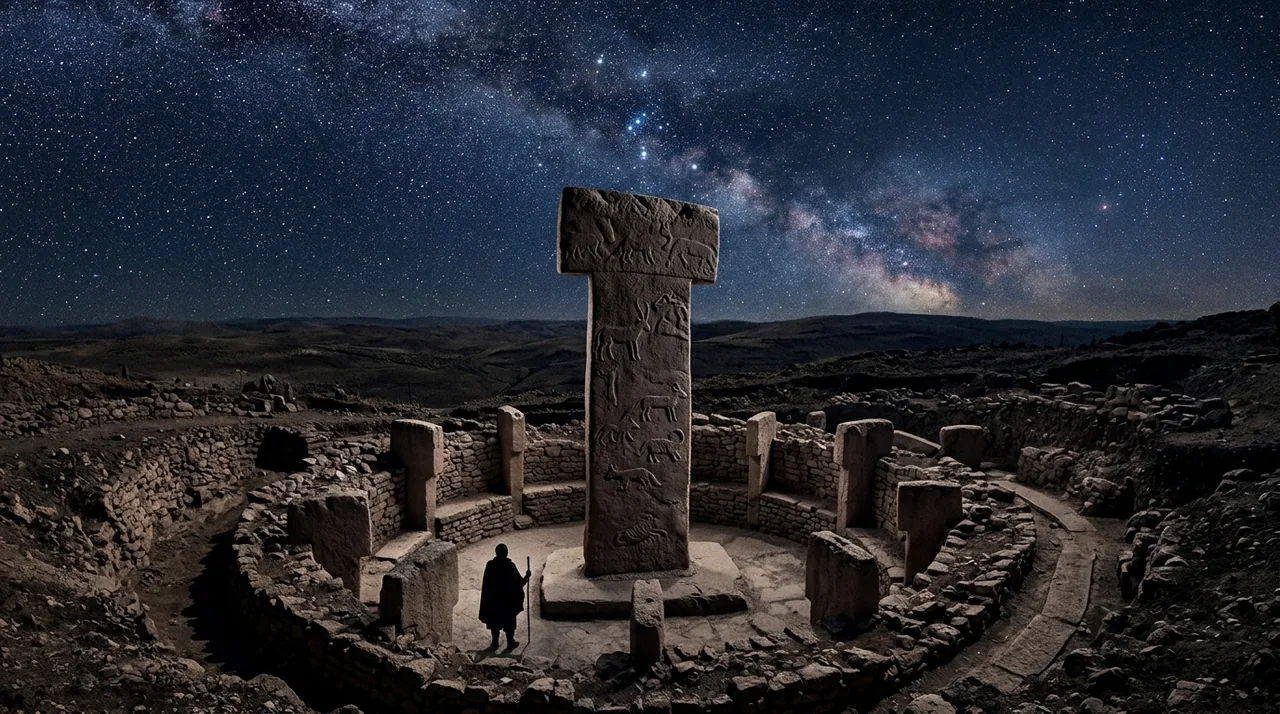
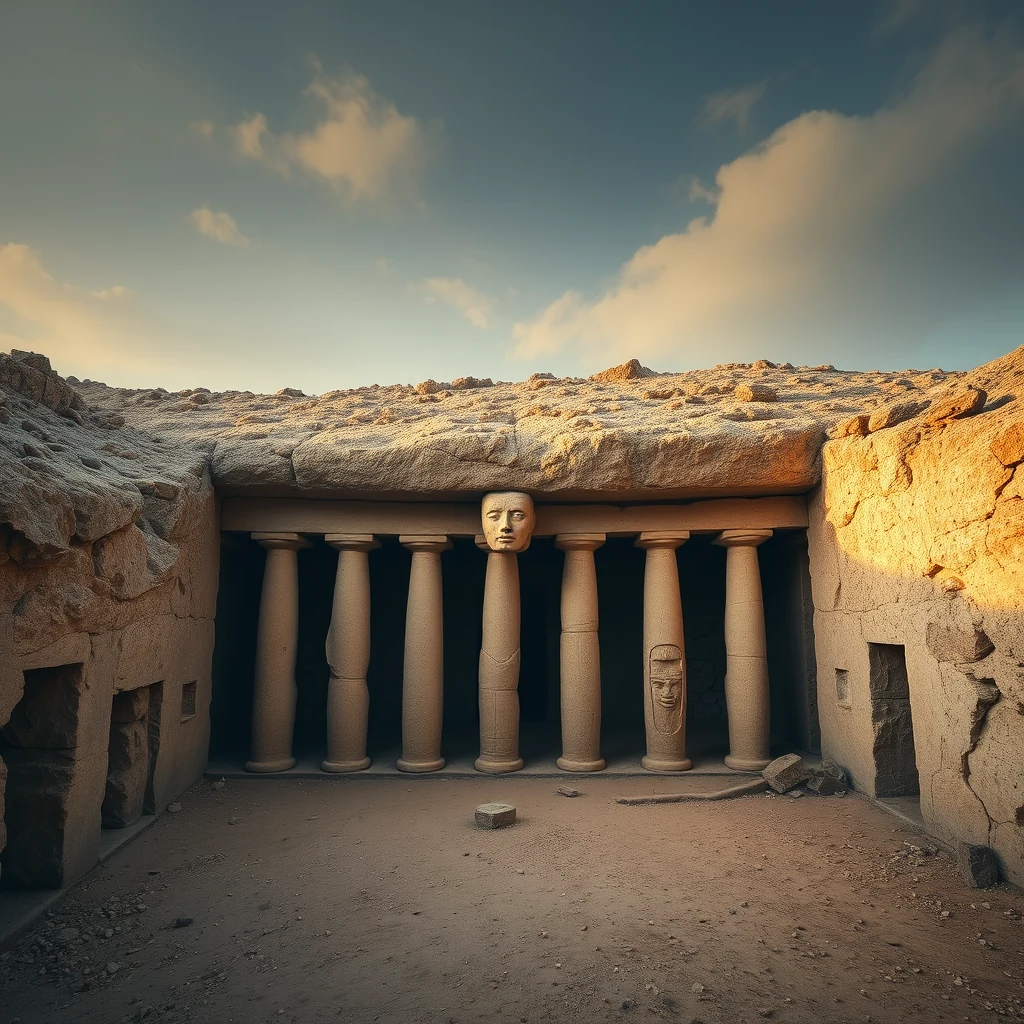
The enclosures are roughly circular, ten to thirty metres across, ringed by T-shaped limestone pillars set upright into the bedrock. The largest pillars stand five and a half metres tall and weigh somewhere around sixteen tons. At the centre of each enclosure stand two more, slightly taller, facing each other. The pillars are abstracted human figures: belts and loincloths are carved on the shafts, long arms folded across the front, hands meeting at the waist. They are people made of stone, twenty times life-size, looking at each other across an empty floor.
An excavation trench at Göbekli Tepe where massive T-shaped limestone pillars rise from paIllustration · AI-generated (FLUX.1-dev)
The carvings are the strange part. Foxes scamper down one shaft. A scorpion the size of a dog hangs from another. Vultures, snakes, boars, cranes, aurochs, leopards — a bestiary cut in low relief with stone tools, by people who had no metal. One pillar, known as Pillar 43 or the Vulture Stone, carries a tableau that has become the most photographed image at the site: a headless human figure, a scorpion, a circle held inside a vulture's wing.
Karahan Tepe incorporates amazing solstice alignments. At ten minutes after sunrise on the winter solstice (Dec. 21st) the author and Americtobeytravels · CC BY-SA 4.0
To build any of this, several hundred people had to be fed for months at a time, in a landscape where, on the standard timeline, nobody yet farmed. The grain at Göbekli Tepe is wild einkorn. The animal bones are gazelle and wild ass, hunted rather than herded. Whoever raised the pillars did it as foragers — or as something we do not yet have a word for.
The Vulture Stone
The carvings on Pillar 43 are where the argument gets loud. In 2017, two engineers at the University of Edinburgh proposed that the animals on the stone were not animals at all but constellations — a memorial, they suggested, to a comet strike around 10,950 BCE. The independent researcher Andrew CollinsPersonAndrew CollinsBritish author and independent researcher who has spent two decades arguing that Göbekli Tepe was an astronomical observatory aligned to the constellation Cygnus, and the seed of a "Cygnus cult" running through later Eurasian religion. Mainstream archaeology rejects the specifics; his work is best read as speculative synthesis rather than primary evidence. His 2014 book Gobekli Tepe: Genesis of the Gods set the popular template for the alignment claim.英国作家、独立研究者,二十年来一直主张哥贝克力石阵是一座对准天鹅座的天文观测台,并认为它是贯穿后世欧亚宗教的“天鹅座崇拜”之源头。主流考古学界否认其具体观点;其著作更适合作为推测性综合论述而非一手证据来阅读。他2014年出版的《哥贝克力石阵:众神的起源》为这一天文对准假说奠定了通俗范本。Autor británico e investigador independiente que ha pasado dos décadas argumentando que Göbekli Tepe fue un observatorio astronómico alineado con la constelación de Cygnus, y la semilla de un «culto a Cygnus» que recorre la religión euroasiática posterior. La arqueología convencional rechaza los detalles específicos; su obra se lee mejor como síntesis especulativa que como evidencia primaria. Su libro de 2014, Gobekli Tepe: Genesis of the Gods, estableció el modelo popular para la afirmación de la alineación.كاتب بريطاني وباحث مستقل أمضى عقدين من الزمن يجادل بأن غوبكلي تبه كان مرصدًا فلكيًا محاذيًا لكوكبة الدجاجة، ونواةً لـ«عبادة الدجاجة» التي امتدت عبر الديانات الأوراسية اللاحقة. يرفض علم الآثار السائد التفاصيل؛ ومن الأفضل قراءة أعماله بوصفها توليفة تأملية لا أدلة أولية. وقد أرست كتبه الصادرة عام 2014 «غوبكلي تبه: نشأة الآلهة» النموذج الرائج لادعاء المحاذاة.Autor e investigador independente britânico que passou duas décadas a argumentar que Göbekli Tepe era um observatório astronómico alinhado com a constelação do Cisne, e a semente de um "culto de Cygnus" que percorre as religiões euro-asiáticas posteriores. A arqueologia convencional rejeita as especificidades; a sua obra deve ser lida como síntese especulativa, e não como evidência primária. O seu livro de 2014, Gobekli Tepe: Genesis of the Gods, estabeleceu o modelo popular para a alegação do alinhamento.ब्रिटिश लेखक और स्वतंत्र शोधकर्ता, जिन्होंने दो दशकों तक यह तर्क दिया कि गोबेकली टेपे एक खगोलीय वेधशाला थी जो सिग्नस तारामंडल के सापेक्ष संरेखित थी, और यह एक 'सिग्नस पंथ' का बीज था जो बाद के यूरेशियाई धर्म में व्याप्त रहा। मुख्यधारा पुरातत्व इन विशिष्टताओं को अस्वीकार करता है; उनके कार्य को प्राथमिक साक्ष्य के बजाय काल्पनिक संश्लेषण के रूप में पढ़ा जाना सर्वोत्तम है। उनकी 2014 की पुस्तक *गोबेकली टेपे: जेनेसिस ऑफ द गॉड्स* ने संरेखण के दावे के लिए लोकप्रिय खाका प्रस्तुत किया।Penulis dan peneliti independen asal Inggris yang telah menghabiskan dua dekade berargumen bahwa Göbekli Tepe adalah observatorium astronomi yang diselaraskan dengan rasi bintang Cygnus, dan benih dari "kultus Cygnus" yang berlanjut dalam agama-agama Eurasia selanjutnya. Arkeologi arus utama menolak rincian tersebut; karyanya lebih tepat dibaca sebagai sintesis spekulatif ketimbang bukti primer. Bukunya tahun 2014, Gobekli Tepe: Genesis of the Gods, menetapkan templat populer untuk klaim penyelarasan tersebut.Auteur et chercheur indépendant britannique qui soutient depuis deux décennies que Göbekli Tepe était un observatoire astronomique aligné sur la constellation du Cygne, et le point de départ d’un « culte du Cygne » traversant les religions eurasiatiques ultérieures. L’archéologie dominante en rejette les détails ; son travail se lit davantage comme une synthèse spéculative que comme une preuve de première main. Son ouvrage de 2014, Gobekli Tepe: Genesis of the Gods, a établi le modèle populaire de cette thèse de l’alignement.イギリスの作家兼独立研究者であり、ギョベクリ・テペが白鳥座に合わせて建設された天文台であり、後のユーラシアの宗教に通底する「白鳥座崇拝」の萌芽であると20年にわたって主張してきた。主流派の考古学はその具体的内容を否定しており、彼の著作は一次資料としてよりも、思索的な統合として読まれるべきものである。2014年の著書『Gobekli Tepe: Genesis of the Gods』(ギョベクリ・テペ:神々の起源)は、この天体配置説の一般的な雛形を確立した。Британский автор и независимый исследователь, в течение двух десятилетий утверждающий, что Гёбекли-Тепе был астрономической обсерваторией, ориентированной на созвездие Лебедя, и зачатком «культа Лебедя», пронизывающего более поздние евразийские религии. Академическая археология отвергает конкретные детали; его работы лучше воспринимать как умозрительный синтез, а не как первичные свидетельства. Его книга 2014 года «Гёбекли-Тепе: Генезис богов» задала популярный шаблон для утверждений о такой ориентированности.Britischer Autor und unabhängiger Forscher, der zwei Jahrzehnte lang argumentiert hat, dass Göbekli Tepe ein astronomisches Observatorium war, das auf das Sternbild Cygnus ausgerichtet war, und der Ursprung eines „Cygnus-Kults“, der sich durch die spätere eurasische Religion zieht. Die Mainstream-Archäologie lehnt die Einzelheiten ab; sein Werk ist am besten als spekulative Synthese zu lesen, nicht als Primärbeweis. Sein 2014 erschienenes Buch Gobekli Tepe: Genesis of the Gods etablierte die populäre Vorlage für die Ausrichtungsthese.영국인 저자이자 독립 연구자로, 20년 동안 괴베클리 테페가 백조자리(Cygnus)와 정렬된 천문 관측소였으며, 이후 유라시아 종교 전반에 흐르는 ‘백조 숭배’의 시원이라고 주장해 왔다. 주류 고고학계는 그 구체적인 내용을 부정하며, 그의 저작은 1차적 증거라기보다 추측적 종합으로 읽는 것이 가장 적절하다. 2014년 저서 《Gobekli Tepe: Genesis of the Gods》(괴베클리 테페: 신들의 기원)는 이러한 정렬 주장의 대중적인 틀을 마련했다., working separately, had earlier argued that the central pillars of Enclosure D point at the setting of Deneb in the constellation we call Cygnus, the brightest star in the northern Milky Way as it stood eleven thousand years ago. Other writers have lined up other stones with other stars.
A closeIllustration · AI-generated (FLUX.1-dev)
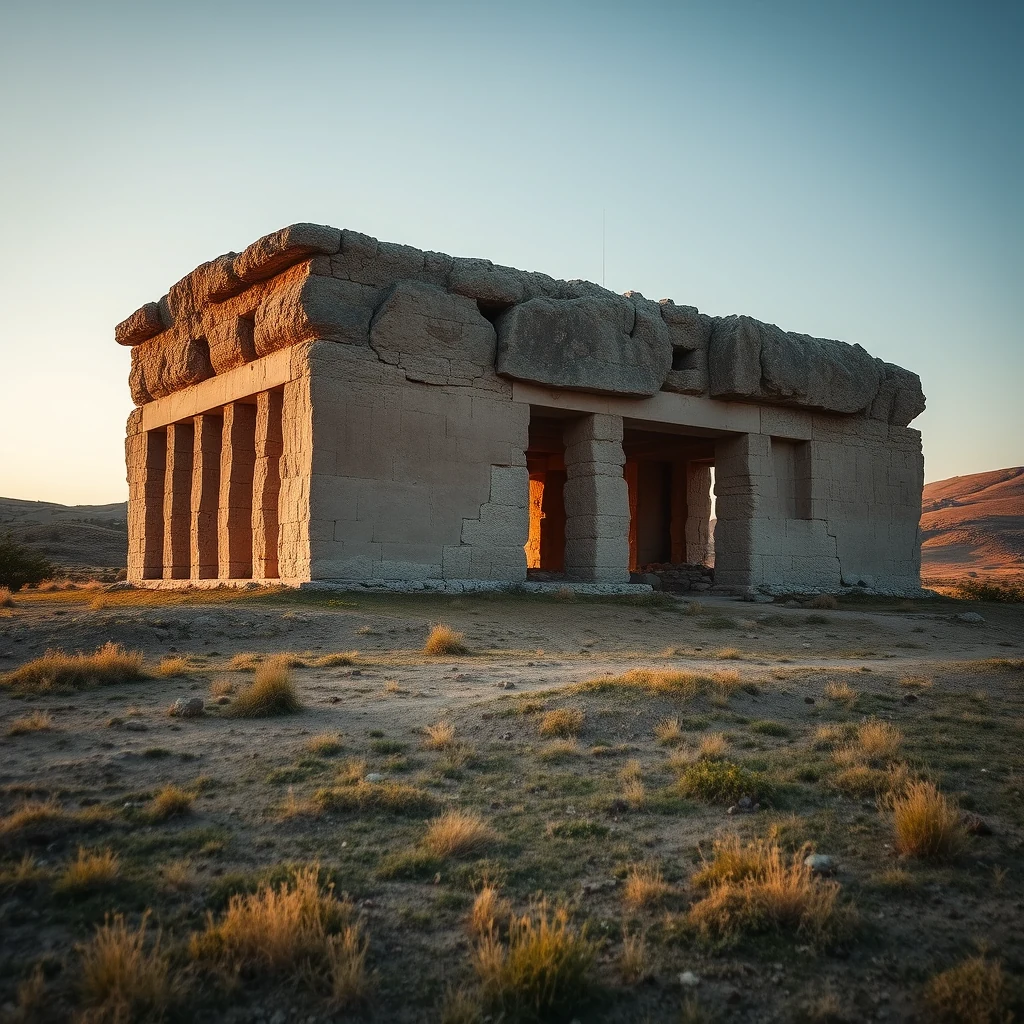
The mainstream view at the site, currently directed by Lee ClarePersonLee ClareGerman archaeologist; scientific coordinator of the Göbekli Tepe excavations for the German Archaeological Institute, having taken over after Klaus Schmidt's death in 2014. Clare's team has revised several of Schmidt's signature claims — including the deliberate burial of the enclosures and the supposed absence of domestic settlement — and now treats the site as part of a populated Neolithic landscape rather than an isolated cult centre lost in the wilderness.德国考古学家,德国考古研究所哥贝克力石阵发掘工作的科学协调员,在克劳斯·施密特于2014年逝世后接任该职位。克拉尔的团队修改了施密特的几项标志性主张——包括遗址区域的人为回填以及假定的无定居点说——目前该团队将该遗址视为人口密集的全新世/新石器时代景观的一部分,而非迷失在荒野中的孤立祭祀中心。Arqueólogo alemán; coordinador científico de las excavaciones de Göbekli Tepe para el Instituto Arqueológico Alemán, cargo que asumió tras la muerte de Klaus Schmidt en 2014. El equipo de Clare ha revisado varias de las afirmaciones características de Schmidt —incluidos el enterramiento deliberado de los recintos y la supuesta ausencia de asentamiento doméstico— y ahora considera el yacimiento como parte de un paisaje neolítico poblado, en lugar de un centro de culto aislado en un entorno salvaje.عالم آثار ألماني؛ المنسق العلمي لحفريات غوبكلي تبه لصالح المعهد الأثري الألماني، تولى المسؤولية بعد وفاة كلاوس شميت عام 2014. راجع فريق كلير عدة من ادعاءات شميت المميزة — بما في ذلك الدفن المتعمد للأسيجة والغياب المفترض للمستوطنات السكنية — ويعتبر الموقع الآن جزءاً من منظر طبيعي مأهول من العصر الحجري الحديث، لا مركزاً طقسياً معزولاً تائهاً في البرية.Arqueólogo alemão; coordenador científico das escavações de Göbekli Tepe pelo Instituto Arqueológico Alemão, tendo assumido o cargo após a morte de Klaus Schmidt em 2014. A equipa de Clare reviu várias das afirmações emblemáticas de Schmidt — incluindo o enterro deliberado dos recintos e a suposta ausência de povoamento doméstico — e trata agora o sítio como parte de uma paisagem neolítica povoada, em vez de um centro de culto isolado perdido na natureza.जर्मन पुरातत्वविद; जर्मन पुरातत्व संस्थान के लिए गोबेकली टेपे उत्खनन के वैज्ञानिक समन्वयक, जिन्होंने 2014 में क्लॉस श्मिट की मृत्यु के बाद कार्यभार संभाला। क्लेयर की टीम ने श्मिट के कई विशेष दावों को संशोधित किया है — जिनमें परिक्षेत्रों का जानबूझकर दफनाना और घरेलू बस्ती की कथित अनुपस्थिति शामिल है — और अब इस स्थल को एक निर्जन क्षेत्र में खोए हुए पृथक पंथ केंद्र के बजाय, एक आबाद नवपाषाण परिदृश्य के हिस्से के रूप में देखती है।Arkeolog Jerman; koordinator ilmiah penggalian Göbekli Tepe untuk Institut Arkeologi Jerman, mengambil alih setelah kematian Klaus Schmidt pada 2014. Tim Clare telah merevisi beberapa klaim khas Schmidt — termasuk penguburan sengaja struktur melingkar tersebut dan anggapan tidak adanya permukiman domestik — dan kini memperlakukan situs itu sebagai bagian dari lanskap Neolitik berpenghuni, bukan pusat pemujaan terisolasi yang hilang di alam liar.Archéologue allemand ; coordinateur scientifique des fouilles de Göbekli Tepe pour l’Institut archéologique allemand, ayant pris la relève après la mort de Klaus Schmidt en 2014. L’équipe de Clare a révisé plusieurs des affirmations phares de Schmidt — notamment l’enfouissement délibéré des enclos et l’absence supposée d’habitat domestique — et considère désormais le site comme faisant partie d’un paysage néolithique peuplé plutôt que comme un centre cultuel isolé perdu dans la nature sauvage.ドイツ人考古学者。2014年のクラウス・シュミットの死後、ドイツ考古学研究所によるギョベクリ・テペ発掘調査の科学コーディネーターを引き継いだ。クレアのチームは、囲壁の意図的な埋没や居住地が存在しないとされたことなど、シュミットの代表的な主張のいくつかを修正し、現在ではこの遺跡を、荒野に孤立した祭祀センターではなく、人々が居住した新石器時代の景観の一部として捉えている。Немецкий археолог; научный координатор раскопок Гёбекли-Тепе в Немецком археологическом институте, принявший руководство после смерти Клауса Шмидта в 2014 году. Команда Клэра пересмотрела несколько ключевых утверждений Шмидта — в том числе намеренное захоронение ограждений и предполагаемое отсутствие бытовых поселений — и теперь рассматривает памятник как часть заселённого неолитического ландшафта, а не как изолированный культовый центр, затерянный в дикой местности.Deutscher Archäologe; wissenschaftlicher Koordinator der Ausgrabungen am Göbekli Tepe für das Deutsche Archäologische Institut, deren Leitung er nach Klaus Schmidts Tod 2014 übernahm. Clares Team hat mehrere von Schmidts zentralen Behauptungen revidiert – darunter die absichtliche Verfüllung der Anlagen und die angebliche Abwesenheit häuslicher Siedlungen – und betrachtet den Fundort nun als Teil einer bewohnten neolithischen Landschaft und nicht als isoliertes, in der Wildnis verlorenes Kultzentrum.독일의 고고학자이자 독일 고고학 연구소 괴베클리 테페 발굴단의 과학 책임자로, 2014년 클라우스 슈미트 사망 후 그 임무를 이어받았다. 클레어의 팀은 슈미트의 대표적 주장 몇 가지, 즉 원형 시설의 의도적 매몰과 주거 정착지가 없었을 것이라는 추정 등을 수정했고, 현재 이 유적지를 외딴 광야에 버려진 고립된 제의 중심지가 아니라 사람이 살았던 신석기 시대 경관의 일부로 다루고 있다. of the German Archaeological InstituteInstitutionGerman Archaeological InstituteBerlin-based research body (Deutsches Archäologisches Institut, founded 1829) that funds and runs excavations at sites from Anatolia to Peru. It has held the permit at Göbekli Tepe since 1995, first under Klaus Schmidt and now under Lee Clare, in partnership with Turkish authorities. Its publications carry most of the first-hand technical reporting on the site, including the slow revision of Schmidt's original interpretations.总部位于柏林的研究机构(德国考古研究所,成立于1829年),资助并开展从安纳托利亚到秘鲁等地的考古发掘工作。自1995年以来,该机构与土耳其当局合作,一直持有哥贝克力石阵的发掘许可,最初由克劳斯·施密特领导,现由李·克莱尔负责。其出版物刊载了该遗址大部分的第一手技术报告,包括对施密特最初解读的逐步修正。Organismo de investigación con sede en Berlín (Deutsches Archäologisches Institut, fundado en 1829) que financia y dirige excavaciones en yacimientos desde Anatolia hasta Perú. Ha mantenido el permiso en Göbekli Tepe desde 1995, primero bajo la dirección de Klaus Schmidt y ahora de Lee Clare, en colaboración con las autoridades turcas. Sus publicaciones contienen la mayor parte de los informes técnicos de primera mano sobre el yacimiento, incluida la lenta revisión de las interpretaciones originales de Schmidt.هيئة بحثية مقرها برلين (المعهد الألماني للآثار، تأسس عام 1829) تمول وتدير أعمال التنقيب في مواقع من الأناضول إلى البيرو. وهي تحمل تصريح التنقيب في موقع غوبكلي تبه منذ عام 1995، بداية تحت إشراف كلاوس شميت، والآن تحت إشراف لي كلير، بالتعاون مع السلطات التركية. وتحمل منشوراتها معظم التقارير الفنية المباشرة عن الموقع، بما في ذلك المراجعة البطيئة لتفسيرات شميت الأصلية.Instituição de pesquisa sediada em Berlim (Deutsches Archäologisches Institut, fundado em 1829) que financia e conduz escavações em sítios da Anatólia ao Peru. Detém a licença de escavação em Göbekli Tepe desde 1995, inicialmente sob Klaus Schmidt e agora sob Lee Clare, em parceria com as autoridades turcas. Suas publicações contêm a maior parte dos relatos técnicos de primeira mão sobre o sítio, incluindo a lenta revisão das interpretações originais de Schmidt.बर्लिन स्थित एक शोध संस्था (जर्मन पुरातत्व संस्थान, स्थापना 1829) है जो अनातोलिया से पेरू तक के स्थलों पर उत्खननों का वित्तपोषण और संचालन करती है। इसके पास 1995 से गोबेकली टेपे पर उत्खनन की अनुमति है, पहले क्लाउस श्मिट और अब ली क्लेयर के नेतृत्व में, तुर्की अधिकारियों के साथ साझेदारी में। इसके प्रकाशन उस स्थल पर अधिकांश प्रत्यक्ष तकनीकी रिपोर्टिंग करते हैं, जिसमें श्मिट की मूल व्याख्याओं का धीमा संशोधन भी शामिल है।Lembaga penelitian berbasis di Berlin (Institut Arkeologi Jerman, didirikan 1829) yang mendanai dan menjalankan penggalian di situs-situs dari Anatolia hingga Peru. Lembaga ini telah memegang izin penggalian di Göbekli Tepe sejak 1995, mula-mula di bawah Klaus Schmidt dan kini di bawah Lee Clare, bekerja sama dengan otoritas Turki. Publikasi-publikasinya memuat sebagian besar laporan teknis dari tangan pertama tentang situs tersebut, termasuk revisi perlahan atas interpretasi asli Schmidt.Organisme de recherche basé à Berlin (Deutsches Archäologisches Institut, fondé en 1829) qui finance et dirige des fouilles sur des sites allant de l’Anatolie au Pérou. Il détient le permis de fouilles à Göbekli Tepe depuis 1995, d’abord sous la direction de Klaus Schmidt et maintenant sous celle de Lee Clare, en partenariat avec les autorités turques. Ses publications assurent la majeure partie des rapports techniques de première main sur le site, y compris la lente révision des interprétations initiales de Schmidt.ベルリンに本部を置く研究機関(ドイツ考古学研究所、1829年設立)で、アナトリアからペルーに至る遺跡の発掘調査に資金提供と運営を行っている。1995年以来ギョベクリ・テペの発掘許可を保持し、当初はクラウス・シュミット、現在はリー・クレアの指揮の下、トルコ当局と協力して調査を実施。同研究所の刊行物は、シュミットの当初の解釈の慎重な見直しを含め、同遺跡に関する直接的な学術報告の大半を掲載している。Базирующееся в Берлине научно-исследовательское учреждение (Немецкий археологический институт, основан в 1829 году), финансирующее и проводящее раскопки на объектах от Анатолии до Перу. Институт имеет разрешение на раскопки в Гёбекли-Тепе с 1995 года, сначала под руководством Клауса Шмидта, а теперь — под руководством Ли Клэра, в партнёрстве с турецкими властями. Его публикации содержат большую часть первичных технических отчётов об этом объекте, включая медленный пересмотр первоначальных интерпретаций Шмидта.In Berlin ansässige Forschungseinrichtung (Deutsches Archäologisches Institut, gegründet 1829), die Ausgrabungen an Fundstätten von Anatolien bis Peru finanziert und durchführt. Es hält seit 1995 die Grabungserlaubnis für Göbekli Tepe, zunächst unter Klaus Schmidt, heute unter Lee Clare, in Zusammenarbeit mit den türkischen Behörden. Seine Publikationen enthalten den Großteil der fachlichen Erstberichterstattung über die Stätte, einschließlich der schrittweisen Revision von Schmidts ursprünglichen Interpretationen.베를린에 본부를 둔 연구 기관(1829년 설립된 독일 고고학 연구소)으로, 아나톨리아에서 페루에 이르는 유적지 발굴 작업에 자금을 지원하고 직접 수행한다. 1995년부터 괴베클리 테페 유적 발굴 허가를 보유하고 있으며, 처음에는 클라우스 슈미트, 현재는 리 클레어의 지휘 아래 튀르키예 당국과 협력하여 작업하고 있다. 이 연구소의 간행물에는 슈미트의 원래 해석에 대한 점진적 수정을 포함하여, 해당 유적에 대한 대부분의 직접적 기술 보고가 실려 있다., is that none of this holds up under inspection. The orientations are not as consistent as the popular accounts suggest; the enclosures were built and rebuilt over centuries; the carvings are powerful imagery but not obviously a star map. Clare's team has spent the last decade quietly walking back several of Schmidt's bolder claims, including the famous one that the site was a temple built by people who had not yet invented the village. New excavations a few kilometres away — at Karahan TepePlaceKarahan TepePre-Pottery Neolithic site forty kilometres east of Göbekli Tepe, under sustained excavation since 2019 by a Turkish team led by Necmi Karul. Smaller than its famous neighbour but of comparable age, it includes a chamber cut into bedrock with eleven phallic pillars and a carved human head emerging from the wall. Crucially, it has domestic structures alongside the monumental ones — evidence the builders lived on site.前陶新石器时代遗址,位于哥贝克力石阵以东四十公里处,自2019年起由内吉米·卡鲁尔领导的土耳其团队持续发掘。规模小于其著名的邻近遗址,但年代相当,遗址包括一个凿入基岩的室,内有十一根阳具形石柱,以及一个从墙壁上浮现的雕刻人头。关键的是,遗址中既有纪念性建筑,也有居住建筑——证明建造者曾在此居住。Yacimiento del Neolítico Precerámico situado cuarenta kilómetros al este de Göbekli Tepe, bajo excavación continua desde 2019 por un equipo turco dirigido por Necmi Karul. Más pequeño que su famoso vecino pero de antigüedad comparable, incluye una cámara excavada en la roca madre con once pilares fálicos y una cabeza humana tallada que emerge de la pared. Crucialmente, cuenta con estructuras domésticas junto a las monumentales, prueba de que los constructores residían en el lugar.موقع من العصر الحجري الحديث ما قبل الفخار يقع على بعد 40 كيلومتراً شرق غوبكلي تبه، ويخضع لأعمال تنقيب مستمرة منذ عام 2019 من قبل فريق تركي بقيادة نجمي كارول. أصغر من جاره الشهير لكنه من نفس العمر تقريباً، ويضم حجرة منحوتة في الصخر تحتوي على أحد عشر عموداً قضيبياً ورأساً بشرياً منحوتاً يبرز من الجدار. والأهم من ذلك، أنه يضم مبانٍ سكنية إلى جانب الأبنية الأثرية الضخمة — مما يثبت أن البناة عاشوا في الموقع.Sítio do Neolítico Pré-Cerâmico situado a quarenta quilómetros a leste de Göbekli Tepe, sob escavação contínua desde 2019 por uma equipa turca liderada por Necmi Karul. Menor do que o seu famoso vizinho, mas de idade comparável, inclui uma câmara escavada no leito rochoso com onze pilares fálicos e uma cabeça humana esculpida que emerge da parede. Crucialmente, possui estruturas domésticas ao lado das monumentais — evidência de que os construtores viviam no local.प्री-पॉटरी नियोलिथिक स्थल, गोबेकली टेपे से चालीस किलोमीटर पूर्व में स्थित, 2019 से नेकमी करुल के नेतृत्व में एक तुर्की दल द्वारा निरंतर उत्खनन के अधीन। अपने प्रसिद्ध पड़ोसी से छोटा किंतु तुलनीय आयु का, इसमें आधारशिला में काटकर बनाया गया एक कक्ष शामिल है जिसमें ग्यारह लिंगाकार स्तंभ और दीवार से उभरता हुआ एक उत्कीर्ण मानव शीश है। महत्वपूर्ण रूप से, इसमें स्मारकीय संरचनाओं के साथ-साथ घरेलू संरचनाएँ भी हैं — इस बात का प्रमाण कि निर्माता वहीं निवास करते थे।Situs Neolitik Pra-Tembikar yang terletak empat puluh kilometer di timur Göbekli Tepe, dalam penggalian berkelanjutan sejak 2019 oleh tim Turki yang dipimpin Necmi Karul. Lebih kecil daripada tetangganya yang termasyhur tetapi berusia setara, situs ini memiliki ruang yang dipahat di batuan dasar dengan sebelas pilar falus dan kepala manusia terpahat yang menyembul dari dinding. Yang krusial, terdapat struktur domestik di samping struktur monumental — bukti bahwa para pembangunnya tinggal di lokasi.Site néolithique précéramique situé à quarante kilomètres à l’est de Göbekli Tepe, fouillé de manière continue depuis 2019 par une équipe turque dirigée par Necmi Karul. Plus petit que son célèbre voisin mais d’âge comparable, il comprend une chambre taillée dans la roche mère avec onze piliers phalliques et une tête humaine sculptée émergeant de la paroi. Point crucial, il présente des structures domestiques à côté des structures monumentales — preuve que les bâtisseurs vivaient sur place.先土器新石器時代の遺跡で、ギョベクリ・テペの東40キロメートルに位置し、2019年以降ネジミ・カルル率いるトルコのチームによって継続的な発掘調査が行われている。有名な隣接遺跡よりも小規模だが、年代は同程度である。岩盤を掘り込んだ部屋があり、11本の男根状の柱と、壁から浮き出るように彫られた人頭が含まれている。重要なことに、記念碑的建造物と並んで居住用の構造物もあり、建設者たちがこの場所に居住していた証拠となっている。Памятник докерамического неолита, расположенный в сорока километрах к востоку от Гёбекли-Тепе, с 2019 года непрерывно исследуется турецкой группой под руководством Неджми Карула. Меньше своего знаменитого соседа, но сопоставимого возраста; включает вырубленную в скальной породе камеру с одиннадцатью фаллическими столбами и вырезанной человеческой головой, выступающей из стены. Что особенно важно, наряду с монументальными сооружениями здесь имеются жилые постройки — свидетельство того, что строители жили на этом месте.Präkeramisch-neolithische Fundstätte, vierzig Kilometer östlich von Göbekli Tepe, die seit 2019 von einem türkischen Team unter der Leitung von Necmi Karul kontinuierlich ausgegraben wird. Sie ist kleiner als ihr berühmter Nachbar, aber von vergleichbarem Alter und umfasst eine in den Fels geschlagene Kammer mit elf phallischen Pfeilern und einem aus der Wand ragenden gemeißelten menschlichen Kopf. Entscheidend ist, dass es neben den monumentalen Bauten auch Wohnstrukturen gibt – ein Beleg dafür, dass die Erbauer vor Ort lebten.괴베클리 테페에서 동쪽으로 40킬로미터 떨어진 전토기 신석기 시대 유적으로, 2019년부터 네즈미 카룰이 이끄는 터키 팀이 지속적으로 발굴 중이다. 유명한 이웃 유적보다 규모는 작지만 비슷한 연대를 지녔으며, 기반암을 깎아 만든 방에 11개의 남근 모양 기둥과 벽에서 솟아나온 듯 새겨진 사람 머리 조각이 있다. 결정적으로 기념비적 구조물과 함께 주거용 구조물도 발견되어, 건설자들이 그곳에 살았음을 보여주는 증거가 된다. and a dozen other sites now grouped as the Taş TepelerPlaceTaş TepelerTurkish for "stone hills" — the name given to a network of at least a dozen Pre-Pottery Neolithic sites clustered around Şanlıurfa in southeastern Anatolia. Excavations at Karahan Tepe, Sayburç, Sefer Tepe and others, mostly begun after 2019, are revealing that Göbekli Tepe was not a lone temple in an empty landscape but one node in a substantial regional culture of monument-building foragers and early cultivators.塔什特佩勒(土耳其语意为“石丘”)指代安纳托利亚东南部尚勒乌尔法周边至少十二处前陶新石器时代遗址群。卡拉汉特佩、赛布尔奇、塞费尔特佩等遗址的发掘工作大多始于2019年后,揭示出哥贝克力石阵并非空旷景观中的孤独立庙宇,而是由建造纪念碑的狩猎采集者与早期农耕者构成的庞大区域文化中的一个节点。En turco, «colinas de piedra»: el nombre dado a una red de al menos una docena de yacimientos del Neolítico Precerámico agrupados en torno a Şanlıurfa, en el sureste de Anatolia. Las excavaciones en Karahan Tepe, Sayburç, Sefer Tepe y otros, iniciadas en su mayoría después de 2019, están revelando que Göbekli Tepe no fue un templo solitario en un paisaje vacío, sino uno de los nodos de una importante cultura regional de cazadores-recolectores constructores de monumentos y primeros agricultores.تاش تبهلر"، وهي كلمة تركية تعني "التلال الحجرية"، وهو الاسم الذي أُطلق على شبكة تضم ما لا يقل عن اثني عشر موقعًا من العصر الحجري الحديث ما قبل الفخار، تتجمع حول مدينة شانلي أورفة في جنوب شرق الأناضول. وتكشف الحفريات في مواقع كاراهان تبه وسايبورتش وسفر تبه وغيرها، والتي بدأ معظمها بعد عام 2019، أن غوبكلي تبه لم يكن معبدًا منعزلاً في مشهد خالٍ، بل كان عقدةً ضمن ثقافة إقليمية كبيرة لبناة النصب من الصيادين-الجامعين والمزارعين الأوائل.Do turco, “colinas de pedra” — nome dado a uma rede de pelo menos uma dúzia de sítios do Neolítico Pré-Cerâmico agrupados em torno de Şanlıurfa, no sudeste da Anatólia. Escavações em Karahan Tepe, Sayburç, Sefer Tepe e outros, na maioria iniciadas após 2019, revelam que Göbekli Tepe não era um templo isolado numa paisagem vazia, mas um nó de uma cultura regional substancial de caçadores-coletores e primeiros cultivadores construtores de monumentos.तुर्की भाषा में 'पत्थर की पहाड़ियाँ' — यह नाम कम से कम एक दर्जन पूर्व-मृद्भांड नवपाषाण स्थलों के एक नेटवर्क को दिया गया है जो दक्षिण-पूर्वी अनातोलिया में सानलिउरफ़ा के आसपास केंद्रित हैं। कराहन टेपे, सायबुर्च, सेफ़र टेपे और अन्य स्थलों पर उत्खनन, जो अधिकतर 2019 के बाद शुरू हुए, यह प्रकट कर रहे हैं कि गोबेकली टेपे एक खाली परिदृश्य में अकेला मंदिर नहीं था, बल्कि स्मारक-निर्माण करने वाले आखेटकों और आरंभिक कृषकों की एक विशाल क्षेत्रीय संस्कृति का एक केंद्र था।Bahasa Turki untuk “bukit-bukit batu”—nama yang diberikan kepada jaringan setidaknya selusin situs Neolitikum Pra-Tembikar yang mengelompok di sekitar Şanlıurfa di Anatolia tenggara. Penggalian di Karahan Tepe, Sayburç, Sefer Tepe, dan lainnya, yang sebagian besar dimulai setelah 2019, mengungkap bahwa Göbekli Tepe bukanlah candi tunggal di lanskap kosong, melainkan salah satu simpul dalam budaya regional yang substansial dari para pencari makan dan pembudidaya awal yang membangun monumen.Terme turc signifiant « collines de pierre » — nom donné à un réseau d’au moins une douzaine de sites du Néolithique précéramique regroupés autour de Şanlıurfa, dans le sud-est de l’Anatolie. Les fouilles de Karahan Tepe, Sayburç, Sefer Tepe et d’autres, pour la plupart entamées après 2019, révèlent que Göbekli Tepe n’était pas un temple isolé dans un paysage vide, mais un nœud au sein d’une importante culture régionale de bâtisseurs de monuments, composée de cueilleurs et de premiers cultivateurs.トルコ語で「石の丘」を意味し、南東アナトリアのシャンルウルファ周辺に集中する少なくとも12か所の先土器新石器時代の遺跡群に与えられた名称である。2019年以降に本格化したカラハンテペ、サイブルチュ、セフェルテペなどの発掘調査により、ギョベクリ・テペが孤立した神殿ではなく、記念碑的建造物を築いた狩猟採集民や初期農耕民の広範な地域文化における一つの拠点であったことが明らかになりつつある。Таш-Тепелер (в переводе с турецкого «каменные холмы») — название, данное сети по меньшей мере из дюжины памятников эпохи докерамического неолита, сосредоточенных вокруг Шанлыурфы в юго-восточной Анатолии. Раскопки на Карахан-Тепе, Сайбурче, Сефер-Тепе и других объектах, в основном начатые после 2019 года, показывают, что Гёбекли-Тепе был не одиноким храмом посреди пустого ландшафта, а одним из узлов обширной региональной культуры охотников-собирателей и ранних земледельцев, возводивших монументальные сооружения.Türkisch für „Steinhügel“ – die Bezeichnung für ein Netzwerk von mindestens einem Dutzend Fundstätten des präkeramischen Neolithikums, die sich um Şanlıurfa im Südosten Anatoliens gruppieren. Ausgrabungen in Karahan Tepe, Sayburç, Sefer Tepe und weiteren Orten, die größtenteils nach 2019 begannen, zeigen, dass Göbekli Tepe kein einsamer Tempel in einer leeren Landschaft war, sondern ein Knotenpunkt in einer bedeutenden regionalen Kultur monumenterbauender Wildbeuter und früher Ackerbauern.튀르키예어로 ‘돌언덕’이라는 뜻으로, 아나톨리아 남동부 샨리우르파 주변에 밀집한 최소 열두 곳의 비토기 신석기 시대 유적 연결망에 붙여진 이름이다. 2019년 이후 대부분 시작된 카라한 테페, 사이부르치, 세페르 테페 등지의 발굴을 통해 괴베클리 테페가 텅 빈 경관 속 고립된 신전이 아니라 기념비적 건축물을 세운 수렵채집민과 초기 경작자들의 상당한 지역 문화 속 한 거점이었음이 드러나고 있다. — suggest the builders did live nearby after all, in stone houses, year-round.
Antikythera MechanismLogg Tandy · CC BY 4.0
What remains undeniable is the date and the scale. Whoever they were, they cut and moved sixteen-ton blocks of limestone, arranged them in deliberate geometric patterns, decorated them with a coherent symbolic vocabulary, and did so a full geological era before the conventional dawn of civilisation.
A moonlit view inside one circular enclosure at Göbekli TepeIllustration · AI-generated (FLUX.1-dev)
What we still don't know
We do not know what the enclosures were for. The early "temple of the hunter-gatherers" reading is in retreat, and no consensus has replaced it. They were not houses. They may have been feast halls, council chambers, mortuary spaces, or something for which we have no analogue at all.
A Neolithic work scene around the unfinished edge of an enclosureIllustration · AI-generated (FLUX.1-dev)
We do not know whether any of the astronomical alignments are real. Some of the central pillar pairs do point at significant rising and setting points on the horizon. Whether the builders intended that, or whether we are pattern-matching across an eleven-thousand-year baseline, is a question the evidence as it stands cannot settle.
We do not know why the enclosures were filled in. The deliberate-burial story that travelled through the popular press was Schmidt's working hypothesis; the current excavators think the infill accumulated more gradually, through slope wash and intentional levelling for later construction. It is less romantic and probably closer to the truth.
A dawn panorama across the Göbekli Tepe mound after excavationIllustration · AI-generated (FLUX.1-dev)
And we have excavated, after thirty years of digging, less than five per cent of the hill.
The shepherd's plough turned up a pillar in a field that nobody had thought to look at. There are at least nine other hills like it within an hour's drive.
1994年10月、Klaus SchmidtPersonKlaus SchmidtGerman prehistorian (1953–2014) who, in 1994, recognised that an unremarkable hill near Şanlıurfa, filed by an earlier American survey as a medieval cemetery, was in fact a Pre-Pottery Neolithic monument. He directed the excavations there for the German Archaeological Institute until his sudden death from a heart attack while swimming. His "temple of the hunter-gatherers" reading shaped the public understanding of the site; his successors have since revised much of it.德国史前史学家(1953年-2014年),于1994年认定尚勒乌尔法附近的一座不起眼的小山(曾被早期的美国调查归类为中世纪墓地)实际上是一处前陶新石器时代遗迹。他受德国考古研究所委托主持了该处的挖掘工作,直至他在游泳时突发心脏病去世。他对该遗址“狩猎采集者神庙”的解读塑造了公众对该遗址的认识;此后其继任者对这一观点进行了大量修正。Prehistoriador alemán (1953-2014) quien, en 1994, reconoció que una colina poco notable cerca de Şanlıurfa, catalogada por una prospección estadounidense anterior como un cementerio medieval, era en realidad un monumento del Neolítico precerámico. Dirigió las excavaciones en el lugar para el Instituto Arqueológico Alemán hasta su repentina muerte a causa de un infarto mientras nadaba. Su interpretación como "templo de los cazadores-recolectores" dio forma a la comprensión pública del yacimiento; sus sucesores han revisado gran parte de ella desde entonces.عالم ألماني متخصص في عصور ما قبل التاريخ (١٩٥٣–٢٠١٤)، أدرك في عام ١٩٩٤ أن تلاً غير لافت للنظر بالقرب من شانلي أورفا، كان قد صُنّف في مسح أمريكي سابق على أنه مقبرة من العصور الوسطى، هو في الواقع معلم أثري يعود للعصر الحجري الحديث ما قبل الفخاري. أشرف على أعمال التنقيب هناك لصالح المعهد الألماني للآثار حتى وفاته المفاجئة إثر نوبة قلبية أثناء السباحة. لقد شكّل تفسيره الذي وصف الموقع بـ "معبد الصيادين وجامعي الثمار" الفهم العام للموقع، وإن كان خلفاؤه قد قاموا منذ ذلك الحين بمراجعة الكثير منه.Pré-historiador alemão (1953–2014) que, em 1994, reconheceu que uma colina sem destaque perto de Şanlıurfa, classificada por um levantamento americano anterior como um cemitério medieval, era, na verdade, um monumento do Neolítico Pré-Cerâmico. Ele dirigiu as escavações no local pelo Instituto Arqueológico Alemão até sua morte súbita por ataque cardíaco enquanto nadava. Sua interpretação de "templo dos caçadores-coletores" moldou a compreensão pública do local; desde então, seus sucessores revisaram grande parte dela.एक जर्मन प्रागैतिहासविद (१९५३-२०१४) जिन्होंने १९९४ में यह पहचाना कि शानलिउर्फा के पास स्थित एक साधारण-सी पहाड़ी, जिसे पहले के एक अमेरिकी सर्वेक्षण में मध्ययुगीन कब्रिस्तान के रूप में दर्ज किया गया था, वास्तव में एक मृदभांड-पूर्व नवपाषाण स्मारक थी। उन्होंने तैराकी के दौरान दिल का दौरा पड़ने से हुई अपनी आकस्मिक मृत्यु तक जर्मन पुरातत्व संस्थान के लिए वहां उत्खनन का निर्देशन किया। उनकी "शिकारी-संग्रहकर्ताओं का मंदिर" वाली व्याख्या ने इस स्थल के बारे में सार्वजनिक समझ को आकार दिया; हालांकि उनके उत्तराधिकारियों ने तब से इसमें से काफी कुछ संशोधित कर दिया है।Ahli prasejarah Jerman (1953–2014) yang, pada tahun 1994, menyadari bahwa sebuah bukit yang tidak mencolok di dekat Şanlıurfa, yang diklasifikasikan oleh survei Amerika sebelumnya sebagai pemakaman abad pertengahan, sebenarnya adalah monumen Neolitikum Pra-Tembikar. Ia memimpin penggalian di sana untuk Institut Arkeologi Jerman hingga kematiannya yang mendadak akibat serangan jantung saat berenang. Interpretasinya mengenai "kuil pemburu-pengumpul" membentuk pemahaman publik tentang situs tersebut; penerusnya sejak saat itu telah merevisi banyak bagian darinya.Préhistorien allemand (1953–2014) qui, en 1994, a reconnu qu’une colline peu remarquable près de Şanlıurfa, classée par une étude américaine antérieure comme cimetière médiéval, était en fait un monument du Néolithique précéramique. Il y a dirigé les fouilles pour le compte de l’Institut archéologique allemand jusqu’à sa mort soudaine d’une crise cardiaque alors qu’il nageait. Son interprétation du « temple des chasseurs-cueilleurs » a façonné la compréhension publique du site ; ses successeurs ont depuis largement révisé celle-ci.ドイツの先史学者(1953年–2014年)。1994年、それまでアメリカの先行調査で中世の墓地として記録されていたシャンルウルファ近郊の平凡な丘が、実際には先土器新石器時代の遺跡であることを突き止めた。ドイツ考古学研究所の代表として同地の発掘調査を主導したが、水泳中に心臓発作で急死した。彼の提唱した「狩猟採集民の神殿」という解釈は同遺跡に対する一般の理解を形成したが、その後、後継者たちによってその多くが修正されている。Немецкий археолог (1953–2014), который в 1994 году установил, что непримечательный холм недалеко от Шанлыурфы, ранее классифицированный американскими исследователями как средневековое кладбище, на самом деле является памятником докерамического неолита. Он руководил раскопками на этом объекте от имени Германского археологического института вплоть до своей внезапной смерти от сердечного приступа во время плавания. Его интерпретация памятника как «храма охотников-собирателей» сформировала общественное представление о нём; однако его преемники впоследствии существенно пересмотрели многие её аспекты.Deutscher Prähistoriker (1953–2014), der 1994 erkannte, dass ein unscheinbarer Hügel bei Şanlıurfa, der bei einer früheren amerikanischen Untersuchung als mittelalterlicher Friedhof eingestuft worden war, tatsächlich ein Monument der präkeramischen Jungsteinzeit darstellte. Er leitete dort im Auftrag des Deutschen Archäologischen Instituts die Ausgrabungen bis zu seinem plötzlichen Tod durch einen Herzinfarkt beim Schwimmen. Seine Deutung als „Tempel der Jäger und Sammler“ prägte das öffentliche Verständnis der Fundstätte; seine Nachfolger haben vieles davon inzwischen revidiert.독일의 선사학자(1953–2014). 1994년, 과거 미국 조사팀에 의해 중세 묘지로 기록되었던 샹르우르파 인근의 평범한 언덕이 사실은 토기 이전 신석기 시대의 유적임을 밝혀냈다. 그는 수영 중 심장마비로 갑작스럽게 사망할 때까지 독일 고고학 연구소를 위해 해당 유적지의 발굴 작업을 지휘했다. 그가 제시한 '수렵채집인의 신전'이라는 해석은 이 유적지에 대한 대중의 인식을 형성했으나, 이후 그의 후임자들은 그 해석의 상당 부분을 수정하였다.という名のドイツ人考古学者は、トルコ南東部のŞanlıurfaPlaceŞanlıurfaProvincial capital in southeastern Turkey, ancient Edessa, near the upper Euphrates. Long-inhabited under Hittite, Seleucid, Roman, Byzantine and Ottoman rule, it is now the modern access point for Göbekli Tepe, fifteen kilometres to the northeast. The province around it contains at least a dozen other monumental Neolithic sites of comparable age, collectively known as the Taş Tepeler or "Stone Hills."土耳其东南部省会,即古埃德萨,位于幼发拉底河上游附近。该地历经赫梯、塞琉古、罗马、拜占庭及奥斯曼帝国统治,长期有人定居,现为前往东北方15公里处哥贝克力石阵(Göbekli Tepe)的现代门户。其周边省份还分布着至少十余处年代相当的纪念碑式新石器时代遗址,统称为“塔什特佩勒”(Taş Tepeler,意为“石丘”)。Capital provincial en el sureste de Turquía, la antigua Edesa, cerca del curso superior del Éufrates. Habitada durante mucho tiempo bajo dominio hitita, seléucida, romano, bizantino y otomano, es actualmente el punto de acceso moderno a Göbekli Tepe, a quince kilómetros al noreste. La provincia circundante alberga al menos una docena de otros yacimientos neolíticos monumentales de edad comparable, conocidos colectivamente como Taş Tepeler o "Colinas de Piedra".عاصمة إقليمية في جنوب شرق تركيا، وهي مدينة الرها القديمة، وتقع بالقرب من أعالي نهر الفرات. تعاقبت عليها فترات طويلة من الاستيطان البشري تحت حكم الحيثيين والسلوقيين والرومان والبيزنطيين والعثمانيين، وتُعد اليوم نقطة الوصول الحديثة إلى موقع غوبكلي تبه، الذي يبعد خمسة عشر كيلومتراً إلى الشمال الشرقي. وتضم المحافظة المحيطة بها ما لا يقل عن اثني عشر موقعاً أثرياً ضخماً من العصر الحجري الحديث تعود لنفس الحقبة، وتُعرف مجتمعة باسم "تاش تبه لر" أو "التلال الحجرية".Capital provincial no sudeste da Turquia, a antiga Edessa, próxima ao alto Eufrates. Longamente habitada sob o domínio hitita, selêucida, romano, bizantino e otomano, é atualmente o ponto de acesso moderno a Göbekli Tepe, quinze quilômetros a nordeste. A província circundante contém pelo menos uma dúzia de outros sítios neolíticos monumentais de idade comparável, coletivamente conhecidos como Taş Tepeler ou "Colinas de Pedra".दक्षिण-पूर्वी तुर्की में ऊपरी यूफ्रेट्स के निकट स्थित प्रांतीय राजधानी, प्राचीन एडेसा। हित्ती, सेल्यूसिड, रोमन, बीजान्टिन और ओटोमन शासन के अधीन लंबे समय से आबाद, यह अब उत्तर-पूर्व में पंद्रह किलोमीटर दूर स्थित गोबेकली टेपे का आधुनिक प्रवेश बिंदु है। इसके आसपास के प्रांत में तुलनीय आयु के कम से कम एक दर्जन अन्य स्मारकीय नवपाषाण कालीन स्थल हैं, जिन्हें सामूहिक रूप से ताश तेपेलर या 'स्टोन हिल्स' (पत्थर की पहाड़ियाँ) के रूप में जाना जाता है।Ibu kota provinsi di tenggara Turki, Edessa kuno, di dekat hulu Sungai Efrat. Telah lama dihuni di bawah kekuasaan Het, Seleukid, Romawi, Bizantin, dan Utsmaniyah, kini kota ini menjadi titik akses modern untuk Göbekli Tepe, lima belas kilometer ke arah timur laut. Provinsi di sekitarnya mencakup setidaknya selusin situs Neolitikum monumental lainnya yang usianya sebanding, yang secara kolektif dikenal sebagai Taş Tepeler atau "Bukit Batu".Capitale provinciale dans le sud-est de la Turquie, l'antique Édesse, près du cours supérieur de l'Euphrate. Longtemps habitée sous les dominations hittite, séleucide, romaine, byzantine et ottomane, elle est aujourd'hui le point d'accès moderne à Göbekli Tepe, situé à quinze kilomètres au nord-est. La province environnante contient au moins une douzaine d'autres sites néolithiques monumentaux d'âge comparable, collectivement connus sous le nom de Taş Tepeler ou « collines de pierre ».トルコ南東部の県都であり、古代都市エデッサとして知られ、ユーフラテス川上流付近に位置する。ヒッタイト、セレウコス朝、ローマ、ビザンツ、オスマン各帝国の支配下で長い居住の歴史を持ち、現在は北東に15キロ離れたギョベクリ・テペへの主要なアクセスポイントとなっている。その周辺地域には同時代の巨大な新石器時代遺跡が少なくとも12か所存在し、それらは総称して「タシュ・テペレル(石の丘)」と呼ばれている。Провинциальный центр на юго-востоке Турции, древняя Эдесса, близ верховий Евфрата. Издревле заселённый и последовательно находившийся под властью хеттов, Селевкидов, римлян, византийцев и османов, ныне он служит главным отправным пунктом для посещения Гёбекли-Тепе, расположенного в пятнадцати километрах к северо-востоку. В провинции вокруг него насчитывается по меньшей мере дюжина других монументальных неолитических памятников сходного возраста, известных под общим названием Таш Тепелер, или «Каменные холмы».Provinzhauptstadt in der Südosttürkei, das antike Edessa, nahe dem oberen Euphrat. Lange Zeit unter hethitischer, seleukidischer, römischer, byzantinischer und osmanischer Herrschaft besiedelt, ist sie heute der moderne Ausgangspunkt zum fünfzehn Kilometer nordöstlich gelegenen Göbekli Tepe. Die Provinz in ihrer Umgebung enthält mindestens ein Dutzend weitere monumentale neolithische Stätten vergleichbaren Alters, die zusammenfassend als Taş Tepeler oder „Steinhügel“ bekannt sind.튀르키예 남동부의 주도이자 고대 에데사로, 유프라테스강 상류 인근에 위치한다. 히타이트, 셀레우코스, 로마, 비잔티움, 오스만 제국의 지배 하에 오랫동안 거주가 이어져 왔으며, 오늘날에는 북동쪽으로 15km 떨어진 괴베클리 테페로 향하는 현대적인 접근 거점이다. 주변 지역에는 비슷한 연대의 기념비적인 신석기 시대 유적이 최소 12곳 이상 존재하며, 이들을 통칭하여 '타슈 테펠레르' 혹은 '돌 언덕'이라 부른다.から車を走らせ、あるなだらかな丘を目指した。そこは30年前にアメリカの調査団が中世の墓地にすぎないと片付けていた場所だった。その丘の名はギョベクリ・テペ。トルコ語で「太鼓腹の丘」を意味する。地元の農夫が、鋤で奇妙な彫刻のある石を掘り起こしていた。シュミットはある日の午後、その地表を歩き回った。そしてその日の暮れ方には、残りの人生をこの場所で過ごすことを決意していた。その予感は正しかった。彼は2014年に亡くなったが、遺跡の大部分は今なお地中に埋もれたままである。
Karahan Tepe incorporates amazing solstice alignments. At ten minutes after sunrise on the winter solstice (Dec. 21st) the author and Americtobeytravels · CC BY-SA 4.0
第43柱の彫刻をめぐっては、議論がひときわかまびすしい。2017年、エディンバラ大学の2人の技術者が、石に描かれた動物たちは動物そのものではなく星座であり、紀元前10950年頃の彗星衝突の記念碑ではないかという説を提唱した。これとは別に研究を行っていた独立系研究者のAndrew CollinsPersonAndrew CollinsBritish author and independent researcher who has spent two decades arguing that Göbekli Tepe was an astronomical observatory aligned to the constellation Cygnus, and the seed of a "Cygnus cult" running through later Eurasian religion. Mainstream archaeology rejects the specifics; his work is best read as speculative synthesis rather than primary evidence. His 2014 book Gobekli Tepe: Genesis of the Gods set the popular template for the alignment claim.英国作家、独立研究者,二十年来一直主张哥贝克力石阵是一座对准天鹅座的天文观测台,并认为它是贯穿后世欧亚宗教的“天鹅座崇拜”之源头。主流考古学界否认其具体观点;其著作更适合作为推测性综合论述而非一手证据来阅读。他2014年出版的《哥贝克力石阵:众神的起源》为这一天文对准假说奠定了通俗范本。Autor británico e investigador independiente que ha pasado dos décadas argumentando que Göbekli Tepe fue un observatorio astronómico alineado con la constelación de Cygnus, y la semilla de un «culto a Cygnus» que recorre la religión euroasiática posterior. La arqueología convencional rechaza los detalles específicos; su obra se lee mejor como síntesis especulativa que como evidencia primaria. Su libro de 2014, Gobekli Tepe: Genesis of the Gods, estableció el modelo popular para la afirmación de la alineación.كاتب بريطاني وباحث مستقل أمضى عقدين من الزمن يجادل بأن غوبكلي تبه كان مرصدًا فلكيًا محاذيًا لكوكبة الدجاجة، ونواةً لـ«عبادة الدجاجة» التي امتدت عبر الديانات الأوراسية اللاحقة. يرفض علم الآثار السائد التفاصيل؛ ومن الأفضل قراءة أعماله بوصفها توليفة تأملية لا أدلة أولية. وقد أرست كتبه الصادرة عام 2014 «غوبكلي تبه: نشأة الآلهة» النموذج الرائج لادعاء المحاذاة.Autor e investigador independente britânico que passou duas décadas a argumentar que Göbekli Tepe era um observatório astronómico alinhado com a constelação do Cisne, e a semente de um "culto de Cygnus" que percorre as religiões euro-asiáticas posteriores. A arqueologia convencional rejeita as especificidades; a sua obra deve ser lida como síntese especulativa, e não como evidência primária. O seu livro de 2014, Gobekli Tepe: Genesis of the Gods, estabeleceu o modelo popular para a alegação do alinhamento.ब्रिटिश लेखक और स्वतंत्र शोधकर्ता, जिन्होंने दो दशकों तक यह तर्क दिया कि गोबेकली टेपे एक खगोलीय वेधशाला थी जो सिग्नस तारामंडल के सापेक्ष संरेखित थी, और यह एक 'सिग्नस पंथ' का बीज था जो बाद के यूरेशियाई धर्म में व्याप्त रहा। मुख्यधारा पुरातत्व इन विशिष्टताओं को अस्वीकार करता है; उनके कार्य को प्राथमिक साक्ष्य के बजाय काल्पनिक संश्लेषण के रूप में पढ़ा जाना सर्वोत्तम है। उनकी 2014 की पुस्तक *गोबेकली टेपे: जेनेसिस ऑफ द गॉड्स* ने संरेखण के दावे के लिए लोकप्रिय खाका प्रस्तुत किया।Penulis dan peneliti independen asal Inggris yang telah menghabiskan dua dekade berargumen bahwa Göbekli Tepe adalah observatorium astronomi yang diselaraskan dengan rasi bintang Cygnus, dan benih dari "kultus Cygnus" yang berlanjut dalam agama-agama Eurasia selanjutnya. Arkeologi arus utama menolak rincian tersebut; karyanya lebih tepat dibaca sebagai sintesis spekulatif ketimbang bukti primer. Bukunya tahun 2014, Gobekli Tepe: Genesis of the Gods, menetapkan templat populer untuk klaim penyelarasan tersebut.Auteur et chercheur indépendant britannique qui soutient depuis deux décennies que Göbekli Tepe était un observatoire astronomique aligné sur la constellation du Cygne, et le point de départ d’un « culte du Cygne » traversant les religions eurasiatiques ultérieures. L’archéologie dominante en rejette les détails ; son travail se lit davantage comme une synthèse spéculative que comme une preuve de première main. Son ouvrage de 2014, Gobekli Tepe: Genesis of the Gods, a établi le modèle populaire de cette thèse de l’alignement.イギリスの作家兼独立研究者であり、ギョベクリ・テペが白鳥座に合わせて建設された天文台であり、後のユーラシアの宗教に通底する「白鳥座崇拝」の萌芽であると20年にわたって主張してきた。主流派の考古学はその具体的内容を否定しており、彼の著作は一次資料としてよりも、思索的な統合として読まれるべきものである。2014年の著書『Gobekli Tepe: Genesis of the Gods』(ギョベクリ・テペ:神々の起源)は、この天体配置説の一般的な雛形を確立した。Британский автор и независимый исследователь, в течение двух десятилетий утверждающий, что Гёбекли-Тепе был астрономической обсерваторией, ориентированной на созвездие Лебедя, и зачатком «культа Лебедя», пронизывающего более поздние евразийские религии. Академическая археология отвергает конкретные детали; его работы лучше воспринимать как умозрительный синтез, а не как первичные свидетельства. Его книга 2014 года «Гёбекли-Тепе: Генезис богов» задала популярный шаблон для утверждений о такой ориентированности.Britischer Autor und unabhängiger Forscher, der zwei Jahrzehnte lang argumentiert hat, dass Göbekli Tepe ein astronomisches Observatorium war, das auf das Sternbild Cygnus ausgerichtet war, und der Ursprung eines „Cygnus-Kults“, der sich durch die spätere eurasische Religion zieht. Die Mainstream-Archäologie lehnt die Einzelheiten ab; sein Werk ist am besten als spekulative Synthese zu lesen, nicht als Primärbeweis. Sein 2014 erschienenes Buch Gobekli Tepe: Genesis of the Gods etablierte die populäre Vorlage für die Ausrichtungsthese.영국인 저자이자 독립 연구자로, 20년 동안 괴베클리 테페가 백조자리(Cygnus)와 정렬된 천문 관측소였으며, 이후 유라시아 종교 전반에 흐르는 ‘백조 숭배’의 시원이라고 주장해 왔다. 주류 고고학계는 그 구체적인 내용을 부정하며, 그의 저작은 1차적 증거라기보다 추측적 종합으로 읽는 것이 가장 적절하다. 2014년 저서 《Gobekli Tepe: Genesis of the Gods》(괴베클리 테페: 신들의 기원)는 이러한 정렬 주장의 대중적인 틀을 마련했다.はそれ以前に、囲い地Dの中央にある石柱が、1万1000年前の北天の天の川で最も輝いていた星、はくちょう座のデネブが沈む方向を指していると主張していた。他にも、別の石柱を別の星と結びつける著述家たちが相次いだ。
A closeIllustration · AI-generated (FLUX.1-dev)
現在、German Archaeological InstituteInstitutionGerman Archaeological InstituteBerlin-based research body (Deutsches Archäologisches Institut, founded 1829) that funds and runs excavations at sites from Anatolia to Peru. It has held the permit at Göbekli Tepe since 1995, first under Klaus Schmidt and now under Lee Clare, in partnership with Turkish authorities. Its publications carry most of the first-hand technical reporting on the site, including the slow revision of Schmidt's original interpretations.总部位于柏林的研究机构(德国考古研究所,成立于1829年),资助并开展从安纳托利亚到秘鲁等地的考古发掘工作。自1995年以来,该机构与土耳其当局合作,一直持有哥贝克力石阵的发掘许可,最初由克劳斯·施密特领导,现由李·克莱尔负责。其出版物刊载了该遗址大部分的第一手技术报告,包括对施密特最初解读的逐步修正。Organismo de investigación con sede en Berlín (Deutsches Archäologisches Institut, fundado en 1829) que financia y dirige excavaciones en yacimientos desde Anatolia hasta Perú. Ha mantenido el permiso en Göbekli Tepe desde 1995, primero bajo la dirección de Klaus Schmidt y ahora de Lee Clare, en colaboración con las autoridades turcas. Sus publicaciones contienen la mayor parte de los informes técnicos de primera mano sobre el yacimiento, incluida la lenta revisión de las interpretaciones originales de Schmidt.هيئة بحثية مقرها برلين (المعهد الألماني للآثار، تأسس عام 1829) تمول وتدير أعمال التنقيب في مواقع من الأناضول إلى البيرو. وهي تحمل تصريح التنقيب في موقع غوبكلي تبه منذ عام 1995، بداية تحت إشراف كلاوس شميت، والآن تحت إشراف لي كلير، بالتعاون مع السلطات التركية. وتحمل منشوراتها معظم التقارير الفنية المباشرة عن الموقع، بما في ذلك المراجعة البطيئة لتفسيرات شميت الأصلية.Instituição de pesquisa sediada em Berlim (Deutsches Archäologisches Institut, fundado em 1829) que financia e conduz escavações em sítios da Anatólia ao Peru. Detém a licença de escavação em Göbekli Tepe desde 1995, inicialmente sob Klaus Schmidt e agora sob Lee Clare, em parceria com as autoridades turcas. Suas publicações contêm a maior parte dos relatos técnicos de primeira mão sobre o sítio, incluindo a lenta revisão das interpretações originais de Schmidt.बर्लिन स्थित एक शोध संस्था (जर्मन पुरातत्व संस्थान, स्थापना 1829) है जो अनातोलिया से पेरू तक के स्थलों पर उत्खननों का वित्तपोषण और संचालन करती है। इसके पास 1995 से गोबेकली टेपे पर उत्खनन की अनुमति है, पहले क्लाउस श्मिट और अब ली क्लेयर के नेतृत्व में, तुर्की अधिकारियों के साथ साझेदारी में। इसके प्रकाशन उस स्थल पर अधिकांश प्रत्यक्ष तकनीकी रिपोर्टिंग करते हैं, जिसमें श्मिट की मूल व्याख्याओं का धीमा संशोधन भी शामिल है।Lembaga penelitian berbasis di Berlin (Institut Arkeologi Jerman, didirikan 1829) yang mendanai dan menjalankan penggalian di situs-situs dari Anatolia hingga Peru. Lembaga ini telah memegang izin penggalian di Göbekli Tepe sejak 1995, mula-mula di bawah Klaus Schmidt dan kini di bawah Lee Clare, bekerja sama dengan otoritas Turki. Publikasi-publikasinya memuat sebagian besar laporan teknis dari tangan pertama tentang situs tersebut, termasuk revisi perlahan atas interpretasi asli Schmidt.Organisme de recherche basé à Berlin (Deutsches Archäologisches Institut, fondé en 1829) qui finance et dirige des fouilles sur des sites allant de l’Anatolie au Pérou. Il détient le permis de fouilles à Göbekli Tepe depuis 1995, d’abord sous la direction de Klaus Schmidt et maintenant sous celle de Lee Clare, en partenariat avec les autorités turques. Ses publications assurent la majeure partie des rapports techniques de première main sur le site, y compris la lente révision des interprétations initiales de Schmidt.ベルリンに本部を置く研究機関(ドイツ考古学研究所、1829年設立)で、アナトリアからペルーに至る遺跡の発掘調査に資金提供と運営を行っている。1995年以来ギョベクリ・テペの発掘許可を保持し、当初はクラウス・シュミット、現在はリー・クレアの指揮の下、トルコ当局と協力して調査を実施。同研究所の刊行物は、シュミットの当初の解釈の慎重な見直しを含め、同遺跡に関する直接的な学術報告の大半を掲載している。Базирующееся в Берлине научно-исследовательское учреждение (Немецкий археологический институт, основан в 1829 году), финансирующее и проводящее раскопки на объектах от Анатолии до Перу. Институт имеет разрешение на раскопки в Гёбекли-Тепе с 1995 года, сначала под руководством Клауса Шмидта, а теперь — под руководством Ли Клэра, в партнёрстве с турецкими властями. Его публикации содержат большую часть первичных технических отчётов об этом объекте, включая медленный пересмотр первоначальных интерпретаций Шмидта.In Berlin ansässige Forschungseinrichtung (Deutsches Archäologisches Institut, gegründet 1829), die Ausgrabungen an Fundstätten von Anatolien bis Peru finanziert und durchführt. Es hält seit 1995 die Grabungserlaubnis für Göbekli Tepe, zunächst unter Klaus Schmidt, heute unter Lee Clare, in Zusammenarbeit mit den türkischen Behörden. Seine Publikationen enthalten den Großteil der fachlichen Erstberichterstattung über die Stätte, einschließlich der schrittweisen Revision von Schmidts ursprünglichen Interpretationen.베를린에 본부를 둔 연구 기관(1829년 설립된 독일 고고학 연구소)으로, 아나톨리아에서 페루에 이르는 유적지 발굴 작업에 자금을 지원하고 직접 수행한다. 1995년부터 괴베클리 테페 유적 발굴 허가를 보유하고 있으며, 처음에는 클라우스 슈미트, 현재는 리 클레어의 지휘 아래 튀르키예 당국과 협력하여 작업하고 있다. 이 연구소의 간행물에는 슈미트의 원래 해석에 대한 점진적 수정을 포함하여, 해당 유적에 대한 대부분의 직접적 기술 보고가 실려 있다.のLee ClarePersonLee ClareGerman archaeologist; scientific coordinator of the Göbekli Tepe excavations for the German Archaeological Institute, having taken over after Klaus Schmidt's death in 2014. Clare's team has revised several of Schmidt's signature claims — including the deliberate burial of the enclosures and the supposed absence of domestic settlement — and now treats the site as part of a populated Neolithic landscape rather than an isolated cult centre lost in the wilderness.德国考古学家,德国考古研究所哥贝克力石阵发掘工作的科学协调员,在克劳斯·施密特于2014年逝世后接任该职位。克拉尔的团队修改了施密特的几项标志性主张——包括遗址区域的人为回填以及假定的无定居点说——目前该团队将该遗址视为人口密集的全新世/新石器时代景观的一部分,而非迷失在荒野中的孤立祭祀中心。Arqueólogo alemán; coordinador científico de las excavaciones de Göbekli Tepe para el Instituto Arqueológico Alemán, cargo que asumió tras la muerte de Klaus Schmidt en 2014. El equipo de Clare ha revisado varias de las afirmaciones características de Schmidt —incluidos el enterramiento deliberado de los recintos y la supuesta ausencia de asentamiento doméstico— y ahora considera el yacimiento como parte de un paisaje neolítico poblado, en lugar de un centro de culto aislado en un entorno salvaje.عالم آثار ألماني؛ المنسق العلمي لحفريات غوبكلي تبه لصالح المعهد الأثري الألماني، تولى المسؤولية بعد وفاة كلاوس شميت عام 2014. راجع فريق كلير عدة من ادعاءات شميت المميزة — بما في ذلك الدفن المتعمد للأسيجة والغياب المفترض للمستوطنات السكنية — ويعتبر الموقع الآن جزءاً من منظر طبيعي مأهول من العصر الحجري الحديث، لا مركزاً طقسياً معزولاً تائهاً في البرية.Arqueólogo alemão; coordenador científico das escavações de Göbekli Tepe pelo Instituto Arqueológico Alemão, tendo assumido o cargo após a morte de Klaus Schmidt em 2014. A equipa de Clare reviu várias das afirmações emblemáticas de Schmidt — incluindo o enterro deliberado dos recintos e a suposta ausência de povoamento doméstico — e trata agora o sítio como parte de uma paisagem neolítica povoada, em vez de um centro de culto isolado perdido na natureza.जर्मन पुरातत्वविद; जर्मन पुरातत्व संस्थान के लिए गोबेकली टेपे उत्खनन के वैज्ञानिक समन्वयक, जिन्होंने 2014 में क्लॉस श्मिट की मृत्यु के बाद कार्यभार संभाला। क्लेयर की टीम ने श्मिट के कई विशेष दावों को संशोधित किया है — जिनमें परिक्षेत्रों का जानबूझकर दफनाना और घरेलू बस्ती की कथित अनुपस्थिति शामिल है — और अब इस स्थल को एक निर्जन क्षेत्र में खोए हुए पृथक पंथ केंद्र के बजाय, एक आबाद नवपाषाण परिदृश्य के हिस्से के रूप में देखती है।Arkeolog Jerman; koordinator ilmiah penggalian Göbekli Tepe untuk Institut Arkeologi Jerman, mengambil alih setelah kematian Klaus Schmidt pada 2014. Tim Clare telah merevisi beberapa klaim khas Schmidt — termasuk penguburan sengaja struktur melingkar tersebut dan anggapan tidak adanya permukiman domestik — dan kini memperlakukan situs itu sebagai bagian dari lanskap Neolitik berpenghuni, bukan pusat pemujaan terisolasi yang hilang di alam liar.Archéologue allemand ; coordinateur scientifique des fouilles de Göbekli Tepe pour l’Institut archéologique allemand, ayant pris la relève après la mort de Klaus Schmidt en 2014. L’équipe de Clare a révisé plusieurs des affirmations phares de Schmidt — notamment l’enfouissement délibéré des enclos et l’absence supposée d’habitat domestique — et considère désormais le site comme faisant partie d’un paysage néolithique peuplé plutôt que comme un centre cultuel isolé perdu dans la nature sauvage.ドイツ人考古学者。2014年のクラウス・シュミットの死後、ドイツ考古学研究所によるギョベクリ・テペ発掘調査の科学コーディネーターを引き継いだ。クレアのチームは、囲壁の意図的な埋没や居住地が存在しないとされたことなど、シュミットの代表的な主張のいくつかを修正し、現在ではこの遺跡を、荒野に孤立した祭祀センターではなく、人々が居住した新石器時代の景観の一部として捉えている。Немецкий археолог; научный координатор раскопок Гёбекли-Тепе в Немецком археологическом институте, принявший руководство после смерти Клауса Шмидта в 2014 году. Команда Клэра пересмотрела несколько ключевых утверждений Шмидта — в том числе намеренное захоронение ограждений и предполагаемое отсутствие бытовых поселений — и теперь рассматривает памятник как часть заселённого неолитического ландшафта, а не как изолированный культовый центр, затерянный в дикой местности.Deutscher Archäologe; wissenschaftlicher Koordinator der Ausgrabungen am Göbekli Tepe für das Deutsche Archäologische Institut, deren Leitung er nach Klaus Schmidts Tod 2014 übernahm. Clares Team hat mehrere von Schmidts zentralen Behauptungen revidiert – darunter die absichtliche Verfüllung der Anlagen und die angebliche Abwesenheit häuslicher Siedlungen – und betrachtet den Fundort nun als Teil einer bewohnten neolithischen Landschaft und nicht als isoliertes, in der Wildnis verlorenes Kultzentrum.독일의 고고학자이자 독일 고고학 연구소 괴베클리 테페 발굴단의 과학 책임자로, 2014년 클라우스 슈미트 사망 후 그 임무를 이어받았다. 클레어의 팀은 슈미트의 대표적 주장 몇 가지, 즉 원형 시설의 의도적 매몰과 주거 정착지가 없었을 것이라는 추정 등을 수정했고, 현재 이 유적지를 외딴 광야에 버려진 고립된 제의 중심지가 아니라 사람이 살았던 신석기 시대 경관의 일부로 다루고 있다.が指揮を執る現地での主流派の見解は、こうした説はいずれも精査に耐えないというものだ。石柱の向きは、通俗的な説明が主張するほど一貫してはいない。囲い地は数世紀にわたって建設と再建が繰り返されており、彫刻は力強いイメージではあるものの、星図であるとは到底言えない。クレアのチームはここ10年間、シュミットのいくつかの大胆な主張を静かに撤回してきた。その中には、この遺跡はまだ集落すら作っていなかった人々によって建てられた神殿であるという、あの有名な説も含まれている。数キロメートル離れたKarahan TepePlaceKarahan TepePre-Pottery Neolithic site forty kilometres east of Göbekli Tepe, under sustained excavation since 2019 by a Turkish team led by Necmi Karul. Smaller than its famous neighbour but of comparable age, it includes a chamber cut into bedrock with eleven phallic pillars and a carved human head emerging from the wall. Crucially, it has domestic structures alongside the monumental ones — evidence the builders lived on site.前陶新石器时代遗址,位于哥贝克力石阵以东四十公里处,自2019年起由内吉米·卡鲁尔领导的土耳其团队持续发掘。规模小于其著名的邻近遗址,但年代相当,遗址包括一个凿入基岩的室,内有十一根阳具形石柱,以及一个从墙壁上浮现的雕刻人头。关键的是,遗址中既有纪念性建筑,也有居住建筑——证明建造者曾在此居住。Yacimiento del Neolítico Precerámico situado cuarenta kilómetros al este de Göbekli Tepe, bajo excavación continua desde 2019 por un equipo turco dirigido por Necmi Karul. Más pequeño que su famoso vecino pero de antigüedad comparable, incluye una cámara excavada en la roca madre con once pilares fálicos y una cabeza humana tallada que emerge de la pared. Crucialmente, cuenta con estructuras domésticas junto a las monumentales, prueba de que los constructores residían en el lugar.موقع من العصر الحجري الحديث ما قبل الفخار يقع على بعد 40 كيلومتراً شرق غوبكلي تبه، ويخضع لأعمال تنقيب مستمرة منذ عام 2019 من قبل فريق تركي بقيادة نجمي كارول. أصغر من جاره الشهير لكنه من نفس العمر تقريباً، ويضم حجرة منحوتة في الصخر تحتوي على أحد عشر عموداً قضيبياً ورأساً بشرياً منحوتاً يبرز من الجدار. والأهم من ذلك، أنه يضم مبانٍ سكنية إلى جانب الأبنية الأثرية الضخمة — مما يثبت أن البناة عاشوا في الموقع.Sítio do Neolítico Pré-Cerâmico situado a quarenta quilómetros a leste de Göbekli Tepe, sob escavação contínua desde 2019 por uma equipa turca liderada por Necmi Karul. Menor do que o seu famoso vizinho, mas de idade comparável, inclui uma câmara escavada no leito rochoso com onze pilares fálicos e uma cabeça humana esculpida que emerge da parede. Crucialmente, possui estruturas domésticas ao lado das monumentais — evidência de que os construtores viviam no local.प्री-पॉटरी नियोलिथिक स्थल, गोबेकली टेपे से चालीस किलोमीटर पूर्व में स्थित, 2019 से नेकमी करुल के नेतृत्व में एक तुर्की दल द्वारा निरंतर उत्खनन के अधीन। अपने प्रसिद्ध पड़ोसी से छोटा किंतु तुलनीय आयु का, इसमें आधारशिला में काटकर बनाया गया एक कक्ष शामिल है जिसमें ग्यारह लिंगाकार स्तंभ और दीवार से उभरता हुआ एक उत्कीर्ण मानव शीश है। महत्वपूर्ण रूप से, इसमें स्मारकीय संरचनाओं के साथ-साथ घरेलू संरचनाएँ भी हैं — इस बात का प्रमाण कि निर्माता वहीं निवास करते थे।Situs Neolitik Pra-Tembikar yang terletak empat puluh kilometer di timur Göbekli Tepe, dalam penggalian berkelanjutan sejak 2019 oleh tim Turki yang dipimpin Necmi Karul. Lebih kecil daripada tetangganya yang termasyhur tetapi berusia setara, situs ini memiliki ruang yang dipahat di batuan dasar dengan sebelas pilar falus dan kepala manusia terpahat yang menyembul dari dinding. Yang krusial, terdapat struktur domestik di samping struktur monumental — bukti bahwa para pembangunnya tinggal di lokasi.Site néolithique précéramique situé à quarante kilomètres à l’est de Göbekli Tepe, fouillé de manière continue depuis 2019 par une équipe turque dirigée par Necmi Karul. Plus petit que son célèbre voisin mais d’âge comparable, il comprend une chambre taillée dans la roche mère avec onze piliers phalliques et une tête humaine sculptée émergeant de la paroi. Point crucial, il présente des structures domestiques à côté des structures monumentales — preuve que les bâtisseurs vivaient sur place.先土器新石器時代の遺跡で、ギョベクリ・テペの東40キロメートルに位置し、2019年以降ネジミ・カルル率いるトルコのチームによって継続的な発掘調査が行われている。有名な隣接遺跡よりも小規模だが、年代は同程度である。岩盤を掘り込んだ部屋があり、11本の男根状の柱と、壁から浮き出るように彫られた人頭が含まれている。重要なことに、記念碑的建造物と並んで居住用の構造物もあり、建設者たちがこの場所に居住していた証拠となっている。Памятник докерамического неолита, расположенный в сорока километрах к востоку от Гёбекли-Тепе, с 2019 года непрерывно исследуется турецкой группой под руководством Неджми Карула. Меньше своего знаменитого соседа, но сопоставимого возраста; включает вырубленную в скальной породе камеру с одиннадцатью фаллическими столбами и вырезанной человеческой головой, выступающей из стены. Что особенно важно, наряду с монументальными сооружениями здесь имеются жилые постройки — свидетельство того, что строители жили на этом месте.Präkeramisch-neolithische Fundstätte, vierzig Kilometer östlich von Göbekli Tepe, die seit 2019 von einem türkischen Team unter der Leitung von Necmi Karul kontinuierlich ausgegraben wird. Sie ist kleiner als ihr berühmter Nachbar, aber von vergleichbarem Alter und umfasst eine in den Fels geschlagene Kammer mit elf phallischen Pfeilern und einem aus der Wand ragenden gemeißelten menschlichen Kopf. Entscheidend ist, dass es neben den monumentalen Bauten auch Wohnstrukturen gibt – ein Beleg dafür, dass die Erbauer vor Ort lebten.괴베클리 테페에서 동쪽으로 40킬로미터 떨어진 전토기 신석기 시대 유적으로, 2019년부터 네즈미 카룰이 이끄는 터키 팀이 지속적으로 발굴 중이다. 유명한 이웃 유적보다 규모는 작지만 비슷한 연대를 지녔으며, 기반암을 깎아 만든 방에 11개의 남근 모양 기둥과 벽에서 솟아나온 듯 새겨진 사람 머리 조각이 있다. 결정적으로 기념비적 구조물과 함께 주거용 구조물도 발견되어, 건설자들이 그곳에 살았음을 보여주는 증거가 된다.や、現在Taş TepelerPlaceTaş TepelerTurkish for "stone hills" — the name given to a network of at least a dozen Pre-Pottery Neolithic sites clustered around Şanlıurfa in southeastern Anatolia. Excavations at Karahan Tepe, Sayburç, Sefer Tepe and others, mostly begun after 2019, are revealing that Göbekli Tepe was not a lone temple in an empty landscape but one node in a substantial regional culture of monument-building foragers and early cultivators.塔什特佩勒(土耳其语意为“石丘”)指代安纳托利亚东南部尚勒乌尔法周边至少十二处前陶新石器时代遗址群。卡拉汉特佩、赛布尔奇、塞费尔特佩等遗址的发掘工作大多始于2019年后,揭示出哥贝克力石阵并非空旷景观中的孤独立庙宇,而是由建造纪念碑的狩猎采集者与早期农耕者构成的庞大区域文化中的一个节点。En turco, «colinas de piedra»: el nombre dado a una red de al menos una docena de yacimientos del Neolítico Precerámico agrupados en torno a Şanlıurfa, en el sureste de Anatolia. Las excavaciones en Karahan Tepe, Sayburç, Sefer Tepe y otros, iniciadas en su mayoría después de 2019, están revelando que Göbekli Tepe no fue un templo solitario en un paisaje vacío, sino uno de los nodos de una importante cultura regional de cazadores-recolectores constructores de monumentos y primeros agricultores.تاش تبهلر"، وهي كلمة تركية تعني "التلال الحجرية"، وهو الاسم الذي أُطلق على شبكة تضم ما لا يقل عن اثني عشر موقعًا من العصر الحجري الحديث ما قبل الفخار، تتجمع حول مدينة شانلي أورفة في جنوب شرق الأناضول. وتكشف الحفريات في مواقع كاراهان تبه وسايبورتش وسفر تبه وغيرها، والتي بدأ معظمها بعد عام 2019، أن غوبكلي تبه لم يكن معبدًا منعزلاً في مشهد خالٍ، بل كان عقدةً ضمن ثقافة إقليمية كبيرة لبناة النصب من الصيادين-الجامعين والمزارعين الأوائل.Do turco, “colinas de pedra” — nome dado a uma rede de pelo menos uma dúzia de sítios do Neolítico Pré-Cerâmico agrupados em torno de Şanlıurfa, no sudeste da Anatólia. Escavações em Karahan Tepe, Sayburç, Sefer Tepe e outros, na maioria iniciadas após 2019, revelam que Göbekli Tepe não era um templo isolado numa paisagem vazia, mas um nó de uma cultura regional substancial de caçadores-coletores e primeiros cultivadores construtores de monumentos.तुर्की भाषा में 'पत्थर की पहाड़ियाँ' — यह नाम कम से कम एक दर्जन पूर्व-मृद्भांड नवपाषाण स्थलों के एक नेटवर्क को दिया गया है जो दक्षिण-पूर्वी अनातोलिया में सानलिउरफ़ा के आसपास केंद्रित हैं। कराहन टेपे, सायबुर्च, सेफ़र टेपे और अन्य स्थलों पर उत्खनन, जो अधिकतर 2019 के बाद शुरू हुए, यह प्रकट कर रहे हैं कि गोबेकली टेपे एक खाली परिदृश्य में अकेला मंदिर नहीं था, बल्कि स्मारक-निर्माण करने वाले आखेटकों और आरंभिक कृषकों की एक विशाल क्षेत्रीय संस्कृति का एक केंद्र था।Bahasa Turki untuk “bukit-bukit batu”—nama yang diberikan kepada jaringan setidaknya selusin situs Neolitikum Pra-Tembikar yang mengelompok di sekitar Şanlıurfa di Anatolia tenggara. Penggalian di Karahan Tepe, Sayburç, Sefer Tepe, dan lainnya, yang sebagian besar dimulai setelah 2019, mengungkap bahwa Göbekli Tepe bukanlah candi tunggal di lanskap kosong, melainkan salah satu simpul dalam budaya regional yang substansial dari para pencari makan dan pembudidaya awal yang membangun monumen.Terme turc signifiant « collines de pierre » — nom donné à un réseau d’au moins une douzaine de sites du Néolithique précéramique regroupés autour de Şanlıurfa, dans le sud-est de l’Anatolie. Les fouilles de Karahan Tepe, Sayburç, Sefer Tepe et d’autres, pour la plupart entamées après 2019, révèlent que Göbekli Tepe n’était pas un temple isolé dans un paysage vide, mais un nœud au sein d’une importante culture régionale de bâtisseurs de monuments, composée de cueilleurs et de premiers cultivateurs.トルコ語で「石の丘」を意味し、南東アナトリアのシャンルウルファ周辺に集中する少なくとも12か所の先土器新石器時代の遺跡群に与えられた名称である。2019年以降に本格化したカラハンテペ、サイブルチュ、セフェルテペなどの発掘調査により、ギョベクリ・テペが孤立した神殿ではなく、記念碑的建造物を築いた狩猟採集民や初期農耕民の広範な地域文化における一つの拠点であったことが明らかになりつつある。Таш-Тепелер (в переводе с турецкого «каменные холмы») — название, данное сети по меньшей мере из дюжины памятников эпохи докерамического неолита, сосредоточенных вокруг Шанлыурфы в юго-восточной Анатолии. Раскопки на Карахан-Тепе, Сайбурче, Сефер-Тепе и других объектах, в основном начатые после 2019 года, показывают, что Гёбекли-Тепе был не одиноким храмом посреди пустого ландшафта, а одним из узлов обширной региональной культуры охотников-собирателей и ранних земледельцев, возводивших монументальные сооружения.Türkisch für „Steinhügel“ – die Bezeichnung für ein Netzwerk von mindestens einem Dutzend Fundstätten des präkeramischen Neolithikums, die sich um Şanlıurfa im Südosten Anatoliens gruppieren. Ausgrabungen in Karahan Tepe, Sayburç, Sefer Tepe und weiteren Orten, die größtenteils nach 2019 begannen, zeigen, dass Göbekli Tepe kein einsamer Tempel in einer leeren Landschaft war, sondern ein Knotenpunkt in einer bedeutenden regionalen Kultur monumenterbauender Wildbeuter und früher Ackerbauern.튀르키예어로 ‘돌언덕’이라는 뜻으로, 아나톨리아 남동부 샨리우르파 주변에 밀집한 최소 열두 곳의 비토기 신석기 시대 유적 연결망에 붙여진 이름이다. 2019년 이후 대부분 시작된 카라한 테페, 사이부르치, 세페르 테페 등지의 발굴을 통해 괴베클리 테페가 텅 빈 경관 속 고립된 신전이 아니라 기념비적 건축물을 세운 수렵채집민과 초기 경작자들의 상당한 지역 문화 속 한 거점이었음이 드러나고 있다.と総称される十数箇所の遺跡における新たな発掘調査は、建設者たちが結局のところ、近くの石造りの家で年間を通じて暮らしていたことを示唆している。
El arado de un campesino kurdo se topaba una y otra vez con algo duro. La colina sobre la que se encontraba resultó ocultar la arquitectura monumental más antigua de la Tierra —círculos de piedra erigidos hace once mil años por gentes que aún no habían aprendido a cultivar. Aún hoy debatimos qué significaban.
En octubre de 1994, un arqueólogo alemán llamado Klaus SchmidtPersonKlaus SchmidtGerman prehistorian (1953–2014) who, in 1994, recognised that an unremarkable hill near Şanlıurfa, filed by an earlier American survey as a medieval cemetery, was in fact a Pre-Pottery Neolithic monument. He directed the excavations there for the German Archaeological Institute until his sudden death from a heart attack while swimming. His "temple of the hunter-gatherers" reading shaped the public understanding of the site; his successors have since revised much of it.德国史前史学家(1953年-2014年),于1994年认定尚勒乌尔法附近的一座不起眼的小山(曾被早期的美国调查归类为中世纪墓地)实际上是一处前陶新石器时代遗迹。他受德国考古研究所委托主持了该处的挖掘工作,直至他在游泳时突发心脏病去世。他对该遗址“狩猎采集者神庙”的解读塑造了公众对该遗址的认识;此后其继任者对这一观点进行了大量修正。Prehistoriador alemán (1953-2014) quien, en 1994, reconoció que una colina poco notable cerca de Şanlıurfa, catalogada por una prospección estadounidense anterior como un cementerio medieval, era en realidad un monumento del Neolítico precerámico. Dirigió las excavaciones en el lugar para el Instituto Arqueológico Alemán hasta su repentina muerte a causa de un infarto mientras nadaba. Su interpretación como "templo de los cazadores-recolectores" dio forma a la comprensión pública del yacimiento; sus sucesores han revisado gran parte de ella desde entonces.عالم ألماني متخصص في عصور ما قبل التاريخ (١٩٥٣–٢٠١٤)، أدرك في عام ١٩٩٤ أن تلاً غير لافت للنظر بالقرب من شانلي أورفا، كان قد صُنّف في مسح أمريكي سابق على أنه مقبرة من العصور الوسطى، هو في الواقع معلم أثري يعود للعصر الحجري الحديث ما قبل الفخاري. أشرف على أعمال التنقيب هناك لصالح المعهد الألماني للآثار حتى وفاته المفاجئة إثر نوبة قلبية أثناء السباحة. لقد شكّل تفسيره الذي وصف الموقع بـ "معبد الصيادين وجامعي الثمار" الفهم العام للموقع، وإن كان خلفاؤه قد قاموا منذ ذلك الحين بمراجعة الكثير منه.Pré-historiador alemão (1953–2014) que, em 1994, reconheceu que uma colina sem destaque perto de Şanlıurfa, classificada por um levantamento americano anterior como um cemitério medieval, era, na verdade, um monumento do Neolítico Pré-Cerâmico. Ele dirigiu as escavações no local pelo Instituto Arqueológico Alemão até sua morte súbita por ataque cardíaco enquanto nadava. Sua interpretação de "templo dos caçadores-coletores" moldou a compreensão pública do local; desde então, seus sucessores revisaram grande parte dela.एक जर्मन प्रागैतिहासविद (१९५३-२०१४) जिन्होंने १९९४ में यह पहचाना कि शानलिउर्फा के पास स्थित एक साधारण-सी पहाड़ी, जिसे पहले के एक अमेरिकी सर्वेक्षण में मध्ययुगीन कब्रिस्तान के रूप में दर्ज किया गया था, वास्तव में एक मृदभांड-पूर्व नवपाषाण स्मारक थी। उन्होंने तैराकी के दौरान दिल का दौरा पड़ने से हुई अपनी आकस्मिक मृत्यु तक जर्मन पुरातत्व संस्थान के लिए वहां उत्खनन का निर्देशन किया। उनकी "शिकारी-संग्रहकर्ताओं का मंदिर" वाली व्याख्या ने इस स्थल के बारे में सार्वजनिक समझ को आकार दिया; हालांकि उनके उत्तराधिकारियों ने तब से इसमें से काफी कुछ संशोधित कर दिया है।Ahli prasejarah Jerman (1953–2014) yang, pada tahun 1994, menyadari bahwa sebuah bukit yang tidak mencolok di dekat Şanlıurfa, yang diklasifikasikan oleh survei Amerika sebelumnya sebagai pemakaman abad pertengahan, sebenarnya adalah monumen Neolitikum Pra-Tembikar. Ia memimpin penggalian di sana untuk Institut Arkeologi Jerman hingga kematiannya yang mendadak akibat serangan jantung saat berenang. Interpretasinya mengenai "kuil pemburu-pengumpul" membentuk pemahaman publik tentang situs tersebut; penerusnya sejak saat itu telah merevisi banyak bagian darinya.Préhistorien allemand (1953–2014) qui, en 1994, a reconnu qu’une colline peu remarquable près de Şanlıurfa, classée par une étude américaine antérieure comme cimetière médiéval, était en fait un monument du Néolithique précéramique. Il y a dirigé les fouilles pour le compte de l’Institut archéologique allemand jusqu’à sa mort soudaine d’une crise cardiaque alors qu’il nageait. Son interprétation du « temple des chasseurs-cueilleurs » a façonné la compréhension publique du site ; ses successeurs ont depuis largement révisé celle-ci.ドイツの先史学者(1953年–2014年)。1994年、それまでアメリカの先行調査で中世の墓地として記録されていたシャンルウルファ近郊の平凡な丘が、実際には先土器新石器時代の遺跡であることを突き止めた。ドイツ考古学研究所の代表として同地の発掘調査を主導したが、水泳中に心臓発作で急死した。彼の提唱した「狩猟採集民の神殿」という解釈は同遺跡に対する一般の理解を形成したが、その後、後継者たちによってその多くが修正されている。Немецкий археолог (1953–2014), который в 1994 году установил, что непримечательный холм недалеко от Шанлыурфы, ранее классифицированный американскими исследователями как средневековое кладбище, на самом деле является памятником докерамического неолита. Он руководил раскопками на этом объекте от имени Германского археологического института вплоть до своей внезапной смерти от сердечного приступа во время плавания. Его интерпретация памятника как «храма охотников-собирателей» сформировала общественное представление о нём; однако его преемники впоследствии существенно пересмотрели многие её аспекты.Deutscher Prähistoriker (1953–2014), der 1994 erkannte, dass ein unscheinbarer Hügel bei Şanlıurfa, der bei einer früheren amerikanischen Untersuchung als mittelalterlicher Friedhof eingestuft worden war, tatsächlich ein Monument der präkeramischen Jungsteinzeit darstellte. Er leitete dort im Auftrag des Deutschen Archäologischen Instituts die Ausgrabungen bis zu seinem plötzlichen Tod durch einen Herzinfarkt beim Schwimmen. Seine Deutung als „Tempel der Jäger und Sammler“ prägte das öffentliche Verständnis der Fundstätte; seine Nachfolger haben vieles davon inzwischen revidiert.독일의 선사학자(1953–2014). 1994년, 과거 미국 조사팀에 의해 중세 묘지로 기록되었던 샹르우르파 인근의 평범한 언덕이 사실은 토기 이전 신석기 시대의 유적임을 밝혀냈다. 그는 수영 중 심장마비로 갑작스럽게 사망할 때까지 독일 고고학 연구소를 위해 해당 유적지의 발굴 작업을 지휘했다. 그가 제시한 '수렵채집인의 신전'이라는 해석은 이 유적지에 대한 대중의 인식을 형성했으나, 이후 그의 후임자들은 그 해석의 상당 부분을 수정하였다. partió en coche desde ŞanlıurfaPlaceŞanlıurfaProvincial capital in southeastern Turkey, ancient Edessa, near the upper Euphrates. Long-inhabited under Hittite, Seleucid, Roman, Byzantine and Ottoman rule, it is now the modern access point for Göbekli Tepe, fifteen kilometres to the northeast. The province around it contains at least a dozen other monumental Neolithic sites of comparable age, collectively known as the Taş Tepeler or "Stone Hills."土耳其东南部省会,即古埃德萨,位于幼发拉底河上游附近。该地历经赫梯、塞琉古、罗马、拜占庭及奥斯曼帝国统治,长期有人定居,现为前往东北方15公里处哥贝克力石阵(Göbekli Tepe)的现代门户。其周边省份还分布着至少十余处年代相当的纪念碑式新石器时代遗址,统称为“塔什特佩勒”(Taş Tepeler,意为“石丘”)。Capital provincial en el sureste de Turquía, la antigua Edesa, cerca del curso superior del Éufrates. Habitada durante mucho tiempo bajo dominio hitita, seléucida, romano, bizantino y otomano, es actualmente el punto de acceso moderno a Göbekli Tepe, a quince kilómetros al noreste. La provincia circundante alberga al menos una docena de otros yacimientos neolíticos monumentales de edad comparable, conocidos colectivamente como Taş Tepeler o "Colinas de Piedra".عاصمة إقليمية في جنوب شرق تركيا، وهي مدينة الرها القديمة، وتقع بالقرب من أعالي نهر الفرات. تعاقبت عليها فترات طويلة من الاستيطان البشري تحت حكم الحيثيين والسلوقيين والرومان والبيزنطيين والعثمانيين، وتُعد اليوم نقطة الوصول الحديثة إلى موقع غوبكلي تبه، الذي يبعد خمسة عشر كيلومتراً إلى الشمال الشرقي. وتضم المحافظة المحيطة بها ما لا يقل عن اثني عشر موقعاً أثرياً ضخماً من العصر الحجري الحديث تعود لنفس الحقبة، وتُعرف مجتمعة باسم "تاش تبه لر" أو "التلال الحجرية".Capital provincial no sudeste da Turquia, a antiga Edessa, próxima ao alto Eufrates. Longamente habitada sob o domínio hitita, selêucida, romano, bizantino e otomano, é atualmente o ponto de acesso moderno a Göbekli Tepe, quinze quilômetros a nordeste. A província circundante contém pelo menos uma dúzia de outros sítios neolíticos monumentais de idade comparável, coletivamente conhecidos como Taş Tepeler ou "Colinas de Pedra".दक्षिण-पूर्वी तुर्की में ऊपरी यूफ्रेट्स के निकट स्थित प्रांतीय राजधानी, प्राचीन एडेसा। हित्ती, सेल्यूसिड, रोमन, बीजान्टिन और ओटोमन शासन के अधीन लंबे समय से आबाद, यह अब उत्तर-पूर्व में पंद्रह किलोमीटर दूर स्थित गोबेकली टेपे का आधुनिक प्रवेश बिंदु है। इसके आसपास के प्रांत में तुलनीय आयु के कम से कम एक दर्जन अन्य स्मारकीय नवपाषाण कालीन स्थल हैं, जिन्हें सामूहिक रूप से ताश तेपेलर या 'स्टोन हिल्स' (पत्थर की पहाड़ियाँ) के रूप में जाना जाता है।Ibu kota provinsi di tenggara Turki, Edessa kuno, di dekat hulu Sungai Efrat. Telah lama dihuni di bawah kekuasaan Het, Seleukid, Romawi, Bizantin, dan Utsmaniyah, kini kota ini menjadi titik akses modern untuk Göbekli Tepe, lima belas kilometer ke arah timur laut. Provinsi di sekitarnya mencakup setidaknya selusin situs Neolitikum monumental lainnya yang usianya sebanding, yang secara kolektif dikenal sebagai Taş Tepeler atau "Bukit Batu".Capitale provinciale dans le sud-est de la Turquie, l'antique Édesse, près du cours supérieur de l'Euphrate. Longtemps habitée sous les dominations hittite, séleucide, romaine, byzantine et ottomane, elle est aujourd'hui le point d'accès moderne à Göbekli Tepe, situé à quinze kilomètres au nord-est. La province environnante contient au moins une douzaine d'autres sites néolithiques monumentaux d'âge comparable, collectivement connus sous le nom de Taş Tepeler ou « collines de pierre ».トルコ南東部の県都であり、古代都市エデッサとして知られ、ユーフラテス川上流付近に位置する。ヒッタイト、セレウコス朝、ローマ、ビザンツ、オスマン各帝国の支配下で長い居住の歴史を持ち、現在は北東に15キロ離れたギョベクリ・テペへの主要なアクセスポイントとなっている。その周辺地域には同時代の巨大な新石器時代遺跡が少なくとも12か所存在し、それらは総称して「タシュ・テペレル(石の丘)」と呼ばれている。Провинциальный центр на юго-востоке Турции, древняя Эдесса, близ верховий Евфрата. Издревле заселённый и последовательно находившийся под властью хеттов, Селевкидов, римлян, византийцев и османов, ныне он служит главным отправным пунктом для посещения Гёбекли-Тепе, расположенного в пятнадцати километрах к северо-востоку. В провинции вокруг него насчитывается по меньшей мере дюжина других монументальных неолитических памятников сходного возраста, известных под общим названием Таш Тепелер, или «Каменные холмы».Provinzhauptstadt in der Südosttürkei, das antike Edessa, nahe dem oberen Euphrat. Lange Zeit unter hethitischer, seleukidischer, römischer, byzantinischer und osmanischer Herrschaft besiedelt, ist sie heute der moderne Ausgangspunkt zum fünfzehn Kilometer nordöstlich gelegenen Göbekli Tepe. Die Provinz in ihrer Umgebung enthält mindestens ein Dutzend weitere monumentale neolithische Stätten vergleichbaren Alters, die zusammenfassend als Taş Tepeler oder „Steinhügel“ bekannt sind.튀르키예 남동부의 주도이자 고대 에데사로, 유프라테스강 상류 인근에 위치한다. 히타이트, 셀레우코스, 로마, 비잔티움, 오스만 제국의 지배 하에 오랫동안 거주가 이어져 왔으며, 오늘날에는 북동쪽으로 15km 떨어진 괴베클리 테페로 향하는 현대적인 접근 거점이다. 주변 지역에는 비슷한 연대의 기념비적인 신석기 시대 유적이 최소 12곳 이상 존재하며, 이들을 통칭하여 '타슈 테펠레르' 혹은 '돌 언덕'이라 부른다., en el sureste de Turquía, para examinar una colina baja que un equipo de prospección estadounidense había descartado treinta años antes considerándola un cementerio medieval. La colina se llamaba Göbekli Tepe —«colina panzuda» en turco—. Un agricultor de la zona había estado desenterrando extrañas piedras talladas con su arado. Schmidt recorrió la superficie durante una tarde. Al terminar, ya había decidido que pasaría allí el resto de su vida. Y no se equivocaba; murió en 2014 con la mayor parte del yacimiento aún sepultada.
Lo que yace bajo la colina es una secuencia de recintos de piedra, el más antiguo de los cuales fue construido alrededor del 9500 a. C. Eso es más antiguo que la alfarería, más antiguo que la rueda, unos cinco mil años más antiguo que la escritura y anterior a las primeras aldeas agrícolas estables por un margen que nadie ha logrado explicar de manera satisfactoria.
The Dolmen Map of the WorldERobertLee · BY-SA 4.0
Antes de las excavaciones en Göbekli Tepe, el relato canónico de la civilización discurría en una sola dirección. Los seres humanos inventaron la agricultura; la agricultura produjo excedentes; los excedentes generaron tiempo libre; el tiempo libre dio origen a la religión; la religión erigió monumentos. La colina de la llanura de Şanlıurfa invirtió el orden. La arquitectura monumental llegó primero, con al menos mil años de antelación. Los campos de cultivo vinieron después.
Pilares
Los recintos son de forma vagamente circular, de entre diez y treinta metros de diámetro, rodeados por pilares de caliza en forma de T erigidos directamente sobre el lecho de roca. Los pilares más grandes alcanzan los cinco metros y medio de altura y pesan alrededor de dieciséis toneladas. En el centro de cada recinto se alzan otros dos, ligeramente más altos, uno frente al otro. Los pilares son figuras humanas estilizadas: en los fustes hay tallados cinturones y taparrabos, con largos brazos cruzados sobre el pecho y las manos uniéndose en la cintura. Son personas de piedra, veinte veces mayores que el tamaño natural, que se miran mutuamente a través de un suelo vacío.
An excavation trench at Göbekli Tepe where massive T-shaped limestone pillars rise from paIllustration · AI-generated (FLUX.1-dev)
Los grabados son la parte más extraña. Zorros que corretean fuste abajo. Un escorpión del tamaño de un perro que pende de otro pilar. Buitres, serpientes, jabalíes, grullas, uros, leopardos: un bestiario esculpido en bajorrelieve con herramientas de piedra por gentes que no conocían el metal. Un pilar, conocido como el Pilar 43 o la Piedra del Buitre, muestra una escena que se ha convertido en la imagen más fotografiada del yacimiento: una figura humana decapitada, un escorpión y un círculo sostenido bajo el ala de un buitre.
Karahan Tepe incorporates amazing solstice alignments. At ten minutes after sunrise on the winter solstice (Dec. 21st) the author and Americtobeytravels · CC BY-SA 4.0
Para construir algo así, fue necesario alimentar a varios centenares de personas durante meses seguidos, en un paisaje donde, según la cronología habitual, nadie practicaba aún la agricultura. El grano hallado en Göbekli Tepe es escanda silvestre. Los huesos de animales pertenecen a gacelas y asnos salvajes, cazados en lugar de criados. Quienesquiera que erigieran los pilares lo hicieron como cazadores-recolectores, o como algo para lo que aún no tenemos palabra.
La Piedra del Buitre
Los grabados del Pilar 43 son el punto donde el debate se vuelve más encendido. En 2017, dos ingenieros de la Universidad de Edimburgo propusieron que los animales de la piedra no eran tales, sino constelaciones: un monumento conmemorativo, sugirieron, del impacto de un cometa hacia el 10.950 a. C. El investigador independiente Andrew CollinsPersonAndrew CollinsBritish author and independent researcher who has spent two decades arguing that Göbekli Tepe was an astronomical observatory aligned to the constellation Cygnus, and the seed of a "Cygnus cult" running through later Eurasian religion. Mainstream archaeology rejects the specifics; his work is best read as speculative synthesis rather than primary evidence. His 2014 book Gobekli Tepe: Genesis of the Gods set the popular template for the alignment claim.英国作家、独立研究者,二十年来一直主张哥贝克力石阵是一座对准天鹅座的天文观测台,并认为它是贯穿后世欧亚宗教的“天鹅座崇拜”之源头。主流考古学界否认其具体观点;其著作更适合作为推测性综合论述而非一手证据来阅读。他2014年出版的《哥贝克力石阵:众神的起源》为这一天文对准假说奠定了通俗范本。Autor británico e investigador independiente que ha pasado dos décadas argumentando que Göbekli Tepe fue un observatorio astronómico alineado con la constelación de Cygnus, y la semilla de un «culto a Cygnus» que recorre la religión euroasiática posterior. La arqueología convencional rechaza los detalles específicos; su obra se lee mejor como síntesis especulativa que como evidencia primaria. Su libro de 2014, Gobekli Tepe: Genesis of the Gods, estableció el modelo popular para la afirmación de la alineación.كاتب بريطاني وباحث مستقل أمضى عقدين من الزمن يجادل بأن غوبكلي تبه كان مرصدًا فلكيًا محاذيًا لكوكبة الدجاجة، ونواةً لـ«عبادة الدجاجة» التي امتدت عبر الديانات الأوراسية اللاحقة. يرفض علم الآثار السائد التفاصيل؛ ومن الأفضل قراءة أعماله بوصفها توليفة تأملية لا أدلة أولية. وقد أرست كتبه الصادرة عام 2014 «غوبكلي تبه: نشأة الآلهة» النموذج الرائج لادعاء المحاذاة.Autor e investigador independente britânico que passou duas décadas a argumentar que Göbekli Tepe era um observatório astronómico alinhado com a constelação do Cisne, e a semente de um "culto de Cygnus" que percorre as religiões euro-asiáticas posteriores. A arqueologia convencional rejeita as especificidades; a sua obra deve ser lida como síntese especulativa, e não como evidência primária. O seu livro de 2014, Gobekli Tepe: Genesis of the Gods, estabeleceu o modelo popular para a alegação do alinhamento.ब्रिटिश लेखक और स्वतंत्र शोधकर्ता, जिन्होंने दो दशकों तक यह तर्क दिया कि गोबेकली टेपे एक खगोलीय वेधशाला थी जो सिग्नस तारामंडल के सापेक्ष संरेखित थी, और यह एक 'सिग्नस पंथ' का बीज था जो बाद के यूरेशियाई धर्म में व्याप्त रहा। मुख्यधारा पुरातत्व इन विशिष्टताओं को अस्वीकार करता है; उनके कार्य को प्राथमिक साक्ष्य के बजाय काल्पनिक संश्लेषण के रूप में पढ़ा जाना सर्वोत्तम है। उनकी 2014 की पुस्तक *गोबेकली टेपे: जेनेसिस ऑफ द गॉड्स* ने संरेखण के दावे के लिए लोकप्रिय खाका प्रस्तुत किया।Penulis dan peneliti independen asal Inggris yang telah menghabiskan dua dekade berargumen bahwa Göbekli Tepe adalah observatorium astronomi yang diselaraskan dengan rasi bintang Cygnus, dan benih dari "kultus Cygnus" yang berlanjut dalam agama-agama Eurasia selanjutnya. Arkeologi arus utama menolak rincian tersebut; karyanya lebih tepat dibaca sebagai sintesis spekulatif ketimbang bukti primer. Bukunya tahun 2014, Gobekli Tepe: Genesis of the Gods, menetapkan templat populer untuk klaim penyelarasan tersebut.Auteur et chercheur indépendant britannique qui soutient depuis deux décennies que Göbekli Tepe était un observatoire astronomique aligné sur la constellation du Cygne, et le point de départ d’un « culte du Cygne » traversant les religions eurasiatiques ultérieures. L’archéologie dominante en rejette les détails ; son travail se lit davantage comme une synthèse spéculative que comme une preuve de première main. Son ouvrage de 2014, Gobekli Tepe: Genesis of the Gods, a établi le modèle populaire de cette thèse de l’alignement.イギリスの作家兼独立研究者であり、ギョベクリ・テペが白鳥座に合わせて建設された天文台であり、後のユーラシアの宗教に通底する「白鳥座崇拝」の萌芽であると20年にわたって主張してきた。主流派の考古学はその具体的内容を否定しており、彼の著作は一次資料としてよりも、思索的な統合として読まれるべきものである。2014年の著書『Gobekli Tepe: Genesis of the Gods』(ギョベクリ・テペ:神々の起源)は、この天体配置説の一般的な雛形を確立した。Британский автор и независимый исследователь, в течение двух десятилетий утверждающий, что Гёбекли-Тепе был астрономической обсерваторией, ориентированной на созвездие Лебедя, и зачатком «культа Лебедя», пронизывающего более поздние евразийские религии. Академическая археология отвергает конкретные детали; его работы лучше воспринимать как умозрительный синтез, а не как первичные свидетельства. Его книга 2014 года «Гёбекли-Тепе: Генезис богов» задала популярный шаблон для утверждений о такой ориентированности.Britischer Autor und unabhängiger Forscher, der zwei Jahrzehnte lang argumentiert hat, dass Göbekli Tepe ein astronomisches Observatorium war, das auf das Sternbild Cygnus ausgerichtet war, und der Ursprung eines „Cygnus-Kults“, der sich durch die spätere eurasische Religion zieht. Die Mainstream-Archäologie lehnt die Einzelheiten ab; sein Werk ist am besten als spekulative Synthese zu lesen, nicht als Primärbeweis. Sein 2014 erschienenes Buch Gobekli Tepe: Genesis of the Gods etablierte die populäre Vorlage für die Ausrichtungsthese.영국인 저자이자 독립 연구자로, 20년 동안 괴베클리 테페가 백조자리(Cygnus)와 정렬된 천문 관측소였으며, 이후 유라시아 종교 전반에 흐르는 ‘백조 숭배’의 시원이라고 주장해 왔다. 주류 고고학계는 그 구체적인 내용을 부정하며, 그의 저작은 1차적 증거라기보다 추측적 종합으로 읽는 것이 가장 적절하다. 2014년 저서 《Gobekli Tepe: Genesis of the Gods》(괴베클리 테페: 신들의 기원)는 이러한 정렬 주장의 대중적인 틀을 마련했다., trabajando por su cuenta, había sostenido previamente que los pilares centrales del Recinto D apuntan al ocaso de Deneb en la constelación que llamamos el Cisne, la estrella más brillante de la Vía Láctea septentrional tal como se hallaba hace once mil años. Otros autores han alineado otras piedras con otras estrellas.
A closeIllustration · AI-generated (FLUX.1-dev)
La postura académica mayoritaria en el yacimiento, dirigido actualmente por Lee ClarePersonLee ClareGerman archaeologist; scientific coordinator of the Göbekli Tepe excavations for the German Archaeological Institute, having taken over after Klaus Schmidt's death in 2014. Clare's team has revised several of Schmidt's signature claims — including the deliberate burial of the enclosures and the supposed absence of domestic settlement — and now treats the site as part of a populated Neolithic landscape rather than an isolated cult centre lost in the wilderness.德国考古学家,德国考古研究所哥贝克力石阵发掘工作的科学协调员,在克劳斯·施密特于2014年逝世后接任该职位。克拉尔的团队修改了施密特的几项标志性主张——包括遗址区域的人为回填以及假定的无定居点说——目前该团队将该遗址视为人口密集的全新世/新石器时代景观的一部分,而非迷失在荒野中的孤立祭祀中心。Arqueólogo alemán; coordinador científico de las excavaciones de Göbekli Tepe para el Instituto Arqueológico Alemán, cargo que asumió tras la muerte de Klaus Schmidt en 2014. El equipo de Clare ha revisado varias de las afirmaciones características de Schmidt —incluidos el enterramiento deliberado de los recintos y la supuesta ausencia de asentamiento doméstico— y ahora considera el yacimiento como parte de un paisaje neolítico poblado, en lugar de un centro de culto aislado en un entorno salvaje.عالم آثار ألماني؛ المنسق العلمي لحفريات غوبكلي تبه لصالح المعهد الأثري الألماني، تولى المسؤولية بعد وفاة كلاوس شميت عام 2014. راجع فريق كلير عدة من ادعاءات شميت المميزة — بما في ذلك الدفن المتعمد للأسيجة والغياب المفترض للمستوطنات السكنية — ويعتبر الموقع الآن جزءاً من منظر طبيعي مأهول من العصر الحجري الحديث، لا مركزاً طقسياً معزولاً تائهاً في البرية.Arqueólogo alemão; coordenador científico das escavações de Göbekli Tepe pelo Instituto Arqueológico Alemão, tendo assumido o cargo após a morte de Klaus Schmidt em 2014. A equipa de Clare reviu várias das afirmações emblemáticas de Schmidt — incluindo o enterro deliberado dos recintos e a suposta ausência de povoamento doméstico — e trata agora o sítio como parte de uma paisagem neolítica povoada, em vez de um centro de culto isolado perdido na natureza.जर्मन पुरातत्वविद; जर्मन पुरातत्व संस्थान के लिए गोबेकली टेपे उत्खनन के वैज्ञानिक समन्वयक, जिन्होंने 2014 में क्लॉस श्मिट की मृत्यु के बाद कार्यभार संभाला। क्लेयर की टीम ने श्मिट के कई विशेष दावों को संशोधित किया है — जिनमें परिक्षेत्रों का जानबूझकर दफनाना और घरेलू बस्ती की कथित अनुपस्थिति शामिल है — और अब इस स्थल को एक निर्जन क्षेत्र में खोए हुए पृथक पंथ केंद्र के बजाय, एक आबाद नवपाषाण परिदृश्य के हिस्से के रूप में देखती है।Arkeolog Jerman; koordinator ilmiah penggalian Göbekli Tepe untuk Institut Arkeologi Jerman, mengambil alih setelah kematian Klaus Schmidt pada 2014. Tim Clare telah merevisi beberapa klaim khas Schmidt — termasuk penguburan sengaja struktur melingkar tersebut dan anggapan tidak adanya permukiman domestik — dan kini memperlakukan situs itu sebagai bagian dari lanskap Neolitik berpenghuni, bukan pusat pemujaan terisolasi yang hilang di alam liar.Archéologue allemand ; coordinateur scientifique des fouilles de Göbekli Tepe pour l’Institut archéologique allemand, ayant pris la relève après la mort de Klaus Schmidt en 2014. L’équipe de Clare a révisé plusieurs des affirmations phares de Schmidt — notamment l’enfouissement délibéré des enclos et l’absence supposée d’habitat domestique — et considère désormais le site comme faisant partie d’un paysage néolithique peuplé plutôt que comme un centre cultuel isolé perdu dans la nature sauvage.ドイツ人考古学者。2014年のクラウス・シュミットの死後、ドイツ考古学研究所によるギョベクリ・テペ発掘調査の科学コーディネーターを引き継いだ。クレアのチームは、囲壁の意図的な埋没や居住地が存在しないとされたことなど、シュミットの代表的な主張のいくつかを修正し、現在ではこの遺跡を、荒野に孤立した祭祀センターではなく、人々が居住した新石器時代の景観の一部として捉えている。Немецкий археолог; научный координатор раскопок Гёбекли-Тепе в Немецком археологическом институте, принявший руководство после смерти Клауса Шмидта в 2014 году. Команда Клэра пересмотрела несколько ключевых утверждений Шмидта — в том числе намеренное захоронение ограждений и предполагаемое отсутствие бытовых поселений — и теперь рассматривает памятник как часть заселённого неолитического ландшафта, а не как изолированный культовый центр, затерянный в дикой местности.Deutscher Archäologe; wissenschaftlicher Koordinator der Ausgrabungen am Göbekli Tepe für das Deutsche Archäologische Institut, deren Leitung er nach Klaus Schmidts Tod 2014 übernahm. Clares Team hat mehrere von Schmidts zentralen Behauptungen revidiert – darunter die absichtliche Verfüllung der Anlagen und die angebliche Abwesenheit häuslicher Siedlungen – und betrachtet den Fundort nun als Teil einer bewohnten neolithischen Landschaft und nicht als isoliertes, in der Wildnis verlorenes Kultzentrum.독일의 고고학자이자 독일 고고학 연구소 괴베클리 테페 발굴단의 과학 책임자로, 2014년 클라우스 슈미트 사망 후 그 임무를 이어받았다. 클레어의 팀은 슈미트의 대표적 주장 몇 가지, 즉 원형 시설의 의도적 매몰과 주거 정착지가 없었을 것이라는 추정 등을 수정했고, 현재 이 유적지를 외딴 광야에 버려진 고립된 제의 중심지가 아니라 사람이 살았던 신석기 시대 경관의 일부로 다루고 있다. del German Archaeological InstituteInstitutionGerman Archaeological InstituteBerlin-based research body (Deutsches Archäologisches Institut, founded 1829) that funds and runs excavations at sites from Anatolia to Peru. It has held the permit at Göbekli Tepe since 1995, first under Klaus Schmidt and now under Lee Clare, in partnership with Turkish authorities. Its publications carry most of the first-hand technical reporting on the site, including the slow revision of Schmidt's original interpretations.总部位于柏林的研究机构(德国考古研究所,成立于1829年),资助并开展从安纳托利亚到秘鲁等地的考古发掘工作。自1995年以来,该机构与土耳其当局合作,一直持有哥贝克力石阵的发掘许可,最初由克劳斯·施密特领导,现由李·克莱尔负责。其出版物刊载了该遗址大部分的第一手技术报告,包括对施密特最初解读的逐步修正。Organismo de investigación con sede en Berlín (Deutsches Archäologisches Institut, fundado en 1829) que financia y dirige excavaciones en yacimientos desde Anatolia hasta Perú. Ha mantenido el permiso en Göbekli Tepe desde 1995, primero bajo la dirección de Klaus Schmidt y ahora de Lee Clare, en colaboración con las autoridades turcas. Sus publicaciones contienen la mayor parte de los informes técnicos de primera mano sobre el yacimiento, incluida la lenta revisión de las interpretaciones originales de Schmidt.هيئة بحثية مقرها برلين (المعهد الألماني للآثار، تأسس عام 1829) تمول وتدير أعمال التنقيب في مواقع من الأناضول إلى البيرو. وهي تحمل تصريح التنقيب في موقع غوبكلي تبه منذ عام 1995، بداية تحت إشراف كلاوس شميت، والآن تحت إشراف لي كلير، بالتعاون مع السلطات التركية. وتحمل منشوراتها معظم التقارير الفنية المباشرة عن الموقع، بما في ذلك المراجعة البطيئة لتفسيرات شميت الأصلية.Instituição de pesquisa sediada em Berlim (Deutsches Archäologisches Institut, fundado em 1829) que financia e conduz escavações em sítios da Anatólia ao Peru. Detém a licença de escavação em Göbekli Tepe desde 1995, inicialmente sob Klaus Schmidt e agora sob Lee Clare, em parceria com as autoridades turcas. Suas publicações contêm a maior parte dos relatos técnicos de primeira mão sobre o sítio, incluindo a lenta revisão das interpretações originais de Schmidt.बर्लिन स्थित एक शोध संस्था (जर्मन पुरातत्व संस्थान, स्थापना 1829) है जो अनातोलिया से पेरू तक के स्थलों पर उत्खननों का वित्तपोषण और संचालन करती है। इसके पास 1995 से गोबेकली टेपे पर उत्खनन की अनुमति है, पहले क्लाउस श्मिट और अब ली क्लेयर के नेतृत्व में, तुर्की अधिकारियों के साथ साझेदारी में। इसके प्रकाशन उस स्थल पर अधिकांश प्रत्यक्ष तकनीकी रिपोर्टिंग करते हैं, जिसमें श्मिट की मूल व्याख्याओं का धीमा संशोधन भी शामिल है।Lembaga penelitian berbasis di Berlin (Institut Arkeologi Jerman, didirikan 1829) yang mendanai dan menjalankan penggalian di situs-situs dari Anatolia hingga Peru. Lembaga ini telah memegang izin penggalian di Göbekli Tepe sejak 1995, mula-mula di bawah Klaus Schmidt dan kini di bawah Lee Clare, bekerja sama dengan otoritas Turki. Publikasi-publikasinya memuat sebagian besar laporan teknis dari tangan pertama tentang situs tersebut, termasuk revisi perlahan atas interpretasi asli Schmidt.Organisme de recherche basé à Berlin (Deutsches Archäologisches Institut, fondé en 1829) qui finance et dirige des fouilles sur des sites allant de l’Anatolie au Pérou. Il détient le permis de fouilles à Göbekli Tepe depuis 1995, d’abord sous la direction de Klaus Schmidt et maintenant sous celle de Lee Clare, en partenariat avec les autorités turques. Ses publications assurent la majeure partie des rapports techniques de première main sur le site, y compris la lente révision des interprétations initiales de Schmidt.ベルリンに本部を置く研究機関(ドイツ考古学研究所、1829年設立)で、アナトリアからペルーに至る遺跡の発掘調査に資金提供と運営を行っている。1995年以来ギョベクリ・テペの発掘許可を保持し、当初はクラウス・シュミット、現在はリー・クレアの指揮の下、トルコ当局と協力して調査を実施。同研究所の刊行物は、シュミットの当初の解釈の慎重な見直しを含め、同遺跡に関する直接的な学術報告の大半を掲載している。Базирующееся в Берлине научно-исследовательское учреждение (Немецкий археологический институт, основан в 1829 году), финансирующее и проводящее раскопки на объектах от Анатолии до Перу. Институт имеет разрешение на раскопки в Гёбекли-Тепе с 1995 года, сначала под руководством Клауса Шмидта, а теперь — под руководством Ли Клэра, в партнёрстве с турецкими властями. Его публикации содержат большую часть первичных технических отчётов об этом объекте, включая медленный пересмотр первоначальных интерпретаций Шмидта.In Berlin ansässige Forschungseinrichtung (Deutsches Archäologisches Institut, gegründet 1829), die Ausgrabungen an Fundstätten von Anatolien bis Peru finanziert und durchführt. Es hält seit 1995 die Grabungserlaubnis für Göbekli Tepe, zunächst unter Klaus Schmidt, heute unter Lee Clare, in Zusammenarbeit mit den türkischen Behörden. Seine Publikationen enthalten den Großteil der fachlichen Erstberichterstattung über die Stätte, einschließlich der schrittweisen Revision von Schmidts ursprünglichen Interpretationen.베를린에 본부를 둔 연구 기관(1829년 설립된 독일 고고학 연구소)으로, 아나톨리아에서 페루에 이르는 유적지 발굴 작업에 자금을 지원하고 직접 수행한다. 1995년부터 괴베클리 테페 유적 발굴 허가를 보유하고 있으며, 처음에는 클라우스 슈미트, 현재는 리 클레어의 지휘 아래 튀르키예 당국과 협력하여 작업하고 있다. 이 연구소의 간행물에는 슈미트의 원래 해석에 대한 점진적 수정을 포함하여, 해당 유적에 대한 대부분의 직접적 기술 보고가 실려 있다., es que nada de esto resiste un análisis riguroso. Las orientaciones no son tan consistentes como sugieren los relatos populares; los recintos se construyeron y reconstruyeron a lo largo de los siglos; los grabados constituyen una imaginería poderosa, pero no son a todas luces un mapa estelar. El equipo de Clare ha pasado la última década matizando discretamente varias de las afirmaciones más audaces de Schmidt, incluida la célebre tesis de que el yacimiento era un templo construido por gentes que aún no habían inventado la aldea. Nuevas excavaciones a pocos kilómetros de distancia —en Karahan TepePlaceKarahan TepePre-Pottery Neolithic site forty kilometres east of Göbekli Tepe, under sustained excavation since 2019 by a Turkish team led by Necmi Karul. Smaller than its famous neighbour but of comparable age, it includes a chamber cut into bedrock with eleven phallic pillars and a carved human head emerging from the wall. Crucially, it has domestic structures alongside the monumental ones — evidence the builders lived on site.前陶新石器时代遗址,位于哥贝克力石阵以东四十公里处,自2019年起由内吉米·卡鲁尔领导的土耳其团队持续发掘。规模小于其著名的邻近遗址,但年代相当,遗址包括一个凿入基岩的室,内有十一根阳具形石柱,以及一个从墙壁上浮现的雕刻人头。关键的是,遗址中既有纪念性建筑,也有居住建筑——证明建造者曾在此居住。Yacimiento del Neolítico Precerámico situado cuarenta kilómetros al este de Göbekli Tepe, bajo excavación continua desde 2019 por un equipo turco dirigido por Necmi Karul. Más pequeño que su famoso vecino pero de antigüedad comparable, incluye una cámara excavada en la roca madre con once pilares fálicos y una cabeza humana tallada que emerge de la pared. Crucialmente, cuenta con estructuras domésticas junto a las monumentales, prueba de que los constructores residían en el lugar.موقع من العصر الحجري الحديث ما قبل الفخار يقع على بعد 40 كيلومتراً شرق غوبكلي تبه، ويخضع لأعمال تنقيب مستمرة منذ عام 2019 من قبل فريق تركي بقيادة نجمي كارول. أصغر من جاره الشهير لكنه من نفس العمر تقريباً، ويضم حجرة منحوتة في الصخر تحتوي على أحد عشر عموداً قضيبياً ورأساً بشرياً منحوتاً يبرز من الجدار. والأهم من ذلك، أنه يضم مبانٍ سكنية إلى جانب الأبنية الأثرية الضخمة — مما يثبت أن البناة عاشوا في الموقع.Sítio do Neolítico Pré-Cerâmico situado a quarenta quilómetros a leste de Göbekli Tepe, sob escavação contínua desde 2019 por uma equipa turca liderada por Necmi Karul. Menor do que o seu famoso vizinho, mas de idade comparável, inclui uma câmara escavada no leito rochoso com onze pilares fálicos e uma cabeça humana esculpida que emerge da parede. Crucialmente, possui estruturas domésticas ao lado das monumentais — evidência de que os construtores viviam no local.प्री-पॉटरी नियोलिथिक स्थल, गोबेकली टेपे से चालीस किलोमीटर पूर्व में स्थित, 2019 से नेकमी करुल के नेतृत्व में एक तुर्की दल द्वारा निरंतर उत्खनन के अधीन। अपने प्रसिद्ध पड़ोसी से छोटा किंतु तुलनीय आयु का, इसमें आधारशिला में काटकर बनाया गया एक कक्ष शामिल है जिसमें ग्यारह लिंगाकार स्तंभ और दीवार से उभरता हुआ एक उत्कीर्ण मानव शीश है। महत्वपूर्ण रूप से, इसमें स्मारकीय संरचनाओं के साथ-साथ घरेलू संरचनाएँ भी हैं — इस बात का प्रमाण कि निर्माता वहीं निवास करते थे।Situs Neolitik Pra-Tembikar yang terletak empat puluh kilometer di timur Göbekli Tepe, dalam penggalian berkelanjutan sejak 2019 oleh tim Turki yang dipimpin Necmi Karul. Lebih kecil daripada tetangganya yang termasyhur tetapi berusia setara, situs ini memiliki ruang yang dipahat di batuan dasar dengan sebelas pilar falus dan kepala manusia terpahat yang menyembul dari dinding. Yang krusial, terdapat struktur domestik di samping struktur monumental — bukti bahwa para pembangunnya tinggal di lokasi.Site néolithique précéramique situé à quarante kilomètres à l’est de Göbekli Tepe, fouillé de manière continue depuis 2019 par une équipe turque dirigée par Necmi Karul. Plus petit que son célèbre voisin mais d’âge comparable, il comprend une chambre taillée dans la roche mère avec onze piliers phalliques et une tête humaine sculptée émergeant de la paroi. Point crucial, il présente des structures domestiques à côté des structures monumentales — preuve que les bâtisseurs vivaient sur place.先土器新石器時代の遺跡で、ギョベクリ・テペの東40キロメートルに位置し、2019年以降ネジミ・カルル率いるトルコのチームによって継続的な発掘調査が行われている。有名な隣接遺跡よりも小規模だが、年代は同程度である。岩盤を掘り込んだ部屋があり、11本の男根状の柱と、壁から浮き出るように彫られた人頭が含まれている。重要なことに、記念碑的建造物と並んで居住用の構造物もあり、建設者たちがこの場所に居住していた証拠となっている。Памятник докерамического неолита, расположенный в сорока километрах к востоку от Гёбекли-Тепе, с 2019 года непрерывно исследуется турецкой группой под руководством Неджми Карула. Меньше своего знаменитого соседа, но сопоставимого возраста; включает вырубленную в скальной породе камеру с одиннадцатью фаллическими столбами и вырезанной человеческой головой, выступающей из стены. Что особенно важно, наряду с монументальными сооружениями здесь имеются жилые постройки — свидетельство того, что строители жили на этом месте.Präkeramisch-neolithische Fundstätte, vierzig Kilometer östlich von Göbekli Tepe, die seit 2019 von einem türkischen Team unter der Leitung von Necmi Karul kontinuierlich ausgegraben wird. Sie ist kleiner als ihr berühmter Nachbar, aber von vergleichbarem Alter und umfasst eine in den Fels geschlagene Kammer mit elf phallischen Pfeilern und einem aus der Wand ragenden gemeißelten menschlichen Kopf. Entscheidend ist, dass es neben den monumentalen Bauten auch Wohnstrukturen gibt – ein Beleg dafür, dass die Erbauer vor Ort lebten.괴베클리 테페에서 동쪽으로 40킬로미터 떨어진 전토기 신석기 시대 유적으로, 2019년부터 네즈미 카룰이 이끄는 터키 팀이 지속적으로 발굴 중이다. 유명한 이웃 유적보다 규모는 작지만 비슷한 연대를 지녔으며, 기반암을 깎아 만든 방에 11개의 남근 모양 기둥과 벽에서 솟아나온 듯 새겨진 사람 머리 조각이 있다. 결정적으로 기념비적 구조물과 함께 주거용 구조물도 발견되어, 건설자들이 그곳에 살았음을 보여주는 증거가 된다. y otra docena de yacimientos agrupados ahora bajo el nombre de Taş TepelerPlaceTaş TepelerTurkish for "stone hills" — the name given to a network of at least a dozen Pre-Pottery Neolithic sites clustered around Şanlıurfa in southeastern Anatolia. Excavations at Karahan Tepe, Sayburç, Sefer Tepe and others, mostly begun after 2019, are revealing that Göbekli Tepe was not a lone temple in an empty landscape but one node in a substantial regional culture of monument-building foragers and early cultivators.塔什特佩勒(土耳其语意为“石丘”)指代安纳托利亚东南部尚勒乌尔法周边至少十二处前陶新石器时代遗址群。卡拉汉特佩、赛布尔奇、塞费尔特佩等遗址的发掘工作大多始于2019年后,揭示出哥贝克力石阵并非空旷景观中的孤独立庙宇,而是由建造纪念碑的狩猎采集者与早期农耕者构成的庞大区域文化中的一个节点。En turco, «colinas de piedra»: el nombre dado a una red de al menos una docena de yacimientos del Neolítico Precerámico agrupados en torno a Şanlıurfa, en el sureste de Anatolia. Las excavaciones en Karahan Tepe, Sayburç, Sefer Tepe y otros, iniciadas en su mayoría después de 2019, están revelando que Göbekli Tepe no fue un templo solitario en un paisaje vacío, sino uno de los nodos de una importante cultura regional de cazadores-recolectores constructores de monumentos y primeros agricultores.تاش تبهلر"، وهي كلمة تركية تعني "التلال الحجرية"، وهو الاسم الذي أُطلق على شبكة تضم ما لا يقل عن اثني عشر موقعًا من العصر الحجري الحديث ما قبل الفخار، تتجمع حول مدينة شانلي أورفة في جنوب شرق الأناضول. وتكشف الحفريات في مواقع كاراهان تبه وسايبورتش وسفر تبه وغيرها، والتي بدأ معظمها بعد عام 2019، أن غوبكلي تبه لم يكن معبدًا منعزلاً في مشهد خالٍ، بل كان عقدةً ضمن ثقافة إقليمية كبيرة لبناة النصب من الصيادين-الجامعين والمزارعين الأوائل.Do turco, “colinas de pedra” — nome dado a uma rede de pelo menos uma dúzia de sítios do Neolítico Pré-Cerâmico agrupados em torno de Şanlıurfa, no sudeste da Anatólia. Escavações em Karahan Tepe, Sayburç, Sefer Tepe e outros, na maioria iniciadas após 2019, revelam que Göbekli Tepe não era um templo isolado numa paisagem vazia, mas um nó de uma cultura regional substancial de caçadores-coletores e primeiros cultivadores construtores de monumentos.तुर्की भाषा में 'पत्थर की पहाड़ियाँ' — यह नाम कम से कम एक दर्जन पूर्व-मृद्भांड नवपाषाण स्थलों के एक नेटवर्क को दिया गया है जो दक्षिण-पूर्वी अनातोलिया में सानलिउरफ़ा के आसपास केंद्रित हैं। कराहन टेपे, सायबुर्च, सेफ़र टेपे और अन्य स्थलों पर उत्खनन, जो अधिकतर 2019 के बाद शुरू हुए, यह प्रकट कर रहे हैं कि गोबेकली टेपे एक खाली परिदृश्य में अकेला मंदिर नहीं था, बल्कि स्मारक-निर्माण करने वाले आखेटकों और आरंभिक कृषकों की एक विशाल क्षेत्रीय संस्कृति का एक केंद्र था।Bahasa Turki untuk “bukit-bukit batu”—nama yang diberikan kepada jaringan setidaknya selusin situs Neolitikum Pra-Tembikar yang mengelompok di sekitar Şanlıurfa di Anatolia tenggara. Penggalian di Karahan Tepe, Sayburç, Sefer Tepe, dan lainnya, yang sebagian besar dimulai setelah 2019, mengungkap bahwa Göbekli Tepe bukanlah candi tunggal di lanskap kosong, melainkan salah satu simpul dalam budaya regional yang substansial dari para pencari makan dan pembudidaya awal yang membangun monumen.Terme turc signifiant « collines de pierre » — nom donné à un réseau d’au moins une douzaine de sites du Néolithique précéramique regroupés autour de Şanlıurfa, dans le sud-est de l’Anatolie. Les fouilles de Karahan Tepe, Sayburç, Sefer Tepe et d’autres, pour la plupart entamées après 2019, révèlent que Göbekli Tepe n’était pas un temple isolé dans un paysage vide, mais un nœud au sein d’une importante culture régionale de bâtisseurs de monuments, composée de cueilleurs et de premiers cultivateurs.トルコ語で「石の丘」を意味し、南東アナトリアのシャンルウルファ周辺に集中する少なくとも12か所の先土器新石器時代の遺跡群に与えられた名称である。2019年以降に本格化したカラハンテペ、サイブルチュ、セフェルテペなどの発掘調査により、ギョベクリ・テペが孤立した神殿ではなく、記念碑的建造物を築いた狩猟採集民や初期農耕民の広範な地域文化における一つの拠点であったことが明らかになりつつある。Таш-Тепелер (в переводе с турецкого «каменные холмы») — название, данное сети по меньшей мере из дюжины памятников эпохи докерамического неолита, сосредоточенных вокруг Шанлыурфы в юго-восточной Анатолии. Раскопки на Карахан-Тепе, Сайбурче, Сефер-Тепе и других объектах, в основном начатые после 2019 года, показывают, что Гёбекли-Тепе был не одиноким храмом посреди пустого ландшафта, а одним из узлов обширной региональной культуры охотников-собирателей и ранних земледельцев, возводивших монументальные сооружения.Türkisch für „Steinhügel“ – die Bezeichnung für ein Netzwerk von mindestens einem Dutzend Fundstätten des präkeramischen Neolithikums, die sich um Şanlıurfa im Südosten Anatoliens gruppieren. Ausgrabungen in Karahan Tepe, Sayburç, Sefer Tepe und weiteren Orten, die größtenteils nach 2019 begannen, zeigen, dass Göbekli Tepe kein einsamer Tempel in einer leeren Landschaft war, sondern ein Knotenpunkt in einer bedeutenden regionalen Kultur monumenterbauender Wildbeuter und früher Ackerbauern.튀르키예어로 ‘돌언덕’이라는 뜻으로, 아나톨리아 남동부 샨리우르파 주변에 밀집한 최소 열두 곳의 비토기 신석기 시대 유적 연결망에 붙여진 이름이다. 2019년 이후 대부분 시작된 카라한 테페, 사이부르치, 세페르 테페 등지의 발굴을 통해 괴베클리 테페가 텅 빈 경관 속 고립된 신전이 아니라 기념비적 건축물을 세운 수렵채집민과 초기 경작자들의 상당한 지역 문화 속 한 거점이었음이 드러나고 있다.— sugieren que, después de todo, los constructores sí vivían cerca, en casas de piedra y durante todo el año.
Antikythera MechanismLogg Tandy · CC BY 4.0
Lo que sigue siendo innegable es la fecha y la escala. Quienesquiera que fuesen, tallaron y trasladaron bloques de caliza de dieciséis toneladas, los dispusieron en patrones geométricos deliberados, los decoraron con un vocabulario simbólico coherente, y lo hicieron una era geológica entera antes del amanecer convencional de la civilización.
A moonlit view inside one circular enclosure at Göbekli TepeIllustration · AI-generated (FLUX.1-dev)
Lo que aún no sabemos
No sabemos para qué servían los recintos. La primera interpretación como el «templo de los cazadores-recolectores» está en retirada, y ningún consenso la ha sustituido. No eran viviendas. Pudieron haber sido salas de banquetes, cámaras de consejo, espacios mortuorios o algo para lo que carecemos por completo de analogía alguna.
A Neolithic work scene around the unfinished edge of an enclosureIllustration · AI-generated (FLUX.1-dev)
No sabemos si alguno de los alineamientos astronómicos es real. Es cierto que algunas de las parejas de pilares centrales apuntan a puntos significativos de orto y ocaso en el horizonte. Si los constructores lo hicieron a propósito, o si simplemente estamos buscando patrones en una línea temporal de once mil años, es una pregunta que las pruebas actuales no pueden resolver.
Tampoco sabemos por qué se rellenaron los recintos. La historia del enterramiento deliberado que se difundió en la prensa popular era la hipótesis de trabajo de Schmidt; los excavadores actuales creen que el relleno se acumuló de forma más gradual, debido al lavado de las laderas y a la nivelación intencionada para construcciones posteriores. Es menos romántico y, probablemente, más cercano a la verdad.
A dawn panorama across the Göbekli Tepe mound after excavationIllustration · AI-generated (FLUX.1-dev)
Y, tras treinta años de excavaciones, hemos desenterrado menos del cinco por ciento de la colina.
El arado de un pastor sacó a la luz un pilar en un campo donde a nadie se le había ocurrido mirar. Hay al menos otras nueve colinas similares a menos de una hora de viaje en coche.
Bajak seorang petani Kurdi terus-menerus tersangkut sesuatu yang keras. Bukit tempatnya berdiri ternyata menyembunyikan arsitektur monumental tertua di Bumi — lingkaran-lingkaran batu yang didirikan sebelas ribu tahun silam, oleh manusia yang belum mengenal cocok tanam. Kita masih memperdebatkan apa maknanya.
Pada bulan Oktober 1994, seorang arkeolog Jerman bernama Klaus SchmidtPersonKlaus SchmidtGerman prehistorian (1953–2014) who, in 1994, recognised that an unremarkable hill near Şanlıurfa, filed by an earlier American survey as a medieval cemetery, was in fact a Pre-Pottery Neolithic monument. He directed the excavations there for the German Archaeological Institute until his sudden death from a heart attack while swimming. His "temple of the hunter-gatherers" reading shaped the public understanding of the site; his successors have since revised much of it.德国史前史学家(1953年-2014年),于1994年认定尚勒乌尔法附近的一座不起眼的小山(曾被早期的美国调查归类为中世纪墓地)实际上是一处前陶新石器时代遗迹。他受德国考古研究所委托主持了该处的挖掘工作,直至他在游泳时突发心脏病去世。他对该遗址“狩猎采集者神庙”的解读塑造了公众对该遗址的认识;此后其继任者对这一观点进行了大量修正。Prehistoriador alemán (1953-2014) quien, en 1994, reconoció que una colina poco notable cerca de Şanlıurfa, catalogada por una prospección estadounidense anterior como un cementerio medieval, era en realidad un monumento del Neolítico precerámico. Dirigió las excavaciones en el lugar para el Instituto Arqueológico Alemán hasta su repentina muerte a causa de un infarto mientras nadaba. Su interpretación como "templo de los cazadores-recolectores" dio forma a la comprensión pública del yacimiento; sus sucesores han revisado gran parte de ella desde entonces.عالم ألماني متخصص في عصور ما قبل التاريخ (١٩٥٣–٢٠١٤)، أدرك في عام ١٩٩٤ أن تلاً غير لافت للنظر بالقرب من شانلي أورفا، كان قد صُنّف في مسح أمريكي سابق على أنه مقبرة من العصور الوسطى، هو في الواقع معلم أثري يعود للعصر الحجري الحديث ما قبل الفخاري. أشرف على أعمال التنقيب هناك لصالح المعهد الألماني للآثار حتى وفاته المفاجئة إثر نوبة قلبية أثناء السباحة. لقد شكّل تفسيره الذي وصف الموقع بـ "معبد الصيادين وجامعي الثمار" الفهم العام للموقع، وإن كان خلفاؤه قد قاموا منذ ذلك الحين بمراجعة الكثير منه.Pré-historiador alemão (1953–2014) que, em 1994, reconheceu que uma colina sem destaque perto de Şanlıurfa, classificada por um levantamento americano anterior como um cemitério medieval, era, na verdade, um monumento do Neolítico Pré-Cerâmico. Ele dirigiu as escavações no local pelo Instituto Arqueológico Alemão até sua morte súbita por ataque cardíaco enquanto nadava. Sua interpretação de "templo dos caçadores-coletores" moldou a compreensão pública do local; desde então, seus sucessores revisaram grande parte dela.एक जर्मन प्रागैतिहासविद (१९५३-२०१४) जिन्होंने १९९४ में यह पहचाना कि शानलिउर्फा के पास स्थित एक साधारण-सी पहाड़ी, जिसे पहले के एक अमेरिकी सर्वेक्षण में मध्ययुगीन कब्रिस्तान के रूप में दर्ज किया गया था, वास्तव में एक मृदभांड-पूर्व नवपाषाण स्मारक थी। उन्होंने तैराकी के दौरान दिल का दौरा पड़ने से हुई अपनी आकस्मिक मृत्यु तक जर्मन पुरातत्व संस्थान के लिए वहां उत्खनन का निर्देशन किया। उनकी "शिकारी-संग्रहकर्ताओं का मंदिर" वाली व्याख्या ने इस स्थल के बारे में सार्वजनिक समझ को आकार दिया; हालांकि उनके उत्तराधिकारियों ने तब से इसमें से काफी कुछ संशोधित कर दिया है।Ahli prasejarah Jerman (1953–2014) yang, pada tahun 1994, menyadari bahwa sebuah bukit yang tidak mencolok di dekat Şanlıurfa, yang diklasifikasikan oleh survei Amerika sebelumnya sebagai pemakaman abad pertengahan, sebenarnya adalah monumen Neolitikum Pra-Tembikar. Ia memimpin penggalian di sana untuk Institut Arkeologi Jerman hingga kematiannya yang mendadak akibat serangan jantung saat berenang. Interpretasinya mengenai "kuil pemburu-pengumpul" membentuk pemahaman publik tentang situs tersebut; penerusnya sejak saat itu telah merevisi banyak bagian darinya.Préhistorien allemand (1953–2014) qui, en 1994, a reconnu qu’une colline peu remarquable près de Şanlıurfa, classée par une étude américaine antérieure comme cimetière médiéval, était en fait un monument du Néolithique précéramique. Il y a dirigé les fouilles pour le compte de l’Institut archéologique allemand jusqu’à sa mort soudaine d’une crise cardiaque alors qu’il nageait. Son interprétation du « temple des chasseurs-cueilleurs » a façonné la compréhension publique du site ; ses successeurs ont depuis largement révisé celle-ci.ドイツの先史学者(1953年–2014年)。1994年、それまでアメリカの先行調査で中世の墓地として記録されていたシャンルウルファ近郊の平凡な丘が、実際には先土器新石器時代の遺跡であることを突き止めた。ドイツ考古学研究所の代表として同地の発掘調査を主導したが、水泳中に心臓発作で急死した。彼の提唱した「狩猟採集民の神殿」という解釈は同遺跡に対する一般の理解を形成したが、その後、後継者たちによってその多くが修正されている。Немецкий археолог (1953–2014), который в 1994 году установил, что непримечательный холм недалеко от Шанлыурфы, ранее классифицированный американскими исследователями как средневековое кладбище, на самом деле является памятником докерамического неолита. Он руководил раскопками на этом объекте от имени Германского археологического института вплоть до своей внезапной смерти от сердечного приступа во время плавания. Его интерпретация памятника как «храма охотников-собирателей» сформировала общественное представление о нём; однако его преемники впоследствии существенно пересмотрели многие её аспекты.Deutscher Prähistoriker (1953–2014), der 1994 erkannte, dass ein unscheinbarer Hügel bei Şanlıurfa, der bei einer früheren amerikanischen Untersuchung als mittelalterlicher Friedhof eingestuft worden war, tatsächlich ein Monument der präkeramischen Jungsteinzeit darstellte. Er leitete dort im Auftrag des Deutschen Archäologischen Instituts die Ausgrabungen bis zu seinem plötzlichen Tod durch einen Herzinfarkt beim Schwimmen. Seine Deutung als „Tempel der Jäger und Sammler“ prägte das öffentliche Verständnis der Fundstätte; seine Nachfolger haben vieles davon inzwischen revidiert.독일의 선사학자(1953–2014). 1994년, 과거 미국 조사팀에 의해 중세 묘지로 기록되었던 샹르우르파 인근의 평범한 언덕이 사실은 토기 이전 신석기 시대의 유적임을 밝혀냈다. 그는 수영 중 심장마비로 갑작스럽게 사망할 때까지 독일 고고학 연구소를 위해 해당 유적지의 발굴 작업을 지휘했다. 그가 제시한 '수렵채집인의 신전'이라는 해석은 이 유적지에 대한 대중의 인식을 형성했으나, 이후 그의 후임자들은 그 해석의 상당 부분을 수정하였다. berkendara dari ŞanlıurfaPlaceŞanlıurfaProvincial capital in southeastern Turkey, ancient Edessa, near the upper Euphrates. Long-inhabited under Hittite, Seleucid, Roman, Byzantine and Ottoman rule, it is now the modern access point for Göbekli Tepe, fifteen kilometres to the northeast. The province around it contains at least a dozen other monumental Neolithic sites of comparable age, collectively known as the Taş Tepeler or "Stone Hills."土耳其东南部省会,即古埃德萨,位于幼发拉底河上游附近。该地历经赫梯、塞琉古、罗马、拜占庭及奥斯曼帝国统治,长期有人定居,现为前往东北方15公里处哥贝克力石阵(Göbekli Tepe)的现代门户。其周边省份还分布着至少十余处年代相当的纪念碑式新石器时代遗址,统称为“塔什特佩勒”(Taş Tepeler,意为“石丘”)。Capital provincial en el sureste de Turquía, la antigua Edesa, cerca del curso superior del Éufrates. Habitada durante mucho tiempo bajo dominio hitita, seléucida, romano, bizantino y otomano, es actualmente el punto de acceso moderno a Göbekli Tepe, a quince kilómetros al noreste. La provincia circundante alberga al menos una docena de otros yacimientos neolíticos monumentales de edad comparable, conocidos colectivamente como Taş Tepeler o "Colinas de Piedra".عاصمة إقليمية في جنوب شرق تركيا، وهي مدينة الرها القديمة، وتقع بالقرب من أعالي نهر الفرات. تعاقبت عليها فترات طويلة من الاستيطان البشري تحت حكم الحيثيين والسلوقيين والرومان والبيزنطيين والعثمانيين، وتُعد اليوم نقطة الوصول الحديثة إلى موقع غوبكلي تبه، الذي يبعد خمسة عشر كيلومتراً إلى الشمال الشرقي. وتضم المحافظة المحيطة بها ما لا يقل عن اثني عشر موقعاً أثرياً ضخماً من العصر الحجري الحديث تعود لنفس الحقبة، وتُعرف مجتمعة باسم "تاش تبه لر" أو "التلال الحجرية".Capital provincial no sudeste da Turquia, a antiga Edessa, próxima ao alto Eufrates. Longamente habitada sob o domínio hitita, selêucida, romano, bizantino e otomano, é atualmente o ponto de acesso moderno a Göbekli Tepe, quinze quilômetros a nordeste. A província circundante contém pelo menos uma dúzia de outros sítios neolíticos monumentais de idade comparável, coletivamente conhecidos como Taş Tepeler ou "Colinas de Pedra".दक्षिण-पूर्वी तुर्की में ऊपरी यूफ्रेट्स के निकट स्थित प्रांतीय राजधानी, प्राचीन एडेसा। हित्ती, सेल्यूसिड, रोमन, बीजान्टिन और ओटोमन शासन के अधीन लंबे समय से आबाद, यह अब उत्तर-पूर्व में पंद्रह किलोमीटर दूर स्थित गोबेकली टेपे का आधुनिक प्रवेश बिंदु है। इसके आसपास के प्रांत में तुलनीय आयु के कम से कम एक दर्जन अन्य स्मारकीय नवपाषाण कालीन स्थल हैं, जिन्हें सामूहिक रूप से ताश तेपेलर या 'स्टोन हिल्स' (पत्थर की पहाड़ियाँ) के रूप में जाना जाता है।Ibu kota provinsi di tenggara Turki, Edessa kuno, di dekat hulu Sungai Efrat. Telah lama dihuni di bawah kekuasaan Het, Seleukid, Romawi, Bizantin, dan Utsmaniyah, kini kota ini menjadi titik akses modern untuk Göbekli Tepe, lima belas kilometer ke arah timur laut. Provinsi di sekitarnya mencakup setidaknya selusin situs Neolitikum monumental lainnya yang usianya sebanding, yang secara kolektif dikenal sebagai Taş Tepeler atau "Bukit Batu".Capitale provinciale dans le sud-est de la Turquie, l'antique Édesse, près du cours supérieur de l'Euphrate. Longtemps habitée sous les dominations hittite, séleucide, romaine, byzantine et ottomane, elle est aujourd'hui le point d'accès moderne à Göbekli Tepe, situé à quinze kilomètres au nord-est. La province environnante contient au moins une douzaine d'autres sites néolithiques monumentaux d'âge comparable, collectivement connus sous le nom de Taş Tepeler ou « collines de pierre ».トルコ南東部の県都であり、古代都市エデッサとして知られ、ユーフラテス川上流付近に位置する。ヒッタイト、セレウコス朝、ローマ、ビザンツ、オスマン各帝国の支配下で長い居住の歴史を持ち、現在は北東に15キロ離れたギョベクリ・テペへの主要なアクセスポイントとなっている。その周辺地域には同時代の巨大な新石器時代遺跡が少なくとも12か所存在し、それらは総称して「タシュ・テペレル(石の丘)」と呼ばれている。Провинциальный центр на юго-востоке Турции, древняя Эдесса, близ верховий Евфрата. Издревле заселённый и последовательно находившийся под властью хеттов, Селевкидов, римлян, византийцев и османов, ныне он служит главным отправным пунктом для посещения Гёбекли-Тепе, расположенного в пятнадцати километрах к северо-востоку. В провинции вокруг него насчитывается по меньшей мере дюжина других монументальных неолитических памятников сходного возраста, известных под общим названием Таш Тепелер, или «Каменные холмы».Provinzhauptstadt in der Südosttürkei, das antike Edessa, nahe dem oberen Euphrat. Lange Zeit unter hethitischer, seleukidischer, römischer, byzantinischer und osmanischer Herrschaft besiedelt, ist sie heute der moderne Ausgangspunkt zum fünfzehn Kilometer nordöstlich gelegenen Göbekli Tepe. Die Provinz in ihrer Umgebung enthält mindestens ein Dutzend weitere monumentale neolithische Stätten vergleichbaren Alters, die zusammenfassend als Taş Tepeler oder „Steinhügel“ bekannt sind.튀르키예 남동부의 주도이자 고대 에데사로, 유프라테스강 상류 인근에 위치한다. 히타이트, 셀레우코스, 로마, 비잔티움, 오스만 제국의 지배 하에 오랫동안 거주가 이어져 왔으며, 오늘날에는 북동쪽으로 15km 떨어진 괴베클리 테페로 향하는 현대적인 접근 거점이다. 주변 지역에는 비슷한 연대의 기념비적인 신석기 시대 유적이 최소 12곳 이상 존재하며, 이들을 통칭하여 '타슈 테펠레르' 혹은 '돌 언덕'이라 부른다., di tenggara Turki, untuk melihat sebuah bukit rendah yang tiga puluh tahun sebelumnya diabaikan oleh tim survei Amerika Serikat karena dianggap sebagai pemakaman abad pertengahan. Bukit itu bernama Göbekli Tepe — berarti "bukit buncit" dalam bahasa Turki. Seorang petani setempat kerap mendapati batu-batu berukir yang aneh terangkat oleh bajaknya. Schmidt berjalan menyusuri permukaannya selama satu sore. Menjelang senja, ia telah memutuskan bahwa ia akan menghabiskan sisa hidupnya di sana. Keputusannya tepat; ia wafat pada tahun 2014 dengan sebagian besar situs tersebut masih terkubur.
Apa yang terbentang di bawah bukit tersebut adalah rangkaian struktur lingkaran batu, yang tertua di antaranya dibangun sekitar tahun 9500 SM. Usia itu lebih tua daripada tembikar, lebih tua daripada roda, sekitar lima ribu tahun lebih tua daripada tulisan, dan lebih tua daripada desa-desa pertanian pertama yang mapan dengan selisih waktu yang belum bisa dijelaskan secara memuaskan oleh siapa pun.
The Dolmen Map of the WorldERobertLee · BY-SA 4.0
Sebelum penggalian di Göbekli Tepe, narasi baku mengenai peradaban bergerak searah. Manusia menciptakan pertanian; pertanian menghasilkan surplus; surplus melahirkan waktu luang; waktu luang melahirkan agama; agama melahirkan monumen. Bukit di dataran Şanlıurfa ini membalikkan urutan tersebut. Arsitektur monumental hadir lebih dulu, setidaknya seribu tahun lebih awal. Lahan-lahan pertanian baru menyusul kemudian.
Pilar-Pilar
Struktur-struktur lingkaran ini berbentuk agak bundar, berdiameter sepuluh hingga tiga puluh meter, dikelilingi oleh pilar-pilar batu kapur berbentuk huruf T yang ditancapkan tegak ke dalam batuan dasar. Pilar-pilar terbesar berdiri setinggi lima setengah meter dan berbobot sekitar enam belas ton. Di tengah-tengah setiap lingkaran berdiri dua pilar lagi, sedikit lebih tinggi, dan saling berhadapan. Pilar-pilar ini merupakan abstraksi sosok manusia: sabuk dan cawat terukir pada batangnya, lengan-lengan panjang terlipat di bagian depan, dengan kedua tangan bertemu di pinggang. Mereka adalah manusia-manusia batu, berukuran dua puluh kali lipat ukuran manusia hidup, saling memandang melintasi lantai yang kosong.
An excavation trench at Göbekli Tepe where massive T-shaped limestone pillars rise from paIllustration · AI-generated (FLUX.1-dev)
Ukiran-ukirannya adalah bagian yang paling aneh. Rubah-rubah tampak berlarian turun di salah satu batang pilar. Seekor kalajengking seukuran anjing bergantung di pilar lainnya. Burung hering, ular, babi hutan, bangau, aurochs, macan tutul — sebuah bestiarum yang dipahat dalam relief rendah menggunakan perkakas batu, oleh orang-orang yang belum mengenal logam. Salah satu pilar, yang dikenal sebagai Pilar 43 atau Batu Hering, memuat sebuah tablo yang kini menjadi citra paling sering difoto di situs tersebut: sesosok manusia tanpa kepala, seekor kalajengking, dan sebuah lingkaran yang didekap di dalam sayap burung hering.
Karahan Tepe incorporates amazing solstice alignments. At ten minutes after sunrise on the winter solstice (Dec. 21st) the author and Americtobeytravels · CC BY-SA 4.0
Untuk membangun semua ini, beberapa ratus orang harus diberi makan selama berbulan-bulan, di sebuah bentang alam yang, menurut lini masa standar, belum ada satu pun orang yang bertani. Biji-bijian di Göbekli Tepe adalah gandum einkorn liar. Tulang-belulang hewan yang ditemukan berasal dari gazela dan keledai liar, yang diburu alih-alih diternakkan. Siapa pun yang mendirikan pilar-pilar ini melakukannya sebagai pemburu-pengumpul — atau sebagai sesuatu yang belum kita miliki padanan katanya.
Batu Hering
Ukiran pada Pilar 43 adalah titik di mana perdebatan mulai memanas. Pada tahun 2017, dua insinyur di Universitas Edinburgh mengajukan gagasan bahwa hewan-hewan pada batu tersebut sama sekali bukan hewan, melainkan rasi bintang — sebuah peringatan, menurut mereka, atas hantaman komet sekitar tahun 10.950 SM. Peneliti independen Andrew CollinsPersonAndrew CollinsBritish author and independent researcher who has spent two decades arguing that Göbekli Tepe was an astronomical observatory aligned to the constellation Cygnus, and the seed of a "Cygnus cult" running through later Eurasian religion. Mainstream archaeology rejects the specifics; his work is best read as speculative synthesis rather than primary evidence. His 2014 book Gobekli Tepe: Genesis of the Gods set the popular template for the alignment claim.英国作家、独立研究者,二十年来一直主张哥贝克力石阵是一座对准天鹅座的天文观测台,并认为它是贯穿后世欧亚宗教的“天鹅座崇拜”之源头。主流考古学界否认其具体观点;其著作更适合作为推测性综合论述而非一手证据来阅读。他2014年出版的《哥贝克力石阵:众神的起源》为这一天文对准假说奠定了通俗范本。Autor británico e investigador independiente que ha pasado dos décadas argumentando que Göbekli Tepe fue un observatorio astronómico alineado con la constelación de Cygnus, y la semilla de un «culto a Cygnus» que recorre la religión euroasiática posterior. La arqueología convencional rechaza los detalles específicos; su obra se lee mejor como síntesis especulativa que como evidencia primaria. Su libro de 2014, Gobekli Tepe: Genesis of the Gods, estableció el modelo popular para la afirmación de la alineación.كاتب بريطاني وباحث مستقل أمضى عقدين من الزمن يجادل بأن غوبكلي تبه كان مرصدًا فلكيًا محاذيًا لكوكبة الدجاجة، ونواةً لـ«عبادة الدجاجة» التي امتدت عبر الديانات الأوراسية اللاحقة. يرفض علم الآثار السائد التفاصيل؛ ومن الأفضل قراءة أعماله بوصفها توليفة تأملية لا أدلة أولية. وقد أرست كتبه الصادرة عام 2014 «غوبكلي تبه: نشأة الآلهة» النموذج الرائج لادعاء المحاذاة.Autor e investigador independente britânico que passou duas décadas a argumentar que Göbekli Tepe era um observatório astronómico alinhado com a constelação do Cisne, e a semente de um "culto de Cygnus" que percorre as religiões euro-asiáticas posteriores. A arqueologia convencional rejeita as especificidades; a sua obra deve ser lida como síntese especulativa, e não como evidência primária. O seu livro de 2014, Gobekli Tepe: Genesis of the Gods, estabeleceu o modelo popular para a alegação do alinhamento.ब्रिटिश लेखक और स्वतंत्र शोधकर्ता, जिन्होंने दो दशकों तक यह तर्क दिया कि गोबेकली टेपे एक खगोलीय वेधशाला थी जो सिग्नस तारामंडल के सापेक्ष संरेखित थी, और यह एक 'सिग्नस पंथ' का बीज था जो बाद के यूरेशियाई धर्म में व्याप्त रहा। मुख्यधारा पुरातत्व इन विशिष्टताओं को अस्वीकार करता है; उनके कार्य को प्राथमिक साक्ष्य के बजाय काल्पनिक संश्लेषण के रूप में पढ़ा जाना सर्वोत्तम है। उनकी 2014 की पुस्तक *गोबेकली टेपे: जेनेसिस ऑफ द गॉड्स* ने संरेखण के दावे के लिए लोकप्रिय खाका प्रस्तुत किया।Penulis dan peneliti independen asal Inggris yang telah menghabiskan dua dekade berargumen bahwa Göbekli Tepe adalah observatorium astronomi yang diselaraskan dengan rasi bintang Cygnus, dan benih dari "kultus Cygnus" yang berlanjut dalam agama-agama Eurasia selanjutnya. Arkeologi arus utama menolak rincian tersebut; karyanya lebih tepat dibaca sebagai sintesis spekulatif ketimbang bukti primer. Bukunya tahun 2014, Gobekli Tepe: Genesis of the Gods, menetapkan templat populer untuk klaim penyelarasan tersebut.Auteur et chercheur indépendant britannique qui soutient depuis deux décennies que Göbekli Tepe était un observatoire astronomique aligné sur la constellation du Cygne, et le point de départ d’un « culte du Cygne » traversant les religions eurasiatiques ultérieures. L’archéologie dominante en rejette les détails ; son travail se lit davantage comme une synthèse spéculative que comme une preuve de première main. Son ouvrage de 2014, Gobekli Tepe: Genesis of the Gods, a établi le modèle populaire de cette thèse de l’alignement.イギリスの作家兼独立研究者であり、ギョベクリ・テペが白鳥座に合わせて建設された天文台であり、後のユーラシアの宗教に通底する「白鳥座崇拝」の萌芽であると20年にわたって主張してきた。主流派の考古学はその具体的内容を否定しており、彼の著作は一次資料としてよりも、思索的な統合として読まれるべきものである。2014年の著書『Gobekli Tepe: Genesis of the Gods』(ギョベクリ・テペ:神々の起源)は、この天体配置説の一般的な雛形を確立した。Британский автор и независимый исследователь, в течение двух десятилетий утверждающий, что Гёбекли-Тепе был астрономической обсерваторией, ориентированной на созвездие Лебедя, и зачатком «культа Лебедя», пронизывающего более поздние евразийские религии. Академическая археология отвергает конкретные детали; его работы лучше воспринимать как умозрительный синтез, а не как первичные свидетельства. Его книга 2014 года «Гёбекли-Тепе: Генезис богов» задала популярный шаблон для утверждений о такой ориентированности.Britischer Autor und unabhängiger Forscher, der zwei Jahrzehnte lang argumentiert hat, dass Göbekli Tepe ein astronomisches Observatorium war, das auf das Sternbild Cygnus ausgerichtet war, und der Ursprung eines „Cygnus-Kults“, der sich durch die spätere eurasische Religion zieht. Die Mainstream-Archäologie lehnt die Einzelheiten ab; sein Werk ist am besten als spekulative Synthese zu lesen, nicht als Primärbeweis. Sein 2014 erschienenes Buch Gobekli Tepe: Genesis of the Gods etablierte die populäre Vorlage für die Ausrichtungsthese.영국인 저자이자 독립 연구자로, 20년 동안 괴베클리 테페가 백조자리(Cygnus)와 정렬된 천문 관측소였으며, 이후 유라시아 종교 전반에 흐르는 ‘백조 숭배’의 시원이라고 주장해 왔다. 주류 고고학계는 그 구체적인 내용을 부정하며, 그의 저작은 1차적 증거라기보다 추측적 종합으로 읽는 것이 가장 적절하다. 2014년 저서 《Gobekli Tepe: Genesis of the Gods》(괴베클리 테페: 신들의 기원)는 이러한 정렬 주장의 대중적인 틀을 마련했다., yang bekerja secara terpisah, sebelumnya berargumen bahwa pilar-pilar tengah pada Lingkaran D mengarah ke posisi terbenamnya Deneb di rasi bintang yang kita sebut Cygnus, bintang paling terang di langit utara Bimasakti sebagaimana posisinya sebelas ribu tahun yang lalu. Penulis-penulis lain turut mencocokkan batu-batu lain dengan bintang-bintang lainnya.
A closeIllustration · AI-generated (FLUX.1-dev)
Pandangan arus utama di situs tersebut, yang saat ini dipimpin oleh Lee ClarePersonLee ClareGerman archaeologist; scientific coordinator of the Göbekli Tepe excavations for the German Archaeological Institute, having taken over after Klaus Schmidt's death in 2014. Clare's team has revised several of Schmidt's signature claims — including the deliberate burial of the enclosures and the supposed absence of domestic settlement — and now treats the site as part of a populated Neolithic landscape rather than an isolated cult centre lost in the wilderness.德国考古学家,德国考古研究所哥贝克力石阵发掘工作的科学协调员,在克劳斯·施密特于2014年逝世后接任该职位。克拉尔的团队修改了施密特的几项标志性主张——包括遗址区域的人为回填以及假定的无定居点说——目前该团队将该遗址视为人口密集的全新世/新石器时代景观的一部分,而非迷失在荒野中的孤立祭祀中心。Arqueólogo alemán; coordinador científico de las excavaciones de Göbekli Tepe para el Instituto Arqueológico Alemán, cargo que asumió tras la muerte de Klaus Schmidt en 2014. El equipo de Clare ha revisado varias de las afirmaciones características de Schmidt —incluidos el enterramiento deliberado de los recintos y la supuesta ausencia de asentamiento doméstico— y ahora considera el yacimiento como parte de un paisaje neolítico poblado, en lugar de un centro de culto aislado en un entorno salvaje.عالم آثار ألماني؛ المنسق العلمي لحفريات غوبكلي تبه لصالح المعهد الأثري الألماني، تولى المسؤولية بعد وفاة كلاوس شميت عام 2014. راجع فريق كلير عدة من ادعاءات شميت المميزة — بما في ذلك الدفن المتعمد للأسيجة والغياب المفترض للمستوطنات السكنية — ويعتبر الموقع الآن جزءاً من منظر طبيعي مأهول من العصر الحجري الحديث، لا مركزاً طقسياً معزولاً تائهاً في البرية.Arqueólogo alemão; coordenador científico das escavações de Göbekli Tepe pelo Instituto Arqueológico Alemão, tendo assumido o cargo após a morte de Klaus Schmidt em 2014. A equipa de Clare reviu várias das afirmações emblemáticas de Schmidt — incluindo o enterro deliberado dos recintos e a suposta ausência de povoamento doméstico — e trata agora o sítio como parte de uma paisagem neolítica povoada, em vez de um centro de culto isolado perdido na natureza.जर्मन पुरातत्वविद; जर्मन पुरातत्व संस्थान के लिए गोबेकली टेपे उत्खनन के वैज्ञानिक समन्वयक, जिन्होंने 2014 में क्लॉस श्मिट की मृत्यु के बाद कार्यभार संभाला। क्लेयर की टीम ने श्मिट के कई विशेष दावों को संशोधित किया है — जिनमें परिक्षेत्रों का जानबूझकर दफनाना और घरेलू बस्ती की कथित अनुपस्थिति शामिल है — और अब इस स्थल को एक निर्जन क्षेत्र में खोए हुए पृथक पंथ केंद्र के बजाय, एक आबाद नवपाषाण परिदृश्य के हिस्से के रूप में देखती है।Arkeolog Jerman; koordinator ilmiah penggalian Göbekli Tepe untuk Institut Arkeologi Jerman, mengambil alih setelah kematian Klaus Schmidt pada 2014. Tim Clare telah merevisi beberapa klaim khas Schmidt — termasuk penguburan sengaja struktur melingkar tersebut dan anggapan tidak adanya permukiman domestik — dan kini memperlakukan situs itu sebagai bagian dari lanskap Neolitik berpenghuni, bukan pusat pemujaan terisolasi yang hilang di alam liar.Archéologue allemand ; coordinateur scientifique des fouilles de Göbekli Tepe pour l’Institut archéologique allemand, ayant pris la relève après la mort de Klaus Schmidt en 2014. L’équipe de Clare a révisé plusieurs des affirmations phares de Schmidt — notamment l’enfouissement délibéré des enclos et l’absence supposée d’habitat domestique — et considère désormais le site comme faisant partie d’un paysage néolithique peuplé plutôt que comme un centre cultuel isolé perdu dans la nature sauvage.ドイツ人考古学者。2014年のクラウス・シュミットの死後、ドイツ考古学研究所によるギョベクリ・テペ発掘調査の科学コーディネーターを引き継いだ。クレアのチームは、囲壁の意図的な埋没や居住地が存在しないとされたことなど、シュミットの代表的な主張のいくつかを修正し、現在ではこの遺跡を、荒野に孤立した祭祀センターではなく、人々が居住した新石器時代の景観の一部として捉えている。Немецкий археолог; научный координатор раскопок Гёбекли-Тепе в Немецком археологическом институте, принявший руководство после смерти Клауса Шмидта в 2014 году. Команда Клэра пересмотрела несколько ключевых утверждений Шмидта — в том числе намеренное захоронение ограждений и предполагаемое отсутствие бытовых поселений — и теперь рассматривает памятник как часть заселённого неолитического ландшафта, а не как изолированный культовый центр, затерянный в дикой местности.Deutscher Archäologe; wissenschaftlicher Koordinator der Ausgrabungen am Göbekli Tepe für das Deutsche Archäologische Institut, deren Leitung er nach Klaus Schmidts Tod 2014 übernahm. Clares Team hat mehrere von Schmidts zentralen Behauptungen revidiert – darunter die absichtliche Verfüllung der Anlagen und die angebliche Abwesenheit häuslicher Siedlungen – und betrachtet den Fundort nun als Teil einer bewohnten neolithischen Landschaft und nicht als isoliertes, in der Wildnis verlorenes Kultzentrum.독일의 고고학자이자 독일 고고학 연구소 괴베클리 테페 발굴단의 과학 책임자로, 2014년 클라우스 슈미트 사망 후 그 임무를 이어받았다. 클레어의 팀은 슈미트의 대표적 주장 몇 가지, 즉 원형 시설의 의도적 매몰과 주거 정착지가 없었을 것이라는 추정 등을 수정했고, 현재 이 유적지를 외딴 광야에 버려진 고립된 제의 중심지가 아니라 사람이 살았던 신석기 시대 경관의 일부로 다루고 있다. dari German Archaeological InstituteInstitutionGerman Archaeological InstituteBerlin-based research body (Deutsches Archäologisches Institut, founded 1829) that funds and runs excavations at sites from Anatolia to Peru. It has held the permit at Göbekli Tepe since 1995, first under Klaus Schmidt and now under Lee Clare, in partnership with Turkish authorities. Its publications carry most of the first-hand technical reporting on the site, including the slow revision of Schmidt's original interpretations.总部位于柏林的研究机构(德国考古研究所,成立于1829年),资助并开展从安纳托利亚到秘鲁等地的考古发掘工作。自1995年以来,该机构与土耳其当局合作,一直持有哥贝克力石阵的发掘许可,最初由克劳斯·施密特领导,现由李·克莱尔负责。其出版物刊载了该遗址大部分的第一手技术报告,包括对施密特最初解读的逐步修正。Organismo de investigación con sede en Berlín (Deutsches Archäologisches Institut, fundado en 1829) que financia y dirige excavaciones en yacimientos desde Anatolia hasta Perú. Ha mantenido el permiso en Göbekli Tepe desde 1995, primero bajo la dirección de Klaus Schmidt y ahora de Lee Clare, en colaboración con las autoridades turcas. Sus publicaciones contienen la mayor parte de los informes técnicos de primera mano sobre el yacimiento, incluida la lenta revisión de las interpretaciones originales de Schmidt.هيئة بحثية مقرها برلين (المعهد الألماني للآثار، تأسس عام 1829) تمول وتدير أعمال التنقيب في مواقع من الأناضول إلى البيرو. وهي تحمل تصريح التنقيب في موقع غوبكلي تبه منذ عام 1995، بداية تحت إشراف كلاوس شميت، والآن تحت إشراف لي كلير، بالتعاون مع السلطات التركية. وتحمل منشوراتها معظم التقارير الفنية المباشرة عن الموقع، بما في ذلك المراجعة البطيئة لتفسيرات شميت الأصلية.Instituição de pesquisa sediada em Berlim (Deutsches Archäologisches Institut, fundado em 1829) que financia e conduz escavações em sítios da Anatólia ao Peru. Detém a licença de escavação em Göbekli Tepe desde 1995, inicialmente sob Klaus Schmidt e agora sob Lee Clare, em parceria com as autoridades turcas. Suas publicações contêm a maior parte dos relatos técnicos de primeira mão sobre o sítio, incluindo a lenta revisão das interpretações originais de Schmidt.बर्लिन स्थित एक शोध संस्था (जर्मन पुरातत्व संस्थान, स्थापना 1829) है जो अनातोलिया से पेरू तक के स्थलों पर उत्खननों का वित्तपोषण और संचालन करती है। इसके पास 1995 से गोबेकली टेपे पर उत्खनन की अनुमति है, पहले क्लाउस श्मिट और अब ली क्लेयर के नेतृत्व में, तुर्की अधिकारियों के साथ साझेदारी में। इसके प्रकाशन उस स्थल पर अधिकांश प्रत्यक्ष तकनीकी रिपोर्टिंग करते हैं, जिसमें श्मिट की मूल व्याख्याओं का धीमा संशोधन भी शामिल है।Lembaga penelitian berbasis di Berlin (Institut Arkeologi Jerman, didirikan 1829) yang mendanai dan menjalankan penggalian di situs-situs dari Anatolia hingga Peru. Lembaga ini telah memegang izin penggalian di Göbekli Tepe sejak 1995, mula-mula di bawah Klaus Schmidt dan kini di bawah Lee Clare, bekerja sama dengan otoritas Turki. Publikasi-publikasinya memuat sebagian besar laporan teknis dari tangan pertama tentang situs tersebut, termasuk revisi perlahan atas interpretasi asli Schmidt.Organisme de recherche basé à Berlin (Deutsches Archäologisches Institut, fondé en 1829) qui finance et dirige des fouilles sur des sites allant de l’Anatolie au Pérou. Il détient le permis de fouilles à Göbekli Tepe depuis 1995, d’abord sous la direction de Klaus Schmidt et maintenant sous celle de Lee Clare, en partenariat avec les autorités turques. Ses publications assurent la majeure partie des rapports techniques de première main sur le site, y compris la lente révision des interprétations initiales de Schmidt.ベルリンに本部を置く研究機関(ドイツ考古学研究所、1829年設立)で、アナトリアからペルーに至る遺跡の発掘調査に資金提供と運営を行っている。1995年以来ギョベクリ・テペの発掘許可を保持し、当初はクラウス・シュミット、現在はリー・クレアの指揮の下、トルコ当局と協力して調査を実施。同研究所の刊行物は、シュミットの当初の解釈の慎重な見直しを含め、同遺跡に関する直接的な学術報告の大半を掲載している。Базирующееся в Берлине научно-исследовательское учреждение (Немецкий археологический институт, основан в 1829 году), финансирующее и проводящее раскопки на объектах от Анатолии до Перу. Институт имеет разрешение на раскопки в Гёбекли-Тепе с 1995 года, сначала под руководством Клауса Шмидта, а теперь — под руководством Ли Клэра, в партнёрстве с турецкими властями. Его публикации содержат большую часть первичных технических отчётов об этом объекте, включая медленный пересмотр первоначальных интерпретаций Шмидта.In Berlin ansässige Forschungseinrichtung (Deutsches Archäologisches Institut, gegründet 1829), die Ausgrabungen an Fundstätten von Anatolien bis Peru finanziert und durchführt. Es hält seit 1995 die Grabungserlaubnis für Göbekli Tepe, zunächst unter Klaus Schmidt, heute unter Lee Clare, in Zusammenarbeit mit den türkischen Behörden. Seine Publikationen enthalten den Großteil der fachlichen Erstberichterstattung über die Stätte, einschließlich der schrittweisen Revision von Schmidts ursprünglichen Interpretationen.베를린에 본부를 둔 연구 기관(1829년 설립된 독일 고고학 연구소)으로, 아나톨리아에서 페루에 이르는 유적지 발굴 작업에 자금을 지원하고 직접 수행한다. 1995년부터 괴베클리 테페 유적 발굴 허가를 보유하고 있으며, 처음에는 클라우스 슈미트, 현재는 리 클레어의 지휘 아래 튀르키예 당국과 협력하여 작업하고 있다. 이 연구소의 간행물에는 슈미트의 원래 해석에 대한 점진적 수정을 포함하여, 해당 유적에 대한 대부분의 직접적 기술 보고가 실려 있다., menyatakan bahwa tidak ada satu pun dari klaim tersebut yang terbukti kuat setelah diteliti kembali. Arah hadap pilar-pilar tersebut tidak sekonsisten yang digambarkan dalam narasi-narasi populer; struktur-struktur lingkaran ini dibangun dan dibangun kembali selama berabad-abad; ukiran-ukirannya memang merupakan citra yang kuat, tetapi jelas bukan sebuah peta bintang. Tim Clare telah menghabiskan dekade terakhir untuk secara perlahan meralat beberapa klaim Schmidt yang lebih berani, termasuk klaim terkenalnya bahwa situs tersebut merupakan kuil yang dibangun oleh orang-orang yang belum mengenal konsep desa. Penggalian-penggalian baru yang berjarak beberapa kilometer — di Karahan TepePlaceKarahan TepePre-Pottery Neolithic site forty kilometres east of Göbekli Tepe, under sustained excavation since 2019 by a Turkish team led by Necmi Karul. Smaller than its famous neighbour but of comparable age, it includes a chamber cut into bedrock with eleven phallic pillars and a carved human head emerging from the wall. Crucially, it has domestic structures alongside the monumental ones — evidence the builders lived on site.前陶新石器时代遗址,位于哥贝克力石阵以东四十公里处,自2019年起由内吉米·卡鲁尔领导的土耳其团队持续发掘。规模小于其著名的邻近遗址,但年代相当,遗址包括一个凿入基岩的室,内有十一根阳具形石柱,以及一个从墙壁上浮现的雕刻人头。关键的是,遗址中既有纪念性建筑,也有居住建筑——证明建造者曾在此居住。Yacimiento del Neolítico Precerámico situado cuarenta kilómetros al este de Göbekli Tepe, bajo excavación continua desde 2019 por un equipo turco dirigido por Necmi Karul. Más pequeño que su famoso vecino pero de antigüedad comparable, incluye una cámara excavada en la roca madre con once pilares fálicos y una cabeza humana tallada que emerge de la pared. Crucialmente, cuenta con estructuras domésticas junto a las monumentales, prueba de que los constructores residían en el lugar.موقع من العصر الحجري الحديث ما قبل الفخار يقع على بعد 40 كيلومتراً شرق غوبكلي تبه، ويخضع لأعمال تنقيب مستمرة منذ عام 2019 من قبل فريق تركي بقيادة نجمي كارول. أصغر من جاره الشهير لكنه من نفس العمر تقريباً، ويضم حجرة منحوتة في الصخر تحتوي على أحد عشر عموداً قضيبياً ورأساً بشرياً منحوتاً يبرز من الجدار. والأهم من ذلك، أنه يضم مبانٍ سكنية إلى جانب الأبنية الأثرية الضخمة — مما يثبت أن البناة عاشوا في الموقع.Sítio do Neolítico Pré-Cerâmico situado a quarenta quilómetros a leste de Göbekli Tepe, sob escavação contínua desde 2019 por uma equipa turca liderada por Necmi Karul. Menor do que o seu famoso vizinho, mas de idade comparável, inclui uma câmara escavada no leito rochoso com onze pilares fálicos e uma cabeça humana esculpida que emerge da parede. Crucialmente, possui estruturas domésticas ao lado das monumentais — evidência de que os construtores viviam no local.प्री-पॉटरी नियोलिथिक स्थल, गोबेकली टेपे से चालीस किलोमीटर पूर्व में स्थित, 2019 से नेकमी करुल के नेतृत्व में एक तुर्की दल द्वारा निरंतर उत्खनन के अधीन। अपने प्रसिद्ध पड़ोसी से छोटा किंतु तुलनीय आयु का, इसमें आधारशिला में काटकर बनाया गया एक कक्ष शामिल है जिसमें ग्यारह लिंगाकार स्तंभ और दीवार से उभरता हुआ एक उत्कीर्ण मानव शीश है। महत्वपूर्ण रूप से, इसमें स्मारकीय संरचनाओं के साथ-साथ घरेलू संरचनाएँ भी हैं — इस बात का प्रमाण कि निर्माता वहीं निवास करते थे।Situs Neolitik Pra-Tembikar yang terletak empat puluh kilometer di timur Göbekli Tepe, dalam penggalian berkelanjutan sejak 2019 oleh tim Turki yang dipimpin Necmi Karul. Lebih kecil daripada tetangganya yang termasyhur tetapi berusia setara, situs ini memiliki ruang yang dipahat di batuan dasar dengan sebelas pilar falus dan kepala manusia terpahat yang menyembul dari dinding. Yang krusial, terdapat struktur domestik di samping struktur monumental — bukti bahwa para pembangunnya tinggal di lokasi.Site néolithique précéramique situé à quarante kilomètres à l’est de Göbekli Tepe, fouillé de manière continue depuis 2019 par une équipe turque dirigée par Necmi Karul. Plus petit que son célèbre voisin mais d’âge comparable, il comprend une chambre taillée dans la roche mère avec onze piliers phalliques et une tête humaine sculptée émergeant de la paroi. Point crucial, il présente des structures domestiques à côté des structures monumentales — preuve que les bâtisseurs vivaient sur place.先土器新石器時代の遺跡で、ギョベクリ・テペの東40キロメートルに位置し、2019年以降ネジミ・カルル率いるトルコのチームによって継続的な発掘調査が行われている。有名な隣接遺跡よりも小規模だが、年代は同程度である。岩盤を掘り込んだ部屋があり、11本の男根状の柱と、壁から浮き出るように彫られた人頭が含まれている。重要なことに、記念碑的建造物と並んで居住用の構造物もあり、建設者たちがこの場所に居住していた証拠となっている。Памятник докерамического неолита, расположенный в сорока километрах к востоку от Гёбекли-Тепе, с 2019 года непрерывно исследуется турецкой группой под руководством Неджми Карула. Меньше своего знаменитого соседа, но сопоставимого возраста; включает вырубленную в скальной породе камеру с одиннадцатью фаллическими столбами и вырезанной человеческой головой, выступающей из стены. Что особенно важно, наряду с монументальными сооружениями здесь имеются жилые постройки — свидетельство того, что строители жили на этом месте.Präkeramisch-neolithische Fundstätte, vierzig Kilometer östlich von Göbekli Tepe, die seit 2019 von einem türkischen Team unter der Leitung von Necmi Karul kontinuierlich ausgegraben wird. Sie ist kleiner als ihr berühmter Nachbar, aber von vergleichbarem Alter und umfasst eine in den Fels geschlagene Kammer mit elf phallischen Pfeilern und einem aus der Wand ragenden gemeißelten menschlichen Kopf. Entscheidend ist, dass es neben den monumentalen Bauten auch Wohnstrukturen gibt – ein Beleg dafür, dass die Erbauer vor Ort lebten.괴베클리 테페에서 동쪽으로 40킬로미터 떨어진 전토기 신석기 시대 유적으로, 2019년부터 네즈미 카룰이 이끄는 터키 팀이 지속적으로 발굴 중이다. 유명한 이웃 유적보다 규모는 작지만 비슷한 연대를 지녔으며, 기반암을 깎아 만든 방에 11개의 남근 모양 기둥과 벽에서 솟아나온 듯 새겨진 사람 머리 조각이 있다. 결정적으로 기념비적 구조물과 함께 주거용 구조물도 발견되어, 건설자들이 그곳에 살았음을 보여주는 증거가 된다. dan belasan situs lainnya yang kini dikelompokkan sebagai Taş TepelerPlaceTaş TepelerTurkish for "stone hills" — the name given to a network of at least a dozen Pre-Pottery Neolithic sites clustered around Şanlıurfa in southeastern Anatolia. Excavations at Karahan Tepe, Sayburç, Sefer Tepe and others, mostly begun after 2019, are revealing that Göbekli Tepe was not a lone temple in an empty landscape but one node in a substantial regional culture of monument-building foragers and early cultivators.塔什特佩勒(土耳其语意为“石丘”)指代安纳托利亚东南部尚勒乌尔法周边至少十二处前陶新石器时代遗址群。卡拉汉特佩、赛布尔奇、塞费尔特佩等遗址的发掘工作大多始于2019年后,揭示出哥贝克力石阵并非空旷景观中的孤独立庙宇,而是由建造纪念碑的狩猎采集者与早期农耕者构成的庞大区域文化中的一个节点。En turco, «colinas de piedra»: el nombre dado a una red de al menos una docena de yacimientos del Neolítico Precerámico agrupados en torno a Şanlıurfa, en el sureste de Anatolia. Las excavaciones en Karahan Tepe, Sayburç, Sefer Tepe y otros, iniciadas en su mayoría después de 2019, están revelando que Göbekli Tepe no fue un templo solitario en un paisaje vacío, sino uno de los nodos de una importante cultura regional de cazadores-recolectores constructores de monumentos y primeros agricultores.تاش تبهلر"، وهي كلمة تركية تعني "التلال الحجرية"، وهو الاسم الذي أُطلق على شبكة تضم ما لا يقل عن اثني عشر موقعًا من العصر الحجري الحديث ما قبل الفخار، تتجمع حول مدينة شانلي أورفة في جنوب شرق الأناضول. وتكشف الحفريات في مواقع كاراهان تبه وسايبورتش وسفر تبه وغيرها، والتي بدأ معظمها بعد عام 2019، أن غوبكلي تبه لم يكن معبدًا منعزلاً في مشهد خالٍ، بل كان عقدةً ضمن ثقافة إقليمية كبيرة لبناة النصب من الصيادين-الجامعين والمزارعين الأوائل.Do turco, “colinas de pedra” — nome dado a uma rede de pelo menos uma dúzia de sítios do Neolítico Pré-Cerâmico agrupados em torno de Şanlıurfa, no sudeste da Anatólia. Escavações em Karahan Tepe, Sayburç, Sefer Tepe e outros, na maioria iniciadas após 2019, revelam que Göbekli Tepe não era um templo isolado numa paisagem vazia, mas um nó de uma cultura regional substancial de caçadores-coletores e primeiros cultivadores construtores de monumentos.तुर्की भाषा में 'पत्थर की पहाड़ियाँ' — यह नाम कम से कम एक दर्जन पूर्व-मृद्भांड नवपाषाण स्थलों के एक नेटवर्क को दिया गया है जो दक्षिण-पूर्वी अनातोलिया में सानलिउरफ़ा के आसपास केंद्रित हैं। कराहन टेपे, सायबुर्च, सेफ़र टेपे और अन्य स्थलों पर उत्खनन, जो अधिकतर 2019 के बाद शुरू हुए, यह प्रकट कर रहे हैं कि गोबेकली टेपे एक खाली परिदृश्य में अकेला मंदिर नहीं था, बल्कि स्मारक-निर्माण करने वाले आखेटकों और आरंभिक कृषकों की एक विशाल क्षेत्रीय संस्कृति का एक केंद्र था।Bahasa Turki untuk “bukit-bukit batu”—nama yang diberikan kepada jaringan setidaknya selusin situs Neolitikum Pra-Tembikar yang mengelompok di sekitar Şanlıurfa di Anatolia tenggara. Penggalian di Karahan Tepe, Sayburç, Sefer Tepe, dan lainnya, yang sebagian besar dimulai setelah 2019, mengungkap bahwa Göbekli Tepe bukanlah candi tunggal di lanskap kosong, melainkan salah satu simpul dalam budaya regional yang substansial dari para pencari makan dan pembudidaya awal yang membangun monumen.Terme turc signifiant « collines de pierre » — nom donné à un réseau d’au moins une douzaine de sites du Néolithique précéramique regroupés autour de Şanlıurfa, dans le sud-est de l’Anatolie. Les fouilles de Karahan Tepe, Sayburç, Sefer Tepe et d’autres, pour la plupart entamées après 2019, révèlent que Göbekli Tepe n’était pas un temple isolé dans un paysage vide, mais un nœud au sein d’une importante culture régionale de bâtisseurs de monuments, composée de cueilleurs et de premiers cultivateurs.トルコ語で「石の丘」を意味し、南東アナトリアのシャンルウルファ周辺に集中する少なくとも12か所の先土器新石器時代の遺跡群に与えられた名称である。2019年以降に本格化したカラハンテペ、サイブルチュ、セフェルテペなどの発掘調査により、ギョベクリ・テペが孤立した神殿ではなく、記念碑的建造物を築いた狩猟採集民や初期農耕民の広範な地域文化における一つの拠点であったことが明らかになりつつある。Таш-Тепелер (в переводе с турецкого «каменные холмы») — название, данное сети по меньшей мере из дюжины памятников эпохи докерамического неолита, сосредоточенных вокруг Шанлыурфы в юго-восточной Анатолии. Раскопки на Карахан-Тепе, Сайбурче, Сефер-Тепе и других объектах, в основном начатые после 2019 года, показывают, что Гёбекли-Тепе был не одиноким храмом посреди пустого ландшафта, а одним из узлов обширной региональной культуры охотников-собирателей и ранних земледельцев, возводивших монументальные сооружения.Türkisch für „Steinhügel“ – die Bezeichnung für ein Netzwerk von mindestens einem Dutzend Fundstätten des präkeramischen Neolithikums, die sich um Şanlıurfa im Südosten Anatoliens gruppieren. Ausgrabungen in Karahan Tepe, Sayburç, Sefer Tepe und weiteren Orten, die größtenteils nach 2019 begannen, zeigen, dass Göbekli Tepe kein einsamer Tempel in einer leeren Landschaft war, sondern ein Knotenpunkt in einer bedeutenden regionalen Kultur monumenterbauender Wildbeuter und früher Ackerbauern.튀르키예어로 ‘돌언덕’이라는 뜻으로, 아나톨리아 남동부 샨리우르파 주변에 밀집한 최소 열두 곳의 비토기 신석기 시대 유적 연결망에 붙여진 이름이다. 2019년 이후 대부분 시작된 카라한 테페, 사이부르치, 세페르 테페 등지의 발굴을 통해 괴베클리 테페가 텅 빈 경관 속 고립된 신전이 아니라 기념비적 건축물을 세운 수렵채집민과 초기 경작자들의 상당한 지역 문화 속 한 거점이었음이 드러나고 있다. — menunjukkan bahwa para pembangun tersebut ternyata memang tinggal di dekat sana, di rumah-rumah batu, sepanjang tahun.
Antikythera MechanismLogg Tandy · CC BY 4.0
Apa yang tetap tidak terbantahkan adalah penanggalan dan skalanya. Siapa pun mereka, mereka memotong dan memindahkan balok-balok batu kapur seberat enam belas ton, menyusunnya dalam pola-pola geometris yang disengaja, menghiasinya dengan kosakata simbolis yang koheren, dan melakukan semua itu satu era geologi penuh sebelum fajar peradaban konvensional dimulai.
A moonlit view inside one circular enclosure at Göbekli TepeIllustration · AI-generated (FLUX.1-dev)
Apa yang Masih Belum Kita Ketahui
Kita tidak tahu apa kegunaan dari struktur-struktur lingkaran tersebut. Penafsiran awal tentang "kuil para pemburu-pengumpul" mulai ditinggalkan, dan belum ada konsensus baru yang menggantikannya. Tempat-tempat itu bukanlah rumah tinggal. Mungkin saja itu adalah aula perjamuan, ruang pertemuan, ruang pemakaman, atau sesuatu yang sama sekali tidak memiliki padanan dalam dunia kita saat ini.
A Neolithic work scene around the unfinished edge of an enclosureIllustration · AI-generated (FLUX.1-dev)
Kita tidak tahu apakah ada keselarasan astronomis yang benar-benar nyata. Beberapa pasang pilar tengah memang mengarah ke titik-titik terbit dan terbenam yang penting di ufuk. Apakah para pembangun memang sengaja melakukannya, atau apakah kita hanya sekadar mencocok-cocokkan pola melintasi rentang waktu sebelas ribu tahun, adalah pertanyaan yang tidak dapat dijawab oleh bukti-bukti yang ada saat ini.
Kita tidak tahu mengapa struktur-struktur lingkaran tersebut ditimbun kembali. Kisah tentang penimbunan yang disengaja yang beredar di media populer merupakan hipotesis kerja Schmidt; para penggali saat ini menduga bahwa timbunan tersebut terkumpul secara lebih bertahap, akibat kikisan lereng serta perataan tanah yang disengaja untuk pembangunan berikutnya. Penjelasan ini memang kurang romantis, tetapi kemungkinan besar lebih mendekati kebenaran.
A dawn panorama across the Göbekli Tepe mound after excavationIllustration · AI-generated (FLUX.1-dev)
Dan setelah tiga puluh tahun penggalian, kita baru menggali kurang dari lima persen dari bukit tersebut.
Bajak sang gembala menyingkap sebuah pilar di ladang yang tak pernah terpikirkan oleh siapa pun untuk diperiksa. Setidaknya ada sembilan bukit lain yang serupa dalam jarak satu jam berkendara.
1994年10月,一位名叫 Klaus SchmidtPersonKlaus SchmidtGerman prehistorian (1953–2014) who, in 1994, recognised that an unremarkable hill near Şanlıurfa, filed by an earlier American survey as a medieval cemetery, was in fact a Pre-Pottery Neolithic monument. He directed the excavations there for the German Archaeological Institute until his sudden death from a heart attack while swimming. His "temple of the hunter-gatherers" reading shaped the public understanding of the site; his successors have since revised much of it.德国史前史学家(1953年-2014年),于1994年认定尚勒乌尔法附近的一座不起眼的小山(曾被早期的美国调查归类为中世纪墓地)实际上是一处前陶新石器时代遗迹。他受德国考古研究所委托主持了该处的挖掘工作,直至他在游泳时突发心脏病去世。他对该遗址“狩猎采集者神庙”的解读塑造了公众对该遗址的认识;此后其继任者对这一观点进行了大量修正。Prehistoriador alemán (1953-2014) quien, en 1994, reconoció que una colina poco notable cerca de Şanlıurfa, catalogada por una prospección estadounidense anterior como un cementerio medieval, era en realidad un monumento del Neolítico precerámico. Dirigió las excavaciones en el lugar para el Instituto Arqueológico Alemán hasta su repentina muerte a causa de un infarto mientras nadaba. Su interpretación como "templo de los cazadores-recolectores" dio forma a la comprensión pública del yacimiento; sus sucesores han revisado gran parte de ella desde entonces.عالم ألماني متخصص في عصور ما قبل التاريخ (١٩٥٣–٢٠١٤)، أدرك في عام ١٩٩٤ أن تلاً غير لافت للنظر بالقرب من شانلي أورفا، كان قد صُنّف في مسح أمريكي سابق على أنه مقبرة من العصور الوسطى، هو في الواقع معلم أثري يعود للعصر الحجري الحديث ما قبل الفخاري. أشرف على أعمال التنقيب هناك لصالح المعهد الألماني للآثار حتى وفاته المفاجئة إثر نوبة قلبية أثناء السباحة. لقد شكّل تفسيره الذي وصف الموقع بـ "معبد الصيادين وجامعي الثمار" الفهم العام للموقع، وإن كان خلفاؤه قد قاموا منذ ذلك الحين بمراجعة الكثير منه.Pré-historiador alemão (1953–2014) que, em 1994, reconheceu que uma colina sem destaque perto de Şanlıurfa, classificada por um levantamento americano anterior como um cemitério medieval, era, na verdade, um monumento do Neolítico Pré-Cerâmico. Ele dirigiu as escavações no local pelo Instituto Arqueológico Alemão até sua morte súbita por ataque cardíaco enquanto nadava. Sua interpretação de "templo dos caçadores-coletores" moldou a compreensão pública do local; desde então, seus sucessores revisaram grande parte dela.एक जर्मन प्रागैतिहासविद (१९५३-२०१४) जिन्होंने १९९४ में यह पहचाना कि शानलिउर्फा के पास स्थित एक साधारण-सी पहाड़ी, जिसे पहले के एक अमेरिकी सर्वेक्षण में मध्ययुगीन कब्रिस्तान के रूप में दर्ज किया गया था, वास्तव में एक मृदभांड-पूर्व नवपाषाण स्मारक थी। उन्होंने तैराकी के दौरान दिल का दौरा पड़ने से हुई अपनी आकस्मिक मृत्यु तक जर्मन पुरातत्व संस्थान के लिए वहां उत्खनन का निर्देशन किया। उनकी "शिकारी-संग्रहकर्ताओं का मंदिर" वाली व्याख्या ने इस स्थल के बारे में सार्वजनिक समझ को आकार दिया; हालांकि उनके उत्तराधिकारियों ने तब से इसमें से काफी कुछ संशोधित कर दिया है।Ahli prasejarah Jerman (1953–2014) yang, pada tahun 1994, menyadari bahwa sebuah bukit yang tidak mencolok di dekat Şanlıurfa, yang diklasifikasikan oleh survei Amerika sebelumnya sebagai pemakaman abad pertengahan, sebenarnya adalah monumen Neolitikum Pra-Tembikar. Ia memimpin penggalian di sana untuk Institut Arkeologi Jerman hingga kematiannya yang mendadak akibat serangan jantung saat berenang. Interpretasinya mengenai "kuil pemburu-pengumpul" membentuk pemahaman publik tentang situs tersebut; penerusnya sejak saat itu telah merevisi banyak bagian darinya.Préhistorien allemand (1953–2014) qui, en 1994, a reconnu qu’une colline peu remarquable près de Şanlıurfa, classée par une étude américaine antérieure comme cimetière médiéval, était en fait un monument du Néolithique précéramique. Il y a dirigé les fouilles pour le compte de l’Institut archéologique allemand jusqu’à sa mort soudaine d’une crise cardiaque alors qu’il nageait. Son interprétation du « temple des chasseurs-cueilleurs » a façonné la compréhension publique du site ; ses successeurs ont depuis largement révisé celle-ci.ドイツの先史学者(1953年–2014年)。1994年、それまでアメリカの先行調査で中世の墓地として記録されていたシャンルウルファ近郊の平凡な丘が、実際には先土器新石器時代の遺跡であることを突き止めた。ドイツ考古学研究所の代表として同地の発掘調査を主導したが、水泳中に心臓発作で急死した。彼の提唱した「狩猟採集民の神殿」という解釈は同遺跡に対する一般の理解を形成したが、その後、後継者たちによってその多くが修正されている。Немецкий археолог (1953–2014), который в 1994 году установил, что непримечательный холм недалеко от Шанлыурфы, ранее классифицированный американскими исследователями как средневековое кладбище, на самом деле является памятником докерамического неолита. Он руководил раскопками на этом объекте от имени Германского археологического института вплоть до своей внезапной смерти от сердечного приступа во время плавания. Его интерпретация памятника как «храма охотников-собирателей» сформировала общественное представление о нём; однако его преемники впоследствии существенно пересмотрели многие её аспекты.Deutscher Prähistoriker (1953–2014), der 1994 erkannte, dass ein unscheinbarer Hügel bei Şanlıurfa, der bei einer früheren amerikanischen Untersuchung als mittelalterlicher Friedhof eingestuft worden war, tatsächlich ein Monument der präkeramischen Jungsteinzeit darstellte. Er leitete dort im Auftrag des Deutschen Archäologischen Instituts die Ausgrabungen bis zu seinem plötzlichen Tod durch einen Herzinfarkt beim Schwimmen. Seine Deutung als „Tempel der Jäger und Sammler“ prägte das öffentliche Verständnis der Fundstätte; seine Nachfolger haben vieles davon inzwischen revidiert.독일의 선사학자(1953–2014). 1994년, 과거 미국 조사팀에 의해 중세 묘지로 기록되었던 샹르우르파 인근의 평범한 언덕이 사실은 토기 이전 신석기 시대의 유적임을 밝혀냈다. 그는 수영 중 심장마비로 갑작스럽게 사망할 때까지 독일 고고학 연구소를 위해 해당 유적지의 발굴 작업을 지휘했다. 그가 제시한 '수렵채집인의 신전'이라는 해석은 이 유적지에 대한 대중의 인식을 형성했으나, 이후 그의 후임자들은 그 해석의 상당 부분을 수정하였다. 的德国考古学家驾车从土耳其东南部的 ŞanlıurfaPlaceŞanlıurfaProvincial capital in southeastern Turkey, ancient Edessa, near the upper Euphrates. Long-inhabited under Hittite, Seleucid, Roman, Byzantine and Ottoman rule, it is now the modern access point for Göbekli Tepe, fifteen kilometres to the northeast. The province around it contains at least a dozen other monumental Neolithic sites of comparable age, collectively known as the Taş Tepeler or "Stone Hills."土耳其东南部省会,即古埃德萨,位于幼发拉底河上游附近。该地历经赫梯、塞琉古、罗马、拜占庭及奥斯曼帝国统治,长期有人定居,现为前往东北方15公里处哥贝克力石阵(Göbekli Tepe)的现代门户。其周边省份还分布着至少十余处年代相当的纪念碑式新石器时代遗址,统称为“塔什特佩勒”(Taş Tepeler,意为“石丘”)。Capital provincial en el sureste de Turquía, la antigua Edesa, cerca del curso superior del Éufrates. Habitada durante mucho tiempo bajo dominio hitita, seléucida, romano, bizantino y otomano, es actualmente el punto de acceso moderno a Göbekli Tepe, a quince kilómetros al noreste. La provincia circundante alberga al menos una docena de otros yacimientos neolíticos monumentales de edad comparable, conocidos colectivamente como Taş Tepeler o "Colinas de Piedra".عاصمة إقليمية في جنوب شرق تركيا، وهي مدينة الرها القديمة، وتقع بالقرب من أعالي نهر الفرات. تعاقبت عليها فترات طويلة من الاستيطان البشري تحت حكم الحيثيين والسلوقيين والرومان والبيزنطيين والعثمانيين، وتُعد اليوم نقطة الوصول الحديثة إلى موقع غوبكلي تبه، الذي يبعد خمسة عشر كيلومتراً إلى الشمال الشرقي. وتضم المحافظة المحيطة بها ما لا يقل عن اثني عشر موقعاً أثرياً ضخماً من العصر الحجري الحديث تعود لنفس الحقبة، وتُعرف مجتمعة باسم "تاش تبه لر" أو "التلال الحجرية".Capital provincial no sudeste da Turquia, a antiga Edessa, próxima ao alto Eufrates. Longamente habitada sob o domínio hitita, selêucida, romano, bizantino e otomano, é atualmente o ponto de acesso moderno a Göbekli Tepe, quinze quilômetros a nordeste. A província circundante contém pelo menos uma dúzia de outros sítios neolíticos monumentais de idade comparável, coletivamente conhecidos como Taş Tepeler ou "Colinas de Pedra".दक्षिण-पूर्वी तुर्की में ऊपरी यूफ्रेट्स के निकट स्थित प्रांतीय राजधानी, प्राचीन एडेसा। हित्ती, सेल्यूसिड, रोमन, बीजान्टिन और ओटोमन शासन के अधीन लंबे समय से आबाद, यह अब उत्तर-पूर्व में पंद्रह किलोमीटर दूर स्थित गोबेकली टेपे का आधुनिक प्रवेश बिंदु है। इसके आसपास के प्रांत में तुलनीय आयु के कम से कम एक दर्जन अन्य स्मारकीय नवपाषाण कालीन स्थल हैं, जिन्हें सामूहिक रूप से ताश तेपेलर या 'स्टोन हिल्स' (पत्थर की पहाड़ियाँ) के रूप में जाना जाता है।Ibu kota provinsi di tenggara Turki, Edessa kuno, di dekat hulu Sungai Efrat. Telah lama dihuni di bawah kekuasaan Het, Seleukid, Romawi, Bizantin, dan Utsmaniyah, kini kota ini menjadi titik akses modern untuk Göbekli Tepe, lima belas kilometer ke arah timur laut. Provinsi di sekitarnya mencakup setidaknya selusin situs Neolitikum monumental lainnya yang usianya sebanding, yang secara kolektif dikenal sebagai Taş Tepeler atau "Bukit Batu".Capitale provinciale dans le sud-est de la Turquie, l'antique Édesse, près du cours supérieur de l'Euphrate. Longtemps habitée sous les dominations hittite, séleucide, romaine, byzantine et ottomane, elle est aujourd'hui le point d'accès moderne à Göbekli Tepe, situé à quinze kilomètres au nord-est. La province environnante contient au moins une douzaine d'autres sites néolithiques monumentaux d'âge comparable, collectivement connus sous le nom de Taş Tepeler ou « collines de pierre ».トルコ南東部の県都であり、古代都市エデッサとして知られ、ユーフラテス川上流付近に位置する。ヒッタイト、セレウコス朝、ローマ、ビザンツ、オスマン各帝国の支配下で長い居住の歴史を持ち、現在は北東に15キロ離れたギョベクリ・テペへの主要なアクセスポイントとなっている。その周辺地域には同時代の巨大な新石器時代遺跡が少なくとも12か所存在し、それらは総称して「タシュ・テペレル(石の丘)」と呼ばれている。Провинциальный центр на юго-востоке Турции, древняя Эдесса, близ верховий Евфрата. Издревле заселённый и последовательно находившийся под властью хеттов, Селевкидов, римлян, византийцев и османов, ныне он служит главным отправным пунктом для посещения Гёбекли-Тепе, расположенного в пятнадцати километрах к северо-востоку. В провинции вокруг него насчитывается по меньшей мере дюжина других монументальных неолитических памятников сходного возраста, известных под общим названием Таш Тепелер, или «Каменные холмы».Provinzhauptstadt in der Südosttürkei, das antike Edessa, nahe dem oberen Euphrat. Lange Zeit unter hethitischer, seleukidischer, römischer, byzantinischer und osmanischer Herrschaft besiedelt, ist sie heute der moderne Ausgangspunkt zum fünfzehn Kilometer nordöstlich gelegenen Göbekli Tepe. Die Provinz in ihrer Umgebung enthält mindestens ein Dutzend weitere monumentale neolithische Stätten vergleichbaren Alters, die zusammenfassend als Taş Tepeler oder „Steinhügel“ bekannt sind.튀르키예 남동부의 주도이자 고대 에데사로, 유프라테스강 상류 인근에 위치한다. 히타이트, 셀레우코스, 로마, 비잔티움, 오스만 제국의 지배 하에 오랫동안 거주가 이어져 왔으며, 오늘날에는 북동쪽으로 15km 떨어진 괴베클리 테페로 향하는 현대적인 접근 거점이다. 주변 지역에는 비슷한 연대의 기념비적인 신석기 시대 유적이 최소 12곳 이상 존재하며, 이들을 통칭하여 '타슈 테펠레르' 혹은 '돌 언덕'이라 부른다. 出发,去考察一座矮山丘。三十年前,一个美国调查小组曾将其视作一处中世纪墓地而未予理会。这座山丘名叫哥贝克力石阵(Göbekli Tepe)——在土耳其语中意为“大肚子山”。当地的一位农民在耕地时,曾用犁翻出过一些奇特的雕刻石块。施密特在山丘表面漫步考察了一个下午。结束时,他已下定决心,要在这里度过自己的余生。他是对的;2014年他去世时,该遗址的大部分依然深埋于地下。
Karahan Tepe incorporates amazing solstice alignments. At ten minutes after sunrise on the winter solstice (Dec. 21st) the author and Americtobeytravels · CC BY-SA 4.0
43号石柱上的雕刻正是争议最激烈的地方。2017年,爱丁堡大学的两名工程师提出,石柱上的动物根本不是动物,而是星座——他们认为,这是一座纪念公元前10950年左右彗星撞击地球的纪念碑。与此同时,独立研究员 Andrew CollinsPersonAndrew CollinsBritish author and independent researcher who has spent two decades arguing that Göbekli Tepe was an astronomical observatory aligned to the constellation Cygnus, and the seed of a "Cygnus cult" running through later Eurasian religion. Mainstream archaeology rejects the specifics; his work is best read as speculative synthesis rather than primary evidence. His 2014 book Gobekli Tepe: Genesis of the Gods set the popular template for the alignment claim.英国作家、独立研究者,二十年来一直主张哥贝克力石阵是一座对准天鹅座的天文观测台,并认为它是贯穿后世欧亚宗教的“天鹅座崇拜”之源头。主流考古学界否认其具体观点;其著作更适合作为推测性综合论述而非一手证据来阅读。他2014年出版的《哥贝克力石阵:众神的起源》为这一天文对准假说奠定了通俗范本。Autor británico e investigador independiente que ha pasado dos décadas argumentando que Göbekli Tepe fue un observatorio astronómico alineado con la constelación de Cygnus, y la semilla de un «culto a Cygnus» que recorre la religión euroasiática posterior. La arqueología convencional rechaza los detalles específicos; su obra se lee mejor como síntesis especulativa que como evidencia primaria. Su libro de 2014, Gobekli Tepe: Genesis of the Gods, estableció el modelo popular para la afirmación de la alineación.كاتب بريطاني وباحث مستقل أمضى عقدين من الزمن يجادل بأن غوبكلي تبه كان مرصدًا فلكيًا محاذيًا لكوكبة الدجاجة، ونواةً لـ«عبادة الدجاجة» التي امتدت عبر الديانات الأوراسية اللاحقة. يرفض علم الآثار السائد التفاصيل؛ ومن الأفضل قراءة أعماله بوصفها توليفة تأملية لا أدلة أولية. وقد أرست كتبه الصادرة عام 2014 «غوبكلي تبه: نشأة الآلهة» النموذج الرائج لادعاء المحاذاة.Autor e investigador independente britânico que passou duas décadas a argumentar que Göbekli Tepe era um observatório astronómico alinhado com a constelação do Cisne, e a semente de um "culto de Cygnus" que percorre as religiões euro-asiáticas posteriores. A arqueologia convencional rejeita as especificidades; a sua obra deve ser lida como síntese especulativa, e não como evidência primária. O seu livro de 2014, Gobekli Tepe: Genesis of the Gods, estabeleceu o modelo popular para a alegação do alinhamento.ब्रिटिश लेखक और स्वतंत्र शोधकर्ता, जिन्होंने दो दशकों तक यह तर्क दिया कि गोबेकली टेपे एक खगोलीय वेधशाला थी जो सिग्नस तारामंडल के सापेक्ष संरेखित थी, और यह एक 'सिग्नस पंथ' का बीज था जो बाद के यूरेशियाई धर्म में व्याप्त रहा। मुख्यधारा पुरातत्व इन विशिष्टताओं को अस्वीकार करता है; उनके कार्य को प्राथमिक साक्ष्य के बजाय काल्पनिक संश्लेषण के रूप में पढ़ा जाना सर्वोत्तम है। उनकी 2014 की पुस्तक *गोबेकली टेपे: जेनेसिस ऑफ द गॉड्स* ने संरेखण के दावे के लिए लोकप्रिय खाका प्रस्तुत किया।Penulis dan peneliti independen asal Inggris yang telah menghabiskan dua dekade berargumen bahwa Göbekli Tepe adalah observatorium astronomi yang diselaraskan dengan rasi bintang Cygnus, dan benih dari "kultus Cygnus" yang berlanjut dalam agama-agama Eurasia selanjutnya. Arkeologi arus utama menolak rincian tersebut; karyanya lebih tepat dibaca sebagai sintesis spekulatif ketimbang bukti primer. Bukunya tahun 2014, Gobekli Tepe: Genesis of the Gods, menetapkan templat populer untuk klaim penyelarasan tersebut.Auteur et chercheur indépendant britannique qui soutient depuis deux décennies que Göbekli Tepe était un observatoire astronomique aligné sur la constellation du Cygne, et le point de départ d’un « culte du Cygne » traversant les religions eurasiatiques ultérieures. L’archéologie dominante en rejette les détails ; son travail se lit davantage comme une synthèse spéculative que comme une preuve de première main. Son ouvrage de 2014, Gobekli Tepe: Genesis of the Gods, a établi le modèle populaire de cette thèse de l’alignement.イギリスの作家兼独立研究者であり、ギョベクリ・テペが白鳥座に合わせて建設された天文台であり、後のユーラシアの宗教に通底する「白鳥座崇拝」の萌芽であると20年にわたって主張してきた。主流派の考古学はその具体的内容を否定しており、彼の著作は一次資料としてよりも、思索的な統合として読まれるべきものである。2014年の著書『Gobekli Tepe: Genesis of the Gods』(ギョベクリ・テペ:神々の起源)は、この天体配置説の一般的な雛形を確立した。Британский автор и независимый исследователь, в течение двух десятилетий утверждающий, что Гёбекли-Тепе был астрономической обсерваторией, ориентированной на созвездие Лебедя, и зачатком «культа Лебедя», пронизывающего более поздние евразийские религии. Академическая археология отвергает конкретные детали; его работы лучше воспринимать как умозрительный синтез, а не как первичные свидетельства. Его книга 2014 года «Гёбекли-Тепе: Генезис богов» задала популярный шаблон для утверждений о такой ориентированности.Britischer Autor und unabhängiger Forscher, der zwei Jahrzehnte lang argumentiert hat, dass Göbekli Tepe ein astronomisches Observatorium war, das auf das Sternbild Cygnus ausgerichtet war, und der Ursprung eines „Cygnus-Kults“, der sich durch die spätere eurasische Religion zieht. Die Mainstream-Archäologie lehnt die Einzelheiten ab; sein Werk ist am besten als spekulative Synthese zu lesen, nicht als Primärbeweis. Sein 2014 erschienenes Buch Gobekli Tepe: Genesis of the Gods etablierte die populäre Vorlage für die Ausrichtungsthese.영국인 저자이자 독립 연구자로, 20년 동안 괴베클리 테페가 백조자리(Cygnus)와 정렬된 천문 관측소였으며, 이후 유라시아 종교 전반에 흐르는 ‘백조 숭배’의 시원이라고 주장해 왔다. 주류 고고학계는 그 구체적인 내용을 부정하며, 그의 저작은 1차적 증거라기보다 추측적 종합으로 읽는 것이 가장 적절하다. 2014년 저서 《Gobekli Tepe: Genesis of the Gods》(괴베클리 테페: 신들의 기원)는 이러한 정렬 주장의 대중적인 틀을 마련했다. 也曾独立提出,D号环形建筑的中央石柱指向了天鹅座中天津四(Deneb)的落山方位,那是一万一千年前北天银河中最亮的恒星。其他作家也纷纷将其他的石头与其他的星星联系在一起。
A closeIllustration · AI-generated (FLUX.1-dev)
目前由 German Archaeological InstituteInstitutionGerman Archaeological InstituteBerlin-based research body (Deutsches Archäologisches Institut, founded 1829) that funds and runs excavations at sites from Anatolia to Peru. It has held the permit at Göbekli Tepe since 1995, first under Klaus Schmidt and now under Lee Clare, in partnership with Turkish authorities. Its publications carry most of the first-hand technical reporting on the site, including the slow revision of Schmidt's original interpretations.总部位于柏林的研究机构(德国考古研究所,成立于1829年),资助并开展从安纳托利亚到秘鲁等地的考古发掘工作。自1995年以来,该机构与土耳其当局合作,一直持有哥贝克力石阵的发掘许可,最初由克劳斯·施密特领导,现由李·克莱尔负责。其出版物刊载了该遗址大部分的第一手技术报告,包括对施密特最初解读的逐步修正。Organismo de investigación con sede en Berlín (Deutsches Archäologisches Institut, fundado en 1829) que financia y dirige excavaciones en yacimientos desde Anatolia hasta Perú. Ha mantenido el permiso en Göbekli Tepe desde 1995, primero bajo la dirección de Klaus Schmidt y ahora de Lee Clare, en colaboración con las autoridades turcas. Sus publicaciones contienen la mayor parte de los informes técnicos de primera mano sobre el yacimiento, incluida la lenta revisión de las interpretaciones originales de Schmidt.هيئة بحثية مقرها برلين (المعهد الألماني للآثار، تأسس عام 1829) تمول وتدير أعمال التنقيب في مواقع من الأناضول إلى البيرو. وهي تحمل تصريح التنقيب في موقع غوبكلي تبه منذ عام 1995، بداية تحت إشراف كلاوس شميت، والآن تحت إشراف لي كلير، بالتعاون مع السلطات التركية. وتحمل منشوراتها معظم التقارير الفنية المباشرة عن الموقع، بما في ذلك المراجعة البطيئة لتفسيرات شميت الأصلية.Instituição de pesquisa sediada em Berlim (Deutsches Archäologisches Institut, fundado em 1829) que financia e conduz escavações em sítios da Anatólia ao Peru. Detém a licença de escavação em Göbekli Tepe desde 1995, inicialmente sob Klaus Schmidt e agora sob Lee Clare, em parceria com as autoridades turcas. Suas publicações contêm a maior parte dos relatos técnicos de primeira mão sobre o sítio, incluindo a lenta revisão das interpretações originais de Schmidt.बर्लिन स्थित एक शोध संस्था (जर्मन पुरातत्व संस्थान, स्थापना 1829) है जो अनातोलिया से पेरू तक के स्थलों पर उत्खननों का वित्तपोषण और संचालन करती है। इसके पास 1995 से गोबेकली टेपे पर उत्खनन की अनुमति है, पहले क्लाउस श्मिट और अब ली क्लेयर के नेतृत्व में, तुर्की अधिकारियों के साथ साझेदारी में। इसके प्रकाशन उस स्थल पर अधिकांश प्रत्यक्ष तकनीकी रिपोर्टिंग करते हैं, जिसमें श्मिट की मूल व्याख्याओं का धीमा संशोधन भी शामिल है।Lembaga penelitian berbasis di Berlin (Institut Arkeologi Jerman, didirikan 1829) yang mendanai dan menjalankan penggalian di situs-situs dari Anatolia hingga Peru. Lembaga ini telah memegang izin penggalian di Göbekli Tepe sejak 1995, mula-mula di bawah Klaus Schmidt dan kini di bawah Lee Clare, bekerja sama dengan otoritas Turki. Publikasi-publikasinya memuat sebagian besar laporan teknis dari tangan pertama tentang situs tersebut, termasuk revisi perlahan atas interpretasi asli Schmidt.Organisme de recherche basé à Berlin (Deutsches Archäologisches Institut, fondé en 1829) qui finance et dirige des fouilles sur des sites allant de l’Anatolie au Pérou. Il détient le permis de fouilles à Göbekli Tepe depuis 1995, d’abord sous la direction de Klaus Schmidt et maintenant sous celle de Lee Clare, en partenariat avec les autorités turques. Ses publications assurent la majeure partie des rapports techniques de première main sur le site, y compris la lente révision des interprétations initiales de Schmidt.ベルリンに本部を置く研究機関(ドイツ考古学研究所、1829年設立)で、アナトリアからペルーに至る遺跡の発掘調査に資金提供と運営を行っている。1995年以来ギョベクリ・テペの発掘許可を保持し、当初はクラウス・シュミット、現在はリー・クレアの指揮の下、トルコ当局と協力して調査を実施。同研究所の刊行物は、シュミットの当初の解釈の慎重な見直しを含め、同遺跡に関する直接的な学術報告の大半を掲載している。Базирующееся в Берлине научно-исследовательское учреждение (Немецкий археологический институт, основан в 1829 году), финансирующее и проводящее раскопки на объектах от Анатолии до Перу. Институт имеет разрешение на раскопки в Гёбекли-Тепе с 1995 года, сначала под руководством Клауса Шмидта, а теперь — под руководством Ли Клэра, в партнёрстве с турецкими властями. Его публикации содержат большую часть первичных технических отчётов об этом объекте, включая медленный пересмотр первоначальных интерпретаций Шмидта.In Berlin ansässige Forschungseinrichtung (Deutsches Archäologisches Institut, gegründet 1829), die Ausgrabungen an Fundstätten von Anatolien bis Peru finanziert und durchführt. Es hält seit 1995 die Grabungserlaubnis für Göbekli Tepe, zunächst unter Klaus Schmidt, heute unter Lee Clare, in Zusammenarbeit mit den türkischen Behörden. Seine Publikationen enthalten den Großteil der fachlichen Erstberichterstattung über die Stätte, einschließlich der schrittweisen Revision von Schmidts ursprünglichen Interpretationen.베를린에 본부를 둔 연구 기관(1829년 설립된 독일 고고학 연구소)으로, 아나톨리아에서 페루에 이르는 유적지 발굴 작업에 자금을 지원하고 직접 수행한다. 1995년부터 괴베클리 테페 유적 발굴 허가를 보유하고 있으며, 처음에는 클라우스 슈미트, 현재는 리 클레어의 지휘 아래 튀르키예 당국과 협력하여 작업하고 있다. 이 연구소의 간행물에는 슈미트의 원래 해석에 대한 점진적 수정을 포함하여, 해당 유적에 대한 대부분의 직접적 기술 보고가 실려 있다. 的 Lee ClarePersonLee ClareGerman archaeologist; scientific coordinator of the Göbekli Tepe excavations for the German Archaeological Institute, having taken over after Klaus Schmidt's death in 2014. Clare's team has revised several of Schmidt's signature claims — including the deliberate burial of the enclosures and the supposed absence of domestic settlement — and now treats the site as part of a populated Neolithic landscape rather than an isolated cult centre lost in the wilderness.德国考古学家,德国考古研究所哥贝克力石阵发掘工作的科学协调员,在克劳斯·施密特于2014年逝世后接任该职位。克拉尔的团队修改了施密特的几项标志性主张——包括遗址区域的人为回填以及假定的无定居点说——目前该团队将该遗址视为人口密集的全新世/新石器时代景观的一部分,而非迷失在荒野中的孤立祭祀中心。Arqueólogo alemán; coordinador científico de las excavaciones de Göbekli Tepe para el Instituto Arqueológico Alemán, cargo que asumió tras la muerte de Klaus Schmidt en 2014. El equipo de Clare ha revisado varias de las afirmaciones características de Schmidt —incluidos el enterramiento deliberado de los recintos y la supuesta ausencia de asentamiento doméstico— y ahora considera el yacimiento como parte de un paisaje neolítico poblado, en lugar de un centro de culto aislado en un entorno salvaje.عالم آثار ألماني؛ المنسق العلمي لحفريات غوبكلي تبه لصالح المعهد الأثري الألماني، تولى المسؤولية بعد وفاة كلاوس شميت عام 2014. راجع فريق كلير عدة من ادعاءات شميت المميزة — بما في ذلك الدفن المتعمد للأسيجة والغياب المفترض للمستوطنات السكنية — ويعتبر الموقع الآن جزءاً من منظر طبيعي مأهول من العصر الحجري الحديث، لا مركزاً طقسياً معزولاً تائهاً في البرية.Arqueólogo alemão; coordenador científico das escavações de Göbekli Tepe pelo Instituto Arqueológico Alemão, tendo assumido o cargo após a morte de Klaus Schmidt em 2014. A equipa de Clare reviu várias das afirmações emblemáticas de Schmidt — incluindo o enterro deliberado dos recintos e a suposta ausência de povoamento doméstico — e trata agora o sítio como parte de uma paisagem neolítica povoada, em vez de um centro de culto isolado perdido na natureza.जर्मन पुरातत्वविद; जर्मन पुरातत्व संस्थान के लिए गोबेकली टेपे उत्खनन के वैज्ञानिक समन्वयक, जिन्होंने 2014 में क्लॉस श्मिट की मृत्यु के बाद कार्यभार संभाला। क्लेयर की टीम ने श्मिट के कई विशेष दावों को संशोधित किया है — जिनमें परिक्षेत्रों का जानबूझकर दफनाना और घरेलू बस्ती की कथित अनुपस्थिति शामिल है — और अब इस स्थल को एक निर्जन क्षेत्र में खोए हुए पृथक पंथ केंद्र के बजाय, एक आबाद नवपाषाण परिदृश्य के हिस्से के रूप में देखती है।Arkeolog Jerman; koordinator ilmiah penggalian Göbekli Tepe untuk Institut Arkeologi Jerman, mengambil alih setelah kematian Klaus Schmidt pada 2014. Tim Clare telah merevisi beberapa klaim khas Schmidt — termasuk penguburan sengaja struktur melingkar tersebut dan anggapan tidak adanya permukiman domestik — dan kini memperlakukan situs itu sebagai bagian dari lanskap Neolitik berpenghuni, bukan pusat pemujaan terisolasi yang hilang di alam liar.Archéologue allemand ; coordinateur scientifique des fouilles de Göbekli Tepe pour l’Institut archéologique allemand, ayant pris la relève après la mort de Klaus Schmidt en 2014. L’équipe de Clare a révisé plusieurs des affirmations phares de Schmidt — notamment l’enfouissement délibéré des enclos et l’absence supposée d’habitat domestique — et considère désormais le site comme faisant partie d’un paysage néolithique peuplé plutôt que comme un centre cultuel isolé perdu dans la nature sauvage.ドイツ人考古学者。2014年のクラウス・シュミットの死後、ドイツ考古学研究所によるギョベクリ・テペ発掘調査の科学コーディネーターを引き継いだ。クレアのチームは、囲壁の意図的な埋没や居住地が存在しないとされたことなど、シュミットの代表的な主張のいくつかを修正し、現在ではこの遺跡を、荒野に孤立した祭祀センターではなく、人々が居住した新石器時代の景観の一部として捉えている。Немецкий археолог; научный координатор раскопок Гёбекли-Тепе в Немецком археологическом институте, принявший руководство после смерти Клауса Шмидта в 2014 году. Команда Клэра пересмотрела несколько ключевых утверждений Шмидта — в том числе намеренное захоронение ограждений и предполагаемое отсутствие бытовых поселений — и теперь рассматривает памятник как часть заселённого неолитического ландшафта, а не как изолированный культовый центр, затерянный в дикой местности.Deutscher Archäologe; wissenschaftlicher Koordinator der Ausgrabungen am Göbekli Tepe für das Deutsche Archäologische Institut, deren Leitung er nach Klaus Schmidts Tod 2014 übernahm. Clares Team hat mehrere von Schmidts zentralen Behauptungen revidiert – darunter die absichtliche Verfüllung der Anlagen und die angebliche Abwesenheit häuslicher Siedlungen – und betrachtet den Fundort nun als Teil einer bewohnten neolithischen Landschaft und nicht als isoliertes, in der Wildnis verlorenes Kultzentrum.독일의 고고학자이자 독일 고고학 연구소 괴베클리 테페 발굴단의 과학 책임자로, 2014년 클라우스 슈미트 사망 후 그 임무를 이어받았다. 클레어의 팀은 슈미트의 대표적 주장 몇 가지, 즉 원형 시설의 의도적 매몰과 주거 정착지가 없었을 것이라는 추정 등을 수정했고, 현재 이 유적지를 외딴 광야에 버려진 고립된 제의 중심지가 아니라 사람이 살았던 신석기 시대 경관의 일부로 다루고 있다. 主持的遗址主流观点认为,这些说法没有一个经得起推敲。石柱的朝向并不像通俗读物所说的那样一致;这些环形建筑在数百年间历经了建造与重建;雕刻虽具有强烈的意象,但显然不是星图。克莱尔的团队一直在悄然修正施密特提出的一些较为大胆的主张,包括那个著名的论断——该遗址是由尚未发明村落的人类建造的寺庙。几公里外的新考古发掘——在 Karahan TepePlaceKarahan TepePre-Pottery Neolithic site forty kilometres east of Göbekli Tepe, under sustained excavation since 2019 by a Turkish team led by Necmi Karul. Smaller than its famous neighbour but of comparable age, it includes a chamber cut into bedrock with eleven phallic pillars and a carved human head emerging from the wall. Crucially, it has domestic structures alongside the monumental ones — evidence the builders lived on site.前陶新石器时代遗址,位于哥贝克力石阵以东四十公里处,自2019年起由内吉米·卡鲁尔领导的土耳其团队持续发掘。规模小于其著名的邻近遗址,但年代相当,遗址包括一个凿入基岩的室,内有十一根阳具形石柱,以及一个从墙壁上浮现的雕刻人头。关键的是,遗址中既有纪念性建筑,也有居住建筑——证明建造者曾在此居住。Yacimiento del Neolítico Precerámico situado cuarenta kilómetros al este de Göbekli Tepe, bajo excavación continua desde 2019 por un equipo turco dirigido por Necmi Karul. Más pequeño que su famoso vecino pero de antigüedad comparable, incluye una cámara excavada en la roca madre con once pilares fálicos y una cabeza humana tallada que emerge de la pared. Crucialmente, cuenta con estructuras domésticas junto a las monumentales, prueba de que los constructores residían en el lugar.موقع من العصر الحجري الحديث ما قبل الفخار يقع على بعد 40 كيلومتراً شرق غوبكلي تبه، ويخضع لأعمال تنقيب مستمرة منذ عام 2019 من قبل فريق تركي بقيادة نجمي كارول. أصغر من جاره الشهير لكنه من نفس العمر تقريباً، ويضم حجرة منحوتة في الصخر تحتوي على أحد عشر عموداً قضيبياً ورأساً بشرياً منحوتاً يبرز من الجدار. والأهم من ذلك، أنه يضم مبانٍ سكنية إلى جانب الأبنية الأثرية الضخمة — مما يثبت أن البناة عاشوا في الموقع.Sítio do Neolítico Pré-Cerâmico situado a quarenta quilómetros a leste de Göbekli Tepe, sob escavação contínua desde 2019 por uma equipa turca liderada por Necmi Karul. Menor do que o seu famoso vizinho, mas de idade comparável, inclui uma câmara escavada no leito rochoso com onze pilares fálicos e uma cabeça humana esculpida que emerge da parede. Crucialmente, possui estruturas domésticas ao lado das monumentais — evidência de que os construtores viviam no local.प्री-पॉटरी नियोलिथिक स्थल, गोबेकली टेपे से चालीस किलोमीटर पूर्व में स्थित, 2019 से नेकमी करुल के नेतृत्व में एक तुर्की दल द्वारा निरंतर उत्खनन के अधीन। अपने प्रसिद्ध पड़ोसी से छोटा किंतु तुलनीय आयु का, इसमें आधारशिला में काटकर बनाया गया एक कक्ष शामिल है जिसमें ग्यारह लिंगाकार स्तंभ और दीवार से उभरता हुआ एक उत्कीर्ण मानव शीश है। महत्वपूर्ण रूप से, इसमें स्मारकीय संरचनाओं के साथ-साथ घरेलू संरचनाएँ भी हैं — इस बात का प्रमाण कि निर्माता वहीं निवास करते थे।Situs Neolitik Pra-Tembikar yang terletak empat puluh kilometer di timur Göbekli Tepe, dalam penggalian berkelanjutan sejak 2019 oleh tim Turki yang dipimpin Necmi Karul. Lebih kecil daripada tetangganya yang termasyhur tetapi berusia setara, situs ini memiliki ruang yang dipahat di batuan dasar dengan sebelas pilar falus dan kepala manusia terpahat yang menyembul dari dinding. Yang krusial, terdapat struktur domestik di samping struktur monumental — bukti bahwa para pembangunnya tinggal di lokasi.Site néolithique précéramique situé à quarante kilomètres à l’est de Göbekli Tepe, fouillé de manière continue depuis 2019 par une équipe turque dirigée par Necmi Karul. Plus petit que son célèbre voisin mais d’âge comparable, il comprend une chambre taillée dans la roche mère avec onze piliers phalliques et une tête humaine sculptée émergeant de la paroi. Point crucial, il présente des structures domestiques à côté des structures monumentales — preuve que les bâtisseurs vivaient sur place.先土器新石器時代の遺跡で、ギョベクリ・テペの東40キロメートルに位置し、2019年以降ネジミ・カルル率いるトルコのチームによって継続的な発掘調査が行われている。有名な隣接遺跡よりも小規模だが、年代は同程度である。岩盤を掘り込んだ部屋があり、11本の男根状の柱と、壁から浮き出るように彫られた人頭が含まれている。重要なことに、記念碑的建造物と並んで居住用の構造物もあり、建設者たちがこの場所に居住していた証拠となっている。Памятник докерамического неолита, расположенный в сорока километрах к востоку от Гёбекли-Тепе, с 2019 года непрерывно исследуется турецкой группой под руководством Неджми Карула. Меньше своего знаменитого соседа, но сопоставимого возраста; включает вырубленную в скальной породе камеру с одиннадцатью фаллическими столбами и вырезанной человеческой головой, выступающей из стены. Что особенно важно, наряду с монументальными сооружениями здесь имеются жилые постройки — свидетельство того, что строители жили на этом месте.Präkeramisch-neolithische Fundstätte, vierzig Kilometer östlich von Göbekli Tepe, die seit 2019 von einem türkischen Team unter der Leitung von Necmi Karul kontinuierlich ausgegraben wird. Sie ist kleiner als ihr berühmter Nachbar, aber von vergleichbarem Alter und umfasst eine in den Fels geschlagene Kammer mit elf phallischen Pfeilern und einem aus der Wand ragenden gemeißelten menschlichen Kopf. Entscheidend ist, dass es neben den monumentalen Bauten auch Wohnstrukturen gibt – ein Beleg dafür, dass die Erbauer vor Ort lebten.괴베클리 테페에서 동쪽으로 40킬로미터 떨어진 전토기 신석기 시대 유적으로, 2019년부터 네즈미 카룰이 이끄는 터키 팀이 지속적으로 발굴 중이다. 유명한 이웃 유적보다 규모는 작지만 비슷한 연대를 지녔으며, 기반암을 깎아 만든 방에 11개의 남근 모양 기둥과 벽에서 솟아나온 듯 새겨진 사람 머리 조각이 있다. 결정적으로 기념비적 구조물과 함께 주거용 구조물도 발견되어, 건설자들이 그곳에 살았음을 보여주는 증거가 된다. 以及现在统称为 Taş TepelerPlaceTaş TepelerTurkish for "stone hills" — the name given to a network of at least a dozen Pre-Pottery Neolithic sites clustered around Şanlıurfa in southeastern Anatolia. Excavations at Karahan Tepe, Sayburç, Sefer Tepe and others, mostly begun after 2019, are revealing that Göbekli Tepe was not a lone temple in an empty landscape but one node in a substantial regional culture of monument-building foragers and early cultivators.塔什特佩勒(土耳其语意为“石丘”)指代安纳托利亚东南部尚勒乌尔法周边至少十二处前陶新石器时代遗址群。卡拉汉特佩、赛布尔奇、塞费尔特佩等遗址的发掘工作大多始于2019年后,揭示出哥贝克力石阵并非空旷景观中的孤独立庙宇,而是由建造纪念碑的狩猎采集者与早期农耕者构成的庞大区域文化中的一个节点。En turco, «colinas de piedra»: el nombre dado a una red de al menos una docena de yacimientos del Neolítico Precerámico agrupados en torno a Şanlıurfa, en el sureste de Anatolia. Las excavaciones en Karahan Tepe, Sayburç, Sefer Tepe y otros, iniciadas en su mayoría después de 2019, están revelando que Göbekli Tepe no fue un templo solitario en un paisaje vacío, sino uno de los nodos de una importante cultura regional de cazadores-recolectores constructores de monumentos y primeros agricultores.تاش تبهلر"، وهي كلمة تركية تعني "التلال الحجرية"، وهو الاسم الذي أُطلق على شبكة تضم ما لا يقل عن اثني عشر موقعًا من العصر الحجري الحديث ما قبل الفخار، تتجمع حول مدينة شانلي أورفة في جنوب شرق الأناضول. وتكشف الحفريات في مواقع كاراهان تبه وسايبورتش وسفر تبه وغيرها، والتي بدأ معظمها بعد عام 2019، أن غوبكلي تبه لم يكن معبدًا منعزلاً في مشهد خالٍ، بل كان عقدةً ضمن ثقافة إقليمية كبيرة لبناة النصب من الصيادين-الجامعين والمزارعين الأوائل.Do turco, “colinas de pedra” — nome dado a uma rede de pelo menos uma dúzia de sítios do Neolítico Pré-Cerâmico agrupados em torno de Şanlıurfa, no sudeste da Anatólia. Escavações em Karahan Tepe, Sayburç, Sefer Tepe e outros, na maioria iniciadas após 2019, revelam que Göbekli Tepe não era um templo isolado numa paisagem vazia, mas um nó de uma cultura regional substancial de caçadores-coletores e primeiros cultivadores construtores de monumentos.तुर्की भाषा में 'पत्थर की पहाड़ियाँ' — यह नाम कम से कम एक दर्जन पूर्व-मृद्भांड नवपाषाण स्थलों के एक नेटवर्क को दिया गया है जो दक्षिण-पूर्वी अनातोलिया में सानलिउरफ़ा के आसपास केंद्रित हैं। कराहन टेपे, सायबुर्च, सेफ़र टेपे और अन्य स्थलों पर उत्खनन, जो अधिकतर 2019 के बाद शुरू हुए, यह प्रकट कर रहे हैं कि गोबेकली टेपे एक खाली परिदृश्य में अकेला मंदिर नहीं था, बल्कि स्मारक-निर्माण करने वाले आखेटकों और आरंभिक कृषकों की एक विशाल क्षेत्रीय संस्कृति का एक केंद्र था।Bahasa Turki untuk “bukit-bukit batu”—nama yang diberikan kepada jaringan setidaknya selusin situs Neolitikum Pra-Tembikar yang mengelompok di sekitar Şanlıurfa di Anatolia tenggara. Penggalian di Karahan Tepe, Sayburç, Sefer Tepe, dan lainnya, yang sebagian besar dimulai setelah 2019, mengungkap bahwa Göbekli Tepe bukanlah candi tunggal di lanskap kosong, melainkan salah satu simpul dalam budaya regional yang substansial dari para pencari makan dan pembudidaya awal yang membangun monumen.Terme turc signifiant « collines de pierre » — nom donné à un réseau d’au moins une douzaine de sites du Néolithique précéramique regroupés autour de Şanlıurfa, dans le sud-est de l’Anatolie. Les fouilles de Karahan Tepe, Sayburç, Sefer Tepe et d’autres, pour la plupart entamées après 2019, révèlent que Göbekli Tepe n’était pas un temple isolé dans un paysage vide, mais un nœud au sein d’une importante culture régionale de bâtisseurs de monuments, composée de cueilleurs et de premiers cultivateurs.トルコ語で「石の丘」を意味し、南東アナトリアのシャンルウルファ周辺に集中する少なくとも12か所の先土器新石器時代の遺跡群に与えられた名称である。2019年以降に本格化したカラハンテペ、サイブルチュ、セフェルテペなどの発掘調査により、ギョベクリ・テペが孤立した神殿ではなく、記念碑的建造物を築いた狩猟採集民や初期農耕民の広範な地域文化における一つの拠点であったことが明らかになりつつある。Таш-Тепелер (в переводе с турецкого «каменные холмы») — название, данное сети по меньшей мере из дюжины памятников эпохи докерамического неолита, сосредоточенных вокруг Шанлыурфы в юго-восточной Анатолии. Раскопки на Карахан-Тепе, Сайбурче, Сефер-Тепе и других объектах, в основном начатые после 2019 года, показывают, что Гёбекли-Тепе был не одиноким храмом посреди пустого ландшафта, а одним из узлов обширной региональной культуры охотников-собирателей и ранних земледельцев, возводивших монументальные сооружения.Türkisch für „Steinhügel“ – die Bezeichnung für ein Netzwerk von mindestens einem Dutzend Fundstätten des präkeramischen Neolithikums, die sich um Şanlıurfa im Südosten Anatoliens gruppieren. Ausgrabungen in Karahan Tepe, Sayburç, Sefer Tepe und weiteren Orten, die größtenteils nach 2019 begannen, zeigen, dass Göbekli Tepe kein einsamer Tempel in einer leeren Landschaft war, sondern ein Knotenpunkt in einer bedeutenden regionalen Kultur monumenterbauender Wildbeuter und früher Ackerbauern.튀르키예어로 ‘돌언덕’이라는 뜻으로, 아나톨리아 남동부 샨리우르파 주변에 밀집한 최소 열두 곳의 비토기 신석기 시대 유적 연결망에 붙여진 이름이다. 2019년 이후 대부분 시작된 카라한 테페, 사이부르치, 세페르 테페 등지의 발굴을 통해 괴베클리 테페가 텅 빈 경관 속 고립된 신전이 아니라 기념비적 건축물을 세운 수렵채집민과 초기 경작자들의 상당한 지역 문화 속 한 거점이었음이 드러나고 있다. 的十几个其他遗址——表明,建造者们终究还是住在附近的石屋里,而且是全年居住。
We do not know why the enclosures were filled in. The deliberate-burial story that travelled through the popular press was Schmidt's working hypothesis; the current excavators think the infill accumulated more gradually, through slope wash and intentional levelling for later construction. It is less romantic and probably closer to the truth.
A dawn panorama across the Göbekli Tepe mound after excavationIllustration · AI-generated (FLUX.1-dev)
एक कुर्द किसान का हल बार-बार किसी सख्त चीज़ से अटक जाता था। वह पहाड़ी जिस पर वह स्थित था, अपने भीतर धरती की सबसे पुरानी स्मारकीय वास्तुकला छिपाए हुए थी — ग्यारह हज़ार साल पहले खड़े किए गए पत्थरों के वे घेरे, जिन्हें उन लोगों ने बनाया था जिन्होंने अभी खेती करना भी नहीं सीखा था। उनके क्या मायने थे, इसे लेकर हम आज भी बहस कर रहे हैं।
अक्टूबर 1994 में, Klaus SchmidtPersonKlaus SchmidtGerman prehistorian (1953–2014) who, in 1994, recognised that an unremarkable hill near Şanlıurfa, filed by an earlier American survey as a medieval cemetery, was in fact a Pre-Pottery Neolithic monument. He directed the excavations there for the German Archaeological Institute until his sudden death from a heart attack while swimming. His "temple of the hunter-gatherers" reading shaped the public understanding of the site; his successors have since revised much of it.德国史前史学家(1953年-2014年),于1994年认定尚勒乌尔法附近的一座不起眼的小山(曾被早期的美国调查归类为中世纪墓地)实际上是一处前陶新石器时代遗迹。他受德国考古研究所委托主持了该处的挖掘工作,直至他在游泳时突发心脏病去世。他对该遗址“狩猎采集者神庙”的解读塑造了公众对该遗址的认识;此后其继任者对这一观点进行了大量修正。Prehistoriador alemán (1953-2014) quien, en 1994, reconoció que una colina poco notable cerca de Şanlıurfa, catalogada por una prospección estadounidense anterior como un cementerio medieval, era en realidad un monumento del Neolítico precerámico. Dirigió las excavaciones en el lugar para el Instituto Arqueológico Alemán hasta su repentina muerte a causa de un infarto mientras nadaba. Su interpretación como "templo de los cazadores-recolectores" dio forma a la comprensión pública del yacimiento; sus sucesores han revisado gran parte de ella desde entonces.عالم ألماني متخصص في عصور ما قبل التاريخ (١٩٥٣–٢٠١٤)، أدرك في عام ١٩٩٤ أن تلاً غير لافت للنظر بالقرب من شانلي أورفا، كان قد صُنّف في مسح أمريكي سابق على أنه مقبرة من العصور الوسطى، هو في الواقع معلم أثري يعود للعصر الحجري الحديث ما قبل الفخاري. أشرف على أعمال التنقيب هناك لصالح المعهد الألماني للآثار حتى وفاته المفاجئة إثر نوبة قلبية أثناء السباحة. لقد شكّل تفسيره الذي وصف الموقع بـ "معبد الصيادين وجامعي الثمار" الفهم العام للموقع، وإن كان خلفاؤه قد قاموا منذ ذلك الحين بمراجعة الكثير منه.Pré-historiador alemão (1953–2014) que, em 1994, reconheceu que uma colina sem destaque perto de Şanlıurfa, classificada por um levantamento americano anterior como um cemitério medieval, era, na verdade, um monumento do Neolítico Pré-Cerâmico. Ele dirigiu as escavações no local pelo Instituto Arqueológico Alemão até sua morte súbita por ataque cardíaco enquanto nadava. Sua interpretação de "templo dos caçadores-coletores" moldou a compreensão pública do local; desde então, seus sucessores revisaram grande parte dela.एक जर्मन प्रागैतिहासविद (१९५३-२०१४) जिन्होंने १९९४ में यह पहचाना कि शानलिउर्फा के पास स्थित एक साधारण-सी पहाड़ी, जिसे पहले के एक अमेरिकी सर्वेक्षण में मध्ययुगीन कब्रिस्तान के रूप में दर्ज किया गया था, वास्तव में एक मृदभांड-पूर्व नवपाषाण स्मारक थी। उन्होंने तैराकी के दौरान दिल का दौरा पड़ने से हुई अपनी आकस्मिक मृत्यु तक जर्मन पुरातत्व संस्थान के लिए वहां उत्खनन का निर्देशन किया। उनकी "शिकारी-संग्रहकर्ताओं का मंदिर" वाली व्याख्या ने इस स्थल के बारे में सार्वजनिक समझ को आकार दिया; हालांकि उनके उत्तराधिकारियों ने तब से इसमें से काफी कुछ संशोधित कर दिया है।Ahli prasejarah Jerman (1953–2014) yang, pada tahun 1994, menyadari bahwa sebuah bukit yang tidak mencolok di dekat Şanlıurfa, yang diklasifikasikan oleh survei Amerika sebelumnya sebagai pemakaman abad pertengahan, sebenarnya adalah monumen Neolitikum Pra-Tembikar. Ia memimpin penggalian di sana untuk Institut Arkeologi Jerman hingga kematiannya yang mendadak akibat serangan jantung saat berenang. Interpretasinya mengenai "kuil pemburu-pengumpul" membentuk pemahaman publik tentang situs tersebut; penerusnya sejak saat itu telah merevisi banyak bagian darinya.Préhistorien allemand (1953–2014) qui, en 1994, a reconnu qu’une colline peu remarquable près de Şanlıurfa, classée par une étude américaine antérieure comme cimetière médiéval, était en fait un monument du Néolithique précéramique. Il y a dirigé les fouilles pour le compte de l’Institut archéologique allemand jusqu’à sa mort soudaine d’une crise cardiaque alors qu’il nageait. Son interprétation du « temple des chasseurs-cueilleurs » a façonné la compréhension publique du site ; ses successeurs ont depuis largement révisé celle-ci.ドイツの先史学者(1953年–2014年)。1994年、それまでアメリカの先行調査で中世の墓地として記録されていたシャンルウルファ近郊の平凡な丘が、実際には先土器新石器時代の遺跡であることを突き止めた。ドイツ考古学研究所の代表として同地の発掘調査を主導したが、水泳中に心臓発作で急死した。彼の提唱した「狩猟採集民の神殿」という解釈は同遺跡に対する一般の理解を形成したが、その後、後継者たちによってその多くが修正されている。Немецкий археолог (1953–2014), который в 1994 году установил, что непримечательный холм недалеко от Шанлыурфы, ранее классифицированный американскими исследователями как средневековое кладбище, на самом деле является памятником докерамического неолита. Он руководил раскопками на этом объекте от имени Германского археологического института вплоть до своей внезапной смерти от сердечного приступа во время плавания. Его интерпретация памятника как «храма охотников-собирателей» сформировала общественное представление о нём; однако его преемники впоследствии существенно пересмотрели многие её аспекты.Deutscher Prähistoriker (1953–2014), der 1994 erkannte, dass ein unscheinbarer Hügel bei Şanlıurfa, der bei einer früheren amerikanischen Untersuchung als mittelalterlicher Friedhof eingestuft worden war, tatsächlich ein Monument der präkeramischen Jungsteinzeit darstellte. Er leitete dort im Auftrag des Deutschen Archäologischen Instituts die Ausgrabungen bis zu seinem plötzlichen Tod durch einen Herzinfarkt beim Schwimmen. Seine Deutung als „Tempel der Jäger und Sammler“ prägte das öffentliche Verständnis der Fundstätte; seine Nachfolger haben vieles davon inzwischen revidiert.독일의 선사학자(1953–2014). 1994년, 과거 미국 조사팀에 의해 중세 묘지로 기록되었던 샹르우르파 인근의 평범한 언덕이 사실은 토기 이전 신석기 시대의 유적임을 밝혀냈다. 그는 수영 중 심장마비로 갑작스럽게 사망할 때까지 독일 고고학 연구소를 위해 해당 유적지의 발굴 작업을 지휘했다. 그가 제시한 '수렵채집인의 신전'이라는 해석은 이 유적지에 대한 대중의 인식을 형성했으나, 이후 그의 후임자들은 그 해석의 상당 부분을 수정하였다. नामक एक जर्मन पुरातत्वविद् दक्षिण-पूर्वी तुर्की के ŞanlıurfaPlaceŞanlıurfaProvincial capital in southeastern Turkey, ancient Edessa, near the upper Euphrates. Long-inhabited under Hittite, Seleucid, Roman, Byzantine and Ottoman rule, it is now the modern access point for Göbekli Tepe, fifteen kilometres to the northeast. The province around it contains at least a dozen other monumental Neolithic sites of comparable age, collectively known as the Taş Tepeler or "Stone Hills."土耳其东南部省会,即古埃德萨,位于幼发拉底河上游附近。该地历经赫梯、塞琉古、罗马、拜占庭及奥斯曼帝国统治,长期有人定居,现为前往东北方15公里处哥贝克力石阵(Göbekli Tepe)的现代门户。其周边省份还分布着至少十余处年代相当的纪念碑式新石器时代遗址,统称为“塔什特佩勒”(Taş Tepeler,意为“石丘”)。Capital provincial en el sureste de Turquía, la antigua Edesa, cerca del curso superior del Éufrates. Habitada durante mucho tiempo bajo dominio hitita, seléucida, romano, bizantino y otomano, es actualmente el punto de acceso moderno a Göbekli Tepe, a quince kilómetros al noreste. La provincia circundante alberga al menos una docena de otros yacimientos neolíticos monumentales de edad comparable, conocidos colectivamente como Taş Tepeler o "Colinas de Piedra".عاصمة إقليمية في جنوب شرق تركيا، وهي مدينة الرها القديمة، وتقع بالقرب من أعالي نهر الفرات. تعاقبت عليها فترات طويلة من الاستيطان البشري تحت حكم الحيثيين والسلوقيين والرومان والبيزنطيين والعثمانيين، وتُعد اليوم نقطة الوصول الحديثة إلى موقع غوبكلي تبه، الذي يبعد خمسة عشر كيلومتراً إلى الشمال الشرقي. وتضم المحافظة المحيطة بها ما لا يقل عن اثني عشر موقعاً أثرياً ضخماً من العصر الحجري الحديث تعود لنفس الحقبة، وتُعرف مجتمعة باسم "تاش تبه لر" أو "التلال الحجرية".Capital provincial no sudeste da Turquia, a antiga Edessa, próxima ao alto Eufrates. Longamente habitada sob o domínio hitita, selêucida, romano, bizantino e otomano, é atualmente o ponto de acesso moderno a Göbekli Tepe, quinze quilômetros a nordeste. A província circundante contém pelo menos uma dúzia de outros sítios neolíticos monumentais de idade comparável, coletivamente conhecidos como Taş Tepeler ou "Colinas de Pedra".दक्षिण-पूर्वी तुर्की में ऊपरी यूफ्रेट्स के निकट स्थित प्रांतीय राजधानी, प्राचीन एडेसा। हित्ती, सेल्यूसिड, रोमन, बीजान्टिन और ओटोमन शासन के अधीन लंबे समय से आबाद, यह अब उत्तर-पूर्व में पंद्रह किलोमीटर दूर स्थित गोबेकली टेपे का आधुनिक प्रवेश बिंदु है। इसके आसपास के प्रांत में तुलनीय आयु के कम से कम एक दर्जन अन्य स्मारकीय नवपाषाण कालीन स्थल हैं, जिन्हें सामूहिक रूप से ताश तेपेलर या 'स्टोन हिल्स' (पत्थर की पहाड़ियाँ) के रूप में जाना जाता है।Ibu kota provinsi di tenggara Turki, Edessa kuno, di dekat hulu Sungai Efrat. Telah lama dihuni di bawah kekuasaan Het, Seleukid, Romawi, Bizantin, dan Utsmaniyah, kini kota ini menjadi titik akses modern untuk Göbekli Tepe, lima belas kilometer ke arah timur laut. Provinsi di sekitarnya mencakup setidaknya selusin situs Neolitikum monumental lainnya yang usianya sebanding, yang secara kolektif dikenal sebagai Taş Tepeler atau "Bukit Batu".Capitale provinciale dans le sud-est de la Turquie, l'antique Édesse, près du cours supérieur de l'Euphrate. Longtemps habitée sous les dominations hittite, séleucide, romaine, byzantine et ottomane, elle est aujourd'hui le point d'accès moderne à Göbekli Tepe, situé à quinze kilomètres au nord-est. La province environnante contient au moins une douzaine d'autres sites néolithiques monumentaux d'âge comparable, collectivement connus sous le nom de Taş Tepeler ou « collines de pierre ».トルコ南東部の県都であり、古代都市エデッサとして知られ、ユーフラテス川上流付近に位置する。ヒッタイト、セレウコス朝、ローマ、ビザンツ、オスマン各帝国の支配下で長い居住の歴史を持ち、現在は北東に15キロ離れたギョベクリ・テペへの主要なアクセスポイントとなっている。その周辺地域には同時代の巨大な新石器時代遺跡が少なくとも12か所存在し、それらは総称して「タシュ・テペレル(石の丘)」と呼ばれている。Провинциальный центр на юго-востоке Турции, древняя Эдесса, близ верховий Евфрата. Издревле заселённый и последовательно находившийся под властью хеттов, Селевкидов, римлян, византийцев и османов, ныне он служит главным отправным пунктом для посещения Гёбекли-Тепе, расположенного в пятнадцати километрах к северо-востоку. В провинции вокруг него насчитывается по меньшей мере дюжина других монументальных неолитических памятников сходного возраста, известных под общим названием Таш Тепелер, или «Каменные холмы».Provinzhauptstadt in der Südosttürkei, das antike Edessa, nahe dem oberen Euphrat. Lange Zeit unter hethitischer, seleukidischer, römischer, byzantinischer und osmanischer Herrschaft besiedelt, ist sie heute der moderne Ausgangspunkt zum fünfzehn Kilometer nordöstlich gelegenen Göbekli Tepe. Die Provinz in ihrer Umgebung enthält mindestens ein Dutzend weitere monumentale neolithische Stätten vergleichbaren Alters, die zusammenfassend als Taş Tepeler oder „Steinhügel“ bekannt sind.튀르키예 남동부의 주도이자 고대 에데사로, 유프라테스강 상류 인근에 위치한다. 히타이트, 셀레우코스, 로마, 비잔티움, 오스만 제국의 지배 하에 오랫동안 거주가 이어져 왔으며, 오늘날에는 북동쪽으로 15km 떨어진 괴베클리 테페로 향하는 현대적인 접근 거점이다. 주변 지역에는 비슷한 연대의 기념비적인 신석기 시대 유적이 최소 12곳 이상 존재하며, 이들을 통칭하여 '타슈 테펠레르' 혹은 '돌 언덕'이라 부른다. से गाड़ी चलाकर एक कम ऊँची पहाड़ी को देखने के लिए निकले, जिसे तीस साल पहले एक अमेरिकी सर्वेक्षण दल ने मध्यकालीन कब्रिस्तान मानकर खारिज कर दिया था। इस पहाड़ी को गोबेकली तेपे कहा जाता था — तुर्की भाषा में जिसका अर्थ है "तोंद वाली पहाड़ी"। एक स्थानीय किसान के हल से अजीबोगरीब नक्काशीदार पत्थर निकल रहे थे। श्मिट ने एक दोपहर उस पहाड़ी की सतह पर टहलते हुए बिताई। दोपहर ढलने तक उन्होंने यह तय कर लिया था कि वे अपना शेष जीवन यहीं बिताने वाले हैं। और वे सही साबित हुए; 2014 में जब उनका निधन हुआ, तब भी इस स्थल का अधिकांश हिस्सा जमीन के नीचे ही दफन था।
इस पहाड़ी के नीचे पत्थरों के घेरों की एक श्रृंखला मौजूद है, जिनमें से सबसे पुराना घेरा लगभग 9500 ईसा पूर्व का है। यह मिट्टी के बर्तनों से भी पुराना है, पहिये से भी पुराना है, लेखन कला के आविष्कार से लगभग पाँच हजार साल पुराना है, और खेती करने वाले पहले सुरक्षित गाँवों से इतने बड़े अंतर से पुराना है कि कोई भी इसकी सहजता से व्याख्या नहीं कर पाया है।
The Dolmen Map of the WorldERobertLee · BY-SA 4.0
गोबेकली तेपे की खुदाई से पहले, सभ्यता की मानक कहानी एक ही दिशा में चलती थी। लोगों ने कृषि का आविष्कार किया; कृषि से अधिशेष पैदा हुआ; अधिशेष से फुरसत मिली; फुरसत से धर्म का जन्म हुआ; और धर्म ने स्मारकों को जन्म दिया। शैनलीउर्फा के मैदान में स्थित इस पहाड़ी ने इस क्रम को ही उलट दिया। भव्य स्थापत्य कला कम से कम एक हजार साल पहले आई। खेत उसके बाद अस्तित्व में आए।
स्तंभ
ये घेरे लगभग गोलाकार हैं, जिनका व्यास दस से तीस मीटर तक है, और ये आधारशिला में सीधे खड़े किए गए टी (T) आकार के चूना पत्थर के स्तंभों से घिरे हैं। सबसे बड़े स्तंभ साढ़े पांच मीटर ऊंचे हैं और उनका वजन लगभग सोलह टन के आसपास है। प्रत्येक घेरे के केंद्र में दो और स्तंभ खड़े हैं, जो थोड़े अधिक ऊंचे हैं और एक-दूसरे के आमने-सामने हैं। ये स्तंभ अमूर्त मानव आकृतियाँ हैं: इनके धड़ पर बेल्ट और लंगोट उकेरे गए हैं, लंबी भुजाएँ आगे की ओर मुड़ी हुई हैं, और हाथ कमर पर आकर मिलते हैं। ये पत्थर के बने इंसान हैं, जो सामान्य मानव आकार से बीस गुना बड़े हैं, और एक खाली फर्श के आर-पार एक-दूसरे को देख रहे हैं।
An excavation trench at Göbekli Tepe where massive T-shaped limestone pillars rise from paIllustration · AI-generated (FLUX.1-dev)
इन पर की गई नक्काशी सबसे अजीब हिस्सा है। एक स्तंभ के धड़ पर लोमड़ियाँ नीचे की ओर भागती दिखती हैं। दूसरे स्तंभ पर कुत्ते के आकार का एक बिच्छू लटका हुआ है। गिद्ध, सांप, जंगली सूअर, सारस, जंगली बैल, तेंदुए — उन लोगों द्वारा पत्थर के औजारों से कम उभार वाली नक्काशी में उकेरा गया पशु-पक्षियों का एक संसार, जिनके पास कोई धातु नहीं थी। स्तंभ संख्या 43 या 'वल्चर स्टोन' (गिद्ध पत्थर) के रूप में जाना जाने वाला एक स्तंभ, एक ऐसी झांकी संजोए हुए है जो इस स्थल की सबसे अधिक फोटो खींची जाने वाली छवि बन गया है: एक बिना सिर वाली मानव आकृति, एक बिच्छू, और एक गिद्ध के पंख के भीतर समाया हुआ एक चक्र।
Karahan Tepe incorporates amazing solstice alignments. At ten minutes after sunrise on the winter solstice (Dec. 21st) the author and Americtobeytravels · CC BY-SA 4.0
इस सब के निर्माण के लिए, एक समय में महीनों तक कई सौ लोगों को भोजन कराना पड़ता था, वह भी एक ऐसे परिदृश्य में जहाँ, मानक समयरेखा के अनुसार, अभी तक कोई खेती नहीं करता था। गोबेकली तेपे में मिला अनाज जंगली आइनकॉर्न गेहूँ है। जानवरों की हड्डियाँ चिंकारा और जंगली गधों की हैं, जिनका शिकार किया गया था न कि उन्हें पाला गया था। जिन लोगों ने भी इन स्तंभों को खड़ा किया, उन्होंने यह काम भोजन संग्राहकों के रूप में किया — या फिर किसी ऐसी पहचान के साथ जिसके लिए हमारे पास अभी तक कोई शब्द नहीं है।
वल्चर स्टोन
स्तंभ 43 पर उकेरी गई नक्काशी वह जगह है जहाँ बहस तेज हो जाती है। 2017 में, एडिनबर्ग विश्वविद्यालय के दो इंजीनियरों ने प्रस्ताव रखा कि पत्थर पर बने जानवर वास्तव में जानवर नहीं बल्कि नक्षत्र थे — उनके अनुसार, यह लगभग 10,950 ईसा पूर्व में हुए एक धूमकेतु के टकराव का स्मारक था। स्वतंत्र शोधकर्ता Andrew CollinsPersonAndrew CollinsBritish author and independent researcher who has spent two decades arguing that Göbekli Tepe was an astronomical observatory aligned to the constellation Cygnus, and the seed of a "Cygnus cult" running through later Eurasian religion. Mainstream archaeology rejects the specifics; his work is best read as speculative synthesis rather than primary evidence. His 2014 book Gobekli Tepe: Genesis of the Gods set the popular template for the alignment claim.英国作家、独立研究者,二十年来一直主张哥贝克力石阵是一座对准天鹅座的天文观测台,并认为它是贯穿后世欧亚宗教的“天鹅座崇拜”之源头。主流考古学界否认其具体观点;其著作更适合作为推测性综合论述而非一手证据来阅读。他2014年出版的《哥贝克力石阵:众神的起源》为这一天文对准假说奠定了通俗范本。Autor británico e investigador independiente que ha pasado dos décadas argumentando que Göbekli Tepe fue un observatorio astronómico alineado con la constelación de Cygnus, y la semilla de un «culto a Cygnus» que recorre la religión euroasiática posterior. La arqueología convencional rechaza los detalles específicos; su obra se lee mejor como síntesis especulativa que como evidencia primaria. Su libro de 2014, Gobekli Tepe: Genesis of the Gods, estableció el modelo popular para la afirmación de la alineación.كاتب بريطاني وباحث مستقل أمضى عقدين من الزمن يجادل بأن غوبكلي تبه كان مرصدًا فلكيًا محاذيًا لكوكبة الدجاجة، ونواةً لـ«عبادة الدجاجة» التي امتدت عبر الديانات الأوراسية اللاحقة. يرفض علم الآثار السائد التفاصيل؛ ومن الأفضل قراءة أعماله بوصفها توليفة تأملية لا أدلة أولية. وقد أرست كتبه الصادرة عام 2014 «غوبكلي تبه: نشأة الآلهة» النموذج الرائج لادعاء المحاذاة.Autor e investigador independente britânico que passou duas décadas a argumentar que Göbekli Tepe era um observatório astronómico alinhado com a constelação do Cisne, e a semente de um "culto de Cygnus" que percorre as religiões euro-asiáticas posteriores. A arqueologia convencional rejeita as especificidades; a sua obra deve ser lida como síntese especulativa, e não como evidência primária. O seu livro de 2014, Gobekli Tepe: Genesis of the Gods, estabeleceu o modelo popular para a alegação do alinhamento.ब्रिटिश लेखक और स्वतंत्र शोधकर्ता, जिन्होंने दो दशकों तक यह तर्क दिया कि गोबेकली टेपे एक खगोलीय वेधशाला थी जो सिग्नस तारामंडल के सापेक्ष संरेखित थी, और यह एक 'सिग्नस पंथ' का बीज था जो बाद के यूरेशियाई धर्म में व्याप्त रहा। मुख्यधारा पुरातत्व इन विशिष्टताओं को अस्वीकार करता है; उनके कार्य को प्राथमिक साक्ष्य के बजाय काल्पनिक संश्लेषण के रूप में पढ़ा जाना सर्वोत्तम है। उनकी 2014 की पुस्तक *गोबेकली टेपे: जेनेसिस ऑफ द गॉड्स* ने संरेखण के दावे के लिए लोकप्रिय खाका प्रस्तुत किया।Penulis dan peneliti independen asal Inggris yang telah menghabiskan dua dekade berargumen bahwa Göbekli Tepe adalah observatorium astronomi yang diselaraskan dengan rasi bintang Cygnus, dan benih dari "kultus Cygnus" yang berlanjut dalam agama-agama Eurasia selanjutnya. Arkeologi arus utama menolak rincian tersebut; karyanya lebih tepat dibaca sebagai sintesis spekulatif ketimbang bukti primer. Bukunya tahun 2014, Gobekli Tepe: Genesis of the Gods, menetapkan templat populer untuk klaim penyelarasan tersebut.Auteur et chercheur indépendant britannique qui soutient depuis deux décennies que Göbekli Tepe était un observatoire astronomique aligné sur la constellation du Cygne, et le point de départ d’un « culte du Cygne » traversant les religions eurasiatiques ultérieures. L’archéologie dominante en rejette les détails ; son travail se lit davantage comme une synthèse spéculative que comme une preuve de première main. Son ouvrage de 2014, Gobekli Tepe: Genesis of the Gods, a établi le modèle populaire de cette thèse de l’alignement.イギリスの作家兼独立研究者であり、ギョベクリ・テペが白鳥座に合わせて建設された天文台であり、後のユーラシアの宗教に通底する「白鳥座崇拝」の萌芽であると20年にわたって主張してきた。主流派の考古学はその具体的内容を否定しており、彼の著作は一次資料としてよりも、思索的な統合として読まれるべきものである。2014年の著書『Gobekli Tepe: Genesis of the Gods』(ギョベクリ・テペ:神々の起源)は、この天体配置説の一般的な雛形を確立した。Британский автор и независимый исследователь, в течение двух десятилетий утверждающий, что Гёбекли-Тепе был астрономической обсерваторией, ориентированной на созвездие Лебедя, и зачатком «культа Лебедя», пронизывающего более поздние евразийские религии. Академическая археология отвергает конкретные детали; его работы лучше воспринимать как умозрительный синтез, а не как первичные свидетельства. Его книга 2014 года «Гёбекли-Тепе: Генезис богов» задала популярный шаблон для утверждений о такой ориентированности.Britischer Autor und unabhängiger Forscher, der zwei Jahrzehnte lang argumentiert hat, dass Göbekli Tepe ein astronomisches Observatorium war, das auf das Sternbild Cygnus ausgerichtet war, und der Ursprung eines „Cygnus-Kults“, der sich durch die spätere eurasische Religion zieht. Die Mainstream-Archäologie lehnt die Einzelheiten ab; sein Werk ist am besten als spekulative Synthese zu lesen, nicht als Primärbeweis. Sein 2014 erschienenes Buch Gobekli Tepe: Genesis of the Gods etablierte die populäre Vorlage für die Ausrichtungsthese.영국인 저자이자 독립 연구자로, 20년 동안 괴베클리 테페가 백조자리(Cygnus)와 정렬된 천문 관측소였으며, 이후 유라시아 종교 전반에 흐르는 ‘백조 숭배’의 시원이라고 주장해 왔다. 주류 고고학계는 그 구체적인 내용을 부정하며, 그의 저작은 1차적 증거라기보다 추측적 종합으로 읽는 것이 가장 적절하다. 2014년 저서 《Gobekli Tepe: Genesis of the Gods》(괴베클리 테페: 신들의 기원)는 이러한 정렬 주장의 대중적인 틀을 마련했다. ने, अलग से काम करते हुए, पहले तर्क दिया था कि 'घेरे डी' के केंद्रीय स्तंभ उस दिशा की ओर इशारा करते हैं जहाँ ग्यारह हजार साल पहले उत्तरी आकाशगंगा का सबसे चमकीला तारा, डेनेब, सिग्नस (हंस) नामक नक्षत्र में अस्त होता था। अन्य लेखकों ने अन्य पत्थरों का संबंध अन्य तारों से जोड़ा है।
A closeIllustration · AI-generated (FLUX.1-dev)
इस स्थल पर मुख्यधारा का दृष्टिकोण, जिसका निर्देशन वर्तमान में German Archaeological InstituteInstitutionGerman Archaeological InstituteBerlin-based research body (Deutsches Archäologisches Institut, founded 1829) that funds and runs excavations at sites from Anatolia to Peru. It has held the permit at Göbekli Tepe since 1995, first under Klaus Schmidt and now under Lee Clare, in partnership with Turkish authorities. Its publications carry most of the first-hand technical reporting on the site, including the slow revision of Schmidt's original interpretations.总部位于柏林的研究机构(德国考古研究所,成立于1829年),资助并开展从安纳托利亚到秘鲁等地的考古发掘工作。自1995年以来,该机构与土耳其当局合作,一直持有哥贝克力石阵的发掘许可,最初由克劳斯·施密特领导,现由李·克莱尔负责。其出版物刊载了该遗址大部分的第一手技术报告,包括对施密特最初解读的逐步修正。Organismo de investigación con sede en Berlín (Deutsches Archäologisches Institut, fundado en 1829) que financia y dirige excavaciones en yacimientos desde Anatolia hasta Perú. Ha mantenido el permiso en Göbekli Tepe desde 1995, primero bajo la dirección de Klaus Schmidt y ahora de Lee Clare, en colaboración con las autoridades turcas. Sus publicaciones contienen la mayor parte de los informes técnicos de primera mano sobre el yacimiento, incluida la lenta revisión de las interpretaciones originales de Schmidt.هيئة بحثية مقرها برلين (المعهد الألماني للآثار، تأسس عام 1829) تمول وتدير أعمال التنقيب في مواقع من الأناضول إلى البيرو. وهي تحمل تصريح التنقيب في موقع غوبكلي تبه منذ عام 1995، بداية تحت إشراف كلاوس شميت، والآن تحت إشراف لي كلير، بالتعاون مع السلطات التركية. وتحمل منشوراتها معظم التقارير الفنية المباشرة عن الموقع، بما في ذلك المراجعة البطيئة لتفسيرات شميت الأصلية.Instituição de pesquisa sediada em Berlim (Deutsches Archäologisches Institut, fundado em 1829) que financia e conduz escavações em sítios da Anatólia ao Peru. Detém a licença de escavação em Göbekli Tepe desde 1995, inicialmente sob Klaus Schmidt e agora sob Lee Clare, em parceria com as autoridades turcas. Suas publicações contêm a maior parte dos relatos técnicos de primeira mão sobre o sítio, incluindo a lenta revisão das interpretações originais de Schmidt.बर्लिन स्थित एक शोध संस्था (जर्मन पुरातत्व संस्थान, स्थापना 1829) है जो अनातोलिया से पेरू तक के स्थलों पर उत्खननों का वित्तपोषण और संचालन करती है। इसके पास 1995 से गोबेकली टेपे पर उत्खनन की अनुमति है, पहले क्लाउस श्मिट और अब ली क्लेयर के नेतृत्व में, तुर्की अधिकारियों के साथ साझेदारी में। इसके प्रकाशन उस स्थल पर अधिकांश प्रत्यक्ष तकनीकी रिपोर्टिंग करते हैं, जिसमें श्मिट की मूल व्याख्याओं का धीमा संशोधन भी शामिल है।Lembaga penelitian berbasis di Berlin (Institut Arkeologi Jerman, didirikan 1829) yang mendanai dan menjalankan penggalian di situs-situs dari Anatolia hingga Peru. Lembaga ini telah memegang izin penggalian di Göbekli Tepe sejak 1995, mula-mula di bawah Klaus Schmidt dan kini di bawah Lee Clare, bekerja sama dengan otoritas Turki. Publikasi-publikasinya memuat sebagian besar laporan teknis dari tangan pertama tentang situs tersebut, termasuk revisi perlahan atas interpretasi asli Schmidt.Organisme de recherche basé à Berlin (Deutsches Archäologisches Institut, fondé en 1829) qui finance et dirige des fouilles sur des sites allant de l’Anatolie au Pérou. Il détient le permis de fouilles à Göbekli Tepe depuis 1995, d’abord sous la direction de Klaus Schmidt et maintenant sous celle de Lee Clare, en partenariat avec les autorités turques. Ses publications assurent la majeure partie des rapports techniques de première main sur le site, y compris la lente révision des interprétations initiales de Schmidt.ベルリンに本部を置く研究機関(ドイツ考古学研究所、1829年設立)で、アナトリアからペルーに至る遺跡の発掘調査に資金提供と運営を行っている。1995年以来ギョベクリ・テペの発掘許可を保持し、当初はクラウス・シュミット、現在はリー・クレアの指揮の下、トルコ当局と協力して調査を実施。同研究所の刊行物は、シュミットの当初の解釈の慎重な見直しを含め、同遺跡に関する直接的な学術報告の大半を掲載している。Базирующееся в Берлине научно-исследовательское учреждение (Немецкий археологический институт, основан в 1829 году), финансирующее и проводящее раскопки на объектах от Анатолии до Перу. Институт имеет разрешение на раскопки в Гёбекли-Тепе с 1995 года, сначала под руководством Клауса Шмидта, а теперь — под руководством Ли Клэра, в партнёрстве с турецкими властями. Его публикации содержат большую часть первичных технических отчётов об этом объекте, включая медленный пересмотр первоначальных интерпретаций Шмидта.In Berlin ansässige Forschungseinrichtung (Deutsches Archäologisches Institut, gegründet 1829), die Ausgrabungen an Fundstätten von Anatolien bis Peru finanziert und durchführt. Es hält seit 1995 die Grabungserlaubnis für Göbekli Tepe, zunächst unter Klaus Schmidt, heute unter Lee Clare, in Zusammenarbeit mit den türkischen Behörden. Seine Publikationen enthalten den Großteil der fachlichen Erstberichterstattung über die Stätte, einschließlich der schrittweisen Revision von Schmidts ursprünglichen Interpretationen.베를린에 본부를 둔 연구 기관(1829년 설립된 독일 고고학 연구소)으로, 아나톨리아에서 페루에 이르는 유적지 발굴 작업에 자금을 지원하고 직접 수행한다. 1995년부터 괴베클리 테페 유적 발굴 허가를 보유하고 있으며, 처음에는 클라우스 슈미트, 현재는 리 클레어의 지휘 아래 튀르키예 당국과 협력하여 작업하고 있다. 이 연구소의 간행물에는 슈미트의 원래 해석에 대한 점진적 수정을 포함하여, 해당 유적에 대한 대부분의 직접적 기술 보고가 실려 있다. के Lee ClarePersonLee ClareGerman archaeologist; scientific coordinator of the Göbekli Tepe excavations for the German Archaeological Institute, having taken over after Klaus Schmidt's death in 2014. Clare's team has revised several of Schmidt's signature claims — including the deliberate burial of the enclosures and the supposed absence of domestic settlement — and now treats the site as part of a populated Neolithic landscape rather than an isolated cult centre lost in the wilderness.德国考古学家,德国考古研究所哥贝克力石阵发掘工作的科学协调员,在克劳斯·施密特于2014年逝世后接任该职位。克拉尔的团队修改了施密特的几项标志性主张——包括遗址区域的人为回填以及假定的无定居点说——目前该团队将该遗址视为人口密集的全新世/新石器时代景观的一部分,而非迷失在荒野中的孤立祭祀中心。Arqueólogo alemán; coordinador científico de las excavaciones de Göbekli Tepe para el Instituto Arqueológico Alemán, cargo que asumió tras la muerte de Klaus Schmidt en 2014. El equipo de Clare ha revisado varias de las afirmaciones características de Schmidt —incluidos el enterramiento deliberado de los recintos y la supuesta ausencia de asentamiento doméstico— y ahora considera el yacimiento como parte de un paisaje neolítico poblado, en lugar de un centro de culto aislado en un entorno salvaje.عالم آثار ألماني؛ المنسق العلمي لحفريات غوبكلي تبه لصالح المعهد الأثري الألماني، تولى المسؤولية بعد وفاة كلاوس شميت عام 2014. راجع فريق كلير عدة من ادعاءات شميت المميزة — بما في ذلك الدفن المتعمد للأسيجة والغياب المفترض للمستوطنات السكنية — ويعتبر الموقع الآن جزءاً من منظر طبيعي مأهول من العصر الحجري الحديث، لا مركزاً طقسياً معزولاً تائهاً في البرية.Arqueólogo alemão; coordenador científico das escavações de Göbekli Tepe pelo Instituto Arqueológico Alemão, tendo assumido o cargo após a morte de Klaus Schmidt em 2014. A equipa de Clare reviu várias das afirmações emblemáticas de Schmidt — incluindo o enterro deliberado dos recintos e a suposta ausência de povoamento doméstico — e trata agora o sítio como parte de uma paisagem neolítica povoada, em vez de um centro de culto isolado perdido na natureza.जर्मन पुरातत्वविद; जर्मन पुरातत्व संस्थान के लिए गोबेकली टेपे उत्खनन के वैज्ञानिक समन्वयक, जिन्होंने 2014 में क्लॉस श्मिट की मृत्यु के बाद कार्यभार संभाला। क्लेयर की टीम ने श्मिट के कई विशेष दावों को संशोधित किया है — जिनमें परिक्षेत्रों का जानबूझकर दफनाना और घरेलू बस्ती की कथित अनुपस्थिति शामिल है — और अब इस स्थल को एक निर्जन क्षेत्र में खोए हुए पृथक पंथ केंद्र के बजाय, एक आबाद नवपाषाण परिदृश्य के हिस्से के रूप में देखती है।Arkeolog Jerman; koordinator ilmiah penggalian Göbekli Tepe untuk Institut Arkeologi Jerman, mengambil alih setelah kematian Klaus Schmidt pada 2014. Tim Clare telah merevisi beberapa klaim khas Schmidt — termasuk penguburan sengaja struktur melingkar tersebut dan anggapan tidak adanya permukiman domestik — dan kini memperlakukan situs itu sebagai bagian dari lanskap Neolitik berpenghuni, bukan pusat pemujaan terisolasi yang hilang di alam liar.Archéologue allemand ; coordinateur scientifique des fouilles de Göbekli Tepe pour l’Institut archéologique allemand, ayant pris la relève après la mort de Klaus Schmidt en 2014. L’équipe de Clare a révisé plusieurs des affirmations phares de Schmidt — notamment l’enfouissement délibéré des enclos et l’absence supposée d’habitat domestique — et considère désormais le site comme faisant partie d’un paysage néolithique peuplé plutôt que comme un centre cultuel isolé perdu dans la nature sauvage.ドイツ人考古学者。2014年のクラウス・シュミットの死後、ドイツ考古学研究所によるギョベクリ・テペ発掘調査の科学コーディネーターを引き継いだ。クレアのチームは、囲壁の意図的な埋没や居住地が存在しないとされたことなど、シュミットの代表的な主張のいくつかを修正し、現在ではこの遺跡を、荒野に孤立した祭祀センターではなく、人々が居住した新石器時代の景観の一部として捉えている。Немецкий археолог; научный координатор раскопок Гёбекли-Тепе в Немецком археологическом институте, принявший руководство после смерти Клауса Шмидта в 2014 году. Команда Клэра пересмотрела несколько ключевых утверждений Шмидта — в том числе намеренное захоронение ограждений и предполагаемое отсутствие бытовых поселений — и теперь рассматривает памятник как часть заселённого неолитического ландшафта, а не как изолированный культовый центр, затерянный в дикой местности.Deutscher Archäologe; wissenschaftlicher Koordinator der Ausgrabungen am Göbekli Tepe für das Deutsche Archäologische Institut, deren Leitung er nach Klaus Schmidts Tod 2014 übernahm. Clares Team hat mehrere von Schmidts zentralen Behauptungen revidiert – darunter die absichtliche Verfüllung der Anlagen und die angebliche Abwesenheit häuslicher Siedlungen – und betrachtet den Fundort nun als Teil einer bewohnten neolithischen Landschaft und nicht als isoliertes, in der Wildnis verlorenes Kultzentrum.독일의 고고학자이자 독일 고고학 연구소 괴베클리 테페 발굴단의 과학 책임자로, 2014년 클라우스 슈미트 사망 후 그 임무를 이어받았다. 클레어의 팀은 슈미트의 대표적 주장 몇 가지, 즉 원형 시설의 의도적 매몰과 주거 정착지가 없었을 것이라는 추정 등을 수정했고, 현재 이 유적지를 외딴 광야에 버려진 고립된 제의 중심지가 아니라 사람이 살았던 신석기 시대 경관의 일부로 다루고 있다. कर रहे हैं, यह है कि इनमें से कोई भी दावा जांच की कसौटी पर खरा नहीं उतरता। इनकी दिशाएं उतनी सुसंगत नहीं हैं जितनी लोकप्रिय वृत्तांतों में बताई जाती हैं; इन घेरों का निर्माण और पुनर्निर्माण सदियों के दौरान किया गया था; नक्काशी शक्तिशाली प्रतीक तो है लेकिन स्पष्ट रूप से कोई तारा-मानचित्र नहीं है। क्लेयर की टीम ने पिछले दशक में चुपचाप श्मिट के कई साहसिक दावों को वापस लिया है, जिसमें वह प्रसिद्ध दावा भी शामिल है कि यह स्थल उन लोगों द्वारा बनाया गया एक मंदिर था जिन्होंने अभी तक गाँव बसाना भी नहीं सीखा था। कुछ किलोमीटर दूर — Karahan TepePlaceKarahan TepePre-Pottery Neolithic site forty kilometres east of Göbekli Tepe, under sustained excavation since 2019 by a Turkish team led by Necmi Karul. Smaller than its famous neighbour but of comparable age, it includes a chamber cut into bedrock with eleven phallic pillars and a carved human head emerging from the wall. Crucially, it has domestic structures alongside the monumental ones — evidence the builders lived on site.前陶新石器时代遗址,位于哥贝克力石阵以东四十公里处,自2019年起由内吉米·卡鲁尔领导的土耳其团队持续发掘。规模小于其著名的邻近遗址,但年代相当,遗址包括一个凿入基岩的室,内有十一根阳具形石柱,以及一个从墙壁上浮现的雕刻人头。关键的是,遗址中既有纪念性建筑,也有居住建筑——证明建造者曾在此居住。Yacimiento del Neolítico Precerámico situado cuarenta kilómetros al este de Göbekli Tepe, bajo excavación continua desde 2019 por un equipo turco dirigido por Necmi Karul. Más pequeño que su famoso vecino pero de antigüedad comparable, incluye una cámara excavada en la roca madre con once pilares fálicos y una cabeza humana tallada que emerge de la pared. Crucialmente, cuenta con estructuras domésticas junto a las monumentales, prueba de que los constructores residían en el lugar.موقع من العصر الحجري الحديث ما قبل الفخار يقع على بعد 40 كيلومتراً شرق غوبكلي تبه، ويخضع لأعمال تنقيب مستمرة منذ عام 2019 من قبل فريق تركي بقيادة نجمي كارول. أصغر من جاره الشهير لكنه من نفس العمر تقريباً، ويضم حجرة منحوتة في الصخر تحتوي على أحد عشر عموداً قضيبياً ورأساً بشرياً منحوتاً يبرز من الجدار. والأهم من ذلك، أنه يضم مبانٍ سكنية إلى جانب الأبنية الأثرية الضخمة — مما يثبت أن البناة عاشوا في الموقع.Sítio do Neolítico Pré-Cerâmico situado a quarenta quilómetros a leste de Göbekli Tepe, sob escavação contínua desde 2019 por uma equipa turca liderada por Necmi Karul. Menor do que o seu famoso vizinho, mas de idade comparável, inclui uma câmara escavada no leito rochoso com onze pilares fálicos e uma cabeça humana esculpida que emerge da parede. Crucialmente, possui estruturas domésticas ao lado das monumentais — evidência de que os construtores viviam no local.प्री-पॉटरी नियोलिथिक स्थल, गोबेकली टेपे से चालीस किलोमीटर पूर्व में स्थित, 2019 से नेकमी करुल के नेतृत्व में एक तुर्की दल द्वारा निरंतर उत्खनन के अधीन। अपने प्रसिद्ध पड़ोसी से छोटा किंतु तुलनीय आयु का, इसमें आधारशिला में काटकर बनाया गया एक कक्ष शामिल है जिसमें ग्यारह लिंगाकार स्तंभ और दीवार से उभरता हुआ एक उत्कीर्ण मानव शीश है। महत्वपूर्ण रूप से, इसमें स्मारकीय संरचनाओं के साथ-साथ घरेलू संरचनाएँ भी हैं — इस बात का प्रमाण कि निर्माता वहीं निवास करते थे।Situs Neolitik Pra-Tembikar yang terletak empat puluh kilometer di timur Göbekli Tepe, dalam penggalian berkelanjutan sejak 2019 oleh tim Turki yang dipimpin Necmi Karul. Lebih kecil daripada tetangganya yang termasyhur tetapi berusia setara, situs ini memiliki ruang yang dipahat di batuan dasar dengan sebelas pilar falus dan kepala manusia terpahat yang menyembul dari dinding. Yang krusial, terdapat struktur domestik di samping struktur monumental — bukti bahwa para pembangunnya tinggal di lokasi.Site néolithique précéramique situé à quarante kilomètres à l’est de Göbekli Tepe, fouillé de manière continue depuis 2019 par une équipe turque dirigée par Necmi Karul. Plus petit que son célèbre voisin mais d’âge comparable, il comprend une chambre taillée dans la roche mère avec onze piliers phalliques et une tête humaine sculptée émergeant de la paroi. Point crucial, il présente des structures domestiques à côté des structures monumentales — preuve que les bâtisseurs vivaient sur place.先土器新石器時代の遺跡で、ギョベクリ・テペの東40キロメートルに位置し、2019年以降ネジミ・カルル率いるトルコのチームによって継続的な発掘調査が行われている。有名な隣接遺跡よりも小規模だが、年代は同程度である。岩盤を掘り込んだ部屋があり、11本の男根状の柱と、壁から浮き出るように彫られた人頭が含まれている。重要なことに、記念碑的建造物と並んで居住用の構造物もあり、建設者たちがこの場所に居住していた証拠となっている。Памятник докерамического неолита, расположенный в сорока километрах к востоку от Гёбекли-Тепе, с 2019 года непрерывно исследуется турецкой группой под руководством Неджми Карула. Меньше своего знаменитого соседа, но сопоставимого возраста; включает вырубленную в скальной породе камеру с одиннадцатью фаллическими столбами и вырезанной человеческой головой, выступающей из стены. Что особенно важно, наряду с монументальными сооружениями здесь имеются жилые постройки — свидетельство того, что строители жили на этом месте.Präkeramisch-neolithische Fundstätte, vierzig Kilometer östlich von Göbekli Tepe, die seit 2019 von einem türkischen Team unter der Leitung von Necmi Karul kontinuierlich ausgegraben wird. Sie ist kleiner als ihr berühmter Nachbar, aber von vergleichbarem Alter und umfasst eine in den Fels geschlagene Kammer mit elf phallischen Pfeilern und einem aus der Wand ragenden gemeißelten menschlichen Kopf. Entscheidend ist, dass es neben den monumentalen Bauten auch Wohnstrukturen gibt – ein Beleg dafür, dass die Erbauer vor Ort lebten.괴베클리 테페에서 동쪽으로 40킬로미터 떨어진 전토기 신석기 시대 유적으로, 2019년부터 네즈미 카룰이 이끄는 터키 팀이 지속적으로 발굴 중이다. 유명한 이웃 유적보다 규모는 작지만 비슷한 연대를 지녔으며, 기반암을 깎아 만든 방에 11개의 남근 모양 기둥과 벽에서 솟아나온 듯 새겨진 사람 머리 조각이 있다. 결정적으로 기념비적 구조물과 함께 주거용 구조물도 발견되어, 건설자들이 그곳에 살았음을 보여주는 증거가 된다. और एक दर्जन अन्य स्थलों पर, जिन्हें अब सामूहिक रूप से Taş TepelerPlaceTaş TepelerTurkish for "stone hills" — the name given to a network of at least a dozen Pre-Pottery Neolithic sites clustered around Şanlıurfa in southeastern Anatolia. Excavations at Karahan Tepe, Sayburç, Sefer Tepe and others, mostly begun after 2019, are revealing that Göbekli Tepe was not a lone temple in an empty landscape but one node in a substantial regional culture of monument-building foragers and early cultivators.塔什特佩勒(土耳其语意为“石丘”)指代安纳托利亚东南部尚勒乌尔法周边至少十二处前陶新石器时代遗址群。卡拉汉特佩、赛布尔奇、塞费尔特佩等遗址的发掘工作大多始于2019年后,揭示出哥贝克力石阵并非空旷景观中的孤独立庙宇,而是由建造纪念碑的狩猎采集者与早期农耕者构成的庞大区域文化中的一个节点。En turco, «colinas de piedra»: el nombre dado a una red de al menos una docena de yacimientos del Neolítico Precerámico agrupados en torno a Şanlıurfa, en el sureste de Anatolia. Las excavaciones en Karahan Tepe, Sayburç, Sefer Tepe y otros, iniciadas en su mayoría después de 2019, están revelando que Göbekli Tepe no fue un templo solitario en un paisaje vacío, sino uno de los nodos de una importante cultura regional de cazadores-recolectores constructores de monumentos y primeros agricultores.تاش تبهلر"، وهي كلمة تركية تعني "التلال الحجرية"، وهو الاسم الذي أُطلق على شبكة تضم ما لا يقل عن اثني عشر موقعًا من العصر الحجري الحديث ما قبل الفخار، تتجمع حول مدينة شانلي أورفة في جنوب شرق الأناضول. وتكشف الحفريات في مواقع كاراهان تبه وسايبورتش وسفر تبه وغيرها، والتي بدأ معظمها بعد عام 2019، أن غوبكلي تبه لم يكن معبدًا منعزلاً في مشهد خالٍ، بل كان عقدةً ضمن ثقافة إقليمية كبيرة لبناة النصب من الصيادين-الجامعين والمزارعين الأوائل.Do turco, “colinas de pedra” — nome dado a uma rede de pelo menos uma dúzia de sítios do Neolítico Pré-Cerâmico agrupados em torno de Şanlıurfa, no sudeste da Anatólia. Escavações em Karahan Tepe, Sayburç, Sefer Tepe e outros, na maioria iniciadas após 2019, revelam que Göbekli Tepe não era um templo isolado numa paisagem vazia, mas um nó de uma cultura regional substancial de caçadores-coletores e primeiros cultivadores construtores de monumentos.तुर्की भाषा में 'पत्थर की पहाड़ियाँ' — यह नाम कम से कम एक दर्जन पूर्व-मृद्भांड नवपाषाण स्थलों के एक नेटवर्क को दिया गया है जो दक्षिण-पूर्वी अनातोलिया में सानलिउरफ़ा के आसपास केंद्रित हैं। कराहन टेपे, सायबुर्च, सेफ़र टेपे और अन्य स्थलों पर उत्खनन, जो अधिकतर 2019 के बाद शुरू हुए, यह प्रकट कर रहे हैं कि गोबेकली टेपे एक खाली परिदृश्य में अकेला मंदिर नहीं था, बल्कि स्मारक-निर्माण करने वाले आखेटकों और आरंभिक कृषकों की एक विशाल क्षेत्रीय संस्कृति का एक केंद्र था।Bahasa Turki untuk “bukit-bukit batu”—nama yang diberikan kepada jaringan setidaknya selusin situs Neolitikum Pra-Tembikar yang mengelompok di sekitar Şanlıurfa di Anatolia tenggara. Penggalian di Karahan Tepe, Sayburç, Sefer Tepe, dan lainnya, yang sebagian besar dimulai setelah 2019, mengungkap bahwa Göbekli Tepe bukanlah candi tunggal di lanskap kosong, melainkan salah satu simpul dalam budaya regional yang substansial dari para pencari makan dan pembudidaya awal yang membangun monumen.Terme turc signifiant « collines de pierre » — nom donné à un réseau d’au moins une douzaine de sites du Néolithique précéramique regroupés autour de Şanlıurfa, dans le sud-est de l’Anatolie. Les fouilles de Karahan Tepe, Sayburç, Sefer Tepe et d’autres, pour la plupart entamées après 2019, révèlent que Göbekli Tepe n’était pas un temple isolé dans un paysage vide, mais un nœud au sein d’une importante culture régionale de bâtisseurs de monuments, composée de cueilleurs et de premiers cultivateurs.トルコ語で「石の丘」を意味し、南東アナトリアのシャンルウルファ周辺に集中する少なくとも12か所の先土器新石器時代の遺跡群に与えられた名称である。2019年以降に本格化したカラハンテペ、サイブルチュ、セフェルテペなどの発掘調査により、ギョベクリ・テペが孤立した神殿ではなく、記念碑的建造物を築いた狩猟採集民や初期農耕民の広範な地域文化における一つの拠点であったことが明らかになりつつある。Таш-Тепелер (в переводе с турецкого «каменные холмы») — название, данное сети по меньшей мере из дюжины памятников эпохи докерамического неолита, сосредоточенных вокруг Шанлыурфы в юго-восточной Анатолии. Раскопки на Карахан-Тепе, Сайбурче, Сефер-Тепе и других объектах, в основном начатые после 2019 года, показывают, что Гёбекли-Тепе был не одиноким храмом посреди пустого ландшафта, а одним из узлов обширной региональной культуры охотников-собирателей и ранних земледельцев, возводивших монументальные сооружения.Türkisch für „Steinhügel“ – die Bezeichnung für ein Netzwerk von mindestens einem Dutzend Fundstätten des präkeramischen Neolithikums, die sich um Şanlıurfa im Südosten Anatoliens gruppieren. Ausgrabungen in Karahan Tepe, Sayburç, Sefer Tepe und weiteren Orten, die größtenteils nach 2019 begannen, zeigen, dass Göbekli Tepe kein einsamer Tempel in einer leeren Landschaft war, sondern ein Knotenpunkt in einer bedeutenden regionalen Kultur monumenterbauender Wildbeuter und früher Ackerbauern.튀르키예어로 ‘돌언덕’이라는 뜻으로, 아나톨리아 남동부 샨리우르파 주변에 밀집한 최소 열두 곳의 비토기 신석기 시대 유적 연결망에 붙여진 이름이다. 2019년 이후 대부분 시작된 카라한 테페, 사이부르치, 세페르 테페 등지의 발굴을 통해 괴베클리 테페가 텅 빈 경관 속 고립된 신전이 아니라 기념비적 건축물을 세운 수렵채집민과 초기 경작자들의 상당한 지역 문화 속 한 거점이었음이 드러나고 있다. कहा जाता है — हुई नई खुदाई से संकेत मिलता है कि इसके निर्माता आखिरकार पास में ही, पत्थर के घरों में, साल भर रहते थे।
Antikythera MechanismLogg Tandy · CC BY 4.0
जो बात अकाट्य बनी हुई है, वह है इसका समयकाल और पैमाना। वे जो कोई भी थे, उन्होंने चूना पत्थर के सोलह-टन के ब्लॉकों को काटा और उन्हें स्थानांतरित किया, उन्हें सोची-समझी ज्यामितीय आकृतियों में व्यवस्थित किया, उन्हें एक सुसंगत प्रतीकात्मक भाषा से सजाया, और यह सब सभ्यता के पारंपरिक उदय से पूरे एक भूवैज्ञानिक युग पहले किया।
A moonlit view inside one circular enclosure at Göbekli TepeIllustration · AI-generated (FLUX.1-dev)
जो हम अब भी नहीं जानते
हम नहीं जानते कि ये घेरे किस काम के लिए थे। शुरुआती व्याख्या कि यह "शिकारी-संग्राहकों का मंदिर" था, अब पीछे छूट रही है, और इसकी जगह कोई सर्वसम्मति नहीं बन पाई है। वे घर नहीं थे। वे उत्सव कक्ष, सभा कक्ष, शवाधान स्थल, या कुछ ऐसा हो सकते हैं जिसके समान आज हमारे पास कोई उदाहरण ही नहीं है।
A Neolithic work scene around the unfinished edge of an enclosureIllustration · AI-generated (FLUX.1-dev)
हम नहीं जानते कि क्या कोई खगोलीय संरेखण वास्तविक है। केंद्रीय स्तंभों के कुछ जोड़े क्षितिज पर महत्वपूर्ण उदय और अस्त बिंदुओं की ओर इशारा जरूर करते हैं। क्या निर्माताओं का यही इरादा था, या हम ग्यारह हजार साल के अंतराल पर केवल आकृतियों का मिलान कर रहे हैं, यह एक ऐसा सवाल है जिसे वर्तमान साक्ष्यों के आधार पर हल नहीं किया जा सकता।
हम नहीं जानते कि इन घेरों को मिट्टी से क्यों भर दिया गया था। जानबूझकर दफनाने की कहानी, जो लोकप्रिय मीडिया में खूब फैली, वह श्मिट की एक कार्यशील परिकल्पना थी; वर्तमान उत्खननकर्ताओं का मानना है कि यह भराव धीरे-धीरे जमा हुआ, ढलानों से बहकर आई मिट्टी और बाद के निर्माण के लिए जानबूझकर किए गए समतलीकरण के कारण। यह सुनने में कम रोमांचक है लेकिन शायद सच्चाई के अधिक करीब है।
A dawn panorama across the Göbekli Tepe mound after excavationIllustration · AI-generated (FLUX.1-dev)
और तीस साल की खुदाई के बाद भी, हमने इस पहाड़ी के पाँच प्रतिशत से भी कम हिस्से की खुदाई की है।
चरवाहे के हल ने एक ऐसे खेत में स्तंभ को बाहर निकाल दिया था जहाँ किसी ने देखने की सोची भी नहीं थी। यहाँ से एक घंटे की दूरी के भीतर इसके जैसी कम से कम नौ अन्य पहाड़ियाँ मौजूद हैं।
O arado de um agricultor curdo prendia-se constantemente em algo duro. A colina onde se situava afinal escondia a mais antiga arquitetura monumental da Terra — círculos de pedra erguidos há onze mil anos, por pessoas que ainda não tinham aprendido a cultivar. Ainda hoje debatemos o que significavam.
Em outubro de 1994, um arqueólogo alemão chamado Klaus SchmidtPersonKlaus SchmidtGerman prehistorian (1953–2014) who, in 1994, recognised that an unremarkable hill near Şanlıurfa, filed by an earlier American survey as a medieval cemetery, was in fact a Pre-Pottery Neolithic monument. He directed the excavations there for the German Archaeological Institute until his sudden death from a heart attack while swimming. His "temple of the hunter-gatherers" reading shaped the public understanding of the site; his successors have since revised much of it.德国史前史学家(1953年-2014年),于1994年认定尚勒乌尔法附近的一座不起眼的小山(曾被早期的美国调查归类为中世纪墓地)实际上是一处前陶新石器时代遗迹。他受德国考古研究所委托主持了该处的挖掘工作,直至他在游泳时突发心脏病去世。他对该遗址“狩猎采集者神庙”的解读塑造了公众对该遗址的认识;此后其继任者对这一观点进行了大量修正。Prehistoriador alemán (1953-2014) quien, en 1994, reconoció que una colina poco notable cerca de Şanlıurfa, catalogada por una prospección estadounidense anterior como un cementerio medieval, era en realidad un monumento del Neolítico precerámico. Dirigió las excavaciones en el lugar para el Instituto Arqueológico Alemán hasta su repentina muerte a causa de un infarto mientras nadaba. Su interpretación como "templo de los cazadores-recolectores" dio forma a la comprensión pública del yacimiento; sus sucesores han revisado gran parte de ella desde entonces.عالم ألماني متخصص في عصور ما قبل التاريخ (١٩٥٣–٢٠١٤)، أدرك في عام ١٩٩٤ أن تلاً غير لافت للنظر بالقرب من شانلي أورفا، كان قد صُنّف في مسح أمريكي سابق على أنه مقبرة من العصور الوسطى، هو في الواقع معلم أثري يعود للعصر الحجري الحديث ما قبل الفخاري. أشرف على أعمال التنقيب هناك لصالح المعهد الألماني للآثار حتى وفاته المفاجئة إثر نوبة قلبية أثناء السباحة. لقد شكّل تفسيره الذي وصف الموقع بـ "معبد الصيادين وجامعي الثمار" الفهم العام للموقع، وإن كان خلفاؤه قد قاموا منذ ذلك الحين بمراجعة الكثير منه.Pré-historiador alemão (1953–2014) que, em 1994, reconheceu que uma colina sem destaque perto de Şanlıurfa, classificada por um levantamento americano anterior como um cemitério medieval, era, na verdade, um monumento do Neolítico Pré-Cerâmico. Ele dirigiu as escavações no local pelo Instituto Arqueológico Alemão até sua morte súbita por ataque cardíaco enquanto nadava. Sua interpretação de "templo dos caçadores-coletores" moldou a compreensão pública do local; desde então, seus sucessores revisaram grande parte dela.एक जर्मन प्रागैतिहासविद (१९५३-२०१४) जिन्होंने १९९४ में यह पहचाना कि शानलिउर्फा के पास स्थित एक साधारण-सी पहाड़ी, जिसे पहले के एक अमेरिकी सर्वेक्षण में मध्ययुगीन कब्रिस्तान के रूप में दर्ज किया गया था, वास्तव में एक मृदभांड-पूर्व नवपाषाण स्मारक थी। उन्होंने तैराकी के दौरान दिल का दौरा पड़ने से हुई अपनी आकस्मिक मृत्यु तक जर्मन पुरातत्व संस्थान के लिए वहां उत्खनन का निर्देशन किया। उनकी "शिकारी-संग्रहकर्ताओं का मंदिर" वाली व्याख्या ने इस स्थल के बारे में सार्वजनिक समझ को आकार दिया; हालांकि उनके उत्तराधिकारियों ने तब से इसमें से काफी कुछ संशोधित कर दिया है।Ahli prasejarah Jerman (1953–2014) yang, pada tahun 1994, menyadari bahwa sebuah bukit yang tidak mencolok di dekat Şanlıurfa, yang diklasifikasikan oleh survei Amerika sebelumnya sebagai pemakaman abad pertengahan, sebenarnya adalah monumen Neolitikum Pra-Tembikar. Ia memimpin penggalian di sana untuk Institut Arkeologi Jerman hingga kematiannya yang mendadak akibat serangan jantung saat berenang. Interpretasinya mengenai "kuil pemburu-pengumpul" membentuk pemahaman publik tentang situs tersebut; penerusnya sejak saat itu telah merevisi banyak bagian darinya.Préhistorien allemand (1953–2014) qui, en 1994, a reconnu qu’une colline peu remarquable près de Şanlıurfa, classée par une étude américaine antérieure comme cimetière médiéval, était en fait un monument du Néolithique précéramique. Il y a dirigé les fouilles pour le compte de l’Institut archéologique allemand jusqu’à sa mort soudaine d’une crise cardiaque alors qu’il nageait. Son interprétation du « temple des chasseurs-cueilleurs » a façonné la compréhension publique du site ; ses successeurs ont depuis largement révisé celle-ci.ドイツの先史学者(1953年–2014年)。1994年、それまでアメリカの先行調査で中世の墓地として記録されていたシャンルウルファ近郊の平凡な丘が、実際には先土器新石器時代の遺跡であることを突き止めた。ドイツ考古学研究所の代表として同地の発掘調査を主導したが、水泳中に心臓発作で急死した。彼の提唱した「狩猟採集民の神殿」という解釈は同遺跡に対する一般の理解を形成したが、その後、後継者たちによってその多くが修正されている。Немецкий археолог (1953–2014), который в 1994 году установил, что непримечательный холм недалеко от Шанлыурфы, ранее классифицированный американскими исследователями как средневековое кладбище, на самом деле является памятником докерамического неолита. Он руководил раскопками на этом объекте от имени Германского археологического института вплоть до своей внезапной смерти от сердечного приступа во время плавания. Его интерпретация памятника как «храма охотников-собирателей» сформировала общественное представление о нём; однако его преемники впоследствии существенно пересмотрели многие её аспекты.Deutscher Prähistoriker (1953–2014), der 1994 erkannte, dass ein unscheinbarer Hügel bei Şanlıurfa, der bei einer früheren amerikanischen Untersuchung als mittelalterlicher Friedhof eingestuft worden war, tatsächlich ein Monument der präkeramischen Jungsteinzeit darstellte. Er leitete dort im Auftrag des Deutschen Archäologischen Instituts die Ausgrabungen bis zu seinem plötzlichen Tod durch einen Herzinfarkt beim Schwimmen. Seine Deutung als „Tempel der Jäger und Sammler“ prägte das öffentliche Verständnis der Fundstätte; seine Nachfolger haben vieles davon inzwischen revidiert.독일의 선사학자(1953–2014). 1994년, 과거 미국 조사팀에 의해 중세 묘지로 기록되었던 샹르우르파 인근의 평범한 언덕이 사실은 토기 이전 신석기 시대의 유적임을 밝혀냈다. 그는 수영 중 심장마비로 갑작스럽게 사망할 때까지 독일 고고학 연구소를 위해 해당 유적지의 발굴 작업을 지휘했다. 그가 제시한 '수렵채집인의 신전'이라는 해석은 이 유적지에 대한 대중의 인식을 형성했으나, 이후 그의 후임자들은 그 해석의 상당 부분을 수정하였다. partiu de carro de ŞanlıurfaPlaceŞanlıurfaProvincial capital in southeastern Turkey, ancient Edessa, near the upper Euphrates. Long-inhabited under Hittite, Seleucid, Roman, Byzantine and Ottoman rule, it is now the modern access point for Göbekli Tepe, fifteen kilometres to the northeast. The province around it contains at least a dozen other monumental Neolithic sites of comparable age, collectively known as the Taş Tepeler or "Stone Hills."土耳其东南部省会,即古埃德萨,位于幼发拉底河上游附近。该地历经赫梯、塞琉古、罗马、拜占庭及奥斯曼帝国统治,长期有人定居,现为前往东北方15公里处哥贝克力石阵(Göbekli Tepe)的现代门户。其周边省份还分布着至少十余处年代相当的纪念碑式新石器时代遗址,统称为“塔什特佩勒”(Taş Tepeler,意为“石丘”)。Capital provincial en el sureste de Turquía, la antigua Edesa, cerca del curso superior del Éufrates. Habitada durante mucho tiempo bajo dominio hitita, seléucida, romano, bizantino y otomano, es actualmente el punto de acceso moderno a Göbekli Tepe, a quince kilómetros al noreste. La provincia circundante alberga al menos una docena de otros yacimientos neolíticos monumentales de edad comparable, conocidos colectivamente como Taş Tepeler o "Colinas de Piedra".عاصمة إقليمية في جنوب شرق تركيا، وهي مدينة الرها القديمة، وتقع بالقرب من أعالي نهر الفرات. تعاقبت عليها فترات طويلة من الاستيطان البشري تحت حكم الحيثيين والسلوقيين والرومان والبيزنطيين والعثمانيين، وتُعد اليوم نقطة الوصول الحديثة إلى موقع غوبكلي تبه، الذي يبعد خمسة عشر كيلومتراً إلى الشمال الشرقي. وتضم المحافظة المحيطة بها ما لا يقل عن اثني عشر موقعاً أثرياً ضخماً من العصر الحجري الحديث تعود لنفس الحقبة، وتُعرف مجتمعة باسم "تاش تبه لر" أو "التلال الحجرية".Capital provincial no sudeste da Turquia, a antiga Edessa, próxima ao alto Eufrates. Longamente habitada sob o domínio hitita, selêucida, romano, bizantino e otomano, é atualmente o ponto de acesso moderno a Göbekli Tepe, quinze quilômetros a nordeste. A província circundante contém pelo menos uma dúzia de outros sítios neolíticos monumentais de idade comparável, coletivamente conhecidos como Taş Tepeler ou "Colinas de Pedra".दक्षिण-पूर्वी तुर्की में ऊपरी यूफ्रेट्स के निकट स्थित प्रांतीय राजधानी, प्राचीन एडेसा। हित्ती, सेल्यूसिड, रोमन, बीजान्टिन और ओटोमन शासन के अधीन लंबे समय से आबाद, यह अब उत्तर-पूर्व में पंद्रह किलोमीटर दूर स्थित गोबेकली टेपे का आधुनिक प्रवेश बिंदु है। इसके आसपास के प्रांत में तुलनीय आयु के कम से कम एक दर्जन अन्य स्मारकीय नवपाषाण कालीन स्थल हैं, जिन्हें सामूहिक रूप से ताश तेपेलर या 'स्टोन हिल्स' (पत्थर की पहाड़ियाँ) के रूप में जाना जाता है।Ibu kota provinsi di tenggara Turki, Edessa kuno, di dekat hulu Sungai Efrat. Telah lama dihuni di bawah kekuasaan Het, Seleukid, Romawi, Bizantin, dan Utsmaniyah, kini kota ini menjadi titik akses modern untuk Göbekli Tepe, lima belas kilometer ke arah timur laut. Provinsi di sekitarnya mencakup setidaknya selusin situs Neolitikum monumental lainnya yang usianya sebanding, yang secara kolektif dikenal sebagai Taş Tepeler atau "Bukit Batu".Capitale provinciale dans le sud-est de la Turquie, l'antique Édesse, près du cours supérieur de l'Euphrate. Longtemps habitée sous les dominations hittite, séleucide, romaine, byzantine et ottomane, elle est aujourd'hui le point d'accès moderne à Göbekli Tepe, situé à quinze kilomètres au nord-est. La province environnante contient au moins une douzaine d'autres sites néolithiques monumentaux d'âge comparable, collectivement connus sous le nom de Taş Tepeler ou « collines de pierre ».トルコ南東部の県都であり、古代都市エデッサとして知られ、ユーフラテス川上流付近に位置する。ヒッタイト、セレウコス朝、ローマ、ビザンツ、オスマン各帝国の支配下で長い居住の歴史を持ち、現在は北東に15キロ離れたギョベクリ・テペへの主要なアクセスポイントとなっている。その周辺地域には同時代の巨大な新石器時代遺跡が少なくとも12か所存在し、それらは総称して「タシュ・テペレル(石の丘)」と呼ばれている。Провинциальный центр на юго-востоке Турции, древняя Эдесса, близ верховий Евфрата. Издревле заселённый и последовательно находившийся под властью хеттов, Селевкидов, римлян, византийцев и османов, ныне он служит главным отправным пунктом для посещения Гёбекли-Тепе, расположенного в пятнадцати километрах к северо-востоку. В провинции вокруг него насчитывается по меньшей мере дюжина других монументальных неолитических памятников сходного возраста, известных под общим названием Таш Тепелер, или «Каменные холмы».Provinzhauptstadt in der Südosttürkei, das antike Edessa, nahe dem oberen Euphrat. Lange Zeit unter hethitischer, seleukidischer, römischer, byzantinischer und osmanischer Herrschaft besiedelt, ist sie heute der moderne Ausgangspunkt zum fünfzehn Kilometer nordöstlich gelegenen Göbekli Tepe. Die Provinz in ihrer Umgebung enthält mindestens ein Dutzend weitere monumentale neolithische Stätten vergleichbaren Alters, die zusammenfassend als Taş Tepeler oder „Steinhügel“ bekannt sind.튀르키예 남동부의 주도이자 고대 에데사로, 유프라테스강 상류 인근에 위치한다. 히타이트, 셀레우코스, 로마, 비잔티움, 오스만 제국의 지배 하에 오랫동안 거주가 이어져 왔으며, 오늘날에는 북동쪽으로 15km 떨어진 괴베클리 테페로 향하는 현대적인 접근 거점이다. 주변 지역에는 비슷한 연대의 기념비적인 신석기 시대 유적이 최소 12곳 이상 존재하며, 이들을 통칭하여 '타슈 테펠레르' 혹은 '돌 언덕'이라 부른다., no sudeste da Turquia, para examinar uma colina baixa que uma equipe de reconhecimento americana descartara, trinta anos antes, como sendo um cemitério medieval. A colina chamava-se Göbekli Tepe — "colina pançuda" em turco. Um agricultor local vinha desenterrando estranhas pedras esculpidas com o seu arado. Schmidt percorreu a superfície durante uma tarde. Ao fim dela, decidira que iria passar ali o resto da sua vida. Estava certo; morreu em 2014 com a maior parte do sítio ainda soterrada.
O que jaz sob a colina é uma sequência de recintos de pedra, os mais antigos dos quais construídos por volta de 9500 a.C. Isso é mais antigo do que a cerâmica, mais antigo do que a roda, cerca de cinco mil anos mais antigo do que a escrita e mais antigo do que as primeiras aldeias agrícolas consolidadas por uma margem que ninguém conseguiu ainda explicar de forma satisfatória.
The Dolmen Map of the WorldERobertLee · BY-SA 4.0
Antes das escavações em Göbekli Tepe, a história tradicional da civilização corria numa única direção. As pessoas inventavam a agricultura; a agricultura produzia excedentes; os excedentes produziam o ócio; o ócio produzia a religião; a religião produzia os monumentos. A colina na planície de Şanlıurfa inverteu essa ordem. A arquitetura monumental veio primeiro, com pelo menos mil anos de antecedência. Os campos cultivados vieram depois.
Pilares
Os recintos são aproximadamente circulares, com dez a trinta metros de diâmetro, circundados por pilares de calcário em forma de T, erguidos diretamente na rocha matriz. Os maiores pilares têm cinco metros e meio de altura e pesam cerca de dezesseis toneladas. No centro de cada recinto erguem-se mais dois, ligeiramente mais altos, voltados um para o outro. Os pilares são figuras humanas abstratas: cintos e tangas estão esculpidos nos fustes, braços longos dobram-se sobre a parte frontal, com as mãos a encontrarem-se na cintura. São pessoas feitas de pedra, vinte vezes maiores do que o tamanho natural, fitando-se mutuamente sobre um chão vazio.
An excavation trench at Göbekli Tepe where massive T-shaped limestone pillars rise from paIllustration · AI-generated (FLUX.1-dev)
As esculturas são a parte mais estranha. Raposas correm fuste abaixo num deles. Um escorpião do tamanho de um cão pende de outro. Abutres, serpentes, javalis, grous, uros, leopardos — um bestiário talhado em baixo-relevo com ferramentas de pedra, por pessoas que não conheciam o metal. Um pilar, conhecido como Pilar 43 ou a Pedra do Abutre, exibe um painel que se tornou a imagem mais fotografada do sítio: uma figura humana sem cabeça, um escorpião, um círculo aninhado na asa de um abutre.
Karahan Tepe incorporates amazing solstice alignments. At ten minutes after sunrise on the winter solstice (Dec. 21st) the author and Americtobeytravels · CC BY-SA 4.0
Para construir tudo isto, centenas de pessoas tinham de ser alimentadas durante meses a fio, numa paisagem onde, segundo a cronologia convencional, ninguém praticava ainda a agricultura. O cereal em Göbekli Tepe é o trigo einkorn selvagem. Os ossos de animais pertencem a gazelas e asnos selvagens, caçados e não pastoreados. Quem quer que tenha erguido os pilares fê-lo como coletor — ou como algo para o qual ainda não temos palavra.
A Pedra do Abutre
As gravuras no Pilar 43 são o ponto onde o debate se torna mais aceso. Em 2017, dois engenheiros da Universidade de Edimburgo propuseram que os animais na pedra não eram de todo animais, mas sim constelações — um memorial, sugeriram eles, ao impacto de um cometa por volta de 10.950 a.C. O pesquisador independente Andrew CollinsPersonAndrew CollinsBritish author and independent researcher who has spent two decades arguing that Göbekli Tepe was an astronomical observatory aligned to the constellation Cygnus, and the seed of a "Cygnus cult" running through later Eurasian religion. Mainstream archaeology rejects the specifics; his work is best read as speculative synthesis rather than primary evidence. His 2014 book Gobekli Tepe: Genesis of the Gods set the popular template for the alignment claim.英国作家、独立研究者,二十年来一直主张哥贝克力石阵是一座对准天鹅座的天文观测台,并认为它是贯穿后世欧亚宗教的“天鹅座崇拜”之源头。主流考古学界否认其具体观点;其著作更适合作为推测性综合论述而非一手证据来阅读。他2014年出版的《哥贝克力石阵:众神的起源》为这一天文对准假说奠定了通俗范本。Autor británico e investigador independiente que ha pasado dos décadas argumentando que Göbekli Tepe fue un observatorio astronómico alineado con la constelación de Cygnus, y la semilla de un «culto a Cygnus» que recorre la religión euroasiática posterior. La arqueología convencional rechaza los detalles específicos; su obra se lee mejor como síntesis especulativa que como evidencia primaria. Su libro de 2014, Gobekli Tepe: Genesis of the Gods, estableció el modelo popular para la afirmación de la alineación.كاتب بريطاني وباحث مستقل أمضى عقدين من الزمن يجادل بأن غوبكلي تبه كان مرصدًا فلكيًا محاذيًا لكوكبة الدجاجة، ونواةً لـ«عبادة الدجاجة» التي امتدت عبر الديانات الأوراسية اللاحقة. يرفض علم الآثار السائد التفاصيل؛ ومن الأفضل قراءة أعماله بوصفها توليفة تأملية لا أدلة أولية. وقد أرست كتبه الصادرة عام 2014 «غوبكلي تبه: نشأة الآلهة» النموذج الرائج لادعاء المحاذاة.Autor e investigador independente britânico que passou duas décadas a argumentar que Göbekli Tepe era um observatório astronómico alinhado com a constelação do Cisne, e a semente de um "culto de Cygnus" que percorre as religiões euro-asiáticas posteriores. A arqueologia convencional rejeita as especificidades; a sua obra deve ser lida como síntese especulativa, e não como evidência primária. O seu livro de 2014, Gobekli Tepe: Genesis of the Gods, estabeleceu o modelo popular para a alegação do alinhamento.ब्रिटिश लेखक और स्वतंत्र शोधकर्ता, जिन्होंने दो दशकों तक यह तर्क दिया कि गोबेकली टेपे एक खगोलीय वेधशाला थी जो सिग्नस तारामंडल के सापेक्ष संरेखित थी, और यह एक 'सिग्नस पंथ' का बीज था जो बाद के यूरेशियाई धर्म में व्याप्त रहा। मुख्यधारा पुरातत्व इन विशिष्टताओं को अस्वीकार करता है; उनके कार्य को प्राथमिक साक्ष्य के बजाय काल्पनिक संश्लेषण के रूप में पढ़ा जाना सर्वोत्तम है। उनकी 2014 की पुस्तक *गोबेकली टेपे: जेनेसिस ऑफ द गॉड्स* ने संरेखण के दावे के लिए लोकप्रिय खाका प्रस्तुत किया।Penulis dan peneliti independen asal Inggris yang telah menghabiskan dua dekade berargumen bahwa Göbekli Tepe adalah observatorium astronomi yang diselaraskan dengan rasi bintang Cygnus, dan benih dari "kultus Cygnus" yang berlanjut dalam agama-agama Eurasia selanjutnya. Arkeologi arus utama menolak rincian tersebut; karyanya lebih tepat dibaca sebagai sintesis spekulatif ketimbang bukti primer. Bukunya tahun 2014, Gobekli Tepe: Genesis of the Gods, menetapkan templat populer untuk klaim penyelarasan tersebut.Auteur et chercheur indépendant britannique qui soutient depuis deux décennies que Göbekli Tepe était un observatoire astronomique aligné sur la constellation du Cygne, et le point de départ d’un « culte du Cygne » traversant les religions eurasiatiques ultérieures. L’archéologie dominante en rejette les détails ; son travail se lit davantage comme une synthèse spéculative que comme une preuve de première main. Son ouvrage de 2014, Gobekli Tepe: Genesis of the Gods, a établi le modèle populaire de cette thèse de l’alignement.イギリスの作家兼独立研究者であり、ギョベクリ・テペが白鳥座に合わせて建設された天文台であり、後のユーラシアの宗教に通底する「白鳥座崇拝」の萌芽であると20年にわたって主張してきた。主流派の考古学はその具体的内容を否定しており、彼の著作は一次資料としてよりも、思索的な統合として読まれるべきものである。2014年の著書『Gobekli Tepe: Genesis of the Gods』(ギョベクリ・テペ:神々の起源)は、この天体配置説の一般的な雛形を確立した。Британский автор и независимый исследователь, в течение двух десятилетий утверждающий, что Гёбекли-Тепе был астрономической обсерваторией, ориентированной на созвездие Лебедя, и зачатком «культа Лебедя», пронизывающего более поздние евразийские религии. Академическая археология отвергает конкретные детали; его работы лучше воспринимать как умозрительный синтез, а не как первичные свидетельства. Его книга 2014 года «Гёбекли-Тепе: Генезис богов» задала популярный шаблон для утверждений о такой ориентированности.Britischer Autor und unabhängiger Forscher, der zwei Jahrzehnte lang argumentiert hat, dass Göbekli Tepe ein astronomisches Observatorium war, das auf das Sternbild Cygnus ausgerichtet war, und der Ursprung eines „Cygnus-Kults“, der sich durch die spätere eurasische Religion zieht. Die Mainstream-Archäologie lehnt die Einzelheiten ab; sein Werk ist am besten als spekulative Synthese zu lesen, nicht als Primärbeweis. Sein 2014 erschienenes Buch Gobekli Tepe: Genesis of the Gods etablierte die populäre Vorlage für die Ausrichtungsthese.영국인 저자이자 독립 연구자로, 20년 동안 괴베클리 테페가 백조자리(Cygnus)와 정렬된 천문 관측소였으며, 이후 유라시아 종교 전반에 흐르는 ‘백조 숭배’의 시원이라고 주장해 왔다. 주류 고고학계는 그 구체적인 내용을 부정하며, 그의 저작은 1차적 증거라기보다 추측적 종합으로 읽는 것이 가장 적절하다. 2014년 저서 《Gobekli Tepe: Genesis of the Gods》(괴베클리 테페: 신들의 기원)는 이러한 정렬 주장의 대중적인 틀을 마련했다., trabalhando de forma autónoma, argumentara anteriormente que os pilares centrais do Recinto D apontam para o ocaso de Deneb na constelação a que chamamos Cisne, a estrela mais brilhante do norte da Via Láctea tal como se encontrava há onze mil anos. Outros autores alinharam outras pedras com outras estrelas.
A closeIllustration · AI-generated (FLUX.1-dev)
A perspectiva consensual no sítio, atualmente sob a direção de Lee ClarePersonLee ClareGerman archaeologist; scientific coordinator of the Göbekli Tepe excavations for the German Archaeological Institute, having taken over after Klaus Schmidt's death in 2014. Clare's team has revised several of Schmidt's signature claims — including the deliberate burial of the enclosures and the supposed absence of domestic settlement — and now treats the site as part of a populated Neolithic landscape rather than an isolated cult centre lost in the wilderness.德国考古学家,德国考古研究所哥贝克力石阵发掘工作的科学协调员,在克劳斯·施密特于2014年逝世后接任该职位。克拉尔的团队修改了施密特的几项标志性主张——包括遗址区域的人为回填以及假定的无定居点说——目前该团队将该遗址视为人口密集的全新世/新石器时代景观的一部分,而非迷失在荒野中的孤立祭祀中心。Arqueólogo alemán; coordinador científico de las excavaciones de Göbekli Tepe para el Instituto Arqueológico Alemán, cargo que asumió tras la muerte de Klaus Schmidt en 2014. El equipo de Clare ha revisado varias de las afirmaciones características de Schmidt —incluidos el enterramiento deliberado de los recintos y la supuesta ausencia de asentamiento doméstico— y ahora considera el yacimiento como parte de un paisaje neolítico poblado, en lugar de un centro de culto aislado en un entorno salvaje.عالم آثار ألماني؛ المنسق العلمي لحفريات غوبكلي تبه لصالح المعهد الأثري الألماني، تولى المسؤولية بعد وفاة كلاوس شميت عام 2014. راجع فريق كلير عدة من ادعاءات شميت المميزة — بما في ذلك الدفن المتعمد للأسيجة والغياب المفترض للمستوطنات السكنية — ويعتبر الموقع الآن جزءاً من منظر طبيعي مأهول من العصر الحجري الحديث، لا مركزاً طقسياً معزولاً تائهاً في البرية.Arqueólogo alemão; coordenador científico das escavações de Göbekli Tepe pelo Instituto Arqueológico Alemão, tendo assumido o cargo após a morte de Klaus Schmidt em 2014. A equipa de Clare reviu várias das afirmações emblemáticas de Schmidt — incluindo o enterro deliberado dos recintos e a suposta ausência de povoamento doméstico — e trata agora o sítio como parte de uma paisagem neolítica povoada, em vez de um centro de culto isolado perdido na natureza.जर्मन पुरातत्वविद; जर्मन पुरातत्व संस्थान के लिए गोबेकली टेपे उत्खनन के वैज्ञानिक समन्वयक, जिन्होंने 2014 में क्लॉस श्मिट की मृत्यु के बाद कार्यभार संभाला। क्लेयर की टीम ने श्मिट के कई विशेष दावों को संशोधित किया है — जिनमें परिक्षेत्रों का जानबूझकर दफनाना और घरेलू बस्ती की कथित अनुपस्थिति शामिल है — और अब इस स्थल को एक निर्जन क्षेत्र में खोए हुए पृथक पंथ केंद्र के बजाय, एक आबाद नवपाषाण परिदृश्य के हिस्से के रूप में देखती है।Arkeolog Jerman; koordinator ilmiah penggalian Göbekli Tepe untuk Institut Arkeologi Jerman, mengambil alih setelah kematian Klaus Schmidt pada 2014. Tim Clare telah merevisi beberapa klaim khas Schmidt — termasuk penguburan sengaja struktur melingkar tersebut dan anggapan tidak adanya permukiman domestik — dan kini memperlakukan situs itu sebagai bagian dari lanskap Neolitik berpenghuni, bukan pusat pemujaan terisolasi yang hilang di alam liar.Archéologue allemand ; coordinateur scientifique des fouilles de Göbekli Tepe pour l’Institut archéologique allemand, ayant pris la relève après la mort de Klaus Schmidt en 2014. L’équipe de Clare a révisé plusieurs des affirmations phares de Schmidt — notamment l’enfouissement délibéré des enclos et l’absence supposée d’habitat domestique — et considère désormais le site comme faisant partie d’un paysage néolithique peuplé plutôt que comme un centre cultuel isolé perdu dans la nature sauvage.ドイツ人考古学者。2014年のクラウス・シュミットの死後、ドイツ考古学研究所によるギョベクリ・テペ発掘調査の科学コーディネーターを引き継いだ。クレアのチームは、囲壁の意図的な埋没や居住地が存在しないとされたことなど、シュミットの代表的な主張のいくつかを修正し、現在ではこの遺跡を、荒野に孤立した祭祀センターではなく、人々が居住した新石器時代の景観の一部として捉えている。Немецкий археолог; научный координатор раскопок Гёбекли-Тепе в Немецком археологическом институте, принявший руководство после смерти Клауса Шмидта в 2014 году. Команда Клэра пересмотрела несколько ключевых утверждений Шмидта — в том числе намеренное захоронение ограждений и предполагаемое отсутствие бытовых поселений — и теперь рассматривает памятник как часть заселённого неолитического ландшафта, а не как изолированный культовый центр, затерянный в дикой местности.Deutscher Archäologe; wissenschaftlicher Koordinator der Ausgrabungen am Göbekli Tepe für das Deutsche Archäologische Institut, deren Leitung er nach Klaus Schmidts Tod 2014 übernahm. Clares Team hat mehrere von Schmidts zentralen Behauptungen revidiert – darunter die absichtliche Verfüllung der Anlagen und die angebliche Abwesenheit häuslicher Siedlungen – und betrachtet den Fundort nun als Teil einer bewohnten neolithischen Landschaft und nicht als isoliertes, in der Wildnis verlorenes Kultzentrum.독일의 고고학자이자 독일 고고학 연구소 괴베클리 테페 발굴단의 과학 책임자로, 2014년 클라우스 슈미트 사망 후 그 임무를 이어받았다. 클레어의 팀은 슈미트의 대표적 주장 몇 가지, 즉 원형 시설의 의도적 매몰과 주거 정착지가 없었을 것이라는 추정 등을 수정했고, 현재 이 유적지를 외딴 광야에 버려진 고립된 제의 중심지가 아니라 사람이 살았던 신석기 시대 경관의 일부로 다루고 있다. do German Archaeological InstituteInstitutionGerman Archaeological InstituteBerlin-based research body (Deutsches Archäologisches Institut, founded 1829) that funds and runs excavations at sites from Anatolia to Peru. It has held the permit at Göbekli Tepe since 1995, first under Klaus Schmidt and now under Lee Clare, in partnership with Turkish authorities. Its publications carry most of the first-hand technical reporting on the site, including the slow revision of Schmidt's original interpretations.总部位于柏林的研究机构(德国考古研究所,成立于1829年),资助并开展从安纳托利亚到秘鲁等地的考古发掘工作。自1995年以来,该机构与土耳其当局合作,一直持有哥贝克力石阵的发掘许可,最初由克劳斯·施密特领导,现由李·克莱尔负责。其出版物刊载了该遗址大部分的第一手技术报告,包括对施密特最初解读的逐步修正。Organismo de investigación con sede en Berlín (Deutsches Archäologisches Institut, fundado en 1829) que financia y dirige excavaciones en yacimientos desde Anatolia hasta Perú. Ha mantenido el permiso en Göbekli Tepe desde 1995, primero bajo la dirección de Klaus Schmidt y ahora de Lee Clare, en colaboración con las autoridades turcas. Sus publicaciones contienen la mayor parte de los informes técnicos de primera mano sobre el yacimiento, incluida la lenta revisión de las interpretaciones originales de Schmidt.هيئة بحثية مقرها برلين (المعهد الألماني للآثار، تأسس عام 1829) تمول وتدير أعمال التنقيب في مواقع من الأناضول إلى البيرو. وهي تحمل تصريح التنقيب في موقع غوبكلي تبه منذ عام 1995، بداية تحت إشراف كلاوس شميت، والآن تحت إشراف لي كلير، بالتعاون مع السلطات التركية. وتحمل منشوراتها معظم التقارير الفنية المباشرة عن الموقع، بما في ذلك المراجعة البطيئة لتفسيرات شميت الأصلية.Instituição de pesquisa sediada em Berlim (Deutsches Archäologisches Institut, fundado em 1829) que financia e conduz escavações em sítios da Anatólia ao Peru. Detém a licença de escavação em Göbekli Tepe desde 1995, inicialmente sob Klaus Schmidt e agora sob Lee Clare, em parceria com as autoridades turcas. Suas publicações contêm a maior parte dos relatos técnicos de primeira mão sobre o sítio, incluindo a lenta revisão das interpretações originais de Schmidt.बर्लिन स्थित एक शोध संस्था (जर्मन पुरातत्व संस्थान, स्थापना 1829) है जो अनातोलिया से पेरू तक के स्थलों पर उत्खननों का वित्तपोषण और संचालन करती है। इसके पास 1995 से गोबेकली टेपे पर उत्खनन की अनुमति है, पहले क्लाउस श्मिट और अब ली क्लेयर के नेतृत्व में, तुर्की अधिकारियों के साथ साझेदारी में। इसके प्रकाशन उस स्थल पर अधिकांश प्रत्यक्ष तकनीकी रिपोर्टिंग करते हैं, जिसमें श्मिट की मूल व्याख्याओं का धीमा संशोधन भी शामिल है।Lembaga penelitian berbasis di Berlin (Institut Arkeologi Jerman, didirikan 1829) yang mendanai dan menjalankan penggalian di situs-situs dari Anatolia hingga Peru. Lembaga ini telah memegang izin penggalian di Göbekli Tepe sejak 1995, mula-mula di bawah Klaus Schmidt dan kini di bawah Lee Clare, bekerja sama dengan otoritas Turki. Publikasi-publikasinya memuat sebagian besar laporan teknis dari tangan pertama tentang situs tersebut, termasuk revisi perlahan atas interpretasi asli Schmidt.Organisme de recherche basé à Berlin (Deutsches Archäologisches Institut, fondé en 1829) qui finance et dirige des fouilles sur des sites allant de l’Anatolie au Pérou. Il détient le permis de fouilles à Göbekli Tepe depuis 1995, d’abord sous la direction de Klaus Schmidt et maintenant sous celle de Lee Clare, en partenariat avec les autorités turques. Ses publications assurent la majeure partie des rapports techniques de première main sur le site, y compris la lente révision des interprétations initiales de Schmidt.ベルリンに本部を置く研究機関(ドイツ考古学研究所、1829年設立)で、アナトリアからペルーに至る遺跡の発掘調査に資金提供と運営を行っている。1995年以来ギョベクリ・テペの発掘許可を保持し、当初はクラウス・シュミット、現在はリー・クレアの指揮の下、トルコ当局と協力して調査を実施。同研究所の刊行物は、シュミットの当初の解釈の慎重な見直しを含め、同遺跡に関する直接的な学術報告の大半を掲載している。Базирующееся в Берлине научно-исследовательское учреждение (Немецкий археологический институт, основан в 1829 году), финансирующее и проводящее раскопки на объектах от Анатолии до Перу. Институт имеет разрешение на раскопки в Гёбекли-Тепе с 1995 года, сначала под руководством Клауса Шмидта, а теперь — под руководством Ли Клэра, в партнёрстве с турецкими властями. Его публикации содержат большую часть первичных технических отчётов об этом объекте, включая медленный пересмотр первоначальных интерпретаций Шмидта.In Berlin ansässige Forschungseinrichtung (Deutsches Archäologisches Institut, gegründet 1829), die Ausgrabungen an Fundstätten von Anatolien bis Peru finanziert und durchführt. Es hält seit 1995 die Grabungserlaubnis für Göbekli Tepe, zunächst unter Klaus Schmidt, heute unter Lee Clare, in Zusammenarbeit mit den türkischen Behörden. Seine Publikationen enthalten den Großteil der fachlichen Erstberichterstattung über die Stätte, einschließlich der schrittweisen Revision von Schmidts ursprünglichen Interpretationen.베를린에 본부를 둔 연구 기관(1829년 설립된 독일 고고학 연구소)으로, 아나톨리아에서 페루에 이르는 유적지 발굴 작업에 자금을 지원하고 직접 수행한다. 1995년부터 괴베클리 테페 유적 발굴 허가를 보유하고 있으며, 처음에는 클라우스 슈미트, 현재는 리 클레어의 지휘 아래 튀르키예 당국과 협력하여 작업하고 있다. 이 연구소의 간행물에는 슈미트의 원래 해석에 대한 점진적 수정을 포함하여, 해당 유적에 대한 대부분의 직접적 기술 보고가 실려 있다., é de que nada disto resiste a uma análise rigorosa. As orientações não são tão consistentes como os relatos populares sugerem; os recintos foram construídos e reconstruídos ao longo de séculos; as gravuras constituem uma iconografia poderosa, mas não são propriamente um mapa estelar. A equipe de Clare passou a última década a recuar discretamente em várias das afirmações mais audazes de Schmidt, incluindo a famosa tese de que o sítio era um templo construído por pessoas que ainda não tinham inventado a aldeia. Novas escavações a poucos quilômetros de distância — em Karahan TepePlaceKarahan TepePre-Pottery Neolithic site forty kilometres east of Göbekli Tepe, under sustained excavation since 2019 by a Turkish team led by Necmi Karul. Smaller than its famous neighbour but of comparable age, it includes a chamber cut into bedrock with eleven phallic pillars and a carved human head emerging from the wall. Crucially, it has domestic structures alongside the monumental ones — evidence the builders lived on site.前陶新石器时代遗址,位于哥贝克力石阵以东四十公里处,自2019年起由内吉米·卡鲁尔领导的土耳其团队持续发掘。规模小于其著名的邻近遗址,但年代相当,遗址包括一个凿入基岩的室,内有十一根阳具形石柱,以及一个从墙壁上浮现的雕刻人头。关键的是,遗址中既有纪念性建筑,也有居住建筑——证明建造者曾在此居住。Yacimiento del Neolítico Precerámico situado cuarenta kilómetros al este de Göbekli Tepe, bajo excavación continua desde 2019 por un equipo turco dirigido por Necmi Karul. Más pequeño que su famoso vecino pero de antigüedad comparable, incluye una cámara excavada en la roca madre con once pilares fálicos y una cabeza humana tallada que emerge de la pared. Crucialmente, cuenta con estructuras domésticas junto a las monumentales, prueba de que los constructores residían en el lugar.موقع من العصر الحجري الحديث ما قبل الفخار يقع على بعد 40 كيلومتراً شرق غوبكلي تبه، ويخضع لأعمال تنقيب مستمرة منذ عام 2019 من قبل فريق تركي بقيادة نجمي كارول. أصغر من جاره الشهير لكنه من نفس العمر تقريباً، ويضم حجرة منحوتة في الصخر تحتوي على أحد عشر عموداً قضيبياً ورأساً بشرياً منحوتاً يبرز من الجدار. والأهم من ذلك، أنه يضم مبانٍ سكنية إلى جانب الأبنية الأثرية الضخمة — مما يثبت أن البناة عاشوا في الموقع.Sítio do Neolítico Pré-Cerâmico situado a quarenta quilómetros a leste de Göbekli Tepe, sob escavação contínua desde 2019 por uma equipa turca liderada por Necmi Karul. Menor do que o seu famoso vizinho, mas de idade comparável, inclui uma câmara escavada no leito rochoso com onze pilares fálicos e uma cabeça humana esculpida que emerge da parede. Crucialmente, possui estruturas domésticas ao lado das monumentais — evidência de que os construtores viviam no local.प्री-पॉटरी नियोलिथिक स्थल, गोबेकली टेपे से चालीस किलोमीटर पूर्व में स्थित, 2019 से नेकमी करुल के नेतृत्व में एक तुर्की दल द्वारा निरंतर उत्खनन के अधीन। अपने प्रसिद्ध पड़ोसी से छोटा किंतु तुलनीय आयु का, इसमें आधारशिला में काटकर बनाया गया एक कक्ष शामिल है जिसमें ग्यारह लिंगाकार स्तंभ और दीवार से उभरता हुआ एक उत्कीर्ण मानव शीश है। महत्वपूर्ण रूप से, इसमें स्मारकीय संरचनाओं के साथ-साथ घरेलू संरचनाएँ भी हैं — इस बात का प्रमाण कि निर्माता वहीं निवास करते थे।Situs Neolitik Pra-Tembikar yang terletak empat puluh kilometer di timur Göbekli Tepe, dalam penggalian berkelanjutan sejak 2019 oleh tim Turki yang dipimpin Necmi Karul. Lebih kecil daripada tetangganya yang termasyhur tetapi berusia setara, situs ini memiliki ruang yang dipahat di batuan dasar dengan sebelas pilar falus dan kepala manusia terpahat yang menyembul dari dinding. Yang krusial, terdapat struktur domestik di samping struktur monumental — bukti bahwa para pembangunnya tinggal di lokasi.Site néolithique précéramique situé à quarante kilomètres à l’est de Göbekli Tepe, fouillé de manière continue depuis 2019 par une équipe turque dirigée par Necmi Karul. Plus petit que son célèbre voisin mais d’âge comparable, il comprend une chambre taillée dans la roche mère avec onze piliers phalliques et une tête humaine sculptée émergeant de la paroi. Point crucial, il présente des structures domestiques à côté des structures monumentales — preuve que les bâtisseurs vivaient sur place.先土器新石器時代の遺跡で、ギョベクリ・テペの東40キロメートルに位置し、2019年以降ネジミ・カルル率いるトルコのチームによって継続的な発掘調査が行われている。有名な隣接遺跡よりも小規模だが、年代は同程度である。岩盤を掘り込んだ部屋があり、11本の男根状の柱と、壁から浮き出るように彫られた人頭が含まれている。重要なことに、記念碑的建造物と並んで居住用の構造物もあり、建設者たちがこの場所に居住していた証拠となっている。Памятник докерамического неолита, расположенный в сорока километрах к востоку от Гёбекли-Тепе, с 2019 года непрерывно исследуется турецкой группой под руководством Неджми Карула. Меньше своего знаменитого соседа, но сопоставимого возраста; включает вырубленную в скальной породе камеру с одиннадцатью фаллическими столбами и вырезанной человеческой головой, выступающей из стены. Что особенно важно, наряду с монументальными сооружениями здесь имеются жилые постройки — свидетельство того, что строители жили на этом месте.Präkeramisch-neolithische Fundstätte, vierzig Kilometer östlich von Göbekli Tepe, die seit 2019 von einem türkischen Team unter der Leitung von Necmi Karul kontinuierlich ausgegraben wird. Sie ist kleiner als ihr berühmter Nachbar, aber von vergleichbarem Alter und umfasst eine in den Fels geschlagene Kammer mit elf phallischen Pfeilern und einem aus der Wand ragenden gemeißelten menschlichen Kopf. Entscheidend ist, dass es neben den monumentalen Bauten auch Wohnstrukturen gibt – ein Beleg dafür, dass die Erbauer vor Ort lebten.괴베클리 테페에서 동쪽으로 40킬로미터 떨어진 전토기 신석기 시대 유적으로, 2019년부터 네즈미 카룰이 이끄는 터키 팀이 지속적으로 발굴 중이다. 유명한 이웃 유적보다 규모는 작지만 비슷한 연대를 지녔으며, 기반암을 깎아 만든 방에 11개의 남근 모양 기둥과 벽에서 솟아나온 듯 새겨진 사람 머리 조각이 있다. 결정적으로 기념비적 구조물과 함께 주거용 구조물도 발견되어, 건설자들이 그곳에 살았음을 보여주는 증거가 된다. e numa dezena de outros sítios agora agrupados sob a designação de Taş TepelerPlaceTaş TepelerTurkish for "stone hills" — the name given to a network of at least a dozen Pre-Pottery Neolithic sites clustered around Şanlıurfa in southeastern Anatolia. Excavations at Karahan Tepe, Sayburç, Sefer Tepe and others, mostly begun after 2019, are revealing that Göbekli Tepe was not a lone temple in an empty landscape but one node in a substantial regional culture of monument-building foragers and early cultivators.塔什特佩勒(土耳其语意为“石丘”)指代安纳托利亚东南部尚勒乌尔法周边至少十二处前陶新石器时代遗址群。卡拉汉特佩、赛布尔奇、塞费尔特佩等遗址的发掘工作大多始于2019年后,揭示出哥贝克力石阵并非空旷景观中的孤独立庙宇,而是由建造纪念碑的狩猎采集者与早期农耕者构成的庞大区域文化中的一个节点。En turco, «colinas de piedra»: el nombre dado a una red de al menos una docena de yacimientos del Neolítico Precerámico agrupados en torno a Şanlıurfa, en el sureste de Anatolia. Las excavaciones en Karahan Tepe, Sayburç, Sefer Tepe y otros, iniciadas en su mayoría después de 2019, están revelando que Göbekli Tepe no fue un templo solitario en un paisaje vacío, sino uno de los nodos de una importante cultura regional de cazadores-recolectores constructores de monumentos y primeros agricultores.تاش تبهلر"، وهي كلمة تركية تعني "التلال الحجرية"، وهو الاسم الذي أُطلق على شبكة تضم ما لا يقل عن اثني عشر موقعًا من العصر الحجري الحديث ما قبل الفخار، تتجمع حول مدينة شانلي أورفة في جنوب شرق الأناضول. وتكشف الحفريات في مواقع كاراهان تبه وسايبورتش وسفر تبه وغيرها، والتي بدأ معظمها بعد عام 2019، أن غوبكلي تبه لم يكن معبدًا منعزلاً في مشهد خالٍ، بل كان عقدةً ضمن ثقافة إقليمية كبيرة لبناة النصب من الصيادين-الجامعين والمزارعين الأوائل.Do turco, “colinas de pedra” — nome dado a uma rede de pelo menos uma dúzia de sítios do Neolítico Pré-Cerâmico agrupados em torno de Şanlıurfa, no sudeste da Anatólia. Escavações em Karahan Tepe, Sayburç, Sefer Tepe e outros, na maioria iniciadas após 2019, revelam que Göbekli Tepe não era um templo isolado numa paisagem vazia, mas um nó de uma cultura regional substancial de caçadores-coletores e primeiros cultivadores construtores de monumentos.तुर्की भाषा में 'पत्थर की पहाड़ियाँ' — यह नाम कम से कम एक दर्जन पूर्व-मृद्भांड नवपाषाण स्थलों के एक नेटवर्क को दिया गया है जो दक्षिण-पूर्वी अनातोलिया में सानलिउरफ़ा के आसपास केंद्रित हैं। कराहन टेपे, सायबुर्च, सेफ़र टेपे और अन्य स्थलों पर उत्खनन, जो अधिकतर 2019 के बाद शुरू हुए, यह प्रकट कर रहे हैं कि गोबेकली टेपे एक खाली परिदृश्य में अकेला मंदिर नहीं था, बल्कि स्मारक-निर्माण करने वाले आखेटकों और आरंभिक कृषकों की एक विशाल क्षेत्रीय संस्कृति का एक केंद्र था।Bahasa Turki untuk “bukit-bukit batu”—nama yang diberikan kepada jaringan setidaknya selusin situs Neolitikum Pra-Tembikar yang mengelompok di sekitar Şanlıurfa di Anatolia tenggara. Penggalian di Karahan Tepe, Sayburç, Sefer Tepe, dan lainnya, yang sebagian besar dimulai setelah 2019, mengungkap bahwa Göbekli Tepe bukanlah candi tunggal di lanskap kosong, melainkan salah satu simpul dalam budaya regional yang substansial dari para pencari makan dan pembudidaya awal yang membangun monumen.Terme turc signifiant « collines de pierre » — nom donné à un réseau d’au moins une douzaine de sites du Néolithique précéramique regroupés autour de Şanlıurfa, dans le sud-est de l’Anatolie. Les fouilles de Karahan Tepe, Sayburç, Sefer Tepe et d’autres, pour la plupart entamées après 2019, révèlent que Göbekli Tepe n’était pas un temple isolé dans un paysage vide, mais un nœud au sein d’une importante culture régionale de bâtisseurs de monuments, composée de cueilleurs et de premiers cultivateurs.トルコ語で「石の丘」を意味し、南東アナトリアのシャンルウルファ周辺に集中する少なくとも12か所の先土器新石器時代の遺跡群に与えられた名称である。2019年以降に本格化したカラハンテペ、サイブルチュ、セフェルテペなどの発掘調査により、ギョベクリ・テペが孤立した神殿ではなく、記念碑的建造物を築いた狩猟採集民や初期農耕民の広範な地域文化における一つの拠点であったことが明らかになりつつある。Таш-Тепелер (в переводе с турецкого «каменные холмы») — название, данное сети по меньшей мере из дюжины памятников эпохи докерамического неолита, сосредоточенных вокруг Шанлыурфы в юго-восточной Анатолии. Раскопки на Карахан-Тепе, Сайбурче, Сефер-Тепе и других объектах, в основном начатые после 2019 года, показывают, что Гёбекли-Тепе был не одиноким храмом посреди пустого ландшафта, а одним из узлов обширной региональной культуры охотников-собирателей и ранних земледельцев, возводивших монументальные сооружения.Türkisch für „Steinhügel“ – die Bezeichnung für ein Netzwerk von mindestens einem Dutzend Fundstätten des präkeramischen Neolithikums, die sich um Şanlıurfa im Südosten Anatoliens gruppieren. Ausgrabungen in Karahan Tepe, Sayburç, Sefer Tepe und weiteren Orten, die größtenteils nach 2019 begannen, zeigen, dass Göbekli Tepe kein einsamer Tempel in einer leeren Landschaft war, sondern ein Knotenpunkt in einer bedeutenden regionalen Kultur monumenterbauender Wildbeuter und früher Ackerbauern.튀르키예어로 ‘돌언덕’이라는 뜻으로, 아나톨리아 남동부 샨리우르파 주변에 밀집한 최소 열두 곳의 비토기 신석기 시대 유적 연결망에 붙여진 이름이다. 2019년 이후 대부분 시작된 카라한 테페, 사이부르치, 세페르 테페 등지의 발굴을 통해 괴베클리 테페가 텅 빈 경관 속 고립된 신전이 아니라 기념비적 건축물을 세운 수렵채집민과 초기 경작자들의 상당한 지역 문화 속 한 거점이었음이 드러나고 있다. — sugerem que, afinal, os construtores viviam nas proximidades, em casas de pedra, durante todo o ano.
Antikythera MechanismLogg Tandy · CC BY 4.0
O que permanece inegável é a datação e a escala. Quem quer que fossem, talharam e moveram blocos de calcário de dezesseis toneladas, dispuseram-nos em padrões geométricos deliberados, decoraram-nos com um vocabulário simbólico coerente, e fizeram-no uma era geológica inteira antes do alvorecer convencional da civilização.
A moonlit view inside one circular enclosure at Göbekli TepeIllustration · AI-generated (FLUX.1-dev)
O que ainda não sabemos
Não sabemos para que serviam os recintos. A interpretação inicial de um "templo de caçadores-coletores" está em declínio, e nenhum consenso a substituiu. Não eram habitações. Podem ter sido salões de banquetes, câmaras de conselho, espaços mortuários ou algo para o qual não temos qualquer paralelo.
A Neolithic work scene around the unfinished edge of an enclosureIllustration · AI-generated (FLUX.1-dev)
Não sabemos se algum dos alinhamentos astronómicos é real. Alguns dos pares de pilares centrais apontam, de facto, para pontos significativos de orto e ocaso no horizonte. Se os construtores o pretendiam, ou se estamos apenas a identificar padrões ao longo de um intervalo de onze mil anos, é uma questão que as provas atuais não conseguem resolver.
Não sabemos por que razão os recintos foram soterrados. A história do sepultamento deliberado que circulou na imprensa popular era a hipótese de trabalho de Schmidt; os atuais escavadores pensam que o enchimento se acumulou de forma mais gradual, através de sedimentos de encosta e do nivelamento intencional para construções posteriores. É menos romântico e, provavelmente, mais próximo da verdade.
A dawn panorama across the Göbekli Tepe mound after excavationIllustration · AI-generated (FLUX.1-dev)
E escavámos, após trinta anos de trabalhos, menos de cinco por cento da colina.
O arado do pastor desenterrou um pilar num campo onde ninguém pensara procurar. Existem pelo menos outras nove colinas semelhantes a uma distância de uma hora de carro.
كان محراث مزارع كردي يتعثر باستمرار بشيء صلب. وتبين أن التل الذي يقف عليه يخفي أقدم عمارة صرحية على وجه الأرض — دوائر حجرية شُيدت قبل أحد عشر ألف عام، على أيدي بشر لم يتعلموا الزراعة بعد. ولا نزال نتجادل حول ما كانت تعنيه.
في أكتوبر 1994، انطلق عالم آثار ألماني يُدعى Klaus SchmidtPersonKlaus SchmidtGerman prehistorian (1953–2014) who, in 1994, recognised that an unremarkable hill near Şanlıurfa, filed by an earlier American survey as a medieval cemetery, was in fact a Pre-Pottery Neolithic monument. He directed the excavations there for the German Archaeological Institute until his sudden death from a heart attack while swimming. His "temple of the hunter-gatherers" reading shaped the public understanding of the site; his successors have since revised much of it.德国史前史学家(1953年-2014年),于1994年认定尚勒乌尔法附近的一座不起眼的小山(曾被早期的美国调查归类为中世纪墓地)实际上是一处前陶新石器时代遗迹。他受德国考古研究所委托主持了该处的挖掘工作,直至他在游泳时突发心脏病去世。他对该遗址“狩猎采集者神庙”的解读塑造了公众对该遗址的认识;此后其继任者对这一观点进行了大量修正。Prehistoriador alemán (1953-2014) quien, en 1994, reconoció que una colina poco notable cerca de Şanlıurfa, catalogada por una prospección estadounidense anterior como un cementerio medieval, era en realidad un monumento del Neolítico precerámico. Dirigió las excavaciones en el lugar para el Instituto Arqueológico Alemán hasta su repentina muerte a causa de un infarto mientras nadaba. Su interpretación como "templo de los cazadores-recolectores" dio forma a la comprensión pública del yacimiento; sus sucesores han revisado gran parte de ella desde entonces.عالم ألماني متخصص في عصور ما قبل التاريخ (١٩٥٣–٢٠١٤)، أدرك في عام ١٩٩٤ أن تلاً غير لافت للنظر بالقرب من شانلي أورفا، كان قد صُنّف في مسح أمريكي سابق على أنه مقبرة من العصور الوسطى، هو في الواقع معلم أثري يعود للعصر الحجري الحديث ما قبل الفخاري. أشرف على أعمال التنقيب هناك لصالح المعهد الألماني للآثار حتى وفاته المفاجئة إثر نوبة قلبية أثناء السباحة. لقد شكّل تفسيره الذي وصف الموقع بـ "معبد الصيادين وجامعي الثمار" الفهم العام للموقع، وإن كان خلفاؤه قد قاموا منذ ذلك الحين بمراجعة الكثير منه.Pré-historiador alemão (1953–2014) que, em 1994, reconheceu que uma colina sem destaque perto de Şanlıurfa, classificada por um levantamento americano anterior como um cemitério medieval, era, na verdade, um monumento do Neolítico Pré-Cerâmico. Ele dirigiu as escavações no local pelo Instituto Arqueológico Alemão até sua morte súbita por ataque cardíaco enquanto nadava. Sua interpretação de "templo dos caçadores-coletores" moldou a compreensão pública do local; desde então, seus sucessores revisaram grande parte dela.एक जर्मन प्रागैतिहासविद (१९५३-२०१४) जिन्होंने १९९४ में यह पहचाना कि शानलिउर्फा के पास स्थित एक साधारण-सी पहाड़ी, जिसे पहले के एक अमेरिकी सर्वेक्षण में मध्ययुगीन कब्रिस्तान के रूप में दर्ज किया गया था, वास्तव में एक मृदभांड-पूर्व नवपाषाण स्मारक थी। उन्होंने तैराकी के दौरान दिल का दौरा पड़ने से हुई अपनी आकस्मिक मृत्यु तक जर्मन पुरातत्व संस्थान के लिए वहां उत्खनन का निर्देशन किया। उनकी "शिकारी-संग्रहकर्ताओं का मंदिर" वाली व्याख्या ने इस स्थल के बारे में सार्वजनिक समझ को आकार दिया; हालांकि उनके उत्तराधिकारियों ने तब से इसमें से काफी कुछ संशोधित कर दिया है।Ahli prasejarah Jerman (1953–2014) yang, pada tahun 1994, menyadari bahwa sebuah bukit yang tidak mencolok di dekat Şanlıurfa, yang diklasifikasikan oleh survei Amerika sebelumnya sebagai pemakaman abad pertengahan, sebenarnya adalah monumen Neolitikum Pra-Tembikar. Ia memimpin penggalian di sana untuk Institut Arkeologi Jerman hingga kematiannya yang mendadak akibat serangan jantung saat berenang. Interpretasinya mengenai "kuil pemburu-pengumpul" membentuk pemahaman publik tentang situs tersebut; penerusnya sejak saat itu telah merevisi banyak bagian darinya.Préhistorien allemand (1953–2014) qui, en 1994, a reconnu qu’une colline peu remarquable près de Şanlıurfa, classée par une étude américaine antérieure comme cimetière médiéval, était en fait un monument du Néolithique précéramique. Il y a dirigé les fouilles pour le compte de l’Institut archéologique allemand jusqu’à sa mort soudaine d’une crise cardiaque alors qu’il nageait. Son interprétation du « temple des chasseurs-cueilleurs » a façonné la compréhension publique du site ; ses successeurs ont depuis largement révisé celle-ci.ドイツの先史学者(1953年–2014年)。1994年、それまでアメリカの先行調査で中世の墓地として記録されていたシャンルウルファ近郊の平凡な丘が、実際には先土器新石器時代の遺跡であることを突き止めた。ドイツ考古学研究所の代表として同地の発掘調査を主導したが、水泳中に心臓発作で急死した。彼の提唱した「狩猟採集民の神殿」という解釈は同遺跡に対する一般の理解を形成したが、その後、後継者たちによってその多くが修正されている。Немецкий археолог (1953–2014), который в 1994 году установил, что непримечательный холм недалеко от Шанлыурфы, ранее классифицированный американскими исследователями как средневековое кладбище, на самом деле является памятником докерамического неолита. Он руководил раскопками на этом объекте от имени Германского археологического института вплоть до своей внезапной смерти от сердечного приступа во время плавания. Его интерпретация памятника как «храма охотников-собирателей» сформировала общественное представление о нём; однако его преемники впоследствии существенно пересмотрели многие её аспекты.Deutscher Prähistoriker (1953–2014), der 1994 erkannte, dass ein unscheinbarer Hügel bei Şanlıurfa, der bei einer früheren amerikanischen Untersuchung als mittelalterlicher Friedhof eingestuft worden war, tatsächlich ein Monument der präkeramischen Jungsteinzeit darstellte. Er leitete dort im Auftrag des Deutschen Archäologischen Instituts die Ausgrabungen bis zu seinem plötzlichen Tod durch einen Herzinfarkt beim Schwimmen. Seine Deutung als „Tempel der Jäger und Sammler“ prägte das öffentliche Verständnis der Fundstätte; seine Nachfolger haben vieles davon inzwischen revidiert.독일의 선사학자(1953–2014). 1994년, 과거 미국 조사팀에 의해 중세 묘지로 기록되었던 샹르우르파 인근의 평범한 언덕이 사실은 토기 이전 신석기 시대의 유적임을 밝혀냈다. 그는 수영 중 심장마비로 갑작스럽게 사망할 때까지 독일 고고학 연구소를 위해 해당 유적지의 발굴 작업을 지휘했다. 그가 제시한 '수렵채집인의 신전'이라는 해석은 이 유적지에 대한 대중의 인식을 형성했으나, 이후 그의 후임자들은 그 해석의 상당 부분을 수정하였다. بسيارته من ŞanlıurfaPlaceŞanlıurfaProvincial capital in southeastern Turkey, ancient Edessa, near the upper Euphrates. Long-inhabited under Hittite, Seleucid, Roman, Byzantine and Ottoman rule, it is now the modern access point for Göbekli Tepe, fifteen kilometres to the northeast. The province around it contains at least a dozen other monumental Neolithic sites of comparable age, collectively known as the Taş Tepeler or "Stone Hills."土耳其东南部省会,即古埃德萨,位于幼发拉底河上游附近。该地历经赫梯、塞琉古、罗马、拜占庭及奥斯曼帝国统治,长期有人定居,现为前往东北方15公里处哥贝克力石阵(Göbekli Tepe)的现代门户。其周边省份还分布着至少十余处年代相当的纪念碑式新石器时代遗址,统称为“塔什特佩勒”(Taş Tepeler,意为“石丘”)。Capital provincial en el sureste de Turquía, la antigua Edesa, cerca del curso superior del Éufrates. Habitada durante mucho tiempo bajo dominio hitita, seléucida, romano, bizantino y otomano, es actualmente el punto de acceso moderno a Göbekli Tepe, a quince kilómetros al noreste. La provincia circundante alberga al menos una docena de otros yacimientos neolíticos monumentales de edad comparable, conocidos colectivamente como Taş Tepeler o "Colinas de Piedra".عاصمة إقليمية في جنوب شرق تركيا، وهي مدينة الرها القديمة، وتقع بالقرب من أعالي نهر الفرات. تعاقبت عليها فترات طويلة من الاستيطان البشري تحت حكم الحيثيين والسلوقيين والرومان والبيزنطيين والعثمانيين، وتُعد اليوم نقطة الوصول الحديثة إلى موقع غوبكلي تبه، الذي يبعد خمسة عشر كيلومتراً إلى الشمال الشرقي. وتضم المحافظة المحيطة بها ما لا يقل عن اثني عشر موقعاً أثرياً ضخماً من العصر الحجري الحديث تعود لنفس الحقبة، وتُعرف مجتمعة باسم "تاش تبه لر" أو "التلال الحجرية".Capital provincial no sudeste da Turquia, a antiga Edessa, próxima ao alto Eufrates. Longamente habitada sob o domínio hitita, selêucida, romano, bizantino e otomano, é atualmente o ponto de acesso moderno a Göbekli Tepe, quinze quilômetros a nordeste. A província circundante contém pelo menos uma dúzia de outros sítios neolíticos monumentais de idade comparável, coletivamente conhecidos como Taş Tepeler ou "Colinas de Pedra".दक्षिण-पूर्वी तुर्की में ऊपरी यूफ्रेट्स के निकट स्थित प्रांतीय राजधानी, प्राचीन एडेसा। हित्ती, सेल्यूसिड, रोमन, बीजान्टिन और ओटोमन शासन के अधीन लंबे समय से आबाद, यह अब उत्तर-पूर्व में पंद्रह किलोमीटर दूर स्थित गोबेकली टेपे का आधुनिक प्रवेश बिंदु है। इसके आसपास के प्रांत में तुलनीय आयु के कम से कम एक दर्जन अन्य स्मारकीय नवपाषाण कालीन स्थल हैं, जिन्हें सामूहिक रूप से ताश तेपेलर या 'स्टोन हिल्स' (पत्थर की पहाड़ियाँ) के रूप में जाना जाता है।Ibu kota provinsi di tenggara Turki, Edessa kuno, di dekat hulu Sungai Efrat. Telah lama dihuni di bawah kekuasaan Het, Seleukid, Romawi, Bizantin, dan Utsmaniyah, kini kota ini menjadi titik akses modern untuk Göbekli Tepe, lima belas kilometer ke arah timur laut. Provinsi di sekitarnya mencakup setidaknya selusin situs Neolitikum monumental lainnya yang usianya sebanding, yang secara kolektif dikenal sebagai Taş Tepeler atau "Bukit Batu".Capitale provinciale dans le sud-est de la Turquie, l'antique Édesse, près du cours supérieur de l'Euphrate. Longtemps habitée sous les dominations hittite, séleucide, romaine, byzantine et ottomane, elle est aujourd'hui le point d'accès moderne à Göbekli Tepe, situé à quinze kilomètres au nord-est. La province environnante contient au moins une douzaine d'autres sites néolithiques monumentaux d'âge comparable, collectivement connus sous le nom de Taş Tepeler ou « collines de pierre ».トルコ南東部の県都であり、古代都市エデッサとして知られ、ユーフラテス川上流付近に位置する。ヒッタイト、セレウコス朝、ローマ、ビザンツ、オスマン各帝国の支配下で長い居住の歴史を持ち、現在は北東に15キロ離れたギョベクリ・テペへの主要なアクセスポイントとなっている。その周辺地域には同時代の巨大な新石器時代遺跡が少なくとも12か所存在し、それらは総称して「タシュ・テペレル(石の丘)」と呼ばれている。Провинциальный центр на юго-востоке Турции, древняя Эдесса, близ верховий Евфрата. Издревле заселённый и последовательно находившийся под властью хеттов, Селевкидов, римлян, византийцев и османов, ныне он служит главным отправным пунктом для посещения Гёбекли-Тепе, расположенного в пятнадцати километрах к северо-востоку. В провинции вокруг него насчитывается по меньшей мере дюжина других монументальных неолитических памятников сходного возраста, известных под общим названием Таш Тепелер, или «Каменные холмы».Provinzhauptstadt in der Südosttürkei, das antike Edessa, nahe dem oberen Euphrat. Lange Zeit unter hethitischer, seleukidischer, römischer, byzantinischer und osmanischer Herrschaft besiedelt, ist sie heute der moderne Ausgangspunkt zum fünfzehn Kilometer nordöstlich gelegenen Göbekli Tepe. Die Provinz in ihrer Umgebung enthält mindestens ein Dutzend weitere monumentale neolithische Stätten vergleichbaren Alters, die zusammenfassend als Taş Tepeler oder „Steinhügel“ bekannt sind.튀르키예 남동부의 주도이자 고대 에데사로, 유프라테스강 상류 인근에 위치한다. 히타이트, 셀레우코스, 로마, 비잔티움, 오스만 제국의 지배 하에 오랫동안 거주가 이어져 왔으며, 오늘날에는 북동쪽으로 15km 떨어진 괴베클리 테페로 향하는 현대적인 접근 거점이다. 주변 지역에는 비슷한 연대의 기념비적인 신석기 시대 유적이 최소 12곳 이상 존재하며, 이들을 통칭하여 '타슈 테펠레르' 혹은 '돌 언덕'이라 부른다.، في جنوب شرق تركيا، ليتفحص تلاً منخفضاً كان فريق مسح أمريكي قد صرف النظر عنه قبل ثلاثين عاماً باعتباره مقبرة من العصور الوسطى. وكان التل يُدعى "غوبكلي تبه" (Göbekli Tepe) — وتعني "التل ذو البطن المنتفخ" باللغة التركية. وكان مزارع محلي قد بدأ يعثر بمحراثه على أحجار منحوتة غريبة. تجول شميت في الموقع طوال فترة بعد الظهر، ومع نهاية اليوم، كان قد قرر أنه سيقضي بقية حياته هناك. وقد صدق حدسه؛ إذ وافته المنية في عام 2014 وما زال معظم الموقع مدفوناً تحت التراب.
إن ما يقبع تحت هذا التل هو سلسلة من المسيجات الحجرية، بُني أقدمها قرابة عام 9500 قبل الميلاد. وهذا التاريخ يسبق ظهور الفخار، ويسبق اختراع العجلة، ويسبق الكتابة بنحو خمسة آلاف عام، كما يسبق نشوء أولى القرى الزراعية المستقرة بفارق زمني لم يتمكن أحد من تفسيره بيسر حتى الآن.
The Dolmen Map of the WorldERobertLee · BY-SA 4.0
وقبل التنقيب في "غوبكلي تبه"، كانت الرواية السائدة لنشوء الحضارة تسير في اتجاه واحد: اخترع البشر الزراعة؛ فأنتجت الزراعة فائضاً؛ ووفر الفائض وقت فراغ؛ وأثمر وقت الفراغ الدين؛ وأنتج الدين الصروح الأثرية. غير أن التل القابع في سهل شانلي أورفا قلب هذا الترتيب رأساً على عقب؛ إذ ظهرت العمارة الصرحية أولاً، بألف عام على الأقل، ثم تلتها الحقول الزراعية.
الأعمدة
تتخذ هذه المسيجات شكلاً دائرياً تقريباً، يتراوح قطرها بين عشرة أمتار وثلاثين متراً، وتحيط بها أعمدة من الحجر الجيري على شكل حرف T، مغروسة عمودياً في الصخر الأساس. ويبلغ ارتفاع أضخم هذه الأعمدة خمسة أمتار ونصف المتر، ويزن نحو ستة عشر طناً. وفي وسط كل مسيج، ينتصب عمودان آخران، أطول قليلاً، يواجه أحدهما الآخر. وتمثل هذه الأعمدة مجسمات بشرية تجريدية؛ إذ نُحتت على جذوعها أحزمة ومآزر، وذراعان طويلتان مطويتان على الصدر، وتلتقي اليدان عند الخصر. إنهم بشر من حجر، يفوق حجمهم حجم الإنسان الطبيعي بعشرين ضعفاً، يتطلع بعضهم إلى بعض عبر أرضية خاوية.
An excavation trench at Göbekli Tepe where massive T-shaped limestone pillars rise from paIllustration · AI-generated (FLUX.1-dev)
أما النقوش فهي الجزء الأكثر غرابة؛ إذ تهرول ثعالب إلى أسفل أحد الأعمدة، ويتدلى عقرب بحجم كلب من عمود آخر. نسور، وأفاعٍ، وخنازير برية، وطيور كركي، وثيران برية، وفهود — مجموعة حيوانية حافلة بنقوش بارزة نُحتت باستخدام أدوات حجرية، على يد بشر لم يعرفوا المعادن بعد. ويحمل أحد الأعمدة، المعروف باسم "العمود 43" أو "حجر النسر"، لوحة تصويرية أصبحت الصورة الأكثر شهرة والتقاطاً في الموقع: جسد بشري بلا رأس، وعقرب، ودائرة مستقرة داخل جناح نسر.
Karahan Tepe incorporates amazing solstice alignments. At ten minutes after sunrise on the winter solstice (Dec. 21st) the author and Americtobeytravels · CC BY-SA 4.0
ولتشييد أي من هذا، كان لا بد من إطعام مئات الأشخاص لشهور متواصلة، في بيئة لم يكن أحد فيها يمارس الزراعة بعد، وفقاً للخط الزمني السائد. فالقمح الموجود في "غوبكلي تبه" هو قمح وحيد الحبة بري، وعظام الحيوانات تعود لغزلان وحمير وحشية جرى صيدها ولم تكن مستأنسة. ومن ثم، فإن من نصبوا هذه الأعمدة فعلوا ذلك بوصفهم جماعات من الصيادين والجامعين — أو ربما بوصفهم شيئاً آخر لا نملك له مسمى حتى الآن.
حجر النسر
النقوش المحفورة على العمود 43 هي الموضع الذي يحتدم عنده الجدل. ففي عام 2017، اقترح مهندسان من جامعة إدنبرة أن الحيوانات المنقوشة على الحجر لم تكن حيوانات على الإطلاق، بل كوكبات نجمية — وافترضا أنها نصب تذكاري لارتطام مذنب بالأرض قرابة عام 10950 قبل الميلاد. وكان الباحث المستقل Andrew CollinsPersonAndrew CollinsBritish author and independent researcher who has spent two decades arguing that Göbekli Tepe was an astronomical observatory aligned to the constellation Cygnus, and the seed of a "Cygnus cult" running through later Eurasian religion. Mainstream archaeology rejects the specifics; his work is best read as speculative synthesis rather than primary evidence. His 2014 book Gobekli Tepe: Genesis of the Gods set the popular template for the alignment claim.英国作家、独立研究者,二十年来一直主张哥贝克力石阵是一座对准天鹅座的天文观测台,并认为它是贯穿后世欧亚宗教的“天鹅座崇拜”之源头。主流考古学界否认其具体观点;其著作更适合作为推测性综合论述而非一手证据来阅读。他2014年出版的《哥贝克力石阵:众神的起源》为这一天文对准假说奠定了通俗范本。Autor británico e investigador independiente que ha pasado dos décadas argumentando que Göbekli Tepe fue un observatorio astronómico alineado con la constelación de Cygnus, y la semilla de un «culto a Cygnus» que recorre la religión euroasiática posterior. La arqueología convencional rechaza los detalles específicos; su obra se lee mejor como síntesis especulativa que como evidencia primaria. Su libro de 2014, Gobekli Tepe: Genesis of the Gods, estableció el modelo popular para la afirmación de la alineación.كاتب بريطاني وباحث مستقل أمضى عقدين من الزمن يجادل بأن غوبكلي تبه كان مرصدًا فلكيًا محاذيًا لكوكبة الدجاجة، ونواةً لـ«عبادة الدجاجة» التي امتدت عبر الديانات الأوراسية اللاحقة. يرفض علم الآثار السائد التفاصيل؛ ومن الأفضل قراءة أعماله بوصفها توليفة تأملية لا أدلة أولية. وقد أرست كتبه الصادرة عام 2014 «غوبكلي تبه: نشأة الآلهة» النموذج الرائج لادعاء المحاذاة.Autor e investigador independente britânico que passou duas décadas a argumentar que Göbekli Tepe era um observatório astronómico alinhado com a constelação do Cisne, e a semente de um "culto de Cygnus" que percorre as religiões euro-asiáticas posteriores. A arqueologia convencional rejeita as especificidades; a sua obra deve ser lida como síntese especulativa, e não como evidência primária. O seu livro de 2014, Gobekli Tepe: Genesis of the Gods, estabeleceu o modelo popular para a alegação do alinhamento.ब्रिटिश लेखक और स्वतंत्र शोधकर्ता, जिन्होंने दो दशकों तक यह तर्क दिया कि गोबेकली टेपे एक खगोलीय वेधशाला थी जो सिग्नस तारामंडल के सापेक्ष संरेखित थी, और यह एक 'सिग्नस पंथ' का बीज था जो बाद के यूरेशियाई धर्म में व्याप्त रहा। मुख्यधारा पुरातत्व इन विशिष्टताओं को अस्वीकार करता है; उनके कार्य को प्राथमिक साक्ष्य के बजाय काल्पनिक संश्लेषण के रूप में पढ़ा जाना सर्वोत्तम है। उनकी 2014 की पुस्तक *गोबेकली टेपे: जेनेसिस ऑफ द गॉड्स* ने संरेखण के दावे के लिए लोकप्रिय खाका प्रस्तुत किया।Penulis dan peneliti independen asal Inggris yang telah menghabiskan dua dekade berargumen bahwa Göbekli Tepe adalah observatorium astronomi yang diselaraskan dengan rasi bintang Cygnus, dan benih dari "kultus Cygnus" yang berlanjut dalam agama-agama Eurasia selanjutnya. Arkeologi arus utama menolak rincian tersebut; karyanya lebih tepat dibaca sebagai sintesis spekulatif ketimbang bukti primer. Bukunya tahun 2014, Gobekli Tepe: Genesis of the Gods, menetapkan templat populer untuk klaim penyelarasan tersebut.Auteur et chercheur indépendant britannique qui soutient depuis deux décennies que Göbekli Tepe était un observatoire astronomique aligné sur la constellation du Cygne, et le point de départ d’un « culte du Cygne » traversant les religions eurasiatiques ultérieures. L’archéologie dominante en rejette les détails ; son travail se lit davantage comme une synthèse spéculative que comme une preuve de première main. Son ouvrage de 2014, Gobekli Tepe: Genesis of the Gods, a établi le modèle populaire de cette thèse de l’alignement.イギリスの作家兼独立研究者であり、ギョベクリ・テペが白鳥座に合わせて建設された天文台であり、後のユーラシアの宗教に通底する「白鳥座崇拝」の萌芽であると20年にわたって主張してきた。主流派の考古学はその具体的内容を否定しており、彼の著作は一次資料としてよりも、思索的な統合として読まれるべきものである。2014年の著書『Gobekli Tepe: Genesis of the Gods』(ギョベクリ・テペ:神々の起源)は、この天体配置説の一般的な雛形を確立した。Британский автор и независимый исследователь, в течение двух десятилетий утверждающий, что Гёбекли-Тепе был астрономической обсерваторией, ориентированной на созвездие Лебедя, и зачатком «культа Лебедя», пронизывающего более поздние евразийские религии. Академическая археология отвергает конкретные детали; его работы лучше воспринимать как умозрительный синтез, а не как первичные свидетельства. Его книга 2014 года «Гёбекли-Тепе: Генезис богов» задала популярный шаблон для утверждений о такой ориентированности.Britischer Autor und unabhängiger Forscher, der zwei Jahrzehnte lang argumentiert hat, dass Göbekli Tepe ein astronomisches Observatorium war, das auf das Sternbild Cygnus ausgerichtet war, und der Ursprung eines „Cygnus-Kults“, der sich durch die spätere eurasische Religion zieht. Die Mainstream-Archäologie lehnt die Einzelheiten ab; sein Werk ist am besten als spekulative Synthese zu lesen, nicht als Primärbeweis. Sein 2014 erschienenes Buch Gobekli Tepe: Genesis of the Gods etablierte die populäre Vorlage für die Ausrichtungsthese.영국인 저자이자 독립 연구자로, 20년 동안 괴베클리 테페가 백조자리(Cygnus)와 정렬된 천문 관측소였으며, 이후 유라시아 종교 전반에 흐르는 ‘백조 숭배’의 시원이라고 주장해 왔다. 주류 고고학계는 그 구체적인 내용을 부정하며, 그의 저작은 1차적 증거라기보다 추측적 종합으로 읽는 것이 가장 적절하다. 2014년 저서 《Gobekli Tepe: Genesis of the Gods》(괴베클리 테페: 신들의 기원)는 이러한 정렬 주장의 대중적인 틀을 마련했다.، في سياق عمله المنفرد، قد جادل في وقت سابق بأن الأعمدة المركزية في "المسيج D" تشير إلى مغيب نجم "الردف" (Deneb) في كوكبة "الدجاجة" (Cygnus)، وهو أسطع نجم في الجزء الشمالي من درب التبانة كما كان يبدو قبل أحد عشر ألف عام. وحذا كتاب آخرون حذوهما، فربطوا بين أحجار أخرى ونجوم أخرى.
A closeIllustration · AI-generated (FLUX.1-dev)
غير أن الرأي العلمي السائد في الموقع، والذي يقوده حالياً Lee ClarePersonLee ClareGerman archaeologist; scientific coordinator of the Göbekli Tepe excavations for the German Archaeological Institute, having taken over after Klaus Schmidt's death in 2014. Clare's team has revised several of Schmidt's signature claims — including the deliberate burial of the enclosures and the supposed absence of domestic settlement — and now treats the site as part of a populated Neolithic landscape rather than an isolated cult centre lost in the wilderness.德国考古学家,德国考古研究所哥贝克力石阵发掘工作的科学协调员,在克劳斯·施密特于2014年逝世后接任该职位。克拉尔的团队修改了施密特的几项标志性主张——包括遗址区域的人为回填以及假定的无定居点说——目前该团队将该遗址视为人口密集的全新世/新石器时代景观的一部分,而非迷失在荒野中的孤立祭祀中心。Arqueólogo alemán; coordinador científico de las excavaciones de Göbekli Tepe para el Instituto Arqueológico Alemán, cargo que asumió tras la muerte de Klaus Schmidt en 2014. El equipo de Clare ha revisado varias de las afirmaciones características de Schmidt —incluidos el enterramiento deliberado de los recintos y la supuesta ausencia de asentamiento doméstico— y ahora considera el yacimiento como parte de un paisaje neolítico poblado, en lugar de un centro de culto aislado en un entorno salvaje.عالم آثار ألماني؛ المنسق العلمي لحفريات غوبكلي تبه لصالح المعهد الأثري الألماني، تولى المسؤولية بعد وفاة كلاوس شميت عام 2014. راجع فريق كلير عدة من ادعاءات شميت المميزة — بما في ذلك الدفن المتعمد للأسيجة والغياب المفترض للمستوطنات السكنية — ويعتبر الموقع الآن جزءاً من منظر طبيعي مأهول من العصر الحجري الحديث، لا مركزاً طقسياً معزولاً تائهاً في البرية.Arqueólogo alemão; coordenador científico das escavações de Göbekli Tepe pelo Instituto Arqueológico Alemão, tendo assumido o cargo após a morte de Klaus Schmidt em 2014. A equipa de Clare reviu várias das afirmações emblemáticas de Schmidt — incluindo o enterro deliberado dos recintos e a suposta ausência de povoamento doméstico — e trata agora o sítio como parte de uma paisagem neolítica povoada, em vez de um centro de culto isolado perdido na natureza.जर्मन पुरातत्वविद; जर्मन पुरातत्व संस्थान के लिए गोबेकली टेपे उत्खनन के वैज्ञानिक समन्वयक, जिन्होंने 2014 में क्लॉस श्मिट की मृत्यु के बाद कार्यभार संभाला। क्लेयर की टीम ने श्मिट के कई विशेष दावों को संशोधित किया है — जिनमें परिक्षेत्रों का जानबूझकर दफनाना और घरेलू बस्ती की कथित अनुपस्थिति शामिल है — और अब इस स्थल को एक निर्जन क्षेत्र में खोए हुए पृथक पंथ केंद्र के बजाय, एक आबाद नवपाषाण परिदृश्य के हिस्से के रूप में देखती है।Arkeolog Jerman; koordinator ilmiah penggalian Göbekli Tepe untuk Institut Arkeologi Jerman, mengambil alih setelah kematian Klaus Schmidt pada 2014. Tim Clare telah merevisi beberapa klaim khas Schmidt — termasuk penguburan sengaja struktur melingkar tersebut dan anggapan tidak adanya permukiman domestik — dan kini memperlakukan situs itu sebagai bagian dari lanskap Neolitik berpenghuni, bukan pusat pemujaan terisolasi yang hilang di alam liar.Archéologue allemand ; coordinateur scientifique des fouilles de Göbekli Tepe pour l’Institut archéologique allemand, ayant pris la relève après la mort de Klaus Schmidt en 2014. L’équipe de Clare a révisé plusieurs des affirmations phares de Schmidt — notamment l’enfouissement délibéré des enclos et l’absence supposée d’habitat domestique — et considère désormais le site comme faisant partie d’un paysage néolithique peuplé plutôt que comme un centre cultuel isolé perdu dans la nature sauvage.ドイツ人考古学者。2014年のクラウス・シュミットの死後、ドイツ考古学研究所によるギョベクリ・テペ発掘調査の科学コーディネーターを引き継いだ。クレアのチームは、囲壁の意図的な埋没や居住地が存在しないとされたことなど、シュミットの代表的な主張のいくつかを修正し、現在ではこの遺跡を、荒野に孤立した祭祀センターではなく、人々が居住した新石器時代の景観の一部として捉えている。Немецкий археолог; научный координатор раскопок Гёбекли-Тепе в Немецком археологическом институте, принявший руководство после смерти Клауса Шмидта в 2014 году. Команда Клэра пересмотрела несколько ключевых утверждений Шмидта — в том числе намеренное захоронение ограждений и предполагаемое отсутствие бытовых поселений — и теперь рассматривает памятник как часть заселённого неолитического ландшафта, а не как изолированный культовый центр, затерянный в дикой местности.Deutscher Archäologe; wissenschaftlicher Koordinator der Ausgrabungen am Göbekli Tepe für das Deutsche Archäologische Institut, deren Leitung er nach Klaus Schmidts Tod 2014 übernahm. Clares Team hat mehrere von Schmidts zentralen Behauptungen revidiert – darunter die absichtliche Verfüllung der Anlagen und die angebliche Abwesenheit häuslicher Siedlungen – und betrachtet den Fundort nun als Teil einer bewohnten neolithischen Landschaft und nicht als isoliertes, in der Wildnis verlorenes Kultzentrum.독일의 고고학자이자 독일 고고학 연구소 괴베클리 테페 발굴단의 과학 책임자로, 2014년 클라우스 슈미트 사망 후 그 임무를 이어받았다. 클레어의 팀은 슈미트의 대표적 주장 몇 가지, 즉 원형 시설의 의도적 매몰과 주거 정착지가 없었을 것이라는 추정 등을 수정했고, 현재 이 유적지를 외딴 광야에 버려진 고립된 제의 중심지가 아니라 사람이 살았던 신석기 시대 경관의 일부로 다루고 있다. من German Archaeological InstituteInstitutionGerman Archaeological InstituteBerlin-based research body (Deutsches Archäologisches Institut, founded 1829) that funds and runs excavations at sites from Anatolia to Peru. It has held the permit at Göbekli Tepe since 1995, first under Klaus Schmidt and now under Lee Clare, in partnership with Turkish authorities. Its publications carry most of the first-hand technical reporting on the site, including the slow revision of Schmidt's original interpretations.总部位于柏林的研究机构(德国考古研究所,成立于1829年),资助并开展从安纳托利亚到秘鲁等地的考古发掘工作。自1995年以来,该机构与土耳其当局合作,一直持有哥贝克力石阵的发掘许可,最初由克劳斯·施密特领导,现由李·克莱尔负责。其出版物刊载了该遗址大部分的第一手技术报告,包括对施密特最初解读的逐步修正。Organismo de investigación con sede en Berlín (Deutsches Archäologisches Institut, fundado en 1829) que financia y dirige excavaciones en yacimientos desde Anatolia hasta Perú. Ha mantenido el permiso en Göbekli Tepe desde 1995, primero bajo la dirección de Klaus Schmidt y ahora de Lee Clare, en colaboración con las autoridades turcas. Sus publicaciones contienen la mayor parte de los informes técnicos de primera mano sobre el yacimiento, incluida la lenta revisión de las interpretaciones originales de Schmidt.هيئة بحثية مقرها برلين (المعهد الألماني للآثار، تأسس عام 1829) تمول وتدير أعمال التنقيب في مواقع من الأناضول إلى البيرو. وهي تحمل تصريح التنقيب في موقع غوبكلي تبه منذ عام 1995، بداية تحت إشراف كلاوس شميت، والآن تحت إشراف لي كلير، بالتعاون مع السلطات التركية. وتحمل منشوراتها معظم التقارير الفنية المباشرة عن الموقع، بما في ذلك المراجعة البطيئة لتفسيرات شميت الأصلية.Instituição de pesquisa sediada em Berlim (Deutsches Archäologisches Institut, fundado em 1829) que financia e conduz escavações em sítios da Anatólia ao Peru. Detém a licença de escavação em Göbekli Tepe desde 1995, inicialmente sob Klaus Schmidt e agora sob Lee Clare, em parceria com as autoridades turcas. Suas publicações contêm a maior parte dos relatos técnicos de primeira mão sobre o sítio, incluindo a lenta revisão das interpretações originais de Schmidt.बर्लिन स्थित एक शोध संस्था (जर्मन पुरातत्व संस्थान, स्थापना 1829) है जो अनातोलिया से पेरू तक के स्थलों पर उत्खननों का वित्तपोषण और संचालन करती है। इसके पास 1995 से गोबेकली टेपे पर उत्खनन की अनुमति है, पहले क्लाउस श्मिट और अब ली क्लेयर के नेतृत्व में, तुर्की अधिकारियों के साथ साझेदारी में। इसके प्रकाशन उस स्थल पर अधिकांश प्रत्यक्ष तकनीकी रिपोर्टिंग करते हैं, जिसमें श्मिट की मूल व्याख्याओं का धीमा संशोधन भी शामिल है।Lembaga penelitian berbasis di Berlin (Institut Arkeologi Jerman, didirikan 1829) yang mendanai dan menjalankan penggalian di situs-situs dari Anatolia hingga Peru. Lembaga ini telah memegang izin penggalian di Göbekli Tepe sejak 1995, mula-mula di bawah Klaus Schmidt dan kini di bawah Lee Clare, bekerja sama dengan otoritas Turki. Publikasi-publikasinya memuat sebagian besar laporan teknis dari tangan pertama tentang situs tersebut, termasuk revisi perlahan atas interpretasi asli Schmidt.Organisme de recherche basé à Berlin (Deutsches Archäologisches Institut, fondé en 1829) qui finance et dirige des fouilles sur des sites allant de l’Anatolie au Pérou. Il détient le permis de fouilles à Göbekli Tepe depuis 1995, d’abord sous la direction de Klaus Schmidt et maintenant sous celle de Lee Clare, en partenariat avec les autorités turques. Ses publications assurent la majeure partie des rapports techniques de première main sur le site, y compris la lente révision des interprétations initiales de Schmidt.ベルリンに本部を置く研究機関(ドイツ考古学研究所、1829年設立)で、アナトリアからペルーに至る遺跡の発掘調査に資金提供と運営を行っている。1995年以来ギョベクリ・テペの発掘許可を保持し、当初はクラウス・シュミット、現在はリー・クレアの指揮の下、トルコ当局と協力して調査を実施。同研究所の刊行物は、シュミットの当初の解釈の慎重な見直しを含め、同遺跡に関する直接的な学術報告の大半を掲載している。Базирующееся в Берлине научно-исследовательское учреждение (Немецкий археологический институт, основан в 1829 году), финансирующее и проводящее раскопки на объектах от Анатолии до Перу. Институт имеет разрешение на раскопки в Гёбекли-Тепе с 1995 года, сначала под руководством Клауса Шмидта, а теперь — под руководством Ли Клэра, в партнёрстве с турецкими властями. Его публикации содержат большую часть первичных технических отчётов об этом объекте, включая медленный пересмотр первоначальных интерпретаций Шмидта.In Berlin ansässige Forschungseinrichtung (Deutsches Archäologisches Institut, gegründet 1829), die Ausgrabungen an Fundstätten von Anatolien bis Peru finanziert und durchführt. Es hält seit 1995 die Grabungserlaubnis für Göbekli Tepe, zunächst unter Klaus Schmidt, heute unter Lee Clare, in Zusammenarbeit mit den türkischen Behörden. Seine Publikationen enthalten den Großteil der fachlichen Erstberichterstattung über die Stätte, einschließlich der schrittweisen Revision von Schmidts ursprünglichen Interpretationen.베를린에 본부를 둔 연구 기관(1829년 설립된 독일 고고학 연구소)으로, 아나톨리아에서 페루에 이르는 유적지 발굴 작업에 자금을 지원하고 직접 수행한다. 1995년부터 괴베클리 테페 유적 발굴 허가를 보유하고 있으며, 처음에는 클라우스 슈미트, 현재는 리 클레어의 지휘 아래 튀르키예 당국과 협력하여 작업하고 있다. 이 연구소의 간행물에는 슈미트의 원래 해석에 대한 점진적 수정을 포함하여, 해당 유적에 대한 대부분의 직접적 기술 보고가 실려 있다.، يرى أن أياً من هذه الفرضيات لا يصمد أمام التمحيص. فالاتجاهات ليست بالاتساق الذي تصوره الروايات الشائعة؛ كما أن هذه المسيجات بُنيت وأُعيد بناؤها على مر قرون؛ والنقوش تمثل صوراً رمزية قوية لكنها لا تبدو خريطة للنجوم بوضوح. وقد أمضى فريق كلير العقد الماضي في التراجع بهدوء عن العديد من ادعاءات شميت الأكثر جرأة، بما في ذلك ادعاؤه الشهير بأن الموقع كان معبداً بناه بشر لم يخترعوا حياة الاستقرار في القرى بعد. وتشير التنقيبات الجديدة على بُعد بضعة كيلومترات — في Karahan TepePlaceKarahan TepePre-Pottery Neolithic site forty kilometres east of Göbekli Tepe, under sustained excavation since 2019 by a Turkish team led by Necmi Karul. Smaller than its famous neighbour but of comparable age, it includes a chamber cut into bedrock with eleven phallic pillars and a carved human head emerging from the wall. Crucially, it has domestic structures alongside the monumental ones — evidence the builders lived on site.前陶新石器时代遗址,位于哥贝克力石阵以东四十公里处,自2019年起由内吉米·卡鲁尔领导的土耳其团队持续发掘。规模小于其著名的邻近遗址,但年代相当,遗址包括一个凿入基岩的室,内有十一根阳具形石柱,以及一个从墙壁上浮现的雕刻人头。关键的是,遗址中既有纪念性建筑,也有居住建筑——证明建造者曾在此居住。Yacimiento del Neolítico Precerámico situado cuarenta kilómetros al este de Göbekli Tepe, bajo excavación continua desde 2019 por un equipo turco dirigido por Necmi Karul. Más pequeño que su famoso vecino pero de antigüedad comparable, incluye una cámara excavada en la roca madre con once pilares fálicos y una cabeza humana tallada que emerge de la pared. Crucialmente, cuenta con estructuras domésticas junto a las monumentales, prueba de que los constructores residían en el lugar.موقع من العصر الحجري الحديث ما قبل الفخار يقع على بعد 40 كيلومتراً شرق غوبكلي تبه، ويخضع لأعمال تنقيب مستمرة منذ عام 2019 من قبل فريق تركي بقيادة نجمي كارول. أصغر من جاره الشهير لكنه من نفس العمر تقريباً، ويضم حجرة منحوتة في الصخر تحتوي على أحد عشر عموداً قضيبياً ورأساً بشرياً منحوتاً يبرز من الجدار. والأهم من ذلك، أنه يضم مبانٍ سكنية إلى جانب الأبنية الأثرية الضخمة — مما يثبت أن البناة عاشوا في الموقع.Sítio do Neolítico Pré-Cerâmico situado a quarenta quilómetros a leste de Göbekli Tepe, sob escavação contínua desde 2019 por uma equipa turca liderada por Necmi Karul. Menor do que o seu famoso vizinho, mas de idade comparável, inclui uma câmara escavada no leito rochoso com onze pilares fálicos e uma cabeça humana esculpida que emerge da parede. Crucialmente, possui estruturas domésticas ao lado das monumentais — evidência de que os construtores viviam no local.प्री-पॉटरी नियोलिथिक स्थल, गोबेकली टेपे से चालीस किलोमीटर पूर्व में स्थित, 2019 से नेकमी करुल के नेतृत्व में एक तुर्की दल द्वारा निरंतर उत्खनन के अधीन। अपने प्रसिद्ध पड़ोसी से छोटा किंतु तुलनीय आयु का, इसमें आधारशिला में काटकर बनाया गया एक कक्ष शामिल है जिसमें ग्यारह लिंगाकार स्तंभ और दीवार से उभरता हुआ एक उत्कीर्ण मानव शीश है। महत्वपूर्ण रूप से, इसमें स्मारकीय संरचनाओं के साथ-साथ घरेलू संरचनाएँ भी हैं — इस बात का प्रमाण कि निर्माता वहीं निवास करते थे।Situs Neolitik Pra-Tembikar yang terletak empat puluh kilometer di timur Göbekli Tepe, dalam penggalian berkelanjutan sejak 2019 oleh tim Turki yang dipimpin Necmi Karul. Lebih kecil daripada tetangganya yang termasyhur tetapi berusia setara, situs ini memiliki ruang yang dipahat di batuan dasar dengan sebelas pilar falus dan kepala manusia terpahat yang menyembul dari dinding. Yang krusial, terdapat struktur domestik di samping struktur monumental — bukti bahwa para pembangunnya tinggal di lokasi.Site néolithique précéramique situé à quarante kilomètres à l’est de Göbekli Tepe, fouillé de manière continue depuis 2019 par une équipe turque dirigée par Necmi Karul. Plus petit que son célèbre voisin mais d’âge comparable, il comprend une chambre taillée dans la roche mère avec onze piliers phalliques et une tête humaine sculptée émergeant de la paroi. Point crucial, il présente des structures domestiques à côté des structures monumentales — preuve que les bâtisseurs vivaient sur place.先土器新石器時代の遺跡で、ギョベクリ・テペの東40キロメートルに位置し、2019年以降ネジミ・カルル率いるトルコのチームによって継続的な発掘調査が行われている。有名な隣接遺跡よりも小規模だが、年代は同程度である。岩盤を掘り込んだ部屋があり、11本の男根状の柱と、壁から浮き出るように彫られた人頭が含まれている。重要なことに、記念碑的建造物と並んで居住用の構造物もあり、建設者たちがこの場所に居住していた証拠となっている。Памятник докерамического неолита, расположенный в сорока километрах к востоку от Гёбекли-Тепе, с 2019 года непрерывно исследуется турецкой группой под руководством Неджми Карула. Меньше своего знаменитого соседа, но сопоставимого возраста; включает вырубленную в скальной породе камеру с одиннадцатью фаллическими столбами и вырезанной человеческой головой, выступающей из стены. Что особенно важно, наряду с монументальными сооружениями здесь имеются жилые постройки — свидетельство того, что строители жили на этом месте.Präkeramisch-neolithische Fundstätte, vierzig Kilometer östlich von Göbekli Tepe, die seit 2019 von einem türkischen Team unter der Leitung von Necmi Karul kontinuierlich ausgegraben wird. Sie ist kleiner als ihr berühmter Nachbar, aber von vergleichbarem Alter und umfasst eine in den Fels geschlagene Kammer mit elf phallischen Pfeilern und einem aus der Wand ragenden gemeißelten menschlichen Kopf. Entscheidend ist, dass es neben den monumentalen Bauten auch Wohnstrukturen gibt – ein Beleg dafür, dass die Erbauer vor Ort lebten.괴베클리 테페에서 동쪽으로 40킬로미터 떨어진 전토기 신석기 시대 유적으로, 2019년부터 네즈미 카룰이 이끄는 터키 팀이 지속적으로 발굴 중이다. 유명한 이웃 유적보다 규모는 작지만 비슷한 연대를 지녔으며, 기반암을 깎아 만든 방에 11개의 남근 모양 기둥과 벽에서 솟아나온 듯 새겨진 사람 머리 조각이 있다. 결정적으로 기념비적 구조물과 함께 주거용 구조물도 발견되어, 건설자들이 그곳에 살았음을 보여주는 증거가 된다. واثني عشر موقعاً آخر تُعرف اليوم مجتمعة باسم Taş TepelerPlaceTaş TepelerTurkish for "stone hills" — the name given to a network of at least a dozen Pre-Pottery Neolithic sites clustered around Şanlıurfa in southeastern Anatolia. Excavations at Karahan Tepe, Sayburç, Sefer Tepe and others, mostly begun after 2019, are revealing that Göbekli Tepe was not a lone temple in an empty landscape but one node in a substantial regional culture of monument-building foragers and early cultivators.塔什特佩勒(土耳其语意为“石丘”)指代安纳托利亚东南部尚勒乌尔法周边至少十二处前陶新石器时代遗址群。卡拉汉特佩、赛布尔奇、塞费尔特佩等遗址的发掘工作大多始于2019年后,揭示出哥贝克力石阵并非空旷景观中的孤独立庙宇,而是由建造纪念碑的狩猎采集者与早期农耕者构成的庞大区域文化中的一个节点。En turco, «colinas de piedra»: el nombre dado a una red de al menos una docena de yacimientos del Neolítico Precerámico agrupados en torno a Şanlıurfa, en el sureste de Anatolia. Las excavaciones en Karahan Tepe, Sayburç, Sefer Tepe y otros, iniciadas en su mayoría después de 2019, están revelando que Göbekli Tepe no fue un templo solitario en un paisaje vacío, sino uno de los nodos de una importante cultura regional de cazadores-recolectores constructores de monumentos y primeros agricultores.تاش تبهلر"، وهي كلمة تركية تعني "التلال الحجرية"، وهو الاسم الذي أُطلق على شبكة تضم ما لا يقل عن اثني عشر موقعًا من العصر الحجري الحديث ما قبل الفخار، تتجمع حول مدينة شانلي أورفة في جنوب شرق الأناضول. وتكشف الحفريات في مواقع كاراهان تبه وسايبورتش وسفر تبه وغيرها، والتي بدأ معظمها بعد عام 2019، أن غوبكلي تبه لم يكن معبدًا منعزلاً في مشهد خالٍ، بل كان عقدةً ضمن ثقافة إقليمية كبيرة لبناة النصب من الصيادين-الجامعين والمزارعين الأوائل.Do turco, “colinas de pedra” — nome dado a uma rede de pelo menos uma dúzia de sítios do Neolítico Pré-Cerâmico agrupados em torno de Şanlıurfa, no sudeste da Anatólia. Escavações em Karahan Tepe, Sayburç, Sefer Tepe e outros, na maioria iniciadas após 2019, revelam que Göbekli Tepe não era um templo isolado numa paisagem vazia, mas um nó de uma cultura regional substancial de caçadores-coletores e primeiros cultivadores construtores de monumentos.तुर्की भाषा में 'पत्थर की पहाड़ियाँ' — यह नाम कम से कम एक दर्जन पूर्व-मृद्भांड नवपाषाण स्थलों के एक नेटवर्क को दिया गया है जो दक्षिण-पूर्वी अनातोलिया में सानलिउरफ़ा के आसपास केंद्रित हैं। कराहन टेपे, सायबुर्च, सेफ़र टेपे और अन्य स्थलों पर उत्खनन, जो अधिकतर 2019 के बाद शुरू हुए, यह प्रकट कर रहे हैं कि गोबेकली टेपे एक खाली परिदृश्य में अकेला मंदिर नहीं था, बल्कि स्मारक-निर्माण करने वाले आखेटकों और आरंभिक कृषकों की एक विशाल क्षेत्रीय संस्कृति का एक केंद्र था।Bahasa Turki untuk “bukit-bukit batu”—nama yang diberikan kepada jaringan setidaknya selusin situs Neolitikum Pra-Tembikar yang mengelompok di sekitar Şanlıurfa di Anatolia tenggara. Penggalian di Karahan Tepe, Sayburç, Sefer Tepe, dan lainnya, yang sebagian besar dimulai setelah 2019, mengungkap bahwa Göbekli Tepe bukanlah candi tunggal di lanskap kosong, melainkan salah satu simpul dalam budaya regional yang substansial dari para pencari makan dan pembudidaya awal yang membangun monumen.Terme turc signifiant « collines de pierre » — nom donné à un réseau d’au moins une douzaine de sites du Néolithique précéramique regroupés autour de Şanlıurfa, dans le sud-est de l’Anatolie. Les fouilles de Karahan Tepe, Sayburç, Sefer Tepe et d’autres, pour la plupart entamées après 2019, révèlent que Göbekli Tepe n’était pas un temple isolé dans un paysage vide, mais un nœud au sein d’une importante culture régionale de bâtisseurs de monuments, composée de cueilleurs et de premiers cultivateurs.トルコ語で「石の丘」を意味し、南東アナトリアのシャンルウルファ周辺に集中する少なくとも12か所の先土器新石器時代の遺跡群に与えられた名称である。2019年以降に本格化したカラハンテペ、サイブルチュ、セフェルテペなどの発掘調査により、ギョベクリ・テペが孤立した神殿ではなく、記念碑的建造物を築いた狩猟採集民や初期農耕民の広範な地域文化における一つの拠点であったことが明らかになりつつある。Таш-Тепелер (в переводе с турецкого «каменные холмы») — название, данное сети по меньшей мере из дюжины памятников эпохи докерамического неолита, сосредоточенных вокруг Шанлыурфы в юго-восточной Анатолии. Раскопки на Карахан-Тепе, Сайбурче, Сефер-Тепе и других объектах, в основном начатые после 2019 года, показывают, что Гёбекли-Тепе был не одиноким храмом посреди пустого ландшафта, а одним из узлов обширной региональной культуры охотников-собирателей и ранних земледельцев, возводивших монументальные сооружения.Türkisch für „Steinhügel“ – die Bezeichnung für ein Netzwerk von mindestens einem Dutzend Fundstätten des präkeramischen Neolithikums, die sich um Şanlıurfa im Südosten Anatoliens gruppieren. Ausgrabungen in Karahan Tepe, Sayburç, Sefer Tepe und weiteren Orten, die größtenteils nach 2019 begannen, zeigen, dass Göbekli Tepe kein einsamer Tempel in einer leeren Landschaft war, sondern ein Knotenpunkt in einer bedeutenden regionalen Kultur monumenterbauender Wildbeuter und früher Ackerbauern.튀르키예어로 ‘돌언덕’이라는 뜻으로, 아나톨리아 남동부 샨리우르파 주변에 밀집한 최소 열두 곳의 비토기 신석기 시대 유적 연결망에 붙여진 이름이다. 2019년 이후 대부분 시작된 카라한 테페, 사이부르치, 세페르 테페 등지의 발굴을 통해 괴베클리 테페가 텅 빈 경관 속 고립된 신전이 아니라 기념비적 건축물을 세운 수렵채집민과 초기 경작자들의 상당한 지역 문화 속 한 거점이었음이 드러나고 있다. — إلى أن البناة عاشوا بالفعل على مقربة من المكان، في بيوت حجرية طوال العام.
Antikythera MechanismLogg Tandy · CC BY 4.0
لكن ما يظل غير قابل للإنكار هو التاريخ والحجم؛ فمن صمموا هذا المكان، أياً كانوا، قد قطعوا ونقلوا كتلًا من الحجر الجيري تزن ستة عشر طناً، ورتبوها في أنماط هندسية مدروسة، وزينوها بلغة رمزية متسقة، وفعلوا ذلك كله في عصر جيولوجي كامل يسبق الفجر التقليدي للحضارة البشرية.
A moonlit view inside one circular enclosure at Göbekli TepeIllustration · AI-generated (FLUX.1-dev)
ما لا نزال نجهله
نحن لا نعرف الغرض من هذه المسيجات؛ إذ تتراجع القراءة المبكرة التي اعتبرتها "معبد الصيادين والجامعين"، ولم يحل محلها أي إجماع علمي آخر. ولم تكن هذه الصروح بيوتاً للسكن، بل ربما كانت قاعات للولائم، أو غرفاً للمجالس، أو مساحات جنائزية، أو شيئاً لا نملك له أي نظير في عصرنا الحديث.
A Neolithic work scene around the unfinished edge of an enclosureIllustration · AI-generated (FLUX.1-dev)
ولا نعرف ما إذا كان أي من هذه المحاذاة الفلكية حقيقياً؛ صحيح أن بعض أزواج الأعمدة المركزية تشير بالفعل إلى نقاط شروق وغروب بارزة على الأفق، ولكن هل تعمد البناة ذلك، أم أننا نسقط أنماطاً مألوفة لدينا عبر فجوة زمنية تبلغ أحد عشر ألف عام؟ هذا سؤال لا يمكن للأدلة المتاحة حالياً أن تحسمه.
ولا نعرف لماذا رُدمت هذه المسيجات. فرواية "الدفن المتعمد" التي تداولتها الصحافة الشعبية لم تكن سوى فرضية عمل وضعها شميت؛ بينما يعتقد المنقبون الحاليون أن الردم تراكم تدريجياً بفعل الانجرافات الطينية من المنحدرات وعمليات التسوية المتعمدة لتمهيد الأرض لأعمال بناء لاحقة. وهي رواية أقل شاعرية، لكنها على الأرجح أقرب إلى الحقيقة.
A dawn panorama across the Göbekli Tepe mound after excavationIllustration · AI-generated (FLUX.1-dev)
وبعد ثلاثين عاماً من التنقيب، لم نكشف سوى عن أقل من خمسة بالمئة من هذا التل.
لقد كشف محراث راعٍ عن عمود في حقل لم يفكر أحد في البحث فيه، وهناك تسعة تلال أخرى على الأقل تشبهه، لا تبعد عنه سوى مسافة ساعة واحدة بالسيارة.
Плуг курдского крестьянина то и дело цеплялся за что-то твердое. Холм, на котором он стоял, как оказалось, скрывал древнейшую монументальную архитектуру на Земле — каменные круги, воздвигнутые одиннадцать тысяч лет назад людьми, которые еще не умели возделывать землю. Мы до сих пор спорим о том, что они означали.
В октябре 1994 года немецкий археолог по имени Klaus SchmidtPersonKlaus SchmidtGerman prehistorian (1953–2014) who, in 1994, recognised that an unremarkable hill near Şanlıurfa, filed by an earlier American survey as a medieval cemetery, was in fact a Pre-Pottery Neolithic monument. He directed the excavations there for the German Archaeological Institute until his sudden death from a heart attack while swimming. His "temple of the hunter-gatherers" reading shaped the public understanding of the site; his successors have since revised much of it.德国史前史学家(1953年-2014年),于1994年认定尚勒乌尔法附近的一座不起眼的小山(曾被早期的美国调查归类为中世纪墓地)实际上是一处前陶新石器时代遗迹。他受德国考古研究所委托主持了该处的挖掘工作,直至他在游泳时突发心脏病去世。他对该遗址“狩猎采集者神庙”的解读塑造了公众对该遗址的认识;此后其继任者对这一观点进行了大量修正。Prehistoriador alemán (1953-2014) quien, en 1994, reconoció que una colina poco notable cerca de Şanlıurfa, catalogada por una prospección estadounidense anterior como un cementerio medieval, era en realidad un monumento del Neolítico precerámico. Dirigió las excavaciones en el lugar para el Instituto Arqueológico Alemán hasta su repentina muerte a causa de un infarto mientras nadaba. Su interpretación como "templo de los cazadores-recolectores" dio forma a la comprensión pública del yacimiento; sus sucesores han revisado gran parte de ella desde entonces.عالم ألماني متخصص في عصور ما قبل التاريخ (١٩٥٣–٢٠١٤)، أدرك في عام ١٩٩٤ أن تلاً غير لافت للنظر بالقرب من شانلي أورفا، كان قد صُنّف في مسح أمريكي سابق على أنه مقبرة من العصور الوسطى، هو في الواقع معلم أثري يعود للعصر الحجري الحديث ما قبل الفخاري. أشرف على أعمال التنقيب هناك لصالح المعهد الألماني للآثار حتى وفاته المفاجئة إثر نوبة قلبية أثناء السباحة. لقد شكّل تفسيره الذي وصف الموقع بـ "معبد الصيادين وجامعي الثمار" الفهم العام للموقع، وإن كان خلفاؤه قد قاموا منذ ذلك الحين بمراجعة الكثير منه.Pré-historiador alemão (1953–2014) que, em 1994, reconheceu que uma colina sem destaque perto de Şanlıurfa, classificada por um levantamento americano anterior como um cemitério medieval, era, na verdade, um monumento do Neolítico Pré-Cerâmico. Ele dirigiu as escavações no local pelo Instituto Arqueológico Alemão até sua morte súbita por ataque cardíaco enquanto nadava. Sua interpretação de "templo dos caçadores-coletores" moldou a compreensão pública do local; desde então, seus sucessores revisaram grande parte dela.एक जर्मन प्रागैतिहासविद (१९५३-२०१४) जिन्होंने १९९४ में यह पहचाना कि शानलिउर्फा के पास स्थित एक साधारण-सी पहाड़ी, जिसे पहले के एक अमेरिकी सर्वेक्षण में मध्ययुगीन कब्रिस्तान के रूप में दर्ज किया गया था, वास्तव में एक मृदभांड-पूर्व नवपाषाण स्मारक थी। उन्होंने तैराकी के दौरान दिल का दौरा पड़ने से हुई अपनी आकस्मिक मृत्यु तक जर्मन पुरातत्व संस्थान के लिए वहां उत्खनन का निर्देशन किया। उनकी "शिकारी-संग्रहकर्ताओं का मंदिर" वाली व्याख्या ने इस स्थल के बारे में सार्वजनिक समझ को आकार दिया; हालांकि उनके उत्तराधिकारियों ने तब से इसमें से काफी कुछ संशोधित कर दिया है।Ahli prasejarah Jerman (1953–2014) yang, pada tahun 1994, menyadari bahwa sebuah bukit yang tidak mencolok di dekat Şanlıurfa, yang diklasifikasikan oleh survei Amerika sebelumnya sebagai pemakaman abad pertengahan, sebenarnya adalah monumen Neolitikum Pra-Tembikar. Ia memimpin penggalian di sana untuk Institut Arkeologi Jerman hingga kematiannya yang mendadak akibat serangan jantung saat berenang. Interpretasinya mengenai "kuil pemburu-pengumpul" membentuk pemahaman publik tentang situs tersebut; penerusnya sejak saat itu telah merevisi banyak bagian darinya.Préhistorien allemand (1953–2014) qui, en 1994, a reconnu qu’une colline peu remarquable près de Şanlıurfa, classée par une étude américaine antérieure comme cimetière médiéval, était en fait un monument du Néolithique précéramique. Il y a dirigé les fouilles pour le compte de l’Institut archéologique allemand jusqu’à sa mort soudaine d’une crise cardiaque alors qu’il nageait. Son interprétation du « temple des chasseurs-cueilleurs » a façonné la compréhension publique du site ; ses successeurs ont depuis largement révisé celle-ci.ドイツの先史学者(1953年–2014年)。1994年、それまでアメリカの先行調査で中世の墓地として記録されていたシャンルウルファ近郊の平凡な丘が、実際には先土器新石器時代の遺跡であることを突き止めた。ドイツ考古学研究所の代表として同地の発掘調査を主導したが、水泳中に心臓発作で急死した。彼の提唱した「狩猟採集民の神殿」という解釈は同遺跡に対する一般の理解を形成したが、その後、後継者たちによってその多くが修正されている。Немецкий археолог (1953–2014), который в 1994 году установил, что непримечательный холм недалеко от Шанлыурфы, ранее классифицированный американскими исследователями как средневековое кладбище, на самом деле является памятником докерамического неолита. Он руководил раскопками на этом объекте от имени Германского археологического института вплоть до своей внезапной смерти от сердечного приступа во время плавания. Его интерпретация памятника как «храма охотников-собирателей» сформировала общественное представление о нём; однако его преемники впоследствии существенно пересмотрели многие её аспекты.Deutscher Prähistoriker (1953–2014), der 1994 erkannte, dass ein unscheinbarer Hügel bei Şanlıurfa, der bei einer früheren amerikanischen Untersuchung als mittelalterlicher Friedhof eingestuft worden war, tatsächlich ein Monument der präkeramischen Jungsteinzeit darstellte. Er leitete dort im Auftrag des Deutschen Archäologischen Instituts die Ausgrabungen bis zu seinem plötzlichen Tod durch einen Herzinfarkt beim Schwimmen. Seine Deutung als „Tempel der Jäger und Sammler“ prägte das öffentliche Verständnis der Fundstätte; seine Nachfolger haben vieles davon inzwischen revidiert.독일의 선사학자(1953–2014). 1994년, 과거 미국 조사팀에 의해 중세 묘지로 기록되었던 샹르우르파 인근의 평범한 언덕이 사실은 토기 이전 신석기 시대의 유적임을 밝혀냈다. 그는 수영 중 심장마비로 갑작스럽게 사망할 때까지 독일 고고학 연구소를 위해 해당 유적지의 발굴 작업을 지휘했다. 그가 제시한 '수렵채집인의 신전'이라는 해석은 이 유적지에 대한 대중의 인식을 형성했으나, 이후 그의 후임자들은 그 해석의 상당 부분을 수정하였다. выехал из ŞanlıurfaPlaceŞanlıurfaProvincial capital in southeastern Turkey, ancient Edessa, near the upper Euphrates. Long-inhabited under Hittite, Seleucid, Roman, Byzantine and Ottoman rule, it is now the modern access point for Göbekli Tepe, fifteen kilometres to the northeast. The province around it contains at least a dozen other monumental Neolithic sites of comparable age, collectively known as the Taş Tepeler or "Stone Hills."土耳其东南部省会,即古埃德萨,位于幼发拉底河上游附近。该地历经赫梯、塞琉古、罗马、拜占庭及奥斯曼帝国统治,长期有人定居,现为前往东北方15公里处哥贝克力石阵(Göbekli Tepe)的现代门户。其周边省份还分布着至少十余处年代相当的纪念碑式新石器时代遗址,统称为“塔什特佩勒”(Taş Tepeler,意为“石丘”)。Capital provincial en el sureste de Turquía, la antigua Edesa, cerca del curso superior del Éufrates. Habitada durante mucho tiempo bajo dominio hitita, seléucida, romano, bizantino y otomano, es actualmente el punto de acceso moderno a Göbekli Tepe, a quince kilómetros al noreste. La provincia circundante alberga al menos una docena de otros yacimientos neolíticos monumentales de edad comparable, conocidos colectivamente como Taş Tepeler o "Colinas de Piedra".عاصمة إقليمية في جنوب شرق تركيا، وهي مدينة الرها القديمة، وتقع بالقرب من أعالي نهر الفرات. تعاقبت عليها فترات طويلة من الاستيطان البشري تحت حكم الحيثيين والسلوقيين والرومان والبيزنطيين والعثمانيين، وتُعد اليوم نقطة الوصول الحديثة إلى موقع غوبكلي تبه، الذي يبعد خمسة عشر كيلومتراً إلى الشمال الشرقي. وتضم المحافظة المحيطة بها ما لا يقل عن اثني عشر موقعاً أثرياً ضخماً من العصر الحجري الحديث تعود لنفس الحقبة، وتُعرف مجتمعة باسم "تاش تبه لر" أو "التلال الحجرية".Capital provincial no sudeste da Turquia, a antiga Edessa, próxima ao alto Eufrates. Longamente habitada sob o domínio hitita, selêucida, romano, bizantino e otomano, é atualmente o ponto de acesso moderno a Göbekli Tepe, quinze quilômetros a nordeste. A província circundante contém pelo menos uma dúzia de outros sítios neolíticos monumentais de idade comparável, coletivamente conhecidos como Taş Tepeler ou "Colinas de Pedra".दक्षिण-पूर्वी तुर्की में ऊपरी यूफ्रेट्स के निकट स्थित प्रांतीय राजधानी, प्राचीन एडेसा। हित्ती, सेल्यूसिड, रोमन, बीजान्टिन और ओटोमन शासन के अधीन लंबे समय से आबाद, यह अब उत्तर-पूर्व में पंद्रह किलोमीटर दूर स्थित गोबेकली टेपे का आधुनिक प्रवेश बिंदु है। इसके आसपास के प्रांत में तुलनीय आयु के कम से कम एक दर्जन अन्य स्मारकीय नवपाषाण कालीन स्थल हैं, जिन्हें सामूहिक रूप से ताश तेपेलर या 'स्टोन हिल्स' (पत्थर की पहाड़ियाँ) के रूप में जाना जाता है।Ibu kota provinsi di tenggara Turki, Edessa kuno, di dekat hulu Sungai Efrat. Telah lama dihuni di bawah kekuasaan Het, Seleukid, Romawi, Bizantin, dan Utsmaniyah, kini kota ini menjadi titik akses modern untuk Göbekli Tepe, lima belas kilometer ke arah timur laut. Provinsi di sekitarnya mencakup setidaknya selusin situs Neolitikum monumental lainnya yang usianya sebanding, yang secara kolektif dikenal sebagai Taş Tepeler atau "Bukit Batu".Capitale provinciale dans le sud-est de la Turquie, l'antique Édesse, près du cours supérieur de l'Euphrate. Longtemps habitée sous les dominations hittite, séleucide, romaine, byzantine et ottomane, elle est aujourd'hui le point d'accès moderne à Göbekli Tepe, situé à quinze kilomètres au nord-est. La province environnante contient au moins une douzaine d'autres sites néolithiques monumentaux d'âge comparable, collectivement connus sous le nom de Taş Tepeler ou « collines de pierre ».トルコ南東部の県都であり、古代都市エデッサとして知られ、ユーフラテス川上流付近に位置する。ヒッタイト、セレウコス朝、ローマ、ビザンツ、オスマン各帝国の支配下で長い居住の歴史を持ち、現在は北東に15キロ離れたギョベクリ・テペへの主要なアクセスポイントとなっている。その周辺地域には同時代の巨大な新石器時代遺跡が少なくとも12か所存在し、それらは総称して「タシュ・テペレル(石の丘)」と呼ばれている。Провинциальный центр на юго-востоке Турции, древняя Эдесса, близ верховий Евфрата. Издревле заселённый и последовательно находившийся под властью хеттов, Селевкидов, римлян, византийцев и османов, ныне он служит главным отправным пунктом для посещения Гёбекли-Тепе, расположенного в пятнадцати километрах к северо-востоку. В провинции вокруг него насчитывается по меньшей мере дюжина других монументальных неолитических памятников сходного возраста, известных под общим названием Таш Тепелер, или «Каменные холмы».Provinzhauptstadt in der Südosttürkei, das antike Edessa, nahe dem oberen Euphrat. Lange Zeit unter hethitischer, seleukidischer, römischer, byzantinischer und osmanischer Herrschaft besiedelt, ist sie heute der moderne Ausgangspunkt zum fünfzehn Kilometer nordöstlich gelegenen Göbekli Tepe. Die Provinz in ihrer Umgebung enthält mindestens ein Dutzend weitere monumentale neolithische Stätten vergleichbaren Alters, die zusammenfassend als Taş Tepeler oder „Steinhügel“ bekannt sind.튀르키예 남동부의 주도이자 고대 에데사로, 유프라테스강 상류 인근에 위치한다. 히타이트, 셀레우코스, 로마, 비잔티움, 오스만 제국의 지배 하에 오랫동안 거주가 이어져 왔으며, 오늘날에는 북동쪽으로 15km 떨어진 괴베클리 테페로 향하는 현대적인 접근 거점이다. 주변 지역에는 비슷한 연대의 기념비적인 신석기 시대 유적이 최소 12곳 이상 존재하며, 이들을 통칭하여 '타슈 테펠레르' 혹은 '돌 언덕'이라 부른다., что на юго-востоке Турции, чтобы осмотреть невысокий холм, который тридцатью годами ранее американская исследовательская группа сочла средневековым кладбищем. Холм назывался Гёбекли-Тепе — по-турецки «пузатый холм». Местный фермер то и дело выпахивал там странные резные камни. Шмидт побродил по склонам холма один день. К исходу этого дня он твердо решил, что проведет здесь остаток своей жизни. И он оказался прав: он умер в 2014 году, когда большая часть этого археологического памятника все еще оставалась под землей.
То, что скрывается под холмом, представляет собой череду каменных сооружений, старейшие из которых были построены около 9500 года до нашей эры. Это древнее гончарного дела, древнее колеса, примерно на пять тысяч лет древнее письменности и настолько опережает появление первых надежно датированных земледельческих поселений, что этот временной разрыв до сих пор никто не может убедительно объяснить.
The Dolmen Map of the WorldERobertLee · BY-SA 4.0
До раскопок в Гёбекли-Тепе привычная история цивилизации развивалась в одном направлении. Люди изобрели сельское хозяйство; сельское хозяйство привело к излишкам пищи; излишки породили досуг; досуг породил религию; религия породила монументы. Холм на равнине Шанлыурфа перевернул этот порядок. Монументальная архитектура возникла первой — по меньшей мере на тысячу лет раньше. Поля появились позже.
Столбы
Сооружения имеют округлую форму, от десяти до тридцати метров в поперечнике, и окружены Т-образными известняковыми столбами, вертикально врытыми в скальное основание. Высота самых крупных столбов достигает пяти с половиной метров, а вес — около шестнадцати тонн. В центре каждого сооружения высятся еще два столба, чуть более высоких, обращенных друг к другу. Эти столбы представляют собой стилизованные человеческие фигуры: на их стволах высечены пояса и набедренные повязки, длинные руки сложены спереди, а пальцы сходятся у пояса. Это каменные люди, в двадцать раз превышающие человеческий рост, которые смотрят друг на друга через пустое пространство пола.
An excavation trench at Göbekli Tepe where massive T-shaped limestone pillars rise from paIllustration · AI-generated (FLUX.1-dev)
Самое удивительное — это резьба. По одному столбу сбегают лисы. На другом примостился скорпион размером с собаку. Грифы, змеи, кабаны, журавли, туры, леопарды — целый бестиарий, высеченный в виде барельефов каменными орудиями людьми, которые еще не знали металла. На одном из столбов, известном как Столб 43 или «Камень грифа», запечатлена сцена, ставшая самым фотографируемым изображением комплекса: безголовая человеческая фигура, скорпион и круг, поддерживаемый крылом грифа.
Karahan Tepe incorporates amazing solstice alignments. At ten minutes after sunrise on the winter solstice (Dec. 21st) the author and Americtobeytravels · CC BY-SA 4.0
Чтобы построить все это, требовалось в течение многих месяцев кормить несколько сотен человек в условиях, когда, согласно общепринятой хронологии, земледелия еще не существовало. Зерно, найденное в Гёбекли-Тепе, — это дикая однозернянка. Кости животных принадлежат газелям и диким ослам, на которых охотились, а не разводили. Те, кто воздвиг эти столбы, были охотниками-собирателями — или кем-то, для кого у нас еще нет подходящего слова.
Камень грифа
Именно рельефы на Столбе 43 вызывают самые жаркие споры. В 2017 году два инженера из Эдинбургского университета предположили, что животные на камне — это вовсе не животные, а созвездия, и что этот рельеф служит памятником падению кометы около 10 950 года до нашей эры. Независимый исследователь Andrew CollinsPersonAndrew CollinsBritish author and independent researcher who has spent two decades arguing that Göbekli Tepe was an astronomical observatory aligned to the constellation Cygnus, and the seed of a "Cygnus cult" running through later Eurasian religion. Mainstream archaeology rejects the specifics; his work is best read as speculative synthesis rather than primary evidence. His 2014 book Gobekli Tepe: Genesis of the Gods set the popular template for the alignment claim.英国作家、独立研究者,二十年来一直主张哥贝克力石阵是一座对准天鹅座的天文观测台,并认为它是贯穿后世欧亚宗教的“天鹅座崇拜”之源头。主流考古学界否认其具体观点;其著作更适合作为推测性综合论述而非一手证据来阅读。他2014年出版的《哥贝克力石阵:众神的起源》为这一天文对准假说奠定了通俗范本。Autor británico e investigador independiente que ha pasado dos décadas argumentando que Göbekli Tepe fue un observatorio astronómico alineado con la constelación de Cygnus, y la semilla de un «culto a Cygnus» que recorre la religión euroasiática posterior. La arqueología convencional rechaza los detalles específicos; su obra se lee mejor como síntesis especulativa que como evidencia primaria. Su libro de 2014, Gobekli Tepe: Genesis of the Gods, estableció el modelo popular para la afirmación de la alineación.كاتب بريطاني وباحث مستقل أمضى عقدين من الزمن يجادل بأن غوبكلي تبه كان مرصدًا فلكيًا محاذيًا لكوكبة الدجاجة، ونواةً لـ«عبادة الدجاجة» التي امتدت عبر الديانات الأوراسية اللاحقة. يرفض علم الآثار السائد التفاصيل؛ ومن الأفضل قراءة أعماله بوصفها توليفة تأملية لا أدلة أولية. وقد أرست كتبه الصادرة عام 2014 «غوبكلي تبه: نشأة الآلهة» النموذج الرائج لادعاء المحاذاة.Autor e investigador independente britânico que passou duas décadas a argumentar que Göbekli Tepe era um observatório astronómico alinhado com a constelação do Cisne, e a semente de um "culto de Cygnus" que percorre as religiões euro-asiáticas posteriores. A arqueologia convencional rejeita as especificidades; a sua obra deve ser lida como síntese especulativa, e não como evidência primária. O seu livro de 2014, Gobekli Tepe: Genesis of the Gods, estabeleceu o modelo popular para a alegação do alinhamento.ब्रिटिश लेखक और स्वतंत्र शोधकर्ता, जिन्होंने दो दशकों तक यह तर्क दिया कि गोबेकली टेपे एक खगोलीय वेधशाला थी जो सिग्नस तारामंडल के सापेक्ष संरेखित थी, और यह एक 'सिग्नस पंथ' का बीज था जो बाद के यूरेशियाई धर्म में व्याप्त रहा। मुख्यधारा पुरातत्व इन विशिष्टताओं को अस्वीकार करता है; उनके कार्य को प्राथमिक साक्ष्य के बजाय काल्पनिक संश्लेषण के रूप में पढ़ा जाना सर्वोत्तम है। उनकी 2014 की पुस्तक *गोबेकली टेपे: जेनेसिस ऑफ द गॉड्स* ने संरेखण के दावे के लिए लोकप्रिय खाका प्रस्तुत किया।Penulis dan peneliti independen asal Inggris yang telah menghabiskan dua dekade berargumen bahwa Göbekli Tepe adalah observatorium astronomi yang diselaraskan dengan rasi bintang Cygnus, dan benih dari "kultus Cygnus" yang berlanjut dalam agama-agama Eurasia selanjutnya. Arkeologi arus utama menolak rincian tersebut; karyanya lebih tepat dibaca sebagai sintesis spekulatif ketimbang bukti primer. Bukunya tahun 2014, Gobekli Tepe: Genesis of the Gods, menetapkan templat populer untuk klaim penyelarasan tersebut.Auteur et chercheur indépendant britannique qui soutient depuis deux décennies que Göbekli Tepe était un observatoire astronomique aligné sur la constellation du Cygne, et le point de départ d’un « culte du Cygne » traversant les religions eurasiatiques ultérieures. L’archéologie dominante en rejette les détails ; son travail se lit davantage comme une synthèse spéculative que comme une preuve de première main. Son ouvrage de 2014, Gobekli Tepe: Genesis of the Gods, a établi le modèle populaire de cette thèse de l’alignement.イギリスの作家兼独立研究者であり、ギョベクリ・テペが白鳥座に合わせて建設された天文台であり、後のユーラシアの宗教に通底する「白鳥座崇拝」の萌芽であると20年にわたって主張してきた。主流派の考古学はその具体的内容を否定しており、彼の著作は一次資料としてよりも、思索的な統合として読まれるべきものである。2014年の著書『Gobekli Tepe: Genesis of the Gods』(ギョベクリ・テペ:神々の起源)は、この天体配置説の一般的な雛形を確立した。Британский автор и независимый исследователь, в течение двух десятилетий утверждающий, что Гёбекли-Тепе был астрономической обсерваторией, ориентированной на созвездие Лебедя, и зачатком «культа Лебедя», пронизывающего более поздние евразийские религии. Академическая археология отвергает конкретные детали; его работы лучше воспринимать как умозрительный синтез, а не как первичные свидетельства. Его книга 2014 года «Гёбекли-Тепе: Генезис богов» задала популярный шаблон для утверждений о такой ориентированности.Britischer Autor und unabhängiger Forscher, der zwei Jahrzehnte lang argumentiert hat, dass Göbekli Tepe ein astronomisches Observatorium war, das auf das Sternbild Cygnus ausgerichtet war, und der Ursprung eines „Cygnus-Kults“, der sich durch die spätere eurasische Religion zieht. Die Mainstream-Archäologie lehnt die Einzelheiten ab; sein Werk ist am besten als spekulative Synthese zu lesen, nicht als Primärbeweis. Sein 2014 erschienenes Buch Gobekli Tepe: Genesis of the Gods etablierte die populäre Vorlage für die Ausrichtungsthese.영국인 저자이자 독립 연구자로, 20년 동안 괴베클리 테페가 백조자리(Cygnus)와 정렬된 천문 관측소였으며, 이후 유라시아 종교 전반에 흐르는 ‘백조 숭배’의 시원이라고 주장해 왔다. 주류 고고학계는 그 구체적인 내용을 부정하며, 그의 저작은 1차적 증거라기보다 추측적 종합으로 읽는 것이 가장 적절하다. 2014년 저서 《Gobekli Tepe: Genesis of the Gods》(괴베클리 테페: 신들의 기원)는 이러한 정렬 주장의 대중적인 틀을 마련했다., работавший отдельно, ранее утверждал, что центральные столбы сооружения D указывают на точку захода Денеба в созвездии Лебедя — ярчайшей звезды северной части Млечного Пути, какой она была одиннадцать тысяч лет назад. Другие авторы пытались сопоставить иные камни с иными звездами.
A closeIllustration · AI-generated (FLUX.1-dev)
Официальная наука в лице исследовательской группы под руководством Lee ClarePersonLee ClareGerman archaeologist; scientific coordinator of the Göbekli Tepe excavations for the German Archaeological Institute, having taken over after Klaus Schmidt's death in 2014. Clare's team has revised several of Schmidt's signature claims — including the deliberate burial of the enclosures and the supposed absence of domestic settlement — and now treats the site as part of a populated Neolithic landscape rather than an isolated cult centre lost in the wilderness.德国考古学家,德国考古研究所哥贝克力石阵发掘工作的科学协调员,在克劳斯·施密特于2014年逝世后接任该职位。克拉尔的团队修改了施密特的几项标志性主张——包括遗址区域的人为回填以及假定的无定居点说——目前该团队将该遗址视为人口密集的全新世/新石器时代景观的一部分,而非迷失在荒野中的孤立祭祀中心。Arqueólogo alemán; coordinador científico de las excavaciones de Göbekli Tepe para el Instituto Arqueológico Alemán, cargo que asumió tras la muerte de Klaus Schmidt en 2014. El equipo de Clare ha revisado varias de las afirmaciones características de Schmidt —incluidos el enterramiento deliberado de los recintos y la supuesta ausencia de asentamiento doméstico— y ahora considera el yacimiento como parte de un paisaje neolítico poblado, en lugar de un centro de culto aislado en un entorno salvaje.عالم آثار ألماني؛ المنسق العلمي لحفريات غوبكلي تبه لصالح المعهد الأثري الألماني، تولى المسؤولية بعد وفاة كلاوس شميت عام 2014. راجع فريق كلير عدة من ادعاءات شميت المميزة — بما في ذلك الدفن المتعمد للأسيجة والغياب المفترض للمستوطنات السكنية — ويعتبر الموقع الآن جزءاً من منظر طبيعي مأهول من العصر الحجري الحديث، لا مركزاً طقسياً معزولاً تائهاً في البرية.Arqueólogo alemão; coordenador científico das escavações de Göbekli Tepe pelo Instituto Arqueológico Alemão, tendo assumido o cargo após a morte de Klaus Schmidt em 2014. A equipa de Clare reviu várias das afirmações emblemáticas de Schmidt — incluindo o enterro deliberado dos recintos e a suposta ausência de povoamento doméstico — e trata agora o sítio como parte de uma paisagem neolítica povoada, em vez de um centro de culto isolado perdido na natureza.जर्मन पुरातत्वविद; जर्मन पुरातत्व संस्थान के लिए गोबेकली टेपे उत्खनन के वैज्ञानिक समन्वयक, जिन्होंने 2014 में क्लॉस श्मिट की मृत्यु के बाद कार्यभार संभाला। क्लेयर की टीम ने श्मिट के कई विशेष दावों को संशोधित किया है — जिनमें परिक्षेत्रों का जानबूझकर दफनाना और घरेलू बस्ती की कथित अनुपस्थिति शामिल है — और अब इस स्थल को एक निर्जन क्षेत्र में खोए हुए पृथक पंथ केंद्र के बजाय, एक आबाद नवपाषाण परिदृश्य के हिस्से के रूप में देखती है।Arkeolog Jerman; koordinator ilmiah penggalian Göbekli Tepe untuk Institut Arkeologi Jerman, mengambil alih setelah kematian Klaus Schmidt pada 2014. Tim Clare telah merevisi beberapa klaim khas Schmidt — termasuk penguburan sengaja struktur melingkar tersebut dan anggapan tidak adanya permukiman domestik — dan kini memperlakukan situs itu sebagai bagian dari lanskap Neolitik berpenghuni, bukan pusat pemujaan terisolasi yang hilang di alam liar.Archéologue allemand ; coordinateur scientifique des fouilles de Göbekli Tepe pour l’Institut archéologique allemand, ayant pris la relève après la mort de Klaus Schmidt en 2014. L’équipe de Clare a révisé plusieurs des affirmations phares de Schmidt — notamment l’enfouissement délibéré des enclos et l’absence supposée d’habitat domestique — et considère désormais le site comme faisant partie d’un paysage néolithique peuplé plutôt que comme un centre cultuel isolé perdu dans la nature sauvage.ドイツ人考古学者。2014年のクラウス・シュミットの死後、ドイツ考古学研究所によるギョベクリ・テペ発掘調査の科学コーディネーターを引き継いだ。クレアのチームは、囲壁の意図的な埋没や居住地が存在しないとされたことなど、シュミットの代表的な主張のいくつかを修正し、現在ではこの遺跡を、荒野に孤立した祭祀センターではなく、人々が居住した新石器時代の景観の一部として捉えている。Немецкий археолог; научный координатор раскопок Гёбекли-Тепе в Немецком археологическом институте, принявший руководство после смерти Клауса Шмидта в 2014 году. Команда Клэра пересмотрела несколько ключевых утверждений Шмидта — в том числе намеренное захоронение ограждений и предполагаемое отсутствие бытовых поселений — и теперь рассматривает памятник как часть заселённого неолитического ландшафта, а не как изолированный культовый центр, затерянный в дикой местности.Deutscher Archäologe; wissenschaftlicher Koordinator der Ausgrabungen am Göbekli Tepe für das Deutsche Archäologische Institut, deren Leitung er nach Klaus Schmidts Tod 2014 übernahm. Clares Team hat mehrere von Schmidts zentralen Behauptungen revidiert – darunter die absichtliche Verfüllung der Anlagen und die angebliche Abwesenheit häuslicher Siedlungen – und betrachtet den Fundort nun als Teil einer bewohnten neolithischen Landschaft und nicht als isoliertes, in der Wildnis verlorenes Kultzentrum.독일의 고고학자이자 독일 고고학 연구소 괴베클리 테페 발굴단의 과학 책임자로, 2014년 클라우스 슈미트 사망 후 그 임무를 이어받았다. 클레어의 팀은 슈미트의 대표적 주장 몇 가지, 즉 원형 시설의 의도적 매몰과 주거 정착지가 없었을 것이라는 추정 등을 수정했고, 현재 이 유적지를 외딴 광야에 버려진 고립된 제의 중심지가 아니라 사람이 살았던 신석기 시대 경관의 일부로 다루고 있다. из German Archaeological InstituteInstitutionGerman Archaeological InstituteBerlin-based research body (Deutsches Archäologisches Institut, founded 1829) that funds and runs excavations at sites from Anatolia to Peru. It has held the permit at Göbekli Tepe since 1995, first under Klaus Schmidt and now under Lee Clare, in partnership with Turkish authorities. Its publications carry most of the first-hand technical reporting on the site, including the slow revision of Schmidt's original interpretations.总部位于柏林的研究机构(德国考古研究所,成立于1829年),资助并开展从安纳托利亚到秘鲁等地的考古发掘工作。自1995年以来,该机构与土耳其当局合作,一直持有哥贝克力石阵的发掘许可,最初由克劳斯·施密特领导,现由李·克莱尔负责。其出版物刊载了该遗址大部分的第一手技术报告,包括对施密特最初解读的逐步修正。Organismo de investigación con sede en Berlín (Deutsches Archäologisches Institut, fundado en 1829) que financia y dirige excavaciones en yacimientos desde Anatolia hasta Perú. Ha mantenido el permiso en Göbekli Tepe desde 1995, primero bajo la dirección de Klaus Schmidt y ahora de Lee Clare, en colaboración con las autoridades turcas. Sus publicaciones contienen la mayor parte de los informes técnicos de primera mano sobre el yacimiento, incluida la lenta revisión de las interpretaciones originales de Schmidt.هيئة بحثية مقرها برلين (المعهد الألماني للآثار، تأسس عام 1829) تمول وتدير أعمال التنقيب في مواقع من الأناضول إلى البيرو. وهي تحمل تصريح التنقيب في موقع غوبكلي تبه منذ عام 1995، بداية تحت إشراف كلاوس شميت، والآن تحت إشراف لي كلير، بالتعاون مع السلطات التركية. وتحمل منشوراتها معظم التقارير الفنية المباشرة عن الموقع، بما في ذلك المراجعة البطيئة لتفسيرات شميت الأصلية.Instituição de pesquisa sediada em Berlim (Deutsches Archäologisches Institut, fundado em 1829) que financia e conduz escavações em sítios da Anatólia ao Peru. Detém a licença de escavação em Göbekli Tepe desde 1995, inicialmente sob Klaus Schmidt e agora sob Lee Clare, em parceria com as autoridades turcas. Suas publicações contêm a maior parte dos relatos técnicos de primeira mão sobre o sítio, incluindo a lenta revisão das interpretações originais de Schmidt.बर्लिन स्थित एक शोध संस्था (जर्मन पुरातत्व संस्थान, स्थापना 1829) है जो अनातोलिया से पेरू तक के स्थलों पर उत्खननों का वित्तपोषण और संचालन करती है। इसके पास 1995 से गोबेकली टेपे पर उत्खनन की अनुमति है, पहले क्लाउस श्मिट और अब ली क्लेयर के नेतृत्व में, तुर्की अधिकारियों के साथ साझेदारी में। इसके प्रकाशन उस स्थल पर अधिकांश प्रत्यक्ष तकनीकी रिपोर्टिंग करते हैं, जिसमें श्मिट की मूल व्याख्याओं का धीमा संशोधन भी शामिल है।Lembaga penelitian berbasis di Berlin (Institut Arkeologi Jerman, didirikan 1829) yang mendanai dan menjalankan penggalian di situs-situs dari Anatolia hingga Peru. Lembaga ini telah memegang izin penggalian di Göbekli Tepe sejak 1995, mula-mula di bawah Klaus Schmidt dan kini di bawah Lee Clare, bekerja sama dengan otoritas Turki. Publikasi-publikasinya memuat sebagian besar laporan teknis dari tangan pertama tentang situs tersebut, termasuk revisi perlahan atas interpretasi asli Schmidt.Organisme de recherche basé à Berlin (Deutsches Archäologisches Institut, fondé en 1829) qui finance et dirige des fouilles sur des sites allant de l’Anatolie au Pérou. Il détient le permis de fouilles à Göbekli Tepe depuis 1995, d’abord sous la direction de Klaus Schmidt et maintenant sous celle de Lee Clare, en partenariat avec les autorités turques. Ses publications assurent la majeure partie des rapports techniques de première main sur le site, y compris la lente révision des interprétations initiales de Schmidt.ベルリンに本部を置く研究機関(ドイツ考古学研究所、1829年設立)で、アナトリアからペルーに至る遺跡の発掘調査に資金提供と運営を行っている。1995年以来ギョベクリ・テペの発掘許可を保持し、当初はクラウス・シュミット、現在はリー・クレアの指揮の下、トルコ当局と協力して調査を実施。同研究所の刊行物は、シュミットの当初の解釈の慎重な見直しを含め、同遺跡に関する直接的な学術報告の大半を掲載している。Базирующееся в Берлине научно-исследовательское учреждение (Немецкий археологический институт, основан в 1829 году), финансирующее и проводящее раскопки на объектах от Анатолии до Перу. Институт имеет разрешение на раскопки в Гёбекли-Тепе с 1995 года, сначала под руководством Клауса Шмидта, а теперь — под руководством Ли Клэра, в партнёрстве с турецкими властями. Его публикации содержат большую часть первичных технических отчётов об этом объекте, включая медленный пересмотр первоначальных интерпретаций Шмидта.In Berlin ansässige Forschungseinrichtung (Deutsches Archäologisches Institut, gegründet 1829), die Ausgrabungen an Fundstätten von Anatolien bis Peru finanziert und durchführt. Es hält seit 1995 die Grabungserlaubnis für Göbekli Tepe, zunächst unter Klaus Schmidt, heute unter Lee Clare, in Zusammenarbeit mit den türkischen Behörden. Seine Publikationen enthalten den Großteil der fachlichen Erstberichterstattung über die Stätte, einschließlich der schrittweisen Revision von Schmidts ursprünglichen Interpretationen.베를린에 본부를 둔 연구 기관(1829년 설립된 독일 고고학 연구소)으로, 아나톨리아에서 페루에 이르는 유적지 발굴 작업에 자금을 지원하고 직접 수행한다. 1995년부터 괴베클리 테페 유적 발굴 허가를 보유하고 있으며, 처음에는 클라우스 슈미트, 현재는 리 클레어의 지휘 아래 튀르키예 당국과 협력하여 작업하고 있다. 이 연구소의 간행물에는 슈미트의 원래 해석에 대한 점진적 수정을 포함하여, 해당 유적에 대한 대부분의 직접적 기술 보고가 실려 있다. полагает, что ни одна из этих гипотез не выдерживает критики. Направление столбов не столь единообразно, как утверждают популярные издания; сооружения строились и перестраивались на протяжении веков; а рельефы представляют собой мощные образы, но никак не очевидную карту звездного неба. Команда Клера последнее десятилетие без лишнего шума пересматривает наиболее смелые утверждения Шмидта, включая знаменитый тезис о том, что этот комплекс был храмом, построенным людьми, которые еще не изобрели оседлых поселений. Новые раскопки в нескольких километрах отсюда — в Karahan TepePlaceKarahan TepePre-Pottery Neolithic site forty kilometres east of Göbekli Tepe, under sustained excavation since 2019 by a Turkish team led by Necmi Karul. Smaller than its famous neighbour but of comparable age, it includes a chamber cut into bedrock with eleven phallic pillars and a carved human head emerging from the wall. Crucially, it has domestic structures alongside the monumental ones — evidence the builders lived on site.前陶新石器时代遗址,位于哥贝克力石阵以东四十公里处,自2019年起由内吉米·卡鲁尔领导的土耳其团队持续发掘。规模小于其著名的邻近遗址,但年代相当,遗址包括一个凿入基岩的室,内有十一根阳具形石柱,以及一个从墙壁上浮现的雕刻人头。关键的是,遗址中既有纪念性建筑,也有居住建筑——证明建造者曾在此居住。Yacimiento del Neolítico Precerámico situado cuarenta kilómetros al este de Göbekli Tepe, bajo excavación continua desde 2019 por un equipo turco dirigido por Necmi Karul. Más pequeño que su famoso vecino pero de antigüedad comparable, incluye una cámara excavada en la roca madre con once pilares fálicos y una cabeza humana tallada que emerge de la pared. Crucialmente, cuenta con estructuras domésticas junto a las monumentales, prueba de que los constructores residían en el lugar.موقع من العصر الحجري الحديث ما قبل الفخار يقع على بعد 40 كيلومتراً شرق غوبكلي تبه، ويخضع لأعمال تنقيب مستمرة منذ عام 2019 من قبل فريق تركي بقيادة نجمي كارول. أصغر من جاره الشهير لكنه من نفس العمر تقريباً، ويضم حجرة منحوتة في الصخر تحتوي على أحد عشر عموداً قضيبياً ورأساً بشرياً منحوتاً يبرز من الجدار. والأهم من ذلك، أنه يضم مبانٍ سكنية إلى جانب الأبنية الأثرية الضخمة — مما يثبت أن البناة عاشوا في الموقع.Sítio do Neolítico Pré-Cerâmico situado a quarenta quilómetros a leste de Göbekli Tepe, sob escavação contínua desde 2019 por uma equipa turca liderada por Necmi Karul. Menor do que o seu famoso vizinho, mas de idade comparável, inclui uma câmara escavada no leito rochoso com onze pilares fálicos e uma cabeça humana esculpida que emerge da parede. Crucialmente, possui estruturas domésticas ao lado das monumentais — evidência de que os construtores viviam no local.प्री-पॉटरी नियोलिथिक स्थल, गोबेकली टेपे से चालीस किलोमीटर पूर्व में स्थित, 2019 से नेकमी करुल के नेतृत्व में एक तुर्की दल द्वारा निरंतर उत्खनन के अधीन। अपने प्रसिद्ध पड़ोसी से छोटा किंतु तुलनीय आयु का, इसमें आधारशिला में काटकर बनाया गया एक कक्ष शामिल है जिसमें ग्यारह लिंगाकार स्तंभ और दीवार से उभरता हुआ एक उत्कीर्ण मानव शीश है। महत्वपूर्ण रूप से, इसमें स्मारकीय संरचनाओं के साथ-साथ घरेलू संरचनाएँ भी हैं — इस बात का प्रमाण कि निर्माता वहीं निवास करते थे।Situs Neolitik Pra-Tembikar yang terletak empat puluh kilometer di timur Göbekli Tepe, dalam penggalian berkelanjutan sejak 2019 oleh tim Turki yang dipimpin Necmi Karul. Lebih kecil daripada tetangganya yang termasyhur tetapi berusia setara, situs ini memiliki ruang yang dipahat di batuan dasar dengan sebelas pilar falus dan kepala manusia terpahat yang menyembul dari dinding. Yang krusial, terdapat struktur domestik di samping struktur monumental — bukti bahwa para pembangunnya tinggal di lokasi.Site néolithique précéramique situé à quarante kilomètres à l’est de Göbekli Tepe, fouillé de manière continue depuis 2019 par une équipe turque dirigée par Necmi Karul. Plus petit que son célèbre voisin mais d’âge comparable, il comprend une chambre taillée dans la roche mère avec onze piliers phalliques et une tête humaine sculptée émergeant de la paroi. Point crucial, il présente des structures domestiques à côté des structures monumentales — preuve que les bâtisseurs vivaient sur place.先土器新石器時代の遺跡で、ギョベクリ・テペの東40キロメートルに位置し、2019年以降ネジミ・カルル率いるトルコのチームによって継続的な発掘調査が行われている。有名な隣接遺跡よりも小規模だが、年代は同程度である。岩盤を掘り込んだ部屋があり、11本の男根状の柱と、壁から浮き出るように彫られた人頭が含まれている。重要なことに、記念碑的建造物と並んで居住用の構造物もあり、建設者たちがこの場所に居住していた証拠となっている。Памятник докерамического неолита, расположенный в сорока километрах к востоку от Гёбекли-Тепе, с 2019 года непрерывно исследуется турецкой группой под руководством Неджми Карула. Меньше своего знаменитого соседа, но сопоставимого возраста; включает вырубленную в скальной породе камеру с одиннадцатью фаллическими столбами и вырезанной человеческой головой, выступающей из стены. Что особенно важно, наряду с монументальными сооружениями здесь имеются жилые постройки — свидетельство того, что строители жили на этом месте.Präkeramisch-neolithische Fundstätte, vierzig Kilometer östlich von Göbekli Tepe, die seit 2019 von einem türkischen Team unter der Leitung von Necmi Karul kontinuierlich ausgegraben wird. Sie ist kleiner als ihr berühmter Nachbar, aber von vergleichbarem Alter und umfasst eine in den Fels geschlagene Kammer mit elf phallischen Pfeilern und einem aus der Wand ragenden gemeißelten menschlichen Kopf. Entscheidend ist, dass es neben den monumentalen Bauten auch Wohnstrukturen gibt – ein Beleg dafür, dass die Erbauer vor Ort lebten.괴베클리 테페에서 동쪽으로 40킬로미터 떨어진 전토기 신석기 시대 유적으로, 2019년부터 네즈미 카룰이 이끄는 터키 팀이 지속적으로 발굴 중이다. 유명한 이웃 유적보다 규모는 작지만 비슷한 연대를 지녔으며, 기반암을 깎아 만든 방에 11개의 남근 모양 기둥과 벽에서 솟아나온 듯 새겨진 사람 머리 조각이 있다. 결정적으로 기념비적 구조물과 함께 주거용 구조물도 발견되어, 건설자들이 그곳에 살았음을 보여주는 증거가 된다. и на десятке других памятников, объединенных ныне под общим названием Taş TepelerPlaceTaş TepelerTurkish for "stone hills" — the name given to a network of at least a dozen Pre-Pottery Neolithic sites clustered around Şanlıurfa in southeastern Anatolia. Excavations at Karahan Tepe, Sayburç, Sefer Tepe and others, mostly begun after 2019, are revealing that Göbekli Tepe was not a lone temple in an empty landscape but one node in a substantial regional culture of monument-building foragers and early cultivators.塔什特佩勒(土耳其语意为“石丘”)指代安纳托利亚东南部尚勒乌尔法周边至少十二处前陶新石器时代遗址群。卡拉汉特佩、赛布尔奇、塞费尔特佩等遗址的发掘工作大多始于2019年后,揭示出哥贝克力石阵并非空旷景观中的孤独立庙宇,而是由建造纪念碑的狩猎采集者与早期农耕者构成的庞大区域文化中的一个节点。En turco, «colinas de piedra»: el nombre dado a una red de al menos una docena de yacimientos del Neolítico Precerámico agrupados en torno a Şanlıurfa, en el sureste de Anatolia. Las excavaciones en Karahan Tepe, Sayburç, Sefer Tepe y otros, iniciadas en su mayoría después de 2019, están revelando que Göbekli Tepe no fue un templo solitario en un paisaje vacío, sino uno de los nodos de una importante cultura regional de cazadores-recolectores constructores de monumentos y primeros agricultores.تاش تبهلر"، وهي كلمة تركية تعني "التلال الحجرية"، وهو الاسم الذي أُطلق على شبكة تضم ما لا يقل عن اثني عشر موقعًا من العصر الحجري الحديث ما قبل الفخار، تتجمع حول مدينة شانلي أورفة في جنوب شرق الأناضول. وتكشف الحفريات في مواقع كاراهان تبه وسايبورتش وسفر تبه وغيرها، والتي بدأ معظمها بعد عام 2019، أن غوبكلي تبه لم يكن معبدًا منعزلاً في مشهد خالٍ، بل كان عقدةً ضمن ثقافة إقليمية كبيرة لبناة النصب من الصيادين-الجامعين والمزارعين الأوائل.Do turco, “colinas de pedra” — nome dado a uma rede de pelo menos uma dúzia de sítios do Neolítico Pré-Cerâmico agrupados em torno de Şanlıurfa, no sudeste da Anatólia. Escavações em Karahan Tepe, Sayburç, Sefer Tepe e outros, na maioria iniciadas após 2019, revelam que Göbekli Tepe não era um templo isolado numa paisagem vazia, mas um nó de uma cultura regional substancial de caçadores-coletores e primeiros cultivadores construtores de monumentos.तुर्की भाषा में 'पत्थर की पहाड़ियाँ' — यह नाम कम से कम एक दर्जन पूर्व-मृद्भांड नवपाषाण स्थलों के एक नेटवर्क को दिया गया है जो दक्षिण-पूर्वी अनातोलिया में सानलिउरफ़ा के आसपास केंद्रित हैं। कराहन टेपे, सायबुर्च, सेफ़र टेपे और अन्य स्थलों पर उत्खनन, जो अधिकतर 2019 के बाद शुरू हुए, यह प्रकट कर रहे हैं कि गोबेकली टेपे एक खाली परिदृश्य में अकेला मंदिर नहीं था, बल्कि स्मारक-निर्माण करने वाले आखेटकों और आरंभिक कृषकों की एक विशाल क्षेत्रीय संस्कृति का एक केंद्र था।Bahasa Turki untuk “bukit-bukit batu”—nama yang diberikan kepada jaringan setidaknya selusin situs Neolitikum Pra-Tembikar yang mengelompok di sekitar Şanlıurfa di Anatolia tenggara. Penggalian di Karahan Tepe, Sayburç, Sefer Tepe, dan lainnya, yang sebagian besar dimulai setelah 2019, mengungkap bahwa Göbekli Tepe bukanlah candi tunggal di lanskap kosong, melainkan salah satu simpul dalam budaya regional yang substansial dari para pencari makan dan pembudidaya awal yang membangun monumen.Terme turc signifiant « collines de pierre » — nom donné à un réseau d’au moins une douzaine de sites du Néolithique précéramique regroupés autour de Şanlıurfa, dans le sud-est de l’Anatolie. Les fouilles de Karahan Tepe, Sayburç, Sefer Tepe et d’autres, pour la plupart entamées après 2019, révèlent que Göbekli Tepe n’était pas un temple isolé dans un paysage vide, mais un nœud au sein d’une importante culture régionale de bâtisseurs de monuments, composée de cueilleurs et de premiers cultivateurs.トルコ語で「石の丘」を意味し、南東アナトリアのシャンルウルファ周辺に集中する少なくとも12か所の先土器新石器時代の遺跡群に与えられた名称である。2019年以降に本格化したカラハンテペ、サイブルチュ、セフェルテペなどの発掘調査により、ギョベクリ・テペが孤立した神殿ではなく、記念碑的建造物を築いた狩猟採集民や初期農耕民の広範な地域文化における一つの拠点であったことが明らかになりつつある。Таш-Тепелер (в переводе с турецкого «каменные холмы») — название, данное сети по меньшей мере из дюжины памятников эпохи докерамического неолита, сосредоточенных вокруг Шанлыурфы в юго-восточной Анатолии. Раскопки на Карахан-Тепе, Сайбурче, Сефер-Тепе и других объектах, в основном начатые после 2019 года, показывают, что Гёбекли-Тепе был не одиноким храмом посреди пустого ландшафта, а одним из узлов обширной региональной культуры охотников-собирателей и ранних земледельцев, возводивших монументальные сооружения.Türkisch für „Steinhügel“ – die Bezeichnung für ein Netzwerk von mindestens einem Dutzend Fundstätten des präkeramischen Neolithikums, die sich um Şanlıurfa im Südosten Anatoliens gruppieren. Ausgrabungen in Karahan Tepe, Sayburç, Sefer Tepe und weiteren Orten, die größtenteils nach 2019 begannen, zeigen, dass Göbekli Tepe kein einsamer Tempel in einer leeren Landschaft war, sondern ein Knotenpunkt in einer bedeutenden regionalen Kultur monumenterbauender Wildbeuter und früher Ackerbauern.튀르키예어로 ‘돌언덕’이라는 뜻으로, 아나톨리아 남동부 샨리우르파 주변에 밀집한 최소 열두 곳의 비토기 신석기 시대 유적 연결망에 붙여진 이름이다. 2019년 이후 대부분 시작된 카라한 테페, 사이부르치, 세페르 테페 등지의 발굴을 통해 괴베클리 테페가 텅 빈 경관 속 고립된 신전이 아니라 기념비적 건축물을 세운 수렵채집민과 초기 경작자들의 상당한 지역 문화 속 한 거점이었음이 드러나고 있다., — указывают на то, что строители все-таки жили неподалеку, в каменных домах, круглый год.
Antikythera MechanismLogg Tandy · CC BY 4.0
Неоспоримыми остаются датировка и масштаб. Кем бы ни были эти люди, они высекали и перемещали шестнадцатитонные известняковые блоки, расставляли их в строгом геометрическом порядке, украшали единой системой символов — и делали это за целую геологическую эпоху до общепринятого зарождения цивилизации.
A moonlit view inside one circular enclosure at Göbekli TepeIllustration · AI-generated (FLUX.1-dev)
Чего мы до сих пор не знаем
Мы не знаем, для чего предназначались эти сооружения. Прежняя трактовка комплекса как «храма охотников-собирателей» сдает позиции, но никакого нового консенсуса пока не сложилось. Жилыми домами они не были. Возможно, это были залы для пиршеств, места собраний, погребальные комплексы или нечто такое, чему у нас вообще нет аналогов.
A Neolithic work scene around the unfinished edge of an enclosureIllustration · AI-generated (FLUX.1-dev)
Мы не знаем, реальна ли хоть какая-то из астрономических привязок. Некоторые пары центральных столбов действительно указывают на важные точки восхода и захода светил на горизонте. Было ли это намерением строителей или же мы просто ищем знакомые паттерны сквозь толщу одиннадцати тысяч лет — вопрос, на который имеющиеся археологические данные ответить не позволяют.
Мы не знаем, почему эти сооружения были засыпаны. История о намеренном захоронении комплекса, разошедшаяся по популярной прессе, была лишь рабочей гипотезой Шмидта. Нынешние исследователи полагают, что грунт накапливался постепенно — из-за смыва грунта со склонов и намеренного выравнивания площадок под более поздние постройки. Это звучит менее романтично, но, вероятно, ближе к истине.
A dawn panorama across the Göbekli Tepe mound after excavationIllustration · AI-generated (FLUX.1-dev)
К тому же за тридцать лет раскопок мы исследовали менее пяти процентов холма.
Плуг пастуха наткнулся на столб в поле, куда никто и не думал заглядывать. А ведь в пределах часа езды отсюда есть еще как минимум девять подобных холмов.
La charrue d'un paysan kurde ne cessait de butter sur quelque chose de dur. La colline sur laquelle elle se dressait s'est révélée receler la plus ancienne architecture monumentale de la Terre — des cercles de pierre érigés il y a onze mille ans par des hommes qui n'avaient pas encore appris à cultiver la terre. Nous débattons encore de leur signification.
En octobre 1994, un archéologue allemand nommé Klaus SchmidtPersonKlaus SchmidtGerman prehistorian (1953–2014) who, in 1994, recognised that an unremarkable hill near Şanlıurfa, filed by an earlier American survey as a medieval cemetery, was in fact a Pre-Pottery Neolithic monument. He directed the excavations there for the German Archaeological Institute until his sudden death from a heart attack while swimming. His "temple of the hunter-gatherers" reading shaped the public understanding of the site; his successors have since revised much of it.德国史前史学家(1953年-2014年),于1994年认定尚勒乌尔法附近的一座不起眼的小山(曾被早期的美国调查归类为中世纪墓地)实际上是一处前陶新石器时代遗迹。他受德国考古研究所委托主持了该处的挖掘工作,直至他在游泳时突发心脏病去世。他对该遗址“狩猎采集者神庙”的解读塑造了公众对该遗址的认识;此后其继任者对这一观点进行了大量修正。Prehistoriador alemán (1953-2014) quien, en 1994, reconoció que una colina poco notable cerca de Şanlıurfa, catalogada por una prospección estadounidense anterior como un cementerio medieval, era en realidad un monumento del Neolítico precerámico. Dirigió las excavaciones en el lugar para el Instituto Arqueológico Alemán hasta su repentina muerte a causa de un infarto mientras nadaba. Su interpretación como "templo de los cazadores-recolectores" dio forma a la comprensión pública del yacimiento; sus sucesores han revisado gran parte de ella desde entonces.عالم ألماني متخصص في عصور ما قبل التاريخ (١٩٥٣–٢٠١٤)، أدرك في عام ١٩٩٤ أن تلاً غير لافت للنظر بالقرب من شانلي أورفا، كان قد صُنّف في مسح أمريكي سابق على أنه مقبرة من العصور الوسطى، هو في الواقع معلم أثري يعود للعصر الحجري الحديث ما قبل الفخاري. أشرف على أعمال التنقيب هناك لصالح المعهد الألماني للآثار حتى وفاته المفاجئة إثر نوبة قلبية أثناء السباحة. لقد شكّل تفسيره الذي وصف الموقع بـ "معبد الصيادين وجامعي الثمار" الفهم العام للموقع، وإن كان خلفاؤه قد قاموا منذ ذلك الحين بمراجعة الكثير منه.Pré-historiador alemão (1953–2014) que, em 1994, reconheceu que uma colina sem destaque perto de Şanlıurfa, classificada por um levantamento americano anterior como um cemitério medieval, era, na verdade, um monumento do Neolítico Pré-Cerâmico. Ele dirigiu as escavações no local pelo Instituto Arqueológico Alemão até sua morte súbita por ataque cardíaco enquanto nadava. Sua interpretação de "templo dos caçadores-coletores" moldou a compreensão pública do local; desde então, seus sucessores revisaram grande parte dela.एक जर्मन प्रागैतिहासविद (१९५३-२०१४) जिन्होंने १९९४ में यह पहचाना कि शानलिउर्फा के पास स्थित एक साधारण-सी पहाड़ी, जिसे पहले के एक अमेरिकी सर्वेक्षण में मध्ययुगीन कब्रिस्तान के रूप में दर्ज किया गया था, वास्तव में एक मृदभांड-पूर्व नवपाषाण स्मारक थी। उन्होंने तैराकी के दौरान दिल का दौरा पड़ने से हुई अपनी आकस्मिक मृत्यु तक जर्मन पुरातत्व संस्थान के लिए वहां उत्खनन का निर्देशन किया। उनकी "शिकारी-संग्रहकर्ताओं का मंदिर" वाली व्याख्या ने इस स्थल के बारे में सार्वजनिक समझ को आकार दिया; हालांकि उनके उत्तराधिकारियों ने तब से इसमें से काफी कुछ संशोधित कर दिया है।Ahli prasejarah Jerman (1953–2014) yang, pada tahun 1994, menyadari bahwa sebuah bukit yang tidak mencolok di dekat Şanlıurfa, yang diklasifikasikan oleh survei Amerika sebelumnya sebagai pemakaman abad pertengahan, sebenarnya adalah monumen Neolitikum Pra-Tembikar. Ia memimpin penggalian di sana untuk Institut Arkeologi Jerman hingga kematiannya yang mendadak akibat serangan jantung saat berenang. Interpretasinya mengenai "kuil pemburu-pengumpul" membentuk pemahaman publik tentang situs tersebut; penerusnya sejak saat itu telah merevisi banyak bagian darinya.Préhistorien allemand (1953–2014) qui, en 1994, a reconnu qu’une colline peu remarquable près de Şanlıurfa, classée par une étude américaine antérieure comme cimetière médiéval, était en fait un monument du Néolithique précéramique. Il y a dirigé les fouilles pour le compte de l’Institut archéologique allemand jusqu’à sa mort soudaine d’une crise cardiaque alors qu’il nageait. Son interprétation du « temple des chasseurs-cueilleurs » a façonné la compréhension publique du site ; ses successeurs ont depuis largement révisé celle-ci.ドイツの先史学者(1953年–2014年)。1994年、それまでアメリカの先行調査で中世の墓地として記録されていたシャンルウルファ近郊の平凡な丘が、実際には先土器新石器時代の遺跡であることを突き止めた。ドイツ考古学研究所の代表として同地の発掘調査を主導したが、水泳中に心臓発作で急死した。彼の提唱した「狩猟採集民の神殿」という解釈は同遺跡に対する一般の理解を形成したが、その後、後継者たちによってその多くが修正されている。Немецкий археолог (1953–2014), который в 1994 году установил, что непримечательный холм недалеко от Шанлыурфы, ранее классифицированный американскими исследователями как средневековое кладбище, на самом деле является памятником докерамического неолита. Он руководил раскопками на этом объекте от имени Германского археологического института вплоть до своей внезапной смерти от сердечного приступа во время плавания. Его интерпретация памятника как «храма охотников-собирателей» сформировала общественное представление о нём; однако его преемники впоследствии существенно пересмотрели многие её аспекты.Deutscher Prähistoriker (1953–2014), der 1994 erkannte, dass ein unscheinbarer Hügel bei Şanlıurfa, der bei einer früheren amerikanischen Untersuchung als mittelalterlicher Friedhof eingestuft worden war, tatsächlich ein Monument der präkeramischen Jungsteinzeit darstellte. Er leitete dort im Auftrag des Deutschen Archäologischen Instituts die Ausgrabungen bis zu seinem plötzlichen Tod durch einen Herzinfarkt beim Schwimmen. Seine Deutung als „Tempel der Jäger und Sammler“ prägte das öffentliche Verständnis der Fundstätte; seine Nachfolger haben vieles davon inzwischen revidiert.독일의 선사학자(1953–2014). 1994년, 과거 미국 조사팀에 의해 중세 묘지로 기록되었던 샹르우르파 인근의 평범한 언덕이 사실은 토기 이전 신석기 시대의 유적임을 밝혀냈다. 그는 수영 중 심장마비로 갑작스럽게 사망할 때까지 독일 고고학 연구소를 위해 해당 유적지의 발굴 작업을 지휘했다. 그가 제시한 '수렵채집인의 신전'이라는 해석은 이 유적지에 대한 대중의 인식을 형성했으나, 이후 그의 후임자들은 그 해석의 상당 부분을 수정하였다. quitta ŞanlıurfaPlaceŞanlıurfaProvincial capital in southeastern Turkey, ancient Edessa, near the upper Euphrates. Long-inhabited under Hittite, Seleucid, Roman, Byzantine and Ottoman rule, it is now the modern access point for Göbekli Tepe, fifteen kilometres to the northeast. The province around it contains at least a dozen other monumental Neolithic sites of comparable age, collectively known as the Taş Tepeler or "Stone Hills."土耳其东南部省会,即古埃德萨,位于幼发拉底河上游附近。该地历经赫梯、塞琉古、罗马、拜占庭及奥斯曼帝国统治,长期有人定居,现为前往东北方15公里处哥贝克力石阵(Göbekli Tepe)的现代门户。其周边省份还分布着至少十余处年代相当的纪念碑式新石器时代遗址,统称为“塔什特佩勒”(Taş Tepeler,意为“石丘”)。Capital provincial en el sureste de Turquía, la antigua Edesa, cerca del curso superior del Éufrates. Habitada durante mucho tiempo bajo dominio hitita, seléucida, romano, bizantino y otomano, es actualmente el punto de acceso moderno a Göbekli Tepe, a quince kilómetros al noreste. La provincia circundante alberga al menos una docena de otros yacimientos neolíticos monumentales de edad comparable, conocidos colectivamente como Taş Tepeler o "Colinas de Piedra".عاصمة إقليمية في جنوب شرق تركيا، وهي مدينة الرها القديمة، وتقع بالقرب من أعالي نهر الفرات. تعاقبت عليها فترات طويلة من الاستيطان البشري تحت حكم الحيثيين والسلوقيين والرومان والبيزنطيين والعثمانيين، وتُعد اليوم نقطة الوصول الحديثة إلى موقع غوبكلي تبه، الذي يبعد خمسة عشر كيلومتراً إلى الشمال الشرقي. وتضم المحافظة المحيطة بها ما لا يقل عن اثني عشر موقعاً أثرياً ضخماً من العصر الحجري الحديث تعود لنفس الحقبة، وتُعرف مجتمعة باسم "تاش تبه لر" أو "التلال الحجرية".Capital provincial no sudeste da Turquia, a antiga Edessa, próxima ao alto Eufrates. Longamente habitada sob o domínio hitita, selêucida, romano, bizantino e otomano, é atualmente o ponto de acesso moderno a Göbekli Tepe, quinze quilômetros a nordeste. A província circundante contém pelo menos uma dúzia de outros sítios neolíticos monumentais de idade comparável, coletivamente conhecidos como Taş Tepeler ou "Colinas de Pedra".दक्षिण-पूर्वी तुर्की में ऊपरी यूफ्रेट्स के निकट स्थित प्रांतीय राजधानी, प्राचीन एडेसा। हित्ती, सेल्यूसिड, रोमन, बीजान्टिन और ओटोमन शासन के अधीन लंबे समय से आबाद, यह अब उत्तर-पूर्व में पंद्रह किलोमीटर दूर स्थित गोबेकली टेपे का आधुनिक प्रवेश बिंदु है। इसके आसपास के प्रांत में तुलनीय आयु के कम से कम एक दर्जन अन्य स्मारकीय नवपाषाण कालीन स्थल हैं, जिन्हें सामूहिक रूप से ताश तेपेलर या 'स्टोन हिल्स' (पत्थर की पहाड़ियाँ) के रूप में जाना जाता है।Ibu kota provinsi di tenggara Turki, Edessa kuno, di dekat hulu Sungai Efrat. Telah lama dihuni di bawah kekuasaan Het, Seleukid, Romawi, Bizantin, dan Utsmaniyah, kini kota ini menjadi titik akses modern untuk Göbekli Tepe, lima belas kilometer ke arah timur laut. Provinsi di sekitarnya mencakup setidaknya selusin situs Neolitikum monumental lainnya yang usianya sebanding, yang secara kolektif dikenal sebagai Taş Tepeler atau "Bukit Batu".Capitale provinciale dans le sud-est de la Turquie, l'antique Édesse, près du cours supérieur de l'Euphrate. Longtemps habitée sous les dominations hittite, séleucide, romaine, byzantine et ottomane, elle est aujourd'hui le point d'accès moderne à Göbekli Tepe, situé à quinze kilomètres au nord-est. La province environnante contient au moins une douzaine d'autres sites néolithiques monumentaux d'âge comparable, collectivement connus sous le nom de Taş Tepeler ou « collines de pierre ».トルコ南東部の県都であり、古代都市エデッサとして知られ、ユーフラテス川上流付近に位置する。ヒッタイト、セレウコス朝、ローマ、ビザンツ、オスマン各帝国の支配下で長い居住の歴史を持ち、現在は北東に15キロ離れたギョベクリ・テペへの主要なアクセスポイントとなっている。その周辺地域には同時代の巨大な新石器時代遺跡が少なくとも12か所存在し、それらは総称して「タシュ・テペレル(石の丘)」と呼ばれている。Провинциальный центр на юго-востоке Турции, древняя Эдесса, близ верховий Евфрата. Издревле заселённый и последовательно находившийся под властью хеттов, Селевкидов, римлян, византийцев и османов, ныне он служит главным отправным пунктом для посещения Гёбекли-Тепе, расположенного в пятнадцати километрах к северо-востоку. В провинции вокруг него насчитывается по меньшей мере дюжина других монументальных неолитических памятников сходного возраста, известных под общим названием Таш Тепелер, или «Каменные холмы».Provinzhauptstadt in der Südosttürkei, das antike Edessa, nahe dem oberen Euphrat. Lange Zeit unter hethitischer, seleukidischer, römischer, byzantinischer und osmanischer Herrschaft besiedelt, ist sie heute der moderne Ausgangspunkt zum fünfzehn Kilometer nordöstlich gelegenen Göbekli Tepe. Die Provinz in ihrer Umgebung enthält mindestens ein Dutzend weitere monumentale neolithische Stätten vergleichbaren Alters, die zusammenfassend als Taş Tepeler oder „Steinhügel“ bekannt sind.튀르키예 남동부의 주도이자 고대 에데사로, 유프라테스강 상류 인근에 위치한다. 히타이트, 셀레우코스, 로마, 비잔티움, 오스만 제국의 지배 하에 오랫동안 거주가 이어져 왔으며, 오늘날에는 북동쪽으로 15km 떨어진 괴베클리 테페로 향하는 현대적인 접근 거점이다. 주변 지역에는 비슷한 연대의 기념비적인 신석기 시대 유적이 최소 12곳 이상 존재하며, 이들을 통칭하여 '타슈 테펠레르' 혹은 '돌 언덕'이라 부른다., dans le sud-est de la Turquie, pour aller examiner une colline basse qu'une équipe de prospection américaine avait écartée trente ans plus tôt, la qualifiant de cimetière médiéval. La colline s'appelait Göbekli Tepe — « la colline ventrue » en turc. Un paysan de la région avait déterré d'étranges pierres sculptées avec sa charrue. Schmidt arpenta les lieux le temps d'un après-midi. À la fin de la journée, il avait décidé qu'il y consacrerait le reste de ses jours. Il ne s'était pas trompé ; il s'éteignit en 2014, alors que la majeure partie du site était encore enfouie.
Ce qui repose sous la colline est une succession d'enceintes de pierre, dont la plus ancienne fut bâtie vers 9500 avant notre ère. C'est plus ancien que la poterie, plus ancien que la roue, plus ancien de quelque cinq mille ans que l'écriture, et antérieur aux premiers villages agricoles avérés d'un écart que personne n'est encore parvenu à expliquer de manière satisfaisante.
The Dolmen Map of the WorldERobertLee · BY-SA 4.0
Avant les fouilles de Göbekli Tepe, l'histoire officielle de la civilisation suivait une trajectoire linéaire. L'homme inventa l'agriculture ; l'agriculture produisit des surplus ; les surplus créèrent du temps libre ; le temps libre engendra la religion ; la religion fit naître les monuments. La colline de la plaine de Şanlıurfa renversa cet ordre. L'architecture monumentale vint en premier, devançant le reste d'au moins mille ans. Les champs ne vinrent qu'après.
Piliers
Les enceintes, grossièrement circulaires, mesurent de dix à trente mètres de large et sont ceintes de piliers de calcaire en forme de T, dressés directement dans la roche mère. Les plus grands s'élèvent à cinq mètres et demi de haut et pèsent environ seize tonnes. Au centre de chaque enceinte s'en dressent deux autres, légèrement plus hauts, qui se font face. Ces piliers sont des figures humaines stylisées : des ceintures et des pagnes sont sculptés sur les fûts, de longs bras sont repliés sur le devant, les mains se rejoignant à la taille. Ce sont des êtres de pierre, vingt fois plus grands que nature, qui s'observent au-dessus d'un sol vide.
An excavation trench at Göbekli Tepe where massive T-shaped limestone pillars rise from paIllustration · AI-generated (FLUX.1-dev)
Le plus étrange réside dans les gravures. Des renards dévalent un fût. Un scorpion de la taille d'un chien est suspendu à un autre. Vautours, serpents, sangliers, grues, aurochs, léopards : un bestiaire sculpté en bas-relief à l'aide d'outils de pierre, par des hommes qui ne possédaient aucun métal. Un pilier, connu sous le nom de pilier 43 ou « pierre du vautour », porte un tableau devenu l'image la plus photographiée du site : une silhouette humaine sans tête, un scorpion, et un cercle niché sous l'aile d'un vautour.
Karahan Tepe incorporates amazing solstice alignments. At ten minutes after sunrise on the winter solstice (Dec. 21st) the author and Americtobeytravels · CC BY-SA 4.0
Pour bâtir tout cela, il fallait nourrir plusieurs centaines de personnes pendant des mois d'affilée, dans un paysage où, selon la chronologie classique, personne ne cultivait encore la terre. Le grain trouvé à Göbekli Tepe est de l'engrain sauvage. Les ossements d'animaux appartiennent à des gazelles et des ânes sauvages, chassés plutôt qu'élevés. Ceux qui ont dressé ces piliers l'ont fait en tant que chasseurs-cueilleurs — ou sous une forme pour laquelle nous n'avons pas encore de mot.
La pierre du vautour
C'est autour des gravures du pilier 43 que les débats s'animent. En 2017, deux ingénieurs de l'université d'Édimbourg ont suggéré que les animaux figurant sur la pierre n'en étaient pas, mais représentaient des constellations — un mémorial, selon eux, commémorant l'impact d'une comète vers 10 950 avant notre ère. Le chercheur indépendant Andrew CollinsPersonAndrew CollinsBritish author and independent researcher who has spent two decades arguing that Göbekli Tepe was an astronomical observatory aligned to the constellation Cygnus, and the seed of a "Cygnus cult" running through later Eurasian religion. Mainstream archaeology rejects the specifics; his work is best read as speculative synthesis rather than primary evidence. His 2014 book Gobekli Tepe: Genesis of the Gods set the popular template for the alignment claim.英国作家、独立研究者,二十年来一直主张哥贝克力石阵是一座对准天鹅座的天文观测台,并认为它是贯穿后世欧亚宗教的“天鹅座崇拜”之源头。主流考古学界否认其具体观点;其著作更适合作为推测性综合论述而非一手证据来阅读。他2014年出版的《哥贝克力石阵:众神的起源》为这一天文对准假说奠定了通俗范本。Autor británico e investigador independiente que ha pasado dos décadas argumentando que Göbekli Tepe fue un observatorio astronómico alineado con la constelación de Cygnus, y la semilla de un «culto a Cygnus» que recorre la religión euroasiática posterior. La arqueología convencional rechaza los detalles específicos; su obra se lee mejor como síntesis especulativa que como evidencia primaria. Su libro de 2014, Gobekli Tepe: Genesis of the Gods, estableció el modelo popular para la afirmación de la alineación.كاتب بريطاني وباحث مستقل أمضى عقدين من الزمن يجادل بأن غوبكلي تبه كان مرصدًا فلكيًا محاذيًا لكوكبة الدجاجة، ونواةً لـ«عبادة الدجاجة» التي امتدت عبر الديانات الأوراسية اللاحقة. يرفض علم الآثار السائد التفاصيل؛ ومن الأفضل قراءة أعماله بوصفها توليفة تأملية لا أدلة أولية. وقد أرست كتبه الصادرة عام 2014 «غوبكلي تبه: نشأة الآلهة» النموذج الرائج لادعاء المحاذاة.Autor e investigador independente britânico que passou duas décadas a argumentar que Göbekli Tepe era um observatório astronómico alinhado com a constelação do Cisne, e a semente de um "culto de Cygnus" que percorre as religiões euro-asiáticas posteriores. A arqueologia convencional rejeita as especificidades; a sua obra deve ser lida como síntese especulativa, e não como evidência primária. O seu livro de 2014, Gobekli Tepe: Genesis of the Gods, estabeleceu o modelo popular para a alegação do alinhamento.ब्रिटिश लेखक और स्वतंत्र शोधकर्ता, जिन्होंने दो दशकों तक यह तर्क दिया कि गोबेकली टेपे एक खगोलीय वेधशाला थी जो सिग्नस तारामंडल के सापेक्ष संरेखित थी, और यह एक 'सिग्नस पंथ' का बीज था जो बाद के यूरेशियाई धर्म में व्याप्त रहा। मुख्यधारा पुरातत्व इन विशिष्टताओं को अस्वीकार करता है; उनके कार्य को प्राथमिक साक्ष्य के बजाय काल्पनिक संश्लेषण के रूप में पढ़ा जाना सर्वोत्तम है। उनकी 2014 की पुस्तक *गोबेकली टेपे: जेनेसिस ऑफ द गॉड्स* ने संरेखण के दावे के लिए लोकप्रिय खाका प्रस्तुत किया।Penulis dan peneliti independen asal Inggris yang telah menghabiskan dua dekade berargumen bahwa Göbekli Tepe adalah observatorium astronomi yang diselaraskan dengan rasi bintang Cygnus, dan benih dari "kultus Cygnus" yang berlanjut dalam agama-agama Eurasia selanjutnya. Arkeologi arus utama menolak rincian tersebut; karyanya lebih tepat dibaca sebagai sintesis spekulatif ketimbang bukti primer. Bukunya tahun 2014, Gobekli Tepe: Genesis of the Gods, menetapkan templat populer untuk klaim penyelarasan tersebut.Auteur et chercheur indépendant britannique qui soutient depuis deux décennies que Göbekli Tepe était un observatoire astronomique aligné sur la constellation du Cygne, et le point de départ d’un « culte du Cygne » traversant les religions eurasiatiques ultérieures. L’archéologie dominante en rejette les détails ; son travail se lit davantage comme une synthèse spéculative que comme une preuve de première main. Son ouvrage de 2014, Gobekli Tepe: Genesis of the Gods, a établi le modèle populaire de cette thèse de l’alignement.イギリスの作家兼独立研究者であり、ギョベクリ・テペが白鳥座に合わせて建設された天文台であり、後のユーラシアの宗教に通底する「白鳥座崇拝」の萌芽であると20年にわたって主張してきた。主流派の考古学はその具体的内容を否定しており、彼の著作は一次資料としてよりも、思索的な統合として読まれるべきものである。2014年の著書『Gobekli Tepe: Genesis of the Gods』(ギョベクリ・テペ:神々の起源)は、この天体配置説の一般的な雛形を確立した。Британский автор и независимый исследователь, в течение двух десятилетий утверждающий, что Гёбекли-Тепе был астрономической обсерваторией, ориентированной на созвездие Лебедя, и зачатком «культа Лебедя», пронизывающего более поздние евразийские религии. Академическая археология отвергает конкретные детали; его работы лучше воспринимать как умозрительный синтез, а не как первичные свидетельства. Его книга 2014 года «Гёбекли-Тепе: Генезис богов» задала популярный шаблон для утверждений о такой ориентированности.Britischer Autor und unabhängiger Forscher, der zwei Jahrzehnte lang argumentiert hat, dass Göbekli Tepe ein astronomisches Observatorium war, das auf das Sternbild Cygnus ausgerichtet war, und der Ursprung eines „Cygnus-Kults“, der sich durch die spätere eurasische Religion zieht. Die Mainstream-Archäologie lehnt die Einzelheiten ab; sein Werk ist am besten als spekulative Synthese zu lesen, nicht als Primärbeweis. Sein 2014 erschienenes Buch Gobekli Tepe: Genesis of the Gods etablierte die populäre Vorlage für die Ausrichtungsthese.영국인 저자이자 독립 연구자로, 20년 동안 괴베클리 테페가 백조자리(Cygnus)와 정렬된 천문 관측소였으며, 이후 유라시아 종교 전반에 흐르는 ‘백조 숭배’의 시원이라고 주장해 왔다. 주류 고고학계는 그 구체적인 내용을 부정하며, 그의 저작은 1차적 증거라기보다 추측적 종합으로 읽는 것이 가장 적절하다. 2014년 저서 《Gobekli Tepe: Genesis of the Gods》(괴베클리 테페: 신들의 기원)는 이러한 정렬 주장의 대중적인 틀을 마련했다., travaillant de son côté, avait soutenu auparavant que les piliers centraux de l'enceinte D pointaient vers le coucher de Deneb dans la constellation du Cygne, l'étoile la plus brillante de la Voie lactée septentrionale telle qu'elle se présentait il y a onze mille ans. D'autres auteurs ont aligné d'autres pierres avec d'autres étoiles.
A closeIllustration · AI-generated (FLUX.1-dev)
L'opinion dominante sur le site, actuellement dirigé par Lee ClarePersonLee ClareGerman archaeologist; scientific coordinator of the Göbekli Tepe excavations for the German Archaeological Institute, having taken over after Klaus Schmidt's death in 2014. Clare's team has revised several of Schmidt's signature claims — including the deliberate burial of the enclosures and the supposed absence of domestic settlement — and now treats the site as part of a populated Neolithic landscape rather than an isolated cult centre lost in the wilderness.德国考古学家,德国考古研究所哥贝克力石阵发掘工作的科学协调员,在克劳斯·施密特于2014年逝世后接任该职位。克拉尔的团队修改了施密特的几项标志性主张——包括遗址区域的人为回填以及假定的无定居点说——目前该团队将该遗址视为人口密集的全新世/新石器时代景观的一部分,而非迷失在荒野中的孤立祭祀中心。Arqueólogo alemán; coordinador científico de las excavaciones de Göbekli Tepe para el Instituto Arqueológico Alemán, cargo que asumió tras la muerte de Klaus Schmidt en 2014. El equipo de Clare ha revisado varias de las afirmaciones características de Schmidt —incluidos el enterramiento deliberado de los recintos y la supuesta ausencia de asentamiento doméstico— y ahora considera el yacimiento como parte de un paisaje neolítico poblado, en lugar de un centro de culto aislado en un entorno salvaje.عالم آثار ألماني؛ المنسق العلمي لحفريات غوبكلي تبه لصالح المعهد الأثري الألماني، تولى المسؤولية بعد وفاة كلاوس شميت عام 2014. راجع فريق كلير عدة من ادعاءات شميت المميزة — بما في ذلك الدفن المتعمد للأسيجة والغياب المفترض للمستوطنات السكنية — ويعتبر الموقع الآن جزءاً من منظر طبيعي مأهول من العصر الحجري الحديث، لا مركزاً طقسياً معزولاً تائهاً في البرية.Arqueólogo alemão; coordenador científico das escavações de Göbekli Tepe pelo Instituto Arqueológico Alemão, tendo assumido o cargo após a morte de Klaus Schmidt em 2014. A equipa de Clare reviu várias das afirmações emblemáticas de Schmidt — incluindo o enterro deliberado dos recintos e a suposta ausência de povoamento doméstico — e trata agora o sítio como parte de uma paisagem neolítica povoada, em vez de um centro de culto isolado perdido na natureza.जर्मन पुरातत्वविद; जर्मन पुरातत्व संस्थान के लिए गोबेकली टेपे उत्खनन के वैज्ञानिक समन्वयक, जिन्होंने 2014 में क्लॉस श्मिट की मृत्यु के बाद कार्यभार संभाला। क्लेयर की टीम ने श्मिट के कई विशेष दावों को संशोधित किया है — जिनमें परिक्षेत्रों का जानबूझकर दफनाना और घरेलू बस्ती की कथित अनुपस्थिति शामिल है — और अब इस स्थल को एक निर्जन क्षेत्र में खोए हुए पृथक पंथ केंद्र के बजाय, एक आबाद नवपाषाण परिदृश्य के हिस्से के रूप में देखती है।Arkeolog Jerman; koordinator ilmiah penggalian Göbekli Tepe untuk Institut Arkeologi Jerman, mengambil alih setelah kematian Klaus Schmidt pada 2014. Tim Clare telah merevisi beberapa klaim khas Schmidt — termasuk penguburan sengaja struktur melingkar tersebut dan anggapan tidak adanya permukiman domestik — dan kini memperlakukan situs itu sebagai bagian dari lanskap Neolitik berpenghuni, bukan pusat pemujaan terisolasi yang hilang di alam liar.Archéologue allemand ; coordinateur scientifique des fouilles de Göbekli Tepe pour l’Institut archéologique allemand, ayant pris la relève après la mort de Klaus Schmidt en 2014. L’équipe de Clare a révisé plusieurs des affirmations phares de Schmidt — notamment l’enfouissement délibéré des enclos et l’absence supposée d’habitat domestique — et considère désormais le site comme faisant partie d’un paysage néolithique peuplé plutôt que comme un centre cultuel isolé perdu dans la nature sauvage.ドイツ人考古学者。2014年のクラウス・シュミットの死後、ドイツ考古学研究所によるギョベクリ・テペ発掘調査の科学コーディネーターを引き継いだ。クレアのチームは、囲壁の意図的な埋没や居住地が存在しないとされたことなど、シュミットの代表的な主張のいくつかを修正し、現在ではこの遺跡を、荒野に孤立した祭祀センターではなく、人々が居住した新石器時代の景観の一部として捉えている。Немецкий археолог; научный координатор раскопок Гёбекли-Тепе в Немецком археологическом институте, принявший руководство после смерти Клауса Шмидта в 2014 году. Команда Клэра пересмотрела несколько ключевых утверждений Шмидта — в том числе намеренное захоронение ограждений и предполагаемое отсутствие бытовых поселений — и теперь рассматривает памятник как часть заселённого неолитического ландшафта, а не как изолированный культовый центр, затерянный в дикой местности.Deutscher Archäologe; wissenschaftlicher Koordinator der Ausgrabungen am Göbekli Tepe für das Deutsche Archäologische Institut, deren Leitung er nach Klaus Schmidts Tod 2014 übernahm. Clares Team hat mehrere von Schmidts zentralen Behauptungen revidiert – darunter die absichtliche Verfüllung der Anlagen und die angebliche Abwesenheit häuslicher Siedlungen – und betrachtet den Fundort nun als Teil einer bewohnten neolithischen Landschaft und nicht als isoliertes, in der Wildnis verlorenes Kultzentrum.독일의 고고학자이자 독일 고고학 연구소 괴베클리 테페 발굴단의 과학 책임자로, 2014년 클라우스 슈미트 사망 후 그 임무를 이어받았다. 클레어의 팀은 슈미트의 대표적 주장 몇 가지, 즉 원형 시설의 의도적 매몰과 주거 정착지가 없었을 것이라는 추정 등을 수정했고, 현재 이 유적지를 외딴 광야에 버려진 고립된 제의 중심지가 아니라 사람이 살았던 신석기 시대 경관의 일부로 다루고 있다. de l'German Archaeological InstituteInstitutionGerman Archaeological InstituteBerlin-based research body (Deutsches Archäologisches Institut, founded 1829) that funds and runs excavations at sites from Anatolia to Peru. It has held the permit at Göbekli Tepe since 1995, first under Klaus Schmidt and now under Lee Clare, in partnership with Turkish authorities. Its publications carry most of the first-hand technical reporting on the site, including the slow revision of Schmidt's original interpretations.总部位于柏林的研究机构(德国考古研究所,成立于1829年),资助并开展从安纳托利亚到秘鲁等地的考古发掘工作。自1995年以来,该机构与土耳其当局合作,一直持有哥贝克力石阵的发掘许可,最初由克劳斯·施密特领导,现由李·克莱尔负责。其出版物刊载了该遗址大部分的第一手技术报告,包括对施密特最初解读的逐步修正。Organismo de investigación con sede en Berlín (Deutsches Archäologisches Institut, fundado en 1829) que financia y dirige excavaciones en yacimientos desde Anatolia hasta Perú. Ha mantenido el permiso en Göbekli Tepe desde 1995, primero bajo la dirección de Klaus Schmidt y ahora de Lee Clare, en colaboración con las autoridades turcas. Sus publicaciones contienen la mayor parte de los informes técnicos de primera mano sobre el yacimiento, incluida la lenta revisión de las interpretaciones originales de Schmidt.هيئة بحثية مقرها برلين (المعهد الألماني للآثار، تأسس عام 1829) تمول وتدير أعمال التنقيب في مواقع من الأناضول إلى البيرو. وهي تحمل تصريح التنقيب في موقع غوبكلي تبه منذ عام 1995، بداية تحت إشراف كلاوس شميت، والآن تحت إشراف لي كلير، بالتعاون مع السلطات التركية. وتحمل منشوراتها معظم التقارير الفنية المباشرة عن الموقع، بما في ذلك المراجعة البطيئة لتفسيرات شميت الأصلية.Instituição de pesquisa sediada em Berlim (Deutsches Archäologisches Institut, fundado em 1829) que financia e conduz escavações em sítios da Anatólia ao Peru. Detém a licença de escavação em Göbekli Tepe desde 1995, inicialmente sob Klaus Schmidt e agora sob Lee Clare, em parceria com as autoridades turcas. Suas publicações contêm a maior parte dos relatos técnicos de primeira mão sobre o sítio, incluindo a lenta revisão das interpretações originais de Schmidt.बर्लिन स्थित एक शोध संस्था (जर्मन पुरातत्व संस्थान, स्थापना 1829) है जो अनातोलिया से पेरू तक के स्थलों पर उत्खननों का वित्तपोषण और संचालन करती है। इसके पास 1995 से गोबेकली टेपे पर उत्खनन की अनुमति है, पहले क्लाउस श्मिट और अब ली क्लेयर के नेतृत्व में, तुर्की अधिकारियों के साथ साझेदारी में। इसके प्रकाशन उस स्थल पर अधिकांश प्रत्यक्ष तकनीकी रिपोर्टिंग करते हैं, जिसमें श्मिट की मूल व्याख्याओं का धीमा संशोधन भी शामिल है।Lembaga penelitian berbasis di Berlin (Institut Arkeologi Jerman, didirikan 1829) yang mendanai dan menjalankan penggalian di situs-situs dari Anatolia hingga Peru. Lembaga ini telah memegang izin penggalian di Göbekli Tepe sejak 1995, mula-mula di bawah Klaus Schmidt dan kini di bawah Lee Clare, bekerja sama dengan otoritas Turki. Publikasi-publikasinya memuat sebagian besar laporan teknis dari tangan pertama tentang situs tersebut, termasuk revisi perlahan atas interpretasi asli Schmidt.Organisme de recherche basé à Berlin (Deutsches Archäologisches Institut, fondé en 1829) qui finance et dirige des fouilles sur des sites allant de l’Anatolie au Pérou. Il détient le permis de fouilles à Göbekli Tepe depuis 1995, d’abord sous la direction de Klaus Schmidt et maintenant sous celle de Lee Clare, en partenariat avec les autorités turques. Ses publications assurent la majeure partie des rapports techniques de première main sur le site, y compris la lente révision des interprétations initiales de Schmidt.ベルリンに本部を置く研究機関(ドイツ考古学研究所、1829年設立)で、アナトリアからペルーに至る遺跡の発掘調査に資金提供と運営を行っている。1995年以来ギョベクリ・テペの発掘許可を保持し、当初はクラウス・シュミット、現在はリー・クレアの指揮の下、トルコ当局と協力して調査を実施。同研究所の刊行物は、シュミットの当初の解釈の慎重な見直しを含め、同遺跡に関する直接的な学術報告の大半を掲載している。Базирующееся в Берлине научно-исследовательское учреждение (Немецкий археологический институт, основан в 1829 году), финансирующее и проводящее раскопки на объектах от Анатолии до Перу. Институт имеет разрешение на раскопки в Гёбекли-Тепе с 1995 года, сначала под руководством Клауса Шмидта, а теперь — под руководством Ли Клэра, в партнёрстве с турецкими властями. Его публикации содержат большую часть первичных технических отчётов об этом объекте, включая медленный пересмотр первоначальных интерпретаций Шмидта.In Berlin ansässige Forschungseinrichtung (Deutsches Archäologisches Institut, gegründet 1829), die Ausgrabungen an Fundstätten von Anatolien bis Peru finanziert und durchführt. Es hält seit 1995 die Grabungserlaubnis für Göbekli Tepe, zunächst unter Klaus Schmidt, heute unter Lee Clare, in Zusammenarbeit mit den türkischen Behörden. Seine Publikationen enthalten den Großteil der fachlichen Erstberichterstattung über die Stätte, einschließlich der schrittweisen Revision von Schmidts ursprünglichen Interpretationen.베를린에 본부를 둔 연구 기관(1829년 설립된 독일 고고학 연구소)으로, 아나톨리아에서 페루에 이르는 유적지 발굴 작업에 자금을 지원하고 직접 수행한다. 1995년부터 괴베클리 테페 유적 발굴 허가를 보유하고 있으며, 처음에는 클라우스 슈미트, 현재는 리 클레어의 지휘 아래 튀르키예 당국과 협력하여 작업하고 있다. 이 연구소의 간행물에는 슈미트의 원래 해석에 대한 점진적 수정을 포함하여, 해당 유적에 대한 대부분의 직접적 기술 보고가 실려 있다., est que rien de tout cela ne résiste à l'examen. Les orientations ne sont pas aussi cohérentes que le laissent entendre les récits de vulgarisation ; les enceintes ont été construites et reconstruites au fil des siècles ; les gravures constituent une imagerie puissante, mais n'ont rien d'une carte du ciel évidente. L'équipe de Clare a passé la dernière décennie à revenir discrètement sur plusieurs des affirmations les plus audacieuses de Schmidt, notamment celle, célèbre, selon laquelle le site était un temple bâti par des populations qui n'avaient pas encore inventé le village. De nouvelles fouilles menées à quelques kilomètres de là — à Karahan TepePlaceKarahan TepePre-Pottery Neolithic site forty kilometres east of Göbekli Tepe, under sustained excavation since 2019 by a Turkish team led by Necmi Karul. Smaller than its famous neighbour but of comparable age, it includes a chamber cut into bedrock with eleven phallic pillars and a carved human head emerging from the wall. Crucially, it has domestic structures alongside the monumental ones — evidence the builders lived on site.前陶新石器时代遗址,位于哥贝克力石阵以东四十公里处,自2019年起由内吉米·卡鲁尔领导的土耳其团队持续发掘。规模小于其著名的邻近遗址,但年代相当,遗址包括一个凿入基岩的室,内有十一根阳具形石柱,以及一个从墙壁上浮现的雕刻人头。关键的是,遗址中既有纪念性建筑,也有居住建筑——证明建造者曾在此居住。Yacimiento del Neolítico Precerámico situado cuarenta kilómetros al este de Göbekli Tepe, bajo excavación continua desde 2019 por un equipo turco dirigido por Necmi Karul. Más pequeño que su famoso vecino pero de antigüedad comparable, incluye una cámara excavada en la roca madre con once pilares fálicos y una cabeza humana tallada que emerge de la pared. Crucialmente, cuenta con estructuras domésticas junto a las monumentales, prueba de que los constructores residían en el lugar.موقع من العصر الحجري الحديث ما قبل الفخار يقع على بعد 40 كيلومتراً شرق غوبكلي تبه، ويخضع لأعمال تنقيب مستمرة منذ عام 2019 من قبل فريق تركي بقيادة نجمي كارول. أصغر من جاره الشهير لكنه من نفس العمر تقريباً، ويضم حجرة منحوتة في الصخر تحتوي على أحد عشر عموداً قضيبياً ورأساً بشرياً منحوتاً يبرز من الجدار. والأهم من ذلك، أنه يضم مبانٍ سكنية إلى جانب الأبنية الأثرية الضخمة — مما يثبت أن البناة عاشوا في الموقع.Sítio do Neolítico Pré-Cerâmico situado a quarenta quilómetros a leste de Göbekli Tepe, sob escavação contínua desde 2019 por uma equipa turca liderada por Necmi Karul. Menor do que o seu famoso vizinho, mas de idade comparável, inclui uma câmara escavada no leito rochoso com onze pilares fálicos e uma cabeça humana esculpida que emerge da parede. Crucialmente, possui estruturas domésticas ao lado das monumentais — evidência de que os construtores viviam no local.प्री-पॉटरी नियोलिथिक स्थल, गोबेकली टेपे से चालीस किलोमीटर पूर्व में स्थित, 2019 से नेकमी करुल के नेतृत्व में एक तुर्की दल द्वारा निरंतर उत्खनन के अधीन। अपने प्रसिद्ध पड़ोसी से छोटा किंतु तुलनीय आयु का, इसमें आधारशिला में काटकर बनाया गया एक कक्ष शामिल है जिसमें ग्यारह लिंगाकार स्तंभ और दीवार से उभरता हुआ एक उत्कीर्ण मानव शीश है। महत्वपूर्ण रूप से, इसमें स्मारकीय संरचनाओं के साथ-साथ घरेलू संरचनाएँ भी हैं — इस बात का प्रमाण कि निर्माता वहीं निवास करते थे।Situs Neolitik Pra-Tembikar yang terletak empat puluh kilometer di timur Göbekli Tepe, dalam penggalian berkelanjutan sejak 2019 oleh tim Turki yang dipimpin Necmi Karul. Lebih kecil daripada tetangganya yang termasyhur tetapi berusia setara, situs ini memiliki ruang yang dipahat di batuan dasar dengan sebelas pilar falus dan kepala manusia terpahat yang menyembul dari dinding. Yang krusial, terdapat struktur domestik di samping struktur monumental — bukti bahwa para pembangunnya tinggal di lokasi.Site néolithique précéramique situé à quarante kilomètres à l’est de Göbekli Tepe, fouillé de manière continue depuis 2019 par une équipe turque dirigée par Necmi Karul. Plus petit que son célèbre voisin mais d’âge comparable, il comprend une chambre taillée dans la roche mère avec onze piliers phalliques et une tête humaine sculptée émergeant de la paroi. Point crucial, il présente des structures domestiques à côté des structures monumentales — preuve que les bâtisseurs vivaient sur place.先土器新石器時代の遺跡で、ギョベクリ・テペの東40キロメートルに位置し、2019年以降ネジミ・カルル率いるトルコのチームによって継続的な発掘調査が行われている。有名な隣接遺跡よりも小規模だが、年代は同程度である。岩盤を掘り込んだ部屋があり、11本の男根状の柱と、壁から浮き出るように彫られた人頭が含まれている。重要なことに、記念碑的建造物と並んで居住用の構造物もあり、建設者たちがこの場所に居住していた証拠となっている。Памятник докерамического неолита, расположенный в сорока километрах к востоку от Гёбекли-Тепе, с 2019 года непрерывно исследуется турецкой группой под руководством Неджми Карула. Меньше своего знаменитого соседа, но сопоставимого возраста; включает вырубленную в скальной породе камеру с одиннадцатью фаллическими столбами и вырезанной человеческой головой, выступающей из стены. Что особенно важно, наряду с монументальными сооружениями здесь имеются жилые постройки — свидетельство того, что строители жили на этом месте.Präkeramisch-neolithische Fundstätte, vierzig Kilometer östlich von Göbekli Tepe, die seit 2019 von einem türkischen Team unter der Leitung von Necmi Karul kontinuierlich ausgegraben wird. Sie ist kleiner als ihr berühmter Nachbar, aber von vergleichbarem Alter und umfasst eine in den Fels geschlagene Kammer mit elf phallischen Pfeilern und einem aus der Wand ragenden gemeißelten menschlichen Kopf. Entscheidend ist, dass es neben den monumentalen Bauten auch Wohnstrukturen gibt – ein Beleg dafür, dass die Erbauer vor Ort lebten.괴베클리 테페에서 동쪽으로 40킬로미터 떨어진 전토기 신석기 시대 유적으로, 2019년부터 네즈미 카룰이 이끄는 터키 팀이 지속적으로 발굴 중이다. 유명한 이웃 유적보다 규모는 작지만 비슷한 연대를 지녔으며, 기반암을 깎아 만든 방에 11개의 남근 모양 기둥과 벽에서 솟아나온 듯 새겨진 사람 머리 조각이 있다. 결정적으로 기념비적 구조물과 함께 주거용 구조물도 발견되어, 건설자들이 그곳에 살았음을 보여주는 증거가 된다. et sur une douzaine d'autres sites aujourd'hui regroupés sous le nom de Taş TepelerPlaceTaş TepelerTurkish for "stone hills" — the name given to a network of at least a dozen Pre-Pottery Neolithic sites clustered around Şanlıurfa in southeastern Anatolia. Excavations at Karahan Tepe, Sayburç, Sefer Tepe and others, mostly begun after 2019, are revealing that Göbekli Tepe was not a lone temple in an empty landscape but one node in a substantial regional culture of monument-building foragers and early cultivators.塔什特佩勒(土耳其语意为“石丘”)指代安纳托利亚东南部尚勒乌尔法周边至少十二处前陶新石器时代遗址群。卡拉汉特佩、赛布尔奇、塞费尔特佩等遗址的发掘工作大多始于2019年后,揭示出哥贝克力石阵并非空旷景观中的孤独立庙宇,而是由建造纪念碑的狩猎采集者与早期农耕者构成的庞大区域文化中的一个节点。En turco, «colinas de piedra»: el nombre dado a una red de al menos una docena de yacimientos del Neolítico Precerámico agrupados en torno a Şanlıurfa, en el sureste de Anatolia. Las excavaciones en Karahan Tepe, Sayburç, Sefer Tepe y otros, iniciadas en su mayoría después de 2019, están revelando que Göbekli Tepe no fue un templo solitario en un paisaje vacío, sino uno de los nodos de una importante cultura regional de cazadores-recolectores constructores de monumentos y primeros agricultores.تاش تبهلر"، وهي كلمة تركية تعني "التلال الحجرية"، وهو الاسم الذي أُطلق على شبكة تضم ما لا يقل عن اثني عشر موقعًا من العصر الحجري الحديث ما قبل الفخار، تتجمع حول مدينة شانلي أورفة في جنوب شرق الأناضول. وتكشف الحفريات في مواقع كاراهان تبه وسايبورتش وسفر تبه وغيرها، والتي بدأ معظمها بعد عام 2019، أن غوبكلي تبه لم يكن معبدًا منعزلاً في مشهد خالٍ، بل كان عقدةً ضمن ثقافة إقليمية كبيرة لبناة النصب من الصيادين-الجامعين والمزارعين الأوائل.Do turco, “colinas de pedra” — nome dado a uma rede de pelo menos uma dúzia de sítios do Neolítico Pré-Cerâmico agrupados em torno de Şanlıurfa, no sudeste da Anatólia. Escavações em Karahan Tepe, Sayburç, Sefer Tepe e outros, na maioria iniciadas após 2019, revelam que Göbekli Tepe não era um templo isolado numa paisagem vazia, mas um nó de uma cultura regional substancial de caçadores-coletores e primeiros cultivadores construtores de monumentos.तुर्की भाषा में 'पत्थर की पहाड़ियाँ' — यह नाम कम से कम एक दर्जन पूर्व-मृद्भांड नवपाषाण स्थलों के एक नेटवर्क को दिया गया है जो दक्षिण-पूर्वी अनातोलिया में सानलिउरफ़ा के आसपास केंद्रित हैं। कराहन टेपे, सायबुर्च, सेफ़र टेपे और अन्य स्थलों पर उत्खनन, जो अधिकतर 2019 के बाद शुरू हुए, यह प्रकट कर रहे हैं कि गोबेकली टेपे एक खाली परिदृश्य में अकेला मंदिर नहीं था, बल्कि स्मारक-निर्माण करने वाले आखेटकों और आरंभिक कृषकों की एक विशाल क्षेत्रीय संस्कृति का एक केंद्र था।Bahasa Turki untuk “bukit-bukit batu”—nama yang diberikan kepada jaringan setidaknya selusin situs Neolitikum Pra-Tembikar yang mengelompok di sekitar Şanlıurfa di Anatolia tenggara. Penggalian di Karahan Tepe, Sayburç, Sefer Tepe, dan lainnya, yang sebagian besar dimulai setelah 2019, mengungkap bahwa Göbekli Tepe bukanlah candi tunggal di lanskap kosong, melainkan salah satu simpul dalam budaya regional yang substansial dari para pencari makan dan pembudidaya awal yang membangun monumen.Terme turc signifiant « collines de pierre » — nom donné à un réseau d’au moins une douzaine de sites du Néolithique précéramique regroupés autour de Şanlıurfa, dans le sud-est de l’Anatolie. Les fouilles de Karahan Tepe, Sayburç, Sefer Tepe et d’autres, pour la plupart entamées après 2019, révèlent que Göbekli Tepe n’était pas un temple isolé dans un paysage vide, mais un nœud au sein d’une importante culture régionale de bâtisseurs de monuments, composée de cueilleurs et de premiers cultivateurs.トルコ語で「石の丘」を意味し、南東アナトリアのシャンルウルファ周辺に集中する少なくとも12か所の先土器新石器時代の遺跡群に与えられた名称である。2019年以降に本格化したカラハンテペ、サイブルチュ、セフェルテペなどの発掘調査により、ギョベクリ・テペが孤立した神殿ではなく、記念碑的建造物を築いた狩猟採集民や初期農耕民の広範な地域文化における一つの拠点であったことが明らかになりつつある。Таш-Тепелер (в переводе с турецкого «каменные холмы») — название, данное сети по меньшей мере из дюжины памятников эпохи докерамического неолита, сосредоточенных вокруг Шанлыурфы в юго-восточной Анатолии. Раскопки на Карахан-Тепе, Сайбурче, Сефер-Тепе и других объектах, в основном начатые после 2019 года, показывают, что Гёбекли-Тепе был не одиноким храмом посреди пустого ландшафта, а одним из узлов обширной региональной культуры охотников-собирателей и ранних земледельцев, возводивших монументальные сооружения.Türkisch für „Steinhügel“ – die Bezeichnung für ein Netzwerk von mindestens einem Dutzend Fundstätten des präkeramischen Neolithikums, die sich um Şanlıurfa im Südosten Anatoliens gruppieren. Ausgrabungen in Karahan Tepe, Sayburç, Sefer Tepe und weiteren Orten, die größtenteils nach 2019 begannen, zeigen, dass Göbekli Tepe kein einsamer Tempel in einer leeren Landschaft war, sondern ein Knotenpunkt in einer bedeutenden regionalen Kultur monumenterbauender Wildbeuter und früher Ackerbauern.튀르키예어로 ‘돌언덕’이라는 뜻으로, 아나톨리아 남동부 샨리우르파 주변에 밀집한 최소 열두 곳의 비토기 신석기 시대 유적 연결망에 붙여진 이름이다. 2019년 이후 대부분 시작된 카라한 테페, 사이부르치, 세페르 테페 등지의 발굴을 통해 괴베클리 테페가 텅 빈 경관 속 고립된 신전이 아니라 기념비적 건축물을 세운 수렵채집민과 초기 경작자들의 상당한 지역 문화 속 한 거점이었음이 드러나고 있다. — suggèrent que les bâtisseurs vivaient finalement à proximité, dans des maisons de pierre, tout au long de l'année.
Antikythera MechanismLogg Tandy · CC BY 4.0
Ce qui demeure incontestable, ce sont la datation et l'échelle. Qui qu'ils aient été, ils ont taillé et déplacé des blocs de calcaire de seize tonnes, les ont agencés selon des motifs géométriques délibérés, les ont ornés d'un vocabulaire symbolique cohérent, et ce une ère géologique entière avant l'aube conventionnelle de la civilisation.
A moonlit view inside one circular enclosure at Göbekli TepeIllustration · AI-generated (FLUX.1-dev)
Ce que nous ignorons encore
Nous ignorons à quoi servaient ces enceintes. L'interprétation initiale du « temple des chasseurs-cueilleurs » perd du terrain, et aucun consensus ne l'a encore remplacée. Ce n'étaient pas des habitations. Il pouvait s'agir de salles de banquet, de chambres de conseil, d'espaces funéraires, ou de quelque chose pour lequel nous n'avons absolument aucun équivalent.
A Neolithic work scene around the unfinished edge of an enclosureIllustration · AI-generated (FLUX.1-dev)
Nous ignorons si l'un ou l'autre de ces alignements astronomiques est réel. Certaines paires de piliers centraux pointent effectivement vers des points de lever et de coucher remarquables sur l'horizon. S'agissait-il d'une intention des bâtisseurs, ou ne faisons-nous que chercher des corrélations à travers un abîme de onze mille ans ? C'est une question que les indices, en l'état, ne permettent pas de trancher.
Nous ignorons pourquoi les enceintes ont été comblées. L'histoire d'un enterrement volontaire qui a circulé dans la presse grand public n'était que l'hypothèse de travail de Schmidt ; les archéologues actuels pensent que le remblai s'est accumulé plus progressivement, par l'érosion des pentes et le nivellement délibéré en vue de constructions ultérieures. C'est moins romanesque, et probablement plus proche de la vérité.
A dawn panorama across the Göbekli Tepe mound after excavationIllustration · AI-generated (FLUX.1-dev)
Et après trente ans de fouilles, nous avons mis au jour moins de cinq pour cent de la colline.
La charrue d'un berger a mis au jour un pilier dans un champ où personne n'avait songé à regarder. Il existe au moins neuf autres collines semblables à moins d'une heure de route.
Der Pflug eines kurdischen Bauern blieb immer wieder an etwas Hartem hängen. Der Hügel, auf dem er stand, barg, wie sich herausstellte, die älteste Monumentalarchitektur der Erde – Steinkreise, errichtet vor elftausend Jahren von Menschen, die den Ackerbau noch nicht erlernt hatten. Noch immer streiten wir darüber, was sie bedeuteten.
Im Oktober 1994 fuhr ein deutscher Archäologe namens Klaus SchmidtPersonKlaus SchmidtGerman prehistorian (1953–2014) who, in 1994, recognised that an unremarkable hill near Şanlıurfa, filed by an earlier American survey as a medieval cemetery, was in fact a Pre-Pottery Neolithic monument. He directed the excavations there for the German Archaeological Institute until his sudden death from a heart attack while swimming. His "temple of the hunter-gatherers" reading shaped the public understanding of the site; his successors have since revised much of it.德国史前史学家(1953年-2014年),于1994年认定尚勒乌尔法附近的一座不起眼的小山(曾被早期的美国调查归类为中世纪墓地)实际上是一处前陶新石器时代遗迹。他受德国考古研究所委托主持了该处的挖掘工作,直至他在游泳时突发心脏病去世。他对该遗址“狩猎采集者神庙”的解读塑造了公众对该遗址的认识;此后其继任者对这一观点进行了大量修正。Prehistoriador alemán (1953-2014) quien, en 1994, reconoció que una colina poco notable cerca de Şanlıurfa, catalogada por una prospección estadounidense anterior como un cementerio medieval, era en realidad un monumento del Neolítico precerámico. Dirigió las excavaciones en el lugar para el Instituto Arqueológico Alemán hasta su repentina muerte a causa de un infarto mientras nadaba. Su interpretación como "templo de los cazadores-recolectores" dio forma a la comprensión pública del yacimiento; sus sucesores han revisado gran parte de ella desde entonces.عالم ألماني متخصص في عصور ما قبل التاريخ (١٩٥٣–٢٠١٤)، أدرك في عام ١٩٩٤ أن تلاً غير لافت للنظر بالقرب من شانلي أورفا، كان قد صُنّف في مسح أمريكي سابق على أنه مقبرة من العصور الوسطى، هو في الواقع معلم أثري يعود للعصر الحجري الحديث ما قبل الفخاري. أشرف على أعمال التنقيب هناك لصالح المعهد الألماني للآثار حتى وفاته المفاجئة إثر نوبة قلبية أثناء السباحة. لقد شكّل تفسيره الذي وصف الموقع بـ "معبد الصيادين وجامعي الثمار" الفهم العام للموقع، وإن كان خلفاؤه قد قاموا منذ ذلك الحين بمراجعة الكثير منه.Pré-historiador alemão (1953–2014) que, em 1994, reconheceu que uma colina sem destaque perto de Şanlıurfa, classificada por um levantamento americano anterior como um cemitério medieval, era, na verdade, um monumento do Neolítico Pré-Cerâmico. Ele dirigiu as escavações no local pelo Instituto Arqueológico Alemão até sua morte súbita por ataque cardíaco enquanto nadava. Sua interpretação de "templo dos caçadores-coletores" moldou a compreensão pública do local; desde então, seus sucessores revisaram grande parte dela.एक जर्मन प्रागैतिहासविद (१९५३-२०१४) जिन्होंने १९९४ में यह पहचाना कि शानलिउर्फा के पास स्थित एक साधारण-सी पहाड़ी, जिसे पहले के एक अमेरिकी सर्वेक्षण में मध्ययुगीन कब्रिस्तान के रूप में दर्ज किया गया था, वास्तव में एक मृदभांड-पूर्व नवपाषाण स्मारक थी। उन्होंने तैराकी के दौरान दिल का दौरा पड़ने से हुई अपनी आकस्मिक मृत्यु तक जर्मन पुरातत्व संस्थान के लिए वहां उत्खनन का निर्देशन किया। उनकी "शिकारी-संग्रहकर्ताओं का मंदिर" वाली व्याख्या ने इस स्थल के बारे में सार्वजनिक समझ को आकार दिया; हालांकि उनके उत्तराधिकारियों ने तब से इसमें से काफी कुछ संशोधित कर दिया है।Ahli prasejarah Jerman (1953–2014) yang, pada tahun 1994, menyadari bahwa sebuah bukit yang tidak mencolok di dekat Şanlıurfa, yang diklasifikasikan oleh survei Amerika sebelumnya sebagai pemakaman abad pertengahan, sebenarnya adalah monumen Neolitikum Pra-Tembikar. Ia memimpin penggalian di sana untuk Institut Arkeologi Jerman hingga kematiannya yang mendadak akibat serangan jantung saat berenang. Interpretasinya mengenai "kuil pemburu-pengumpul" membentuk pemahaman publik tentang situs tersebut; penerusnya sejak saat itu telah merevisi banyak bagian darinya.Préhistorien allemand (1953–2014) qui, en 1994, a reconnu qu’une colline peu remarquable près de Şanlıurfa, classée par une étude américaine antérieure comme cimetière médiéval, était en fait un monument du Néolithique précéramique. Il y a dirigé les fouilles pour le compte de l’Institut archéologique allemand jusqu’à sa mort soudaine d’une crise cardiaque alors qu’il nageait. Son interprétation du « temple des chasseurs-cueilleurs » a façonné la compréhension publique du site ; ses successeurs ont depuis largement révisé celle-ci.ドイツの先史学者(1953年–2014年)。1994年、それまでアメリカの先行調査で中世の墓地として記録されていたシャンルウルファ近郊の平凡な丘が、実際には先土器新石器時代の遺跡であることを突き止めた。ドイツ考古学研究所の代表として同地の発掘調査を主導したが、水泳中に心臓発作で急死した。彼の提唱した「狩猟採集民の神殿」という解釈は同遺跡に対する一般の理解を形成したが、その後、後継者たちによってその多くが修正されている。Немецкий археолог (1953–2014), который в 1994 году установил, что непримечательный холм недалеко от Шанлыурфы, ранее классифицированный американскими исследователями как средневековое кладбище, на самом деле является памятником докерамического неолита. Он руководил раскопками на этом объекте от имени Германского археологического института вплоть до своей внезапной смерти от сердечного приступа во время плавания. Его интерпретация памятника как «храма охотников-собирателей» сформировала общественное представление о нём; однако его преемники впоследствии существенно пересмотрели многие её аспекты.Deutscher Prähistoriker (1953–2014), der 1994 erkannte, dass ein unscheinbarer Hügel bei Şanlıurfa, der bei einer früheren amerikanischen Untersuchung als mittelalterlicher Friedhof eingestuft worden war, tatsächlich ein Monument der präkeramischen Jungsteinzeit darstellte. Er leitete dort im Auftrag des Deutschen Archäologischen Instituts die Ausgrabungen bis zu seinem plötzlichen Tod durch einen Herzinfarkt beim Schwimmen. Seine Deutung als „Tempel der Jäger und Sammler“ prägte das öffentliche Verständnis der Fundstätte; seine Nachfolger haben vieles davon inzwischen revidiert.독일의 선사학자(1953–2014). 1994년, 과거 미국 조사팀에 의해 중세 묘지로 기록되었던 샹르우르파 인근의 평범한 언덕이 사실은 토기 이전 신석기 시대의 유적임을 밝혀냈다. 그는 수영 중 심장마비로 갑작스럽게 사망할 때까지 독일 고고학 연구소를 위해 해당 유적지의 발굴 작업을 지휘했다. 그가 제시한 '수렵채집인의 신전'이라는 해석은 이 유적지에 대한 대중의 인식을 형성했으나, 이후 그의 후임자들은 그 해석의 상당 부분을 수정하였다. von ŞanlıurfaPlaceŞanlıurfaProvincial capital in southeastern Turkey, ancient Edessa, near the upper Euphrates. Long-inhabited under Hittite, Seleucid, Roman, Byzantine and Ottoman rule, it is now the modern access point for Göbekli Tepe, fifteen kilometres to the northeast. The province around it contains at least a dozen other monumental Neolithic sites of comparable age, collectively known as the Taş Tepeler or "Stone Hills."土耳其东南部省会,即古埃德萨,位于幼发拉底河上游附近。该地历经赫梯、塞琉古、罗马、拜占庭及奥斯曼帝国统治,长期有人定居,现为前往东北方15公里处哥贝克力石阵(Göbekli Tepe)的现代门户。其周边省份还分布着至少十余处年代相当的纪念碑式新石器时代遗址,统称为“塔什特佩勒”(Taş Tepeler,意为“石丘”)。Capital provincial en el sureste de Turquía, la antigua Edesa, cerca del curso superior del Éufrates. Habitada durante mucho tiempo bajo dominio hitita, seléucida, romano, bizantino y otomano, es actualmente el punto de acceso moderno a Göbekli Tepe, a quince kilómetros al noreste. La provincia circundante alberga al menos una docena de otros yacimientos neolíticos monumentales de edad comparable, conocidos colectivamente como Taş Tepeler o "Colinas de Piedra".عاصمة إقليمية في جنوب شرق تركيا، وهي مدينة الرها القديمة، وتقع بالقرب من أعالي نهر الفرات. تعاقبت عليها فترات طويلة من الاستيطان البشري تحت حكم الحيثيين والسلوقيين والرومان والبيزنطيين والعثمانيين، وتُعد اليوم نقطة الوصول الحديثة إلى موقع غوبكلي تبه، الذي يبعد خمسة عشر كيلومتراً إلى الشمال الشرقي. وتضم المحافظة المحيطة بها ما لا يقل عن اثني عشر موقعاً أثرياً ضخماً من العصر الحجري الحديث تعود لنفس الحقبة، وتُعرف مجتمعة باسم "تاش تبه لر" أو "التلال الحجرية".Capital provincial no sudeste da Turquia, a antiga Edessa, próxima ao alto Eufrates. Longamente habitada sob o domínio hitita, selêucida, romano, bizantino e otomano, é atualmente o ponto de acesso moderno a Göbekli Tepe, quinze quilômetros a nordeste. A província circundante contém pelo menos uma dúzia de outros sítios neolíticos monumentais de idade comparável, coletivamente conhecidos como Taş Tepeler ou "Colinas de Pedra".दक्षिण-पूर्वी तुर्की में ऊपरी यूफ्रेट्स के निकट स्थित प्रांतीय राजधानी, प्राचीन एडेसा। हित्ती, सेल्यूसिड, रोमन, बीजान्टिन और ओटोमन शासन के अधीन लंबे समय से आबाद, यह अब उत्तर-पूर्व में पंद्रह किलोमीटर दूर स्थित गोबेकली टेपे का आधुनिक प्रवेश बिंदु है। इसके आसपास के प्रांत में तुलनीय आयु के कम से कम एक दर्जन अन्य स्मारकीय नवपाषाण कालीन स्थल हैं, जिन्हें सामूहिक रूप से ताश तेपेलर या 'स्टोन हिल्स' (पत्थर की पहाड़ियाँ) के रूप में जाना जाता है।Ibu kota provinsi di tenggara Turki, Edessa kuno, di dekat hulu Sungai Efrat. Telah lama dihuni di bawah kekuasaan Het, Seleukid, Romawi, Bizantin, dan Utsmaniyah, kini kota ini menjadi titik akses modern untuk Göbekli Tepe, lima belas kilometer ke arah timur laut. Provinsi di sekitarnya mencakup setidaknya selusin situs Neolitikum monumental lainnya yang usianya sebanding, yang secara kolektif dikenal sebagai Taş Tepeler atau "Bukit Batu".Capitale provinciale dans le sud-est de la Turquie, l'antique Édesse, près du cours supérieur de l'Euphrate. Longtemps habitée sous les dominations hittite, séleucide, romaine, byzantine et ottomane, elle est aujourd'hui le point d'accès moderne à Göbekli Tepe, situé à quinze kilomètres au nord-est. La province environnante contient au moins une douzaine d'autres sites néolithiques monumentaux d'âge comparable, collectivement connus sous le nom de Taş Tepeler ou « collines de pierre ».トルコ南東部の県都であり、古代都市エデッサとして知られ、ユーフラテス川上流付近に位置する。ヒッタイト、セレウコス朝、ローマ、ビザンツ、オスマン各帝国の支配下で長い居住の歴史を持ち、現在は北東に15キロ離れたギョベクリ・テペへの主要なアクセスポイントとなっている。その周辺地域には同時代の巨大な新石器時代遺跡が少なくとも12か所存在し、それらは総称して「タシュ・テペレル(石の丘)」と呼ばれている。Провинциальный центр на юго-востоке Турции, древняя Эдесса, близ верховий Евфрата. Издревле заселённый и последовательно находившийся под властью хеттов, Селевкидов, римлян, византийцев и османов, ныне он служит главным отправным пунктом для посещения Гёбекли-Тепе, расположенного в пятнадцати километрах к северо-востоку. В провинции вокруг него насчитывается по меньшей мере дюжина других монументальных неолитических памятников сходного возраста, известных под общим названием Таш Тепелер, или «Каменные холмы».Provinzhauptstadt in der Südosttürkei, das antike Edessa, nahe dem oberen Euphrat. Lange Zeit unter hethitischer, seleukidischer, römischer, byzantinischer und osmanischer Herrschaft besiedelt, ist sie heute der moderne Ausgangspunkt zum fünfzehn Kilometer nordöstlich gelegenen Göbekli Tepe. Die Provinz in ihrer Umgebung enthält mindestens ein Dutzend weitere monumentale neolithische Stätten vergleichbaren Alters, die zusammenfassend als Taş Tepeler oder „Steinhügel“ bekannt sind.튀르키예 남동부의 주도이자 고대 에데사로, 유프라테스강 상류 인근에 위치한다. 히타이트, 셀레우코스, 로마, 비잔티움, 오스만 제국의 지배 하에 오랫동안 거주가 이어져 왔으며, 오늘날에는 북동쪽으로 15km 떨어진 괴베클리 테페로 향하는 현대적인 접근 거점이다. 주변 지역에는 비슷한 연대의 기념비적인 신석기 시대 유적이 최소 12곳 이상 존재하며, 이들을 통칭하여 '타슈 테펠레르' 혹은 '돌 언덕'이라 부른다. im Südosten der Türkei aus, um sich einen niedrigen Hügel anzusehen, den ein amerikanisches Vermessungsteam dreißig Jahre zuvor als mittelalterlichen Friedhof abgetan hatte. Der Hügel hieß Göbekli Tepe – „bauchiger Hügel“ auf Türkisch. Ein einheimischer Bauer hatte mit seinem Pflug immer wieder merkwürdige, behauene Steine zutage gefördert. Schmidt beging die Oberfläche einen Nachmittag lang. Am Ende dieses Tages stand für ihn fest, dass er den Rest seines Lebens hier verbringen würde. Er behielt recht; er starb 2014, während der größte Teil der Stätte noch immer unter der Erde lag.
Was unter dem Hügel liegt, ist eine Abfolge von Steinanlagen, von denen die ältesten um 9500 v. Chr. errichtet wurden. Das ist älter als die Töpferei, älter als das Rad, rund fünftausend Jahre älter als die Schrift und älter als die ersten nachweisbaren Bauerndörfer – und zwar um eine Zeitspanne, die sich bis heute niemand schlüssig erklären kann.
The Dolmen Map of the WorldERobertLee · BY-SA 4.0
Vor den Ausgrabungen am Göbekli Tepe verlief die Standarderzählung der Zivilisationsgeschichte in eine einzige Richtung. Die Menschen erfanden den Ackerbau; der Ackerbau erzeugte Überschüsse; Überschüsse schufen Freizeit; Freizeit brachte die Religion hervor; die Religion schuf Monumente. Der Hügel in der Ebene von Şanlıurfa kehrte diese Reihenfolge um. Die Monumentalarchitektur war zuerst da, um mindestens tausend Jahre. Die Felder folgten erst danach.
Pfeiler
Die Anlagen sind annähernd kreisrund, messen zehn bis dreißig Meter im Durchmesser und sind von T-förmigen Kalksteinpfeilern umgeben, die aufrecht in den anstehenden Fels eingelassen sind. Die größten Pfeiler sind fünfeinhalb Meter hoch und wiegen um die sechzehn Tonnen. Im Zentrum jeder Anlage stehen zwei weitere, etwas größere Pfeiler, die einander zugewandt sind. Bei den Pfeilern handelt es sich um abstrahierte menschliche Gestalten: Gürtel und Lendenschurze sind in die Schäfte geritzt, lange Arme sind über der Vorderseite angewinkelt, die Hände treffen sich auf Taillenhöhe. Es sind Menschen aus Stein, zwanzigmal lebensgroß, die einander über einen leeren Boden hinweg anblicken.
An excavation trench at Göbekli Tepe where massive T-shaped limestone pillars rise from paIllustration · AI-generated (FLUX.1-dev)
Das Seltsame sind die Reliefs. Füchse huschen an einem Schaft hinab. An einem anderen prangt ein Skorpion von der Größe eines Hundes. Geier, Schlangen, Wildschweine, Kraniche, Auerochsen, Leoparden – ein Bestiarium, mit Steinwerkzeugen als Flachrelief ausgehauen von Menschen, die noch kein Metall kannten. Ein Pfeiler, bekannt als Pfeiler 43 oder der Geierstein, zeigt eine Darstellung, die zum meistfotografierten Motiv der Fundstätte geworden ist: eine kopflose menschliche Gestalt, ein Skorpion, ein Kreis, der im Flügel eines Geiers liegt.
Karahan Tepe incorporates amazing solstice alignments. At ten minutes after sunrise on the winter solstice (Dec. 21st) the author and Americtobeytravels · CC BY-SA 4.0
Um all dies zu errichten, mussten mehrere hundert Menschen über Monate hinweg ernährt werden – und das in einer Landschaft, in der nach der herkömmlichen Chronologie noch niemand Ackerbau betrieb. Das Getreide am Göbekli Tepe ist wildes Einkorn. Die Tierknochen stammen von Gazellen und Wildeseln, die gejagt und nicht gehalten wurden. Wer auch immer diese Pfeiler aufrichtete, tat dies als Jäger und Sammler – oder als etwas, wofür wir noch kein Wort haben.
Der Geierstein
Bei den Reliefs auf Pfeiler 43 wird die Debatte laut. Im Jahr 2017 stellten zwei Ingenieure der Universität Edinburgh die These auf, dass die Tiere auf dem Stein gar keine Tiere seien, sondern Sternbilder – ein Denkmal, so vermuteten sie, für einen Kometeneinschlag um 10.950 v. Chr. Der unabhängige Forscher Andrew CollinsPersonAndrew CollinsBritish author and independent researcher who has spent two decades arguing that Göbekli Tepe was an astronomical observatory aligned to the constellation Cygnus, and the seed of a "Cygnus cult" running through later Eurasian religion. Mainstream archaeology rejects the specifics; his work is best read as speculative synthesis rather than primary evidence. His 2014 book Gobekli Tepe: Genesis of the Gods set the popular template for the alignment claim.英国作家、独立研究者,二十年来一直主张哥贝克力石阵是一座对准天鹅座的天文观测台,并认为它是贯穿后世欧亚宗教的“天鹅座崇拜”之源头。主流考古学界否认其具体观点;其著作更适合作为推测性综合论述而非一手证据来阅读。他2014年出版的《哥贝克力石阵:众神的起源》为这一天文对准假说奠定了通俗范本。Autor británico e investigador independiente que ha pasado dos décadas argumentando que Göbekli Tepe fue un observatorio astronómico alineado con la constelación de Cygnus, y la semilla de un «culto a Cygnus» que recorre la religión euroasiática posterior. La arqueología convencional rechaza los detalles específicos; su obra se lee mejor como síntesis especulativa que como evidencia primaria. Su libro de 2014, Gobekli Tepe: Genesis of the Gods, estableció el modelo popular para la afirmación de la alineación.كاتب بريطاني وباحث مستقل أمضى عقدين من الزمن يجادل بأن غوبكلي تبه كان مرصدًا فلكيًا محاذيًا لكوكبة الدجاجة، ونواةً لـ«عبادة الدجاجة» التي امتدت عبر الديانات الأوراسية اللاحقة. يرفض علم الآثار السائد التفاصيل؛ ومن الأفضل قراءة أعماله بوصفها توليفة تأملية لا أدلة أولية. وقد أرست كتبه الصادرة عام 2014 «غوبكلي تبه: نشأة الآلهة» النموذج الرائج لادعاء المحاذاة.Autor e investigador independente britânico que passou duas décadas a argumentar que Göbekli Tepe era um observatório astronómico alinhado com a constelação do Cisne, e a semente de um "culto de Cygnus" que percorre as religiões euro-asiáticas posteriores. A arqueologia convencional rejeita as especificidades; a sua obra deve ser lida como síntese especulativa, e não como evidência primária. O seu livro de 2014, Gobekli Tepe: Genesis of the Gods, estabeleceu o modelo popular para a alegação do alinhamento.ब्रिटिश लेखक और स्वतंत्र शोधकर्ता, जिन्होंने दो दशकों तक यह तर्क दिया कि गोबेकली टेपे एक खगोलीय वेधशाला थी जो सिग्नस तारामंडल के सापेक्ष संरेखित थी, और यह एक 'सिग्नस पंथ' का बीज था जो बाद के यूरेशियाई धर्म में व्याप्त रहा। मुख्यधारा पुरातत्व इन विशिष्टताओं को अस्वीकार करता है; उनके कार्य को प्राथमिक साक्ष्य के बजाय काल्पनिक संश्लेषण के रूप में पढ़ा जाना सर्वोत्तम है। उनकी 2014 की पुस्तक *गोबेकली टेपे: जेनेसिस ऑफ द गॉड्स* ने संरेखण के दावे के लिए लोकप्रिय खाका प्रस्तुत किया।Penulis dan peneliti independen asal Inggris yang telah menghabiskan dua dekade berargumen bahwa Göbekli Tepe adalah observatorium astronomi yang diselaraskan dengan rasi bintang Cygnus, dan benih dari "kultus Cygnus" yang berlanjut dalam agama-agama Eurasia selanjutnya. Arkeologi arus utama menolak rincian tersebut; karyanya lebih tepat dibaca sebagai sintesis spekulatif ketimbang bukti primer. Bukunya tahun 2014, Gobekli Tepe: Genesis of the Gods, menetapkan templat populer untuk klaim penyelarasan tersebut.Auteur et chercheur indépendant britannique qui soutient depuis deux décennies que Göbekli Tepe était un observatoire astronomique aligné sur la constellation du Cygne, et le point de départ d’un « culte du Cygne » traversant les religions eurasiatiques ultérieures. L’archéologie dominante en rejette les détails ; son travail se lit davantage comme une synthèse spéculative que comme une preuve de première main. Son ouvrage de 2014, Gobekli Tepe: Genesis of the Gods, a établi le modèle populaire de cette thèse de l’alignement.イギリスの作家兼独立研究者であり、ギョベクリ・テペが白鳥座に合わせて建設された天文台であり、後のユーラシアの宗教に通底する「白鳥座崇拝」の萌芽であると20年にわたって主張してきた。主流派の考古学はその具体的内容を否定しており、彼の著作は一次資料としてよりも、思索的な統合として読まれるべきものである。2014年の著書『Gobekli Tepe: Genesis of the Gods』(ギョベクリ・テペ:神々の起源)は、この天体配置説の一般的な雛形を確立した。Британский автор и независимый исследователь, в течение двух десятилетий утверждающий, что Гёбекли-Тепе был астрономической обсерваторией, ориентированной на созвездие Лебедя, и зачатком «культа Лебедя», пронизывающего более поздние евразийские религии. Академическая археология отвергает конкретные детали; его работы лучше воспринимать как умозрительный синтез, а не как первичные свидетельства. Его книга 2014 года «Гёбекли-Тепе: Генезис богов» задала популярный шаблон для утверждений о такой ориентированности.Britischer Autor und unabhängiger Forscher, der zwei Jahrzehnte lang argumentiert hat, dass Göbekli Tepe ein astronomisches Observatorium war, das auf das Sternbild Cygnus ausgerichtet war, und der Ursprung eines „Cygnus-Kults“, der sich durch die spätere eurasische Religion zieht. Die Mainstream-Archäologie lehnt die Einzelheiten ab; sein Werk ist am besten als spekulative Synthese zu lesen, nicht als Primärbeweis. Sein 2014 erschienenes Buch Gobekli Tepe: Genesis of the Gods etablierte die populäre Vorlage für die Ausrichtungsthese.영국인 저자이자 독립 연구자로, 20년 동안 괴베클리 테페가 백조자리(Cygnus)와 정렬된 천문 관측소였으며, 이후 유라시아 종교 전반에 흐르는 ‘백조 숭배’의 시원이라고 주장해 왔다. 주류 고고학계는 그 구체적인 내용을 부정하며, 그의 저작은 1차적 증거라기보다 추측적 종합으로 읽는 것이 가장 적절하다. 2014년 저서 《Gobekli Tepe: Genesis of the Gods》(괴베클리 테페: 신들의 기원)는 이러한 정렬 주장의 대중적인 틀을 마련했다. hatte zuvor, unabhängig davon, argumentiert, dass die zentralen Pfeiler der Anlage D auf den Untergang von Deneb im Sternbild Schwan weisen, dem hellsten Stern der nördlichen Milchstraße, wie er vor elftausend Jahren stand. Andere Autoren haben weitere Steine mit anderen Sternen in Verbindung gebracht.
A closeIllustration · AI-generated (FLUX.1-dev)
Die herrschende Lehrmeinung an der Fundstätte, deren Erforschung derzeit von Lee ClarePersonLee ClareGerman archaeologist; scientific coordinator of the Göbekli Tepe excavations for the German Archaeological Institute, having taken over after Klaus Schmidt's death in 2014. Clare's team has revised several of Schmidt's signature claims — including the deliberate burial of the enclosures and the supposed absence of domestic settlement — and now treats the site as part of a populated Neolithic landscape rather than an isolated cult centre lost in the wilderness.德国考古学家,德国考古研究所哥贝克力石阵发掘工作的科学协调员,在克劳斯·施密特于2014年逝世后接任该职位。克拉尔的团队修改了施密特的几项标志性主张——包括遗址区域的人为回填以及假定的无定居点说——目前该团队将该遗址视为人口密集的全新世/新石器时代景观的一部分,而非迷失在荒野中的孤立祭祀中心。Arqueólogo alemán; coordinador científico de las excavaciones de Göbekli Tepe para el Instituto Arqueológico Alemán, cargo que asumió tras la muerte de Klaus Schmidt en 2014. El equipo de Clare ha revisado varias de las afirmaciones características de Schmidt —incluidos el enterramiento deliberado de los recintos y la supuesta ausencia de asentamiento doméstico— y ahora considera el yacimiento como parte de un paisaje neolítico poblado, en lugar de un centro de culto aislado en un entorno salvaje.عالم آثار ألماني؛ المنسق العلمي لحفريات غوبكلي تبه لصالح المعهد الأثري الألماني، تولى المسؤولية بعد وفاة كلاوس شميت عام 2014. راجع فريق كلير عدة من ادعاءات شميت المميزة — بما في ذلك الدفن المتعمد للأسيجة والغياب المفترض للمستوطنات السكنية — ويعتبر الموقع الآن جزءاً من منظر طبيعي مأهول من العصر الحجري الحديث، لا مركزاً طقسياً معزولاً تائهاً في البرية.Arqueólogo alemão; coordenador científico das escavações de Göbekli Tepe pelo Instituto Arqueológico Alemão, tendo assumido o cargo após a morte de Klaus Schmidt em 2014. A equipa de Clare reviu várias das afirmações emblemáticas de Schmidt — incluindo o enterro deliberado dos recintos e a suposta ausência de povoamento doméstico — e trata agora o sítio como parte de uma paisagem neolítica povoada, em vez de um centro de culto isolado perdido na natureza.जर्मन पुरातत्वविद; जर्मन पुरातत्व संस्थान के लिए गोबेकली टेपे उत्खनन के वैज्ञानिक समन्वयक, जिन्होंने 2014 में क्लॉस श्मिट की मृत्यु के बाद कार्यभार संभाला। क्लेयर की टीम ने श्मिट के कई विशेष दावों को संशोधित किया है — जिनमें परिक्षेत्रों का जानबूझकर दफनाना और घरेलू बस्ती की कथित अनुपस्थिति शामिल है — और अब इस स्थल को एक निर्जन क्षेत्र में खोए हुए पृथक पंथ केंद्र के बजाय, एक आबाद नवपाषाण परिदृश्य के हिस्से के रूप में देखती है।Arkeolog Jerman; koordinator ilmiah penggalian Göbekli Tepe untuk Institut Arkeologi Jerman, mengambil alih setelah kematian Klaus Schmidt pada 2014. Tim Clare telah merevisi beberapa klaim khas Schmidt — termasuk penguburan sengaja struktur melingkar tersebut dan anggapan tidak adanya permukiman domestik — dan kini memperlakukan situs itu sebagai bagian dari lanskap Neolitik berpenghuni, bukan pusat pemujaan terisolasi yang hilang di alam liar.Archéologue allemand ; coordinateur scientifique des fouilles de Göbekli Tepe pour l’Institut archéologique allemand, ayant pris la relève après la mort de Klaus Schmidt en 2014. L’équipe de Clare a révisé plusieurs des affirmations phares de Schmidt — notamment l’enfouissement délibéré des enclos et l’absence supposée d’habitat domestique — et considère désormais le site comme faisant partie d’un paysage néolithique peuplé plutôt que comme un centre cultuel isolé perdu dans la nature sauvage.ドイツ人考古学者。2014年のクラウス・シュミットの死後、ドイツ考古学研究所によるギョベクリ・テペ発掘調査の科学コーディネーターを引き継いだ。クレアのチームは、囲壁の意図的な埋没や居住地が存在しないとされたことなど、シュミットの代表的な主張のいくつかを修正し、現在ではこの遺跡を、荒野に孤立した祭祀センターではなく、人々が居住した新石器時代の景観の一部として捉えている。Немецкий археолог; научный координатор раскопок Гёбекли-Тепе в Немецком археологическом институте, принявший руководство после смерти Клауса Шмидта в 2014 году. Команда Клэра пересмотрела несколько ключевых утверждений Шмидта — в том числе намеренное захоронение ограждений и предполагаемое отсутствие бытовых поселений — и теперь рассматривает памятник как часть заселённого неолитического ландшафта, а не как изолированный культовый центр, затерянный в дикой местности.Deutscher Archäologe; wissenschaftlicher Koordinator der Ausgrabungen am Göbekli Tepe für das Deutsche Archäologische Institut, deren Leitung er nach Klaus Schmidts Tod 2014 übernahm. Clares Team hat mehrere von Schmidts zentralen Behauptungen revidiert – darunter die absichtliche Verfüllung der Anlagen und die angebliche Abwesenheit häuslicher Siedlungen – und betrachtet den Fundort nun als Teil einer bewohnten neolithischen Landschaft und nicht als isoliertes, in der Wildnis verlorenes Kultzentrum.독일의 고고학자이자 독일 고고학 연구소 괴베클리 테페 발굴단의 과학 책임자로, 2014년 클라우스 슈미트 사망 후 그 임무를 이어받았다. 클레어의 팀은 슈미트의 대표적 주장 몇 가지, 즉 원형 시설의 의도적 매몰과 주거 정착지가 없었을 것이라는 추정 등을 수정했고, 현재 이 유적지를 외딴 광야에 버려진 고립된 제의 중심지가 아니라 사람이 살았던 신석기 시대 경관의 일부로 다루고 있다. vom German Archaeological InstituteInstitutionGerman Archaeological InstituteBerlin-based research body (Deutsches Archäologisches Institut, founded 1829) that funds and runs excavations at sites from Anatolia to Peru. It has held the permit at Göbekli Tepe since 1995, first under Klaus Schmidt and now under Lee Clare, in partnership with Turkish authorities. Its publications carry most of the first-hand technical reporting on the site, including the slow revision of Schmidt's original interpretations.总部位于柏林的研究机构(德国考古研究所,成立于1829年),资助并开展从安纳托利亚到秘鲁等地的考古发掘工作。自1995年以来,该机构与土耳其当局合作,一直持有哥贝克力石阵的发掘许可,最初由克劳斯·施密特领导,现由李·克莱尔负责。其出版物刊载了该遗址大部分的第一手技术报告,包括对施密特最初解读的逐步修正。Organismo de investigación con sede en Berlín (Deutsches Archäologisches Institut, fundado en 1829) que financia y dirige excavaciones en yacimientos desde Anatolia hasta Perú. Ha mantenido el permiso en Göbekli Tepe desde 1995, primero bajo la dirección de Klaus Schmidt y ahora de Lee Clare, en colaboración con las autoridades turcas. Sus publicaciones contienen la mayor parte de los informes técnicos de primera mano sobre el yacimiento, incluida la lenta revisión de las interpretaciones originales de Schmidt.هيئة بحثية مقرها برلين (المعهد الألماني للآثار، تأسس عام 1829) تمول وتدير أعمال التنقيب في مواقع من الأناضول إلى البيرو. وهي تحمل تصريح التنقيب في موقع غوبكلي تبه منذ عام 1995، بداية تحت إشراف كلاوس شميت، والآن تحت إشراف لي كلير، بالتعاون مع السلطات التركية. وتحمل منشوراتها معظم التقارير الفنية المباشرة عن الموقع، بما في ذلك المراجعة البطيئة لتفسيرات شميت الأصلية.Instituição de pesquisa sediada em Berlim (Deutsches Archäologisches Institut, fundado em 1829) que financia e conduz escavações em sítios da Anatólia ao Peru. Detém a licença de escavação em Göbekli Tepe desde 1995, inicialmente sob Klaus Schmidt e agora sob Lee Clare, em parceria com as autoridades turcas. Suas publicações contêm a maior parte dos relatos técnicos de primeira mão sobre o sítio, incluindo a lenta revisão das interpretações originais de Schmidt.बर्लिन स्थित एक शोध संस्था (जर्मन पुरातत्व संस्थान, स्थापना 1829) है जो अनातोलिया से पेरू तक के स्थलों पर उत्खननों का वित्तपोषण और संचालन करती है। इसके पास 1995 से गोबेकली टेपे पर उत्खनन की अनुमति है, पहले क्लाउस श्मिट और अब ली क्लेयर के नेतृत्व में, तुर्की अधिकारियों के साथ साझेदारी में। इसके प्रकाशन उस स्थल पर अधिकांश प्रत्यक्ष तकनीकी रिपोर्टिंग करते हैं, जिसमें श्मिट की मूल व्याख्याओं का धीमा संशोधन भी शामिल है।Lembaga penelitian berbasis di Berlin (Institut Arkeologi Jerman, didirikan 1829) yang mendanai dan menjalankan penggalian di situs-situs dari Anatolia hingga Peru. Lembaga ini telah memegang izin penggalian di Göbekli Tepe sejak 1995, mula-mula di bawah Klaus Schmidt dan kini di bawah Lee Clare, bekerja sama dengan otoritas Turki. Publikasi-publikasinya memuat sebagian besar laporan teknis dari tangan pertama tentang situs tersebut, termasuk revisi perlahan atas interpretasi asli Schmidt.Organisme de recherche basé à Berlin (Deutsches Archäologisches Institut, fondé en 1829) qui finance et dirige des fouilles sur des sites allant de l’Anatolie au Pérou. Il détient le permis de fouilles à Göbekli Tepe depuis 1995, d’abord sous la direction de Klaus Schmidt et maintenant sous celle de Lee Clare, en partenariat avec les autorités turques. Ses publications assurent la majeure partie des rapports techniques de première main sur le site, y compris la lente révision des interprétations initiales de Schmidt.ベルリンに本部を置く研究機関(ドイツ考古学研究所、1829年設立)で、アナトリアからペルーに至る遺跡の発掘調査に資金提供と運営を行っている。1995年以来ギョベクリ・テペの発掘許可を保持し、当初はクラウス・シュミット、現在はリー・クレアの指揮の下、トルコ当局と協力して調査を実施。同研究所の刊行物は、シュミットの当初の解釈の慎重な見直しを含め、同遺跡に関する直接的な学術報告の大半を掲載している。Базирующееся в Берлине научно-исследовательское учреждение (Немецкий археологический институт, основан в 1829 году), финансирующее и проводящее раскопки на объектах от Анатолии до Перу. Институт имеет разрешение на раскопки в Гёбекли-Тепе с 1995 года, сначала под руководством Клауса Шмидта, а теперь — под руководством Ли Клэра, в партнёрстве с турецкими властями. Его публикации содержат большую часть первичных технических отчётов об этом объекте, включая медленный пересмотр первоначальных интерпретаций Шмидта.In Berlin ansässige Forschungseinrichtung (Deutsches Archäologisches Institut, gegründet 1829), die Ausgrabungen an Fundstätten von Anatolien bis Peru finanziert und durchführt. Es hält seit 1995 die Grabungserlaubnis für Göbekli Tepe, zunächst unter Klaus Schmidt, heute unter Lee Clare, in Zusammenarbeit mit den türkischen Behörden. Seine Publikationen enthalten den Großteil der fachlichen Erstberichterstattung über die Stätte, einschließlich der schrittweisen Revision von Schmidts ursprünglichen Interpretationen.베를린에 본부를 둔 연구 기관(1829년 설립된 독일 고고학 연구소)으로, 아나톨리아에서 페루에 이르는 유적지 발굴 작업에 자금을 지원하고 직접 수행한다. 1995년부터 괴베클리 테페 유적 발굴 허가를 보유하고 있으며, 처음에는 클라우스 슈미트, 현재는 리 클레어의 지휘 아래 튀르키예 당국과 협력하여 작업하고 있다. 이 연구소의 간행물에는 슈미트의 원래 해석에 대한 점진적 수정을 포함하여, 해당 유적에 대한 대부분의 직접적 기술 보고가 실려 있다. geleitet wird, besagt, dass nichts davon einer Überprüfung standhält. Die Ausrichtungen sind nicht so konsistent, wie es populäre Berichte nahelegen; die Anlagen wurden über Jahrhunderte hinweg errichtet und umgebaut; die Reliefs besitzen zwar eine kraftvolle Bildsprache, sind aber keineswegs offensichtlich eine Sternenkarte. Clares Team hat das letzte Jahrzehnt damit verbracht, einige von Schmidts kühneren Behauptungen stillschweigend zurückzunehmen, darunter die berühmte These, die Stätte sei ein Tempel gewesen, errichtet von Menschen, die das Dorf noch nicht erfunden hatten. Neue Ausgrabungen wenige Kilometer entfernt – am Karahan TepePlaceKarahan TepePre-Pottery Neolithic site forty kilometres east of Göbekli Tepe, under sustained excavation since 2019 by a Turkish team led by Necmi Karul. Smaller than its famous neighbour but of comparable age, it includes a chamber cut into bedrock with eleven phallic pillars and a carved human head emerging from the wall. Crucially, it has domestic structures alongside the monumental ones — evidence the builders lived on site.前陶新石器时代遗址,位于哥贝克力石阵以东四十公里处,自2019年起由内吉米·卡鲁尔领导的土耳其团队持续发掘。规模小于其著名的邻近遗址,但年代相当,遗址包括一个凿入基岩的室,内有十一根阳具形石柱,以及一个从墙壁上浮现的雕刻人头。关键的是,遗址中既有纪念性建筑,也有居住建筑——证明建造者曾在此居住。Yacimiento del Neolítico Precerámico situado cuarenta kilómetros al este de Göbekli Tepe, bajo excavación continua desde 2019 por un equipo turco dirigido por Necmi Karul. Más pequeño que su famoso vecino pero de antigüedad comparable, incluye una cámara excavada en la roca madre con once pilares fálicos y una cabeza humana tallada que emerge de la pared. Crucialmente, cuenta con estructuras domésticas junto a las monumentales, prueba de que los constructores residían en el lugar.موقع من العصر الحجري الحديث ما قبل الفخار يقع على بعد 40 كيلومتراً شرق غوبكلي تبه، ويخضع لأعمال تنقيب مستمرة منذ عام 2019 من قبل فريق تركي بقيادة نجمي كارول. أصغر من جاره الشهير لكنه من نفس العمر تقريباً، ويضم حجرة منحوتة في الصخر تحتوي على أحد عشر عموداً قضيبياً ورأساً بشرياً منحوتاً يبرز من الجدار. والأهم من ذلك، أنه يضم مبانٍ سكنية إلى جانب الأبنية الأثرية الضخمة — مما يثبت أن البناة عاشوا في الموقع.Sítio do Neolítico Pré-Cerâmico situado a quarenta quilómetros a leste de Göbekli Tepe, sob escavação contínua desde 2019 por uma equipa turca liderada por Necmi Karul. Menor do que o seu famoso vizinho, mas de idade comparável, inclui uma câmara escavada no leito rochoso com onze pilares fálicos e uma cabeça humana esculpida que emerge da parede. Crucialmente, possui estruturas domésticas ao lado das monumentais — evidência de que os construtores viviam no local.प्री-पॉटरी नियोलिथिक स्थल, गोबेकली टेपे से चालीस किलोमीटर पूर्व में स्थित, 2019 से नेकमी करुल के नेतृत्व में एक तुर्की दल द्वारा निरंतर उत्खनन के अधीन। अपने प्रसिद्ध पड़ोसी से छोटा किंतु तुलनीय आयु का, इसमें आधारशिला में काटकर बनाया गया एक कक्ष शामिल है जिसमें ग्यारह लिंगाकार स्तंभ और दीवार से उभरता हुआ एक उत्कीर्ण मानव शीश है। महत्वपूर्ण रूप से, इसमें स्मारकीय संरचनाओं के साथ-साथ घरेलू संरचनाएँ भी हैं — इस बात का प्रमाण कि निर्माता वहीं निवास करते थे।Situs Neolitik Pra-Tembikar yang terletak empat puluh kilometer di timur Göbekli Tepe, dalam penggalian berkelanjutan sejak 2019 oleh tim Turki yang dipimpin Necmi Karul. Lebih kecil daripada tetangganya yang termasyhur tetapi berusia setara, situs ini memiliki ruang yang dipahat di batuan dasar dengan sebelas pilar falus dan kepala manusia terpahat yang menyembul dari dinding. Yang krusial, terdapat struktur domestik di samping struktur monumental — bukti bahwa para pembangunnya tinggal di lokasi.Site néolithique précéramique situé à quarante kilomètres à l’est de Göbekli Tepe, fouillé de manière continue depuis 2019 par une équipe turque dirigée par Necmi Karul. Plus petit que son célèbre voisin mais d’âge comparable, il comprend une chambre taillée dans la roche mère avec onze piliers phalliques et une tête humaine sculptée émergeant de la paroi. Point crucial, il présente des structures domestiques à côté des structures monumentales — preuve que les bâtisseurs vivaient sur place.先土器新石器時代の遺跡で、ギョベクリ・テペの東40キロメートルに位置し、2019年以降ネジミ・カルル率いるトルコのチームによって継続的な発掘調査が行われている。有名な隣接遺跡よりも小規模だが、年代は同程度である。岩盤を掘り込んだ部屋があり、11本の男根状の柱と、壁から浮き出るように彫られた人頭が含まれている。重要なことに、記念碑的建造物と並んで居住用の構造物もあり、建設者たちがこの場所に居住していた証拠となっている。Памятник докерамического неолита, расположенный в сорока километрах к востоку от Гёбекли-Тепе, с 2019 года непрерывно исследуется турецкой группой под руководством Неджми Карула. Меньше своего знаменитого соседа, но сопоставимого возраста; включает вырубленную в скальной породе камеру с одиннадцатью фаллическими столбами и вырезанной человеческой головой, выступающей из стены. Что особенно важно, наряду с монументальными сооружениями здесь имеются жилые постройки — свидетельство того, что строители жили на этом месте.Präkeramisch-neolithische Fundstätte, vierzig Kilometer östlich von Göbekli Tepe, die seit 2019 von einem türkischen Team unter der Leitung von Necmi Karul kontinuierlich ausgegraben wird. Sie ist kleiner als ihr berühmter Nachbar, aber von vergleichbarem Alter und umfasst eine in den Fels geschlagene Kammer mit elf phallischen Pfeilern und einem aus der Wand ragenden gemeißelten menschlichen Kopf. Entscheidend ist, dass es neben den monumentalen Bauten auch Wohnstrukturen gibt – ein Beleg dafür, dass die Erbauer vor Ort lebten.괴베클리 테페에서 동쪽으로 40킬로미터 떨어진 전토기 신석기 시대 유적으로, 2019년부터 네즈미 카룰이 이끄는 터키 팀이 지속적으로 발굴 중이다. 유명한 이웃 유적보다 규모는 작지만 비슷한 연대를 지녔으며, 기반암을 깎아 만든 방에 11개의 남근 모양 기둥과 벽에서 솟아나온 듯 새겨진 사람 머리 조각이 있다. 결정적으로 기념비적 구조물과 함께 주거용 구조물도 발견되어, 건설자들이 그곳에 살았음을 보여주는 증거가 된다. und einem Dutzend anderer Fundorte, die heute unter dem Namen Taş TepelerPlaceTaş TepelerTurkish for "stone hills" — the name given to a network of at least a dozen Pre-Pottery Neolithic sites clustered around Şanlıurfa in southeastern Anatolia. Excavations at Karahan Tepe, Sayburç, Sefer Tepe and others, mostly begun after 2019, are revealing that Göbekli Tepe was not a lone temple in an empty landscape but one node in a substantial regional culture of monument-building foragers and early cultivators.塔什特佩勒(土耳其语意为“石丘”)指代安纳托利亚东南部尚勒乌尔法周边至少十二处前陶新石器时代遗址群。卡拉汉特佩、赛布尔奇、塞费尔特佩等遗址的发掘工作大多始于2019年后,揭示出哥贝克力石阵并非空旷景观中的孤独立庙宇,而是由建造纪念碑的狩猎采集者与早期农耕者构成的庞大区域文化中的一个节点。En turco, «colinas de piedra»: el nombre dado a una red de al menos una docena de yacimientos del Neolítico Precerámico agrupados en torno a Şanlıurfa, en el sureste de Anatolia. Las excavaciones en Karahan Tepe, Sayburç, Sefer Tepe y otros, iniciadas en su mayoría después de 2019, están revelando que Göbekli Tepe no fue un templo solitario en un paisaje vacío, sino uno de los nodos de una importante cultura regional de cazadores-recolectores constructores de monumentos y primeros agricultores.تاش تبهلر"، وهي كلمة تركية تعني "التلال الحجرية"، وهو الاسم الذي أُطلق على شبكة تضم ما لا يقل عن اثني عشر موقعًا من العصر الحجري الحديث ما قبل الفخار، تتجمع حول مدينة شانلي أورفة في جنوب شرق الأناضول. وتكشف الحفريات في مواقع كاراهان تبه وسايبورتش وسفر تبه وغيرها، والتي بدأ معظمها بعد عام 2019، أن غوبكلي تبه لم يكن معبدًا منعزلاً في مشهد خالٍ، بل كان عقدةً ضمن ثقافة إقليمية كبيرة لبناة النصب من الصيادين-الجامعين والمزارعين الأوائل.Do turco, “colinas de pedra” — nome dado a uma rede de pelo menos uma dúzia de sítios do Neolítico Pré-Cerâmico agrupados em torno de Şanlıurfa, no sudeste da Anatólia. Escavações em Karahan Tepe, Sayburç, Sefer Tepe e outros, na maioria iniciadas após 2019, revelam que Göbekli Tepe não era um templo isolado numa paisagem vazia, mas um nó de uma cultura regional substancial de caçadores-coletores e primeiros cultivadores construtores de monumentos.तुर्की भाषा में 'पत्थर की पहाड़ियाँ' — यह नाम कम से कम एक दर्जन पूर्व-मृद्भांड नवपाषाण स्थलों के एक नेटवर्क को दिया गया है जो दक्षिण-पूर्वी अनातोलिया में सानलिउरफ़ा के आसपास केंद्रित हैं। कराहन टेपे, सायबुर्च, सेफ़र टेपे और अन्य स्थलों पर उत्खनन, जो अधिकतर 2019 के बाद शुरू हुए, यह प्रकट कर रहे हैं कि गोबेकली टेपे एक खाली परिदृश्य में अकेला मंदिर नहीं था, बल्कि स्मारक-निर्माण करने वाले आखेटकों और आरंभिक कृषकों की एक विशाल क्षेत्रीय संस्कृति का एक केंद्र था।Bahasa Turki untuk “bukit-bukit batu”—nama yang diberikan kepada jaringan setidaknya selusin situs Neolitikum Pra-Tembikar yang mengelompok di sekitar Şanlıurfa di Anatolia tenggara. Penggalian di Karahan Tepe, Sayburç, Sefer Tepe, dan lainnya, yang sebagian besar dimulai setelah 2019, mengungkap bahwa Göbekli Tepe bukanlah candi tunggal di lanskap kosong, melainkan salah satu simpul dalam budaya regional yang substansial dari para pencari makan dan pembudidaya awal yang membangun monumen.Terme turc signifiant « collines de pierre » — nom donné à un réseau d’au moins une douzaine de sites du Néolithique précéramique regroupés autour de Şanlıurfa, dans le sud-est de l’Anatolie. Les fouilles de Karahan Tepe, Sayburç, Sefer Tepe et d’autres, pour la plupart entamées après 2019, révèlent que Göbekli Tepe n’était pas un temple isolé dans un paysage vide, mais un nœud au sein d’une importante culture régionale de bâtisseurs de monuments, composée de cueilleurs et de premiers cultivateurs.トルコ語で「石の丘」を意味し、南東アナトリアのシャンルウルファ周辺に集中する少なくとも12か所の先土器新石器時代の遺跡群に与えられた名称である。2019年以降に本格化したカラハンテペ、サイブルチュ、セフェルテペなどの発掘調査により、ギョベクリ・テペが孤立した神殿ではなく、記念碑的建造物を築いた狩猟採集民や初期農耕民の広範な地域文化における一つの拠点であったことが明らかになりつつある。Таш-Тепелер (в переводе с турецкого «каменные холмы») — название, данное сети по меньшей мере из дюжины памятников эпохи докерамического неолита, сосредоточенных вокруг Шанлыурфы в юго-восточной Анатолии. Раскопки на Карахан-Тепе, Сайбурче, Сефер-Тепе и других объектах, в основном начатые после 2019 года, показывают, что Гёбекли-Тепе был не одиноким храмом посреди пустого ландшафта, а одним из узлов обширной региональной культуры охотников-собирателей и ранних земледельцев, возводивших монументальные сооружения.Türkisch für „Steinhügel“ – die Bezeichnung für ein Netzwerk von mindestens einem Dutzend Fundstätten des präkeramischen Neolithikums, die sich um Şanlıurfa im Südosten Anatoliens gruppieren. Ausgrabungen in Karahan Tepe, Sayburç, Sefer Tepe und weiteren Orten, die größtenteils nach 2019 begannen, zeigen, dass Göbekli Tepe kein einsamer Tempel in einer leeren Landschaft war, sondern ein Knotenpunkt in einer bedeutenden regionalen Kultur monumenterbauender Wildbeuter und früher Ackerbauern.튀르키예어로 ‘돌언덕’이라는 뜻으로, 아나톨리아 남동부 샨리우르파 주변에 밀집한 최소 열두 곳의 비토기 신석기 시대 유적 연결망에 붙여진 이름이다. 2019년 이후 대부분 시작된 카라한 테페, 사이부르치, 세페르 테페 등지의 발굴을 통해 괴베클리 테페가 텅 빈 경관 속 고립된 신전이 아니라 기념비적 건축물을 세운 수렵채집민과 초기 경작자들의 상당한 지역 문화 속 한 거점이었음이 드러나고 있다. zusammengefasst werden – deuten darauf hin, dass die Erbauer doch ganz in der Nähe lebten, in Steinhäusern und das ganze Jahr über.
Antikythera MechanismLogg Tandy · CC BY 4.0
Was unbestreitbar bleibt, sind das Alter und das Ausmaß. Wer auch immer sie waren, sie hieben sechzehn Tonnen schwere Kalksteinblöcke aus dem Fels, transportierten sie, ordneten sie in bewussten geometrischen Mustern an, verzierten sie mit einer kohärenten Symbolsprache – und das eine ganze geologische Epoche vor dem herkömmlichen Beginn der Zivilisation.
A moonlit view inside one circular enclosure at Göbekli TepeIllustration · AI-generated (FLUX.1-dev)
Was wir noch immer nicht wissen
Wir wissen nicht, wozu die Anlagen dienten. Die frühe Deutung als „Tempel der Jäger und Sammler“ verliert an Boden, und ein neuer Konsens hat sich noch nicht etabliert. Es waren keine Wohnhäuser. Es könnten Festhallen gewesen sein, Versammlungsräume, Bestattungsorte oder etwas, wofür wir überhaupt keine Entsprechung haben.
A Neolithic work scene around the unfinished edge of an enclosureIllustration · AI-generated (FLUX.1-dev)
Wir wissen nicht, ob irgendeine der astronomischen Ausrichtungen real ist. Einige der zentralen Pfeilerpaare weisen zwar auf markante Auf- und Untergangspunkte am Horizont. Ob die Erbauer dies jedoch beabsichtigten oder ob wir hier über eine Spanne von elftausend Jahren hinweg lediglich Muster hineinlesen, ist eine Frage, die sich beim heutigen Stand der Erkenntnisse nicht beantworten lässt.
Wir wissen nicht, warum die Anlagen zugeschüttet wurden. Die Geschichte von der bewussten Bestattung, die durch die populärwissenschaftliche Presse ging, war Schmidts Arbeitshypothese; die heutigen Ausgräber gehen davon aus, dass sich das Füllmaterial allmählicher ansammelte, durch Hangabspülung und gezielte Einebnung für spätere Bauten. Das ist weniger romantisch, kommt der Wahrheit aber vermutlich näher.
A dawn panorama across the Göbekli Tepe mound after excavationIllustration · AI-generated (FLUX.1-dev)
Und wir haben nach dreißig Jahren Grabungsarbeit weniger als fünf Prozent des Hügels freigelegt.
Der Pflug eines Hirten brachte auf einem Feld, auf dem niemand zu suchen gedacht hatte, einen Pfeiler zutage. Es gibt mindestens neun weitere Hügel dieser Art im Umkreis von einer Autostunde.
한 쿠르드족 농부의 쟁기가 자꾸만 단단한 무언가에 걸렸다. 알고 보니 그 언덕은 지구상에서 가장 오래된 기념비적 건축물을 감추고 있었다. 아직 농경을 배우지도 못한 사람들이 1만 1천 년 전에 세운 원형 석조물들이었다. 그것들이 무엇을 뜻하는지를 두고 우리는 여전히 논쟁을 벌이고 있다.
1994년 10월, Klaus SchmidtPersonKlaus SchmidtGerman prehistorian (1953–2014) who, in 1994, recognised that an unremarkable hill near Şanlıurfa, filed by an earlier American survey as a medieval cemetery, was in fact a Pre-Pottery Neolithic monument. He directed the excavations there for the German Archaeological Institute until his sudden death from a heart attack while swimming. His "temple of the hunter-gatherers" reading shaped the public understanding of the site; his successors have since revised much of it.德国史前史学家(1953年-2014年),于1994年认定尚勒乌尔法附近的一座不起眼的小山(曾被早期的美国调查归类为中世纪墓地)实际上是一处前陶新石器时代遗迹。他受德国考古研究所委托主持了该处的挖掘工作,直至他在游泳时突发心脏病去世。他对该遗址“狩猎采集者神庙”的解读塑造了公众对该遗址的认识;此后其继任者对这一观点进行了大量修正。Prehistoriador alemán (1953-2014) quien, en 1994, reconoció que una colina poco notable cerca de Şanlıurfa, catalogada por una prospección estadounidense anterior como un cementerio medieval, era en realidad un monumento del Neolítico precerámico. Dirigió las excavaciones en el lugar para el Instituto Arqueológico Alemán hasta su repentina muerte a causa de un infarto mientras nadaba. Su interpretación como "templo de los cazadores-recolectores" dio forma a la comprensión pública del yacimiento; sus sucesores han revisado gran parte de ella desde entonces.عالم ألماني متخصص في عصور ما قبل التاريخ (١٩٥٣–٢٠١٤)، أدرك في عام ١٩٩٤ أن تلاً غير لافت للنظر بالقرب من شانلي أورفا، كان قد صُنّف في مسح أمريكي سابق على أنه مقبرة من العصور الوسطى، هو في الواقع معلم أثري يعود للعصر الحجري الحديث ما قبل الفخاري. أشرف على أعمال التنقيب هناك لصالح المعهد الألماني للآثار حتى وفاته المفاجئة إثر نوبة قلبية أثناء السباحة. لقد شكّل تفسيره الذي وصف الموقع بـ "معبد الصيادين وجامعي الثمار" الفهم العام للموقع، وإن كان خلفاؤه قد قاموا منذ ذلك الحين بمراجعة الكثير منه.Pré-historiador alemão (1953–2014) que, em 1994, reconheceu que uma colina sem destaque perto de Şanlıurfa, classificada por um levantamento americano anterior como um cemitério medieval, era, na verdade, um monumento do Neolítico Pré-Cerâmico. Ele dirigiu as escavações no local pelo Instituto Arqueológico Alemão até sua morte súbita por ataque cardíaco enquanto nadava. Sua interpretação de "templo dos caçadores-coletores" moldou a compreensão pública do local; desde então, seus sucessores revisaram grande parte dela.एक जर्मन प्रागैतिहासविद (१९५३-२०१४) जिन्होंने १९९४ में यह पहचाना कि शानलिउर्फा के पास स्थित एक साधारण-सी पहाड़ी, जिसे पहले के एक अमेरिकी सर्वेक्षण में मध्ययुगीन कब्रिस्तान के रूप में दर्ज किया गया था, वास्तव में एक मृदभांड-पूर्व नवपाषाण स्मारक थी। उन्होंने तैराकी के दौरान दिल का दौरा पड़ने से हुई अपनी आकस्मिक मृत्यु तक जर्मन पुरातत्व संस्थान के लिए वहां उत्खनन का निर्देशन किया। उनकी "शिकारी-संग्रहकर्ताओं का मंदिर" वाली व्याख्या ने इस स्थल के बारे में सार्वजनिक समझ को आकार दिया; हालांकि उनके उत्तराधिकारियों ने तब से इसमें से काफी कुछ संशोधित कर दिया है।Ahli prasejarah Jerman (1953–2014) yang, pada tahun 1994, menyadari bahwa sebuah bukit yang tidak mencolok di dekat Şanlıurfa, yang diklasifikasikan oleh survei Amerika sebelumnya sebagai pemakaman abad pertengahan, sebenarnya adalah monumen Neolitikum Pra-Tembikar. Ia memimpin penggalian di sana untuk Institut Arkeologi Jerman hingga kematiannya yang mendadak akibat serangan jantung saat berenang. Interpretasinya mengenai "kuil pemburu-pengumpul" membentuk pemahaman publik tentang situs tersebut; penerusnya sejak saat itu telah merevisi banyak bagian darinya.Préhistorien allemand (1953–2014) qui, en 1994, a reconnu qu’une colline peu remarquable près de Şanlıurfa, classée par une étude américaine antérieure comme cimetière médiéval, était en fait un monument du Néolithique précéramique. Il y a dirigé les fouilles pour le compte de l’Institut archéologique allemand jusqu’à sa mort soudaine d’une crise cardiaque alors qu’il nageait. Son interprétation du « temple des chasseurs-cueilleurs » a façonné la compréhension publique du site ; ses successeurs ont depuis largement révisé celle-ci.ドイツの先史学者(1953年–2014年)。1994年、それまでアメリカの先行調査で中世の墓地として記録されていたシャンルウルファ近郊の平凡な丘が、実際には先土器新石器時代の遺跡であることを突き止めた。ドイツ考古学研究所の代表として同地の発掘調査を主導したが、水泳中に心臓発作で急死した。彼の提唱した「狩猟採集民の神殿」という解釈は同遺跡に対する一般の理解を形成したが、その後、後継者たちによってその多くが修正されている。Немецкий археолог (1953–2014), который в 1994 году установил, что непримечательный холм недалеко от Шанлыурфы, ранее классифицированный американскими исследователями как средневековое кладбище, на самом деле является памятником докерамического неолита. Он руководил раскопками на этом объекте от имени Германского археологического института вплоть до своей внезапной смерти от сердечного приступа во время плавания. Его интерпретация памятника как «храма охотников-собирателей» сформировала общественное представление о нём; однако его преемники впоследствии существенно пересмотрели многие её аспекты.Deutscher Prähistoriker (1953–2014), der 1994 erkannte, dass ein unscheinbarer Hügel bei Şanlıurfa, der bei einer früheren amerikanischen Untersuchung als mittelalterlicher Friedhof eingestuft worden war, tatsächlich ein Monument der präkeramischen Jungsteinzeit darstellte. Er leitete dort im Auftrag des Deutschen Archäologischen Instituts die Ausgrabungen bis zu seinem plötzlichen Tod durch einen Herzinfarkt beim Schwimmen. Seine Deutung als „Tempel der Jäger und Sammler“ prägte das öffentliche Verständnis der Fundstätte; seine Nachfolger haben vieles davon inzwischen revidiert.독일의 선사학자(1953–2014). 1994년, 과거 미국 조사팀에 의해 중세 묘지로 기록되었던 샹르우르파 인근의 평범한 언덕이 사실은 토기 이전 신석기 시대의 유적임을 밝혀냈다. 그는 수영 중 심장마비로 갑작스럽게 사망할 때까지 독일 고고학 연구소를 위해 해당 유적지의 발굴 작업을 지휘했다. 그가 제시한 '수렵채집인의 신전'이라는 해석은 이 유적지에 대한 대중의 인식을 형성했으나, 이후 그의 후임자들은 그 해석의 상당 부분을 수정하였다.라는 이름의 독일 고고학자가 터키 남동부의 ŞanlıurfaPlaceŞanlıurfaProvincial capital in southeastern Turkey, ancient Edessa, near the upper Euphrates. Long-inhabited under Hittite, Seleucid, Roman, Byzantine and Ottoman rule, it is now the modern access point for Göbekli Tepe, fifteen kilometres to the northeast. The province around it contains at least a dozen other monumental Neolithic sites of comparable age, collectively known as the Taş Tepeler or "Stone Hills."土耳其东南部省会,即古埃德萨,位于幼发拉底河上游附近。该地历经赫梯、塞琉古、罗马、拜占庭及奥斯曼帝国统治,长期有人定居,现为前往东北方15公里处哥贝克力石阵(Göbekli Tepe)的现代门户。其周边省份还分布着至少十余处年代相当的纪念碑式新石器时代遗址,统称为“塔什特佩勒”(Taş Tepeler,意为“石丘”)。Capital provincial en el sureste de Turquía, la antigua Edesa, cerca del curso superior del Éufrates. Habitada durante mucho tiempo bajo dominio hitita, seléucida, romano, bizantino y otomano, es actualmente el punto de acceso moderno a Göbekli Tepe, a quince kilómetros al noreste. La provincia circundante alberga al menos una docena de otros yacimientos neolíticos monumentales de edad comparable, conocidos colectivamente como Taş Tepeler o "Colinas de Piedra".عاصمة إقليمية في جنوب شرق تركيا، وهي مدينة الرها القديمة، وتقع بالقرب من أعالي نهر الفرات. تعاقبت عليها فترات طويلة من الاستيطان البشري تحت حكم الحيثيين والسلوقيين والرومان والبيزنطيين والعثمانيين، وتُعد اليوم نقطة الوصول الحديثة إلى موقع غوبكلي تبه، الذي يبعد خمسة عشر كيلومتراً إلى الشمال الشرقي. وتضم المحافظة المحيطة بها ما لا يقل عن اثني عشر موقعاً أثرياً ضخماً من العصر الحجري الحديث تعود لنفس الحقبة، وتُعرف مجتمعة باسم "تاش تبه لر" أو "التلال الحجرية".Capital provincial no sudeste da Turquia, a antiga Edessa, próxima ao alto Eufrates. Longamente habitada sob o domínio hitita, selêucida, romano, bizantino e otomano, é atualmente o ponto de acesso moderno a Göbekli Tepe, quinze quilômetros a nordeste. A província circundante contém pelo menos uma dúzia de outros sítios neolíticos monumentais de idade comparável, coletivamente conhecidos como Taş Tepeler ou "Colinas de Pedra".दक्षिण-पूर्वी तुर्की में ऊपरी यूफ्रेट्स के निकट स्थित प्रांतीय राजधानी, प्राचीन एडेसा। हित्ती, सेल्यूसिड, रोमन, बीजान्टिन और ओटोमन शासन के अधीन लंबे समय से आबाद, यह अब उत्तर-पूर्व में पंद्रह किलोमीटर दूर स्थित गोबेकली टेपे का आधुनिक प्रवेश बिंदु है। इसके आसपास के प्रांत में तुलनीय आयु के कम से कम एक दर्जन अन्य स्मारकीय नवपाषाण कालीन स्थल हैं, जिन्हें सामूहिक रूप से ताश तेपेलर या 'स्टोन हिल्स' (पत्थर की पहाड़ियाँ) के रूप में जाना जाता है।Ibu kota provinsi di tenggara Turki, Edessa kuno, di dekat hulu Sungai Efrat. Telah lama dihuni di bawah kekuasaan Het, Seleukid, Romawi, Bizantin, dan Utsmaniyah, kini kota ini menjadi titik akses modern untuk Göbekli Tepe, lima belas kilometer ke arah timur laut. Provinsi di sekitarnya mencakup setidaknya selusin situs Neolitikum monumental lainnya yang usianya sebanding, yang secara kolektif dikenal sebagai Taş Tepeler atau "Bukit Batu".Capitale provinciale dans le sud-est de la Turquie, l'antique Édesse, près du cours supérieur de l'Euphrate. Longtemps habitée sous les dominations hittite, séleucide, romaine, byzantine et ottomane, elle est aujourd'hui le point d'accès moderne à Göbekli Tepe, situé à quinze kilomètres au nord-est. La province environnante contient au moins une douzaine d'autres sites néolithiques monumentaux d'âge comparable, collectivement connus sous le nom de Taş Tepeler ou « collines de pierre ».トルコ南東部の県都であり、古代都市エデッサとして知られ、ユーフラテス川上流付近に位置する。ヒッタイト、セレウコス朝、ローマ、ビザンツ、オスマン各帝国の支配下で長い居住の歴史を持ち、現在は北東に15キロ離れたギョベクリ・テペへの主要なアクセスポイントとなっている。その周辺地域には同時代の巨大な新石器時代遺跡が少なくとも12か所存在し、それらは総称して「タシュ・テペレル(石の丘)」と呼ばれている。Провинциальный центр на юго-востоке Турции, древняя Эдесса, близ верховий Евфрата. Издревле заселённый и последовательно находившийся под властью хеттов, Селевкидов, римлян, византийцев и османов, ныне он служит главным отправным пунктом для посещения Гёбекли-Тепе, расположенного в пятнадцати километрах к северо-востоку. В провинции вокруг него насчитывается по меньшей мере дюжина других монументальных неолитических памятников сходного возраста, известных под общим названием Таш Тепелер, или «Каменные холмы».Provinzhauptstadt in der Südosttürkei, das antike Edessa, nahe dem oberen Euphrat. Lange Zeit unter hethitischer, seleukidischer, römischer, byzantinischer und osmanischer Herrschaft besiedelt, ist sie heute der moderne Ausgangspunkt zum fünfzehn Kilometer nordöstlich gelegenen Göbekli Tepe. Die Provinz in ihrer Umgebung enthält mindestens ein Dutzend weitere monumentale neolithische Stätten vergleichbaren Alters, die zusammenfassend als Taş Tepeler oder „Steinhügel“ bekannt sind.튀르키예 남동부의 주도이자 고대 에데사로, 유프라테스강 상류 인근에 위치한다. 히타이트, 셀레우코스, 로마, 비잔티움, 오스만 제국의 지배 하에 오랫동안 거주가 이어져 왔으며, 오늘날에는 북동쪽으로 15km 떨어진 괴베클리 테페로 향하는 현대적인 접근 거점이다. 주변 지역에는 비슷한 연대의 기념비적인 신석기 시대 유적이 최소 12곳 이상 존재하며, 이들을 통칭하여 '타슈 테펠레르' 혹은 '돌 언덕'이라 부른다.에서 차를 몰고 출발했다. 30년 전 미국 조사단이 중세 공동묘지라며 대수롭지 않게 넘겼던 나지막한 언덕을 살펴보기 위해서였다. 그 언덕의 이름은 괴베클리 테페(Göbekli Tepe), 터키어로 '배불뚝이 언덕'이라는 뜻이었다. 현지의 한 농부가 쟁기질을 하다가 기묘한 조각이 새겨진 돌들을 잇달아 캐낸 터였다. 슈미트는 어느 날 오후 내내 그 언덕 표면을 걸어 다녔다. 오후가 저물 무렵, 그는 남은 생을 이곳에서 보내겠노라 결심했다. 그의 예감은 틀리지 않았다. 그는 유적의 대부분이 여전히 땅속에 묻힌 채인 2014년에 세상을 떠났다.
언덕 아래에 묻혀 있는 것은 일련의 석조 구조물들로, 그중 가장 오래된 것은 기원전 9500년경에 축조되었다. 이는 토기보다도, 바퀴보다도 오래되었고, 문자보다는 무려 5천 년이나 앞선 것이며, 최초의 안정적인 농경 정착지보다 훨씬 앞선 것이어서, 그 누구도 명쾌하게 설명하지 못할 만큼 거대한 시간적 공백이 존재한다.
The Dolmen Map of the WorldERobertLee · BY-SA 4.0
괴베클리 테페의 발굴 이전까지 인류 문명의 표준적인 서사는 단 한 방향으로만 흘러갔다. 인간이 농경을 발명했고, 농경은 잉여 생산물을 낳았으며, 잉여는 여가를, 여가는 종교를, 그리고 종교는 거대 기념물을 탄생시켰다는 식이었다. 샨리우르파 평원에 솟은 이 언덕은 그 순서를 뒤집어 놓았다. 거대 기념물 건축이 최소한 천 년은 더 먼저 나타났고, 농경은 그 뒤에야 시작되었다.
기둥들
이 구조물들은 지름 10미터에서 30미터에 이르는 대략적인 원형을 띠고 있으며, 암반 위에 수직으로 세워진 T자 모양의 석회암 기둥들이 그 둘레를 에워싸고 있다. 가장 큰 기둥은 높이가 5.5미터에 달하고 무게는 16톤 안팎에 이른다. 각 구조물의 중심부에는 그보다 약간 더 큰 기둥 두 개가 서로를 마주 보며 서 있다. 이 기둥들은 추상화된 인간의 형상이다. 기둥 몸체에는 벨트와 허리가리개가 조각되어 있고, 긴 팔은 앞쪽으로 다소곳이 접혀 있으며, 두 손은 허리춤에서 맞닿아 있다. 이들은 실제 사람 크기의 스무 배에 달하는 돌로 만든 인간들로, 텅 빈 바닥을 사이에 두고 서로를 응시하고 있다.
An excavation trench at Göbekli Tepe where massive T-shaped limestone pillars rise from paIllustration · AI-generated (FLUX.1-dev)
기이한 부분은 바로 그 조각들이다. 한 기둥 몸체에는 여우들이 재빠르게 기어내려가고 있고, 다른 기둥에는 사냥개만 한 전갈이 매달려 있다. 독수리, 뱀, 멧돼지, 두루미, 오로크스, 표범 등, 금속 도구가 없던 이들이 석기로 얕은 부조를 새겨 만든 일종의 동물지(動物誌)다. '43번 기둥' 또는 '독수리 석조'로 알려진 한 기둥에는 이 유적지에서 가장 많이 사진에 담긴 장면이 새겨져 있다. 머리 없는 사람 형상, 전갈, 그리고 독수리 날개 안에 품어진 원형의 형상이다.
Karahan Tepe incorporates amazing solstice alignments. At ten minutes after sunrise on the winter solstice (Dec. 21st) the author and Americtobeytravels · CC BY-SA 4.0
이 모든 것을 지으려면, 기존의 연대표대로라면 아직 아무도 농사를 짓지 않던 척박한 땅에서 수백 명의 사람들을 한 번에 몇 달 동안 먹여 살려야 했다. 괴베클리 테페에서 발견된 곡물은 야생 일립계 밀(einkorn)이다. 동물 뼈는 가축으로 기른 것이 아니라 사냥으로 잡은 가젤과 야생 당나귀의 것이다. 이 기둥들을 세운 이들이 누구든 간에, 그들은 수렵 채집인으로서, 혹은 우리가 아직 마땅한 단어를 찾지 못한 어떤 존재로서 이 일을 해낸 것이다.
독수리 석조
43번 기둥에 새겨진 조각들은 논쟁이 가장 뜨겁게 달아오르는 지점이다. 2017년, 에든버러 대학교의 두 공학자는 돌에 새겨진 동물들이 사실 동물이 아니라 별자리라고 주장했다. 이들은 이 조각이 기원전 10,950년경에 발생한 혜성 충돌을 기념하는 비석이라고 제안했다. 이와는 별개로 연구를 진행하던 독립 연구가 Andrew CollinsPersonAndrew CollinsBritish author and independent researcher who has spent two decades arguing that Göbekli Tepe was an astronomical observatory aligned to the constellation Cygnus, and the seed of a "Cygnus cult" running through later Eurasian religion. Mainstream archaeology rejects the specifics; his work is best read as speculative synthesis rather than primary evidence. His 2014 book Gobekli Tepe: Genesis of the Gods set the popular template for the alignment claim.英国作家、独立研究者,二十年来一直主张哥贝克力石阵是一座对准天鹅座的天文观测台,并认为它是贯穿后世欧亚宗教的“天鹅座崇拜”之源头。主流考古学界否认其具体观点;其著作更适合作为推测性综合论述而非一手证据来阅读。他2014年出版的《哥贝克力石阵:众神的起源》为这一天文对准假说奠定了通俗范本。Autor británico e investigador independiente que ha pasado dos décadas argumentando que Göbekli Tepe fue un observatorio astronómico alineado con la constelación de Cygnus, y la semilla de un «culto a Cygnus» que recorre la religión euroasiática posterior. La arqueología convencional rechaza los detalles específicos; su obra se lee mejor como síntesis especulativa que como evidencia primaria. Su libro de 2014, Gobekli Tepe: Genesis of the Gods, estableció el modelo popular para la afirmación de la alineación.كاتب بريطاني وباحث مستقل أمضى عقدين من الزمن يجادل بأن غوبكلي تبه كان مرصدًا فلكيًا محاذيًا لكوكبة الدجاجة، ونواةً لـ«عبادة الدجاجة» التي امتدت عبر الديانات الأوراسية اللاحقة. يرفض علم الآثار السائد التفاصيل؛ ومن الأفضل قراءة أعماله بوصفها توليفة تأملية لا أدلة أولية. وقد أرست كتبه الصادرة عام 2014 «غوبكلي تبه: نشأة الآلهة» النموذج الرائج لادعاء المحاذاة.Autor e investigador independente britânico que passou duas décadas a argumentar que Göbekli Tepe era um observatório astronómico alinhado com a constelação do Cisne, e a semente de um "culto de Cygnus" que percorre as religiões euro-asiáticas posteriores. A arqueologia convencional rejeita as especificidades; a sua obra deve ser lida como síntese especulativa, e não como evidência primária. O seu livro de 2014, Gobekli Tepe: Genesis of the Gods, estabeleceu o modelo popular para a alegação do alinhamento.ब्रिटिश लेखक और स्वतंत्र शोधकर्ता, जिन्होंने दो दशकों तक यह तर्क दिया कि गोबेकली टेपे एक खगोलीय वेधशाला थी जो सिग्नस तारामंडल के सापेक्ष संरेखित थी, और यह एक 'सिग्नस पंथ' का बीज था जो बाद के यूरेशियाई धर्म में व्याप्त रहा। मुख्यधारा पुरातत्व इन विशिष्टताओं को अस्वीकार करता है; उनके कार्य को प्राथमिक साक्ष्य के बजाय काल्पनिक संश्लेषण के रूप में पढ़ा जाना सर्वोत्तम है। उनकी 2014 की पुस्तक *गोबेकली टेपे: जेनेसिस ऑफ द गॉड्स* ने संरेखण के दावे के लिए लोकप्रिय खाका प्रस्तुत किया।Penulis dan peneliti independen asal Inggris yang telah menghabiskan dua dekade berargumen bahwa Göbekli Tepe adalah observatorium astronomi yang diselaraskan dengan rasi bintang Cygnus, dan benih dari "kultus Cygnus" yang berlanjut dalam agama-agama Eurasia selanjutnya. Arkeologi arus utama menolak rincian tersebut; karyanya lebih tepat dibaca sebagai sintesis spekulatif ketimbang bukti primer. Bukunya tahun 2014, Gobekli Tepe: Genesis of the Gods, menetapkan templat populer untuk klaim penyelarasan tersebut.Auteur et chercheur indépendant britannique qui soutient depuis deux décennies que Göbekli Tepe était un observatoire astronomique aligné sur la constellation du Cygne, et le point de départ d’un « culte du Cygne » traversant les religions eurasiatiques ultérieures. L’archéologie dominante en rejette les détails ; son travail se lit davantage comme une synthèse spéculative que comme une preuve de première main. Son ouvrage de 2014, Gobekli Tepe: Genesis of the Gods, a établi le modèle populaire de cette thèse de l’alignement.イギリスの作家兼独立研究者であり、ギョベクリ・テペが白鳥座に合わせて建設された天文台であり、後のユーラシアの宗教に通底する「白鳥座崇拝」の萌芽であると20年にわたって主張してきた。主流派の考古学はその具体的内容を否定しており、彼の著作は一次資料としてよりも、思索的な統合として読まれるべきものである。2014年の著書『Gobekli Tepe: Genesis of the Gods』(ギョベクリ・テペ:神々の起源)は、この天体配置説の一般的な雛形を確立した。Британский автор и независимый исследователь, в течение двух десятилетий утверждающий, что Гёбекли-Тепе был астрономической обсерваторией, ориентированной на созвездие Лебедя, и зачатком «культа Лебедя», пронизывающего более поздние евразийские религии. Академическая археология отвергает конкретные детали; его работы лучше воспринимать как умозрительный синтез, а не как первичные свидетельства. Его книга 2014 года «Гёбекли-Тепе: Генезис богов» задала популярный шаблон для утверждений о такой ориентированности.Britischer Autor und unabhängiger Forscher, der zwei Jahrzehnte lang argumentiert hat, dass Göbekli Tepe ein astronomisches Observatorium war, das auf das Sternbild Cygnus ausgerichtet war, und der Ursprung eines „Cygnus-Kults“, der sich durch die spätere eurasische Religion zieht. Die Mainstream-Archäologie lehnt die Einzelheiten ab; sein Werk ist am besten als spekulative Synthese zu lesen, nicht als Primärbeweis. Sein 2014 erschienenes Buch Gobekli Tepe: Genesis of the Gods etablierte die populäre Vorlage für die Ausrichtungsthese.영국인 저자이자 독립 연구자로, 20년 동안 괴베클리 테페가 백조자리(Cygnus)와 정렬된 천문 관측소였으며, 이후 유라시아 종교 전반에 흐르는 ‘백조 숭배’의 시원이라고 주장해 왔다. 주류 고고학계는 그 구체적인 내용을 부정하며, 그의 저작은 1차적 증거라기보다 추측적 종합으로 읽는 것이 가장 적절하다. 2014년 저서 《Gobekli Tepe: Genesis of the Gods》(괴베클리 테페: 신들의 기원)는 이러한 정렬 주장의 대중적인 틀을 마련했다.는 그보다 앞서, D구역의 중앙 기둥들이 1만 1천 년 전 북쪽 은하수에서 가장 밝았던 별인 백조자리의 데네브가 지는 방향을 가리키고 있다고 주장한 바 있다. 다른 저술가들 역시 또 다른 돌들을 다른 별들과 연결 지었다.
A closeIllustration · AI-generated (FLUX.1-dev)
현재 German Archaeological InstituteInstitutionGerman Archaeological InstituteBerlin-based research body (Deutsches Archäologisches Institut, founded 1829) that funds and runs excavations at sites from Anatolia to Peru. It has held the permit at Göbekli Tepe since 1995, first under Klaus Schmidt and now under Lee Clare, in partnership with Turkish authorities. Its publications carry most of the first-hand technical reporting on the site, including the slow revision of Schmidt's original interpretations.总部位于柏林的研究机构(德国考古研究所,成立于1829年),资助并开展从安纳托利亚到秘鲁等地的考古发掘工作。自1995年以来,该机构与土耳其当局合作,一直持有哥贝克力石阵的发掘许可,最初由克劳斯·施密特领导,现由李·克莱尔负责。其出版物刊载了该遗址大部分的第一手技术报告,包括对施密特最初解读的逐步修正。Organismo de investigación con sede en Berlín (Deutsches Archäologisches Institut, fundado en 1829) que financia y dirige excavaciones en yacimientos desde Anatolia hasta Perú. Ha mantenido el permiso en Göbekli Tepe desde 1995, primero bajo la dirección de Klaus Schmidt y ahora de Lee Clare, en colaboración con las autoridades turcas. Sus publicaciones contienen la mayor parte de los informes técnicos de primera mano sobre el yacimiento, incluida la lenta revisión de las interpretaciones originales de Schmidt.هيئة بحثية مقرها برلين (المعهد الألماني للآثار، تأسس عام 1829) تمول وتدير أعمال التنقيب في مواقع من الأناضول إلى البيرو. وهي تحمل تصريح التنقيب في موقع غوبكلي تبه منذ عام 1995، بداية تحت إشراف كلاوس شميت، والآن تحت إشراف لي كلير، بالتعاون مع السلطات التركية. وتحمل منشوراتها معظم التقارير الفنية المباشرة عن الموقع، بما في ذلك المراجعة البطيئة لتفسيرات شميت الأصلية.Instituição de pesquisa sediada em Berlim (Deutsches Archäologisches Institut, fundado em 1829) que financia e conduz escavações em sítios da Anatólia ao Peru. Detém a licença de escavação em Göbekli Tepe desde 1995, inicialmente sob Klaus Schmidt e agora sob Lee Clare, em parceria com as autoridades turcas. Suas publicações contêm a maior parte dos relatos técnicos de primeira mão sobre o sítio, incluindo a lenta revisão das interpretações originais de Schmidt.बर्लिन स्थित एक शोध संस्था (जर्मन पुरातत्व संस्थान, स्थापना 1829) है जो अनातोलिया से पेरू तक के स्थलों पर उत्खननों का वित्तपोषण और संचालन करती है। इसके पास 1995 से गोबेकली टेपे पर उत्खनन की अनुमति है, पहले क्लाउस श्मिट और अब ली क्लेयर के नेतृत्व में, तुर्की अधिकारियों के साथ साझेदारी में। इसके प्रकाशन उस स्थल पर अधिकांश प्रत्यक्ष तकनीकी रिपोर्टिंग करते हैं, जिसमें श्मिट की मूल व्याख्याओं का धीमा संशोधन भी शामिल है।Lembaga penelitian berbasis di Berlin (Institut Arkeologi Jerman, didirikan 1829) yang mendanai dan menjalankan penggalian di situs-situs dari Anatolia hingga Peru. Lembaga ini telah memegang izin penggalian di Göbekli Tepe sejak 1995, mula-mula di bawah Klaus Schmidt dan kini di bawah Lee Clare, bekerja sama dengan otoritas Turki. Publikasi-publikasinya memuat sebagian besar laporan teknis dari tangan pertama tentang situs tersebut, termasuk revisi perlahan atas interpretasi asli Schmidt.Organisme de recherche basé à Berlin (Deutsches Archäologisches Institut, fondé en 1829) qui finance et dirige des fouilles sur des sites allant de l’Anatolie au Pérou. Il détient le permis de fouilles à Göbekli Tepe depuis 1995, d’abord sous la direction de Klaus Schmidt et maintenant sous celle de Lee Clare, en partenariat avec les autorités turques. Ses publications assurent la majeure partie des rapports techniques de première main sur le site, y compris la lente révision des interprétations initiales de Schmidt.ベルリンに本部を置く研究機関(ドイツ考古学研究所、1829年設立)で、アナトリアからペルーに至る遺跡の発掘調査に資金提供と運営を行っている。1995年以来ギョベクリ・テペの発掘許可を保持し、当初はクラウス・シュミット、現在はリー・クレアの指揮の下、トルコ当局と協力して調査を実施。同研究所の刊行物は、シュミットの当初の解釈の慎重な見直しを含め、同遺跡に関する直接的な学術報告の大半を掲載している。Базирующееся в Берлине научно-исследовательское учреждение (Немецкий археологический институт, основан в 1829 году), финансирующее и проводящее раскопки на объектах от Анатолии до Перу. Институт имеет разрешение на раскопки в Гёбекли-Тепе с 1995 года, сначала под руководством Клауса Шмидта, а теперь — под руководством Ли Клэра, в партнёрстве с турецкими властями. Его публикации содержат большую часть первичных технических отчётов об этом объекте, включая медленный пересмотр первоначальных интерпретаций Шмидта.In Berlin ansässige Forschungseinrichtung (Deutsches Archäologisches Institut, gegründet 1829), die Ausgrabungen an Fundstätten von Anatolien bis Peru finanziert und durchführt. Es hält seit 1995 die Grabungserlaubnis für Göbekli Tepe, zunächst unter Klaus Schmidt, heute unter Lee Clare, in Zusammenarbeit mit den türkischen Behörden. Seine Publikationen enthalten den Großteil der fachlichen Erstberichterstattung über die Stätte, einschließlich der schrittweisen Revision von Schmidts ursprünglichen Interpretationen.베를린에 본부를 둔 연구 기관(1829년 설립된 독일 고고학 연구소)으로, 아나톨리아에서 페루에 이르는 유적지 발굴 작업에 자금을 지원하고 직접 수행한다. 1995년부터 괴베클리 테페 유적 발굴 허가를 보유하고 있으며, 처음에는 클라우스 슈미트, 현재는 리 클레어의 지휘 아래 튀르키예 당국과 협력하여 작업하고 있다. 이 연구소의 간행물에는 슈미트의 원래 해석에 대한 점진적 수정을 포함하여, 해당 유적에 대한 대부분의 직접적 기술 보고가 실려 있다.의 Lee ClarePersonLee ClareGerman archaeologist; scientific coordinator of the Göbekli Tepe excavations for the German Archaeological Institute, having taken over after Klaus Schmidt's death in 2014. Clare's team has revised several of Schmidt's signature claims — including the deliberate burial of the enclosures and the supposed absence of domestic settlement — and now treats the site as part of a populated Neolithic landscape rather than an isolated cult centre lost in the wilderness.德国考古学家,德国考古研究所哥贝克力石阵发掘工作的科学协调员,在克劳斯·施密特于2014年逝世后接任该职位。克拉尔的团队修改了施密特的几项标志性主张——包括遗址区域的人为回填以及假定的无定居点说——目前该团队将该遗址视为人口密集的全新世/新石器时代景观的一部分,而非迷失在荒野中的孤立祭祀中心。Arqueólogo alemán; coordinador científico de las excavaciones de Göbekli Tepe para el Instituto Arqueológico Alemán, cargo que asumió tras la muerte de Klaus Schmidt en 2014. El equipo de Clare ha revisado varias de las afirmaciones características de Schmidt —incluidos el enterramiento deliberado de los recintos y la supuesta ausencia de asentamiento doméstico— y ahora considera el yacimiento como parte de un paisaje neolítico poblado, en lugar de un centro de culto aislado en un entorno salvaje.عالم آثار ألماني؛ المنسق العلمي لحفريات غوبكلي تبه لصالح المعهد الأثري الألماني، تولى المسؤولية بعد وفاة كلاوس شميت عام 2014. راجع فريق كلير عدة من ادعاءات شميت المميزة — بما في ذلك الدفن المتعمد للأسيجة والغياب المفترض للمستوطنات السكنية — ويعتبر الموقع الآن جزءاً من منظر طبيعي مأهول من العصر الحجري الحديث، لا مركزاً طقسياً معزولاً تائهاً في البرية.Arqueólogo alemão; coordenador científico das escavações de Göbekli Tepe pelo Instituto Arqueológico Alemão, tendo assumido o cargo após a morte de Klaus Schmidt em 2014. A equipa de Clare reviu várias das afirmações emblemáticas de Schmidt — incluindo o enterro deliberado dos recintos e a suposta ausência de povoamento doméstico — e trata agora o sítio como parte de uma paisagem neolítica povoada, em vez de um centro de culto isolado perdido na natureza.जर्मन पुरातत्वविद; जर्मन पुरातत्व संस्थान के लिए गोबेकली टेपे उत्खनन के वैज्ञानिक समन्वयक, जिन्होंने 2014 में क्लॉस श्मिट की मृत्यु के बाद कार्यभार संभाला। क्लेयर की टीम ने श्मिट के कई विशेष दावों को संशोधित किया है — जिनमें परिक्षेत्रों का जानबूझकर दफनाना और घरेलू बस्ती की कथित अनुपस्थिति शामिल है — और अब इस स्थल को एक निर्जन क्षेत्र में खोए हुए पृथक पंथ केंद्र के बजाय, एक आबाद नवपाषाण परिदृश्य के हिस्से के रूप में देखती है।Arkeolog Jerman; koordinator ilmiah penggalian Göbekli Tepe untuk Institut Arkeologi Jerman, mengambil alih setelah kematian Klaus Schmidt pada 2014. Tim Clare telah merevisi beberapa klaim khas Schmidt — termasuk penguburan sengaja struktur melingkar tersebut dan anggapan tidak adanya permukiman domestik — dan kini memperlakukan situs itu sebagai bagian dari lanskap Neolitik berpenghuni, bukan pusat pemujaan terisolasi yang hilang di alam liar.Archéologue allemand ; coordinateur scientifique des fouilles de Göbekli Tepe pour l’Institut archéologique allemand, ayant pris la relève après la mort de Klaus Schmidt en 2014. L’équipe de Clare a révisé plusieurs des affirmations phares de Schmidt — notamment l’enfouissement délibéré des enclos et l’absence supposée d’habitat domestique — et considère désormais le site comme faisant partie d’un paysage néolithique peuplé plutôt que comme un centre cultuel isolé perdu dans la nature sauvage.ドイツ人考古学者。2014年のクラウス・シュミットの死後、ドイツ考古学研究所によるギョベクリ・テペ発掘調査の科学コーディネーターを引き継いだ。クレアのチームは、囲壁の意図的な埋没や居住地が存在しないとされたことなど、シュミットの代表的な主張のいくつかを修正し、現在ではこの遺跡を、荒野に孤立した祭祀センターではなく、人々が居住した新石器時代の景観の一部として捉えている。Немецкий археолог; научный координатор раскопок Гёбекли-Тепе в Немецком археологическом институте, принявший руководство после смерти Клауса Шмидта в 2014 году. Команда Клэра пересмотрела несколько ключевых утверждений Шмидта — в том числе намеренное захоронение ограждений и предполагаемое отсутствие бытовых поселений — и теперь рассматривает памятник как часть заселённого неолитического ландшафта, а не как изолированный культовый центр, затерянный в дикой местности.Deutscher Archäologe; wissenschaftlicher Koordinator der Ausgrabungen am Göbekli Tepe für das Deutsche Archäologische Institut, deren Leitung er nach Klaus Schmidts Tod 2014 übernahm. Clares Team hat mehrere von Schmidts zentralen Behauptungen revidiert – darunter die absichtliche Verfüllung der Anlagen und die angebliche Abwesenheit häuslicher Siedlungen – und betrachtet den Fundort nun als Teil einer bewohnten neolithischen Landschaft und nicht als isoliertes, in der Wildnis verlorenes Kultzentrum.독일의 고고학자이자 독일 고고학 연구소 괴베클리 테페 발굴단의 과학 책임자로, 2014년 클라우스 슈미트 사망 후 그 임무를 이어받았다. 클레어의 팀은 슈미트의 대표적 주장 몇 가지, 즉 원형 시설의 의도적 매몰과 주거 정착지가 없었을 것이라는 추정 등을 수정했고, 현재 이 유적지를 외딴 광야에 버려진 고립된 제의 중심지가 아니라 사람이 살았던 신석기 시대 경관의 일부로 다루고 있다.가 이끄는 현장 주류 학계의 관점은, 이러한 가설 중 어느 것도 면밀한 검증을 견뎌내지 못한다는 것이다. 기둥들의 방향은 대중적인 설명만큼 일관되지 않으며, 이 구조물들은 수세기에 걸쳐 지어지고 재건축되었다. 또한 조각들은 강렬한 도상일 뿐 별자리 지도라고 보기는 어렵다. 클레어의 연구팀은 지난 10년 동안 슈미트의 대담한 주장 몇 가지를 조용히 철회해 왔다. 그중에는 이 유적이 아직 마을조차 만들지 못한 사람들에 의해 세워진 신전이라는 유명한 주장도 포함되어 있다. 불과 몇 킬로미터 떨어진 Karahan TepePlaceKarahan TepePre-Pottery Neolithic site forty kilometres east of Göbekli Tepe, under sustained excavation since 2019 by a Turkish team led by Necmi Karul. Smaller than its famous neighbour but of comparable age, it includes a chamber cut into bedrock with eleven phallic pillars and a carved human head emerging from the wall. Crucially, it has domestic structures alongside the monumental ones — evidence the builders lived on site.前陶新石器时代遗址,位于哥贝克力石阵以东四十公里处,自2019年起由内吉米·卡鲁尔领导的土耳其团队持续发掘。规模小于其著名的邻近遗址,但年代相当,遗址包括一个凿入基岩的室,内有十一根阳具形石柱,以及一个从墙壁上浮现的雕刻人头。关键的是,遗址中既有纪念性建筑,也有居住建筑——证明建造者曾在此居住。Yacimiento del Neolítico Precerámico situado cuarenta kilómetros al este de Göbekli Tepe, bajo excavación continua desde 2019 por un equipo turco dirigido por Necmi Karul. Más pequeño que su famoso vecino pero de antigüedad comparable, incluye una cámara excavada en la roca madre con once pilares fálicos y una cabeza humana tallada que emerge de la pared. Crucialmente, cuenta con estructuras domésticas junto a las monumentales, prueba de que los constructores residían en el lugar.موقع من العصر الحجري الحديث ما قبل الفخار يقع على بعد 40 كيلومتراً شرق غوبكلي تبه، ويخضع لأعمال تنقيب مستمرة منذ عام 2019 من قبل فريق تركي بقيادة نجمي كارول. أصغر من جاره الشهير لكنه من نفس العمر تقريباً، ويضم حجرة منحوتة في الصخر تحتوي على أحد عشر عموداً قضيبياً ورأساً بشرياً منحوتاً يبرز من الجدار. والأهم من ذلك، أنه يضم مبانٍ سكنية إلى جانب الأبنية الأثرية الضخمة — مما يثبت أن البناة عاشوا في الموقع.Sítio do Neolítico Pré-Cerâmico situado a quarenta quilómetros a leste de Göbekli Tepe, sob escavação contínua desde 2019 por uma equipa turca liderada por Necmi Karul. Menor do que o seu famoso vizinho, mas de idade comparável, inclui uma câmara escavada no leito rochoso com onze pilares fálicos e uma cabeça humana esculpida que emerge da parede. Crucialmente, possui estruturas domésticas ao lado das monumentais — evidência de que os construtores viviam no local.प्री-पॉटरी नियोलिथिक स्थल, गोबेकली टेपे से चालीस किलोमीटर पूर्व में स्थित, 2019 से नेकमी करुल के नेतृत्व में एक तुर्की दल द्वारा निरंतर उत्खनन के अधीन। अपने प्रसिद्ध पड़ोसी से छोटा किंतु तुलनीय आयु का, इसमें आधारशिला में काटकर बनाया गया एक कक्ष शामिल है जिसमें ग्यारह लिंगाकार स्तंभ और दीवार से उभरता हुआ एक उत्कीर्ण मानव शीश है। महत्वपूर्ण रूप से, इसमें स्मारकीय संरचनाओं के साथ-साथ घरेलू संरचनाएँ भी हैं — इस बात का प्रमाण कि निर्माता वहीं निवास करते थे।Situs Neolitik Pra-Tembikar yang terletak empat puluh kilometer di timur Göbekli Tepe, dalam penggalian berkelanjutan sejak 2019 oleh tim Turki yang dipimpin Necmi Karul. Lebih kecil daripada tetangganya yang termasyhur tetapi berusia setara, situs ini memiliki ruang yang dipahat di batuan dasar dengan sebelas pilar falus dan kepala manusia terpahat yang menyembul dari dinding. Yang krusial, terdapat struktur domestik di samping struktur monumental — bukti bahwa para pembangunnya tinggal di lokasi.Site néolithique précéramique situé à quarante kilomètres à l’est de Göbekli Tepe, fouillé de manière continue depuis 2019 par une équipe turque dirigée par Necmi Karul. Plus petit que son célèbre voisin mais d’âge comparable, il comprend une chambre taillée dans la roche mère avec onze piliers phalliques et une tête humaine sculptée émergeant de la paroi. Point crucial, il présente des structures domestiques à côté des structures monumentales — preuve que les bâtisseurs vivaient sur place.先土器新石器時代の遺跡で、ギョベクリ・テペの東40キロメートルに位置し、2019年以降ネジミ・カルル率いるトルコのチームによって継続的な発掘調査が行われている。有名な隣接遺跡よりも小規模だが、年代は同程度である。岩盤を掘り込んだ部屋があり、11本の男根状の柱と、壁から浮き出るように彫られた人頭が含まれている。重要なことに、記念碑的建造物と並んで居住用の構造物もあり、建設者たちがこの場所に居住していた証拠となっている。Памятник докерамического неолита, расположенный в сорока километрах к востоку от Гёбекли-Тепе, с 2019 года непрерывно исследуется турецкой группой под руководством Неджми Карула. Меньше своего знаменитого соседа, но сопоставимого возраста; включает вырубленную в скальной породе камеру с одиннадцатью фаллическими столбами и вырезанной человеческой головой, выступающей из стены. Что особенно важно, наряду с монументальными сооружениями здесь имеются жилые постройки — свидетельство того, что строители жили на этом месте.Präkeramisch-neolithische Fundstätte, vierzig Kilometer östlich von Göbekli Tepe, die seit 2019 von einem türkischen Team unter der Leitung von Necmi Karul kontinuierlich ausgegraben wird. Sie ist kleiner als ihr berühmter Nachbar, aber von vergleichbarem Alter und umfasst eine in den Fels geschlagene Kammer mit elf phallischen Pfeilern und einem aus der Wand ragenden gemeißelten menschlichen Kopf. Entscheidend ist, dass es neben den monumentalen Bauten auch Wohnstrukturen gibt – ein Beleg dafür, dass die Erbauer vor Ort lebten.괴베클리 테페에서 동쪽으로 40킬로미터 떨어진 전토기 신석기 시대 유적으로, 2019년부터 네즈미 카룰이 이끄는 터키 팀이 지속적으로 발굴 중이다. 유명한 이웃 유적보다 규모는 작지만 비슷한 연대를 지녔으며, 기반암을 깎아 만든 방에 11개의 남근 모양 기둥과 벽에서 솟아나온 듯 새겨진 사람 머리 조각이 있다. 결정적으로 기념비적 구조물과 함께 주거용 구조물도 발견되어, 건설자들이 그곳에 살았음을 보여주는 증거가 된다.와 현재 Taş TepelerPlaceTaş TepelerTurkish for "stone hills" — the name given to a network of at least a dozen Pre-Pottery Neolithic sites clustered around Şanlıurfa in southeastern Anatolia. Excavations at Karahan Tepe, Sayburç, Sefer Tepe and others, mostly begun after 2019, are revealing that Göbekli Tepe was not a lone temple in an empty landscape but one node in a substantial regional culture of monument-building foragers and early cultivators.塔什特佩勒(土耳其语意为“石丘”)指代安纳托利亚东南部尚勒乌尔法周边至少十二处前陶新石器时代遗址群。卡拉汉特佩、赛布尔奇、塞费尔特佩等遗址的发掘工作大多始于2019年后,揭示出哥贝克力石阵并非空旷景观中的孤独立庙宇,而是由建造纪念碑的狩猎采集者与早期农耕者构成的庞大区域文化中的一个节点。En turco, «colinas de piedra»: el nombre dado a una red de al menos una docena de yacimientos del Neolítico Precerámico agrupados en torno a Şanlıurfa, en el sureste de Anatolia. Las excavaciones en Karahan Tepe, Sayburç, Sefer Tepe y otros, iniciadas en su mayoría después de 2019, están revelando que Göbekli Tepe no fue un templo solitario en un paisaje vacío, sino uno de los nodos de una importante cultura regional de cazadores-recolectores constructores de monumentos y primeros agricultores.تاش تبهلر"، وهي كلمة تركية تعني "التلال الحجرية"، وهو الاسم الذي أُطلق على شبكة تضم ما لا يقل عن اثني عشر موقعًا من العصر الحجري الحديث ما قبل الفخار، تتجمع حول مدينة شانلي أورفة في جنوب شرق الأناضول. وتكشف الحفريات في مواقع كاراهان تبه وسايبورتش وسفر تبه وغيرها، والتي بدأ معظمها بعد عام 2019، أن غوبكلي تبه لم يكن معبدًا منعزلاً في مشهد خالٍ، بل كان عقدةً ضمن ثقافة إقليمية كبيرة لبناة النصب من الصيادين-الجامعين والمزارعين الأوائل.Do turco, “colinas de pedra” — nome dado a uma rede de pelo menos uma dúzia de sítios do Neolítico Pré-Cerâmico agrupados em torno de Şanlıurfa, no sudeste da Anatólia. Escavações em Karahan Tepe, Sayburç, Sefer Tepe e outros, na maioria iniciadas após 2019, revelam que Göbekli Tepe não era um templo isolado numa paisagem vazia, mas um nó de uma cultura regional substancial de caçadores-coletores e primeiros cultivadores construtores de monumentos.तुर्की भाषा में 'पत्थर की पहाड़ियाँ' — यह नाम कम से कम एक दर्जन पूर्व-मृद्भांड नवपाषाण स्थलों के एक नेटवर्क को दिया गया है जो दक्षिण-पूर्वी अनातोलिया में सानलिउरफ़ा के आसपास केंद्रित हैं। कराहन टेपे, सायबुर्च, सेफ़र टेपे और अन्य स्थलों पर उत्खनन, जो अधिकतर 2019 के बाद शुरू हुए, यह प्रकट कर रहे हैं कि गोबेकली टेपे एक खाली परिदृश्य में अकेला मंदिर नहीं था, बल्कि स्मारक-निर्माण करने वाले आखेटकों और आरंभिक कृषकों की एक विशाल क्षेत्रीय संस्कृति का एक केंद्र था।Bahasa Turki untuk “bukit-bukit batu”—nama yang diberikan kepada jaringan setidaknya selusin situs Neolitikum Pra-Tembikar yang mengelompok di sekitar Şanlıurfa di Anatolia tenggara. Penggalian di Karahan Tepe, Sayburç, Sefer Tepe, dan lainnya, yang sebagian besar dimulai setelah 2019, mengungkap bahwa Göbekli Tepe bukanlah candi tunggal di lanskap kosong, melainkan salah satu simpul dalam budaya regional yang substansial dari para pencari makan dan pembudidaya awal yang membangun monumen.Terme turc signifiant « collines de pierre » — nom donné à un réseau d’au moins une douzaine de sites du Néolithique précéramique regroupés autour de Şanlıurfa, dans le sud-est de l’Anatolie. Les fouilles de Karahan Tepe, Sayburç, Sefer Tepe et d’autres, pour la plupart entamées après 2019, révèlent que Göbekli Tepe n’était pas un temple isolé dans un paysage vide, mais un nœud au sein d’une importante culture régionale de bâtisseurs de monuments, composée de cueilleurs et de premiers cultivateurs.トルコ語で「石の丘」を意味し、南東アナトリアのシャンルウルファ周辺に集中する少なくとも12か所の先土器新石器時代の遺跡群に与えられた名称である。2019年以降に本格化したカラハンテペ、サイブルチュ、セフェルテペなどの発掘調査により、ギョベクリ・テペが孤立した神殿ではなく、記念碑的建造物を築いた狩猟採集民や初期農耕民の広範な地域文化における一つの拠点であったことが明らかになりつつある。Таш-Тепелер (в переводе с турецкого «каменные холмы») — название, данное сети по меньшей мере из дюжины памятников эпохи докерамического неолита, сосредоточенных вокруг Шанлыурфы в юго-восточной Анатолии. Раскопки на Карахан-Тепе, Сайбурче, Сефер-Тепе и других объектах, в основном начатые после 2019 года, показывают, что Гёбекли-Тепе был не одиноким храмом посреди пустого ландшафта, а одним из узлов обширной региональной культуры охотников-собирателей и ранних земледельцев, возводивших монументальные сооружения.Türkisch für „Steinhügel“ – die Bezeichnung für ein Netzwerk von mindestens einem Dutzend Fundstätten des präkeramischen Neolithikums, die sich um Şanlıurfa im Südosten Anatoliens gruppieren. Ausgrabungen in Karahan Tepe, Sayburç, Sefer Tepe und weiteren Orten, die größtenteils nach 2019 begannen, zeigen, dass Göbekli Tepe kein einsamer Tempel in einer leeren Landschaft war, sondern ein Knotenpunkt in einer bedeutenden regionalen Kultur monumenterbauender Wildbeuter und früher Ackerbauern.튀르키예어로 ‘돌언덕’이라는 뜻으로, 아나톨리아 남동부 샨리우르파 주변에 밀집한 최소 열두 곳의 비토기 신석기 시대 유적 연결망에 붙여진 이름이다. 2019년 이후 대부분 시작된 카라한 테페, 사이부르치, 세페르 테페 등지의 발굴을 통해 괴베클리 테페가 텅 빈 경관 속 고립된 신전이 아니라 기념비적 건축물을 세운 수렵채집민과 초기 경작자들의 상당한 지역 문화 속 한 거점이었음이 드러나고 있다.로 묶여 불리는 십여 개의 다른 유적지에서 이루어진 새로운 발굴 결과는, 이 건축가들이 결국 석조 주택을 짓고 일 년 내내 인근에 상주하며 살았음을 시사한다.
Antikythera MechanismLogg Tandy · CC BY 4.0
그럼에도 부인할 수 없는 사실은 그 연대와 규모다. 그들이 누구였든 간에, 그들은 16톤에 달하는 석회암 덩어리들을 깎아 옮겼고, 이를 정교한 기하학적 패턴으로 배치했으며, 일관된 상징적 어휘로 장식했다. 그리고 이 모든 일을 통상적인 문명의 여명기보다 무려 한 지질학적 시대나 앞선 시기에 해냈다.
A moonlit view inside one circular enclosure at Göbekli TepeIllustration · AI-generated (FLUX.1-dev)
우리가 여전히 알지 못하는 것들
우리는 이 구조물들이 어떤 용도였는지 알지 못한다. 초기의 '수렵 채집인의 신전'이라는 해석은 힘을 잃어가고 있으며, 이를 대체할 만한 합의된 의견도 아직 없다. 이 구조물들은 주거지가 아니었다. 연회장이나 회의장, 상례 공간이었을 수도 있고, 혹은 우리가 현대의 개념으로는 전혀 유추할 수 없는 무언가였을지도 모른다.
A Neolithic work scene around the unfinished edge of an enclosureIllustration · AI-generated (FLUX.1-dev)
천문학적 정렬 중 실제로 의도된 것이 있는지도 우리는 알지 못한다. 중앙의 기둥 쌍 중 일부가 지평선 위로 별이 뜨고 지는 중요한 지점을 가리키고 있는 것은 사실이다. 하지만 그것이 건축가들의 의도였는지, 아니면 우리가 1만 1천 년이라는 시간의 간극을 두고 억지로 패턴을 짜 맞추고 있는 것인지는 현재의 증거만으로는 해결할 수 없는 문제다.
우리는 왜 이 구조물들이 흙으로 채워졌는지 알지 못한다. 대중 언론을 통해 널리 퍼진 '의도적인 매장' 설은 슈미트의 가설이었을 뿐이다. 현재의 발굴단은 경사면에서 흘러내린 토사와 후대의 건축을 위한 의도적인 평탄화 작업을 거치며 흙이 점진적으로 쌓인 것으로 보고 있다. 덜 낭만적이지만 아마도 이것이 진실에 더 가까울 것이다.
A dawn panorama across the Göbekli Tepe mound after excavationIllustration · AI-generated (FLUX.1-dev)
그리고 우리는 30년에 걸친 발굴 끝에, 이 언덕의 5퍼센트도 채 파헤치지 못했다.
아무도 눈여겨보지 않던 밭에서 한 양치기의 쟁기가 기둥 하나를 캐냈다. 차로 한 시간 거리 안에는 이와 같은 언덕이 최소한 아홉 개는 더 존재한다.
Karahan Tepe incorporates amazing solstice alignments. At ten minutes after sunrise on the winter solstice (Dec. 21st) the author and Americ — tobeytravels, CC BY-SA 4.0. Source (commons)
Schmidt, K. (2010). "Göbekli Tepe – the Stone Age Sanctuaries: New results of ongoing excavations with a special focus on sculptures and high reliefs." Documenta Praehistorica 37, 239–256.
Schmidt, K. (2012). Göbekli Tepe: A Stone Age Sanctuary in South-Eastern Anatolia. ex oriente, Berlin.
Dietrich, O., Heun, M., Notroff, J., Schmidt, K. & Zarnkow, M. (2012). "The role of cult and feasting in the emergence of Neolithic communities. New evidence from Göbekli Tepe, south-eastern Turkey." Antiquity 86 (333), 674–695.
Clare, L. (2020). "Göbekli Tepe, Turkey. A brief summary of research at a new World Heritage Site (2015–2019)." e-Forschungsberichte des DAI 2020 (2), 81–88.
Sweatman, M. B. & Tsikritsis, D. (2017). "Decoding Göbekli Tepe with archaeoastronomy: What does the fox say?" Mediterranean Archaeology and Archaeometry 17 (1), 233–250.
Production storyboard
The 90-second video script behind this article.
EN script
11,000 years old. Aligned to the stars. Built before humans invented writing—or farming. In 1994, a Kurdish shepherd in Turkey noticed strange stones poking through his field. Archaeologists arrived and uncovered something that shattered everything we thought we knew about human history. Göbekli Tepe. Massive stone pillars, some weighing 20 tons, arranged in perfect circles. Carved with intricate animals: lions, scorpions, vultures, snakes. This site is twice as old as Stonehenge. Five thousand years older than the pyramids. Built when humans were supposed to be primitive hunter-gatherers, just surviving day to day. But here's what really baffles scientists: the pillars aren't randomly placed. They're aligned to specific star positions—particularly the constellation we call Cygnus. This wasn't just a temple. It was an astronomical observatory. These supposedly primitive people were tracking the heavens with precision. And then, around 8,000 BCE, they deliberately buried the entire site under tons of earth. Why? We don't know. They preserved it perfectly, as if leaving a message for the future. Göbekli Tepe forces us to ask: did civilization begin with agriculture, or did agriculture begin because of civilization? Maybe our ancestors were far more sophisticated than we ever imagined. And maybe they wanted us to know.
HI script
11,000 saal purana. Taaron ke saath aligned. Tab bana jab insaan ne likhna seekha bhi nahi tha—ya kheti karna.
11,000 saal purana. Taaron ke saath aligned. Tab bana jab insaan ne likhna seekha bhi nahi tha—ya kheti karna. 1994 mein, Turkey mein ek Kurdish charwaha ne apne khet mein ajeeb pattharon ko zameen se bahar nikalta dekha. Archaeologists aaye aur unhone kuch aisa khoja jo hamari insaani history ki samajh ko hila kar rakh diya. Göbekli Tepe. Bhaari pattharon ke khambhe, kuch 20 ton wajan ke, perfect circles mein arranged. Inpe intricate jaanwar khude hue the: sher, bicchu, giddh, saanp. Yeh jagah Stonehenge se do guna purani hai. Pyramids se paanch hazaar saal purani. Tab bani jab insaan ko primitive hunter-gatherers maana jaata tha, bas din-pratidin survive karte hue. Par jo baat scientists ko really confuse karti hai: khambhe randomly nahi rakhe gaye. Yeh specific star positions ke saath aligned hain—khaaskar woh constellation jise hum Cygnus kehte hain. Yeh sirf ek mandir nahi tha. Yeh ek astronomical observatory tha. Yeh so-called primitive log aasmaan ko precision ke saath track kar rahe the. Aur phir, lagbhag 8,000 BCE mein, unhone poori site ko jaan-boojhkar tonon mitti ke neeche daba diya. Kyun? Hume nahi pata. Unhone ise perfectly preserve kiya, jaise bhavishya ke liye koi sandesh chhod rahe hon. Göbekli Tepe hume sawaal karne par majboor karta hai: kya civilization kheti se shuru hui, ya kheti civilization ki wajah se shuru hui? Shayad hamare poorvaj utne sophisticated the jitna humne kabhi socha bhi nahi. Aur shayad woh chahte the ki hum jaanein.
01
A Kurdish farmer pauses his plough beside a partially buried carved stone on a dry hillside in southeastern Turkey at golden hour.
02
Archaeologists brush soil from massive T-shaped limestone pillars rising from an excavation trench at Göbekli Tepe.
03
Close-up of weathered limestone relief carvings showing a fox, scorpion, vulture, and snakes on a pillar surface.
04
Moonlit view inside a circular enclosure at Göbekli Tepe with central pillars silhouetted against a starry sky.
05
Neolithic people carrying baskets of soil and using wooden levers to level earth around limestone structures.
06
A modern archaeologist stands among excavated pillars at dawn, with untouched slopes and other hills visible in the distance.