Institution
NASA
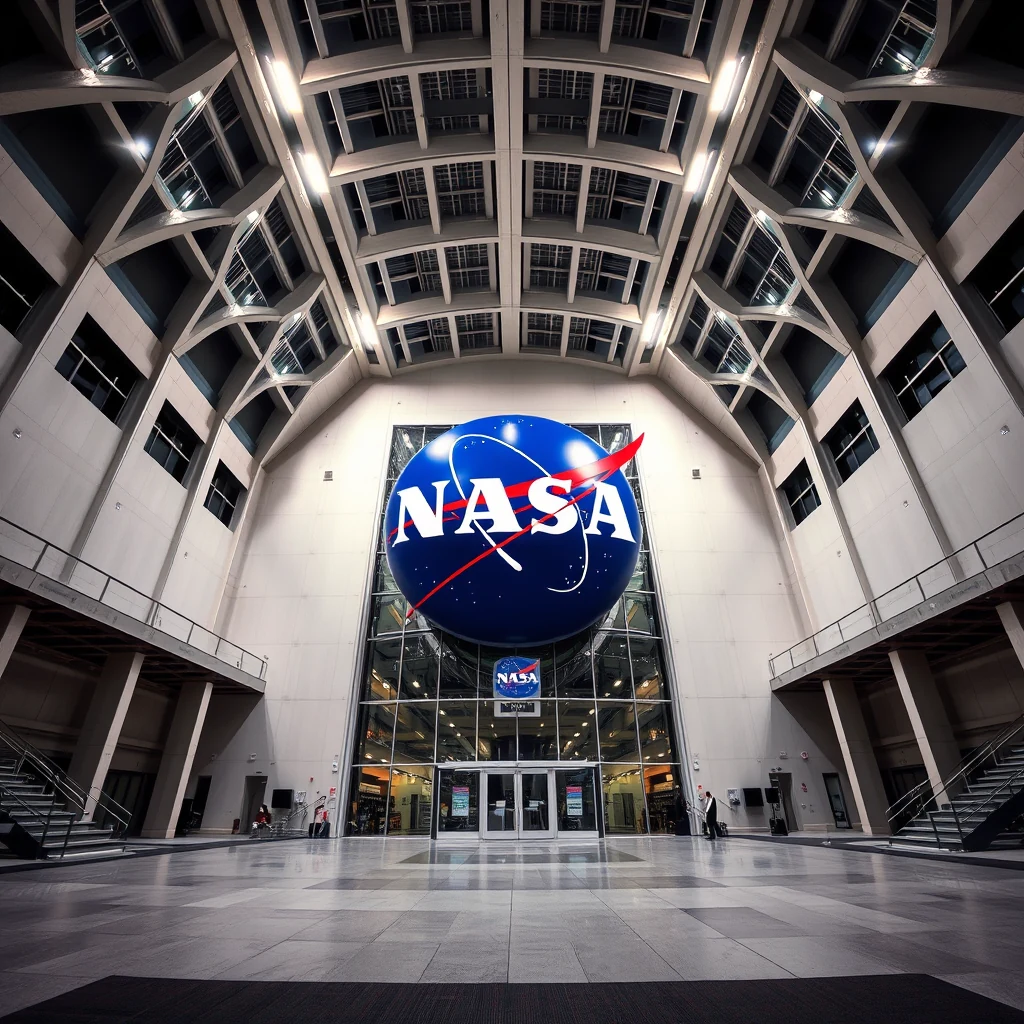
The United States civil space agency, founded in 1958 in response to Sputnik. NASA led the Webb program in partnership with ESA and CSA, with day-to-day science operations handled by the Space Telescope Science Institute in Baltimore. The agency's Goddard Space Flight Center managed the development, integration, and testing of the spacecraft.
美国国家航空航天局(NASA)是成立于1958年的美国民用航天机构,旨在应对苏联发射人造卫星(Sputnik)的挑战。NASA与欧空局(ESA)及加拿大空间局(CSA)合作领导了韦布计划,日常的科学运营由位于巴尔的摩的空间望远镜科学研究所(STScI)负责。该机构的戈达德空间飞行中心负责管理航天器的开发、集成和测试。
Agencia espacial civil de los Estados Unidos, fundada en 1958 en respuesta al Sputnik. La NASA dirigió el programa Webb en asociación con la ESA y la CSA, y las operaciones científicas diarias corren a cargo del Instituto de Ciencias del Telescopio Espacial en Baltimore. El Centro de Vuelo Espacial Goddard de la agencia gestionó el desarrollo, integración y pruebas de la nave.
وكالة ناسا هي وكالة الفضاء المدنية التابعة للولايات المتحدة، تأسست عام 1958 استجابة لإطلاق الاتحاد السوفيتي للقمر الصناعي سبوتنيك. قادت ناسا برنامج ويب بالشراكة مع وكالتي الفضاء الأوروبية والكندية، بينما يتولى معهد علوم تلسكوب الفضاء في بالتيمور العمليات العلمية اليومية. أدار مركز غودارد لرحلات الفضاء التابع للوكالة عمليات تطوير المركبة وتجميعها واختبارها.
A agência espacial civil dos Estados Unidos, fundada em 1958 em resposta ao Sputnik. A NASA liderou o programa Webb em parceria com a ESA e a CSA, com as operações científicas diárias coordenadas pelo Space Telescope Science Institute em Baltimore. O Goddard Space Flight Center da agência gerenciou o desenvolvimento, a integração e os testes da espaçonave.
संयुक्त राज्य अमेरिका की नागरिक अंतरिक्ष एजेंसी, जिसकी स्थापना 1958 में स्पुतनिक (Sputnik) के जवाब में की गई थी, जिसे नासा (NASA) कहा जाता है। नासा ने ईएसए (ESA) और सीएसए (CSA) के साथ साझेदारी में जेम्स वेब कार्यक्रम का नेतृत्व किया, जिसमें बाल्टीमोर में स्पेस टेलीस्कोप साइंस इंस्टीट्यूट दैनिक विज्ञान संचालन संभालता है। एजेंसी के गोडार्ड स्पेस फ्लाइट सेंटर ने यान के विकास का प्रबंधन किया।
Lembaga antariksa sipil Amerika Serikat, didirikan pada tahun 1958 sebagai tanggapan atas peluncuran Sputnik oleh Uni Soviet. NASA memimpin program Webb dalam kemitraan dengan ESA dan CSA, dengan operasi sains sehari-hari ditangani oleh Space Telescope Science Institute di Baltimore. Goddard Space Flight Center mengelola pengembangan, integrasi, dan pengujian wahana.
Agence spatiale civile des États-Unis, fondée en 1958 en réponse au lancement de Spoutnik. La NASA a dirigé le programme Webb en partenariat avec l'ESA et la CSA, les opérations scientifiques quotidiennes étant gérées par le Space Telescope Science Institute à Baltimore. Le centre de vol spatial Goddard de l'agence a supervisé le développement, l'intégration et les tests de la sonde.
スプートニク・ショックに対応して1958年に設立されたアメリカ合衆国の政府機関。ESA(欧州宇宙機関)およびCSA(カナダ宇宙機関)と提携してウェブ計画を主導し、日々の科学運用はボルチモアの宇宙望遠鏡科学研究所(STScI)が担当している。同機関のゴダード宇宙飛行センターが宇宙船の開発、統合、およびテストを管理した。
Гражданское космическое агентство США, основанное в 1958 году в ответ на запуск советского «Спутника». НАСА возглавило программу «Уэбб» в партнерстве с ЕКА и ККА, при этом повседневной научной работой занимается Научный институт космического телескопа в Балтиморе. Центр космических полетов имени Годдарда руководил проектированием, сборкой и испытаниями аппарата.
Die zivile Weltraumbehörde der Vereinigten Staaten, gegründet 1958 als Reaktion auf den Start von Sputnik. Die NASA leitete das Webb-Programm in Partnerschaft mit der ESA und der CSA, wobei der tägliche Wissenschaftsbetrieb vom Space Telescope Science Institute in Baltimore abgewickelt wird. Das Goddard Space Flight Center der Behörde verwaltete die Entwicklung, Integration und Erprobung der Sonde.
1958년 소련의 스푸트니크 발사에 대응하여 설립된 미국의 민간 우주 기관(NASA)이다. 유럽우주국(ESA), 캐나다우주국(CSA)과의 파트너십 하에 제임스 웹 망원경 프로젝트를 총괄했으며, 일상적인 과학 관측 업무는 볼티모어의 우주망원경과학연구소(STScI)에서 수행한다. NASA 산하 고다드 우주비행센터가 우주선 설계 개발, 통합 및 조립 테스트 과정을 관리했다.
Mentioned in 9 articles
- Engineering Charles Stark Draper - Father of Inertial Navigation The Apollo astronauts could have missed the Moon by thousands of kilometres. The fact that they landed within feet of their target came down to one engineer's absolute refusal to rely on the stars, the horizon, or radio signals from Earth.
- History James Webb's Mirror - 18 Segments Aligned Perfectly When the James Webb Space Telescope launched in 2021, its primary mirror was folded up like a drop-leaf table. At 6.5 metres across, it was too large for any rocket fairing. To see the earliest galaxies, it had to unfold in a vacuum and align itself to a tolerance of ten nanometres.
- Astronomy JWST Deployment The James Webb Space Telescope had to unfold itself a million miles from Earth, through 344 mechanisms that had never been tested together under the conditions that mattered. There was no second attempt.
- Chemistry Aerogel A block of silica aerogel looks like a slice of the afternoon sky caught in a box. It is 99.8 per cent air, light enough to rest on a dandelion seed, yet it can withstand the heat of a blowtorch and once helped NASA catch pieces of a comet.
- Chemistry Ferrofluid A black pool of liquid that erupts into a geometric forest of needles under a magnet's influence. Developed for space travel, ferrofluid sits at the intersection of fluid dynamics and magnetic field theory, behaving like a liquid until it adopts the rigid, spiked posture of a solid.
- Astronomy Tabby's Star A white-hot star in the constellation Cygnus behaved so erratically that astronomers briefly considered the impossible: a massive, alien-built structure blocking its light. The truth turned out to be less cinematic but far more instructive for the future of deep-space observation.
- Astronomy The Pioneer Plaque A six-by-nine inch plate of gold-anodized aluminium, bolted to the side of a machine now drifting in the interstellar void, carries our first intentional letter to the cosmos. It is a map, a clock, and a portrait of a species that may well be extinct by the time it is read.
- Physics The Dzhanibekov Effect In 1985, a Soviet cosmonaut watched a spinning wing nut perform a ghostly, periodic somersault in the silence of the Salyut 7 space station. This "Dzhanibekov Effect" revealed a fundamental instability hidden in the mathematics of rotation, where objects with three distinct axes simply refuse to spin straight.
- Physics The Yarkovsky Effect A force no stronger than the weight of a single strawberry is currently pushing a half-kilometre mountain of rock through the void. This silent, thermal nudge, discovered by a nineteenth-century railway engineer, is the reason why the Solar System’s orbital map is never truly finished.