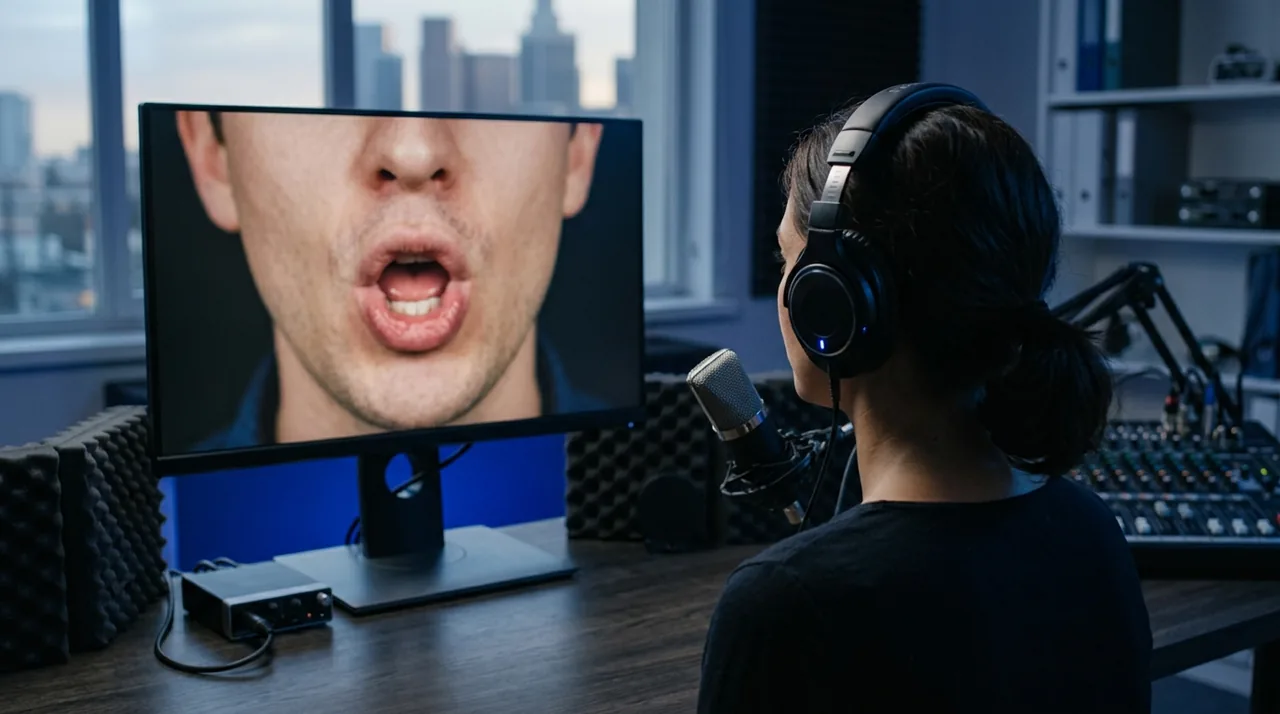
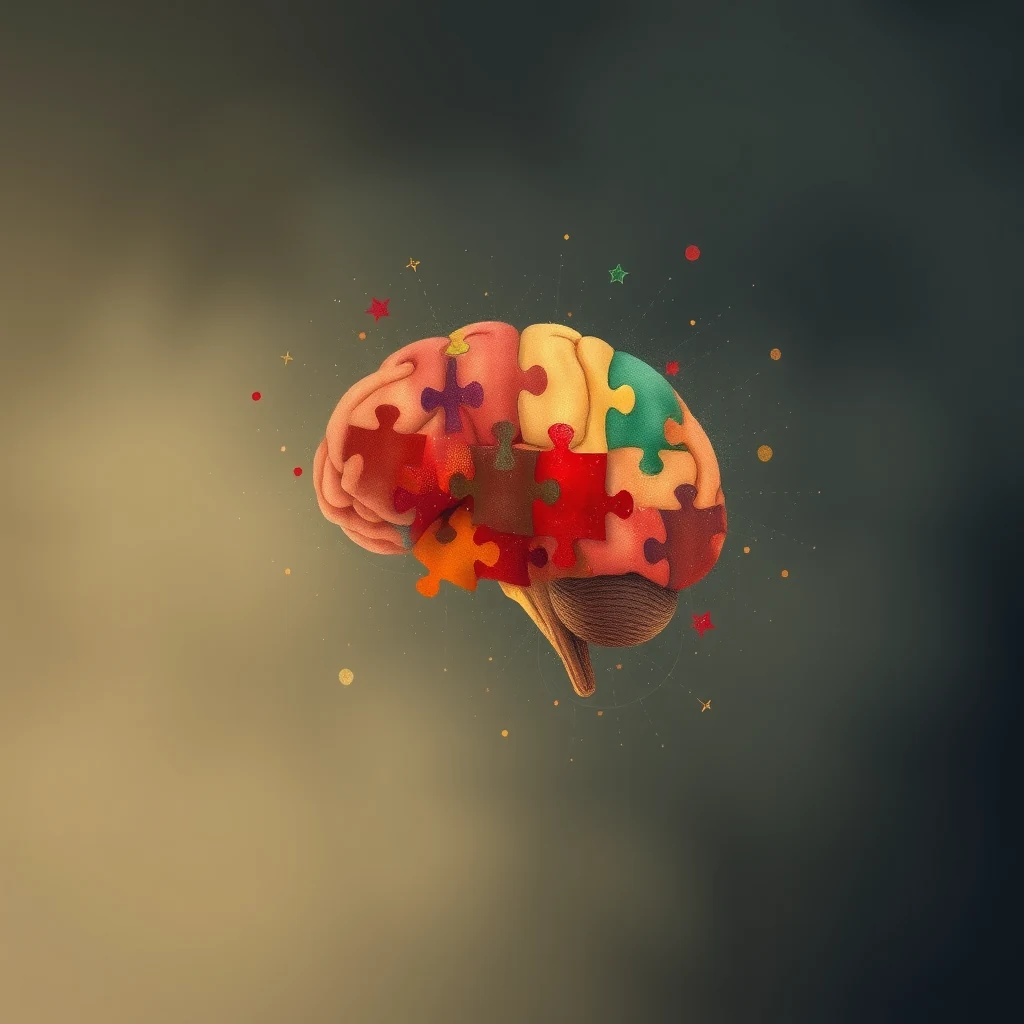
Watch a man's lips form the syllable 'ga' while a loudspeaker plays 'ba.' You will hear 'da' — a sound that exists in neither track. Knowing the trick does not break it.
In 1976, a developmental psychologist at the University of SurreyInstitutionUniversity of SurreyPublic research university in Guildford, south of London, chartered in 1966 out of the older Battersea College of Technology. In the mid-1970s its small psychology department was running infant-perception studies funded by the UK Medical Research Council. One of those studies, on lip-reading and speech development, produced the dubbed videotape that yielded the McGurk effect.公立研究型大学,位于伦敦以南的吉尔福德,1966年由历史更悠久的巴特西理工学院改制获批建立。20世纪70年代中期,该校规模较小的心理学系正在开展婴儿感知研究,项目由英国医学研究理事会资助。其中一项关于唇读与言语发展的研究,制作了一段配音录像带,由此揭示了麦格克效应。Universidad pública de investigación situada en Guildford, al sur de Londres, constituida en 1966 a partir del antiguo Battersea College of Technology. A mediados de la década de 1970, su reducido departamento de psicología llevaba a cabo estudios sobre percepción infantil financiados por el Medical Research Council del Reino Unido. Uno de esos estudios, centrado en la lectura labial y el desarrollo del habla, produjo la cinta de vídeo doblada de la que surgió el efecto McGurk.جامعة بحثية عامة في غيلدفورد جنوب لندن، مُنحت ميثاقها الملكي عام 1966 خلفاً لكلية باترسي للتكنولوجيا الأقدم منها. في منتصف سبعينيات القرن العشرين، كان قسمها الصغير لعلم النفس يُجري دراسات في إدراك الرضع بتمويل من مجلس البحوث الطبية البريطاني. وقد أسفرت إحدى تلك الدراسات، المعنية بقراءة الشفاه وتطور الكلام، عن شريط فيديو مدبلج أفضى إلى اكتشاف تأثير ماكغورك.Universidade pública de investigação situada em Guildford, ao sul de Londres, constituída por alvará real em 1966 a partir do antigo Battersea College of Technology. Em meados da década de 1970, o seu reduzido departamento de psicologia conduzia estudos de percepção infantil financiados pelo Conselho de Pesquisa Médica do Reino Unido. Um desses estudos, sobre leitura labial e desenvolvimento da fala, produziu a fita de vídeo dublada que originou o efeito McGurk.गिल्डफ़ोर्ड, लंदन के दक्षिण में स्थित सार्वजनिक शोध विश्वविद्यालय, जिसे 1966 में पुराने बैटर्सी कॉलेज ऑफ़ टेक्नोलॉजी से चार्टर प्रदान कर स्थापित किया गया था। 1970 के दशक के मध्य में इसके छोटे मनोविज्ञान विभाग में यूके मेडिकल रिसर्च काउंसिल द्वारा वित्तपोषित शिशु-प्रत्यक्षण अध्ययन संचालित हो रहे थे। उन्हीं में से एक अध्ययन — होंठ-पठन और वाक् विकास पर केंद्रित — ने वह डब किया हुआ वीडियोटेप उत्पन्न किया जिसने मैकगर्क प्रभाव को जन्म दिया।Universitas riset publik di Guildford, selatan London, yang memperoleh piagam pada 1966 dari Battersea College of Technology yang lebih lama. Pada pertengahan 1970-an, departemen psikologinya yang kecil menjalankan kajian persepsi bayi yang didanai oleh Medical Research Council Inggris. Salah satu kajian tersebut, mengenai membaca gerak bibir dan perkembangan tuturan, menghasilkan kaset video sulih suara yang melahirkan efek McGurk.Université publique de recherche établie à Guildford, au sud de Londres, fondée par charte en 1966 à partir de l'ancien Battersea College of Technology. Au milieu des années 1970, son département de psychologie, de taille modeste, conduisait des études sur la perception du nourrisson financées par le Medical Research Council du Royaume-Uni. L'une d'elles, consacrée à la lecture labiale et au développement de la parole, produisit la bande vidéo doublée d'où émergea l'effet McGurk.ギルドフォード(ロンドン南部)に所在する公立研究大学。旧バタシー工科大学を母体として1966年に勅許を受け設立された。1970年代中頃、同大学の小規模な心理学科は英国医学研究評議会(MRC)の資金援助のもとで乳幼児知覚研究を実施していた。そのうち読唇と言語発達を主題とした研究が、マクガーク効果の発見をもたらした吹き替えビデオテープを生み出した。Государственный исследовательский университет в Гилфорде к югу от Лондона, получивший университетский устав в 1966 году на основе Баттерсийского технологического колледжа. В середине 1970-х годов небольшая кафедра психологии университета проводила финансируемые Советом медицинских исследований Великобритании исследования восприятия у младенцев. Одно из этих исследований — по чтению по губам и развитию речи — породило дублированную видеозапись, результатом которой стало открытие эффекта Макгурка.Öffentliche Forschungsuniversität in Guildford, südlich von London, 1966 durch königliche Charta aus dem älteren Battersea College of Technology hervorgegangen. Mitte der 1970er-Jahre führte deren kleines Psychologieinstitut Wahrnehmungsstudien an Säuglingen durch, finanziert vom britischen Medical Research Council. Eine dieser Studien, zum Lippenlesen und zur Sprachentwicklung, produzierte das synchronisierte Videoband, aus dem der McGurk-Effekt hervorging.런던 남부 길퍼드 소재의 공립 연구중심대학교. 구(舊) 배터시 공과대학을 모체로 1966년 왕실 인가를 받아 설립되었다. 1970년대 중반, 소규모 심리학과에서 영국 의학연구위원회(MRC)의 지원하에 영아 지각 연구를 수행하였으며, 그 가운데 독화(lip-reading)와 언어 발달에 관한 연구에서 제작된 더빙 비디오테이프가 맥거크 효과를 도출하였다. named Harry McGurkPersonHarry McGurkScottish developmental psychologist (1936–1998) who spent most of his career studying how infants pick up language from the faces around them. The illusion that bears his name was a by-product of a control experiment run with his assistant John MacDonald at the University of Surrey in 1976. He later directed the Australian Institute of Family Studies in Melbourne.苏格兰发展心理学家(1936—1998),职业生涯大部分时间致力于研究婴儿如何从周围人的面孔习得语言。以其名字命名的错觉,是他与助手约翰·麦克唐纳于1976年在萨里大学进行对照实验时的副产品。他后来出任墨尔本澳大利亚家庭研究所所长。Psicólogo del desarrollo escocés (1936–1998) que dedicó la mayor parte de su carrera al estudio de cómo los lactantes adquieren el lenguaje a partir de los rostros que los rodean. La ilusión que lleva su nombre fue un subproducto de un experimento de control realizado junto a su asistente John MacDonald en la Universidad de Surrey en 1976. Posteriormente dirigió el Instituto Australiano de Estudios de la Familia en Melbourne.عالم نفس نمائي اسكتلندي (1936–1998) أمضى معظم مسيرته المهنية في دراسة كيفية اكتساب الرضّع للغة من الوجوه المحيطة بهم. والوهمُ الذي يحمل اسمه كان نتاجاً عرضياً لتجربة ضابطة أجراها مع مساعده جون ماكدونالد في جامعة ساري عام 1976. وتولّى لاحقاً إدارة المعهد الأسترالي للدراسات الأسرية في ملبورن.Psicólogo do desenvolvimento escocês (1936–1998) que passou a maior parte de sua carreira estudando como os lactentes adquirem a linguagem a partir dos rostos ao seu redor. A ilusão que leva seu nome foi um subproduto de um experimento de controle realizado com seu assistente John MacDonald na Universidade de Surrey em 1976. Posteriormente, dirigiu o Instituto Australiano de Estudos da Família em Melbourne.स्कॉटिश विकासात्मक मनोवैज्ञानिक (1936–1998), जिन्होंने अपने कार्यकाल का अधिकांश भाग यह अध्ययन करने में व्यतीत किया कि शिशु अपने आसपास के चेहरों से भाषा किस प्रकार ग्रहण करते हैं। उनके नाम पर आधारित भ्रम 1976 में सरे विश्वविद्यालय में उनके सहायक जॉन मैकडॉनल्ड के साथ संचालित एक नियंत्रण प्रयोग का उपोत्पाद था। बाद में उन्होंने मेलबर्न स्थित ऑस्ट्रेलियन इंस्टीट्यूट ऑफ़ फ़ैमिली स्टडीज़ का निदेशन किया।Psikolog perkembangan Skotlandia (1936–1998) yang menghabiskan sebagian besar kariernya mempelajari cara bayi memperoleh bahasa dari wajah-wajah di sekitar mereka. Ilusi yang menyandang namanya merupakan produk sampingan dari eksperimen kontrol yang dilakukan bersama asistennya, John MacDonald, di Universitas Surrey pada tahun 1976. Ia kemudian memimpin Australian Institute of Family Studies di Melbourne.Psychologue du développement écossais (1936–1998) qui consacra l'essentiel de sa carrière à l'étude de l'acquisition du langage par les nourrissons à partir des visages qui les entourent. L'illusion qui porte son nom est le sous-produit d'une expérience de contrôle menée avec son assistant John MacDonald à l'université de Surrey en 1976. Il dirigea par la suite l'Institut australien des études familiales à Melbourne.スコットランド出身の発達心理学者(1936–1998年)。乳児が周囲の顔から言語を習得するプロセスの研究に生涯の大半を費やした。その名を冠した錯覚は、1976年にサリー大学で助手のジョン・マクドナルドとともに実施した対照実験の副産物として生まれた。後にメルボルンのオーストラリア家族研究所を所長として率いた。Шотландский психолог в области психологии развития (1936–1998), посвятивший большую часть карьеры исследованию того, как младенцы усваивают речь, ориентируясь на лица окружающих. Иллюзия, носящая его имя, возникла как побочный результат контрольного эксперимента, проведённого им совместно с ассистентом Джоном Макдональдом в Университете Суррея в 1976 году. Впоследствии возглавил Австралийский институт изучения семьи в Мельбурне.Schottischer Entwicklungspsychologe (1936–1998), der den Großteil seiner Laufbahn der Erforschung des Spracherwerbs von Säuglingen aus den Gesichtern ihrer Umgebung widmete. Die nach ihm benannte Illusion war ein Nebenprodukt eines Kontrollexperiments, das er 1976 gemeinsam mit seinem Assistenten John MacDonald an der University of Surrey durchführte. Später leitete er das Australian Institute of Family Studies in Melbourne.스코틀랜드 출신의 발달심리학자(1936–1998)로, 경력의 대부분을 영아가 주변 사람들의 얼굴로부터 언어를 습득하는 방식 연구에 바쳤다. 그의 이름을 딴 착각 현상은 1976년 서리 대학교에서 조교 존 맥도널드와 함께 수행한 통제 실험의 부산물로 발견되었다. 이후 멜버른에 소재한 오스트레일리아 가족 연구소 소장을 역임하였다. was running an experiment on how infants pick up speech from their mothers' faces. He asked his research assistant, John MacDonald, to dub a video so the lip movements and the audio did not match — a control, basically, to see whether babies noticed the mismatch. When they played the tape back to check it, they noticed something stranger than anything the babies were doing. The adults in the room were hearing a third syllable. Not the one on the soundtrack, not the one on the lips. A new one, invented somewhere between the eye and the ear.
They wrote it up for *Nature* under a title that has aged into deadpan comedy: "Hearing lips and seeing voices." The paper was two pages long. It changed how cognitive scientists thought about perception.
M: McGurk effect: Wear Your Dictionary: Katakana: Transliteration: Pronunciation: Englishdictionarywear · BY 2.0
The classic demonstration goes like this. Record an audio track of a speaker saying the syllable /ba/. Film the same speaker saying /ga/. Lay the /ba/ audio over the /ga/ video. Listeners overwhelmingly report hearing /da/ — a phoneme that is present in neither input. Close your eyes and the illusion vanishes; you hear /ba/, cleanly. Open them and /da/ comes back. The effect survives knowing about it. It survives reading this paragraph. It survives a PhD in phonetics.
What the brain is doing
Speech, it turns out, is not an auditory phenomenon. It is an audiovisual one, and the brain treats it that way from very early in processing. The mouth shape for /ba/ requires the lips to close completely; /ga/ is articulated at the back of the throat with the lips open; /da/ sits between them, made with the tongue on the ridge behind the teeth. Faced with a closed-lip sound paired with an open-lip mouth, the brain refuses to throw either signal away. It splits the difference and picks a phoneme whose articulation is consistent with both — or at least less inconsistent than the alternatives.
A close portrait setup of a speaker forming a consonant while audio equipment plays a diffIllustration · AI-generated (FLUX.1-dev)
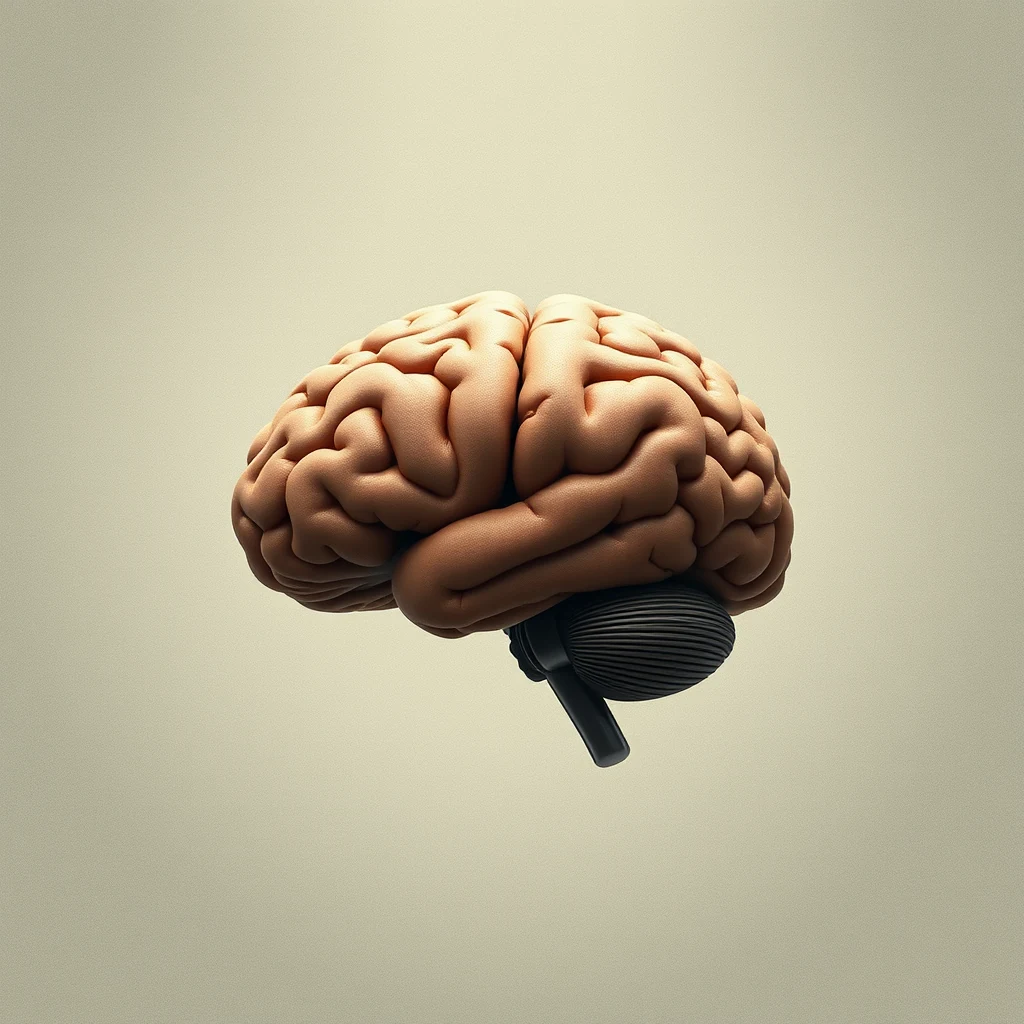
This kind of cross-modal integration is now thought to happen in the superior temporal sulcusConceptSuperior temporal sulcusA long furrow running horizontally along the side of the brain, separating the superior and middle temporal gyri. In humans it is the principal site where auditory and visual information about other people — voices, faces, mouth movements, biological motion — are fused into a single perceptual stream. Disrupting it briefly with magnetic stimulation suppresses the McGurk effect almost entirely.沿大脑外侧水平延伸的一条长沟,将颞上回与颞中回分隔开来。在人类中,它是关于他人的听觉与视觉信息——嗓音、面孔、口部动作、生物运动——融合为单一知觉流的主要部位。以磁刺激短暂干扰该区域,可几乎完全抑制麦格克效应。Largo surco que discurre horizontalmente por la cara lateral del cerebro, separando las circunvoluciones temporales superior y media. En el ser humano constituye el sitio principal donde la información auditiva y visual sobre otras personas —voces, rostros, movimientos de la boca, movimiento biológico— se fusiona en un único flujo perceptivo. Su perturbación breve mediante estimulación magnética suprime el efecto McGurk casi por completo.تلمٌ طويل يمتد أفقياً على السطح الجانبي للدماغ، فاصلاً بين التلفيف الصدغي العلوي والتلفيف الصدغي الأوسط. في الإنسان، يُمثّل الموقع الرئيسي الذي تتكامل فيه المعلومات السمعية والبصرية المتعلقة بالأفراد الآخرين — الأصوات والوجوه وحركات الفم والحركة البيولوجية — في مسار إدراكي موحَّد. إخلال نشاطه لفترة وجيزة بالتحفيز المغناطيسي يكاد يُلغي تأثير ماكغورك كلياً.Sulco longo de orientação horizontal que percorre a face lateral do encéfalo, separando os giros temporais superior e médio. No ser humano, constitui o principal sítio onde informações auditivas e visuais relativas a outras pessoas — vozes, rostos, movimentos da boca, movimento biológico — são integradas em um único fluxo perceptivo. A perturbação breve dessa região por estimulação magnética suprime o efeito McGurk de forma quase completa.मस्तिष्क के पार्श्व भाग के साथ क्षैतिज रूप से फैली एक लंबी खाँच, जो श्रेष्ठ और मध्य टेम्पोरल गाइरी को पृथक करती है। मनुष्यों में यह वह प्रमुख स्थल है जहाँ अन्य व्यक्तियों से संबंधित श्रवण और दृश्य सूचनाएँ — आवाज़ें, चेहरे, मुख की गतिविधियाँ, जैविक गति — एकल प्रात्यक्षिक धारा में संयुक्त होती हैं। चुंबकीय उद्दीपन द्वारा इसे क्षणिक रूप से बाधित करने पर मैकगर्क प्रभाव लगभग पूर्णतः दब जाता है।Sulkus panjang yang berjalan horizontal di sisi lateral otak, memisahkan girus temporal superior dan girus temporal tengah. Pada manusia, struktur ini merupakan lokasi utama tempat informasi auditori dan visual mengenai orang lain — suara, wajah, gerakan mulut, gerak biologis — dipadukan menjadi satu aliran perseptual. Gangguan singkat pada area ini melalui stimulasi magnetik menekan efek McGurk hampir sepenuhnya.Long sillon horizontal situé sur la face latérale du cerveau, séparant le gyrus temporal supérieur du gyrus temporal moyen. Chez l'être humain, il constitue le principal site où les informations auditives et visuelles relatives à autrui — voix, visages, mouvements labiaux, mouvement biologique — sont fusionnées en un flux perceptif unique. Une brève perturbation de ce sillon par stimulation magnétique supprime presque entièrement l'effet McGurk.脳の側面を水平に走る長い溝で、上側頭回と中側頭回を隔てる。ヒトでは、他者に関する聴覚・視覚情報——声、顔、口の動き、生物学的運動——が単一の知覚流へと融合される主要部位である。磁気刺激によってこの部位を一時的に阻害すると、マガーク効果がほぼ完全に抑制される。Длинная борозда, проходящая горизонтально по боковой поверхности мозга и разделяющая верхнюю и среднюю височные извилины. У человека является главным участком, где слуховая и зрительная информация о других людях — голоса, лица, движения губ, биологическое движение — сливается в единый перцептивный поток. Кратковременное нарушение её работы посредством магнитной стимуляции почти полностью подавляет эффект Мак-Гурка.Eine lang gestreckte, horizontal verlaufende Furche an der Seitenoberfläche des Gehirns, die den Gyrus temporalis superior vom Gyrus temporalis medius trennt. Beim Menschen ist sie die wichtigste Region, in der auditorische und visuelle Informationen über andere Personen – Stimmen, Gesichter, Mundbewegungen, biologische Bewegung – zu einem einheitlichen Wahrnehmungsstrom integriert werden. Kurzzeitige Unterbrechung ihrer Aktivität durch Magnetstimulation unterdrückt den McGurk-Effekt nahezu vollständig.뇌의 측면을 수평으로 가로지르며 상측두이랑과 중측두이랑을 구분하는 긴 고랑. 인간에서 이 구조는 타인에 관한 청각·시각 정보—목소리, 얼굴, 입 움직임, 생물학적 운동—가 단일한 지각 흐름으로 통합되는 주요 부위이다. 자기 자극으로 이 부위를 일시적으로 교란하면 맥거크 효과가 거의 완전히 억제된다., a fold of cortex above the ear that lights up in fMRI scans whenever audio and visual speech are combined. Damage there, or temporarily disrupt it with transcranial magnetic stimulation, and the McGurk effect weakens or disappears. The illusion is not a glitch in some peripheral lip-reading module. It is a load-bearing piece of how typical brains parse a conversation.
Henry Clay Keenan and the Lindauer gang of Jersey City, New Jersey in the Jersey Journal Thursday, August 29, 1895AnonymousUnknown author · Public domain
The effect is not universal. Native speakers of Mandarin and Japanese show it less reliably than native English speakers, and the strength varies with age, hearing loss, and even how well the listener can see the speaker's face. Children under about ten show a weaker effect than adults: the integration gets stronger with practice, not weaker. There is a real and replicated autism spectrumConceptAutism spectrumUmbrella term, formalised in the DSM-5 in 2013, for a range of neurodevelopmental conditions characterised by differences in social communication and sensory processing. Within McGurk research, autistic children and adults reliably show a weaker integration of mouth and voice than neurotypical controls — a finding sometimes used as evidence that multisensory binding develops along an atypical trajectory.总括性术语,于2013年在DSM-5中正式确立,指一系列以社会沟通和感觉处理差异为特征的神经发育障碍。在麦格克效应研究领域,自闭症儿童及成人对口型与声音的整合程度可靠地弱于神经发育典型对照者——这一发现有时被援引为多感官整合沿非典型轨迹发展的证据。Término paraguas, formalizado en el DSM-5 en 2013, para un conjunto de condiciones del neurodesarrollo caracterizadas por diferencias en la comunicación social y el procesamiento sensorial. En el ámbito de la investigación sobre el efecto McGurk, los niños y adultos autistas muestran de manera consistente una integración de la información visual labial y auditiva más débil que los controles neurotípicos, hallazgo que en ocasiones se aduce como evidencia de que la integración multisensorial sigue una trayectoria atípica en su desarrollo.مصطلح مظلّي جرى تقنينه رسمياً في الدليل التشخيصي والإحصائي للاضطرابات النفسية - الإصدار الخامس (DSM-5) عام 2013، يضمّ طيفاً من اضطرابات النمو العصبي التي تتّسم بفوارق في التواصل الاجتماعي ومعالجة المدخلات الحسية. وفي سياق أبحاث تأثير ماكغورك، يُظهر الأطفال والبالغون التوحديون باطّراد تكاملاً أضعف بين مدخلَي الفم والصوت مقارنةً بالمجموعات الضابطة ذات النمط العصبي السوي — وهو استنتاج يُحتجّ به أحياناً دليلاً على أن الربط متعدد الحواس يسير وفق مسار نمائي غير نمطي.Termo abrangente, formalizado no DSM-5 em 2013, para um conjunto de condições neurodesenvolvimentais caracterizadas por diferenças na comunicação social e no processamento sensorial. No âmbito da pesquisa McGurk, crianças e adultos autistas demonstram consistentemente uma integração mais fraca entre boca e voz do que os controles neurotípicos — achado por vezes invocado como evidência de que a integração multissensorial segue uma trajetória de desenvolvimento atípica.2013 में DSM-5 में औपचारिकीकृत एक छत्र-शब्द, जो सामाजिक संप्रेषण तथा संवेदी प्रसंस्करण में अंतर द्वारा अभिलक्षित तंत्रिका-विकासात्मक दशाओं की एक श्रेणी को समाहित करता है। मैकगर्क अनुसंधान के अंतर्गत, ऑटिस्टिक बच्चे और वयस्क न्यूरोटिपिकल नियंत्रण समूहों की तुलना में मुख और वाणी का विश्वसनीय रूप से दुर्बलतर एकीकरण प्रदर्शित करते हैं — एक निष्कर्ष जिसे कभी-कभी इस बात के साक्ष्य के रूप में प्रयुक्त किया जाता है कि बहुसंवेदी बंधन एक अटिपिकल प्रक्षेपवक्र पर विकसित होता है।Istilah payung, yang diformalkan dalam DSM-5 pada tahun 2013, untuk serangkaian kondisi neurodevelopmental yang ditandai oleh perbedaan dalam komunikasi sosial dan pemrosesan sensorik. Dalam penelitian McGurk, anak-anak dan orang dewasa autistik secara konsisten menunjukkan integrasi antara gerakan mulut dan suara yang lebih lemah dibandingkan kontrol neurotipis — suatu temuan yang kadang dijadikan bukti bahwa pengikatan multisensorik berkembang melalui lintasan yang atipikal.Terme générique, formalisé dans le DSM-5 en 2013, désignant un ensemble de troubles neurodéveloppementaux caractérisés par des différences en matière de communication sociale et de traitement sensoriel. Dans les recherches sur l'effet McGurk, les enfants et adultes autistes présentent de manière fiable une intégration plus faible de la bouche et de la voix que les témoins neurotypiques — résultat parfois invoqué comme indice que l'intégration multisensorielle suit une trajectoire atypique.2013年にDSM-5において正式化された包括的用語であり、社会的コミュニケーションおよび感覚処理における差異を特徴とする一連の神経発達状態を総称する。マガーク研究においては、自閉スペクトラム症の子どもおよび成人は定型発達の対照群に比べて口形と音声の統合が一貫して弱いことが示されており、この知見は多感覚統合が非定型的な発達軌跡をたどるという主張の根拠として援用されることがある。Зонтичный термин, закреплённый в DSM-5 в 2013 году, обозначающий ряд расстройств нейроразвития, характеризующихся особенностями социальной коммуникации и сенсорной обработки. В исследованиях эффекта Макгёрка аутичные дети и взрослые устойчиво обнаруживают более слабую интеграцию зрительного и слухового компонентов речи по сравнению с нейротипичными контролями — факт, иногда используемый как свидетельство того, что мультисенсорное связывание формируется по атипичной траектории.Oberbegriff, im DSM-5 2013 formalisiert, für eine Reihe von neurodevelopmentalen Störungen, die durch Unterschiede in der sozialen Kommunikation und der sensorischen Verarbeitung gekennzeichnet sind. In der McGurk-Forschung zeigen autistische Kinder und Erwachsene zuverlässig eine schwächere Integration von Mundbild und Stimme als neurotypische Kontrollpersonen – ein Befund, der mitunter als Beleg dafür herangezogen wird, dass sich die multisensorische Bindung auf einem atypischen Entwicklungspfad vollzieht.2013년 DSM-5에서 공식화된 포괄적 용어로, 사회적 의사소통 및 감각 처리의 차이를 특징으로 하는 다양한 신경발달 장애를 아우른다. 맥거크 연구 분야에서 자폐 아동 및 성인은 신경전형적 대조군에 비해 구강 운동과 음성의 통합이 일관되게 약한 것으로 나타나며, 이는 다중감각 결합이 비전형적 발달 궤적을 따른다는 증거로 제시되기도 한다. literature showing reduced susceptibility, which has been used — cautiously — as a window into how multisensory binding develops.
Why this matters more than a party trick
The usual gloss on McGurk is that perception is constructed rather than received, and that is true as far as it goes. But the deeper point is about confidence. When you hear /da/ in the dubbed clip, you do not feel as though you are guessing. You do not experience the brain's hedge between two conflicting inputs. You experience a single, crisp, certain syllable, indistinguishable in subjective character from a /da/ spoken cleanly into a microphone. The construction is invisible from the inside.
A neuroscience testing room where a participant wears a cap of sensors while a silent faceIllustration · AI-generated (FLUX.1-dev)
This is the property that makes the effect philosophically interesting. Most perceptual illusions — the Müller-Lyer arrows, the rotating dancer — announce themselves as illusions even while they fool you. The McGurk effect does not. It is a forgery the brain does not flag.
Vulcanized rubberAlfred T. Palmer · Public domain
In the real world, of course, the brain is usually right to weight the mouth heavily. In a noisy café or over a bad phone line, lip-reading materially improves comprehension; deaf and hard-of-hearing listeners rely on it constantly. McGurk is what that helpful machinery looks like when you feed it a contradiction.
A noisy train platform where one commuter leans closer to read another person's lips amid Illustration · AI-generated (FLUX.1-dev)
What we still don't know
Why does the effect vary so much between individuals? Two adults watching the same clip, with the same hearing and the same first language, can report different syllables — and replication studies have found the rate at which listeners hear /da/ rather than /ba/ ranges anywhere from forty per cent to nearly all of them, depending on the stimulus and the population.
Two volunteers in the same laboratory react differently to the same speech clipIllustration · AI-generated (FLUX.1-dev)
We do not know how much of normal, undubbed conversation is being silently corrected by visual input. Estimates exist, but they are estimates. The contribution is presumably large in noise and small in quiet, but the curve has never been mapped cleanly.
We do not know whether the effect can be unlearned. A 2018 attempt to train listeners out of it, by John F. MagnottiPersonJohn F. MagnottiCognitive neuroscientist at Baylor College of Medicine and later the University of Pennsylvania, whose work with Michael Beauchamp produced the dominant computational account of the McGurk effect: a causal-inference model in which the brain decides, syllable by syllable, whether the eyes and ears are watching the same speaker. The model predicts when listeners will fuse the inputs and when they will not.认知神经科学家,先后任职于贝勒医学院与宾夕法尼亚大学。其与迈克尔·博尚合作,提出了麦格克效应的主流计算解释——一种因果推断模型:大脑逐音节地判断视觉与听觉输入是否源自同一说话者,并据此预测听者在何种情况下会将两种输入融合感知,在何种情况下则不会。Neurocientífico cognitivo en el Baylor College of Medicine y posteriormente en la Universidad de Pensilvania, cuya colaboración con Michael Beauchamp produjo el modelo computacional dominante del efecto McGurk: un modelo de inferencia causal en el que el cerebro decide, sílaba a sílaba, si los ojos y los oídos están observando al mismo hablante. El modelo predice cuándo los oyentes fusionarán las entradas y cuándo no lo harán.عالمُ أعصابٍ إدراكي في كلية بايلور للطب ثم في جامعة بنسلفانيا، أنتج بالتعاون مع مايكل بوشامب التفسيرَ الحسابي السائد لتأثير ماكغورك: نموذجٌ قائمٌ على الاستدلال السببي يُقرِّر فيه الدماغ، مقطعاً صوتياً بمقطع، ما إذا كانت العين والأذن تتابعان المتكلمَ ذاتَه. ويتنبّأ النموذج بالحالات التي يدمج فيها المستمعون المدخلَين وتلك التي لا يفعلون.Neurocientista cognitivo no Baylor College of Medicine e, posteriormente, na Universidade da Pensilvânia, cujo trabalho com Michael Beauchamp produziu a descrição computacional dominante do efeito McGurk: um modelo de inferência causal em que o cérebro decide, sílaba a sílaba, se os olhos e os ouvidos acompanham o mesmo falante. O modelo prevê quando os ouvintes fundirão os estímulos e quando não o farão.बेलर कॉलेज ऑफ मेडिसिन और तत्पश्चात पेन्सिल्वेनिया विश्वविद्यालय में कार्यरत संज्ञानात्मक तंत्रिकाविज्ञानी, जिनके माइकल बीचम के साथ किए गए शोध ने मैकगर्क प्रभाव की प्रमुख संगणनात्मक व्याख्या प्रस्तुत की — एक कारण-अनुमान मॉडल, जिसमें मस्तिष्क अक्षर-दर-अक्षर यह निर्णय करता है कि आँखें और कान एक ही वक्ता को देख-सुन रहे हैं अथवा नहीं। यह मॉडल यह पूर्वानुमान लगाता है कि श्रोता कब इनपुट को संगलित करेंगे और कब नहीं।Neurosaintis kognitif di Baylor College of Medicine dan kemudian di University of Pennsylvania, yang karyanya bersama Michael Beauchamp menghasilkan penjelasan komputasional dominan tentang efek McGurk: sebuah model inferensi kausal di mana otak memutuskan, suku kata demi suku kata, apakah mata dan telinga sedang mengamati penutur yang sama. Model ini memprediksi kapan pendengar akan menyatukan masukan tersebut dan kapan mereka tidak.Neuroscientiste cognitif au Baylor College of Medicine, puis à l'université de Pennsylvanie, dont les travaux menés avec Michael Beauchamp ont fourni le modèle computationnel dominant de l'effet McGurk : un modèle d'inférence causale dans lequel le cerveau détermine, syllabe par syllabe, si les yeux et les oreilles perçoivent le même locuteur. Le modèle prédit quand les auditeurs fusionnent les entrées et quand ils ne le font pas.ベイラー医科大学、のちにペンシルベニア大学に在籍した認知神経科学者。マイケル・ボーシャンとの共同研究により、マガーク効果の主流をなす計算論的説明を確立した。この因果推論モデルでは、脳が音節ごとに、目と耳が同一の話者を捉えているかどうかを判断するとされる。モデルは、聴取者がいつ視聴覚入力を融合し、いつ融合しないかを予測する。Когнитивный нейробиолог, работавший в Медицинском колледже Бейлора, а впоследствии в Университете Пенсильвании; совместные исследования с Майклом Бошаном привели к созданию ведущей вычислительной концепции эффекта Макгурка — модели каузального вывода, в рамках которой мозг определяет, слог за слогом, воспринимают ли зрительная и слуховая системы одного и того же говорящего. Модель предсказывает, в каких случаях слушатели будут интегрировать оба сигнала, а в каких — нет.Kognitionsneurowissenschaftler am Baylor College of Medicine und später an der University of Pennsylvania, dessen Zusammenarbeit mit Michael Beauchamp das dominante computationale Erklärungsmodell des McGurk-Effekts hervorbrachte: ein Kausalinferenzmodell, in dem das Gehirn Silbe für Silbe entscheidet, ob Augen und Ohren denselben Sprecher wahrnehmen. Das Modell sagt voraus, wann Zuhörer die Eingaben fusionieren und wann nicht.베일러 의과대학과 이후 펜실베이니아 대학교에 재직한 인지신경과학자. 마이클 보샹과 공동으로 맥거크 효과에 관한 지배적인 계산론적 설명을 산출하였으며, 이 설명은 인과 추론 모델로서 뇌가 음절 단위로 시각과 청각이 동일한 화자를 지각하고 있는지 여부를 판단한다는 내용이다. 해당 모델은 청취자가 두 입력을 융합하는 경우와 그렇지 않은 경우를 예측한다. and colleagues at Baylor, produced modest, short-lived shifts. The default integration reasserts itself within days.
A viewer studies their own face in a bathroom mirror while softly shaping a syllableIllustration · AI-generated (FLUX.1-dev)
And we do not really know what else the brain is quietly composing. Speech is the case we happened to test, because McGurk had a video editor and a research question about infants. The architecture is presumably more general.
A fifty-year-old illusion, discovered by accident in a dubbing error, is still the cleanest demonstration we have that the voice in your head is not a recording.
راقب شفتي رجل وهما تشكلان مقطع «غا» بينما يبث مكبر الصوت «با». ستسمع «دا» — وهو صوت ليس موجوداً في أي من المسارين. ومعرفة الخدعة لا تفسدها.
في عام 1976، كان عالم نفس نمائي في University of SurreyInstitutionUniversity of SurreyPublic research university in Guildford, south of London, chartered in 1966 out of the older Battersea College of Technology. In the mid-1970s its small psychology department was running infant-perception studies funded by the UK Medical Research Council. One of those studies, on lip-reading and speech development, produced the dubbed videotape that yielded the McGurk effect.公立研究型大学,位于伦敦以南的吉尔福德,1966年由历史更悠久的巴特西理工学院改制获批建立。20世纪70年代中期,该校规模较小的心理学系正在开展婴儿感知研究,项目由英国医学研究理事会资助。其中一项关于唇读与言语发展的研究,制作了一段配音录像带,由此揭示了麦格克效应。Universidad pública de investigación situada en Guildford, al sur de Londres, constituida en 1966 a partir del antiguo Battersea College of Technology. A mediados de la década de 1970, su reducido departamento de psicología llevaba a cabo estudios sobre percepción infantil financiados por el Medical Research Council del Reino Unido. Uno de esos estudios, centrado en la lectura labial y el desarrollo del habla, produjo la cinta de vídeo doblada de la que surgió el efecto McGurk.جامعة بحثية عامة في غيلدفورد جنوب لندن، مُنحت ميثاقها الملكي عام 1966 خلفاً لكلية باترسي للتكنولوجيا الأقدم منها. في منتصف سبعينيات القرن العشرين، كان قسمها الصغير لعلم النفس يُجري دراسات في إدراك الرضع بتمويل من مجلس البحوث الطبية البريطاني. وقد أسفرت إحدى تلك الدراسات، المعنية بقراءة الشفاه وتطور الكلام، عن شريط فيديو مدبلج أفضى إلى اكتشاف تأثير ماكغورك.Universidade pública de investigação situada em Guildford, ao sul de Londres, constituída por alvará real em 1966 a partir do antigo Battersea College of Technology. Em meados da década de 1970, o seu reduzido departamento de psicologia conduzia estudos de percepção infantil financiados pelo Conselho de Pesquisa Médica do Reino Unido. Um desses estudos, sobre leitura labial e desenvolvimento da fala, produziu a fita de vídeo dublada que originou o efeito McGurk.गिल्डफ़ोर्ड, लंदन के दक्षिण में स्थित सार्वजनिक शोध विश्वविद्यालय, जिसे 1966 में पुराने बैटर्सी कॉलेज ऑफ़ टेक्नोलॉजी से चार्टर प्रदान कर स्थापित किया गया था। 1970 के दशक के मध्य में इसके छोटे मनोविज्ञान विभाग में यूके मेडिकल रिसर्च काउंसिल द्वारा वित्तपोषित शिशु-प्रत्यक्षण अध्ययन संचालित हो रहे थे। उन्हीं में से एक अध्ययन — होंठ-पठन और वाक् विकास पर केंद्रित — ने वह डब किया हुआ वीडियोटेप उत्पन्न किया जिसने मैकगर्क प्रभाव को जन्म दिया।Universitas riset publik di Guildford, selatan London, yang memperoleh piagam pada 1966 dari Battersea College of Technology yang lebih lama. Pada pertengahan 1970-an, departemen psikologinya yang kecil menjalankan kajian persepsi bayi yang didanai oleh Medical Research Council Inggris. Salah satu kajian tersebut, mengenai membaca gerak bibir dan perkembangan tuturan, menghasilkan kaset video sulih suara yang melahirkan efek McGurk.Université publique de recherche établie à Guildford, au sud de Londres, fondée par charte en 1966 à partir de l'ancien Battersea College of Technology. Au milieu des années 1970, son département de psychologie, de taille modeste, conduisait des études sur la perception du nourrisson financées par le Medical Research Council du Royaume-Uni. L'une d'elles, consacrée à la lecture labiale et au développement de la parole, produisit la bande vidéo doublée d'où émergea l'effet McGurk.ギルドフォード(ロンドン南部)に所在する公立研究大学。旧バタシー工科大学を母体として1966年に勅許を受け設立された。1970年代中頃、同大学の小規模な心理学科は英国医学研究評議会(MRC)の資金援助のもとで乳幼児知覚研究を実施していた。そのうち読唇と言語発達を主題とした研究が、マクガーク効果の発見をもたらした吹き替えビデオテープを生み出した。Государственный исследовательский университет в Гилфорде к югу от Лондона, получивший университетский устав в 1966 году на основе Баттерсийского технологического колледжа. В середине 1970-х годов небольшая кафедра психологии университета проводила финансируемые Советом медицинских исследований Великобритании исследования восприятия у младенцев. Одно из этих исследований — по чтению по губам и развитию речи — породило дублированную видеозапись, результатом которой стало открытие эффекта Макгурка.Öffentliche Forschungsuniversität in Guildford, südlich von London, 1966 durch königliche Charta aus dem älteren Battersea College of Technology hervorgegangen. Mitte der 1970er-Jahre führte deren kleines Psychologieinstitut Wahrnehmungsstudien an Säuglingen durch, finanziert vom britischen Medical Research Council. Eine dieser Studien, zum Lippenlesen und zur Sprachentwicklung, produzierte das synchronisierte Videoband, aus dem der McGurk-Effekt hervorging.런던 남부 길퍼드 소재의 공립 연구중심대학교. 구(舊) 배터시 공과대학을 모체로 1966년 왕실 인가를 받아 설립되었다. 1970년대 중반, 소규모 심리학과에서 영국 의학연구위원회(MRC)의 지원하에 영아 지각 연구를 수행하였으며, 그 가운데 독화(lip-reading)와 언어 발달에 관한 연구에서 제작된 더빙 비디오테이프가 맥거크 효과를 도출하였다. يُدعى Harry McGurkPersonHarry McGurkScottish developmental psychologist (1936–1998) who spent most of his career studying how infants pick up language from the faces around them. The illusion that bears his name was a by-product of a control experiment run with his assistant John MacDonald at the University of Surrey in 1976. He later directed the Australian Institute of Family Studies in Melbourne.苏格兰发展心理学家(1936—1998),职业生涯大部分时间致力于研究婴儿如何从周围人的面孔习得语言。以其名字命名的错觉,是他与助手约翰·麦克唐纳于1976年在萨里大学进行对照实验时的副产品。他后来出任墨尔本澳大利亚家庭研究所所长。Psicólogo del desarrollo escocés (1936–1998) que dedicó la mayor parte de su carrera al estudio de cómo los lactantes adquieren el lenguaje a partir de los rostros que los rodean. La ilusión que lleva su nombre fue un subproducto de un experimento de control realizado junto a su asistente John MacDonald en la Universidad de Surrey en 1976. Posteriormente dirigió el Instituto Australiano de Estudios de la Familia en Melbourne.عالم نفس نمائي اسكتلندي (1936–1998) أمضى معظم مسيرته المهنية في دراسة كيفية اكتساب الرضّع للغة من الوجوه المحيطة بهم. والوهمُ الذي يحمل اسمه كان نتاجاً عرضياً لتجربة ضابطة أجراها مع مساعده جون ماكدونالد في جامعة ساري عام 1976. وتولّى لاحقاً إدارة المعهد الأسترالي للدراسات الأسرية في ملبورن.Psicólogo do desenvolvimento escocês (1936–1998) que passou a maior parte de sua carreira estudando como os lactentes adquirem a linguagem a partir dos rostos ao seu redor. A ilusão que leva seu nome foi um subproduto de um experimento de controle realizado com seu assistente John MacDonald na Universidade de Surrey em 1976. Posteriormente, dirigiu o Instituto Australiano de Estudos da Família em Melbourne.स्कॉटिश विकासात्मक मनोवैज्ञानिक (1936–1998), जिन्होंने अपने कार्यकाल का अधिकांश भाग यह अध्ययन करने में व्यतीत किया कि शिशु अपने आसपास के चेहरों से भाषा किस प्रकार ग्रहण करते हैं। उनके नाम पर आधारित भ्रम 1976 में सरे विश्वविद्यालय में उनके सहायक जॉन मैकडॉनल्ड के साथ संचालित एक नियंत्रण प्रयोग का उपोत्पाद था। बाद में उन्होंने मेलबर्न स्थित ऑस्ट्रेलियन इंस्टीट्यूट ऑफ़ फ़ैमिली स्टडीज़ का निदेशन किया।Psikolog perkembangan Skotlandia (1936–1998) yang menghabiskan sebagian besar kariernya mempelajari cara bayi memperoleh bahasa dari wajah-wajah di sekitar mereka. Ilusi yang menyandang namanya merupakan produk sampingan dari eksperimen kontrol yang dilakukan bersama asistennya, John MacDonald, di Universitas Surrey pada tahun 1976. Ia kemudian memimpin Australian Institute of Family Studies di Melbourne.Psychologue du développement écossais (1936–1998) qui consacra l'essentiel de sa carrière à l'étude de l'acquisition du langage par les nourrissons à partir des visages qui les entourent. L'illusion qui porte son nom est le sous-produit d'une expérience de contrôle menée avec son assistant John MacDonald à l'université de Surrey en 1976. Il dirigea par la suite l'Institut australien des études familiales à Melbourne.スコットランド出身の発達心理学者(1936–1998年)。乳児が周囲の顔から言語を習得するプロセスの研究に生涯の大半を費やした。その名を冠した錯覚は、1976年にサリー大学で助手のジョン・マクドナルドとともに実施した対照実験の副産物として生まれた。後にメルボルンのオーストラリア家族研究所を所長として率いた。Шотландский психолог в области психологии развития (1936–1998), посвятивший большую часть карьеры исследованию того, как младенцы усваивают речь, ориентируясь на лица окружающих. Иллюзия, носящая его имя, возникла как побочный результат контрольного эксперимента, проведённого им совместно с ассистентом Джоном Макдональдом в Университете Суррея в 1976 году. Впоследствии возглавил Австралийский институт изучения семьи в Мельбурне.Schottischer Entwicklungspsychologe (1936–1998), der den Großteil seiner Laufbahn der Erforschung des Spracherwerbs von Säuglingen aus den Gesichtern ihrer Umgebung widmete. Die nach ihm benannte Illusion war ein Nebenprodukt eines Kontrollexperiments, das er 1976 gemeinsam mit seinem Assistenten John MacDonald an der University of Surrey durchführte. Später leitete er das Australian Institute of Family Studies in Melbourne.스코틀랜드 출신의 발달심리학자(1936–1998)로, 경력의 대부분을 영아가 주변 사람들의 얼굴로부터 언어를 습득하는 방식 연구에 바쳤다. 그의 이름을 딴 착각 현상은 1976년 서리 대학교에서 조교 존 맥도널드와 함께 수행한 통제 실험의 부산물로 발견되었다. 이후 멜버른에 소재한 오스트레일리아 가족 연구소 소장을 역임하였다. يجري تجربة حول كيفية التقاط الرُّضع للغة من وجوه أمهاتهم. طلب من مساعده البحثي، جون ماكدونالد، دبلجة مقطع فيديو بحيث لا تتطابق حركات الشفاه مع الصوت — وهو إجراء ضبط، في الأساس، لمعرفة ما إذا كان الرُّضع يلاحظون هذا التباين. وعندما أعادا تشغيل الشريط للمراجعة، لاحظا شيئاً أغرب من أي شيء كان يفعله الرُّضع. فالبالغون في الغرفة كانوا يسمعون مقطعاً صوتياً ثالثاً. ليس المقطع الموجود في الشريط، وليس المقطع الذي تشير إليه حركة الشفاه. بل مقطعاً جديداً، ابتكره الدماغ في مكان ما بين العين والأذن.
قاما بتدوين النتائج لمجلة *Nature* تحت عنوان تحوّل مع مرور الوقت إلى كوميديا ساخرة: "سماع الشفاه ورؤية الأصوات". كانت الورقة البحثية مكوّنة من صفحتين، لكنها غيّرت الطريقة التي ينظر بها علماء الإدراك المعرفي إلى مفهوم التصور.
M: McGurk effect: Wear Your Dictionary: Katakana: Transliteration: Pronunciation: Englishdictionarywear · BY 2.0
تتم التجربة الكلاسيكية على النحو التالي: سُجِّل مقطع صوتي لشخص ينطق المقطع /ba/، وصُوِّر الشخص نفسه وهو ينطق المقطع /ga/، ثم وُضع صوت /ba/ فوق فيديو /ga/. أفاد المستمعون بشكل ساحق بأنهم سمعوا المقطع /da/ — وهو صوت لغوي (فونيم) غير موجود في أي من المدخلين. أغلق عينيك فتختفي الخدعة؛ وتسمع /ba/ بوضوح. افتحهما فيعود المقطع /da/ للظهور. يستمر هذا التأثير حتى بعد معرفتك به. ويستمر حتى بعد قراءتك لهذه الفقرة. ويستمر حتى لو كنت حاصلاً على درجة الدكتوراه في علم الصوتيات.
ما الذي يفعله الدماغ
تبيّن أن الكلام ليس ظاهرة سمعية، بل هو ظاهرة سمعية بصرية، ويعامله الدماغ على هذا النحو منذ مراحل المعالجة المبكرة جداً. يتطلب نطق /ba/ انطباق الشفتين تماماً؛ بينما يُنطق /ga/ من مؤخرة الحلق مع انفراج الشفتين؛ ويقع /da/ بينهما، إذ يُنطق بوضع اللسان على الحافة خلف الأسنان. عند مواجهة صوت يتطلب انطباق الشفاه مع حركة شفاه مفتوحة، يرفض الدماغ التخلي عن أي من الإشارتين، فيختار حلاً وسطاً ويستقر على فونيم يتوافق نطقه مع كلتيهما — أو على الأقل يكون أقل تناقضاً من البدائل الأخرى.
A close portrait setup of a speaker forming a consonant while audio equipment plays a diffIllustration · AI-generated (FLUX.1-dev)
يُعتقد الآن أن هذا النوع من التكامل بين الحواس يحدث في superior temporal sulcusConceptSuperior temporal sulcusA long furrow running horizontally along the side of the brain, separating the superior and middle temporal gyri. In humans it is the principal site where auditory and visual information about other people — voices, faces, mouth movements, biological motion — are fused into a single perceptual stream. Disrupting it briefly with magnetic stimulation suppresses the McGurk effect almost entirely.沿大脑外侧水平延伸的一条长沟,将颞上回与颞中回分隔开来。在人类中,它是关于他人的听觉与视觉信息——嗓音、面孔、口部动作、生物运动——融合为单一知觉流的主要部位。以磁刺激短暂干扰该区域,可几乎完全抑制麦格克效应。Largo surco que discurre horizontalmente por la cara lateral del cerebro, separando las circunvoluciones temporales superior y media. En el ser humano constituye el sitio principal donde la información auditiva y visual sobre otras personas —voces, rostros, movimientos de la boca, movimiento biológico— se fusiona en un único flujo perceptivo. Su perturbación breve mediante estimulación magnética suprime el efecto McGurk casi por completo.تلمٌ طويل يمتد أفقياً على السطح الجانبي للدماغ، فاصلاً بين التلفيف الصدغي العلوي والتلفيف الصدغي الأوسط. في الإنسان، يُمثّل الموقع الرئيسي الذي تتكامل فيه المعلومات السمعية والبصرية المتعلقة بالأفراد الآخرين — الأصوات والوجوه وحركات الفم والحركة البيولوجية — في مسار إدراكي موحَّد. إخلال نشاطه لفترة وجيزة بالتحفيز المغناطيسي يكاد يُلغي تأثير ماكغورك كلياً.Sulco longo de orientação horizontal que percorre a face lateral do encéfalo, separando os giros temporais superior e médio. No ser humano, constitui o principal sítio onde informações auditivas e visuais relativas a outras pessoas — vozes, rostos, movimentos da boca, movimento biológico — são integradas em um único fluxo perceptivo. A perturbação breve dessa região por estimulação magnética suprime o efeito McGurk de forma quase completa.मस्तिष्क के पार्श्व भाग के साथ क्षैतिज रूप से फैली एक लंबी खाँच, जो श्रेष्ठ और मध्य टेम्पोरल गाइरी को पृथक करती है। मनुष्यों में यह वह प्रमुख स्थल है जहाँ अन्य व्यक्तियों से संबंधित श्रवण और दृश्य सूचनाएँ — आवाज़ें, चेहरे, मुख की गतिविधियाँ, जैविक गति — एकल प्रात्यक्षिक धारा में संयुक्त होती हैं। चुंबकीय उद्दीपन द्वारा इसे क्षणिक रूप से बाधित करने पर मैकगर्क प्रभाव लगभग पूर्णतः दब जाता है।Sulkus panjang yang berjalan horizontal di sisi lateral otak, memisahkan girus temporal superior dan girus temporal tengah. Pada manusia, struktur ini merupakan lokasi utama tempat informasi auditori dan visual mengenai orang lain — suara, wajah, gerakan mulut, gerak biologis — dipadukan menjadi satu aliran perseptual. Gangguan singkat pada area ini melalui stimulasi magnetik menekan efek McGurk hampir sepenuhnya.Long sillon horizontal situé sur la face latérale du cerveau, séparant le gyrus temporal supérieur du gyrus temporal moyen. Chez l'être humain, il constitue le principal site où les informations auditives et visuelles relatives à autrui — voix, visages, mouvements labiaux, mouvement biologique — sont fusionnées en un flux perceptif unique. Une brève perturbation de ce sillon par stimulation magnétique supprime presque entièrement l'effet McGurk.脳の側面を水平に走る長い溝で、上側頭回と中側頭回を隔てる。ヒトでは、他者に関する聴覚・視覚情報——声、顔、口の動き、生物学的運動——が単一の知覚流へと融合される主要部位である。磁気刺激によってこの部位を一時的に阻害すると、マガーク効果がほぼ完全に抑制される。Длинная борозда, проходящая горизонтально по боковой поверхности мозга и разделяющая верхнюю и среднюю височные извилины. У человека является главным участком, где слуховая и зрительная информация о других людях — голоса, лица, движения губ, биологическое движение — сливается в единый перцептивный поток. Кратковременное нарушение её работы посредством магнитной стимуляции почти полностью подавляет эффект Мак-Гурка.Eine lang gestreckte, horizontal verlaufende Furche an der Seitenoberfläche des Gehirns, die den Gyrus temporalis superior vom Gyrus temporalis medius trennt. Beim Menschen ist sie die wichtigste Region, in der auditorische und visuelle Informationen über andere Personen – Stimmen, Gesichter, Mundbewegungen, biologische Bewegung – zu einem einheitlichen Wahrnehmungsstrom integriert werden. Kurzzeitige Unterbrechung ihrer Aktivität durch Magnetstimulation unterdrückt den McGurk-Effekt nahezu vollständig.뇌의 측면을 수평으로 가로지르며 상측두이랑과 중측두이랑을 구분하는 긴 고랑. 인간에서 이 구조는 타인에 관한 청각·시각 정보—목소리, 얼굴, 입 움직임, 생물학적 운동—가 단일한 지각 흐름으로 통합되는 주요 부위이다. 자기 자극으로 이 부위를 일시적으로 교란하면 맥거크 효과가 거의 완전히 억제된다.، وهو طيّة في القشرة المخية فوق الأذن تضيء في صور الرنين المغناطيسي الوظيفي كلما تم دمج الكلام السمعي والبصري. فإذا تضرر ذلك الجزء، أو تَعطّل مؤقتاً عبر التحفيز المغناطيسي عبر الجمجمة، يضعف تأثير "ماكغورك" أو يتلاشى. إن هذا الوهم ليس خللاً في وحدة جانبية لقراءة الشفاه، بل هو جزء أساسي ومؤثر في كيفية تحليل الدماغ الطبيعي للمحادثات.
Henry Clay Keenan and the Lindauer gang of Jersey City, New Jersey in the Jersey Journal Thursday, August 29, 1895AnonymousUnknown author · Public domain
لا يعد هذا التأثير عالمياً. فالمتحدثون الأصليون للغة الماندرين واليابانية يظهرونه بشكل أقل موثوقية مقارنة بالمتحدثين الأصليين للإنجليزية، كما تختلف قوته باختلاف العمر، وفقدان السمع، وحتى بمدى قدرة المستمع على رؤية وجه المتحدث. يُظهر الأطفال دون سن العاشرة تقريباً تأثيراً أضعف من البالغين: فالتكامل يزداد قوة مع الممارسة، لا ضعفاً. هناك أدبيات حقيقية ومكررة حول autism spectrumConceptAutism spectrumUmbrella term, formalised in the DSM-5 in 2013, for a range of neurodevelopmental conditions characterised by differences in social communication and sensory processing. Within McGurk research, autistic children and adults reliably show a weaker integration of mouth and voice than neurotypical controls — a finding sometimes used as evidence that multisensory binding develops along an atypical trajectory.总括性术语,于2013年在DSM-5中正式确立,指一系列以社会沟通和感觉处理差异为特征的神经发育障碍。在麦格克效应研究领域,自闭症儿童及成人对口型与声音的整合程度可靠地弱于神经发育典型对照者——这一发现有时被援引为多感官整合沿非典型轨迹发展的证据。Término paraguas, formalizado en el DSM-5 en 2013, para un conjunto de condiciones del neurodesarrollo caracterizadas por diferencias en la comunicación social y el procesamiento sensorial. En el ámbito de la investigación sobre el efecto McGurk, los niños y adultos autistas muestran de manera consistente una integración de la información visual labial y auditiva más débil que los controles neurotípicos, hallazgo que en ocasiones se aduce como evidencia de que la integración multisensorial sigue una trayectoria atípica en su desarrollo.مصطلح مظلّي جرى تقنينه رسمياً في الدليل التشخيصي والإحصائي للاضطرابات النفسية - الإصدار الخامس (DSM-5) عام 2013، يضمّ طيفاً من اضطرابات النمو العصبي التي تتّسم بفوارق في التواصل الاجتماعي ومعالجة المدخلات الحسية. وفي سياق أبحاث تأثير ماكغورك، يُظهر الأطفال والبالغون التوحديون باطّراد تكاملاً أضعف بين مدخلَي الفم والصوت مقارنةً بالمجموعات الضابطة ذات النمط العصبي السوي — وهو استنتاج يُحتجّ به أحياناً دليلاً على أن الربط متعدد الحواس يسير وفق مسار نمائي غير نمطي.Termo abrangente, formalizado no DSM-5 em 2013, para um conjunto de condições neurodesenvolvimentais caracterizadas por diferenças na comunicação social e no processamento sensorial. No âmbito da pesquisa McGurk, crianças e adultos autistas demonstram consistentemente uma integração mais fraca entre boca e voz do que os controles neurotípicos — achado por vezes invocado como evidência de que a integração multissensorial segue uma trajetória de desenvolvimento atípica.2013 में DSM-5 में औपचारिकीकृत एक छत्र-शब्द, जो सामाजिक संप्रेषण तथा संवेदी प्रसंस्करण में अंतर द्वारा अभिलक्षित तंत्रिका-विकासात्मक दशाओं की एक श्रेणी को समाहित करता है। मैकगर्क अनुसंधान के अंतर्गत, ऑटिस्टिक बच्चे और वयस्क न्यूरोटिपिकल नियंत्रण समूहों की तुलना में मुख और वाणी का विश्वसनीय रूप से दुर्बलतर एकीकरण प्रदर्शित करते हैं — एक निष्कर्ष जिसे कभी-कभी इस बात के साक्ष्य के रूप में प्रयुक्त किया जाता है कि बहुसंवेदी बंधन एक अटिपिकल प्रक्षेपवक्र पर विकसित होता है।Istilah payung, yang diformalkan dalam DSM-5 pada tahun 2013, untuk serangkaian kondisi neurodevelopmental yang ditandai oleh perbedaan dalam komunikasi sosial dan pemrosesan sensorik. Dalam penelitian McGurk, anak-anak dan orang dewasa autistik secara konsisten menunjukkan integrasi antara gerakan mulut dan suara yang lebih lemah dibandingkan kontrol neurotipis — suatu temuan yang kadang dijadikan bukti bahwa pengikatan multisensorik berkembang melalui lintasan yang atipikal.Terme générique, formalisé dans le DSM-5 en 2013, désignant un ensemble de troubles neurodéveloppementaux caractérisés par des différences en matière de communication sociale et de traitement sensoriel. Dans les recherches sur l'effet McGurk, les enfants et adultes autistes présentent de manière fiable une intégration plus faible de la bouche et de la voix que les témoins neurotypiques — résultat parfois invoqué comme indice que l'intégration multisensorielle suit une trajectoire atypique.2013年にDSM-5において正式化された包括的用語であり、社会的コミュニケーションおよび感覚処理における差異を特徴とする一連の神経発達状態を総称する。マガーク研究においては、自閉スペクトラム症の子どもおよび成人は定型発達の対照群に比べて口形と音声の統合が一貫して弱いことが示されており、この知見は多感覚統合が非定型的な発達軌跡をたどるという主張の根拠として援用されることがある。Зонтичный термин, закреплённый в DSM-5 в 2013 году, обозначающий ряд расстройств нейроразвития, характеризующихся особенностями социальной коммуникации и сенсорной обработки. В исследованиях эффекта Макгёрка аутичные дети и взрослые устойчиво обнаруживают более слабую интеграцию зрительного и слухового компонентов речи по сравнению с нейротипичными контролями — факт, иногда используемый как свидетельство того, что мультисенсорное связывание формируется по атипичной траектории.Oberbegriff, im DSM-5 2013 formalisiert, für eine Reihe von neurodevelopmentalen Störungen, die durch Unterschiede in der sozialen Kommunikation und der sensorischen Verarbeitung gekennzeichnet sind. In der McGurk-Forschung zeigen autistische Kinder und Erwachsene zuverlässig eine schwächere Integration von Mundbild und Stimme als neurotypische Kontrollpersonen – ein Befund, der mitunter als Beleg dafür herangezogen wird, dass sich die multisensorische Bindung auf einem atypischen Entwicklungspfad vollzieht.2013년 DSM-5에서 공식화된 포괄적 용어로, 사회적 의사소통 및 감각 처리의 차이를 특징으로 하는 다양한 신경발달 장애를 아우른다. 맥거크 연구 분야에서 자폐 아동 및 성인은 신경전형적 대조군에 비해 구강 운동과 음성의 통합이 일관되게 약한 것으로 나타나며, 이는 다중감각 결합이 비전형적 발달 궤적을 따른다는 증거로 제시되기도 한다. تُظهر انخفاضاً في القابلية للتأثر، استُخدِمَت — بحذر — كنافذة لفهم كيفية تطور الربط متعدد الحواس.
لماذا يهم هذا الأمر أكثر من مجرد خدعة في الحفلات
التفسير المعتاد لتأثير ماكغورك هو أن الإدراك عملية بناء وليس مجرد استقبال، وهذا صحيح إلى حد ما. لكن النقطة الأعمق تتعلق بالثقة. عندما تسمع /da/ في المقطع المدبلج، لا تشعر وكأنك تخمّن. أنت لا تختبر حالة التردد التي يمر بها الدماغ بين مدخلين متناقضين، بل تختبر مقطعاً صوتياً واحداً، واضحاً، ومؤكداً، لا يمكن تمييزه من حيث طبيعته الذاتية عن مقطع /da/ نُطق بوضوح في ميكروفون. إن عملية البناء هذه غير مرئية من الداخل.
A neuroscience testing room where a participant wears a cap of sensors while a silent faceIllustration · AI-generated (FLUX.1-dev)
هذه هي الخاصية التي تجعل التأثير مثيراً للاهتمام فلسفياً. فمعظم الأوهام الإدراكية — مثل أسهم مولر-لاير، أو الراقصة الدوارة — تعلن عن نفسها كأوهام حتى بينما تخدعك. أما تأثير ماكغورك فلا يفعل ذلك. إنه تزوير لا يكتشفه الدماغ.
Vulcanized rubberAlfred T. Palmer · Public domain
في العالم الحقيقي، بطبيعة الحال، يكون الدماغ محقاً عادةً في إعطاء وزن كبير لحركة الفم. ففي مقهى صاخب أو عبر خط هاتف رديء، تُحسّن قراءة الشفاه الفهم بشكل ملموس؛ ويعتمد عليها الصم وضعاف السمع باستمرار. وما "ماكغورك" إلا مظهر لتلك الآلية المساعدة عندما تُغذيها بمعلومة متناقضة.
A noisy train platform where one commuter leans closer to read another person's lips amid Illustration · AI-generated (FLUX.1-dev)
ما لا نزال لا نعرفه
لماذا يختلف التأثير كثيراً بين الأفراد؟ يمكن لشخصين بالغين يشاهدان المقطع نفسه، ويتمتعان بالسمع نفسه وباللغة الأم نفسها، أن يبلغا عن سماع مقاطع مختلفة — وقد وجدت دراسات التكرار أن المعدل الذي يسمع به المستمعون /da/ بدلاً من /ba/ يتراوح بين أربعين في المئة إلى الجميع تقريباً، اعتماداً على المثير والسكان.
Two volunteers in the same laboratory react differently to the same speech clipIllustration · AI-generated (FLUX.1-dev)
نحن لا نعرف مقدار المحادثات العادية غير المدبلجة التي يتم تصحيحها صمتاً عبر المدخلات البصرية. توجد تقديرات، لكنها تظل تقديرات. من المفترض أن تكون المساهمة كبيرة في الضجيج وصغيرة في الهدوء، لكن المنحنى لم يُرسم بدقة قط.
ولا نعرف ما إذا كان من الممكن التخلص من هذا التأثير. محاولة عام 2018 لتدريب المستمعين على تجاوزه، من قِبل John F. MagnottiPersonJohn F. MagnottiCognitive neuroscientist at Baylor College of Medicine and later the University of Pennsylvania, whose work with Michael Beauchamp produced the dominant computational account of the McGurk effect: a causal-inference model in which the brain decides, syllable by syllable, whether the eyes and ears are watching the same speaker. The model predicts when listeners will fuse the inputs and when they will not.认知神经科学家,先后任职于贝勒医学院与宾夕法尼亚大学。其与迈克尔·博尚合作,提出了麦格克效应的主流计算解释——一种因果推断模型:大脑逐音节地判断视觉与听觉输入是否源自同一说话者,并据此预测听者在何种情况下会将两种输入融合感知,在何种情况下则不会。Neurocientífico cognitivo en el Baylor College of Medicine y posteriormente en la Universidad de Pensilvania, cuya colaboración con Michael Beauchamp produjo el modelo computacional dominante del efecto McGurk: un modelo de inferencia causal en el que el cerebro decide, sílaba a sílaba, si los ojos y los oídos están observando al mismo hablante. El modelo predice cuándo los oyentes fusionarán las entradas y cuándo no lo harán.عالمُ أعصابٍ إدراكي في كلية بايلور للطب ثم في جامعة بنسلفانيا، أنتج بالتعاون مع مايكل بوشامب التفسيرَ الحسابي السائد لتأثير ماكغورك: نموذجٌ قائمٌ على الاستدلال السببي يُقرِّر فيه الدماغ، مقطعاً صوتياً بمقطع، ما إذا كانت العين والأذن تتابعان المتكلمَ ذاتَه. ويتنبّأ النموذج بالحالات التي يدمج فيها المستمعون المدخلَين وتلك التي لا يفعلون.Neurocientista cognitivo no Baylor College of Medicine e, posteriormente, na Universidade da Pensilvânia, cujo trabalho com Michael Beauchamp produziu a descrição computacional dominante do efeito McGurk: um modelo de inferência causal em que o cérebro decide, sílaba a sílaba, se os olhos e os ouvidos acompanham o mesmo falante. O modelo prevê quando os ouvintes fundirão os estímulos e quando não o farão.बेलर कॉलेज ऑफ मेडिसिन और तत्पश्चात पेन्सिल्वेनिया विश्वविद्यालय में कार्यरत संज्ञानात्मक तंत्रिकाविज्ञानी, जिनके माइकल बीचम के साथ किए गए शोध ने मैकगर्क प्रभाव की प्रमुख संगणनात्मक व्याख्या प्रस्तुत की — एक कारण-अनुमान मॉडल, जिसमें मस्तिष्क अक्षर-दर-अक्षर यह निर्णय करता है कि आँखें और कान एक ही वक्ता को देख-सुन रहे हैं अथवा नहीं। यह मॉडल यह पूर्वानुमान लगाता है कि श्रोता कब इनपुट को संगलित करेंगे और कब नहीं।Neurosaintis kognitif di Baylor College of Medicine dan kemudian di University of Pennsylvania, yang karyanya bersama Michael Beauchamp menghasilkan penjelasan komputasional dominan tentang efek McGurk: sebuah model inferensi kausal di mana otak memutuskan, suku kata demi suku kata, apakah mata dan telinga sedang mengamati penutur yang sama. Model ini memprediksi kapan pendengar akan menyatukan masukan tersebut dan kapan mereka tidak.Neuroscientiste cognitif au Baylor College of Medicine, puis à l'université de Pennsylvanie, dont les travaux menés avec Michael Beauchamp ont fourni le modèle computationnel dominant de l'effet McGurk : un modèle d'inférence causale dans lequel le cerveau détermine, syllabe par syllabe, si les yeux et les oreilles perçoivent le même locuteur. Le modèle prédit quand les auditeurs fusionnent les entrées et quand ils ne le font pas.ベイラー医科大学、のちにペンシルベニア大学に在籍した認知神経科学者。マイケル・ボーシャンとの共同研究により、マガーク効果の主流をなす計算論的説明を確立した。この因果推論モデルでは、脳が音節ごとに、目と耳が同一の話者を捉えているかどうかを判断するとされる。モデルは、聴取者がいつ視聴覚入力を融合し、いつ融合しないかを予測する。Когнитивный нейробиолог, работавший в Медицинском колледже Бейлора, а впоследствии в Университете Пенсильвании; совместные исследования с Майклом Бошаном привели к созданию ведущей вычислительной концепции эффекта Макгурка — модели каузального вывода, в рамках которой мозг определяет, слог за слогом, воспринимают ли зрительная и слуховая системы одного и того же говорящего. Модель предсказывает, в каких случаях слушатели будут интегрировать оба сигнала, а в каких — нет.Kognitionsneurowissenschaftler am Baylor College of Medicine und später an der University of Pennsylvania, dessen Zusammenarbeit mit Michael Beauchamp das dominante computationale Erklärungsmodell des McGurk-Effekts hervorbrachte: ein Kausalinferenzmodell, in dem das Gehirn Silbe für Silbe entscheidet, ob Augen und Ohren denselben Sprecher wahrnehmen. Das Modell sagt voraus, wann Zuhörer die Eingaben fusionieren und wann nicht.베일러 의과대학과 이후 펜실베이니아 대학교에 재직한 인지신경과학자. 마이클 보샹과 공동으로 맥거크 효과에 관한 지배적인 계산론적 설명을 산출하였으며, 이 설명은 인과 추론 모델로서 뇌가 음절 단위로 시각과 청각이 동일한 화자를 지각하고 있는지 여부를 판단한다는 내용이다. 해당 모델은 청취자가 두 입력을 융합하는 경우와 그렇지 않은 경우를 예측한다. وزملائه في بايلور، أنتجت تحولات طفيفة وقصيرة الأمد. إذ يعود التكامل الافتراضي للظهور مرة أخرى في غضون أيام.
A viewer studies their own face in a bathroom mirror while softly shaping a syllableIllustration · AI-generated (FLUX.1-dev)
ولا نعرف حقاً ما الذي يقوم الدماغ بتأليفه في صمت أيضاً. الكلام هو الحالة التي صادف أن اختبرناها، لأن ماكغورك كان لديه محرّر فيديو وسؤال بحثي عن الرُّضع. ومن المفترض أن تكون البنية المعمارية للدماغ أكثر شمولاً من ذلك.
لا يزال هذا الوهم، البالغ من العمر خمسين عاماً والذي اكتُشف بالصدفة في خطأ دبلجة، هو أوضح دليل نمتلكه على أن الصوت في رأسك ليس تسجيلاً.
Observe cómo los labios de un hombre forman la sílaba «ga» mientras un altavoz reproduce «ba». Escuchará «da», un sonido que no existe en ninguna de las dos pistas. Conocer el truco no lo invalida.
En 1976, un psicólogo del desarrollo de la University of SurreyInstitutionUniversity of SurreyPublic research university in Guildford, south of London, chartered in 1966 out of the older Battersea College of Technology. In the mid-1970s its small psychology department was running infant-perception studies funded by the UK Medical Research Council. One of those studies, on lip-reading and speech development, produced the dubbed videotape that yielded the McGurk effect.公立研究型大学,位于伦敦以南的吉尔福德,1966年由历史更悠久的巴特西理工学院改制获批建立。20世纪70年代中期,该校规模较小的心理学系正在开展婴儿感知研究,项目由英国医学研究理事会资助。其中一项关于唇读与言语发展的研究,制作了一段配音录像带,由此揭示了麦格克效应。Universidad pública de investigación situada en Guildford, al sur de Londres, constituida en 1966 a partir del antiguo Battersea College of Technology. A mediados de la década de 1970, su reducido departamento de psicología llevaba a cabo estudios sobre percepción infantil financiados por el Medical Research Council del Reino Unido. Uno de esos estudios, centrado en la lectura labial y el desarrollo del habla, produjo la cinta de vídeo doblada de la que surgió el efecto McGurk.جامعة بحثية عامة في غيلدفورد جنوب لندن، مُنحت ميثاقها الملكي عام 1966 خلفاً لكلية باترسي للتكنولوجيا الأقدم منها. في منتصف سبعينيات القرن العشرين، كان قسمها الصغير لعلم النفس يُجري دراسات في إدراك الرضع بتمويل من مجلس البحوث الطبية البريطاني. وقد أسفرت إحدى تلك الدراسات، المعنية بقراءة الشفاه وتطور الكلام، عن شريط فيديو مدبلج أفضى إلى اكتشاف تأثير ماكغورك.Universidade pública de investigação situada em Guildford, ao sul de Londres, constituída por alvará real em 1966 a partir do antigo Battersea College of Technology. Em meados da década de 1970, o seu reduzido departamento de psicologia conduzia estudos de percepção infantil financiados pelo Conselho de Pesquisa Médica do Reino Unido. Um desses estudos, sobre leitura labial e desenvolvimento da fala, produziu a fita de vídeo dublada que originou o efeito McGurk.गिल्डफ़ोर्ड, लंदन के दक्षिण में स्थित सार्वजनिक शोध विश्वविद्यालय, जिसे 1966 में पुराने बैटर्सी कॉलेज ऑफ़ टेक्नोलॉजी से चार्टर प्रदान कर स्थापित किया गया था। 1970 के दशक के मध्य में इसके छोटे मनोविज्ञान विभाग में यूके मेडिकल रिसर्च काउंसिल द्वारा वित्तपोषित शिशु-प्रत्यक्षण अध्ययन संचालित हो रहे थे। उन्हीं में से एक अध्ययन — होंठ-पठन और वाक् विकास पर केंद्रित — ने वह डब किया हुआ वीडियोटेप उत्पन्न किया जिसने मैकगर्क प्रभाव को जन्म दिया।Universitas riset publik di Guildford, selatan London, yang memperoleh piagam pada 1966 dari Battersea College of Technology yang lebih lama. Pada pertengahan 1970-an, departemen psikologinya yang kecil menjalankan kajian persepsi bayi yang didanai oleh Medical Research Council Inggris. Salah satu kajian tersebut, mengenai membaca gerak bibir dan perkembangan tuturan, menghasilkan kaset video sulih suara yang melahirkan efek McGurk.Université publique de recherche établie à Guildford, au sud de Londres, fondée par charte en 1966 à partir de l'ancien Battersea College of Technology. Au milieu des années 1970, son département de psychologie, de taille modeste, conduisait des études sur la perception du nourrisson financées par le Medical Research Council du Royaume-Uni. L'une d'elles, consacrée à la lecture labiale et au développement de la parole, produisit la bande vidéo doublée d'où émergea l'effet McGurk.ギルドフォード(ロンドン南部)に所在する公立研究大学。旧バタシー工科大学を母体として1966年に勅許を受け設立された。1970年代中頃、同大学の小規模な心理学科は英国医学研究評議会(MRC)の資金援助のもとで乳幼児知覚研究を実施していた。そのうち読唇と言語発達を主題とした研究が、マクガーク効果の発見をもたらした吹き替えビデオテープを生み出した。Государственный исследовательский университет в Гилфорде к югу от Лондона, получивший университетский устав в 1966 году на основе Баттерсийского технологического колледжа. В середине 1970-х годов небольшая кафедра психологии университета проводила финансируемые Советом медицинских исследований Великобритании исследования восприятия у младенцев. Одно из этих исследований — по чтению по губам и развитию речи — породило дублированную видеозапись, результатом которой стало открытие эффекта Макгурка.Öffentliche Forschungsuniversität in Guildford, südlich von London, 1966 durch königliche Charta aus dem älteren Battersea College of Technology hervorgegangen. Mitte der 1970er-Jahre führte deren kleines Psychologieinstitut Wahrnehmungsstudien an Säuglingen durch, finanziert vom britischen Medical Research Council. Eine dieser Studien, zum Lippenlesen und zur Sprachentwicklung, produzierte das synchronisierte Videoband, aus dem der McGurk-Effekt hervorging.런던 남부 길퍼드 소재의 공립 연구중심대학교. 구(舊) 배터시 공과대학을 모체로 1966년 왕실 인가를 받아 설립되었다. 1970년대 중반, 소규모 심리학과에서 영국 의학연구위원회(MRC)의 지원하에 영아 지각 연구를 수행하였으며, 그 가운데 독화(lip-reading)와 언어 발달에 관한 연구에서 제작된 더빙 비디오테이프가 맥거크 효과를 도출하였다. llamado Harry McGurkPersonHarry McGurkScottish developmental psychologist (1936–1998) who spent most of his career studying how infants pick up language from the faces around them. The illusion that bears his name was a by-product of a control experiment run with his assistant John MacDonald at the University of Surrey in 1976. He later directed the Australian Institute of Family Studies in Melbourne.苏格兰发展心理学家(1936—1998),职业生涯大部分时间致力于研究婴儿如何从周围人的面孔习得语言。以其名字命名的错觉,是他与助手约翰·麦克唐纳于1976年在萨里大学进行对照实验时的副产品。他后来出任墨尔本澳大利亚家庭研究所所长。Psicólogo del desarrollo escocés (1936–1998) que dedicó la mayor parte de su carrera al estudio de cómo los lactantes adquieren el lenguaje a partir de los rostros que los rodean. La ilusión que lleva su nombre fue un subproducto de un experimento de control realizado junto a su asistente John MacDonald en la Universidad de Surrey en 1976. Posteriormente dirigió el Instituto Australiano de Estudios de la Familia en Melbourne.عالم نفس نمائي اسكتلندي (1936–1998) أمضى معظم مسيرته المهنية في دراسة كيفية اكتساب الرضّع للغة من الوجوه المحيطة بهم. والوهمُ الذي يحمل اسمه كان نتاجاً عرضياً لتجربة ضابطة أجراها مع مساعده جون ماكدونالد في جامعة ساري عام 1976. وتولّى لاحقاً إدارة المعهد الأسترالي للدراسات الأسرية في ملبورن.Psicólogo do desenvolvimento escocês (1936–1998) que passou a maior parte de sua carreira estudando como os lactentes adquirem a linguagem a partir dos rostos ao seu redor. A ilusão que leva seu nome foi um subproduto de um experimento de controle realizado com seu assistente John MacDonald na Universidade de Surrey em 1976. Posteriormente, dirigiu o Instituto Australiano de Estudos da Família em Melbourne.स्कॉटिश विकासात्मक मनोवैज्ञानिक (1936–1998), जिन्होंने अपने कार्यकाल का अधिकांश भाग यह अध्ययन करने में व्यतीत किया कि शिशु अपने आसपास के चेहरों से भाषा किस प्रकार ग्रहण करते हैं। उनके नाम पर आधारित भ्रम 1976 में सरे विश्वविद्यालय में उनके सहायक जॉन मैकडॉनल्ड के साथ संचालित एक नियंत्रण प्रयोग का उपोत्पाद था। बाद में उन्होंने मेलबर्न स्थित ऑस्ट्रेलियन इंस्टीट्यूट ऑफ़ फ़ैमिली स्टडीज़ का निदेशन किया।Psikolog perkembangan Skotlandia (1936–1998) yang menghabiskan sebagian besar kariernya mempelajari cara bayi memperoleh bahasa dari wajah-wajah di sekitar mereka. Ilusi yang menyandang namanya merupakan produk sampingan dari eksperimen kontrol yang dilakukan bersama asistennya, John MacDonald, di Universitas Surrey pada tahun 1976. Ia kemudian memimpin Australian Institute of Family Studies di Melbourne.Psychologue du développement écossais (1936–1998) qui consacra l'essentiel de sa carrière à l'étude de l'acquisition du langage par les nourrissons à partir des visages qui les entourent. L'illusion qui porte son nom est le sous-produit d'une expérience de contrôle menée avec son assistant John MacDonald à l'université de Surrey en 1976. Il dirigea par la suite l'Institut australien des études familiales à Melbourne.スコットランド出身の発達心理学者(1936–1998年)。乳児が周囲の顔から言語を習得するプロセスの研究に生涯の大半を費やした。その名を冠した錯覚は、1976年にサリー大学で助手のジョン・マクドナルドとともに実施した対照実験の副産物として生まれた。後にメルボルンのオーストラリア家族研究所を所長として率いた。Шотландский психолог в области психологии развития (1936–1998), посвятивший большую часть карьеры исследованию того, как младенцы усваивают речь, ориентируясь на лица окружающих. Иллюзия, носящая его имя, возникла как побочный результат контрольного эксперимента, проведённого им совместно с ассистентом Джоном Макдональдом в Университете Суррея в 1976 году. Впоследствии возглавил Австралийский институт изучения семьи в Мельбурне.Schottischer Entwicklungspsychologe (1936–1998), der den Großteil seiner Laufbahn der Erforschung des Spracherwerbs von Säuglingen aus den Gesichtern ihrer Umgebung widmete. Die nach ihm benannte Illusion war ein Nebenprodukt eines Kontrollexperiments, das er 1976 gemeinsam mit seinem Assistenten John MacDonald an der University of Surrey durchführte. Später leitete er das Australian Institute of Family Studies in Melbourne.스코틀랜드 출신의 발달심리학자(1936–1998)로, 경력의 대부분을 영아가 주변 사람들의 얼굴로부터 언어를 습득하는 방식 연구에 바쳤다. 그의 이름을 딴 착각 현상은 1976년 서리 대학교에서 조교 존 맥도널드와 함께 수행한 통제 실험의 부산물로 발견되었다. 이후 멜버른에 소재한 오스트레일리아 가족 연구소 소장을 역임하였다. realizaba un experimento sobre cómo los bebés captan el habla a partir de los rostros de sus madres. Pidió a su asistente de investigación, John MacDonald, que doblara un vídeo de modo que los movimientos labiales y el audio no coincidieran; básicamente, un control para ver si los bebés notaban la discrepancia. Al reproducir la cinta para comprobarla, notaron algo más extraño que cualquier cosa que estuvieran haciendo los bebés. Los adultos en la sala estaban escuchando una tercera sílaba. No la de la banda sonora, no la de los labios. Una nueva, inventada en algún lugar entre el ojo y el oído.
Redactaron el informe para *Nature* bajo un título que ha envejecido hasta convertirse en una comedia impasible: "Oír labios y ver voces". El artículo tenía dos páginas de extensión. Cambió la forma en que los científicos cognitivos pensaban sobre la percepción.
M: McGurk effect: Wear Your Dictionary: Katakana: Transliteration: Pronunciation: Englishdictionarywear · BY 2.0
La demostración clásica es así. Grabe una pista de audio de un hablante diciendo la sílaba /ba/. Filme al mismo hablante diciendo /ga/. Superponga el audio /ba/ sobre el vídeo /ga/. Los oyentes informan abrumadoramente que escuchan /da/, un fonema que no está presente en ninguna de las dos entradas. Cierre los ojos y la ilusión se desvanece; escucha /ba/, limpiamente. Ábralos y el /da/ regresa. El efecto sobrevive al hecho de conocerlo. Sobrevive a la lectura de este párrafo. Sobrevive a un doctorado en fonética.
Lo que hace el cerebro
El habla, resulta, no es un fenómeno auditivo. Es audiovisual, y el cerebro lo trata de esa manera desde etapas muy tempranas del procesamiento. La forma de la boca para /ba/ requiere que los labios se cierren por completo; /ga/ se articula en la parte posterior de la garganta con los labios abiertos; /da/ se sitúa entre ambas, hecha con la lengua sobre la cresta detrás de los dientes. Ante un sonido de labios cerrados emparejado con una boca de labios abiertos, el cerebro se niega a descartar ninguna de las dos señales. Divide la diferencia y elige un fonema cuya articulación sea coherente con ambas, o al menos menos incoherente que las alternativas.
A close portrait setup of a speaker forming a consonant while audio equipment plays a diffIllustration · AI-generated (FLUX.1-dev)
Hoy en día se cree que este tipo de integración intermodal ocurre en el superior temporal sulcusConceptSuperior temporal sulcusA long furrow running horizontally along the side of the brain, separating the superior and middle temporal gyri. In humans it is the principal site where auditory and visual information about other people — voices, faces, mouth movements, biological motion — are fused into a single perceptual stream. Disrupting it briefly with magnetic stimulation suppresses the McGurk effect almost entirely.沿大脑外侧水平延伸的一条长沟,将颞上回与颞中回分隔开来。在人类中,它是关于他人的听觉与视觉信息——嗓音、面孔、口部动作、生物运动——融合为单一知觉流的主要部位。以磁刺激短暂干扰该区域,可几乎完全抑制麦格克效应。Largo surco que discurre horizontalmente por la cara lateral del cerebro, separando las circunvoluciones temporales superior y media. En el ser humano constituye el sitio principal donde la información auditiva y visual sobre otras personas —voces, rostros, movimientos de la boca, movimiento biológico— se fusiona en un único flujo perceptivo. Su perturbación breve mediante estimulación magnética suprime el efecto McGurk casi por completo.تلمٌ طويل يمتد أفقياً على السطح الجانبي للدماغ، فاصلاً بين التلفيف الصدغي العلوي والتلفيف الصدغي الأوسط. في الإنسان، يُمثّل الموقع الرئيسي الذي تتكامل فيه المعلومات السمعية والبصرية المتعلقة بالأفراد الآخرين — الأصوات والوجوه وحركات الفم والحركة البيولوجية — في مسار إدراكي موحَّد. إخلال نشاطه لفترة وجيزة بالتحفيز المغناطيسي يكاد يُلغي تأثير ماكغورك كلياً.Sulco longo de orientação horizontal que percorre a face lateral do encéfalo, separando os giros temporais superior e médio. No ser humano, constitui o principal sítio onde informações auditivas e visuais relativas a outras pessoas — vozes, rostos, movimentos da boca, movimento biológico — são integradas em um único fluxo perceptivo. A perturbação breve dessa região por estimulação magnética suprime o efeito McGurk de forma quase completa.मस्तिष्क के पार्श्व भाग के साथ क्षैतिज रूप से फैली एक लंबी खाँच, जो श्रेष्ठ और मध्य टेम्पोरल गाइरी को पृथक करती है। मनुष्यों में यह वह प्रमुख स्थल है जहाँ अन्य व्यक्तियों से संबंधित श्रवण और दृश्य सूचनाएँ — आवाज़ें, चेहरे, मुख की गतिविधियाँ, जैविक गति — एकल प्रात्यक्षिक धारा में संयुक्त होती हैं। चुंबकीय उद्दीपन द्वारा इसे क्षणिक रूप से बाधित करने पर मैकगर्क प्रभाव लगभग पूर्णतः दब जाता है।Sulkus panjang yang berjalan horizontal di sisi lateral otak, memisahkan girus temporal superior dan girus temporal tengah. Pada manusia, struktur ini merupakan lokasi utama tempat informasi auditori dan visual mengenai orang lain — suara, wajah, gerakan mulut, gerak biologis — dipadukan menjadi satu aliran perseptual. Gangguan singkat pada area ini melalui stimulasi magnetik menekan efek McGurk hampir sepenuhnya.Long sillon horizontal situé sur la face latérale du cerveau, séparant le gyrus temporal supérieur du gyrus temporal moyen. Chez l'être humain, il constitue le principal site où les informations auditives et visuelles relatives à autrui — voix, visages, mouvements labiaux, mouvement biologique — sont fusionnées en un flux perceptif unique. Une brève perturbation de ce sillon par stimulation magnétique supprime presque entièrement l'effet McGurk.脳の側面を水平に走る長い溝で、上側頭回と中側頭回を隔てる。ヒトでは、他者に関する聴覚・視覚情報——声、顔、口の動き、生物学的運動——が単一の知覚流へと融合される主要部位である。磁気刺激によってこの部位を一時的に阻害すると、マガーク効果がほぼ完全に抑制される。Длинная борозда, проходящая горизонтально по боковой поверхности мозга и разделяющая верхнюю и среднюю височные извилины. У человека является главным участком, где слуховая и зрительная информация о других людях — голоса, лица, движения губ, биологическое движение — сливается в единый перцептивный поток. Кратковременное нарушение её работы посредством магнитной стимуляции почти полностью подавляет эффект Мак-Гурка.Eine lang gestreckte, horizontal verlaufende Furche an der Seitenoberfläche des Gehirns, die den Gyrus temporalis superior vom Gyrus temporalis medius trennt. Beim Menschen ist sie die wichtigste Region, in der auditorische und visuelle Informationen über andere Personen – Stimmen, Gesichter, Mundbewegungen, biologische Bewegung – zu einem einheitlichen Wahrnehmungsstrom integriert werden. Kurzzeitige Unterbrechung ihrer Aktivität durch Magnetstimulation unterdrückt den McGurk-Effekt nahezu vollständig.뇌의 측면을 수평으로 가로지르며 상측두이랑과 중측두이랑을 구분하는 긴 고랑. 인간에서 이 구조는 타인에 관한 청각·시각 정보—목소리, 얼굴, 입 움직임, 생물학적 운동—가 단일한 지각 흐름으로 통합되는 주요 부위이다. 자기 자극으로 이 부위를 일시적으로 교란하면 맥거크 효과가 거의 완전히 억제된다., un pliegue de la corteza sobre el oído que se ilumina en las resonancias magnéticas cuando se combinan el habla auditiva y la visual. Si se daña esa zona, o se interrumpe temporalmente mediante estimulación magnética transcraneal, el efecto McGurk se debilita o desaparece. La ilusión no es un fallo en algún módulo periférico de lectura labial. Es una pieza fundamental de cómo los cerebros típicos analizan una conversación.
Henry Clay Keenan and the Lindauer gang of Jersey City, New Jersey in the Jersey Journal Thursday, August 29, 1895AnonymousUnknown author · Public domain
El efecto no es universal. Los hablantes nativos de mandarín y japonés lo muestran de forma menos fiable que los hablantes nativos de inglés, y la intensidad varía con la edad, la pérdida auditiva e incluso con la capacidad del oyente para ver el rostro del hablante. Los niños menores de unos diez años muestran un efecto más débil que los adultos: la integración se fortalece con la práctica, no se debilita. Existe una literatura real y replicada sobre el autism spectrumConceptAutism spectrumUmbrella term, formalised in the DSM-5 in 2013, for a range of neurodevelopmental conditions characterised by differences in social communication and sensory processing. Within McGurk research, autistic children and adults reliably show a weaker integration of mouth and voice than neurotypical controls — a finding sometimes used as evidence that multisensory binding develops along an atypical trajectory.总括性术语,于2013年在DSM-5中正式确立,指一系列以社会沟通和感觉处理差异为特征的神经发育障碍。在麦格克效应研究领域,自闭症儿童及成人对口型与声音的整合程度可靠地弱于神经发育典型对照者——这一发现有时被援引为多感官整合沿非典型轨迹发展的证据。Término paraguas, formalizado en el DSM-5 en 2013, para un conjunto de condiciones del neurodesarrollo caracterizadas por diferencias en la comunicación social y el procesamiento sensorial. En el ámbito de la investigación sobre el efecto McGurk, los niños y adultos autistas muestran de manera consistente una integración de la información visual labial y auditiva más débil que los controles neurotípicos, hallazgo que en ocasiones se aduce como evidencia de que la integración multisensorial sigue una trayectoria atípica en su desarrollo.مصطلح مظلّي جرى تقنينه رسمياً في الدليل التشخيصي والإحصائي للاضطرابات النفسية - الإصدار الخامس (DSM-5) عام 2013، يضمّ طيفاً من اضطرابات النمو العصبي التي تتّسم بفوارق في التواصل الاجتماعي ومعالجة المدخلات الحسية. وفي سياق أبحاث تأثير ماكغورك، يُظهر الأطفال والبالغون التوحديون باطّراد تكاملاً أضعف بين مدخلَي الفم والصوت مقارنةً بالمجموعات الضابطة ذات النمط العصبي السوي — وهو استنتاج يُحتجّ به أحياناً دليلاً على أن الربط متعدد الحواس يسير وفق مسار نمائي غير نمطي.Termo abrangente, formalizado no DSM-5 em 2013, para um conjunto de condições neurodesenvolvimentais caracterizadas por diferenças na comunicação social e no processamento sensorial. No âmbito da pesquisa McGurk, crianças e adultos autistas demonstram consistentemente uma integração mais fraca entre boca e voz do que os controles neurotípicos — achado por vezes invocado como evidência de que a integração multissensorial segue uma trajetória de desenvolvimento atípica.2013 में DSM-5 में औपचारिकीकृत एक छत्र-शब्द, जो सामाजिक संप्रेषण तथा संवेदी प्रसंस्करण में अंतर द्वारा अभिलक्षित तंत्रिका-विकासात्मक दशाओं की एक श्रेणी को समाहित करता है। मैकगर्क अनुसंधान के अंतर्गत, ऑटिस्टिक बच्चे और वयस्क न्यूरोटिपिकल नियंत्रण समूहों की तुलना में मुख और वाणी का विश्वसनीय रूप से दुर्बलतर एकीकरण प्रदर्शित करते हैं — एक निष्कर्ष जिसे कभी-कभी इस बात के साक्ष्य के रूप में प्रयुक्त किया जाता है कि बहुसंवेदी बंधन एक अटिपिकल प्रक्षेपवक्र पर विकसित होता है।Istilah payung, yang diformalkan dalam DSM-5 pada tahun 2013, untuk serangkaian kondisi neurodevelopmental yang ditandai oleh perbedaan dalam komunikasi sosial dan pemrosesan sensorik. Dalam penelitian McGurk, anak-anak dan orang dewasa autistik secara konsisten menunjukkan integrasi antara gerakan mulut dan suara yang lebih lemah dibandingkan kontrol neurotipis — suatu temuan yang kadang dijadikan bukti bahwa pengikatan multisensorik berkembang melalui lintasan yang atipikal.Terme générique, formalisé dans le DSM-5 en 2013, désignant un ensemble de troubles neurodéveloppementaux caractérisés par des différences en matière de communication sociale et de traitement sensoriel. Dans les recherches sur l'effet McGurk, les enfants et adultes autistes présentent de manière fiable une intégration plus faible de la bouche et de la voix que les témoins neurotypiques — résultat parfois invoqué comme indice que l'intégration multisensorielle suit une trajectoire atypique.2013年にDSM-5において正式化された包括的用語であり、社会的コミュニケーションおよび感覚処理における差異を特徴とする一連の神経発達状態を総称する。マガーク研究においては、自閉スペクトラム症の子どもおよび成人は定型発達の対照群に比べて口形と音声の統合が一貫して弱いことが示されており、この知見は多感覚統合が非定型的な発達軌跡をたどるという主張の根拠として援用されることがある。Зонтичный термин, закреплённый в DSM-5 в 2013 году, обозначающий ряд расстройств нейроразвития, характеризующихся особенностями социальной коммуникации и сенсорной обработки. В исследованиях эффекта Макгёрка аутичные дети и взрослые устойчиво обнаруживают более слабую интеграцию зрительного и слухового компонентов речи по сравнению с нейротипичными контролями — факт, иногда используемый как свидетельство того, что мультисенсорное связывание формируется по атипичной траектории.Oberbegriff, im DSM-5 2013 formalisiert, für eine Reihe von neurodevelopmentalen Störungen, die durch Unterschiede in der sozialen Kommunikation und der sensorischen Verarbeitung gekennzeichnet sind. In der McGurk-Forschung zeigen autistische Kinder und Erwachsene zuverlässig eine schwächere Integration von Mundbild und Stimme als neurotypische Kontrollpersonen – ein Befund, der mitunter als Beleg dafür herangezogen wird, dass sich die multisensorische Bindung auf einem atypischen Entwicklungspfad vollzieht.2013년 DSM-5에서 공식화된 포괄적 용어로, 사회적 의사소통 및 감각 처리의 차이를 특징으로 하는 다양한 신경발달 장애를 아우른다. 맥거크 연구 분야에서 자폐 아동 및 성인은 신경전형적 대조군에 비해 구강 운동과 음성의 통합이 일관되게 약한 것으로 나타나며, 이는 다중감각 결합이 비전형적 발달 궤적을 따른다는 증거로 제시되기도 한다. que muestra una menor susceptibilidad, la cual se ha utilizado —con cautela— como una ventana hacia cómo se desarrolla la unión multisensorial.
Por qué esto importa más que un truco de salón
La interpretación habitual sobre McGurk es que la percepción se construye en lugar de recibirse, y eso es cierto hasta cierto punto. Pero el punto más profundo trata sobre la confianza. Cuando escucha /da/ en el clip doblado, no siente como si estuviera adivinando. No experimenta la duda del cerebro entre dos entradas en conflicto. Experimenta una sílaba única, nítida y segura, indistinguible en su carácter subjetivo de un /da/ pronunciado limpiamente frente a un micrófono. La construcción es invisible desde el interior.
A neuroscience testing room where a participant wears a cap of sensors while a silent faceIllustration · AI-generated (FLUX.1-dev)
Esta es la propiedad que hace que el efecto sea filosóficamente interesante. La mayoría de las ilusiones perceptivas —las flechas de Müller-Lyer, la bailarina giratoria— se anuncian como ilusiones incluso mientras le engañan. El efecto McGurk no lo hace. Es una falsificación que el cerebro no detecta.
Vulcanized rubberAlfred T. Palmer · Public domain
En el mundo real, por supuesto, el cerebro suele tener razón al otorgar un gran peso a la boca. En una cafetería ruidosa o a través de una mala línea telefónica, la lectura labial mejora sustancialmente la comprensión; los oyentes sordos o con dificultades auditivas confían en ella constantemente. McGurk es lo que parece esa maquinaria útil cuando se le alimenta con una contradicción.
A noisy train platform where one commuter leans closer to read another person's lips amid Illustration · AI-generated (FLUX.1-dev)
Lo que todavía no sabemos
¿Por qué varía tanto el efecto entre los individuos? Dos adultos que ven el mismo clip, con la misma audición y el mismo idioma materno, pueden reportar sílabas diferentes, y los estudios de replicación han descubierto que la tasa a la que los oyentes escuchan /da/ en lugar de /ba/ oscila entre el cuarenta por ciento y casi la totalidad de ellos, dependiendo del estímulo y de la población.
Two volunteers in the same laboratory react differently to the same speech clipIllustration · AI-generated (FLUX.1-dev)
No sabemos cuánto de la conversación normal, no doblada, está siendo corregida silenciosamente por la entrada visual. Existen estimaciones, pero son solo estimaciones. La contribución es presumiblemente grande con ruido y pequeña en silencio, pero la curva nunca se ha trazado con precisión.
No sabemos si el efecto se puede desaprender. Un intento de 2018 para entrenar a los oyentes para evitarlo, realizado por John F. MagnottiPersonJohn F. MagnottiCognitive neuroscientist at Baylor College of Medicine and later the University of Pennsylvania, whose work with Michael Beauchamp produced the dominant computational account of the McGurk effect: a causal-inference model in which the brain decides, syllable by syllable, whether the eyes and ears are watching the same speaker. The model predicts when listeners will fuse the inputs and when they will not.认知神经科学家,先后任职于贝勒医学院与宾夕法尼亚大学。其与迈克尔·博尚合作,提出了麦格克效应的主流计算解释——一种因果推断模型:大脑逐音节地判断视觉与听觉输入是否源自同一说话者,并据此预测听者在何种情况下会将两种输入融合感知,在何种情况下则不会。Neurocientífico cognitivo en el Baylor College of Medicine y posteriormente en la Universidad de Pensilvania, cuya colaboración con Michael Beauchamp produjo el modelo computacional dominante del efecto McGurk: un modelo de inferencia causal en el que el cerebro decide, sílaba a sílaba, si los ojos y los oídos están observando al mismo hablante. El modelo predice cuándo los oyentes fusionarán las entradas y cuándo no lo harán.عالمُ أعصابٍ إدراكي في كلية بايلور للطب ثم في جامعة بنسلفانيا، أنتج بالتعاون مع مايكل بوشامب التفسيرَ الحسابي السائد لتأثير ماكغورك: نموذجٌ قائمٌ على الاستدلال السببي يُقرِّر فيه الدماغ، مقطعاً صوتياً بمقطع، ما إذا كانت العين والأذن تتابعان المتكلمَ ذاتَه. ويتنبّأ النموذج بالحالات التي يدمج فيها المستمعون المدخلَين وتلك التي لا يفعلون.Neurocientista cognitivo no Baylor College of Medicine e, posteriormente, na Universidade da Pensilvânia, cujo trabalho com Michael Beauchamp produziu a descrição computacional dominante do efeito McGurk: um modelo de inferência causal em que o cérebro decide, sílaba a sílaba, se os olhos e os ouvidos acompanham o mesmo falante. O modelo prevê quando os ouvintes fundirão os estímulos e quando não o farão.बेलर कॉलेज ऑफ मेडिसिन और तत्पश्चात पेन्सिल्वेनिया विश्वविद्यालय में कार्यरत संज्ञानात्मक तंत्रिकाविज्ञानी, जिनके माइकल बीचम के साथ किए गए शोध ने मैकगर्क प्रभाव की प्रमुख संगणनात्मक व्याख्या प्रस्तुत की — एक कारण-अनुमान मॉडल, जिसमें मस्तिष्क अक्षर-दर-अक्षर यह निर्णय करता है कि आँखें और कान एक ही वक्ता को देख-सुन रहे हैं अथवा नहीं। यह मॉडल यह पूर्वानुमान लगाता है कि श्रोता कब इनपुट को संगलित करेंगे और कब नहीं।Neurosaintis kognitif di Baylor College of Medicine dan kemudian di University of Pennsylvania, yang karyanya bersama Michael Beauchamp menghasilkan penjelasan komputasional dominan tentang efek McGurk: sebuah model inferensi kausal di mana otak memutuskan, suku kata demi suku kata, apakah mata dan telinga sedang mengamati penutur yang sama. Model ini memprediksi kapan pendengar akan menyatukan masukan tersebut dan kapan mereka tidak.Neuroscientiste cognitif au Baylor College of Medicine, puis à l'université de Pennsylvanie, dont les travaux menés avec Michael Beauchamp ont fourni le modèle computationnel dominant de l'effet McGurk : un modèle d'inférence causale dans lequel le cerveau détermine, syllabe par syllabe, si les yeux et les oreilles perçoivent le même locuteur. Le modèle prédit quand les auditeurs fusionnent les entrées et quand ils ne le font pas.ベイラー医科大学、のちにペンシルベニア大学に在籍した認知神経科学者。マイケル・ボーシャンとの共同研究により、マガーク効果の主流をなす計算論的説明を確立した。この因果推論モデルでは、脳が音節ごとに、目と耳が同一の話者を捉えているかどうかを判断するとされる。モデルは、聴取者がいつ視聴覚入力を融合し、いつ融合しないかを予測する。Когнитивный нейробиолог, работавший в Медицинском колледже Бейлора, а впоследствии в Университете Пенсильвании; совместные исследования с Майклом Бошаном привели к созданию ведущей вычислительной концепции эффекта Макгурка — модели каузального вывода, в рамках которой мозг определяет, слог за слогом, воспринимают ли зрительная и слуховая системы одного и того же говорящего. Модель предсказывает, в каких случаях слушатели будут интегрировать оба сигнала, а в каких — нет.Kognitionsneurowissenschaftler am Baylor College of Medicine und später an der University of Pennsylvania, dessen Zusammenarbeit mit Michael Beauchamp das dominante computationale Erklärungsmodell des McGurk-Effekts hervorbrachte: ein Kausalinferenzmodell, in dem das Gehirn Silbe für Silbe entscheidet, ob Augen und Ohren denselben Sprecher wahrnehmen. Das Modell sagt voraus, wann Zuhörer die Eingaben fusionieren und wann nicht.베일러 의과대학과 이후 펜실베이니아 대학교에 재직한 인지신경과학자. 마이클 보샹과 공동으로 맥거크 효과에 관한 지배적인 계산론적 설명을 산출하였으며, 이 설명은 인과 추론 모델로서 뇌가 음절 단위로 시각과 청각이 동일한 화자를 지각하고 있는지 여부를 판단한다는 내용이다. 해당 모델은 청취자가 두 입력을 융합하는 경우와 그렇지 않은 경우를 예측한다. y sus colegas en Baylor, produjo cambios modestos y de corta duración. La integración predeterminada se restablece en cuestión de días.
A viewer studies their own face in a bathroom mirror while softly shaping a syllableIllustration · AI-generated (FLUX.1-dev)
Y realmente no sabemos qué más está componiendo silenciosamente el cerebro. El habla es el caso que resultó que probamos, porque McGurk tenía un editor de vídeo y una pregunta de investigación sobre bebés. La arquitectura es presumiblemente más general.
Una ilusión de cincuenta años, descubierta por accidente en un error de doblaje, sigue siendo la demostración más clara que tenemos de que la voz en tu cabeza no es una grabación.
1976年,一位在University of SurreyInstitutionUniversity of SurreyPublic research university in Guildford, south of London, chartered in 1966 out of the older Battersea College of Technology. In the mid-1970s its small psychology department was running infant-perception studies funded by the UK Medical Research Council. One of those studies, on lip-reading and speech development, produced the dubbed videotape that yielded the McGurk effect.公立研究型大学,位于伦敦以南的吉尔福德,1966年由历史更悠久的巴特西理工学院改制获批建立。20世纪70年代中期,该校规模较小的心理学系正在开展婴儿感知研究,项目由英国医学研究理事会资助。其中一项关于唇读与言语发展的研究,制作了一段配音录像带,由此揭示了麦格克效应。Universidad pública de investigación situada en Guildford, al sur de Londres, constituida en 1966 a partir del antiguo Battersea College of Technology. A mediados de la década de 1970, su reducido departamento de psicología llevaba a cabo estudios sobre percepción infantil financiados por el Medical Research Council del Reino Unido. Uno de esos estudios, centrado en la lectura labial y el desarrollo del habla, produjo la cinta de vídeo doblada de la que surgió el efecto McGurk.جامعة بحثية عامة في غيلدفورد جنوب لندن، مُنحت ميثاقها الملكي عام 1966 خلفاً لكلية باترسي للتكنولوجيا الأقدم منها. في منتصف سبعينيات القرن العشرين، كان قسمها الصغير لعلم النفس يُجري دراسات في إدراك الرضع بتمويل من مجلس البحوث الطبية البريطاني. وقد أسفرت إحدى تلك الدراسات، المعنية بقراءة الشفاه وتطور الكلام، عن شريط فيديو مدبلج أفضى إلى اكتشاف تأثير ماكغورك.Universidade pública de investigação situada em Guildford, ao sul de Londres, constituída por alvará real em 1966 a partir do antigo Battersea College of Technology. Em meados da década de 1970, o seu reduzido departamento de psicologia conduzia estudos de percepção infantil financiados pelo Conselho de Pesquisa Médica do Reino Unido. Um desses estudos, sobre leitura labial e desenvolvimento da fala, produziu a fita de vídeo dublada que originou o efeito McGurk.गिल्डफ़ोर्ड, लंदन के दक्षिण में स्थित सार्वजनिक शोध विश्वविद्यालय, जिसे 1966 में पुराने बैटर्सी कॉलेज ऑफ़ टेक्नोलॉजी से चार्टर प्रदान कर स्थापित किया गया था। 1970 के दशक के मध्य में इसके छोटे मनोविज्ञान विभाग में यूके मेडिकल रिसर्च काउंसिल द्वारा वित्तपोषित शिशु-प्रत्यक्षण अध्ययन संचालित हो रहे थे। उन्हीं में से एक अध्ययन — होंठ-पठन और वाक् विकास पर केंद्रित — ने वह डब किया हुआ वीडियोटेप उत्पन्न किया जिसने मैकगर्क प्रभाव को जन्म दिया।Universitas riset publik di Guildford, selatan London, yang memperoleh piagam pada 1966 dari Battersea College of Technology yang lebih lama. Pada pertengahan 1970-an, departemen psikologinya yang kecil menjalankan kajian persepsi bayi yang didanai oleh Medical Research Council Inggris. Salah satu kajian tersebut, mengenai membaca gerak bibir dan perkembangan tuturan, menghasilkan kaset video sulih suara yang melahirkan efek McGurk.Université publique de recherche établie à Guildford, au sud de Londres, fondée par charte en 1966 à partir de l'ancien Battersea College of Technology. Au milieu des années 1970, son département de psychologie, de taille modeste, conduisait des études sur la perception du nourrisson financées par le Medical Research Council du Royaume-Uni. L'une d'elles, consacrée à la lecture labiale et au développement de la parole, produisit la bande vidéo doublée d'où émergea l'effet McGurk.ギルドフォード(ロンドン南部)に所在する公立研究大学。旧バタシー工科大学を母体として1966年に勅許を受け設立された。1970年代中頃、同大学の小規模な心理学科は英国医学研究評議会(MRC)の資金援助のもとで乳幼児知覚研究を実施していた。そのうち読唇と言語発達を主題とした研究が、マクガーク効果の発見をもたらした吹き替えビデオテープを生み出した。Государственный исследовательский университет в Гилфорде к югу от Лондона, получивший университетский устав в 1966 году на основе Баттерсийского технологического колледжа. В середине 1970-х годов небольшая кафедра психологии университета проводила финансируемые Советом медицинских исследований Великобритании исследования восприятия у младенцев. Одно из этих исследований — по чтению по губам и развитию речи — породило дублированную видеозапись, результатом которой стало открытие эффекта Макгурка.Öffentliche Forschungsuniversität in Guildford, südlich von London, 1966 durch königliche Charta aus dem älteren Battersea College of Technology hervorgegangen. Mitte der 1970er-Jahre führte deren kleines Psychologieinstitut Wahrnehmungsstudien an Säuglingen durch, finanziert vom britischen Medical Research Council. Eine dieser Studien, zum Lippenlesen und zur Sprachentwicklung, produzierte das synchronisierte Videoband, aus dem der McGurk-Effekt hervorging.런던 남부 길퍼드 소재의 공립 연구중심대학교. 구(舊) 배터시 공과대학을 모체로 1966년 왕실 인가를 받아 설립되었다. 1970년대 중반, 소규모 심리학과에서 영국 의학연구위원회(MRC)의 지원하에 영아 지각 연구를 수행하였으며, 그 가운데 독화(lip-reading)와 언어 발달에 관한 연구에서 제작된 더빙 비디오테이프가 맥거크 효과를 도출하였다.工作的儿童发展心理学家Harry McGurkPersonHarry McGurkScottish developmental psychologist (1936–1998) who spent most of his career studying how infants pick up language from the faces around them. The illusion that bears his name was a by-product of a control experiment run with his assistant John MacDonald at the University of Surrey in 1976. He later directed the Australian Institute of Family Studies in Melbourne.苏格兰发展心理学家(1936—1998),职业生涯大部分时间致力于研究婴儿如何从周围人的面孔习得语言。以其名字命名的错觉,是他与助手约翰·麦克唐纳于1976年在萨里大学进行对照实验时的副产品。他后来出任墨尔本澳大利亚家庭研究所所长。Psicólogo del desarrollo escocés (1936–1998) que dedicó la mayor parte de su carrera al estudio de cómo los lactantes adquieren el lenguaje a partir de los rostros que los rodean. La ilusión que lleva su nombre fue un subproducto de un experimento de control realizado junto a su asistente John MacDonald en la Universidad de Surrey en 1976. Posteriormente dirigió el Instituto Australiano de Estudios de la Familia en Melbourne.عالم نفس نمائي اسكتلندي (1936–1998) أمضى معظم مسيرته المهنية في دراسة كيفية اكتساب الرضّع للغة من الوجوه المحيطة بهم. والوهمُ الذي يحمل اسمه كان نتاجاً عرضياً لتجربة ضابطة أجراها مع مساعده جون ماكدونالد في جامعة ساري عام 1976. وتولّى لاحقاً إدارة المعهد الأسترالي للدراسات الأسرية في ملبورن.Psicólogo do desenvolvimento escocês (1936–1998) que passou a maior parte de sua carreira estudando como os lactentes adquirem a linguagem a partir dos rostos ao seu redor. A ilusão que leva seu nome foi um subproduto de um experimento de controle realizado com seu assistente John MacDonald na Universidade de Surrey em 1976. Posteriormente, dirigiu o Instituto Australiano de Estudos da Família em Melbourne.स्कॉटिश विकासात्मक मनोवैज्ञानिक (1936–1998), जिन्होंने अपने कार्यकाल का अधिकांश भाग यह अध्ययन करने में व्यतीत किया कि शिशु अपने आसपास के चेहरों से भाषा किस प्रकार ग्रहण करते हैं। उनके नाम पर आधारित भ्रम 1976 में सरे विश्वविद्यालय में उनके सहायक जॉन मैकडॉनल्ड के साथ संचालित एक नियंत्रण प्रयोग का उपोत्पाद था। बाद में उन्होंने मेलबर्न स्थित ऑस्ट्रेलियन इंस्टीट्यूट ऑफ़ फ़ैमिली स्टडीज़ का निदेशन किया।Psikolog perkembangan Skotlandia (1936–1998) yang menghabiskan sebagian besar kariernya mempelajari cara bayi memperoleh bahasa dari wajah-wajah di sekitar mereka. Ilusi yang menyandang namanya merupakan produk sampingan dari eksperimen kontrol yang dilakukan bersama asistennya, John MacDonald, di Universitas Surrey pada tahun 1976. Ia kemudian memimpin Australian Institute of Family Studies di Melbourne.Psychologue du développement écossais (1936–1998) qui consacra l'essentiel de sa carrière à l'étude de l'acquisition du langage par les nourrissons à partir des visages qui les entourent. L'illusion qui porte son nom est le sous-produit d'une expérience de contrôle menée avec son assistant John MacDonald à l'université de Surrey en 1976. Il dirigea par la suite l'Institut australien des études familiales à Melbourne.スコットランド出身の発達心理学者(1936–1998年)。乳児が周囲の顔から言語を習得するプロセスの研究に生涯の大半を費やした。その名を冠した錯覚は、1976年にサリー大学で助手のジョン・マクドナルドとともに実施した対照実験の副産物として生まれた。後にメルボルンのオーストラリア家族研究所を所長として率いた。Шотландский психолог в области психологии развития (1936–1998), посвятивший большую часть карьеры исследованию того, как младенцы усваивают речь, ориентируясь на лица окружающих. Иллюзия, носящая его имя, возникла как побочный результат контрольного эксперимента, проведённого им совместно с ассистентом Джоном Макдональдом в Университете Суррея в 1976 году. Впоследствии возглавил Австралийский институт изучения семьи в Мельбурне.Schottischer Entwicklungspsychologe (1936–1998), der den Großteil seiner Laufbahn der Erforschung des Spracherwerbs von Säuglingen aus den Gesichtern ihrer Umgebung widmete. Die nach ihm benannte Illusion war ein Nebenprodukt eines Kontrollexperiments, das er 1976 gemeinsam mit seinem Assistenten John MacDonald an der University of Surrey durchführte. Später leitete er das Australian Institute of Family Studies in Melbourne.스코틀랜드 출신의 발달심리학자(1936–1998)로, 경력의 대부분을 영아가 주변 사람들의 얼굴로부터 언어를 습득하는 방식 연구에 바쳤다. 그의 이름을 딴 착각 현상은 1976년 서리 대학교에서 조교 존 맥도널드와 함께 수행한 통제 실험의 부산물로 발견되었다. 이후 멜버른에 소재한 오스트레일리아 가족 연구소 소장을 역임하였다.正在进行一项实验,旨在研究婴儿如何通过母亲的面部表情习得语言。他让研究助理约翰·麦克唐纳(John MacDonald)为一段视频配音,使口型与音频不匹配——这本是一项旨在观察婴儿是否会注意到这种错位的对照实验。然而,当他们回放录像进行检查时,却发现了一个比婴儿的反应还要奇怪的现象。房间里的成年人竟然听到了第三个音节。它既不是配音轨里的音节,也不是口型所对应的音节。这是一个全新的音节,是在眼与耳的交互中凭空产生的。
他们将这项研究写成论文投稿至《自然》(*Nature*)杂志,标题颇具冷幽默意味:“听唇见声”(Hearing lips and seeing voices)。这篇论文仅有两页长,却彻底改变了认知科学家对感知的理解。
M: McGurk effect: Wear Your Dictionary: Katakana: Transliteration: Pronunciation: Englishdictionarywear · BY 2.0
A close portrait setup of a speaker forming a consonant while audio equipment plays a diffIllustration · AI-generated (FLUX.1-dev)
这种跨模态整合目前被认为发生在superior temporal sulcusConceptSuperior temporal sulcusA long furrow running horizontally along the side of the brain, separating the superior and middle temporal gyri. In humans it is the principal site where auditory and visual information about other people — voices, faces, mouth movements, biological motion — are fused into a single perceptual stream. Disrupting it briefly with magnetic stimulation suppresses the McGurk effect almost entirely.沿大脑外侧水平延伸的一条长沟,将颞上回与颞中回分隔开来。在人类中,它是关于他人的听觉与视觉信息——嗓音、面孔、口部动作、生物运动——融合为单一知觉流的主要部位。以磁刺激短暂干扰该区域,可几乎完全抑制麦格克效应。Largo surco que discurre horizontalmente por la cara lateral del cerebro, separando las circunvoluciones temporales superior y media. En el ser humano constituye el sitio principal donde la información auditiva y visual sobre otras personas —voces, rostros, movimientos de la boca, movimiento biológico— se fusiona en un único flujo perceptivo. Su perturbación breve mediante estimulación magnética suprime el efecto McGurk casi por completo.تلمٌ طويل يمتد أفقياً على السطح الجانبي للدماغ، فاصلاً بين التلفيف الصدغي العلوي والتلفيف الصدغي الأوسط. في الإنسان، يُمثّل الموقع الرئيسي الذي تتكامل فيه المعلومات السمعية والبصرية المتعلقة بالأفراد الآخرين — الأصوات والوجوه وحركات الفم والحركة البيولوجية — في مسار إدراكي موحَّد. إخلال نشاطه لفترة وجيزة بالتحفيز المغناطيسي يكاد يُلغي تأثير ماكغورك كلياً.Sulco longo de orientação horizontal que percorre a face lateral do encéfalo, separando os giros temporais superior e médio. No ser humano, constitui o principal sítio onde informações auditivas e visuais relativas a outras pessoas — vozes, rostos, movimentos da boca, movimento biológico — são integradas em um único fluxo perceptivo. A perturbação breve dessa região por estimulação magnética suprime o efeito McGurk de forma quase completa.मस्तिष्क के पार्श्व भाग के साथ क्षैतिज रूप से फैली एक लंबी खाँच, जो श्रेष्ठ और मध्य टेम्पोरल गाइरी को पृथक करती है। मनुष्यों में यह वह प्रमुख स्थल है जहाँ अन्य व्यक्तियों से संबंधित श्रवण और दृश्य सूचनाएँ — आवाज़ें, चेहरे, मुख की गतिविधियाँ, जैविक गति — एकल प्रात्यक्षिक धारा में संयुक्त होती हैं। चुंबकीय उद्दीपन द्वारा इसे क्षणिक रूप से बाधित करने पर मैकगर्क प्रभाव लगभग पूर्णतः दब जाता है।Sulkus panjang yang berjalan horizontal di sisi lateral otak, memisahkan girus temporal superior dan girus temporal tengah. Pada manusia, struktur ini merupakan lokasi utama tempat informasi auditori dan visual mengenai orang lain — suara, wajah, gerakan mulut, gerak biologis — dipadukan menjadi satu aliran perseptual. Gangguan singkat pada area ini melalui stimulasi magnetik menekan efek McGurk hampir sepenuhnya.Long sillon horizontal situé sur la face latérale du cerveau, séparant le gyrus temporal supérieur du gyrus temporal moyen. Chez l'être humain, il constitue le principal site où les informations auditives et visuelles relatives à autrui — voix, visages, mouvements labiaux, mouvement biologique — sont fusionnées en un flux perceptif unique. Une brève perturbation de ce sillon par stimulation magnétique supprime presque entièrement l'effet McGurk.脳の側面を水平に走る長い溝で、上側頭回と中側頭回を隔てる。ヒトでは、他者に関する聴覚・視覚情報——声、顔、口の動き、生物学的運動——が単一の知覚流へと融合される主要部位である。磁気刺激によってこの部位を一時的に阻害すると、マガーク効果がほぼ完全に抑制される。Длинная борозда, проходящая горизонтально по боковой поверхности мозга и разделяющая верхнюю и среднюю височные извилины. У человека является главным участком, где слуховая и зрительная информация о других людях — голоса, лица, движения губ, биологическое движение — сливается в единый перцептивный поток. Кратковременное нарушение её работы посредством магнитной стимуляции почти полностью подавляет эффект Мак-Гурка.Eine lang gestreckte, horizontal verlaufende Furche an der Seitenoberfläche des Gehirns, die den Gyrus temporalis superior vom Gyrus temporalis medius trennt. Beim Menschen ist sie die wichtigste Region, in der auditorische und visuelle Informationen über andere Personen – Stimmen, Gesichter, Mundbewegungen, biologische Bewegung – zu einem einheitlichen Wahrnehmungsstrom integriert werden. Kurzzeitige Unterbrechung ihrer Aktivität durch Magnetstimulation unterdrückt den McGurk-Effekt nahezu vollständig.뇌의 측면을 수평으로 가로지르며 상측두이랑과 중측두이랑을 구분하는 긴 고랑. 인간에서 이 구조는 타인에 관한 청각·시각 정보—목소리, 얼굴, 입 움직임, 생물학적 운동—가 단일한 지각 흐름으로 통합되는 주요 부위이다. 자기 자극으로 이 부위를 일시적으로 교란하면 맥거크 효과가 거의 완전히 억제된다.,即耳上方的大脑皮层褶皱区域。在功能性磁共振成像(fMRI)扫描中,每当视觉与听觉语言信息相结合时,该区域就会被激活。如果该区域受损,或通过经颅磁刺激(TMS)对其进行暂时干扰,麦格克效应(McGurk effect)就会减弱或消失。这种幻觉并非某种外周唇读模块的故障,而是典型大脑解析对话时的一个承重组件。
Henry Clay Keenan and the Lindauer gang of Jersey City, New Jersey in the Jersey Journal Thursday, August 29, 1895AnonymousUnknown author · Public domain
这种效应并非普遍存在。母语为汉语和日语的人感受到的效应不如母语为英语的人稳定,且效应强度会随年龄、听力损失程度,甚至听者观察说话者面部的能力而变化。十岁以下的儿童所感受到的效应弱于成年人:这种整合能力是随着实践而增强,而非减弱的。目前已有真实且可重复的autism spectrumConceptAutism spectrumUmbrella term, formalised in the DSM-5 in 2013, for a range of neurodevelopmental conditions characterised by differences in social communication and sensory processing. Within McGurk research, autistic children and adults reliably show a weaker integration of mouth and voice than neurotypical controls — a finding sometimes used as evidence that multisensory binding develops along an atypical trajectory.总括性术语,于2013年在DSM-5中正式确立,指一系列以社会沟通和感觉处理差异为特征的神经发育障碍。在麦格克效应研究领域,自闭症儿童及成人对口型与声音的整合程度可靠地弱于神经发育典型对照者——这一发现有时被援引为多感官整合沿非典型轨迹发展的证据。Término paraguas, formalizado en el DSM-5 en 2013, para un conjunto de condiciones del neurodesarrollo caracterizadas por diferencias en la comunicación social y el procesamiento sensorial. En el ámbito de la investigación sobre el efecto McGurk, los niños y adultos autistas muestran de manera consistente una integración de la información visual labial y auditiva más débil que los controles neurotípicos, hallazgo que en ocasiones se aduce como evidencia de que la integración multisensorial sigue una trayectoria atípica en su desarrollo.مصطلح مظلّي جرى تقنينه رسمياً في الدليل التشخيصي والإحصائي للاضطرابات النفسية - الإصدار الخامس (DSM-5) عام 2013، يضمّ طيفاً من اضطرابات النمو العصبي التي تتّسم بفوارق في التواصل الاجتماعي ومعالجة المدخلات الحسية. وفي سياق أبحاث تأثير ماكغورك، يُظهر الأطفال والبالغون التوحديون باطّراد تكاملاً أضعف بين مدخلَي الفم والصوت مقارنةً بالمجموعات الضابطة ذات النمط العصبي السوي — وهو استنتاج يُحتجّ به أحياناً دليلاً على أن الربط متعدد الحواس يسير وفق مسار نمائي غير نمطي.Termo abrangente, formalizado no DSM-5 em 2013, para um conjunto de condições neurodesenvolvimentais caracterizadas por diferenças na comunicação social e no processamento sensorial. No âmbito da pesquisa McGurk, crianças e adultos autistas demonstram consistentemente uma integração mais fraca entre boca e voz do que os controles neurotípicos — achado por vezes invocado como evidência de que a integração multissensorial segue uma trajetória de desenvolvimento atípica.2013 में DSM-5 में औपचारिकीकृत एक छत्र-शब्द, जो सामाजिक संप्रेषण तथा संवेदी प्रसंस्करण में अंतर द्वारा अभिलक्षित तंत्रिका-विकासात्मक दशाओं की एक श्रेणी को समाहित करता है। मैकगर्क अनुसंधान के अंतर्गत, ऑटिस्टिक बच्चे और वयस्क न्यूरोटिपिकल नियंत्रण समूहों की तुलना में मुख और वाणी का विश्वसनीय रूप से दुर्बलतर एकीकरण प्रदर्शित करते हैं — एक निष्कर्ष जिसे कभी-कभी इस बात के साक्ष्य के रूप में प्रयुक्त किया जाता है कि बहुसंवेदी बंधन एक अटिपिकल प्रक्षेपवक्र पर विकसित होता है।Istilah payung, yang diformalkan dalam DSM-5 pada tahun 2013, untuk serangkaian kondisi neurodevelopmental yang ditandai oleh perbedaan dalam komunikasi sosial dan pemrosesan sensorik. Dalam penelitian McGurk, anak-anak dan orang dewasa autistik secara konsisten menunjukkan integrasi antara gerakan mulut dan suara yang lebih lemah dibandingkan kontrol neurotipis — suatu temuan yang kadang dijadikan bukti bahwa pengikatan multisensorik berkembang melalui lintasan yang atipikal.Terme générique, formalisé dans le DSM-5 en 2013, désignant un ensemble de troubles neurodéveloppementaux caractérisés par des différences en matière de communication sociale et de traitement sensoriel. Dans les recherches sur l'effet McGurk, les enfants et adultes autistes présentent de manière fiable une intégration plus faible de la bouche et de la voix que les témoins neurotypiques — résultat parfois invoqué comme indice que l'intégration multisensorielle suit une trajectoire atypique.2013年にDSM-5において正式化された包括的用語であり、社会的コミュニケーションおよび感覚処理における差異を特徴とする一連の神経発達状態を総称する。マガーク研究においては、自閉スペクトラム症の子どもおよび成人は定型発達の対照群に比べて口形と音声の統合が一貫して弱いことが示されており、この知見は多感覚統合が非定型的な発達軌跡をたどるという主張の根拠として援用されることがある。Зонтичный термин, закреплённый в DSM-5 в 2013 году, обозначающий ряд расстройств нейроразвития, характеризующихся особенностями социальной коммуникации и сенсорной обработки. В исследованиях эффекта Макгёрка аутичные дети и взрослые устойчиво обнаруживают более слабую интеграцию зрительного и слухового компонентов речи по сравнению с нейротипичными контролями — факт, иногда используемый как свидетельство того, что мультисенсорное связывание формируется по атипичной траектории.Oberbegriff, im DSM-5 2013 formalisiert, für eine Reihe von neurodevelopmentalen Störungen, die durch Unterschiede in der sozialen Kommunikation und der sensorischen Verarbeitung gekennzeichnet sind. In der McGurk-Forschung zeigen autistische Kinder und Erwachsene zuverlässig eine schwächere Integration von Mundbild und Stimme als neurotypische Kontrollpersonen – ein Befund, der mitunter als Beleg dafür herangezogen wird, dass sich die multisensorische Bindung auf einem atypischen Entwicklungspfad vollzieht.2013년 DSM-5에서 공식화된 포괄적 용어로, 사회적 의사소통 및 감각 처리의 차이를 특징으로 하는 다양한 신경발달 장애를 아우른다. 맥거크 연구 분야에서 자폐 아동 및 성인은 신경전형적 대조군에 비해 구강 운동과 음성의 통합이 일관되게 약한 것으로 나타나며, 이는 다중감각 결합이 비전형적 발달 궤적을 따른다는 증거로 제시되기도 한다.文献表明,自闭症群体对该效应的易感性较低,这一发现已被谨慎地用作洞察多感官整合能力如何发展的窗口。
我们也不知道这种效应是否可以被消除。2018年,John F. MagnottiPersonJohn F. MagnottiCognitive neuroscientist at Baylor College of Medicine and later the University of Pennsylvania, whose work with Michael Beauchamp produced the dominant computational account of the McGurk effect: a causal-inference model in which the brain decides, syllable by syllable, whether the eyes and ears are watching the same speaker. The model predicts when listeners will fuse the inputs and when they will not.认知神经科学家,先后任职于贝勒医学院与宾夕法尼亚大学。其与迈克尔·博尚合作,提出了麦格克效应的主流计算解释——一种因果推断模型:大脑逐音节地判断视觉与听觉输入是否源自同一说话者,并据此预测听者在何种情况下会将两种输入融合感知,在何种情况下则不会。Neurocientífico cognitivo en el Baylor College of Medicine y posteriormente en la Universidad de Pensilvania, cuya colaboración con Michael Beauchamp produjo el modelo computacional dominante del efecto McGurk: un modelo de inferencia causal en el que el cerebro decide, sílaba a sílaba, si los ojos y los oídos están observando al mismo hablante. El modelo predice cuándo los oyentes fusionarán las entradas y cuándo no lo harán.عالمُ أعصابٍ إدراكي في كلية بايلور للطب ثم في جامعة بنسلفانيا، أنتج بالتعاون مع مايكل بوشامب التفسيرَ الحسابي السائد لتأثير ماكغورك: نموذجٌ قائمٌ على الاستدلال السببي يُقرِّر فيه الدماغ، مقطعاً صوتياً بمقطع، ما إذا كانت العين والأذن تتابعان المتكلمَ ذاتَه. ويتنبّأ النموذج بالحالات التي يدمج فيها المستمعون المدخلَين وتلك التي لا يفعلون.Neurocientista cognitivo no Baylor College of Medicine e, posteriormente, na Universidade da Pensilvânia, cujo trabalho com Michael Beauchamp produziu a descrição computacional dominante do efeito McGurk: um modelo de inferência causal em que o cérebro decide, sílaba a sílaba, se os olhos e os ouvidos acompanham o mesmo falante. O modelo prevê quando os ouvintes fundirão os estímulos e quando não o farão.बेलर कॉलेज ऑफ मेडिसिन और तत्पश्चात पेन्सिल्वेनिया विश्वविद्यालय में कार्यरत संज्ञानात्मक तंत्रिकाविज्ञानी, जिनके माइकल बीचम के साथ किए गए शोध ने मैकगर्क प्रभाव की प्रमुख संगणनात्मक व्याख्या प्रस्तुत की — एक कारण-अनुमान मॉडल, जिसमें मस्तिष्क अक्षर-दर-अक्षर यह निर्णय करता है कि आँखें और कान एक ही वक्ता को देख-सुन रहे हैं अथवा नहीं। यह मॉडल यह पूर्वानुमान लगाता है कि श्रोता कब इनपुट को संगलित करेंगे और कब नहीं।Neurosaintis kognitif di Baylor College of Medicine dan kemudian di University of Pennsylvania, yang karyanya bersama Michael Beauchamp menghasilkan penjelasan komputasional dominan tentang efek McGurk: sebuah model inferensi kausal di mana otak memutuskan, suku kata demi suku kata, apakah mata dan telinga sedang mengamati penutur yang sama. Model ini memprediksi kapan pendengar akan menyatukan masukan tersebut dan kapan mereka tidak.Neuroscientiste cognitif au Baylor College of Medicine, puis à l'université de Pennsylvanie, dont les travaux menés avec Michael Beauchamp ont fourni le modèle computationnel dominant de l'effet McGurk : un modèle d'inférence causale dans lequel le cerveau détermine, syllabe par syllabe, si les yeux et les oreilles perçoivent le même locuteur. Le modèle prédit quand les auditeurs fusionnent les entrées et quand ils ne le font pas.ベイラー医科大学、のちにペンシルベニア大学に在籍した認知神経科学者。マイケル・ボーシャンとの共同研究により、マガーク効果の主流をなす計算論的説明を確立した。この因果推論モデルでは、脳が音節ごとに、目と耳が同一の話者を捉えているかどうかを判断するとされる。モデルは、聴取者がいつ視聴覚入力を融合し、いつ融合しないかを予測する。Когнитивный нейробиолог, работавший в Медицинском колледже Бейлора, а впоследствии в Университете Пенсильвании; совместные исследования с Майклом Бошаном привели к созданию ведущей вычислительной концепции эффекта Макгурка — модели каузального вывода, в рамках которой мозг определяет, слог за слогом, воспринимают ли зрительная и слуховая системы одного и того же говорящего. Модель предсказывает, в каких случаях слушатели будут интегрировать оба сигнала, а в каких — нет.Kognitionsneurowissenschaftler am Baylor College of Medicine und später an der University of Pennsylvania, dessen Zusammenarbeit mit Michael Beauchamp das dominante computationale Erklärungsmodell des McGurk-Effekts hervorbrachte: ein Kausalinferenzmodell, in dem das Gehirn Silbe für Silbe entscheidet, ob Augen und Ohren denselben Sprecher wahrnehmen. Das Modell sagt voraus, wann Zuhörer die Eingaben fusionieren und wann nicht.베일러 의과대학과 이후 펜실베이니아 대학교에 재직한 인지신경과학자. 마이클 보샹과 공동으로 맥거크 효과에 관한 지배적인 계산론적 설명을 산출하였으며, 이 설명은 인과 추론 모델로서 뇌가 음절 단위로 시각과 청각이 동일한 화자를 지각하고 있는지 여부를 판단한다는 내용이다. 해당 모델은 청취자가 두 입력을 융합하는 경우와 그렇지 않은 경우를 예측한다.及其贝勒大学的同事曾试图通过训练来消除听者的这种反应,但仅产生了微小且短暂的改变。这种默认的整合机制在几天内就会卷土重来。
A viewer studies their own face in a bathroom mirror while softly shaping a syllableIllustration · AI-generated (FLUX.1-dev)
Observe os lábios de um homem formarem a sílaba 'ga' enquanto um alto-falante reproduz 'ba'. Você ouvirá 'da' — um som que não existe em nenhuma das faixas. Conhecer o truque não o desfaz.
Em 1976, um psicólogo do desenvolvimento na University of SurreyInstitutionUniversity of SurreyPublic research university in Guildford, south of London, chartered in 1966 out of the older Battersea College of Technology. In the mid-1970s its small psychology department was running infant-perception studies funded by the UK Medical Research Council. One of those studies, on lip-reading and speech development, produced the dubbed videotape that yielded the McGurk effect.公立研究型大学,位于伦敦以南的吉尔福德,1966年由历史更悠久的巴特西理工学院改制获批建立。20世纪70年代中期,该校规模较小的心理学系正在开展婴儿感知研究,项目由英国医学研究理事会资助。其中一项关于唇读与言语发展的研究,制作了一段配音录像带,由此揭示了麦格克效应。Universidad pública de investigación situada en Guildford, al sur de Londres, constituida en 1966 a partir del antiguo Battersea College of Technology. A mediados de la década de 1970, su reducido departamento de psicología llevaba a cabo estudios sobre percepción infantil financiados por el Medical Research Council del Reino Unido. Uno de esos estudios, centrado en la lectura labial y el desarrollo del habla, produjo la cinta de vídeo doblada de la que surgió el efecto McGurk.جامعة بحثية عامة في غيلدفورد جنوب لندن، مُنحت ميثاقها الملكي عام 1966 خلفاً لكلية باترسي للتكنولوجيا الأقدم منها. في منتصف سبعينيات القرن العشرين، كان قسمها الصغير لعلم النفس يُجري دراسات في إدراك الرضع بتمويل من مجلس البحوث الطبية البريطاني. وقد أسفرت إحدى تلك الدراسات، المعنية بقراءة الشفاه وتطور الكلام، عن شريط فيديو مدبلج أفضى إلى اكتشاف تأثير ماكغورك.Universidade pública de investigação situada em Guildford, ao sul de Londres, constituída por alvará real em 1966 a partir do antigo Battersea College of Technology. Em meados da década de 1970, o seu reduzido departamento de psicologia conduzia estudos de percepção infantil financiados pelo Conselho de Pesquisa Médica do Reino Unido. Um desses estudos, sobre leitura labial e desenvolvimento da fala, produziu a fita de vídeo dublada que originou o efeito McGurk.गिल्डफ़ोर्ड, लंदन के दक्षिण में स्थित सार्वजनिक शोध विश्वविद्यालय, जिसे 1966 में पुराने बैटर्सी कॉलेज ऑफ़ टेक्नोलॉजी से चार्टर प्रदान कर स्थापित किया गया था। 1970 के दशक के मध्य में इसके छोटे मनोविज्ञान विभाग में यूके मेडिकल रिसर्च काउंसिल द्वारा वित्तपोषित शिशु-प्रत्यक्षण अध्ययन संचालित हो रहे थे। उन्हीं में से एक अध्ययन — होंठ-पठन और वाक् विकास पर केंद्रित — ने वह डब किया हुआ वीडियोटेप उत्पन्न किया जिसने मैकगर्क प्रभाव को जन्म दिया।Universitas riset publik di Guildford, selatan London, yang memperoleh piagam pada 1966 dari Battersea College of Technology yang lebih lama. Pada pertengahan 1970-an, departemen psikologinya yang kecil menjalankan kajian persepsi bayi yang didanai oleh Medical Research Council Inggris. Salah satu kajian tersebut, mengenai membaca gerak bibir dan perkembangan tuturan, menghasilkan kaset video sulih suara yang melahirkan efek McGurk.Université publique de recherche établie à Guildford, au sud de Londres, fondée par charte en 1966 à partir de l'ancien Battersea College of Technology. Au milieu des années 1970, son département de psychologie, de taille modeste, conduisait des études sur la perception du nourrisson financées par le Medical Research Council du Royaume-Uni. L'une d'elles, consacrée à la lecture labiale et au développement de la parole, produisit la bande vidéo doublée d'où émergea l'effet McGurk.ギルドフォード(ロンドン南部)に所在する公立研究大学。旧バタシー工科大学を母体として1966年に勅許を受け設立された。1970年代中頃、同大学の小規模な心理学科は英国医学研究評議会(MRC)の資金援助のもとで乳幼児知覚研究を実施していた。そのうち読唇と言語発達を主題とした研究が、マクガーク効果の発見をもたらした吹き替えビデオテープを生み出した。Государственный исследовательский университет в Гилфорде к югу от Лондона, получивший университетский устав в 1966 году на основе Баттерсийского технологического колледжа. В середине 1970-х годов небольшая кафедра психологии университета проводила финансируемые Советом медицинских исследований Великобритании исследования восприятия у младенцев. Одно из этих исследований — по чтению по губам и развитию речи — породило дублированную видеозапись, результатом которой стало открытие эффекта Макгурка.Öffentliche Forschungsuniversität in Guildford, südlich von London, 1966 durch königliche Charta aus dem älteren Battersea College of Technology hervorgegangen. Mitte der 1970er-Jahre führte deren kleines Psychologieinstitut Wahrnehmungsstudien an Säuglingen durch, finanziert vom britischen Medical Research Council. Eine dieser Studien, zum Lippenlesen und zur Sprachentwicklung, produzierte das synchronisierte Videoband, aus dem der McGurk-Effekt hervorging.런던 남부 길퍼드 소재의 공립 연구중심대학교. 구(舊) 배터시 공과대학을 모체로 1966년 왕실 인가를 받아 설립되었다. 1970년대 중반, 소규모 심리학과에서 영국 의학연구위원회(MRC)의 지원하에 영아 지각 연구를 수행하였으며, 그 가운데 독화(lip-reading)와 언어 발달에 관한 연구에서 제작된 더빙 비디오테이프가 맥거크 효과를 도출하였다. chamado Harry McGurkPersonHarry McGurkScottish developmental psychologist (1936–1998) who spent most of his career studying how infants pick up language from the faces around them. The illusion that bears his name was a by-product of a control experiment run with his assistant John MacDonald at the University of Surrey in 1976. He later directed the Australian Institute of Family Studies in Melbourne.苏格兰发展心理学家(1936—1998),职业生涯大部分时间致力于研究婴儿如何从周围人的面孔习得语言。以其名字命名的错觉,是他与助手约翰·麦克唐纳于1976年在萨里大学进行对照实验时的副产品。他后来出任墨尔本澳大利亚家庭研究所所长。Psicólogo del desarrollo escocés (1936–1998) que dedicó la mayor parte de su carrera al estudio de cómo los lactantes adquieren el lenguaje a partir de los rostros que los rodean. La ilusión que lleva su nombre fue un subproducto de un experimento de control realizado junto a su asistente John MacDonald en la Universidad de Surrey en 1976. Posteriormente dirigió el Instituto Australiano de Estudios de la Familia en Melbourne.عالم نفس نمائي اسكتلندي (1936–1998) أمضى معظم مسيرته المهنية في دراسة كيفية اكتساب الرضّع للغة من الوجوه المحيطة بهم. والوهمُ الذي يحمل اسمه كان نتاجاً عرضياً لتجربة ضابطة أجراها مع مساعده جون ماكدونالد في جامعة ساري عام 1976. وتولّى لاحقاً إدارة المعهد الأسترالي للدراسات الأسرية في ملبورن.Psicólogo do desenvolvimento escocês (1936–1998) que passou a maior parte de sua carreira estudando como os lactentes adquirem a linguagem a partir dos rostos ao seu redor. A ilusão que leva seu nome foi um subproduto de um experimento de controle realizado com seu assistente John MacDonald na Universidade de Surrey em 1976. Posteriormente, dirigiu o Instituto Australiano de Estudos da Família em Melbourne.स्कॉटिश विकासात्मक मनोवैज्ञानिक (1936–1998), जिन्होंने अपने कार्यकाल का अधिकांश भाग यह अध्ययन करने में व्यतीत किया कि शिशु अपने आसपास के चेहरों से भाषा किस प्रकार ग्रहण करते हैं। उनके नाम पर आधारित भ्रम 1976 में सरे विश्वविद्यालय में उनके सहायक जॉन मैकडॉनल्ड के साथ संचालित एक नियंत्रण प्रयोग का उपोत्पाद था। बाद में उन्होंने मेलबर्न स्थित ऑस्ट्रेलियन इंस्टीट्यूट ऑफ़ फ़ैमिली स्टडीज़ का निदेशन किया।Psikolog perkembangan Skotlandia (1936–1998) yang menghabiskan sebagian besar kariernya mempelajari cara bayi memperoleh bahasa dari wajah-wajah di sekitar mereka. Ilusi yang menyandang namanya merupakan produk sampingan dari eksperimen kontrol yang dilakukan bersama asistennya, John MacDonald, di Universitas Surrey pada tahun 1976. Ia kemudian memimpin Australian Institute of Family Studies di Melbourne.Psychologue du développement écossais (1936–1998) qui consacra l'essentiel de sa carrière à l'étude de l'acquisition du langage par les nourrissons à partir des visages qui les entourent. L'illusion qui porte son nom est le sous-produit d'une expérience de contrôle menée avec son assistant John MacDonald à l'université de Surrey en 1976. Il dirigea par la suite l'Institut australien des études familiales à Melbourne.スコットランド出身の発達心理学者(1936–1998年)。乳児が周囲の顔から言語を習得するプロセスの研究に生涯の大半を費やした。その名を冠した錯覚は、1976年にサリー大学で助手のジョン・マクドナルドとともに実施した対照実験の副産物として生まれた。後にメルボルンのオーストラリア家族研究所を所長として率いた。Шотландский психолог в области психологии развития (1936–1998), посвятивший большую часть карьеры исследованию того, как младенцы усваивают речь, ориентируясь на лица окружающих. Иллюзия, носящая его имя, возникла как побочный результат контрольного эксперимента, проведённого им совместно с ассистентом Джоном Макдональдом в Университете Суррея в 1976 году. Впоследствии возглавил Австралийский институт изучения семьи в Мельбурне.Schottischer Entwicklungspsychologe (1936–1998), der den Großteil seiner Laufbahn der Erforschung des Spracherwerbs von Säuglingen aus den Gesichtern ihrer Umgebung widmete. Die nach ihm benannte Illusion war ein Nebenprodukt eines Kontrollexperiments, das er 1976 gemeinsam mit seinem Assistenten John MacDonald an der University of Surrey durchführte. Später leitete er das Australian Institute of Family Studies in Melbourne.스코틀랜드 출신의 발달심리학자(1936–1998)로, 경력의 대부분을 영아가 주변 사람들의 얼굴로부터 언어를 습득하는 방식 연구에 바쳤다. 그의 이름을 딴 착각 현상은 1976년 서리 대학교에서 조교 존 맥도널드와 함께 수행한 통제 실험의 부산물로 발견되었다. 이후 멜버른에 소재한 오스트레일리아 가족 연구소 소장을 역임하였다. conduzia uma experiência sobre como os bebés captam a fala através dos rostos das suas mães. Pediu ao seu assistente de investigação, John MacDonald, para dobrar um vídeo de modo a que os movimentos labiais e o áudio não coincidissem — essencialmente, um controlo para verificar se os bebés notavam a discrepância. Quando reproduziram a cassete para a rever, notaram algo mais estranho do que qualquer coisa que os bebés estivessem a fazer. Os adultos na sala estavam a ouvir uma terceira sílaba. Não a que estava na banda sonora, não a que estava nos lábios. Uma nova, inventada algures entre o olho e o ouvido.
Escreveram sobre o assunto para a *Nature* sob um título que envelheceu para se tornar uma comédia impávida: "Ouvir lábios e ver vozes". O artigo tinha duas páginas. Mudou a forma como os cientistas cognitivos pensavam sobre a perceção.
M: McGurk effect: Wear Your Dictionary: Katakana: Transliteration: Pronunciation: Englishdictionarywear · BY 2.0
A demonstração clássica é a seguinte. Grave uma faixa de áudio de um orador a dizer a sílaba /ba/. Filme o mesmo orador a dizer /ga/. Coloque o áudio /ba/ sobre o vídeo /ga/. Os ouvintes relatam, de forma esmagadora, que ouvem /da/ — um fonema que não está presente em nenhuma das entradas. Feche os olhos e a ilusão desaparece; ouve /ba/, de forma nítida. Abra-os e /da/ regressa. O efeito sobrevive ao conhecimento do mesmo. Sobrevive à leitura deste parágrafo. Sobrevive a um doutoramento em fonética.
O que o cérebro está a fazer
A fala, ao que parece, não é um fenómeno auditivo. É audiovisual, e o cérebro trata-a dessa forma desde muito cedo no processamento. A forma da boca para /ba/ exige que os lábios se fechem completamente; /ga/ é articulado na parte de trás da garganta com os lábios abertos; /da/ situa-se entre eles, feito com a língua na crista atrás dos dentes. Confrontado com um som de lábios fechados emparelhado com uma boca de lábios abertos, o cérebro recusa-se a descartar qualquer um dos sinais. Divide a diferença e escolhe um fonema cuja articulação é consistente com ambos — ou pelo menos menos inconsistente do que as alternativas.
A close portrait setup of a speaker forming a consonant while audio equipment plays a diffIllustration · AI-generated (FLUX.1-dev)
Pensa-se agora que este tipo de integração intermodal ocorre no superior temporal sulcusConceptSuperior temporal sulcusA long furrow running horizontally along the side of the brain, separating the superior and middle temporal gyri. In humans it is the principal site where auditory and visual information about other people — voices, faces, mouth movements, biological motion — are fused into a single perceptual stream. Disrupting it briefly with magnetic stimulation suppresses the McGurk effect almost entirely.沿大脑外侧水平延伸的一条长沟,将颞上回与颞中回分隔开来。在人类中,它是关于他人的听觉与视觉信息——嗓音、面孔、口部动作、生物运动——融合为单一知觉流的主要部位。以磁刺激短暂干扰该区域,可几乎完全抑制麦格克效应。Largo surco que discurre horizontalmente por la cara lateral del cerebro, separando las circunvoluciones temporales superior y media. En el ser humano constituye el sitio principal donde la información auditiva y visual sobre otras personas —voces, rostros, movimientos de la boca, movimiento biológico— se fusiona en un único flujo perceptivo. Su perturbación breve mediante estimulación magnética suprime el efecto McGurk casi por completo.تلمٌ طويل يمتد أفقياً على السطح الجانبي للدماغ، فاصلاً بين التلفيف الصدغي العلوي والتلفيف الصدغي الأوسط. في الإنسان، يُمثّل الموقع الرئيسي الذي تتكامل فيه المعلومات السمعية والبصرية المتعلقة بالأفراد الآخرين — الأصوات والوجوه وحركات الفم والحركة البيولوجية — في مسار إدراكي موحَّد. إخلال نشاطه لفترة وجيزة بالتحفيز المغناطيسي يكاد يُلغي تأثير ماكغورك كلياً.Sulco longo de orientação horizontal que percorre a face lateral do encéfalo, separando os giros temporais superior e médio. No ser humano, constitui o principal sítio onde informações auditivas e visuais relativas a outras pessoas — vozes, rostos, movimentos da boca, movimento biológico — são integradas em um único fluxo perceptivo. A perturbação breve dessa região por estimulação magnética suprime o efeito McGurk de forma quase completa.मस्तिष्क के पार्श्व भाग के साथ क्षैतिज रूप से फैली एक लंबी खाँच, जो श्रेष्ठ और मध्य टेम्पोरल गाइरी को पृथक करती है। मनुष्यों में यह वह प्रमुख स्थल है जहाँ अन्य व्यक्तियों से संबंधित श्रवण और दृश्य सूचनाएँ — आवाज़ें, चेहरे, मुख की गतिविधियाँ, जैविक गति — एकल प्रात्यक्षिक धारा में संयुक्त होती हैं। चुंबकीय उद्दीपन द्वारा इसे क्षणिक रूप से बाधित करने पर मैकगर्क प्रभाव लगभग पूर्णतः दब जाता है।Sulkus panjang yang berjalan horizontal di sisi lateral otak, memisahkan girus temporal superior dan girus temporal tengah. Pada manusia, struktur ini merupakan lokasi utama tempat informasi auditori dan visual mengenai orang lain — suara, wajah, gerakan mulut, gerak biologis — dipadukan menjadi satu aliran perseptual. Gangguan singkat pada area ini melalui stimulasi magnetik menekan efek McGurk hampir sepenuhnya.Long sillon horizontal situé sur la face latérale du cerveau, séparant le gyrus temporal supérieur du gyrus temporal moyen. Chez l'être humain, il constitue le principal site où les informations auditives et visuelles relatives à autrui — voix, visages, mouvements labiaux, mouvement biologique — sont fusionnées en un flux perceptif unique. Une brève perturbation de ce sillon par stimulation magnétique supprime presque entièrement l'effet McGurk.脳の側面を水平に走る長い溝で、上側頭回と中側頭回を隔てる。ヒトでは、他者に関する聴覚・視覚情報——声、顔、口の動き、生物学的運動——が単一の知覚流へと融合される主要部位である。磁気刺激によってこの部位を一時的に阻害すると、マガーク効果がほぼ完全に抑制される。Длинная борозда, проходящая горизонтально по боковой поверхности мозга и разделяющая верхнюю и среднюю височные извилины. У человека является главным участком, где слуховая и зрительная информация о других людях — голоса, лица, движения губ, биологическое движение — сливается в единый перцептивный поток. Кратковременное нарушение её работы посредством магнитной стимуляции почти полностью подавляет эффект Мак-Гурка.Eine lang gestreckte, horizontal verlaufende Furche an der Seitenoberfläche des Gehirns, die den Gyrus temporalis superior vom Gyrus temporalis medius trennt. Beim Menschen ist sie die wichtigste Region, in der auditorische und visuelle Informationen über andere Personen – Stimmen, Gesichter, Mundbewegungen, biologische Bewegung – zu einem einheitlichen Wahrnehmungsstrom integriert werden. Kurzzeitige Unterbrechung ihrer Aktivität durch Magnetstimulation unterdrückt den McGurk-Effekt nahezu vollständig.뇌의 측면을 수평으로 가로지르며 상측두이랑과 중측두이랑을 구분하는 긴 고랑. 인간에서 이 구조는 타인에 관한 청각·시각 정보—목소리, 얼굴, 입 움직임, 생물학적 운동—가 단일한 지각 흐름으로 통합되는 주요 부위이다. 자기 자극으로 이 부위를 일시적으로 교란하면 맥거크 효과가 거의 완전히 억제된다., uma dobra do córtex acima do ouvido que se ilumina em exames de fMRI sempre que a fala áudio e visual é combinada. Danifique essa zona, ou interrompa-a temporariamente com estimulação magnética transcraniana, e o efeito McGurk enfraquece ou desaparece. A ilusão não é uma falha num qualquer módulo periférico de leitura labial. É uma peça estrutural de como os cérebros típicos analisam uma conversa.
Henry Clay Keenan and the Lindauer gang of Jersey City, New Jersey in the Jersey Journal Thursday, August 29, 1895AnonymousUnknown author · Public domain
O efeito não é universal. Os falantes nativos de mandarim e japonês demonstram-no de forma menos fiável do que os falantes nativos de inglês, e a força varia com a idade, a perda auditiva e até com a capacidade do ouvinte de ver o rosto do orador. As crianças com menos de dez anos apresentam um efeito mais fraco do que os adultos: a integração torna-se mais forte com a prática, não mais fraca. Existe uma literatura real e replicada sobre o autism spectrumConceptAutism spectrumUmbrella term, formalised in the DSM-5 in 2013, for a range of neurodevelopmental conditions characterised by differences in social communication and sensory processing. Within McGurk research, autistic children and adults reliably show a weaker integration of mouth and voice than neurotypical controls — a finding sometimes used as evidence that multisensory binding develops along an atypical trajectory.总括性术语,于2013年在DSM-5中正式确立,指一系列以社会沟通和感觉处理差异为特征的神经发育障碍。在麦格克效应研究领域,自闭症儿童及成人对口型与声音的整合程度可靠地弱于神经发育典型对照者——这一发现有时被援引为多感官整合沿非典型轨迹发展的证据。Término paraguas, formalizado en el DSM-5 en 2013, para un conjunto de condiciones del neurodesarrollo caracterizadas por diferencias en la comunicación social y el procesamiento sensorial. En el ámbito de la investigación sobre el efecto McGurk, los niños y adultos autistas muestran de manera consistente una integración de la información visual labial y auditiva más débil que los controles neurotípicos, hallazgo que en ocasiones se aduce como evidencia de que la integración multisensorial sigue una trayectoria atípica en su desarrollo.مصطلح مظلّي جرى تقنينه رسمياً في الدليل التشخيصي والإحصائي للاضطرابات النفسية - الإصدار الخامس (DSM-5) عام 2013، يضمّ طيفاً من اضطرابات النمو العصبي التي تتّسم بفوارق في التواصل الاجتماعي ومعالجة المدخلات الحسية. وفي سياق أبحاث تأثير ماكغورك، يُظهر الأطفال والبالغون التوحديون باطّراد تكاملاً أضعف بين مدخلَي الفم والصوت مقارنةً بالمجموعات الضابطة ذات النمط العصبي السوي — وهو استنتاج يُحتجّ به أحياناً دليلاً على أن الربط متعدد الحواس يسير وفق مسار نمائي غير نمطي.Termo abrangente, formalizado no DSM-5 em 2013, para um conjunto de condições neurodesenvolvimentais caracterizadas por diferenças na comunicação social e no processamento sensorial. No âmbito da pesquisa McGurk, crianças e adultos autistas demonstram consistentemente uma integração mais fraca entre boca e voz do que os controles neurotípicos — achado por vezes invocado como evidência de que a integração multissensorial segue uma trajetória de desenvolvimento atípica.2013 में DSM-5 में औपचारिकीकृत एक छत्र-शब्द, जो सामाजिक संप्रेषण तथा संवेदी प्रसंस्करण में अंतर द्वारा अभिलक्षित तंत्रिका-विकासात्मक दशाओं की एक श्रेणी को समाहित करता है। मैकगर्क अनुसंधान के अंतर्गत, ऑटिस्टिक बच्चे और वयस्क न्यूरोटिपिकल नियंत्रण समूहों की तुलना में मुख और वाणी का विश्वसनीय रूप से दुर्बलतर एकीकरण प्रदर्शित करते हैं — एक निष्कर्ष जिसे कभी-कभी इस बात के साक्ष्य के रूप में प्रयुक्त किया जाता है कि बहुसंवेदी बंधन एक अटिपिकल प्रक्षेपवक्र पर विकसित होता है।Istilah payung, yang diformalkan dalam DSM-5 pada tahun 2013, untuk serangkaian kondisi neurodevelopmental yang ditandai oleh perbedaan dalam komunikasi sosial dan pemrosesan sensorik. Dalam penelitian McGurk, anak-anak dan orang dewasa autistik secara konsisten menunjukkan integrasi antara gerakan mulut dan suara yang lebih lemah dibandingkan kontrol neurotipis — suatu temuan yang kadang dijadikan bukti bahwa pengikatan multisensorik berkembang melalui lintasan yang atipikal.Terme générique, formalisé dans le DSM-5 en 2013, désignant un ensemble de troubles neurodéveloppementaux caractérisés par des différences en matière de communication sociale et de traitement sensoriel. Dans les recherches sur l'effet McGurk, les enfants et adultes autistes présentent de manière fiable une intégration plus faible de la bouche et de la voix que les témoins neurotypiques — résultat parfois invoqué comme indice que l'intégration multisensorielle suit une trajectoire atypique.2013年にDSM-5において正式化された包括的用語であり、社会的コミュニケーションおよび感覚処理における差異を特徴とする一連の神経発達状態を総称する。マガーク研究においては、自閉スペクトラム症の子どもおよび成人は定型発達の対照群に比べて口形と音声の統合が一貫して弱いことが示されており、この知見は多感覚統合が非定型的な発達軌跡をたどるという主張の根拠として援用されることがある。Зонтичный термин, закреплённый в DSM-5 в 2013 году, обозначающий ряд расстройств нейроразвития, характеризующихся особенностями социальной коммуникации и сенсорной обработки. В исследованиях эффекта Макгёрка аутичные дети и взрослые устойчиво обнаруживают более слабую интеграцию зрительного и слухового компонентов речи по сравнению с нейротипичными контролями — факт, иногда используемый как свидетельство того, что мультисенсорное связывание формируется по атипичной траектории.Oberbegriff, im DSM-5 2013 formalisiert, für eine Reihe von neurodevelopmentalen Störungen, die durch Unterschiede in der sozialen Kommunikation und der sensorischen Verarbeitung gekennzeichnet sind. In der McGurk-Forschung zeigen autistische Kinder und Erwachsene zuverlässig eine schwächere Integration von Mundbild und Stimme als neurotypische Kontrollpersonen – ein Befund, der mitunter als Beleg dafür herangezogen wird, dass sich die multisensorische Bindung auf einem atypischen Entwicklungspfad vollzieht.2013년 DSM-5에서 공식화된 포괄적 용어로, 사회적 의사소통 및 감각 처리의 차이를 특징으로 하는 다양한 신경발달 장애를 아우른다. 맥거크 연구 분야에서 자폐 아동 및 성인은 신경전형적 대조군에 비해 구강 운동과 음성의 통합이 일관되게 약한 것으로 나타나며, 이는 다중감각 결합이 비전형적 발달 궤적을 따른다는 증거로 제시되기도 한다. que mostra uma suscetibilidade reduzida, a qual tem sido usada — cautelosamente — como uma janela para a forma como a ligação multissensorial se desenvolve.
Porque é que isto importa mais do que um truque de festa
A interpretação habitual de McGurk é que a perceção é construída em vez de recebida, e isso é verdade até certo ponto. Mas o ponto mais profundo é sobre a confiança. Quando ouve /da/ no clipe dobrado, não sente que está a adivinhar. Não experiencia a hesitação do cérebro entre duas entradas conflituantes. Experience uma única sílaba, nítida e certa, indistinguível em caráter subjetivo de um /da/ falado limpidamente para um microfone. A construção é invisível por dentro.
A neuroscience testing room where a participant wears a cap of sensors while a silent faceIllustration · AI-generated (FLUX.1-dev)
Esta é a propriedade que torna o efeito filosoficamente interessante. A maioria das ilusões percetivas — as setas de Müller-Lyer, a dançarina rotativa — anunciam-se como ilusões mesmo enquanto o enganam. O efeito McGurk não. É uma falsificação que o cérebro não assinala.
Vulcanized rubberAlfred T. Palmer · Public domain
No mundo real, claro, o cérebro tem geralmente razão em dar grande peso à boca. Num café barulhento ou através de uma má linha telefónica, a leitura labial melhora materialmente a compreensão; os ouvintes surdos e com dificuldades auditivas dependem dela constantemente. McGurk é o aspeto dessa maquinaria útil quando lhe fornecemos uma contradição.
A noisy train platform where one commuter leans closer to read another person's lips amid Illustration · AI-generated (FLUX.1-dev)
O que ainda não sabemos
Porque é que o efeito varia tanto entre indivíduos? Dois adultos a ver o mesmo clipe, com a mesma audição e a mesma língua materna, podem relatar sílabas diferentes — e estudos de replicação descobriram que a taxa a que os ouvintes ouvem /da/ em vez de /ba/ varia de quarenta por cento a quase a totalidade deles, dependendo do estímulo e da população.
Two volunteers in the same laboratory react differently to the same speech clipIllustration · AI-generated (FLUX.1-dev)
Não sabemos quanta da conversa normal e não dobrada está a ser silenciosamente corrigida pela entrada visual. Existem estimativas, mas são apenas estimativas. A contribuição é presumivelmente grande no ruído e pequena no silêncio, mas a curva nunca foi mapeada de forma clara.
Não sabemos se o efeito pode ser "desaprendido". Uma tentativa de 2018 para treinar os ouvintes para se libertarem do mesmo, por John F. MagnottiPersonJohn F. MagnottiCognitive neuroscientist at Baylor College of Medicine and later the University of Pennsylvania, whose work with Michael Beauchamp produced the dominant computational account of the McGurk effect: a causal-inference model in which the brain decides, syllable by syllable, whether the eyes and ears are watching the same speaker. The model predicts when listeners will fuse the inputs and when they will not.认知神经科学家,先后任职于贝勒医学院与宾夕法尼亚大学。其与迈克尔·博尚合作,提出了麦格克效应的主流计算解释——一种因果推断模型:大脑逐音节地判断视觉与听觉输入是否源自同一说话者,并据此预测听者在何种情况下会将两种输入融合感知,在何种情况下则不会。Neurocientífico cognitivo en el Baylor College of Medicine y posteriormente en la Universidad de Pensilvania, cuya colaboración con Michael Beauchamp produjo el modelo computacional dominante del efecto McGurk: un modelo de inferencia causal en el que el cerebro decide, sílaba a sílaba, si los ojos y los oídos están observando al mismo hablante. El modelo predice cuándo los oyentes fusionarán las entradas y cuándo no lo harán.عالمُ أعصابٍ إدراكي في كلية بايلور للطب ثم في جامعة بنسلفانيا، أنتج بالتعاون مع مايكل بوشامب التفسيرَ الحسابي السائد لتأثير ماكغورك: نموذجٌ قائمٌ على الاستدلال السببي يُقرِّر فيه الدماغ، مقطعاً صوتياً بمقطع، ما إذا كانت العين والأذن تتابعان المتكلمَ ذاتَه. ويتنبّأ النموذج بالحالات التي يدمج فيها المستمعون المدخلَين وتلك التي لا يفعلون.Neurocientista cognitivo no Baylor College of Medicine e, posteriormente, na Universidade da Pensilvânia, cujo trabalho com Michael Beauchamp produziu a descrição computacional dominante do efeito McGurk: um modelo de inferência causal em que o cérebro decide, sílaba a sílaba, se os olhos e os ouvidos acompanham o mesmo falante. O modelo prevê quando os ouvintes fundirão os estímulos e quando não o farão.बेलर कॉलेज ऑफ मेडिसिन और तत्पश्चात पेन्सिल्वेनिया विश्वविद्यालय में कार्यरत संज्ञानात्मक तंत्रिकाविज्ञानी, जिनके माइकल बीचम के साथ किए गए शोध ने मैकगर्क प्रभाव की प्रमुख संगणनात्मक व्याख्या प्रस्तुत की — एक कारण-अनुमान मॉडल, जिसमें मस्तिष्क अक्षर-दर-अक्षर यह निर्णय करता है कि आँखें और कान एक ही वक्ता को देख-सुन रहे हैं अथवा नहीं। यह मॉडल यह पूर्वानुमान लगाता है कि श्रोता कब इनपुट को संगलित करेंगे और कब नहीं।Neurosaintis kognitif di Baylor College of Medicine dan kemudian di University of Pennsylvania, yang karyanya bersama Michael Beauchamp menghasilkan penjelasan komputasional dominan tentang efek McGurk: sebuah model inferensi kausal di mana otak memutuskan, suku kata demi suku kata, apakah mata dan telinga sedang mengamati penutur yang sama. Model ini memprediksi kapan pendengar akan menyatukan masukan tersebut dan kapan mereka tidak.Neuroscientiste cognitif au Baylor College of Medicine, puis à l'université de Pennsylvanie, dont les travaux menés avec Michael Beauchamp ont fourni le modèle computationnel dominant de l'effet McGurk : un modèle d'inférence causale dans lequel le cerveau détermine, syllabe par syllabe, si les yeux et les oreilles perçoivent le même locuteur. Le modèle prédit quand les auditeurs fusionnent les entrées et quand ils ne le font pas.ベイラー医科大学、のちにペンシルベニア大学に在籍した認知神経科学者。マイケル・ボーシャンとの共同研究により、マガーク効果の主流をなす計算論的説明を確立した。この因果推論モデルでは、脳が音節ごとに、目と耳が同一の話者を捉えているかどうかを判断するとされる。モデルは、聴取者がいつ視聴覚入力を融合し、いつ融合しないかを予測する。Когнитивный нейробиолог, работавший в Медицинском колледже Бейлора, а впоследствии в Университете Пенсильвании; совместные исследования с Майклом Бошаном привели к созданию ведущей вычислительной концепции эффекта Макгурка — модели каузального вывода, в рамках которой мозг определяет, слог за слогом, воспринимают ли зрительная и слуховая системы одного и того же говорящего. Модель предсказывает, в каких случаях слушатели будут интегрировать оба сигнала, а в каких — нет.Kognitionsneurowissenschaftler am Baylor College of Medicine und später an der University of Pennsylvania, dessen Zusammenarbeit mit Michael Beauchamp das dominante computationale Erklärungsmodell des McGurk-Effekts hervorbrachte: ein Kausalinferenzmodell, in dem das Gehirn Silbe für Silbe entscheidet, ob Augen und Ohren denselben Sprecher wahrnehmen. Das Modell sagt voraus, wann Zuhörer die Eingaben fusionieren und wann nicht.베일러 의과대학과 이후 펜실베이니아 대학교에 재직한 인지신경과학자. 마이클 보샹과 공동으로 맥거크 효과에 관한 지배적인 계산론적 설명을 산출하였으며, 이 설명은 인과 추론 모델로서 뇌가 음절 단위로 시각과 청각이 동일한 화자를 지각하고 있는지 여부를 판단한다는 내용이다. 해당 모델은 청취자가 두 입력을 융합하는 경우와 그렇지 않은 경우를 예측한다. e colegas em Baylor, produziu mudanças modestas e de curta duração. A integração predefinida reafirma-se no espaço de dias.
A viewer studies their own face in a bathroom mirror while softly shaping a syllableIllustration · AI-generated (FLUX.1-dev)
E não sabemos realmente o que mais o cérebro está a compor silenciosamente. A fala é o caso que calhámos testar, porque McGurk tinha um editor de vídeo e uma questão de investigação sobre bebés. A arquitetura é presumivelmente mais geral.
Uma ilusão com cinquenta anos, descoberta por acaso num erro de dobragem, continua a ser a demonstração mais clara que temos de que a voz na sua cabeça não é uma gravação.
किसी व्यक्ति के होंठों को 'गा' शब्दांश का उच्चारण करते हुए देखें, जबकि लाउडस्पीकर 'बा' बजा रहा हो। आपको 'दा' सुनाई देगा — एक ऐसी ध्वनि जो दोनों में से किसी भी ट्रैक में मौजूद नहीं है। यह जान लेने से कि यह एक चाल है, भ्रम नहीं टूटता।
1976 में, University of SurreyInstitutionUniversity of SurreyPublic research university in Guildford, south of London, chartered in 1966 out of the older Battersea College of Technology. In the mid-1970s its small psychology department was running infant-perception studies funded by the UK Medical Research Council. One of those studies, on lip-reading and speech development, produced the dubbed videotape that yielded the McGurk effect.公立研究型大学,位于伦敦以南的吉尔福德,1966年由历史更悠久的巴特西理工学院改制获批建立。20世纪70年代中期,该校规模较小的心理学系正在开展婴儿感知研究,项目由英国医学研究理事会资助。其中一项关于唇读与言语发展的研究,制作了一段配音录像带,由此揭示了麦格克效应。Universidad pública de investigación situada en Guildford, al sur de Londres, constituida en 1966 a partir del antiguo Battersea College of Technology. A mediados de la década de 1970, su reducido departamento de psicología llevaba a cabo estudios sobre percepción infantil financiados por el Medical Research Council del Reino Unido. Uno de esos estudios, centrado en la lectura labial y el desarrollo del habla, produjo la cinta de vídeo doblada de la que surgió el efecto McGurk.جامعة بحثية عامة في غيلدفورد جنوب لندن، مُنحت ميثاقها الملكي عام 1966 خلفاً لكلية باترسي للتكنولوجيا الأقدم منها. في منتصف سبعينيات القرن العشرين، كان قسمها الصغير لعلم النفس يُجري دراسات في إدراك الرضع بتمويل من مجلس البحوث الطبية البريطاني. وقد أسفرت إحدى تلك الدراسات، المعنية بقراءة الشفاه وتطور الكلام، عن شريط فيديو مدبلج أفضى إلى اكتشاف تأثير ماكغورك.Universidade pública de investigação situada em Guildford, ao sul de Londres, constituída por alvará real em 1966 a partir do antigo Battersea College of Technology. Em meados da década de 1970, o seu reduzido departamento de psicologia conduzia estudos de percepção infantil financiados pelo Conselho de Pesquisa Médica do Reino Unido. Um desses estudos, sobre leitura labial e desenvolvimento da fala, produziu a fita de vídeo dublada que originou o efeito McGurk.गिल्डफ़ोर्ड, लंदन के दक्षिण में स्थित सार्वजनिक शोध विश्वविद्यालय, जिसे 1966 में पुराने बैटर्सी कॉलेज ऑफ़ टेक्नोलॉजी से चार्टर प्रदान कर स्थापित किया गया था। 1970 के दशक के मध्य में इसके छोटे मनोविज्ञान विभाग में यूके मेडिकल रिसर्च काउंसिल द्वारा वित्तपोषित शिशु-प्रत्यक्षण अध्ययन संचालित हो रहे थे। उन्हीं में से एक अध्ययन — होंठ-पठन और वाक् विकास पर केंद्रित — ने वह डब किया हुआ वीडियोटेप उत्पन्न किया जिसने मैकगर्क प्रभाव को जन्म दिया।Universitas riset publik di Guildford, selatan London, yang memperoleh piagam pada 1966 dari Battersea College of Technology yang lebih lama. Pada pertengahan 1970-an, departemen psikologinya yang kecil menjalankan kajian persepsi bayi yang didanai oleh Medical Research Council Inggris. Salah satu kajian tersebut, mengenai membaca gerak bibir dan perkembangan tuturan, menghasilkan kaset video sulih suara yang melahirkan efek McGurk.Université publique de recherche établie à Guildford, au sud de Londres, fondée par charte en 1966 à partir de l'ancien Battersea College of Technology. Au milieu des années 1970, son département de psychologie, de taille modeste, conduisait des études sur la perception du nourrisson financées par le Medical Research Council du Royaume-Uni. L'une d'elles, consacrée à la lecture labiale et au développement de la parole, produisit la bande vidéo doublée d'où émergea l'effet McGurk.ギルドフォード(ロンドン南部)に所在する公立研究大学。旧バタシー工科大学を母体として1966年に勅許を受け設立された。1970年代中頃、同大学の小規模な心理学科は英国医学研究評議会(MRC)の資金援助のもとで乳幼児知覚研究を実施していた。そのうち読唇と言語発達を主題とした研究が、マクガーク効果の発見をもたらした吹き替えビデオテープを生み出した。Государственный исследовательский университет в Гилфорде к югу от Лондона, получивший университетский устав в 1966 году на основе Баттерсийского технологического колледжа. В середине 1970-х годов небольшая кафедра психологии университета проводила финансируемые Советом медицинских исследований Великобритании исследования восприятия у младенцев. Одно из этих исследований — по чтению по губам и развитию речи — породило дублированную видеозапись, результатом которой стало открытие эффекта Макгурка.Öffentliche Forschungsuniversität in Guildford, südlich von London, 1966 durch königliche Charta aus dem älteren Battersea College of Technology hervorgegangen. Mitte der 1970er-Jahre führte deren kleines Psychologieinstitut Wahrnehmungsstudien an Säuglingen durch, finanziert vom britischen Medical Research Council. Eine dieser Studien, zum Lippenlesen und zur Sprachentwicklung, produzierte das synchronisierte Videoband, aus dem der McGurk-Effekt hervorging.런던 남부 길퍼드 소재의 공립 연구중심대학교. 구(舊) 배터시 공과대학을 모체로 1966년 왕실 인가를 받아 설립되었다. 1970년대 중반, 소규모 심리학과에서 영국 의학연구위원회(MRC)의 지원하에 영아 지각 연구를 수행하였으며, 그 가운데 독화(lip-reading)와 언어 발달에 관한 연구에서 제작된 더빙 비디오테이프가 맥거크 효과를 도출하였다. के एक विकासात्मक मनोवैज्ञानिक Harry McGurkPersonHarry McGurkScottish developmental psychologist (1936–1998) who spent most of his career studying how infants pick up language from the faces around them. The illusion that bears his name was a by-product of a control experiment run with his assistant John MacDonald at the University of Surrey in 1976. He later directed the Australian Institute of Family Studies in Melbourne.苏格兰发展心理学家(1936—1998),职业生涯大部分时间致力于研究婴儿如何从周围人的面孔习得语言。以其名字命名的错觉,是他与助手约翰·麦克唐纳于1976年在萨里大学进行对照实验时的副产品。他后来出任墨尔本澳大利亚家庭研究所所长。Psicólogo del desarrollo escocés (1936–1998) que dedicó la mayor parte de su carrera al estudio de cómo los lactantes adquieren el lenguaje a partir de los rostros que los rodean. La ilusión que lleva su nombre fue un subproducto de un experimento de control realizado junto a su asistente John MacDonald en la Universidad de Surrey en 1976. Posteriormente dirigió el Instituto Australiano de Estudios de la Familia en Melbourne.عالم نفس نمائي اسكتلندي (1936–1998) أمضى معظم مسيرته المهنية في دراسة كيفية اكتساب الرضّع للغة من الوجوه المحيطة بهم. والوهمُ الذي يحمل اسمه كان نتاجاً عرضياً لتجربة ضابطة أجراها مع مساعده جون ماكدونالد في جامعة ساري عام 1976. وتولّى لاحقاً إدارة المعهد الأسترالي للدراسات الأسرية في ملبورن.Psicólogo do desenvolvimento escocês (1936–1998) que passou a maior parte de sua carreira estudando como os lactentes adquirem a linguagem a partir dos rostos ao seu redor. A ilusão que leva seu nome foi um subproduto de um experimento de controle realizado com seu assistente John MacDonald na Universidade de Surrey em 1976. Posteriormente, dirigiu o Instituto Australiano de Estudos da Família em Melbourne.स्कॉटिश विकासात्मक मनोवैज्ञानिक (1936–1998), जिन्होंने अपने कार्यकाल का अधिकांश भाग यह अध्ययन करने में व्यतीत किया कि शिशु अपने आसपास के चेहरों से भाषा किस प्रकार ग्रहण करते हैं। उनके नाम पर आधारित भ्रम 1976 में सरे विश्वविद्यालय में उनके सहायक जॉन मैकडॉनल्ड के साथ संचालित एक नियंत्रण प्रयोग का उपोत्पाद था। बाद में उन्होंने मेलबर्न स्थित ऑस्ट्रेलियन इंस्टीट्यूट ऑफ़ फ़ैमिली स्टडीज़ का निदेशन किया।Psikolog perkembangan Skotlandia (1936–1998) yang menghabiskan sebagian besar kariernya mempelajari cara bayi memperoleh bahasa dari wajah-wajah di sekitar mereka. Ilusi yang menyandang namanya merupakan produk sampingan dari eksperimen kontrol yang dilakukan bersama asistennya, John MacDonald, di Universitas Surrey pada tahun 1976. Ia kemudian memimpin Australian Institute of Family Studies di Melbourne.Psychologue du développement écossais (1936–1998) qui consacra l'essentiel de sa carrière à l'étude de l'acquisition du langage par les nourrissons à partir des visages qui les entourent. L'illusion qui porte son nom est le sous-produit d'une expérience de contrôle menée avec son assistant John MacDonald à l'université de Surrey en 1976. Il dirigea par la suite l'Institut australien des études familiales à Melbourne.スコットランド出身の発達心理学者(1936–1998年)。乳児が周囲の顔から言語を習得するプロセスの研究に生涯の大半を費やした。その名を冠した錯覚は、1976年にサリー大学で助手のジョン・マクドナルドとともに実施した対照実験の副産物として生まれた。後にメルボルンのオーストラリア家族研究所を所長として率いた。Шотландский психолог в области психологии развития (1936–1998), посвятивший большую часть карьеры исследованию того, как младенцы усваивают речь, ориентируясь на лица окружающих. Иллюзия, носящая его имя, возникла как побочный результат контрольного эксперимента, проведённого им совместно с ассистентом Джоном Макдональдом в Университете Суррея в 1976 году. Впоследствии возглавил Австралийский институт изучения семьи в Мельбурне.Schottischer Entwicklungspsychologe (1936–1998), der den Großteil seiner Laufbahn der Erforschung des Spracherwerbs von Säuglingen aus den Gesichtern ihrer Umgebung widmete. Die nach ihm benannte Illusion war ein Nebenprodukt eines Kontrollexperiments, das er 1976 gemeinsam mit seinem Assistenten John MacDonald an der University of Surrey durchführte. Später leitete er das Australian Institute of Family Studies in Melbourne.스코틀랜드 출신의 발달심리학자(1936–1998)로, 경력의 대부분을 영아가 주변 사람들의 얼굴로부터 언어를 습득하는 방식 연구에 바쳤다. 그의 이름을 딴 착각 현상은 1976년 서리 대학교에서 조교 존 맥도널드와 함께 수행한 통제 실험의 부산물로 발견되었다. 이후 멜버른에 소재한 오스트레일리아 가족 연구소 소장을 역임하였다. इस पर प्रयोग कर रहे थे कि शिशु अपनी माताओं के चेहरों से भाषा कैसे सीखते हैं। उन्होंने अपने शोध सहायक जॉन मैकडोनाल्ड से एक वीडियो को डब करने के लिए कहा ताकि होंठों की हरकत और ऑडियो आपस में मेल न खाएं — यह मूल रूप से एक नियंत्रण था, यह देखने के लिए कि क्या बच्चे इस बेमेलपन को महसूस करते हैं। जब उन्होंने जांचने के लिए टेप वापस चलाया, तो उन्होंने कुछ ऐसा देखा जो बच्चों द्वारा की जा रही किसी भी चीज़ से अधिक अजीब था। कमरे में मौजूद वयस्क एक तीसरा शब्दांश सुन रहे थे। साउंडट्रैक वाला नहीं, होंठों वाला नहीं। एक नया शब्दांश, जिसका आविष्कार आंख और कान के बीच कहीं हुआ था।
उन्होंने इसे *नेचर* पत्रिका के लिए एक ऐसे शीर्षक के साथ लिखा जो अब एक सपाट हास्य में बदल चुका है: "Hearing lips and seeing voices" (होंठों को सुनना और आवाज़ों को देखना)। शोध-पत्र दो पृष्ठ लंबा था। इसने संज्ञान वैज्ञानिकों के धारणा के बारे में सोचने के तरीके को बदल दिया।
M: McGurk effect: Wear Your Dictionary: Katakana: Transliteration: Pronunciation: Englishdictionarywear · BY 2.0
इसका क्लासिक प्रदर्शन कुछ इस तरह है। किसी वक्ता का /ba/ शब्दांश कहते हुए एक ऑडियो ट्रैक रिकॉर्ड करें। उसी वक्ता का /ga/ कहते हुए वीडियो बनाएं। /ba/ ऑडियो को /ga/ वीडियो के ऊपर लगाएं। सुनने वाले भारी बहुमत में /da/ सुनने की रिपोर्ट करते हैं — एक ऐसा स्वनिम (phoneme) जो दोनों में से किसी भी इनपुट में मौजूद नहीं है। अपनी आंखें बंद करें और भ्रम गायब हो जाता है; आप स्पष्ट रूप से /ba/ सुनते हैं। उन्हें खोलें और /da/ वापस आ जाता है। यह प्रभाव इसे जानने के बाद भी बना रहता है। यह इस पैराग्राफ को पढ़ने के बाद भी बना रहता है। यह फोनेटिक्स में पीएचडी करने के बाद भी बना रहता है।
What the brain is doing
पता चला है कि भाषा कोई श्रवण संबंधी (auditory) घटना नहीं है। यह एक दृश्य-श्रव्य (audiovisual) घटना है, और मस्तिष्क प्रसंस्करण (processing) में बहुत शुरुआत से ही इसके साथ वैसा ही व्यवहार करता है। /ba/ के लिए मुंह का आकार होंठों को पूरी तरह बंद करने की मांग करता है; /ga/ का उच्चारण गले के पिछले हिस्से से होंठ खुले रखकर किया जाता है; /da/ इनके बीच में स्थित है, जिसे दांतों के पीछे के उभार पर जीभ रखकर बनाया जाता है। बंद होंठ वाली ध्वनि को खुले होंठ वाले मुंह के साथ जोड़े जाने पर, मस्तिष्क किसी भी संकेत को छोड़ने से इनकार कर देता है। यह बीच का रास्ता चुनता है और एक ऐसा स्वनिम चुनता है जिसका उच्चारण दोनों के साथ संगत हो — या कम से कम विकल्पों की तुलना में कम असंगत हो।
A close portrait setup of a speaker forming a consonant while audio equipment plays a diffIllustration · AI-generated (FLUX.1-dev)
माना जाता है कि इस प्रकार का क्रॉस-मोडल एकीकरण अब superior temporal sulcusConceptSuperior temporal sulcusA long furrow running horizontally along the side of the brain, separating the superior and middle temporal gyri. In humans it is the principal site where auditory and visual information about other people — voices, faces, mouth movements, biological motion — are fused into a single perceptual stream. Disrupting it briefly with magnetic stimulation suppresses the McGurk effect almost entirely.沿大脑外侧水平延伸的一条长沟,将颞上回与颞中回分隔开来。在人类中,它是关于他人的听觉与视觉信息——嗓音、面孔、口部动作、生物运动——融合为单一知觉流的主要部位。以磁刺激短暂干扰该区域,可几乎完全抑制麦格克效应。Largo surco que discurre horizontalmente por la cara lateral del cerebro, separando las circunvoluciones temporales superior y media. En el ser humano constituye el sitio principal donde la información auditiva y visual sobre otras personas —voces, rostros, movimientos de la boca, movimiento biológico— se fusiona en un único flujo perceptivo. Su perturbación breve mediante estimulación magnética suprime el efecto McGurk casi por completo.تلمٌ طويل يمتد أفقياً على السطح الجانبي للدماغ، فاصلاً بين التلفيف الصدغي العلوي والتلفيف الصدغي الأوسط. في الإنسان، يُمثّل الموقع الرئيسي الذي تتكامل فيه المعلومات السمعية والبصرية المتعلقة بالأفراد الآخرين — الأصوات والوجوه وحركات الفم والحركة البيولوجية — في مسار إدراكي موحَّد. إخلال نشاطه لفترة وجيزة بالتحفيز المغناطيسي يكاد يُلغي تأثير ماكغورك كلياً.Sulco longo de orientação horizontal que percorre a face lateral do encéfalo, separando os giros temporais superior e médio. No ser humano, constitui o principal sítio onde informações auditivas e visuais relativas a outras pessoas — vozes, rostos, movimentos da boca, movimento biológico — são integradas em um único fluxo perceptivo. A perturbação breve dessa região por estimulação magnética suprime o efeito McGurk de forma quase completa.मस्तिष्क के पार्श्व भाग के साथ क्षैतिज रूप से फैली एक लंबी खाँच, जो श्रेष्ठ और मध्य टेम्पोरल गाइरी को पृथक करती है। मनुष्यों में यह वह प्रमुख स्थल है जहाँ अन्य व्यक्तियों से संबंधित श्रवण और दृश्य सूचनाएँ — आवाज़ें, चेहरे, मुख की गतिविधियाँ, जैविक गति — एकल प्रात्यक्षिक धारा में संयुक्त होती हैं। चुंबकीय उद्दीपन द्वारा इसे क्षणिक रूप से बाधित करने पर मैकगर्क प्रभाव लगभग पूर्णतः दब जाता है।Sulkus panjang yang berjalan horizontal di sisi lateral otak, memisahkan girus temporal superior dan girus temporal tengah. Pada manusia, struktur ini merupakan lokasi utama tempat informasi auditori dan visual mengenai orang lain — suara, wajah, gerakan mulut, gerak biologis — dipadukan menjadi satu aliran perseptual. Gangguan singkat pada area ini melalui stimulasi magnetik menekan efek McGurk hampir sepenuhnya.Long sillon horizontal situé sur la face latérale du cerveau, séparant le gyrus temporal supérieur du gyrus temporal moyen. Chez l'être humain, il constitue le principal site où les informations auditives et visuelles relatives à autrui — voix, visages, mouvements labiaux, mouvement biologique — sont fusionnées en un flux perceptif unique. Une brève perturbation de ce sillon par stimulation magnétique supprime presque entièrement l'effet McGurk.脳の側面を水平に走る長い溝で、上側頭回と中側頭回を隔てる。ヒトでは、他者に関する聴覚・視覚情報——声、顔、口の動き、生物学的運動——が単一の知覚流へと融合される主要部位である。磁気刺激によってこの部位を一時的に阻害すると、マガーク効果がほぼ完全に抑制される。Длинная борозда, проходящая горизонтально по боковой поверхности мозга и разделяющая верхнюю и среднюю височные извилины. У человека является главным участком, где слуховая и зрительная информация о других людях — голоса, лица, движения губ, биологическое движение — сливается в единый перцептивный поток. Кратковременное нарушение её работы посредством магнитной стимуляции почти полностью подавляет эффект Мак-Гурка.Eine lang gestreckte, horizontal verlaufende Furche an der Seitenoberfläche des Gehirns, die den Gyrus temporalis superior vom Gyrus temporalis medius trennt. Beim Menschen ist sie die wichtigste Region, in der auditorische und visuelle Informationen über andere Personen – Stimmen, Gesichter, Mundbewegungen, biologische Bewegung – zu einem einheitlichen Wahrnehmungsstrom integriert werden. Kurzzeitige Unterbrechung ihrer Aktivität durch Magnetstimulation unterdrückt den McGurk-Effekt nahezu vollständig.뇌의 측면을 수평으로 가로지르며 상측두이랑과 중측두이랑을 구분하는 긴 고랑. 인간에서 이 구조는 타인에 관한 청각·시각 정보—목소리, 얼굴, 입 움직임, 생물학적 운동—가 단일한 지각 흐름으로 통합되는 주요 부위이다. 자기 자극으로 이 부위를 일시적으로 교란하면 맥거크 효과가 거의 완전히 억제된다. में होता है, जो कान के ऊपर स्थित कॉर्टेक्स की एक परत है जो एफएमआरआई स्कैन में तब चमक उठती है जब ऑडियो और विजुअल भाषण को जोड़ा जाता है। वहां क्षति होने पर, या ट्रांसक्रैनियल चुंबकीय उत्तेजना के साथ अस्थायी रूप से बाधित करने पर, मैकगर्क प्रभाव कमजोर हो जाता है या गायब हो जाता है। यह भ्रम किसी परिधीय होंठ-पढ़ने वाले मॉड्यूल में कोई गड़बड़ी नहीं है। यह इस बात का एक महत्वपूर्ण हिस्सा है कि सामान्य मस्तिष्क बातचीत का विश्लेषण कैसे करते हैं।
Henry Clay Keenan and the Lindauer gang of Jersey City, New Jersey in the Jersey Journal Thursday, August 29, 1895AnonymousUnknown author · Public domain
यह प्रभाव सार्वभौमिक नहीं है। मंदारिन और जापानी भाषा के मूल निवासी इसे अंग्रेजी बोलने वाले मूल निवासियों की तुलना में कम विश्वसनीयता से दिखाते हैं, और इसकी शक्ति उम्र, सुनने की क्षमता के नुकसान और यहां तक कि इस बात पर भी निर्भर करती है कि सुनने वाला वक्ता के चेहरे को कितनी अच्छी तरह देख सकता है। लगभग दस वर्ष से कम उम्र के बच्चे वयस्कों की तुलना में कमजोर प्रभाव दिखाते हैं: एकीकरण अभ्यास के साथ मजबूत होता है, कमजोर नहीं। autism spectrumConceptAutism spectrumUmbrella term, formalised in the DSM-5 in 2013, for a range of neurodevelopmental conditions characterised by differences in social communication and sensory processing. Within McGurk research, autistic children and adults reliably show a weaker integration of mouth and voice than neurotypical controls — a finding sometimes used as evidence that multisensory binding develops along an atypical trajectory.总括性术语,于2013年在DSM-5中正式确立,指一系列以社会沟通和感觉处理差异为特征的神经发育障碍。在麦格克效应研究领域,自闭症儿童及成人对口型与声音的整合程度可靠地弱于神经发育典型对照者——这一发现有时被援引为多感官整合沿非典型轨迹发展的证据。Término paraguas, formalizado en el DSM-5 en 2013, para un conjunto de condiciones del neurodesarrollo caracterizadas por diferencias en la comunicación social y el procesamiento sensorial. En el ámbito de la investigación sobre el efecto McGurk, los niños y adultos autistas muestran de manera consistente una integración de la información visual labial y auditiva más débil que los controles neurotípicos, hallazgo que en ocasiones se aduce como evidencia de que la integración multisensorial sigue una trayectoria atípica en su desarrollo.مصطلح مظلّي جرى تقنينه رسمياً في الدليل التشخيصي والإحصائي للاضطرابات النفسية - الإصدار الخامس (DSM-5) عام 2013، يضمّ طيفاً من اضطرابات النمو العصبي التي تتّسم بفوارق في التواصل الاجتماعي ومعالجة المدخلات الحسية. وفي سياق أبحاث تأثير ماكغورك، يُظهر الأطفال والبالغون التوحديون باطّراد تكاملاً أضعف بين مدخلَي الفم والصوت مقارنةً بالمجموعات الضابطة ذات النمط العصبي السوي — وهو استنتاج يُحتجّ به أحياناً دليلاً على أن الربط متعدد الحواس يسير وفق مسار نمائي غير نمطي.Termo abrangente, formalizado no DSM-5 em 2013, para um conjunto de condições neurodesenvolvimentais caracterizadas por diferenças na comunicação social e no processamento sensorial. No âmbito da pesquisa McGurk, crianças e adultos autistas demonstram consistentemente uma integração mais fraca entre boca e voz do que os controles neurotípicos — achado por vezes invocado como evidência de que a integração multissensorial segue uma trajetória de desenvolvimento atípica.2013 में DSM-5 में औपचारिकीकृत एक छत्र-शब्द, जो सामाजिक संप्रेषण तथा संवेदी प्रसंस्करण में अंतर द्वारा अभिलक्षित तंत्रिका-विकासात्मक दशाओं की एक श्रेणी को समाहित करता है। मैकगर्क अनुसंधान के अंतर्गत, ऑटिस्टिक बच्चे और वयस्क न्यूरोटिपिकल नियंत्रण समूहों की तुलना में मुख और वाणी का विश्वसनीय रूप से दुर्बलतर एकीकरण प्रदर्शित करते हैं — एक निष्कर्ष जिसे कभी-कभी इस बात के साक्ष्य के रूप में प्रयुक्त किया जाता है कि बहुसंवेदी बंधन एक अटिपिकल प्रक्षेपवक्र पर विकसित होता है।Istilah payung, yang diformalkan dalam DSM-5 pada tahun 2013, untuk serangkaian kondisi neurodevelopmental yang ditandai oleh perbedaan dalam komunikasi sosial dan pemrosesan sensorik. Dalam penelitian McGurk, anak-anak dan orang dewasa autistik secara konsisten menunjukkan integrasi antara gerakan mulut dan suara yang lebih lemah dibandingkan kontrol neurotipis — suatu temuan yang kadang dijadikan bukti bahwa pengikatan multisensorik berkembang melalui lintasan yang atipikal.Terme générique, formalisé dans le DSM-5 en 2013, désignant un ensemble de troubles neurodéveloppementaux caractérisés par des différences en matière de communication sociale et de traitement sensoriel. Dans les recherches sur l'effet McGurk, les enfants et adultes autistes présentent de manière fiable une intégration plus faible de la bouche et de la voix que les témoins neurotypiques — résultat parfois invoqué comme indice que l'intégration multisensorielle suit une trajectoire atypique.2013年にDSM-5において正式化された包括的用語であり、社会的コミュニケーションおよび感覚処理における差異を特徴とする一連の神経発達状態を総称する。マガーク研究においては、自閉スペクトラム症の子どもおよび成人は定型発達の対照群に比べて口形と音声の統合が一貫して弱いことが示されており、この知見は多感覚統合が非定型的な発達軌跡をたどるという主張の根拠として援用されることがある。Зонтичный термин, закреплённый в DSM-5 в 2013 году, обозначающий ряд расстройств нейроразвития, характеризующихся особенностями социальной коммуникации и сенсорной обработки. В исследованиях эффекта Макгёрка аутичные дети и взрослые устойчиво обнаруживают более слабую интеграцию зрительного и слухового компонентов речи по сравнению с нейротипичными контролями — факт, иногда используемый как свидетельство того, что мультисенсорное связывание формируется по атипичной траектории.Oberbegriff, im DSM-5 2013 formalisiert, für eine Reihe von neurodevelopmentalen Störungen, die durch Unterschiede in der sozialen Kommunikation und der sensorischen Verarbeitung gekennzeichnet sind. In der McGurk-Forschung zeigen autistische Kinder und Erwachsene zuverlässig eine schwächere Integration von Mundbild und Stimme als neurotypische Kontrollpersonen – ein Befund, der mitunter als Beleg dafür herangezogen wird, dass sich die multisensorische Bindung auf einem atypischen Entwicklungspfad vollzieht.2013년 DSM-5에서 공식화된 포괄적 용어로, 사회적 의사소통 및 감각 처리의 차이를 특징으로 하는 다양한 신경발달 장애를 아우른다. 맥거크 연구 분야에서 자폐 아동 및 성인은 신경전형적 대조군에 비해 구강 운동과 음성의 통합이 일관되게 약한 것으로 나타나며, 이는 다중감각 결합이 비전형적 발달 궤적을 따른다는 증거로 제시되기도 한다. पर वास्तविक और दोहराया गया साहित्य मौजूद है जो कम संवेदनशीलता को दर्शाता है, जिसका उपयोग — सावधानीपूर्वक — इस बात को समझने के लिए एक खिड़की के रूप में किया गया है कि बहु-संवेदी बाइंडिंग कैसे विकसित होती है।
Why this matters more than a party trick
मैकगर्क पर सामान्य व्याख्या यह है कि धारणा प्राप्त होने के बजाय निर्मित होती है, और यह काफी हद तक सच है। लेकिन गहरा बिंदु आत्मविश्वास के बारे में है। जब आप डब की गई क्लिप में /da/ सुनते हैं, तो आपको ऐसा महसूस नहीं होता कि आप अनुमान लगा रहे हैं। आप दो परस्पर विरोधी इनपुट के बीच मस्तिष्क के संकोच का अनुभव नहीं करते हैं। आप एक एकल, स्पष्ट, निश्चित शब्दांश का अनुभव करते हैं, जो व्यक्तिपरक चरित्र में माइक्रोफोन में स्पष्ट रूप से बोले गए /da/ से अलग नहीं होता है। निर्माण अंदर से अदृश्य है।
A neuroscience testing room where a participant wears a cap of sensors while a silent faceIllustration · AI-generated (FLUX.1-dev)
यह वही विशेषता है जो इस प्रभाव को दार्शनिक रूप से दिलचस्प बनाती है। अधिकांश अवधारणात्मक भ्रम — मुलर-लयर तीर, नाचती हुई नर्तकी — आपको मूर्ख बनाते हुए भी खुद को भ्रम के रूप में घोषित करते हैं। मैकगर्क प्रभाव ऐसा नहीं करता है। यह एक जालसाजी है जिसे मस्तिष्क चिह्नित नहीं करता है।
Vulcanized rubberAlfred T. Palmer · Public domain
वास्तविक दुनिया में, निश्चित रूप से, मस्तिष्क का मुंह को अधिक महत्व देना आमतौर पर सही होता है। किसी शोर-शराबे वाले कैफे में या खराब फोन लाइन पर, होंठ पढ़ना समझ को भौतिक रूप से बेहतर बनाता है; बधिर और कम सुनने वाले लोग लगातार इस पर निर्भर रहते हैं। मैकगर्क वही है जो उस सहायक मशीनरी का रूप ले लेता है जब आप उसे विरोधाभास देते हैं।
A noisy train platform where one commuter leans closer to read another person's lips amid Illustration · AI-generated (FLUX.1-dev)
What we still don't know
व्यक्तियों के बीच प्रभाव इतना अलग क्यों है? एक ही क्लिप देख रहे दो वयस्क, एक ही सुनने की क्षमता और एक ही पहली भाषा के साथ, अलग-अलग शब्दांशों की रिपोर्ट कर सकते हैं — और प्रतिरूपण अध्ययनों (replication studies) ने पाया है कि सुनने वाले जिस दर पर /ba/ के बजाय /da/ सुनते हैं, वह उत्तेजना (stimulus) और आबादी के आधार पर चालीस प्रतिशत से लेकर लगभग सभी तक हो सकती है।
Two volunteers in the same laboratory react differently to the same speech clipIllustration · AI-generated (FLUX.1-dev)
हम नहीं जानते कि सामान्य, बिना डब की गई बातचीत का कितना हिस्सा दृश्य इनपुट द्वारा चुपचाप सुधारा जा रहा है। अनुमान मौजूद हैं, लेकिन वे केवल अनुमान ही हैं। शोर में योगदान संभवतः बड़ा है और शांत वातावरण में छोटा, लेकिन वक्र (curve) को कभी भी स्पष्ट रूप से मैप नहीं किया गया है।
हम नहीं जानते कि क्या इस प्रभाव को अन-लर्न किया जा सकता है। 2018 में John F. MagnottiPersonJohn F. MagnottiCognitive neuroscientist at Baylor College of Medicine and later the University of Pennsylvania, whose work with Michael Beauchamp produced the dominant computational account of the McGurk effect: a causal-inference model in which the brain decides, syllable by syllable, whether the eyes and ears are watching the same speaker. The model predicts when listeners will fuse the inputs and when they will not.认知神经科学家,先后任职于贝勒医学院与宾夕法尼亚大学。其与迈克尔·博尚合作,提出了麦格克效应的主流计算解释——一种因果推断模型:大脑逐音节地判断视觉与听觉输入是否源自同一说话者,并据此预测听者在何种情况下会将两种输入融合感知,在何种情况下则不会。Neurocientífico cognitivo en el Baylor College of Medicine y posteriormente en la Universidad de Pensilvania, cuya colaboración con Michael Beauchamp produjo el modelo computacional dominante del efecto McGurk: un modelo de inferencia causal en el que el cerebro decide, sílaba a sílaba, si los ojos y los oídos están observando al mismo hablante. El modelo predice cuándo los oyentes fusionarán las entradas y cuándo no lo harán.عالمُ أعصابٍ إدراكي في كلية بايلور للطب ثم في جامعة بنسلفانيا، أنتج بالتعاون مع مايكل بوشامب التفسيرَ الحسابي السائد لتأثير ماكغورك: نموذجٌ قائمٌ على الاستدلال السببي يُقرِّر فيه الدماغ، مقطعاً صوتياً بمقطع، ما إذا كانت العين والأذن تتابعان المتكلمَ ذاتَه. ويتنبّأ النموذج بالحالات التي يدمج فيها المستمعون المدخلَين وتلك التي لا يفعلون.Neurocientista cognitivo no Baylor College of Medicine e, posteriormente, na Universidade da Pensilvânia, cujo trabalho com Michael Beauchamp produziu a descrição computacional dominante do efeito McGurk: um modelo de inferência causal em que o cérebro decide, sílaba a sílaba, se os olhos e os ouvidos acompanham o mesmo falante. O modelo prevê quando os ouvintes fundirão os estímulos e quando não o farão.बेलर कॉलेज ऑफ मेडिसिन और तत्पश्चात पेन्सिल्वेनिया विश्वविद्यालय में कार्यरत संज्ञानात्मक तंत्रिकाविज्ञानी, जिनके माइकल बीचम के साथ किए गए शोध ने मैकगर्क प्रभाव की प्रमुख संगणनात्मक व्याख्या प्रस्तुत की — एक कारण-अनुमान मॉडल, जिसमें मस्तिष्क अक्षर-दर-अक्षर यह निर्णय करता है कि आँखें और कान एक ही वक्ता को देख-सुन रहे हैं अथवा नहीं। यह मॉडल यह पूर्वानुमान लगाता है कि श्रोता कब इनपुट को संगलित करेंगे और कब नहीं।Neurosaintis kognitif di Baylor College of Medicine dan kemudian di University of Pennsylvania, yang karyanya bersama Michael Beauchamp menghasilkan penjelasan komputasional dominan tentang efek McGurk: sebuah model inferensi kausal di mana otak memutuskan, suku kata demi suku kata, apakah mata dan telinga sedang mengamati penutur yang sama. Model ini memprediksi kapan pendengar akan menyatukan masukan tersebut dan kapan mereka tidak.Neuroscientiste cognitif au Baylor College of Medicine, puis à l'université de Pennsylvanie, dont les travaux menés avec Michael Beauchamp ont fourni le modèle computationnel dominant de l'effet McGurk : un modèle d'inférence causale dans lequel le cerveau détermine, syllabe par syllabe, si les yeux et les oreilles perçoivent le même locuteur. Le modèle prédit quand les auditeurs fusionnent les entrées et quand ils ne le font pas.ベイラー医科大学、のちにペンシルベニア大学に在籍した認知神経科学者。マイケル・ボーシャンとの共同研究により、マガーク効果の主流をなす計算論的説明を確立した。この因果推論モデルでは、脳が音節ごとに、目と耳が同一の話者を捉えているかどうかを判断するとされる。モデルは、聴取者がいつ視聴覚入力を融合し、いつ融合しないかを予測する。Когнитивный нейробиолог, работавший в Медицинском колледже Бейлора, а впоследствии в Университете Пенсильвании; совместные исследования с Майклом Бошаном привели к созданию ведущей вычислительной концепции эффекта Макгурка — модели каузального вывода, в рамках которой мозг определяет, слог за слогом, воспринимают ли зрительная и слуховая системы одного и того же говорящего. Модель предсказывает, в каких случаях слушатели будут интегрировать оба сигнала, а в каких — нет.Kognitionsneurowissenschaftler am Baylor College of Medicine und später an der University of Pennsylvania, dessen Zusammenarbeit mit Michael Beauchamp das dominante computationale Erklärungsmodell des McGurk-Effekts hervorbrachte: ein Kausalinferenzmodell, in dem das Gehirn Silbe für Silbe entscheidet, ob Augen und Ohren denselben Sprecher wahrnehmen. Das Modell sagt voraus, wann Zuhörer die Eingaben fusionieren und wann nicht.베일러 의과대학과 이후 펜실베이니아 대학교에 재직한 인지신경과학자. 마이클 보샹과 공동으로 맥거크 효과에 관한 지배적인 계산론적 설명을 산출하였으며, 이 설명은 인과 추론 모델로서 뇌가 음절 단위로 시각과 청각이 동일한 화자를 지각하고 있는지 여부를 판단한다는 내용이다. 해당 모델은 청취자가 두 입력을 융합하는 경우와 그렇지 않은 경우를 예측한다. और उनके सहयोगियों द्वारा बेयलर में सुनने वालों को इससे प्रशिक्षित करने के एक प्रयास ने मामूली, अल्पकालिक बदलाव उत्पन्न किए। डिफ़ॉल्ट एकीकरण कुछ ही दिनों में फिर से खुद को स्थापित कर लेता है।
A viewer studies their own face in a bathroom mirror while softly shaping a syllableIllustration · AI-generated (FLUX.1-dev)
और हम वास्तव में यह नहीं जानते कि मस्तिष्क और क्या चुपचाप तैयार कर रहा है। भाषण वह मामला है जिसका हमने परीक्षण किया, क्योंकि मैकगर्क के पास एक वीडियो संपादक था और शिशुओं के बारे में एक शोध प्रश्न था। वास्तुकला संभवतः अधिक सामान्य है।
पचास साल पुराना भ्रम, जो डबिंग की गलती में गलती से खोजा गया था, अभी भी हमारे पास सबसे स्पष्ट प्रदर्शन है कि आपके सिर में मौजूद आवाज़ कोई रिकॉर्डिंग नहीं है।
Perhatikan bibir seorang pria membentuk suku kata 'ga' saat pengeras suara memperdengarkan 'ba.' Anda akan mendengar 'da' — bunyi yang tidak ada di kedua jalur tersebut. Mengetahui triknya tidak akan merusak ilusi itu.
Pada tahun 1976, seorang psikolog perkembangan di University of SurreyInstitutionUniversity of SurreyPublic research university in Guildford, south of London, chartered in 1966 out of the older Battersea College of Technology. In the mid-1970s its small psychology department was running infant-perception studies funded by the UK Medical Research Council. One of those studies, on lip-reading and speech development, produced the dubbed videotape that yielded the McGurk effect.公立研究型大学,位于伦敦以南的吉尔福德,1966年由历史更悠久的巴特西理工学院改制获批建立。20世纪70年代中期,该校规模较小的心理学系正在开展婴儿感知研究,项目由英国医学研究理事会资助。其中一项关于唇读与言语发展的研究,制作了一段配音录像带,由此揭示了麦格克效应。Universidad pública de investigación situada en Guildford, al sur de Londres, constituida en 1966 a partir del antiguo Battersea College of Technology. A mediados de la década de 1970, su reducido departamento de psicología llevaba a cabo estudios sobre percepción infantil financiados por el Medical Research Council del Reino Unido. Uno de esos estudios, centrado en la lectura labial y el desarrollo del habla, produjo la cinta de vídeo doblada de la que surgió el efecto McGurk.جامعة بحثية عامة في غيلدفورد جنوب لندن، مُنحت ميثاقها الملكي عام 1966 خلفاً لكلية باترسي للتكنولوجيا الأقدم منها. في منتصف سبعينيات القرن العشرين، كان قسمها الصغير لعلم النفس يُجري دراسات في إدراك الرضع بتمويل من مجلس البحوث الطبية البريطاني. وقد أسفرت إحدى تلك الدراسات، المعنية بقراءة الشفاه وتطور الكلام، عن شريط فيديو مدبلج أفضى إلى اكتشاف تأثير ماكغورك.Universidade pública de investigação situada em Guildford, ao sul de Londres, constituída por alvará real em 1966 a partir do antigo Battersea College of Technology. Em meados da década de 1970, o seu reduzido departamento de psicologia conduzia estudos de percepção infantil financiados pelo Conselho de Pesquisa Médica do Reino Unido. Um desses estudos, sobre leitura labial e desenvolvimento da fala, produziu a fita de vídeo dublada que originou o efeito McGurk.गिल्डफ़ोर्ड, लंदन के दक्षिण में स्थित सार्वजनिक शोध विश्वविद्यालय, जिसे 1966 में पुराने बैटर्सी कॉलेज ऑफ़ टेक्नोलॉजी से चार्टर प्रदान कर स्थापित किया गया था। 1970 के दशक के मध्य में इसके छोटे मनोविज्ञान विभाग में यूके मेडिकल रिसर्च काउंसिल द्वारा वित्तपोषित शिशु-प्रत्यक्षण अध्ययन संचालित हो रहे थे। उन्हीं में से एक अध्ययन — होंठ-पठन और वाक् विकास पर केंद्रित — ने वह डब किया हुआ वीडियोटेप उत्पन्न किया जिसने मैकगर्क प्रभाव को जन्म दिया।Universitas riset publik di Guildford, selatan London, yang memperoleh piagam pada 1966 dari Battersea College of Technology yang lebih lama. Pada pertengahan 1970-an, departemen psikologinya yang kecil menjalankan kajian persepsi bayi yang didanai oleh Medical Research Council Inggris. Salah satu kajian tersebut, mengenai membaca gerak bibir dan perkembangan tuturan, menghasilkan kaset video sulih suara yang melahirkan efek McGurk.Université publique de recherche établie à Guildford, au sud de Londres, fondée par charte en 1966 à partir de l'ancien Battersea College of Technology. Au milieu des années 1970, son département de psychologie, de taille modeste, conduisait des études sur la perception du nourrisson financées par le Medical Research Council du Royaume-Uni. L'une d'elles, consacrée à la lecture labiale et au développement de la parole, produisit la bande vidéo doublée d'où émergea l'effet McGurk.ギルドフォード(ロンドン南部)に所在する公立研究大学。旧バタシー工科大学を母体として1966年に勅許を受け設立された。1970年代中頃、同大学の小規模な心理学科は英国医学研究評議会(MRC)の資金援助のもとで乳幼児知覚研究を実施していた。そのうち読唇と言語発達を主題とした研究が、マクガーク効果の発見をもたらした吹き替えビデオテープを生み出した。Государственный исследовательский университет в Гилфорде к югу от Лондона, получивший университетский устав в 1966 году на основе Баттерсийского технологического колледжа. В середине 1970-х годов небольшая кафедра психологии университета проводила финансируемые Советом медицинских исследований Великобритании исследования восприятия у младенцев. Одно из этих исследований — по чтению по губам и развитию речи — породило дублированную видеозапись, результатом которой стало открытие эффекта Макгурка.Öffentliche Forschungsuniversität in Guildford, südlich von London, 1966 durch königliche Charta aus dem älteren Battersea College of Technology hervorgegangen. Mitte der 1970er-Jahre führte deren kleines Psychologieinstitut Wahrnehmungsstudien an Säuglingen durch, finanziert vom britischen Medical Research Council. Eine dieser Studien, zum Lippenlesen und zur Sprachentwicklung, produzierte das synchronisierte Videoband, aus dem der McGurk-Effekt hervorging.런던 남부 길퍼드 소재의 공립 연구중심대학교. 구(舊) 배터시 공과대학을 모체로 1966년 왕실 인가를 받아 설립되었다. 1970년대 중반, 소규모 심리학과에서 영국 의학연구위원회(MRC)의 지원하에 영아 지각 연구를 수행하였으며, 그 가운데 독화(lip-reading)와 언어 발달에 관한 연구에서 제작된 더빙 비디오테이프가 맥거크 효과를 도출하였다. bernama Harry McGurkPersonHarry McGurkScottish developmental psychologist (1936–1998) who spent most of his career studying how infants pick up language from the faces around them. The illusion that bears his name was a by-product of a control experiment run with his assistant John MacDonald at the University of Surrey in 1976. He later directed the Australian Institute of Family Studies in Melbourne.苏格兰发展心理学家(1936—1998),职业生涯大部分时间致力于研究婴儿如何从周围人的面孔习得语言。以其名字命名的错觉,是他与助手约翰·麦克唐纳于1976年在萨里大学进行对照实验时的副产品。他后来出任墨尔本澳大利亚家庭研究所所长。Psicólogo del desarrollo escocés (1936–1998) que dedicó la mayor parte de su carrera al estudio de cómo los lactantes adquieren el lenguaje a partir de los rostros que los rodean. La ilusión que lleva su nombre fue un subproducto de un experimento de control realizado junto a su asistente John MacDonald en la Universidad de Surrey en 1976. Posteriormente dirigió el Instituto Australiano de Estudios de la Familia en Melbourne.عالم نفس نمائي اسكتلندي (1936–1998) أمضى معظم مسيرته المهنية في دراسة كيفية اكتساب الرضّع للغة من الوجوه المحيطة بهم. والوهمُ الذي يحمل اسمه كان نتاجاً عرضياً لتجربة ضابطة أجراها مع مساعده جون ماكدونالد في جامعة ساري عام 1976. وتولّى لاحقاً إدارة المعهد الأسترالي للدراسات الأسرية في ملبورن.Psicólogo do desenvolvimento escocês (1936–1998) que passou a maior parte de sua carreira estudando como os lactentes adquirem a linguagem a partir dos rostos ao seu redor. A ilusão que leva seu nome foi um subproduto de um experimento de controle realizado com seu assistente John MacDonald na Universidade de Surrey em 1976. Posteriormente, dirigiu o Instituto Australiano de Estudos da Família em Melbourne.स्कॉटिश विकासात्मक मनोवैज्ञानिक (1936–1998), जिन्होंने अपने कार्यकाल का अधिकांश भाग यह अध्ययन करने में व्यतीत किया कि शिशु अपने आसपास के चेहरों से भाषा किस प्रकार ग्रहण करते हैं। उनके नाम पर आधारित भ्रम 1976 में सरे विश्वविद्यालय में उनके सहायक जॉन मैकडॉनल्ड के साथ संचालित एक नियंत्रण प्रयोग का उपोत्पाद था। बाद में उन्होंने मेलबर्न स्थित ऑस्ट्रेलियन इंस्टीट्यूट ऑफ़ फ़ैमिली स्टडीज़ का निदेशन किया।Psikolog perkembangan Skotlandia (1936–1998) yang menghabiskan sebagian besar kariernya mempelajari cara bayi memperoleh bahasa dari wajah-wajah di sekitar mereka. Ilusi yang menyandang namanya merupakan produk sampingan dari eksperimen kontrol yang dilakukan bersama asistennya, John MacDonald, di Universitas Surrey pada tahun 1976. Ia kemudian memimpin Australian Institute of Family Studies di Melbourne.Psychologue du développement écossais (1936–1998) qui consacra l'essentiel de sa carrière à l'étude de l'acquisition du langage par les nourrissons à partir des visages qui les entourent. L'illusion qui porte son nom est le sous-produit d'une expérience de contrôle menée avec son assistant John MacDonald à l'université de Surrey en 1976. Il dirigea par la suite l'Institut australien des études familiales à Melbourne.スコットランド出身の発達心理学者(1936–1998年)。乳児が周囲の顔から言語を習得するプロセスの研究に生涯の大半を費やした。その名を冠した錯覚は、1976年にサリー大学で助手のジョン・マクドナルドとともに実施した対照実験の副産物として生まれた。後にメルボルンのオーストラリア家族研究所を所長として率いた。Шотландский психолог в области психологии развития (1936–1998), посвятивший большую часть карьеры исследованию того, как младенцы усваивают речь, ориентируясь на лица окружающих. Иллюзия, носящая его имя, возникла как побочный результат контрольного эксперимента, проведённого им совместно с ассистентом Джоном Макдональдом в Университете Суррея в 1976 году. Впоследствии возглавил Австралийский институт изучения семьи в Мельбурне.Schottischer Entwicklungspsychologe (1936–1998), der den Großteil seiner Laufbahn der Erforschung des Spracherwerbs von Säuglingen aus den Gesichtern ihrer Umgebung widmete. Die nach ihm benannte Illusion war ein Nebenprodukt eines Kontrollexperiments, das er 1976 gemeinsam mit seinem Assistenten John MacDonald an der University of Surrey durchführte. Später leitete er das Australian Institute of Family Studies in Melbourne.스코틀랜드 출신의 발달심리학자(1936–1998)로, 경력의 대부분을 영아가 주변 사람들의 얼굴로부터 언어를 습득하는 방식 연구에 바쳤다. 그의 이름을 딴 착각 현상은 1976년 서리 대학교에서 조교 존 맥도널드와 함께 수행한 통제 실험의 부산물로 발견되었다. 이후 멜버른에 소재한 오스트레일리아 가족 연구소 소장을 역임하였다. sedang menjalankan eksperimen tentang bagaimana bayi menyerap percakapan dari wajah ibu mereka. Ia meminta asisten penelitinya, John MacDonald, untuk mengisi suara video agar gerakan bibir dan audio tidak sinkron — pada dasarnya sebagai kontrol untuk melihat apakah bayi menyadari ketidakcocokan tersebut. Saat mereka memutar kembali rekamannya untuk memeriksa, mereka menyadari sesuatu yang jauh lebih aneh daripada apa pun yang dilakukan para bayi. Orang-orang dewasa di ruangan itu mendengar suku kata ketiga. Bukan yang ada di jalur suara, bukan yang ada di bibir. Sebuah suku kata baru, yang tercipta di suatu tempat antara mata dan telinga.
Mereka menuliskannya untuk *Nature* dengan judul yang kini menjadi komedi datar: "Mendengar bibir dan melihat suara." Makalah itu panjangnya dua halaman. Ia mengubah cara para ilmuwan kognitif berpikir tentang persepsi.
M: McGurk effect: Wear Your Dictionary: Katakana: Transliteration: Pronunciation: Englishdictionarywear · BY 2.0
Demonstrasi klasiknya seperti ini. Rekam jalur audio seorang pembicara yang mengucapkan suku kata /ba/. Rekam pembicara yang sama sedang mengucapkan /ga/. Tumpuk audio /ba/ di atas video /ga/. Para pendengar sebagian besar melaporkan mendengar /da/ — sebuah fonem yang tidak ada dalam kedua input tersebut. Tutup mata Anda dan ilusi itu lenyap; Anda mendengar /ba/ dengan jelas. Buka mata Anda dan /da/ muncul kembali. Efek ini bertahan meski Anda mengetahuinya. Ia bertahan meski Anda membaca paragraf ini. Ia bertahan meski Anda memiliki gelar PhD dalam fonetik.
Apa yang dilakukan otak
Ternyata, percakapan bukanlah fenomena auditori. Ia adalah fenomena audiovisual, dan otak memperlakukannya seperti itu sejak tahap awal pemrosesan. Bentuk mulut untuk /ba/ mengharuskan bibir menutup sepenuhnya; /ga/ diartikulasikan di bagian belakang tenggorokan dengan bibir terbuka; /da/ berada di antara keduanya, dibuat dengan lidah di punggung gusi di belakang gigi. Dihadapkan dengan suara bibir tertutup yang dipasangkan dengan mulut terbuka, otak menolak untuk membuang salah satu sinyal tersebut. Ia mengambil jalan tengah dan memilih fonem yang artikulasinya konsisten dengan keduanya — atau setidaknya tidak terlalu tidak konsisten dibandingkan alternatif lainnya.
A close portrait setup of a speaker forming a consonant while audio equipment plays a diffIllustration · AI-generated (FLUX.1-dev)
Integrasi lintas modal semacam ini kini dianggap terjadi di superior temporal sulcusConceptSuperior temporal sulcusA long furrow running horizontally along the side of the brain, separating the superior and middle temporal gyri. In humans it is the principal site where auditory and visual information about other people — voices, faces, mouth movements, biological motion — are fused into a single perceptual stream. Disrupting it briefly with magnetic stimulation suppresses the McGurk effect almost entirely.沿大脑外侧水平延伸的一条长沟,将颞上回与颞中回分隔开来。在人类中,它是关于他人的听觉与视觉信息——嗓音、面孔、口部动作、生物运动——融合为单一知觉流的主要部位。以磁刺激短暂干扰该区域,可几乎完全抑制麦格克效应。Largo surco que discurre horizontalmente por la cara lateral del cerebro, separando las circunvoluciones temporales superior y media. En el ser humano constituye el sitio principal donde la información auditiva y visual sobre otras personas —voces, rostros, movimientos de la boca, movimiento biológico— se fusiona en un único flujo perceptivo. Su perturbación breve mediante estimulación magnética suprime el efecto McGurk casi por completo.تلمٌ طويل يمتد أفقياً على السطح الجانبي للدماغ، فاصلاً بين التلفيف الصدغي العلوي والتلفيف الصدغي الأوسط. في الإنسان، يُمثّل الموقع الرئيسي الذي تتكامل فيه المعلومات السمعية والبصرية المتعلقة بالأفراد الآخرين — الأصوات والوجوه وحركات الفم والحركة البيولوجية — في مسار إدراكي موحَّد. إخلال نشاطه لفترة وجيزة بالتحفيز المغناطيسي يكاد يُلغي تأثير ماكغورك كلياً.Sulco longo de orientação horizontal que percorre a face lateral do encéfalo, separando os giros temporais superior e médio. No ser humano, constitui o principal sítio onde informações auditivas e visuais relativas a outras pessoas — vozes, rostos, movimentos da boca, movimento biológico — são integradas em um único fluxo perceptivo. A perturbação breve dessa região por estimulação magnética suprime o efeito McGurk de forma quase completa.मस्तिष्क के पार्श्व भाग के साथ क्षैतिज रूप से फैली एक लंबी खाँच, जो श्रेष्ठ और मध्य टेम्पोरल गाइरी को पृथक करती है। मनुष्यों में यह वह प्रमुख स्थल है जहाँ अन्य व्यक्तियों से संबंधित श्रवण और दृश्य सूचनाएँ — आवाज़ें, चेहरे, मुख की गतिविधियाँ, जैविक गति — एकल प्रात्यक्षिक धारा में संयुक्त होती हैं। चुंबकीय उद्दीपन द्वारा इसे क्षणिक रूप से बाधित करने पर मैकगर्क प्रभाव लगभग पूर्णतः दब जाता है।Sulkus panjang yang berjalan horizontal di sisi lateral otak, memisahkan girus temporal superior dan girus temporal tengah. Pada manusia, struktur ini merupakan lokasi utama tempat informasi auditori dan visual mengenai orang lain — suara, wajah, gerakan mulut, gerak biologis — dipadukan menjadi satu aliran perseptual. Gangguan singkat pada area ini melalui stimulasi magnetik menekan efek McGurk hampir sepenuhnya.Long sillon horizontal situé sur la face latérale du cerveau, séparant le gyrus temporal supérieur du gyrus temporal moyen. Chez l'être humain, il constitue le principal site où les informations auditives et visuelles relatives à autrui — voix, visages, mouvements labiaux, mouvement biologique — sont fusionnées en un flux perceptif unique. Une brève perturbation de ce sillon par stimulation magnétique supprime presque entièrement l'effet McGurk.脳の側面を水平に走る長い溝で、上側頭回と中側頭回を隔てる。ヒトでは、他者に関する聴覚・視覚情報——声、顔、口の動き、生物学的運動——が単一の知覚流へと融合される主要部位である。磁気刺激によってこの部位を一時的に阻害すると、マガーク効果がほぼ完全に抑制される。Длинная борозда, проходящая горизонтально по боковой поверхности мозга и разделяющая верхнюю и среднюю височные извилины. У человека является главным участком, где слуховая и зрительная информация о других людях — голоса, лица, движения губ, биологическое движение — сливается в единый перцептивный поток. Кратковременное нарушение её работы посредством магнитной стимуляции почти полностью подавляет эффект Мак-Гурка.Eine lang gestreckte, horizontal verlaufende Furche an der Seitenoberfläche des Gehirns, die den Gyrus temporalis superior vom Gyrus temporalis medius trennt. Beim Menschen ist sie die wichtigste Region, in der auditorische und visuelle Informationen über andere Personen – Stimmen, Gesichter, Mundbewegungen, biologische Bewegung – zu einem einheitlichen Wahrnehmungsstrom integriert werden. Kurzzeitige Unterbrechung ihrer Aktivität durch Magnetstimulation unterdrückt den McGurk-Effekt nahezu vollständig.뇌의 측면을 수평으로 가로지르며 상측두이랑과 중측두이랑을 구분하는 긴 고랑. 인간에서 이 구조는 타인에 관한 청각·시각 정보—목소리, 얼굴, 입 움직임, 생물학적 운동—가 단일한 지각 흐름으로 통합되는 주요 부위이다. 자기 자극으로 이 부위를 일시적으로 교란하면 맥거크 효과가 거의 완전히 억제된다., lipatan korteks di atas telinga yang menyala dalam pemindaian fMRI setiap kali audio dan visual percakapan digabungkan. Jika terjadi kerusakan di sana, atau jika bagian itu diganggu sementara dengan stimulasi magnetik transkranial, maka efek McGurk akan melemah atau menghilang. Ilusi ini bukanlah gangguan pada modul membaca bibir yang periferal. Ia adalah bagian penopang dari bagaimana otak manusia pada umumnya mengurai sebuah percakapan.
Henry Clay Keenan and the Lindauer gang of Jersey City, New Jersey in the Jersey Journal Thursday, August 29, 1895AnonymousUnknown author · Public domain
Efek ini tidak universal. Penutur asli bahasa Mandarin dan Jepang menunjukkannya dengan kurang andal dibandingkan penutur asli bahasa Inggris, dan kekuatannya bervariasi tergantung usia, gangguan pendengaran, dan bahkan seberapa baik pendengar dapat melihat wajah pembicara. Anak-anak di bawah usia sekitar sepuluh tahun menunjukkan efek yang lebih lemah daripada orang dewasa: integrasi ini justru semakin kuat dengan latihan, bukan melemah. Ada literatur mengenai autism spectrumConceptAutism spectrumUmbrella term, formalised in the DSM-5 in 2013, for a range of neurodevelopmental conditions characterised by differences in social communication and sensory processing. Within McGurk research, autistic children and adults reliably show a weaker integration of mouth and voice than neurotypical controls — a finding sometimes used as evidence that multisensory binding develops along an atypical trajectory.总括性术语,于2013年在DSM-5中正式确立,指一系列以社会沟通和感觉处理差异为特征的神经发育障碍。在麦格克效应研究领域,自闭症儿童及成人对口型与声音的整合程度可靠地弱于神经发育典型对照者——这一发现有时被援引为多感官整合沿非典型轨迹发展的证据。Término paraguas, formalizado en el DSM-5 en 2013, para un conjunto de condiciones del neurodesarrollo caracterizadas por diferencias en la comunicación social y el procesamiento sensorial. En el ámbito de la investigación sobre el efecto McGurk, los niños y adultos autistas muestran de manera consistente una integración de la información visual labial y auditiva más débil que los controles neurotípicos, hallazgo que en ocasiones se aduce como evidencia de que la integración multisensorial sigue una trayectoria atípica en su desarrollo.مصطلح مظلّي جرى تقنينه رسمياً في الدليل التشخيصي والإحصائي للاضطرابات النفسية - الإصدار الخامس (DSM-5) عام 2013، يضمّ طيفاً من اضطرابات النمو العصبي التي تتّسم بفوارق في التواصل الاجتماعي ومعالجة المدخلات الحسية. وفي سياق أبحاث تأثير ماكغورك، يُظهر الأطفال والبالغون التوحديون باطّراد تكاملاً أضعف بين مدخلَي الفم والصوت مقارنةً بالمجموعات الضابطة ذات النمط العصبي السوي — وهو استنتاج يُحتجّ به أحياناً دليلاً على أن الربط متعدد الحواس يسير وفق مسار نمائي غير نمطي.Termo abrangente, formalizado no DSM-5 em 2013, para um conjunto de condições neurodesenvolvimentais caracterizadas por diferenças na comunicação social e no processamento sensorial. No âmbito da pesquisa McGurk, crianças e adultos autistas demonstram consistentemente uma integração mais fraca entre boca e voz do que os controles neurotípicos — achado por vezes invocado como evidência de que a integração multissensorial segue uma trajetória de desenvolvimento atípica.2013 में DSM-5 में औपचारिकीकृत एक छत्र-शब्द, जो सामाजिक संप्रेषण तथा संवेदी प्रसंस्करण में अंतर द्वारा अभिलक्षित तंत्रिका-विकासात्मक दशाओं की एक श्रेणी को समाहित करता है। मैकगर्क अनुसंधान के अंतर्गत, ऑटिस्टिक बच्चे और वयस्क न्यूरोटिपिकल नियंत्रण समूहों की तुलना में मुख और वाणी का विश्वसनीय रूप से दुर्बलतर एकीकरण प्रदर्शित करते हैं — एक निष्कर्ष जिसे कभी-कभी इस बात के साक्ष्य के रूप में प्रयुक्त किया जाता है कि बहुसंवेदी बंधन एक अटिपिकल प्रक्षेपवक्र पर विकसित होता है।Istilah payung, yang diformalkan dalam DSM-5 pada tahun 2013, untuk serangkaian kondisi neurodevelopmental yang ditandai oleh perbedaan dalam komunikasi sosial dan pemrosesan sensorik. Dalam penelitian McGurk, anak-anak dan orang dewasa autistik secara konsisten menunjukkan integrasi antara gerakan mulut dan suara yang lebih lemah dibandingkan kontrol neurotipis — suatu temuan yang kadang dijadikan bukti bahwa pengikatan multisensorik berkembang melalui lintasan yang atipikal.Terme générique, formalisé dans le DSM-5 en 2013, désignant un ensemble de troubles neurodéveloppementaux caractérisés par des différences en matière de communication sociale et de traitement sensoriel. Dans les recherches sur l'effet McGurk, les enfants et adultes autistes présentent de manière fiable une intégration plus faible de la bouche et de la voix que les témoins neurotypiques — résultat parfois invoqué comme indice que l'intégration multisensorielle suit une trajectoire atypique.2013年にDSM-5において正式化された包括的用語であり、社会的コミュニケーションおよび感覚処理における差異を特徴とする一連の神経発達状態を総称する。マガーク研究においては、自閉スペクトラム症の子どもおよび成人は定型発達の対照群に比べて口形と音声の統合が一貫して弱いことが示されており、この知見は多感覚統合が非定型的な発達軌跡をたどるという主張の根拠として援用されることがある。Зонтичный термин, закреплённый в DSM-5 в 2013 году, обозначающий ряд расстройств нейроразвития, характеризующихся особенностями социальной коммуникации и сенсорной обработки. В исследованиях эффекта Макгёрка аутичные дети и взрослые устойчиво обнаруживают более слабую интеграцию зрительного и слухового компонентов речи по сравнению с нейротипичными контролями — факт, иногда используемый как свидетельство того, что мультисенсорное связывание формируется по атипичной траектории.Oberbegriff, im DSM-5 2013 formalisiert, für eine Reihe von neurodevelopmentalen Störungen, die durch Unterschiede in der sozialen Kommunikation und der sensorischen Verarbeitung gekennzeichnet sind. In der McGurk-Forschung zeigen autistische Kinder und Erwachsene zuverlässig eine schwächere Integration von Mundbild und Stimme als neurotypische Kontrollpersonen – ein Befund, der mitunter als Beleg dafür herangezogen wird, dass sich die multisensorische Bindung auf einem atypischen Entwicklungspfad vollzieht.2013년 DSM-5에서 공식화된 포괄적 용어로, 사회적 의사소통 및 감각 처리의 차이를 특징으로 하는 다양한 신경발달 장애를 아우른다. 맥거크 연구 분야에서 자폐 아동 및 성인은 신경전형적 대조군에 비해 구강 운동과 음성의 통합이 일관되게 약한 것으로 나타나며, 이는 다중감각 결합이 비전형적 발달 궤적을 따른다는 증거로 제시되기도 한다. yang nyata dan telah direplikasi yang menunjukkan kerentanan yang berkurang, yang telah digunakan — dengan hati-hati — sebagai jendela untuk memahami bagaimana pengikatan multisensori berkembang.
Mengapa ini lebih penting daripada sekadar trik pesta
Interpretasi yang lazim tentang McGurk adalah bahwa persepsi itu dikonstruksi, bukan diterima begitu saja, dan itu benar sejauh yang bisa dipahami. Namun, poin yang lebih dalam adalah tentang keyakinan. Ketika Anda mendengar /da/ dalam klip sulih suara tersebut, Anda tidak merasa seolah-olah Anda sedang menebak. Anda tidak mengalami keraguan otak di antara dua input yang bertentangan. Anda mengalami satu suku kata yang renyah, pasti, dan tidak dapat dibedakan dalam karakter subjektifnya dari /da/ yang diucapkan dengan bersih ke mikrofon. Konstruksi tersebut tidak terlihat dari dalam.
A neuroscience testing room where a participant wears a cap of sensors while a silent faceIllustration · AI-generated (FLUX.1-dev)
Inilah properti yang membuat efek ini menarik secara filosofis. Sebagian besar ilusi persepsi — panah Müller-Lyer, penari yang berputar — mengumumkan diri mereka sebagai ilusi bahkan saat mereka menipu Anda. Efek McGurk tidak. Ia adalah pemalsuan yang tidak ditandai oleh otak.
Vulcanized rubberAlfred T. Palmer · Public domain
Di dunia nyata, tentu saja, otak biasanya benar untuk memberikan bobot besar pada mulut. Di kafe yang bising atau melalui sambungan telepon yang buruk, membaca bibir secara material meningkatkan pemahaman; pendengar tunarungu dan yang mengalami gangguan pendengaran mengandalkannya terus-menerus. McGurk adalah wujud dari mesin pembantu tersebut saat Anda memberinya kontradiksi.
A noisy train platform where one commuter leans closer to read another person's lips amid Illustration · AI-generated (FLUX.1-dev)
Apa yang belum kita ketahui
Mengapa efek ini sangat bervariasi antarindividu? Dua orang dewasa yang menonton klip yang sama, dengan pendengaran yang sama dan bahasa pertama yang sama, dapat melaporkan suku kata yang berbeda — dan studi replikasi telah menemukan bahwa tingkat di mana pendengar mendengar /da/ daripada /ba/ berkisar antara empat puluh persen hingga hampir semuanya, tergantung pada stimulus dan populasi.
Two volunteers in the same laboratory react differently to the same speech clipIllustration · AI-generated (FLUX.1-dev)
Kita tidak tahu seberapa banyak percakapan normal yang tidak disulih suara yang diperbaiki secara diam-diam oleh input visual. Estimasi memang ada, tetapi itu hanyalah estimasi. Kontribusinya mungkin besar dalam kebisingan dan kecil dalam keadaan tenang, tetapi kurvanya tidak pernah dipetakan dengan bersih.
Kita tidak tahu apakah efek ini bisa dihilangkan. Upaya tahun 2018 untuk melatih pendengar agar tidak terpengaruh, oleh John F. MagnottiPersonJohn F. MagnottiCognitive neuroscientist at Baylor College of Medicine and later the University of Pennsylvania, whose work with Michael Beauchamp produced the dominant computational account of the McGurk effect: a causal-inference model in which the brain decides, syllable by syllable, whether the eyes and ears are watching the same speaker. The model predicts when listeners will fuse the inputs and when they will not.认知神经科学家,先后任职于贝勒医学院与宾夕法尼亚大学。其与迈克尔·博尚合作,提出了麦格克效应的主流计算解释——一种因果推断模型:大脑逐音节地判断视觉与听觉输入是否源自同一说话者,并据此预测听者在何种情况下会将两种输入融合感知,在何种情况下则不会。Neurocientífico cognitivo en el Baylor College of Medicine y posteriormente en la Universidad de Pensilvania, cuya colaboración con Michael Beauchamp produjo el modelo computacional dominante del efecto McGurk: un modelo de inferencia causal en el que el cerebro decide, sílaba a sílaba, si los ojos y los oídos están observando al mismo hablante. El modelo predice cuándo los oyentes fusionarán las entradas y cuándo no lo harán.عالمُ أعصابٍ إدراكي في كلية بايلور للطب ثم في جامعة بنسلفانيا، أنتج بالتعاون مع مايكل بوشامب التفسيرَ الحسابي السائد لتأثير ماكغورك: نموذجٌ قائمٌ على الاستدلال السببي يُقرِّر فيه الدماغ، مقطعاً صوتياً بمقطع، ما إذا كانت العين والأذن تتابعان المتكلمَ ذاتَه. ويتنبّأ النموذج بالحالات التي يدمج فيها المستمعون المدخلَين وتلك التي لا يفعلون.Neurocientista cognitivo no Baylor College of Medicine e, posteriormente, na Universidade da Pensilvânia, cujo trabalho com Michael Beauchamp produziu a descrição computacional dominante do efeito McGurk: um modelo de inferência causal em que o cérebro decide, sílaba a sílaba, se os olhos e os ouvidos acompanham o mesmo falante. O modelo prevê quando os ouvintes fundirão os estímulos e quando não o farão.बेलर कॉलेज ऑफ मेडिसिन और तत्पश्चात पेन्सिल्वेनिया विश्वविद्यालय में कार्यरत संज्ञानात्मक तंत्रिकाविज्ञानी, जिनके माइकल बीचम के साथ किए गए शोध ने मैकगर्क प्रभाव की प्रमुख संगणनात्मक व्याख्या प्रस्तुत की — एक कारण-अनुमान मॉडल, जिसमें मस्तिष्क अक्षर-दर-अक्षर यह निर्णय करता है कि आँखें और कान एक ही वक्ता को देख-सुन रहे हैं अथवा नहीं। यह मॉडल यह पूर्वानुमान लगाता है कि श्रोता कब इनपुट को संगलित करेंगे और कब नहीं।Neurosaintis kognitif di Baylor College of Medicine dan kemudian di University of Pennsylvania, yang karyanya bersama Michael Beauchamp menghasilkan penjelasan komputasional dominan tentang efek McGurk: sebuah model inferensi kausal di mana otak memutuskan, suku kata demi suku kata, apakah mata dan telinga sedang mengamati penutur yang sama. Model ini memprediksi kapan pendengar akan menyatukan masukan tersebut dan kapan mereka tidak.Neuroscientiste cognitif au Baylor College of Medicine, puis à l'université de Pennsylvanie, dont les travaux menés avec Michael Beauchamp ont fourni le modèle computationnel dominant de l'effet McGurk : un modèle d'inférence causale dans lequel le cerveau détermine, syllabe par syllabe, si les yeux et les oreilles perçoivent le même locuteur. Le modèle prédit quand les auditeurs fusionnent les entrées et quand ils ne le font pas.ベイラー医科大学、のちにペンシルベニア大学に在籍した認知神経科学者。マイケル・ボーシャンとの共同研究により、マガーク効果の主流をなす計算論的説明を確立した。この因果推論モデルでは、脳が音節ごとに、目と耳が同一の話者を捉えているかどうかを判断するとされる。モデルは、聴取者がいつ視聴覚入力を融合し、いつ融合しないかを予測する。Когнитивный нейробиолог, работавший в Медицинском колледже Бейлора, а впоследствии в Университете Пенсильвании; совместные исследования с Майклом Бошаном привели к созданию ведущей вычислительной концепции эффекта Макгурка — модели каузального вывода, в рамках которой мозг определяет, слог за слогом, воспринимают ли зрительная и слуховая системы одного и того же говорящего. Модель предсказывает, в каких случаях слушатели будут интегрировать оба сигнала, а в каких — нет.Kognitionsneurowissenschaftler am Baylor College of Medicine und später an der University of Pennsylvania, dessen Zusammenarbeit mit Michael Beauchamp das dominante computationale Erklärungsmodell des McGurk-Effekts hervorbrachte: ein Kausalinferenzmodell, in dem das Gehirn Silbe für Silbe entscheidet, ob Augen und Ohren denselben Sprecher wahrnehmen. Das Modell sagt voraus, wann Zuhörer die Eingaben fusionieren und wann nicht.베일러 의과대학과 이후 펜실베이니아 대학교에 재직한 인지신경과학자. 마이클 보샹과 공동으로 맥거크 효과에 관한 지배적인 계산론적 설명을 산출하였으며, 이 설명은 인과 추론 모델로서 뇌가 음절 단위로 시각과 청각이 동일한 화자를 지각하고 있는지 여부를 판단한다는 내용이다. 해당 모델은 청취자가 두 입력을 융합하는 경우와 그렇지 않은 경우를 예측한다. dan rekan-rekannya di Baylor, menghasilkan perubahan kecil yang berumur pendek. Integrasi bawaan kembali muncul dalam hitungan hari.
A viewer studies their own face in a bathroom mirror while softly shaping a syllableIllustration · AI-generated (FLUX.1-dev)
Dan kita tidak benar-benar tahu apa lagi yang sedang disusun secara diam-diam oleh otak. Percakapan adalah kasus yang kebetulan kita uji, karena McGurk memiliki penyunting video dan pertanyaan penelitian tentang bayi. Arsitekturnya mungkin jauh lebih umum.
Sebuah ilusi berusia lima puluh tahun, yang ditemukan secara tidak sengaja dalam kesalahan penyulihan suara, masih merupakan demonstrasi terbersih yang kita miliki bahwa suara di kepala Anda bukanlah sebuah rekaman.
Понаблюдайте за тем, как губы человека произносят слог «га», пока из динамиков звучит «ба». Вы услышите «да» — звук, которого нет ни в одном из этих источников. Знание этого трюка его не разрушает.
В 1976 году психолог развития из University of SurreyInstitutionUniversity of SurreyPublic research university in Guildford, south of London, chartered in 1966 out of the older Battersea College of Technology. In the mid-1970s its small psychology department was running infant-perception studies funded by the UK Medical Research Council. One of those studies, on lip-reading and speech development, produced the dubbed videotape that yielded the McGurk effect.公立研究型大学,位于伦敦以南的吉尔福德,1966年由历史更悠久的巴特西理工学院改制获批建立。20世纪70年代中期,该校规模较小的心理学系正在开展婴儿感知研究,项目由英国医学研究理事会资助。其中一项关于唇读与言语发展的研究,制作了一段配音录像带,由此揭示了麦格克效应。Universidad pública de investigación situada en Guildford, al sur de Londres, constituida en 1966 a partir del antiguo Battersea College of Technology. A mediados de la década de 1970, su reducido departamento de psicología llevaba a cabo estudios sobre percepción infantil financiados por el Medical Research Council del Reino Unido. Uno de esos estudios, centrado en la lectura labial y el desarrollo del habla, produjo la cinta de vídeo doblada de la que surgió el efecto McGurk.جامعة بحثية عامة في غيلدفورد جنوب لندن، مُنحت ميثاقها الملكي عام 1966 خلفاً لكلية باترسي للتكنولوجيا الأقدم منها. في منتصف سبعينيات القرن العشرين، كان قسمها الصغير لعلم النفس يُجري دراسات في إدراك الرضع بتمويل من مجلس البحوث الطبية البريطاني. وقد أسفرت إحدى تلك الدراسات، المعنية بقراءة الشفاه وتطور الكلام، عن شريط فيديو مدبلج أفضى إلى اكتشاف تأثير ماكغورك.Universidade pública de investigação situada em Guildford, ao sul de Londres, constituída por alvará real em 1966 a partir do antigo Battersea College of Technology. Em meados da década de 1970, o seu reduzido departamento de psicologia conduzia estudos de percepção infantil financiados pelo Conselho de Pesquisa Médica do Reino Unido. Um desses estudos, sobre leitura labial e desenvolvimento da fala, produziu a fita de vídeo dublada que originou o efeito McGurk.गिल्डफ़ोर्ड, लंदन के दक्षिण में स्थित सार्वजनिक शोध विश्वविद्यालय, जिसे 1966 में पुराने बैटर्सी कॉलेज ऑफ़ टेक्नोलॉजी से चार्टर प्रदान कर स्थापित किया गया था। 1970 के दशक के मध्य में इसके छोटे मनोविज्ञान विभाग में यूके मेडिकल रिसर्च काउंसिल द्वारा वित्तपोषित शिशु-प्रत्यक्षण अध्ययन संचालित हो रहे थे। उन्हीं में से एक अध्ययन — होंठ-पठन और वाक् विकास पर केंद्रित — ने वह डब किया हुआ वीडियोटेप उत्पन्न किया जिसने मैकगर्क प्रभाव को जन्म दिया।Universitas riset publik di Guildford, selatan London, yang memperoleh piagam pada 1966 dari Battersea College of Technology yang lebih lama. Pada pertengahan 1970-an, departemen psikologinya yang kecil menjalankan kajian persepsi bayi yang didanai oleh Medical Research Council Inggris. Salah satu kajian tersebut, mengenai membaca gerak bibir dan perkembangan tuturan, menghasilkan kaset video sulih suara yang melahirkan efek McGurk.Université publique de recherche établie à Guildford, au sud de Londres, fondée par charte en 1966 à partir de l'ancien Battersea College of Technology. Au milieu des années 1970, son département de psychologie, de taille modeste, conduisait des études sur la perception du nourrisson financées par le Medical Research Council du Royaume-Uni. L'une d'elles, consacrée à la lecture labiale et au développement de la parole, produisit la bande vidéo doublée d'où émergea l'effet McGurk.ギルドフォード(ロンドン南部)に所在する公立研究大学。旧バタシー工科大学を母体として1966年に勅許を受け設立された。1970年代中頃、同大学の小規模な心理学科は英国医学研究評議会(MRC)の資金援助のもとで乳幼児知覚研究を実施していた。そのうち読唇と言語発達を主題とした研究が、マクガーク効果の発見をもたらした吹き替えビデオテープを生み出した。Государственный исследовательский университет в Гилфорде к югу от Лондона, получивший университетский устав в 1966 году на основе Баттерсийского технологического колледжа. В середине 1970-х годов небольшая кафедра психологии университета проводила финансируемые Советом медицинских исследований Великобритании исследования восприятия у младенцев. Одно из этих исследований — по чтению по губам и развитию речи — породило дублированную видеозапись, результатом которой стало открытие эффекта Макгурка.Öffentliche Forschungsuniversität in Guildford, südlich von London, 1966 durch königliche Charta aus dem älteren Battersea College of Technology hervorgegangen. Mitte der 1970er-Jahre führte deren kleines Psychologieinstitut Wahrnehmungsstudien an Säuglingen durch, finanziert vom britischen Medical Research Council. Eine dieser Studien, zum Lippenlesen und zur Sprachentwicklung, produzierte das synchronisierte Videoband, aus dem der McGurk-Effekt hervorging.런던 남부 길퍼드 소재의 공립 연구중심대학교. 구(舊) 배터시 공과대학을 모체로 1966년 왕실 인가를 받아 설립되었다. 1970년대 중반, 소규모 심리학과에서 영국 의학연구위원회(MRC)의 지원하에 영아 지각 연구를 수행하였으며, 그 가운데 독화(lip-reading)와 언어 발달에 관한 연구에서 제작된 더빙 비디오테이프가 맥거크 효과를 도출하였다. по имени Harry McGurkPersonHarry McGurkScottish developmental psychologist (1936–1998) who spent most of his career studying how infants pick up language from the faces around them. The illusion that bears his name was a by-product of a control experiment run with his assistant John MacDonald at the University of Surrey in 1976. He later directed the Australian Institute of Family Studies in Melbourne.苏格兰发展心理学家(1936—1998),职业生涯大部分时间致力于研究婴儿如何从周围人的面孔习得语言。以其名字命名的错觉,是他与助手约翰·麦克唐纳于1976年在萨里大学进行对照实验时的副产品。他后来出任墨尔本澳大利亚家庭研究所所长。Psicólogo del desarrollo escocés (1936–1998) que dedicó la mayor parte de su carrera al estudio de cómo los lactantes adquieren el lenguaje a partir de los rostros que los rodean. La ilusión que lleva su nombre fue un subproducto de un experimento de control realizado junto a su asistente John MacDonald en la Universidad de Surrey en 1976. Posteriormente dirigió el Instituto Australiano de Estudios de la Familia en Melbourne.عالم نفس نمائي اسكتلندي (1936–1998) أمضى معظم مسيرته المهنية في دراسة كيفية اكتساب الرضّع للغة من الوجوه المحيطة بهم. والوهمُ الذي يحمل اسمه كان نتاجاً عرضياً لتجربة ضابطة أجراها مع مساعده جون ماكدونالد في جامعة ساري عام 1976. وتولّى لاحقاً إدارة المعهد الأسترالي للدراسات الأسرية في ملبورن.Psicólogo do desenvolvimento escocês (1936–1998) que passou a maior parte de sua carreira estudando como os lactentes adquirem a linguagem a partir dos rostos ao seu redor. A ilusão que leva seu nome foi um subproduto de um experimento de controle realizado com seu assistente John MacDonald na Universidade de Surrey em 1976. Posteriormente, dirigiu o Instituto Australiano de Estudos da Família em Melbourne.स्कॉटिश विकासात्मक मनोवैज्ञानिक (1936–1998), जिन्होंने अपने कार्यकाल का अधिकांश भाग यह अध्ययन करने में व्यतीत किया कि शिशु अपने आसपास के चेहरों से भाषा किस प्रकार ग्रहण करते हैं। उनके नाम पर आधारित भ्रम 1976 में सरे विश्वविद्यालय में उनके सहायक जॉन मैकडॉनल्ड के साथ संचालित एक नियंत्रण प्रयोग का उपोत्पाद था। बाद में उन्होंने मेलबर्न स्थित ऑस्ट्रेलियन इंस्टीट्यूट ऑफ़ फ़ैमिली स्टडीज़ का निदेशन किया।Psikolog perkembangan Skotlandia (1936–1998) yang menghabiskan sebagian besar kariernya mempelajari cara bayi memperoleh bahasa dari wajah-wajah di sekitar mereka. Ilusi yang menyandang namanya merupakan produk sampingan dari eksperimen kontrol yang dilakukan bersama asistennya, John MacDonald, di Universitas Surrey pada tahun 1976. Ia kemudian memimpin Australian Institute of Family Studies di Melbourne.Psychologue du développement écossais (1936–1998) qui consacra l'essentiel de sa carrière à l'étude de l'acquisition du langage par les nourrissons à partir des visages qui les entourent. L'illusion qui porte son nom est le sous-produit d'une expérience de contrôle menée avec son assistant John MacDonald à l'université de Surrey en 1976. Il dirigea par la suite l'Institut australien des études familiales à Melbourne.スコットランド出身の発達心理学者(1936–1998年)。乳児が周囲の顔から言語を習得するプロセスの研究に生涯の大半を費やした。その名を冠した錯覚は、1976年にサリー大学で助手のジョン・マクドナルドとともに実施した対照実験の副産物として生まれた。後にメルボルンのオーストラリア家族研究所を所長として率いた。Шотландский психолог в области психологии развития (1936–1998), посвятивший большую часть карьеры исследованию того, как младенцы усваивают речь, ориентируясь на лица окружающих. Иллюзия, носящая его имя, возникла как побочный результат контрольного эксперимента, проведённого им совместно с ассистентом Джоном Макдональдом в Университете Суррея в 1976 году. Впоследствии возглавил Австралийский институт изучения семьи в Мельбурне.Schottischer Entwicklungspsychologe (1936–1998), der den Großteil seiner Laufbahn der Erforschung des Spracherwerbs von Säuglingen aus den Gesichtern ihrer Umgebung widmete. Die nach ihm benannte Illusion war ein Nebenprodukt eines Kontrollexperiments, das er 1976 gemeinsam mit seinem Assistenten John MacDonald an der University of Surrey durchführte. Später leitete er das Australian Institute of Family Studies in Melbourne.스코틀랜드 출신의 발달심리학자(1936–1998)로, 경력의 대부분을 영아가 주변 사람들의 얼굴로부터 언어를 습득하는 방식 연구에 바쳤다. 그의 이름을 딴 착각 현상은 1976년 서리 대학교에서 조교 존 맥도널드와 함께 수행한 통제 실험의 부산물로 발견되었다. 이후 멜버른에 소재한 오스트레일리아 가족 연구소 소장을 역임하였다. проводил эксперимент о том, как младенцы воспринимают речь, глядя на лица своих матерей. Он попросил своего научного ассистента Джона Макдональда сделать дубляж видео так, чтобы движения губ не совпадали с аудио — по сути, это был контрольный тест, чтобы проверить, заметят ли младенцы несоответствие. Когда они прокрутили запись, чтобы проверить результат, они заметили нечто куда более странное, чем любая реакция младенцев. Взрослые в комнате слышали третий слог. Не тот, что был на звуковой дорожке, и не тот, что произносили губы. Новый слог, выдуманный где-то между глазом и ухом.
Они описали это в журнале *Nature* под заголовком, который со временем превратился в невозмутимую комедию: «Слыша губы и видя голоса» (Hearing lips and seeing voices). Статья занимала всего две страницы. Она изменила то, как когнитивные психологи смотрят на восприятие.
M: McGurk effect: Wear Your Dictionary: Katakana: Transliteration: Pronunciation: Englishdictionarywear · BY 2.0
Классическая демонстрация выглядит так. Запишите аудиодорожку, где диктор произносит слог /ба/. Снимите на видео того же диктора, произносящего /га/. Наложите аудио /ба/ на видео с /га/. Слушатели в подавляющем большинстве случаев утверждают, что слышат /да/ — фонему, которой нет ни в одном из входных сигналов. Закройте глаза, и иллюзия исчезнет; вы чисто услышите /ба/. Откройте их, и /да/ вернется. Эффект сохраняется, даже если вы о нем знаете. Он сохраняется после прочтения этого абзаца. Он сохраняется даже при наличии докторской степени по фонетике.
Что делает мозг
Как оказалось, речь — это вовсе не слуховой феномен. Это аудиовизуальное явление, и мозг обращается с ним именно так с самых ранних этапов обработки. Форма рта для /ба/ требует полного смыкания губ; /га/ артикулируется в глубине горла при открытом рте; /да/ находится между ними, оно произносится языком, прижатым к альвеолярному отростку за зубами. Столкнувшись со звуком, требующим сомкнутых губ, и видео с открытым ртом, мозг отказывается отбрасывать какой-либо из сигналов. Он находит среднее решение и выбирает фонему, артикуляция которой соответствует обоим сигналам — или, по крайней мере, является менее противоречивой, чем альтернативы.
A close portrait setup of a speaker forming a consonant while audio equipment plays a diffIllustration · AI-generated (FLUX.1-dev)
Считается, что такая кросс-модальная интеграция происходит в superior temporal sulcusConceptSuperior temporal sulcusA long furrow running horizontally along the side of the brain, separating the superior and middle temporal gyri. In humans it is the principal site where auditory and visual information about other people — voices, faces, mouth movements, biological motion — are fused into a single perceptual stream. Disrupting it briefly with magnetic stimulation suppresses the McGurk effect almost entirely.沿大脑外侧水平延伸的一条长沟,将颞上回与颞中回分隔开来。在人类中,它是关于他人的听觉与视觉信息——嗓音、面孔、口部动作、生物运动——融合为单一知觉流的主要部位。以磁刺激短暂干扰该区域,可几乎完全抑制麦格克效应。Largo surco que discurre horizontalmente por la cara lateral del cerebro, separando las circunvoluciones temporales superior y media. En el ser humano constituye el sitio principal donde la información auditiva y visual sobre otras personas —voces, rostros, movimientos de la boca, movimiento biológico— se fusiona en un único flujo perceptivo. Su perturbación breve mediante estimulación magnética suprime el efecto McGurk casi por completo.تلمٌ طويل يمتد أفقياً على السطح الجانبي للدماغ، فاصلاً بين التلفيف الصدغي العلوي والتلفيف الصدغي الأوسط. في الإنسان، يُمثّل الموقع الرئيسي الذي تتكامل فيه المعلومات السمعية والبصرية المتعلقة بالأفراد الآخرين — الأصوات والوجوه وحركات الفم والحركة البيولوجية — في مسار إدراكي موحَّد. إخلال نشاطه لفترة وجيزة بالتحفيز المغناطيسي يكاد يُلغي تأثير ماكغورك كلياً.Sulco longo de orientação horizontal que percorre a face lateral do encéfalo, separando os giros temporais superior e médio. No ser humano, constitui o principal sítio onde informações auditivas e visuais relativas a outras pessoas — vozes, rostos, movimentos da boca, movimento biológico — são integradas em um único fluxo perceptivo. A perturbação breve dessa região por estimulação magnética suprime o efeito McGurk de forma quase completa.मस्तिष्क के पार्श्व भाग के साथ क्षैतिज रूप से फैली एक लंबी खाँच, जो श्रेष्ठ और मध्य टेम्पोरल गाइरी को पृथक करती है। मनुष्यों में यह वह प्रमुख स्थल है जहाँ अन्य व्यक्तियों से संबंधित श्रवण और दृश्य सूचनाएँ — आवाज़ें, चेहरे, मुख की गतिविधियाँ, जैविक गति — एकल प्रात्यक्षिक धारा में संयुक्त होती हैं। चुंबकीय उद्दीपन द्वारा इसे क्षणिक रूप से बाधित करने पर मैकगर्क प्रभाव लगभग पूर्णतः दब जाता है।Sulkus panjang yang berjalan horizontal di sisi lateral otak, memisahkan girus temporal superior dan girus temporal tengah. Pada manusia, struktur ini merupakan lokasi utama tempat informasi auditori dan visual mengenai orang lain — suara, wajah, gerakan mulut, gerak biologis — dipadukan menjadi satu aliran perseptual. Gangguan singkat pada area ini melalui stimulasi magnetik menekan efek McGurk hampir sepenuhnya.Long sillon horizontal situé sur la face latérale du cerveau, séparant le gyrus temporal supérieur du gyrus temporal moyen. Chez l'être humain, il constitue le principal site où les informations auditives et visuelles relatives à autrui — voix, visages, mouvements labiaux, mouvement biologique — sont fusionnées en un flux perceptif unique. Une brève perturbation de ce sillon par stimulation magnétique supprime presque entièrement l'effet McGurk.脳の側面を水平に走る長い溝で、上側頭回と中側頭回を隔てる。ヒトでは、他者に関する聴覚・視覚情報——声、顔、口の動き、生物学的運動——が単一の知覚流へと融合される主要部位である。磁気刺激によってこの部位を一時的に阻害すると、マガーク効果がほぼ完全に抑制される。Длинная борозда, проходящая горизонтально по боковой поверхности мозга и разделяющая верхнюю и среднюю височные извилины. У человека является главным участком, где слуховая и зрительная информация о других людях — голоса, лица, движения губ, биологическое движение — сливается в единый перцептивный поток. Кратковременное нарушение её работы посредством магнитной стимуляции почти полностью подавляет эффект Мак-Гурка.Eine lang gestreckte, horizontal verlaufende Furche an der Seitenoberfläche des Gehirns, die den Gyrus temporalis superior vom Gyrus temporalis medius trennt. Beim Menschen ist sie die wichtigste Region, in der auditorische und visuelle Informationen über andere Personen – Stimmen, Gesichter, Mundbewegungen, biologische Bewegung – zu einem einheitlichen Wahrnehmungsstrom integriert werden. Kurzzeitige Unterbrechung ihrer Aktivität durch Magnetstimulation unterdrückt den McGurk-Effekt nahezu vollständig.뇌의 측면을 수평으로 가로지르며 상측두이랑과 중측두이랑을 구분하는 긴 고랑. 인간에서 이 구조는 타인에 관한 청각·시각 정보—목소리, 얼굴, 입 움직임, 생물학적 운동—가 단일한 지각 흐름으로 통합되는 주요 부위이다. 자기 자극으로 이 부위를 일시적으로 교란하면 맥거크 효과가 거의 완전히 억제된다., складке коры головного мозга над ухом, которая активируется на МРТ-сканировании всякий раз, когда аудио- и визуальная речь объединяются. Если повредить эту область или временно нарушить ее работу с помощью транскраниальной магнитной стимуляции, эффект Макгурка ослабевает или исчезает. Эта иллюзия — не сбой в каком-то периферийном модуле чтения по губам. Это несущая конструкция того, как типичный мозг интерпретирует беседу.
Henry Clay Keenan and the Lindauer gang of Jersey City, New Jersey in the Jersey Journal Thursday, August 29, 1895AnonymousUnknown author · Public domain
Эффект не универсален. Носители мандаринского и японского языков демонстрируют его менее надежно, чем носители английского, а его сила зависит от возраста, потери слуха и даже от того, насколько хорошо слушатель может видеть лицо говорящего. У детей до десяти лет эффект проявляется слабее, чем у взрослых: интеграция усиливается с практикой, а не ослабевает. Существует реальная и подтвержденная литература по autism spectrumConceptAutism spectrumUmbrella term, formalised in the DSM-5 in 2013, for a range of neurodevelopmental conditions characterised by differences in social communication and sensory processing. Within McGurk research, autistic children and adults reliably show a weaker integration of mouth and voice than neurotypical controls — a finding sometimes used as evidence that multisensory binding develops along an atypical trajectory.总括性术语,于2013年在DSM-5中正式确立,指一系列以社会沟通和感觉处理差异为特征的神经发育障碍。在麦格克效应研究领域,自闭症儿童及成人对口型与声音的整合程度可靠地弱于神经发育典型对照者——这一发现有时被援引为多感官整合沿非典型轨迹发展的证据。Término paraguas, formalizado en el DSM-5 en 2013, para un conjunto de condiciones del neurodesarrollo caracterizadas por diferencias en la comunicación social y el procesamiento sensorial. En el ámbito de la investigación sobre el efecto McGurk, los niños y adultos autistas muestran de manera consistente una integración de la información visual labial y auditiva más débil que los controles neurotípicos, hallazgo que en ocasiones se aduce como evidencia de que la integración multisensorial sigue una trayectoria atípica en su desarrollo.مصطلح مظلّي جرى تقنينه رسمياً في الدليل التشخيصي والإحصائي للاضطرابات النفسية - الإصدار الخامس (DSM-5) عام 2013، يضمّ طيفاً من اضطرابات النمو العصبي التي تتّسم بفوارق في التواصل الاجتماعي ومعالجة المدخلات الحسية. وفي سياق أبحاث تأثير ماكغورك، يُظهر الأطفال والبالغون التوحديون باطّراد تكاملاً أضعف بين مدخلَي الفم والصوت مقارنةً بالمجموعات الضابطة ذات النمط العصبي السوي — وهو استنتاج يُحتجّ به أحياناً دليلاً على أن الربط متعدد الحواس يسير وفق مسار نمائي غير نمطي.Termo abrangente, formalizado no DSM-5 em 2013, para um conjunto de condições neurodesenvolvimentais caracterizadas por diferenças na comunicação social e no processamento sensorial. No âmbito da pesquisa McGurk, crianças e adultos autistas demonstram consistentemente uma integração mais fraca entre boca e voz do que os controles neurotípicos — achado por vezes invocado como evidência de que a integração multissensorial segue uma trajetória de desenvolvimento atípica.2013 में DSM-5 में औपचारिकीकृत एक छत्र-शब्द, जो सामाजिक संप्रेषण तथा संवेदी प्रसंस्करण में अंतर द्वारा अभिलक्षित तंत्रिका-विकासात्मक दशाओं की एक श्रेणी को समाहित करता है। मैकगर्क अनुसंधान के अंतर्गत, ऑटिस्टिक बच्चे और वयस्क न्यूरोटिपिकल नियंत्रण समूहों की तुलना में मुख और वाणी का विश्वसनीय रूप से दुर्बलतर एकीकरण प्रदर्शित करते हैं — एक निष्कर्ष जिसे कभी-कभी इस बात के साक्ष्य के रूप में प्रयुक्त किया जाता है कि बहुसंवेदी बंधन एक अटिपिकल प्रक्षेपवक्र पर विकसित होता है।Istilah payung, yang diformalkan dalam DSM-5 pada tahun 2013, untuk serangkaian kondisi neurodevelopmental yang ditandai oleh perbedaan dalam komunikasi sosial dan pemrosesan sensorik. Dalam penelitian McGurk, anak-anak dan orang dewasa autistik secara konsisten menunjukkan integrasi antara gerakan mulut dan suara yang lebih lemah dibandingkan kontrol neurotipis — suatu temuan yang kadang dijadikan bukti bahwa pengikatan multisensorik berkembang melalui lintasan yang atipikal.Terme générique, formalisé dans le DSM-5 en 2013, désignant un ensemble de troubles neurodéveloppementaux caractérisés par des différences en matière de communication sociale et de traitement sensoriel. Dans les recherches sur l'effet McGurk, les enfants et adultes autistes présentent de manière fiable une intégration plus faible de la bouche et de la voix que les témoins neurotypiques — résultat parfois invoqué comme indice que l'intégration multisensorielle suit une trajectoire atypique.2013年にDSM-5において正式化された包括的用語であり、社会的コミュニケーションおよび感覚処理における差異を特徴とする一連の神経発達状態を総称する。マガーク研究においては、自閉スペクトラム症の子どもおよび成人は定型発達の対照群に比べて口形と音声の統合が一貫して弱いことが示されており、この知見は多感覚統合が非定型的な発達軌跡をたどるという主張の根拠として援用されることがある。Зонтичный термин, закреплённый в DSM-5 в 2013 году, обозначающий ряд расстройств нейроразвития, характеризующихся особенностями социальной коммуникации и сенсорной обработки. В исследованиях эффекта Макгёрка аутичные дети и взрослые устойчиво обнаруживают более слабую интеграцию зрительного и слухового компонентов речи по сравнению с нейротипичными контролями — факт, иногда используемый как свидетельство того, что мультисенсорное связывание формируется по атипичной траектории.Oberbegriff, im DSM-5 2013 formalisiert, für eine Reihe von neurodevelopmentalen Störungen, die durch Unterschiede in der sozialen Kommunikation und der sensorischen Verarbeitung gekennzeichnet sind. In der McGurk-Forschung zeigen autistische Kinder und Erwachsene zuverlässig eine schwächere Integration von Mundbild und Stimme als neurotypische Kontrollpersonen – ein Befund, der mitunter als Beleg dafür herangezogen wird, dass sich die multisensorische Bindung auf einem atypischen Entwicklungspfad vollzieht.2013년 DSM-5에서 공식화된 포괄적 용어로, 사회적 의사소통 및 감각 처리의 차이를 특징으로 하는 다양한 신경발달 장애를 아우른다. 맥거크 연구 분야에서 자폐 아동 및 성인은 신경전형적 대조군에 비해 구강 운동과 음성의 통합이 일관되게 약한 것으로 나타나며, 이는 다중감각 결합이 비전형적 발달 궤적을 따른다는 증거로 제시되기도 한다., демонстрирующая сниженную восприимчивость, что осторожно используется как окно в понимание развития мультисенсорной интеграции.
Почему это больше, чем просто фокус
Обычная интерпретация эффекта Макгурка заключается в том, что восприятие конструируется, а не просто принимается, и это верно, насколько это возможно. Но более глубокий смысл связан с уверенностью. Когда вы слышите /да/ в дублированном ролике, у вас не возникает ощущения, что вы гадаете. Вы не чувствуете, как мозг мечется между двумя противоречивыми входными сигналами. Вы воспринимаете один четкий, ясный слог, который по своим субъективным характеристикам ничем не отличается от /да/, произнесенного в микрофон. Внутри конструкции эти швы невидимы.
A neuroscience testing room where a participant wears a cap of sensors while a silent faceIllustration · AI-generated (FLUX.1-dev)
Это свойство делает эффект философски интересным. Большинство перцептивных иллюзий — стрелки Мюллера-Лайера, вращающаяся танцовщица — сами заявляют о себе как об иллюзиях, даже когда обманывают вас. Эффект Макгурка — нет. Это подделка, которую мозг не распознает.
Vulcanized rubberAlfred T. Palmer · Public domain
В реальном мире, конечно, мозг обычно прав, придавая большое значение движениям рта. В шумном кафе или при плохой телефонной связи чтение по губам существенно улучшает понимание; глухие и слабослышащие люди постоянно на него полагаются. Эффект Макгурка — это то, как выглядит этот полезный механизм, когда вы подкармливаете его противоречием.
A noisy train platform where one commuter leans closer to read another person's lips amid Illustration · AI-generated (FLUX.1-dev)
Чего мы все еще не знаем
Почему эффект так сильно варьируется у разных людей? Два взрослых человека, смотрящие один и тот же ролик, обладающие одинаковым слухом и родным языком, могут сообщать о разных слогах, а исследования по воспроизведению показали, что частота, с которой слушатели слышат /да/ вместо /ба/, колеблется от сорока процентов до почти ста, в зависимости от стимула и выборки.
Two volunteers in the same laboratory react differently to the same speech clipIllustration · AI-generated (FLUX.1-dev)
Мы не знаем, какая часть обычной, не дублированной речи негласно корректируется визуальными сигналами. Оценки существуют, но это лишь оценки. По-видимому, вклад визуального канала велик в условиях шума и мал в тишине, но эта зависимость никогда не была четко картирована.
Мы не знаем, можно ли отучиться от этого эффекта. Попытка 2018 года, предпринятая John F. MagnottiPersonJohn F. MagnottiCognitive neuroscientist at Baylor College of Medicine and later the University of Pennsylvania, whose work with Michael Beauchamp produced the dominant computational account of the McGurk effect: a causal-inference model in which the brain decides, syllable by syllable, whether the eyes and ears are watching the same speaker. The model predicts when listeners will fuse the inputs and when they will not.认知神经科学家,先后任职于贝勒医学院与宾夕法尼亚大学。其与迈克尔·博尚合作,提出了麦格克效应的主流计算解释——一种因果推断模型:大脑逐音节地判断视觉与听觉输入是否源自同一说话者,并据此预测听者在何种情况下会将两种输入融合感知,在何种情况下则不会。Neurocientífico cognitivo en el Baylor College of Medicine y posteriormente en la Universidad de Pensilvania, cuya colaboración con Michael Beauchamp produjo el modelo computacional dominante del efecto McGurk: un modelo de inferencia causal en el que el cerebro decide, sílaba a sílaba, si los ojos y los oídos están observando al mismo hablante. El modelo predice cuándo los oyentes fusionarán las entradas y cuándo no lo harán.عالمُ أعصابٍ إدراكي في كلية بايلور للطب ثم في جامعة بنسلفانيا، أنتج بالتعاون مع مايكل بوشامب التفسيرَ الحسابي السائد لتأثير ماكغورك: نموذجٌ قائمٌ على الاستدلال السببي يُقرِّر فيه الدماغ، مقطعاً صوتياً بمقطع، ما إذا كانت العين والأذن تتابعان المتكلمَ ذاتَه. ويتنبّأ النموذج بالحالات التي يدمج فيها المستمعون المدخلَين وتلك التي لا يفعلون.Neurocientista cognitivo no Baylor College of Medicine e, posteriormente, na Universidade da Pensilvânia, cujo trabalho com Michael Beauchamp produziu a descrição computacional dominante do efeito McGurk: um modelo de inferência causal em que o cérebro decide, sílaba a sílaba, se os olhos e os ouvidos acompanham o mesmo falante. O modelo prevê quando os ouvintes fundirão os estímulos e quando não o farão.बेलर कॉलेज ऑफ मेडिसिन और तत्पश्चात पेन्सिल्वेनिया विश्वविद्यालय में कार्यरत संज्ञानात्मक तंत्रिकाविज्ञानी, जिनके माइकल बीचम के साथ किए गए शोध ने मैकगर्क प्रभाव की प्रमुख संगणनात्मक व्याख्या प्रस्तुत की — एक कारण-अनुमान मॉडल, जिसमें मस्तिष्क अक्षर-दर-अक्षर यह निर्णय करता है कि आँखें और कान एक ही वक्ता को देख-सुन रहे हैं अथवा नहीं। यह मॉडल यह पूर्वानुमान लगाता है कि श्रोता कब इनपुट को संगलित करेंगे और कब नहीं।Neurosaintis kognitif di Baylor College of Medicine dan kemudian di University of Pennsylvania, yang karyanya bersama Michael Beauchamp menghasilkan penjelasan komputasional dominan tentang efek McGurk: sebuah model inferensi kausal di mana otak memutuskan, suku kata demi suku kata, apakah mata dan telinga sedang mengamati penutur yang sama. Model ini memprediksi kapan pendengar akan menyatukan masukan tersebut dan kapan mereka tidak.Neuroscientiste cognitif au Baylor College of Medicine, puis à l'université de Pennsylvanie, dont les travaux menés avec Michael Beauchamp ont fourni le modèle computationnel dominant de l'effet McGurk : un modèle d'inférence causale dans lequel le cerveau détermine, syllabe par syllabe, si les yeux et les oreilles perçoivent le même locuteur. Le modèle prédit quand les auditeurs fusionnent les entrées et quand ils ne le font pas.ベイラー医科大学、のちにペンシルベニア大学に在籍した認知神経科学者。マイケル・ボーシャンとの共同研究により、マガーク効果の主流をなす計算論的説明を確立した。この因果推論モデルでは、脳が音節ごとに、目と耳が同一の話者を捉えているかどうかを判断するとされる。モデルは、聴取者がいつ視聴覚入力を融合し、いつ融合しないかを予測する。Когнитивный нейробиолог, работавший в Медицинском колледже Бейлора, а впоследствии в Университете Пенсильвании; совместные исследования с Майклом Бошаном привели к созданию ведущей вычислительной концепции эффекта Макгурка — модели каузального вывода, в рамках которой мозг определяет, слог за слогом, воспринимают ли зрительная и слуховая системы одного и того же говорящего. Модель предсказывает, в каких случаях слушатели будут интегрировать оба сигнала, а в каких — нет.Kognitionsneurowissenschaftler am Baylor College of Medicine und später an der University of Pennsylvania, dessen Zusammenarbeit mit Michael Beauchamp das dominante computationale Erklärungsmodell des McGurk-Effekts hervorbrachte: ein Kausalinferenzmodell, in dem das Gehirn Silbe für Silbe entscheidet, ob Augen und Ohren denselben Sprecher wahrnehmen. Das Modell sagt voraus, wann Zuhörer die Eingaben fusionieren und wann nicht.베일러 의과대학과 이후 펜실베이니아 대학교에 재직한 인지신경과학자. 마이클 보샹과 공동으로 맥거크 효과에 관한 지배적인 계산론적 설명을 산출하였으며, 이 설명은 인과 추론 모델로서 뇌가 음절 단위로 시각과 청각이 동일한 화자를 지각하고 있는지 여부를 판단한다는 내용이다. 해당 모델은 청취자가 두 입력을 융합하는 경우와 그렇지 않은 경우를 예측한다. и коллегами из Бэйлора, чтобы «обучить» слушателей игнорировать его, дала скромные и кратковременные изменения. Интеграция по умолчанию восстанавливается за считанные дни.
A viewer studies their own face in a bathroom mirror while softly shaping a syllableIllustration · AI-generated (FLUX.1-dev)
И мы на самом деле не знаем, что еще мозг сочиняет втихомолку. Речь — это тот случай, который нам довелось проверить, просто потому что у Макгурка был видеомонтажер и научный вопрос про младенцев. Архитектура, вероятно, гораздо более универсальна.
Пятидесятилетняя иллюзия, открытая случайно из-за ошибки при дубляже, до сих пор остается самым наглядным доказательством того, что голос у вас в голове — это не запись.
Beobachten Sie die Lippen eines Mannes, wie sie die Silbe „ga“ formen, während ein Lautsprecher „ba“ wiedergibt. Sie werden „da“ hören – einen Laut, der in keiner der beiden Spuren vorkommt. Den Trick zu kennen, hebt ihn nicht auf.
Im Jahr 1976 führte ein Entwicklungspsychologe an der University of SurreyInstitutionUniversity of SurreyPublic research university in Guildford, south of London, chartered in 1966 out of the older Battersea College of Technology. In the mid-1970s its small psychology department was running infant-perception studies funded by the UK Medical Research Council. One of those studies, on lip-reading and speech development, produced the dubbed videotape that yielded the McGurk effect.公立研究型大学,位于伦敦以南的吉尔福德,1966年由历史更悠久的巴特西理工学院改制获批建立。20世纪70年代中期,该校规模较小的心理学系正在开展婴儿感知研究,项目由英国医学研究理事会资助。其中一项关于唇读与言语发展的研究,制作了一段配音录像带,由此揭示了麦格克效应。Universidad pública de investigación situada en Guildford, al sur de Londres, constituida en 1966 a partir del antiguo Battersea College of Technology. A mediados de la década de 1970, su reducido departamento de psicología llevaba a cabo estudios sobre percepción infantil financiados por el Medical Research Council del Reino Unido. Uno de esos estudios, centrado en la lectura labial y el desarrollo del habla, produjo la cinta de vídeo doblada de la que surgió el efecto McGurk.جامعة بحثية عامة في غيلدفورد جنوب لندن، مُنحت ميثاقها الملكي عام 1966 خلفاً لكلية باترسي للتكنولوجيا الأقدم منها. في منتصف سبعينيات القرن العشرين، كان قسمها الصغير لعلم النفس يُجري دراسات في إدراك الرضع بتمويل من مجلس البحوث الطبية البريطاني. وقد أسفرت إحدى تلك الدراسات، المعنية بقراءة الشفاه وتطور الكلام، عن شريط فيديو مدبلج أفضى إلى اكتشاف تأثير ماكغورك.Universidade pública de investigação situada em Guildford, ao sul de Londres, constituída por alvará real em 1966 a partir do antigo Battersea College of Technology. Em meados da década de 1970, o seu reduzido departamento de psicologia conduzia estudos de percepção infantil financiados pelo Conselho de Pesquisa Médica do Reino Unido. Um desses estudos, sobre leitura labial e desenvolvimento da fala, produziu a fita de vídeo dublada que originou o efeito McGurk.गिल्डफ़ोर्ड, लंदन के दक्षिण में स्थित सार्वजनिक शोध विश्वविद्यालय, जिसे 1966 में पुराने बैटर्सी कॉलेज ऑफ़ टेक्नोलॉजी से चार्टर प्रदान कर स्थापित किया गया था। 1970 के दशक के मध्य में इसके छोटे मनोविज्ञान विभाग में यूके मेडिकल रिसर्च काउंसिल द्वारा वित्तपोषित शिशु-प्रत्यक्षण अध्ययन संचालित हो रहे थे। उन्हीं में से एक अध्ययन — होंठ-पठन और वाक् विकास पर केंद्रित — ने वह डब किया हुआ वीडियोटेप उत्पन्न किया जिसने मैकगर्क प्रभाव को जन्म दिया।Universitas riset publik di Guildford, selatan London, yang memperoleh piagam pada 1966 dari Battersea College of Technology yang lebih lama. Pada pertengahan 1970-an, departemen psikologinya yang kecil menjalankan kajian persepsi bayi yang didanai oleh Medical Research Council Inggris. Salah satu kajian tersebut, mengenai membaca gerak bibir dan perkembangan tuturan, menghasilkan kaset video sulih suara yang melahirkan efek McGurk.Université publique de recherche établie à Guildford, au sud de Londres, fondée par charte en 1966 à partir de l'ancien Battersea College of Technology. Au milieu des années 1970, son département de psychologie, de taille modeste, conduisait des études sur la perception du nourrisson financées par le Medical Research Council du Royaume-Uni. L'une d'elles, consacrée à la lecture labiale et au développement de la parole, produisit la bande vidéo doublée d'où émergea l'effet McGurk.ギルドフォード(ロンドン南部)に所在する公立研究大学。旧バタシー工科大学を母体として1966年に勅許を受け設立された。1970年代中頃、同大学の小規模な心理学科は英国医学研究評議会(MRC)の資金援助のもとで乳幼児知覚研究を実施していた。そのうち読唇と言語発達を主題とした研究が、マクガーク効果の発見をもたらした吹き替えビデオテープを生み出した。Государственный исследовательский университет в Гилфорде к югу от Лондона, получивший университетский устав в 1966 году на основе Баттерсийского технологического колледжа. В середине 1970-х годов небольшая кафедра психологии университета проводила финансируемые Советом медицинских исследований Великобритании исследования восприятия у младенцев. Одно из этих исследований — по чтению по губам и развитию речи — породило дублированную видеозапись, результатом которой стало открытие эффекта Макгурка.Öffentliche Forschungsuniversität in Guildford, südlich von London, 1966 durch königliche Charta aus dem älteren Battersea College of Technology hervorgegangen. Mitte der 1970er-Jahre führte deren kleines Psychologieinstitut Wahrnehmungsstudien an Säuglingen durch, finanziert vom britischen Medical Research Council. Eine dieser Studien, zum Lippenlesen und zur Sprachentwicklung, produzierte das synchronisierte Videoband, aus dem der McGurk-Effekt hervorging.런던 남부 길퍼드 소재의 공립 연구중심대학교. 구(舊) 배터시 공과대학을 모체로 1966년 왕실 인가를 받아 설립되었다. 1970년대 중반, 소규모 심리학과에서 영국 의학연구위원회(MRC)의 지원하에 영아 지각 연구를 수행하였으며, 그 가운데 독화(lip-reading)와 언어 발달에 관한 연구에서 제작된 더빙 비디오테이프가 맥거크 효과를 도출하였다. namens Harry McGurkPersonHarry McGurkScottish developmental psychologist (1936–1998) who spent most of his career studying how infants pick up language from the faces around them. The illusion that bears his name was a by-product of a control experiment run with his assistant John MacDonald at the University of Surrey in 1976. He later directed the Australian Institute of Family Studies in Melbourne.苏格兰发展心理学家(1936—1998),职业生涯大部分时间致力于研究婴儿如何从周围人的面孔习得语言。以其名字命名的错觉,是他与助手约翰·麦克唐纳于1976年在萨里大学进行对照实验时的副产品。他后来出任墨尔本澳大利亚家庭研究所所长。Psicólogo del desarrollo escocés (1936–1998) que dedicó la mayor parte de su carrera al estudio de cómo los lactantes adquieren el lenguaje a partir de los rostros que los rodean. La ilusión que lleva su nombre fue un subproducto de un experimento de control realizado junto a su asistente John MacDonald en la Universidad de Surrey en 1976. Posteriormente dirigió el Instituto Australiano de Estudios de la Familia en Melbourne.عالم نفس نمائي اسكتلندي (1936–1998) أمضى معظم مسيرته المهنية في دراسة كيفية اكتساب الرضّع للغة من الوجوه المحيطة بهم. والوهمُ الذي يحمل اسمه كان نتاجاً عرضياً لتجربة ضابطة أجراها مع مساعده جون ماكدونالد في جامعة ساري عام 1976. وتولّى لاحقاً إدارة المعهد الأسترالي للدراسات الأسرية في ملبورن.Psicólogo do desenvolvimento escocês (1936–1998) que passou a maior parte de sua carreira estudando como os lactentes adquirem a linguagem a partir dos rostos ao seu redor. A ilusão que leva seu nome foi um subproduto de um experimento de controle realizado com seu assistente John MacDonald na Universidade de Surrey em 1976. Posteriormente, dirigiu o Instituto Australiano de Estudos da Família em Melbourne.स्कॉटिश विकासात्मक मनोवैज्ञानिक (1936–1998), जिन्होंने अपने कार्यकाल का अधिकांश भाग यह अध्ययन करने में व्यतीत किया कि शिशु अपने आसपास के चेहरों से भाषा किस प्रकार ग्रहण करते हैं। उनके नाम पर आधारित भ्रम 1976 में सरे विश्वविद्यालय में उनके सहायक जॉन मैकडॉनल्ड के साथ संचालित एक नियंत्रण प्रयोग का उपोत्पाद था। बाद में उन्होंने मेलबर्न स्थित ऑस्ट्रेलियन इंस्टीट्यूट ऑफ़ फ़ैमिली स्टडीज़ का निदेशन किया।Psikolog perkembangan Skotlandia (1936–1998) yang menghabiskan sebagian besar kariernya mempelajari cara bayi memperoleh bahasa dari wajah-wajah di sekitar mereka. Ilusi yang menyandang namanya merupakan produk sampingan dari eksperimen kontrol yang dilakukan bersama asistennya, John MacDonald, di Universitas Surrey pada tahun 1976. Ia kemudian memimpin Australian Institute of Family Studies di Melbourne.Psychologue du développement écossais (1936–1998) qui consacra l'essentiel de sa carrière à l'étude de l'acquisition du langage par les nourrissons à partir des visages qui les entourent. L'illusion qui porte son nom est le sous-produit d'une expérience de contrôle menée avec son assistant John MacDonald à l'université de Surrey en 1976. Il dirigea par la suite l'Institut australien des études familiales à Melbourne.スコットランド出身の発達心理学者(1936–1998年)。乳児が周囲の顔から言語を習得するプロセスの研究に生涯の大半を費やした。その名を冠した錯覚は、1976年にサリー大学で助手のジョン・マクドナルドとともに実施した対照実験の副産物として生まれた。後にメルボルンのオーストラリア家族研究所を所長として率いた。Шотландский психолог в области психологии развития (1936–1998), посвятивший большую часть карьеры исследованию того, как младенцы усваивают речь, ориентируясь на лица окружающих. Иллюзия, носящая его имя, возникла как побочный результат контрольного эксперимента, проведённого им совместно с ассистентом Джоном Макдональдом в Университете Суррея в 1976 году. Впоследствии возглавил Австралийский институт изучения семьи в Мельбурне.Schottischer Entwicklungspsychologe (1936–1998), der den Großteil seiner Laufbahn der Erforschung des Spracherwerbs von Säuglingen aus den Gesichtern ihrer Umgebung widmete. Die nach ihm benannte Illusion war ein Nebenprodukt eines Kontrollexperiments, das er 1976 gemeinsam mit seinem Assistenten John MacDonald an der University of Surrey durchführte. Später leitete er das Australian Institute of Family Studies in Melbourne.스코틀랜드 출신의 발달심리학자(1936–1998)로, 경력의 대부분을 영아가 주변 사람들의 얼굴로부터 언어를 습득하는 방식 연구에 바쳤다. 그의 이름을 딴 착각 현상은 1976년 서리 대학교에서 조교 존 맥도널드와 함께 수행한 통제 실험의 부산물로 발견되었다. 이후 멜버른에 소재한 오스트레일리아 가족 연구소 소장을 역임하였다. ein Experiment darüber durch, wie Säuglinge Sprache von den Gesichtern ihrer Mütter aufnehmen. Er bat seinen Forschungsassistenten John MacDonald, ein Video so zu synchronisieren, dass die Lippenbewegungen und der Ton nicht übereinstimmten – im Grunde eine Kontrollbedingung, um zu sehen, ob die Babys die Diskrepanz bemerkten. Als sie das Band zur Überprüfung abspielten, bemerkten sie etwas, das seltsamer war als alles, was die Babys taten. Die Erwachsenen im Raum hörten eine dritte Silbe. Nicht die auf der Tonspur, nicht die auf den Lippen. Eine neue, erfunden irgendwo zwischen Auge und Ohr.
Sie verfassten einen Bericht für *Nature* unter einem Titel, der heute wie eine trockenhumorige Komödie anmutet: "Hearing lips and seeing voices" (Lippen hören und Stimmen sehen). Das Papier war zwei Seiten lang. Es veränderte die Art und Weise, wie Kognitionswissenschaftler über Wahrnehmung dachten.
M: McGurk effect: Wear Your Dictionary: Katakana: Transliteration: Pronunciation: Englishdictionarywear · BY 2.0
Die klassische Demonstration sieht so aus: Nehmen Sie eine Tonspur eines Sprechers auf, der die Silbe /ba/ sagt. Filmen Sie denselben Sprecher dabei, wie er /ga/ sagt. Legen Sie das /ba/-Audio über das /ga/-Video. Die Zuhörer berichten überwiegend, dass sie /da/ hören – ein Phonem, das in keinem der beiden Inputs enthalten ist. Schließen Sie die Augen und die Illusion verschwindet; Sie hören sauber /ba/. Öffnen Sie sie und das /da/ kehrt zurück. Der Effekt überlebt das Wissen darüber. Er überlebt das Lesen dieses Absatzes. Er überlebt einen Doktortitel in Phonetik.
Was das Gehirn tut
Sprache, so stellt sich heraus, ist kein auditives Phänomen. Es ist ein audiovisuelles, und das Gehirn behandelt es bereits in einem sehr frühen Stadium der Verarbeitung als solches. Die Mundform für /ba/ erfordert, dass die Lippen vollständig geschlossen sind; /ga/ wird mit geöffneten Lippen im hinteren Teil des Rachens artikuliert; /da/ liegt dazwischen und wird mit der Zunge am Zahndamm hinter den Zähnen gebildet. Konfrontiert mit einem Laut, der geschlossene Lippen erfordert, gepaart mit einem Mund, der offene Lippen zeigt, weigert sich das Gehirn, eines der Signale zu verwerfen. Es bildet den Mittelwert und wählt ein Phonem, dessen Artikulation mit beidem vereinbar ist – oder zumindest weniger unvereinbar als die Alternativen.
A close portrait setup of a speaker forming a consonant while audio equipment plays a diffIllustration · AI-generated (FLUX.1-dev)
Man nimmt heute an, dass diese Art der multimodalen Integration im superior temporal sulcusConceptSuperior temporal sulcusA long furrow running horizontally along the side of the brain, separating the superior and middle temporal gyri. In humans it is the principal site where auditory and visual information about other people — voices, faces, mouth movements, biological motion — are fused into a single perceptual stream. Disrupting it briefly with magnetic stimulation suppresses the McGurk effect almost entirely.沿大脑外侧水平延伸的一条长沟,将颞上回与颞中回分隔开来。在人类中,它是关于他人的听觉与视觉信息——嗓音、面孔、口部动作、生物运动——融合为单一知觉流的主要部位。以磁刺激短暂干扰该区域,可几乎完全抑制麦格克效应。Largo surco que discurre horizontalmente por la cara lateral del cerebro, separando las circunvoluciones temporales superior y media. En el ser humano constituye el sitio principal donde la información auditiva y visual sobre otras personas —voces, rostros, movimientos de la boca, movimiento biológico— se fusiona en un único flujo perceptivo. Su perturbación breve mediante estimulación magnética suprime el efecto McGurk casi por completo.تلمٌ طويل يمتد أفقياً على السطح الجانبي للدماغ، فاصلاً بين التلفيف الصدغي العلوي والتلفيف الصدغي الأوسط. في الإنسان، يُمثّل الموقع الرئيسي الذي تتكامل فيه المعلومات السمعية والبصرية المتعلقة بالأفراد الآخرين — الأصوات والوجوه وحركات الفم والحركة البيولوجية — في مسار إدراكي موحَّد. إخلال نشاطه لفترة وجيزة بالتحفيز المغناطيسي يكاد يُلغي تأثير ماكغورك كلياً.Sulco longo de orientação horizontal que percorre a face lateral do encéfalo, separando os giros temporais superior e médio. No ser humano, constitui o principal sítio onde informações auditivas e visuais relativas a outras pessoas — vozes, rostos, movimentos da boca, movimento biológico — são integradas em um único fluxo perceptivo. A perturbação breve dessa região por estimulação magnética suprime o efeito McGurk de forma quase completa.मस्तिष्क के पार्श्व भाग के साथ क्षैतिज रूप से फैली एक लंबी खाँच, जो श्रेष्ठ और मध्य टेम्पोरल गाइरी को पृथक करती है। मनुष्यों में यह वह प्रमुख स्थल है जहाँ अन्य व्यक्तियों से संबंधित श्रवण और दृश्य सूचनाएँ — आवाज़ें, चेहरे, मुख की गतिविधियाँ, जैविक गति — एकल प्रात्यक्षिक धारा में संयुक्त होती हैं। चुंबकीय उद्दीपन द्वारा इसे क्षणिक रूप से बाधित करने पर मैकगर्क प्रभाव लगभग पूर्णतः दब जाता है।Sulkus panjang yang berjalan horizontal di sisi lateral otak, memisahkan girus temporal superior dan girus temporal tengah. Pada manusia, struktur ini merupakan lokasi utama tempat informasi auditori dan visual mengenai orang lain — suara, wajah, gerakan mulut, gerak biologis — dipadukan menjadi satu aliran perseptual. Gangguan singkat pada area ini melalui stimulasi magnetik menekan efek McGurk hampir sepenuhnya.Long sillon horizontal situé sur la face latérale du cerveau, séparant le gyrus temporal supérieur du gyrus temporal moyen. Chez l'être humain, il constitue le principal site où les informations auditives et visuelles relatives à autrui — voix, visages, mouvements labiaux, mouvement biologique — sont fusionnées en un flux perceptif unique. Une brève perturbation de ce sillon par stimulation magnétique supprime presque entièrement l'effet McGurk.脳の側面を水平に走る長い溝で、上側頭回と中側頭回を隔てる。ヒトでは、他者に関する聴覚・視覚情報——声、顔、口の動き、生物学的運動——が単一の知覚流へと融合される主要部位である。磁気刺激によってこの部位を一時的に阻害すると、マガーク効果がほぼ完全に抑制される。Длинная борозда, проходящая горизонтально по боковой поверхности мозга и разделяющая верхнюю и среднюю височные извилины. У человека является главным участком, где слуховая и зрительная информация о других людях — голоса, лица, движения губ, биологическое движение — сливается в единый перцептивный поток. Кратковременное нарушение её работы посредством магнитной стимуляции почти полностью подавляет эффект Мак-Гурка.Eine lang gestreckte, horizontal verlaufende Furche an der Seitenoberfläche des Gehirns, die den Gyrus temporalis superior vom Gyrus temporalis medius trennt. Beim Menschen ist sie die wichtigste Region, in der auditorische und visuelle Informationen über andere Personen – Stimmen, Gesichter, Mundbewegungen, biologische Bewegung – zu einem einheitlichen Wahrnehmungsstrom integriert werden. Kurzzeitige Unterbrechung ihrer Aktivität durch Magnetstimulation unterdrückt den McGurk-Effekt nahezu vollständig.뇌의 측면을 수평으로 가로지르며 상측두이랑과 중측두이랑을 구분하는 긴 고랑. 인간에서 이 구조는 타인에 관한 청각·시각 정보—목소리, 얼굴, 입 움직임, 생물학적 운동—가 단일한 지각 흐름으로 통합되는 주요 부위이다. 자기 자극으로 이 부위를 일시적으로 교란하면 맥거크 효과가 거의 완전히 억제된다. stattfindet, einer Windung der Großhirnrinde oberhalb des Ohres, die bei fMRT-Scans immer dann aufleuchtet, wenn akustische und visuelle Sprache kombiniert werden. Schädigt man diesen Bereich oder stört ihn vorübergehend durch transkranielle Magnetstimulation, so schwächt sich der McGurk-Effekt ab oder verschwindet ganz. Die Illusion ist keine Fehlfunktion eines peripheren Lippenlese-Moduls. Sie ist ein tragendes Element dessen, wie normale Gehirne eine Konversation interpretieren.
Henry Clay Keenan and the Lindauer gang of Jersey City, New Jersey in the Jersey Journal Thursday, August 29, 1895AnonymousUnknown author · Public domain
Der Effekt ist nicht universell. Muttersprachler des Mandarin und Japanischen zeigen ihn weniger zuverlässig als englische Muttersprachler, und die Stärke variiert mit dem Alter, mit Hörverlust und sogar damit, wie gut der Zuhörer das Gesicht des Sprechers sehen kann. Kinder unter etwa zehn Jahren zeigen einen schwächeren Effekt als Erwachsene: Die Integration wird mit Übung stärker, nicht schwächer. Es gibt eine reale und replizierte Literatur zum autism spectrumConceptAutism spectrumUmbrella term, formalised in the DSM-5 in 2013, for a range of neurodevelopmental conditions characterised by differences in social communication and sensory processing. Within McGurk research, autistic children and adults reliably show a weaker integration of mouth and voice than neurotypical controls — a finding sometimes used as evidence that multisensory binding develops along an atypical trajectory.总括性术语,于2013年在DSM-5中正式确立,指一系列以社会沟通和感觉处理差异为特征的神经发育障碍。在麦格克效应研究领域,自闭症儿童及成人对口型与声音的整合程度可靠地弱于神经发育典型对照者——这一发现有时被援引为多感官整合沿非典型轨迹发展的证据。Término paraguas, formalizado en el DSM-5 en 2013, para un conjunto de condiciones del neurodesarrollo caracterizadas por diferencias en la comunicación social y el procesamiento sensorial. En el ámbito de la investigación sobre el efecto McGurk, los niños y adultos autistas muestran de manera consistente una integración de la información visual labial y auditiva más débil que los controles neurotípicos, hallazgo que en ocasiones se aduce como evidencia de que la integración multisensorial sigue una trayectoria atípica en su desarrollo.مصطلح مظلّي جرى تقنينه رسمياً في الدليل التشخيصي والإحصائي للاضطرابات النفسية - الإصدار الخامس (DSM-5) عام 2013، يضمّ طيفاً من اضطرابات النمو العصبي التي تتّسم بفوارق في التواصل الاجتماعي ومعالجة المدخلات الحسية. وفي سياق أبحاث تأثير ماكغورك، يُظهر الأطفال والبالغون التوحديون باطّراد تكاملاً أضعف بين مدخلَي الفم والصوت مقارنةً بالمجموعات الضابطة ذات النمط العصبي السوي — وهو استنتاج يُحتجّ به أحياناً دليلاً على أن الربط متعدد الحواس يسير وفق مسار نمائي غير نمطي.Termo abrangente, formalizado no DSM-5 em 2013, para um conjunto de condições neurodesenvolvimentais caracterizadas por diferenças na comunicação social e no processamento sensorial. No âmbito da pesquisa McGurk, crianças e adultos autistas demonstram consistentemente uma integração mais fraca entre boca e voz do que os controles neurotípicos — achado por vezes invocado como evidência de que a integração multissensorial segue uma trajetória de desenvolvimento atípica.2013 में DSM-5 में औपचारिकीकृत एक छत्र-शब्द, जो सामाजिक संप्रेषण तथा संवेदी प्रसंस्करण में अंतर द्वारा अभिलक्षित तंत्रिका-विकासात्मक दशाओं की एक श्रेणी को समाहित करता है। मैकगर्क अनुसंधान के अंतर्गत, ऑटिस्टिक बच्चे और वयस्क न्यूरोटिपिकल नियंत्रण समूहों की तुलना में मुख और वाणी का विश्वसनीय रूप से दुर्बलतर एकीकरण प्रदर्शित करते हैं — एक निष्कर्ष जिसे कभी-कभी इस बात के साक्ष्य के रूप में प्रयुक्त किया जाता है कि बहुसंवेदी बंधन एक अटिपिकल प्रक्षेपवक्र पर विकसित होता है।Istilah payung, yang diformalkan dalam DSM-5 pada tahun 2013, untuk serangkaian kondisi neurodevelopmental yang ditandai oleh perbedaan dalam komunikasi sosial dan pemrosesan sensorik. Dalam penelitian McGurk, anak-anak dan orang dewasa autistik secara konsisten menunjukkan integrasi antara gerakan mulut dan suara yang lebih lemah dibandingkan kontrol neurotipis — suatu temuan yang kadang dijadikan bukti bahwa pengikatan multisensorik berkembang melalui lintasan yang atipikal.Terme générique, formalisé dans le DSM-5 en 2013, désignant un ensemble de troubles neurodéveloppementaux caractérisés par des différences en matière de communication sociale et de traitement sensoriel. Dans les recherches sur l'effet McGurk, les enfants et adultes autistes présentent de manière fiable une intégration plus faible de la bouche et de la voix que les témoins neurotypiques — résultat parfois invoqué comme indice que l'intégration multisensorielle suit une trajectoire atypique.2013年にDSM-5において正式化された包括的用語であり、社会的コミュニケーションおよび感覚処理における差異を特徴とする一連の神経発達状態を総称する。マガーク研究においては、自閉スペクトラム症の子どもおよび成人は定型発達の対照群に比べて口形と音声の統合が一貫して弱いことが示されており、この知見は多感覚統合が非定型的な発達軌跡をたどるという主張の根拠として援用されることがある。Зонтичный термин, закреплённый в DSM-5 в 2013 году, обозначающий ряд расстройств нейроразвития, характеризующихся особенностями социальной коммуникации и сенсорной обработки. В исследованиях эффекта Макгёрка аутичные дети и взрослые устойчиво обнаруживают более слабую интеграцию зрительного и слухового компонентов речи по сравнению с нейротипичными контролями — факт, иногда используемый как свидетельство того, что мультисенсорное связывание формируется по атипичной траектории.Oberbegriff, im DSM-5 2013 formalisiert, für eine Reihe von neurodevelopmentalen Störungen, die durch Unterschiede in der sozialen Kommunikation und der sensorischen Verarbeitung gekennzeichnet sind. In der McGurk-Forschung zeigen autistische Kinder und Erwachsene zuverlässig eine schwächere Integration von Mundbild und Stimme als neurotypische Kontrollpersonen – ein Befund, der mitunter als Beleg dafür herangezogen wird, dass sich die multisensorische Bindung auf einem atypischen Entwicklungspfad vollzieht.2013년 DSM-5에서 공식화된 포괄적 용어로, 사회적 의사소통 및 감각 처리의 차이를 특징으로 하는 다양한 신경발달 장애를 아우른다. 맥거크 연구 분야에서 자폐 아동 및 성인은 신경전형적 대조군에 비해 구강 운동과 음성의 통합이 일관되게 약한 것으로 나타나며, 이는 다중감각 결합이 비전형적 발달 궤적을 따른다는 증거로 제시되기도 한다., die eine verringerte Anfälligkeit zeigt, was – vorsichtig – als Fenster dazu genutzt wurde, wie sich multisensorische Bindung entwickelt.
Warum dies mehr als ein Partytrick ist
Die übliche Interpretation des McGurk-Effekts besagt, dass Wahrnehmung eher konstruiert als empfangen wird, und das ist insofern richtig. Aber der tiefere Punkt betrifft das Vertrauen. Wenn Sie im synchronisierten Clip /da/ hören, haben Sie nicht das Gefühl, dass Sie raten. Sie erleben nicht das Zögern des Gehirns zwischen zwei widersprüchlichen Eingaben. Sie erleben eine einzelne, klare, sichere Silbe, die sich in ihrem subjektiven Charakter nicht von einem /da/ unterscheidet, das sauber in ein Mikrofon gesprochen wurde. Die Konstruktion ist von innen heraus unsichtbar.
A neuroscience testing room where a participant wears a cap of sensors while a silent faceIllustration · AI-generated (FLUX.1-dev)
Dies ist die Eigenschaft, die den Effekt philosophisch interessant macht. Die meisten Wahrnehmungstäuschungen – die Müller-Lyer-Pfeile, die rotierende Tänzerin – geben sich als Illusionen zu erkennen, selbst während sie einen täuschen. Der McGurk-Effekt tut das nicht. Er ist eine Fälschung, die das Gehirn nicht als solche markiert.
Vulcanized rubberAlfred T. Palmer · Public domain
In der realen Welt hat das Gehirn natürlich meist recht damit, den Mundbewegungen ein hohes Gewicht beizumessen. In einem lauten Café oder bei einer schlechten Telefonleitung verbessert Lippenlesen das Verständnis materiell; gehörlose und schwerhörige Menschen verlassen sich ständig darauf. McGurk zeigt, wie diese hilfreiche Maschinerie aussieht, wenn man ihr einen Widerspruch füttert.
A noisy train platform where one commuter leans closer to read another person's lips amid Illustration · AI-generated (FLUX.1-dev)
Was wir immer noch nicht wissen
Warum variiert der Effekt zwischen Individuen so stark? Zwei Erwachsene, die denselben Clip sehen, mit demselben Gehör und derselben Muttersprache, können unterschiedliche Silben melden – und Replikationsstudien haben ergeben, dass die Rate, mit der Zuhörer /da/ statt /ba/ hören, je nach Stimulus und Population zwischen vierzig Prozent und fast allen liegt.
Two volunteers in the same laboratory react differently to the same speech clipIllustration · AI-generated (FLUX.1-dev)
Wir wissen nicht, wie viel der normalen, unmanipulierten Konversation stillschweigend durch visuelle Eingaben korrigiert wird. Es gibt Schätzungen, aber es sind Schätzungen. Der Beitrag ist bei Lärm vermutlich groß und in der Stille klein, aber die Kurve wurde nie sauber kartiert.
Wir wissen nicht, ob der Effekt verlernt werden kann. Ein Versuch aus dem Jahr 2018, Zuhörer durch John F. MagnottiPersonJohn F. MagnottiCognitive neuroscientist at Baylor College of Medicine and later the University of Pennsylvania, whose work with Michael Beauchamp produced the dominant computational account of the McGurk effect: a causal-inference model in which the brain decides, syllable by syllable, whether the eyes and ears are watching the same speaker. The model predicts when listeners will fuse the inputs and when they will not.认知神经科学家,先后任职于贝勒医学院与宾夕法尼亚大学。其与迈克尔·博尚合作,提出了麦格克效应的主流计算解释——一种因果推断模型:大脑逐音节地判断视觉与听觉输入是否源自同一说话者,并据此预测听者在何种情况下会将两种输入融合感知,在何种情况下则不会。Neurocientífico cognitivo en el Baylor College of Medicine y posteriormente en la Universidad de Pensilvania, cuya colaboración con Michael Beauchamp produjo el modelo computacional dominante del efecto McGurk: un modelo de inferencia causal en el que el cerebro decide, sílaba a sílaba, si los ojos y los oídos están observando al mismo hablante. El modelo predice cuándo los oyentes fusionarán las entradas y cuándo no lo harán.عالمُ أعصابٍ إدراكي في كلية بايلور للطب ثم في جامعة بنسلفانيا، أنتج بالتعاون مع مايكل بوشامب التفسيرَ الحسابي السائد لتأثير ماكغورك: نموذجٌ قائمٌ على الاستدلال السببي يُقرِّر فيه الدماغ، مقطعاً صوتياً بمقطع، ما إذا كانت العين والأذن تتابعان المتكلمَ ذاتَه. ويتنبّأ النموذج بالحالات التي يدمج فيها المستمعون المدخلَين وتلك التي لا يفعلون.Neurocientista cognitivo no Baylor College of Medicine e, posteriormente, na Universidade da Pensilvânia, cujo trabalho com Michael Beauchamp produziu a descrição computacional dominante do efeito McGurk: um modelo de inferência causal em que o cérebro decide, sílaba a sílaba, se os olhos e os ouvidos acompanham o mesmo falante. O modelo prevê quando os ouvintes fundirão os estímulos e quando não o farão.बेलर कॉलेज ऑफ मेडिसिन और तत्पश्चात पेन्सिल्वेनिया विश्वविद्यालय में कार्यरत संज्ञानात्मक तंत्रिकाविज्ञानी, जिनके माइकल बीचम के साथ किए गए शोध ने मैकगर्क प्रभाव की प्रमुख संगणनात्मक व्याख्या प्रस्तुत की — एक कारण-अनुमान मॉडल, जिसमें मस्तिष्क अक्षर-दर-अक्षर यह निर्णय करता है कि आँखें और कान एक ही वक्ता को देख-सुन रहे हैं अथवा नहीं। यह मॉडल यह पूर्वानुमान लगाता है कि श्रोता कब इनपुट को संगलित करेंगे और कब नहीं।Neurosaintis kognitif di Baylor College of Medicine dan kemudian di University of Pennsylvania, yang karyanya bersama Michael Beauchamp menghasilkan penjelasan komputasional dominan tentang efek McGurk: sebuah model inferensi kausal di mana otak memutuskan, suku kata demi suku kata, apakah mata dan telinga sedang mengamati penutur yang sama. Model ini memprediksi kapan pendengar akan menyatukan masukan tersebut dan kapan mereka tidak.Neuroscientiste cognitif au Baylor College of Medicine, puis à l'université de Pennsylvanie, dont les travaux menés avec Michael Beauchamp ont fourni le modèle computationnel dominant de l'effet McGurk : un modèle d'inférence causale dans lequel le cerveau détermine, syllabe par syllabe, si les yeux et les oreilles perçoivent le même locuteur. Le modèle prédit quand les auditeurs fusionnent les entrées et quand ils ne le font pas.ベイラー医科大学、のちにペンシルベニア大学に在籍した認知神経科学者。マイケル・ボーシャンとの共同研究により、マガーク効果の主流をなす計算論的説明を確立した。この因果推論モデルでは、脳が音節ごとに、目と耳が同一の話者を捉えているかどうかを判断するとされる。モデルは、聴取者がいつ視聴覚入力を融合し、いつ融合しないかを予測する。Когнитивный нейробиолог, работавший в Медицинском колледже Бейлора, а впоследствии в Университете Пенсильвании; совместные исследования с Майклом Бошаном привели к созданию ведущей вычислительной концепции эффекта Макгурка — модели каузального вывода, в рамках которой мозг определяет, слог за слогом, воспринимают ли зрительная и слуховая системы одного и того же говорящего. Модель предсказывает, в каких случаях слушатели будут интегрировать оба сигнала, а в каких — нет.Kognitionsneurowissenschaftler am Baylor College of Medicine und später an der University of Pennsylvania, dessen Zusammenarbeit mit Michael Beauchamp das dominante computationale Erklärungsmodell des McGurk-Effekts hervorbrachte: ein Kausalinferenzmodell, in dem das Gehirn Silbe für Silbe entscheidet, ob Augen und Ohren denselben Sprecher wahrnehmen. Das Modell sagt voraus, wann Zuhörer die Eingaben fusionieren und wann nicht.베일러 의과대학과 이후 펜실베이니아 대학교에 재직한 인지신경과학자. 마이클 보샹과 공동으로 맥거크 효과에 관한 지배적인 계산론적 설명을 산출하였으며, 이 설명은 인과 추론 모델로서 뇌가 음절 단위로 시각과 청각이 동일한 화자를 지각하고 있는지 여부를 판단한다는 내용이다. 해당 모델은 청취자가 두 입력을 융합하는 경우와 그렇지 않은 경우를 예측한다. und Kollegen am Baylor College davon abzutrainieren, brachte nur bescheidene, kurzlebige Veränderungen. Die standardmäßige Integration stellt sich innerhalb weniger Tage wieder ein.
A viewer studies their own face in a bathroom mirror while softly shaping a syllableIllustration · AI-generated (FLUX.1-dev)
Und wir wissen nicht wirklich, was das Gehirn noch alles im Stillen zusammensetzt. Sprache ist der Fall, den wir zufällig getestet haben, weil McGurk einen Videoeditor und eine Forschungsfrage zu Säuglingen hatte. Die Architektur ist vermutlich allgemeiner.
Eine fünfzig Jahre alte Illusion, die durch Zufall bei einem Synchronisationsfehler entdeckt wurde, ist immer noch der sauberste Beweis, den wir dafür haben, dass die Stimme in Ihrem Kopf keine Aufnahme ist.
한 남자의 입술이 '가'라는 음절을 만드는 것을 보면서 동시에 스피커에서 흘러나오는 '바'라는 소리를 들어보라. 당신은 두 음원 어디에도 존재하지 않는 '다'라는 소리를 듣게 될 것이다. 그 속임수를 알고 있어도 이 현상은 깨지지 않는다.
1976년, University of SurreyInstitutionUniversity of SurreyPublic research university in Guildford, south of London, chartered in 1966 out of the older Battersea College of Technology. In the mid-1970s its small psychology department was running infant-perception studies funded by the UK Medical Research Council. One of those studies, on lip-reading and speech development, produced the dubbed videotape that yielded the McGurk effect.公立研究型大学,位于伦敦以南的吉尔福德,1966年由历史更悠久的巴特西理工学院改制获批建立。20世纪70年代中期,该校规模较小的心理学系正在开展婴儿感知研究,项目由英国医学研究理事会资助。其中一项关于唇读与言语发展的研究,制作了一段配音录像带,由此揭示了麦格克效应。Universidad pública de investigación situada en Guildford, al sur de Londres, constituida en 1966 a partir del antiguo Battersea College of Technology. A mediados de la década de 1970, su reducido departamento de psicología llevaba a cabo estudios sobre percepción infantil financiados por el Medical Research Council del Reino Unido. Uno de esos estudios, centrado en la lectura labial y el desarrollo del habla, produjo la cinta de vídeo doblada de la que surgió el efecto McGurk.جامعة بحثية عامة في غيلدفورد جنوب لندن، مُنحت ميثاقها الملكي عام 1966 خلفاً لكلية باترسي للتكنولوجيا الأقدم منها. في منتصف سبعينيات القرن العشرين، كان قسمها الصغير لعلم النفس يُجري دراسات في إدراك الرضع بتمويل من مجلس البحوث الطبية البريطاني. وقد أسفرت إحدى تلك الدراسات، المعنية بقراءة الشفاه وتطور الكلام، عن شريط فيديو مدبلج أفضى إلى اكتشاف تأثير ماكغورك.Universidade pública de investigação situada em Guildford, ao sul de Londres, constituída por alvará real em 1966 a partir do antigo Battersea College of Technology. Em meados da década de 1970, o seu reduzido departamento de psicologia conduzia estudos de percepção infantil financiados pelo Conselho de Pesquisa Médica do Reino Unido. Um desses estudos, sobre leitura labial e desenvolvimento da fala, produziu a fita de vídeo dublada que originou o efeito McGurk.गिल्डफ़ोर्ड, लंदन के दक्षिण में स्थित सार्वजनिक शोध विश्वविद्यालय, जिसे 1966 में पुराने बैटर्सी कॉलेज ऑफ़ टेक्नोलॉजी से चार्टर प्रदान कर स्थापित किया गया था। 1970 के दशक के मध्य में इसके छोटे मनोविज्ञान विभाग में यूके मेडिकल रिसर्च काउंसिल द्वारा वित्तपोषित शिशु-प्रत्यक्षण अध्ययन संचालित हो रहे थे। उन्हीं में से एक अध्ययन — होंठ-पठन और वाक् विकास पर केंद्रित — ने वह डब किया हुआ वीडियोटेप उत्पन्न किया जिसने मैकगर्क प्रभाव को जन्म दिया।Universitas riset publik di Guildford, selatan London, yang memperoleh piagam pada 1966 dari Battersea College of Technology yang lebih lama. Pada pertengahan 1970-an, departemen psikologinya yang kecil menjalankan kajian persepsi bayi yang didanai oleh Medical Research Council Inggris. Salah satu kajian tersebut, mengenai membaca gerak bibir dan perkembangan tuturan, menghasilkan kaset video sulih suara yang melahirkan efek McGurk.Université publique de recherche établie à Guildford, au sud de Londres, fondée par charte en 1966 à partir de l'ancien Battersea College of Technology. Au milieu des années 1970, son département de psychologie, de taille modeste, conduisait des études sur la perception du nourrisson financées par le Medical Research Council du Royaume-Uni. L'une d'elles, consacrée à la lecture labiale et au développement de la parole, produisit la bande vidéo doublée d'où émergea l'effet McGurk.ギルドフォード(ロンドン南部)に所在する公立研究大学。旧バタシー工科大学を母体として1966年に勅許を受け設立された。1970年代中頃、同大学の小規模な心理学科は英国医学研究評議会(MRC)の資金援助のもとで乳幼児知覚研究を実施していた。そのうち読唇と言語発達を主題とした研究が、マクガーク効果の発見をもたらした吹き替えビデオテープを生み出した。Государственный исследовательский университет в Гилфорде к югу от Лондона, получивший университетский устав в 1966 году на основе Баттерсийского технологического колледжа. В середине 1970-х годов небольшая кафедра психологии университета проводила финансируемые Советом медицинских исследований Великобритании исследования восприятия у младенцев. Одно из этих исследований — по чтению по губам и развитию речи — породило дублированную видеозапись, результатом которой стало открытие эффекта Макгурка.Öffentliche Forschungsuniversität in Guildford, südlich von London, 1966 durch königliche Charta aus dem älteren Battersea College of Technology hervorgegangen. Mitte der 1970er-Jahre führte deren kleines Psychologieinstitut Wahrnehmungsstudien an Säuglingen durch, finanziert vom britischen Medical Research Council. Eine dieser Studien, zum Lippenlesen und zur Sprachentwicklung, produzierte das synchronisierte Videoband, aus dem der McGurk-Effekt hervorging.런던 남부 길퍼드 소재의 공립 연구중심대학교. 구(舊) 배터시 공과대학을 모체로 1966년 왕실 인가를 받아 설립되었다. 1970년대 중반, 소규모 심리학과에서 영국 의학연구위원회(MRC)의 지원하에 영아 지각 연구를 수행하였으며, 그 가운데 독화(lip-reading)와 언어 발달에 관한 연구에서 제작된 더빙 비디오테이프가 맥거크 효과를 도출하였다.의 발달 심리학자 Harry McGurkPersonHarry McGurkScottish developmental psychologist (1936–1998) who spent most of his career studying how infants pick up language from the faces around them. The illusion that bears his name was a by-product of a control experiment run with his assistant John MacDonald at the University of Surrey in 1976. He later directed the Australian Institute of Family Studies in Melbourne.苏格兰发展心理学家(1936—1998),职业生涯大部分时间致力于研究婴儿如何从周围人的面孔习得语言。以其名字命名的错觉,是他与助手约翰·麦克唐纳于1976年在萨里大学进行对照实验时的副产品。他后来出任墨尔本澳大利亚家庭研究所所长。Psicólogo del desarrollo escocés (1936–1998) que dedicó la mayor parte de su carrera al estudio de cómo los lactantes adquieren el lenguaje a partir de los rostros que los rodean. La ilusión que lleva su nombre fue un subproducto de un experimento de control realizado junto a su asistente John MacDonald en la Universidad de Surrey en 1976. Posteriormente dirigió el Instituto Australiano de Estudios de la Familia en Melbourne.عالم نفس نمائي اسكتلندي (1936–1998) أمضى معظم مسيرته المهنية في دراسة كيفية اكتساب الرضّع للغة من الوجوه المحيطة بهم. والوهمُ الذي يحمل اسمه كان نتاجاً عرضياً لتجربة ضابطة أجراها مع مساعده جون ماكدونالد في جامعة ساري عام 1976. وتولّى لاحقاً إدارة المعهد الأسترالي للدراسات الأسرية في ملبورن.Psicólogo do desenvolvimento escocês (1936–1998) que passou a maior parte de sua carreira estudando como os lactentes adquirem a linguagem a partir dos rostos ao seu redor. A ilusão que leva seu nome foi um subproduto de um experimento de controle realizado com seu assistente John MacDonald na Universidade de Surrey em 1976. Posteriormente, dirigiu o Instituto Australiano de Estudos da Família em Melbourne.स्कॉटिश विकासात्मक मनोवैज्ञानिक (1936–1998), जिन्होंने अपने कार्यकाल का अधिकांश भाग यह अध्ययन करने में व्यतीत किया कि शिशु अपने आसपास के चेहरों से भाषा किस प्रकार ग्रहण करते हैं। उनके नाम पर आधारित भ्रम 1976 में सरे विश्वविद्यालय में उनके सहायक जॉन मैकडॉनल्ड के साथ संचालित एक नियंत्रण प्रयोग का उपोत्पाद था। बाद में उन्होंने मेलबर्न स्थित ऑस्ट्रेलियन इंस्टीट्यूट ऑफ़ फ़ैमिली स्टडीज़ का निदेशन किया।Psikolog perkembangan Skotlandia (1936–1998) yang menghabiskan sebagian besar kariernya mempelajari cara bayi memperoleh bahasa dari wajah-wajah di sekitar mereka. Ilusi yang menyandang namanya merupakan produk sampingan dari eksperimen kontrol yang dilakukan bersama asistennya, John MacDonald, di Universitas Surrey pada tahun 1976. Ia kemudian memimpin Australian Institute of Family Studies di Melbourne.Psychologue du développement écossais (1936–1998) qui consacra l'essentiel de sa carrière à l'étude de l'acquisition du langage par les nourrissons à partir des visages qui les entourent. L'illusion qui porte son nom est le sous-produit d'une expérience de contrôle menée avec son assistant John MacDonald à l'université de Surrey en 1976. Il dirigea par la suite l'Institut australien des études familiales à Melbourne.スコットランド出身の発達心理学者(1936–1998年)。乳児が周囲の顔から言語を習得するプロセスの研究に生涯の大半を費やした。その名を冠した錯覚は、1976年にサリー大学で助手のジョン・マクドナルドとともに実施した対照実験の副産物として生まれた。後にメルボルンのオーストラリア家族研究所を所長として率いた。Шотландский психолог в области психологии развития (1936–1998), посвятивший большую часть карьеры исследованию того, как младенцы усваивают речь, ориентируясь на лица окружающих. Иллюзия, носящая его имя, возникла как побочный результат контрольного эксперимента, проведённого им совместно с ассистентом Джоном Макдональдом в Университете Суррея в 1976 году. Впоследствии возглавил Австралийский институт изучения семьи в Мельбурне.Schottischer Entwicklungspsychologe (1936–1998), der den Großteil seiner Laufbahn der Erforschung des Spracherwerbs von Säuglingen aus den Gesichtern ihrer Umgebung widmete. Die nach ihm benannte Illusion war ein Nebenprodukt eines Kontrollexperiments, das er 1976 gemeinsam mit seinem Assistenten John MacDonald an der University of Surrey durchführte. Später leitete er das Australian Institute of Family Studies in Melbourne.스코틀랜드 출신의 발달심리학자(1936–1998)로, 경력의 대부분을 영아가 주변 사람들의 얼굴로부터 언어를 습득하는 방식 연구에 바쳤다. 그의 이름을 딴 착각 현상은 1976년 서리 대학교에서 조교 존 맥도널드와 함께 수행한 통제 실험의 부산물로 발견되었다. 이후 멜버른에 소재한 오스트레일리아 가족 연구소 소장을 역임하였다.는 유아들이 어머니의 얼굴을 보고 어떻게 언어를 습득하는지에 관한 실험을 진행하고 있었다. 그는 연구 조교인 존 맥도널드에게 영상의 입술 움직임과 오디오가 일치하지 않도록 더빙을 요청했다. 기본적으로 아기들이 그 불일치를 알아차리는지 확인하기 위한 대조군 실험이었다. 테이프를 재생해 확인하던 그들은 아기들이 보인 그 어떤 반응보다도 기이한 현상을 발견했다. 방 안에 있던 성인들이 세 번째 음절을 듣고 있었던 것이다. 사운드트랙에 담긴 음절도, 입술 모양이 나타내는 음절도 아니었다. 눈과 귀 사이 어딘가에서 창조된 새로운 음절이었다.
그들은 이 연구 결과를 *Nature*지에 '입술을 듣고 목소리를 보다'라는, 이제는 무덤덤한 유머처럼 느껴지는 제목으로 발표했다. 이 논문은 두 페이지 분량이었다. 하지만 이 논문은 인지 과학자들이 지각을 바라보는 방식을 완전히 바꾸어 놓았다.
M: McGurk effect: Wear Your Dictionary: Katakana: Transliteration: Pronunciation: Englishdictionarywear · BY 2.0
가장 고전적인 시연 방식은 이렇다. 화자가 /ba/ 음절을 말하는 오디오 트랙을 녹음한다. 같은 화자가 /ga/를 말하는 영상을 촬영한다. 이제 /ba/ 오디오를 /ga/ 영상 위에 입힌다. 그러면 청자들은 압도적으로 /da/가 들린다고 보고한다. 두 입력 정보 어디에도 존재하지 않는 음절이다. 눈을 감으면 환상은 사라지고 깨끗하게 /ba/가 들린다. 다시 눈을 뜨면 /da/가 돌아온다. 이 효과는 원리를 알고 있어도 사라지지 않는다. 이 문단을 읽어도 마찬가지이며, 음성학 박사 학위가 있어도 똑같다.
뇌가 하는 일
알고 보니 언어는 청각 현상이 아니었다. 언어는 시청각 현상이며, 뇌는 처리 과정의 극초기 단계부터 언어를 그렇게 취급한다. /ba/를 발음할 때의 입 모양은 입술이 완전히 닫혀야 하며, /ga/는 입술을 벌린 채 목구멍 뒤쪽에서 조음된다. /da/는 그 중간 지점에 위치하며 혀를 치아 뒤쪽 잇몸에 대고 만든다. 닫힌 입술 소리와 벌린 입 모양이 짝을 이루는 상황에 직면하면, 뇌는 두 신호 중 어느 것도 포기하지 않는다. 뇌는 타협안을 찾아 두 발음 모두와 일관성이 있는—혹은 적어도 다른 대안보다는 덜 모순적인—음소를 선택한다.
A close portrait setup of a speaker forming a consonant while audio equipment plays a diffIllustration · AI-generated (FLUX.1-dev)
이러한 교차 양상 통합은 이제 귀 위쪽 대뇌 피질의 주름인 superior temporal sulcusConceptSuperior temporal sulcusA long furrow running horizontally along the side of the brain, separating the superior and middle temporal gyri. In humans it is the principal site where auditory and visual information about other people — voices, faces, mouth movements, biological motion — are fused into a single perceptual stream. Disrupting it briefly with magnetic stimulation suppresses the McGurk effect almost entirely.沿大脑外侧水平延伸的一条长沟,将颞上回与颞中回分隔开来。在人类中,它是关于他人的听觉与视觉信息——嗓音、面孔、口部动作、生物运动——融合为单一知觉流的主要部位。以磁刺激短暂干扰该区域,可几乎完全抑制麦格克效应。Largo surco que discurre horizontalmente por la cara lateral del cerebro, separando las circunvoluciones temporales superior y media. En el ser humano constituye el sitio principal donde la información auditiva y visual sobre otras personas —voces, rostros, movimientos de la boca, movimiento biológico— se fusiona en un único flujo perceptivo. Su perturbación breve mediante estimulación magnética suprime el efecto McGurk casi por completo.تلمٌ طويل يمتد أفقياً على السطح الجانبي للدماغ، فاصلاً بين التلفيف الصدغي العلوي والتلفيف الصدغي الأوسط. في الإنسان، يُمثّل الموقع الرئيسي الذي تتكامل فيه المعلومات السمعية والبصرية المتعلقة بالأفراد الآخرين — الأصوات والوجوه وحركات الفم والحركة البيولوجية — في مسار إدراكي موحَّد. إخلال نشاطه لفترة وجيزة بالتحفيز المغناطيسي يكاد يُلغي تأثير ماكغورك كلياً.Sulco longo de orientação horizontal que percorre a face lateral do encéfalo, separando os giros temporais superior e médio. No ser humano, constitui o principal sítio onde informações auditivas e visuais relativas a outras pessoas — vozes, rostos, movimentos da boca, movimento biológico — são integradas em um único fluxo perceptivo. A perturbação breve dessa região por estimulação magnética suprime o efeito McGurk de forma quase completa.मस्तिष्क के पार्श्व भाग के साथ क्षैतिज रूप से फैली एक लंबी खाँच, जो श्रेष्ठ और मध्य टेम्पोरल गाइरी को पृथक करती है। मनुष्यों में यह वह प्रमुख स्थल है जहाँ अन्य व्यक्तियों से संबंधित श्रवण और दृश्य सूचनाएँ — आवाज़ें, चेहरे, मुख की गतिविधियाँ, जैविक गति — एकल प्रात्यक्षिक धारा में संयुक्त होती हैं। चुंबकीय उद्दीपन द्वारा इसे क्षणिक रूप से बाधित करने पर मैकगर्क प्रभाव लगभग पूर्णतः दब जाता है।Sulkus panjang yang berjalan horizontal di sisi lateral otak, memisahkan girus temporal superior dan girus temporal tengah. Pada manusia, struktur ini merupakan lokasi utama tempat informasi auditori dan visual mengenai orang lain — suara, wajah, gerakan mulut, gerak biologis — dipadukan menjadi satu aliran perseptual. Gangguan singkat pada area ini melalui stimulasi magnetik menekan efek McGurk hampir sepenuhnya.Long sillon horizontal situé sur la face latérale du cerveau, séparant le gyrus temporal supérieur du gyrus temporal moyen. Chez l'être humain, il constitue le principal site où les informations auditives et visuelles relatives à autrui — voix, visages, mouvements labiaux, mouvement biologique — sont fusionnées en un flux perceptif unique. Une brève perturbation de ce sillon par stimulation magnétique supprime presque entièrement l'effet McGurk.脳の側面を水平に走る長い溝で、上側頭回と中側頭回を隔てる。ヒトでは、他者に関する聴覚・視覚情報——声、顔、口の動き、生物学的運動——が単一の知覚流へと融合される主要部位である。磁気刺激によってこの部位を一時的に阻害すると、マガーク効果がほぼ完全に抑制される。Длинная борозда, проходящая горизонтально по боковой поверхности мозга и разделяющая верхнюю и среднюю височные извилины. У человека является главным участком, где слуховая и зрительная информация о других людях — голоса, лица, движения губ, биологическое движение — сливается в единый перцептивный поток. Кратковременное нарушение её работы посредством магнитной стимуляции почти полностью подавляет эффект Мак-Гурка.Eine lang gestreckte, horizontal verlaufende Furche an der Seitenoberfläche des Gehirns, die den Gyrus temporalis superior vom Gyrus temporalis medius trennt. Beim Menschen ist sie die wichtigste Region, in der auditorische und visuelle Informationen über andere Personen – Stimmen, Gesichter, Mundbewegungen, biologische Bewegung – zu einem einheitlichen Wahrnehmungsstrom integriert werden. Kurzzeitige Unterbrechung ihrer Aktivität durch Magnetstimulation unterdrückt den McGurk-Effekt nahezu vollständig.뇌의 측면을 수평으로 가로지르며 상측두이랑과 중측두이랑을 구분하는 긴 고랑. 인간에서 이 구조는 타인에 관한 청각·시각 정보—목소리, 얼굴, 입 움직임, 생물학적 운동—가 단일한 지각 흐름으로 통합되는 주요 부위이다. 자기 자극으로 이 부위를 일시적으로 교란하면 맥거크 효과가 거의 완전히 억제된다.에서 일어난다고 여겨진다. 이곳은 fMRI 스캔에서 청각과 시각 언어가 결합할 때마다 활성화되는 부위다. 이곳이 손상되거나 경두개 자기 자극을 통해 일시적으로 방해를 받으면 맥거크 효과는 약해지거나 사라진다. 이 환상은 주변적인 입술 읽기 모듈의 오류가 아니다. 이는 일반적인 뇌가 대화를 해석하는 방식의 핵심을 지탱하는 구성 요소다.
Henry Clay Keenan and the Lindauer gang of Jersey City, New Jersey in the Jersey Journal Thursday, August 29, 1895AnonymousUnknown author · Public domain
이 효과가 보편적인 것은 아니다. 만다린어나 일본어를 모국어로 사용하는 사람들은 영어를 모국어로 사용하는 사람들보다 이 효과를 일관되게 보이지 않으며, 그 강도는 연령, 난청 정도, 심지어 청자가 화자의 얼굴을 얼마나 잘 볼 수 있는지에 따라서도 달라진다. 약 10세 미만의 아동은 성인보다 약한 효과를 보이는데, 통합 능력은 연습을 통해 약해지는 것이 아니라 강해진다. autism spectrumConceptAutism spectrumUmbrella term, formalised in the DSM-5 in 2013, for a range of neurodevelopmental conditions characterised by differences in social communication and sensory processing. Within McGurk research, autistic children and adults reliably show a weaker integration of mouth and voice than neurotypical controls — a finding sometimes used as evidence that multisensory binding develops along an atypical trajectory.总括性术语,于2013年在DSM-5中正式确立,指一系列以社会沟通和感觉处理差异为特征的神经发育障碍。在麦格克效应研究领域,自闭症儿童及成人对口型与声音的整合程度可靠地弱于神经发育典型对照者——这一发现有时被援引为多感官整合沿非典型轨迹发展的证据。Término paraguas, formalizado en el DSM-5 en 2013, para un conjunto de condiciones del neurodesarrollo caracterizadas por diferencias en la comunicación social y el procesamiento sensorial. En el ámbito de la investigación sobre el efecto McGurk, los niños y adultos autistas muestran de manera consistente una integración de la información visual labial y auditiva más débil que los controles neurotípicos, hallazgo que en ocasiones se aduce como evidencia de que la integración multisensorial sigue una trayectoria atípica en su desarrollo.مصطلح مظلّي جرى تقنينه رسمياً في الدليل التشخيصي والإحصائي للاضطرابات النفسية - الإصدار الخامس (DSM-5) عام 2013، يضمّ طيفاً من اضطرابات النمو العصبي التي تتّسم بفوارق في التواصل الاجتماعي ومعالجة المدخلات الحسية. وفي سياق أبحاث تأثير ماكغورك، يُظهر الأطفال والبالغون التوحديون باطّراد تكاملاً أضعف بين مدخلَي الفم والصوت مقارنةً بالمجموعات الضابطة ذات النمط العصبي السوي — وهو استنتاج يُحتجّ به أحياناً دليلاً على أن الربط متعدد الحواس يسير وفق مسار نمائي غير نمطي.Termo abrangente, formalizado no DSM-5 em 2013, para um conjunto de condições neurodesenvolvimentais caracterizadas por diferenças na comunicação social e no processamento sensorial. No âmbito da pesquisa McGurk, crianças e adultos autistas demonstram consistentemente uma integração mais fraca entre boca e voz do que os controles neurotípicos — achado por vezes invocado como evidência de que a integração multissensorial segue uma trajetória de desenvolvimento atípica.2013 में DSM-5 में औपचारिकीकृत एक छत्र-शब्द, जो सामाजिक संप्रेषण तथा संवेदी प्रसंस्करण में अंतर द्वारा अभिलक्षित तंत्रिका-विकासात्मक दशाओं की एक श्रेणी को समाहित करता है। मैकगर्क अनुसंधान के अंतर्गत, ऑटिस्टिक बच्चे और वयस्क न्यूरोटिपिकल नियंत्रण समूहों की तुलना में मुख और वाणी का विश्वसनीय रूप से दुर्बलतर एकीकरण प्रदर्शित करते हैं — एक निष्कर्ष जिसे कभी-कभी इस बात के साक्ष्य के रूप में प्रयुक्त किया जाता है कि बहुसंवेदी बंधन एक अटिपिकल प्रक्षेपवक्र पर विकसित होता है।Istilah payung, yang diformalkan dalam DSM-5 pada tahun 2013, untuk serangkaian kondisi neurodevelopmental yang ditandai oleh perbedaan dalam komunikasi sosial dan pemrosesan sensorik. Dalam penelitian McGurk, anak-anak dan orang dewasa autistik secara konsisten menunjukkan integrasi antara gerakan mulut dan suara yang lebih lemah dibandingkan kontrol neurotipis — suatu temuan yang kadang dijadikan bukti bahwa pengikatan multisensorik berkembang melalui lintasan yang atipikal.Terme générique, formalisé dans le DSM-5 en 2013, désignant un ensemble de troubles neurodéveloppementaux caractérisés par des différences en matière de communication sociale et de traitement sensoriel. Dans les recherches sur l'effet McGurk, les enfants et adultes autistes présentent de manière fiable une intégration plus faible de la bouche et de la voix que les témoins neurotypiques — résultat parfois invoqué comme indice que l'intégration multisensorielle suit une trajectoire atypique.2013年にDSM-5において正式化された包括的用語であり、社会的コミュニケーションおよび感覚処理における差異を特徴とする一連の神経発達状態を総称する。マガーク研究においては、自閉スペクトラム症の子どもおよび成人は定型発達の対照群に比べて口形と音声の統合が一貫して弱いことが示されており、この知見は多感覚統合が非定型的な発達軌跡をたどるという主張の根拠として援用されることがある。Зонтичный термин, закреплённый в DSM-5 в 2013 году, обозначающий ряд расстройств нейроразвития, характеризующихся особенностями социальной коммуникации и сенсорной обработки. В исследованиях эффекта Макгёрка аутичные дети и взрослые устойчиво обнаруживают более слабую интеграцию зрительного и слухового компонентов речи по сравнению с нейротипичными контролями — факт, иногда используемый как свидетельство того, что мультисенсорное связывание формируется по атипичной траектории.Oberbegriff, im DSM-5 2013 formalisiert, für eine Reihe von neurodevelopmentalen Störungen, die durch Unterschiede in der sozialen Kommunikation und der sensorischen Verarbeitung gekennzeichnet sind. In der McGurk-Forschung zeigen autistische Kinder und Erwachsene zuverlässig eine schwächere Integration von Mundbild und Stimme als neurotypische Kontrollpersonen – ein Befund, der mitunter als Beleg dafür herangezogen wird, dass sich die multisensorische Bindung auf einem atypischen Entwicklungspfad vollzieht.2013년 DSM-5에서 공식화된 포괄적 용어로, 사회적 의사소통 및 감각 처리의 차이를 특징으로 하는 다양한 신경발달 장애를 아우른다. 맥거크 연구 분야에서 자폐 아동 및 성인은 신경전형적 대조군에 비해 구강 운동과 음성의 통합이 일관되게 약한 것으로 나타나며, 이는 다중감각 결합이 비전형적 발달 궤적을 따른다는 증거로 제시되기도 한다. 관련 연구에서도 이 효과에 대한 민감도가 낮다는 점이 실제 입증되었으며, 이는 다감각 결합이 어떻게 발달하는지를 이해하는 창구로 조심스럽게 활용되어 왔다.
단순한 파티용 마술보다 중요한 이유
맥거크 효과에 대한 일반적인 해석은 지각이란 수동적으로 받아들여지는 것이 아니라 구성되는 것이라는 점이며, 그 말은 그 자체로 옳다. 하지만 더 깊은 의미는 '확신'에 있다. 더빙된 영상에서 /da/를 들을 때, 당신은 무언가를 추측하고 있다는 느낌을 받지 않는다. 두 개의 상충하는 입력 사이에서 뇌가 줄타기를 하고 있다는 경험도 하지 않는다. 당신은 마이크에 대고 깨끗하게 발음된 /da/와 주관적인 성격 면에서 구분할 수 없는, 단일하고 명료하며 확실한 음절을 경험한다. 내부에서 보면 이 구성 과정은 전혀 보이지 않는다.
A neuroscience testing room where a participant wears a cap of sensors while a silent faceIllustration · AI-generated (FLUX.1-dev)
이러한 특성이 맥거크 효과를 철학적으로 흥미롭게 만든다. 뮐러-라이어 착시나 회전하는 무용수와 같은 대부분의 지각적 착시는 당신을 속이는 와중에도 스스로가 착시임을 드러낸다. 하지만 맥거크 효과는 그렇지 않다. 그것은 뇌조차 알아채지 못하는 위조다.
Vulcanized rubberAlfred T. Palmer · Public domain
물론 현실 세계에서 뇌가 입술 모양에 큰 비중을 두는 것은 대체로 옳은 판단이다. 소음이 심한 카페나 통화 품질이 나쁜 상황에서 입술 읽기는 이해도를 실질적으로 높여준다. 청각 장애인이나 난청인은 끊임없이 입술 읽기에 의존한다. 맥거크 효과는 그 유용한 기제에 모순된 정보를 입력했을 때 나타나는 모습이다.
A noisy train platform where one commuter leans closer to read another person's lips amid Illustration · AI-generated (FLUX.1-dev)
아직 밝혀지지 않은 것들
왜 이 효과는 개인마다 차이가 클까? 같은 영상을 보더라도 청력과 모국어가 같은 두 성인이 서로 다른 음절을 보고할 수 있다. 반복 연구들에 따르면, 청자가 /ba/가 아닌 /da/를 듣는 비율은 자극과 집단에 따라 40%에서 거의 100%에 이르기까지 천차만별이다.
Two volunteers in the same laboratory react differently to the same speech clipIllustration · AI-generated (FLUX.1-dev)
우리는 일상적인 대화 중 더빙되지 않은 상태에서 시각적 입력에 의해 얼마나 조용히 수정되고 있는지 알지 못한다. 추정치는 존재하지만, 말 그대로 추정치일 뿐이다. 소음이 있을 때 이 기여도가 크고 조용한 환경에서는 작을 것으로 추측되지만, 그 곡선은 명확히 그려진 적이 없다.
우리는 이 효과가 학습을 통해 사라질 수 있는지조차 모른다. 2018년 베일러 대학교의 John F. MagnottiPersonJohn F. MagnottiCognitive neuroscientist at Baylor College of Medicine and later the University of Pennsylvania, whose work with Michael Beauchamp produced the dominant computational account of the McGurk effect: a causal-inference model in which the brain decides, syllable by syllable, whether the eyes and ears are watching the same speaker. The model predicts when listeners will fuse the inputs and when they will not.认知神经科学家,先后任职于贝勒医学院与宾夕法尼亚大学。其与迈克尔·博尚合作,提出了麦格克效应的主流计算解释——一种因果推断模型:大脑逐音节地判断视觉与听觉输入是否源自同一说话者,并据此预测听者在何种情况下会将两种输入融合感知,在何种情况下则不会。Neurocientífico cognitivo en el Baylor College of Medicine y posteriormente en la Universidad de Pensilvania, cuya colaboración con Michael Beauchamp produjo el modelo computacional dominante del efecto McGurk: un modelo de inferencia causal en el que el cerebro decide, sílaba a sílaba, si los ojos y los oídos están observando al mismo hablante. El modelo predice cuándo los oyentes fusionarán las entradas y cuándo no lo harán.عالمُ أعصابٍ إدراكي في كلية بايلور للطب ثم في جامعة بنسلفانيا، أنتج بالتعاون مع مايكل بوشامب التفسيرَ الحسابي السائد لتأثير ماكغورك: نموذجٌ قائمٌ على الاستدلال السببي يُقرِّر فيه الدماغ، مقطعاً صوتياً بمقطع، ما إذا كانت العين والأذن تتابعان المتكلمَ ذاتَه. ويتنبّأ النموذج بالحالات التي يدمج فيها المستمعون المدخلَين وتلك التي لا يفعلون.Neurocientista cognitivo no Baylor College of Medicine e, posteriormente, na Universidade da Pensilvânia, cujo trabalho com Michael Beauchamp produziu a descrição computacional dominante do efeito McGurk: um modelo de inferência causal em que o cérebro decide, sílaba a sílaba, se os olhos e os ouvidos acompanham o mesmo falante. O modelo prevê quando os ouvintes fundirão os estímulos e quando não o farão.बेलर कॉलेज ऑफ मेडिसिन और तत्पश्चात पेन्सिल्वेनिया विश्वविद्यालय में कार्यरत संज्ञानात्मक तंत्रिकाविज्ञानी, जिनके माइकल बीचम के साथ किए गए शोध ने मैकगर्क प्रभाव की प्रमुख संगणनात्मक व्याख्या प्रस्तुत की — एक कारण-अनुमान मॉडल, जिसमें मस्तिष्क अक्षर-दर-अक्षर यह निर्णय करता है कि आँखें और कान एक ही वक्ता को देख-सुन रहे हैं अथवा नहीं। यह मॉडल यह पूर्वानुमान लगाता है कि श्रोता कब इनपुट को संगलित करेंगे और कब नहीं।Neurosaintis kognitif di Baylor College of Medicine dan kemudian di University of Pennsylvania, yang karyanya bersama Michael Beauchamp menghasilkan penjelasan komputasional dominan tentang efek McGurk: sebuah model inferensi kausal di mana otak memutuskan, suku kata demi suku kata, apakah mata dan telinga sedang mengamati penutur yang sama. Model ini memprediksi kapan pendengar akan menyatukan masukan tersebut dan kapan mereka tidak.Neuroscientiste cognitif au Baylor College of Medicine, puis à l'université de Pennsylvanie, dont les travaux menés avec Michael Beauchamp ont fourni le modèle computationnel dominant de l'effet McGurk : un modèle d'inférence causale dans lequel le cerveau détermine, syllabe par syllabe, si les yeux et les oreilles perçoivent le même locuteur. Le modèle prédit quand les auditeurs fusionnent les entrées et quand ils ne le font pas.ベイラー医科大学、のちにペンシルベニア大学に在籍した認知神経科学者。マイケル・ボーシャンとの共同研究により、マガーク効果の主流をなす計算論的説明を確立した。この因果推論モデルでは、脳が音節ごとに、目と耳が同一の話者を捉えているかどうかを判断するとされる。モデルは、聴取者がいつ視聴覚入力を融合し、いつ融合しないかを予測する。Когнитивный нейробиолог, работавший в Медицинском колледже Бейлора, а впоследствии в Университете Пенсильвании; совместные исследования с Майклом Бошаном привели к созданию ведущей вычислительной концепции эффекта Макгурка — модели каузального вывода, в рамках которой мозг определяет, слог за слогом, воспринимают ли зрительная и слуховая системы одного и того же говорящего. Модель предсказывает, в каких случаях слушатели будут интегрировать оба сигнала, а в каких — нет.Kognitionsneurowissenschaftler am Baylor College of Medicine und später an der University of Pennsylvania, dessen Zusammenarbeit mit Michael Beauchamp das dominante computationale Erklärungsmodell des McGurk-Effekts hervorbrachte: ein Kausalinferenzmodell, in dem das Gehirn Silbe für Silbe entscheidet, ob Augen und Ohren denselben Sprecher wahrnehmen. Das Modell sagt voraus, wann Zuhörer die Eingaben fusionieren und wann nicht.베일러 의과대학과 이후 펜실베이니아 대학교에 재직한 인지신경과학자. 마이클 보샹과 공동으로 맥거크 효과에 관한 지배적인 계산론적 설명을 산출하였으며, 이 설명은 인과 추론 모델로서 뇌가 음절 단위로 시각과 청각이 동일한 화자를 지각하고 있는지 여부를 판단한다는 내용이다. 해당 모델은 청취자가 두 입력을 융합하는 경우와 그렇지 않은 경우를 예측한다. 연구팀이 청자들을 훈련해 이 효과를 제거하려 시도했으나, 그 결과는 미미하고 단기적인 변화에 그쳤다. 며칠 뒤면 다시 원래의 통합 방식이 자리 잡는다.
A viewer studies their own face in a bathroom mirror while softly shaping a syllableIllustration · AI-generated (FLUX.1-dev)
또한 우리는 뇌가 또 무엇을 조용히 구성하고 있는지 진정으로 알지 못한다. 언어는 맥거크가 영상 편집기를 가지고 있었고 우연히 유아에 관한 연구 질문을 가졌기 때문에 실험하게 된 사례일 뿐이다. 뇌의 구조는 아마도 더 보편적인 원리를 따를 것이다.
우연히 더빙 오류로 발견된 50년 된 이 착시는, 당신의 머릿속에서 들리는 목소리가 단순한 녹음이 아니라는 점을 증명하는 가장 명확한 사례로 여전히 남아 있다.
1976年、University of SurreyInstitutionUniversity of SurreyPublic research university in Guildford, south of London, chartered in 1966 out of the older Battersea College of Technology. In the mid-1970s its small psychology department was running infant-perception studies funded by the UK Medical Research Council. One of those studies, on lip-reading and speech development, produced the dubbed videotape that yielded the McGurk effect.公立研究型大学,位于伦敦以南的吉尔福德,1966年由历史更悠久的巴特西理工学院改制获批建立。20世纪70年代中期,该校规模较小的心理学系正在开展婴儿感知研究,项目由英国医学研究理事会资助。其中一项关于唇读与言语发展的研究,制作了一段配音录像带,由此揭示了麦格克效应。Universidad pública de investigación situada en Guildford, al sur de Londres, constituida en 1966 a partir del antiguo Battersea College of Technology. A mediados de la década de 1970, su reducido departamento de psicología llevaba a cabo estudios sobre percepción infantil financiados por el Medical Research Council del Reino Unido. Uno de esos estudios, centrado en la lectura labial y el desarrollo del habla, produjo la cinta de vídeo doblada de la que surgió el efecto McGurk.جامعة بحثية عامة في غيلدفورد جنوب لندن، مُنحت ميثاقها الملكي عام 1966 خلفاً لكلية باترسي للتكنولوجيا الأقدم منها. في منتصف سبعينيات القرن العشرين، كان قسمها الصغير لعلم النفس يُجري دراسات في إدراك الرضع بتمويل من مجلس البحوث الطبية البريطاني. وقد أسفرت إحدى تلك الدراسات، المعنية بقراءة الشفاه وتطور الكلام، عن شريط فيديو مدبلج أفضى إلى اكتشاف تأثير ماكغورك.Universidade pública de investigação situada em Guildford, ao sul de Londres, constituída por alvará real em 1966 a partir do antigo Battersea College of Technology. Em meados da década de 1970, o seu reduzido departamento de psicologia conduzia estudos de percepção infantil financiados pelo Conselho de Pesquisa Médica do Reino Unido. Um desses estudos, sobre leitura labial e desenvolvimento da fala, produziu a fita de vídeo dublada que originou o efeito McGurk.गिल्डफ़ोर्ड, लंदन के दक्षिण में स्थित सार्वजनिक शोध विश्वविद्यालय, जिसे 1966 में पुराने बैटर्सी कॉलेज ऑफ़ टेक्नोलॉजी से चार्टर प्रदान कर स्थापित किया गया था। 1970 के दशक के मध्य में इसके छोटे मनोविज्ञान विभाग में यूके मेडिकल रिसर्च काउंसिल द्वारा वित्तपोषित शिशु-प्रत्यक्षण अध्ययन संचालित हो रहे थे। उन्हीं में से एक अध्ययन — होंठ-पठन और वाक् विकास पर केंद्रित — ने वह डब किया हुआ वीडियोटेप उत्पन्न किया जिसने मैकगर्क प्रभाव को जन्म दिया।Universitas riset publik di Guildford, selatan London, yang memperoleh piagam pada 1966 dari Battersea College of Technology yang lebih lama. Pada pertengahan 1970-an, departemen psikologinya yang kecil menjalankan kajian persepsi bayi yang didanai oleh Medical Research Council Inggris. Salah satu kajian tersebut, mengenai membaca gerak bibir dan perkembangan tuturan, menghasilkan kaset video sulih suara yang melahirkan efek McGurk.Université publique de recherche établie à Guildford, au sud de Londres, fondée par charte en 1966 à partir de l'ancien Battersea College of Technology. Au milieu des années 1970, son département de psychologie, de taille modeste, conduisait des études sur la perception du nourrisson financées par le Medical Research Council du Royaume-Uni. L'une d'elles, consacrée à la lecture labiale et au développement de la parole, produisit la bande vidéo doublée d'où émergea l'effet McGurk.ギルドフォード(ロンドン南部)に所在する公立研究大学。旧バタシー工科大学を母体として1966年に勅許を受け設立された。1970年代中頃、同大学の小規模な心理学科は英国医学研究評議会(MRC)の資金援助のもとで乳幼児知覚研究を実施していた。そのうち読唇と言語発達を主題とした研究が、マクガーク効果の発見をもたらした吹き替えビデオテープを生み出した。Государственный исследовательский университет в Гилфорде к югу от Лондона, получивший университетский устав в 1966 году на основе Баттерсийского технологического колледжа. В середине 1970-х годов небольшая кафедра психологии университета проводила финансируемые Советом медицинских исследований Великобритании исследования восприятия у младенцев. Одно из этих исследований — по чтению по губам и развитию речи — породило дублированную видеозапись, результатом которой стало открытие эффекта Макгурка.Öffentliche Forschungsuniversität in Guildford, südlich von London, 1966 durch königliche Charta aus dem älteren Battersea College of Technology hervorgegangen. Mitte der 1970er-Jahre führte deren kleines Psychologieinstitut Wahrnehmungsstudien an Säuglingen durch, finanziert vom britischen Medical Research Council. Eine dieser Studien, zum Lippenlesen und zur Sprachentwicklung, produzierte das synchronisierte Videoband, aus dem der McGurk-Effekt hervorging.런던 남부 길퍼드 소재의 공립 연구중심대학교. 구(舊) 배터시 공과대학을 모체로 1966년 왕실 인가를 받아 설립되었다. 1970년대 중반, 소규모 심리학과에서 영국 의학연구위원회(MRC)의 지원하에 영아 지각 연구를 수행하였으며, 그 가운데 독화(lip-reading)와 언어 발달에 관한 연구에서 제작된 더빙 비디오테이프가 맥거크 효과를 도출하였다.の心理学発達研究者であるHarry McGurkPersonHarry McGurkScottish developmental psychologist (1936–1998) who spent most of his career studying how infants pick up language from the faces around them. The illusion that bears his name was a by-product of a control experiment run with his assistant John MacDonald at the University of Surrey in 1976. He later directed the Australian Institute of Family Studies in Melbourne.苏格兰发展心理学家(1936—1998),职业生涯大部分时间致力于研究婴儿如何从周围人的面孔习得语言。以其名字命名的错觉,是他与助手约翰·麦克唐纳于1976年在萨里大学进行对照实验时的副产品。他后来出任墨尔本澳大利亚家庭研究所所长。Psicólogo del desarrollo escocés (1936–1998) que dedicó la mayor parte de su carrera al estudio de cómo los lactantes adquieren el lenguaje a partir de los rostros que los rodean. La ilusión que lleva su nombre fue un subproducto de un experimento de control realizado junto a su asistente John MacDonald en la Universidad de Surrey en 1976. Posteriormente dirigió el Instituto Australiano de Estudios de la Familia en Melbourne.عالم نفس نمائي اسكتلندي (1936–1998) أمضى معظم مسيرته المهنية في دراسة كيفية اكتساب الرضّع للغة من الوجوه المحيطة بهم. والوهمُ الذي يحمل اسمه كان نتاجاً عرضياً لتجربة ضابطة أجراها مع مساعده جون ماكدونالد في جامعة ساري عام 1976. وتولّى لاحقاً إدارة المعهد الأسترالي للدراسات الأسرية في ملبورن.Psicólogo do desenvolvimento escocês (1936–1998) que passou a maior parte de sua carreira estudando como os lactentes adquirem a linguagem a partir dos rostos ao seu redor. A ilusão que leva seu nome foi um subproduto de um experimento de controle realizado com seu assistente John MacDonald na Universidade de Surrey em 1976. Posteriormente, dirigiu o Instituto Australiano de Estudos da Família em Melbourne.स्कॉटिश विकासात्मक मनोवैज्ञानिक (1936–1998), जिन्होंने अपने कार्यकाल का अधिकांश भाग यह अध्ययन करने में व्यतीत किया कि शिशु अपने आसपास के चेहरों से भाषा किस प्रकार ग्रहण करते हैं। उनके नाम पर आधारित भ्रम 1976 में सरे विश्वविद्यालय में उनके सहायक जॉन मैकडॉनल्ड के साथ संचालित एक नियंत्रण प्रयोग का उपोत्पाद था। बाद में उन्होंने मेलबर्न स्थित ऑस्ट्रेलियन इंस्टीट्यूट ऑफ़ फ़ैमिली स्टडीज़ का निदेशन किया।Psikolog perkembangan Skotlandia (1936–1998) yang menghabiskan sebagian besar kariernya mempelajari cara bayi memperoleh bahasa dari wajah-wajah di sekitar mereka. Ilusi yang menyandang namanya merupakan produk sampingan dari eksperimen kontrol yang dilakukan bersama asistennya, John MacDonald, di Universitas Surrey pada tahun 1976. Ia kemudian memimpin Australian Institute of Family Studies di Melbourne.Psychologue du développement écossais (1936–1998) qui consacra l'essentiel de sa carrière à l'étude de l'acquisition du langage par les nourrissons à partir des visages qui les entourent. L'illusion qui porte son nom est le sous-produit d'une expérience de contrôle menée avec son assistant John MacDonald à l'université de Surrey en 1976. Il dirigea par la suite l'Institut australien des études familiales à Melbourne.スコットランド出身の発達心理学者(1936–1998年)。乳児が周囲の顔から言語を習得するプロセスの研究に生涯の大半を費やした。その名を冠した錯覚は、1976年にサリー大学で助手のジョン・マクドナルドとともに実施した対照実験の副産物として生まれた。後にメルボルンのオーストラリア家族研究所を所長として率いた。Шотландский психолог в области психологии развития (1936–1998), посвятивший большую часть карьеры исследованию того, как младенцы усваивают речь, ориентируясь на лица окружающих. Иллюзия, носящая его имя, возникла как побочный результат контрольного эксперимента, проведённого им совместно с ассистентом Джоном Макдональдом в Университете Суррея в 1976 году. Впоследствии возглавил Австралийский институт изучения семьи в Мельбурне.Schottischer Entwicklungspsychologe (1936–1998), der den Großteil seiner Laufbahn der Erforschung des Spracherwerbs von Säuglingen aus den Gesichtern ihrer Umgebung widmete. Die nach ihm benannte Illusion war ein Nebenprodukt eines Kontrollexperiments, das er 1976 gemeinsam mit seinem Assistenten John MacDonald an der University of Surrey durchführte. Später leitete er das Australian Institute of Family Studies in Melbourne.스코틀랜드 출신의 발달심리학자(1936–1998)로, 경력의 대부분을 영아가 주변 사람들의 얼굴로부터 언어를 습득하는 방식 연구에 바쳤다. 그의 이름을 딴 착각 현상은 1976년 서리 대학교에서 조교 존 맥도널드와 함께 수행한 통제 실험의 부산물로 발견되었다. 이후 멜버른에 소재한 오스트레일리아 가족 연구소 소장을 역임하였다.は、乳児が母親の顔からどのように言葉を学んでいるかを調べる実験を行っていた。彼は研究助手のジョン・マクドナルドに、唇の動きと音声が一致しない動画の吹き替えを依頼した。これは、赤ちゃんが不一致に気づくかどうかを調べるための、いわば対照実験であった。彼らが確認のためにそのテープを再生したとき、赤ちゃんが反応するよりもさらに奇妙なことに気づいた。その場にいた大人たちが、3つ目の音節を聞き取っていたのである。サウンドトラックの音でも、唇が発している音でもない。目と耳の間のどこかで生み出された、新しい音節だった。
彼らはこの結果を『ネイチャー』誌に投稿した。そのタイトルは、今となっては無表情なユーモアのように響く。「耳で唇を聞き、目で声を見る(Hearing lips and seeing voices)」というものだ。論文はわずか2ページだったが、認知科学における知覚の捉え方を一変させた。
M: McGurk effect: Wear Your Dictionary: Katakana: Transliteration: Pronunciation: Englishdictionarywear · BY 2.0
A close portrait setup of a speaker forming a consonant while audio equipment plays a diffIllustration · AI-generated (FLUX.1-dev)
こうしたクロスモーダルな統合は、現在ではsuperior temporal sulcusConceptSuperior temporal sulcusA long furrow running horizontally along the side of the brain, separating the superior and middle temporal gyri. In humans it is the principal site where auditory and visual information about other people — voices, faces, mouth movements, biological motion — are fused into a single perceptual stream. Disrupting it briefly with magnetic stimulation suppresses the McGurk effect almost entirely.沿大脑外侧水平延伸的一条长沟,将颞上回与颞中回分隔开来。在人类中,它是关于他人的听觉与视觉信息——嗓音、面孔、口部动作、生物运动——融合为单一知觉流的主要部位。以磁刺激短暂干扰该区域,可几乎完全抑制麦格克效应。Largo surco que discurre horizontalmente por la cara lateral del cerebro, separando las circunvoluciones temporales superior y media. En el ser humano constituye el sitio principal donde la información auditiva y visual sobre otras personas —voces, rostros, movimientos de la boca, movimiento biológico— se fusiona en un único flujo perceptivo. Su perturbación breve mediante estimulación magnética suprime el efecto McGurk casi por completo.تلمٌ طويل يمتد أفقياً على السطح الجانبي للدماغ، فاصلاً بين التلفيف الصدغي العلوي والتلفيف الصدغي الأوسط. في الإنسان، يُمثّل الموقع الرئيسي الذي تتكامل فيه المعلومات السمعية والبصرية المتعلقة بالأفراد الآخرين — الأصوات والوجوه وحركات الفم والحركة البيولوجية — في مسار إدراكي موحَّد. إخلال نشاطه لفترة وجيزة بالتحفيز المغناطيسي يكاد يُلغي تأثير ماكغورك كلياً.Sulco longo de orientação horizontal que percorre a face lateral do encéfalo, separando os giros temporais superior e médio. No ser humano, constitui o principal sítio onde informações auditivas e visuais relativas a outras pessoas — vozes, rostos, movimentos da boca, movimento biológico — são integradas em um único fluxo perceptivo. A perturbação breve dessa região por estimulação magnética suprime o efeito McGurk de forma quase completa.मस्तिष्क के पार्श्व भाग के साथ क्षैतिज रूप से फैली एक लंबी खाँच, जो श्रेष्ठ और मध्य टेम्पोरल गाइरी को पृथक करती है। मनुष्यों में यह वह प्रमुख स्थल है जहाँ अन्य व्यक्तियों से संबंधित श्रवण और दृश्य सूचनाएँ — आवाज़ें, चेहरे, मुख की गतिविधियाँ, जैविक गति — एकल प्रात्यक्षिक धारा में संयुक्त होती हैं। चुंबकीय उद्दीपन द्वारा इसे क्षणिक रूप से बाधित करने पर मैकगर्क प्रभाव लगभग पूर्णतः दब जाता है।Sulkus panjang yang berjalan horizontal di sisi lateral otak, memisahkan girus temporal superior dan girus temporal tengah. Pada manusia, struktur ini merupakan lokasi utama tempat informasi auditori dan visual mengenai orang lain — suara, wajah, gerakan mulut, gerak biologis — dipadukan menjadi satu aliran perseptual. Gangguan singkat pada area ini melalui stimulasi magnetik menekan efek McGurk hampir sepenuhnya.Long sillon horizontal situé sur la face latérale du cerveau, séparant le gyrus temporal supérieur du gyrus temporal moyen. Chez l'être humain, il constitue le principal site où les informations auditives et visuelles relatives à autrui — voix, visages, mouvements labiaux, mouvement biologique — sont fusionnées en un flux perceptif unique. Une brève perturbation de ce sillon par stimulation magnétique supprime presque entièrement l'effet McGurk.脳の側面を水平に走る長い溝で、上側頭回と中側頭回を隔てる。ヒトでは、他者に関する聴覚・視覚情報——声、顔、口の動き、生物学的運動——が単一の知覚流へと融合される主要部位である。磁気刺激によってこの部位を一時的に阻害すると、マガーク効果がほぼ完全に抑制される。Длинная борозда, проходящая горизонтально по боковой поверхности мозга и разделяющая верхнюю и среднюю височные извилины. У человека является главным участком, где слуховая и зрительная информация о других людях — голоса, лица, движения губ, биологическое движение — сливается в единый перцептивный поток. Кратковременное нарушение её работы посредством магнитной стимуляции почти полностью подавляет эффект Мак-Гурка.Eine lang gestreckte, horizontal verlaufende Furche an der Seitenoberfläche des Gehirns, die den Gyrus temporalis superior vom Gyrus temporalis medius trennt. Beim Menschen ist sie die wichtigste Region, in der auditorische und visuelle Informationen über andere Personen – Stimmen, Gesichter, Mundbewegungen, biologische Bewegung – zu einem einheitlichen Wahrnehmungsstrom integriert werden. Kurzzeitige Unterbrechung ihrer Aktivität durch Magnetstimulation unterdrückt den McGurk-Effekt nahezu vollständig.뇌의 측면을 수평으로 가로지르며 상측두이랑과 중측두이랑을 구분하는 긴 고랑. 인간에서 이 구조는 타인에 관한 청각·시각 정보—목소리, 얼굴, 입 움직임, 생물학적 운동—가 단일한 지각 흐름으로 통합되는 주요 부위이다. 자기 자극으로 이 부위를 일시적으로 교란하면 맥거크 효과가 거의 완전히 억제된다.(上側頭溝)で起こっていると考えられている。ここは耳の上方に位置する大脳皮質のひだであり、音声と視覚的な言葉が組み合わさるたびに、fMRIスキャンで活動が確認される。そこを損傷したり、経頭蓋磁気刺激法で一時的に妨害したりすると、マクガーク効果は弱まるか消失する。この錯覚は、周辺的な読唇モジュールにおける不具合などではない。ごく一般的な脳が会話を解析する際に不可欠な、荷重を支える部品なのである。
Henry Clay Keenan and the Lindauer gang of Jersey City, New Jersey in the Jersey Journal Thursday, August 29, 1895AnonymousUnknown author · Public domain
この効果は普遍的なものではない。標準的な日本語話者や北京語話者は、英語のネイティブスピーカーほど確実にはこの効果を示さない。また、その強さは年齢や難聴の有無、さらには聞き手がどれだけ話者の顔をはっきりと見ることができるかによっても変化する。10歳未満の子供は大人よりも弱い効果を示す。つまり、統合の力は練習によって強まるのであって、弱まるのではない。また、autism spectrumConceptAutism spectrumUmbrella term, formalised in the DSM-5 in 2013, for a range of neurodevelopmental conditions characterised by differences in social communication and sensory processing. Within McGurk research, autistic children and adults reliably show a weaker integration of mouth and voice than neurotypical controls — a finding sometimes used as evidence that multisensory binding develops along an atypical trajectory.总括性术语,于2013年在DSM-5中正式确立,指一系列以社会沟通和感觉处理差异为特征的神经发育障碍。在麦格克效应研究领域,自闭症儿童及成人对口型与声音的整合程度可靠地弱于神经发育典型对照者——这一发现有时被援引为多感官整合沿非典型轨迹发展的证据。Término paraguas, formalizado en el DSM-5 en 2013, para un conjunto de condiciones del neurodesarrollo caracterizadas por diferencias en la comunicación social y el procesamiento sensorial. En el ámbito de la investigación sobre el efecto McGurk, los niños y adultos autistas muestran de manera consistente una integración de la información visual labial y auditiva más débil que los controles neurotípicos, hallazgo que en ocasiones se aduce como evidencia de que la integración multisensorial sigue una trayectoria atípica en su desarrollo.مصطلح مظلّي جرى تقنينه رسمياً في الدليل التشخيصي والإحصائي للاضطرابات النفسية - الإصدار الخامس (DSM-5) عام 2013، يضمّ طيفاً من اضطرابات النمو العصبي التي تتّسم بفوارق في التواصل الاجتماعي ومعالجة المدخلات الحسية. وفي سياق أبحاث تأثير ماكغورك، يُظهر الأطفال والبالغون التوحديون باطّراد تكاملاً أضعف بين مدخلَي الفم والصوت مقارنةً بالمجموعات الضابطة ذات النمط العصبي السوي — وهو استنتاج يُحتجّ به أحياناً دليلاً على أن الربط متعدد الحواس يسير وفق مسار نمائي غير نمطي.Termo abrangente, formalizado no DSM-5 em 2013, para um conjunto de condições neurodesenvolvimentais caracterizadas por diferenças na comunicação social e no processamento sensorial. No âmbito da pesquisa McGurk, crianças e adultos autistas demonstram consistentemente uma integração mais fraca entre boca e voz do que os controles neurotípicos — achado por vezes invocado como evidência de que a integração multissensorial segue uma trajetória de desenvolvimento atípica.2013 में DSM-5 में औपचारिकीकृत एक छत्र-शब्द, जो सामाजिक संप्रेषण तथा संवेदी प्रसंस्करण में अंतर द्वारा अभिलक्षित तंत्रिका-विकासात्मक दशाओं की एक श्रेणी को समाहित करता है। मैकगर्क अनुसंधान के अंतर्गत, ऑटिस्टिक बच्चे और वयस्क न्यूरोटिपिकल नियंत्रण समूहों की तुलना में मुख और वाणी का विश्वसनीय रूप से दुर्बलतर एकीकरण प्रदर्शित करते हैं — एक निष्कर्ष जिसे कभी-कभी इस बात के साक्ष्य के रूप में प्रयुक्त किया जाता है कि बहुसंवेदी बंधन एक अटिपिकल प्रक्षेपवक्र पर विकसित होता है।Istilah payung, yang diformalkan dalam DSM-5 pada tahun 2013, untuk serangkaian kondisi neurodevelopmental yang ditandai oleh perbedaan dalam komunikasi sosial dan pemrosesan sensorik. Dalam penelitian McGurk, anak-anak dan orang dewasa autistik secara konsisten menunjukkan integrasi antara gerakan mulut dan suara yang lebih lemah dibandingkan kontrol neurotipis — suatu temuan yang kadang dijadikan bukti bahwa pengikatan multisensorik berkembang melalui lintasan yang atipikal.Terme générique, formalisé dans le DSM-5 en 2013, désignant un ensemble de troubles neurodéveloppementaux caractérisés par des différences en matière de communication sociale et de traitement sensoriel. Dans les recherches sur l'effet McGurk, les enfants et adultes autistes présentent de manière fiable une intégration plus faible de la bouche et de la voix que les témoins neurotypiques — résultat parfois invoqué comme indice que l'intégration multisensorielle suit une trajectoire atypique.2013年にDSM-5において正式化された包括的用語であり、社会的コミュニケーションおよび感覚処理における差異を特徴とする一連の神経発達状態を総称する。マガーク研究においては、自閉スペクトラム症の子どもおよび成人は定型発達の対照群に比べて口形と音声の統合が一貫して弱いことが示されており、この知見は多感覚統合が非定型的な発達軌跡をたどるという主張の根拠として援用されることがある。Зонтичный термин, закреплённый в DSM-5 в 2013 году, обозначающий ряд расстройств нейроразвития, характеризующихся особенностями социальной коммуникации и сенсорной обработки. В исследованиях эффекта Макгёрка аутичные дети и взрослые устойчиво обнаруживают более слабую интеграцию зрительного и слухового компонентов речи по сравнению с нейротипичными контролями — факт, иногда используемый как свидетельство того, что мультисенсорное связывание формируется по атипичной траектории.Oberbegriff, im DSM-5 2013 formalisiert, für eine Reihe von neurodevelopmentalen Störungen, die durch Unterschiede in der sozialen Kommunikation und der sensorischen Verarbeitung gekennzeichnet sind. In der McGurk-Forschung zeigen autistische Kinder und Erwachsene zuverlässig eine schwächere Integration von Mundbild und Stimme als neurotypische Kontrollpersonen – ein Befund, der mitunter als Beleg dafür herangezogen wird, dass sich die multisensorische Bindung auf einem atypischen Entwicklungspfad vollzieht.2013년 DSM-5에서 공식화된 포괄적 용어로, 사회적 의사소통 및 감각 처리의 차이를 특징으로 하는 다양한 신경발달 장애를 아우른다. 맥거크 연구 분야에서 자폐 아동 및 성인은 신경전형적 대조군에 비해 구강 운동과 음성의 통합이 일관되게 약한 것으로 나타나며, 이는 다중감각 결합이 비전형적 발달 궤적을 따른다는 증거로 제시되기도 한다.(自閉症スペクトラム)に関して、この効果への感受性が低いという研究結果も複数あり、これは多感覚の結合がどのように発達するかを探る窓として(慎重にではあるが)利用されてきた。
また、この効果が訓練によって「学習解除」できるのかも不明だ。ベイラー大学のJohn F. MagnottiPersonJohn F. MagnottiCognitive neuroscientist at Baylor College of Medicine and later the University of Pennsylvania, whose work with Michael Beauchamp produced the dominant computational account of the McGurk effect: a causal-inference model in which the brain decides, syllable by syllable, whether the eyes and ears are watching the same speaker. The model predicts when listeners will fuse the inputs and when they will not.认知神经科学家,先后任职于贝勒医学院与宾夕法尼亚大学。其与迈克尔·博尚合作,提出了麦格克效应的主流计算解释——一种因果推断模型:大脑逐音节地判断视觉与听觉输入是否源自同一说话者,并据此预测听者在何种情况下会将两种输入融合感知,在何种情况下则不会。Neurocientífico cognitivo en el Baylor College of Medicine y posteriormente en la Universidad de Pensilvania, cuya colaboración con Michael Beauchamp produjo el modelo computacional dominante del efecto McGurk: un modelo de inferencia causal en el que el cerebro decide, sílaba a sílaba, si los ojos y los oídos están observando al mismo hablante. El modelo predice cuándo los oyentes fusionarán las entradas y cuándo no lo harán.عالمُ أعصابٍ إدراكي في كلية بايلور للطب ثم في جامعة بنسلفانيا، أنتج بالتعاون مع مايكل بوشامب التفسيرَ الحسابي السائد لتأثير ماكغورك: نموذجٌ قائمٌ على الاستدلال السببي يُقرِّر فيه الدماغ، مقطعاً صوتياً بمقطع، ما إذا كانت العين والأذن تتابعان المتكلمَ ذاتَه. ويتنبّأ النموذج بالحالات التي يدمج فيها المستمعون المدخلَين وتلك التي لا يفعلون.Neurocientista cognitivo no Baylor College of Medicine e, posteriormente, na Universidade da Pensilvânia, cujo trabalho com Michael Beauchamp produziu a descrição computacional dominante do efeito McGurk: um modelo de inferência causal em que o cérebro decide, sílaba a sílaba, se os olhos e os ouvidos acompanham o mesmo falante. O modelo prevê quando os ouvintes fundirão os estímulos e quando não o farão.बेलर कॉलेज ऑफ मेडिसिन और तत्पश्चात पेन्सिल्वेनिया विश्वविद्यालय में कार्यरत संज्ञानात्मक तंत्रिकाविज्ञानी, जिनके माइकल बीचम के साथ किए गए शोध ने मैकगर्क प्रभाव की प्रमुख संगणनात्मक व्याख्या प्रस्तुत की — एक कारण-अनुमान मॉडल, जिसमें मस्तिष्क अक्षर-दर-अक्षर यह निर्णय करता है कि आँखें और कान एक ही वक्ता को देख-सुन रहे हैं अथवा नहीं। यह मॉडल यह पूर्वानुमान लगाता है कि श्रोता कब इनपुट को संगलित करेंगे और कब नहीं।Neurosaintis kognitif di Baylor College of Medicine dan kemudian di University of Pennsylvania, yang karyanya bersama Michael Beauchamp menghasilkan penjelasan komputasional dominan tentang efek McGurk: sebuah model inferensi kausal di mana otak memutuskan, suku kata demi suku kata, apakah mata dan telinga sedang mengamati penutur yang sama. Model ini memprediksi kapan pendengar akan menyatukan masukan tersebut dan kapan mereka tidak.Neuroscientiste cognitif au Baylor College of Medicine, puis à l'université de Pennsylvanie, dont les travaux menés avec Michael Beauchamp ont fourni le modèle computationnel dominant de l'effet McGurk : un modèle d'inférence causale dans lequel le cerveau détermine, syllabe par syllabe, si les yeux et les oreilles perçoivent le même locuteur. Le modèle prédit quand les auditeurs fusionnent les entrées et quand ils ne le font pas.ベイラー医科大学、のちにペンシルベニア大学に在籍した認知神経科学者。マイケル・ボーシャンとの共同研究により、マガーク効果の主流をなす計算論的説明を確立した。この因果推論モデルでは、脳が音節ごとに、目と耳が同一の話者を捉えているかどうかを判断するとされる。モデルは、聴取者がいつ視聴覚入力を融合し、いつ融合しないかを予測する。Когнитивный нейробиолог, работавший в Медицинском колледже Бейлора, а впоследствии в Университете Пенсильвании; совместные исследования с Майклом Бошаном привели к созданию ведущей вычислительной концепции эффекта Макгурка — модели каузального вывода, в рамках которой мозг определяет, слог за слогом, воспринимают ли зрительная и слуховая системы одного и того же говорящего. Модель предсказывает, в каких случаях слушатели будут интегрировать оба сигнала, а в каких — нет.Kognitionsneurowissenschaftler am Baylor College of Medicine und später an der University of Pennsylvania, dessen Zusammenarbeit mit Michael Beauchamp das dominante computationale Erklärungsmodell des McGurk-Effekts hervorbrachte: ein Kausalinferenzmodell, in dem das Gehirn Silbe für Silbe entscheidet, ob Augen und Ohren denselben Sprecher wahrnehmen. Das Modell sagt voraus, wann Zuhörer die Eingaben fusionieren und wann nicht.베일러 의과대학과 이후 펜실베이니아 대학교에 재직한 인지신경과학자. 마이클 보샹과 공동으로 맥거크 효과에 관한 지배적인 계산론적 설명을 산출하였으며, 이 설명은 인과 추론 모델로서 뇌가 음절 단위로 시각과 청각이 동일한 화자를 지각하고 있는지 여부를 판단한다는 내용이다. 해당 모델은 청취자가 두 입력을 융합하는 경우와 그렇지 않은 경우를 예측한다.らによる2018年の訓練の試みでは、わずかで短期間の変化しか得られなかった。結局、脳は数日のうちに元のデフォルトの統合状態に戻ってしまう。
A viewer studies their own face in a bathroom mirror while softly shaping a syllableIllustration · AI-generated (FLUX.1-dev)
Observez les lèvres d’un homme former la syllabe « ga » tandis qu’un haut-parleur diffuse « ba ». Vous entendrez « da » — un son qui n’existe dans aucune des deux pistes. Connaître le truc ne suffit pas à le briser.
En 1976, un psychologue du développement de l’University of SurreyInstitutionUniversity of SurreyPublic research university in Guildford, south of London, chartered in 1966 out of the older Battersea College of Technology. In the mid-1970s its small psychology department was running infant-perception studies funded by the UK Medical Research Council. One of those studies, on lip-reading and speech development, produced the dubbed videotape that yielded the McGurk effect.公立研究型大学,位于伦敦以南的吉尔福德,1966年由历史更悠久的巴特西理工学院改制获批建立。20世纪70年代中期,该校规模较小的心理学系正在开展婴儿感知研究,项目由英国医学研究理事会资助。其中一项关于唇读与言语发展的研究,制作了一段配音录像带,由此揭示了麦格克效应。Universidad pública de investigación situada en Guildford, al sur de Londres, constituida en 1966 a partir del antiguo Battersea College of Technology. A mediados de la década de 1970, su reducido departamento de psicología llevaba a cabo estudios sobre percepción infantil financiados por el Medical Research Council del Reino Unido. Uno de esos estudios, centrado en la lectura labial y el desarrollo del habla, produjo la cinta de vídeo doblada de la que surgió el efecto McGurk.جامعة بحثية عامة في غيلدفورد جنوب لندن، مُنحت ميثاقها الملكي عام 1966 خلفاً لكلية باترسي للتكنولوجيا الأقدم منها. في منتصف سبعينيات القرن العشرين، كان قسمها الصغير لعلم النفس يُجري دراسات في إدراك الرضع بتمويل من مجلس البحوث الطبية البريطاني. وقد أسفرت إحدى تلك الدراسات، المعنية بقراءة الشفاه وتطور الكلام، عن شريط فيديو مدبلج أفضى إلى اكتشاف تأثير ماكغورك.Universidade pública de investigação situada em Guildford, ao sul de Londres, constituída por alvará real em 1966 a partir do antigo Battersea College of Technology. Em meados da década de 1970, o seu reduzido departamento de psicologia conduzia estudos de percepção infantil financiados pelo Conselho de Pesquisa Médica do Reino Unido. Um desses estudos, sobre leitura labial e desenvolvimento da fala, produziu a fita de vídeo dublada que originou o efeito McGurk.गिल्डफ़ोर्ड, लंदन के दक्षिण में स्थित सार्वजनिक शोध विश्वविद्यालय, जिसे 1966 में पुराने बैटर्सी कॉलेज ऑफ़ टेक्नोलॉजी से चार्टर प्रदान कर स्थापित किया गया था। 1970 के दशक के मध्य में इसके छोटे मनोविज्ञान विभाग में यूके मेडिकल रिसर्च काउंसिल द्वारा वित्तपोषित शिशु-प्रत्यक्षण अध्ययन संचालित हो रहे थे। उन्हीं में से एक अध्ययन — होंठ-पठन और वाक् विकास पर केंद्रित — ने वह डब किया हुआ वीडियोटेप उत्पन्न किया जिसने मैकगर्क प्रभाव को जन्म दिया।Universitas riset publik di Guildford, selatan London, yang memperoleh piagam pada 1966 dari Battersea College of Technology yang lebih lama. Pada pertengahan 1970-an, departemen psikologinya yang kecil menjalankan kajian persepsi bayi yang didanai oleh Medical Research Council Inggris. Salah satu kajian tersebut, mengenai membaca gerak bibir dan perkembangan tuturan, menghasilkan kaset video sulih suara yang melahirkan efek McGurk.Université publique de recherche établie à Guildford, au sud de Londres, fondée par charte en 1966 à partir de l'ancien Battersea College of Technology. Au milieu des années 1970, son département de psychologie, de taille modeste, conduisait des études sur la perception du nourrisson financées par le Medical Research Council du Royaume-Uni. L'une d'elles, consacrée à la lecture labiale et au développement de la parole, produisit la bande vidéo doublée d'où émergea l'effet McGurk.ギルドフォード(ロンドン南部)に所在する公立研究大学。旧バタシー工科大学を母体として1966年に勅許を受け設立された。1970年代中頃、同大学の小規模な心理学科は英国医学研究評議会(MRC)の資金援助のもとで乳幼児知覚研究を実施していた。そのうち読唇と言語発達を主題とした研究が、マクガーク効果の発見をもたらした吹き替えビデオテープを生み出した。Государственный исследовательский университет в Гилфорде к югу от Лондона, получивший университетский устав в 1966 году на основе Баттерсийского технологического колледжа. В середине 1970-х годов небольшая кафедра психологии университета проводила финансируемые Советом медицинских исследований Великобритании исследования восприятия у младенцев. Одно из этих исследований — по чтению по губам и развитию речи — породило дублированную видеозапись, результатом которой стало открытие эффекта Макгурка.Öffentliche Forschungsuniversität in Guildford, südlich von London, 1966 durch königliche Charta aus dem älteren Battersea College of Technology hervorgegangen. Mitte der 1970er-Jahre führte deren kleines Psychologieinstitut Wahrnehmungsstudien an Säuglingen durch, finanziert vom britischen Medical Research Council. Eine dieser Studien, zum Lippenlesen und zur Sprachentwicklung, produzierte das synchronisierte Videoband, aus dem der McGurk-Effekt hervorging.런던 남부 길퍼드 소재의 공립 연구중심대학교. 구(舊) 배터시 공과대학을 모체로 1966년 왕실 인가를 받아 설립되었다. 1970년대 중반, 소규모 심리학과에서 영국 의학연구위원회(MRC)의 지원하에 영아 지각 연구를 수행하였으며, 그 가운데 독화(lip-reading)와 언어 발달에 관한 연구에서 제작된 더빙 비디오테이프가 맥거크 효과를 도출하였다. nommé Harry McGurkPersonHarry McGurkScottish developmental psychologist (1936–1998) who spent most of his career studying how infants pick up language from the faces around them. The illusion that bears his name was a by-product of a control experiment run with his assistant John MacDonald at the University of Surrey in 1976. He later directed the Australian Institute of Family Studies in Melbourne.苏格兰发展心理学家(1936—1998),职业生涯大部分时间致力于研究婴儿如何从周围人的面孔习得语言。以其名字命名的错觉,是他与助手约翰·麦克唐纳于1976年在萨里大学进行对照实验时的副产品。他后来出任墨尔本澳大利亚家庭研究所所长。Psicólogo del desarrollo escocés (1936–1998) que dedicó la mayor parte de su carrera al estudio de cómo los lactantes adquieren el lenguaje a partir de los rostros que los rodean. La ilusión que lleva su nombre fue un subproducto de un experimento de control realizado junto a su asistente John MacDonald en la Universidad de Surrey en 1976. Posteriormente dirigió el Instituto Australiano de Estudios de la Familia en Melbourne.عالم نفس نمائي اسكتلندي (1936–1998) أمضى معظم مسيرته المهنية في دراسة كيفية اكتساب الرضّع للغة من الوجوه المحيطة بهم. والوهمُ الذي يحمل اسمه كان نتاجاً عرضياً لتجربة ضابطة أجراها مع مساعده جون ماكدونالد في جامعة ساري عام 1976. وتولّى لاحقاً إدارة المعهد الأسترالي للدراسات الأسرية في ملبورن.Psicólogo do desenvolvimento escocês (1936–1998) que passou a maior parte de sua carreira estudando como os lactentes adquirem a linguagem a partir dos rostos ao seu redor. A ilusão que leva seu nome foi um subproduto de um experimento de controle realizado com seu assistente John MacDonald na Universidade de Surrey em 1976. Posteriormente, dirigiu o Instituto Australiano de Estudos da Família em Melbourne.स्कॉटिश विकासात्मक मनोवैज्ञानिक (1936–1998), जिन्होंने अपने कार्यकाल का अधिकांश भाग यह अध्ययन करने में व्यतीत किया कि शिशु अपने आसपास के चेहरों से भाषा किस प्रकार ग्रहण करते हैं। उनके नाम पर आधारित भ्रम 1976 में सरे विश्वविद्यालय में उनके सहायक जॉन मैकडॉनल्ड के साथ संचालित एक नियंत्रण प्रयोग का उपोत्पाद था। बाद में उन्होंने मेलबर्न स्थित ऑस्ट्रेलियन इंस्टीट्यूट ऑफ़ फ़ैमिली स्टडीज़ का निदेशन किया।Psikolog perkembangan Skotlandia (1936–1998) yang menghabiskan sebagian besar kariernya mempelajari cara bayi memperoleh bahasa dari wajah-wajah di sekitar mereka. Ilusi yang menyandang namanya merupakan produk sampingan dari eksperimen kontrol yang dilakukan bersama asistennya, John MacDonald, di Universitas Surrey pada tahun 1976. Ia kemudian memimpin Australian Institute of Family Studies di Melbourne.Psychologue du développement écossais (1936–1998) qui consacra l'essentiel de sa carrière à l'étude de l'acquisition du langage par les nourrissons à partir des visages qui les entourent. L'illusion qui porte son nom est le sous-produit d'une expérience de contrôle menée avec son assistant John MacDonald à l'université de Surrey en 1976. Il dirigea par la suite l'Institut australien des études familiales à Melbourne.スコットランド出身の発達心理学者(1936–1998年)。乳児が周囲の顔から言語を習得するプロセスの研究に生涯の大半を費やした。その名を冠した錯覚は、1976年にサリー大学で助手のジョン・マクドナルドとともに実施した対照実験の副産物として生まれた。後にメルボルンのオーストラリア家族研究所を所長として率いた。Шотландский психолог в области психологии развития (1936–1998), посвятивший большую часть карьеры исследованию того, как младенцы усваивают речь, ориентируясь на лица окружающих. Иллюзия, носящая его имя, возникла как побочный результат контрольного эксперимента, проведённого им совместно с ассистентом Джоном Макдональдом в Университете Суррея в 1976 году. Впоследствии возглавил Австралийский институт изучения семьи в Мельбурне.Schottischer Entwicklungspsychologe (1936–1998), der den Großteil seiner Laufbahn der Erforschung des Spracherwerbs von Säuglingen aus den Gesichtern ihrer Umgebung widmete. Die nach ihm benannte Illusion war ein Nebenprodukt eines Kontrollexperiments, das er 1976 gemeinsam mit seinem Assistenten John MacDonald an der University of Surrey durchführte. Später leitete er das Australian Institute of Family Studies in Melbourne.스코틀랜드 출신의 발달심리학자(1936–1998)로, 경력의 대부분을 영아가 주변 사람들의 얼굴로부터 언어를 습득하는 방식 연구에 바쳤다. 그의 이름을 딴 착각 현상은 1976년 서리 대학교에서 조교 존 맥도널드와 함께 수행한 통제 실험의 부산물로 발견되었다. 이후 멜버른에 소재한 오스트레일리아 가족 연구소 소장을 역임하였다. menait une expérience sur la manière dont les nourrissons perçoivent le langage à partir des visages de leur mère. Il demanda à son assistant de recherche, John MacDonald, de doubler une vidéo de sorte que les mouvements des lèvres et la bande-son ne concordent pas — un contrôle, essentiellement, pour voir si les bébés remarquaient ce décalage. Lorsqu’ils visionnèrent la bande pour la vérifier, ils remarquèrent quelque chose de plus étrange que tout ce que faisaient les bébés. Les adultes présents dans la pièce entendaient une troisième syllabe. Pas celle de la bande sonore, pas celle des lèvres. Une nouvelle, inventée quelque part entre l’œil et l’oreille.
Ils rédigèrent un rapport pour *Nature* sous un titre qui, avec le temps, est devenu une comédie pince-sans-rire : « Entendre des lèvres et voir des voix ». L’article faisait deux pages. Il a changé la façon dont les spécialistes des sciences cognitives envisageaient la perception.
M: McGurk effect: Wear Your Dictionary: Katakana: Transliteration: Pronunciation: Englishdictionarywear · BY 2.0
La démonstration classique se déroule comme suit. Enregistrez une piste audio d’un locuteur prononçant la syllabe /ba/. Filmez le même locuteur prononçant /ga/. Superposez l’audio /ba/ sur la vidéo /ga/. Les auditeurs rapportent massivement entendre /da/ — un phonème qui n’est présent dans aucune des deux entrées. Fermez les yeux et l’illusion s’évanouit ; vous entendez /ba/, distinctement. Ouvrez-les et /da/ revient. L’effet persiste même en le connaissant. Il survit à la lecture de ce paragraphe. Il survit à un doctorat en phonétique.
Ce que fait le cerveau
Le langage, s’avère-t-il, n’est pas un phénomène auditif. C’est un phénomène audiovisuel, et le cerveau le traite comme tel très tôt dans le processus. La forme de la bouche pour /ba/ exige que les lèvres se ferment complètement ; /ga/ est articulé à l’arrière de la gorge avec la bouche ouverte ; /da/ se situe entre les deux, produit avec la langue sur la crête derrière les dents. Confronté à un son de lèvres fermées associé à une bouche ouverte, le cerveau refuse de rejeter l’un ou l’autre signal. Il coupe la poire en deux et choisit un phonème dont l’articulation est cohérente avec les deux — ou du moins, moins incohérente que les alternatives.
A close portrait setup of a speaker forming a consonant while audio equipment plays a diffIllustration · AI-generated (FLUX.1-dev)
On pense désormais que ce type d’intégration intermodale se produit dans le superior temporal sulcusConceptSuperior temporal sulcusA long furrow running horizontally along the side of the brain, separating the superior and middle temporal gyri. In humans it is the principal site where auditory and visual information about other people — voices, faces, mouth movements, biological motion — are fused into a single perceptual stream. Disrupting it briefly with magnetic stimulation suppresses the McGurk effect almost entirely.沿大脑外侧水平延伸的一条长沟,将颞上回与颞中回分隔开来。在人类中,它是关于他人的听觉与视觉信息——嗓音、面孔、口部动作、生物运动——融合为单一知觉流的主要部位。以磁刺激短暂干扰该区域,可几乎完全抑制麦格克效应。Largo surco que discurre horizontalmente por la cara lateral del cerebro, separando las circunvoluciones temporales superior y media. En el ser humano constituye el sitio principal donde la información auditiva y visual sobre otras personas —voces, rostros, movimientos de la boca, movimiento biológico— se fusiona en un único flujo perceptivo. Su perturbación breve mediante estimulación magnética suprime el efecto McGurk casi por completo.تلمٌ طويل يمتد أفقياً على السطح الجانبي للدماغ، فاصلاً بين التلفيف الصدغي العلوي والتلفيف الصدغي الأوسط. في الإنسان، يُمثّل الموقع الرئيسي الذي تتكامل فيه المعلومات السمعية والبصرية المتعلقة بالأفراد الآخرين — الأصوات والوجوه وحركات الفم والحركة البيولوجية — في مسار إدراكي موحَّد. إخلال نشاطه لفترة وجيزة بالتحفيز المغناطيسي يكاد يُلغي تأثير ماكغورك كلياً.Sulco longo de orientação horizontal que percorre a face lateral do encéfalo, separando os giros temporais superior e médio. No ser humano, constitui o principal sítio onde informações auditivas e visuais relativas a outras pessoas — vozes, rostos, movimentos da boca, movimento biológico — são integradas em um único fluxo perceptivo. A perturbação breve dessa região por estimulação magnética suprime o efeito McGurk de forma quase completa.मस्तिष्क के पार्श्व भाग के साथ क्षैतिज रूप से फैली एक लंबी खाँच, जो श्रेष्ठ और मध्य टेम्पोरल गाइरी को पृथक करती है। मनुष्यों में यह वह प्रमुख स्थल है जहाँ अन्य व्यक्तियों से संबंधित श्रवण और दृश्य सूचनाएँ — आवाज़ें, चेहरे, मुख की गतिविधियाँ, जैविक गति — एकल प्रात्यक्षिक धारा में संयुक्त होती हैं। चुंबकीय उद्दीपन द्वारा इसे क्षणिक रूप से बाधित करने पर मैकगर्क प्रभाव लगभग पूर्णतः दब जाता है।Sulkus panjang yang berjalan horizontal di sisi lateral otak, memisahkan girus temporal superior dan girus temporal tengah. Pada manusia, struktur ini merupakan lokasi utama tempat informasi auditori dan visual mengenai orang lain — suara, wajah, gerakan mulut, gerak biologis — dipadukan menjadi satu aliran perseptual. Gangguan singkat pada area ini melalui stimulasi magnetik menekan efek McGurk hampir sepenuhnya.Long sillon horizontal situé sur la face latérale du cerveau, séparant le gyrus temporal supérieur du gyrus temporal moyen. Chez l'être humain, il constitue le principal site où les informations auditives et visuelles relatives à autrui — voix, visages, mouvements labiaux, mouvement biologique — sont fusionnées en un flux perceptif unique. Une brève perturbation de ce sillon par stimulation magnétique supprime presque entièrement l'effet McGurk.脳の側面を水平に走る長い溝で、上側頭回と中側頭回を隔てる。ヒトでは、他者に関する聴覚・視覚情報——声、顔、口の動き、生物学的運動——が単一の知覚流へと融合される主要部位である。磁気刺激によってこの部位を一時的に阻害すると、マガーク効果がほぼ完全に抑制される。Длинная борозда, проходящая горизонтально по боковой поверхности мозга и разделяющая верхнюю и среднюю височные извилины. У человека является главным участком, где слуховая и зрительная информация о других людях — голоса, лица, движения губ, биологическое движение — сливается в единый перцептивный поток. Кратковременное нарушение её работы посредством магнитной стимуляции почти полностью подавляет эффект Мак-Гурка.Eine lang gestreckte, horizontal verlaufende Furche an der Seitenoberfläche des Gehirns, die den Gyrus temporalis superior vom Gyrus temporalis medius trennt. Beim Menschen ist sie die wichtigste Region, in der auditorische und visuelle Informationen über andere Personen – Stimmen, Gesichter, Mundbewegungen, biologische Bewegung – zu einem einheitlichen Wahrnehmungsstrom integriert werden. Kurzzeitige Unterbrechung ihrer Aktivität durch Magnetstimulation unterdrückt den McGurk-Effekt nahezu vollständig.뇌의 측면을 수평으로 가로지르며 상측두이랑과 중측두이랑을 구분하는 긴 고랑. 인간에서 이 구조는 타인에 관한 청각·시각 정보—목소리, 얼굴, 입 움직임, 생물학적 운동—가 단일한 지각 흐름으로 통합되는 주요 부위이다. 자기 자극으로 이 부위를 일시적으로 교란하면 맥거크 효과가 거의 완전히 억제된다., un repli du cortex situé au-dessus de l’oreille qui s’illumine lors d’examens IRMf chaque fois que le langage audio et visuel est combiné. Si vous y causez des dommages, ou si vous le perturbez temporairement par stimulation magnétique transcrânienne, l’effet McGurk s’affaiblit ou disparaît. L’illusion n’est pas un bug d’un quelconque module périphérique de lecture labiale. C’est une pièce maîtresse de la façon dont les cerveaux normaux analysent une conversation.
Henry Clay Keenan and the Lindauer gang of Jersey City, New Jersey in the Jersey Journal Thursday, August 29, 1895AnonymousUnknown author · Public domain
L’effet n’est pas universel. Les locuteurs natifs du mandarin et du japonais y sont moins sensibles que les anglophones natifs, et l’intensité varie avec l’âge, la perte auditive et même la qualité de vision du visage du locuteur par l’auditeur. Les enfants de moins de dix ans environ montrent un effet plus faible que les adultes : l’intégration se renforce avec la pratique, et non l’inverse. Il existe une littérature réelle et reproduite sur l’autism spectrumConceptAutism spectrumUmbrella term, formalised in the DSM-5 in 2013, for a range of neurodevelopmental conditions characterised by differences in social communication and sensory processing. Within McGurk research, autistic children and adults reliably show a weaker integration of mouth and voice than neurotypical controls — a finding sometimes used as evidence that multisensory binding develops along an atypical trajectory.总括性术语,于2013年在DSM-5中正式确立,指一系列以社会沟通和感觉处理差异为特征的神经发育障碍。在麦格克效应研究领域,自闭症儿童及成人对口型与声音的整合程度可靠地弱于神经发育典型对照者——这一发现有时被援引为多感官整合沿非典型轨迹发展的证据。Término paraguas, formalizado en el DSM-5 en 2013, para un conjunto de condiciones del neurodesarrollo caracterizadas por diferencias en la comunicación social y el procesamiento sensorial. En el ámbito de la investigación sobre el efecto McGurk, los niños y adultos autistas muestran de manera consistente una integración de la información visual labial y auditiva más débil que los controles neurotípicos, hallazgo que en ocasiones se aduce como evidencia de que la integración multisensorial sigue una trayectoria atípica en su desarrollo.مصطلح مظلّي جرى تقنينه رسمياً في الدليل التشخيصي والإحصائي للاضطرابات النفسية - الإصدار الخامس (DSM-5) عام 2013، يضمّ طيفاً من اضطرابات النمو العصبي التي تتّسم بفوارق في التواصل الاجتماعي ومعالجة المدخلات الحسية. وفي سياق أبحاث تأثير ماكغورك، يُظهر الأطفال والبالغون التوحديون باطّراد تكاملاً أضعف بين مدخلَي الفم والصوت مقارنةً بالمجموعات الضابطة ذات النمط العصبي السوي — وهو استنتاج يُحتجّ به أحياناً دليلاً على أن الربط متعدد الحواس يسير وفق مسار نمائي غير نمطي.Termo abrangente, formalizado no DSM-5 em 2013, para um conjunto de condições neurodesenvolvimentais caracterizadas por diferenças na comunicação social e no processamento sensorial. No âmbito da pesquisa McGurk, crianças e adultos autistas demonstram consistentemente uma integração mais fraca entre boca e voz do que os controles neurotípicos — achado por vezes invocado como evidência de que a integração multissensorial segue uma trajetória de desenvolvimento atípica.2013 में DSM-5 में औपचारिकीकृत एक छत्र-शब्द, जो सामाजिक संप्रेषण तथा संवेदी प्रसंस्करण में अंतर द्वारा अभिलक्षित तंत्रिका-विकासात्मक दशाओं की एक श्रेणी को समाहित करता है। मैकगर्क अनुसंधान के अंतर्गत, ऑटिस्टिक बच्चे और वयस्क न्यूरोटिपिकल नियंत्रण समूहों की तुलना में मुख और वाणी का विश्वसनीय रूप से दुर्बलतर एकीकरण प्रदर्शित करते हैं — एक निष्कर्ष जिसे कभी-कभी इस बात के साक्ष्य के रूप में प्रयुक्त किया जाता है कि बहुसंवेदी बंधन एक अटिपिकल प्रक्षेपवक्र पर विकसित होता है।Istilah payung, yang diformalkan dalam DSM-5 pada tahun 2013, untuk serangkaian kondisi neurodevelopmental yang ditandai oleh perbedaan dalam komunikasi sosial dan pemrosesan sensorik. Dalam penelitian McGurk, anak-anak dan orang dewasa autistik secara konsisten menunjukkan integrasi antara gerakan mulut dan suara yang lebih lemah dibandingkan kontrol neurotipis — suatu temuan yang kadang dijadikan bukti bahwa pengikatan multisensorik berkembang melalui lintasan yang atipikal.Terme générique, formalisé dans le DSM-5 en 2013, désignant un ensemble de troubles neurodéveloppementaux caractérisés par des différences en matière de communication sociale et de traitement sensoriel. Dans les recherches sur l'effet McGurk, les enfants et adultes autistes présentent de manière fiable une intégration plus faible de la bouche et de la voix que les témoins neurotypiques — résultat parfois invoqué comme indice que l'intégration multisensorielle suit une trajectoire atypique.2013年にDSM-5において正式化された包括的用語であり、社会的コミュニケーションおよび感覚処理における差異を特徴とする一連の神経発達状態を総称する。マガーク研究においては、自閉スペクトラム症の子どもおよび成人は定型発達の対照群に比べて口形と音声の統合が一貫して弱いことが示されており、この知見は多感覚統合が非定型的な発達軌跡をたどるという主張の根拠として援用されることがある。Зонтичный термин, закреплённый в DSM-5 в 2013 году, обозначающий ряд расстройств нейроразвития, характеризующихся особенностями социальной коммуникации и сенсорной обработки. В исследованиях эффекта Макгёрка аутичные дети и взрослые устойчиво обнаруживают более слабую интеграцию зрительного и слухового компонентов речи по сравнению с нейротипичными контролями — факт, иногда используемый как свидетельство того, что мультисенсорное связывание формируется по атипичной траектории.Oberbegriff, im DSM-5 2013 formalisiert, für eine Reihe von neurodevelopmentalen Störungen, die durch Unterschiede in der sozialen Kommunikation und der sensorischen Verarbeitung gekennzeichnet sind. In der McGurk-Forschung zeigen autistische Kinder und Erwachsene zuverlässig eine schwächere Integration von Mundbild und Stimme als neurotypische Kontrollpersonen – ein Befund, der mitunter als Beleg dafür herangezogen wird, dass sich die multisensorische Bindung auf einem atypischen Entwicklungspfad vollzieht.2013년 DSM-5에서 공식화된 포괄적 용어로, 사회적 의사소통 및 감각 처리의 차이를 특징으로 하는 다양한 신경발달 장애를 아우른다. 맥거크 연구 분야에서 자폐 아동 및 성인은 신경전형적 대조군에 비해 구강 운동과 음성의 통합이 일관되게 약한 것으로 나타나며, 이는 다중감각 결합이 비전형적 발달 궤적을 따른다는 증거로 제시되기도 한다. montrant une susceptibilité réduite, laquelle a été utilisée — avec prudence — comme une fenêtre sur le développement de la liaison multisensorielle.
Pourquoi cela dépasse le simple tour de magie
L’interprétation habituelle de McGurk est que la perception est construite plutôt que reçue, et c’est vrai pour ce qui est du constat. Mais le point plus profond concerne la confiance. Lorsque vous entendez /da/ dans le clip doublé, vous n’avez pas l’impression de deviner. Vous ne faites pas l’expérience de l’hésitation du cerveau entre deux entrées contradictoires. Vous faites l’expérience d’une syllabe unique, nette et certaine, indiscernable en caractère subjectif d’un /da/ prononcé clairement dans un microphone. La construction est invisible de l’intérieur.
A neuroscience testing room where a participant wears a cap of sensors while a silent faceIllustration · AI-generated (FLUX.1-dev)
C’est cette propriété qui rend l’effet philosophiquement intéressant. La plupart des illusions perceptives — les flèches de Müller-Lyer, la danseuse rotative — s’annoncent comme des illusions même pendant qu’elles vous trompent. L’effet McGurk, lui, ne le fait pas. C’est un faux que le cerveau ne signale pas.
Vulcanized rubberAlfred T. Palmer · Public domain
Dans le monde réel, bien sûr, le cerveau a généralement raison de donner beaucoup de poids à la bouche. Dans un café bruyant ou avec une mauvaise ligne téléphonique, la lecture labiale améliore matériellement la compréhension ; les auditeurs sourds ou malentendants s’y fient constamment. McGurk est ce à quoi ressemble cette machinerie utile lorsque vous la nourrissez d’une contradiction.
A noisy train platform where one commuter leans closer to read another person's lips amid Illustration · AI-generated (FLUX.1-dev)
Ce que nous ignorons encore
Pourquoi l’effet varie-t-il autant selon les individus ? Deux adultes regardant le même clip, avec la même audition et la même langue maternelle, peuvent rapporter des syllabes différentes — et les études de réplication ont révélé que le taux auquel les auditeurs entendent /da/ plutôt que /ba/ varie de quarante pour cent à la quasi-totalité d’entre eux, selon le stimulus et la population.
Two volunteers in the same laboratory react differently to the same speech clipIllustration · AI-generated (FLUX.1-dev)
Nous ne savons pas quelle part de la conversation normale, non doublée, est silencieusement corrigée par l’entrée visuelle. Il existe des estimations, mais ce ne sont que des estimations. La contribution est probablement grande dans le bruit et petite dans le calme, mais la courbe n’a jamais été cartographiée précisément.
Nous ne savons pas si l’effet peut être désappris. Une tentative de 2018 pour entraîner les auditeurs à s’en défaire, par John F. MagnottiPersonJohn F. MagnottiCognitive neuroscientist at Baylor College of Medicine and later the University of Pennsylvania, whose work with Michael Beauchamp produced the dominant computational account of the McGurk effect: a causal-inference model in which the brain decides, syllable by syllable, whether the eyes and ears are watching the same speaker. The model predicts when listeners will fuse the inputs and when they will not.认知神经科学家,先后任职于贝勒医学院与宾夕法尼亚大学。其与迈克尔·博尚合作,提出了麦格克效应的主流计算解释——一种因果推断模型:大脑逐音节地判断视觉与听觉输入是否源自同一说话者,并据此预测听者在何种情况下会将两种输入融合感知,在何种情况下则不会。Neurocientífico cognitivo en el Baylor College of Medicine y posteriormente en la Universidad de Pensilvania, cuya colaboración con Michael Beauchamp produjo el modelo computacional dominante del efecto McGurk: un modelo de inferencia causal en el que el cerebro decide, sílaba a sílaba, si los ojos y los oídos están observando al mismo hablante. El modelo predice cuándo los oyentes fusionarán las entradas y cuándo no lo harán.عالمُ أعصابٍ إدراكي في كلية بايلور للطب ثم في جامعة بنسلفانيا، أنتج بالتعاون مع مايكل بوشامب التفسيرَ الحسابي السائد لتأثير ماكغورك: نموذجٌ قائمٌ على الاستدلال السببي يُقرِّر فيه الدماغ، مقطعاً صوتياً بمقطع، ما إذا كانت العين والأذن تتابعان المتكلمَ ذاتَه. ويتنبّأ النموذج بالحالات التي يدمج فيها المستمعون المدخلَين وتلك التي لا يفعلون.Neurocientista cognitivo no Baylor College of Medicine e, posteriormente, na Universidade da Pensilvânia, cujo trabalho com Michael Beauchamp produziu a descrição computacional dominante do efeito McGurk: um modelo de inferência causal em que o cérebro decide, sílaba a sílaba, se os olhos e os ouvidos acompanham o mesmo falante. O modelo prevê quando os ouvintes fundirão os estímulos e quando não o farão.बेलर कॉलेज ऑफ मेडिसिन और तत्पश्चात पेन्सिल्वेनिया विश्वविद्यालय में कार्यरत संज्ञानात्मक तंत्रिकाविज्ञानी, जिनके माइकल बीचम के साथ किए गए शोध ने मैकगर्क प्रभाव की प्रमुख संगणनात्मक व्याख्या प्रस्तुत की — एक कारण-अनुमान मॉडल, जिसमें मस्तिष्क अक्षर-दर-अक्षर यह निर्णय करता है कि आँखें और कान एक ही वक्ता को देख-सुन रहे हैं अथवा नहीं। यह मॉडल यह पूर्वानुमान लगाता है कि श्रोता कब इनपुट को संगलित करेंगे और कब नहीं।Neurosaintis kognitif di Baylor College of Medicine dan kemudian di University of Pennsylvania, yang karyanya bersama Michael Beauchamp menghasilkan penjelasan komputasional dominan tentang efek McGurk: sebuah model inferensi kausal di mana otak memutuskan, suku kata demi suku kata, apakah mata dan telinga sedang mengamati penutur yang sama. Model ini memprediksi kapan pendengar akan menyatukan masukan tersebut dan kapan mereka tidak.Neuroscientiste cognitif au Baylor College of Medicine, puis à l'université de Pennsylvanie, dont les travaux menés avec Michael Beauchamp ont fourni le modèle computationnel dominant de l'effet McGurk : un modèle d'inférence causale dans lequel le cerveau détermine, syllabe par syllabe, si les yeux et les oreilles perçoivent le même locuteur. Le modèle prédit quand les auditeurs fusionnent les entrées et quand ils ne le font pas.ベイラー医科大学、のちにペンシルベニア大学に在籍した認知神経科学者。マイケル・ボーシャンとの共同研究により、マガーク効果の主流をなす計算論的説明を確立した。この因果推論モデルでは、脳が音節ごとに、目と耳が同一の話者を捉えているかどうかを判断するとされる。モデルは、聴取者がいつ視聴覚入力を融合し、いつ融合しないかを予測する。Когнитивный нейробиолог, работавший в Медицинском колледже Бейлора, а впоследствии в Университете Пенсильвании; совместные исследования с Майклом Бошаном привели к созданию ведущей вычислительной концепции эффекта Макгурка — модели каузального вывода, в рамках которой мозг определяет, слог за слогом, воспринимают ли зрительная и слуховая системы одного и того же говорящего. Модель предсказывает, в каких случаях слушатели будут интегрировать оба сигнала, а в каких — нет.Kognitionsneurowissenschaftler am Baylor College of Medicine und später an der University of Pennsylvania, dessen Zusammenarbeit mit Michael Beauchamp das dominante computationale Erklärungsmodell des McGurk-Effekts hervorbrachte: ein Kausalinferenzmodell, in dem das Gehirn Silbe für Silbe entscheidet, ob Augen und Ohren denselben Sprecher wahrnehmen. Das Modell sagt voraus, wann Zuhörer die Eingaben fusionieren und wann nicht.베일러 의과대학과 이후 펜실베이니아 대학교에 재직한 인지신경과학자. 마이클 보샹과 공동으로 맥거크 효과에 관한 지배적인 계산론적 설명을 산출하였으며, 이 설명은 인과 추론 모델로서 뇌가 음절 단위로 시각과 청각이 동일한 화자를 지각하고 있는지 여부를 판단한다는 내용이다. 해당 모델은 청취자가 두 입력을 융합하는 경우와 그렇지 않은 경우를 예측한다. et ses collègues à Baylor, a produit des changements modestes et éphémères. L’intégration par défaut se rétablit en quelques jours.
A viewer studies their own face in a bathroom mirror while softly shaping a syllableIllustration · AI-generated (FLUX.1-dev)
Et nous ne savons pas vraiment ce que le cerveau compose silencieusement d’autre. Le langage est le cas que nous avons testé, par hasard, parce que McGurk avait un monteur vidéo et une question de recherche sur les nourrissons. L’architecture est probablement plus générale.
Une illusion vieille de cinquante ans, découverte accidentellement lors d’une erreur de doublage, reste la démonstration la plus nette dont nous disposons que la voix dans votre tête n’est pas un enregistrement.
Image sources & licenses (3)
M: McGurk effect: Wear Your Dictionary: Katakana: Transliteration: Pronunciation: English — dictionarywear, BY 2.0. Source (openverse)
Henry Clay Keenan and the Lindauer gang of Jersey City, New Jersey in the Jersey Journal Thursday, August 29, 1895 — AnonymousUnknown author, Public domain. Source (commons)
McGurk, H. & MacDonald, J. (1976). "Hearing lips and seeing voices." Nature 264, 746–748.
Beauchamp, M. S., Nath, A. R. & Pasalar, S. (2010). "fMRI-guided transcranial magnetic stimulation reveals that the superior temporal sulcus is a cortical locus of the McGurk effect." Journal of Neuroscience 30(7), 2414–2417.
Magnotti, J. F. & Beauchamp, M. S. (2017). "A causal inference model explains perception of the McGurk effect and other incongruent audiovisual speech." PLOS Computational Biology 13(2), e1005229.
Sekiyama, K. & Tohkura, Y. (1991). "McGurk effect in non-English listeners." Journal of the Acoustical Society of America 90, 1797–1805.
Rosenblum, L. D. (2010). See What I'm Saying: The Extraordinary Powers of Our Five Senses. W. W. Norton.
Production storyboard
The 90-second video script behind this article.
EN script
Play an audio clip of someone saying 'ba.' Now watch a video of someone saying 'ga' with that same 'ba' audio. You'll hear 'da.' Not 'ba.' Not 'ga.' Your brain creates a sound that doesn't exist.
This is the McGurk effect, discovered in 1976. And it works even when you know it's happening. You cannot override it. Your brain refuses to hear what's actually there.
What's happening? Your brain combines visual and auditory information to determine speech. Lip movements say 'ga.' Ears hear 'ba.' Brain compromises: 'da.' A sound that's literally nowhere in the input.
This isn't a bug—it's a feature. In noisy environments, watching lips helps us understand speech. Your brain is constantly cross-referencing senses to build reality.
But it proves something unsettling: you don't experience the world directly. You experience your brain's best guess about the world. It's editing, interpreting, constructing—before you're even aware.
What else is your brain quietly changing without asking permission?
HI script
Kisi ko 'ba' bolte dekho 'ga' sunte hue. Tumhara brain 'da' create karega. Har baar.
Ek audio clip play karo kisi ke 'ba' bolne ki. Ab video dekho kisi ke 'ga' bolne ki usi 'ba' audio ke saath. Tum 'da' sunoge. 'Ba' nahi. 'Ga' nahi. Tumhara brain ek sound create karega jo exist nahi karti.
Ye McGurk effect hai, 1976 mein discover hua. Aur ye tab bhi kaam karta hai jab tum jaante ho ye ho raha hai. Override nahi kar sakte. Tumhara brain refuse karta hai sunne jo actually wahan hai.
Kya ho raha hai? Tumhara brain visual aur auditory information combine karta hai speech determine karne ke liye. Lips bolte hain 'ga.' Ears sunte hain 'ba.' Brain compromise karta hai: 'da.' Ek sound jo literally input mein kahin nahi hai.
Ye bug nahi hai—feature hai. Noisy environments mein, lips dekhna speech samajhne mein help karta hai. Tumhara brain constantly senses cross-reference karta hai reality build karne ke liye.
Par ye kuch unsettling prove karta hai: tum duniya directly experience nahi karte. Tum apne brain ka best guess experience karte ho. Wo edit, interpret, construct kar raha hai—tumhare aware hone se pehle.
Aur kya tumhara brain quietly change kar raha hai bina permission ke?
01
1970s speech perception lab with analog equipment
02
Close-up of speaker and audio equipment in a dubbing setup
03
Neuroscience testing room with sensor cap and projector
04
Noisy train platform with commuters communicating
05
Two volunteers reacting differently to the same speech clip
06
Viewer studying their reflection in a bathroom mirror