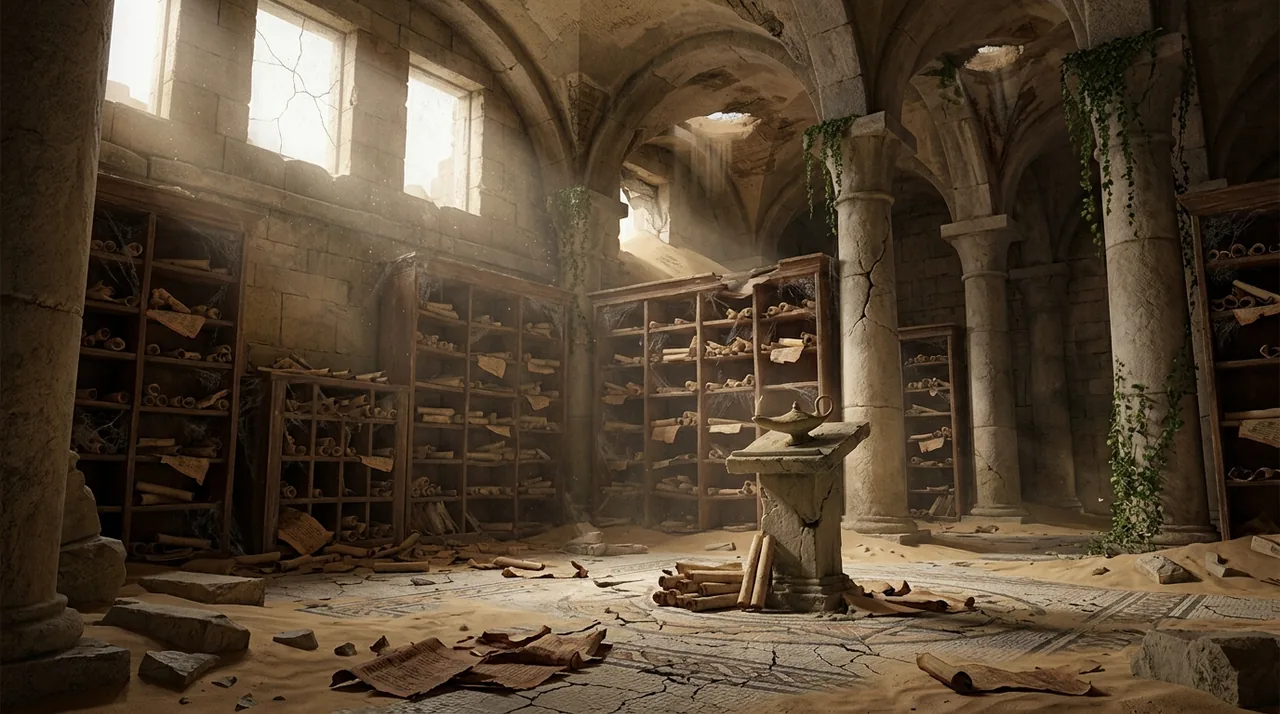
The destruction of humanity's greatest ancient archive is usually pictured as a sudden, catastrophic inferno. The truth is far more mundane and much more unsettling. The library died of withdrawn funding and centuries of quiet rot.
It is easy to blame a fire. The popular imagination demands a dramatic end for the Library of AlexandriaInstitutionLibrary of AlexandriaFounded in the Ptolemaic Kingdom, it was the largest and most significant library of the ancient world. It functioned as a major center of scholarship from its construction in the third century BCE until its gradual decline during the Roman period.建于托勒密王国,它是古代世界规模最大、意义最重大的图书馆。从公元前三世纪兴建起,直到罗马时期逐渐衰落为止,它一直作为一处重要的学术中心而存在。Fundada en el reino ptolemaico, fue la biblioteca más grande y significativa del mundo antiguo. Funcionó como un importante centro de erudición desde su construcción en el siglo III a. C. hasta su declive gradual durante el periodo romano.تأسست في المملكة البطلمية، وكانت أكبر مكتبات العالم القديم وأهمها. وعملت مركزاً رئيسياً للعلم منذ تشييدها في القرن الثالث قبل الميلاد حتى تدهورها التدريجي خلال الحقبة الرومانية.Fundada no Reino Ptolomaico, foi a maior e mais importante biblioteca do mundo antigo. Funcionou como um grande centro de erudição desde sua construção, no século III a.C., até seu declínio gradual durante o período romano.टॉलेमी राज्य में स्थापित, यह प्राचीन विश्व का सबसे बड़ा और सर्वाधिक महत्वपूर्ण पुस्तकालय था। यह ईसा-पूर्व तीसरी शताब्दी में अपने निर्माण से लेकर रोमन काल के दौरान अपने क्रमिक पतन तक विद्वत्ता के एक प्रमुख केंद्र के रूप में कार्य करता रहा।Didirikan pada masa Kerajaan Ptolemaik, perpustakaan ini merupakan perpustakaan terbesar dan paling penting di dunia kuno. Perpustakaan ini berfungsi sebagai pusat kesarjanaan utama sejak pembangunannya pada abad ketiga SM hingga kemundurannya secara bertahap pada masa Romawi.Fondée sous le royaume ptolémaïque, c'était la plus grande et la plus importante bibliothèque du monde antique. Elle fonctionna comme un grand foyer du savoir depuis sa construction au troisième siècle avant notre ère jusqu'à son déclin progressif sous la période romaine.プトレマイオス朝に創設された、古代世界で最も大きく最も重要な図書館。紀元前三世紀の建設からローマ時代の緩やかな衰退に至るまで、学問の一大中心地として機能した。Основанная в Птолемеевском царстве, она была крупнейшей и самой значимой библиотекой древнего мира. Она служила важнейшим центром учёности с момента своего строительства в третьем веке до нашей эры вплоть до постепенного упадка в римский период.Im ptolemäischen Königreich gegründet, war sie die größte und bedeutendste Bibliothek der antiken Welt. Sie wirkte vom Bau im dritten Jahrhundert v. Chr. bis zu ihrem allmählichen Niedergang in der römischen Zeit als bedeutendes Zentrum der Gelehrsamkeit.프톨레마이오스 왕국에서 세워진, 고대 세계에서 가장 크고 중요했던 도서관. 기원전 3세기에 지어진 때부터 로마 시대에 서서히 쇠락하기까지 학문의 주요 중심지로 기능했다.: a screaming mob torching the repository of classical antiquity, or Julius Caesar accidentally burning half a million scrolls while fleeing the Egyptian fleet in 48 BCE. It makes for a satisfying tragedy. But papyrus is a fragile medium, and institutions are more fragile still. What truly erased the ancient world's accumulated knowledge was not a singular catastrophe, but the slow, grinding machinery of administrative neglect.
Founded around 300 BCE by Ptolemy I SoterPersonPtolemy I SoterA Macedonian general under Alexander the Great who became ruler of Egypt and founder of the Ptolemaic dynasty. He established Alexandria as a Hellenistic cultural hub and initiated the royal library project to collect all known worldly knowledge.亚历山大大帝麾下的一位马其顿将军,后来成为埃及的统治者与托勒密王朝的创建者。他将亚历山大城建设为希腊化的文化中心,并发起了王家图书馆工程,立志收藏一切已知的世间知识。Un general macedonio bajo las órdenes de Alejandro Magno que se convirtió en gobernante de Egipto y fundador de la dinastía ptolemaica. Estableció Alejandría como un núcleo cultural helenístico e impulsó el proyecto de la biblioteca real para reunir todo el conocimiento conocido del mundo.قائد مقدوني خدم تحت إمرة الإسكندر الأكبر، ثم أصبح حاكم مصر ومؤسّس السلالة البطلمية. أرسى الإسكندرية مركزاً ثقافياً هلنستياً وأطلق مشروع المكتبة الملكية لجمع كل المعارف الدنيوية المعروفة.Um general macedônio sob o comando de Alexandre, o Grande, que se tornou governante do Egito e fundador da dinastia ptolomaica. Estabeleceu Alexandria como um polo cultural helenístico e deu início ao projeto da biblioteca real para reunir todo o conhecimento então existente no mundo.सिकंदर महान के अधीन एक मैसिडोनियन सेनापति जो मिस्र का शासक और टॉलेमी राजवंश का संस्थापक बना। उन्होंने अलेक्ज़ांड्रिया को एक हेलेनिस्टिक सांस्कृतिक केंद्र के रूप में स्थापित किया और समस्त ज्ञात सांसारिक ज्ञान को संग्रहित करने की राजकीय पुस्तकालय परियोजना का आरंभ किया।Seorang jenderal Makedonia di bawah Aleksander Agung yang kemudian menjadi penguasa Mesir dan pendiri dinasti Ptolemaik. Ia menjadikan Aleksandria sebagai pusat budaya Helenistik dan memprakarsai proyek perpustakaan kerajaan untuk mengumpulkan seluruh pengetahuan dunia yang diketahui.Un général macédonien d'Alexandre le Grand qui devint souverain d'Égypte et fondateur de la dynastie ptolémaïque. Il fit d'Alexandrie un foyer culturel hellénistique et lança le projet de bibliothèque royale destiné à rassembler tout le savoir connu du monde.アレクサンドロス大王の配下のマケドニアの将軍で、エジプトの支配者となりプトレマイオス朝を開いた人物。アレクサンドリアをヘレニズム文化の拠点として確立し、知られうるすべての世俗の知識を収集するための王立図書館計画を始めた。Македонский полководец при Александре Великом, ставший правителем Египта и основателем династии Птолемеев. Он сделал Александрию эллинистическим культурным центром и положил начало проекту царской библиотеки по сбору всех известных мировых знаний.Ein makedonischer General unter Alexander dem Großen, der zum Herrscher Ägyptens und Begründer der ptolemäischen Dynastie wurde. Er machte Alexandria zu einem hellenistischen Kulturzentrum und rief das königliche Bibliotheksprojekt ins Leben, um alles bekannte Wissen der Welt zu sammeln.알렉산드로스 대왕 휘하의 마케도니아 장군으로, 이집트의 통치자가 되어 프톨레마이오스 왕조를 연 인물. 그는 알렉산드리아를 헬레니즘 문화의 거점으로 세우고, 세상의 알려진 모든 지식을 모으려는 왕립 도서관 사업을 시작했다., one of Alexander the Great's generals, the library was not a public reading room. It was an aggressively funded state organ of the Ptolemaic dynasty, attached to a larger research institute known as the MusaeumInstitutionMusaeumThe Institution of the Muses at Alexandria was a research center akin to a modern university. It housed the main library collection and provided state-funded salaries, housing, and dining for the Mediterranean's leading scientists, poets, and philosophers.亚历山大城的缪斯神庙是一座类似于现代大学的研究中心。它收藏着主要的图书馆藏书,并为地中海地区最杰出的科学家、诗人与哲学家提供由国家资助的薪俸、住所与膳食。La Institución de las Musas de Alejandría era un centro de investigación semejante a una universidad moderna. Albergaba la colección principal de la biblioteca y proporcionaba salarios financiados por el Estado, alojamiento y comidas a los científicos, poetas y filósofos más destacados del Mediterráneo.كان معهد ربّات الفنون في الإسكندرية مركزاً بحثياً أشبه بجامعة حديثة. وقد ضمّ مجموعة المكتبة الرئيسية ووفّر رواتب وسكناً وطعاماً ممولة من الدولة لأبرز علماء البحر المتوسط وشعرائه وفلاسفته.A Instituição das Musas em Alexandria era um centro de pesquisa semelhante a uma universidade moderna. Abrigava o acervo principal da biblioteca e oferecia salários, moradia e refeições custeados pelo Estado aos principais cientistas, poetas e filósofos do Mediterrâneo.अलेक्ज़ांड्रिया में म्यूज़ देवियों की संस्था एक आधुनिक विश्वविद्यालय के समान एक अनुसंधान-केंद्र थी। इसमें मुख्य पुस्तकालय-संग्रह रखा था और यह भूमध्यसागर के अग्रणी वैज्ञानिकों, कवियों और दार्शनिकों के लिए राज्य-वित्तपोषित वेतन, आवास और भोजन उपलब्ध कराती थी।Lembaga Para Muse di Aleksandria adalah pusat penelitian yang mirip universitas modern. Lembaga ini menampung koleksi perpustakaan utama dan menyediakan gaji, tempat tinggal, serta jamuan makan yang dibiayai negara bagi para ilmuwan, penyair, dan filsuf terkemuka di kawasan Mediterania.L'Institution des Muses à Alexandrie était un centre de recherche comparable à une université moderne. Elle abritait le fonds principal de la bibliothèque et offrait, aux frais de l'État, salaires, logement et repas aux plus grands savants, poètes et philosophes de la Méditerranée.アレクサンドリアのムーサたちの施設は、現代の大学に近い研究の中心地であった。主要な蔵書を収め、地中海世界を代表する科学者、詩人、哲学者たちに、国費による給与、住居、食事を提供した。Мусейон в Александрии был исследовательским центром, подобным современному университету. В нём размещалось главное собрание библиотеки, а ведущим учёным, поэтам и философам Средиземноморья предоставлялись финансируемое государством жалованье, жильё и питание.Die Institution der Musen in Alexandria war ein Forschungszentrum ähnlich einer modernen Universität. Sie beherbergte die Hauptsammlung der Bibliothek und gewährte den führenden Wissenschaftlern, Dichtern und Philosophen des Mittelmeerraums staatlich finanzierte Gehälter, Unterkunft und Verpflegung.알렉산드리아의 무사 여신들의 전당은 현대 대학에 견줄 만한 연구 중심지였다. 도서관의 주요 소장본을 품었으며, 지중해 세계 최고의 과학자와 시인, 철학자들에게 국가가 댄 봉급과 거처, 식사를 제공했다.. The kings of Egypt wanted total intellectual capture. They decreed that any ship docking in the harbor must be searched. If books were found, they were confiscated and brought to the scribes to be copied. The reproductions were returned to the owners, while the library kept the originals.
Books in library of Alexandria synagoguedlisbona · BY 2.0
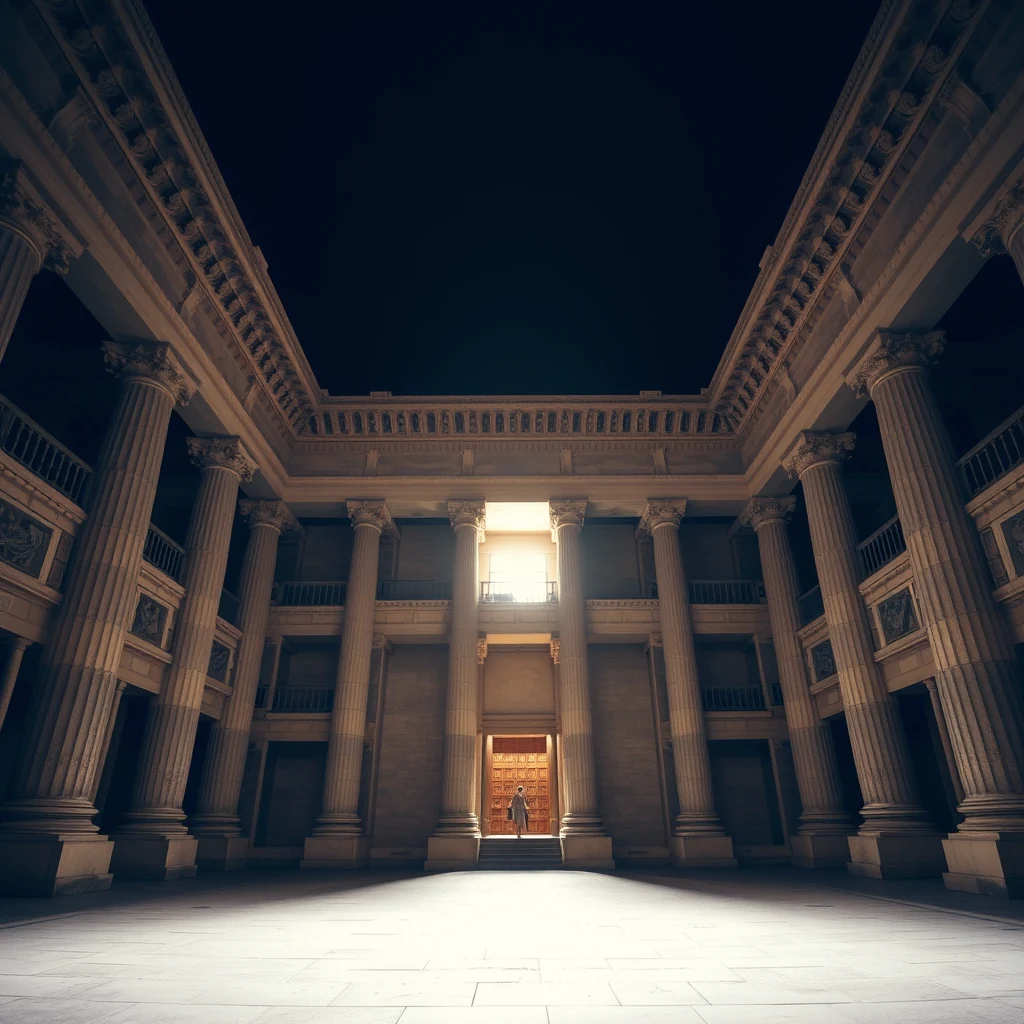
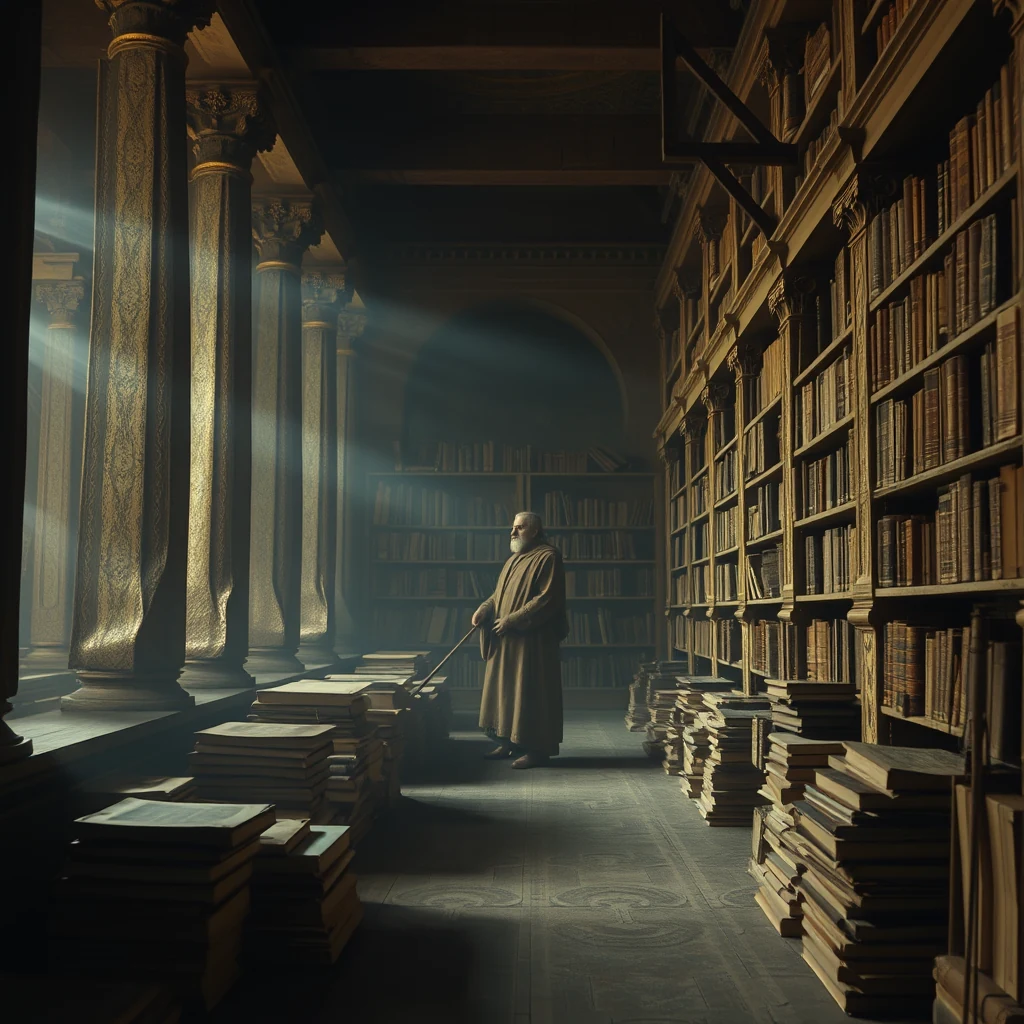
Through purchases and relentless confiscation, the collection swelled. At its peak, the institution held perhaps 400,000 to 500,000 papyrus rolls, gathering works spanning Greek drama and Babylonian astronomy under one roof.
The Library of Alexandria at its heightIllustration · AI-generated (FLUX.1-dev)
This unprecedented density of texts attracted the sharpest minds of the Mediterranean, who were given state stipends and tax exemptions to do nothing but study. Scholars such as ArchimedesPersonArchimedesGreek mathematician, physicist, engineer and astronomer of Syracuse (c. 287 – c. 212 BCE). His geometric and mechanical work was unmatched in antiquity. Cicero, writing a century after his death, describes a planetarium-like device attributed to Archimedes that displayed the motion of the Sun, Moon and five planets — the closest textual analogue we have to the Antikythera Mechanism.叙拉古的古希腊数学家、物理学家、工程师和天文学家(约公元前287年-约公元前212年)。他在几何学和力学方面的成就,在古代是无与伦比的。他去世一个世纪后,西塞罗曾描述过一种归功于阿基米德的类似天文馆的装置,它能够展示太阳、月球和五大行星的运动——这是我们现存关于安提基特拉机械最接近的文本记录。Matemático, físico, ingeniero y astrónomo griego de Siracusa (c. 287 – c. 212 a. C.). Su obra geométrica y mecánica no tuvo parangón en la antigüedad. Cicerón, escribiendo un siglo después de su muerte, describe un dispositivo similar a un planetario atribuido a Arquímedes que mostraba el movimiento del Sol, la Luna y cinco planetas: el análogo textual más cercano que tenemos al mecanismo de Anticitera.عالم رياضيات وفيزيائي ومهندس وفلكي يوناني من سرقوسة (حوالي 287 - حوالي 212 ق.م.). كانت أعماله الهندسية والميكانيكية لا تضاهى في العصور القديمة. يصف شيشرون، الذي كتب بعد قرن من وفاته، جهازاً يشبه القبة السماوية يُنسب إلى أرخميدس كان يعرض حركة الشمس والقمر والكواكب الخمسة، وهو أقرب نظير نصي لدينا لآلية أنتيكيثيرا.Matemático, físico, engenheiro e astrônomo grego de Siracusa (c. 287 – c. 212 a.C.). A sua obra geométrica e mecânica foi inigualável na antiguidade. Cícero, escrevendo um século após a sua morte, descreve um dispositivo semelhante a um planetário atribuído a Arquimedes que exibia o movimento do Sol, da Lua e de cinco planetas — o análogo textual mais próximo que temos do Mecanismo de Anticítera.सिराक्यूज़ के यूनानी गणितज्ञ, भौतिक विज्ञानी, अभियंता और खगोलशास्त्री (लगभग 287 – लगभग 212 ईसा पूर्व)। प्राचीन काल में उनका ज्यामितीय और यांत्रिक कार्य अद्वितीय था। सिसरो, जिन्होंने उनकी मृत्यु के एक शताब्दी बाद लिखा था, आर्किमिडीज को श्रेय दिए गए एक तारामंडल-जैसे उपकरण का वर्णन करते हैं जो सूर्य, चंद्रमा और पांच ग्रहों की गति को दर्शाता था — यह एंटीकाइथेरा तंत्र (Antikythera Mechanism) के लिए हमारे पास मौजूद सबसे निकटतम पाठ्य साक्ष्य है।Matematikawan, fisikawan, insinyur, dan astronom Yunani dari Sirakusa (sekitar 287 – sekitar 212 SM). Karyanya di bidang geometri dan mekanika tidak tertandingi pada zaman kuno. Cicero, yang menulis seabad setelah kematiannya, menggambarkan perangkat menyerupai planetarium yang dinisbatkan kepada Archimedes yang menampilkan pergerakan Matahari, Bulan, dan lima planet — analog tekstual terdekat yang kita miliki terhadap Mekanisme Antikythera.Mathématicien, physicien, ingénieur et astronome grec de Syracuse (v. 287 – v. 212 av. J.-C.). Ses travaux en géométrie et en mécanique sont restés inégalés dans l'Antiquité. Cicéron, écrivant un siècle après sa mort, décrit un dispositif de type planétaire attribué à Archimède qui reproduisait le mouvement du Soleil, de la Lune et des cinq planètes — l'analogue textuel le plus proche dont nous disposons de la machine d'Anticythère.シラクサ出身のギリシャの数学者、物理学者、技術者、天文学者(紀元前287年頃 - 紀元前212年頃)。幾何学および力学における彼の業績は、古代において比肩するものがない。キケロは没後1世紀を経て記した著作の中で、太陽、月、5つの惑星の動きを示すアルキメデス作とされるプラネタリウムのような装置について言及しており、これはアンティキティラ島の機械に文献上最も近い類似物である。Древнегреческий математик, физик, инженер и астроном из Сиракуз (ок. 287 — ок. 212 гг. до н. э.). Его геометрические и механические работы не имели себе равных в античности. Цицерон, писавший столетие спустя после его смерти, описывает устройство, подобное планетарию, приписываемое Архимеду, которое отображало движение Солнца, Луны и пяти планет — это ближайший из известных нам текстовых аналогов Антикитерского механизма.Griechischer Mathematiker, Physiker, Ingenieur und Astronom aus Syrakus (ca. 287 – ca. 212 v. Chr.). Seine geometrischen und mechanischen Arbeiten waren in der Antike unerreicht. Cicero, der ein Jahrhundert nach dessen Tod schrieb, beschreibt ein Archimedes zugeschriebenes planetariumsartiges Gerät, das die Bewegung der Sonne, des Mondes und der fünf Planeten darstellte – die engste textliche Entsprechung, die wir für den Mechanismus von Antikythera besitzen.시라쿠스 출신의 그리스 수학자이자 물리학자, 공학자, 천문학자(기원전 약 287년 – 기원전 약 212년)이다. 그의 기하학 및 역학 분야의 업적은 고대에 비견할 바가 없었다. 키케로는 아르키메데스가 사망한 지 한 세기 후에, 태양과 달, 그리고 다섯 행성의 움직임을 보여주는 아르키메데스의 것으로 추정되는 천문관 형태의 장치에 대해 서술했는데, 이는 안티키테라 기계와 가장 유사한 문헌적 사례로 꼽힌다. spent time in the city, while resident academics like Eratosthenes calculated the circumference of the Earth to within a few hundred miles of accuracy. It was here that CallimachusPersonCallimachusA celebrated Greek poet, critic, and scholar who worked at the Library of Alexandria. Though he never served as head librarian, his massive bibliographic survey created the foundation for all subsequent library science and cataloging.一位著名的希腊诗人、评论家与学者,曾在亚历山大图书馆工作。他虽从未担任过馆长,但他那部浩大的目录学巨著,为此后一切图书馆学与编目工作奠定了基础。Un célebre poeta, crítico y erudito griego que trabajó en la Biblioteca de Alejandría. Aunque nunca ejerció como bibliotecario jefe, su monumental estudio bibliográfico sentó las bases de toda la posterior bibliotecología y catalogación.شاعر وناقد وعالم يوناني شهير عمل في مكتبة الإسكندرية. ومع أنه لم يتولّ قط منصب أمين المكتبة، فإن مسحه الببليوغرافي الضخم أرسى الأساس لكل علوم المكتبات والفهرسة اللاحقة.Um célebre poeta, crítico e erudito grego que trabalhou na Biblioteca de Alexandria. Embora nunca tenha exercido o cargo de bibliotecário-chefe, seu vasto levantamento bibliográfico criou a base de toda a posterior biblioteconomia e catalogação.एक प्रसिद्ध यूनानी कवि, समालोचक और विद्वान जिन्होंने अलेक्ज़ांड्रिया के पुस्तकालय में कार्य किया। यद्यपि उन्होंने कभी मुख्य पुस्तकालयाध्यक्ष के रूप में सेवा नहीं दी, उनके विशाल ग्रंथसूची-सर्वेक्षण ने समस्त परवर्ती पुस्तकालय-विज्ञान और सूचीकरण की नींव रची।Seorang penyair, kritikus, dan sarjana Yunani terkenal yang bekerja di Perpustakaan Aleksandria. Meskipun ia tidak pernah menjabat sebagai kepala pustakawan, survei bibliografisnya yang masif menjadi fondasi bagi seluruh ilmu perpustakaan dan pengatalogan di kemudian hari.Un poète, critique et érudit grec renommé qui travailla à la bibliothèque d'Alexandrie. Bien qu'il n'ait jamais exercé la fonction de bibliothécaire en chef, son immense relevé bibliographique posa les fondements de toute la bibliothéconomie et du catalogage à venir.アレクサンドリア図書館で働いた、名高いギリシアの詩人、批評家、学者。館長を務めることはなかったものの、彼の膨大な書誌目録は、その後のあらゆる図書館学と目録作成の基礎を築いた。Прославленный греческий поэт, критик и учёный, работавший в Александрийской библиотеке. Хотя он никогда не занимал должность главного библиотекаря, его обширный библиографический обзор заложил основу для всей последующей библиотечной науки и каталогизации.Ein gefeierter griechischer Dichter, Kritiker und Gelehrter, der an der Bibliothek von Alexandria wirkte. Obwohl er nie als oberster Bibliothekar tätig war, schuf seine umfangreiche bibliografische Übersicht die Grundlage für die gesamte spätere Bibliothekswissenschaft und Katalogisierung.알렉산드리아 도서관에서 일한, 이름난 그리스의 시인이자 비평가, 학자. 그가 도서관장을 맡은 적은 없으나, 그의 방대한 서지 조사는 이후 모든 도서관학과 목록 작성의 토대를 마련했다. compiled the *PinakesWorkPinakesA lost bibliographic catalog compiled by Callimachus. It was the first known library index to organize books alphabetically by author and genre, recording biographical details and the exact line count of each papyrus roll held in Alexandria.卡利马科斯编纂的一部已散佚的目录学著作。它是已知第一部按作者与体裁字母顺序排列书籍的图书馆索引,记录了传记细节以及亚历山大城所藏每一卷纸草卷的确切行数。Un catálogo bibliográfico perdido compilado por Calímaco. Fue el primer índice de biblioteca conocido que organizaba los libros alfabéticamente por autor y género, registrando datos biográficos y el número exacto de líneas de cada rollo de papiro custodiado en Alejandría.فهرس ببليوغرافي مفقود جمعه كاليماخوس. وكان أول فهرس مكتبي معروف ينظّم الكتب أبجدياً حسب المؤلّف والنوع، مسجّلاً التفاصيل السيرية والعدد الدقيق لأسطر كل لفافة بردي محفوظة في الإسكندرية.Um catálogo bibliográfico perdido compilado por Calímaco. Foi o primeiro índice de biblioteca conhecido a organizar os livros em ordem alfabética por autor e gênero, registrando detalhes biográficos e a contagem exata de linhas de cada rolo de papiro guardado em Alexandria.कैलिमाकस द्वारा संकलित एक लुप्त ग्रंथसूची-सूची। यह पहली ज्ञात पुस्तकालय-अनुक्रमणिका थी जिसने पुस्तकों को लेखक और विधा के अनुसार वर्णानुक्रम में व्यवस्थित किया, और अलेक्ज़ांड्रिया में रखे प्रत्येक पपीरस-गुटके के जीवनी-विवरण तथा पंक्तियों की सटीक गणना को अंकित किया।Sebuah katalog bibliografis yang hilang, disusun oleh Callimachus. Katalog ini adalah indeks perpustakaan pertama yang diketahui mengatur buku secara alfabetis berdasarkan pengarang dan genre, mencatat rincian biografis serta jumlah baris yang tepat dari setiap gulungan papirus yang tersimpan di Aleksandria.Un catalogue bibliographique perdu, compilé par Callimaque. Ce fut le premier index de bibliothèque connu à classer les livres par ordre alphabétique d'auteur et par genre, consignant des détails biographiques ainsi que le nombre exact de lignes de chaque rouleau de papyrus conservé à Alexandrie.カリマコスが編纂した、現存しない書誌目録。著者と種類によって書物をアルファベット順に整理した最初の図書館目録として知られ、伝記的な詳細と、アレクサンドリアに収められた各パピルス巻物の正確な行数を記録していた。Утраченный библиографический каталог, составленный Каллимахом. Это был первый известный библиотечный указатель, упорядочивавший книги по алфавиту по авторам и жанрам, фиксируя биографические подробности и точное число строк в каждом папирусном свитке, хранившемся в Александрии.Ein verloren gegangener bibliografischer Katalog, der von Kallimachos zusammengestellt wurde. Es war das erste bekannte Bibliotheksverzeichnis, das Bücher alphabetisch nach Autor und Gattung ordnete und biografische Angaben sowie die genaue Zeilenzahl jeder in Alexandria aufbewahrten Papyrusrolle festhielt.칼리마코스가 엮은, 지금은 사라진 서지 목록. 알려진 최초의 도서관 색인으로, 책을 저자와 장르별로 알파벳순으로 정리하고, 알렉산드리아에 소장된 각 파피루스 두루마리의 전기적 정보와 정확한 행 수를 기록했다.*, a 120-volume bibliographical catalog that organized texts by genre and author, effectively inventing the modern library index.
The long rot
Sustaining an archive of that scale required immense capital. A papyrus scroll is made from the pith of a sedge plant. In the arid desert, it can last millennia. But in the humid, salt-heavy air of the Mediterranean coast, it has a shelf life of perhaps a century before mildew and insects render it illegible. Maintaining the library was not a matter of simply storing books; it required an industrial-scale copying operation. Hundreds of scribes had to be employed continuously, rewriting degrading scrolls onto fresh papyrus just to keep the existing collection intact.
Library of Alexandriatamburix · BY-SA 2.0
When the political will to fund this operation faltered, the library began to die. The violence of history certainly accelerated the process. Caesar's troops did set fire to the docks during the Alexandrian civil war, and the blaze likely spread to warehouses holding tens of thousands of scrolls. But the institution survived. The geographer StraboPersonStraboA Greek geographer and historian who lived in Asia Minor during the transitional period from the Roman Republic to the Roman Empire. His vast geographic encyclopedia remains one of the most vital surviving sources for understanding the ancient Mediterranean world.一位希腊地理学家兼历史学家,生活在小亚细亚,正值罗马共和国向罗马帝国过渡的时期。他那部浩瀚的地理百科全书,至今仍是理解古代地中海世界最为重要的存世资料之一。Un geógrafo e historiador griego que vivió en Asia Menor durante el periodo de transición de la República Romana al Imperio Romano. Su vasta enciclopedia geográfica sigue siendo una de las fuentes supervivientes más valiosas para comprender el mundo mediterráneo antiguo.جغرافي ومؤرّخ يوناني عاش في آسيا الصغرى خلال الحقبة الانتقالية من الجمهورية الرومانية إلى الإمبراطورية الرومانية. ولا تزال موسوعته الجغرافية الواسعة من أهم المصادر الباقية لفهم عالم البحر المتوسط القديم.Um geógrafo e historiador grego que viveu na Ásia Menor durante o período de transição da República Romana ao Império Romano. Sua vasta enciclopédia geográfica permanece como uma das mais importantes fontes sobreviventes para a compreensão do mundo mediterrâneo antigo.एक यूनानी भूगोलवेत्ता और इतिहासकार जो रोमन गणराज्य से रोमन साम्राज्य की संक्रमण-अवधि के दौरान एशिया माइनर में रहे। उनका विशाल भौगोलिक विश्वकोश प्राचीन भूमध्यसागरीय विश्व को समझने के लिए सबसे महत्वपूर्ण बचे हुए स्रोतों में से एक बना हुआ है।Seorang ahli geografi dan sejarawan Yunani yang hidup di Asia Kecil pada masa peralihan dari Republik Romawi ke Kekaisaran Romawi. Ensiklopedia geografisnya yang luas tetap menjadi salah satu sumber bertahan paling vital untuk memahami dunia Mediterania kuno.Un géographe et historien grec qui vécut en Asie Mineure durant la période de transition de la République romaine à l'Empire romain. Sa vaste encyclopédie géographique demeure l'une des sources subsistantes les plus précieuses pour comprendre le monde méditerranéen antique.ローマ共和政からローマ帝政への移行期に小アジアで暮らした、ギリシアの地理学者にして歴史家。彼の膨大な地理百科は、古代地中海世界を理解する上で最も重要な現存資料のひとつであり続けている。Греческий географ и историк, живший в Малой Азии в переходный период от Римской республики к Римской империи. Его обширная географическая энциклопедия остаётся одним из важнейших сохранившихся источников для понимания древнего средиземноморского мира.Ein griechischer Geograph und Historiker, der in Kleinasien während der Übergangszeit von der Römischen Republik zum Römischen Reich lebte. Seine umfangreiche geografische Enzyklopädie bleibt eine der wichtigsten erhaltenen Quellen für das Verständnis der antiken Mittelmeerwelt.로마 공화정에서 로마 제국으로 넘어가는 과도기에 소아시아에 살았던 그리스의 지리학자이자 역사가. 그의 방대한 지리 백과는 고대 지중해 세계를 이해하는 데 가장 중요한 현존 사료 가운데 하나로 남아 있다. visited and worked in the Musaeum decades after Caesar's fire, noting that the scholars were still there, though their state funding was already shrinking.
An interior scroll room of the Alexandrian libraryIllustration · AI-generated (FLUX.1-dev)
The true collapse took centuries. Rome absorbed Egypt in 30 BCE, ending the Ptolemaic line. The center of intellectual and political gravity shifted to Italy. Roman emperors had little interest in sending vast sums of gold to a distant province to maintain a Greek research institute. As the stipends dried up, the scholars drifted away to newer centers of learning in Rhodes and Rome.
Alexandrina Library in Alexandria, Egypt. 03Azniv Stepanian · BY-SA 4.0
Without an army of copyists working daily, the collection simply rotted in the dark. If funding lapsed for a single generation, thousands of scrolls would decay beyond saving. In 215 CE, the Roman emperor CaracallaPersonCaracallaA Roman emperor whose reign was marked by domestic instability and military adventurism. In 215 CE, he visited Alexandria and responded to local mockery by massacring thousands of citizens and expelling foreign scholars, crippling the city's intellectual life.一位罗马皇帝,其统治以内政动荡与穷兵黩武为特征。公元215年,他访问亚历山大城,为回应当地人的讥讽而屠杀了数以千计的市民,并驱逐了外邦学者,使这座城市的学术生活遭受重创。Un emperador romano cuyo reinado estuvo marcado por la inestabilidad interna y el aventurerismo militar. En el año 215 d. C., visitó Alejandría y respondió a las burlas locales masacrando a miles de ciudadanos y expulsando a los eruditos extranjeros, lisiando la vida intelectual de la ciudad.إمبراطور روماني اتّسم عهده بعدم الاستقرار الداخلي والمغامرة العسكرية. وفي عام 215 ميلادية، زار الإسكندرية وردّ على سخرية أهلها بذبح آلاف المواطنين وطرد العلماء الأجانب، فشلّ الحياة الفكرية للمدينة.Um imperador romano cujo reinado foi marcado pela instabilidade interna e pelo aventureirismo militar. Em 215 d.C., visitou Alexandria e respondeu à zombaria local massacrando milhares de cidadãos e expulsando os estudiosos estrangeiros, mutilando a vida intelectual da cidade.एक रोमन सम्राट जिसका शासनकाल घरेलू अस्थिरता और सैन्य दुस्साहसवाद से चिह्नित था। 215 ईस्वी में, उसने अलेक्ज़ांड्रिया का दौरा किया और स्थानीय उपहास के उत्तर में हज़ारों नागरिकों का संहार किया और विदेशी विद्वानों को निष्कासित कर दिया, जिससे नगर का बौद्धिक जीवन अपंग हो गया।Seorang kaisar Romawi yang masa pemerintahannya ditandai oleh ketidakstabilan dalam negeri dan petualangan militer. Pada 215 M, ia mengunjungi Aleksandria dan menanggapi cemoohan penduduk setempat dengan membantai ribuan warga serta mengusir para sarjana asing, melumpuhkan kehidupan intelektual kota itu.Un empereur romain dont le règne fut marqué par l'instabilité intérieure et l'aventurisme militaire. En 215 de notre ère, il se rendit à Alexandrie et répondit aux moqueries locales en massacrant des milliers de citoyens et en expulsant les savants étrangers, paralysant la vie intellectuelle de la cité.国内の不安定と軍事的冒険主義に彩られた治世のローマ皇帝。二一五年、彼はアレクサンドリアを訪れ、地元住民の嘲弄に対して、何千人もの市民を虐殺し外国の学者を追放することで応じ、この都市の知的生活を麻痺させた。Римский император, чьё правление было отмечено внутренней нестабильностью и военным авантюризмом. В 215 году нашей эры он посетил Александрию и в ответ на местные насмешки устроил резню тысяч горожан и изгнал иноземных учёных, подорвав интеллектуальную жизнь города.Ein römischer Kaiser, dessen Herrschaft von innenpolitischer Instabilität und militärischem Abenteurertum geprägt war. Im Jahr 215 n. Chr. besuchte er Alexandria und reagierte auf den Spott der Einheimischen, indem er Tausende von Bürgern niedermetzeln und ausländische Gelehrte ausweisen ließ, was das geistige Leben der Stadt lähmte.국내 불안정과 군사적 모험주의로 점철된 치세를 보낸 로마 황제. 215년 그는 알렉산드리아를 방문했다가 주민들의 조롱에 수천 명을 학살하고 외국 학자들을 추방하는 것으로 응수하여, 그 도시의 지적 생명을 무너뜨렸다. suspended the scholars' funding entirely and expelled foreign researchers from the city. Fifty years later, Emperor Aurelian brought his army to Alexandria to suppress a revolt, largely destroying the royal quarter where the main library stood. By the time Christian zealots demolished the SerapeumPlaceSerapeumA major Greek temple built in Alexandria by Ptolemy III, dedicated to the syncretic god Serapis. It housed a secondary daughter library that survived longer than the main collection, until its destruction by Christian mobs in 391 CE.由托勒密三世在亚历山大城兴建的一座重要希腊神庙,供奉融合而成的塞拉皮斯神。它收藏着一座存续时间比主馆藏书更长的子图书馆,直到公元391年被基督徒暴民摧毁为止。Un importante templo griego construido en Alejandría por Ptolomeo III y dedicado al dios sincrético Serapis. Albergaba una biblioteca filial secundaria que sobrevivió más tiempo que la colección principal, hasta su destrucción a manos de turbas cristianas en el año 391 d. C.معبد يوناني كبير شيّده بطليموس الثالث في الإسكندرية، مكرّس للإله التوفيقي سيرابيس. وقد ضمّ مكتبة فرعية ثانوية بقيت أطول من المجموعة الرئيسية، حتى دمّرتها جموع مسيحية عام 391 ميلادية.Um grande templo grego construído em Alexandria por Ptolomeu III, dedicado ao deus sincrético Serápis. Abrigava uma biblioteca-filha secundária que sobreviveu mais tempo que o acervo principal, até sua destruição por turbas cristãs em 391 d.C.टॉलेमी तृतीय द्वारा अलेक्ज़ांड्रिया में बनवाया गया एक प्रमुख यूनानी मंदिर, जो समन्वयी देवता सेरापिस को समर्पित था। इसमें एक गौण पुत्री-पुस्तकालय रखा था जो मुख्य संग्रह से अधिक समय तक टिका रहा, यहाँ तक कि 391 ईस्वी में ईसाई भीड़ों द्वारा इसका विनाश नहीं हो गया।Sebuah kuil Yunani besar yang dibangun di Aleksandria oleh Ptolemy III, didedikasikan kepada dewa sinkretis Serapis. Kuil ini menampung perpustakaan turunan sekunder yang bertahan lebih lama daripada koleksi utama, hingga kehancurannya oleh massa Kristen pada 391 M.Un grand temple grec édifié à Alexandrie par Ptolémée III, dédié au dieu syncrétique Sérapis. Il abritait une bibliothèque secondaire, fille de la principale, qui survécut plus longtemps que le fonds principal, jusqu'à sa destruction par des foules chrétiennes en 391 de notre ère.プトレマイオス三世によってアレクサンドリアに建てられた、習合神セラピスに捧げられた壮大なギリシアの神殿。主たる蔵書よりも長く存続した分館の図書館を収めていたが、三九一年にキリスト教徒の暴徒によって破壊された。Большой греческий храм, построенный в Александрии Птолемеем III и посвящённый синкретическому богу Серапису. В нём размещалась вторичная дочерняя библиотека, просуществовавшая дольше главного собрания, вплоть до её разрушения христианскими толпами в 391 году нашей эры.Ein bedeutender griechischer Tempel, der in Alexandria von Ptolemaios III. erbaut und dem synkretistischen Gott Serapis geweiht wurde. Er beherbergte eine sekundäre Tochterbibliothek, die länger überdauerte als die Hauptsammlung, bis zu ihrer Zerstörung durch christliche Mobs im Jahr 391 n. Chr.프톨레마이오스 3세가 알렉산드리아에 세운, 융합 신 세라피스에게 바쳐진 주요 그리스 신전. 본관 소장본보다 오래 살아남은 부속 자매 도서관을 품었으나, 391년 기독교 군중에 의해 파괴되었다., a sister temple that housed the last remnants of the collection, in 391 CE, the Great Library was already a ghost.
A close physical study of decay in a coastal archive: papyrus rolls on a shelf showing fraIllustration · AI-generated (FLUX.1-dev)
What we still don't know
We do not know the exact physical location of the main library. Despite decades of excavation beneath the streets of the modern city, archaeologists have never found its foundations. The ancient royal quarter is entirely lost, either buried beneath dense urban development or submerged in the harbor following the tsunamis and land subsidence that reshaped the coastline in late antiquity.
The Library of AlexandriaO. Von Corven · Public domain
We do not know exactly what was lost. Because Callimachus' *Pinakes* survived only in fragmentary quotes by later writers, we have no master catalog. We know of a few specific absences: the second volume of Aristotle's *Poetics*, the complete histories of Livy, and dozens of plays by Aeschylus. But the vast majority of the missing texts are works we do not even know to miss. Entire branches of ancient science and philosophy simply evaporated.
A nearly empty scholarly room in late AlexandriaIllustration · AI-generated (FLUX.1-dev)
Most troublingly, we do not know the precise decade the library ceased to function as a working institution. There was no final closure, no padlock on the door, no declaration of bankruptcy. It simply faded from the historical record, mentioned less and less by contemporary writers until it vanished entirely from living memory.
Cataclysms offer a comforting fiction, suggesting that it takes an overwhelming physical force to destroy a civilization's memory. The history of Alexandria proves otherwise. Knowledge does not require a mob or a fire to disappear; it only requires a society to decide the upkeep is too expensive, and leave the scrolls to the damp.
La destrucción del archivo antiguo más grandioso de la humanidad suele representarse como un infierno repentino y catastrófico. La verdad es mucho más mundana y mucho más inquietante. La biblioteca murió por la retirada de fondos y siglos de silenciosa putrefacción.
Es fácil culpar a un incendio. La imaginación popular exige un final dramático para la Library of AlexandriaInstitutionLibrary of AlexandriaFounded in the Ptolemaic Kingdom, it was the largest and most significant library of the ancient world. It functioned as a major center of scholarship from its construction in the third century BCE until its gradual decline during the Roman period.建于托勒密王国,它是古代世界规模最大、意义最重大的图书馆。从公元前三世纪兴建起,直到罗马时期逐渐衰落为止,它一直作为一处重要的学术中心而存在。Fundada en el reino ptolemaico, fue la biblioteca más grande y significativa del mundo antiguo. Funcionó como un importante centro de erudición desde su construcción en el siglo III a. C. hasta su declive gradual durante el periodo romano.تأسست في المملكة البطلمية، وكانت أكبر مكتبات العالم القديم وأهمها. وعملت مركزاً رئيسياً للعلم منذ تشييدها في القرن الثالث قبل الميلاد حتى تدهورها التدريجي خلال الحقبة الرومانية.Fundada no Reino Ptolomaico, foi a maior e mais importante biblioteca do mundo antigo. Funcionou como um grande centro de erudição desde sua construção, no século III a.C., até seu declínio gradual durante o período romano.टॉलेमी राज्य में स्थापित, यह प्राचीन विश्व का सबसे बड़ा और सर्वाधिक महत्वपूर्ण पुस्तकालय था। यह ईसा-पूर्व तीसरी शताब्दी में अपने निर्माण से लेकर रोमन काल के दौरान अपने क्रमिक पतन तक विद्वत्ता के एक प्रमुख केंद्र के रूप में कार्य करता रहा।Didirikan pada masa Kerajaan Ptolemaik, perpustakaan ini merupakan perpustakaan terbesar dan paling penting di dunia kuno. Perpustakaan ini berfungsi sebagai pusat kesarjanaan utama sejak pembangunannya pada abad ketiga SM hingga kemundurannya secara bertahap pada masa Romawi.Fondée sous le royaume ptolémaïque, c'était la plus grande et la plus importante bibliothèque du monde antique. Elle fonctionna comme un grand foyer du savoir depuis sa construction au troisième siècle avant notre ère jusqu'à son déclin progressif sous la période romaine.プトレマイオス朝に創設された、古代世界で最も大きく最も重要な図書館。紀元前三世紀の建設からローマ時代の緩やかな衰退に至るまで、学問の一大中心地として機能した。Основанная в Птолемеевском царстве, она была крупнейшей и самой значимой библиотекой древнего мира. Она служила важнейшим центром учёности с момента своего строительства в третьем веке до нашей эры вплоть до постепенного упадка в римский период.Im ptolemäischen Königreich gegründet, war sie die größte und bedeutendste Bibliothek der antiken Welt. Sie wirkte vom Bau im dritten Jahrhundert v. Chr. bis zu ihrem allmählichen Niedergang in der römischen Zeit als bedeutendes Zentrum der Gelehrsamkeit.프톨레마이오스 왕국에서 세워진, 고대 세계에서 가장 크고 중요했던 도서관. 기원전 3세기에 지어진 때부터 로마 시대에 서서히 쇠락하기까지 학문의 주요 중심지로 기능했다.: una turba vociferante prendiendo fuego al depósito de la antigüedad clásica, o Julio César quemando accidentalmente medio millón de pergaminos mientras huía de la flota egipcia en el año 48 a. C. Eso conforma una tragedia satisfactoria. Pero el papiro es un soporte frágil, y las instituciones son aún más frágiles. Lo que verdaderamente borró el conocimiento acumulado del mundo antiguo no fue una catástrofe singular, sino la lenta y desgastante maquinaria de la negligencia administrativa.
Fundada alrededor del año 300 a. C. por Ptolemy I SoterPersonPtolemy I SoterA Macedonian general under Alexander the Great who became ruler of Egypt and founder of the Ptolemaic dynasty. He established Alexandria as a Hellenistic cultural hub and initiated the royal library project to collect all known worldly knowledge.亚历山大大帝麾下的一位马其顿将军,后来成为埃及的统治者与托勒密王朝的创建者。他将亚历山大城建设为希腊化的文化中心,并发起了王家图书馆工程,立志收藏一切已知的世间知识。Un general macedonio bajo las órdenes de Alejandro Magno que se convirtió en gobernante de Egipto y fundador de la dinastía ptolemaica. Estableció Alejandría como un núcleo cultural helenístico e impulsó el proyecto de la biblioteca real para reunir todo el conocimiento conocido del mundo.قائد مقدوني خدم تحت إمرة الإسكندر الأكبر، ثم أصبح حاكم مصر ومؤسّس السلالة البطلمية. أرسى الإسكندرية مركزاً ثقافياً هلنستياً وأطلق مشروع المكتبة الملكية لجمع كل المعارف الدنيوية المعروفة.Um general macedônio sob o comando de Alexandre, o Grande, que se tornou governante do Egito e fundador da dinastia ptolomaica. Estabeleceu Alexandria como um polo cultural helenístico e deu início ao projeto da biblioteca real para reunir todo o conhecimento então existente no mundo.सिकंदर महान के अधीन एक मैसिडोनियन सेनापति जो मिस्र का शासक और टॉलेमी राजवंश का संस्थापक बना। उन्होंने अलेक्ज़ांड्रिया को एक हेलेनिस्टिक सांस्कृतिक केंद्र के रूप में स्थापित किया और समस्त ज्ञात सांसारिक ज्ञान को संग्रहित करने की राजकीय पुस्तकालय परियोजना का आरंभ किया।Seorang jenderal Makedonia di bawah Aleksander Agung yang kemudian menjadi penguasa Mesir dan pendiri dinasti Ptolemaik. Ia menjadikan Aleksandria sebagai pusat budaya Helenistik dan memprakarsai proyek perpustakaan kerajaan untuk mengumpulkan seluruh pengetahuan dunia yang diketahui.Un général macédonien d'Alexandre le Grand qui devint souverain d'Égypte et fondateur de la dynastie ptolémaïque. Il fit d'Alexandrie un foyer culturel hellénistique et lança le projet de bibliothèque royale destiné à rassembler tout le savoir connu du monde.アレクサンドロス大王の配下のマケドニアの将軍で、エジプトの支配者となりプトレマイオス朝を開いた人物。アレクサンドリアをヘレニズム文化の拠点として確立し、知られうるすべての世俗の知識を収集するための王立図書館計画を始めた。Македонский полководец при Александре Великом, ставший правителем Египта и основателем династии Птолемеев. Он сделал Александрию эллинистическим культурным центром и положил начало проекту царской библиотеки по сбору всех известных мировых знаний.Ein makedonischer General unter Alexander dem Großen, der zum Herrscher Ägyptens und Begründer der ptolemäischen Dynastie wurde. Er machte Alexandria zu einem hellenistischen Kulturzentrum und rief das königliche Bibliotheksprojekt ins Leben, um alles bekannte Wissen der Welt zu sammeln.알렉산드로스 대왕 휘하의 마케도니아 장군으로, 이집트의 통치자가 되어 프톨레마이오스 왕조를 연 인물. 그는 알렉산드리아를 헬레니즘 문화의 거점으로 세우고, 세상의 알려진 모든 지식을 모으려는 왕립 도서관 사업을 시작했다., uno de los generales de Alejandro Magno, la biblioteca no era una sala de lectura pública. Era un órgano estatal de la dinastía ptolemaica, financiado agresivamente y adscrito a un instituto de investigación más amplio conocido como el MusaeumInstitutionMusaeumThe Institution of the Muses at Alexandria was a research center akin to a modern university. It housed the main library collection and provided state-funded salaries, housing, and dining for the Mediterranean's leading scientists, poets, and philosophers.亚历山大城的缪斯神庙是一座类似于现代大学的研究中心。它收藏着主要的图书馆藏书,并为地中海地区最杰出的科学家、诗人与哲学家提供由国家资助的薪俸、住所与膳食。La Institución de las Musas de Alejandría era un centro de investigación semejante a una universidad moderna. Albergaba la colección principal de la biblioteca y proporcionaba salarios financiados por el Estado, alojamiento y comidas a los científicos, poetas y filósofos más destacados del Mediterráneo.كان معهد ربّات الفنون في الإسكندرية مركزاً بحثياً أشبه بجامعة حديثة. وقد ضمّ مجموعة المكتبة الرئيسية ووفّر رواتب وسكناً وطعاماً ممولة من الدولة لأبرز علماء البحر المتوسط وشعرائه وفلاسفته.A Instituição das Musas em Alexandria era um centro de pesquisa semelhante a uma universidade moderna. Abrigava o acervo principal da biblioteca e oferecia salários, moradia e refeições custeados pelo Estado aos principais cientistas, poetas e filósofos do Mediterrâneo.अलेक्ज़ांड्रिया में म्यूज़ देवियों की संस्था एक आधुनिक विश्वविद्यालय के समान एक अनुसंधान-केंद्र थी। इसमें मुख्य पुस्तकालय-संग्रह रखा था और यह भूमध्यसागर के अग्रणी वैज्ञानिकों, कवियों और दार्शनिकों के लिए राज्य-वित्तपोषित वेतन, आवास और भोजन उपलब्ध कराती थी।Lembaga Para Muse di Aleksandria adalah pusat penelitian yang mirip universitas modern. Lembaga ini menampung koleksi perpustakaan utama dan menyediakan gaji, tempat tinggal, serta jamuan makan yang dibiayai negara bagi para ilmuwan, penyair, dan filsuf terkemuka di kawasan Mediterania.L'Institution des Muses à Alexandrie était un centre de recherche comparable à une université moderne. Elle abritait le fonds principal de la bibliothèque et offrait, aux frais de l'État, salaires, logement et repas aux plus grands savants, poètes et philosophes de la Méditerranée.アレクサンドリアのムーサたちの施設は、現代の大学に近い研究の中心地であった。主要な蔵書を収め、地中海世界を代表する科学者、詩人、哲学者たちに、国費による給与、住居、食事を提供した。Мусейон в Александрии был исследовательским центром, подобным современному университету. В нём размещалось главное собрание библиотеки, а ведущим учёным, поэтам и философам Средиземноморья предоставлялись финансируемое государством жалованье, жильё и питание.Die Institution der Musen in Alexandria war ein Forschungszentrum ähnlich einer modernen Universität. Sie beherbergte die Hauptsammlung der Bibliothek und gewährte den führenden Wissenschaftlern, Dichtern und Philosophen des Mittelmeerraums staatlich finanzierte Gehälter, Unterkunft und Verpflegung.알렉산드리아의 무사 여신들의 전당은 현대 대학에 견줄 만한 연구 중심지였다. 도서관의 주요 소장본을 품었으며, 지중해 세계 최고의 과학자와 시인, 철학자들에게 국가가 댄 봉급과 거처, 식사를 제공했다.. Los reyes de Egipto buscaban la captura intelectual total. Decretaron que todo barco que atracara en el puerto debía ser registrado. Si se encontraban libros, eran confiscados y llevados ante los escribas para ser copiados. Las reproducciones se devolvían a sus propietarios, mientras que la biblioteca se quedaba con los originales.
Books in library of Alexandria synagoguedlisbona · BY 2.0
A través de compras y confiscaciones implacables, la colección aumentó. En su apogeo, la institución albergaba quizás entre 400.000 y 500.000 rollos de papiro, reuniendo bajo un mismo techo obras que abarcaban desde el teatro griego hasta la astronomía babilónica.
The Library of Alexandria at its heightIllustration · AI-generated (FLUX.1-dev)
Esta densidad sin precedentes de textos atrajo a las mentes más brillantes del Mediterráneo, a quienes se les otorgaban estipendios estatales y exenciones fiscales a cambio de dedicarse exclusivamente a estudiar. Eruditos como ArchimedesPersonArchimedesGreek mathematician, physicist, engineer and astronomer of Syracuse (c. 287 – c. 212 BCE). His geometric and mechanical work was unmatched in antiquity. Cicero, writing a century after his death, describes a planetarium-like device attributed to Archimedes that displayed the motion of the Sun, Moon and five planets — the closest textual analogue we have to the Antikythera Mechanism.叙拉古的古希腊数学家、物理学家、工程师和天文学家(约公元前287年-约公元前212年)。他在几何学和力学方面的成就,在古代是无与伦比的。他去世一个世纪后,西塞罗曾描述过一种归功于阿基米德的类似天文馆的装置,它能够展示太阳、月球和五大行星的运动——这是我们现存关于安提基特拉机械最接近的文本记录。Matemático, físico, ingeniero y astrónomo griego de Siracusa (c. 287 – c. 212 a. C.). Su obra geométrica y mecánica no tuvo parangón en la antigüedad. Cicerón, escribiendo un siglo después de su muerte, describe un dispositivo similar a un planetario atribuido a Arquímedes que mostraba el movimiento del Sol, la Luna y cinco planetas: el análogo textual más cercano que tenemos al mecanismo de Anticitera.عالم رياضيات وفيزيائي ومهندس وفلكي يوناني من سرقوسة (حوالي 287 - حوالي 212 ق.م.). كانت أعماله الهندسية والميكانيكية لا تضاهى في العصور القديمة. يصف شيشرون، الذي كتب بعد قرن من وفاته، جهازاً يشبه القبة السماوية يُنسب إلى أرخميدس كان يعرض حركة الشمس والقمر والكواكب الخمسة، وهو أقرب نظير نصي لدينا لآلية أنتيكيثيرا.Matemático, físico, engenheiro e astrônomo grego de Siracusa (c. 287 – c. 212 a.C.). A sua obra geométrica e mecânica foi inigualável na antiguidade. Cícero, escrevendo um século após a sua morte, descreve um dispositivo semelhante a um planetário atribuído a Arquimedes que exibia o movimento do Sol, da Lua e de cinco planetas — o análogo textual mais próximo que temos do Mecanismo de Anticítera.सिराक्यूज़ के यूनानी गणितज्ञ, भौतिक विज्ञानी, अभियंता और खगोलशास्त्री (लगभग 287 – लगभग 212 ईसा पूर्व)। प्राचीन काल में उनका ज्यामितीय और यांत्रिक कार्य अद्वितीय था। सिसरो, जिन्होंने उनकी मृत्यु के एक शताब्दी बाद लिखा था, आर्किमिडीज को श्रेय दिए गए एक तारामंडल-जैसे उपकरण का वर्णन करते हैं जो सूर्य, चंद्रमा और पांच ग्रहों की गति को दर्शाता था — यह एंटीकाइथेरा तंत्र (Antikythera Mechanism) के लिए हमारे पास मौजूद सबसे निकटतम पाठ्य साक्ष्य है।Matematikawan, fisikawan, insinyur, dan astronom Yunani dari Sirakusa (sekitar 287 – sekitar 212 SM). Karyanya di bidang geometri dan mekanika tidak tertandingi pada zaman kuno. Cicero, yang menulis seabad setelah kematiannya, menggambarkan perangkat menyerupai planetarium yang dinisbatkan kepada Archimedes yang menampilkan pergerakan Matahari, Bulan, dan lima planet — analog tekstual terdekat yang kita miliki terhadap Mekanisme Antikythera.Mathématicien, physicien, ingénieur et astronome grec de Syracuse (v. 287 – v. 212 av. J.-C.). Ses travaux en géométrie et en mécanique sont restés inégalés dans l'Antiquité. Cicéron, écrivant un siècle après sa mort, décrit un dispositif de type planétaire attribué à Archimède qui reproduisait le mouvement du Soleil, de la Lune et des cinq planètes — l'analogue textuel le plus proche dont nous disposons de la machine d'Anticythère.シラクサ出身のギリシャの数学者、物理学者、技術者、天文学者(紀元前287年頃 - 紀元前212年頃)。幾何学および力学における彼の業績は、古代において比肩するものがない。キケロは没後1世紀を経て記した著作の中で、太陽、月、5つの惑星の動きを示すアルキメデス作とされるプラネタリウムのような装置について言及しており、これはアンティキティラ島の機械に文献上最も近い類似物である。Древнегреческий математик, физик, инженер и астроном из Сиракуз (ок. 287 — ок. 212 гг. до н. э.). Его геометрические и механические работы не имели себе равных в античности. Цицерон, писавший столетие спустя после его смерти, описывает устройство, подобное планетарию, приписываемое Архимеду, которое отображало движение Солнца, Луны и пяти планет — это ближайший из известных нам текстовых аналогов Антикитерского механизма.Griechischer Mathematiker, Physiker, Ingenieur und Astronom aus Syrakus (ca. 287 – ca. 212 v. Chr.). Seine geometrischen und mechanischen Arbeiten waren in der Antike unerreicht. Cicero, der ein Jahrhundert nach dessen Tod schrieb, beschreibt ein Archimedes zugeschriebenes planetariumsartiges Gerät, das die Bewegung der Sonne, des Mondes und der fünf Planeten darstellte – die engste textliche Entsprechung, die wir für den Mechanismus von Antikythera besitzen.시라쿠스 출신의 그리스 수학자이자 물리학자, 공학자, 천문학자(기원전 약 287년 – 기원전 약 212년)이다. 그의 기하학 및 역학 분야의 업적은 고대에 비견할 바가 없었다. 키케로는 아르키메데스가 사망한 지 한 세기 후에, 태양과 달, 그리고 다섯 행성의 움직임을 보여주는 아르키메데스의 것으로 추정되는 천문관 형태의 장치에 대해 서술했는데, 이는 안티키테라 기계와 가장 유사한 문헌적 사례로 꼽힌다. pasaron tiempo en la ciudad, mientras que académicos residentes como Eratóstenes calcularon la circunferencia de la Tierra con un margen de error de pocos cientos de kilómetros. Fue allí donde CallimachusPersonCallimachusA celebrated Greek poet, critic, and scholar who worked at the Library of Alexandria. Though he never served as head librarian, his massive bibliographic survey created the foundation for all subsequent library science and cataloging.一位著名的希腊诗人、评论家与学者,曾在亚历山大图书馆工作。他虽从未担任过馆长,但他那部浩大的目录学巨著,为此后一切图书馆学与编目工作奠定了基础。Un célebre poeta, crítico y erudito griego que trabajó en la Biblioteca de Alejandría. Aunque nunca ejerció como bibliotecario jefe, su monumental estudio bibliográfico sentó las bases de toda la posterior bibliotecología y catalogación.شاعر وناقد وعالم يوناني شهير عمل في مكتبة الإسكندرية. ومع أنه لم يتولّ قط منصب أمين المكتبة، فإن مسحه الببليوغرافي الضخم أرسى الأساس لكل علوم المكتبات والفهرسة اللاحقة.Um célebre poeta, crítico e erudito grego que trabalhou na Biblioteca de Alexandria. Embora nunca tenha exercido o cargo de bibliotecário-chefe, seu vasto levantamento bibliográfico criou a base de toda a posterior biblioteconomia e catalogação.एक प्रसिद्ध यूनानी कवि, समालोचक और विद्वान जिन्होंने अलेक्ज़ांड्रिया के पुस्तकालय में कार्य किया। यद्यपि उन्होंने कभी मुख्य पुस्तकालयाध्यक्ष के रूप में सेवा नहीं दी, उनके विशाल ग्रंथसूची-सर्वेक्षण ने समस्त परवर्ती पुस्तकालय-विज्ञान और सूचीकरण की नींव रची।Seorang penyair, kritikus, dan sarjana Yunani terkenal yang bekerja di Perpustakaan Aleksandria. Meskipun ia tidak pernah menjabat sebagai kepala pustakawan, survei bibliografisnya yang masif menjadi fondasi bagi seluruh ilmu perpustakaan dan pengatalogan di kemudian hari.Un poète, critique et érudit grec renommé qui travailla à la bibliothèque d'Alexandrie. Bien qu'il n'ait jamais exercé la fonction de bibliothécaire en chef, son immense relevé bibliographique posa les fondements de toute la bibliothéconomie et du catalogage à venir.アレクサンドリア図書館で働いた、名高いギリシアの詩人、批評家、学者。館長を務めることはなかったものの、彼の膨大な書誌目録は、その後のあらゆる図書館学と目録作成の基礎を築いた。Прославленный греческий поэт, критик и учёный, работавший в Александрийской библиотеке. Хотя он никогда не занимал должность главного библиотекаря, его обширный библиографический обзор заложил основу для всей последующей библиотечной науки и каталогизации.Ein gefeierter griechischer Dichter, Kritiker und Gelehrter, der an der Bibliothek von Alexandria wirkte. Obwohl er nie als oberster Bibliothekar tätig war, schuf seine umfangreiche bibliografische Übersicht die Grundlage für die gesamte spätere Bibliothekswissenschaft und Katalogisierung.알렉산드리아 도서관에서 일한, 이름난 그리스의 시인이자 비평가, 학자. 그가 도서관장을 맡은 적은 없으나, 그의 방대한 서지 조사는 이후 모든 도서관학과 목록 작성의 토대를 마련했다. compiló los *PinakesWorkPinakesA lost bibliographic catalog compiled by Callimachus. It was the first known library index to organize books alphabetically by author and genre, recording biographical details and the exact line count of each papyrus roll held in Alexandria.卡利马科斯编纂的一部已散佚的目录学著作。它是已知第一部按作者与体裁字母顺序排列书籍的图书馆索引,记录了传记细节以及亚历山大城所藏每一卷纸草卷的确切行数。Un catálogo bibliográfico perdido compilado por Calímaco. Fue el primer índice de biblioteca conocido que organizaba los libros alfabéticamente por autor y género, registrando datos biográficos y el número exacto de líneas de cada rollo de papiro custodiado en Alejandría.فهرس ببليوغرافي مفقود جمعه كاليماخوس. وكان أول فهرس مكتبي معروف ينظّم الكتب أبجدياً حسب المؤلّف والنوع، مسجّلاً التفاصيل السيرية والعدد الدقيق لأسطر كل لفافة بردي محفوظة في الإسكندرية.Um catálogo bibliográfico perdido compilado por Calímaco. Foi o primeiro índice de biblioteca conhecido a organizar os livros em ordem alfabética por autor e gênero, registrando detalhes biográficos e a contagem exata de linhas de cada rolo de papiro guardado em Alexandria.कैलिमाकस द्वारा संकलित एक लुप्त ग्रंथसूची-सूची। यह पहली ज्ञात पुस्तकालय-अनुक्रमणिका थी जिसने पुस्तकों को लेखक और विधा के अनुसार वर्णानुक्रम में व्यवस्थित किया, और अलेक्ज़ांड्रिया में रखे प्रत्येक पपीरस-गुटके के जीवनी-विवरण तथा पंक्तियों की सटीक गणना को अंकित किया।Sebuah katalog bibliografis yang hilang, disusun oleh Callimachus. Katalog ini adalah indeks perpustakaan pertama yang diketahui mengatur buku secara alfabetis berdasarkan pengarang dan genre, mencatat rincian biografis serta jumlah baris yang tepat dari setiap gulungan papirus yang tersimpan di Aleksandria.Un catalogue bibliographique perdu, compilé par Callimaque. Ce fut le premier index de bibliothèque connu à classer les livres par ordre alphabétique d'auteur et par genre, consignant des détails biographiques ainsi que le nombre exact de lignes de chaque rouleau de papyrus conservé à Alexandrie.カリマコスが編纂した、現存しない書誌目録。著者と種類によって書物をアルファベット順に整理した最初の図書館目録として知られ、伝記的な詳細と、アレクサンドリアに収められた各パピルス巻物の正確な行数を記録していた。Утраченный библиографический каталог, составленный Каллимахом. Это был первый известный библиотечный указатель, упорядочивавший книги по алфавиту по авторам и жанрам, фиксируя биографические подробности и точное число строк в каждом папирусном свитке, хранившемся в Александрии.Ein verloren gegangener bibliografischer Katalog, der von Kallimachos zusammengestellt wurde. Es war das erste bekannte Bibliotheksverzeichnis, das Bücher alphabetisch nach Autor und Gattung ordnete und biografische Angaben sowie die genaue Zeilenzahl jeder in Alexandria aufbewahrten Papyrusrolle festhielt.칼리마코스가 엮은, 지금은 사라진 서지 목록. 알려진 최초의 도서관 색인으로, 책을 저자와 장르별로 알파벳순으로 정리하고, 알렉산드리아에 소장된 각 파피루스 두루마리의 전기적 정보와 정확한 행 수를 기록했다.*, un catálogo bibliográfico de 120 volúmenes que organizaba los textos por género y autor, inventando de hecho el índice bibliotecario moderno.
La larga decadencia
Mantener un archivo de esa escala requería un capital inmenso. Un rollo de papiro está hecho de la médula de una planta acuática. En el desierto árido, puede durar milenios. Pero en el aire húmedo y cargado de sal de la costa mediterránea, tiene una vida útil de apenas un siglo antes de que el moho y los insectos lo vuelvan ilegible. Mantener la biblioteca no era solo cuestión de almacenar libros; requería una operación de copiado a escala industrial. Había que emplear continuamente a cientos de escribas para reescribir los pergaminos deteriorados en papiro fresco, simplemente para mantener intacta la colección existente.
Library of Alexandriatamburix · BY-SA 2.0
Cuando la voluntad política para financiar esta operación flaqueó, la biblioteca comenzó a morir. La violencia de la historia ciertamente aceleró el proceso. Las tropas de César prendieron fuego a los muelles durante la guerra civil alejandrina, y es probable que el incendio se extendiera a los almacenes que albergaban decenas de miles de pergaminos. Pero la institución sobrevivió. El geógrafo StraboPersonStraboA Greek geographer and historian who lived in Asia Minor during the transitional period from the Roman Republic to the Roman Empire. His vast geographic encyclopedia remains one of the most vital surviving sources for understanding the ancient Mediterranean world.一位希腊地理学家兼历史学家,生活在小亚细亚,正值罗马共和国向罗马帝国过渡的时期。他那部浩瀚的地理百科全书,至今仍是理解古代地中海世界最为重要的存世资料之一。Un geógrafo e historiador griego que vivió en Asia Menor durante el periodo de transición de la República Romana al Imperio Romano. Su vasta enciclopedia geográfica sigue siendo una de las fuentes supervivientes más valiosas para comprender el mundo mediterráneo antiguo.جغرافي ومؤرّخ يوناني عاش في آسيا الصغرى خلال الحقبة الانتقالية من الجمهورية الرومانية إلى الإمبراطورية الرومانية. ولا تزال موسوعته الجغرافية الواسعة من أهم المصادر الباقية لفهم عالم البحر المتوسط القديم.Um geógrafo e historiador grego que viveu na Ásia Menor durante o período de transição da República Romana ao Império Romano. Sua vasta enciclopédia geográfica permanece como uma das mais importantes fontes sobreviventes para a compreensão do mundo mediterrâneo antigo.एक यूनानी भूगोलवेत्ता और इतिहासकार जो रोमन गणराज्य से रोमन साम्राज्य की संक्रमण-अवधि के दौरान एशिया माइनर में रहे। उनका विशाल भौगोलिक विश्वकोश प्राचीन भूमध्यसागरीय विश्व को समझने के लिए सबसे महत्वपूर्ण बचे हुए स्रोतों में से एक बना हुआ है।Seorang ahli geografi dan sejarawan Yunani yang hidup di Asia Kecil pada masa peralihan dari Republik Romawi ke Kekaisaran Romawi. Ensiklopedia geografisnya yang luas tetap menjadi salah satu sumber bertahan paling vital untuk memahami dunia Mediterania kuno.Un géographe et historien grec qui vécut en Asie Mineure durant la période de transition de la République romaine à l'Empire romain. Sa vaste encyclopédie géographique demeure l'une des sources subsistantes les plus précieuses pour comprendre le monde méditerranéen antique.ローマ共和政からローマ帝政への移行期に小アジアで暮らした、ギリシアの地理学者にして歴史家。彼の膨大な地理百科は、古代地中海世界を理解する上で最も重要な現存資料のひとつであり続けている。Греческий географ и историк, живший в Малой Азии в переходный период от Римской республики к Римской империи. Его обширная географическая энциклопедия остаётся одним из важнейших сохранившихся источников для понимания древнего средиземноморского мира.Ein griechischer Geograph und Historiker, der in Kleinasien während der Übergangszeit von der Römischen Republik zum Römischen Reich lebte. Seine umfangreiche geografische Enzyklopädie bleibt eine der wichtigsten erhaltenen Quellen für das Verständnis der antiken Mittelmeerwelt.로마 공화정에서 로마 제국으로 넘어가는 과도기에 소아시아에 살았던 그리스의 지리학자이자 역사가. 그의 방대한 지리 백과는 고대 지중해 세계를 이해하는 데 가장 중요한 현존 사료 가운데 하나로 남아 있다. visitó y trabajó en el Musaeum décadas después del incendio de César, observando que los eruditos seguían allí, aunque su financiación estatal ya estaba disminuyendo.
An interior scroll room of the Alexandrian libraryIllustration · AI-generated (FLUX.1-dev)
El colapso real llevó siglos. Roma absorbió Egipto en el año 30 a. C., poniendo fin a la línea ptolemaica. El centro de gravedad intelectual y político se desplazó a Italia. Los emperadores romanos tenían poco interés en enviar grandes sumas de oro a una provincia lejana para mantener un instituto de investigación griego. A medida que los estipendios se agotaron, los eruditos se dispersaron hacia nuevos centros de aprendizaje en Rodas y Roma.
Alexandrina Library in Alexandria, Egypt. 03Azniv Stepanian · BY-SA 4.0
Sin un ejército de copistas trabajando a diario, la colección simplemente se pudrió en la oscuridad. Si la financiación fallaba durante una sola generación, miles de pergaminos se deterioraban hasta ser irrecuperables. En el año 215 d. C., el emperador romano CaracallaPersonCaracallaA Roman emperor whose reign was marked by domestic instability and military adventurism. In 215 CE, he visited Alexandria and responded to local mockery by massacring thousands of citizens and expelling foreign scholars, crippling the city's intellectual life.一位罗马皇帝,其统治以内政动荡与穷兵黩武为特征。公元215年,他访问亚历山大城,为回应当地人的讥讽而屠杀了数以千计的市民,并驱逐了外邦学者,使这座城市的学术生活遭受重创。Un emperador romano cuyo reinado estuvo marcado por la inestabilidad interna y el aventurerismo militar. En el año 215 d. C., visitó Alejandría y respondió a las burlas locales masacrando a miles de ciudadanos y expulsando a los eruditos extranjeros, lisiando la vida intelectual de la ciudad.إمبراطور روماني اتّسم عهده بعدم الاستقرار الداخلي والمغامرة العسكرية. وفي عام 215 ميلادية، زار الإسكندرية وردّ على سخرية أهلها بذبح آلاف المواطنين وطرد العلماء الأجانب، فشلّ الحياة الفكرية للمدينة.Um imperador romano cujo reinado foi marcado pela instabilidade interna e pelo aventureirismo militar. Em 215 d.C., visitou Alexandria e respondeu à zombaria local massacrando milhares de cidadãos e expulsando os estudiosos estrangeiros, mutilando a vida intelectual da cidade.एक रोमन सम्राट जिसका शासनकाल घरेलू अस्थिरता और सैन्य दुस्साहसवाद से चिह्नित था। 215 ईस्वी में, उसने अलेक्ज़ांड्रिया का दौरा किया और स्थानीय उपहास के उत्तर में हज़ारों नागरिकों का संहार किया और विदेशी विद्वानों को निष्कासित कर दिया, जिससे नगर का बौद्धिक जीवन अपंग हो गया।Seorang kaisar Romawi yang masa pemerintahannya ditandai oleh ketidakstabilan dalam negeri dan petualangan militer. Pada 215 M, ia mengunjungi Aleksandria dan menanggapi cemoohan penduduk setempat dengan membantai ribuan warga serta mengusir para sarjana asing, melumpuhkan kehidupan intelektual kota itu.Un empereur romain dont le règne fut marqué par l'instabilité intérieure et l'aventurisme militaire. En 215 de notre ère, il se rendit à Alexandrie et répondit aux moqueries locales en massacrant des milliers de citoyens et en expulsant les savants étrangers, paralysant la vie intellectuelle de la cité.国内の不安定と軍事的冒険主義に彩られた治世のローマ皇帝。二一五年、彼はアレクサンドリアを訪れ、地元住民の嘲弄に対して、何千人もの市民を虐殺し外国の学者を追放することで応じ、この都市の知的生活を麻痺させた。Римский император, чьё правление было отмечено внутренней нестабильностью и военным авантюризмом. В 215 году нашей эры он посетил Александрию и в ответ на местные насмешки устроил резню тысяч горожан и изгнал иноземных учёных, подорвав интеллектуальную жизнь города.Ein römischer Kaiser, dessen Herrschaft von innenpolitischer Instabilität und militärischem Abenteurertum geprägt war. Im Jahr 215 n. Chr. besuchte er Alexandria und reagierte auf den Spott der Einheimischen, indem er Tausende von Bürgern niedermetzeln und ausländische Gelehrte ausweisen ließ, was das geistige Leben der Stadt lähmte.국내 불안정과 군사적 모험주의로 점철된 치세를 보낸 로마 황제. 215년 그는 알렉산드리아를 방문했다가 주민들의 조롱에 수천 명을 학살하고 외국 학자들을 추방하는 것으로 응수하여, 그 도시의 지적 생명을 무너뜨렸다. suspendió por completo los fondos de los eruditos y expulsó a los investigadores extranjeros de la ciudad. Cincuenta años después, el emperador Aureliano llevó a su ejército a Alejandría para sofocar una revuelta, destruyendo en gran medida el barrio real donde se encontraba la biblioteca principal. Para cuando los fanáticos cristianos demolieron el SerapeumPlaceSerapeumA major Greek temple built in Alexandria by Ptolemy III, dedicated to the syncretic god Serapis. It housed a secondary daughter library that survived longer than the main collection, until its destruction by Christian mobs in 391 CE.由托勒密三世在亚历山大城兴建的一座重要希腊神庙,供奉融合而成的塞拉皮斯神。它收藏着一座存续时间比主馆藏书更长的子图书馆,直到公元391年被基督徒暴民摧毁为止。Un importante templo griego construido en Alejandría por Ptolomeo III y dedicado al dios sincrético Serapis. Albergaba una biblioteca filial secundaria que sobrevivió más tiempo que la colección principal, hasta su destrucción a manos de turbas cristianas en el año 391 d. C.معبد يوناني كبير شيّده بطليموس الثالث في الإسكندرية، مكرّس للإله التوفيقي سيرابيس. وقد ضمّ مكتبة فرعية ثانوية بقيت أطول من المجموعة الرئيسية، حتى دمّرتها جموع مسيحية عام 391 ميلادية.Um grande templo grego construído em Alexandria por Ptolomeu III, dedicado ao deus sincrético Serápis. Abrigava uma biblioteca-filha secundária que sobreviveu mais tempo que o acervo principal, até sua destruição por turbas cristãs em 391 d.C.टॉलेमी तृतीय द्वारा अलेक्ज़ांड्रिया में बनवाया गया एक प्रमुख यूनानी मंदिर, जो समन्वयी देवता सेरापिस को समर्पित था। इसमें एक गौण पुत्री-पुस्तकालय रखा था जो मुख्य संग्रह से अधिक समय तक टिका रहा, यहाँ तक कि 391 ईस्वी में ईसाई भीड़ों द्वारा इसका विनाश नहीं हो गया।Sebuah kuil Yunani besar yang dibangun di Aleksandria oleh Ptolemy III, didedikasikan kepada dewa sinkretis Serapis. Kuil ini menampung perpustakaan turunan sekunder yang bertahan lebih lama daripada koleksi utama, hingga kehancurannya oleh massa Kristen pada 391 M.Un grand temple grec édifié à Alexandrie par Ptolémée III, dédié au dieu syncrétique Sérapis. Il abritait une bibliothèque secondaire, fille de la principale, qui survécut plus longtemps que le fonds principal, jusqu'à sa destruction par des foules chrétiennes en 391 de notre ère.プトレマイオス三世によってアレクサンドリアに建てられた、習合神セラピスに捧げられた壮大なギリシアの神殿。主たる蔵書よりも長く存続した分館の図書館を収めていたが、三九一年にキリスト教徒の暴徒によって破壊された。Большой греческий храм, построенный в Александрии Птолемеем III и посвящённый синкретическому богу Серапису. В нём размещалась вторичная дочерняя библиотека, просуществовавшая дольше главного собрания, вплоть до её разрушения христианскими толпами в 391 году нашей эры.Ein bedeutender griechischer Tempel, der in Alexandria von Ptolemaios III. erbaut und dem synkretistischen Gott Serapis geweiht wurde. Er beherbergte eine sekundäre Tochterbibliothek, die länger überdauerte als die Hauptsammlung, bis zu ihrer Zerstörung durch christliche Mobs im Jahr 391 n. Chr.프톨레마이오스 3세가 알렉산드리아에 세운, 융합 신 세라피스에게 바쳐진 주요 그리스 신전. 본관 소장본보다 오래 살아남은 부속 자매 도서관을 품었으나, 391년 기독교 군중에 의해 파괴되었다., un templo hermano que albergaba los últimos vestigios de la colección, en el año 391 d. C., la Gran Biblioteca ya era un fantasma.
A close physical study of decay in a coastal archive: papyrus rolls on a shelf showing fraIllustration · AI-generated (FLUX.1-dev)
Lo que aún no sabemos
No conocemos la ubicación física exacta de la biblioteca principal. A pesar de décadas de excavaciones bajo las calles de la ciudad moderna, los arqueólogos nunca han encontrado sus cimientos. El antiguo barrio real se ha perdido por completo, ya sea enterrado bajo una densa urbanización o sumergido en el puerto tras los tsunamis y el hundimiento del terreno que remodelaron la costa en la antigüedad tardía.
The Library of AlexandriaO. Von Corven · Public domain
No sabemos exactamente qué se perdió. Debido a que los *Pinakes* de Calímaco solo sobrevivieron en citas fragmentarias de autores posteriores, no tenemos un catálogo maestro. Conocemos algunas ausencias específicas: el segundo volumen de la *Poética* de Aristóteles, las historias completas de Tito Livio y decenas de obras de Esquilo. Pero la gran mayoría de los textos perdidos son obras que ni siquiera sabemos que deberíamos echar de menos. Ramas enteras de la ciencia y la filosofía antiguas simplemente se evaporaron.
A nearly empty scholarly room in late AlexandriaIllustration · AI-generated (FLUX.1-dev)
Lo más inquietante es que no conocemos la década exacta en la que la biblioteca dejó de funcionar como una institución activa. No hubo un cierre final, ni candados en la puerta, ni declaración de quiebra. Simplemente se desvaneció del registro histórico, mencionada cada vez menos por los escritores contemporáneos hasta desaparecer por completo de la memoria viva.
Los cataclismos ofrecen una ficción reconfortante, sugiriendo que se necesita una fuerza física abrumadora para destruir la memoria de una civilización. La historia de Alejandría demuestra lo contrario. El conocimiento no requiere de una turba o un incendio para desaparecer; solo requiere que una sociedad decida que su mantenimiento es demasiado costoso y deje los pergaminos a merced de la humedad.
A destruição do maior arquivo antigo da humanidade é geralmente imaginada como um inferno repentino e catastrófico. A verdade é muito mais mundana e bem mais perturbadora. A biblioteca morreu por falta de financiamento e séculos de apodrecimento silencioso.
É fácil culpar um incêndio. A imaginação popular exige um fim dramático para a Library of AlexandriaInstitutionLibrary of AlexandriaFounded in the Ptolemaic Kingdom, it was the largest and most significant library of the ancient world. It functioned as a major center of scholarship from its construction in the third century BCE until its gradual decline during the Roman period.建于托勒密王国,它是古代世界规模最大、意义最重大的图书馆。从公元前三世纪兴建起,直到罗马时期逐渐衰落为止,它一直作为一处重要的学术中心而存在。Fundada en el reino ptolemaico, fue la biblioteca más grande y significativa del mundo antiguo. Funcionó como un importante centro de erudición desde su construcción en el siglo III a. C. hasta su declive gradual durante el periodo romano.تأسست في المملكة البطلمية، وكانت أكبر مكتبات العالم القديم وأهمها. وعملت مركزاً رئيسياً للعلم منذ تشييدها في القرن الثالث قبل الميلاد حتى تدهورها التدريجي خلال الحقبة الرومانية.Fundada no Reino Ptolomaico, foi a maior e mais importante biblioteca do mundo antigo. Funcionou como um grande centro de erudição desde sua construção, no século III a.C., até seu declínio gradual durante o período romano.टॉलेमी राज्य में स्थापित, यह प्राचीन विश्व का सबसे बड़ा और सर्वाधिक महत्वपूर्ण पुस्तकालय था। यह ईसा-पूर्व तीसरी शताब्दी में अपने निर्माण से लेकर रोमन काल के दौरान अपने क्रमिक पतन तक विद्वत्ता के एक प्रमुख केंद्र के रूप में कार्य करता रहा।Didirikan pada masa Kerajaan Ptolemaik, perpustakaan ini merupakan perpustakaan terbesar dan paling penting di dunia kuno. Perpustakaan ini berfungsi sebagai pusat kesarjanaan utama sejak pembangunannya pada abad ketiga SM hingga kemundurannya secara bertahap pada masa Romawi.Fondée sous le royaume ptolémaïque, c'était la plus grande et la plus importante bibliothèque du monde antique. Elle fonctionna comme un grand foyer du savoir depuis sa construction au troisième siècle avant notre ère jusqu'à son déclin progressif sous la période romaine.プトレマイオス朝に創設された、古代世界で最も大きく最も重要な図書館。紀元前三世紀の建設からローマ時代の緩やかな衰退に至るまで、学問の一大中心地として機能した。Основанная в Птолемеевском царстве, она была крупнейшей и самой значимой библиотекой древнего мира. Она служила важнейшим центром учёности с момента своего строительства в третьем веке до нашей эры вплоть до постепенного упадка в римский период.Im ptolemäischen Königreich gegründet, war sie die größte und bedeutendste Bibliothek der antiken Welt. Sie wirkte vom Bau im dritten Jahrhundert v. Chr. bis zu ihrem allmählichen Niedergang in der römischen Zeit als bedeutendes Zentrum der Gelehrsamkeit.프톨레마이오스 왕국에서 세워진, 고대 세계에서 가장 크고 중요했던 도서관. 기원전 3세기에 지어진 때부터 로마 시대에 서서히 쇠락하기까지 학문의 주요 중심지로 기능했다.: uma multidão enfurecida incendiando o repositório da antiguidade clássica, ou Júlio César queimando acidentalmente meio milhão de rolos enquanto fugia da frota egípcia em 48 a.C. Isso compõe uma tragédia satisfatória. Mas o papiro é um meio frágil, e as instituições são ainda mais frágeis. O que realmente apagou o conhecimento acumulado do mundo antigo não foi uma catástrofe singular, mas a lenta e desgastante maquinaria do negligenciamento administrativo.
Fundada por volta de 300 a.C. por Ptolemy I SoterPersonPtolemy I SoterA Macedonian general under Alexander the Great who became ruler of Egypt and founder of the Ptolemaic dynasty. He established Alexandria as a Hellenistic cultural hub and initiated the royal library project to collect all known worldly knowledge.亚历山大大帝麾下的一位马其顿将军,后来成为埃及的统治者与托勒密王朝的创建者。他将亚历山大城建设为希腊化的文化中心,并发起了王家图书馆工程,立志收藏一切已知的世间知识。Un general macedonio bajo las órdenes de Alejandro Magno que se convirtió en gobernante de Egipto y fundador de la dinastía ptolemaica. Estableció Alejandría como un núcleo cultural helenístico e impulsó el proyecto de la biblioteca real para reunir todo el conocimiento conocido del mundo.قائد مقدوني خدم تحت إمرة الإسكندر الأكبر، ثم أصبح حاكم مصر ومؤسّس السلالة البطلمية. أرسى الإسكندرية مركزاً ثقافياً هلنستياً وأطلق مشروع المكتبة الملكية لجمع كل المعارف الدنيوية المعروفة.Um general macedônio sob o comando de Alexandre, o Grande, que se tornou governante do Egito e fundador da dinastia ptolomaica. Estabeleceu Alexandria como um polo cultural helenístico e deu início ao projeto da biblioteca real para reunir todo o conhecimento então existente no mundo.सिकंदर महान के अधीन एक मैसिडोनियन सेनापति जो मिस्र का शासक और टॉलेमी राजवंश का संस्थापक बना। उन्होंने अलेक्ज़ांड्रिया को एक हेलेनिस्टिक सांस्कृतिक केंद्र के रूप में स्थापित किया और समस्त ज्ञात सांसारिक ज्ञान को संग्रहित करने की राजकीय पुस्तकालय परियोजना का आरंभ किया।Seorang jenderal Makedonia di bawah Aleksander Agung yang kemudian menjadi penguasa Mesir dan pendiri dinasti Ptolemaik. Ia menjadikan Aleksandria sebagai pusat budaya Helenistik dan memprakarsai proyek perpustakaan kerajaan untuk mengumpulkan seluruh pengetahuan dunia yang diketahui.Un général macédonien d'Alexandre le Grand qui devint souverain d'Égypte et fondateur de la dynastie ptolémaïque. Il fit d'Alexandrie un foyer culturel hellénistique et lança le projet de bibliothèque royale destiné à rassembler tout le savoir connu du monde.アレクサンドロス大王の配下のマケドニアの将軍で、エジプトの支配者となりプトレマイオス朝を開いた人物。アレクサンドリアをヘレニズム文化の拠点として確立し、知られうるすべての世俗の知識を収集するための王立図書館計画を始めた。Македонский полководец при Александре Великом, ставший правителем Египта и основателем династии Птолемеев. Он сделал Александрию эллинистическим культурным центром и положил начало проекту царской библиотеки по сбору всех известных мировых знаний.Ein makedonischer General unter Alexander dem Großen, der zum Herrscher Ägyptens und Begründer der ptolemäischen Dynastie wurde. Er machte Alexandria zu einem hellenistischen Kulturzentrum und rief das königliche Bibliotheksprojekt ins Leben, um alles bekannte Wissen der Welt zu sammeln.알렉산드로스 대왕 휘하의 마케도니아 장군으로, 이집트의 통치자가 되어 프톨레마이오스 왕조를 연 인물. 그는 알렉산드리아를 헬레니즘 문화의 거점으로 세우고, 세상의 알려진 모든 지식을 모으려는 왕립 도서관 사업을 시작했다., um dos generais de Alexandre, o Grande, a biblioteca não era uma sala de leitura pública. Era um órgão estatal da dinastia ptolemaica, agressivamente financiado e anexado a um instituto de pesquisa maior conhecido como MusaeumInstitutionMusaeumThe Institution of the Muses at Alexandria was a research center akin to a modern university. It housed the main library collection and provided state-funded salaries, housing, and dining for the Mediterranean's leading scientists, poets, and philosophers.亚历山大城的缪斯神庙是一座类似于现代大学的研究中心。它收藏着主要的图书馆藏书,并为地中海地区最杰出的科学家、诗人与哲学家提供由国家资助的薪俸、住所与膳食。La Institución de las Musas de Alejandría era un centro de investigación semejante a una universidad moderna. Albergaba la colección principal de la biblioteca y proporcionaba salarios financiados por el Estado, alojamiento y comidas a los científicos, poetas y filósofos más destacados del Mediterráneo.كان معهد ربّات الفنون في الإسكندرية مركزاً بحثياً أشبه بجامعة حديثة. وقد ضمّ مجموعة المكتبة الرئيسية ووفّر رواتب وسكناً وطعاماً ممولة من الدولة لأبرز علماء البحر المتوسط وشعرائه وفلاسفته.A Instituição das Musas em Alexandria era um centro de pesquisa semelhante a uma universidade moderna. Abrigava o acervo principal da biblioteca e oferecia salários, moradia e refeições custeados pelo Estado aos principais cientistas, poetas e filósofos do Mediterrâneo.अलेक्ज़ांड्रिया में म्यूज़ देवियों की संस्था एक आधुनिक विश्वविद्यालय के समान एक अनुसंधान-केंद्र थी। इसमें मुख्य पुस्तकालय-संग्रह रखा था और यह भूमध्यसागर के अग्रणी वैज्ञानिकों, कवियों और दार्शनिकों के लिए राज्य-वित्तपोषित वेतन, आवास और भोजन उपलब्ध कराती थी।Lembaga Para Muse di Aleksandria adalah pusat penelitian yang mirip universitas modern. Lembaga ini menampung koleksi perpustakaan utama dan menyediakan gaji, tempat tinggal, serta jamuan makan yang dibiayai negara bagi para ilmuwan, penyair, dan filsuf terkemuka di kawasan Mediterania.L'Institution des Muses à Alexandrie était un centre de recherche comparable à une université moderne. Elle abritait le fonds principal de la bibliothèque et offrait, aux frais de l'État, salaires, logement et repas aux plus grands savants, poètes et philosophes de la Méditerranée.アレクサンドリアのムーサたちの施設は、現代の大学に近い研究の中心地であった。主要な蔵書を収め、地中海世界を代表する科学者、詩人、哲学者たちに、国費による給与、住居、食事を提供した。Мусейон в Александрии был исследовательским центром, подобным современному университету. В нём размещалось главное собрание библиотеки, а ведущим учёным, поэтам и философам Средиземноморья предоставлялись финансируемое государством жалованье, жильё и питание.Die Institution der Musen in Alexandria war ein Forschungszentrum ähnlich einer modernen Universität. Sie beherbergte die Hauptsammlung der Bibliothek und gewährte den führenden Wissenschaftlern, Dichtern und Philosophen des Mittelmeerraums staatlich finanzierte Gehälter, Unterkunft und Verpflegung.알렉산드리아의 무사 여신들의 전당은 현대 대학에 견줄 만한 연구 중심지였다. 도서관의 주요 소장본을 품었으며, 지중해 세계 최고의 과학자와 시인, 철학자들에게 국가가 댄 봉급과 거처, 식사를 제공했다.. Os reis do Egito queriam a captura intelectual total. Eles decretaram que qualquer navio que atracasse no porto deveria ser revistado. Se livros fossem encontrados, eram confiscados e levados aos escribas para serem copiados. As reproduções eram devolvidas aos proprietários, enquanto a biblioteca ficava com os originais.
Books in library of Alexandria synagoguedlisbona · BY 2.0
Por meio de compras e confiscos implacáveis, a coleção cresceu. No seu auge, a instituição abrigava talvez 400.000 a 500.000 rolos de papiro, reunindo sob o mesmo teto obras que abrangiam do drama grego à astronomia babilônica.
The Library of Alexandria at its heightIllustration · AI-generated (FLUX.1-dev)
Essa densidade sem precedentes de textos atraiu as mentes mais aguçadas do Mediterrâneo, que recebiam estipêndios estatais e isenções fiscais para não fazer nada além de estudar. Estudiosos como ArchimedesPersonArchimedesGreek mathematician, physicist, engineer and astronomer of Syracuse (c. 287 – c. 212 BCE). His geometric and mechanical work was unmatched in antiquity. Cicero, writing a century after his death, describes a planetarium-like device attributed to Archimedes that displayed the motion of the Sun, Moon and five planets — the closest textual analogue we have to the Antikythera Mechanism.叙拉古的古希腊数学家、物理学家、工程师和天文学家(约公元前287年-约公元前212年)。他在几何学和力学方面的成就,在古代是无与伦比的。他去世一个世纪后,西塞罗曾描述过一种归功于阿基米德的类似天文馆的装置,它能够展示太阳、月球和五大行星的运动——这是我们现存关于安提基特拉机械最接近的文本记录。Matemático, físico, ingeniero y astrónomo griego de Siracusa (c. 287 – c. 212 a. C.). Su obra geométrica y mecánica no tuvo parangón en la antigüedad. Cicerón, escribiendo un siglo después de su muerte, describe un dispositivo similar a un planetario atribuido a Arquímedes que mostraba el movimiento del Sol, la Luna y cinco planetas: el análogo textual más cercano que tenemos al mecanismo de Anticitera.عالم رياضيات وفيزيائي ومهندس وفلكي يوناني من سرقوسة (حوالي 287 - حوالي 212 ق.م.). كانت أعماله الهندسية والميكانيكية لا تضاهى في العصور القديمة. يصف شيشرون، الذي كتب بعد قرن من وفاته، جهازاً يشبه القبة السماوية يُنسب إلى أرخميدس كان يعرض حركة الشمس والقمر والكواكب الخمسة، وهو أقرب نظير نصي لدينا لآلية أنتيكيثيرا.Matemático, físico, engenheiro e astrônomo grego de Siracusa (c. 287 – c. 212 a.C.). A sua obra geométrica e mecânica foi inigualável na antiguidade. Cícero, escrevendo um século após a sua morte, descreve um dispositivo semelhante a um planetário atribuído a Arquimedes que exibia o movimento do Sol, da Lua e de cinco planetas — o análogo textual mais próximo que temos do Mecanismo de Anticítera.सिराक्यूज़ के यूनानी गणितज्ञ, भौतिक विज्ञानी, अभियंता और खगोलशास्त्री (लगभग 287 – लगभग 212 ईसा पूर्व)। प्राचीन काल में उनका ज्यामितीय और यांत्रिक कार्य अद्वितीय था। सिसरो, जिन्होंने उनकी मृत्यु के एक शताब्दी बाद लिखा था, आर्किमिडीज को श्रेय दिए गए एक तारामंडल-जैसे उपकरण का वर्णन करते हैं जो सूर्य, चंद्रमा और पांच ग्रहों की गति को दर्शाता था — यह एंटीकाइथेरा तंत्र (Antikythera Mechanism) के लिए हमारे पास मौजूद सबसे निकटतम पाठ्य साक्ष्य है।Matematikawan, fisikawan, insinyur, dan astronom Yunani dari Sirakusa (sekitar 287 – sekitar 212 SM). Karyanya di bidang geometri dan mekanika tidak tertandingi pada zaman kuno. Cicero, yang menulis seabad setelah kematiannya, menggambarkan perangkat menyerupai planetarium yang dinisbatkan kepada Archimedes yang menampilkan pergerakan Matahari, Bulan, dan lima planet — analog tekstual terdekat yang kita miliki terhadap Mekanisme Antikythera.Mathématicien, physicien, ingénieur et astronome grec de Syracuse (v. 287 – v. 212 av. J.-C.). Ses travaux en géométrie et en mécanique sont restés inégalés dans l'Antiquité. Cicéron, écrivant un siècle après sa mort, décrit un dispositif de type planétaire attribué à Archimède qui reproduisait le mouvement du Soleil, de la Lune et des cinq planètes — l'analogue textuel le plus proche dont nous disposons de la machine d'Anticythère.シラクサ出身のギリシャの数学者、物理学者、技術者、天文学者(紀元前287年頃 - 紀元前212年頃)。幾何学および力学における彼の業績は、古代において比肩するものがない。キケロは没後1世紀を経て記した著作の中で、太陽、月、5つの惑星の動きを示すアルキメデス作とされるプラネタリウムのような装置について言及しており、これはアンティキティラ島の機械に文献上最も近い類似物である。Древнегреческий математик, физик, инженер и астроном из Сиракуз (ок. 287 — ок. 212 гг. до н. э.). Его геометрические и механические работы не имели себе равных в античности. Цицерон, писавший столетие спустя после его смерти, описывает устройство, подобное планетарию, приписываемое Архимеду, которое отображало движение Солнца, Луны и пяти планет — это ближайший из известных нам текстовых аналогов Антикитерского механизма.Griechischer Mathematiker, Physiker, Ingenieur und Astronom aus Syrakus (ca. 287 – ca. 212 v. Chr.). Seine geometrischen und mechanischen Arbeiten waren in der Antike unerreicht. Cicero, der ein Jahrhundert nach dessen Tod schrieb, beschreibt ein Archimedes zugeschriebenes planetariumsartiges Gerät, das die Bewegung der Sonne, des Mondes und der fünf Planeten darstellte – die engste textliche Entsprechung, die wir für den Mechanismus von Antikythera besitzen.시라쿠스 출신의 그리스 수학자이자 물리학자, 공학자, 천문학자(기원전 약 287년 – 기원전 약 212년)이다. 그의 기하학 및 역학 분야의 업적은 고대에 비견할 바가 없었다. 키케로는 아르키메데스가 사망한 지 한 세기 후에, 태양과 달, 그리고 다섯 행성의 움직임을 보여주는 아르키메데스의 것으로 추정되는 천문관 형태의 장치에 대해 서술했는데, 이는 안티키테라 기계와 가장 유사한 문헌적 사례로 꼽힌다. passaram um tempo na cidade, enquanto acadêmicos residentes como Eratóstenes calcularam a circunferência da Terra com uma precisão de poucas centenas de quilômetros. Foi aqui que CallimachusPersonCallimachusA celebrated Greek poet, critic, and scholar who worked at the Library of Alexandria. Though he never served as head librarian, his massive bibliographic survey created the foundation for all subsequent library science and cataloging.一位著名的希腊诗人、评论家与学者,曾在亚历山大图书馆工作。他虽从未担任过馆长,但他那部浩大的目录学巨著,为此后一切图书馆学与编目工作奠定了基础。Un célebre poeta, crítico y erudito griego que trabajó en la Biblioteca de Alejandría. Aunque nunca ejerció como bibliotecario jefe, su monumental estudio bibliográfico sentó las bases de toda la posterior bibliotecología y catalogación.شاعر وناقد وعالم يوناني شهير عمل في مكتبة الإسكندرية. ومع أنه لم يتولّ قط منصب أمين المكتبة، فإن مسحه الببليوغرافي الضخم أرسى الأساس لكل علوم المكتبات والفهرسة اللاحقة.Um célebre poeta, crítico e erudito grego que trabalhou na Biblioteca de Alexandria. Embora nunca tenha exercido o cargo de bibliotecário-chefe, seu vasto levantamento bibliográfico criou a base de toda a posterior biblioteconomia e catalogação.एक प्रसिद्ध यूनानी कवि, समालोचक और विद्वान जिन्होंने अलेक्ज़ांड्रिया के पुस्तकालय में कार्य किया। यद्यपि उन्होंने कभी मुख्य पुस्तकालयाध्यक्ष के रूप में सेवा नहीं दी, उनके विशाल ग्रंथसूची-सर्वेक्षण ने समस्त परवर्ती पुस्तकालय-विज्ञान और सूचीकरण की नींव रची।Seorang penyair, kritikus, dan sarjana Yunani terkenal yang bekerja di Perpustakaan Aleksandria. Meskipun ia tidak pernah menjabat sebagai kepala pustakawan, survei bibliografisnya yang masif menjadi fondasi bagi seluruh ilmu perpustakaan dan pengatalogan di kemudian hari.Un poète, critique et érudit grec renommé qui travailla à la bibliothèque d'Alexandrie. Bien qu'il n'ait jamais exercé la fonction de bibliothécaire en chef, son immense relevé bibliographique posa les fondements de toute la bibliothéconomie et du catalogage à venir.アレクサンドリア図書館で働いた、名高いギリシアの詩人、批評家、学者。館長を務めることはなかったものの、彼の膨大な書誌目録は、その後のあらゆる図書館学と目録作成の基礎を築いた。Прославленный греческий поэт, критик и учёный, работавший в Александрийской библиотеке. Хотя он никогда не занимал должность главного библиотекаря, его обширный библиографический обзор заложил основу для всей последующей библиотечной науки и каталогизации.Ein gefeierter griechischer Dichter, Kritiker und Gelehrter, der an der Bibliothek von Alexandria wirkte. Obwohl er nie als oberster Bibliothekar tätig war, schuf seine umfangreiche bibliografische Übersicht die Grundlage für die gesamte spätere Bibliothekswissenschaft und Katalogisierung.알렉산드리아 도서관에서 일한, 이름난 그리스의 시인이자 비평가, 학자. 그가 도서관장을 맡은 적은 없으나, 그의 방대한 서지 조사는 이후 모든 도서관학과 목록 작성의 토대를 마련했다. compilou os *PinakesWorkPinakesA lost bibliographic catalog compiled by Callimachus. It was the first known library index to organize books alphabetically by author and genre, recording biographical details and the exact line count of each papyrus roll held in Alexandria.卡利马科斯编纂的一部已散佚的目录学著作。它是已知第一部按作者与体裁字母顺序排列书籍的图书馆索引,记录了传记细节以及亚历山大城所藏每一卷纸草卷的确切行数。Un catálogo bibliográfico perdido compilado por Calímaco. Fue el primer índice de biblioteca conocido que organizaba los libros alfabéticamente por autor y género, registrando datos biográficos y el número exacto de líneas de cada rollo de papiro custodiado en Alejandría.فهرس ببليوغرافي مفقود جمعه كاليماخوس. وكان أول فهرس مكتبي معروف ينظّم الكتب أبجدياً حسب المؤلّف والنوع، مسجّلاً التفاصيل السيرية والعدد الدقيق لأسطر كل لفافة بردي محفوظة في الإسكندرية.Um catálogo bibliográfico perdido compilado por Calímaco. Foi o primeiro índice de biblioteca conhecido a organizar os livros em ordem alfabética por autor e gênero, registrando detalhes biográficos e a contagem exata de linhas de cada rolo de papiro guardado em Alexandria.कैलिमाकस द्वारा संकलित एक लुप्त ग्रंथसूची-सूची। यह पहली ज्ञात पुस्तकालय-अनुक्रमणिका थी जिसने पुस्तकों को लेखक और विधा के अनुसार वर्णानुक्रम में व्यवस्थित किया, और अलेक्ज़ांड्रिया में रखे प्रत्येक पपीरस-गुटके के जीवनी-विवरण तथा पंक्तियों की सटीक गणना को अंकित किया।Sebuah katalog bibliografis yang hilang, disusun oleh Callimachus. Katalog ini adalah indeks perpustakaan pertama yang diketahui mengatur buku secara alfabetis berdasarkan pengarang dan genre, mencatat rincian biografis serta jumlah baris yang tepat dari setiap gulungan papirus yang tersimpan di Aleksandria.Un catalogue bibliographique perdu, compilé par Callimaque. Ce fut le premier index de bibliothèque connu à classer les livres par ordre alphabétique d'auteur et par genre, consignant des détails biographiques ainsi que le nombre exact de lignes de chaque rouleau de papyrus conservé à Alexandrie.カリマコスが編纂した、現存しない書誌目録。著者と種類によって書物をアルファベット順に整理した最初の図書館目録として知られ、伝記的な詳細と、アレクサンドリアに収められた各パピルス巻物の正確な行数を記録していた。Утраченный библиографический каталог, составленный Каллимахом. Это был первый известный библиотечный указатель, упорядочивавший книги по алфавиту по авторам и жанрам, фиксируя биографические подробности и точное число строк в каждом папирусном свитке, хранившемся в Александрии.Ein verloren gegangener bibliografischer Katalog, der von Kallimachos zusammengestellt wurde. Es war das erste bekannte Bibliotheksverzeichnis, das Bücher alphabetisch nach Autor und Gattung ordnete und biografische Angaben sowie die genaue Zeilenzahl jeder in Alexandria aufbewahrten Papyrusrolle festhielt.칼리마코스가 엮은, 지금은 사라진 서지 목록. 알려진 최초의 도서관 색인으로, 책을 저자와 장르별로 알파벳순으로 정리하고, 알렉산드리아에 소장된 각 파피루스 두루마리의 전기적 정보와 정확한 행 수를 기록했다.*, um catálogo bibliográfico de 120 volumes que organizava os textos por gênero e autor, inventando efetivamente o índice de biblioteca moderno.
A longa decomposição
Sustentar um arquivo dessa escala exigia um capital imenso. Um rolo de papiro é feito da medula de uma planta aquática. No deserto árido, ele pode durar milênios. Mas no ar úmido e salino da costa mediterrânea, ele tem uma vida útil de talvez um século antes que o mofo e os insetos o tornem ilegível. Manter a biblioteca não era uma questão de simplesmente armazenar livros; exigia uma operação de cópia em escala industrial. Centenas de escribas precisavam ser empregados continuamente, reescrevendo rolos degradados em papiro novo apenas para manter a coleção existente intacta.
Library of Alexandriatamburix · BY-SA 2.0
Quando a vontade política de financiar essa operação vacilou, a biblioteca começou a morrer. A violência da história certamente acelerou o processo. As tropas de César incendiaram os cais durante a guerra civil alexandrina, e o incêndio provavelmente se espalhou para armazéns que continham dezenas de milhares de rolos. Mas a instituição sobreviveu. O geógrafo StraboPersonStraboA Greek geographer and historian who lived in Asia Minor during the transitional period from the Roman Republic to the Roman Empire. His vast geographic encyclopedia remains one of the most vital surviving sources for understanding the ancient Mediterranean world.一位希腊地理学家兼历史学家,生活在小亚细亚,正值罗马共和国向罗马帝国过渡的时期。他那部浩瀚的地理百科全书,至今仍是理解古代地中海世界最为重要的存世资料之一。Un geógrafo e historiador griego que vivió en Asia Menor durante el periodo de transición de la República Romana al Imperio Romano. Su vasta enciclopedia geográfica sigue siendo una de las fuentes supervivientes más valiosas para comprender el mundo mediterráneo antiguo.جغرافي ومؤرّخ يوناني عاش في آسيا الصغرى خلال الحقبة الانتقالية من الجمهورية الرومانية إلى الإمبراطورية الرومانية. ولا تزال موسوعته الجغرافية الواسعة من أهم المصادر الباقية لفهم عالم البحر المتوسط القديم.Um geógrafo e historiador grego que viveu na Ásia Menor durante o período de transição da República Romana ao Império Romano. Sua vasta enciclopédia geográfica permanece como uma das mais importantes fontes sobreviventes para a compreensão do mundo mediterrâneo antigo.एक यूनानी भूगोलवेत्ता और इतिहासकार जो रोमन गणराज्य से रोमन साम्राज्य की संक्रमण-अवधि के दौरान एशिया माइनर में रहे। उनका विशाल भौगोलिक विश्वकोश प्राचीन भूमध्यसागरीय विश्व को समझने के लिए सबसे महत्वपूर्ण बचे हुए स्रोतों में से एक बना हुआ है।Seorang ahli geografi dan sejarawan Yunani yang hidup di Asia Kecil pada masa peralihan dari Republik Romawi ke Kekaisaran Romawi. Ensiklopedia geografisnya yang luas tetap menjadi salah satu sumber bertahan paling vital untuk memahami dunia Mediterania kuno.Un géographe et historien grec qui vécut en Asie Mineure durant la période de transition de la République romaine à l'Empire romain. Sa vaste encyclopédie géographique demeure l'une des sources subsistantes les plus précieuses pour comprendre le monde méditerranéen antique.ローマ共和政からローマ帝政への移行期に小アジアで暮らした、ギリシアの地理学者にして歴史家。彼の膨大な地理百科は、古代地中海世界を理解する上で最も重要な現存資料のひとつであり続けている。Греческий географ и историк, живший в Малой Азии в переходный период от Римской республики к Римской империи. Его обширная географическая энциклопедия остаётся одним из важнейших сохранившихся источников для понимания древнего средиземноморского мира.Ein griechischer Geograph und Historiker, der in Kleinasien während der Übergangszeit von der Römischen Republik zum Römischen Reich lebte. Seine umfangreiche geografische Enzyklopädie bleibt eine der wichtigsten erhaltenen Quellen für das Verständnis der antiken Mittelmeerwelt.로마 공화정에서 로마 제국으로 넘어가는 과도기에 소아시아에 살았던 그리스의 지리학자이자 역사가. 그의 방대한 지리 백과는 고대 지중해 세계를 이해하는 데 가장 중요한 현존 사료 가운데 하나로 남아 있다. visitou e trabalhou no Musaeum décadas após o incêndio de César, observando que os estudiosos ainda estavam lá, embora seu financiamento estatal já estivesse diminuindo.
An interior scroll room of the Alexandrian libraryIllustration · AI-generated (FLUX.1-dev)
O colapso real levou séculos. Roma absorveu o Egito em 30 a.C., pondo fim à linhagem ptolemaica. O centro de gravidade intelectual e política deslocou-se para a Itália. Os imperadores romanos tinham pouco interesse em enviar vastas somas de ouro para uma província distante para manter um instituto de pesquisa grego. À medida que os estipêndios secavam, os estudiosos migraram para novos centros de aprendizagem em Rodes e Roma.
Alexandrina Library in Alexandria, Egypt. 03Azniv Stepanian · BY-SA 4.0
Sem um exército de copistas trabalhando diariamente, a coleção simplesmente apodreceu no escuro. Se o financiamento fosse interrompido por uma única geração, milhares de rolos se degradariam além de qualquer salvação. Em 215 d.C., o imperador romano CaracallaPersonCaracallaA Roman emperor whose reign was marked by domestic instability and military adventurism. In 215 CE, he visited Alexandria and responded to local mockery by massacring thousands of citizens and expelling foreign scholars, crippling the city's intellectual life.一位罗马皇帝,其统治以内政动荡与穷兵黩武为特征。公元215年,他访问亚历山大城,为回应当地人的讥讽而屠杀了数以千计的市民,并驱逐了外邦学者,使这座城市的学术生活遭受重创。Un emperador romano cuyo reinado estuvo marcado por la inestabilidad interna y el aventurerismo militar. En el año 215 d. C., visitó Alejandría y respondió a las burlas locales masacrando a miles de ciudadanos y expulsando a los eruditos extranjeros, lisiando la vida intelectual de la ciudad.إمبراطور روماني اتّسم عهده بعدم الاستقرار الداخلي والمغامرة العسكرية. وفي عام 215 ميلادية، زار الإسكندرية وردّ على سخرية أهلها بذبح آلاف المواطنين وطرد العلماء الأجانب، فشلّ الحياة الفكرية للمدينة.Um imperador romano cujo reinado foi marcado pela instabilidade interna e pelo aventureirismo militar. Em 215 d.C., visitou Alexandria e respondeu à zombaria local massacrando milhares de cidadãos e expulsando os estudiosos estrangeiros, mutilando a vida intelectual da cidade.एक रोमन सम्राट जिसका शासनकाल घरेलू अस्थिरता और सैन्य दुस्साहसवाद से चिह्नित था। 215 ईस्वी में, उसने अलेक्ज़ांड्रिया का दौरा किया और स्थानीय उपहास के उत्तर में हज़ारों नागरिकों का संहार किया और विदेशी विद्वानों को निष्कासित कर दिया, जिससे नगर का बौद्धिक जीवन अपंग हो गया।Seorang kaisar Romawi yang masa pemerintahannya ditandai oleh ketidakstabilan dalam negeri dan petualangan militer. Pada 215 M, ia mengunjungi Aleksandria dan menanggapi cemoohan penduduk setempat dengan membantai ribuan warga serta mengusir para sarjana asing, melumpuhkan kehidupan intelektual kota itu.Un empereur romain dont le règne fut marqué par l'instabilité intérieure et l'aventurisme militaire. En 215 de notre ère, il se rendit à Alexandrie et répondit aux moqueries locales en massacrant des milliers de citoyens et en expulsant les savants étrangers, paralysant la vie intellectuelle de la cité.国内の不安定と軍事的冒険主義に彩られた治世のローマ皇帝。二一五年、彼はアレクサンドリアを訪れ、地元住民の嘲弄に対して、何千人もの市民を虐殺し外国の学者を追放することで応じ、この都市の知的生活を麻痺させた。Римский император, чьё правление было отмечено внутренней нестабильностью и военным авантюризмом. В 215 году нашей эры он посетил Александрию и в ответ на местные насмешки устроил резню тысяч горожан и изгнал иноземных учёных, подорвав интеллектуальную жизнь города.Ein römischer Kaiser, dessen Herrschaft von innenpolitischer Instabilität und militärischem Abenteurertum geprägt war. Im Jahr 215 n. Chr. besuchte er Alexandria und reagierte auf den Spott der Einheimischen, indem er Tausende von Bürgern niedermetzeln und ausländische Gelehrte ausweisen ließ, was das geistige Leben der Stadt lähmte.국내 불안정과 군사적 모험주의로 점철된 치세를 보낸 로마 황제. 215년 그는 알렉산드리아를 방문했다가 주민들의 조롱에 수천 명을 학살하고 외국 학자들을 추방하는 것으로 응수하여, 그 도시의 지적 생명을 무너뜨렸다. suspendeu totalmente o financiamento dos estudiosos e expulsou os pesquisadores estrangeiros da cidade. Cinquenta anos depois, o imperador Aureliano levou seu exército a Alexandria para reprimir uma revolta, destruindo em grande parte o bairro real onde a biblioteca principal ficava. Quando os zelotes cristãos demoliram o SerapeumPlaceSerapeumA major Greek temple built in Alexandria by Ptolemy III, dedicated to the syncretic god Serapis. It housed a secondary daughter library that survived longer than the main collection, until its destruction by Christian mobs in 391 CE.由托勒密三世在亚历山大城兴建的一座重要希腊神庙,供奉融合而成的塞拉皮斯神。它收藏着一座存续时间比主馆藏书更长的子图书馆,直到公元391年被基督徒暴民摧毁为止。Un importante templo griego construido en Alejandría por Ptolomeo III y dedicado al dios sincrético Serapis. Albergaba una biblioteca filial secundaria que sobrevivió más tiempo que la colección principal, hasta su destrucción a manos de turbas cristianas en el año 391 d. C.معبد يوناني كبير شيّده بطليموس الثالث في الإسكندرية، مكرّس للإله التوفيقي سيرابيس. وقد ضمّ مكتبة فرعية ثانوية بقيت أطول من المجموعة الرئيسية، حتى دمّرتها جموع مسيحية عام 391 ميلادية.Um grande templo grego construído em Alexandria por Ptolomeu III, dedicado ao deus sincrético Serápis. Abrigava uma biblioteca-filha secundária que sobreviveu mais tempo que o acervo principal, até sua destruição por turbas cristãs em 391 d.C.टॉलेमी तृतीय द्वारा अलेक्ज़ांड्रिया में बनवाया गया एक प्रमुख यूनानी मंदिर, जो समन्वयी देवता सेरापिस को समर्पित था। इसमें एक गौण पुत्री-पुस्तकालय रखा था जो मुख्य संग्रह से अधिक समय तक टिका रहा, यहाँ तक कि 391 ईस्वी में ईसाई भीड़ों द्वारा इसका विनाश नहीं हो गया।Sebuah kuil Yunani besar yang dibangun di Aleksandria oleh Ptolemy III, didedikasikan kepada dewa sinkretis Serapis. Kuil ini menampung perpustakaan turunan sekunder yang bertahan lebih lama daripada koleksi utama, hingga kehancurannya oleh massa Kristen pada 391 M.Un grand temple grec édifié à Alexandrie par Ptolémée III, dédié au dieu syncrétique Sérapis. Il abritait une bibliothèque secondaire, fille de la principale, qui survécut plus longtemps que le fonds principal, jusqu'à sa destruction par des foules chrétiennes en 391 de notre ère.プトレマイオス三世によってアレクサンドリアに建てられた、習合神セラピスに捧げられた壮大なギリシアの神殿。主たる蔵書よりも長く存続した分館の図書館を収めていたが、三九一年にキリスト教徒の暴徒によって破壊された。Большой греческий храм, построенный в Александрии Птолемеем III и посвящённый синкретическому богу Серапису. В нём размещалась вторичная дочерняя библиотека, просуществовавшая дольше главного собрания, вплоть до её разрушения христианскими толпами в 391 году нашей эры.Ein bedeutender griechischer Tempel, der in Alexandria von Ptolemaios III. erbaut und dem synkretistischen Gott Serapis geweiht wurde. Er beherbergte eine sekundäre Tochterbibliothek, die länger überdauerte als die Hauptsammlung, bis zu ihrer Zerstörung durch christliche Mobs im Jahr 391 n. Chr.프톨레마이오스 3세가 알렉산드리아에 세운, 융합 신 세라피스에게 바쳐진 주요 그리스 신전. 본관 소장본보다 오래 살아남은 부속 자매 도서관을 품었으나, 391년 기독교 군중에 의해 파괴되었다., um templo irmão que abrigava os últimos vestígios da coleção, em 391 d.C., a Grande Biblioteca já era um fantasma.
A close physical study of decay in a coastal archive: papyrus rolls on a shelf showing fraIllustration · AI-generated (FLUX.1-dev)
O que ainda não sabemos
Não sabemos a localização física exata da biblioteca principal. Apesar de décadas de escavação sob as ruas da cidade moderna, os arqueólogos nunca encontraram suas fundações. O antigo bairro real está totalmente perdido, seja soterrado sob o denso desenvolvimento urbano ou submerso no porto após os tsunamis e o subsidência de terra que remodelaram a linha costeira na antiguidade tardia.
The Library of AlexandriaO. Von Corven · Public domain
Não sabemos exatamente o que foi perdido. Como os *Pinakes* de Calímaco sobreviveram apenas em citações fragmentárias de escritores posteriores, não temos um catálogo mestre. Sabemos de algumas ausências específicas: o segundo volume da *Poética* de Aristóteles, as histórias completas de Lívio e dezenas de peças de Ésquilo. Mas a grande maioria dos textos desaparecidos são obras que nem sequer sabemos que perdemos. Ramos inteiros da ciência e filosofia antigas simplesmente evaporaram.
A nearly empty scholarly room in late AlexandriaIllustration · AI-generated (FLUX.1-dev)
Mais preocupante, não sabemos a década precisa em que a biblioteca deixou de funcionar como uma instituição ativa. Não houve um fechamento final, nenhum cadeado na porta, nenhuma declaração de falência. Ela simplesmente desapareceu do registro histórico, mencionada cada vez menos pelos escritores contemporâneos até desaparecer inteiramente da memória viva.
Cataclismos oferecem uma ficção reconfortante, sugerindo que é necessária uma força física avassaladora para destruir a memória de uma civilização. A história de Alexandria prova o contrário. O conhecimento não precisa de uma multidão ou de um incêndio para desaparecer; basta que uma sociedade decida que a manutenção é cara demais e deixe os rolos à mercê da umidade.
मानवता के सबसे महान प्राचीन अभिलेखागार का विनाश आमतौर पर एक अचानक और विनाशकारी अग्निकांड के रूप में चित्रित किया जाता है। सच इससे कहीं अधिक साधारण और कहीं अधिक विचलित करने वाला है। पुस्तकालय की मृत्यु धन की कमी और सदियों की खामोश सड़न से हुई।
आग को दोष देना आसान है। जन-मानस Library of AlexandriaInstitutionLibrary of AlexandriaFounded in the Ptolemaic Kingdom, it was the largest and most significant library of the ancient world. It functioned as a major center of scholarship from its construction in the third century BCE until its gradual decline during the Roman period.建于托勒密王国,它是古代世界规模最大、意义最重大的图书馆。从公元前三世纪兴建起,直到罗马时期逐渐衰落为止,它一直作为一处重要的学术中心而存在。Fundada en el reino ptolemaico, fue la biblioteca más grande y significativa del mundo antiguo. Funcionó como un importante centro de erudición desde su construcción en el siglo III a. C. hasta su declive gradual durante el periodo romano.تأسست في المملكة البطلمية، وكانت أكبر مكتبات العالم القديم وأهمها. وعملت مركزاً رئيسياً للعلم منذ تشييدها في القرن الثالث قبل الميلاد حتى تدهورها التدريجي خلال الحقبة الرومانية.Fundada no Reino Ptolomaico, foi a maior e mais importante biblioteca do mundo antigo. Funcionou como um grande centro de erudição desde sua construção, no século III a.C., até seu declínio gradual durante o período romano.टॉलेमी राज्य में स्थापित, यह प्राचीन विश्व का सबसे बड़ा और सर्वाधिक महत्वपूर्ण पुस्तकालय था। यह ईसा-पूर्व तीसरी शताब्दी में अपने निर्माण से लेकर रोमन काल के दौरान अपने क्रमिक पतन तक विद्वत्ता के एक प्रमुख केंद्र के रूप में कार्य करता रहा।Didirikan pada masa Kerajaan Ptolemaik, perpustakaan ini merupakan perpustakaan terbesar dan paling penting di dunia kuno. Perpustakaan ini berfungsi sebagai pusat kesarjanaan utama sejak pembangunannya pada abad ketiga SM hingga kemundurannya secara bertahap pada masa Romawi.Fondée sous le royaume ptolémaïque, c'était la plus grande et la plus importante bibliothèque du monde antique. Elle fonctionna comme un grand foyer du savoir depuis sa construction au troisième siècle avant notre ère jusqu'à son déclin progressif sous la période romaine.プトレマイオス朝に創設された、古代世界で最も大きく最も重要な図書館。紀元前三世紀の建設からローマ時代の緩やかな衰退に至るまで、学問の一大中心地として機能した。Основанная в Птолемеевском царстве, она была крупнейшей и самой значимой библиотекой древнего мира. Она служила важнейшим центром учёности с момента своего строительства в третьем веке до нашей эры вплоть до постепенного упадка в римский период.Im ptolemäischen Königreich gegründet, war sie die größte und bedeutendste Bibliothek der antiken Welt. Sie wirkte vom Bau im dritten Jahrhundert v. Chr. bis zu ihrem allmählichen Niedergang in der römischen Zeit als bedeutendes Zentrum der Gelehrsamkeit.프톨레마이오스 왕국에서 세워진, 고대 세계에서 가장 크고 중요했던 도서관. 기원전 3세기에 지어진 때부터 로마 시대에 서서히 쇠락하기까지 학문의 주요 중심지로 기능했다. के लिए एक नाटकीय अंत की मांग करता है: शास्त्रीय पुरावशेषों के इस भंडार को जलाने वाली एक शोर मचाती भीड़, या 48 ईसा पूर्व में मिस्र के बेड़े से भागते समय जूलियस सीज़र द्वारा गलती से पांच लाख स्क्रॉल (पांडुलिपियों) को जला देना। यह एक संतोषजनक त्रासदी लगती है। लेकिन पपीरस एक नाजुक माध्यम है, और संस्थान उससे भी अधिक नाजुक होते हैं। जिस चीज़ ने वास्तव में प्राचीन दुनिया के संचित ज्ञान को मिटाया, वह कोई एक बड़ी तबाही नहीं थी, बल्कि प्रशासनिक उपेक्षा की धीमी और निरंतर चलने वाली प्रक्रिया थी।
लगभग 300 ईसा पूर्व में अलेक्जेंडर द ग्रेट के जनरलों में से एक, Ptolemy I SoterPersonPtolemy I SoterA Macedonian general under Alexander the Great who became ruler of Egypt and founder of the Ptolemaic dynasty. He established Alexandria as a Hellenistic cultural hub and initiated the royal library project to collect all known worldly knowledge.亚历山大大帝麾下的一位马其顿将军,后来成为埃及的统治者与托勒密王朝的创建者。他将亚历山大城建设为希腊化的文化中心,并发起了王家图书馆工程,立志收藏一切已知的世间知识。Un general macedonio bajo las órdenes de Alejandro Magno que se convirtió en gobernante de Egipto y fundador de la dinastía ptolemaica. Estableció Alejandría como un núcleo cultural helenístico e impulsó el proyecto de la biblioteca real para reunir todo el conocimiento conocido del mundo.قائد مقدوني خدم تحت إمرة الإسكندر الأكبر، ثم أصبح حاكم مصر ومؤسّس السلالة البطلمية. أرسى الإسكندرية مركزاً ثقافياً هلنستياً وأطلق مشروع المكتبة الملكية لجمع كل المعارف الدنيوية المعروفة.Um general macedônio sob o comando de Alexandre, o Grande, que se tornou governante do Egito e fundador da dinastia ptolomaica. Estabeleceu Alexandria como um polo cultural helenístico e deu início ao projeto da biblioteca real para reunir todo o conhecimento então existente no mundo.सिकंदर महान के अधीन एक मैसिडोनियन सेनापति जो मिस्र का शासक और टॉलेमी राजवंश का संस्थापक बना। उन्होंने अलेक्ज़ांड्रिया को एक हेलेनिस्टिक सांस्कृतिक केंद्र के रूप में स्थापित किया और समस्त ज्ञात सांसारिक ज्ञान को संग्रहित करने की राजकीय पुस्तकालय परियोजना का आरंभ किया।Seorang jenderal Makedonia di bawah Aleksander Agung yang kemudian menjadi penguasa Mesir dan pendiri dinasti Ptolemaik. Ia menjadikan Aleksandria sebagai pusat budaya Helenistik dan memprakarsai proyek perpustakaan kerajaan untuk mengumpulkan seluruh pengetahuan dunia yang diketahui.Un général macédonien d'Alexandre le Grand qui devint souverain d'Égypte et fondateur de la dynastie ptolémaïque. Il fit d'Alexandrie un foyer culturel hellénistique et lança le projet de bibliothèque royale destiné à rassembler tout le savoir connu du monde.アレクサンドロス大王の配下のマケドニアの将軍で、エジプトの支配者となりプトレマイオス朝を開いた人物。アレクサンドリアをヘレニズム文化の拠点として確立し、知られうるすべての世俗の知識を収集するための王立図書館計画を始めた。Македонский полководец при Александре Великом, ставший правителем Египта и основателем династии Птолемеев. Он сделал Александрию эллинистическим культурным центром и положил начало проекту царской библиотеки по сбору всех известных мировых знаний.Ein makedonischer General unter Alexander dem Großen, der zum Herrscher Ägyptens und Begründer der ptolemäischen Dynastie wurde. Er machte Alexandria zu einem hellenistischen Kulturzentrum und rief das königliche Bibliotheksprojekt ins Leben, um alles bekannte Wissen der Welt zu sammeln.알렉산드로스 대왕 휘하의 마케도니아 장군으로, 이집트의 통치자가 되어 프톨레마이오스 왕조를 연 인물. 그는 알렉산드리아를 헬레니즘 문화의 거점으로 세우고, 세상의 알려진 모든 지식을 모으려는 왕립 도서관 사업을 시작했다. द्वारा स्थापित यह पुस्तकालय कोई सार्वजनिक वाचनालय नहीं था। यह टॉलेमी राजवंश का एक आक्रामक रूप से वित्तपोषित राज्य अंग था, जो MusaeumInstitutionMusaeumThe Institution of the Muses at Alexandria was a research center akin to a modern university. It housed the main library collection and provided state-funded salaries, housing, and dining for the Mediterranean's leading scientists, poets, and philosophers.亚历山大城的缪斯神庙是一座类似于现代大学的研究中心。它收藏着主要的图书馆藏书,并为地中海地区最杰出的科学家、诗人与哲学家提供由国家资助的薪俸、住所与膳食。La Institución de las Musas de Alejandría era un centro de investigación semejante a una universidad moderna. Albergaba la colección principal de la biblioteca y proporcionaba salarios financiados por el Estado, alojamiento y comidas a los científicos, poetas y filósofos más destacados del Mediterráneo.كان معهد ربّات الفنون في الإسكندرية مركزاً بحثياً أشبه بجامعة حديثة. وقد ضمّ مجموعة المكتبة الرئيسية ووفّر رواتب وسكناً وطعاماً ممولة من الدولة لأبرز علماء البحر المتوسط وشعرائه وفلاسفته.A Instituição das Musas em Alexandria era um centro de pesquisa semelhante a uma universidade moderna. Abrigava o acervo principal da biblioteca e oferecia salários, moradia e refeições custeados pelo Estado aos principais cientistas, poetas e filósofos do Mediterrâneo.अलेक्ज़ांड्रिया में म्यूज़ देवियों की संस्था एक आधुनिक विश्वविद्यालय के समान एक अनुसंधान-केंद्र थी। इसमें मुख्य पुस्तकालय-संग्रह रखा था और यह भूमध्यसागर के अग्रणी वैज्ञानिकों, कवियों और दार्शनिकों के लिए राज्य-वित्तपोषित वेतन, आवास और भोजन उपलब्ध कराती थी।Lembaga Para Muse di Aleksandria adalah pusat penelitian yang mirip universitas modern. Lembaga ini menampung koleksi perpustakaan utama dan menyediakan gaji, tempat tinggal, serta jamuan makan yang dibiayai negara bagi para ilmuwan, penyair, dan filsuf terkemuka di kawasan Mediterania.L'Institution des Muses à Alexandrie était un centre de recherche comparable à une université moderne. Elle abritait le fonds principal de la bibliothèque et offrait, aux frais de l'État, salaires, logement et repas aux plus grands savants, poètes et philosophes de la Méditerranée.アレクサンドリアのムーサたちの施設は、現代の大学に近い研究の中心地であった。主要な蔵書を収め、地中海世界を代表する科学者、詩人、哲学者たちに、国費による給与、住居、食事を提供した。Мусейон в Александрии был исследовательским центром, подобным современному университету. В нём размещалось главное собрание библиотеки, а ведущим учёным, поэтам и философам Средиземноморья предоставлялись финансируемое государством жалованье, жильё и питание.Die Institution der Musen in Alexandria war ein Forschungszentrum ähnlich einer modernen Universität. Sie beherbergte die Hauptsammlung der Bibliothek und gewährte den führenden Wissenschaftlern, Dichtern und Philosophen des Mittelmeerraums staatlich finanzierte Gehälter, Unterkunft und Verpflegung.알렉산드리아의 무사 여신들의 전당은 현대 대학에 견줄 만한 연구 중심지였다. 도서관의 주요 소장본을 품었으며, 지중해 세계 최고의 과학자와 시인, 철학자들에게 국가가 댄 봉급과 거처, 식사를 제공했다. नामक एक बड़े अनुसंधान संस्थान से जुड़ा हुआ था। मिस्र के राजा पूर्ण बौद्धिक नियंत्रण चाहते थे। उन्होंने आदेश दिया कि बंदरगाह पर लंगर डालने वाले किसी भी जहाज की तलाशी ली जानी चाहिए। यदि किताबें मिलती थीं, तो उन्हें जब्त कर लिया जाता था और प्रतिलिपि बनाने के लिए लिपिकों के पास लाया जाता था। मालिकों को उनकी प्रतियों के साथ लौटा दिया जाता था, जबकि पुस्तकालय मूल प्रतियों को अपने पास रख लेता था।
Books in library of Alexandria synagoguedlisbona · BY 2.0
खरीद और निरंतर ज़ब्ती के माध्यम से, संग्रह बढ़ता गया। अपने चरम पर, संस्थान के पास शायद 4,00,000 से 5,00,000 पपीरस रोल थे, जिसमें ग्रीक नाटकों से लेकर बेबीलोन के खगोल विज्ञान तक की कृतियां एक ही छत के नीचे मौजूद थीं।
The Library of Alexandria at its heightIllustration · AI-generated (FLUX.1-dev)
ग्रंथों की इस अभूतपूर्व सघनता ने भूमध्य सागर के सबसे कुशाग्र मनों को आकर्षित किया, जिन्हें अध्ययन के अलावा कुछ न करने के लिए सरकारी वजीफा और कर छूट दी गई थी। ArchimedesPersonArchimedesGreek mathematician, physicist, engineer and astronomer of Syracuse (c. 287 – c. 212 BCE). His geometric and mechanical work was unmatched in antiquity. Cicero, writing a century after his death, describes a planetarium-like device attributed to Archimedes that displayed the motion of the Sun, Moon and five planets — the closest textual analogue we have to the Antikythera Mechanism.叙拉古的古希腊数学家、物理学家、工程师和天文学家(约公元前287年-约公元前212年)。他在几何学和力学方面的成就,在古代是无与伦比的。他去世一个世纪后,西塞罗曾描述过一种归功于阿基米德的类似天文馆的装置,它能够展示太阳、月球和五大行星的运动——这是我们现存关于安提基特拉机械最接近的文本记录。Matemático, físico, ingeniero y astrónomo griego de Siracusa (c. 287 – c. 212 a. C.). Su obra geométrica y mecánica no tuvo parangón en la antigüedad. Cicerón, escribiendo un siglo después de su muerte, describe un dispositivo similar a un planetario atribuido a Arquímedes que mostraba el movimiento del Sol, la Luna y cinco planetas: el análogo textual más cercano que tenemos al mecanismo de Anticitera.عالم رياضيات وفيزيائي ومهندس وفلكي يوناني من سرقوسة (حوالي 287 - حوالي 212 ق.م.). كانت أعماله الهندسية والميكانيكية لا تضاهى في العصور القديمة. يصف شيشرون، الذي كتب بعد قرن من وفاته، جهازاً يشبه القبة السماوية يُنسب إلى أرخميدس كان يعرض حركة الشمس والقمر والكواكب الخمسة، وهو أقرب نظير نصي لدينا لآلية أنتيكيثيرا.Matemático, físico, engenheiro e astrônomo grego de Siracusa (c. 287 – c. 212 a.C.). A sua obra geométrica e mecânica foi inigualável na antiguidade. Cícero, escrevendo um século após a sua morte, descreve um dispositivo semelhante a um planetário atribuído a Arquimedes que exibia o movimento do Sol, da Lua e de cinco planetas — o análogo textual mais próximo que temos do Mecanismo de Anticítera.सिराक्यूज़ के यूनानी गणितज्ञ, भौतिक विज्ञानी, अभियंता और खगोलशास्त्री (लगभग 287 – लगभग 212 ईसा पूर्व)। प्राचीन काल में उनका ज्यामितीय और यांत्रिक कार्य अद्वितीय था। सिसरो, जिन्होंने उनकी मृत्यु के एक शताब्दी बाद लिखा था, आर्किमिडीज को श्रेय दिए गए एक तारामंडल-जैसे उपकरण का वर्णन करते हैं जो सूर्य, चंद्रमा और पांच ग्रहों की गति को दर्शाता था — यह एंटीकाइथेरा तंत्र (Antikythera Mechanism) के लिए हमारे पास मौजूद सबसे निकटतम पाठ्य साक्ष्य है।Matematikawan, fisikawan, insinyur, dan astronom Yunani dari Sirakusa (sekitar 287 – sekitar 212 SM). Karyanya di bidang geometri dan mekanika tidak tertandingi pada zaman kuno. Cicero, yang menulis seabad setelah kematiannya, menggambarkan perangkat menyerupai planetarium yang dinisbatkan kepada Archimedes yang menampilkan pergerakan Matahari, Bulan, dan lima planet — analog tekstual terdekat yang kita miliki terhadap Mekanisme Antikythera.Mathématicien, physicien, ingénieur et astronome grec de Syracuse (v. 287 – v. 212 av. J.-C.). Ses travaux en géométrie et en mécanique sont restés inégalés dans l'Antiquité. Cicéron, écrivant un siècle après sa mort, décrit un dispositif de type planétaire attribué à Archimède qui reproduisait le mouvement du Soleil, de la Lune et des cinq planètes — l'analogue textuel le plus proche dont nous disposons de la machine d'Anticythère.シラクサ出身のギリシャの数学者、物理学者、技術者、天文学者(紀元前287年頃 - 紀元前212年頃)。幾何学および力学における彼の業績は、古代において比肩するものがない。キケロは没後1世紀を経て記した著作の中で、太陽、月、5つの惑星の動きを示すアルキメデス作とされるプラネタリウムのような装置について言及しており、これはアンティキティラ島の機械に文献上最も近い類似物である。Древнегреческий математик, физик, инженер и астроном из Сиракуз (ок. 287 — ок. 212 гг. до н. э.). Его геометрические и механические работы не имели себе равных в античности. Цицерон, писавший столетие спустя после его смерти, описывает устройство, подобное планетарию, приписываемое Архимеду, которое отображало движение Солнца, Луны и пяти планет — это ближайший из известных нам текстовых аналогов Антикитерского механизма.Griechischer Mathematiker, Physiker, Ingenieur und Astronom aus Syrakus (ca. 287 – ca. 212 v. Chr.). Seine geometrischen und mechanischen Arbeiten waren in der Antike unerreicht. Cicero, der ein Jahrhundert nach dessen Tod schrieb, beschreibt ein Archimedes zugeschriebenes planetariumsartiges Gerät, das die Bewegung der Sonne, des Mondes und der fünf Planeten darstellte – die engste textliche Entsprechung, die wir für den Mechanismus von Antikythera besitzen.시라쿠스 출신의 그리스 수학자이자 물리학자, 공학자, 천문학자(기원전 약 287년 – 기원전 약 212년)이다. 그의 기하학 및 역학 분야의 업적은 고대에 비견할 바가 없었다. 키케로는 아르키메데스가 사망한 지 한 세기 후에, 태양과 달, 그리고 다섯 행성의 움직임을 보여주는 아르키메데스의 것으로 추정되는 천문관 형태의 장치에 대해 서술했는데, 이는 안티키테라 기계와 가장 유사한 문헌적 사례로 꼽힌다. जैसे विद्वानों ने शहर में समय बिताया, जबकि एराटोस्थनीज़ जैसे निवासी शिक्षाविदों ने पृथ्वी की परिधि की गणना कुछ सौ मील की सटीकता के साथ की। यहीं पर CallimachusPersonCallimachusA celebrated Greek poet, critic, and scholar who worked at the Library of Alexandria. Though he never served as head librarian, his massive bibliographic survey created the foundation for all subsequent library science and cataloging.一位著名的希腊诗人、评论家与学者,曾在亚历山大图书馆工作。他虽从未担任过馆长,但他那部浩大的目录学巨著,为此后一切图书馆学与编目工作奠定了基础。Un célebre poeta, crítico y erudito griego que trabajó en la Biblioteca de Alejandría. Aunque nunca ejerció como bibliotecario jefe, su monumental estudio bibliográfico sentó las bases de toda la posterior bibliotecología y catalogación.شاعر وناقد وعالم يوناني شهير عمل في مكتبة الإسكندرية. ومع أنه لم يتولّ قط منصب أمين المكتبة، فإن مسحه الببليوغرافي الضخم أرسى الأساس لكل علوم المكتبات والفهرسة اللاحقة.Um célebre poeta, crítico e erudito grego que trabalhou na Biblioteca de Alexandria. Embora nunca tenha exercido o cargo de bibliotecário-chefe, seu vasto levantamento bibliográfico criou a base de toda a posterior biblioteconomia e catalogação.एक प्रसिद्ध यूनानी कवि, समालोचक और विद्वान जिन्होंने अलेक्ज़ांड्रिया के पुस्तकालय में कार्य किया। यद्यपि उन्होंने कभी मुख्य पुस्तकालयाध्यक्ष के रूप में सेवा नहीं दी, उनके विशाल ग्रंथसूची-सर्वेक्षण ने समस्त परवर्ती पुस्तकालय-विज्ञान और सूचीकरण की नींव रची।Seorang penyair, kritikus, dan sarjana Yunani terkenal yang bekerja di Perpustakaan Aleksandria. Meskipun ia tidak pernah menjabat sebagai kepala pustakawan, survei bibliografisnya yang masif menjadi fondasi bagi seluruh ilmu perpustakaan dan pengatalogan di kemudian hari.Un poète, critique et érudit grec renommé qui travailla à la bibliothèque d'Alexandrie. Bien qu'il n'ait jamais exercé la fonction de bibliothécaire en chef, son immense relevé bibliographique posa les fondements de toute la bibliothéconomie et du catalogage à venir.アレクサンドリア図書館で働いた、名高いギリシアの詩人、批評家、学者。館長を務めることはなかったものの、彼の膨大な書誌目録は、その後のあらゆる図書館学と目録作成の基礎を築いた。Прославленный греческий поэт, критик и учёный, работавший в Александрийской библиотеке. Хотя он никогда не занимал должность главного библиотекаря, его обширный библиографический обзор заложил основу для всей последующей библиотечной науки и каталогизации.Ein gefeierter griechischer Dichter, Kritiker und Gelehrter, der an der Bibliothek von Alexandria wirkte. Obwohl er nie als oberster Bibliothekar tätig war, schuf seine umfangreiche bibliografische Übersicht die Grundlage für die gesamte spätere Bibliothekswissenschaft und Katalogisierung.알렉산드리아 도서관에서 일한, 이름난 그리스의 시인이자 비평가, 학자. 그가 도서관장을 맡은 적은 없으나, 그의 방대한 서지 조사는 이후 모든 도서관학과 목록 작성의 토대를 마련했다. ने *PinakesWorkPinakesA lost bibliographic catalog compiled by Callimachus. It was the first known library index to organize books alphabetically by author and genre, recording biographical details and the exact line count of each papyrus roll held in Alexandria.卡利马科斯编纂的一部已散佚的目录学著作。它是已知第一部按作者与体裁字母顺序排列书籍的图书馆索引,记录了传记细节以及亚历山大城所藏每一卷纸草卷的确切行数。Un catálogo bibliográfico perdido compilado por Calímaco. Fue el primer índice de biblioteca conocido que organizaba los libros alfabéticamente por autor y género, registrando datos biográficos y el número exacto de líneas de cada rollo de papiro custodiado en Alejandría.فهرس ببليوغرافي مفقود جمعه كاليماخوس. وكان أول فهرس مكتبي معروف ينظّم الكتب أبجدياً حسب المؤلّف والنوع، مسجّلاً التفاصيل السيرية والعدد الدقيق لأسطر كل لفافة بردي محفوظة في الإسكندرية.Um catálogo bibliográfico perdido compilado por Calímaco. Foi o primeiro índice de biblioteca conhecido a organizar os livros em ordem alfabética por autor e gênero, registrando detalhes biográficos e a contagem exata de linhas de cada rolo de papiro guardado em Alexandria.कैलिमाकस द्वारा संकलित एक लुप्त ग्रंथसूची-सूची। यह पहली ज्ञात पुस्तकालय-अनुक्रमणिका थी जिसने पुस्तकों को लेखक और विधा के अनुसार वर्णानुक्रम में व्यवस्थित किया, और अलेक्ज़ांड्रिया में रखे प्रत्येक पपीरस-गुटके के जीवनी-विवरण तथा पंक्तियों की सटीक गणना को अंकित किया।Sebuah katalog bibliografis yang hilang, disusun oleh Callimachus. Katalog ini adalah indeks perpustakaan pertama yang diketahui mengatur buku secara alfabetis berdasarkan pengarang dan genre, mencatat rincian biografis serta jumlah baris yang tepat dari setiap gulungan papirus yang tersimpan di Aleksandria.Un catalogue bibliographique perdu, compilé par Callimaque. Ce fut le premier index de bibliothèque connu à classer les livres par ordre alphabétique d'auteur et par genre, consignant des détails biographiques ainsi que le nombre exact de lignes de chaque rouleau de papyrus conservé à Alexandrie.カリマコスが編纂した、現存しない書誌目録。著者と種類によって書物をアルファベット順に整理した最初の図書館目録として知られ、伝記的な詳細と、アレクサンドリアに収められた各パピルス巻物の正確な行数を記録していた。Утраченный библиографический каталог, составленный Каллимахом. Это был первый известный библиотечный указатель, упорядочивавший книги по алфавиту по авторам и жанрам, фиксируя биографические подробности и точное число строк в каждом папирусном свитке, хранившемся в Александрии.Ein verloren gegangener bibliografischer Katalog, der von Kallimachos zusammengestellt wurde. Es war das erste bekannte Bibliotheksverzeichnis, das Bücher alphabetisch nach Autor und Gattung ordnete und biografische Angaben sowie die genaue Zeilenzahl jeder in Alexandria aufbewahrten Papyrusrolle festhielt.칼리마코스가 엮은, 지금은 사라진 서지 목록. 알려진 최초의 도서관 색인으로, 책을 저자와 장르별로 알파벳순으로 정리하고, 알렉산드리아에 소장된 각 파피루스 두루마리의 전기적 정보와 정확한 행 수를 기록했다.* संकलित किया, जो 120-खंडों वाली एक ग्रंथ सूची थी, जिसने ग्रंथों को शैली और लेखक के अनुसार व्यवस्थित किया, और प्रभावी ढंग से आधुनिक पुस्तकालय सूचकांक का आविष्कार किया।
लंबी सड़न
उस पैमाने के संग्रह को बनाए रखने के लिए भारी पूंजी की आवश्यकता थी। पपीरस का एक स्क्रॉल सेज पौधे के मज्जा से बनता है। शुष्क रेगिस्तान में, यह हजारों वर्षों तक चल सकता है। लेकिन भूमध्यसागरीय तट की नम और नमक वाली हवा में, फफूंद और कीड़ों द्वारा इसे पढ़ने योग्य न छोड़ने से पहले इसकी शेल्फ-लाइफ शायद एक सदी होती है। पुस्तकालय का रखरखाव केवल किताबें जमा करने का मामला नहीं था; इसके लिए औद्योगिक स्तर पर नकल करने के काम की आवश्यकता थी। मौजूदा संग्रह को बरकरार रखने के लिए सैकड़ों लिपिकों को लगातार काम पर रखना पड़ता था, जो खराब होते स्क्रॉल को नए पपीरस पर फिर से लिखते थे।
Library of Alexandriatamburix · BY-SA 2.0
जब इस कार्य को वित्तपोषित करने की राजनीतिक इच्छाशक्ति कम हुई, तो पुस्तकालय मरने लगा। इतिहास की हिंसा ने निश्चित रूप से इस प्रक्रिया में तेज़ी ला दी। अलेक्जेंड्रियन गृहयुद्ध के दौरान सीज़र के सैनिकों ने वास्तव में बंदरगाहों में आग लगा दी थी, और वह आग संभवतः उन गोदामों तक फैल गई जिनमें हजारों स्क्रॉल रखे थे। लेकिन संस्थान बच गया। भूगोलवेत्ता StraboPersonStraboA Greek geographer and historian who lived in Asia Minor during the transitional period from the Roman Republic to the Roman Empire. His vast geographic encyclopedia remains one of the most vital surviving sources for understanding the ancient Mediterranean world.一位希腊地理学家兼历史学家,生活在小亚细亚,正值罗马共和国向罗马帝国过渡的时期。他那部浩瀚的地理百科全书,至今仍是理解古代地中海世界最为重要的存世资料之一。Un geógrafo e historiador griego que vivió en Asia Menor durante el periodo de transición de la República Romana al Imperio Romano. Su vasta enciclopedia geográfica sigue siendo una de las fuentes supervivientes más valiosas para comprender el mundo mediterráneo antiguo.جغرافي ومؤرّخ يوناني عاش في آسيا الصغرى خلال الحقبة الانتقالية من الجمهورية الرومانية إلى الإمبراطورية الرومانية. ولا تزال موسوعته الجغرافية الواسعة من أهم المصادر الباقية لفهم عالم البحر المتوسط القديم.Um geógrafo e historiador grego que viveu na Ásia Menor durante o período de transição da República Romana ao Império Romano. Sua vasta enciclopédia geográfica permanece como uma das mais importantes fontes sobreviventes para a compreensão do mundo mediterrâneo antigo.एक यूनानी भूगोलवेत्ता और इतिहासकार जो रोमन गणराज्य से रोमन साम्राज्य की संक्रमण-अवधि के दौरान एशिया माइनर में रहे। उनका विशाल भौगोलिक विश्वकोश प्राचीन भूमध्यसागरीय विश्व को समझने के लिए सबसे महत्वपूर्ण बचे हुए स्रोतों में से एक बना हुआ है।Seorang ahli geografi dan sejarawan Yunani yang hidup di Asia Kecil pada masa peralihan dari Republik Romawi ke Kekaisaran Romawi. Ensiklopedia geografisnya yang luas tetap menjadi salah satu sumber bertahan paling vital untuk memahami dunia Mediterania kuno.Un géographe et historien grec qui vécut en Asie Mineure durant la période de transition de la République romaine à l'Empire romain. Sa vaste encyclopédie géographique demeure l'une des sources subsistantes les plus précieuses pour comprendre le monde méditerranéen antique.ローマ共和政からローマ帝政への移行期に小アジアで暮らした、ギリシアの地理学者にして歴史家。彼の膨大な地理百科は、古代地中海世界を理解する上で最も重要な現存資料のひとつであり続けている。Греческий географ и историк, живший в Малой Азии в переходный период от Римской республики к Римской империи. Его обширная географическая энциклопедия остаётся одним из важнейших сохранившихся источников для понимания древнего средиземноморского мира.Ein griechischer Geograph und Historiker, der in Kleinasien während der Übergangszeit von der Römischen Republik zum Römischen Reich lebte. Seine umfangreiche geografische Enzyklopädie bleibt eine der wichtigsten erhaltenen Quellen für das Verständnis der antiken Mittelmeerwelt.로마 공화정에서 로마 제국으로 넘어가는 과도기에 소아시아에 살았던 그리스의 지리학자이자 역사가. 그의 방대한 지리 백과는 고대 지중해 세계를 이해하는 데 가장 중요한 현존 사료 가운데 하나로 남아 있다. ने सीज़र की आग के दशकों बाद म्यूज़ियम का दौरा किया और वहां काम किया, और उल्लेख किया कि विद्वान अभी भी वहां थे, हालांकि उनका सरकारी वित्तपोषण कम हो रहा था।
An interior scroll room of the Alexandrian libraryIllustration · AI-generated (FLUX.1-dev)
असली पतन में सदियां लग गईं। रोम ने 30 ईसा पूर्व में मिस्र को अवशोषित कर लिया, जिससे टॉलेमी वंश का अंत हो गया। बौद्धिक और राजनीतिक गुरुत्वाकर्षण का केंद्र इटली में स्थानांतरित हो गया। रोमन सम्राटों को ग्रीक अनुसंधान संस्थान को बनाए रखने के लिए एक दूरस्थ प्रांत में भारी मात्रा में सोना भेजने में बहुत कम रुचि थी। जैसे-जैसे वजीफे खत्म हुए, विद्वान रोड्स और रोम में सीखने के नए केंद्रों की ओर चले गए।
Alexandrina Library in Alexandria, Egypt. 03Azniv Stepanian · BY-SA 4.0
रोज़ाना काम करने वाले नकलची लेखकों की सेना के बिना, संग्रह अंधेरे में बस सड़ गया। यदि एक पीढ़ी के लिए भी फंडिंग बंद हो जाती, तो हजारों स्क्रॉल बिना किसी उम्मीद के खराब हो जाते। 215 ईस्वी में, रोमन सम्राट CaracallaPersonCaracallaA Roman emperor whose reign was marked by domestic instability and military adventurism. In 215 CE, he visited Alexandria and responded to local mockery by massacring thousands of citizens and expelling foreign scholars, crippling the city's intellectual life.一位罗马皇帝,其统治以内政动荡与穷兵黩武为特征。公元215年,他访问亚历山大城,为回应当地人的讥讽而屠杀了数以千计的市民,并驱逐了外邦学者,使这座城市的学术生活遭受重创。Un emperador romano cuyo reinado estuvo marcado por la inestabilidad interna y el aventurerismo militar. En el año 215 d. C., visitó Alejandría y respondió a las burlas locales masacrando a miles de ciudadanos y expulsando a los eruditos extranjeros, lisiando la vida intelectual de la ciudad.إمبراطور روماني اتّسم عهده بعدم الاستقرار الداخلي والمغامرة العسكرية. وفي عام 215 ميلادية، زار الإسكندرية وردّ على سخرية أهلها بذبح آلاف المواطنين وطرد العلماء الأجانب، فشلّ الحياة الفكرية للمدينة.Um imperador romano cujo reinado foi marcado pela instabilidade interna e pelo aventureirismo militar. Em 215 d.C., visitou Alexandria e respondeu à zombaria local massacrando milhares de cidadãos e expulsando os estudiosos estrangeiros, mutilando a vida intelectual da cidade.एक रोमन सम्राट जिसका शासनकाल घरेलू अस्थिरता और सैन्य दुस्साहसवाद से चिह्नित था। 215 ईस्वी में, उसने अलेक्ज़ांड्रिया का दौरा किया और स्थानीय उपहास के उत्तर में हज़ारों नागरिकों का संहार किया और विदेशी विद्वानों को निष्कासित कर दिया, जिससे नगर का बौद्धिक जीवन अपंग हो गया।Seorang kaisar Romawi yang masa pemerintahannya ditandai oleh ketidakstabilan dalam negeri dan petualangan militer. Pada 215 M, ia mengunjungi Aleksandria dan menanggapi cemoohan penduduk setempat dengan membantai ribuan warga serta mengusir para sarjana asing, melumpuhkan kehidupan intelektual kota itu.Un empereur romain dont le règne fut marqué par l'instabilité intérieure et l'aventurisme militaire. En 215 de notre ère, il se rendit à Alexandrie et répondit aux moqueries locales en massacrant des milliers de citoyens et en expulsant les savants étrangers, paralysant la vie intellectuelle de la cité.国内の不安定と軍事的冒険主義に彩られた治世のローマ皇帝。二一五年、彼はアレクサンドリアを訪れ、地元住民の嘲弄に対して、何千人もの市民を虐殺し外国の学者を追放することで応じ、この都市の知的生活を麻痺させた。Римский император, чьё правление было отмечено внутренней нестабильностью и военным авантюризмом. В 215 году нашей эры он посетил Александрию и в ответ на местные насмешки устроил резню тысяч горожан и изгнал иноземных учёных, подорвав интеллектуальную жизнь города.Ein römischer Kaiser, dessen Herrschaft von innenpolitischer Instabilität und militärischem Abenteurertum geprägt war. Im Jahr 215 n. Chr. besuchte er Alexandria und reagierte auf den Spott der Einheimischen, indem er Tausende von Bürgern niedermetzeln und ausländische Gelehrte ausweisen ließ, was das geistige Leben der Stadt lähmte.국내 불안정과 군사적 모험주의로 점철된 치세를 보낸 로마 황제. 215년 그는 알렉산드리아를 방문했다가 주민들의 조롱에 수천 명을 학살하고 외국 학자들을 추방하는 것으로 응수하여, 그 도시의 지적 생명을 무너뜨렸다. ने विद्वानों की फंडिंग पूरी तरह से निलंबित कर दी और विदेशी शोधकर्ताओं को शहर से निकाल दिया। पचास साल बाद, सम्राट ऑरेलियन ने विद्रोह को दबाने के लिए अपनी सेना को अलेक्जेंड्रिया भेजा, और काफी हद तक उस शाही क्वार्टर को नष्ट कर दिया जहां मुख्य पुस्तकालय स्थित था। जब 391 ईस्वी में ईसाई कट्टरपंथियों ने SerapeumPlaceSerapeumA major Greek temple built in Alexandria by Ptolemy III, dedicated to the syncretic god Serapis. It housed a secondary daughter library that survived longer than the main collection, until its destruction by Christian mobs in 391 CE.由托勒密三世在亚历山大城兴建的一座重要希腊神庙,供奉融合而成的塞拉皮斯神。它收藏着一座存续时间比主馆藏书更长的子图书馆,直到公元391年被基督徒暴民摧毁为止。Un importante templo griego construido en Alejandría por Ptolomeo III y dedicado al dios sincrético Serapis. Albergaba una biblioteca filial secundaria que sobrevivió más tiempo que la colección principal, hasta su destrucción a manos de turbas cristianas en el año 391 d. C.معبد يوناني كبير شيّده بطليموس الثالث في الإسكندرية، مكرّس للإله التوفيقي سيرابيس. وقد ضمّ مكتبة فرعية ثانوية بقيت أطول من المجموعة الرئيسية، حتى دمّرتها جموع مسيحية عام 391 ميلادية.Um grande templo grego construído em Alexandria por Ptolomeu III, dedicado ao deus sincrético Serápis. Abrigava uma biblioteca-filha secundária que sobreviveu mais tempo que o acervo principal, até sua destruição por turbas cristãs em 391 d.C.टॉलेमी तृतीय द्वारा अलेक्ज़ांड्रिया में बनवाया गया एक प्रमुख यूनानी मंदिर, जो समन्वयी देवता सेरापिस को समर्पित था। इसमें एक गौण पुत्री-पुस्तकालय रखा था जो मुख्य संग्रह से अधिक समय तक टिका रहा, यहाँ तक कि 391 ईस्वी में ईसाई भीड़ों द्वारा इसका विनाश नहीं हो गया।Sebuah kuil Yunani besar yang dibangun di Aleksandria oleh Ptolemy III, didedikasikan kepada dewa sinkretis Serapis. Kuil ini menampung perpustakaan turunan sekunder yang bertahan lebih lama daripada koleksi utama, hingga kehancurannya oleh massa Kristen pada 391 M.Un grand temple grec édifié à Alexandrie par Ptolémée III, dédié au dieu syncrétique Sérapis. Il abritait une bibliothèque secondaire, fille de la principale, qui survécut plus longtemps que le fonds principal, jusqu'à sa destruction par des foules chrétiennes en 391 de notre ère.プトレマイオス三世によってアレクサンドリアに建てられた、習合神セラピスに捧げられた壮大なギリシアの神殿。主たる蔵書よりも長く存続した分館の図書館を収めていたが、三九一年にキリスト教徒の暴徒によって破壊された。Большой греческий храм, построенный в Александрии Птолемеем III и посвящённый синкретическому богу Серапису. В нём размещалась вторичная дочерняя библиотека, просуществовавшая дольше главного собрания, вплоть до её разрушения христианскими толпами в 391 году нашей эры.Ein bedeutender griechischer Tempel, der in Alexandria von Ptolemaios III. erbaut und dem synkretistischen Gott Serapis geweiht wurde. Er beherbergte eine sekundäre Tochterbibliothek, die länger überdauerte als die Hauptsammlung, bis zu ihrer Zerstörung durch christliche Mobs im Jahr 391 n. Chr.프톨레마이오스 3세가 알렉산드리아에 세운, 융합 신 세라피스에게 바쳐진 주요 그리스 신전. 본관 소장본보다 오래 살아남은 부속 자매 도서관을 품었으나, 391년 기독교 군중에 의해 파괴되었다. को ध्वस्त किया, जो कि एक बहन मंदिर था जिसमें संग्रह के अंतिम अवशेष रखे थे, तब तक महान पुस्तकालय पहले ही एक प्रेत बन चुका था।
A close physical study of decay in a coastal archive: papyrus rolls on a shelf showing fraIllustration · AI-generated (FLUX.1-dev)
जो हम अभी भी नहीं जानते
हम मुख्य पुस्तकालय की सटीक भौतिक स्थिति नहीं जानते हैं। आधुनिक शहर की सड़कों के नीचे दशकों की खुदाई के बावजूद, पुरातत्वविदों को कभी इसकी नींव नहीं मिली। प्राचीन शाही क्वार्टर पूरी तरह से खो गया है, या तो घने शहरी विकास के नीचे दबा हुआ है या सुनामी और भूमि धंसाव के बाद बंदरगाह में डूब गया है, जिसने देर से प्राचीन काल में तटरेखा को बदल दिया था।
The Library of AlexandriaO. Von Corven · Public domain
हम यह भी ठीक-ठीक नहीं जानते कि क्या खो गया। क्योंकि Callimachus का *Pinakes* बाद के लेखकों के खंडित उद्धरणों में ही जीवित बचा, इसलिए हमारे पास कोई मुख्य सूची नहीं है। हम कुछ विशिष्ट अनुपस्थितियों के बारे में जानते हैं: अरस्तू के *पोएटिक्स* का दूसरा खंड, लिवी का संपूर्ण इतिहास, और एशिलस के दर्जनों नाटक। लेकिन गायब ग्रंथों का विशाल बहुमत ऐसी कृतियां हैं जिन्हें हम याद करने लायक भी नहीं मानते। प्राचीन विज्ञान और दर्शन की पूरी शाखाएं बस गायब हो गईं।
A nearly empty scholarly room in late AlexandriaIllustration · AI-generated (FLUX.1-dev)
सबसे परेशान करने वाली बात यह है कि हम उस सटीक दशक को नहीं जानते जब पुस्तकालय ने एक कार्यरत संस्थान के रूप में काम करना बंद कर दिया था। कोई अंतिम समापन नहीं था, दरवाजे पर कोई ताला नहीं था, दिवालियापन की कोई घोषणा नहीं थी। यह ऐतिहासिक रिकॉर्ड से बस ओझल होता चला गया, जिसे समकालीन लेखकों ने धीरे-धीरे कम उल्लेख किया जब तक कि यह जीवित स्मृति से पूरी तरह गायब नहीं हो गया।
तबाही एक सुकून देने वाली कल्पना प्रदान करती है, यह सुझाव देती है कि सभ्यता की स्मृति को नष्ट करने के लिए एक जबरदस्त भौतिक शक्ति की आवश्यकता होती है। अलेक्जेंड्रिया का इतिहास इसके विपरीत साबित होता है। ज्ञान को गायब होने के लिए किसी भीड़ या आग की आवश्यकता नहीं होती है; इसके लिए केवल एक समाज द्वारा यह निर्णय लेना पर्याप्त है कि इसका रखरखाव बहुत महंगा है, और स्क्रॉल को नमी के भरोसे छोड़ देना ही काफी है।
On imagine généralement la destruction de la plus grande archive antique de l'humanité comme un brasier soudain et catastrophique. La réalité est bien plus banale et autrement plus troublante. La bibliothèque est morte d'un retrait des financements et de siècles de lente décomposition.
Il est facile de blâmer un incendie. L'imagination populaire exige une fin spectaculaire pour la Library of AlexandriaInstitutionLibrary of AlexandriaFounded in the Ptolemaic Kingdom, it was the largest and most significant library of the ancient world. It functioned as a major center of scholarship from its construction in the third century BCE until its gradual decline during the Roman period.建于托勒密王国,它是古代世界规模最大、意义最重大的图书馆。从公元前三世纪兴建起,直到罗马时期逐渐衰落为止,它一直作为一处重要的学术中心而存在。Fundada en el reino ptolemaico, fue la biblioteca más grande y significativa del mundo antiguo. Funcionó como un importante centro de erudición desde su construcción en el siglo III a. C. hasta su declive gradual durante el periodo romano.تأسست في المملكة البطلمية، وكانت أكبر مكتبات العالم القديم وأهمها. وعملت مركزاً رئيسياً للعلم منذ تشييدها في القرن الثالث قبل الميلاد حتى تدهورها التدريجي خلال الحقبة الرومانية.Fundada no Reino Ptolomaico, foi a maior e mais importante biblioteca do mundo antigo. Funcionou como um grande centro de erudição desde sua construção, no século III a.C., até seu declínio gradual durante o período romano.टॉलेमी राज्य में स्थापित, यह प्राचीन विश्व का सबसे बड़ा और सर्वाधिक महत्वपूर्ण पुस्तकालय था। यह ईसा-पूर्व तीसरी शताब्दी में अपने निर्माण से लेकर रोमन काल के दौरान अपने क्रमिक पतन तक विद्वत्ता के एक प्रमुख केंद्र के रूप में कार्य करता रहा।Didirikan pada masa Kerajaan Ptolemaik, perpustakaan ini merupakan perpustakaan terbesar dan paling penting di dunia kuno. Perpustakaan ini berfungsi sebagai pusat kesarjanaan utama sejak pembangunannya pada abad ketiga SM hingga kemundurannya secara bertahap pada masa Romawi.Fondée sous le royaume ptolémaïque, c'était la plus grande et la plus importante bibliothèque du monde antique. Elle fonctionna comme un grand foyer du savoir depuis sa construction au troisième siècle avant notre ère jusqu'à son déclin progressif sous la période romaine.プトレマイオス朝に創設された、古代世界で最も大きく最も重要な図書館。紀元前三世紀の建設からローマ時代の緩やかな衰退に至るまで、学問の一大中心地として機能した。Основанная в Птолемеевском царстве, она была крупнейшей и самой значимой библиотекой древнего мира. Она служила важнейшим центром учёности с момента своего строительства в третьем веке до нашей эры вплоть до постепенного упадка в римский период.Im ptolemäischen Königreich gegründet, war sie die größte und bedeutendste Bibliothek der antiken Welt. Sie wirkte vom Bau im dritten Jahrhundert v. Chr. bis zu ihrem allmählichen Niedergang in der römischen Zeit als bedeutendes Zentrum der Gelehrsamkeit.프톨레마이오스 왕국에서 세워진, 고대 세계에서 가장 크고 중요했던 도서관. 기원전 3세기에 지어진 때부터 로마 시대에 서서히 쇠락하기까지 학문의 주요 중심지로 기능했다. : une foule en furie mettant le feu au dépôt de l'antiquité classique, ou Jules César brûlant accidentellement un demi-million de rouleaux en fuyant la flotte égyptienne en 48 av. J.-C. Cela fait une tragédie satisfaisante. Mais le papyrus est un support fragile, et les institutions le sont plus encore. Ce qui a réellement effacé le savoir accumulé du monde antique n'est pas une catastrophe unique, mais la lente et implacable machinerie de la négligence administrative.
Fondée vers 300 av. J.-C. par Ptolemy I SoterPersonPtolemy I SoterA Macedonian general under Alexander the Great who became ruler of Egypt and founder of the Ptolemaic dynasty. He established Alexandria as a Hellenistic cultural hub and initiated the royal library project to collect all known worldly knowledge.亚历山大大帝麾下的一位马其顿将军,后来成为埃及的统治者与托勒密王朝的创建者。他将亚历山大城建设为希腊化的文化中心,并发起了王家图书馆工程,立志收藏一切已知的世间知识。Un general macedonio bajo las órdenes de Alejandro Magno que se convirtió en gobernante de Egipto y fundador de la dinastía ptolemaica. Estableció Alejandría como un núcleo cultural helenístico e impulsó el proyecto de la biblioteca real para reunir todo el conocimiento conocido del mundo.قائد مقدوني خدم تحت إمرة الإسكندر الأكبر، ثم أصبح حاكم مصر ومؤسّس السلالة البطلمية. أرسى الإسكندرية مركزاً ثقافياً هلنستياً وأطلق مشروع المكتبة الملكية لجمع كل المعارف الدنيوية المعروفة.Um general macedônio sob o comando de Alexandre, o Grande, que se tornou governante do Egito e fundador da dinastia ptolomaica. Estabeleceu Alexandria como um polo cultural helenístico e deu início ao projeto da biblioteca real para reunir todo o conhecimento então existente no mundo.सिकंदर महान के अधीन एक मैसिडोनियन सेनापति जो मिस्र का शासक और टॉलेमी राजवंश का संस्थापक बना। उन्होंने अलेक्ज़ांड्रिया को एक हेलेनिस्टिक सांस्कृतिक केंद्र के रूप में स्थापित किया और समस्त ज्ञात सांसारिक ज्ञान को संग्रहित करने की राजकीय पुस्तकालय परियोजना का आरंभ किया।Seorang jenderal Makedonia di bawah Aleksander Agung yang kemudian menjadi penguasa Mesir dan pendiri dinasti Ptolemaik. Ia menjadikan Aleksandria sebagai pusat budaya Helenistik dan memprakarsai proyek perpustakaan kerajaan untuk mengumpulkan seluruh pengetahuan dunia yang diketahui.Un général macédonien d'Alexandre le Grand qui devint souverain d'Égypte et fondateur de la dynastie ptolémaïque. Il fit d'Alexandrie un foyer culturel hellénistique et lança le projet de bibliothèque royale destiné à rassembler tout le savoir connu du monde.アレクサンドロス大王の配下のマケドニアの将軍で、エジプトの支配者となりプトレマイオス朝を開いた人物。アレクサンドリアをヘレニズム文化の拠点として確立し、知られうるすべての世俗の知識を収集するための王立図書館計画を始めた。Македонский полководец при Александре Великом, ставший правителем Египта и основателем династии Птолемеев. Он сделал Александрию эллинистическим культурным центром и положил начало проекту царской библиотеки по сбору всех известных мировых знаний.Ein makedonischer General unter Alexander dem Großen, der zum Herrscher Ägyptens und Begründer der ptolemäischen Dynastie wurde. Er machte Alexandria zu einem hellenistischen Kulturzentrum und rief das königliche Bibliotheksprojekt ins Leben, um alles bekannte Wissen der Welt zu sammeln.알렉산드로스 대왕 휘하의 마케도니아 장군으로, 이집트의 통치자가 되어 프톨레마이오스 왕조를 연 인물. 그는 알렉산드리아를 헬레니즘 문화의 거점으로 세우고, 세상의 알려진 모든 지식을 모으려는 왕립 도서관 사업을 시작했다., l'un des généraux d'Alexandre le Grand, la bibliothèque n'était pas une salle de lecture publique. C'était un organe d'État financé agressivement par la dynastie ptolémaïque, rattaché à un institut de recherche plus vaste connu sous le nom de MusaeumInstitutionMusaeumThe Institution of the Muses at Alexandria was a research center akin to a modern university. It housed the main library collection and provided state-funded salaries, housing, and dining for the Mediterranean's leading scientists, poets, and philosophers.亚历山大城的缪斯神庙是一座类似于现代大学的研究中心。它收藏着主要的图书馆藏书,并为地中海地区最杰出的科学家、诗人与哲学家提供由国家资助的薪俸、住所与膳食。La Institución de las Musas de Alejandría era un centro de investigación semejante a una universidad moderna. Albergaba la colección principal de la biblioteca y proporcionaba salarios financiados por el Estado, alojamiento y comidas a los científicos, poetas y filósofos más destacados del Mediterráneo.كان معهد ربّات الفنون في الإسكندرية مركزاً بحثياً أشبه بجامعة حديثة. وقد ضمّ مجموعة المكتبة الرئيسية ووفّر رواتب وسكناً وطعاماً ممولة من الدولة لأبرز علماء البحر المتوسط وشعرائه وفلاسفته.A Instituição das Musas em Alexandria era um centro de pesquisa semelhante a uma universidade moderna. Abrigava o acervo principal da biblioteca e oferecia salários, moradia e refeições custeados pelo Estado aos principais cientistas, poetas e filósofos do Mediterrâneo.अलेक्ज़ांड्रिया में म्यूज़ देवियों की संस्था एक आधुनिक विश्वविद्यालय के समान एक अनुसंधान-केंद्र थी। इसमें मुख्य पुस्तकालय-संग्रह रखा था और यह भूमध्यसागर के अग्रणी वैज्ञानिकों, कवियों और दार्शनिकों के लिए राज्य-वित्तपोषित वेतन, आवास और भोजन उपलब्ध कराती थी।Lembaga Para Muse di Aleksandria adalah pusat penelitian yang mirip universitas modern. Lembaga ini menampung koleksi perpustakaan utama dan menyediakan gaji, tempat tinggal, serta jamuan makan yang dibiayai negara bagi para ilmuwan, penyair, dan filsuf terkemuka di kawasan Mediterania.L'Institution des Muses à Alexandrie était un centre de recherche comparable à une université moderne. Elle abritait le fonds principal de la bibliothèque et offrait, aux frais de l'État, salaires, logement et repas aux plus grands savants, poètes et philosophes de la Méditerranée.アレクサンドリアのムーサたちの施設は、現代の大学に近い研究の中心地であった。主要な蔵書を収め、地中海世界を代表する科学者、詩人、哲学者たちに、国費による給与、住居、食事を提供した。Мусейон в Александрии был исследовательским центром, подобным современному университету. В нём размещалось главное собрание библиотеки, а ведущим учёным, поэтам и философам Средиземноморья предоставлялись финансируемое государством жалованье, жильё и питание.Die Institution der Musen in Alexandria war ein Forschungszentrum ähnlich einer modernen Universität. Sie beherbergte die Hauptsammlung der Bibliothek und gewährte den führenden Wissenschaftlern, Dichtern und Philosophen des Mittelmeerraums staatlich finanzierte Gehälter, Unterkunft und Verpflegung.알렉산드리아의 무사 여신들의 전당은 현대 대학에 견줄 만한 연구 중심지였다. 도서관의 주요 소장본을 품었으며, 지중해 세계 최고의 과학자와 시인, 철학자들에게 국가가 댄 봉급과 거처, 식사를 제공했다.. Les rois d'Égypte voulaient une mainmise totale sur l'intellect. Ils décrétèrent que tout navire accostant dans le port devait être fouillé. Si des livres étaient trouvés, ils étaient confisqués et apportés aux scribes pour être copiés. Les reproductions étaient rendues aux propriétaires, tandis que la bibliothèque conservait les originaux.
Books in library of Alexandria synagoguedlisbona · BY 2.0
Grâce aux achats et à une confiscation incessante, la collection gonfla. À son apogée, l'institution conservait peut-être 400 000 à 500 000 rouleaux de papyrus, réunissant sous un même toit des œuvres couvrant le théâtre grec et l'astronomie babylonienne.
The Library of Alexandria at its heightIllustration · AI-generated (FLUX.1-dev)
Cette densité inédite de textes attira les esprits les plus brillants de la Méditerranée, à qui l'on offrait des allocations d'État et des exemptions d'impôts pour ne rien faire d'autre qu'étudier. Des érudits comme ArchimedesPersonArchimedesGreek mathematician, physicist, engineer and astronomer of Syracuse (c. 287 – c. 212 BCE). His geometric and mechanical work was unmatched in antiquity. Cicero, writing a century after his death, describes a planetarium-like device attributed to Archimedes that displayed the motion of the Sun, Moon and five planets — the closest textual analogue we have to the Antikythera Mechanism.叙拉古的古希腊数学家、物理学家、工程师和天文学家(约公元前287年-约公元前212年)。他在几何学和力学方面的成就,在古代是无与伦比的。他去世一个世纪后,西塞罗曾描述过一种归功于阿基米德的类似天文馆的装置,它能够展示太阳、月球和五大行星的运动——这是我们现存关于安提基特拉机械最接近的文本记录。Matemático, físico, ingeniero y astrónomo griego de Siracusa (c. 287 – c. 212 a. C.). Su obra geométrica y mecánica no tuvo parangón en la antigüedad. Cicerón, escribiendo un siglo después de su muerte, describe un dispositivo similar a un planetario atribuido a Arquímedes que mostraba el movimiento del Sol, la Luna y cinco planetas: el análogo textual más cercano que tenemos al mecanismo de Anticitera.عالم رياضيات وفيزيائي ومهندس وفلكي يوناني من سرقوسة (حوالي 287 - حوالي 212 ق.م.). كانت أعماله الهندسية والميكانيكية لا تضاهى في العصور القديمة. يصف شيشرون، الذي كتب بعد قرن من وفاته، جهازاً يشبه القبة السماوية يُنسب إلى أرخميدس كان يعرض حركة الشمس والقمر والكواكب الخمسة، وهو أقرب نظير نصي لدينا لآلية أنتيكيثيرا.Matemático, físico, engenheiro e astrônomo grego de Siracusa (c. 287 – c. 212 a.C.). A sua obra geométrica e mecânica foi inigualável na antiguidade. Cícero, escrevendo um século após a sua morte, descreve um dispositivo semelhante a um planetário atribuído a Arquimedes que exibia o movimento do Sol, da Lua e de cinco planetas — o análogo textual mais próximo que temos do Mecanismo de Anticítera.सिराक्यूज़ के यूनानी गणितज्ञ, भौतिक विज्ञानी, अभियंता और खगोलशास्त्री (लगभग 287 – लगभग 212 ईसा पूर्व)। प्राचीन काल में उनका ज्यामितीय और यांत्रिक कार्य अद्वितीय था। सिसरो, जिन्होंने उनकी मृत्यु के एक शताब्दी बाद लिखा था, आर्किमिडीज को श्रेय दिए गए एक तारामंडल-जैसे उपकरण का वर्णन करते हैं जो सूर्य, चंद्रमा और पांच ग्रहों की गति को दर्शाता था — यह एंटीकाइथेरा तंत्र (Antikythera Mechanism) के लिए हमारे पास मौजूद सबसे निकटतम पाठ्य साक्ष्य है।Matematikawan, fisikawan, insinyur, dan astronom Yunani dari Sirakusa (sekitar 287 – sekitar 212 SM). Karyanya di bidang geometri dan mekanika tidak tertandingi pada zaman kuno. Cicero, yang menulis seabad setelah kematiannya, menggambarkan perangkat menyerupai planetarium yang dinisbatkan kepada Archimedes yang menampilkan pergerakan Matahari, Bulan, dan lima planet — analog tekstual terdekat yang kita miliki terhadap Mekanisme Antikythera.Mathématicien, physicien, ingénieur et astronome grec de Syracuse (v. 287 – v. 212 av. J.-C.). Ses travaux en géométrie et en mécanique sont restés inégalés dans l'Antiquité. Cicéron, écrivant un siècle après sa mort, décrit un dispositif de type planétaire attribué à Archimède qui reproduisait le mouvement du Soleil, de la Lune et des cinq planètes — l'analogue textuel le plus proche dont nous disposons de la machine d'Anticythère.シラクサ出身のギリシャの数学者、物理学者、技術者、天文学者(紀元前287年頃 - 紀元前212年頃)。幾何学および力学における彼の業績は、古代において比肩するものがない。キケロは没後1世紀を経て記した著作の中で、太陽、月、5つの惑星の動きを示すアルキメデス作とされるプラネタリウムのような装置について言及しており、これはアンティキティラ島の機械に文献上最も近い類似物である。Древнегреческий математик, физик, инженер и астроном из Сиракуз (ок. 287 — ок. 212 гг. до н. э.). Его геометрические и механические работы не имели себе равных в античности. Цицерон, писавший столетие спустя после его смерти, описывает устройство, подобное планетарию, приписываемое Архимеду, которое отображало движение Солнца, Луны и пяти планет — это ближайший из известных нам текстовых аналогов Антикитерского механизма.Griechischer Mathematiker, Physiker, Ingenieur und Astronom aus Syrakus (ca. 287 – ca. 212 v. Chr.). Seine geometrischen und mechanischen Arbeiten waren in der Antike unerreicht. Cicero, der ein Jahrhundert nach dessen Tod schrieb, beschreibt ein Archimedes zugeschriebenes planetariumsartiges Gerät, das die Bewegung der Sonne, des Mondes und der fünf Planeten darstellte – die engste textliche Entsprechung, die wir für den Mechanismus von Antikythera besitzen.시라쿠스 출신의 그리스 수학자이자 물리학자, 공학자, 천문학자(기원전 약 287년 – 기원전 약 212년)이다. 그의 기하학 및 역학 분야의 업적은 고대에 비견할 바가 없었다. 키케로는 아르키메데스가 사망한 지 한 세기 후에, 태양과 달, 그리고 다섯 행성의 움직임을 보여주는 아르키메데스의 것으로 추정되는 천문관 형태의 장치에 대해 서술했는데, 이는 안티키테라 기계와 가장 유사한 문헌적 사례로 꼽힌다. passèrent du temps dans la ville, tandis que des académiciens résidents comme Ératosthène calculèrent la circonférence de la Terre avec une précision de quelques centaines de kilomètres. C'est ici que CallimachusPersonCallimachusA celebrated Greek poet, critic, and scholar who worked at the Library of Alexandria. Though he never served as head librarian, his massive bibliographic survey created the foundation for all subsequent library science and cataloging.一位著名的希腊诗人、评论家与学者,曾在亚历山大图书馆工作。他虽从未担任过馆长,但他那部浩大的目录学巨著,为此后一切图书馆学与编目工作奠定了基础。Un célebre poeta, crítico y erudito griego que trabajó en la Biblioteca de Alejandría. Aunque nunca ejerció como bibliotecario jefe, su monumental estudio bibliográfico sentó las bases de toda la posterior bibliotecología y catalogación.شاعر وناقد وعالم يوناني شهير عمل في مكتبة الإسكندرية. ومع أنه لم يتولّ قط منصب أمين المكتبة، فإن مسحه الببليوغرافي الضخم أرسى الأساس لكل علوم المكتبات والفهرسة اللاحقة.Um célebre poeta, crítico e erudito grego que trabalhou na Biblioteca de Alexandria. Embora nunca tenha exercido o cargo de bibliotecário-chefe, seu vasto levantamento bibliográfico criou a base de toda a posterior biblioteconomia e catalogação.एक प्रसिद्ध यूनानी कवि, समालोचक और विद्वान जिन्होंने अलेक्ज़ांड्रिया के पुस्तकालय में कार्य किया। यद्यपि उन्होंने कभी मुख्य पुस्तकालयाध्यक्ष के रूप में सेवा नहीं दी, उनके विशाल ग्रंथसूची-सर्वेक्षण ने समस्त परवर्ती पुस्तकालय-विज्ञान और सूचीकरण की नींव रची।Seorang penyair, kritikus, dan sarjana Yunani terkenal yang bekerja di Perpustakaan Aleksandria. Meskipun ia tidak pernah menjabat sebagai kepala pustakawan, survei bibliografisnya yang masif menjadi fondasi bagi seluruh ilmu perpustakaan dan pengatalogan di kemudian hari.Un poète, critique et érudit grec renommé qui travailla à la bibliothèque d'Alexandrie. Bien qu'il n'ait jamais exercé la fonction de bibliothécaire en chef, son immense relevé bibliographique posa les fondements de toute la bibliothéconomie et du catalogage à venir.アレクサンドリア図書館で働いた、名高いギリシアの詩人、批評家、学者。館長を務めることはなかったものの、彼の膨大な書誌目録は、その後のあらゆる図書館学と目録作成の基礎を築いた。Прославленный греческий поэт, критик и учёный, работавший в Александрийской библиотеке. Хотя он никогда не занимал должность главного библиотекаря, его обширный библиографический обзор заложил основу для всей последующей библиотечной науки и каталогизации.Ein gefeierter griechischer Dichter, Kritiker und Gelehrter, der an der Bibliothek von Alexandria wirkte. Obwohl er nie als oberster Bibliothekar tätig war, schuf seine umfangreiche bibliografische Übersicht die Grundlage für die gesamte spätere Bibliothekswissenschaft und Katalogisierung.알렉산드리아 도서관에서 일한, 이름난 그리스의 시인이자 비평가, 학자. 그가 도서관장을 맡은 적은 없으나, 그의 방대한 서지 조사는 이후 모든 도서관학과 목록 작성의 토대를 마련했다. compila les *PinakesWorkPinakesA lost bibliographic catalog compiled by Callimachus. It was the first known library index to organize books alphabetically by author and genre, recording biographical details and the exact line count of each papyrus roll held in Alexandria.卡利马科斯编纂的一部已散佚的目录学著作。它是已知第一部按作者与体裁字母顺序排列书籍的图书馆索引,记录了传记细节以及亚历山大城所藏每一卷纸草卷的确切行数。Un catálogo bibliográfico perdido compilado por Calímaco. Fue el primer índice de biblioteca conocido que organizaba los libros alfabéticamente por autor y género, registrando datos biográficos y el número exacto de líneas de cada rollo de papiro custodiado en Alejandría.فهرس ببليوغرافي مفقود جمعه كاليماخوس. وكان أول فهرس مكتبي معروف ينظّم الكتب أبجدياً حسب المؤلّف والنوع، مسجّلاً التفاصيل السيرية والعدد الدقيق لأسطر كل لفافة بردي محفوظة في الإسكندرية.Um catálogo bibliográfico perdido compilado por Calímaco. Foi o primeiro índice de biblioteca conhecido a organizar os livros em ordem alfabética por autor e gênero, registrando detalhes biográficos e a contagem exata de linhas de cada rolo de papiro guardado em Alexandria.कैलिमाकस द्वारा संकलित एक लुप्त ग्रंथसूची-सूची। यह पहली ज्ञात पुस्तकालय-अनुक्रमणिका थी जिसने पुस्तकों को लेखक और विधा के अनुसार वर्णानुक्रम में व्यवस्थित किया, और अलेक्ज़ांड्रिया में रखे प्रत्येक पपीरस-गुटके के जीवनी-विवरण तथा पंक्तियों की सटीक गणना को अंकित किया।Sebuah katalog bibliografis yang hilang, disusun oleh Callimachus. Katalog ini adalah indeks perpustakaan pertama yang diketahui mengatur buku secara alfabetis berdasarkan pengarang dan genre, mencatat rincian biografis serta jumlah baris yang tepat dari setiap gulungan papirus yang tersimpan di Aleksandria.Un catalogue bibliographique perdu, compilé par Callimaque. Ce fut le premier index de bibliothèque connu à classer les livres par ordre alphabétique d'auteur et par genre, consignant des détails biographiques ainsi que le nombre exact de lignes de chaque rouleau de papyrus conservé à Alexandrie.カリマコスが編纂した、現存しない書誌目録。著者と種類によって書物をアルファベット順に整理した最初の図書館目録として知られ、伝記的な詳細と、アレクサンドリアに収められた各パピルス巻物の正確な行数を記録していた。Утраченный библиографический каталог, составленный Каллимахом. Это был первый известный библиотечный указатель, упорядочивавший книги по алфавиту по авторам и жанрам, фиксируя биографические подробности и точное число строк в каждом папирусном свитке, хранившемся в Александрии.Ein verloren gegangener bibliografischer Katalog, der von Kallimachos zusammengestellt wurde. Es war das erste bekannte Bibliotheksverzeichnis, das Bücher alphabetisch nach Autor und Gattung ordnete und biografische Angaben sowie die genaue Zeilenzahl jeder in Alexandria aufbewahrten Papyrusrolle festhielt.칼리마코스가 엮은, 지금은 사라진 서지 목록. 알려진 최초의 도서관 색인으로, 책을 저자와 장르별로 알파벳순으로 정리하고, 알렉산드리아에 소장된 각 파피루스 두루마리의 전기적 정보와 정확한 행 수를 기록했다.*, un catalogue bibliographique de 120 volumes qui classait les textes par genre et par auteur, inventant de fait l'index de bibliothèque moderne.
La longue décomposition
Entretenir une archive de cette envergure exigeait un capital immense. Un rouleau de papyrus est fabriqué à partir de la moelle d'une plante aquatique. Dans le désert aride, il peut durer des millénaires. Mais dans l'air humide et chargé de sel de la côte méditerranéenne, il a une durée de vie d'à peine un siècle avant que la moisissure et les insectes ne le rendent illisible. Maintenir la bibliothèque ne consistait pas simplement à stocker des livres ; cela exigeait une opération de copie à l'échelle industrielle. Des centaines de scribes devaient être employés en permanence, réécrivant les rouleaux qui se dégradaient sur du papyrus frais juste pour maintenir la collection existante intacte.
Library of Alexandriatamburix · BY-SA 2.0
Lorsque la volonté politique de financer cette opération faiblit, la bibliothèque commença à mourir. La violence de l'histoire a certainement accéléré le processus. Les troupes de César ont effectivement mis le feu aux docks durant la guerre civile alexandrine, et l'incendie s'est probablement propagé aux entrepôts contenant des dizaines de milliers de rouleaux. Mais l'institution survécut. Le géographe StraboPersonStraboA Greek geographer and historian who lived in Asia Minor during the transitional period from the Roman Republic to the Roman Empire. His vast geographic encyclopedia remains one of the most vital surviving sources for understanding the ancient Mediterranean world.一位希腊地理学家兼历史学家,生活在小亚细亚,正值罗马共和国向罗马帝国过渡的时期。他那部浩瀚的地理百科全书,至今仍是理解古代地中海世界最为重要的存世资料之一。Un geógrafo e historiador griego que vivió en Asia Menor durante el periodo de transición de la República Romana al Imperio Romano. Su vasta enciclopedia geográfica sigue siendo una de las fuentes supervivientes más valiosas para comprender el mundo mediterráneo antiguo.جغرافي ومؤرّخ يوناني عاش في آسيا الصغرى خلال الحقبة الانتقالية من الجمهورية الرومانية إلى الإمبراطورية الرومانية. ولا تزال موسوعته الجغرافية الواسعة من أهم المصادر الباقية لفهم عالم البحر المتوسط القديم.Um geógrafo e historiador grego que viveu na Ásia Menor durante o período de transição da República Romana ao Império Romano. Sua vasta enciclopédia geográfica permanece como uma das mais importantes fontes sobreviventes para a compreensão do mundo mediterrâneo antigo.एक यूनानी भूगोलवेत्ता और इतिहासकार जो रोमन गणराज्य से रोमन साम्राज्य की संक्रमण-अवधि के दौरान एशिया माइनर में रहे। उनका विशाल भौगोलिक विश्वकोश प्राचीन भूमध्यसागरीय विश्व को समझने के लिए सबसे महत्वपूर्ण बचे हुए स्रोतों में से एक बना हुआ है।Seorang ahli geografi dan sejarawan Yunani yang hidup di Asia Kecil pada masa peralihan dari Republik Romawi ke Kekaisaran Romawi. Ensiklopedia geografisnya yang luas tetap menjadi salah satu sumber bertahan paling vital untuk memahami dunia Mediterania kuno.Un géographe et historien grec qui vécut en Asie Mineure durant la période de transition de la République romaine à l'Empire romain. Sa vaste encyclopédie géographique demeure l'une des sources subsistantes les plus précieuses pour comprendre le monde méditerranéen antique.ローマ共和政からローマ帝政への移行期に小アジアで暮らした、ギリシアの地理学者にして歴史家。彼の膨大な地理百科は、古代地中海世界を理解する上で最も重要な現存資料のひとつであり続けている。Греческий географ и историк, живший в Малой Азии в переходный период от Римской республики к Римской империи. Его обширная географическая энциклопедия остаётся одним из важнейших сохранившихся источников для понимания древнего средиземноморского мира.Ein griechischer Geograph und Historiker, der in Kleinasien während der Übergangszeit von der Römischen Republik zum Römischen Reich lebte. Seine umfangreiche geografische Enzyklopädie bleibt eine der wichtigsten erhaltenen Quellen für das Verständnis der antiken Mittelmeerwelt.로마 공화정에서 로마 제국으로 넘어가는 과도기에 소아시아에 살았던 그리스의 지리학자이자 역사가. 그의 방대한 지리 백과는 고대 지중해 세계를 이해하는 데 가장 중요한 현존 사료 가운데 하나로 남아 있다. visita et travailla au Musaeum des décennies après l'incendie de César, notant que les érudits étaient toujours là, bien que leur financement par l'État fût déjà en baisse.
An interior scroll room of the Alexandrian libraryIllustration · AI-generated (FLUX.1-dev)
Le véritable effondrement prit des siècles. Rome absorba l'Égypte en 30 av. J.-C., mettant fin à la lignée ptolémaïque. Le centre de gravité intellectuel et politique se déplaça vers l'Italie. Les empereurs romains avaient peu d'intérêt à envoyer d'immenses sommes d'or vers une province lointaine pour entretenir un institut de recherche grec. À mesure que les allocations s'amenuisaient, les érudits s'éclipsèrent vers de nouveaux centres de savoir à Rhodes et à Rome.
Alexandrina Library in Alexandria, Egypt. 03Azniv Stepanian · BY-SA 4.0
Sans une armée de copistes travaillant quotidiennement, la collection pourrit tout simplement dans l'obscurité. Si le financement venait à manquer pendant une seule génération, des milliers de rouleaux se décomposaient au-delà de toute réparation. En 215 apr. J.-C., l'empereur romain CaracallaPersonCaracallaA Roman emperor whose reign was marked by domestic instability and military adventurism. In 215 CE, he visited Alexandria and responded to local mockery by massacring thousands of citizens and expelling foreign scholars, crippling the city's intellectual life.一位罗马皇帝,其统治以内政动荡与穷兵黩武为特征。公元215年,他访问亚历山大城,为回应当地人的讥讽而屠杀了数以千计的市民,并驱逐了外邦学者,使这座城市的学术生活遭受重创。Un emperador romano cuyo reinado estuvo marcado por la inestabilidad interna y el aventurerismo militar. En el año 215 d. C., visitó Alejandría y respondió a las burlas locales masacrando a miles de ciudadanos y expulsando a los eruditos extranjeros, lisiando la vida intelectual de la ciudad.إمبراطور روماني اتّسم عهده بعدم الاستقرار الداخلي والمغامرة العسكرية. وفي عام 215 ميلادية، زار الإسكندرية وردّ على سخرية أهلها بذبح آلاف المواطنين وطرد العلماء الأجانب، فشلّ الحياة الفكرية للمدينة.Um imperador romano cujo reinado foi marcado pela instabilidade interna e pelo aventureirismo militar. Em 215 d.C., visitou Alexandria e respondeu à zombaria local massacrando milhares de cidadãos e expulsando os estudiosos estrangeiros, mutilando a vida intelectual da cidade.एक रोमन सम्राट जिसका शासनकाल घरेलू अस्थिरता और सैन्य दुस्साहसवाद से चिह्नित था। 215 ईस्वी में, उसने अलेक्ज़ांड्रिया का दौरा किया और स्थानीय उपहास के उत्तर में हज़ारों नागरिकों का संहार किया और विदेशी विद्वानों को निष्कासित कर दिया, जिससे नगर का बौद्धिक जीवन अपंग हो गया।Seorang kaisar Romawi yang masa pemerintahannya ditandai oleh ketidakstabilan dalam negeri dan petualangan militer. Pada 215 M, ia mengunjungi Aleksandria dan menanggapi cemoohan penduduk setempat dengan membantai ribuan warga serta mengusir para sarjana asing, melumpuhkan kehidupan intelektual kota itu.Un empereur romain dont le règne fut marqué par l'instabilité intérieure et l'aventurisme militaire. En 215 de notre ère, il se rendit à Alexandrie et répondit aux moqueries locales en massacrant des milliers de citoyens et en expulsant les savants étrangers, paralysant la vie intellectuelle de la cité.国内の不安定と軍事的冒険主義に彩られた治世のローマ皇帝。二一五年、彼はアレクサンドリアを訪れ、地元住民の嘲弄に対して、何千人もの市民を虐殺し外国の学者を追放することで応じ、この都市の知的生活を麻痺させた。Римский император, чьё правление было отмечено внутренней нестабильностью и военным авантюризмом. В 215 году нашей эры он посетил Александрию и в ответ на местные насмешки устроил резню тысяч горожан и изгнал иноземных учёных, подорвав интеллектуальную жизнь города.Ein römischer Kaiser, dessen Herrschaft von innenpolitischer Instabilität und militärischem Abenteurertum geprägt war. Im Jahr 215 n. Chr. besuchte er Alexandria und reagierte auf den Spott der Einheimischen, indem er Tausende von Bürgern niedermetzeln und ausländische Gelehrte ausweisen ließ, was das geistige Leben der Stadt lähmte.국내 불안정과 군사적 모험주의로 점철된 치세를 보낸 로마 황제. 215년 그는 알렉산드리아를 방문했다가 주민들의 조롱에 수천 명을 학살하고 외국 학자들을 추방하는 것으로 응수하여, 그 도시의 지적 생명을 무너뜨렸다. suspendit entièrement le financement des érudits et expulsa les chercheurs étrangers de la ville. Cinquante ans plus tard, l'empereur Aurélien amena son armée à Alexandrie pour réprimer une révolte, détruisant en grande partie le quartier royal où se dressait la bibliothèque principale. À l'époque où les zélotes chrétiens démolirent le SerapeumPlaceSerapeumA major Greek temple built in Alexandria by Ptolemy III, dedicated to the syncretic god Serapis. It housed a secondary daughter library that survived longer than the main collection, until its destruction by Christian mobs in 391 CE.由托勒密三世在亚历山大城兴建的一座重要希腊神庙,供奉融合而成的塞拉皮斯神。它收藏着一座存续时间比主馆藏书更长的子图书馆,直到公元391年被基督徒暴民摧毁为止。Un importante templo griego construido en Alejandría por Ptolomeo III y dedicado al dios sincrético Serapis. Albergaba una biblioteca filial secundaria que sobrevivió más tiempo que la colección principal, hasta su destrucción a manos de turbas cristianas en el año 391 d. C.معبد يوناني كبير شيّده بطليموس الثالث في الإسكندرية، مكرّس للإله التوفيقي سيرابيس. وقد ضمّ مكتبة فرعية ثانوية بقيت أطول من المجموعة الرئيسية، حتى دمّرتها جموع مسيحية عام 391 ميلادية.Um grande templo grego construído em Alexandria por Ptolomeu III, dedicado ao deus sincrético Serápis. Abrigava uma biblioteca-filha secundária que sobreviveu mais tempo que o acervo principal, até sua destruição por turbas cristãs em 391 d.C.टॉलेमी तृतीय द्वारा अलेक्ज़ांड्रिया में बनवाया गया एक प्रमुख यूनानी मंदिर, जो समन्वयी देवता सेरापिस को समर्पित था। इसमें एक गौण पुत्री-पुस्तकालय रखा था जो मुख्य संग्रह से अधिक समय तक टिका रहा, यहाँ तक कि 391 ईस्वी में ईसाई भीड़ों द्वारा इसका विनाश नहीं हो गया।Sebuah kuil Yunani besar yang dibangun di Aleksandria oleh Ptolemy III, didedikasikan kepada dewa sinkretis Serapis. Kuil ini menampung perpustakaan turunan sekunder yang bertahan lebih lama daripada koleksi utama, hingga kehancurannya oleh massa Kristen pada 391 M.Un grand temple grec édifié à Alexandrie par Ptolémée III, dédié au dieu syncrétique Sérapis. Il abritait une bibliothèque secondaire, fille de la principale, qui survécut plus longtemps que le fonds principal, jusqu'à sa destruction par des foules chrétiennes en 391 de notre ère.プトレマイオス三世によってアレクサンドリアに建てられた、習合神セラピスに捧げられた壮大なギリシアの神殿。主たる蔵書よりも長く存続した分館の図書館を収めていたが、三九一年にキリスト教徒の暴徒によって破壊された。Большой греческий храм, построенный в Александрии Птолемеем III и посвящённый синкретическому богу Серапису. В нём размещалась вторичная дочерняя библиотека, просуществовавшая дольше главного собрания, вплоть до её разрушения христианскими толпами в 391 году нашей эры.Ein bedeutender griechischer Tempel, der in Alexandria von Ptolemaios III. erbaut und dem synkretistischen Gott Serapis geweiht wurde. Er beherbergte eine sekundäre Tochterbibliothek, die länger überdauerte als die Hauptsammlung, bis zu ihrer Zerstörung durch christliche Mobs im Jahr 391 n. Chr.프톨레마이오스 3세가 알렉산드리아에 세운, 융합 신 세라피스에게 바쳐진 주요 그리스 신전. 본관 소장본보다 오래 살아남은 부속 자매 도서관을 품었으나, 391년 기독교 군중에 의해 파괴되었다., un temple frère qui abritait les derniers vestiges de la collection, en 391 apr. J.-C., la Grande Bibliothèque n'était déjà plus qu'un fantôme.
A close physical study of decay in a coastal archive: papyrus rolls on a shelf showing fraIllustration · AI-generated (FLUX.1-dev)
Ce que nous ignorons encore
Nous ne connaissons pas l'emplacement physique exact de la bibliothèque principale. Malgré des décennies de fouilles sous les rues de la ville moderne, les archéologues n'en ont jamais trouvé les fondations. L'ancien quartier royal est entièrement perdu, soit enfoui sous un développement urbain dense, soit submergé dans le port à la suite des tsunamis et des affaissements de terrain qui ont remodelé le littoral à la fin de l'antiquité.
The Library of AlexandriaO. Von Corven · Public domain
Nous ne savons pas exactement ce qui a été perdu. Comme les *Pinakes* de Callimachus n'ont survécu qu'à travers des citations fragmentaires d'écrivains ultérieurs, nous n'avons aucun catalogue maître. Nous connaissons quelques absences spécifiques : le second volume de la *Poétique* d'Aristote, les histoires complètes de Tite-Live et des dizaines de pièces d'Eschyle. Mais la grande majorité des textes manquants sont des œuvres dont nous ne savons même pas qu'il faut déplorer la perte. Des branches entières de la science et de la philosophie antiques se sont tout simplement évaporées.
A nearly empty scholarly room in late AlexandriaIllustration · AI-generated (FLUX.1-dev)
Plus troublant encore, nous ignorons la décennie précise durant laquelle la bibliothèque a cessé de fonctionner comme institution active. Il n'y a pas eu de fermeture finale, pas de cadenas sur la porte, pas de déclaration de faillite. Elle a simplement disparu du registre historique, mentionnée de moins en moins par les écrivains contemporains jusqu'à ce qu'elle s'évanouisse totalement de la mémoire vivante.
Les cataclysmes offrent une fiction réconfortante, suggérant qu'il faut une force physique irrésistible pour détruire la mémoire d'une civilisation. L'histoire d'Alexandrie prouve le contraire. Le savoir n'a pas besoin d'une foule ou d'un incendie pour disparaître ; il suffit qu'une société décide que l'entretien est trop coûteux et laisse les rouleaux à l'humidité.
火事のせいにするのは容易い。世間の想像力は、Library of AlexandriaInstitutionLibrary of AlexandriaFounded in the Ptolemaic Kingdom, it was the largest and most significant library of the ancient world. It functioned as a major center of scholarship from its construction in the third century BCE until its gradual decline during the Roman period.建于托勒密王国,它是古代世界规模最大、意义最重大的图书馆。从公元前三世纪兴建起,直到罗马时期逐渐衰落为止,它一直作为一处重要的学术中心而存在。Fundada en el reino ptolemaico, fue la biblioteca más grande y significativa del mundo antiguo. Funcionó como un importante centro de erudición desde su construcción en el siglo III a. C. hasta su declive gradual durante el periodo romano.تأسست في المملكة البطلمية، وكانت أكبر مكتبات العالم القديم وأهمها. وعملت مركزاً رئيسياً للعلم منذ تشييدها في القرن الثالث قبل الميلاد حتى تدهورها التدريجي خلال الحقبة الرومانية.Fundada no Reino Ptolomaico, foi a maior e mais importante biblioteca do mundo antigo. Funcionou como um grande centro de erudição desde sua construção, no século III a.C., até seu declínio gradual durante o período romano.टॉलेमी राज्य में स्थापित, यह प्राचीन विश्व का सबसे बड़ा और सर्वाधिक महत्वपूर्ण पुस्तकालय था। यह ईसा-पूर्व तीसरी शताब्दी में अपने निर्माण से लेकर रोमन काल के दौरान अपने क्रमिक पतन तक विद्वत्ता के एक प्रमुख केंद्र के रूप में कार्य करता रहा।Didirikan pada masa Kerajaan Ptolemaik, perpustakaan ini merupakan perpustakaan terbesar dan paling penting di dunia kuno. Perpustakaan ini berfungsi sebagai pusat kesarjanaan utama sejak pembangunannya pada abad ketiga SM hingga kemundurannya secara bertahap pada masa Romawi.Fondée sous le royaume ptolémaïque, c'était la plus grande et la plus importante bibliothèque du monde antique. Elle fonctionna comme un grand foyer du savoir depuis sa construction au troisième siècle avant notre ère jusqu'à son déclin progressif sous la période romaine.プトレマイオス朝に創設された、古代世界で最も大きく最も重要な図書館。紀元前三世紀の建設からローマ時代の緩やかな衰退に至るまで、学問の一大中心地として機能した。Основанная в Птолемеевском царстве, она была крупнейшей и самой значимой библиотекой древнего мира. Она служила важнейшим центром учёности с момента своего строительства в третьем веке до нашей эры вплоть до постепенного упадка в римский период.Im ptolemäischen Königreich gegründet, war sie die größte und bedeutendste Bibliothek der antiken Welt. Sie wirkte vom Bau im dritten Jahrhundert v. Chr. bis zu ihrem allmählichen Niedergang in der römischen Zeit als bedeutendes Zentrum der Gelehrsamkeit.프톨레마이오스 왕국에서 세워진, 고대 세계에서 가장 크고 중요했던 도서관. 기원전 3세기에 지어진 때부터 로마 시대에 서서히 쇠락하기까지 학문의 주요 중심지로 기능했다.の劇的な最期を求めるものだ。怒号を上げる暴徒が古典古代の知の宝庫に火を放つ姿や、紀元前48年、エジプト艦隊から逃れる際にユリウス・カエサルが過って50万巻の巻物を焼き払う姿など。それらは悲劇として納得のいくものだ。しかし、パピルスは壊れやすい媒体であり、組織はそれ以上に壊れやすい。古代世界の蓄積された知識を真に消し去ったのは、単一の破局ではなく、行政的な怠慢という名の、ゆっくりと着実に進む機械的なプロセスだった。
アレクサンドロス大将軍の一人、Ptolemy I SoterPersonPtolemy I SoterA Macedonian general under Alexander the Great who became ruler of Egypt and founder of the Ptolemaic dynasty. He established Alexandria as a Hellenistic cultural hub and initiated the royal library project to collect all known worldly knowledge.亚历山大大帝麾下的一位马其顿将军,后来成为埃及的统治者与托勒密王朝的创建者。他将亚历山大城建设为希腊化的文化中心,并发起了王家图书馆工程,立志收藏一切已知的世间知识。Un general macedonio bajo las órdenes de Alejandro Magno que se convirtió en gobernante de Egipto y fundador de la dinastía ptolemaica. Estableció Alejandría como un núcleo cultural helenístico e impulsó el proyecto de la biblioteca real para reunir todo el conocimiento conocido del mundo.قائد مقدوني خدم تحت إمرة الإسكندر الأكبر، ثم أصبح حاكم مصر ومؤسّس السلالة البطلمية. أرسى الإسكندرية مركزاً ثقافياً هلنستياً وأطلق مشروع المكتبة الملكية لجمع كل المعارف الدنيوية المعروفة.Um general macedônio sob o comando de Alexandre, o Grande, que se tornou governante do Egito e fundador da dinastia ptolomaica. Estabeleceu Alexandria como um polo cultural helenístico e deu início ao projeto da biblioteca real para reunir todo o conhecimento então existente no mundo.सिकंदर महान के अधीन एक मैसिडोनियन सेनापति जो मिस्र का शासक और टॉलेमी राजवंश का संस्थापक बना। उन्होंने अलेक्ज़ांड्रिया को एक हेलेनिस्टिक सांस्कृतिक केंद्र के रूप में स्थापित किया और समस्त ज्ञात सांसारिक ज्ञान को संग्रहित करने की राजकीय पुस्तकालय परियोजना का आरंभ किया।Seorang jenderal Makedonia di bawah Aleksander Agung yang kemudian menjadi penguasa Mesir dan pendiri dinasti Ptolemaik. Ia menjadikan Aleksandria sebagai pusat budaya Helenistik dan memprakarsai proyek perpustakaan kerajaan untuk mengumpulkan seluruh pengetahuan dunia yang diketahui.Un général macédonien d'Alexandre le Grand qui devint souverain d'Égypte et fondateur de la dynastie ptolémaïque. Il fit d'Alexandrie un foyer culturel hellénistique et lança le projet de bibliothèque royale destiné à rassembler tout le savoir connu du monde.アレクサンドロス大王の配下のマケドニアの将軍で、エジプトの支配者となりプトレマイオス朝を開いた人物。アレクサンドリアをヘレニズム文化の拠点として確立し、知られうるすべての世俗の知識を収集するための王立図書館計画を始めた。Македонский полководец при Александре Великом, ставший правителем Египта и основателем династии Птолемеев. Он сделал Александрию эллинистическим культурным центром и положил начало проекту царской библиотеки по сбору всех известных мировых знаний.Ein makedonischer General unter Alexander dem Großen, der zum Herrscher Ägyptens und Begründer der ptolemäischen Dynastie wurde. Er machte Alexandria zu einem hellenistischen Kulturzentrum und rief das königliche Bibliotheksprojekt ins Leben, um alles bekannte Wissen der Welt zu sammeln.알렉산드로스 대왕 휘하의 마케도니아 장군으로, 이집트의 통치자가 되어 프톨레마이오스 왕조를 연 인물. 그는 알렉산드리아를 헬레니즘 문화의 거점으로 세우고, 세상의 알려진 모든 지식을 모으려는 왕립 도서관 사업을 시작했다.によって紀元前300年頃に創設されたこの図書館は、公共の読書室ではなかった。それは、MusaeumInstitutionMusaeumThe Institution of the Muses at Alexandria was a research center akin to a modern university. It housed the main library collection and provided state-funded salaries, housing, and dining for the Mediterranean's leading scientists, poets, and philosophers.亚历山大城的缪斯神庙是一座类似于现代大学的研究中心。它收藏着主要的图书馆藏书,并为地中海地区最杰出的科学家、诗人与哲学家提供由国家资助的薪俸、住所与膳食。La Institución de las Musas de Alejandría era un centro de investigación semejante a una universidad moderna. Albergaba la colección principal de la biblioteca y proporcionaba salarios financiados por el Estado, alojamiento y comidas a los científicos, poetas y filósofos más destacados del Mediterráneo.كان معهد ربّات الفنون في الإسكندرية مركزاً بحثياً أشبه بجامعة حديثة. وقد ضمّ مجموعة المكتبة الرئيسية ووفّر رواتب وسكناً وطعاماً ممولة من الدولة لأبرز علماء البحر المتوسط وشعرائه وفلاسفته.A Instituição das Musas em Alexandria era um centro de pesquisa semelhante a uma universidade moderna. Abrigava o acervo principal da biblioteca e oferecia salários, moradia e refeições custeados pelo Estado aos principais cientistas, poetas e filósofos do Mediterrâneo.अलेक्ज़ांड्रिया में म्यूज़ देवियों की संस्था एक आधुनिक विश्वविद्यालय के समान एक अनुसंधान-केंद्र थी। इसमें मुख्य पुस्तकालय-संग्रह रखा था और यह भूमध्यसागर के अग्रणी वैज्ञानिकों, कवियों और दार्शनिकों के लिए राज्य-वित्तपोषित वेतन, आवास और भोजन उपलब्ध कराती थी।Lembaga Para Muse di Aleksandria adalah pusat penelitian yang mirip universitas modern. Lembaga ini menampung koleksi perpustakaan utama dan menyediakan gaji, tempat tinggal, serta jamuan makan yang dibiayai negara bagi para ilmuwan, penyair, dan filsuf terkemuka di kawasan Mediterania.L'Institution des Muses à Alexandrie était un centre de recherche comparable à une université moderne. Elle abritait le fonds principal de la bibliothèque et offrait, aux frais de l'État, salaires, logement et repas aux plus grands savants, poètes et philosophes de la Méditerranée.アレクサンドリアのムーサたちの施設は、現代の大学に近い研究の中心地であった。主要な蔵書を収め、地中海世界を代表する科学者、詩人、哲学者たちに、国費による給与、住居、食事を提供した。Мусейон в Александрии был исследовательским центром, подобным современному университету. В нём размещалось главное собрание библиотеки, а ведущим учёным, поэтам и философам Средиземноморья предоставлялись финансируемое государством жалованье, жильё и питание.Die Institution der Musen in Alexandria war ein Forschungszentrum ähnlich einer modernen Universität. Sie beherbergte die Hauptsammlung der Bibliothek und gewährte den führenden Wissenschaftlern, Dichtern und Philosophen des Mittelmeerraums staatlich finanzierte Gehälter, Unterkunft und Verpflegung.알렉산드리아의 무사 여신들의 전당은 현대 대학에 견줄 만한 연구 중심지였다. 도서관의 주요 소장본을 품었으며, 지중해 세계 최고의 과학자와 시인, 철학자들에게 국가가 댄 봉급과 거처, 식사를 제공했다.として知られる巨大な研究機関に付設された、プトレマイオス朝が国家予算を惜しみなく投じて運営する国家的機関であった。エジプトの王たちは、知的独占を熱望していた。彼らは、港に停泊するすべての船を捜索することを命じた。書物が見つかれば押収され、書記たちの手で写本が作られた。原本は図書館が収蔵し、複製したものが所有者に返却された。
Books in library of Alexandria synagoguedlisbona · BY 2.0
The Library of Alexandria at its heightIllustration · AI-generated (FLUX.1-dev)
このかつてないほどの文献の密度は地中海全域から俊才たちを引き寄せ、彼らは研究に専念できるよう国家から手当と免税の特権を与えられた。ArchimedesPersonArchimedesGreek mathematician, physicist, engineer and astronomer of Syracuse (c. 287 – c. 212 BCE). His geometric and mechanical work was unmatched in antiquity. Cicero, writing a century after his death, describes a planetarium-like device attributed to Archimedes that displayed the motion of the Sun, Moon and five planets — the closest textual analogue we have to the Antikythera Mechanism.叙拉古的古希腊数学家、物理学家、工程师和天文学家(约公元前287年-约公元前212年)。他在几何学和力学方面的成就,在古代是无与伦比的。他去世一个世纪后,西塞罗曾描述过一种归功于阿基米德的类似天文馆的装置,它能够展示太阳、月球和五大行星的运动——这是我们现存关于安提基特拉机械最接近的文本记录。Matemático, físico, ingeniero y astrónomo griego de Siracusa (c. 287 – c. 212 a. C.). Su obra geométrica y mecánica no tuvo parangón en la antigüedad. Cicerón, escribiendo un siglo después de su muerte, describe un dispositivo similar a un planetario atribuido a Arquímedes que mostraba el movimiento del Sol, la Luna y cinco planetas: el análogo textual más cercano que tenemos al mecanismo de Anticitera.عالم رياضيات وفيزيائي ومهندس وفلكي يوناني من سرقوسة (حوالي 287 - حوالي 212 ق.م.). كانت أعماله الهندسية والميكانيكية لا تضاهى في العصور القديمة. يصف شيشرون، الذي كتب بعد قرن من وفاته، جهازاً يشبه القبة السماوية يُنسب إلى أرخميدس كان يعرض حركة الشمس والقمر والكواكب الخمسة، وهو أقرب نظير نصي لدينا لآلية أنتيكيثيرا.Matemático, físico, engenheiro e astrônomo grego de Siracusa (c. 287 – c. 212 a.C.). A sua obra geométrica e mecânica foi inigualável na antiguidade. Cícero, escrevendo um século após a sua morte, descreve um dispositivo semelhante a um planetário atribuído a Arquimedes que exibia o movimento do Sol, da Lua e de cinco planetas — o análogo textual mais próximo que temos do Mecanismo de Anticítera.सिराक्यूज़ के यूनानी गणितज्ञ, भौतिक विज्ञानी, अभियंता और खगोलशास्त्री (लगभग 287 – लगभग 212 ईसा पूर्व)। प्राचीन काल में उनका ज्यामितीय और यांत्रिक कार्य अद्वितीय था। सिसरो, जिन्होंने उनकी मृत्यु के एक शताब्दी बाद लिखा था, आर्किमिडीज को श्रेय दिए गए एक तारामंडल-जैसे उपकरण का वर्णन करते हैं जो सूर्य, चंद्रमा और पांच ग्रहों की गति को दर्शाता था — यह एंटीकाइथेरा तंत्र (Antikythera Mechanism) के लिए हमारे पास मौजूद सबसे निकटतम पाठ्य साक्ष्य है।Matematikawan, fisikawan, insinyur, dan astronom Yunani dari Sirakusa (sekitar 287 – sekitar 212 SM). Karyanya di bidang geometri dan mekanika tidak tertandingi pada zaman kuno. Cicero, yang menulis seabad setelah kematiannya, menggambarkan perangkat menyerupai planetarium yang dinisbatkan kepada Archimedes yang menampilkan pergerakan Matahari, Bulan, dan lima planet — analog tekstual terdekat yang kita miliki terhadap Mekanisme Antikythera.Mathématicien, physicien, ingénieur et astronome grec de Syracuse (v. 287 – v. 212 av. J.-C.). Ses travaux en géométrie et en mécanique sont restés inégalés dans l'Antiquité. Cicéron, écrivant un siècle après sa mort, décrit un dispositif de type planétaire attribué à Archimède qui reproduisait le mouvement du Soleil, de la Lune et des cinq planètes — l'analogue textuel le plus proche dont nous disposons de la machine d'Anticythère.シラクサ出身のギリシャの数学者、物理学者、技術者、天文学者(紀元前287年頃 - 紀元前212年頃)。幾何学および力学における彼の業績は、古代において比肩するものがない。キケロは没後1世紀を経て記した著作の中で、太陽、月、5つの惑星の動きを示すアルキメデス作とされるプラネタリウムのような装置について言及しており、これはアンティキティラ島の機械に文献上最も近い類似物である。Древнегреческий математик, физик, инженер и астроном из Сиракуз (ок. 287 — ок. 212 гг. до н. э.). Его геометрические и механические работы не имели себе равных в античности. Цицерон, писавший столетие спустя после его смерти, описывает устройство, подобное планетарию, приписываемое Архимеду, которое отображало движение Солнца, Луны и пяти планет — это ближайший из известных нам текстовых аналогов Антикитерского механизма.Griechischer Mathematiker, Physiker, Ingenieur und Astronom aus Syrakus (ca. 287 – ca. 212 v. Chr.). Seine geometrischen und mechanischen Arbeiten waren in der Antike unerreicht. Cicero, der ein Jahrhundert nach dessen Tod schrieb, beschreibt ein Archimedes zugeschriebenes planetariumsartiges Gerät, das die Bewegung der Sonne, des Mondes und der fünf Planeten darstellte – die engste textliche Entsprechung, die wir für den Mechanismus von Antikythera besitzen.시라쿠스 출신의 그리스 수학자이자 물리학자, 공학자, 천문학자(기원전 약 287년 – 기원전 약 212년)이다. 그의 기하학 및 역학 분야의 업적은 고대에 비견할 바가 없었다. 키케로는 아르키메데스가 사망한 지 한 세기 후에, 태양과 달, 그리고 다섯 행성의 움직임을 보여주는 아르키메데스의 것으로 추정되는 천문관 형태의 장치에 대해 서술했는데, 이는 안티키테라 기계와 가장 유사한 문헌적 사례로 꼽힌다.のような学者がこの街で時を過ごし、居住する学者であったエラトステネスは、地球の周囲をわずか数百マイルの誤差で計算した。CallimachusPersonCallimachusA celebrated Greek poet, critic, and scholar who worked at the Library of Alexandria. Though he never served as head librarian, his massive bibliographic survey created the foundation for all subsequent library science and cataloging.一位著名的希腊诗人、评论家与学者,曾在亚历山大图书馆工作。他虽从未担任过馆长,但他那部浩大的目录学巨著,为此后一切图书馆学与编目工作奠定了基础。Un célebre poeta, crítico y erudito griego que trabajó en la Biblioteca de Alejandría. Aunque nunca ejerció como bibliotecario jefe, su monumental estudio bibliográfico sentó las bases de toda la posterior bibliotecología y catalogación.شاعر وناقد وعالم يوناني شهير عمل في مكتبة الإسكندرية. ومع أنه لم يتولّ قط منصب أمين المكتبة، فإن مسحه الببليوغرافي الضخم أرسى الأساس لكل علوم المكتبات والفهرسة اللاحقة.Um célebre poeta, crítico e erudito grego que trabalhou na Biblioteca de Alexandria. Embora nunca tenha exercido o cargo de bibliotecário-chefe, seu vasto levantamento bibliográfico criou a base de toda a posterior biblioteconomia e catalogação.एक प्रसिद्ध यूनानी कवि, समालोचक और विद्वान जिन्होंने अलेक्ज़ांड्रिया के पुस्तकालय में कार्य किया। यद्यपि उन्होंने कभी मुख्य पुस्तकालयाध्यक्ष के रूप में सेवा नहीं दी, उनके विशाल ग्रंथसूची-सर्वेक्षण ने समस्त परवर्ती पुस्तकालय-विज्ञान और सूचीकरण की नींव रची।Seorang penyair, kritikus, dan sarjana Yunani terkenal yang bekerja di Perpustakaan Aleksandria. Meskipun ia tidak pernah menjabat sebagai kepala pustakawan, survei bibliografisnya yang masif menjadi fondasi bagi seluruh ilmu perpustakaan dan pengatalogan di kemudian hari.Un poète, critique et érudit grec renommé qui travailla à la bibliothèque d'Alexandrie. Bien qu'il n'ait jamais exercé la fonction de bibliothécaire en chef, son immense relevé bibliographique posa les fondements de toute la bibliothéconomie et du catalogage à venir.アレクサンドリア図書館で働いた、名高いギリシアの詩人、批評家、学者。館長を務めることはなかったものの、彼の膨大な書誌目録は、その後のあらゆる図書館学と目録作成の基礎を築いた。Прославленный греческий поэт, критик и учёный, работавший в Александрийской библиотеке. Хотя он никогда не занимал должность главного библиотекаря, его обширный библиографический обзор заложил основу для всей последующей библиотечной науки и каталогизации.Ein gefeierter griechischer Dichter, Kritiker und Gelehrter, der an der Bibliothek von Alexandria wirkte. Obwohl er nie als oberster Bibliothekar tätig war, schuf seine umfangreiche bibliografische Übersicht die Grundlage für die gesamte spätere Bibliothekswissenschaft und Katalogisierung.알렉산드리아 도서관에서 일한, 이름난 그리스의 시인이자 비평가, 학자. 그가 도서관장을 맡은 적은 없으나, 그의 방대한 서지 조사는 이후 모든 도서관학과 목록 작성의 토대를 마련했다.が、文献をジャンルと著者の順に整理した120巻に及ぶ書誌目録『PinakesWorkPinakesA lost bibliographic catalog compiled by Callimachus. It was the first known library index to organize books alphabetically by author and genre, recording biographical details and the exact line count of each papyrus roll held in Alexandria.卡利马科斯编纂的一部已散佚的目录学著作。它是已知第一部按作者与体裁字母顺序排列书籍的图书馆索引,记录了传记细节以及亚历山大城所藏每一卷纸草卷的确切行数。Un catálogo bibliográfico perdido compilado por Calímaco. Fue el primer índice de biblioteca conocido que organizaba los libros alfabéticamente por autor y género, registrando datos biográficos y el número exacto de líneas de cada rollo de papiro custodiado en Alejandría.فهرس ببليوغرافي مفقود جمعه كاليماخوس. وكان أول فهرس مكتبي معروف ينظّم الكتب أبجدياً حسب المؤلّف والنوع، مسجّلاً التفاصيل السيرية والعدد الدقيق لأسطر كل لفافة بردي محفوظة في الإسكندرية.Um catálogo bibliográfico perdido compilado por Calímaco. Foi o primeiro índice de biblioteca conhecido a organizar os livros em ordem alfabética por autor e gênero, registrando detalhes biográficos e a contagem exata de linhas de cada rolo de papiro guardado em Alexandria.कैलिमाकस द्वारा संकलित एक लुप्त ग्रंथसूची-सूची। यह पहली ज्ञात पुस्तकालय-अनुक्रमणिका थी जिसने पुस्तकों को लेखक और विधा के अनुसार वर्णानुक्रम में व्यवस्थित किया, और अलेक्ज़ांड्रिया में रखे प्रत्येक पपीरस-गुटके के जीवनी-विवरण तथा पंक्तियों की सटीक गणना को अंकित किया।Sebuah katalog bibliografis yang hilang, disusun oleh Callimachus. Katalog ini adalah indeks perpustakaan pertama yang diketahui mengatur buku secara alfabetis berdasarkan pengarang dan genre, mencatat rincian biografis serta jumlah baris yang tepat dari setiap gulungan papirus yang tersimpan di Aleksandria.Un catalogue bibliographique perdu, compilé par Callimaque. Ce fut le premier index de bibliothèque connu à classer les livres par ordre alphabétique d'auteur et par genre, consignant des détails biographiques ainsi que le nombre exact de lignes de chaque rouleau de papyrus conservé à Alexandrie.カリマコスが編纂した、現存しない書誌目録。著者と種類によって書物をアルファベット順に整理した最初の図書館目録として知られ、伝記的な詳細と、アレクサンドリアに収められた各パピルス巻物の正確な行数を記録していた。Утраченный библиографический каталог, составленный Каллимахом. Это был первый известный библиотечный указатель, упорядочивавший книги по алфавиту по авторам и жанрам, фиксируя биографические подробности и точное число строк в каждом папирусном свитке, хранившемся в Александрии.Ein verloren gegangener bibliografischer Katalog, der von Kallimachos zusammengestellt wurde. Es war das erste bekannte Bibliotheksverzeichnis, das Bücher alphabetisch nach Autor und Gattung ordnete und biografische Angaben sowie die genaue Zeilenzahl jeder in Alexandria aufbewahrten Papyrusrolle festhielt.칼리마코스가 엮은, 지금은 사라진 서지 목록. 알려진 최초의 도서관 색인으로, 책을 저자와 장르별로 알파벳순으로 정리하고, 알렉산드리아에 소장된 각 파피루스 두루마리의 전기적 정보와 정확한 행 수를 기록했다.』を編纂したのはこの地であり、それは実質的に近代的な図書館索引の発明でもあった。
この事業に資金を投じる政治的な意志が揺らいだとき、図書館は死に始めた。歴史上の暴力が、その過程を加速させたことは確かだ。アレクサンドリア内戦の際、カエサルの軍勢が港に火を放ち、その火は数万巻の巻物を収蔵していた倉庫にまで及んだ可能性がある。しかし、組織は生き延びた。地理学者のStraboPersonStraboA Greek geographer and historian who lived in Asia Minor during the transitional period from the Roman Republic to the Roman Empire. His vast geographic encyclopedia remains one of the most vital surviving sources for understanding the ancient Mediterranean world.一位希腊地理学家兼历史学家,生活在小亚细亚,正值罗马共和国向罗马帝国过渡的时期。他那部浩瀚的地理百科全书,至今仍是理解古代地中海世界最为重要的存世资料之一。Un geógrafo e historiador griego que vivió en Asia Menor durante el periodo de transición de la República Romana al Imperio Romano. Su vasta enciclopedia geográfica sigue siendo una de las fuentes supervivientes más valiosas para comprender el mundo mediterráneo antiguo.جغرافي ومؤرّخ يوناني عاش في آسيا الصغرى خلال الحقبة الانتقالية من الجمهورية الرومانية إلى الإمبراطورية الرومانية. ولا تزال موسوعته الجغرافية الواسعة من أهم المصادر الباقية لفهم عالم البحر المتوسط القديم.Um geógrafo e historiador grego que viveu na Ásia Menor durante o período de transição da República Romana ao Império Romano. Sua vasta enciclopédia geográfica permanece como uma das mais importantes fontes sobreviventes para a compreensão do mundo mediterrâneo antigo.एक यूनानी भूगोलवेत्ता और इतिहासकार जो रोमन गणराज्य से रोमन साम्राज्य की संक्रमण-अवधि के दौरान एशिया माइनर में रहे। उनका विशाल भौगोलिक विश्वकोश प्राचीन भूमध्यसागरीय विश्व को समझने के लिए सबसे महत्वपूर्ण बचे हुए स्रोतों में से एक बना हुआ है।Seorang ahli geografi dan sejarawan Yunani yang hidup di Asia Kecil pada masa peralihan dari Republik Romawi ke Kekaisaran Romawi. Ensiklopedia geografisnya yang luas tetap menjadi salah satu sumber bertahan paling vital untuk memahami dunia Mediterania kuno.Un géographe et historien grec qui vécut en Asie Mineure durant la période de transition de la République romaine à l'Empire romain. Sa vaste encyclopédie géographique demeure l'une des sources subsistantes les plus précieuses pour comprendre le monde méditerranéen antique.ローマ共和政からローマ帝政への移行期に小アジアで暮らした、ギリシアの地理学者にして歴史家。彼の膨大な地理百科は、古代地中海世界を理解する上で最も重要な現存資料のひとつであり続けている。Греческий географ и историк, живший в Малой Азии в переходный период от Римской республики к Римской империи. Его обширная географическая энциклопедия остаётся одним из важнейших сохранившихся источников для понимания древнего средиземноморского мира.Ein griechischer Geograph und Historiker, der in Kleinasien während der Übergangszeit von der Römischen Republik zum Römischen Reich lebte. Seine umfangreiche geografische Enzyklopädie bleibt eine der wichtigsten erhaltenen Quellen für das Verständnis der antiken Mittelmeerwelt.로마 공화정에서 로마 제국으로 넘어가는 과도기에 소아시아에 살았던 그리스의 지리학자이자 역사가. 그의 방대한 지리 백과는 고대 지중해 세계를 이해하는 데 가장 중요한 현존 사료 가운데 하나로 남아 있다.は、カエサルの火災から数十年後にMusaeumを訪れて研究しており、そこにはまだ学者がいたことを記している。ただし、国家からの資金援助はすでに縮小していた。
An interior scroll room of the Alexandrian libraryIllustration · AI-generated (FLUX.1-dev)
Alexandrina Library in Alexandria, Egypt. 03Azniv Stepanian · BY-SA 4.0
毎日働く書記たちの軍団がいなくなれば、コレクションは暗闇の中でただ腐っていくだけだった。もし一つの世代でも資金が途切れてしまえば、何千巻もの巻物が修復不可能なまでに劣化する。西暦215年、ローマ皇帝CaracallaPersonCaracallaA Roman emperor whose reign was marked by domestic instability and military adventurism. In 215 CE, he visited Alexandria and responded to local mockery by massacring thousands of citizens and expelling foreign scholars, crippling the city's intellectual life.一位罗马皇帝,其统治以内政动荡与穷兵黩武为特征。公元215年,他访问亚历山大城,为回应当地人的讥讽而屠杀了数以千计的市民,并驱逐了外邦学者,使这座城市的学术生活遭受重创。Un emperador romano cuyo reinado estuvo marcado por la inestabilidad interna y el aventurerismo militar. En el año 215 d. C., visitó Alejandría y respondió a las burlas locales masacrando a miles de ciudadanos y expulsando a los eruditos extranjeros, lisiando la vida intelectual de la ciudad.إمبراطور روماني اتّسم عهده بعدم الاستقرار الداخلي والمغامرة العسكرية. وفي عام 215 ميلادية، زار الإسكندرية وردّ على سخرية أهلها بذبح آلاف المواطنين وطرد العلماء الأجانب، فشلّ الحياة الفكرية للمدينة.Um imperador romano cujo reinado foi marcado pela instabilidade interna e pelo aventureirismo militar. Em 215 d.C., visitou Alexandria e respondeu à zombaria local massacrando milhares de cidadãos e expulsando os estudiosos estrangeiros, mutilando a vida intelectual da cidade.एक रोमन सम्राट जिसका शासनकाल घरेलू अस्थिरता और सैन्य दुस्साहसवाद से चिह्नित था। 215 ईस्वी में, उसने अलेक्ज़ांड्रिया का दौरा किया और स्थानीय उपहास के उत्तर में हज़ारों नागरिकों का संहार किया और विदेशी विद्वानों को निष्कासित कर दिया, जिससे नगर का बौद्धिक जीवन अपंग हो गया।Seorang kaisar Romawi yang masa pemerintahannya ditandai oleh ketidakstabilan dalam negeri dan petualangan militer. Pada 215 M, ia mengunjungi Aleksandria dan menanggapi cemoohan penduduk setempat dengan membantai ribuan warga serta mengusir para sarjana asing, melumpuhkan kehidupan intelektual kota itu.Un empereur romain dont le règne fut marqué par l'instabilité intérieure et l'aventurisme militaire. En 215 de notre ère, il se rendit à Alexandrie et répondit aux moqueries locales en massacrant des milliers de citoyens et en expulsant les savants étrangers, paralysant la vie intellectuelle de la cité.国内の不安定と軍事的冒険主義に彩られた治世のローマ皇帝。二一五年、彼はアレクサンドリアを訪れ、地元住民の嘲弄に対して、何千人もの市民を虐殺し外国の学者を追放することで応じ、この都市の知的生活を麻痺させた。Римский император, чьё правление было отмечено внутренней нестабильностью и военным авантюризмом. В 215 году нашей эры он посетил Александрию и в ответ на местные насмешки устроил резню тысяч горожан и изгнал иноземных учёных, подорвав интеллектуальную жизнь города.Ein römischer Kaiser, dessen Herrschaft von innenpolitischer Instabilität und militärischem Abenteurertum geprägt war. Im Jahr 215 n. Chr. besuchte er Alexandria und reagierte auf den Spott der Einheimischen, indem er Tausende von Bürgern niedermetzeln und ausländische Gelehrte ausweisen ließ, was das geistige Leben der Stadt lähmte.국내 불안정과 군사적 모험주의로 점철된 치세를 보낸 로마 황제. 215년 그는 알렉산드리아를 방문했다가 주민들의 조롱에 수천 명을 학살하고 외국 학자들을 추방하는 것으로 응수하여, 그 도시의 지적 생명을 무너뜨렸다.は学者への資金援助を全面的に停止し、外国人研究者を市から追放した。その50年後、皇帝アウレリアヌスは反乱を鎮圧するために軍を率いてアレクサンドリアに入り、主要な図書館があった王宮地区をほとんど破壊した。キリスト教の熱狂的な信者たちが、コレクションの最後の残滓を収めていた姉妹神殿であるSerapeumPlaceSerapeumA major Greek temple built in Alexandria by Ptolemy III, dedicated to the syncretic god Serapis. It housed a secondary daughter library that survived longer than the main collection, until its destruction by Christian mobs in 391 CE.由托勒密三世在亚历山大城兴建的一座重要希腊神庙,供奉融合而成的塞拉皮斯神。它收藏着一座存续时间比主馆藏书更长的子图书馆,直到公元391年被基督徒暴民摧毁为止。Un importante templo griego construido en Alejandría por Ptolomeo III y dedicado al dios sincrético Serapis. Albergaba una biblioteca filial secundaria que sobrevivió más tiempo que la colección principal, hasta su destrucción a manos de turbas cristianas en el año 391 d. C.معبد يوناني كبير شيّده بطليموس الثالث في الإسكندرية، مكرّس للإله التوفيقي سيرابيس. وقد ضمّ مكتبة فرعية ثانوية بقيت أطول من المجموعة الرئيسية، حتى دمّرتها جموع مسيحية عام 391 ميلادية.Um grande templo grego construído em Alexandria por Ptolomeu III, dedicado ao deus sincrético Serápis. Abrigava uma biblioteca-filha secundária que sobreviveu mais tempo que o acervo principal, até sua destruição por turbas cristãs em 391 d.C.टॉलेमी तृतीय द्वारा अलेक्ज़ांड्रिया में बनवाया गया एक प्रमुख यूनानी मंदिर, जो समन्वयी देवता सेरापिस को समर्पित था। इसमें एक गौण पुत्री-पुस्तकालय रखा था जो मुख्य संग्रह से अधिक समय तक टिका रहा, यहाँ तक कि 391 ईस्वी में ईसाई भीड़ों द्वारा इसका विनाश नहीं हो गया।Sebuah kuil Yunani besar yang dibangun di Aleksandria oleh Ptolemy III, didedikasikan kepada dewa sinkretis Serapis. Kuil ini menampung perpustakaan turunan sekunder yang bertahan lebih lama daripada koleksi utama, hingga kehancurannya oleh massa Kristen pada 391 M.Un grand temple grec édifié à Alexandrie par Ptolémée III, dédié au dieu syncrétique Sérapis. Il abritait une bibliothèque secondaire, fille de la principale, qui survécut plus longtemps que le fonds principal, jusqu'à sa destruction par des foules chrétiennes en 391 de notre ère.プトレマイオス三世によってアレクサンドリアに建てられた、習合神セラピスに捧げられた壮大なギリシアの神殿。主たる蔵書よりも長く存続した分館の図書館を収めていたが、三九一年にキリスト教徒の暴徒によって破壊された。Большой греческий храм, построенный в Александрии Птолемеем III и посвящённый синкретическому богу Серапису. В нём размещалась вторичная дочерняя библиотека, просуществовавшая дольше главного собрания, вплоть до её разрушения христианскими толпами в 391 году нашей эры.Ein bedeutender griechischer Tempel, der in Alexandria von Ptolemaios III. erbaut und dem synkretistischen Gott Serapis geweiht wurde. Er beherbergte eine sekundäre Tochterbibliothek, die länger überdauerte als die Hauptsammlung, bis zu ihrer Zerstörung durch christliche Mobs im Jahr 391 n. Chr.프톨레마이오스 3세가 알렉산드리아에 세운, 융합 신 세라피스에게 바쳐진 주요 그리스 신전. 본관 소장본보다 오래 살아남은 부속 자매 도서관을 품었으나, 391년 기독교 군중에 의해 파괴되었다.を破壊した西暦391年の時点で、大図書館はすでに幽霊のような存在と化していた。
A close physical study of decay in a coastal archive: papyrus rolls on a shelf showing fraIllustration · AI-generated (FLUX.1-dev)
Kehancuran arsip kuno terbesar umat manusia biasanya dibayangkan sebagai api yang tiba-tiba dan dahsyat. Kenyataannya jauh lebih biasa dan jauh lebih meresahkan. Perpustakaan itu mati karena penarikan dana dan pembusukan yang senyap selama berabad-abad.
Mudah sekali menyalahkan api. Imajinasi populer menuntut akhir yang dramatis bagi Library of AlexandriaInstitutionLibrary of AlexandriaFounded in the Ptolemaic Kingdom, it was the largest and most significant library of the ancient world. It functioned as a major center of scholarship from its construction in the third century BCE until its gradual decline during the Roman period.建于托勒密王国,它是古代世界规模最大、意义最重大的图书馆。从公元前三世纪兴建起,直到罗马时期逐渐衰落为止,它一直作为一处重要的学术中心而存在。Fundada en el reino ptolemaico, fue la biblioteca más grande y significativa del mundo antiguo. Funcionó como un importante centro de erudición desde su construcción en el siglo III a. C. hasta su declive gradual durante el periodo romano.تأسست في المملكة البطلمية، وكانت أكبر مكتبات العالم القديم وأهمها. وعملت مركزاً رئيسياً للعلم منذ تشييدها في القرن الثالث قبل الميلاد حتى تدهورها التدريجي خلال الحقبة الرومانية.Fundada no Reino Ptolomaico, foi a maior e mais importante biblioteca do mundo antigo. Funcionou como um grande centro de erudição desde sua construção, no século III a.C., até seu declínio gradual durante o período romano.टॉलेमी राज्य में स्थापित, यह प्राचीन विश्व का सबसे बड़ा और सर्वाधिक महत्वपूर्ण पुस्तकालय था। यह ईसा-पूर्व तीसरी शताब्दी में अपने निर्माण से लेकर रोमन काल के दौरान अपने क्रमिक पतन तक विद्वत्ता के एक प्रमुख केंद्र के रूप में कार्य करता रहा।Didirikan pada masa Kerajaan Ptolemaik, perpustakaan ini merupakan perpustakaan terbesar dan paling penting di dunia kuno. Perpustakaan ini berfungsi sebagai pusat kesarjanaan utama sejak pembangunannya pada abad ketiga SM hingga kemundurannya secara bertahap pada masa Romawi.Fondée sous le royaume ptolémaïque, c'était la plus grande et la plus importante bibliothèque du monde antique. Elle fonctionna comme un grand foyer du savoir depuis sa construction au troisième siècle avant notre ère jusqu'à son déclin progressif sous la période romaine.プトレマイオス朝に創設された、古代世界で最も大きく最も重要な図書館。紀元前三世紀の建設からローマ時代の緩やかな衰退に至るまで、学問の一大中心地として機能した。Основанная в Птолемеевском царстве, она была крупнейшей и самой значимой библиотекой древнего мира. Она служила важнейшим центром учёности с момента своего строительства в третьем веке до нашей эры вплоть до постепенного упадка в римский период.Im ptolemäischen Königreich gegründet, war sie die größte und bedeutendste Bibliothek der antiken Welt. Sie wirkte vom Bau im dritten Jahrhundert v. Chr. bis zu ihrem allmählichen Niedergang in der römischen Zeit als bedeutendes Zentrum der Gelehrsamkeit.프톨레마이오스 왕국에서 세워진, 고대 세계에서 가장 크고 중요했던 도서관. 기원전 3세기에 지어진 때부터 로마 시대에 서서히 쇠락하기까지 학문의 주요 중심지로 기능했다.: gerombolan orang yang berteriak-teriak membakar gudang peninggalan klasik kuno, atau Julius Caesar yang secara tidak sengaja membakar setengah juta gulungan papirus saat melarikan diri dari armada Mesir pada tahun 48 SM. Itu membuat tragedi yang terasa memuaskan. Namun papirus adalah media yang rapuh, dan institusi jauh lebih rapuh lagi. Apa yang benar-benar menghapus pengetahuan yang terakumulasi di dunia kuno bukanlah bencana tunggal, melainkan mesin kelalaian administratif yang bergerak lambat dan menggerus.
Didirikan sekitar tahun 300 SM oleh Ptolemy I SoterPersonPtolemy I SoterA Macedonian general under Alexander the Great who became ruler of Egypt and founder of the Ptolemaic dynasty. He established Alexandria as a Hellenistic cultural hub and initiated the royal library project to collect all known worldly knowledge.亚历山大大帝麾下的一位马其顿将军,后来成为埃及的统治者与托勒密王朝的创建者。他将亚历山大城建设为希腊化的文化中心,并发起了王家图书馆工程,立志收藏一切已知的世间知识。Un general macedonio bajo las órdenes de Alejandro Magno que se convirtió en gobernante de Egipto y fundador de la dinastía ptolemaica. Estableció Alejandría como un núcleo cultural helenístico e impulsó el proyecto de la biblioteca real para reunir todo el conocimiento conocido del mundo.قائد مقدوني خدم تحت إمرة الإسكندر الأكبر، ثم أصبح حاكم مصر ومؤسّس السلالة البطلمية. أرسى الإسكندرية مركزاً ثقافياً هلنستياً وأطلق مشروع المكتبة الملكية لجمع كل المعارف الدنيوية المعروفة.Um general macedônio sob o comando de Alexandre, o Grande, que se tornou governante do Egito e fundador da dinastia ptolomaica. Estabeleceu Alexandria como um polo cultural helenístico e deu início ao projeto da biblioteca real para reunir todo o conhecimento então existente no mundo.सिकंदर महान के अधीन एक मैसिडोनियन सेनापति जो मिस्र का शासक और टॉलेमी राजवंश का संस्थापक बना। उन्होंने अलेक्ज़ांड्रिया को एक हेलेनिस्टिक सांस्कृतिक केंद्र के रूप में स्थापित किया और समस्त ज्ञात सांसारिक ज्ञान को संग्रहित करने की राजकीय पुस्तकालय परियोजना का आरंभ किया।Seorang jenderal Makedonia di bawah Aleksander Agung yang kemudian menjadi penguasa Mesir dan pendiri dinasti Ptolemaik. Ia menjadikan Aleksandria sebagai pusat budaya Helenistik dan memprakarsai proyek perpustakaan kerajaan untuk mengumpulkan seluruh pengetahuan dunia yang diketahui.Un général macédonien d'Alexandre le Grand qui devint souverain d'Égypte et fondateur de la dynastie ptolémaïque. Il fit d'Alexandrie un foyer culturel hellénistique et lança le projet de bibliothèque royale destiné à rassembler tout le savoir connu du monde.アレクサンドロス大王の配下のマケドニアの将軍で、エジプトの支配者となりプトレマイオス朝を開いた人物。アレクサンドリアをヘレニズム文化の拠点として確立し、知られうるすべての世俗の知識を収集するための王立図書館計画を始めた。Македонский полководец при Александре Великом, ставший правителем Египта и основателем династии Птолемеев. Он сделал Александрию эллинистическим культурным центром и положил начало проекту царской библиотеки по сбору всех известных мировых знаний.Ein makedonischer General unter Alexander dem Großen, der zum Herrscher Ägyptens und Begründer der ptolemäischen Dynastie wurde. Er machte Alexandria zu einem hellenistischen Kulturzentrum und rief das königliche Bibliotheksprojekt ins Leben, um alles bekannte Wissen der Welt zu sammeln.알렉산드로스 대왕 휘하의 마케도니아 장군으로, 이집트의 통치자가 되어 프톨레마이오스 왕조를 연 인물. 그는 알렉산드리아를 헬레니즘 문화의 거점으로 세우고, 세상의 알려진 모든 지식을 모으려는 왕립 도서관 사업을 시작했다., salah satu jenderal Alexander Agung, perpustakaan itu bukanlah ruang baca umum. Ia adalah organ negara yang didanai secara agresif oleh dinasti Ptolemeus, yang melekat pada lembaga penelitian yang lebih besar yang dikenal sebagai MusaeumInstitutionMusaeumThe Institution of the Muses at Alexandria was a research center akin to a modern university. It housed the main library collection and provided state-funded salaries, housing, and dining for the Mediterranean's leading scientists, poets, and philosophers.亚历山大城的缪斯神庙是一座类似于现代大学的研究中心。它收藏着主要的图书馆藏书,并为地中海地区最杰出的科学家、诗人与哲学家提供由国家资助的薪俸、住所与膳食。La Institución de las Musas de Alejandría era un centro de investigación semejante a una universidad moderna. Albergaba la colección principal de la biblioteca y proporcionaba salarios financiados por el Estado, alojamiento y comidas a los científicos, poetas y filósofos más destacados del Mediterráneo.كان معهد ربّات الفنون في الإسكندرية مركزاً بحثياً أشبه بجامعة حديثة. وقد ضمّ مجموعة المكتبة الرئيسية ووفّر رواتب وسكناً وطعاماً ممولة من الدولة لأبرز علماء البحر المتوسط وشعرائه وفلاسفته.A Instituição das Musas em Alexandria era um centro de pesquisa semelhante a uma universidade moderna. Abrigava o acervo principal da biblioteca e oferecia salários, moradia e refeições custeados pelo Estado aos principais cientistas, poetas e filósofos do Mediterrâneo.अलेक्ज़ांड्रिया में म्यूज़ देवियों की संस्था एक आधुनिक विश्वविद्यालय के समान एक अनुसंधान-केंद्र थी। इसमें मुख्य पुस्तकालय-संग्रह रखा था और यह भूमध्यसागर के अग्रणी वैज्ञानिकों, कवियों और दार्शनिकों के लिए राज्य-वित्तपोषित वेतन, आवास और भोजन उपलब्ध कराती थी।Lembaga Para Muse di Aleksandria adalah pusat penelitian yang mirip universitas modern. Lembaga ini menampung koleksi perpustakaan utama dan menyediakan gaji, tempat tinggal, serta jamuan makan yang dibiayai negara bagi para ilmuwan, penyair, dan filsuf terkemuka di kawasan Mediterania.L'Institution des Muses à Alexandrie était un centre de recherche comparable à une université moderne. Elle abritait le fonds principal de la bibliothèque et offrait, aux frais de l'État, salaires, logement et repas aux plus grands savants, poètes et philosophes de la Méditerranée.アレクサンドリアのムーサたちの施設は、現代の大学に近い研究の中心地であった。主要な蔵書を収め、地中海世界を代表する科学者、詩人、哲学者たちに、国費による給与、住居、食事を提供した。Мусейон в Александрии был исследовательским центром, подобным современному университету. В нём размещалось главное собрание библиотеки, а ведущим учёным, поэтам и философам Средиземноморья предоставлялись финансируемое государством жалованье, жильё и питание.Die Institution der Musen in Alexandria war ein Forschungszentrum ähnlich einer modernen Universität. Sie beherbergte die Hauptsammlung der Bibliothek und gewährte den führenden Wissenschaftlern, Dichtern und Philosophen des Mittelmeerraums staatlich finanzierte Gehälter, Unterkunft und Verpflegung.알렉산드리아의 무사 여신들의 전당은 현대 대학에 견줄 만한 연구 중심지였다. 도서관의 주요 소장본을 품었으며, 지중해 세계 최고의 과학자와 시인, 철학자들에게 국가가 댄 봉급과 거처, 식사를 제공했다.. Para raja Mesir menginginkan penguasaan intelektual secara total. Mereka menetapkan bahwa setiap kapal yang bersandar di pelabuhan harus digeledah. Jika ditemukan buku, buku itu disita dan dibawa ke juru tulis untuk disalin. Reproduksinya dikembalikan kepada pemiliknya, sementara perpustakaan menyimpan aslinya.
Books in library of Alexandria synagoguedlisbona · BY 2.0
Melalui pembelian dan penyitaan tanpa henti, koleksi itu membengkak. Pada puncaknya, institusi tersebut menyimpan sekitar 400.000 hingga 500.000 gulungan papirus, mengumpulkan karya-karya yang mencakup drama Yunani dan astronomi Babilonia di bawah satu atap.
The Library of Alexandria at its heightIllustration · AI-generated (FLUX.1-dev)
Kepadatan teks yang belum pernah terjadi sebelumnya ini menarik pikiran-pikiran paling tajam di Mediterania, yang diberi tunjangan negara dan pembebasan pajak untuk tidak melakukan apa pun selain belajar. Para cendekiawan seperti ArchimedesPersonArchimedesGreek mathematician, physicist, engineer and astronomer of Syracuse (c. 287 – c. 212 BCE). His geometric and mechanical work was unmatched in antiquity. Cicero, writing a century after his death, describes a planetarium-like device attributed to Archimedes that displayed the motion of the Sun, Moon and five planets — the closest textual analogue we have to the Antikythera Mechanism.叙拉古的古希腊数学家、物理学家、工程师和天文学家(约公元前287年-约公元前212年)。他在几何学和力学方面的成就,在古代是无与伦比的。他去世一个世纪后,西塞罗曾描述过一种归功于阿基米德的类似天文馆的装置,它能够展示太阳、月球和五大行星的运动——这是我们现存关于安提基特拉机械最接近的文本记录。Matemático, físico, ingeniero y astrónomo griego de Siracusa (c. 287 – c. 212 a. C.). Su obra geométrica y mecánica no tuvo parangón en la antigüedad. Cicerón, escribiendo un siglo después de su muerte, describe un dispositivo similar a un planetario atribuido a Arquímedes que mostraba el movimiento del Sol, la Luna y cinco planetas: el análogo textual más cercano que tenemos al mecanismo de Anticitera.عالم رياضيات وفيزيائي ومهندس وفلكي يوناني من سرقوسة (حوالي 287 - حوالي 212 ق.م.). كانت أعماله الهندسية والميكانيكية لا تضاهى في العصور القديمة. يصف شيشرون، الذي كتب بعد قرن من وفاته، جهازاً يشبه القبة السماوية يُنسب إلى أرخميدس كان يعرض حركة الشمس والقمر والكواكب الخمسة، وهو أقرب نظير نصي لدينا لآلية أنتيكيثيرا.Matemático, físico, engenheiro e astrônomo grego de Siracusa (c. 287 – c. 212 a.C.). A sua obra geométrica e mecânica foi inigualável na antiguidade. Cícero, escrevendo um século após a sua morte, descreve um dispositivo semelhante a um planetário atribuído a Arquimedes que exibia o movimento do Sol, da Lua e de cinco planetas — o análogo textual mais próximo que temos do Mecanismo de Anticítera.सिराक्यूज़ के यूनानी गणितज्ञ, भौतिक विज्ञानी, अभियंता और खगोलशास्त्री (लगभग 287 – लगभग 212 ईसा पूर्व)। प्राचीन काल में उनका ज्यामितीय और यांत्रिक कार्य अद्वितीय था। सिसरो, जिन्होंने उनकी मृत्यु के एक शताब्दी बाद लिखा था, आर्किमिडीज को श्रेय दिए गए एक तारामंडल-जैसे उपकरण का वर्णन करते हैं जो सूर्य, चंद्रमा और पांच ग्रहों की गति को दर्शाता था — यह एंटीकाइथेरा तंत्र (Antikythera Mechanism) के लिए हमारे पास मौजूद सबसे निकटतम पाठ्य साक्ष्य है।Matematikawan, fisikawan, insinyur, dan astronom Yunani dari Sirakusa (sekitar 287 – sekitar 212 SM). Karyanya di bidang geometri dan mekanika tidak tertandingi pada zaman kuno. Cicero, yang menulis seabad setelah kematiannya, menggambarkan perangkat menyerupai planetarium yang dinisbatkan kepada Archimedes yang menampilkan pergerakan Matahari, Bulan, dan lima planet — analog tekstual terdekat yang kita miliki terhadap Mekanisme Antikythera.Mathématicien, physicien, ingénieur et astronome grec de Syracuse (v. 287 – v. 212 av. J.-C.). Ses travaux en géométrie et en mécanique sont restés inégalés dans l'Antiquité. Cicéron, écrivant un siècle après sa mort, décrit un dispositif de type planétaire attribué à Archimède qui reproduisait le mouvement du Soleil, de la Lune et des cinq planètes — l'analogue textuel le plus proche dont nous disposons de la machine d'Anticythère.シラクサ出身のギリシャの数学者、物理学者、技術者、天文学者(紀元前287年頃 - 紀元前212年頃)。幾何学および力学における彼の業績は、古代において比肩するものがない。キケロは没後1世紀を経て記した著作の中で、太陽、月、5つの惑星の動きを示すアルキメデス作とされるプラネタリウムのような装置について言及しており、これはアンティキティラ島の機械に文献上最も近い類似物である。Древнегреческий математик, физик, инженер и астроном из Сиракуз (ок. 287 — ок. 212 гг. до н. э.). Его геометрические и механические работы не имели себе равных в античности. Цицерон, писавший столетие спустя после его смерти, описывает устройство, подобное планетарию, приписываемое Архимеду, которое отображало движение Солнца, Луны и пяти планет — это ближайший из известных нам текстовых аналогов Антикитерского механизма.Griechischer Mathematiker, Physiker, Ingenieur und Astronom aus Syrakus (ca. 287 – ca. 212 v. Chr.). Seine geometrischen und mechanischen Arbeiten waren in der Antike unerreicht. Cicero, der ein Jahrhundert nach dessen Tod schrieb, beschreibt ein Archimedes zugeschriebenes planetariumsartiges Gerät, das die Bewegung der Sonne, des Mondes und der fünf Planeten darstellte – die engste textliche Entsprechung, die wir für den Mechanismus von Antikythera besitzen.시라쿠스 출신의 그리스 수학자이자 물리학자, 공학자, 천문학자(기원전 약 287년 – 기원전 약 212년)이다. 그의 기하학 및 역학 분야의 업적은 고대에 비견할 바가 없었다. 키케로는 아르키메데스가 사망한 지 한 세기 후에, 태양과 달, 그리고 다섯 행성의 움직임을 보여주는 아르키메데스의 것으로 추정되는 천문관 형태의 장치에 대해 서술했는데, 이는 안티키테라 기계와 가장 유사한 문헌적 사례로 꼽힌다. menghabiskan waktu di kota tersebut, sementara akademisi residen seperti Eratosthenes menghitung keliling Bumi dengan akurasi hingga beberapa ratus mil. Di sinilah CallimachusPersonCallimachusA celebrated Greek poet, critic, and scholar who worked at the Library of Alexandria. Though he never served as head librarian, his massive bibliographic survey created the foundation for all subsequent library science and cataloging.一位著名的希腊诗人、评论家与学者,曾在亚历山大图书馆工作。他虽从未担任过馆长,但他那部浩大的目录学巨著,为此后一切图书馆学与编目工作奠定了基础。Un célebre poeta, crítico y erudito griego que trabajó en la Biblioteca de Alejandría. Aunque nunca ejerció como bibliotecario jefe, su monumental estudio bibliográfico sentó las bases de toda la posterior bibliotecología y catalogación.شاعر وناقد وعالم يوناني شهير عمل في مكتبة الإسكندرية. ومع أنه لم يتولّ قط منصب أمين المكتبة، فإن مسحه الببليوغرافي الضخم أرسى الأساس لكل علوم المكتبات والفهرسة اللاحقة.Um célebre poeta, crítico e erudito grego que trabalhou na Biblioteca de Alexandria. Embora nunca tenha exercido o cargo de bibliotecário-chefe, seu vasto levantamento bibliográfico criou a base de toda a posterior biblioteconomia e catalogação.एक प्रसिद्ध यूनानी कवि, समालोचक और विद्वान जिन्होंने अलेक्ज़ांड्रिया के पुस्तकालय में कार्य किया। यद्यपि उन्होंने कभी मुख्य पुस्तकालयाध्यक्ष के रूप में सेवा नहीं दी, उनके विशाल ग्रंथसूची-सर्वेक्षण ने समस्त परवर्ती पुस्तकालय-विज्ञान और सूचीकरण की नींव रची।Seorang penyair, kritikus, dan sarjana Yunani terkenal yang bekerja di Perpustakaan Aleksandria. Meskipun ia tidak pernah menjabat sebagai kepala pustakawan, survei bibliografisnya yang masif menjadi fondasi bagi seluruh ilmu perpustakaan dan pengatalogan di kemudian hari.Un poète, critique et érudit grec renommé qui travailla à la bibliothèque d'Alexandrie. Bien qu'il n'ait jamais exercé la fonction de bibliothécaire en chef, son immense relevé bibliographique posa les fondements de toute la bibliothéconomie et du catalogage à venir.アレクサンドリア図書館で働いた、名高いギリシアの詩人、批評家、学者。館長を務めることはなかったものの、彼の膨大な書誌目録は、その後のあらゆる図書館学と目録作成の基礎を築いた。Прославленный греческий поэт, критик и учёный, работавший в Александрийской библиотеке. Хотя он никогда не занимал должность главного библиотекаря, его обширный библиографический обзор заложил основу для всей последующей библиотечной науки и каталогизации.Ein gefeierter griechischer Dichter, Kritiker und Gelehrter, der an der Bibliothek von Alexandria wirkte. Obwohl er nie als oberster Bibliothekar tätig war, schuf seine umfangreiche bibliografische Übersicht die Grundlage für die gesamte spätere Bibliothekswissenschaft und Katalogisierung.알렉산드리아 도서관에서 일한, 이름난 그리스의 시인이자 비평가, 학자. 그가 도서관장을 맡은 적은 없으나, 그의 방대한 서지 조사는 이후 모든 도서관학과 목록 작성의 토대를 마련했다. menyusun *PinakesWorkPinakesA lost bibliographic catalog compiled by Callimachus. It was the first known library index to organize books alphabetically by author and genre, recording biographical details and the exact line count of each papyrus roll held in Alexandria.卡利马科斯编纂的一部已散佚的目录学著作。它是已知第一部按作者与体裁字母顺序排列书籍的图书馆索引,记录了传记细节以及亚历山大城所藏每一卷纸草卷的确切行数。Un catálogo bibliográfico perdido compilado por Calímaco. Fue el primer índice de biblioteca conocido que organizaba los libros alfabéticamente por autor y género, registrando datos biográficos y el número exacto de líneas de cada rollo de papiro custodiado en Alejandría.فهرس ببليوغرافي مفقود جمعه كاليماخوس. وكان أول فهرس مكتبي معروف ينظّم الكتب أبجدياً حسب المؤلّف والنوع، مسجّلاً التفاصيل السيرية والعدد الدقيق لأسطر كل لفافة بردي محفوظة في الإسكندرية.Um catálogo bibliográfico perdido compilado por Calímaco. Foi o primeiro índice de biblioteca conhecido a organizar os livros em ordem alfabética por autor e gênero, registrando detalhes biográficos e a contagem exata de linhas de cada rolo de papiro guardado em Alexandria.कैलिमाकस द्वारा संकलित एक लुप्त ग्रंथसूची-सूची। यह पहली ज्ञात पुस्तकालय-अनुक्रमणिका थी जिसने पुस्तकों को लेखक और विधा के अनुसार वर्णानुक्रम में व्यवस्थित किया, और अलेक्ज़ांड्रिया में रखे प्रत्येक पपीरस-गुटके के जीवनी-विवरण तथा पंक्तियों की सटीक गणना को अंकित किया।Sebuah katalog bibliografis yang hilang, disusun oleh Callimachus. Katalog ini adalah indeks perpustakaan pertama yang diketahui mengatur buku secara alfabetis berdasarkan pengarang dan genre, mencatat rincian biografis serta jumlah baris yang tepat dari setiap gulungan papirus yang tersimpan di Aleksandria.Un catalogue bibliographique perdu, compilé par Callimaque. Ce fut le premier index de bibliothèque connu à classer les livres par ordre alphabétique d'auteur et par genre, consignant des détails biographiques ainsi que le nombre exact de lignes de chaque rouleau de papyrus conservé à Alexandrie.カリマコスが編纂した、現存しない書誌目録。著者と種類によって書物をアルファベット順に整理した最初の図書館目録として知られ、伝記的な詳細と、アレクサンドリアに収められた各パピルス巻物の正確な行数を記録していた。Утраченный библиографический каталог, составленный Каллимахом. Это был первый известный библиотечный указатель, упорядочивавший книги по алфавиту по авторам и жанрам, фиксируя биографические подробности и точное число строк в каждом папирусном свитке, хранившемся в Александрии.Ein verloren gegangener bibliografischer Katalog, der von Kallimachos zusammengestellt wurde. Es war das erste bekannte Bibliotheksverzeichnis, das Bücher alphabetisch nach Autor und Gattung ordnete und biografische Angaben sowie die genaue Zeilenzahl jeder in Alexandria aufbewahrten Papyrusrolle festhielt.칼리마코스가 엮은, 지금은 사라진 서지 목록. 알려진 최초의 도서관 색인으로, 책을 저자와 장르별로 알파벳순으로 정리하고, 알렉산드리아에 소장된 각 파피루스 두루마리의 전기적 정보와 정확한 행 수를 기록했다.*, katalog bibliografi 120 volume yang mengatur teks berdasarkan genre dan penulis, yang secara efektif menciptakan indeks perpustakaan modern.
Pembusukan yang panjang
Mempertahankan arsip sebesar itu membutuhkan modal yang sangat besar. Gulungan papirus terbuat dari empulur tanaman teki. Di gurun yang gersang, ia bisa bertahan ribuan tahun. Namun di udara pesisir Mediterania yang lembap dan kaya garam, ia memiliki masa simpan mungkin satu abad sebelum jamur dan serangga membuatnya tidak terbaca. Memelihara perpustakaan bukanlah sekadar menyimpan buku; itu memerlukan operasi penyalinan berskala industri. Ratusan juru tulis harus dipekerjakan secara terus-menerus, menulis ulang gulungan yang rusak ke papirus baru hanya untuk menjaga koleksi yang ada tetap utuh.
Library of Alexandriatamburix · BY-SA 2.0
Ketika kemauan politik untuk mendanai operasi ini goyah, perpustakaan mulai mati. Kekerasan sejarah tentu saja mempercepat proses tersebut. Pasukan Caesar memang membakar dermaga selama perang saudara Aleksandria, dan api tersebut kemungkinan merambat ke gudang-gudang yang menyimpan puluhan ribu gulungan. Namun institusi tersebut bertahan. Ahli geografi StraboPersonStraboA Greek geographer and historian who lived in Asia Minor during the transitional period from the Roman Republic to the Roman Empire. His vast geographic encyclopedia remains one of the most vital surviving sources for understanding the ancient Mediterranean world.一位希腊地理学家兼历史学家,生活在小亚细亚,正值罗马共和国向罗马帝国过渡的时期。他那部浩瀚的地理百科全书,至今仍是理解古代地中海世界最为重要的存世资料之一。Un geógrafo e historiador griego que vivió en Asia Menor durante el periodo de transición de la República Romana al Imperio Romano. Su vasta enciclopedia geográfica sigue siendo una de las fuentes supervivientes más valiosas para comprender el mundo mediterráneo antiguo.جغرافي ومؤرّخ يوناني عاش في آسيا الصغرى خلال الحقبة الانتقالية من الجمهورية الرومانية إلى الإمبراطورية الرومانية. ولا تزال موسوعته الجغرافية الواسعة من أهم المصادر الباقية لفهم عالم البحر المتوسط القديم.Um geógrafo e historiador grego que viveu na Ásia Menor durante o período de transição da República Romana ao Império Romano. Sua vasta enciclopédia geográfica permanece como uma das mais importantes fontes sobreviventes para a compreensão do mundo mediterrâneo antigo.एक यूनानी भूगोलवेत्ता और इतिहासकार जो रोमन गणराज्य से रोमन साम्राज्य की संक्रमण-अवधि के दौरान एशिया माइनर में रहे। उनका विशाल भौगोलिक विश्वकोश प्राचीन भूमध्यसागरीय विश्व को समझने के लिए सबसे महत्वपूर्ण बचे हुए स्रोतों में से एक बना हुआ है।Seorang ahli geografi dan sejarawan Yunani yang hidup di Asia Kecil pada masa peralihan dari Republik Romawi ke Kekaisaran Romawi. Ensiklopedia geografisnya yang luas tetap menjadi salah satu sumber bertahan paling vital untuk memahami dunia Mediterania kuno.Un géographe et historien grec qui vécut en Asie Mineure durant la période de transition de la République romaine à l'Empire romain. Sa vaste encyclopédie géographique demeure l'une des sources subsistantes les plus précieuses pour comprendre le monde méditerranéen antique.ローマ共和政からローマ帝政への移行期に小アジアで暮らした、ギリシアの地理学者にして歴史家。彼の膨大な地理百科は、古代地中海世界を理解する上で最も重要な現存資料のひとつであり続けている。Греческий географ и историк, живший в Малой Азии в переходный период от Римской республики к Римской империи. Его обширная географическая энциклопедия остаётся одним из важнейших сохранившихся источников для понимания древнего средиземноморского мира.Ein griechischer Geograph und Historiker, der in Kleinasien während der Übergangszeit von der Römischen Republik zum Römischen Reich lebte. Seine umfangreiche geografische Enzyklopädie bleibt eine der wichtigsten erhaltenen Quellen für das Verständnis der antiken Mittelmeerwelt.로마 공화정에서 로마 제국으로 넘어가는 과도기에 소아시아에 살았던 그리스의 지리학자이자 역사가. 그의 방대한 지리 백과는 고대 지중해 세계를 이해하는 데 가장 중요한 현존 사료 가운데 하나로 남아 있다. mengunjungi dan bekerja di Musaeum beberapa dekade setelah kebakaran Caesar, mencatat bahwa para cendekiawan masih ada di sana, meskipun pendanaan negara mereka sudah mulai menyusut.
An interior scroll room of the Alexandrian libraryIllustration · AI-generated (FLUX.1-dev)
Keruntuhan yang sesungguhnya memakan waktu berabad-abad. Roma menyerap Mesir pada tahun 30 SM, mengakhiri garis keturunan Ptolemeus. Pusat gravitasi intelektual dan politik bergeser ke Italia. Kaisar-kaisar Romawi tidak tertarik mengirimkan emas dalam jumlah besar ke provinsi yang jauh untuk memelihara lembaga penelitian Yunani. Saat tunjangan mulai mengering, para cendekiawan perlahan pergi ke pusat pembelajaran yang lebih baru di Rhodes dan Roma.
Alexandrina Library in Alexandria, Egypt. 03Azniv Stepanian · BY-SA 4.0
Tanpa pasukan penyalin yang bekerja setiap hari, koleksi tersebut membusuk begitu saja dalam kegelapan. Jika pendanaan terhenti selama satu generasi saja, ribuan gulungan akan rusak tanpa bisa diselamatkan. Pada tahun 215 M, kaisar Romawi CaracallaPersonCaracallaA Roman emperor whose reign was marked by domestic instability and military adventurism. In 215 CE, he visited Alexandria and responded to local mockery by massacring thousands of citizens and expelling foreign scholars, crippling the city's intellectual life.一位罗马皇帝,其统治以内政动荡与穷兵黩武为特征。公元215年,他访问亚历山大城,为回应当地人的讥讽而屠杀了数以千计的市民,并驱逐了外邦学者,使这座城市的学术生活遭受重创。Un emperador romano cuyo reinado estuvo marcado por la inestabilidad interna y el aventurerismo militar. En el año 215 d. C., visitó Alejandría y respondió a las burlas locales masacrando a miles de ciudadanos y expulsando a los eruditos extranjeros, lisiando la vida intelectual de la ciudad.إمبراطور روماني اتّسم عهده بعدم الاستقرار الداخلي والمغامرة العسكرية. وفي عام 215 ميلادية، زار الإسكندرية وردّ على سخرية أهلها بذبح آلاف المواطنين وطرد العلماء الأجانب، فشلّ الحياة الفكرية للمدينة.Um imperador romano cujo reinado foi marcado pela instabilidade interna e pelo aventureirismo militar. Em 215 d.C., visitou Alexandria e respondeu à zombaria local massacrando milhares de cidadãos e expulsando os estudiosos estrangeiros, mutilando a vida intelectual da cidade.एक रोमन सम्राट जिसका शासनकाल घरेलू अस्थिरता और सैन्य दुस्साहसवाद से चिह्नित था। 215 ईस्वी में, उसने अलेक्ज़ांड्रिया का दौरा किया और स्थानीय उपहास के उत्तर में हज़ारों नागरिकों का संहार किया और विदेशी विद्वानों को निष्कासित कर दिया, जिससे नगर का बौद्धिक जीवन अपंग हो गया।Seorang kaisar Romawi yang masa pemerintahannya ditandai oleh ketidakstabilan dalam negeri dan petualangan militer. Pada 215 M, ia mengunjungi Aleksandria dan menanggapi cemoohan penduduk setempat dengan membantai ribuan warga serta mengusir para sarjana asing, melumpuhkan kehidupan intelektual kota itu.Un empereur romain dont le règne fut marqué par l'instabilité intérieure et l'aventurisme militaire. En 215 de notre ère, il se rendit à Alexandrie et répondit aux moqueries locales en massacrant des milliers de citoyens et en expulsant les savants étrangers, paralysant la vie intellectuelle de la cité.国内の不安定と軍事的冒険主義に彩られた治世のローマ皇帝。二一五年、彼はアレクサンドリアを訪れ、地元住民の嘲弄に対して、何千人もの市民を虐殺し外国の学者を追放することで応じ、この都市の知的生活を麻痺させた。Римский император, чьё правление было отмечено внутренней нестабильностью и военным авантюризмом. В 215 году нашей эры он посетил Александрию и в ответ на местные насмешки устроил резню тысяч горожан и изгнал иноземных учёных, подорвав интеллектуальную жизнь города.Ein römischer Kaiser, dessen Herrschaft von innenpolitischer Instabilität und militärischem Abenteurertum geprägt war. Im Jahr 215 n. Chr. besuchte er Alexandria und reagierte auf den Spott der Einheimischen, indem er Tausende von Bürgern niedermetzeln und ausländische Gelehrte ausweisen ließ, was das geistige Leben der Stadt lähmte.국내 불안정과 군사적 모험주의로 점철된 치세를 보낸 로마 황제. 215년 그는 알렉산드리아를 방문했다가 주민들의 조롱에 수천 명을 학살하고 외국 학자들을 추방하는 것으로 응수하여, 그 도시의 지적 생명을 무너뜨렸다. menghentikan pendanaan para cendekiawan sepenuhnya dan mengusir peneliti asing dari kota tersebut. Lima puluh tahun kemudian, Kaisar Aurelian membawa pasukannya ke Aleksandria untuk menumpas pemberontakan, yang sebagian besar menghancurkan kawasan kerajaan tempat perpustakaan utama berdiri. Pada saat fanatik Kristen menghancurkan SerapeumPlaceSerapeumA major Greek temple built in Alexandria by Ptolemy III, dedicated to the syncretic god Serapis. It housed a secondary daughter library that survived longer than the main collection, until its destruction by Christian mobs in 391 CE.由托勒密三世在亚历山大城兴建的一座重要希腊神庙,供奉融合而成的塞拉皮斯神。它收藏着一座存续时间比主馆藏书更长的子图书馆,直到公元391年被基督徒暴民摧毁为止。Un importante templo griego construido en Alejandría por Ptolomeo III y dedicado al dios sincrético Serapis. Albergaba una biblioteca filial secundaria que sobrevivió más tiempo que la colección principal, hasta su destrucción a manos de turbas cristianas en el año 391 d. C.معبد يوناني كبير شيّده بطليموس الثالث في الإسكندرية، مكرّس للإله التوفيقي سيرابيس. وقد ضمّ مكتبة فرعية ثانوية بقيت أطول من المجموعة الرئيسية، حتى دمّرتها جموع مسيحية عام 391 ميلادية.Um grande templo grego construído em Alexandria por Ptolomeu III, dedicado ao deus sincrético Serápis. Abrigava uma biblioteca-filha secundária que sobreviveu mais tempo que o acervo principal, até sua destruição por turbas cristãs em 391 d.C.टॉलेमी तृतीय द्वारा अलेक्ज़ांड्रिया में बनवाया गया एक प्रमुख यूनानी मंदिर, जो समन्वयी देवता सेरापिस को समर्पित था। इसमें एक गौण पुत्री-पुस्तकालय रखा था जो मुख्य संग्रह से अधिक समय तक टिका रहा, यहाँ तक कि 391 ईस्वी में ईसाई भीड़ों द्वारा इसका विनाश नहीं हो गया।Sebuah kuil Yunani besar yang dibangun di Aleksandria oleh Ptolemy III, didedikasikan kepada dewa sinkretis Serapis. Kuil ini menampung perpustakaan turunan sekunder yang bertahan lebih lama daripada koleksi utama, hingga kehancurannya oleh massa Kristen pada 391 M.Un grand temple grec édifié à Alexandrie par Ptolémée III, dédié au dieu syncrétique Sérapis. Il abritait une bibliothèque secondaire, fille de la principale, qui survécut plus longtemps que le fonds principal, jusqu'à sa destruction par des foules chrétiennes en 391 de notre ère.プトレマイオス三世によってアレクサンドリアに建てられた、習合神セラピスに捧げられた壮大なギリシアの神殿。主たる蔵書よりも長く存続した分館の図書館を収めていたが、三九一年にキリスト教徒の暴徒によって破壊された。Большой греческий храм, построенный в Александрии Птолемеем III и посвящённый синкретическому богу Серапису. В нём размещалась вторичная дочерняя библиотека, просуществовавшая дольше главного собрания, вплоть до её разрушения христианскими толпами в 391 году нашей эры.Ein bedeutender griechischer Tempel, der in Alexandria von Ptolemaios III. erbaut und dem synkretistischen Gott Serapis geweiht wurde. Er beherbergte eine sekundäre Tochterbibliothek, die länger überdauerte als die Hauptsammlung, bis zu ihrer Zerstörung durch christliche Mobs im Jahr 391 n. Chr.프톨레마이오스 3세가 알렉산드리아에 세운, 융합 신 세라피스에게 바쳐진 주요 그리스 신전. 본관 소장본보다 오래 살아남은 부속 자매 도서관을 품었으나, 391년 기독교 군중에 의해 파괴되었다., kuil saudari yang menyimpan sisa-sisa terakhir koleksi tersebut, pada tahun 391 M, Perpustakaan Agung sudah menjadi hantu.
A close physical study of decay in a coastal archive: papyrus rolls on a shelf showing fraIllustration · AI-generated (FLUX.1-dev)
Apa yang masih belum kita ketahui
Kita tidak mengetahui lokasi fisik yang tepat dari perpustakaan utama. Meskipun telah dilakukan penggalian selama beberapa dekade di bawah jalan-jalan kota modern, para arkeolog tidak pernah menemukan fondasinya. Kawasan kerajaan kuno telah hilang sama sekali, entah terkubur di bawah pembangunan perkotaan yang padat atau tenggelam di pelabuhan akibat tsunami dan penurunan muka tanah yang mengubah garis pantai pada masa kuno akhir.
The Library of AlexandriaO. Von Corven · Public domain
Kita tidak tahu persis apa yang hilang. Karena *Pinakes* karya Callimachus hanya bertahan dalam kutipan fragmentaris oleh penulis-penulis kemudian, kita tidak memiliki katalog induk. Kita mengetahui beberapa kekurangan khusus: volume kedua *Poetics* karya Aristoteles, sejarah lengkap Livy, dan lusinan drama karya Aeschylus. Namun sebagian besar teks yang hilang adalah karya-karya yang bahkan tidak kita sadari telah hilang. Seluruh cabang ilmu pengetahuan dan filsafat kuno menguap begitu saja.
A nearly empty scholarly room in late AlexandriaIllustration · AI-generated (FLUX.1-dev)
Yang paling meresahkan, kita tidak mengetahui dekade yang tepat saat perpustakaan itu berhenti berfungsi sebagai institusi yang aktif. Tidak ada penutupan terakhir, tidak ada gembok di pintu, tidak ada pernyataan kebangkrutan. Ia hanya memudar dari catatan sejarah, semakin jarang disebut oleh penulis sezaman sampai benar-benar lenyap dari ingatan hidup.
Bencana besar menawarkan fiksi yang menenangkan, menyarankan bahwa dibutuhkan kekuatan fisik yang luar biasa untuk menghancurkan memori suatu peradaban. Sejarah Aleksandria membuktikan sebaliknya. Pengetahuan tidak membutuhkan gerombolan orang atau api untuk menghilang; ia hanya membutuhkan masyarakat yang memutuskan bahwa biaya perawatannya terlalu mahal, dan membiarkan gulungan-gulungan itu lapuk oleh lembap.
Die Zerstörung des größten antiken Archivs der Menschheit wird für gewöhnlich als plötzliches, katastrophales Inferno dargestellt. Die Wahrheit ist weit profaner und um einiges beunruhigender. Die Bibliothek starb an entzogener Finanzierung und jahrhundertelangem, lautlosem Verfall.
Es ist leicht, einem Feuer die Schuld zu geben. Die Vorstellungskraft der Menschen verlangt nach einem dramatischen Ende für die Library of AlexandriaInstitutionLibrary of AlexandriaFounded in the Ptolemaic Kingdom, it was the largest and most significant library of the ancient world. It functioned as a major center of scholarship from its construction in the third century BCE until its gradual decline during the Roman period.建于托勒密王国,它是古代世界规模最大、意义最重大的图书馆。从公元前三世纪兴建起,直到罗马时期逐渐衰落为止,它一直作为一处重要的学术中心而存在。Fundada en el reino ptolemaico, fue la biblioteca más grande y significativa del mundo antiguo. Funcionó como un importante centro de erudición desde su construcción en el siglo III a. C. hasta su declive gradual durante el periodo romano.تأسست في المملكة البطلمية، وكانت أكبر مكتبات العالم القديم وأهمها. وعملت مركزاً رئيسياً للعلم منذ تشييدها في القرن الثالث قبل الميلاد حتى تدهورها التدريجي خلال الحقبة الرومانية.Fundada no Reino Ptolomaico, foi a maior e mais importante biblioteca do mundo antigo. Funcionou como um grande centro de erudição desde sua construção, no século III a.C., até seu declínio gradual durante o período romano.टॉलेमी राज्य में स्थापित, यह प्राचीन विश्व का सबसे बड़ा और सर्वाधिक महत्वपूर्ण पुस्तकालय था। यह ईसा-पूर्व तीसरी शताब्दी में अपने निर्माण से लेकर रोमन काल के दौरान अपने क्रमिक पतन तक विद्वत्ता के एक प्रमुख केंद्र के रूप में कार्य करता रहा।Didirikan pada masa Kerajaan Ptolemaik, perpustakaan ini merupakan perpustakaan terbesar dan paling penting di dunia kuno. Perpustakaan ini berfungsi sebagai pusat kesarjanaan utama sejak pembangunannya pada abad ketiga SM hingga kemundurannya secara bertahap pada masa Romawi.Fondée sous le royaume ptolémaïque, c'était la plus grande et la plus importante bibliothèque du monde antique. Elle fonctionna comme un grand foyer du savoir depuis sa construction au troisième siècle avant notre ère jusqu'à son déclin progressif sous la période romaine.プトレマイオス朝に創設された、古代世界で最も大きく最も重要な図書館。紀元前三世紀の建設からローマ時代の緩やかな衰退に至るまで、学問の一大中心地として機能した。Основанная в Птолемеевском царстве, она была крупнейшей и самой значимой библиотекой древнего мира. Она служила важнейшим центром учёности с момента своего строительства в третьем веке до нашей эры вплоть до постепенного упадка в римский период.Im ptolemäischen Königreich gegründet, war sie die größte und bedeutendste Bibliothek der antiken Welt. Sie wirkte vom Bau im dritten Jahrhundert v. Chr. bis zu ihrem allmählichen Niedergang in der römischen Zeit als bedeutendes Zentrum der Gelehrsamkeit.프톨레마이오스 왕국에서 세워진, 고대 세계에서 가장 크고 중요했던 도서관. 기원전 3세기에 지어진 때부터 로마 시대에 서서히 쇠락하기까지 학문의 주요 중심지로 기능했다.: ein schreiender Mob, der das Archiv der klassischen Antike niederbrennt, oder Julius Caesar, der 48 v. Chr. auf der Flucht vor der ägyptischen Flotte versehentlich eine halbe Million Schriftrollen in Brand setzt. Das ergibt eine befriedigende Tragödie. Doch Papyrus ist ein zerbrechliches Medium, und Institutionen sind noch zerbrechlicher. Was das gesammelte Wissen der antiken Welt wirklich auslöschte, war nicht eine einzelne Katastrophe, sondern das langsame, zermürbende Räderwerk administrativer Vernachlässigung.
Die Bibliothek wurde um 300 v. Chr. von Ptolemy I SoterPersonPtolemy I SoterA Macedonian general under Alexander the Great who became ruler of Egypt and founder of the Ptolemaic dynasty. He established Alexandria as a Hellenistic cultural hub and initiated the royal library project to collect all known worldly knowledge.亚历山大大帝麾下的一位马其顿将军,后来成为埃及的统治者与托勒密王朝的创建者。他将亚历山大城建设为希腊化的文化中心,并发起了王家图书馆工程,立志收藏一切已知的世间知识。Un general macedonio bajo las órdenes de Alejandro Magno que se convirtió en gobernante de Egipto y fundador de la dinastía ptolemaica. Estableció Alejandría como un núcleo cultural helenístico e impulsó el proyecto de la biblioteca real para reunir todo el conocimiento conocido del mundo.قائد مقدوني خدم تحت إمرة الإسكندر الأكبر، ثم أصبح حاكم مصر ومؤسّس السلالة البطلمية. أرسى الإسكندرية مركزاً ثقافياً هلنستياً وأطلق مشروع المكتبة الملكية لجمع كل المعارف الدنيوية المعروفة.Um general macedônio sob o comando de Alexandre, o Grande, que se tornou governante do Egito e fundador da dinastia ptolomaica. Estabeleceu Alexandria como um polo cultural helenístico e deu início ao projeto da biblioteca real para reunir todo o conhecimento então existente no mundo.सिकंदर महान के अधीन एक मैसिडोनियन सेनापति जो मिस्र का शासक और टॉलेमी राजवंश का संस्थापक बना। उन्होंने अलेक्ज़ांड्रिया को एक हेलेनिस्टिक सांस्कृतिक केंद्र के रूप में स्थापित किया और समस्त ज्ञात सांसारिक ज्ञान को संग्रहित करने की राजकीय पुस्तकालय परियोजना का आरंभ किया।Seorang jenderal Makedonia di bawah Aleksander Agung yang kemudian menjadi penguasa Mesir dan pendiri dinasti Ptolemaik. Ia menjadikan Aleksandria sebagai pusat budaya Helenistik dan memprakarsai proyek perpustakaan kerajaan untuk mengumpulkan seluruh pengetahuan dunia yang diketahui.Un général macédonien d'Alexandre le Grand qui devint souverain d'Égypte et fondateur de la dynastie ptolémaïque. Il fit d'Alexandrie un foyer culturel hellénistique et lança le projet de bibliothèque royale destiné à rassembler tout le savoir connu du monde.アレクサンドロス大王の配下のマケドニアの将軍で、エジプトの支配者となりプトレマイオス朝を開いた人物。アレクサンドリアをヘレニズム文化の拠点として確立し、知られうるすべての世俗の知識を収集するための王立図書館計画を始めた。Македонский полководец при Александре Великом, ставший правителем Египта и основателем династии Птолемеев. Он сделал Александрию эллинистическим культурным центром и положил начало проекту царской библиотеки по сбору всех известных мировых знаний.Ein makedonischer General unter Alexander dem Großen, der zum Herrscher Ägyptens und Begründer der ptolemäischen Dynastie wurde. Er machte Alexandria zu einem hellenistischen Kulturzentrum und rief das königliche Bibliotheksprojekt ins Leben, um alles bekannte Wissen der Welt zu sammeln.알렉산드로스 대왕 휘하의 마케도니아 장군으로, 이집트의 통치자가 되어 프톨레마이오스 왕조를 연 인물. 그는 알렉산드리아를 헬레니즘 문화의 거점으로 세우고, 세상의 알려진 모든 지식을 모으려는 왕립 도서관 사업을 시작했다., einem der Generäle Alexanders des Großen, gegründet und war kein öffentlicher Lesesaal. Sie war ein massiv gefördertes Staatsorgan der ptolemäischen Dynastie, das an ein größeres Forschungsinstitut angegliedert war, das als MusaeumInstitutionMusaeumThe Institution of the Muses at Alexandria was a research center akin to a modern university. It housed the main library collection and provided state-funded salaries, housing, and dining for the Mediterranean's leading scientists, poets, and philosophers.亚历山大城的缪斯神庙是一座类似于现代大学的研究中心。它收藏着主要的图书馆藏书,并为地中海地区最杰出的科学家、诗人与哲学家提供由国家资助的薪俸、住所与膳食。La Institución de las Musas de Alejandría era un centro de investigación semejante a una universidad moderna. Albergaba la colección principal de la biblioteca y proporcionaba salarios financiados por el Estado, alojamiento y comidas a los científicos, poetas y filósofos más destacados del Mediterráneo.كان معهد ربّات الفنون في الإسكندرية مركزاً بحثياً أشبه بجامعة حديثة. وقد ضمّ مجموعة المكتبة الرئيسية ووفّر رواتب وسكناً وطعاماً ممولة من الدولة لأبرز علماء البحر المتوسط وشعرائه وفلاسفته.A Instituição das Musas em Alexandria era um centro de pesquisa semelhante a uma universidade moderna. Abrigava o acervo principal da biblioteca e oferecia salários, moradia e refeições custeados pelo Estado aos principais cientistas, poetas e filósofos do Mediterrâneo.अलेक्ज़ांड्रिया में म्यूज़ देवियों की संस्था एक आधुनिक विश्वविद्यालय के समान एक अनुसंधान-केंद्र थी। इसमें मुख्य पुस्तकालय-संग्रह रखा था और यह भूमध्यसागर के अग्रणी वैज्ञानिकों, कवियों और दार्शनिकों के लिए राज्य-वित्तपोषित वेतन, आवास और भोजन उपलब्ध कराती थी।Lembaga Para Muse di Aleksandria adalah pusat penelitian yang mirip universitas modern. Lembaga ini menampung koleksi perpustakaan utama dan menyediakan gaji, tempat tinggal, serta jamuan makan yang dibiayai negara bagi para ilmuwan, penyair, dan filsuf terkemuka di kawasan Mediterania.L'Institution des Muses à Alexandrie était un centre de recherche comparable à une université moderne. Elle abritait le fonds principal de la bibliothèque et offrait, aux frais de l'État, salaires, logement et repas aux plus grands savants, poètes et philosophes de la Méditerranée.アレクサンドリアのムーサたちの施設は、現代の大学に近い研究の中心地であった。主要な蔵書を収め、地中海世界を代表する科学者、詩人、哲学者たちに、国費による給与、住居、食事を提供した。Мусейон в Александрии был исследовательским центром, подобным современному университету. В нём размещалось главное собрание библиотеки, а ведущим учёным, поэтам и философам Средиземноморья предоставлялись финансируемое государством жалованье, жильё и питание.Die Institution der Musen in Alexandria war ein Forschungszentrum ähnlich einer modernen Universität. Sie beherbergte die Hauptsammlung der Bibliothek und gewährte den führenden Wissenschaftlern, Dichtern und Philosophen des Mittelmeerraums staatlich finanzierte Gehälter, Unterkunft und Verpflegung.알렉산드리아의 무사 여신들의 전당은 현대 대학에 견줄 만한 연구 중심지였다. 도서관의 주요 소장본을 품었으며, 지중해 세계 최고의 과학자와 시인, 철학자들에게 국가가 댄 봉급과 거처, 식사를 제공했다. bekannt ist. Die ägyptischen Könige wollten die totale intellektuelle Kontrolle. Sie verfügten, dass jedes Schiff, das im Hafen anlegte, durchsucht werden musste. Wurden Bücher gefunden, wurden sie beschlagnahmt und den Schreibern zur Kopie übergeben. Die Vervielfältigungen wurden den Eigentümern zurückgegeben, während die Bibliothek die Originale behielt.
Books in library of Alexandria synagoguedlisbona · BY 2.0
Durch Ankäufe und unerbittliche Konfiszierung schwoll die Sammlung an. Auf ihrem Höhepunkt beherbergte die Institution vielleicht 400.000 bis 500.000 Papyrusrollen und vereinte Werke von der griechischen Tragödie bis zur babylonischen Astronomie unter einem Dach.
The Library of Alexandria at its heightIllustration · AI-generated (FLUX.1-dev)
Diese beispiellose Textdichte zog die klügsten Köpfe des Mittelmeerraums an, die staatliche Stipendien und Steuerbefreiungen erhielten, um nichts anderes zu tun, als zu studieren. Gelehrte wie ArchimedesPersonArchimedesGreek mathematician, physicist, engineer and astronomer of Syracuse (c. 287 – c. 212 BCE). His geometric and mechanical work was unmatched in antiquity. Cicero, writing a century after his death, describes a planetarium-like device attributed to Archimedes that displayed the motion of the Sun, Moon and five planets — the closest textual analogue we have to the Antikythera Mechanism.叙拉古的古希腊数学家、物理学家、工程师和天文学家(约公元前287年-约公元前212年)。他在几何学和力学方面的成就,在古代是无与伦比的。他去世一个世纪后,西塞罗曾描述过一种归功于阿基米德的类似天文馆的装置,它能够展示太阳、月球和五大行星的运动——这是我们现存关于安提基特拉机械最接近的文本记录。Matemático, físico, ingeniero y astrónomo griego de Siracusa (c. 287 – c. 212 a. C.). Su obra geométrica y mecánica no tuvo parangón en la antigüedad. Cicerón, escribiendo un siglo después de su muerte, describe un dispositivo similar a un planetario atribuido a Arquímedes que mostraba el movimiento del Sol, la Luna y cinco planetas: el análogo textual más cercano que tenemos al mecanismo de Anticitera.عالم رياضيات وفيزيائي ومهندس وفلكي يوناني من سرقوسة (حوالي 287 - حوالي 212 ق.م.). كانت أعماله الهندسية والميكانيكية لا تضاهى في العصور القديمة. يصف شيشرون، الذي كتب بعد قرن من وفاته، جهازاً يشبه القبة السماوية يُنسب إلى أرخميدس كان يعرض حركة الشمس والقمر والكواكب الخمسة، وهو أقرب نظير نصي لدينا لآلية أنتيكيثيرا.Matemático, físico, engenheiro e astrônomo grego de Siracusa (c. 287 – c. 212 a.C.). A sua obra geométrica e mecânica foi inigualável na antiguidade. Cícero, escrevendo um século após a sua morte, descreve um dispositivo semelhante a um planetário atribuído a Arquimedes que exibia o movimento do Sol, da Lua e de cinco planetas — o análogo textual mais próximo que temos do Mecanismo de Anticítera.सिराक्यूज़ के यूनानी गणितज्ञ, भौतिक विज्ञानी, अभियंता और खगोलशास्त्री (लगभग 287 – लगभग 212 ईसा पूर्व)। प्राचीन काल में उनका ज्यामितीय और यांत्रिक कार्य अद्वितीय था। सिसरो, जिन्होंने उनकी मृत्यु के एक शताब्दी बाद लिखा था, आर्किमिडीज को श्रेय दिए गए एक तारामंडल-जैसे उपकरण का वर्णन करते हैं जो सूर्य, चंद्रमा और पांच ग्रहों की गति को दर्शाता था — यह एंटीकाइथेरा तंत्र (Antikythera Mechanism) के लिए हमारे पास मौजूद सबसे निकटतम पाठ्य साक्ष्य है।Matematikawan, fisikawan, insinyur, dan astronom Yunani dari Sirakusa (sekitar 287 – sekitar 212 SM). Karyanya di bidang geometri dan mekanika tidak tertandingi pada zaman kuno. Cicero, yang menulis seabad setelah kematiannya, menggambarkan perangkat menyerupai planetarium yang dinisbatkan kepada Archimedes yang menampilkan pergerakan Matahari, Bulan, dan lima planet — analog tekstual terdekat yang kita miliki terhadap Mekanisme Antikythera.Mathématicien, physicien, ingénieur et astronome grec de Syracuse (v. 287 – v. 212 av. J.-C.). Ses travaux en géométrie et en mécanique sont restés inégalés dans l'Antiquité. Cicéron, écrivant un siècle après sa mort, décrit un dispositif de type planétaire attribué à Archimède qui reproduisait le mouvement du Soleil, de la Lune et des cinq planètes — l'analogue textuel le plus proche dont nous disposons de la machine d'Anticythère.シラクサ出身のギリシャの数学者、物理学者、技術者、天文学者(紀元前287年頃 - 紀元前212年頃)。幾何学および力学における彼の業績は、古代において比肩するものがない。キケロは没後1世紀を経て記した著作の中で、太陽、月、5つの惑星の動きを示すアルキメデス作とされるプラネタリウムのような装置について言及しており、これはアンティキティラ島の機械に文献上最も近い類似物である。Древнегреческий математик, физик, инженер и астроном из Сиракуз (ок. 287 — ок. 212 гг. до н. э.). Его геометрические и механические работы не имели себе равных в античности. Цицерон, писавший столетие спустя после его смерти, описывает устройство, подобное планетарию, приписываемое Архимеду, которое отображало движение Солнца, Луны и пяти планет — это ближайший из известных нам текстовых аналогов Антикитерского механизма.Griechischer Mathematiker, Physiker, Ingenieur und Astronom aus Syrakus (ca. 287 – ca. 212 v. Chr.). Seine geometrischen und mechanischen Arbeiten waren in der Antike unerreicht. Cicero, der ein Jahrhundert nach dessen Tod schrieb, beschreibt ein Archimedes zugeschriebenes planetariumsartiges Gerät, das die Bewegung der Sonne, des Mondes und der fünf Planeten darstellte – die engste textliche Entsprechung, die wir für den Mechanismus von Antikythera besitzen.시라쿠스 출신의 그리스 수학자이자 물리학자, 공학자, 천문학자(기원전 약 287년 – 기원전 약 212년)이다. 그의 기하학 및 역학 분야의 업적은 고대에 비견할 바가 없었다. 키케로는 아르키메데스가 사망한 지 한 세기 후에, 태양과 달, 그리고 다섯 행성의 움직임을 보여주는 아르키메데스의 것으로 추정되는 천문관 형태의 장치에 대해 서술했는데, 이는 안티키테라 기계와 가장 유사한 문헌적 사례로 꼽힌다. verbrachten Zeit in der Stadt, während ansässige Akademiker wie Eratosthenes den Erdumfang bis auf wenige hundert Meilen genau berechneten. Hier erstellte CallimachusPersonCallimachusA celebrated Greek poet, critic, and scholar who worked at the Library of Alexandria. Though he never served as head librarian, his massive bibliographic survey created the foundation for all subsequent library science and cataloging.一位著名的希腊诗人、评论家与学者,曾在亚历山大图书馆工作。他虽从未担任过馆长,但他那部浩大的目录学巨著,为此后一切图书馆学与编目工作奠定了基础。Un célebre poeta, crítico y erudito griego que trabajó en la Biblioteca de Alejandría. Aunque nunca ejerció como bibliotecario jefe, su monumental estudio bibliográfico sentó las bases de toda la posterior bibliotecología y catalogación.شاعر وناقد وعالم يوناني شهير عمل في مكتبة الإسكندرية. ومع أنه لم يتولّ قط منصب أمين المكتبة، فإن مسحه الببليوغرافي الضخم أرسى الأساس لكل علوم المكتبات والفهرسة اللاحقة.Um célebre poeta, crítico e erudito grego que trabalhou na Biblioteca de Alexandria. Embora nunca tenha exercido o cargo de bibliotecário-chefe, seu vasto levantamento bibliográfico criou a base de toda a posterior biblioteconomia e catalogação.एक प्रसिद्ध यूनानी कवि, समालोचक और विद्वान जिन्होंने अलेक्ज़ांड्रिया के पुस्तकालय में कार्य किया। यद्यपि उन्होंने कभी मुख्य पुस्तकालयाध्यक्ष के रूप में सेवा नहीं दी, उनके विशाल ग्रंथसूची-सर्वेक्षण ने समस्त परवर्ती पुस्तकालय-विज्ञान और सूचीकरण की नींव रची।Seorang penyair, kritikus, dan sarjana Yunani terkenal yang bekerja di Perpustakaan Aleksandria. Meskipun ia tidak pernah menjabat sebagai kepala pustakawan, survei bibliografisnya yang masif menjadi fondasi bagi seluruh ilmu perpustakaan dan pengatalogan di kemudian hari.Un poète, critique et érudit grec renommé qui travailla à la bibliothèque d'Alexandrie. Bien qu'il n'ait jamais exercé la fonction de bibliothécaire en chef, son immense relevé bibliographique posa les fondements de toute la bibliothéconomie et du catalogage à venir.アレクサンドリア図書館で働いた、名高いギリシアの詩人、批評家、学者。館長を務めることはなかったものの、彼の膨大な書誌目録は、その後のあらゆる図書館学と目録作成の基礎を築いた。Прославленный греческий поэт, критик и учёный, работавший в Александрийской библиотеке. Хотя он никогда не занимал должность главного библиотекаря, его обширный библиографический обзор заложил основу для всей последующей библиотечной науки и каталогизации.Ein gefeierter griechischer Dichter, Kritiker und Gelehrter, der an der Bibliothek von Alexandria wirkte. Obwohl er nie als oberster Bibliothekar tätig war, schuf seine umfangreiche bibliografische Übersicht die Grundlage für die gesamte spätere Bibliothekswissenschaft und Katalogisierung.알렉산드리아 도서관에서 일한, 이름난 그리스의 시인이자 비평가, 학자. 그가 도서관장을 맡은 적은 없으나, 그의 방대한 서지 조사는 이후 모든 도서관학과 목록 작성의 토대를 마련했다. die *PinakesWorkPinakesA lost bibliographic catalog compiled by Callimachus. It was the first known library index to organize books alphabetically by author and genre, recording biographical details and the exact line count of each papyrus roll held in Alexandria.卡利马科斯编纂的一部已散佚的目录学著作。它是已知第一部按作者与体裁字母顺序排列书籍的图书馆索引,记录了传记细节以及亚历山大城所藏每一卷纸草卷的确切行数。Un catálogo bibliográfico perdido compilado por Calímaco. Fue el primer índice de biblioteca conocido que organizaba los libros alfabéticamente por autor y género, registrando datos biográficos y el número exacto de líneas de cada rollo de papiro custodiado en Alejandría.فهرس ببليوغرافي مفقود جمعه كاليماخوس. وكان أول فهرس مكتبي معروف ينظّم الكتب أبجدياً حسب المؤلّف والنوع، مسجّلاً التفاصيل السيرية والعدد الدقيق لأسطر كل لفافة بردي محفوظة في الإسكندرية.Um catálogo bibliográfico perdido compilado por Calímaco. Foi o primeiro índice de biblioteca conhecido a organizar os livros em ordem alfabética por autor e gênero, registrando detalhes biográficos e a contagem exata de linhas de cada rolo de papiro guardado em Alexandria.कैलिमाकस द्वारा संकलित एक लुप्त ग्रंथसूची-सूची। यह पहली ज्ञात पुस्तकालय-अनुक्रमणिका थी जिसने पुस्तकों को लेखक और विधा के अनुसार वर्णानुक्रम में व्यवस्थित किया, और अलेक्ज़ांड्रिया में रखे प्रत्येक पपीरस-गुटके के जीवनी-विवरण तथा पंक्तियों की सटीक गणना को अंकित किया।Sebuah katalog bibliografis yang hilang, disusun oleh Callimachus. Katalog ini adalah indeks perpustakaan pertama yang diketahui mengatur buku secara alfabetis berdasarkan pengarang dan genre, mencatat rincian biografis serta jumlah baris yang tepat dari setiap gulungan papirus yang tersimpan di Aleksandria.Un catalogue bibliographique perdu, compilé par Callimaque. Ce fut le premier index de bibliothèque connu à classer les livres par ordre alphabétique d'auteur et par genre, consignant des détails biographiques ainsi que le nombre exact de lignes de chaque rouleau de papyrus conservé à Alexandrie.カリマコスが編纂した、現存しない書誌目録。著者と種類によって書物をアルファベット順に整理した最初の図書館目録として知られ、伝記的な詳細と、アレクサンドリアに収められた各パピルス巻物の正確な行数を記録していた。Утраченный библиографический каталог, составленный Каллимахом. Это был первый известный библиотечный указатель, упорядочивавший книги по алфавиту по авторам и жанрам, фиксируя биографические подробности и точное число строк в каждом папирусном свитке, хранившемся в Александрии.Ein verloren gegangener bibliografischer Katalog, der von Kallimachos zusammengestellt wurde. Es war das erste bekannte Bibliotheksverzeichnis, das Bücher alphabetisch nach Autor und Gattung ordnete und biografische Angaben sowie die genaue Zeilenzahl jeder in Alexandria aufbewahrten Papyrusrolle festhielt.칼리마코스가 엮은, 지금은 사라진 서지 목록. 알려진 최초의 도서관 색인으로, 책을 저자와 장르별로 알파벳순으로 정리하고, 알렉산드리아에 소장된 각 파피루스 두루마리의 전기적 정보와 정확한 행 수를 기록했다.*, einen 120-bändigen bibliografischen Katalog, der Texte nach Gattung und Autor ordnete und damit effektiv den modernen Bibliotheksindex erfand.
Der lange Verfall
Der Unterhalt eines Archivs dieser Größenordnung erforderte immenses Kapital. Eine Papyrusrolle wird aus dem Mark einer Riedpflanze hergestellt. In der trockenen Wüste kann sie Jahrtausende überdauern. Doch in der feuchten, salzhaltigen Luft der Mittelmeerküste beträgt ihre Haltbarkeit vielleicht ein Jahrhundert, bevor Schimmel und Insekten sie unlesbar machen. Die Instandhaltung der Bibliothek war keine Frage der bloßen Lagerung von Büchern; sie erforderte einen Kopierbetrieb im industriellen Maßstab. Hunderte von Schreibern mussten kontinuierlich beschäftigt werden, um verfallende Schriftrollen auf frischen Papyrus umzuschreiben, nur um die bestehende Sammlung intakt zu halten.
Library of Alexandriatamburix · BY-SA 2.0
Als der politische Wille, diesen Betrieb zu finanzieren, nachließ, begann die Bibliothek zu sterben. Die Gewalt der Geschichte beschleunigte den Prozess zweifellos. Caesars Truppen setzten während des Alexandrinischen Krieges tatsächlich die Docks in Brand, und das Feuer breitete sich wahrscheinlich auf die Lagerhäuser aus, in denen zehntausende Schriftrollen lagerten. Doch die Institution überlebte. Der Geograph StraboPersonStraboA Greek geographer and historian who lived in Asia Minor during the transitional period from the Roman Republic to the Roman Empire. His vast geographic encyclopedia remains one of the most vital surviving sources for understanding the ancient Mediterranean world.一位希腊地理学家兼历史学家,生活在小亚细亚,正值罗马共和国向罗马帝国过渡的时期。他那部浩瀚的地理百科全书,至今仍是理解古代地中海世界最为重要的存世资料之一。Un geógrafo e historiador griego que vivió en Asia Menor durante el periodo de transición de la República Romana al Imperio Romano. Su vasta enciclopedia geográfica sigue siendo una de las fuentes supervivientes más valiosas para comprender el mundo mediterráneo antiguo.جغرافي ومؤرّخ يوناني عاش في آسيا الصغرى خلال الحقبة الانتقالية من الجمهورية الرومانية إلى الإمبراطورية الرومانية. ولا تزال موسوعته الجغرافية الواسعة من أهم المصادر الباقية لفهم عالم البحر المتوسط القديم.Um geógrafo e historiador grego que viveu na Ásia Menor durante o período de transição da República Romana ao Império Romano. Sua vasta enciclopédia geográfica permanece como uma das mais importantes fontes sobreviventes para a compreensão do mundo mediterrâneo antigo.एक यूनानी भूगोलवेत्ता और इतिहासकार जो रोमन गणराज्य से रोमन साम्राज्य की संक्रमण-अवधि के दौरान एशिया माइनर में रहे। उनका विशाल भौगोलिक विश्वकोश प्राचीन भूमध्यसागरीय विश्व को समझने के लिए सबसे महत्वपूर्ण बचे हुए स्रोतों में से एक बना हुआ है।Seorang ahli geografi dan sejarawan Yunani yang hidup di Asia Kecil pada masa peralihan dari Republik Romawi ke Kekaisaran Romawi. Ensiklopedia geografisnya yang luas tetap menjadi salah satu sumber bertahan paling vital untuk memahami dunia Mediterania kuno.Un géographe et historien grec qui vécut en Asie Mineure durant la période de transition de la République romaine à l'Empire romain. Sa vaste encyclopédie géographique demeure l'une des sources subsistantes les plus précieuses pour comprendre le monde méditerranéen antique.ローマ共和政からローマ帝政への移行期に小アジアで暮らした、ギリシアの地理学者にして歴史家。彼の膨大な地理百科は、古代地中海世界を理解する上で最も重要な現存資料のひとつであり続けている。Греческий географ и историк, живший в Малой Азии в переходный период от Римской республики к Римской империи. Его обширная географическая энциклопедия остаётся одним из важнейших сохранившихся источников для понимания древнего средиземноморского мира.Ein griechischer Geograph und Historiker, der in Kleinasien während der Übergangszeit von der Römischen Republik zum Römischen Reich lebte. Seine umfangreiche geografische Enzyklopädie bleibt eine der wichtigsten erhaltenen Quellen für das Verständnis der antiken Mittelmeerwelt.로마 공화정에서 로마 제국으로 넘어가는 과도기에 소아시아에 살았던 그리스의 지리학자이자 역사가. 그의 방대한 지리 백과는 고대 지중해 세계를 이해하는 데 가장 중요한 현존 사료 가운데 하나로 남아 있다. besuchte das Musaeum Jahrzehnte nach Caesars Feuer und arbeitete dort; er merkte an, dass die Gelehrten noch immer da waren, obwohl ihre staatliche Finanzierung bereits schrumpfte.
An interior scroll room of the Alexandrian libraryIllustration · AI-generated (FLUX.1-dev)
Der tatsächliche Zusammenbruch dauerte Jahrhunderte. Rom annektierte Ägypten im Jahr 30 v. Chr. und beendete damit die ptolemäische Linie. Das Zentrum der intellektuellen und politischen Schwerkraft verlagerte sich nach Italien. Römische Kaiser hatten wenig Interesse daran, riesige Summen Gold in eine ferne Provinz zu schicken, um ein griechisches Forschungsinstitut zu unterhalten. Als die Stipendien versiegten, wanderten die Gelehrten in neue Zentren der Gelehrsamkeit nach Rhodos und Rom ab.
Alexandrina Library in Alexandria, Egypt. 03Azniv Stepanian · BY-SA 4.0
Ohne eine Armee von Kopisten, die täglich arbeiteten, verrottete die Sammlung schlicht in der Dunkelheit. Wenn die Finanzierung für eine einzige Generation ausblieb, würden tausende Schriftrollen unwiederbringlich zerfallen. Im Jahr 215 n. Chr. setzte der römische Kaiser CaracallaPersonCaracallaA Roman emperor whose reign was marked by domestic instability and military adventurism. In 215 CE, he visited Alexandria and responded to local mockery by massacring thousands of citizens and expelling foreign scholars, crippling the city's intellectual life.一位罗马皇帝,其统治以内政动荡与穷兵黩武为特征。公元215年,他访问亚历山大城,为回应当地人的讥讽而屠杀了数以千计的市民,并驱逐了外邦学者,使这座城市的学术生活遭受重创。Un emperador romano cuyo reinado estuvo marcado por la inestabilidad interna y el aventurerismo militar. En el año 215 d. C., visitó Alejandría y respondió a las burlas locales masacrando a miles de ciudadanos y expulsando a los eruditos extranjeros, lisiando la vida intelectual de la ciudad.إمبراطور روماني اتّسم عهده بعدم الاستقرار الداخلي والمغامرة العسكرية. وفي عام 215 ميلادية، زار الإسكندرية وردّ على سخرية أهلها بذبح آلاف المواطنين وطرد العلماء الأجانب، فشلّ الحياة الفكرية للمدينة.Um imperador romano cujo reinado foi marcado pela instabilidade interna e pelo aventureirismo militar. Em 215 d.C., visitou Alexandria e respondeu à zombaria local massacrando milhares de cidadãos e expulsando os estudiosos estrangeiros, mutilando a vida intelectual da cidade.एक रोमन सम्राट जिसका शासनकाल घरेलू अस्थिरता और सैन्य दुस्साहसवाद से चिह्नित था। 215 ईस्वी में, उसने अलेक्ज़ांड्रिया का दौरा किया और स्थानीय उपहास के उत्तर में हज़ारों नागरिकों का संहार किया और विदेशी विद्वानों को निष्कासित कर दिया, जिससे नगर का बौद्धिक जीवन अपंग हो गया।Seorang kaisar Romawi yang masa pemerintahannya ditandai oleh ketidakstabilan dalam negeri dan petualangan militer. Pada 215 M, ia mengunjungi Aleksandria dan menanggapi cemoohan penduduk setempat dengan membantai ribuan warga serta mengusir para sarjana asing, melumpuhkan kehidupan intelektual kota itu.Un empereur romain dont le règne fut marqué par l'instabilité intérieure et l'aventurisme militaire. En 215 de notre ère, il se rendit à Alexandrie et répondit aux moqueries locales en massacrant des milliers de citoyens et en expulsant les savants étrangers, paralysant la vie intellectuelle de la cité.国内の不安定と軍事的冒険主義に彩られた治世のローマ皇帝。二一五年、彼はアレクサンドリアを訪れ、地元住民の嘲弄に対して、何千人もの市民を虐殺し外国の学者を追放することで応じ、この都市の知的生活を麻痺させた。Римский император, чьё правление было отмечено внутренней нестабильностью и военным авантюризмом. В 215 году нашей эры он посетил Александрию и в ответ на местные насмешки устроил резню тысяч горожан и изгнал иноземных учёных, подорвав интеллектуальную жизнь города.Ein römischer Kaiser, dessen Herrschaft von innenpolitischer Instabilität und militärischem Abenteurertum geprägt war. Im Jahr 215 n. Chr. besuchte er Alexandria und reagierte auf den Spott der Einheimischen, indem er Tausende von Bürgern niedermetzeln und ausländische Gelehrte ausweisen ließ, was das geistige Leben der Stadt lähmte.국내 불안정과 군사적 모험주의로 점철된 치세를 보낸 로마 황제. 215년 그는 알렉산드리아를 방문했다가 주민들의 조롱에 수천 명을 학살하고 외국 학자들을 추방하는 것으로 응수하여, 그 도시의 지적 생명을 무너뜨렸다. die Stipendien der Gelehrten vollständig aus und verwies ausländische Forscher der Stadt. Fünfzig Jahre später führte Kaiser Aurelian sein Heer nach Alexandria, um einen Aufstand niederzuschlagen, wobei er das königliche Viertel, in dem sich die Hauptbibliothek befand, weitgehend zerstörte. Als christliche Eiferer im Jahr 391 n. Chr. das SerapeumPlaceSerapeumA major Greek temple built in Alexandria by Ptolemy III, dedicated to the syncretic god Serapis. It housed a secondary daughter library that survived longer than the main collection, until its destruction by Christian mobs in 391 CE.由托勒密三世在亚历山大城兴建的一座重要希腊神庙,供奉融合而成的塞拉皮斯神。它收藏着一座存续时间比主馆藏书更长的子图书馆,直到公元391年被基督徒暴民摧毁为止。Un importante templo griego construido en Alejandría por Ptolomeo III y dedicado al dios sincrético Serapis. Albergaba una biblioteca filial secundaria que sobrevivió más tiempo que la colección principal, hasta su destrucción a manos de turbas cristianas en el año 391 d. C.معبد يوناني كبير شيّده بطليموس الثالث في الإسكندرية، مكرّس للإله التوفيقي سيرابيس. وقد ضمّ مكتبة فرعية ثانوية بقيت أطول من المجموعة الرئيسية، حتى دمّرتها جموع مسيحية عام 391 ميلادية.Um grande templo grego construído em Alexandria por Ptolomeu III, dedicado ao deus sincrético Serápis. Abrigava uma biblioteca-filha secundária que sobreviveu mais tempo que o acervo principal, até sua destruição por turbas cristãs em 391 d.C.टॉलेमी तृतीय द्वारा अलेक्ज़ांड्रिया में बनवाया गया एक प्रमुख यूनानी मंदिर, जो समन्वयी देवता सेरापिस को समर्पित था। इसमें एक गौण पुत्री-पुस्तकालय रखा था जो मुख्य संग्रह से अधिक समय तक टिका रहा, यहाँ तक कि 391 ईस्वी में ईसाई भीड़ों द्वारा इसका विनाश नहीं हो गया।Sebuah kuil Yunani besar yang dibangun di Aleksandria oleh Ptolemy III, didedikasikan kepada dewa sinkretis Serapis. Kuil ini menampung perpustakaan turunan sekunder yang bertahan lebih lama daripada koleksi utama, hingga kehancurannya oleh massa Kristen pada 391 M.Un grand temple grec édifié à Alexandrie par Ptolémée III, dédié au dieu syncrétique Sérapis. Il abritait une bibliothèque secondaire, fille de la principale, qui survécut plus longtemps que le fonds principal, jusqu'à sa destruction par des foules chrétiennes en 391 de notre ère.プトレマイオス三世によってアレクサンドリアに建てられた、習合神セラピスに捧げられた壮大なギリシアの神殿。主たる蔵書よりも長く存続した分館の図書館を収めていたが、三九一年にキリスト教徒の暴徒によって破壊された。Большой греческий храм, построенный в Александрии Птолемеем III и посвящённый синкретическому богу Серапису. В нём размещалась вторичная дочерняя библиотека, просуществовавшая дольше главного собрания, вплоть до её разрушения христианскими толпами в 391 году нашей эры.Ein bedeutender griechischer Tempel, der in Alexandria von Ptolemaios III. erbaut und dem synkretistischen Gott Serapis geweiht wurde. Er beherbergte eine sekundäre Tochterbibliothek, die länger überdauerte als die Hauptsammlung, bis zu ihrer Zerstörung durch christliche Mobs im Jahr 391 n. Chr.프톨레마이오스 3세가 알렉산드리아에 세운, 융합 신 세라피스에게 바쳐진 주요 그리스 신전. 본관 소장본보다 오래 살아남은 부속 자매 도서관을 품었으나, 391년 기독교 군중에 의해 파괴되었다. demolierten – einen Schwestertempel, der die letzten Überreste der Sammlung beherbergte –, war die Große Bibliothek bereits nur noch ein Schatten ihrer selbst.
A close physical study of decay in a coastal archive: papyrus rolls on a shelf showing fraIllustration · AI-generated (FLUX.1-dev)
Was wir immer noch nicht wissen
Wir kennen den genauen physischen Standort der Hauptbibliothek nicht. Trotz jahrzehntelanger Ausgrabungen unter den Straßen der modernen Stadt haben Archäologen nie ihre Fundamente gefunden. Das antike königliche Viertel ist vollständig verloren; entweder liegt es unter dichter städtischer Bebauung begraben oder es ist nach den Tsunamis und Bodenabsenkungen, die die Küstenlinie in der Spätantike neu geformt haben, im Hafen versunken.
The Library of AlexandriaO. Von Corven · Public domain
Wir wissen nicht genau, was verloren ging. Da die *Pinakes* des Kallimachos nur in fragmentarischen Zitaten späterer Schriftsteller überlebten, haben wir keinen Hauptkatalog. Wir wissen von einigen spezifischen Verlusten: der zweite Band von Aristoteles’ *Poetik*, die vollständigen Geschichtswerke des Livius und Dutzende Stücke von Aischylos. Aber die überwiegende Mehrheit der fehlenden Texte sind Werke, von denen wir nicht einmal wissen, dass wir sie vermissen. Ganze Zweige antiker Wissenschaft und Philosophie sind schlicht verdampft.
A nearly empty scholarly room in late AlexandriaIllustration · AI-generated (FLUX.1-dev)
Am beunruhigendsten ist, dass wir nicht das genaue Jahrzehnt kennen, in dem die Bibliothek aufhörte, als funktionierende Institution zu arbeiten. Es gab keine endgültige Schließung, kein Vorhängeschloss an der Tür, keine Konkursanmeldung. Sie verblasste einfach aus den historischen Aufzeichnungen und wurde von zeitgenössischen Autoren immer seltener erwähnt, bis sie vollständig aus dem lebendigen Gedächtnis verschwand.
Kataklysmen bieten eine tröstliche Fiktion, die suggeriert, dass es einer überwältigenden physischen Gewalt bedarf, um das Gedächtnis einer Zivilisation zu zerstören. Die Geschichte von Alexandria beweist das Gegenteil. Wissen braucht keinen Mob oder ein Feuer, um zu verschwinden; es braucht nur eine Gesellschaft, die entscheidet, dass der Unterhalt zu teuer ist, und die Schriftrollen der Feuchtigkeit überlässt.
归咎于一场大火很容易。大众的想象力总希望为 Library of AlexandriaInstitutionLibrary of AlexandriaFounded in the Ptolemaic Kingdom, it was the largest and most significant library of the ancient world. It functioned as a major center of scholarship from its construction in the third century BCE until its gradual decline during the Roman period.建于托勒密王国,它是古代世界规模最大、意义最重大的图书馆。从公元前三世纪兴建起,直到罗马时期逐渐衰落为止,它一直作为一处重要的学术中心而存在。Fundada en el reino ptolemaico, fue la biblioteca más grande y significativa del mundo antiguo. Funcionó como un importante centro de erudición desde su construcción en el siglo III a. C. hasta su declive gradual durante el periodo romano.تأسست في المملكة البطلمية، وكانت أكبر مكتبات العالم القديم وأهمها. وعملت مركزاً رئيسياً للعلم منذ تشييدها في القرن الثالث قبل الميلاد حتى تدهورها التدريجي خلال الحقبة الرومانية.Fundada no Reino Ptolomaico, foi a maior e mais importante biblioteca do mundo antigo. Funcionou como um grande centro de erudição desde sua construção, no século III a.C., até seu declínio gradual durante o período romano.टॉलेमी राज्य में स्थापित, यह प्राचीन विश्व का सबसे बड़ा और सर्वाधिक महत्वपूर्ण पुस्तकालय था। यह ईसा-पूर्व तीसरी शताब्दी में अपने निर्माण से लेकर रोमन काल के दौरान अपने क्रमिक पतन तक विद्वत्ता के एक प्रमुख केंद्र के रूप में कार्य करता रहा।Didirikan pada masa Kerajaan Ptolemaik, perpustakaan ini merupakan perpustakaan terbesar dan paling penting di dunia kuno. Perpustakaan ini berfungsi sebagai pusat kesarjanaan utama sejak pembangunannya pada abad ketiga SM hingga kemundurannya secara bertahap pada masa Romawi.Fondée sous le royaume ptolémaïque, c'était la plus grande et la plus importante bibliothèque du monde antique. Elle fonctionna comme un grand foyer du savoir depuis sa construction au troisième siècle avant notre ère jusqu'à son déclin progressif sous la période romaine.プトレマイオス朝に創設された、古代世界で最も大きく最も重要な図書館。紀元前三世紀の建設からローマ時代の緩やかな衰退に至るまで、学問の一大中心地として機能した。Основанная в Птолемеевском царстве, она была крупнейшей и самой значимой библиотекой древнего мира. Она служила важнейшим центром учёности с момента своего строительства в третьем веке до нашей эры вплоть до постепенного упадка в римский период.Im ptolemäischen Königreich gegründet, war sie die größte und bedeutendste Bibliothek der antiken Welt. Sie wirkte vom Bau im dritten Jahrhundert v. Chr. bis zu ihrem allmählichen Niedergang in der römischen Zeit als bedeutendes Zentrum der Gelehrsamkeit.프톨레마이오스 왕국에서 세워진, 고대 세계에서 가장 크고 중요했던 도서관. 기원전 3세기에 지어진 때부터 로마 시대에 서서히 쇠락하기까지 학문의 주요 중심지로 기능했다. 找一个戏剧性的结局:是一群狂暴的暴民焚毁了古典文明的知识殿堂,还是凯撒大帝在公元前 48 年逃离埃及舰队时,不慎烧毁了五十万卷卷轴?这听起来确实是一场令人满足的悲剧。然而,莎草纸是一种脆弱的媒介,而机构本身则更为脆弱。真正抹去古代世界累积知识的,并非单一的灾难,而是行政疏忽那缓慢而无情的磨损。
该图书馆由 Ptolemy I SoterPersonPtolemy I SoterA Macedonian general under Alexander the Great who became ruler of Egypt and founder of the Ptolemaic dynasty. He established Alexandria as a Hellenistic cultural hub and initiated the royal library project to collect all known worldly knowledge.亚历山大大帝麾下的一位马其顿将军,后来成为埃及的统治者与托勒密王朝的创建者。他将亚历山大城建设为希腊化的文化中心,并发起了王家图书馆工程,立志收藏一切已知的世间知识。Un general macedonio bajo las órdenes de Alejandro Magno que se convirtió en gobernante de Egipto y fundador de la dinastía ptolemaica. Estableció Alejandría como un núcleo cultural helenístico e impulsó el proyecto de la biblioteca real para reunir todo el conocimiento conocido del mundo.قائد مقدوني خدم تحت إمرة الإسكندر الأكبر، ثم أصبح حاكم مصر ومؤسّس السلالة البطلمية. أرسى الإسكندرية مركزاً ثقافياً هلنستياً وأطلق مشروع المكتبة الملكية لجمع كل المعارف الدنيوية المعروفة.Um general macedônio sob o comando de Alexandre, o Grande, que se tornou governante do Egito e fundador da dinastia ptolomaica. Estabeleceu Alexandria como um polo cultural helenístico e deu início ao projeto da biblioteca real para reunir todo o conhecimento então existente no mundo.सिकंदर महान के अधीन एक मैसिडोनियन सेनापति जो मिस्र का शासक और टॉलेमी राजवंश का संस्थापक बना। उन्होंने अलेक्ज़ांड्रिया को एक हेलेनिस्टिक सांस्कृतिक केंद्र के रूप में स्थापित किया और समस्त ज्ञात सांसारिक ज्ञान को संग्रहित करने की राजकीय पुस्तकालय परियोजना का आरंभ किया।Seorang jenderal Makedonia di bawah Aleksander Agung yang kemudian menjadi penguasa Mesir dan pendiri dinasti Ptolemaik. Ia menjadikan Aleksandria sebagai pusat budaya Helenistik dan memprakarsai proyek perpustakaan kerajaan untuk mengumpulkan seluruh pengetahuan dunia yang diketahui.Un général macédonien d'Alexandre le Grand qui devint souverain d'Égypte et fondateur de la dynastie ptolémaïque. Il fit d'Alexandrie un foyer culturel hellénistique et lança le projet de bibliothèque royale destiné à rassembler tout le savoir connu du monde.アレクサンドロス大王の配下のマケドニアの将軍で、エジプトの支配者となりプトレマイオス朝を開いた人物。アレクサンドリアをヘレニズム文化の拠点として確立し、知られうるすべての世俗の知識を収集するための王立図書館計画を始めた。Македонский полководец при Александре Великом, ставший правителем Египта и основателем династии Птолемеев. Он сделал Александрию эллинистическим культурным центром и положил начало проекту царской библиотеки по сбору всех известных мировых знаний.Ein makedonischer General unter Alexander dem Großen, der zum Herrscher Ägyptens und Begründer der ptolemäischen Dynastie wurde. Er machte Alexandria zu einem hellenistischen Kulturzentrum und rief das königliche Bibliotheksprojekt ins Leben, um alles bekannte Wissen der Welt zu sammeln.알렉산드로스 대왕 휘하의 마케도니아 장군으로, 이집트의 통치자가 되어 프톨레마이오스 왕조를 연 인물. 그는 알렉산드리아를 헬레니즘 문화의 거점으로 세우고, 세상의 알려진 모든 지식을 모으려는 왕립 도서관 사업을 시작했다.(亚历山大大帝的将军之一)于公元前 300 年左右建立,它并非公共阅览室。它是托勒密王朝全力资助的国家机构,隶属于一个名为 MusaeumInstitutionMusaeumThe Institution of the Muses at Alexandria was a research center akin to a modern university. It housed the main library collection and provided state-funded salaries, housing, and dining for the Mediterranean's leading scientists, poets, and philosophers.亚历山大城的缪斯神庙是一座类似于现代大学的研究中心。它收藏着主要的图书馆藏书,并为地中海地区最杰出的科学家、诗人与哲学家提供由国家资助的薪俸、住所与膳食。La Institución de las Musas de Alejandría era un centro de investigación semejante a una universidad moderna. Albergaba la colección principal de la biblioteca y proporcionaba salarios financiados por el Estado, alojamiento y comidas a los científicos, poetas y filósofos más destacados del Mediterráneo.كان معهد ربّات الفنون في الإسكندرية مركزاً بحثياً أشبه بجامعة حديثة. وقد ضمّ مجموعة المكتبة الرئيسية ووفّر رواتب وسكناً وطعاماً ممولة من الدولة لأبرز علماء البحر المتوسط وشعرائه وفلاسفته.A Instituição das Musas em Alexandria era um centro de pesquisa semelhante a uma universidade moderna. Abrigava o acervo principal da biblioteca e oferecia salários, moradia e refeições custeados pelo Estado aos principais cientistas, poetas e filósofos do Mediterrâneo.अलेक्ज़ांड्रिया में म्यूज़ देवियों की संस्था एक आधुनिक विश्वविद्यालय के समान एक अनुसंधान-केंद्र थी। इसमें मुख्य पुस्तकालय-संग्रह रखा था और यह भूमध्यसागर के अग्रणी वैज्ञानिकों, कवियों और दार्शनिकों के लिए राज्य-वित्तपोषित वेतन, आवास और भोजन उपलब्ध कराती थी।Lembaga Para Muse di Aleksandria adalah pusat penelitian yang mirip universitas modern. Lembaga ini menampung koleksi perpustakaan utama dan menyediakan gaji, tempat tinggal, serta jamuan makan yang dibiayai negara bagi para ilmuwan, penyair, dan filsuf terkemuka di kawasan Mediterania.L'Institution des Muses à Alexandrie était un centre de recherche comparable à une université moderne. Elle abritait le fonds principal de la bibliothèque et offrait, aux frais de l'État, salaires, logement et repas aux plus grands savants, poètes et philosophes de la Méditerranée.アレクサンドリアのムーサたちの施設は、現代の大学に近い研究の中心地であった。主要な蔵書を収め、地中海世界を代表する科学者、詩人、哲学者たちに、国費による給与、住居、食事を提供した。Мусейон в Александрии был исследовательским центром, подобным современному университету. В нём размещалось главное собрание библиотеки, а ведущим учёным, поэтам и философам Средиземноморья предоставлялись финансируемое государством жалованье, жильё и питание.Die Institution der Musen in Alexandria war ein Forschungszentrum ähnlich einer modernen Universität. Sie beherbergte die Hauptsammlung der Bibliothek und gewährte den führenden Wissenschaftlern, Dichtern und Philosophen des Mittelmeerraums staatlich finanzierte Gehälter, Unterkunft und Verpflegung.알렉산드리아의 무사 여신들의 전당은 현대 대학에 견줄 만한 연구 중심지였다. 도서관의 주요 소장본을 품었으며, 지중해 세계 최고의 과학자와 시인, 철학자들에게 국가가 댄 봉급과 거처, 식사를 제공했다. 的大型研究中心。埃及国王们渴望获得绝对的智力掌控权。他们颁布法令,要求搜查每一艘在港口停靠的船只。一旦发现书籍,便将其没收并交给抄写员进行复制。复制品会归还给主人,而图书馆则保留原件。
Books in library of Alexandria synagoguedlisbona · BY 2.0
The Library of Alexandria at its heightIllustration · AI-generated (FLUX.1-dev)
这种空前的文献密度吸引了地中海地区最敏锐的头脑,他们获得国家津贴和免税待遇,唯一的任务便是钻研学问。像 ArchimedesPersonArchimedesGreek mathematician, physicist, engineer and astronomer of Syracuse (c. 287 – c. 212 BCE). His geometric and mechanical work was unmatched in antiquity. Cicero, writing a century after his death, describes a planetarium-like device attributed to Archimedes that displayed the motion of the Sun, Moon and five planets — the closest textual analogue we have to the Antikythera Mechanism.叙拉古的古希腊数学家、物理学家、工程师和天文学家(约公元前287年-约公元前212年)。他在几何学和力学方面的成就,在古代是无与伦比的。他去世一个世纪后,西塞罗曾描述过一种归功于阿基米德的类似天文馆的装置,它能够展示太阳、月球和五大行星的运动——这是我们现存关于安提基特拉机械最接近的文本记录。Matemático, físico, ingeniero y astrónomo griego de Siracusa (c. 287 – c. 212 a. C.). Su obra geométrica y mecánica no tuvo parangón en la antigüedad. Cicerón, escribiendo un siglo después de su muerte, describe un dispositivo similar a un planetario atribuido a Arquímedes que mostraba el movimiento del Sol, la Luna y cinco planetas: el análogo textual más cercano que tenemos al mecanismo de Anticitera.عالم رياضيات وفيزيائي ومهندس وفلكي يوناني من سرقوسة (حوالي 287 - حوالي 212 ق.م.). كانت أعماله الهندسية والميكانيكية لا تضاهى في العصور القديمة. يصف شيشرون، الذي كتب بعد قرن من وفاته، جهازاً يشبه القبة السماوية يُنسب إلى أرخميدس كان يعرض حركة الشمس والقمر والكواكب الخمسة، وهو أقرب نظير نصي لدينا لآلية أنتيكيثيرا.Matemático, físico, engenheiro e astrônomo grego de Siracusa (c. 287 – c. 212 a.C.). A sua obra geométrica e mecânica foi inigualável na antiguidade. Cícero, escrevendo um século após a sua morte, descreve um dispositivo semelhante a um planetário atribuído a Arquimedes que exibia o movimento do Sol, da Lua e de cinco planetas — o análogo textual mais próximo que temos do Mecanismo de Anticítera.सिराक्यूज़ के यूनानी गणितज्ञ, भौतिक विज्ञानी, अभियंता और खगोलशास्त्री (लगभग 287 – लगभग 212 ईसा पूर्व)। प्राचीन काल में उनका ज्यामितीय और यांत्रिक कार्य अद्वितीय था। सिसरो, जिन्होंने उनकी मृत्यु के एक शताब्दी बाद लिखा था, आर्किमिडीज को श्रेय दिए गए एक तारामंडल-जैसे उपकरण का वर्णन करते हैं जो सूर्य, चंद्रमा और पांच ग्रहों की गति को दर्शाता था — यह एंटीकाइथेरा तंत्र (Antikythera Mechanism) के लिए हमारे पास मौजूद सबसे निकटतम पाठ्य साक्ष्य है।Matematikawan, fisikawan, insinyur, dan astronom Yunani dari Sirakusa (sekitar 287 – sekitar 212 SM). Karyanya di bidang geometri dan mekanika tidak tertandingi pada zaman kuno. Cicero, yang menulis seabad setelah kematiannya, menggambarkan perangkat menyerupai planetarium yang dinisbatkan kepada Archimedes yang menampilkan pergerakan Matahari, Bulan, dan lima planet — analog tekstual terdekat yang kita miliki terhadap Mekanisme Antikythera.Mathématicien, physicien, ingénieur et astronome grec de Syracuse (v. 287 – v. 212 av. J.-C.). Ses travaux en géométrie et en mécanique sont restés inégalés dans l'Antiquité. Cicéron, écrivant un siècle après sa mort, décrit un dispositif de type planétaire attribué à Archimède qui reproduisait le mouvement du Soleil, de la Lune et des cinq planètes — l'analogue textuel le plus proche dont nous disposons de la machine d'Anticythère.シラクサ出身のギリシャの数学者、物理学者、技術者、天文学者(紀元前287年頃 - 紀元前212年頃)。幾何学および力学における彼の業績は、古代において比肩するものがない。キケロは没後1世紀を経て記した著作の中で、太陽、月、5つの惑星の動きを示すアルキメデス作とされるプラネタリウムのような装置について言及しており、これはアンティキティラ島の機械に文献上最も近い類似物である。Древнегреческий математик, физик, инженер и астроном из Сиракуз (ок. 287 — ок. 212 гг. до н. э.). Его геометрические и механические работы не имели себе равных в античности. Цицерон, писавший столетие спустя после его смерти, описывает устройство, подобное планетарию, приписываемое Архимеду, которое отображало движение Солнца, Луны и пяти планет — это ближайший из известных нам текстовых аналогов Антикитерского механизма.Griechischer Mathematiker, Physiker, Ingenieur und Astronom aus Syrakus (ca. 287 – ca. 212 v. Chr.). Seine geometrischen und mechanischen Arbeiten waren in der Antike unerreicht. Cicero, der ein Jahrhundert nach dessen Tod schrieb, beschreibt ein Archimedes zugeschriebenes planetariumsartiges Gerät, das die Bewegung der Sonne, des Mondes und der fünf Planeten darstellte – die engste textliche Entsprechung, die wir für den Mechanismus von Antikythera besitzen.시라쿠스 출신의 그리스 수학자이자 물리학자, 공학자, 천문학자(기원전 약 287년 – 기원전 약 212년)이다. 그의 기하학 및 역학 분야의 업적은 고대에 비견할 바가 없었다. 키케로는 아르키메데스가 사망한 지 한 세기 후에, 태양과 달, 그리고 다섯 행성의 움직임을 보여주는 아르키메데스의 것으로 추정되는 천문관 형태의 장치에 대해 서술했는데, 이는 안티키테라 기계와 가장 유사한 문헌적 사례로 꼽힌다. 这样的学者曾在该城停留,而像埃拉托斯特尼(Eratosthenes)这样的驻馆学者则计算出了地球的周长,其误差仅在几百英里之内。正是在这里,CallimachusPersonCallimachusA celebrated Greek poet, critic, and scholar who worked at the Library of Alexandria. Though he never served as head librarian, his massive bibliographic survey created the foundation for all subsequent library science and cataloging.一位著名的希腊诗人、评论家与学者,曾在亚历山大图书馆工作。他虽从未担任过馆长,但他那部浩大的目录学巨著,为此后一切图书馆学与编目工作奠定了基础。Un célebre poeta, crítico y erudito griego que trabajó en la Biblioteca de Alejandría. Aunque nunca ejerció como bibliotecario jefe, su monumental estudio bibliográfico sentó las bases de toda la posterior bibliotecología y catalogación.شاعر وناقد وعالم يوناني شهير عمل في مكتبة الإسكندرية. ومع أنه لم يتولّ قط منصب أمين المكتبة، فإن مسحه الببليوغرافي الضخم أرسى الأساس لكل علوم المكتبات والفهرسة اللاحقة.Um célebre poeta, crítico e erudito grego que trabalhou na Biblioteca de Alexandria. Embora nunca tenha exercido o cargo de bibliotecário-chefe, seu vasto levantamento bibliográfico criou a base de toda a posterior biblioteconomia e catalogação.एक प्रसिद्ध यूनानी कवि, समालोचक और विद्वान जिन्होंने अलेक्ज़ांड्रिया के पुस्तकालय में कार्य किया। यद्यपि उन्होंने कभी मुख्य पुस्तकालयाध्यक्ष के रूप में सेवा नहीं दी, उनके विशाल ग्रंथसूची-सर्वेक्षण ने समस्त परवर्ती पुस्तकालय-विज्ञान और सूचीकरण की नींव रची।Seorang penyair, kritikus, dan sarjana Yunani terkenal yang bekerja di Perpustakaan Aleksandria. Meskipun ia tidak pernah menjabat sebagai kepala pustakawan, survei bibliografisnya yang masif menjadi fondasi bagi seluruh ilmu perpustakaan dan pengatalogan di kemudian hari.Un poète, critique et érudit grec renommé qui travailla à la bibliothèque d'Alexandrie. Bien qu'il n'ait jamais exercé la fonction de bibliothécaire en chef, son immense relevé bibliographique posa les fondements de toute la bibliothéconomie et du catalogage à venir.アレクサンドリア図書館で働いた、名高いギリシアの詩人、批評家、学者。館長を務めることはなかったものの、彼の膨大な書誌目録は、その後のあらゆる図書館学と目録作成の基礎を築いた。Прославленный греческий поэт, критик и учёный, работавший в Александрийской библиотеке. Хотя он никогда не занимал должность главного библиотекаря, его обширный библиографический обзор заложил основу для всей последующей библиотечной науки и каталогизации.Ein gefeierter griechischer Dichter, Kritiker und Gelehrter, der an der Bibliothek von Alexandria wirkte. Obwohl er nie als oberster Bibliothekar tätig war, schuf seine umfangreiche bibliografische Übersicht die Grundlage für die gesamte spätere Bibliothekswissenschaft und Katalogisierung.알렉산드리아 도서관에서 일한, 이름난 그리스의 시인이자 비평가, 학자. 그가 도서관장을 맡은 적은 없으나, 그의 방대한 서지 조사는 이후 모든 도서관학과 목록 작성의 토대를 마련했다. 编纂了《PinakesWorkPinakesA lost bibliographic catalog compiled by Callimachus. It was the first known library index to organize books alphabetically by author and genre, recording biographical details and the exact line count of each papyrus roll held in Alexandria.卡利马科斯编纂的一部已散佚的目录学著作。它是已知第一部按作者与体裁字母顺序排列书籍的图书馆索引,记录了传记细节以及亚历山大城所藏每一卷纸草卷的确切行数。Un catálogo bibliográfico perdido compilado por Calímaco. Fue el primer índice de biblioteca conocido que organizaba los libros alfabéticamente por autor y género, registrando datos biográficos y el número exacto de líneas de cada rollo de papiro custodiado en Alejandría.فهرس ببليوغرافي مفقود جمعه كاليماخوس. وكان أول فهرس مكتبي معروف ينظّم الكتب أبجدياً حسب المؤلّف والنوع، مسجّلاً التفاصيل السيرية والعدد الدقيق لأسطر كل لفافة بردي محفوظة في الإسكندرية.Um catálogo bibliográfico perdido compilado por Calímaco. Foi o primeiro índice de biblioteca conhecido a organizar os livros em ordem alfabética por autor e gênero, registrando detalhes biográficos e a contagem exata de linhas de cada rolo de papiro guardado em Alexandria.कैलिमाकस द्वारा संकलित एक लुप्त ग्रंथसूची-सूची। यह पहली ज्ञात पुस्तकालय-अनुक्रमणिका थी जिसने पुस्तकों को लेखक और विधा के अनुसार वर्णानुक्रम में व्यवस्थित किया, और अलेक्ज़ांड्रिया में रखे प्रत्येक पपीरस-गुटके के जीवनी-विवरण तथा पंक्तियों की सटीक गणना को अंकित किया।Sebuah katalog bibliografis yang hilang, disusun oleh Callimachus. Katalog ini adalah indeks perpustakaan pertama yang diketahui mengatur buku secara alfabetis berdasarkan pengarang dan genre, mencatat rincian biografis serta jumlah baris yang tepat dari setiap gulungan papirus yang tersimpan di Aleksandria.Un catalogue bibliographique perdu, compilé par Callimaque. Ce fut le premier index de bibliothèque connu à classer les livres par ordre alphabétique d'auteur et par genre, consignant des détails biographiques ainsi que le nombre exact de lignes de chaque rouleau de papyrus conservé à Alexandrie.カリマコスが編纂した、現存しない書誌目録。著者と種類によって書物をアルファベット順に整理した最初の図書館目録として知られ、伝記的な詳細と、アレクサンドリアに収められた各パピルス巻物の正確な行数を記録していた。Утраченный библиографический каталог, составленный Каллимахом. Это был первый известный библиотечный указатель, упорядочивавший книги по алфавиту по авторам и жанрам, фиксируя биографические подробности и точное число строк в каждом папирусном свитке, хранившемся в Александрии.Ein verloren gegangener bibliografischer Katalog, der von Kallimachos zusammengestellt wurde. Es war das erste bekannte Bibliotheksverzeichnis, das Bücher alphabetisch nach Autor und Gattung ordnete und biografische Angaben sowie die genaue Zeilenzahl jeder in Alexandria aufbewahrten Papyrusrolle festhielt.칼리마코스가 엮은, 지금은 사라진 서지 목록. 알려진 최초의 도서관 색인으로, 책을 저자와 장르별로 알파벳순으로 정리하고, 알렉산드리아에 소장된 각 파피루스 두루마리의 전기적 정보와 정확한 행 수를 기록했다.》,这是一部 120 卷的书目索引,按体裁和作者对文献进行分类,实际上发明了现代图书馆索引。
当为这一运作提供资金的政治意愿衰退时,图书馆便开始走向死亡。历史的暴力无疑加速了这一过程。在亚历山大内战期间,凯撒的军队确实点燃了码头,大火很可能蔓延到了存放着数万卷卷轴的仓库。但该机构幸存了下来。地理学家 StraboPersonStraboA Greek geographer and historian who lived in Asia Minor during the transitional period from the Roman Republic to the Roman Empire. His vast geographic encyclopedia remains one of the most vital surviving sources for understanding the ancient Mediterranean world.一位希腊地理学家兼历史学家,生活在小亚细亚,正值罗马共和国向罗马帝国过渡的时期。他那部浩瀚的地理百科全书,至今仍是理解古代地中海世界最为重要的存世资料之一。Un geógrafo e historiador griego que vivió en Asia Menor durante el periodo de transición de la República Romana al Imperio Romano. Su vasta enciclopedia geográfica sigue siendo una de las fuentes supervivientes más valiosas para comprender el mundo mediterráneo antiguo.جغرافي ومؤرّخ يوناني عاش في آسيا الصغرى خلال الحقبة الانتقالية من الجمهورية الرومانية إلى الإمبراطورية الرومانية. ولا تزال موسوعته الجغرافية الواسعة من أهم المصادر الباقية لفهم عالم البحر المتوسط القديم.Um geógrafo e historiador grego que viveu na Ásia Menor durante o período de transição da República Romana ao Império Romano. Sua vasta enciclopédia geográfica permanece como uma das mais importantes fontes sobreviventes para a compreensão do mundo mediterrâneo antigo.एक यूनानी भूगोलवेत्ता और इतिहासकार जो रोमन गणराज्य से रोमन साम्राज्य की संक्रमण-अवधि के दौरान एशिया माइनर में रहे। उनका विशाल भौगोलिक विश्वकोश प्राचीन भूमध्यसागरीय विश्व को समझने के लिए सबसे महत्वपूर्ण बचे हुए स्रोतों में से एक बना हुआ है।Seorang ahli geografi dan sejarawan Yunani yang hidup di Asia Kecil pada masa peralihan dari Republik Romawi ke Kekaisaran Romawi. Ensiklopedia geografisnya yang luas tetap menjadi salah satu sumber bertahan paling vital untuk memahami dunia Mediterania kuno.Un géographe et historien grec qui vécut en Asie Mineure durant la période de transition de la République romaine à l'Empire romain. Sa vaste encyclopédie géographique demeure l'une des sources subsistantes les plus précieuses pour comprendre le monde méditerranéen antique.ローマ共和政からローマ帝政への移行期に小アジアで暮らした、ギリシアの地理学者にして歴史家。彼の膨大な地理百科は、古代地中海世界を理解する上で最も重要な現存資料のひとつであり続けている。Греческий географ и историк, живший в Малой Азии в переходный период от Римской республики к Римской империи. Его обширная географическая энциклопедия остаётся одним из важнейших сохранившихся источников для понимания древнего средиземноморского мира.Ein griechischer Geograph und Historiker, der in Kleinasien während der Übergangszeit von der Römischen Republik zum Römischen Reich lebte. Seine umfangreiche geografische Enzyklopädie bleibt eine der wichtigsten erhaltenen Quellen für das Verständnis der antiken Mittelmeerwelt.로마 공화정에서 로마 제국으로 넘어가는 과도기에 소아시아에 살았던 그리스의 지리학자이자 역사가. 그의 방대한 지리 백과는 고대 지중해 세계를 이해하는 데 가장 중요한 현존 사료 가운데 하나로 남아 있다. 在凯撒那场大火过去几十年后,曾访问并供职于 Musaeum,他记录道,学者们依然在那里,尽管他们的国家资助已经缩水。
An interior scroll room of the Alexandrian libraryIllustration · AI-generated (FLUX.1-dev)
Alexandrina Library in Alexandria, Egypt. 03Azniv Stepanian · BY-SA 4.0
如果没有一支抄写员大军日复一日地工作,馆藏便只能在黑暗中腐烂。如果资金中断整整一代人,数千卷卷轴就会因为腐朽而无法挽救。公元 215 年,罗马皇帝 CaracallaPersonCaracallaA Roman emperor whose reign was marked by domestic instability and military adventurism. In 215 CE, he visited Alexandria and responded to local mockery by massacring thousands of citizens and expelling foreign scholars, crippling the city's intellectual life.一位罗马皇帝,其统治以内政动荡与穷兵黩武为特征。公元215年,他访问亚历山大城,为回应当地人的讥讽而屠杀了数以千计的市民,并驱逐了外邦学者,使这座城市的学术生活遭受重创。Un emperador romano cuyo reinado estuvo marcado por la inestabilidad interna y el aventurerismo militar. En el año 215 d. C., visitó Alejandría y respondió a las burlas locales masacrando a miles de ciudadanos y expulsando a los eruditos extranjeros, lisiando la vida intelectual de la ciudad.إمبراطور روماني اتّسم عهده بعدم الاستقرار الداخلي والمغامرة العسكرية. وفي عام 215 ميلادية، زار الإسكندرية وردّ على سخرية أهلها بذبح آلاف المواطنين وطرد العلماء الأجانب، فشلّ الحياة الفكرية للمدينة.Um imperador romano cujo reinado foi marcado pela instabilidade interna e pelo aventureirismo militar. Em 215 d.C., visitou Alexandria e respondeu à zombaria local massacrando milhares de cidadãos e expulsando os estudiosos estrangeiros, mutilando a vida intelectual da cidade.एक रोमन सम्राट जिसका शासनकाल घरेलू अस्थिरता और सैन्य दुस्साहसवाद से चिह्नित था। 215 ईस्वी में, उसने अलेक्ज़ांड्रिया का दौरा किया और स्थानीय उपहास के उत्तर में हज़ारों नागरिकों का संहार किया और विदेशी विद्वानों को निष्कासित कर दिया, जिससे नगर का बौद्धिक जीवन अपंग हो गया।Seorang kaisar Romawi yang masa pemerintahannya ditandai oleh ketidakstabilan dalam negeri dan petualangan militer. Pada 215 M, ia mengunjungi Aleksandria dan menanggapi cemoohan penduduk setempat dengan membantai ribuan warga serta mengusir para sarjana asing, melumpuhkan kehidupan intelektual kota itu.Un empereur romain dont le règne fut marqué par l'instabilité intérieure et l'aventurisme militaire. En 215 de notre ère, il se rendit à Alexandrie et répondit aux moqueries locales en massacrant des milliers de citoyens et en expulsant les savants étrangers, paralysant la vie intellectuelle de la cité.国内の不安定と軍事的冒険主義に彩られた治世のローマ皇帝。二一五年、彼はアレクサンドリアを訪れ、地元住民の嘲弄に対して、何千人もの市民を虐殺し外国の学者を追放することで応じ、この都市の知的生活を麻痺させた。Римский император, чьё правление было отмечено внутренней нестабильностью и военным авантюризмом. В 215 году нашей эры он посетил Александрию и в ответ на местные насмешки устроил резню тысяч горожан и изгнал иноземных учёных, подорвав интеллектуальную жизнь города.Ein römischer Kaiser, dessen Herrschaft von innenpolitischer Instabilität und militärischem Abenteurertum geprägt war. Im Jahr 215 n. Chr. besuchte er Alexandria und reagierte auf den Spott der Einheimischen, indem er Tausende von Bürgern niedermetzeln und ausländische Gelehrte ausweisen ließ, was das geistige Leben der Stadt lähmte.국내 불안정과 군사적 모험주의로 점철된 치세를 보낸 로마 황제. 215년 그는 알렉산드리아를 방문했다가 주민들의 조롱에 수천 명을 학살하고 외국 학자들을 추방하는 것으로 응수하여, 그 도시의 지적 생명을 무너뜨렸다. 完全停止了对学者的资助,并将外国研究人员驱逐出城。五十年后,奥勒良皇帝(Emperor Aurelian)率军前往亚历山大平定叛乱,大肆破坏了主图书馆所在的皇家区。当基督徒狂热分子于公元 391 年拆毁了藏有最后一批馆藏残片的姊妹神庙——SerapeumPlaceSerapeumA major Greek temple built in Alexandria by Ptolemy III, dedicated to the syncretic god Serapis. It housed a secondary daughter library that survived longer than the main collection, until its destruction by Christian mobs in 391 CE.由托勒密三世在亚历山大城兴建的一座重要希腊神庙,供奉融合而成的塞拉皮斯神。它收藏着一座存续时间比主馆藏书更长的子图书馆,直到公元391年被基督徒暴民摧毁为止。Un importante templo griego construido en Alejandría por Ptolomeo III y dedicado al dios sincrético Serapis. Albergaba una biblioteca filial secundaria que sobrevivió más tiempo que la colección principal, hasta su destrucción a manos de turbas cristianas en el año 391 d. C.معبد يوناني كبير شيّده بطليموس الثالث في الإسكندرية، مكرّس للإله التوفيقي سيرابيس. وقد ضمّ مكتبة فرعية ثانوية بقيت أطول من المجموعة الرئيسية، حتى دمّرتها جموع مسيحية عام 391 ميلادية.Um grande templo grego construído em Alexandria por Ptolomeu III, dedicado ao deus sincrético Serápis. Abrigava uma biblioteca-filha secundária que sobreviveu mais tempo que o acervo principal, até sua destruição por turbas cristãs em 391 d.C.टॉलेमी तृतीय द्वारा अलेक्ज़ांड्रिया में बनवाया गया एक प्रमुख यूनानी मंदिर, जो समन्वयी देवता सेरापिस को समर्पित था। इसमें एक गौण पुत्री-पुस्तकालय रखा था जो मुख्य संग्रह से अधिक समय तक टिका रहा, यहाँ तक कि 391 ईस्वी में ईसाई भीड़ों द्वारा इसका विनाश नहीं हो गया।Sebuah kuil Yunani besar yang dibangun di Aleksandria oleh Ptolemy III, didedikasikan kepada dewa sinkretis Serapis. Kuil ini menampung perpustakaan turunan sekunder yang bertahan lebih lama daripada koleksi utama, hingga kehancurannya oleh massa Kristen pada 391 M.Un grand temple grec édifié à Alexandrie par Ptolémée III, dédié au dieu syncrétique Sérapis. Il abritait une bibliothèque secondaire, fille de la principale, qui survécut plus longtemps que le fonds principal, jusqu'à sa destruction par des foules chrétiennes en 391 de notre ère.プトレマイオス三世によってアレクサンドリアに建てられた、習合神セラピスに捧げられた壮大なギリシアの神殿。主たる蔵書よりも長く存続した分館の図書館を収めていたが、三九一年にキリスト教徒の暴徒によって破壊された。Большой греческий храм, построенный в Александрии Птолемеем III и посвящённый синкретическому богу Серапису. В нём размещалась вторичная дочерняя библиотека, просуществовавшая дольше главного собрания, вплоть до её разрушения христианскими толпами в 391 году нашей эры.Ein bedeutender griechischer Tempel, der in Alexandria von Ptolemaios III. erbaut und dem synkretistischen Gott Serapis geweiht wurde. Er beherbergte eine sekundäre Tochterbibliothek, die länger überdauerte als die Hauptsammlung, bis zu ihrer Zerstörung durch christliche Mobs im Jahr 391 n. Chr.프톨레마이오스 3세가 알렉산드리아에 세운, 융합 신 세라피스에게 바쳐진 주요 그리스 신전. 본관 소장본보다 오래 살아남은 부속 자매 도서관을 품었으나, 391년 기독교 군중에 의해 파괴되었다. 时,大图书馆早已沦为幽灵。
A close physical study of decay in a coastal archive: papyrus rolls on a shelf showing fraIllustration · AI-generated (FLUX.1-dev)
Гибель величайшего древнего архива человечества обычно представляют как внезапный катастрофический пожар. Истина куда прозаичнее и гораздо тревожнее. Библиотека умерла от прекращения финансирования и веков тихого тлена.
В пожаре винить легко. Массовому воображению нужен драматичный конец Library of AlexandriaInstitutionLibrary of AlexandriaFounded in the Ptolemaic Kingdom, it was the largest and most significant library of the ancient world. It functioned as a major center of scholarship from its construction in the third century BCE until its gradual decline during the Roman period.建于托勒密王国,它是古代世界规模最大、意义最重大的图书馆。从公元前三世纪兴建起,直到罗马时期逐渐衰落为止,它一直作为一处重要的学术中心而存在。Fundada en el reino ptolemaico, fue la biblioteca más grande y significativa del mundo antiguo. Funcionó como un importante centro de erudición desde su construcción en el siglo III a. C. hasta su declive gradual durante el periodo romano.تأسست في المملكة البطلمية، وكانت أكبر مكتبات العالم القديم وأهمها. وعملت مركزاً رئيسياً للعلم منذ تشييدها في القرن الثالث قبل الميلاد حتى تدهورها التدريجي خلال الحقبة الرومانية.Fundada no Reino Ptolomaico, foi a maior e mais importante biblioteca do mundo antigo. Funcionou como um grande centro de erudição desde sua construção, no século III a.C., até seu declínio gradual durante o período romano.टॉलेमी राज्य में स्थापित, यह प्राचीन विश्व का सबसे बड़ा और सर्वाधिक महत्वपूर्ण पुस्तकालय था। यह ईसा-पूर्व तीसरी शताब्दी में अपने निर्माण से लेकर रोमन काल के दौरान अपने क्रमिक पतन तक विद्वत्ता के एक प्रमुख केंद्र के रूप में कार्य करता रहा।Didirikan pada masa Kerajaan Ptolemaik, perpustakaan ini merupakan perpustakaan terbesar dan paling penting di dunia kuno. Perpustakaan ini berfungsi sebagai pusat kesarjanaan utama sejak pembangunannya pada abad ketiga SM hingga kemundurannya secara bertahap pada masa Romawi.Fondée sous le royaume ptolémaïque, c'était la plus grande et la plus importante bibliothèque du monde antique. Elle fonctionna comme un grand foyer du savoir depuis sa construction au troisième siècle avant notre ère jusqu'à son déclin progressif sous la période romaine.プトレマイオス朝に創設された、古代世界で最も大きく最も重要な図書館。紀元前三世紀の建設からローマ時代の緩やかな衰退に至るまで、学問の一大中心地として機能した。Основанная в Птолемеевском царстве, она была крупнейшей и самой значимой библиотекой древнего мира. Она служила важнейшим центром учёности с момента своего строительства в третьем веке до нашей эры вплоть до постепенного упадка в римский период.Im ptolemäischen Königreich gegründet, war sie die größte und bedeutendste Bibliothek der antiken Welt. Sie wirkte vom Bau im dritten Jahrhundert v. Chr. bis zu ihrem allmählichen Niedergang in der römischen Zeit als bedeutendes Zentrum der Gelehrsamkeit.프톨레마이오스 왕국에서 세워진, 고대 세계에서 가장 크고 중요했던 도서관. 기원전 3세기에 지어진 때부터 로마 시대에 서서히 쇠락하기까지 학문의 주요 중심지로 기능했다.: орущая толпа, поджигающая хранилище античной классики, или Юлий Цезарь, нечаянно спаливший полмиллиона свитков, пока удирал от египетского флота в 48 году до н. э. Получается эффектная трагедия. Но папирус — среда хрупкая, а учреждения ещё более хрупки. Древнее накопленное знание стёрла не единичная катастрофа, а медленная, скрежещущая машинерия административного небрежения.
Основанная около 300 года до н. э. Ptolemy I SoterPersonPtolemy I SoterA Macedonian general under Alexander the Great who became ruler of Egypt and founder of the Ptolemaic dynasty. He established Alexandria as a Hellenistic cultural hub and initiated the royal library project to collect all known worldly knowledge.亚历山大大帝麾下的一位马其顿将军,后来成为埃及的统治者与托勒密王朝的创建者。他将亚历山大城建设为希腊化的文化中心,并发起了王家图书馆工程,立志收藏一切已知的世间知识。Un general macedonio bajo las órdenes de Alejandro Magno que se convirtió en gobernante de Egipto y fundador de la dinastía ptolemaica. Estableció Alejandría como un núcleo cultural helenístico e impulsó el proyecto de la biblioteca real para reunir todo el conocimiento conocido del mundo.قائد مقدوني خدم تحت إمرة الإسكندر الأكبر، ثم أصبح حاكم مصر ومؤسّس السلالة البطلمية. أرسى الإسكندرية مركزاً ثقافياً هلنستياً وأطلق مشروع المكتبة الملكية لجمع كل المعارف الدنيوية المعروفة.Um general macedônio sob o comando de Alexandre, o Grande, que se tornou governante do Egito e fundador da dinastia ptolomaica. Estabeleceu Alexandria como um polo cultural helenístico e deu início ao projeto da biblioteca real para reunir todo o conhecimento então existente no mundo.सिकंदर महान के अधीन एक मैसिडोनियन सेनापति जो मिस्र का शासक और टॉलेमी राजवंश का संस्थापक बना। उन्होंने अलेक्ज़ांड्रिया को एक हेलेनिस्टिक सांस्कृतिक केंद्र के रूप में स्थापित किया और समस्त ज्ञात सांसारिक ज्ञान को संग्रहित करने की राजकीय पुस्तकालय परियोजना का आरंभ किया।Seorang jenderal Makedonia di bawah Aleksander Agung yang kemudian menjadi penguasa Mesir dan pendiri dinasti Ptolemaik. Ia menjadikan Aleksandria sebagai pusat budaya Helenistik dan memprakarsai proyek perpustakaan kerajaan untuk mengumpulkan seluruh pengetahuan dunia yang diketahui.Un général macédonien d'Alexandre le Grand qui devint souverain d'Égypte et fondateur de la dynastie ptolémaïque. Il fit d'Alexandrie un foyer culturel hellénistique et lança le projet de bibliothèque royale destiné à rassembler tout le savoir connu du monde.アレクサンドロス大王の配下のマケドニアの将軍で、エジプトの支配者となりプトレマイオス朝を開いた人物。アレクサンドリアをヘレニズム文化の拠点として確立し、知られうるすべての世俗の知識を収集するための王立図書館計画を始めた。Македонский полководец при Александре Великом, ставший правителем Египта и основателем династии Птолемеев. Он сделал Александрию эллинистическим культурным центром и положил начало проекту царской библиотеки по сбору всех известных мировых знаний.Ein makedonischer General unter Alexander dem Großen, der zum Herrscher Ägyptens und Begründer der ptolemäischen Dynastie wurde. Er machte Alexandria zu einem hellenistischen Kulturzentrum und rief das königliche Bibliotheksprojekt ins Leben, um alles bekannte Wissen der Welt zu sammeln.알렉산드로스 대왕 휘하의 마케도니아 장군으로, 이집트의 통치자가 되어 프톨레마이오스 왕조를 연 인물. 그는 알렉산드리아를 헬레니즘 문화의 거점으로 세우고, 세상의 알려진 모든 지식을 모으려는 왕립 도서관 사업을 시작했다., одним из полководцев Александра Македонского, библиотека вовсе не была публичным читальным залом. Это был щедро финансируемый государственный орган династии Птолемеев, принадлежавший более крупному исследовательскому институту — MusaeumInstitutionMusaeumThe Institution of the Muses at Alexandria was a research center akin to a modern university. It housed the main library collection and provided state-funded salaries, housing, and dining for the Mediterranean's leading scientists, poets, and philosophers.亚历山大城的缪斯神庙是一座类似于现代大学的研究中心。它收藏着主要的图书馆藏书,并为地中海地区最杰出的科学家、诗人与哲学家提供由国家资助的薪俸、住所与膳食。La Institución de las Musas de Alejandría era un centro de investigación semejante a una universidad moderna. Albergaba la colección principal de la biblioteca y proporcionaba salarios financiados por el Estado, alojamiento y comidas a los científicos, poetas y filósofos más destacados del Mediterráneo.كان معهد ربّات الفنون في الإسكندرية مركزاً بحثياً أشبه بجامعة حديثة. وقد ضمّ مجموعة المكتبة الرئيسية ووفّر رواتب وسكناً وطعاماً ممولة من الدولة لأبرز علماء البحر المتوسط وشعرائه وفلاسفته.A Instituição das Musas em Alexandria era um centro de pesquisa semelhante a uma universidade moderna. Abrigava o acervo principal da biblioteca e oferecia salários, moradia e refeições custeados pelo Estado aos principais cientistas, poetas e filósofos do Mediterrâneo.अलेक्ज़ांड्रिया में म्यूज़ देवियों की संस्था एक आधुनिक विश्वविद्यालय के समान एक अनुसंधान-केंद्र थी। इसमें मुख्य पुस्तकालय-संग्रह रखा था और यह भूमध्यसागर के अग्रणी वैज्ञानिकों, कवियों और दार्शनिकों के लिए राज्य-वित्तपोषित वेतन, आवास और भोजन उपलब्ध कराती थी।Lembaga Para Muse di Aleksandria adalah pusat penelitian yang mirip universitas modern. Lembaga ini menampung koleksi perpustakaan utama dan menyediakan gaji, tempat tinggal, serta jamuan makan yang dibiayai negara bagi para ilmuwan, penyair, dan filsuf terkemuka di kawasan Mediterania.L'Institution des Muses à Alexandrie était un centre de recherche comparable à une université moderne. Elle abritait le fonds principal de la bibliothèque et offrait, aux frais de l'État, salaires, logement et repas aux plus grands savants, poètes et philosophes de la Méditerranée.アレクサンドリアのムーサたちの施設は、現代の大学に近い研究の中心地であった。主要な蔵書を収め、地中海世界を代表する科学者、詩人、哲学者たちに、国費による給与、住居、食事を提供した。Мусейон в Александрии был исследовательским центром, подобным современному университету. В нём размещалось главное собрание библиотеки, а ведущим учёным, поэтам и философам Средиземноморья предоставлялись финансируемое государством жалованье, жильё и питание.Die Institution der Musen in Alexandria war ein Forschungszentrum ähnlich einer modernen Universität. Sie beherbergte die Hauptsammlung der Bibliothek und gewährte den führenden Wissenschaftlern, Dichtern und Philosophen des Mittelmeerraums staatlich finanzierte Gehälter, Unterkunft und Verpflegung.알렉산드리아의 무사 여신들의 전당은 현대 대학에 견줄 만한 연구 중심지였다. 도서관의 주요 소장본을 품었으며, 지중해 세계 최고의 과학자와 시인, 철학자들에게 국가가 댄 봉급과 거처, 식사를 제공했다.. Египетские цари стремились к тотальному интеллектуальному захвату. Они повелели обыскивать всякий корабль, причаливающий в гавани. Найденные книги изымались и передавались переписчикам. Копии возвращались владельцам, а оригиналы библиотека оставляла себе.
Books in library of Alexandria synagoguedlisbona · BY 2.0
Благодаря закупкам и безжалостной конфискации собрание росло. В пору расцвета учреждение хранило, быть может, 400 000–500 000 папирусных свитков, объединяя под одной крышей труды от греческой драматургии до вавилонской астрономии.
The Library of Alexandria at its heightIllustration · AI-generated (FLUX.1-dev)
Эта беспрецедентная плотность текстов притягивала острейшие умы Средиземноморья, получавшие от государства жалованье и освобождение от налогов с единственной обязанностью — заниматься наукой. Здесь проводили время учёные вроде ArchimedesPersonArchimedesGreek mathematician, physicist, engineer and astronomer of Syracuse (c. 287 – c. 212 BCE). His geometric and mechanical work was unmatched in antiquity. Cicero, writing a century after his death, describes a planetarium-like device attributed to Archimedes that displayed the motion of the Sun, Moon and five planets — the closest textual analogue we have to the Antikythera Mechanism.叙拉古的古希腊数学家、物理学家、工程师和天文学家(约公元前287年-约公元前212年)。他在几何学和力学方面的成就,在古代是无与伦比的。他去世一个世纪后,西塞罗曾描述过一种归功于阿基米德的类似天文馆的装置,它能够展示太阳、月球和五大行星的运动——这是我们现存关于安提基特拉机械最接近的文本记录。Matemático, físico, ingeniero y astrónomo griego de Siracusa (c. 287 – c. 212 a. C.). Su obra geométrica y mecánica no tuvo parangón en la antigüedad. Cicerón, escribiendo un siglo después de su muerte, describe un dispositivo similar a un planetario atribuido a Arquímedes que mostraba el movimiento del Sol, la Luna y cinco planetas: el análogo textual más cercano que tenemos al mecanismo de Anticitera.عالم رياضيات وفيزيائي ومهندس وفلكي يوناني من سرقوسة (حوالي 287 - حوالي 212 ق.م.). كانت أعماله الهندسية والميكانيكية لا تضاهى في العصور القديمة. يصف شيشرون، الذي كتب بعد قرن من وفاته، جهازاً يشبه القبة السماوية يُنسب إلى أرخميدس كان يعرض حركة الشمس والقمر والكواكب الخمسة، وهو أقرب نظير نصي لدينا لآلية أنتيكيثيرا.Matemático, físico, engenheiro e astrônomo grego de Siracusa (c. 287 – c. 212 a.C.). A sua obra geométrica e mecânica foi inigualável na antiguidade. Cícero, escrevendo um século após a sua morte, descreve um dispositivo semelhante a um planetário atribuído a Arquimedes que exibia o movimento do Sol, da Lua e de cinco planetas — o análogo textual mais próximo que temos do Mecanismo de Anticítera.सिराक्यूज़ के यूनानी गणितज्ञ, भौतिक विज्ञानी, अभियंता और खगोलशास्त्री (लगभग 287 – लगभग 212 ईसा पूर्व)। प्राचीन काल में उनका ज्यामितीय और यांत्रिक कार्य अद्वितीय था। सिसरो, जिन्होंने उनकी मृत्यु के एक शताब्दी बाद लिखा था, आर्किमिडीज को श्रेय दिए गए एक तारामंडल-जैसे उपकरण का वर्णन करते हैं जो सूर्य, चंद्रमा और पांच ग्रहों की गति को दर्शाता था — यह एंटीकाइथेरा तंत्र (Antikythera Mechanism) के लिए हमारे पास मौजूद सबसे निकटतम पाठ्य साक्ष्य है।Matematikawan, fisikawan, insinyur, dan astronom Yunani dari Sirakusa (sekitar 287 – sekitar 212 SM). Karyanya di bidang geometri dan mekanika tidak tertandingi pada zaman kuno. Cicero, yang menulis seabad setelah kematiannya, menggambarkan perangkat menyerupai planetarium yang dinisbatkan kepada Archimedes yang menampilkan pergerakan Matahari, Bulan, dan lima planet — analog tekstual terdekat yang kita miliki terhadap Mekanisme Antikythera.Mathématicien, physicien, ingénieur et astronome grec de Syracuse (v. 287 – v. 212 av. J.-C.). Ses travaux en géométrie et en mécanique sont restés inégalés dans l'Antiquité. Cicéron, écrivant un siècle après sa mort, décrit un dispositif de type planétaire attribué à Archimède qui reproduisait le mouvement du Soleil, de la Lune et des cinq planètes — l'analogue textuel le plus proche dont nous disposons de la machine d'Anticythère.シラクサ出身のギリシャの数学者、物理学者、技術者、天文学者(紀元前287年頃 - 紀元前212年頃)。幾何学および力学における彼の業績は、古代において比肩するものがない。キケロは没後1世紀を経て記した著作の中で、太陽、月、5つの惑星の動きを示すアルキメデス作とされるプラネタリウムのような装置について言及しており、これはアンティキティラ島の機械に文献上最も近い類似物である。Древнегреческий математик, физик, инженер и астроном из Сиракуз (ок. 287 — ок. 212 гг. до н. э.). Его геометрические и механические работы не имели себе равных в античности. Цицерон, писавший столетие спустя после его смерти, описывает устройство, подобное планетарию, приписываемое Архимеду, которое отображало движение Солнца, Луны и пяти планет — это ближайший из известных нам текстовых аналогов Антикитерского механизма.Griechischer Mathematiker, Physiker, Ingenieur und Astronom aus Syrakus (ca. 287 – ca. 212 v. Chr.). Seine geometrischen und mechanischen Arbeiten waren in der Antike unerreicht. Cicero, der ein Jahrhundert nach dessen Tod schrieb, beschreibt ein Archimedes zugeschriebenes planetariumsartiges Gerät, das die Bewegung der Sonne, des Mondes und der fünf Planeten darstellte – die engste textliche Entsprechung, die wir für den Mechanismus von Antikythera besitzen.시라쿠스 출신의 그리스 수학자이자 물리학자, 공학자, 천문학자(기원전 약 287년 – 기원전 약 212년)이다. 그의 기하학 및 역학 분야의 업적은 고대에 비견할 바가 없었다. 키케로는 아르키메데스가 사망한 지 한 세기 후에, 태양과 달, 그리고 다섯 행성의 움직임을 보여주는 아르키메데스의 것으로 추정되는 천문관 형태의 장치에 대해 서술했는데, 이는 안티키테라 기계와 가장 유사한 문헌적 사례로 꼽힌다., а такие резиденты, как Эратосфен, вычисляли окружность Земли с точностью до нескольких сотен километров. Именно тут CallimachusPersonCallimachusA celebrated Greek poet, critic, and scholar who worked at the Library of Alexandria. Though he never served as head librarian, his massive bibliographic survey created the foundation for all subsequent library science and cataloging.一位著名的希腊诗人、评论家与学者,曾在亚历山大图书馆工作。他虽从未担任过馆长,但他那部浩大的目录学巨著,为此后一切图书馆学与编目工作奠定了基础。Un célebre poeta, crítico y erudito griego que trabajó en la Biblioteca de Alejandría. Aunque nunca ejerció como bibliotecario jefe, su monumental estudio bibliográfico sentó las bases de toda la posterior bibliotecología y catalogación.شاعر وناقد وعالم يوناني شهير عمل في مكتبة الإسكندرية. ومع أنه لم يتولّ قط منصب أمين المكتبة، فإن مسحه الببليوغرافي الضخم أرسى الأساس لكل علوم المكتبات والفهرسة اللاحقة.Um célebre poeta, crítico e erudito grego que trabalhou na Biblioteca de Alexandria. Embora nunca tenha exercido o cargo de bibliotecário-chefe, seu vasto levantamento bibliográfico criou a base de toda a posterior biblioteconomia e catalogação.एक प्रसिद्ध यूनानी कवि, समालोचक और विद्वान जिन्होंने अलेक्ज़ांड्रिया के पुस्तकालय में कार्य किया। यद्यपि उन्होंने कभी मुख्य पुस्तकालयाध्यक्ष के रूप में सेवा नहीं दी, उनके विशाल ग्रंथसूची-सर्वेक्षण ने समस्त परवर्ती पुस्तकालय-विज्ञान और सूचीकरण की नींव रची।Seorang penyair, kritikus, dan sarjana Yunani terkenal yang bekerja di Perpustakaan Aleksandria. Meskipun ia tidak pernah menjabat sebagai kepala pustakawan, survei bibliografisnya yang masif menjadi fondasi bagi seluruh ilmu perpustakaan dan pengatalogan di kemudian hari.Un poète, critique et érudit grec renommé qui travailla à la bibliothèque d'Alexandrie. Bien qu'il n'ait jamais exercé la fonction de bibliothécaire en chef, son immense relevé bibliographique posa les fondements de toute la bibliothéconomie et du catalogage à venir.アレクサンドリア図書館で働いた、名高いギリシアの詩人、批評家、学者。館長を務めることはなかったものの、彼の膨大な書誌目録は、その後のあらゆる図書館学と目録作成の基礎を築いた。Прославленный греческий поэт, критик и учёный, работавший в Александрийской библиотеке. Хотя он никогда не занимал должность главного библиотекаря, его обширный библиографический обзор заложил основу для всей последующей библиотечной науки и каталогизации.Ein gefeierter griechischer Dichter, Kritiker und Gelehrter, der an der Bibliothek von Alexandria wirkte. Obwohl er nie als oberster Bibliothekar tätig war, schuf seine umfangreiche bibliografische Übersicht die Grundlage für die gesamte spätere Bibliothekswissenschaft und Katalogisierung.알렉산드리아 도서관에서 일한, 이름난 그리스의 시인이자 비평가, 학자. 그가 도서관장을 맡은 적은 없으나, 그의 방대한 서지 조사는 이후 모든 도서관학과 목록 작성의 토대를 마련했다. составил *PinakesWorkPinakesA lost bibliographic catalog compiled by Callimachus. It was the first known library index to organize books alphabetically by author and genre, recording biographical details and the exact line count of each papyrus roll held in Alexandria.卡利马科斯编纂的一部已散佚的目录学著作。它是已知第一部按作者与体裁字母顺序排列书籍的图书馆索引,记录了传记细节以及亚历山大城所藏每一卷纸草卷的确切行数。Un catálogo bibliográfico perdido compilado por Calímaco. Fue el primer índice de biblioteca conocido que organizaba los libros alfabéticamente por autor y género, registrando datos biográficos y el número exacto de líneas de cada rollo de papiro custodiado en Alejandría.فهرس ببليوغرافي مفقود جمعه كاليماخوس. وكان أول فهرس مكتبي معروف ينظّم الكتب أبجدياً حسب المؤلّف والنوع، مسجّلاً التفاصيل السيرية والعدد الدقيق لأسطر كل لفافة بردي محفوظة في الإسكندرية.Um catálogo bibliográfico perdido compilado por Calímaco. Foi o primeiro índice de biblioteca conhecido a organizar os livros em ordem alfabética por autor e gênero, registrando detalhes biográficos e a contagem exata de linhas de cada rolo de papiro guardado em Alexandria.कैलिमाकस द्वारा संकलित एक लुप्त ग्रंथसूची-सूची। यह पहली ज्ञात पुस्तकालय-अनुक्रमणिका थी जिसने पुस्तकों को लेखक और विधा के अनुसार वर्णानुक्रम में व्यवस्थित किया, और अलेक्ज़ांड्रिया में रखे प्रत्येक पपीरस-गुटके के जीवनी-विवरण तथा पंक्तियों की सटीक गणना को अंकित किया।Sebuah katalog bibliografis yang hilang, disusun oleh Callimachus. Katalog ini adalah indeks perpustakaan pertama yang diketahui mengatur buku secara alfabetis berdasarkan pengarang dan genre, mencatat rincian biografis serta jumlah baris yang tepat dari setiap gulungan papirus yang tersimpan di Aleksandria.Un catalogue bibliographique perdu, compilé par Callimaque. Ce fut le premier index de bibliothèque connu à classer les livres par ordre alphabétique d'auteur et par genre, consignant des détails biographiques ainsi que le nombre exact de lignes de chaque rouleau de papyrus conservé à Alexandrie.カリマコスが編纂した、現存しない書誌目録。著者と種類によって書物をアルファベット順に整理した最初の図書館目録として知られ、伝記的な詳細と、アレクサンドリアに収められた各パピルス巻物の正確な行数を記録していた。Утраченный библиографический каталог, составленный Каллимахом. Это был первый известный библиотечный указатель, упорядочивавший книги по алфавиту по авторам и жанрам, фиксируя биографические подробности и точное число строк в каждом папирусном свитке, хранившемся в Александрии.Ein verloren gegangener bibliografischer Katalog, der von Kallimachos zusammengestellt wurde. Es war das erste bekannte Bibliotheksverzeichnis, das Bücher alphabetisch nach Autor und Gattung ordnete und biografische Angaben sowie die genaue Zeilenzahl jeder in Alexandria aufbewahrten Papyrusrolle festhielt.칼리마코스가 엮은, 지금은 사라진 서지 목록. 알려진 최초의 도서관 색인으로, 책을 저자와 장르별로 알파벳순으로 정리하고, 알렉산드리아에 소장된 각 파피루스 두루마리의 전기적 정보와 정확한 행 수를 기록했다.* — стодвадцатитомный библиографический каталог, разносивший тексты по жанрам и авторам, практически изобретя современную библиотечную картотеку.
Долгое тление
Содержать архив такого масштаба требовало колоссальных средств. Папирусный свиток делается из сердцевины осокового растения. В сухой пустыне он может храниться тысячелетиями. Но во влажном, пропитанном солью воздухе средиземноморского побережья срок его жизни — может быть, век, после чего плесень и насекомые делают текст нечитаемым. Поддерживать библиотеку означало не просто хранить книги — требовалась операция копирования промышленного размаха. Сотни переписчиков должны были трудиться непрерывно, переписывая ветшающие свитки на свежий папирус, только чтобы сохранить имеющееся собрание нетронутым.
Library of Alexandriatamburix · BY-SA 2.0
Когда политическая воля финансировать эту работу иссякла, библиотека начала умирать. Насилие истории, безусловно, ускорило процесс. Солдаты Цезаря действительно подожгли доки во время Александрийской войны, и огонь, по-видимому, перекинулся на склады с десятками тысяч свитков. Но учреждение выжило. Географ StraboPersonStraboA Greek geographer and historian who lived in Asia Minor during the transitional period from the Roman Republic to the Roman Empire. His vast geographic encyclopedia remains one of the most vital surviving sources for understanding the ancient Mediterranean world.一位希腊地理学家兼历史学家,生活在小亚细亚,正值罗马共和国向罗马帝国过渡的时期。他那部浩瀚的地理百科全书,至今仍是理解古代地中海世界最为重要的存世资料之一。Un geógrafo e historiador griego que vivió en Asia Menor durante el periodo de transición de la República Romana al Imperio Romano. Su vasta enciclopedia geográfica sigue siendo una de las fuentes supervivientes más valiosas para comprender el mundo mediterráneo antiguo.جغرافي ومؤرّخ يوناني عاش في آسيا الصغرى خلال الحقبة الانتقالية من الجمهورية الرومانية إلى الإمبراطورية الرومانية. ولا تزال موسوعته الجغرافية الواسعة من أهم المصادر الباقية لفهم عالم البحر المتوسط القديم.Um geógrafo e historiador grego que viveu na Ásia Menor durante o período de transição da República Romana ao Império Romano. Sua vasta enciclopédia geográfica permanece como uma das mais importantes fontes sobreviventes para a compreensão do mundo mediterrâneo antigo.एक यूनानी भूगोलवेत्ता और इतिहासकार जो रोमन गणराज्य से रोमन साम्राज्य की संक्रमण-अवधि के दौरान एशिया माइनर में रहे। उनका विशाल भौगोलिक विश्वकोश प्राचीन भूमध्यसागरीय विश्व को समझने के लिए सबसे महत्वपूर्ण बचे हुए स्रोतों में से एक बना हुआ है।Seorang ahli geografi dan sejarawan Yunani yang hidup di Asia Kecil pada masa peralihan dari Republik Romawi ke Kekaisaran Romawi. Ensiklopedia geografisnya yang luas tetap menjadi salah satu sumber bertahan paling vital untuk memahami dunia Mediterania kuno.Un géographe et historien grec qui vécut en Asie Mineure durant la période de transition de la République romaine à l'Empire romain. Sa vaste encyclopédie géographique demeure l'une des sources subsistantes les plus précieuses pour comprendre le monde méditerranéen antique.ローマ共和政からローマ帝政への移行期に小アジアで暮らした、ギリシアの地理学者にして歴史家。彼の膨大な地理百科は、古代地中海世界を理解する上で最も重要な現存資料のひとつであり続けている。Греческий географ и историк, живший в Малой Азии в переходный период от Римской республики к Римской империи. Его обширная географическая энциклопедия остаётся одним из важнейших сохранившихся источников для понимания древнего средиземноморского мира.Ein griechischer Geograph und Historiker, der in Kleinasien während der Übergangszeit von der Römischen Republik zum Römischen Reich lebte. Seine umfangreiche geografische Enzyklopädie bleibt eine der wichtigsten erhaltenen Quellen für das Verständnis der antiken Mittelmeerwelt.로마 공화정에서 로마 제국으로 넘어가는 과도기에 소아시아에 살았던 그리스의 지리학자이자 역사가. 그의 방대한 지리 백과는 고대 지중해 세계를 이해하는 데 가장 중요한 현존 사료 가운데 하나로 남아 있다. посещал Мусейон и работал там спустя десятилетия после пожара Цезаря, отмечая, что учёные всё ещё там, хотя государственное финансирование уже сокращалось.
An interior scroll room of the Alexandrian libraryIllustration · AI-generated (FLUX.1-dev)
Подлинный крах занял столетия. В 30 году до н. э. Рим поглотил Египет, положив конец династии Птолемеев. Центр интеллектуальной и политической тяжести переместился в Италию. У римских императоров не было особого желания посылать огромные суммы золота в далёкую провинцию ради поддержки греческого исследовательского института. Когда стипендии иссякли, учёные разбрелись по более новым центрам учёности — на Родос и в Рим.
Alexandrina Library in Alexandria, Egypt. 03Azniv Stepanian · BY-SA 4.0
Без армии переписчиков, работающих ежедневно, собрание попросту гнило в темноте. Стоило финансированию прерваться на одно поколение, и тысячи свитков разрушались безвозвратно. В 215 году н. э. римский император CaracallaPersonCaracallaA Roman emperor whose reign was marked by domestic instability and military adventurism. In 215 CE, he visited Alexandria and responded to local mockery by massacring thousands of citizens and expelling foreign scholars, crippling the city's intellectual life.一位罗马皇帝,其统治以内政动荡与穷兵黩武为特征。公元215年,他访问亚历山大城,为回应当地人的讥讽而屠杀了数以千计的市民,并驱逐了外邦学者,使这座城市的学术生活遭受重创。Un emperador romano cuyo reinado estuvo marcado por la inestabilidad interna y el aventurerismo militar. En el año 215 d. C., visitó Alejandría y respondió a las burlas locales masacrando a miles de ciudadanos y expulsando a los eruditos extranjeros, lisiando la vida intelectual de la ciudad.إمبراطور روماني اتّسم عهده بعدم الاستقرار الداخلي والمغامرة العسكرية. وفي عام 215 ميلادية، زار الإسكندرية وردّ على سخرية أهلها بذبح آلاف المواطنين وطرد العلماء الأجانب، فشلّ الحياة الفكرية للمدينة.Um imperador romano cujo reinado foi marcado pela instabilidade interna e pelo aventureirismo militar. Em 215 d.C., visitou Alexandria e respondeu à zombaria local massacrando milhares de cidadãos e expulsando os estudiosos estrangeiros, mutilando a vida intelectual da cidade.एक रोमन सम्राट जिसका शासनकाल घरेलू अस्थिरता और सैन्य दुस्साहसवाद से चिह्नित था। 215 ईस्वी में, उसने अलेक्ज़ांड्रिया का दौरा किया और स्थानीय उपहास के उत्तर में हज़ारों नागरिकों का संहार किया और विदेशी विद्वानों को निष्कासित कर दिया, जिससे नगर का बौद्धिक जीवन अपंग हो गया।Seorang kaisar Romawi yang masa pemerintahannya ditandai oleh ketidakstabilan dalam negeri dan petualangan militer. Pada 215 M, ia mengunjungi Aleksandria dan menanggapi cemoohan penduduk setempat dengan membantai ribuan warga serta mengusir para sarjana asing, melumpuhkan kehidupan intelektual kota itu.Un empereur romain dont le règne fut marqué par l'instabilité intérieure et l'aventurisme militaire. En 215 de notre ère, il se rendit à Alexandrie et répondit aux moqueries locales en massacrant des milliers de citoyens et en expulsant les savants étrangers, paralysant la vie intellectuelle de la cité.国内の不安定と軍事的冒険主義に彩られた治世のローマ皇帝。二一五年、彼はアレクサンドリアを訪れ、地元住民の嘲弄に対して、何千人もの市民を虐殺し外国の学者を追放することで応じ、この都市の知的生活を麻痺させた。Римский император, чьё правление было отмечено внутренней нестабильностью и военным авантюризмом. В 215 году нашей эры он посетил Александрию и в ответ на местные насмешки устроил резню тысяч горожан и изгнал иноземных учёных, подорвав интеллектуальную жизнь города.Ein römischer Kaiser, dessen Herrschaft von innenpolitischer Instabilität und militärischem Abenteurertum geprägt war. Im Jahr 215 n. Chr. besuchte er Alexandria und reagierte auf den Spott der Einheimischen, indem er Tausende von Bürgern niedermetzeln und ausländische Gelehrte ausweisen ließ, was das geistige Leben der Stadt lähmte.국내 불안정과 군사적 모험주의로 점철된 치세를 보낸 로마 황제. 215년 그는 알렉산드리아를 방문했다가 주민들의 조롱에 수천 명을 학살하고 외국 학자들을 추방하는 것으로 응수하여, 그 도시의 지적 생명을 무너뜨렸다. полностью прекратил выплаты учёным и изгнал из города зарубежных исследователей. Пятьдесят лет спустя император Аврелиан привёл свою армию в Александрию для подавления мятежа, почти целиком разрушив царский квартал, где располагалась главная библиотека. К тому времени, когда христианские ревнители сокрушили SerapeumPlaceSerapeumA major Greek temple built in Alexandria by Ptolemy III, dedicated to the syncretic god Serapis. It housed a secondary daughter library that survived longer than the main collection, until its destruction by Christian mobs in 391 CE.由托勒密三世在亚历山大城兴建的一座重要希腊神庙,供奉融合而成的塞拉皮斯神。它收藏着一座存续时间比主馆藏书更长的子图书馆,直到公元391年被基督徒暴民摧毁为止。Un importante templo griego construido en Alejandría por Ptolomeo III y dedicado al dios sincrético Serapis. Albergaba una biblioteca filial secundaria que sobrevivió más tiempo que la colección principal, hasta su destrucción a manos de turbas cristianas en el año 391 d. C.معبد يوناني كبير شيّده بطليموس الثالث في الإسكندرية، مكرّس للإله التوفيقي سيرابيس. وقد ضمّ مكتبة فرعية ثانوية بقيت أطول من المجموعة الرئيسية، حتى دمّرتها جموع مسيحية عام 391 ميلادية.Um grande templo grego construído em Alexandria por Ptolomeu III, dedicado ao deus sincrético Serápis. Abrigava uma biblioteca-filha secundária que sobreviveu mais tempo que o acervo principal, até sua destruição por turbas cristãs em 391 d.C.टॉलेमी तृतीय द्वारा अलेक्ज़ांड्रिया में बनवाया गया एक प्रमुख यूनानी मंदिर, जो समन्वयी देवता सेरापिस को समर्पित था। इसमें एक गौण पुत्री-पुस्तकालय रखा था जो मुख्य संग्रह से अधिक समय तक टिका रहा, यहाँ तक कि 391 ईस्वी में ईसाई भीड़ों द्वारा इसका विनाश नहीं हो गया।Sebuah kuil Yunani besar yang dibangun di Aleksandria oleh Ptolemy III, didedikasikan kepada dewa sinkretis Serapis. Kuil ini menampung perpustakaan turunan sekunder yang bertahan lebih lama daripada koleksi utama, hingga kehancurannya oleh massa Kristen pada 391 M.Un grand temple grec édifié à Alexandrie par Ptolémée III, dédié au dieu syncrétique Sérapis. Il abritait une bibliothèque secondaire, fille de la principale, qui survécut plus longtemps que le fonds principal, jusqu'à sa destruction par des foules chrétiennes en 391 de notre ère.プトレマイオス三世によってアレクサンドリアに建てられた、習合神セラピスに捧げられた壮大なギリシアの神殿。主たる蔵書よりも長く存続した分館の図書館を収めていたが、三九一年にキリスト教徒の暴徒によって破壊された。Большой греческий храм, построенный в Александрии Птолемеем III и посвящённый синкретическому богу Серапису. В нём размещалась вторичная дочерняя библиотека, просуществовавшая дольше главного собрания, вплоть до её разрушения христианскими толпами в 391 году нашей эры.Ein bedeutender griechischer Tempel, der in Alexandria von Ptolemaios III. erbaut und dem synkretistischen Gott Serapis geweiht wurde. Er beherbergte eine sekundäre Tochterbibliothek, die länger überdauerte als die Hauptsammlung, bis zu ihrer Zerstörung durch christliche Mobs im Jahr 391 n. Chr.프톨레마이오스 3세가 알렉산드리아에 세운, 융합 신 세라피스에게 바쳐진 주요 그리스 신전. 본관 소장본보다 오래 살아남은 부속 자매 도서관을 품었으나, 391년 기독교 군중에 의해 파괴되었다., дочерний храм, где хранились последние остатки собрания, в 391 году н. э., Великая библиотека была уже призраком.
A close physical study of decay in a coastal archive: papyrus rolls on a shelf showing fraIllustration · AI-generated (FLUX.1-dev)
Чего мы до сих пор не знаем
Мы не знаем точного физического расположения главной библиотеки. Несмотря на десятилетия раскопок под улицами современного города, археологи так и не нашли её оснований. Древний царский квартал полностью утрачен: то ли погребён под плотной городской застройкой, то ли погружён в гавань из-за цунами и оседания грунта, перекроивших береговую линию в поздней античности.
The Library of AlexandriaO. Von Corven · Public domain
Мы не знаем точно, что именно было утрачено. Поскольку «Пинаки» Каллимаха дошли до нас лишь в отрывочных цитатах у более поздних авторов, магистрального каталога у нас нет. Мы знаем о нескольких конкретных пробелах: второй том «Поэтики» Аристотеля, полное историческое сочинение Ливия, десятки пьес Эсхила. Но подавляющее большинство несохранившихся текстов — труды, по которым мы даже не знаем, что скучать. Целые ветви античной науки и философии попросту испарились.
A nearly empty scholarly room in late AlexandriaIllustration · AI-generated (FLUX.1-dev)
Тревожнее всего то, что мы не знаем, в какое именно десятилетие библиотека перестала действовать как работающее учреждение. Не было финального закрытия, замка́ на двери, объявления о банкротстве. Она просто поблёкла в исторических записях, всё реже упоминаемая современниками, пока вовсе не исчезла из живой памяти.
Катаклизмы дарят утешительную выдумку, внушая, будто для уничтожения памяти цивилизации нужна всесокрушающая физическая сила. История Александрии доказывает обратное. Знанию не нужны ни толпа, ни пожар, чтобы исчезнуть; достаточно, чтобы общество решило, что содержание обходится слишком дорого, и оставило свитки сырости.
عادةً ما يُتصور تدمير أعظم مكتبة قديمة للبشرية على أنه حريق كارثي مفاجئ. الحقيقة أكثر اعتيادية بكثير وأشد إثارة للقلق. لقد ماتت المكتبة بسبب سحب التمويل وقرون من التعفن الهادئ.
من السهل إلقاء اللوم على حريق. يتوق الخيال الشعبي إلى نهاية درامية لمكتبة Library of AlexandriaInstitutionLibrary of AlexandriaFounded in the Ptolemaic Kingdom, it was the largest and most significant library of the ancient world. It functioned as a major center of scholarship from its construction in the third century BCE until its gradual decline during the Roman period.建于托勒密王国,它是古代世界规模最大、意义最重大的图书馆。从公元前三世纪兴建起,直到罗马时期逐渐衰落为止,它一直作为一处重要的学术中心而存在。Fundada en el reino ptolemaico, fue la biblioteca más grande y significativa del mundo antiguo. Funcionó como un importante centro de erudición desde su construcción en el siglo III a. C. hasta su declive gradual durante el periodo romano.تأسست في المملكة البطلمية، وكانت أكبر مكتبات العالم القديم وأهمها. وعملت مركزاً رئيسياً للعلم منذ تشييدها في القرن الثالث قبل الميلاد حتى تدهورها التدريجي خلال الحقبة الرومانية.Fundada no Reino Ptolomaico, foi a maior e mais importante biblioteca do mundo antigo. Funcionou como um grande centro de erudição desde sua construção, no século III a.C., até seu declínio gradual durante o período romano.टॉलेमी राज्य में स्थापित, यह प्राचीन विश्व का सबसे बड़ा और सर्वाधिक महत्वपूर्ण पुस्तकालय था। यह ईसा-पूर्व तीसरी शताब्दी में अपने निर्माण से लेकर रोमन काल के दौरान अपने क्रमिक पतन तक विद्वत्ता के एक प्रमुख केंद्र के रूप में कार्य करता रहा।Didirikan pada masa Kerajaan Ptolemaik, perpustakaan ini merupakan perpustakaan terbesar dan paling penting di dunia kuno. Perpustakaan ini berfungsi sebagai pusat kesarjanaan utama sejak pembangunannya pada abad ketiga SM hingga kemundurannya secara bertahap pada masa Romawi.Fondée sous le royaume ptolémaïque, c'était la plus grande et la plus importante bibliothèque du monde antique. Elle fonctionna comme un grand foyer du savoir depuis sa construction au troisième siècle avant notre ère jusqu'à son déclin progressif sous la période romaine.プトレマイオス朝に創設された、古代世界で最も大きく最も重要な図書館。紀元前三世紀の建設からローマ時代の緩やかな衰退に至るまで、学問の一大中心地として機能した。Основанная в Птолемеевском царстве, она была крупнейшей и самой значимой библиотекой древнего мира. Она служила важнейшим центром учёности с момента своего строительства в третьем веке до нашей эры вплоть до постепенного упадка в римский период.Im ptolemäischen Königreich gegründet, war sie die größte und bedeutendste Bibliothek der antiken Welt. Sie wirkte vom Bau im dritten Jahrhundert v. Chr. bis zu ihrem allmählichen Niedergang in der römischen Zeit als bedeutendes Zentrum der Gelehrsamkeit.프톨레마이오스 왕국에서 세워진, 고대 세계에서 가장 크고 중요했던 도서관. 기원전 3세기에 지어진 때부터 로마 시대에 서서히 쇠락하기까지 학문의 주요 중심지로 기능했다.: حشد صاخب يضرم النار في مستودع العصور الكلاسيكية القديمة، أو يوليوس قيصر وهو يحرق نصف مليون لفافة عن طريق الخطأ أثناء فراره من الأسطول المصري عام 48 قبل الميلاد. إنها تصنع مأساة مُرضية. لكن ورق البردي وسط هش، والمؤسسات أشد هشاشة. ما محا المعرفة المتراكمة للعالم القديم حقًا لم يكن كارثة فردية، بل الآلية البطيئة والساحقة للإهمال الإداري.
تأسست المكتبة حوالي عام 300 قبل الميلاد على يد Ptolemy I SoterPersonPtolemy I SoterA Macedonian general under Alexander the Great who became ruler of Egypt and founder of the Ptolemaic dynasty. He established Alexandria as a Hellenistic cultural hub and initiated the royal library project to collect all known worldly knowledge.亚历山大大帝麾下的一位马其顿将军,后来成为埃及的统治者与托勒密王朝的创建者。他将亚历山大城建设为希腊化的文化中心,并发起了王家图书馆工程,立志收藏一切已知的世间知识。Un general macedonio bajo las órdenes de Alejandro Magno que se convirtió en gobernante de Egipto y fundador de la dinastía ptolemaica. Estableció Alejandría como un núcleo cultural helenístico e impulsó el proyecto de la biblioteca real para reunir todo el conocimiento conocido del mundo.قائد مقدوني خدم تحت إمرة الإسكندر الأكبر، ثم أصبح حاكم مصر ومؤسّس السلالة البطلمية. أرسى الإسكندرية مركزاً ثقافياً هلنستياً وأطلق مشروع المكتبة الملكية لجمع كل المعارف الدنيوية المعروفة.Um general macedônio sob o comando de Alexandre, o Grande, que se tornou governante do Egito e fundador da dinastia ptolomaica. Estabeleceu Alexandria como um polo cultural helenístico e deu início ao projeto da biblioteca real para reunir todo o conhecimento então existente no mundo.सिकंदर महान के अधीन एक मैसिडोनियन सेनापति जो मिस्र का शासक और टॉलेमी राजवंश का संस्थापक बना। उन्होंने अलेक्ज़ांड्रिया को एक हेलेनिस्टिक सांस्कृतिक केंद्र के रूप में स्थापित किया और समस्त ज्ञात सांसारिक ज्ञान को संग्रहित करने की राजकीय पुस्तकालय परियोजना का आरंभ किया।Seorang jenderal Makedonia di bawah Aleksander Agung yang kemudian menjadi penguasa Mesir dan pendiri dinasti Ptolemaik. Ia menjadikan Aleksandria sebagai pusat budaya Helenistik dan memprakarsai proyek perpustakaan kerajaan untuk mengumpulkan seluruh pengetahuan dunia yang diketahui.Un général macédonien d'Alexandre le Grand qui devint souverain d'Égypte et fondateur de la dynastie ptolémaïque. Il fit d'Alexandrie un foyer culturel hellénistique et lança le projet de bibliothèque royale destiné à rassembler tout le savoir connu du monde.アレクサンドロス大王の配下のマケドニアの将軍で、エジプトの支配者となりプトレマイオス朝を開いた人物。アレクサンドリアをヘレニズム文化の拠点として確立し、知られうるすべての世俗の知識を収集するための王立図書館計画を始めた。Македонский полководец при Александре Великом, ставший правителем Египта и основателем династии Птолемеев. Он сделал Александрию эллинистическим культурным центром и положил начало проекту царской библиотеки по сбору всех известных мировых знаний.Ein makedonischer General unter Alexander dem Großen, der zum Herrscher Ägyptens und Begründer der ptolemäischen Dynastie wurde. Er machte Alexandria zu einem hellenistischen Kulturzentrum und rief das königliche Bibliotheksprojekt ins Leben, um alles bekannte Wissen der Welt zu sammeln.알렉산드로스 대왕 휘하의 마케도니아 장군으로, 이집트의 통치자가 되어 프톨레마이오스 왕조를 연 인물. 그는 알렉산드리아를 헬레니즘 문화의 거점으로 세우고, 세상의 알려진 모든 지식을 모으려는 왕립 도서관 사업을 시작했다.، أحد قادة الإسكندر الأكبر، ولم تكن قاعة مطالعة عامة. لقد كانت جهاز دولة ممولاً بقوة تابعًا للأسرة البطلمية، وملحقًا بمعهد أبحاث أكبر يُعرف باسم MusaeumInstitutionMusaeumThe Institution of the Muses at Alexandria was a research center akin to a modern university. It housed the main library collection and provided state-funded salaries, housing, and dining for the Mediterranean's leading scientists, poets, and philosophers.亚历山大城的缪斯神庙是一座类似于现代大学的研究中心。它收藏着主要的图书馆藏书,并为地中海地区最杰出的科学家、诗人与哲学家提供由国家资助的薪俸、住所与膳食。La Institución de las Musas de Alejandría era un centro de investigación semejante a una universidad moderna. Albergaba la colección principal de la biblioteca y proporcionaba salarios financiados por el Estado, alojamiento y comidas a los científicos, poetas y filósofos más destacados del Mediterráneo.كان معهد ربّات الفنون في الإسكندرية مركزاً بحثياً أشبه بجامعة حديثة. وقد ضمّ مجموعة المكتبة الرئيسية ووفّر رواتب وسكناً وطعاماً ممولة من الدولة لأبرز علماء البحر المتوسط وشعرائه وفلاسفته.A Instituição das Musas em Alexandria era um centro de pesquisa semelhante a uma universidade moderna. Abrigava o acervo principal da biblioteca e oferecia salários, moradia e refeições custeados pelo Estado aos principais cientistas, poetas e filósofos do Mediterrâneo.अलेक्ज़ांड्रिया में म्यूज़ देवियों की संस्था एक आधुनिक विश्वविद्यालय के समान एक अनुसंधान-केंद्र थी। इसमें मुख्य पुस्तकालय-संग्रह रखा था और यह भूमध्यसागर के अग्रणी वैज्ञानिकों, कवियों और दार्शनिकों के लिए राज्य-वित्तपोषित वेतन, आवास और भोजन उपलब्ध कराती थी।Lembaga Para Muse di Aleksandria adalah pusat penelitian yang mirip universitas modern. Lembaga ini menampung koleksi perpustakaan utama dan menyediakan gaji, tempat tinggal, serta jamuan makan yang dibiayai negara bagi para ilmuwan, penyair, dan filsuf terkemuka di kawasan Mediterania.L'Institution des Muses à Alexandrie était un centre de recherche comparable à une université moderne. Elle abritait le fonds principal de la bibliothèque et offrait, aux frais de l'État, salaires, logement et repas aux plus grands savants, poètes et philosophes de la Méditerranée.アレクサンドリアのムーサたちの施設は、現代の大学に近い研究の中心地であった。主要な蔵書を収め、地中海世界を代表する科学者、詩人、哲学者たちに、国費による給与、住居、食事を提供した。Мусейон в Александрии был исследовательским центром, подобным современному университету. В нём размещалось главное собрание библиотеки, а ведущим учёным, поэтам и философам Средиземноморья предоставлялись финансируемое государством жалованье, жильё и питание.Die Institution der Musen in Alexandria war ein Forschungszentrum ähnlich einer modernen Universität. Sie beherbergte die Hauptsammlung der Bibliothek und gewährte den führenden Wissenschaftlern, Dichtern und Philosophen des Mittelmeerraums staatlich finanzierte Gehälter, Unterkunft und Verpflegung.알렉산드리아의 무사 여신들의 전당은 현대 대학에 견줄 만한 연구 중심지였다. 도서관의 주요 소장본을 품었으며, 지중해 세계 최고의 과학자와 시인, 철학자들에게 국가가 댄 봉급과 거처, 식사를 제공했다.. أراد ملوك مصر الاستحواذ الفكري الكامل. أصدروا مرسومًا يقضي بتفتيش أي سفينة ترسو في الميناء. إذا عُثر على كتب، تُصادر وتُحضر إلى الكتبة لنسخها. تُعاد النسخ إلى أصحابها، بينما تحتفظ المكتبة بالأصول.
Books in library of Alexandria synagoguedlisbona · BY 2.0
من خلال المشتريات والمصادرة المتواصلة، تضخمت المجموعة. في ذروتها، ضمت المؤسسة ما بين 400,000 إلى 500,000 لفافة بردي، جامعةً أعمالاً تمتد من الدراما الإغريقية إلى علم الفلك البابلي تحت سقف واحد.
The Library of Alexandria at its heightIllustration · AI-generated (FLUX.1-dev)
اجتذبت هذه الكثافة غير المسبوقة من النصوص ألمع العقول في البحر المتوسط، الذين مُنحوا رواتب حكومية وإعفاءات ضريبية ليفعلوا لا شيء سوى الدراسة. قضى علماء مثل ArchimedesPersonArchimedesGreek mathematician, physicist, engineer and astronomer of Syracuse (c. 287 – c. 212 BCE). His geometric and mechanical work was unmatched in antiquity. Cicero, writing a century after his death, describes a planetarium-like device attributed to Archimedes that displayed the motion of the Sun, Moon and five planets — the closest textual analogue we have to the Antikythera Mechanism.叙拉古的古希腊数学家、物理学家、工程师和天文学家(约公元前287年-约公元前212年)。他在几何学和力学方面的成就,在古代是无与伦比的。他去世一个世纪后,西塞罗曾描述过一种归功于阿基米德的类似天文馆的装置,它能够展示太阳、月球和五大行星的运动——这是我们现存关于安提基特拉机械最接近的文本记录。Matemático, físico, ingeniero y astrónomo griego de Siracusa (c. 287 – c. 212 a. C.). Su obra geométrica y mecánica no tuvo parangón en la antigüedad. Cicerón, escribiendo un siglo después de su muerte, describe un dispositivo similar a un planetario atribuido a Arquímedes que mostraba el movimiento del Sol, la Luna y cinco planetas: el análogo textual más cercano que tenemos al mecanismo de Anticitera.عالم رياضيات وفيزيائي ومهندس وفلكي يوناني من سرقوسة (حوالي 287 - حوالي 212 ق.م.). كانت أعماله الهندسية والميكانيكية لا تضاهى في العصور القديمة. يصف شيشرون، الذي كتب بعد قرن من وفاته، جهازاً يشبه القبة السماوية يُنسب إلى أرخميدس كان يعرض حركة الشمس والقمر والكواكب الخمسة، وهو أقرب نظير نصي لدينا لآلية أنتيكيثيرا.Matemático, físico, engenheiro e astrônomo grego de Siracusa (c. 287 – c. 212 a.C.). A sua obra geométrica e mecânica foi inigualável na antiguidade. Cícero, escrevendo um século após a sua morte, descreve um dispositivo semelhante a um planetário atribuído a Arquimedes que exibia o movimento do Sol, da Lua e de cinco planetas — o análogo textual mais próximo que temos do Mecanismo de Anticítera.सिराक्यूज़ के यूनानी गणितज्ञ, भौतिक विज्ञानी, अभियंता और खगोलशास्त्री (लगभग 287 – लगभग 212 ईसा पूर्व)। प्राचीन काल में उनका ज्यामितीय और यांत्रिक कार्य अद्वितीय था। सिसरो, जिन्होंने उनकी मृत्यु के एक शताब्दी बाद लिखा था, आर्किमिडीज को श्रेय दिए गए एक तारामंडल-जैसे उपकरण का वर्णन करते हैं जो सूर्य, चंद्रमा और पांच ग्रहों की गति को दर्शाता था — यह एंटीकाइथेरा तंत्र (Antikythera Mechanism) के लिए हमारे पास मौजूद सबसे निकटतम पाठ्य साक्ष्य है।Matematikawan, fisikawan, insinyur, dan astronom Yunani dari Sirakusa (sekitar 287 – sekitar 212 SM). Karyanya di bidang geometri dan mekanika tidak tertandingi pada zaman kuno. Cicero, yang menulis seabad setelah kematiannya, menggambarkan perangkat menyerupai planetarium yang dinisbatkan kepada Archimedes yang menampilkan pergerakan Matahari, Bulan, dan lima planet — analog tekstual terdekat yang kita miliki terhadap Mekanisme Antikythera.Mathématicien, physicien, ingénieur et astronome grec de Syracuse (v. 287 – v. 212 av. J.-C.). Ses travaux en géométrie et en mécanique sont restés inégalés dans l'Antiquité. Cicéron, écrivant un siècle après sa mort, décrit un dispositif de type planétaire attribué à Archimède qui reproduisait le mouvement du Soleil, de la Lune et des cinq planètes — l'analogue textuel le plus proche dont nous disposons de la machine d'Anticythère.シラクサ出身のギリシャの数学者、物理学者、技術者、天文学者(紀元前287年頃 - 紀元前212年頃)。幾何学および力学における彼の業績は、古代において比肩するものがない。キケロは没後1世紀を経て記した著作の中で、太陽、月、5つの惑星の動きを示すアルキメデス作とされるプラネタリウムのような装置について言及しており、これはアンティキティラ島の機械に文献上最も近い類似物である。Древнегреческий математик, физик, инженер и астроном из Сиракуз (ок. 287 — ок. 212 гг. до н. э.). Его геометрические и механические работы не имели себе равных в античности. Цицерон, писавший столетие спустя после его смерти, описывает устройство, подобное планетарию, приписываемое Архимеду, которое отображало движение Солнца, Луны и пяти планет — это ближайший из известных нам текстовых аналогов Антикитерского механизма.Griechischer Mathematiker, Physiker, Ingenieur und Astronom aus Syrakus (ca. 287 – ca. 212 v. Chr.). Seine geometrischen und mechanischen Arbeiten waren in der Antike unerreicht. Cicero, der ein Jahrhundert nach dessen Tod schrieb, beschreibt ein Archimedes zugeschriebenes planetariumsartiges Gerät, das die Bewegung der Sonne, des Mondes und der fünf Planeten darstellte – die engste textliche Entsprechung, die wir für den Mechanismus von Antikythera besitzen.시라쿠스 출신의 그리스 수학자이자 물리학자, 공학자, 천문학자(기원전 약 287년 – 기원전 약 212년)이다. 그의 기하학 및 역학 분야의 업적은 고대에 비견할 바가 없었다. 키케로는 아르키메데스가 사망한 지 한 세기 후에, 태양과 달, 그리고 다섯 행성의 움직임을 보여주는 아르키메데스의 것으로 추정되는 천문관 형태의 장치에 대해 서술했는데, 이는 안티키테라 기계와 가장 유사한 문헌적 사례로 꼽힌다. وقتًا في المدينة، بينما قام أكاديميون مقيمون مثل إراتوستينس بحساب محيط الأرض بدقة تصل إلى بضع مئات من الأميال. هنا قام CallimachusPersonCallimachusA celebrated Greek poet, critic, and scholar who worked at the Library of Alexandria. Though he never served as head librarian, his massive bibliographic survey created the foundation for all subsequent library science and cataloging.一位著名的希腊诗人、评论家与学者,曾在亚历山大图书馆工作。他虽从未担任过馆长,但他那部浩大的目录学巨著,为此后一切图书馆学与编目工作奠定了基础。Un célebre poeta, crítico y erudito griego que trabajó en la Biblioteca de Alejandría. Aunque nunca ejerció como bibliotecario jefe, su monumental estudio bibliográfico sentó las bases de toda la posterior bibliotecología y catalogación.شاعر وناقد وعالم يوناني شهير عمل في مكتبة الإسكندرية. ومع أنه لم يتولّ قط منصب أمين المكتبة، فإن مسحه الببليوغرافي الضخم أرسى الأساس لكل علوم المكتبات والفهرسة اللاحقة.Um célebre poeta, crítico e erudito grego que trabalhou na Biblioteca de Alexandria. Embora nunca tenha exercido o cargo de bibliotecário-chefe, seu vasto levantamento bibliográfico criou a base de toda a posterior biblioteconomia e catalogação.एक प्रसिद्ध यूनानी कवि, समालोचक और विद्वान जिन्होंने अलेक्ज़ांड्रिया के पुस्तकालय में कार्य किया। यद्यपि उन्होंने कभी मुख्य पुस्तकालयाध्यक्ष के रूप में सेवा नहीं दी, उनके विशाल ग्रंथसूची-सर्वेक्षण ने समस्त परवर्ती पुस्तकालय-विज्ञान और सूचीकरण की नींव रची।Seorang penyair, kritikus, dan sarjana Yunani terkenal yang bekerja di Perpustakaan Aleksandria. Meskipun ia tidak pernah menjabat sebagai kepala pustakawan, survei bibliografisnya yang masif menjadi fondasi bagi seluruh ilmu perpustakaan dan pengatalogan di kemudian hari.Un poète, critique et érudit grec renommé qui travailla à la bibliothèque d'Alexandrie. Bien qu'il n'ait jamais exercé la fonction de bibliothécaire en chef, son immense relevé bibliographique posa les fondements de toute la bibliothéconomie et du catalogage à venir.アレクサンドリア図書館で働いた、名高いギリシアの詩人、批評家、学者。館長を務めることはなかったものの、彼の膨大な書誌目録は、その後のあらゆる図書館学と目録作成の基礎を築いた。Прославленный греческий поэт, критик и учёный, работавший в Александрийской библиотеке. Хотя он никогда не занимал должность главного библиотекаря, его обширный библиографический обзор заложил основу для всей последующей библиотечной науки и каталогизации.Ein gefeierter griechischer Dichter, Kritiker und Gelehrter, der an der Bibliothek von Alexandria wirkte. Obwohl er nie als oberster Bibliothekar tätig war, schuf seine umfangreiche bibliografische Übersicht die Grundlage für die gesamte spätere Bibliothekswissenschaft und Katalogisierung.알렉산드리아 도서관에서 일한, 이름난 그리스의 시인이자 비평가, 학자. 그가 도서관장을 맡은 적은 없으나, 그의 방대한 서지 조사는 이후 모든 도서관학과 목록 작성의 토대를 마련했다. بتجميع *PinakesWorkPinakesA lost bibliographic catalog compiled by Callimachus. It was the first known library index to organize books alphabetically by author and genre, recording biographical details and the exact line count of each papyrus roll held in Alexandria.卡利马科斯编纂的一部已散佚的目录学著作。它是已知第一部按作者与体裁字母顺序排列书籍的图书馆索引,记录了传记细节以及亚历山大城所藏每一卷纸草卷的确切行数。Un catálogo bibliográfico perdido compilado por Calímaco. Fue el primer índice de biblioteca conocido que organizaba los libros alfabéticamente por autor y género, registrando datos biográficos y el número exacto de líneas de cada rollo de papiro custodiado en Alejandría.فهرس ببليوغرافي مفقود جمعه كاليماخوس. وكان أول فهرس مكتبي معروف ينظّم الكتب أبجدياً حسب المؤلّف والنوع، مسجّلاً التفاصيل السيرية والعدد الدقيق لأسطر كل لفافة بردي محفوظة في الإسكندرية.Um catálogo bibliográfico perdido compilado por Calímaco. Foi o primeiro índice de biblioteca conhecido a organizar os livros em ordem alfabética por autor e gênero, registrando detalhes biográficos e a contagem exata de linhas de cada rolo de papiro guardado em Alexandria.कैलिमाकस द्वारा संकलित एक लुप्त ग्रंथसूची-सूची। यह पहली ज्ञात पुस्तकालय-अनुक्रमणिका थी जिसने पुस्तकों को लेखक और विधा के अनुसार वर्णानुक्रम में व्यवस्थित किया, और अलेक्ज़ांड्रिया में रखे प्रत्येक पपीरस-गुटके के जीवनी-विवरण तथा पंक्तियों की सटीक गणना को अंकित किया।Sebuah katalog bibliografis yang hilang, disusun oleh Callimachus. Katalog ini adalah indeks perpustakaan pertama yang diketahui mengatur buku secara alfabetis berdasarkan pengarang dan genre, mencatat rincian biografis serta jumlah baris yang tepat dari setiap gulungan papirus yang tersimpan di Aleksandria.Un catalogue bibliographique perdu, compilé par Callimaque. Ce fut le premier index de bibliothèque connu à classer les livres par ordre alphabétique d'auteur et par genre, consignant des détails biographiques ainsi que le nombre exact de lignes de chaque rouleau de papyrus conservé à Alexandrie.カリマコスが編纂した、現存しない書誌目録。著者と種類によって書物をアルファベット順に整理した最初の図書館目録として知られ、伝記的な詳細と、アレクサンドリアに収められた各パピルス巻物の正確な行数を記録していた。Утраченный библиографический каталог, составленный Каллимахом. Это был первый известный библиотечный указатель, упорядочивавший книги по алфавиту по авторам и жанрам, фиксируя биографические подробности и точное число строк в каждом папирусном свитке, хранившемся в Александрии.Ein verloren gegangener bibliografischer Katalog, der von Kallimachos zusammengestellt wurde. Es war das erste bekannte Bibliotheksverzeichnis, das Bücher alphabetisch nach Autor und Gattung ordnete und biografische Angaben sowie die genaue Zeilenzahl jeder in Alexandria aufbewahrten Papyrusrolle festhielt.칼리마코스가 엮은, 지금은 사라진 서지 목록. 알려진 최초의 도서관 색인으로, 책을 저자와 장르별로 알파벳순으로 정리하고, 알렉산드리아에 소장된 각 파피루스 두루마리의 전기적 정보와 정확한 행 수를 기록했다.*، وهو فهرس ببليوغرافي يقع في 120 مجلدًا ينظم النصوص حسب النوع والمؤلف، مخترعًا بذلك فهرس المكتبات الحديث فعليًا.
التعفن الطويل
تطلبت صيانة أرشيف بهذا الحجم رأس مال هائل. تُصنع لفافة البردي من لب نبات السعد. في الصحراء القاحلة، يمكنها أن تبقى لآلاف السنين. لكن في هواء ساحل البحر المتوسط الرطب والمشبع بالملح، يبلغ عمرها الافتراضي ربما قرنًا قبل أن يجعلها العفن والحشرات غير قابلة للقراءة. لم تكن صيانة المكتبة مجرد مسألة تخزين كتب؛ بل تطلبت عملية نسخ على نطاق صناعي. كان لا بد من توظيف مئات الكتبة باستمرار، يعيدون كتابة اللفافات المتآكلة على ورق بردي جديد فقط للحفاظ على المجموعة الحالية سليمة.
Library of Alexandriatamburix · BY-SA 2.0
عندما تعثرت الإرادة السياسية لتمويل هذه العملية، بدأت المكتبة في الموت. لا شك أن عنف التاريخ سرّع العملية. لقد أضرمت قوات قيصر النار في الأرصفة خلال الحرب الأهلية الإسكندرانية، ومن المرجح أن الحريق امتد إلى مستودعات كانت تحوي عشرات الآلاف من اللفافات. لكن المؤسسة نجت. زار الجغرافي StraboPersonStraboA Greek geographer and historian who lived in Asia Minor during the transitional period from the Roman Republic to the Roman Empire. His vast geographic encyclopedia remains one of the most vital surviving sources for understanding the ancient Mediterranean world.一位希腊地理学家兼历史学家,生活在小亚细亚,正值罗马共和国向罗马帝国过渡的时期。他那部浩瀚的地理百科全书,至今仍是理解古代地中海世界最为重要的存世资料之一。Un geógrafo e historiador griego que vivió en Asia Menor durante el periodo de transición de la República Romana al Imperio Romano. Su vasta enciclopedia geográfica sigue siendo una de las fuentes supervivientes más valiosas para comprender el mundo mediterráneo antiguo.جغرافي ومؤرّخ يوناني عاش في آسيا الصغرى خلال الحقبة الانتقالية من الجمهورية الرومانية إلى الإمبراطورية الرومانية. ولا تزال موسوعته الجغرافية الواسعة من أهم المصادر الباقية لفهم عالم البحر المتوسط القديم.Um geógrafo e historiador grego que viveu na Ásia Menor durante o período de transição da República Romana ao Império Romano. Sua vasta enciclopédia geográfica permanece como uma das mais importantes fontes sobreviventes para a compreensão do mundo mediterrâneo antigo.एक यूनानी भूगोलवेत्ता और इतिहासकार जो रोमन गणराज्य से रोमन साम्राज्य की संक्रमण-अवधि के दौरान एशिया माइनर में रहे। उनका विशाल भौगोलिक विश्वकोश प्राचीन भूमध्यसागरीय विश्व को समझने के लिए सबसे महत्वपूर्ण बचे हुए स्रोतों में से एक बना हुआ है।Seorang ahli geografi dan sejarawan Yunani yang hidup di Asia Kecil pada masa peralihan dari Republik Romawi ke Kekaisaran Romawi. Ensiklopedia geografisnya yang luas tetap menjadi salah satu sumber bertahan paling vital untuk memahami dunia Mediterania kuno.Un géographe et historien grec qui vécut en Asie Mineure durant la période de transition de la République romaine à l'Empire romain. Sa vaste encyclopédie géographique demeure l'une des sources subsistantes les plus précieuses pour comprendre le monde méditerranéen antique.ローマ共和政からローマ帝政への移行期に小アジアで暮らした、ギリシアの地理学者にして歴史家。彼の膨大な地理百科は、古代地中海世界を理解する上で最も重要な現存資料のひとつであり続けている。Греческий географ и историк, живший в Малой Азии в переходный период от Римской республики к Римской империи. Его обширная географическая энциклопедия остаётся одним из важнейших сохранившихся источников для понимания древнего средиземноморского мира.Ein griechischer Geograph und Historiker, der in Kleinasien während der Übergangszeit von der Römischen Republik zum Römischen Reich lebte. Seine umfangreiche geografische Enzyklopädie bleibt eine der wichtigsten erhaltenen Quellen für das Verständnis der antiken Mittelmeerwelt.로마 공화정에서 로마 제국으로 넘어가는 과도기에 소아시아에 살았던 그리스의 지리학자이자 역사가. 그의 방대한 지리 백과는 고대 지중해 세계를 이해하는 데 가장 중요한 현존 사료 가운데 하나로 남아 있다. وعمل في الموسيوم بعد عقود من حريق قيصر، ملاحظًا أن العلماء كانوا لا يزالون هناك، رغم أن تمويلهم الحكومي كان يتقلص بالفعل.
An interior scroll room of the Alexandrian libraryIllustration · AI-generated (FLUX.1-dev)
استغرق الانهيار الحقيقي قرونًا. استوعبت روما مصر في عام 30 قبل الميلاد، منهيةً بذلك سلالة البطالمة. تحول مركز الثقل الفكري والسياسي إلى إيطاليا. لم يُبدِ الأباطرة الرومان اهتمامًا كبيرًا بإرسال كميات هائلة من الذهب إلى مقاطعة نائية للحفاظ على معهد أبحاث إغريقي. ومع جفاف الرواتب، رحل العلماء متجهين إلى مراكز تعلم أحدث في رودس وروما.
Alexandrina Library in Alexandria, Egypt. 03Azniv Stepanian · BY-SA 4.0
بدون جيش من الناسخين يعملون يوميًا، تعفنت المجموعة ببساطة في الظلام. إذا انقطع التمويل لجيل واحد، فستتحلل آلاف اللفافات إلى ما لا يمكن إنقاذه. في عام 215 ميلادية، أوقف الإمبراطور الروماني CaracallaPersonCaracallaA Roman emperor whose reign was marked by domestic instability and military adventurism. In 215 CE, he visited Alexandria and responded to local mockery by massacring thousands of citizens and expelling foreign scholars, crippling the city's intellectual life.一位罗马皇帝,其统治以内政动荡与穷兵黩武为特征。公元215年,他访问亚历山大城,为回应当地人的讥讽而屠杀了数以千计的市民,并驱逐了外邦学者,使这座城市的学术生活遭受重创。Un emperador romano cuyo reinado estuvo marcado por la inestabilidad interna y el aventurerismo militar. En el año 215 d. C., visitó Alejandría y respondió a las burlas locales masacrando a miles de ciudadanos y expulsando a los eruditos extranjeros, lisiando la vida intelectual de la ciudad.إمبراطور روماني اتّسم عهده بعدم الاستقرار الداخلي والمغامرة العسكرية. وفي عام 215 ميلادية، زار الإسكندرية وردّ على سخرية أهلها بذبح آلاف المواطنين وطرد العلماء الأجانب، فشلّ الحياة الفكرية للمدينة.Um imperador romano cujo reinado foi marcado pela instabilidade interna e pelo aventureirismo militar. Em 215 d.C., visitou Alexandria e respondeu à zombaria local massacrando milhares de cidadãos e expulsando os estudiosos estrangeiros, mutilando a vida intelectual da cidade.एक रोमन सम्राट जिसका शासनकाल घरेलू अस्थिरता और सैन्य दुस्साहसवाद से चिह्नित था। 215 ईस्वी में, उसने अलेक्ज़ांड्रिया का दौरा किया और स्थानीय उपहास के उत्तर में हज़ारों नागरिकों का संहार किया और विदेशी विद्वानों को निष्कासित कर दिया, जिससे नगर का बौद्धिक जीवन अपंग हो गया।Seorang kaisar Romawi yang masa pemerintahannya ditandai oleh ketidakstabilan dalam negeri dan petualangan militer. Pada 215 M, ia mengunjungi Aleksandria dan menanggapi cemoohan penduduk setempat dengan membantai ribuan warga serta mengusir para sarjana asing, melumpuhkan kehidupan intelektual kota itu.Un empereur romain dont le règne fut marqué par l'instabilité intérieure et l'aventurisme militaire. En 215 de notre ère, il se rendit à Alexandrie et répondit aux moqueries locales en massacrant des milliers de citoyens et en expulsant les savants étrangers, paralysant la vie intellectuelle de la cité.国内の不安定と軍事的冒険主義に彩られた治世のローマ皇帝。二一五年、彼はアレクサンドリアを訪れ、地元住民の嘲弄に対して、何千人もの市民を虐殺し外国の学者を追放することで応じ、この都市の知的生活を麻痺させた。Римский император, чьё правление было отмечено внутренней нестабильностью и военным авантюризмом. В 215 году нашей эры он посетил Александрию и в ответ на местные насмешки устроил резню тысяч горожан и изгнал иноземных учёных, подорвав интеллектуальную жизнь города.Ein römischer Kaiser, dessen Herrschaft von innenpolitischer Instabilität und militärischem Abenteurertum geprägt war. Im Jahr 215 n. Chr. besuchte er Alexandria und reagierte auf den Spott der Einheimischen, indem er Tausende von Bürgern niedermetzeln und ausländische Gelehrte ausweisen ließ, was das geistige Leben der Stadt lähmte.국내 불안정과 군사적 모험주의로 점철된 치세를 보낸 로마 황제. 215년 그는 알렉산드리아를 방문했다가 주민들의 조롱에 수천 명을 학살하고 외국 학자들을 추방하는 것으로 응수하여, 그 도시의 지적 생명을 무너뜨렸다. تمويل العلماء بالكامل وطرد الباحثين الأجانب من المدينة. بعد خمسين عامًا، أحضر الإمبراطور أوريليان جيشه إلى الإسكندرية لقمع ثورة، مدمرًا إلى حد كبير الحي الملكي حيث كانت تقع المكتبة الرئيسية. بحلول الوقت الذي دمر فيه المتعصبون المسيحيون SerapeumPlaceSerapeumA major Greek temple built in Alexandria by Ptolemy III, dedicated to the syncretic god Serapis. It housed a secondary daughter library that survived longer than the main collection, until its destruction by Christian mobs in 391 CE.由托勒密三世在亚历山大城兴建的一座重要希腊神庙,供奉融合而成的塞拉皮斯神。它收藏着一座存续时间比主馆藏书更长的子图书馆,直到公元391年被基督徒暴民摧毁为止。Un importante templo griego construido en Alejandría por Ptolomeo III y dedicado al dios sincrético Serapis. Albergaba una biblioteca filial secundaria que sobrevivió más tiempo que la colección principal, hasta su destrucción a manos de turbas cristianas en el año 391 d. C.معبد يوناني كبير شيّده بطليموس الثالث في الإسكندرية، مكرّس للإله التوفيقي سيرابيس. وقد ضمّ مكتبة فرعية ثانوية بقيت أطول من المجموعة الرئيسية، حتى دمّرتها جموع مسيحية عام 391 ميلادية.Um grande templo grego construído em Alexandria por Ptolomeu III, dedicado ao deus sincrético Serápis. Abrigava uma biblioteca-filha secundária que sobreviveu mais tempo que o acervo principal, até sua destruição por turbas cristãs em 391 d.C.टॉलेमी तृतीय द्वारा अलेक्ज़ांड्रिया में बनवाया गया एक प्रमुख यूनानी मंदिर, जो समन्वयी देवता सेरापिस को समर्पित था। इसमें एक गौण पुत्री-पुस्तकालय रखा था जो मुख्य संग्रह से अधिक समय तक टिका रहा, यहाँ तक कि 391 ईस्वी में ईसाई भीड़ों द्वारा इसका विनाश नहीं हो गया।Sebuah kuil Yunani besar yang dibangun di Aleksandria oleh Ptolemy III, didedikasikan kepada dewa sinkretis Serapis. Kuil ini menampung perpustakaan turunan sekunder yang bertahan lebih lama daripada koleksi utama, hingga kehancurannya oleh massa Kristen pada 391 M.Un grand temple grec édifié à Alexandrie par Ptolémée III, dédié au dieu syncrétique Sérapis. Il abritait une bibliothèque secondaire, fille de la principale, qui survécut plus longtemps que le fonds principal, jusqu'à sa destruction par des foules chrétiennes en 391 de notre ère.プトレマイオス三世によってアレクサンドリアに建てられた、習合神セラピスに捧げられた壮大なギリシアの神殿。主たる蔵書よりも長く存続した分館の図書館を収めていたが、三九一年にキリスト教徒の暴徒によって破壊された。Большой греческий храм, построенный в Александрии Птолемеем III и посвящённый синкретическому богу Серапису. В нём размещалась вторичная дочерняя библиотека, просуществовавшая дольше главного собрания, вплоть до её разрушения христианскими толпами в 391 году нашей эры.Ein bedeutender griechischer Tempel, der in Alexandria von Ptolemaios III. erbaut und dem synkretistischen Gott Serapis geweiht wurde. Er beherbergte eine sekundäre Tochterbibliothek, die länger überdauerte als die Hauptsammlung, bis zu ihrer Zerstörung durch christliche Mobs im Jahr 391 n. Chr.프톨레마이오스 3세가 알렉산드리아에 세운, 융합 신 세라피스에게 바쳐진 주요 그리스 신전. 본관 소장본보다 오래 살아남은 부속 자매 도서관을 품었으나, 391년 기독교 군중에 의해 파괴되었다.، المعبد الشقيق الذي كان يضم آخر بقايا المجموعة، في عام 391 ميلادية، كانت المكتبة العظمى بالفعل شبحًا.
A close physical study of decay in a coastal archive: papyrus rolls on a shelf showing fraIllustration · AI-generated (FLUX.1-dev)
ما لا نزال نجهله
لا نعرف الموقع المادي الدقيق للمكتبة الرئيسية. على الرغم من عقود من التنقيب تحت شوارع المدينة الحديثة، لم يعثر علماء الآثار على أساساتها قط. الحي الملكي القديم مفقود بالكامل، إما مدفون تحت التطور العمراني الكثيف أو مغمور في الميناء بعد موجات تسونامي وهبوط الأرض الذي أعاد تشكيل الخط الساحلي في العصور القديمة المتأخرة.
The Library of AlexandriaO. Von Corven · Public domain
لا نعرف بالضبط ما الذي فُقد. لأن *Pinakes* لكاليماخوس لم ينجُ إلا في اقتباسات مجتزأة من كتّاب لاحقين، ليس لدينا فهرس رئيسي. نعرف بعض الغيابات المحددة: المجلد الثاني من *فن الشعر* لأرسطو، والتواريخ الكاملة لليفي، وعشرات المسرحيات لإسخيلوس. لكن الغالبية العظمى من النصوص المفقودة هي أعمال لا نعرف حتى أننا سنفتقدها. فروع كاملة من العلم والفلسفة القديمة تبخرت ببساطة.
A nearly empty scholarly room in late AlexandriaIllustration · AI-generated (FLUX.1-dev)
الأكثر إثارة للقلق، أننا لا نعرف العقد الزمني المحدد الذي توقفت فيه المكتبة عن العمل كمؤسسة فاعلة. لم يكن هناك إغلاق نهائي، ولا قفل على الباب، ولا إعلان إفلاس. لقد تلاشت ببساطة من السجل التاريخي، يُشار إليها أقل فأقل من قبل الكتّاب المعاصرين حتى اختفت تمامًا من الذاكرة الحية.
تقدم الكوارث خيالًا مريحًا، موحيةً بأن الأمر يتطلب قوة مادية ساحقة لتدمر ذاكرة حضارة. يثبت تاريخ الإسكندرية عكس ذلك. المعرفة لا تتطلب حشدًا أو حريقًا لتختفي؛ إنها تتطلب فقط أن يقرر مجتمع أن تكلفة الصيانة باهظة جدًا، ويترك اللفافات للرطوبة.
인류 최고의 고대 도서관이 파괴된 순간은 흔히 갑작스럽고 파국적인 화염으로 그려진다. 진실은 훨씬 더 평범하고, 그래서 더욱 불안하다. 도서관은 끊긴 지원과 수백 년에 걸친 조용한 부식 속에서 서서히 죽어갔다.
불을 탓하기란 쉬운 일이다. 대중의 상상력은 고전 고대의 지식 보고(寶庫)에 극적인 최후를 요구한다. 성난 군중이 저장소에 불을 지르거나, 율리우스 카이사르가 기원전 48년 이집트 함대를 피해 달아나다 실수로 오십만 개의 두루마리를 태워버리는 장면 같은 것들 말이다. 그것은 더없이 만족스러운 비극이 된다. 그러나 파피루스는 연약한 매체이고, 기관이란 그보다 더 연약하다. Library of AlexandriaInstitutionLibrary of AlexandriaFounded in the Ptolemaic Kingdom, it was the largest and most significant library of the ancient world. It functioned as a major center of scholarship from its construction in the third century BCE until its gradual decline during the Roman period.建于托勒密王国,它是古代世界规模最大、意义最重大的图书馆。从公元前三世纪兴建起,直到罗马时期逐渐衰落为止,它一直作为一处重要的学术中心而存在。Fundada en el reino ptolemaico, fue la biblioteca más grande y significativa del mundo antiguo. Funcionó como un importante centro de erudición desde su construcción en el siglo III a. C. hasta su declive gradual durante el periodo romano.تأسست في المملكة البطلمية، وكانت أكبر مكتبات العالم القديم وأهمها. وعملت مركزاً رئيسياً للعلم منذ تشييدها في القرن الثالث قبل الميلاد حتى تدهورها التدريجي خلال الحقبة الرومانية.Fundada no Reino Ptolomaico, foi a maior e mais importante biblioteca do mundo antigo. Funcionou como um grande centro de erudição desde sua construção, no século III a.C., até seu declínio gradual durante o período romano.टॉलेमी राज्य में स्थापित, यह प्राचीन विश्व का सबसे बड़ा और सर्वाधिक महत्वपूर्ण पुस्तकालय था। यह ईसा-पूर्व तीसरी शताब्दी में अपने निर्माण से लेकर रोमन काल के दौरान अपने क्रमिक पतन तक विद्वत्ता के एक प्रमुख केंद्र के रूप में कार्य करता रहा।Didirikan pada masa Kerajaan Ptolemaik, perpustakaan ini merupakan perpustakaan terbesar dan paling penting di dunia kuno. Perpustakaan ini berfungsi sebagai pusat kesarjanaan utama sejak pembangunannya pada abad ketiga SM hingga kemundurannya secara bertahap pada masa Romawi.Fondée sous le royaume ptolémaïque, c'était la plus grande et la plus importante bibliothèque du monde antique. Elle fonctionna comme un grand foyer du savoir depuis sa construction au troisième siècle avant notre ère jusqu'à son déclin progressif sous la période romaine.プトレマイオス朝に創設された、古代世界で最も大きく最も重要な図書館。紀元前三世紀の建設からローマ時代の緩やかな衰退に至るまで、学問の一大中心地として機能した。Основанная в Птолемеевском царстве, она была крупнейшей и самой значимой библиотекой древнего мира. Она служила важнейшим центром учёности с момента своего строительства в третьем веке до нашей эры вплоть до постепенного упадка в римский период.Im ptolemäischen Königreich gegründet, war sie die größte und bedeutendste Bibliothek der antiken Welt. Sie wirkte vom Bau im dritten Jahrhundert v. Chr. bis zu ihrem allmählichen Niedergang in der römischen Zeit als bedeutendes Zentrum der Gelehrsamkeit.프톨레마이오스 왕국에서 세워진, 고대 세계에서 가장 크고 중요했던 도서관. 기원전 3세기에 지어진 때부터 로마 시대에 서서히 쇠락하기까지 학문의 주요 중심지로 기능했다.의 축적된 지식을 진정으로 지워버린 것은 단 하나의 대재앙이 아니라, 행정적 방치의 느리고 지독한 톱니바퀴였다.
기원전 300년경 알렉산드로스 대왕의 장군 중 하나였던 Ptolemy I SoterPersonPtolemy I SoterA Macedonian general under Alexander the Great who became ruler of Egypt and founder of the Ptolemaic dynasty. He established Alexandria as a Hellenistic cultural hub and initiated the royal library project to collect all known worldly knowledge.亚历山大大帝麾下的一位马其顿将军,后来成为埃及的统治者与托勒密王朝的创建者。他将亚历山大城建设为希腊化的文化中心,并发起了王家图书馆工程,立志收藏一切已知的世间知识。Un general macedonio bajo las órdenes de Alejandro Magno que se convirtió en gobernante de Egipto y fundador de la dinastía ptolemaica. Estableció Alejandría como un núcleo cultural helenístico e impulsó el proyecto de la biblioteca real para reunir todo el conocimiento conocido del mundo.قائد مقدوني خدم تحت إمرة الإسكندر الأكبر، ثم أصبح حاكم مصر ومؤسّس السلالة البطلمية. أرسى الإسكندرية مركزاً ثقافياً هلنستياً وأطلق مشروع المكتبة الملكية لجمع كل المعارف الدنيوية المعروفة.Um general macedônio sob o comando de Alexandre, o Grande, que se tornou governante do Egito e fundador da dinastia ptolomaica. Estabeleceu Alexandria como um polo cultural helenístico e deu início ao projeto da biblioteca real para reunir todo o conhecimento então existente no mundo.सिकंदर महान के अधीन एक मैसिडोनियन सेनापति जो मिस्र का शासक और टॉलेमी राजवंश का संस्थापक बना। उन्होंने अलेक्ज़ांड्रिया को एक हेलेनिस्टिक सांस्कृतिक केंद्र के रूप में स्थापित किया और समस्त ज्ञात सांसारिक ज्ञान को संग्रहित करने की राजकीय पुस्तकालय परियोजना का आरंभ किया।Seorang jenderal Makedonia di bawah Aleksander Agung yang kemudian menjadi penguasa Mesir dan pendiri dinasti Ptolemaik. Ia menjadikan Aleksandria sebagai pusat budaya Helenistik dan memprakarsai proyek perpustakaan kerajaan untuk mengumpulkan seluruh pengetahuan dunia yang diketahui.Un général macédonien d'Alexandre le Grand qui devint souverain d'Égypte et fondateur de la dynastie ptolémaïque. Il fit d'Alexandrie un foyer culturel hellénistique et lança le projet de bibliothèque royale destiné à rassembler tout le savoir connu du monde.アレクサンドロス大王の配下のマケドニアの将軍で、エジプトの支配者となりプトレマイオス朝を開いた人物。アレクサンドリアをヘレニズム文化の拠点として確立し、知られうるすべての世俗の知識を収集するための王立図書館計画を始めた。Македонский полководец при Александре Великом, ставший правителем Египта и основателем династии Птолемеев. Он сделал Александрию эллинистическим культурным центром и положил начало проекту царской библиотеки по сбору всех известных мировых знаний.Ein makedonischer General unter Alexander dem Großen, der zum Herrscher Ägyptens und Begründer der ptolemäischen Dynastie wurde. Er machte Alexandria zu einem hellenistischen Kulturzentrum und rief das königliche Bibliotheksprojekt ins Leben, um alles bekannte Wissen der Welt zu sammeln.알렉산드로스 대왕 휘하의 마케도니아 장군으로, 이집트의 통치자가 되어 프톨레마이오스 왕조를 연 인물. 그는 알렉산드리아를 헬레니즘 문화의 거점으로 세우고, 세상의 알려진 모든 지식을 모으려는 왕립 도서관 사업을 시작했다.에 의해 설립된 이 도서관은 공공 열람실이 아니었다. 그것은 MusaeumInstitutionMusaeumThe Institution of the Muses at Alexandria was a research center akin to a modern university. It housed the main library collection and provided state-funded salaries, housing, and dining for the Mediterranean's leading scientists, poets, and philosophers.亚历山大城的缪斯神庙是一座类似于现代大学的研究中心。它收藏着主要的图书馆藏书,并为地中海地区最杰出的科学家、诗人与哲学家提供由国家资助的薪俸、住所与膳食。La Institución de las Musas de Alejandría era un centro de investigación semejante a una universidad moderna. Albergaba la colección principal de la biblioteca y proporcionaba salarios financiados por el Estado, alojamiento y comidas a los científicos, poetas y filósofos más destacados del Mediterráneo.كان معهد ربّات الفنون في الإسكندرية مركزاً بحثياً أشبه بجامعة حديثة. وقد ضمّ مجموعة المكتبة الرئيسية ووفّر رواتب وسكناً وطعاماً ممولة من الدولة لأبرز علماء البحر المتوسط وشعرائه وفلاسفته.A Instituição das Musas em Alexandria era um centro de pesquisa semelhante a uma universidade moderna. Abrigava o acervo principal da biblioteca e oferecia salários, moradia e refeições custeados pelo Estado aos principais cientistas, poetas e filósofos do Mediterrâneo.अलेक्ज़ांड्रिया में म्यूज़ देवियों की संस्था एक आधुनिक विश्वविद्यालय के समान एक अनुसंधान-केंद्र थी। इसमें मुख्य पुस्तकालय-संग्रह रखा था और यह भूमध्यसागर के अग्रणी वैज्ञानिकों, कवियों और दार्शनिकों के लिए राज्य-वित्तपोषित वेतन, आवास और भोजन उपलब्ध कराती थी।Lembaga Para Muse di Aleksandria adalah pusat penelitian yang mirip universitas modern. Lembaga ini menampung koleksi perpustakaan utama dan menyediakan gaji, tempat tinggal, serta jamuan makan yang dibiayai negara bagi para ilmuwan, penyair, dan filsuf terkemuka di kawasan Mediterania.L'Institution des Muses à Alexandrie était un centre de recherche comparable à une université moderne. Elle abritait le fonds principal de la bibliothèque et offrait, aux frais de l'État, salaires, logement et repas aux plus grands savants, poètes et philosophes de la Méditerranée.アレクサンドリアのムーサたちの施設は、現代の大学に近い研究の中心地であった。主要な蔵書を収め、地中海世界を代表する科学者、詩人、哲学者たちに、国費による給与、住居、食事を提供した。Мусейон в Александрии был исследовательским центром, подобным современному университету. В нём размещалось главное собрание библиотеки, а ведущим учёным, поэтам и философам Средиземноморья предоставлялись финансируемое государством жалованье, жильё и питание.Die Institution der Musen in Alexandria war ein Forschungszentrum ähnlich einer modernen Universität. Sie beherbergte die Hauptsammlung der Bibliothek und gewährte den führenden Wissenschaftlern, Dichtern und Philosophen des Mittelmeerraums staatlich finanzierte Gehälter, Unterkunft und Verpflegung.알렉산드리아의 무사 여신들의 전당은 현대 대학에 견줄 만한 연구 중심지였다. 도서관의 주요 소장본을 품었으며, 지중해 세계 최고의 과학자와 시인, 철학자들에게 국가가 댄 봉급과 거처, 식사를 제공했다.으로 알려진 더 큰 연구 기관에 부속된, 프톨레마이오스 왕조의 막대한 국가 기구였다. 이집트의 왕들은 지적 완전 지배를 원했다. 그들은 항구에 입항하는 모든 선박을 수색하라고 명령했다. 책이 발견되면 압수되어 필경사들에게 넘겨져 사본이 만들어졌다. 복제본은 원래 소유자에게 돌려보내졌고, 원본은 도서관이 보관했다.
Books in library of Alexandria synagoguedlisbona · BY 2.0
구매와 끊임없는 압수를 통해 소장품은 불어났다. 전성기에 이 기관은 파피루스 두루마리 약 사십만에서 오십만 개를 소장하며, 그리스 연극에서 바빌로니아 천문학에 이르는 저작들을 한 지붕 아래 모았다.
The Library of Alexandria at its heightIllustration · AI-generated (FLUX.1-dev)
이 유례없는 텍스트의 밀집은 지중해 최고의 지성들을 끌어들였고, 그들에게는 오로지 학문에만 전념할 수 있도록 국가 장학금과 면세 혜택이 주어졌다. ArchimedesPersonArchimedesGreek mathematician, physicist, engineer and astronomer of Syracuse (c. 287 – c. 212 BCE). His geometric and mechanical work was unmatched in antiquity. Cicero, writing a century after his death, describes a planetarium-like device attributed to Archimedes that displayed the motion of the Sun, Moon and five planets — the closest textual analogue we have to the Antikythera Mechanism.叙拉古的古希腊数学家、物理学家、工程师和天文学家(约公元前287年-约公元前212年)。他在几何学和力学方面的成就,在古代是无与伦比的。他去世一个世纪后,西塞罗曾描述过一种归功于阿基米德的类似天文馆的装置,它能够展示太阳、月球和五大行星的运动——这是我们现存关于安提基特拉机械最接近的文本记录。Matemático, físico, ingeniero y astrónomo griego de Siracusa (c. 287 – c. 212 a. C.). Su obra geométrica y mecánica no tuvo parangón en la antigüedad. Cicerón, escribiendo un siglo después de su muerte, describe un dispositivo similar a un planetario atribuido a Arquímedes que mostraba el movimiento del Sol, la Luna y cinco planetas: el análogo textual más cercano que tenemos al mecanismo de Anticitera.عالم رياضيات وفيزيائي ومهندس وفلكي يوناني من سرقوسة (حوالي 287 - حوالي 212 ق.م.). كانت أعماله الهندسية والميكانيكية لا تضاهى في العصور القديمة. يصف شيشرون، الذي كتب بعد قرن من وفاته، جهازاً يشبه القبة السماوية يُنسب إلى أرخميدس كان يعرض حركة الشمس والقمر والكواكب الخمسة، وهو أقرب نظير نصي لدينا لآلية أنتيكيثيرا.Matemático, físico, engenheiro e astrônomo grego de Siracusa (c. 287 – c. 212 a.C.). A sua obra geométrica e mecânica foi inigualável na antiguidade. Cícero, escrevendo um século após a sua morte, descreve um dispositivo semelhante a um planetário atribuído a Arquimedes que exibia o movimento do Sol, da Lua e de cinco planetas — o análogo textual mais próximo que temos do Mecanismo de Anticítera.सिराक्यूज़ के यूनानी गणितज्ञ, भौतिक विज्ञानी, अभियंता और खगोलशास्त्री (लगभग 287 – लगभग 212 ईसा पूर्व)। प्राचीन काल में उनका ज्यामितीय और यांत्रिक कार्य अद्वितीय था। सिसरो, जिन्होंने उनकी मृत्यु के एक शताब्दी बाद लिखा था, आर्किमिडीज को श्रेय दिए गए एक तारामंडल-जैसे उपकरण का वर्णन करते हैं जो सूर्य, चंद्रमा और पांच ग्रहों की गति को दर्शाता था — यह एंटीकाइथेरा तंत्र (Antikythera Mechanism) के लिए हमारे पास मौजूद सबसे निकटतम पाठ्य साक्ष्य है।Matematikawan, fisikawan, insinyur, dan astronom Yunani dari Sirakusa (sekitar 287 – sekitar 212 SM). Karyanya di bidang geometri dan mekanika tidak tertandingi pada zaman kuno. Cicero, yang menulis seabad setelah kematiannya, menggambarkan perangkat menyerupai planetarium yang dinisbatkan kepada Archimedes yang menampilkan pergerakan Matahari, Bulan, dan lima planet — analog tekstual terdekat yang kita miliki terhadap Mekanisme Antikythera.Mathématicien, physicien, ingénieur et astronome grec de Syracuse (v. 287 – v. 212 av. J.-C.). Ses travaux en géométrie et en mécanique sont restés inégalés dans l'Antiquité. Cicéron, écrivant un siècle après sa mort, décrit un dispositif de type planétaire attribué à Archimède qui reproduisait le mouvement du Soleil, de la Lune et des cinq planètes — l'analogue textuel le plus proche dont nous disposons de la machine d'Anticythère.シラクサ出身のギリシャの数学者、物理学者、技術者、天文学者(紀元前287年頃 - 紀元前212年頃)。幾何学および力学における彼の業績は、古代において比肩するものがない。キケロは没後1世紀を経て記した著作の中で、太陽、月、5つの惑星の動きを示すアルキメデス作とされるプラネタリウムのような装置について言及しており、これはアンティキティラ島の機械に文献上最も近い類似物である。Древнегреческий математик, физик, инженер и астроном из Сиракуз (ок. 287 — ок. 212 гг. до н. э.). Его геометрические и механические работы не имели себе равных в античности. Цицерон, писавший столетие спустя после его смерти, описывает устройство, подобное планетарию, приписываемое Архимеду, которое отображало движение Солнца, Луны и пяти планет — это ближайший из известных нам текстовых аналогов Антикитерского механизма.Griechischer Mathematiker, Physiker, Ingenieur und Astronom aus Syrakus (ca. 287 – ca. 212 v. Chr.). Seine geometrischen und mechanischen Arbeiten waren in der Antike unerreicht. Cicero, der ein Jahrhundert nach dessen Tod schrieb, beschreibt ein Archimedes zugeschriebenes planetariumsartiges Gerät, das die Bewegung der Sonne, des Mondes und der fünf Planeten darstellte – die engste textliche Entsprechung, die wir für den Mechanismus von Antikythera besitzen.시라쿠스 출신의 그리스 수학자이자 물리학자, 공학자, 천문학자(기원전 약 287년 – 기원전 약 212년)이다. 그의 기하학 및 역학 분야의 업적은 고대에 비견할 바가 없었다. 키케로는 아르키메데스가 사망한 지 한 세기 후에, 태양과 달, 그리고 다섯 행성의 움직임을 보여주는 아르키메데스의 것으로 추정되는 천문관 형태의 장치에 대해 서술했는데, 이는 안티키테라 기계와 가장 유사한 문헌적 사례로 꼽힌다. 같은 학자들이 이 도시에서 시간을 보냈고, 에라토스테네스 같은 상주 학자들은 지구의 둘레를 실제 값에서 불과 수백 마일 오차 범위 안에서 계산해냈다. 바로 이곳에서 CallimachusPersonCallimachusA celebrated Greek poet, critic, and scholar who worked at the Library of Alexandria. Though he never served as head librarian, his massive bibliographic survey created the foundation for all subsequent library science and cataloging.一位著名的希腊诗人、评论家与学者,曾在亚历山大图书馆工作。他虽从未担任过馆长,但他那部浩大的目录学巨著,为此后一切图书馆学与编目工作奠定了基础。Un célebre poeta, crítico y erudito griego que trabajó en la Biblioteca de Alejandría. Aunque nunca ejerció como bibliotecario jefe, su monumental estudio bibliográfico sentó las bases de toda la posterior bibliotecología y catalogación.شاعر وناقد وعالم يوناني شهير عمل في مكتبة الإسكندرية. ومع أنه لم يتولّ قط منصب أمين المكتبة، فإن مسحه الببليوغرافي الضخم أرسى الأساس لكل علوم المكتبات والفهرسة اللاحقة.Um célebre poeta, crítico e erudito grego que trabalhou na Biblioteca de Alexandria. Embora nunca tenha exercido o cargo de bibliotecário-chefe, seu vasto levantamento bibliográfico criou a base de toda a posterior biblioteconomia e catalogação.एक प्रसिद्ध यूनानी कवि, समालोचक और विद्वान जिन्होंने अलेक्ज़ांड्रिया के पुस्तकालय में कार्य किया। यद्यपि उन्होंने कभी मुख्य पुस्तकालयाध्यक्ष के रूप में सेवा नहीं दी, उनके विशाल ग्रंथसूची-सर्वेक्षण ने समस्त परवर्ती पुस्तकालय-विज्ञान और सूचीकरण की नींव रची।Seorang penyair, kritikus, dan sarjana Yunani terkenal yang bekerja di Perpustakaan Aleksandria. Meskipun ia tidak pernah menjabat sebagai kepala pustakawan, survei bibliografisnya yang masif menjadi fondasi bagi seluruh ilmu perpustakaan dan pengatalogan di kemudian hari.Un poète, critique et érudit grec renommé qui travailla à la bibliothèque d'Alexandrie. Bien qu'il n'ait jamais exercé la fonction de bibliothécaire en chef, son immense relevé bibliographique posa les fondements de toute la bibliothéconomie et du catalogage à venir.アレクサンドリア図書館で働いた、名高いギリシアの詩人、批評家、学者。館長を務めることはなかったものの、彼の膨大な書誌目録は、その後のあらゆる図書館学と目録作成の基礎を築いた。Прославленный греческий поэт, критик и учёный, работавший в Александрийской библиотеке. Хотя он никогда не занимал должность главного библиотекаря, его обширный библиографический обзор заложил основу для всей последующей библиотечной науки и каталогизации.Ein gefeierter griechischer Dichter, Kritiker und Gelehrter, der an der Bibliothek von Alexandria wirkte. Obwohl er nie als oberster Bibliothekar tätig war, schuf seine umfangreiche bibliografische Übersicht die Grundlage für die gesamte spätere Bibliothekswissenschaft und Katalogisierung.알렉산드리아 도서관에서 일한, 이름난 그리스의 시인이자 비평가, 학자. 그가 도서관장을 맡은 적은 없으나, 그의 방대한 서지 조사는 이후 모든 도서관학과 목록 작성의 토대를 마련했다.는 텍스트를 장르와 저자별로 분류한 120권짜리 서지 목록 *PinakesWorkPinakesA lost bibliographic catalog compiled by Callimachus. It was the first known library index to organize books alphabetically by author and genre, recording biographical details and the exact line count of each papyrus roll held in Alexandria.卡利马科斯编纂的一部已散佚的目录学著作。它是已知第一部按作者与体裁字母顺序排列书籍的图书馆索引,记录了传记细节以及亚历山大城所藏每一卷纸草卷的确切行数。Un catálogo bibliográfico perdido compilado por Calímaco. Fue el primer índice de biblioteca conocido que organizaba los libros alfabéticamente por autor y género, registrando datos biográficos y el número exacto de líneas de cada rollo de papiro custodiado en Alejandría.فهرس ببليوغرافي مفقود جمعه كاليماخوس. وكان أول فهرس مكتبي معروف ينظّم الكتب أبجدياً حسب المؤلّف والنوع، مسجّلاً التفاصيل السيرية والعدد الدقيق لأسطر كل لفافة بردي محفوظة في الإسكندرية.Um catálogo bibliográfico perdido compilado por Calímaco. Foi o primeiro índice de biblioteca conhecido a organizar os livros em ordem alfabética por autor e gênero, registrando detalhes biográficos e a contagem exata de linhas de cada rolo de papiro guardado em Alexandria.कैलिमाकस द्वारा संकलित एक लुप्त ग्रंथसूची-सूची। यह पहली ज्ञात पुस्तकालय-अनुक्रमणिका थी जिसने पुस्तकों को लेखक और विधा के अनुसार वर्णानुक्रम में व्यवस्थित किया, और अलेक्ज़ांड्रिया में रखे प्रत्येक पपीरस-गुटके के जीवनी-विवरण तथा पंक्तियों की सटीक गणना को अंकित किया।Sebuah katalog bibliografis yang hilang, disusun oleh Callimachus. Katalog ini adalah indeks perpustakaan pertama yang diketahui mengatur buku secara alfabetis berdasarkan pengarang dan genre, mencatat rincian biografis serta jumlah baris yang tepat dari setiap gulungan papirus yang tersimpan di Aleksandria.Un catalogue bibliographique perdu, compilé par Callimaque. Ce fut le premier index de bibliothèque connu à classer les livres par ordre alphabétique d'auteur et par genre, consignant des détails biographiques ainsi que le nombre exact de lignes de chaque rouleau de papyrus conservé à Alexandrie.カリマコスが編纂した、現存しない書誌目録。著者と種類によって書物をアルファベット順に整理した最初の図書館目録として知られ、伝記的な詳細と、アレクサンドリアに収められた各パピルス巻物の正確な行数を記録していた。Утраченный библиографический каталог, составленный Каллимахом. Это был первый известный библиотечный указатель, упорядочивавший книги по алфавиту по авторам и жанрам, фиксируя биографические подробности и точное число строк в каждом папирусном свитке, хранившемся в Александрии.Ein verloren gegangener bibliografischer Katalog, der von Kallimachos zusammengestellt wurde. Es war das erste bekannte Bibliotheksverzeichnis, das Bücher alphabetisch nach Autor und Gattung ordnete und biografische Angaben sowie die genaue Zeilenzahl jeder in Alexandria aufbewahrten Papyrusrolle festhielt.칼리마코스가 엮은, 지금은 사라진 서지 목록. 알려진 최초의 도서관 색인으로, 책을 저자와 장르별로 알파벳순으로 정리하고, 알렉산드리아에 소장된 각 파피루스 두루마리의 전기적 정보와 정확한 행 수를 기록했다.*를 편찬하여, 사실상 현대적 도서관 색인을 발명했다.
긴 부패
그러한 규모의 기록 보관소를 유지하려면 막대한 자본이 필요했다. 파피루스 두루마리는 사초(sedge) 식물의 속(髓)으로 만든다. 건조한 사막에서는 수천 년을 견딜 수 있다. 그러나 습기 많고 염분이 짙은 지중해 연안의 공기 속에서는 곰팡이와 해충이 글자를 알아볼 수 없게 만들기까지의 수명이 불과 백 년 남짓이다. 도서관을 유지한다는 것은 단순히 책을 보관하는 문제가 아니었다. 그것은 산업 규모의 필사 작업을 요구했다. 현존하는 소장품을 온전히 유지하기 위해서만도 수백 명의 필경사가 부식되어가는 두루마리를 새 파피루스에 쉼 없이 다시 써나가야 했다.
Library of Alexandriatamburix · BY-SA 2.0
이 작업에 자금을 대려는 정치적 의지가 흔들리자 도서관은 서서히 죽어갔다. 역사의 폭력이 그 과정을 분명 앞당겼다. 카이사르의 군대가 알렉산드리아 내전 중 항구에 불을 지른 것은 사실이며, 화재는 수만 개의 두루마리를 보관하던 창고로 번졌을 가능성이 높다. 하지만 기관은 살아남았다. 지리학자 StraboPersonStraboA Greek geographer and historian who lived in Asia Minor during the transitional period from the Roman Republic to the Roman Empire. His vast geographic encyclopedia remains one of the most vital surviving sources for understanding the ancient Mediterranean world.一位希腊地理学家兼历史学家,生活在小亚细亚,正值罗马共和国向罗马帝国过渡的时期。他那部浩瀚的地理百科全书,至今仍是理解古代地中海世界最为重要的存世资料之一。Un geógrafo e historiador griego que vivió en Asia Menor durante el periodo de transición de la República Romana al Imperio Romano. Su vasta enciclopedia geográfica sigue siendo una de las fuentes supervivientes más valiosas para comprender el mundo mediterráneo antiguo.جغرافي ومؤرّخ يوناني عاش في آسيا الصغرى خلال الحقبة الانتقالية من الجمهورية الرومانية إلى الإمبراطورية الرومانية. ولا تزال موسوعته الجغرافية الواسعة من أهم المصادر الباقية لفهم عالم البحر المتوسط القديم.Um geógrafo e historiador grego que viveu na Ásia Menor durante o período de transição da República Romana ao Império Romano. Sua vasta enciclopédia geográfica permanece como uma das mais importantes fontes sobreviventes para a compreensão do mundo mediterrâneo antigo.एक यूनानी भूगोलवेत्ता और इतिहासकार जो रोमन गणराज्य से रोमन साम्राज्य की संक्रमण-अवधि के दौरान एशिया माइनर में रहे। उनका विशाल भौगोलिक विश्वकोश प्राचीन भूमध्यसागरीय विश्व को समझने के लिए सबसे महत्वपूर्ण बचे हुए स्रोतों में से एक बना हुआ है।Seorang ahli geografi dan sejarawan Yunani yang hidup di Asia Kecil pada masa peralihan dari Republik Romawi ke Kekaisaran Romawi. Ensiklopedia geografisnya yang luas tetap menjadi salah satu sumber bertahan paling vital untuk memahami dunia Mediterania kuno.Un géographe et historien grec qui vécut en Asie Mineure durant la période de transition de la République romaine à l'Empire romain. Sa vaste encyclopédie géographique demeure l'une des sources subsistantes les plus précieuses pour comprendre le monde méditerranéen antique.ローマ共和政からローマ帝政への移行期に小アジアで暮らした、ギリシアの地理学者にして歴史家。彼の膨大な地理百科は、古代地中海世界を理解する上で最も重要な現存資料のひとつであり続けている。Греческий географ и историк, живший в Малой Азии в переходный период от Римской республики к Римской империи. Его обширная географическая энциклопедия остаётся одним из важнейших сохранившихся источников для понимания древнего средиземноморского мира.Ein griechischer Geograph und Historiker, der in Kleinasien während der Übergangszeit von der Römischen Republik zum Römischen Reich lebte. Seine umfangreiche geografische Enzyklopädie bleibt eine der wichtigsten erhaltenen Quellen für das Verständnis der antiken Mittelmeerwelt.로마 공화정에서 로마 제국으로 넘어가는 과도기에 소아시아에 살았던 그리스의 지리학자이자 역사가. 그의 방대한 지리 백과는 고대 지중해 세계를 이해하는 데 가장 중요한 현존 사료 가운데 하나로 남아 있다.는 카이사르의 화재로부터 수십 년이 지난 뒤 무세이온을 방문하여 연구했으며, 학자들이 여전히 그곳에 있다고 전했다. 비록 국가 지원은 이미 줄어들고 있었지만.
An interior scroll room of the Alexandrian libraryIllustration · AI-generated (FLUX.1-dev)
진정한 붕괴는 수백 년에 걸쳐 이루어졌다. 로마는 기원전 30년 이집트를 흡수하며 프톨레마이오스 왕조를 끝냈다. 지적·정치적 중심의 무게는 이탈리아로 옮겨갔다. 로마 황제들은 먼 속주에 막대한 금화를 보내 그리스 연구 기관을 유지하는 데 거의 관심이 없었다. 장학금이 끊기자 학자들은 로도스와 로마의 새로운 학문 중심지로 흩어졌다.
Alexandrina Library in Alexandria, Egypt. 03Azniv Stepanian · BY-SA 4.0
날마다 필사 작업을 수행하는 필경사 군단 없이는 소장품이 어둠 속에서 그저 썩어갈 뿐이었다. 단 한 세대라도 지원이 끊기면 수천 개의 두루마리가 복구 불가능한 상태로 부패했을 것이다. 기원후 215년, 로마 황제 CaracallaPersonCaracallaA Roman emperor whose reign was marked by domestic instability and military adventurism. In 215 CE, he visited Alexandria and responded to local mockery by massacring thousands of citizens and expelling foreign scholars, crippling the city's intellectual life.一位罗马皇帝,其统治以内政动荡与穷兵黩武为特征。公元215年,他访问亚历山大城,为回应当地人的讥讽而屠杀了数以千计的市民,并驱逐了外邦学者,使这座城市的学术生活遭受重创。Un emperador romano cuyo reinado estuvo marcado por la inestabilidad interna y el aventurerismo militar. En el año 215 d. C., visitó Alejandría y respondió a las burlas locales masacrando a miles de ciudadanos y expulsando a los eruditos extranjeros, lisiando la vida intelectual de la ciudad.إمبراطور روماني اتّسم عهده بعدم الاستقرار الداخلي والمغامرة العسكرية. وفي عام 215 ميلادية، زار الإسكندرية وردّ على سخرية أهلها بذبح آلاف المواطنين وطرد العلماء الأجانب، فشلّ الحياة الفكرية للمدينة.Um imperador romano cujo reinado foi marcado pela instabilidade interna e pelo aventureirismo militar. Em 215 d.C., visitou Alexandria e respondeu à zombaria local massacrando milhares de cidadãos e expulsando os estudiosos estrangeiros, mutilando a vida intelectual da cidade.एक रोमन सम्राट जिसका शासनकाल घरेलू अस्थिरता और सैन्य दुस्साहसवाद से चिह्नित था। 215 ईस्वी में, उसने अलेक्ज़ांड्रिया का दौरा किया और स्थानीय उपहास के उत्तर में हज़ारों नागरिकों का संहार किया और विदेशी विद्वानों को निष्कासित कर दिया, जिससे नगर का बौद्धिक जीवन अपंग हो गया।Seorang kaisar Romawi yang masa pemerintahannya ditandai oleh ketidakstabilan dalam negeri dan petualangan militer. Pada 215 M, ia mengunjungi Aleksandria dan menanggapi cemoohan penduduk setempat dengan membantai ribuan warga serta mengusir para sarjana asing, melumpuhkan kehidupan intelektual kota itu.Un empereur romain dont le règne fut marqué par l'instabilité intérieure et l'aventurisme militaire. En 215 de notre ère, il se rendit à Alexandrie et répondit aux moqueries locales en massacrant des milliers de citoyens et en expulsant les savants étrangers, paralysant la vie intellectuelle de la cité.国内の不安定と軍事的冒険主義に彩られた治世のローマ皇帝。二一五年、彼はアレクサンドリアを訪れ、地元住民の嘲弄に対して、何千人もの市民を虐殺し外国の学者を追放することで応じ、この都市の知的生活を麻痺させた。Римский император, чьё правление было отмечено внутренней нестабильностью и военным авантюризмом. В 215 году нашей эры он посетил Александрию и в ответ на местные насмешки устроил резню тысяч горожан и изгнал иноземных учёных, подорвав интеллектуальную жизнь города.Ein römischer Kaiser, dessen Herrschaft von innenpolitischer Instabilität und militärischem Abenteurertum geprägt war. Im Jahr 215 n. Chr. besuchte er Alexandria und reagierte auf den Spott der Einheimischen, indem er Tausende von Bürgern niedermetzeln und ausländische Gelehrte ausweisen ließ, was das geistige Leben der Stadt lähmte.국내 불안정과 군사적 모험주의로 점철된 치세를 보낸 로마 황제. 215년 그는 알렉산드리아를 방문했다가 주민들의 조롱에 수천 명을 학살하고 외국 학자들을 추방하는 것으로 응수하여, 그 도시의 지적 생명을 무너뜨렸다.는 학자들에 대한 지원을 전면 중단하고 외국인 연구자들을 도시에서 추방했다. 오십 년 뒤에는 황제 아우렐리아누스가 반란을 진압하기 위해 알렉산드리아에 군대를 이끌고 와 주요 도서관이 자리했던 왕궁 구역을 대부분 파괴했다. 391년 기독교 광신도들이 마지막 소장품의 잔해를 품고 있던 자매 신전 SerapeumPlaceSerapeumA major Greek temple built in Alexandria by Ptolemy III, dedicated to the syncretic god Serapis. It housed a secondary daughter library that survived longer than the main collection, until its destruction by Christian mobs in 391 CE.由托勒密三世在亚历山大城兴建的一座重要希腊神庙,供奉融合而成的塞拉皮斯神。它收藏着一座存续时间比主馆藏书更长的子图书馆,直到公元391年被基督徒暴民摧毁为止。Un importante templo griego construido en Alejandría por Ptolomeo III y dedicado al dios sincrético Serapis. Albergaba una biblioteca filial secundaria que sobrevivió más tiempo que la colección principal, hasta su destrucción a manos de turbas cristianas en el año 391 d. C.معبد يوناني كبير شيّده بطليموس الثالث في الإسكندرية، مكرّس للإله التوفيقي سيرابيس. وقد ضمّ مكتبة فرعية ثانوية بقيت أطول من المجموعة الرئيسية، حتى دمّرتها جموع مسيحية عام 391 ميلادية.Um grande templo grego construído em Alexandria por Ptolomeu III, dedicado ao deus sincrético Serápis. Abrigava uma biblioteca-filha secundária que sobreviveu mais tempo que o acervo principal, até sua destruição por turbas cristãs em 391 d.C.टॉलेमी तृतीय द्वारा अलेक्ज़ांड्रिया में बनवाया गया एक प्रमुख यूनानी मंदिर, जो समन्वयी देवता सेरापिस को समर्पित था। इसमें एक गौण पुत्री-पुस्तकालय रखा था जो मुख्य संग्रह से अधिक समय तक टिका रहा, यहाँ तक कि 391 ईस्वी में ईसाई भीड़ों द्वारा इसका विनाश नहीं हो गया।Sebuah kuil Yunani besar yang dibangun di Aleksandria oleh Ptolemy III, didedikasikan kepada dewa sinkretis Serapis. Kuil ini menampung perpustakaan turunan sekunder yang bertahan lebih lama daripada koleksi utama, hingga kehancurannya oleh massa Kristen pada 391 M.Un grand temple grec édifié à Alexandrie par Ptolémée III, dédié au dieu syncrétique Sérapis. Il abritait une bibliothèque secondaire, fille de la principale, qui survécut plus longtemps que le fonds principal, jusqu'à sa destruction par des foules chrétiennes en 391 de notre ère.プトレマイオス三世によってアレクサンドリアに建てられた、習合神セラピスに捧げられた壮大なギリシアの神殿。主たる蔵書よりも長く存続した分館の図書館を収めていたが、三九一年にキリスト教徒の暴徒によって破壊された。Большой греческий храм, построенный в Александрии Птолемеем III и посвящённый синкретическому богу Серапису. В нём размещалась вторичная дочерняя библиотека, просуществовавшая дольше главного собрания, вплоть до её разрушения христианскими толпами в 391 году нашей эры.Ein bedeutender griechischer Tempel, der in Alexandria von Ptolemaios III. erbaut und dem synkretistischen Gott Serapis geweiht wurde. Er beherbergte eine sekundäre Tochterbibliothek, die länger überdauerte als die Hauptsammlung, bis zu ihrer Zerstörung durch christliche Mobs im Jahr 391 n. Chr.프톨레마이오스 3세가 알렉산드리아에 세운, 융합 신 세라피스에게 바쳐진 주요 그리스 신전. 본관 소장본보다 오래 살아남은 부속 자매 도서관을 품었으나, 391년 기독교 군중에 의해 파괴되었다.을 허물 때, 대도서관은 이미 유령이나 다름없는 존재였다.
A close physical study of decay in a coastal archive: papyrus rolls on a shelf showing fraIllustration · AI-generated (FLUX.1-dev)
우리가 여전히 모르는 것들
우리는 주 도서관의 정확한 위치를 알지 못한다. 현대 도시의 도로 아래를 수십 년에 걸쳐 발굴했음에도 불구하고, 고고학자들은 그 토대를 단 한 번도 찾아내지 못했다. 고대 왕궁 구역은 온전히 사라졌다. 빽빽한 도시 개발 아래 묻혀 있거나, 후기 고대에 해안선을 뒤바꾼 지진해일과 지반 침하로 항구 속에 잠겨 있을 것이다.
The Library of AlexandriaO. Von Corven · Public domain
우리는 정확히 무엇이 사라졌는지 알지 못한다. 칼리마코스의 *Pinakes*가 후대 작가들의 단편적인 인용으로만 전해지기 때문에, 우리에게는 전체 목록이 없다. 몇 가지 구체적인 부재는 알고 있다. 아리스토텔레스의 *시학* 제2권, 리비우스의 완전한 역사서, 아이스킬로스의 수십 편의 희곡. 그러나 사라진 텍스트의 대다수는 우리가 존재조차 알지 못하는 저작들이다. 고대 과학과 철학의 거대한 갈래들이 그저 증발해버렸다.
A nearly empty scholarly room in late AlexandriaIllustration · AI-generated (FLUX.1-dev)
가장 불안한 것은, 도서관이 실제로 기능하는 기관으로서 운영을 멈춘 정확한 시기를 알지 못한다는 점이다. 최후의 폐관도, 문의 자물쇠도, 파산 선언도 없었다. 도서관은 그저 역사 기록에서 희미해져갔고, 동시대 작가들의 언급이 점점 줄어들다가 마침내 살아있는 기억에서 완전히 사라졌다.
대재앙은 위안이 되는 허구를 제공한다. 문명의 기억을 파괴하는 데는 압도적인 물리적 힘이 필요하다는 암시 말이다. 알렉산드리아의 역사는 그것이 틀렸음을 증명한다. 지식이 사라지는 데 군중도 불도 필요 없다. 그저 유지비가 너무 비싸다고 사회가 판단하고, 두루마리를 습기 속에 내버려두기만 하면 충분하다.
Image sources & licenses (7)
Books in library of Alexandria synagogue — dlisbona, BY 2.0. Source (openverse)
The Library of Alexandria — O. Von Corven, Public domain. Source (wikipedia)
Artistic Rendering of the Library of Alexandria, based on some archaeological evidence. — O. Von Corven, Public domain. Source (commons)
Duncan Branch Library in Alexandria, Virginia in 2019 — Antony-22, CC BY-SA 4.0. Source (commons)
The original image is a photograph of a 19th-century B&W Artistic Rendering of the Library of Alexandria by O. Von Corven, created based on — O. Von Corven, Colorized by K. Vail Abdelhamid, CC0. Source (commons)
El-Abbadi, M. (1990). The Life and Fate of the Ancient Library of Alexandria. UNESCO.
MacLeod, R. (ed.) (2000). The Library of Alexandria: Centre of Learning in the Ancient World. I.B. Tauris.
Bagnall, R. S. (2002). "Alexandria: Library of Dreams." Proceedings of the American Philosophical Society 146, 348–362.
Casson, L. (2001). Libraries in the Ancient World. Yale University Press.
Production storyboard
The 90-second video script behind this article.
EN script
The Library of Alexandria—humanity's greatest collection of ancient knowledge—was not destroyed in one dramatic fire. That's a myth. The truth is sadder.
Founded around 300 BCE, it held perhaps 400,000 scrolls. Works by Aristotle, Euclid, Archimedes. Lost plays by Sophocles. Scientific knowledge we've never recovered.
What actually happened? Death by a thousand cuts. Caesar's fire in 48 BCE damaged it. Christian mobs in 391 CE destroyed the temple it was housed in. But between these events were centuries of declining funding, political instability, and simple neglect.
Scrolls rotted. Scholars left. Nobody made copies. By the time the final structures were destroyed, most knowledge was already gone—not burned, but abandoned.
This is the scarier truth: we don't lose knowledge in dramatic disasters. We lose it when societies stop caring. When funding dries up. When preservation becomes someone else's problem.
The Library of Alexandria didn't burn. It was slowly forgotten. And that can happen to any civilization. Including ours.
HI script
Ek aag mein nahi khoyi. Centuries ki neglect se khoyi.
Library of Alexandria—humanity ka sabse bada ancient knowledge collection—ek dramatic fire mein destroy nahi hua. Wo myth hai. Sach zyada sad hai.
300 BCE ke around founded, shayad 400,000 scrolls the. Aristotle, Euclid, Archimedes ke works. Sophocles ke lost plays. Scientific knowledge jo humne kabhi recover nahi kiya.
Actually kya hua? Death by thousand cuts. Caesar ki fire ne 48 BCE mein damage kiya. Christian mobs ne 391 CE mein temple destroy kiya jismein wo tha. Par in events ke beech centuries thi declining funding, political instability, aur simple neglect.
Scrolls sad gaye. Scholars chale gaye. Kisine copies nahi banaayin. Jab tak final structures destroy hue, zyada knowledge pehle hi khatam ho chuki thi—jali nahi, abandoned ho gayi thi.
Ye scarier truth hai: hum knowledge dramatic disasters mein nahi khote. Tab khote hain jab societies care karna band kar dein. Jab funding khatam ho. Jab preservation kisi aur ki problem ban jaaye.
Library of Alexandria jali nahi. Dheere dheere bhool gayi. Aur ye kisi bhi civilization ke saath ho sakta hai. Humari bhi.
01
The Library of Alexandria at its height, imagined as a working royal research institution in Mediterranean light
02
An interior scroll room of the Alexandrian library, with high wooden shelves packed with papyrus rolls
03
A close physical study of decay in a coastal archive showing frayed papyrus edges and mildew
04
A nearly empty scholarly room in late Alexandria with one aging copyist leaving
05
The Serapeum after centuries of change, shown as a sister archive and temple complex with scattered scroll baskets
06
A modern climate-controlled archive preserving ancient papyrus fragments in glass drawers