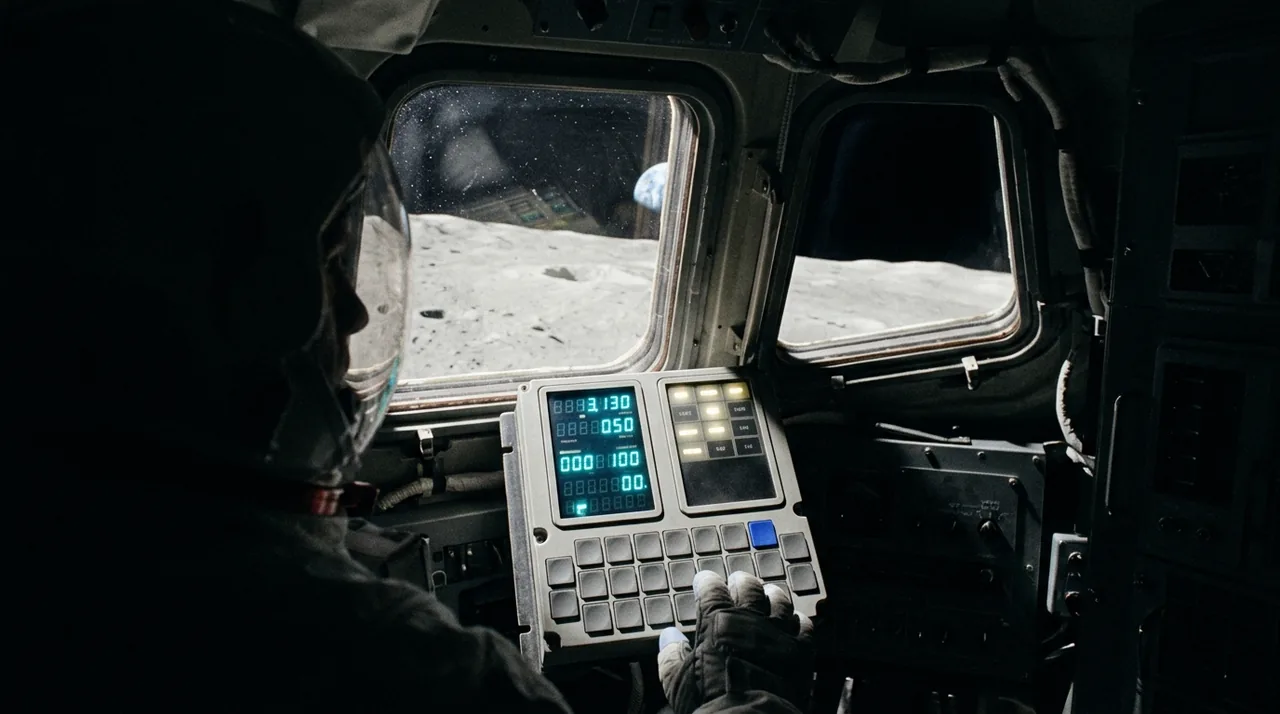
On 20 July 1969, with about ninety seconds left in the powered descent to the lunar surface, a yellow light came on inside the lunar module Eagle and a number flashed on the display: 1202. Neil Armstrong, busy looking out of the window for a place to land that was not a boulder field, asked Houston what it meant. In a back room at Mission Control, a twenty-six-year-old engineer named Steve Bales  Person Steve Bales NASA flight controller, twenty-six years old during Apollo 11, responsible for monitoring the lunar module's guidance computer from Mission Control. When the 1202 and 1201 program alarms fired during the descent on 20 July 1969, Bales called go within seconds, allowing the landing to continue. President Nixon later awarded him the Medal of Freedom on behalf of the Mission Control team.史蒂夫·贝尔斯是美国国家航空航天局(NASA)的飞行控制员,在阿波罗11号任务期间年仅26岁,负责在任务控制中心监控登月舱的引导计算机。当1969年7月20日降落过程中发生1202和1201程序报警时,贝尔斯在几秒钟内做出了继续(go)的决定,使登月得以继续进行。总统尼克松后来代表任务控制中心团队向他颁发了总统自由勋章。Controlador de vuelo de la NASA, de veintiséis años durante el Apolo 11, responsable de monitorizar el ordenador de guiado del módulo lunar desde el Centro de Control de Misión. Cuando las alarmas de programa 1202 y 1201 se activaron durante el descenso el 20 de julio de 1969, Bales dio la orden de continuar en cuestión de segundos, permitiendo que prosiguiera el alunizaje. El presidente Nixon le concedió más tarde la Medalla de la Libertad en nombre del equipo de control.ستيف بيلز هو مراقب رحلات في وكالة ناسا، وكان يبلغ من العمر ستة وعشرين عاماً أثناء مهمة أبولو 11، حيث كان مسؤولاً عن مراقبة كمبيوتر التوجيه الخاص بالوحدة القمرية من مركز التحكم في المهمة. وعندما انطلقت إنذارات البرنامج 1202 و1201 أثناء الهبوط في 20 يوليو 1969، اتخذ بيلز قرار الاستمرار (go) في غضون ثوانٍ، مما سمح بمواصلة عملية الهبوط. منح الرئيس نيكسون بيلز لاحقاً وسام الحرية نيابة عن فريق مركز التحكم.Controlador de voo da NASA, de apenas vinte e seis anos durante a missão Apollo 11, responsável por monitorar o computador de orientação do módulo lunar a partir do Controle de Missão. Quando os alarmes de programa 1202 e 1201 dispararam durante a descida em 20 de julho de 1969, Bales tomou a decisão de prosseguir (go) em poucos segundos, permitindo que o pouso continuasse. O presidente Nixon mais tarde concedeu-lhe a Medalha da Liberdade em nome de toda a equipe de Controle de Missão.नासा के उड़ान नियंत्रक (NASA flight controller), जो अपोलो 11 मिशन के दौरान छब्बीस वर्ष के थे और मिशन कंट्रोल से लूनर मॉड्यूल के मार्गदर्शन कंप्यूटर की निगरानी के लिए जिम्मेदार थे। जब 20 जुलाई 1969 को लैंडिंग के दौरान 1202 और 1201 प्रोग्राम अलार्म बजे, तो बेल्स ने कुछ ही सेकंड में आगे बढ़ने (go) का निर्देश दिया, जिससे लैंडिंग जारी रह सकी। बाद में राष्ट्रपति निक्सन ने मिशन कंट्रोल टीम की ओर से उन्हें मेडल ऑफ फ्रीडम से सम्मानित किया।Pengendali penerbangan NASA, berusia dua puluh enam tahun selama misi Apollo 11, yang bertanggung jawab memantau komputer pemandu modul lunar dari Mission Control. Ketika alarm program 1202 dan 1201 berbunyi selama penurunan pada 20 Juli 1969, Bales menyerukan instruksi lanjut (go) dalam hitungan detik, yang memungkinkan pendaratan tetap berjalan. Presiden Nixon kemudian menganugerahinya Medali Kebebasan atas nama seluruh tim Mission Control.Contrôleur de vol de la NASA, âgé de vingt-six ans lors de la mission Apollo 11, responsable de la surveillance de l'ordinateur de guidage du module lunaire depuis le centre de contrôle de Houston. Lorsque les alarmes de programme 1202 et 1201 ont retenti pendant la descente le 20 juillet 1969, Bales a donné le feu vert (go) en quelques secondes, permettant à l'alunissage de se poursuivre. Le président Nixon lui a ensuite décerné la Médaille de la Liberté au nom de l'équipe de contrôle.アポロ11号ミッション時にわずか26歳だったNASAの飛行管制官であり、管制センターから月着陸船의 誘導コンピュータの監視を担当した。1969年7月20日の月面下降中に「1202」および「1201」のプログラムアラームが発生した際、ベールズは数秒以内に「ゴー(着陸続行)」を判断し、着陸を継続させた。後にニクソン大統領は、管制チームを代表して彼に大統領自由勲章を授与した。Авиационный диспетчер НАСА, которому во время миссии «Аполлон-11» было двадцать шесть лет. Он отвечал за мониторинг бортового компьютера лунного модуля из Центра управления полетами. Когда 20 июля 1969 года во время спуска сработали аварийные сигналы программы 1202 и 1201, Бейлс в течение нескольких секунд скомандовал продолжать посадку (go). Позже президент Никсон вручил ему Президентскую медаль Свободы от имени всей команды Центра управления полетами.NASA-Flugleiter, der während Apollo 11 sechsundzwanzig Jahre alt und für die Überwachung des Bordcomputers der Mondlandefähre vom Kontrollzentrum aus verantwortlich war. Als beim Abstieg am 20. Juli 1969 die Programmalarme 1202 und 1201 ausgelöst wurden, gab Bales innerhalb von Sekunden das Signal zum Weitermachen (Go), wodurch die Landung fortgesetzt werden konnte. Präsident Nixon verlieh ihm später im Namen des gesamten Kontrollzentrums-Teams die Freiheitsmedaille des Präsidenten.아폴로 11호 임무 당시 26세였던 NASA의 비행 관제사로, 휴스턴 미션 컨트롤 센터에서 월면착륙선의 유도 컴퓨터 상태 모니터링을 담당했다. 1969년 7월 20일 하강 과정 중 1202 및 1201 프로그램 경보가 발생했을 때, 베일스는 몇 초 만에 '착륙 진행(go)' 결정을 내려 성공적인 달 착륙을 도왔다. 리처드 닉슨 대통령은 이후 미션 컨트롤 관제 팀을 대표하여 그에게 대통령 자유 훈장을 수여했다. had four seconds to decide whether to abort. He said go. The alarm fired four more times in the next minute. He said go each time. Armstrong touched down with roughly seventeen seconds of usable fuel in the tank.
The alarms were the Apollo Guidance Computer 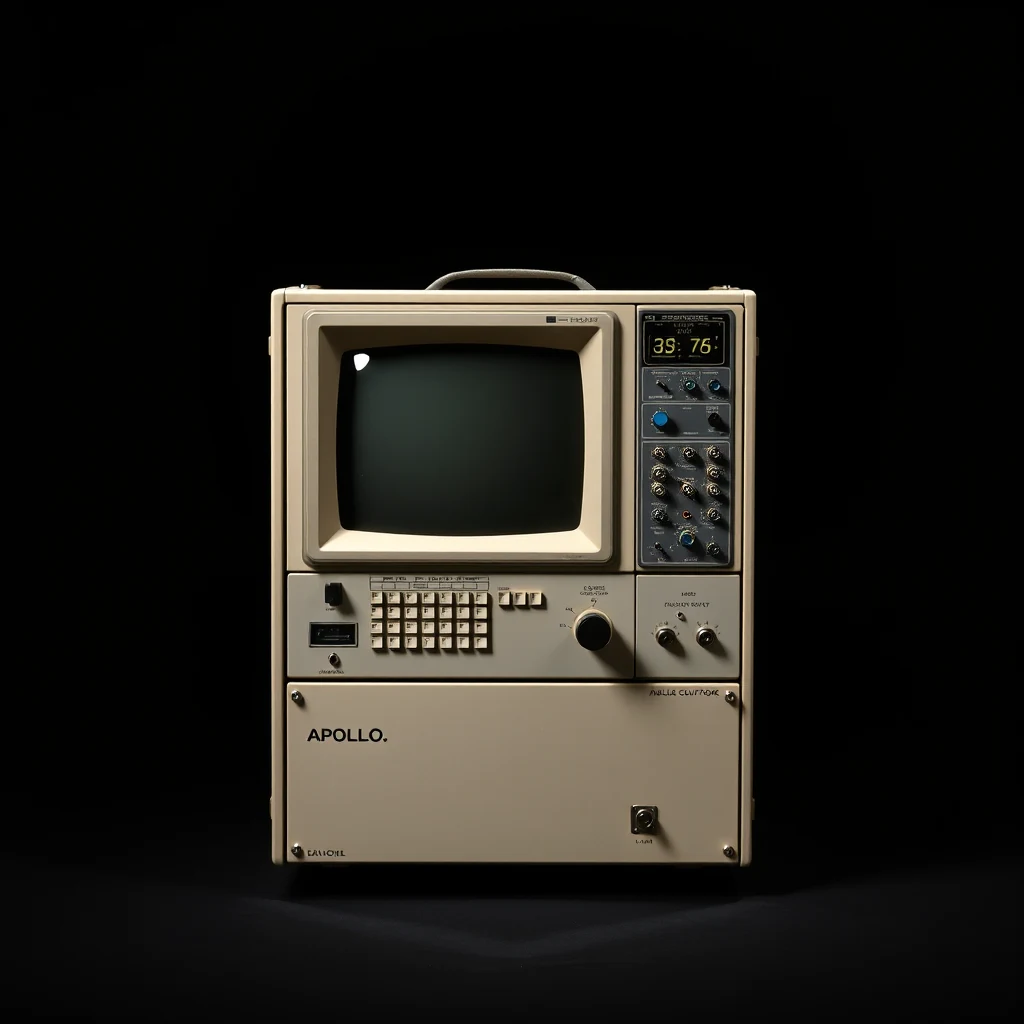 Object Apollo Guidance Computer The on-board flight computer of the Apollo command and lunar modules, designed at MIT between 1961 and 1966. About the size of a briefcase, with roughly four kilobytes of erasable memory and seventy-two of woven read-only memory, it ran a priority-scheduled real-time operating system at an effective 40 kHz. It flew every crewed Apollo mission and was the first computer built almost entirely from integrated circuits.阿波罗引导计算机是阿波罗指令舱和登月舱的机载航天计算机,由麻省理工学院于1961至1966年间设计。它的体积大约相当于一个公文包,拥有约4千字节的可擦写随机存储内存和72千字节的织入式只读存储器。它在40千赫兹的有效频率下运行一个基于优先级调度的实时操作系统。它参与了每一次载人阿波罗任务,是第一台几乎完全由集成电路构建的计算机。El ordenador de guiado del Apolo (Apollo Guidance Computer) fue el computador de a bordo de los módulos de mando y lunar del programa Apolo, diseñado en el MIT entre 1961 y 1966. Con un tamaño similar al de un maletín, disponía de unos cuatro kilobytes de memoria borrable y setenta y dos de memoria de sólo lectura de núcleos trenzados. Ejecutaba un sistema operativo en tempo real programado por prioridades a una frecuencia de 40 kHz. Voló en todas las misiones tripuladas del Apolo y fue la primera computadora construida casi en su totalidad con circuitos integrados.كمبيوتر توجيه أبولو هو كمبيوتر الطيران على متن مركبة القيادة ووحدات الهبوط على القمر لبرنامج أبولو، وتم تصميمه في معهد ماساتشوستس للتكنولوجيا بين عامي 1961 و1966. يبلغ حجمه حجم حقيبة يد تقريباً، ويحتوي على حوالي أربعة كيلوبايت من الذاكرة القابلة للمحو واثنين وسبعين كيلوبايت من ذاكرة القراءة فقط المنسوجة. وكان يعمل بنظام تشغيل في الوقت الفعلي يعتمد على جدولة الأولويات بتردد فعال يبلغ 40 كيلوهرتز. حلق هذا الجهاز في كل مهمة أبولو مأهولة، وكان أول كمبيوتر يُبنى بالكامل تقريباً من الدوائر المتكاملة.O Computador de Orientação do Apollo (Apollo Guidance Computer) foi o computador de bordo dos módulos de comando e lunar do programa Apollo, projetado no MIT entre 1961 e 1966. Com o tamanho aproximado de uma maleta, possuía cerca de quatro kilobytes de memória apagável e setenta e dois kilobytes de memória somente leitura de corda tecida. Ele executava um sistema operacional de tempo real programado por prioridades a uma frequência de 40 kHz. Voou em todas as missões tripuladas do Apollo e foi o primeiro computador construído quase totalmente com circuitos integrados.अपोलो गाइडेंस कंप्यूटर (Apollo Guidance Computer) अपोलो कमांड और लूनर मॉड्यूल का ऑन-बोर्ड उड़ान कंप्यूटर था, जिसे 1961 और 1966 के बीच एमआईटी (MIT) में डिजाइन किया गया था। एक ब्रीफकेस के आकार के इस कंप्यूटर में लगभग चार किलोबाइट की इरेज़ेबल मेमोरी और बहत्तर किलोबाइट की वोवन रीड-ओनली मेमोरी (रोप मेमोरी) थी। यह प्रभावी 40 kHz पर प्राथमिकता-निर्धारित रीयल-टाइम ऑपरेटिंग सिस्टम चलाता था। इसने प्रत्येक मानवयुक्त अपोलो मिशन में उड़ान भरी और यह लगभग पूरी तरह से एकीकृत परिपथों (इंटीग्रेटेड सर्किट) से निर्मित पहला कंप्यूटर था।Apollo Guidance Computer adalah komputer penerbangan internal pada modul komando dan modul lunar Apollo, yang dirancang di MIT antara tahun 1961 dan 1966. Berukuran sebesar koper, dengan memori yang dapat dihapus sekitar empat kilobita dan memori tebatan anyaman hanya-baca sebesar tujuh puluh dua kilobita, komputer ini menjalankan sistem operasi waktu nyata dengan jadwal prioritas pada kecepatan efektif 40 kHz. Komputer ini terbang di setiap misi berawak Apollo dan merupakan komputer pertama yang hampir seluruhnya dibuat dari sirkuit terpadu.L'ordinateur de guidage d'Apollo (Apollo Guidance Computer) était l'ordinateur de bord des modules de commande et lunaires d'Apollo, conçu au MIT entre 1961 et 1966. De la taille d'une mallette, avec environ quatre kilo-octets de mémoire effaçable et soixante-douze de mémoire morte tissée, il exécutait un système d'exploitation en temps réel avec ordonnancement par priorité à une fréquence de 40 kHz. Il a équipé chaque mission Apollo habitée et a été le premier ordinateur construit presque entièrement à partir de circuits intégrés.アポロ誘導コンピュータは、1961年から1966年にかけてMITで設計された、アポロ司令船および月着陸船のオンボード飛行制御コンピュータである。アタッシュケースほどの大きさで、約4キロバイトの消去可能メモリと72キロバイトの編み込み式読み出し専用メモリを搭載し、実効40 kHzの優先度スケジュール型リアルタイムオペレーティングシステムを実行した。すべての有人アポロ宇宙飛行ミッションに搭載され、ほぼ完全に集積回路のみで構築された世界初のコンピュータとなった。Бортовой управляющий компьютер «Аполлона» (Apollo Guidance Computer) — бортовой навигационный компьютер командного и лунного модулей космического корабля «Аполлон», разработанный в Массачусетском технологическом институте (MIT) между 1961 и 1966 годами. Прибор размером с чемодан обладал четырьмя килобайтами перезаписываемой памяти и 72 килобайтами постоянной памяти на магнитных сердечниках. Он работал под управлением операционной системы реального времени с приоритетным планированием на частоте 40 кГц, использовался во всех пилотируемых миссиях «Аполлон» и стал первым компьютером, построенным почти полностью на интегральных схемах.Der Apollo Guidance Computer war der Bordcomputer der Apollo-Kommando- und Mondlandemodule, der zwischen 1961 und 1966 am MIT entworfen wurde. Er hatte die Größe eines Aktenkoffers, besaß etwa vier Kilobyte löschbaren Speicher und zweiundsiebzig Kilobyte geflochtenen Festwertspeicher (Rope Memory) und betrieb ein prioritätsgesteuertes Echtzeit-Betriebssystem mit einer effektiven Taktfrequenz von 40 kHz. Er kam bei jeder bemannten Apollo-Mission zum Einsatz und war der erste Computer, der fast vollständig aus integrierten Schaltkreisen gebaut wurde.아폴로 유도 컴퓨터(Apollo Guidance Computer)는 1961년에서 1966년 사이에 MIT에서 설계한 아폴로 사령선 및 월면착륙선의 온보드 비행 컴퓨터이다. 서류가방 크기에 약 4킬로바이트의 소거 가능 메모리와 72킬로바이트의 직조형 읽기 전용 메모리(코어 로프 메모리)를 탑재했으며, 실효 40kHz의 우선순위 스케줄링 실시간 운영체제를 구동했다. 모든 유인 아폴로 임무에 비행 제어용으로 사용되었으며, 거의 전적으로 집적 회로를 사용하여 제작된 역사상 최초의 컴퓨터였다. telling its operators, politely, that it had more work than it could finish in a single cycle and was shedding the lowest-priority tasks to keep the landing radar and the descent program alive. It had been designed to do exactly that. A check-list error had left the rendezvous radar feeding it unwanted interrupts; rather than crash, the machine triaged itself.

No computer had ever done that before.

A computer you could weave
The AGC was built between 1961 and 1966 at the MIT Instrumentation Laboratory  Institution MIT Instrumentation Laboratory The Massachusetts research lab, founded by Charles Stark Draper in 1932, that designed inertial guidance systems for missiles, submarines and spacecraft. Awarded the first major Apollo contract in August 1961, it built the guidance computers and navigation software for every crewed lunar mission. Renamed the Charles Stark Draper Laboratory in 1973, when MIT spun it off under political pressure during the Vietnam War.麻省理工学院仪器实验室是由查尔斯·斯塔克·德雷珀于1932年创立的马萨诸塞州研究实验室,主要为导弹、潜艇和航天器设计惯性导航系统。该实验室于1961年8月获得了第一份主要的阿波罗计划合同,为每一次载人登月任务建造了引导计算机和导航软件。1973年,在越南战争期间的政治压力下,麻省理工学院将其剥离,该实验室随后更名为查尔斯·斯塔克·德雷珀实验室。El laboratorio de investigación de Massachusetts, fundado por Charles Stark Draper en 1932, que diseñó los sistemas de guiado inercial para misiles, submarinos y naves espaciales. Galardonado con el primer gran contrato del programa Apolo en agosto de 1961, construyó los ordenadores de guiado y el software de navegación para cada misión lunar tripulada. Rebautizado como Laboratorio Charles Stark Draper en 1973, cuando el MIT se desprendió de él bajo presiones políticas durante la guerra de Vietnam.مختبر ماساتشوستس للأبحاث، أسسه تشارلز ستارك دريبر عام 1932، وهو المختبر الذي صمم أنظمة التوجيه الذاتي للقمصورات والصواريخ والغواصات والمركبات الفضائية. حصل المختبر على أول عقد رئيسي لبرنامج أبولو في أغسطس 1961، وقام ببناء كمبيوترات التوجيه وبرامج الملاحة لكل مهمة قمرية مأهولة. تم تغيير اسمه إلى مختبر تشارلز ستارك دريبر عام 1973، عندما فصله معهد ماساتشوستس للتكنولوجيا تحت ضغوط سياسية خلال حرب فيتنام.O laboratório de pesquisa de Massachusetts, fundado por Charles Stark Draper em 1932, que projetou sistemas de orientação inercial para mísseis, submarinos e naves espaciais. Contratado para o primeiro grande contrato do Apollo em agosto de 1961, construiu os computadores de orientação e o software de navegação para todas as missões lunares tripuladas. Foi renomeado como Laboratório Charles Stark Draper em 1973, quando o MIT o desvinculou sob pressão política durante a Guerra do Vietnã.मैसाचुसेट्स अनुसंधान प्रयोगशाला, जिसकी स्थापना 1932 में चार्ल्स स्टार्क ड्रेपर द्वारा की गई थी, जिसने मिसाइलों, पनडुब्बियों और अंतरिक्ष यान के लिए जड़त्वीय मार्गदर्शन (इनर्शियल गाइडेंस) प्रणाली को डिजाइन किया था। अगस्त 1961 में पहला बड़ा अपोलो अनुबंध प्राप्त करने के बाद, इसने हर मानवयुक्त चंद्र मिशन के लिए मार्गदर्शन कंप्यूटर और नेविगेशन सॉफ्टवेयर का निर्माण किया। वियतनाम युद्ध के दौरान राजनीतिक दबाव में 1973 में एमआईटी (MIT) से अलग होने पर इसका नाम बदलकर चार्ल्स स्टार्क ड्रेपर प्रयोगशाला कर दिया गया।Laboratorium penelitian Massachusetts, didirikan oleh Charles Stark Draper pada tahun 1932, yang merancang sistem pemandu inersia untuk rudal, kapal selam, dan pesawat luar angkasa. Mendapatkan kontrak besar pertama Apollo pada Agustus 1961, laboratorium ini membangun komputer pemandu dan perangkat lunak navigasi untuk setiap misi bulan berawak. Berganti nama menjadi Laboratorium Charles Stark Draper pada 1973, ketika MIT memisahkannya karena tekanan politik selama Perang Vietnam.Laboratoire de recherche du Massachusetts, fondé par Charles Stark Draper en 1932, qui a conçu les systèmes de guidage inertiel pour les missiles, les sous-marins et les engins spatiaux. Lauréat du premier grand contrat Apollo en août 1961, il a construit les ordinateurs de guidage et le logiciel de navigation pour chaque mission lunaire habitée. Renommé Laboratoire Charles Stark Draper en 1973, lorsque le MIT s'en est séparé sous la pression politique pendant la guerre du Viêt Nam.チャールズ・スターク・ドレイパーによって1932年に設立されたマサチューセッツ州の研究機関であり、ミサイル、潜水艦、および宇宙船用の慣性誘導装置を設計した。1961年8月に最初のアポロ計画の主要契約を獲得し、すべての有人月ミッション向けの誘導コンピュータとナビゲーションソフトウェアを開発した。ベトナム戦争中の政治的圧力により1973年にMITから分離独立し、チャールズ・スターク・ドレイパー研究所と改称された。Массачусетская исследовательская лаборатория, основанная Чарльзом Старком Дрейпером в 1932 году, которая разрабатывала системы инерциального наведения для ракет, подводных лодок и космических аппаратов. Получив в августе 1961 года первый крупный контракт по программе «Аполлон», она создала бортовые компьютеры и навигационное программное обеспечение для всех пилотируемых лунных полетов. Переименована в Лабораторию Чарльза Старка Дрейпера в 1973 году, когда MIT вывел ее из своего состава под политическим давлением во время войны во Вьетнаме.Das Forschungslabor in Massachusetts, das 1932 von Charles Stark Draper gegründet wurde und Trägheitsnavigationssysteme für Raketen, U-Boote und Raumschiffe entwickelte. Nachdem es im August 1961 den ersten großen Apollo-Auftrag erhalten hatte, baute es die Lenkcomputer und die Navigationssoftware für jede bemannte Mondmission. Im Jahr 1973 wurde es unter politischem Druck während des Vietnamkriegs vom MIT ausgegliedert und in Charles Stark Draper Laboratory umbenannt.찰스 스타크 드레이퍼가 1932년에 설립한 매사추세츠주 소재 연구소로, 미사일, 잠수함, 우주선용 관성 유도 시스템을 설계했다. 1961년 8월 최초의 대규모 아포로 프로젝트 계약자로 선정되어 모든 유인 달 탐사 임무의 유도 컴퓨터와 내비게이션 소프트웨어를 제작했다. 베트남 전쟁 당시 정치적 압력으로 인해 1973년 MIT에서 분리 독립하면서 찰스 스타크 드레이퍼 연구소로 명칭을 변경했다. under Charles Stark Draper
 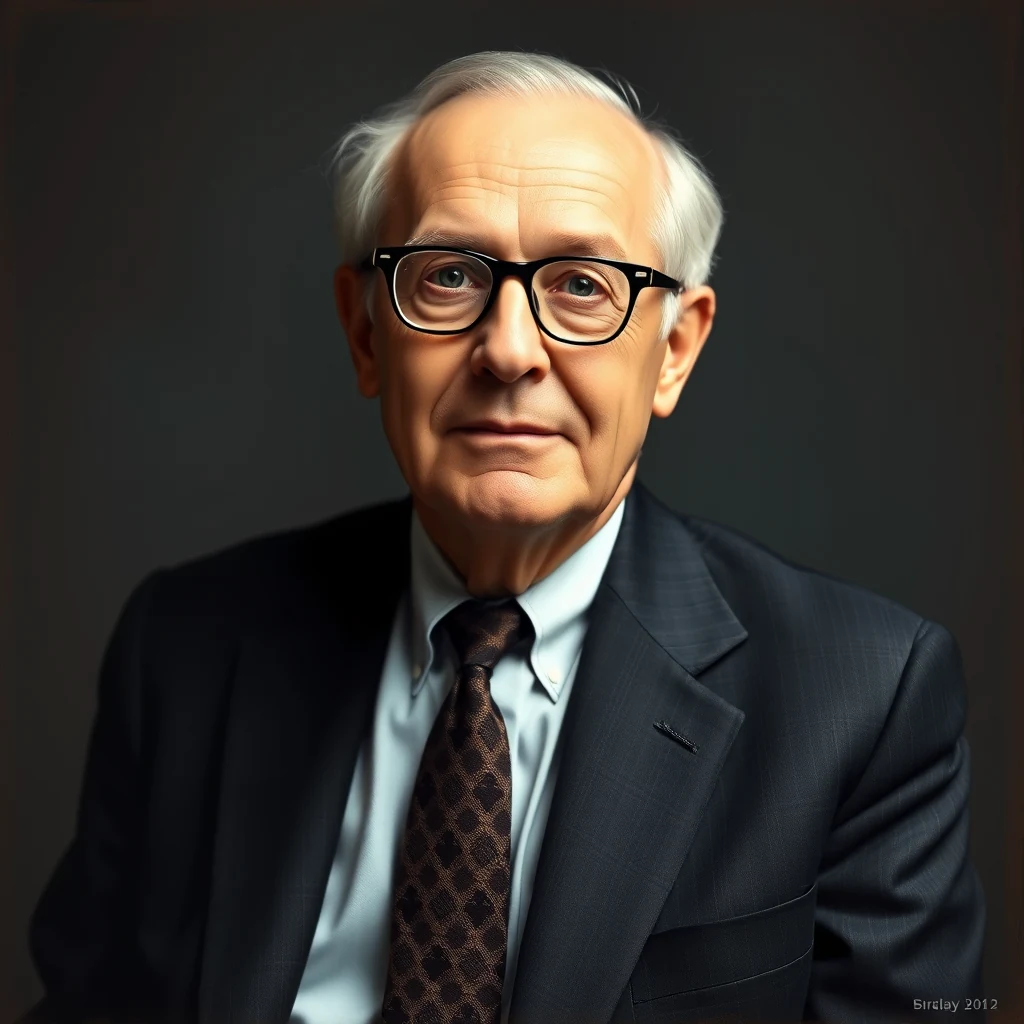 Person Charles Stark Draper American aeronautical engineer (1901–1987), founder of the MIT Instrumentation Laboratory and the principal architect of inertial guidance. He famously offered, when pitching Apollo to NASA, to fly the mission himself as proof his system would work. He did not, but the system did. His name now sits on the laboratory that built it.查尔斯·斯塔克·德雷珀是美国航空工程师(1901-1987年),麻省理工学院仪器实验室的创始人以及惯性导航系统的主要奠基人。在向美国国家航空航天局(NASA)推介阿波罗计划时,他曾著名地提出自己亲自执行飞行任务,以证明他的系统可行。他虽未亲自上天,但他的系统完美运行。现在,他的名字被冠以建造该系统的实验室上。Ingeniero aeronáutico estadounidense (1901-1987), fundador del Laboratorio de Instrumentación del MIT y arquitecto principal del guiado inercial. Es famoso por haber ofrecido, al presentar el programa Apolo a la NASA, volar él mismo en la misión como prueba de que su sistema funcionaría. Él no lo hizo, pero el sistema sí. Su nombre figura ahora en el laboratorio que construyó los equipos de navegación.تشارلز ستارك دريبر هو مهندس طيران أمريكي (1901-1987)، ومؤسس مختبر الأدوات الدقيقة في معهد ماساتشوستس للتكنولوجيا والمبتكر الرئيسي لأنظمة التوجيه الذاتي (القصوري). عُرف بعرضه الشهير عندما طرح مشروع أبولو على وكالة ناسا بأن يطير في المهمة بنفسه كإثبات على نجاح نظامه. لم يسافر دريبر في الرحلة، لكن النظام نجح تماماً، ويحمل المختبر الذي بنى هذا النظام اسمه اليوم تكريماً له.Engenheiro aeronáutico americano (1901–1987), fundador do Laboratório de Instrumentação do MIT e principal arquiteto do sistema de orientação inercial. Ele ficou famoso ao oferecer, quando apresentou o programa Apollo para a NASA, pilotar ele mesmo a missão como prova de que seu sistema funcionaria. Ele não voou, mas o sistema funcionou perfeitamente. Seu nome hoje batiza o laboratório que o projetou e construiu.अमेरिकी वैमानिकी इंजीनियर (1901-1987), एमआईटी इंस्ट्रूमेंटेशन लेबोरेटरी के संस्थापक और जड़त्वीय मार्गदर्शन (इनर्शियल गाइडेंस) प्रणाली के मुख्य शिल्पकार, जिन्हें चार्ल्स स्टार्क ड्रेपर (Charles Stark Draper) कहा जाता है। उन्होंने नासा के सामने अपोलो के प्रस्ताव के समय प्रसिद्ध रूप से खुद मिशन पर जाने की पेशकश की थी ताकि साबित हो सके कि उनकी प्रणाली काम करेगी। वे खुद तो नहीं गए, लेकिन प्रणाली ने काम किया। उनका नाम अब उस प्रयोगशाला पर है जिसने इसे बनाया था।Insinyur aeronautika Amerika (1901–1987), pendiri Laboratorium Instrumentasi MIT dan arsitek utama pemandu inersia. Ia terkenal karena pernah menawarkan diri untuk menerbangkan misi Apollo secara pribadi saat mempresentasikannya ke NASA sebagai bukti bahwa sistemnya akan berfungsi. Ia tidak jadi terbang, tetapi sistemnya bekerja dengan sukses. Namanya kini diabadikan pada laboratorium yang membangun sistem tersebut.Ingénieur aéronautique américain (1901-1987), fondateur du laboratoire d'instrumentation du MIT et principal concepteur du guidage inertiel. Il est célèbre pour avoir proposé, lors de la présentation d'Apollo à la NASA, de piloter lui-même la mission afin de prouver l'efficacité de son système. Il ne l'a pas fait, mais le système a parfaitement fonctionné. Son nom désigne désormais le laboratoire qui a construit ces équipements de vol.アメリカの航空宇宙工学者(1901〜1987年)であり、MIT計器研究所の創設者、そして慣性誘導装置の主任設計者である。アポロ計画をNASAに売り込む際、自らのシステムが正常に動作する証明として、自身がミッションに搭乗して宇宙へ飛ぶと提案したことで有名である。彼は搭乗しなかったが、システムは見事に動作した。彼の名は、その装置を構築した研究所に残されている。Американский авиационный инженер (1901–1987), основатель Лаборатории приборостроения Массачусетского технологического института (MIT) и главный создатель систем инерциальной навигации. При продвижении проекта «Аполлон» в НАСА он предложил лично лететь в космос в качестве доказательства надежности своей системы. Он не полетел, но навигационная система отработала идеально. Имя Дрейпера теперь носит создавшая ее лаборатория.US-amerikanischer Luftfahrtingenieur (1901–1987), Gründer des MIT Instrumentation Laboratory und Hauptarchitekt der Trägheitsnavigation. Berühmt wurde er, als er bei der Vorstellung von Apollo gegenüber der NASA anbot, die Mission selbst zu fliegen, um zu beweisen, dass sein System funktioniert. Er flog zwar nicht, aber das System funktionierte einwandfrei. Sein Name ziert heute das Labor, das diese Technologie entwickelt hat.미국의 항공우주 공학자(1901~1987)이자 MIT 계기연구소의 설립자이며, 관성 유도 제어 시스템의 핵심 설계자(Charles Stark Draper)이다. 아폴로 계획을 NASA에 제안할 당시 자신의 시스템이 작동함을 보증하기 위해 스스로 우주선에 탑승해 임무를 수행하겠다고 제안한 일화로 유명하다. 직접 탑승하지는 않았지만 시스템은 성공적으로 가동되었으며, 현재 그의 이름은 장치를 구축한 연구소의 이름으로 보존되어 있다. , with Margaret Hamilton
 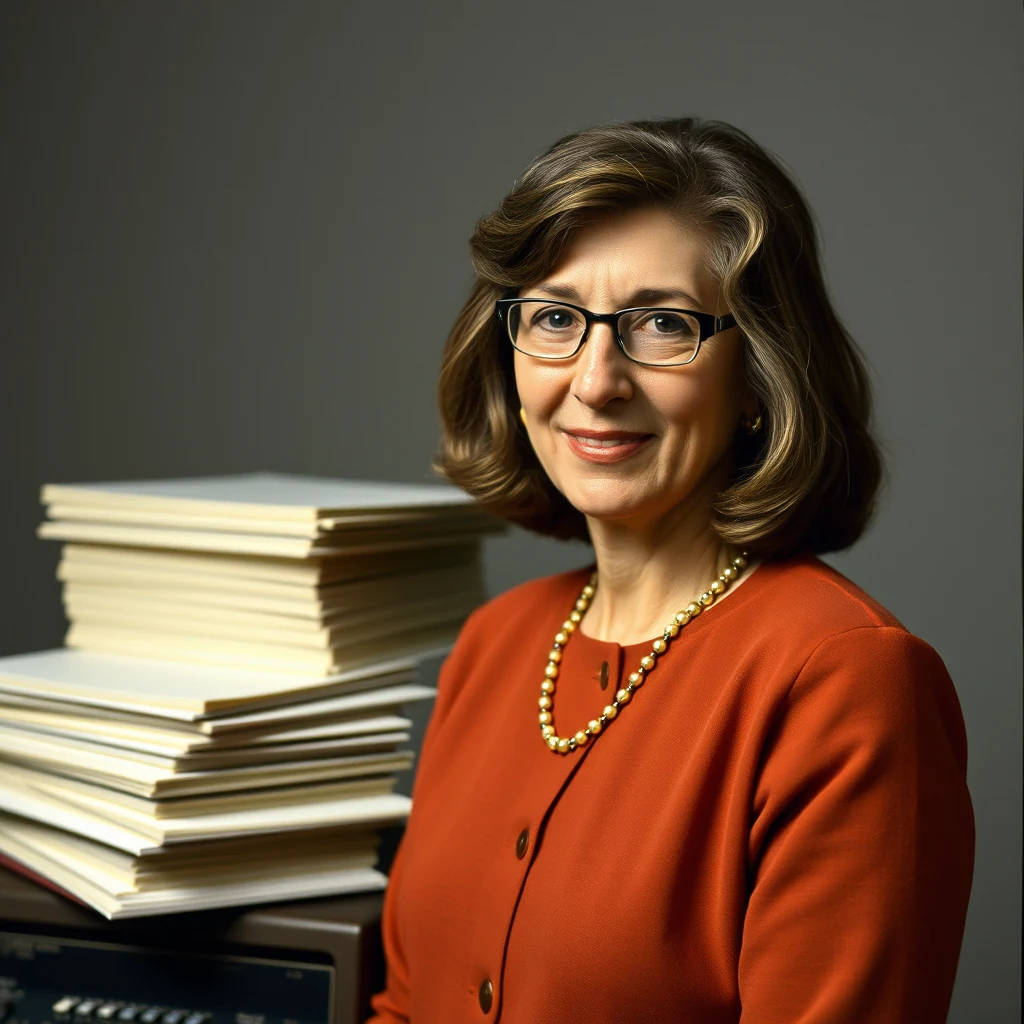 Person Margaret Hamilton American computer scientist, born 1936, who led the on-board flight software team for Apollo at the MIT Instrumentation Laboratory. She coined the term software engineering, designed the priority-scheduled executive that kept the lunar module flying through the 1202 alarms, and was photographed in 1969 standing beside a stack of her team's printed code that was taller than she was. Awarded the Presidential Medal of Freedom in 2016.玛格丽特·汉密尔顿是美国计算机科学家(1936年出生),曾在麻省理工学院仪器实验室领导阿波罗计划的机载飞行软件团队。她创造了“软件工程”一词,设计了使登月舱在遭遇1202报警时仍能继续飞行的优先级调度执行程序。1969年,她站在比自己还高的团队打印代码堆旁留下了著名的合影。她于2016年被授予总统自由勋章。Científica informática estadounidense (nacida en 1936), que dirigió el equipo de desarrollo del software de vuelo para el programa Apolo en el Laboratorio de Instrumentación del MIT. Acuñó el término ingeniería de software, diseñó el ejecutivo programado por prioridades que mantuvo volando el módulo lunar durante las alarmas 1202 y fue fotografiada en 1969 junto a un montón de listados de código impreso más alto que ella. Galardonada con la Medalla Presidencial de la Libertad en 2016.مارغريت هاميلتون هي عالمة كمبيوتر أمريكية (ولدت عام 1936), قادت فريق برمجيات الطيران على متن مركبات أبولو في مختبر الأدوات الدقيقة في معهد ماساتشوستس للتكنولوجيا. صاغت هاميلتون مصطلح هندسة البرمجيات، وصممت البرنامج التنفيذي المجدول حسب الأولوية الذي حافظ على تحليق الوحدة القمرية طوال فترة إنذارات 1202. وفي عام 1969، تم تصويرها وهي تقف بجانب كومة من الأكواد المطبوعة لمهام فريقها وكانت أطول منها. حصلت على وسام الحرية الرئاسي عام 2016.Cientista da computação americana (nascida em 1936), que liderou a equipe de software de bordo da missão Apollo no Laboratório de Instrumentação do MIT. Ela cunhou o termo engenharia de software, projetou o executivo programado por prioridades que manteve o módulo lunar voando durante os alarmes 1202 e foi fotografiada em 1969 ao lado de uma pilha impressa do código de sua equipe que era mais alta do que ela. Foi agraciada com a Medalha Presidencial da Liberdade em 2016.अमेरिकी कंप्यूटर वैज्ञानिक (जन्म 1936), जिन्होंने एमआईटी इंस्ट्रूमेंटेशन लेबोरेटरी में अपोलो के लिए ऑन-बोर्ड उड़ान सॉफ्टवेयर टीम का नेतृत्व किया था, जिन्हें मार्गरेट हैमिल्टन (Margaret Hamilton) कहा जाता है। उन्होंने 'सॉफ्टवेयर इंजीनियरिंग' शब्द गढ़ा, प्राथमिकता-निर्धारित कार्यकारी को डिजाइन किया जिसने लूनर मॉड्यूल को 1202 अलार्म के दौरान उड़ाए रखा। 1969 में उन्हें अपनी टीम के मुद्रित कोड के ढेर के पास खड़ा देखा गया था जो उनसे भी ऊंचा था। उन्हें 2016 में प्रेसिдेंशियल मेडल ऑफ फ्रीडम से सम्मानित किया गया था।Ilmuwan komputer Amerika, lahir 1936, yang memimpin tim perangkat lunak penerbangan internal untuk program Apollo di Laboratorium Instrumentasi MIT. Ia mencetuskan istilah rekayasa perangkat lunak, merancang sistem eksekutif terjadwal prioritas yang menjaga modul lunar tetap terbang saat alarm 1202 berbunyi, dan difoto pada tahun 1969 berdiri di samping tumpukan kode cetak timnya yang lebih tinggi dari dirinya. Dianugerahi Medali Kebebasan Presidensial pada tahun 2016.Informaticienne américaine (née en 1936), qui a dirigé l'équipe chargée du logiciel de vol embarqué pour le programme Apollo au laboratoire d'instrumentation du MIT. Elle a forgé le terme de génie logiciel (software engineering), a conçu le système d'exploitation à priorité qui a permis au module lunaire de voler malgré les alarmes 1202, et a été prise en photo en 1969 à côté d'une pile de listages de code imprimé plus haute qu'elle. Décorée de la Médaille présidentielle de la Liberté en 2016.アメリカのコンピュータ科学者(1936年生まれ)であり、MIT計器研究所でアポロ計画のオンボード飛行ソフトウェア開発チームを率いた。「ソフトウェア工学」という言葉を考案し、1202プログラムアラーム発生中も月着陸船の飛行を維持させた優先順位スケジュール型の実行プログラムを設計した。1969年には、自身の背丈を超えるほど積み上げられたチームの印刷コードの横に立つ姿が写真に収められた。2016年に大統領自由勲章を受章。Американский компьютерный специалист (родилась в 1936 году), возглавлявшая команду разработчиков бортового программного обеспечения для проекта «Аполлон» в Лаборатории приборостроения MIT. Она ввела термин «программная инженерия», разработала операционную систему с приоритетным планированием, которая сохранила работоспособность лунного модуля во время аварийных сигналов 1202, и сфотографировалась в 1969 году рядом со стопкой распечатанного программного кода ее команды, которая была выше ее роста. Награждена Президентской медалью Свободы в 2016 году.US-amerikanische Informatikerin (geb. 1936), die das Team für die On-Board-Flugsoftware von Apollo am MIT Instrumentation Laboratory leitete. Sie prägte den Begriff Software-Engineering, entwarf das prioritätsgesteuerte Betriebssystem (Executive), das die Mondlandefähre trotz der 1202-Alarme in der Luft hielt, und wurde 1969 neben einem Stapel ausgedruckten Quellcodes ihres Teams fotografiert, der höher war als sie selbst. 2016 erhielt sie die Freiheitsmedaille des Präsidenten.미국의 컴퓨터 과학자(1936년생)로, MIT 계기연구소에서 아폴로 프로젝트의 온보드 비행 소프트웨어 팀을 이끌었다. '소프트웨어 엔지니어링'이라는 용어를 최초로 고안했으며, 1202 경보 발령 시에도 월면착륙선이 안전하게 비행하도록 돕는 우선순위 제어 운영 프로그램을 설계했다. 1969년 자신의 키보다 높게 쌓인 팀원들의 소스 코드 출력 파일 뭉치 옆에 서 있는 모습으로 사진이 찍히기도 했다. 2016년 대통령 자유 훈장을 수여받았다. running the on-board flight software group. By the standards of the room-filling mainframes of its day it was absurd: a metal box about the size of a briefcase, weighing thirty kilograms, drawing fifty-five watts. It had 2,048 words of erasable magnetic-core memory and 36,864 words of read-only memory, each word fifteen bits plus parity. In modern units, that is around four kilobytes of RAM and seventy-two of ROM. It ran at 2.048 MHz, but a single instruction took about twelve microseconds, giving it an effective rate of roughly 40 kHz — slower than a singing birthday card.

The read-only memory was not etched into silicon. It was woven. A wire passing through the centre of a small iron ring counted as a binary one; a wire passing outside the ring counted as a zero. Hundreds of thousands of these decisions had to be threaded by hand, in the right order, through tiny ferrite cores arranged in a fixed grid. The work was done at the Raytheon 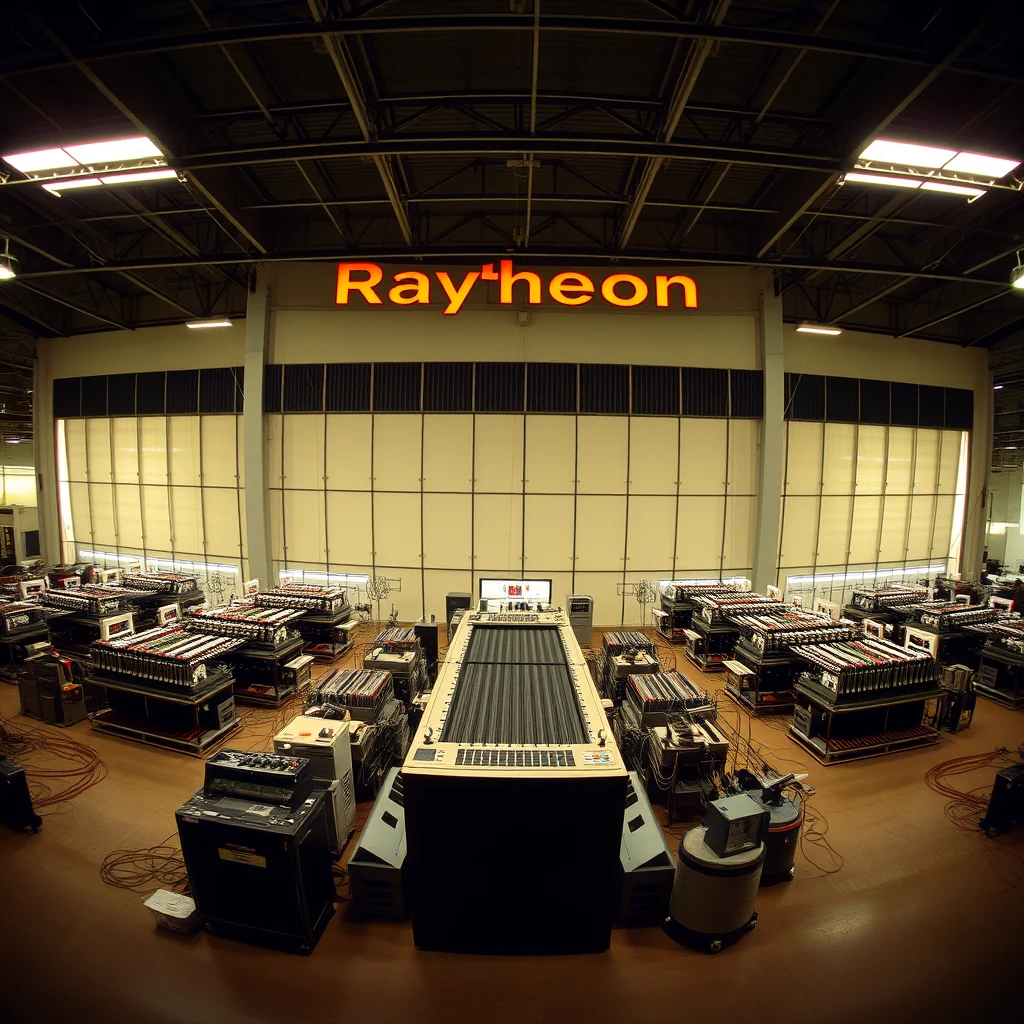 Institution Raytheon Massachusetts defence and electronics manufacturer, founded in 1922, contracted to fabricate the Apollo Guidance Computer's woven read-only memory at its Waltham plant. The painstaking work of threading wires through ferrite cores was done largely by women hired from the local textile trade, whose dexterity NASA considered better suited to the task than that of trained electronics technicians.雷神公司是创立于1922年的马萨诸塞州国防与电子制造商,曾签约在其沃尔瑟姆工厂制造阿波罗引导计算机的织入式只读存储器。将导线穿过铁氧体磁芯的艰苦细致工作,主要由从当地纺织行业雇用的女工完成。美国国家航空航天局(NASA)认为,与接受过培训的电子技术人员相比,她们的灵巧双手更适合这项任务。Fabricante de defensa y electrónica de Massachusetts, fundado en 1922, contratado para fabricar la memoria de sólo lectura de núcleos trenzados del ordenador de guiado del Apolo en su fábrica de Waltham. El meticuloso trabajo de enhebrar cables a través de núcleos de ferrita fue realizado principalmente por mujeres contratadas del sector textil local, cuya destreza la NASA consideró más adecuada para la tarea que la de los técnicos electrónicos formados.شركة ريثيون هي مصنع للدفاع والإلكترونيات في ماساتشوستس تأسس عام 1922، وتم التعاقد معها لتصنيع ذاكرة القراءة فقط المنسوجة لكمبيوتر توجيه أبولو في مصنعها بمدينة والثام. وقد أُنجز العمل الشاق والمضني المتمثل في تمرير الأسلاك عبر الحلقات المغناطيسية (الفريت) بشكل كبير على أيدي نساء تم توظيفهن من تجارة المنسوجات المحلية، حيث اعتبرت وكالة ناسا أن مهارتهن اليدوية وخفتهن أكثر ملاءمة لهذه المهمة من الفنيين الإلكترونيين المدربين.Fabricante de defesa e eletrônica de Massachusetts, fundada em 1922, contratada para fabricar a memória somente leitura de corda tecida do Apollo Guidance Computer em sua fábrica de Waltham. O trabalho minucioso de passar fios por núcleos de ferrite foi feito em grande parte por mulheres contratadas do setor têxtil local, cuja destreza a NASA considerou mais adequada para la tarefa do que a de técnicos eletrônicos qualificados.मैसाचुसेट्स की रक्षा और इलेक्ट्रॉनिक्स निर्माता कंपनी, जिसकी स्थापना 1922 में हुई थी, जिसे रेथियॉन (Raytheon) कहा जाता है। इसे अपने वॉलथम प्लांट में अपोलो गाइडेंस कंप्यूटर की रोप रीड-ओनली मेमोरी बनाने का अनुबंध दिया गया था। फेराइट कोर के माध्यम से तारों को पिरोने का श्रमसाध्य कार्य मुख्य रूप से स्थानीय कपड़ा उद्योग से ली गई महिलाओं द्वारा किया गया था, जिनकी दक्षता को नासा ने प्रशिक्षित इलेक्ट्रॉनिक्स तकनीशियनों की तुलना में इस कार्य के लिए अधिक उपयुक्त माना था।Produsen pertahanan dan elektronik Massachusetts, didirikan pada tahun 1922, yang dikontrak untuk memproduksi memori hanya-baca anyaman milik Apollo Guidance Computer di pabrik Waltham. Pekerjaan rumit memasukkan kabel melalui inti ferit sebagian besar dilakukan oleh para wanita yang direkrut dari industri tekstil lokal, yang ketangkasannya dianggap NASA lebih cocok untuk tugas tersebut dibandingkan dengan teknisi elektronik terlatih.Fabricant d'électronique et de défense du Massachusetts, fondé en 1922, contracté pour fabriquer la mémoire morte tissée de l'ordinateur de guidage d'Apollo dans son usine de Waltham. Le travail minutieux consistant à enfiler des fils à travers des tores de ferrite a été réalisé en grande partie par des femmes issues de l'industrie textile locale, dont la dextérité était jugée par la NASA plus adaptée à cette tâche que celle de techniciens en électronique qualifiés.1922年に設立されたマサチューセッツ州の国防・电子機器メーカーであり、ウォルサム工場でアポロ誘導コンピュータの編み込み式読み出し専用メモリを製造する契約を結んだ。フェライトコアにワイヤーを通す根気のいる細かな作業は、主に地元の繊維業界から雇用された女性たちによって行われた。NASAは、訓練を受けた電子技術者よりも彼女たちの手先の器用さの方がこの作業に適していると判断した。Массачусетский производитель оборонной продукции и электроники, основанный в 1922 году, получивший контракт на изготовление памяти на магнитных сердечниках для бортового компьютера «Аполлона» на заводе в Уолтеме. Кропотливая работа по продеванию проводов через ферритовые кольца выполнялась в основном женщинами, нанятыми с местных текстильных фабрик, чья ловкость рук, по мнению НАСА, подходила для этой задачи лучше, чем навыки профессиональных радиотехников.Rüstungs- und Elektronikhersteller aus Massachusetts, gegründet 1922, der den Auftrag erhielt, den geflochtenen Festwertspeicher des Apollo-Lenkcomputers in seinem Werk in Waltham herzustellen. Die mühsame Arbeit, Drähte durch Ferritkerne zu fädeln, wurde größtenteils von Frauen aus der lokalen Textilindustrie erledigt, deren Fingerfertigkeit die NASA für diese Aufgabe als besser geeignet ansah als die von ausgebildeten Elektroniktechnikern.1922년에 설립된 매사추세츠주 소재의 방산 및 전자 제품 제조업체(Raytheon)로, 월섬 공장에서 아폴로 유도 컴퓨터용 직조형 읽기 전용 메모리를 제작하는 계약을 체결했다. 페라이트 코어에 미세한 구리선을 꿰매는 고도의 정밀 작업은 주로 지역 섬유 산업 출신의 여성 노동자들이 담당했다. NASA는 숙련된 전자 기술자보다 이들의 손재주가 작업에 훨씬 더 적합하다고 판단했다. plant in Waltham, Massachusetts, almost entirely by women hired from the local textile industry, on the theory that a seamstress's hands were better suited to the task than an engineer's. NASA called it Little Old Lady memory. Once a module was woven and potted in epoxy, the program could not be changed. The code Armstrong flew was, in a literal sense, fabric.

Integrated circuits, by the hundred thousand
The AGC's quieter revolution was its logic. Earlier computers used discrete transistors wired into circuit boards. The AGC was the first machine built almost entirely from a single type of integrated circuit 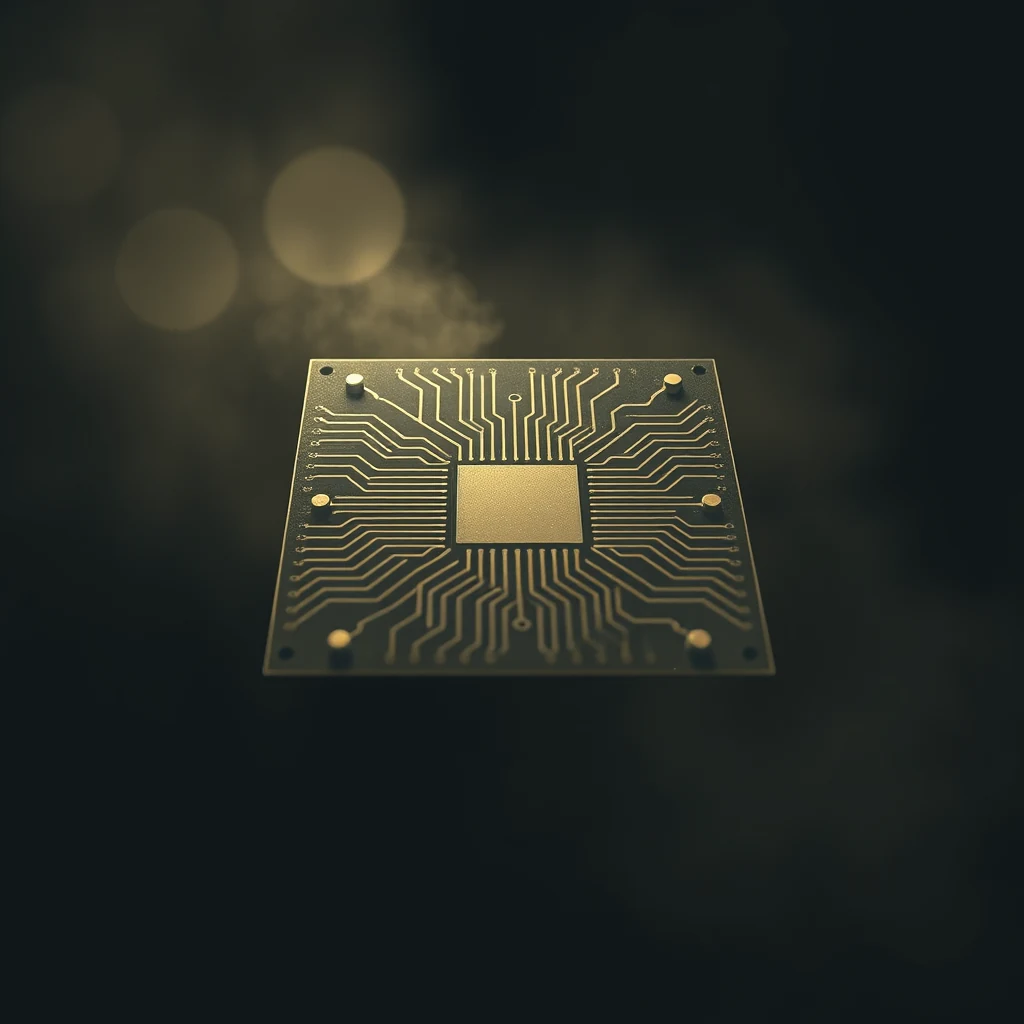 Concept integrated circuit A complete electronic circuit etched onto a single small wafer of semiconductor, usually silicon. Invented independently by Jack Kilby at Texas Instruments and Robert Noyce at Fairchild in 1958–59, it replaced bundles of discrete transistors with a single component that could be mass-produced. NASA's Apollo orders in the early 1960s consumed most of the world's supply and seeded the modern semiconductor industry.集成电路是蚀刻在单个微小半导体(通常是硅)晶圆上的完整电子电路。它由德州仪器的杰克·基尔比和仙童半导体的罗伯特·诺伊斯在1958至1959年间独立发明,用可以量产的单一组件取代了成组的分立晶体管。美国国家航空航天局(NASA)在1960年代初期的阿波罗计划订单消耗了当时全球大部分的集成电路产量,为现代半导体工业播下了种子。Un circuito electrónico completo grabado en una única y pequeña oblea de semiconductor, generalmente silicio. Inventado de forma independiente por Jack Kilby en Texas Instruments y Robert Noyce en Fairchild en 1958-59, sustituyó los haces de transistores discretos por un único componente que podía fabricarse en serie. Los pedidos del programa Apolo de la NASA a principios de la década de 1960 consumieron la mayor parte del suministro mundial y sembraron la industria moderna de los semiconductores.الدارة المتكاملة (Integrated Circuit) هي دارة إلكترونية كاملة محفورة على شريحة صغيرة واحدة من أشباه الموصلات، وتكون عادة من السيليكون. اخترعها بشكل مستقل جاك كيلبي في شركة تكساس إنسترومنتس وروبرت نويس في شركة فيرتشايلد بين عامي 1958 و1959، وقد استبدلت مجموعات الترانزستورات المنفصلة بمكون واحد يمكن إنتاجه بكميات كبيرة. استهلكت طلبات برنامج أبولو التابع لناسا في أوائل الستينيات معظم الإمداد العالمي منها، ووضعت أساس صناعة أشباه الموصلات الحديثة.Um circuito eletrônico completo gravado em uma única pastilha pequena de semicondutor, geralmente silício. Inventado de forma independente por Jack Kilby na Texas Instruments e Robert Noyce na Fairchild em 1958-59, substituiu feixes de transistores discretos por um único componente que podia ser produzido em massa. Os pedidos da NASA para o programa Apollo no início dos anos 1960 consumiram a maior parte do suprimento mundial e semearam a moderna indústria de semicondutores.एक पूर्ण इलेक्ट्रॉनिक सर्किट जिसे अर्धचालक (आमतौर पर सिलिकॉन) के एक छोटे वेफर पर उकेरा जाता है, जिसे एकीकृत परिपथ (integrated circuit) कहा जाता है। 1958-59 में टेक्सास इंस्ट्रूमेंट्स में जैक किल्बी और फेयरचाइल्ड में रॉबर्ट नॉयस द्वारा स्वतंत्र रूप से आविष्कृत, इसने पृथक ट्रांजिस्टर के बंडलों को एक एकल घटक से बदल दिया जिसका बड़े पैमाने पर उत्पादन किया जा सकता था। 1960 के दशक की शुरुआत में नासा के अपोलो ऑर्डर्स ने दुनिया की अधिकांश आपूर्ति का उपभोग किया और आधुनिक अर्धचालक उद्योग की नींव रखी।Sirkuit elektronik lengkap yang dietsa ke atas satu wafer semikonduktor kecil, biasanya silikon. Ditemukan secara independen oleh Jack Kilby di Texas Instruments dan Robert Noyce di Fairchild pada tahun 1958–59, sirkuit terpadu menggantikan bundel transistor diskret dengan satu komponen tunggal yang dapat diproduksi massal. Pesanan Apollo NASA pada awal 1960-an menghabiskan sebagian besar pasokan dunia dan menjadi benih bagi industri semikonduktor modern.Circuit électronique complet gravé sur une unique petite plaquette de semi-conducteur, généralement du silicium. Inventé indépendamment par Jack Kilby chez Texas Instruments et Robert Noyce chez Fairchild en 1958-59, il a remplacé les groupes de transistors discrets par un composant unique pouvant être produit en masse. Les commandes de la NASA pour le programme Apollo au début des années 1960 ont consommé la majeure partie de la production mondiale et ont donné naissance à l'industrie moderne des semi-conducteurs.通常はシリコンである単一の小さな半導体ウエハ上にエッチングされた、完全な電子回路である。1958年から1959年にかけて、テキサス・インスツルメンツ of ジャック・キルビーとフェアチャイルドのロバート・ノイスによって独立して発明され、個別トランジスタの束を量産可能な単一の部品に置き換えた。1960年代初頭のNASAによるアポロ計画の注文は、世界の集積回路供給の大部分を消費し、現代の半導体産業の基礎を築いた。Интегральная схема — законченная электронная схема, вытравленная на одной небольшой пластине полупроводника, обычно кремния. Изобретенная независимо Джеком Килби в Texas Instruments и Робертом Нойсом в Fairchild в 1958–1959 годах, она заменила сборки из отдельных транзисторов единым компонентом, пригодным для массового производства. Заказы НАСА для программы «Аполлон» в начале 1960-х годов поглотили большую часть мирового объема выпуска микросхем, заложив основу современной полупроводниковой индустрии.Ein vollständiger elektronischer Schaltkreis, der auf ein einziges kleines Halbleiterplättchen, meist aus Silizium, geätzt ist. Unabhängig voneinander 1958–59 von Jack Kilby bei Texas Instruments und Robert Noyce bei Fairchild erfunden, ersetzte der integrierte Schaltkreis Bündel einzelner Transistoren durch ein einziges, massenproduzierbares Bauteil. Die Apollo-Aufträge der NASA in den frühen 1960er Jahren machten einen Großteil der weltweiten Produktion aus und legten den Grundstein für die moderne Halbleiterindustrie.통상 실리콘인 단일 소형 반도체 웨이퍼 위에 식각공정으로 구현한 완전한 전자 회로(integrated circuit)이다. 1958~1959년 텍사스 인스트루먼츠의 잭 킬비와 페어차일드의 로버트 노이스가 각각 독자적으로 발명했으며, 개별 트랜지스터의 다발을 대량 생산이 가능한 단일 부품으로 대체했다. 1960년대 초 NASA의 아폴로 프로젝트 주문 물량은 당시 세계 집적 회로 공급량의 대부분을 소비하며 현대 반도체 산업의 성장을 주도했다. — a three-input NOR gate manufactured by Fairchild Semiconductor
  Institution Fairchild Semiconductor California electronics company, founded in 1957 by the so-called traitorous eight defectors from Shockley Semiconductor. Fairchild produced the three-input NOR-gate integrated circuit used by the thousand in every Apollo Guidance Computer, and its alumni went on to found Intel, AMD, and much of what became Silicon Valley. The Apollo contract is widely credited with making the company, and the industry, commercially viable.仙童半导体是创立于1957年的加州电子公司,由从肖克利半导体实验室辞职的所谓“八叛逆”创立。仙童半导体生产了三输入或非门(NOR-gate)集成电路,每个阿波罗引导计算机中都成千上万地使用了这种电路。该公司的员工后来创立了英特尔、超威半导体(AMD)以及如今硅谷的大部分企业。阿波罗计划的合同被广泛认为使该公司和整个半导体行业在商业上得以生存和立足。Empresa de electrónica de California, fundada en 1957 por los llamados «ocho traidores» que abandonaron Shockley Semiconductor. Fairchild fabricó el circuito integrado de puerta NOR de tres entradas utilizado por millares en cada ordenador de guiado del Apolo, y sus antiguos empleados fundaron Intel, AMD y gran parte de lo que se convertiría en Silicon Valley. Al contrato de las misiones Apolo se le atribuye el mérito de hacer comercialmente viable la empresa y toda la industria.شركة فيرتشايلد لأشباه الموصلات هي شركة إلكترونيات كاليفورنية تأسست عام 1957 على يد ما يسمى بـ "الثمانية الخونة" الذين انشقوا عن شركة شوكلي لأشباه الموصلات. أنتجت الشركة دارة البوابة المنطقية "NOR" ذات المداخل الثلاثة التي استخدمت بالآلاف في كل كمبيوتر توجيه أبولو، وذهب خريجوها لتأسيس شركات مثل إنتل و(AMD) ومعظم ما أصبح يعرف اليوم بوادي السيليكون. ويُعزى إلى عقد أبولو الفضل الكبير في جعل الشركة والصناعة قابلة للاستمرار تجارياً.Empresa de eletrônica da Califórnia, fundada em 1957 pelos chamados 'oito traidores' que desertaram da Shockley Semiconductor. A Fairchild produziu o circuito integrado de porta NOR de três entradas usado aos milhares em cada Apollo Guidance Computer, e seus ex-funcionários fundaram a Intel, a AMD e grande parte do que se tornou o Vale do Silício. O contrato do Apollo é amplamente creditado por tornar a empresa e a indústria comercialmente viáveis.कैलिफ़ोर्निया की इलेक्ट्रॉनिक्स कंपनी, जिसकी स्थापना 1957 में शॉकले सेमीकंडक्टर से अलग हुए तथाकथित 'गद्दार आठ' (traitorous eight) द्वारा की गई थी, जिसे फेयरचाइल्ड सेमीकंडक्टर (Fairchild Semiconductor) कहा जाता है। फेयरचाइल्ड ने तीन-इनपुट एनओआर-गेट (NOR-gate) एकीकृत परिपथ का उत्पादन किया जिसका उपयोग हर अपोलो गाइडेंस कंप्यूटर में हजारों की संख्या में किया गया था। इसके पूर्व छात्रों ने इंटेल, एएमडी और सिलिकॉन वैली के अधिकांश हिस्से की स्थापना की। अपोलो अनुबंध को कंपनी और उद्योग को व्यावसायिक रूप से व्यवहार्य बनाने का श्रेय दिया जाता है।Perusahaan elektronik California, didirikan pada tahun 1957 oleh kelompok yang disebut delapan pembelot (traitorous eight) dari Shockley Semiconductor. Fairchild memproduksi sirkuit terpadu gerbang NOR tiga input yang digunakan ribuan kali di setiap Apollo Guidance Computer, dan para alumninya kemudian mendirikan Intel, AMD, dan sebagian besar dari apa yang menjadi Silicon Valley. Kontrak Apollo secara luas diakui telah membuat perusahaan ini, dan industrinya, menjadi layak secara komersial.Entreprise d'électronique californienne, fondée en 1957 par les « huit traîtres » qui avaient quitté Shockley Semiconductor. Fairchild a produit le circuit intégré de porte NOR à trois entrées utilisé par milliers dans chaque ordinateur de guidage d'Apollo, et ses anciens employés sont allés fonder Intel, AMD et une grande partie de ce qui est devenu la Silicon Valley. On attribue largement au contrat Apollo le mérite d'avoir rendu l'entreprise, et cette industrie, commercialement viables.ショックレー半導体研究所を離脱した、いわゆる「8人の反逆者」によって1957年に設立されたカリフォルニア州の電子機器会社である。フェアチャイルドは、すべてのアポロ誘導コンピュータに何千個も使用された3入力NORゲート集積回路を製造し、その出身者はインテルやAMD、精神的にシリコンバレーとなる企業の多くを設立した。アポロ計画の契約は、同社と半導体産業を商業的に成り立たせる契機となったと広く認識されている。Калифорнийская электронная компания, основанная в 1957 году так называемой «вероломной восьмеркой» ученых, ушедших из Shockley Semiconductor. Fairchild производила интегральные схемы с трехвходовыми вентилями ИЛИ-НЕ (NOR), которые тысячами использовались в каждом бортовом компьютере «Аполлона». Бывшие сотрудники компании основали Intel, AMD и сформировали облик Кремниевой долины. Контракт на проект «Аполлон» помог компании и всей индустрии стать коммерчески успешными.Elektronikunternehmen aus Kalifornien, das 1957 von den sogenannten „traitorous eight“ gegründet wurde, die Shockley Semiconductor verlassen hatten. Fairchild stellte den integrierten Schaltkreis mit NOR-Gattern und drei Eingängen her, der zu Tausenden in jedem Apollo-Lenkcomputer verbaut war. Ehemalige Mitarbeiter gründeten später Intel, AMD und einen Großteil dessen, was das Silicon Valley wurde. Der Apollo-Vertrag gilt als entscheidend dafür, dass das Unternehmen und die Branche kommerziell rentabel wurden.쇼클리 반도체 연구소를 이탈한 이른바 '8인의 반역자'들이 1957년에 설립한 캘리포니아 소재 전자 기업(Fairchild Semiconductor)이다. 아폴로 유도 컴퓨터마다 수천 개씩 사용된 3입력 NOR 게이트 집적 회로를 생산했으며, 이곳 출신 엔지니어들은 인텔, AMD 등 실리콘밸리 핵심 기업들을 대거 창업했다. 아폴로 프로젝트 계약은 페어차일드와 반도체 산업 전체가 상업적 자생력을 갖추게 한 결정적인 계기로 평가받는다. . Each Apollo computer contained around 5,600 of them. In 1963, NASA was buying about sixty percent of all integrated circuits made in the United States, almost all of them for Apollo. The orders bankrolled the early production lines, drove the price per chip from a thousand dollars to a few dollars within a decade, and gave Silicon Valley its first guaranteed customer. Every chip you own descends from that contract.

The software was harder than the hardware. Hamilton's team wrote in an assembly language for an architecture nobody had used before, on a programme with no precedent and a deadline set by a presidential speech. They invented, more or less from scratch, the idea of priority-scheduled real-time operating systems, the practice of formal code review, and the discipline now called software engineering — a term Hamilton coined, partly to be taken seriously in a building full of men who did not consider what she did to be engineering at all.

What we still don't know
We do not know, precisely, how close Apollo 11 came to aborting. Bales's call was made on partial information; later analysis suggests the computer would have continued to fly the descent even if the alarms had been ignored, but the margin was narrow enough that opinions among the original engineers still differ.

We do not know how many Block II AGCs were built. The standard figure is around seventy-five flight units, plus trainers and ground spares, but Raytheon's records are incomplete and several units are unaccounted for. One turned up in a Houston scrapyard in 1976. Another was found in a private collection in 2019.

And we do not entirely know what the AGC could have done with more time. The Block III design, drafted but never built, would have run roughly four times faster and supported a richer display. Apollo was cancelled before it flew.
A briefcase of woven wire, running on less power than a reading lamp, kept twelve men alive on another world and brought them home. The phones in our pockets cannot do that, and were never asked to.