Atomic Fountain Clocks - 300 Million Year Accuracy
#030 · 5 min read
The most accurate clocks on Earth would take 300 million years to drift by a single second. They work by lobbing a handful of caesium atoms a metre into the air, cold as deep space, and listening to them ring on the way down.
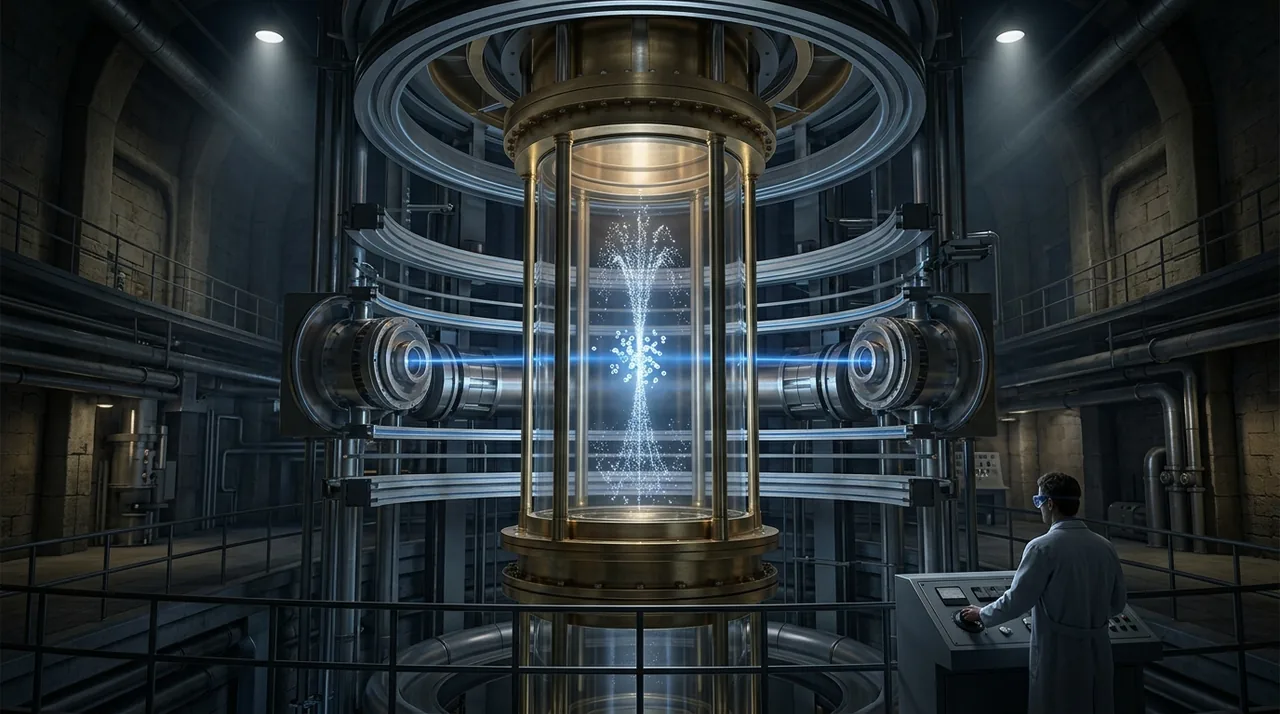
In a windowless lab on the National Institute of Standards and TechnologyInstitutionNISTThe National Institute of Standards and Technology, the United States metrology agency, headquartered in Gaithersburg, Maryland. Founded as the National Bureau of Standards in 1901. Home to the NIST-4 Kibble balance, whose measurements of the Planck constant in 2017 helped lock in the value adopted by the 2018 Versailles vote that redefined the kilogram.美国国家标准与技术研究院(NIST),是美国国家级计量机构,总部位于马里兰州盖瑟斯堡。该机构于1901年作为国家标准局成立。它是NIST-4基布尔秤的所在地,该设备在2017年对普朗克常数进行的测量,直接帮助锁定了2018年凡尔赛大会表决重新定义千克时所采用的精确常数值。El Instituto Nacional de Estándares y Tecnología, la agencia de metrología de EE. UU., con sede en Gaithersburg, Maryland. Fundado en 1901 como Oficina Nacional de Normas. Desarrolló la balanza de Kibble NIST-4, cuyas mediciones de la constante de Planck en 2017 permitieron la redefinición del kilogramo en 2018.المعهد الوطني للمعايير والتقنية (NIST)، وهو وكالة المترولوجيا الأمريكية، ومقره في غايثرسبيرغ، ميريلاند. تأسس باسم المكتب الوطني للمعايير عام 1901. يضم المعهد ميزان كيبيل NIST-4، الذي ساعدت قياساته لثابت بلانك عام 2017 في تحديد القيمة المعتمدة في تصويت فرساي لعام 2018 لإعادة تعريف الكيلوغرام.O National Institute of Standards and Technology, a agência de metrologia dos EUA, sediado em Gaithersburg, Maryland. Fundado em 1901 como National Bureau of Standards. Criador da balança de Kibble NIST-4, cujas medições da constante de Planck em 2017 ajudaram a consolidar a redefinição do quilograma em 2018.राष्ट्रीय मानक और प्रौद्योगिकी संस्थान (एनआईएसटी), संयुक्त राज्य अमेरिका की माप विज्ञान एजेंसी, जिसका मुख्यालय गैथर्सबर्ग, मैरीलैंड में है। १९०१ में नेशनल ब्यूरो ऑफ स्टैंडर्ड्स के रूप में स्थापित। यह एनआईएसटी-४ किबल बैलेंस का घर है, जिसके २०१७ में प्लैंक स्थिरांक के मापन ने किलोग्राम को फिर से परिभाषित करने में मदद की।Institut Nasional Standar dan Teknologi (NIST), lembaga metrologi Amerika Serikat, berkantor pusat di Gaithersburg, Maryland. Didirikan tahun 1901 sebagai National Bureau of Standards. Rumah bagi timbangan Kibble NIST-4, yang pengukuran konstanta Planck miliknya pada tahun 2017 membantu penentuan definisi baru kilogram pada 2018.Le National Institute of Standards and Technology, l'agence américaine de métrologie, sise à Gaithersburg, Maryland. Créé en 1901 sous le nom de National Bureau of Standards. Il abrite la balance de Kibble NIST-4, dont les mesures de la constante de Planck en 2017 validèrent la valeur adoptée lors du vote historique de 2018.メリーランド州ゲイザースバーグに本部を置く、米国の国家計量機関である米国国立標準技術研究所。1901年に米国国家標準局として設立された。2017年にプランク常数の測定を実施し、2018年のヴェルサイユ総会でキログラム再定義のために採択された常数値を確定させるのに寄与した「NIST-4キブル天秤」が設置されている。Национальный институт стандартов и технологий (NIST) — метрологическое агентство США со штаб-квартирой в Гейтерсберге (Мэриленд). Основан в 1901 году как Национальное бюро стандартов. Здесь находятся весы Киббла NIST-4, измерения постоянной Планка на которых в 2017 году легли в основу нового определения килограмма.Das National Institute of Standards and Technology (NIST) ist die US-amerikanische Metrologiebehörde mit Hauptsitz in Gaithersburg, Maryland. Es wurde 1901 als National Bureau of Standards gegründet. Das NIST entwickelte die Watt-Waage NIST-4 Kibble, deren Messungen des Planckschen Wirkungsquantums 2017 die Neudefinition des Kilogramms 2018 ermöglichten.메릴랜드주 게이더스버그에 본부를 둔 미국의 국립정밀측정표준기관(NIST)이다. 1901년 국립표준국(NBS)이라는 이름으로 설립되었다. 2017년 플랑크 상수를 극도로 정밀하게 측정하여 2018년 베르사유 총회 의결에 따른 킬로그램 재정의의 물리적 상숫값을 확정하는 데 핵심 기여를 한 'NIST-4 키블 저울'이 이곳에 위치해 있다. campus in Boulder, Colorado, a stainless-steel cylinder roughly the size of a refrigerator does almost nothing. Inside, in a hard vacuum, a cloud of caesium-133 atoms is cooled by six crossed laser beams to about one microkelvin — colder than interstellar space — and then nudged upward by a slight detuning of those same beams. The cloud rises about a metre, slows under gravity, stops, and falls back. On the way up and on the way down it passes through a copper microwave cavity humming at 9,192,631,770 cycles per second. The machine is called NIST-F2. If you had started it ticking at the extinction of the dinosaurs, it would now be off by roughly a second.
It is the present world champion at one of the oldest jobs in physics: telling you, more precisely than the last person could, what time it is.
Atomic Fountainjurvetson · BY 2.0
The trick that makes the fountain work is patience. Every atomic clock measures the same thing — the fixed frequency at which electrons in a particular isotope flip between two hyperfine states. In caesium-133ConceptCaesium-133A naturally occurring, stable isotope of caesium whose ground-state hyperfine transition oscillates at exactly 9,192,631,770 hertz — a frequency declared by international agreement in 1967 to be the definition of the second. The choice was practical: caesium has only one stable isotope, vapourises near room temperature, and its transition is sharp and well isolated from neighbouring atomic levels.铯-133是天然存在的铯的稳定同位素,其基态超精细跃迁频率精确为9,192,631,770赫兹——1967年国际协定宣布以此频率定义时间单位“秒”。这一选择极具实用意义:铯只有一种稳定同位素,在接近室温的温度下即可汽化,且其超精细跃迁谱线极为尖锐,并与邻近的能级隔绝良好。Isótopo estable del cesio que se encuentra en la naturaleza y cuya transición hiperfina del estado fundamental oscila exactamente a 9.192.631.770 hercios, frecuencia declarada por acuerdo internacional en 1967 como la definición del segundo. La elección fue práctica: el cesio tiene un único isótopo estable, se vaporiza cerca de la temperatura ambiente y su transición es nítida y está bien aislada de los niveles atómicos contiguos.السيزيوم-133 هو نظير مستقر للسيزيوم موجود في الطبيعة، وتتذبذب فترة انتقال فائق الدقة للحالة الأرضية لذرة السيزيوم عند تردد 9,192,631,770 هرتز بالضبط؛ وهو التردد الذي حدده الاتفاق الدولي عام 1967 ليكون تعريفاً للثانية. كان هذا الاختيار عملياً: فالسيزيوم له نظير مستقر واحد فقط، ويتبخر بالقرب من درجة حرارة الغرفة، وانتقاله حاد ومعزول جيداً عن مستويات الطاقة الذرية المجاورة.Um isótopo estável do césio, de ocorrência natural, cuja transição hiperfina do estado fundamental oscila a exatamente 9.192.631.770 hertz — frequência adotada por acordo internacional em 1967 como a definição oficial do segundo. A escolha foi prática: o césio possui apenas um isótopo estável, vaporiza próximo à temperatura ambiente e sua transição é nítida e bem isolada de níveis atômicos vizinhos.सीज़ियम का प्राकृतिक रूप से पाया जाने वाला, स्थिर आइसोटोप जिसकी जमीनी स्तर की अतिसूक्ष्म (हाइपरफ़ाइन) संक्रमण आवृत्ति बिल्कुल 9,192,631,770 हर्ट्ज़ पर दोलन करती है — यह एक ऐसी आवृत्ति है जिसे 1967 में अंतर्राष्ट्रीय समझौते द्वारा 'सेकंड' की परिभाषा के रूप में घोषित किया गया था। यह चुनाव व्यावहारिक था: सीज़ियम का केवल एक स्थिर आइसोटोप होता है, यह कमरे के तापमान के पास वाष्पीकृत हो जाता है, और इसका संक्रमण तीक्ष्ण होता है और पड़ोसी परमाणु स्तरों से अच्छी तरह से अलग होता है।Isotop sesium stabil yang terbentuk secara alami, dengan transisi hiperhalus keadaan dasar yang berosilasi tepat pada 9.192.631.770 hertz — frekuensi yang ditetapkan melalui kesepakatan internasional pada tahun 1967 sebagai definisi dari satu detik. Pemilihan ini didasarkan pada alasan praktis: sesium hanya memiliki satu isotop stabil, menguap di dekat suhu ruangan, serta transisinya tajam dan terisolasi dengan baik dari tingkat atom di sekitarnya.Un isotope stable du césium, présent à l'état naturel, dont la transition hyperfine de l'état fondamental oscille à exactement 9 192 631 770 hertz, une fréquence définie par un accord international en 1967 pour être la définition de la seconde. Ce choix était pratique : le césium n'a qu'un seul isotope stable, se vaporise près de la température ambiante, et sa transition est nette et bien isolée des niveaux atomiques voisins.天然に存在するセシウムの安定同位体であり、その基底状態超微細遷移周波数は正確に9,192,631,770ヘルツで振動する。この周波数は、1967年の国際協定によって「1秒」の定義として採用された。この選択は実用的な理由による。セシウムには安定同位体が1つしかなく、室温付近で気化し、その共鳴遷移幅が狭く、かつ隣接する他の原子能級から良好に分離されているためである。Встречающийся в природе стабильный изотоп цезия, частота сверхтонкого перехода в основном состоянии которого составляет ровно 9 192 631 770 герц — частота, принятая международным соглашением в 1967 году в качестве определения секунды. Выбор был практичным: цезий имеет только один стабильный изотоп, испаряется при температуре, близкой к комнатной, а его переход является резким и хорошо изолированным от соседних уровней.Ein natürlich vorkommendes, stabiles Isotop des Cäsiums, dessen Hyperfeinstrukturübergang im Grundzustand bei exakt 9.192.631.770 Hertz oszilliert – eine Frequenz, die 1967 durch internationale Vereinbarung zur Definition der Sekunde erklärt wurde. Die Wahl war pragmatisch: Cäsium hat nur ein stabiles Isotop, verdampft nahe der Raumtemperatur und sein Übergang ist scharf und gut von benachbarten Energieniveaus isoliert.자연계에 존재하는 세슘의 안정적인 동위 원소로, 바닥 상태 초미세 전이 주파수가 정확히 9,192,631,770 헤르츠로 진동하며, 이 진동수는 1967년 국제 협정을 통해 '1초'의 정의로 지정되었다. 세슘은 단 하나의 안정적 동위 원소만을 가지고 실온 근처에서 기화하며, 에너지 전이선이 매우 날카롭고 인접한 다른 원자 에너지 준위와 명확히 분리된다는 실용적 이점 때문에 선택되었다. that frequency is, by international decree, exactly 9,192,631,770 hertz. The problem with the older beam clocks of the 1950s and 60s was that the atoms streamed past the measurement region at a few hundred metres per second. You had milliseconds. The longer you can interrogate a wave, the more precisely you can pin down its frequency; that much is just Fourier analysis. A fountain stretches the interrogation to nearly a full second.
A tall atomic fountain clock stands in a precision laboratoryIllustration · AI-generated (FLUX.1-dev)
Zacharias, Ramsey, and the cold cloud
The idea is older than the hardware. In 1953, an MIT physicist named Jerrold ZachariasPersonJerrold ZachariasAmerican experimental physicist (1905–1986), a veteran of the wartime MIT Radiation Laboratory who later built the first commercial caesium beam atomic clock. In 1953 he proposed a vertical caesium fountain to lengthen interrogation time, but the design failed with thermal atoms and lay dormant for nearly four decades until laser cooling made cold-atom fountains practical.杰罗德·扎卡里亚斯(Jerrold Zacharias,1905-1986)是美国实验物理学家,曾任二战时期麻省理工学院辐射实验室的核心成员,后来制造了世界上第一台商用铯束原子钟。1953年,他提出了垂直铯喷泉方案以延长测量时间,但由于热原子的局限而失败,该设计沉寂了近四十年,直到激光冷却技术使冷原子喷泉成为现实。Físico experimental estadounidense (1905–1986), veterano del Laboratorio de Radiación del MIT en la guerra, quien más tarde construyó el primer reloj atómico comercial de haz de cesio. En 1953, propuso una fuente de cesio vertical para alargar el tiempo de interrogación, pero el diseño falló con átomos térmicos y quedó inactivo durante casi cuatro décadas hasta que el enfriamiento por láser hizo viables las fuentes de átomos fríos.جيرولد زكرياس (1905-1986) هو عالم فيزياء تجريبية أمريكي، وأحد المخضرمين في مختبر الإشعاع التابع لمعهد ماساتشوستس للتكنولوجيا أثناء الحرب، وقام لاحقاً ببناء أول ساعة ذرية تجارية بشعاع السيزيوم. اقترح زكرياس عام 1953 تصميم نافورة سيزيوم رأسية لإطالة وقت الاستجواب، لكن الفكرة فشلت مع الذرات الحرارية وظلت خاملة لقرابة أربعة عقود حتى جعل التبريد بالليزر نافورات الذرات الباردة أمراً ممكناً عملياً.Físico experimental americano (1905–1986), veterano do Laboratório de Radiação do MIT durante a guerra, que mais tarde construiu o primeiro relógio atômico comercial de feixe de césio. Em 1953, propôs uma fonte vertical de césio para aumentar o tempo de interrogação, mas o projeto falhou com átomos térmicos e ficou adormecido por quase quatro décadas até que o resfriamento a laser tornou viáveis as fontes de átomos frios.जेरोल्ड जकारियास (Jerrold Zacharias) (1905-1986) एक अमेरिकी प्रयोगात्मक भौतिक विज्ञानी थे, जो युद्धकालीन एमआईटी विकिरण प्रयोगशाला के सदस्य थे, जिन्होंने बाद में पहली वाणिज्यिक सीज़ियम बीम परमाणु घड़ी का निर्माण किया। 1953 में उन्होंने माप (पूछताछ) समय को लंबा करने के लिए एक लंबवत सीज़ियम फव्वारे का प्रस्ताव रखा, लेकिन थर्मल परमाणुओं के साथ यह डिज़ाइन विफल रहा और लगभग चार दशकों तक निष्क्रिय रहा जब तक कि लेजर कूलिंग ने ठंडे-परमाणु फव्वारे को व्यावहारिक नहीं बना दिया।Fisikawan eksperimental Amerika (1905–1986), pensiunan Laboratorium Radiasi MIT era perang yang kemudian membuat jam atom pancaran sesium komersial pertama. Pada tahun 1953 ia mengusulkan pancuran sesium vertikal untuk memperpanjang waktu interogasi, tetapi desain tersebut gagal dengan atom termal dan terbengkalai selama hampir empat dekade sampai pendinginan laser membuat pancuran atom dingin menjadi praktis.Physicien expérimentateur américain (1905-1986), vétéran du laboratoire de recherche sur les rayonnements du MIT pendant la guerre, qui a construit plus tard la première horloge atomique commerciale à jet de césium. En 1953, il a proposé une fontaine de césio verticale pour allonger le temps d'interaction, mais cette conception a échoué avec des atomes thermiques et est restée en sommeil pendant près de quarante ans jusqu'à ce que le refroidissement par laser rende les fontaines d'atomes froids réalisables.二次大戦中のMIT放射線研究所のベテランであり、後に初の商用セシウムビーム原子時計を製作した米国の実験物理学者(1905–1986)。1953年、原子の測定時間を長くするために垂直型セシウム泉(噴泉)を提案したが、熱運動する原子を用いた設計は失敗に終わり、レーザー冷却によって冷原子泉が実用化されるまで約40年間放置された。Американский физик-экспериментатор (1905–1986), ветеран Радиационной лаборатории MIT военных лет, позже создавший первые коммерческие атомные часы на пучке атомов цезия. В 1953 году он предложил вертикальный цезиевый фонтан для увеличения времени измерения, но проект потерпел неудачу из-за тепловых атомов и оставался нереализованным почти сорок лет, пока лазерное охлаждение не сделало фонтаны холодных атомов практически осуществимыми.Ein amerikanischer Experimentalphysiker (1905–1986), Veteran des MIT-Strahlungslabors während des Krieges, der später die erste kommerzielle Cäsium-Atomuhr baute. 1953 schlug er eine vertikale Cäsium-Fontäne vor, um die Messzeit zu verlängern. Der Entwurf scheiterte jedoch an den thermischen Atomen und ruhte fast vier Jahrzehnte, bis die Laserkühlung die Erzeugung kalter Atomfontänen ermöglichte.제2차 세계대전 당시 MIT 방사선연구소의 주역이었으며 이후 최초의 상용 세슘 빔 원자시계를 제작한 미국의 실험물리학자(1905~1986)이다. 1970년대에 원자 상호작용 시간을 늘리기 위해 수직 세슘 분수 시스템을 제안했으나 열운동 원자들의 한계로 실패했고, 레이저 냉각 기술을 통해 냉각 원자 분수 시계가 실용화될 때까지 약 40년 동안 사장되어 있었다. proposed tossing thermal caesium atoms vertically so they would pass through a single microwave cavity twice, once rising and once falling. The geometry was an elegant application of a technique developed by his colleague Norman RamseyPersonNorman RamseyHarvard physicist (1915–2011) who in 1949 invented the separated oscillatory fields method, in which atoms are interrogated by two short microwave pulses with a long drift between them. The resulting fringe pattern is sharper than any single-pulse resonance and underlies every modern atomic clock. Ramsey shared the 1989 Nobel Prize in Physics for the work.诺曼·拉姆齐(Norman Ramsey,1915-2011)是哈发大学物理学家。他于1949年发明了分离振荡场方法,该方法通过两个短暂的微波脉冲对原子进行测量,脉冲之间留有较长的漂移区。由此产生的条纹谱线比任何单脉冲共振都更尖锐,是所有现代原子钟的核心基础。拉姆齐因该项研究共同获得了1989年的诺贝尔物理学奖。Físico de Harvard (1915–2011) que en 1949 inventó el método de campos oscilatorios separados, en el cual los átomos son interrogados por dos pulsos cortos de microondas con una larga deriva entre ellos. El patrón de franjas resultante es más nítido que cualquier resonancia de pulso único y es la base de todos los relojes atómicos modernos. Ramsey compartió el Premio Nobel de Física de 1989 por este trabajo.نورمان رامسي (1915-2011) هو عالم فيزياء في جامعة هارفارد، اخترع عام 1949 طريقة المجالات التذبذبية المنفصلة، والتي يتم فيها استجواب الذرات بواسطة نبضتين قصيرتين من الموجات الدقيقة مع وجود منطقة انجراف طويلة بينهما. نمط الأهداب الناتج يكون أكثر حدة من أي رنين ذي نبضة واحدة ويشكل أساس كل ساعة ذرية حديثة. شارك رامسي في جائزة نوبل في الفيزياء عام 1989 عن هذا العمل.Físico de Harvard (1915–2011) que inventou em 1949 o método de campos oscilatórios separados, no qual os átomos são interrogados por dois pulsos curtos de micro-ondas com um longo intervalo de deriva entre eles. O padrão de franjas resultante é mais nítido do que qualquer ressonância de pulso único e fundamenta todos os relógios atômicos modernos. Ramsey compartilhou o Prêmio Nobel de Física de 1989 pelo trabalho.हार्वर्ड के भौतिक विज्ञानी नॉर्मन रामसे (Norman Ramsey) (1915-2011) थे, जिन्होंने 1949 में पृथक दोलायमान क्षेत्र विधि (सेपरेटेड ऑसिलेटरी फील्ड्स मेथड) का आविष्कार किया था, जिसमें परमाणुओं को उनके बीच एक लंबी ड्रिफ्ट के साथ दो संक्षिप्तक माइक्रोवेव दालों (पल्स) द्वारा मापा जाता है। परिणामी फ्रिंज पैटर्न किसी भी सिंगल-पल्स रेजोनेंस की तुलना में तेज होता है और हर आधुनिक परमाणु घड़ी का आधार है। रामसे ने इस कार्य के लिए भौतिकी में 1989 का नोबेल पुरस्कार साझा किया।Fisikawan Harvard (1915–2011) yang pada tahun 1949 menemukan metode medan osilasi terpisah. Dalam metode ini, atom diinterogasi oleh dua pulsa gelombang mikro pendek dengan area hanyut yang panjang di antaranya. Pola pinggiran yang dihasilkan lebih tajam daripada resonansi pulsa tunggal apa pun dan menjadi dasar bagi setiap jam atom modern. Ramsey berbagi Hadiah Nobel Fisika 1989 untuk karya ini.Physicien de Harvard (1915-2011) qui a inventé en 1949 la méthode des champs oscillatoires séparés, dans laquelle les atomes sont interrogés par deux brèves impulsions de micro-ondes séparées par une longue zone de dérive. La figure de franges qui en résulte est plus nette que toute résonance à impulsion unique et constitue la base de toutes les horloges atomiques modernes. Ramsey a partagé le prix Nobel de physique 1989 pour ces travaux.1949年に「分離振動場法」を発明したハーバード大学の物理学者(1915–2011)。この方法では、長時間の自由ドリフトを挟んで2回の短時間マイクロ波パルスを照射して原子の状態を測定する。これにより得られる干渉縞パターンは、単一パルス共鳴よりも鋭く、すべての現代の原子時計の基礎理論となっている。ラムゼーはこの功績により1989年のノーベル物理学賞を共同受賞した。Гарвардский физик (1915–2011), который в 1949 году изобрел метод разнесенных осциллирующих полей, при котором атомы подвергаются воздействию двух коротких микроволновых импульсов с длительным промежутком свободного полета между ними. Получаемая интерференционная картина оказывается более резкой, чем при одноимпульсном резонансе, и лежит в основе всех современных атомных часов. За эту работу Рэмзи разделил Нобелевскую премию по физике 1989 года.Ein Physiker aus Harvard (1915–2011), der 1949 die Methode der getrennten oszillierenden Felder erfand. Dabei werden Atome durch zwei kurze Mikrowellenpulse mit einer langen Driftphase dazwischen gemessen. Das resultierende Interferenzmuster ist schärfer als jede Einzelpulsresonanz und bildet die Grundlage jeder modernen Atomuhr. Ramsey erhielt für diese Arbeit 1989 den Nobelpreis für Physik.1949년 분리 대립 진동장(separated oscillatory fields) 방식을 발명한 하버드 대학교의 물리학자(1915~2011)이다. 이 방식은 두 번의 짧은 마이크로파 펄스를 가하고 그 사이에 긴 자유 드리프트 구간을 두어 원자를 측정한다. 이를 통해 얻어지는 간섭 패턴은 단일 펄스 공명보다 훨씬 선명하며, 모든 현대 원자시계의 핵심 원리가 되었다. 램지는 이 공로로 1989년 노벨 물리학상을 공동 수상했다., who in 1949 had shown that separating the two interrogation pulses in time gave you a far sharper resonance than one continuous pulse — a result that eventually won Ramsey a share of the 1989 Nobel Prize.
Atomic FountainSteve Jurvetson from Menlo Park, USA · BY 2.0
Zacharias's fountain failed. Thermal atoms, even slow ones, were too hot; the cloud expanded and the slowest atoms got knocked sideways by their faster neighbours before they could fall back through the cavity. The project was quietly dropped.
It took four more decades and a new technology to rescue it. In the 1980s, Steven ChuPersonSteven ChuAmerican physicist who developed laser cooling and trapping of neutral atoms at Bell Labs in the mid-1980s, slowing thermal atoms to micro-kelvin temperatures by pelting them with detuned photons. He shared the 1997 Nobel Prize in Physics with Claude Cohen-Tannoudji and William D. Phillips, and later served as US Secretary of Energy. The technique made caesium fountain clocks possible.朱棣文(Steven Chu)是美国物理学家。他于20世纪80年代中期在贝尔实验室开发了中性原子的激光冷却和捕获技术,通过用失谐光子轰击热原子,将其减速至微开尔文温度。他与克洛德·科昂-唐努德日和威廉·菲利普斯共同获得了1997年专定物理学奖,后来曾担任美国能源部长。该技术使铯喷泉钟的设计成为可能。Físico estadounidense que desarrolló el enfriamiento y atrapamiento por láser de átomos neutros en Bell Labs a mediados de la década de 1980, frenando átomos térmicos a temperaturas de microkelvin mediante el bombardeo con fotones desintonizados. Compartió el Premio Nobel de Física de 1997 con Claude Cohen-Tannoudji y William D. Phillips, y más tarde se desempeñó como Secretario de Energía de los EE. UU. Esta técnica posibilitó los relojes de fuente de cesio.ستيفن تشو هو عالم فيزياء أمريكي طوّر تقنية التبريد بالليزر واحتجاز الذرات المتعادلة في مختبرات بل في منتصف ثمانينيات القرن الماضي، حيث قام بإبطاء الذرات الحرارية إلى درجات حرارة ميكرو-كلفن عن طريق قصفها بفوتونات غير متناغمة التردد. شارك تشو في جائزة نوبل في الفيزياء لعام 1997 مع كلود كوهين تانوجي وويليام فيليبس، وشغل لاحقاً منصب وزير الطاقة الأمريكي. جعلت هذه التقنية ساعات نافورة السيزيوم ممكنة.Físico americano que desenvolveu o resfriamento e aprisionamento a laser de átomos neutros no Bell Labs em meados dos anos 1980, retardando átomos térmicos para temperaturas de micro-kelvin ao bombardeá-los com fótons dessintonizados. Ele compartilhou o Prêmio Nobel de Física de 1997 com Claude Cohen-Tannoudji e William D. Phillips, e mais tarde atuou como Secretário de Energia dos EUA. A técnica viabilizou os relógios de fonte de césio.स्टीवन चू (Steven Chu) एक अमेरिकी भौतिक विज्ञानी हैं जिन्होंने 1980 के दशक के मध्य में बेल लैब्स में तटस्थ परमाणुओं को लेज़र कूलिंग और फँसाने (ट्रैपिंग) की तकनीक विकसित की थी, जिसमें उन्होंने थर्मल परमाणुओं को डीट्यून्ड फोटॉन से टकराकर माइक्रो-केल्विन तापमान तक धीमा कर दिया था। उन्होंने क्लाउड कोहेन-तन्नौदजी और विलियम डी. फिलिप्स के साथ भौतिकी में 1997 का नोबेल पुरस्कार साझा किया, और बाद में अमेरिकी ऊर्जा सचिव के रूप में कार्य किया। इसी तकनीक ने सीज़ियम फाउंटेन क्लॉक को संभव बनाया।Fisikawan Amerika yang mengembangkan pendinginan laser dan penangkapan atom netral di Bell Labs pada pertengahan 1980-an, memperlambat atom termal hingga mencapai suhu mikro-kelvin dengan membombardirnya menggunakan foton ter-detun. Ia berbagi Hadiah Nobel Fisika 1997 bersama Claude Cohen-Tannoudji dan William D. Phillips, serta kemudian menjabat sebagai Menteri Energi AS. Teknik ini memungkinkannya pembuatan jam pancuran sesium.Physicien américain qui a développé le refroidissement et le piégeage d'atomes neutres par laser aux Laboratoires Bell au milieu des années 1980, ralentissant les atomes thermiques à des températures de l'ordre du microkelvin en les bombardant de photons désaccordés. Il a partagé le prix Nobel de physique 1997 avec Claude Cohen-Tannoudji et William D. Phillips, et a ensuite été secrétaire à l'Énergie des États-Unis. Cette technique a rendu possibles les horloges à fontaine de césio.1980年代半ばにベル研究所で中性原子のレーザー冷却およびトラップ技術を開発し、離調された光子を照射することで熱原子をマイクロケルビン温度まで減速させた米国の物理学者。1997年のノーベル物理学賞をクロード・コーエン=タヌージ、ウィリアム・フィリップスと共同受賞し、後に米国エネルギー長官を務めた。この技術により、セシウム泉原子時計の実現が可能となった。Американский физик, разработавший метод лазерного охлаждения и улавливания нейтральных атомов в Bell Labs в середине 1980-х годов, замедляя тепловые атомы до микрокельвиновых температур путем бомбардировки их расстроенными фотонами. Он разделил Нобелевскую премию по физике 1997 года с Клодом Коэном-Таннуджи и Уильямом Филлипсом, а позже занимал пост министра энергетики США. Эта технология сделала возможными цезиевые фонтанные часы.Ein amerikanischer Physiker, der Mitte der 1980er Jahre in den Bell Labs die Laserkühlung und das Einfangen neutraler Atome entwickelte, indem er thermische Atome mit verstimmten Photonen bombardierte und so auf Mikrokelvin-Temperaturen abkühlte. Er teilte sich 1997 den Nobelpreis für Physik mit Claude Cohen-Tannoudji und William D. Phillips und war später US-Energieminister. Die Technik machte Cäsium-Fontänenuhren erst möglich.1980년대 중반 벨 연구소에서 중성 원자를 레이저로 냉각하고 포획하는 기술을 개발하여, 비공명 광자를 쪼임으로써 열운동 원자들을 마이크로켈빈 온도로 감속시킨 미국의 물리학자이다. 클로드 코엔타누지, 윌리엄 필립스와 함께 1997년 노벨 물리학상을 받았으며, 이후 미국 에너지부 장관을 지냈다. 이 기술은 세슘 분수 시계의 구현을 가능케 했다. and others worked out how to use lasers to brake neutral atoms, hammering them with photons tuned just below resonance so that an atom moving toward the beam saw the light Doppler-shifted into absorption. By the late 80s you could cool a cloud of caesium to micro-kelvin temperatures and hold it almost stationary in a magneto-optical trap. In 1991, Christophe SalomonPersonChristophe SalomonFrench experimental physicist at the Paris Observatory's time-and-frequency laboratory who, with André Clairon, built the first working laser-cooled caesium fountain clock in 1991. Their machine demonstrated Ramsey interrogation times approaching a full second and became the prototype for every primary frequency standard now in operation around the world.克里斯托夫·萨洛蒙(Christophe Salomon)是巴黎天文台时间与频率实验室的法国实验物理学家。他与安德烈·克莱龙于1991年研制出了世界上第一台实用的激光冷却铯喷泉原子钟。他们的装置展示了接近整整一秒的拉姆齐测量时间,并成为了当今世界各地运行的几乎所有基准频率标准的样机。Físico experimental francés en el laboratorio de tiempo y frecuencia del Observatorio de París quien, junto a André Clairon, construyó el primer reloj operativo de fuente de cesio enfriado por láser en 1991. Su máquina demostró tiempos de interrogación de Ramsey cercanos a un segundo completo y se convirtió en el prototipo de cada patrón de frecuencia primario actualmente en funcionamiento en el mundo.كريستوف سالومون هو عالم فيزياء تجريبية فرنسي في مختبر الوقت والتردد التابع لمرصد باريس، قام مع أندريه كليرون ببناء أول ساعة نافورة سيزيوم مبردة بالليزر صالحة للعمل عام 1991. أظهر جهازهم أوقات استجواب لرامسي تقترب من ثانية كاملة، وأصبح هذا الجهاز النموذج الأولي لكل معيار تردد أساسي قيد التشغيل حالياً في جميع أنحاء العالم.Físico experimental francês do laboratório de tempo e frequência do Observatório de Paris que, com André Clairon, construiu em 1991 o primeiro relógio operacional de fonte de césio resfriado a laser. O aparelho deles demonstrou tempos de interrogação de Ramsey próximos a um segundo inteiro e tornou-se o protótipo de todo padrão de frequência primário em operação no mundo hoje.पेरिस वेधशाला की समय-और-आवृत्ति प्रयोगशाला में फ्रांसीसी प्रयोगात्मक भौतिक विज्ञानी क्रिस्टोफ़ सालोमन (Christophe Salomon) थे जिन्होंने आंद्रे क्लेरॉन के साथ मिलकर 1991 में पहली काम करने वाली लेज़र-कूल्ड सीज़ियम फ़ाउंटेन घड़ी बनाई थी। उनके इस उपकरण ने लगभग एक पूरे सेकंड के रामसे पूछताछ समय का प्रदर्शन किया और यह दुनिया भर में वर्तमान में कार्यरत हर प्राथमिक आवृत्ति मानक का प्रोटोटाइप बन गया।Fisikawan eksperimental Prancis di laboratorium waktu dan frekuensi Observatorium Paris yang, bersama André Clairon, membangun jam pancuran sesium berpendingin laser pertama yang berfungsi pada tahun 1991. Mesin mereka menunjukkan waktu interogasi Ramsey yang mendekati satu detik penuh dan menjadi prototipe bagi setiap standar frekuensi primer yang kini beroperasi di seluruh dunia.Physicien expérimentateur français au laboratoire temps-fréquence de l'Observatoire de Paris qui, avec André Clairon, a construit la première horloge fonctionnelle à fontaine de césio refroidie par laser en 1991. Leur machine a démontré des temps d'interaction de Ramsey proches d'une seconde complète et est devenue le prototype de tous les étalons primaires de fréquence actuellement en service dans le monde.パリ天文台の時間・周波数研究所のフランス人実験物理学者。アンドレ・クレロンとともに、1991年に初のレーザー冷却セシウム泉原子時計を製作した。彼らの装置は1秒に迫るラムゼー測定時間を実証し、現在世界中で稼働しているすべての一次周波数標準器のプロトタイプとなった。Французский физик-экспериментатор из лаборатории времени и частоты Парижской обсерватории, который вместе с Андре Клероном создал в 1991 году первый работающий цезиевый фонтанный хронометр с лазерным охлаждением. Их установка показала время измерения Рэмзи, близкое к целой секунде, и стала прототипом для всех первичных эталонов частоты, работающих сегодня по всему миру.Ein französischer Experimentalphysiker am Zeit- und Frequenzlabor des Pariser Observatoriums, der 1991 mit André Clairon die erste funktionierende lasergekühlte Cäsium-Fontänenuhr baute. Ihr Apparat demonstrierte Ramsey-Messzeiten von fast einer Sekunde und wurde zum Prototyp für jeden heute weltweit betriebenen primären Frequenzstandard.파리 천문대의 시간-주파수 연구소 소속 프랑스 실험물리학자로, 1991년 앙드레 클레롱과 함께 최초의 작동 가능한 레이저 냉각 세슘 분수 시계를 개발했다. 이 시계는 1초에 육박하는 램지 상호작용 시간을 실증해 보였으며, 현재 전 세계에서 가동 중인 모든 기본 주파수 표준 장치의 원형이 되었다. and André Clairon at the Paris Observatory's time-and-frequency laboratory built the first working laser-cooled caesium fountain. Zacharias's design, finally, with cold enough atoms.
A magneto-optical trap glows at the center of a glass vacuum cellIllustration · AI-generated (FLUX.1-dev)
What a second is
All of this matters because the second is no longer something the world agrees to measure. It is something the world has agreed to define. In 1967 the 13th General Conference on Weights and MeasuresEvent13th General Conference on Weights and MeasuresThe 1967 meeting in Paris at which the world's metrological authorities replaced the old astronomical definition of the second — a fraction of the mean solar day — with an atomic one. Henceforth one second was, by decree, 9,192,631,770 oscillations of the caesium-133 hyperfine transition. It was the first SI unit to be defined entirely in terms of an atomic constant.1967年国际计量大会(CGPM)在巴黎举行,来自世界各地的计量专家用原子秒代替了旧有的基于平太阳日部分的化天天文学秒定义。根据法令,此后一秒被定义为铯-133原子基态的两个超精细能级之间跃迁所对应辐射的9,192,631,770个周期的持续时间。这是第一个完全由原子常数定义的国际单位制(SI)单位。La reunión de 1967 en París (CGPM) en la que las autoridades metrológicas mundiales reemplazaron la antigua definición astronómica del segundo —una fracción del día solar medio— por una atómica. A partir de entonces, un segundo fue, por decreto, 9.192.631.770 oscilaciones de la transición hiperfina del cesio-133. Fue la primera unidad del SI definida completamente en términos de una constante atómica.المؤتمر العام للأوزان والمقاييس لعام 1967 (CGPM) هو اجتماع عُقد في باريس واستبدلت فيه سلطات القياس العالمية التعريف الفلكي القديم للثانية (الذي كان جزءاً من اليوم الشمسي المتوسط) بتعريف ذري. ومنذ ذلك الحين، أصبحت الثانية بموجب القرار تعادل 9,192,631,770 ذبذبة من انتقال السيزيوم-133 فائق الدقة. كانت هذه أول وحدة في النظام الدولي (SI) تُعرّف بالكامل بدلالة ثابت ذري.A reunião de 1967 em Paris (CGPM) na qual as autoridades metrológicas mundiais substituíram a antiga definição astronômica de segundo — uma fração do dia solar médio — por uma definição atômica. A partir de então, um segundo passou a ser definido como 9.192.631.770 oscilações da transição hiperfina do césio-133. Foi a primeira unidade do SI a ser definida totalmente em termos de uma constante atômica.1967 में पेरिस में आयोजित बैठक (CGPM) जिसमें दुनिया के मेट्रोलॉजिकल अधिकारियों ने सेकंड की पुरानी खगोलीय परिभाषा — जो माध्य सौर दिवस का एक अंश थी — को परमाणु परिभाषा से बदल दिया। इसके बाद से, एक सेकंड को नियम द्वारा सीज़ियम-133 अतिसूक्ष्म संक्रमण के 9,192,631,770 दोलनों के रूप में परिभाषित किया गया। यह परमाणु स्थिरांक के रूप में पूरी तरह से परिभाषित होने वाली पहली SI इकाई थी।Pertemuan CGPM tahun 1967 di Paris, tempat otoritas metrologi dunia mengganti definisi astronomis lama tentang detik — yang berupa pecahan dari hari surya rata-rata — dengan definisi atom. Sejak saat itu, satu detik ditetapkan sebagai 9.192.631.770 osilasi dari transisi hiperhalus sesium-133. Ini merupakan satuan SI pertama yang didefinisikan sepenuhnya berdasarkan konstanta atom.La réunion de 1967 à Paris (CGPM) au cours de laquelle les autorités mondiales de métrologie ont remplacé l'ancienne définition astronomique de la seconde — une fraction du jour solaire moyen — par une définition atomique. Dès lors, la seconde était officiellement définie par 9 192 631 770 oscillations de la transition hyperfine du césium-133. Ce fut la première unité du SI définie entièrement à partir d'une constante atomique.1967年にパリで開催された国際度量衡総会(CGPM)。世界中の度量衡当局が集まり、それまでの天文学的な「秒」の定義(平均太陽日の分数)を原子基準による定義に改めた。以降、1秒はセシウム133原子の超微細遷移における9,192,631,770回の振動周期として定義された。これは、原子定数のみによって定義された最初のSI基本単位である。Генеральная конференция по мерам и весам 1967 года (CGPM) в Париже, на которой мировые метрологические организации заменили старое астрономическое определение секунды (доли средних солнечных суток) на атомное. Отныне одна секунда де-юре стала равна 9 192 631 770 периодам излучения, соответствующего переходу между сверхтонкими уровнями цезия-133. Это была первая единица СИ, определенная через атомную константу.Die Generalkonferenz für Maß und Gewicht 1967 (CGPM) in Paris, auf der die metrologischen Behörden die alte astronomische Definition der Sekunde – als Bruchteil des mittleren Sonnentages – durch eine atomare ersetzten. Fortan entsprach eine Sekunde per Dekret 9.192.631.770 Schwingungen des Hyperfeinstrukturübergangs von Cäsium-133. Es war die erste SI-Einheit, die rein durch eine atomare Konstante definiert wurde.1967년 파리에서 열린 국제도량형총회(CGPM)로, 전 세계 도량형 당국이 평균 태양일의 분수 기준이던 기존 천문학적 초의 정의를 원자 기준으로 대체했다. 법령에 따라 1초는 세슘 133 원자의 초미세 전이에 의한 9,192,631,770회 진동 시간으로 정의되었다. 이는 단위계 역사상 원자 상수를 기반으로 완벽히 정의된 최초의 SI 기본 단위이다. threw out the old astronomical second — a fraction of the Earth's rotation, which is wobbly — and replaced it with a count. One second, the conference declared, is 9,192,631,770 oscillations of the radiation emitted when a caesium-133 atom transitions between the two hyperfine levels of its ground state, at rest, at zero magnetic field, at absolute zero.
PSFS since T190BIPM · BY 3.0
That is now what a second is. There is no separate, truer second behind it that the clocks are approximating. The clocks are the second. When NIST-F2 and its peers around the world — SYRTE-FO2 in Paris, NPL-CsF2 in Teddington, PTB-CSF2 in Braunschweig — disagree by a few parts in 10^16, the international timekeepers in Paris average their outputs, weight them by stated uncertainty, and that weighted mean becomes Coordinated Universal TimeConceptCoordinated Universal TimeThe international civil time scale, computed monthly in Paris by the International Bureau of Weights and Measures as a weighted average of roughly four hundred atomic clocks worldwide, including a handful of primary caesium fountains. Leap seconds are occasionally inserted to keep UTC within 0.9 seconds of the Earth's slowing rotation; their abolition is scheduled for 2035.协调世界时(UTC)是国际民用时间标准,由设在巴黎的国际计量局每月计算一次。它是全球约四百台原子钟(包括少数基准铯喷泉钟)的加权平均值。为了使UTC与地球自转减速之间的偏差保持在0.9秒以内,会不定期插入“闰秒”;目前计划在2035年废除闰秒。La escala de tiempo civil internacional, calculada mensualmente en París por la Oficina Internacional de Pesas y Medidas como un promedio ponderado de unos cuatrocientos relojes atómicos de todo el mundo, incluidas unas pocas fuentes de cesio primarias. Ocasionalmente se insertan segundos intercalares para mantener el UTC dentro de 0,9 segundos de la rotación más lenta de la Tierra; su abolición está programada para 2035.التوقيت العالمي المنسق (UTC) هو مقياس التوقيت المدني الدولي، ويحسبه شهرياً المكتب الدولي للأوزان والمقاييس في باريس كمتوسط مرجح لحوالي أربعمئة ساعة ذرية حول العالم، بما في ذلك عدد قليل من نافورات السيزيوم الأساسية. تُدرج الثواني الكبيسة أحياناً للحفاظ على اتساق UTC في حدود 0.9 ثانية من دوران الأرض المتباطئ؛ ومن المقرر إلغاؤها عام 2035.A escala de tempo civil internacional, calculada mensalmente em Paris pelo Escritório Internacional de Pesos e Medidas como a média ponderada de aproximadamente quatrocentos relógios atômicos em todo o mundo, incluindo algumas fontes primárias de césio. Segundos bissextos são inseridos ocasionalmente para manter o UTC dentro de 0,9 segundo da rotação lenta da Terra; sua abolição está prevista para 2035.协调世界时 (UTC) अंतर्राष्ट्रीय नागरिक समय पैमाना है, जिसे पेरिस में अंतर्राष्ट्रीय भार और माप ब्यूरो द्वारा हर महीने दुनिया भर की लगभग चार सौ परमाणु घड़ियों (जिसमें मुट्ठी भर प्राथमिक सीज़ियम फव्वारे शामिल हैं) के भारित औसत के रूप में गणना की जाती है। पृथ्वी के धीमे होते घूर्णन के 0.9 सेकंड के भीतर UTC को रखने के लिए कभी-कभी लीप सेकंड जोड़े जाते हैं; 2035 तक उन्हें समाप्त करने की योजना है।Waktu Universal Terkoordinasi (UTC) adalah skala waktu sipil internasional, yang dihitung setiap bulan di Paris oleh Biro Internasional untuk Ukuran dan Timbang sebagai rata-rata tertimbang dari sekitar empat ratus jam atom di seluruh dunia, termasuk beberapa pancuran sesium primer. Detik kabisat sesekali disisipkan agar UTC tetap berada dalam selisih 0,9 detik dari rotasi Bumi yang melambat; penghapusannya direncanakan pada tahun 2035.Le temps universel coordonné (UTC) est l'échelle de temps civil international, calculée mensuellement à Paris par le Bureau international des poids et mesures comme moyenne pondérée d'environ quatre cents horloges atomiques dans le monde, dont quelques fontaines de césio primaires. Des secondes intercalaires sont parfois ajoutées pour maintenir l'UTC à moins de 0,9 seconde du ralentissement de la rotation terrestre ; leur suppression est prévue pour 2035.協定世界時(UTC)は国際的な市民時間の基準であり、数台の一次基準セシウム泉原子時計を含む、世界中の約400台の原子時計の加重平均として、パリの国际度量衡局が毎月算出している。地球の自転速度低下に伴い、UTCとの差を0.9秒以内に保つため稀に「うるう秒」が挿入されるが、2035年までに廃止される予定である。Всемирное координированное время (UTC) — международная шкала гражданского времени, рассчитываемая ежемесячно в Париже Международным бюро мер и весов как средневзвешенное значение показаний примерно 400 атомных часов со всего мира, включая несколько первичных цезиевых фонтанов. Високосные секунды иногда добавляются для удержания UTC в пределах 0,9 секунды от замедляющегося вращения Земли; их отмена запланирована на 2035 год.Die Koordinierte Weltzeit (UTC) ist die internationale zivile Zeitskala. Sie wird monatlich in Paris vom Internationalen Büro für Maß und Gewicht als gewichtetes Mittel von rund vierhundert Atomuhren weltweit berechnet, darunter einige primäre Cäsium-Fontänen. Gelegentlich werden Schaltsekunden eingefügt, um die UTC innerhalb von 0,9 Sekunden zur verlangsamten Erdrotation zu halten; ihre Abschaffung ist für 2035 geplant.협정 세계시(UTC)는 국제 민간 표준시로, 몇 대의 기본 세슘 분수 시계를 포함해 전 세계 약 400대의 원자시계의 가중 평균을 내어 파리 국제도량형국에서 매달 산출한다. 지구 자전 속도 저하에 맞춰 UTC 오차를 0.9초 이내로 조율하기 위해 윤초를 가끔 삽입하지만, 이 제도는 2035년에 폐지될 예정이다.. The Earth's rotation, the thing the second used to be made of, is now corrected against the clocks with the occasional leap second.
A cesium atom cloud rises through the vertical fountain apparatusIllustration · AI-generated (FLUX.1-dev)
What we still don't know
We do not know how long fountains will hold the top spot. A newer family of devices, the optical lattice clockConceptOptical lattice clockA successor to the caesium fountain that traps thousands of neutral atoms — typically strontium or ytterbium — in a standing wave of laser light tuned to a wavelength at which the trap itself does not perturb the clock transition. Because the atoms are interrogated at optical rather than microwave frequencies, the best such clocks now keep time to a few parts in 10^18, roughly a hundred times sharper than any fountain.光晶格钟是铯喷泉钟的继承者,它将数千个中性原子(通常为锶或镱)捕获在激光形成的驻波中,激光的波长经过精确调整,以使陷阱本身不干扰时钟跃迁。由于是在光频而非微波频率下对原子进行测量,目前性能最好的光晶格钟的精度达到了10^-18量级,比任何喷泉钟都要精准大约一百倍。Sucesor de la fuente de cesio que atrapa miles de átomos neutros (típicamente estroncio o iterbio) en una onda estacionaria de luz láser sintonizada a una longitud de onda en la cual la trampa no perturba la transición del reloj. Al interrogar a los átomos en frecuencias ópticas en lugar de microondas, los mejores relojes de este tipo mantienen el tiempo con una precisión de unas pocas partes en 10^18, cien veces más exactos que cualquier fuente.ساعة الشبكة الضوئية هي خليفة ساعة نافورة السيزيوم، وتقوم باحتجاز آلاف الذرات المتعادلة (عادة السترونشيوم أو الإيتربيوم) في موجة موجهة من ضوء الليزر المضبوط على طول موجي لا يسبب فيه الاحتجاز تشويشاً على انتقال الساعة. ونظراً لأن الذرات تُستجوب عند ترددات ضوئية بدلاً من الموجات الدقيقة، فإن أفضل هذه الساعات تحافظ على الوقت بدقة تصل إلى بضعة أجزاء في 10^18، وهو ما يعادل مئة ضعف دقة أي ساعة نافورة.Um sucessor da fonte de césio que aprisiona milhares de átomos neutros — normalmente estrôncio ou ytérbio — em uma onda estacionária de luz laser sintonizada em um comprimento de onda no qual a própria armadilha não perturba a transição do relógio. Como os átomos são interrogados em frequências ópticas em vez de micro-ondas, os melhores relógios desse tipo mantêm o tempo com precisão de poucas partes em 10^18, cerca de cem vezes superior à de qualquer fonte.सीज़ियम फव्वारे का एक उत्तराधिकारी जो हजारों तटस्थ परमाणुओं — आमतौर पर स्ट्रोंटियम या यटरबियम — को लेजर प्रकाश की एक खड़ी तरंग में फंसाता है, जिसे एक ऐसी तरंग दैर्ध्य (वेवलेंथ) पर ट्यून किया जाता है जिस पर ट्रैप स्वयं घड़ी संक्रमण को बाधित नहीं करता है। चूंकि परमाणुओं को माइक्रोवेव के बजाय ऑप्टिकल आवृत्तियों पर मापा जाता है, इसलिए ऐसे सबसे अच्छे क्लॉक अब 10^18 में कुछ हिस्सों तक समय को सटीक रखते हैं, जो कि किसी भी फव्वारे की तुलना में लगभग सौ गुना अधिक सटीक है।Suksesor pancuran sesium yang menangkap ribuan atom netral — biasanya stronsium atau iterbium — dalam gelombang berdiri dari cahaya laser yang ditala pada panjang gelombang tertentu sehingga perangkap tersebut tidak mengganggu transisi jam. Karena atom-atom ini diinterogasi pada frekuensi optik, jam jenis ini mampu mempertahankan akurasi waktu hingga beberapa bagian dalam 10^18, sekitar seratus kali lebih tajam daripada pancuran sesium.Successeur de la fontaine de césio, cette horloge piège des milliers d'atomes neutres — généralement du strontium ou de l'ytterbium — dans une onde stationnaire de lumière laser réglée sur une longueur d'onde pour laquelle le piège lui-même ne perturbe pas la transition de l'horloge. Comme les atomes sont interrogés à des fréquences optiques plutôt que micro-ondes, les meilleures horloges de ce type mesurent le temps à quelques fractions de 10^18 près, soit environ cent fois plus précisément que les fontaines.セシウム泉原子時計の後継機であり、通常はストロンチウムやイッテルビウムといった数千個の中性原子を、トラップ自体が共鳴遷移を乱さない波長に調整されたレーザー光の定在波中に捕捉する。マイクロ波ではなく光周波数で原子を測定するため、この種のものとして最高性能の時計は現在、10の18乗分の数単位という極めて高い精度を維持しており、従来の原子泉時計よりも約100倍精密である。Преемник цезиевого фонтана, который улавливает тысячи нейтральных атомов (обычно стронция или иттербия) в стоячей волне лазерного излучения, настроенного на длину волны, при которой ловушка не возмущает часовой переход. Поскольку атомы опрашиваются на оптических, а не на микроволновых частотах, лучшие такие часы идут с точностью до нескольких единиц на 10^18, что примерно в сто раз точнее любого фонтана.Ein Nachfolger der Cäsium-Fontäne, der Tausende neutraler Atome – typischerweise Strontium oder Ytterbium – in einer stehenden Welle aus Laserlicht fängt, deren Wellenlänge so eingestellt ist, dass die Falle den Uhrenübergang nicht stört. Da die Atome bei optischen Frequenzen statt bei Mikrowellenfrequenzen gemessen werden, erreichen die besten dieser Uhren heute eine Präzision von einigen Teilen in 10^18, was etwa einhundertmal genauer als jede Fontäne ist.세슘 분수 시계의 후속 기종으로, 수천 개의 중성 원자(주로 스트론튬 또는 이터븀)를 레이저 포획 장치가 원자의 에너지 전이를 방해하지 않는 파장의 레이저 정재파에 포획한다. 마이크로파 대신 광주파수 대역에서 원자 상호작용이 이루어지기 때문에, 현존하는 가장 정밀한 광격자 시계는 10의 18승분의 몇 수준의 오차를 보여주며 이는 기존 분수 시계보다 약 100배 정교한 수준이다., traps strontium or ytterbium atoms in a standing wave of laser light and interrogates them at optical frequencies tens of thousands of times higher than caesium's microwave tick. The best of them already keep time to a few parts in 10^18, about a hundred times sharper than the best fountain. A redefinition of the SI second around an optical transition is widely expected before 2030.
NIST physicists Steve Jefferts (foreground) and Tom Heavner with the NIST-F2 cesium fountain atomic clock, a new civilian time standard for NIST · Public domain
We do not fully know how to compare them. At an accuracy of 10^18, general relativity is no longer a correction; it is the dominant source of disagreement. Two clocks one centimetre apart in altitude tick at measurably different rates, because gravity dilates time. To synchronise such clocks across continents you have to know the local geoid better than anyone currently does. The clocks have started measuring the shape of the Earth.
A close view of the copper microwave cavity inside an atomic fountain clockIllustration · AI-generated (FLUX.1-dev)
And we do not know whether the constants they rely on are constant. A few groups now compare optical clocks based on different elements, year on year, looking for drift in the fine-structure constant. If α changes by even a part in 10^17 per year, the clocks will eventually see it.
A machine that loses a second in 300 million years is, in one sense, a triumph of metrology. In another sense it is a strange and recursive thing: a piece of apparatus precise enough to notice that the universe it inhabits might not be holding still.
在科罗拉多州博尔德市National Institute of Standards and TechnologyInstitutionNISTThe National Institute of Standards and Technology, the United States metrology agency, headquartered in Gaithersburg, Maryland. Founded as the National Bureau of Standards in 1901. Home to the NIST-4 Kibble balance, whose measurements of the Planck constant in 2017 helped lock in the value adopted by the 2018 Versailles vote that redefined the kilogram.美国国家标准与技术研究院(NIST),是美国国家级计量机构,总部位于马里兰州盖瑟斯堡。该机构于1901年作为国家标准局成立。它是NIST-4基布尔秤的所在地,该设备在2017年对普朗克常数进行的测量,直接帮助锁定了2018年凡尔赛大会表决重新定义千克时所采用的精确常数值。El Instituto Nacional de Estándares y Tecnología, la agencia de metrología de EE. UU., con sede en Gaithersburg, Maryland. Fundado en 1901 como Oficina Nacional de Normas. Desarrolló la balanza de Kibble NIST-4, cuyas mediciones de la constante de Planck en 2017 permitieron la redefinición del kilogramo en 2018.المعهد الوطني للمعايير والتقنية (NIST)، وهو وكالة المترولوجيا الأمريكية، ومقره في غايثرسبيرغ، ميريلاند. تأسس باسم المكتب الوطني للمعايير عام 1901. يضم المعهد ميزان كيبيل NIST-4، الذي ساعدت قياساته لثابت بلانك عام 2017 في تحديد القيمة المعتمدة في تصويت فرساي لعام 2018 لإعادة تعريف الكيلوغرام.O National Institute of Standards and Technology, a agência de metrologia dos EUA, sediado em Gaithersburg, Maryland. Fundado em 1901 como National Bureau of Standards. Criador da balança de Kibble NIST-4, cujas medições da constante de Planck em 2017 ajudaram a consolidar a redefinição do quilograma em 2018.राष्ट्रीय मानक और प्रौद्योगिकी संस्थान (एनआईएसटी), संयुक्त राज्य अमेरिका की माप विज्ञान एजेंसी, जिसका मुख्यालय गैथर्सबर्ग, मैरीलैंड में है। १९०१ में नेशनल ब्यूरो ऑफ स्टैंडर्ड्स के रूप में स्थापित। यह एनआईएसटी-४ किबल बैलेंस का घर है, जिसके २०१७ में प्लैंक स्थिरांक के मापन ने किलोग्राम को फिर से परिभाषित करने में मदद की।Institut Nasional Standar dan Teknologi (NIST), lembaga metrologi Amerika Serikat, berkantor pusat di Gaithersburg, Maryland. Didirikan tahun 1901 sebagai National Bureau of Standards. Rumah bagi timbangan Kibble NIST-4, yang pengukuran konstanta Planck miliknya pada tahun 2017 membantu penentuan definisi baru kilogram pada 2018.Le National Institute of Standards and Technology, l'agence américaine de métrologie, sise à Gaithersburg, Maryland. Créé en 1901 sous le nom de National Bureau of Standards. Il abrite la balance de Kibble NIST-4, dont les mesures de la constante de Planck en 2017 validèrent la valeur adoptée lors du vote historique de 2018.メリーランド州ゲイザースバーグに本部を置く、米国の国家計量機関である米国国立標準技術研究所。1901年に米国国家標準局として設立された。2017年にプランク常数の測定を実施し、2018年のヴェルサイユ総会でキログラム再定義のために採択された常数値を確定させるのに寄与した「NIST-4キブル天秤」が設置されている。Национальный институт стандартов и технологий (NIST) — метрологическое агентство США со штаб-квартирой в Гейтерсберге (Мэриленд). Основан в 1901 году как Национальное бюро стандартов. Здесь находятся весы Киббла NIST-4, измерения постоянной Планка на которых в 2017 году легли в основу нового определения килограмма.Das National Institute of Standards and Technology (NIST) ist die US-amerikanische Metrologiebehörde mit Hauptsitz in Gaithersburg, Maryland. Es wurde 1901 als National Bureau of Standards gegründet. Das NIST entwickelte die Watt-Waage NIST-4 Kibble, deren Messungen des Planckschen Wirkungsquantums 2017 die Neudefinition des Kilogramms 2018 ermöglichten.메릴랜드주 게이더스버그에 본부를 둔 미국의 국립정밀측정표준기관(NIST)이다. 1901년 국립표준국(NBS)이라는 이름으로 설립되었다. 2017년 플랑크 상수를 극도로 정밀하게 측정하여 2018년 베르사유 총회 의결에 따른 킬로그램 재정의의 물리적 상숫값을 확정하는 데 핵심 기여를 한 'NIST-4 키블 저울'이 이곳에 위치해 있다.校园内的一间无窗实验室里,一个冰箱大小的不锈钢圆柱体几乎毫无动静地立着。在内部的高度真空中,一团铯-133原子云被六束交错的激光束冷却至约1微开尔文——比星际空间还要寒冷——随后通过对这些激光束进行轻微的失谐调整,将原子云向上托起。这团原子云上升约一米,在重力作用下减速、停止,然后回落。在上升和下降的过程中,它都会穿过一个以每秒 9,192,631,770 次循环鸣响的铜制微波谐振腔。这台机器被称为 NIST-F2。如果你在恐龙灭绝时让它开始走时,直到现在它的误差也大约只有一秒。
它是物理学最古老的一项任务——比前人更精确地报时——目前的界冠军。
Atomic Fountainjurvetson · BY 2.0
让这种“原子喷泉”奏效的诀窍在于耐心。每一台原子钟测量的都是同一件事:特定同位素中的电子在两个超精细能级之间翻转的固定频率。根据国际协议,在caesium-133ConceptCaesium-133A naturally occurring, stable isotope of caesium whose ground-state hyperfine transition oscillates at exactly 9,192,631,770 hertz — a frequency declared by international agreement in 1967 to be the definition of the second. The choice was practical: caesium has only one stable isotope, vapourises near room temperature, and its transition is sharp and well isolated from neighbouring atomic levels.铯-133是天然存在的铯的稳定同位素,其基态超精细跃迁频率精确为9,192,631,770赫兹——1967年国际协定宣布以此频率定义时间单位“秒”。这一选择极具实用意义:铯只有一种稳定同位素,在接近室温的温度下即可汽化,且其超精细跃迁谱线极为尖锐,并与邻近的能级隔绝良好。Isótopo estable del cesio que se encuentra en la naturaleza y cuya transición hiperfina del estado fundamental oscila exactamente a 9.192.631.770 hercios, frecuencia declarada por acuerdo internacional en 1967 como la definición del segundo. La elección fue práctica: el cesio tiene un único isótopo estable, se vaporiza cerca de la temperatura ambiente y su transición es nítida y está bien aislada de los niveles atómicos contiguos.السيزيوم-133 هو نظير مستقر للسيزيوم موجود في الطبيعة، وتتذبذب فترة انتقال فائق الدقة للحالة الأرضية لذرة السيزيوم عند تردد 9,192,631,770 هرتز بالضبط؛ وهو التردد الذي حدده الاتفاق الدولي عام 1967 ليكون تعريفاً للثانية. كان هذا الاختيار عملياً: فالسيزيوم له نظير مستقر واحد فقط، ويتبخر بالقرب من درجة حرارة الغرفة، وانتقاله حاد ومعزول جيداً عن مستويات الطاقة الذرية المجاورة.Um isótopo estável do césio, de ocorrência natural, cuja transição hiperfina do estado fundamental oscila a exatamente 9.192.631.770 hertz — frequência adotada por acordo internacional em 1967 como a definição oficial do segundo. A escolha foi prática: o césio possui apenas um isótopo estável, vaporiza próximo à temperatura ambiente e sua transição é nítida e bem isolada de níveis atômicos vizinhos.सीज़ियम का प्राकृतिक रूप से पाया जाने वाला, स्थिर आइसोटोप जिसकी जमीनी स्तर की अतिसूक्ष्म (हाइपरफ़ाइन) संक्रमण आवृत्ति बिल्कुल 9,192,631,770 हर्ट्ज़ पर दोलन करती है — यह एक ऐसी आवृत्ति है जिसे 1967 में अंतर्राष्ट्रीय समझौते द्वारा 'सेकंड' की परिभाषा के रूप में घोषित किया गया था। यह चुनाव व्यावहारिक था: सीज़ियम का केवल एक स्थिर आइसोटोप होता है, यह कमरे के तापमान के पास वाष्पीकृत हो जाता है, और इसका संक्रमण तीक्ष्ण होता है और पड़ोसी परमाणु स्तरों से अच्छी तरह से अलग होता है।Isotop sesium stabil yang terbentuk secara alami, dengan transisi hiperhalus keadaan dasar yang berosilasi tepat pada 9.192.631.770 hertz — frekuensi yang ditetapkan melalui kesepakatan internasional pada tahun 1967 sebagai definisi dari satu detik. Pemilihan ini didasarkan pada alasan praktis: sesium hanya memiliki satu isotop stabil, menguap di dekat suhu ruangan, serta transisinya tajam dan terisolasi dengan baik dari tingkat atom di sekitarnya.Un isotope stable du césium, présent à l'état naturel, dont la transition hyperfine de l'état fondamental oscille à exactement 9 192 631 770 hertz, une fréquence définie par un accord international en 1967 pour être la définition de la seconde. Ce choix était pratique : le césium n'a qu'un seul isotope stable, se vaporise près de la température ambiante, et sa transition est nette et bien isolée des niveaux atomiques voisins.天然に存在するセシウムの安定同位体であり、その基底状態超微細遷移周波数は正確に9,192,631,770ヘルツで振動する。この周波数は、1967年の国際協定によって「1秒」の定義として採用された。この選択は実用的な理由による。セシウムには安定同位体が1つしかなく、室温付近で気化し、その共鳴遷移幅が狭く、かつ隣接する他の原子能級から良好に分離されているためである。Встречающийся в природе стабильный изотоп цезия, частота сверхтонкого перехода в основном состоянии которого составляет ровно 9 192 631 770 герц — частота, принятая международным соглашением в 1967 году в качестве определения секунды. Выбор был практичным: цезий имеет только один стабильный изотоп, испаряется при температуре, близкой к комнатной, а его переход является резким и хорошо изолированным от соседних уровней.Ein natürlich vorkommendes, stabiles Isotop des Cäsiums, dessen Hyperfeinstrukturübergang im Grundzustand bei exakt 9.192.631.770 Hertz oszilliert – eine Frequenz, die 1967 durch internationale Vereinbarung zur Definition der Sekunde erklärt wurde. Die Wahl war pragmatisch: Cäsium hat nur ein stabiles Isotop, verdampft nahe der Raumtemperatur und sein Übergang ist scharf und gut von benachbarten Energieniveaus isoliert.자연계에 존재하는 세슘의 안정적인 동위 원소로, 바닥 상태 초미세 전이 주파수가 정확히 9,192,631,770 헤르츠로 진동하며, 이 진동수는 1967년 국제 협정을 통해 '1초'의 정의로 지정되었다. 세슘은 단 하나의 안정적 동위 원소만을 가지고 실온 근처에서 기화하며, 에너지 전이선이 매우 날카롭고 인접한 다른 원자 에너지 준위와 명확히 분리된다는 실용적 이점 때문에 선택되었다.中,该频率精确地为 9,192,631,770 赫兹。20 世纪 50 和 60 年代老式束流钟的问题在于,原子以每秒几百米的速度掠过测量区域,你只有几毫秒的时间。对波进行询问的时间越长,就能越精确地锁定其频率;这纯粹是傅里叶分析的原理。而喷泉钟将询问时间延长到了接近整整一秒。
A tall atomic fountain clock stands in a precision laboratoryIllustration · AI-generated (FLUX.1-dev)
扎卡里亚斯、拉姆齐与冷原子云
这个构想比硬件本身出现得更早。1953 年,麻省理工学院的物理学家Jerrold ZachariasPersonJerrold ZachariasAmerican experimental physicist (1905–1986), a veteran of the wartime MIT Radiation Laboratory who later built the first commercial caesium beam atomic clock. In 1953 he proposed a vertical caesium fountain to lengthen interrogation time, but the design failed with thermal atoms and lay dormant for nearly four decades until laser cooling made cold-atom fountains practical.杰罗德·扎卡里亚斯(Jerrold Zacharias,1905-1986)是美国实验物理学家,曾任二战时期麻省理工学院辐射实验室的核心成员,后来制造了世界上第一台商用铯束原子钟。1953年,他提出了垂直铯喷泉方案以延长测量时间,但由于热原子的局限而失败,该设计沉寂了近四十年,直到激光冷却技术使冷原子喷泉成为现实。Físico experimental estadounidense (1905–1986), veterano del Laboratorio de Radiación del MIT en la guerra, quien más tarde construyó el primer reloj atómico comercial de haz de cesio. En 1953, propuso una fuente de cesio vertical para alargar el tiempo de interrogación, pero el diseño falló con átomos térmicos y quedó inactivo durante casi cuatro décadas hasta que el enfriamiento por láser hizo viables las fuentes de átomos fríos.جيرولد زكرياس (1905-1986) هو عالم فيزياء تجريبية أمريكي، وأحد المخضرمين في مختبر الإشعاع التابع لمعهد ماساتشوستس للتكنولوجيا أثناء الحرب، وقام لاحقاً ببناء أول ساعة ذرية تجارية بشعاع السيزيوم. اقترح زكرياس عام 1953 تصميم نافورة سيزيوم رأسية لإطالة وقت الاستجواب، لكن الفكرة فشلت مع الذرات الحرارية وظلت خاملة لقرابة أربعة عقود حتى جعل التبريد بالليزر نافورات الذرات الباردة أمراً ممكناً عملياً.Físico experimental americano (1905–1986), veterano do Laboratório de Radiação do MIT durante a guerra, que mais tarde construiu o primeiro relógio atômico comercial de feixe de césio. Em 1953, propôs uma fonte vertical de césio para aumentar o tempo de interrogação, mas o projeto falhou com átomos térmicos e ficou adormecido por quase quatro décadas até que o resfriamento a laser tornou viáveis as fontes de átomos frios.जेरोल्ड जकारियास (Jerrold Zacharias) (1905-1986) एक अमेरिकी प्रयोगात्मक भौतिक विज्ञानी थे, जो युद्धकालीन एमआईटी विकिरण प्रयोगशाला के सदस्य थे, जिन्होंने बाद में पहली वाणिज्यिक सीज़ियम बीम परमाणु घड़ी का निर्माण किया। 1953 में उन्होंने माप (पूछताछ) समय को लंबा करने के लिए एक लंबवत सीज़ियम फव्वारे का प्रस्ताव रखा, लेकिन थर्मल परमाणुओं के साथ यह डिज़ाइन विफल रहा और लगभग चार दशकों तक निष्क्रिय रहा जब तक कि लेजर कूलिंग ने ठंडे-परमाणु फव्वारे को व्यावहारिक नहीं बना दिया।Fisikawan eksperimental Amerika (1905–1986), pensiunan Laboratorium Radiasi MIT era perang yang kemudian membuat jam atom pancaran sesium komersial pertama. Pada tahun 1953 ia mengusulkan pancuran sesium vertikal untuk memperpanjang waktu interogasi, tetapi desain tersebut gagal dengan atom termal dan terbengkalai selama hampir empat dekade sampai pendinginan laser membuat pancuran atom dingin menjadi praktis.Physicien expérimentateur américain (1905-1986), vétéran du laboratoire de recherche sur les rayonnements du MIT pendant la guerre, qui a construit plus tard la première horloge atomique commerciale à jet de césium. En 1953, il a proposé une fontaine de césio verticale pour allonger le temps d'interaction, mais cette conception a échoué avec des atomes thermiques et est restée en sommeil pendant près de quarante ans jusqu'à ce que le refroidissement par laser rende les fontaines d'atomes froids réalisables.二次大戦中のMIT放射線研究所のベテランであり、後に初の商用セシウムビーム原子時計を製作した米国の実験物理学者(1905–1986)。1953年、原子の測定時間を長くするために垂直型セシウム泉(噴泉)を提案したが、熱運動する原子を用いた設計は失敗に終わり、レーザー冷却によって冷原子泉が実用化されるまで約40年間放置された。Американский физик-экспериментатор (1905–1986), ветеран Радиационной лаборатории MIT военных лет, позже создавший первые коммерческие атомные часы на пучке атомов цезия. В 1953 году он предложил вертикальный цезиевый фонтан для увеличения времени измерения, но проект потерпел неудачу из-за тепловых атомов и оставался нереализованным почти сорок лет, пока лазерное охлаждение не сделало фонтаны холодных атомов практически осуществимыми.Ein amerikanischer Experimentalphysiker (1905–1986), Veteran des MIT-Strahlungslabors während des Krieges, der später die erste kommerzielle Cäsium-Atomuhr baute. 1953 schlug er eine vertikale Cäsium-Fontäne vor, um die Messzeit zu verlängern. Der Entwurf scheiterte jedoch an den thermischen Atomen und ruhte fast vier Jahrzehnte, bis die Laserkühlung die Erzeugung kalter Atomfontänen ermöglichte.제2차 세계대전 당시 MIT 방사선연구소의 주역이었으며 이후 최초의 상용 세슘 빔 원자시계를 제작한 미국의 실험물리학자(1905~1986)이다. 1970년대에 원자 상호작용 시간을 늘리기 위해 수직 세슘 분수 시스템을 제안했으나 열운동 원자들의 한계로 실패했고, 레이저 냉각 기술을 통해 냉각 원자 분수 시계가 실용화될 때까지 약 40년 동안 사장되어 있었다.提议将热铯原子垂直向上抛出,使它们两次穿过同一个微波谐振腔:一次在上升时,一次在下降时。这一几何构型是对其同事Norman RamseyPersonNorman RamseyHarvard physicist (1915–2011) who in 1949 invented the separated oscillatory fields method, in which atoms are interrogated by two short microwave pulses with a long drift between them. The resulting fringe pattern is sharper than any single-pulse resonance and underlies every modern atomic clock. Ramsey shared the 1989 Nobel Prize in Physics for the work.诺曼·拉姆齐(Norman Ramsey,1915-2011)是哈发大学物理学家。他于1949年发明了分离振荡场方法,该方法通过两个短暂的微波脉冲对原子进行测量,脉冲之间留有较长的漂移区。由此产生的条纹谱线比任何单脉冲共振都更尖锐,是所有现代原子钟的核心基础。拉姆齐因该项研究共同获得了1989年的诺贝尔物理学奖。Físico de Harvard (1915–2011) que en 1949 inventó el método de campos oscilatorios separados, en el cual los átomos son interrogados por dos pulsos cortos de microondas con una larga deriva entre ellos. El patrón de franjas resultante es más nítido que cualquier resonancia de pulso único y es la base de todos los relojes atómicos modernos. Ramsey compartió el Premio Nobel de Física de 1989 por este trabajo.نورمان رامسي (1915-2011) هو عالم فيزياء في جامعة هارفارد، اخترع عام 1949 طريقة المجالات التذبذبية المنفصلة، والتي يتم فيها استجواب الذرات بواسطة نبضتين قصيرتين من الموجات الدقيقة مع وجود منطقة انجراف طويلة بينهما. نمط الأهداب الناتج يكون أكثر حدة من أي رنين ذي نبضة واحدة ويشكل أساس كل ساعة ذرية حديثة. شارك رامسي في جائزة نوبل في الفيزياء عام 1989 عن هذا العمل.Físico de Harvard (1915–2011) que inventou em 1949 o método de campos oscilatórios separados, no qual os átomos são interrogados por dois pulsos curtos de micro-ondas com um longo intervalo de deriva entre eles. O padrão de franjas resultante é mais nítido do que qualquer ressonância de pulso único e fundamenta todos os relógios atômicos modernos. Ramsey compartilhou o Prêmio Nobel de Física de 1989 pelo trabalho.हार्वर्ड के भौतिक विज्ञानी नॉर्मन रामसे (Norman Ramsey) (1915-2011) थे, जिन्होंने 1949 में पृथक दोलायमान क्षेत्र विधि (सेपरेटेड ऑसिलेटरी फील्ड्स मेथड) का आविष्कार किया था, जिसमें परमाणुओं को उनके बीच एक लंबी ड्रिफ्ट के साथ दो संक्षिप्तक माइक्रोवेव दालों (पल्स) द्वारा मापा जाता है। परिणामी फ्रिंज पैटर्न किसी भी सिंगल-पल्स रेजोनेंस की तुलना में तेज होता है और हर आधुनिक परमाणु घड़ी का आधार है। रामसे ने इस कार्य के लिए भौतिकी में 1989 का नोबेल पुरस्कार साझा किया।Fisikawan Harvard (1915–2011) yang pada tahun 1949 menemukan metode medan osilasi terpisah. Dalam metode ini, atom diinterogasi oleh dua pulsa gelombang mikro pendek dengan area hanyut yang panjang di antaranya. Pola pinggiran yang dihasilkan lebih tajam daripada resonansi pulsa tunggal apa pun dan menjadi dasar bagi setiap jam atom modern. Ramsey berbagi Hadiah Nobel Fisika 1989 untuk karya ini.Physicien de Harvard (1915-2011) qui a inventé en 1949 la méthode des champs oscillatoires séparés, dans laquelle les atomes sont interrogés par deux brèves impulsions de micro-ondes séparées par une longue zone de dérive. La figure de franges qui en résulte est plus nette que toute résonance à impulsion unique et constitue la base de toutes les horloges atomiques modernes. Ramsey a partagé le prix Nobel de physique 1989 pour ces travaux.1949年に「分離振動場法」を発明したハーバード大学の物理学者(1915–2011)。この方法では、長時間の自由ドリフトを挟んで2回の短時間マイクロ波パルスを照射して原子の状態を測定する。これにより得られる干渉縞パターンは、単一パルス共鳴よりも鋭く、すべての現代の原子時計の基礎理論となっている。ラムゼーはこの功績により1989年のノーベル物理学賞を共同受賞した。Гарвардский физик (1915–2011), который в 1949 году изобрел метод разнесенных осциллирующих полей, при котором атомы подвергаются воздействию двух коротких микроволновых импульсов с длительным промежутком свободного полета между ними. Получаемая интерференционная картина оказывается более резкой, чем при одноимпульсном резонансе, и лежит в основе всех современных атомных часов. За эту работу Рэмзи разделил Нобелевскую премию по физике 1989 года.Ein Physiker aus Harvard (1915–2011), der 1949 die Methode der getrennten oszillierenden Felder erfand. Dabei werden Atome durch zwei kurze Mikrowellenpulse mit einer langen Driftphase dazwischen gemessen. Das resultierende Interferenzmuster ist schärfer als jede Einzelpulsresonanz und bildet die Grundlage jeder modernen Atomuhr. Ramsey erhielt für diese Arbeit 1989 den Nobelpreis für Physik.1949년 분리 대립 진동장(separated oscillatory fields) 방식을 발명한 하버드 대학교의 물리학자(1915~2011)이다. 이 방식은 두 번의 짧은 마이크로파 펄스를 가하고 그 사이에 긴 자유 드리프트 구간을 두어 원자를 측정한다. 이를 통해 얻어지는 간섭 패턴은 단일 펄스 공명보다 훨씬 선명하며, 모든 현대 원자시계의 핵심 원리가 되었다. 램지는 이 공로로 1989년 노벨 물리학상을 공동 수상했다.所开发技术的一次优雅应用。拉姆齐在 1949 年证明,将两次询问脉冲在时间上分开,比单次连续脉冲能获得锐利得多的共振——这一成果最终让拉姆齐分享了 1989 年的诺贝尔奖。
Atomic FountainSteve Jurvetson from Menlo Park, USA · BY 2.0
直到四十年后,一项新技术才将其拯救。20 世纪 80 年代,Steven ChuPersonSteven ChuAmerican physicist who developed laser cooling and trapping of neutral atoms at Bell Labs in the mid-1980s, slowing thermal atoms to micro-kelvin temperatures by pelting them with detuned photons. He shared the 1997 Nobel Prize in Physics with Claude Cohen-Tannoudji and William D. Phillips, and later served as US Secretary of Energy. The technique made caesium fountain clocks possible.朱棣文(Steven Chu)是美国物理学家。他于20世纪80年代中期在贝尔实验室开发了中性原子的激光冷却和捕获技术,通过用失谐光子轰击热原子,将其减速至微开尔文温度。他与克洛德·科昂-唐努德日和威廉·菲利普斯共同获得了1997年专定物理学奖,后来曾担任美国能源部长。该技术使铯喷泉钟的设计成为可能。Físico estadounidense que desarrolló el enfriamiento y atrapamiento por láser de átomos neutros en Bell Labs a mediados de la década de 1980, frenando átomos térmicos a temperaturas de microkelvin mediante el bombardeo con fotones desintonizados. Compartió el Premio Nobel de Física de 1997 con Claude Cohen-Tannoudji y William D. Phillips, y más tarde se desempeñó como Secretario de Energía de los EE. UU. Esta técnica posibilitó los relojes de fuente de cesio.ستيفن تشو هو عالم فيزياء أمريكي طوّر تقنية التبريد بالليزر واحتجاز الذرات المتعادلة في مختبرات بل في منتصف ثمانينيات القرن الماضي، حيث قام بإبطاء الذرات الحرارية إلى درجات حرارة ميكرو-كلفن عن طريق قصفها بفوتونات غير متناغمة التردد. شارك تشو في جائزة نوبل في الفيزياء لعام 1997 مع كلود كوهين تانوجي وويليام فيليبس، وشغل لاحقاً منصب وزير الطاقة الأمريكي. جعلت هذه التقنية ساعات نافورة السيزيوم ممكنة.Físico americano que desenvolveu o resfriamento e aprisionamento a laser de átomos neutros no Bell Labs em meados dos anos 1980, retardando átomos térmicos para temperaturas de micro-kelvin ao bombardeá-los com fótons dessintonizados. Ele compartilhou o Prêmio Nobel de Física de 1997 com Claude Cohen-Tannoudji e William D. Phillips, e mais tarde atuou como Secretário de Energia dos EUA. A técnica viabilizou os relógios de fonte de césio.स्टीवन चू (Steven Chu) एक अमेरिकी भौतिक विज्ञानी हैं जिन्होंने 1980 के दशक के मध्य में बेल लैब्स में तटस्थ परमाणुओं को लेज़र कूलिंग और फँसाने (ट्रैपिंग) की तकनीक विकसित की थी, जिसमें उन्होंने थर्मल परमाणुओं को डीट्यून्ड फोटॉन से टकराकर माइक्रो-केल्विन तापमान तक धीमा कर दिया था। उन्होंने क्लाउड कोहेन-तन्नौदजी और विलियम डी. फिलिप्स के साथ भौतिकी में 1997 का नोबेल पुरस्कार साझा किया, और बाद में अमेरिकी ऊर्जा सचिव के रूप में कार्य किया। इसी तकनीक ने सीज़ियम फाउंटेन क्लॉक को संभव बनाया।Fisikawan Amerika yang mengembangkan pendinginan laser dan penangkapan atom netral di Bell Labs pada pertengahan 1980-an, memperlambat atom termal hingga mencapai suhu mikro-kelvin dengan membombardirnya menggunakan foton ter-detun. Ia berbagi Hadiah Nobel Fisika 1997 bersama Claude Cohen-Tannoudji dan William D. Phillips, serta kemudian menjabat sebagai Menteri Energi AS. Teknik ini memungkinkannya pembuatan jam pancuran sesium.Physicien américain qui a développé le refroidissement et le piégeage d'atomes neutres par laser aux Laboratoires Bell au milieu des années 1980, ralentissant les atomes thermiques à des températures de l'ordre du microkelvin en les bombardant de photons désaccordés. Il a partagé le prix Nobel de physique 1997 avec Claude Cohen-Tannoudji et William D. Phillips, et a ensuite été secrétaire à l'Énergie des États-Unis. Cette technique a rendu possibles les horloges à fontaine de césio.1980年代半ばにベル研究所で中性原子のレーザー冷却およびトラップ技術を開発し、離調された光子を照射することで熱原子をマイクロケルビン温度まで減速させた米国の物理学者。1997年のノーベル物理学賞をクロード・コーエン=タヌージ、ウィリアム・フィリップスと共同受賞し、後に米国エネルギー長官を務めた。この技術により、セシウム泉原子時計の実現が可能となった。Американский физик, разработавший метод лазерного охлаждения и улавливания нейтральных атомов в Bell Labs в середине 1980-х годов, замедляя тепловые атомы до микрокельвиновых температур путем бомбардировки их расстроенными фотонами. Он разделил Нобелевскую премию по физике 1997 года с Клодом Коэном-Таннуджи и Уильямом Филлипсом, а позже занимал пост министра энергетики США. Эта технология сделала возможными цезиевые фонтанные часы.Ein amerikanischer Physiker, der Mitte der 1980er Jahre in den Bell Labs die Laserkühlung und das Einfangen neutraler Atome entwickelte, indem er thermische Atome mit verstimmten Photonen bombardierte und so auf Mikrokelvin-Temperaturen abkühlte. Er teilte sich 1997 den Nobelpreis für Physik mit Claude Cohen-Tannoudji und William D. Phillips und war später US-Energieminister. Die Technik machte Cäsium-Fontänenuhren erst möglich.1980년대 중반 벨 연구소에서 중성 원자를 레이저로 냉각하고 포획하는 기술을 개발하여, 비공명 광자를 쪼임으로써 열운동 원자들을 마이크로켈빈 온도로 감속시킨 미국의 물리학자이다. 클로드 코엔타누지, 윌리엄 필립스와 함께 1997년 노벨 물리학상을 받았으며, 이후 미국 에너지부 장관을 지냈다. 이 기술은 세슘 분수 시계의 구현을 가능케 했다.等人研究出如何利用激光使中性原子减速,通过调谐至略低于共振频率的光子对原子进行轰击,使得向光束移动的原子感受到的光产生了多普勒频移,从而引发吸收。到了 80 年代末,人们已经可以将铯原子云冷却到微开尔文温度,并将其近乎静止地捕获在磁光阱中。1991 年,巴黎天文台时间与频率实验室的Christophe SalomonPersonChristophe SalomonFrench experimental physicist at the Paris Observatory's time-and-frequency laboratory who, with André Clairon, built the first working laser-cooled caesium fountain clock in 1991. Their machine demonstrated Ramsey interrogation times approaching a full second and became the prototype for every primary frequency standard now in operation around the world.克里斯托夫·萨洛蒙(Christophe Salomon)是巴黎天文台时间与频率实验室的法国实验物理学家。他与安德烈·克莱龙于1991年研制出了世界上第一台实用的激光冷却铯喷泉原子钟。他们的装置展示了接近整整一秒的拉姆齐测量时间,并成为了当今世界各地运行的几乎所有基准频率标准的样机。Físico experimental francés en el laboratorio de tiempo y frecuencia del Observatorio de París quien, junto a André Clairon, construyó el primer reloj operativo de fuente de cesio enfriado por láser en 1991. Su máquina demostró tiempos de interrogación de Ramsey cercanos a un segundo completo y se convirtió en el prototipo de cada patrón de frecuencia primario actualmente en funcionamiento en el mundo.كريستوف سالومون هو عالم فيزياء تجريبية فرنسي في مختبر الوقت والتردد التابع لمرصد باريس، قام مع أندريه كليرون ببناء أول ساعة نافورة سيزيوم مبردة بالليزر صالحة للعمل عام 1991. أظهر جهازهم أوقات استجواب لرامسي تقترب من ثانية كاملة، وأصبح هذا الجهاز النموذج الأولي لكل معيار تردد أساسي قيد التشغيل حالياً في جميع أنحاء العالم.Físico experimental francês do laboratório de tempo e frequência do Observatório de Paris que, com André Clairon, construiu em 1991 o primeiro relógio operacional de fonte de césio resfriado a laser. O aparelho deles demonstrou tempos de interrogação de Ramsey próximos a um segundo inteiro e tornou-se o protótipo de todo padrão de frequência primário em operação no mundo hoje.पेरिस वेधशाला की समय-और-आवृत्ति प्रयोगशाला में फ्रांसीसी प्रयोगात्मक भौतिक विज्ञानी क्रिस्टोफ़ सालोमन (Christophe Salomon) थे जिन्होंने आंद्रे क्लेरॉन के साथ मिलकर 1991 में पहली काम करने वाली लेज़र-कूल्ड सीज़ियम फ़ाउंटेन घड़ी बनाई थी। उनके इस उपकरण ने लगभग एक पूरे सेकंड के रामसे पूछताछ समय का प्रदर्शन किया और यह दुनिया भर में वर्तमान में कार्यरत हर प्राथमिक आवृत्ति मानक का प्रोटोटाइप बन गया।Fisikawan eksperimental Prancis di laboratorium waktu dan frekuensi Observatorium Paris yang, bersama André Clairon, membangun jam pancuran sesium berpendingin laser pertama yang berfungsi pada tahun 1991. Mesin mereka menunjukkan waktu interogasi Ramsey yang mendekati satu detik penuh dan menjadi prototipe bagi setiap standar frekuensi primer yang kini beroperasi di seluruh dunia.Physicien expérimentateur français au laboratoire temps-fréquence de l'Observatoire de Paris qui, avec André Clairon, a construit la première horloge fonctionnelle à fontaine de césio refroidie par laser en 1991. Leur machine a démontré des temps d'interaction de Ramsey proches d'une seconde complète et est devenue le prototype de tous les étalons primaires de fréquence actuellement en service dans le monde.パリ天文台の時間・周波数研究所のフランス人実験物理学者。アンドレ・クレロンとともに、1991年に初のレーザー冷却セシウム泉原子時計を製作した。彼らの装置は1秒に迫るラムゼー測定時間を実証し、現在世界中で稼働しているすべての一次周波数標準器のプロトタイプとなった。Французский физик-экспериментатор из лаборатории времени и частоты Парижской обсерватории, который вместе с Андре Клероном создал в 1991 году первый работающий цезиевый фонтанный хронометр с лазерным охлаждением. Их установка показала время измерения Рэмзи, близкое к целой секунде, и стала прототипом для всех первичных эталонов частоты, работающих сегодня по всему миру.Ein französischer Experimentalphysiker am Zeit- und Frequenzlabor des Pariser Observatoriums, der 1991 mit André Clairon die erste funktionierende lasergekühlte Cäsium-Fontänenuhr baute. Ihr Apparat demonstrierte Ramsey-Messzeiten von fast einer Sekunde und wurde zum Prototyp für jeden heute weltweit betriebenen primären Frequenzstandard.파리 천문대의 시간-주파수 연구소 소속 프랑스 실험물리학자로, 1991년 앙드레 클레롱과 함께 최초의 작동 가능한 레이저 냉각 세슘 분수 시계를 개발했다. 이 시계는 1초에 육박하는 램지 상호작용 시간을 실증해 보였으며, 현재 전 세계에서 가동 중인 모든 기본 주파수 표준 장치의 원형이 되었다.和 André Clairon 研制出了第一台实用的激光冷却铯喷泉钟。扎卡里亚斯的设计,终于拥有了足够冷的原子。
A magneto-optical trap glows at the center of a glass vacuum cellIllustration · AI-generated (FLUX.1-dev)
秒是什么
这一切之所以重要,是因为“秒”不再是世界公认去测量的一个量,而是世界公认去定义的一个量。1967 年,13th General Conference on Weights and MeasuresEvent13th General Conference on Weights and MeasuresThe 1967 meeting in Paris at which the world's metrological authorities replaced the old astronomical definition of the second — a fraction of the mean solar day — with an atomic one. Henceforth one second was, by decree, 9,192,631,770 oscillations of the caesium-133 hyperfine transition. It was the first SI unit to be defined entirely in terms of an atomic constant.1967年国际计量大会(CGPM)在巴黎举行,来自世界各地的计量专家用原子秒代替了旧有的基于平太阳日部分的化天天文学秒定义。根据法令,此后一秒被定义为铯-133原子基态的两个超精细能级之间跃迁所对应辐射的9,192,631,770个周期的持续时间。这是第一个完全由原子常数定义的国际单位制(SI)单位。La reunión de 1967 en París (CGPM) en la que las autoridades metrológicas mundiales reemplazaron la antigua definición astronómica del segundo —una fracción del día solar medio— por una atómica. A partir de entonces, un segundo fue, por decreto, 9.192.631.770 oscilaciones de la transición hiperfina del cesio-133. Fue la primera unidad del SI definida completamente en términos de una constante atómica.المؤتمر العام للأوزان والمقاييس لعام 1967 (CGPM) هو اجتماع عُقد في باريس واستبدلت فيه سلطات القياس العالمية التعريف الفلكي القديم للثانية (الذي كان جزءاً من اليوم الشمسي المتوسط) بتعريف ذري. ومنذ ذلك الحين، أصبحت الثانية بموجب القرار تعادل 9,192,631,770 ذبذبة من انتقال السيزيوم-133 فائق الدقة. كانت هذه أول وحدة في النظام الدولي (SI) تُعرّف بالكامل بدلالة ثابت ذري.A reunião de 1967 em Paris (CGPM) na qual as autoridades metrológicas mundiais substituíram a antiga definição astronômica de segundo — uma fração do dia solar médio — por uma definição atômica. A partir de então, um segundo passou a ser definido como 9.192.631.770 oscilações da transição hiperfina do césio-133. Foi a primeira unidade do SI a ser definida totalmente em termos de uma constante atômica.1967 में पेरिस में आयोजित बैठक (CGPM) जिसमें दुनिया के मेट्रोलॉजिकल अधिकारियों ने सेकंड की पुरानी खगोलीय परिभाषा — जो माध्य सौर दिवस का एक अंश थी — को परमाणु परिभाषा से बदल दिया। इसके बाद से, एक सेकंड को नियम द्वारा सीज़ियम-133 अतिसूक्ष्म संक्रमण के 9,192,631,770 दोलनों के रूप में परिभाषित किया गया। यह परमाणु स्थिरांक के रूप में पूरी तरह से परिभाषित होने वाली पहली SI इकाई थी।Pertemuan CGPM tahun 1967 di Paris, tempat otoritas metrologi dunia mengganti definisi astronomis lama tentang detik — yang berupa pecahan dari hari surya rata-rata — dengan definisi atom. Sejak saat itu, satu detik ditetapkan sebagai 9.192.631.770 osilasi dari transisi hiperhalus sesium-133. Ini merupakan satuan SI pertama yang didefinisikan sepenuhnya berdasarkan konstanta atom.La réunion de 1967 à Paris (CGPM) au cours de laquelle les autorités mondiales de métrologie ont remplacé l'ancienne définition astronomique de la seconde — une fraction du jour solaire moyen — par une définition atomique. Dès lors, la seconde était officiellement définie par 9 192 631 770 oscillations de la transition hyperfine du césium-133. Ce fut la première unité du SI définie entièrement à partir d'une constante atomique.1967年にパリで開催された国際度量衡総会(CGPM)。世界中の度量衡当局が集まり、それまでの天文学的な「秒」の定義(平均太陽日の分数)を原子基準による定義に改めた。以降、1秒はセシウム133原子の超微細遷移における9,192,631,770回の振動周期として定義された。これは、原子定数のみによって定義された最初のSI基本単位である。Генеральная конференция по мерам и весам 1967 года (CGPM) в Париже, на которой мировые метрологические организации заменили старое астрономическое определение секунды (доли средних солнечных суток) на атомное. Отныне одна секунда де-юре стала равна 9 192 631 770 периодам излучения, соответствующего переходу между сверхтонкими уровнями цезия-133. Это была первая единица СИ, определенная через атомную константу.Die Generalkonferenz für Maß und Gewicht 1967 (CGPM) in Paris, auf der die metrologischen Behörden die alte astronomische Definition der Sekunde – als Bruchteil des mittleren Sonnentages – durch eine atomare ersetzten. Fortan entsprach eine Sekunde per Dekret 9.192.631.770 Schwingungen des Hyperfeinstrukturübergangs von Cäsium-133. Es war die erste SI-Einheit, die rein durch eine atomare Konstante definiert wurde.1967년 파리에서 열린 국제도량형총회(CGPM)로, 전 세계 도량형 당국이 평균 태양일의 분수 기준이던 기존 천문학적 초의 정의를 원자 기준으로 대체했다. 법령에 따라 1초는 세슘 133 원자의 초미세 전이에 의한 9,192,631,770회 진동 시간으로 정의되었다. 이는 단위계 역사상 원자 상수를 기반으로 완벽히 정의된 최초의 SI 기본 단위이다.废除了旧的“天文秒”——即地球自转的一个分数(而地球自转是摇摆不定的)——并将其替换为一个计数值。大会宣布,一秒即是铯-133原子在基态的两个超精细能级之间跃迁时,所对应辐射在静止、零磁场、绝对零度环境下振荡 9,192,631,770 次的时间。
PSFS since T190BIPM · BY 3.0
这就是现在“秒”的真义。在它背后,并没有另一个独立的、更真实的“秒”让这些时钟去逼近。这些时钟本身就是秒。当 NIST-F2 与世界各地的同类设备——巴黎的 SYRTE-FO2、特丁顿的 NPL-CsF2、不伦瑞克的 PTB-CSF2——出现 10^16 分之几的偏差时,巴黎的国际计时机构会对它们的输出进行平均,根据陈述的不确定度进行加权,而这个加权平均值就成为了Coordinated Universal TimeConceptCoordinated Universal TimeThe international civil time scale, computed monthly in Paris by the International Bureau of Weights and Measures as a weighted average of roughly four hundred atomic clocks worldwide, including a handful of primary caesium fountains. Leap seconds are occasionally inserted to keep UTC within 0.9 seconds of the Earth's slowing rotation; their abolition is scheduled for 2035.协调世界时(UTC)是国际民用时间标准,由设在巴黎的国际计量局每月计算一次。它是全球约四百台原子钟(包括少数基准铯喷泉钟)的加权平均值。为了使UTC与地球自转减速之间的偏差保持在0.9秒以内,会不定期插入“闰秒”;目前计划在2035年废除闰秒。La escala de tiempo civil internacional, calculada mensualmente en París por la Oficina Internacional de Pesas y Medidas como un promedio ponderado de unos cuatrocientos relojes atómicos de todo el mundo, incluidas unas pocas fuentes de cesio primarias. Ocasionalmente se insertan segundos intercalares para mantener el UTC dentro de 0,9 segundos de la rotación más lenta de la Tierra; su abolición está programada para 2035.التوقيت العالمي المنسق (UTC) هو مقياس التوقيت المدني الدولي، ويحسبه شهرياً المكتب الدولي للأوزان والمقاييس في باريس كمتوسط مرجح لحوالي أربعمئة ساعة ذرية حول العالم، بما في ذلك عدد قليل من نافورات السيزيوم الأساسية. تُدرج الثواني الكبيسة أحياناً للحفاظ على اتساق UTC في حدود 0.9 ثانية من دوران الأرض المتباطئ؛ ومن المقرر إلغاؤها عام 2035.A escala de tempo civil internacional, calculada mensalmente em Paris pelo Escritório Internacional de Pesos e Medidas como a média ponderada de aproximadamente quatrocentos relógios atômicos em todo o mundo, incluindo algumas fontes primárias de césio. Segundos bissextos são inseridos ocasionalmente para manter o UTC dentro de 0,9 segundo da rotação lenta da Terra; sua abolição está prevista para 2035.协调世界时 (UTC) अंतर्राष्ट्रीय नागरिक समय पैमाना है, जिसे पेरिस में अंतर्राष्ट्रीय भार और माप ब्यूरो द्वारा हर महीने दुनिया भर की लगभग चार सौ परमाणु घड़ियों (जिसमें मुट्ठी भर प्राथमिक सीज़ियम फव्वारे शामिल हैं) के भारित औसत के रूप में गणना की जाती है। पृथ्वी के धीमे होते घूर्णन के 0.9 सेकंड के भीतर UTC को रखने के लिए कभी-कभी लीप सेकंड जोड़े जाते हैं; 2035 तक उन्हें समाप्त करने की योजना है।Waktu Universal Terkoordinasi (UTC) adalah skala waktu sipil internasional, yang dihitung setiap bulan di Paris oleh Biro Internasional untuk Ukuran dan Timbang sebagai rata-rata tertimbang dari sekitar empat ratus jam atom di seluruh dunia, termasuk beberapa pancuran sesium primer. Detik kabisat sesekali disisipkan agar UTC tetap berada dalam selisih 0,9 detik dari rotasi Bumi yang melambat; penghapusannya direncanakan pada tahun 2035.Le temps universel coordonné (UTC) est l'échelle de temps civil international, calculée mensuellement à Paris par le Bureau international des poids et mesures comme moyenne pondérée d'environ quatre cents horloges atomiques dans le monde, dont quelques fontaines de césio primaires. Des secondes intercalaires sont parfois ajoutées pour maintenir l'UTC à moins de 0,9 seconde du ralentissement de la rotation terrestre ; leur suppression est prévue pour 2035.協定世界時(UTC)は国際的な市民時間の基準であり、数台の一次基準セシウム泉原子時計を含む、世界中の約400台の原子時計の加重平均として、パリの国际度量衡局が毎月算出している。地球の自転速度低下に伴い、UTCとの差を0.9秒以内に保つため稀に「うるう秒」が挿入されるが、2035年までに廃止される予定である。Всемирное координированное время (UTC) — международная шкала гражданского времени, рассчитываемая ежемесячно в Париже Международным бюро мер и весов как средневзвешенное значение показаний примерно 400 атомных часов со всего мира, включая несколько первичных цезиевых фонтанов. Високосные секунды иногда добавляются для удержания UTC в пределах 0,9 секунды от замедляющегося вращения Земли; их отмена запланирована на 2035 год.Die Koordinierte Weltzeit (UTC) ist die internationale zivile Zeitskala. Sie wird monatlich in Paris vom Internationalen Büro für Maß und Gewicht als gewichtetes Mittel von rund vierhundert Atomuhren weltweit berechnet, darunter einige primäre Cäsium-Fontänen. Gelegentlich werden Schaltsekunden eingefügt, um die UTC innerhalb von 0,9 Sekunden zur verlangsamten Erdrotation zu halten; ihre Abschaffung ist für 2035 geplant.협정 세계시(UTC)는 국제 민간 표준시로, 몇 대의 기본 세슘 분수 시계를 포함해 전 세계 약 400대의 원자시계의 가중 평균을 내어 파리 국제도량형국에서 매달 산출한다. 지구 자전 속도 저하에 맞춰 UTC 오차를 0.9초 이내로 조율하기 위해 윤초를 가끔 삽입하지만, 이 제도는 2035년에 폐지될 예정이다.(协调世界时)。地球的自转,即曾经构成秒的基础,现在则根据这些时钟进行校准,并不时加入闰秒。
A cesium atom cloud rises through the vertical fountain apparatusIllustration · AI-generated (FLUX.1-dev)
我们仍未触达的未知
我们尚不知道喷泉钟还能占据榜首多久。一类更新的设备——optical lattice clockConceptOptical lattice clockA successor to the caesium fountain that traps thousands of neutral atoms — typically strontium or ytterbium — in a standing wave of laser light tuned to a wavelength at which the trap itself does not perturb the clock transition. Because the atoms are interrogated at optical rather than microwave frequencies, the best such clocks now keep time to a few parts in 10^18, roughly a hundred times sharper than any fountain.光晶格钟是铯喷泉钟的继承者,它将数千个中性原子(通常为锶或镱)捕获在激光形成的驻波中,激光的波长经过精确调整,以使陷阱本身不干扰时钟跃迁。由于是在光频而非微波频率下对原子进行测量,目前性能最好的光晶格钟的精度达到了10^-18量级,比任何喷泉钟都要精准大约一百倍。Sucesor de la fuente de cesio que atrapa miles de átomos neutros (típicamente estroncio o iterbio) en una onda estacionaria de luz láser sintonizada a una longitud de onda en la cual la trampa no perturba la transición del reloj. Al interrogar a los átomos en frecuencias ópticas en lugar de microondas, los mejores relojes de este tipo mantienen el tiempo con una precisión de unas pocas partes en 10^18, cien veces más exactos que cualquier fuente.ساعة الشبكة الضوئية هي خليفة ساعة نافورة السيزيوم، وتقوم باحتجاز آلاف الذرات المتعادلة (عادة السترونشيوم أو الإيتربيوم) في موجة موجهة من ضوء الليزر المضبوط على طول موجي لا يسبب فيه الاحتجاز تشويشاً على انتقال الساعة. ونظراً لأن الذرات تُستجوب عند ترددات ضوئية بدلاً من الموجات الدقيقة، فإن أفضل هذه الساعات تحافظ على الوقت بدقة تصل إلى بضعة أجزاء في 10^18، وهو ما يعادل مئة ضعف دقة أي ساعة نافورة.Um sucessor da fonte de césio que aprisiona milhares de átomos neutros — normalmente estrôncio ou ytérbio — em uma onda estacionária de luz laser sintonizada em um comprimento de onda no qual a própria armadilha não perturba a transição do relógio. Como os átomos são interrogados em frequências ópticas em vez de micro-ondas, os melhores relógios desse tipo mantêm o tempo com precisão de poucas partes em 10^18, cerca de cem vezes superior à de qualquer fonte.सीज़ियम फव्वारे का एक उत्तराधिकारी जो हजारों तटस्थ परमाणुओं — आमतौर पर स्ट्रोंटियम या यटरबियम — को लेजर प्रकाश की एक खड़ी तरंग में फंसाता है, जिसे एक ऐसी तरंग दैर्ध्य (वेवलेंथ) पर ट्यून किया जाता है जिस पर ट्रैप स्वयं घड़ी संक्रमण को बाधित नहीं करता है। चूंकि परमाणुओं को माइक्रोवेव के बजाय ऑप्टिकल आवृत्तियों पर मापा जाता है, इसलिए ऐसे सबसे अच्छे क्लॉक अब 10^18 में कुछ हिस्सों तक समय को सटीक रखते हैं, जो कि किसी भी फव्वारे की तुलना में लगभग सौ गुना अधिक सटीक है।Suksesor pancuran sesium yang menangkap ribuan atom netral — biasanya stronsium atau iterbium — dalam gelombang berdiri dari cahaya laser yang ditala pada panjang gelombang tertentu sehingga perangkap tersebut tidak mengganggu transisi jam. Karena atom-atom ini diinterogasi pada frekuensi optik, jam jenis ini mampu mempertahankan akurasi waktu hingga beberapa bagian dalam 10^18, sekitar seratus kali lebih tajam daripada pancuran sesium.Successeur de la fontaine de césio, cette horloge piège des milliers d'atomes neutres — généralement du strontium ou de l'ytterbium — dans une onde stationnaire de lumière laser réglée sur une longueur d'onde pour laquelle le piège lui-même ne perturbe pas la transition de l'horloge. Comme les atomes sont interrogés à des fréquences optiques plutôt que micro-ondes, les meilleures horloges de ce type mesurent le temps à quelques fractions de 10^18 près, soit environ cent fois plus précisément que les fontaines.セシウム泉原子時計の後継機であり、通常はストロンチウムやイッテルビウムといった数千個の中性原子を、トラップ自体が共鳴遷移を乱さない波長に調整されたレーザー光の定在波中に捕捉する。マイクロ波ではなく光周波数で原子を測定するため、この種のものとして最高性能の時計は現在、10の18乗分の数単位という極めて高い精度を維持しており、従来の原子泉時計よりも約100倍精密である。Преемник цезиевого фонтана, который улавливает тысячи нейтральных атомов (обычно стронция или иттербия) в стоячей волне лазерного излучения, настроенного на длину волны, при которой ловушка не возмущает часовой переход. Поскольку атомы опрашиваются на оптических, а не на микроволновых частотах, лучшие такие часы идут с точностью до нескольких единиц на 10^18, что примерно в сто раз точнее любого фонтана.Ein Nachfolger der Cäsium-Fontäne, der Tausende neutraler Atome – typischerweise Strontium oder Ytterbium – in einer stehenden Welle aus Laserlicht fängt, deren Wellenlänge so eingestellt ist, dass die Falle den Uhrenübergang nicht stört. Da die Atome bei optischen Frequenzen statt bei Mikrowellenfrequenzen gemessen werden, erreichen die besten dieser Uhren heute eine Präzision von einigen Teilen in 10^18, was etwa einhundertmal genauer als jede Fontäne ist.세슘 분수 시계의 후속 기종으로, 수천 개의 중성 원자(주로 스트론튬 또는 이터븀)를 레이저 포획 장치가 원자의 에너지 전이를 방해하지 않는 파장의 레이저 정재파에 포획한다. 마이크로파 대신 광주파수 대역에서 원자 상호작용이 이루어지기 때문에, 현존하는 가장 정밀한 광격자 시계는 10의 18승분의 몇 수준의 오차를 보여주며 이는 기존 분수 시계보다 약 100배 정교한 수준이다.(光晶格钟)——将锶或镱原子捕获在激光形成的驻波中,并在光学频率下对其进行询问,其频率比铯的微波滴答声高出数万倍。其中最出色的设备,走时精度已达 10^18 分之几,比最先进的喷泉钟还要锐利约百倍。人们普遍预计,在 2030 年之前,国际单位制将围绕光学跃迁对“秒”进行重新定义。
NIST physicists Steve Jefferts (foreground) and Tom Heavner with the NIST-F2 cesium fountain atomic clock, a new civilian time standard for NIST · Public domain
أكثر الساعات دقة على وجه الأرض قد تستغرق ثلاثمئة مليون عام لتنحرف بمقدار ثانية واحدة. وهي تعمل عبر قذف حفنة من ذرات السيزيوم لمسافة متر في الهواء، ببرودة تضاهي أعماق الفضاء، والإنصات إلى رنينها وهي تهوي.
في مختبر يخلو من النوافذ داخل حرم National Institute of Standards and TechnologyInstitutionNISTThe National Institute of Standards and Technology, the United States metrology agency, headquartered in Gaithersburg, Maryland. Founded as the National Bureau of Standards in 1901. Home to the NIST-4 Kibble balance, whose measurements of the Planck constant in 2017 helped lock in the value adopted by the 2018 Versailles vote that redefined the kilogram.美国国家标准与技术研究院(NIST),是美国国家级计量机构,总部位于马里兰州盖瑟斯堡。该机构于1901年作为国家标准局成立。它是NIST-4基布尔秤的所在地,该设备在2017年对普朗克常数进行的测量,直接帮助锁定了2018年凡尔赛大会表决重新定义千克时所采用的精确常数值。El Instituto Nacional de Estándares y Tecnología, la agencia de metrología de EE. UU., con sede en Gaithersburg, Maryland. Fundado en 1901 como Oficina Nacional de Normas. Desarrolló la balanza de Kibble NIST-4, cuyas mediciones de la constante de Planck en 2017 permitieron la redefinición del kilogramo en 2018.المعهد الوطني للمعايير والتقنية (NIST)، وهو وكالة المترولوجيا الأمريكية، ومقره في غايثرسبيرغ، ميريلاند. تأسس باسم المكتب الوطني للمعايير عام 1901. يضم المعهد ميزان كيبيل NIST-4، الذي ساعدت قياساته لثابت بلانك عام 2017 في تحديد القيمة المعتمدة في تصويت فرساي لعام 2018 لإعادة تعريف الكيلوغرام.O National Institute of Standards and Technology, a agência de metrologia dos EUA, sediado em Gaithersburg, Maryland. Fundado em 1901 como National Bureau of Standards. Criador da balança de Kibble NIST-4, cujas medições da constante de Planck em 2017 ajudaram a consolidar a redefinição do quilograma em 2018.राष्ट्रीय मानक और प्रौद्योगिकी संस्थान (एनआईएसटी), संयुक्त राज्य अमेरिका की माप विज्ञान एजेंसी, जिसका मुख्यालय गैथर्सबर्ग, मैरीलैंड में है। १९०१ में नेशनल ब्यूरो ऑफ स्टैंडर्ड्स के रूप में स्थापित। यह एनआईएसटी-४ किबल बैलेंस का घर है, जिसके २०१७ में प्लैंक स्थिरांक के मापन ने किलोग्राम को फिर से परिभाषित करने में मदद की।Institut Nasional Standar dan Teknologi (NIST), lembaga metrologi Amerika Serikat, berkantor pusat di Gaithersburg, Maryland. Didirikan tahun 1901 sebagai National Bureau of Standards. Rumah bagi timbangan Kibble NIST-4, yang pengukuran konstanta Planck miliknya pada tahun 2017 membantu penentuan definisi baru kilogram pada 2018.Le National Institute of Standards and Technology, l'agence américaine de métrologie, sise à Gaithersburg, Maryland. Créé en 1901 sous le nom de National Bureau of Standards. Il abrite la balance de Kibble NIST-4, dont les mesures de la constante de Planck en 2017 validèrent la valeur adoptée lors du vote historique de 2018.メリーランド州ゲイザースバーグに本部を置く、米国の国家計量機関である米国国立標準技術研究所。1901年に米国国家標準局として設立された。2017年にプランク常数の測定を実施し、2018年のヴェルサイユ総会でキログラム再定義のために採択された常数値を確定させるのに寄与した「NIST-4キブル天秤」が設置されている。Национальный институт стандартов и технологий (NIST) — метрологическое агентство США со штаб-квартирой в Гейтерсберге (Мэриленд). Основан в 1901 году как Национальное бюро стандартов. Здесь находятся весы Киббла NIST-4, измерения постоянной Планка на которых в 2017 году легли в основу нового определения килограмма.Das National Institute of Standards and Technology (NIST) ist die US-amerikanische Metrologiebehörde mit Hauptsitz in Gaithersburg, Maryland. Es wurde 1901 als National Bureau of Standards gegründet. Das NIST entwickelte die Watt-Waage NIST-4 Kibble, deren Messungen des Planckschen Wirkungsquantums 2017 die Neudefinition des Kilogramms 2018 ermöglichten.메릴랜드주 게이더스버그에 본부를 둔 미국의 국립정밀측정표준기관(NIST)이다. 1901년 국립표준국(NBS)이라는 이름으로 설립되었다. 2017년 플랑크 상수를 극도로 정밀하게 측정하여 2018년 베르사유 총회 의결에 따른 킬로그램 재정의의 물리적 상숫값을 확정하는 데 핵심 기여를 한 'NIST-4 키블 저울'이 이곳에 위치해 있다. في بولدر بولاية كولورادو، توجد أسطوانة من الفولاذ المقاوم للصدأ في حجم ثلاجة تقريبًا، لا تفعل شيئًا تقريبًا. وفي داخلها، وفي فراغ تام، يجري تبريد سحابة من ذرات السيزيوم-133 بواسطة ستة حزم ليزر متقاطعة لتصل درجة حرارتها إلى نحو ميكروكلفن واحد — وهي درجة أبرد من غياهب الفضاء البينجمي — ثم تُدفع للأعلى عبر تغيير طفيف في ضبط تلك الحزم نفسها. ترتفع السحابة نحو متر واحد، ثم تتباطأ تحت تأثير الجاذبية، فتتوقف، ثم تسقط عائدة. وفي رحلتي صعودها وهبوطها، تمر السحابة عبر تجويف نحاسي للموجات الدقيقة (ميكروويف) يطن بمعدل 9,192,631,770 دورة في الثانية. تُسمى هذه الآلة NIST-F2، ولو أنك جعلتها تبدأ دقاتها منذ لحظة انقراض الديناصورات، لكان الخطأ في توقيتها الآن لا يتجاوز ثانية واحدة تقريبًا.
إنها البطل العالمي الحالي في واحدة من أقدم المهام في الفيزياء: إخبارك بالوقت بدقة تفوق ما استطاع سلفك الوصول إليه.
Atomic Fountainjurvetson · BY 2.0
إن الحيلة التي تجعل هذه النافورة تعمل هي الصبر. فكل الساعات الذرية تقيس الشيء نفسه — التردد الثابت الذي تقفز عنده الإلكترونات في نظير معين بين مستويين من مستويات الطاقة "فائقة الدقة". وفي ذرات caesium-133ConceptCaesium-133A naturally occurring, stable isotope of caesium whose ground-state hyperfine transition oscillates at exactly 9,192,631,770 hertz — a frequency declared by international agreement in 1967 to be the definition of the second. The choice was practical: caesium has only one stable isotope, vapourises near room temperature, and its transition is sharp and well isolated from neighbouring atomic levels.铯-133是天然存在的铯的稳定同位素,其基态超精细跃迁频率精确为9,192,631,770赫兹——1967年国际协定宣布以此频率定义时间单位“秒”。这一选择极具实用意义:铯只有一种稳定同位素,在接近室温的温度下即可汽化,且其超精细跃迁谱线极为尖锐,并与邻近的能级隔绝良好。Isótopo estable del cesio que se encuentra en la naturaleza y cuya transición hiperfina del estado fundamental oscila exactamente a 9.192.631.770 hercios, frecuencia declarada por acuerdo internacional en 1967 como la definición del segundo. La elección fue práctica: el cesio tiene un único isótopo estable, se vaporiza cerca de la temperatura ambiente y su transición es nítida y está bien aislada de los niveles atómicos contiguos.السيزيوم-133 هو نظير مستقر للسيزيوم موجود في الطبيعة، وتتذبذب فترة انتقال فائق الدقة للحالة الأرضية لذرة السيزيوم عند تردد 9,192,631,770 هرتز بالضبط؛ وهو التردد الذي حدده الاتفاق الدولي عام 1967 ليكون تعريفاً للثانية. كان هذا الاختيار عملياً: فالسيزيوم له نظير مستقر واحد فقط، ويتبخر بالقرب من درجة حرارة الغرفة، وانتقاله حاد ومعزول جيداً عن مستويات الطاقة الذرية المجاورة.Um isótopo estável do césio, de ocorrência natural, cuja transição hiperfina do estado fundamental oscila a exatamente 9.192.631.770 hertz — frequência adotada por acordo internacional em 1967 como a definição oficial do segundo. A escolha foi prática: o césio possui apenas um isótopo estável, vaporiza próximo à temperatura ambiente e sua transição é nítida e bem isolada de níveis atômicos vizinhos.सीज़ियम का प्राकृतिक रूप से पाया जाने वाला, स्थिर आइसोटोप जिसकी जमीनी स्तर की अतिसूक्ष्म (हाइपरफ़ाइन) संक्रमण आवृत्ति बिल्कुल 9,192,631,770 हर्ट्ज़ पर दोलन करती है — यह एक ऐसी आवृत्ति है जिसे 1967 में अंतर्राष्ट्रीय समझौते द्वारा 'सेकंड' की परिभाषा के रूप में घोषित किया गया था। यह चुनाव व्यावहारिक था: सीज़ियम का केवल एक स्थिर आइसोटोप होता है, यह कमरे के तापमान के पास वाष्पीकृत हो जाता है, और इसका संक्रमण तीक्ष्ण होता है और पड़ोसी परमाणु स्तरों से अच्छी तरह से अलग होता है।Isotop sesium stabil yang terbentuk secara alami, dengan transisi hiperhalus keadaan dasar yang berosilasi tepat pada 9.192.631.770 hertz — frekuensi yang ditetapkan melalui kesepakatan internasional pada tahun 1967 sebagai definisi dari satu detik. Pemilihan ini didasarkan pada alasan praktis: sesium hanya memiliki satu isotop stabil, menguap di dekat suhu ruangan, serta transisinya tajam dan terisolasi dengan baik dari tingkat atom di sekitarnya.Un isotope stable du césium, présent à l'état naturel, dont la transition hyperfine de l'état fondamental oscille à exactement 9 192 631 770 hertz, une fréquence définie par un accord international en 1967 pour être la définition de la seconde. Ce choix était pratique : le césium n'a qu'un seul isotope stable, se vaporise près de la température ambiante, et sa transition est nette et bien isolée des niveaux atomiques voisins.天然に存在するセシウムの安定同位体であり、その基底状態超微細遷移周波数は正確に9,192,631,770ヘルツで振動する。この周波数は、1967年の国際協定によって「1秒」の定義として採用された。この選択は実用的な理由による。セシウムには安定同位体が1つしかなく、室温付近で気化し、その共鳴遷移幅が狭く、かつ隣接する他の原子能級から良好に分離されているためである。Встречающийся в природе стабильный изотоп цезия, частота сверхтонкого перехода в основном состоянии которого составляет ровно 9 192 631 770 герц — частота, принятая международным соглашением в 1967 году в качестве определения секунды. Выбор был практичным: цезий имеет только один стабильный изотоп, испаряется при температуре, близкой к комнатной, а его переход является резким и хорошо изолированным от соседних уровней.Ein natürlich vorkommendes, stabiles Isotop des Cäsiums, dessen Hyperfeinstrukturübergang im Grundzustand bei exakt 9.192.631.770 Hertz oszilliert – eine Frequenz, die 1967 durch internationale Vereinbarung zur Definition der Sekunde erklärt wurde. Die Wahl war pragmatisch: Cäsium hat nur ein stabiles Isotop, verdampft nahe der Raumtemperatur und sein Übergang ist scharf und gut von benachbarten Energieniveaus isoliert.자연계에 존재하는 세슘의 안정적인 동위 원소로, 바닥 상태 초미세 전이 주파수가 정확히 9,192,631,770 헤르츠로 진동하며, 이 진동수는 1967년 국제 협정을 통해 '1초'의 정의로 지정되었다. 세슘은 단 하나의 안정적 동위 원소만을 가지고 실온 근처에서 기화하며, 에너지 전이선이 매우 날카롭고 인접한 다른 원자 에너지 준위와 명확히 분리된다는 실용적 이점 때문에 선택되었다.، يبلغ هذا التردد، بموجب مرسوم دولي، 9,192,631,770 هرتز بالضبط. كانت المشكلة في ساعات الحزم الأقدم في الخمسينيات والستينيات هي أن الذرات كانت تتدفق عبر منطقة القياس بسرعة بضع مئات من الأمتار في الثانية، فكان الوقت المتاح لديك لا يتعدى أجزاءً من الألف من الثانية. وكلما زادت المدة التي يمكنك فيها سبر الموجة، زادت الدقة التي يمكنك بها تحديد ترددها؛ وهذا المبدأ ليس سوى تطبيق لتحليل فورييه. أما النافورة الذرية، فتمدد فترة السبر لتصل إلى ثانية كاملة تقريبًا.
A tall atomic fountain clock stands in a precision laboratoryIllustration · AI-generated (FLUX.1-dev)
زاكارياس، ورامزي، والسحابة الباردة
الفكرة أقدم من الجهاز نفسه. ففي عام 1953، اقترح الفيزيائي في معهد ماساتشوستس للتكنولوجيا Jerrold ZachariasPersonJerrold ZachariasAmerican experimental physicist (1905–1986), a veteran of the wartime MIT Radiation Laboratory who later built the first commercial caesium beam atomic clock. In 1953 he proposed a vertical caesium fountain to lengthen interrogation time, but the design failed with thermal atoms and lay dormant for nearly four decades until laser cooling made cold-atom fountains practical.杰罗德·扎卡里亚斯(Jerrold Zacharias,1905-1986)是美国实验物理学家,曾任二战时期麻省理工学院辐射实验室的核心成员,后来制造了世界上第一台商用铯束原子钟。1953年,他提出了垂直铯喷泉方案以延长测量时间,但由于热原子的局限而失败,该设计沉寂了近四十年,直到激光冷却技术使冷原子喷泉成为现实。Físico experimental estadounidense (1905–1986), veterano del Laboratorio de Radiación del MIT en la guerra, quien más tarde construyó el primer reloj atómico comercial de haz de cesio. En 1953, propuso una fuente de cesio vertical para alargar el tiempo de interrogación, pero el diseño falló con átomos térmicos y quedó inactivo durante casi cuatro décadas hasta que el enfriamiento por láser hizo viables las fuentes de átomos fríos.جيرولد زكرياس (1905-1986) هو عالم فيزياء تجريبية أمريكي، وأحد المخضرمين في مختبر الإشعاع التابع لمعهد ماساتشوستس للتكنولوجيا أثناء الحرب، وقام لاحقاً ببناء أول ساعة ذرية تجارية بشعاع السيزيوم. اقترح زكرياس عام 1953 تصميم نافورة سيزيوم رأسية لإطالة وقت الاستجواب، لكن الفكرة فشلت مع الذرات الحرارية وظلت خاملة لقرابة أربعة عقود حتى جعل التبريد بالليزر نافورات الذرات الباردة أمراً ممكناً عملياً.Físico experimental americano (1905–1986), veterano do Laboratório de Radiação do MIT durante a guerra, que mais tarde construiu o primeiro relógio atômico comercial de feixe de césio. Em 1953, propôs uma fonte vertical de césio para aumentar o tempo de interrogação, mas o projeto falhou com átomos térmicos e ficou adormecido por quase quatro décadas até que o resfriamento a laser tornou viáveis as fontes de átomos frios.जेरोल्ड जकारियास (Jerrold Zacharias) (1905-1986) एक अमेरिकी प्रयोगात्मक भौतिक विज्ञानी थे, जो युद्धकालीन एमआईटी विकिरण प्रयोगशाला के सदस्य थे, जिन्होंने बाद में पहली वाणिज्यिक सीज़ियम बीम परमाणु घड़ी का निर्माण किया। 1953 में उन्होंने माप (पूछताछ) समय को लंबा करने के लिए एक लंबवत सीज़ियम फव्वारे का प्रस्ताव रखा, लेकिन थर्मल परमाणुओं के साथ यह डिज़ाइन विफल रहा और लगभग चार दशकों तक निष्क्रिय रहा जब तक कि लेजर कूलिंग ने ठंडे-परमाणु फव्वारे को व्यावहारिक नहीं बना दिया।Fisikawan eksperimental Amerika (1905–1986), pensiunan Laboratorium Radiasi MIT era perang yang kemudian membuat jam atom pancaran sesium komersial pertama. Pada tahun 1953 ia mengusulkan pancuran sesium vertikal untuk memperpanjang waktu interogasi, tetapi desain tersebut gagal dengan atom termal dan terbengkalai selama hampir empat dekade sampai pendinginan laser membuat pancuran atom dingin menjadi praktis.Physicien expérimentateur américain (1905-1986), vétéran du laboratoire de recherche sur les rayonnements du MIT pendant la guerre, qui a construit plus tard la première horloge atomique commerciale à jet de césium. En 1953, il a proposé une fontaine de césio verticale pour allonger le temps d'interaction, mais cette conception a échoué avec des atomes thermiques et est restée en sommeil pendant près de quarante ans jusqu'à ce que le refroidissement par laser rende les fontaines d'atomes froids réalisables.二次大戦中のMIT放射線研究所のベテランであり、後に初の商用セシウムビーム原子時計を製作した米国の実験物理学者(1905–1986)。1953年、原子の測定時間を長くするために垂直型セシウム泉(噴泉)を提案したが、熱運動する原子を用いた設計は失敗に終わり、レーザー冷却によって冷原子泉が実用化されるまで約40年間放置された。Американский физик-экспериментатор (1905–1986), ветеран Радиационной лаборатории MIT военных лет, позже создавший первые коммерческие атомные часы на пучке атомов цезия. В 1953 году он предложил вертикальный цезиевый фонтан для увеличения времени измерения, но проект потерпел неудачу из-за тепловых атомов и оставался нереализованным почти сорок лет, пока лазерное охлаждение не сделало фонтаны холодных атомов практически осуществимыми.Ein amerikanischer Experimentalphysiker (1905–1986), Veteran des MIT-Strahlungslabors während des Krieges, der später die erste kommerzielle Cäsium-Atomuhr baute. 1953 schlug er eine vertikale Cäsium-Fontäne vor, um die Messzeit zu verlängern. Der Entwurf scheiterte jedoch an den thermischen Atomen und ruhte fast vier Jahrzehnte, bis die Laserkühlung die Erzeugung kalter Atomfontänen ermöglichte.제2차 세계대전 당시 MIT 방사선연구소의 주역이었으며 이후 최초의 상용 세슘 빔 원자시계를 제작한 미국의 실험물리학자(1905~1986)이다. 1970년대에 원자 상호작용 시간을 늘리기 위해 수직 세슘 분수 시스템을 제안했으나 열운동 원자들의 한계로 실패했고, 레이저 냉각 기술을 통해 냉각 원자 분수 시계가 실용화될 때까지 약 40년 동안 사장되어 있었다. قذف ذرات السيزيوم الحرارية رأسيًا بحيث تمر عبر تجويف واحد للموجات الدقيقة مرتين، مرة أثناء الصعود وأخرى أثناء الهبوط. كانت هذه الهندسة تطبيقًا أنيقًا لتقنية طورها زميله Norman RamseyPersonNorman RamseyHarvard physicist (1915–2011) who in 1949 invented the separated oscillatory fields method, in which atoms are interrogated by two short microwave pulses with a long drift between them. The resulting fringe pattern is sharper than any single-pulse resonance and underlies every modern atomic clock. Ramsey shared the 1989 Nobel Prize in Physics for the work.诺曼·拉姆齐(Norman Ramsey,1915-2011)是哈发大学物理学家。他于1949年发明了分离振荡场方法,该方法通过两个短暂的微波脉冲对原子进行测量,脉冲之间留有较长的漂移区。由此产生的条纹谱线比任何单脉冲共振都更尖锐,是所有现代原子钟的核心基础。拉姆齐因该项研究共同获得了1989年的诺贝尔物理学奖。Físico de Harvard (1915–2011) que en 1949 inventó el método de campos oscilatorios separados, en el cual los átomos son interrogados por dos pulsos cortos de microondas con una larga deriva entre ellos. El patrón de franjas resultante es más nítido que cualquier resonancia de pulso único y es la base de todos los relojes atómicos modernos. Ramsey compartió el Premio Nobel de Física de 1989 por este trabajo.نورمان رامسي (1915-2011) هو عالم فيزياء في جامعة هارفارد، اخترع عام 1949 طريقة المجالات التذبذبية المنفصلة، والتي يتم فيها استجواب الذرات بواسطة نبضتين قصيرتين من الموجات الدقيقة مع وجود منطقة انجراف طويلة بينهما. نمط الأهداب الناتج يكون أكثر حدة من أي رنين ذي نبضة واحدة ويشكل أساس كل ساعة ذرية حديثة. شارك رامسي في جائزة نوبل في الفيزياء عام 1989 عن هذا العمل.Físico de Harvard (1915–2011) que inventou em 1949 o método de campos oscilatórios separados, no qual os átomos são interrogados por dois pulsos curtos de micro-ondas com um longo intervalo de deriva entre eles. O padrão de franjas resultante é mais nítido do que qualquer ressonância de pulso único e fundamenta todos os relógios atômicos modernos. Ramsey compartilhou o Prêmio Nobel de Física de 1989 pelo trabalho.हार्वर्ड के भौतिक विज्ञानी नॉर्मन रामसे (Norman Ramsey) (1915-2011) थे, जिन्होंने 1949 में पृथक दोलायमान क्षेत्र विधि (सेपरेटेड ऑसिलेटरी फील्ड्स मेथड) का आविष्कार किया था, जिसमें परमाणुओं को उनके बीच एक लंबी ड्रिफ्ट के साथ दो संक्षिप्तक माइक्रोवेव दालों (पल्स) द्वारा मापा जाता है। परिणामी फ्रिंज पैटर्न किसी भी सिंगल-पल्स रेजोनेंस की तुलना में तेज होता है और हर आधुनिक परमाणु घड़ी का आधार है। रामसे ने इस कार्य के लिए भौतिकी में 1989 का नोबेल पुरस्कार साझा किया।Fisikawan Harvard (1915–2011) yang pada tahun 1949 menemukan metode medan osilasi terpisah. Dalam metode ini, atom diinterogasi oleh dua pulsa gelombang mikro pendek dengan area hanyut yang panjang di antaranya. Pola pinggiran yang dihasilkan lebih tajam daripada resonansi pulsa tunggal apa pun dan menjadi dasar bagi setiap jam atom modern. Ramsey berbagi Hadiah Nobel Fisika 1989 untuk karya ini.Physicien de Harvard (1915-2011) qui a inventé en 1949 la méthode des champs oscillatoires séparés, dans laquelle les atomes sont interrogés par deux brèves impulsions de micro-ondes séparées par une longue zone de dérive. La figure de franges qui en résulte est plus nette que toute résonance à impulsion unique et constitue la base de toutes les horloges atomiques modernes. Ramsey a partagé le prix Nobel de physique 1989 pour ces travaux.1949年に「分離振動場法」を発明したハーバード大学の物理学者(1915–2011)。この方法では、長時間の自由ドリフトを挟んで2回の短時間マイクロ波パルスを照射して原子の状態を測定する。これにより得られる干渉縞パターンは、単一パルス共鳴よりも鋭く、すべての現代の原子時計の基礎理論となっている。ラムゼーはこの功績により1989年のノーベル物理学賞を共同受賞した。Гарвардский физик (1915–2011), который в 1949 году изобрел метод разнесенных осциллирующих полей, при котором атомы подвергаются воздействию двух коротких микроволновых импульсов с длительным промежутком свободного полета между ними. Получаемая интерференционная картина оказывается более резкой, чем при одноимпульсном резонансе, и лежит в основе всех современных атомных часов. За эту работу Рэмзи разделил Нобелевскую премию по физике 1989 года.Ein Physiker aus Harvard (1915–2011), der 1949 die Methode der getrennten oszillierenden Felder erfand. Dabei werden Atome durch zwei kurze Mikrowellenpulse mit einer langen Driftphase dazwischen gemessen. Das resultierende Interferenzmuster ist schärfer als jede Einzelpulsresonanz und bildet die Grundlage jeder modernen Atomuhr. Ramsey erhielt für diese Arbeit 1989 den Nobelpreis für Physik.1949년 분리 대립 진동장(separated oscillatory fields) 방식을 발명한 하버드 대학교의 물리학자(1915~2011)이다. 이 방식은 두 번의 짧은 마이크로파 펄스를 가하고 그 사이에 긴 자유 드리프트 구간을 두어 원자를 측정한다. 이를 통해 얻어지는 간섭 패턴은 단일 펄스 공명보다 훨씬 선명하며, 모든 현대 원자시계의 핵심 원리가 되었다. 램지는 이 공로로 1989년 노벨 물리학상을 공동 수상했다.، الذي أثبت في عام 1949 أن فصل نبضتي السبر زمنياً يمنح رنينًا أدق بكثير من نبضة واحدة مستمرة — وهي النتيجة التي أهلت رامزي لاحقًا لنيل نصيب من جائزة نوبل عام 1989.
Atomic FountainSteve Jurvetson from Menlo Park, USA · BY 2.0
لكن نافورة زاكارياس أخفقت؛ إذ كانت الذرات الحرارية، حتى البطيئة منها، شديدة السخونة، فتمددت السحابة واصطدمت الذرات الأبطأ بجاراتها الأسرع لتنحرف جانبًا قبل أن تتمكن من السقوط عائدة عبر التجويف. وهكذا أُهمل المشروع في هدوء.
استغرق الأمر أربعة عقود أخرى وتقنية جديدة لإنقاذ الفكرة. ففي الثمانينيات، توصل Steven ChuPersonSteven ChuAmerican physicist who developed laser cooling and trapping of neutral atoms at Bell Labs in the mid-1980s, slowing thermal atoms to micro-kelvin temperatures by pelting them with detuned photons. He shared the 1997 Nobel Prize in Physics with Claude Cohen-Tannoudji and William D. Phillips, and later served as US Secretary of Energy. The technique made caesium fountain clocks possible.朱棣文(Steven Chu)是美国物理学家。他于20世纪80年代中期在贝尔实验室开发了中性原子的激光冷却和捕获技术,通过用失谐光子轰击热原子,将其减速至微开尔文温度。他与克洛德·科昂-唐努德日和威廉·菲利普斯共同获得了1997年专定物理学奖,后来曾担任美国能源部长。该技术使铯喷泉钟的设计成为可能。Físico estadounidense que desarrolló el enfriamiento y atrapamiento por láser de átomos neutros en Bell Labs a mediados de la década de 1980, frenando átomos térmicos a temperaturas de microkelvin mediante el bombardeo con fotones desintonizados. Compartió el Premio Nobel de Física de 1997 con Claude Cohen-Tannoudji y William D. Phillips, y más tarde se desempeñó como Secretario de Energía de los EE. UU. Esta técnica posibilitó los relojes de fuente de cesio.ستيفن تشو هو عالم فيزياء أمريكي طوّر تقنية التبريد بالليزر واحتجاز الذرات المتعادلة في مختبرات بل في منتصف ثمانينيات القرن الماضي، حيث قام بإبطاء الذرات الحرارية إلى درجات حرارة ميكرو-كلفن عن طريق قصفها بفوتونات غير متناغمة التردد. شارك تشو في جائزة نوبل في الفيزياء لعام 1997 مع كلود كوهين تانوجي وويليام فيليبس، وشغل لاحقاً منصب وزير الطاقة الأمريكي. جعلت هذه التقنية ساعات نافورة السيزيوم ممكنة.Físico americano que desenvolveu o resfriamento e aprisionamento a laser de átomos neutros no Bell Labs em meados dos anos 1980, retardando átomos térmicos para temperaturas de micro-kelvin ao bombardeá-los com fótons dessintonizados. Ele compartilhou o Prêmio Nobel de Física de 1997 com Claude Cohen-Tannoudji e William D. Phillips, e mais tarde atuou como Secretário de Energia dos EUA. A técnica viabilizou os relógios de fonte de césio.स्टीवन चू (Steven Chu) एक अमेरिकी भौतिक विज्ञानी हैं जिन्होंने 1980 के दशक के मध्य में बेल लैब्स में तटस्थ परमाणुओं को लेज़र कूलिंग और फँसाने (ट्रैपिंग) की तकनीक विकसित की थी, जिसमें उन्होंने थर्मल परमाणुओं को डीट्यून्ड फोटॉन से टकराकर माइक्रो-केल्विन तापमान तक धीमा कर दिया था। उन्होंने क्लाउड कोहेन-तन्नौदजी और विलियम डी. फिलिप्स के साथ भौतिकी में 1997 का नोबेल पुरस्कार साझा किया, और बाद में अमेरिकी ऊर्जा सचिव के रूप में कार्य किया। इसी तकनीक ने सीज़ियम फाउंटेन क्लॉक को संभव बनाया।Fisikawan Amerika yang mengembangkan pendinginan laser dan penangkapan atom netral di Bell Labs pada pertengahan 1980-an, memperlambat atom termal hingga mencapai suhu mikro-kelvin dengan membombardirnya menggunakan foton ter-detun. Ia berbagi Hadiah Nobel Fisika 1997 bersama Claude Cohen-Tannoudji dan William D. Phillips, serta kemudian menjabat sebagai Menteri Energi AS. Teknik ini memungkinkannya pembuatan jam pancuran sesium.Physicien américain qui a développé le refroidissement et le piégeage d'atomes neutres par laser aux Laboratoires Bell au milieu des années 1980, ralentissant les atomes thermiques à des températures de l'ordre du microkelvin en les bombardant de photons désaccordés. Il a partagé le prix Nobel de physique 1997 avec Claude Cohen-Tannoudji et William D. Phillips, et a ensuite été secrétaire à l'Énergie des États-Unis. Cette technique a rendu possibles les horloges à fontaine de césio.1980年代半ばにベル研究所で中性原子のレーザー冷却およびトラップ技術を開発し、離調された光子を照射することで熱原子をマイクロケルビン温度まで減速させた米国の物理学者。1997年のノーベル物理学賞をクロード・コーエン=タヌージ、ウィリアム・フィリップスと共同受賞し、後に米国エネルギー長官を務めた。この技術により、セシウム泉原子時計の実現が可能となった。Американский физик, разработавший метод лазерного охлаждения и улавливания нейтральных атомов в Bell Labs в середине 1980-х годов, замедляя тепловые атомы до микрокельвиновых температур путем бомбардировки их расстроенными фотонами. Он разделил Нобелевскую премию по физике 1997 года с Клодом Коэном-Таннуджи и Уильямом Филлипсом, а позже занимал пост министра энергетики США. Эта технология сделала возможными цезиевые фонтанные часы.Ein amerikanischer Physiker, der Mitte der 1980er Jahre in den Bell Labs die Laserkühlung und das Einfangen neutraler Atome entwickelte, indem er thermische Atome mit verstimmten Photonen bombardierte und so auf Mikrokelvin-Temperaturen abkühlte. Er teilte sich 1997 den Nobelpreis für Physik mit Claude Cohen-Tannoudji und William D. Phillips und war später US-Energieminister. Die Technik machte Cäsium-Fontänenuhren erst möglich.1980년대 중반 벨 연구소에서 중성 원자를 레이저로 냉각하고 포획하는 기술을 개발하여, 비공명 광자를 쪼임으로써 열운동 원자들을 마이크로켈빈 온도로 감속시킨 미국의 물리학자이다. 클로드 코엔타누지, 윌리엄 필립스와 함께 1997년 노벨 물리학상을 받았으며, 이후 미국 에너지부 장관을 지냈다. 이 기술은 세슘 분수 시계의 구현을 가능케 했다. وآخرون إلى كيفية استخدام الليزر لكبح الذرات المتعادلة، عبر صدمها بفوتونات مضبوطة بتردد أقل بقليل من تردد الرنين، بحيث ترى الذرة المتحركة نحو الحزمة الضوء وكأنه منزاح بفعل تأثير دوپلر نحو الامتصاص. وبحلول أواخر الثمانينيات، أصبح من الممكن تبريد سحابة من السيزيوم إلى درجات حرارة تقاس بالميكروكلفن وتثبيتها شبه ساكنة في مصيدة مغناطيسية ضوئية. وفي عام 1991، بنى Christophe SalomonPersonChristophe SalomonFrench experimental physicist at the Paris Observatory's time-and-frequency laboratory who, with André Clairon, built the first working laser-cooled caesium fountain clock in 1991. Their machine demonstrated Ramsey interrogation times approaching a full second and became the prototype for every primary frequency standard now in operation around the world.克里斯托夫·萨洛蒙(Christophe Salomon)是巴黎天文台时间与频率实验室的法国实验物理学家。他与安德烈·克莱龙于1991年研制出了世界上第一台实用的激光冷却铯喷泉原子钟。他们的装置展示了接近整整一秒的拉姆齐测量时间,并成为了当今世界各地运行的几乎所有基准频率标准的样机。Físico experimental francés en el laboratorio de tiempo y frecuencia del Observatorio de París quien, junto a André Clairon, construyó el primer reloj operativo de fuente de cesio enfriado por láser en 1991. Su máquina demostró tiempos de interrogación de Ramsey cercanos a un segundo completo y se convirtió en el prototipo de cada patrón de frecuencia primario actualmente en funcionamiento en el mundo.كريستوف سالومون هو عالم فيزياء تجريبية فرنسي في مختبر الوقت والتردد التابع لمرصد باريس، قام مع أندريه كليرون ببناء أول ساعة نافورة سيزيوم مبردة بالليزر صالحة للعمل عام 1991. أظهر جهازهم أوقات استجواب لرامسي تقترب من ثانية كاملة، وأصبح هذا الجهاز النموذج الأولي لكل معيار تردد أساسي قيد التشغيل حالياً في جميع أنحاء العالم.Físico experimental francês do laboratório de tempo e frequência do Observatório de Paris que, com André Clairon, construiu em 1991 o primeiro relógio operacional de fonte de césio resfriado a laser. O aparelho deles demonstrou tempos de interrogação de Ramsey próximos a um segundo inteiro e tornou-se o protótipo de todo padrão de frequência primário em operação no mundo hoje.पेरिस वेधशाला की समय-और-आवृत्ति प्रयोगशाला में फ्रांसीसी प्रयोगात्मक भौतिक विज्ञानी क्रिस्टोफ़ सालोमन (Christophe Salomon) थे जिन्होंने आंद्रे क्लेरॉन के साथ मिलकर 1991 में पहली काम करने वाली लेज़र-कूल्ड सीज़ियम फ़ाउंटेन घड़ी बनाई थी। उनके इस उपकरण ने लगभग एक पूरे सेकंड के रामसे पूछताछ समय का प्रदर्शन किया और यह दुनिया भर में वर्तमान में कार्यरत हर प्राथमिक आवृत्ति मानक का प्रोटोटाइप बन गया।Fisikawan eksperimental Prancis di laboratorium waktu dan frekuensi Observatorium Paris yang, bersama André Clairon, membangun jam pancuran sesium berpendingin laser pertama yang berfungsi pada tahun 1991. Mesin mereka menunjukkan waktu interogasi Ramsey yang mendekati satu detik penuh dan menjadi prototipe bagi setiap standar frekuensi primer yang kini beroperasi di seluruh dunia.Physicien expérimentateur français au laboratoire temps-fréquence de l'Observatoire de Paris qui, avec André Clairon, a construit la première horloge fonctionnelle à fontaine de césio refroidie par laser en 1991. Leur machine a démontré des temps d'interaction de Ramsey proches d'une seconde complète et est devenue le prototype de tous les étalons primaires de fréquence actuellement en service dans le monde.パリ天文台の時間・周波数研究所のフランス人実験物理学者。アンドレ・クレロンとともに、1991年に初のレーザー冷却セシウム泉原子時計を製作した。彼らの装置は1秒に迫るラムゼー測定時間を実証し、現在世界中で稼働しているすべての一次周波数標準器のプロトタイプとなった。Французский физик-экспериментатор из лаборатории времени и частоты Парижской обсерватории, который вместе с Андре Клероном создал в 1991 году первый работающий цезиевый фонтанный хронометр с лазерным охлаждением. Их установка показала время измерения Рэмзи, близкое к целой секунде, и стала прототипом для всех первичных эталонов частоты, работающих сегодня по всему миру.Ein französischer Experimentalphysiker am Zeit- und Frequenzlabor des Pariser Observatoriums, der 1991 mit André Clairon die erste funktionierende lasergekühlte Cäsium-Fontänenuhr baute. Ihr Apparat demonstrierte Ramsey-Messzeiten von fast einer Sekunde und wurde zum Prototyp für jeden heute weltweit betriebenen primären Frequenzstandard.파리 천문대의 시간-주파수 연구소 소속 프랑스 실험물리학자로, 1991년 앙드레 클레롱과 함께 최초의 작동 가능한 레이저 냉각 세슘 분수 시계를 개발했다. 이 시계는 1초에 육박하는 램지 상호작용 시간을 실증해 보였으며, 현재 전 세계에서 가동 중인 모든 기본 주파수 표준 장치의 원형이 되었다. وأندريه كليرون في مختبر الوقت والتردد بمرصد باريس أول نافورة سيزيوم تعمل بالتبريد الليزري. لقد تحقق تصميم زاكارياس أخيرًا، ولكن بكلمات أخرى: بذرات باردة بما يكفي.
A magneto-optical trap glows at the center of a glass vacuum cellIllustration · AI-generated (FLUX.1-dev)
ماهية الثانية
كل هذا يكتسب أهمية لأن الثانية لم تعد شيئًا يتفق العالم على قياسه، بل أصبحت شيئًا اتفق العالم على تعريفه. ففي عام 1967، ألغى 13th General Conference on Weights and MeasuresEvent13th General Conference on Weights and MeasuresThe 1967 meeting in Paris at which the world's metrological authorities replaced the old astronomical definition of the second — a fraction of the mean solar day — with an atomic one. Henceforth one second was, by decree, 9,192,631,770 oscillations of the caesium-133 hyperfine transition. It was the first SI unit to be defined entirely in terms of an atomic constant.1967年国际计量大会(CGPM)在巴黎举行,来自世界各地的计量专家用原子秒代替了旧有的基于平太阳日部分的化天天文学秒定义。根据法令,此后一秒被定义为铯-133原子基态的两个超精细能级之间跃迁所对应辐射的9,192,631,770个周期的持续时间。这是第一个完全由原子常数定义的国际单位制(SI)单位。La reunión de 1967 en París (CGPM) en la que las autoridades metrológicas mundiales reemplazaron la antigua definición astronómica del segundo —una fracción del día solar medio— por una atómica. A partir de entonces, un segundo fue, por decreto, 9.192.631.770 oscilaciones de la transición hiperfina del cesio-133. Fue la primera unidad del SI definida completamente en términos de una constante atómica.المؤتمر العام للأوزان والمقاييس لعام 1967 (CGPM) هو اجتماع عُقد في باريس واستبدلت فيه سلطات القياس العالمية التعريف الفلكي القديم للثانية (الذي كان جزءاً من اليوم الشمسي المتوسط) بتعريف ذري. ومنذ ذلك الحين، أصبحت الثانية بموجب القرار تعادل 9,192,631,770 ذبذبة من انتقال السيزيوم-133 فائق الدقة. كانت هذه أول وحدة في النظام الدولي (SI) تُعرّف بالكامل بدلالة ثابت ذري.A reunião de 1967 em Paris (CGPM) na qual as autoridades metrológicas mundiais substituíram a antiga definição astronômica de segundo — uma fração do dia solar médio — por uma definição atômica. A partir de então, um segundo passou a ser definido como 9.192.631.770 oscilações da transição hiperfina do césio-133. Foi a primeira unidade do SI a ser definida totalmente em termos de uma constante atômica.1967 में पेरिस में आयोजित बैठक (CGPM) जिसमें दुनिया के मेट्रोलॉजिकल अधिकारियों ने सेकंड की पुरानी खगोलीय परिभाषा — जो माध्य सौर दिवस का एक अंश थी — को परमाणु परिभाषा से बदल दिया। इसके बाद से, एक सेकंड को नियम द्वारा सीज़ियम-133 अतिसूक्ष्म संक्रमण के 9,192,631,770 दोलनों के रूप में परिभाषित किया गया। यह परमाणु स्थिरांक के रूप में पूरी तरह से परिभाषित होने वाली पहली SI इकाई थी।Pertemuan CGPM tahun 1967 di Paris, tempat otoritas metrologi dunia mengganti definisi astronomis lama tentang detik — yang berupa pecahan dari hari surya rata-rata — dengan definisi atom. Sejak saat itu, satu detik ditetapkan sebagai 9.192.631.770 osilasi dari transisi hiperhalus sesium-133. Ini merupakan satuan SI pertama yang didefinisikan sepenuhnya berdasarkan konstanta atom.La réunion de 1967 à Paris (CGPM) au cours de laquelle les autorités mondiales de métrologie ont remplacé l'ancienne définition astronomique de la seconde — une fraction du jour solaire moyen — par une définition atomique. Dès lors, la seconde était officiellement définie par 9 192 631 770 oscillations de la transition hyperfine du césium-133. Ce fut la première unité du SI définie entièrement à partir d'une constante atomique.1967年にパリで開催された国際度量衡総会(CGPM)。世界中の度量衡当局が集まり、それまでの天文学的な「秒」の定義(平均太陽日の分数)を原子基準による定義に改めた。以降、1秒はセシウム133原子の超微細遷移における9,192,631,770回の振動周期として定義された。これは、原子定数のみによって定義された最初のSI基本単位である。Генеральная конференция по мерам и весам 1967 года (CGPM) в Париже, на которой мировые метрологические организации заменили старое астрономическое определение секунды (доли средних солнечных суток) на атомное. Отныне одна секунда де-юре стала равна 9 192 631 770 периодам излучения, соответствующего переходу между сверхтонкими уровнями цезия-133. Это была первая единица СИ, определенная через атомную константу.Die Generalkonferenz für Maß und Gewicht 1967 (CGPM) in Paris, auf der die metrologischen Behörden die alte astronomische Definition der Sekunde – als Bruchteil des mittleren Sonnentages – durch eine atomare ersetzten. Fortan entsprach eine Sekunde per Dekret 9.192.631.770 Schwingungen des Hyperfeinstrukturübergangs von Cäsium-133. Es war die erste SI-Einheit, die rein durch eine atomare Konstante definiert wurde.1967년 파리에서 열린 국제도량형총회(CGPM)로, 전 세계 도량형 당국이 평균 태양일의 분수 기준이던 기존 천문학적 초의 정의를 원자 기준으로 대체했다. 법령에 따라 1초는 세슘 133 원자의 초미세 전이에 의한 9,192,631,770회 진동 시간으로 정의되었다. 이는 단위계 역사상 원자 상수를 기반으로 완벽히 정의된 최초의 SI 기본 단위이다. الثانية الفلكية القديمة — التي كانت كسرًا من دورة الأرض، وهي دورة متذبذبة — واستبدلها بعدد محدد. وأعلن المؤتمر أن الثانية الواحدة هي 9,192,631,770 اهتزازة من الإشعاع المنبعث عندما تنتقل ذرة السيزيوم-133 بين مستويين فائقَي الدقة في حالتها المستقرة، وهي في سكون، وعند مجال مغناطيسي صفري، وفي درجة الصفر المطلق.
PSFS since T190BIPM · BY 3.0
هذا هو الآن تعريف الثانية. لا توجد ثانية أخرى منفصلة أو "أكثر حقيقة" خلف هذا التعريف تحاول الساعات تقريبها؛ فالساعات هي الثانية ذاتها. وحين تختلف NIST-F2 ونظيراتها حول العالم — مثل SYRTE-FO2 في باريس، وNPL-CsF2 في تيدينغتون، وPTB-CSF2 في براونشفايغ — ببضعة أجزاء من 10^16، يقوم حفظة الوقت الدوليون في باريس بحساب متوسط مخرجاتها، وترجيحها بناءً على الارتياب المعلن، ويصبح هذا المتوسط المرجح هو Coordinated Universal TimeConceptCoordinated Universal TimeThe international civil time scale, computed monthly in Paris by the International Bureau of Weights and Measures as a weighted average of roughly four hundred atomic clocks worldwide, including a handful of primary caesium fountains. Leap seconds are occasionally inserted to keep UTC within 0.9 seconds of the Earth's slowing rotation; their abolition is scheduled for 2035.协调世界时(UTC)是国际民用时间标准,由设在巴黎的国际计量局每月计算一次。它是全球约四百台原子钟(包括少数基准铯喷泉钟)的加权平均值。为了使UTC与地球自转减速之间的偏差保持在0.9秒以内,会不定期插入“闰秒”;目前计划在2035年废除闰秒。La escala de tiempo civil internacional, calculada mensualmente en París por la Oficina Internacional de Pesas y Medidas como un promedio ponderado de unos cuatrocientos relojes atómicos de todo el mundo, incluidas unas pocas fuentes de cesio primarias. Ocasionalmente se insertan segundos intercalares para mantener el UTC dentro de 0,9 segundos de la rotación más lenta de la Tierra; su abolición está programada para 2035.التوقيت العالمي المنسق (UTC) هو مقياس التوقيت المدني الدولي، ويحسبه شهرياً المكتب الدولي للأوزان والمقاييس في باريس كمتوسط مرجح لحوالي أربعمئة ساعة ذرية حول العالم، بما في ذلك عدد قليل من نافورات السيزيوم الأساسية. تُدرج الثواني الكبيسة أحياناً للحفاظ على اتساق UTC في حدود 0.9 ثانية من دوران الأرض المتباطئ؛ ومن المقرر إلغاؤها عام 2035.A escala de tempo civil internacional, calculada mensalmente em Paris pelo Escritório Internacional de Pesos e Medidas como a média ponderada de aproximadamente quatrocentos relógios atômicos em todo o mundo, incluindo algumas fontes primárias de césio. Segundos bissextos são inseridos ocasionalmente para manter o UTC dentro de 0,9 segundo da rotação lenta da Terra; sua abolição está prevista para 2035.协调世界时 (UTC) अंतर्राष्ट्रीय नागरिक समय पैमाना है, जिसे पेरिस में अंतर्राष्ट्रीय भार और माप ब्यूरो द्वारा हर महीने दुनिया भर की लगभग चार सौ परमाणु घड़ियों (जिसमें मुट्ठी भर प्राथमिक सीज़ियम फव्वारे शामिल हैं) के भारित औसत के रूप में गणना की जाती है। पृथ्वी के धीमे होते घूर्णन के 0.9 सेकंड के भीतर UTC को रखने के लिए कभी-कभी लीप सेकंड जोड़े जाते हैं; 2035 तक उन्हें समाप्त करने की योजना है।Waktu Universal Terkoordinasi (UTC) adalah skala waktu sipil internasional, yang dihitung setiap bulan di Paris oleh Biro Internasional untuk Ukuran dan Timbang sebagai rata-rata tertimbang dari sekitar empat ratus jam atom di seluruh dunia, termasuk beberapa pancuran sesium primer. Detik kabisat sesekali disisipkan agar UTC tetap berada dalam selisih 0,9 detik dari rotasi Bumi yang melambat; penghapusannya direncanakan pada tahun 2035.Le temps universel coordonné (UTC) est l'échelle de temps civil international, calculée mensuellement à Paris par le Bureau international des poids et mesures comme moyenne pondérée d'environ quatre cents horloges atomiques dans le monde, dont quelques fontaines de césio primaires. Des secondes intercalaires sont parfois ajoutées pour maintenir l'UTC à moins de 0,9 seconde du ralentissement de la rotation terrestre ; leur suppression est prévue pour 2035.協定世界時(UTC)は国際的な市民時間の基準であり、数台の一次基準セシウム泉原子時計を含む、世界中の約400台の原子時計の加重平均として、パリの国际度量衡局が毎月算出している。地球の自転速度低下に伴い、UTCとの差を0.9秒以内に保つため稀に「うるう秒」が挿入されるが、2035年までに廃止される予定である。Всемирное координированное время (UTC) — международная шкала гражданского времени, рассчитываемая ежемесячно в Париже Международным бюро мер и весов как средневзвешенное значение показаний примерно 400 атомных часов со всего мира, включая несколько первичных цезиевых фонтанов. Високосные секунды иногда добавляются для удержания UTC в пределах 0,9 секунды от замедляющегося вращения Земли; их отмена запланирована на 2035 год.Die Koordinierte Weltzeit (UTC) ist die internationale zivile Zeitskala. Sie wird monatlich in Paris vom Internationalen Büro für Maß und Gewicht als gewichtetes Mittel von rund vierhundert Atomuhren weltweit berechnet, darunter einige primäre Cäsium-Fontänen. Gelegentlich werden Schaltsekunden eingefügt, um die UTC innerhalb von 0,9 Sekunden zur verlangsamten Erdrotation zu halten; ihre Abschaffung ist für 2035 geplant.협정 세계시(UTC)는 국제 민간 표준시로, 몇 대의 기본 세슘 분수 시계를 포함해 전 세계 약 400대의 원자시계의 가중 평균을 내어 파리 국제도량형국에서 매달 산출한다. 지구 자전 속도 저하에 맞춰 UTC 오차를 0.9초 이내로 조율하기 위해 윤초를 가끔 삽입하지만, 이 제도는 2035년에 폐지될 예정이다.. أما دوران الأرض، وهو الشيء الذي كانت الثانية تُصنع منه قديمًا، فيجري تصحيحه الآن وفقًا للساعات عبر ما يُعرف بالثانية الكبيسة التي تُضاف من حين لآخر.
A cesium atom cloud rises through the vertical fountain apparatusIllustration · AI-generated (FLUX.1-dev)
ما لا نزال نجهله
لا نعرف إلى متى ستظل النوافير الذرية متربعة على العرش. فهناك عائلة جديدة من الأجهزة، وهي optical lattice clockConceptOptical lattice clockA successor to the caesium fountain that traps thousands of neutral atoms — typically strontium or ytterbium — in a standing wave of laser light tuned to a wavelength at which the trap itself does not perturb the clock transition. Because the atoms are interrogated at optical rather than microwave frequencies, the best such clocks now keep time to a few parts in 10^18, roughly a hundred times sharper than any fountain.光晶格钟是铯喷泉钟的继承者,它将数千个中性原子(通常为锶或镱)捕获在激光形成的驻波中,激光的波长经过精确调整,以使陷阱本身不干扰时钟跃迁。由于是在光频而非微波频率下对原子进行测量,目前性能最好的光晶格钟的精度达到了10^-18量级,比任何喷泉钟都要精准大约一百倍。Sucesor de la fuente de cesio que atrapa miles de átomos neutros (típicamente estroncio o iterbio) en una onda estacionaria de luz láser sintonizada a una longitud de onda en la cual la trampa no perturba la transición del reloj. Al interrogar a los átomos en frecuencias ópticas en lugar de microondas, los mejores relojes de este tipo mantienen el tiempo con una precisión de unas pocas partes en 10^18, cien veces más exactos que cualquier fuente.ساعة الشبكة الضوئية هي خليفة ساعة نافورة السيزيوم، وتقوم باحتجاز آلاف الذرات المتعادلة (عادة السترونشيوم أو الإيتربيوم) في موجة موجهة من ضوء الليزر المضبوط على طول موجي لا يسبب فيه الاحتجاز تشويشاً على انتقال الساعة. ونظراً لأن الذرات تُستجوب عند ترددات ضوئية بدلاً من الموجات الدقيقة، فإن أفضل هذه الساعات تحافظ على الوقت بدقة تصل إلى بضعة أجزاء في 10^18، وهو ما يعادل مئة ضعف دقة أي ساعة نافورة.Um sucessor da fonte de césio que aprisiona milhares de átomos neutros — normalmente estrôncio ou ytérbio — em uma onda estacionária de luz laser sintonizada em um comprimento de onda no qual a própria armadilha não perturba a transição do relógio. Como os átomos são interrogados em frequências ópticas em vez de micro-ondas, os melhores relógios desse tipo mantêm o tempo com precisão de poucas partes em 10^18, cerca de cem vezes superior à de qualquer fonte.सीज़ियम फव्वारे का एक उत्तराधिकारी जो हजारों तटस्थ परमाणुओं — आमतौर पर स्ट्रोंटियम या यटरबियम — को लेजर प्रकाश की एक खड़ी तरंग में फंसाता है, जिसे एक ऐसी तरंग दैर्ध्य (वेवलेंथ) पर ट्यून किया जाता है जिस पर ट्रैप स्वयं घड़ी संक्रमण को बाधित नहीं करता है। चूंकि परमाणुओं को माइक्रोवेव के बजाय ऑप्टिकल आवृत्तियों पर मापा जाता है, इसलिए ऐसे सबसे अच्छे क्लॉक अब 10^18 में कुछ हिस्सों तक समय को सटीक रखते हैं, जो कि किसी भी फव्वारे की तुलना में लगभग सौ गुना अधिक सटीक है।Suksesor pancuran sesium yang menangkap ribuan atom netral — biasanya stronsium atau iterbium — dalam gelombang berdiri dari cahaya laser yang ditala pada panjang gelombang tertentu sehingga perangkap tersebut tidak mengganggu transisi jam. Karena atom-atom ini diinterogasi pada frekuensi optik, jam jenis ini mampu mempertahankan akurasi waktu hingga beberapa bagian dalam 10^18, sekitar seratus kali lebih tajam daripada pancuran sesium.Successeur de la fontaine de césio, cette horloge piège des milliers d'atomes neutres — généralement du strontium ou de l'ytterbium — dans une onde stationnaire de lumière laser réglée sur une longueur d'onde pour laquelle le piège lui-même ne perturbe pas la transition de l'horloge. Comme les atomes sont interrogés à des fréquences optiques plutôt que micro-ondes, les meilleures horloges de ce type mesurent le temps à quelques fractions de 10^18 près, soit environ cent fois plus précisément que les fontaines.セシウム泉原子時計の後継機であり、通常はストロンチウムやイッテルビウムといった数千個の中性原子を、トラップ自体が共鳴遷移を乱さない波長に調整されたレーザー光の定在波中に捕捉する。マイクロ波ではなく光周波数で原子を測定するため、この種のものとして最高性能の時計は現在、10の18乗分の数単位という極めて高い精度を維持しており、従来の原子泉時計よりも約100倍精密である。Преемник цезиевого фонтана, который улавливает тысячи нейтральных атомов (обычно стронция или иттербия) в стоячей волне лазерного излучения, настроенного на длину волны, при которой ловушка не возмущает часовой переход. Поскольку атомы опрашиваются на оптических, а не на микроволновых частотах, лучшие такие часы идут с точностью до нескольких единиц на 10^18, что примерно в сто раз точнее любого фонтана.Ein Nachfolger der Cäsium-Fontäne, der Tausende neutraler Atome – typischerweise Strontium oder Ytterbium – in einer stehenden Welle aus Laserlicht fängt, deren Wellenlänge so eingestellt ist, dass die Falle den Uhrenübergang nicht stört. Da die Atome bei optischen Frequenzen statt bei Mikrowellenfrequenzen gemessen werden, erreichen die besten dieser Uhren heute eine Präzision von einigen Teilen in 10^18, was etwa einhundertmal genauer als jede Fontäne ist.세슘 분수 시계의 후속 기종으로, 수천 개의 중성 원자(주로 스트론튬 또는 이터븀)를 레이저 포획 장치가 원자의 에너지 전이를 방해하지 않는 파장의 레이저 정재파에 포획한다. 마이크로파 대신 광주파수 대역에서 원자 상호작용이 이루어지기 때문에, 현존하는 가장 정밀한 광격자 시계는 10의 18승분의 몇 수준의 오차를 보여주며 이는 기존 분수 시계보다 약 100배 정교한 수준이다. (ساعة الشبكة الضوئية)، تحبس ذرات السترونشيوم أو الإيتيربيوم في موجة مستقرة من ضوء الليزر وتسبُرها عند ترددات ضوئية أعلى بعشرات آلاف المرات من دقات السيزيوم في نطاق الموجات الدقيقة. وأفضل هذه الساعات يحفظ الوقت بالفعل بدقة تصل إلى بضعة أجزاء من 10^18، أي أدق بنحو مئة مرة من أفضل نافورة ذرية. ومن المتوقع على نطاق واسع إعادة تعريف الثانية في النظام الدولي للوحدات بناءً على انتقال ضوئي قبل عام 2030.
NIST physicists Steve Jefferts (foreground) and Tom Heavner with the NIST-F2 cesium fountain atomic clock, a new civilian time standard for NIST · Public domain
كما أننا لا نعرف تمامًا كيف نقارن بينها. فعند مستوى دقة يصل إلى 10^18، لم تعد النسبية العامة مجرد تصحيح هامشي، بل أصبحت المصدر الرئيسي للاختلاف؛ فساعتان تفصل بينهما سنتيمتر واحد فقط في الارتفاع تدقان بمعدلات مختلفة بشكل قابل للقياس، لأن الجاذبية تسبب تمدد الزمن. ولمزامنة مثل هذه الساعات عبر القارات، عليك أن تعرف "الجيوئيد" المحلي بدقة تفوق معرفة أي شخص حاليًا. لقد بدأت الساعات في قياس شكل الأرض نفسه.
A close view of the copper microwave cavity inside an atomic fountain clockIllustration · AI-generated (FLUX.1-dev)
ونحن لا نعرف ما إذا كانت الثوابت التي تعتمد عليها هي ثوابت حقًا. فثمة مجموعات بحثية تقارن الآن بين الساعات الضوئية القائمة على عناصر مختلفة، عامًا بعد عام، بحثًا عن أي انزياح في ثابت البناء الدقيق. فإذا تغير ثابت "ألفا" ولو بجزء واحد من 10^17 سنويًا، فإن الساعات ستكتشف ذلك في النهاية.
إن الآلة التي تفقد ثانية واحدة كل 300 مليون سنة هي، من منظور ما، انتصار لعلم القياس. ومن منظور آخر، هي شيء غريب وارتدادي: جهاز دقيق بما يكفي ليلاحظ أن الكون الذي يسكنه قد لا يكون مستقرًا في مكانه.
पृथ्वी की सबसे सटीक घड़ियों को एक सेकंड के अंतर के लिए भी 30 करोड़ साल लग जाएँगे। ये घड़ियाँ सीज़ियम के चंद परमाणुओं को अंतरिक्ष की गहराइयों जैसी ठंडक में हवा में एक मीटर ऊपर उछालकर और नीचे गिरते वक्त उनकी झंकार सुनकर काम करती हैं।
कोलोराडो के बोल्डर में स्थित National Institute of Standards and TechnologyInstitutionNISTThe National Institute of Standards and Technology, the United States metrology agency, headquartered in Gaithersburg, Maryland. Founded as the National Bureau of Standards in 1901. Home to the NIST-4 Kibble balance, whose measurements of the Planck constant in 2017 helped lock in the value adopted by the 2018 Versailles vote that redefined the kilogram.美国国家标准与技术研究院(NIST),是美国国家级计量机构,总部位于马里兰州盖瑟斯堡。该机构于1901年作为国家标准局成立。它是NIST-4基布尔秤的所在地,该设备在2017年对普朗克常数进行的测量,直接帮助锁定了2018年凡尔赛大会表决重新定义千克时所采用的精确常数值。El Instituto Nacional de Estándares y Tecnología, la agencia de metrología de EE. UU., con sede en Gaithersburg, Maryland. Fundado en 1901 como Oficina Nacional de Normas. Desarrolló la balanza de Kibble NIST-4, cuyas mediciones de la constante de Planck en 2017 permitieron la redefinición del kilogramo en 2018.المعهد الوطني للمعايير والتقنية (NIST)، وهو وكالة المترولوجيا الأمريكية، ومقره في غايثرسبيرغ، ميريلاند. تأسس باسم المكتب الوطني للمعايير عام 1901. يضم المعهد ميزان كيبيل NIST-4، الذي ساعدت قياساته لثابت بلانك عام 2017 في تحديد القيمة المعتمدة في تصويت فرساي لعام 2018 لإعادة تعريف الكيلوغرام.O National Institute of Standards and Technology, a agência de metrologia dos EUA, sediado em Gaithersburg, Maryland. Fundado em 1901 como National Bureau of Standards. Criador da balança de Kibble NIST-4, cujas medições da constante de Planck em 2017 ajudaram a consolidar a redefinição do quilograma em 2018.राष्ट्रीय मानक और प्रौद्योगिकी संस्थान (एनआईएसटी), संयुक्त राज्य अमेरिका की माप विज्ञान एजेंसी, जिसका मुख्यालय गैथर्सबर्ग, मैरीलैंड में है। १९०१ में नेशनल ब्यूरो ऑफ स्टैंडर्ड्स के रूप में स्थापित। यह एनआईएसटी-४ किबल बैलेंस का घर है, जिसके २०१७ में प्लैंक स्थिरांक के मापन ने किलोग्राम को फिर से परिभाषित करने में मदद की।Institut Nasional Standar dan Teknologi (NIST), lembaga metrologi Amerika Serikat, berkantor pusat di Gaithersburg, Maryland. Didirikan tahun 1901 sebagai National Bureau of Standards. Rumah bagi timbangan Kibble NIST-4, yang pengukuran konstanta Planck miliknya pada tahun 2017 membantu penentuan definisi baru kilogram pada 2018.Le National Institute of Standards and Technology, l'agence américaine de métrologie, sise à Gaithersburg, Maryland. Créé en 1901 sous le nom de National Bureau of Standards. Il abrite la balance de Kibble NIST-4, dont les mesures de la constante de Planck en 2017 validèrent la valeur adoptée lors du vote historique de 2018.メリーランド州ゲイザースバーグに本部を置く、米国の国家計量機関である米国国立標準技術研究所。1901年に米国国家標準局として設立された。2017年にプランク常数の測定を実施し、2018年のヴェルサイユ総会でキログラム再定義のために採択された常数値を確定させるのに寄与した「NIST-4キブル天秤」が設置されている。Национальный институт стандартов и технологий (NIST) — метрологическое агентство США со штаб-квартирой в Гейтерсберге (Мэриленд). Основан в 1901 году как Национальное бюро стандартов. Здесь находятся весы Киббла NIST-4, измерения постоянной Планка на которых в 2017 году легли в основу нового определения килограмма.Das National Institute of Standards and Technology (NIST) ist die US-amerikanische Metrologiebehörde mit Hauptsitz in Gaithersburg, Maryland. Es wurde 1901 als National Bureau of Standards gegründet. Das NIST entwickelte die Watt-Waage NIST-4 Kibble, deren Messungen des Planckschen Wirkungsquantums 2017 die Neudefinition des Kilogramms 2018 ermöglichten.메릴랜드주 게이더스버그에 본부를 둔 미국의 국립정밀측정표준기관(NIST)이다. 1901년 국립표준국(NBS)이라는 이름으로 설립되었다. 2017년 플랑크 상수를 극도로 정밀하게 측정하여 2018년 베르사유 총회 의결에 따른 킬로그램 재정의의 물리적 상숫값을 확정하는 데 핵심 기여를 한 'NIST-4 키블 저울'이 이곳에 위치해 있다. परिसर की एक खिड़की-रहित प्रयोगशाला में, लगभग एक रेफ्रिजरेटर के आकार का स्टेनलेस-स्टील का एक बेलन रखा है, जो लगभग कुछ नहीं करता। इसके भीतर, एक पूर्ण निर्वात में, सीज़ियम-133 परमाणुओं के एक बादल को छह प्रतिच्छेदी लेजर किरणों द्वारा लगभग एक माइक्रोकेल्विन तक ठंडा किया जाता है—जो अंतरतारकीय अंतरिक्ष से भी अधिक ठंडा है—और फिर उन्हीं किरणों की फ्रीक्वेंसी में मामूली बदलाव करके उन्हें ऊपर की ओर धकेला जाता है। वह बादल लगभग एक मीटर ऊपर उठता है, गुरुत्वाकर्षण के कारण धीमा होता है, रुकता है, और फिर वापस गिर जाता है। ऊपर जाते समय और नीचे आते समय, वह तांबे के एक माइक्रोवेव कोटर (कैविटी) से होकर गुजरता है, जो प्रति सेकंड 9,192,631,770 चक्रों पर गूंज रहा होता है। इस मशीन का नाम NIST-F2 है। यदि आपने इसे डायनासोरों के विलुप्त होने के समय शुरू किया होता, तो अब तक इसमें केवल एक सेकंड का अंतर आया होता।
यह भौतिकी के सबसे पुराने कामों में से एक का वर्तमान विश्व विजेता है: आपको यह बताना कि समय क्या हुआ है, और वह भी पिछली बार की तुलना में कहीं अधिक सटीकता के साथ।
Atomic Fountainjurvetson · BY 2.0
इस फव्वारे को सफल बनाने वाली युक्ति 'धैर्य' है। हर परमाणु घड़ी एक ही चीज़ मापती है—वह निश्चित आवृत्ति (फ्रीक्वेंसी) जिस पर एक विशेष आइसोटोप के इलेक्ट्रॉन दो 'हाइपरफाइन' अवस्थाओं के बीच बदलते हैं। caesium-133ConceptCaesium-133A naturally occurring, stable isotope of caesium whose ground-state hyperfine transition oscillates at exactly 9,192,631,770 hertz — a frequency declared by international agreement in 1967 to be the definition of the second. The choice was practical: caesium has only one stable isotope, vapourises near room temperature, and its transition is sharp and well isolated from neighbouring atomic levels.铯-133是天然存在的铯的稳定同位素,其基态超精细跃迁频率精确为9,192,631,770赫兹——1967年国际协定宣布以此频率定义时间单位“秒”。这一选择极具实用意义:铯只有一种稳定同位素,在接近室温的温度下即可汽化,且其超精细跃迁谱线极为尖锐,并与邻近的能级隔绝良好。Isótopo estable del cesio que se encuentra en la naturaleza y cuya transición hiperfina del estado fundamental oscila exactamente a 9.192.631.770 hercios, frecuencia declarada por acuerdo internacional en 1967 como la definición del segundo. La elección fue práctica: el cesio tiene un único isótopo estable, se vaporiza cerca de la temperatura ambiente y su transición es nítida y está bien aislada de los niveles atómicos contiguos.السيزيوم-133 هو نظير مستقر للسيزيوم موجود في الطبيعة، وتتذبذب فترة انتقال فائق الدقة للحالة الأرضية لذرة السيزيوم عند تردد 9,192,631,770 هرتز بالضبط؛ وهو التردد الذي حدده الاتفاق الدولي عام 1967 ليكون تعريفاً للثانية. كان هذا الاختيار عملياً: فالسيزيوم له نظير مستقر واحد فقط، ويتبخر بالقرب من درجة حرارة الغرفة، وانتقاله حاد ومعزول جيداً عن مستويات الطاقة الذرية المجاورة.Um isótopo estável do césio, de ocorrência natural, cuja transição hiperfina do estado fundamental oscila a exatamente 9.192.631.770 hertz — frequência adotada por acordo internacional em 1967 como a definição oficial do segundo. A escolha foi prática: o césio possui apenas um isótopo estável, vaporiza próximo à temperatura ambiente e sua transição é nítida e bem isolada de níveis atômicos vizinhos.सीज़ियम का प्राकृतिक रूप से पाया जाने वाला, स्थिर आइसोटोप जिसकी जमीनी स्तर की अतिसूक्ष्म (हाइपरफ़ाइन) संक्रमण आवृत्ति बिल्कुल 9,192,631,770 हर्ट्ज़ पर दोलन करती है — यह एक ऐसी आवृत्ति है जिसे 1967 में अंतर्राष्ट्रीय समझौते द्वारा 'सेकंड' की परिभाषा के रूप में घोषित किया गया था। यह चुनाव व्यावहारिक था: सीज़ियम का केवल एक स्थिर आइसोटोप होता है, यह कमरे के तापमान के पास वाष्पीकृत हो जाता है, और इसका संक्रमण तीक्ष्ण होता है और पड़ोसी परमाणु स्तरों से अच्छी तरह से अलग होता है।Isotop sesium stabil yang terbentuk secara alami, dengan transisi hiperhalus keadaan dasar yang berosilasi tepat pada 9.192.631.770 hertz — frekuensi yang ditetapkan melalui kesepakatan internasional pada tahun 1967 sebagai definisi dari satu detik. Pemilihan ini didasarkan pada alasan praktis: sesium hanya memiliki satu isotop stabil, menguap di dekat suhu ruangan, serta transisinya tajam dan terisolasi dengan baik dari tingkat atom di sekitarnya.Un isotope stable du césium, présent à l'état naturel, dont la transition hyperfine de l'état fondamental oscille à exactement 9 192 631 770 hertz, une fréquence définie par un accord international en 1967 pour être la définition de la seconde. Ce choix était pratique : le césium n'a qu'un seul isotope stable, se vaporise près de la température ambiante, et sa transition est nette et bien isolée des niveaux atomiques voisins.天然に存在するセシウムの安定同位体であり、その基底状態超微細遷移周波数は正確に9,192,631,770ヘルツで振動する。この周波数は、1967年の国際協定によって「1秒」の定義として採用された。この選択は実用的な理由による。セシウムには安定同位体が1つしかなく、室温付近で気化し、その共鳴遷移幅が狭く、かつ隣接する他の原子能級から良好に分離されているためである。Встречающийся в природе стабильный изотоп цезия, частота сверхтонкого перехода в основном состоянии которого составляет ровно 9 192 631 770 герц — частота, принятая международным соглашением в 1967 году в качестве определения секунды. Выбор был практичным: цезий имеет только один стабильный изотоп, испаряется при температуре, близкой к комнатной, а его переход является резким и хорошо изолированным от соседних уровней.Ein natürlich vorkommendes, stabiles Isotop des Cäsiums, dessen Hyperfeinstrukturübergang im Grundzustand bei exakt 9.192.631.770 Hertz oszilliert – eine Frequenz, die 1967 durch internationale Vereinbarung zur Definition der Sekunde erklärt wurde. Die Wahl war pragmatisch: Cäsium hat nur ein stabiles Isotop, verdampft nahe der Raumtemperatur und sein Übergang ist scharf und gut von benachbarten Energieniveaus isoliert.자연계에 존재하는 세슘의 안정적인 동위 원소로, 바닥 상태 초미세 전이 주파수가 정확히 9,192,631,770 헤르츠로 진동하며, 이 진동수는 1967년 국제 협정을 통해 '1초'의 정의로 지정되었다. 세슘은 단 하나의 안정적 동위 원소만을 가지고 실온 근처에서 기화하며, 에너지 전이선이 매우 날카롭고 인접한 다른 원자 에너지 준위와 명확히 분리된다는 실용적 이점 때문에 선택되었다. में वह आवृत्ति, अंतरराष्ट्रीय डिक्री के अनुसार, ठीक 9,192,631,770 हर्ट्ज़ है। 1950 और 60 के दशक की पुरानी बीम घड़ियों के साथ समस्या यह थी कि परमाणु मापन क्षेत्र से कुछ सौ मीटर प्रति सेकंड की गति से गुजर जाते थे। आपके पास केवल मिलीसेकंड होते थे। आप जितनी देर तक किसी तरंग की जांच कर सकते हैं, उतनी ही सटीकता से आप उसकी आवृत्ति निर्धारित कर सकते हैं; यह केवल फूरियर विश्लेषण का सिद्धांत है। एक फव्वारा इस जांच की अवधि को बढ़ाकर लगभग एक पूरे सेकंड तक ले जाता है।
A tall atomic fountain clock stands in a precision laboratoryIllustration · AI-generated (FLUX.1-dev)
ज़ाखरियास, रैमसे और शीतल बादल
यह विचार हार्डवेयर से भी पुराना है। 1953 में, एमआईटी के एक भौतिक विज्ञानी Jerrold ZachariasPersonJerrold ZachariasAmerican experimental physicist (1905–1986), a veteran of the wartime MIT Radiation Laboratory who later built the first commercial caesium beam atomic clock. In 1953 he proposed a vertical caesium fountain to lengthen interrogation time, but the design failed with thermal atoms and lay dormant for nearly four decades until laser cooling made cold-atom fountains practical.杰罗德·扎卡里亚斯(Jerrold Zacharias,1905-1986)是美国实验物理学家,曾任二战时期麻省理工学院辐射实验室的核心成员,后来制造了世界上第一台商用铯束原子钟。1953年,他提出了垂直铯喷泉方案以延长测量时间,但由于热原子的局限而失败,该设计沉寂了近四十年,直到激光冷却技术使冷原子喷泉成为现实。Físico experimental estadounidense (1905–1986), veterano del Laboratorio de Radiación del MIT en la guerra, quien más tarde construyó el primer reloj atómico comercial de haz de cesio. En 1953, propuso una fuente de cesio vertical para alargar el tiempo de interrogación, pero el diseño falló con átomos térmicos y quedó inactivo durante casi cuatro décadas hasta que el enfriamiento por láser hizo viables las fuentes de átomos fríos.جيرولد زكرياس (1905-1986) هو عالم فيزياء تجريبية أمريكي، وأحد المخضرمين في مختبر الإشعاع التابع لمعهد ماساتشوستس للتكنولوجيا أثناء الحرب، وقام لاحقاً ببناء أول ساعة ذرية تجارية بشعاع السيزيوم. اقترح زكرياس عام 1953 تصميم نافورة سيزيوم رأسية لإطالة وقت الاستجواب، لكن الفكرة فشلت مع الذرات الحرارية وظلت خاملة لقرابة أربعة عقود حتى جعل التبريد بالليزر نافورات الذرات الباردة أمراً ممكناً عملياً.Físico experimental americano (1905–1986), veterano do Laboratório de Radiação do MIT durante a guerra, que mais tarde construiu o primeiro relógio atômico comercial de feixe de césio. Em 1953, propôs uma fonte vertical de césio para aumentar o tempo de interrogação, mas o projeto falhou com átomos térmicos e ficou adormecido por quase quatro décadas até que o resfriamento a laser tornou viáveis as fontes de átomos frios.जेरोल्ड जकारियास (Jerrold Zacharias) (1905-1986) एक अमेरिकी प्रयोगात्मक भौतिक विज्ञानी थे, जो युद्धकालीन एमआईटी विकिरण प्रयोगशाला के सदस्य थे, जिन्होंने बाद में पहली वाणिज्यिक सीज़ियम बीम परमाणु घड़ी का निर्माण किया। 1953 में उन्होंने माप (पूछताछ) समय को लंबा करने के लिए एक लंबवत सीज़ियम फव्वारे का प्रस्ताव रखा, लेकिन थर्मल परमाणुओं के साथ यह डिज़ाइन विफल रहा और लगभग चार दशकों तक निष्क्रिय रहा जब तक कि लेजर कूलिंग ने ठंडे-परमाणु फव्वारे को व्यावहारिक नहीं बना दिया।Fisikawan eksperimental Amerika (1905–1986), pensiunan Laboratorium Radiasi MIT era perang yang kemudian membuat jam atom pancaran sesium komersial pertama. Pada tahun 1953 ia mengusulkan pancuran sesium vertikal untuk memperpanjang waktu interogasi, tetapi desain tersebut gagal dengan atom termal dan terbengkalai selama hampir empat dekade sampai pendinginan laser membuat pancuran atom dingin menjadi praktis.Physicien expérimentateur américain (1905-1986), vétéran du laboratoire de recherche sur les rayonnements du MIT pendant la guerre, qui a construit plus tard la première horloge atomique commerciale à jet de césium. En 1953, il a proposé une fontaine de césio verticale pour allonger le temps d'interaction, mais cette conception a échoué avec des atomes thermiques et est restée en sommeil pendant près de quarante ans jusqu'à ce que le refroidissement par laser rende les fontaines d'atomes froids réalisables.二次大戦中のMIT放射線研究所のベテランであり、後に初の商用セシウムビーム原子時計を製作した米国の実験物理学者(1905–1986)。1953年、原子の測定時間を長くするために垂直型セシウム泉(噴泉)を提案したが、熱運動する原子を用いた設計は失敗に終わり、レーザー冷却によって冷原子泉が実用化されるまで約40年間放置された。Американский физик-экспериментатор (1905–1986), ветеран Радиационной лаборатории MIT военных лет, позже создавший первые коммерческие атомные часы на пучке атомов цезия. В 1953 году он предложил вертикальный цезиевый фонтан для увеличения времени измерения, но проект потерпел неудачу из-за тепловых атомов и оставался нереализованным почти сорок лет, пока лазерное охлаждение не сделало фонтаны холодных атомов практически осуществимыми.Ein amerikanischer Experimentalphysiker (1905–1986), Veteran des MIT-Strahlungslabors während des Krieges, der später die erste kommerzielle Cäsium-Atomuhr baute. 1953 schlug er eine vertikale Cäsium-Fontäne vor, um die Messzeit zu verlängern. Der Entwurf scheiterte jedoch an den thermischen Atomen und ruhte fast vier Jahrzehnte, bis die Laserkühlung die Erzeugung kalter Atomfontänen ermöglichte.제2차 세계대전 당시 MIT 방사선연구소의 주역이었으며 이후 최초의 상용 세슘 빔 원자시계를 제작한 미국의 실험물리학자(1905~1986)이다. 1970년대에 원자 상호작용 시간을 늘리기 위해 수직 세슘 분수 시스템을 제안했으나 열운동 원자들의 한계로 실패했고, 레이저 냉각 기술을 통해 냉각 원자 분수 시계가 실용화될 때까지 약 40년 동안 사장되어 있었다. ने तापीय सीज़ियम परमाणुओं को लंबवत रूप से उछालने का प्रस्ताव दिया ताकि वे एक ही माइक्रोवेव कोटर से दो बार गुजरें, एक बार ऊपर जाते हुए और एक बार नीचे गिरते हुए। यह ज्यामिति उनके सहयोगी Norman RamseyPersonNorman RamseyHarvard physicist (1915–2011) who in 1949 invented the separated oscillatory fields method, in which atoms are interrogated by two short microwave pulses with a long drift between them. The resulting fringe pattern is sharper than any single-pulse resonance and underlies every modern atomic clock. Ramsey shared the 1989 Nobel Prize in Physics for the work.诺曼·拉姆齐(Norman Ramsey,1915-2011)是哈发大学物理学家。他于1949年发明了分离振荡场方法,该方法通过两个短暂的微波脉冲对原子进行测量,脉冲之间留有较长的漂移区。由此产生的条纹谱线比任何单脉冲共振都更尖锐,是所有现代原子钟的核心基础。拉姆齐因该项研究共同获得了1989年的诺贝尔物理学奖。Físico de Harvard (1915–2011) que en 1949 inventó el método de campos oscilatorios separados, en el cual los átomos son interrogados por dos pulsos cortos de microondas con una larga deriva entre ellos. El patrón de franjas resultante es más nítido que cualquier resonancia de pulso único y es la base de todos los relojes atómicos modernos. Ramsey compartió el Premio Nobel de Física de 1989 por este trabajo.نورمان رامسي (1915-2011) هو عالم فيزياء في جامعة هارفارد، اخترع عام 1949 طريقة المجالات التذبذبية المنفصلة، والتي يتم فيها استجواب الذرات بواسطة نبضتين قصيرتين من الموجات الدقيقة مع وجود منطقة انجراف طويلة بينهما. نمط الأهداب الناتج يكون أكثر حدة من أي رنين ذي نبضة واحدة ويشكل أساس كل ساعة ذرية حديثة. شارك رامسي في جائزة نوبل في الفيزياء عام 1989 عن هذا العمل.Físico de Harvard (1915–2011) que inventou em 1949 o método de campos oscilatórios separados, no qual os átomos são interrogados por dois pulsos curtos de micro-ondas com um longo intervalo de deriva entre eles. O padrão de franjas resultante é mais nítido do que qualquer ressonância de pulso único e fundamenta todos os relógios atômicos modernos. Ramsey compartilhou o Prêmio Nobel de Física de 1989 pelo trabalho.हार्वर्ड के भौतिक विज्ञानी नॉर्मन रामसे (Norman Ramsey) (1915-2011) थे, जिन्होंने 1949 में पृथक दोलायमान क्षेत्र विधि (सेपरेटेड ऑसिलेटरी फील्ड्स मेथड) का आविष्कार किया था, जिसमें परमाणुओं को उनके बीच एक लंबी ड्रिफ्ट के साथ दो संक्षिप्तक माइक्रोवेव दालों (पल्स) द्वारा मापा जाता है। परिणामी फ्रिंज पैटर्न किसी भी सिंगल-पल्स रेजोनेंस की तुलना में तेज होता है और हर आधुनिक परमाणु घड़ी का आधार है। रामसे ने इस कार्य के लिए भौतिकी में 1989 का नोबेल पुरस्कार साझा किया।Fisikawan Harvard (1915–2011) yang pada tahun 1949 menemukan metode medan osilasi terpisah. Dalam metode ini, atom diinterogasi oleh dua pulsa gelombang mikro pendek dengan area hanyut yang panjang di antaranya. Pola pinggiran yang dihasilkan lebih tajam daripada resonansi pulsa tunggal apa pun dan menjadi dasar bagi setiap jam atom modern. Ramsey berbagi Hadiah Nobel Fisika 1989 untuk karya ini.Physicien de Harvard (1915-2011) qui a inventé en 1949 la méthode des champs oscillatoires séparés, dans laquelle les atomes sont interrogés par deux brèves impulsions de micro-ondes séparées par une longue zone de dérive. La figure de franges qui en résulte est plus nette que toute résonance à impulsion unique et constitue la base de toutes les horloges atomiques modernes. Ramsey a partagé le prix Nobel de physique 1989 pour ces travaux.1949年に「分離振動場法」を発明したハーバード大学の物理学者(1915–2011)。この方法では、長時間の自由ドリフトを挟んで2回の短時間マイクロ波パルスを照射して原子の状態を測定する。これにより得られる干渉縞パターンは、単一パルス共鳴よりも鋭く、すべての現代の原子時計の基礎理論となっている。ラムゼーはこの功績により1989年のノーベル物理学賞を共同受賞した。Гарвардский физик (1915–2011), который в 1949 году изобрел метод разнесенных осциллирующих полей, при котором атомы подвергаются воздействию двух коротких микроволновых импульсов с длительным промежутком свободного полета между ними. Получаемая интерференционная картина оказывается более резкой, чем при одноимпульсном резонансе, и лежит в основе всех современных атомных часов. За эту работу Рэмзи разделил Нобелевскую премию по физике 1989 года.Ein Physiker aus Harvard (1915–2011), der 1949 die Methode der getrennten oszillierenden Felder erfand. Dabei werden Atome durch zwei kurze Mikrowellenpulse mit einer langen Driftphase dazwischen gemessen. Das resultierende Interferenzmuster ist schärfer als jede Einzelpulsresonanz und bildet die Grundlage jeder modernen Atomuhr. Ramsey erhielt für diese Arbeit 1989 den Nobelpreis für Physik.1949년 분리 대립 진동장(separated oscillatory fields) 방식을 발명한 하버드 대학교의 물리학자(1915~2011)이다. 이 방식은 두 번의 짧은 마이크로파 펄스를 가하고 그 사이에 긴 자유 드리프트 구간을 두어 원자를 측정한다. 이를 통해 얻어지는 간섭 패턴은 단일 펄스 공명보다 훨씬 선명하며, 모든 현대 원자시계의 핵심 원리가 되었다. 램지는 이 공로로 1989년 노벨 물리학상을 공동 수상했다. द्वारा विकसित एक तकनीक का शानदार अनुप्रयोग थी, जिन्होंने 1949 में दिखाया था कि दो जांच पल्स को समय के अंतराल पर अलग करने से एक निरंतर पल्स की तुलना में कहीं अधिक सटीक अनुनाद (रेजोनेंस) प्राप्त होता है—एक ऐसा परिणाम जिसने अंततः रैमसे को 1989 के नोबेल पुरस्कार का भागीदार बनाया।
Atomic FountainSteve Jurvetson from Menlo Park, USA · BY 2.0
ज़ाखरियास का फव्वारा विफल रहा। तापीय परमाणु, यहाँ तक कि धीमे वाले भी, बहुत गर्म थे; बादल फैल गया और सबसे धीमे परमाणु को उनके तेज पड़ोसियों ने बगल की ओर धकेल दिया, इससे पहले कि वे कोटर के माध्यम से वापस गिर पाते। इस परियोजना को चुपचाप छोड़ दिया गया।
इसे बचाने के लिए चार और दशक और एक नई तकनीक की आवश्यकता पड़ी। 1980 के दशक में, Steven ChuPersonSteven ChuAmerican physicist who developed laser cooling and trapping of neutral atoms at Bell Labs in the mid-1980s, slowing thermal atoms to micro-kelvin temperatures by pelting them with detuned photons. He shared the 1997 Nobel Prize in Physics with Claude Cohen-Tannoudji and William D. Phillips, and later served as US Secretary of Energy. The technique made caesium fountain clocks possible.朱棣文(Steven Chu)是美国物理学家。他于20世纪80年代中期在贝尔实验室开发了中性原子的激光冷却和捕获技术,通过用失谐光子轰击热原子,将其减速至微开尔文温度。他与克洛德·科昂-唐努德日和威廉·菲利普斯共同获得了1997年专定物理学奖,后来曾担任美国能源部长。该技术使铯喷泉钟的设计成为可能。Físico estadounidense que desarrolló el enfriamiento y atrapamiento por láser de átomos neutros en Bell Labs a mediados de la década de 1980, frenando átomos térmicos a temperaturas de microkelvin mediante el bombardeo con fotones desintonizados. Compartió el Premio Nobel de Física de 1997 con Claude Cohen-Tannoudji y William D. Phillips, y más tarde se desempeñó como Secretario de Energía de los EE. UU. Esta técnica posibilitó los relojes de fuente de cesio.ستيفن تشو هو عالم فيزياء أمريكي طوّر تقنية التبريد بالليزر واحتجاز الذرات المتعادلة في مختبرات بل في منتصف ثمانينيات القرن الماضي، حيث قام بإبطاء الذرات الحرارية إلى درجات حرارة ميكرو-كلفن عن طريق قصفها بفوتونات غير متناغمة التردد. شارك تشو في جائزة نوبل في الفيزياء لعام 1997 مع كلود كوهين تانوجي وويليام فيليبس، وشغل لاحقاً منصب وزير الطاقة الأمريكي. جعلت هذه التقنية ساعات نافورة السيزيوم ممكنة.Físico americano que desenvolveu o resfriamento e aprisionamento a laser de átomos neutros no Bell Labs em meados dos anos 1980, retardando átomos térmicos para temperaturas de micro-kelvin ao bombardeá-los com fótons dessintonizados. Ele compartilhou o Prêmio Nobel de Física de 1997 com Claude Cohen-Tannoudji e William D. Phillips, e mais tarde atuou como Secretário de Energia dos EUA. A técnica viabilizou os relógios de fonte de césio.स्टीवन चू (Steven Chu) एक अमेरिकी भौतिक विज्ञानी हैं जिन्होंने 1980 के दशक के मध्य में बेल लैब्स में तटस्थ परमाणुओं को लेज़र कूलिंग और फँसाने (ट्रैपिंग) की तकनीक विकसित की थी, जिसमें उन्होंने थर्मल परमाणुओं को डीट्यून्ड फोटॉन से टकराकर माइक्रो-केल्विन तापमान तक धीमा कर दिया था। उन्होंने क्लाउड कोहेन-तन्नौदजी और विलियम डी. फिलिप्स के साथ भौतिकी में 1997 का नोबेल पुरस्कार साझा किया, और बाद में अमेरिकी ऊर्जा सचिव के रूप में कार्य किया। इसी तकनीक ने सीज़ियम फाउंटेन क्लॉक को संभव बनाया।Fisikawan Amerika yang mengembangkan pendinginan laser dan penangkapan atom netral di Bell Labs pada pertengahan 1980-an, memperlambat atom termal hingga mencapai suhu mikro-kelvin dengan membombardirnya menggunakan foton ter-detun. Ia berbagi Hadiah Nobel Fisika 1997 bersama Claude Cohen-Tannoudji dan William D. Phillips, serta kemudian menjabat sebagai Menteri Energi AS. Teknik ini memungkinkannya pembuatan jam pancuran sesium.Physicien américain qui a développé le refroidissement et le piégeage d'atomes neutres par laser aux Laboratoires Bell au milieu des années 1980, ralentissant les atomes thermiques à des températures de l'ordre du microkelvin en les bombardant de photons désaccordés. Il a partagé le prix Nobel de physique 1997 avec Claude Cohen-Tannoudji et William D. Phillips, et a ensuite été secrétaire à l'Énergie des États-Unis. Cette technique a rendu possibles les horloges à fontaine de césio.1980年代半ばにベル研究所で中性原子のレーザー冷却およびトラップ技術を開発し、離調された光子を照射することで熱原子をマイクロケルビン温度まで減速させた米国の物理学者。1997年のノーベル物理学賞をクロード・コーエン=タヌージ、ウィリアム・フィリップスと共同受賞し、後に米国エネルギー長官を務めた。この技術により、セシウム泉原子時計の実現が可能となった。Американский физик, разработавший метод лазерного охлаждения и улавливания нейтральных атомов в Bell Labs в середине 1980-х годов, замедляя тепловые атомы до микрокельвиновых температур путем бомбардировки их расстроенными фотонами. Он разделил Нобелевскую премию по физике 1997 года с Клодом Коэном-Таннуджи и Уильямом Филлипсом, а позже занимал пост министра энергетики США. Эта технология сделала возможными цезиевые фонтанные часы.Ein amerikanischer Physiker, der Mitte der 1980er Jahre in den Bell Labs die Laserkühlung und das Einfangen neutraler Atome entwickelte, indem er thermische Atome mit verstimmten Photonen bombardierte und so auf Mikrokelvin-Temperaturen abkühlte. Er teilte sich 1997 den Nobelpreis für Physik mit Claude Cohen-Tannoudji und William D. Phillips und war später US-Energieminister. Die Technik machte Cäsium-Fontänenuhren erst möglich.1980년대 중반 벨 연구소에서 중성 원자를 레이저로 냉각하고 포획하는 기술을 개발하여, 비공명 광자를 쪼임으로써 열운동 원자들을 마이크로켈빈 온도로 감속시킨 미국의 물리학자이다. 클로드 코엔타누지, 윌리엄 필립스와 함께 1997년 노벨 물리학상을 받았으며, 이후 미국 에너지부 장관을 지냈다. 이 기술은 세슘 분수 시계의 구현을 가능케 했다. और अन्य वैज्ञानिकों ने यह खोजा कि तटस्थ परमाणुओं को धीमा करने के लिए लेजर का उपयोग कैसे किया जाए। उन्होंने उन्हें उन फोटॉनों से टकराया जिन्हें अनुनाद से ठीक नीचे ट्यून किया गया था, ताकि किरण की ओर बढ़ने वाला परमाणु डॉपलर-शिफ्ट के कारण प्रकाश को अवशोषित कर सके। 80 के दशक के अंत तक, आप सीज़ियम के बादल को माइक्रो-केल्विन तापमान तक ठंडा कर सकते थे और उसे एक मैग्नेटो-ऑप्टिकल ट्रैप में लगभग स्थिर रख सकते थे। 1991 में, पेरिस वेधशाला की समय-और-आवृत्ति प्रयोगशाला में Christophe SalomonPersonChristophe SalomonFrench experimental physicist at the Paris Observatory's time-and-frequency laboratory who, with André Clairon, built the first working laser-cooled caesium fountain clock in 1991. Their machine demonstrated Ramsey interrogation times approaching a full second and became the prototype for every primary frequency standard now in operation around the world.克里斯托夫·萨洛蒙(Christophe Salomon)是巴黎天文台时间与频率实验室的法国实验物理学家。他与安德烈·克莱龙于1991年研制出了世界上第一台实用的激光冷却铯喷泉原子钟。他们的装置展示了接近整整一秒的拉姆齐测量时间,并成为了当今世界各地运行的几乎所有基准频率标准的样机。Físico experimental francés en el laboratorio de tiempo y frecuencia del Observatorio de París quien, junto a André Clairon, construyó el primer reloj operativo de fuente de cesio enfriado por láser en 1991. Su máquina demostró tiempos de interrogación de Ramsey cercanos a un segundo completo y se convirtió en el prototipo de cada patrón de frecuencia primario actualmente en funcionamiento en el mundo.كريستوف سالومون هو عالم فيزياء تجريبية فرنسي في مختبر الوقت والتردد التابع لمرصد باريس، قام مع أندريه كليرون ببناء أول ساعة نافورة سيزيوم مبردة بالليزر صالحة للعمل عام 1991. أظهر جهازهم أوقات استجواب لرامسي تقترب من ثانية كاملة، وأصبح هذا الجهاز النموذج الأولي لكل معيار تردد أساسي قيد التشغيل حالياً في جميع أنحاء العالم.Físico experimental francês do laboratório de tempo e frequência do Observatório de Paris que, com André Clairon, construiu em 1991 o primeiro relógio operacional de fonte de césio resfriado a laser. O aparelho deles demonstrou tempos de interrogação de Ramsey próximos a um segundo inteiro e tornou-se o protótipo de todo padrão de frequência primário em operação no mundo hoje.पेरिस वेधशाला की समय-और-आवृत्ति प्रयोगशाला में फ्रांसीसी प्रयोगात्मक भौतिक विज्ञानी क्रिस्टोफ़ सालोमन (Christophe Salomon) थे जिन्होंने आंद्रे क्लेरॉन के साथ मिलकर 1991 में पहली काम करने वाली लेज़र-कूल्ड सीज़ियम फ़ाउंटेन घड़ी बनाई थी। उनके इस उपकरण ने लगभग एक पूरे सेकंड के रामसे पूछताछ समय का प्रदर्शन किया और यह दुनिया भर में वर्तमान में कार्यरत हर प्राथमिक आवृत्ति मानक का प्रोटोटाइप बन गया।Fisikawan eksperimental Prancis di laboratorium waktu dan frekuensi Observatorium Paris yang, bersama André Clairon, membangun jam pancuran sesium berpendingin laser pertama yang berfungsi pada tahun 1991. Mesin mereka menunjukkan waktu interogasi Ramsey yang mendekati satu detik penuh dan menjadi prototipe bagi setiap standar frekuensi primer yang kini beroperasi di seluruh dunia.Physicien expérimentateur français au laboratoire temps-fréquence de l'Observatoire de Paris qui, avec André Clairon, a construit la première horloge fonctionnelle à fontaine de césio refroidie par laser en 1991. Leur machine a démontré des temps d'interaction de Ramsey proches d'une seconde complète et est devenue le prototype de tous les étalons primaires de fréquence actuellement en service dans le monde.パリ天文台の時間・周波数研究所のフランス人実験物理学者。アンドレ・クレロンとともに、1991年に初のレーザー冷却セシウム泉原子時計を製作した。彼らの装置は1秒に迫るラムゼー測定時間を実証し、現在世界中で稼働しているすべての一次周波数標準器のプロトタイプとなった。Французский физик-экспериментатор из лаборатории времени и частоты Парижской обсерватории, который вместе с Андре Клероном создал в 1991 году первый работающий цезиевый фонтанный хронометр с лазерным охлаждением. Их установка показала время измерения Рэмзи, близкое к целой секунде, и стала прототипом для всех первичных эталонов частоты, работающих сегодня по всему миру.Ein französischer Experimentalphysiker am Zeit- und Frequenzlabor des Pariser Observatoriums, der 1991 mit André Clairon die erste funktionierende lasergekühlte Cäsium-Fontänenuhr baute. Ihr Apparat demonstrierte Ramsey-Messzeiten von fast einer Sekunde und wurde zum Prototyp für jeden heute weltweit betriebenen primären Frequenzstandard.파리 천문대의 시간-주파수 연구소 소속 프랑스 실험물리학자로, 1991년 앙드레 클레롱과 함께 최초의 작동 가능한 레이저 냉각 세슘 분수 시계를 개발했다. 이 시계는 1초에 육박하는 램지 상호작용 시간을 실증해 보였으며, 현재 전 세계에서 가동 중인 모든 기본 주파수 표준 장치의 원형이 되었다. और आंद्रे क्लेरॉन ने पहली कार्यशील लेजर-कूल्ड सीज़ियम फव्वारा घड़ी बनाई। आखिरकार, ज़ाखरियास का डिज़ाइन पर्याप्त ठंडे परमाणुओं के साथ साकार हुआ।
A magneto-optical trap glows at the center of a glass vacuum cellIllustration · AI-generated (FLUX.1-dev)
सेकंड क्या है
यह सब इसलिए महत्वपूर्ण है क्योंकि सेकंड अब ऐसी चीज़ नहीं है जिसे दुनिया मापने के लिए सहमत होती है। यह वह चीज़ है जिसे दुनिया ने परिभाषित करने का निर्णय लिया है। 1967 में, 13th General Conference on Weights and MeasuresEvent13th General Conference on Weights and MeasuresThe 1967 meeting in Paris at which the world's metrological authorities replaced the old astronomical definition of the second — a fraction of the mean solar day — with an atomic one. Henceforth one second was, by decree, 9,192,631,770 oscillations of the caesium-133 hyperfine transition. It was the first SI unit to be defined entirely in terms of an atomic constant.1967年国际计量大会(CGPM)在巴黎举行,来自世界各地的计量专家用原子秒代替了旧有的基于平太阳日部分的化天天文学秒定义。根据法令,此后一秒被定义为铯-133原子基态的两个超精细能级之间跃迁所对应辐射的9,192,631,770个周期的持续时间。这是第一个完全由原子常数定义的国际单位制(SI)单位。La reunión de 1967 en París (CGPM) en la que las autoridades metrológicas mundiales reemplazaron la antigua definición astronómica del segundo —una fracción del día solar medio— por una atómica. A partir de entonces, un segundo fue, por decreto, 9.192.631.770 oscilaciones de la transición hiperfina del cesio-133. Fue la primera unidad del SI definida completamente en términos de una constante atómica.المؤتمر العام للأوزان والمقاييس لعام 1967 (CGPM) هو اجتماع عُقد في باريس واستبدلت فيه سلطات القياس العالمية التعريف الفلكي القديم للثانية (الذي كان جزءاً من اليوم الشمسي المتوسط) بتعريف ذري. ومنذ ذلك الحين، أصبحت الثانية بموجب القرار تعادل 9,192,631,770 ذبذبة من انتقال السيزيوم-133 فائق الدقة. كانت هذه أول وحدة في النظام الدولي (SI) تُعرّف بالكامل بدلالة ثابت ذري.A reunião de 1967 em Paris (CGPM) na qual as autoridades metrológicas mundiais substituíram a antiga definição astronômica de segundo — uma fração do dia solar médio — por uma definição atômica. A partir de então, um segundo passou a ser definido como 9.192.631.770 oscilações da transição hiperfina do césio-133. Foi a primeira unidade do SI a ser definida totalmente em termos de uma constante atômica.1967 में पेरिस में आयोजित बैठक (CGPM) जिसमें दुनिया के मेट्रोलॉजिकल अधिकारियों ने सेकंड की पुरानी खगोलीय परिभाषा — जो माध्य सौर दिवस का एक अंश थी — को परमाणु परिभाषा से बदल दिया। इसके बाद से, एक सेकंड को नियम द्वारा सीज़ियम-133 अतिसूक्ष्म संक्रमण के 9,192,631,770 दोलनों के रूप में परिभाषित किया गया। यह परमाणु स्थिरांक के रूप में पूरी तरह से परिभाषित होने वाली पहली SI इकाई थी।Pertemuan CGPM tahun 1967 di Paris, tempat otoritas metrologi dunia mengganti definisi astronomis lama tentang detik — yang berupa pecahan dari hari surya rata-rata — dengan definisi atom. Sejak saat itu, satu detik ditetapkan sebagai 9.192.631.770 osilasi dari transisi hiperhalus sesium-133. Ini merupakan satuan SI pertama yang didefinisikan sepenuhnya berdasarkan konstanta atom.La réunion de 1967 à Paris (CGPM) au cours de laquelle les autorités mondiales de métrologie ont remplacé l'ancienne définition astronomique de la seconde — une fraction du jour solaire moyen — par une définition atomique. Dès lors, la seconde était officiellement définie par 9 192 631 770 oscillations de la transition hyperfine du césium-133. Ce fut la première unité du SI définie entièrement à partir d'une constante atomique.1967年にパリで開催された国際度量衡総会(CGPM)。世界中の度量衡当局が集まり、それまでの天文学的な「秒」の定義(平均太陽日の分数)を原子基準による定義に改めた。以降、1秒はセシウム133原子の超微細遷移における9,192,631,770回の振動周期として定義された。これは、原子定数のみによって定義された最初のSI基本単位である。Генеральная конференция по мерам и весам 1967 года (CGPM) в Париже, на которой мировые метрологические организации заменили старое астрономическое определение секунды (доли средних солнечных суток) на атомное. Отныне одна секунда де-юре стала равна 9 192 631 770 периодам излучения, соответствующего переходу между сверхтонкими уровнями цезия-133. Это была первая единица СИ, определенная через атомную константу.Die Generalkonferenz für Maß und Gewicht 1967 (CGPM) in Paris, auf der die metrologischen Behörden die alte astronomische Definition der Sekunde – als Bruchteil des mittleren Sonnentages – durch eine atomare ersetzten. Fortan entsprach eine Sekunde per Dekret 9.192.631.770 Schwingungen des Hyperfeinstrukturübergangs von Cäsium-133. Es war die erste SI-Einheit, die rein durch eine atomare Konstante definiert wurde.1967년 파리에서 열린 국제도량형총회(CGPM)로, 전 세계 도량형 당국이 평균 태양일의 분수 기준이던 기존 천문학적 초의 정의를 원자 기준으로 대체했다. 법령에 따라 1초는 세슘 133 원자의 초미세 전이에 의한 9,192,631,770회 진동 시간으로 정의되었다. 이는 단위계 역사상 원자 상수를 기반으로 완벽히 정의된 최초의 SI 기본 단위이다. ने पुराने खगोलीय सेकंड को त्याग दिया—जो पृथ्वी के घूर्णन का एक हिस्सा था और जिसमें अस्थिरता थी—और इसे एक गिनती से बदल दिया। सम्मेलन ने घोषणा की कि एक सेकंड, सीज़ियम-133 परमाणु के अपनी जमीनी अवस्था के दो हाइपरफाइन स्तरों के बीच संक्रमण के दौरान उत्सर्जित विकिरण के 9,192,631,770 दोलनों के बराबर है, जो स्थिर अवस्था में, शून्य चुंबकीय क्षेत्र और परम शून्य तापमान पर हो।
PSFS since T190BIPM · BY 3.0
अब सेकंड यही है। इसके पीछे कोई अलग, अधिक वास्तविक सेकंड नहीं है जिसकी ये घड़ियाँ तुलना कर रही हैं। ये घड़ियाँ ही सेकंड हैं। जब NIST-F2 और दुनिया भर में इसके समकक्ष—पेरिस में SYRTE-FO2, टेडिंगटन में NPL-CsF2, ब्राउनश्वेग में PTB-CSF2—10^16 में कुछ हिस्सों से असहमत होते हैं, तो पेरिस में अंतरराष्ट्रीय समयपाल उनके परिणामों का औसत निकालते हैं, उन्हें उनकी घोषित अनिश्चितता के आधार पर महत्व देते हैं, और वह भारित माध्य Coordinated Universal TimeConceptCoordinated Universal TimeThe international civil time scale, computed monthly in Paris by the International Bureau of Weights and Measures as a weighted average of roughly four hundred atomic clocks worldwide, including a handful of primary caesium fountains. Leap seconds are occasionally inserted to keep UTC within 0.9 seconds of the Earth's slowing rotation; their abolition is scheduled for 2035.协调世界时(UTC)是国际民用时间标准,由设在巴黎的国际计量局每月计算一次。它是全球约四百台原子钟(包括少数基准铯喷泉钟)的加权平均值。为了使UTC与地球自转减速之间的偏差保持在0.9秒以内,会不定期插入“闰秒”;目前计划在2035年废除闰秒。La escala de tiempo civil internacional, calculada mensualmente en París por la Oficina Internacional de Pesas y Medidas como un promedio ponderado de unos cuatrocientos relojes atómicos de todo el mundo, incluidas unas pocas fuentes de cesio primarias. Ocasionalmente se insertan segundos intercalares para mantener el UTC dentro de 0,9 segundos de la rotación más lenta de la Tierra; su abolición está programada para 2035.التوقيت العالمي المنسق (UTC) هو مقياس التوقيت المدني الدولي، ويحسبه شهرياً المكتب الدولي للأوزان والمقاييس في باريس كمتوسط مرجح لحوالي أربعمئة ساعة ذرية حول العالم، بما في ذلك عدد قليل من نافورات السيزيوم الأساسية. تُدرج الثواني الكبيسة أحياناً للحفاظ على اتساق UTC في حدود 0.9 ثانية من دوران الأرض المتباطئ؛ ومن المقرر إلغاؤها عام 2035.A escala de tempo civil internacional, calculada mensalmente em Paris pelo Escritório Internacional de Pesos e Medidas como a média ponderada de aproximadamente quatrocentos relógios atômicos em todo o mundo, incluindo algumas fontes primárias de césio. Segundos bissextos são inseridos ocasionalmente para manter o UTC dentro de 0,9 segundo da rotação lenta da Terra; sua abolição está prevista para 2035.协调世界时 (UTC) अंतर्राष्ट्रीय नागरिक समय पैमाना है, जिसे पेरिस में अंतर्राष्ट्रीय भार और माप ब्यूरो द्वारा हर महीने दुनिया भर की लगभग चार सौ परमाणु घड़ियों (जिसमें मुट्ठी भर प्राथमिक सीज़ियम फव्वारे शामिल हैं) के भारित औसत के रूप में गणना की जाती है। पृथ्वी के धीमे होते घूर्णन के 0.9 सेकंड के भीतर UTC को रखने के लिए कभी-कभी लीप सेकंड जोड़े जाते हैं; 2035 तक उन्हें समाप्त करने की योजना है।Waktu Universal Terkoordinasi (UTC) adalah skala waktu sipil internasional, yang dihitung setiap bulan di Paris oleh Biro Internasional untuk Ukuran dan Timbang sebagai rata-rata tertimbang dari sekitar empat ratus jam atom di seluruh dunia, termasuk beberapa pancuran sesium primer. Detik kabisat sesekali disisipkan agar UTC tetap berada dalam selisih 0,9 detik dari rotasi Bumi yang melambat; penghapusannya direncanakan pada tahun 2035.Le temps universel coordonné (UTC) est l'échelle de temps civil international, calculée mensuellement à Paris par le Bureau international des poids et mesures comme moyenne pondérée d'environ quatre cents horloges atomiques dans le monde, dont quelques fontaines de césio primaires. Des secondes intercalaires sont parfois ajoutées pour maintenir l'UTC à moins de 0,9 seconde du ralentissement de la rotation terrestre ; leur suppression est prévue pour 2035.協定世界時(UTC)は国際的な市民時間の基準であり、数台の一次基準セシウム泉原子時計を含む、世界中の約400台の原子時計の加重平均として、パリの国际度量衡局が毎月算出している。地球の自転速度低下に伴い、UTCとの差を0.9秒以内に保つため稀に「うるう秒」が挿入されるが、2035年までに廃止される予定である。Всемирное координированное время (UTC) — международная шкала гражданского времени, рассчитываемая ежемесячно в Париже Международным бюро мер и весов как средневзвешенное значение показаний примерно 400 атомных часов со всего мира, включая несколько первичных цезиевых фонтанов. Високосные секунды иногда добавляются для удержания UTC в пределах 0,9 секунды от замедляющегося вращения Земли; их отмена запланирована на 2035 год.Die Koordinierte Weltzeit (UTC) ist die internationale zivile Zeitskala. Sie wird monatlich in Paris vom Internationalen Büro für Maß und Gewicht als gewichtetes Mittel von rund vierhundert Atomuhren weltweit berechnet, darunter einige primäre Cäsium-Fontänen. Gelegentlich werden Schaltsekunden eingefügt, um die UTC innerhalb von 0,9 Sekunden zur verlangsamten Erdrotation zu halten; ihre Abschaffung ist für 2035 geplant.협정 세계시(UTC)는 국제 민간 표준시로, 몇 대의 기본 세슘 분수 시계를 포함해 전 세계 약 400대의 원자시계의 가중 평균을 내어 파리 국제도량형국에서 매달 산출한다. 지구 자전 속도 저하에 맞춰 UTC 오차를 0.9초 이내로 조율하기 위해 윤초를 가끔 삽입하지만, 이 제도는 2035년에 폐지될 예정이다. बन जाता है। पृथ्वी का घूर्णन, जिससे कभी सेकंड बना था, अब इन घड़ियों के आधार पर समय-समय पर 'लीप सेकंड' के माध्यम से सुधारा जाता है।
A cesium atom cloud rises through the vertical fountain apparatusIllustration · AI-generated (FLUX.1-dev)
हम अभी भी क्या नहीं जानते
हम नहीं जानते कि ये फव्वारे कब तक शीर्ष स्थान पर बने रहेंगे। उपकरणों का एक नया परिवार, optical lattice clockConceptOptical lattice clockA successor to the caesium fountain that traps thousands of neutral atoms — typically strontium or ytterbium — in a standing wave of laser light tuned to a wavelength at which the trap itself does not perturb the clock transition. Because the atoms are interrogated at optical rather than microwave frequencies, the best such clocks now keep time to a few parts in 10^18, roughly a hundred times sharper than any fountain.光晶格钟是铯喷泉钟的继承者,它将数千个中性原子(通常为锶或镱)捕获在激光形成的驻波中,激光的波长经过精确调整,以使陷阱本身不干扰时钟跃迁。由于是在光频而非微波频率下对原子进行测量,目前性能最好的光晶格钟的精度达到了10^-18量级,比任何喷泉钟都要精准大约一百倍。Sucesor de la fuente de cesio que atrapa miles de átomos neutros (típicamente estroncio o iterbio) en una onda estacionaria de luz láser sintonizada a una longitud de onda en la cual la trampa no perturba la transición del reloj. Al interrogar a los átomos en frecuencias ópticas en lugar de microondas, los mejores relojes de este tipo mantienen el tiempo con una precisión de unas pocas partes en 10^18, cien veces más exactos que cualquier fuente.ساعة الشبكة الضوئية هي خليفة ساعة نافورة السيزيوم، وتقوم باحتجاز آلاف الذرات المتعادلة (عادة السترونشيوم أو الإيتربيوم) في موجة موجهة من ضوء الليزر المضبوط على طول موجي لا يسبب فيه الاحتجاز تشويشاً على انتقال الساعة. ونظراً لأن الذرات تُستجوب عند ترددات ضوئية بدلاً من الموجات الدقيقة، فإن أفضل هذه الساعات تحافظ على الوقت بدقة تصل إلى بضعة أجزاء في 10^18، وهو ما يعادل مئة ضعف دقة أي ساعة نافورة.Um sucessor da fonte de césio que aprisiona milhares de átomos neutros — normalmente estrôncio ou ytérbio — em uma onda estacionária de luz laser sintonizada em um comprimento de onda no qual a própria armadilha não perturba a transição do relógio. Como os átomos são interrogados em frequências ópticas em vez de micro-ondas, os melhores relógios desse tipo mantêm o tempo com precisão de poucas partes em 10^18, cerca de cem vezes superior à de qualquer fonte.सीज़ियम फव्वारे का एक उत्तराधिकारी जो हजारों तटस्थ परमाणुओं — आमतौर पर स्ट्रोंटियम या यटरबियम — को लेजर प्रकाश की एक खड़ी तरंग में फंसाता है, जिसे एक ऐसी तरंग दैर्ध्य (वेवलेंथ) पर ट्यून किया जाता है जिस पर ट्रैप स्वयं घड़ी संक्रमण को बाधित नहीं करता है। चूंकि परमाणुओं को माइक्रोवेव के बजाय ऑप्टिकल आवृत्तियों पर मापा जाता है, इसलिए ऐसे सबसे अच्छे क्लॉक अब 10^18 में कुछ हिस्सों तक समय को सटीक रखते हैं, जो कि किसी भी फव्वारे की तुलना में लगभग सौ गुना अधिक सटीक है।Suksesor pancuran sesium yang menangkap ribuan atom netral — biasanya stronsium atau iterbium — dalam gelombang berdiri dari cahaya laser yang ditala pada panjang gelombang tertentu sehingga perangkap tersebut tidak mengganggu transisi jam. Karena atom-atom ini diinterogasi pada frekuensi optik, jam jenis ini mampu mempertahankan akurasi waktu hingga beberapa bagian dalam 10^18, sekitar seratus kali lebih tajam daripada pancuran sesium.Successeur de la fontaine de césio, cette horloge piège des milliers d'atomes neutres — généralement du strontium ou de l'ytterbium — dans une onde stationnaire de lumière laser réglée sur une longueur d'onde pour laquelle le piège lui-même ne perturbe pas la transition de l'horloge. Comme les atomes sont interrogés à des fréquences optiques plutôt que micro-ondes, les meilleures horloges de ce type mesurent le temps à quelques fractions de 10^18 près, soit environ cent fois plus précisément que les fontaines.セシウム泉原子時計の後継機であり、通常はストロンチウムやイッテルビウムといった数千個の中性原子を、トラップ自体が共鳴遷移を乱さない波長に調整されたレーザー光の定在波中に捕捉する。マイクロ波ではなく光周波数で原子を測定するため、この種のものとして最高性能の時計は現在、10の18乗分の数単位という極めて高い精度を維持しており、従来の原子泉時計よりも約100倍精密である。Преемник цезиевого фонтана, который улавливает тысячи нейтральных атомов (обычно стронция или иттербия) в стоячей волне лазерного излучения, настроенного на длину волны, при которой ловушка не возмущает часовой переход. Поскольку атомы опрашиваются на оптических, а не на микроволновых частотах, лучшие такие часы идут с точностью до нескольких единиц на 10^18, что примерно в сто раз точнее любого фонтана.Ein Nachfolger der Cäsium-Fontäne, der Tausende neutraler Atome – typischerweise Strontium oder Ytterbium – in einer stehenden Welle aus Laserlicht fängt, deren Wellenlänge so eingestellt ist, dass die Falle den Uhrenübergang nicht stört. Da die Atome bei optischen Frequenzen statt bei Mikrowellenfrequenzen gemessen werden, erreichen die besten dieser Uhren heute eine Präzision von einigen Teilen in 10^18, was etwa einhundertmal genauer als jede Fontäne ist.세슘 분수 시계의 후속 기종으로, 수천 개의 중성 원자(주로 스트론튬 또는 이터븀)를 레이저 포획 장치가 원자의 에너지 전이를 방해하지 않는 파장의 레이저 정재파에 포획한다. 마이크로파 대신 광주파수 대역에서 원자 상호작용이 이루어지기 때문에, 현존하는 가장 정밀한 광격자 시계는 10의 18승분의 몇 수준의 오차를 보여주며 이는 기존 분수 시계보다 약 100배 정교한 수준이다., स्ट्रोंटियम या इटरबियम परमाणुओं को लेजर प्रकाश की एक खड़ी तरंग (स्टैंडिंग वेव) में कैद करता है और सीज़ियम के माइक्रोवेव टिक की तुलना में हजारों गुना उच्च ऑप्टिकल आवृत्तियों पर उनकी जांच करता है। इनमें से बेहतरीन घड़ियाँ पहले से ही 10^18 में कुछ हिस्सों तक समय का हिसाब रखती हैं, जो सबसे अच्छे फव्वारे की तुलना में लगभग सौ गुना अधिक सटीक है। 2030 से पहले एक ऑप्टिकल संक्रमण के आधार पर एसआई (SI) सेकंड के पुनर्निर्धारण की व्यापक उम्मीद है।
NIST physicists Steve Jefferts (foreground) and Tom Heavner with the NIST-F2 cesium fountain atomic clock, a new civilian time standard for NIST · Public domain
हम पूरी तरह से यह नहीं जानते कि उनकी तुलना कैसे की जाए। 10^18 की सटीकता पर, सामान्य सापेक्षता अब केवल एक संशोधन नहीं रह गई है; यह असहमति का मुख्य स्रोत बन गई है। ऊंचाई में एक सेंटीमीटर के अंतर पर रखी दो घड़ियाँ मापने योग्य अलग-अलग दरों पर चलती हैं, क्योंकि गुरुत्वाकर्षण समय को धीमा कर देता है। महाद्वीपों के पार ऐसी घड़ियों को सिंक्रनाइज़ करने के लिए आपको स्थानीय 'जियोइड' को वर्तमान की तुलना में कहीं बेहतर तरीके से जानना होगा। घड़ियों ने अब पृथ्वी के आकार को मापना शुरू कर दिया है।
A close view of the copper microwave cavity inside an atomic fountain clockIllustration · AI-generated (FLUX.1-dev)
और हम यह भी नहीं जानते कि जिन नियतांकों पर वे निर्भर हैं, वे वास्तव में स्थिर हैं या नहीं। कुछ समूह अब अलग-अलग तत्वों पर आधारित ऑप्टिकल घड़ियों की साल-दर-साल तुलना कर रहे हैं, ताकि सूक्ष्म-संरचना नियतांक (α) में विचलन की तलाश की जा सके। यदि α में प्रति वर्ष 10^17 में एक हिस्से का भी बदलाव आता है, तो घड़ियाँ अंततः इसे पकड़ लेंगी।
एक मशीन जो 30 करोड़ वर्षों में एक सेकंड का अंतर पैदा करती है, वह एक अर्थ में माप विज्ञान (मेट्रोलॉजी) की विजय है। दूसरे अर्थ में, यह एक अजीब और आत्म-संदर्भित चीज़ है: उपकरणों का एक ऐसा समूह जो इतना सटीक है कि वह यह नोटिस कर सकता है कि जिस ब्रह्मांड में वह मौजूद है, वह शायद स्थिर नहीं रह रहा है।
Los relojes más precisos de la Tierra tardarían 300 millones de años en desfasarse un solo segundo. Funcionan lanzando un puñado de átomos de cesio a un metro de altura, fríos como el espacio profundo, y escuchando cómo resuenan en su descenso.
En un laboratorio sin ventanas del campus del National Institute of Standards and TechnologyInstitutionNISTThe National Institute of Standards and Technology, the United States metrology agency, headquartered in Gaithersburg, Maryland. Founded as the National Bureau of Standards in 1901. Home to the NIST-4 Kibble balance, whose measurements of the Planck constant in 2017 helped lock in the value adopted by the 2018 Versailles vote that redefined the kilogram.美国国家标准与技术研究院(NIST),是美国国家级计量机构,总部位于马里兰州盖瑟斯堡。该机构于1901年作为国家标准局成立。它是NIST-4基布尔秤的所在地,该设备在2017年对普朗克常数进行的测量,直接帮助锁定了2018年凡尔赛大会表决重新定义千克时所采用的精确常数值。El Instituto Nacional de Estándares y Tecnología, la agencia de metrología de EE. UU., con sede en Gaithersburg, Maryland. Fundado en 1901 como Oficina Nacional de Normas. Desarrolló la balanza de Kibble NIST-4, cuyas mediciones de la constante de Planck en 2017 permitieron la redefinición del kilogramo en 2018.المعهد الوطني للمعايير والتقنية (NIST)، وهو وكالة المترولوجيا الأمريكية، ومقره في غايثرسبيرغ، ميريلاند. تأسس باسم المكتب الوطني للمعايير عام 1901. يضم المعهد ميزان كيبيل NIST-4، الذي ساعدت قياساته لثابت بلانك عام 2017 في تحديد القيمة المعتمدة في تصويت فرساي لعام 2018 لإعادة تعريف الكيلوغرام.O National Institute of Standards and Technology, a agência de metrologia dos EUA, sediado em Gaithersburg, Maryland. Fundado em 1901 como National Bureau of Standards. Criador da balança de Kibble NIST-4, cujas medições da constante de Planck em 2017 ajudaram a consolidar a redefinição do quilograma em 2018.राष्ट्रीय मानक और प्रौद्योगिकी संस्थान (एनआईएसटी), संयुक्त राज्य अमेरिका की माप विज्ञान एजेंसी, जिसका मुख्यालय गैथर्सबर्ग, मैरीलैंड में है। १९०१ में नेशनल ब्यूरो ऑफ स्टैंडर्ड्स के रूप में स्थापित। यह एनआईएसटी-४ किबल बैलेंस का घर है, जिसके २०१७ में प्लैंक स्थिरांक के मापन ने किलोग्राम को फिर से परिभाषित करने में मदद की।Institut Nasional Standar dan Teknologi (NIST), lembaga metrologi Amerika Serikat, berkantor pusat di Gaithersburg, Maryland. Didirikan tahun 1901 sebagai National Bureau of Standards. Rumah bagi timbangan Kibble NIST-4, yang pengukuran konstanta Planck miliknya pada tahun 2017 membantu penentuan definisi baru kilogram pada 2018.Le National Institute of Standards and Technology, l'agence américaine de métrologie, sise à Gaithersburg, Maryland. Créé en 1901 sous le nom de National Bureau of Standards. Il abrite la balance de Kibble NIST-4, dont les mesures de la constante de Planck en 2017 validèrent la valeur adoptée lors du vote historique de 2018.メリーランド州ゲイザースバーグに本部を置く、米国の国家計量機関である米国国立標準技術研究所。1901年に米国国家標準局として設立された。2017年にプランク常数の測定を実施し、2018年のヴェルサイユ総会でキログラム再定義のために採択された常数値を確定させるのに寄与した「NIST-4キブル天秤」が設置されている。Национальный институт стандартов и технологий (NIST) — метрологическое агентство США со штаб-квартирой в Гейтерсберге (Мэриленд). Основан в 1901 году как Национальное бюро стандартов. Здесь находятся весы Киббла NIST-4, измерения постоянной Планка на которых в 2017 году легли в основу нового определения килограмма.Das National Institute of Standards and Technology (NIST) ist die US-amerikanische Metrologiebehörde mit Hauptsitz in Gaithersburg, Maryland. Es wurde 1901 als National Bureau of Standards gegründet. Das NIST entwickelte die Watt-Waage NIST-4 Kibble, deren Messungen des Planckschen Wirkungsquantums 2017 die Neudefinition des Kilogramms 2018 ermöglichten.메릴랜드주 게이더스버그에 본부를 둔 미국의 국립정밀측정표준기관(NIST)이다. 1901년 국립표준국(NBS)이라는 이름으로 설립되었다. 2017년 플랑크 상수를 극도로 정밀하게 측정하여 2018년 베르사유 총회 의결에 따른 킬로그램 재정의의 물리적 상숫값을 확정하는 데 핵심 기여를 한 'NIST-4 키블 저울'이 이곳에 위치해 있다. en Boulder, Colorado, un cilindro de acero inoxidable del tamaño aproximado de un refrigerador casi no hace nada. En su interior, en un vacío absoluto, una nube de átomos de cesio-133 es enfriada por seis haces de láser cruzados hasta alcanzar cerca de un microkelvin —más frío que el espacio interestelar— y luego es impulsada hacia arriba mediante una ligera desintonización de esos mismos haces. La nube asciende cerca de un metro, se frena bajo el efecto de la gravedad, se detiene y vuelve a caer. Tanto al subir como al bajar, pasa a través de una cavidad de cobre de microondas que vibra a 9.192.631.770 ciclos por segundo. La máquina se llama NIST-F2. Si se hubiera puesto en marcha en el momento de la extinción de los dinosaurios, ahora tendría un desfase de apenas un segundo.
Es el actual campeón mundial en una de las tareas más antiguas de la física: decir, con mayor precisión de lo que pudo el anterior, qué hora es.
Atomic Fountainjurvetson · BY 2.0
El truco que hace que la fuente funcione es la paciencia. Todo reloj atómico mide lo mismo: la frecuencia fija a la que los electrones de un isótopo particular oscilan entre dos estados hiperfinos. En el caesium-133ConceptCaesium-133A naturally occurring, stable isotope of caesium whose ground-state hyperfine transition oscillates at exactly 9,192,631,770 hertz — a frequency declared by international agreement in 1967 to be the definition of the second. The choice was practical: caesium has only one stable isotope, vapourises near room temperature, and its transition is sharp and well isolated from neighbouring atomic levels.铯-133是天然存在的铯的稳定同位素,其基态超精细跃迁频率精确为9,192,631,770赫兹——1967年国际协定宣布以此频率定义时间单位“秒”。这一选择极具实用意义:铯只有一种稳定同位素,在接近室温的温度下即可汽化,且其超精细跃迁谱线极为尖锐,并与邻近的能级隔绝良好。Isótopo estable del cesio que se encuentra en la naturaleza y cuya transición hiperfina del estado fundamental oscila exactamente a 9.192.631.770 hercios, frecuencia declarada por acuerdo internacional en 1967 como la definición del segundo. La elección fue práctica: el cesio tiene un único isótopo estable, se vaporiza cerca de la temperatura ambiente y su transición es nítida y está bien aislada de los niveles atómicos contiguos.السيزيوم-133 هو نظير مستقر للسيزيوم موجود في الطبيعة، وتتذبذب فترة انتقال فائق الدقة للحالة الأرضية لذرة السيزيوم عند تردد 9,192,631,770 هرتز بالضبط؛ وهو التردد الذي حدده الاتفاق الدولي عام 1967 ليكون تعريفاً للثانية. كان هذا الاختيار عملياً: فالسيزيوم له نظير مستقر واحد فقط، ويتبخر بالقرب من درجة حرارة الغرفة، وانتقاله حاد ومعزول جيداً عن مستويات الطاقة الذرية المجاورة.Um isótopo estável do césio, de ocorrência natural, cuja transição hiperfina do estado fundamental oscila a exatamente 9.192.631.770 hertz — frequência adotada por acordo internacional em 1967 como a definição oficial do segundo. A escolha foi prática: o césio possui apenas um isótopo estável, vaporiza próximo à temperatura ambiente e sua transição é nítida e bem isolada de níveis atômicos vizinhos.सीज़ियम का प्राकृतिक रूप से पाया जाने वाला, स्थिर आइसोटोप जिसकी जमीनी स्तर की अतिसूक्ष्म (हाइपरफ़ाइन) संक्रमण आवृत्ति बिल्कुल 9,192,631,770 हर्ट्ज़ पर दोलन करती है — यह एक ऐसी आवृत्ति है जिसे 1967 में अंतर्राष्ट्रीय समझौते द्वारा 'सेकंड' की परिभाषा के रूप में घोषित किया गया था। यह चुनाव व्यावहारिक था: सीज़ियम का केवल एक स्थिर आइसोटोप होता है, यह कमरे के तापमान के पास वाष्पीकृत हो जाता है, और इसका संक्रमण तीक्ष्ण होता है और पड़ोसी परमाणु स्तरों से अच्छी तरह से अलग होता है।Isotop sesium stabil yang terbentuk secara alami, dengan transisi hiperhalus keadaan dasar yang berosilasi tepat pada 9.192.631.770 hertz — frekuensi yang ditetapkan melalui kesepakatan internasional pada tahun 1967 sebagai definisi dari satu detik. Pemilihan ini didasarkan pada alasan praktis: sesium hanya memiliki satu isotop stabil, menguap di dekat suhu ruangan, serta transisinya tajam dan terisolasi dengan baik dari tingkat atom di sekitarnya.Un isotope stable du césium, présent à l'état naturel, dont la transition hyperfine de l'état fondamental oscille à exactement 9 192 631 770 hertz, une fréquence définie par un accord international en 1967 pour être la définition de la seconde. Ce choix était pratique : le césium n'a qu'un seul isotope stable, se vaporise près de la température ambiante, et sa transition est nette et bien isolée des niveaux atomiques voisins.天然に存在するセシウムの安定同位体であり、その基底状態超微細遷移周波数は正確に9,192,631,770ヘルツで振動する。この周波数は、1967年の国際協定によって「1秒」の定義として採用された。この選択は実用的な理由による。セシウムには安定同位体が1つしかなく、室温付近で気化し、その共鳴遷移幅が狭く、かつ隣接する他の原子能級から良好に分離されているためである。Встречающийся в природе стабильный изотоп цезия, частота сверхтонкого перехода в основном состоянии которого составляет ровно 9 192 631 770 герц — частота, принятая международным соглашением в 1967 году в качестве определения секунды. Выбор был практичным: цезий имеет только один стабильный изотоп, испаряется при температуре, близкой к комнатной, а его переход является резким и хорошо изолированным от соседних уровней.Ein natürlich vorkommendes, stabiles Isotop des Cäsiums, dessen Hyperfeinstrukturübergang im Grundzustand bei exakt 9.192.631.770 Hertz oszilliert – eine Frequenz, die 1967 durch internationale Vereinbarung zur Definition der Sekunde erklärt wurde. Die Wahl war pragmatisch: Cäsium hat nur ein stabiles Isotop, verdampft nahe der Raumtemperatur und sein Übergang ist scharf und gut von benachbarten Energieniveaus isoliert.자연계에 존재하는 세슘의 안정적인 동위 원소로, 바닥 상태 초미세 전이 주파수가 정확히 9,192,631,770 헤르츠로 진동하며, 이 진동수는 1967년 국제 협정을 통해 '1초'의 정의로 지정되었다. 세슘은 단 하나의 안정적 동위 원소만을 가지고 실온 근처에서 기화하며, 에너지 전이선이 매우 날카롭고 인접한 다른 원자 에너지 준위와 명확히 분리된다는 실용적 이점 때문에 선택되었다., esa frecuencia es, por decreto internacional, de exactamente 9.192.631.770 hercios. El problema de los antiguos relojes de haz de los años cincuenta y sesenta era que los átomos pasaban por la región de medición a unos cientos de metros por segundo. Se disponía de milisegundos. Cuanto más tiempo se pueda interrogar a una onda, con mayor precisión se podrá determinar su frecuencia; eso no es más que análisis de Fourier. Una fuente prolonga la interrogación hasta casi un segundo completo.
A tall atomic fountain clock stands in a precision laboratoryIllustration · AI-generated (FLUX.1-dev)
Zacharias, Ramsey y la nube fría
La idea es más antigua que el aparato. En 1953, un físico del MIT llamado Jerrold ZachariasPersonJerrold ZachariasAmerican experimental physicist (1905–1986), a veteran of the wartime MIT Radiation Laboratory who later built the first commercial caesium beam atomic clock. In 1953 he proposed a vertical caesium fountain to lengthen interrogation time, but the design failed with thermal atoms and lay dormant for nearly four decades until laser cooling made cold-atom fountains practical.杰罗德·扎卡里亚斯(Jerrold Zacharias,1905-1986)是美国实验物理学家,曾任二战时期麻省理工学院辐射实验室的核心成员,后来制造了世界上第一台商用铯束原子钟。1953年,他提出了垂直铯喷泉方案以延长测量时间,但由于热原子的局限而失败,该设计沉寂了近四十年,直到激光冷却技术使冷原子喷泉成为现实。Físico experimental estadounidense (1905–1986), veterano del Laboratorio de Radiación del MIT en la guerra, quien más tarde construyó el primer reloj atómico comercial de haz de cesio. En 1953, propuso una fuente de cesio vertical para alargar el tiempo de interrogación, pero el diseño falló con átomos térmicos y quedó inactivo durante casi cuatro décadas hasta que el enfriamiento por láser hizo viables las fuentes de átomos fríos.جيرولد زكرياس (1905-1986) هو عالم فيزياء تجريبية أمريكي، وأحد المخضرمين في مختبر الإشعاع التابع لمعهد ماساتشوستس للتكنولوجيا أثناء الحرب، وقام لاحقاً ببناء أول ساعة ذرية تجارية بشعاع السيزيوم. اقترح زكرياس عام 1953 تصميم نافورة سيزيوم رأسية لإطالة وقت الاستجواب، لكن الفكرة فشلت مع الذرات الحرارية وظلت خاملة لقرابة أربعة عقود حتى جعل التبريد بالليزر نافورات الذرات الباردة أمراً ممكناً عملياً.Físico experimental americano (1905–1986), veterano do Laboratório de Radiação do MIT durante a guerra, que mais tarde construiu o primeiro relógio atômico comercial de feixe de césio. Em 1953, propôs uma fonte vertical de césio para aumentar o tempo de interrogação, mas o projeto falhou com átomos térmicos e ficou adormecido por quase quatro décadas até que o resfriamento a laser tornou viáveis as fontes de átomos frios.जेरोल्ड जकारियास (Jerrold Zacharias) (1905-1986) एक अमेरिकी प्रयोगात्मक भौतिक विज्ञानी थे, जो युद्धकालीन एमआईटी विकिरण प्रयोगशाला के सदस्य थे, जिन्होंने बाद में पहली वाणिज्यिक सीज़ियम बीम परमाणु घड़ी का निर्माण किया। 1953 में उन्होंने माप (पूछताछ) समय को लंबा करने के लिए एक लंबवत सीज़ियम फव्वारे का प्रस्ताव रखा, लेकिन थर्मल परमाणुओं के साथ यह डिज़ाइन विफल रहा और लगभग चार दशकों तक निष्क्रिय रहा जब तक कि लेजर कूलिंग ने ठंडे-परमाणु फव्वारे को व्यावहारिक नहीं बना दिया।Fisikawan eksperimental Amerika (1905–1986), pensiunan Laboratorium Radiasi MIT era perang yang kemudian membuat jam atom pancaran sesium komersial pertama. Pada tahun 1953 ia mengusulkan pancuran sesium vertikal untuk memperpanjang waktu interogasi, tetapi desain tersebut gagal dengan atom termal dan terbengkalai selama hampir empat dekade sampai pendinginan laser membuat pancuran atom dingin menjadi praktis.Physicien expérimentateur américain (1905-1986), vétéran du laboratoire de recherche sur les rayonnements du MIT pendant la guerre, qui a construit plus tard la première horloge atomique commerciale à jet de césium. En 1953, il a proposé une fontaine de césio verticale pour allonger le temps d'interaction, mais cette conception a échoué avec des atomes thermiques et est restée en sommeil pendant près de quarante ans jusqu'à ce que le refroidissement par laser rende les fontaines d'atomes froids réalisables.二次大戦中のMIT放射線研究所のベテランであり、後に初の商用セシウムビーム原子時計を製作した米国の実験物理学者(1905–1986)。1953年、原子の測定時間を長くするために垂直型セシウム泉(噴泉)を提案したが、熱運動する原子を用いた設計は失敗に終わり、レーザー冷却によって冷原子泉が実用化されるまで約40年間放置された。Американский физик-экспериментатор (1905–1986), ветеран Радиационной лаборатории MIT военных лет, позже создавший первые коммерческие атомные часы на пучке атомов цезия. В 1953 году он предложил вертикальный цезиевый фонтан для увеличения времени измерения, но проект потерпел неудачу из-за тепловых атомов и оставался нереализованным почти сорок лет, пока лазерное охлаждение не сделало фонтаны холодных атомов практически осуществимыми.Ein amerikanischer Experimentalphysiker (1905–1986), Veteran des MIT-Strahlungslabors während des Krieges, der später die erste kommerzielle Cäsium-Atomuhr baute. 1953 schlug er eine vertikale Cäsium-Fontäne vor, um die Messzeit zu verlängern. Der Entwurf scheiterte jedoch an den thermischen Atomen und ruhte fast vier Jahrzehnte, bis die Laserkühlung die Erzeugung kalter Atomfontänen ermöglichte.제2차 세계대전 당시 MIT 방사선연구소의 주역이었으며 이후 최초의 상용 세슘 빔 원자시계를 제작한 미국의 실험물리학자(1905~1986)이다. 1970년대에 원자 상호작용 시간을 늘리기 위해 수직 세슘 분수 시스템을 제안했으나 열운동 원자들의 한계로 실패했고, 레이저 냉각 기술을 통해 냉각 원자 분수 시계가 실용화될 때까지 약 40년 동안 사장되어 있었다. propuso lanzar átomos de cesio térmicos verticalmente para que pasaran dos veces por una única cavidad de microondas, una vez al subir y otra al bajar. La geometría era una aplicación elegante de una técnica desarrollada por su colega Norman RamseyPersonNorman RamseyHarvard physicist (1915–2011) who in 1949 invented the separated oscillatory fields method, in which atoms are interrogated by two short microwave pulses with a long drift between them. The resulting fringe pattern is sharper than any single-pulse resonance and underlies every modern atomic clock. Ramsey shared the 1989 Nobel Prize in Physics for the work.诺曼·拉姆齐(Norman Ramsey,1915-2011)是哈发大学物理学家。他于1949年发明了分离振荡场方法,该方法通过两个短暂的微波脉冲对原子进行测量,脉冲之间留有较长的漂移区。由此产生的条纹谱线比任何单脉冲共振都更尖锐,是所有现代原子钟的核心基础。拉姆齐因该项研究共同获得了1989年的诺贝尔物理学奖。Físico de Harvard (1915–2011) que en 1949 inventó el método de campos oscilatorios separados, en el cual los átomos son interrogados por dos pulsos cortos de microondas con una larga deriva entre ellos. El patrón de franjas resultante es más nítido que cualquier resonancia de pulso único y es la base de todos los relojes atómicos modernos. Ramsey compartió el Premio Nobel de Física de 1989 por este trabajo.نورمان رامسي (1915-2011) هو عالم فيزياء في جامعة هارفارد، اخترع عام 1949 طريقة المجالات التذبذبية المنفصلة، والتي يتم فيها استجواب الذرات بواسطة نبضتين قصيرتين من الموجات الدقيقة مع وجود منطقة انجراف طويلة بينهما. نمط الأهداب الناتج يكون أكثر حدة من أي رنين ذي نبضة واحدة ويشكل أساس كل ساعة ذرية حديثة. شارك رامسي في جائزة نوبل في الفيزياء عام 1989 عن هذا العمل.Físico de Harvard (1915–2011) que inventou em 1949 o método de campos oscilatórios separados, no qual os átomos são interrogados por dois pulsos curtos de micro-ondas com um longo intervalo de deriva entre eles. O padrão de franjas resultante é mais nítido do que qualquer ressonância de pulso único e fundamenta todos os relógios atômicos modernos. Ramsey compartilhou o Prêmio Nobel de Física de 1989 pelo trabalho.हार्वर्ड के भौतिक विज्ञानी नॉर्मन रामसे (Norman Ramsey) (1915-2011) थे, जिन्होंने 1949 में पृथक दोलायमान क्षेत्र विधि (सेपरेटेड ऑसिलेटरी फील्ड्स मेथड) का आविष्कार किया था, जिसमें परमाणुओं को उनके बीच एक लंबी ड्रिफ्ट के साथ दो संक्षिप्तक माइक्रोवेव दालों (पल्स) द्वारा मापा जाता है। परिणामी फ्रिंज पैटर्न किसी भी सिंगल-पल्स रेजोनेंस की तुलना में तेज होता है और हर आधुनिक परमाणु घड़ी का आधार है। रामसे ने इस कार्य के लिए भौतिकी में 1989 का नोबेल पुरस्कार साझा किया।Fisikawan Harvard (1915–2011) yang pada tahun 1949 menemukan metode medan osilasi terpisah. Dalam metode ini, atom diinterogasi oleh dua pulsa gelombang mikro pendek dengan area hanyut yang panjang di antaranya. Pola pinggiran yang dihasilkan lebih tajam daripada resonansi pulsa tunggal apa pun dan menjadi dasar bagi setiap jam atom modern. Ramsey berbagi Hadiah Nobel Fisika 1989 untuk karya ini.Physicien de Harvard (1915-2011) qui a inventé en 1949 la méthode des champs oscillatoires séparés, dans laquelle les atomes sont interrogés par deux brèves impulsions de micro-ondes séparées par une longue zone de dérive. La figure de franges qui en résulte est plus nette que toute résonance à impulsion unique et constitue la base de toutes les horloges atomiques modernes. Ramsey a partagé le prix Nobel de physique 1989 pour ces travaux.1949年に「分離振動場法」を発明したハーバード大学の物理学者(1915–2011)。この方法では、長時間の自由ドリフトを挟んで2回の短時間マイクロ波パルスを照射して原子の状態を測定する。これにより得られる干渉縞パターンは、単一パルス共鳴よりも鋭く、すべての現代の原子時計の基礎理論となっている。ラムゼーはこの功績により1989年のノーベル物理学賞を共同受賞した。Гарвардский физик (1915–2011), который в 1949 году изобрел метод разнесенных осциллирующих полей, при котором атомы подвергаются воздействию двух коротких микроволновых импульсов с длительным промежутком свободного полета между ними. Получаемая интерференционная картина оказывается более резкой, чем при одноимпульсном резонансе, и лежит в основе всех современных атомных часов. За эту работу Рэмзи разделил Нобелевскую премию по физике 1989 года.Ein Physiker aus Harvard (1915–2011), der 1949 die Methode der getrennten oszillierenden Felder erfand. Dabei werden Atome durch zwei kurze Mikrowellenpulse mit einer langen Driftphase dazwischen gemessen. Das resultierende Interferenzmuster ist schärfer als jede Einzelpulsresonanz und bildet die Grundlage jeder modernen Atomuhr. Ramsey erhielt für diese Arbeit 1989 den Nobelpreis für Physik.1949년 분리 대립 진동장(separated oscillatory fields) 방식을 발명한 하버드 대학교의 물리학자(1915~2011)이다. 이 방식은 두 번의 짧은 마이크로파 펄스를 가하고 그 사이에 긴 자유 드리프트 구간을 두어 원자를 측정한다. 이를 통해 얻어지는 간섭 패턴은 단일 펄스 공명보다 훨씬 선명하며, 모든 현대 원자시계의 핵심 원리가 되었다. 램지는 이 공로로 1989년 노벨 물리학상을 공동 수상했다., quien en 1949 había demostrado que separar los dos pulsos de interrogación en el tiempo proporcionaba una resonancia mucho más nítida que un único pulso continuo; un resultado que finalmente le valió a Ramsey una parte del Premio Nobel de 1989.
Atomic FountainSteve Jurvetson from Menlo Park, USA · BY 2.0
La fuente de Zacharias fracasó. Los átomos térmicos, incluso los lentos, estaban demasiado calientes; la nube se expandía y los átomos más lentos eran golpeados lateralmente por sus vecinos más rápidos antes de que pudieran volver a caer a través de la cavidad. El proyecto se abandonó discretamente.
Hicieron falta cuatro décadas más y una nueva tecnología para rescatarlo. En los años ochenta, Steven ChuPersonSteven ChuAmerican physicist who developed laser cooling and trapping of neutral atoms at Bell Labs in the mid-1980s, slowing thermal atoms to micro-kelvin temperatures by pelting them with detuned photons. He shared the 1997 Nobel Prize in Physics with Claude Cohen-Tannoudji and William D. Phillips, and later served as US Secretary of Energy. The technique made caesium fountain clocks possible.朱棣文(Steven Chu)是美国物理学家。他于20世纪80年代中期在贝尔实验室开发了中性原子的激光冷却和捕获技术,通过用失谐光子轰击热原子,将其减速至微开尔文温度。他与克洛德·科昂-唐努德日和威廉·菲利普斯共同获得了1997年专定物理学奖,后来曾担任美国能源部长。该技术使铯喷泉钟的设计成为可能。Físico estadounidense que desarrolló el enfriamiento y atrapamiento por láser de átomos neutros en Bell Labs a mediados de la década de 1980, frenando átomos térmicos a temperaturas de microkelvin mediante el bombardeo con fotones desintonizados. Compartió el Premio Nobel de Física de 1997 con Claude Cohen-Tannoudji y William D. Phillips, y más tarde se desempeñó como Secretario de Energía de los EE. UU. Esta técnica posibilitó los relojes de fuente de cesio.ستيفن تشو هو عالم فيزياء أمريكي طوّر تقنية التبريد بالليزر واحتجاز الذرات المتعادلة في مختبرات بل في منتصف ثمانينيات القرن الماضي، حيث قام بإبطاء الذرات الحرارية إلى درجات حرارة ميكرو-كلفن عن طريق قصفها بفوتونات غير متناغمة التردد. شارك تشو في جائزة نوبل في الفيزياء لعام 1997 مع كلود كوهين تانوجي وويليام فيليبس، وشغل لاحقاً منصب وزير الطاقة الأمريكي. جعلت هذه التقنية ساعات نافورة السيزيوم ممكنة.Físico americano que desenvolveu o resfriamento e aprisionamento a laser de átomos neutros no Bell Labs em meados dos anos 1980, retardando átomos térmicos para temperaturas de micro-kelvin ao bombardeá-los com fótons dessintonizados. Ele compartilhou o Prêmio Nobel de Física de 1997 com Claude Cohen-Tannoudji e William D. Phillips, e mais tarde atuou como Secretário de Energia dos EUA. A técnica viabilizou os relógios de fonte de césio.स्टीवन चू (Steven Chu) एक अमेरिकी भौतिक विज्ञानी हैं जिन्होंने 1980 के दशक के मध्य में बेल लैब्स में तटस्थ परमाणुओं को लेज़र कूलिंग और फँसाने (ट्रैपिंग) की तकनीक विकसित की थी, जिसमें उन्होंने थर्मल परमाणुओं को डीट्यून्ड फोटॉन से टकराकर माइक्रो-केल्विन तापमान तक धीमा कर दिया था। उन्होंने क्लाउड कोहेन-तन्नौदजी और विलियम डी. फिलिप्स के साथ भौतिकी में 1997 का नोबेल पुरस्कार साझा किया, और बाद में अमेरिकी ऊर्जा सचिव के रूप में कार्य किया। इसी तकनीक ने सीज़ियम फाउंटेन क्लॉक को संभव बनाया।Fisikawan Amerika yang mengembangkan pendinginan laser dan penangkapan atom netral di Bell Labs pada pertengahan 1980-an, memperlambat atom termal hingga mencapai suhu mikro-kelvin dengan membombardirnya menggunakan foton ter-detun. Ia berbagi Hadiah Nobel Fisika 1997 bersama Claude Cohen-Tannoudji dan William D. Phillips, serta kemudian menjabat sebagai Menteri Energi AS. Teknik ini memungkinkannya pembuatan jam pancuran sesium.Physicien américain qui a développé le refroidissement et le piégeage d'atomes neutres par laser aux Laboratoires Bell au milieu des années 1980, ralentissant les atomes thermiques à des températures de l'ordre du microkelvin en les bombardant de photons désaccordés. Il a partagé le prix Nobel de physique 1997 avec Claude Cohen-Tannoudji et William D. Phillips, et a ensuite été secrétaire à l'Énergie des États-Unis. Cette technique a rendu possibles les horloges à fontaine de césio.1980年代半ばにベル研究所で中性原子のレーザー冷却およびトラップ技術を開発し、離調された光子を照射することで熱原子をマイクロケルビン温度まで減速させた米国の物理学者。1997年のノーベル物理学賞をクロード・コーエン=タヌージ、ウィリアム・フィリップスと共同受賞し、後に米国エネルギー長官を務めた。この技術により、セシウム泉原子時計の実現が可能となった。Американский физик, разработавший метод лазерного охлаждения и улавливания нейтральных атомов в Bell Labs в середине 1980-х годов, замедляя тепловые атомы до микрокельвиновых температур путем бомбардировки их расстроенными фотонами. Он разделил Нобелевскую премию по физике 1997 года с Клодом Коэном-Таннуджи и Уильямом Филлипсом, а позже занимал пост министра энергетики США. Эта технология сделала возможными цезиевые фонтанные часы.Ein amerikanischer Physiker, der Mitte der 1980er Jahre in den Bell Labs die Laserkühlung und das Einfangen neutraler Atome entwickelte, indem er thermische Atome mit verstimmten Photonen bombardierte und so auf Mikrokelvin-Temperaturen abkühlte. Er teilte sich 1997 den Nobelpreis für Physik mit Claude Cohen-Tannoudji und William D. Phillips und war später US-Energieminister. Die Technik machte Cäsium-Fontänenuhren erst möglich.1980년대 중반 벨 연구소에서 중성 원자를 레이저로 냉각하고 포획하는 기술을 개발하여, 비공명 광자를 쪼임으로써 열운동 원자들을 마이크로켈빈 온도로 감속시킨 미국의 물리학자이다. 클로드 코엔타누지, 윌리엄 필립스와 함께 1997년 노벨 물리학상을 받았으며, 이후 미국 에너지부 장관을 지냈다. 이 기술은 세슘 분수 시계의 구현을 가능케 했다. y otros descubrieron cómo utilizar láseres para frenar átomos neutros, bombardeándolos con fotones sintonizados justo por debajo de la resonancia, de modo que un átomo que se moviera hacia el haz viera la luz desplazada por efecto Doppler hacia la absorción. A finales de esa década, ya era posible enfriar una nube de cesio a temperaturas de microkelvin y mantenerla casi inmóvil en una trampa magneto-óptica. En 1991, Christophe SalomonPersonChristophe SalomonFrench experimental physicist at the Paris Observatory's time-and-frequency laboratory who, with André Clairon, built the first working laser-cooled caesium fountain clock in 1991. Their machine demonstrated Ramsey interrogation times approaching a full second and became the prototype for every primary frequency standard now in operation around the world.克里斯托夫·萨洛蒙(Christophe Salomon)是巴黎天文台时间与频率实验室的法国实验物理学家。他与安德烈·克莱龙于1991年研制出了世界上第一台实用的激光冷却铯喷泉原子钟。他们的装置展示了接近整整一秒的拉姆齐测量时间,并成为了当今世界各地运行的几乎所有基准频率标准的样机。Físico experimental francés en el laboratorio de tiempo y frecuencia del Observatorio de París quien, junto a André Clairon, construyó el primer reloj operativo de fuente de cesio enfriado por láser en 1991. Su máquina demostró tiempos de interrogación de Ramsey cercanos a un segundo completo y se convirtió en el prototipo de cada patrón de frecuencia primario actualmente en funcionamiento en el mundo.كريستوف سالومون هو عالم فيزياء تجريبية فرنسي في مختبر الوقت والتردد التابع لمرصد باريس، قام مع أندريه كليرون ببناء أول ساعة نافورة سيزيوم مبردة بالليزر صالحة للعمل عام 1991. أظهر جهازهم أوقات استجواب لرامسي تقترب من ثانية كاملة، وأصبح هذا الجهاز النموذج الأولي لكل معيار تردد أساسي قيد التشغيل حالياً في جميع أنحاء العالم.Físico experimental francês do laboratório de tempo e frequência do Observatório de Paris que, com André Clairon, construiu em 1991 o primeiro relógio operacional de fonte de césio resfriado a laser. O aparelho deles demonstrou tempos de interrogação de Ramsey próximos a um segundo inteiro e tornou-se o protótipo de todo padrão de frequência primário em operação no mundo hoje.पेरिस वेधशाला की समय-और-आवृत्ति प्रयोगशाला में फ्रांसीसी प्रयोगात्मक भौतिक विज्ञानी क्रिस्टोफ़ सालोमन (Christophe Salomon) थे जिन्होंने आंद्रे क्लेरॉन के साथ मिलकर 1991 में पहली काम करने वाली लेज़र-कूल्ड सीज़ियम फ़ाउंटेन घड़ी बनाई थी। उनके इस उपकरण ने लगभग एक पूरे सेकंड के रामसे पूछताछ समय का प्रदर्शन किया और यह दुनिया भर में वर्तमान में कार्यरत हर प्राथमिक आवृत्ति मानक का प्रोटोटाइप बन गया।Fisikawan eksperimental Prancis di laboratorium waktu dan frekuensi Observatorium Paris yang, bersama André Clairon, membangun jam pancuran sesium berpendingin laser pertama yang berfungsi pada tahun 1991. Mesin mereka menunjukkan waktu interogasi Ramsey yang mendekati satu detik penuh dan menjadi prototipe bagi setiap standar frekuensi primer yang kini beroperasi di seluruh dunia.Physicien expérimentateur français au laboratoire temps-fréquence de l'Observatoire de Paris qui, avec André Clairon, a construit la première horloge fonctionnelle à fontaine de césio refroidie par laser en 1991. Leur machine a démontré des temps d'interaction de Ramsey proches d'une seconde complète et est devenue le prototype de tous les étalons primaires de fréquence actuellement en service dans le monde.パリ天文台の時間・周波数研究所のフランス人実験物理学者。アンドレ・クレロンとともに、1991年に初のレーザー冷却セシウム泉原子時計を製作した。彼らの装置は1秒に迫るラムゼー測定時間を実証し、現在世界中で稼働しているすべての一次周波数標準器のプロトタイプとなった。Французский физик-экспериментатор из лаборатории времени и частоты Парижской обсерватории, который вместе с Андре Клероном создал в 1991 году первый работающий цезиевый фонтанный хронометр с лазерным охлаждением. Их установка показала время измерения Рэмзи, близкое к целой секунде, и стала прототипом для всех первичных эталонов частоты, работающих сегодня по всему миру.Ein französischer Experimentalphysiker am Zeit- und Frequenzlabor des Pariser Observatoriums, der 1991 mit André Clairon die erste funktionierende lasergekühlte Cäsium-Fontänenuhr baute. Ihr Apparat demonstrierte Ramsey-Messzeiten von fast einer Sekunde und wurde zum Prototyp für jeden heute weltweit betriebenen primären Frequenzstandard.파리 천문대의 시간-주파수 연구소 소속 프랑스 실험물리학자로, 1991년 앙드레 클레롱과 함께 최초의 작동 가능한 레이저 냉각 세슘 분수 시계를 개발했다. 이 시계는 1초에 육박하는 램지 상호작용 시간을 실증해 보였으며, 현재 전 세계에서 가동 중인 모든 기본 주파수 표준 장치의 원형이 되었다. y André Clairon, en el laboratorio de tiempo y frecuencia del Observatorio de París, construyeron la primera fuente de cesio enfriada por láser que funcionaba. El diseño de Zacharias, por fin, con átomos lo suficientemente fríos.
A magneto-optical trap glows at the center of a glass vacuum cellIllustration · AI-generated (FLUX.1-dev)
Lo que es un segundo
Todo esto es importante porque el segundo ya no es algo que el mundo se limite a medir de común acuerdo. Es algo que el mundo ha acordado definir. En 1967, la 13th General Conference on Weights and MeasuresEvent13th General Conference on Weights and MeasuresThe 1967 meeting in Paris at which the world's metrological authorities replaced the old astronomical definition of the second — a fraction of the mean solar day — with an atomic one. Henceforth one second was, by decree, 9,192,631,770 oscillations of the caesium-133 hyperfine transition. It was the first SI unit to be defined entirely in terms of an atomic constant.1967年国际计量大会(CGPM)在巴黎举行,来自世界各地的计量专家用原子秒代替了旧有的基于平太阳日部分的化天天文学秒定义。根据法令,此后一秒被定义为铯-133原子基态的两个超精细能级之间跃迁所对应辐射的9,192,631,770个周期的持续时间。这是第一个完全由原子常数定义的国际单位制(SI)单位。La reunión de 1967 en París (CGPM) en la que las autoridades metrológicas mundiales reemplazaron la antigua definición astronómica del segundo —una fracción del día solar medio— por una atómica. A partir de entonces, un segundo fue, por decreto, 9.192.631.770 oscilaciones de la transición hiperfina del cesio-133. Fue la primera unidad del SI definida completamente en términos de una constante atómica.المؤتمر العام للأوزان والمقاييس لعام 1967 (CGPM) هو اجتماع عُقد في باريس واستبدلت فيه سلطات القياس العالمية التعريف الفلكي القديم للثانية (الذي كان جزءاً من اليوم الشمسي المتوسط) بتعريف ذري. ومنذ ذلك الحين، أصبحت الثانية بموجب القرار تعادل 9,192,631,770 ذبذبة من انتقال السيزيوم-133 فائق الدقة. كانت هذه أول وحدة في النظام الدولي (SI) تُعرّف بالكامل بدلالة ثابت ذري.A reunião de 1967 em Paris (CGPM) na qual as autoridades metrológicas mundiais substituíram a antiga definição astronômica de segundo — uma fração do dia solar médio — por uma definição atômica. A partir de então, um segundo passou a ser definido como 9.192.631.770 oscilações da transição hiperfina do césio-133. Foi a primeira unidade do SI a ser definida totalmente em termos de uma constante atômica.1967 में पेरिस में आयोजित बैठक (CGPM) जिसमें दुनिया के मेट्रोलॉजिकल अधिकारियों ने सेकंड की पुरानी खगोलीय परिभाषा — जो माध्य सौर दिवस का एक अंश थी — को परमाणु परिभाषा से बदल दिया। इसके बाद से, एक सेकंड को नियम द्वारा सीज़ियम-133 अतिसूक्ष्म संक्रमण के 9,192,631,770 दोलनों के रूप में परिभाषित किया गया। यह परमाणु स्थिरांक के रूप में पूरी तरह से परिभाषित होने वाली पहली SI इकाई थी।Pertemuan CGPM tahun 1967 di Paris, tempat otoritas metrologi dunia mengganti definisi astronomis lama tentang detik — yang berupa pecahan dari hari surya rata-rata — dengan definisi atom. Sejak saat itu, satu detik ditetapkan sebagai 9.192.631.770 osilasi dari transisi hiperhalus sesium-133. Ini merupakan satuan SI pertama yang didefinisikan sepenuhnya berdasarkan konstanta atom.La réunion de 1967 à Paris (CGPM) au cours de laquelle les autorités mondiales de métrologie ont remplacé l'ancienne définition astronomique de la seconde — une fraction du jour solaire moyen — par une définition atomique. Dès lors, la seconde était officiellement définie par 9 192 631 770 oscillations de la transition hyperfine du césium-133. Ce fut la première unité du SI définie entièrement à partir d'une constante atomique.1967年にパリで開催された国際度量衡総会(CGPM)。世界中の度量衡当局が集まり、それまでの天文学的な「秒」の定義(平均太陽日の分数)を原子基準による定義に改めた。以降、1秒はセシウム133原子の超微細遷移における9,192,631,770回の振動周期として定義された。これは、原子定数のみによって定義された最初のSI基本単位である。Генеральная конференция по мерам и весам 1967 года (CGPM) в Париже, на которой мировые метрологические организации заменили старое астрономическое определение секунды (доли средних солнечных суток) на атомное. Отныне одна секунда де-юре стала равна 9 192 631 770 периодам излучения, соответствующего переходу между сверхтонкими уровнями цезия-133. Это была первая единица СИ, определенная через атомную константу.Die Generalkonferenz für Maß und Gewicht 1967 (CGPM) in Paris, auf der die metrologischen Behörden die alte astronomische Definition der Sekunde – als Bruchteil des mittleren Sonnentages – durch eine atomare ersetzten. Fortan entsprach eine Sekunde per Dekret 9.192.631.770 Schwingungen des Hyperfeinstrukturübergangs von Cäsium-133. Es war die erste SI-Einheit, die rein durch eine atomare Konstante definiert wurde.1967년 파리에서 열린 국제도량형총회(CGPM)로, 전 세계 도량형 당국이 평균 태양일의 분수 기준이던 기존 천문학적 초의 정의를 원자 기준으로 대체했다. 법령에 따라 1초는 세슘 133 원자의 초미세 전이에 의한 9,192,631,770회 진동 시간으로 정의되었다. 이는 단위계 역사상 원자 상수를 기반으로 완벽히 정의된 최초의 SI 기본 단위이다. desechó el antiguo segundo astronómico —una fracción de la rotación de la Tierra, que es inestable— y lo sustituyó por un recuento. Un segundo, declaró la conferencia, son 9.192.631.770 oscilaciones de la radiación emitida cuando un átomo de cesio-133 transiciona entre los dos niveles hiperfinos de su estado fundamental, en reposo, en un campo magnético nulo y al cero absoluto.
PSFS since T190BIPM · BY 3.0
Eso es ahora lo que es un segundo. No hay un segundo aparte, más verdadero, detrás de él, al que los relojes se aproximen. Los relojes son el segundo. Cuando el NIST-F2 y sus homólogos en todo el mundo —el SYRTE-FO2 en París, el NPL-CsF2 en Teddington, el PTB-CSF2 en Braunschweig— discrepan por unas pocas partes en 10^16, los cronometradores internacionales en París promedian sus resultados, los ponderan según la incertidumbre declarada y esa media ponderada se convierte en el Coordinated Universal TimeConceptCoordinated Universal TimeThe international civil time scale, computed monthly in Paris by the International Bureau of Weights and Measures as a weighted average of roughly four hundred atomic clocks worldwide, including a handful of primary caesium fountains. Leap seconds are occasionally inserted to keep UTC within 0.9 seconds of the Earth's slowing rotation; their abolition is scheduled for 2035.协调世界时(UTC)是国际民用时间标准,由设在巴黎的国际计量局每月计算一次。它是全球约四百台原子钟(包括少数基准铯喷泉钟)的加权平均值。为了使UTC与地球自转减速之间的偏差保持在0.9秒以内,会不定期插入“闰秒”;目前计划在2035年废除闰秒。La escala de tiempo civil internacional, calculada mensualmente en París por la Oficina Internacional de Pesas y Medidas como un promedio ponderado de unos cuatrocientos relojes atómicos de todo el mundo, incluidas unas pocas fuentes de cesio primarias. Ocasionalmente se insertan segundos intercalares para mantener el UTC dentro de 0,9 segundos de la rotación más lenta de la Tierra; su abolición está programada para 2035.التوقيت العالمي المنسق (UTC) هو مقياس التوقيت المدني الدولي، ويحسبه شهرياً المكتب الدولي للأوزان والمقاييس في باريس كمتوسط مرجح لحوالي أربعمئة ساعة ذرية حول العالم، بما في ذلك عدد قليل من نافورات السيزيوم الأساسية. تُدرج الثواني الكبيسة أحياناً للحفاظ على اتساق UTC في حدود 0.9 ثانية من دوران الأرض المتباطئ؛ ومن المقرر إلغاؤها عام 2035.A escala de tempo civil internacional, calculada mensalmente em Paris pelo Escritório Internacional de Pesos e Medidas como a média ponderada de aproximadamente quatrocentos relógios atômicos em todo o mundo, incluindo algumas fontes primárias de césio. Segundos bissextos são inseridos ocasionalmente para manter o UTC dentro de 0,9 segundo da rotação lenta da Terra; sua abolição está prevista para 2035.协调世界时 (UTC) अंतर्राष्ट्रीय नागरिक समय पैमाना है, जिसे पेरिस में अंतर्राष्ट्रीय भार और माप ब्यूरो द्वारा हर महीने दुनिया भर की लगभग चार सौ परमाणु घड़ियों (जिसमें मुट्ठी भर प्राथमिक सीज़ियम फव्वारे शामिल हैं) के भारित औसत के रूप में गणना की जाती है। पृथ्वी के धीमे होते घूर्णन के 0.9 सेकंड के भीतर UTC को रखने के लिए कभी-कभी लीप सेकंड जोड़े जाते हैं; 2035 तक उन्हें समाप्त करने की योजना है।Waktu Universal Terkoordinasi (UTC) adalah skala waktu sipil internasional, yang dihitung setiap bulan di Paris oleh Biro Internasional untuk Ukuran dan Timbang sebagai rata-rata tertimbang dari sekitar empat ratus jam atom di seluruh dunia, termasuk beberapa pancuran sesium primer. Detik kabisat sesekali disisipkan agar UTC tetap berada dalam selisih 0,9 detik dari rotasi Bumi yang melambat; penghapusannya direncanakan pada tahun 2035.Le temps universel coordonné (UTC) est l'échelle de temps civil international, calculée mensuellement à Paris par le Bureau international des poids et mesures comme moyenne pondérée d'environ quatre cents horloges atomiques dans le monde, dont quelques fontaines de césio primaires. Des secondes intercalaires sont parfois ajoutées pour maintenir l'UTC à moins de 0,9 seconde du ralentissement de la rotation terrestre ; leur suppression est prévue pour 2035.協定世界時(UTC)は国際的な市民時間の基準であり、数台の一次基準セシウム泉原子時計を含む、世界中の約400台の原子時計の加重平均として、パリの国际度量衡局が毎月算出している。地球の自転速度低下に伴い、UTCとの差を0.9秒以内に保つため稀に「うるう秒」が挿入されるが、2035年までに廃止される予定である。Всемирное координированное время (UTC) — международная шкала гражданского времени, рассчитываемая ежемесячно в Париже Международным бюро мер и весов как средневзвешенное значение показаний примерно 400 атомных часов со всего мира, включая несколько первичных цезиевых фонтанов. Високосные секунды иногда добавляются для удержания UTC в пределах 0,9 секунды от замедляющегося вращения Земли; их отмена запланирована на 2035 год.Die Koordinierte Weltzeit (UTC) ist die internationale zivile Zeitskala. Sie wird monatlich in Paris vom Internationalen Büro für Maß und Gewicht als gewichtetes Mittel von rund vierhundert Atomuhren weltweit berechnet, darunter einige primäre Cäsium-Fontänen. Gelegentlich werden Schaltsekunden eingefügt, um die UTC innerhalb von 0,9 Sekunden zur verlangsamten Erdrotation zu halten; ihre Abschaffung ist für 2035 geplant.협정 세계시(UTC)는 국제 민간 표준시로, 몇 대의 기본 세슘 분수 시계를 포함해 전 세계 약 400대의 원자시계의 가중 평균을 내어 파리 국제도량형국에서 매달 산출한다. 지구 자전 속도 저하에 맞춰 UTC 오차를 0.9초 이내로 조율하기 위해 윤초를 가끔 삽입하지만, 이 제도는 2035년에 폐지될 예정이다.. La rotación de la Tierra, aquello de lo que solía estar hecho el segundo, ahora se corrige frente a los relojes con algún que otro segundo intercalar.
A cesium atom cloud rises through the vertical fountain apparatusIllustration · AI-generated (FLUX.1-dev)
Lo que aún no sabemos
No sabemos cuánto tiempo mantendrán las fuentes el primer puesto. Una nueva familia de dispositivos, el optical lattice clockConceptOptical lattice clockA successor to the caesium fountain that traps thousands of neutral atoms — typically strontium or ytterbium — in a standing wave of laser light tuned to a wavelength at which the trap itself does not perturb the clock transition. Because the atoms are interrogated at optical rather than microwave frequencies, the best such clocks now keep time to a few parts in 10^18, roughly a hundred times sharper than any fountain.光晶格钟是铯喷泉钟的继承者,它将数千个中性原子(通常为锶或镱)捕获在激光形成的驻波中,激光的波长经过精确调整,以使陷阱本身不干扰时钟跃迁。由于是在光频而非微波频率下对原子进行测量,目前性能最好的光晶格钟的精度达到了10^-18量级,比任何喷泉钟都要精准大约一百倍。Sucesor de la fuente de cesio que atrapa miles de átomos neutros (típicamente estroncio o iterbio) en una onda estacionaria de luz láser sintonizada a una longitud de onda en la cual la trampa no perturba la transición del reloj. Al interrogar a los átomos en frecuencias ópticas en lugar de microondas, los mejores relojes de este tipo mantienen el tiempo con una precisión de unas pocas partes en 10^18, cien veces más exactos que cualquier fuente.ساعة الشبكة الضوئية هي خليفة ساعة نافورة السيزيوم، وتقوم باحتجاز آلاف الذرات المتعادلة (عادة السترونشيوم أو الإيتربيوم) في موجة موجهة من ضوء الليزر المضبوط على طول موجي لا يسبب فيه الاحتجاز تشويشاً على انتقال الساعة. ونظراً لأن الذرات تُستجوب عند ترددات ضوئية بدلاً من الموجات الدقيقة، فإن أفضل هذه الساعات تحافظ على الوقت بدقة تصل إلى بضعة أجزاء في 10^18، وهو ما يعادل مئة ضعف دقة أي ساعة نافورة.Um sucessor da fonte de césio que aprisiona milhares de átomos neutros — normalmente estrôncio ou ytérbio — em uma onda estacionária de luz laser sintonizada em um comprimento de onda no qual a própria armadilha não perturba a transição do relógio. Como os átomos são interrogados em frequências ópticas em vez de micro-ondas, os melhores relógios desse tipo mantêm o tempo com precisão de poucas partes em 10^18, cerca de cem vezes superior à de qualquer fonte.सीज़ियम फव्वारे का एक उत्तराधिकारी जो हजारों तटस्थ परमाणुओं — आमतौर पर स्ट्रोंटियम या यटरबियम — को लेजर प्रकाश की एक खड़ी तरंग में फंसाता है, जिसे एक ऐसी तरंग दैर्ध्य (वेवलेंथ) पर ट्यून किया जाता है जिस पर ट्रैप स्वयं घड़ी संक्रमण को बाधित नहीं करता है। चूंकि परमाणुओं को माइक्रोवेव के बजाय ऑप्टिकल आवृत्तियों पर मापा जाता है, इसलिए ऐसे सबसे अच्छे क्लॉक अब 10^18 में कुछ हिस्सों तक समय को सटीक रखते हैं, जो कि किसी भी फव्वारे की तुलना में लगभग सौ गुना अधिक सटीक है।Suksesor pancuran sesium yang menangkap ribuan atom netral — biasanya stronsium atau iterbium — dalam gelombang berdiri dari cahaya laser yang ditala pada panjang gelombang tertentu sehingga perangkap tersebut tidak mengganggu transisi jam. Karena atom-atom ini diinterogasi pada frekuensi optik, jam jenis ini mampu mempertahankan akurasi waktu hingga beberapa bagian dalam 10^18, sekitar seratus kali lebih tajam daripada pancuran sesium.Successeur de la fontaine de césio, cette horloge piège des milliers d'atomes neutres — généralement du strontium ou de l'ytterbium — dans une onde stationnaire de lumière laser réglée sur une longueur d'onde pour laquelle le piège lui-même ne perturbe pas la transition de l'horloge. Comme les atomes sont interrogés à des fréquences optiques plutôt que micro-ondes, les meilleures horloges de ce type mesurent le temps à quelques fractions de 10^18 près, soit environ cent fois plus précisément que les fontaines.セシウム泉原子時計の後継機であり、通常はストロンチウムやイッテルビウムといった数千個の中性原子を、トラップ自体が共鳴遷移を乱さない波長に調整されたレーザー光の定在波中に捕捉する。マイクロ波ではなく光周波数で原子を測定するため、この種のものとして最高性能の時計は現在、10の18乗分の数単位という極めて高い精度を維持しており、従来の原子泉時計よりも約100倍精密である。Преемник цезиевого фонтана, который улавливает тысячи нейтральных атомов (обычно стронция или иттербия) в стоячей волне лазерного излучения, настроенного на длину волны, при которой ловушка не возмущает часовой переход. Поскольку атомы опрашиваются на оптических, а не на микроволновых частотах, лучшие такие часы идут с точностью до нескольких единиц на 10^18, что примерно в сто раз точнее любого фонтана.Ein Nachfolger der Cäsium-Fontäne, der Tausende neutraler Atome – typischerweise Strontium oder Ytterbium – in einer stehenden Welle aus Laserlicht fängt, deren Wellenlänge so eingestellt ist, dass die Falle den Uhrenübergang nicht stört. Da die Atome bei optischen Frequenzen statt bei Mikrowellenfrequenzen gemessen werden, erreichen die besten dieser Uhren heute eine Präzision von einigen Teilen in 10^18, was etwa einhundertmal genauer als jede Fontäne ist.세슘 분수 시계의 후속 기종으로, 수천 개의 중성 원자(주로 스트론튬 또는 이터븀)를 레이저 포획 장치가 원자의 에너지 전이를 방해하지 않는 파장의 레이저 정재파에 포획한다. 마이크로파 대신 광주파수 대역에서 원자 상호작용이 이루어지기 때문에, 현존하는 가장 정밀한 광격자 시계는 10의 18승분의 몇 수준의 오차를 보여주며 이는 기존 분수 시계보다 약 100배 정교한 수준이다., atrapa átomos de estroncio o iterbio en una onda estacionaria de luz láser y los interroga a frecuencias ópticas decenas de miles de veces superiores al tic-tac de microondas del cesio. Los mejores de ellos ya mantienen la hora con una precisión de unas pocas partes en 10^18, unas cien veces más nítida que la mejor fuente. Se espera ampliamente una redefinición del segundo del SI en torno a una transición óptica antes de 2030.
NIST physicists Steve Jefferts (foreground) and Tom Heavner with the NIST-F2 cesium fountain atomic clock, a new civilian time standard for NIST · Public domain
No sabemos del todo cómo compararlos. Con una precisión de 10^18, la relatividad general ya no es una corrección; es la principal fuente de discrepancia. Dos relojes separados por un centímetro de altitud marcan el tiempo a ritmos mediblemente distintos, porque la gravedad dilata el tiempo. Para sincronizar tales relojes a través de continentes, es necesario conocer el geoide local mejor de lo que nadie lo conoce actualmente. Los relojes han empezado a medir la forma de la Tierra.
A close view of the copper microwave cavity inside an atomic fountain clockIllustration · AI-generated (FLUX.1-dev)
Y no sabemos si las constantes en las que se basan son realmente constantes. Algunos grupos comparan ahora relojes ópticos basados en diferentes elementos, año tras año, buscando una deriva en la constante de estructura fina. Si α cambia incluso en una parte en 10^17 por año, los relojes acabarán por detectarlo.
Una máquina que pierde un segundo cada 300 millones de años es, en cierto sentido, un triunfo de la metrología. En otro sentido, es algo extraño y recursivo: un aparato lo suficientemente preciso como para advertir que el universo que habita podría no estarse quieto.
Самым точным часам на Земле потребовалось бы 300 миллионов лет, чтобы сбиться всего на одну секунду. Они работают, подбрасывая горсть атомов цезия на метр в воздух — холодными, как глубины космоса, — и прислушиваясь к их звону на пути вниз.
В лаборатории без окон на территории National Institute of Standards and TechnologyInstitutionNISTThe National Institute of Standards and Technology, the United States metrology agency, headquartered in Gaithersburg, Maryland. Founded as the National Bureau of Standards in 1901. Home to the NIST-4 Kibble balance, whose measurements of the Planck constant in 2017 helped lock in the value adopted by the 2018 Versailles vote that redefined the kilogram.美国国家标准与技术研究院(NIST),是美国国家级计量机构,总部位于马里兰州盖瑟斯堡。该机构于1901年作为国家标准局成立。它是NIST-4基布尔秤的所在地,该设备在2017年对普朗克常数进行的测量,直接帮助锁定了2018年凡尔赛大会表决重新定义千克时所采用的精确常数值。El Instituto Nacional de Estándares y Tecnología, la agencia de metrología de EE. UU., con sede en Gaithersburg, Maryland. Fundado en 1901 como Oficina Nacional de Normas. Desarrolló la balanza de Kibble NIST-4, cuyas mediciones de la constante de Planck en 2017 permitieron la redefinición del kilogramo en 2018.المعهد الوطني للمعايير والتقنية (NIST)، وهو وكالة المترولوجيا الأمريكية، ومقره في غايثرسبيرغ، ميريلاند. تأسس باسم المكتب الوطني للمعايير عام 1901. يضم المعهد ميزان كيبيل NIST-4، الذي ساعدت قياساته لثابت بلانك عام 2017 في تحديد القيمة المعتمدة في تصويت فرساي لعام 2018 لإعادة تعريف الكيلوغرام.O National Institute of Standards and Technology, a agência de metrologia dos EUA, sediado em Gaithersburg, Maryland. Fundado em 1901 como National Bureau of Standards. Criador da balança de Kibble NIST-4, cujas medições da constante de Planck em 2017 ajudaram a consolidar a redefinição do quilograma em 2018.राष्ट्रीय मानक और प्रौद्योगिकी संस्थान (एनआईएसटी), संयुक्त राज्य अमेरिका की माप विज्ञान एजेंसी, जिसका मुख्यालय गैथर्सबर्ग, मैरीलैंड में है। १९०१ में नेशनल ब्यूरो ऑफ स्टैंडर्ड्स के रूप में स्थापित। यह एनआईएसटी-४ किबल बैलेंस का घर है, जिसके २०१७ में प्लैंक स्थिरांक के मापन ने किलोग्राम को फिर से परिभाषित करने में मदद की।Institut Nasional Standar dan Teknologi (NIST), lembaga metrologi Amerika Serikat, berkantor pusat di Gaithersburg, Maryland. Didirikan tahun 1901 sebagai National Bureau of Standards. Rumah bagi timbangan Kibble NIST-4, yang pengukuran konstanta Planck miliknya pada tahun 2017 membantu penentuan definisi baru kilogram pada 2018.Le National Institute of Standards and Technology, l'agence américaine de métrologie, sise à Gaithersburg, Maryland. Créé en 1901 sous le nom de National Bureau of Standards. Il abrite la balance de Kibble NIST-4, dont les mesures de la constante de Planck en 2017 validèrent la valeur adoptée lors du vote historique de 2018.メリーランド州ゲイザースバーグに本部を置く、米国の国家計量機関である米国国立標準技術研究所。1901年に米国国家標準局として設立された。2017年にプランク常数の測定を実施し、2018年のヴェルサイユ総会でキログラム再定義のために採択された常数値を確定させるのに寄与した「NIST-4キブル天秤」が設置されている。Национальный институт стандартов и технологий (NIST) — метрологическое агентство США со штаб-квартирой в Гейтерсберге (Мэриленд). Основан в 1901 году как Национальное бюро стандартов. Здесь находятся весы Киббла NIST-4, измерения постоянной Планка на которых в 2017 году легли в основу нового определения килограмма.Das National Institute of Standards and Technology (NIST) ist die US-amerikanische Metrologiebehörde mit Hauptsitz in Gaithersburg, Maryland. Es wurde 1901 als National Bureau of Standards gegründet. Das NIST entwickelte die Watt-Waage NIST-4 Kibble, deren Messungen des Planckschen Wirkungsquantums 2017 die Neudefinition des Kilogramms 2018 ermöglichten.메릴랜드주 게이더스버그에 본부를 둔 미국의 국립정밀측정표준기관(NIST)이다. 1901년 국립표준국(NBS)이라는 이름으로 설립되었다. 2017년 플랑크 상수를 극도로 정밀하게 측정하여 2018년 베르사유 총회 의결에 따른 킬로그램 재정의의 물리적 상숫값을 확정하는 데 핵심 기여를 한 'NIST-4 키블 저울'이 이곳에 위치해 있다. в Боулдере, штат Колорадо, цилиндр из нержавеющей стали размером примерно с холодильник почти ничего не делает. Внутри, в глубоком вакууме, облако атомов цезия-133 охлаждается шестью скрещенными лазерными лучами до температуры около одного микрокельвина — что холоднее межзвездного пространства — а затем подталкивается вверх за счет небольшой расстройки частоты тех же самых лучей. Облако поднимается примерно на метр, замедляется под действием гравитации, останавливается и падает обратно. На пути вверх и на пути вниз оно проходит через медный микроволновый резонатор, гудящий с частотой 9 192 631 770 циклов в секунду. Эта машина называется NIST-F2. Если бы вы запустили её в момент вымирания динозавров, к настоящему времени она ошиблась бы примерно на одну секунду.
Это нынешний мировой чемпион в одной из старейших задач физики: сообщать нам о том, который сейчас час, точнее, чем кто-либо до этого.
Atomic Fountainjurvetson · BY 2.0
Секрет работы этого «фонтана» заключается в терпении. Любые атомные часы измеряют одно и то же — фиксированную частоту, при которой электроны в конкретном изотопе переходят между двумя сверхтонкими состояниями. Для caesium-133ConceptCaesium-133A naturally occurring, stable isotope of caesium whose ground-state hyperfine transition oscillates at exactly 9,192,631,770 hertz — a frequency declared by international agreement in 1967 to be the definition of the second. The choice was practical: caesium has only one stable isotope, vapourises near room temperature, and its transition is sharp and well isolated from neighbouring atomic levels.铯-133是天然存在的铯的稳定同位素,其基态超精细跃迁频率精确为9,192,631,770赫兹——1967年国际协定宣布以此频率定义时间单位“秒”。这一选择极具实用意义:铯只有一种稳定同位素,在接近室温的温度下即可汽化,且其超精细跃迁谱线极为尖锐,并与邻近的能级隔绝良好。Isótopo estable del cesio que se encuentra en la naturaleza y cuya transición hiperfina del estado fundamental oscila exactamente a 9.192.631.770 hercios, frecuencia declarada por acuerdo internacional en 1967 como la definición del segundo. La elección fue práctica: el cesio tiene un único isótopo estable, se vaporiza cerca de la temperatura ambiente y su transición es nítida y está bien aislada de los niveles atómicos contiguos.السيزيوم-133 هو نظير مستقر للسيزيوم موجود في الطبيعة، وتتذبذب فترة انتقال فائق الدقة للحالة الأرضية لذرة السيزيوم عند تردد 9,192,631,770 هرتز بالضبط؛ وهو التردد الذي حدده الاتفاق الدولي عام 1967 ليكون تعريفاً للثانية. كان هذا الاختيار عملياً: فالسيزيوم له نظير مستقر واحد فقط، ويتبخر بالقرب من درجة حرارة الغرفة، وانتقاله حاد ومعزول جيداً عن مستويات الطاقة الذرية المجاورة.Um isótopo estável do césio, de ocorrência natural, cuja transição hiperfina do estado fundamental oscila a exatamente 9.192.631.770 hertz — frequência adotada por acordo internacional em 1967 como a definição oficial do segundo. A escolha foi prática: o césio possui apenas um isótopo estável, vaporiza próximo à temperatura ambiente e sua transição é nítida e bem isolada de níveis atômicos vizinhos.सीज़ियम का प्राकृतिक रूप से पाया जाने वाला, स्थिर आइसोटोप जिसकी जमीनी स्तर की अतिसूक्ष्म (हाइपरफ़ाइन) संक्रमण आवृत्ति बिल्कुल 9,192,631,770 हर्ट्ज़ पर दोलन करती है — यह एक ऐसी आवृत्ति है जिसे 1967 में अंतर्राष्ट्रीय समझौते द्वारा 'सेकंड' की परिभाषा के रूप में घोषित किया गया था। यह चुनाव व्यावहारिक था: सीज़ियम का केवल एक स्थिर आइसोटोप होता है, यह कमरे के तापमान के पास वाष्पीकृत हो जाता है, और इसका संक्रमण तीक्ष्ण होता है और पड़ोसी परमाणु स्तरों से अच्छी तरह से अलग होता है।Isotop sesium stabil yang terbentuk secara alami, dengan transisi hiperhalus keadaan dasar yang berosilasi tepat pada 9.192.631.770 hertz — frekuensi yang ditetapkan melalui kesepakatan internasional pada tahun 1967 sebagai definisi dari satu detik. Pemilihan ini didasarkan pada alasan praktis: sesium hanya memiliki satu isotop stabil, menguap di dekat suhu ruangan, serta transisinya tajam dan terisolasi dengan baik dari tingkat atom di sekitarnya.Un isotope stable du césium, présent à l'état naturel, dont la transition hyperfine de l'état fondamental oscille à exactement 9 192 631 770 hertz, une fréquence définie par un accord international en 1967 pour être la définition de la seconde. Ce choix était pratique : le césium n'a qu'un seul isotope stable, se vaporise près de la température ambiante, et sa transition est nette et bien isolée des niveaux atomiques voisins.天然に存在するセシウムの安定同位体であり、その基底状態超微細遷移周波数は正確に9,192,631,770ヘルツで振動する。この周波数は、1967年の国際協定によって「1秒」の定義として採用された。この選択は実用的な理由による。セシウムには安定同位体が1つしかなく、室温付近で気化し、その共鳴遷移幅が狭く、かつ隣接する他の原子能級から良好に分離されているためである。Встречающийся в природе стабильный изотоп цезия, частота сверхтонкого перехода в основном состоянии которого составляет ровно 9 192 631 770 герц — частота, принятая международным соглашением в 1967 году в качестве определения секунды. Выбор был практичным: цезий имеет только один стабильный изотоп, испаряется при температуре, близкой к комнатной, а его переход является резким и хорошо изолированным от соседних уровней.Ein natürlich vorkommendes, stabiles Isotop des Cäsiums, dessen Hyperfeinstrukturübergang im Grundzustand bei exakt 9.192.631.770 Hertz oszilliert – eine Frequenz, die 1967 durch internationale Vereinbarung zur Definition der Sekunde erklärt wurde. Die Wahl war pragmatisch: Cäsium hat nur ein stabiles Isotop, verdampft nahe der Raumtemperatur und sein Übergang ist scharf und gut von benachbarten Energieniveaus isoliert.자연계에 존재하는 세슘의 안정적인 동위 원소로, 바닥 상태 초미세 전이 주파수가 정확히 9,192,631,770 헤르츠로 진동하며, 이 진동수는 1967년 국제 협정을 통해 '1초'의 정의로 지정되었다. 세슘은 단 하나의 안정적 동위 원소만을 가지고 실온 근처에서 기화하며, 에너지 전이선이 매우 날카롭고 인접한 다른 원자 에너지 준위와 명확히 분리된다는 실용적 이점 때문에 선택되었다. эта частота по международному соглашению составляет ровно 9 192 631 770 герц. Проблема старых лучевых часов 1950-х и 60-х годов заключалась в том, что атомы проносились через зону измерения со скоростью несколько сотен метров в секунду. В распоряжении ученых были миллисекунды. Чем дольше вы можете опрашивать волну, тем точнее вы определите её частоту; это не более чем основы анализа Фурье. Фонтан растягивает время опроса почти до полной секунды.
A tall atomic fountain clock stands in a precision laboratoryIllustration · AI-generated (FLUX.1-dev)
Захариас, Рэмси и холодное облако
Идея эта старше самого устройства. В 1953 году физик из Массачусетского технологического института по имени Jerrold ZachariasPersonJerrold ZachariasAmerican experimental physicist (1905–1986), a veteran of the wartime MIT Radiation Laboratory who later built the first commercial caesium beam atomic clock. In 1953 he proposed a vertical caesium fountain to lengthen interrogation time, but the design failed with thermal atoms and lay dormant for nearly four decades until laser cooling made cold-atom fountains practical.杰罗德·扎卡里亚斯(Jerrold Zacharias,1905-1986)是美国实验物理学家,曾任二战时期麻省理工学院辐射实验室的核心成员,后来制造了世界上第一台商用铯束原子钟。1953年,他提出了垂直铯喷泉方案以延长测量时间,但由于热原子的局限而失败,该设计沉寂了近四十年,直到激光冷却技术使冷原子喷泉成为现实。Físico experimental estadounidense (1905–1986), veterano del Laboratorio de Radiación del MIT en la guerra, quien más tarde construyó el primer reloj atómico comercial de haz de cesio. En 1953, propuso una fuente de cesio vertical para alargar el tiempo de interrogación, pero el diseño falló con átomos térmicos y quedó inactivo durante casi cuatro décadas hasta que el enfriamiento por láser hizo viables las fuentes de átomos fríos.جيرولد زكرياس (1905-1986) هو عالم فيزياء تجريبية أمريكي، وأحد المخضرمين في مختبر الإشعاع التابع لمعهد ماساتشوستس للتكنولوجيا أثناء الحرب، وقام لاحقاً ببناء أول ساعة ذرية تجارية بشعاع السيزيوم. اقترح زكرياس عام 1953 تصميم نافورة سيزيوم رأسية لإطالة وقت الاستجواب، لكن الفكرة فشلت مع الذرات الحرارية وظلت خاملة لقرابة أربعة عقود حتى جعل التبريد بالليزر نافورات الذرات الباردة أمراً ممكناً عملياً.Físico experimental americano (1905–1986), veterano do Laboratório de Radiação do MIT durante a guerra, que mais tarde construiu o primeiro relógio atômico comercial de feixe de césio. Em 1953, propôs uma fonte vertical de césio para aumentar o tempo de interrogação, mas o projeto falhou com átomos térmicos e ficou adormecido por quase quatro décadas até que o resfriamento a laser tornou viáveis as fontes de átomos frios.जेरोल्ड जकारियास (Jerrold Zacharias) (1905-1986) एक अमेरिकी प्रयोगात्मक भौतिक विज्ञानी थे, जो युद्धकालीन एमआईटी विकिरण प्रयोगशाला के सदस्य थे, जिन्होंने बाद में पहली वाणिज्यिक सीज़ियम बीम परमाणु घड़ी का निर्माण किया। 1953 में उन्होंने माप (पूछताछ) समय को लंबा करने के लिए एक लंबवत सीज़ियम फव्वारे का प्रस्ताव रखा, लेकिन थर्मल परमाणुओं के साथ यह डिज़ाइन विफल रहा और लगभग चार दशकों तक निष्क्रिय रहा जब तक कि लेजर कूलिंग ने ठंडे-परमाणु फव्वारे को व्यावहारिक नहीं बना दिया।Fisikawan eksperimental Amerika (1905–1986), pensiunan Laboratorium Radiasi MIT era perang yang kemudian membuat jam atom pancaran sesium komersial pertama. Pada tahun 1953 ia mengusulkan pancuran sesium vertikal untuk memperpanjang waktu interogasi, tetapi desain tersebut gagal dengan atom termal dan terbengkalai selama hampir empat dekade sampai pendinginan laser membuat pancuran atom dingin menjadi praktis.Physicien expérimentateur américain (1905-1986), vétéran du laboratoire de recherche sur les rayonnements du MIT pendant la guerre, qui a construit plus tard la première horloge atomique commerciale à jet de césium. En 1953, il a proposé une fontaine de césio verticale pour allonger le temps d'interaction, mais cette conception a échoué avec des atomes thermiques et est restée en sommeil pendant près de quarante ans jusqu'à ce que le refroidissement par laser rende les fontaines d'atomes froids réalisables.二次大戦中のMIT放射線研究所のベテランであり、後に初の商用セシウムビーム原子時計を製作した米国の実験物理学者(1905–1986)。1953年、原子の測定時間を長くするために垂直型セシウム泉(噴泉)を提案したが、熱運動する原子を用いた設計は失敗に終わり、レーザー冷却によって冷原子泉が実用化されるまで約40年間放置された。Американский физик-экспериментатор (1905–1986), ветеран Радиационной лаборатории MIT военных лет, позже создавший первые коммерческие атомные часы на пучке атомов цезия. В 1953 году он предложил вертикальный цезиевый фонтан для увеличения времени измерения, но проект потерпел неудачу из-за тепловых атомов и оставался нереализованным почти сорок лет, пока лазерное охлаждение не сделало фонтаны холодных атомов практически осуществимыми.Ein amerikanischer Experimentalphysiker (1905–1986), Veteran des MIT-Strahlungslabors während des Krieges, der später die erste kommerzielle Cäsium-Atomuhr baute. 1953 schlug er eine vertikale Cäsium-Fontäne vor, um die Messzeit zu verlängern. Der Entwurf scheiterte jedoch an den thermischen Atomen und ruhte fast vier Jahrzehnte, bis die Laserkühlung die Erzeugung kalter Atomfontänen ermöglichte.제2차 세계대전 당시 MIT 방사선연구소의 주역이었으며 이후 최초의 상용 세슘 빔 원자시계를 제작한 미국의 실험물리학자(1905~1986)이다. 1970년대에 원자 상호작용 시간을 늘리기 위해 수직 세슘 분수 시스템을 제안했으나 열운동 원자들의 한계로 실패했고, 레이저 냉각 기술을 통해 냉각 원자 분수 시계가 실용화될 때까지 약 40년 동안 사장되어 있었다. предложил подбрасывать термические атомы цезия вертикально, чтобы они дважды проходили через один и тот же микроволновый резонатор — один раз при подъеме и один раз при падении. Такая геометрия была элегантным применением метода, разработанного его коллегой Norman RamseyPersonNorman RamseyHarvard physicist (1915–2011) who in 1949 invented the separated oscillatory fields method, in which atoms are interrogated by two short microwave pulses with a long drift between them. The resulting fringe pattern is sharper than any single-pulse resonance and underlies every modern atomic clock. Ramsey shared the 1989 Nobel Prize in Physics for the work.诺曼·拉姆齐(Norman Ramsey,1915-2011)是哈发大学物理学家。他于1949年发明了分离振荡场方法,该方法通过两个短暂的微波脉冲对原子进行测量,脉冲之间留有较长的漂移区。由此产生的条纹谱线比任何单脉冲共振都更尖锐,是所有现代原子钟的核心基础。拉姆齐因该项研究共同获得了1989年的诺贝尔物理学奖。Físico de Harvard (1915–2011) que en 1949 inventó el método de campos oscilatorios separados, en el cual los átomos son interrogados por dos pulsos cortos de microondas con una larga deriva entre ellos. El patrón de franjas resultante es más nítido que cualquier resonancia de pulso único y es la base de todos los relojes atómicos modernos. Ramsey compartió el Premio Nobel de Física de 1989 por este trabajo.نورمان رامسي (1915-2011) هو عالم فيزياء في جامعة هارفارد، اخترع عام 1949 طريقة المجالات التذبذبية المنفصلة، والتي يتم فيها استجواب الذرات بواسطة نبضتين قصيرتين من الموجات الدقيقة مع وجود منطقة انجراف طويلة بينهما. نمط الأهداب الناتج يكون أكثر حدة من أي رنين ذي نبضة واحدة ويشكل أساس كل ساعة ذرية حديثة. شارك رامسي في جائزة نوبل في الفيزياء عام 1989 عن هذا العمل.Físico de Harvard (1915–2011) que inventou em 1949 o método de campos oscilatórios separados, no qual os átomos são interrogados por dois pulsos curtos de micro-ondas com um longo intervalo de deriva entre eles. O padrão de franjas resultante é mais nítido do que qualquer ressonância de pulso único e fundamenta todos os relógios atômicos modernos. Ramsey compartilhou o Prêmio Nobel de Física de 1989 pelo trabalho.हार्वर्ड के भौतिक विज्ञानी नॉर्मन रामसे (Norman Ramsey) (1915-2011) थे, जिन्होंने 1949 में पृथक दोलायमान क्षेत्र विधि (सेपरेटेड ऑसिलेटरी फील्ड्स मेथड) का आविष्कार किया था, जिसमें परमाणुओं को उनके बीच एक लंबी ड्रिफ्ट के साथ दो संक्षिप्तक माइक्रोवेव दालों (पल्स) द्वारा मापा जाता है। परिणामी फ्रिंज पैटर्न किसी भी सिंगल-पल्स रेजोनेंस की तुलना में तेज होता है और हर आधुनिक परमाणु घड़ी का आधार है। रामसे ने इस कार्य के लिए भौतिकी में 1989 का नोबेल पुरस्कार साझा किया।Fisikawan Harvard (1915–2011) yang pada tahun 1949 menemukan metode medan osilasi terpisah. Dalam metode ini, atom diinterogasi oleh dua pulsa gelombang mikro pendek dengan area hanyut yang panjang di antaranya. Pola pinggiran yang dihasilkan lebih tajam daripada resonansi pulsa tunggal apa pun dan menjadi dasar bagi setiap jam atom modern. Ramsey berbagi Hadiah Nobel Fisika 1989 untuk karya ini.Physicien de Harvard (1915-2011) qui a inventé en 1949 la méthode des champs oscillatoires séparés, dans laquelle les atomes sont interrogés par deux brèves impulsions de micro-ondes séparées par une longue zone de dérive. La figure de franges qui en résulte est plus nette que toute résonance à impulsion unique et constitue la base de toutes les horloges atomiques modernes. Ramsey a partagé le prix Nobel de physique 1989 pour ces travaux.1949年に「分離振動場法」を発明したハーバード大学の物理学者(1915–2011)。この方法では、長時間の自由ドリフトを挟んで2回の短時間マイクロ波パルスを照射して原子の状態を測定する。これにより得られる干渉縞パターンは、単一パルス共鳴よりも鋭く、すべての現代の原子時計の基礎理論となっている。ラムゼーはこの功績により1989年のノーベル物理学賞を共同受賞した。Гарвардский физик (1915–2011), который в 1949 году изобрел метод разнесенных осциллирующих полей, при котором атомы подвергаются воздействию двух коротких микроволновых импульсов с длительным промежутком свободного полета между ними. Получаемая интерференционная картина оказывается более резкой, чем при одноимпульсном резонансе, и лежит в основе всех современных атомных часов. За эту работу Рэмзи разделил Нобелевскую премию по физике 1989 года.Ein Physiker aus Harvard (1915–2011), der 1949 die Methode der getrennten oszillierenden Felder erfand. Dabei werden Atome durch zwei kurze Mikrowellenpulse mit einer langen Driftphase dazwischen gemessen. Das resultierende Interferenzmuster ist schärfer als jede Einzelpulsresonanz und bildet die Grundlage jeder modernen Atomuhr. Ramsey erhielt für diese Arbeit 1989 den Nobelpreis für Physik.1949년 분리 대립 진동장(separated oscillatory fields) 방식을 발명한 하버드 대학교의 물리학자(1915~2011)이다. 이 방식은 두 번의 짧은 마이크로파 펄스를 가하고 그 사이에 긴 자유 드리프트 구간을 두어 원자를 측정한다. 이를 통해 얻어지는 간섭 패턴은 단일 펄스 공명보다 훨씬 선명하며, 모든 현대 원자시계의 핵심 원리가 되었다. 램지는 이 공로로 1989년 노벨 물리학상을 공동 수상했다., который в 1949 году показал, что разделение двух импульсов опроса во времени дает гораздо более острый резонанс, чем один непрерывный импульс — результат, за который Рэмси в итоге получил Нобелевскую премию 1989 года.
Atomic FountainSteve Jurvetson from Menlo Park, USA · BY 2.0
Фонтан Захариаса потерпел неудачу. Термические атомы, даже медленные, были слишком «горячими»; облако расширялось, и самые медленные атомы выбивались в стороны своими более быстрыми соседями еще до того, как успевали упасть обратно через резонатор. Проект был тихо закрыт.
Потребовалось еще четыре десятилетия и новая технология, чтобы спасти эту идею. В 1980-х годах Steven ChuPersonSteven ChuAmerican physicist who developed laser cooling and trapping of neutral atoms at Bell Labs in the mid-1980s, slowing thermal atoms to micro-kelvin temperatures by pelting them with detuned photons. He shared the 1997 Nobel Prize in Physics with Claude Cohen-Tannoudji and William D. Phillips, and later served as US Secretary of Energy. The technique made caesium fountain clocks possible.朱棣文(Steven Chu)是美国物理学家。他于20世纪80年代中期在贝尔实验室开发了中性原子的激光冷却和捕获技术,通过用失谐光子轰击热原子,将其减速至微开尔文温度。他与克洛德·科昂-唐努德日和威廉·菲利普斯共同获得了1997年专定物理学奖,后来曾担任美国能源部长。该技术使铯喷泉钟的设计成为可能。Físico estadounidense que desarrolló el enfriamiento y atrapamiento por láser de átomos neutros en Bell Labs a mediados de la década de 1980, frenando átomos térmicos a temperaturas de microkelvin mediante el bombardeo con fotones desintonizados. Compartió el Premio Nobel de Física de 1997 con Claude Cohen-Tannoudji y William D. Phillips, y más tarde se desempeñó como Secretario de Energía de los EE. UU. Esta técnica posibilitó los relojes de fuente de cesio.ستيفن تشو هو عالم فيزياء أمريكي طوّر تقنية التبريد بالليزر واحتجاز الذرات المتعادلة في مختبرات بل في منتصف ثمانينيات القرن الماضي، حيث قام بإبطاء الذرات الحرارية إلى درجات حرارة ميكرو-كلفن عن طريق قصفها بفوتونات غير متناغمة التردد. شارك تشو في جائزة نوبل في الفيزياء لعام 1997 مع كلود كوهين تانوجي وويليام فيليبس، وشغل لاحقاً منصب وزير الطاقة الأمريكي. جعلت هذه التقنية ساعات نافورة السيزيوم ممكنة.Físico americano que desenvolveu o resfriamento e aprisionamento a laser de átomos neutros no Bell Labs em meados dos anos 1980, retardando átomos térmicos para temperaturas de micro-kelvin ao bombardeá-los com fótons dessintonizados. Ele compartilhou o Prêmio Nobel de Física de 1997 com Claude Cohen-Tannoudji e William D. Phillips, e mais tarde atuou como Secretário de Energia dos EUA. A técnica viabilizou os relógios de fonte de césio.स्टीवन चू (Steven Chu) एक अमेरिकी भौतिक विज्ञानी हैं जिन्होंने 1980 के दशक के मध्य में बेल लैब्स में तटस्थ परमाणुओं को लेज़र कूलिंग और फँसाने (ट्रैपिंग) की तकनीक विकसित की थी, जिसमें उन्होंने थर्मल परमाणुओं को डीट्यून्ड फोटॉन से टकराकर माइक्रो-केल्विन तापमान तक धीमा कर दिया था। उन्होंने क्लाउड कोहेन-तन्नौदजी और विलियम डी. फिलिप्स के साथ भौतिकी में 1997 का नोबेल पुरस्कार साझा किया, और बाद में अमेरिकी ऊर्जा सचिव के रूप में कार्य किया। इसी तकनीक ने सीज़ियम फाउंटेन क्लॉक को संभव बनाया।Fisikawan Amerika yang mengembangkan pendinginan laser dan penangkapan atom netral di Bell Labs pada pertengahan 1980-an, memperlambat atom termal hingga mencapai suhu mikro-kelvin dengan membombardirnya menggunakan foton ter-detun. Ia berbagi Hadiah Nobel Fisika 1997 bersama Claude Cohen-Tannoudji dan William D. Phillips, serta kemudian menjabat sebagai Menteri Energi AS. Teknik ini memungkinkannya pembuatan jam pancuran sesium.Physicien américain qui a développé le refroidissement et le piégeage d'atomes neutres par laser aux Laboratoires Bell au milieu des années 1980, ralentissant les atomes thermiques à des températures de l'ordre du microkelvin en les bombardant de photons désaccordés. Il a partagé le prix Nobel de physique 1997 avec Claude Cohen-Tannoudji et William D. Phillips, et a ensuite été secrétaire à l'Énergie des États-Unis. Cette technique a rendu possibles les horloges à fontaine de césio.1980年代半ばにベル研究所で中性原子のレーザー冷却およびトラップ技術を開発し、離調された光子を照射することで熱原子をマイクロケルビン温度まで減速させた米国の物理学者。1997年のノーベル物理学賞をクロード・コーエン=タヌージ、ウィリアム・フィリップスと共同受賞し、後に米国エネルギー長官を務めた。この技術により、セシウム泉原子時計の実現が可能となった。Американский физик, разработавший метод лазерного охлаждения и улавливания нейтральных атомов в Bell Labs в середине 1980-х годов, замедляя тепловые атомы до микрокельвиновых температур путем бомбардировки их расстроенными фотонами. Он разделил Нобелевскую премию по физике 1997 года с Клодом Коэном-Таннуджи и Уильямом Филлипсом, а позже занимал пост министра энергетики США. Эта технология сделала возможными цезиевые фонтанные часы.Ein amerikanischer Physiker, der Mitte der 1980er Jahre in den Bell Labs die Laserkühlung und das Einfangen neutraler Atome entwickelte, indem er thermische Atome mit verstimmten Photonen bombardierte und so auf Mikrokelvin-Temperaturen abkühlte. Er teilte sich 1997 den Nobelpreis für Physik mit Claude Cohen-Tannoudji und William D. Phillips und war später US-Energieminister. Die Technik machte Cäsium-Fontänenuhren erst möglich.1980년대 중반 벨 연구소에서 중성 원자를 레이저로 냉각하고 포획하는 기술을 개발하여, 비공명 광자를 쪼임으로써 열운동 원자들을 마이크로켈빈 온도로 감속시킨 미국의 물리학자이다. 클로드 코엔타누지, 윌리엄 필립스와 함께 1997년 노벨 물리학상을 받았으며, 이후 미국 에너지부 장관을 지냈다. 이 기술은 세슘 분수 시계의 구현을 가능케 했다. и его коллеги придумали, как использовать лазеры для торможения нейтральных атомов, бомбардируя их фотонами, настроенными чуть ниже резонанса, так что атом, движущийся навстречу лучу, видел свет, смещенный в область поглощения из-за эффекта Доплера. К концу 80-х стало возможным охлаждать облако цезия до микрокельвиновых температур и удерживать его почти неподвижно в магнитооптической ловушке. В 1991 году Christophe SalomonPersonChristophe SalomonFrench experimental physicist at the Paris Observatory's time-and-frequency laboratory who, with André Clairon, built the first working laser-cooled caesium fountain clock in 1991. Their machine demonstrated Ramsey interrogation times approaching a full second and became the prototype for every primary frequency standard now in operation around the world.克里斯托夫·萨洛蒙(Christophe Salomon)是巴黎天文台时间与频率实验室的法国实验物理学家。他与安德烈·克莱龙于1991年研制出了世界上第一台实用的激光冷却铯喷泉原子钟。他们的装置展示了接近整整一秒的拉姆齐测量时间,并成为了当今世界各地运行的几乎所有基准频率标准的样机。Físico experimental francés en el laboratorio de tiempo y frecuencia del Observatorio de París quien, junto a André Clairon, construyó el primer reloj operativo de fuente de cesio enfriado por láser en 1991. Su máquina demostró tiempos de interrogación de Ramsey cercanos a un segundo completo y se convirtió en el prototipo de cada patrón de frecuencia primario actualmente en funcionamiento en el mundo.كريستوف سالومون هو عالم فيزياء تجريبية فرنسي في مختبر الوقت والتردد التابع لمرصد باريس، قام مع أندريه كليرون ببناء أول ساعة نافورة سيزيوم مبردة بالليزر صالحة للعمل عام 1991. أظهر جهازهم أوقات استجواب لرامسي تقترب من ثانية كاملة، وأصبح هذا الجهاز النموذج الأولي لكل معيار تردد أساسي قيد التشغيل حالياً في جميع أنحاء العالم.Físico experimental francês do laboratório de tempo e frequência do Observatório de Paris que, com André Clairon, construiu em 1991 o primeiro relógio operacional de fonte de césio resfriado a laser. O aparelho deles demonstrou tempos de interrogação de Ramsey próximos a um segundo inteiro e tornou-se o protótipo de todo padrão de frequência primário em operação no mundo hoje.पेरिस वेधशाला की समय-और-आवृत्ति प्रयोगशाला में फ्रांसीसी प्रयोगात्मक भौतिक विज्ञानी क्रिस्टोफ़ सालोमन (Christophe Salomon) थे जिन्होंने आंद्रे क्लेरॉन के साथ मिलकर 1991 में पहली काम करने वाली लेज़र-कूल्ड सीज़ियम फ़ाउंटेन घड़ी बनाई थी। उनके इस उपकरण ने लगभग एक पूरे सेकंड के रामसे पूछताछ समय का प्रदर्शन किया और यह दुनिया भर में वर्तमान में कार्यरत हर प्राथमिक आवृत्ति मानक का प्रोटोटाइप बन गया।Fisikawan eksperimental Prancis di laboratorium waktu dan frekuensi Observatorium Paris yang, bersama André Clairon, membangun jam pancuran sesium berpendingin laser pertama yang berfungsi pada tahun 1991. Mesin mereka menunjukkan waktu interogasi Ramsey yang mendekati satu detik penuh dan menjadi prototipe bagi setiap standar frekuensi primer yang kini beroperasi di seluruh dunia.Physicien expérimentateur français au laboratoire temps-fréquence de l'Observatoire de Paris qui, avec André Clairon, a construit la première horloge fonctionnelle à fontaine de césio refroidie par laser en 1991. Leur machine a démontré des temps d'interaction de Ramsey proches d'une seconde complète et est devenue le prototype de tous les étalons primaires de fréquence actuellement en service dans le monde.パリ天文台の時間・周波数研究所のフランス人実験物理学者。アンドレ・クレロンとともに、1991年に初のレーザー冷却セシウム泉原子時計を製作した。彼らの装置は1秒に迫るラムゼー測定時間を実証し、現在世界中で稼働しているすべての一次周波数標準器のプロトタイプとなった。Французский физик-экспериментатор из лаборатории времени и частоты Парижской обсерватории, который вместе с Андре Клероном создал в 1991 году первый работающий цезиевый фонтанный хронометр с лазерным охлаждением. Их установка показала время измерения Рэмзи, близкое к целой секунде, и стала прототипом для всех первичных эталонов частоты, работающих сегодня по всему миру.Ein französischer Experimentalphysiker am Zeit- und Frequenzlabor des Pariser Observatoriums, der 1991 mit André Clairon die erste funktionierende lasergekühlte Cäsium-Fontänenuhr baute. Ihr Apparat demonstrierte Ramsey-Messzeiten von fast einer Sekunde und wurde zum Prototyp für jeden heute weltweit betriebenen primären Frequenzstandard.파리 천문대의 시간-주파수 연구소 소속 프랑스 실험물리학자로, 1991년 앙드레 클레롱과 함께 최초의 작동 가능한 레이저 냉각 세슘 분수 시계를 개발했다. 이 시계는 1초에 육박하는 램지 상호작용 시간을 실증해 보였으며, 현재 전 세계에서 가동 중인 모든 기본 주파수 표준 장치의 원형이 되었다. и Андре Клерон в лаборатории времени и частоты Парижской обсерватории построили первый работающий цезиевый фонтан с лазерным охлаждением. Конструкция Захариаса наконец-то получила достаточно холодные атомы.
A magneto-optical trap glows at the center of a glass vacuum cellIllustration · AI-generated (FLUX.1-dev)
Что такое секунда
Все это имеет значение, потому что секунда больше не является чем-то, что мир договорился измерять. Это то, что мир договорился определять. В 1967 году 13th General Conference on Weights and MeasuresEvent13th General Conference on Weights and MeasuresThe 1967 meeting in Paris at which the world's metrological authorities replaced the old astronomical definition of the second — a fraction of the mean solar day — with an atomic one. Henceforth one second was, by decree, 9,192,631,770 oscillations of the caesium-133 hyperfine transition. It was the first SI unit to be defined entirely in terms of an atomic constant.1967年国际计量大会(CGPM)在巴黎举行,来自世界各地的计量专家用原子秒代替了旧有的基于平太阳日部分的化天天文学秒定义。根据法令,此后一秒被定义为铯-133原子基态的两个超精细能级之间跃迁所对应辐射的9,192,631,770个周期的持续时间。这是第一个完全由原子常数定义的国际单位制(SI)单位。La reunión de 1967 en París (CGPM) en la que las autoridades metrológicas mundiales reemplazaron la antigua definición astronómica del segundo —una fracción del día solar medio— por una atómica. A partir de entonces, un segundo fue, por decreto, 9.192.631.770 oscilaciones de la transición hiperfina del cesio-133. Fue la primera unidad del SI definida completamente en términos de una constante atómica.المؤتمر العام للأوزان والمقاييس لعام 1967 (CGPM) هو اجتماع عُقد في باريس واستبدلت فيه سلطات القياس العالمية التعريف الفلكي القديم للثانية (الذي كان جزءاً من اليوم الشمسي المتوسط) بتعريف ذري. ومنذ ذلك الحين، أصبحت الثانية بموجب القرار تعادل 9,192,631,770 ذبذبة من انتقال السيزيوم-133 فائق الدقة. كانت هذه أول وحدة في النظام الدولي (SI) تُعرّف بالكامل بدلالة ثابت ذري.A reunião de 1967 em Paris (CGPM) na qual as autoridades metrológicas mundiais substituíram a antiga definição astronômica de segundo — uma fração do dia solar médio — por uma definição atômica. A partir de então, um segundo passou a ser definido como 9.192.631.770 oscilações da transição hiperfina do césio-133. Foi a primeira unidade do SI a ser definida totalmente em termos de uma constante atômica.1967 में पेरिस में आयोजित बैठक (CGPM) जिसमें दुनिया के मेट्रोलॉजिकल अधिकारियों ने सेकंड की पुरानी खगोलीय परिभाषा — जो माध्य सौर दिवस का एक अंश थी — को परमाणु परिभाषा से बदल दिया। इसके बाद से, एक सेकंड को नियम द्वारा सीज़ियम-133 अतिसूक्ष्म संक्रमण के 9,192,631,770 दोलनों के रूप में परिभाषित किया गया। यह परमाणु स्थिरांक के रूप में पूरी तरह से परिभाषित होने वाली पहली SI इकाई थी।Pertemuan CGPM tahun 1967 di Paris, tempat otoritas metrologi dunia mengganti definisi astronomis lama tentang detik — yang berupa pecahan dari hari surya rata-rata — dengan definisi atom. Sejak saat itu, satu detik ditetapkan sebagai 9.192.631.770 osilasi dari transisi hiperhalus sesium-133. Ini merupakan satuan SI pertama yang didefinisikan sepenuhnya berdasarkan konstanta atom.La réunion de 1967 à Paris (CGPM) au cours de laquelle les autorités mondiales de métrologie ont remplacé l'ancienne définition astronomique de la seconde — une fraction du jour solaire moyen — par une définition atomique. Dès lors, la seconde était officiellement définie par 9 192 631 770 oscillations de la transition hyperfine du césium-133. Ce fut la première unité du SI définie entièrement à partir d'une constante atomique.1967年にパリで開催された国際度量衡総会(CGPM)。世界中の度量衡当局が集まり、それまでの天文学的な「秒」の定義(平均太陽日の分数)を原子基準による定義に改めた。以降、1秒はセシウム133原子の超微細遷移における9,192,631,770回の振動周期として定義された。これは、原子定数のみによって定義された最初のSI基本単位である。Генеральная конференция по мерам и весам 1967 года (CGPM) в Париже, на которой мировые метрологические организации заменили старое астрономическое определение секунды (доли средних солнечных суток) на атомное. Отныне одна секунда де-юре стала равна 9 192 631 770 периодам излучения, соответствующего переходу между сверхтонкими уровнями цезия-133. Это была первая единица СИ, определенная через атомную константу.Die Generalkonferenz für Maß und Gewicht 1967 (CGPM) in Paris, auf der die metrologischen Behörden die alte astronomische Definition der Sekunde – als Bruchteil des mittleren Sonnentages – durch eine atomare ersetzten. Fortan entsprach eine Sekunde per Dekret 9.192.631.770 Schwingungen des Hyperfeinstrukturübergangs von Cäsium-133. Es war die erste SI-Einheit, die rein durch eine atomare Konstante definiert wurde.1967년 파리에서 열린 국제도량형총회(CGPM)로, 전 세계 도량형 당국이 평균 태양일의 분수 기준이던 기존 천문학적 초의 정의를 원자 기준으로 대체했다. 법령에 따라 1초는 세슘 133 원자의 초미세 전이에 의한 9,192,631,770회 진동 시간으로 정의되었다. 이는 단위계 역사상 원자 상수를 기반으로 완벽히 정의된 최초의 SI 기본 단위이다. отменила старую астрономическую секунду — долю периода вращения Земли, которое нестабильно, — и заменила её числом. Одна секунда, провозгласила конференция, — это 9 192 631 770 периодов излучения, испускаемого при переходе атома цезия-133 между двумя сверхтонкими уровнями его основного состояния в покое, при нулевом магнитном поле и абсолютном нуле температур.
PSFS since T190BIPM · BY 3.0
Именно это теперь и есть секунда. Не существует какой-то отдельной, более «истинной» секунды, которую часы лишь аппроксимируют. Часы и есть сама секунда. Когда NIST-F2 и его аналоги по всему миру — SYRTE-FO2 в Париже, NPL-CsF2 в Теддингтоне, PTB-CSF2 в Брауншвейге — расходятся в показаниях на несколько единиц в 10^16 степени, международные хранители времени в Париже усредняют их данные, взвешивают их согласно заявленной неопределенности, и это средневзвешенное значение становится Coordinated Universal TimeConceptCoordinated Universal TimeThe international civil time scale, computed monthly in Paris by the International Bureau of Weights and Measures as a weighted average of roughly four hundred atomic clocks worldwide, including a handful of primary caesium fountains. Leap seconds are occasionally inserted to keep UTC within 0.9 seconds of the Earth's slowing rotation; their abolition is scheduled for 2035.协调世界时(UTC)是国际民用时间标准,由设在巴黎的国际计量局每月计算一次。它是全球约四百台原子钟(包括少数基准铯喷泉钟)的加权平均值。为了使UTC与地球自转减速之间的偏差保持在0.9秒以内,会不定期插入“闰秒”;目前计划在2035年废除闰秒。La escala de tiempo civil internacional, calculada mensualmente en París por la Oficina Internacional de Pesas y Medidas como un promedio ponderado de unos cuatrocientos relojes atómicos de todo el mundo, incluidas unas pocas fuentes de cesio primarias. Ocasionalmente se insertan segundos intercalares para mantener el UTC dentro de 0,9 segundos de la rotación más lenta de la Tierra; su abolición está programada para 2035.التوقيت العالمي المنسق (UTC) هو مقياس التوقيت المدني الدولي، ويحسبه شهرياً المكتب الدولي للأوزان والمقاييس في باريس كمتوسط مرجح لحوالي أربعمئة ساعة ذرية حول العالم، بما في ذلك عدد قليل من نافورات السيزيوم الأساسية. تُدرج الثواني الكبيسة أحياناً للحفاظ على اتساق UTC في حدود 0.9 ثانية من دوران الأرض المتباطئ؛ ومن المقرر إلغاؤها عام 2035.A escala de tempo civil internacional, calculada mensalmente em Paris pelo Escritório Internacional de Pesos e Medidas como a média ponderada de aproximadamente quatrocentos relógios atômicos em todo o mundo, incluindo algumas fontes primárias de césio. Segundos bissextos são inseridos ocasionalmente para manter o UTC dentro de 0,9 segundo da rotação lenta da Terra; sua abolição está prevista para 2035.协调世界时 (UTC) अंतर्राष्ट्रीय नागरिक समय पैमाना है, जिसे पेरिस में अंतर्राष्ट्रीय भार और माप ब्यूरो द्वारा हर महीने दुनिया भर की लगभग चार सौ परमाणु घड़ियों (जिसमें मुट्ठी भर प्राथमिक सीज़ियम फव्वारे शामिल हैं) के भारित औसत के रूप में गणना की जाती है। पृथ्वी के धीमे होते घूर्णन के 0.9 सेकंड के भीतर UTC को रखने के लिए कभी-कभी लीप सेकंड जोड़े जाते हैं; 2035 तक उन्हें समाप्त करने की योजना है।Waktu Universal Terkoordinasi (UTC) adalah skala waktu sipil internasional, yang dihitung setiap bulan di Paris oleh Biro Internasional untuk Ukuran dan Timbang sebagai rata-rata tertimbang dari sekitar empat ratus jam atom di seluruh dunia, termasuk beberapa pancuran sesium primer. Detik kabisat sesekali disisipkan agar UTC tetap berada dalam selisih 0,9 detik dari rotasi Bumi yang melambat; penghapusannya direncanakan pada tahun 2035.Le temps universel coordonné (UTC) est l'échelle de temps civil international, calculée mensuellement à Paris par le Bureau international des poids et mesures comme moyenne pondérée d'environ quatre cents horloges atomiques dans le monde, dont quelques fontaines de césio primaires. Des secondes intercalaires sont parfois ajoutées pour maintenir l'UTC à moins de 0,9 seconde du ralentissement de la rotation terrestre ; leur suppression est prévue pour 2035.協定世界時(UTC)は国際的な市民時間の基準であり、数台の一次基準セシウム泉原子時計を含む、世界中の約400台の原子時計の加重平均として、パリの国际度量衡局が毎月算出している。地球の自転速度低下に伴い、UTCとの差を0.9秒以内に保つため稀に「うるう秒」が挿入されるが、2035年までに廃止される予定である。Всемирное координированное время (UTC) — международная шкала гражданского времени, рассчитываемая ежемесячно в Париже Международным бюро мер и весов как средневзвешенное значение показаний примерно 400 атомных часов со всего мира, включая несколько первичных цезиевых фонтанов. Високосные секунды иногда добавляются для удержания UTC в пределах 0,9 секунды от замедляющегося вращения Земли; их отмена запланирована на 2035 год.Die Koordinierte Weltzeit (UTC) ist die internationale zivile Zeitskala. Sie wird monatlich in Paris vom Internationalen Büro für Maß und Gewicht als gewichtetes Mittel von rund vierhundert Atomuhren weltweit berechnet, darunter einige primäre Cäsium-Fontänen. Gelegentlich werden Schaltsekunden eingefügt, um die UTC innerhalb von 0,9 Sekunden zur verlangsamten Erdrotation zu halten; ihre Abschaffung ist für 2035 geplant.협정 세계시(UTC)는 국제 민간 표준시로, 몇 대의 기본 세슘 분수 시계를 포함해 전 세계 약 400대의 원자시계의 가중 평균을 내어 파리 국제도량형국에서 매달 산출한다. 지구 자전 속도 저하에 맞춰 UTC 오차를 0.9초 이내로 조율하기 위해 윤초를 가끔 삽입하지만, 이 제도는 2035년에 폐지될 예정이다.. Вращение Земли — то, из чего раньше состояла секунда — теперь корректируется по часам с помощью периодических «високосных секунд».
A cesium atom cloud rises through the vertical fountain apparatusIllustration · AI-generated (FLUX.1-dev)
Чего мы до сих пор не знаем
Мы не знаем, как долго фонтаны будут удерживать лидерство. Новое семейство устройств, optical lattice clockConceptOptical lattice clockA successor to the caesium fountain that traps thousands of neutral atoms — typically strontium or ytterbium — in a standing wave of laser light tuned to a wavelength at which the trap itself does not perturb the clock transition. Because the atoms are interrogated at optical rather than microwave frequencies, the best such clocks now keep time to a few parts in 10^18, roughly a hundred times sharper than any fountain.光晶格钟是铯喷泉钟的继承者,它将数千个中性原子(通常为锶或镱)捕获在激光形成的驻波中,激光的波长经过精确调整,以使陷阱本身不干扰时钟跃迁。由于是在光频而非微波频率下对原子进行测量,目前性能最好的光晶格钟的精度达到了10^-18量级,比任何喷泉钟都要精准大约一百倍。Sucesor de la fuente de cesio que atrapa miles de átomos neutros (típicamente estroncio o iterbio) en una onda estacionaria de luz láser sintonizada a una longitud de onda en la cual la trampa no perturba la transición del reloj. Al interrogar a los átomos en frecuencias ópticas en lugar de microondas, los mejores relojes de este tipo mantienen el tiempo con una precisión de unas pocas partes en 10^18, cien veces más exactos que cualquier fuente.ساعة الشبكة الضوئية هي خليفة ساعة نافورة السيزيوم، وتقوم باحتجاز آلاف الذرات المتعادلة (عادة السترونشيوم أو الإيتربيوم) في موجة موجهة من ضوء الليزر المضبوط على طول موجي لا يسبب فيه الاحتجاز تشويشاً على انتقال الساعة. ونظراً لأن الذرات تُستجوب عند ترددات ضوئية بدلاً من الموجات الدقيقة، فإن أفضل هذه الساعات تحافظ على الوقت بدقة تصل إلى بضعة أجزاء في 10^18، وهو ما يعادل مئة ضعف دقة أي ساعة نافورة.Um sucessor da fonte de césio que aprisiona milhares de átomos neutros — normalmente estrôncio ou ytérbio — em uma onda estacionária de luz laser sintonizada em um comprimento de onda no qual a própria armadilha não perturba a transição do relógio. Como os átomos são interrogados em frequências ópticas em vez de micro-ondas, os melhores relógios desse tipo mantêm o tempo com precisão de poucas partes em 10^18, cerca de cem vezes superior à de qualquer fonte.सीज़ियम फव्वारे का एक उत्तराधिकारी जो हजारों तटस्थ परमाणुओं — आमतौर पर स्ट्रोंटियम या यटरबियम — को लेजर प्रकाश की एक खड़ी तरंग में फंसाता है, जिसे एक ऐसी तरंग दैर्ध्य (वेवलेंथ) पर ट्यून किया जाता है जिस पर ट्रैप स्वयं घड़ी संक्रमण को बाधित नहीं करता है। चूंकि परमाणुओं को माइक्रोवेव के बजाय ऑप्टिकल आवृत्तियों पर मापा जाता है, इसलिए ऐसे सबसे अच्छे क्लॉक अब 10^18 में कुछ हिस्सों तक समय को सटीक रखते हैं, जो कि किसी भी फव्वारे की तुलना में लगभग सौ गुना अधिक सटीक है।Suksesor pancuran sesium yang menangkap ribuan atom netral — biasanya stronsium atau iterbium — dalam gelombang berdiri dari cahaya laser yang ditala pada panjang gelombang tertentu sehingga perangkap tersebut tidak mengganggu transisi jam. Karena atom-atom ini diinterogasi pada frekuensi optik, jam jenis ini mampu mempertahankan akurasi waktu hingga beberapa bagian dalam 10^18, sekitar seratus kali lebih tajam daripada pancuran sesium.Successeur de la fontaine de césio, cette horloge piège des milliers d'atomes neutres — généralement du strontium ou de l'ytterbium — dans une onde stationnaire de lumière laser réglée sur une longueur d'onde pour laquelle le piège lui-même ne perturbe pas la transition de l'horloge. Comme les atomes sont interrogés à des fréquences optiques plutôt que micro-ondes, les meilleures horloges de ce type mesurent le temps à quelques fractions de 10^18 près, soit environ cent fois plus précisément que les fontaines.セシウム泉原子時計の後継機であり、通常はストロンチウムやイッテルビウムといった数千個の中性原子を、トラップ自体が共鳴遷移を乱さない波長に調整されたレーザー光の定在波中に捕捉する。マイクロ波ではなく光周波数で原子を測定するため、この種のものとして最高性能の時計は現在、10の18乗分の数単位という極めて高い精度を維持しており、従来の原子泉時計よりも約100倍精密である。Преемник цезиевого фонтана, который улавливает тысячи нейтральных атомов (обычно стронция или иттербия) в стоячей волне лазерного излучения, настроенного на длину волны, при которой ловушка не возмущает часовой переход. Поскольку атомы опрашиваются на оптических, а не на микроволновых частотах, лучшие такие часы идут с точностью до нескольких единиц на 10^18, что примерно в сто раз точнее любого фонтана.Ein Nachfolger der Cäsium-Fontäne, der Tausende neutraler Atome – typischerweise Strontium oder Ytterbium – in einer stehenden Welle aus Laserlicht fängt, deren Wellenlänge so eingestellt ist, dass die Falle den Uhrenübergang nicht stört. Da die Atome bei optischen Frequenzen statt bei Mikrowellenfrequenzen gemessen werden, erreichen die besten dieser Uhren heute eine Präzision von einigen Teilen in 10^18, was etwa einhundertmal genauer als jede Fontäne ist.세슘 분수 시계의 후속 기종으로, 수천 개의 중성 원자(주로 스트론튬 또는 이터븀)를 레이저 포획 장치가 원자의 에너지 전이를 방해하지 않는 파장의 레이저 정재파에 포획한다. 마이크로파 대신 광주파수 대역에서 원자 상호작용이 이루어지기 때문에, 현존하는 가장 정밀한 광격자 시계는 10의 18승분의 몇 수준의 오차를 보여주며 이는 기존 분수 시계보다 약 100배 정교한 수준이다. (часы на оптической решетке), удерживает атомы стронция или иттербия в стоячей волне лазерного света и опрашивает их на оптических частотах, которые в десятки тысяч раз выше частоты «тиканья» цезия в микроволновом диапазоне. Лучшие из них уже отсчитывают время с точностью до нескольких единиц в 10^18 степени, что примерно в сто раз точнее лучшего фонтана. Переопределение секунды системы СИ на основе оптического перехода ожидается до 2030 года.
NIST physicists Steve Jefferts (foreground) and Tom Heavner with the NIST-F2 cesium fountain atomic clock, a new civilian time standard for NIST · Public domain
Мы не совсем понимаем, как их сравнивать. При точности в 10^18 общая теория относительности перестает быть просто поправкой; она становится основным источником расхождений. Двое часов, находящихся на расстоянии одного сантиметра друг от друга по высоте, тикают с заметно разной скоростью, потому что гравитация замедляет время. Чтобы синхронизировать такие часы на разных континентах, нужно знать форму локального геоида лучше, чем кто-либо знает её сейчас. Часы начали измерять форму самой Земли.
A close view of the copper microwave cavity inside an atomic fountain clockIllustration · AI-generated (FLUX.1-dev)
И мы не знаем, являются ли константы, на которые они полагаются, неизменными. Несколько групп исследователей ежегодно сравнивают оптические часы на основе различных элементов, пытаясь обнаружить дрейф постоянной тонкой структуры. Если α изменится хотя бы на одну 10^17 часть в год, часы в конечном итоге это заметят.
Машина, которая теряет секунду за 300 миллионов лет, — это, с одной стороны, триумф метрологии. С другой стороны, это нечто странное и рекурсивное: аппарат, достаточно точный, чтобы заметить, что Вселенная, в которой он находится, возможно, не стоит на месте.
Les horloges les plus précises au monde mettraient 300 millions d’années pour dériver d’une seule seconde. Elles fonctionnent en lançant une poignée d’atomes de césium à un mètre de hauteur, froids comme l’espace profond, et en écoutant leur tintement lors de leur chute.
Dans un laboratoire sans fenêtres du campus du National Institute of Standards and TechnologyInstitutionNISTThe National Institute of Standards and Technology, the United States metrology agency, headquartered in Gaithersburg, Maryland. Founded as the National Bureau of Standards in 1901. Home to the NIST-4 Kibble balance, whose measurements of the Planck constant in 2017 helped lock in the value adopted by the 2018 Versailles vote that redefined the kilogram.美国国家标准与技术研究院(NIST),是美国国家级计量机构,总部位于马里兰州盖瑟斯堡。该机构于1901年作为国家标准局成立。它是NIST-4基布尔秤的所在地,该设备在2017年对普朗克常数进行的测量,直接帮助锁定了2018年凡尔赛大会表决重新定义千克时所采用的精确常数值。El Instituto Nacional de Estándares y Tecnología, la agencia de metrología de EE. UU., con sede en Gaithersburg, Maryland. Fundado en 1901 como Oficina Nacional de Normas. Desarrolló la balanza de Kibble NIST-4, cuyas mediciones de la constante de Planck en 2017 permitieron la redefinición del kilogramo en 2018.المعهد الوطني للمعايير والتقنية (NIST)، وهو وكالة المترولوجيا الأمريكية، ومقره في غايثرسبيرغ، ميريلاند. تأسس باسم المكتب الوطني للمعايير عام 1901. يضم المعهد ميزان كيبيل NIST-4، الذي ساعدت قياساته لثابت بلانك عام 2017 في تحديد القيمة المعتمدة في تصويت فرساي لعام 2018 لإعادة تعريف الكيلوغرام.O National Institute of Standards and Technology, a agência de metrologia dos EUA, sediado em Gaithersburg, Maryland. Fundado em 1901 como National Bureau of Standards. Criador da balança de Kibble NIST-4, cujas medições da constante de Planck em 2017 ajudaram a consolidar a redefinição do quilograma em 2018.राष्ट्रीय मानक और प्रौद्योगिकी संस्थान (एनआईएसटी), संयुक्त राज्य अमेरिका की माप विज्ञान एजेंसी, जिसका मुख्यालय गैथर्सबर्ग, मैरीलैंड में है। १९०१ में नेशनल ब्यूरो ऑफ स्टैंडर्ड्स के रूप में स्थापित। यह एनआईएसटी-४ किबल बैलेंस का घर है, जिसके २०१७ में प्लैंक स्थिरांक के मापन ने किलोग्राम को फिर से परिभाषित करने में मदद की।Institut Nasional Standar dan Teknologi (NIST), lembaga metrologi Amerika Serikat, berkantor pusat di Gaithersburg, Maryland. Didirikan tahun 1901 sebagai National Bureau of Standards. Rumah bagi timbangan Kibble NIST-4, yang pengukuran konstanta Planck miliknya pada tahun 2017 membantu penentuan definisi baru kilogram pada 2018.Le National Institute of Standards and Technology, l'agence américaine de métrologie, sise à Gaithersburg, Maryland. Créé en 1901 sous le nom de National Bureau of Standards. Il abrite la balance de Kibble NIST-4, dont les mesures de la constante de Planck en 2017 validèrent la valeur adoptée lors du vote historique de 2018.メリーランド州ゲイザースバーグに本部を置く、米国の国家計量機関である米国国立標準技術研究所。1901年に米国国家標準局として設立された。2017年にプランク常数の測定を実施し、2018年のヴェルサイユ総会でキログラム再定義のために採択された常数値を確定させるのに寄与した「NIST-4キブル天秤」が設置されている。Национальный институт стандартов и технологий (NIST) — метрологическое агентство США со штаб-квартирой в Гейтерсберге (Мэриленд). Основан в 1901 году как Национальное бюро стандартов. Здесь находятся весы Киббла NIST-4, измерения постоянной Планка на которых в 2017 году легли в основу нового определения килограмма.Das National Institute of Standards and Technology (NIST) ist die US-amerikanische Metrologiebehörde mit Hauptsitz in Gaithersburg, Maryland. Es wurde 1901 als National Bureau of Standards gegründet. Das NIST entwickelte die Watt-Waage NIST-4 Kibble, deren Messungen des Planckschen Wirkungsquantums 2017 die Neudefinition des Kilogramms 2018 ermöglichten.메릴랜드주 게이더스버그에 본부를 둔 미국의 국립정밀측정표준기관(NIST)이다. 1901년 국립표준국(NBS)이라는 이름으로 설립되었다. 2017년 플랑크 상수를 극도로 정밀하게 측정하여 2018년 베르사유 총회 의결에 따른 킬로그램 재정의의 물리적 상숫값을 확정하는 데 핵심 기여를 한 'NIST-4 키블 저울'이 이곳에 위치해 있다. à Boulder, dans le Colorado, un cylindre en acier inoxydable de la taille approximative d'un réfrigérateur ne fait presque rien. À l'intérieur, dans un vide poussé, un nuage d'atomes de césium 133 est refroidi par six faisceaux laser croisés à environ un microkelvin — une température plus froide que celle de l'espace interstellaire — puis propulsé vers le haut par un léger désaccordage de ces mêmes faisceaux. Le nuage s'élève d'environ un mètre, ralentit sous l'effet de la gravité, s'arrête et retombe. À l'aller comme au retour, il traverse une cavité micro-ondes en cuivre vibrant à 9 192 631 770 cycles par seconde. La machine s'appelle NIST-F2. Si vous l'aviez mise en marche à l'époque de l'extinction des dinosaures, elle n'accuserait aujourd'hui qu'un écart d'environ une seconde.
Il est l'actuel champion du monde de l'une des plus vieilles tâches de la physique : dire l'heure avec plus de précision que son prédécesseur.
Atomic Fountainjurvetson · BY 2.0
L'astuce qui permet à la fontaine de fonctionner est la patience. Chaque horloge atomique mesure la même chose : la fréquence fixe à laquelle les électrons d'un isotope particulier basculent entre deux états hyperfins. Pour le caesium-133ConceptCaesium-133A naturally occurring, stable isotope of caesium whose ground-state hyperfine transition oscillates at exactly 9,192,631,770 hertz — a frequency declared by international agreement in 1967 to be the definition of the second. The choice was practical: caesium has only one stable isotope, vapourises near room temperature, and its transition is sharp and well isolated from neighbouring atomic levels.铯-133是天然存在的铯的稳定同位素,其基态超精细跃迁频率精确为9,192,631,770赫兹——1967年国际协定宣布以此频率定义时间单位“秒”。这一选择极具实用意义:铯只有一种稳定同位素,在接近室温的温度下即可汽化,且其超精细跃迁谱线极为尖锐,并与邻近的能级隔绝良好。Isótopo estable del cesio que se encuentra en la naturaleza y cuya transición hiperfina del estado fundamental oscila exactamente a 9.192.631.770 hercios, frecuencia declarada por acuerdo internacional en 1967 como la definición del segundo. La elección fue práctica: el cesio tiene un único isótopo estable, se vaporiza cerca de la temperatura ambiente y su transición es nítida y está bien aislada de los niveles atómicos contiguos.السيزيوم-133 هو نظير مستقر للسيزيوم موجود في الطبيعة، وتتذبذب فترة انتقال فائق الدقة للحالة الأرضية لذرة السيزيوم عند تردد 9,192,631,770 هرتز بالضبط؛ وهو التردد الذي حدده الاتفاق الدولي عام 1967 ليكون تعريفاً للثانية. كان هذا الاختيار عملياً: فالسيزيوم له نظير مستقر واحد فقط، ويتبخر بالقرب من درجة حرارة الغرفة، وانتقاله حاد ومعزول جيداً عن مستويات الطاقة الذرية المجاورة.Um isótopo estável do césio, de ocorrência natural, cuja transição hiperfina do estado fundamental oscila a exatamente 9.192.631.770 hertz — frequência adotada por acordo internacional em 1967 como a definição oficial do segundo. A escolha foi prática: o césio possui apenas um isótopo estável, vaporiza próximo à temperatura ambiente e sua transição é nítida e bem isolada de níveis atômicos vizinhos.सीज़ियम का प्राकृतिक रूप से पाया जाने वाला, स्थिर आइसोटोप जिसकी जमीनी स्तर की अतिसूक्ष्म (हाइपरफ़ाइन) संक्रमण आवृत्ति बिल्कुल 9,192,631,770 हर्ट्ज़ पर दोलन करती है — यह एक ऐसी आवृत्ति है जिसे 1967 में अंतर्राष्ट्रीय समझौते द्वारा 'सेकंड' की परिभाषा के रूप में घोषित किया गया था। यह चुनाव व्यावहारिक था: सीज़ियम का केवल एक स्थिर आइसोटोप होता है, यह कमरे के तापमान के पास वाष्पीकृत हो जाता है, और इसका संक्रमण तीक्ष्ण होता है और पड़ोसी परमाणु स्तरों से अच्छी तरह से अलग होता है।Isotop sesium stabil yang terbentuk secara alami, dengan transisi hiperhalus keadaan dasar yang berosilasi tepat pada 9.192.631.770 hertz — frekuensi yang ditetapkan melalui kesepakatan internasional pada tahun 1967 sebagai definisi dari satu detik. Pemilihan ini didasarkan pada alasan praktis: sesium hanya memiliki satu isotop stabil, menguap di dekat suhu ruangan, serta transisinya tajam dan terisolasi dengan baik dari tingkat atom di sekitarnya.Un isotope stable du césium, présent à l'état naturel, dont la transition hyperfine de l'état fondamental oscille à exactement 9 192 631 770 hertz, une fréquence définie par un accord international en 1967 pour être la définition de la seconde. Ce choix était pratique : le césium n'a qu'un seul isotope stable, se vaporise près de la température ambiante, et sa transition est nette et bien isolée des niveaux atomiques voisins.天然に存在するセシウムの安定同位体であり、その基底状態超微細遷移周波数は正確に9,192,631,770ヘルツで振動する。この周波数は、1967年の国際協定によって「1秒」の定義として採用された。この選択は実用的な理由による。セシウムには安定同位体が1つしかなく、室温付近で気化し、その共鳴遷移幅が狭く、かつ隣接する他の原子能級から良好に分離されているためである。Встречающийся в природе стабильный изотоп цезия, частота сверхтонкого перехода в основном состоянии которого составляет ровно 9 192 631 770 герц — частота, принятая международным соглашением в 1967 году в качестве определения секунды. Выбор был практичным: цезий имеет только один стабильный изотоп, испаряется при температуре, близкой к комнатной, а его переход является резким и хорошо изолированным от соседних уровней.Ein natürlich vorkommendes, stabiles Isotop des Cäsiums, dessen Hyperfeinstrukturübergang im Grundzustand bei exakt 9.192.631.770 Hertz oszilliert – eine Frequenz, die 1967 durch internationale Vereinbarung zur Definition der Sekunde erklärt wurde. Die Wahl war pragmatisch: Cäsium hat nur ein stabiles Isotop, verdampft nahe der Raumtemperatur und sein Übergang ist scharf und gut von benachbarten Energieniveaus isoliert.자연계에 존재하는 세슘의 안정적인 동위 원소로, 바닥 상태 초미세 전이 주파수가 정확히 9,192,631,770 헤르츠로 진동하며, 이 진동수는 1967년 국제 협정을 통해 '1초'의 정의로 지정되었다. 세슘은 단 하나의 안정적 동위 원소만을 가지고 실온 근처에서 기화하며, 에너지 전이선이 매우 날카롭고 인접한 다른 원자 에너지 준위와 명확히 분리된다는 실용적 이점 때문에 선택되었다., cette fréquence est, par décret international, d'exactement 9 192 631 770 hertz. Le problème des anciennes horloges à jet des années 1950 et 1960 était que les atomes défilaient devant la zone de mesure à quelques centaines de mètres par seconde. On ne disposait que de millisecondes. Plus le temps d'interrogation d'une onde est long, plus on peut en déterminer la fréquence avec précision ; c'est là un simple principe de l'analyse de Fourier. Une fontaine prolonge l'interrogation jusqu'à près d'une seconde entière.
A tall atomic fountain clock stands in a precision laboratoryIllustration · AI-generated (FLUX.1-dev)
Zacharias, Ramsey et le nuage froid
L'idée est plus ancienne que le matériel. En 1953, un physicien du MIT nommé Jerrold ZachariasPersonJerrold ZachariasAmerican experimental physicist (1905–1986), a veteran of the wartime MIT Radiation Laboratory who later built the first commercial caesium beam atomic clock. In 1953 he proposed a vertical caesium fountain to lengthen interrogation time, but the design failed with thermal atoms and lay dormant for nearly four decades until laser cooling made cold-atom fountains practical.杰罗德·扎卡里亚斯(Jerrold Zacharias,1905-1986)是美国实验物理学家,曾任二战时期麻省理工学院辐射实验室的核心成员,后来制造了世界上第一台商用铯束原子钟。1953年,他提出了垂直铯喷泉方案以延长测量时间,但由于热原子的局限而失败,该设计沉寂了近四十年,直到激光冷却技术使冷原子喷泉成为现实。Físico experimental estadounidense (1905–1986), veterano del Laboratorio de Radiación del MIT en la guerra, quien más tarde construyó el primer reloj atómico comercial de haz de cesio. En 1953, propuso una fuente de cesio vertical para alargar el tiempo de interrogación, pero el diseño falló con átomos térmicos y quedó inactivo durante casi cuatro décadas hasta que el enfriamiento por láser hizo viables las fuentes de átomos fríos.جيرولد زكرياس (1905-1986) هو عالم فيزياء تجريبية أمريكي، وأحد المخضرمين في مختبر الإشعاع التابع لمعهد ماساتشوستس للتكنولوجيا أثناء الحرب، وقام لاحقاً ببناء أول ساعة ذرية تجارية بشعاع السيزيوم. اقترح زكرياس عام 1953 تصميم نافورة سيزيوم رأسية لإطالة وقت الاستجواب، لكن الفكرة فشلت مع الذرات الحرارية وظلت خاملة لقرابة أربعة عقود حتى جعل التبريد بالليزر نافورات الذرات الباردة أمراً ممكناً عملياً.Físico experimental americano (1905–1986), veterano do Laboratório de Radiação do MIT durante a guerra, que mais tarde construiu o primeiro relógio atômico comercial de feixe de césio. Em 1953, propôs uma fonte vertical de césio para aumentar o tempo de interrogação, mas o projeto falhou com átomos térmicos e ficou adormecido por quase quatro décadas até que o resfriamento a laser tornou viáveis as fontes de átomos frios.जेरोल्ड जकारियास (Jerrold Zacharias) (1905-1986) एक अमेरिकी प्रयोगात्मक भौतिक विज्ञानी थे, जो युद्धकालीन एमआईटी विकिरण प्रयोगशाला के सदस्य थे, जिन्होंने बाद में पहली वाणिज्यिक सीज़ियम बीम परमाणु घड़ी का निर्माण किया। 1953 में उन्होंने माप (पूछताछ) समय को लंबा करने के लिए एक लंबवत सीज़ियम फव्वारे का प्रस्ताव रखा, लेकिन थर्मल परमाणुओं के साथ यह डिज़ाइन विफल रहा और लगभग चार दशकों तक निष्क्रिय रहा जब तक कि लेजर कूलिंग ने ठंडे-परमाणु फव्वारे को व्यावहारिक नहीं बना दिया।Fisikawan eksperimental Amerika (1905–1986), pensiunan Laboratorium Radiasi MIT era perang yang kemudian membuat jam atom pancaran sesium komersial pertama. Pada tahun 1953 ia mengusulkan pancuran sesium vertikal untuk memperpanjang waktu interogasi, tetapi desain tersebut gagal dengan atom termal dan terbengkalai selama hampir empat dekade sampai pendinginan laser membuat pancuran atom dingin menjadi praktis.Physicien expérimentateur américain (1905-1986), vétéran du laboratoire de recherche sur les rayonnements du MIT pendant la guerre, qui a construit plus tard la première horloge atomique commerciale à jet de césium. En 1953, il a proposé une fontaine de césio verticale pour allonger le temps d'interaction, mais cette conception a échoué avec des atomes thermiques et est restée en sommeil pendant près de quarante ans jusqu'à ce que le refroidissement par laser rende les fontaines d'atomes froids réalisables.二次大戦中のMIT放射線研究所のベテランであり、後に初の商用セシウムビーム原子時計を製作した米国の実験物理学者(1905–1986)。1953年、原子の測定時間を長くするために垂直型セシウム泉(噴泉)を提案したが、熱運動する原子を用いた設計は失敗に終わり、レーザー冷却によって冷原子泉が実用化されるまで約40年間放置された。Американский физик-экспериментатор (1905–1986), ветеран Радиационной лаборатории MIT военных лет, позже создавший первые коммерческие атомные часы на пучке атомов цезия. В 1953 году он предложил вертикальный цезиевый фонтан для увеличения времени измерения, но проект потерпел неудачу из-за тепловых атомов и оставался нереализованным почти сорок лет, пока лазерное охлаждение не сделало фонтаны холодных атомов практически осуществимыми.Ein amerikanischer Experimentalphysiker (1905–1986), Veteran des MIT-Strahlungslabors während des Krieges, der später die erste kommerzielle Cäsium-Atomuhr baute. 1953 schlug er eine vertikale Cäsium-Fontäne vor, um die Messzeit zu verlängern. Der Entwurf scheiterte jedoch an den thermischen Atomen und ruhte fast vier Jahrzehnte, bis die Laserkühlung die Erzeugung kalter Atomfontänen ermöglichte.제2차 세계대전 당시 MIT 방사선연구소의 주역이었으며 이후 최초의 상용 세슘 빔 원자시계를 제작한 미국의 실험물리학자(1905~1986)이다. 1970년대에 원자 상호작용 시간을 늘리기 위해 수직 세슘 분수 시스템을 제안했으나 열운동 원자들의 한계로 실패했고, 레이저 냉각 기술을 통해 냉각 원자 분수 시계가 실용화될 때까지 약 40년 동안 사장되어 있었다. proposa de projeter verticalement des atomes de césium thermiques afin qu'ils traversent deux fois une même cavité micro-ondes, une fois à la montée et une fois à la descente. Cette géométrie était une application élégante d'une technique mise au point par son collègue Norman RamseyPersonNorman RamseyHarvard physicist (1915–2011) who in 1949 invented the separated oscillatory fields method, in which atoms are interrogated by two short microwave pulses with a long drift between them. The resulting fringe pattern is sharper than any single-pulse resonance and underlies every modern atomic clock. Ramsey shared the 1989 Nobel Prize in Physics for the work.诺曼·拉姆齐(Norman Ramsey,1915-2011)是哈发大学物理学家。他于1949年发明了分离振荡场方法,该方法通过两个短暂的微波脉冲对原子进行测量,脉冲之间留有较长的漂移区。由此产生的条纹谱线比任何单脉冲共振都更尖锐,是所有现代原子钟的核心基础。拉姆齐因该项研究共同获得了1989年的诺贝尔物理学奖。Físico de Harvard (1915–2011) que en 1949 inventó el método de campos oscilatorios separados, en el cual los átomos son interrogados por dos pulsos cortos de microondas con una larga deriva entre ellos. El patrón de franjas resultante es más nítido que cualquier resonancia de pulso único y es la base de todos los relojes atómicos modernos. Ramsey compartió el Premio Nobel de Física de 1989 por este trabajo.نورمان رامسي (1915-2011) هو عالم فيزياء في جامعة هارفارد، اخترع عام 1949 طريقة المجالات التذبذبية المنفصلة، والتي يتم فيها استجواب الذرات بواسطة نبضتين قصيرتين من الموجات الدقيقة مع وجود منطقة انجراف طويلة بينهما. نمط الأهداب الناتج يكون أكثر حدة من أي رنين ذي نبضة واحدة ويشكل أساس كل ساعة ذرية حديثة. شارك رامسي في جائزة نوبل في الفيزياء عام 1989 عن هذا العمل.Físico de Harvard (1915–2011) que inventou em 1949 o método de campos oscilatórios separados, no qual os átomos são interrogados por dois pulsos curtos de micro-ondas com um longo intervalo de deriva entre eles. O padrão de franjas resultante é mais nítido do que qualquer ressonância de pulso único e fundamenta todos os relógios atômicos modernos. Ramsey compartilhou o Prêmio Nobel de Física de 1989 pelo trabalho.हार्वर्ड के भौतिक विज्ञानी नॉर्मन रामसे (Norman Ramsey) (1915-2011) थे, जिन्होंने 1949 में पृथक दोलायमान क्षेत्र विधि (सेपरेटेड ऑसिलेटरी फील्ड्स मेथड) का आविष्कार किया था, जिसमें परमाणुओं को उनके बीच एक लंबी ड्रिफ्ट के साथ दो संक्षिप्तक माइक्रोवेव दालों (पल्स) द्वारा मापा जाता है। परिणामी फ्रिंज पैटर्न किसी भी सिंगल-पल्स रेजोनेंस की तुलना में तेज होता है और हर आधुनिक परमाणु घड़ी का आधार है। रामसे ने इस कार्य के लिए भौतिकी में 1989 का नोबेल पुरस्कार साझा किया।Fisikawan Harvard (1915–2011) yang pada tahun 1949 menemukan metode medan osilasi terpisah. Dalam metode ini, atom diinterogasi oleh dua pulsa gelombang mikro pendek dengan area hanyut yang panjang di antaranya. Pola pinggiran yang dihasilkan lebih tajam daripada resonansi pulsa tunggal apa pun dan menjadi dasar bagi setiap jam atom modern. Ramsey berbagi Hadiah Nobel Fisika 1989 untuk karya ini.Physicien de Harvard (1915-2011) qui a inventé en 1949 la méthode des champs oscillatoires séparés, dans laquelle les atomes sont interrogés par deux brèves impulsions de micro-ondes séparées par une longue zone de dérive. La figure de franges qui en résulte est plus nette que toute résonance à impulsion unique et constitue la base de toutes les horloges atomiques modernes. Ramsey a partagé le prix Nobel de physique 1989 pour ces travaux.1949年に「分離振動場法」を発明したハーバード大学の物理学者(1915–2011)。この方法では、長時間の自由ドリフトを挟んで2回の短時間マイクロ波パルスを照射して原子の状態を測定する。これにより得られる干渉縞パターンは、単一パルス共鳴よりも鋭く、すべての現代の原子時計の基礎理論となっている。ラムゼーはこの功績により1989年のノーベル物理学賞を共同受賞した。Гарвардский физик (1915–2011), который в 1949 году изобрел метод разнесенных осциллирующих полей, при котором атомы подвергаются воздействию двух коротких микроволновых импульсов с длительным промежутком свободного полета между ними. Получаемая интерференционная картина оказывается более резкой, чем при одноимпульсном резонансе, и лежит в основе всех современных атомных часов. За эту работу Рэмзи разделил Нобелевскую премию по физике 1989 года.Ein Physiker aus Harvard (1915–2011), der 1949 die Methode der getrennten oszillierenden Felder erfand. Dabei werden Atome durch zwei kurze Mikrowellenpulse mit einer langen Driftphase dazwischen gemessen. Das resultierende Interferenzmuster ist schärfer als jede Einzelpulsresonanz und bildet die Grundlage jeder modernen Atomuhr. Ramsey erhielt für diese Arbeit 1989 den Nobelpreis für Physik.1949년 분리 대립 진동장(separated oscillatory fields) 방식을 발명한 하버드 대학교의 물리학자(1915~2011)이다. 이 방식은 두 번의 짧은 마이크로파 펄스를 가하고 그 사이에 긴 자유 드리프트 구간을 두어 원자를 측정한다. 이를 통해 얻어지는 간섭 패턴은 단일 펄스 공명보다 훨씬 선명하며, 모든 현대 원자시계의 핵심 원리가 되었다. 램지는 이 공로로 1989년 노벨 물리학상을 공동 수상했다., qui avait démontré en 1949 que le fait de séparer les deux impulsions d'interrogation dans le temps permettait d'obtenir une résonance bien plus fine qu'une impulsion continue — un résultat qui valut finalement à Ramsey une part du prix Nobel de physique en 1989.
Atomic FountainSteve Jurvetson from Menlo Park, USA · BY 2.0
La fontaine de Zacharias fut un échec. Les atomes thermiques, même les plus lents, étaient trop chauds ; le nuage se dilatait et les atomes les plus lents étaient expulsés latéralement par leurs voisins plus rapides avant de pouvoir retomber à travers la cavité. Le projet fut discrètement abandonné.
Il fallut attendre quatre décennies supplémentaires et une nouvelle technologie pour le sauver. Dans les années 1980, Steven ChuPersonSteven ChuAmerican physicist who developed laser cooling and trapping of neutral atoms at Bell Labs in the mid-1980s, slowing thermal atoms to micro-kelvin temperatures by pelting them with detuned photons. He shared the 1997 Nobel Prize in Physics with Claude Cohen-Tannoudji and William D. Phillips, and later served as US Secretary of Energy. The technique made caesium fountain clocks possible.朱棣文(Steven Chu)是美国物理学家。他于20世纪80年代中期在贝尔实验室开发了中性原子的激光冷却和捕获技术,通过用失谐光子轰击热原子,将其减速至微开尔文温度。他与克洛德·科昂-唐努德日和威廉·菲利普斯共同获得了1997年专定物理学奖,后来曾担任美国能源部长。该技术使铯喷泉钟的设计成为可能。Físico estadounidense que desarrolló el enfriamiento y atrapamiento por láser de átomos neutros en Bell Labs a mediados de la década de 1980, frenando átomos térmicos a temperaturas de microkelvin mediante el bombardeo con fotones desintonizados. Compartió el Premio Nobel de Física de 1997 con Claude Cohen-Tannoudji y William D. Phillips, y más tarde se desempeñó como Secretario de Energía de los EE. UU. Esta técnica posibilitó los relojes de fuente de cesio.ستيفن تشو هو عالم فيزياء أمريكي طوّر تقنية التبريد بالليزر واحتجاز الذرات المتعادلة في مختبرات بل في منتصف ثمانينيات القرن الماضي، حيث قام بإبطاء الذرات الحرارية إلى درجات حرارة ميكرو-كلفن عن طريق قصفها بفوتونات غير متناغمة التردد. شارك تشو في جائزة نوبل في الفيزياء لعام 1997 مع كلود كوهين تانوجي وويليام فيليبس، وشغل لاحقاً منصب وزير الطاقة الأمريكي. جعلت هذه التقنية ساعات نافورة السيزيوم ممكنة.Físico americano que desenvolveu o resfriamento e aprisionamento a laser de átomos neutros no Bell Labs em meados dos anos 1980, retardando átomos térmicos para temperaturas de micro-kelvin ao bombardeá-los com fótons dessintonizados. Ele compartilhou o Prêmio Nobel de Física de 1997 com Claude Cohen-Tannoudji e William D. Phillips, e mais tarde atuou como Secretário de Energia dos EUA. A técnica viabilizou os relógios de fonte de césio.स्टीवन चू (Steven Chu) एक अमेरिकी भौतिक विज्ञानी हैं जिन्होंने 1980 के दशक के मध्य में बेल लैब्स में तटस्थ परमाणुओं को लेज़र कूलिंग और फँसाने (ट्रैपिंग) की तकनीक विकसित की थी, जिसमें उन्होंने थर्मल परमाणुओं को डीट्यून्ड फोटॉन से टकराकर माइक्रो-केल्विन तापमान तक धीमा कर दिया था। उन्होंने क्लाउड कोहेन-तन्नौदजी और विलियम डी. फिलिप्स के साथ भौतिकी में 1997 का नोबेल पुरस्कार साझा किया, और बाद में अमेरिकी ऊर्जा सचिव के रूप में कार्य किया। इसी तकनीक ने सीज़ियम फाउंटेन क्लॉक को संभव बनाया।Fisikawan Amerika yang mengembangkan pendinginan laser dan penangkapan atom netral di Bell Labs pada pertengahan 1980-an, memperlambat atom termal hingga mencapai suhu mikro-kelvin dengan membombardirnya menggunakan foton ter-detun. Ia berbagi Hadiah Nobel Fisika 1997 bersama Claude Cohen-Tannoudji dan William D. Phillips, serta kemudian menjabat sebagai Menteri Energi AS. Teknik ini memungkinkannya pembuatan jam pancuran sesium.Physicien américain qui a développé le refroidissement et le piégeage d'atomes neutres par laser aux Laboratoires Bell au milieu des années 1980, ralentissant les atomes thermiques à des températures de l'ordre du microkelvin en les bombardant de photons désaccordés. Il a partagé le prix Nobel de physique 1997 avec Claude Cohen-Tannoudji et William D. Phillips, et a ensuite été secrétaire à l'Énergie des États-Unis. Cette technique a rendu possibles les horloges à fontaine de césio.1980年代半ばにベル研究所で中性原子のレーザー冷却およびトラップ技術を開発し、離調された光子を照射することで熱原子をマイクロケルビン温度まで減速させた米国の物理学者。1997年のノーベル物理学賞をクロード・コーエン=タヌージ、ウィリアム・フィリップスと共同受賞し、後に米国エネルギー長官を務めた。この技術により、セシウム泉原子時計の実現が可能となった。Американский физик, разработавший метод лазерного охлаждения и улавливания нейтральных атомов в Bell Labs в середине 1980-х годов, замедляя тепловые атомы до микрокельвиновых температур путем бомбардировки их расстроенными фотонами. Он разделил Нобелевскую премию по физике 1997 года с Клодом Коэном-Таннуджи и Уильямом Филлипсом, а позже занимал пост министра энергетики США. Эта технология сделала возможными цезиевые фонтанные часы.Ein amerikanischer Physiker, der Mitte der 1980er Jahre in den Bell Labs die Laserkühlung und das Einfangen neutraler Atome entwickelte, indem er thermische Atome mit verstimmten Photonen bombardierte und so auf Mikrokelvin-Temperaturen abkühlte. Er teilte sich 1997 den Nobelpreis für Physik mit Claude Cohen-Tannoudji und William D. Phillips und war später US-Energieminister. Die Technik machte Cäsium-Fontänenuhren erst möglich.1980년대 중반 벨 연구소에서 중성 원자를 레이저로 냉각하고 포획하는 기술을 개발하여, 비공명 광자를 쪼임으로써 열운동 원자들을 마이크로켈빈 온도로 감속시킨 미국의 물리학자이다. 클로드 코엔타누지, 윌리엄 필립스와 함께 1997년 노벨 물리학상을 받았으며, 이후 미국 에너지부 장관을 지냈다. 이 기술은 세슘 분수 시계의 구현을 가능케 했다. et d'autres chercheurs comprirent comment utiliser des lasers pour freiner des atomes neutres, les pilonnant de photons réglés juste en dessous de la fréquence de résonance, de sorte qu'un atome se déplaçant vers le faisceau voyait la lumière absorbée par effet Doppler. À la fin des années 1980, on parvenait à refroidir un nuage de césium à des températures de l'ordre du microkelvin et à le maintenir presque immobile dans un piège magnéto-optique. En 1991, Christophe SalomonPersonChristophe SalomonFrench experimental physicist at the Paris Observatory's time-and-frequency laboratory who, with André Clairon, built the first working laser-cooled caesium fountain clock in 1991. Their machine demonstrated Ramsey interrogation times approaching a full second and became the prototype for every primary frequency standard now in operation around the world.克里斯托夫·萨洛蒙(Christophe Salomon)是巴黎天文台时间与频率实验室的法国实验物理学家。他与安德烈·克莱龙于1991年研制出了世界上第一台实用的激光冷却铯喷泉原子钟。他们的装置展示了接近整整一秒的拉姆齐测量时间,并成为了当今世界各地运行的几乎所有基准频率标准的样机。Físico experimental francés en el laboratorio de tiempo y frecuencia del Observatorio de París quien, junto a André Clairon, construyó el primer reloj operativo de fuente de cesio enfriado por láser en 1991. Su máquina demostró tiempos de interrogación de Ramsey cercanos a un segundo completo y se convirtió en el prototipo de cada patrón de frecuencia primario actualmente en funcionamiento en el mundo.كريستوف سالومون هو عالم فيزياء تجريبية فرنسي في مختبر الوقت والتردد التابع لمرصد باريس، قام مع أندريه كليرون ببناء أول ساعة نافورة سيزيوم مبردة بالليزر صالحة للعمل عام 1991. أظهر جهازهم أوقات استجواب لرامسي تقترب من ثانية كاملة، وأصبح هذا الجهاز النموذج الأولي لكل معيار تردد أساسي قيد التشغيل حالياً في جميع أنحاء العالم.Físico experimental francês do laboratório de tempo e frequência do Observatório de Paris que, com André Clairon, construiu em 1991 o primeiro relógio operacional de fonte de césio resfriado a laser. O aparelho deles demonstrou tempos de interrogação de Ramsey próximos a um segundo inteiro e tornou-se o protótipo de todo padrão de frequência primário em operação no mundo hoje.पेरिस वेधशाला की समय-और-आवृत्ति प्रयोगशाला में फ्रांसीसी प्रयोगात्मक भौतिक विज्ञानी क्रिस्टोफ़ सालोमन (Christophe Salomon) थे जिन्होंने आंद्रे क्लेरॉन के साथ मिलकर 1991 में पहली काम करने वाली लेज़र-कूल्ड सीज़ियम फ़ाउंटेन घड़ी बनाई थी। उनके इस उपकरण ने लगभग एक पूरे सेकंड के रामसे पूछताछ समय का प्रदर्शन किया और यह दुनिया भर में वर्तमान में कार्यरत हर प्राथमिक आवृत्ति मानक का प्रोटोटाइप बन गया।Fisikawan eksperimental Prancis di laboratorium waktu dan frekuensi Observatorium Paris yang, bersama André Clairon, membangun jam pancuran sesium berpendingin laser pertama yang berfungsi pada tahun 1991. Mesin mereka menunjukkan waktu interogasi Ramsey yang mendekati satu detik penuh dan menjadi prototipe bagi setiap standar frekuensi primer yang kini beroperasi di seluruh dunia.Physicien expérimentateur français au laboratoire temps-fréquence de l'Observatoire de Paris qui, avec André Clairon, a construit la première horloge fonctionnelle à fontaine de césio refroidie par laser en 1991. Leur machine a démontré des temps d'interaction de Ramsey proches d'une seconde complète et est devenue le prototype de tous les étalons primaires de fréquence actuellement en service dans le monde.パリ天文台の時間・周波数研究所のフランス人実験物理学者。アンドレ・クレロンとともに、1991年に初のレーザー冷却セシウム泉原子時計を製作した。彼らの装置は1秒に迫るラムゼー測定時間を実証し、現在世界中で稼働しているすべての一次周波数標準器のプロトタイプとなった。Французский физик-экспериментатор из лаборатории времени и частоты Парижской обсерватории, который вместе с Андре Клероном создал в 1991 году первый работающий цезиевый фонтанный хронометр с лазерным охлаждением. Их установка показала время измерения Рэмзи, близкое к целой секунде, и стала прототипом для всех первичных эталонов частоты, работающих сегодня по всему миру.Ein französischer Experimentalphysiker am Zeit- und Frequenzlabor des Pariser Observatoriums, der 1991 mit André Clairon die erste funktionierende lasergekühlte Cäsium-Fontänenuhr baute. Ihr Apparat demonstrierte Ramsey-Messzeiten von fast einer Sekunde und wurde zum Prototyp für jeden heute weltweit betriebenen primären Frequenzstandard.파리 천문대의 시간-주파수 연구소 소속 프랑스 실험물리학자로, 1991년 앙드레 클레롱과 함께 최초의 작동 가능한 레이저 냉각 세슘 분수 시계를 개발했다. 이 시계는 1초에 육박하는 램지 상호작용 시간을 실증해 보였으며, 현재 전 세계에서 가동 중인 모든 기본 주파수 표준 장치의 원형이 되었다. et André Clairon, du laboratoire temps-fréquence de l'Observatoire de Paris, construisirent la première fontaine à césium fonctionnelle refroidie par laser. Le concept de Zacharias, enfin, avec des atomes assez froids.
A magneto-optical trap glows at the center of a glass vacuum cellIllustration · AI-generated (FLUX.1-dev)
Ce qu'est une seconde
Tout cela est crucial car la seconde n'est plus une chose que le monde s'accorde à mesurer. C'est une chose que le monde a convenu de définir. En 1967, la 13th General Conference on Weights and MeasuresEvent13th General Conference on Weights and MeasuresThe 1967 meeting in Paris at which the world's metrological authorities replaced the old astronomical definition of the second — a fraction of the mean solar day — with an atomic one. Henceforth one second was, by decree, 9,192,631,770 oscillations of the caesium-133 hyperfine transition. It was the first SI unit to be defined entirely in terms of an atomic constant.1967年国际计量大会(CGPM)在巴黎举行,来自世界各地的计量专家用原子秒代替了旧有的基于平太阳日部分的化天天文学秒定义。根据法令,此后一秒被定义为铯-133原子基态的两个超精细能级之间跃迁所对应辐射的9,192,631,770个周期的持续时间。这是第一个完全由原子常数定义的国际单位制(SI)单位。La reunión de 1967 en París (CGPM) en la que las autoridades metrológicas mundiales reemplazaron la antigua definición astronómica del segundo —una fracción del día solar medio— por una atómica. A partir de entonces, un segundo fue, por decreto, 9.192.631.770 oscilaciones de la transición hiperfina del cesio-133. Fue la primera unidad del SI definida completamente en términos de una constante atómica.المؤتمر العام للأوزان والمقاييس لعام 1967 (CGPM) هو اجتماع عُقد في باريس واستبدلت فيه سلطات القياس العالمية التعريف الفلكي القديم للثانية (الذي كان جزءاً من اليوم الشمسي المتوسط) بتعريف ذري. ومنذ ذلك الحين، أصبحت الثانية بموجب القرار تعادل 9,192,631,770 ذبذبة من انتقال السيزيوم-133 فائق الدقة. كانت هذه أول وحدة في النظام الدولي (SI) تُعرّف بالكامل بدلالة ثابت ذري.A reunião de 1967 em Paris (CGPM) na qual as autoridades metrológicas mundiais substituíram a antiga definição astronômica de segundo — uma fração do dia solar médio — por uma definição atômica. A partir de então, um segundo passou a ser definido como 9.192.631.770 oscilações da transição hiperfina do césio-133. Foi a primeira unidade do SI a ser definida totalmente em termos de uma constante atômica.1967 में पेरिस में आयोजित बैठक (CGPM) जिसमें दुनिया के मेट्रोलॉजिकल अधिकारियों ने सेकंड की पुरानी खगोलीय परिभाषा — जो माध्य सौर दिवस का एक अंश थी — को परमाणु परिभाषा से बदल दिया। इसके बाद से, एक सेकंड को नियम द्वारा सीज़ियम-133 अतिसूक्ष्म संक्रमण के 9,192,631,770 दोलनों के रूप में परिभाषित किया गया। यह परमाणु स्थिरांक के रूप में पूरी तरह से परिभाषित होने वाली पहली SI इकाई थी।Pertemuan CGPM tahun 1967 di Paris, tempat otoritas metrologi dunia mengganti definisi astronomis lama tentang detik — yang berupa pecahan dari hari surya rata-rata — dengan definisi atom. Sejak saat itu, satu detik ditetapkan sebagai 9.192.631.770 osilasi dari transisi hiperhalus sesium-133. Ini merupakan satuan SI pertama yang didefinisikan sepenuhnya berdasarkan konstanta atom.La réunion de 1967 à Paris (CGPM) au cours de laquelle les autorités mondiales de métrologie ont remplacé l'ancienne définition astronomique de la seconde — une fraction du jour solaire moyen — par une définition atomique. Dès lors, la seconde était officiellement définie par 9 192 631 770 oscillations de la transition hyperfine du césium-133. Ce fut la première unité du SI définie entièrement à partir d'une constante atomique.1967年にパリで開催された国際度量衡総会(CGPM)。世界中の度量衡当局が集まり、それまでの天文学的な「秒」の定義(平均太陽日の分数)を原子基準による定義に改めた。以降、1秒はセシウム133原子の超微細遷移における9,192,631,770回の振動周期として定義された。これは、原子定数のみによって定義された最初のSI基本単位である。Генеральная конференция по мерам и весам 1967 года (CGPM) в Париже, на которой мировые метрологические организации заменили старое астрономическое определение секунды (доли средних солнечных суток) на атомное. Отныне одна секунда де-юре стала равна 9 192 631 770 периодам излучения, соответствующего переходу между сверхтонкими уровнями цезия-133. Это была первая единица СИ, определенная через атомную константу.Die Generalkonferenz für Maß und Gewicht 1967 (CGPM) in Paris, auf der die metrologischen Behörden die alte astronomische Definition der Sekunde – als Bruchteil des mittleren Sonnentages – durch eine atomare ersetzten. Fortan entsprach eine Sekunde per Dekret 9.192.631.770 Schwingungen des Hyperfeinstrukturübergangs von Cäsium-133. Es war die erste SI-Einheit, die rein durch eine atomare Konstante definiert wurde.1967년 파리에서 열린 국제도량형총회(CGPM)로, 전 세계 도량형 당국이 평균 태양일의 분수 기준이던 기존 천문학적 초의 정의를 원자 기준으로 대체했다. 법령에 따라 1초는 세슘 133 원자의 초미세 전이에 의한 9,192,631,770회 진동 시간으로 정의되었다. 이는 단위계 역사상 원자 상수를 기반으로 완벽히 정의된 최초의 SI 기본 단위이다. a écarté l'ancienne seconde astronomique — une fraction de la rotation de la Terre, laquelle est irrégulière — pour la remplacer par un décompte. Une seconde, a déclaré la conférence, correspond à 9 192 631 770 oscillations du rayonnement émis lors de la transition d'un atome de césium 133 entre les deux niveaux hyperfins de son état fondamental, au repos, à champ magnétique nul et au zéro absolu.
PSFS since T190BIPM · BY 3.0
Voilà désormais ce qu'est une seconde. Il n'existe pas de seconde distincte, plus « vraie », que les horloges tenteraient d'approcher. Les horloges sont la seconde. Lorsque NIST-F2 et ses pairs à travers le monde — SYRTE-FO2 à Paris, NPL-CsF2 à Teddington, PTB-CSF2 à Braunschweig — divergent de quelques parties pour 10^16, les gardiens du temps internationaux à Paris font la moyenne de leurs résultats, les pondèrent selon l'incertitude annoncée, et cette moyenne pondérée devient le Coordinated Universal TimeConceptCoordinated Universal TimeThe international civil time scale, computed monthly in Paris by the International Bureau of Weights and Measures as a weighted average of roughly four hundred atomic clocks worldwide, including a handful of primary caesium fountains. Leap seconds are occasionally inserted to keep UTC within 0.9 seconds of the Earth's slowing rotation; their abolition is scheduled for 2035.协调世界时(UTC)是国际民用时间标准,由设在巴黎的国际计量局每月计算一次。它是全球约四百台原子钟(包括少数基准铯喷泉钟)的加权平均值。为了使UTC与地球自转减速之间的偏差保持在0.9秒以内,会不定期插入“闰秒”;目前计划在2035年废除闰秒。La escala de tiempo civil internacional, calculada mensualmente en París por la Oficina Internacional de Pesas y Medidas como un promedio ponderado de unos cuatrocientos relojes atómicos de todo el mundo, incluidas unas pocas fuentes de cesio primarias. Ocasionalmente se insertan segundos intercalares para mantener el UTC dentro de 0,9 segundos de la rotación más lenta de la Tierra; su abolición está programada para 2035.التوقيت العالمي المنسق (UTC) هو مقياس التوقيت المدني الدولي، ويحسبه شهرياً المكتب الدولي للأوزان والمقاييس في باريس كمتوسط مرجح لحوالي أربعمئة ساعة ذرية حول العالم، بما في ذلك عدد قليل من نافورات السيزيوم الأساسية. تُدرج الثواني الكبيسة أحياناً للحفاظ على اتساق UTC في حدود 0.9 ثانية من دوران الأرض المتباطئ؛ ومن المقرر إلغاؤها عام 2035.A escala de tempo civil internacional, calculada mensalmente em Paris pelo Escritório Internacional de Pesos e Medidas como a média ponderada de aproximadamente quatrocentos relógios atômicos em todo o mundo, incluindo algumas fontes primárias de césio. Segundos bissextos são inseridos ocasionalmente para manter o UTC dentro de 0,9 segundo da rotação lenta da Terra; sua abolição está prevista para 2035.协调世界时 (UTC) अंतर्राष्ट्रीय नागरिक समय पैमाना है, जिसे पेरिस में अंतर्राष्ट्रीय भार और माप ब्यूरो द्वारा हर महीने दुनिया भर की लगभग चार सौ परमाणु घड़ियों (जिसमें मुट्ठी भर प्राथमिक सीज़ियम फव्वारे शामिल हैं) के भारित औसत के रूप में गणना की जाती है। पृथ्वी के धीमे होते घूर्णन के 0.9 सेकंड के भीतर UTC को रखने के लिए कभी-कभी लीप सेकंड जोड़े जाते हैं; 2035 तक उन्हें समाप्त करने की योजना है।Waktu Universal Terkoordinasi (UTC) adalah skala waktu sipil internasional, yang dihitung setiap bulan di Paris oleh Biro Internasional untuk Ukuran dan Timbang sebagai rata-rata tertimbang dari sekitar empat ratus jam atom di seluruh dunia, termasuk beberapa pancuran sesium primer. Detik kabisat sesekali disisipkan agar UTC tetap berada dalam selisih 0,9 detik dari rotasi Bumi yang melambat; penghapusannya direncanakan pada tahun 2035.Le temps universel coordonné (UTC) est l'échelle de temps civil international, calculée mensuellement à Paris par le Bureau international des poids et mesures comme moyenne pondérée d'environ quatre cents horloges atomiques dans le monde, dont quelques fontaines de césio primaires. Des secondes intercalaires sont parfois ajoutées pour maintenir l'UTC à moins de 0,9 seconde du ralentissement de la rotation terrestre ; leur suppression est prévue pour 2035.協定世界時(UTC)は国際的な市民時間の基準であり、数台の一次基準セシウム泉原子時計を含む、世界中の約400台の原子時計の加重平均として、パリの国际度量衡局が毎月算出している。地球の自転速度低下に伴い、UTCとの差を0.9秒以内に保つため稀に「うるう秒」が挿入されるが、2035年までに廃止される予定である。Всемирное координированное время (UTC) — международная шкала гражданского времени, рассчитываемая ежемесячно в Париже Международным бюро мер и весов как средневзвешенное значение показаний примерно 400 атомных часов со всего мира, включая несколько первичных цезиевых фонтанов. Високосные секунды иногда добавляются для удержания UTC в пределах 0,9 секунды от замедляющегося вращения Земли; их отмена запланирована на 2035 год.Die Koordinierte Weltzeit (UTC) ist die internationale zivile Zeitskala. Sie wird monatlich in Paris vom Internationalen Büro für Maß und Gewicht als gewichtetes Mittel von rund vierhundert Atomuhren weltweit berechnet, darunter einige primäre Cäsium-Fontänen. Gelegentlich werden Schaltsekunden eingefügt, um die UTC innerhalb von 0,9 Sekunden zur verlangsamten Erdrotation zu halten; ihre Abschaffung ist für 2035 geplant.협정 세계시(UTC)는 국제 민간 표준시로, 몇 대의 기본 세슘 분수 시계를 포함해 전 세계 약 400대의 원자시계의 가중 평균을 내어 파리 국제도량형국에서 매달 산출한다. 지구 자전 속도 저하에 맞춰 UTC 오차를 0.9초 이내로 조율하기 위해 윤초를 가끔 삽입하지만, 이 제도는 2035년에 폐지될 예정이다.. La rotation de la Terre, matière dont la seconde était autrefois faite, est désormais corrigée par rapport aux horloges par l'ajout occasionnel d'une seconde intercalaire.
A cesium atom cloud rises through the vertical fountain apparatusIllustration · AI-generated (FLUX.1-dev)
Ce que nous ignorons encore
Nous ne savons pas combien de temps les fontaines conserveront la première place. Une nouvelle famille d'appareils, l'optical lattice clockConceptOptical lattice clockA successor to the caesium fountain that traps thousands of neutral atoms — typically strontium or ytterbium — in a standing wave of laser light tuned to a wavelength at which the trap itself does not perturb the clock transition. Because the atoms are interrogated at optical rather than microwave frequencies, the best such clocks now keep time to a few parts in 10^18, roughly a hundred times sharper than any fountain.光晶格钟是铯喷泉钟的继承者,它将数千个中性原子(通常为锶或镱)捕获在激光形成的驻波中,激光的波长经过精确调整,以使陷阱本身不干扰时钟跃迁。由于是在光频而非微波频率下对原子进行测量,目前性能最好的光晶格钟的精度达到了10^-18量级,比任何喷泉钟都要精准大约一百倍。Sucesor de la fuente de cesio que atrapa miles de átomos neutros (típicamente estroncio o iterbio) en una onda estacionaria de luz láser sintonizada a una longitud de onda en la cual la trampa no perturba la transición del reloj. Al interrogar a los átomos en frecuencias ópticas en lugar de microondas, los mejores relojes de este tipo mantienen el tiempo con una precisión de unas pocas partes en 10^18, cien veces más exactos que cualquier fuente.ساعة الشبكة الضوئية هي خليفة ساعة نافورة السيزيوم، وتقوم باحتجاز آلاف الذرات المتعادلة (عادة السترونشيوم أو الإيتربيوم) في موجة موجهة من ضوء الليزر المضبوط على طول موجي لا يسبب فيه الاحتجاز تشويشاً على انتقال الساعة. ونظراً لأن الذرات تُستجوب عند ترددات ضوئية بدلاً من الموجات الدقيقة، فإن أفضل هذه الساعات تحافظ على الوقت بدقة تصل إلى بضعة أجزاء في 10^18، وهو ما يعادل مئة ضعف دقة أي ساعة نافورة.Um sucessor da fonte de césio que aprisiona milhares de átomos neutros — normalmente estrôncio ou ytérbio — em uma onda estacionária de luz laser sintonizada em um comprimento de onda no qual a própria armadilha não perturba a transição do relógio. Como os átomos são interrogados em frequências ópticas em vez de micro-ondas, os melhores relógios desse tipo mantêm o tempo com precisão de poucas partes em 10^18, cerca de cem vezes superior à de qualquer fonte.सीज़ियम फव्वारे का एक उत्तराधिकारी जो हजारों तटस्थ परमाणुओं — आमतौर पर स्ट्रोंटियम या यटरबियम — को लेजर प्रकाश की एक खड़ी तरंग में फंसाता है, जिसे एक ऐसी तरंग दैर्ध्य (वेवलेंथ) पर ट्यून किया जाता है जिस पर ट्रैप स्वयं घड़ी संक्रमण को बाधित नहीं करता है। चूंकि परमाणुओं को माइक्रोवेव के बजाय ऑप्टिकल आवृत्तियों पर मापा जाता है, इसलिए ऐसे सबसे अच्छे क्लॉक अब 10^18 में कुछ हिस्सों तक समय को सटीक रखते हैं, जो कि किसी भी फव्वारे की तुलना में लगभग सौ गुना अधिक सटीक है।Suksesor pancuran sesium yang menangkap ribuan atom netral — biasanya stronsium atau iterbium — dalam gelombang berdiri dari cahaya laser yang ditala pada panjang gelombang tertentu sehingga perangkap tersebut tidak mengganggu transisi jam. Karena atom-atom ini diinterogasi pada frekuensi optik, jam jenis ini mampu mempertahankan akurasi waktu hingga beberapa bagian dalam 10^18, sekitar seratus kali lebih tajam daripada pancuran sesium.Successeur de la fontaine de césio, cette horloge piège des milliers d'atomes neutres — généralement du strontium ou de l'ytterbium — dans une onde stationnaire de lumière laser réglée sur une longueur d'onde pour laquelle le piège lui-même ne perturbe pas la transition de l'horloge. Comme les atomes sont interrogés à des fréquences optiques plutôt que micro-ondes, les meilleures horloges de ce type mesurent le temps à quelques fractions de 10^18 près, soit environ cent fois plus précisément que les fontaines.セシウム泉原子時計の後継機であり、通常はストロンチウムやイッテルビウムといった数千個の中性原子を、トラップ自体が共鳴遷移を乱さない波長に調整されたレーザー光の定在波中に捕捉する。マイクロ波ではなく光周波数で原子を測定するため、この種のものとして最高性能の時計は現在、10の18乗分の数単位という極めて高い精度を維持しており、従来の原子泉時計よりも約100倍精密である。Преемник цезиевого фонтана, который улавливает тысячи нейтральных атомов (обычно стронция или иттербия) в стоячей волне лазерного излучения, настроенного на длину волны, при которой ловушка не возмущает часовой переход. Поскольку атомы опрашиваются на оптических, а не на микроволновых частотах, лучшие такие часы идут с точностью до нескольких единиц на 10^18, что примерно в сто раз точнее любого фонтана.Ein Nachfolger der Cäsium-Fontäne, der Tausende neutraler Atome – typischerweise Strontium oder Ytterbium – in einer stehenden Welle aus Laserlicht fängt, deren Wellenlänge so eingestellt ist, dass die Falle den Uhrenübergang nicht stört. Da die Atome bei optischen Frequenzen statt bei Mikrowellenfrequenzen gemessen werden, erreichen die besten dieser Uhren heute eine Präzision von einigen Teilen in 10^18, was etwa einhundertmal genauer als jede Fontäne ist.세슘 분수 시계의 후속 기종으로, 수천 개의 중성 원자(주로 스트론튬 또는 이터븀)를 레이저 포획 장치가 원자의 에너지 전이를 방해하지 않는 파장의 레이저 정재파에 포획한다. 마이크로파 대신 광주파수 대역에서 원자 상호작용이 이루어지기 때문에, 현존하는 가장 정밀한 광격자 시계는 10의 18승분의 몇 수준의 오차를 보여주며 이는 기존 분수 시계보다 약 100배 정교한 수준이다. (horloge à réseau optique), piège des atomes de strontium ou d'ytterbium dans une onde stationnaire de lumière laser et les interroge à des fréquences optiques des dizaines de milliers de fois supérieures au tic-tac micro-ondes du césium. Les meilleures d'entre elles gardent déjà le temps à quelques parties pour 10^18 près, soit environ cent fois plus de précision que la meilleure fontaine. Une redéfinition de la seconde du SI autour d'une transition optique est largement attendue avant 2030.
NIST physicists Steve Jefferts (foreground) and Tom Heavner with the NIST-F2 cesium fountain atomic clock, a new civilian time standard for NIST · Public domain
Nous ne savons pas non plus tout à fait comment les comparer. À une précision de 10^18, la relativité générale n'est plus une simple correction ; elle est la source dominante de divergence. Deux horloges séparées d'un centimètre d'altitude battent à des rythmes mesurablement différents, car la gravité dilate le temps. Pour synchroniser de telles horloges d'un continent à l'autre, il faut connaître le géoïde local mieux que quiconque à l'heure actuelle. Les horloges ont commencé à mesurer la forme de la Terre.
A close view of the copper microwave cavity inside an atomic fountain clockIllustration · AI-generated (FLUX.1-dev)
Enfin, nous ignorons si les constantes sur lesquelles elles reposent sont réellement constantes. Quelques groupes comparent désormais, année après année, des horloges optiques basées sur différents éléments, à la recherche d'une dérive de la constante de structure fine. Si α change ne serait-ce que d'une partie pour 10^17 par an, les horloges finiront par s'en apercevoir.
Une machine qui perd une seconde en 300 millions d'années est, d'un certain point de vue, un triomphe de la métrologie. D'un autre côté, c'est un objet étrange et récursif : un appareil assez précis pour remarquer que l'univers qu'il habite n'est peut-être pas tout à fait immobile.
コロラド州ボールダーにあるNational Institute of Standards and TechnologyInstitutionNISTThe National Institute of Standards and Technology, the United States metrology agency, headquartered in Gaithersburg, Maryland. Founded as the National Bureau of Standards in 1901. Home to the NIST-4 Kibble balance, whose measurements of the Planck constant in 2017 helped lock in the value adopted by the 2018 Versailles vote that redefined the kilogram.美国国家标准与技术研究院(NIST),是美国国家级计量机构,总部位于马里兰州盖瑟斯堡。该机构于1901年作为国家标准局成立。它是NIST-4基布尔秤的所在地,该设备在2017年对普朗克常数进行的测量,直接帮助锁定了2018年凡尔赛大会表决重新定义千克时所采用的精确常数值。El Instituto Nacional de Estándares y Tecnología, la agencia de metrología de EE. UU., con sede en Gaithersburg, Maryland. Fundado en 1901 como Oficina Nacional de Normas. Desarrolló la balanza de Kibble NIST-4, cuyas mediciones de la constante de Planck en 2017 permitieron la redefinición del kilogramo en 2018.المعهد الوطني للمعايير والتقنية (NIST)، وهو وكالة المترولوجيا الأمريكية، ومقره في غايثرسبيرغ، ميريلاند. تأسس باسم المكتب الوطني للمعايير عام 1901. يضم المعهد ميزان كيبيل NIST-4، الذي ساعدت قياساته لثابت بلانك عام 2017 في تحديد القيمة المعتمدة في تصويت فرساي لعام 2018 لإعادة تعريف الكيلوغرام.O National Institute of Standards and Technology, a agência de metrologia dos EUA, sediado em Gaithersburg, Maryland. Fundado em 1901 como National Bureau of Standards. Criador da balança de Kibble NIST-4, cujas medições da constante de Planck em 2017 ajudaram a consolidar a redefinição do quilograma em 2018.राष्ट्रीय मानक और प्रौद्योगिकी संस्थान (एनआईएसटी), संयुक्त राज्य अमेरिका की माप विज्ञान एजेंसी, जिसका मुख्यालय गैथर्सबर्ग, मैरीलैंड में है। १९०१ में नेशनल ब्यूरो ऑफ स्टैंडर्ड्स के रूप में स्थापित। यह एनआईएसटी-४ किबल बैलेंस का घर है, जिसके २०१७ में प्लैंक स्थिरांक के मापन ने किलोग्राम को फिर से परिभाषित करने में मदद की।Institut Nasional Standar dan Teknologi (NIST), lembaga metrologi Amerika Serikat, berkantor pusat di Gaithersburg, Maryland. Didirikan tahun 1901 sebagai National Bureau of Standards. Rumah bagi timbangan Kibble NIST-4, yang pengukuran konstanta Planck miliknya pada tahun 2017 membantu penentuan definisi baru kilogram pada 2018.Le National Institute of Standards and Technology, l'agence américaine de métrologie, sise à Gaithersburg, Maryland. Créé en 1901 sous le nom de National Bureau of Standards. Il abrite la balance de Kibble NIST-4, dont les mesures de la constante de Planck en 2017 validèrent la valeur adoptée lors du vote historique de 2018.メリーランド州ゲイザースバーグに本部を置く、米国の国家計量機関である米国国立標準技術研究所。1901年に米国国家標準局として設立された。2017年にプランク常数の測定を実施し、2018年のヴェルサイユ総会でキログラム再定義のために採択された常数値を確定させるのに寄与した「NIST-4キブル天秤」が設置されている。Национальный институт стандартов и технологий (NIST) — метрологическое агентство США со штаб-квартирой в Гейтерсберге (Мэриленд). Основан в 1901 году как Национальное бюро стандартов. Здесь находятся весы Киббла NIST-4, измерения постоянной Планка на которых в 2017 году легли в основу нового определения килограмма.Das National Institute of Standards and Technology (NIST) ist die US-amerikanische Metrologiebehörde mit Hauptsitz in Gaithersburg, Maryland. Es wurde 1901 als National Bureau of Standards gegründet. Das NIST entwickelte die Watt-Waage NIST-4 Kibble, deren Messungen des Planckschen Wirkungsquantums 2017 die Neudefinition des Kilogramms 2018 ermöglichten.메릴랜드주 게이더스버그에 본부를 둔 미국의 국립정밀측정표준기관(NIST)이다. 1901년 국립표준국(NBS)이라는 이름으로 설립되었다. 2017년 플랑크 상수를 극도로 정밀하게 측정하여 2018년 베르사유 총회 의결에 따른 킬로그램 재정의의 물리적 상숫값을 확정하는 데 핵심 기여를 한 'NIST-4 키블 저울'이 이곳에 위치해 있다.のキャンパス。窓のない実験室で、冷蔵庫ほどの大きさのステンレス製シリンダーが、ほとんど何もしないまま鎮座している。その内部、高真空の中では、6本の交差するレーザービームによってセシウム133原子の雲が約1マイクロケルビン――星間空間よりも低い温度――まで冷却され、次いで同じビームのわずかな離調によって上方へと押し上げられる。雲は約1メートル上昇し、重力によって減速し、静止し、そして再び落下する。上昇と落下の途上、それは毎秒9,192,631,770サイクルの唸りを上げる銅製のマイクロ波空洞を通過する。この装置の名はNIST-F2。もし恐竜が絶滅した瞬間に時を刻み始めていたとしても、現在までに生じた誤差はわずか1秒ほどだろう。
この「原子泉」を成立させている秘訣は、忍耐である。いかなる原子時計も、測定している対象は同じだ。特定の同位体における電子が、二つの超微細状態の間を遷移する際の固定された周波数である。caesium-133ConceptCaesium-133A naturally occurring, stable isotope of caesium whose ground-state hyperfine transition oscillates at exactly 9,192,631,770 hertz — a frequency declared by international agreement in 1967 to be the definition of the second. The choice was practical: caesium has only one stable isotope, vapourises near room temperature, and its transition is sharp and well isolated from neighbouring atomic levels.铯-133是天然存在的铯的稳定同位素,其基态超精细跃迁频率精确为9,192,631,770赫兹——1967年国际协定宣布以此频率定义时间单位“秒”。这一选择极具实用意义:铯只有一种稳定同位素,在接近室温的温度下即可汽化,且其超精细跃迁谱线极为尖锐,并与邻近的能级隔绝良好。Isótopo estable del cesio que se encuentra en la naturaleza y cuya transición hiperfina del estado fundamental oscila exactamente a 9.192.631.770 hercios, frecuencia declarada por acuerdo internacional en 1967 como la definición del segundo. La elección fue práctica: el cesio tiene un único isótopo estable, se vaporiza cerca de la temperatura ambiente y su transición es nítida y está bien aislada de los niveles atómicos contiguos.السيزيوم-133 هو نظير مستقر للسيزيوم موجود في الطبيعة، وتتذبذب فترة انتقال فائق الدقة للحالة الأرضية لذرة السيزيوم عند تردد 9,192,631,770 هرتز بالضبط؛ وهو التردد الذي حدده الاتفاق الدولي عام 1967 ليكون تعريفاً للثانية. كان هذا الاختيار عملياً: فالسيزيوم له نظير مستقر واحد فقط، ويتبخر بالقرب من درجة حرارة الغرفة، وانتقاله حاد ومعزول جيداً عن مستويات الطاقة الذرية المجاورة.Um isótopo estável do césio, de ocorrência natural, cuja transição hiperfina do estado fundamental oscila a exatamente 9.192.631.770 hertz — frequência adotada por acordo internacional em 1967 como a definição oficial do segundo. A escolha foi prática: o césio possui apenas um isótopo estável, vaporiza próximo à temperatura ambiente e sua transição é nítida e bem isolada de níveis atômicos vizinhos.सीज़ियम का प्राकृतिक रूप से पाया जाने वाला, स्थिर आइसोटोप जिसकी जमीनी स्तर की अतिसूक्ष्म (हाइपरफ़ाइन) संक्रमण आवृत्ति बिल्कुल 9,192,631,770 हर्ट्ज़ पर दोलन करती है — यह एक ऐसी आवृत्ति है जिसे 1967 में अंतर्राष्ट्रीय समझौते द्वारा 'सेकंड' की परिभाषा के रूप में घोषित किया गया था। यह चुनाव व्यावहारिक था: सीज़ियम का केवल एक स्थिर आइसोटोप होता है, यह कमरे के तापमान के पास वाष्पीकृत हो जाता है, और इसका संक्रमण तीक्ष्ण होता है और पड़ोसी परमाणु स्तरों से अच्छी तरह से अलग होता है।Isotop sesium stabil yang terbentuk secara alami, dengan transisi hiperhalus keadaan dasar yang berosilasi tepat pada 9.192.631.770 hertz — frekuensi yang ditetapkan melalui kesepakatan internasional pada tahun 1967 sebagai definisi dari satu detik. Pemilihan ini didasarkan pada alasan praktis: sesium hanya memiliki satu isotop stabil, menguap di dekat suhu ruangan, serta transisinya tajam dan terisolasi dengan baik dari tingkat atom di sekitarnya.Un isotope stable du césium, présent à l'état naturel, dont la transition hyperfine de l'état fondamental oscille à exactement 9 192 631 770 hertz, une fréquence définie par un accord international en 1967 pour être la définition de la seconde. Ce choix était pratique : le césium n'a qu'un seul isotope stable, se vaporise près de la température ambiante, et sa transition est nette et bien isolée des niveaux atomiques voisins.天然に存在するセシウムの安定同位体であり、その基底状態超微細遷移周波数は正確に9,192,631,770ヘルツで振動する。この周波数は、1967年の国際協定によって「1秒」の定義として採用された。この選択は実用的な理由による。セシウムには安定同位体が1つしかなく、室温付近で気化し、その共鳴遷移幅が狭く、かつ隣接する他の原子能級から良好に分離されているためである。Встречающийся в природе стабильный изотоп цезия, частота сверхтонкого перехода в основном состоянии которого составляет ровно 9 192 631 770 герц — частота, принятая международным соглашением в 1967 году в качестве определения секунды. Выбор был практичным: цезий имеет только один стабильный изотоп, испаряется при температуре, близкой к комнатной, а его переход является резким и хорошо изолированным от соседних уровней.Ein natürlich vorkommendes, stabiles Isotop des Cäsiums, dessen Hyperfeinstrukturübergang im Grundzustand bei exakt 9.192.631.770 Hertz oszilliert – eine Frequenz, die 1967 durch internationale Vereinbarung zur Definition der Sekunde erklärt wurde. Die Wahl war pragmatisch: Cäsium hat nur ein stabiles Isotop, verdampft nahe der Raumtemperatur und sein Übergang ist scharf und gut von benachbarten Energieniveaus isoliert.자연계에 존재하는 세슘의 안정적인 동위 원소로, 바닥 상태 초미세 전이 주파수가 정확히 9,192,631,770 헤르츠로 진동하며, 이 진동수는 1967년 국제 협정을 통해 '1초'의 정의로 지정되었다. 세슘은 단 하나의 안정적 동위 원소만을 가지고 실온 근처에서 기화하며, 에너지 전이선이 매우 날카롭고 인접한 다른 원자 에너지 준위와 명확히 분리된다는 실용적 이점 때문에 선택되었다.において、その周波数は国際的な定義により、正確に9,192,631,770ヘルツと定められている。1950年代から60年代にかけて用いられた古いビーム型時計の問題は、原子が毎秒数百メートルの速度で測定領域を通り過ぎてしまうことにあった。測定にかけられる時間はミリ秒単位しかなかったのである。波を観測する時間が長ければ長いほど、その周波数をより正確に特定できる。それはフーリエ解析が示す通りだ。原子泉方式は、その観測時間をほぼ1秒間にまで引き延ばしたのである。
A tall atomic fountain clock stands in a precision laboratoryIllustration · AI-generated (FLUX.1-dev)
ザカリアス、ラムゼー、そして冷たい雲
この着想は、装置そのものよりも古い。1953年、MITの物理学者Jerrold ZachariasPersonJerrold ZachariasAmerican experimental physicist (1905–1986), a veteran of the wartime MIT Radiation Laboratory who later built the first commercial caesium beam atomic clock. In 1953 he proposed a vertical caesium fountain to lengthen interrogation time, but the design failed with thermal atoms and lay dormant for nearly four decades until laser cooling made cold-atom fountains practical.杰罗德·扎卡里亚斯(Jerrold Zacharias,1905-1986)是美国实验物理学家,曾任二战时期麻省理工学院辐射实验室的核心成员,后来制造了世界上第一台商用铯束原子钟。1953年,他提出了垂直铯喷泉方案以延长测量时间,但由于热原子的局限而失败,该设计沉寂了近四十年,直到激光冷却技术使冷原子喷泉成为现实。Físico experimental estadounidense (1905–1986), veterano del Laboratorio de Radiación del MIT en la guerra, quien más tarde construyó el primer reloj atómico comercial de haz de cesio. En 1953, propuso una fuente de cesio vertical para alargar el tiempo de interrogación, pero el diseño falló con átomos térmicos y quedó inactivo durante casi cuatro décadas hasta que el enfriamiento por láser hizo viables las fuentes de átomos fríos.جيرولد زكرياس (1905-1986) هو عالم فيزياء تجريبية أمريكي، وأحد المخضرمين في مختبر الإشعاع التابع لمعهد ماساتشوستس للتكنولوجيا أثناء الحرب، وقام لاحقاً ببناء أول ساعة ذرية تجارية بشعاع السيزيوم. اقترح زكرياس عام 1953 تصميم نافورة سيزيوم رأسية لإطالة وقت الاستجواب، لكن الفكرة فشلت مع الذرات الحرارية وظلت خاملة لقرابة أربعة عقود حتى جعل التبريد بالليزر نافورات الذرات الباردة أمراً ممكناً عملياً.Físico experimental americano (1905–1986), veterano do Laboratório de Radiação do MIT durante a guerra, que mais tarde construiu o primeiro relógio atômico comercial de feixe de césio. Em 1953, propôs uma fonte vertical de césio para aumentar o tempo de interrogação, mas o projeto falhou com átomos térmicos e ficou adormecido por quase quatro décadas até que o resfriamento a laser tornou viáveis as fontes de átomos frios.जेरोल्ड जकारियास (Jerrold Zacharias) (1905-1986) एक अमेरिकी प्रयोगात्मक भौतिक विज्ञानी थे, जो युद्धकालीन एमआईटी विकिरण प्रयोगशाला के सदस्य थे, जिन्होंने बाद में पहली वाणिज्यिक सीज़ियम बीम परमाणु घड़ी का निर्माण किया। 1953 में उन्होंने माप (पूछताछ) समय को लंबा करने के लिए एक लंबवत सीज़ियम फव्वारे का प्रस्ताव रखा, लेकिन थर्मल परमाणुओं के साथ यह डिज़ाइन विफल रहा और लगभग चार दशकों तक निष्क्रिय रहा जब तक कि लेजर कूलिंग ने ठंडे-परमाणु फव्वारे को व्यावहारिक नहीं बना दिया।Fisikawan eksperimental Amerika (1905–1986), pensiunan Laboratorium Radiasi MIT era perang yang kemudian membuat jam atom pancaran sesium komersial pertama. Pada tahun 1953 ia mengusulkan pancuran sesium vertikal untuk memperpanjang waktu interogasi, tetapi desain tersebut gagal dengan atom termal dan terbengkalai selama hampir empat dekade sampai pendinginan laser membuat pancuran atom dingin menjadi praktis.Physicien expérimentateur américain (1905-1986), vétéran du laboratoire de recherche sur les rayonnements du MIT pendant la guerre, qui a construit plus tard la première horloge atomique commerciale à jet de césium. En 1953, il a proposé une fontaine de césio verticale pour allonger le temps d'interaction, mais cette conception a échoué avec des atomes thermiques et est restée en sommeil pendant près de quarante ans jusqu'à ce que le refroidissement par laser rende les fontaines d'atomes froids réalisables.二次大戦中のMIT放射線研究所のベテランであり、後に初の商用セシウムビーム原子時計を製作した米国の実験物理学者(1905–1986)。1953年、原子の測定時間を長くするために垂直型セシウム泉(噴泉)を提案したが、熱運動する原子を用いた設計は失敗に終わり、レーザー冷却によって冷原子泉が実用化されるまで約40年間放置された。Американский физик-экспериментатор (1905–1986), ветеран Радиационной лаборатории MIT военных лет, позже создавший первые коммерческие атомные часы на пучке атомов цезия. В 1953 году он предложил вертикальный цезиевый фонтан для увеличения времени измерения, но проект потерпел неудачу из-за тепловых атомов и оставался нереализованным почти сорок лет, пока лазерное охлаждение не сделало фонтаны холодных атомов практически осуществимыми.Ein amerikanischer Experimentalphysiker (1905–1986), Veteran des MIT-Strahlungslabors während des Krieges, der später die erste kommerzielle Cäsium-Atomuhr baute. 1953 schlug er eine vertikale Cäsium-Fontäne vor, um die Messzeit zu verlängern. Der Entwurf scheiterte jedoch an den thermischen Atomen und ruhte fast vier Jahrzehnte, bis die Laserkühlung die Erzeugung kalter Atomfontänen ermöglichte.제2차 세계대전 당시 MIT 방사선연구소의 주역이었으며 이후 최초의 상용 세슘 빔 원자시계를 제작한 미국의 실험물리학자(1905~1986)이다. 1970년대에 원자 상호작용 시간을 늘리기 위해 수직 세슘 분수 시스템을 제안했으나 열운동 원자들의 한계로 실패했고, 레이저 냉각 기술을 통해 냉각 원자 분수 시계가 실용화될 때까지 약 40년 동안 사장되어 있었다.は、熱せられたセシウム原子を垂直に放り上げ、上昇時と落下時の二度、単一のマイクロ波空洞を通過させる手法を提案した。その幾何学的な構成は、同僚のNorman RamseyPersonNorman RamseyHarvard physicist (1915–2011) who in 1949 invented the separated oscillatory fields method, in which atoms are interrogated by two short microwave pulses with a long drift between them. The resulting fringe pattern is sharper than any single-pulse resonance and underlies every modern atomic clock. Ramsey shared the 1989 Nobel Prize in Physics for the work.诺曼·拉姆齐(Norman Ramsey,1915-2011)是哈发大学物理学家。他于1949年发明了分离振荡场方法,该方法通过两个短暂的微波脉冲对原子进行测量,脉冲之间留有较长的漂移区。由此产生的条纹谱线比任何单脉冲共振都更尖锐,是所有现代原子钟的核心基础。拉姆齐因该项研究共同获得了1989年的诺贝尔物理学奖。Físico de Harvard (1915–2011) que en 1949 inventó el método de campos oscilatorios separados, en el cual los átomos son interrogados por dos pulsos cortos de microondas con una larga deriva entre ellos. El patrón de franjas resultante es más nítido que cualquier resonancia de pulso único y es la base de todos los relojes atómicos modernos. Ramsey compartió el Premio Nobel de Física de 1989 por este trabajo.نورمان رامسي (1915-2011) هو عالم فيزياء في جامعة هارفارد، اخترع عام 1949 طريقة المجالات التذبذبية المنفصلة، والتي يتم فيها استجواب الذرات بواسطة نبضتين قصيرتين من الموجات الدقيقة مع وجود منطقة انجراف طويلة بينهما. نمط الأهداب الناتج يكون أكثر حدة من أي رنين ذي نبضة واحدة ويشكل أساس كل ساعة ذرية حديثة. شارك رامسي في جائزة نوبل في الفيزياء عام 1989 عن هذا العمل.Físico de Harvard (1915–2011) que inventou em 1949 o método de campos oscilatórios separados, no qual os átomos são interrogados por dois pulsos curtos de micro-ondas com um longo intervalo de deriva entre eles. O padrão de franjas resultante é mais nítido do que qualquer ressonância de pulso único e fundamenta todos os relógios atômicos modernos. Ramsey compartilhou o Prêmio Nobel de Física de 1989 pelo trabalho.हार्वर्ड के भौतिक विज्ञानी नॉर्मन रामसे (Norman Ramsey) (1915-2011) थे, जिन्होंने 1949 में पृथक दोलायमान क्षेत्र विधि (सेपरेटेड ऑसिलेटरी फील्ड्स मेथड) का आविष्कार किया था, जिसमें परमाणुओं को उनके बीच एक लंबी ड्रिफ्ट के साथ दो संक्षिप्तक माइक्रोवेव दालों (पल्स) द्वारा मापा जाता है। परिणामी फ्रिंज पैटर्न किसी भी सिंगल-पल्स रेजोनेंस की तुलना में तेज होता है और हर आधुनिक परमाणु घड़ी का आधार है। रामसे ने इस कार्य के लिए भौतिकी में 1989 का नोबेल पुरस्कार साझा किया।Fisikawan Harvard (1915–2011) yang pada tahun 1949 menemukan metode medan osilasi terpisah. Dalam metode ini, atom diinterogasi oleh dua pulsa gelombang mikro pendek dengan area hanyut yang panjang di antaranya. Pola pinggiran yang dihasilkan lebih tajam daripada resonansi pulsa tunggal apa pun dan menjadi dasar bagi setiap jam atom modern. Ramsey berbagi Hadiah Nobel Fisika 1989 untuk karya ini.Physicien de Harvard (1915-2011) qui a inventé en 1949 la méthode des champs oscillatoires séparés, dans laquelle les atomes sont interrogés par deux brèves impulsions de micro-ondes séparées par une longue zone de dérive. La figure de franges qui en résulte est plus nette que toute résonance à impulsion unique et constitue la base de toutes les horloges atomiques modernes. Ramsey a partagé le prix Nobel de physique 1989 pour ces travaux.1949年に「分離振動場法」を発明したハーバード大学の物理学者(1915–2011)。この方法では、長時間の自由ドリフトを挟んで2回の短時間マイクロ波パルスを照射して原子の状態を測定する。これにより得られる干渉縞パターンは、単一パルス共鳴よりも鋭く、すべての現代の原子時計の基礎理論となっている。ラムゼーはこの功績により1989年のノーベル物理学賞を共同受賞した。Гарвардский физик (1915–2011), который в 1949 году изобрел метод разнесенных осциллирующих полей, при котором атомы подвергаются воздействию двух коротких микроволновых импульсов с длительным промежутком свободного полета между ними. Получаемая интерференционная картина оказывается более резкой, чем при одноимпульсном резонансе, и лежит в основе всех современных атомных часов. За эту работу Рэмзи разделил Нобелевскую премию по физике 1989 года.Ein Physiker aus Harvard (1915–2011), der 1949 die Methode der getrennten oszillierenden Felder erfand. Dabei werden Atome durch zwei kurze Mikrowellenpulse mit einer langen Driftphase dazwischen gemessen. Das resultierende Interferenzmuster ist schärfer als jede Einzelpulsresonanz und bildet die Grundlage jeder modernen Atomuhr. Ramsey erhielt für diese Arbeit 1989 den Nobelpreis für Physik.1949년 분리 대립 진동장(separated oscillatory fields) 방식을 발명한 하버드 대학교의 물리학자(1915~2011)이다. 이 방식은 두 번의 짧은 마이크로파 펄스를 가하고 그 사이에 긴 자유 드리프트 구간을 두어 원자를 측정한다. 이를 통해 얻어지는 간섭 패턴은 단일 펄스 공명보다 훨씬 선명하며, 모든 현대 원자시계의 핵심 원리가 되었다. 램지는 이 공로로 1989년 노벨 물리학상을 공동 수상했다.が開発した手法を鮮やかに応用したものだった。ラムゼーは1949年に、二つの相互作用パルスを時間的に分離することで、連続的な単一パルスよりもはるかに鋭い共鳴を得られることを示しており、この業績によって最終的に1989年のノーベル物理学賞を共同受賞することになる。
Atomic FountainSteve Jurvetson from Menlo Park, USA · BY 2.0
それを救うには、さらに40年の歳月と新たな技術が必要だった。1980年代、Steven ChuPersonSteven ChuAmerican physicist who developed laser cooling and trapping of neutral atoms at Bell Labs in the mid-1980s, slowing thermal atoms to micro-kelvin temperatures by pelting them with detuned photons. He shared the 1997 Nobel Prize in Physics with Claude Cohen-Tannoudji and William D. Phillips, and later served as US Secretary of Energy. The technique made caesium fountain clocks possible.朱棣文(Steven Chu)是美国物理学家。他于20世纪80年代中期在贝尔实验室开发了中性原子的激光冷却和捕获技术,通过用失谐光子轰击热原子,将其减速至微开尔文温度。他与克洛德·科昂-唐努德日和威廉·菲利普斯共同获得了1997年专定物理学奖,后来曾担任美国能源部长。该技术使铯喷泉钟的设计成为可能。Físico estadounidense que desarrolló el enfriamiento y atrapamiento por láser de átomos neutros en Bell Labs a mediados de la década de 1980, frenando átomos térmicos a temperaturas de microkelvin mediante el bombardeo con fotones desintonizados. Compartió el Premio Nobel de Física de 1997 con Claude Cohen-Tannoudji y William D. Phillips, y más tarde se desempeñó como Secretario de Energía de los EE. UU. Esta técnica posibilitó los relojes de fuente de cesio.ستيفن تشو هو عالم فيزياء أمريكي طوّر تقنية التبريد بالليزر واحتجاز الذرات المتعادلة في مختبرات بل في منتصف ثمانينيات القرن الماضي، حيث قام بإبطاء الذرات الحرارية إلى درجات حرارة ميكرو-كلفن عن طريق قصفها بفوتونات غير متناغمة التردد. شارك تشو في جائزة نوبل في الفيزياء لعام 1997 مع كلود كوهين تانوجي وويليام فيليبس، وشغل لاحقاً منصب وزير الطاقة الأمريكي. جعلت هذه التقنية ساعات نافورة السيزيوم ممكنة.Físico americano que desenvolveu o resfriamento e aprisionamento a laser de átomos neutros no Bell Labs em meados dos anos 1980, retardando átomos térmicos para temperaturas de micro-kelvin ao bombardeá-los com fótons dessintonizados. Ele compartilhou o Prêmio Nobel de Física de 1997 com Claude Cohen-Tannoudji e William D. Phillips, e mais tarde atuou como Secretário de Energia dos EUA. A técnica viabilizou os relógios de fonte de césio.स्टीवन चू (Steven Chu) एक अमेरिकी भौतिक विज्ञानी हैं जिन्होंने 1980 के दशक के मध्य में बेल लैब्स में तटस्थ परमाणुओं को लेज़र कूलिंग और फँसाने (ट्रैपिंग) की तकनीक विकसित की थी, जिसमें उन्होंने थर्मल परमाणुओं को डीट्यून्ड फोटॉन से टकराकर माइक्रो-केल्विन तापमान तक धीमा कर दिया था। उन्होंने क्लाउड कोहेन-तन्नौदजी और विलियम डी. फिलिप्स के साथ भौतिकी में 1997 का नोबेल पुरस्कार साझा किया, और बाद में अमेरिकी ऊर्जा सचिव के रूप में कार्य किया। इसी तकनीक ने सीज़ियम फाउंटेन क्लॉक को संभव बनाया।Fisikawan Amerika yang mengembangkan pendinginan laser dan penangkapan atom netral di Bell Labs pada pertengahan 1980-an, memperlambat atom termal hingga mencapai suhu mikro-kelvin dengan membombardirnya menggunakan foton ter-detun. Ia berbagi Hadiah Nobel Fisika 1997 bersama Claude Cohen-Tannoudji dan William D. Phillips, serta kemudian menjabat sebagai Menteri Energi AS. Teknik ini memungkinkannya pembuatan jam pancuran sesium.Physicien américain qui a développé le refroidissement et le piégeage d'atomes neutres par laser aux Laboratoires Bell au milieu des années 1980, ralentissant les atomes thermiques à des températures de l'ordre du microkelvin en les bombardant de photons désaccordés. Il a partagé le prix Nobel de physique 1997 avec Claude Cohen-Tannoudji et William D. Phillips, et a ensuite été secrétaire à l'Énergie des États-Unis. Cette technique a rendu possibles les horloges à fontaine de césio.1980年代半ばにベル研究所で中性原子のレーザー冷却およびトラップ技術を開発し、離調された光子を照射することで熱原子をマイクロケルビン温度まで減速させた米国の物理学者。1997年のノーベル物理学賞をクロード・コーエン=タヌージ、ウィリアム・フィリップスと共同受賞し、後に米国エネルギー長官を務めた。この技術により、セシウム泉原子時計の実現が可能となった。Американский физик, разработавший метод лазерного охлаждения и улавливания нейтральных атомов в Bell Labs в середине 1980-х годов, замедляя тепловые атомы до микрокельвиновых температур путем бомбардировки их расстроенными фотонами. Он разделил Нобелевскую премию по физике 1997 года с Клодом Коэном-Таннуджи и Уильямом Филлипсом, а позже занимал пост министра энергетики США. Эта технология сделала возможными цезиевые фонтанные часы.Ein amerikanischer Physiker, der Mitte der 1980er Jahre in den Bell Labs die Laserkühlung und das Einfangen neutraler Atome entwickelte, indem er thermische Atome mit verstimmten Photonen bombardierte und so auf Mikrokelvin-Temperaturen abkühlte. Er teilte sich 1997 den Nobelpreis für Physik mit Claude Cohen-Tannoudji und William D. Phillips und war später US-Energieminister. Die Technik machte Cäsium-Fontänenuhren erst möglich.1980년대 중반 벨 연구소에서 중성 원자를 레이저로 냉각하고 포획하는 기술을 개발하여, 비공명 광자를 쪼임으로써 열운동 원자들을 마이크로켈빈 온도로 감속시킨 미국의 물리학자이다. 클로드 코엔타누지, 윌리엄 필립스와 함께 1997년 노벨 물리학상을 받았으며, 이후 미국 에너지부 장관을 지냈다. 이 기술은 세슘 분수 시계의 구현을 가능케 했다.らはレーザーを用いて中性原子にブレーキをかける手法を編み出した。共鳴周波数のわずか下に調整された光子を原子に浴びせ、ビームに向かって移動する原子がドップラーシフトによってその光を吸収するように仕向けたのである。80年代後半には、セシウムの雲をマイクロケルビン単位の温度まで冷却し、磁気光学トラップによってほぼ静止した状態で保持することが可能となった。そして1991年、パリ天文台の時間・周波数研究所のChristophe SalomonPersonChristophe SalomonFrench experimental physicist at the Paris Observatory's time-and-frequency laboratory who, with André Clairon, built the first working laser-cooled caesium fountain clock in 1991. Their machine demonstrated Ramsey interrogation times approaching a full second and became the prototype for every primary frequency standard now in operation around the world.克里斯托夫·萨洛蒙(Christophe Salomon)是巴黎天文台时间与频率实验室的法国实验物理学家。他与安德烈·克莱龙于1991年研制出了世界上第一台实用的激光冷却铯喷泉原子钟。他们的装置展示了接近整整一秒的拉姆齐测量时间,并成为了当今世界各地运行的几乎所有基准频率标准的样机。Físico experimental francés en el laboratorio de tiempo y frecuencia del Observatorio de París quien, junto a André Clairon, construyó el primer reloj operativo de fuente de cesio enfriado por láser en 1991. Su máquina demostró tiempos de interrogación de Ramsey cercanos a un segundo completo y se convirtió en el prototipo de cada patrón de frecuencia primario actualmente en funcionamiento en el mundo.كريستوف سالومون هو عالم فيزياء تجريبية فرنسي في مختبر الوقت والتردد التابع لمرصد باريس، قام مع أندريه كليرون ببناء أول ساعة نافورة سيزيوم مبردة بالليزر صالحة للعمل عام 1991. أظهر جهازهم أوقات استجواب لرامسي تقترب من ثانية كاملة، وأصبح هذا الجهاز النموذج الأولي لكل معيار تردد أساسي قيد التشغيل حالياً في جميع أنحاء العالم.Físico experimental francês do laboratório de tempo e frequência do Observatório de Paris que, com André Clairon, construiu em 1991 o primeiro relógio operacional de fonte de césio resfriado a laser. O aparelho deles demonstrou tempos de interrogação de Ramsey próximos a um segundo inteiro e tornou-se o protótipo de todo padrão de frequência primário em operação no mundo hoje.पेरिस वेधशाला की समय-और-आवृत्ति प्रयोगशाला में फ्रांसीसी प्रयोगात्मक भौतिक विज्ञानी क्रिस्टोफ़ सालोमन (Christophe Salomon) थे जिन्होंने आंद्रे क्लेरॉन के साथ मिलकर 1991 में पहली काम करने वाली लेज़र-कूल्ड सीज़ियम फ़ाउंटेन घड़ी बनाई थी। उनके इस उपकरण ने लगभग एक पूरे सेकंड के रामसे पूछताछ समय का प्रदर्शन किया और यह दुनिया भर में वर्तमान में कार्यरत हर प्राथमिक आवृत्ति मानक का प्रोटोटाइप बन गया।Fisikawan eksperimental Prancis di laboratorium waktu dan frekuensi Observatorium Paris yang, bersama André Clairon, membangun jam pancuran sesium berpendingin laser pertama yang berfungsi pada tahun 1991. Mesin mereka menunjukkan waktu interogasi Ramsey yang mendekati satu detik penuh dan menjadi prototipe bagi setiap standar frekuensi primer yang kini beroperasi di seluruh dunia.Physicien expérimentateur français au laboratoire temps-fréquence de l'Observatoire de Paris qui, avec André Clairon, a construit la première horloge fonctionnelle à fontaine de césio refroidie par laser en 1991. Leur machine a démontré des temps d'interaction de Ramsey proches d'une seconde complète et est devenue le prototype de tous les étalons primaires de fréquence actuellement en service dans le monde.パリ天文台の時間・周波数研究所のフランス人実験物理学者。アンドレ・クレロンとともに、1991年に初のレーザー冷却セシウム泉原子時計を製作した。彼らの装置は1秒に迫るラムゼー測定時間を実証し、現在世界中で稼働しているすべての一次周波数標準器のプロトタイプとなった。Французский физик-экспериментатор из лаборатории времени и частоты Парижской обсерватории, который вместе с Андре Клероном создал в 1991 году первый работающий цезиевый фонтанный хронометр с лазерным охлаждением. Их установка показала время измерения Рэмзи, близкое к целой секунде, и стала прототипом для всех первичных эталонов частоты, работающих сегодня по всему миру.Ein französischer Experimentalphysiker am Zeit- und Frequenzlabor des Pariser Observatoriums, der 1991 mit André Clairon die erste funktionierende lasergekühlte Cäsium-Fontänenuhr baute. Ihr Apparat demonstrierte Ramsey-Messzeiten von fast einer Sekunde und wurde zum Prototyp für jeden heute weltweit betriebenen primären Frequenzstandard.파리 천문대의 시간-주파수 연구소 소속 프랑스 실험물리학자로, 1991년 앙드레 클레롱과 함께 최초의 작동 가능한 레이저 냉각 세슘 분수 시계를 개발했다. 이 시계는 1초에 육박하는 램지 상호작용 시간을 실증해 보였으며, 현재 전 세계에서 가동 중인 모든 기본 주파수 표준 장치의 원형이 되었다.とアンドレ・クレロンが、レーザー冷却を用いた初の動作可能なセシウム原子泉時計を製作した。ついに、十分に冷たい原子によって、ザカリアスの設計が実現したのである。
A magneto-optical trap glows at the center of a glass vacuum cellIllustration · AI-generated (FLUX.1-dev)
「1秒」とは何か
これらすべてが重要である理由は、1秒という単位が、もはや世界が「測定」することに同意した対象ではないからだ。それは今や、世界が「定義」することに同意した概念なのである。1967年、13th General Conference on Weights and MeasuresEvent13th General Conference on Weights and MeasuresThe 1967 meeting in Paris at which the world's metrological authorities replaced the old astronomical definition of the second — a fraction of the mean solar day — with an atomic one. Henceforth one second was, by decree, 9,192,631,770 oscillations of the caesium-133 hyperfine transition. It was the first SI unit to be defined entirely in terms of an atomic constant.1967年国际计量大会(CGPM)在巴黎举行,来自世界各地的计量专家用原子秒代替了旧有的基于平太阳日部分的化天天文学秒定义。根据法令,此后一秒被定义为铯-133原子基态的两个超精细能级之间跃迁所对应辐射的9,192,631,770个周期的持续时间。这是第一个完全由原子常数定义的国际单位制(SI)单位。La reunión de 1967 en París (CGPM) en la que las autoridades metrológicas mundiales reemplazaron la antigua definición astronómica del segundo —una fracción del día solar medio— por una atómica. A partir de entonces, un segundo fue, por decreto, 9.192.631.770 oscilaciones de la transición hiperfina del cesio-133. Fue la primera unidad del SI definida completamente en términos de una constante atómica.المؤتمر العام للأوزان والمقاييس لعام 1967 (CGPM) هو اجتماع عُقد في باريس واستبدلت فيه سلطات القياس العالمية التعريف الفلكي القديم للثانية (الذي كان جزءاً من اليوم الشمسي المتوسط) بتعريف ذري. ومنذ ذلك الحين، أصبحت الثانية بموجب القرار تعادل 9,192,631,770 ذبذبة من انتقال السيزيوم-133 فائق الدقة. كانت هذه أول وحدة في النظام الدولي (SI) تُعرّف بالكامل بدلالة ثابت ذري.A reunião de 1967 em Paris (CGPM) na qual as autoridades metrológicas mundiais substituíram a antiga definição astronômica de segundo — uma fração do dia solar médio — por uma definição atômica. A partir de então, um segundo passou a ser definido como 9.192.631.770 oscilações da transição hiperfina do césio-133. Foi a primeira unidade do SI a ser definida totalmente em termos de uma constante atômica.1967 में पेरिस में आयोजित बैठक (CGPM) जिसमें दुनिया के मेट्रोलॉजिकल अधिकारियों ने सेकंड की पुरानी खगोलीय परिभाषा — जो माध्य सौर दिवस का एक अंश थी — को परमाणु परिभाषा से बदल दिया। इसके बाद से, एक सेकंड को नियम द्वारा सीज़ियम-133 अतिसूक्ष्म संक्रमण के 9,192,631,770 दोलनों के रूप में परिभाषित किया गया। यह परमाणु स्थिरांक के रूप में पूरी तरह से परिभाषित होने वाली पहली SI इकाई थी।Pertemuan CGPM tahun 1967 di Paris, tempat otoritas metrologi dunia mengganti definisi astronomis lama tentang detik — yang berupa pecahan dari hari surya rata-rata — dengan definisi atom. Sejak saat itu, satu detik ditetapkan sebagai 9.192.631.770 osilasi dari transisi hiperhalus sesium-133. Ini merupakan satuan SI pertama yang didefinisikan sepenuhnya berdasarkan konstanta atom.La réunion de 1967 à Paris (CGPM) au cours de laquelle les autorités mondiales de métrologie ont remplacé l'ancienne définition astronomique de la seconde — une fraction du jour solaire moyen — par une définition atomique. Dès lors, la seconde était officiellement définie par 9 192 631 770 oscillations de la transition hyperfine du césium-133. Ce fut la première unité du SI définie entièrement à partir d'une constante atomique.1967年にパリで開催された国際度量衡総会(CGPM)。世界中の度量衡当局が集まり、それまでの天文学的な「秒」の定義(平均太陽日の分数)を原子基準による定義に改めた。以降、1秒はセシウム133原子の超微細遷移における9,192,631,770回の振動周期として定義された。これは、原子定数のみによって定義された最初のSI基本単位である。Генеральная конференция по мерам и весам 1967 года (CGPM) в Париже, на которой мировые метрологические организации заменили старое астрономическое определение секунды (доли средних солнечных суток) на атомное. Отныне одна секунда де-юре стала равна 9 192 631 770 периодам излучения, соответствующего переходу между сверхтонкими уровнями цезия-133. Это была первая единица СИ, определенная через атомную константу.Die Generalkonferenz für Maß und Gewicht 1967 (CGPM) in Paris, auf der die metrologischen Behörden die alte astronomische Definition der Sekunde – als Bruchteil des mittleren Sonnentages – durch eine atomare ersetzten. Fortan entsprach eine Sekunde per Dekret 9.192.631.770 Schwingungen des Hyperfeinstrukturübergangs von Cäsium-133. Es war die erste SI-Einheit, die rein durch eine atomare Konstante definiert wurde.1967년 파리에서 열린 국제도량형총회(CGPM)로, 전 세계 도량형 당국이 평균 태양일의 분수 기준이던 기존 천문학적 초의 정의를 원자 기준으로 대체했다. 법령에 따라 1초는 세슘 133 원자의 초미세 전이에 의한 9,192,631,770회 진동 시간으로 정의되었다. 이는 단위계 역사상 원자 상수를 기반으로 완벽히 정의된 최초의 SI 기본 단위이다.は、地球の自転という、ふらつきを伴う古い天文学的な1秒を破棄し、それを「カウント」に置き換えた。会議の宣言によれば、1秒とは、セシウム133原子の基底状態にある二つの超微細準位間の遷移に対応する放射の周期の、9,192,631,770倍である(静止し、磁場がなく、絶対零度である場合)。
PSFS since T190BIPM · BY 3.0
これが現在の「1秒」そのものである。時計が近似しようとしている、別の「より真実な1秒」が背後にあるわけではない。時計こそが、1秒なのだ。NIST-F2と、パリのSYRTE-FO2、テディントンのNPL-CsF2、ブラウンシュヴァイクのPTB-CSF2といった世界各地の同等の時計たちが10の16乗分の数単位で不一致を示したとき、パリにある国際的な計時機関がそれらの出力を平均し、報告された不確かさに基づいて重み付けを行う。その重み付き平均が、Coordinated Universal TimeConceptCoordinated Universal TimeThe international civil time scale, computed monthly in Paris by the International Bureau of Weights and Measures as a weighted average of roughly four hundred atomic clocks worldwide, including a handful of primary caesium fountains. Leap seconds are occasionally inserted to keep UTC within 0.9 seconds of the Earth's slowing rotation; their abolition is scheduled for 2035.协调世界时(UTC)是国际民用时间标准,由设在巴黎的国际计量局每月计算一次。它是全球约四百台原子钟(包括少数基准铯喷泉钟)的加权平均值。为了使UTC与地球自转减速之间的偏差保持在0.9秒以内,会不定期插入“闰秒”;目前计划在2035年废除闰秒。La escala de tiempo civil internacional, calculada mensualmente en París por la Oficina Internacional de Pesas y Medidas como un promedio ponderado de unos cuatrocientos relojes atómicos de todo el mundo, incluidas unas pocas fuentes de cesio primarias. Ocasionalmente se insertan segundos intercalares para mantener el UTC dentro de 0,9 segundos de la rotación más lenta de la Tierra; su abolición está programada para 2035.التوقيت العالمي المنسق (UTC) هو مقياس التوقيت المدني الدولي، ويحسبه شهرياً المكتب الدولي للأوزان والمقاييس في باريس كمتوسط مرجح لحوالي أربعمئة ساعة ذرية حول العالم، بما في ذلك عدد قليل من نافورات السيزيوم الأساسية. تُدرج الثواني الكبيسة أحياناً للحفاظ على اتساق UTC في حدود 0.9 ثانية من دوران الأرض المتباطئ؛ ومن المقرر إلغاؤها عام 2035.A escala de tempo civil internacional, calculada mensalmente em Paris pelo Escritório Internacional de Pesos e Medidas como a média ponderada de aproximadamente quatrocentos relógios atômicos em todo o mundo, incluindo algumas fontes primárias de césio. Segundos bissextos são inseridos ocasionalmente para manter o UTC dentro de 0,9 segundo da rotação lenta da Terra; sua abolição está prevista para 2035.协调世界时 (UTC) अंतर्राष्ट्रीय नागरिक समय पैमाना है, जिसे पेरिस में अंतर्राष्ट्रीय भार और माप ब्यूरो द्वारा हर महीने दुनिया भर की लगभग चार सौ परमाणु घड़ियों (जिसमें मुट्ठी भर प्राथमिक सीज़ियम फव्वारे शामिल हैं) के भारित औसत के रूप में गणना की जाती है। पृथ्वी के धीमे होते घूर्णन के 0.9 सेकंड के भीतर UTC को रखने के लिए कभी-कभी लीप सेकंड जोड़े जाते हैं; 2035 तक उन्हें समाप्त करने की योजना है।Waktu Universal Terkoordinasi (UTC) adalah skala waktu sipil internasional, yang dihitung setiap bulan di Paris oleh Biro Internasional untuk Ukuran dan Timbang sebagai rata-rata tertimbang dari sekitar empat ratus jam atom di seluruh dunia, termasuk beberapa pancuran sesium primer. Detik kabisat sesekali disisipkan agar UTC tetap berada dalam selisih 0,9 detik dari rotasi Bumi yang melambat; penghapusannya direncanakan pada tahun 2035.Le temps universel coordonné (UTC) est l'échelle de temps civil international, calculée mensuellement à Paris par le Bureau international des poids et mesures comme moyenne pondérée d'environ quatre cents horloges atomiques dans le monde, dont quelques fontaines de césio primaires. Des secondes intercalaires sont parfois ajoutées pour maintenir l'UTC à moins de 0,9 seconde du ralentissement de la rotation terrestre ; leur suppression est prévue pour 2035.協定世界時(UTC)は国際的な市民時間の基準であり、数台の一次基準セシウム泉原子時計を含む、世界中の約400台の原子時計の加重平均として、パリの国际度量衡局が毎月算出している。地球の自転速度低下に伴い、UTCとの差を0.9秒以内に保つため稀に「うるう秒」が挿入されるが、2035年までに廃止される予定である。Всемирное координированное время (UTC) — международная шкала гражданского времени, рассчитываемая ежемесячно в Париже Международным бюро мер и весов как средневзвешенное значение показаний примерно 400 атомных часов со всего мира, включая несколько первичных цезиевых фонтанов. Високосные секунды иногда добавляются для удержания UTC в пределах 0,9 секунды от замедляющегося вращения Земли; их отмена запланирована на 2035 год.Die Koordinierte Weltzeit (UTC) ist die internationale zivile Zeitskala. Sie wird monatlich in Paris vom Internationalen Büro für Maß und Gewicht als gewichtetes Mittel von rund vierhundert Atomuhren weltweit berechnet, darunter einige primäre Cäsium-Fontänen. Gelegentlich werden Schaltsekunden eingefügt, um die UTC innerhalb von 0,9 Sekunden zur verlangsamten Erdrotation zu halten; ihre Abschaffung ist für 2035 geplant.협정 세계시(UTC)는 국제 민간 표준시로, 몇 대의 기본 세슘 분수 시계를 포함해 전 세계 약 400대의 원자시계의 가중 평균을 내어 파리 국제도량형국에서 매달 산출한다. 지구 자전 속도 저하에 맞춰 UTC 오차를 0.9초 이내로 조율하기 위해 윤초를 가끔 삽입하지만, 이 제도는 2035년에 폐지될 예정이다.(協定世界時)となる。かつて1秒の根拠であった地球の自転は、今や時計に照らして修正される対象となり、時折挿入される「うるう秒」によって調整されている。
A cesium atom cloud rises through the vertical fountain apparatusIllustration · AI-generated (FLUX.1-dev)
未だ知られざる領域
原子泉時計がいつまで首位の座を保てるかはわからない。optical lattice clockConceptOptical lattice clockA successor to the caesium fountain that traps thousands of neutral atoms — typically strontium or ytterbium — in a standing wave of laser light tuned to a wavelength at which the trap itself does not perturb the clock transition. Because the atoms are interrogated at optical rather than microwave frequencies, the best such clocks now keep time to a few parts in 10^18, roughly a hundred times sharper than any fountain.光晶格钟是铯喷泉钟的继承者,它将数千个中性原子(通常为锶或镱)捕获在激光形成的驻波中,激光的波长经过精确调整,以使陷阱本身不干扰时钟跃迁。由于是在光频而非微波频率下对原子进行测量,目前性能最好的光晶格钟的精度达到了10^-18量级,比任何喷泉钟都要精准大约一百倍。Sucesor de la fuente de cesio que atrapa miles de átomos neutros (típicamente estroncio o iterbio) en una onda estacionaria de luz láser sintonizada a una longitud de onda en la cual la trampa no perturba la transición del reloj. Al interrogar a los átomos en frecuencias ópticas en lugar de microondas, los mejores relojes de este tipo mantienen el tiempo con una precisión de unas pocas partes en 10^18, cien veces más exactos que cualquier fuente.ساعة الشبكة الضوئية هي خليفة ساعة نافورة السيزيوم، وتقوم باحتجاز آلاف الذرات المتعادلة (عادة السترونشيوم أو الإيتربيوم) في موجة موجهة من ضوء الليزر المضبوط على طول موجي لا يسبب فيه الاحتجاز تشويشاً على انتقال الساعة. ونظراً لأن الذرات تُستجوب عند ترددات ضوئية بدلاً من الموجات الدقيقة، فإن أفضل هذه الساعات تحافظ على الوقت بدقة تصل إلى بضعة أجزاء في 10^18، وهو ما يعادل مئة ضعف دقة أي ساعة نافورة.Um sucessor da fonte de césio que aprisiona milhares de átomos neutros — normalmente estrôncio ou ytérbio — em uma onda estacionária de luz laser sintonizada em um comprimento de onda no qual a própria armadilha não perturba a transição do relógio. Como os átomos são interrogados em frequências ópticas em vez de micro-ondas, os melhores relógios desse tipo mantêm o tempo com precisão de poucas partes em 10^18, cerca de cem vezes superior à de qualquer fonte.सीज़ियम फव्वारे का एक उत्तराधिकारी जो हजारों तटस्थ परमाणुओं — आमतौर पर स्ट्रोंटियम या यटरबियम — को लेजर प्रकाश की एक खड़ी तरंग में फंसाता है, जिसे एक ऐसी तरंग दैर्ध्य (वेवलेंथ) पर ट्यून किया जाता है जिस पर ट्रैप स्वयं घड़ी संक्रमण को बाधित नहीं करता है। चूंकि परमाणुओं को माइक्रोवेव के बजाय ऑप्टिकल आवृत्तियों पर मापा जाता है, इसलिए ऐसे सबसे अच्छे क्लॉक अब 10^18 में कुछ हिस्सों तक समय को सटीक रखते हैं, जो कि किसी भी फव्वारे की तुलना में लगभग सौ गुना अधिक सटीक है।Suksesor pancuran sesium yang menangkap ribuan atom netral — biasanya stronsium atau iterbium — dalam gelombang berdiri dari cahaya laser yang ditala pada panjang gelombang tertentu sehingga perangkap tersebut tidak mengganggu transisi jam. Karena atom-atom ini diinterogasi pada frekuensi optik, jam jenis ini mampu mempertahankan akurasi waktu hingga beberapa bagian dalam 10^18, sekitar seratus kali lebih tajam daripada pancuran sesium.Successeur de la fontaine de césio, cette horloge piège des milliers d'atomes neutres — généralement du strontium ou de l'ytterbium — dans une onde stationnaire de lumière laser réglée sur une longueur d'onde pour laquelle le piège lui-même ne perturbe pas la transition de l'horloge. Comme les atomes sont interrogés à des fréquences optiques plutôt que micro-ondes, les meilleures horloges de ce type mesurent le temps à quelques fractions de 10^18 près, soit environ cent fois plus précisément que les fontaines.セシウム泉原子時計の後継機であり、通常はストロンチウムやイッテルビウムといった数千個の中性原子を、トラップ自体が共鳴遷移を乱さない波長に調整されたレーザー光の定在波中に捕捉する。マイクロ波ではなく光周波数で原子を測定するため、この種のものとして最高性能の時計は現在、10の18乗分の数単位という極めて高い精度を維持しており、従来の原子泉時計よりも約100倍精密である。Преемник цезиевого фонтана, который улавливает тысячи нейтральных атомов (обычно стронция или иттербия) в стоячей волне лазерного излучения, настроенного на длину волны, при которой ловушка не возмущает часовой переход. Поскольку атомы опрашиваются на оптических, а не на микроволновых частотах, лучшие такие часы идут с точностью до нескольких единиц на 10^18, что примерно в сто раз точнее любого фонтана.Ein Nachfolger der Cäsium-Fontäne, der Tausende neutraler Atome – typischerweise Strontium oder Ytterbium – in einer stehenden Welle aus Laserlicht fängt, deren Wellenlänge so eingestellt ist, dass die Falle den Uhrenübergang nicht stört. Da die Atome bei optischen Frequenzen statt bei Mikrowellenfrequenzen gemessen werden, erreichen die besten dieser Uhren heute eine Präzision von einigen Teilen in 10^18, was etwa einhundertmal genauer als jede Fontäne ist.세슘 분수 시계의 후속 기종으로, 수천 개의 중성 원자(주로 스트론튬 또는 이터븀)를 레이저 포획 장치가 원자의 에너지 전이를 방해하지 않는 파장의 레이저 정재파에 포획한다. 마이크로파 대신 광주파수 대역에서 원자 상호작용이 이루어지기 때문에, 현존하는 가장 정밀한 광격자 시계는 10의 18승분의 몇 수준의 오차를 보여주며 이는 기존 분수 시계보다 약 100배 정교한 수준이다.(光格子時計)と呼ばれる新しい系統の装置は、レーザー光の定在波の中にストロンチウムやイッテルビウムの原子を捕捉し、セシウムのマイクロ波による刻みよりも数万倍高い光周波数でそれらを観測する。その最高峰はすでに、10の18乗分の数単位の精度で時を刻んでおり、これは最高性能の原子泉よりも約100倍も鋭い。2030年までには、光遷移に基づいたSI秒の再定義が行われることが広く予想されている。
NIST physicists Steve Jefferts (foreground) and Tom Heavner with the NIST-F2 cesium fountain atomic clock, a new civilian time standard for NIST · Public domain
지구에서 가장 정확한 시계는 단 1초의 오차가 생기는 데 3억 년이 걸린다. 심우주만큼이나 차가운 한 움큼의 세슘 원자를 공중으로 1미터가량 던져 올리고, 그것들이 떨어지며 내는 울림에 귀를 기울이는 방식으로 작동한다.
콜로라도주 볼더에 위치한 National Institute of Standards and TechnologyInstitutionNISTThe National Institute of Standards and Technology, the United States metrology agency, headquartered in Gaithersburg, Maryland. Founded as the National Bureau of Standards in 1901. Home to the NIST-4 Kibble balance, whose measurements of the Planck constant in 2017 helped lock in the value adopted by the 2018 Versailles vote that redefined the kilogram.美国国家标准与技术研究院(NIST),是美国国家级计量机构,总部位于马里兰州盖瑟斯堡。该机构于1901年作为国家标准局成立。它是NIST-4基布尔秤的所在地,该设备在2017年对普朗克常数进行的测量,直接帮助锁定了2018年凡尔赛大会表决重新定义千克时所采用的精确常数值。El Instituto Nacional de Estándares y Tecnología, la agencia de metrología de EE. UU., con sede en Gaithersburg, Maryland. Fundado en 1901 como Oficina Nacional de Normas. Desarrolló la balanza de Kibble NIST-4, cuyas mediciones de la constante de Planck en 2017 permitieron la redefinición del kilogramo en 2018.المعهد الوطني للمعايير والتقنية (NIST)، وهو وكالة المترولوجيا الأمريكية، ومقره في غايثرسبيرغ، ميريلاند. تأسس باسم المكتب الوطني للمعايير عام 1901. يضم المعهد ميزان كيبيل NIST-4، الذي ساعدت قياساته لثابت بلانك عام 2017 في تحديد القيمة المعتمدة في تصويت فرساي لعام 2018 لإعادة تعريف الكيلوغرام.O National Institute of Standards and Technology, a agência de metrologia dos EUA, sediado em Gaithersburg, Maryland. Fundado em 1901 como National Bureau of Standards. Criador da balança de Kibble NIST-4, cujas medições da constante de Planck em 2017 ajudaram a consolidar a redefinição do quilograma em 2018.राष्ट्रीय मानक और प्रौद्योगिकी संस्थान (एनआईएसटी), संयुक्त राज्य अमेरिका की माप विज्ञान एजेंसी, जिसका मुख्यालय गैथर्सबर्ग, मैरीलैंड में है। १९०१ में नेशनल ब्यूरो ऑफ स्टैंडर्ड्स के रूप में स्थापित। यह एनआईएसटी-४ किबल बैलेंस का घर है, जिसके २०१७ में प्लैंक स्थिरांक के मापन ने किलोग्राम को फिर से परिभाषित करने में मदद की।Institut Nasional Standar dan Teknologi (NIST), lembaga metrologi Amerika Serikat, berkantor pusat di Gaithersburg, Maryland. Didirikan tahun 1901 sebagai National Bureau of Standards. Rumah bagi timbangan Kibble NIST-4, yang pengukuran konstanta Planck miliknya pada tahun 2017 membantu penentuan definisi baru kilogram pada 2018.Le National Institute of Standards and Technology, l'agence américaine de métrologie, sise à Gaithersburg, Maryland. Créé en 1901 sous le nom de National Bureau of Standards. Il abrite la balance de Kibble NIST-4, dont les mesures de la constante de Planck en 2017 validèrent la valeur adoptée lors du vote historique de 2018.メリーランド州ゲイザースバーグに本部を置く、米国の国家計量機関である米国国立標準技術研究所。1901年に米国国家標準局として設立された。2017年にプランク常数の測定を実施し、2018年のヴェルサイユ総会でキログラム再定義のために採択された常数値を確定させるのに寄与した「NIST-4キブル天秤」が設置されている。Национальный институт стандартов и технологий (NIST) — метрологическое агентство США со штаб-квартирой в Гейтерсберге (Мэриленд). Основан в 1901 году как Национальное бюро стандартов. Здесь находятся весы Киббла NIST-4, измерения постоянной Планка на которых в 2017 году легли в основу нового определения килограмма.Das National Institute of Standards and Technology (NIST) ist die US-amerikanische Metrologiebehörde mit Hauptsitz in Gaithersburg, Maryland. Es wurde 1901 als National Bureau of Standards gegründet. Das NIST entwickelte die Watt-Waage NIST-4 Kibble, deren Messungen des Planckschen Wirkungsquantums 2017 die Neudefinition des Kilogramms 2018 ermöglichten.메릴랜드주 게이더스버그에 본부를 둔 미국의 국립정밀측정표준기관(NIST)이다. 1901년 국립표준국(NBS)이라는 이름으로 설립되었다. 2017년 플랑크 상수를 극도로 정밀하게 측정하여 2018년 베르사유 총회 의결에 따른 킬로그램 재정의의 물리적 상숫값을 확정하는 데 핵심 기여를 한 'NIST-4 키블 저울'이 이곳에 위치해 있다. 캠퍼스의 창문 없는 실험실에는 냉장고 크기만 한 스테인리스강 원통 하나가 놓여 있는데, 이 장치는 거의 아무런 일도 하지 않는다. 내부의 고진공 상태에서 세슘-133 원자 구름은 서로 교차하는 6개의 레이저 빔에 의해 성간 공간보다 더 차가운 온도인 약 1마이크로켈빈까지 냉각되며, 이후 동일한 레이저 빔의 주파수를 미세하게 조정하면 원자 구름은 위로 슬쩍 밀려 올라간다. 이 원자 구름은 약 1미터가량 솟아올랐다가 중력의 영향으로 속도가 줄어들며 멈추어 선 뒤 다시 떨어진다. 올라가고 내려오는 과정에서 원자 구름은 초당 9,192,631,770번 진동하는 구리 마이크로파 공진기를 통과한다. 이 기계의 이름은 NIST-F2다. 만약 공룡이 멸종하던 시기에 이 시계의 태엽을 감아 작동시켰다면, 지금까지 발생한 오차는 고작 1초 남짓일 것이다.
이 시계는 물리학의 가장 오래된 과업 중 하나인 '지금이 몇 시인지 이전 사람보다 더 정확하게 알려주는 일'에서 현재 세계 챔피언 자리를 지키고 있다.
Atomic Fountainjurvetson · BY 2.0
이 원자 분수(fountain)를 작동시키는 비결은 바로 인내심이다. 모든 원자시계는 동일한 대상을 측정한다. 즉, 특정 동위원소의 전자가 두 초미세 상태 사이를 오갈 때 발생하는 고정된 주파수를 재는 것이다. caesium-133ConceptCaesium-133A naturally occurring, stable isotope of caesium whose ground-state hyperfine transition oscillates at exactly 9,192,631,770 hertz — a frequency declared by international agreement in 1967 to be the definition of the second. The choice was practical: caesium has only one stable isotope, vapourises near room temperature, and its transition is sharp and well isolated from neighbouring atomic levels.铯-133是天然存在的铯的稳定同位素,其基态超精细跃迁频率精确为9,192,631,770赫兹——1967年国际协定宣布以此频率定义时间单位“秒”。这一选择极具实用意义:铯只有一种稳定同位素,在接近室温的温度下即可汽化,且其超精细跃迁谱线极为尖锐,并与邻近的能级隔绝良好。Isótopo estable del cesio que se encuentra en la naturaleza y cuya transición hiperfina del estado fundamental oscila exactamente a 9.192.631.770 hercios, frecuencia declarada por acuerdo internacional en 1967 como la definición del segundo. La elección fue práctica: el cesio tiene un único isótopo estable, se vaporiza cerca de la temperatura ambiente y su transición es nítida y está bien aislada de los niveles atómicos contiguos.السيزيوم-133 هو نظير مستقر للسيزيوم موجود في الطبيعة، وتتذبذب فترة انتقال فائق الدقة للحالة الأرضية لذرة السيزيوم عند تردد 9,192,631,770 هرتز بالضبط؛ وهو التردد الذي حدده الاتفاق الدولي عام 1967 ليكون تعريفاً للثانية. كان هذا الاختيار عملياً: فالسيزيوم له نظير مستقر واحد فقط، ويتبخر بالقرب من درجة حرارة الغرفة، وانتقاله حاد ومعزول جيداً عن مستويات الطاقة الذرية المجاورة.Um isótopo estável do césio, de ocorrência natural, cuja transição hiperfina do estado fundamental oscila a exatamente 9.192.631.770 hertz — frequência adotada por acordo internacional em 1967 como a definição oficial do segundo. A escolha foi prática: o césio possui apenas um isótopo estável, vaporiza próximo à temperatura ambiente e sua transição é nítida e bem isolada de níveis atômicos vizinhos.सीज़ियम का प्राकृतिक रूप से पाया जाने वाला, स्थिर आइसोटोप जिसकी जमीनी स्तर की अतिसूक्ष्म (हाइपरफ़ाइन) संक्रमण आवृत्ति बिल्कुल 9,192,631,770 हर्ट्ज़ पर दोलन करती है — यह एक ऐसी आवृत्ति है जिसे 1967 में अंतर्राष्ट्रीय समझौते द्वारा 'सेकंड' की परिभाषा के रूप में घोषित किया गया था। यह चुनाव व्यावहारिक था: सीज़ियम का केवल एक स्थिर आइसोटोप होता है, यह कमरे के तापमान के पास वाष्पीकृत हो जाता है, और इसका संक्रमण तीक्ष्ण होता है और पड़ोसी परमाणु स्तरों से अच्छी तरह से अलग होता है।Isotop sesium stabil yang terbentuk secara alami, dengan transisi hiperhalus keadaan dasar yang berosilasi tepat pada 9.192.631.770 hertz — frekuensi yang ditetapkan melalui kesepakatan internasional pada tahun 1967 sebagai definisi dari satu detik. Pemilihan ini didasarkan pada alasan praktis: sesium hanya memiliki satu isotop stabil, menguap di dekat suhu ruangan, serta transisinya tajam dan terisolasi dengan baik dari tingkat atom di sekitarnya.Un isotope stable du césium, présent à l'état naturel, dont la transition hyperfine de l'état fondamental oscille à exactement 9 192 631 770 hertz, une fréquence définie par un accord international en 1967 pour être la définition de la seconde. Ce choix était pratique : le césium n'a qu'un seul isotope stable, se vaporise près de la température ambiante, et sa transition est nette et bien isolée des niveaux atomiques voisins.天然に存在するセシウムの安定同位体であり、その基底状態超微細遷移周波数は正確に9,192,631,770ヘルツで振動する。この周波数は、1967年の国際協定によって「1秒」の定義として採用された。この選択は実用的な理由による。セシウムには安定同位体が1つしかなく、室温付近で気化し、その共鳴遷移幅が狭く、かつ隣接する他の原子能級から良好に分離されているためである。Встречающийся в природе стабильный изотоп цезия, частота сверхтонкого перехода в основном состоянии которого составляет ровно 9 192 631 770 герц — частота, принятая международным соглашением в 1967 году в качестве определения секунды. Выбор был практичным: цезий имеет только один стабильный изотоп, испаряется при температуре, близкой к комнатной, а его переход является резким и хорошо изолированным от соседних уровней.Ein natürlich vorkommendes, stabiles Isotop des Cäsiums, dessen Hyperfeinstrukturübergang im Grundzustand bei exakt 9.192.631.770 Hertz oszilliert – eine Frequenz, die 1967 durch internationale Vereinbarung zur Definition der Sekunde erklärt wurde. Die Wahl war pragmatisch: Cäsium hat nur ein stabiles Isotop, verdampft nahe der Raumtemperatur und sein Übergang ist scharf und gut von benachbarten Energieniveaus isoliert.자연계에 존재하는 세슘의 안정적인 동위 원소로, 바닥 상태 초미세 전이 주파수가 정확히 9,192,631,770 헤르츠로 진동하며, 이 진동수는 1967년 국제 협정을 통해 '1초'의 정의로 지정되었다. 세슘은 단 하나의 안정적 동위 원소만을 가지고 실온 근처에서 기화하며, 에너지 전이선이 매우 날카롭고 인접한 다른 원자 에너지 준위와 명확히 분리된다는 실용적 이점 때문에 선택되었다.의 경우, 그 주파수는 국제적 합의에 의해 정확히 9,192,631,770헤르츠로 정해져 있다. 1950년대와 60년대에 쓰였던 구식 빔 시계의 문제는 원자들이 초당 수백 미터의 속도로 측정 구역을 스쳐 지나갔다는 점이다. 측정에 주어진 시간은 단 몇 밀리초에 불과했다. 파동을 더 오래 조사할수록 그 주파수를 더 정밀하게 고정할 수 있다는 사실은 푸리에 분석의 기본 원리다. 원자 분수 방식은 이 조사 시간을 거의 1초에 가깝게 늘려 놓았다.
A tall atomic fountain clock stands in a precision laboratoryIllustration · AI-generated (FLUX.1-dev)
재커라이어스, 램지, 그리고 차가운 구름
이 아이디어는 하드웨어보다 먼저 탄생했다. 1953년, MIT의 물리학자 Jerrold ZachariasPersonJerrold ZachariasAmerican experimental physicist (1905–1986), a veteran of the wartime MIT Radiation Laboratory who later built the first commercial caesium beam atomic clock. In 1953 he proposed a vertical caesium fountain to lengthen interrogation time, but the design failed with thermal atoms and lay dormant for nearly four decades until laser cooling made cold-atom fountains practical.杰罗德·扎卡里亚斯(Jerrold Zacharias,1905-1986)是美国实验物理学家,曾任二战时期麻省理工学院辐射实验室的核心成员,后来制造了世界上第一台商用铯束原子钟。1953年,他提出了垂直铯喷泉方案以延长测量时间,但由于热原子的局限而失败,该设计沉寂了近四十年,直到激光冷却技术使冷原子喷泉成为现实。Físico experimental estadounidense (1905–1986), veterano del Laboratorio de Radiación del MIT en la guerra, quien más tarde construyó el primer reloj atómico comercial de haz de cesio. En 1953, propuso una fuente de cesio vertical para alargar el tiempo de interrogación, pero el diseño falló con átomos térmicos y quedó inactivo durante casi cuatro décadas hasta que el enfriamiento por láser hizo viables las fuentes de átomos fríos.جيرولد زكرياس (1905-1986) هو عالم فيزياء تجريبية أمريكي، وأحد المخضرمين في مختبر الإشعاع التابع لمعهد ماساتشوستس للتكنولوجيا أثناء الحرب، وقام لاحقاً ببناء أول ساعة ذرية تجارية بشعاع السيزيوم. اقترح زكرياس عام 1953 تصميم نافورة سيزيوم رأسية لإطالة وقت الاستجواب، لكن الفكرة فشلت مع الذرات الحرارية وظلت خاملة لقرابة أربعة عقود حتى جعل التبريد بالليزر نافورات الذرات الباردة أمراً ممكناً عملياً.Físico experimental americano (1905–1986), veterano do Laboratório de Radiação do MIT durante a guerra, que mais tarde construiu o primeiro relógio atômico comercial de feixe de césio. Em 1953, propôs uma fonte vertical de césio para aumentar o tempo de interrogação, mas o projeto falhou com átomos térmicos e ficou adormecido por quase quatro décadas até que o resfriamento a laser tornou viáveis as fontes de átomos frios.जेरोल्ड जकारियास (Jerrold Zacharias) (1905-1986) एक अमेरिकी प्रयोगात्मक भौतिक विज्ञानी थे, जो युद्धकालीन एमआईटी विकिरण प्रयोगशाला के सदस्य थे, जिन्होंने बाद में पहली वाणिज्यिक सीज़ियम बीम परमाणु घड़ी का निर्माण किया। 1953 में उन्होंने माप (पूछताछ) समय को लंबा करने के लिए एक लंबवत सीज़ियम फव्वारे का प्रस्ताव रखा, लेकिन थर्मल परमाणुओं के साथ यह डिज़ाइन विफल रहा और लगभग चार दशकों तक निष्क्रिय रहा जब तक कि लेजर कूलिंग ने ठंडे-परमाणु फव्वारे को व्यावहारिक नहीं बना दिया।Fisikawan eksperimental Amerika (1905–1986), pensiunan Laboratorium Radiasi MIT era perang yang kemudian membuat jam atom pancaran sesium komersial pertama. Pada tahun 1953 ia mengusulkan pancuran sesium vertikal untuk memperpanjang waktu interogasi, tetapi desain tersebut gagal dengan atom termal dan terbengkalai selama hampir empat dekade sampai pendinginan laser membuat pancuran atom dingin menjadi praktis.Physicien expérimentateur américain (1905-1986), vétéran du laboratoire de recherche sur les rayonnements du MIT pendant la guerre, qui a construit plus tard la première horloge atomique commerciale à jet de césium. En 1953, il a proposé une fontaine de césio verticale pour allonger le temps d'interaction, mais cette conception a échoué avec des atomes thermiques et est restée en sommeil pendant près de quarante ans jusqu'à ce que le refroidissement par laser rende les fontaines d'atomes froids réalisables.二次大戦中のMIT放射線研究所のベテランであり、後に初の商用セシウムビーム原子時計を製作した米国の実験物理学者(1905–1986)。1953年、原子の測定時間を長くするために垂直型セシウム泉(噴泉)を提案したが、熱運動する原子を用いた設計は失敗に終わり、レーザー冷却によって冷原子泉が実用化されるまで約40年間放置された。Американский физик-экспериментатор (1905–1986), ветеран Радиационной лаборатории MIT военных лет, позже создавший первые коммерческие атомные часы на пучке атомов цезия. В 1953 году он предложил вертикальный цезиевый фонтан для увеличения времени измерения, но проект потерпел неудачу из-за тепловых атомов и оставался нереализованным почти сорок лет, пока лазерное охлаждение не сделало фонтаны холодных атомов практически осуществимыми.Ein amerikanischer Experimentalphysiker (1905–1986), Veteran des MIT-Strahlungslabors während des Krieges, der später die erste kommerzielle Cäsium-Atomuhr baute. 1953 schlug er eine vertikale Cäsium-Fontäne vor, um die Messzeit zu verlängern. Der Entwurf scheiterte jedoch an den thermischen Atomen und ruhte fast vier Jahrzehnte, bis die Laserkühlung die Erzeugung kalter Atomfontänen ermöglichte.제2차 세계대전 당시 MIT 방사선연구소의 주역이었으며 이후 최초의 상용 세슘 빔 원자시계를 제작한 미국의 실험물리학자(1905~1986)이다. 1970년대에 원자 상호작용 시간을 늘리기 위해 수직 세슘 분수 시스템을 제안했으나 열운동 원자들의 한계로 실패했고, 레이저 냉각 기술을 통해 냉각 원자 분수 시계가 실용화될 때까지 약 40년 동안 사장되어 있었다.는 열적 세슘 원자들을 수직으로 쏘아 올려 하나의 마이크로파 공진기를 올라갈 때 한 번, 내려올 때 한 번, 총 두 번 통과하게 하자는 제안을 했다. 이 기하학적 구조는 그의 동료 Norman RamseyPersonNorman RamseyHarvard physicist (1915–2011) who in 1949 invented the separated oscillatory fields method, in which atoms are interrogated by two short microwave pulses with a long drift between them. The resulting fringe pattern is sharper than any single-pulse resonance and underlies every modern atomic clock. Ramsey shared the 1989 Nobel Prize in Physics for the work.诺曼·拉姆齐(Norman Ramsey,1915-2011)是哈发大学物理学家。他于1949年发明了分离振荡场方法,该方法通过两个短暂的微波脉冲对原子进行测量,脉冲之间留有较长的漂移区。由此产生的条纹谱线比任何单脉冲共振都更尖锐,是所有现代原子钟的核心基础。拉姆齐因该项研究共同获得了1989年的诺贝尔物理学奖。Físico de Harvard (1915–2011) que en 1949 inventó el método de campos oscilatorios separados, en el cual los átomos son interrogados por dos pulsos cortos de microondas con una larga deriva entre ellos. El patrón de franjas resultante es más nítido que cualquier resonancia de pulso único y es la base de todos los relojes atómicos modernos. Ramsey compartió el Premio Nobel de Física de 1989 por este trabajo.نورمان رامسي (1915-2011) هو عالم فيزياء في جامعة هارفارد، اخترع عام 1949 طريقة المجالات التذبذبية المنفصلة، والتي يتم فيها استجواب الذرات بواسطة نبضتين قصيرتين من الموجات الدقيقة مع وجود منطقة انجراف طويلة بينهما. نمط الأهداب الناتج يكون أكثر حدة من أي رنين ذي نبضة واحدة ويشكل أساس كل ساعة ذرية حديثة. شارك رامسي في جائزة نوبل في الفيزياء عام 1989 عن هذا العمل.Físico de Harvard (1915–2011) que inventou em 1949 o método de campos oscilatórios separados, no qual os átomos são interrogados por dois pulsos curtos de micro-ondas com um longo intervalo de deriva entre eles. O padrão de franjas resultante é mais nítido do que qualquer ressonância de pulso único e fundamenta todos os relógios atômicos modernos. Ramsey compartilhou o Prêmio Nobel de Física de 1989 pelo trabalho.हार्वर्ड के भौतिक विज्ञानी नॉर्मन रामसे (Norman Ramsey) (1915-2011) थे, जिन्होंने 1949 में पृथक दोलायमान क्षेत्र विधि (सेपरेटेड ऑसिलेटरी फील्ड्स मेथड) का आविष्कार किया था, जिसमें परमाणुओं को उनके बीच एक लंबी ड्रिफ्ट के साथ दो संक्षिप्तक माइक्रोवेव दालों (पल्स) द्वारा मापा जाता है। परिणामी फ्रिंज पैटर्न किसी भी सिंगल-पल्स रेजोनेंस की तुलना में तेज होता है और हर आधुनिक परमाणु घड़ी का आधार है। रामसे ने इस कार्य के लिए भौतिकी में 1989 का नोबेल पुरस्कार साझा किया।Fisikawan Harvard (1915–2011) yang pada tahun 1949 menemukan metode medan osilasi terpisah. Dalam metode ini, atom diinterogasi oleh dua pulsa gelombang mikro pendek dengan area hanyut yang panjang di antaranya. Pola pinggiran yang dihasilkan lebih tajam daripada resonansi pulsa tunggal apa pun dan menjadi dasar bagi setiap jam atom modern. Ramsey berbagi Hadiah Nobel Fisika 1989 untuk karya ini.Physicien de Harvard (1915-2011) qui a inventé en 1949 la méthode des champs oscillatoires séparés, dans laquelle les atomes sont interrogés par deux brèves impulsions de micro-ondes séparées par une longue zone de dérive. La figure de franges qui en résulte est plus nette que toute résonance à impulsion unique et constitue la base de toutes les horloges atomiques modernes. Ramsey a partagé le prix Nobel de physique 1989 pour ces travaux.1949年に「分離振動場法」を発明したハーバード大学の物理学者(1915–2011)。この方法では、長時間の自由ドリフトを挟んで2回の短時間マイクロ波パルスを照射して原子の状態を測定する。これにより得られる干渉縞パターンは、単一パルス共鳴よりも鋭く、すべての現代の原子時計の基礎理論となっている。ラムゼーはこの功績により1989年のノーベル物理学賞を共同受賞した。Гарвардский физик (1915–2011), который в 1949 году изобрел метод разнесенных осциллирующих полей, при котором атомы подвергаются воздействию двух коротких микроволновых импульсов с длительным промежутком свободного полета между ними. Получаемая интерференционная картина оказывается более резкой, чем при одноимпульсном резонансе, и лежит в основе всех современных атомных часов. За эту работу Рэмзи разделил Нобелевскую премию по физике 1989 года.Ein Physiker aus Harvard (1915–2011), der 1949 die Methode der getrennten oszillierenden Felder erfand. Dabei werden Atome durch zwei kurze Mikrowellenpulse mit einer langen Driftphase dazwischen gemessen. Das resultierende Interferenzmuster ist schärfer als jede Einzelpulsresonanz und bildet die Grundlage jeder modernen Atomuhr. Ramsey erhielt für diese Arbeit 1989 den Nobelpreis für Physik.1949년 분리 대립 진동장(separated oscillatory fields) 방식을 발명한 하버드 대학교의 물리학자(1915~2011)이다. 이 방식은 두 번의 짧은 마이크로파 펄스를 가하고 그 사이에 긴 자유 드리프트 구간을 두어 원자를 측정한다. 이를 통해 얻어지는 간섭 패턴은 단일 펄스 공명보다 훨씬 선명하며, 모든 현대 원자시계의 핵심 원리가 되었다. 램지는 이 공로로 1989년 노벨 물리학상을 공동 수상했다.가 개발한 기술을 우아하게 응용한 것이었다. 램지는 1949년에 두 번의 측정 펄스를 시간적으로 분리하는 것이 하나의 연속적인 펄스를 사용하는 것보다 훨씬 더 날카로운 공명을 얻을 수 있음을 입증했으며, 이 업적으로 결국 1989년 노벨 물리학상을 공동 수상했다.
Atomic FountainSteve Jurvetson from Menlo Park, USA · BY 2.0
하지만 재커라이어스의 분수는 실패했다. 열원자들은 아무리 느린 것이라 해도 너무 뜨거웠다. 원자 구름은 팽창했고, 가장 느린 원자들은 다시 공진기를 통과해 떨어지기도 전에 더 빠른 이웃 원자들과 부딪혀 옆으로 튕겨 나갔다. 이 프로젝트는 조용히 폐기되었다.
이 구상을 되살리기 위해서는 40년의 세월과 새로운 기술이 더 필요했다. 1980년대에 Steven ChuPersonSteven ChuAmerican physicist who developed laser cooling and trapping of neutral atoms at Bell Labs in the mid-1980s, slowing thermal atoms to micro-kelvin temperatures by pelting them with detuned photons. He shared the 1997 Nobel Prize in Physics with Claude Cohen-Tannoudji and William D. Phillips, and later served as US Secretary of Energy. The technique made caesium fountain clocks possible.朱棣文(Steven Chu)是美国物理学家。他于20世纪80年代中期在贝尔实验室开发了中性原子的激光冷却和捕获技术,通过用失谐光子轰击热原子,将其减速至微开尔文温度。他与克洛德·科昂-唐努德日和威廉·菲利普斯共同获得了1997年专定物理学奖,后来曾担任美国能源部长。该技术使铯喷泉钟的设计成为可能。Físico estadounidense que desarrolló el enfriamiento y atrapamiento por láser de átomos neutros en Bell Labs a mediados de la década de 1980, frenando átomos térmicos a temperaturas de microkelvin mediante el bombardeo con fotones desintonizados. Compartió el Premio Nobel de Física de 1997 con Claude Cohen-Tannoudji y William D. Phillips, y más tarde se desempeñó como Secretario de Energía de los EE. UU. Esta técnica posibilitó los relojes de fuente de cesio.ستيفن تشو هو عالم فيزياء أمريكي طوّر تقنية التبريد بالليزر واحتجاز الذرات المتعادلة في مختبرات بل في منتصف ثمانينيات القرن الماضي، حيث قام بإبطاء الذرات الحرارية إلى درجات حرارة ميكرو-كلفن عن طريق قصفها بفوتونات غير متناغمة التردد. شارك تشو في جائزة نوبل في الفيزياء لعام 1997 مع كلود كوهين تانوجي وويليام فيليبس، وشغل لاحقاً منصب وزير الطاقة الأمريكي. جعلت هذه التقنية ساعات نافورة السيزيوم ممكنة.Físico americano que desenvolveu o resfriamento e aprisionamento a laser de átomos neutros no Bell Labs em meados dos anos 1980, retardando átomos térmicos para temperaturas de micro-kelvin ao bombardeá-los com fótons dessintonizados. Ele compartilhou o Prêmio Nobel de Física de 1997 com Claude Cohen-Tannoudji e William D. Phillips, e mais tarde atuou como Secretário de Energia dos EUA. A técnica viabilizou os relógios de fonte de césio.स्टीवन चू (Steven Chu) एक अमेरिकी भौतिक विज्ञानी हैं जिन्होंने 1980 के दशक के मध्य में बेल लैब्स में तटस्थ परमाणुओं को लेज़र कूलिंग और फँसाने (ट्रैपिंग) की तकनीक विकसित की थी, जिसमें उन्होंने थर्मल परमाणुओं को डीट्यून्ड फोटॉन से टकराकर माइक्रो-केल्विन तापमान तक धीमा कर दिया था। उन्होंने क्लाउड कोहेन-तन्नौदजी और विलियम डी. फिलिप्स के साथ भौतिकी में 1997 का नोबेल पुरस्कार साझा किया, और बाद में अमेरिकी ऊर्जा सचिव के रूप में कार्य किया। इसी तकनीक ने सीज़ियम फाउंटेन क्लॉक को संभव बनाया।Fisikawan Amerika yang mengembangkan pendinginan laser dan penangkapan atom netral di Bell Labs pada pertengahan 1980-an, memperlambat atom termal hingga mencapai suhu mikro-kelvin dengan membombardirnya menggunakan foton ter-detun. Ia berbagi Hadiah Nobel Fisika 1997 bersama Claude Cohen-Tannoudji dan William D. Phillips, serta kemudian menjabat sebagai Menteri Energi AS. Teknik ini memungkinkannya pembuatan jam pancuran sesium.Physicien américain qui a développé le refroidissement et le piégeage d'atomes neutres par laser aux Laboratoires Bell au milieu des années 1980, ralentissant les atomes thermiques à des températures de l'ordre du microkelvin en les bombardant de photons désaccordés. Il a partagé le prix Nobel de physique 1997 avec Claude Cohen-Tannoudji et William D. Phillips, et a ensuite été secrétaire à l'Énergie des États-Unis. Cette technique a rendu possibles les horloges à fontaine de césio.1980年代半ばにベル研究所で中性原子のレーザー冷却およびトラップ技術を開発し、離調された光子を照射することで熱原子をマイクロケルビン温度まで減速させた米国の物理学者。1997年のノーベル物理学賞をクロード・コーエン=タヌージ、ウィリアム・フィリップスと共同受賞し、後に米国エネルギー長官を務めた。この技術により、セシウム泉原子時計の実現が可能となった。Американский физик, разработавший метод лазерного охлаждения и улавливания нейтральных атомов в Bell Labs в середине 1980-х годов, замедляя тепловые атомы до микрокельвиновых температур путем бомбардировки их расстроенными фотонами. Он разделил Нобелевскую премию по физике 1997 года с Клодом Коэном-Таннуджи и Уильямом Филлипсом, а позже занимал пост министра энергетики США. Эта технология сделала возможными цезиевые фонтанные часы.Ein amerikanischer Physiker, der Mitte der 1980er Jahre in den Bell Labs die Laserkühlung und das Einfangen neutraler Atome entwickelte, indem er thermische Atome mit verstimmten Photonen bombardierte und so auf Mikrokelvin-Temperaturen abkühlte. Er teilte sich 1997 den Nobelpreis für Physik mit Claude Cohen-Tannoudji und William D. Phillips und war später US-Energieminister. Die Technik machte Cäsium-Fontänenuhren erst möglich.1980년대 중반 벨 연구소에서 중성 원자를 레이저로 냉각하고 포획하는 기술을 개발하여, 비공명 광자를 쪼임으로써 열운동 원자들을 마이크로켈빈 온도로 감속시킨 미국의 물리학자이다. 클로드 코엔타누지, 윌리엄 필립스와 함께 1997년 노벨 물리학상을 받았으며, 이후 미국 에너지부 장관을 지냈다. 이 기술은 세슘 분수 시계의 구현을 가능케 했다.와 동료들은 레이저를 이용해 중성 원자의 속도를 줄이는 방법을 찾아냈다. 공명 주파수보다 약간 낮게 조정된 광자로 원자를 타격하면, 빔을 향해 움직이는 원자는 도플러 효과로 인해 빛이 흡수 주파수로 편이되는 것을 보게 된다. 80년대 후반에 이르러서는 세슘 구름을 마이크로켈빈 온도로 냉각하여 자기 광학 트랩 속에 거의 정지된 상태로 붙들어 둘 수 있게 되었다. 1991년, 파리 천문대의 시간-주파수 연구소에 있던 Christophe SalomonPersonChristophe SalomonFrench experimental physicist at the Paris Observatory's time-and-frequency laboratory who, with André Clairon, built the first working laser-cooled caesium fountain clock in 1991. Their machine demonstrated Ramsey interrogation times approaching a full second and became the prototype for every primary frequency standard now in operation around the world.克里斯托夫·萨洛蒙(Christophe Salomon)是巴黎天文台时间与频率实验室的法国实验物理学家。他与安德烈·克莱龙于1991年研制出了世界上第一台实用的激光冷却铯喷泉原子钟。他们的装置展示了接近整整一秒的拉姆齐测量时间,并成为了当今世界各地运行的几乎所有基准频率标准的样机。Físico experimental francés en el laboratorio de tiempo y frecuencia del Observatorio de París quien, junto a André Clairon, construyó el primer reloj operativo de fuente de cesio enfriado por láser en 1991. Su máquina demostró tiempos de interrogación de Ramsey cercanos a un segundo completo y se convirtió en el prototipo de cada patrón de frecuencia primario actualmente en funcionamiento en el mundo.كريستوف سالومون هو عالم فيزياء تجريبية فرنسي في مختبر الوقت والتردد التابع لمرصد باريس، قام مع أندريه كليرون ببناء أول ساعة نافورة سيزيوم مبردة بالليزر صالحة للعمل عام 1991. أظهر جهازهم أوقات استجواب لرامسي تقترب من ثانية كاملة، وأصبح هذا الجهاز النموذج الأولي لكل معيار تردد أساسي قيد التشغيل حالياً في جميع أنحاء العالم.Físico experimental francês do laboratório de tempo e frequência do Observatório de Paris que, com André Clairon, construiu em 1991 o primeiro relógio operacional de fonte de césio resfriado a laser. O aparelho deles demonstrou tempos de interrogação de Ramsey próximos a um segundo inteiro e tornou-se o protótipo de todo padrão de frequência primário em operação no mundo hoje.पेरिस वेधशाला की समय-और-आवृत्ति प्रयोगशाला में फ्रांसीसी प्रयोगात्मक भौतिक विज्ञानी क्रिस्टोफ़ सालोमन (Christophe Salomon) थे जिन्होंने आंद्रे क्लेरॉन के साथ मिलकर 1991 में पहली काम करने वाली लेज़र-कूल्ड सीज़ियम फ़ाउंटेन घड़ी बनाई थी। उनके इस उपकरण ने लगभग एक पूरे सेकंड के रामसे पूछताछ समय का प्रदर्शन किया और यह दुनिया भर में वर्तमान में कार्यरत हर प्राथमिक आवृत्ति मानक का प्रोटोटाइप बन गया।Fisikawan eksperimental Prancis di laboratorium waktu dan frekuensi Observatorium Paris yang, bersama André Clairon, membangun jam pancuran sesium berpendingin laser pertama yang berfungsi pada tahun 1991. Mesin mereka menunjukkan waktu interogasi Ramsey yang mendekati satu detik penuh dan menjadi prototipe bagi setiap standar frekuensi primer yang kini beroperasi di seluruh dunia.Physicien expérimentateur français au laboratoire temps-fréquence de l'Observatoire de Paris qui, avec André Clairon, a construit la première horloge fonctionnelle à fontaine de césio refroidie par laser en 1991. Leur machine a démontré des temps d'interaction de Ramsey proches d'une seconde complète et est devenue le prototype de tous les étalons primaires de fréquence actuellement en service dans le monde.パリ天文台の時間・周波数研究所のフランス人実験物理学者。アンドレ・クレロンとともに、1991年に初のレーザー冷却セシウム泉原子時計を製作した。彼らの装置は1秒に迫るラムゼー測定時間を実証し、現在世界中で稼働しているすべての一次周波数標準器のプロトタイプとなった。Французский физик-экспериментатор из лаборатории времени и частоты Парижской обсерватории, который вместе с Андре Клероном создал в 1991 году первый работающий цезиевый фонтанный хронометр с лазерным охлаждением. Их установка показала время измерения Рэмзи, близкое к целой секунде, и стала прототипом для всех первичных эталонов частоты, работающих сегодня по всему миру.Ein französischer Experimentalphysiker am Zeit- und Frequenzlabor des Pariser Observatoriums, der 1991 mit André Clairon die erste funktionierende lasergekühlte Cäsium-Fontänenuhr baute. Ihr Apparat demonstrierte Ramsey-Messzeiten von fast einer Sekunde und wurde zum Prototyp für jeden heute weltweit betriebenen primären Frequenzstandard.파리 천문대의 시간-주파수 연구소 소속 프랑스 실험물리학자로, 1991년 앙드레 클레롱과 함께 최초의 작동 가능한 레이저 냉각 세슘 분수 시계를 개발했다. 이 시계는 1초에 육박하는 램지 상호작용 시간을 실증해 보였으며, 현재 전 세계에서 가동 중인 모든 기본 주파수 표준 장치의 원형이 되었다.과 앙드레 클레롱은 세계 최초로 레이저 냉각 방식을 적용한 세슘 분수 시계를 제작했다. 마침내 충분히 차가운 원자를 통해 재커라이어스의 설계가 실현된 것이다.
A magneto-optical trap glows at the center of a glass vacuum cellIllustration · AI-generated (FLUX.1-dev)
1초라는 정의
이 모든 과정이 중요한 이유는 이제 '초'가 더 이상 세상이 측정하기로 합의한 대상이 아니기 때문이다. 그것은 세상이 정의하기로 합의한 무엇이다. 1967년 13th General Conference on Weights and MeasuresEvent13th General Conference on Weights and MeasuresThe 1967 meeting in Paris at which the world's metrological authorities replaced the old astronomical definition of the second — a fraction of the mean solar day — with an atomic one. Henceforth one second was, by decree, 9,192,631,770 oscillations of the caesium-133 hyperfine transition. It was the first SI unit to be defined entirely in terms of an atomic constant.1967年国际计量大会(CGPM)在巴黎举行,来自世界各地的计量专家用原子秒代替了旧有的基于平太阳日部分的化天天文学秒定义。根据法令,此后一秒被定义为铯-133原子基态的两个超精细能级之间跃迁所对应辐射的9,192,631,770个周期的持续时间。这是第一个完全由原子常数定义的国际单位制(SI)单位。La reunión de 1967 en París (CGPM) en la que las autoridades metrológicas mundiales reemplazaron la antigua definición astronómica del segundo —una fracción del día solar medio— por una atómica. A partir de entonces, un segundo fue, por decreto, 9.192.631.770 oscilaciones de la transición hiperfina del cesio-133. Fue la primera unidad del SI definida completamente en términos de una constante atómica.المؤتمر العام للأوزان والمقاييس لعام 1967 (CGPM) هو اجتماع عُقد في باريس واستبدلت فيه سلطات القياس العالمية التعريف الفلكي القديم للثانية (الذي كان جزءاً من اليوم الشمسي المتوسط) بتعريف ذري. ومنذ ذلك الحين، أصبحت الثانية بموجب القرار تعادل 9,192,631,770 ذبذبة من انتقال السيزيوم-133 فائق الدقة. كانت هذه أول وحدة في النظام الدولي (SI) تُعرّف بالكامل بدلالة ثابت ذري.A reunião de 1967 em Paris (CGPM) na qual as autoridades metrológicas mundiais substituíram a antiga definição astronômica de segundo — uma fração do dia solar médio — por uma definição atômica. A partir de então, um segundo passou a ser definido como 9.192.631.770 oscilações da transição hiperfina do césio-133. Foi a primeira unidade do SI a ser definida totalmente em termos de uma constante atômica.1967 में पेरिस में आयोजित बैठक (CGPM) जिसमें दुनिया के मेट्रोलॉजिकल अधिकारियों ने सेकंड की पुरानी खगोलीय परिभाषा — जो माध्य सौर दिवस का एक अंश थी — को परमाणु परिभाषा से बदल दिया। इसके बाद से, एक सेकंड को नियम द्वारा सीज़ियम-133 अतिसूक्ष्म संक्रमण के 9,192,631,770 दोलनों के रूप में परिभाषित किया गया। यह परमाणु स्थिरांक के रूप में पूरी तरह से परिभाषित होने वाली पहली SI इकाई थी।Pertemuan CGPM tahun 1967 di Paris, tempat otoritas metrologi dunia mengganti definisi astronomis lama tentang detik — yang berupa pecahan dari hari surya rata-rata — dengan definisi atom. Sejak saat itu, satu detik ditetapkan sebagai 9.192.631.770 osilasi dari transisi hiperhalus sesium-133. Ini merupakan satuan SI pertama yang didefinisikan sepenuhnya berdasarkan konstanta atom.La réunion de 1967 à Paris (CGPM) au cours de laquelle les autorités mondiales de métrologie ont remplacé l'ancienne définition astronomique de la seconde — une fraction du jour solaire moyen — par une définition atomique. Dès lors, la seconde était officiellement définie par 9 192 631 770 oscillations de la transition hyperfine du césium-133. Ce fut la première unité du SI définie entièrement à partir d'une constante atomique.1967年にパリで開催された国際度量衡総会(CGPM)。世界中の度量衡当局が集まり、それまでの天文学的な「秒」の定義(平均太陽日の分数)を原子基準による定義に改めた。以降、1秒はセシウム133原子の超微細遷移における9,192,631,770回の振動周期として定義された。これは、原子定数のみによって定義された最初のSI基本単位である。Генеральная конференция по мерам и весам 1967 года (CGPM) в Париже, на которой мировые метрологические организации заменили старое астрономическое определение секунды (доли средних солнечных суток) на атомное. Отныне одна секунда де-юре стала равна 9 192 631 770 периодам излучения, соответствующего переходу между сверхтонкими уровнями цезия-133. Это была первая единица СИ, определенная через атомную константу.Die Generalkonferenz für Maß und Gewicht 1967 (CGPM) in Paris, auf der die metrologischen Behörden die alte astronomische Definition der Sekunde – als Bruchteil des mittleren Sonnentages – durch eine atomare ersetzten. Fortan entsprach eine Sekunde per Dekret 9.192.631.770 Schwingungen des Hyperfeinstrukturübergangs von Cäsium-133. Es war die erste SI-Einheit, die rein durch eine atomare Konstante definiert wurde.1967년 파리에서 열린 국제도량형총회(CGPM)로, 전 세계 도량형 당국이 평균 태양일의 분수 기준이던 기존 천문학적 초의 정의를 원자 기준으로 대체했다. 법령에 따라 1초는 세슘 133 원자의 초미세 전이에 의한 9,192,631,770회 진동 시간으로 정의되었다. 이는 단위계 역사상 원자 상수를 기반으로 완벽히 정의된 최초의 SI 기본 단위이다.는 지구 자전의 분율에 기초한 낡은 천문학적 초를 폐기했다. 지구 자전은 미세하게 흔들리기 때문이다. 회의는 그 자리에 수치를 대신 채워 넣었다. 당시 선언된 바에 따르면, 1초란 바닥 상태에 있는 세슘-133 원자가 절대 영도와 자기장 제로의 정지 상태에서 두 초미세 에너지 준위 사이를 전이할 때 방출되는 복사선이 9,192,631,770번 진동하는 시간이다.
PSFS since T190BIPM · BY 3.0
이것이 현재 1초의 실체다. 시계들이 근사치로 다가가려 애쓰는, 이보다 더 '참된' 별개의 초란 존재하지 않는다. 시계가 곧 초다. NIST-F2와 파리의 SYRTE-FO2, 테딩턴의 NPL-CsF2, 브라운슈바이크의 PTB-CSF2 등 전 세계의 동급 시계들이 10^16분의 몇 단위에서 서로 차이를 보일 때, 파리의 국제 시간 관리자들은 각 출력값의 평균을 내고 명시된 불확도에 따라 가중치를 부여한다. 그렇게 산출된 가중 평균이 바로 Coordinated Universal TimeConceptCoordinated Universal TimeThe international civil time scale, computed monthly in Paris by the International Bureau of Weights and Measures as a weighted average of roughly four hundred atomic clocks worldwide, including a handful of primary caesium fountains. Leap seconds are occasionally inserted to keep UTC within 0.9 seconds of the Earth's slowing rotation; their abolition is scheduled for 2035.协调世界时(UTC)是国际民用时间标准,由设在巴黎的国际计量局每月计算一次。它是全球约四百台原子钟(包括少数基准铯喷泉钟)的加权平均值。为了使UTC与地球自转减速之间的偏差保持在0.9秒以内,会不定期插入“闰秒”;目前计划在2035年废除闰秒。La escala de tiempo civil internacional, calculada mensualmente en París por la Oficina Internacional de Pesas y Medidas como un promedio ponderado de unos cuatrocientos relojes atómicos de todo el mundo, incluidas unas pocas fuentes de cesio primarias. Ocasionalmente se insertan segundos intercalares para mantener el UTC dentro de 0,9 segundos de la rotación más lenta de la Tierra; su abolición está programada para 2035.التوقيت العالمي المنسق (UTC) هو مقياس التوقيت المدني الدولي، ويحسبه شهرياً المكتب الدولي للأوزان والمقاييس في باريس كمتوسط مرجح لحوالي أربعمئة ساعة ذرية حول العالم، بما في ذلك عدد قليل من نافورات السيزيوم الأساسية. تُدرج الثواني الكبيسة أحياناً للحفاظ على اتساق UTC في حدود 0.9 ثانية من دوران الأرض المتباطئ؛ ومن المقرر إلغاؤها عام 2035.A escala de tempo civil internacional, calculada mensalmente em Paris pelo Escritório Internacional de Pesos e Medidas como a média ponderada de aproximadamente quatrocentos relógios atômicos em todo o mundo, incluindo algumas fontes primárias de césio. Segundos bissextos são inseridos ocasionalmente para manter o UTC dentro de 0,9 segundo da rotação lenta da Terra; sua abolição está prevista para 2035.协调世界时 (UTC) अंतर्राष्ट्रीय नागरिक समय पैमाना है, जिसे पेरिस में अंतर्राष्ट्रीय भार और माप ब्यूरो द्वारा हर महीने दुनिया भर की लगभग चार सौ परमाणु घड़ियों (जिसमें मुट्ठी भर प्राथमिक सीज़ियम फव्वारे शामिल हैं) के भारित औसत के रूप में गणना की जाती है। पृथ्वी के धीमे होते घूर्णन के 0.9 सेकंड के भीतर UTC को रखने के लिए कभी-कभी लीप सेकंड जोड़े जाते हैं; 2035 तक उन्हें समाप्त करने की योजना है।Waktu Universal Terkoordinasi (UTC) adalah skala waktu sipil internasional, yang dihitung setiap bulan di Paris oleh Biro Internasional untuk Ukuran dan Timbang sebagai rata-rata tertimbang dari sekitar empat ratus jam atom di seluruh dunia, termasuk beberapa pancuran sesium primer. Detik kabisat sesekali disisipkan agar UTC tetap berada dalam selisih 0,9 detik dari rotasi Bumi yang melambat; penghapusannya direncanakan pada tahun 2035.Le temps universel coordonné (UTC) est l'échelle de temps civil international, calculée mensuellement à Paris par le Bureau international des poids et mesures comme moyenne pondérée d'environ quatre cents horloges atomiques dans le monde, dont quelques fontaines de césio primaires. Des secondes intercalaires sont parfois ajoutées pour maintenir l'UTC à moins de 0,9 seconde du ralentissement de la rotation terrestre ; leur suppression est prévue pour 2035.協定世界時(UTC)は国際的な市民時間の基準であり、数台の一次基準セシウム泉原子時計を含む、世界中の約400台の原子時計の加重平均として、パリの国际度量衡局が毎月算出している。地球の自転速度低下に伴い、UTCとの差を0.9秒以内に保つため稀に「うるう秒」が挿入されるが、2035年までに廃止される予定である。Всемирное координированное время (UTC) — международная шкала гражданского времени, рассчитываемая ежемесячно в Париже Международным бюро мер и весов как средневзвешенное значение показаний примерно 400 атомных часов со всего мира, включая несколько первичных цезиевых фонтанов. Високосные секунды иногда добавляются для удержания UTC в пределах 0,9 секунды от замедляющегося вращения Земли; их отмена запланирована на 2035 год.Die Koordinierte Weltzeit (UTC) ist die internationale zivile Zeitskala. Sie wird monatlich in Paris vom Internationalen Büro für Maß und Gewicht als gewichtetes Mittel von rund vierhundert Atomuhren weltweit berechnet, darunter einige primäre Cäsium-Fontänen. Gelegentlich werden Schaltsekunden eingefügt, um die UTC innerhalb von 0,9 Sekunden zur verlangsamten Erdrotation zu halten; ihre Abschaffung ist für 2035 geplant.협정 세계시(UTC)는 국제 민간 표준시로, 몇 대의 기본 세슘 분수 시계를 포함해 전 세계 약 400대의 원자시계의 가중 평균을 내어 파리 국제도량형국에서 매달 산출한다. 지구 자전 속도 저하에 맞춰 UTC 오차를 0.9초 이내로 조율하기 위해 윤초를 가끔 삽입하지만, 이 제도는 2035년에 폐지될 예정이다.가 된다. 과거에 초를 구성하던 요소였던 지구의 자전은 이제 가끔씩 추가되는 윤초를 통해 시계의 기준에 맞춰 보정되는 대상일 뿐이다.
A cesium atom cloud rises through the vertical fountain apparatusIllustration · AI-generated (FLUX.1-dev)
우리가 아직 알지 못하는 것들
분수 시계가 언제까지 왕좌를 지킬지는 알 수 없다. optical lattice clockConceptOptical lattice clockA successor to the caesium fountain that traps thousands of neutral atoms — typically strontium or ytterbium — in a standing wave of laser light tuned to a wavelength at which the trap itself does not perturb the clock transition. Because the atoms are interrogated at optical rather than microwave frequencies, the best such clocks now keep time to a few parts in 10^18, roughly a hundred times sharper than any fountain.光晶格钟是铯喷泉钟的继承者,它将数千个中性原子(通常为锶或镱)捕获在激光形成的驻波中,激光的波长经过精确调整,以使陷阱本身不干扰时钟跃迁。由于是在光频而非微波频率下对原子进行测量,目前性能最好的光晶格钟的精度达到了10^-18量级,比任何喷泉钟都要精准大约一百倍。Sucesor de la fuente de cesio que atrapa miles de átomos neutros (típicamente estroncio o iterbio) en una onda estacionaria de luz láser sintonizada a una longitud de onda en la cual la trampa no perturba la transición del reloj. Al interrogar a los átomos en frecuencias ópticas en lugar de microondas, los mejores relojes de este tipo mantienen el tiempo con una precisión de unas pocas partes en 10^18, cien veces más exactos que cualquier fuente.ساعة الشبكة الضوئية هي خليفة ساعة نافورة السيزيوم، وتقوم باحتجاز آلاف الذرات المتعادلة (عادة السترونشيوم أو الإيتربيوم) في موجة موجهة من ضوء الليزر المضبوط على طول موجي لا يسبب فيه الاحتجاز تشويشاً على انتقال الساعة. ونظراً لأن الذرات تُستجوب عند ترددات ضوئية بدلاً من الموجات الدقيقة، فإن أفضل هذه الساعات تحافظ على الوقت بدقة تصل إلى بضعة أجزاء في 10^18، وهو ما يعادل مئة ضعف دقة أي ساعة نافورة.Um sucessor da fonte de césio que aprisiona milhares de átomos neutros — normalmente estrôncio ou ytérbio — em uma onda estacionária de luz laser sintonizada em um comprimento de onda no qual a própria armadilha não perturba a transição do relógio. Como os átomos são interrogados em frequências ópticas em vez de micro-ondas, os melhores relógios desse tipo mantêm o tempo com precisão de poucas partes em 10^18, cerca de cem vezes superior à de qualquer fonte.सीज़ियम फव्वारे का एक उत्तराधिकारी जो हजारों तटस्थ परमाणुओं — आमतौर पर स्ट्रोंटियम या यटरबियम — को लेजर प्रकाश की एक खड़ी तरंग में फंसाता है, जिसे एक ऐसी तरंग दैर्ध्य (वेवलेंथ) पर ट्यून किया जाता है जिस पर ट्रैप स्वयं घड़ी संक्रमण को बाधित नहीं करता है। चूंकि परमाणुओं को माइक्रोवेव के बजाय ऑप्टिकल आवृत्तियों पर मापा जाता है, इसलिए ऐसे सबसे अच्छे क्लॉक अब 10^18 में कुछ हिस्सों तक समय को सटीक रखते हैं, जो कि किसी भी फव्वारे की तुलना में लगभग सौ गुना अधिक सटीक है।Suksesor pancuran sesium yang menangkap ribuan atom netral — biasanya stronsium atau iterbium — dalam gelombang berdiri dari cahaya laser yang ditala pada panjang gelombang tertentu sehingga perangkap tersebut tidak mengganggu transisi jam. Karena atom-atom ini diinterogasi pada frekuensi optik, jam jenis ini mampu mempertahankan akurasi waktu hingga beberapa bagian dalam 10^18, sekitar seratus kali lebih tajam daripada pancuran sesium.Successeur de la fontaine de césio, cette horloge piège des milliers d'atomes neutres — généralement du strontium ou de l'ytterbium — dans une onde stationnaire de lumière laser réglée sur une longueur d'onde pour laquelle le piège lui-même ne perturbe pas la transition de l'horloge. Comme les atomes sont interrogés à des fréquences optiques plutôt que micro-ondes, les meilleures horloges de ce type mesurent le temps à quelques fractions de 10^18 près, soit environ cent fois plus précisément que les fontaines.セシウム泉原子時計の後継機であり、通常はストロンチウムやイッテルビウムといった数千個の中性原子を、トラップ自体が共鳴遷移を乱さない波長に調整されたレーザー光の定在波中に捕捉する。マイクロ波ではなく光周波数で原子を測定するため、この種のものとして最高性能の時計は現在、10の18乗分の数単位という極めて高い精度を維持しており、従来の原子泉時計よりも約100倍精密である。Преемник цезиевого фонтана, который улавливает тысячи нейтральных атомов (обычно стронция или иттербия) в стоячей волне лазерного излучения, настроенного на длину волны, при которой ловушка не возмущает часовой переход. Поскольку атомы опрашиваются на оптических, а не на микроволновых частотах, лучшие такие часы идут с точностью до нескольких единиц на 10^18, что примерно в сто раз точнее любого фонтана.Ein Nachfolger der Cäsium-Fontäne, der Tausende neutraler Atome – typischerweise Strontium oder Ytterbium – in einer stehenden Welle aus Laserlicht fängt, deren Wellenlänge so eingestellt ist, dass die Falle den Uhrenübergang nicht stört. Da die Atome bei optischen Frequenzen statt bei Mikrowellenfrequenzen gemessen werden, erreichen die besten dieser Uhren heute eine Präzision von einigen Teilen in 10^18, was etwa einhundertmal genauer als jede Fontäne ist.세슘 분수 시계의 후속 기종으로, 수천 개의 중성 원자(주로 스트론튬 또는 이터븀)를 레이저 포획 장치가 원자의 에너지 전이를 방해하지 않는 파장의 레이저 정재파에 포획한다. 마이크로파 대신 광주파수 대역에서 원자 상호작용이 이루어지기 때문에, 현존하는 가장 정밀한 광격자 시계는 10의 18승분의 몇 수준의 오차를 보여주며 이는 기존 분수 시계보다 약 100배 정교한 수준이다.이라는 새로운 장치들은 스트론튬이나 이테르븀 원자를 레이저 빛의 정지파에 가두고, 세슘의 마이크로파 진동보다 수만 배 더 높은 광학 주파수에서 원자 상태를 측정한다. 이 중 가장 뛰어난 시계들은 이미 10^18분의 몇 단위의 정확도를 유지하고 있는데, 이는 최고 성능의 분수 시계보다 약 100배 더 정밀한 수치다. 2030년 이전에 광학 전이를 중심으로 SI 초의 정의가 재정립될 것이라는 예측이 지배적이다.
NIST physicists Steve Jefferts (foreground) and Tom Heavner with the NIST-F2 cesium fountain atomic clock, a new civilian time standard for NIST · Public domain
우리는 이 시계들을 서로 비교하는 방법조차 온전히 알지 못한다. 10^18 수준의 정확도에 이르면 일반 상대성 이론은 더 이상 미세한 보정 수치가 아니라, 오차를 발생시키는 지배적인 원인이 된다. 고도가 단 1센티미터만 차이 나도 중력이 시간을 지연시키기 때문에 두 시계는 측정 가능한 수준으로 서로 다르게 흐른다. 대륙을 가로질러 이런 시계들의 시간을 맞추려면 현재의 그 누구보다도 국지적 지오이드를 더 잘 파악하고 있어야 한다. 이제 시계는 지구의 형상을 측정하기 시작했다.
A close view of the copper microwave cavity inside an atomic fountain clockIllustration · AI-generated (FLUX.1-dev)
또한 우리는 이 시계들이 의존하는 상수들이 과연 일정한지도 알지 못한다. 현재 몇몇 연구팀은 서로 다른 원소를 사용하는 광학 시계들을 해마다 비교하며 미세 구조 상수의 표동을 추적하고 있다. 만약 미세 구조 상수인 알파(α)가 연간 10^17분의 1이라도 변한다면, 이 시계들은 결국 그 변화를 포착해낼 것이다.
3억 년에 1초의 오차가 생기는 기계는 어떤 의미에서 계측학의 승리다. 그러나 다른 한편으로 그것은 기묘하고도 자기 참조적인 장치이기도 하다. 자신이 속한 우주가 결코 정지해 있지 않을지도 모른다는 사실을 눈치챌 수 있을 만큼 정밀한 기구이기 때문이다.
Jam paling akurat di Bumi membutuhkan 300 juta tahun hanya untuk meleset satu detik. Cara kerjanya: melontarkan segenggam atom sesium setinggi satu meter ke udara—sedingin kedalaman antariksa—lalu menyimak dentingnya saat luruh kembali ke bawah.
Di sebuah laboratorium tanpa jendela di kampus National Institute of Standards and TechnologyInstitutionNISTThe National Institute of Standards and Technology, the United States metrology agency, headquartered in Gaithersburg, Maryland. Founded as the National Bureau of Standards in 1901. Home to the NIST-4 Kibble balance, whose measurements of the Planck constant in 2017 helped lock in the value adopted by the 2018 Versailles vote that redefined the kilogram.美国国家标准与技术研究院(NIST),是美国国家级计量机构,总部位于马里兰州盖瑟斯堡。该机构于1901年作为国家标准局成立。它是NIST-4基布尔秤的所在地,该设备在2017年对普朗克常数进行的测量,直接帮助锁定了2018年凡尔赛大会表决重新定义千克时所采用的精确常数值。El Instituto Nacional de Estándares y Tecnología, la agencia de metrología de EE. UU., con sede en Gaithersburg, Maryland. Fundado en 1901 como Oficina Nacional de Normas. Desarrolló la balanza de Kibble NIST-4, cuyas mediciones de la constante de Planck en 2017 permitieron la redefinición del kilogramo en 2018.المعهد الوطني للمعايير والتقنية (NIST)، وهو وكالة المترولوجيا الأمريكية، ومقره في غايثرسبيرغ، ميريلاند. تأسس باسم المكتب الوطني للمعايير عام 1901. يضم المعهد ميزان كيبيل NIST-4، الذي ساعدت قياساته لثابت بلانك عام 2017 في تحديد القيمة المعتمدة في تصويت فرساي لعام 2018 لإعادة تعريف الكيلوغرام.O National Institute of Standards and Technology, a agência de metrologia dos EUA, sediado em Gaithersburg, Maryland. Fundado em 1901 como National Bureau of Standards. Criador da balança de Kibble NIST-4, cujas medições da constante de Planck em 2017 ajudaram a consolidar a redefinição do quilograma em 2018.राष्ट्रीय मानक और प्रौद्योगिकी संस्थान (एनआईएसटी), संयुक्त राज्य अमेरिका की माप विज्ञान एजेंसी, जिसका मुख्यालय गैथर्सबर्ग, मैरीलैंड में है। १९०१ में नेशनल ब्यूरो ऑफ स्टैंडर्ड्स के रूप में स्थापित। यह एनआईएसटी-४ किबल बैलेंस का घर है, जिसके २०१७ में प्लैंक स्थिरांक के मापन ने किलोग्राम को फिर से परिभाषित करने में मदद की।Institut Nasional Standar dan Teknologi (NIST), lembaga metrologi Amerika Serikat, berkantor pusat di Gaithersburg, Maryland. Didirikan tahun 1901 sebagai National Bureau of Standards. Rumah bagi timbangan Kibble NIST-4, yang pengukuran konstanta Planck miliknya pada tahun 2017 membantu penentuan definisi baru kilogram pada 2018.Le National Institute of Standards and Technology, l'agence américaine de métrologie, sise à Gaithersburg, Maryland. Créé en 1901 sous le nom de National Bureau of Standards. Il abrite la balance de Kibble NIST-4, dont les mesures de la constante de Planck en 2017 validèrent la valeur adoptée lors du vote historique de 2018.メリーランド州ゲイザースバーグに本部を置く、米国の国家計量機関である米国国立標準技術研究所。1901年に米国国家標準局として設立された。2017年にプランク常数の測定を実施し、2018年のヴェルサイユ総会でキログラム再定義のために採択された常数値を確定させるのに寄与した「NIST-4キブル天秤」が設置されている。Национальный институт стандартов и технологий (NIST) — метрологическое агентство США со штаб-квартирой в Гейтерсберге (Мэриленд). Основан в 1901 году как Национальное бюро стандартов. Здесь находятся весы Киббла NIST-4, измерения постоянной Планка на которых в 2017 году легли в основу нового определения килограмма.Das National Institute of Standards and Technology (NIST) ist die US-amerikanische Metrologiebehörde mit Hauptsitz in Gaithersburg, Maryland. Es wurde 1901 als National Bureau of Standards gegründet. Das NIST entwickelte die Watt-Waage NIST-4 Kibble, deren Messungen des Planckschen Wirkungsquantums 2017 die Neudefinition des Kilogramms 2018 ermöglichten.메릴랜드주 게이더스버그에 본부를 둔 미국의 국립정밀측정표준기관(NIST)이다. 1901년 국립표준국(NBS)이라는 이름으로 설립되었다. 2017년 플랑크 상수를 극도로 정밀하게 측정하여 2018년 베르사유 총회 의결에 따른 킬로그램 재정의의 물리적 상숫값을 확정하는 데 핵심 기여를 한 'NIST-4 키블 저울'이 이곳에 위치해 있다. di Boulder, Colorado, sebuah silinder baja tahan karat yang berukuran kira-kira sebesar lemari es hampir tidak melakukan apa-apa. Di dalamnya, dalam ruang hampa udara yang pekat, sekumpulan atom sesium-133 didinginkan oleh enam berkas laser yang saling bersilangan hingga suhu sekitar satu mikrokelvin — lebih dingin daripada ruang antarbintang — lalu didorong ke atas melalui sedikit perubahan penalaan dari berkas laser yang sama. Kumpulan atom itu membumbung setinggi sekitar satu meter, melambat di bawah pengaruh gravitasi, berhenti, lalu jatuh kembali. Saat naik dan saat turun, ia melewati sebuah rongga gelombang mikro tembaga yang bergetar pada frekuensi 9.192.631.770 siklus per detik. Mesin ini bernama NIST-F2. Jika Anda mulai menyalakan detaknya saat kepunahan dinosaurus, jam ini baru akan meleset sekitar satu detik sekarang.
Inilah juara dunia saat ini untuk salah satu tugas tertua dalam fisika: memberitahu Anda pukul berapa sekarang, dengan lebih presisi daripada yang pernah bisa dilakukan sebelumnya.
Atomic Fountainjurvetson · BY 2.0
Trik yang membuat jam air mancur ini bekerja adalah kesabaran. Setiap jam atom mengukur hal yang sama — frekuensi tetap di mana elektron dalam isotop tertentu berpindah di antara dua keadaan hiperhalus. Pada caesium-133ConceptCaesium-133A naturally occurring, stable isotope of caesium whose ground-state hyperfine transition oscillates at exactly 9,192,631,770 hertz — a frequency declared by international agreement in 1967 to be the definition of the second. The choice was practical: caesium has only one stable isotope, vapourises near room temperature, and its transition is sharp and well isolated from neighbouring atomic levels.铯-133是天然存在的铯的稳定同位素,其基态超精细跃迁频率精确为9,192,631,770赫兹——1967年国际协定宣布以此频率定义时间单位“秒”。这一选择极具实用意义:铯只有一种稳定同位素,在接近室温的温度下即可汽化,且其超精细跃迁谱线极为尖锐,并与邻近的能级隔绝良好。Isótopo estable del cesio que se encuentra en la naturaleza y cuya transición hiperfina del estado fundamental oscila exactamente a 9.192.631.770 hercios, frecuencia declarada por acuerdo internacional en 1967 como la definición del segundo. La elección fue práctica: el cesio tiene un único isótopo estable, se vaporiza cerca de la temperatura ambiente y su transición es nítida y está bien aislada de los niveles atómicos contiguos.السيزيوم-133 هو نظير مستقر للسيزيوم موجود في الطبيعة، وتتذبذب فترة انتقال فائق الدقة للحالة الأرضية لذرة السيزيوم عند تردد 9,192,631,770 هرتز بالضبط؛ وهو التردد الذي حدده الاتفاق الدولي عام 1967 ليكون تعريفاً للثانية. كان هذا الاختيار عملياً: فالسيزيوم له نظير مستقر واحد فقط، ويتبخر بالقرب من درجة حرارة الغرفة، وانتقاله حاد ومعزول جيداً عن مستويات الطاقة الذرية المجاورة.Um isótopo estável do césio, de ocorrência natural, cuja transição hiperfina do estado fundamental oscila a exatamente 9.192.631.770 hertz — frequência adotada por acordo internacional em 1967 como a definição oficial do segundo. A escolha foi prática: o césio possui apenas um isótopo estável, vaporiza próximo à temperatura ambiente e sua transição é nítida e bem isolada de níveis atômicos vizinhos.सीज़ियम का प्राकृतिक रूप से पाया जाने वाला, स्थिर आइसोटोप जिसकी जमीनी स्तर की अतिसूक्ष्म (हाइपरफ़ाइन) संक्रमण आवृत्ति बिल्कुल 9,192,631,770 हर्ट्ज़ पर दोलन करती है — यह एक ऐसी आवृत्ति है जिसे 1967 में अंतर्राष्ट्रीय समझौते द्वारा 'सेकंड' की परिभाषा के रूप में घोषित किया गया था। यह चुनाव व्यावहारिक था: सीज़ियम का केवल एक स्थिर आइसोटोप होता है, यह कमरे के तापमान के पास वाष्पीकृत हो जाता है, और इसका संक्रमण तीक्ष्ण होता है और पड़ोसी परमाणु स्तरों से अच्छी तरह से अलग होता है।Isotop sesium stabil yang terbentuk secara alami, dengan transisi hiperhalus keadaan dasar yang berosilasi tepat pada 9.192.631.770 hertz — frekuensi yang ditetapkan melalui kesepakatan internasional pada tahun 1967 sebagai definisi dari satu detik. Pemilihan ini didasarkan pada alasan praktis: sesium hanya memiliki satu isotop stabil, menguap di dekat suhu ruangan, serta transisinya tajam dan terisolasi dengan baik dari tingkat atom di sekitarnya.Un isotope stable du césium, présent à l'état naturel, dont la transition hyperfine de l'état fondamental oscille à exactement 9 192 631 770 hertz, une fréquence définie par un accord international en 1967 pour être la définition de la seconde. Ce choix était pratique : le césium n'a qu'un seul isotope stable, se vaporise près de la température ambiante, et sa transition est nette et bien isolée des niveaux atomiques voisins.天然に存在するセシウムの安定同位体であり、その基底状態超微細遷移周波数は正確に9,192,631,770ヘルツで振動する。この周波数は、1967年の国際協定によって「1秒」の定義として採用された。この選択は実用的な理由による。セシウムには安定同位体が1つしかなく、室温付近で気化し、その共鳴遷移幅が狭く、かつ隣接する他の原子能級から良好に分離されているためである。Встречающийся в природе стабильный изотоп цезия, частота сверхтонкого перехода в основном состоянии которого составляет ровно 9 192 631 770 герц — частота, принятая международным соглашением в 1967 году в качестве определения секунды. Выбор был практичным: цезий имеет только один стабильный изотоп, испаряется при температуре, близкой к комнатной, а его переход является резким и хорошо изолированным от соседних уровней.Ein natürlich vorkommendes, stabiles Isotop des Cäsiums, dessen Hyperfeinstrukturübergang im Grundzustand bei exakt 9.192.631.770 Hertz oszilliert – eine Frequenz, die 1967 durch internationale Vereinbarung zur Definition der Sekunde erklärt wurde. Die Wahl war pragmatisch: Cäsium hat nur ein stabiles Isotop, verdampft nahe der Raumtemperatur und sein Übergang ist scharf und gut von benachbarten Energieniveaus isoliert.자연계에 존재하는 세슘의 안정적인 동위 원소로, 바닥 상태 초미세 전이 주파수가 정확히 9,192,631,770 헤르츠로 진동하며, 이 진동수는 1967년 국제 협정을 통해 '1초'의 정의로 지정되었다. 세슘은 단 하나의 안정적 동위 원소만을 가지고 실온 근처에서 기화하며, 에너지 전이선이 매우 날카롭고 인접한 다른 원자 에너지 준위와 명확히 분리된다는 실용적 이점 때문에 선택되었다., frekuensi tersebut, berdasarkan ketetapan internasional, adalah tepat 9.192.631.770 hertz. Masalah pada jam berkas model lama dari tahun 1950-an dan 60-an adalah atom-atom melesat melewati area pengukuran dengan kecepatan beberapa ratus meter per detik. Anda hanya memiliki waktu beberapa milidetik. Semakin lama Anda dapat menginterogasi sebuah gelombang, semakin presisi Anda dapat menentukan frekuensinya; itu hanyalah prinsip dasar analisis Fourier. Sebuah jam air mancur memperpanjang waktu interogasi tersebut hingga hampir satu detik penuh.
A tall atomic fountain clock stands in a precision laboratoryIllustration · AI-generated (FLUX.1-dev)
Zacharias, Ramsey, dan awan dingin
Gagasannya jauh lebih tua daripada perangkat kerasnya. Pada tahun 1953, seorang fisikawan MIT bernama Jerrold ZachariasPersonJerrold ZachariasAmerican experimental physicist (1905–1986), a veteran of the wartime MIT Radiation Laboratory who later built the first commercial caesium beam atomic clock. In 1953 he proposed a vertical caesium fountain to lengthen interrogation time, but the design failed with thermal atoms and lay dormant for nearly four decades until laser cooling made cold-atom fountains practical.杰罗德·扎卡里亚斯(Jerrold Zacharias,1905-1986)是美国实验物理学家,曾任二战时期麻省理工学院辐射实验室的核心成员,后来制造了世界上第一台商用铯束原子钟。1953年,他提出了垂直铯喷泉方案以延长测量时间,但由于热原子的局限而失败,该设计沉寂了近四十年,直到激光冷却技术使冷原子喷泉成为现实。Físico experimental estadounidense (1905–1986), veterano del Laboratorio de Radiación del MIT en la guerra, quien más tarde construyó el primer reloj atómico comercial de haz de cesio. En 1953, propuso una fuente de cesio vertical para alargar el tiempo de interrogación, pero el diseño falló con átomos térmicos y quedó inactivo durante casi cuatro décadas hasta que el enfriamiento por láser hizo viables las fuentes de átomos fríos.جيرولد زكرياس (1905-1986) هو عالم فيزياء تجريبية أمريكي، وأحد المخضرمين في مختبر الإشعاع التابع لمعهد ماساتشوستس للتكنولوجيا أثناء الحرب، وقام لاحقاً ببناء أول ساعة ذرية تجارية بشعاع السيزيوم. اقترح زكرياس عام 1953 تصميم نافورة سيزيوم رأسية لإطالة وقت الاستجواب، لكن الفكرة فشلت مع الذرات الحرارية وظلت خاملة لقرابة أربعة عقود حتى جعل التبريد بالليزر نافورات الذرات الباردة أمراً ممكناً عملياً.Físico experimental americano (1905–1986), veterano do Laboratório de Radiação do MIT durante a guerra, que mais tarde construiu o primeiro relógio atômico comercial de feixe de césio. Em 1953, propôs uma fonte vertical de césio para aumentar o tempo de interrogação, mas o projeto falhou com átomos térmicos e ficou adormecido por quase quatro décadas até que o resfriamento a laser tornou viáveis as fontes de átomos frios.जेरोल्ड जकारियास (Jerrold Zacharias) (1905-1986) एक अमेरिकी प्रयोगात्मक भौतिक विज्ञानी थे, जो युद्धकालीन एमआईटी विकिरण प्रयोगशाला के सदस्य थे, जिन्होंने बाद में पहली वाणिज्यिक सीज़ियम बीम परमाणु घड़ी का निर्माण किया। 1953 में उन्होंने माप (पूछताछ) समय को लंबा करने के लिए एक लंबवत सीज़ियम फव्वारे का प्रस्ताव रखा, लेकिन थर्मल परमाणुओं के साथ यह डिज़ाइन विफल रहा और लगभग चार दशकों तक निष्क्रिय रहा जब तक कि लेजर कूलिंग ने ठंडे-परमाणु फव्वारे को व्यावहारिक नहीं बना दिया।Fisikawan eksperimental Amerika (1905–1986), pensiunan Laboratorium Radiasi MIT era perang yang kemudian membuat jam atom pancaran sesium komersial pertama. Pada tahun 1953 ia mengusulkan pancuran sesium vertikal untuk memperpanjang waktu interogasi, tetapi desain tersebut gagal dengan atom termal dan terbengkalai selama hampir empat dekade sampai pendinginan laser membuat pancuran atom dingin menjadi praktis.Physicien expérimentateur américain (1905-1986), vétéran du laboratoire de recherche sur les rayonnements du MIT pendant la guerre, qui a construit plus tard la première horloge atomique commerciale à jet de césium. En 1953, il a proposé une fontaine de césio verticale pour allonger le temps d'interaction, mais cette conception a échoué avec des atomes thermiques et est restée en sommeil pendant près de quarante ans jusqu'à ce que le refroidissement par laser rende les fontaines d'atomes froids réalisables.二次大戦中のMIT放射線研究所のベテランであり、後に初の商用セシウムビーム原子時計を製作した米国の実験物理学者(1905–1986)。1953年、原子の測定時間を長くするために垂直型セシウム泉(噴泉)を提案したが、熱運動する原子を用いた設計は失敗に終わり、レーザー冷却によって冷原子泉が実用化されるまで約40年間放置された。Американский физик-экспериментатор (1905–1986), ветеран Радиационной лаборатории MIT военных лет, позже создавший первые коммерческие атомные часы на пучке атомов цезия. В 1953 году он предложил вертикальный цезиевый фонтан для увеличения времени измерения, но проект потерпел неудачу из-за тепловых атомов и оставался нереализованным почти сорок лет, пока лазерное охлаждение не сделало фонтаны холодных атомов практически осуществимыми.Ein amerikanischer Experimentalphysiker (1905–1986), Veteran des MIT-Strahlungslabors während des Krieges, der später die erste kommerzielle Cäsium-Atomuhr baute. 1953 schlug er eine vertikale Cäsium-Fontäne vor, um die Messzeit zu verlängern. Der Entwurf scheiterte jedoch an den thermischen Atomen und ruhte fast vier Jahrzehnte, bis die Laserkühlung die Erzeugung kalter Atomfontänen ermöglichte.제2차 세계대전 당시 MIT 방사선연구소의 주역이었으며 이후 최초의 상용 세슘 빔 원자시계를 제작한 미국의 실험물리학자(1905~1986)이다. 1970년대에 원자 상호작용 시간을 늘리기 위해 수직 세슘 분수 시스템을 제안했으나 열운동 원자들의 한계로 실패했고, 레이저 냉각 기술을 통해 냉각 원자 분수 시계가 실용화될 때까지 약 40년 동안 사장되어 있었다. mengusulkan untuk melontarkan atom sesium termal secara vertikal sehingga mereka melewati satu rongga gelombang mikro sebanyak dua kali, sekali saat naik dan sekali saat jatuh. Geometri tersebut merupakan penerapan yang elegan dari teknik yang dikembangkan oleh koleganya, Norman RamseyPersonNorman RamseyHarvard physicist (1915–2011) who in 1949 invented the separated oscillatory fields method, in which atoms are interrogated by two short microwave pulses with a long drift between them. The resulting fringe pattern is sharper than any single-pulse resonance and underlies every modern atomic clock. Ramsey shared the 1989 Nobel Prize in Physics for the work.诺曼·拉姆齐(Norman Ramsey,1915-2011)是哈发大学物理学家。他于1949年发明了分离振荡场方法,该方法通过两个短暂的微波脉冲对原子进行测量,脉冲之间留有较长的漂移区。由此产生的条纹谱线比任何单脉冲共振都更尖锐,是所有现代原子钟的核心基础。拉姆齐因该项研究共同获得了1989年的诺贝尔物理学奖。Físico de Harvard (1915–2011) que en 1949 inventó el método de campos oscilatorios separados, en el cual los átomos son interrogados por dos pulsos cortos de microondas con una larga deriva entre ellos. El patrón de franjas resultante es más nítido que cualquier resonancia de pulso único y es la base de todos los relojes atómicos modernos. Ramsey compartió el Premio Nobel de Física de 1989 por este trabajo.نورمان رامسي (1915-2011) هو عالم فيزياء في جامعة هارفارد، اخترع عام 1949 طريقة المجالات التذبذبية المنفصلة، والتي يتم فيها استجواب الذرات بواسطة نبضتين قصيرتين من الموجات الدقيقة مع وجود منطقة انجراف طويلة بينهما. نمط الأهداب الناتج يكون أكثر حدة من أي رنين ذي نبضة واحدة ويشكل أساس كل ساعة ذرية حديثة. شارك رامسي في جائزة نوبل في الفيزياء عام 1989 عن هذا العمل.Físico de Harvard (1915–2011) que inventou em 1949 o método de campos oscilatórios separados, no qual os átomos são interrogados por dois pulsos curtos de micro-ondas com um longo intervalo de deriva entre eles. O padrão de franjas resultante é mais nítido do que qualquer ressonância de pulso único e fundamenta todos os relógios atômicos modernos. Ramsey compartilhou o Prêmio Nobel de Física de 1989 pelo trabalho.हार्वर्ड के भौतिक विज्ञानी नॉर्मन रामसे (Norman Ramsey) (1915-2011) थे, जिन्होंने 1949 में पृथक दोलायमान क्षेत्र विधि (सेपरेटेड ऑसिलेटरी फील्ड्स मेथड) का आविष्कार किया था, जिसमें परमाणुओं को उनके बीच एक लंबी ड्रिफ्ट के साथ दो संक्षिप्तक माइक्रोवेव दालों (पल्स) द्वारा मापा जाता है। परिणामी फ्रिंज पैटर्न किसी भी सिंगल-पल्स रेजोनेंस की तुलना में तेज होता है और हर आधुनिक परमाणु घड़ी का आधार है। रामसे ने इस कार्य के लिए भौतिकी में 1989 का नोबेल पुरस्कार साझा किया।Fisikawan Harvard (1915–2011) yang pada tahun 1949 menemukan metode medan osilasi terpisah. Dalam metode ini, atom diinterogasi oleh dua pulsa gelombang mikro pendek dengan area hanyut yang panjang di antaranya. Pola pinggiran yang dihasilkan lebih tajam daripada resonansi pulsa tunggal apa pun dan menjadi dasar bagi setiap jam atom modern. Ramsey berbagi Hadiah Nobel Fisika 1989 untuk karya ini.Physicien de Harvard (1915-2011) qui a inventé en 1949 la méthode des champs oscillatoires séparés, dans laquelle les atomes sont interrogés par deux brèves impulsions de micro-ondes séparées par une longue zone de dérive. La figure de franges qui en résulte est plus nette que toute résonance à impulsion unique et constitue la base de toutes les horloges atomiques modernes. Ramsey a partagé le prix Nobel de physique 1989 pour ces travaux.1949年に「分離振動場法」を発明したハーバード大学の物理学者(1915–2011)。この方法では、長時間の自由ドリフトを挟んで2回の短時間マイクロ波パルスを照射して原子の状態を測定する。これにより得られる干渉縞パターンは、単一パルス共鳴よりも鋭く、すべての現代の原子時計の基礎理論となっている。ラムゼーはこの功績により1989年のノーベル物理学賞を共同受賞した。Гарвардский физик (1915–2011), который в 1949 году изобрел метод разнесенных осциллирующих полей, при котором атомы подвергаются воздействию двух коротких микроволновых импульсов с длительным промежутком свободного полета между ними. Получаемая интерференционная картина оказывается более резкой, чем при одноимпульсном резонансе, и лежит в основе всех современных атомных часов. За эту работу Рэмзи разделил Нобелевскую премию по физике 1989 года.Ein Physiker aus Harvard (1915–2011), der 1949 die Methode der getrennten oszillierenden Felder erfand. Dabei werden Atome durch zwei kurze Mikrowellenpulse mit einer langen Driftphase dazwischen gemessen. Das resultierende Interferenzmuster ist schärfer als jede Einzelpulsresonanz und bildet die Grundlage jeder modernen Atomuhr. Ramsey erhielt für diese Arbeit 1989 den Nobelpreis für Physik.1949년 분리 대립 진동장(separated oscillatory fields) 방식을 발명한 하버드 대학교의 물리학자(1915~2011)이다. 이 방식은 두 번의 짧은 마이크로파 펄스를 가하고 그 사이에 긴 자유 드리프트 구간을 두어 원자를 측정한다. 이를 통해 얻어지는 간섭 패턴은 단일 펄스 공명보다 훨씬 선명하며, 모든 현대 원자시계의 핵심 원리가 되었다. 램지는 이 공로로 1989년 노벨 물리학상을 공동 수상했다., yang pada tahun 1949 telah menunjukkan bahwa memisahkan dua pulsa interogasi dalam waktu memberikan resonansi yang jauh lebih tajam daripada satu pulsa kontinu — sebuah hasil yang akhirnya membawa Ramsey memenangkan sebagian Hadiah Nobel 1989.
Atomic FountainSteve Jurvetson from Menlo Park, USA · BY 2.0
Air mancur Zacharias gagal. Atom-atom termal, bahkan yang lambat sekalipun, terlalu panas; kumpulannya memuai dan atom-atom yang paling lambat terlempar ke samping oleh tetangganya yang lebih cepat sebelum sempat jatuh kembali melewati rongga tersebut. Proyek tersebut pun dihentikan diam-diam.
Dibutuhkan empat dekade lagi dan sebuah teknologi baru untuk menghidupkannya kembali. Pada 1980-an, Steven ChuPersonSteven ChuAmerican physicist who developed laser cooling and trapping of neutral atoms at Bell Labs in the mid-1980s, slowing thermal atoms to micro-kelvin temperatures by pelting them with detuned photons. He shared the 1997 Nobel Prize in Physics with Claude Cohen-Tannoudji and William D. Phillips, and later served as US Secretary of Energy. The technique made caesium fountain clocks possible.朱棣文(Steven Chu)是美国物理学家。他于20世纪80年代中期在贝尔实验室开发了中性原子的激光冷却和捕获技术,通过用失谐光子轰击热原子,将其减速至微开尔文温度。他与克洛德·科昂-唐努德日和威廉·菲利普斯共同获得了1997年专定物理学奖,后来曾担任美国能源部长。该技术使铯喷泉钟的设计成为可能。Físico estadounidense que desarrolló el enfriamiento y atrapamiento por láser de átomos neutros en Bell Labs a mediados de la década de 1980, frenando átomos térmicos a temperaturas de microkelvin mediante el bombardeo con fotones desintonizados. Compartió el Premio Nobel de Física de 1997 con Claude Cohen-Tannoudji y William D. Phillips, y más tarde se desempeñó como Secretario de Energía de los EE. UU. Esta técnica posibilitó los relojes de fuente de cesio.ستيفن تشو هو عالم فيزياء أمريكي طوّر تقنية التبريد بالليزر واحتجاز الذرات المتعادلة في مختبرات بل في منتصف ثمانينيات القرن الماضي، حيث قام بإبطاء الذرات الحرارية إلى درجات حرارة ميكرو-كلفن عن طريق قصفها بفوتونات غير متناغمة التردد. شارك تشو في جائزة نوبل في الفيزياء لعام 1997 مع كلود كوهين تانوجي وويليام فيليبس، وشغل لاحقاً منصب وزير الطاقة الأمريكي. جعلت هذه التقنية ساعات نافورة السيزيوم ممكنة.Físico americano que desenvolveu o resfriamento e aprisionamento a laser de átomos neutros no Bell Labs em meados dos anos 1980, retardando átomos térmicos para temperaturas de micro-kelvin ao bombardeá-los com fótons dessintonizados. Ele compartilhou o Prêmio Nobel de Física de 1997 com Claude Cohen-Tannoudji e William D. Phillips, e mais tarde atuou como Secretário de Energia dos EUA. A técnica viabilizou os relógios de fonte de césio.स्टीवन चू (Steven Chu) एक अमेरिकी भौतिक विज्ञानी हैं जिन्होंने 1980 के दशक के मध्य में बेल लैब्स में तटस्थ परमाणुओं को लेज़र कूलिंग और फँसाने (ट्रैपिंग) की तकनीक विकसित की थी, जिसमें उन्होंने थर्मल परमाणुओं को डीट्यून्ड फोटॉन से टकराकर माइक्रो-केल्विन तापमान तक धीमा कर दिया था। उन्होंने क्लाउड कोहेन-तन्नौदजी और विलियम डी. फिलिप्स के साथ भौतिकी में 1997 का नोबेल पुरस्कार साझा किया, और बाद में अमेरिकी ऊर्जा सचिव के रूप में कार्य किया। इसी तकनीक ने सीज़ियम फाउंटेन क्लॉक को संभव बनाया।Fisikawan Amerika yang mengembangkan pendinginan laser dan penangkapan atom netral di Bell Labs pada pertengahan 1980-an, memperlambat atom termal hingga mencapai suhu mikro-kelvin dengan membombardirnya menggunakan foton ter-detun. Ia berbagi Hadiah Nobel Fisika 1997 bersama Claude Cohen-Tannoudji dan William D. Phillips, serta kemudian menjabat sebagai Menteri Energi AS. Teknik ini memungkinkannya pembuatan jam pancuran sesium.Physicien américain qui a développé le refroidissement et le piégeage d'atomes neutres par laser aux Laboratoires Bell au milieu des années 1980, ralentissant les atomes thermiques à des températures de l'ordre du microkelvin en les bombardant de photons désaccordés. Il a partagé le prix Nobel de physique 1997 avec Claude Cohen-Tannoudji et William D. Phillips, et a ensuite été secrétaire à l'Énergie des États-Unis. Cette technique a rendu possibles les horloges à fontaine de césio.1980年代半ばにベル研究所で中性原子のレーザー冷却およびトラップ技術を開発し、離調された光子を照射することで熱原子をマイクロケルビン温度まで減速させた米国の物理学者。1997年のノーベル物理学賞をクロード・コーエン=タヌージ、ウィリアム・フィリップスと共同受賞し、後に米国エネルギー長官を務めた。この技術により、セシウム泉原子時計の実現が可能となった。Американский физик, разработавший метод лазерного охлаждения и улавливания нейтральных атомов в Bell Labs в середине 1980-х годов, замедляя тепловые атомы до микрокельвиновых температур путем бомбардировки их расстроенными фотонами. Он разделил Нобелевскую премию по физике 1997 года с Клодом Коэном-Таннуджи и Уильямом Филлипсом, а позже занимал пост министра энергетики США. Эта технология сделала возможными цезиевые фонтанные часы.Ein amerikanischer Physiker, der Mitte der 1980er Jahre in den Bell Labs die Laserkühlung und das Einfangen neutraler Atome entwickelte, indem er thermische Atome mit verstimmten Photonen bombardierte und so auf Mikrokelvin-Temperaturen abkühlte. Er teilte sich 1997 den Nobelpreis für Physik mit Claude Cohen-Tannoudji und William D. Phillips und war später US-Energieminister. Die Technik machte Cäsium-Fontänenuhren erst möglich.1980년대 중반 벨 연구소에서 중성 원자를 레이저로 냉각하고 포획하는 기술을 개발하여, 비공명 광자를 쪼임으로써 열운동 원자들을 마이크로켈빈 온도로 감속시킨 미국의 물리학자이다. 클로드 코엔타누지, 윌리엄 필립스와 함께 1997년 노벨 물리학상을 받았으며, 이후 미국 에너지부 장관을 지냈다. 이 기술은 세슘 분수 시계의 구현을 가능케 했다. dan rekan-rekannya menemukan cara menggunakan laser untuk mengerem atom netral, menghujani mereka dengan foton yang ditala sedikit di bawah resonansi sehingga atom yang bergerak menuju berkas laser melihat cahaya yang bergeser Doppler ke arah penyerapan. Menjelang akhir 80-an, seseorang sudah bisa mendinginkan sekumpulan sesium hingga suhu mikro-kelvin dan menahannya hampir tak bergerak dalam perangkap magneto-optik. Pada tahun 1991, Christophe SalomonPersonChristophe SalomonFrench experimental physicist at the Paris Observatory's time-and-frequency laboratory who, with André Clairon, built the first working laser-cooled caesium fountain clock in 1991. Their machine demonstrated Ramsey interrogation times approaching a full second and became the prototype for every primary frequency standard now in operation around the world.克里斯托夫·萨洛蒙(Christophe Salomon)是巴黎天文台时间与频率实验室的法国实验物理学家。他与安德烈·克莱龙于1991年研制出了世界上第一台实用的激光冷却铯喷泉原子钟。他们的装置展示了接近整整一秒的拉姆齐测量时间,并成为了当今世界各地运行的几乎所有基准频率标准的样机。Físico experimental francés en el laboratorio de tiempo y frecuencia del Observatorio de París quien, junto a André Clairon, construyó el primer reloj operativo de fuente de cesio enfriado por láser en 1991. Su máquina demostró tiempos de interrogación de Ramsey cercanos a un segundo completo y se convirtió en el prototipo de cada patrón de frecuencia primario actualmente en funcionamiento en el mundo.كريستوف سالومون هو عالم فيزياء تجريبية فرنسي في مختبر الوقت والتردد التابع لمرصد باريس، قام مع أندريه كليرون ببناء أول ساعة نافورة سيزيوم مبردة بالليزر صالحة للعمل عام 1991. أظهر جهازهم أوقات استجواب لرامسي تقترب من ثانية كاملة، وأصبح هذا الجهاز النموذج الأولي لكل معيار تردد أساسي قيد التشغيل حالياً في جميع أنحاء العالم.Físico experimental francês do laboratório de tempo e frequência do Observatório de Paris que, com André Clairon, construiu em 1991 o primeiro relógio operacional de fonte de césio resfriado a laser. O aparelho deles demonstrou tempos de interrogação de Ramsey próximos a um segundo inteiro e tornou-se o protótipo de todo padrão de frequência primário em operação no mundo hoje.पेरिस वेधशाला की समय-और-आवृत्ति प्रयोगशाला में फ्रांसीसी प्रयोगात्मक भौतिक विज्ञानी क्रिस्टोफ़ सालोमन (Christophe Salomon) थे जिन्होंने आंद्रे क्लेरॉन के साथ मिलकर 1991 में पहली काम करने वाली लेज़र-कूल्ड सीज़ियम फ़ाउंटेन घड़ी बनाई थी। उनके इस उपकरण ने लगभग एक पूरे सेकंड के रामसे पूछताछ समय का प्रदर्शन किया और यह दुनिया भर में वर्तमान में कार्यरत हर प्राथमिक आवृत्ति मानक का प्रोटोटाइप बन गया।Fisikawan eksperimental Prancis di laboratorium waktu dan frekuensi Observatorium Paris yang, bersama André Clairon, membangun jam pancuran sesium berpendingin laser pertama yang berfungsi pada tahun 1991. Mesin mereka menunjukkan waktu interogasi Ramsey yang mendekati satu detik penuh dan menjadi prototipe bagi setiap standar frekuensi primer yang kini beroperasi di seluruh dunia.Physicien expérimentateur français au laboratoire temps-fréquence de l'Observatoire de Paris qui, avec André Clairon, a construit la première horloge fonctionnelle à fontaine de césio refroidie par laser en 1991. Leur machine a démontré des temps d'interaction de Ramsey proches d'une seconde complète et est devenue le prototype de tous les étalons primaires de fréquence actuellement en service dans le monde.パリ天文台の時間・周波数研究所のフランス人実験物理学者。アンドレ・クレロンとともに、1991年に初のレーザー冷却セシウム泉原子時計を製作した。彼らの装置は1秒に迫るラムゼー測定時間を実証し、現在世界中で稼働しているすべての一次周波数標準器のプロトタイプとなった。Французский физик-экспериментатор из лаборатории времени и частоты Парижской обсерватории, который вместе с Андре Клероном создал в 1991 году первый работающий цезиевый фонтанный хронометр с лазерным охлаждением. Их установка показала время измерения Рэмзи, близкое к целой секунде, и стала прототипом для всех первичных эталонов частоты, работающих сегодня по всему миру.Ein französischer Experimentalphysiker am Zeit- und Frequenzlabor des Pariser Observatoriums, der 1991 mit André Clairon die erste funktionierende lasergekühlte Cäsium-Fontänenuhr baute. Ihr Apparat demonstrierte Ramsey-Messzeiten von fast einer Sekunde und wurde zum Prototyp für jeden heute weltweit betriebenen primären Frequenzstandard.파리 천문대의 시간-주파수 연구소 소속 프랑스 실험물리학자로, 1991년 앙드레 클레롱과 함께 최초의 작동 가능한 레이저 냉각 세슘 분수 시계를 개발했다. 이 시계는 1초에 육박하는 램지 상호작용 시간을 실증해 보였으며, 현재 전 세계에서 가동 중인 모든 기본 주파수 표준 장치의 원형이 되었다. dan André Clairon di laboratorium waktu dan frekuensi Observatorium Paris membangun air mancur sesium berpendingin laser pertama yang berhasil bekerja. Desain Zacharias akhirnya terwujud dengan atom yang cukup dingin.
A magneto-optical trap glows at the center of a glass vacuum cellIllustration · AI-generated (FLUX.1-dev)
Makna dari satu detik
Semua ini penting karena detik bukan lagi sesuatu yang disepakati dunia untuk diukur. Detik adalah sesuatu yang telah disepakati dunia untuk didefinisikan. Pada tahun 1967, 13th General Conference on Weights and MeasuresEvent13th General Conference on Weights and MeasuresThe 1967 meeting in Paris at which the world's metrological authorities replaced the old astronomical definition of the second — a fraction of the mean solar day — with an atomic one. Henceforth one second was, by decree, 9,192,631,770 oscillations of the caesium-133 hyperfine transition. It was the first SI unit to be defined entirely in terms of an atomic constant.1967年国际计量大会(CGPM)在巴黎举行,来自世界各地的计量专家用原子秒代替了旧有的基于平太阳日部分的化天天文学秒定义。根据法令,此后一秒被定义为铯-133原子基态的两个超精细能级之间跃迁所对应辐射的9,192,631,770个周期的持续时间。这是第一个完全由原子常数定义的国际单位制(SI)单位。La reunión de 1967 en París (CGPM) en la que las autoridades metrológicas mundiales reemplazaron la antigua definición astronómica del segundo —una fracción del día solar medio— por una atómica. A partir de entonces, un segundo fue, por decreto, 9.192.631.770 oscilaciones de la transición hiperfina del cesio-133. Fue la primera unidad del SI definida completamente en términos de una constante atómica.المؤتمر العام للأوزان والمقاييس لعام 1967 (CGPM) هو اجتماع عُقد في باريس واستبدلت فيه سلطات القياس العالمية التعريف الفلكي القديم للثانية (الذي كان جزءاً من اليوم الشمسي المتوسط) بتعريف ذري. ومنذ ذلك الحين، أصبحت الثانية بموجب القرار تعادل 9,192,631,770 ذبذبة من انتقال السيزيوم-133 فائق الدقة. كانت هذه أول وحدة في النظام الدولي (SI) تُعرّف بالكامل بدلالة ثابت ذري.A reunião de 1967 em Paris (CGPM) na qual as autoridades metrológicas mundiais substituíram a antiga definição astronômica de segundo — uma fração do dia solar médio — por uma definição atômica. A partir de então, um segundo passou a ser definido como 9.192.631.770 oscilações da transição hiperfina do césio-133. Foi a primeira unidade do SI a ser definida totalmente em termos de uma constante atômica.1967 में पेरिस में आयोजित बैठक (CGPM) जिसमें दुनिया के मेट्रोलॉजिकल अधिकारियों ने सेकंड की पुरानी खगोलीय परिभाषा — जो माध्य सौर दिवस का एक अंश थी — को परमाणु परिभाषा से बदल दिया। इसके बाद से, एक सेकंड को नियम द्वारा सीज़ियम-133 अतिसूक्ष्म संक्रमण के 9,192,631,770 दोलनों के रूप में परिभाषित किया गया। यह परमाणु स्थिरांक के रूप में पूरी तरह से परिभाषित होने वाली पहली SI इकाई थी।Pertemuan CGPM tahun 1967 di Paris, tempat otoritas metrologi dunia mengganti definisi astronomis lama tentang detik — yang berupa pecahan dari hari surya rata-rata — dengan definisi atom. Sejak saat itu, satu detik ditetapkan sebagai 9.192.631.770 osilasi dari transisi hiperhalus sesium-133. Ini merupakan satuan SI pertama yang didefinisikan sepenuhnya berdasarkan konstanta atom.La réunion de 1967 à Paris (CGPM) au cours de laquelle les autorités mondiales de métrologie ont remplacé l'ancienne définition astronomique de la seconde — une fraction du jour solaire moyen — par une définition atomique. Dès lors, la seconde était officiellement définie par 9 192 631 770 oscillations de la transition hyperfine du césium-133. Ce fut la première unité du SI définie entièrement à partir d'une constante atomique.1967年にパリで開催された国際度量衡総会(CGPM)。世界中の度量衡当局が集まり、それまでの天文学的な「秒」の定義(平均太陽日の分数)を原子基準による定義に改めた。以降、1秒はセシウム133原子の超微細遷移における9,192,631,770回の振動周期として定義された。これは、原子定数のみによって定義された最初のSI基本単位である。Генеральная конференция по мерам и весам 1967 года (CGPM) в Париже, на которой мировые метрологические организации заменили старое астрономическое определение секунды (доли средних солнечных суток) на атомное. Отныне одна секунда де-юре стала равна 9 192 631 770 периодам излучения, соответствующего переходу между сверхтонкими уровнями цезия-133. Это была первая единица СИ, определенная через атомную константу.Die Generalkonferenz für Maß und Gewicht 1967 (CGPM) in Paris, auf der die metrologischen Behörden die alte astronomische Definition der Sekunde – als Bruchteil des mittleren Sonnentages – durch eine atomare ersetzten. Fortan entsprach eine Sekunde per Dekret 9.192.631.770 Schwingungen des Hyperfeinstrukturübergangs von Cäsium-133. Es war die erste SI-Einheit, die rein durch eine atomare Konstante definiert wurde.1967년 파리에서 열린 국제도량형총회(CGPM)로, 전 세계 도량형 당국이 평균 태양일의 분수 기준이던 기존 천문학적 초의 정의를 원자 기준으로 대체했다. 법령에 따라 1초는 세슘 133 원자의 초미세 전이에 의한 9,192,631,770회 진동 시간으로 정의되었다. 이는 단위계 역사상 원자 상수를 기반으로 완벽히 정의된 최초의 SI 기본 단위이다. membuang standar detik astronomi lama — sepersekian dari rotasi Bumi yang tidak stabil — dan menggantinya dengan sebuah hitungan. Satu detik, demikian konferensi tersebut menyatakan, adalah 9.192.631.770 osilasi dari radiasi yang dipancarkan ketika atom sesium-133 bertransisi di antara dua tingkat hiperhalus dari keadaan dasarnya, dalam kondisi diam, pada medan magnet nol, di suhu nol mutlak.
PSFS since T190BIPM · BY 3.0
Itulah makna satu detik sekarang. Tidak ada detik lain yang lebih nyata di baliknya yang coba dihampiri oleh jam-jam tersebut. Jam-jam itulah sang detik itu sendiri. Ketika NIST-F2 dan rekan-rekannya di seluruh dunia — SYRTE-FO2 di Paris, NPL-CsF2 di Teddington, PTB-CSF2 di Braunschweig — berselisih beberapa bagian dalam 10^16, para penjaga waktu internasional di Paris merata-ratakan keluarannya, memberinya bobot berdasarkan ketidakpastian yang dinyatakan, dan rata-rata berbobot itu menjadi Coordinated Universal TimeConceptCoordinated Universal TimeThe international civil time scale, computed monthly in Paris by the International Bureau of Weights and Measures as a weighted average of roughly four hundred atomic clocks worldwide, including a handful of primary caesium fountains. Leap seconds are occasionally inserted to keep UTC within 0.9 seconds of the Earth's slowing rotation; their abolition is scheduled for 2035.协调世界时(UTC)是国际民用时间标准,由设在巴黎的国际计量局每月计算一次。它是全球约四百台原子钟(包括少数基准铯喷泉钟)的加权平均值。为了使UTC与地球自转减速之间的偏差保持在0.9秒以内,会不定期插入“闰秒”;目前计划在2035年废除闰秒。La escala de tiempo civil internacional, calculada mensualmente en París por la Oficina Internacional de Pesas y Medidas como un promedio ponderado de unos cuatrocientos relojes atómicos de todo el mundo, incluidas unas pocas fuentes de cesio primarias. Ocasionalmente se insertan segundos intercalares para mantener el UTC dentro de 0,9 segundos de la rotación más lenta de la Tierra; su abolición está programada para 2035.التوقيت العالمي المنسق (UTC) هو مقياس التوقيت المدني الدولي، ويحسبه شهرياً المكتب الدولي للأوزان والمقاييس في باريس كمتوسط مرجح لحوالي أربعمئة ساعة ذرية حول العالم، بما في ذلك عدد قليل من نافورات السيزيوم الأساسية. تُدرج الثواني الكبيسة أحياناً للحفاظ على اتساق UTC في حدود 0.9 ثانية من دوران الأرض المتباطئ؛ ومن المقرر إلغاؤها عام 2035.A escala de tempo civil internacional, calculada mensalmente em Paris pelo Escritório Internacional de Pesos e Medidas como a média ponderada de aproximadamente quatrocentos relógios atômicos em todo o mundo, incluindo algumas fontes primárias de césio. Segundos bissextos são inseridos ocasionalmente para manter o UTC dentro de 0,9 segundo da rotação lenta da Terra; sua abolição está prevista para 2035.协调世界时 (UTC) अंतर्राष्ट्रीय नागरिक समय पैमाना है, जिसे पेरिस में अंतर्राष्ट्रीय भार और माप ब्यूरो द्वारा हर महीने दुनिया भर की लगभग चार सौ परमाणु घड़ियों (जिसमें मुट्ठी भर प्राथमिक सीज़ियम फव्वारे शामिल हैं) के भारित औसत के रूप में गणना की जाती है। पृथ्वी के धीमे होते घूर्णन के 0.9 सेकंड के भीतर UTC को रखने के लिए कभी-कभी लीप सेकंड जोड़े जाते हैं; 2035 तक उन्हें समाप्त करने की योजना है।Waktu Universal Terkoordinasi (UTC) adalah skala waktu sipil internasional, yang dihitung setiap bulan di Paris oleh Biro Internasional untuk Ukuran dan Timbang sebagai rata-rata tertimbang dari sekitar empat ratus jam atom di seluruh dunia, termasuk beberapa pancuran sesium primer. Detik kabisat sesekali disisipkan agar UTC tetap berada dalam selisih 0,9 detik dari rotasi Bumi yang melambat; penghapusannya direncanakan pada tahun 2035.Le temps universel coordonné (UTC) est l'échelle de temps civil international, calculée mensuellement à Paris par le Bureau international des poids et mesures comme moyenne pondérée d'environ quatre cents horloges atomiques dans le monde, dont quelques fontaines de césio primaires. Des secondes intercalaires sont parfois ajoutées pour maintenir l'UTC à moins de 0,9 seconde du ralentissement de la rotation terrestre ; leur suppression est prévue pour 2035.協定世界時(UTC)は国際的な市民時間の基準であり、数台の一次基準セシウム泉原子時計を含む、世界中の約400台の原子時計の加重平均として、パリの国际度量衡局が毎月算出している。地球の自転速度低下に伴い、UTCとの差を0.9秒以内に保つため稀に「うるう秒」が挿入されるが、2035年までに廃止される予定である。Всемирное координированное время (UTC) — международная шкала гражданского времени, рассчитываемая ежемесячно в Париже Международным бюро мер и весов как средневзвешенное значение показаний примерно 400 атомных часов со всего мира, включая несколько первичных цезиевых фонтанов. Високосные секунды иногда добавляются для удержания UTC в пределах 0,9 секунды от замедляющегося вращения Земли; их отмена запланирована на 2035 год.Die Koordinierte Weltzeit (UTC) ist die internationale zivile Zeitskala. Sie wird monatlich in Paris vom Internationalen Büro für Maß und Gewicht als gewichtetes Mittel von rund vierhundert Atomuhren weltweit berechnet, darunter einige primäre Cäsium-Fontänen. Gelegentlich werden Schaltsekunden eingefügt, um die UTC innerhalb von 0,9 Sekunden zur verlangsamten Erdrotation zu halten; ihre Abschaffung ist für 2035 geplant.협정 세계시(UTC)는 국제 민간 표준시로, 몇 대의 기본 세슘 분수 시계를 포함해 전 세계 약 400대의 원자시계의 가중 평균을 내어 파리 국제도량형국에서 매달 산출한다. 지구 자전 속도 저하에 맞춰 UTC 오차를 0.9초 이내로 조율하기 위해 윤초를 가끔 삽입하지만, 이 제도는 2035년에 폐지될 예정이다.. Rotasi Bumi, bahan dasar pembentuk detik di masa lalu, kini dikoreksi terhadap jam-jam tersebut dengan detik kabisat yang sesekali ditambahkan.
A cesium atom cloud rises through the vertical fountain apparatusIllustration · AI-generated (FLUX.1-dev)
Apa yang masih belum kita ketahui
Kita tidak tahu berapa lama lagi jam air mancur akan memegang posisi puncak. Keluarga perangkat yang lebih baru, optical lattice clockConceptOptical lattice clockA successor to the caesium fountain that traps thousands of neutral atoms — typically strontium or ytterbium — in a standing wave of laser light tuned to a wavelength at which the trap itself does not perturb the clock transition. Because the atoms are interrogated at optical rather than microwave frequencies, the best such clocks now keep time to a few parts in 10^18, roughly a hundred times sharper than any fountain.光晶格钟是铯喷泉钟的继承者,它将数千个中性原子(通常为锶或镱)捕获在激光形成的驻波中,激光的波长经过精确调整,以使陷阱本身不干扰时钟跃迁。由于是在光频而非微波频率下对原子进行测量,目前性能最好的光晶格钟的精度达到了10^-18量级,比任何喷泉钟都要精准大约一百倍。Sucesor de la fuente de cesio que atrapa miles de átomos neutros (típicamente estroncio o iterbio) en una onda estacionaria de luz láser sintonizada a una longitud de onda en la cual la trampa no perturba la transición del reloj. Al interrogar a los átomos en frecuencias ópticas en lugar de microondas, los mejores relojes de este tipo mantienen el tiempo con una precisión de unas pocas partes en 10^18, cien veces más exactos que cualquier fuente.ساعة الشبكة الضوئية هي خليفة ساعة نافورة السيزيوم، وتقوم باحتجاز آلاف الذرات المتعادلة (عادة السترونشيوم أو الإيتربيوم) في موجة موجهة من ضوء الليزر المضبوط على طول موجي لا يسبب فيه الاحتجاز تشويشاً على انتقال الساعة. ونظراً لأن الذرات تُستجوب عند ترددات ضوئية بدلاً من الموجات الدقيقة، فإن أفضل هذه الساعات تحافظ على الوقت بدقة تصل إلى بضعة أجزاء في 10^18، وهو ما يعادل مئة ضعف دقة أي ساعة نافورة.Um sucessor da fonte de césio que aprisiona milhares de átomos neutros — normalmente estrôncio ou ytérbio — em uma onda estacionária de luz laser sintonizada em um comprimento de onda no qual a própria armadilha não perturba a transição do relógio. Como os átomos são interrogados em frequências ópticas em vez de micro-ondas, os melhores relógios desse tipo mantêm o tempo com precisão de poucas partes em 10^18, cerca de cem vezes superior à de qualquer fonte.सीज़ियम फव्वारे का एक उत्तराधिकारी जो हजारों तटस्थ परमाणुओं — आमतौर पर स्ट्रोंटियम या यटरबियम — को लेजर प्रकाश की एक खड़ी तरंग में फंसाता है, जिसे एक ऐसी तरंग दैर्ध्य (वेवलेंथ) पर ट्यून किया जाता है जिस पर ट्रैप स्वयं घड़ी संक्रमण को बाधित नहीं करता है। चूंकि परमाणुओं को माइक्रोवेव के बजाय ऑप्टिकल आवृत्तियों पर मापा जाता है, इसलिए ऐसे सबसे अच्छे क्लॉक अब 10^18 में कुछ हिस्सों तक समय को सटीक रखते हैं, जो कि किसी भी फव्वारे की तुलना में लगभग सौ गुना अधिक सटीक है।Suksesor pancuran sesium yang menangkap ribuan atom netral — biasanya stronsium atau iterbium — dalam gelombang berdiri dari cahaya laser yang ditala pada panjang gelombang tertentu sehingga perangkap tersebut tidak mengganggu transisi jam. Karena atom-atom ini diinterogasi pada frekuensi optik, jam jenis ini mampu mempertahankan akurasi waktu hingga beberapa bagian dalam 10^18, sekitar seratus kali lebih tajam daripada pancuran sesium.Successeur de la fontaine de césio, cette horloge piège des milliers d'atomes neutres — généralement du strontium ou de l'ytterbium — dans une onde stationnaire de lumière laser réglée sur une longueur d'onde pour laquelle le piège lui-même ne perturbe pas la transition de l'horloge. Comme les atomes sont interrogés à des fréquences optiques plutôt que micro-ondes, les meilleures horloges de ce type mesurent le temps à quelques fractions de 10^18 près, soit environ cent fois plus précisément que les fontaines.セシウム泉原子時計の後継機であり、通常はストロンチウムやイッテルビウムといった数千個の中性原子を、トラップ自体が共鳴遷移を乱さない波長に調整されたレーザー光の定在波中に捕捉する。マイクロ波ではなく光周波数で原子を測定するため、この種のものとして最高性能の時計は現在、10の18乗分の数単位という極めて高い精度を維持しており、従来の原子泉時計よりも約100倍精密である。Преемник цезиевого фонтана, который улавливает тысячи нейтральных атомов (обычно стронция или иттербия) в стоячей волне лазерного излучения, настроенного на длину волны, при которой ловушка не возмущает часовой переход. Поскольку атомы опрашиваются на оптических, а не на микроволновых частотах, лучшие такие часы идут с точностью до нескольких единиц на 10^18, что примерно в сто раз точнее любого фонтана.Ein Nachfolger der Cäsium-Fontäne, der Tausende neutraler Atome – typischerweise Strontium oder Ytterbium – in einer stehenden Welle aus Laserlicht fängt, deren Wellenlänge so eingestellt ist, dass die Falle den Uhrenübergang nicht stört. Da die Atome bei optischen Frequenzen statt bei Mikrowellenfrequenzen gemessen werden, erreichen die besten dieser Uhren heute eine Präzision von einigen Teilen in 10^18, was etwa einhundertmal genauer als jede Fontäne ist.세슘 분수 시계의 후속 기종으로, 수천 개의 중성 원자(주로 스트론튬 또는 이터븀)를 레이저 포획 장치가 원자의 에너지 전이를 방해하지 않는 파장의 레이저 정재파에 포획한다. 마이크로파 대신 광주파수 대역에서 원자 상호작용이 이루어지기 때문에, 현존하는 가장 정밀한 광격자 시계는 10의 18승분의 몇 수준의 오차를 보여주며 이는 기존 분수 시계보다 약 100배 정교한 수준이다., memerangkap atom stronsium atau iterbium dalam gelombang berdiri dari cahaya laser dan menginterogasinya pada frekuensi optik yang puluhan ribu kali lebih tinggi daripada detak gelombang mikro sesium. Jam-jam terbaik di antaranya sudah mampu menjaga waktu hingga beberapa bagian dalam 10^18, sekitar seratus kali lebih tajam daripada jam air mancur terbaik. Redefinisi detik SI berdasarkan transisi optik diperkirakan secara luas akan terjadi sebelum tahun 2030.
NIST physicists Steve Jefferts (foreground) and Tom Heavner with the NIST-F2 cesium fountain atomic clock, a new civilian time standard for NIST · Public domain
Kita belum sepenuhnya tahu cara membandingkannya. Pada tingkat akurasi 10^18, relativitas umum bukan lagi sekadar koreksi; ia menjadi sumber utama perbedaan. Dua buah jam yang terpisah jarak ketinggian satu sentimeter berdetak dengan kecepatan yang berbeda secara terukur, karena gravitasi mendilatasi waktu. Untuk menyinkronkan jam-jam tersebut di seluruh benua, Anda harus memahami geoid lokal lebih baik daripada siapa pun saat ini. Jam-jam ini telah mulai mengukur bentuk Bumi.
A close view of the copper microwave cavity inside an atomic fountain clockIllustration · AI-generated (FLUX.1-dev)
Dan kita tidak tahu apakah konstanta-konstanta yang menjadi sandaran mereka benar-benar konstan. Beberapa kelompok kini membandingkan jam optik berbasis elemen yang berbeda, dari tahun ke tahun, mencari pergeseran dalam konstanta struktur halus. Jika α berubah bahkan hanya satu bagian dalam 10^17 per tahun, jam-jam ini pada akhirnya akan mendeteksinya.
Sebuah mesin yang meleset satu detik dalam 300 juta tahun, di satu sisi, merupakan kejayaan metrologi. Di sisi lain, ia adalah sesuatu yang aneh dan rekursif: sebuah peralatan yang cukup presisi untuk menyadari bahwa alam semesta yang dihuninya mungkin tidak sedang diam tak bergeming.
Die präzisesten Uhren der Erde bräuchten 300 Millionen Jahre, um auch nur eine einzige Sekunde abzuweichen. Sie funktionieren, indem sie eine Handvoll Cäsiumatome einen Meter hoch in die Luft werfen, kalt wie die Tiefen des Alls, und ihrem Klingen beim Herabfallen lauschen.
In einem fensterlosen Labor auf dem Campus des National Institute of Standards and TechnologyInstitutionNISTThe National Institute of Standards and Technology, the United States metrology agency, headquartered in Gaithersburg, Maryland. Founded as the National Bureau of Standards in 1901. Home to the NIST-4 Kibble balance, whose measurements of the Planck constant in 2017 helped lock in the value adopted by the 2018 Versailles vote that redefined the kilogram.美国国家标准与技术研究院(NIST),是美国国家级计量机构,总部位于马里兰州盖瑟斯堡。该机构于1901年作为国家标准局成立。它是NIST-4基布尔秤的所在地,该设备在2017年对普朗克常数进行的测量,直接帮助锁定了2018年凡尔赛大会表决重新定义千克时所采用的精确常数值。El Instituto Nacional de Estándares y Tecnología, la agencia de metrología de EE. UU., con sede en Gaithersburg, Maryland. Fundado en 1901 como Oficina Nacional de Normas. Desarrolló la balanza de Kibble NIST-4, cuyas mediciones de la constante de Planck en 2017 permitieron la redefinición del kilogramo en 2018.المعهد الوطني للمعايير والتقنية (NIST)، وهو وكالة المترولوجيا الأمريكية، ومقره في غايثرسبيرغ، ميريلاند. تأسس باسم المكتب الوطني للمعايير عام 1901. يضم المعهد ميزان كيبيل NIST-4، الذي ساعدت قياساته لثابت بلانك عام 2017 في تحديد القيمة المعتمدة في تصويت فرساي لعام 2018 لإعادة تعريف الكيلوغرام.O National Institute of Standards and Technology, a agência de metrologia dos EUA, sediado em Gaithersburg, Maryland. Fundado em 1901 como National Bureau of Standards. Criador da balança de Kibble NIST-4, cujas medições da constante de Planck em 2017 ajudaram a consolidar a redefinição do quilograma em 2018.राष्ट्रीय मानक और प्रौद्योगिकी संस्थान (एनआईएसटी), संयुक्त राज्य अमेरिका की माप विज्ञान एजेंसी, जिसका मुख्यालय गैथर्सबर्ग, मैरीलैंड में है। १९०१ में नेशनल ब्यूरो ऑफ स्टैंडर्ड्स के रूप में स्थापित। यह एनआईएसटी-४ किबल बैलेंस का घर है, जिसके २०१७ में प्लैंक स्थिरांक के मापन ने किलोग्राम को फिर से परिभाषित करने में मदद की।Institut Nasional Standar dan Teknologi (NIST), lembaga metrologi Amerika Serikat, berkantor pusat di Gaithersburg, Maryland. Didirikan tahun 1901 sebagai National Bureau of Standards. Rumah bagi timbangan Kibble NIST-4, yang pengukuran konstanta Planck miliknya pada tahun 2017 membantu penentuan definisi baru kilogram pada 2018.Le National Institute of Standards and Technology, l'agence américaine de métrologie, sise à Gaithersburg, Maryland. Créé en 1901 sous le nom de National Bureau of Standards. Il abrite la balance de Kibble NIST-4, dont les mesures de la constante de Planck en 2017 validèrent la valeur adoptée lors du vote historique de 2018.メリーランド州ゲイザースバーグに本部を置く、米国の国家計量機関である米国国立標準技術研究所。1901年に米国国家標準局として設立された。2017年にプランク常数の測定を実施し、2018年のヴェルサイユ総会でキログラム再定義のために採択された常数値を確定させるのに寄与した「NIST-4キブル天秤」が設置されている。Национальный институт стандартов и технологий (NIST) — метрологическое агентство США со штаб-квартирой в Гейтерсберге (Мэриленд). Основан в 1901 году как Национальное бюро стандартов. Здесь находятся весы Киббла NIST-4, измерения постоянной Планка на которых в 2017 году легли в основу нового определения килограмма.Das National Institute of Standards and Technology (NIST) ist die US-amerikanische Metrologiebehörde mit Hauptsitz in Gaithersburg, Maryland. Es wurde 1901 als National Bureau of Standards gegründet. Das NIST entwickelte die Watt-Waage NIST-4 Kibble, deren Messungen des Planckschen Wirkungsquantums 2017 die Neudefinition des Kilogramms 2018 ermöglichten.메릴랜드주 게이더스버그에 본부를 둔 미국의 국립정밀측정표준기관(NIST)이다. 1901년 국립표준국(NBS)이라는 이름으로 설립되었다. 2017년 플랑크 상수를 극도로 정밀하게 측정하여 2018년 베르사유 총회 의결에 따른 킬로그램 재정의의 물리적 상숫값을 확정하는 데 핵심 기여를 한 'NIST-4 키블 저울'이 이곳에 위치해 있다. in Boulder, Colorado, tut ein Edelstahlzylinder von der Größe eines Kühlschranks fast nichts. Im Inneren, in einem Hochvakuum, wird eine Wolke aus Cäsium-133-Atomen von sechs gekreuzten Laserstrahlen auf etwa ein Mikrokelvin abgekühlt — kälter als der interstellare Raum — und dann durch eine leichte Verstimmung ebendieser Strahlen nach oben angestoßen. Die Wolke steigt etwa einen Meter auf, wird durch die Schwerkraft langsamer, verharrt und fällt zurück. Auf dem Weg nach oben und auf dem Weg nach unten passiert sie einen kupfernen Mikrowellen-Resonator, der mit 9.192.631.770 Zyklen pro Sekunde summt. Die Maschine heißt NIST-F2. Hätte man sie zum Zeitpunkt des Aussterbens der Dinosaurier in Gang gesetzt, ginge sie heute um etwa eine Sekunde falsch.
Sie ist der amtierende Weltmeister in einer der ältesten Aufgaben der Physik: uns präziser als jeder Vorgänger zu sagen, wie spät es ist.
Atomic Fountainjurvetson · BY 2.0
Der Trick, der die Fontäne funktionieren lässt, ist Geduld. Jede Atomuhr misst dasselbe — die feste Frequenz, mit der Elektronen in einem bestimmten Isotop zwischen zwei Hyperfeinstrukturzuständen umklappen. In caesium-133ConceptCaesium-133A naturally occurring, stable isotope of caesium whose ground-state hyperfine transition oscillates at exactly 9,192,631,770 hertz — a frequency declared by international agreement in 1967 to be the definition of the second. The choice was practical: caesium has only one stable isotope, vapourises near room temperature, and its transition is sharp and well isolated from neighbouring atomic levels.铯-133是天然存在的铯的稳定同位素,其基态超精细跃迁频率精确为9,192,631,770赫兹——1967年国际协定宣布以此频率定义时间单位“秒”。这一选择极具实用意义:铯只有一种稳定同位素,在接近室温的温度下即可汽化,且其超精细跃迁谱线极为尖锐,并与邻近的能级隔绝良好。Isótopo estable del cesio que se encuentra en la naturaleza y cuya transición hiperfina del estado fundamental oscila exactamente a 9.192.631.770 hercios, frecuencia declarada por acuerdo internacional en 1967 como la definición del segundo. La elección fue práctica: el cesio tiene un único isótopo estable, se vaporiza cerca de la temperatura ambiente y su transición es nítida y está bien aislada de los niveles atómicos contiguos.السيزيوم-133 هو نظير مستقر للسيزيوم موجود في الطبيعة، وتتذبذب فترة انتقال فائق الدقة للحالة الأرضية لذرة السيزيوم عند تردد 9,192,631,770 هرتز بالضبط؛ وهو التردد الذي حدده الاتفاق الدولي عام 1967 ليكون تعريفاً للثانية. كان هذا الاختيار عملياً: فالسيزيوم له نظير مستقر واحد فقط، ويتبخر بالقرب من درجة حرارة الغرفة، وانتقاله حاد ومعزول جيداً عن مستويات الطاقة الذرية المجاورة.Um isótopo estável do césio, de ocorrência natural, cuja transição hiperfina do estado fundamental oscila a exatamente 9.192.631.770 hertz — frequência adotada por acordo internacional em 1967 como a definição oficial do segundo. A escolha foi prática: o césio possui apenas um isótopo estável, vaporiza próximo à temperatura ambiente e sua transição é nítida e bem isolada de níveis atômicos vizinhos.सीज़ियम का प्राकृतिक रूप से पाया जाने वाला, स्थिर आइसोटोप जिसकी जमीनी स्तर की अतिसूक्ष्म (हाइपरफ़ाइन) संक्रमण आवृत्ति बिल्कुल 9,192,631,770 हर्ट्ज़ पर दोलन करती है — यह एक ऐसी आवृत्ति है जिसे 1967 में अंतर्राष्ट्रीय समझौते द्वारा 'सेकंड' की परिभाषा के रूप में घोषित किया गया था। यह चुनाव व्यावहारिक था: सीज़ियम का केवल एक स्थिर आइसोटोप होता है, यह कमरे के तापमान के पास वाष्पीकृत हो जाता है, और इसका संक्रमण तीक्ष्ण होता है और पड़ोसी परमाणु स्तरों से अच्छी तरह से अलग होता है।Isotop sesium stabil yang terbentuk secara alami, dengan transisi hiperhalus keadaan dasar yang berosilasi tepat pada 9.192.631.770 hertz — frekuensi yang ditetapkan melalui kesepakatan internasional pada tahun 1967 sebagai definisi dari satu detik. Pemilihan ini didasarkan pada alasan praktis: sesium hanya memiliki satu isotop stabil, menguap di dekat suhu ruangan, serta transisinya tajam dan terisolasi dengan baik dari tingkat atom di sekitarnya.Un isotope stable du césium, présent à l'état naturel, dont la transition hyperfine de l'état fondamental oscille à exactement 9 192 631 770 hertz, une fréquence définie par un accord international en 1967 pour être la définition de la seconde. Ce choix était pratique : le césium n'a qu'un seul isotope stable, se vaporise près de la température ambiante, et sa transition est nette et bien isolée des niveaux atomiques voisins.天然に存在するセシウムの安定同位体であり、その基底状態超微細遷移周波数は正確に9,192,631,770ヘルツで振動する。この周波数は、1967年の国際協定によって「1秒」の定義として採用された。この選択は実用的な理由による。セシウムには安定同位体が1つしかなく、室温付近で気化し、その共鳴遷移幅が狭く、かつ隣接する他の原子能級から良好に分離されているためである。Встречающийся в природе стабильный изотоп цезия, частота сверхтонкого перехода в основном состоянии которого составляет ровно 9 192 631 770 герц — частота, принятая международным соглашением в 1967 году в качестве определения секунды. Выбор был практичным: цезий имеет только один стабильный изотоп, испаряется при температуре, близкой к комнатной, а его переход является резким и хорошо изолированным от соседних уровней.Ein natürlich vorkommendes, stabiles Isotop des Cäsiums, dessen Hyperfeinstrukturübergang im Grundzustand bei exakt 9.192.631.770 Hertz oszilliert – eine Frequenz, die 1967 durch internationale Vereinbarung zur Definition der Sekunde erklärt wurde. Die Wahl war pragmatisch: Cäsium hat nur ein stabiles Isotop, verdampft nahe der Raumtemperatur und sein Übergang ist scharf und gut von benachbarten Energieniveaus isoliert.자연계에 존재하는 세슘의 안정적인 동위 원소로, 바닥 상태 초미세 전이 주파수가 정확히 9,192,631,770 헤르츠로 진동하며, 이 진동수는 1967년 국제 협정을 통해 '1초'의 정의로 지정되었다. 세슘은 단 하나의 안정적 동위 원소만을 가지고 실온 근처에서 기화하며, 에너지 전이선이 매우 날카롭고 인접한 다른 원자 에너지 준위와 명확히 분리된다는 실용적 이점 때문에 선택되었다. beträgt diese Frequenz nach internationalem Beschluss exakt 9.192.631.770 Hertz. Das Problem mit den älteren Strahluhren der 1950er und 60er Jahre war, dass die Atome mit einigen hundert Metern pro Sekunde am Messbereich vorbeiströmten. Man hatte nur Millisekunden Zeit. Je länger man eine Welle abfragen kann, desto präziser lässt sich ihre Frequenz bestimmen; das ist schlichte Fourier-Analyse. Eine Fontäne dehnt diese Abfrage auf fast eine volle Sekunde aus.
A tall atomic fountain clock stands in a precision laboratoryIllustration · AI-generated (FLUX.1-dev)
Zacharias, Ramsey und die kalte Wolke
Die Idee ist älter als die Hardware. Im Jahr 1953 schlug der MIT-Physiker Jerrold ZachariasPersonJerrold ZachariasAmerican experimental physicist (1905–1986), a veteran of the wartime MIT Radiation Laboratory who later built the first commercial caesium beam atomic clock. In 1953 he proposed a vertical caesium fountain to lengthen interrogation time, but the design failed with thermal atoms and lay dormant for nearly four decades until laser cooling made cold-atom fountains practical.杰罗德·扎卡里亚斯(Jerrold Zacharias,1905-1986)是美国实验物理学家,曾任二战时期麻省理工学院辐射实验室的核心成员,后来制造了世界上第一台商用铯束原子钟。1953年,他提出了垂直铯喷泉方案以延长测量时间,但由于热原子的局限而失败,该设计沉寂了近四十年,直到激光冷却技术使冷原子喷泉成为现实。Físico experimental estadounidense (1905–1986), veterano del Laboratorio de Radiación del MIT en la guerra, quien más tarde construyó el primer reloj atómico comercial de haz de cesio. En 1953, propuso una fuente de cesio vertical para alargar el tiempo de interrogación, pero el diseño falló con átomos térmicos y quedó inactivo durante casi cuatro décadas hasta que el enfriamiento por láser hizo viables las fuentes de átomos fríos.جيرولد زكرياس (1905-1986) هو عالم فيزياء تجريبية أمريكي، وأحد المخضرمين في مختبر الإشعاع التابع لمعهد ماساتشوستس للتكنولوجيا أثناء الحرب، وقام لاحقاً ببناء أول ساعة ذرية تجارية بشعاع السيزيوم. اقترح زكرياس عام 1953 تصميم نافورة سيزيوم رأسية لإطالة وقت الاستجواب، لكن الفكرة فشلت مع الذرات الحرارية وظلت خاملة لقرابة أربعة عقود حتى جعل التبريد بالليزر نافورات الذرات الباردة أمراً ممكناً عملياً.Físico experimental americano (1905–1986), veterano do Laboratório de Radiação do MIT durante a guerra, que mais tarde construiu o primeiro relógio atômico comercial de feixe de césio. Em 1953, propôs uma fonte vertical de césio para aumentar o tempo de interrogação, mas o projeto falhou com átomos térmicos e ficou adormecido por quase quatro décadas até que o resfriamento a laser tornou viáveis as fontes de átomos frios.जेरोल्ड जकारियास (Jerrold Zacharias) (1905-1986) एक अमेरिकी प्रयोगात्मक भौतिक विज्ञानी थे, जो युद्धकालीन एमआईटी विकिरण प्रयोगशाला के सदस्य थे, जिन्होंने बाद में पहली वाणिज्यिक सीज़ियम बीम परमाणु घड़ी का निर्माण किया। 1953 में उन्होंने माप (पूछताछ) समय को लंबा करने के लिए एक लंबवत सीज़ियम फव्वारे का प्रस्ताव रखा, लेकिन थर्मल परमाणुओं के साथ यह डिज़ाइन विफल रहा और लगभग चार दशकों तक निष्क्रिय रहा जब तक कि लेजर कूलिंग ने ठंडे-परमाणु फव्वारे को व्यावहारिक नहीं बना दिया।Fisikawan eksperimental Amerika (1905–1986), pensiunan Laboratorium Radiasi MIT era perang yang kemudian membuat jam atom pancaran sesium komersial pertama. Pada tahun 1953 ia mengusulkan pancuran sesium vertikal untuk memperpanjang waktu interogasi, tetapi desain tersebut gagal dengan atom termal dan terbengkalai selama hampir empat dekade sampai pendinginan laser membuat pancuran atom dingin menjadi praktis.Physicien expérimentateur américain (1905-1986), vétéran du laboratoire de recherche sur les rayonnements du MIT pendant la guerre, qui a construit plus tard la première horloge atomique commerciale à jet de césium. En 1953, il a proposé une fontaine de césio verticale pour allonger le temps d'interaction, mais cette conception a échoué avec des atomes thermiques et est restée en sommeil pendant près de quarante ans jusqu'à ce que le refroidissement par laser rende les fontaines d'atomes froids réalisables.二次大戦中のMIT放射線研究所のベテランであり、後に初の商用セシウムビーム原子時計を製作した米国の実験物理学者(1905–1986)。1953年、原子の測定時間を長くするために垂直型セシウム泉(噴泉)を提案したが、熱運動する原子を用いた設計は失敗に終わり、レーザー冷却によって冷原子泉が実用化されるまで約40年間放置された。Американский физик-экспериментатор (1905–1986), ветеран Радиационной лаборатории MIT военных лет, позже создавший первые коммерческие атомные часы на пучке атомов цезия. В 1953 году он предложил вертикальный цезиевый фонтан для увеличения времени измерения, но проект потерпел неудачу из-за тепловых атомов и оставался нереализованным почти сорок лет, пока лазерное охлаждение не сделало фонтаны холодных атомов практически осуществимыми.Ein amerikanischer Experimentalphysiker (1905–1986), Veteran des MIT-Strahlungslabors während des Krieges, der später die erste kommerzielle Cäsium-Atomuhr baute. 1953 schlug er eine vertikale Cäsium-Fontäne vor, um die Messzeit zu verlängern. Der Entwurf scheiterte jedoch an den thermischen Atomen und ruhte fast vier Jahrzehnte, bis die Laserkühlung die Erzeugung kalter Atomfontänen ermöglichte.제2차 세계대전 당시 MIT 방사선연구소의 주역이었으며 이후 최초의 상용 세슘 빔 원자시계를 제작한 미국의 실험물리학자(1905~1986)이다. 1970년대에 원자 상호작용 시간을 늘리기 위해 수직 세슘 분수 시스템을 제안했으나 열운동 원자들의 한계로 실패했고, 레이저 냉각 기술을 통해 냉각 원자 분수 시계가 실용화될 때까지 약 40년 동안 사장되어 있었다. vor, thermische Cäsiumatome vertikal hochzuwerfen, sodass sie einen einzelnen Mikrowellen-Resonator zweimal passierten, einmal im Aufstieg und einmal im Fall. Die Geometrie war eine elegante Anwendung einer Technik, die sein Kollege Norman RamseyPersonNorman RamseyHarvard physicist (1915–2011) who in 1949 invented the separated oscillatory fields method, in which atoms are interrogated by two short microwave pulses with a long drift between them. The resulting fringe pattern is sharper than any single-pulse resonance and underlies every modern atomic clock. Ramsey shared the 1989 Nobel Prize in Physics for the work.诺曼·拉姆齐(Norman Ramsey,1915-2011)是哈发大学物理学家。他于1949年发明了分离振荡场方法,该方法通过两个短暂的微波脉冲对原子进行测量,脉冲之间留有较长的漂移区。由此产生的条纹谱线比任何单脉冲共振都更尖锐,是所有现代原子钟的核心基础。拉姆齐因该项研究共同获得了1989年的诺贝尔物理学奖。Físico de Harvard (1915–2011) que en 1949 inventó el método de campos oscilatorios separados, en el cual los átomos son interrogados por dos pulsos cortos de microondas con una larga deriva entre ellos. El patrón de franjas resultante es más nítido que cualquier resonancia de pulso único y es la base de todos los relojes atómicos modernos. Ramsey compartió el Premio Nobel de Física de 1989 por este trabajo.نورمان رامسي (1915-2011) هو عالم فيزياء في جامعة هارفارد، اخترع عام 1949 طريقة المجالات التذبذبية المنفصلة، والتي يتم فيها استجواب الذرات بواسطة نبضتين قصيرتين من الموجات الدقيقة مع وجود منطقة انجراف طويلة بينهما. نمط الأهداب الناتج يكون أكثر حدة من أي رنين ذي نبضة واحدة ويشكل أساس كل ساعة ذرية حديثة. شارك رامسي في جائزة نوبل في الفيزياء عام 1989 عن هذا العمل.Físico de Harvard (1915–2011) que inventou em 1949 o método de campos oscilatórios separados, no qual os átomos são interrogados por dois pulsos curtos de micro-ondas com um longo intervalo de deriva entre eles. O padrão de franjas resultante é mais nítido do que qualquer ressonância de pulso único e fundamenta todos os relógios atômicos modernos. Ramsey compartilhou o Prêmio Nobel de Física de 1989 pelo trabalho.हार्वर्ड के भौतिक विज्ञानी नॉर्मन रामसे (Norman Ramsey) (1915-2011) थे, जिन्होंने 1949 में पृथक दोलायमान क्षेत्र विधि (सेपरेटेड ऑसिलेटरी फील्ड्स मेथड) का आविष्कार किया था, जिसमें परमाणुओं को उनके बीच एक लंबी ड्रिफ्ट के साथ दो संक्षिप्तक माइक्रोवेव दालों (पल्स) द्वारा मापा जाता है। परिणामी फ्रिंज पैटर्न किसी भी सिंगल-पल्स रेजोनेंस की तुलना में तेज होता है और हर आधुनिक परमाणु घड़ी का आधार है। रामसे ने इस कार्य के लिए भौतिकी में 1989 का नोबेल पुरस्कार साझा किया।Fisikawan Harvard (1915–2011) yang pada tahun 1949 menemukan metode medan osilasi terpisah. Dalam metode ini, atom diinterogasi oleh dua pulsa gelombang mikro pendek dengan area hanyut yang panjang di antaranya. Pola pinggiran yang dihasilkan lebih tajam daripada resonansi pulsa tunggal apa pun dan menjadi dasar bagi setiap jam atom modern. Ramsey berbagi Hadiah Nobel Fisika 1989 untuk karya ini.Physicien de Harvard (1915-2011) qui a inventé en 1949 la méthode des champs oscillatoires séparés, dans laquelle les atomes sont interrogés par deux brèves impulsions de micro-ondes séparées par une longue zone de dérive. La figure de franges qui en résulte est plus nette que toute résonance à impulsion unique et constitue la base de toutes les horloges atomiques modernes. Ramsey a partagé le prix Nobel de physique 1989 pour ces travaux.1949年に「分離振動場法」を発明したハーバード大学の物理学者(1915–2011)。この方法では、長時間の自由ドリフトを挟んで2回の短時間マイクロ波パルスを照射して原子の状態を測定する。これにより得られる干渉縞パターンは、単一パルス共鳴よりも鋭く、すべての現代の原子時計の基礎理論となっている。ラムゼーはこの功績により1989年のノーベル物理学賞を共同受賞した。Гарвардский физик (1915–2011), который в 1949 году изобрел метод разнесенных осциллирующих полей, при котором атомы подвергаются воздействию двух коротких микроволновых импульсов с длительным промежутком свободного полета между ними. Получаемая интерференционная картина оказывается более резкой, чем при одноимпульсном резонансе, и лежит в основе всех современных атомных часов. За эту работу Рэмзи разделил Нобелевскую премию по физике 1989 года.Ein Physiker aus Harvard (1915–2011), der 1949 die Methode der getrennten oszillierenden Felder erfand. Dabei werden Atome durch zwei kurze Mikrowellenpulse mit einer langen Driftphase dazwischen gemessen. Das resultierende Interferenzmuster ist schärfer als jede Einzelpulsresonanz und bildet die Grundlage jeder modernen Atomuhr. Ramsey erhielt für diese Arbeit 1989 den Nobelpreis für Physik.1949년 분리 대립 진동장(separated oscillatory fields) 방식을 발명한 하버드 대학교의 물리학자(1915~2011)이다. 이 방식은 두 번의 짧은 마이크로파 펄스를 가하고 그 사이에 긴 자유 드리프트 구간을 두어 원자를 측정한다. 이를 통해 얻어지는 간섭 패턴은 단일 펄스 공명보다 훨씬 선명하며, 모든 현대 원자시계의 핵심 원리가 되었다. 램지는 이 공로로 1989년 노벨 물리학상을 공동 수상했다. entwickelt hatte. Ramsey hatte 1949 gezeigt, dass die zeitliche Trennung der beiden Abfrageimpulse eine weitaus schärfere Resonanz lieferte als ein einzelner kontinuierlicher Impuls — ein Ergebnis, das Ramsey schließlich einen Anteil am Nobelpreis von 1989 einbrachte.
Atomic FountainSteve Jurvetson from Menlo Park, USA · BY 2.0
Zacharias' Fontäne scheiterte. Thermische Atome waren selbst in langsamer Form noch zu heiß; die Wolke dehnte sich aus, und die langsamsten Atome wurden von ihren schnelleren Nachbarn zur Seite gestoßen, bevor sie wieder durch den Resonator fallen konnten. Das Projekt wurde stillschweigend eingestellt.
Es dauerte vier weitere Jahrzehnte und bedurfte einer neuen Technologie, um es zu retten. In den 1980er Jahren entwickelten Steven ChuPersonSteven ChuAmerican physicist who developed laser cooling and trapping of neutral atoms at Bell Labs in the mid-1980s, slowing thermal atoms to micro-kelvin temperatures by pelting them with detuned photons. He shared the 1997 Nobel Prize in Physics with Claude Cohen-Tannoudji and William D. Phillips, and later served as US Secretary of Energy. The technique made caesium fountain clocks possible.朱棣文(Steven Chu)是美国物理学家。他于20世纪80年代中期在贝尔实验室开发了中性原子的激光冷却和捕获技术,通过用失谐光子轰击热原子,将其减速至微开尔文温度。他与克洛德·科昂-唐努德日和威廉·菲利普斯共同获得了1997年专定物理学奖,后来曾担任美国能源部长。该技术使铯喷泉钟的设计成为可能。Físico estadounidense que desarrolló el enfriamiento y atrapamiento por láser de átomos neutros en Bell Labs a mediados de la década de 1980, frenando átomos térmicos a temperaturas de microkelvin mediante el bombardeo con fotones desintonizados. Compartió el Premio Nobel de Física de 1997 con Claude Cohen-Tannoudji y William D. Phillips, y más tarde se desempeñó como Secretario de Energía de los EE. UU. Esta técnica posibilitó los relojes de fuente de cesio.ستيفن تشو هو عالم فيزياء أمريكي طوّر تقنية التبريد بالليزر واحتجاز الذرات المتعادلة في مختبرات بل في منتصف ثمانينيات القرن الماضي، حيث قام بإبطاء الذرات الحرارية إلى درجات حرارة ميكرو-كلفن عن طريق قصفها بفوتونات غير متناغمة التردد. شارك تشو في جائزة نوبل في الفيزياء لعام 1997 مع كلود كوهين تانوجي وويليام فيليبس، وشغل لاحقاً منصب وزير الطاقة الأمريكي. جعلت هذه التقنية ساعات نافورة السيزيوم ممكنة.Físico americano que desenvolveu o resfriamento e aprisionamento a laser de átomos neutros no Bell Labs em meados dos anos 1980, retardando átomos térmicos para temperaturas de micro-kelvin ao bombardeá-los com fótons dessintonizados. Ele compartilhou o Prêmio Nobel de Física de 1997 com Claude Cohen-Tannoudji e William D. Phillips, e mais tarde atuou como Secretário de Energia dos EUA. A técnica viabilizou os relógios de fonte de césio.स्टीवन चू (Steven Chu) एक अमेरिकी भौतिक विज्ञानी हैं जिन्होंने 1980 के दशक के मध्य में बेल लैब्स में तटस्थ परमाणुओं को लेज़र कूलिंग और फँसाने (ट्रैपिंग) की तकनीक विकसित की थी, जिसमें उन्होंने थर्मल परमाणुओं को डीट्यून्ड फोटॉन से टकराकर माइक्रो-केल्विन तापमान तक धीमा कर दिया था। उन्होंने क्लाउड कोहेन-तन्नौदजी और विलियम डी. फिलिप्स के साथ भौतिकी में 1997 का नोबेल पुरस्कार साझा किया, और बाद में अमेरिकी ऊर्जा सचिव के रूप में कार्य किया। इसी तकनीक ने सीज़ियम फाउंटेन क्लॉक को संभव बनाया।Fisikawan Amerika yang mengembangkan pendinginan laser dan penangkapan atom netral di Bell Labs pada pertengahan 1980-an, memperlambat atom termal hingga mencapai suhu mikro-kelvin dengan membombardirnya menggunakan foton ter-detun. Ia berbagi Hadiah Nobel Fisika 1997 bersama Claude Cohen-Tannoudji dan William D. Phillips, serta kemudian menjabat sebagai Menteri Energi AS. Teknik ini memungkinkannya pembuatan jam pancuran sesium.Physicien américain qui a développé le refroidissement et le piégeage d'atomes neutres par laser aux Laboratoires Bell au milieu des années 1980, ralentissant les atomes thermiques à des températures de l'ordre du microkelvin en les bombardant de photons désaccordés. Il a partagé le prix Nobel de physique 1997 avec Claude Cohen-Tannoudji et William D. Phillips, et a ensuite été secrétaire à l'Énergie des États-Unis. Cette technique a rendu possibles les horloges à fontaine de césio.1980年代半ばにベル研究所で中性原子のレーザー冷却およびトラップ技術を開発し、離調された光子を照射することで熱原子をマイクロケルビン温度まで減速させた米国の物理学者。1997年のノーベル物理学賞をクロード・コーエン=タヌージ、ウィリアム・フィリップスと共同受賞し、後に米国エネルギー長官を務めた。この技術により、セシウム泉原子時計の実現が可能となった。Американский физик, разработавший метод лазерного охлаждения и улавливания нейтральных атомов в Bell Labs в середине 1980-х годов, замедляя тепловые атомы до микрокельвиновых температур путем бомбардировки их расстроенными фотонами. Он разделил Нобелевскую премию по физике 1997 года с Клодом Коэном-Таннуджи и Уильямом Филлипсом, а позже занимал пост министра энергетики США. Эта технология сделала возможными цезиевые фонтанные часы.Ein amerikanischer Physiker, der Mitte der 1980er Jahre in den Bell Labs die Laserkühlung und das Einfangen neutraler Atome entwickelte, indem er thermische Atome mit verstimmten Photonen bombardierte und so auf Mikrokelvin-Temperaturen abkühlte. Er teilte sich 1997 den Nobelpreis für Physik mit Claude Cohen-Tannoudji und William D. Phillips und war später US-Energieminister. Die Technik machte Cäsium-Fontänenuhren erst möglich.1980년대 중반 벨 연구소에서 중성 원자를 레이저로 냉각하고 포획하는 기술을 개발하여, 비공명 광자를 쪼임으로써 열운동 원자들을 마이크로켈빈 온도로 감속시킨 미국의 물리학자이다. 클로드 코엔타누지, 윌리엄 필립스와 함께 1997년 노벨 물리학상을 받았으며, 이후 미국 에너지부 장관을 지냈다. 이 기술은 세슘 분수 시계의 구현을 가능케 했다. und andere Methoden, um neutrale Atome mittels Lasern abzubremsen, indem sie sie mit Photonen beschossen, die knapp unterhalb der Resonanzfrequenz lagen, sodass ein auf den Strahl zufliegendes Atom das Licht durch den Doppler-Effekt in die Absorption verschoben sah. Ende der 80er Jahre war es möglich, eine Cäsiumwolke auf Mikrokelvin-Temperaturen zu kühlen und sie in einer magneto-optischen Falle fast stationär zu halten. 1991 bauten Christophe SalomonPersonChristophe SalomonFrench experimental physicist at the Paris Observatory's time-and-frequency laboratory who, with André Clairon, built the first working laser-cooled caesium fountain clock in 1991. Their machine demonstrated Ramsey interrogation times approaching a full second and became the prototype for every primary frequency standard now in operation around the world.克里斯托夫·萨洛蒙(Christophe Salomon)是巴黎天文台时间与频率实验室的法国实验物理学家。他与安德烈·克莱龙于1991年研制出了世界上第一台实用的激光冷却铯喷泉原子钟。他们的装置展示了接近整整一秒的拉姆齐测量时间,并成为了当今世界各地运行的几乎所有基准频率标准的样机。Físico experimental francés en el laboratorio de tiempo y frecuencia del Observatorio de París quien, junto a André Clairon, construyó el primer reloj operativo de fuente de cesio enfriado por láser en 1991. Su máquina demostró tiempos de interrogación de Ramsey cercanos a un segundo completo y se convirtió en el prototipo de cada patrón de frecuencia primario actualmente en funcionamiento en el mundo.كريستوف سالومون هو عالم فيزياء تجريبية فرنسي في مختبر الوقت والتردد التابع لمرصد باريس، قام مع أندريه كليرون ببناء أول ساعة نافورة سيزيوم مبردة بالليزر صالحة للعمل عام 1991. أظهر جهازهم أوقات استجواب لرامسي تقترب من ثانية كاملة، وأصبح هذا الجهاز النموذج الأولي لكل معيار تردد أساسي قيد التشغيل حالياً في جميع أنحاء العالم.Físico experimental francês do laboratório de tempo e frequência do Observatório de Paris que, com André Clairon, construiu em 1991 o primeiro relógio operacional de fonte de césio resfriado a laser. O aparelho deles demonstrou tempos de interrogação de Ramsey próximos a um segundo inteiro e tornou-se o protótipo de todo padrão de frequência primário em operação no mundo hoje.पेरिस वेधशाला की समय-और-आवृत्ति प्रयोगशाला में फ्रांसीसी प्रयोगात्मक भौतिक विज्ञानी क्रिस्टोफ़ सालोमन (Christophe Salomon) थे जिन्होंने आंद्रे क्लेरॉन के साथ मिलकर 1991 में पहली काम करने वाली लेज़र-कूल्ड सीज़ियम फ़ाउंटेन घड़ी बनाई थी। उनके इस उपकरण ने लगभग एक पूरे सेकंड के रामसे पूछताछ समय का प्रदर्शन किया और यह दुनिया भर में वर्तमान में कार्यरत हर प्राथमिक आवृत्ति मानक का प्रोटोटाइप बन गया।Fisikawan eksperimental Prancis di laboratorium waktu dan frekuensi Observatorium Paris yang, bersama André Clairon, membangun jam pancuran sesium berpendingin laser pertama yang berfungsi pada tahun 1991. Mesin mereka menunjukkan waktu interogasi Ramsey yang mendekati satu detik penuh dan menjadi prototipe bagi setiap standar frekuensi primer yang kini beroperasi di seluruh dunia.Physicien expérimentateur français au laboratoire temps-fréquence de l'Observatoire de Paris qui, avec André Clairon, a construit la première horloge fonctionnelle à fontaine de césio refroidie par laser en 1991. Leur machine a démontré des temps d'interaction de Ramsey proches d'une seconde complète et est devenue le prototype de tous les étalons primaires de fréquence actuellement en service dans le monde.パリ天文台の時間・周波数研究所のフランス人実験物理学者。アンドレ・クレロンとともに、1991年に初のレーザー冷却セシウム泉原子時計を製作した。彼らの装置は1秒に迫るラムゼー測定時間を実証し、現在世界中で稼働しているすべての一次周波数標準器のプロトタイプとなった。Французский физик-экспериментатор из лаборатории времени и частоты Парижской обсерватории, который вместе с Андре Клероном создал в 1991 году первый работающий цезиевый фонтанный хронометр с лазерным охлаждением. Их установка показала время измерения Рэмзи, близкое к целой секунде, и стала прототипом для всех первичных эталонов частоты, работающих сегодня по всему миру.Ein französischer Experimentalphysiker am Zeit- und Frequenzlabor des Pariser Observatoriums, der 1991 mit André Clairon die erste funktionierende lasergekühlte Cäsium-Fontänenuhr baute. Ihr Apparat demonstrierte Ramsey-Messzeiten von fast einer Sekunde und wurde zum Prototyp für jeden heute weltweit betriebenen primären Frequenzstandard.파리 천문대의 시간-주파수 연구소 소속 프랑스 실험물리학자로, 1991년 앙드레 클레롱과 함께 최초의 작동 가능한 레이저 냉각 세슘 분수 시계를 개발했다. 이 시계는 1초에 육박하는 램지 상호작용 시간을 실증해 보였으며, 현재 전 세계에서 가동 중인 모든 기본 주파수 표준 장치의 원형이 되었다. und André Clairon im Zeit- und Frequenzlabor des Pariser Observatoriums die erste funktionierende lasergekühlte Cäsiumfontäne. Zacharias' Entwurf, endlich mit ausreichend kalten Atomen.
A magneto-optical trap glows at the center of a glass vacuum cellIllustration · AI-generated (FLUX.1-dev)
Was eine Sekunde ist
All dies ist von Bedeutung, weil die Sekunde nicht länger etwas ist, dessen Messung die Welt vereinbart. Sie ist etwas, das die Welt zu definieren vereinbart hat. Im Jahr 1967 verwarf die 13th General Conference on Weights and MeasuresEvent13th General Conference on Weights and MeasuresThe 1967 meeting in Paris at which the world's metrological authorities replaced the old astronomical definition of the second — a fraction of the mean solar day — with an atomic one. Henceforth one second was, by decree, 9,192,631,770 oscillations of the caesium-133 hyperfine transition. It was the first SI unit to be defined entirely in terms of an atomic constant.1967年国际计量大会(CGPM)在巴黎举行,来自世界各地的计量专家用原子秒代替了旧有的基于平太阳日部分的化天天文学秒定义。根据法令,此后一秒被定义为铯-133原子基态的两个超精细能级之间跃迁所对应辐射的9,192,631,770个周期的持续时间。这是第一个完全由原子常数定义的国际单位制(SI)单位。La reunión de 1967 en París (CGPM) en la que las autoridades metrológicas mundiales reemplazaron la antigua definición astronómica del segundo —una fracción del día solar medio— por una atómica. A partir de entonces, un segundo fue, por decreto, 9.192.631.770 oscilaciones de la transición hiperfina del cesio-133. Fue la primera unidad del SI definida completamente en términos de una constante atómica.المؤتمر العام للأوزان والمقاييس لعام 1967 (CGPM) هو اجتماع عُقد في باريس واستبدلت فيه سلطات القياس العالمية التعريف الفلكي القديم للثانية (الذي كان جزءاً من اليوم الشمسي المتوسط) بتعريف ذري. ومنذ ذلك الحين، أصبحت الثانية بموجب القرار تعادل 9,192,631,770 ذبذبة من انتقال السيزيوم-133 فائق الدقة. كانت هذه أول وحدة في النظام الدولي (SI) تُعرّف بالكامل بدلالة ثابت ذري.A reunião de 1967 em Paris (CGPM) na qual as autoridades metrológicas mundiais substituíram a antiga definição astronômica de segundo — uma fração do dia solar médio — por uma definição atômica. A partir de então, um segundo passou a ser definido como 9.192.631.770 oscilações da transição hiperfina do césio-133. Foi a primeira unidade do SI a ser definida totalmente em termos de uma constante atômica.1967 में पेरिस में आयोजित बैठक (CGPM) जिसमें दुनिया के मेट्रोलॉजिकल अधिकारियों ने सेकंड की पुरानी खगोलीय परिभाषा — जो माध्य सौर दिवस का एक अंश थी — को परमाणु परिभाषा से बदल दिया। इसके बाद से, एक सेकंड को नियम द्वारा सीज़ियम-133 अतिसूक्ष्म संक्रमण के 9,192,631,770 दोलनों के रूप में परिभाषित किया गया। यह परमाणु स्थिरांक के रूप में पूरी तरह से परिभाषित होने वाली पहली SI इकाई थी।Pertemuan CGPM tahun 1967 di Paris, tempat otoritas metrologi dunia mengganti definisi astronomis lama tentang detik — yang berupa pecahan dari hari surya rata-rata — dengan definisi atom. Sejak saat itu, satu detik ditetapkan sebagai 9.192.631.770 osilasi dari transisi hiperhalus sesium-133. Ini merupakan satuan SI pertama yang didefinisikan sepenuhnya berdasarkan konstanta atom.La réunion de 1967 à Paris (CGPM) au cours de laquelle les autorités mondiales de métrologie ont remplacé l'ancienne définition astronomique de la seconde — une fraction du jour solaire moyen — par une définition atomique. Dès lors, la seconde était officiellement définie par 9 192 631 770 oscillations de la transition hyperfine du césium-133. Ce fut la première unité du SI définie entièrement à partir d'une constante atomique.1967年にパリで開催された国際度量衡総会(CGPM)。世界中の度量衡当局が集まり、それまでの天文学的な「秒」の定義(平均太陽日の分数)を原子基準による定義に改めた。以降、1秒はセシウム133原子の超微細遷移における9,192,631,770回の振動周期として定義された。これは、原子定数のみによって定義された最初のSI基本単位である。Генеральная конференция по мерам и весам 1967 года (CGPM) в Париже, на которой мировые метрологические организации заменили старое астрономическое определение секунды (доли средних солнечных суток) на атомное. Отныне одна секунда де-юре стала равна 9 192 631 770 периодам излучения, соответствующего переходу между сверхтонкими уровнями цезия-133. Это была первая единица СИ, определенная через атомную константу.Die Generalkonferenz für Maß und Gewicht 1967 (CGPM) in Paris, auf der die metrologischen Behörden die alte astronomische Definition der Sekunde – als Bruchteil des mittleren Sonnentages – durch eine atomare ersetzten. Fortan entsprach eine Sekunde per Dekret 9.192.631.770 Schwingungen des Hyperfeinstrukturübergangs von Cäsium-133. Es war die erste SI-Einheit, die rein durch eine atomare Konstante definiert wurde.1967년 파리에서 열린 국제도량형총회(CGPM)로, 전 세계 도량형 당국이 평균 태양일의 분수 기준이던 기존 천문학적 초의 정의를 원자 기준으로 대체했다. 법령에 따라 1초는 세슘 133 원자의 초미세 전이에 의한 9,192,631,770회 진동 시간으로 정의되었다. 이는 단위계 역사상 원자 상수를 기반으로 완벽히 정의된 최초의 SI 기본 단위이다. die alte astronomische Sekunde — einen Bruchteil der Erdrotation, die schwankt — und ersetzte sie durch eine Zählung. Eine Sekunde, so erklärte die Konferenz, ist das 9.192.631.770-fache der Periodendauer der Strahlung, die dem Übergang zwischen den beiden Hyperfeinstrukturniveaus des Grundzustandes von Atomen des Nuklids Cäsium-133 entspricht, im Ruhezustand, bei einem Magnetfeld von Null und am absoluten Nullpunkt.
PSFS since T190BIPM · BY 3.0
Das ist es, was eine Sekunde heute ist. Es gibt keine separate, wahrere Sekunde dahinter, der sich die Uhren annähern. Die Uhren sind die Sekunde. Wenn NIST-F2 und ihre Gegenstücke auf der ganzen Welt — SYRTE-FO2 in Paris, NPL-CsF2 in Teddington, PTB-CSF2 in Braunschweig — um einige Teile in 10^16 voneinander abweichen, bilden die internationalen Zeithüter in Paris den Durchschnitt ihrer Ergebnisse, gewichten sie nach ihrer angegebenen Unsicherheit, und dieses gewichtete Mittel wird zur Coordinated Universal TimeConceptCoordinated Universal TimeThe international civil time scale, computed monthly in Paris by the International Bureau of Weights and Measures as a weighted average of roughly four hundred atomic clocks worldwide, including a handful of primary caesium fountains. Leap seconds are occasionally inserted to keep UTC within 0.9 seconds of the Earth's slowing rotation; their abolition is scheduled for 2035.协调世界时(UTC)是国际民用时间标准,由设在巴黎的国际计量局每月计算一次。它是全球约四百台原子钟(包括少数基准铯喷泉钟)的加权平均值。为了使UTC与地球自转减速之间的偏差保持在0.9秒以内,会不定期插入“闰秒”;目前计划在2035年废除闰秒。La escala de tiempo civil internacional, calculada mensualmente en París por la Oficina Internacional de Pesas y Medidas como un promedio ponderado de unos cuatrocientos relojes atómicos de todo el mundo, incluidas unas pocas fuentes de cesio primarias. Ocasionalmente se insertan segundos intercalares para mantener el UTC dentro de 0,9 segundos de la rotación más lenta de la Tierra; su abolición está programada para 2035.التوقيت العالمي المنسق (UTC) هو مقياس التوقيت المدني الدولي، ويحسبه شهرياً المكتب الدولي للأوزان والمقاييس في باريس كمتوسط مرجح لحوالي أربعمئة ساعة ذرية حول العالم، بما في ذلك عدد قليل من نافورات السيزيوم الأساسية. تُدرج الثواني الكبيسة أحياناً للحفاظ على اتساق UTC في حدود 0.9 ثانية من دوران الأرض المتباطئ؛ ومن المقرر إلغاؤها عام 2035.A escala de tempo civil internacional, calculada mensalmente em Paris pelo Escritório Internacional de Pesos e Medidas como a média ponderada de aproximadamente quatrocentos relógios atômicos em todo o mundo, incluindo algumas fontes primárias de césio. Segundos bissextos são inseridos ocasionalmente para manter o UTC dentro de 0,9 segundo da rotação lenta da Terra; sua abolição está prevista para 2035.协调世界时 (UTC) अंतर्राष्ट्रीय नागरिक समय पैमाना है, जिसे पेरिस में अंतर्राष्ट्रीय भार और माप ब्यूरो द्वारा हर महीने दुनिया भर की लगभग चार सौ परमाणु घड़ियों (जिसमें मुट्ठी भर प्राथमिक सीज़ियम फव्वारे शामिल हैं) के भारित औसत के रूप में गणना की जाती है। पृथ्वी के धीमे होते घूर्णन के 0.9 सेकंड के भीतर UTC को रखने के लिए कभी-कभी लीप सेकंड जोड़े जाते हैं; 2035 तक उन्हें समाप्त करने की योजना है।Waktu Universal Terkoordinasi (UTC) adalah skala waktu sipil internasional, yang dihitung setiap bulan di Paris oleh Biro Internasional untuk Ukuran dan Timbang sebagai rata-rata tertimbang dari sekitar empat ratus jam atom di seluruh dunia, termasuk beberapa pancuran sesium primer. Detik kabisat sesekali disisipkan agar UTC tetap berada dalam selisih 0,9 detik dari rotasi Bumi yang melambat; penghapusannya direncanakan pada tahun 2035.Le temps universel coordonné (UTC) est l'échelle de temps civil international, calculée mensuellement à Paris par le Bureau international des poids et mesures comme moyenne pondérée d'environ quatre cents horloges atomiques dans le monde, dont quelques fontaines de césio primaires. Des secondes intercalaires sont parfois ajoutées pour maintenir l'UTC à moins de 0,9 seconde du ralentissement de la rotation terrestre ; leur suppression est prévue pour 2035.協定世界時(UTC)は国際的な市民時間の基準であり、数台の一次基準セシウム泉原子時計を含む、世界中の約400台の原子時計の加重平均として、パリの国际度量衡局が毎月算出している。地球の自転速度低下に伴い、UTCとの差を0.9秒以内に保つため稀に「うるう秒」が挿入されるが、2035年までに廃止される予定である。Всемирное координированное время (UTC) — международная шкала гражданского времени, рассчитываемая ежемесячно в Париже Международным бюро мер и весов как средневзвешенное значение показаний примерно 400 атомных часов со всего мира, включая несколько первичных цезиевых фонтанов. Високосные секунды иногда добавляются для удержания UTC в пределах 0,9 секунды от замедляющегося вращения Земли; их отмена запланирована на 2035 год.Die Koordinierte Weltzeit (UTC) ist die internationale zivile Zeitskala. Sie wird monatlich in Paris vom Internationalen Büro für Maß und Gewicht als gewichtetes Mittel von rund vierhundert Atomuhren weltweit berechnet, darunter einige primäre Cäsium-Fontänen. Gelegentlich werden Schaltsekunden eingefügt, um die UTC innerhalb von 0,9 Sekunden zur verlangsamten Erdrotation zu halten; ihre Abschaffung ist für 2035 geplant.협정 세계시(UTC)는 국제 민간 표준시로, 몇 대의 기본 세슘 분수 시계를 포함해 전 세계 약 400대의 원자시계의 가중 평균을 내어 파리 국제도량형국에서 매달 산출한다. 지구 자전 속도 저하에 맞춰 UTC 오차를 0.9초 이내로 조율하기 위해 윤초를 가끔 삽입하지만, 이 제도는 2035년에 폐지될 예정이다.. Die Erdrotation, jenes Element, aus dem die Sekunde einst bestand, wird heute mit gelegentlichen Schaltsekunden an die Uhren angepasst.
A cesium atom cloud rises through the vertical fountain apparatusIllustration · AI-generated (FLUX.1-dev)
Was wir noch immer nicht wissen
Wir wissen nicht, wie lange Fontänen den Spitzenplatz halten werden. Eine neuere Familie von Geräten, die optical lattice clockConceptOptical lattice clockA successor to the caesium fountain that traps thousands of neutral atoms — typically strontium or ytterbium — in a standing wave of laser light tuned to a wavelength at which the trap itself does not perturb the clock transition. Because the atoms are interrogated at optical rather than microwave frequencies, the best such clocks now keep time to a few parts in 10^18, roughly a hundred times sharper than any fountain.光晶格钟是铯喷泉钟的继承者,它将数千个中性原子(通常为锶或镱)捕获在激光形成的驻波中,激光的波长经过精确调整,以使陷阱本身不干扰时钟跃迁。由于是在光频而非微波频率下对原子进行测量,目前性能最好的光晶格钟的精度达到了10^-18量级,比任何喷泉钟都要精准大约一百倍。Sucesor de la fuente de cesio que atrapa miles de átomos neutros (típicamente estroncio o iterbio) en una onda estacionaria de luz láser sintonizada a una longitud de onda en la cual la trampa no perturba la transición del reloj. Al interrogar a los átomos en frecuencias ópticas en lugar de microondas, los mejores relojes de este tipo mantienen el tiempo con una precisión de unas pocas partes en 10^18, cien veces más exactos que cualquier fuente.ساعة الشبكة الضوئية هي خليفة ساعة نافورة السيزيوم، وتقوم باحتجاز آلاف الذرات المتعادلة (عادة السترونشيوم أو الإيتربيوم) في موجة موجهة من ضوء الليزر المضبوط على طول موجي لا يسبب فيه الاحتجاز تشويشاً على انتقال الساعة. ونظراً لأن الذرات تُستجوب عند ترددات ضوئية بدلاً من الموجات الدقيقة، فإن أفضل هذه الساعات تحافظ على الوقت بدقة تصل إلى بضعة أجزاء في 10^18، وهو ما يعادل مئة ضعف دقة أي ساعة نافورة.Um sucessor da fonte de césio que aprisiona milhares de átomos neutros — normalmente estrôncio ou ytérbio — em uma onda estacionária de luz laser sintonizada em um comprimento de onda no qual a própria armadilha não perturba a transição do relógio. Como os átomos são interrogados em frequências ópticas em vez de micro-ondas, os melhores relógios desse tipo mantêm o tempo com precisão de poucas partes em 10^18, cerca de cem vezes superior à de qualquer fonte.सीज़ियम फव्वारे का एक उत्तराधिकारी जो हजारों तटस्थ परमाणुओं — आमतौर पर स्ट्रोंटियम या यटरबियम — को लेजर प्रकाश की एक खड़ी तरंग में फंसाता है, जिसे एक ऐसी तरंग दैर्ध्य (वेवलेंथ) पर ट्यून किया जाता है जिस पर ट्रैप स्वयं घड़ी संक्रमण को बाधित नहीं करता है। चूंकि परमाणुओं को माइक्रोवेव के बजाय ऑप्टिकल आवृत्तियों पर मापा जाता है, इसलिए ऐसे सबसे अच्छे क्लॉक अब 10^18 में कुछ हिस्सों तक समय को सटीक रखते हैं, जो कि किसी भी फव्वारे की तुलना में लगभग सौ गुना अधिक सटीक है।Suksesor pancuran sesium yang menangkap ribuan atom netral — biasanya stronsium atau iterbium — dalam gelombang berdiri dari cahaya laser yang ditala pada panjang gelombang tertentu sehingga perangkap tersebut tidak mengganggu transisi jam. Karena atom-atom ini diinterogasi pada frekuensi optik, jam jenis ini mampu mempertahankan akurasi waktu hingga beberapa bagian dalam 10^18, sekitar seratus kali lebih tajam daripada pancuran sesium.Successeur de la fontaine de césio, cette horloge piège des milliers d'atomes neutres — généralement du strontium ou de l'ytterbium — dans une onde stationnaire de lumière laser réglée sur une longueur d'onde pour laquelle le piège lui-même ne perturbe pas la transition de l'horloge. Comme les atomes sont interrogés à des fréquences optiques plutôt que micro-ondes, les meilleures horloges de ce type mesurent le temps à quelques fractions de 10^18 près, soit environ cent fois plus précisément que les fontaines.セシウム泉原子時計の後継機であり、通常はストロンチウムやイッテルビウムといった数千個の中性原子を、トラップ自体が共鳴遷移を乱さない波長に調整されたレーザー光の定在波中に捕捉する。マイクロ波ではなく光周波数で原子を測定するため、この種のものとして最高性能の時計は現在、10の18乗分の数単位という極めて高い精度を維持しており、従来の原子泉時計よりも約100倍精密である。Преемник цезиевого фонтана, который улавливает тысячи нейтральных атомов (обычно стронция или иттербия) в стоячей волне лазерного излучения, настроенного на длину волны, при которой ловушка не возмущает часовой переход. Поскольку атомы опрашиваются на оптических, а не на микроволновых частотах, лучшие такие часы идут с точностью до нескольких единиц на 10^18, что примерно в сто раз точнее любого фонтана.Ein Nachfolger der Cäsium-Fontäne, der Tausende neutraler Atome – typischerweise Strontium oder Ytterbium – in einer stehenden Welle aus Laserlicht fängt, deren Wellenlänge so eingestellt ist, dass die Falle den Uhrenübergang nicht stört. Da die Atome bei optischen Frequenzen statt bei Mikrowellenfrequenzen gemessen werden, erreichen die besten dieser Uhren heute eine Präzision von einigen Teilen in 10^18, was etwa einhundertmal genauer als jede Fontäne ist.세슘 분수 시계의 후속 기종으로, 수천 개의 중성 원자(주로 스트론튬 또는 이터븀)를 레이저 포획 장치가 원자의 에너지 전이를 방해하지 않는 파장의 레이저 정재파에 포획한다. 마이크로파 대신 광주파수 대역에서 원자 상호작용이 이루어지기 때문에, 현존하는 가장 정밀한 광격자 시계는 10의 18승분의 몇 수준의 오차를 보여주며 이는 기존 분수 시계보다 약 100배 정교한 수준이다., fängt Strontium- oder Ytterbiumatome in einer stehenden Welle aus Laserlicht ein und fragt sie bei optischen Frequenzen ab, die zehntausendmal höher liegen als das Mikrowellen-Ticken des Cäsiums. Die besten unter ihnen halten die Zeit bereits auf einige Teile in 10^18 genau, etwa hundertmal schärfer als die beste Fontäne. Eine Neudefinition der SI-Sekunde auf Basis eines optischen Übergangs wird allgemein vor 2030 erwartet.
NIST physicists Steve Jefferts (foreground) and Tom Heavner with the NIST-F2 cesium fountain atomic clock, a new civilian time standard for NIST · Public domain
Wir wissen noch nicht in vollem Umfang, wie wir sie vergleichen sollen. Bei einer Genauigkeit von 10^18 ist die allgemeine Relativitätstheorie keine bloße Korrektur mehr; sie ist die dominierende Quelle für Abweichungen. Zwei Uhren, die nur einen Zentimeter Höhenunterschied aufweisen, ticken messbar unterschiedlich schnell, weil die Schwerkraft die Zeit dehnt. Um solche Uhren über Kontinente hinweg zu synchronisieren, muss man das lokale Geoid besser kennen, als es derzeit irgendjemand tut. Die Uhren haben begonnen, die Form der Erde zu vermessen.
A close view of the copper microwave cavity inside an atomic fountain clockIllustration · AI-generated (FLUX.1-dev)
Und wir wissen nicht, ob die Konstanten, auf die sie sich verlassen, tatsächlich konstant sind. Einige Gruppen vergleichen nun Jahr für Jahr optische Uhren, die auf unterschiedlichen Elementen basieren, um nach einer Drift in der Feinstrukturkonstante zu suchen. Wenn sich α auch nur um einen Teil in 10^17 pro Jahr ändert, werden die Uhren es schließlich bemerken.
Eine Maschine, die in 300 Millionen Jahren eine Sekunde verliert, ist in gewisser Hinsicht ein Triumph der Metrologie. In anderer Hinsicht ist sie eine seltsame und rekursive Angelegenheit: ein Apparat, der präzise genug ist, um festzustellen, dass das Universum, in dem er sich befindet, möglicherweise nicht stillhält.
Os relógios mais precisos da Terra levariam 300 milhões de anos para variar um único segundo. Funcionam lançando um punhado de átomos de césio a um metro de altura, frios como o espaço profundo, e escutando o seu ressoar na descida.
Num laboratório sem janelas no campus do National Institute of Standards and TechnologyInstitutionNISTThe National Institute of Standards and Technology, the United States metrology agency, headquartered in Gaithersburg, Maryland. Founded as the National Bureau of Standards in 1901. Home to the NIST-4 Kibble balance, whose measurements of the Planck constant in 2017 helped lock in the value adopted by the 2018 Versailles vote that redefined the kilogram.美国国家标准与技术研究院(NIST),是美国国家级计量机构,总部位于马里兰州盖瑟斯堡。该机构于1901年作为国家标准局成立。它是NIST-4基布尔秤的所在地,该设备在2017年对普朗克常数进行的测量,直接帮助锁定了2018年凡尔赛大会表决重新定义千克时所采用的精确常数值。El Instituto Nacional de Estándares y Tecnología, la agencia de metrología de EE. UU., con sede en Gaithersburg, Maryland. Fundado en 1901 como Oficina Nacional de Normas. Desarrolló la balanza de Kibble NIST-4, cuyas mediciones de la constante de Planck en 2017 permitieron la redefinición del kilogramo en 2018.المعهد الوطني للمعايير والتقنية (NIST)، وهو وكالة المترولوجيا الأمريكية، ومقره في غايثرسبيرغ، ميريلاند. تأسس باسم المكتب الوطني للمعايير عام 1901. يضم المعهد ميزان كيبيل NIST-4، الذي ساعدت قياساته لثابت بلانك عام 2017 في تحديد القيمة المعتمدة في تصويت فرساي لعام 2018 لإعادة تعريف الكيلوغرام.O National Institute of Standards and Technology, a agência de metrologia dos EUA, sediado em Gaithersburg, Maryland. Fundado em 1901 como National Bureau of Standards. Criador da balança de Kibble NIST-4, cujas medições da constante de Planck em 2017 ajudaram a consolidar a redefinição do quilograma em 2018.राष्ट्रीय मानक और प्रौद्योगिकी संस्थान (एनआईएसटी), संयुक्त राज्य अमेरिका की माप विज्ञान एजेंसी, जिसका मुख्यालय गैथर्सबर्ग, मैरीलैंड में है। १९०१ में नेशनल ब्यूरो ऑफ स्टैंडर्ड्स के रूप में स्थापित। यह एनआईएसटी-४ किबल बैलेंस का घर है, जिसके २०१७ में प्लैंक स्थिरांक के मापन ने किलोग्राम को फिर से परिभाषित करने में मदद की।Institut Nasional Standar dan Teknologi (NIST), lembaga metrologi Amerika Serikat, berkantor pusat di Gaithersburg, Maryland. Didirikan tahun 1901 sebagai National Bureau of Standards. Rumah bagi timbangan Kibble NIST-4, yang pengukuran konstanta Planck miliknya pada tahun 2017 membantu penentuan definisi baru kilogram pada 2018.Le National Institute of Standards and Technology, l'agence américaine de métrologie, sise à Gaithersburg, Maryland. Créé en 1901 sous le nom de National Bureau of Standards. Il abrite la balance de Kibble NIST-4, dont les mesures de la constante de Planck en 2017 validèrent la valeur adoptée lors du vote historique de 2018.メリーランド州ゲイザースバーグに本部を置く、米国の国家計量機関である米国国立標準技術研究所。1901年に米国国家標準局として設立された。2017年にプランク常数の測定を実施し、2018年のヴェルサイユ総会でキログラム再定義のために採択された常数値を確定させるのに寄与した「NIST-4キブル天秤」が設置されている。Национальный институт стандартов и технологий (NIST) — метрологическое агентство США со штаб-квартирой в Гейтерсберге (Мэриленд). Основан в 1901 году как Национальное бюро стандартов. Здесь находятся весы Киббла NIST-4, измерения постоянной Планка на которых в 2017 году легли в основу нового определения килограмма.Das National Institute of Standards and Technology (NIST) ist die US-amerikanische Metrologiebehörde mit Hauptsitz in Gaithersburg, Maryland. Es wurde 1901 als National Bureau of Standards gegründet. Das NIST entwickelte die Watt-Waage NIST-4 Kibble, deren Messungen des Planckschen Wirkungsquantums 2017 die Neudefinition des Kilogramms 2018 ermöglichten.메릴랜드주 게이더스버그에 본부를 둔 미국의 국립정밀측정표준기관(NIST)이다. 1901년 국립표준국(NBS)이라는 이름으로 설립되었다. 2017년 플랑크 상수를 극도로 정밀하게 측정하여 2018년 베르사유 총회 의결에 따른 킬로그램 재정의의 물리적 상숫값을 확정하는 데 핵심 기여를 한 'NIST-4 키블 저울'이 이곳에 위치해 있다. em Boulder, no Colorado, um cilindro de aço inoxidável aproximadamente do tamanho de um refrigerador quase nada faz. No seu interior, num vácuo profundo, uma nuvem de átomos de césio-133 é arrefecida por seis feixes de laser cruzados até cerca de um microkelvin — mais frio do que o espaço interestelar — e depois impulsionada para cima através de uma ligeira dessintonização desses mesmos feixes. A nuvem sobe cerca de um metro, abranda sob a força da gravidade, para e cai de volta. Na subida e na descida, passa por uma cavidade de micro-ondas de cobre que vibra a 9.192.631.770 ciclos por segundo. A máquina chama-se NIST-F2. Se a tivesse posto a marcar o tempo no momento da extinção dos dinossauros, estaria agora atrasada cerca de um segundo.
É a atual campeã mundial numa das tarefas mais antigas da física: dizer, com maior precisão do que a pessoa anterior, que horas são.
Atomic Fountainjurvetson · BY 2.0
O truque que faz a fonte funcionar é a paciência. Todo relógio atómico mede a mesma coisa — a frequência fixa na qual os eletrões num isótopo específico alternam entre dois estados hiperfinos. No caesium-133ConceptCaesium-133A naturally occurring, stable isotope of caesium whose ground-state hyperfine transition oscillates at exactly 9,192,631,770 hertz — a frequency declared by international agreement in 1967 to be the definition of the second. The choice was practical: caesium has only one stable isotope, vapourises near room temperature, and its transition is sharp and well isolated from neighbouring atomic levels.铯-133是天然存在的铯的稳定同位素,其基态超精细跃迁频率精确为9,192,631,770赫兹——1967年国际协定宣布以此频率定义时间单位“秒”。这一选择极具实用意义:铯只有一种稳定同位素,在接近室温的温度下即可汽化,且其超精细跃迁谱线极为尖锐,并与邻近的能级隔绝良好。Isótopo estable del cesio que se encuentra en la naturaleza y cuya transición hiperfina del estado fundamental oscila exactamente a 9.192.631.770 hercios, frecuencia declarada por acuerdo internacional en 1967 como la definición del segundo. La elección fue práctica: el cesio tiene un único isótopo estable, se vaporiza cerca de la temperatura ambiente y su transición es nítida y está bien aislada de los niveles atómicos contiguos.السيزيوم-133 هو نظير مستقر للسيزيوم موجود في الطبيعة، وتتذبذب فترة انتقال فائق الدقة للحالة الأرضية لذرة السيزيوم عند تردد 9,192,631,770 هرتز بالضبط؛ وهو التردد الذي حدده الاتفاق الدولي عام 1967 ليكون تعريفاً للثانية. كان هذا الاختيار عملياً: فالسيزيوم له نظير مستقر واحد فقط، ويتبخر بالقرب من درجة حرارة الغرفة، وانتقاله حاد ومعزول جيداً عن مستويات الطاقة الذرية المجاورة.Um isótopo estável do césio, de ocorrência natural, cuja transição hiperfina do estado fundamental oscila a exatamente 9.192.631.770 hertz — frequência adotada por acordo internacional em 1967 como a definição oficial do segundo. A escolha foi prática: o césio possui apenas um isótopo estável, vaporiza próximo à temperatura ambiente e sua transição é nítida e bem isolada de níveis atômicos vizinhos.सीज़ियम का प्राकृतिक रूप से पाया जाने वाला, स्थिर आइसोटोप जिसकी जमीनी स्तर की अतिसूक्ष्म (हाइपरफ़ाइन) संक्रमण आवृत्ति बिल्कुल 9,192,631,770 हर्ट्ज़ पर दोलन करती है — यह एक ऐसी आवृत्ति है जिसे 1967 में अंतर्राष्ट्रीय समझौते द्वारा 'सेकंड' की परिभाषा के रूप में घोषित किया गया था। यह चुनाव व्यावहारिक था: सीज़ियम का केवल एक स्थिर आइसोटोप होता है, यह कमरे के तापमान के पास वाष्पीकृत हो जाता है, और इसका संक्रमण तीक्ष्ण होता है और पड़ोसी परमाणु स्तरों से अच्छी तरह से अलग होता है।Isotop sesium stabil yang terbentuk secara alami, dengan transisi hiperhalus keadaan dasar yang berosilasi tepat pada 9.192.631.770 hertz — frekuensi yang ditetapkan melalui kesepakatan internasional pada tahun 1967 sebagai definisi dari satu detik. Pemilihan ini didasarkan pada alasan praktis: sesium hanya memiliki satu isotop stabil, menguap di dekat suhu ruangan, serta transisinya tajam dan terisolasi dengan baik dari tingkat atom di sekitarnya.Un isotope stable du césium, présent à l'état naturel, dont la transition hyperfine de l'état fondamental oscille à exactement 9 192 631 770 hertz, une fréquence définie par un accord international en 1967 pour être la définition de la seconde. Ce choix était pratique : le césium n'a qu'un seul isotope stable, se vaporise près de la température ambiante, et sa transition est nette et bien isolée des niveaux atomiques voisins.天然に存在するセシウムの安定同位体であり、その基底状態超微細遷移周波数は正確に9,192,631,770ヘルツで振動する。この周波数は、1967年の国際協定によって「1秒」の定義として採用された。この選択は実用的な理由による。セシウムには安定同位体が1つしかなく、室温付近で気化し、その共鳴遷移幅が狭く、かつ隣接する他の原子能級から良好に分離されているためである。Встречающийся в природе стабильный изотоп цезия, частота сверхтонкого перехода в основном состоянии которого составляет ровно 9 192 631 770 герц — частота, принятая международным соглашением в 1967 году в качестве определения секунды. Выбор был практичным: цезий имеет только один стабильный изотоп, испаряется при температуре, близкой к комнатной, а его переход является резким и хорошо изолированным от соседних уровней.Ein natürlich vorkommendes, stabiles Isotop des Cäsiums, dessen Hyperfeinstrukturübergang im Grundzustand bei exakt 9.192.631.770 Hertz oszilliert – eine Frequenz, die 1967 durch internationale Vereinbarung zur Definition der Sekunde erklärt wurde. Die Wahl war pragmatisch: Cäsium hat nur ein stabiles Isotop, verdampft nahe der Raumtemperatur und sein Übergang ist scharf und gut von benachbarten Energieniveaus isoliert.자연계에 존재하는 세슘의 안정적인 동위 원소로, 바닥 상태 초미세 전이 주파수가 정확히 9,192,631,770 헤르츠로 진동하며, 이 진동수는 1967년 국제 협정을 통해 '1초'의 정의로 지정되었다. 세슘은 단 하나의 안정적 동위 원소만을 가지고 실온 근처에서 기화하며, 에너지 전이선이 매우 날카롭고 인접한 다른 원자 에너지 준위와 명확히 분리된다는 실용적 이점 때문에 선택되었다., essa frequência é, por decreto internacional, de exatamente 9.192.631.770 hertz. O problema com os antigos relógios de feixe das décadas de 1950 e 60 era que os átomos passavam pela região de medição a algumas centenas de metros por segundo. Tinha-se milissegundos. Quanto mais tempo se puder interrogar uma onda, com mais precisão se pode determinar a sua frequência; isto é apenas análise de Fourier. Uma fonte estende a interrogação para quase um segundo completo.
A tall atomic fountain clock stands in a precision laboratoryIllustration · AI-generated (FLUX.1-dev)
Zacharias, Ramsey e a nuvem fria
A ideia é mais antiga do que o hardware. Em 1953, um físico do MIT chamado Jerrold ZachariasPersonJerrold ZachariasAmerican experimental physicist (1905–1986), a veteran of the wartime MIT Radiation Laboratory who later built the first commercial caesium beam atomic clock. In 1953 he proposed a vertical caesium fountain to lengthen interrogation time, but the design failed with thermal atoms and lay dormant for nearly four decades until laser cooling made cold-atom fountains practical.杰罗德·扎卡里亚斯(Jerrold Zacharias,1905-1986)是美国实验物理学家,曾任二战时期麻省理工学院辐射实验室的核心成员,后来制造了世界上第一台商用铯束原子钟。1953年,他提出了垂直铯喷泉方案以延长测量时间,但由于热原子的局限而失败,该设计沉寂了近四十年,直到激光冷却技术使冷原子喷泉成为现实。Físico experimental estadounidense (1905–1986), veterano del Laboratorio de Radiación del MIT en la guerra, quien más tarde construyó el primer reloj atómico comercial de haz de cesio. En 1953, propuso una fuente de cesio vertical para alargar el tiempo de interrogación, pero el diseño falló con átomos térmicos y quedó inactivo durante casi cuatro décadas hasta que el enfriamiento por láser hizo viables las fuentes de átomos fríos.جيرولد زكرياس (1905-1986) هو عالم فيزياء تجريبية أمريكي، وأحد المخضرمين في مختبر الإشعاع التابع لمعهد ماساتشوستس للتكنولوجيا أثناء الحرب، وقام لاحقاً ببناء أول ساعة ذرية تجارية بشعاع السيزيوم. اقترح زكرياس عام 1953 تصميم نافورة سيزيوم رأسية لإطالة وقت الاستجواب، لكن الفكرة فشلت مع الذرات الحرارية وظلت خاملة لقرابة أربعة عقود حتى جعل التبريد بالليزر نافورات الذرات الباردة أمراً ممكناً عملياً.Físico experimental americano (1905–1986), veterano do Laboratório de Radiação do MIT durante a guerra, que mais tarde construiu o primeiro relógio atômico comercial de feixe de césio. Em 1953, propôs uma fonte vertical de césio para aumentar o tempo de interrogação, mas o projeto falhou com átomos térmicos e ficou adormecido por quase quatro décadas até que o resfriamento a laser tornou viáveis as fontes de átomos frios.जेरोल्ड जकारियास (Jerrold Zacharias) (1905-1986) एक अमेरिकी प्रयोगात्मक भौतिक विज्ञानी थे, जो युद्धकालीन एमआईटी विकिरण प्रयोगशाला के सदस्य थे, जिन्होंने बाद में पहली वाणिज्यिक सीज़ियम बीम परमाणु घड़ी का निर्माण किया। 1953 में उन्होंने माप (पूछताछ) समय को लंबा करने के लिए एक लंबवत सीज़ियम फव्वारे का प्रस्ताव रखा, लेकिन थर्मल परमाणुओं के साथ यह डिज़ाइन विफल रहा और लगभग चार दशकों तक निष्क्रिय रहा जब तक कि लेजर कूलिंग ने ठंडे-परमाणु फव्वारे को व्यावहारिक नहीं बना दिया।Fisikawan eksperimental Amerika (1905–1986), pensiunan Laboratorium Radiasi MIT era perang yang kemudian membuat jam atom pancaran sesium komersial pertama. Pada tahun 1953 ia mengusulkan pancuran sesium vertikal untuk memperpanjang waktu interogasi, tetapi desain tersebut gagal dengan atom termal dan terbengkalai selama hampir empat dekade sampai pendinginan laser membuat pancuran atom dingin menjadi praktis.Physicien expérimentateur américain (1905-1986), vétéran du laboratoire de recherche sur les rayonnements du MIT pendant la guerre, qui a construit plus tard la première horloge atomique commerciale à jet de césium. En 1953, il a proposé une fontaine de césio verticale pour allonger le temps d'interaction, mais cette conception a échoué avec des atomes thermiques et est restée en sommeil pendant près de quarante ans jusqu'à ce que le refroidissement par laser rende les fontaines d'atomes froids réalisables.二次大戦中のMIT放射線研究所のベテランであり、後に初の商用セシウムビーム原子時計を製作した米国の実験物理学者(1905–1986)。1953年、原子の測定時間を長くするために垂直型セシウム泉(噴泉)を提案したが、熱運動する原子を用いた設計は失敗に終わり、レーザー冷却によって冷原子泉が実用化されるまで約40年間放置された。Американский физик-экспериментатор (1905–1986), ветеран Радиационной лаборатории MIT военных лет, позже создавший первые коммерческие атомные часы на пучке атомов цезия. В 1953 году он предложил вертикальный цезиевый фонтан для увеличения времени измерения, но проект потерпел неудачу из-за тепловых атомов и оставался нереализованным почти сорок лет, пока лазерное охлаждение не сделало фонтаны холодных атомов практически осуществимыми.Ein amerikanischer Experimentalphysiker (1905–1986), Veteran des MIT-Strahlungslabors während des Krieges, der später die erste kommerzielle Cäsium-Atomuhr baute. 1953 schlug er eine vertikale Cäsium-Fontäne vor, um die Messzeit zu verlängern. Der Entwurf scheiterte jedoch an den thermischen Atomen und ruhte fast vier Jahrzehnte, bis die Laserkühlung die Erzeugung kalter Atomfontänen ermöglichte.제2차 세계대전 당시 MIT 방사선연구소의 주역이었으며 이후 최초의 상용 세슘 빔 원자시계를 제작한 미국의 실험물리학자(1905~1986)이다. 1970년대에 원자 상호작용 시간을 늘리기 위해 수직 세슘 분수 시스템을 제안했으나 열운동 원자들의 한계로 실패했고, 레이저 냉각 기술을 통해 냉각 원자 분수 시계가 실용화될 때까지 약 40년 동안 사장되어 있었다. propôs lançar átomos de césio térmico verticalmente, de modo que passassem por uma única cavidade de micro-ondas duas vezes, uma a subir e outra a cair. A geometria era uma aplicação elegante de uma técnica desenvolvida pelo seu colega Norman RamseyPersonNorman RamseyHarvard physicist (1915–2011) who in 1949 invented the separated oscillatory fields method, in which atoms are interrogated by two short microwave pulses with a long drift between them. The resulting fringe pattern is sharper than any single-pulse resonance and underlies every modern atomic clock. Ramsey shared the 1989 Nobel Prize in Physics for the work.诺曼·拉姆齐(Norman Ramsey,1915-2011)是哈发大学物理学家。他于1949年发明了分离振荡场方法,该方法通过两个短暂的微波脉冲对原子进行测量,脉冲之间留有较长的漂移区。由此产生的条纹谱线比任何单脉冲共振都更尖锐,是所有现代原子钟的核心基础。拉姆齐因该项研究共同获得了1989年的诺贝尔物理学奖。Físico de Harvard (1915–2011) que en 1949 inventó el método de campos oscilatorios separados, en el cual los átomos son interrogados por dos pulsos cortos de microondas con una larga deriva entre ellos. El patrón de franjas resultante es más nítido que cualquier resonancia de pulso único y es la base de todos los relojes atómicos modernos. Ramsey compartió el Premio Nobel de Física de 1989 por este trabajo.نورمان رامسي (1915-2011) هو عالم فيزياء في جامعة هارفارد، اخترع عام 1949 طريقة المجالات التذبذبية المنفصلة، والتي يتم فيها استجواب الذرات بواسطة نبضتين قصيرتين من الموجات الدقيقة مع وجود منطقة انجراف طويلة بينهما. نمط الأهداب الناتج يكون أكثر حدة من أي رنين ذي نبضة واحدة ويشكل أساس كل ساعة ذرية حديثة. شارك رامسي في جائزة نوبل في الفيزياء عام 1989 عن هذا العمل.Físico de Harvard (1915–2011) que inventou em 1949 o método de campos oscilatórios separados, no qual os átomos são interrogados por dois pulsos curtos de micro-ondas com um longo intervalo de deriva entre eles. O padrão de franjas resultante é mais nítido do que qualquer ressonância de pulso único e fundamenta todos os relógios atômicos modernos. Ramsey compartilhou o Prêmio Nobel de Física de 1989 pelo trabalho.हार्वर्ड के भौतिक विज्ञानी नॉर्मन रामसे (Norman Ramsey) (1915-2011) थे, जिन्होंने 1949 में पृथक दोलायमान क्षेत्र विधि (सेपरेटेड ऑसिलेटरी फील्ड्स मेथड) का आविष्कार किया था, जिसमें परमाणुओं को उनके बीच एक लंबी ड्रिफ्ट के साथ दो संक्षिप्तक माइक्रोवेव दालों (पल्स) द्वारा मापा जाता है। परिणामी फ्रिंज पैटर्न किसी भी सिंगल-पल्स रेजोनेंस की तुलना में तेज होता है और हर आधुनिक परमाणु घड़ी का आधार है। रामसे ने इस कार्य के लिए भौतिकी में 1989 का नोबेल पुरस्कार साझा किया।Fisikawan Harvard (1915–2011) yang pada tahun 1949 menemukan metode medan osilasi terpisah. Dalam metode ini, atom diinterogasi oleh dua pulsa gelombang mikro pendek dengan area hanyut yang panjang di antaranya. Pola pinggiran yang dihasilkan lebih tajam daripada resonansi pulsa tunggal apa pun dan menjadi dasar bagi setiap jam atom modern. Ramsey berbagi Hadiah Nobel Fisika 1989 untuk karya ini.Physicien de Harvard (1915-2011) qui a inventé en 1949 la méthode des champs oscillatoires séparés, dans laquelle les atomes sont interrogés par deux brèves impulsions de micro-ondes séparées par une longue zone de dérive. La figure de franges qui en résulte est plus nette que toute résonance à impulsion unique et constitue la base de toutes les horloges atomiques modernes. Ramsey a partagé le prix Nobel de physique 1989 pour ces travaux.1949年に「分離振動場法」を発明したハーバード大学の物理学者(1915–2011)。この方法では、長時間の自由ドリフトを挟んで2回の短時間マイクロ波パルスを照射して原子の状態を測定する。これにより得られる干渉縞パターンは、単一パルス共鳴よりも鋭く、すべての現代の原子時計の基礎理論となっている。ラムゼーはこの功績により1989年のノーベル物理学賞を共同受賞した。Гарвардский физик (1915–2011), который в 1949 году изобрел метод разнесенных осциллирующих полей, при котором атомы подвергаются воздействию двух коротких микроволновых импульсов с длительным промежутком свободного полета между ними. Получаемая интерференционная картина оказывается более резкой, чем при одноимпульсном резонансе, и лежит в основе всех современных атомных часов. За эту работу Рэмзи разделил Нобелевскую премию по физике 1989 года.Ein Physiker aus Harvard (1915–2011), der 1949 die Methode der getrennten oszillierenden Felder erfand. Dabei werden Atome durch zwei kurze Mikrowellenpulse mit einer langen Driftphase dazwischen gemessen. Das resultierende Interferenzmuster ist schärfer als jede Einzelpulsresonanz und bildet die Grundlage jeder modernen Atomuhr. Ramsey erhielt für diese Arbeit 1989 den Nobelpreis für Physik.1949년 분리 대립 진동장(separated oscillatory fields) 방식을 발명한 하버드 대학교의 물리학자(1915~2011)이다. 이 방식은 두 번의 짧은 마이크로파 펄스를 가하고 그 사이에 긴 자유 드리프트 구간을 두어 원자를 측정한다. 이를 통해 얻어지는 간섭 패턴은 단일 펄스 공명보다 훨씬 선명하며, 모든 현대 원자시계의 핵심 원리가 되었다. 램지는 이 공로로 1989년 노벨 물리학상을 공동 수상했다., que em 1949 demonstrara que separar os dois pulsos de interrogação no tempo proporcionava uma ressonância muito mais nítida do que um pulso contínuo — um resultado que acabou por valer a Ramsey uma parte do Prémio Nobel de 1989.
Atomic FountainSteve Jurvetson from Menlo Park, USA · BY 2.0
A fonte de Zacharias falhou. Átomos térmicos, mesmo os lentos, eram demasiado quentes; a nuvem expandia-se e os átomos mais lentos eram desviados lateralmente pelos seus vizinhos mais rápidos antes de poderem cair de volta através da cavidade. O projeto foi discretamente abandonado.
Foram necessárias mais quatro décadas e uma nova tecnologia para o resgatar. Na década de 1980, Steven ChuPersonSteven ChuAmerican physicist who developed laser cooling and trapping of neutral atoms at Bell Labs in the mid-1980s, slowing thermal atoms to micro-kelvin temperatures by pelting them with detuned photons. He shared the 1997 Nobel Prize in Physics with Claude Cohen-Tannoudji and William D. Phillips, and later served as US Secretary of Energy. The technique made caesium fountain clocks possible.朱棣文(Steven Chu)是美国物理学家。他于20世纪80年代中期在贝尔实验室开发了中性原子的激光冷却和捕获技术,通过用失谐光子轰击热原子,将其减速至微开尔文温度。他与克洛德·科昂-唐努德日和威廉·菲利普斯共同获得了1997年专定物理学奖,后来曾担任美国能源部长。该技术使铯喷泉钟的设计成为可能。Físico estadounidense que desarrolló el enfriamiento y atrapamiento por láser de átomos neutros en Bell Labs a mediados de la década de 1980, frenando átomos térmicos a temperaturas de microkelvin mediante el bombardeo con fotones desintonizados. Compartió el Premio Nobel de Física de 1997 con Claude Cohen-Tannoudji y William D. Phillips, y más tarde se desempeñó como Secretario de Energía de los EE. UU. Esta técnica posibilitó los relojes de fuente de cesio.ستيفن تشو هو عالم فيزياء أمريكي طوّر تقنية التبريد بالليزر واحتجاز الذرات المتعادلة في مختبرات بل في منتصف ثمانينيات القرن الماضي، حيث قام بإبطاء الذرات الحرارية إلى درجات حرارة ميكرو-كلفن عن طريق قصفها بفوتونات غير متناغمة التردد. شارك تشو في جائزة نوبل في الفيزياء لعام 1997 مع كلود كوهين تانوجي وويليام فيليبس، وشغل لاحقاً منصب وزير الطاقة الأمريكي. جعلت هذه التقنية ساعات نافورة السيزيوم ممكنة.Físico americano que desenvolveu o resfriamento e aprisionamento a laser de átomos neutros no Bell Labs em meados dos anos 1980, retardando átomos térmicos para temperaturas de micro-kelvin ao bombardeá-los com fótons dessintonizados. Ele compartilhou o Prêmio Nobel de Física de 1997 com Claude Cohen-Tannoudji e William D. Phillips, e mais tarde atuou como Secretário de Energia dos EUA. A técnica viabilizou os relógios de fonte de césio.स्टीवन चू (Steven Chu) एक अमेरिकी भौतिक विज्ञानी हैं जिन्होंने 1980 के दशक के मध्य में बेल लैब्स में तटस्थ परमाणुओं को लेज़र कूलिंग और फँसाने (ट्रैपिंग) की तकनीक विकसित की थी, जिसमें उन्होंने थर्मल परमाणुओं को डीट्यून्ड फोटॉन से टकराकर माइक्रो-केल्विन तापमान तक धीमा कर दिया था। उन्होंने क्लाउड कोहेन-तन्नौदजी और विलियम डी. फिलिप्स के साथ भौतिकी में 1997 का नोबेल पुरस्कार साझा किया, और बाद में अमेरिकी ऊर्जा सचिव के रूप में कार्य किया। इसी तकनीक ने सीज़ियम फाउंटेन क्लॉक को संभव बनाया।Fisikawan Amerika yang mengembangkan pendinginan laser dan penangkapan atom netral di Bell Labs pada pertengahan 1980-an, memperlambat atom termal hingga mencapai suhu mikro-kelvin dengan membombardirnya menggunakan foton ter-detun. Ia berbagi Hadiah Nobel Fisika 1997 bersama Claude Cohen-Tannoudji dan William D. Phillips, serta kemudian menjabat sebagai Menteri Energi AS. Teknik ini memungkinkannya pembuatan jam pancuran sesium.Physicien américain qui a développé le refroidissement et le piégeage d'atomes neutres par laser aux Laboratoires Bell au milieu des années 1980, ralentissant les atomes thermiques à des températures de l'ordre du microkelvin en les bombardant de photons désaccordés. Il a partagé le prix Nobel de physique 1997 avec Claude Cohen-Tannoudji et William D. Phillips, et a ensuite été secrétaire à l'Énergie des États-Unis. Cette technique a rendu possibles les horloges à fontaine de césio.1980年代半ばにベル研究所で中性原子のレーザー冷却およびトラップ技術を開発し、離調された光子を照射することで熱原子をマイクロケルビン温度まで減速させた米国の物理学者。1997年のノーベル物理学賞をクロード・コーエン=タヌージ、ウィリアム・フィリップスと共同受賞し、後に米国エネルギー長官を務めた。この技術により、セシウム泉原子時計の実現が可能となった。Американский физик, разработавший метод лазерного охлаждения и улавливания нейтральных атомов в Bell Labs в середине 1980-х годов, замедляя тепловые атомы до микрокельвиновых температур путем бомбардировки их расстроенными фотонами. Он разделил Нобелевскую премию по физике 1997 года с Клодом Коэном-Таннуджи и Уильямом Филлипсом, а позже занимал пост министра энергетики США. Эта технология сделала возможными цезиевые фонтанные часы.Ein amerikanischer Physiker, der Mitte der 1980er Jahre in den Bell Labs die Laserkühlung und das Einfangen neutraler Atome entwickelte, indem er thermische Atome mit verstimmten Photonen bombardierte und so auf Mikrokelvin-Temperaturen abkühlte. Er teilte sich 1997 den Nobelpreis für Physik mit Claude Cohen-Tannoudji und William D. Phillips und war später US-Energieminister. Die Technik machte Cäsium-Fontänenuhren erst möglich.1980년대 중반 벨 연구소에서 중성 원자를 레이저로 냉각하고 포획하는 기술을 개발하여, 비공명 광자를 쪼임으로써 열운동 원자들을 마이크로켈빈 온도로 감속시킨 미국의 물리학자이다. 클로드 코엔타누지, 윌리엄 필립스와 함께 1997년 노벨 물리학상을 받았으며, 이후 미국 에너지부 장관을 지냈다. 이 기술은 세슘 분수 시계의 구현을 가능케 했다. e outros descobriram como usar lasers para travar átomos neutros, bombardeando-os com fotões sintonizados ligeiramente abaixo da ressonância, de modo que um átomo que se movesse em direção ao feixe visse a luz com o efeito Doppler deslocado para a absorção. No final dos anos 80, era possível arrefecer uma nuvem de césio a temperaturas de microkelvin e mantê-la quase estacionária numa armadilha magneto-ótica. Em 1991, Christophe SalomonPersonChristophe SalomonFrench experimental physicist at the Paris Observatory's time-and-frequency laboratory who, with André Clairon, built the first working laser-cooled caesium fountain clock in 1991. Their machine demonstrated Ramsey interrogation times approaching a full second and became the prototype for every primary frequency standard now in operation around the world.克里斯托夫·萨洛蒙(Christophe Salomon)是巴黎天文台时间与频率实验室的法国实验物理学家。他与安德烈·克莱龙于1991年研制出了世界上第一台实用的激光冷却铯喷泉原子钟。他们的装置展示了接近整整一秒的拉姆齐测量时间,并成为了当今世界各地运行的几乎所有基准频率标准的样机。Físico experimental francés en el laboratorio de tiempo y frecuencia del Observatorio de París quien, junto a André Clairon, construyó el primer reloj operativo de fuente de cesio enfriado por láser en 1991. Su máquina demostró tiempos de interrogación de Ramsey cercanos a un segundo completo y se convirtió en el prototipo de cada patrón de frecuencia primario actualmente en funcionamiento en el mundo.كريستوف سالومون هو عالم فيزياء تجريبية فرنسي في مختبر الوقت والتردد التابع لمرصد باريس، قام مع أندريه كليرون ببناء أول ساعة نافورة سيزيوم مبردة بالليزر صالحة للعمل عام 1991. أظهر جهازهم أوقات استجواب لرامسي تقترب من ثانية كاملة، وأصبح هذا الجهاز النموذج الأولي لكل معيار تردد أساسي قيد التشغيل حالياً في جميع أنحاء العالم.Físico experimental francês do laboratório de tempo e frequência do Observatório de Paris que, com André Clairon, construiu em 1991 o primeiro relógio operacional de fonte de césio resfriado a laser. O aparelho deles demonstrou tempos de interrogação de Ramsey próximos a um segundo inteiro e tornou-se o protótipo de todo padrão de frequência primário em operação no mundo hoje.पेरिस वेधशाला की समय-और-आवृत्ति प्रयोगशाला में फ्रांसीसी प्रयोगात्मक भौतिक विज्ञानी क्रिस्टोफ़ सालोमन (Christophe Salomon) थे जिन्होंने आंद्रे क्लेरॉन के साथ मिलकर 1991 में पहली काम करने वाली लेज़र-कूल्ड सीज़ियम फ़ाउंटेन घड़ी बनाई थी। उनके इस उपकरण ने लगभग एक पूरे सेकंड के रामसे पूछताछ समय का प्रदर्शन किया और यह दुनिया भर में वर्तमान में कार्यरत हर प्राथमिक आवृत्ति मानक का प्रोटोटाइप बन गया।Fisikawan eksperimental Prancis di laboratorium waktu dan frekuensi Observatorium Paris yang, bersama André Clairon, membangun jam pancuran sesium berpendingin laser pertama yang berfungsi pada tahun 1991. Mesin mereka menunjukkan waktu interogasi Ramsey yang mendekati satu detik penuh dan menjadi prototipe bagi setiap standar frekuensi primer yang kini beroperasi di seluruh dunia.Physicien expérimentateur français au laboratoire temps-fréquence de l'Observatoire de Paris qui, avec André Clairon, a construit la première horloge fonctionnelle à fontaine de césio refroidie par laser en 1991. Leur machine a démontré des temps d'interaction de Ramsey proches d'une seconde complète et est devenue le prototype de tous les étalons primaires de fréquence actuellement en service dans le monde.パリ天文台の時間・周波数研究所のフランス人実験物理学者。アンドレ・クレロンとともに、1991年に初のレーザー冷却セシウム泉原子時計を製作した。彼らの装置は1秒に迫るラムゼー測定時間を実証し、現在世界中で稼働しているすべての一次周波数標準器のプロトタイプとなった。Французский физик-экспериментатор из лаборатории времени и частоты Парижской обсерватории, который вместе с Андре Клероном создал в 1991 году первый работающий цезиевый фонтанный хронометр с лазерным охлаждением. Их установка показала время измерения Рэмзи, близкое к целой секунде, и стала прототипом для всех первичных эталонов частоты, работающих сегодня по всему миру.Ein französischer Experimentalphysiker am Zeit- und Frequenzlabor des Pariser Observatoriums, der 1991 mit André Clairon die erste funktionierende lasergekühlte Cäsium-Fontänenuhr baute. Ihr Apparat demonstrierte Ramsey-Messzeiten von fast einer Sekunde und wurde zum Prototyp für jeden heute weltweit betriebenen primären Frequenzstandard.파리 천문대의 시간-주파수 연구소 소속 프랑스 실험물리학자로, 1991년 앙드레 클레롱과 함께 최초의 작동 가능한 레이저 냉각 세슘 분수 시계를 개발했다. 이 시계는 1초에 육박하는 램지 상호작용 시간을 실증해 보였으며, 현재 전 세계에서 가동 중인 모든 기본 주파수 표준 장치의 원형이 되었다. e André Clairon, no laboratório de tempo e frequência do Observatório de Paris, construíram a primeira fonte de césio funcional arrefecida por laser. O design de Zacharias, finalmente, com átomos suficientemente frios.
A magneto-optical trap glows at the center of a glass vacuum cellIllustration · AI-generated (FLUX.1-dev)
O que é um segundo
Tudo isto importa porque o segundo já não é algo que o mundo concorda em medir. É algo que o mundo concordou em definir. Em 1967, a 13th General Conference on Weights and MeasuresEvent13th General Conference on Weights and MeasuresThe 1967 meeting in Paris at which the world's metrological authorities replaced the old astronomical definition of the second — a fraction of the mean solar day — with an atomic one. Henceforth one second was, by decree, 9,192,631,770 oscillations of the caesium-133 hyperfine transition. It was the first SI unit to be defined entirely in terms of an atomic constant.1967年国际计量大会(CGPM)在巴黎举行,来自世界各地的计量专家用原子秒代替了旧有的基于平太阳日部分的化天天文学秒定义。根据法令,此后一秒被定义为铯-133原子基态的两个超精细能级之间跃迁所对应辐射的9,192,631,770个周期的持续时间。这是第一个完全由原子常数定义的国际单位制(SI)单位。La reunión de 1967 en París (CGPM) en la que las autoridades metrológicas mundiales reemplazaron la antigua definición astronómica del segundo —una fracción del día solar medio— por una atómica. A partir de entonces, un segundo fue, por decreto, 9.192.631.770 oscilaciones de la transición hiperfina del cesio-133. Fue la primera unidad del SI definida completamente en términos de una constante atómica.المؤتمر العام للأوزان والمقاييس لعام 1967 (CGPM) هو اجتماع عُقد في باريس واستبدلت فيه سلطات القياس العالمية التعريف الفلكي القديم للثانية (الذي كان جزءاً من اليوم الشمسي المتوسط) بتعريف ذري. ومنذ ذلك الحين، أصبحت الثانية بموجب القرار تعادل 9,192,631,770 ذبذبة من انتقال السيزيوم-133 فائق الدقة. كانت هذه أول وحدة في النظام الدولي (SI) تُعرّف بالكامل بدلالة ثابت ذري.A reunião de 1967 em Paris (CGPM) na qual as autoridades metrológicas mundiais substituíram a antiga definição astronômica de segundo — uma fração do dia solar médio — por uma definição atômica. A partir de então, um segundo passou a ser definido como 9.192.631.770 oscilações da transição hiperfina do césio-133. Foi a primeira unidade do SI a ser definida totalmente em termos de uma constante atômica.1967 में पेरिस में आयोजित बैठक (CGPM) जिसमें दुनिया के मेट्रोलॉजिकल अधिकारियों ने सेकंड की पुरानी खगोलीय परिभाषा — जो माध्य सौर दिवस का एक अंश थी — को परमाणु परिभाषा से बदल दिया। इसके बाद से, एक सेकंड को नियम द्वारा सीज़ियम-133 अतिसूक्ष्म संक्रमण के 9,192,631,770 दोलनों के रूप में परिभाषित किया गया। यह परमाणु स्थिरांक के रूप में पूरी तरह से परिभाषित होने वाली पहली SI इकाई थी।Pertemuan CGPM tahun 1967 di Paris, tempat otoritas metrologi dunia mengganti definisi astronomis lama tentang detik — yang berupa pecahan dari hari surya rata-rata — dengan definisi atom. Sejak saat itu, satu detik ditetapkan sebagai 9.192.631.770 osilasi dari transisi hiperhalus sesium-133. Ini merupakan satuan SI pertama yang didefinisikan sepenuhnya berdasarkan konstanta atom.La réunion de 1967 à Paris (CGPM) au cours de laquelle les autorités mondiales de métrologie ont remplacé l'ancienne définition astronomique de la seconde — une fraction du jour solaire moyen — par une définition atomique. Dès lors, la seconde était officiellement définie par 9 192 631 770 oscillations de la transition hyperfine du césium-133. Ce fut la première unité du SI définie entièrement à partir d'une constante atomique.1967年にパリで開催された国際度量衡総会(CGPM)。世界中の度量衡当局が集まり、それまでの天文学的な「秒」の定義(平均太陽日の分数)を原子基準による定義に改めた。以降、1秒はセシウム133原子の超微細遷移における9,192,631,770回の振動周期として定義された。これは、原子定数のみによって定義された最初のSI基本単位である。Генеральная конференция по мерам и весам 1967 года (CGPM) в Париже, на которой мировые метрологические организации заменили старое астрономическое определение секунды (доли средних солнечных суток) на атомное. Отныне одна секунда де-юре стала равна 9 192 631 770 периодам излучения, соответствующего переходу между сверхтонкими уровнями цезия-133. Это была первая единица СИ, определенная через атомную константу.Die Generalkonferenz für Maß und Gewicht 1967 (CGPM) in Paris, auf der die metrologischen Behörden die alte astronomische Definition der Sekunde – als Bruchteil des mittleren Sonnentages – durch eine atomare ersetzten. Fortan entsprach eine Sekunde per Dekret 9.192.631.770 Schwingungen des Hyperfeinstrukturübergangs von Cäsium-133. Es war die erste SI-Einheit, die rein durch eine atomare Konstante definiert wurde.1967년 파리에서 열린 국제도량형총회(CGPM)로, 전 세계 도량형 당국이 평균 태양일의 분수 기준이던 기존 천문학적 초의 정의를 원자 기준으로 대체했다. 법령에 따라 1초는 세슘 133 원자의 초미세 전이에 의한 9,192,631,770회 진동 시간으로 정의되었다. 이는 단위계 역사상 원자 상수를 기반으로 완벽히 정의된 최초의 SI 기본 단위이다. descartou o antigo segundo astronómico — uma fração da rotação da Terra, que é irregular — e substituiu-o por uma contagem. Um segundo, declarou a conferência, são 9.192.631.770 oscilações da radiação emitida quando um átomo de césio-133 transita entre os dois níveis hiperfinos do seu estado fundamental, em repouso, num campo magnético zero, no zero absoluto.
PSFS since T190BIPM · BY 3.0
É isso que um segundo é agora. Não existe um segundo separado, mais verdadeiro, por trás dele, que os relógios estejam a aproximar. Os relógios são o segundo. Quando o NIST-F2 e os seus pares em todo o mundo — SYRTE-FO2 em Paris, NPL-CsF2 em Teddington, PTB-CSF2 em Braunschweig — discordam em algumas partes em 10^16, os cronometristas internacionais em Paris fazem a média dos seus resultados, ponderam-nos pela incerteza declarada, e essa média ponderada torna-se o Coordinated Universal TimeConceptCoordinated Universal TimeThe international civil time scale, computed monthly in Paris by the International Bureau of Weights and Measures as a weighted average of roughly four hundred atomic clocks worldwide, including a handful of primary caesium fountains. Leap seconds are occasionally inserted to keep UTC within 0.9 seconds of the Earth's slowing rotation; their abolition is scheduled for 2035.协调世界时(UTC)是国际民用时间标准,由设在巴黎的国际计量局每月计算一次。它是全球约四百台原子钟(包括少数基准铯喷泉钟)的加权平均值。为了使UTC与地球自转减速之间的偏差保持在0.9秒以内,会不定期插入“闰秒”;目前计划在2035年废除闰秒。La escala de tiempo civil internacional, calculada mensualmente en París por la Oficina Internacional de Pesas y Medidas como un promedio ponderado de unos cuatrocientos relojes atómicos de todo el mundo, incluidas unas pocas fuentes de cesio primarias. Ocasionalmente se insertan segundos intercalares para mantener el UTC dentro de 0,9 segundos de la rotación más lenta de la Tierra; su abolición está programada para 2035.التوقيت العالمي المنسق (UTC) هو مقياس التوقيت المدني الدولي، ويحسبه شهرياً المكتب الدولي للأوزان والمقاييس في باريس كمتوسط مرجح لحوالي أربعمئة ساعة ذرية حول العالم، بما في ذلك عدد قليل من نافورات السيزيوم الأساسية. تُدرج الثواني الكبيسة أحياناً للحفاظ على اتساق UTC في حدود 0.9 ثانية من دوران الأرض المتباطئ؛ ومن المقرر إلغاؤها عام 2035.A escala de tempo civil internacional, calculada mensalmente em Paris pelo Escritório Internacional de Pesos e Medidas como a média ponderada de aproximadamente quatrocentos relógios atômicos em todo o mundo, incluindo algumas fontes primárias de césio. Segundos bissextos são inseridos ocasionalmente para manter o UTC dentro de 0,9 segundo da rotação lenta da Terra; sua abolição está prevista para 2035.协调世界时 (UTC) अंतर्राष्ट्रीय नागरिक समय पैमाना है, जिसे पेरिस में अंतर्राष्ट्रीय भार और माप ब्यूरो द्वारा हर महीने दुनिया भर की लगभग चार सौ परमाणु घड़ियों (जिसमें मुट्ठी भर प्राथमिक सीज़ियम फव्वारे शामिल हैं) के भारित औसत के रूप में गणना की जाती है। पृथ्वी के धीमे होते घूर्णन के 0.9 सेकंड के भीतर UTC को रखने के लिए कभी-कभी लीप सेकंड जोड़े जाते हैं; 2035 तक उन्हें समाप्त करने की योजना है।Waktu Universal Terkoordinasi (UTC) adalah skala waktu sipil internasional, yang dihitung setiap bulan di Paris oleh Biro Internasional untuk Ukuran dan Timbang sebagai rata-rata tertimbang dari sekitar empat ratus jam atom di seluruh dunia, termasuk beberapa pancuran sesium primer. Detik kabisat sesekali disisipkan agar UTC tetap berada dalam selisih 0,9 detik dari rotasi Bumi yang melambat; penghapusannya direncanakan pada tahun 2035.Le temps universel coordonné (UTC) est l'échelle de temps civil international, calculée mensuellement à Paris par le Bureau international des poids et mesures comme moyenne pondérée d'environ quatre cents horloges atomiques dans le monde, dont quelques fontaines de césio primaires. Des secondes intercalaires sont parfois ajoutées pour maintenir l'UTC à moins de 0,9 seconde du ralentissement de la rotation terrestre ; leur suppression est prévue pour 2035.協定世界時(UTC)は国際的な市民時間の基準であり、数台の一次基準セシウム泉原子時計を含む、世界中の約400台の原子時計の加重平均として、パリの国际度量衡局が毎月算出している。地球の自転速度低下に伴い、UTCとの差を0.9秒以内に保つため稀に「うるう秒」が挿入されるが、2035年までに廃止される予定である。Всемирное координированное время (UTC) — международная шкала гражданского времени, рассчитываемая ежемесячно в Париже Международным бюро мер и весов как средневзвешенное значение показаний примерно 400 атомных часов со всего мира, включая несколько первичных цезиевых фонтанов. Високосные секунды иногда добавляются для удержания UTC в пределах 0,9 секунды от замедляющегося вращения Земли; их отмена запланирована на 2035 год.Die Koordinierte Weltzeit (UTC) ist die internationale zivile Zeitskala. Sie wird monatlich in Paris vom Internationalen Büro für Maß und Gewicht als gewichtetes Mittel von rund vierhundert Atomuhren weltweit berechnet, darunter einige primäre Cäsium-Fontänen. Gelegentlich werden Schaltsekunden eingefügt, um die UTC innerhalb von 0,9 Sekunden zur verlangsamten Erdrotation zu halten; ihre Abschaffung ist für 2035 geplant.협정 세계시(UTC)는 국제 민간 표준시로, 몇 대의 기본 세슘 분수 시계를 포함해 전 세계 약 400대의 원자시계의 가중 평균을 내어 파리 국제도량형국에서 매달 산출한다. 지구 자전 속도 저하에 맞춰 UTC 오차를 0.9초 이내로 조율하기 위해 윤초를 가끔 삽입하지만, 이 제도는 2035년에 폐지될 예정이다.. A rotação da Terra, aquilo de que o segundo costumava ser feito, é agora corrigida em relação aos relógios com o ocasional segundo bissexto.
A cesium atom cloud rises through the vertical fountain apparatusIllustration · AI-generated (FLUX.1-dev)
O que ainda não sabemos
Não sabemos por quanto tempo as fontes manterão o primeiro lugar. Uma família mais recente de dispositivos, o optical lattice clockConceptOptical lattice clockA successor to the caesium fountain that traps thousands of neutral atoms — typically strontium or ytterbium — in a standing wave of laser light tuned to a wavelength at which the trap itself does not perturb the clock transition. Because the atoms are interrogated at optical rather than microwave frequencies, the best such clocks now keep time to a few parts in 10^18, roughly a hundred times sharper than any fountain.光晶格钟是铯喷泉钟的继承者,它将数千个中性原子(通常为锶或镱)捕获在激光形成的驻波中,激光的波长经过精确调整,以使陷阱本身不干扰时钟跃迁。由于是在光频而非微波频率下对原子进行测量,目前性能最好的光晶格钟的精度达到了10^-18量级,比任何喷泉钟都要精准大约一百倍。Sucesor de la fuente de cesio que atrapa miles de átomos neutros (típicamente estroncio o iterbio) en una onda estacionaria de luz láser sintonizada a una longitud de onda en la cual la trampa no perturba la transición del reloj. Al interrogar a los átomos en frecuencias ópticas en lugar de microondas, los mejores relojes de este tipo mantienen el tiempo con una precisión de unas pocas partes en 10^18, cien veces más exactos que cualquier fuente.ساعة الشبكة الضوئية هي خليفة ساعة نافورة السيزيوم، وتقوم باحتجاز آلاف الذرات المتعادلة (عادة السترونشيوم أو الإيتربيوم) في موجة موجهة من ضوء الليزر المضبوط على طول موجي لا يسبب فيه الاحتجاز تشويشاً على انتقال الساعة. ونظراً لأن الذرات تُستجوب عند ترددات ضوئية بدلاً من الموجات الدقيقة، فإن أفضل هذه الساعات تحافظ على الوقت بدقة تصل إلى بضعة أجزاء في 10^18، وهو ما يعادل مئة ضعف دقة أي ساعة نافورة.Um sucessor da fonte de césio que aprisiona milhares de átomos neutros — normalmente estrôncio ou ytérbio — em uma onda estacionária de luz laser sintonizada em um comprimento de onda no qual a própria armadilha não perturba a transição do relógio. Como os átomos são interrogados em frequências ópticas em vez de micro-ondas, os melhores relógios desse tipo mantêm o tempo com precisão de poucas partes em 10^18, cerca de cem vezes superior à de qualquer fonte.सीज़ियम फव्वारे का एक उत्तराधिकारी जो हजारों तटस्थ परमाणुओं — आमतौर पर स्ट्रोंटियम या यटरबियम — को लेजर प्रकाश की एक खड़ी तरंग में फंसाता है, जिसे एक ऐसी तरंग दैर्ध्य (वेवलेंथ) पर ट्यून किया जाता है जिस पर ट्रैप स्वयं घड़ी संक्रमण को बाधित नहीं करता है। चूंकि परमाणुओं को माइक्रोवेव के बजाय ऑप्टिकल आवृत्तियों पर मापा जाता है, इसलिए ऐसे सबसे अच्छे क्लॉक अब 10^18 में कुछ हिस्सों तक समय को सटीक रखते हैं, जो कि किसी भी फव्वारे की तुलना में लगभग सौ गुना अधिक सटीक है।Suksesor pancuran sesium yang menangkap ribuan atom netral — biasanya stronsium atau iterbium — dalam gelombang berdiri dari cahaya laser yang ditala pada panjang gelombang tertentu sehingga perangkap tersebut tidak mengganggu transisi jam. Karena atom-atom ini diinterogasi pada frekuensi optik, jam jenis ini mampu mempertahankan akurasi waktu hingga beberapa bagian dalam 10^18, sekitar seratus kali lebih tajam daripada pancuran sesium.Successeur de la fontaine de césio, cette horloge piège des milliers d'atomes neutres — généralement du strontium ou de l'ytterbium — dans une onde stationnaire de lumière laser réglée sur une longueur d'onde pour laquelle le piège lui-même ne perturbe pas la transition de l'horloge. Comme les atomes sont interrogés à des fréquences optiques plutôt que micro-ondes, les meilleures horloges de ce type mesurent le temps à quelques fractions de 10^18 près, soit environ cent fois plus précisément que les fontaines.セシウム泉原子時計の後継機であり、通常はストロンチウムやイッテルビウムといった数千個の中性原子を、トラップ自体が共鳴遷移を乱さない波長に調整されたレーザー光の定在波中に捕捉する。マイクロ波ではなく光周波数で原子を測定するため、この種のものとして最高性能の時計は現在、10の18乗分の数単位という極めて高い精度を維持しており、従来の原子泉時計よりも約100倍精密である。Преемник цезиевого фонтана, который улавливает тысячи нейтральных атомов (обычно стронция или иттербия) в стоячей волне лазерного излучения, настроенного на длину волны, при которой ловушка не возмущает часовой переход. Поскольку атомы опрашиваются на оптических, а не на микроволновых частотах, лучшие такие часы идут с точностью до нескольких единиц на 10^18, что примерно в сто раз точнее любого фонтана.Ein Nachfolger der Cäsium-Fontäne, der Tausende neutraler Atome – typischerweise Strontium oder Ytterbium – in einer stehenden Welle aus Laserlicht fängt, deren Wellenlänge so eingestellt ist, dass die Falle den Uhrenübergang nicht stört. Da die Atome bei optischen Frequenzen statt bei Mikrowellenfrequenzen gemessen werden, erreichen die besten dieser Uhren heute eine Präzision von einigen Teilen in 10^18, was etwa einhundertmal genauer als jede Fontäne ist.세슘 분수 시계의 후속 기종으로, 수천 개의 중성 원자(주로 스트론튬 또는 이터븀)를 레이저 포획 장치가 원자의 에너지 전이를 방해하지 않는 파장의 레이저 정재파에 포획한다. 마이크로파 대신 광주파수 대역에서 원자 상호작용이 이루어지기 때문에, 현존하는 가장 정밀한 광격자 시계는 10의 18승분의 몇 수준의 오차를 보여주며 이는 기존 분수 시계보다 약 100배 정교한 수준이다., aprisiona átomos de estrôncio ou itérbio numa onda estacionária de luz laser e interroga-os a frequências óticas dezenas de milhares de vezes superiores ao tique-taque de micro-ondas do césio. Os melhores já marcam o tempo com uma precisão de algumas partes em 10^18, cerca de cem vezes mais nítida do que a melhor fonte. Uma redefinição do segundo SI em torno de uma transição ótica é amplamente esperada antes de 2030.
NIST physicists Steve Jefferts (foreground) and Tom Heavner with the NIST-F2 cesium fountain atomic clock, a new civilian time standard for NIST · Public domain
Não sabemos totalmente como compará-los. Com uma precisão de 10^18, a relatividade geral já não é uma correção; é a fonte dominante de discordância. Dois relógios separados por um centímetro de altitude batem a ritmos mensuravelmente diferentes, porque a gravidade dilata o tempo. Para sincronizar tais relógios entre continentes, é necessário conhecer o geoide local melhor do que qualquer pessoa conhece atualmente. Os relógios começaram a medir a forma da Terra.
A close view of the copper microwave cavity inside an atomic fountain clockIllustration · AI-generated (FLUX.1-dev)
E não sabemos se as constantes em que eles se baseiam são constantes. Alguns grupos comparam agora relógios óticos baseados em diferentes elementos, ano após ano, procurando desvios na constante de estrutura fina. Se α mudar apenas uma parte em 10^17 por ano, os relógios acabarão por percebê-lo.
Uma máquina que perde um segundo em 300 milhões de anos é, num certo sentido, um triunfo da metrologia. Noutro sentido, é algo estranho e recursivo: um aparelho suficientemente preciso para notar que o universo que habita pode não estar imóvel.
NIST physicists Steve Jefferts (foreground) and Tom Heavner with the NIST-F2 cesium fountain atomic clock, a new civilian time standard for — NIST, Public domain. Source (commons)
On Sunday, I toured the 30 ft. tall atom fountain in the bowels of Stanford... an atom interferometer that will test the equivalence princip — Steve Jurvetson from Menlo Park, USA, CC BY 2.0. Source (commons)
NIST physicists Steve Jefferts (foreground) and Tom Heavner with the NIST-F2 cesium fountain atomic clock, a new civilian time standard for — National Institute of Standards and Technology - Physics Laboratory: Time and Fr, Public domain. Source (commons)
Wynands, R. & Weyers, S. (2005). "Atomic fountain clocks." Metrologia 42, S64–S79.
Heavner, T. P. et al. (2014). "First accuracy evaluation of NIST-F2." Metrologia 51, 174–182.
Clairon, A., Salomon, C., Guellati, S., Phillips, W. D. (1991). "Ramsey resonance in a Zacharias fountain." Europhysics Letters 16, 165–170.
Jones, T. (2000). Splitting the Second: The Story of Atomic Time. Institute of Physics Publishing.
Ludlow, A. D., Boyd, M. M., Ye, J., Peik, E., Schmidt, P. O. (2015). "Optical atomic clocks." Reviews of Modern Physics 87, 637.
Production storyboard
The 90-second video script behind this article.
EN script
The most accurate clocks on Earth won't lose a second in 300 million years. They work by tossing atoms upward like a fountain and measuring them as they fall back down. Regular clocks use oscillating crystals. But crystals aren't perfect - they drift. Atomic clocks use something that never changes: the frequency at which electrons jump between energy levels in an atom. Cesium-133 atoms always oscillate at exactly 9,192,631,770 cycles per second. Always. Everywhere in the universe. But here's the genius of fountain clocks: In old atomic clocks, atoms zipped past the measurement zone quickly. You couldn't measure them precisely. The fountain clock solution? Cool atoms to near absolute zero using lasers. Then gently toss them upward. As they rise and fall - about a meter high - they pass through the measurement zone twice. The atoms are essentially floating, giving the clock much more time to measure their oscillations. The slower the atoms move, the more precise the measurement. NIST-F2, America's primary time standard, uses this method. It would take 300 million years to gain or lose a single second. The mind-blowing truth? Time isn't just something we measure - it's something we define. One second IS 9,192,631,770 cesium oscillations. We didn't discover how long a second is. We decided. And then we built fountains of falling atoms to keep perfect track of our own invention.
HI script
Earth par sabse accurate clocks 300 million saalon mein ek second nahi khoenge. Ye atoms ko fountain ki tarah upar uchhaalte hain aur neeche girte waqt measure karte hain.
Earth par sabse accurate clocks 300 million saalon mein ek second nahi khoenge. Ye atoms ko fountain ki tarah upar uchhaalte hain aur neeche girte waqt measure karte hain. Regular clocks oscillating crystals use karti hain. Par crystals perfect nahi hain - ye drift karte hain. Atomic clocks kuch use karti hain jo kabhi nahi badalta: wo frequency jis par electrons atom mein energy levels ke beech jump karte hain. Cesium-133 atoms hamesha exactly 9,192,631,770 cycles per second par oscillate karte hain. Hamesha. Universe mein kahin bhi. Par fountain clocks ki genius yeh hai: Purane atomic clocks mein, atoms measurement zone se quickly guzarte the. Precisely measure nahi ho sakte the. Fountain clock ka solution? Lasers use karke atoms ko near absolute zero tak cool karo. Phir gently upar uchhalo. Jaise ye rise aur fall karte hain - lagbhag ek meter high - ye measurement zone se do baar guzarte hain. Atoms essentially floating hain, clock ko unki oscillations measure karne ke liye zyada time dete hain. Atoms jitna slow move karein, measurement utna precise. NIST-F2, America ka primary time standard, yeh method use karta hai. 300 million saal lagenge ek single second gain ya lose karne mein. Mind-blowing sach? Time sirf kuch nahi hai jo hum measure karte hain - yeh kuch hai jo hum define karte hain. Ek second HAI 9,192,631,770 cesium oscillations. Humne discover nahi kiya ek second kitna lamba hai. Humne decide kiya. Aur phir humne falling atoms ke fountains banaye apni khud ki invention ka perfect track rakhne ke liye.
01
Precision laboratory with atomic fountain clock apparatus
02
Magneto-optical trap cooling cesium atoms
03
Cesium atom cloud rising in fountain apparatus
04
Close-up of copper microwave cavity interior
05
Contrast between old astronomical clock and modern fountain
06
Hand starting stopwatch beside atomic fountain base